
A Haldi outfit has one job beyond looking bridal: it has to survive a crowd of relatives smearing turmeric paste on your face, arms and feet while you sit low on a stool or cushion. When I dress a bride for this morning, I think about the paste before I think about the embroidery. Below are twenty outfits, from traditional yellow lehengas and light sarees to fusion separates and even a jumpsuit, and for each one I’ll tell you what to watch for. Breathable fabric, drapes that stay pinned and a waistline you can sit in matter more here than at any other function. Ask your family early how generously they apply the haldi, because a light dab and a full-body slathering call for very different clothes.
How Turmeric Paste Treats Silk, Cotton and Zari
Before you fall for any outfit below, it helps to know what the paste actually does to cloth. Turmeric’s color comes from a pigment that grabs onto natural fibers fast, so cotton and linen soak it up within minutes. Silk takes it too, and silk can’t be scrubbed hard without dulling the surface. Polyester blends resist it a little better, which is one honest point in their favor for this function.
When I plan a Haldi look, I sort fabrics by how much I’d mind losing them:
- Washable cotton and printed georgette: wear freely, these are the workhorses.
- Organza, chikankari and light silk: fine for a gentle ceremony, risky for an enthusiastic one.
- Zari, heirloom Phulkari and anything white: portraits only, then change.
If a stain does happen, rinse it from the back of the fabric in cold water as soon as you can, because heat sets it. Skip regular bar soap on the first rinse. Turmeric reacts to alkaline soap by turning reddish brown, which panics a lot of brides. Leaving a washed cotton piece to dry in strong sunlight fades the remaining yellow noticeably over a day or two. Anything silk or zari goes to a dry cleaner, and tell them it’s turmeric.
Sit on the Floor at Your Final Fitting
Most Haldi outfits are tried on standing in front of a mirror, and then worn for an hour sitting on a low patla or a floor cushion with relatives crouched around you. That’s where waistbands dig, blouses ride up and dupattas slide. So at the last fitting, I ask the bride to sit cross-legged, lean forward and hold her arms out as if someone is applying paste.
Watch three things while you do it. The waist should not cut in after a few minutes. The blouse back should not lift away from the skin. The hem should not need tugging out from under you. If any of these fail, it’s a quick fix for a tailor now and a constant distraction on the morning.
Decide the pinning plan at the same time. Count where the safety pins go, keep a few spares in a small pouch, and choose one person, a sister or cousin, to fix your drape if it moves. It saves the photographer from shooting ten minutes of rearranging.
1. Yellow Mirror Work Haldi Lehenga
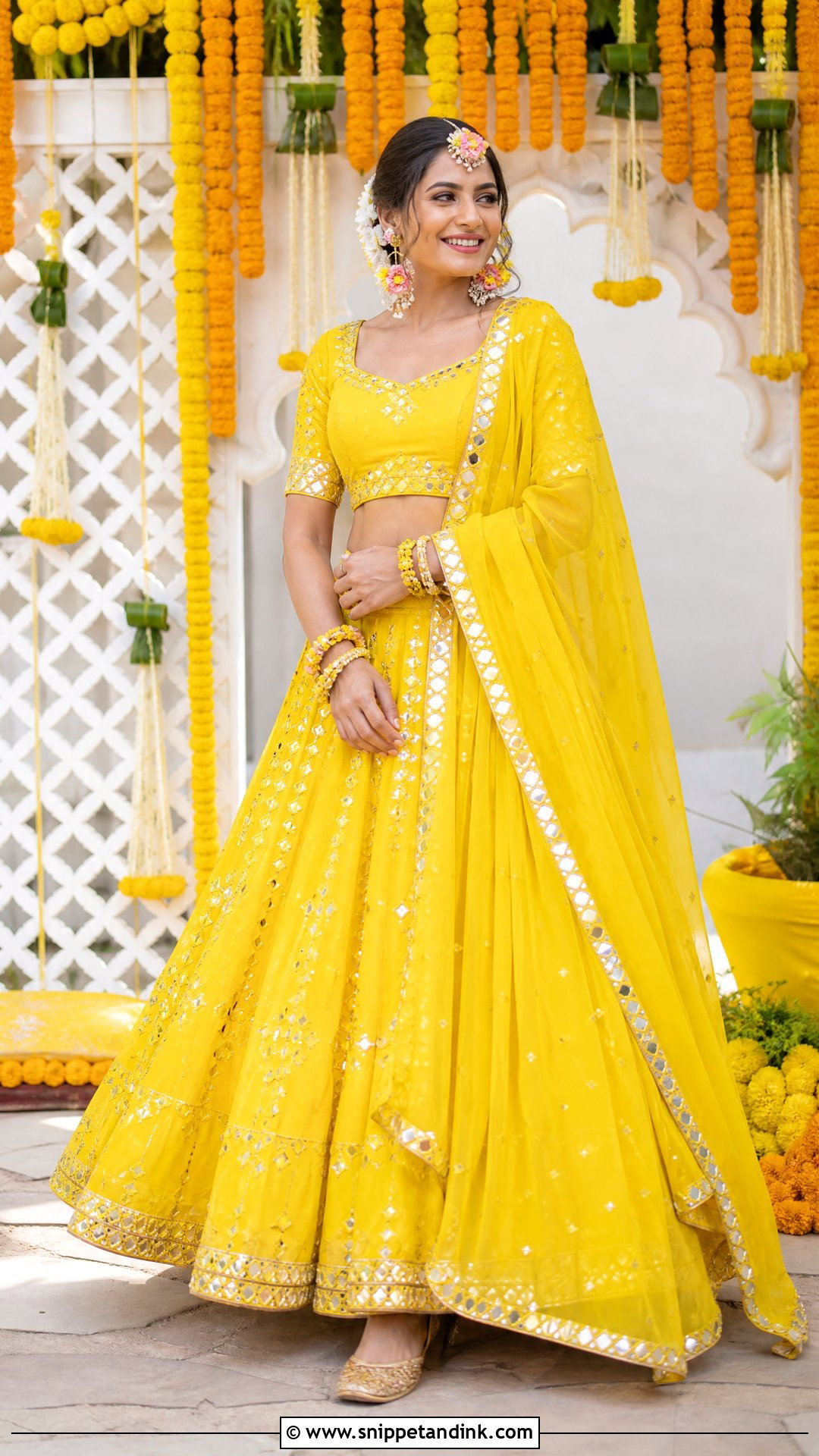
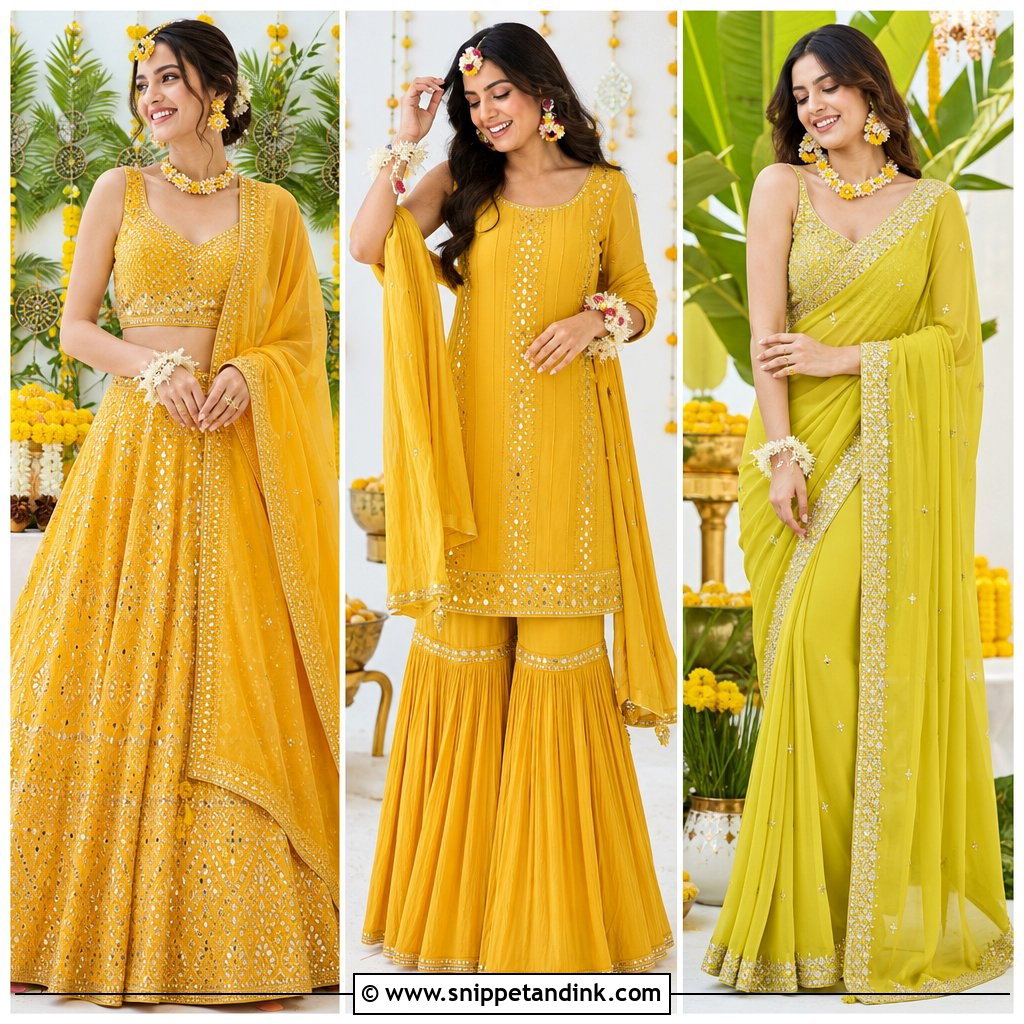
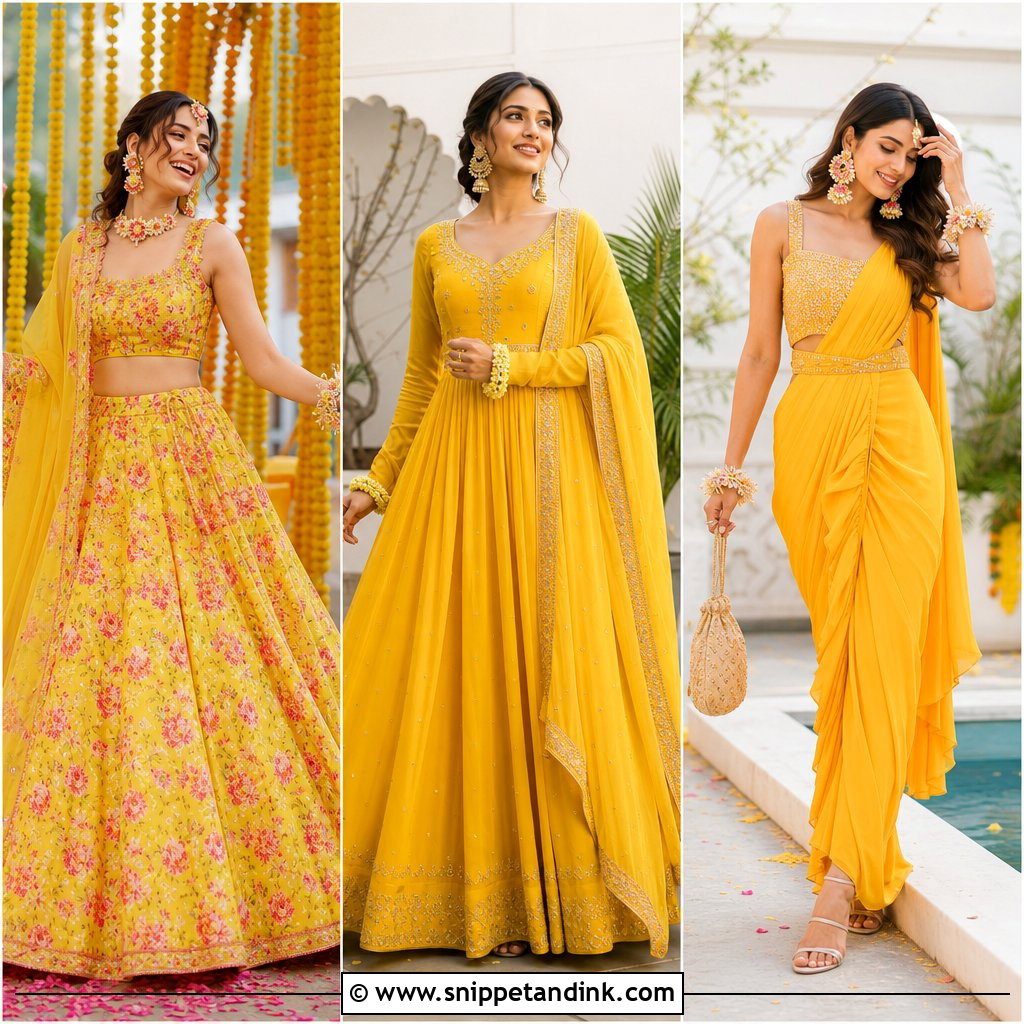
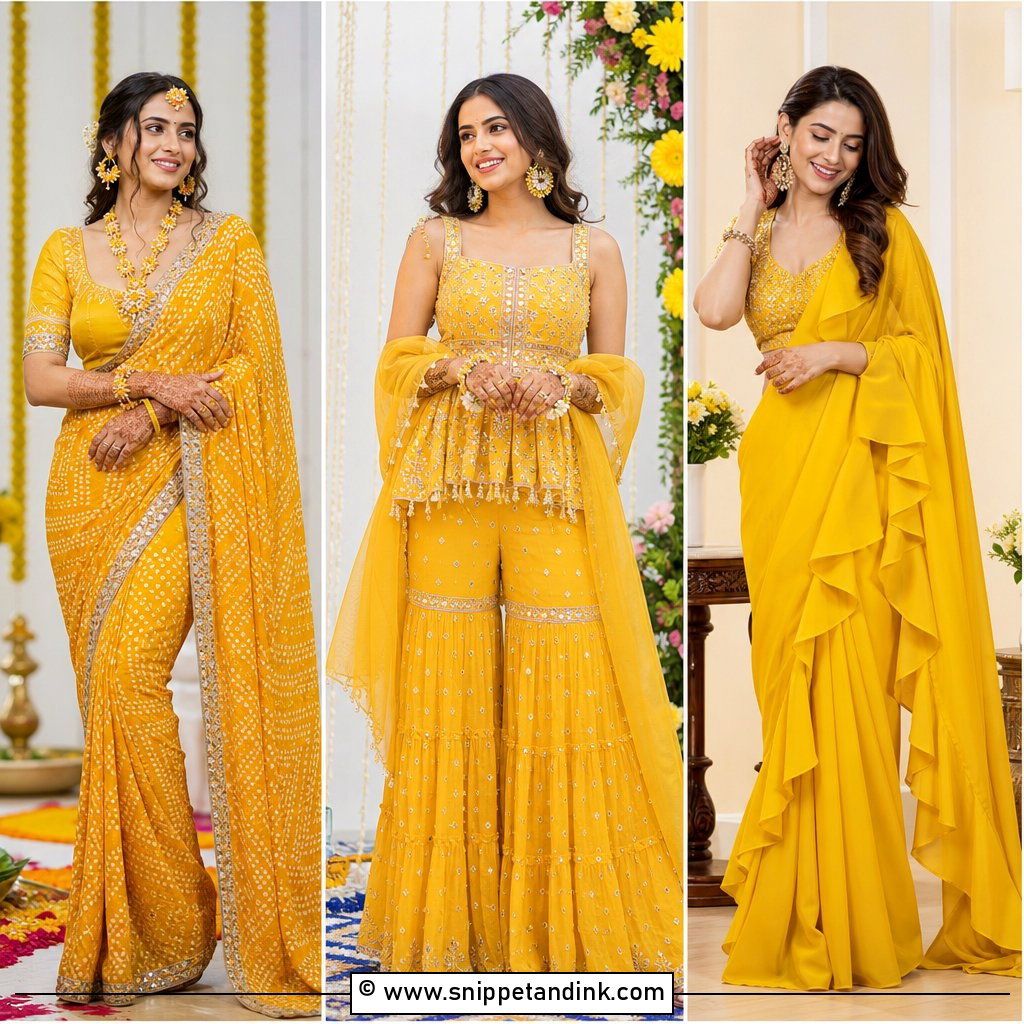
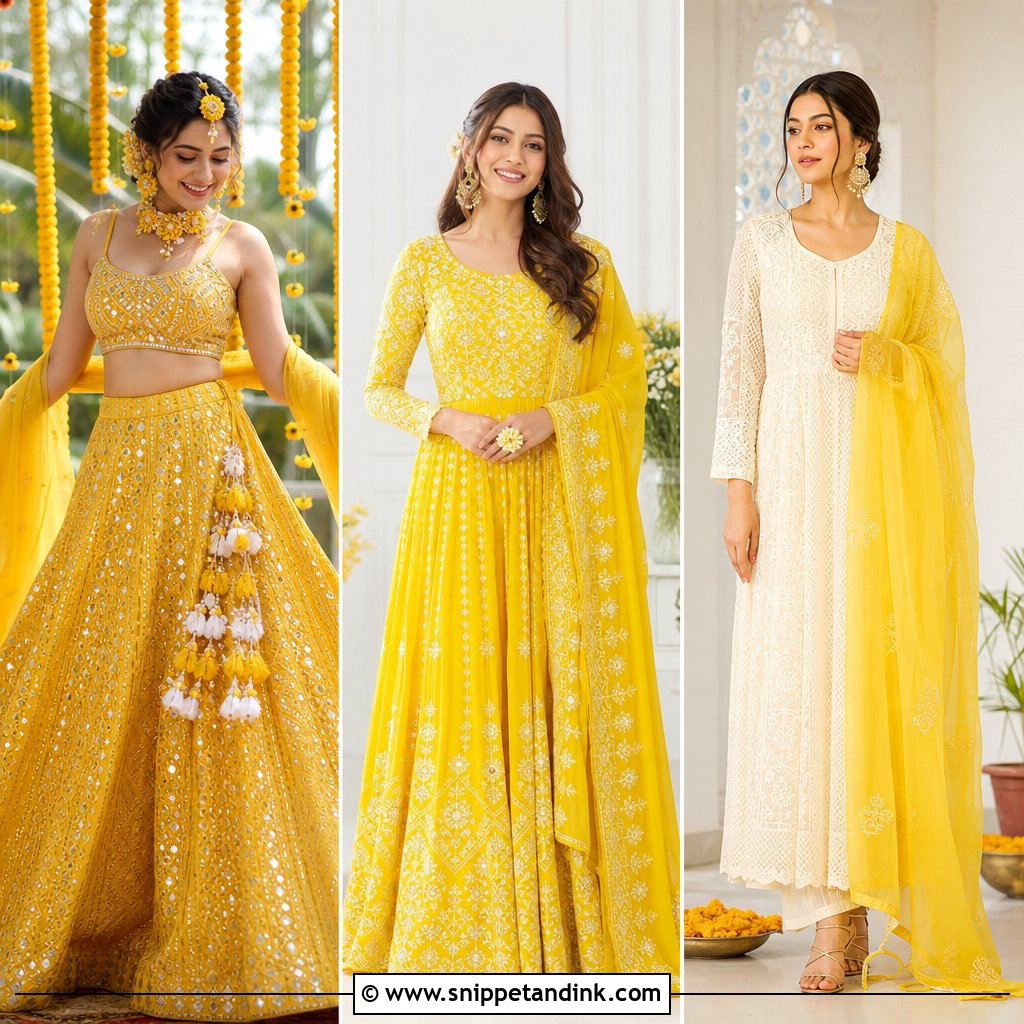
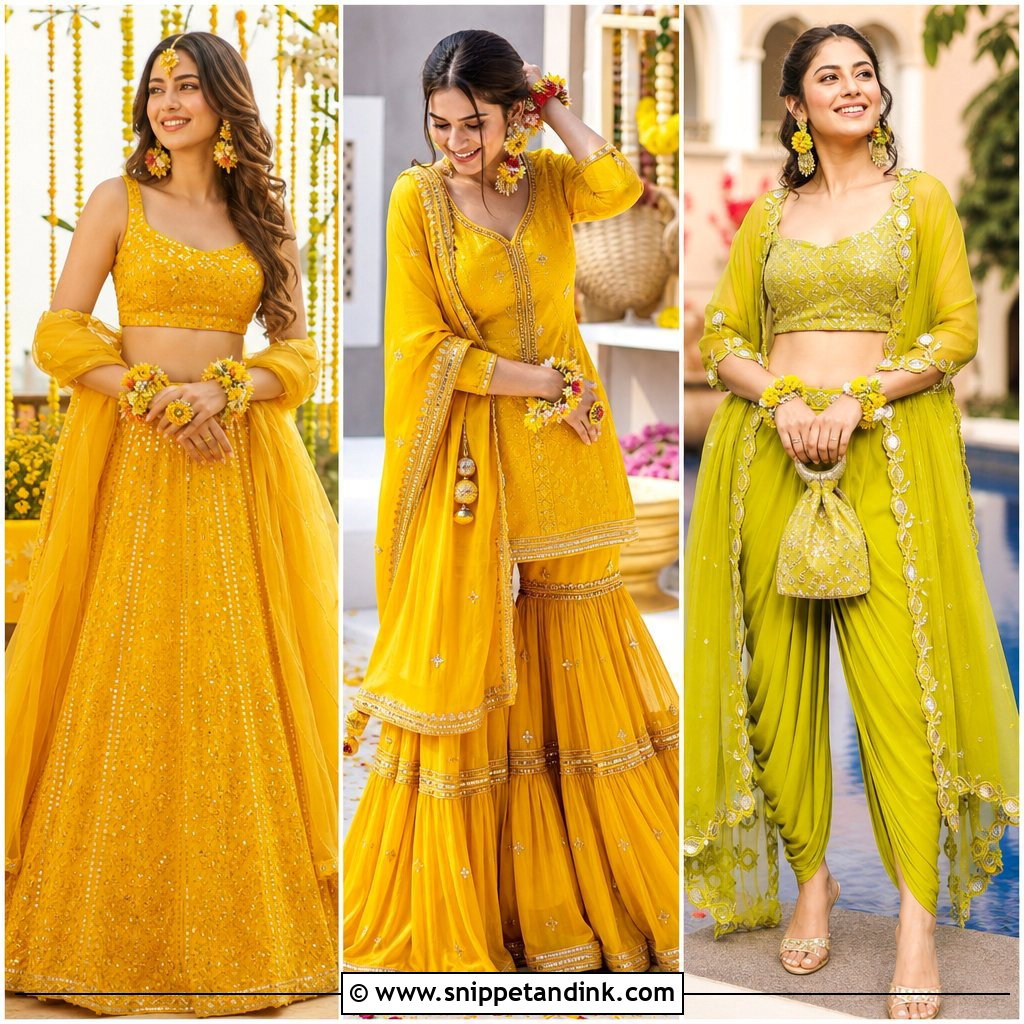
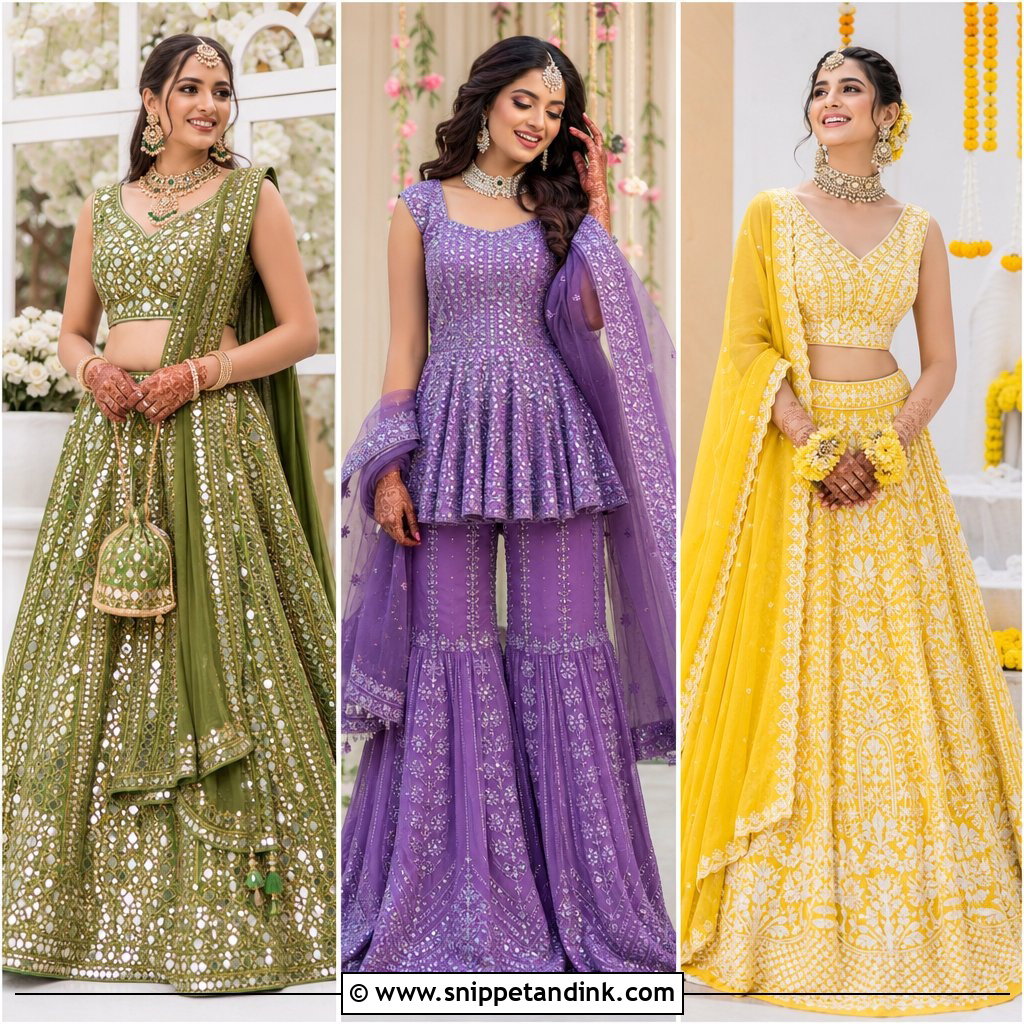
A bright yellow mirror work lehenga gives you festive sparkle without the weight of zardozi, which matters when you’re seated for an hour. I’d pick georgette or cotton-silk for the skirt, with a moderate flare that folds neatly when you sit cross-legged, and a fitted short-sleeve blouse so turmeric-covered hands don’t drag through sleeves. One thing I check on mirror work is the backing. Cheaper pieces are glued on, and wet paste plus scrubbing can lift them, so look for mirrors stitched around the edge. Pin the dupatta over one shoulder to keep both hands free, then stop at floral earrings, a few bangles and a small maang tikka with cushioned gold juttis. Outdoors, the mirrors throw little flashes of daylight into the candid shots.
2. Floral Organza Haldi Saree
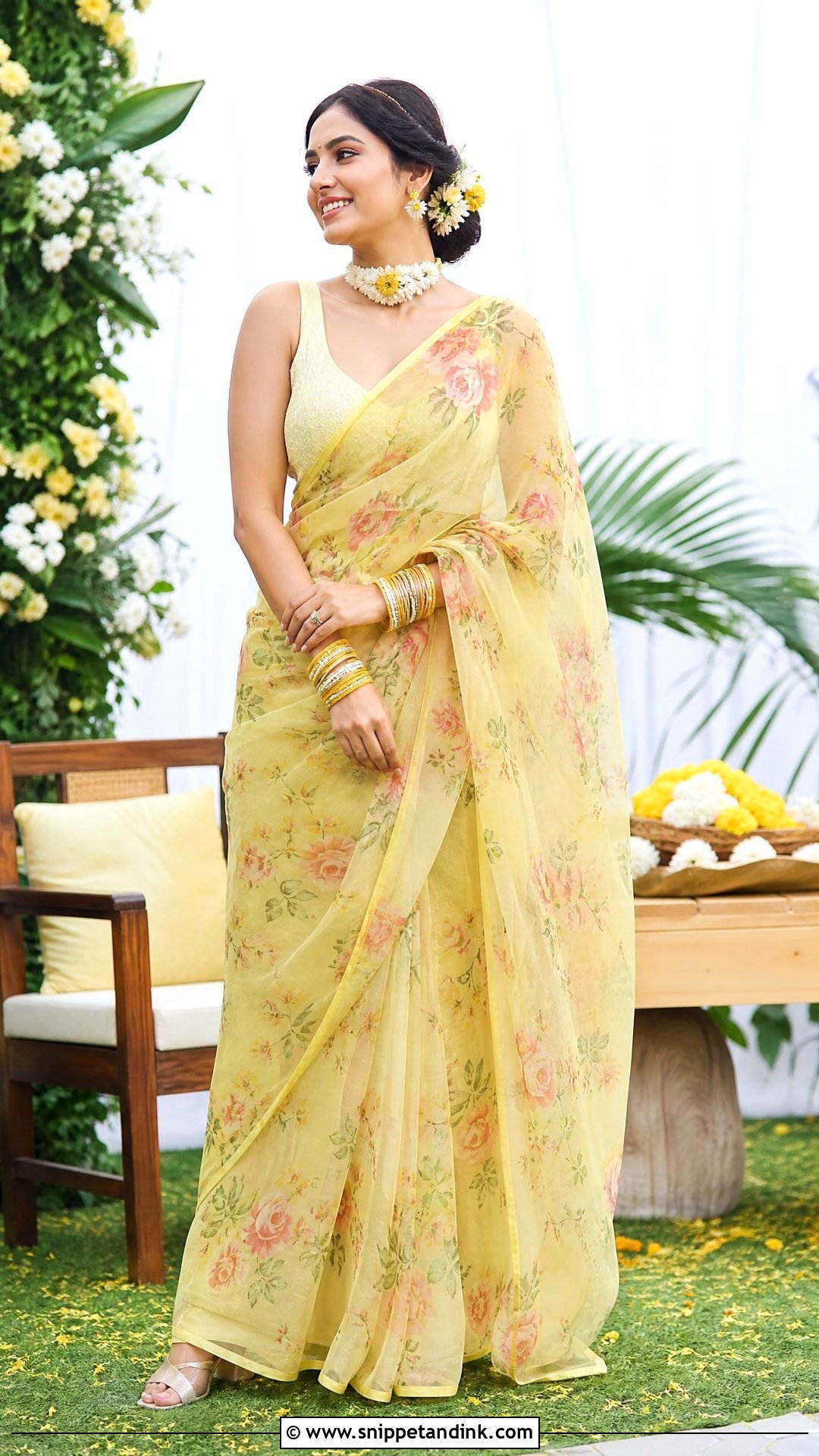
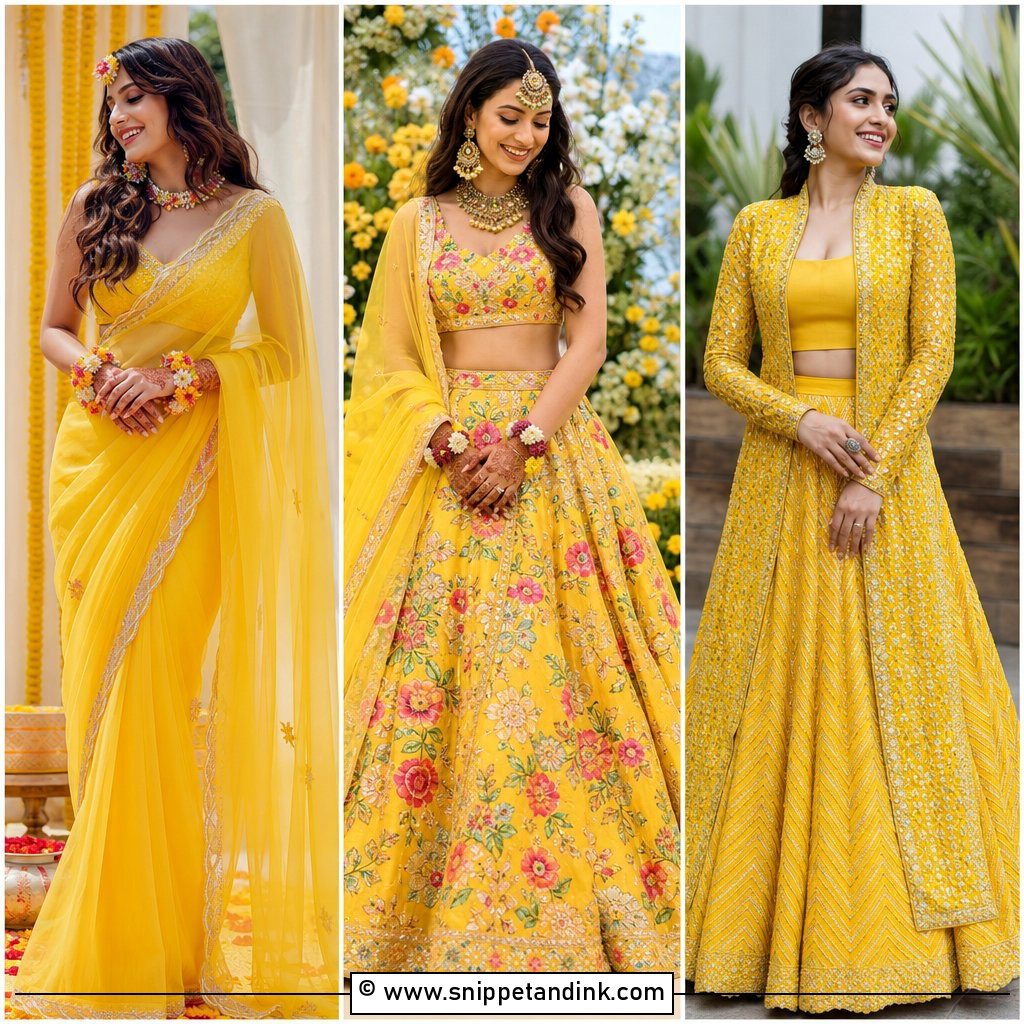
Organza looks airy, but it is the stiffest saree fabric you can choose, and that cuts both ways. A pale yellow organza printed with small white, pink or green flowers holds crisp pleats, so I keep the pleat count modest; too many and the front fans out when you sit. Wear it with a simple sleeveless or elbow-length blouse, and pin the pallu at the shoulder and again at the waist, because organza slips far more than cotton. Floral studs, a fine choker and glass bangles in the print’s colors are plenty, with low block heels or embroidered sandals. Turmeric settles into that open weave, so treat this as a saree you may never get perfectly clean. A low bun with tiny flowers suits the garden print.
3. Mustard Sharara Haldi Suit
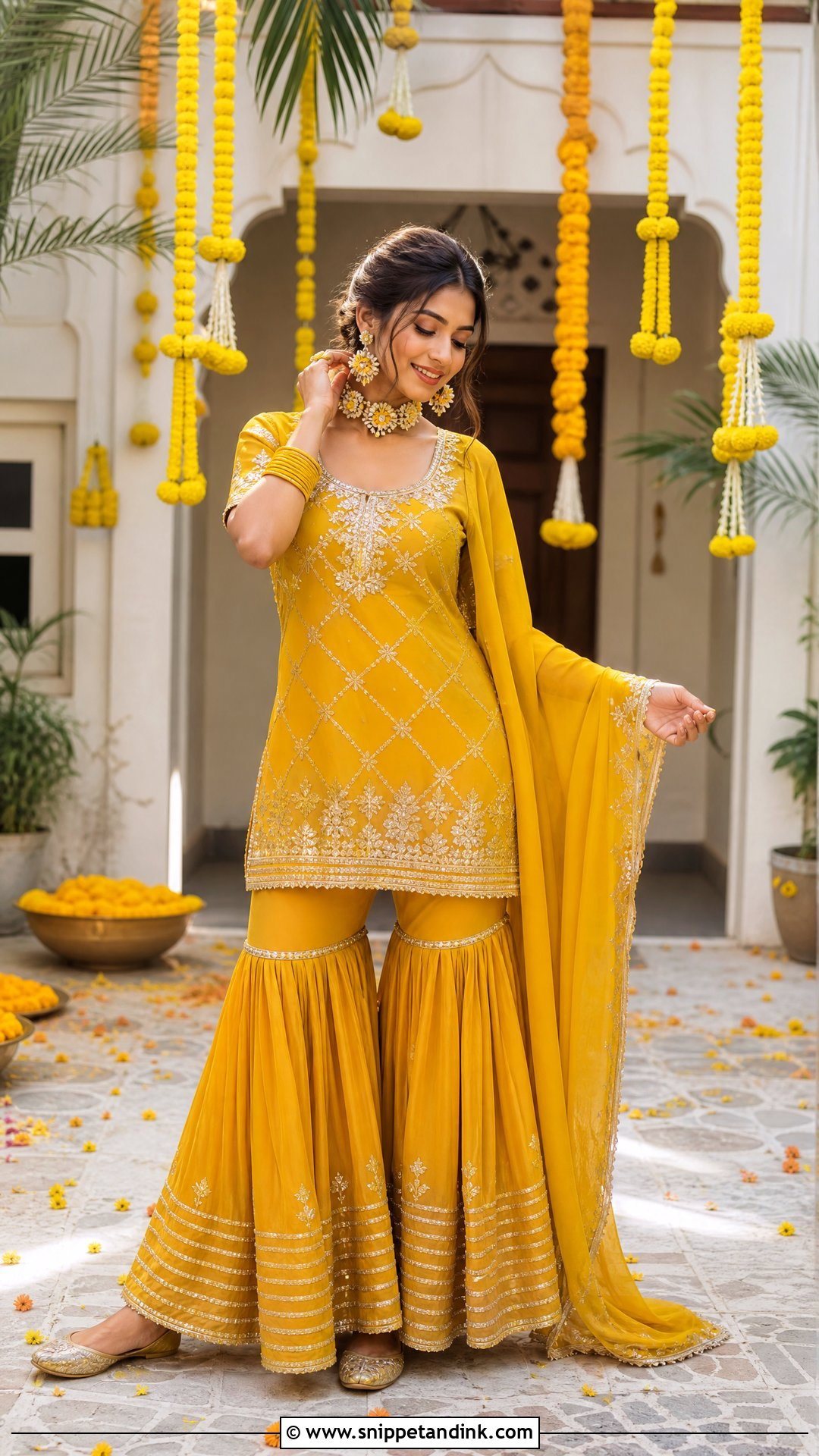
A mustard sharara is the outfit I suggest to brides who already know the Haldi will turn into a dance party. The short embroidered kurti keeps your torso clear, and the wide flared legs move with you instead of tangling the way a lehenga can. Gota borders, small sequins or thread embroidery read festive while staying light; heavy stonework on the pants drags the waistband down by midday. Run the chiffon dupatta diagonally and fix it with two or three hidden safety pins. A floral choker, statement earrings and a few yellow bangles cover the top half, and gold juttis sit naturally with mustard. The volume through the hips is forgiving on most body shapes, which is why so many brides end up here.
4. White And Yellow Bandhani Haldi Lehenga
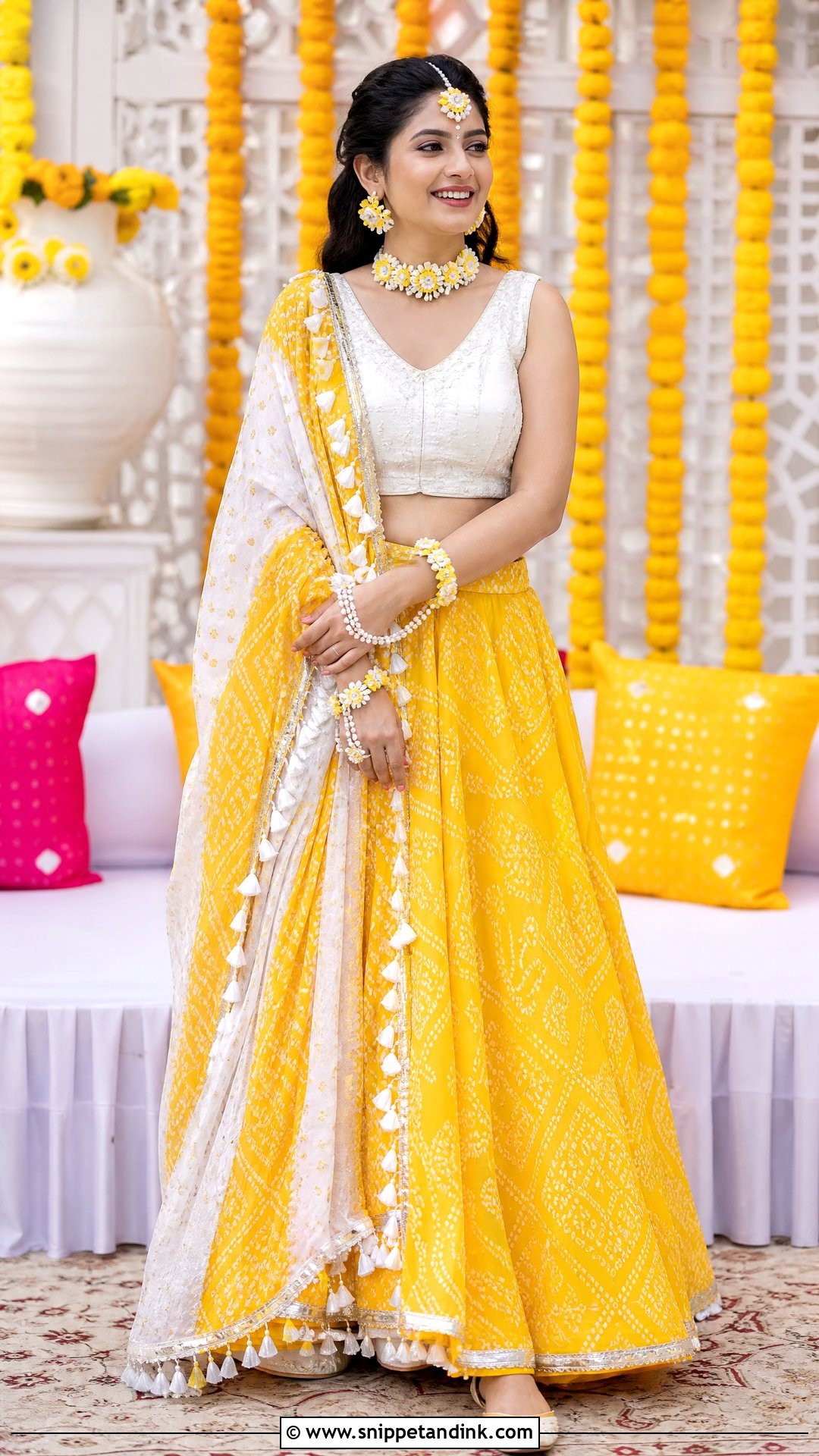
A white and yellow Bandhani lehenga gives strong contrast and a genuine piece of tie-dye craft. The honest caveat is the white. Turmeric on bright white cotton shows instantly and can leave a yellow cast even after washing, so I either keep this for the portraits before the paste starts or swap in a washable cotton blouse you won’t mind tinting. Pair the patterned yellow skirt with a tasselled Bandhani dupatta, floral jewelry in both colors and a pearl maang tikka, then ivory juttis with fine gold embroidery. Bandhani cotton has very little give, so ask for the waist to be comfortable rather than snug. Against marigold garlands and a green lawn, the contrast carries in every photo.
5. Marigold Anarkali Haldi Suit
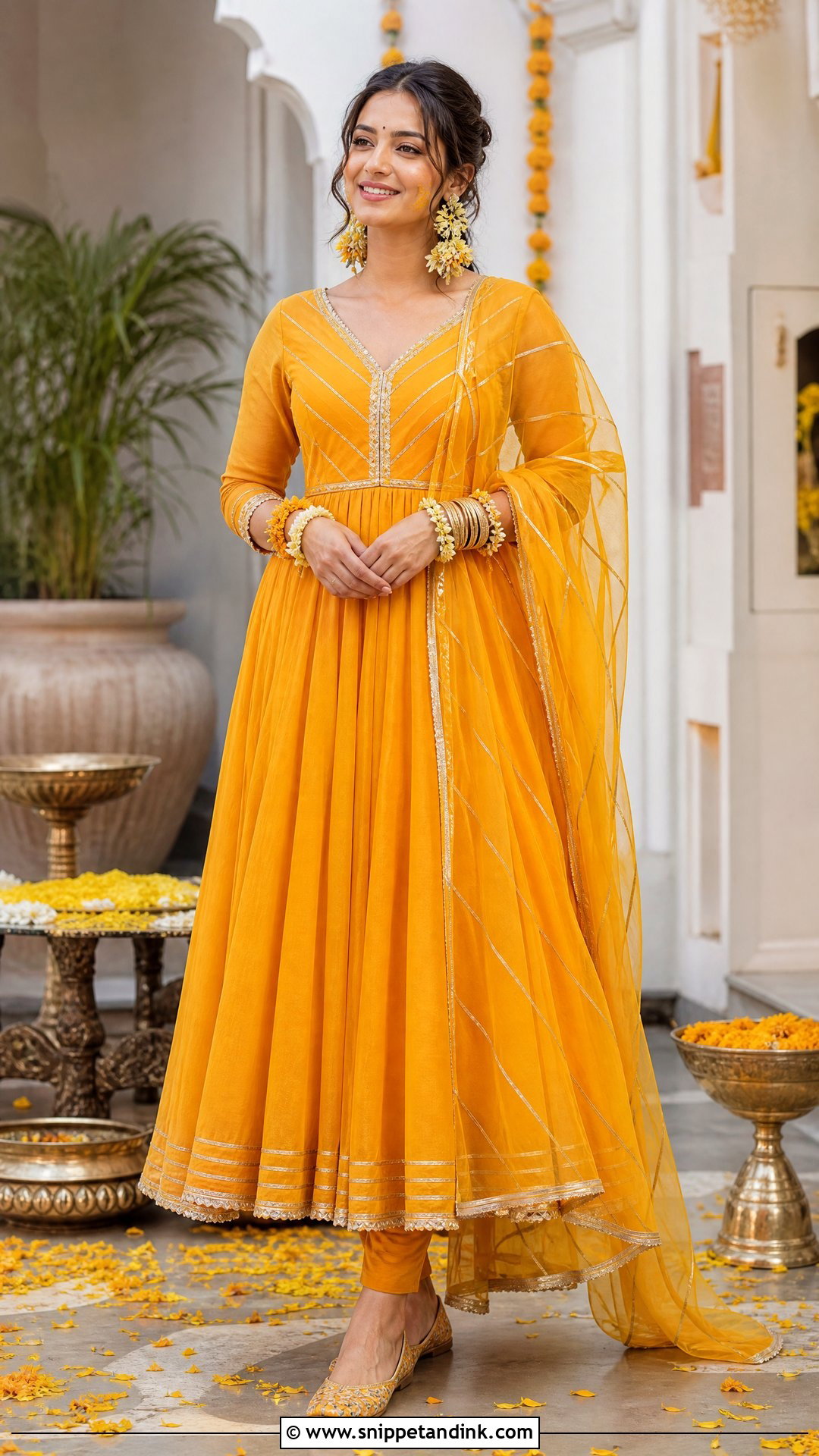
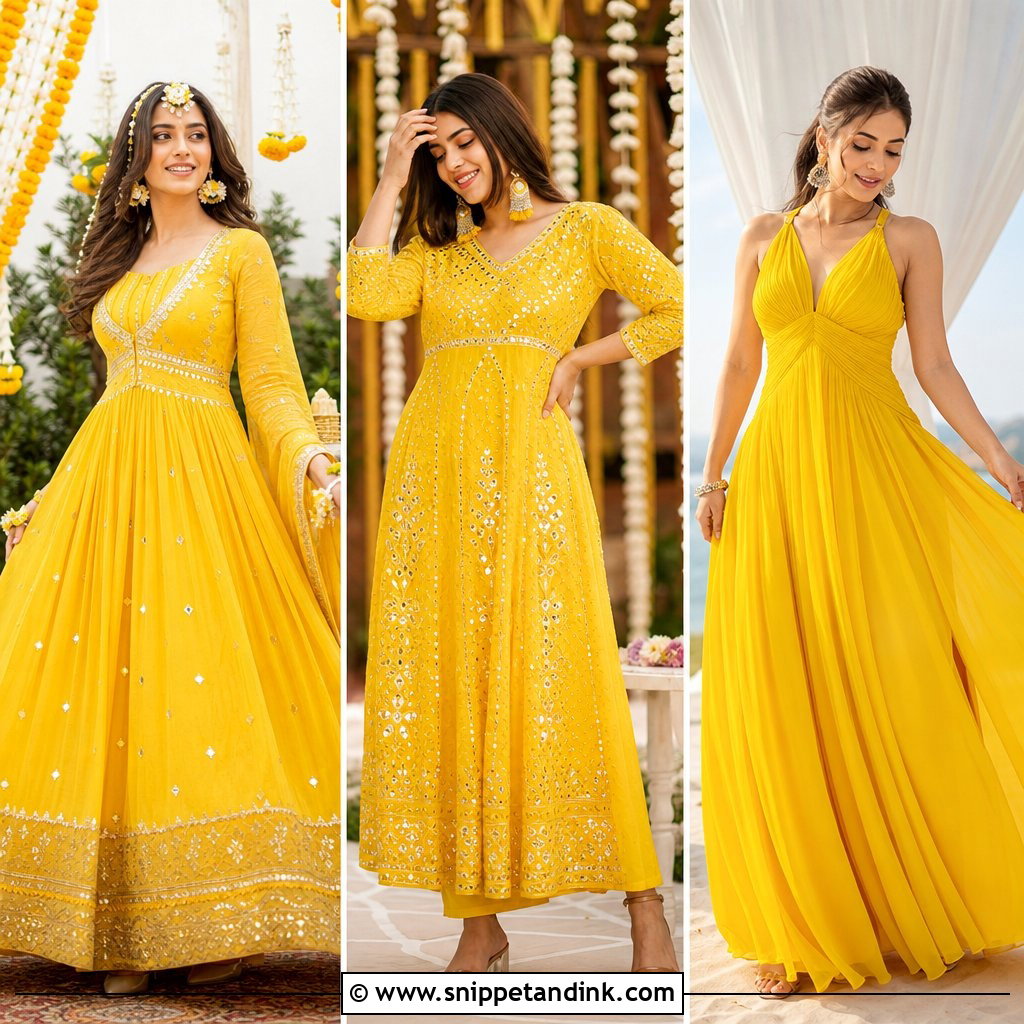
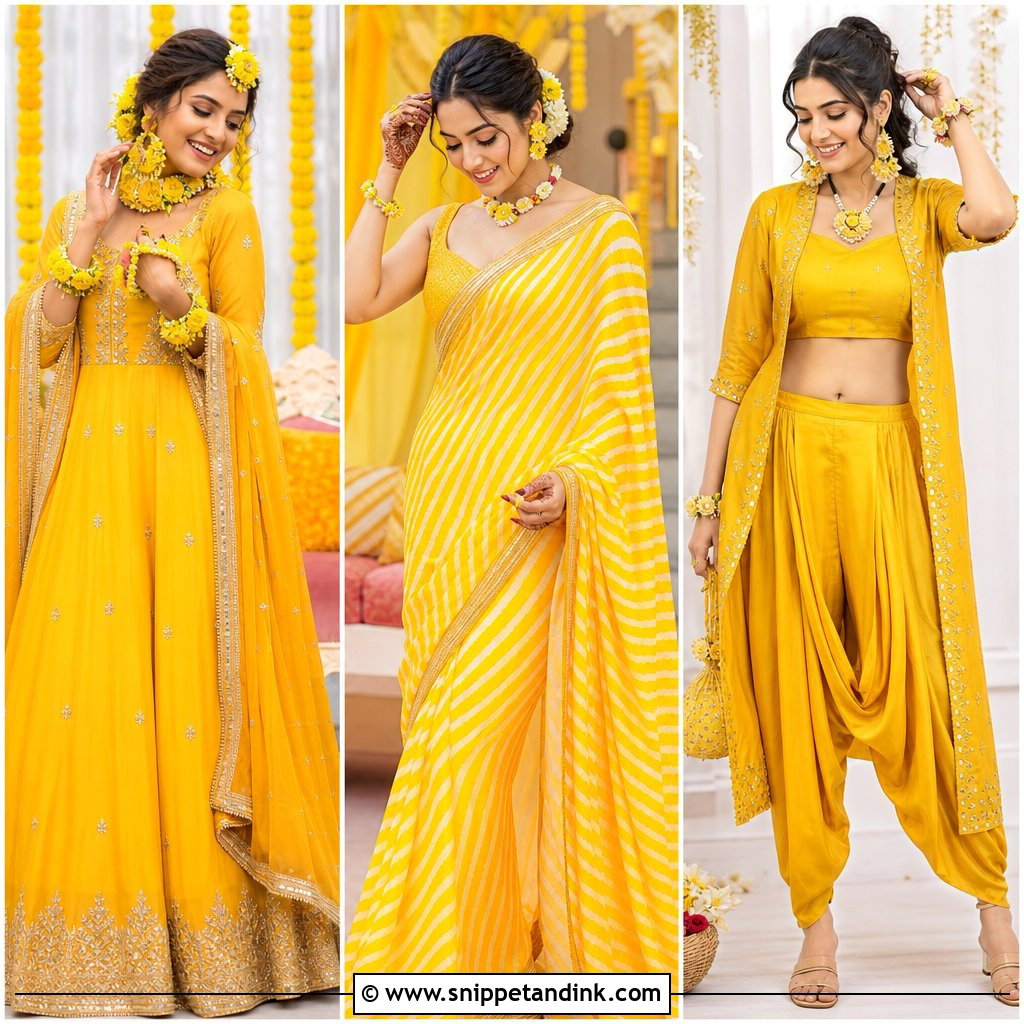
An Anarkali is a single garment, so there’s no blouse gap to manage and no pleats to rescue, and that’s why I recommend it to brides who want coverage. Calf or ankle length in cotton silk, chiffon or light georgette moves well; a heavy can-can underneath looks grand but traps heat on a summer morning. The bodice should be softly fitted, and I always ask a bride to sit on a low stool at her fitting, because Anarkali panels can pull at the waist seam once seated. Add slim pants, a sheer dupatta and embroidered juttis, with gota trim at the neckline and hem for celebration. Pin the dupatta behind the shoulders so relatives have a clear path to your arms and cheeks.
6. Yellow Palazzo And Cape Haldi Outfit
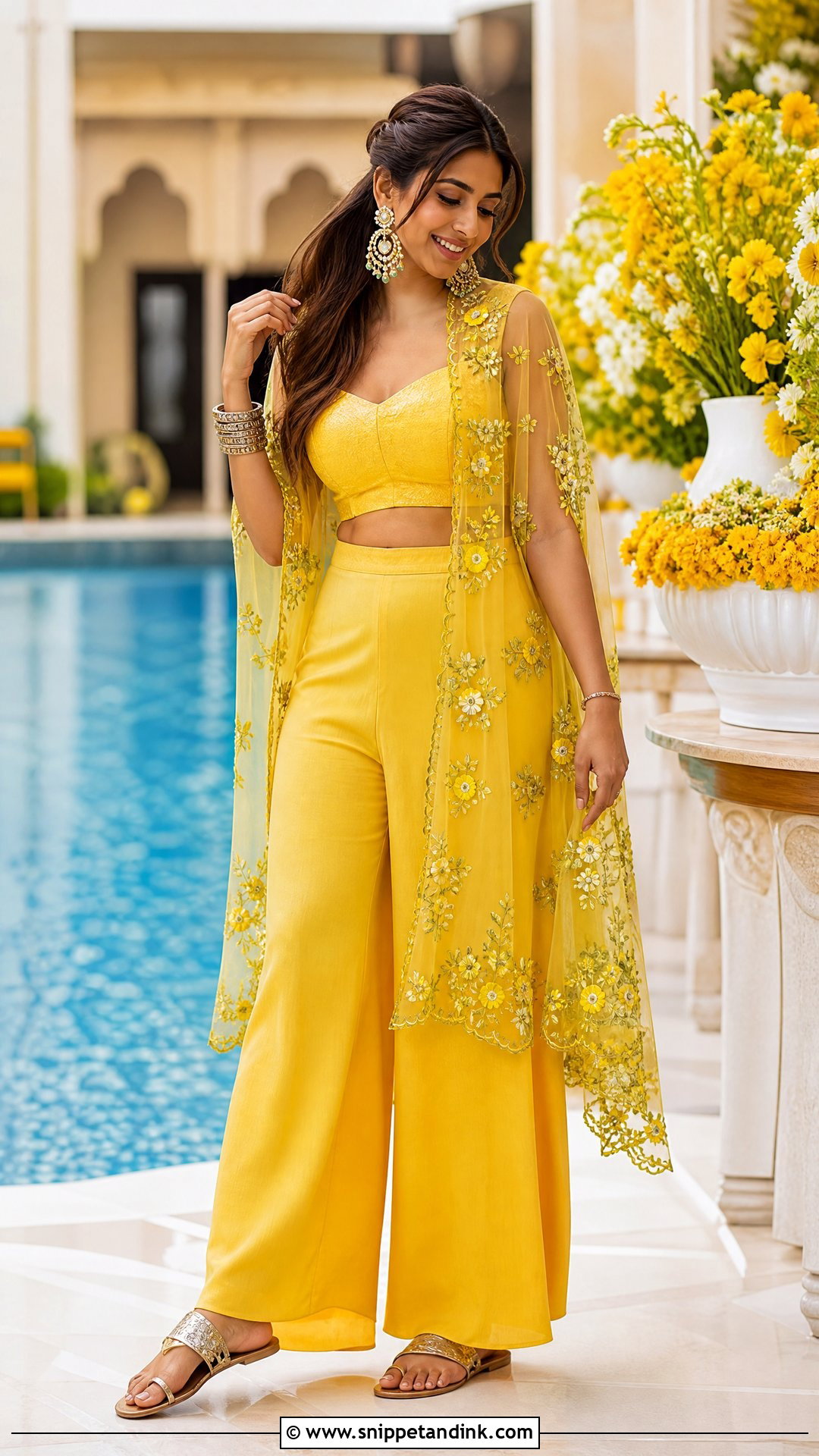
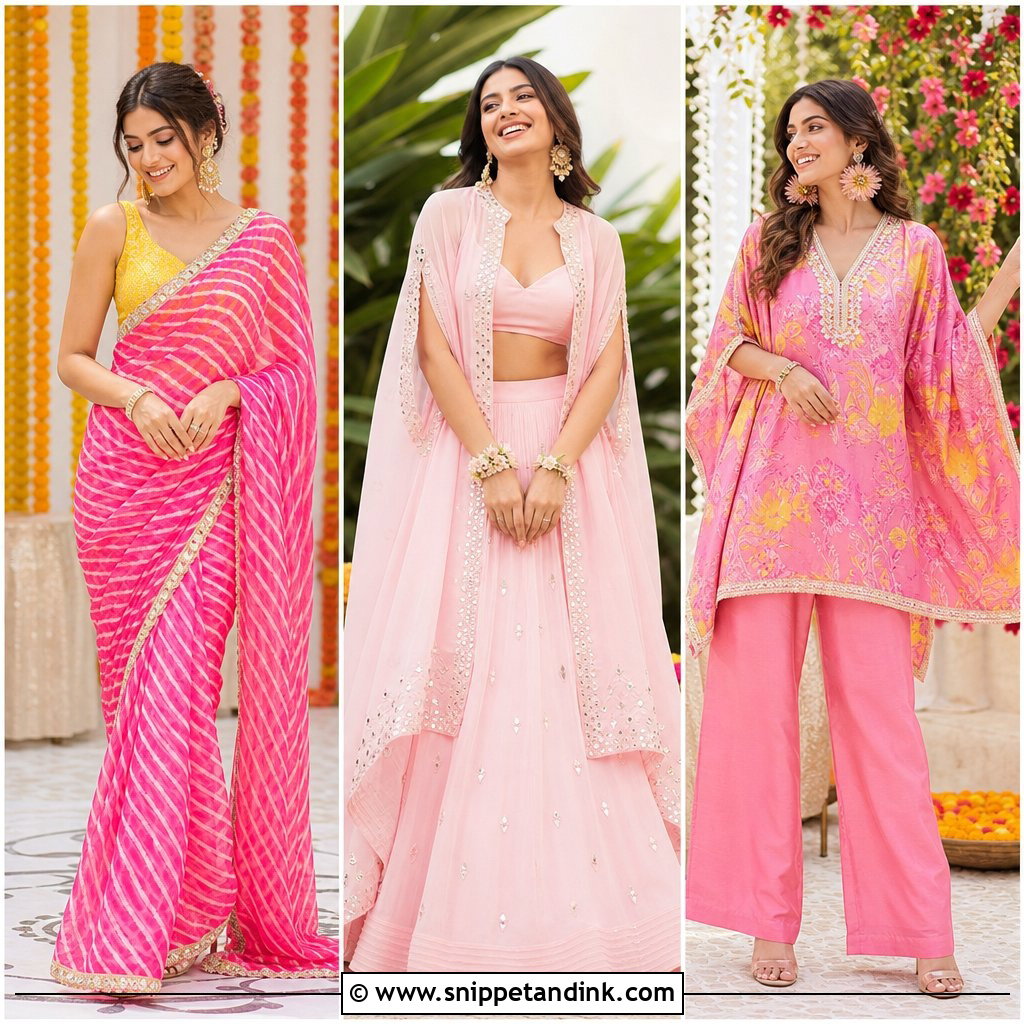
Swapping the dupatta for an embroidered cape solves the most common Haldi complaint I hear: a dupatta that keeps sliding into the paste bowl. Start with high-waisted yellow palazzo pants and a fitted blouse or cropped kurti in the same color family, then add a sheer cape with threadwork, a few mirrors or a scalloped hem. A knee-length cape balances wide legs; anything longer swamps a petite frame. It covers the arms loosely, but the front edges will catch turmeric, so choose one you can hand-wash. Statement earrings, a slim bracelet stack and flat sandals or metallic block heels suit it, with a ponytail or loose braid. The whole thing reads relaxed, which is right for a poolside or garden function.
7. Lime Green Floral Haldi Lehenga
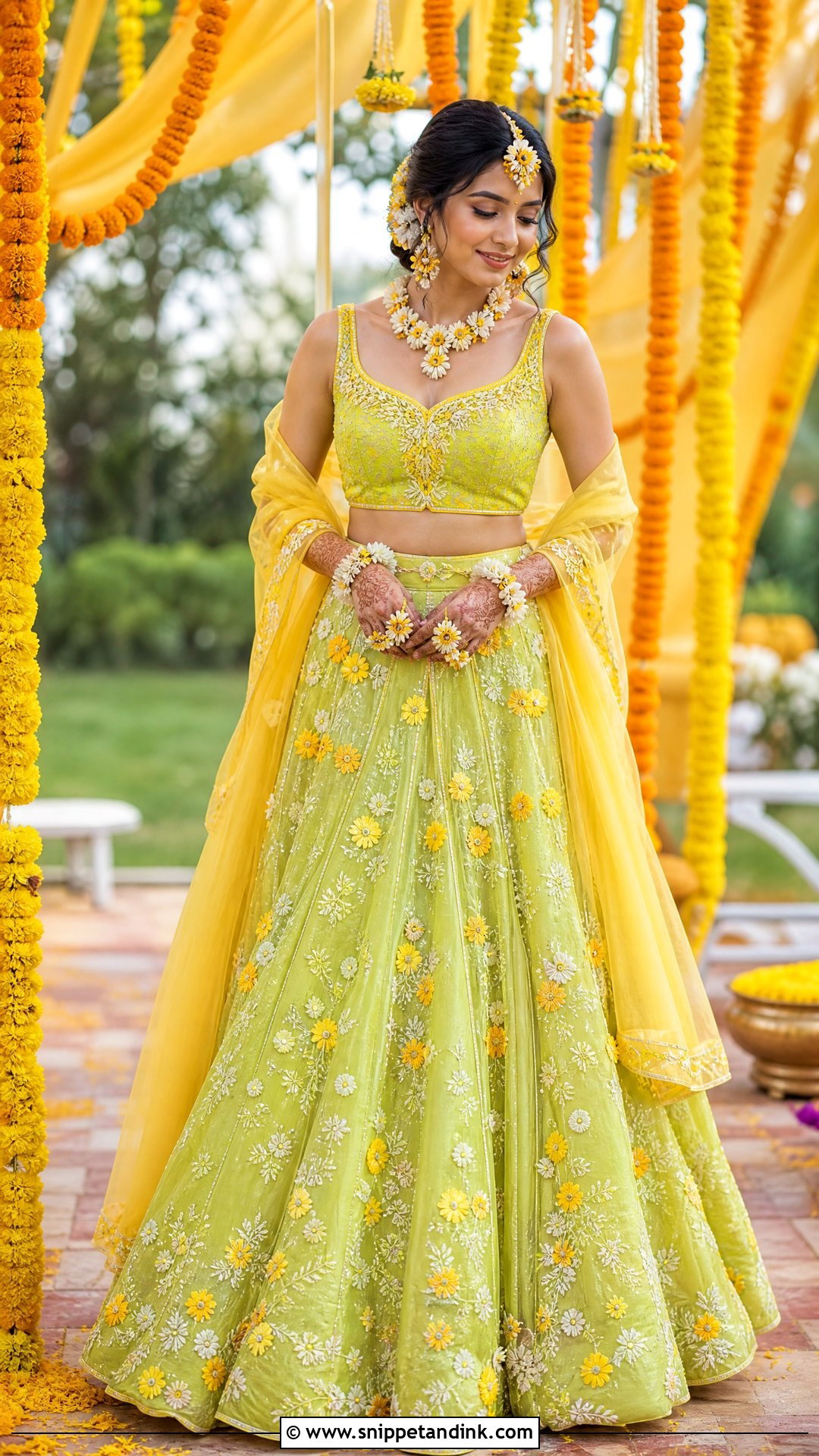
Yellow is traditional, but at a Haldi where the décor, the cushions and half the guests are yellow, a bride in yellow can disappear. A lime green lehenga scattered with small yellow flowers or multicolored embroidery fixes that, and a sheer yellow dupatta keeps you tied to the ritual color. I’d look at this shade in daylight at the fitting. Some limes turn sallow next to turmeric paste on skin, while a slightly warmer green holds up. Floral jewelry mixing marigold, white buds and leaves suits the palette, with plain gold juttis or flat kolhapuris, glowing skin and a coral lip. In group photos the green separates you from the décor straight away.
8. Ivory Saree With Yellow Border Haldi Outfit
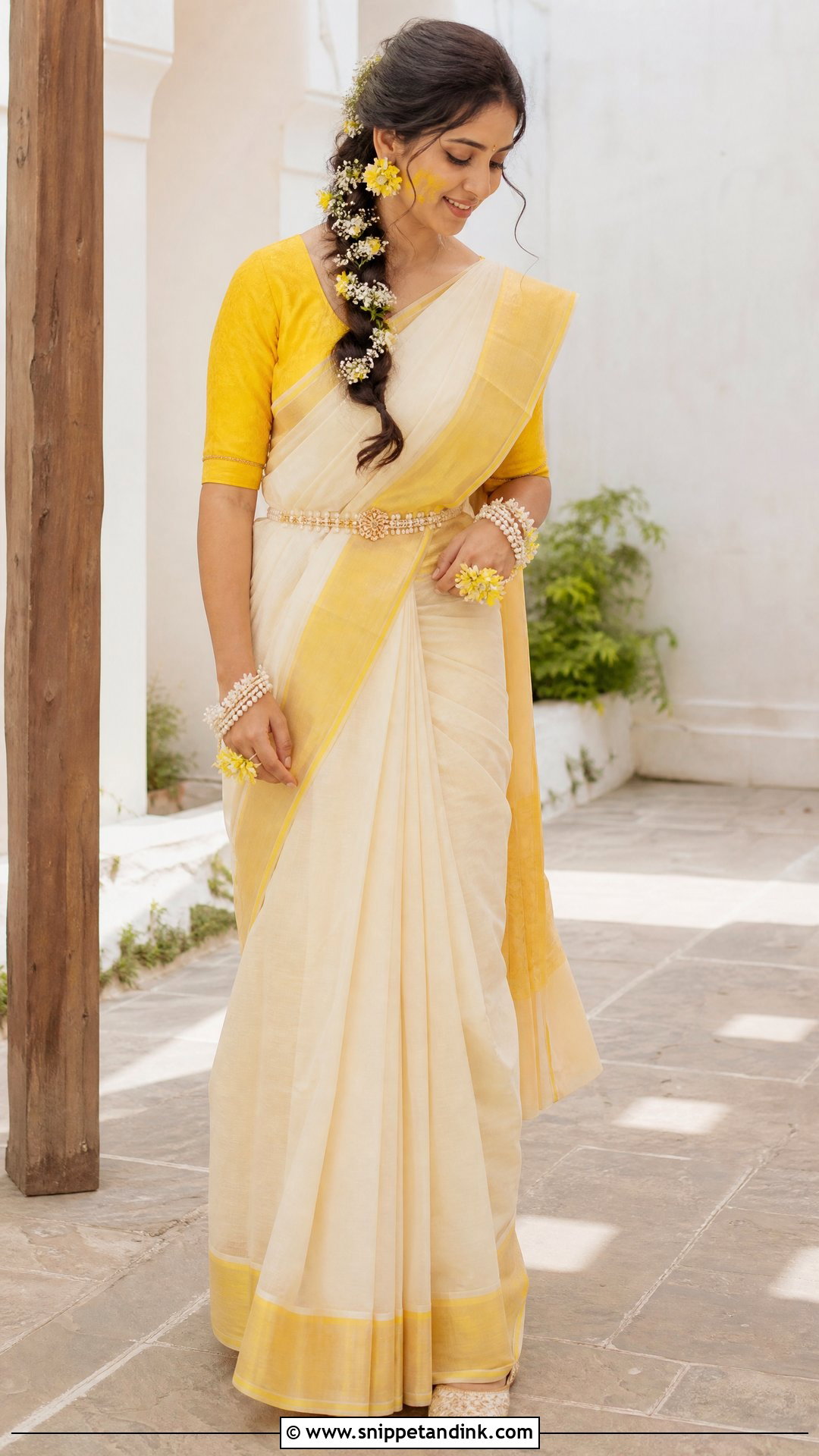
Ivory with a bright yellow border is the quietest look on this list and also the riskiest for stains. A cotton, linen-blend or light silk saree drapes easily, and a yellow blouse picks up the border; sleeveless feels current, elbow sleeves more traditional. I’d only put a bride in this for a gentle ceremony where the paste is dabbed rather than smeared, or for portraits before the ritual, followed by a change. Pin pleats and pallu firmly. Yellow floral earrings, pearl bangles and perhaps a slim waist belt are enough, with gold flats or ivory juttis and a neat braid threaded with small yellow flowers.
9. Mustard Peplum Gharara Haldi Suit
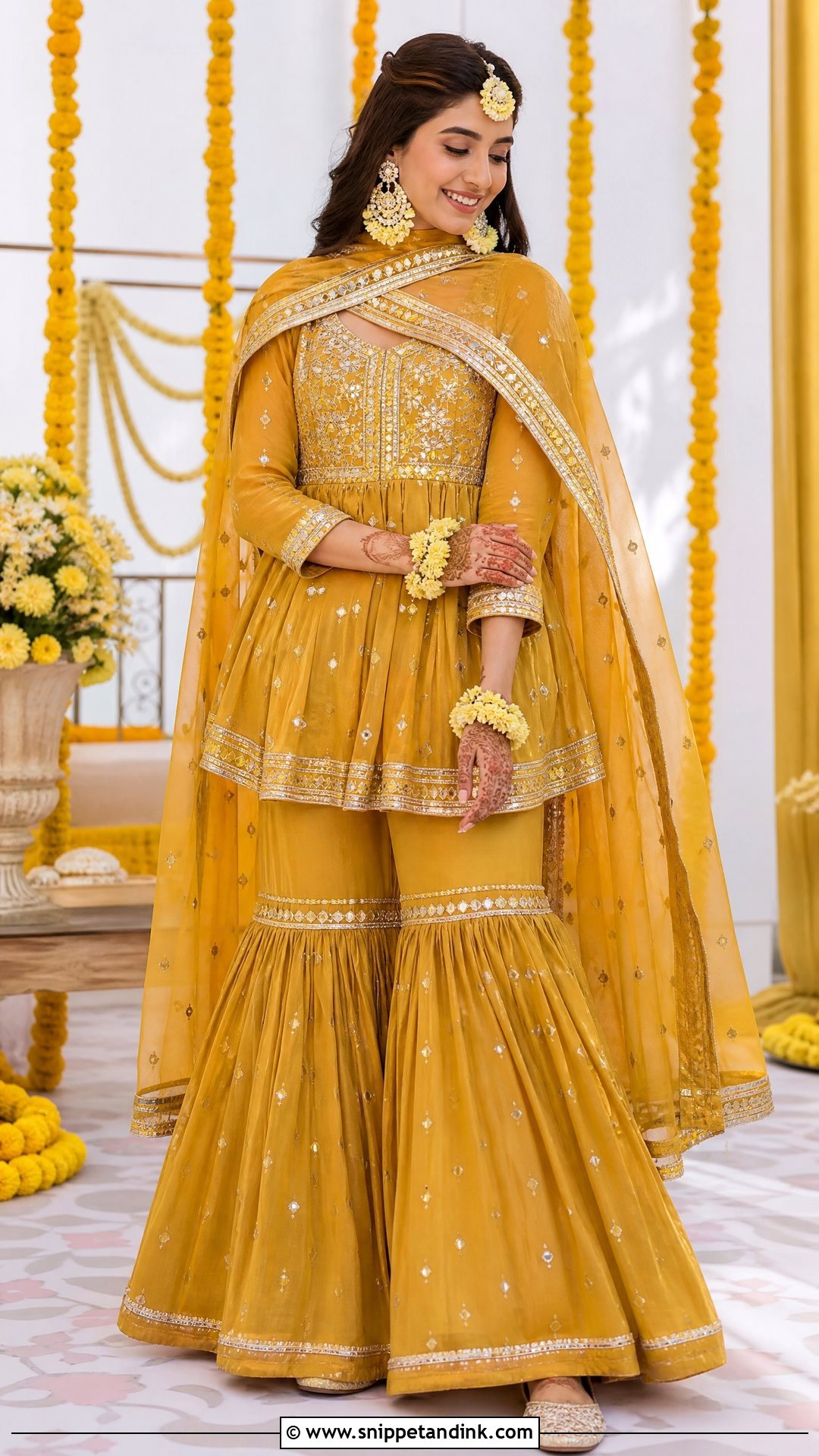
A peplum gharara gives you a structured top and a burst of volume below the knee, where the gharara’s flared panel joins. The peplum should stop around the upper hip. Any longer and it competes with that knee seam and visually shortens the leg. A mustard top with light gota work and a matching gharara is the classic pairing, with a net or chiffon dupatta over one shoulder and fastened at the waist. If the neckline is already worked, skip the big necklace and wear chandelier earrings and a small floral maang tikka instead, plus embroidered flats. Seated, the gharara pools neatly around you, so it holds its shape in ritual photos as well as on the dance floor.
10. Floral Printed Haldi Lehenga
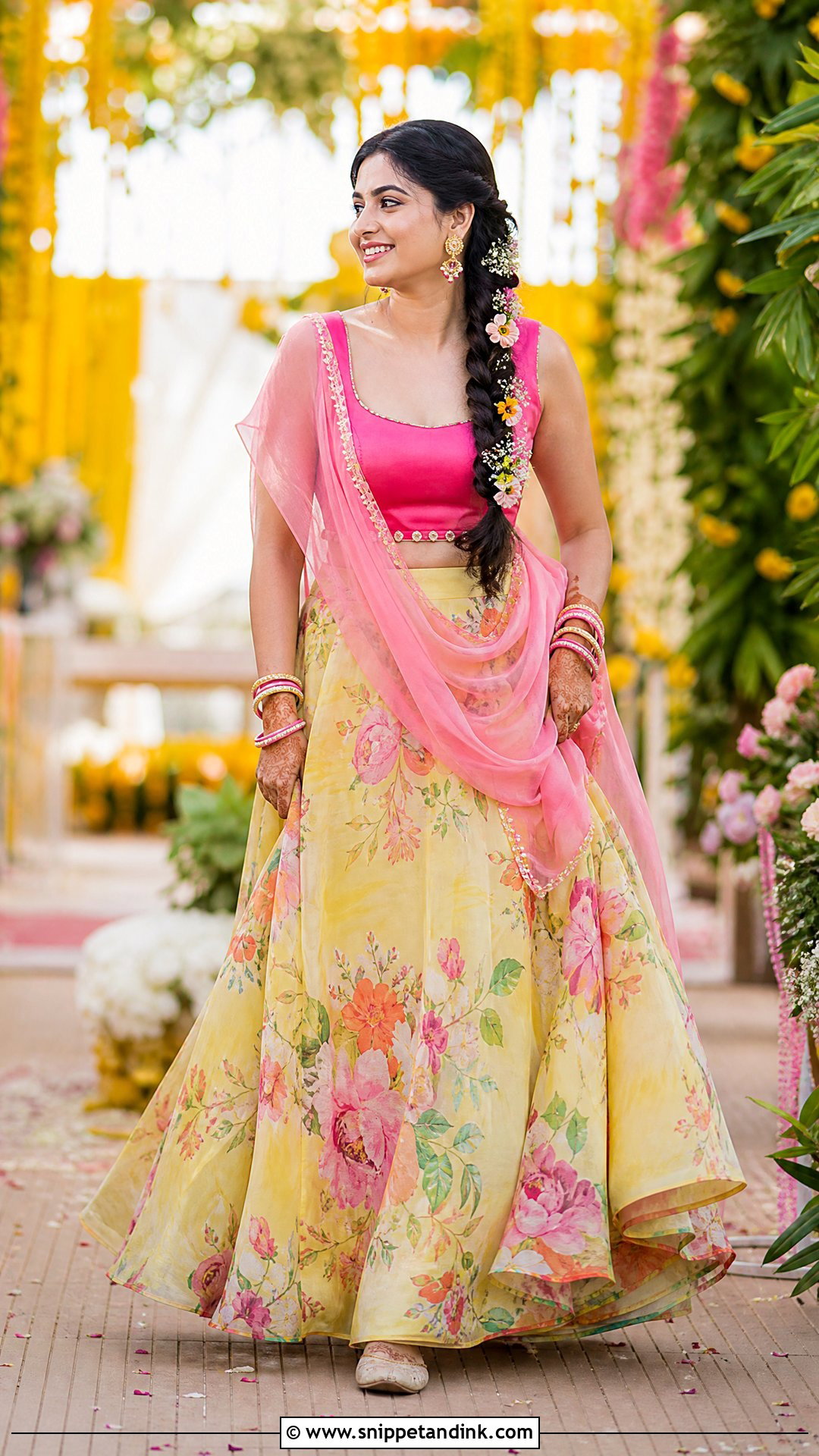
Printed lehengas are underrated for Haldi, and the reason is practical. A small turmeric mark disappears into a busy floral print in a way it never would on plain silk. Look for a yellow or ivory skirt with pink, orange and green flowers, then take one color from the print for a solid blouse and keep the organza dupatta plain with a narrow border so the outfit doesn’t look crowded. Lightweight gemstone earrings, stacked bangles and neutral juttis are enough. A braid with a few fresh blooms works with the print without matching it too closely. Keep the flare moderate if the dancing will happen outdoors on grass.
11. Yellow Dhoti Pants Haldi Outfit
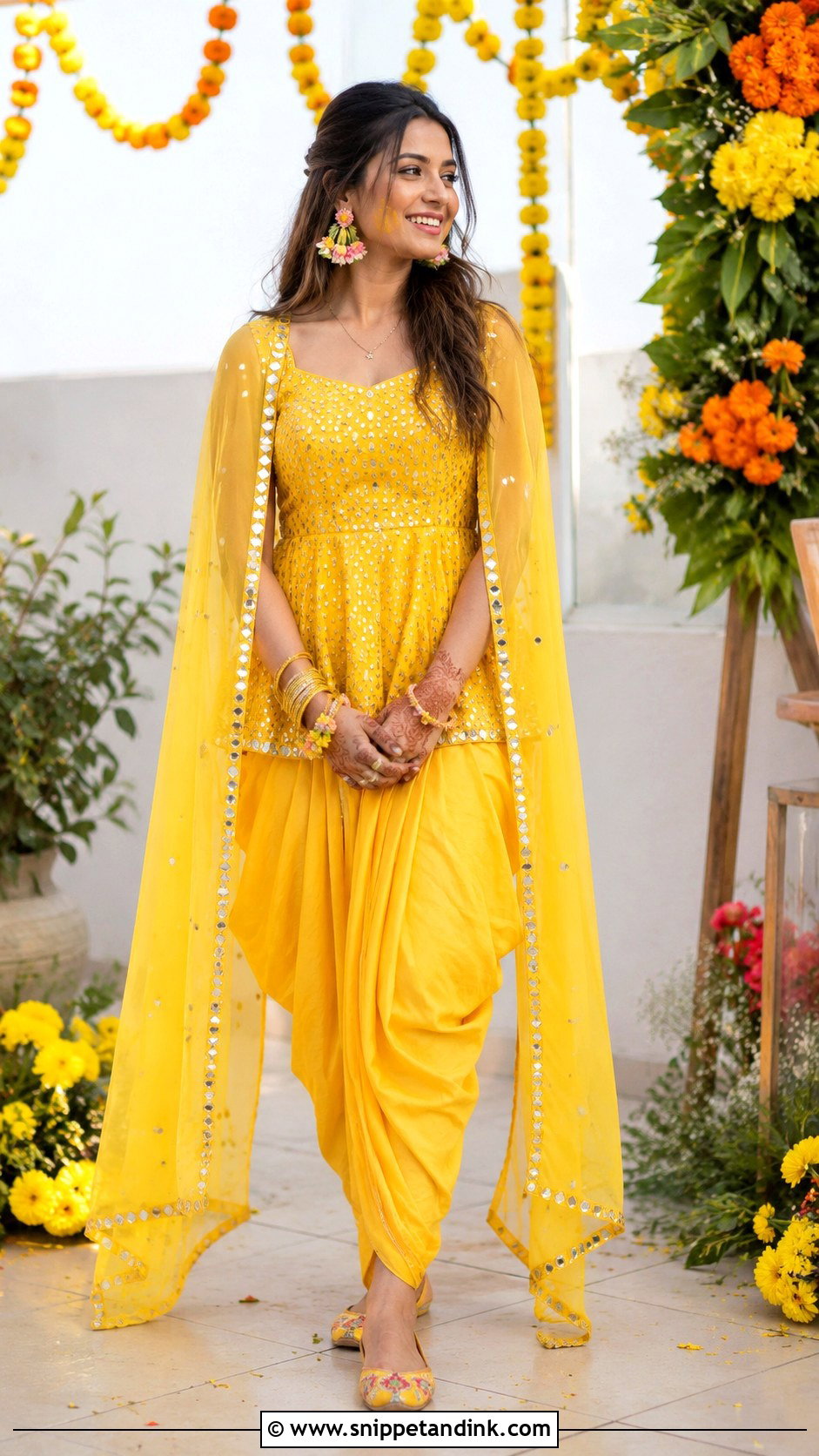
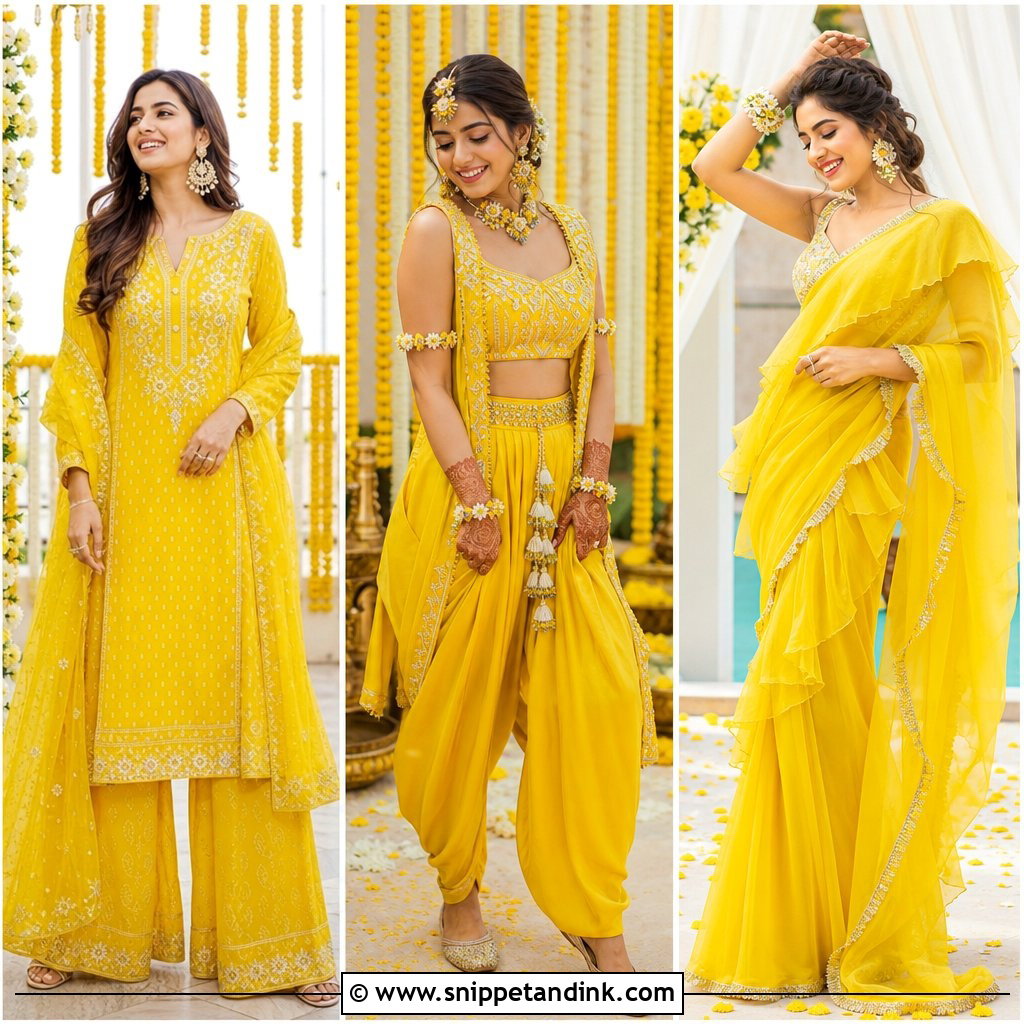
Dhoti pants are my answer for brides who dislike skirts and hate fussing with drape. The gathered pants let you sit, kneel and dance without lifting a hem, and a fitted peplum or an asymmetric short kurti on top gives a clear silhouette. Put the bridal detail on the top, in mirror work, gota trim or fine thread embroidery, and let a light shoulder drape or short cape stand in for the dupatta so there’s far less pinning. Watch the waistband. Dhoti pants often have a fitted yoke, and I have brides sit for ten minutes at the fitting because a yoke that feels fine standing can dig in once you’re seated. Floral earrings, bangles and embellished juttis finish it for a backyard or terrace Haldi.
12. Yellow Ruffle Saree Haldi Outfit
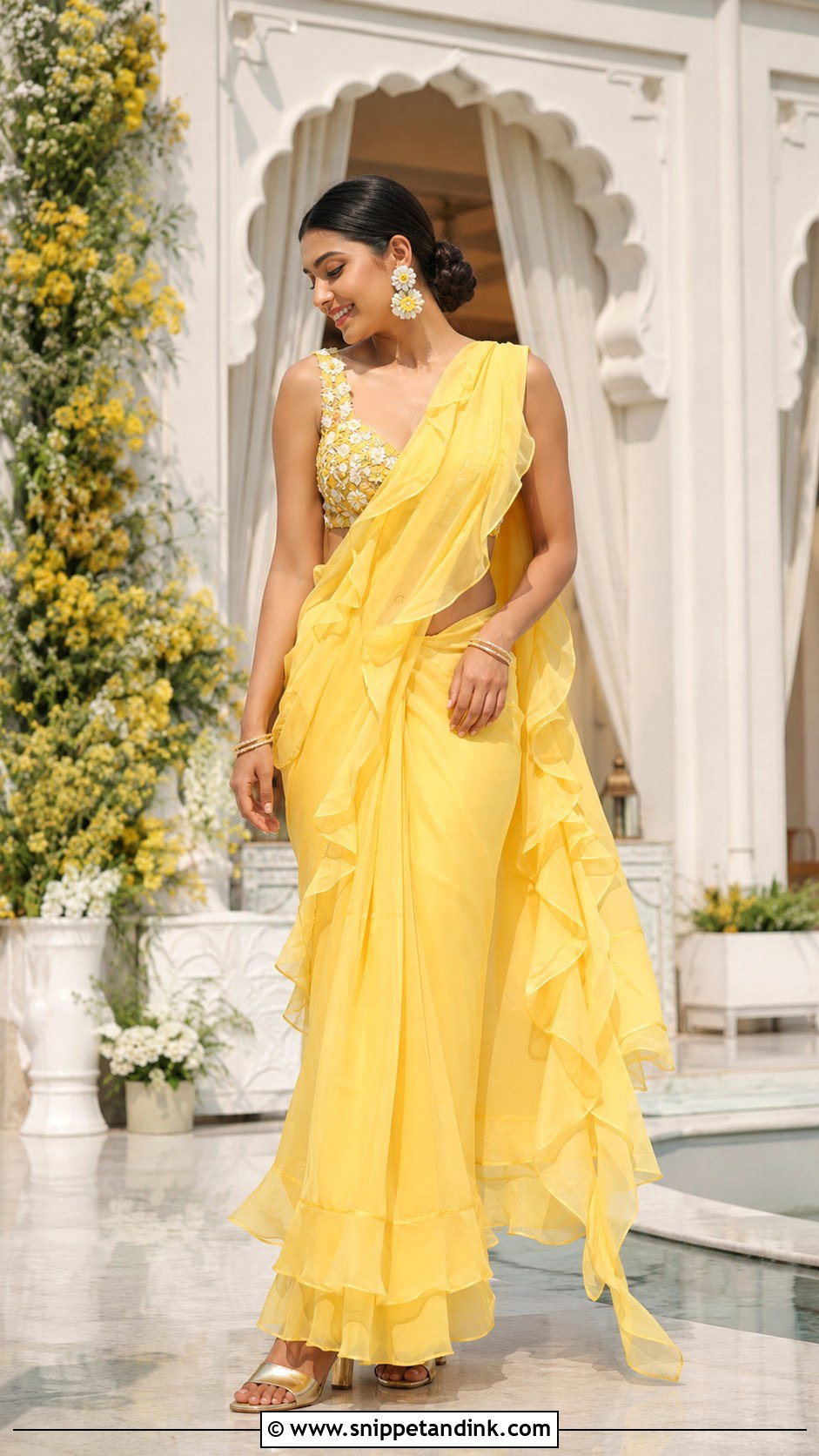
A pre-draped ruffle saree gives you the saree look in about two minutes, and it can’t come unpinned halfway through the ceremony because the pleats are stitched in. Sunny yellow chiffon or georgette with ruffles kept to the pallu and hem is the version I like; ruffles everywhere start to look like costume. The blouse can carry floral appliqué, light sequins or a clean square neck. Since the ruffles already move, keep accessories to floral earrings and a slim set of bangles, with comfortable block heels and a sleek ponytail or low bun to keep the neckline clear. One caution: wet paste weighs chiffon ruffles down and they lose their bounce, so keep the pallu off the arm being anointed.
13. Yellow Kurta And Skirt Haldi Set
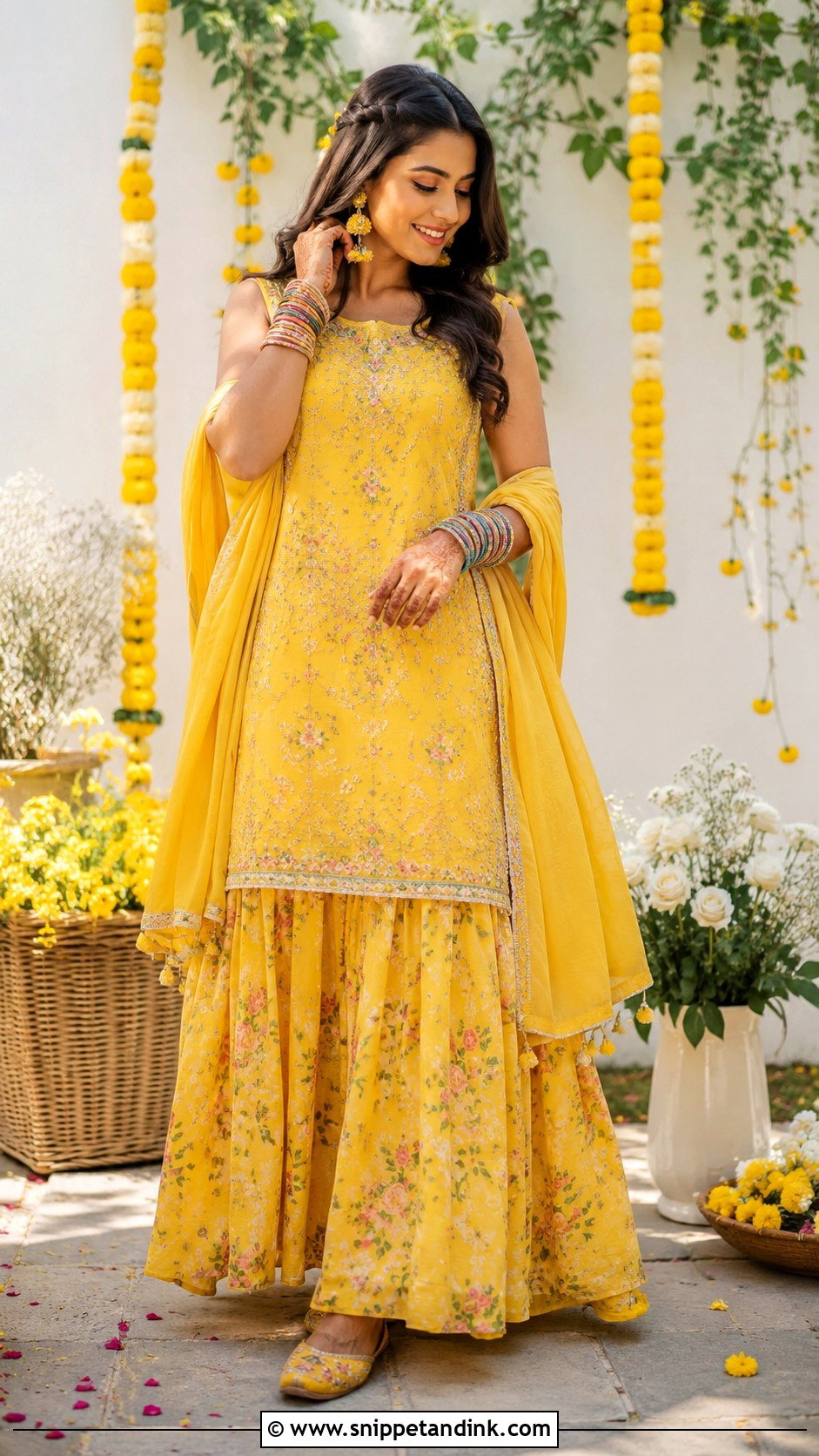
A straight kurta over a flowing skirt is the most practical set here, and it’s the one brides most often wear again. I look for a knee-length kurta with side slits deep enough to sit cross-legged, a defined neckline and light embroidery at the cuffs. The skirt, matching or a contrasting floral, needs enough room for sitting and dancing. Slightly fitted shoulders stop the layering from looking shapeless, which is the usual pitfall with this combination. Wear the dupatta over both shoulders or pin it down one side, and keep to small floral earrings, colored bangles and embroidered juttis. You get more coverage than a cropped lehenga blouse allows, and afterwards the kurta and skirt work as separates.
14. Yellow Phulkari Haldi Suit
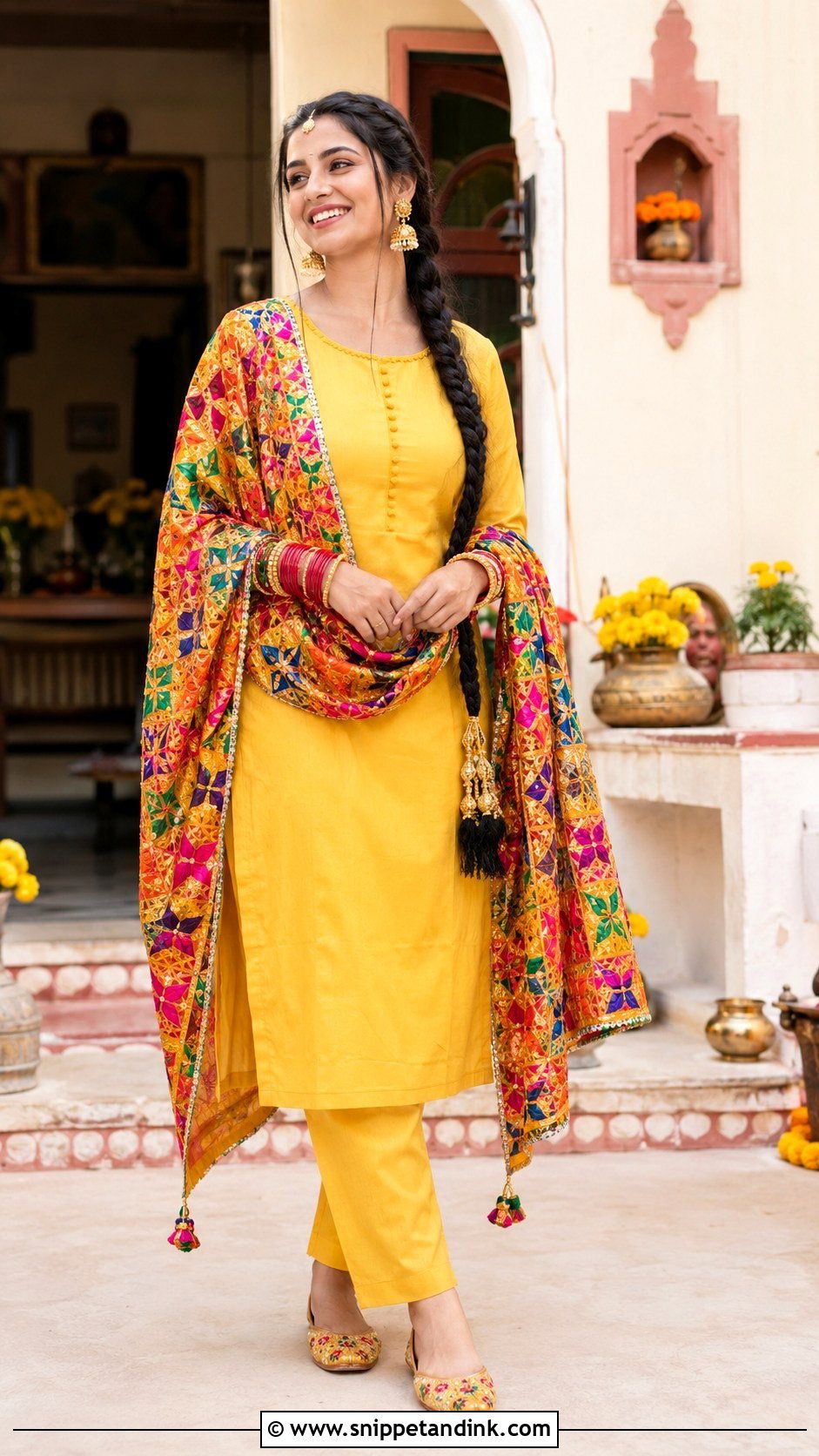
Bright Phulkari embroidery carries an outfit on its own, so I keep everything underneath it plain: a simple yellow kurta, straight pants, then a Phulkari dupatta worked in pink, orange, green and red. Traditional Phulkari is darned from the reverse of the cloth in silk floss, which makes it dense and a little heavy, so wear it over one shoulder with the other end secured at the wrist or waist. Gold earrings, bright bangles and Punjabi juttis suit it, and a long braid with a small paranda makes the regional reference clear. Turmeric on silk floss is very hard to shift. If the dupatta is an heirloom, take it off before the paste comes out and put it back on for the photos afterwards.

15. Yellow Banarasi Saree Haldi Outfit
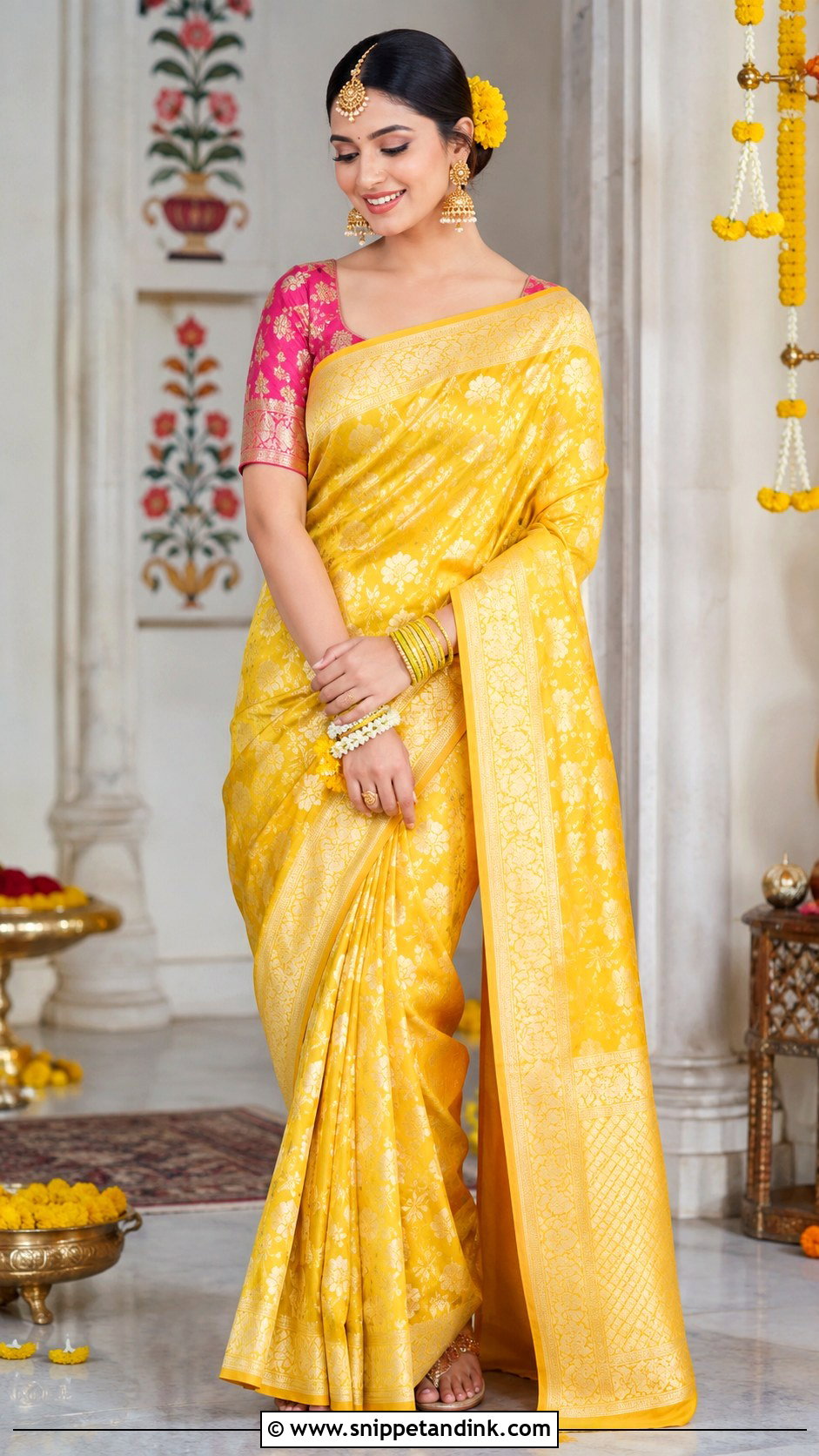
A yellow Banarasi gives the richest, most traditional look on this list, but please don’t wear a full bridal-weight Banarasi to sit on the floor for an hour. I’d choose a lighter weave with small gold buttis. Zari is metallic thread, and turmeric paste plus water can dull it, so keep the motifs small enough that one mark won’t spoil the effect. Contrast it with a pink, green or orange blouse, pleat neatly and pin the pallu at the shoulder with enough slack to sit. Temple-style earrings, glass bangles, a small gold maang tikka and flat gold sandals complete it. A center-parted bun with flowers suits an indoor family ceremony.
16. Yellow Chikankari Haldi Lehenga
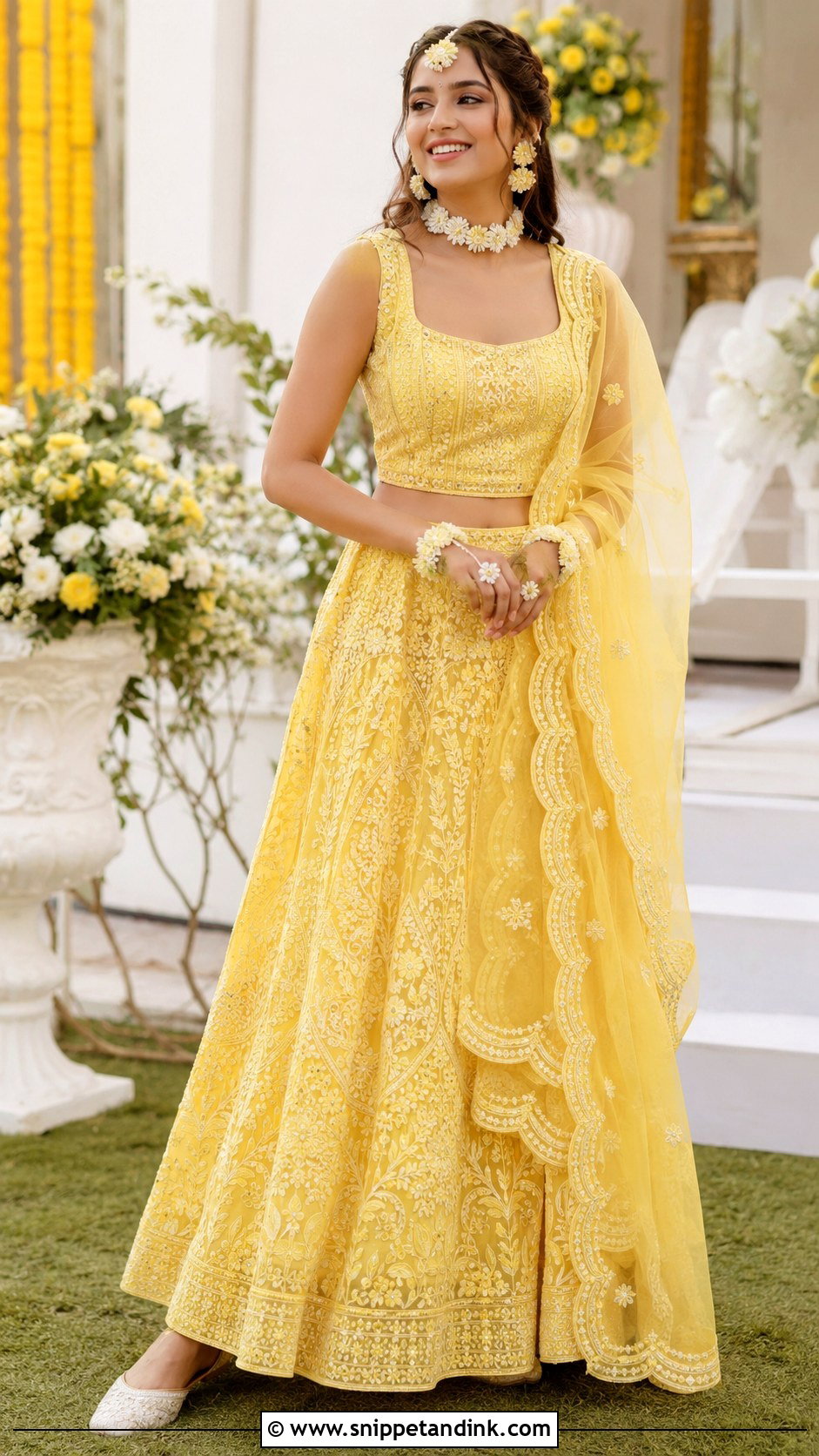
Chikankari is shadow embroidery done in fine thread on light cotton or georgette, and it gives texture without shine. A lemon-yellow skirt with tonal work, a supportive matching blouse and a sheer scalloped dupatta keep the whole set soft. Because the embroidery is subtle, this is one outfit where I add a floral choker, matching earrings and a small maang tikka so it reads as bridal. Check the lining before anything else. Chikankari fabric is sheer, and a cheap polyester lining turns sticky on a warm morning, so ask for cotton. Ivory juttis or low block heels, then a loose braid or low textured bun. Brides who find mirror work too loud usually settle here.
17. Yellow Jumpsuit And Cape Haldi Outfit
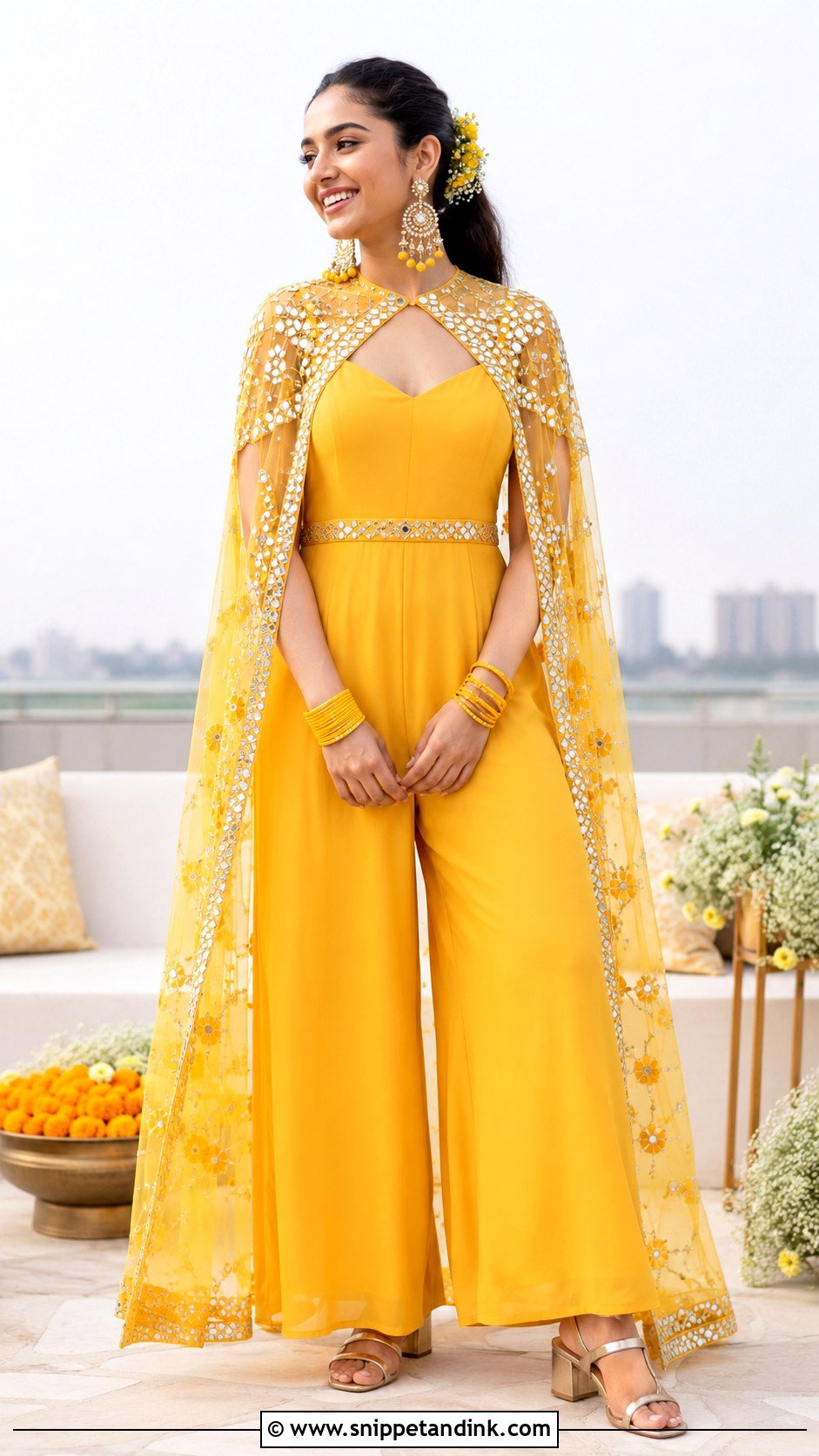
A tailored yellow jumpsuit is the boldest swap on this list, and it works best for brides who already wear jumpsuits and know how one fits them. Wide legs and a defined waist flatter most frames, and the bodice has to be secure enough that you never adjust it while relatives lean in. The first thing I ask is how it fastens. A back zip you can’t reach becomes a real problem when you need the bathroom after an hour of paste and water, so look for a side zip or a wrap front. Layer a sheer embroidered cape or light jacket with floral motifs or a gota border, then add statement earrings, slim bangles, metallic block heels and a sleek ponytail with a floral clip. Hem it to clear the floor in the shoes you’ll actually wear.
18. Orange And Yellow Ombre Haldi Lehenga
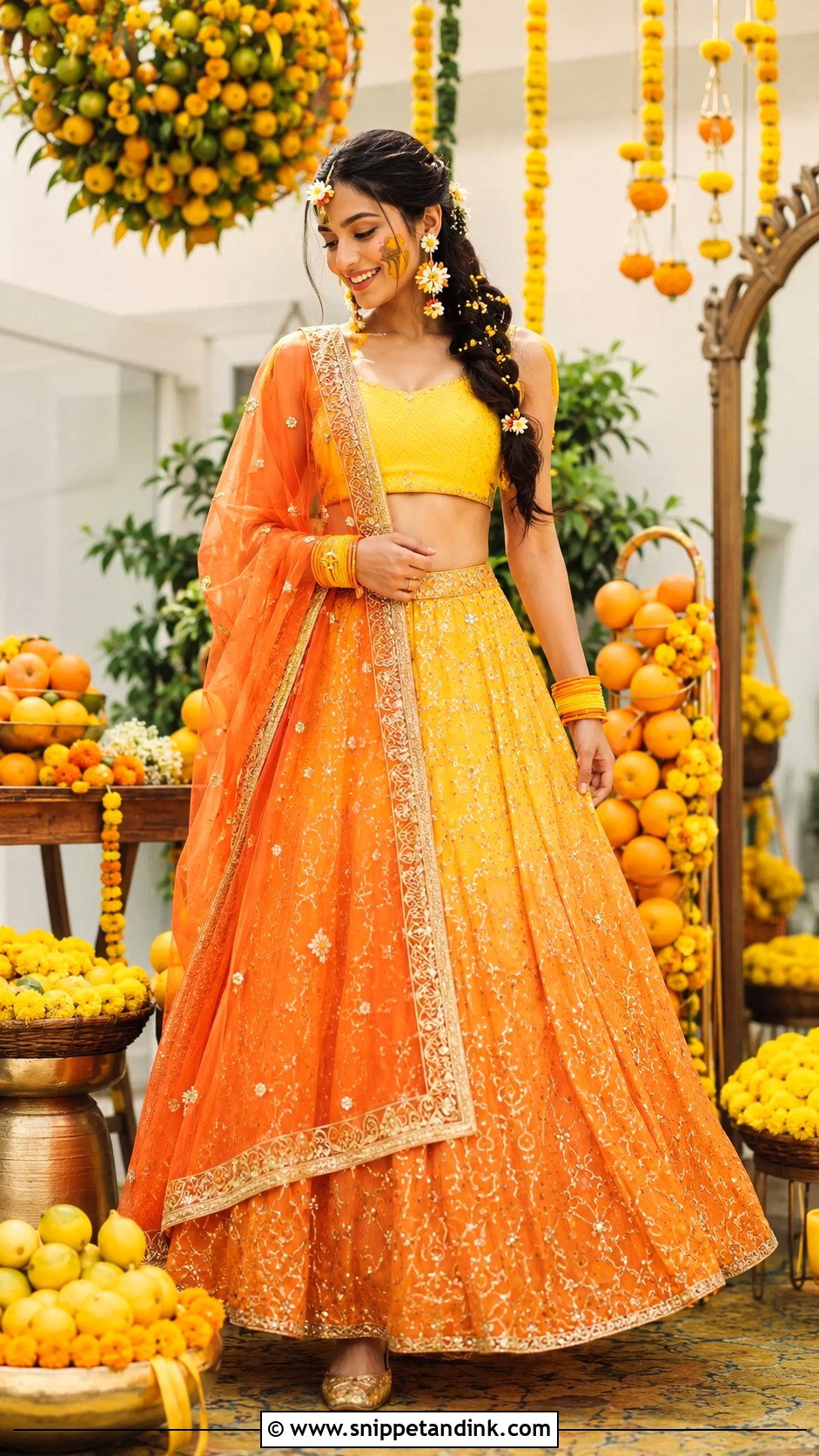
Ombre lehengas shade from pale yellow at the waist to marigold or orange at the hem, and they read clearly from a distance, which suits outdoor photography. Keep the blouse solid yellow and the dupatta light orange so the gradient stays visible; a heavily embroidered dupatta would cut straight across it. Gold threadwork, small mirrors or a narrow border can add definition. Dyed gradients sometimes bleed when wet, so I’d ask the maker whether the fabric is colorfast before turmeric water gets anywhere near it. Floral earrings, orange bangles, gold juttis and a soft braid with yellow flowers finish the look against marigold or citrus décor.
19. Simple Yellow Cotton Saree Haldi Outfit
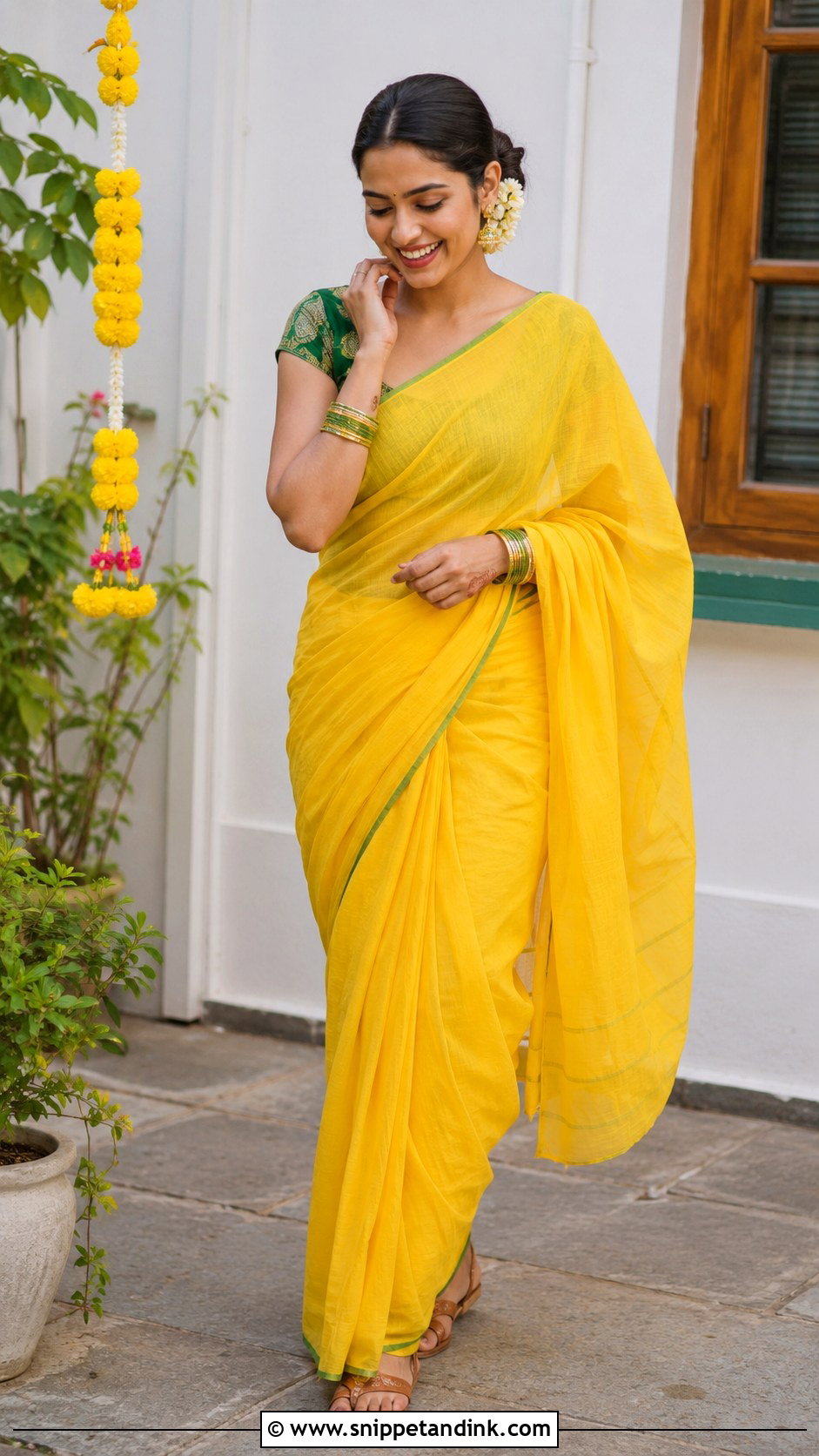
Sometimes the simplest outfit is the right one. A breathable yellow cotton saree suits an intimate Haldi at home, especially in families where the turmeric arrives with oil, water and a great deal of enthusiasm. Pair it with a contrast blouse in pink, green or orange. Cotton holds its pleats once pinned, and I’d shorten the pallu so it doesn’t trail across a wet floor. Fresh-flower earrings, glass bangles, a tiny bindi and flat sandals are all it needs, with the hair braided or in a low bun. A cheap, washable saree means you can stop worrying about stains and actually enjoy being covered in haldi.

20. Yellow Skirt And Jacket Haldi Set
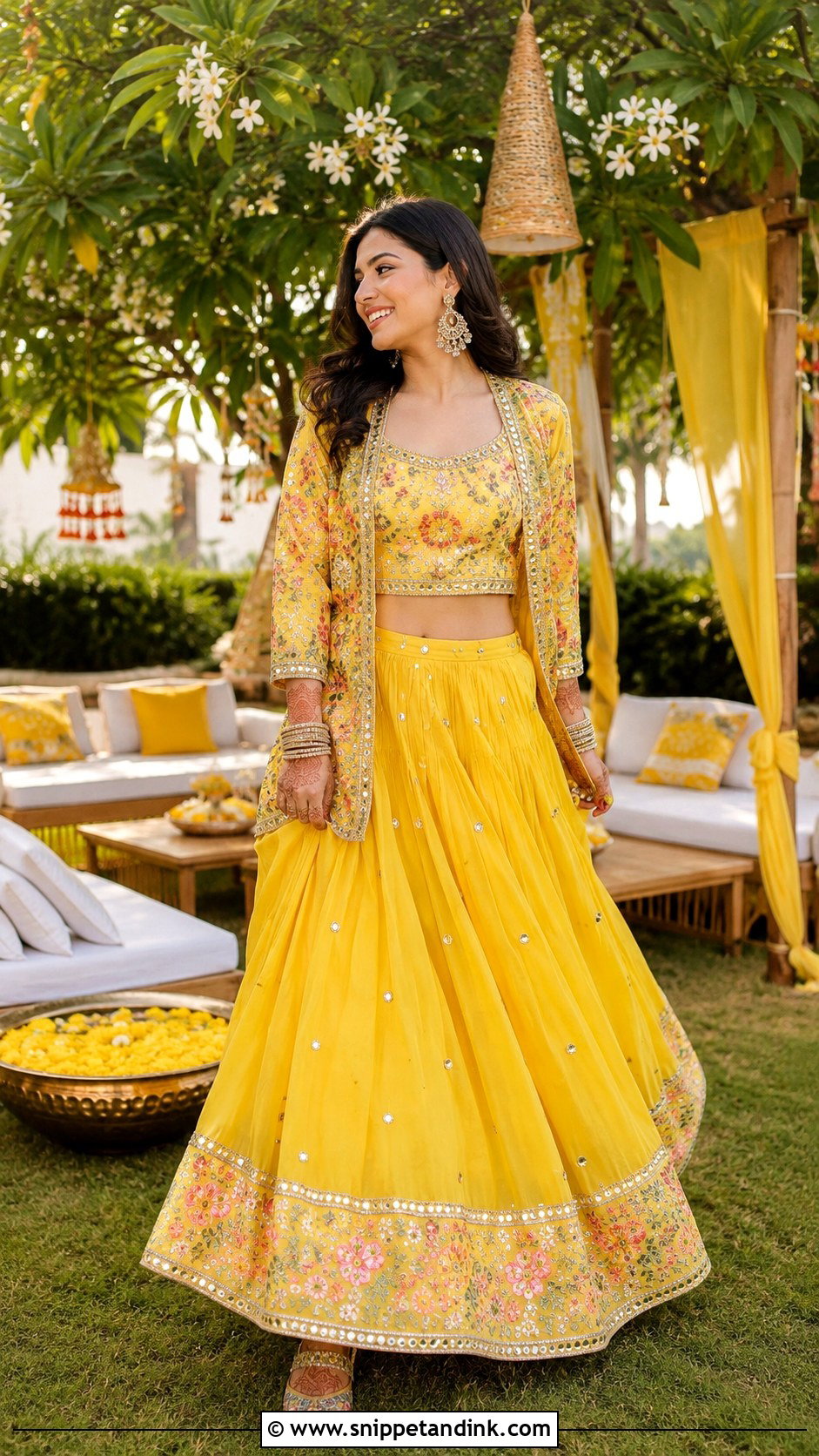
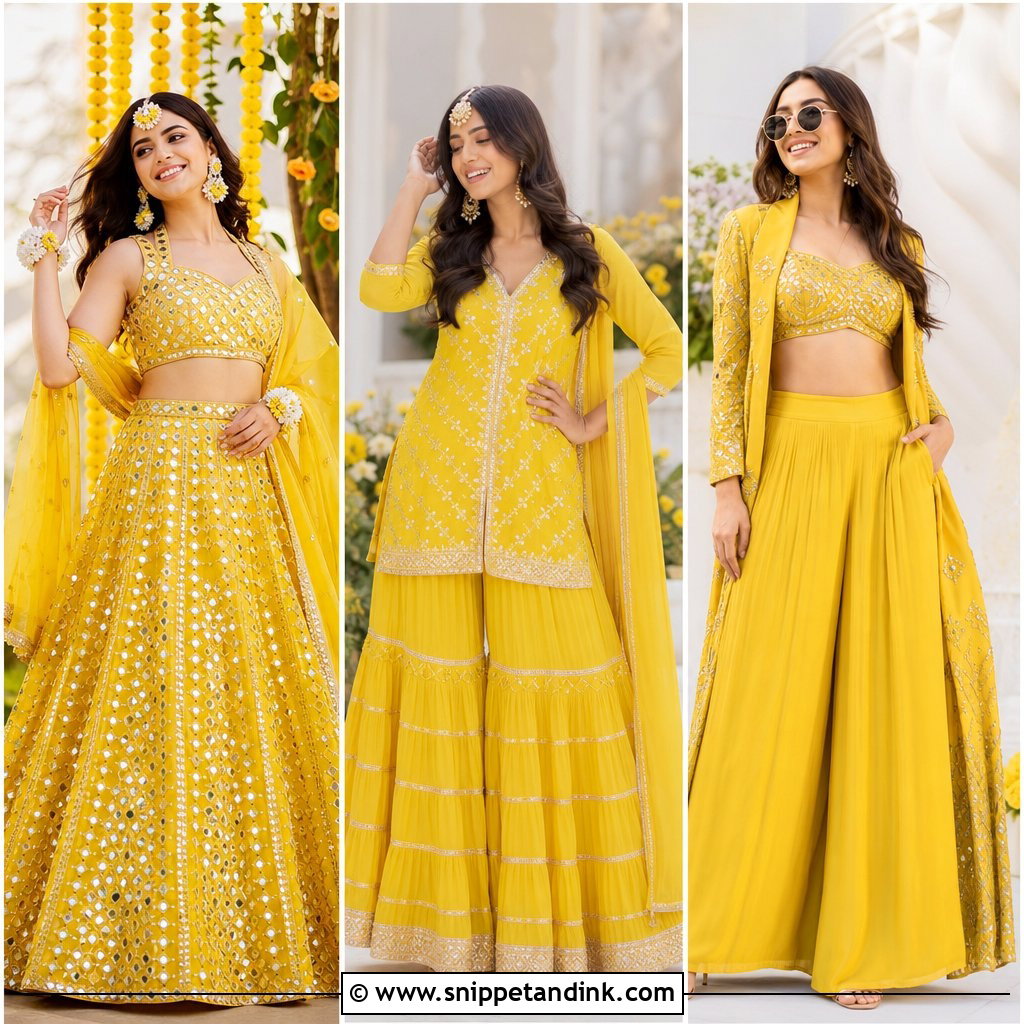
A skirt, blouse and cropped jacket is the most structured fusion set here. Start with a flowing yellow skirt and a fitted blouse in the same shade, then add a short jacket with colorful flowers, mirror work or gota edging. The jacket replaces the dupatta and gives coverage, though long sleeves will catch paste at the wrists, so I’d go for three-quarter length. Wear it open over a good neckline or fasten it at the waist for a sharper line. Statement earrings, stacked bangles and juttis or low heels are enough, and every piece rewears separately long after the wedding.
The Second Outfit Nobody Remembers to Pack
In many families the Haldi ends with a bath, and then the day carries on, sometimes straight into mehndi or a sangeet. Brides spend weeks on the Haldi outfit and forget what they’ll put on after it. I always build a small change bag for that hour.
- A loose cotton kaftan or kurta set that slips on over damp hair without catching.
- An old dark towel and slippers you won’t mind staining.
- A plastic bag or old pillowcase for the wet, yellow outfit so it doesn’t mark anything else.
- Gentle cleanser and a little oil, since turmeric lifts off skin far more easily with oil than with water alone.
If your next function follows within a couple of hours, tell your makeup artist and hairstylist about the Haldi timing in advance. Skin often keeps a faint golden tint for a day, which is part of the tradition, and a good artist will adjust the base shade rather than fight it.
Dressing for a Morning That Ends in Turmeric
Out of twenty options, the right Haldi outfit is the one you stop thinking about once the ritual starts. That usually means breathable fabric, every drape secured, shoes you can stand in and a hairstyle that won’t need fixing. Floral jewelry and bangles carry the festive feeling without adding weight. Be realistic about stains: weigh what an outfit costs, how pale it is and whether you’d wear it again. If you love something delicate, wear it for the portraits and change before the paste comes out. Then sit back and let your family turn you gloriously yellow.
You'll Like These Ideas:



Leave a Reply