
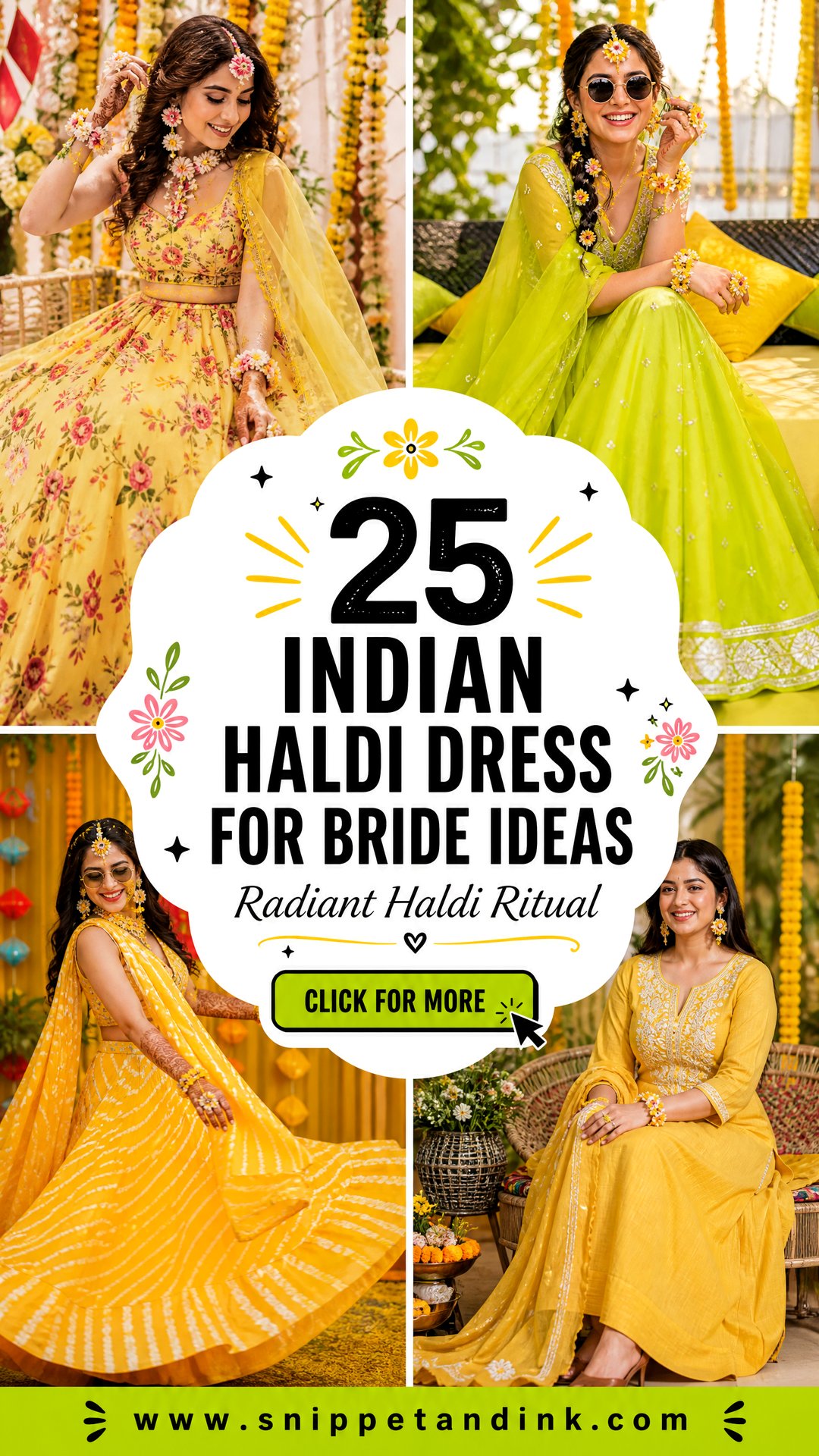
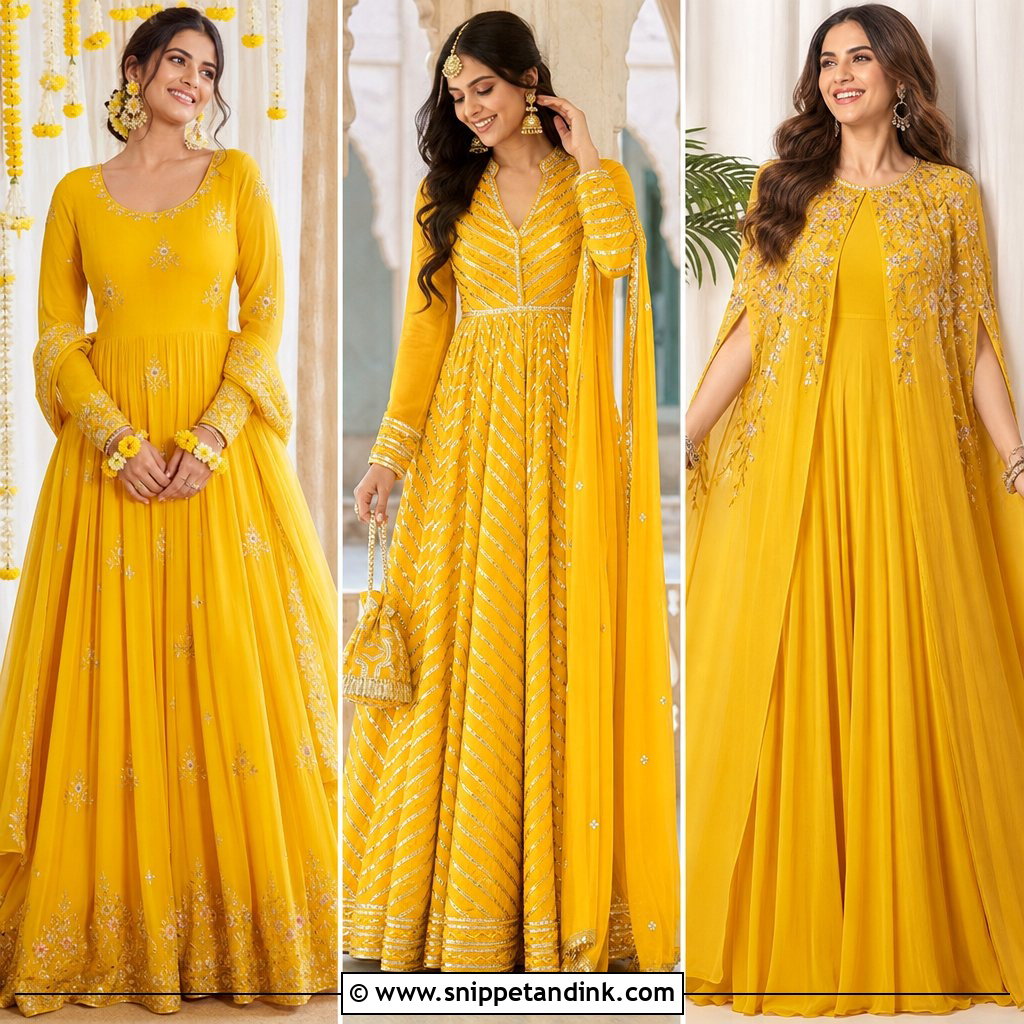
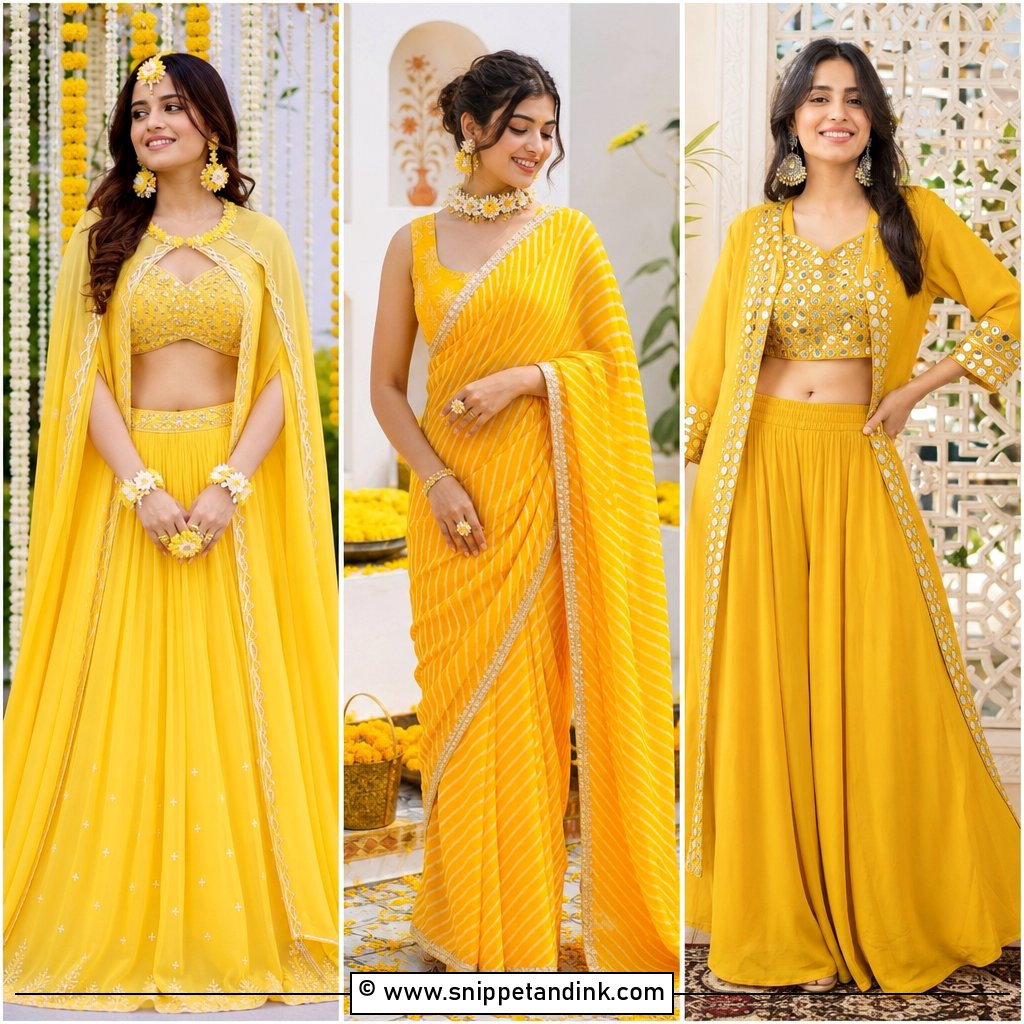
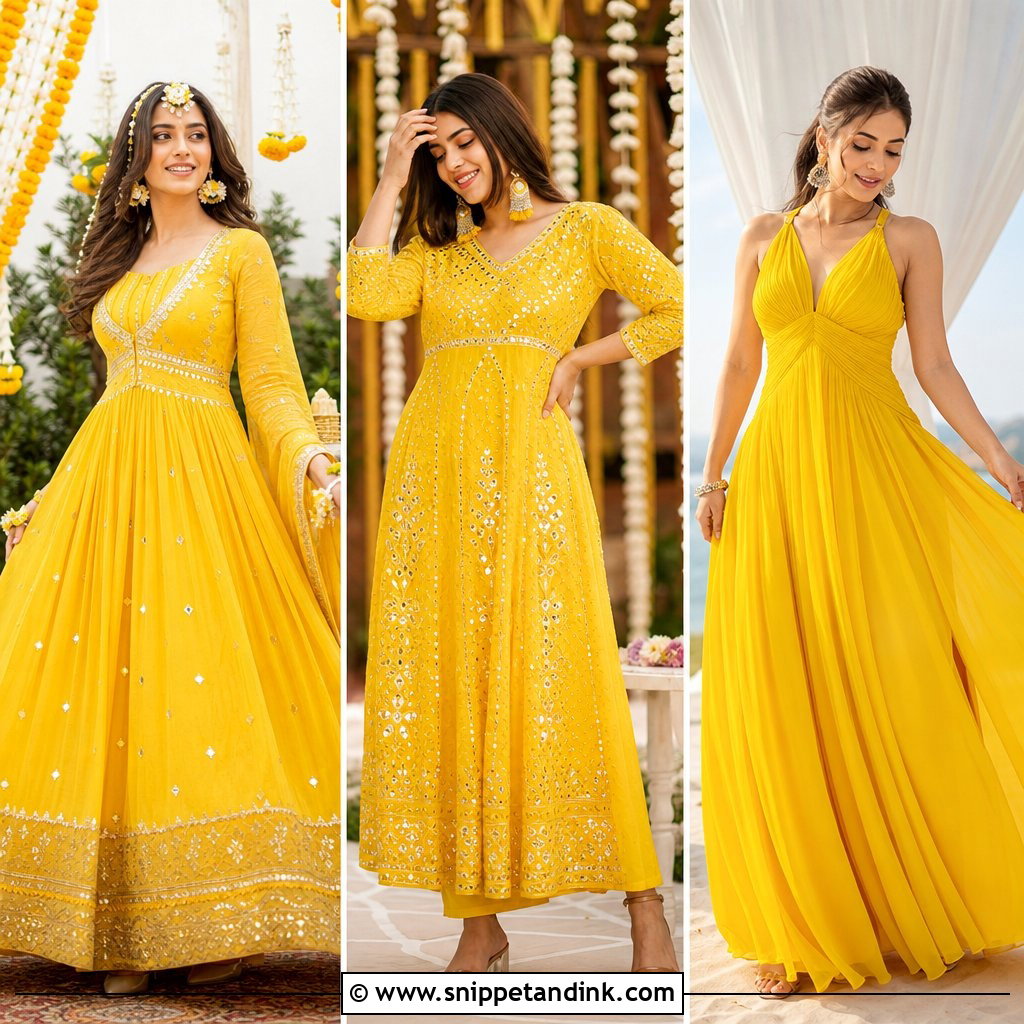
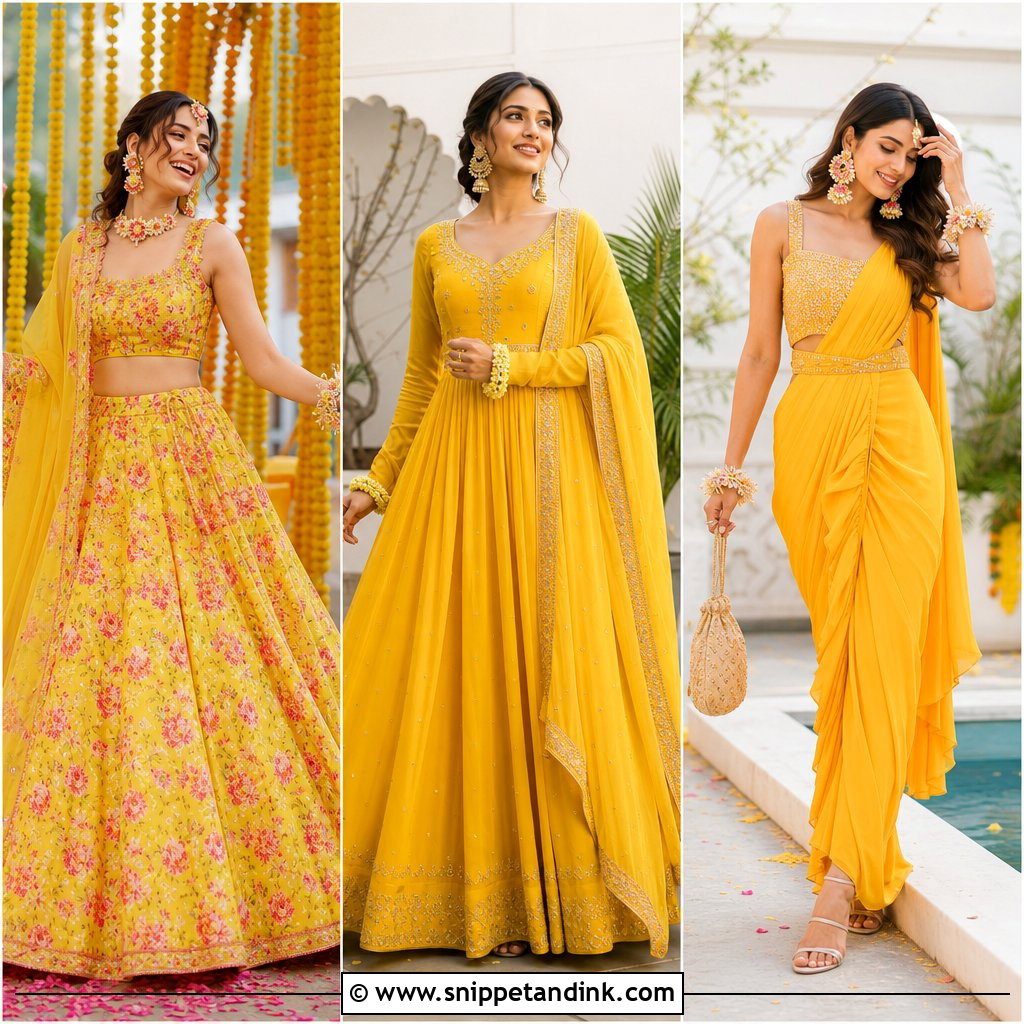
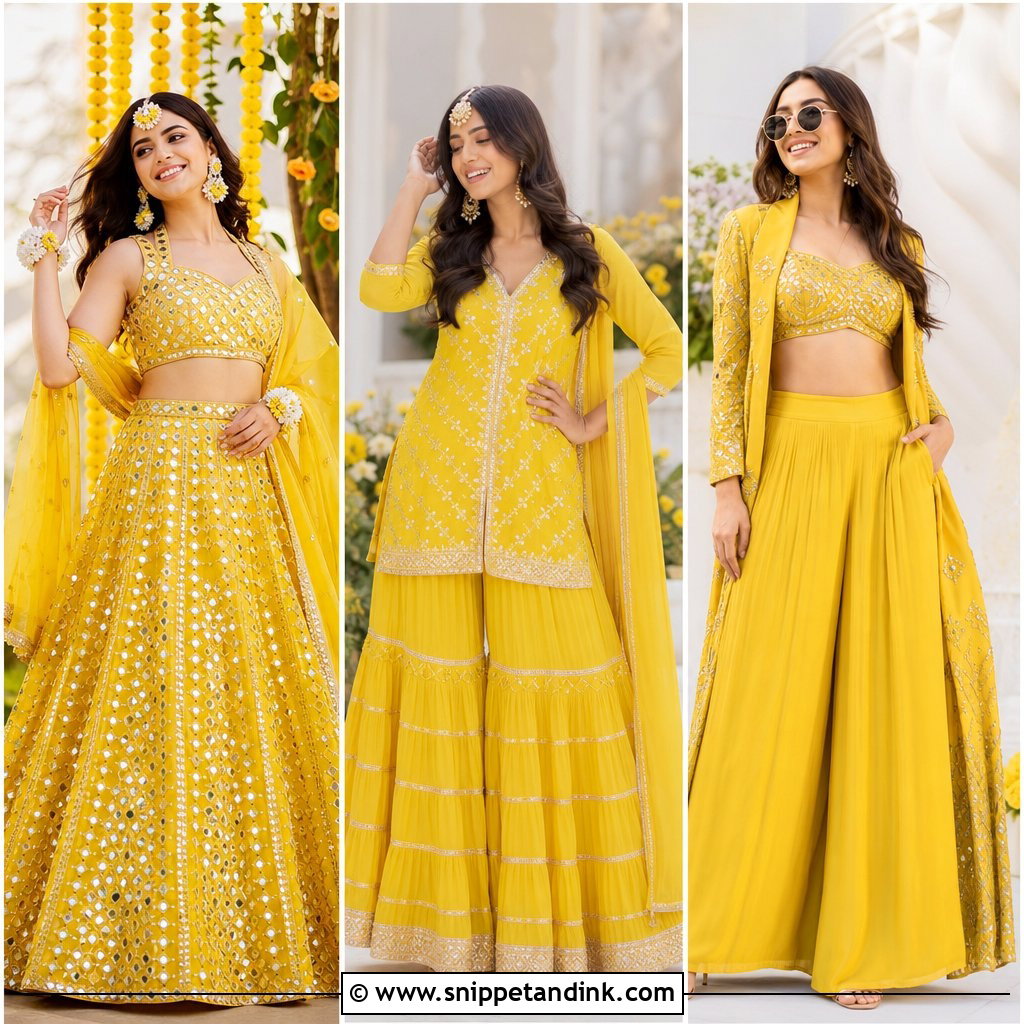
A haldi outfit has one job most bridal clothes never face: it’s going to be covered in wet turmeric paste by the people who love you most. So when I style a bride for haldi, I think about fabric, stains and movement before I think about embroidery. Yellow lehengas, light sarees and sharara sets are the usual starting point, with floral jewellery instead of metal. Mustard, ivory, lime, orange and soft pastels all have a place, and mirror work, ruffles and capes have made the ceremony far more playful than it used to be. Here are 25 haldi looks, with the practical notes I’d give you for each.
The Paste Always Wins, So Plan the Fabric Around It
Turmeric is a strong natural dye. It binds quickly to natural fibres, and on pale silk it can be permanent. So my first question at a haldi fitting isn’t about colour. It’s how heavily your family applies the paste, and whether you plan to wear the outfit again.
How the usual fabrics handle it
- Cotton and linen: stain fast but wash out best, especially when dried in direct sunlight, which fades turmeric.
- Georgette and synthetic blends: easier to rinse, and they dry fast if water is part of the ceremony.
- Pure silk and zari: hardest to rescue. Save these for outfits you don’t mind retiring.
Jewellery follows the same logic. Floral jewellery is the norm for a reason: it’s light and disposable. Pearls absorb turmeric and yellow permanently, and kundan settings trap paste in their crevices. If you wear real gold, rinse it with plain water afterward. On your feet, wear flats with some grip, since floors around the haldi seat get slippery.
1. Yellow Lehenga Haldi Dress for Bride
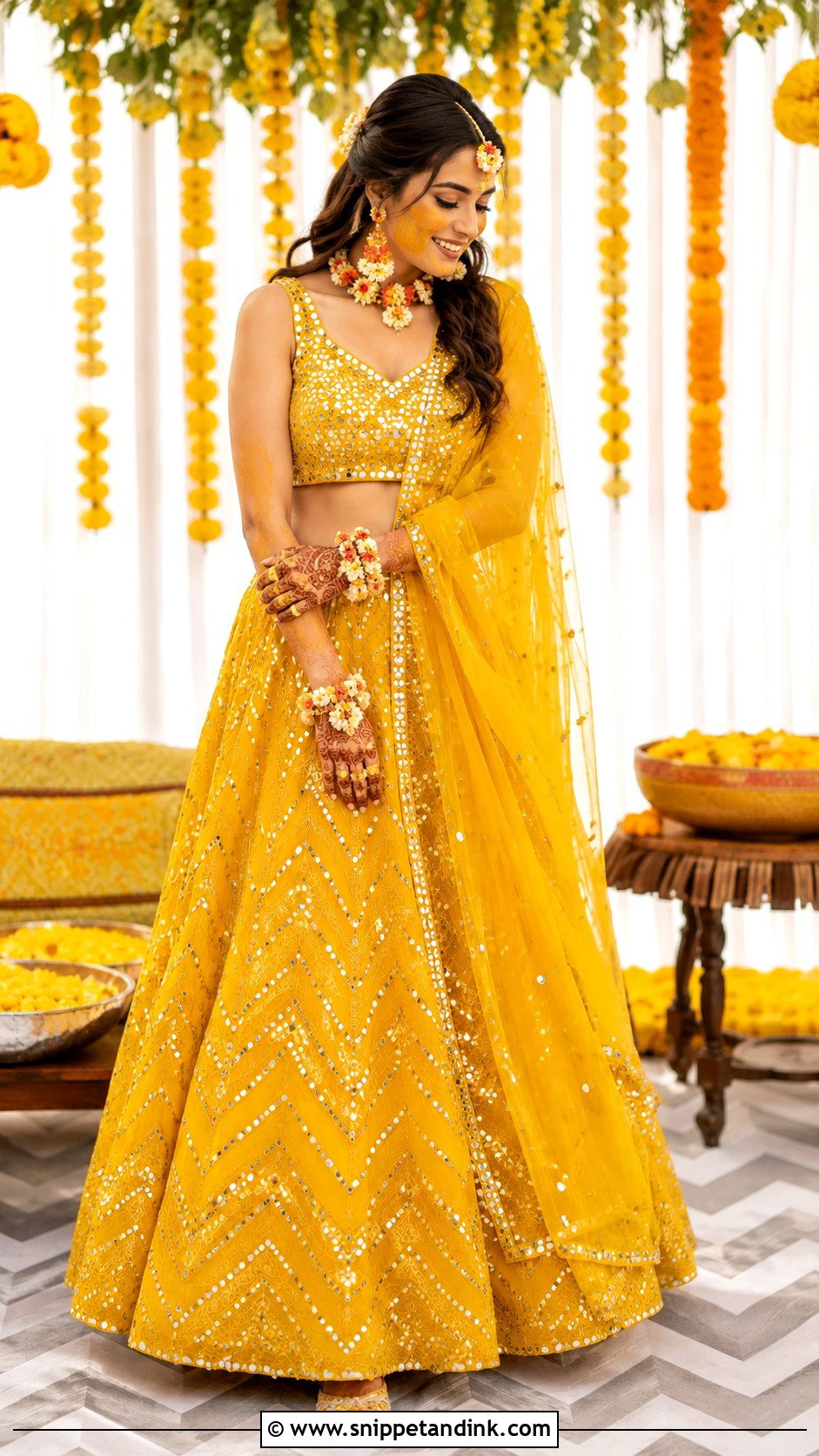
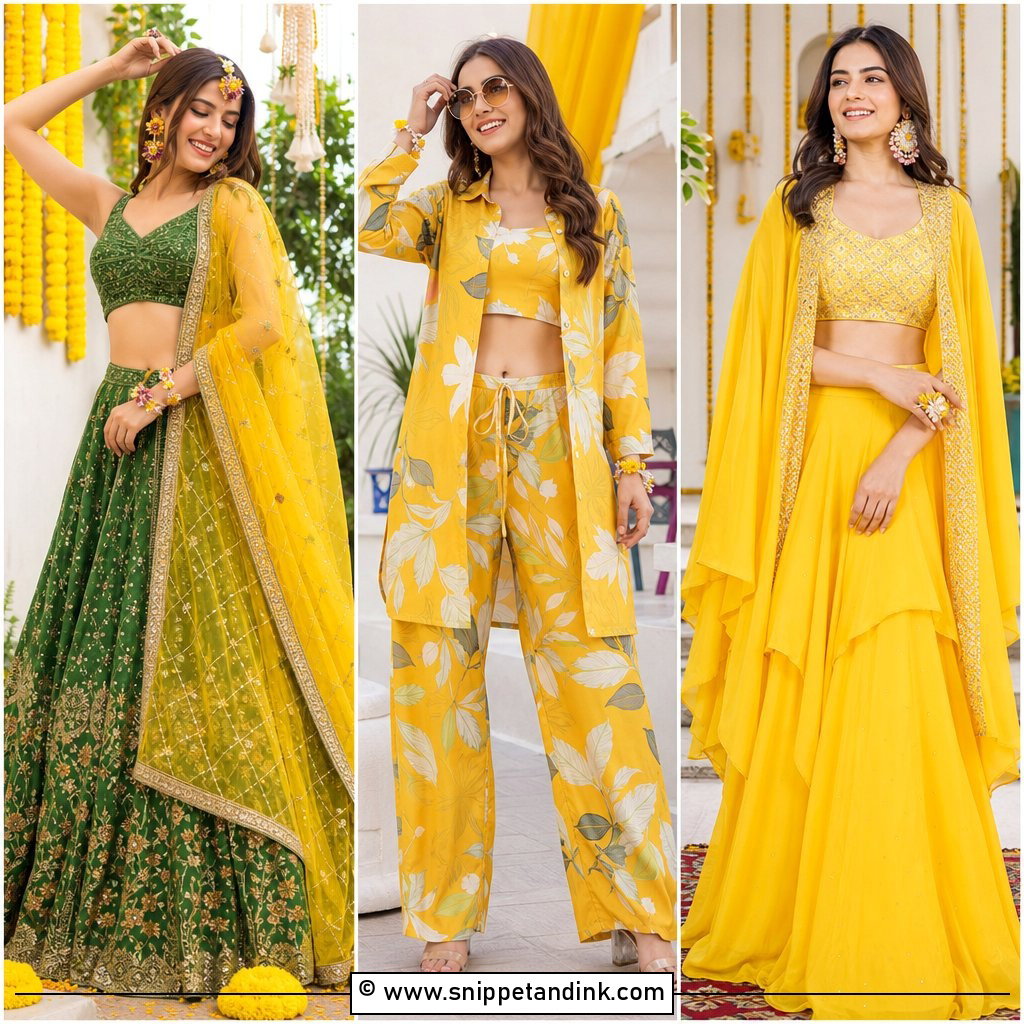
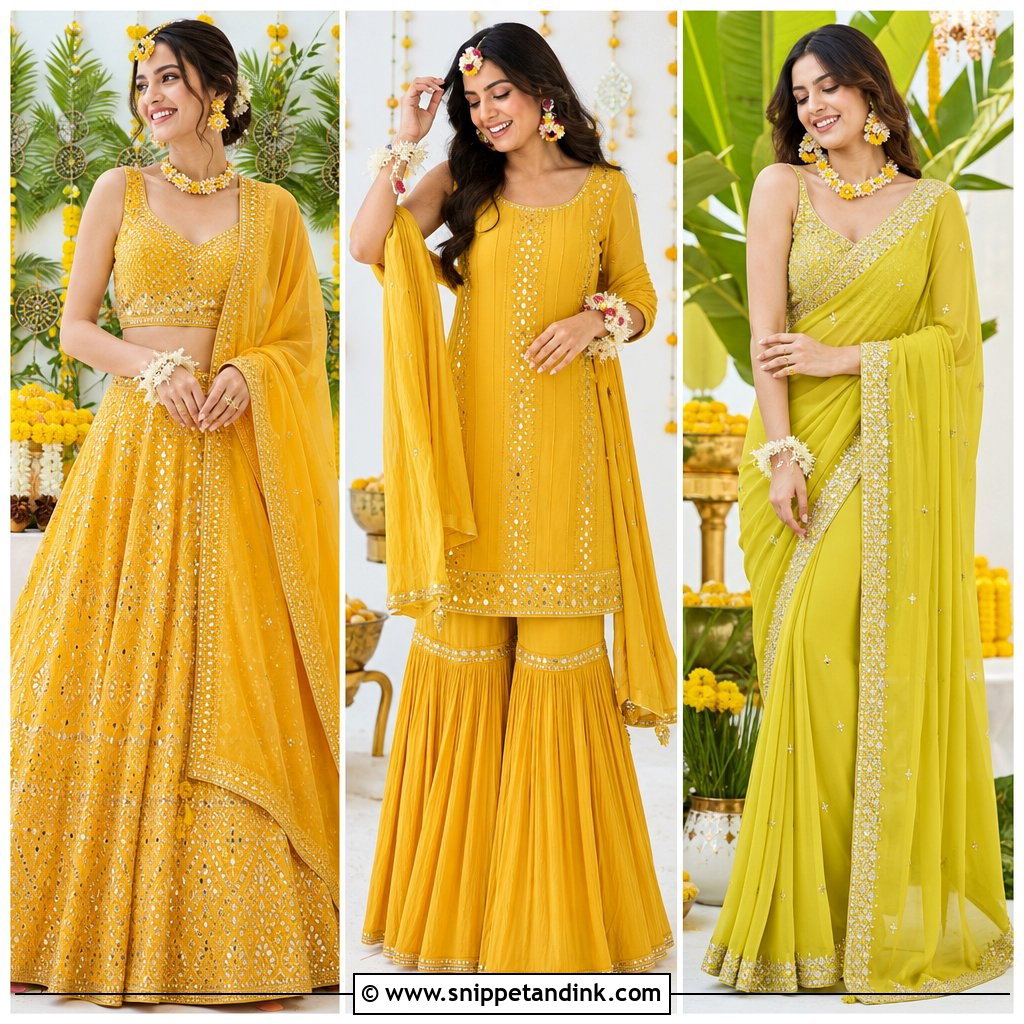
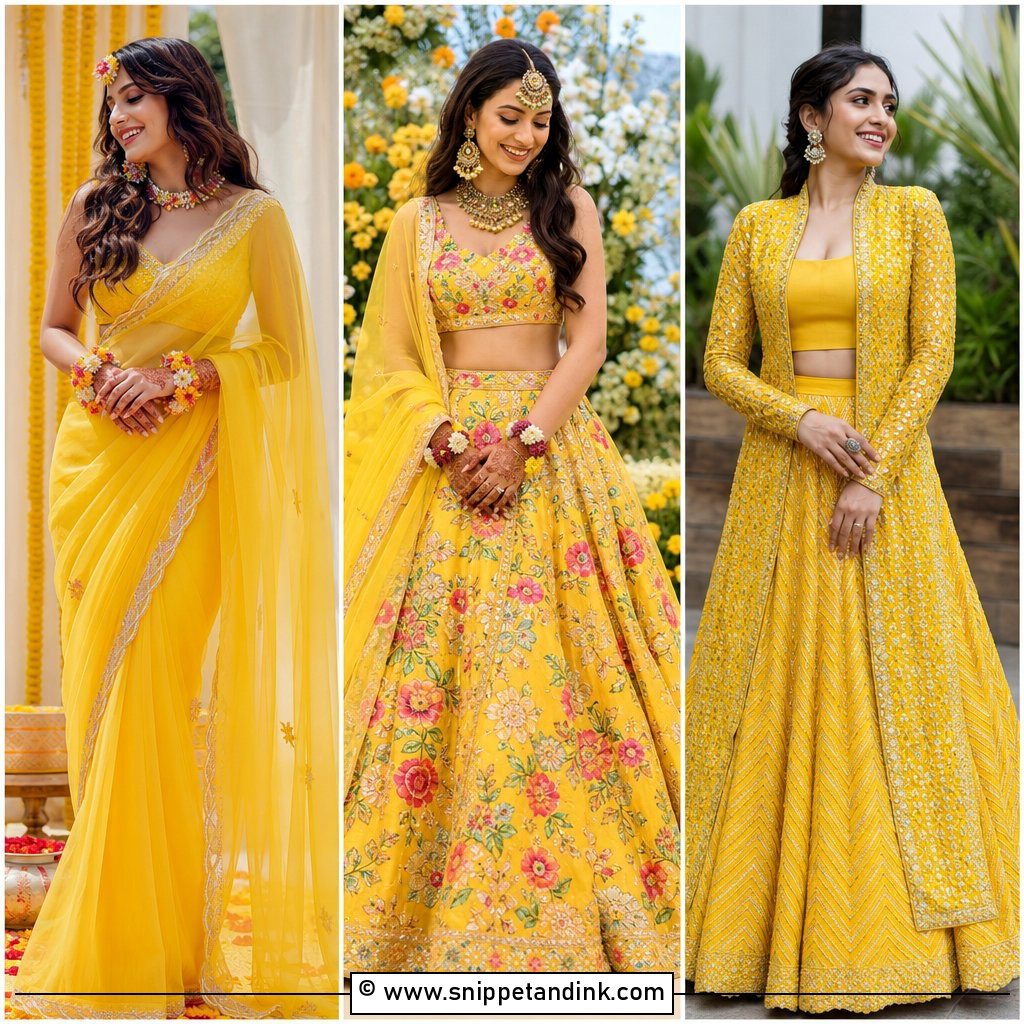
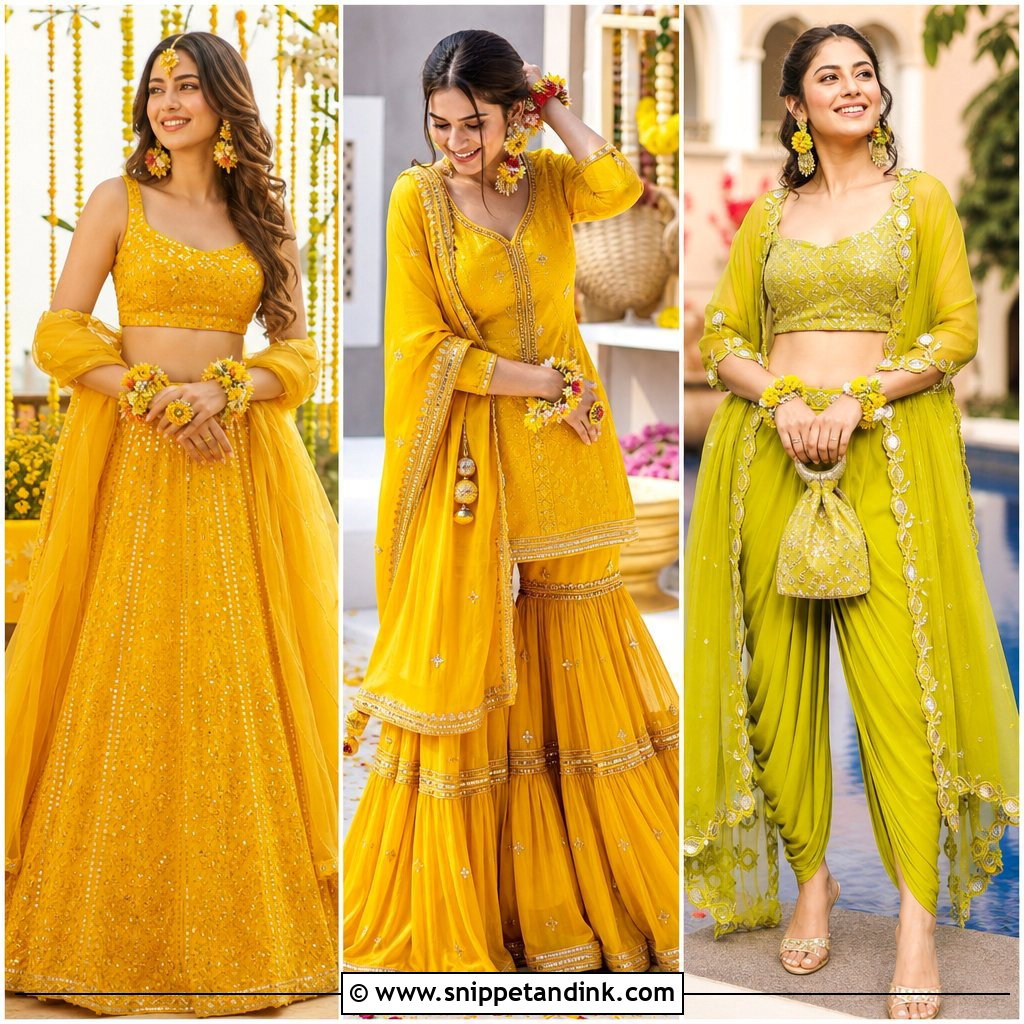
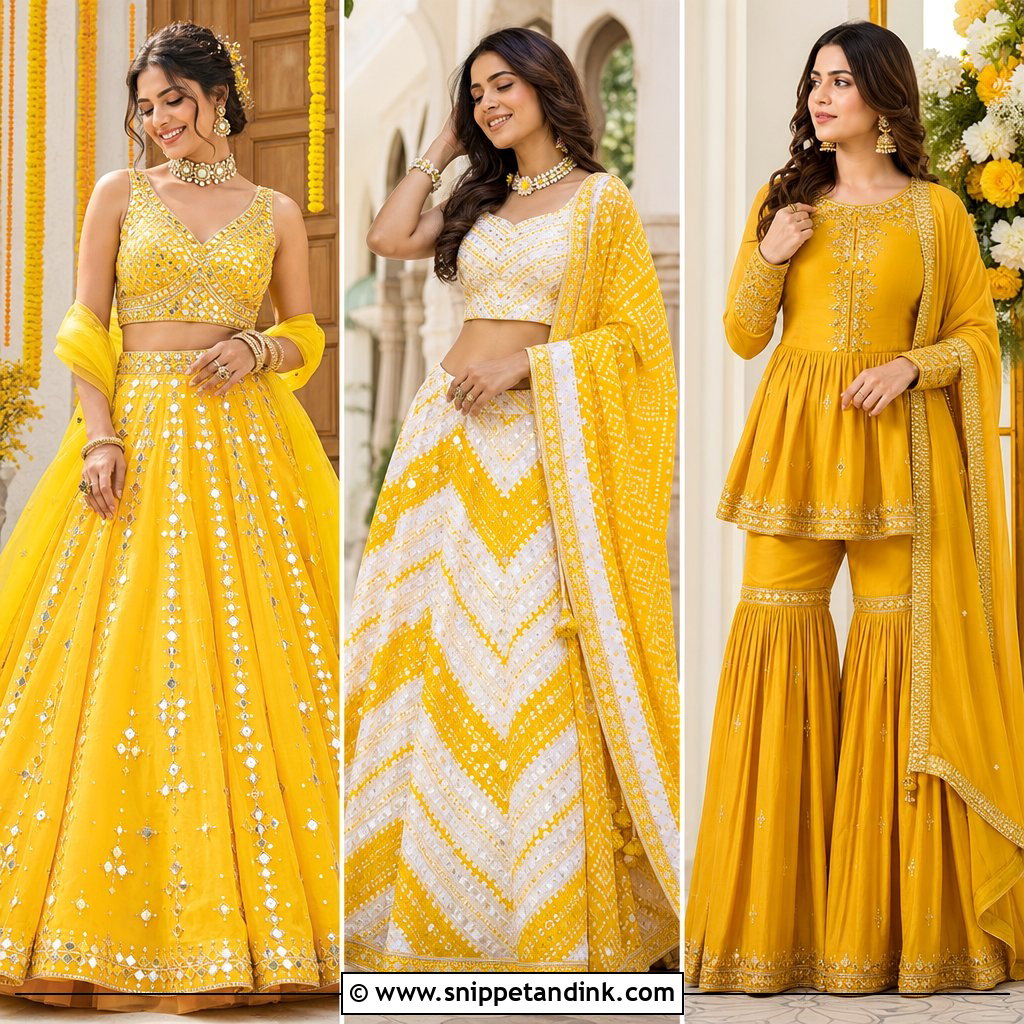
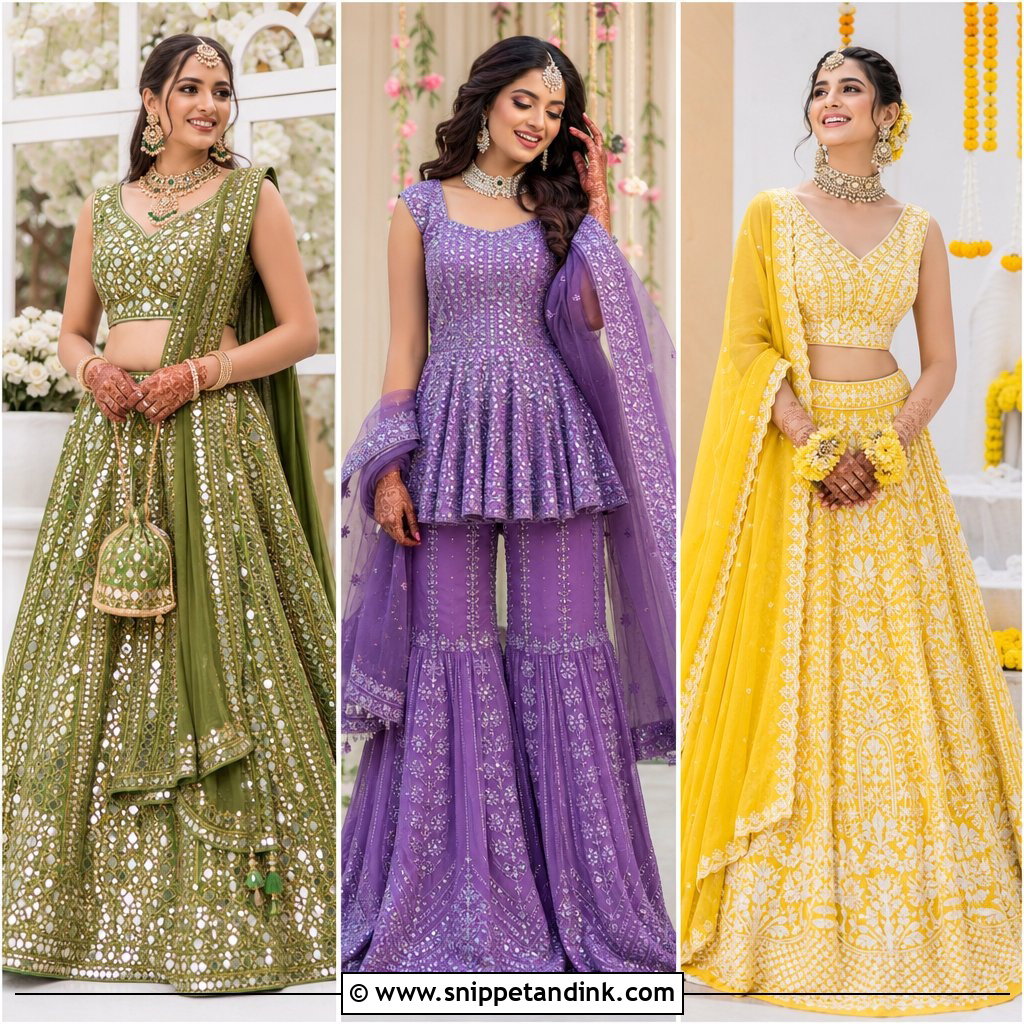
The yellow lehenga is the classic Haldi outfit for good reason, but weight is where brides go wrong. I’d pick georgette, organza or chanderi and keep the skirt under a few kilos, because you’ll be sitting low on a patla while relatives crowd around you. Mirror work or gota on the blouse gives enough shine. Pin the dupatta firmly at one shoulder; a loose one ends up in the paste bowl.
2. White And Yellow Lehenga Haldi Dress for Bride
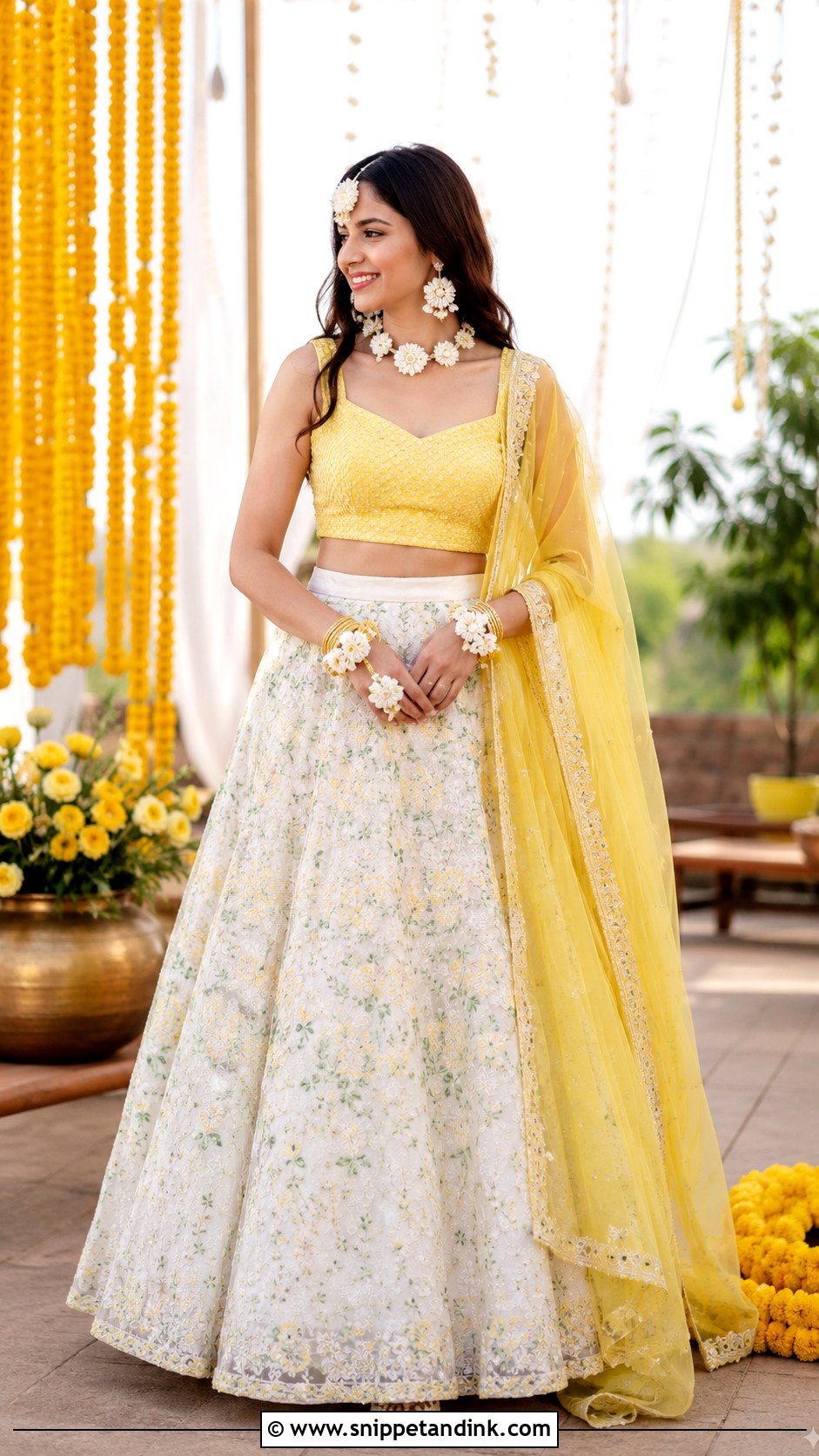
White with yellow embroidery lets you stand out in a room where every cousin is in yellow. A yellow blouse and sheer yellow dupatta keep it tied to the ceremony. The honest warning: the white skirt will stain, and turmeric on white is the hardest to hide. I’d only recommend this one if the family applies paste mostly to face, arms and feet, or if you’re happy to treat the skirt as a one-time outfit. Mogra in a loose bun suits it well.
3. Mustard Yellow Saree Haldi Dress for Bride
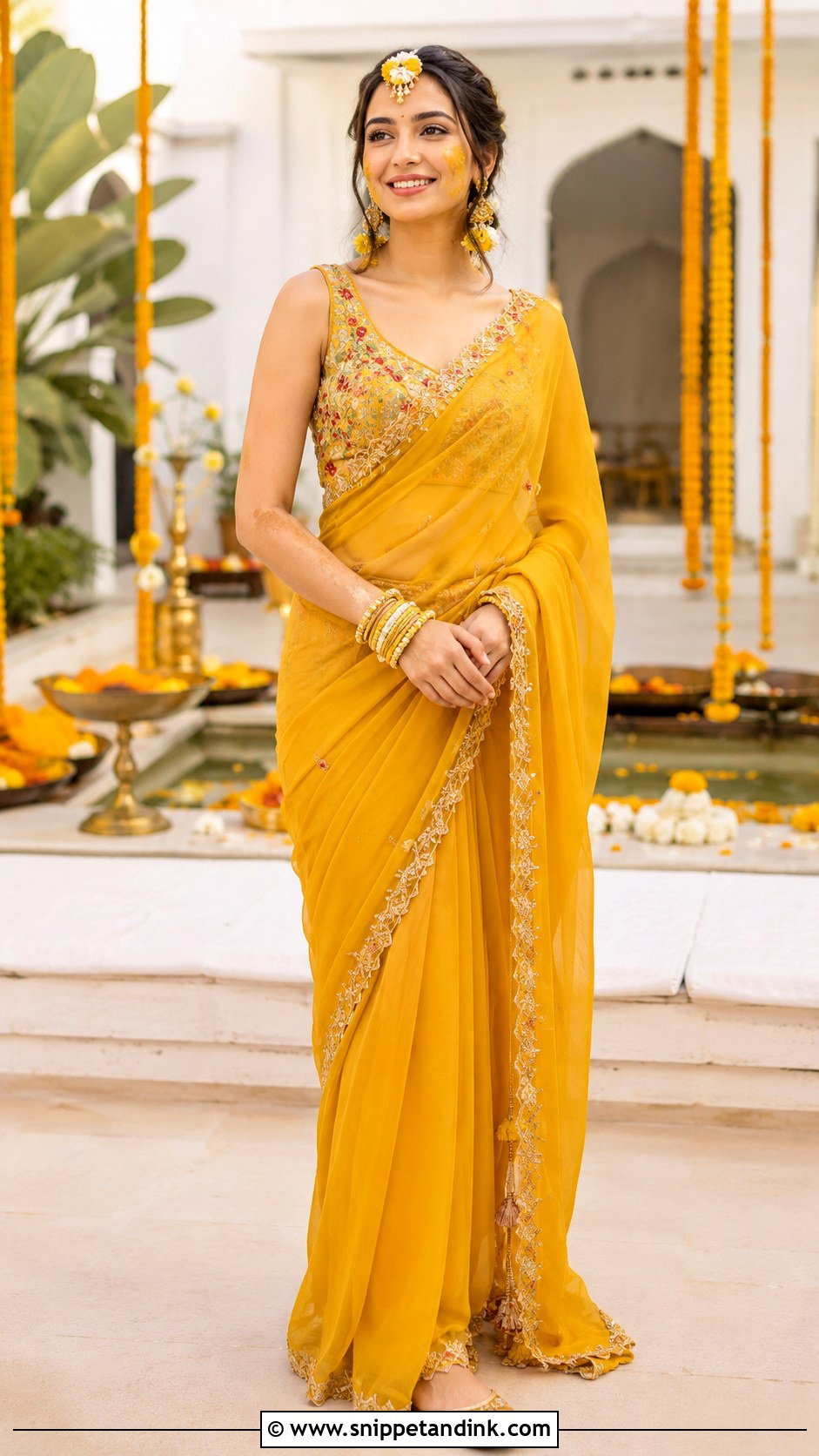
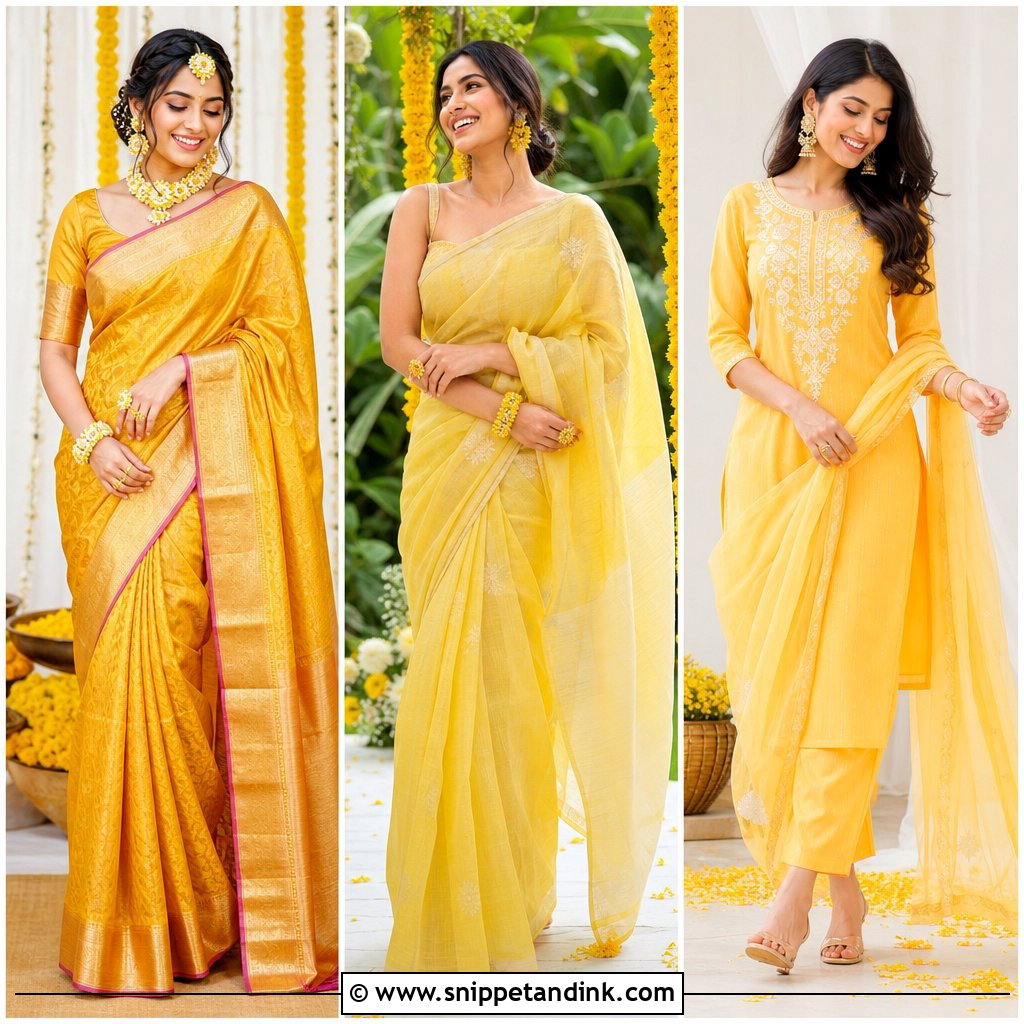
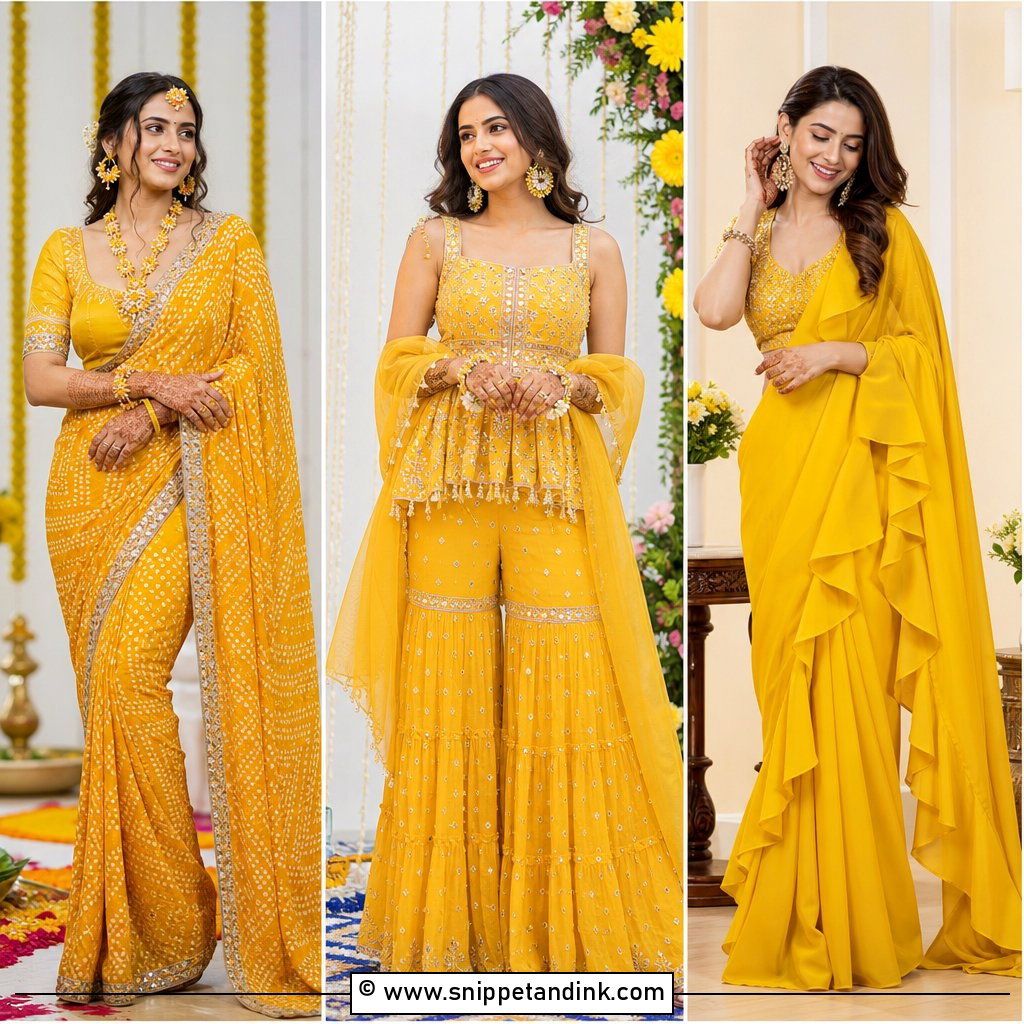
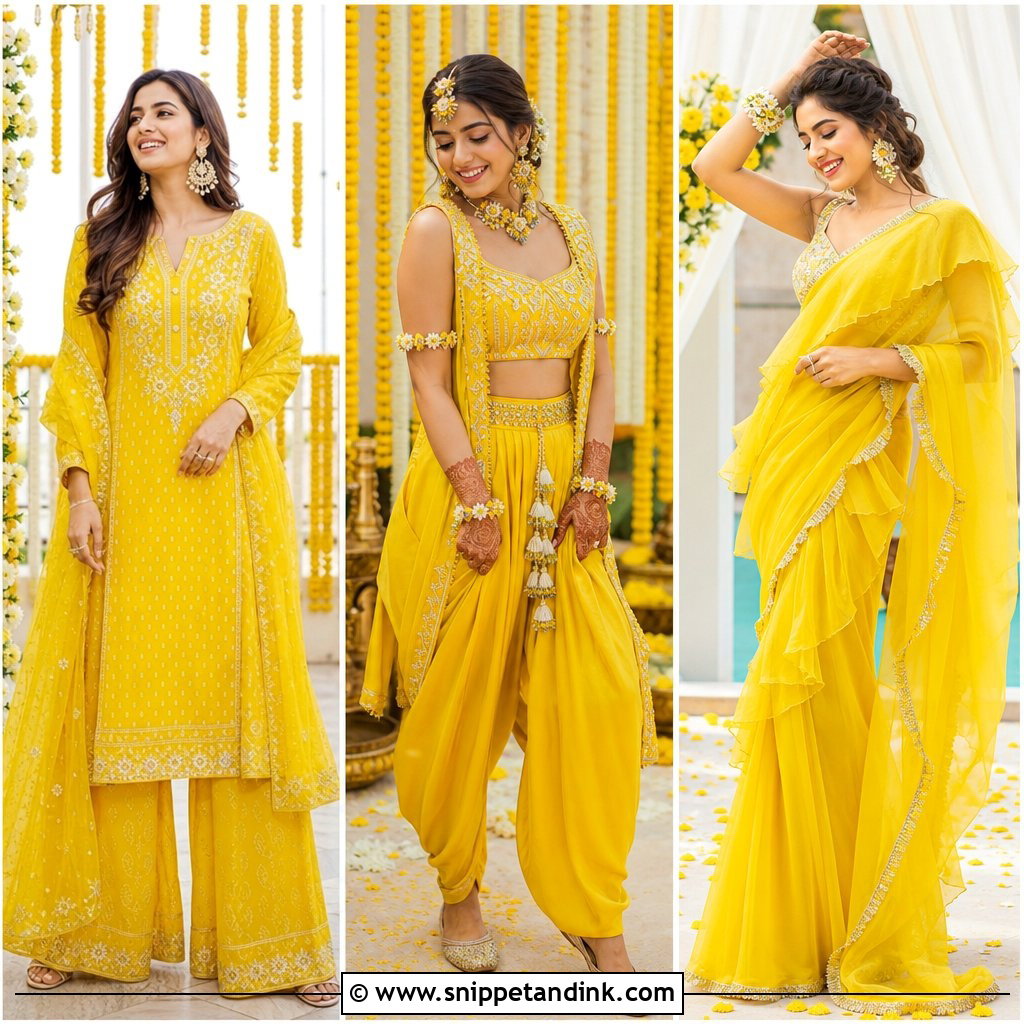
Mustard is kinder to most Indian skin tones than lemon yellow, and in a saree it reads traditional without the bulk of a lehenga. Chiffon or soft silk drapes easily, and a sleeveless or short-sleeve blouse leaves your arms free for the paste. I pin the pallu at the shoulder and again at the waist so it doesn’t drop into your lap. Kolhapuris or flat juttis, and fresh flowers in a centre-parted bun.
4. Floral Printed Lehenga Haldi Dress for Bride
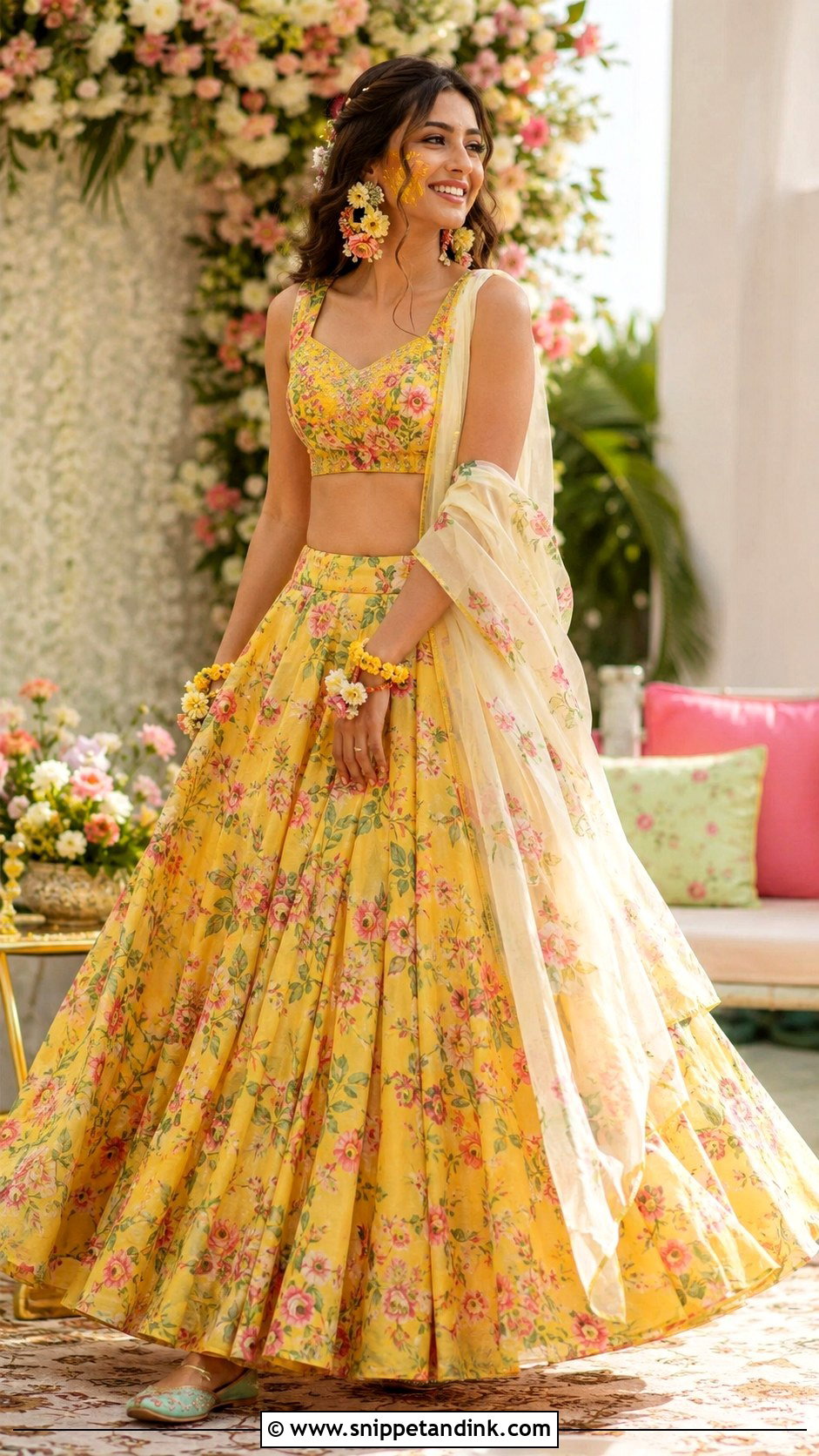
Prints are forgiving at haldi. A floral printed lehenga in yellow, pink and green hides paste splashes far better than a plain fabric does, which is the practical reason I like it. A cropped blouse and a light dupatta keep it airy outdoors. Add a mirror or gota border if you want it to read more bridal, and braid your hair so it stays out of the turmeric.
5. Yellow Sharara Haldi Dress for Bride
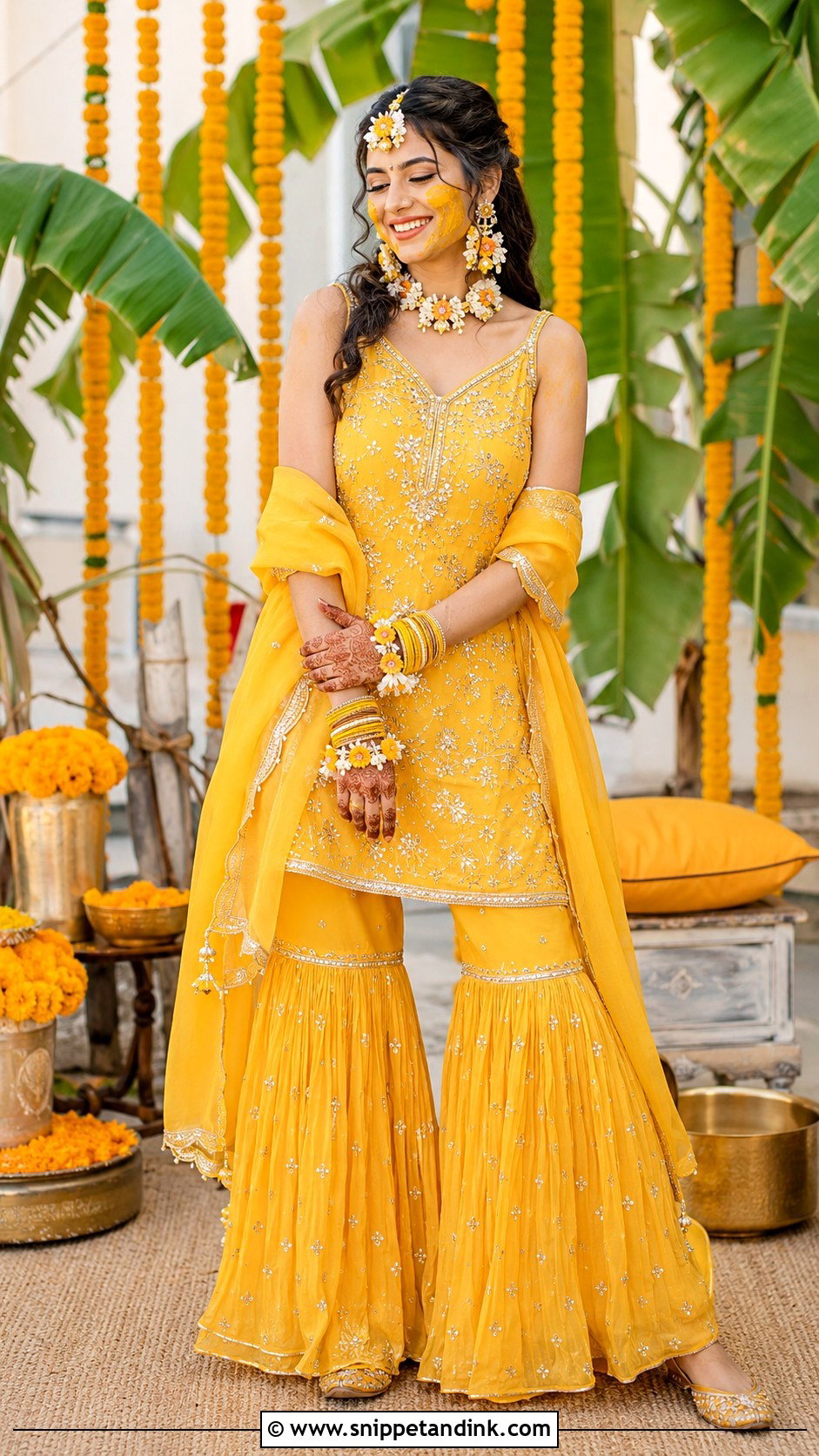
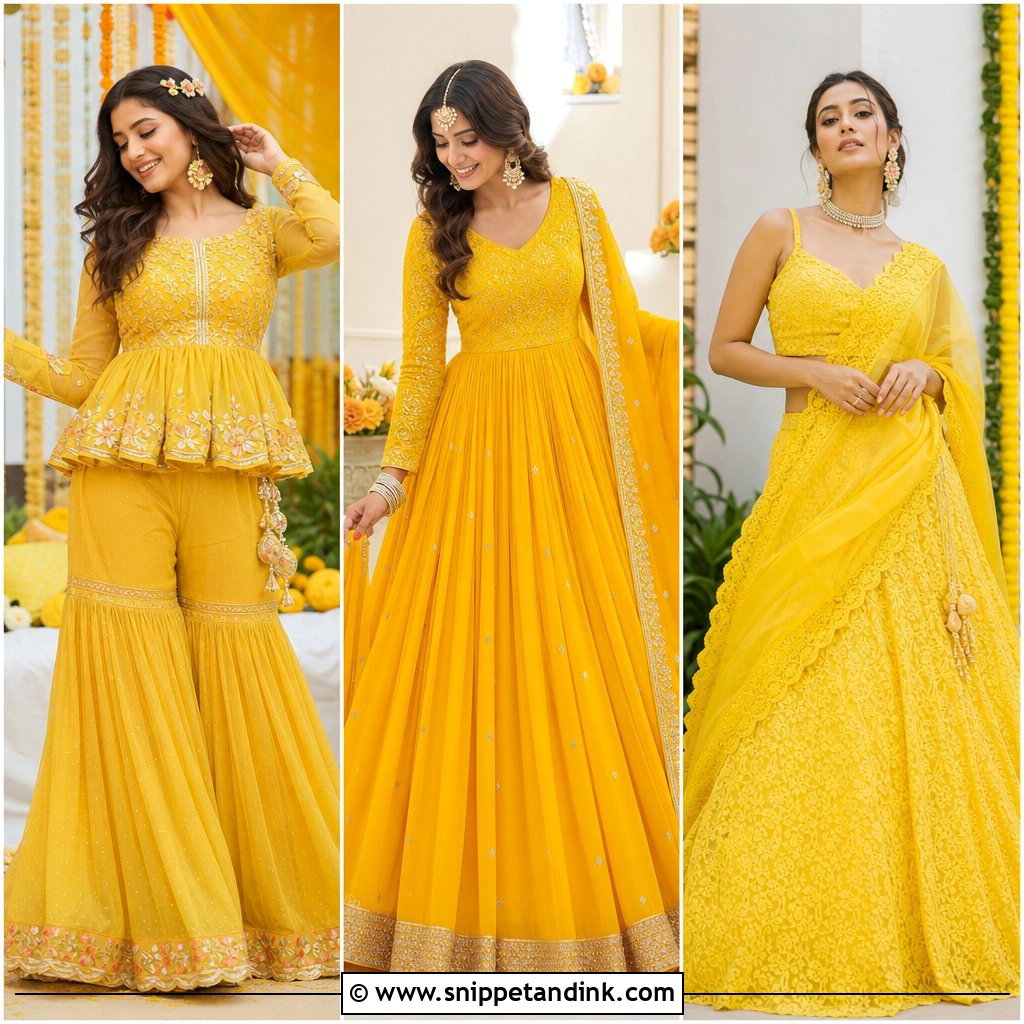
A yellow sharara set is my most practical recommendation for an energetic haldi. Wide pants let you sit cross-legged, climb onto a stool for a dance, and get up without help. A short kurti with gota or mirror work gives it a festive face. Drape the dupatta across both shoulders, pinned at the back, so your hands stay free for the games.
6. Yellow Anarkali Haldi Dress for Bride
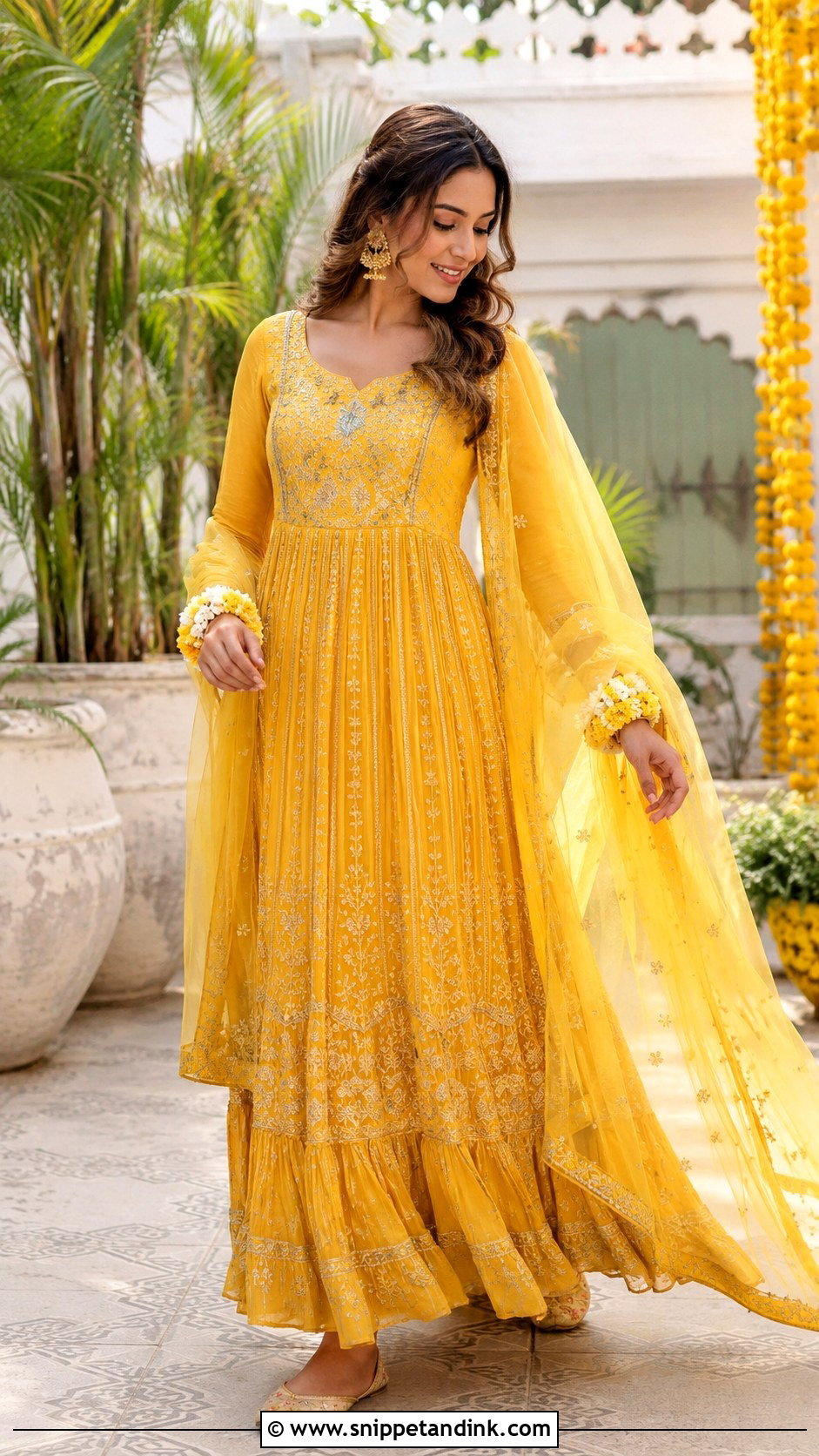
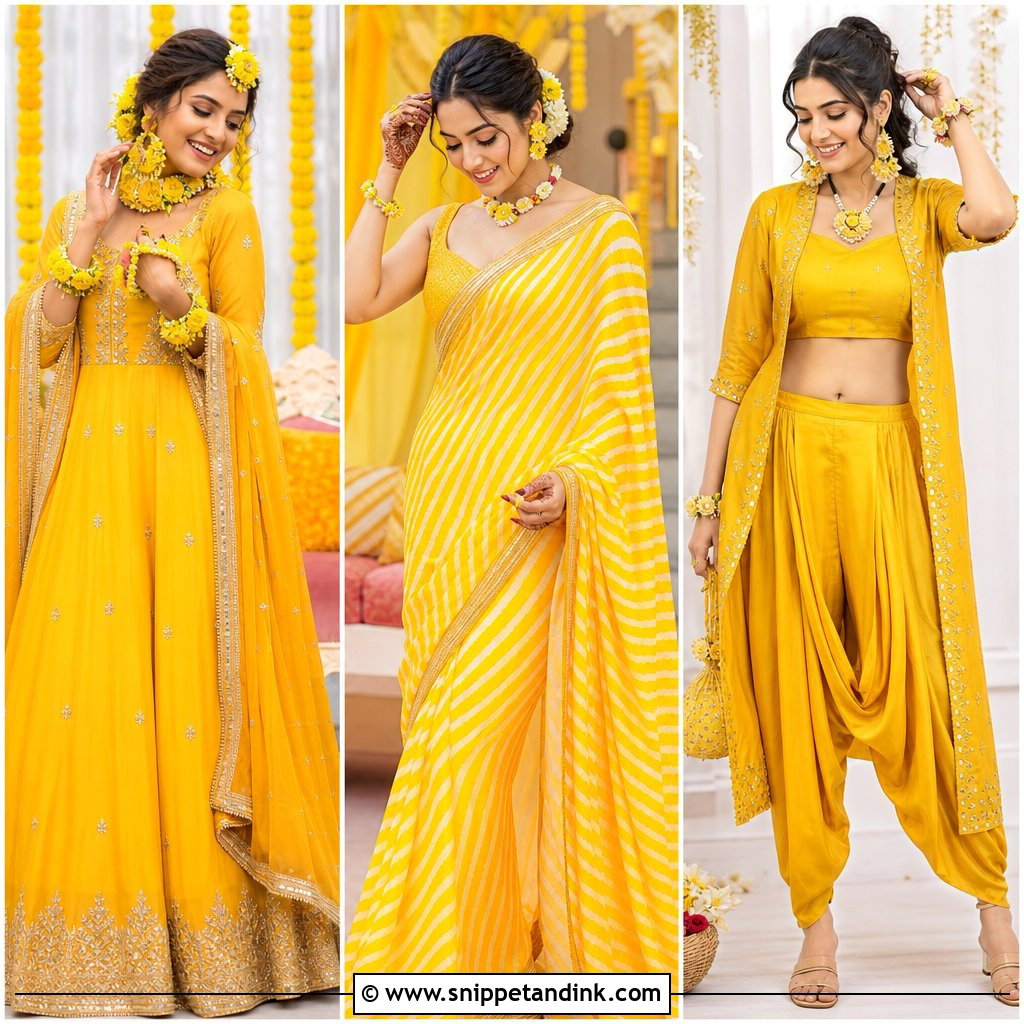
An Anarkali covers more and flows more, so I suggest it to brides who want a modest look for an older family’s haldi. Cotton silk or chanderi breathes in daylight. Keep the embroidery at the neck and hem; heavy work on the flare makes it swing into the paste bowl when you turn. Flat juttis, a low bun or half-up curls with flowers. Check you can sit on the floor without the panels bunching under you.
7. Yellow Kurta Palazzo Haldi Dress for Bride
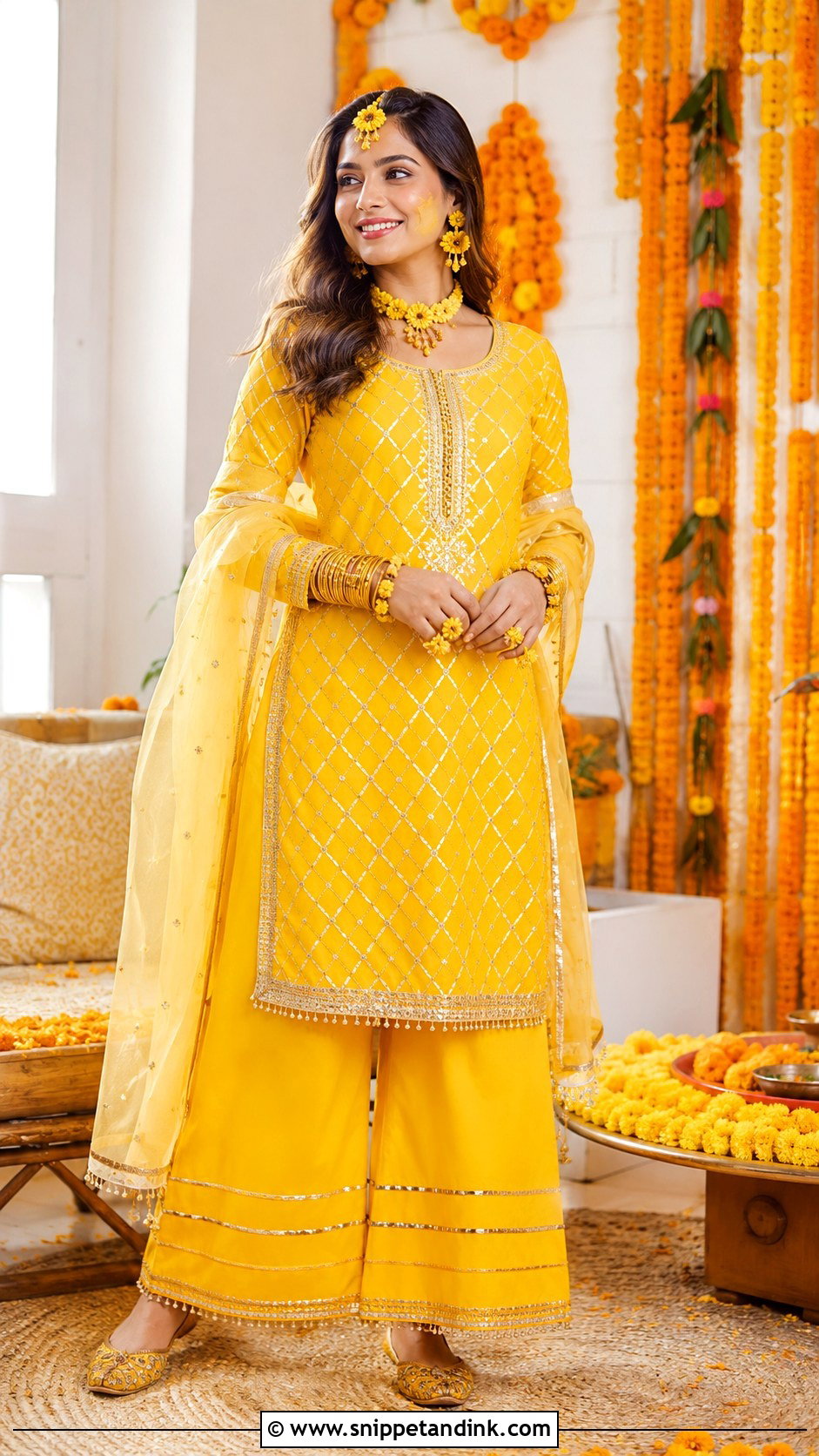
For a home or poolside haldi, a kurta with palazzos is the most comfortable thing a bride can wear, and it’s the outfit you’ll actually wear again afterward. Gota or scalloped edges on the kurta add a little ceremony. The palazzo width matters: wide enough to sit easily, not so wide it drags through wet paste. A floral necklace and stacked bangles make it bridal.
8. Yellow Chikankari Haldi Dress for Bride
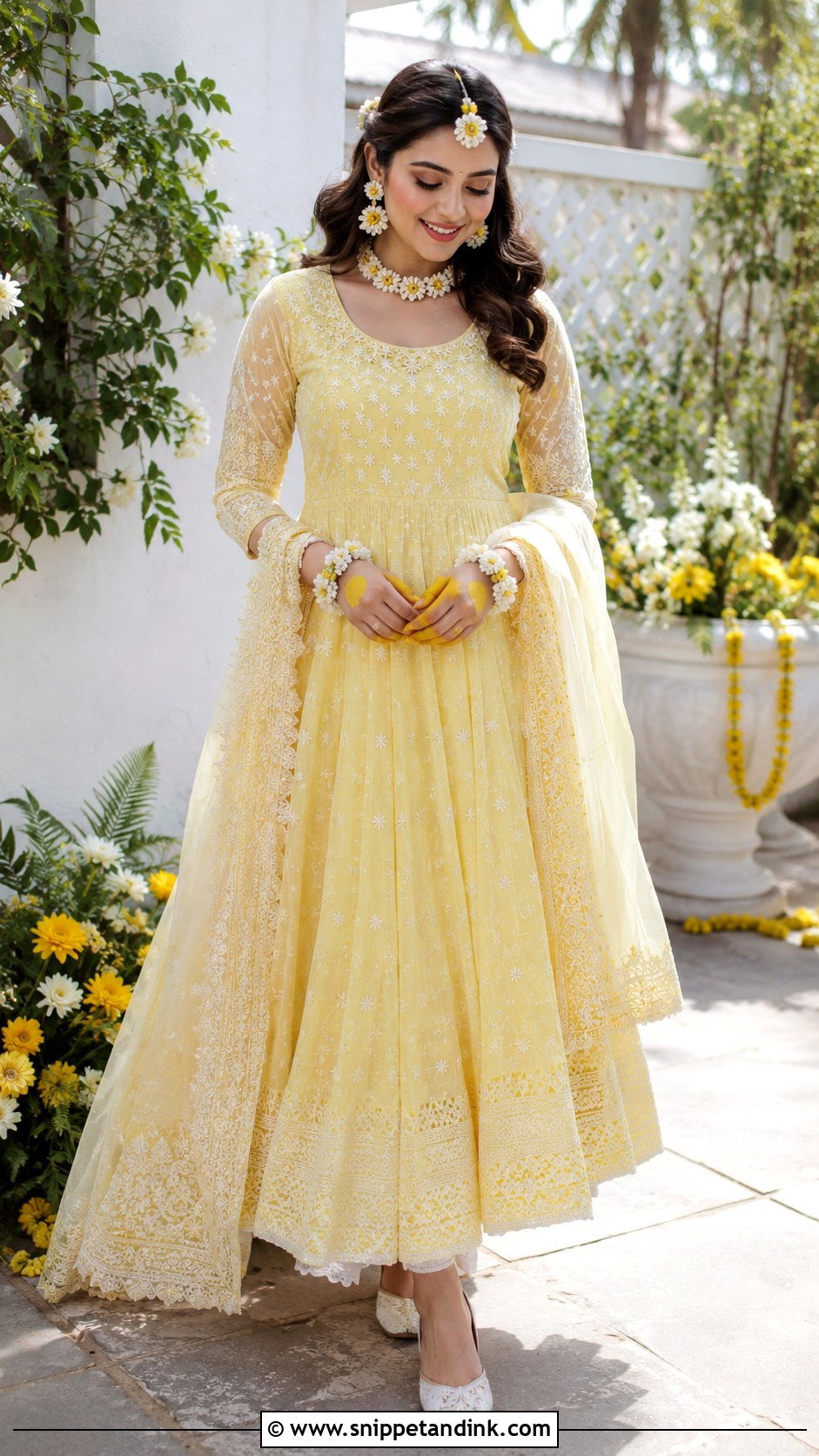
Chikankari is the coolest fabric choice for a summer morning haldi; the fine cotton or georgette breathes in a way silk never will. Lemon or pastel yellow with white thread looks fresh on camera. Pearl and floral jewellery suit its quiet texture. One thing to know: shadow-work chikankari is delicate, and scrubbing turmeric out of it can loosen stitches, so wash it gently and by hand.
9. Yellow Mirror Work Haldi Dress for Bride
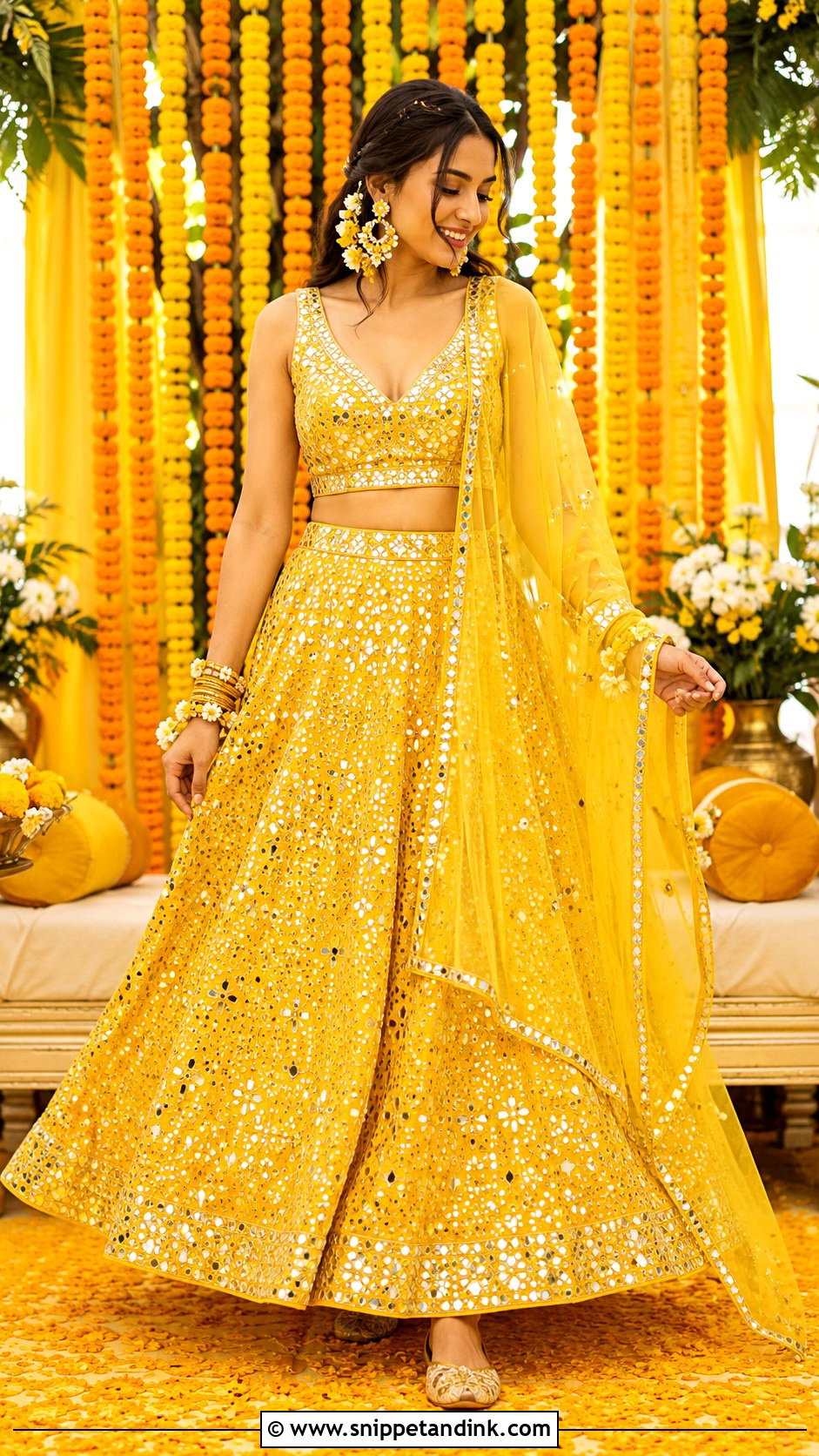
Mirror work catches daylight and video lights brilliantly, which is why I like it for haldi. Keep the mirrors on the blouse or kurta and the skirt light, otherwise the outfit becomes heavy and stiff. Since the mirrors already sparkle, I’d skip metal jewellery and use flowers. Turmeric settles into the thread around each mirror, so expect a little permanent tint there.
10. Yellow Gota Patti Haldi Dress for Bride
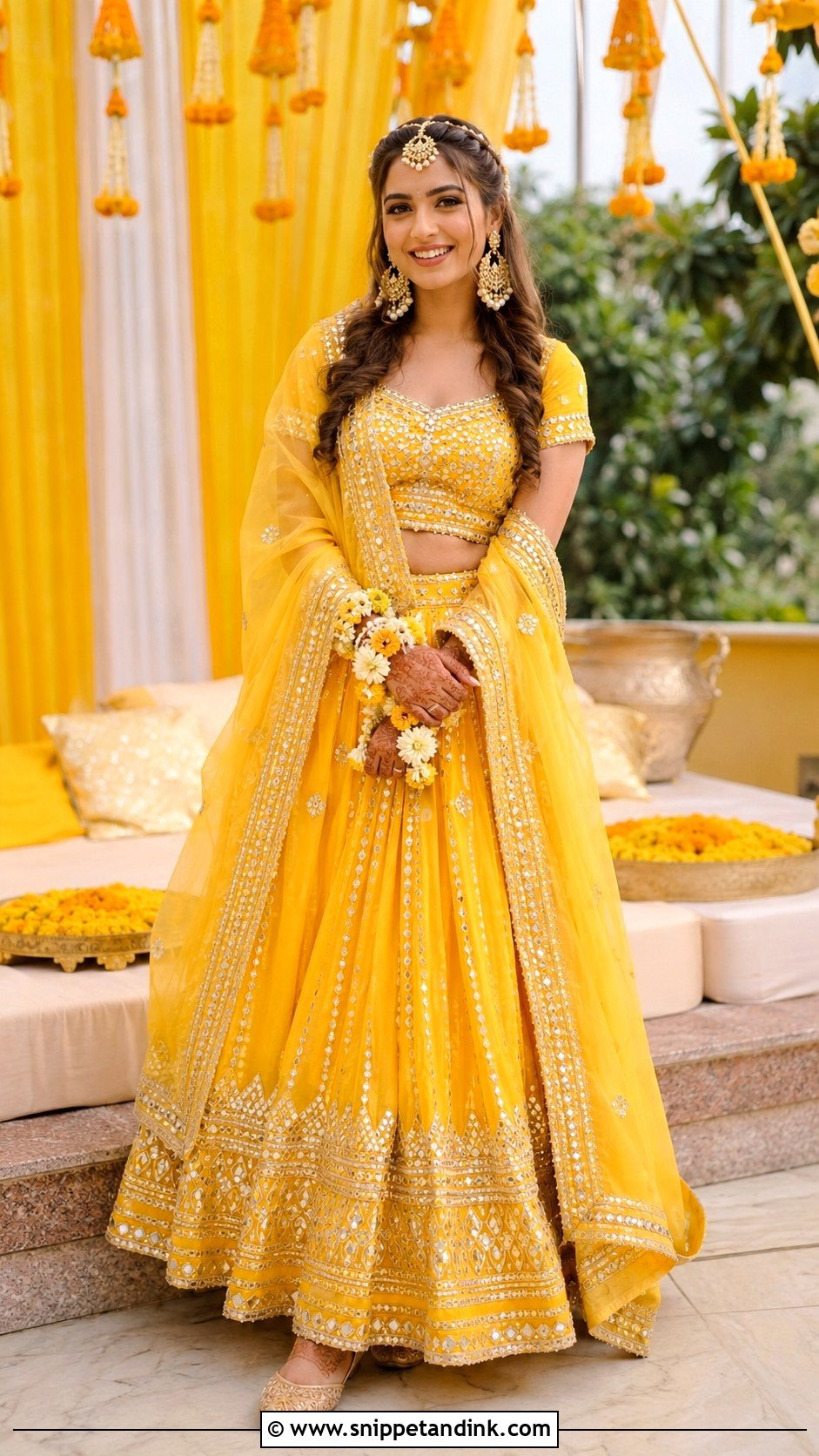
Gota patti is Rajasthani metallic ribbon work, and it glows in sunlight against marigold decor. A yellow gota lehenga with a fitted blouse is about as traditional as haldi gets. Gota is lighter than zari, so even dense work stays manageable. If you want a softer look, choose gota borders rather than all-over work, and pair it with kundan earrings and a maang tikka.
11. Lime Green Haldi Dress for Bride
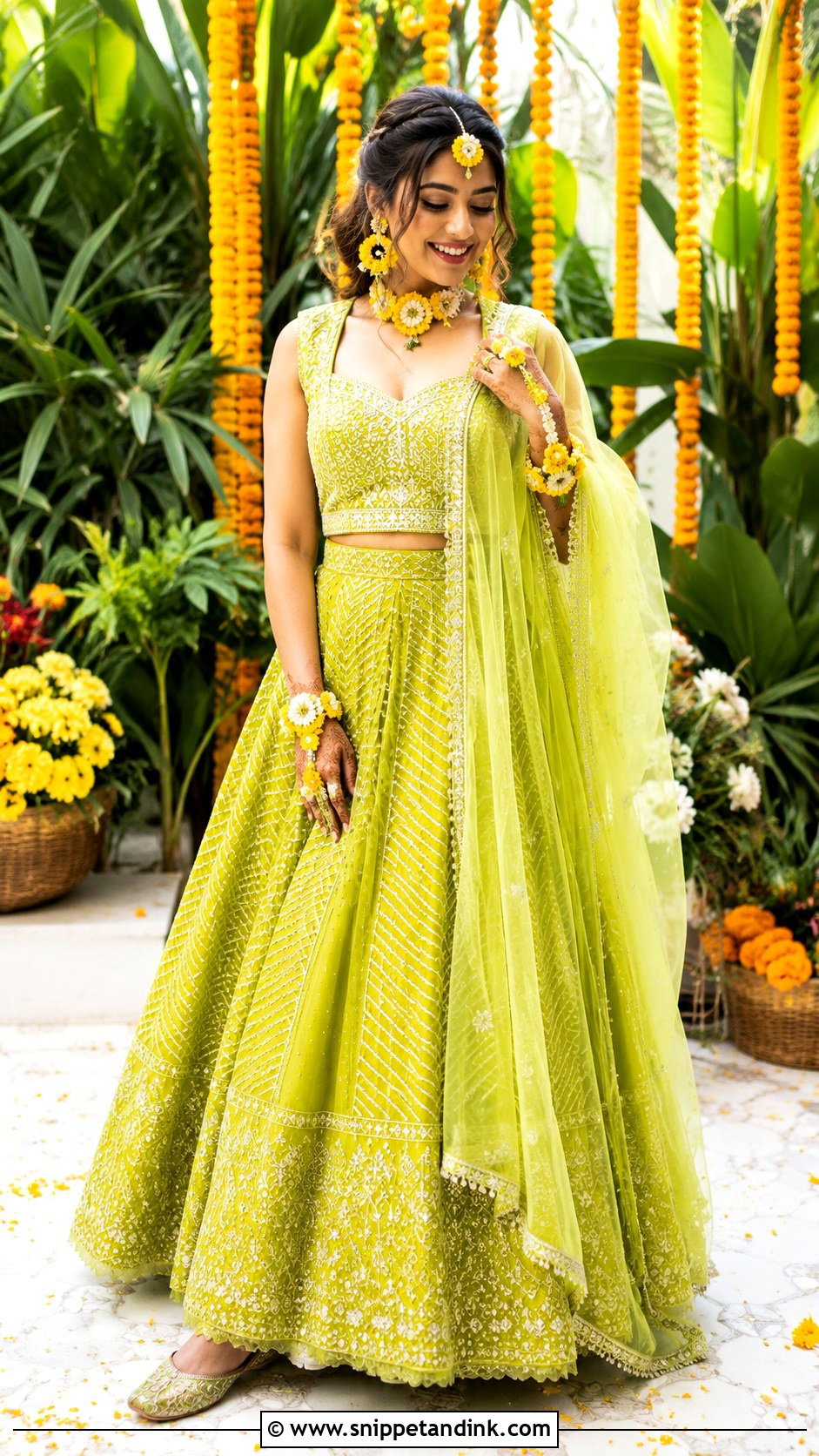
Lime green is the colour I suggest when a bride doesn’t want to disappear into a sea of yellow. It looks fresh outdoors, especially against greenery. Tie it back to the ceremony with yellow floral jewellery or a yellow dupatta. Silver or ivory embroidery keeps it cool-toned; gold warms it up. Coral lips suit it better than pink.
12. Orange Haldi Dress for Bride
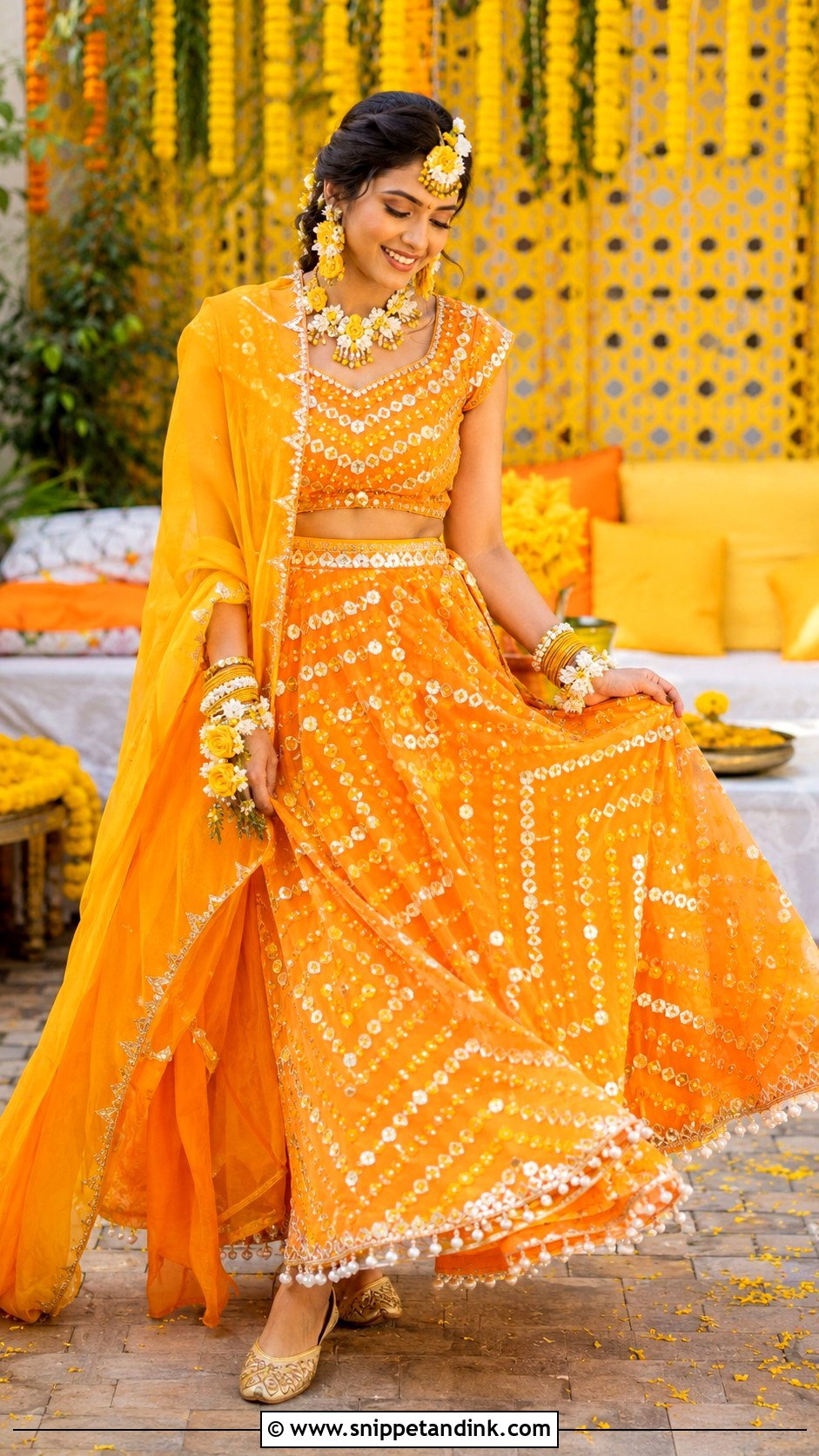
Orange shades from marigold to saffron give a bold Haldi look that sits richer than yellow. Gold gota and mirror work pair well with it. I soften the brightness with white and yellow floral jewellery, and keep makeup warm with bronze eyes and peach lips. One advantage people miss: turmeric stains show far less on orange than on pale yellow.
13. Yellow Ruffle Saree Haldi Dress for Bride
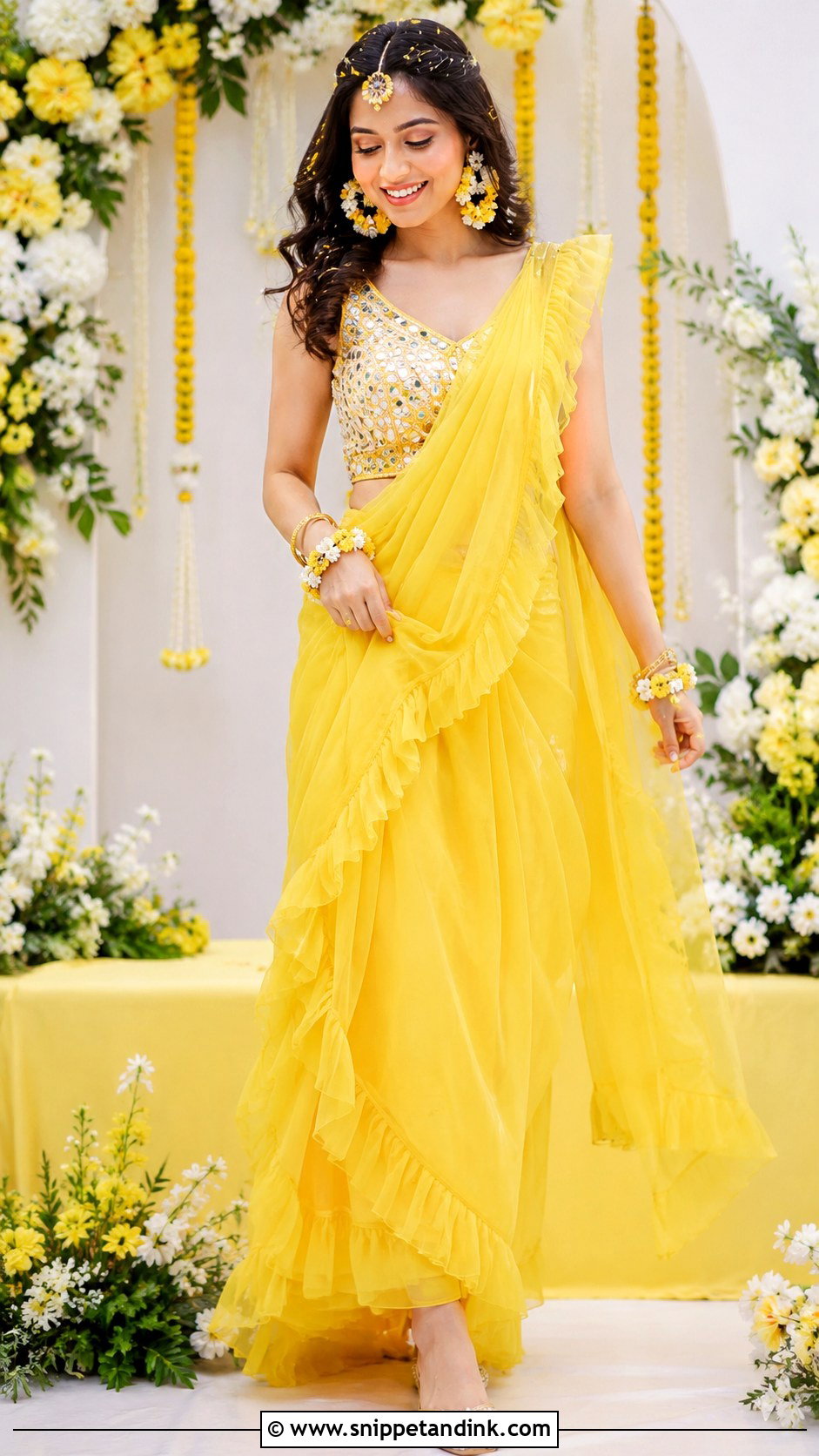
A ruffle saree gives movement without embroidery, and it’s surprisingly practical at haldi, because the ruffles hide where the pallu has been pinned. Pair it with a sleeveless or mirror-work blouse. The ruffles add volume, so keep jewellery to floral earrings and bangles. Georgette ruffles hold up better to paste than chiffon, which goes limp when wet.
14. Yellow Cape Lehenga Haldi Dress for Bride
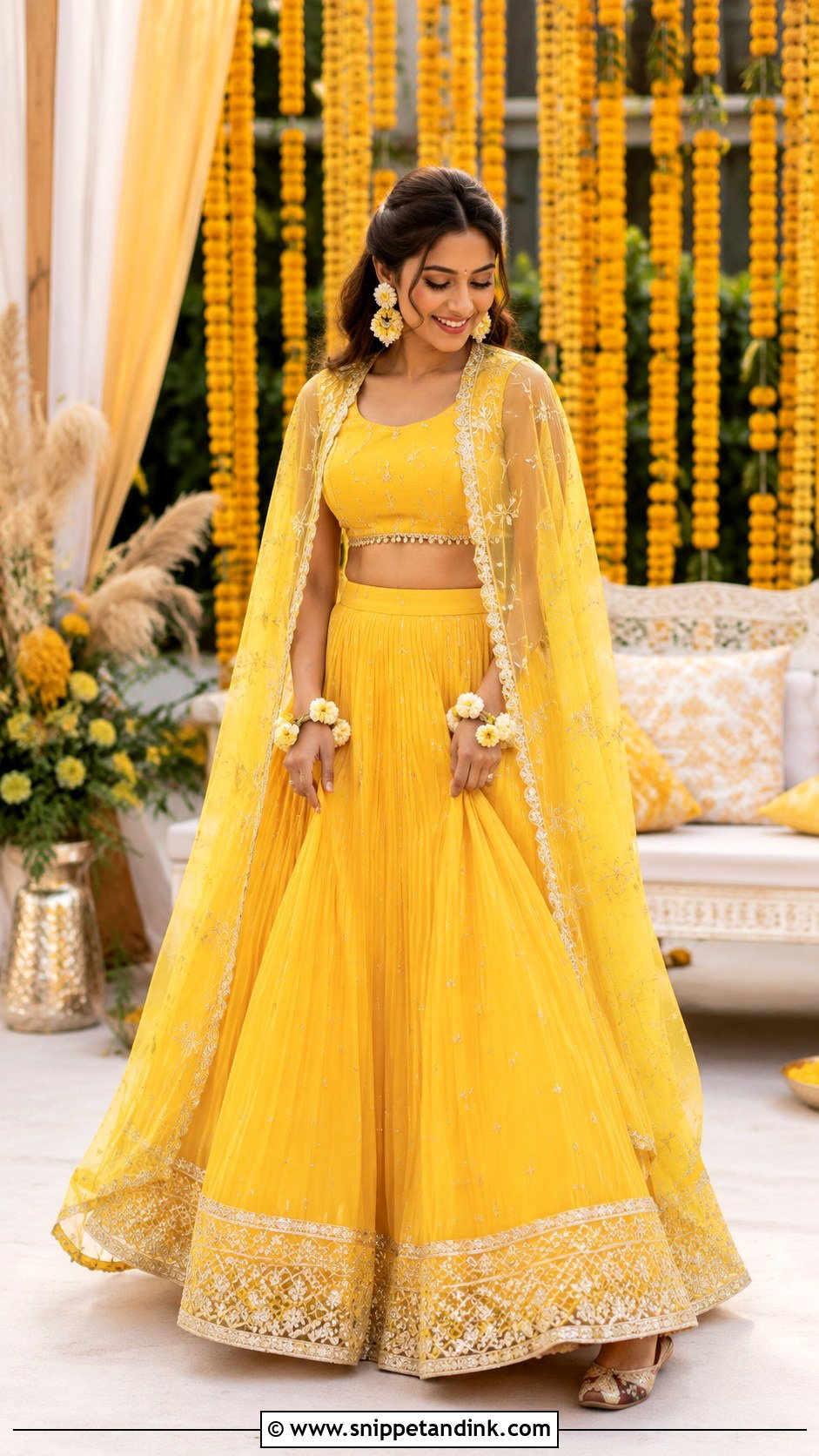
A cape replaces the dupatta, which means one less thing to pin, adjust or rescue from the paste bowl. That’s why I recommend cape lehengas to brides who are nervous about managing fabric. A yellow lehenga with a sheer cape edged in pearls or mirrors looks great in walking shots. Keep the blouse plain underneath. Comfortable juttis are a must, since you’ll be walking to and from the seat.


15. Yellow Peplum Sharara Haldi Dress for Bride
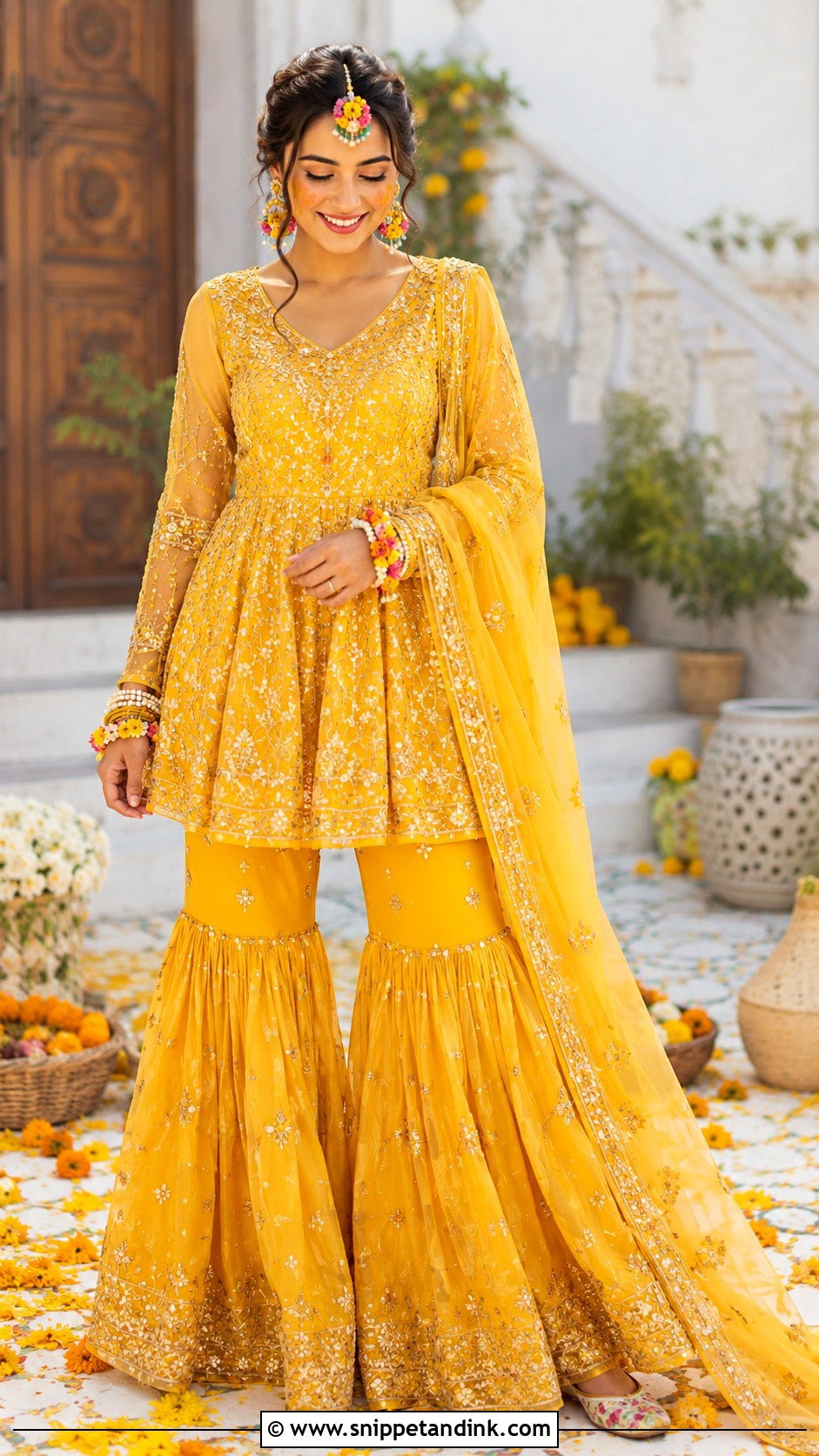
A peplum top defines the waist, and the sharara pants underneath let you move freely. It’s more structured than a kurta set, so it looks dressier in photos. Keep the embroidery to the neckline and hem. You can skip the dupatta entirely if the top is detailed. This one sits comfortably on a low stool and lets you dance once the paste is done.
16. Bandhani Haldi Dress for Bride
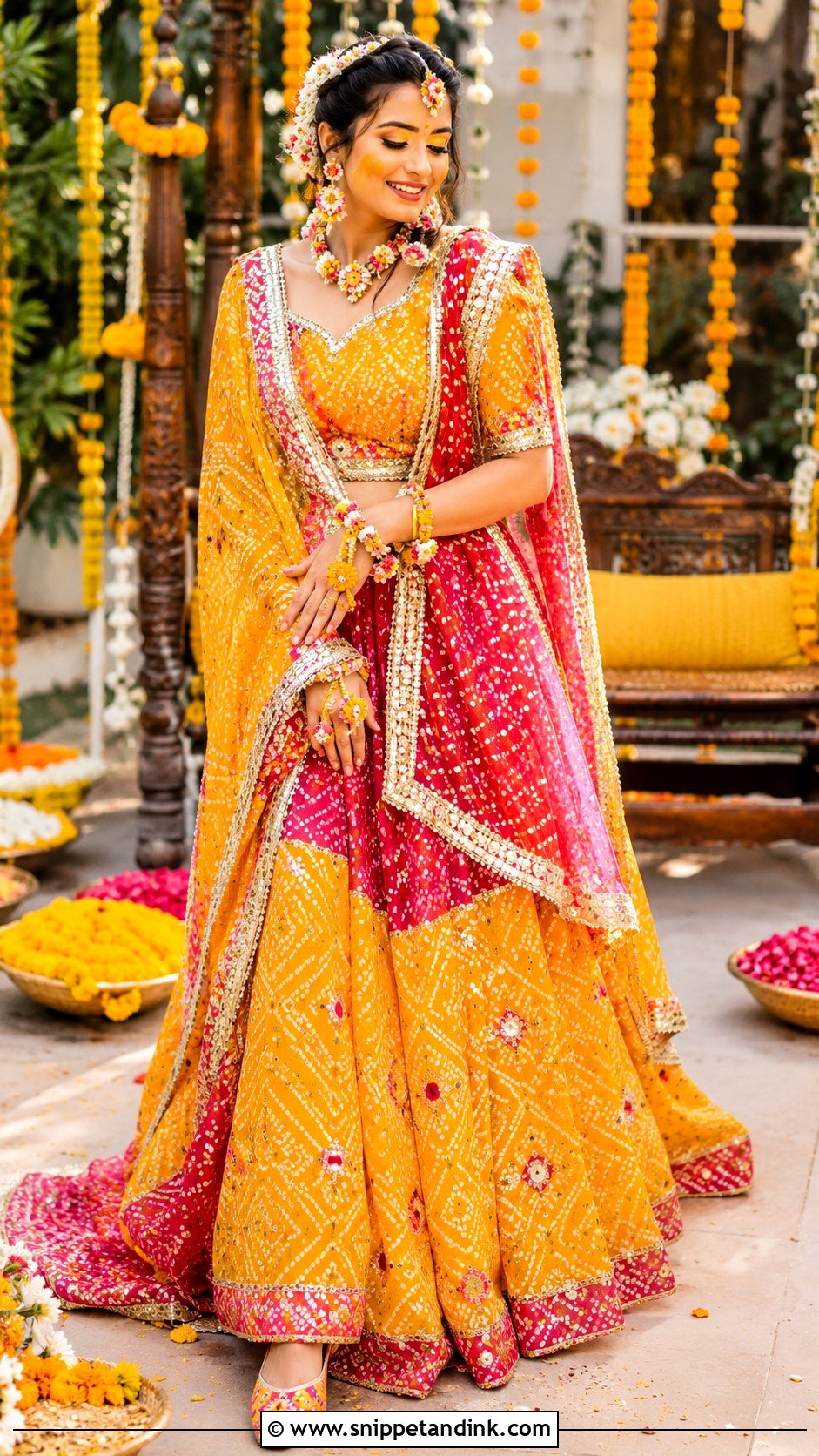
Bandhani is tie-dye with deep roots in Gujarat and Rajasthan, and a yellow bandhani lehenga with red or pink dots feels instantly traditional. The busy pattern hides turmeric well. Gota borders make it bridal without much weight. I’d pair it with kundan or oxidized jewellery and a braided style with flowers. Bandhani bleeds in its first wash, so wash it separately.
17. Leheriya Haldi Dress for Bride
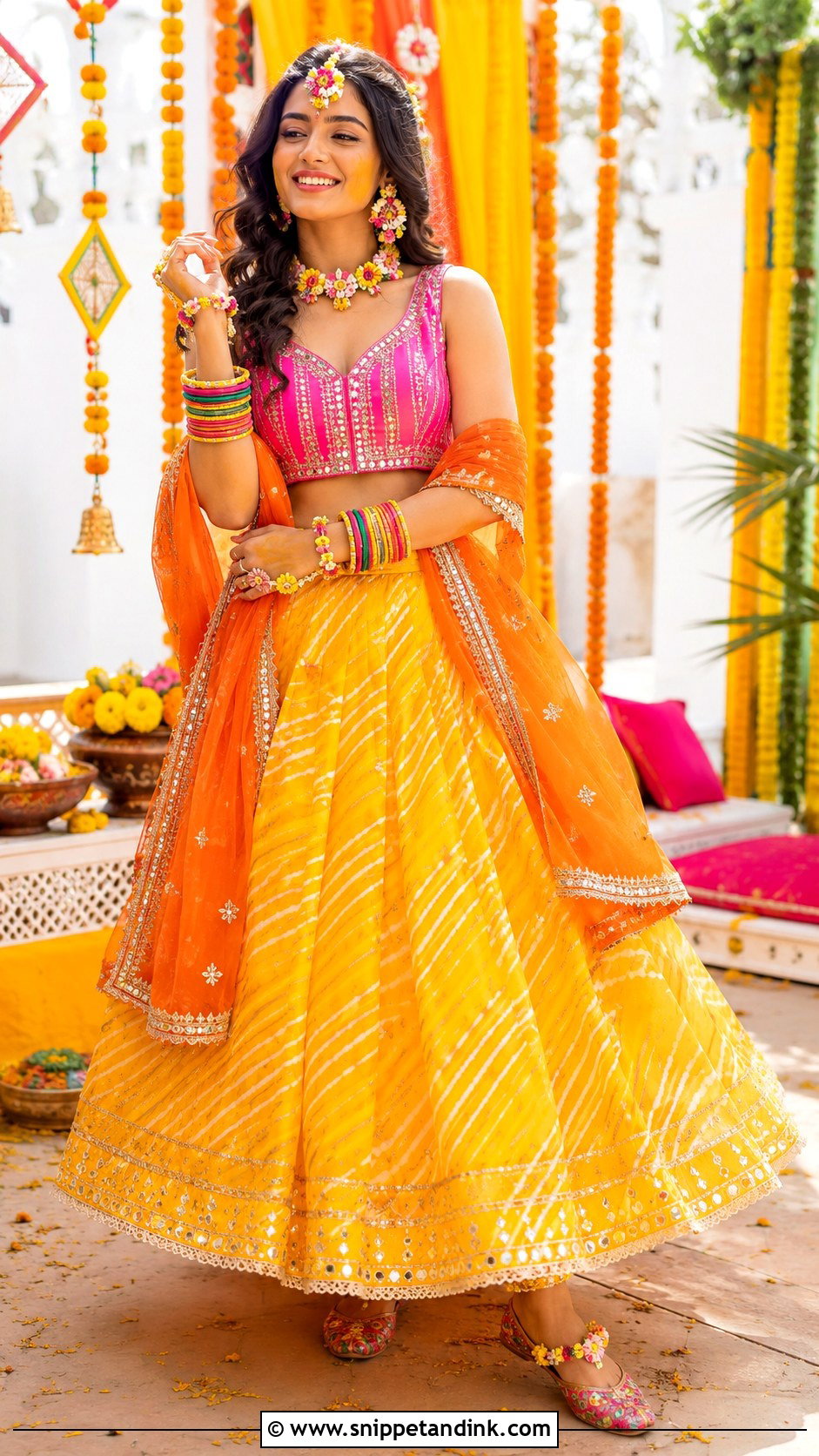
Leheriya is the wave-pattern dye from Rajasthan, and it adds movement even on a simple lehenga. A yellow leheriya skirt with a pink or orange blouse is cheerful without embroidery. If you prefer something simpler, pair a plain yellow kurta set with a leheriya dupatta. Gota trims and tassels finish it. Soft curls or a braid suit the relaxed feeling.
18. Ivory Haldi Dress for Bride With Yellow Dupatta
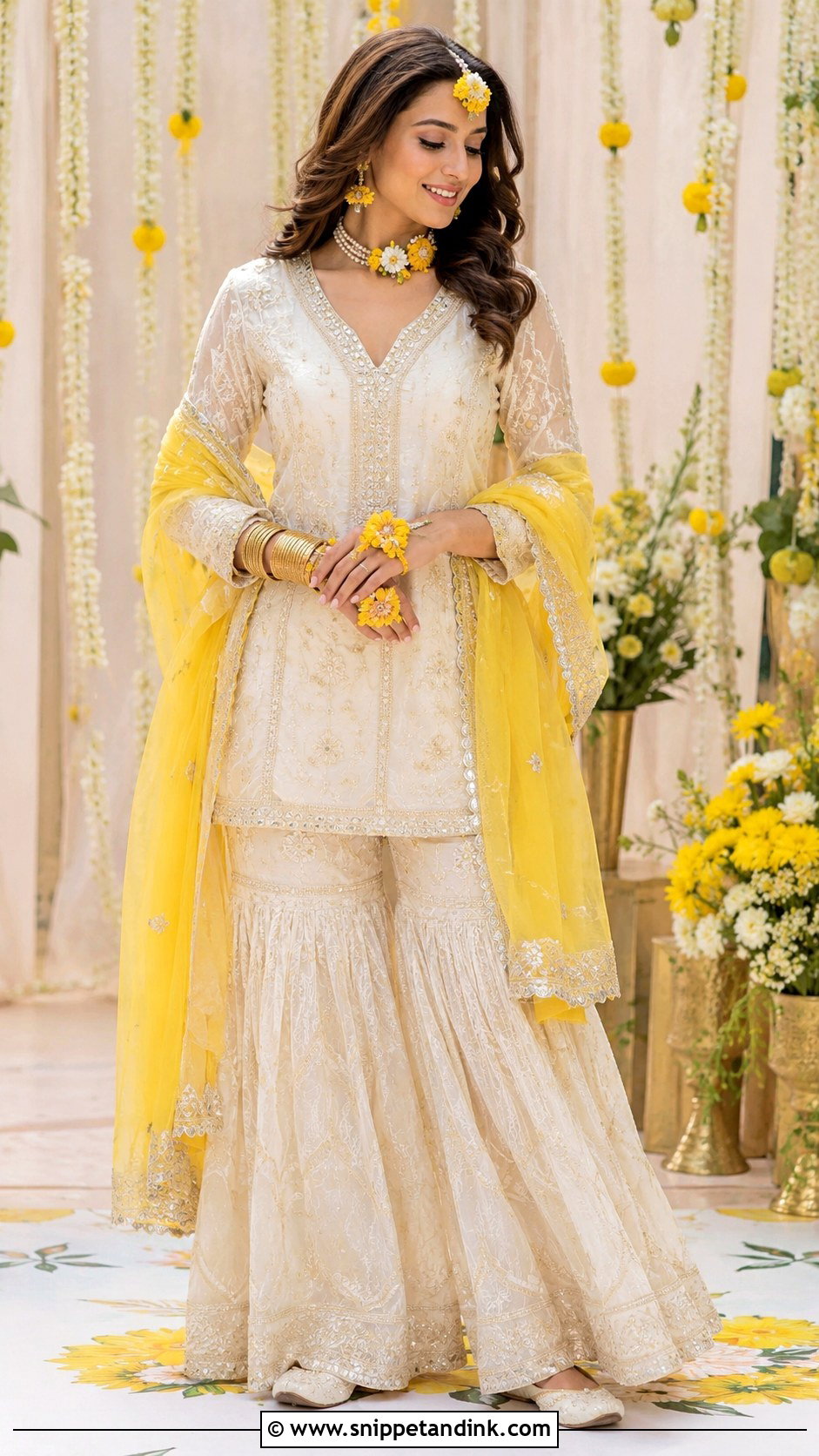
Ivory with a yellow dupatta is the most refined haldi look on this list, and the least stain-proof. I’d only put a bride in it if her family applies paste lightly, or if she’s willing to change into it after the paste is done for portraits. Light gold or pearl embroidery and yellow floral jewellery. A sleek bun with fresh flowers keeps it polished.
19. Yellow Silk Saree Haldi Dress for Bride
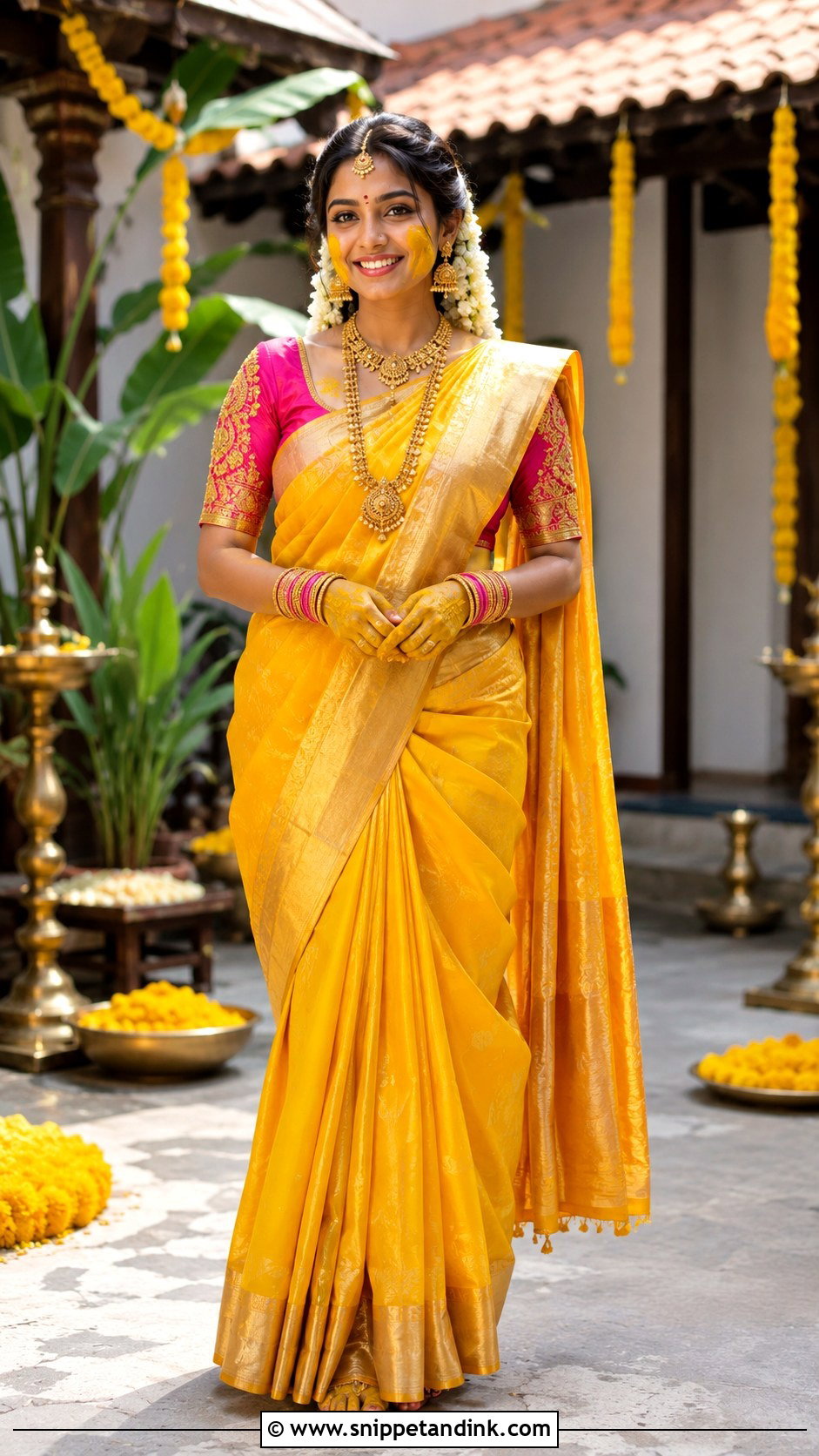
For South Indian brides, a yellow silk saree with a gold border is often the traditional choice for the nalangu or mangala snanam. Kanjivaram, Banarasi or cotton silk depending on your region. A contrasting blouse in pink, green or red stands out. Temple jewellery, jasmine and a small bindi. Pure silk and turmeric don’t mix well, so many families use an older silk saree for this ritual.

20. Yellow Banarasi Haldi Dress for Bride
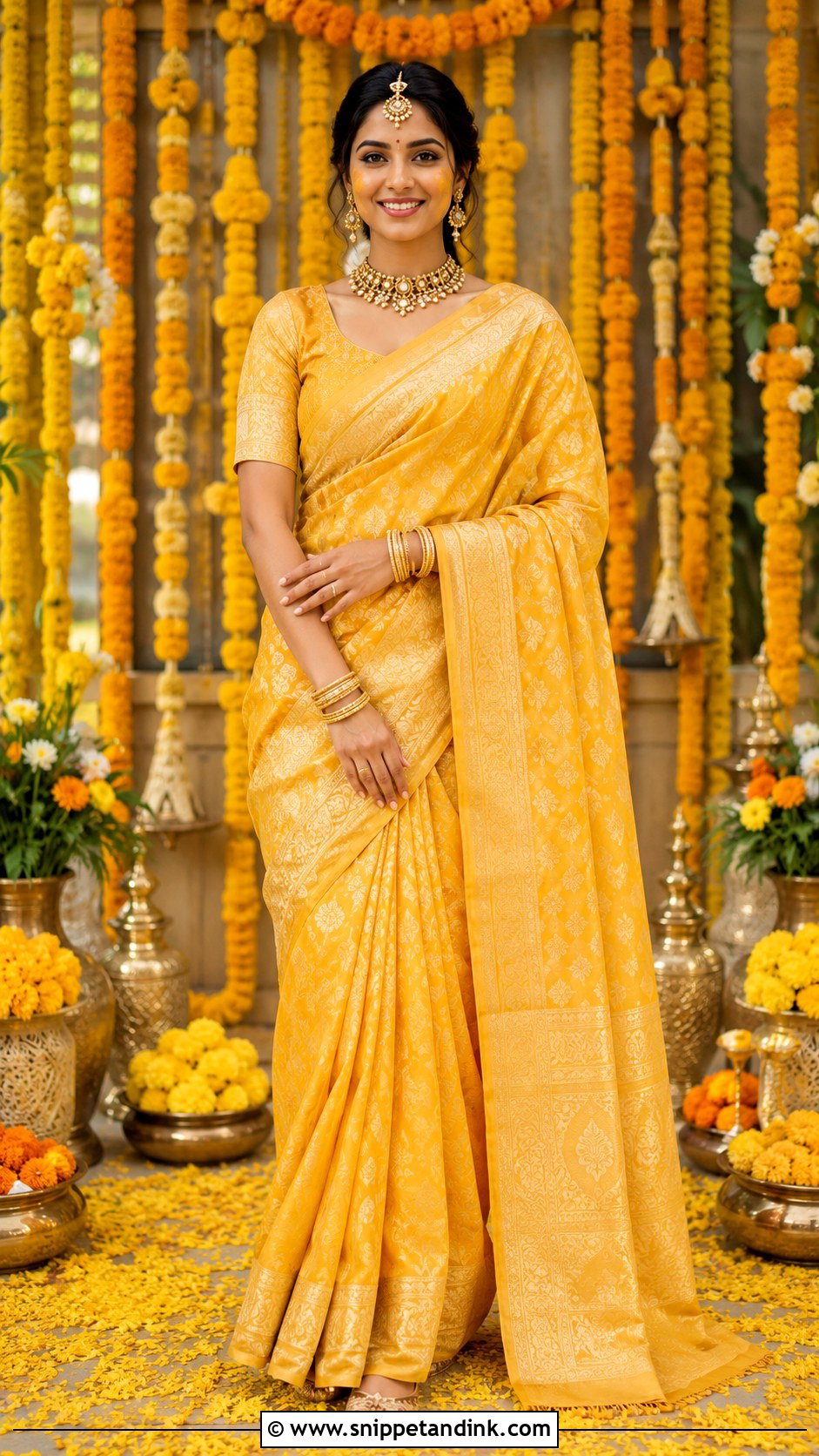
Banarasi weaves look rich without embellishment, which is why I like them for a more formal haldi. A plain yellow silk kurta with a Banarasi dupatta is the lighter version and is easier to rewear later. Kundan, gold bangles and a maang tikka suit the woven texture. Keep the hairstyle clean. Real zari tarnishes if turmeric paste sits on it, so wipe the dupatta down soon after the ceremony.
21. Yellow Indo Western Haldi Dress for Bride
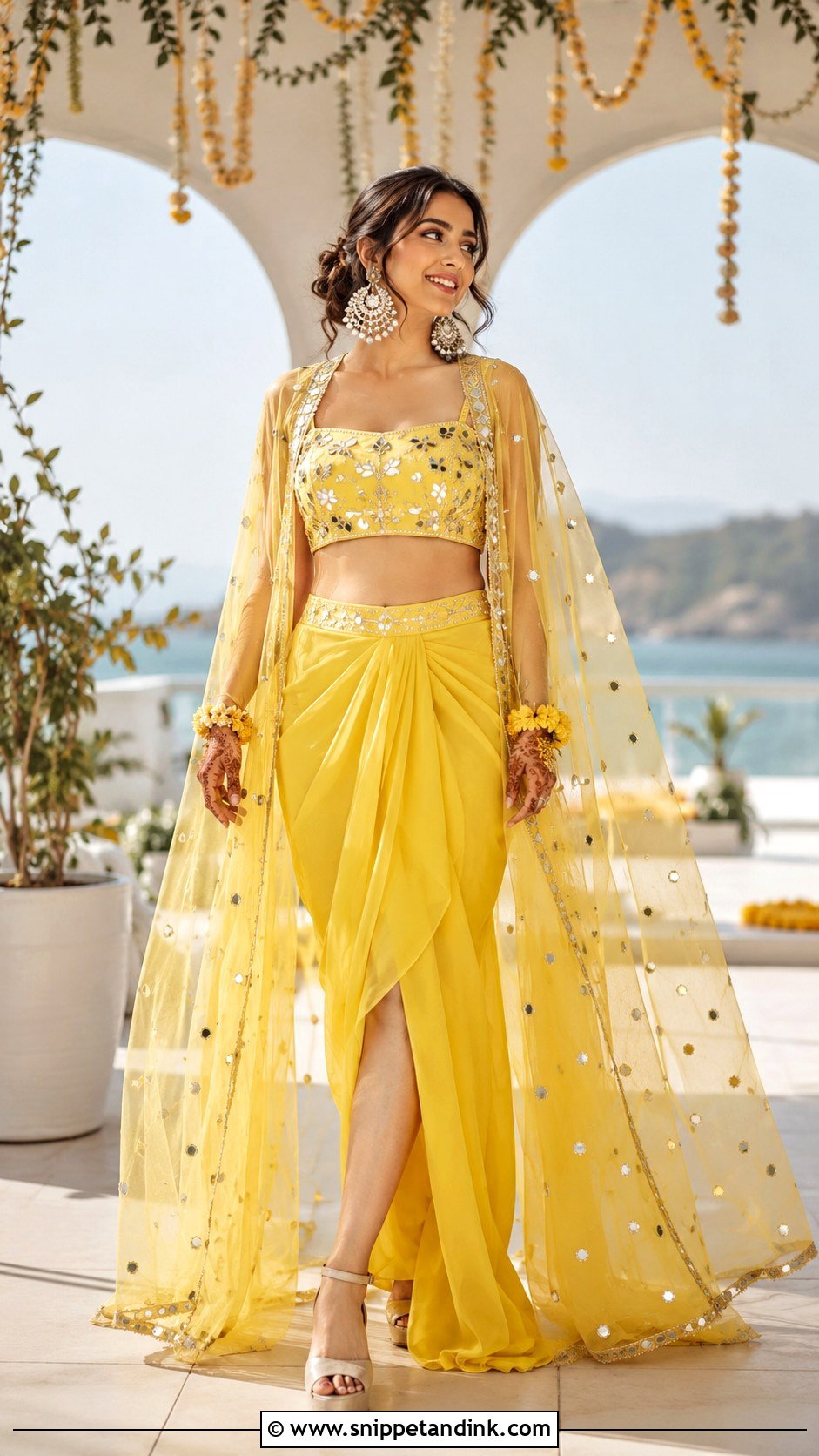
An Indo western Haldi outfit suits destination and resort ceremonies, where you might be on sand or by a pool. A crop top with a flowy skirt, a draped skirt with a cape blouse, or a pre-draped saree all need less adjusting than a traditional drape. Floral appliqué or mirror details keep it bridal. Wedges work better than heels on grass.
22. Pastel Yellow Haldi Dress for Bride
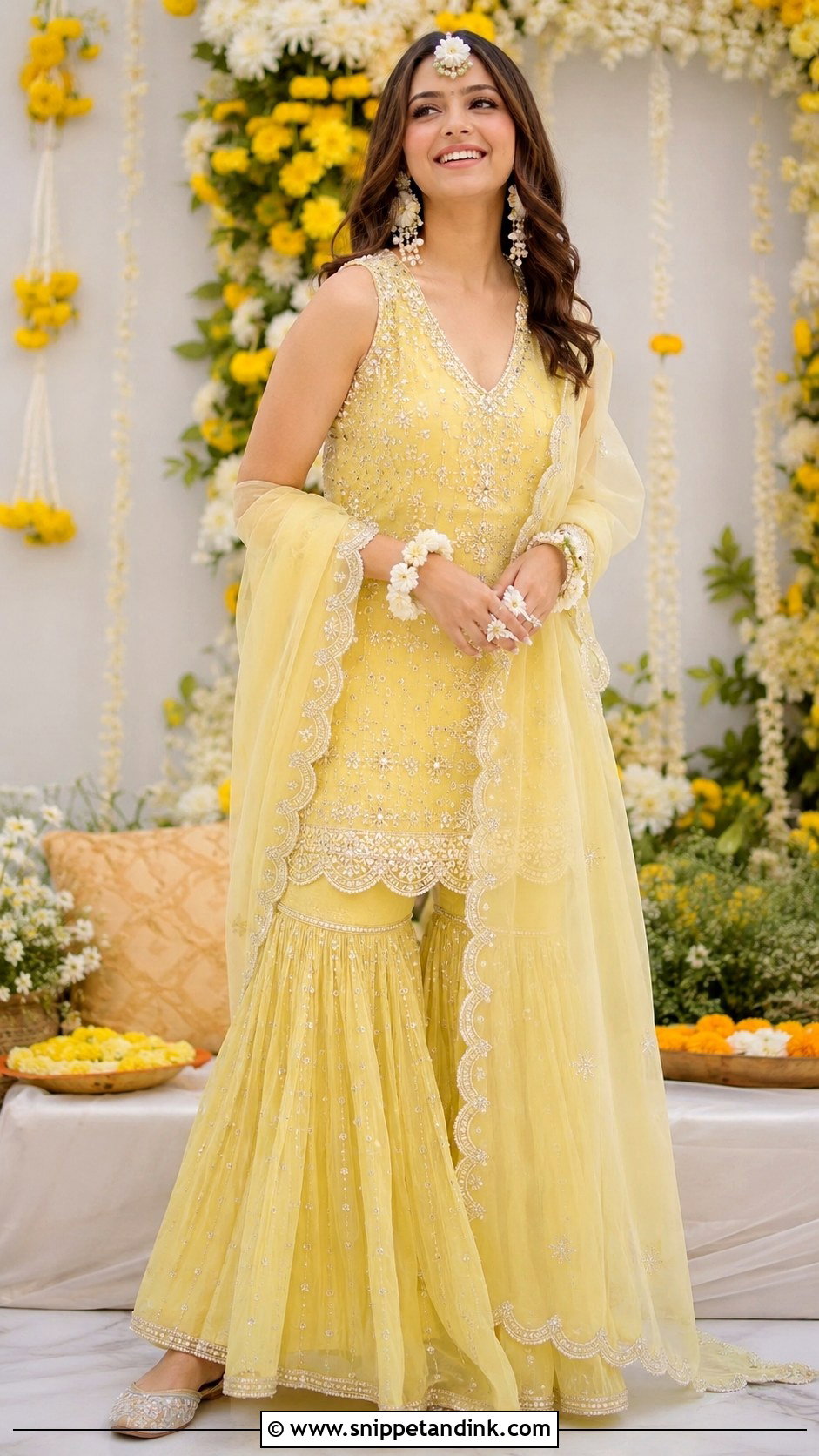
Pastel yellow works best at a morning haldi, when the light is soft and the decor is pale. Pearl work and thread embroidery suit it. A sheer dupatta with a scalloped border adds grace. White floral jewellery and pastel juttis keep the whole look light. I’d choose it for a bride who doesn’t want to look as bright as her guests.
23. Yellow And Pink Haldi Dress for Bride
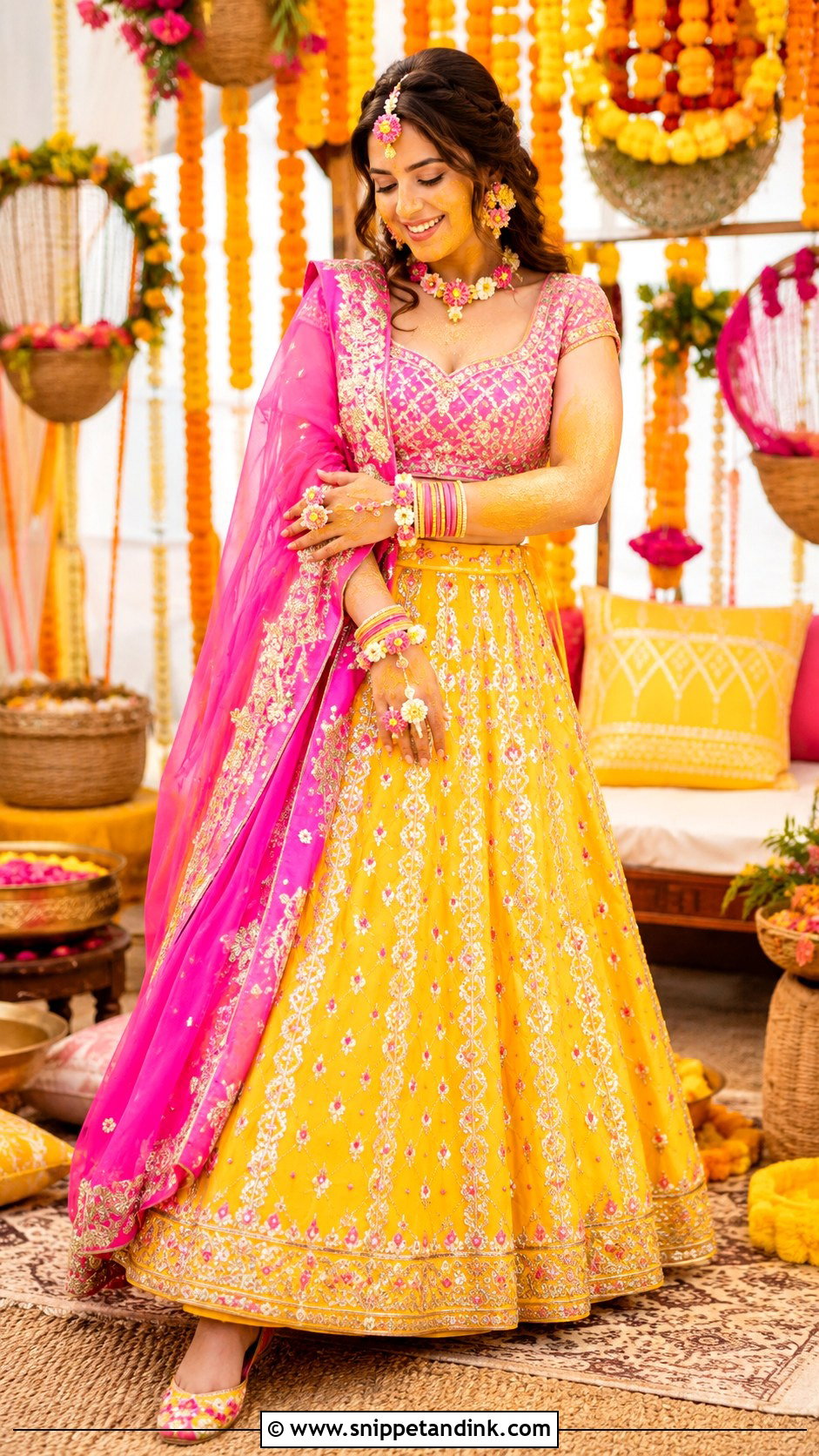
Yellow and pink is a happy contrast, and the two colours make each other brighter in photos. A yellow lehenga with a pink dupatta is the simplest way to do it. Gota patti or mirror work ties the two together. A braid with fresh flowers suits it well. I’d keep the jewellery to just the two outfit colours.
24. Simple Cotton Haldi Dress for Bride
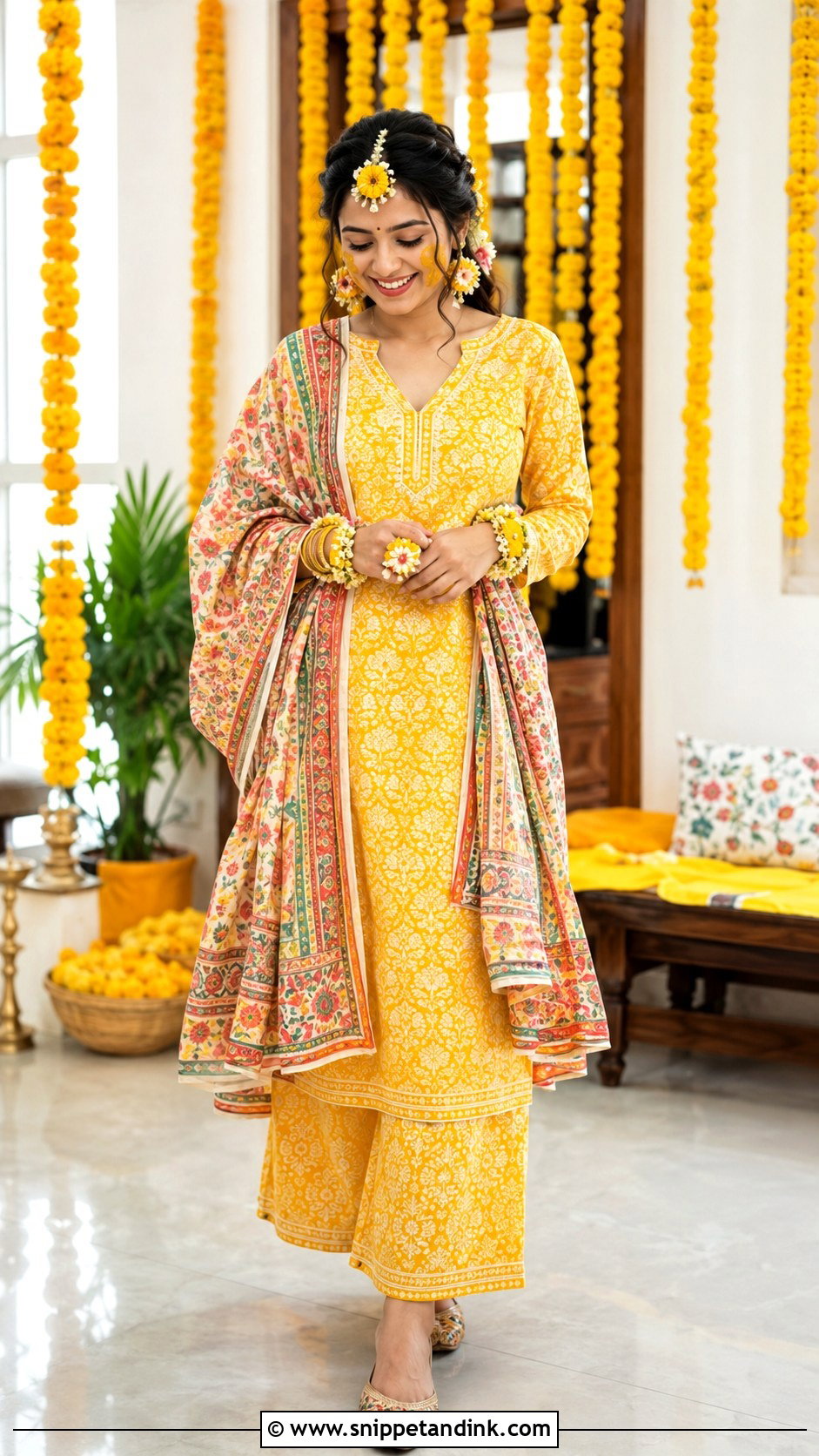
Cotton is the fabric I’d choose for any haldi in real heat. Block prints, lace trims or light embroidery dress it up, and it washes far more easily than silk. A colourful dupatta adds contrast. The bridal feel comes from the accessories: floral jewellery, stacked bangles, a bindi. This suits intimate home ceremonies especially well.
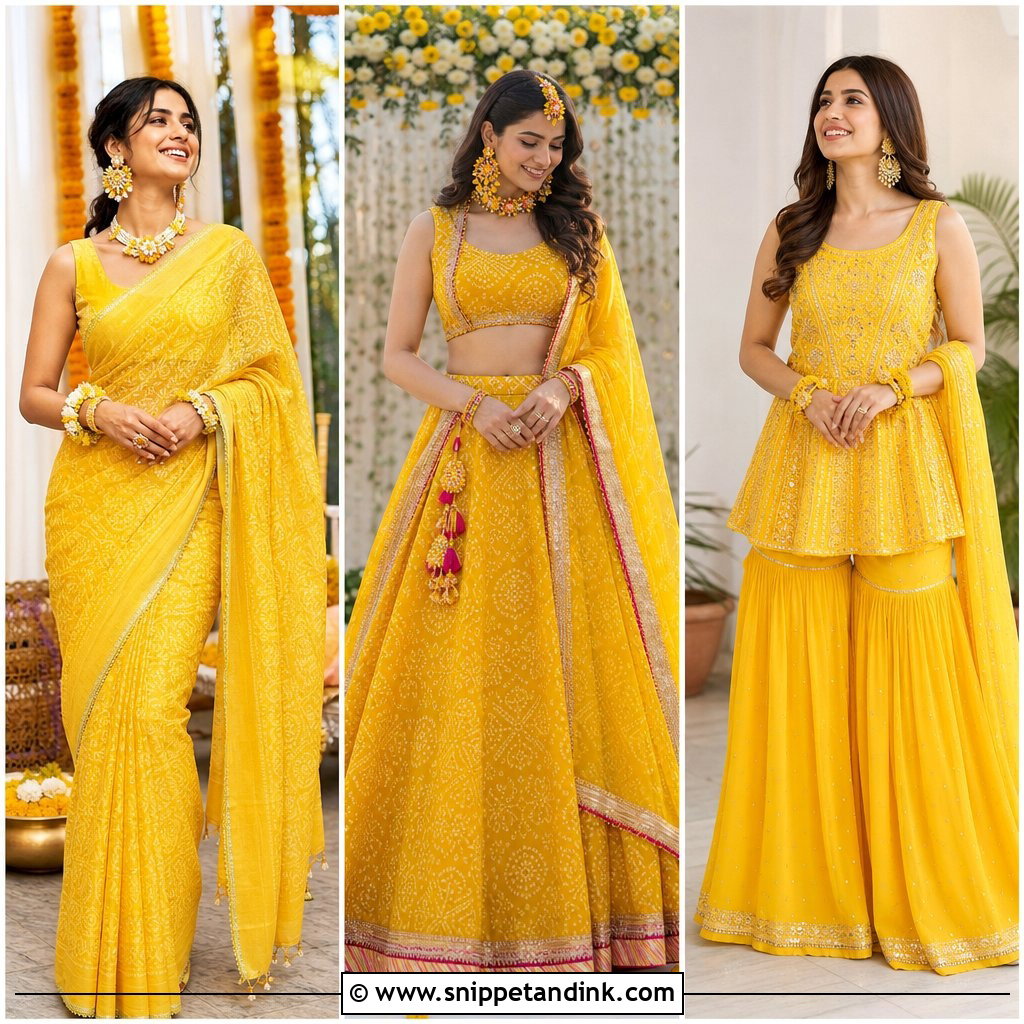


25. Multicolor Haldi Dress for Bride
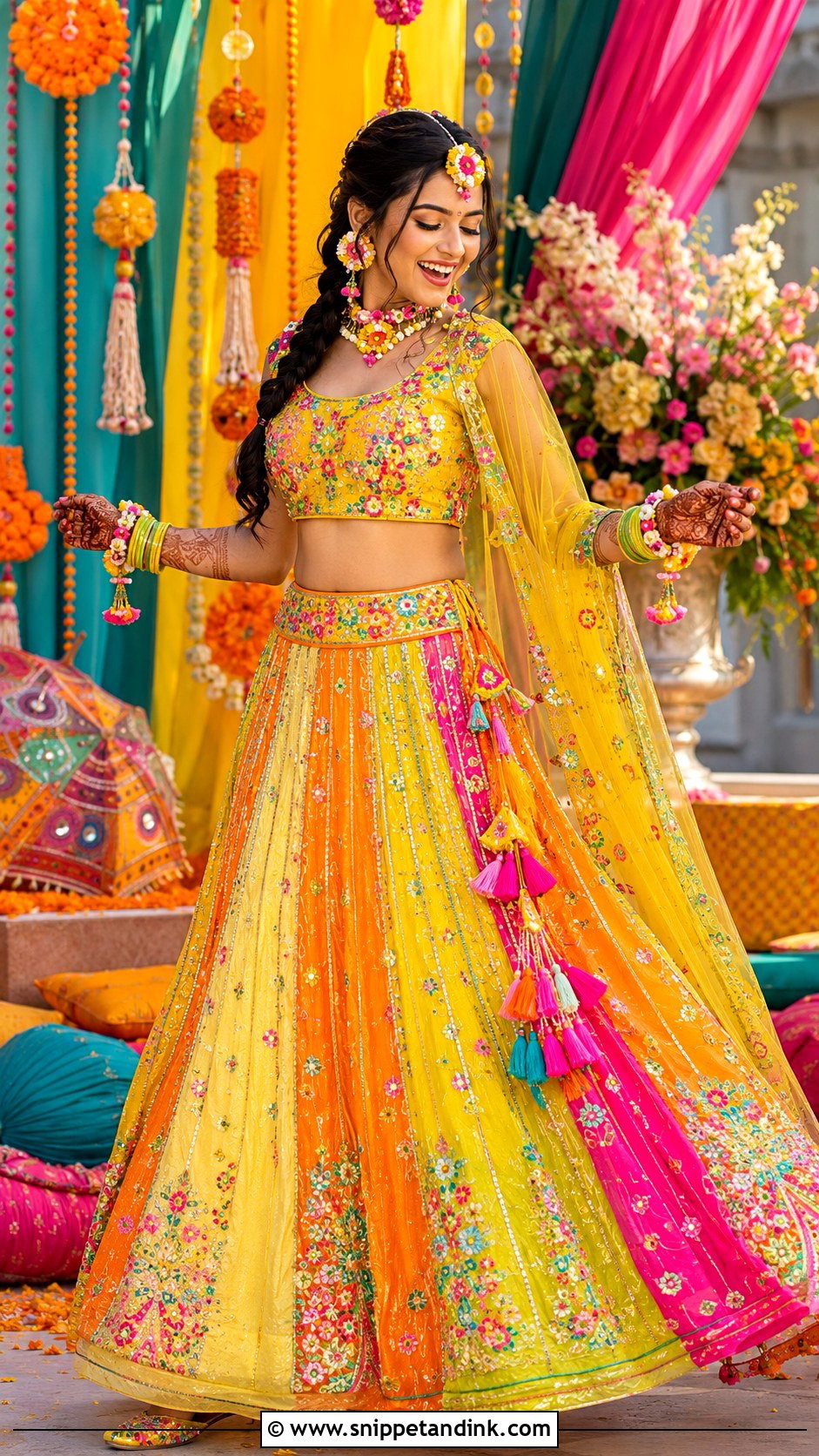
Multicolour outfits let you stand out from a yellow crowd. A yellow base with pink, orange, green or turquoise accents in patchwork or printed panels looks festive. With that many colours, keep the jewellery to one or two shades of flowers. A simple hairstyle stops it from becoming overdone. Like prints, multicolour hides paste better than solid pale fabrics.
After the Last Handful: Changing, Washing and Saving the Outfit
Most brides have another function the same evening, so the hour after haldi matters. Plan an outfit you can step out of rather than pull over your head, so paste doesn’t drag across your face and hair. A front-opening blouse or a lehenga with a side zip is easiest.
- Scrape off excess paste gently with a blunt edge. Don’t rub it in.
- Rinse the stain from the back of the fabric with cold water. Hot water sets it.
- Use a little liquid detergent on cotton and dry it in sunlight.
- For silk, zari or heavy work, take it to a dry cleaner within a day and tell them it’s turmeric.
On your skin, oil-based cleanser or a little coconut oil lifts the yellow faster than soap alone. Many families say the glow should stay until the wedding, so ask before you scrub it all off. I’d also leave an hour between haldi and the next makeup appointment, because turmeric residue makes foundation sit unevenly.
Dressing for Laughter, Paste and a Lot of Photos
The haldi outfit that works is the one you stop worrying about the moment the first handful of paste lands. I’d choose for the setting first, then fabric, then colour, then embroidery. A classic lehenga, a silk saree, a sharara, a cape, a cotton suit or an Indo western set can all work when they’re light and easy to sit in. Wear comfortable shoes, keep the jewellery floral, and let the ceremony be messy. That’s what it’s for.
You'll Like These Ideas:


Leave a Reply