
White at a haldi sounds like a risk, and honestly it is one, which is part of why I love styling it. Turmeric paste is going to land on you, and a white base makes every smear look deliberate and joyful in photos, while yellow ties the outfit to the ritual itself. The pairing works in sarees, lehengas, shararas, ghararas, kurta sets and draped separates, for the bride and for the family around her. What matters more than the silhouette is whether you can sit on a low stool, raise your arms and get messy without worrying. Here are twenty combinations, with what I’d check on each.

Fabrics That Survive a Morning Covered in Turmeric
Turmeric paste is a strong natural dye, and it goes on wet, usually mixed with oil, milk, gram flour or rosewater. That combination gets into fibres quickly. So before falling for an outfit, I ask brides which parts of it will actually be touched by the paste: face, neck, arms, hands, feet, and very often the shoulders and neckline of the blouse.
- Cotton, mulmul and linen are the safest choices. They wash at home and white cotton can be treated firmly if it stains.
- Georgette and chiffon are light and dry quickly, but synthetic versions can hold the oily part of the paste.
- Pure silk, zari, gota and real metallic thread are hard to clean once stained. Keep them away from the neckline and sleeves, or save them for an outfit you change into later.
- Sleeveless or elbow-length blouses keep paste off the fabric when relatives apply it to your arms.
Many brides wear a simpler outfit for the ritual and change into something finer for photos and lunch afterward. If the budget allows only one outfit, choose the washable one and make it special with flowers and jewellery instead.
1. White Chikankari Lehenga With Yellow Dupatta
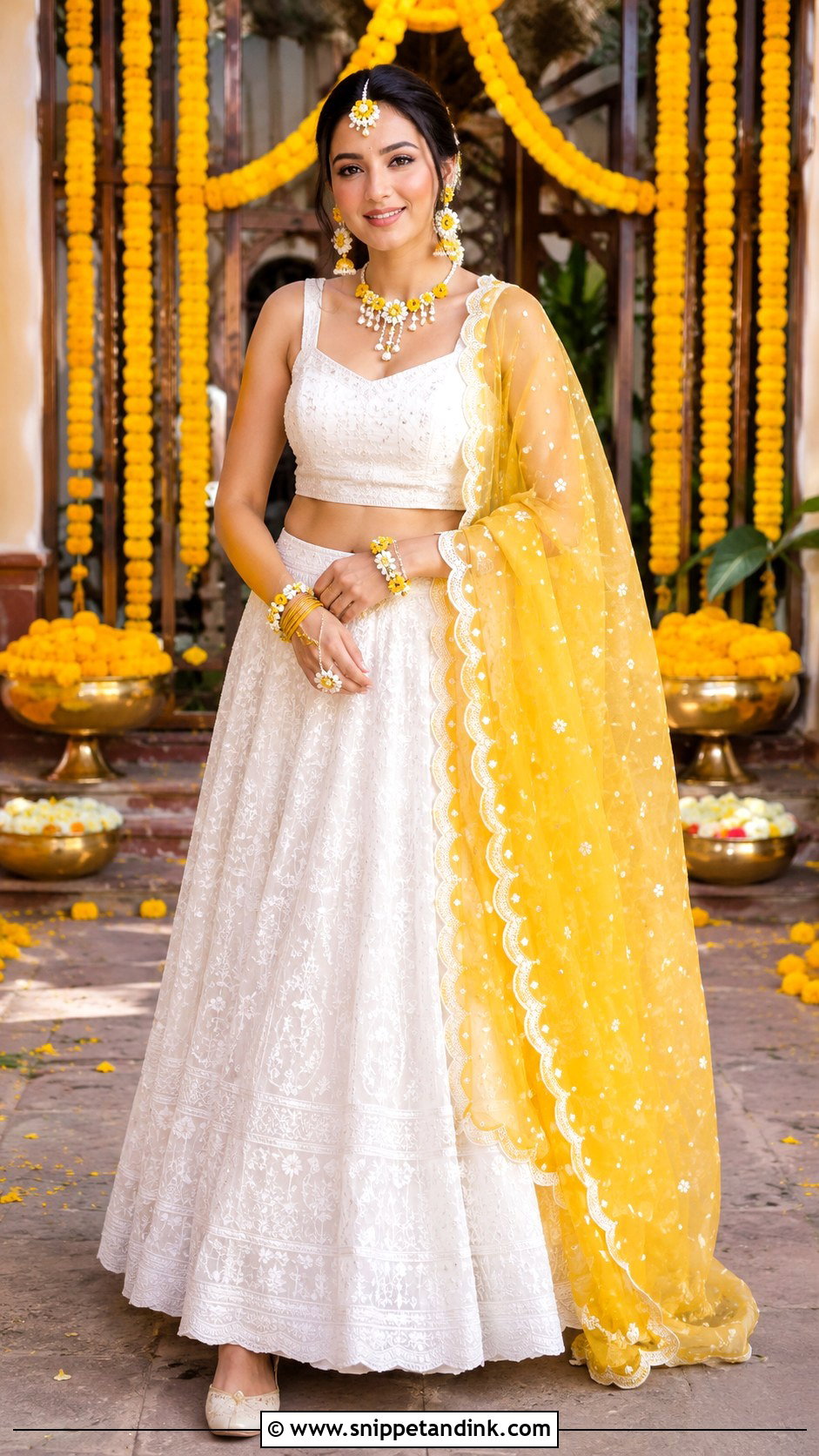
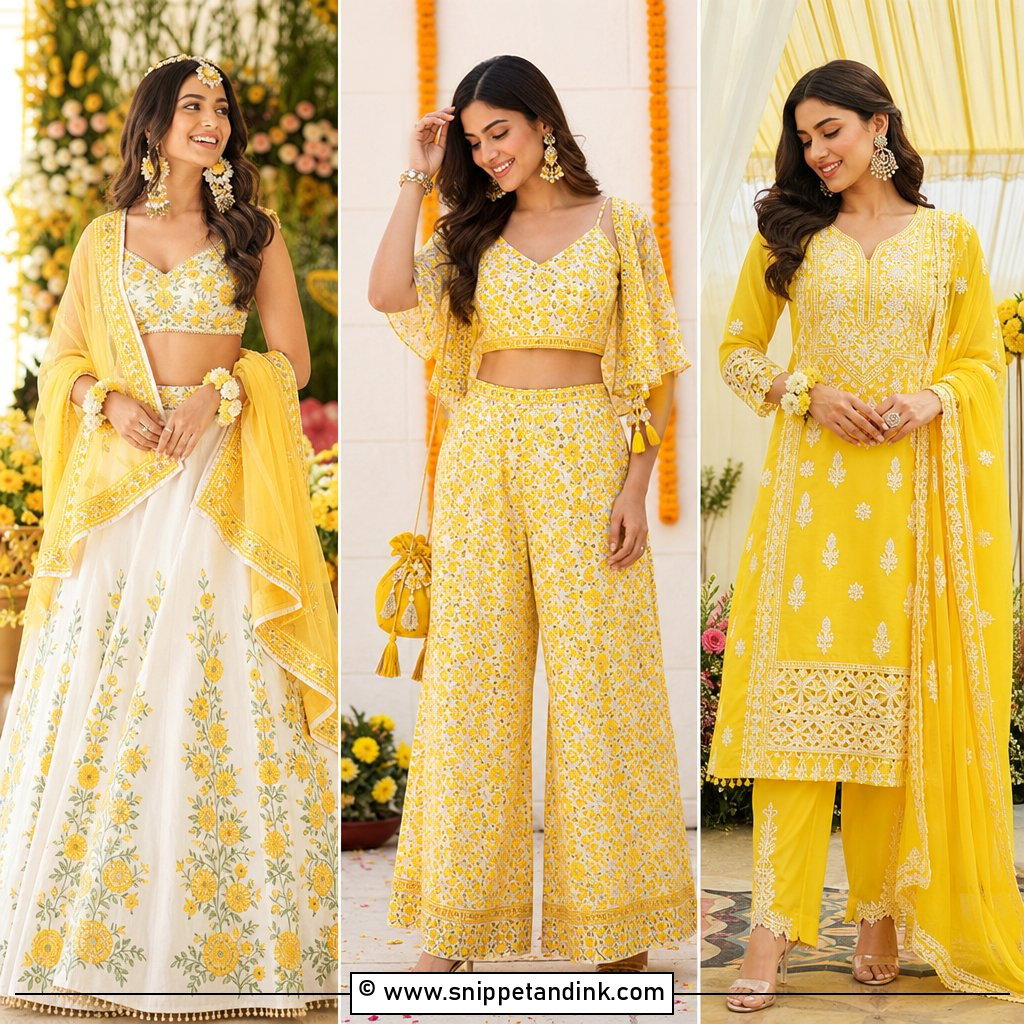
A white chikankari lehenga is light enough for a hot morning, and the tonal shadow-work doesn’t compete with the colour you’ll be wearing by noon. I’d pick a gently flared skirt rather than a heavy can-can, because you’ll be sitting low for most of the ritual. Cotton or georgette for the blouse breathes; organza looks crisp but scratches once it’s damp. A yellow dupatta with a scalloped or mirror edge brings the festive colour. Yellow floral earrings, a matching tikka, white bangles, embroidered juttis and a low bun with yellow flowers. Guests can drop the floral wrist pieces.
2. Yellow Lehenga With White Embroidered Blouse
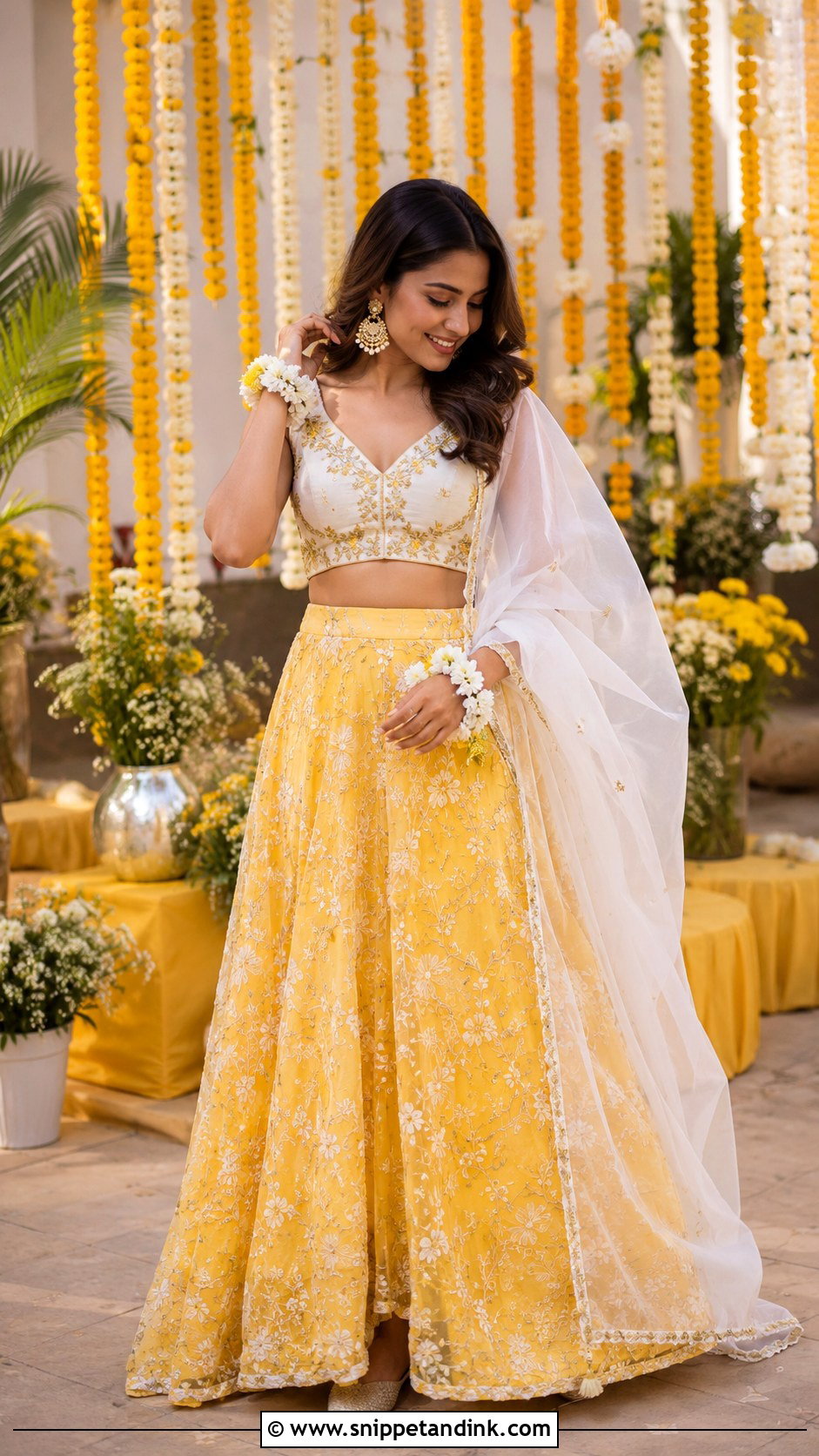
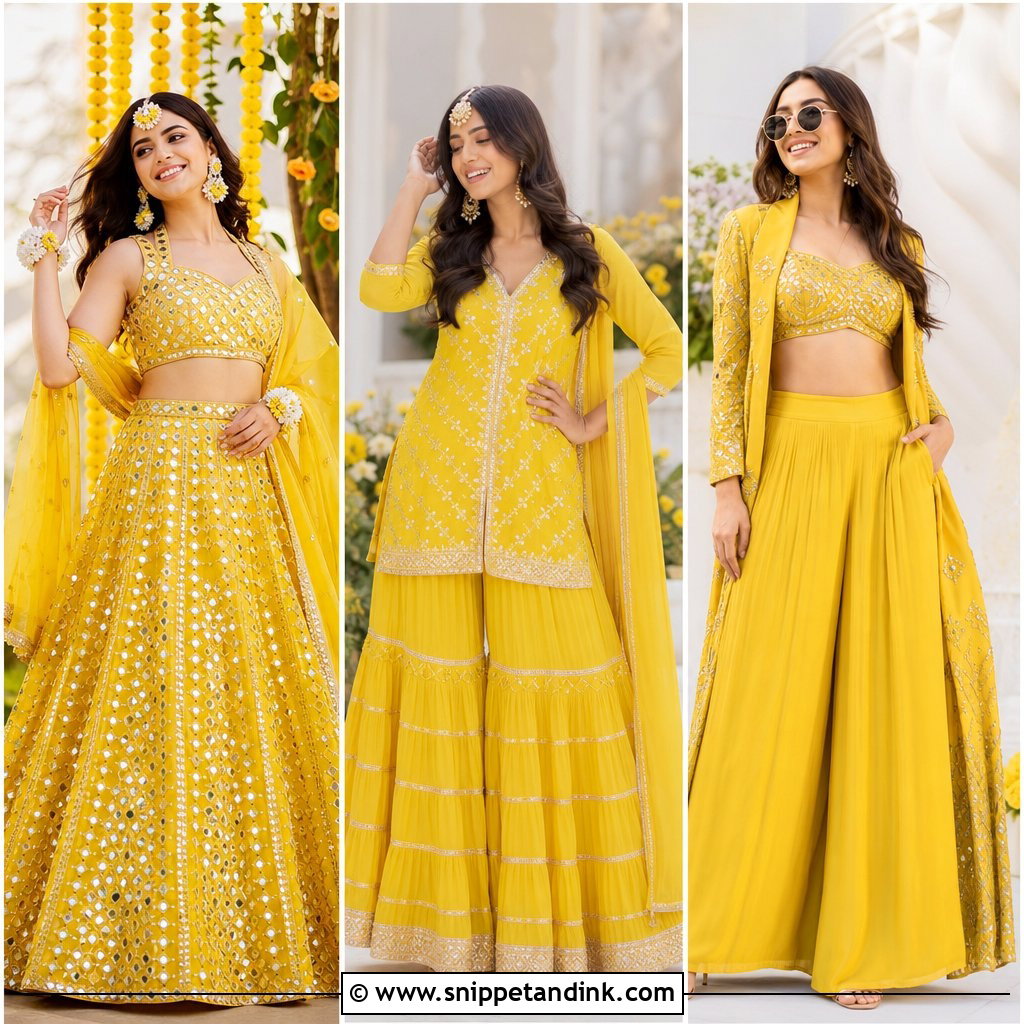
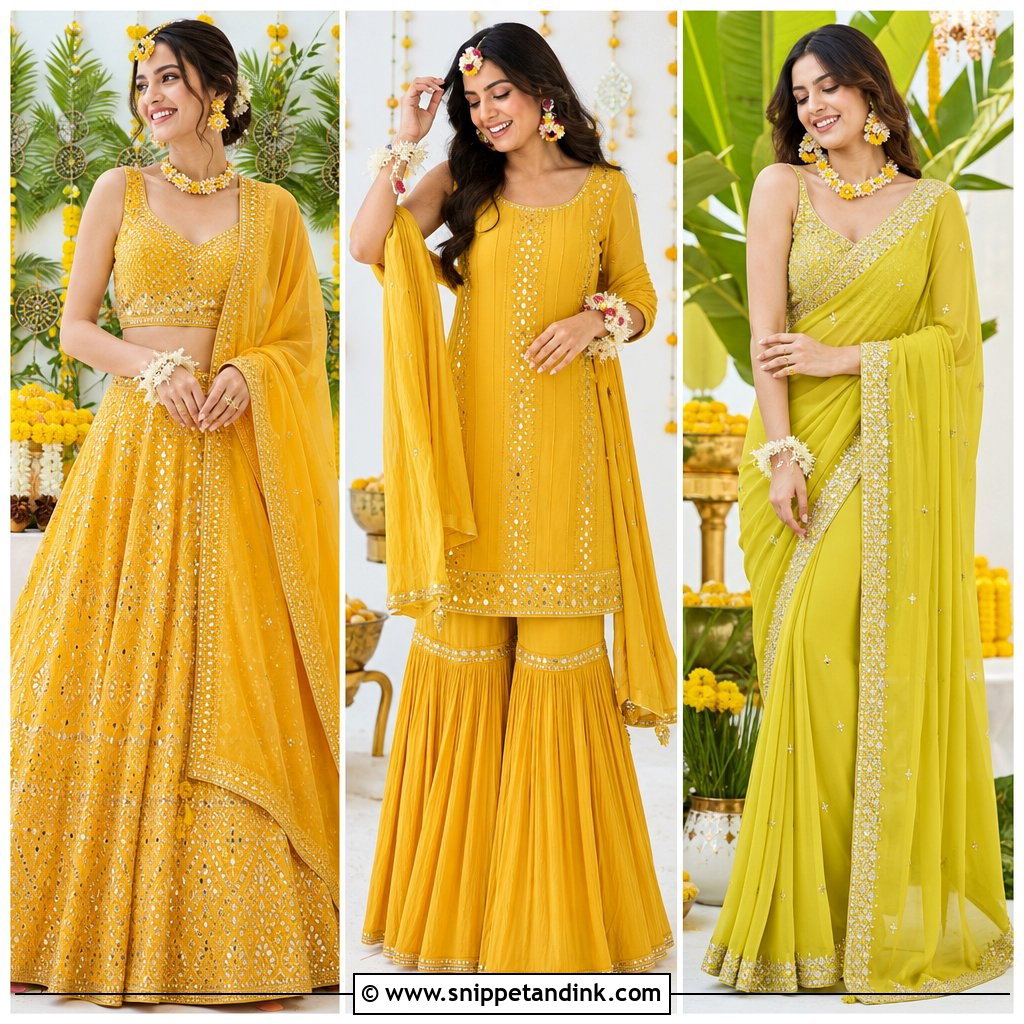
Want something bright that still looks clean? A flowing yellow lehenga with a white embroidered blouse does that, and the separates can each be tailored, so the waist, sleeves and volume suit your shape. Gota borders or small mirror motifs on the skirt are festive without feeling formal. Choose straps or short sleeves you can actually lift your arms in; a tight armhole is the first thing to bother you when relatives are reaching across to apply paste. A sheer white dupatta with a thin yellow border links the two. Gold jhumkas, flower bangles, neutral juttis, and a side braid or low ponytail.
3. White Saree With Yellow Blouse
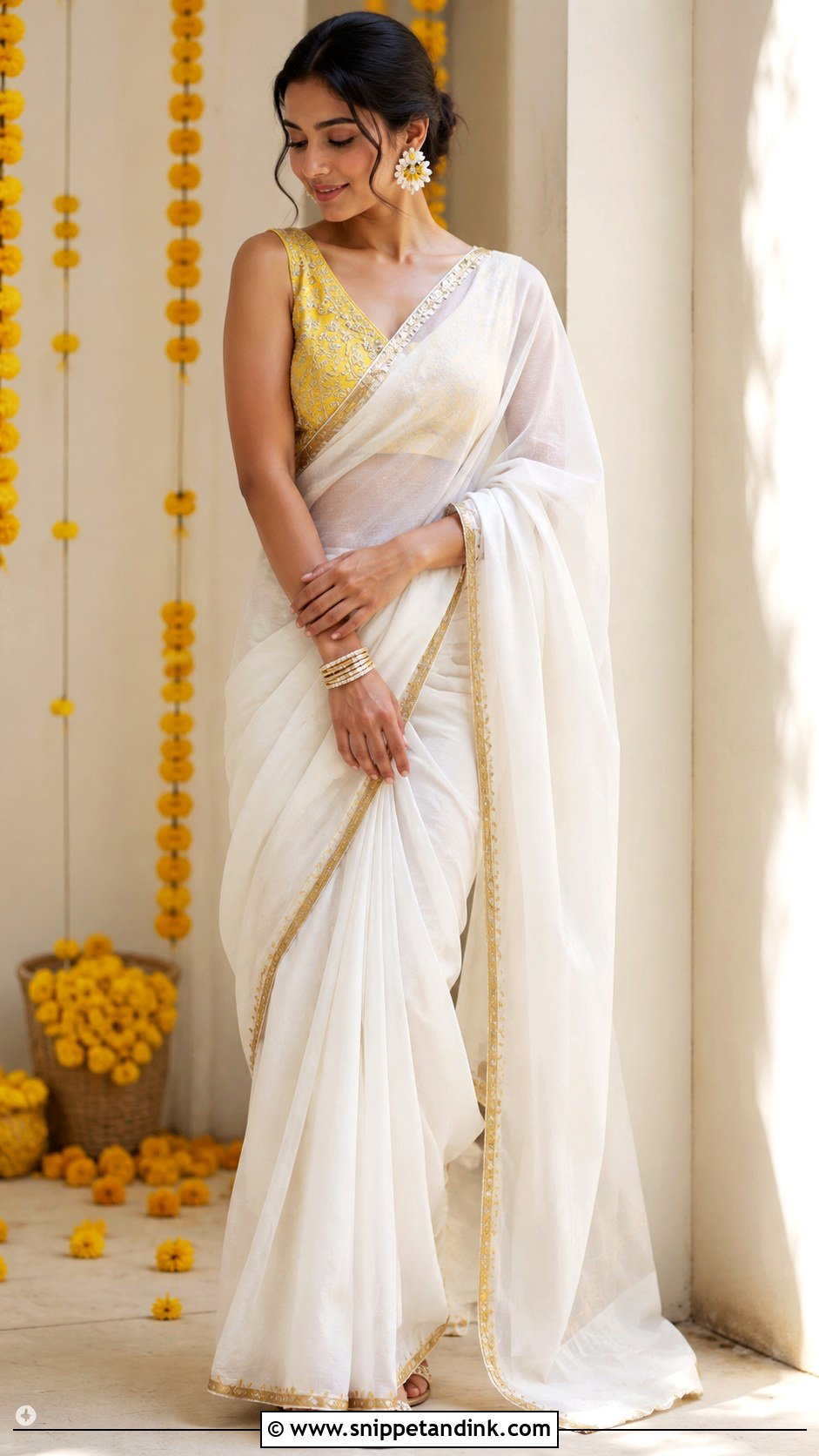
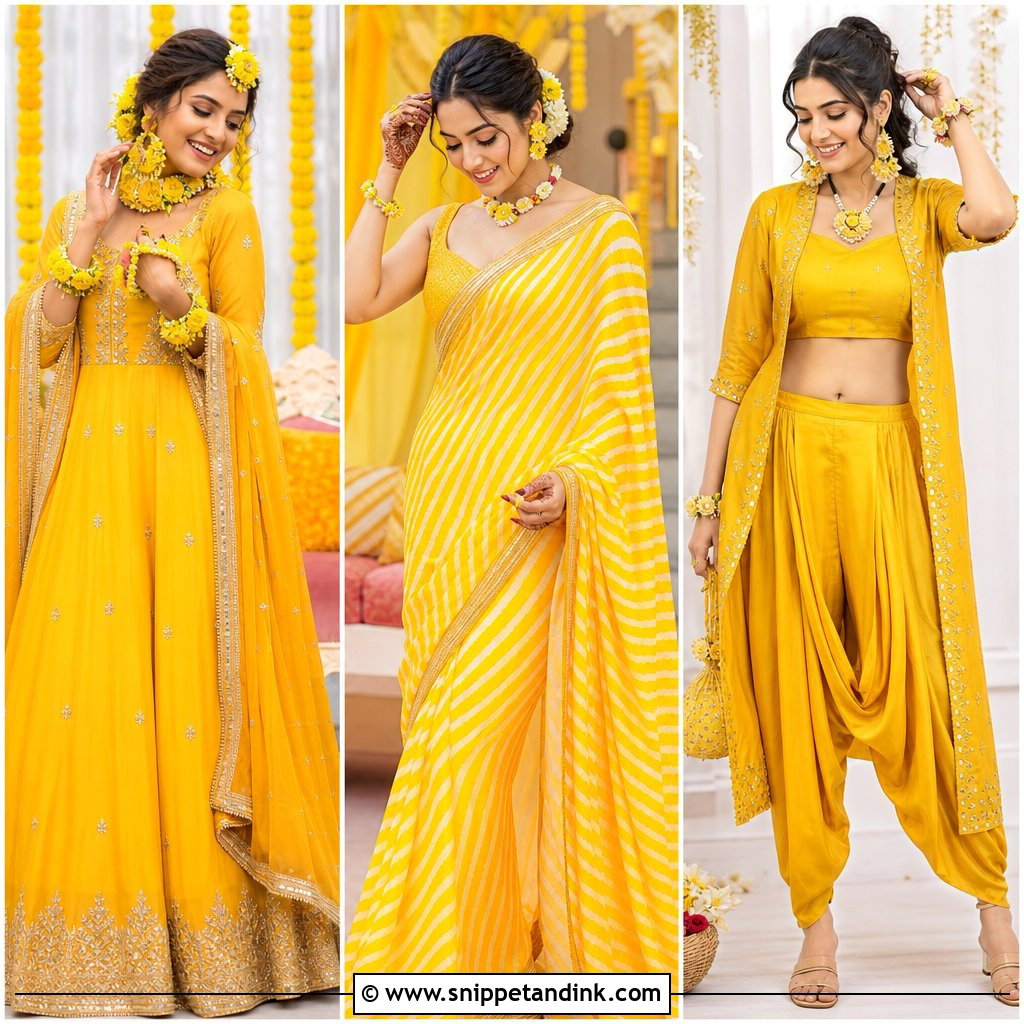
A white saree with a sunny yellow blouse is the classic I keep coming back to. Use cotton, chiffon or light organza; heavier silk shows water marks once the paste is washed off you. The blouse can be elbow-sleeved with a little embroidery or a square neck, and a saree border with small yellow flowers or gold trim pulls it together. Pin the pleats and pallu more firmly than you would for an evening event, since you’ll be bending, sitting and being hugged. Floral studs, thin gold bangles, flat juttis and a braid. Guests might add a yellow potli; brides, a floral necklace.
4. Yellow Saree With White Blouse
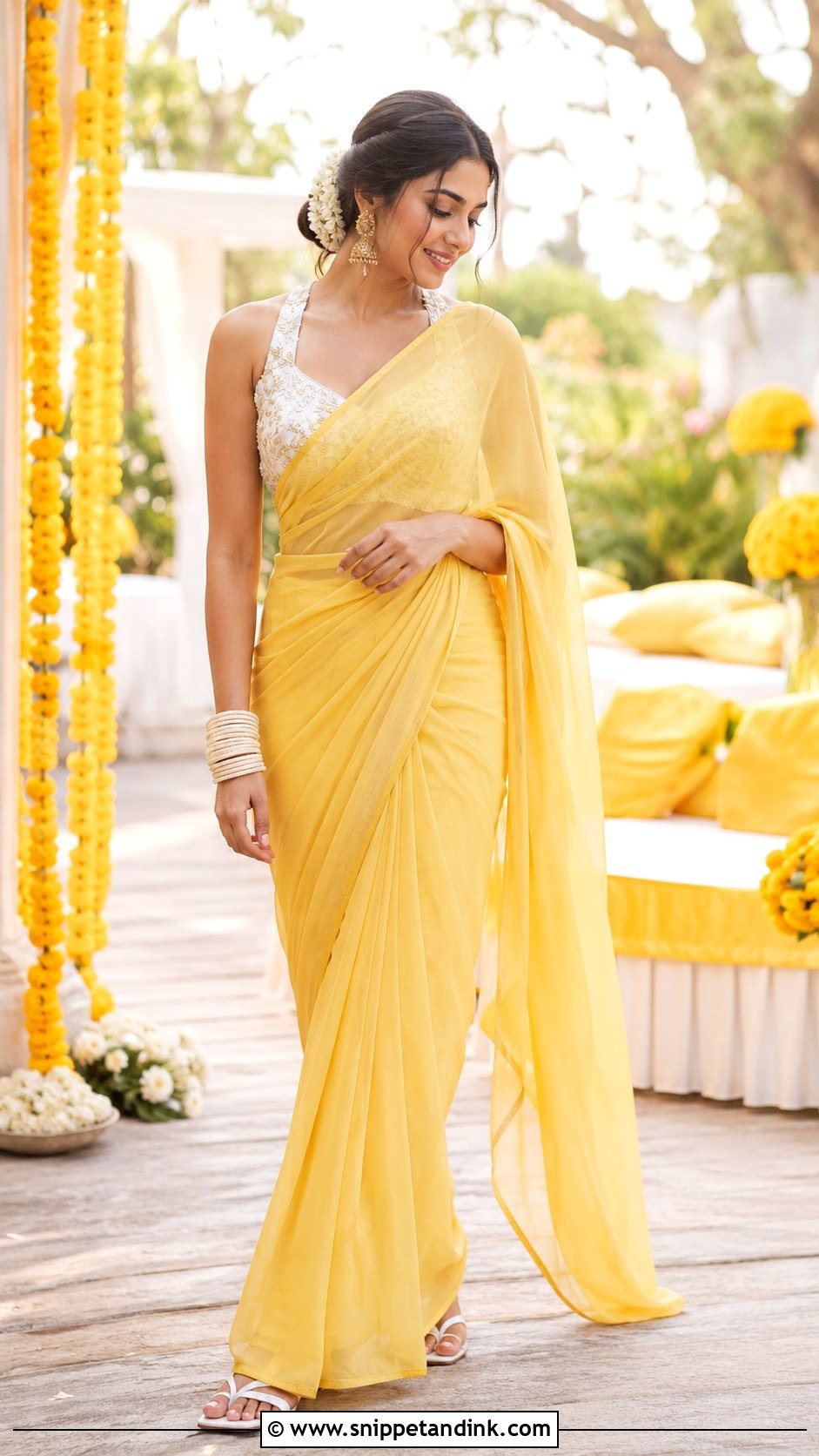
Here the colours swap: yellow saree, white blouse. Chiffon drapes softly; cotton-silk holds a more structured pleat and keeps its shape if it gets splashed. I like a white blouse with fine threadwork, pearls or scalloped sleeves, but keep beading light, because heavy embellishment on a blouse pulls at the shoulders when you’re sitting for a long time. Gold jhumkas, ivory bangles and white or metallic flats. Jasmine in a low bun is traditional; soft waves look more current. Peach blush, defined eyes and a natural lip suit sisters and bridesmaids running around all morning.
5. White Sharara With Yellow Short Kurti
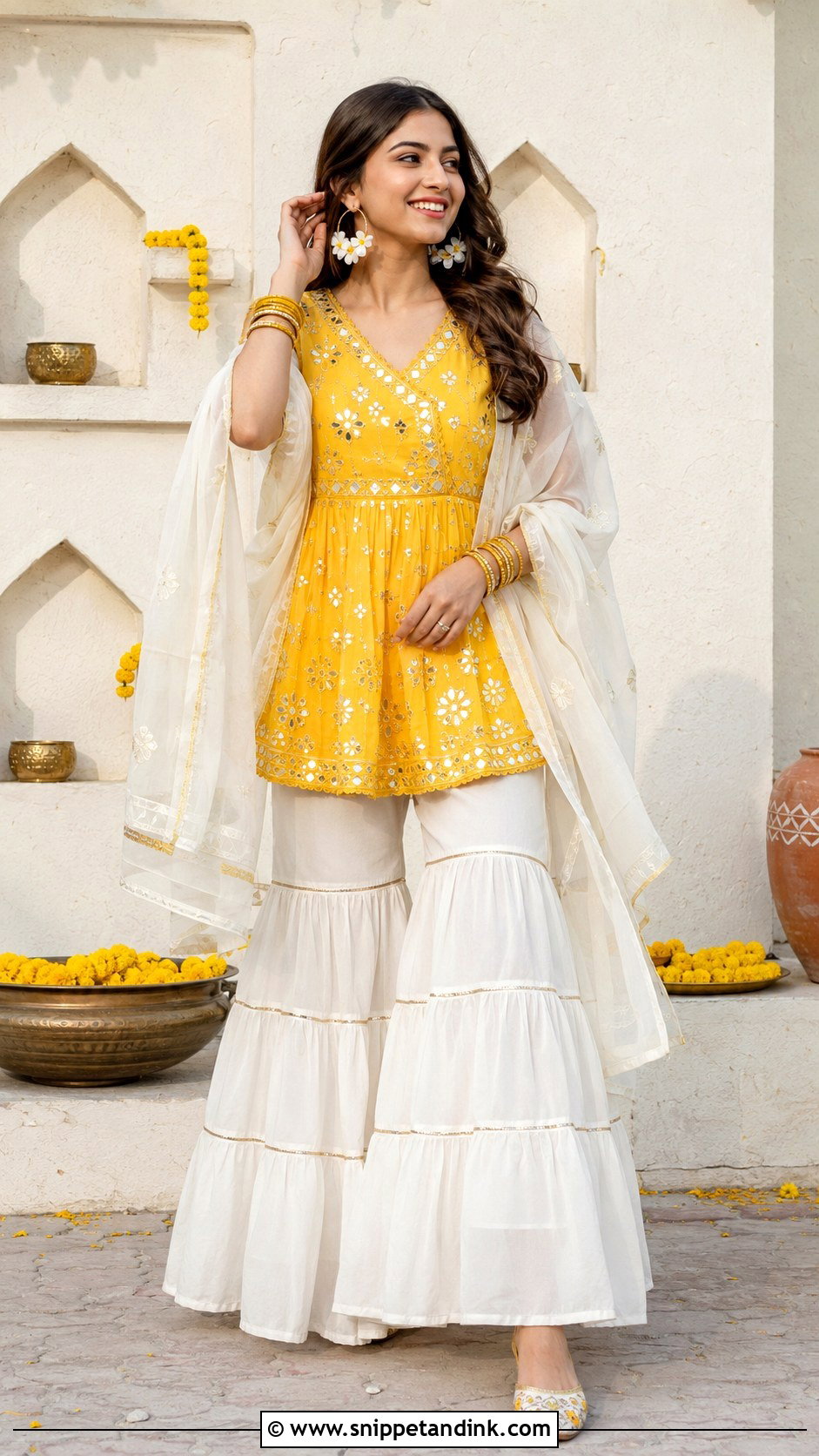
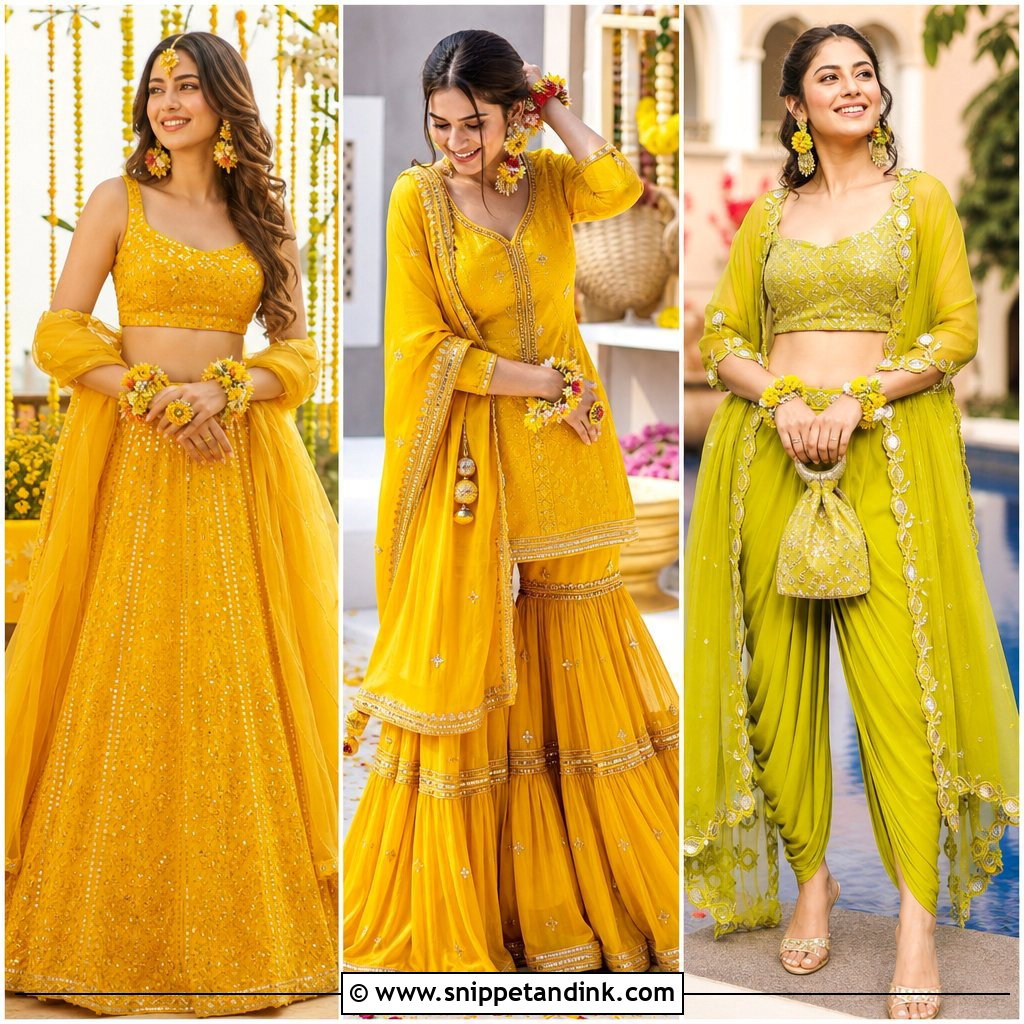
Sharara with a short kurti is probably the most practical outfit on this list. Tiered white pants in a light fabric, balanced by a yellow kurti fitted to the hip, with mirror details, white thread embroidery or a scalloped hem. Watch the tier size: petite frames get swallowed by deep tiers, so go for smaller ones, while taller women can carry a fuller pant. A white organza dupatta with yellow edging is optional for guests. Floral hoops, stacked bangles, flat juttis and a half-up style. You can dance, walk between courtyards and sit cross-legged in it.
6. Yellow Sharara With White Peplum Kurti
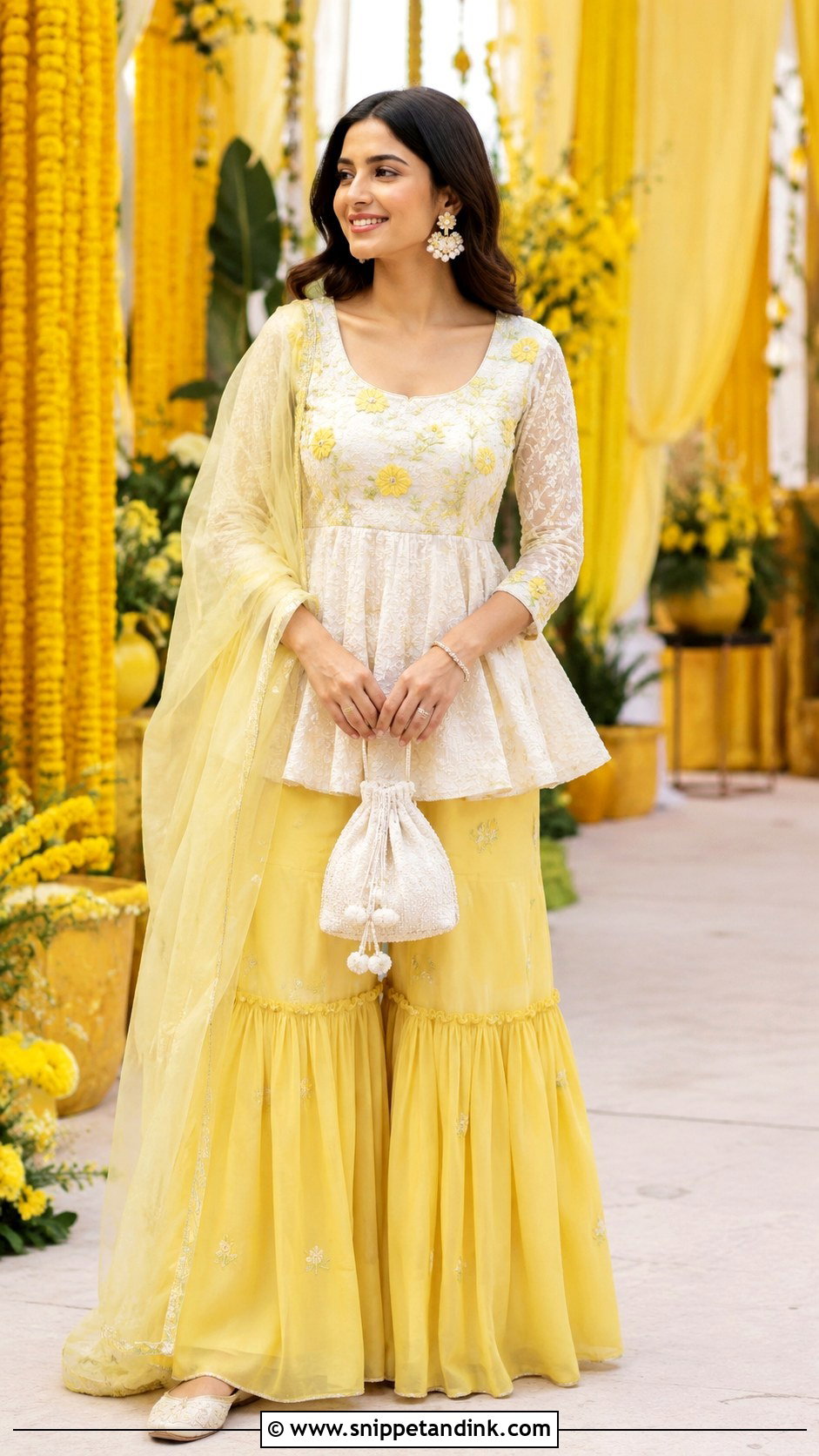
Soft yellow sharara pants under a white peplum kurti give you a defined waist with plenty of room below it. The peplum line is the thing to get right with your tailor: a longer peplum covers more, a shorter one sits right at the waist and shows its shape. Yellow embroidery, mirrors or a narrow gota border on the kurti connects the pieces. Pin the dupatta over one shoulder so it can’t slide into the turmeric bowl. Pearl and flower earrings, a white potli, gold juttis and a sleek ponytail.
7. White Anarkali With Yellow Organza Dupatta
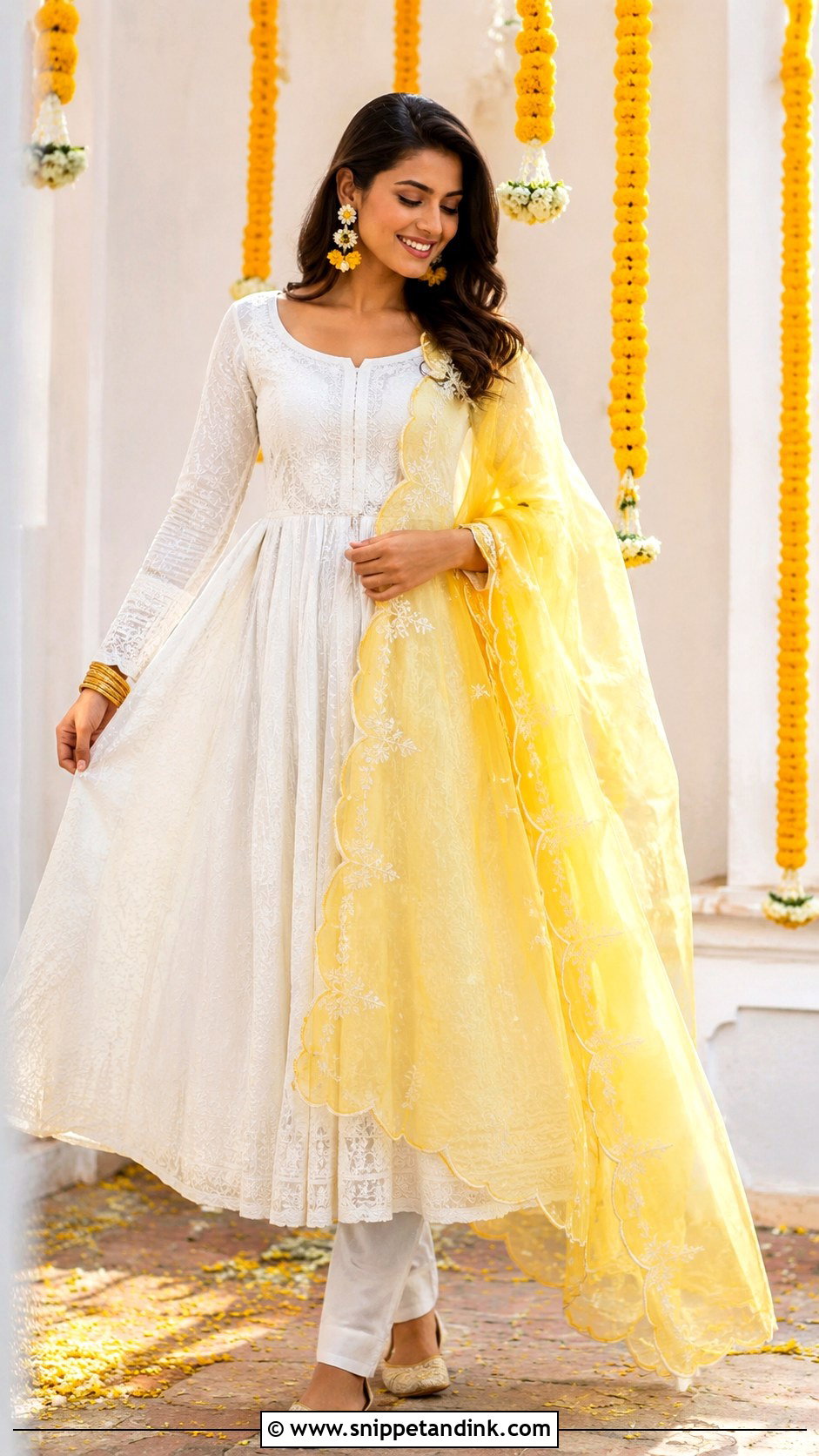
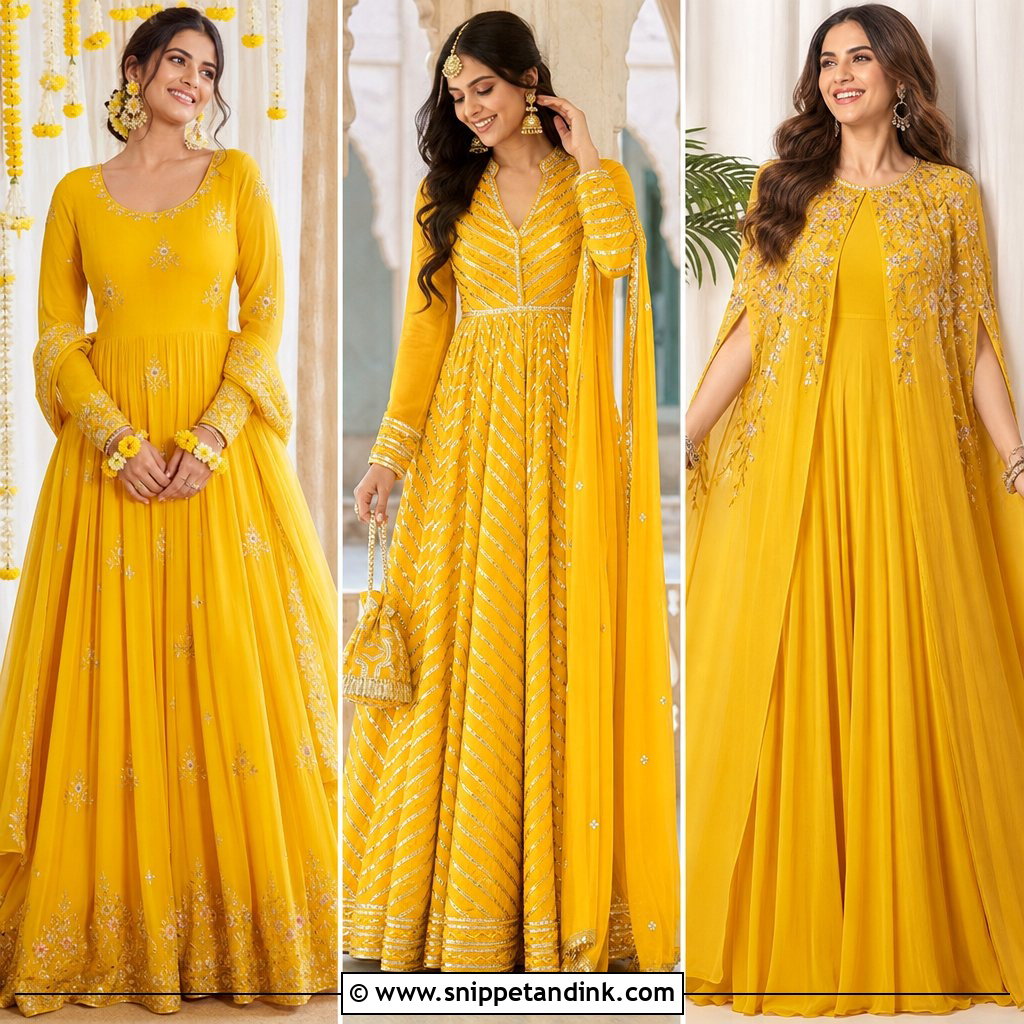
Anarkalis have a lot of fabric, and at a haldi that fabric ends up on the floor around you while you sit. So I’d choose a white one with subtle chikankari or yellow embroidery at the neck and cuffs, and think about length: brides can go floor-length, but a calf-length cut is far easier for guests who’ll be up and down helping. Narrow white pants and a sheer yellow organza dupatta with a scalloped edge. Pin that dupatta at the shoulder. Yellow floral earrings, slim gold bangles, flat shoes and a centre-parted low bun or soft braid.
8. Yellow Anarkali With White Floral Dupatta
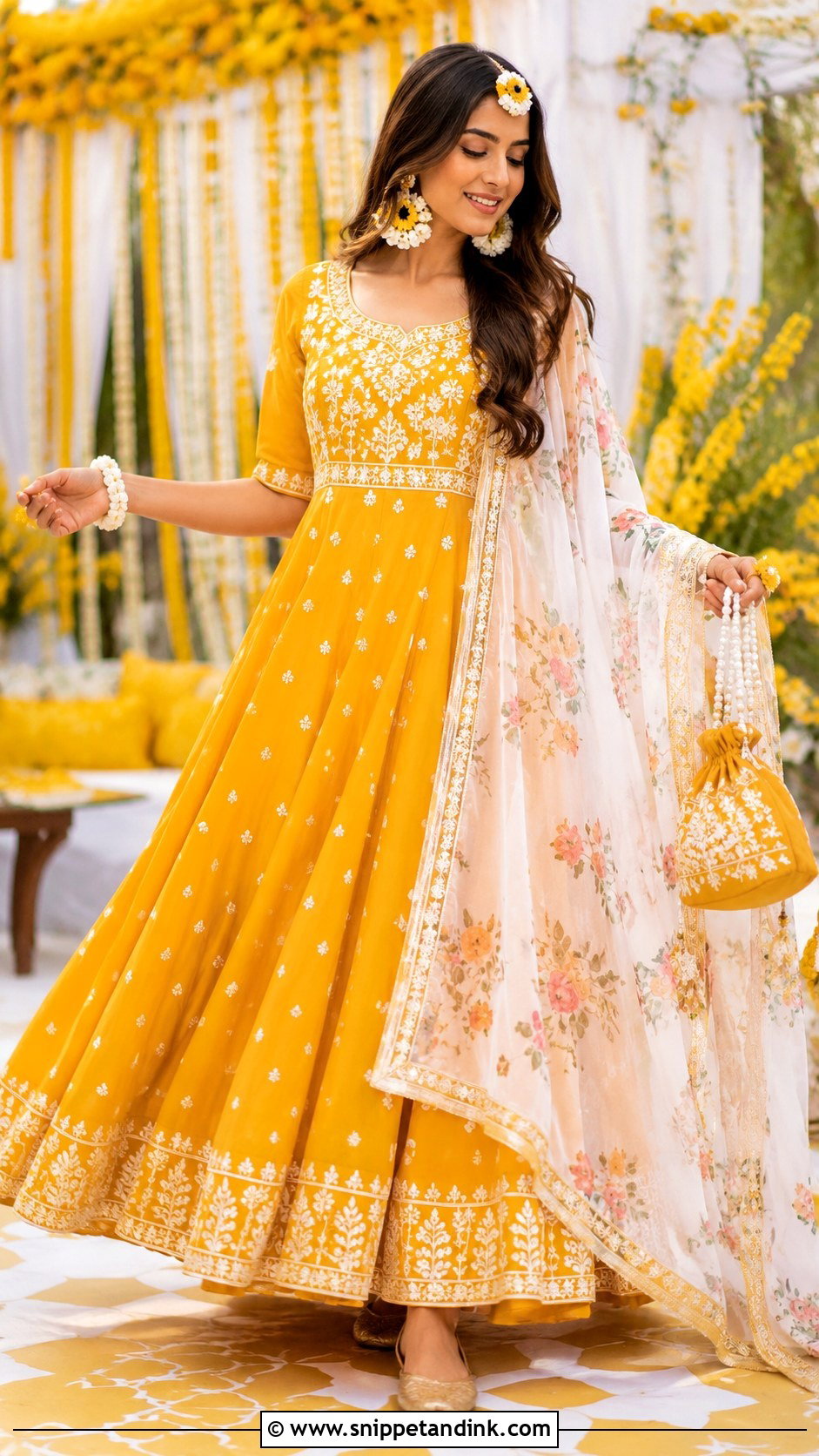
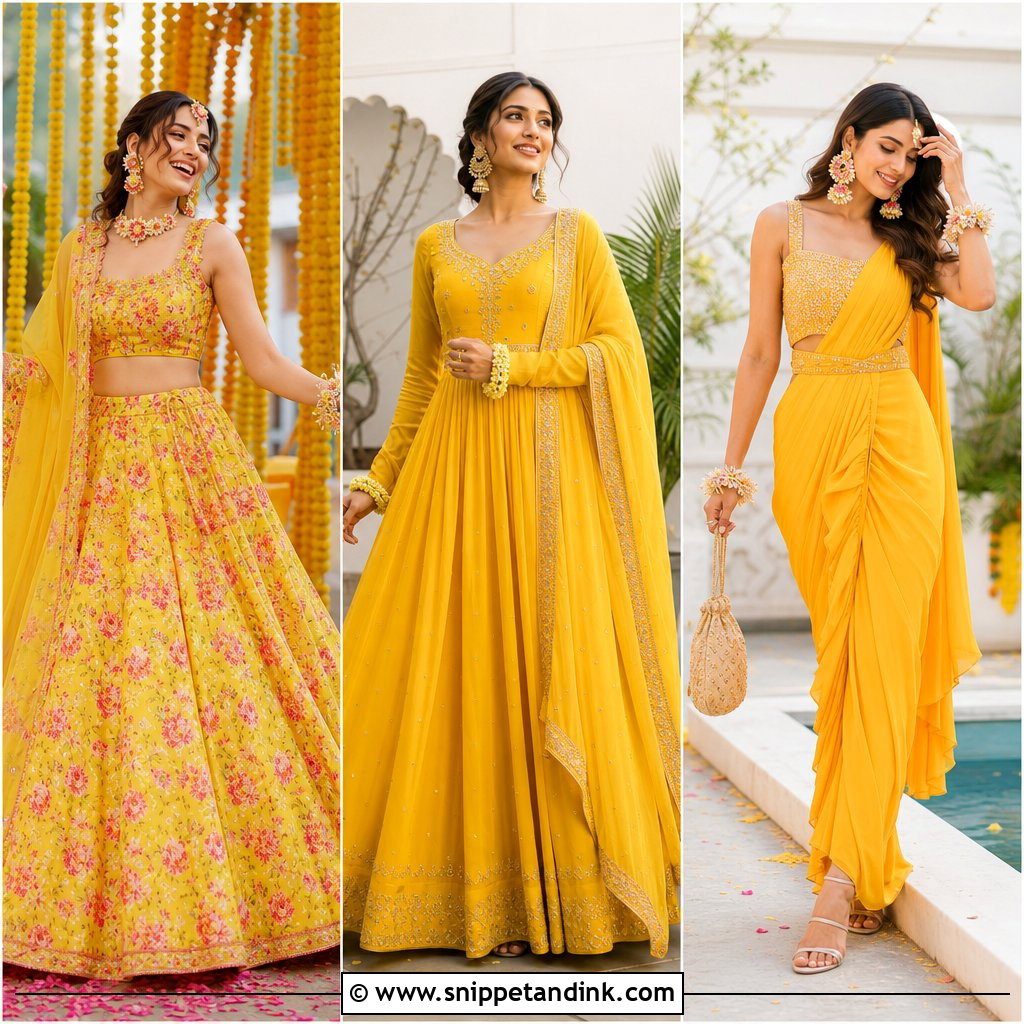
A marigold-yellow Anarkali with a sheer white dupatta scattered with tiny yellow flowers feels lighter than a solid yellow set. The fitted top and airy skirt let you sit comfortably. White piping or mirror work repeats the contrast. Because the dress already has volume, a large bag or heavy necklace makes the whole thing look crowded; a small potli and white flower jewellery are enough. Choose elbow sleeves and a higher neck for more coverage. Gold-toned flats and a loose braid with white blossoms.
9. White Kurta With Yellow Palazzo Pants
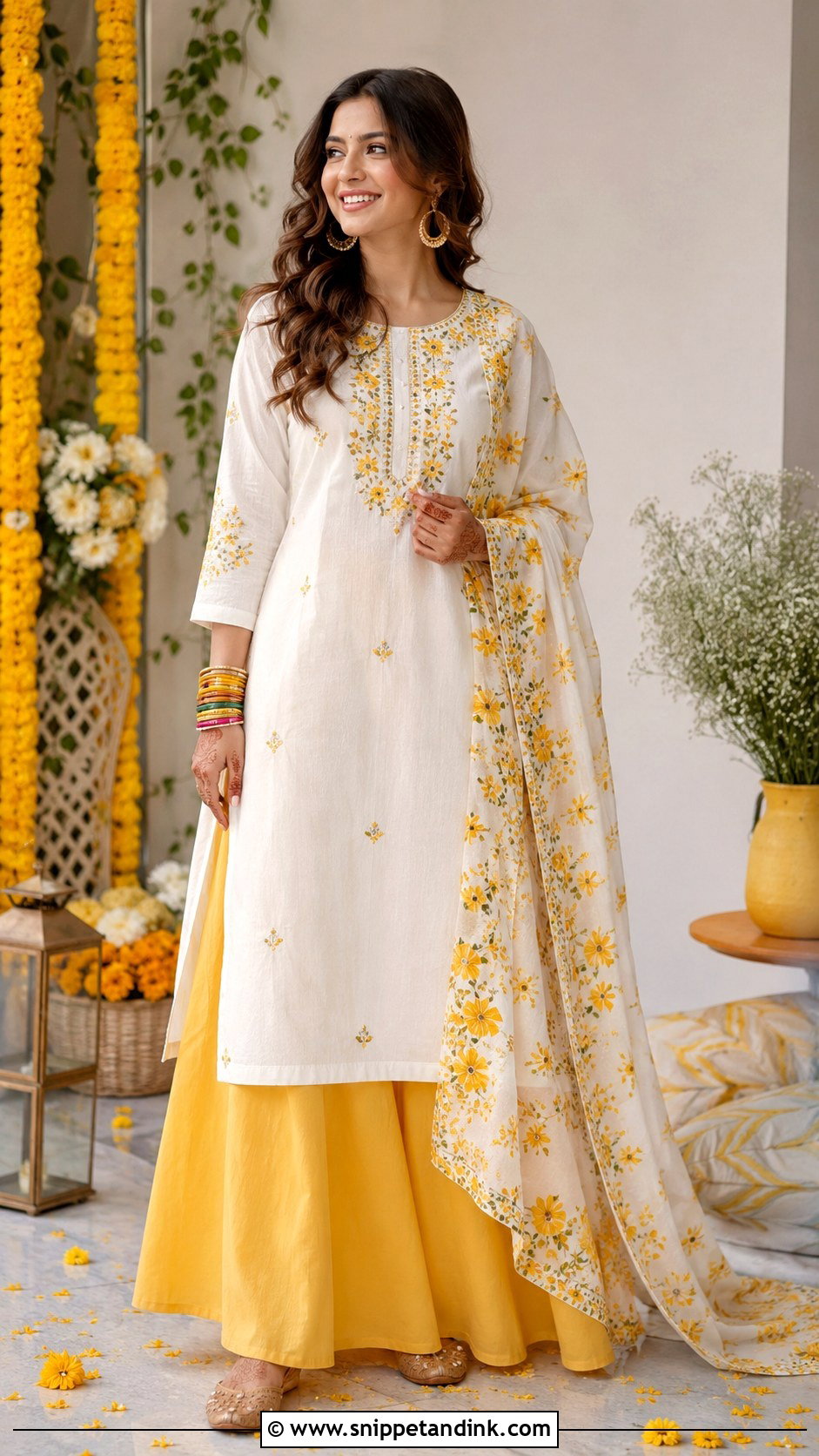
For a small ceremony at home or in the garden, a straight white kurta with flowing yellow palazzo pants is my pick. Every piece can be worn again afterward, which matters for guests. A knee-length kurta with yellow threadwork or mirror accents is decoration enough. High-waisted palazzos in cotton-silk or georgette drape well; adjust the width to your height, since very wide legs on a short frame can look like a skirt. Add a printed dupatta if you want it more traditional. Gold hoops, bangles, cushioned juttis, and hair pulled back from the heat.
10. Yellow Kurta With White Straight Pants
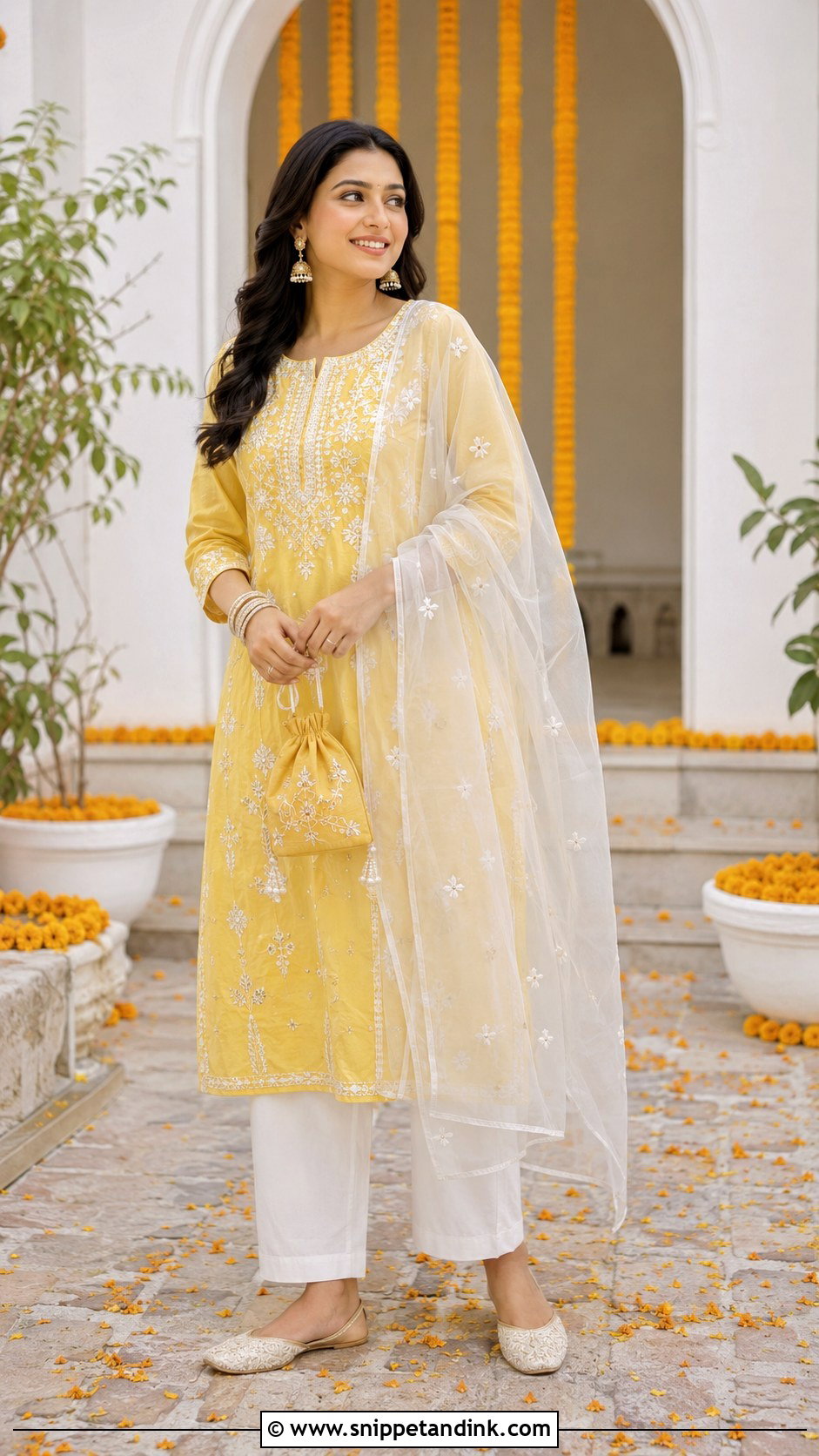
Simple pieces, done precisely. A yellow kurta with white embroidery, scalloped cuffs or a bit of mirror work, over crisp white straight pants that stop just above the ankle so they don’t drag through paste on the floor. A white organza dupatta edged in yellow makes it a three-piece set. Medium jhumkas, a few white bangles, comfortable juttis and a small yellow potli. A curled ponytail or tidy low bun. Cousins and bridesmaids who want modest and easy should start here, and it suits an intimate ceremony where a lehenga would be too much.
11. White Gharara With Yellow Peplum Top
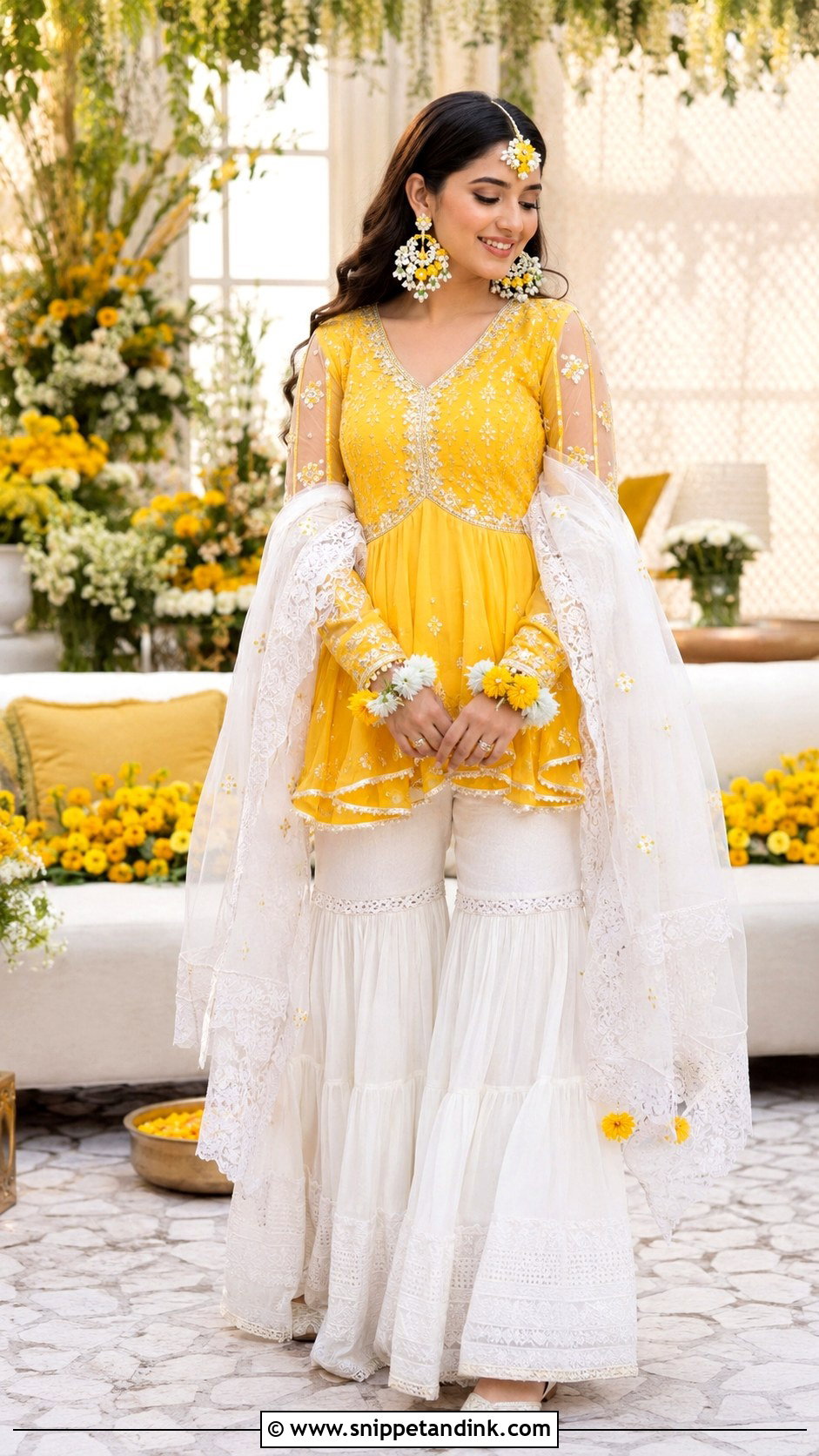
Gharara gives you volume at the knee; a yellow peplum gives you structure above it. Look for lace, gota or embroidery around the knee seam and hem. Proportion is everything with this pair, and I always pin the peplum length at a fitting with the gharara on, because the right ratio changes with height. The peplum should fit through the bodice before flaring over the waist. A white net or organza dupatta can go across both shoulders or over one arm. Floral chandbalis, a yellow tikka, flat white juttis and a braided bun.
12. Yellow Gharara With White Short Kurta
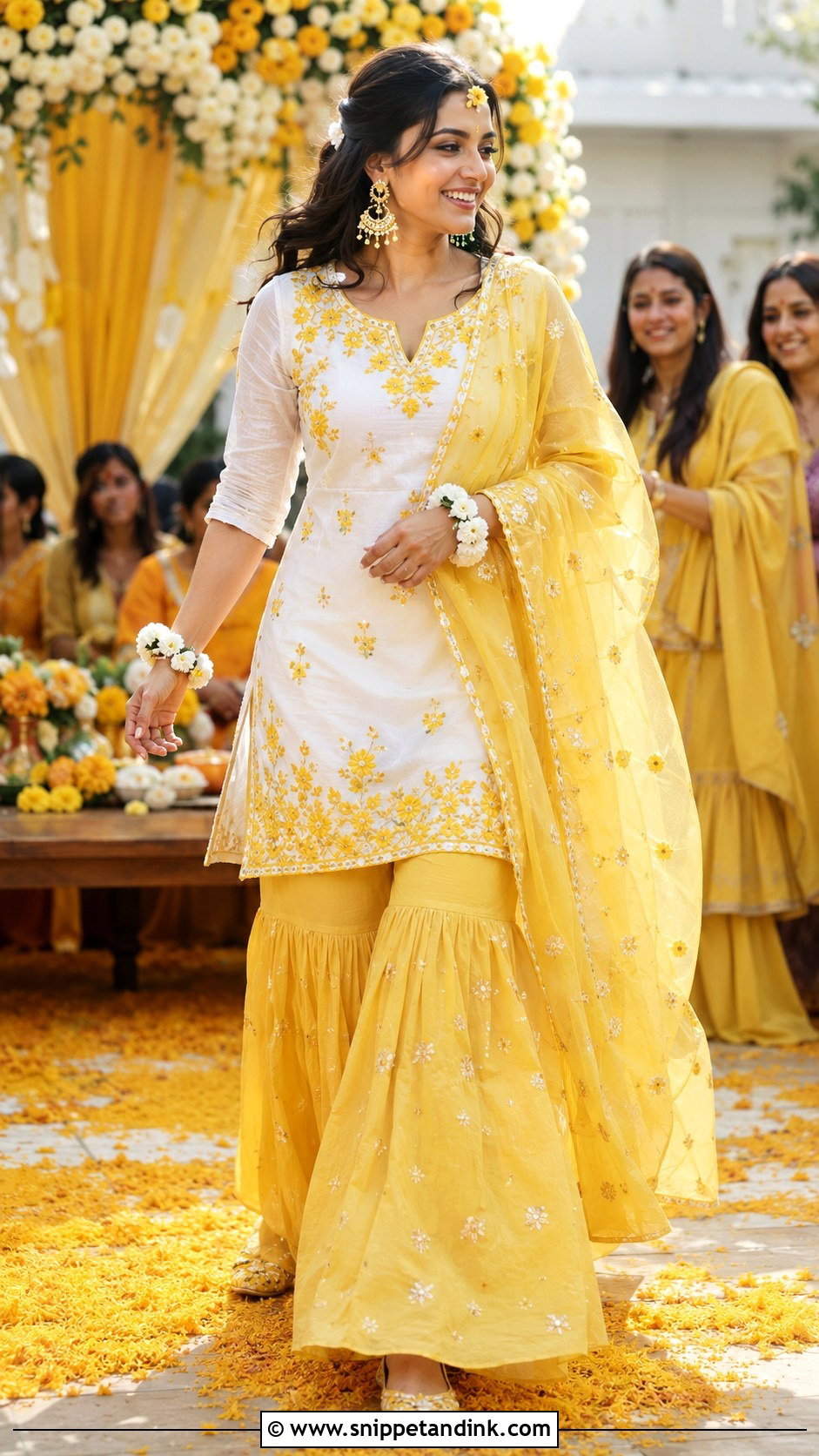
Bridesmaids and sisters spend the haldi helping, carrying bowls and dancing, so they need something festive that keeps their hands free. A yellow gharara with a short white kurta does it: the short top shows off the knee flare properly. Yellow floral embroidery or fine gold edging on the kurta, a sheer yellow dupatta with white motifs pinned at the shoulder. For a modest fit, take the kurta to upper thigh with elbow sleeves. Gold jhumkas, white floral bangles, yellow juttis and a half-up style with fresh flowers.
13. White Dhoti Pants With Yellow Crop Top
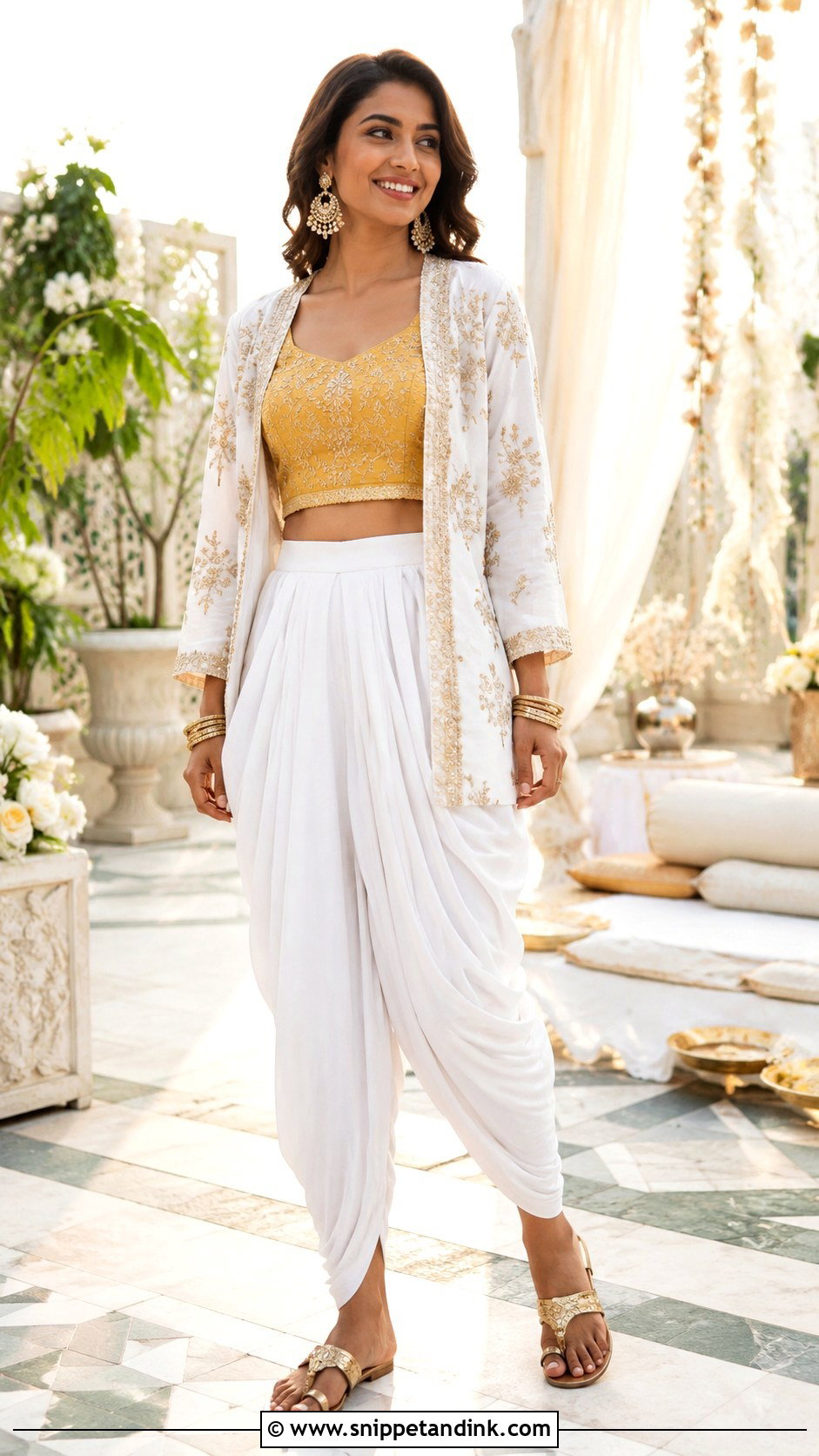
Pairing draped white dhoti pants with a structured yellow crop top reads modern while still feeling ceremonial. The dhoti must sit securely at the natural waist and taper at the ankle, or the drape loses its shape the first time you sit down cross-legged. If you’d like your midriff covered, use a longer crop or a fitted short kurti. A white embroidered jacket, yellow cape or light dupatta can go over it. Statement earrings, stacked white bangles, flat gold sandals and a high ponytail. Keep to the two colours; adding a third shade makes it look like a costume.
14. Yellow Dhoti Set With White Cape
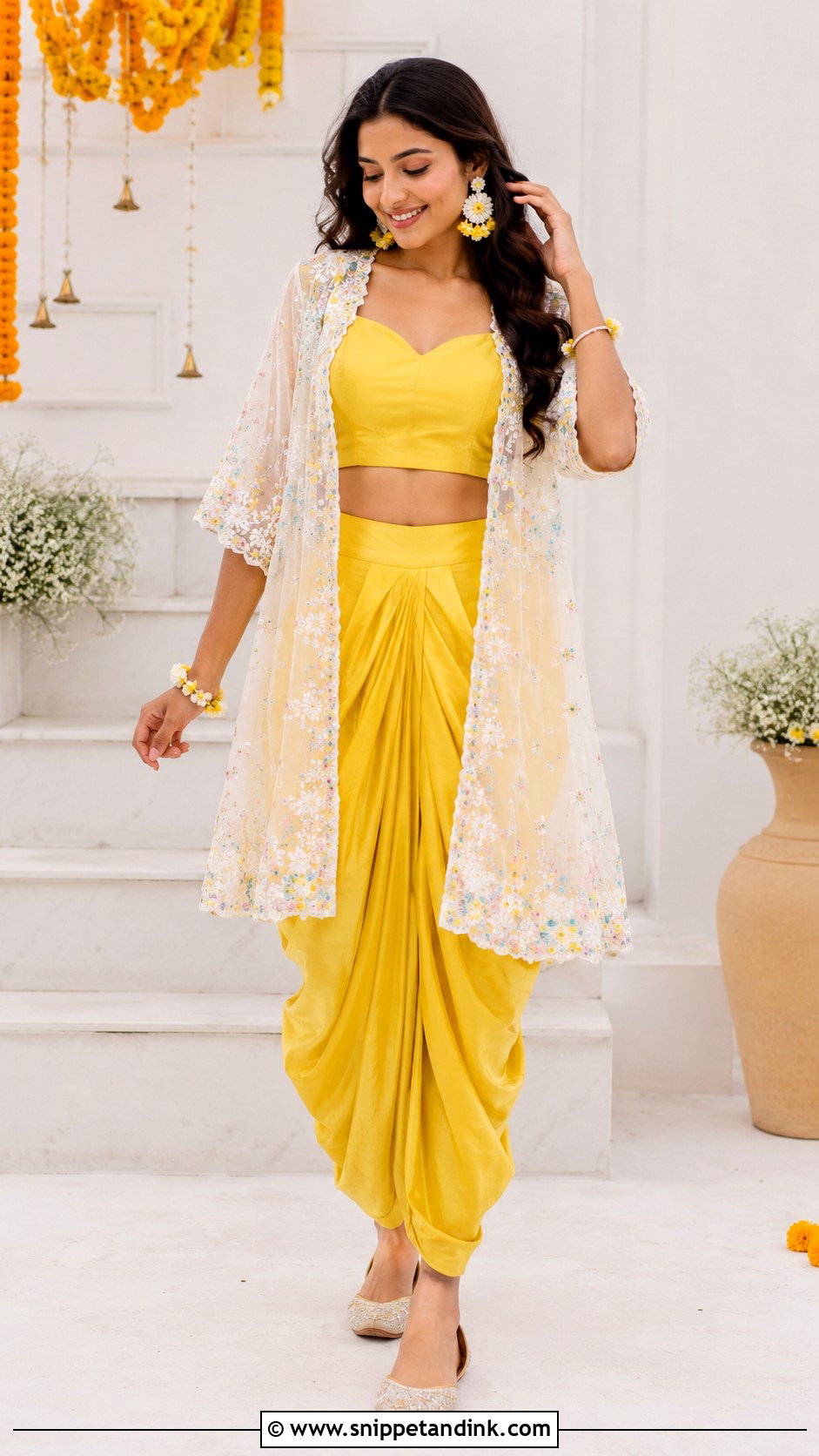
Not every bride wants a dupatta to manage. A yellow dhoti set with a flowing white cape gives you movement and coverage without anything to pin. Pick soft, breathable fabric for the fitted top and draped pants. The cape can carry yellow floral embroidery, pearl edging or small mirrors. Knee length is easier; a longer cape makes a better entrance but trails into everything once you’re seated. Try sitting and raising your arms in it before the day. Floral drops, delicate bangles, neutral flats and a sleek bun so the neckline isn’t crowded.
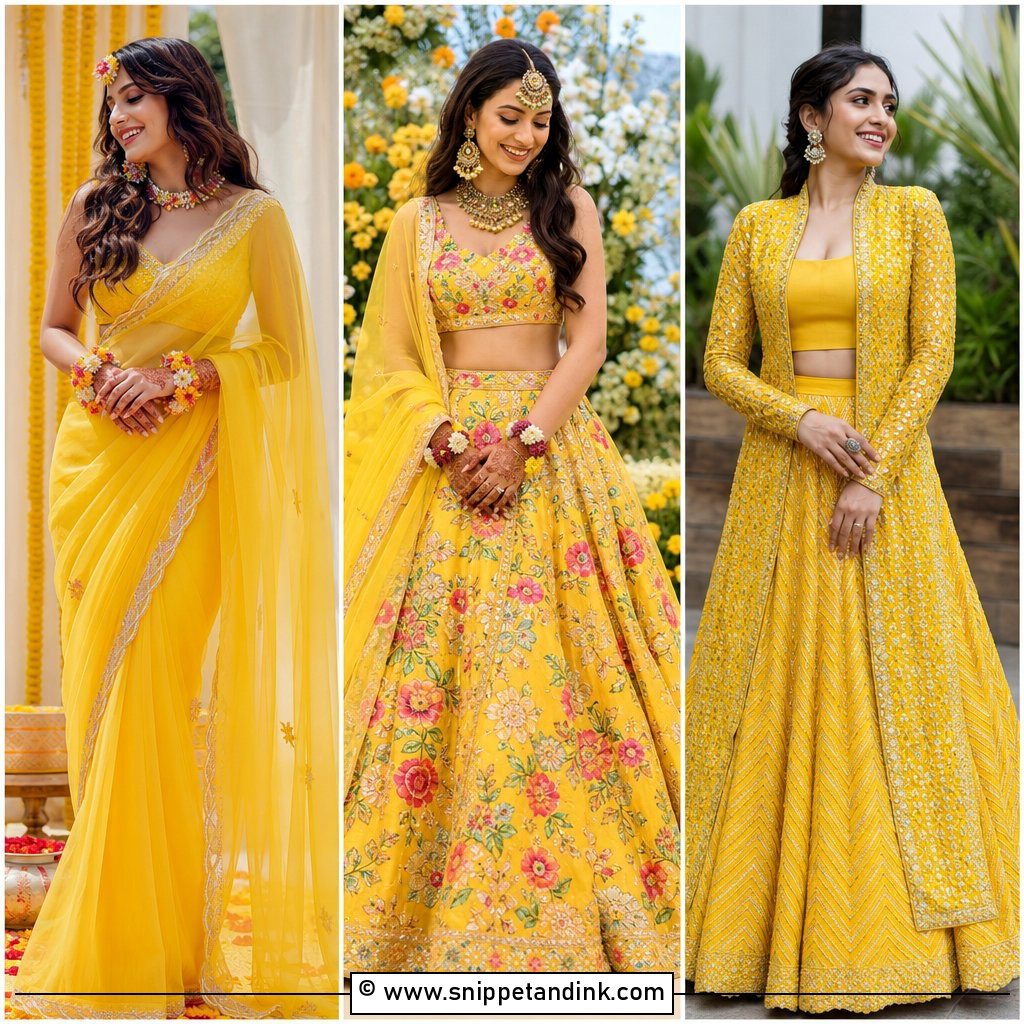
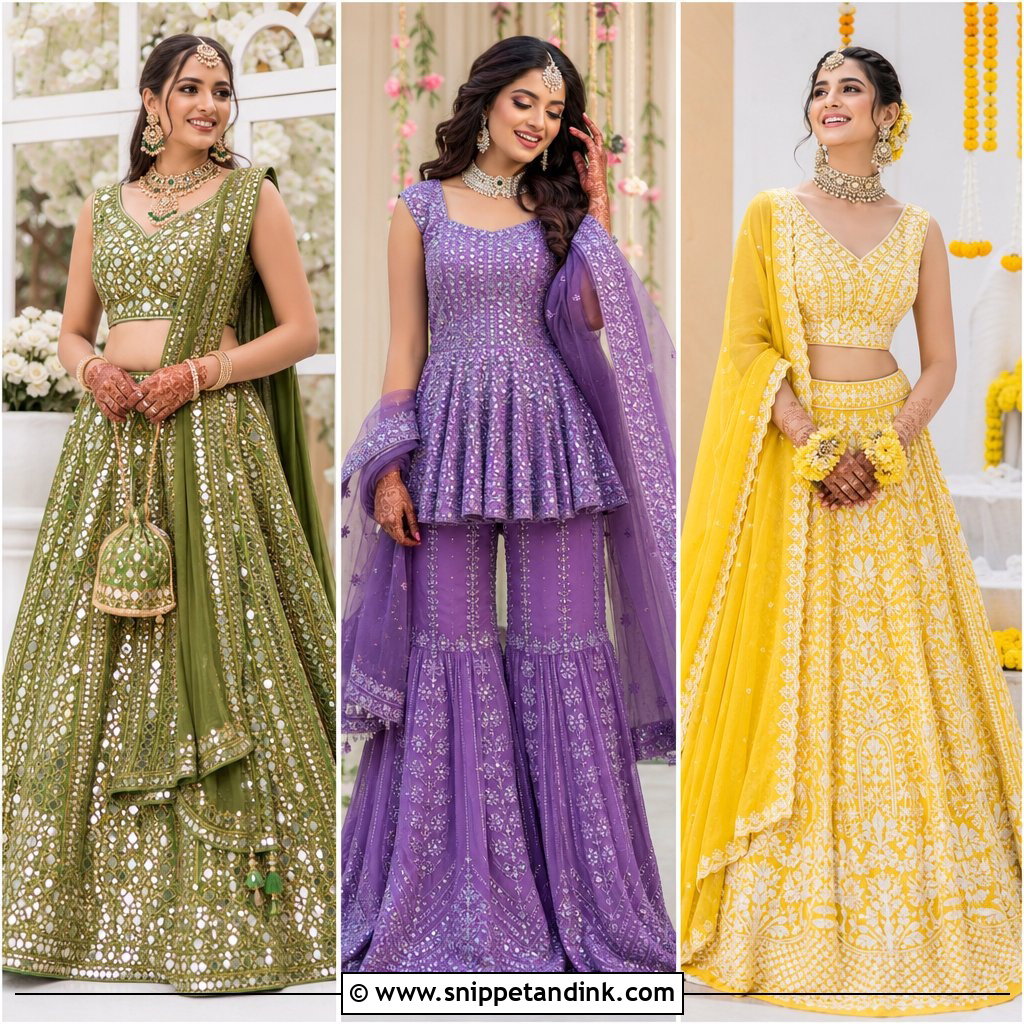
15. White Maxi Dress With Yellow Floral Print
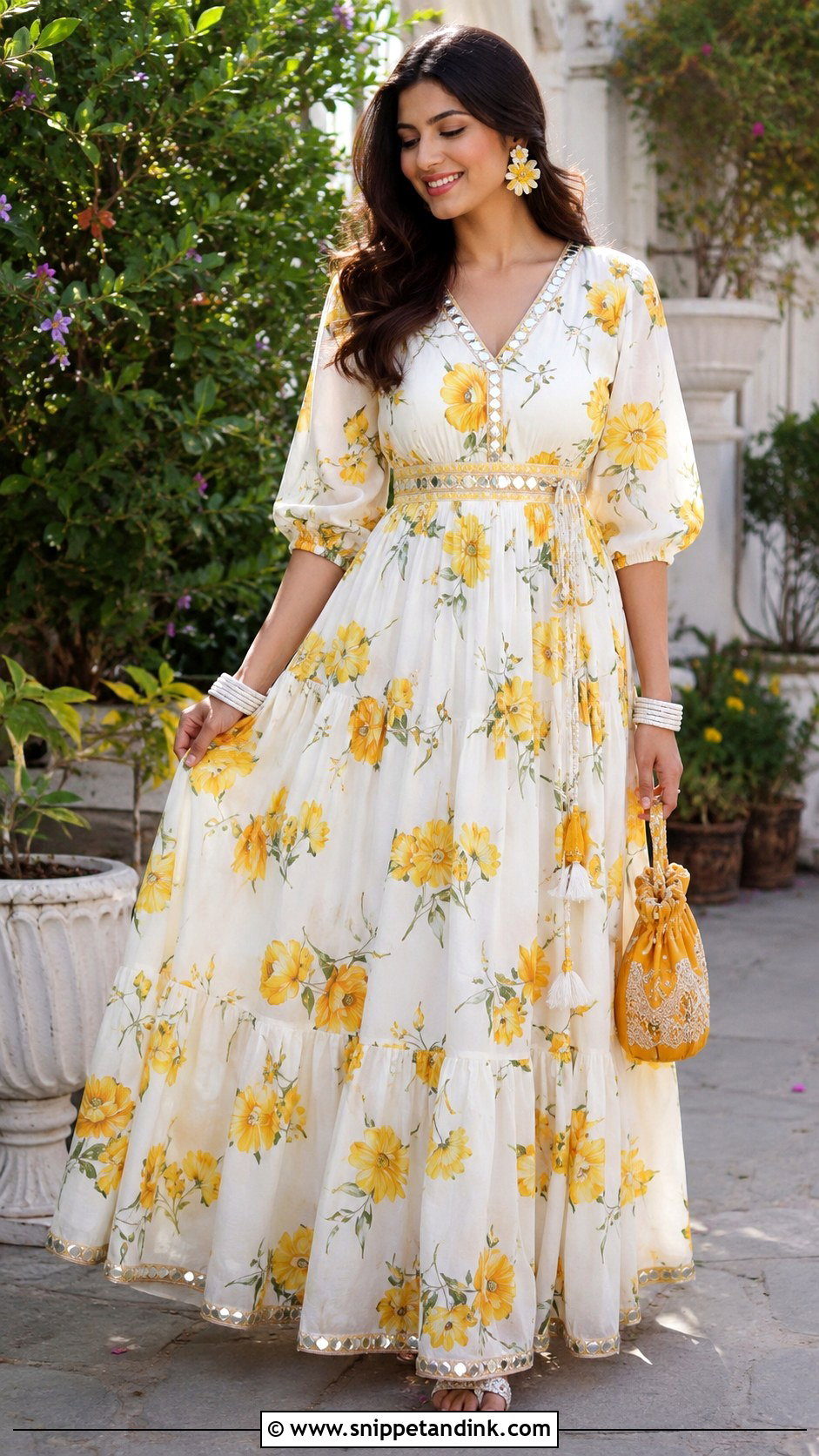
A white maxi printed with yellow flowers is the easiest outfit here and the coolest in summer heat. Indian details like a gathered neckline, a mirror-trimmed belt or block-printed flowers keep it from looking like a holiday dress. Make sure the hem clears your ankles; a maxi that drags will soak up paste and water from the floor. Yellow floral earrings, white bangles, a small potli and embroidered flat sandals. Guests can wear it alone. Brides can add a light yellow dupatta or floral belt, plus a loose braid or soft half-up hair.
16. Yellow Bandhani Lehenga With White Choli
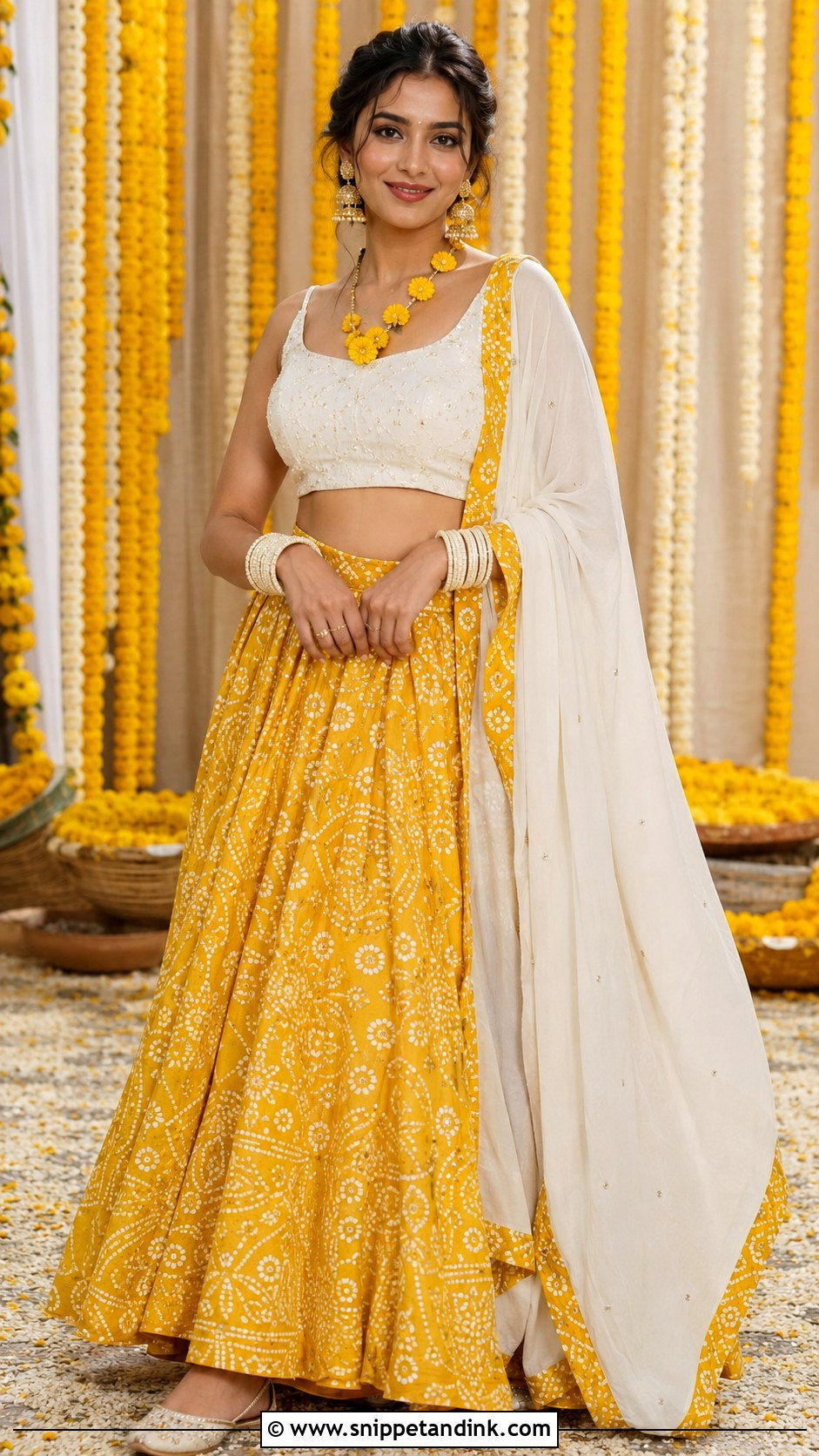
Bandhani is tie-dye with deep roots in Gujarat and Rajasthan, and a yellow bandhani lehenga brings pattern without needing much embellishment. Pair it with a plain white choli in a square, sweetheart or round neck. A white dupatta edged in yellow bandhani keeps the blouse from looking separate. Because the print is busy, I’d hold back on jewellery: gold jhumkas, ivory bangles and a yellow flower necklace are enough. White or gold juttis cope with grass and courtyard tiles. Brides can go fuller in the skirt; bridesmaids are better off with less volume.
17. White Organza Saree With Yellow Floral Embroidery
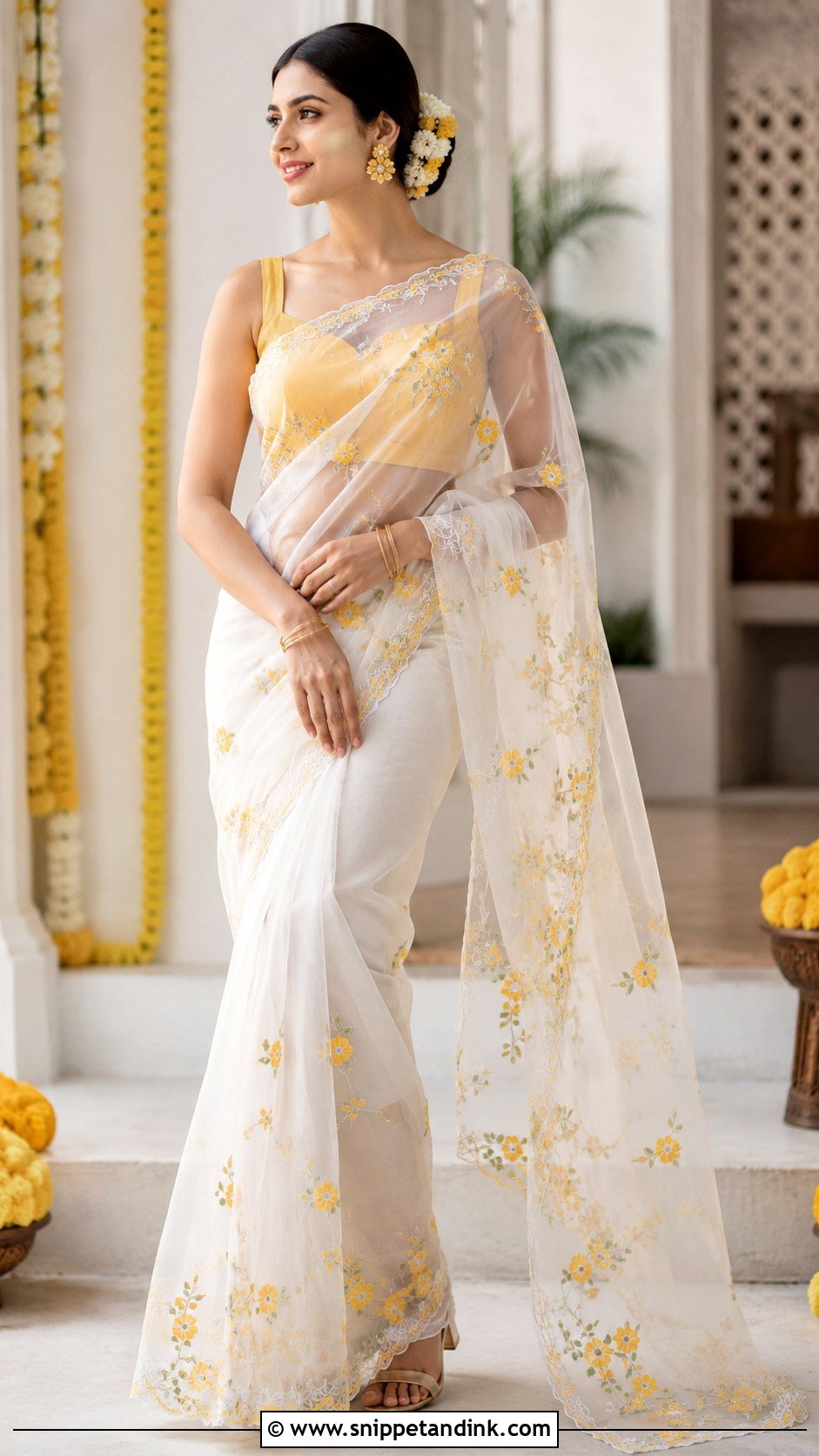
Organza is crisp and airy, which is lovely in daylight and stubborn to drape. Have a white organza saree pre-pleated, or ask whoever drapes you to use extra pins, because it springs back out of shape. I’d choose one with yellow flowers along the border and pallu only, rather than scattered everywhere. A yellow blouse in silk, raw silk or embroidered cotton; sleeveless looks current, elbow sleeves cover more. Flower earrings, thin gold bangles, low sandals or flat juttis, and a polished bun with white and yellow blossoms.
18. Yellow Co-Ord Set With White Embroidered Cape
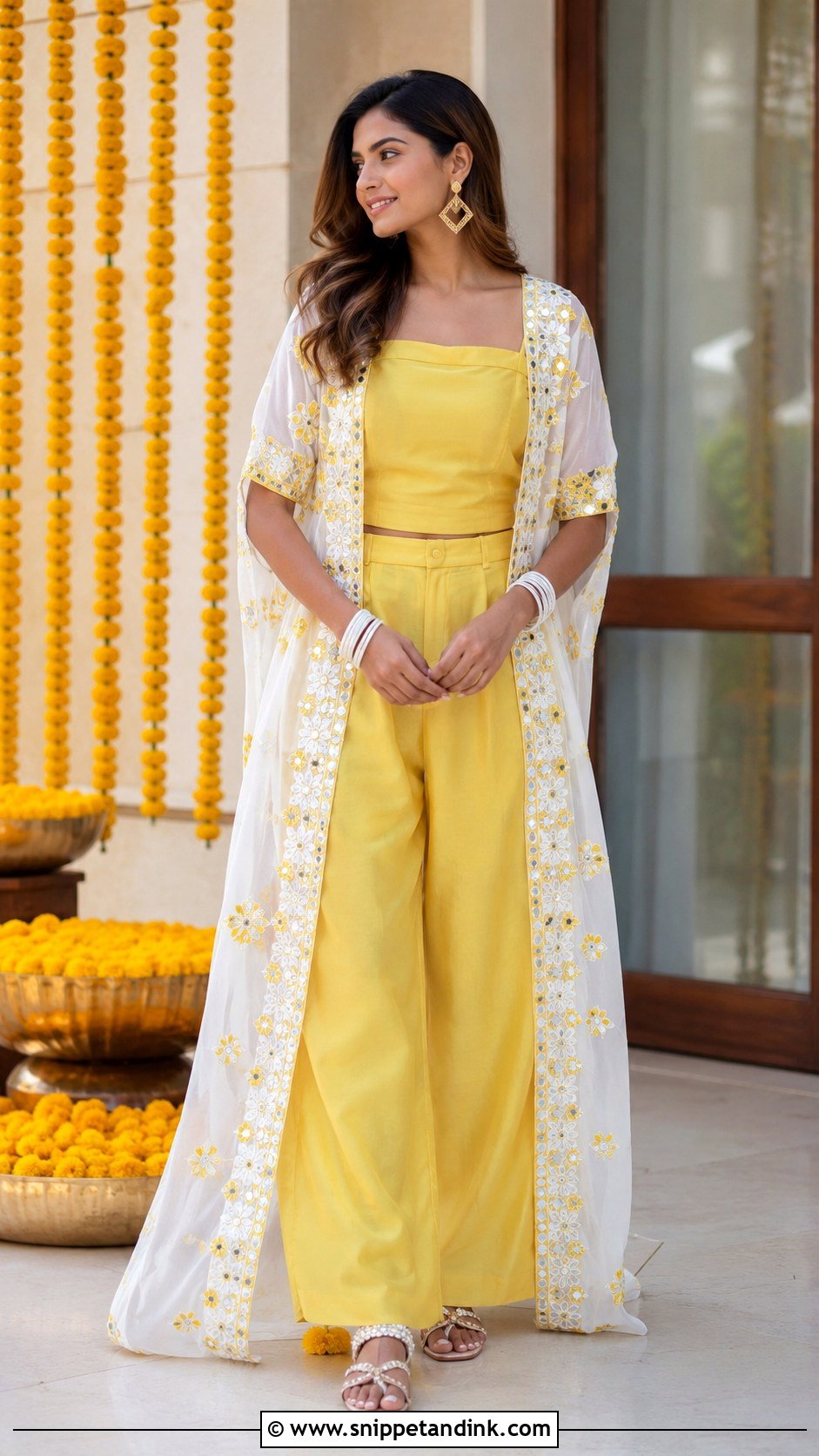
A matching yellow co-ord needs almost no fussing, and a white embroidered cape over it adds the ceremony. Wide-leg pants and a fitted top, with a cape carrying yellow flowers, mirror edging or a scalloped hem. Hem the pants with the shoes you’ll wear, so they don’t catch under your heel. Geometric gold earrings, white bangles and embellished flats. Sleek ponytail or hair tucked back. Guests and bridesmaids who prefer separates to sarees can ask for a longer top, higher waist or fuller sleeves.
19. White Skirt With Yellow Embroidered Blouse
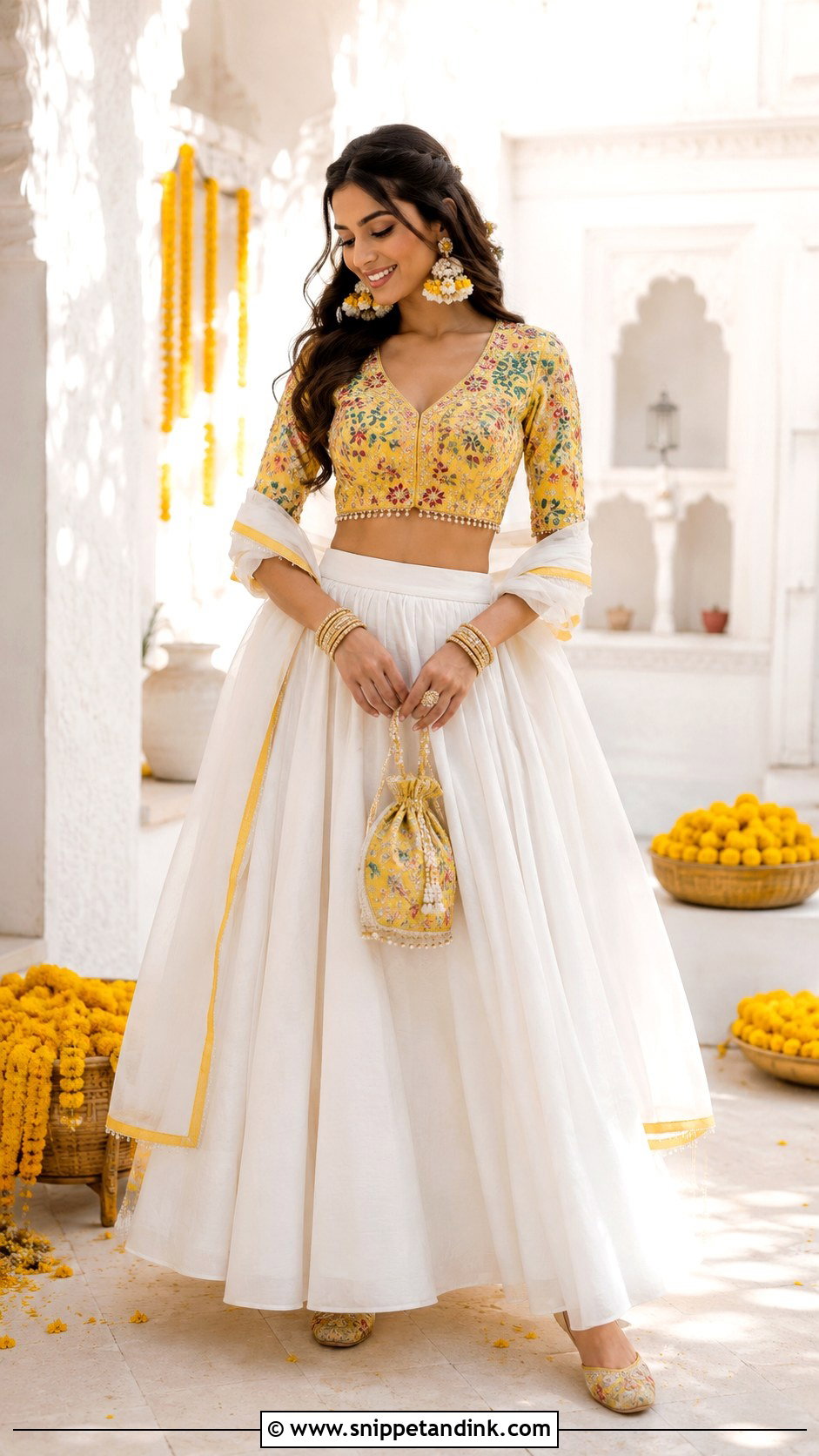
If you already own a good white skirt, this is how to restyle it. A high-waisted skirt with soft pleats, tonal lace or a gold border, under a richly embroidered yellow blouse with floral threadwork, mirrors or textured sleeves. Let the blouse carry the decoration and keep the skirt plain. A light white dupatta with yellow trim over one shoulder. Floral earrings, gold bangles, a compact potli and white juttis. Brides might want a fuller skirt; a guest at a small ceremony can stay streamlined. Wear a side braid or a waved ponytail.

20. White And Yellow Ombre Draped Saree
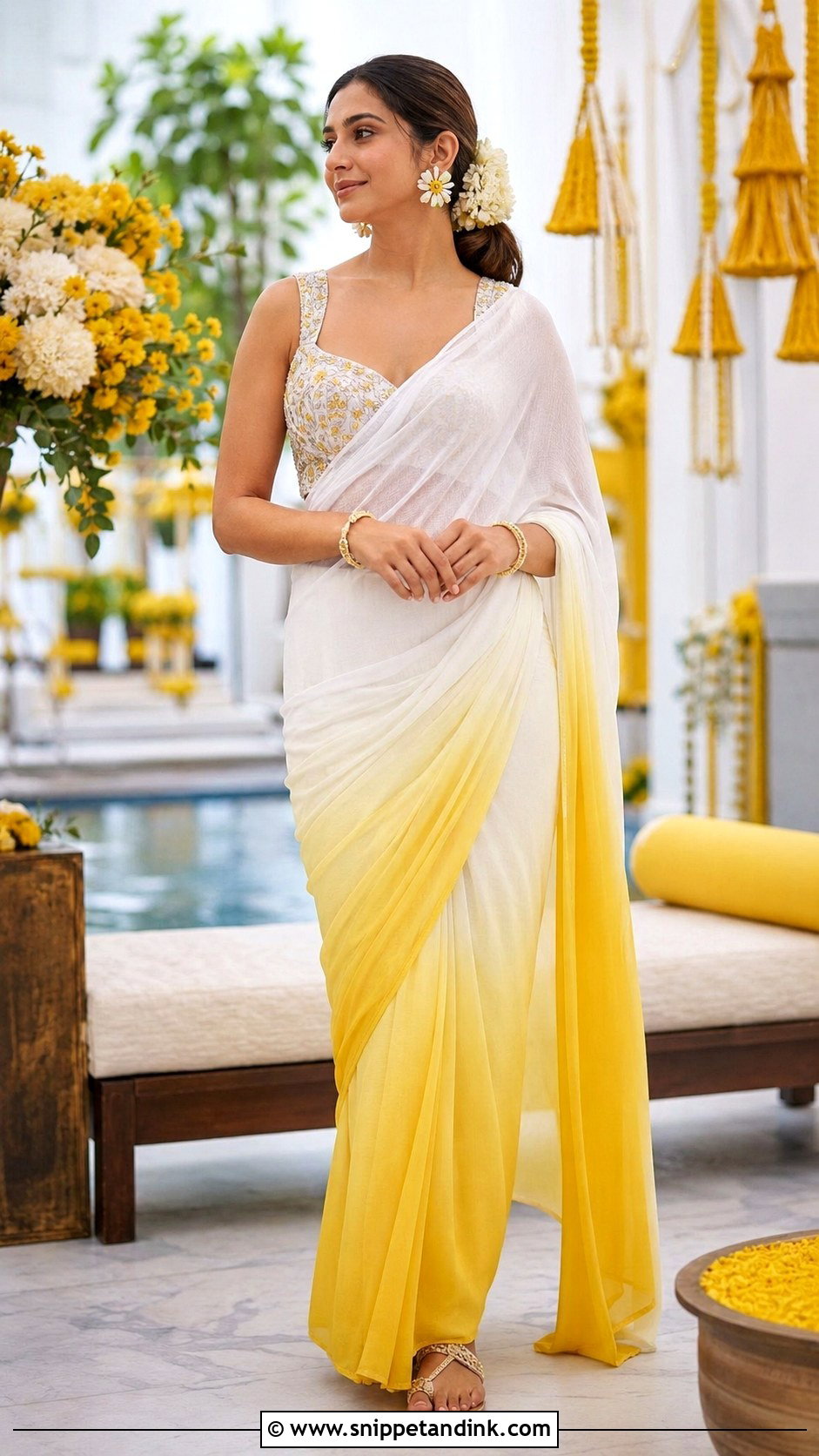
An ombre draped saree fades from white into lemon, sunflower or marigold, so both colours arrive in one piece of fabric. I’d go pre-draped for a haldi: it stays put through the ritual and needs fewer adjustments. The fade looks good from any angle, which is useful when relatives are photographing from all sides. Pair it with a white or yellow fitted blouse with restrained embroidery. Floral statement earrings, thin bracelets, flat neutral sandals and a low ponytail with white flowers. Brides can add a floral belt or a fine waist chain.
Getting Haldi Stains Out of White Cotton and Silk
Act the same day. Scrape off any paste that is still thick, then rinse the stain from the back with cold water. Hot water sets turmeric, so avoid it until the stain has mostly gone.
Don’t panic if the yellow turns reddish or orange when you add soap. Turmeric changes colour when it meets an alkaline cleaner; it is not getting worse. Keep working with a little mild detergent or dish soap on cotton, rinse well, and dry the piece outside. Sunlight fades turmeric stains on white cotton remarkably well, sometimes over a couple of days.
- Avoid chlorine bleach on silk, wool, embroidery or anything with metallic thread.
- For silk, organza and embroidered pieces, skip home treatment and take it to a dry cleaner quickly, telling them it is turmeric and oil.
- Test any stain remover on an inside seam first, especially on dyed yellow fabric that could bleed onto the white.
Wear Something You Are Happy to Get Yellow
A haldi outfit is judged by how it behaves at noon, damp and streaked with paste, not by how it looks on the hanger. White gives a clean base and yellow brings the ceremony’s own colour, whether you wear a lehenga, saree, sharara, gharara, kurta set or a dress. Choose breathable fabric, drapes that are pinned securely, flat shoes and jewellery that won’t snag. Brides can add florals and volume; guests can keep things lighter. Then sit, dance and let your family cover you in turmeric.
You'll Like These Ideas:




Leave a Reply