
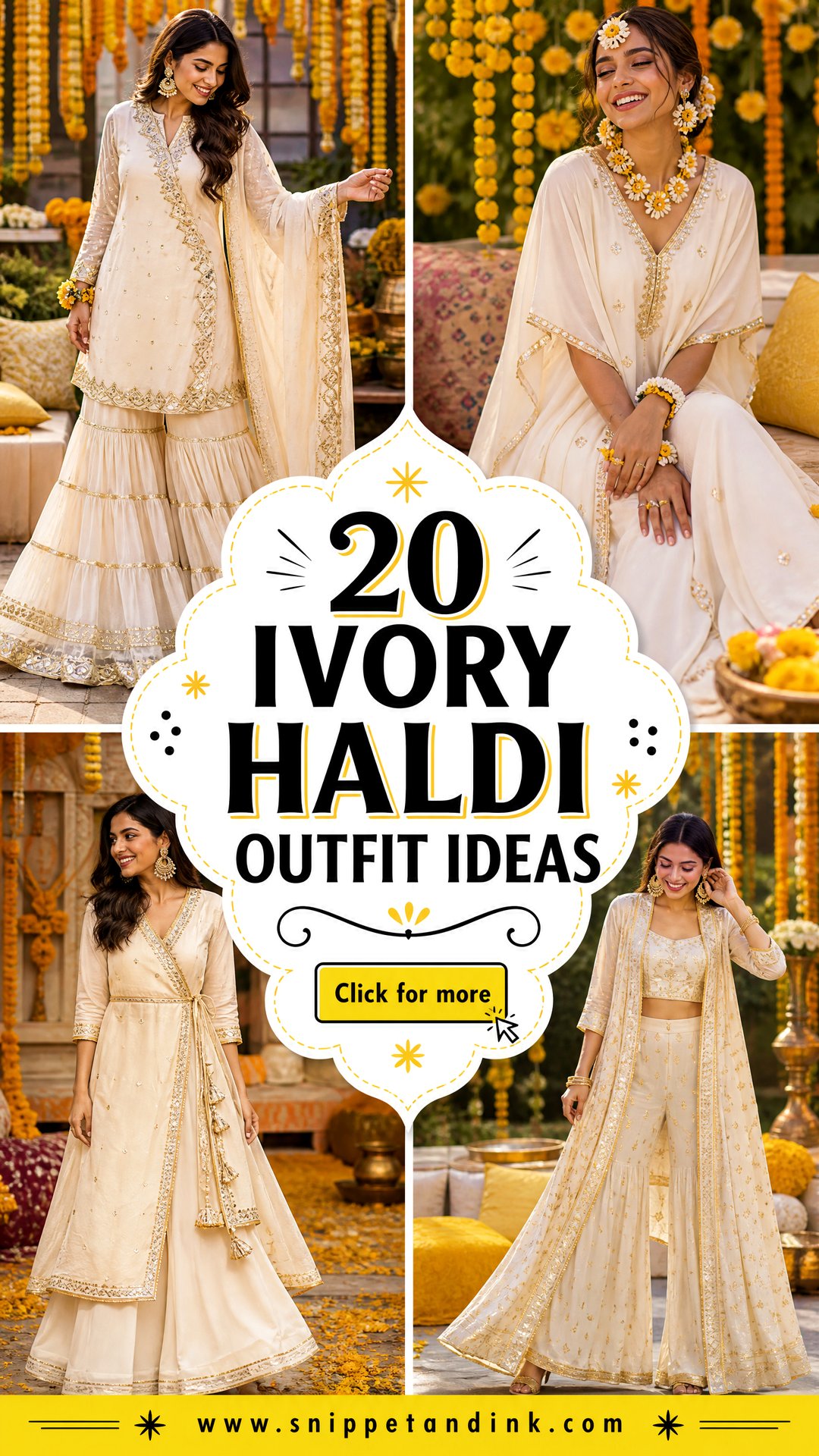
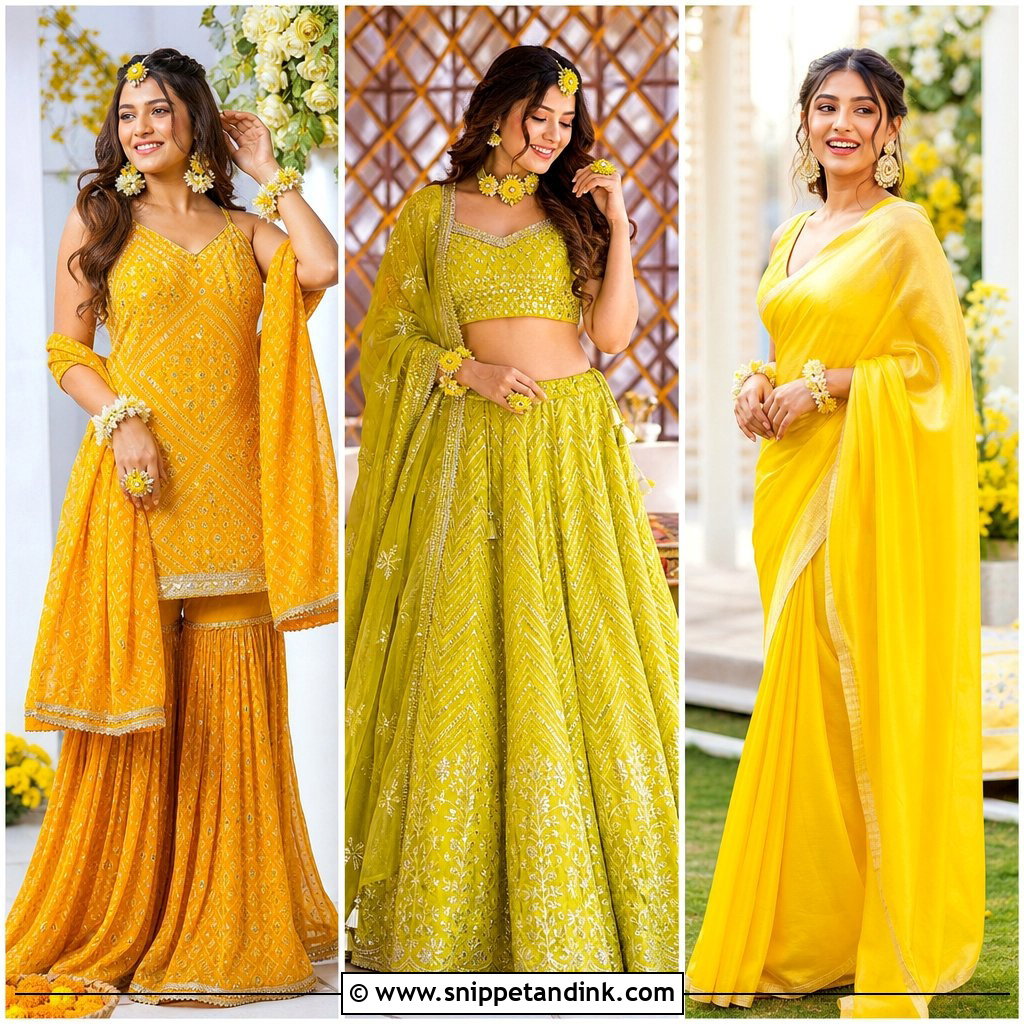
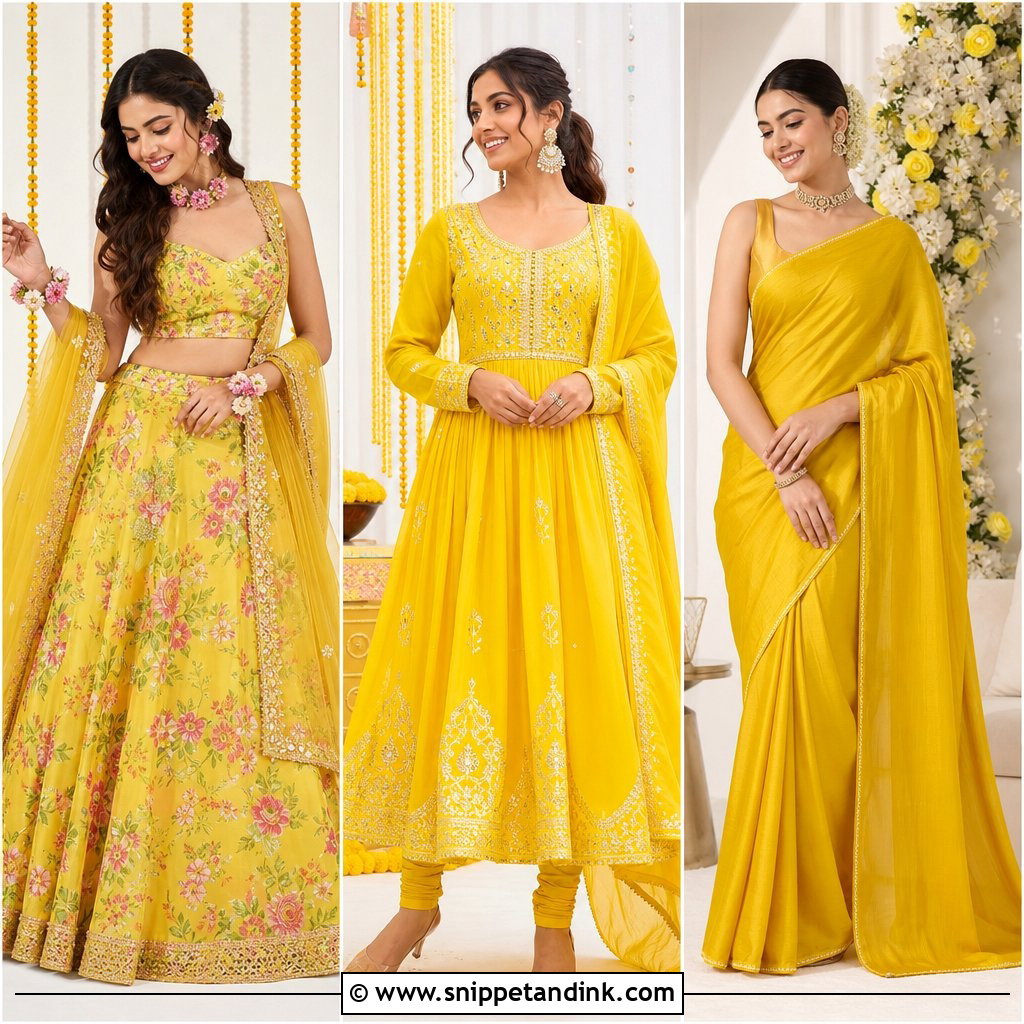
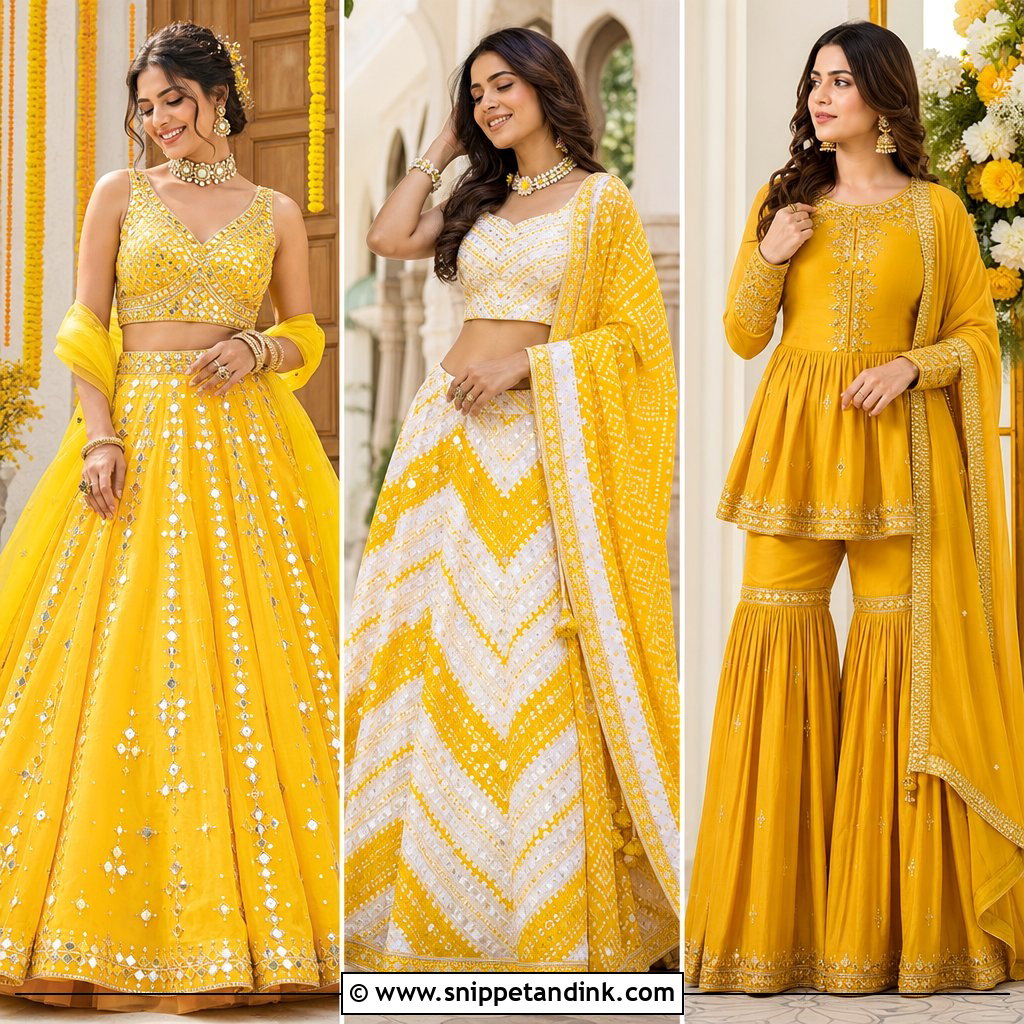
Ivory is the one colour I suggest for a haldi when a bride tells me she’s tired of wearing yellow at every function. It gives turmeric, marigolds and gold jewellery a clean ground to sit on, so the ritual itself becomes the colour in the photos. The catch is that ivory shows everything: sweat marks, a sheer panel in hard sun, a smear of paste on the hem. So the outfits below are judged on two things, how they look when you arrive and how they behave once your aunts start applying the paste. Lehengas, chikankari sets, sarees, ghararas and fusion separates are all here, along with the practical choices that keep you comfortable on the floor cushion.
Ivory Goes Sheer Once the Turmeric Water Hits
The one fitting check I never skip for a haldi outfit is the wet test. Pale cotton, chiffon and georgette that look opaque in a trial room can turn almost transparent once turmeric paste and water soak through, and the ritual usually happens in bright daylight. Take a spray bottle to your final fitting, mist a hidden section of the skirt or kurta, and stand near a window. If you can see your skin or the outline of your undergarments, you need a lining.
- Ask for a full cotton lining in the kurta and skirt rather than a separate slip that can twist.
- Wear smooth, unlined underwear in a shade close to your skin tone, never white, which shows through ivory more than nude does.
- Choose a blouse with a lined back panel if your outfit has a sheer yoke.
- Keep a second, dry dupatta aside for the photos after the ritual.
Fabric weight matters too. Mulmul and fine voile feel wonderful in the heat but cling when wet. A slightly heavier cotton, cotton-silk or crepe gives you breathing room without turning transparent.
1. Ivory Haldi Lehenga With Yellow Dupatta
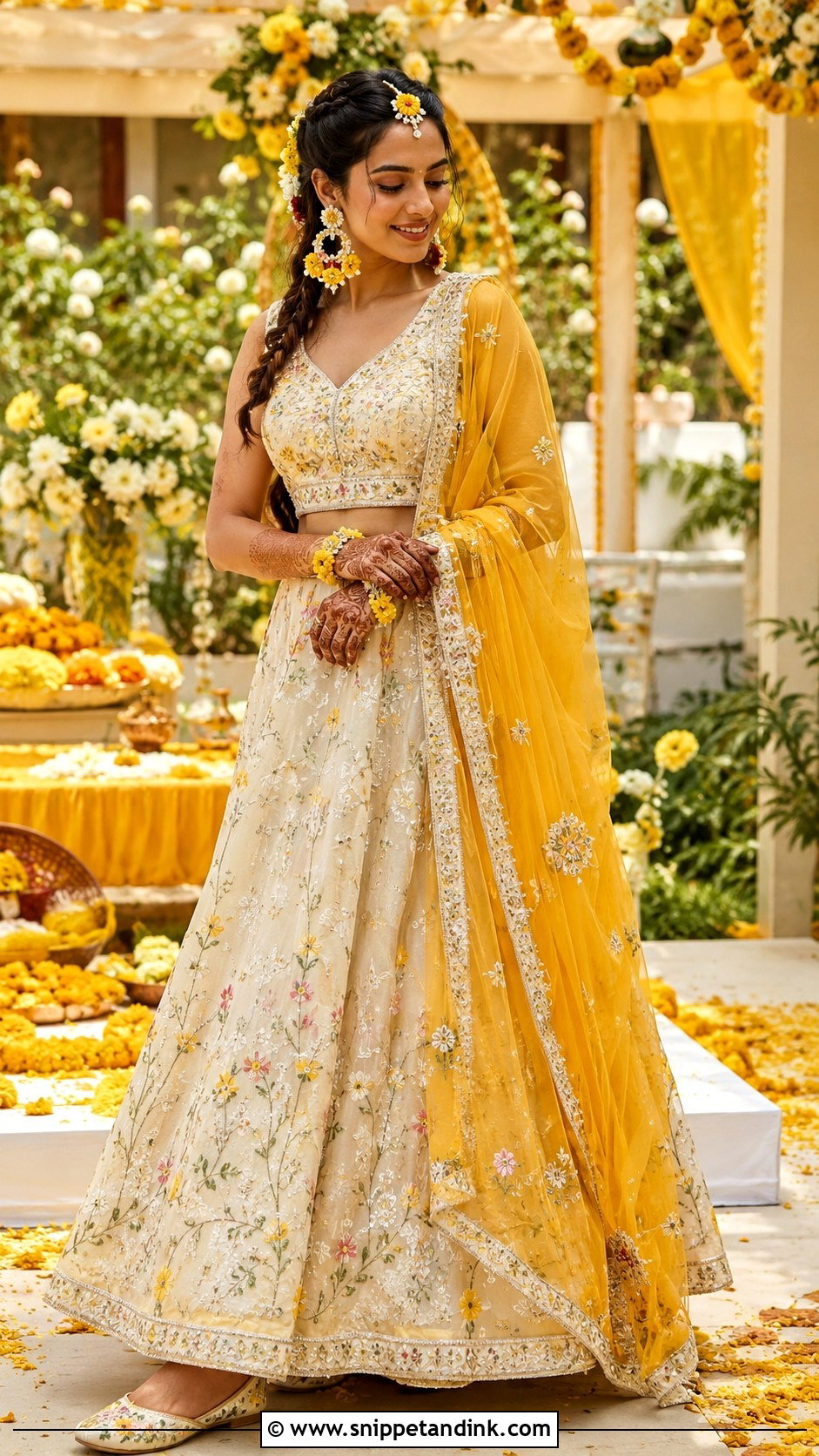
A yellow dupatta over ivory is the easiest way to keep the haldi colour story without dressing head to toe in it. I’d pick a skirt with light gota patti or scattered threadwork, because dense embroidery traps turmeric paste in every stitch and never looks quite clean again. Put the dupatta over one shoulder and pin it at the back of the blouse so both arms stay free when people reach for your face and hands. Floral earrings, a fine maang tikka and flat juttis are enough jewellery here. Pin the dupatta through the blouse, not just the bun, so it doesn’t slide off the moment you bend forward. This complete ivory haldi outfit reads well on camera because the bright dupatta and the paste both stand out against the pale skirt.
2. Ivory Haldi Anarkali With Gharara
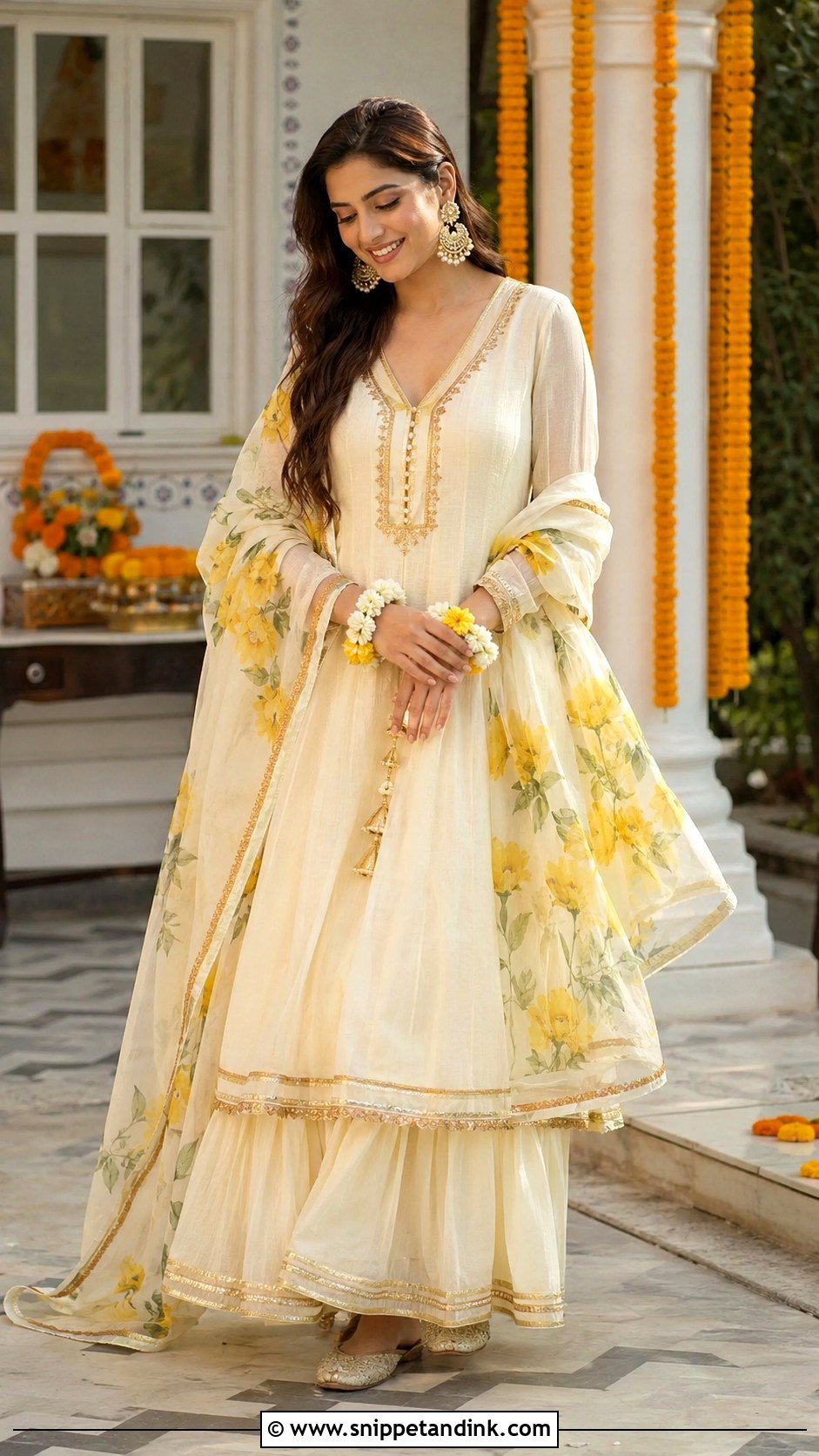
An Anarkali over a gharara gives you a regal shape with very little to manage. Knee length is the sweet spot for the kurta; any longer and the flare bunches awkwardly in your lap when you sit cross-legged for the ritual. Cotton-silk and chanderi keep their structure in the heat, while georgette moves more but clings once it’s damp. An organza dupatta with yellow floral work ties the outfit to the setting. Keep the hair in a braid or textured ponytail, since loose hair falling forward into wet paste is the first thing I’d prevent. This one suits a small indoor ceremony or a shaded courtyard better than a sun-baked lawn.
3. Ivory Haldi Saree With Floral Blouse
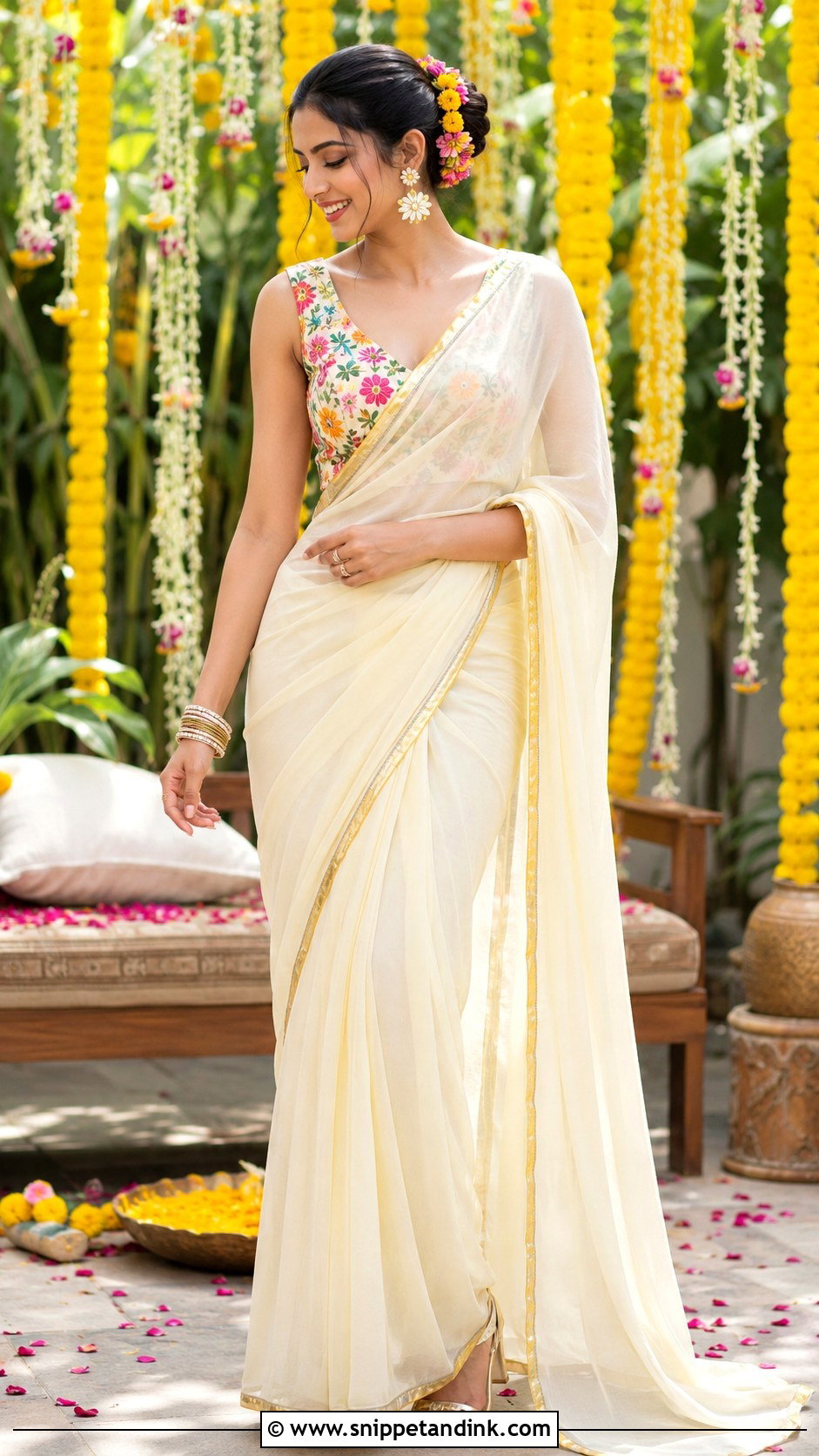
A floral blouse is how I’d bring play into a traditional ivory saree. Keep the saree itself light, chiffon or soft cotton with a narrow gold or yellow border, and let the blouse carry all the colour: marigold, pink and green embroidery reads cheerful from across the courtyard. The pallu needs pinning at the shoulder and again at the waist, because guests applying turmeric tend to grab whatever fabric is near your arm. Metallic sandals and stacked bangles finish it. A sleek bun with fresh blooms keeps attention on the blouse, which is the point of this outfit.
4. Ivory Haldi Sharara Set With Gota Work
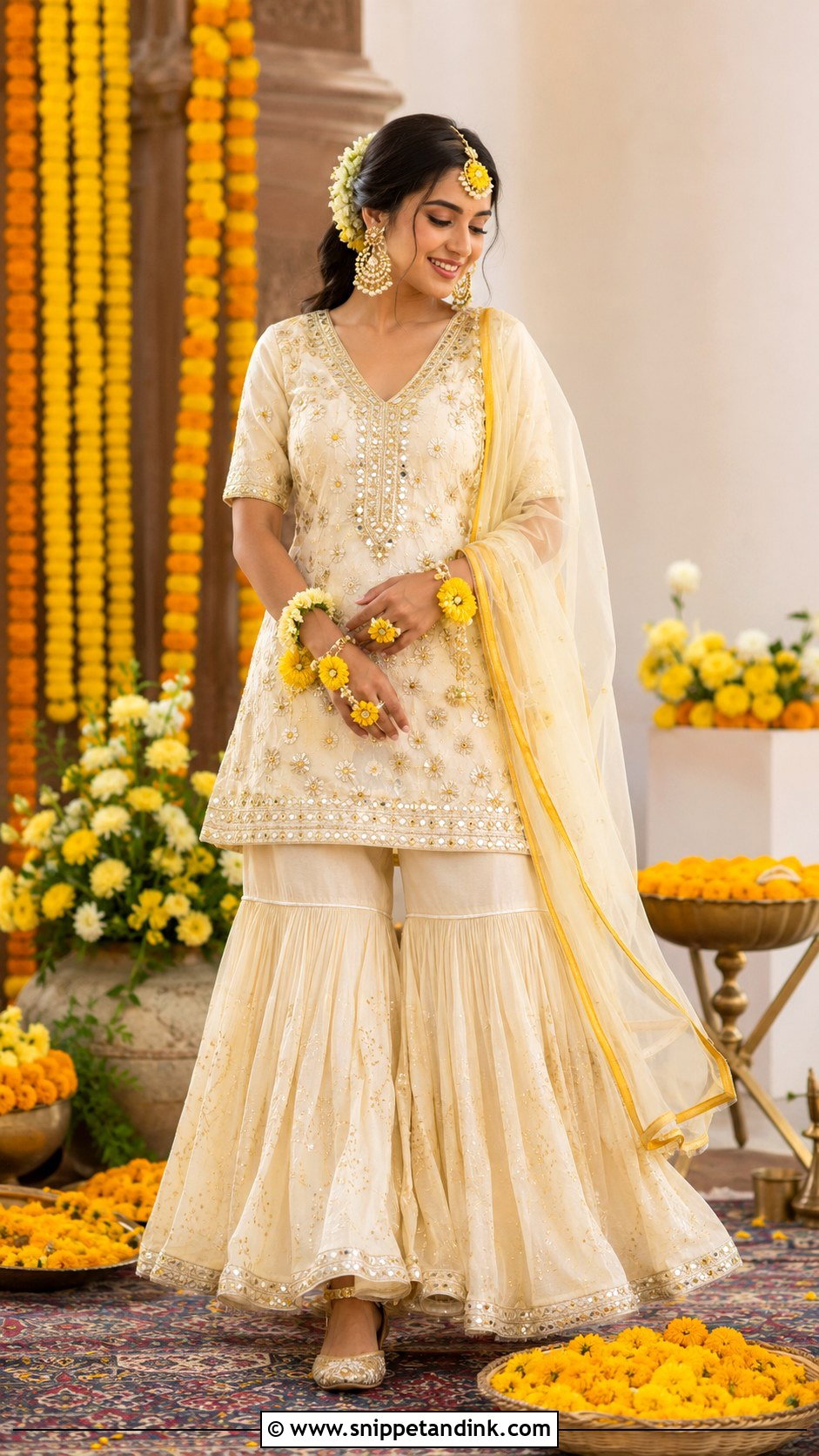
Sharara sets are what I reach for when a bride wants to dance straight after the ritual. A short kurta with gota at the neckline, cuffs and hem gives just enough shine, and the wide tiered sharara lets you fold your legs under you without strain. Ask for the kurta cut with a little ease through the body; a fitted kurta in an outdoor setting shows every sweat line on ivory. A dupatta with a slim yellow border is plenty. I’d skip heavy beadwork entirely, because turmeric paste dries into the gaps around beads and flakes off for days. Chandbalis, floral hand jewellery and juttis keep it light enough to wear for hours.
5. Ivory Haldi Palazzo Set With Cape
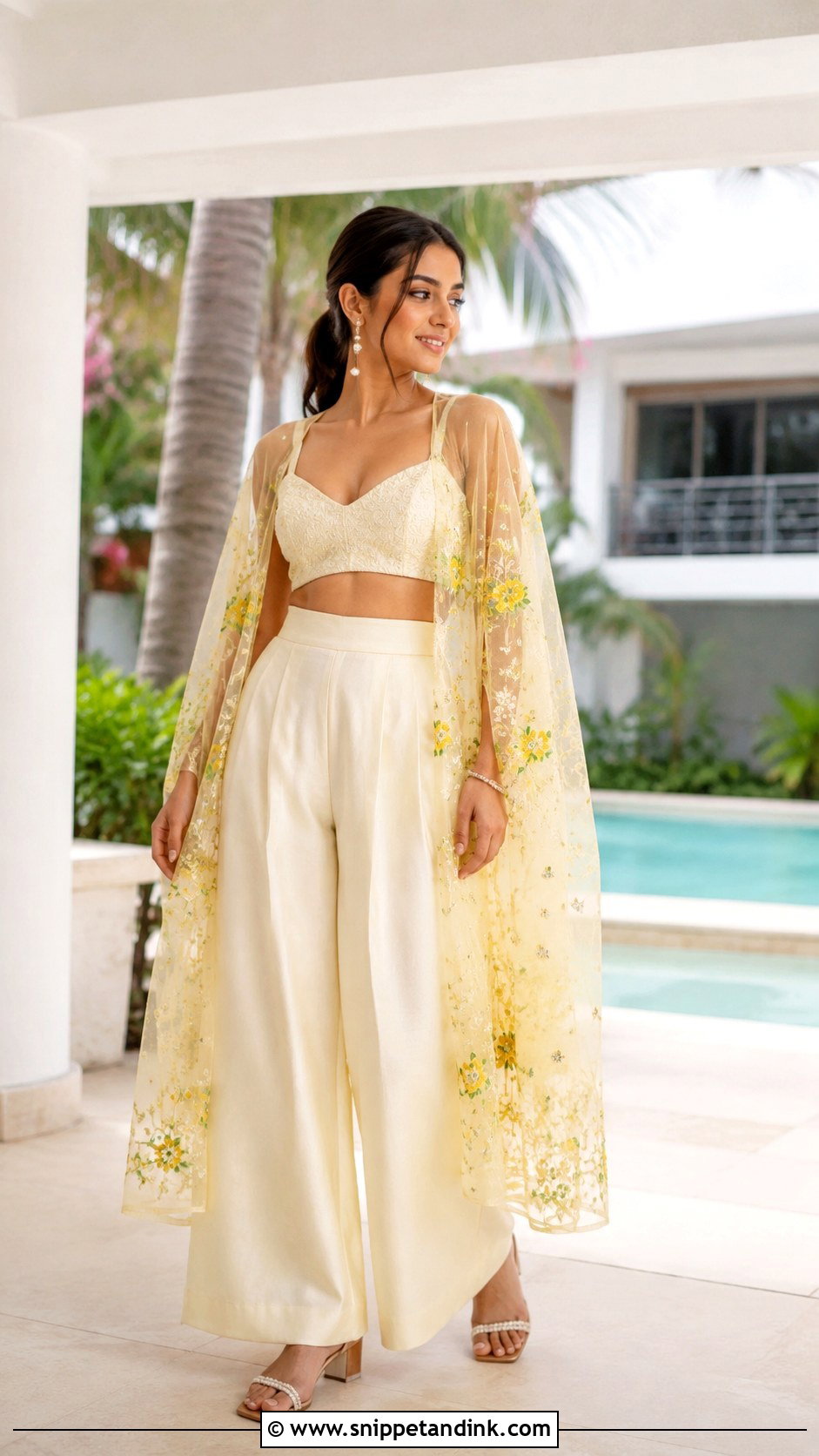
For a poolside or terrace haldi, an ivory palazzo set with a sheer cape gives drama without the weight of a skirt. The base is a structured crop top or a sleeveless kurta with high-waisted, wide-leg palazzos. The cape carries the decoration: small yellow flowers, scalloped edges or a little mirror work on organza. Because the cape is open at the front, your hands and forearms stay clear for the paste. One honest warning: organza capes catch wind, so on an exposed terrace I tack the cape to the top at both shoulders. Low block heels or embroidered flats keep you steady on wet tiles.
6. Ivory Haldi Chikankari Kurta Set
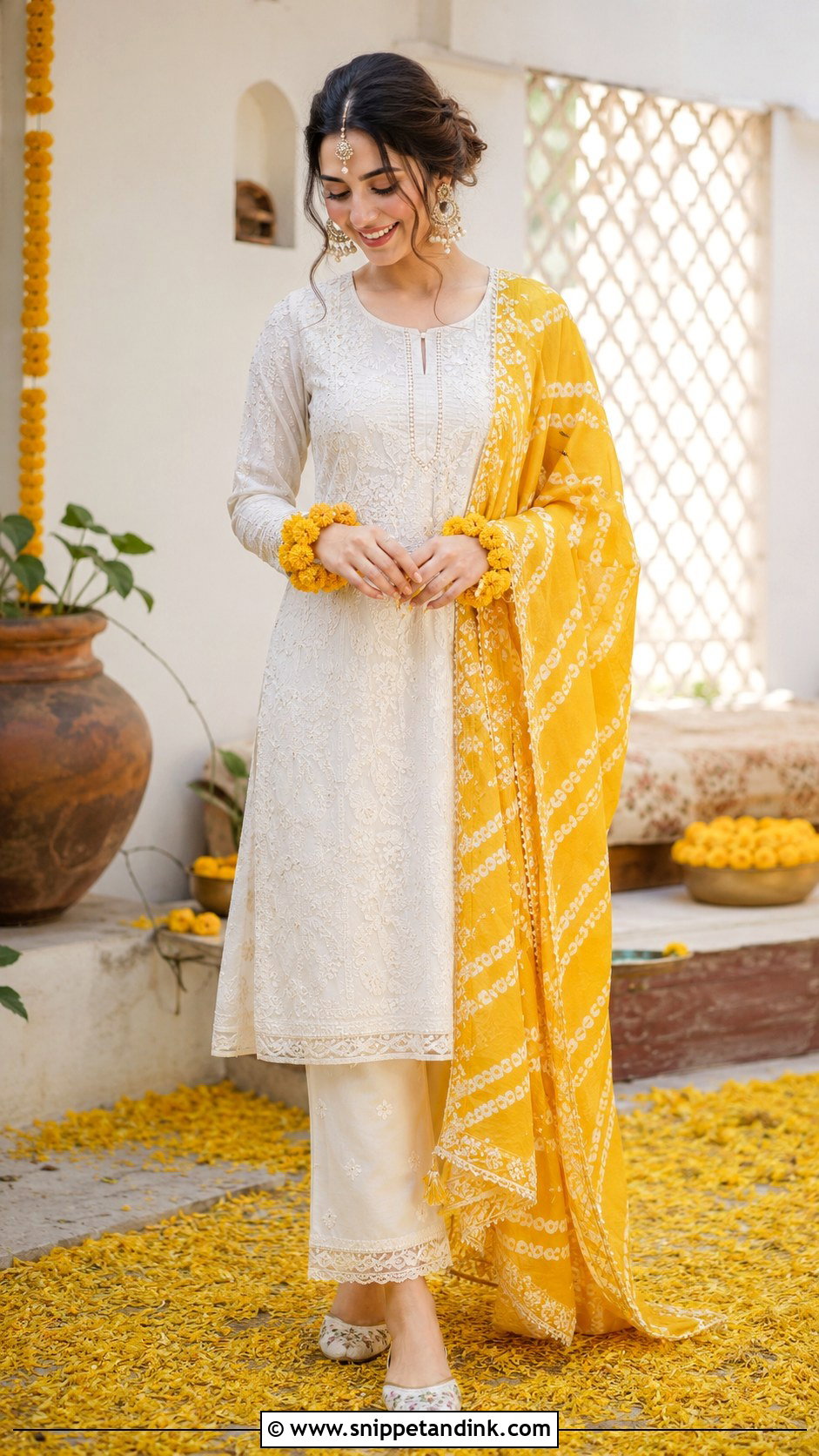
Chikankari is my first suggestion for a bride who wants something she’ll wear again. The tonal white-on-ivory embroidery looks crisp in daylight, and a straight or slightly flared kurta with three-quarter sleeves keeps turmeric off your wrists. Check the lining: unlined chikankari is sheer, and you want a cotton slip underneath before the paste and water arrive. Ankle-length pants or a churidar keep it simple. Colour comes from a yellow bandhani dupatta and marigold jewellery. Keep makeup minimal, with waterproof mascara and a peach lip, since your face will get smudged regardless. Cotton chikankari also handles washing far better than silk if the stains need tackling later.
7. Ivory Haldi Draped Skirt With Crop Top
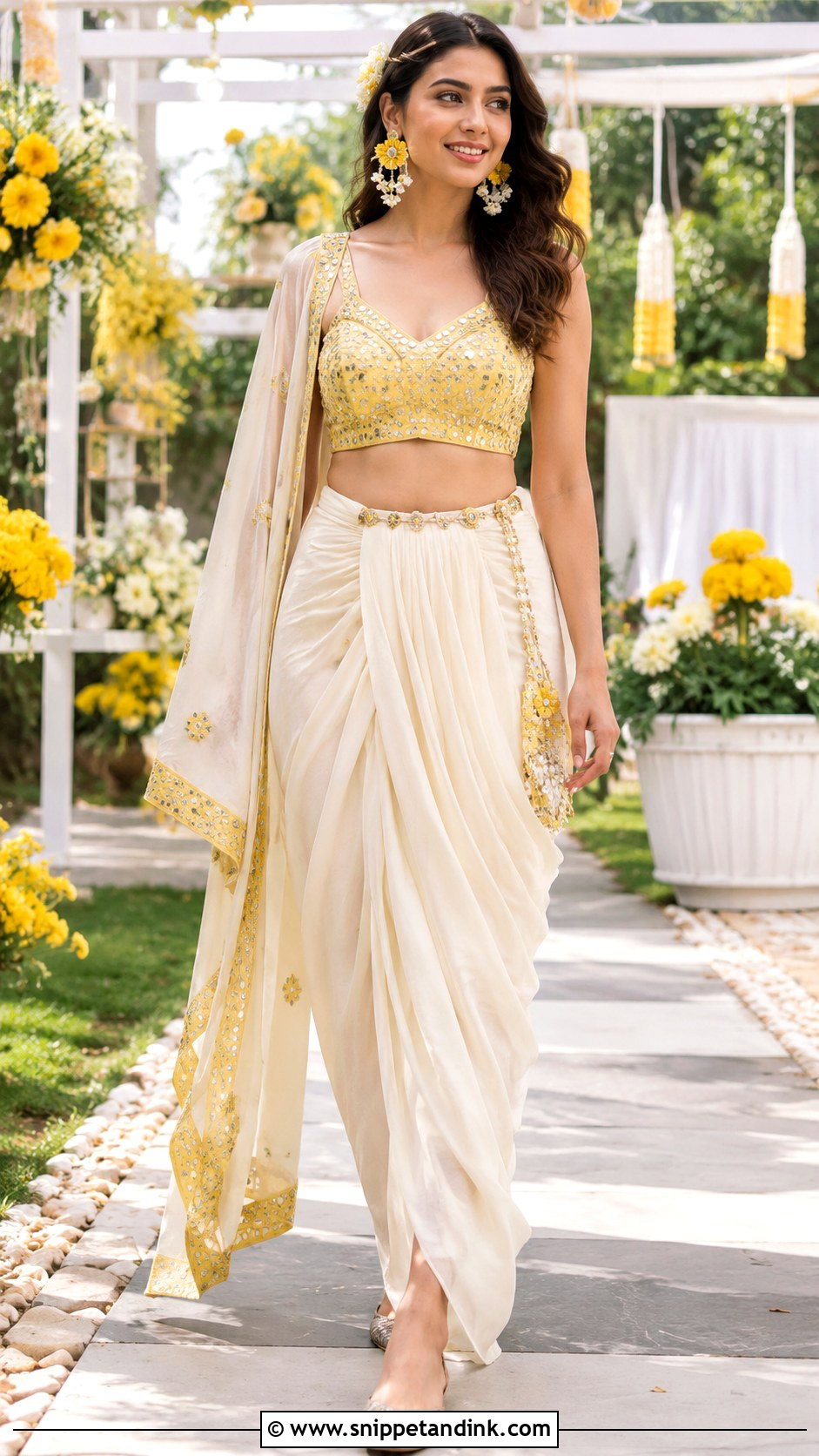
A draped skirt gives you the line of a saree without the pleats to babysit. Pair it with a fitted crop top worked in yellow thread or tiny mirrors, and choose a short attached pallu so the drape stays where it was stitched. Metallic flats and a delicate waist belt finish it, and a high ponytail or braided bun shows off the neckline. I like this silhouette on most heights because the diagonal drape draws the eye vertically. The one fitting note: get the skirt hem taken to floor length in flats, not heels, or you’ll be stepping on wet fabric all morning.
8. Ivory Haldi Dhoti Pants With Peplum Kurta
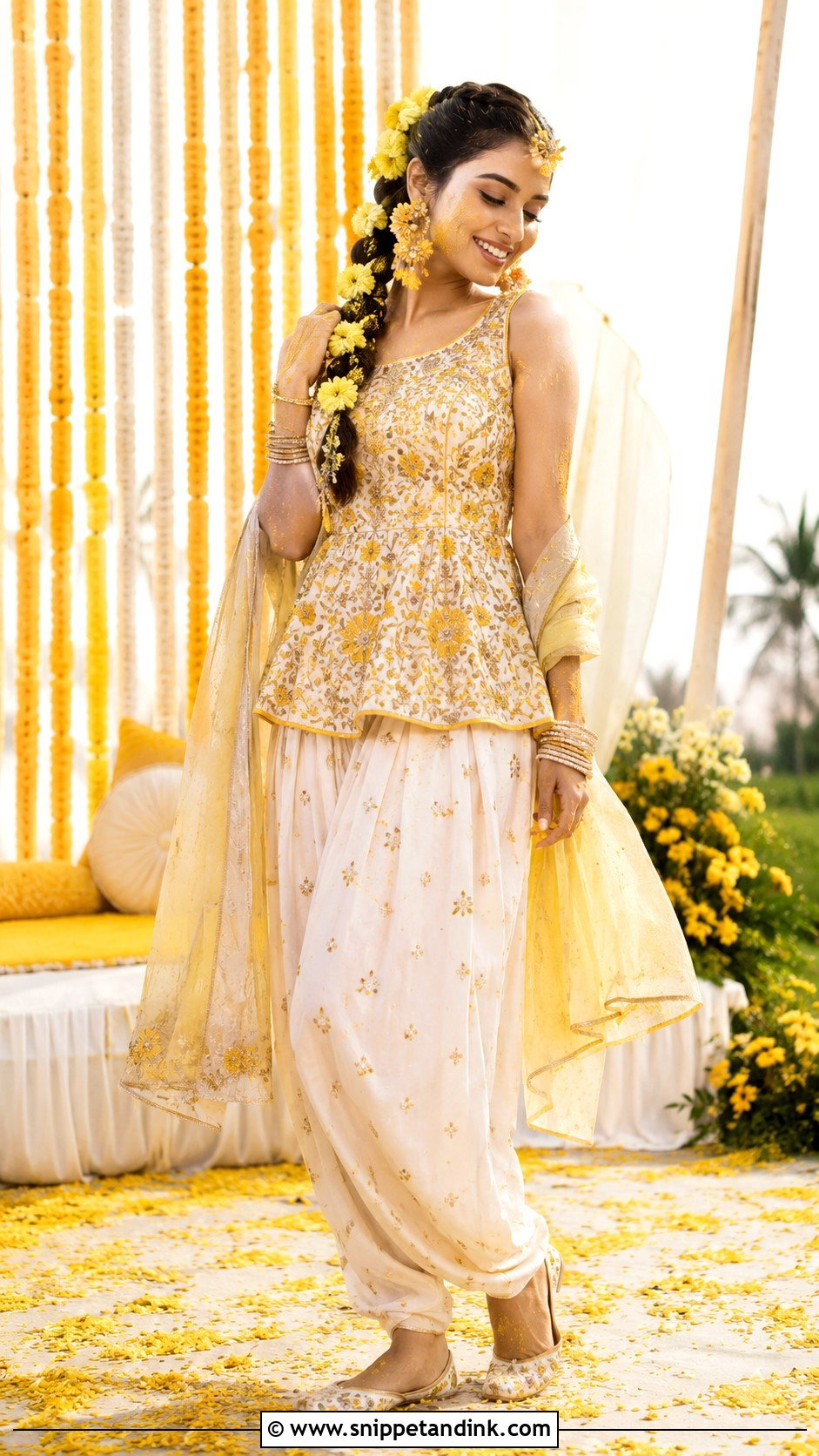
Dhoti pants with a peplum kurta are the most comfortable outfit on this list, full stop. Buy them pre-stitched; a traditional tied dhoti can loosen once you’ve been sitting and standing a dozen times. The waist-length peplum gives shape up top while the drape below lets you squat, sit and dance freely. A lightweight organza dupatta is optional here, and I’d honestly skip it for an energetic outdoor haldi with games. Floral hoops, stacked bangles and a side braid with small yellow flowers keep the mood playful. It looks deliberate rather than casual, which is what makes it work for a bride.
9. Ivory Haldi Kaftan With Floral Jewelry
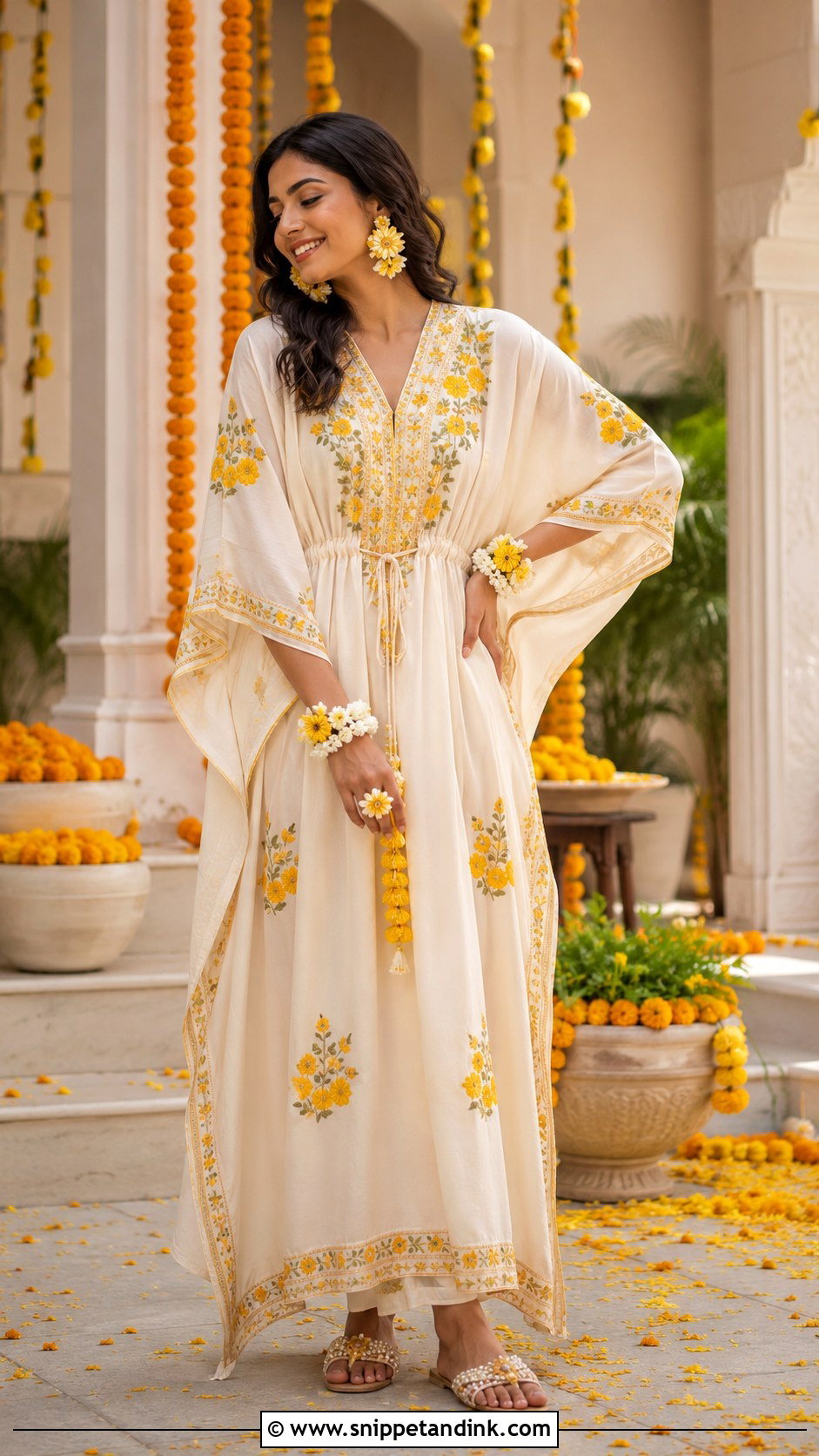
A kaftan is the ease-first choice, and I’d suggest it without hesitation to pregnant brides or anyone who dreads a fitted garment through a long ritual. Look for side slits, a lightly defined waist and yellow floral embroidery around the neckline. Georgette and crepe drape smoothly; breathable cotton is better in real heat. The risk with a kaftan is looking like you’re wearing a nightdress, so the styling has to work harder: bold floral earrings, flower bracelets and a cocktail ring rather than fine gold. Flat embellished sandals matter on wet lawns. A sleek bun or half-up style balances the loose shape.
10. Ivory Haldi Organza Lehenga With Marigold Embroidery
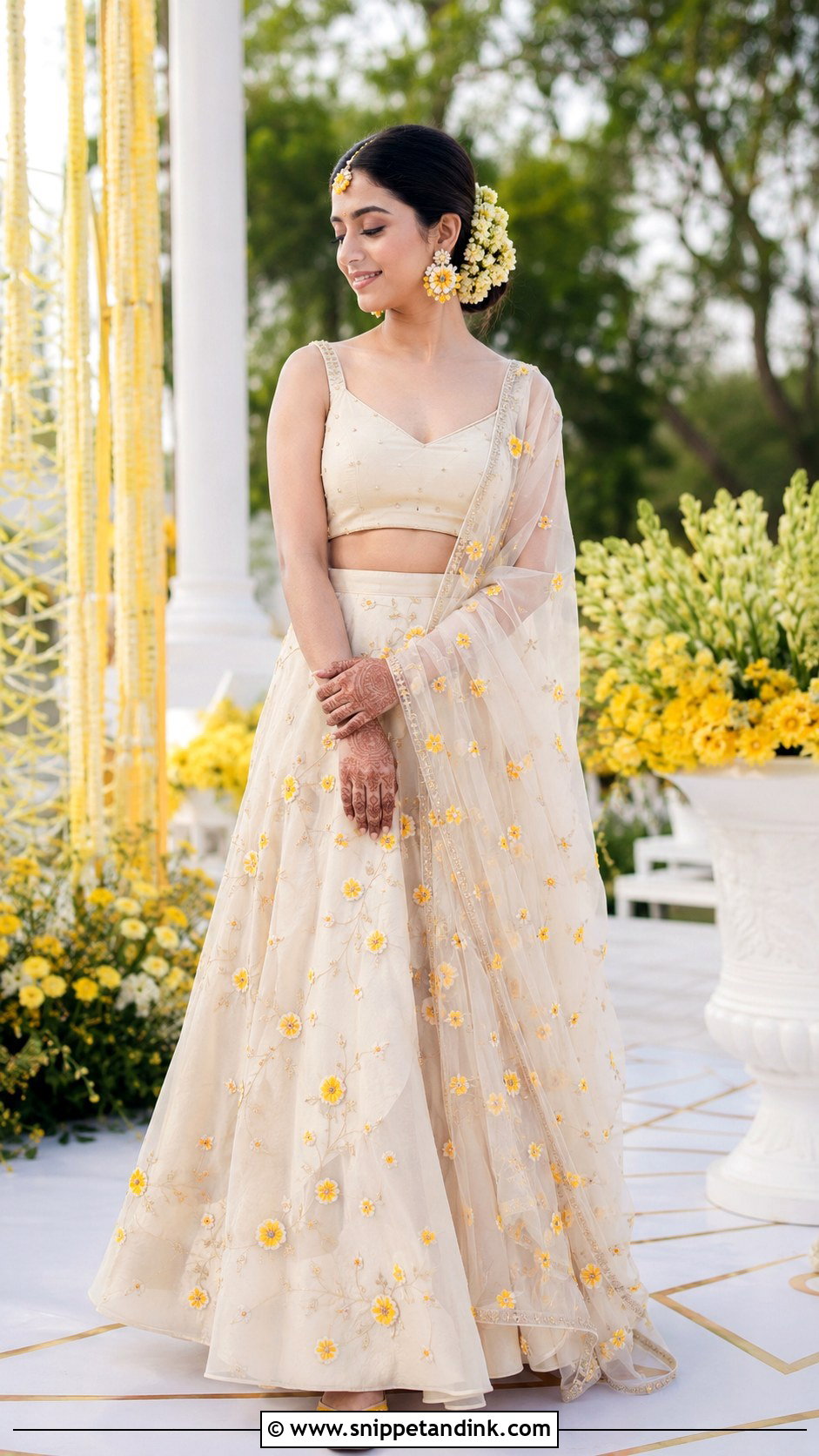
Organza with marigold embroidery is the most delicate look here, and it needs the most thought. Choose a lightly layered skirt with scattered yellow motifs instead of dense work. Organza holds its own shape, so a moderately full skirt already looks generous; add too many layers and you’ll struggle to sit. A simple blouse and a sheer dupatta with a matching border keep it airy, with marigold-shaped earrings and a small maang tikka. Soft natural light in a garden suits these transparent layers best. I’d keep this one for brides who will mostly sit and be applied to, because turmeric water spots on organza more visibly than on cotton.
11. Ivory Haldi Cotton Saree With Gold Border
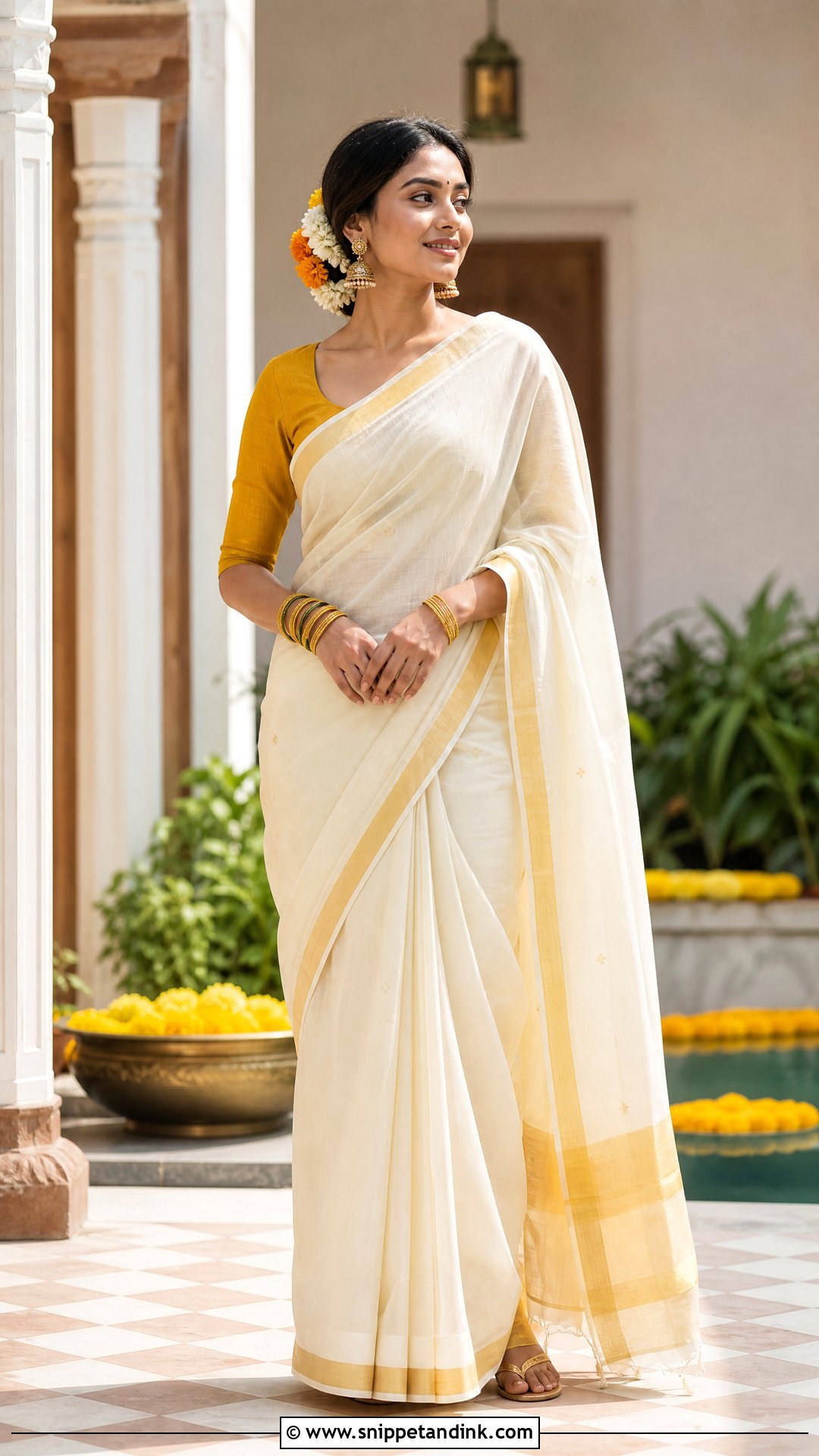
A crisp ivory cotton saree with a gold border is the haldi outfit I’d call the most rooted in tradition. Pair it with a yellow, gold or ivory short-sleeved blouse depending on how much contrast you want. Starched handloom cotton is gorgeous but stiff; a softer cotton blend pleats more easily and stays put. Pin the pleats and the pallu, then add jhumkas, glass bangles, a small bindi and flat sandals. Jasmine and marigolds around a low bun bring colour and scent. By the end of the ritual this saree will carry splashes of turmeric, and many families see that as the point.
12. Ivory Haldi Jacket Set With Wide-Leg Pants
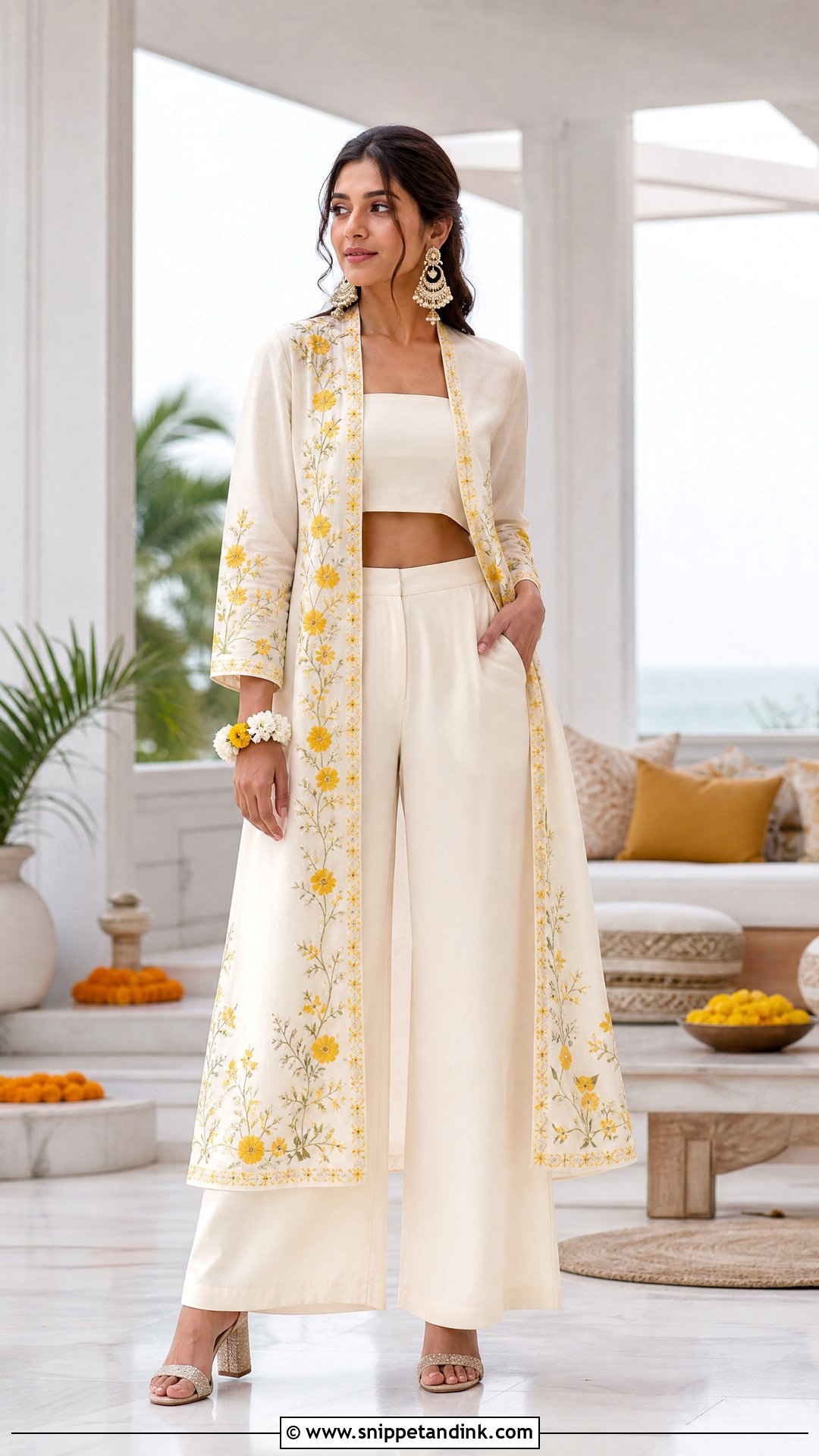
An embroidered jacket over wide-leg trousers is a sharp, tailored option, and it’s the outfit I most often suggest for sisters who want to coordinate without matching the bride. Start with a camisole or crop top and high-waisted ivory trousers, then add a knee or calf-length open jacket with yellow threadwork, light gota edging or small mirrors. Leave it unbuttoned so it moves and so arms stay reachable. The practical bonus is that the jacket comes off after the formal photos, and the cleaner layer underneath carries you through the dancing. A polished ponytail and block heels suit the clean lines.
13. Ivory Haldi Peplum Top With Gharara
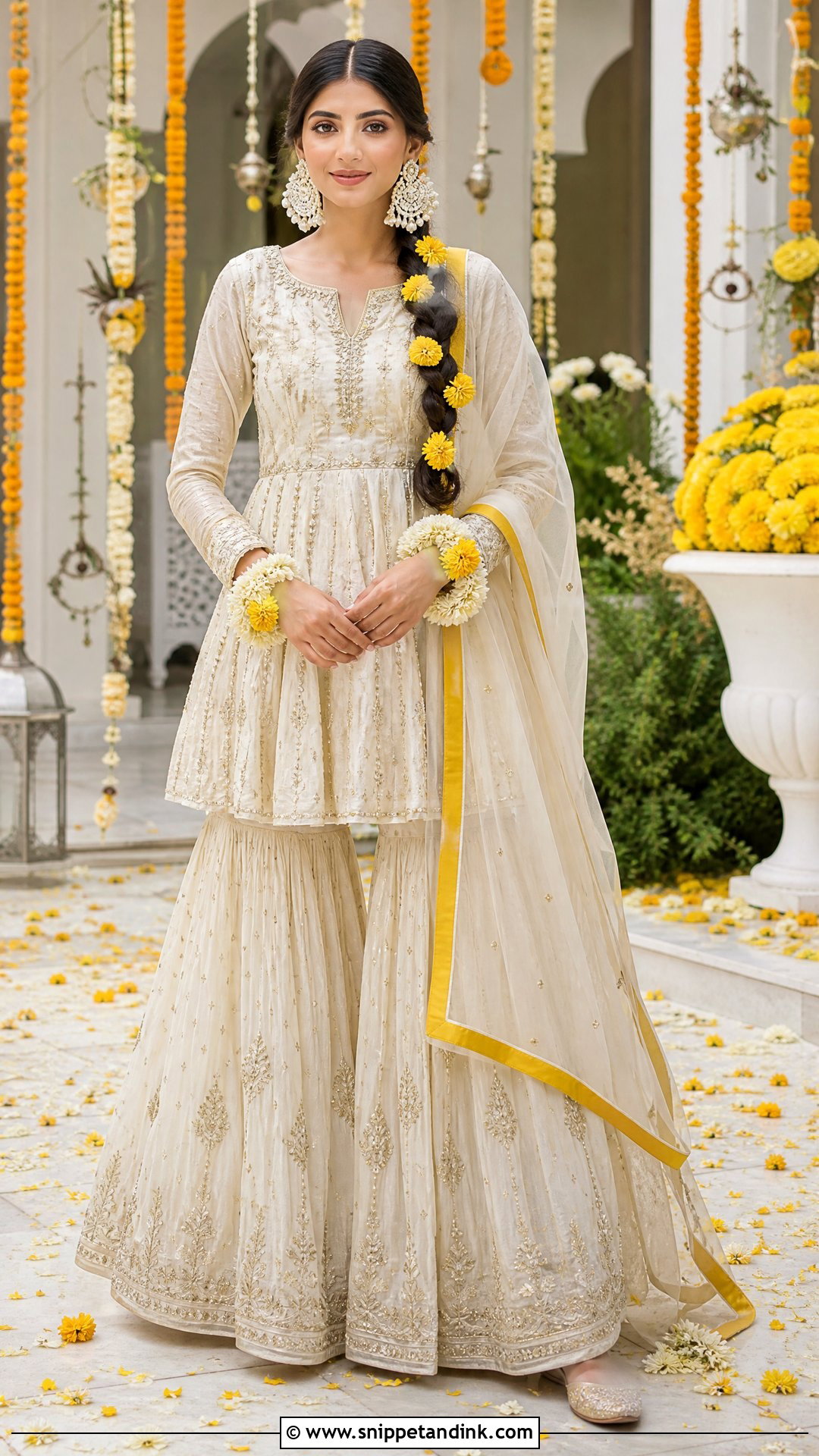
A peplum top over a flared gharara defines the waist while giving the legs plenty of room. Look for a scoop or square neckline with embroidery concentrated on the bodice, and a gharara with slim gold bands or yellow piping at the knee joint, which is where the shape of a gharara really shows. A net or organza dupatta draped loosely over one shoulder is enough. Pearl chandbalis, floral bangles and pointed embroidered flats finish it. A centre-parted braid with marigolds stays tidy all morning. You get much of a lehenga’s drama with none of the structured blouse.
14. Ivory Haldi Tiered Lehenga With Floral Dupatta
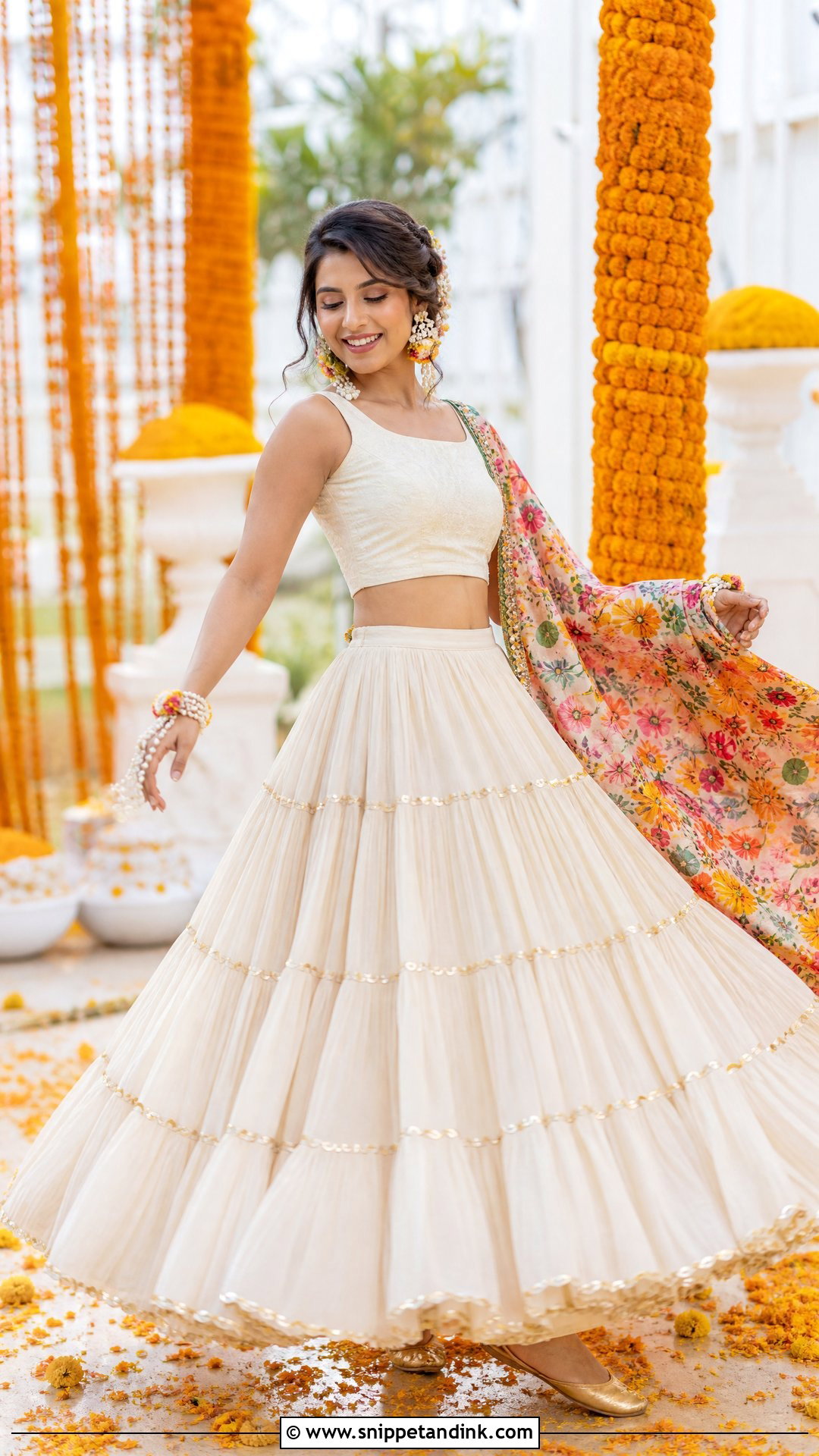
Tiers give a cotton or georgette lehenga bounce, and that movement is what makes this the twirl outfit. Keep the embroidery minimal so the skirt stays airy, and let a floral printed dupatta in yellow, orange, pink and green be the focal point. A simple matching blouse, flower earrings and plain gold flats are all it needs. Loose waves look pretty for the early photos, but I always pin the front sections back before the paste comes out, since waves stuck to turmeric on your cheek don’t recover. Younger brides and bridesmaids usually love this one most, and the dupatta can pick up the colours of marigold-heavy decor.
15. Ivory Haldi Angrakha Kurta With Palazzo Pants
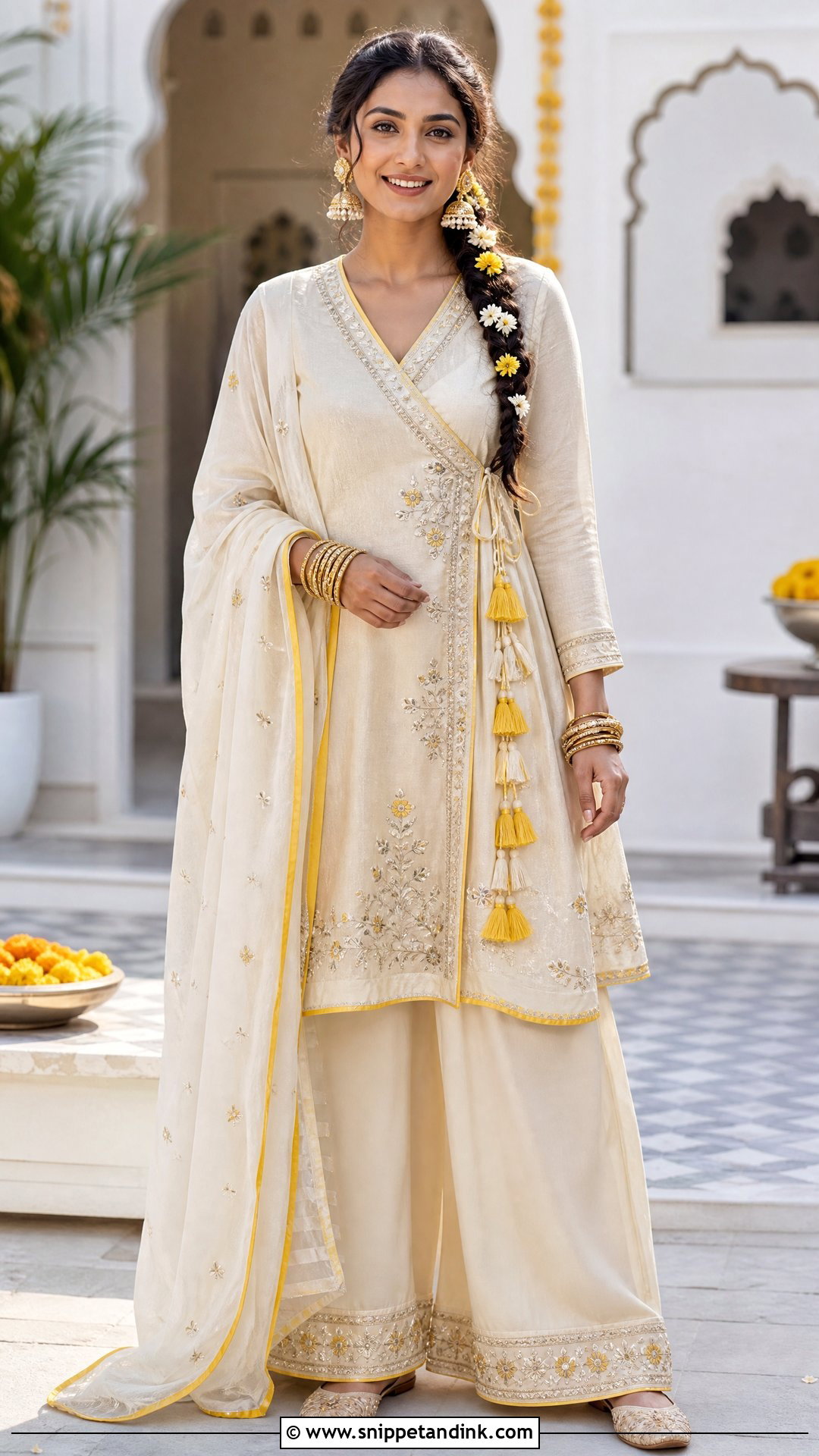
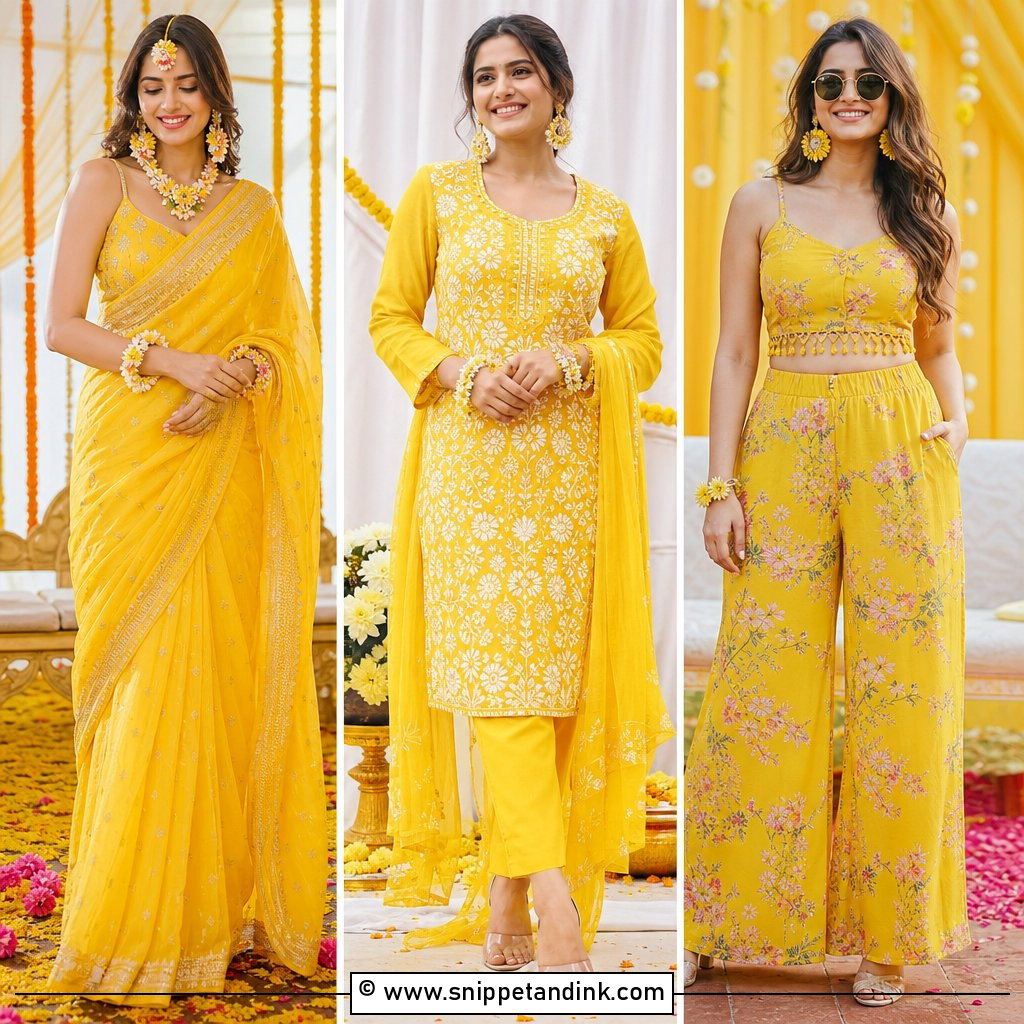
The angrakha’s overlapping front adds traditional detail with almost no embellishment. Choose an ivory wrap kurta tied at the side with yellow tassels or fabric cords, and ask the tailor to reinforce the ties, because they take real strain when you lean forward. Flowing palazzos and a dupatta trimmed in yellow keep it comfortable. The diagonal neckline flatters most body shapes. Medium jhumkas, slim bangles, embroidered juttis and a long braid with tiny white flowers suit the classic cut. Since it dresses up or down easily, it’s a good shared outfit idea for the bride, her sisters and close guests. Pick a washable fabric if your family’s haldi tends to turn into a paste fight.
16. Ivory Haldi Pre-Draped Saree With Belt
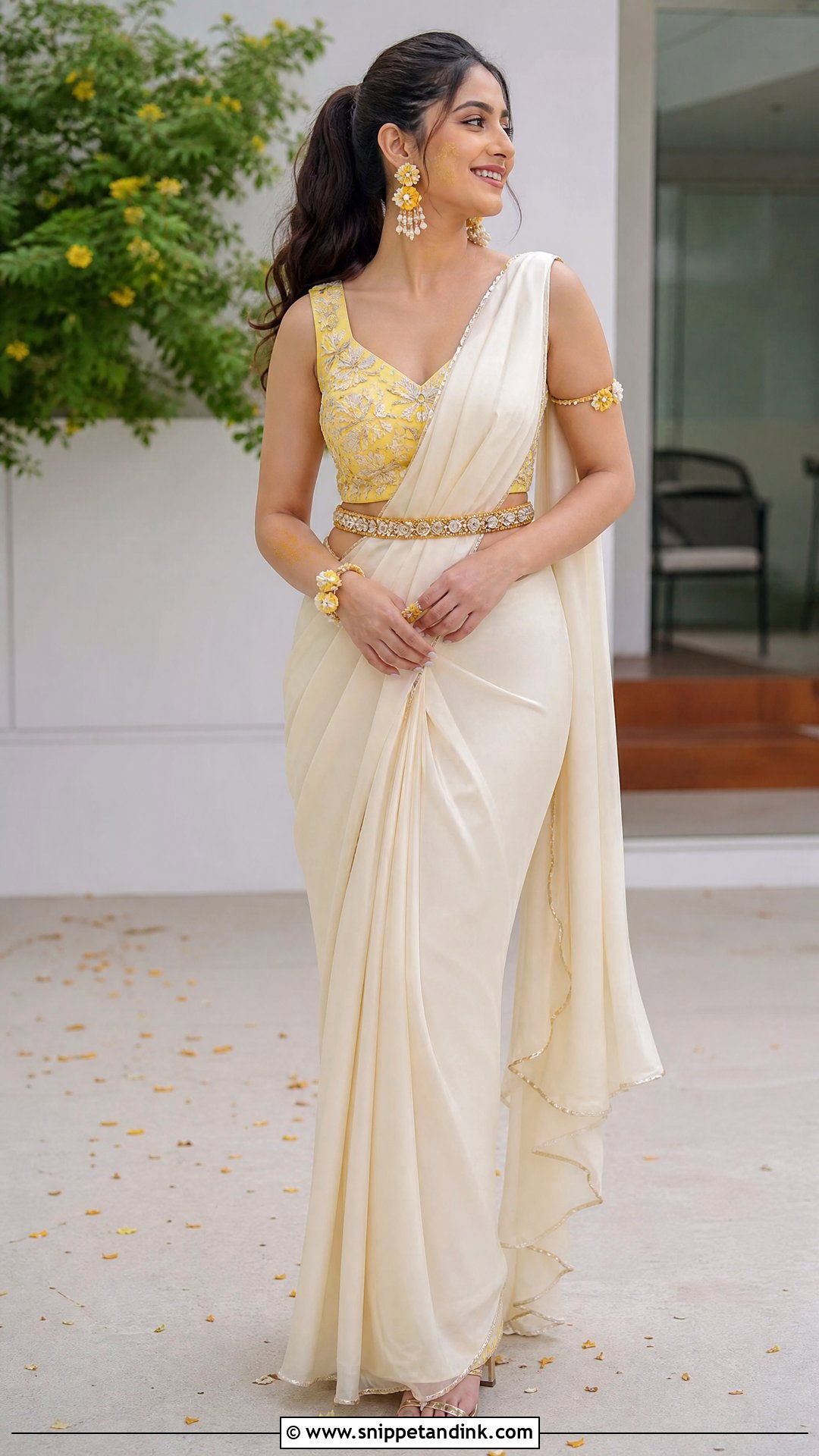
A pre-draped saree solves the problem I see at almost every haldi: someone constantly re-tucking the bride’s pleats. Look for lightweight chiffon or georgette with a stitched pallu and a proper waistband. A yellow embroidered blouse or an ivory one with small florals both suit it. A slim gold or fabric belt holds the drape and shapes the waist. I’d add floral drop earrings, a single bracelet and low metallic heels, with a neat bun or high ponytail. It’s especially handy for destination weddings and quick changes between functions, since you can be dressed in minutes.
17. Ivory Haldi Salwar Suit With Phulkari Dupatta
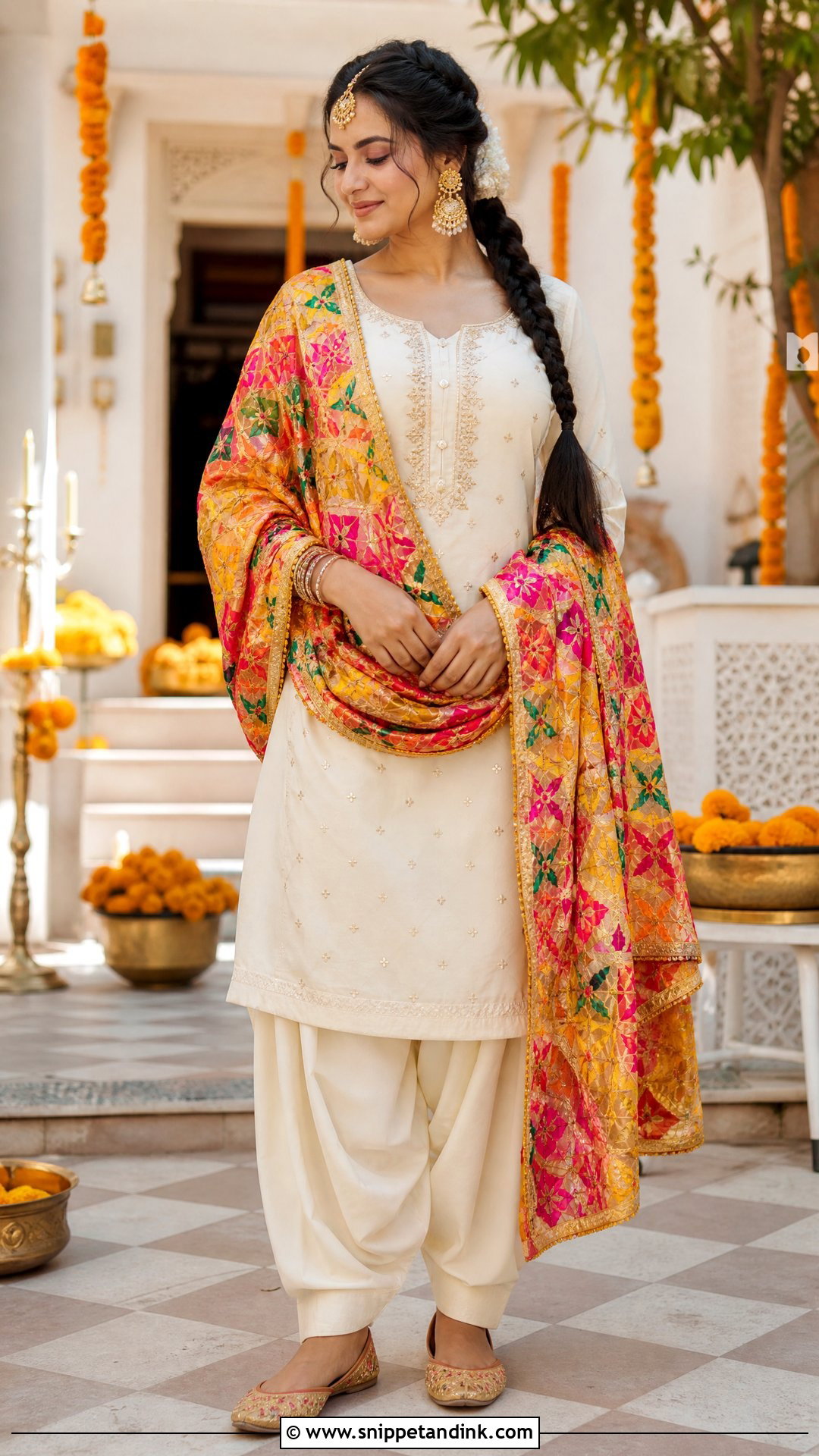
Phulkari is how I’d turn a plain ivory salwar suit into a joyful haldi outfit, and for a Punjabi family it carries real meaning. Keep the kurta plain or barely embroidered and let the dupatta, dense with yellow, orange and pink silk floss, be the whole statement. Drape it across both arms for the formal portraits, then pin it over one shoulder before the ritual starts. Silk floss phulkari can bleed if soaked, so don’t let anyone pour turmeric water directly onto it. Gold jhumkas, bangles and Punjabi juttis complete it, with a long braid or low bun.
18. Ivory Haldi Tunic With Skirt
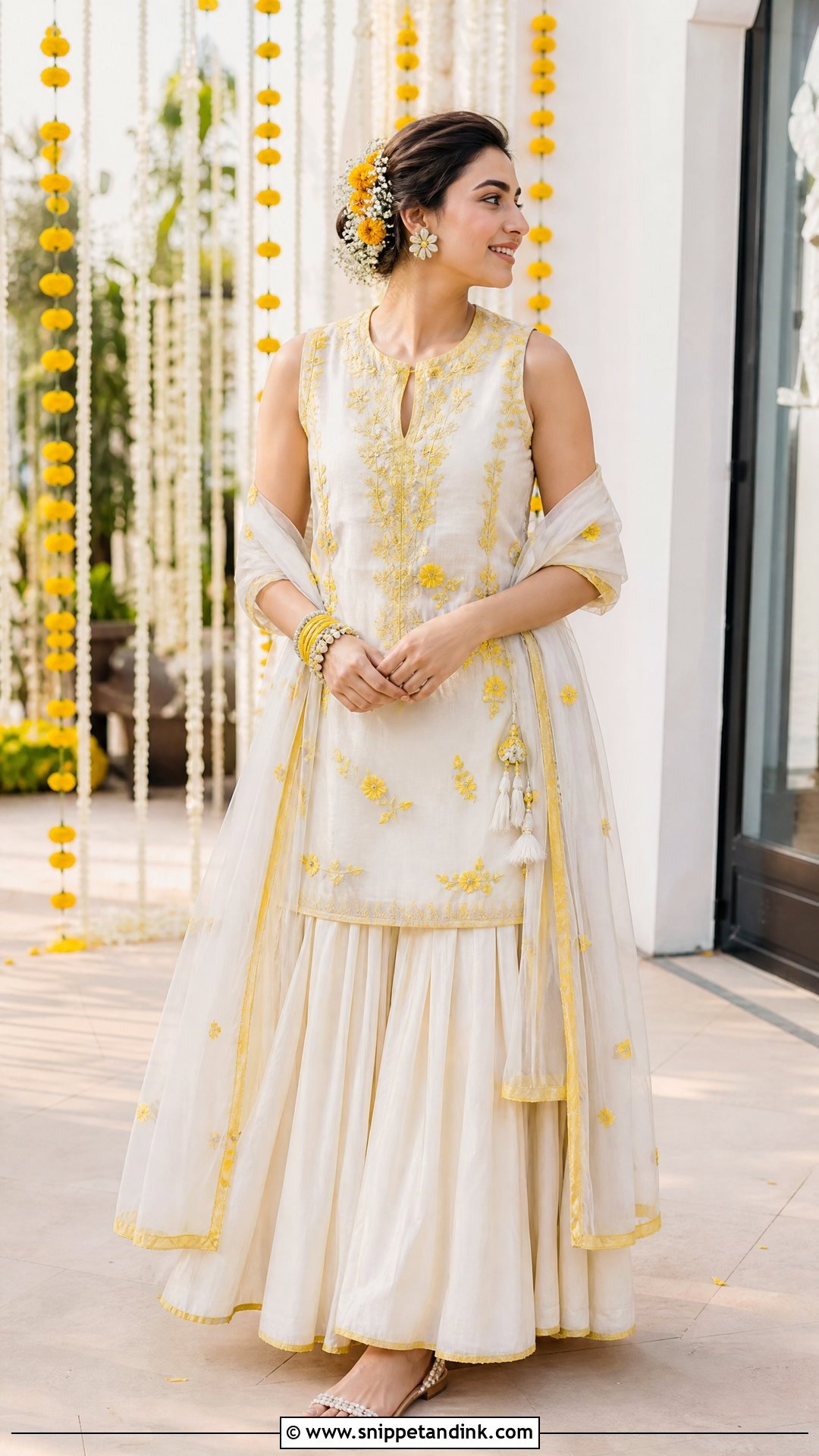
A long tunic over a coordinating skirt gives a graceful alternative to a lehenga, with useful coverage. Side slits are essential, otherwise the tunic rides up and creases at the hip every time you sit. Look for a fitted upper body and yellow embroidery around the neckline and hem, then a softly flared ankle-length skirt underneath. A sheer dupatta is optional. Floral studs, stacked bracelets and flat sandals keep it easy, with a relaxed bun dressed with marigolds and baby’s breath. Brides who prefer modest silhouettes like this one, and it suits mothers and guests at a daytime family ceremony just as comfortably.
19. Ivory Haldi Co-Ord Set With Long Shrug
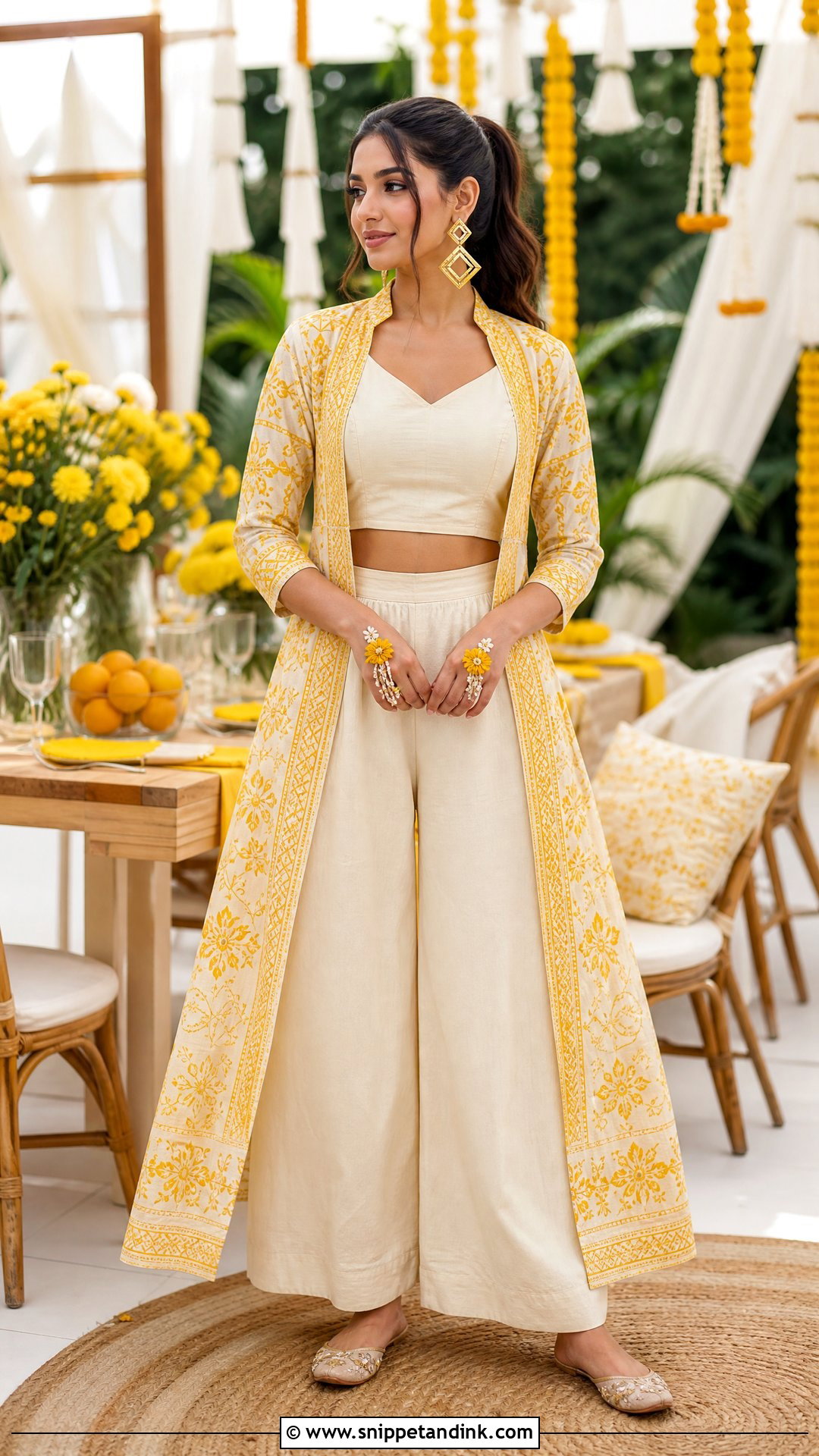
Co-ord separates under a long shrug are the most rewearable outfit here. Pair high-waisted palazzos or a flowing skirt with a matching crop top, then layer a shrug with yellow block prints, floral embroidery or a scalloped border. The open shrug adds coverage and movement while keeping air moving around you. Geometric gold earrings, floral hand jewellery and neutral embroidered flats suit the fusion feel. For bridesmaids or a brunch-style haldi this is my practical pick, since every piece can be worn separately later. Block prints, though, can run if they’re hand-printed with natural dyes, so test a hidden corner with water first.
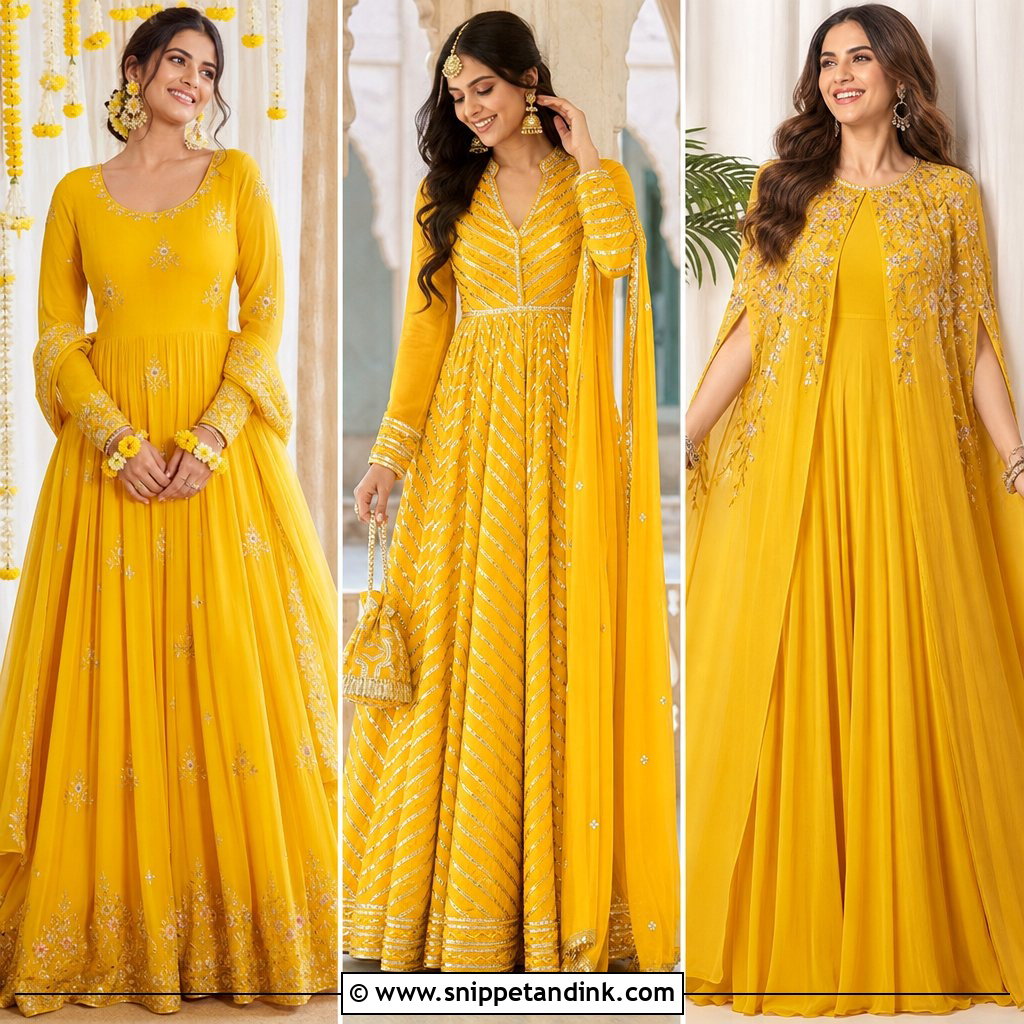
20. Ivory Haldi Maxi Dress With Dupatta
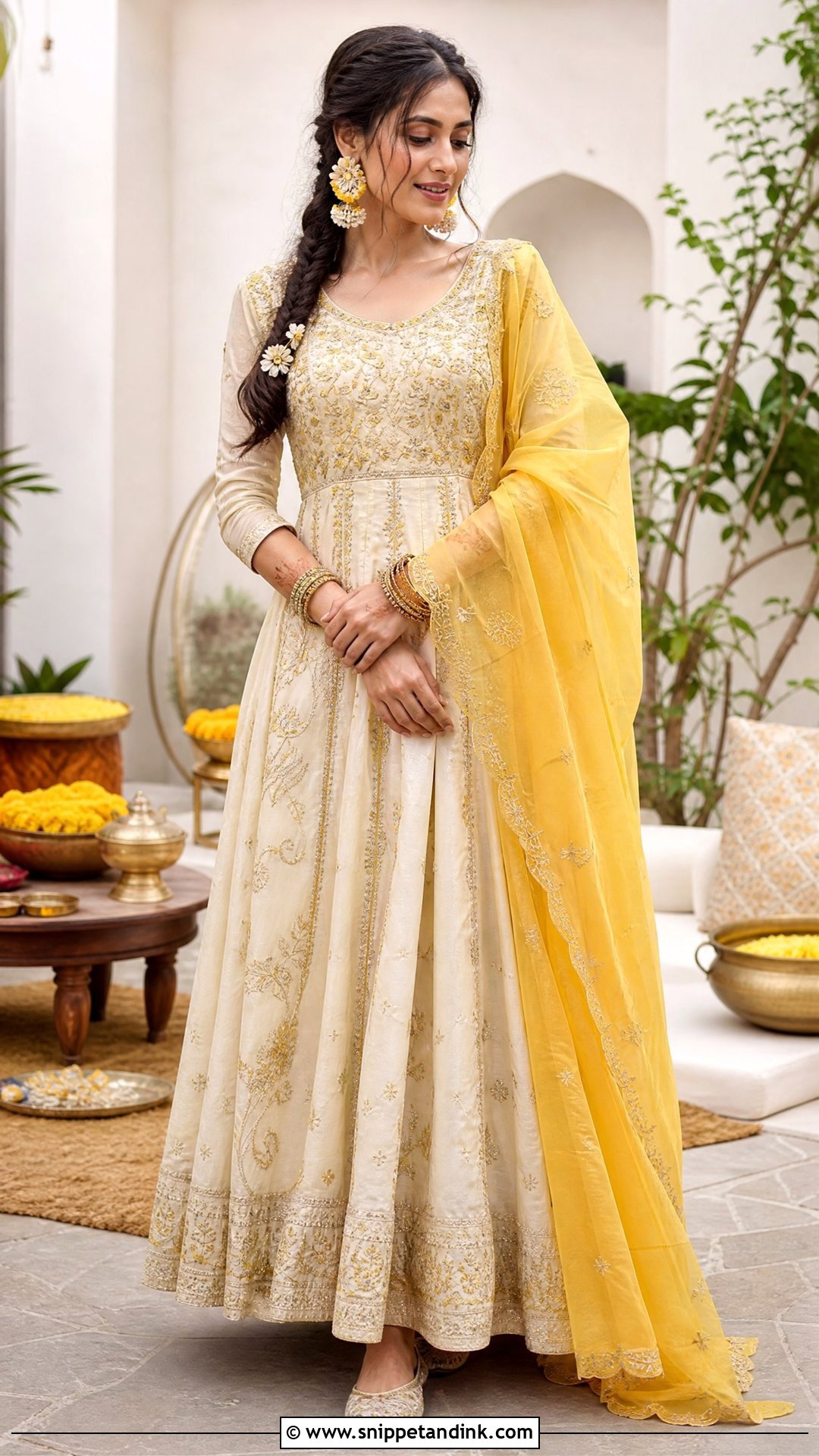
A maxi dress is the simplest foundation of all, one piece and done. Choose an ankle-length cut with a fitted bodice, comfortable sleeves and a gently flared skirt, and let small yellow flowers or a thin gold border supply the festive detail. A yellow dupatta over one shoulder connects it to the ceremony. Floral earrings, a few bangles and flat sandals or juttis finish it, with a loose braid or soft ponytail. It suits a small home ceremony or a destination wedding where luggage space is tight. The neckline, sleeve length and waist placement are all easy for a tailor to adjust, so it adapts to most ages and figures.
Turmeric on Ivory: What Comes Out and What Stays
Decide before the day whether this outfit is meant to come back clean. Some brides keep the stained saree as a memento; others want to wear the kurta again at a friend’s mehndi. If it’s the second, act within hours, not days, because turmeric sets fast and gets harder to shift once it dries into the fibres.
The same evening
Let the paste dry, then brush it off with a soft brush over a sink; don’t wipe wet paste, which pushes it deeper. Rinse the stain from the back with cold water. Hot water sets turmeric. On plain cotton a little mild detergent worked in with your fingers, then a few hours drying in direct sunlight, fades a surprising amount, since the yellow pigment breaks down in strong light.
Silk, zari and gota
Don’t soak these at home. Water can tarnish metallic thread and leave tide marks on silk. Fold the stained area inward, wrap the piece in a cotton cloth and take it to a cleaner within a day or two, telling them plainly that the stain is turmeric so they choose the right treatment. Keep chlorine bleach well away from silk and embroidery; it weakens the fibres and can leave a yellow cast of its own on ivory.
For storage, keep the cleaned outfit in a breathable cotton bag, away from plastic, which traps moisture and yellows ivory over time on its own.
An Ivory Haldi Outfit Is Meant to Pick Up Some Yellow
Whatever silhouette you land on, a light lehenga, a cotton saree, a chikankari kurta or a co-ord set, the ivory outfits that hold up are the ones with secure draping and fabric that breathes. Let the yellow come from the dupatta, the flowers and the paste itself. Wear flats, keep your hair off your face, and leave heirloom silk in the cupboard. Then sit back and let your family do the rest.
You'll Like These Ideas:




Leave a Reply