
A haldi is the one wedding event where your outfit will definitely get messy, so I dress for it differently from every other function. You’ll sit on the floor, get hugged by aunties with paste on their hands, and dance in the courtyard afterwards. Yellow is the expected colour, but there is a lot of room inside it: pale lemon, golden mustard, sunflower and deep marigold all read as haldi. Lightweight lehengas, easy kurta sets, pre-draped sarees, florals and fusion pieces are what most people reach for now. Below are twenty options for brides, sisters, bridesmaids and guests, each with notes on fabric and footwear. My general rule: keep embellishment modest and choose something you won’t cry over if turmeric lands on it.
Who Wears How Much Yellow at a Haldi
Families coordinate haldi colours more closely than any other event, and the question I’m asked most is how to keep the bride from blending into a sea of yellow. The answer is to plan by role, not by outfit.
- The bride: the deepest or brightest yellow in the room, and the only one with real embellishment or floral jewellery. A marigold or mustard lehenga sets her apart from guests in lemon.
- Sisters and bridesmaids: a shared shade one step lighter, or the same yellow with a contrast dupatta in pink or green. Matching cut is optional; matching colour does the work.
- Mothers and elders: soft silk or chanderi in mustard or gold, often with a contrasting border. Many prefer a dupatta over the head for the prayers, so a lighter one is kinder.
- Guests: any yellow, or yellow paired with white, pink or green. Avoid pure white unless the family has asked for it, and keep away from the bride’s exact shade.
If you’re a guest and unsure, ask the bride or her sister which yellow the bridal party is wearing. It’s a normal question and saves an awkward photo. Also ask whether the haldi is a joint event for both families; some families split into two colours, such as yellow for one side and green for the other.
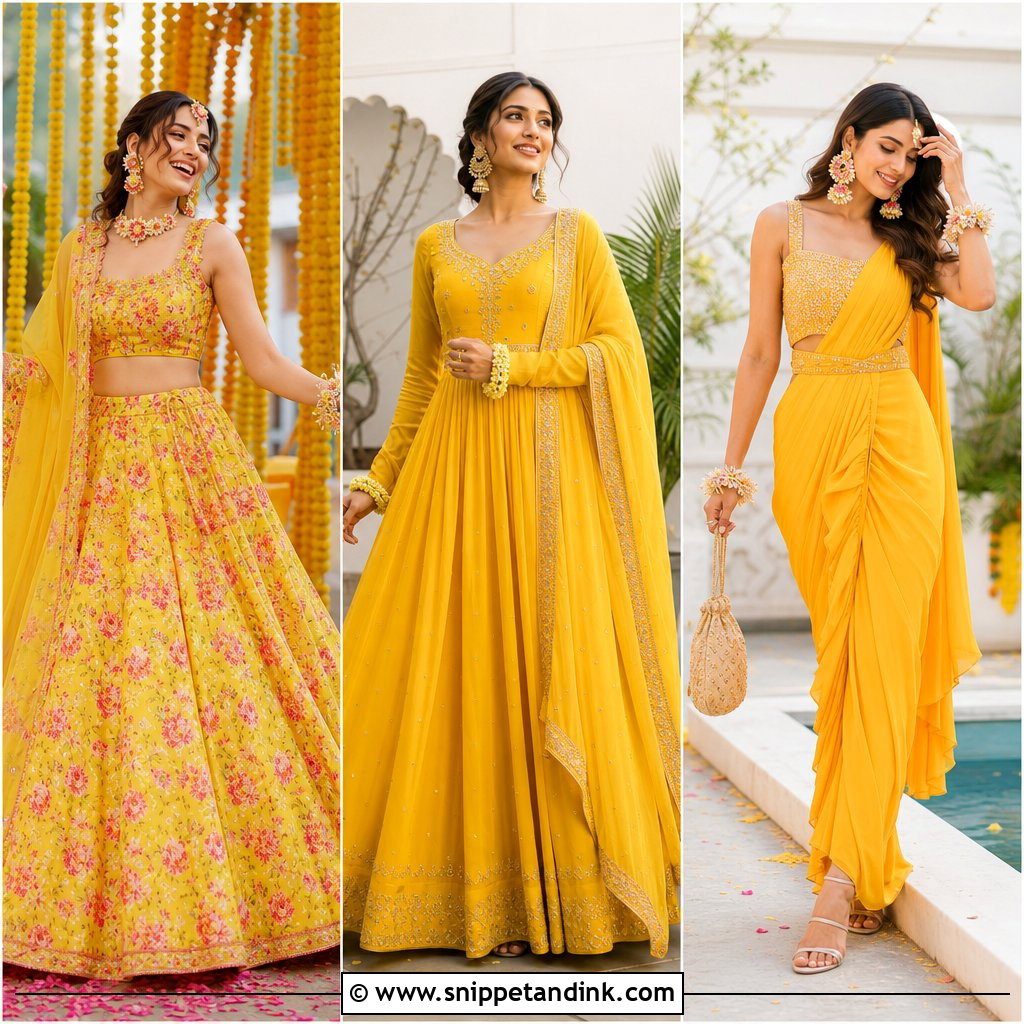
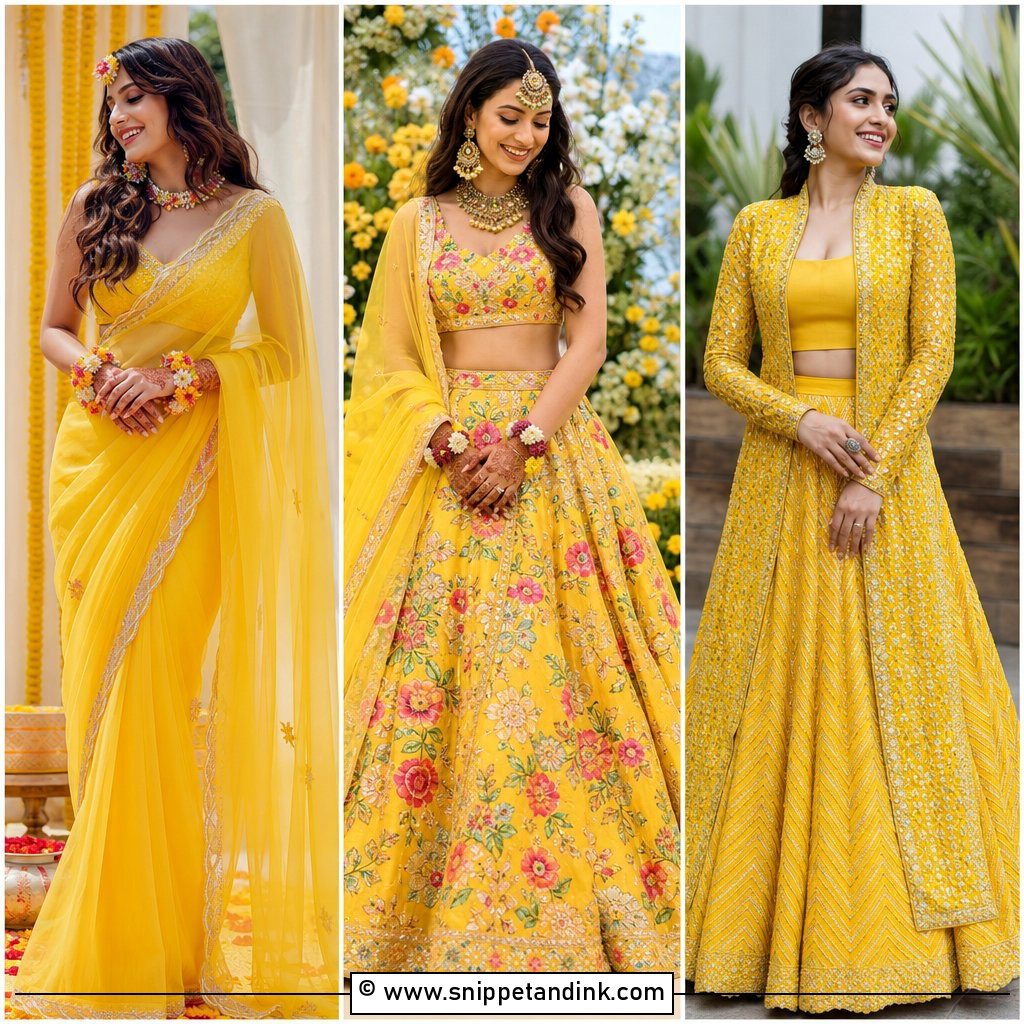
1. Yellow Floral Lehenga for Haldi
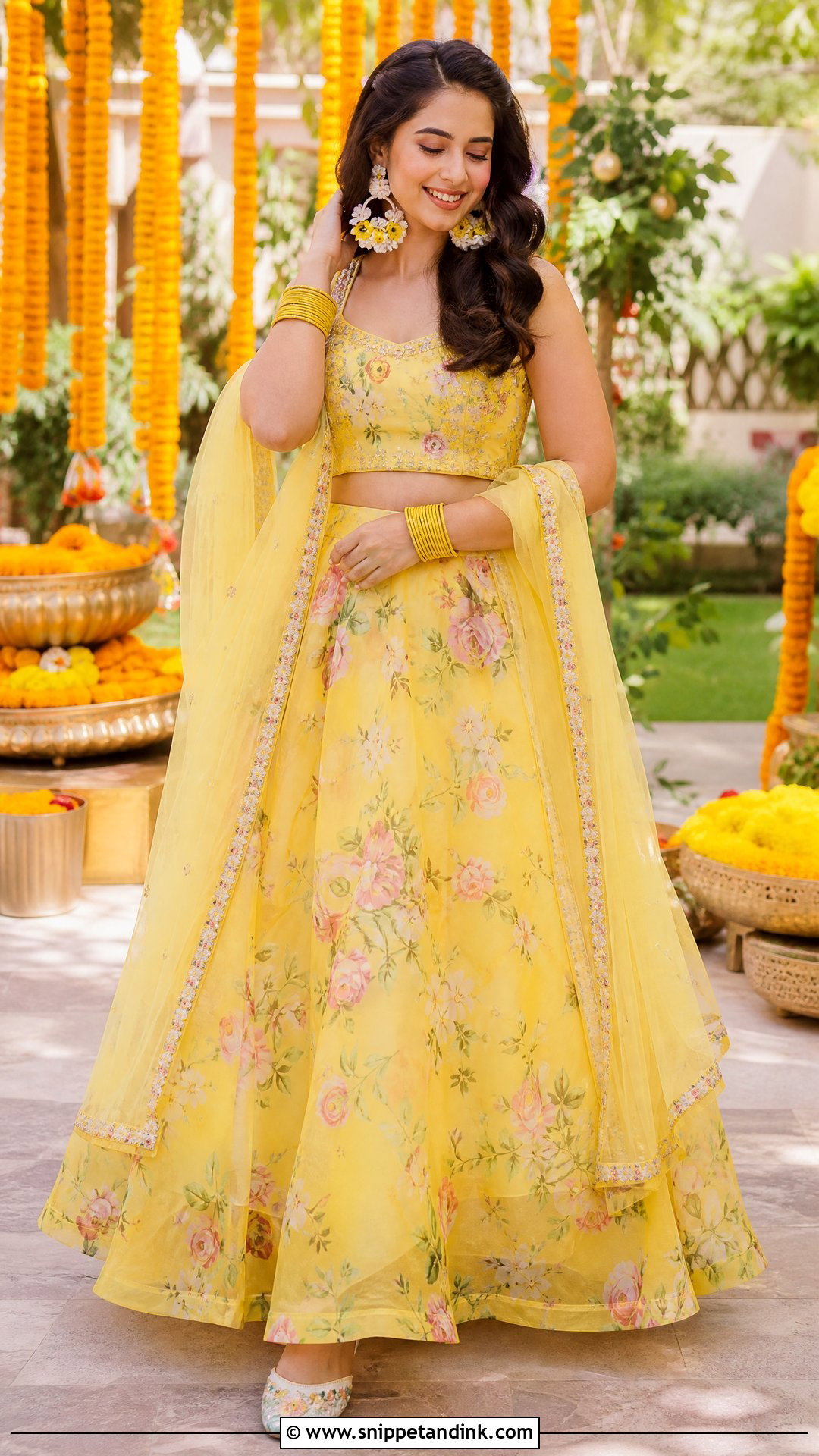
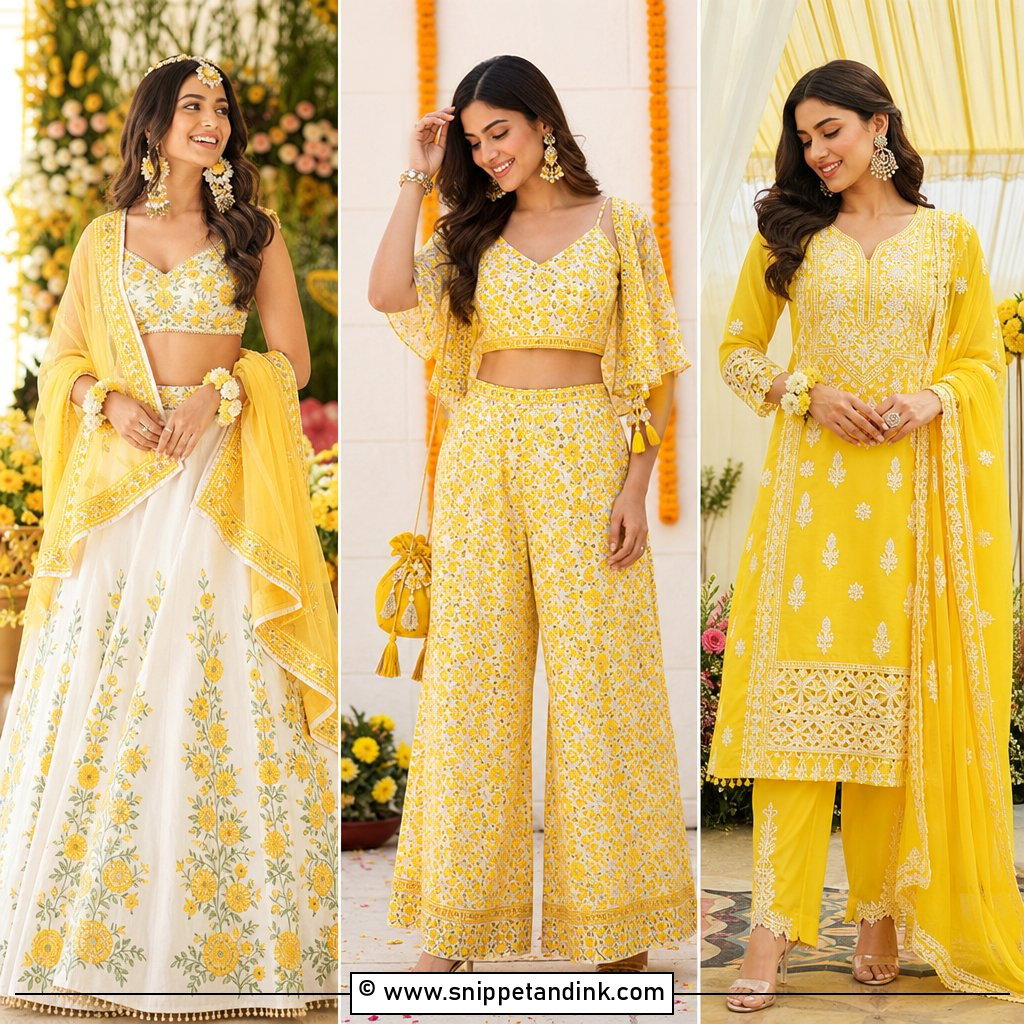
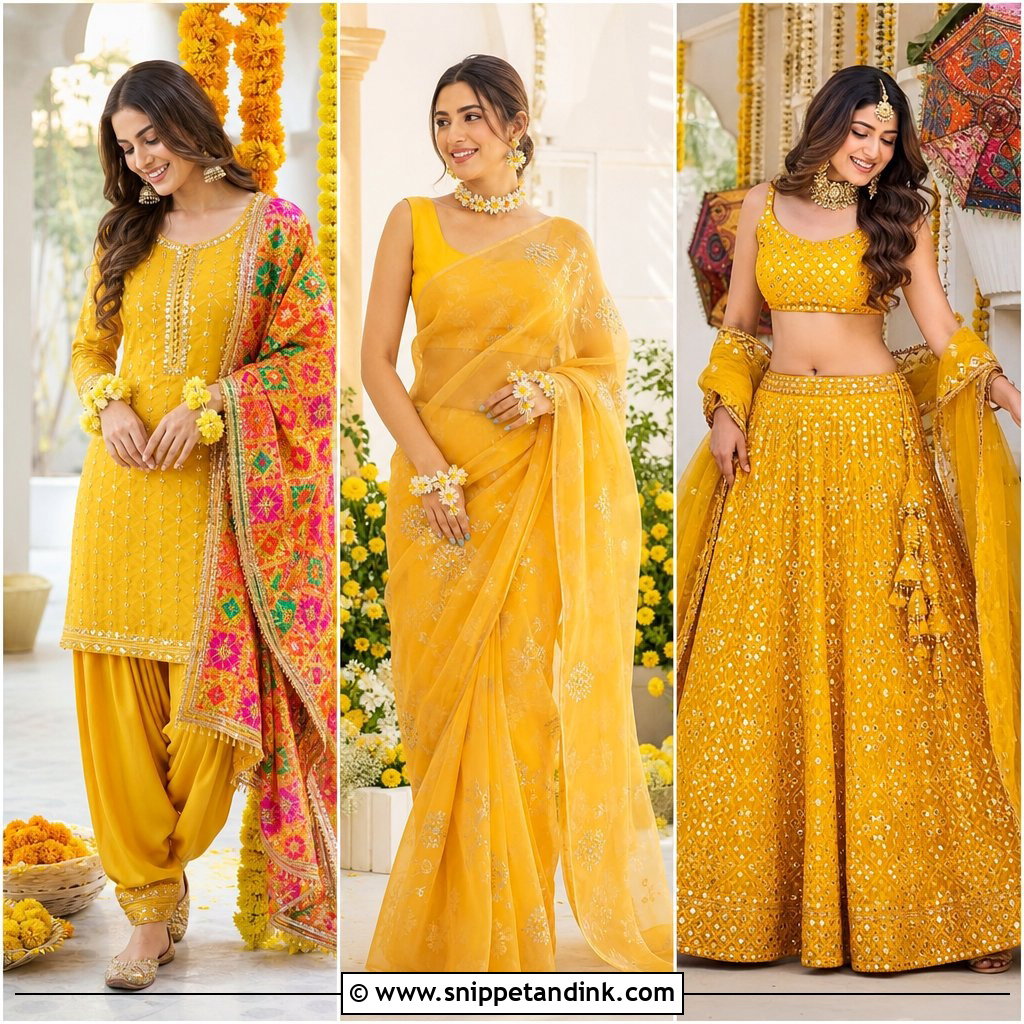
A yellow floral lehenga is the easiest haldi outfit to get right for a daytime ceremony. Pick organza, cotton or georgette with small printed or embroidered flowers. Large flowers on a full skirt can swamp a petite bride. A fitted sleeveless blouse and a soft net dupatta pinned over one shoulder keep your arms free for the rituals. Lemon reads delicate; marigold reads bridal. Floral earrings, matching bangles and a simple maang tikka finish it. Juttis beat heels on grass every time. Brides can add a floral necklace and a decorated braid; guests should keep accessories lighter. Check the skirt’s weight before you buy: printed cotton skirts often hide two layers of lining that get hot by noon.
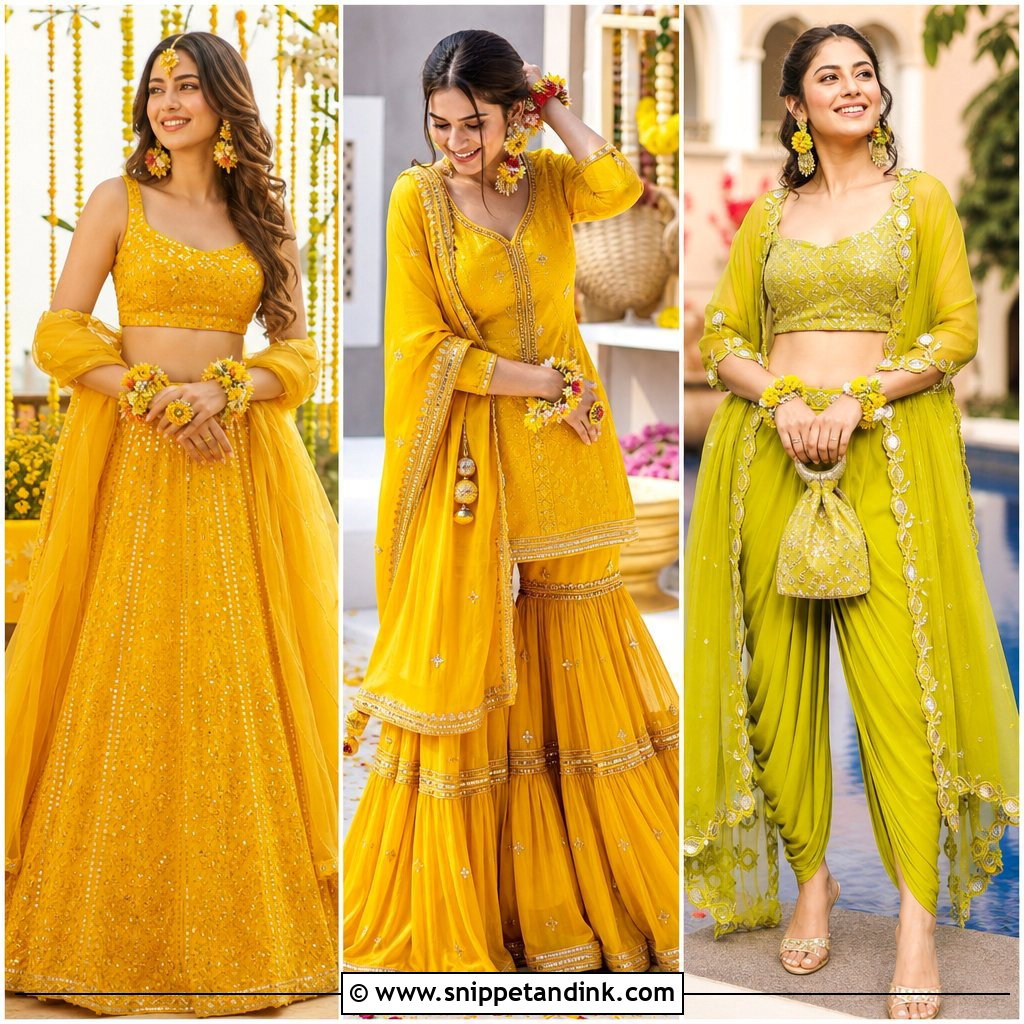
2. Yellow Mirror Work Lehenga for Haldi
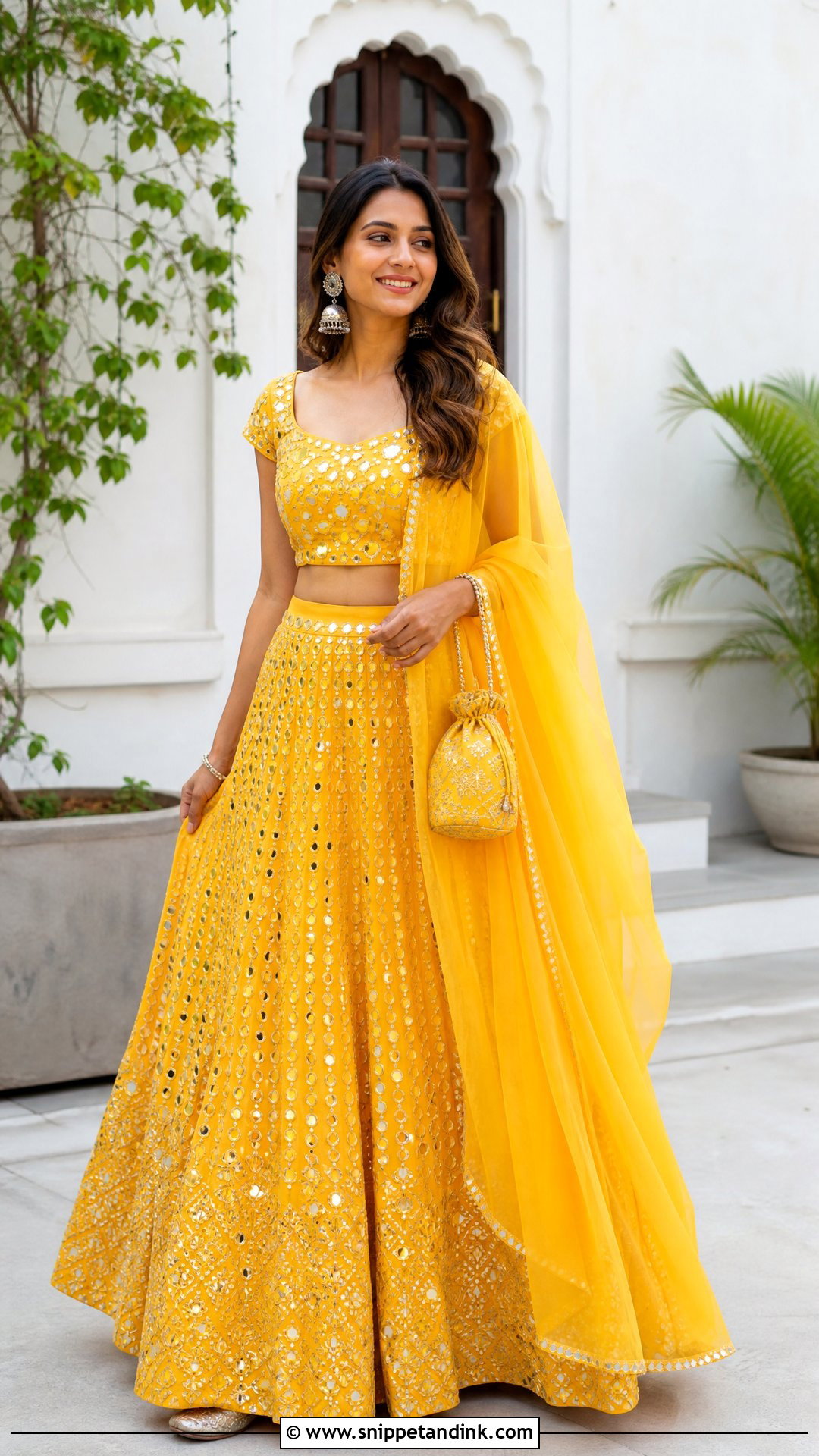
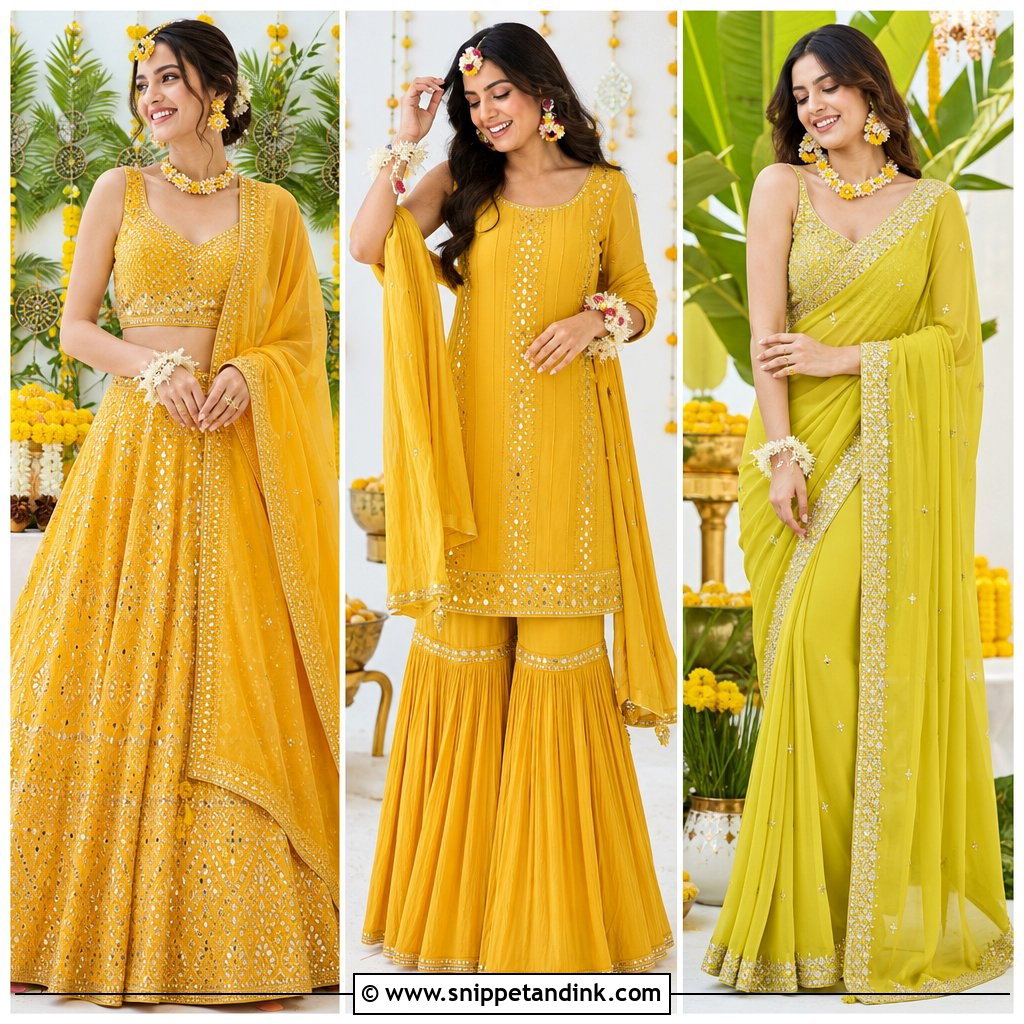
Mirror work gives sparkle in sunlight without the weight of zardozi, which is why I like it for haldi. Look for a flared skirt with mirrors spaced evenly; clustered mirrors pull the fabric and pucker. Pair it with a coordinated short-sleeved blouse and a plain chiffon dupatta, so the eye has somewhere to rest. Silver-toned jhumkas suit mirrors better than gold, plus slim bangles and a small potli. Metallic or neutral juttis. Keep makeup fresh: dewy base, defined eyes, peach lip. Mirrors are stitched, not glued, on good pieces; glued ones fall off in the first wash. Bridesmaids can choose smaller mirrors and fewer accessories so the bride’s set stays the brightest in the frame.
3. Yellow Organza Lehenga for Haldi
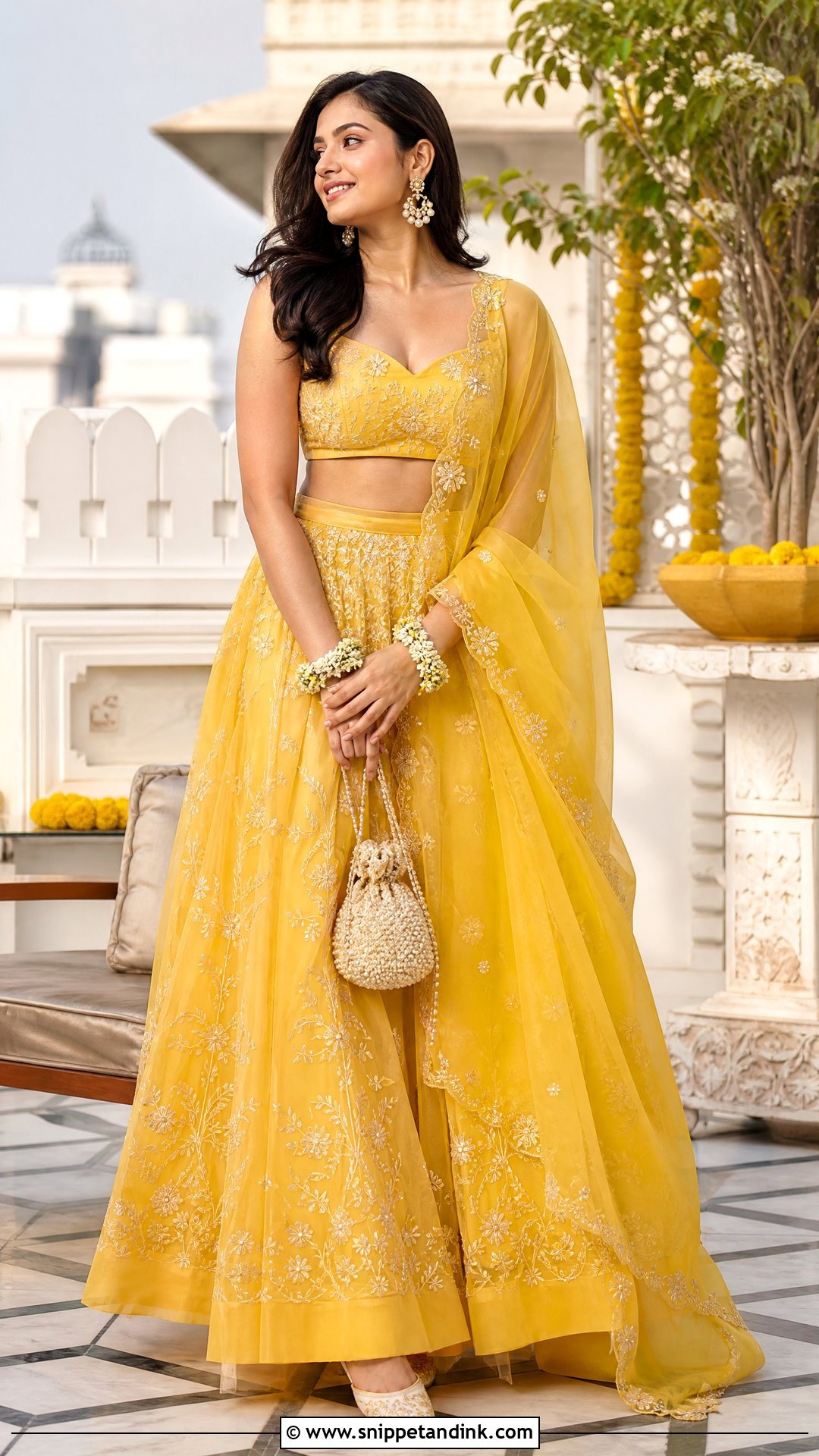
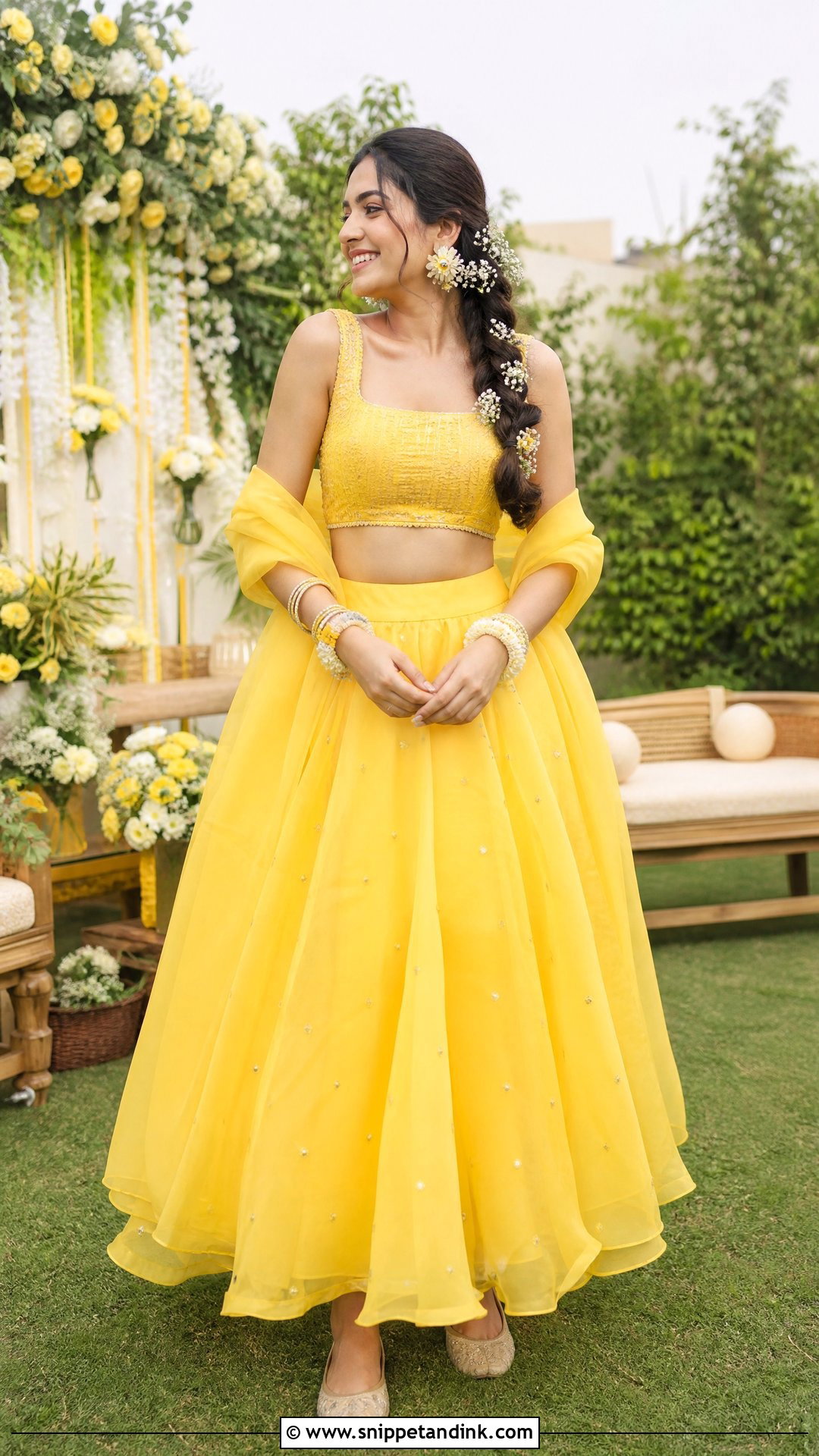
Organza holds its own shape, which means a full-looking lehenga without layers of heavy fabric underneath. I reach for it for garden and terrace haldis. Delicate thread embroidery, scalloped borders or a little floral appliqué is enough. Pair it with a matching cropped blouse and a sheer dupatta worn loosely on the arms. Pearl earrings, floral bracelets and a neat low bun suit the crisp fabric. Cushioned juttis or flat sandals in ivory, gold or yellow. A compact pearl potli rather than a handbag. A warning for this one: organza doesn’t absorb liquid, so turmeric paste sits on the surface and wipes off better than on cotton, but the fabric crushes if you sit on it for an hour. Fold the skirt forward when you sit.
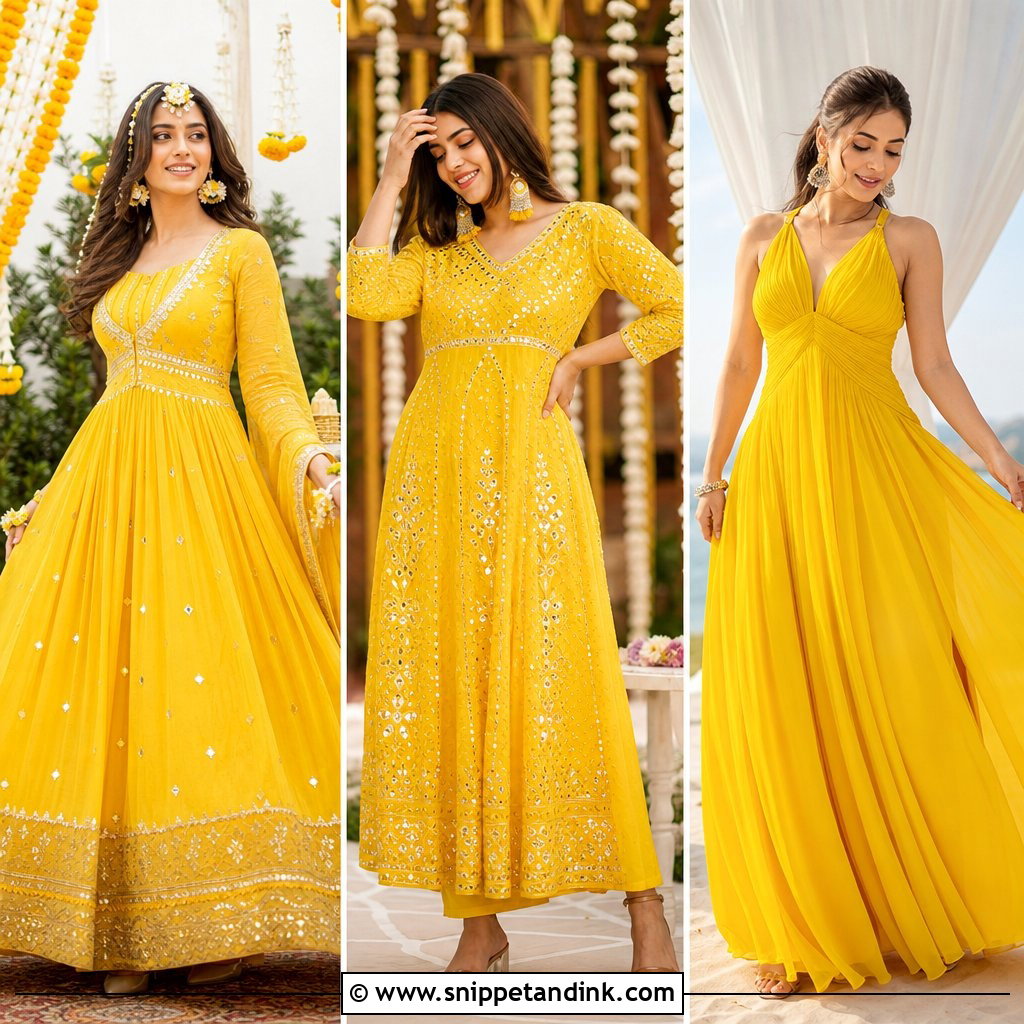
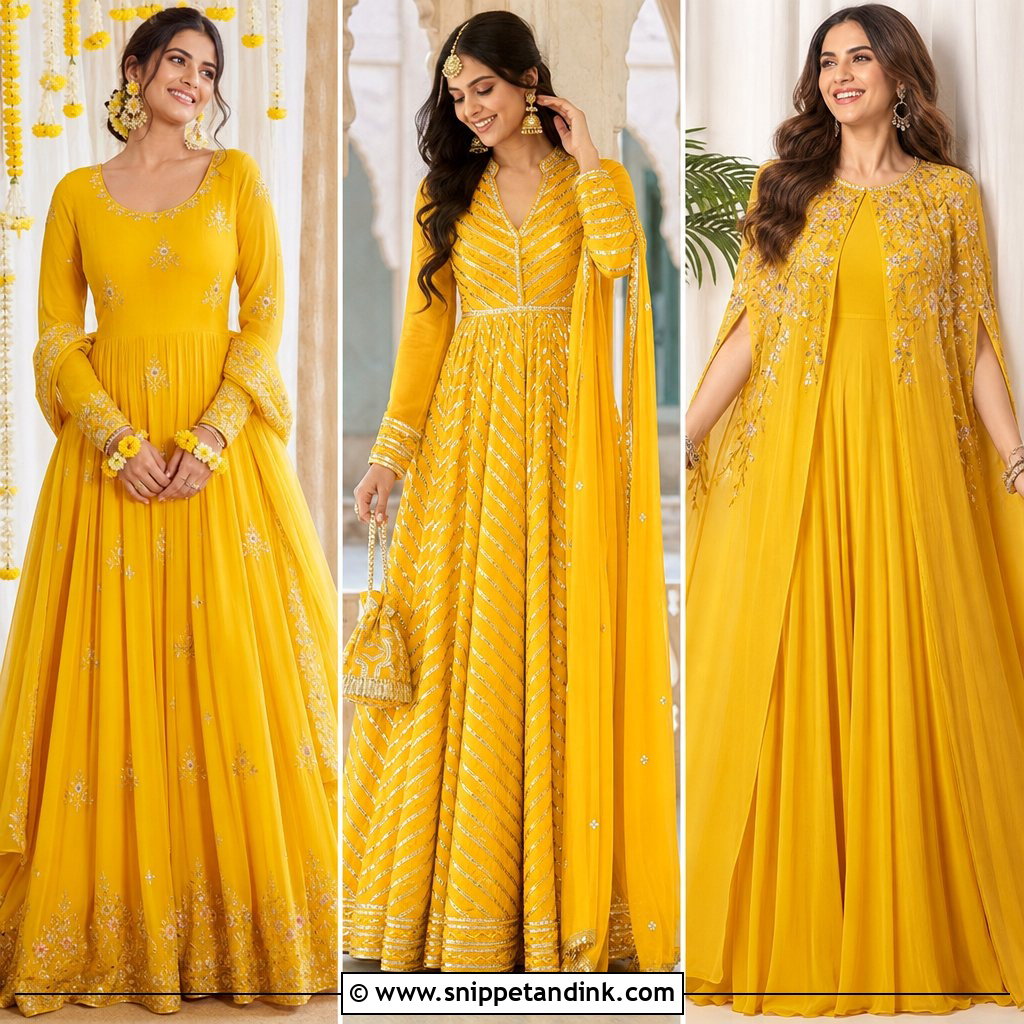
4. Yellow Anarkali Suit for Haldi
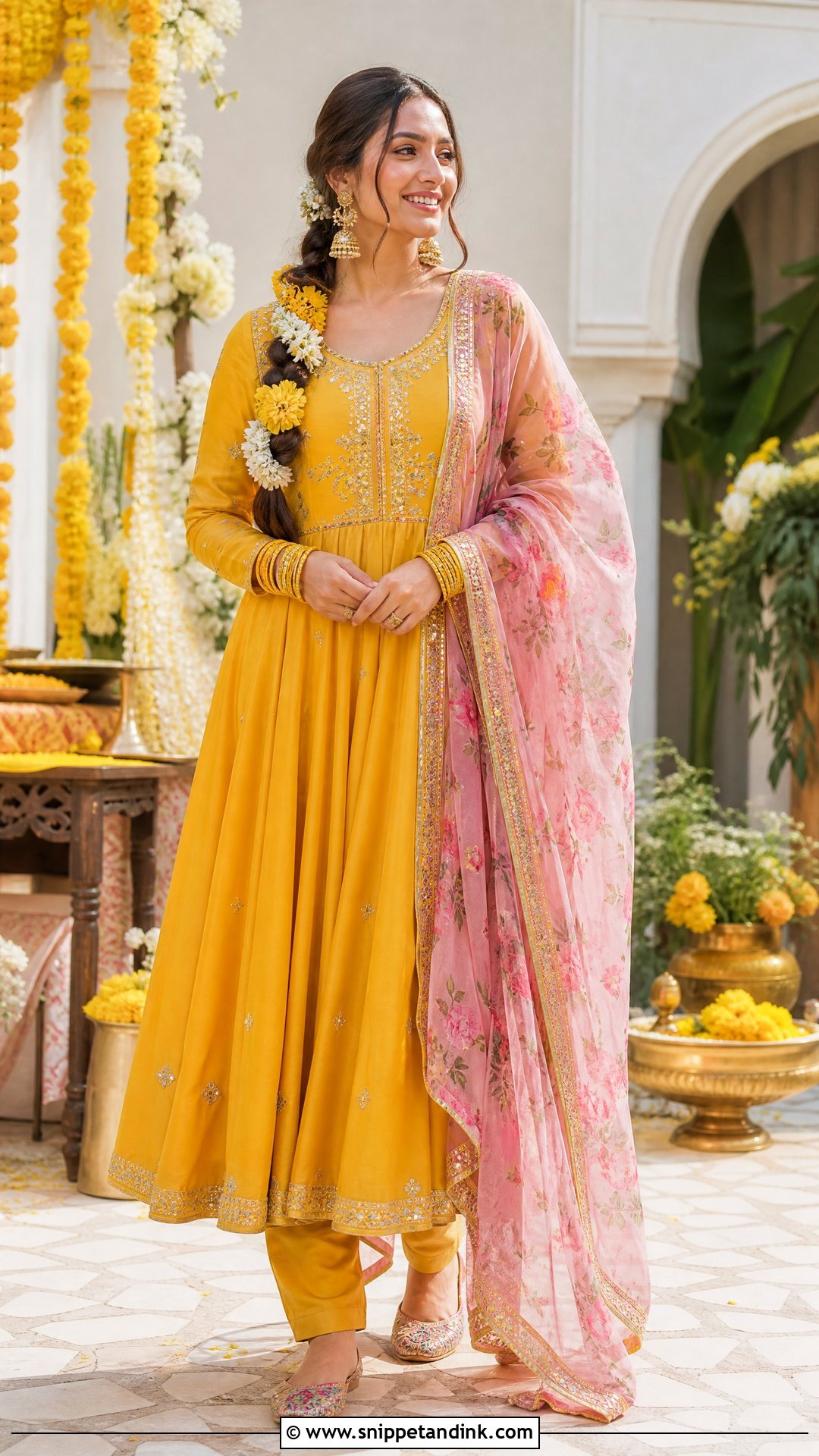
An Anarkali takes less styling effort than a lehenga or saree and still looks properly dressed. Calf or floor length in cotton silk, georgette or light chanderi all work. The fitted bodice and flowing skirt move easily and suit most ages. Slim trousers underneath, plus a contrasting pink, green or floral dupatta, add colour. Traditional jhumkas, glass bangles and juttis complete it. A braid with small flowers suits the bride; loose waves suit a guest. Choose minimal zari or gota if turmeric will be applied generously, because metallic thread tarnishes when it meets wet paste and doesn’t recover. For floor seating, a calf-length Anarkali is far easier than a floor-length one, which you’ll end up sitting on.
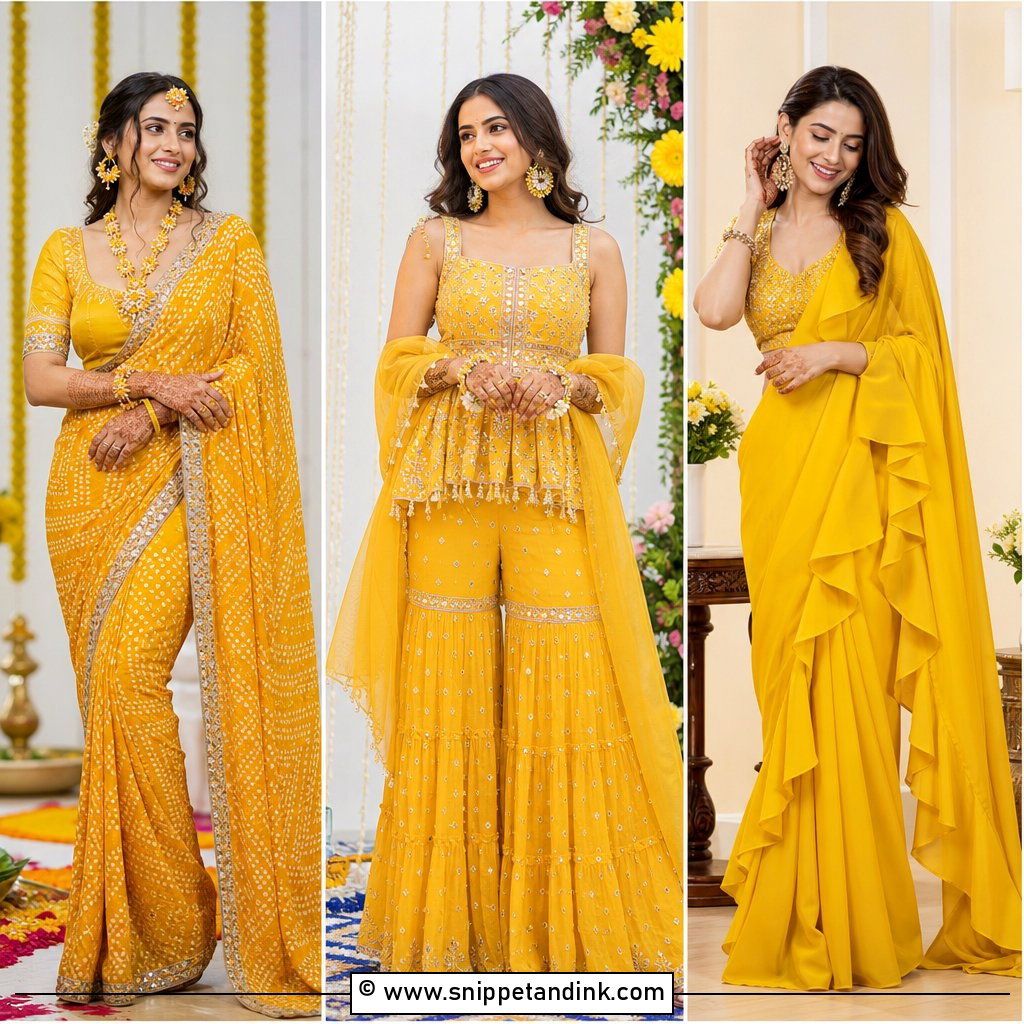
5. Yellow Sharara Set for Haldi
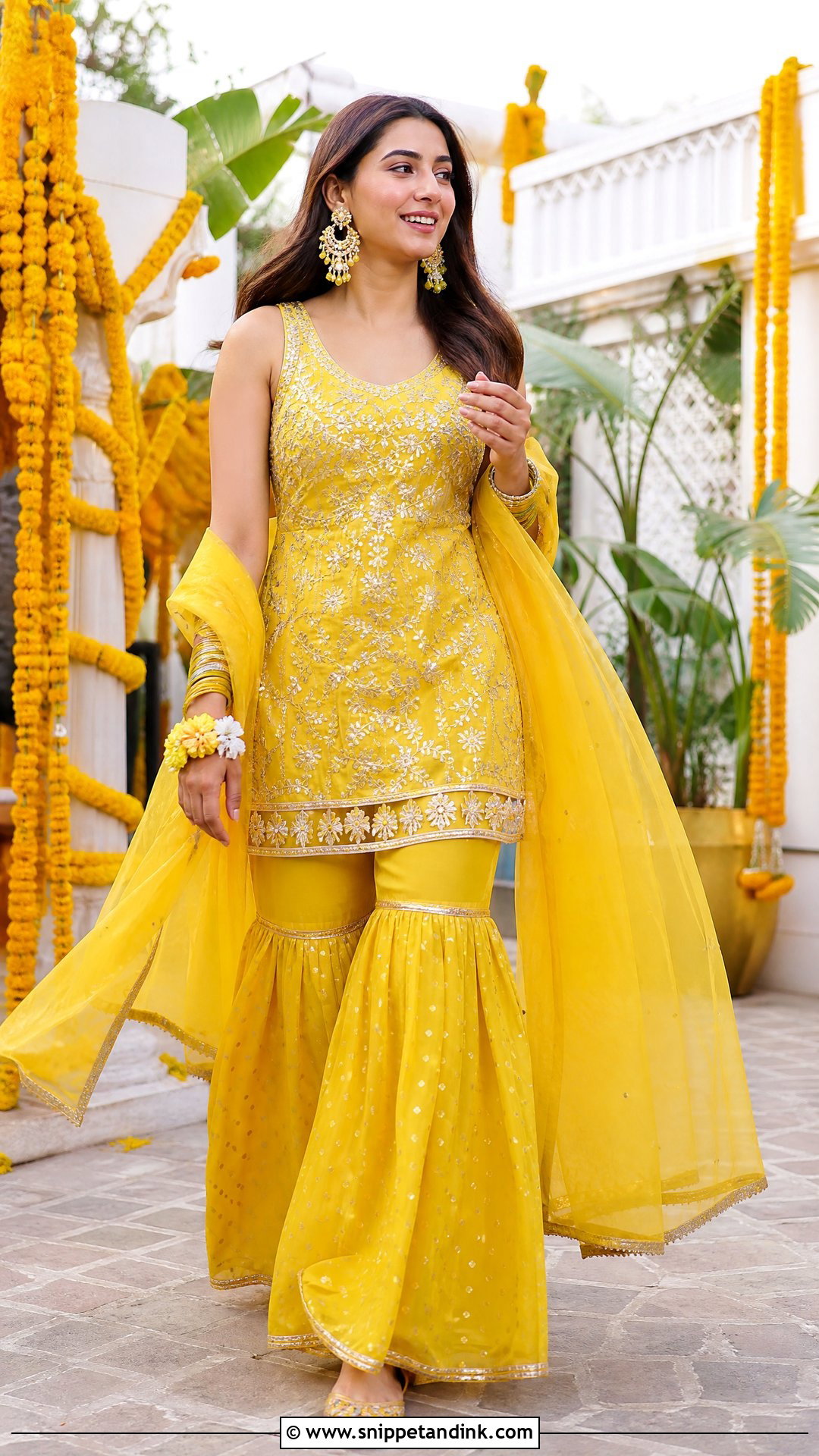
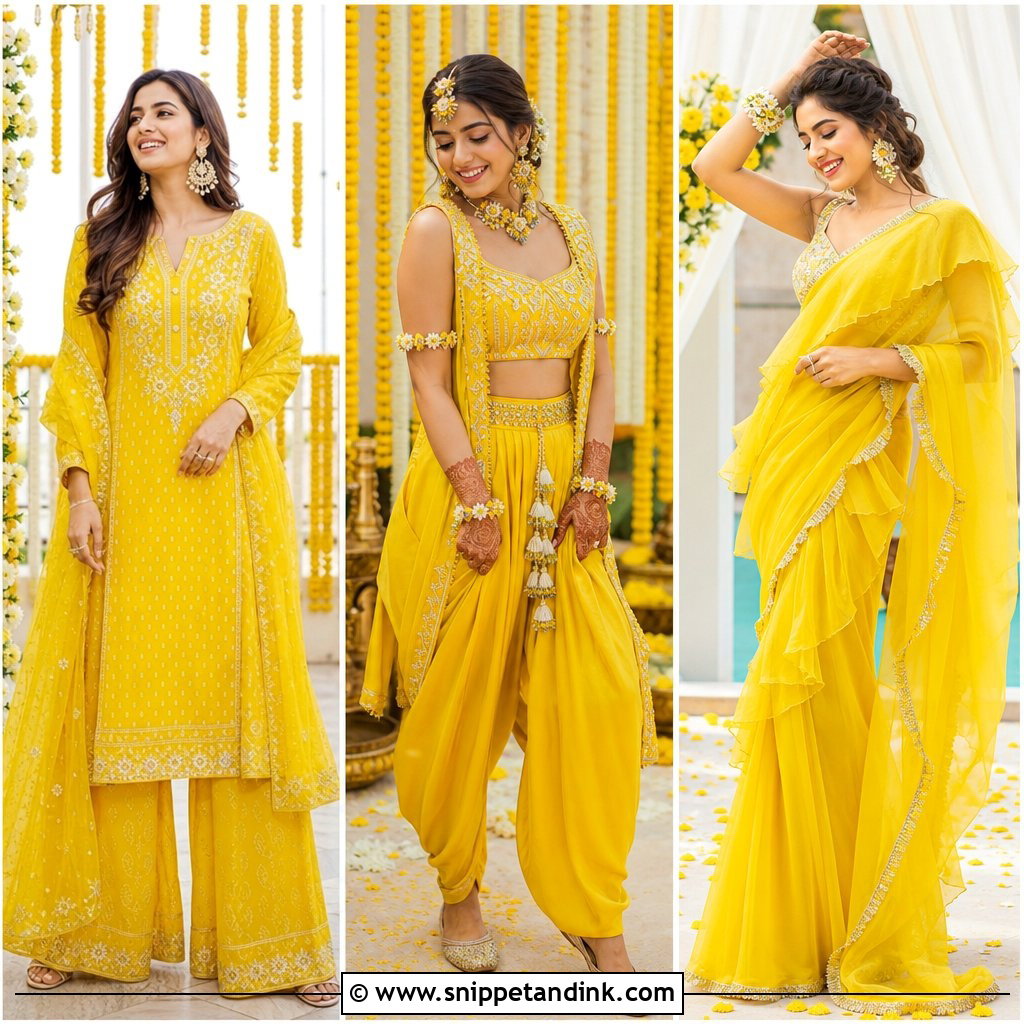
Shararas are what I’d pick if I knew there would be serious dancing. A short embroidered kurti with wide gathered sharara trousers and a light dupatta moves beautifully. Choose gota borders, delicate threadwork or small florals rather than heavy beading, which swings and hits your shins. A fitted kurti balances the volume below. Statement earrings, stacked bangles and a floral haathphool finish it. Flat juttis are the only sensible footwear under a wide hem; heels catch it. Brides can choose a fuller sharara with an embellished dupatta; sisters and friends do well in simpler cotton. The flare begins at the knee, so make sure the length clears your ankles when you’re wearing the actual shoes.
6. Yellow Gharara Suit for Haldi
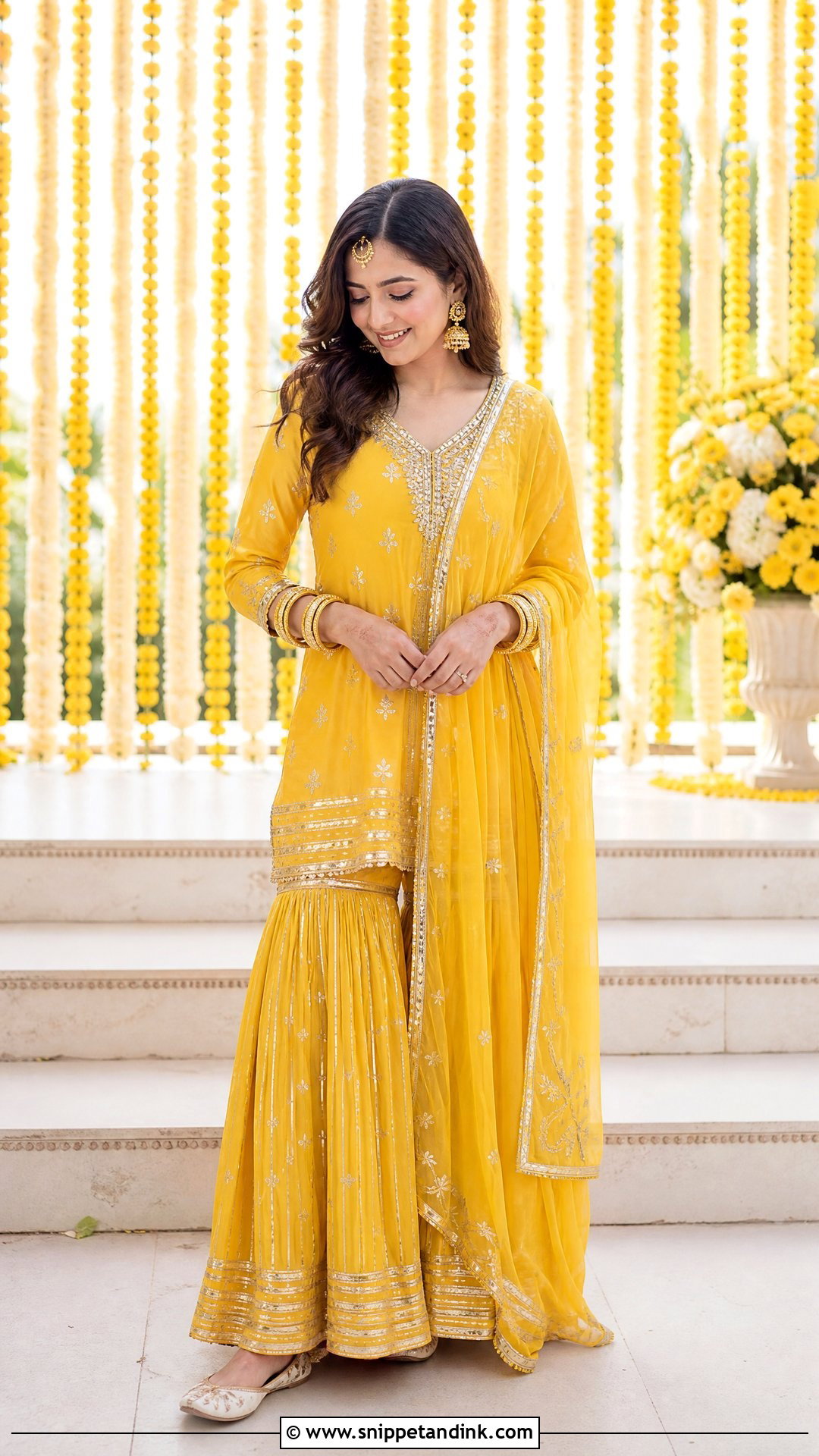
For a traditional shape with real structure, a yellow gharara suit stands out. The fitted upper leg and flared lower section hold their shape, and the joint at the knee is usually decorated with a band of gota, which is the detail to check for neat stitching. Pair it with a short kurti in gota patti, zari edging or fine floral embroidery. A chiffon dupatta with a narrow border keeps it light. Gold jhumkas, a small maang tikka and bangles are enough. Low-heeled mules or juttis in gold or ivory. Mustard looks rich; sunflower yellow is younger. I’d suggest this to bridesmaids and close family who want more than a kurta set but less work than a lehenga.
7. Yellow Kurta Palazzo Set for Haldi
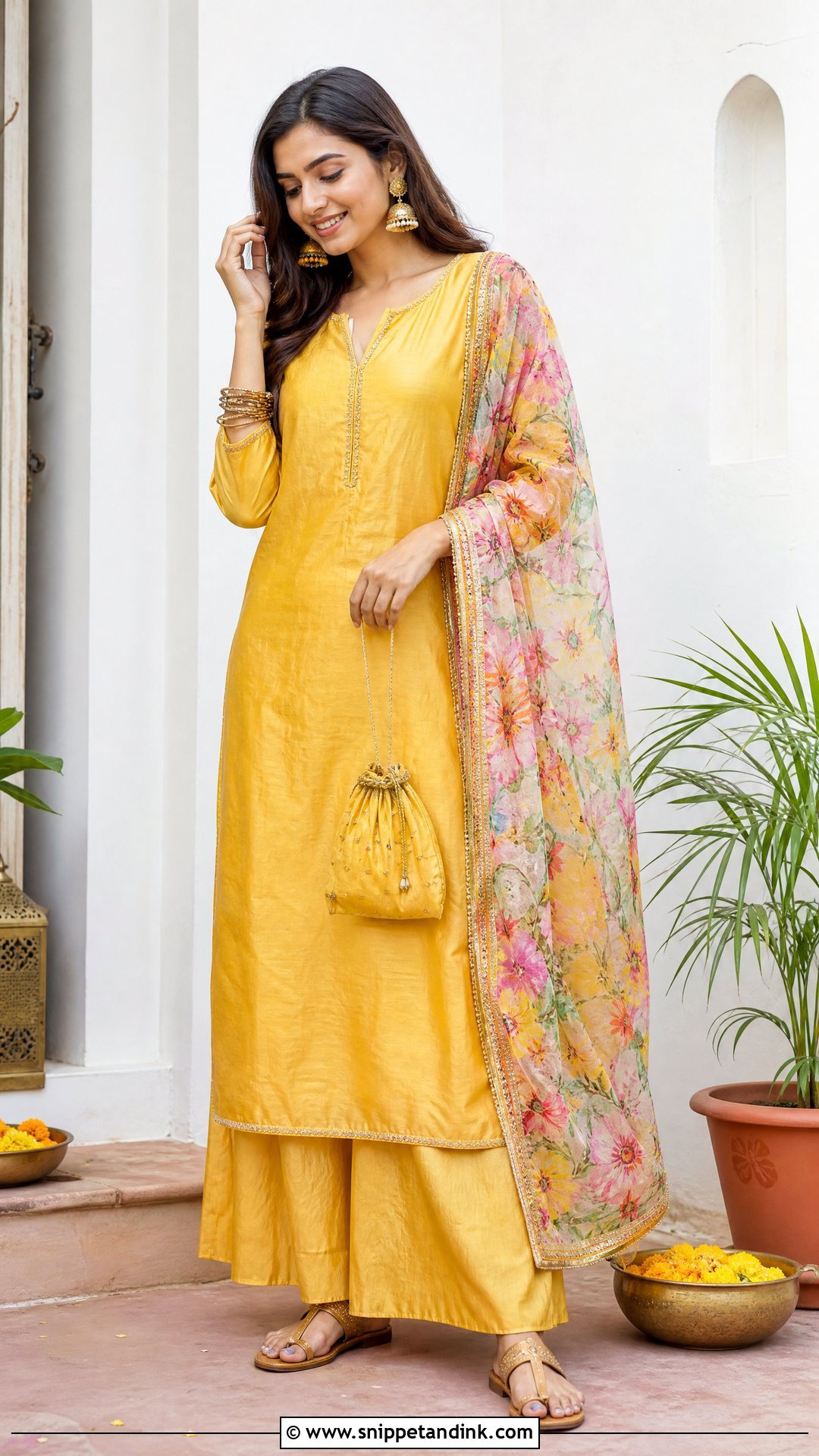
Haldis often run several hours, and comfort matters more than anyone admits beforehand. A kurta and palazzo set solves that without looking casual. Pick a straight or slightly flared kurta with three-quarter sleeves and wide palazzos. Cotton, rayon and chanderi all breathe in daytime heat; I’d skip polyester, which turns sticky under the sun. A printed dupatta with pink flowers or green leaves adds colour. Medium earrings, a few bangles and flat kolhapuris finish it. A small crossbody potli keeps your hands free during the ritual. Older relatives often love this set because it’s easy to sit cross-legged in. Monochrome reads elegant; a contrast dupatta reads festive.
8. Yellow Kurta Dhoti Pant Set for Haldi
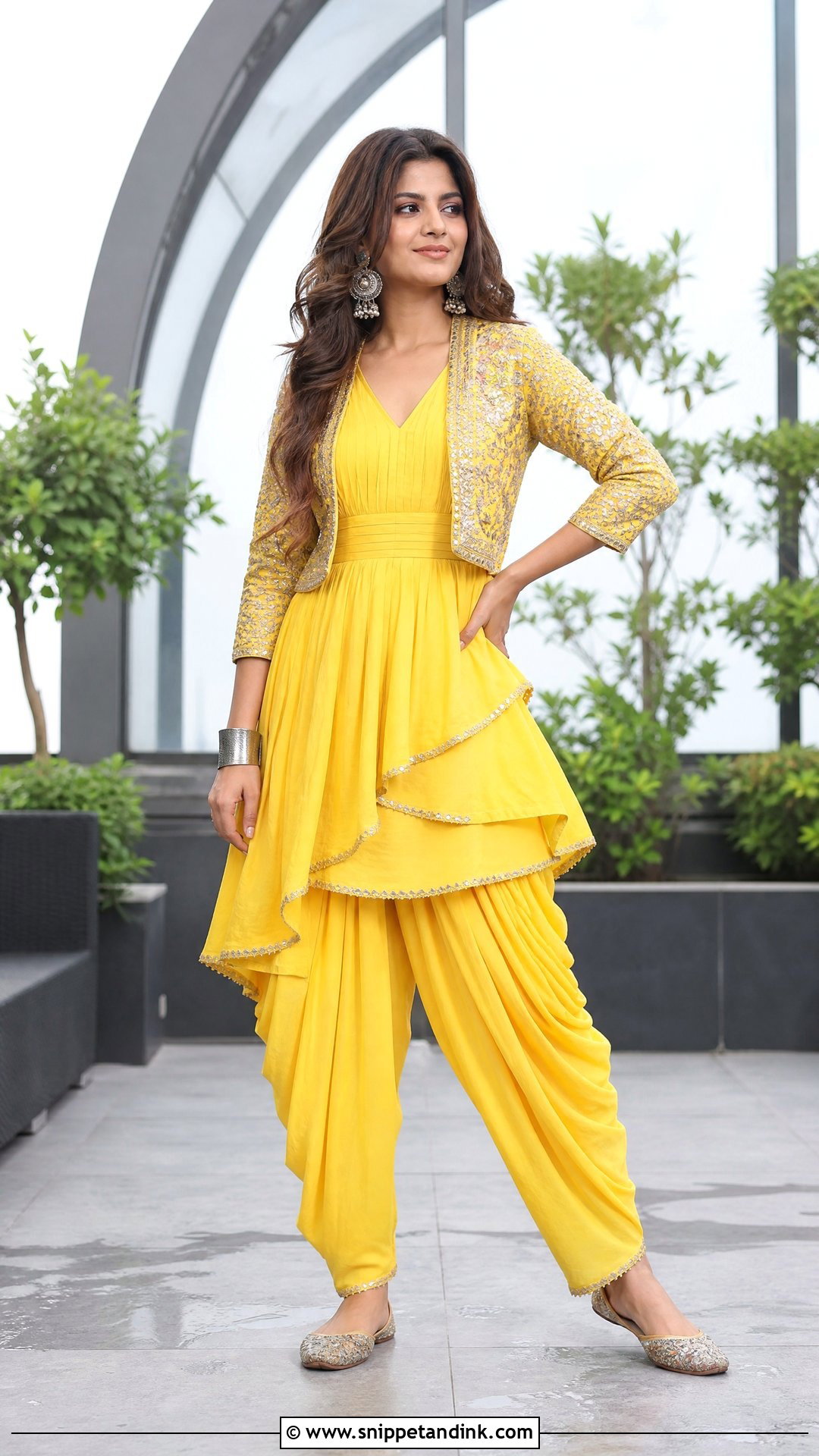
A yellow kurta with dhoti pants is my pick for the friend who wants something different and still needs to sit and dance freely. Choose a short asymmetric kurta or peplum so the pleated drape of the trousers stays visible; a long kurta hides the whole point. A fitted waist keeps it balanced. A light cape, cropped jacket or narrow dupatta adds a traditional note if the family expects one. Oxidised earrings and a statement cuff suit the slightly bohemian shape, with juttis. Keep the neckline simple. Dhoti trousers are cut with extra fabric in the seat, so check the drop crotch isn’t so low it pulls when you walk upstairs. Bright yellow for daytime, mustard for a more polished feel.
9. Yellow Saree With Floral Blouse for Haldi
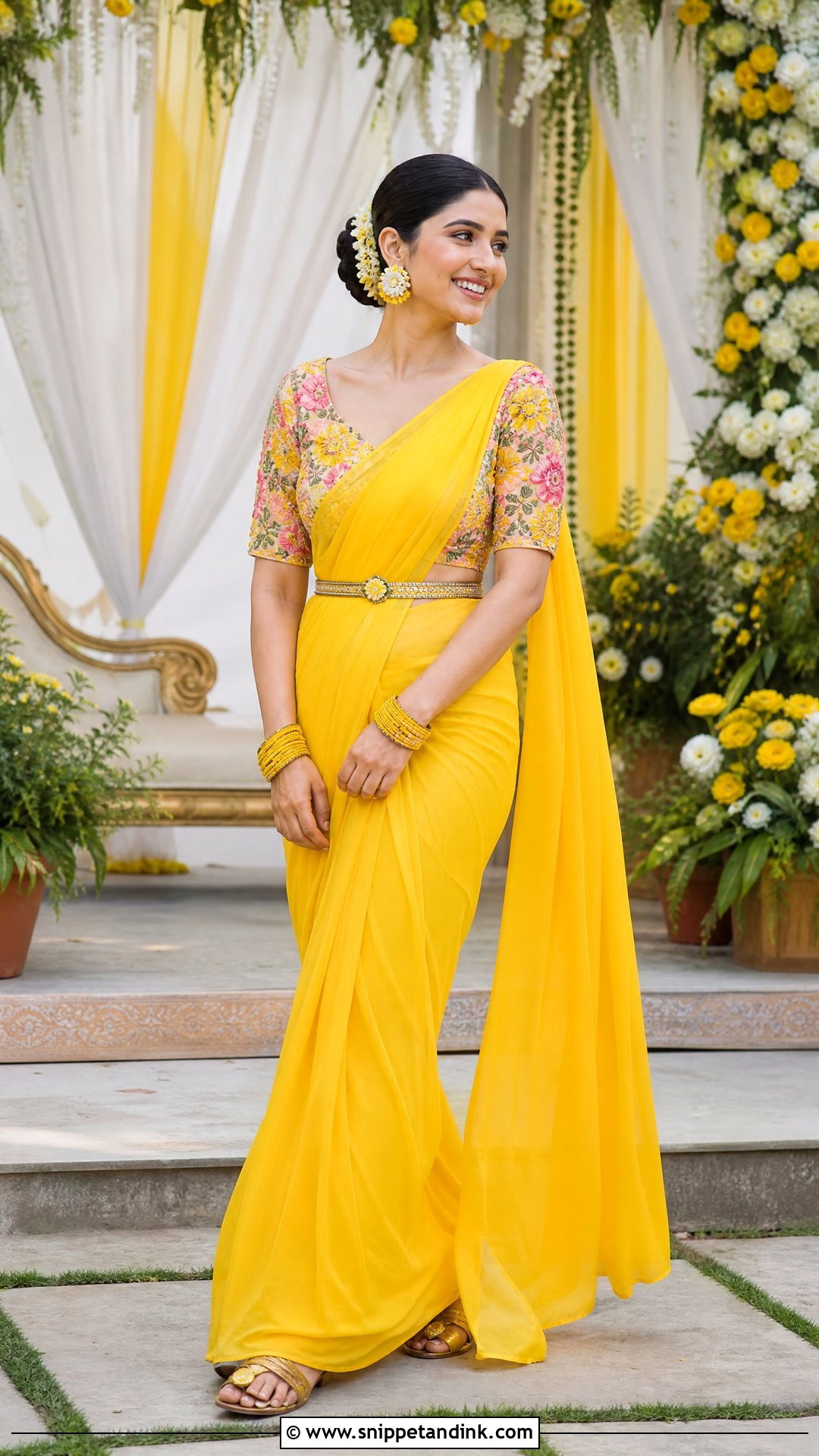
A plain yellow saree gets its personality from a colourful floral blouse. Chiffon, georgette or cotton drape easily and stay manageable. The blouse can carry printed flowers, thread embroidery or small appliqués in pink, orange, white and green. Pin the pleats and the pallu carefully before the ceremony; once your hands are full of paste you can’t fix anything. Floral earrings, matching bangles and a fresh flower bun keep the cheerful mood. Flats or low block heels depending on the ground. Brides can add a waist belt to hold the drape; guests can keep it loose. The contrast blouse also makes the yellow look brighter in photographs, which is useful when everyone else is in yellow too.
10. Yellow Pre-Draped Saree for Haldi
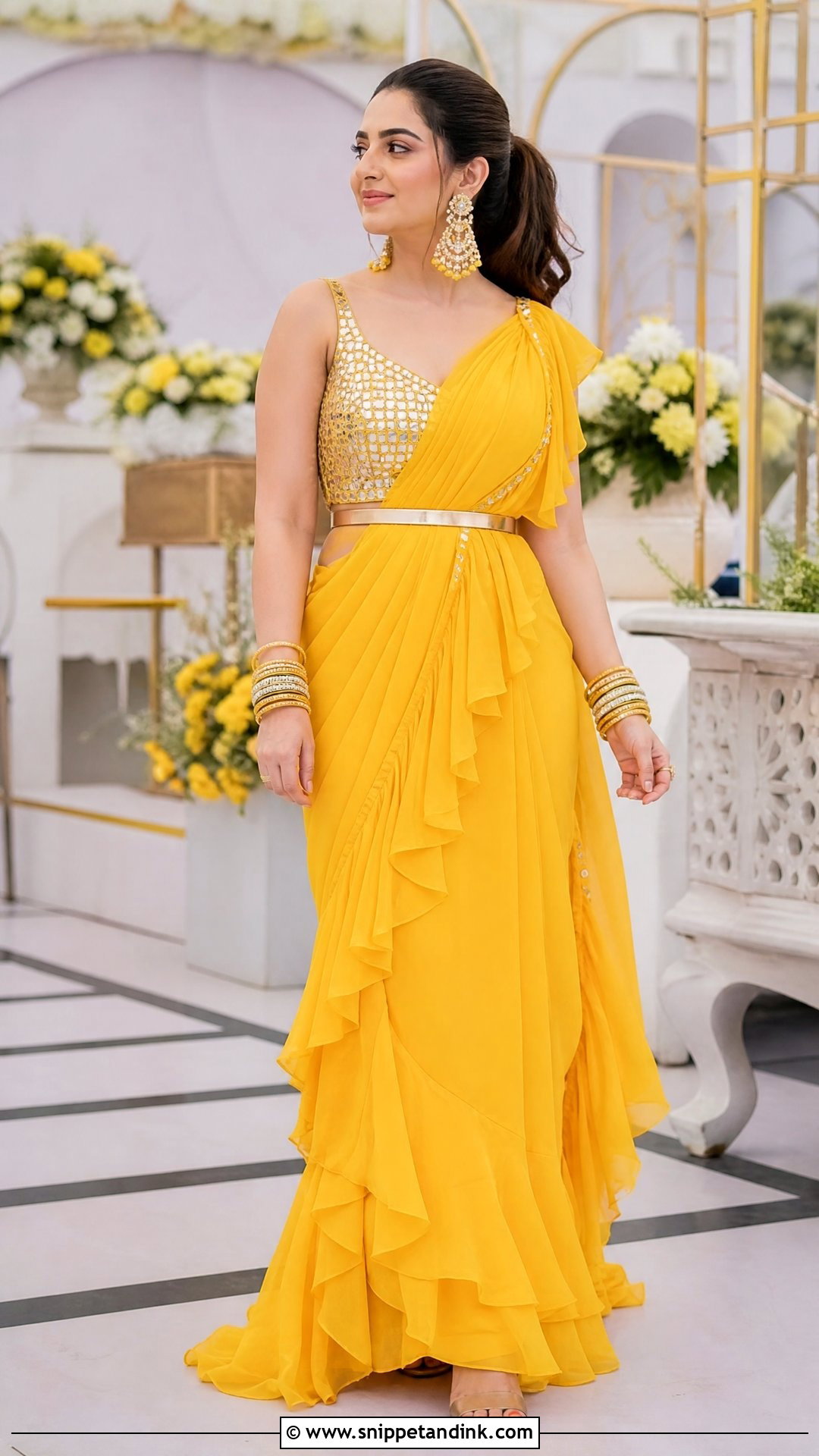
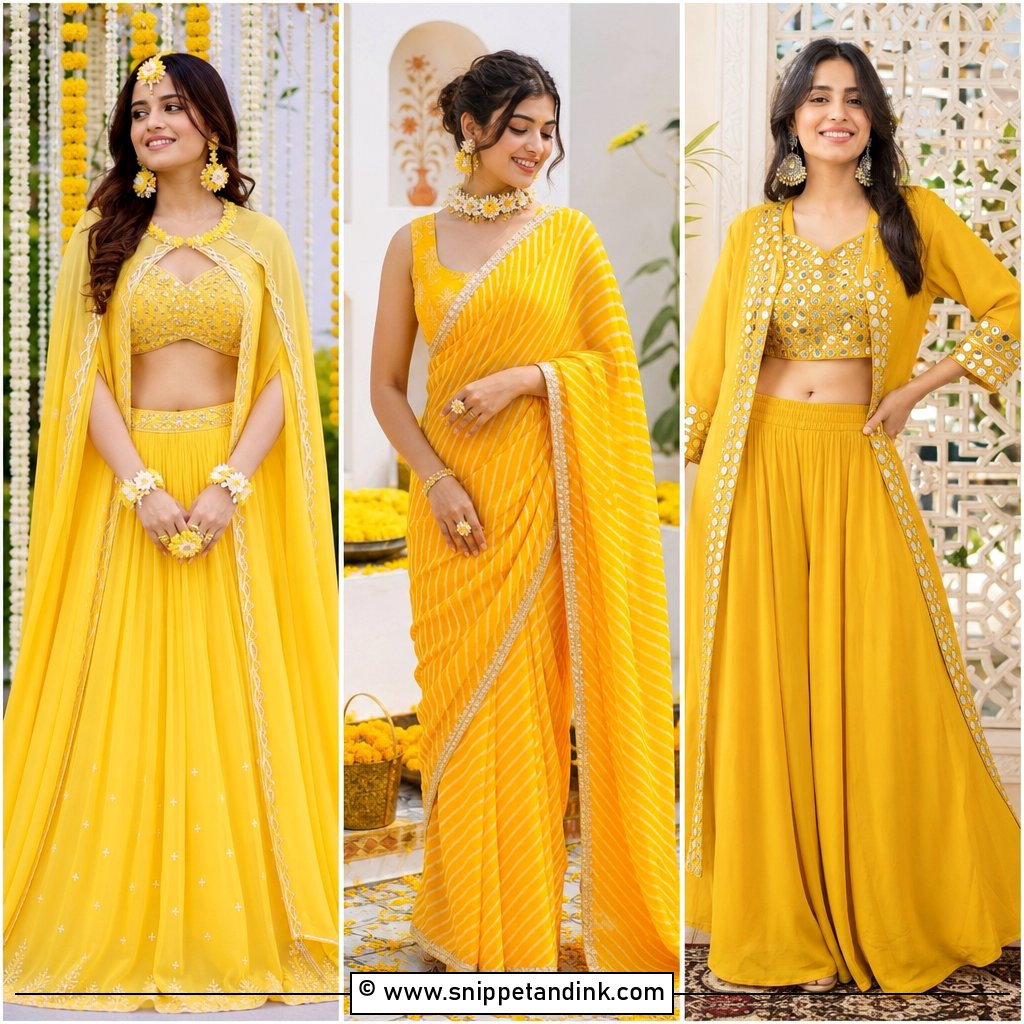
If you want the look of a saree but not the risk of it unravelling, a yellow pre-draped saree is the answer. Stitched pleats and a secure waistband make it practical for dancing and for messy rituals. Ruffled, layered or softly gathered georgette and crepe are common. Pair it with a fitted blouse with a modest cutout, embroidered sleeves or a little mirror work. A slim waist belt adds definition and stops the drape shifting. Statement earrings, a few metallic bangles and block heels or flats finish it. Keep the hair tidy: ponytail, braid or low bun. Order early if you need it altered, since the stitched pleats make length adjustments slower than on a regular saree. It suits sisters, bridesmaids and modern brides.
11. Yellow Bandhani Saree for Haldi
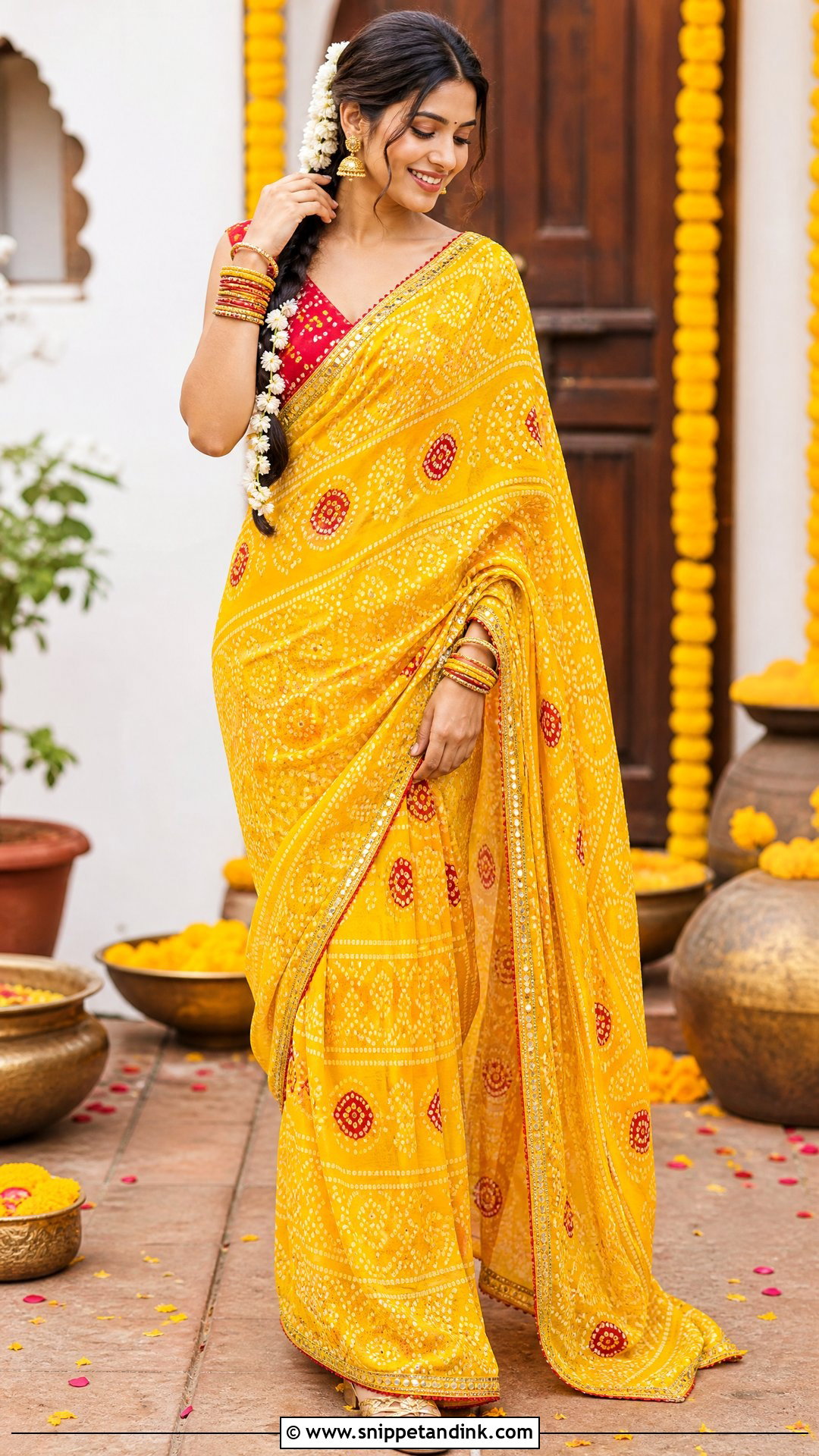
Bandhani carries real cultural weight, and on yellow the tie-dye dots give depth that a plain saree lacks. Choose a lightweight bandhani with red, pink, green or white dots. Pick a blouse that repeats one of the dot colours: red for bold tradition, ivory for a softer daytime feel. Gold jhumkas, colourful glass bangles and a small bindi suit it. A sleek braid or a flower bun works well. Flat gold sandals or juttis keep you steady. Genuine bandhani is hand-tied and the dye can bleed in the first wash, so wash it alone in cold water, and expect slight unevenness in the dots; that’s how you know it’s handmade. Brides can add a waist belt and floral jewellery; guests can scale back.
12. Yellow Silk Saree for Haldi
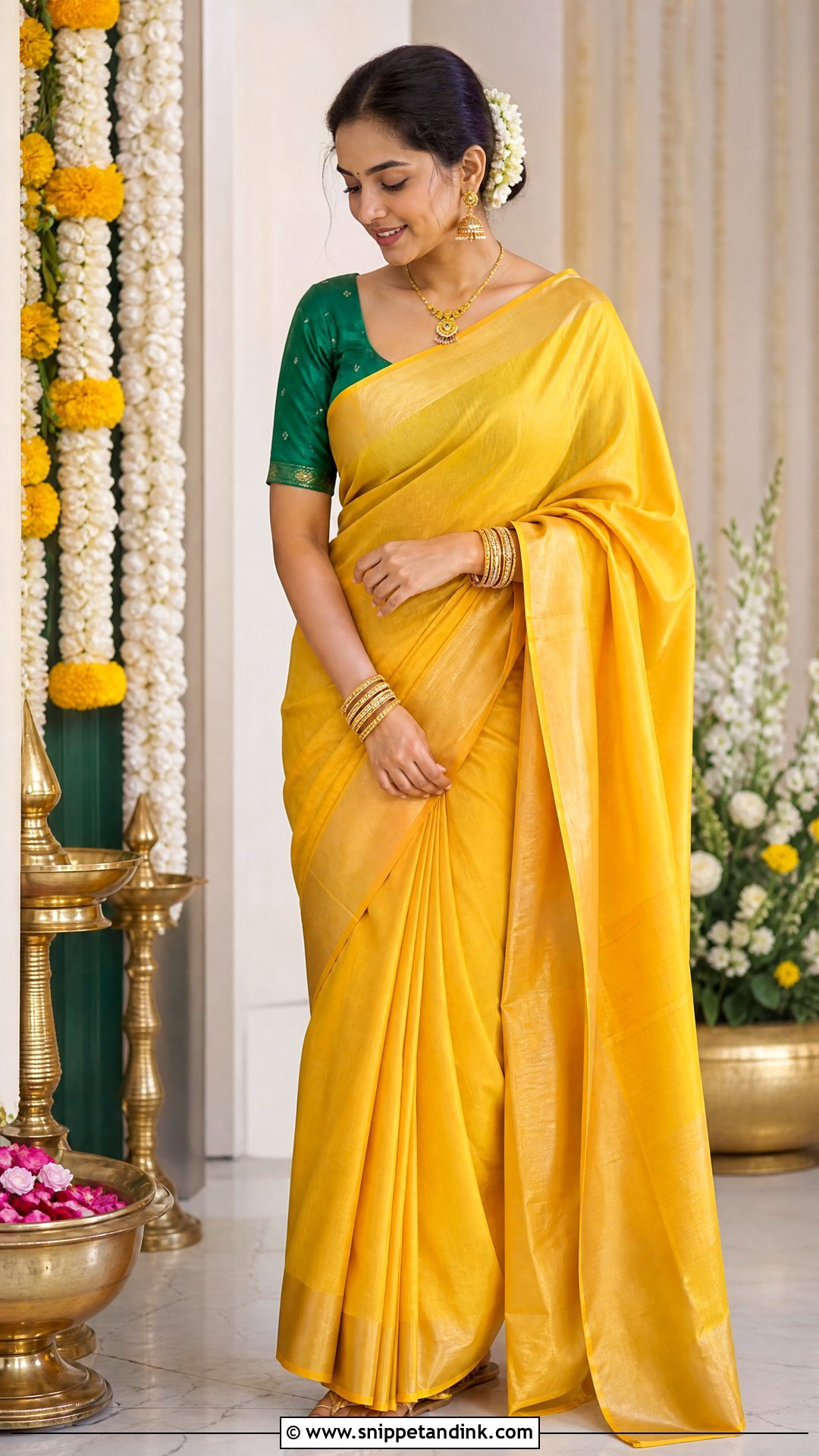
A silk saree suits brides, mothers and senior relatives who prefer a polished traditional look. Choose soft silk or a silk blend rather than a stiff heavy weave, which is hot and hard to manage on the floor. A gold border adds richness; a pink or green blouse brings contrast. Keep the pallu shorter than usual if the rituals are active. Temple-style earrings, gold bangles and a delicate necklace complete it, with jasmine or small yellow flowers in a low bun. Flat metallic sandals. Turmeric on silk is very hard to remove completely, so I advise wearing this one for the early prayers and photos and changing into something simpler before the paste is applied.
13. Yellow Peplum Top and Skirt for Haldi
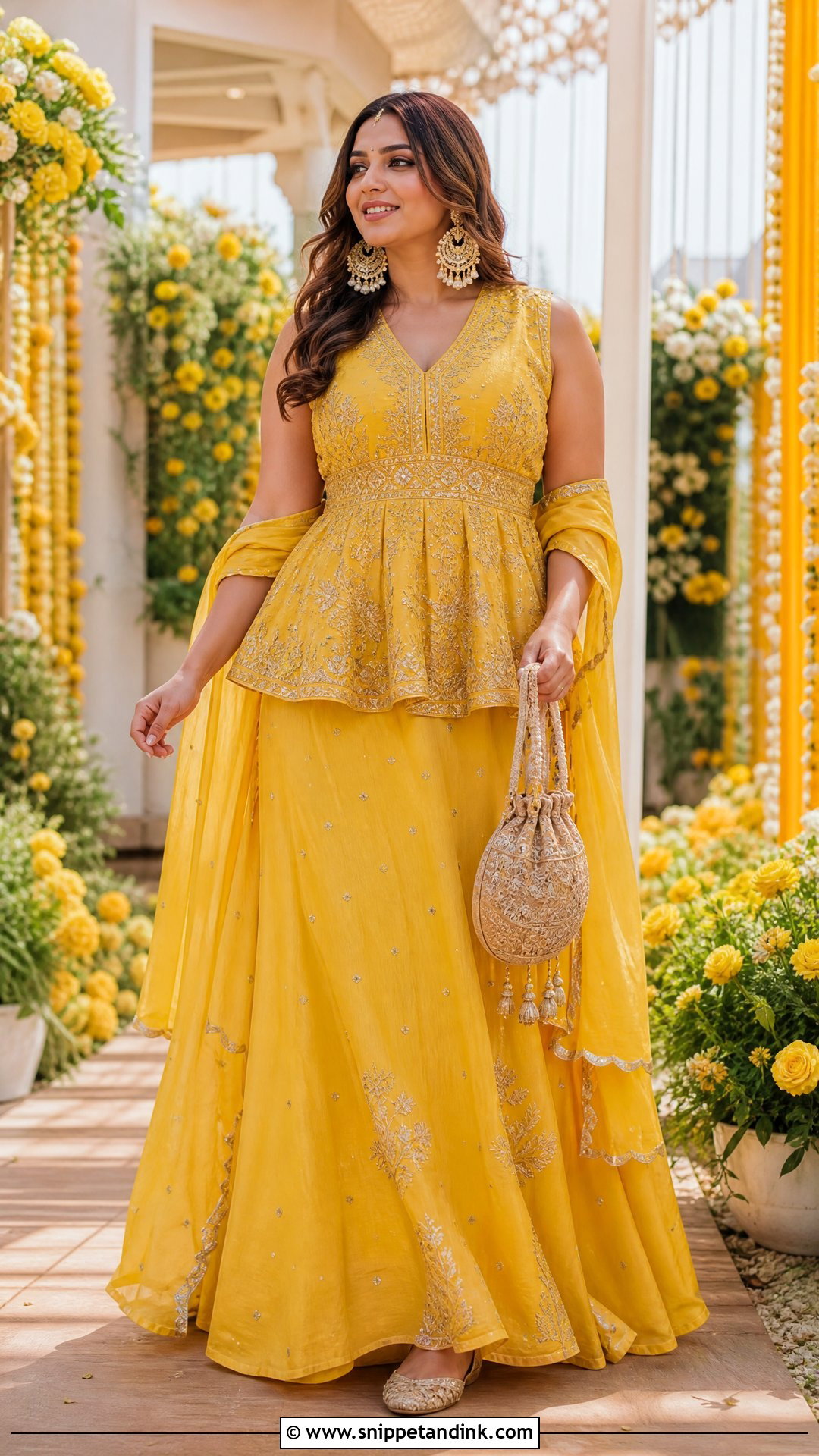
A peplum defines the waist and gives a fusion silhouette with a little coverage at the hip. Choose a structured peplum that sits at your natural waist; if it sits too high, it looks like a maternity top in profile. Pair it with an ankle or floor-length flared skirt. Subtle mirror work, embroidered borders or a floral print keep it festive and light. A dupatta over one shoulder adds a traditional note. Chandbalis, a compact potli and embroidered juttis finish it. A high ponytail or soft curls show the neckline. Pear, curvy and hourglass figures tend to like this shape. Bridesmaids who want something modern but still appropriate for family elders often settle here.
14. Yellow Crop Top and Skirt for Haldi
A matching crop top and skirt is the most youthful option here and the easiest to rewear. Pick a high-waisted skirt with enough flare to sit cross-legged, and a top that fits properly: straps, short sleeves or a modest square neck. Cotton silk, georgette and printed organza are all comfortable for daytime. Add a sheer dupatta, a cropped cape or a light shrug for extra coverage, which some families will expect. Floral earrings, stacked bangles and neutral juttis. A side braid with small flowers. Brides can wear an embroidered statement skirt; cousins can do printed versions. The gap at the midriff is where turmeric ends up first, so a slightly longer top is kinder during the ritual.
15. Yellow Jacket Lehenga for Haldi
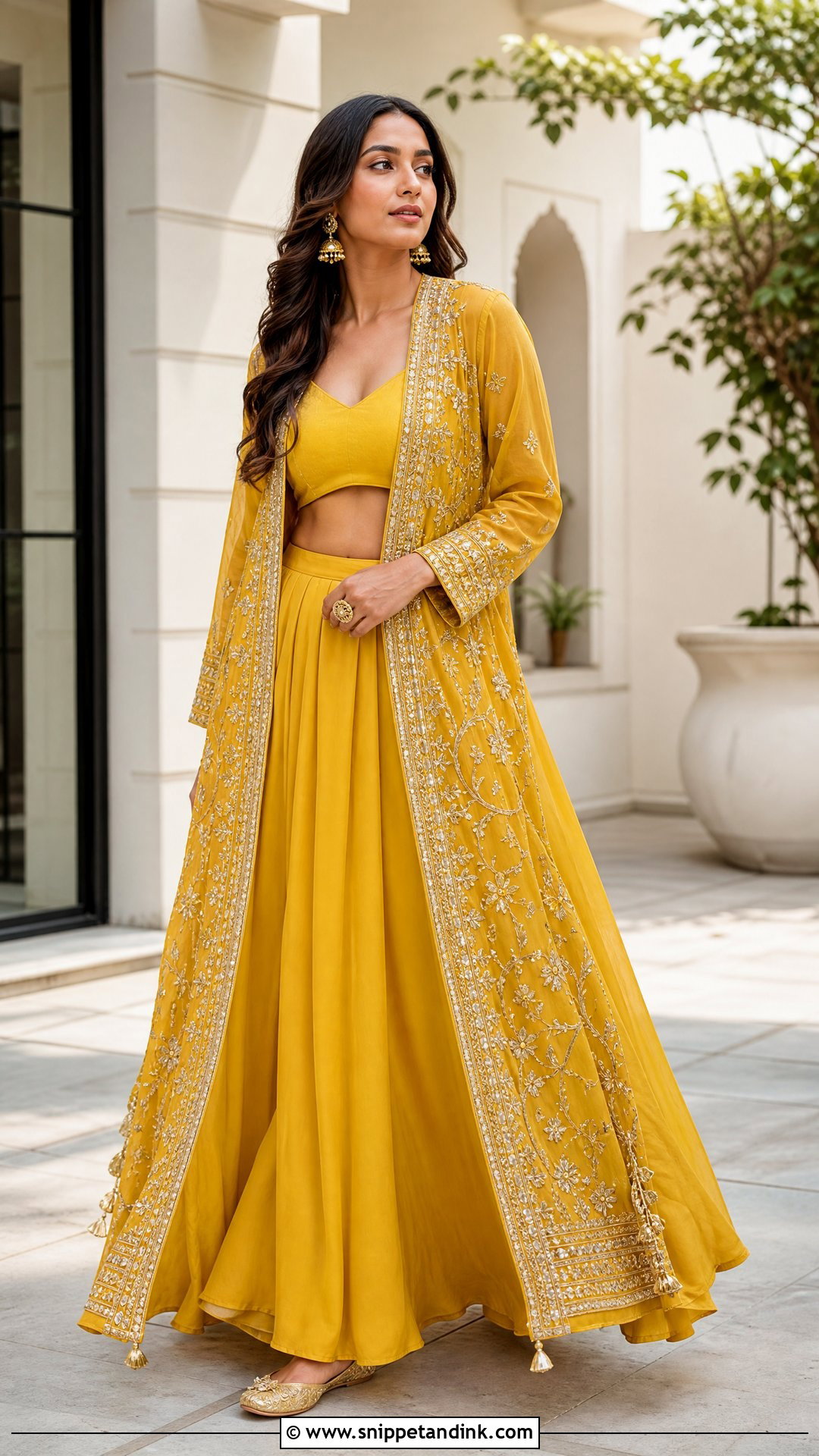
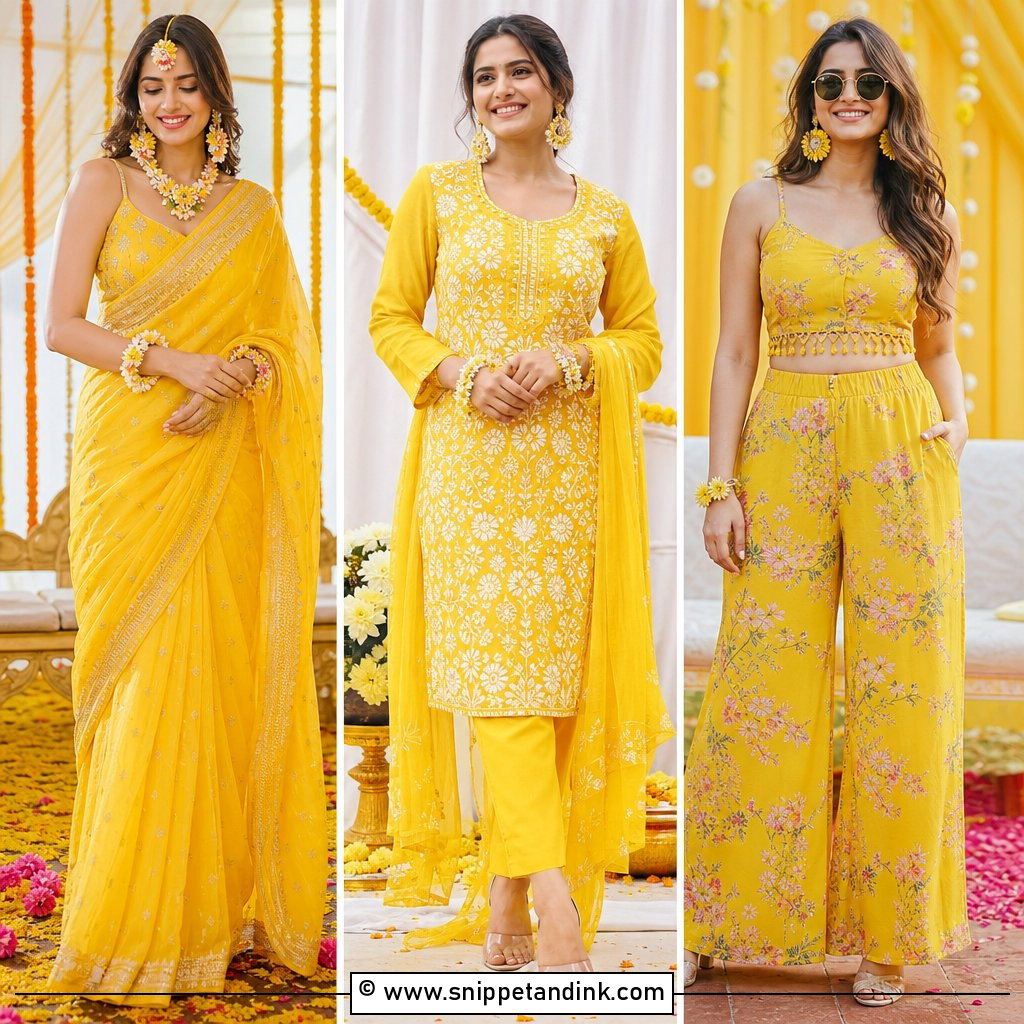
A jacket lehenga adds coverage and layering without looking heavy. Start with a simple blouse and flowing skirt, then add an open-front jacket with floral embroidery, mirror details or a scalloped border. Cropped jackets suit petite frames; a knee-length jacket lengthens the line on taller ones. The jacket replaces the dupatta, which is a real advantage on a busy day. Medium jhumkas, a statement ring and juttis. A neat ponytail or loose waves so the hair doesn’t cover the jacket collar. It’s warm, though, so I’d keep it for cooler mornings or air-conditioned venues. Choose a jacket with side slits so it doesn’t bunch when you sit.
16. Yellow Cape and Palazzo Set for Haldi
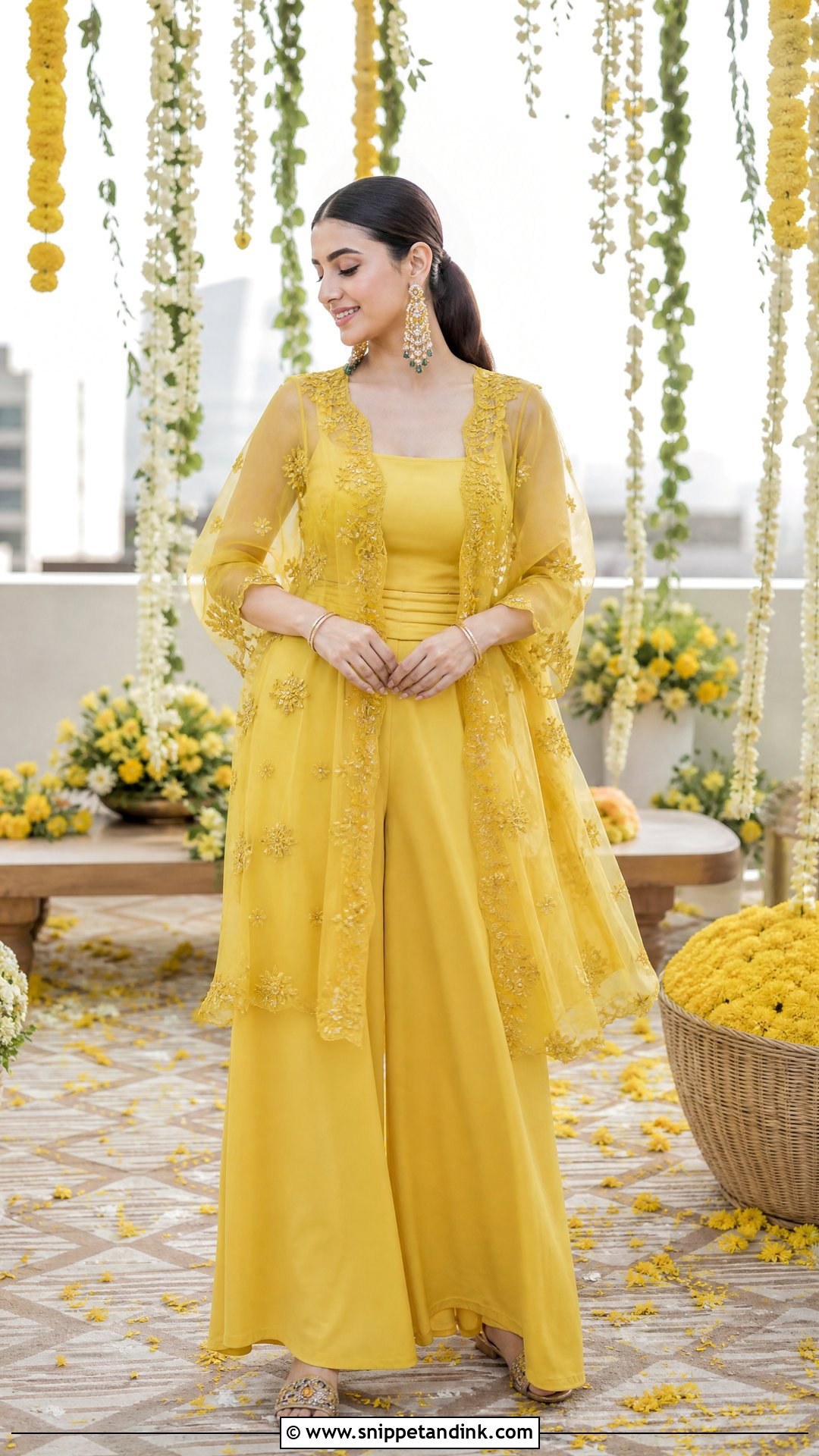
A cape with a fitted top and palazzos gives the drama of a dupatta without any pinning. Choose a sheer embroidered cape that ends at the hips or knees, depending on your height; very long capes on petite women look like a gown that lost its dress. Keep the inner top simple. Wide palazzos stay comfortable on floor cushions. Long earrings, slim bangles and embellished mules or juttis finish it. A sleek low ponytail suits the clean lines. Lemon feels airy; mustard and marigold feel bolder. It suits destination weddings, rooftops and modern venues. Capes are open at the front, so tack them at the shoulder seams if you’ll be dancing.
17. Yellow Kaftan Dress for Haldi
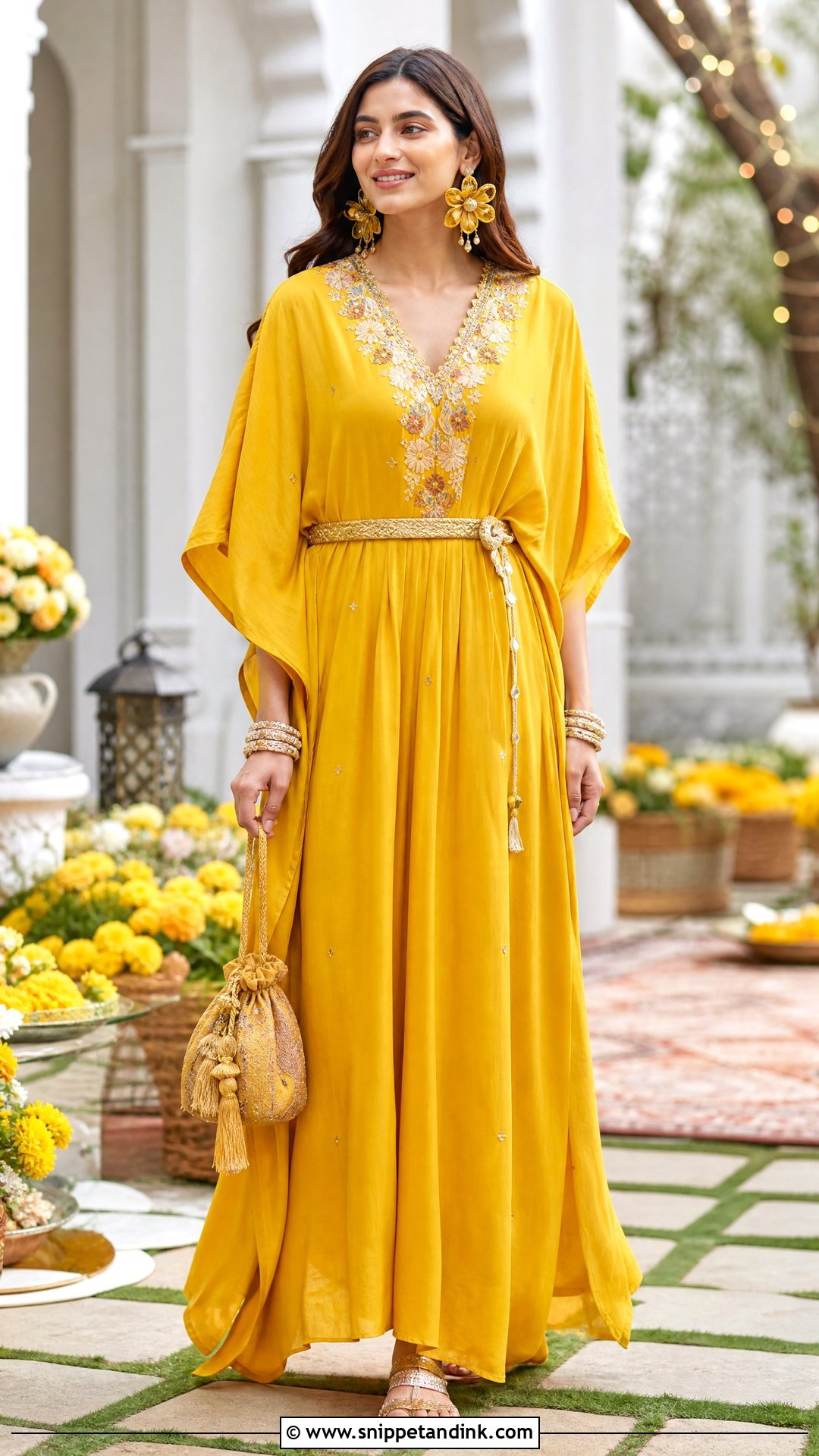
A kaftan dress is the right call when comfort is the whole dress code: an intimate, outdoor or destination haldi. Choose a maxi kaftan with a defined waist, side slits or a narrow belt; without a waist, it can photograph shapeless. Light embroidery around the neckline is enough decoration. Cotton for heat, crepe or georgette when it’s cooler. Oversized floral earrings, delicate bangles and flat metallic sandals. A small potli. Soft waves or a low bun. Brides can pick a brighter kaftan with handwork; guests suit a printed lemon version. Kaftans are wide at the sleeve, so turmeric paste on hands ends up inside the sleeve, which is worth knowing before you pick white lining.
18. Yellow Maxi Dress With Dupatta for Haldi
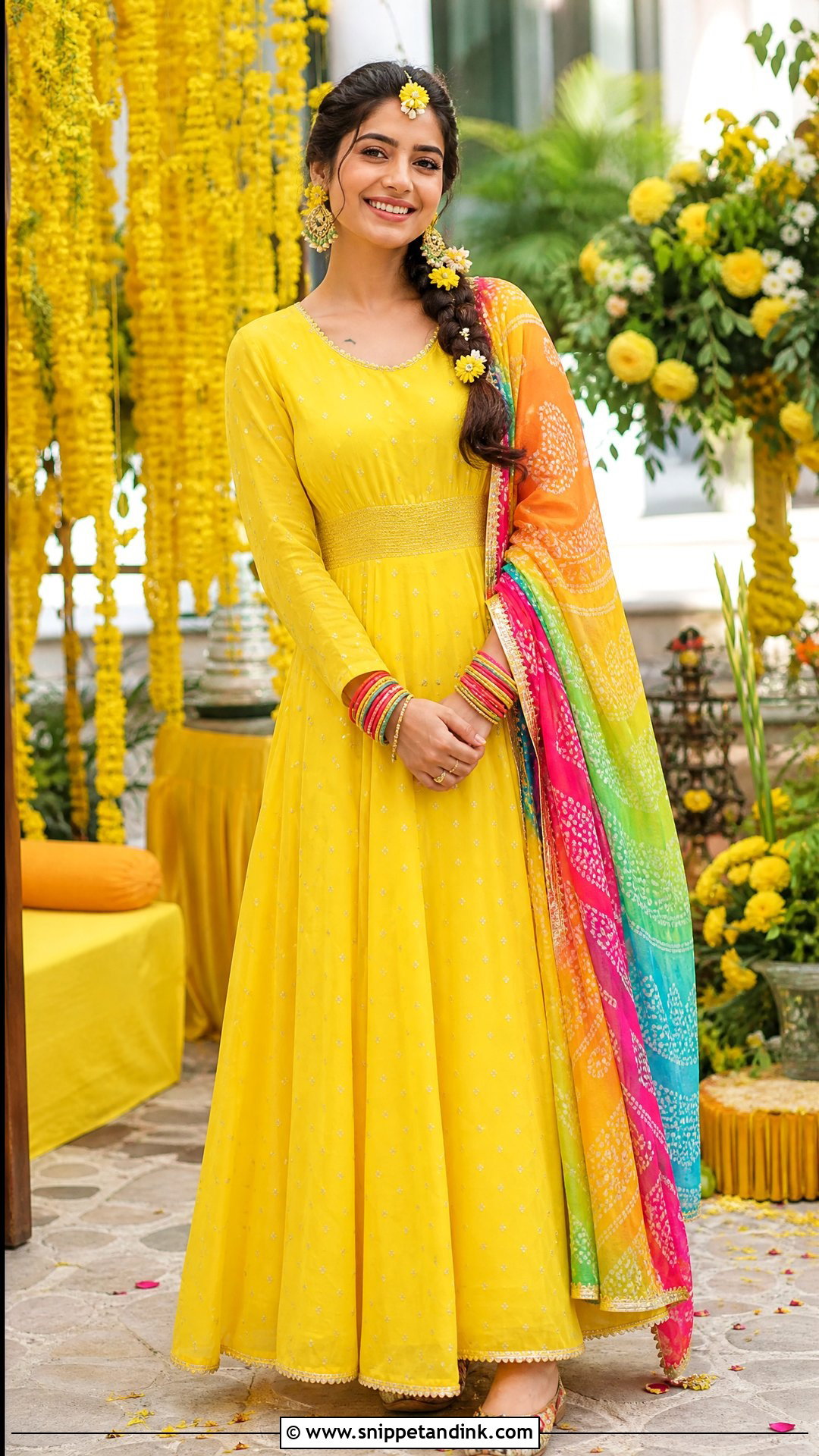
A maxi dress with a dupatta is the outfit I recommend to guests who don’t usually wear sarees or lehengas but still want to match the event. Sleeveless, short or puff sleeves with a fitted waist and a soft flared skirt all work. Add a multicoloured bandhani, floral or embroidered dupatta to make it festive. Pin it over one shoulder or drape it around the arms for photos. Jhumkas, colourful bangles and embroidered flat sandals tie it together. A flower-decorated braid makes it unmistakably haldi. You can wear the dress again afterwards, which most haldi outfits can’t claim. Avoid a very thin dress in white-lined fabric; once it’s wet, it turns see-through.
19. Yellow Indo-Western Pantsuit for Haldi
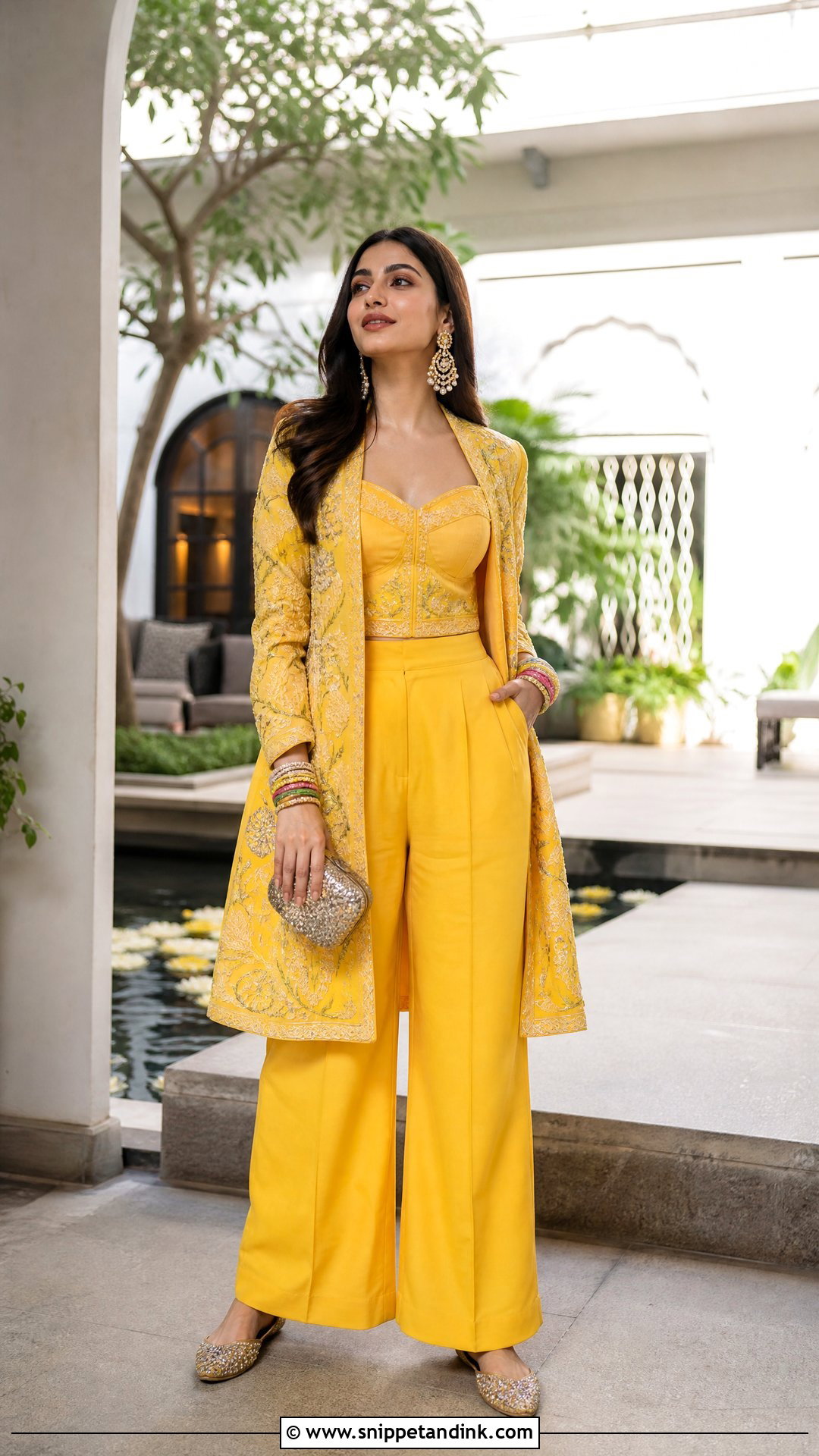
A yellow Indo-Western pantsuit is sharp and modern, and practical if you plan to dance. Tailored wide-leg trousers with a fitted blouse, bustier top or modest crop top form the base. A long embroidered blazer or sleeveless jacket makes it a three-piece. Choose breathable fabric and relaxed tailoring; a stiff suiting wool will feel wrong at a daytime ritual. Statement earrings, a metallic clutch and embellished pointed flats. Skip anything office-like, and soften the structure with floral details, colourful bangles or a small bindi. A sleek ponytail or smooth waves. Fashion-forward bridesmaids enjoy this one, and the separates rejoin your wardrobe afterwards.
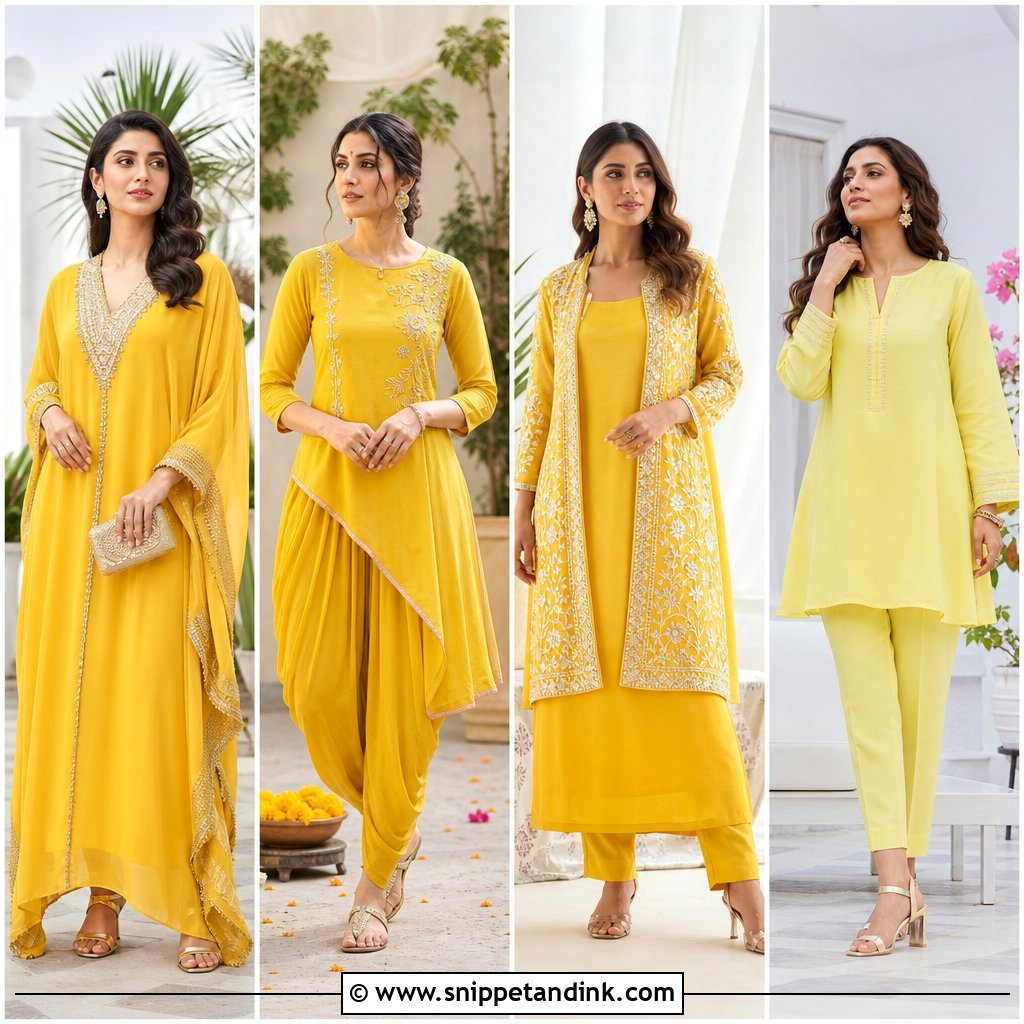
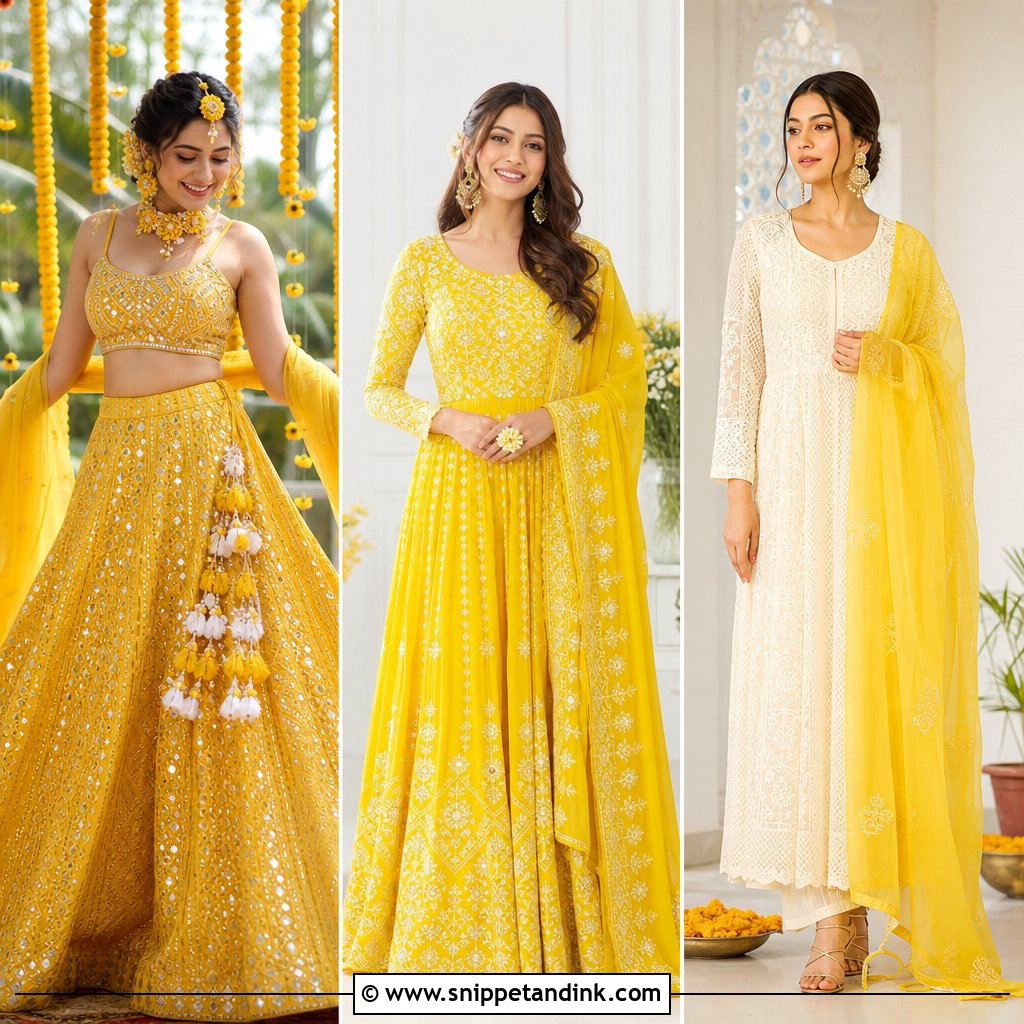

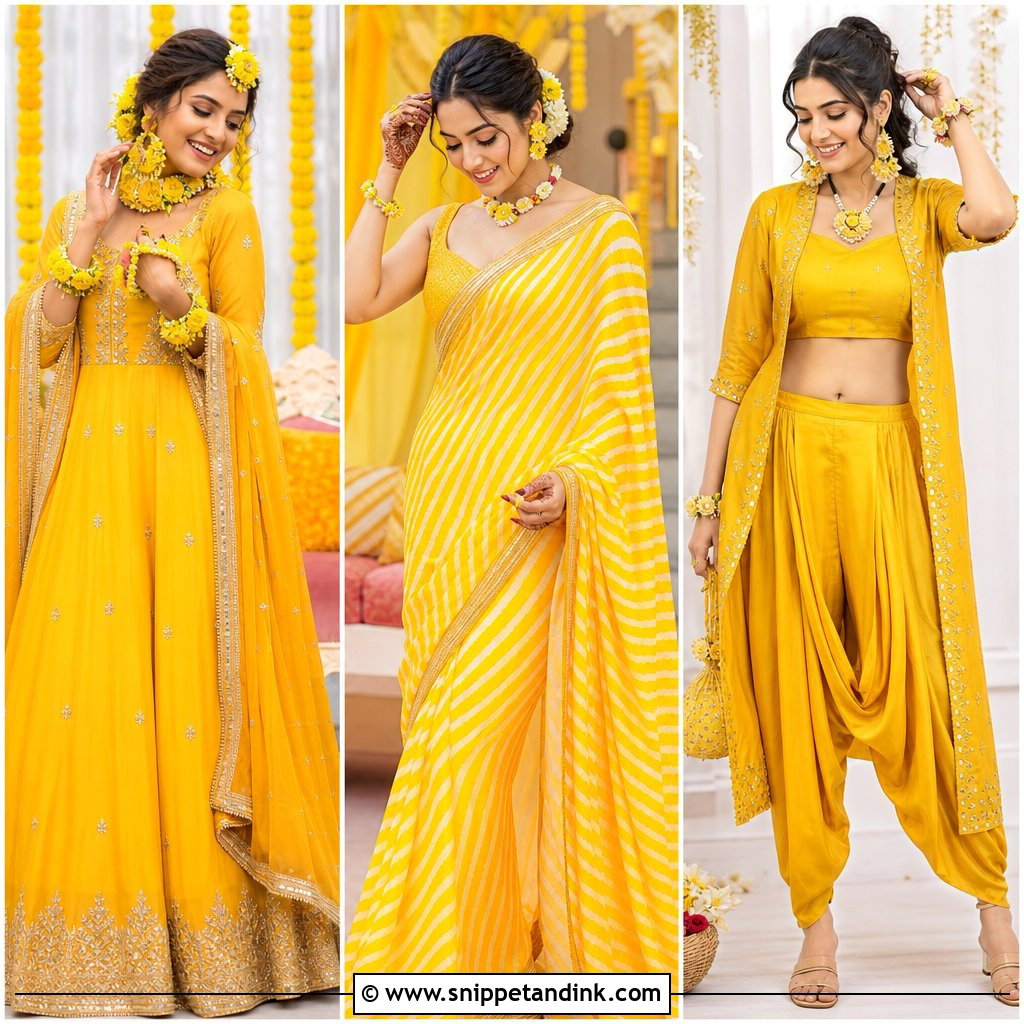
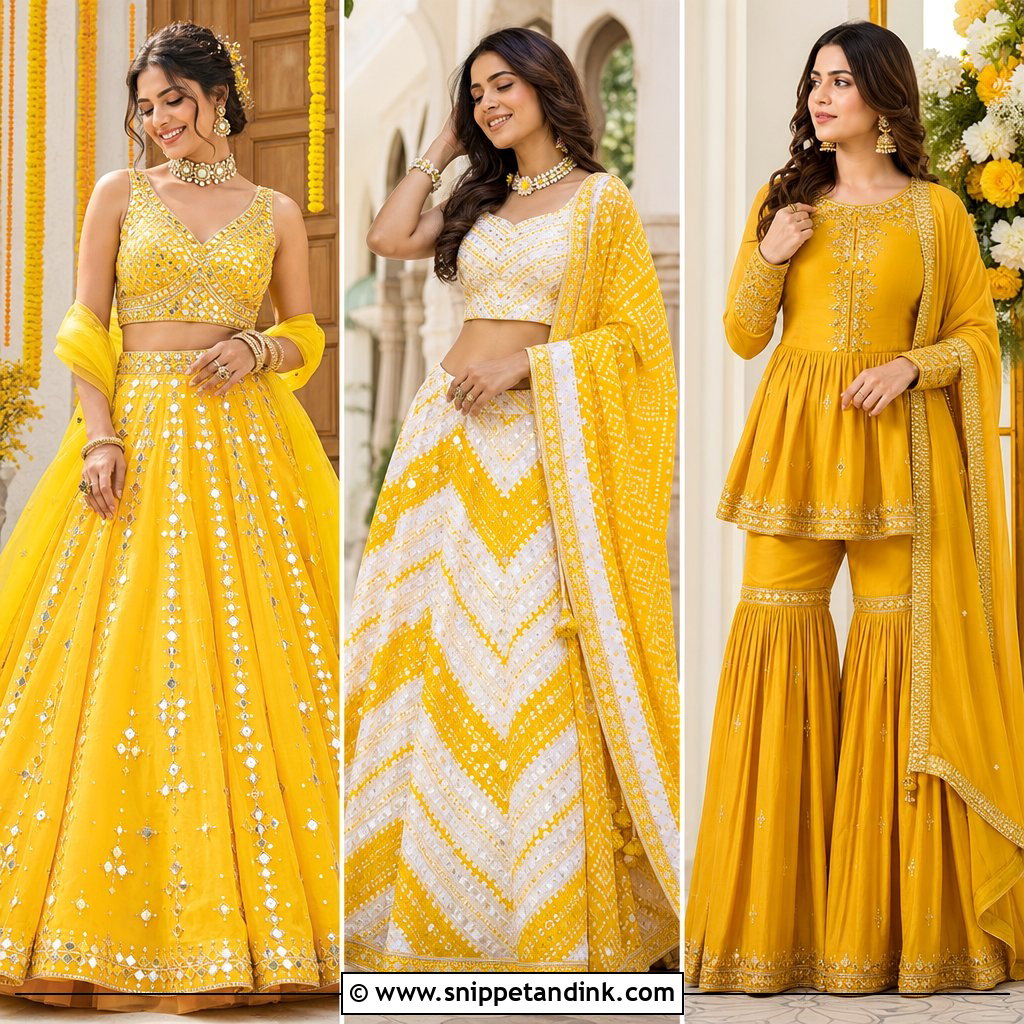
20. Yellow Salwar Suit With Phulkari Dupatta for Haldi
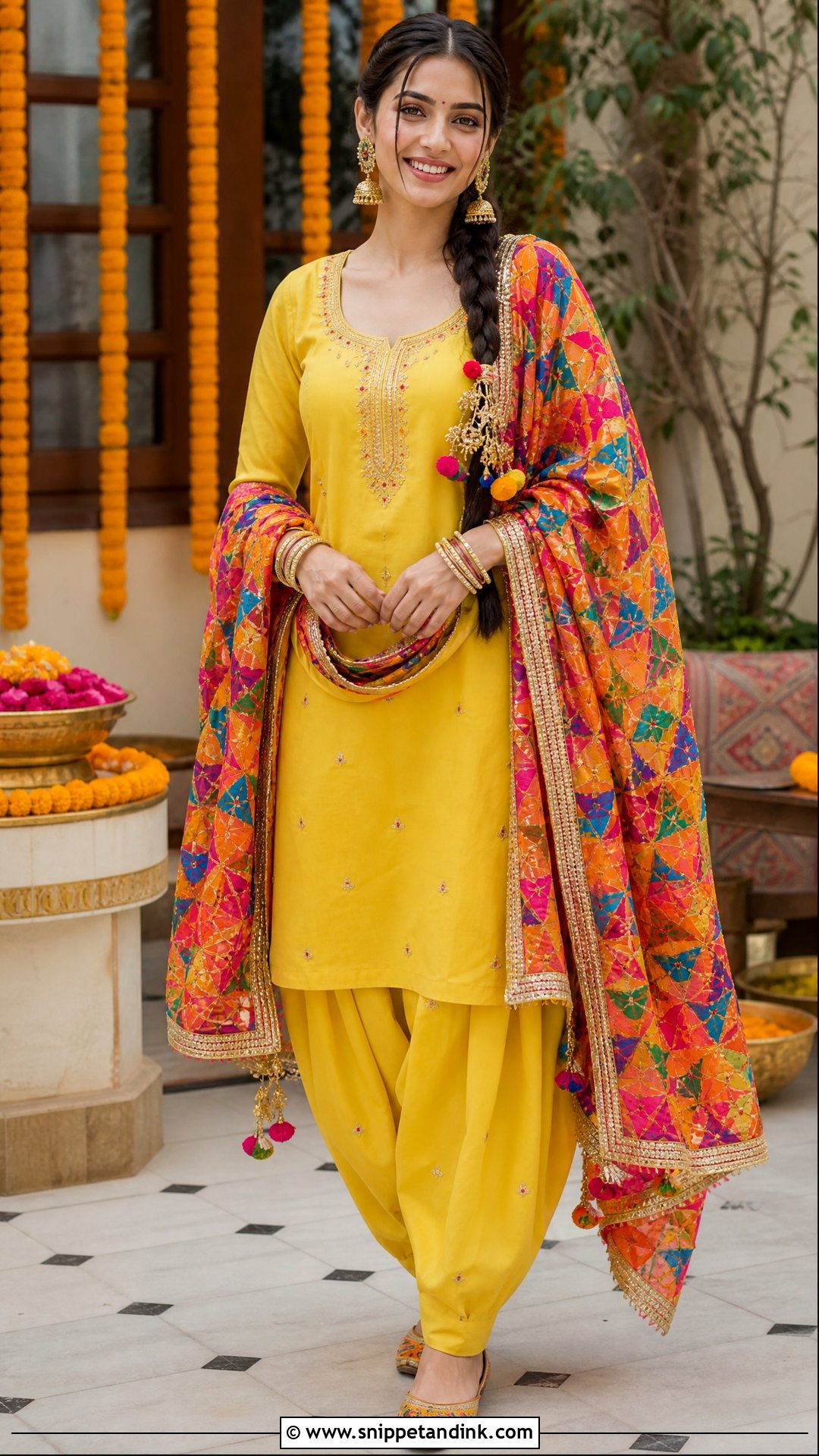
A yellow salwar suit with a colorful Phulkari dupatta is warm, traditional and easy to personalise. Choose a plain or lightly embroidered kurta with relaxed salwar. Let the dupatta lead, with pink, orange, green, blue or red embroidery. Drape it across both shoulders or secure it to one side. Jhumkas, stacked glass bangles, a small bindi and Punjabi juttis finish it; a braid with a paranda makes it more festive still. Phulkari is dense hand embroidery, so it’s heavier than it looks; pin it at the shoulder or it slides off when you lean forward. It suits every age group and works especially well for home haldis where everyone sits on the floor.
Cotton, Georgette or Organza Once the Paste Starts Flying
Fabric decides how your outfit copes with heat, floor seating and wet paste far more than the cut does. Here’s how the common haldi fabrics behave in my experience of dressing for it.
Cotton and mulmul
The coolest choice, and the most absorbent, so turmeric sinks straight in. Treat a cotton haldi outfit as one you may only wear once, or keep it for the ritual itself. It also creases heavily after floor seating.
Georgette and crepe
Synthetic and blended georgettes resist staining better than natural fibres, and they drape well for sarees and shararas. They trap heat in strong sun, so look for a cotton lining in a hot climate.
Organza
Paste tends to sit on top and can often be lifted off if you blot rather than rub. The weak point is crushing: hours of floor sitting leave permanent folds in cheaper organza.
Silk and chanderi
These look the richest and are the hardest to rescue once stained. Wear them for prayers and portraits, then change. When stains do happen, let the paste dry, brush off what you can, and take it to a dry cleaner quickly rather than soaking it at home.
Yellow That Can Take a Little Turmeric
A good haldi outfit lets you join every ritual without worrying about your clothes. There’s something here for every body type, age, venue and role, from embellished lehengas and organza sets for brides to breathable kurtas, kaftans, sarees and fusion separates for guests. Before you buy, think about the weather, the setting and how much paste is likely to fly; that should decide how delicate a fabric and how expensive an embroidery you risk. Finish with secure draping, comfortable flats, light jewellery and a hairstyle that holds. Then go and enjoy it, because it’s the most relaxed and joyful event of the wedding.
You'll Like These Ideas:





Leave a Reply