
A Haldi outfit has a short, messy life. It gets sat in, danced in, splashed and smeared, usually all before lunch, and the most useful question I ask a client isn’t what color she wants but how much paste she expects to wear. The twenty looks below run from traditional bridal lehengas to fusion separates and easy kurta sets for sisters, bridesmaids and guests. Yellow is the familiar choice, though mustard, marigold, ivory, pink and green sit comfortably in the same room when they suit the decor. Lightweight fabric, a silhouette you can manage on a low seat, firm pinning and flat shoes do more for your morning than any amount of embroidery, so I’ve noted those details under each idea along with the jewelry and hair that finish it.
Bride, Sister, Mother or Guest? The Role Changes the Outfit
The same yellow lehenga can be right for one person at a Haldi and wrong for the person standing next to her, because each role gets a different amount of paste and does a different job. This is how I split it when I’m dressing a whole family.
The bride
She sits in the center and gets paste on her face, arms, neck and feet, often in several rounds. I treat her outfit as one she may not wear again, so it needs short or easily pushed-up sleeves, a neckline that leaves room for the paste, and nothing precious against the skin. Some families have the bride wear an outfit gifted for the ceremony, so ask before you shop.
Sisters and close family
They apply the paste, which means their hands and sleeves are in the bowl over and over. Flared or bell sleeves trail straight through it. Fitted elbow-length sleeves or a sleeveless blouse with a cape is the cleaner choice.
Mothers and older guests
They’re often seated for long stretches and photographed a lot. Comfort around the waist, a dupatta that stays pinned and a color that flatters in direct sun matter more for them than trend shapes.
1. Yellow Lehenga Haldi Dress
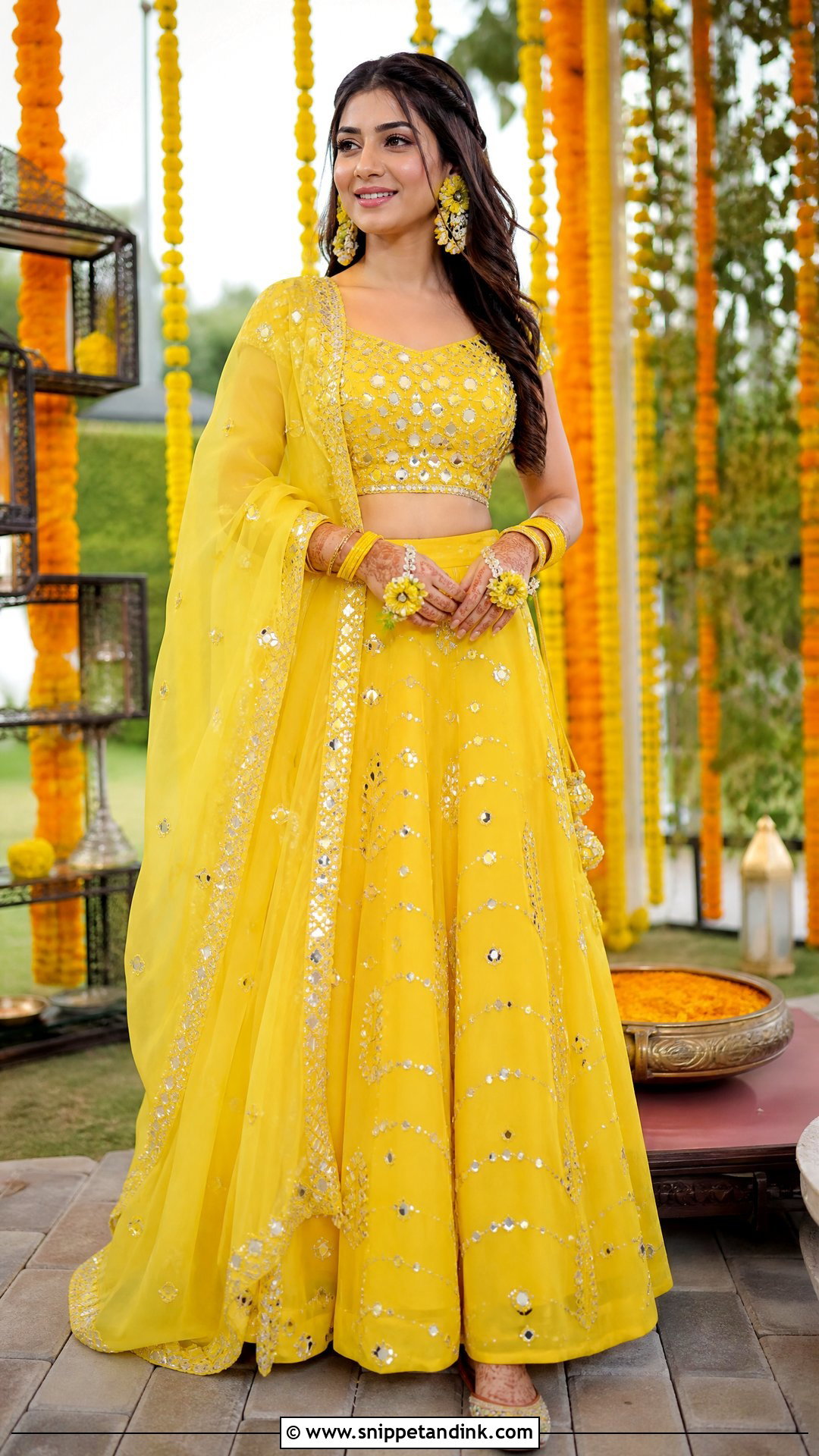
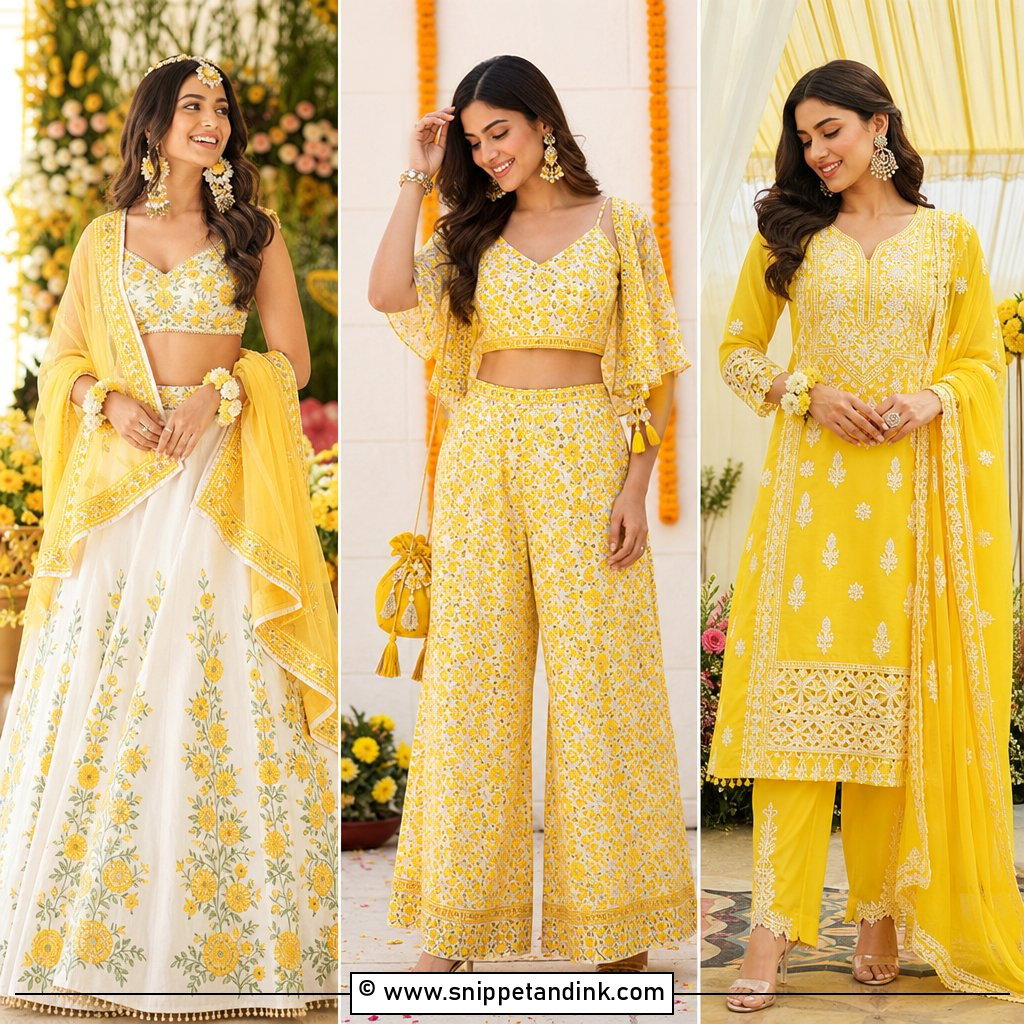
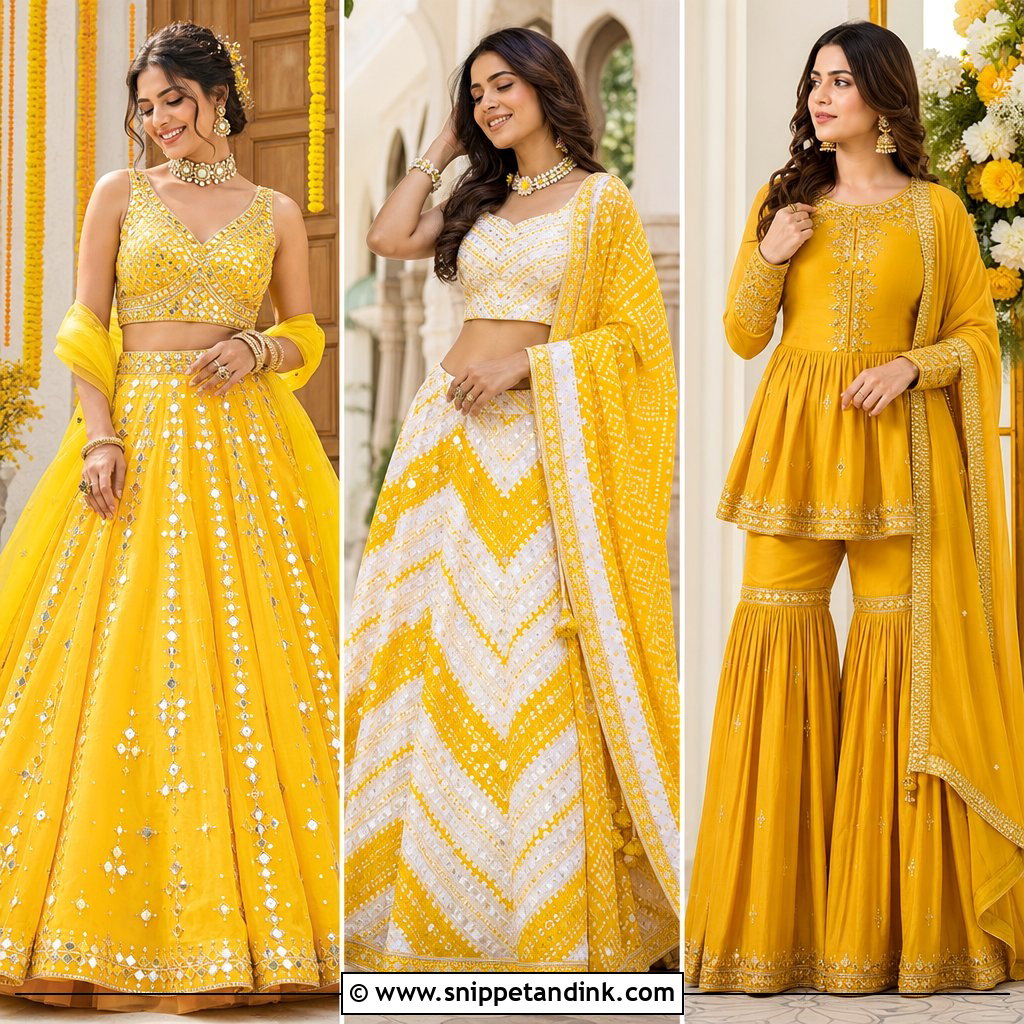
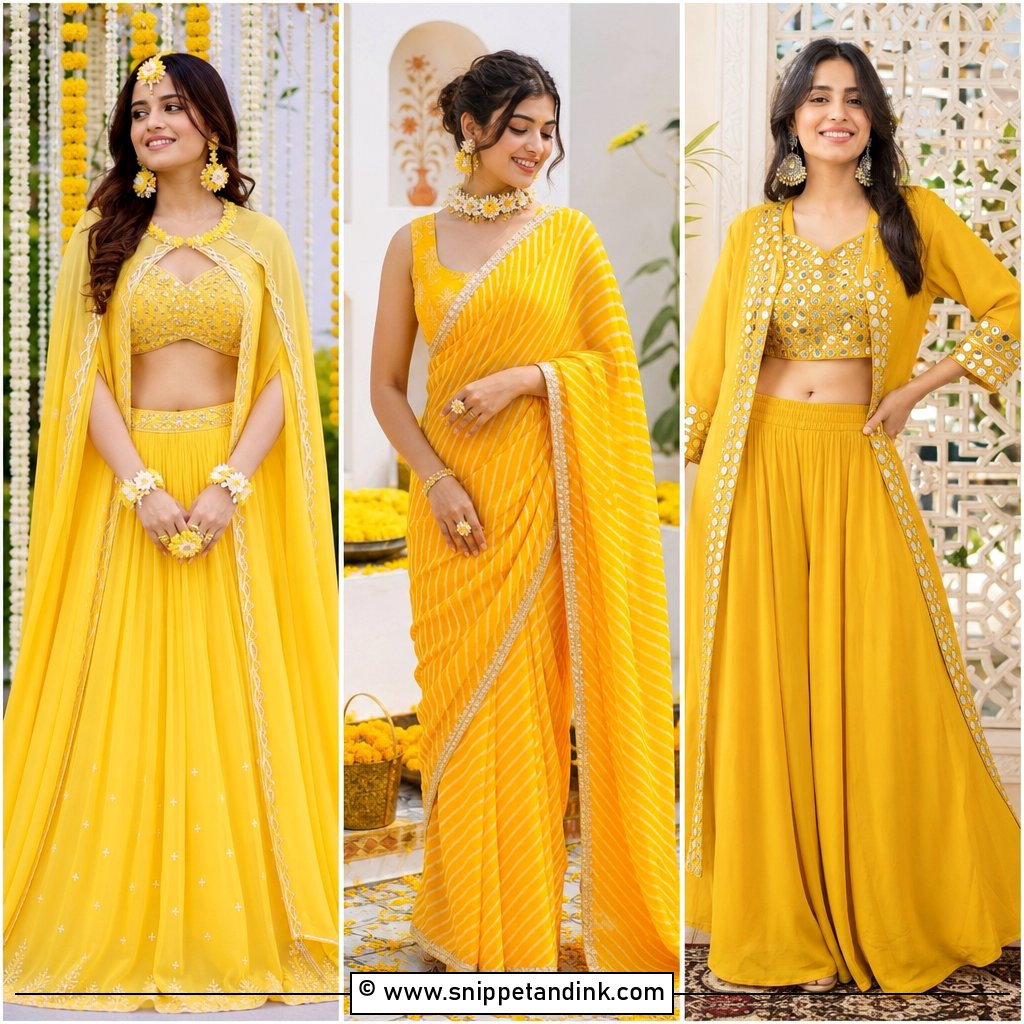
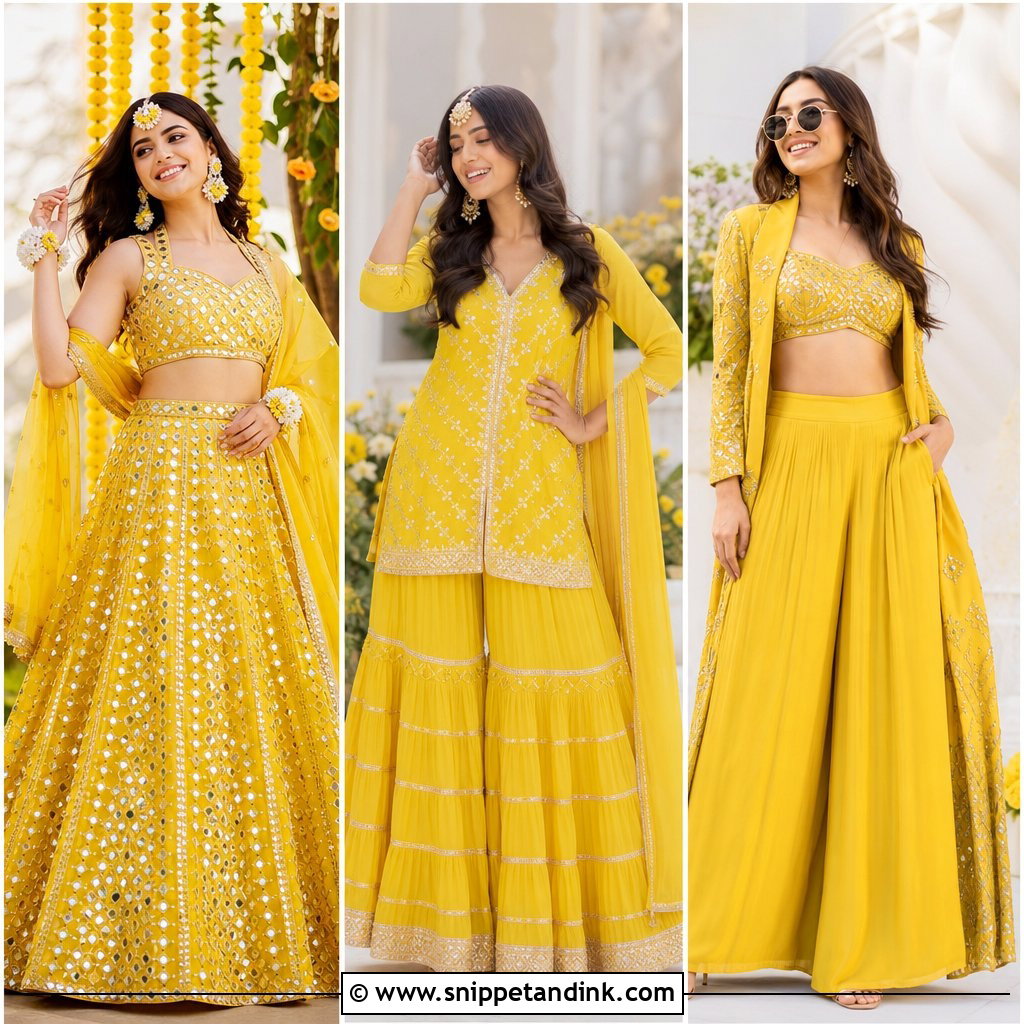
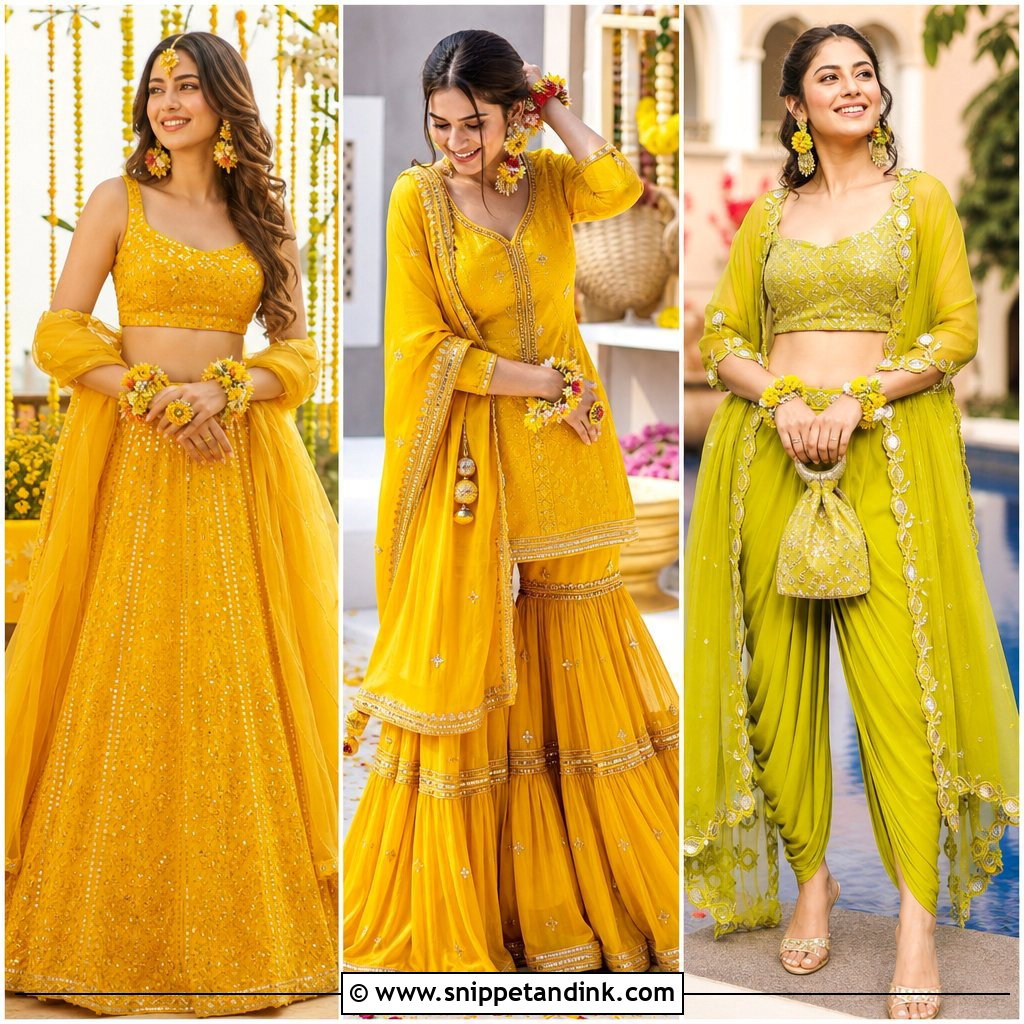
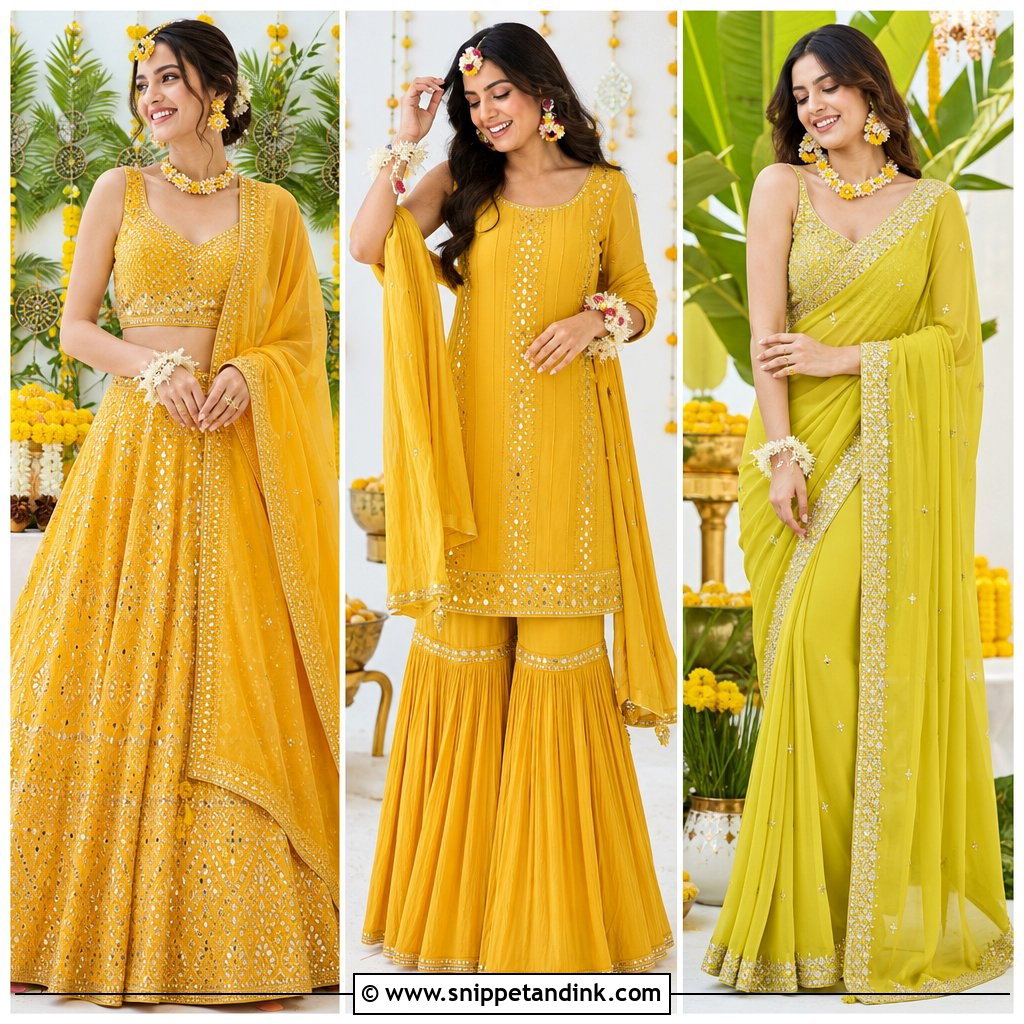
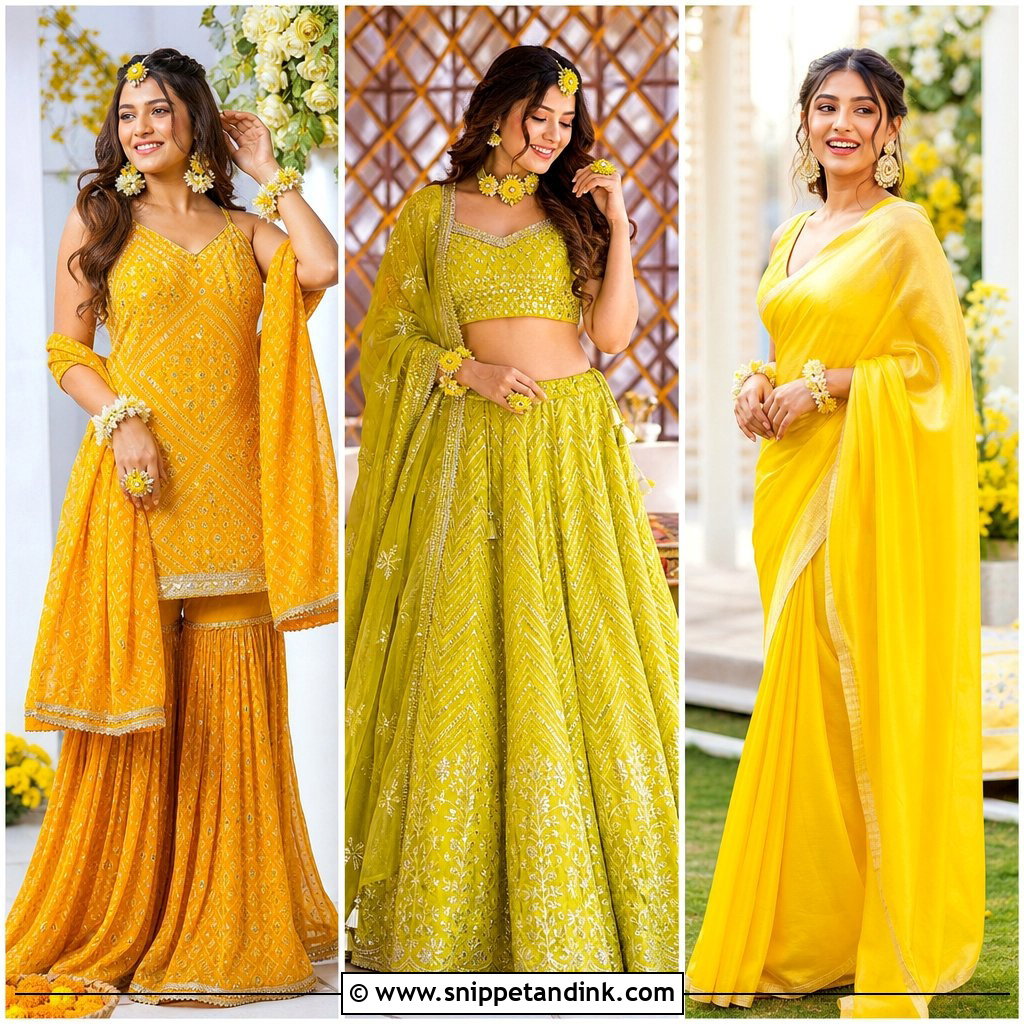
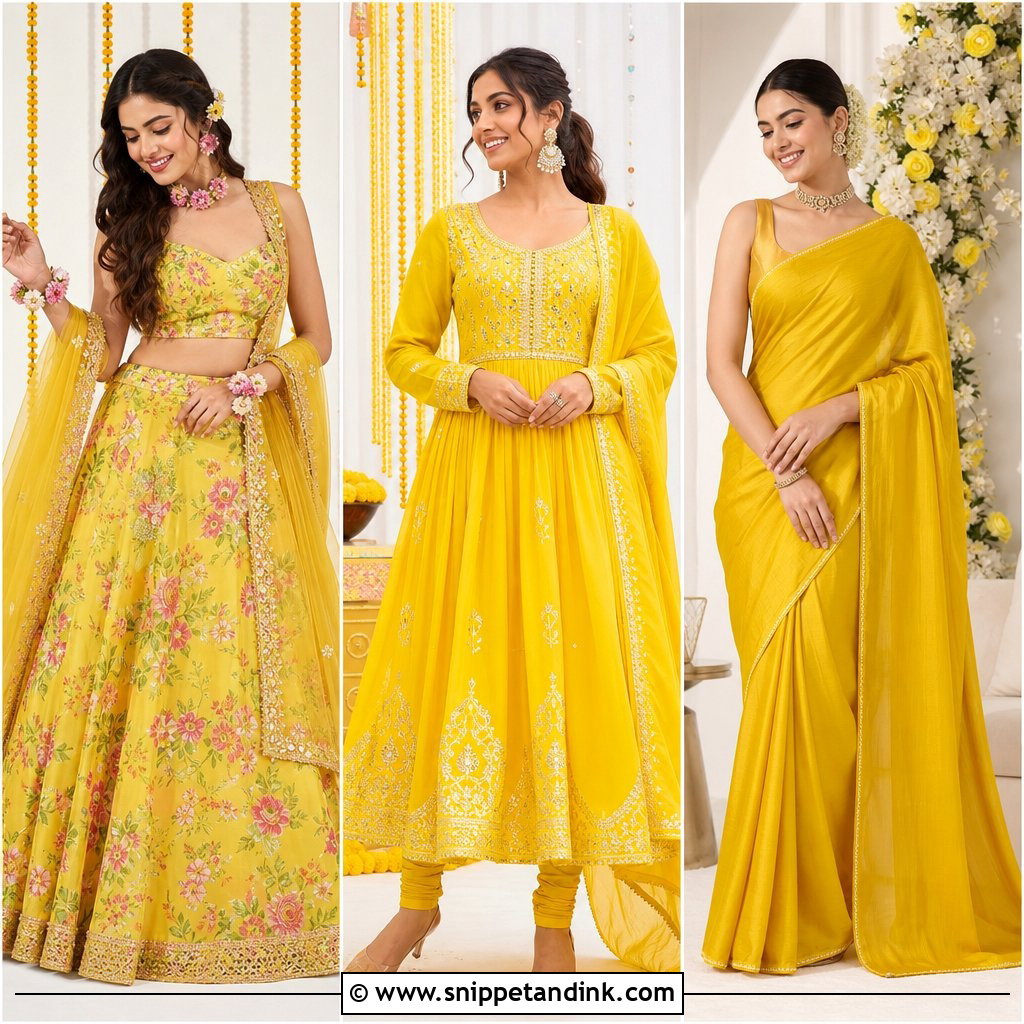
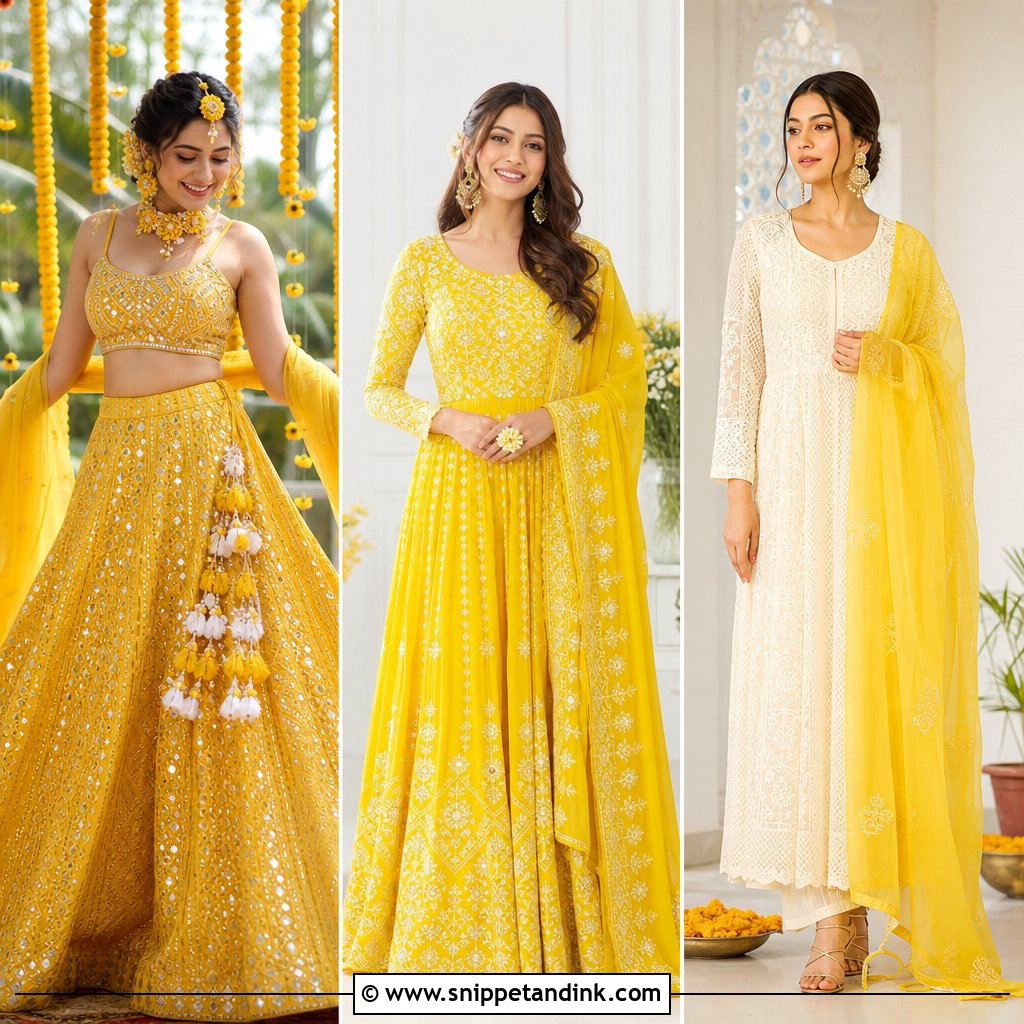
The classic yellow lehenga still earns its place, but the version I’d put a bride in today is lighter than most people picture. Georgette or cotton-silk, a soft waistband and very little can-can underneath, because a stiff underskirt pushes back every time you sit on the floor. A fitted blouse with mirror work or a square neckline and a dupatta draped over one shoulder keep it easy to handle. Floral earrings, stacked yellow bangles and embellished juttis finish it, and brides can add a floral maang tikka and matching hand jewelry while guests stay simpler. On shade: lemon reads fresh in morning light, while mustard and marigold hold their own against marigold garlands and greenery.
2. Yellow Saree Haldi Dress
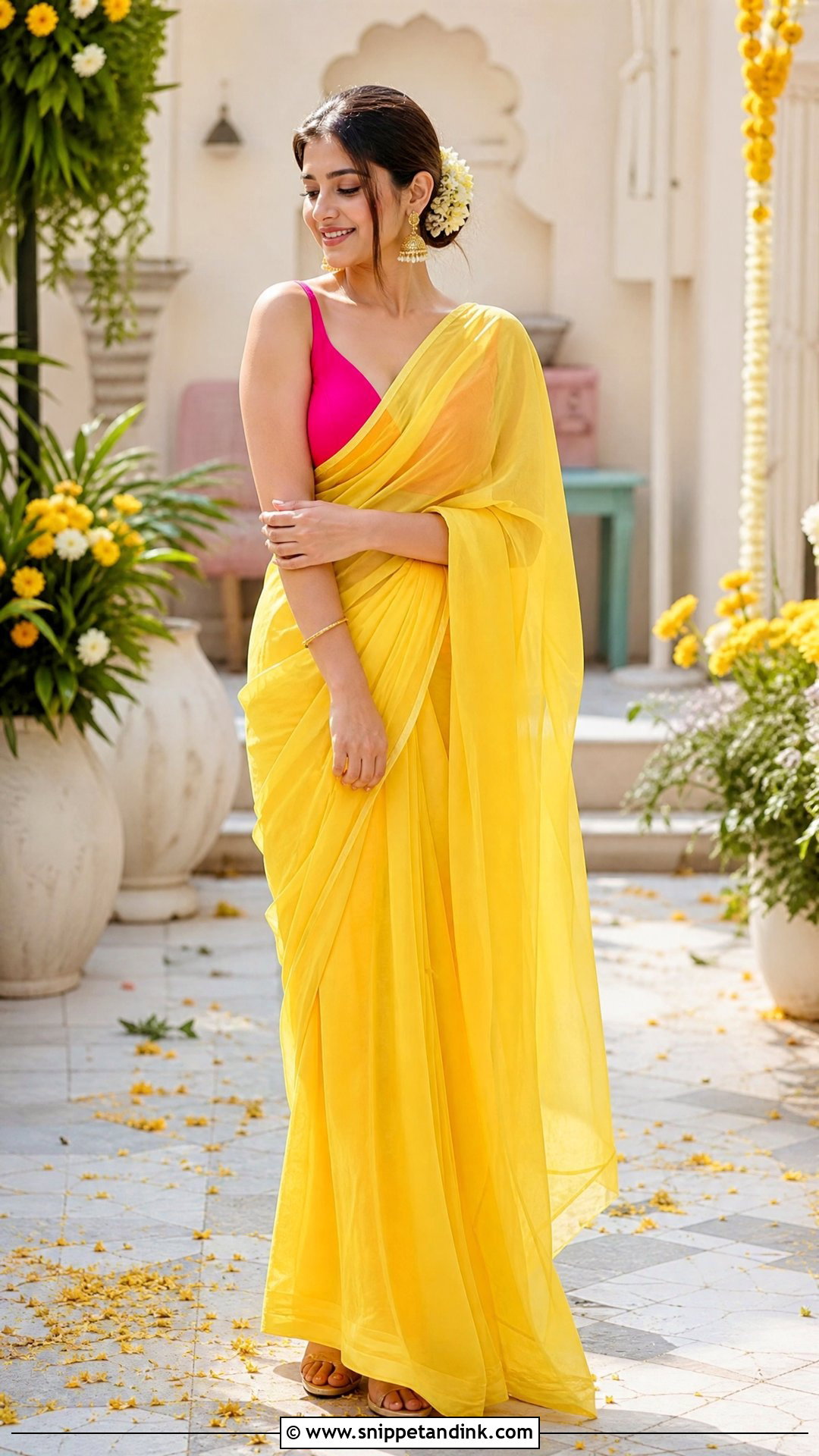
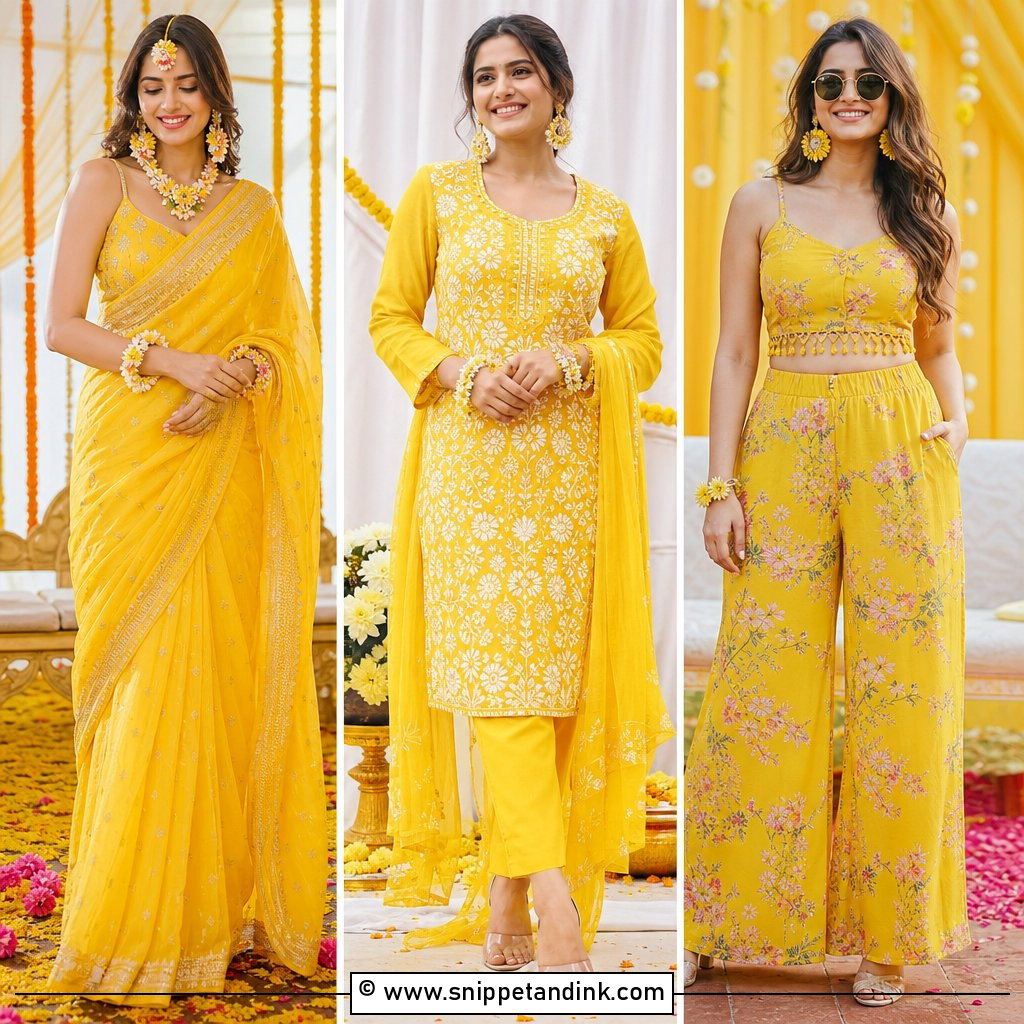
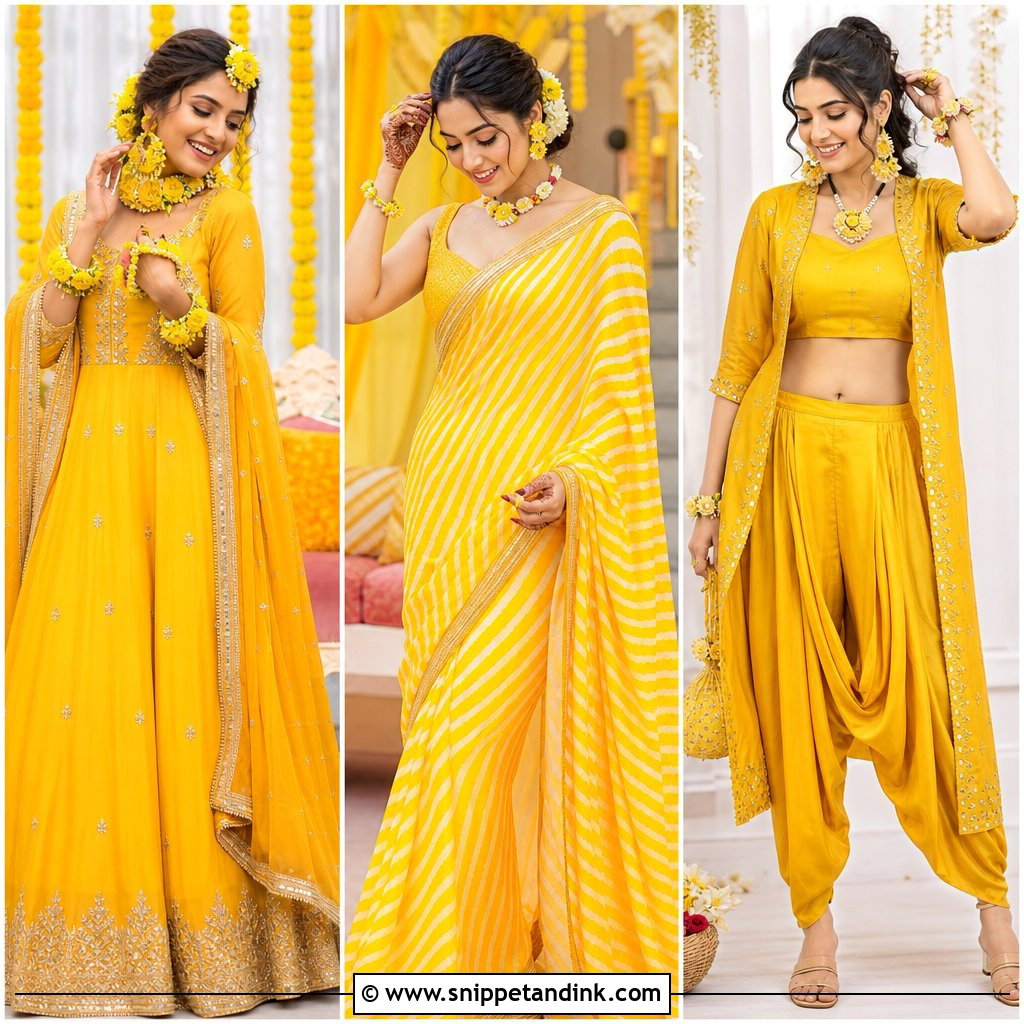
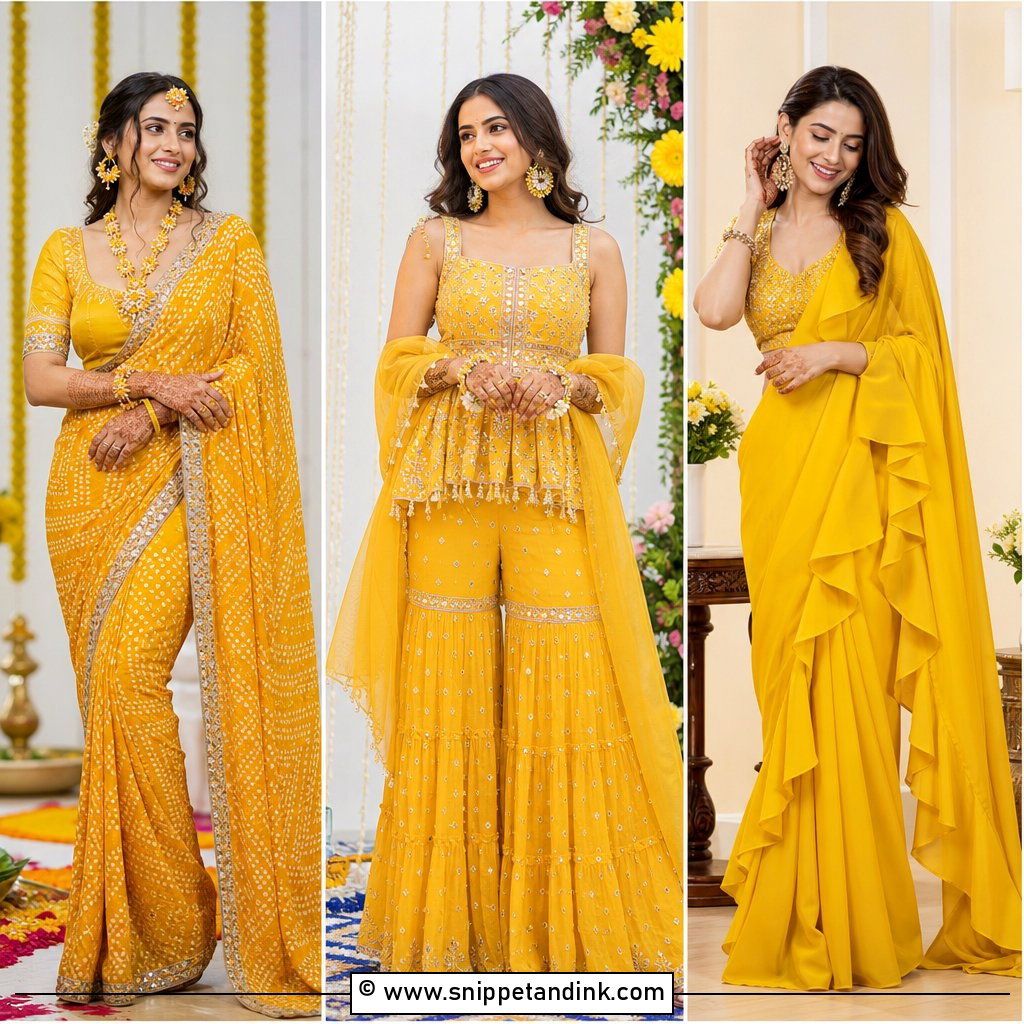
Sarees move well, but only if they’re pinned for the job. I choose cotton, chiffon, georgette or a light silk that can be cleaned without heartbreak, and I pair the yellow with a pink, green or orange blouse, because the contrast makes the yellow look brighter on camera. Before the ritual begins, I pin the pleats at the waist and anchor the pallu at the shoulder so it stays put while you sit, bend to greet elders and dance. Gold-toned earrings, slim bangles and low block heels or embroidered flats are enough. A sleek bun with a few small flowers keeps hair off your face. Brides can add a waist belt; guests look right with a simple blouse and understated jewelry.
3. Floral Lehenga Haldi Dress
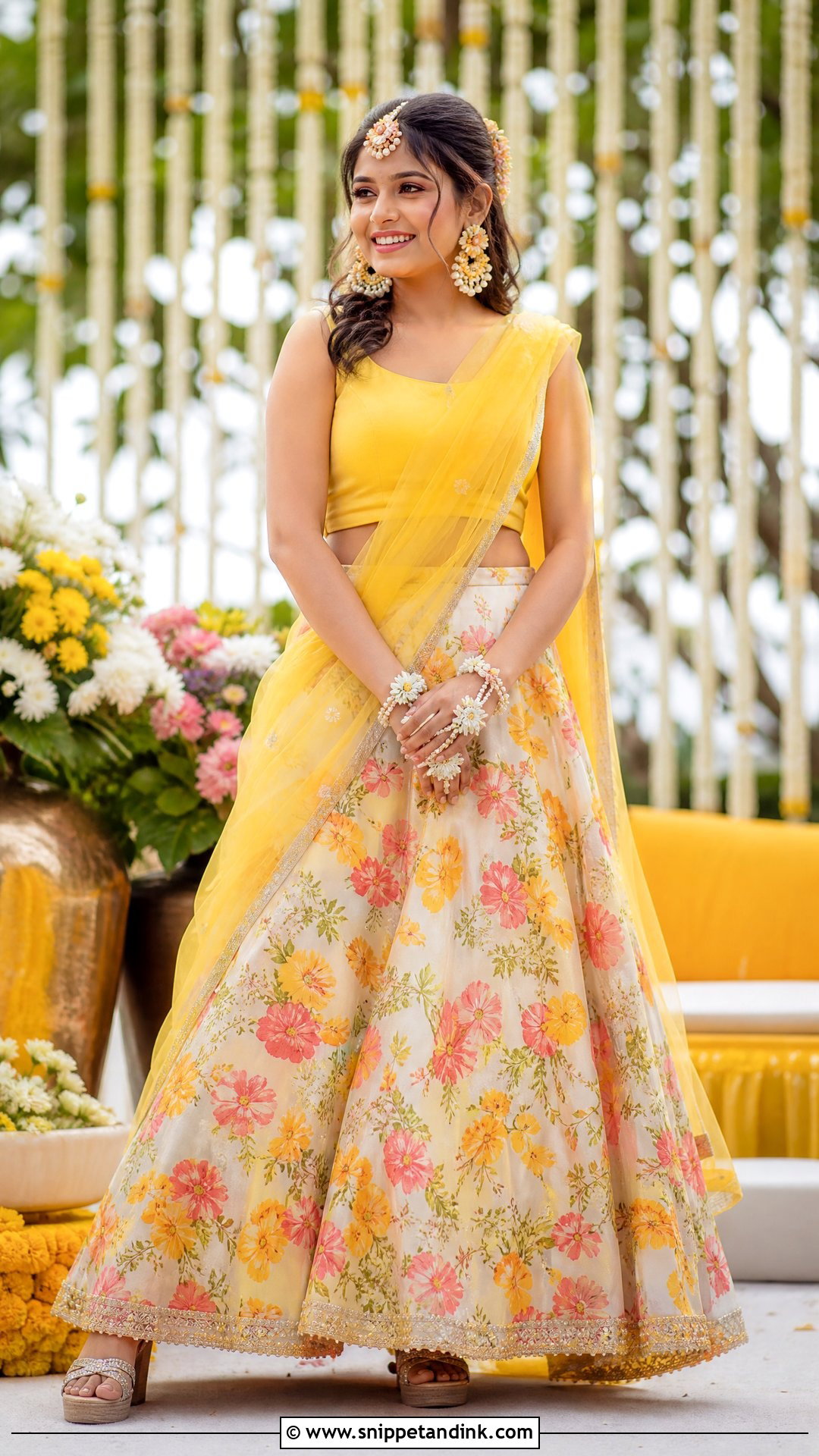
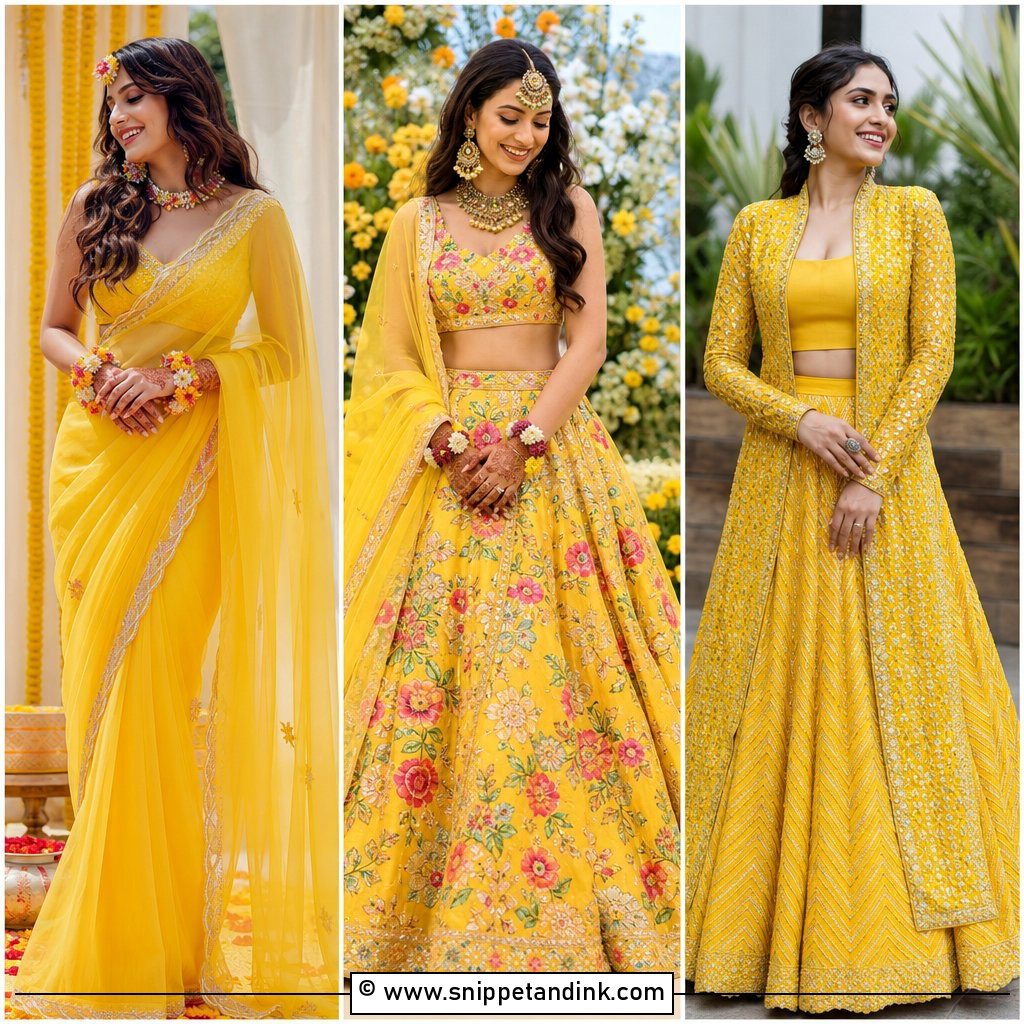
Printed florals are a good escape from head-to-toe yellow, and they’re more practical than they look: a busy print disguises the odd splash of paste. Look for a light lehenga with yellow, coral or green flowers on an ivory or pastel base, and keep the blouse solid so the print doesn’t take over. A sheer yellow dupatta draped loosely over one shoulder, plus pearl and floral jewelry, keeps the mood daytime rather than formal. Shoes depend on the ground: juttis on paving, wedges on lawn, where thin heels sink. Loose waves, a braided ponytail or a flower-trimmed bun all suit it. I reach for this at outdoor Haldis with floral decor, especially for sisters and bridesmaids who want a bit of color freedom.
4. Sharara Haldi Dress
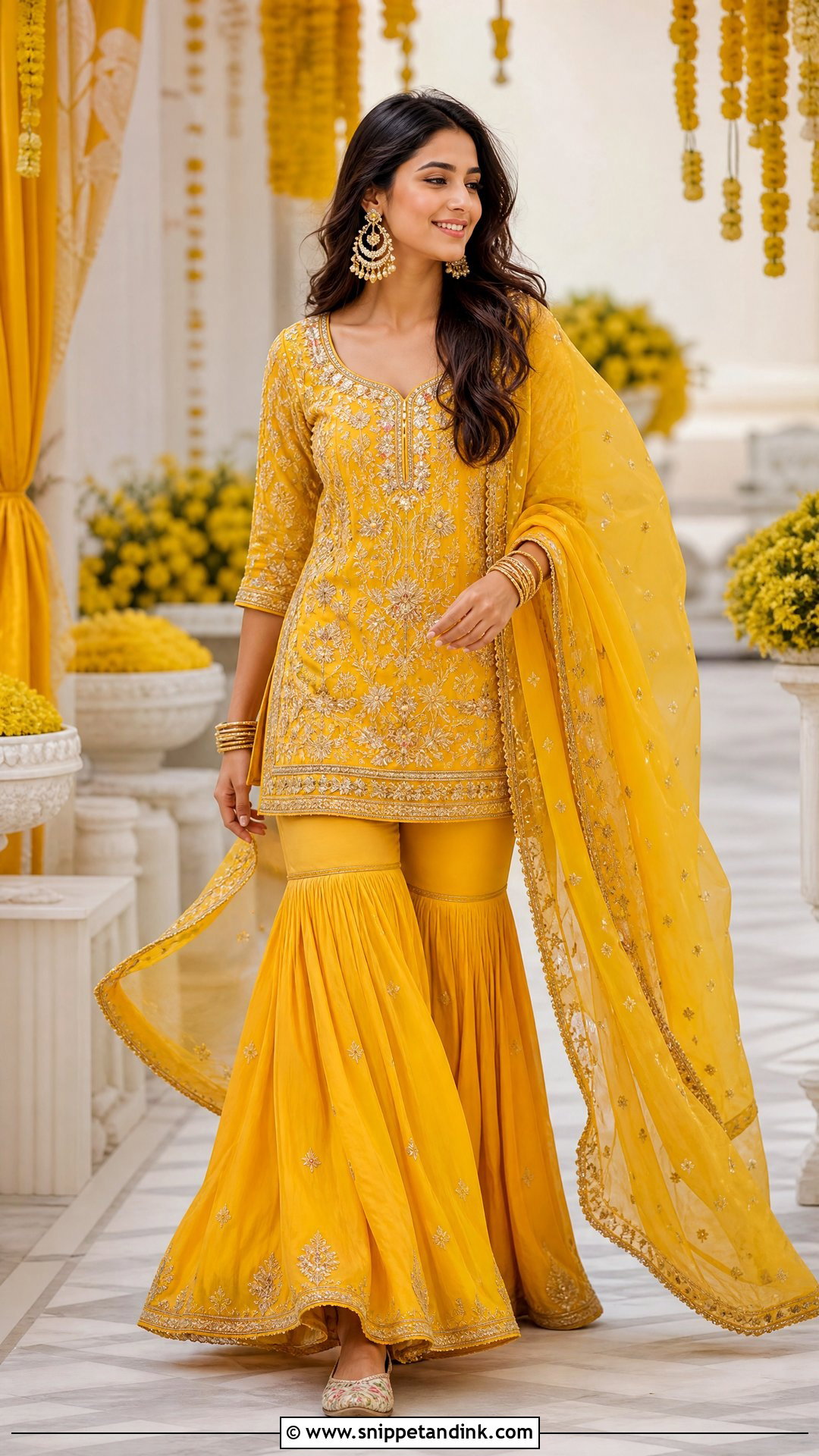
Proportion is what makes a sharara work. A yellow sharara set needs a short kurti on top; pair the wide flare with a long kurta and the whole outfit turns into one heavy column. Gota borders, mirror details or small floral motifs give shine without weight. Wrap the dupatta around the arms or pin it to one shoulder so it isn’t hanging free near the paste. Chandbali earrings, a few bangles, flat juttis and a center-parted low ponytail or soft braid finish it. I dress bridesmaids and sisters in this when I know they’ll be dancing, fetching things and running the ritual for the family.
5. Anarkali Haldi Dress
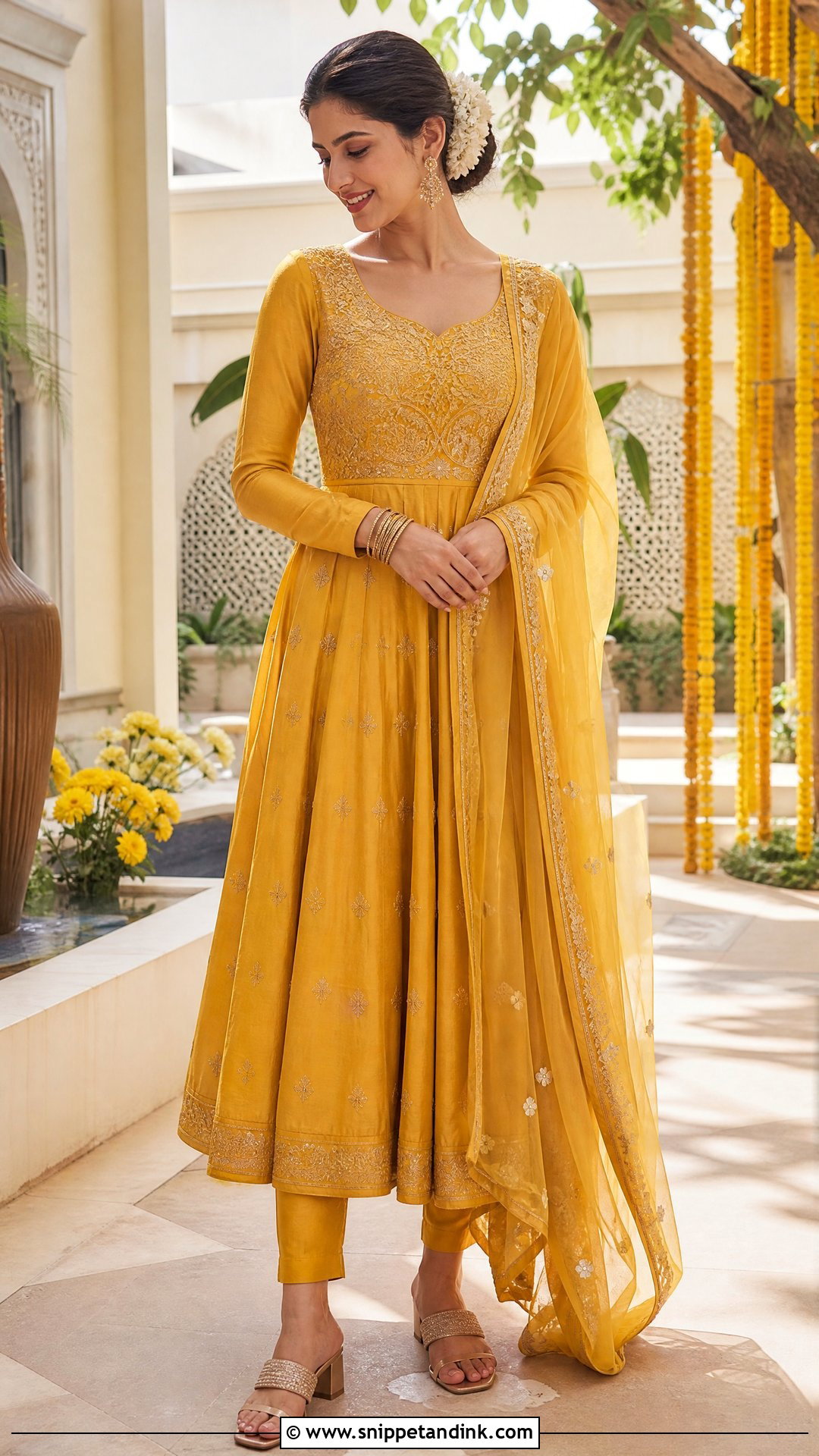
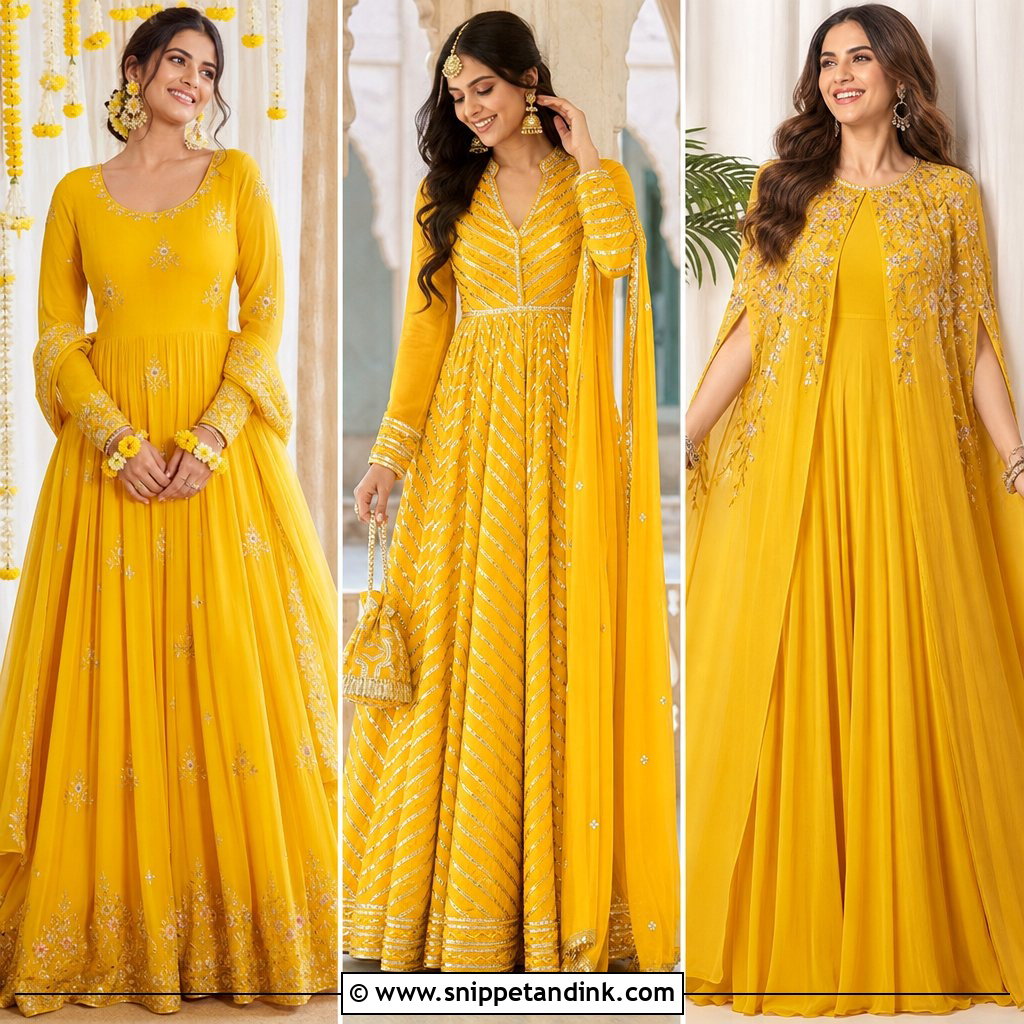
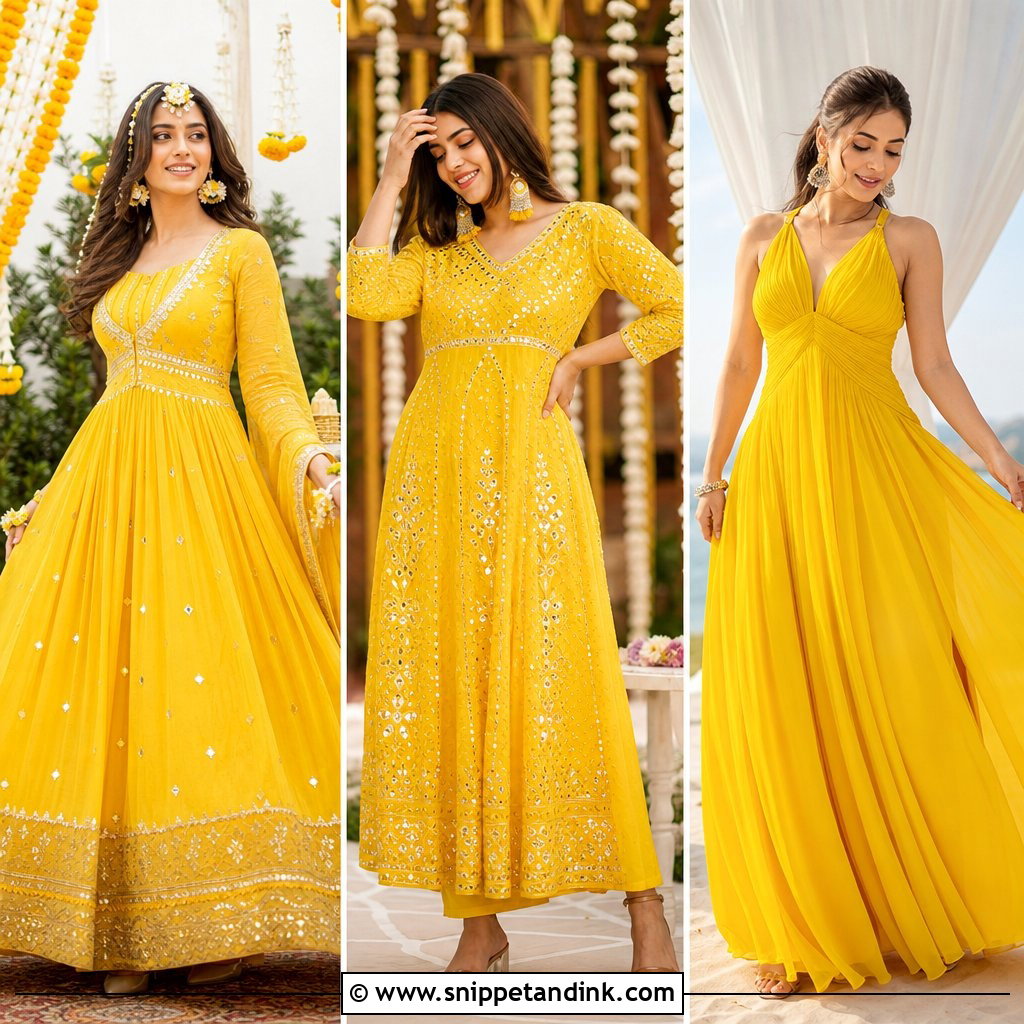
Little coordination is needed with an Anarkali, which is exactly why I like a flowing Anarkali for guests who don’t want to think about separates. Marigold, mustard or lemon in calf or ankle length, with a fitted bodice and a skirt you can manage on stairs, over narrow pants or churidar. A light net or organza dupatta, small mirror details or a contrasting border are decoration enough. I do check the armhole at fittings: a tight one pulls the bodice up every time you raise your arms to apply paste. Drop earrings, delicate bangles and low block heels finish it. Brides can add floral hair accessories and guests a small potli. The skirt already gives volume, so skip a big necklace that would fight the neckline.
6. Yellow Kurta Set Haldi Dress
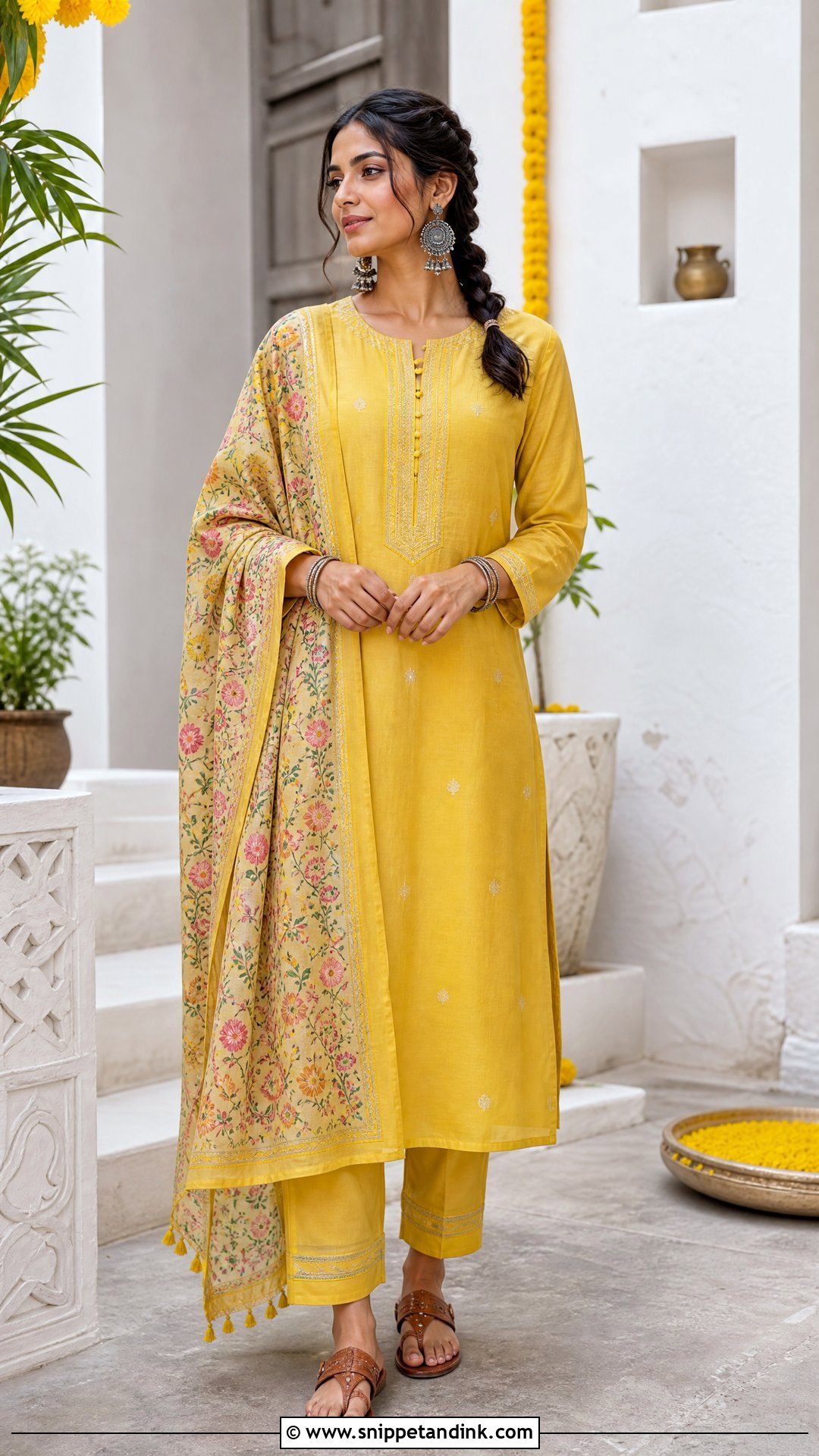
A matching kurta set is my default for small home ceremonies, where a lehenga would look like too much in a living room. Cotton, Chanderi or cotton-silk, straight or gently flared, with ankle-length pants and a printed or embroidered dupatta that brings in pink, orange or gold. Oxidized silver earrings and colorful bangles suit it better than heavy gold, and Kolhapuri sandals or juttis keep it grounded. A low bun or neat ponytail stays out of the way. Relatives usually appreciate this one because every piece goes back into their wardrobe for festivals and family dinners afterwards.
7. Palazzo Set Haldi Dress
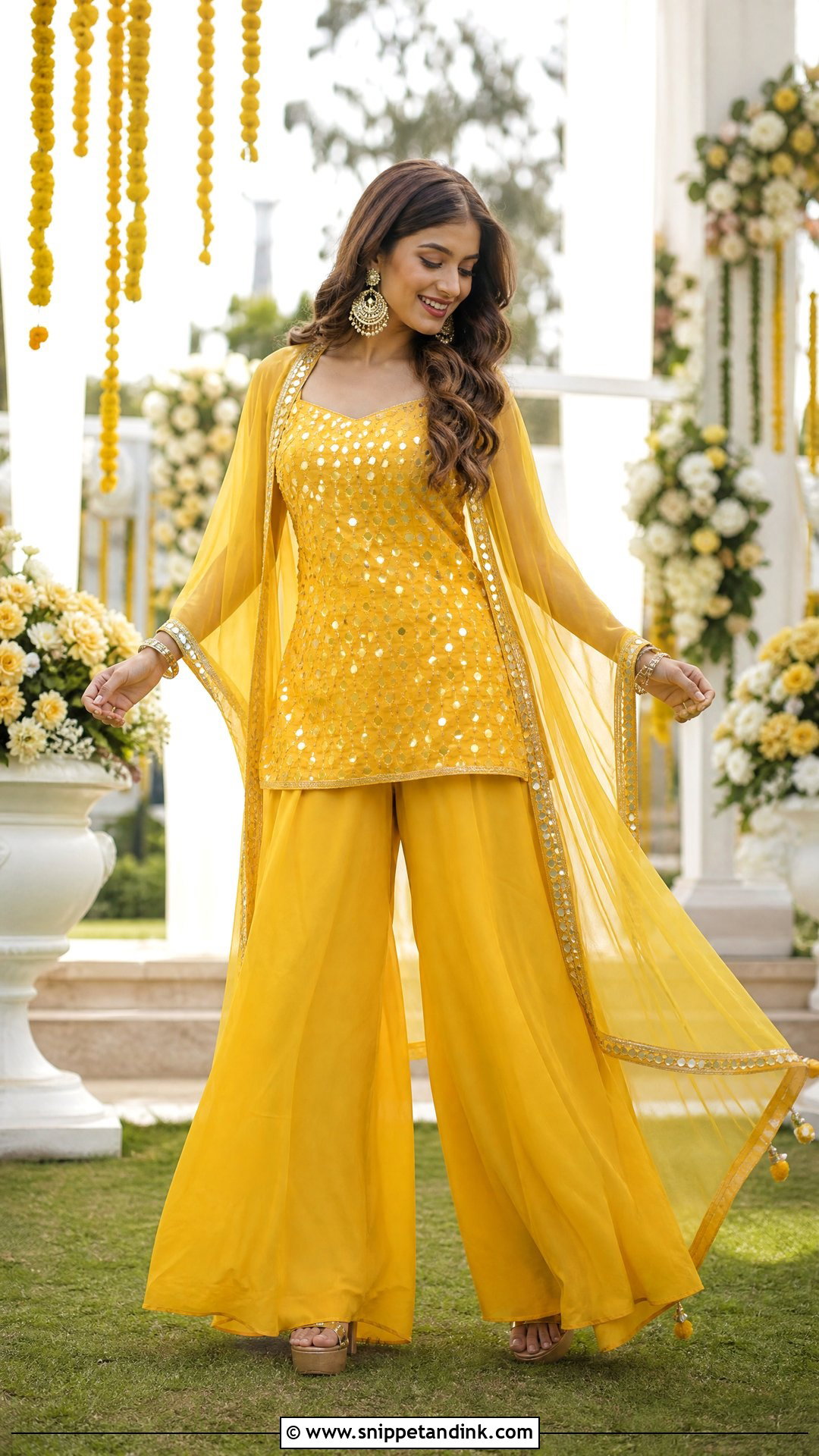
Wide palazzos are comfortable, but the cut decides whether they look festive or casual. I pair yellow or mustard palazzos with a short embroidered kurti that defines the waist; a longer side-slit kurta is the swap if you want more coverage. A sheer dupatta over one shoulder or a light cape adds the occasion. Statement earrings, stacked bracelets and platform sandals keep everything moving. Outdoors, have the hem sit slightly above the floor so it doesn’t sweep up grass and wet paste. A sleek ponytail or soft curls keep the look clean, and it’s easy for bridesmaids and guests who want yellow without a skirt.
8. Dhoti Pant Haldi Dress
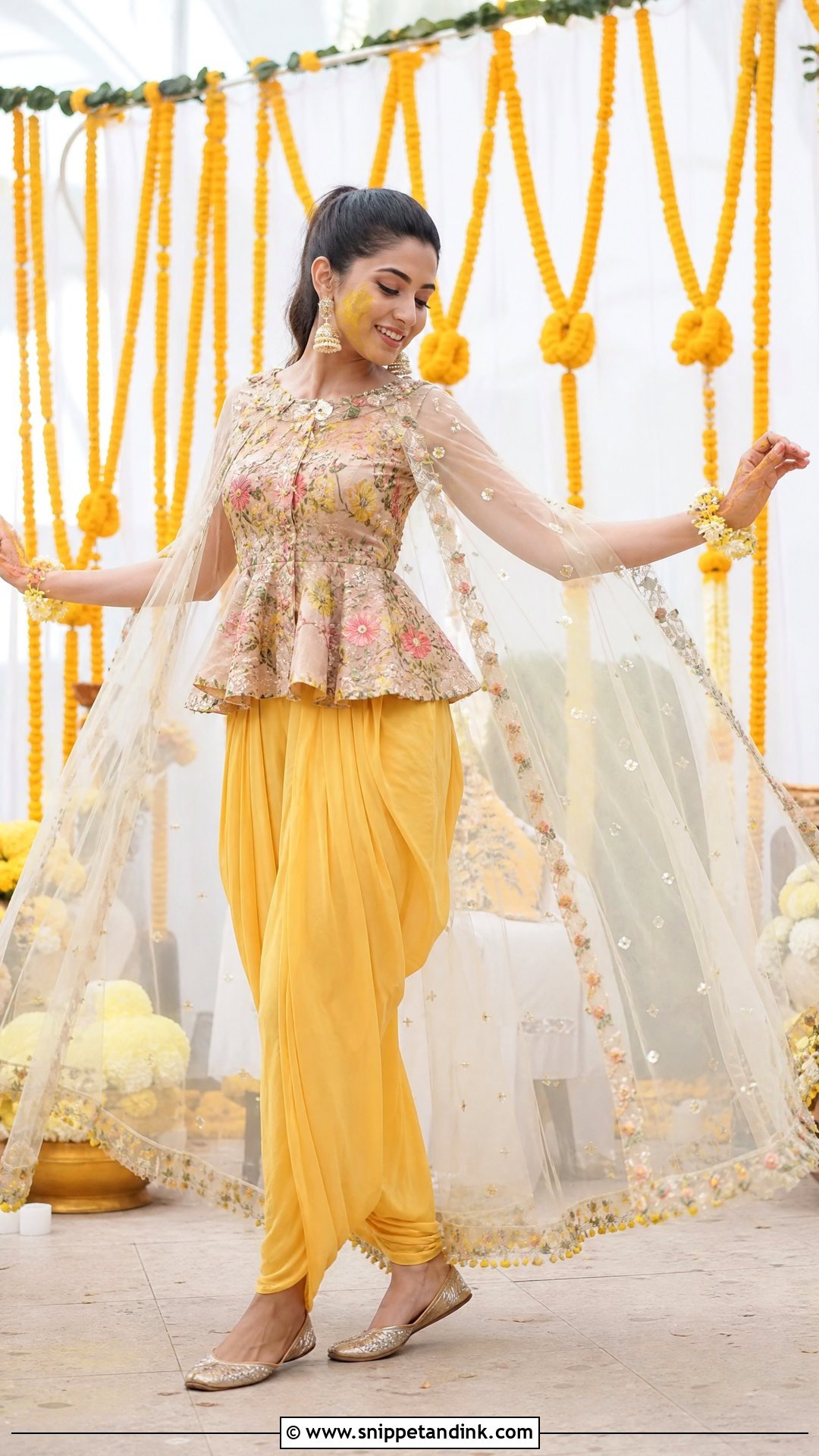
Want an outfit that makes dancing and sitting through rituals easier? A yellow dhoti pant set with a cropped blouse, peplum or short embellished kurti gives you an Indo-Western shape and far more freedom than a fitted skirt. A sheer cape or a neatly pinned dupatta adds movement and coverage. I’d keep any cape to a length that clears the floor, though; long trailing panels end up in the turmeric bowl, the flower trays and the water. Jhumkas, cuff bracelets and metallic or embroidered flats complete it. Brides can add floral hand jewelry for a ceremonial touch, while guests keep it relaxed with small earrings and a ponytail or braid.
9. Cape Lehenga Haldi Dress
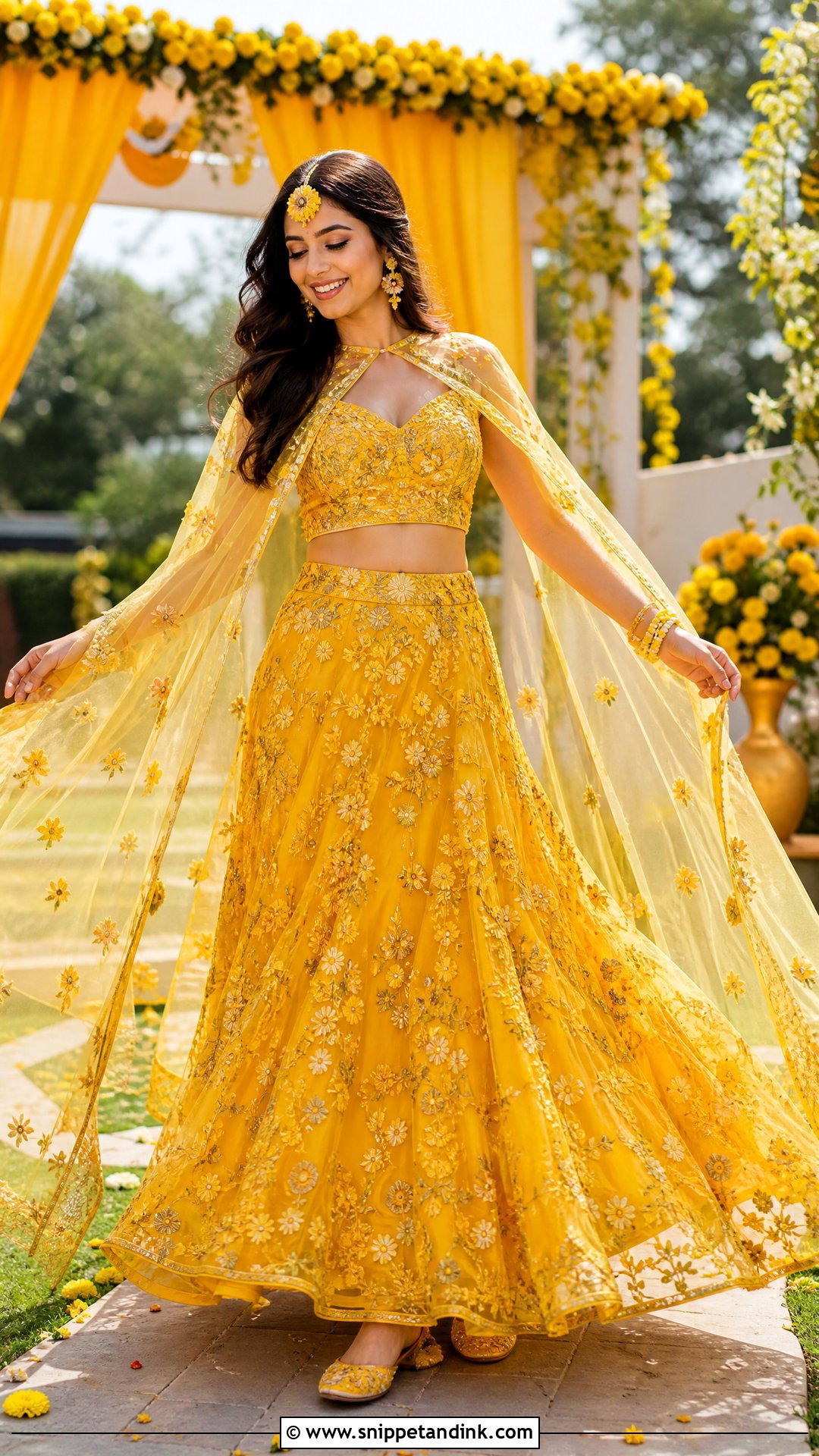
A cape solves the most annoying Haldi problem, the dupatta that keeps slipping while you’re trying to hold still for the paste. Start with a light yellow skirt and fitted blouse and layer a sheer embroidered cape at hip or ankle length. Floral appliqué, mirror borders or fine beadwork make it show in photos while the fabric stays airy. Since the cape frames the shoulders and neckline already, I keep jewelry to floral studs, a maang tikka and bangles. Comfortable wedges or juttis and a low bun finish it. It moves well at garden venues, and it’s a lighter answer than a structured jacket in the heat.
10. Peplum Sharara Haldi Dress
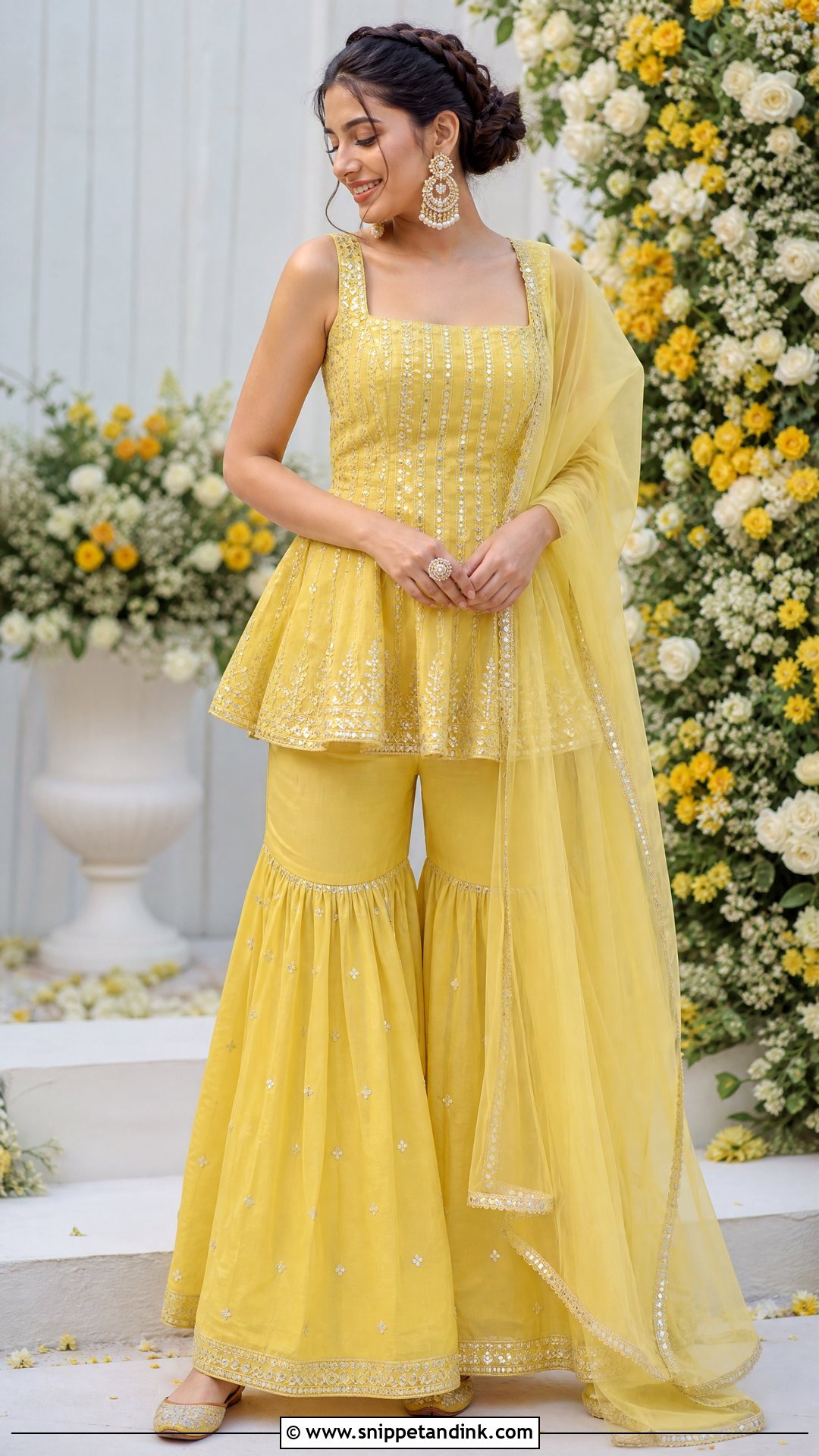
Peplum shararas depend on where the top ends. A fitted yellow peplum should finish around the upper hip; shorter and it reads cropped, longer and it covers the flare you’re paying for. Match the sharara in the same fabric or a coordinated print, and pick a V, sweetheart or square neckline to balance the volume below. With heavy embroidery, I leave the dupatta off. With lighter work, a narrow organza dupatta pinned behind the shoulders adds a finish. Large earrings, a statement ring and cushioned juttis complete it, with a high ponytail or braided bun to keep the neckline clear. It’s festive enough for a bride and comfortable for her sisters and friends.
11. Jacket Lehenga Haldi Dress
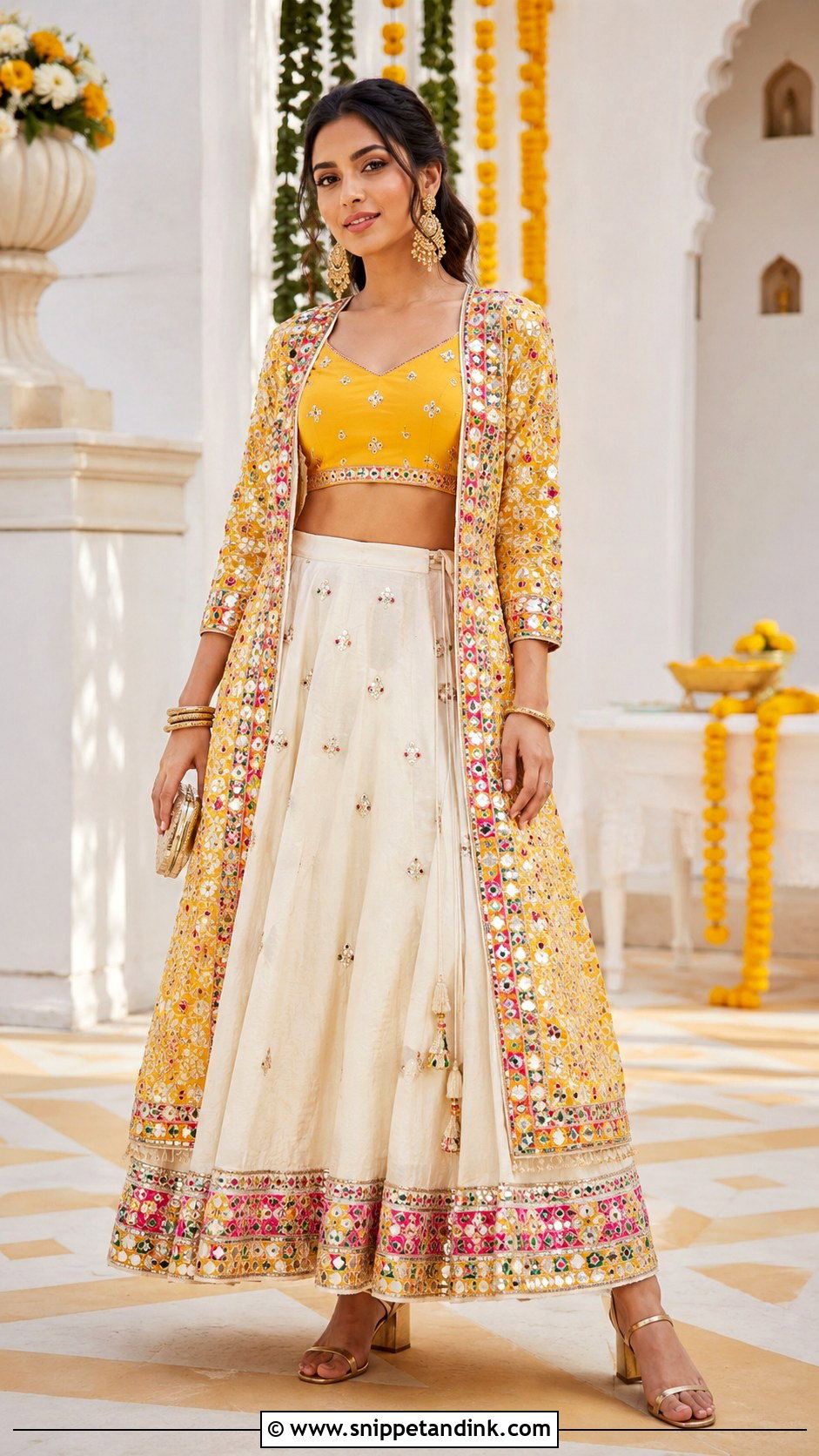
A long open jacket over a simple lehenga gives a fusion line that’s very forgiving on different body shapes, because the open front draws one long vertical. Wear a plain yellow, ivory or floral skirt with a fitted crop top and layer a lightweight jacket with threadwork, mirrors or colored borders, left unfastened. Choose a jacket without a stiff lining; in daytime heat a lined jacket becomes a sauna. Medium earrings, stacked bangles and block heels or embellished flats finish it. Brides can add a floral maang tikka and guests a small clutch. The jacket is the piece that gets reworn most, over trousers or a plain dress.
12. Pre-Draped Saree Haldi Dress
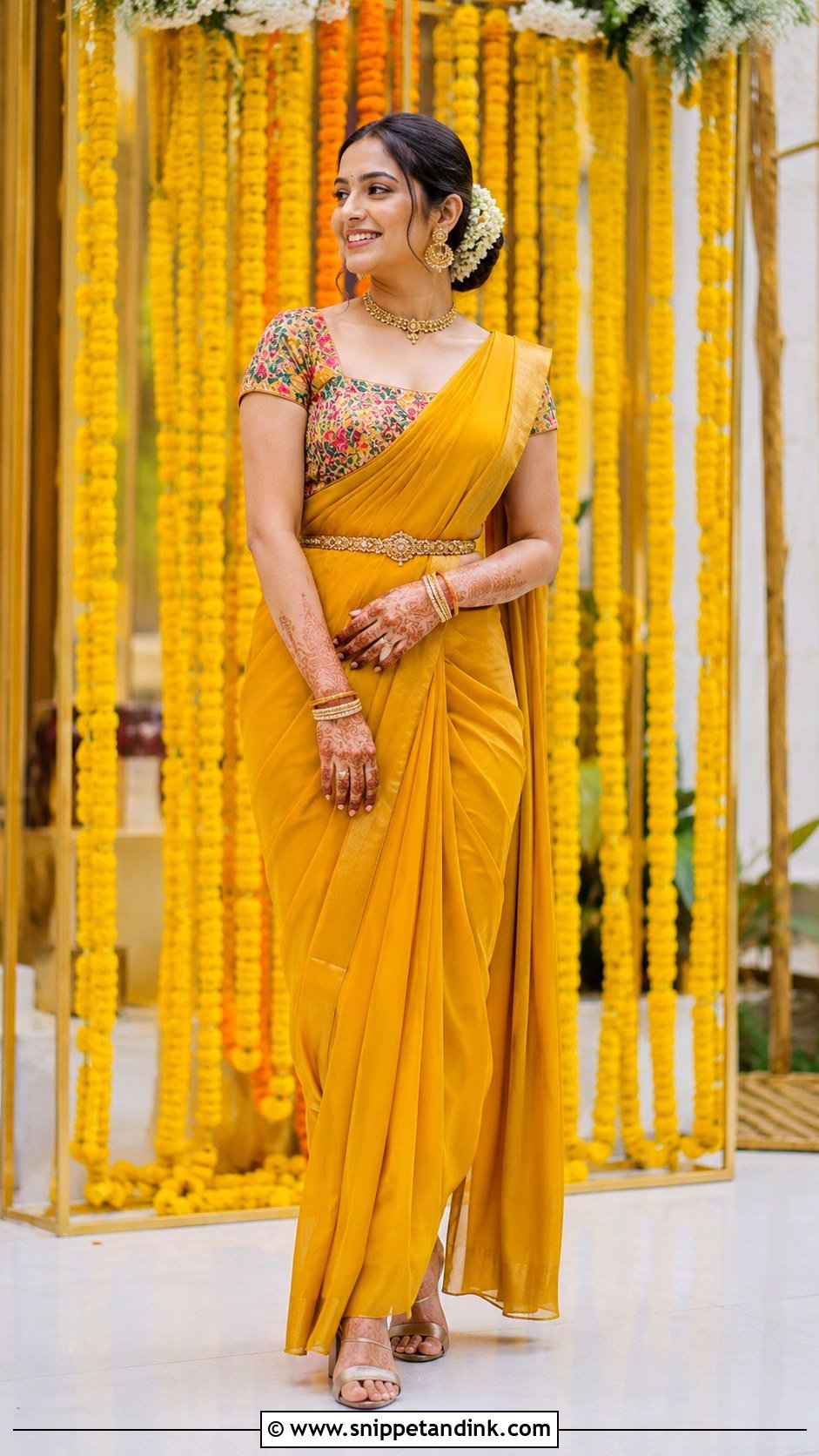
For brides and guests who love sarees but dread the pleating, a pre-draped saree is the honest compromise. Yellow chiffon, georgette or crepe with a secure waist and an attached pallu means fewer pins and nothing unravelling when you sit. Pair it with a mirror-work blouse or a contrasting pink crop top. A slim waist belt adds definition and holds the drape in place. Chandbali earrings, bangles and low heels hidden under the hem keep it simple, with a sleek bun or side braid. The thing I check at the try-on is the waist closure; hooks hold better than a single zip once the fabric is damp.
13. Chikankari Haldi Dress
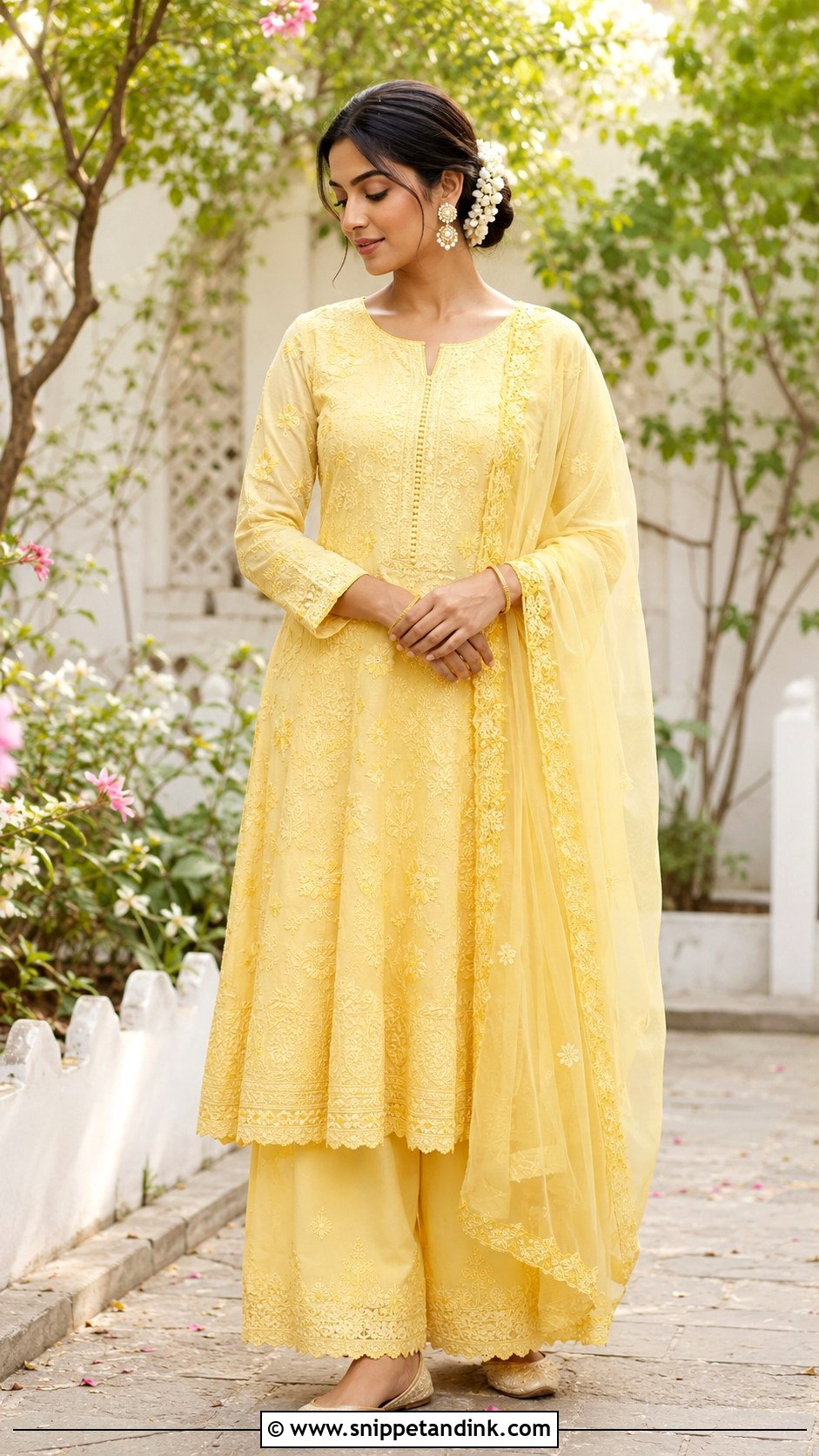
Chikankari gives texture without the weight of beading, and it breathes in heat. A straight or A-line chikankari kurta goes with matching pants, a sharara or a soft flared skirt, finished with an organza dupatta with a narrow border. Fine chikan on thin cotton turns sheer when wet, so I always ask whether the piece is lined before recommending it to a bride. Pearl earrings, slim gold bangles and cream or yellow juttis suit the threadwork. A low bun with white flowers looks right, as do loose waves for a relaxed ceremony. Tonal yellow embroidery feels bridal; guests can wear ivory work on mustard or pastel yellow. Keep the makeup light so the embroidery is what people notice.
14. Yellow Gharara Haldi Dress
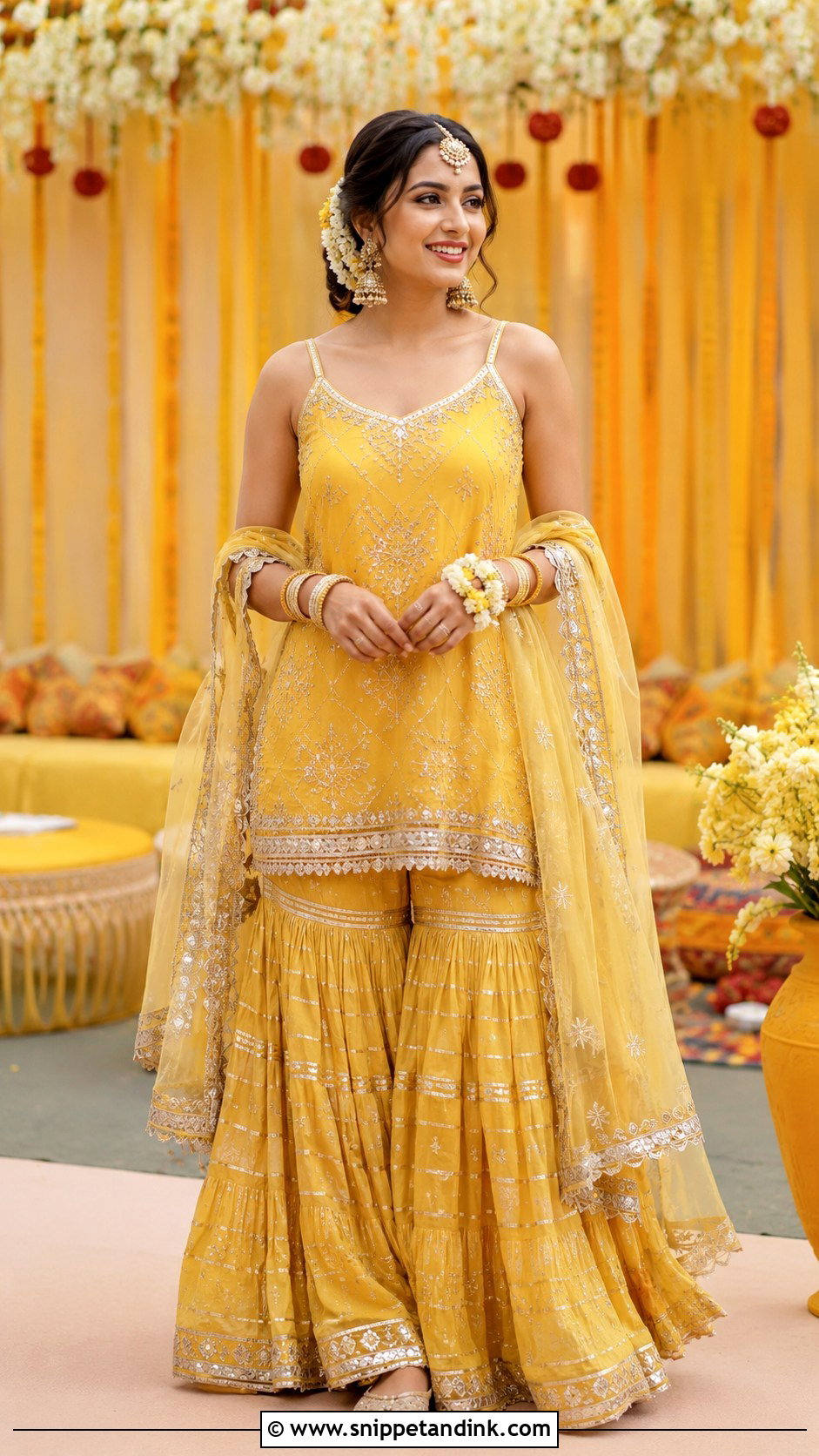
The gharara is the most heritage-looking shape on this list, with its gathered flare at the knee. Pair yellow gharara pants with a short kurti trimmed in gota, mirror work or fine thread embroidery, and make sure the lower fabric is soft; a stiff gharara stands out awkwardly when you sit cross-legged. A light dupatta over both arms or pinned to one shoulder stays under control. Jhumkas, bangles, a small potli and flat embroidered shoes complete it, with a braid or center-parted bun. Brides who love traditional dressing are drawn to it, and sisters and guests can wear it too with lighter embellishment and jewelry.
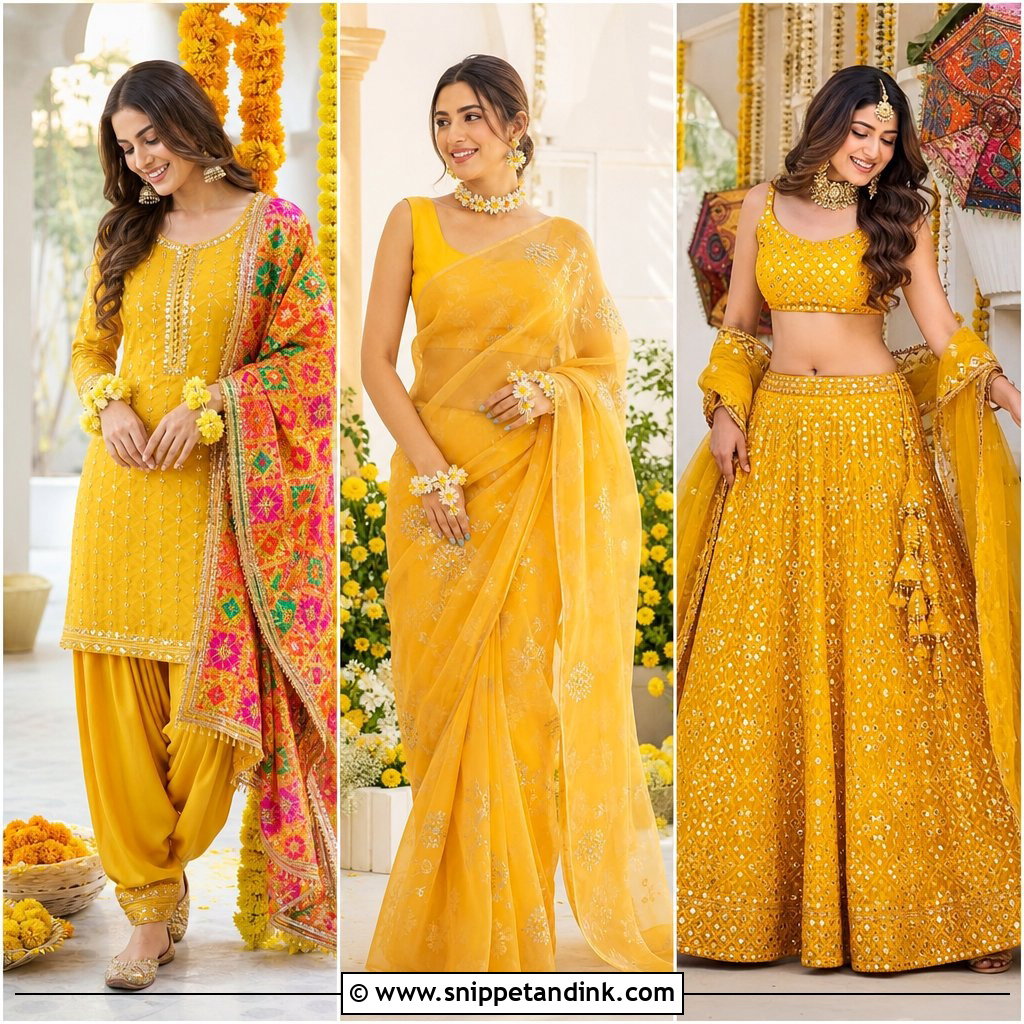
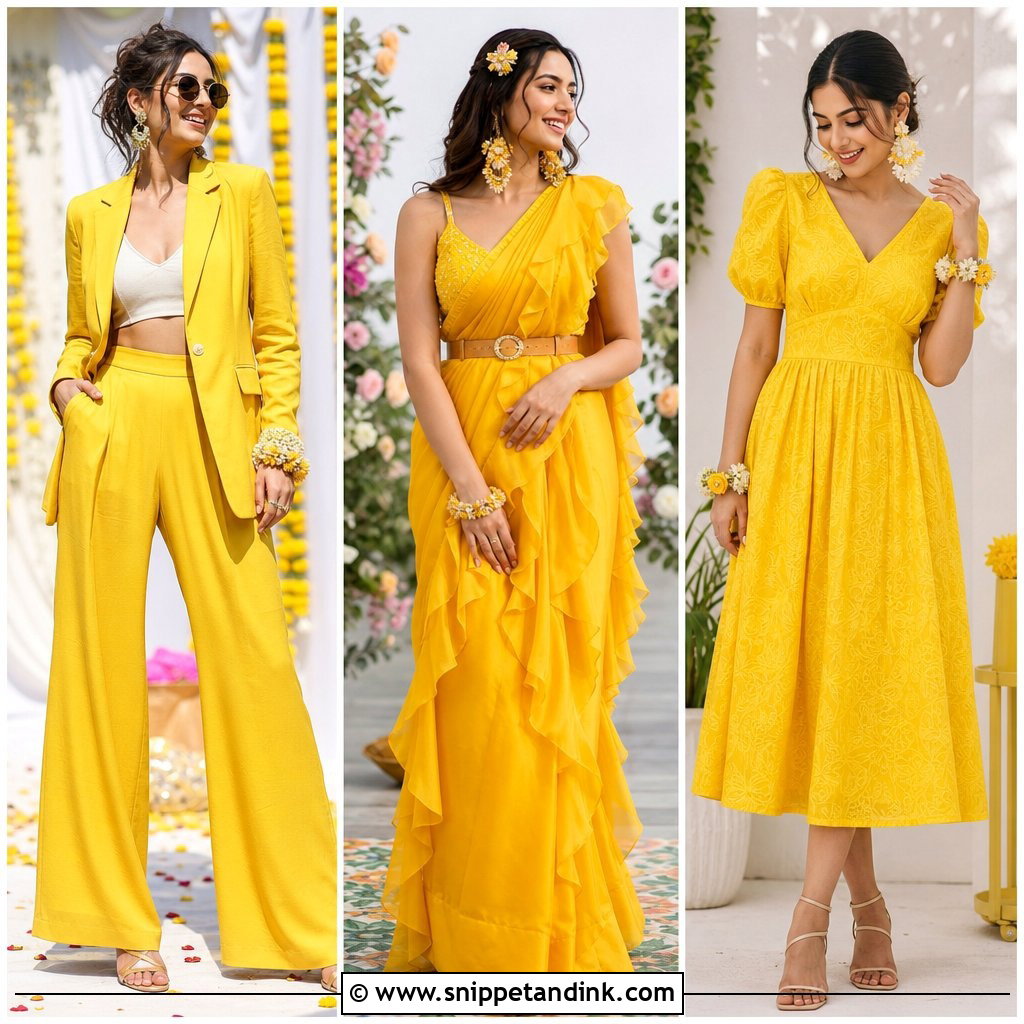

15. Floral Saree Haldi Dress
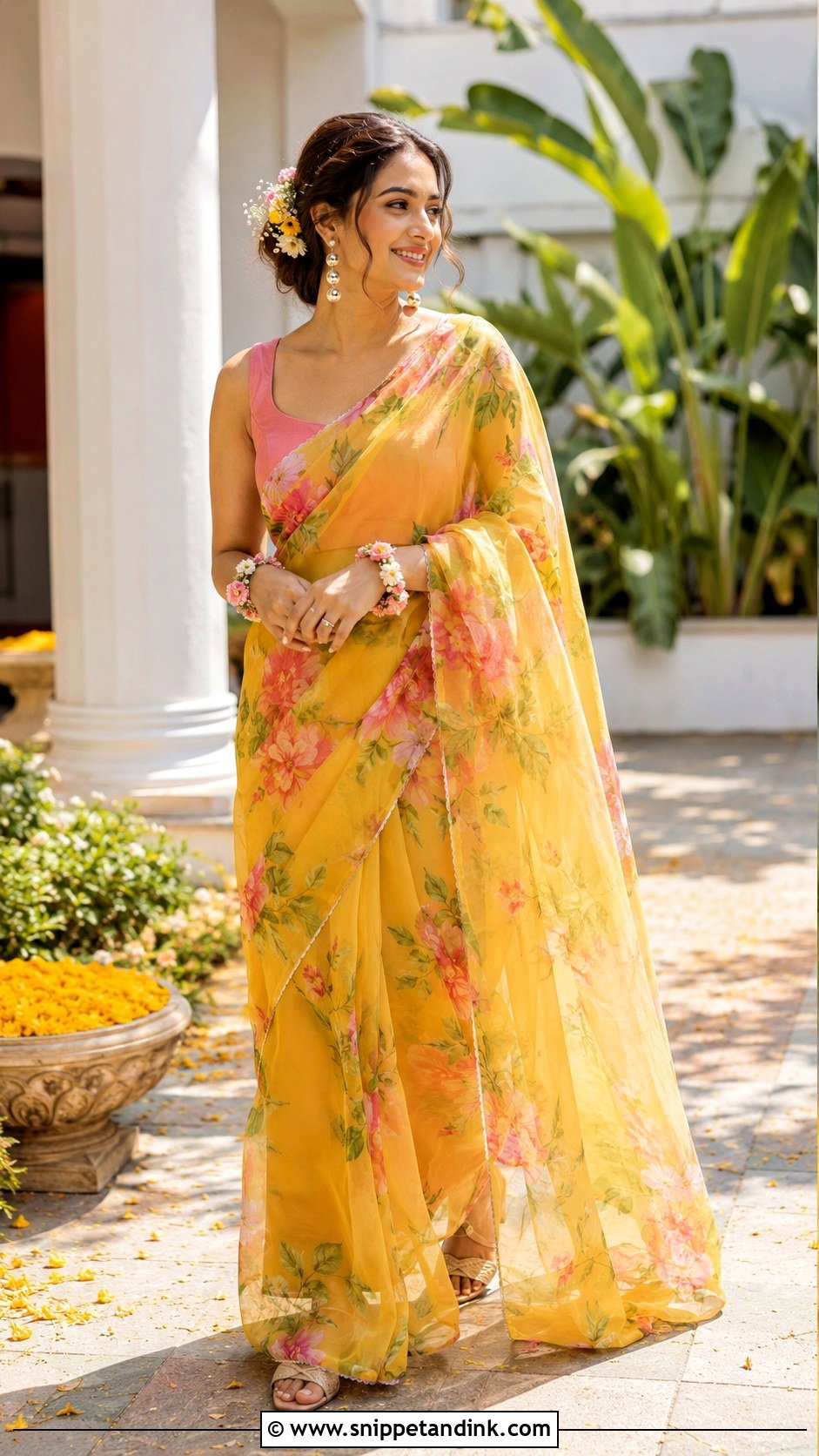
Mothers of the bride ask me for this more than anything else here. A floral saree brings several cheerful colors into the room while keeping a graceful shape. Organza, chiffon or soft cotton with yellow blooms, or a yellow base with pink, orange or green flowers, pairs with a solid blouse that picks up one shade in the print. Organza holds its shape well but marks where it gets wet, so it suits the people watching rather than those sitting in the paste. Pin the pleats and pallu securely if there’s dancing. Pearl earrings, floral bangles, low block heels and a loose bun with fresh flowers finish it, and it rewears far more easily than a heavy bridal piece.
16. Yellow Co-Ord Haldi Dress
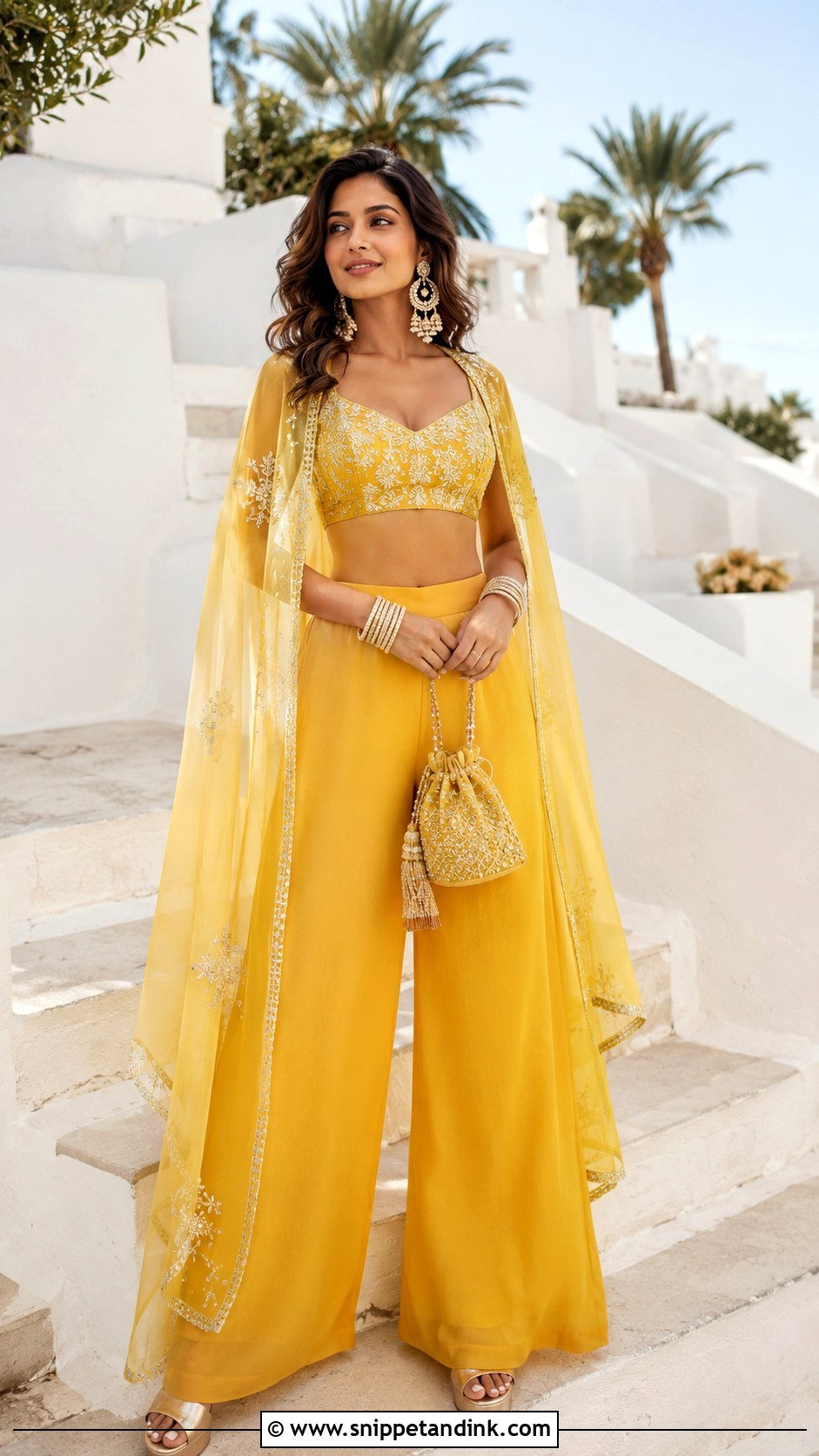
Co-ords suit casual or destination Haldis, where a heavy lehenga would be out of place on a terrace or a beach. Matching wide-leg pants with an embroidered crop top, tunic or structured peplum make the base; a light cape, cropped jacket or organza overlay dresses it up when the family expects more. Statement earrings, metallic bangles and platform sandals finish it, with a crossbody potli or wristlet for your phone. Sit down in the pants before buying: a waistband that digs in on a low seat will bother you all morning. Bridesmaids can coordinate in different shades of yellow, and each piece rewears with jeans, skirts or tailored trousers.
17. Mustard Salwar Suit Haldi Dress
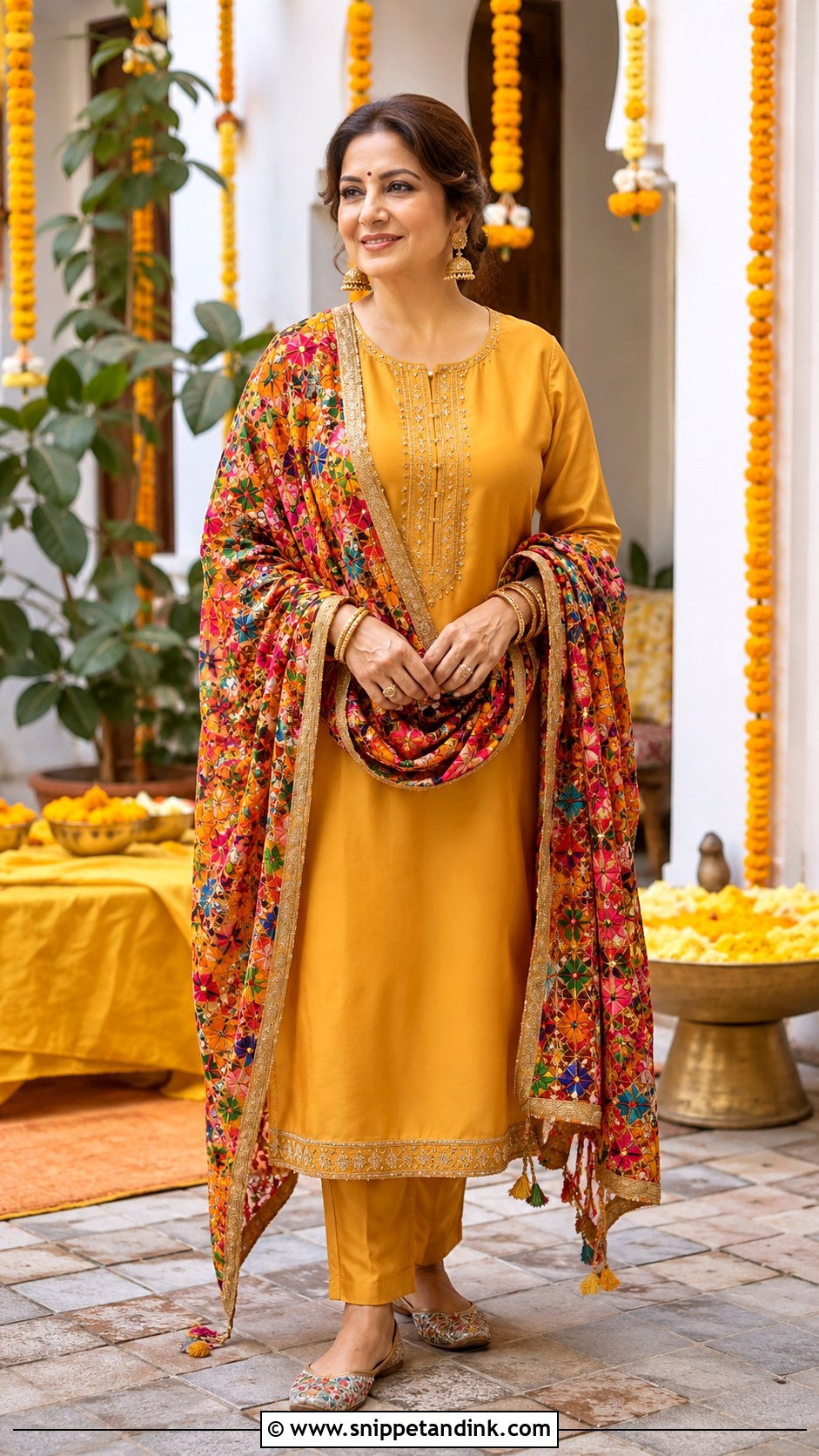
Mustard is the yellow that works on almost every skin tone I’ve styled, and it hides turmeric marks because the colors are so close. A straight-cut mustard kameez with matching salwar and a contrasting phulkari, printed or gota-bordered dupatta is a reliable outfit for mothers, aunts and guests who want coverage. Check the shoulder and waist fit carefully; a tight kameez rides up when you bend to apply paste. Antique gold earrings, coordinating bangles, traditional juttis and a low braid or soft bun keep it classic. Brides can make it their own with a deeper neckline, a heavier dupatta border and floral jewelry.
18. Yellow Maxi Dress Haldi Outfit
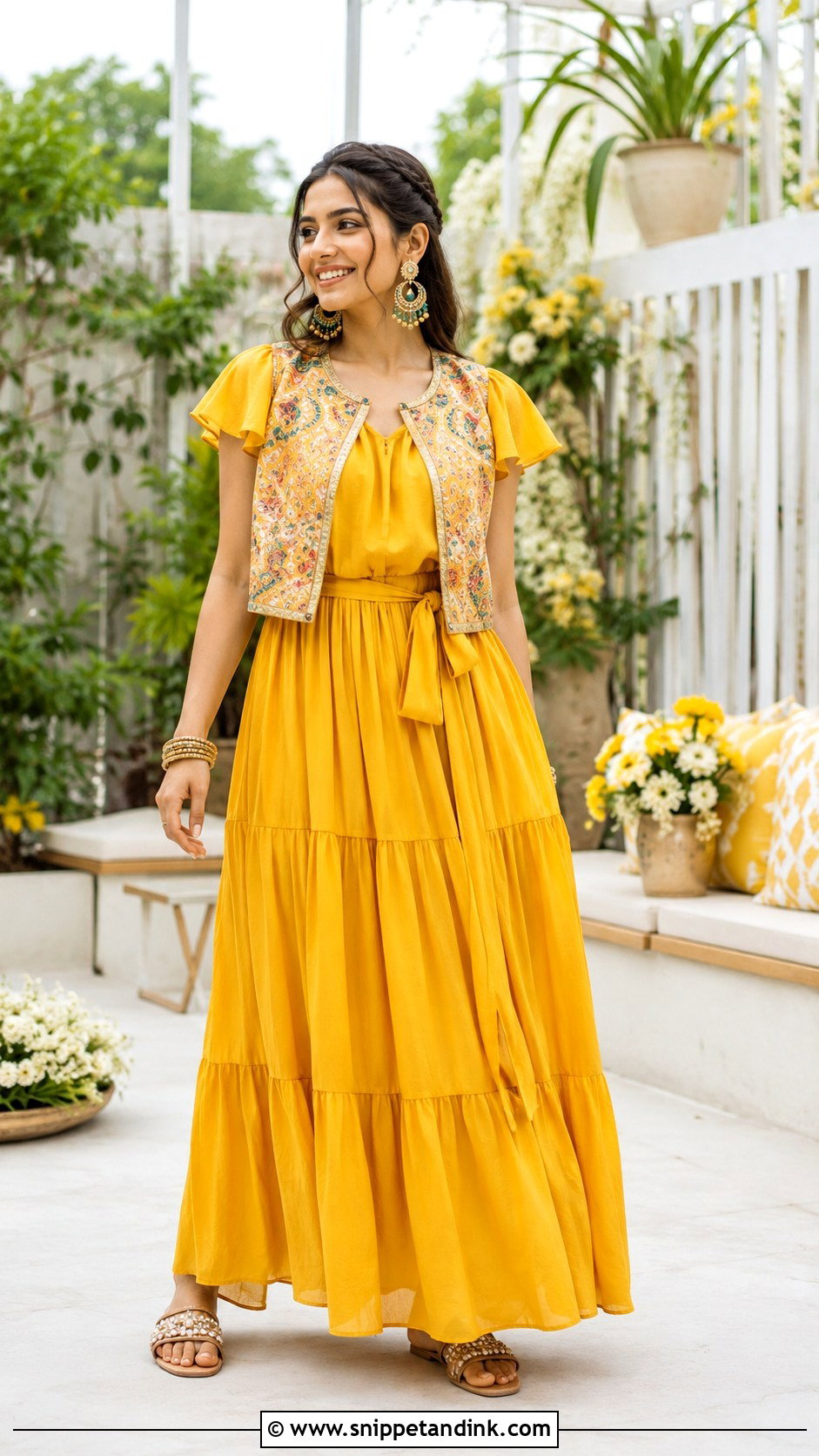
A flowing yellow maxi dress fits a relaxed Haldi when the invitation welcomes Indo-Western clothing, and it’s the easiest choice for guests attending their first one. Pick an ankle-length dress with flutter sleeves, a tiered skirt or light floral embroidery, belt the waist with fabric, and add an embroidered cape, colorful dupatta or cropped ethnic jacket so it connects with the setting. Statement earrings, stacked bangles and embellished flat sandals finish it. Avoid evening fabrics like satin, which shows every water mark; breathable cotton, georgette or crepe will see you through the ritual and the group photos.
19. White And Yellow Haldi Dress
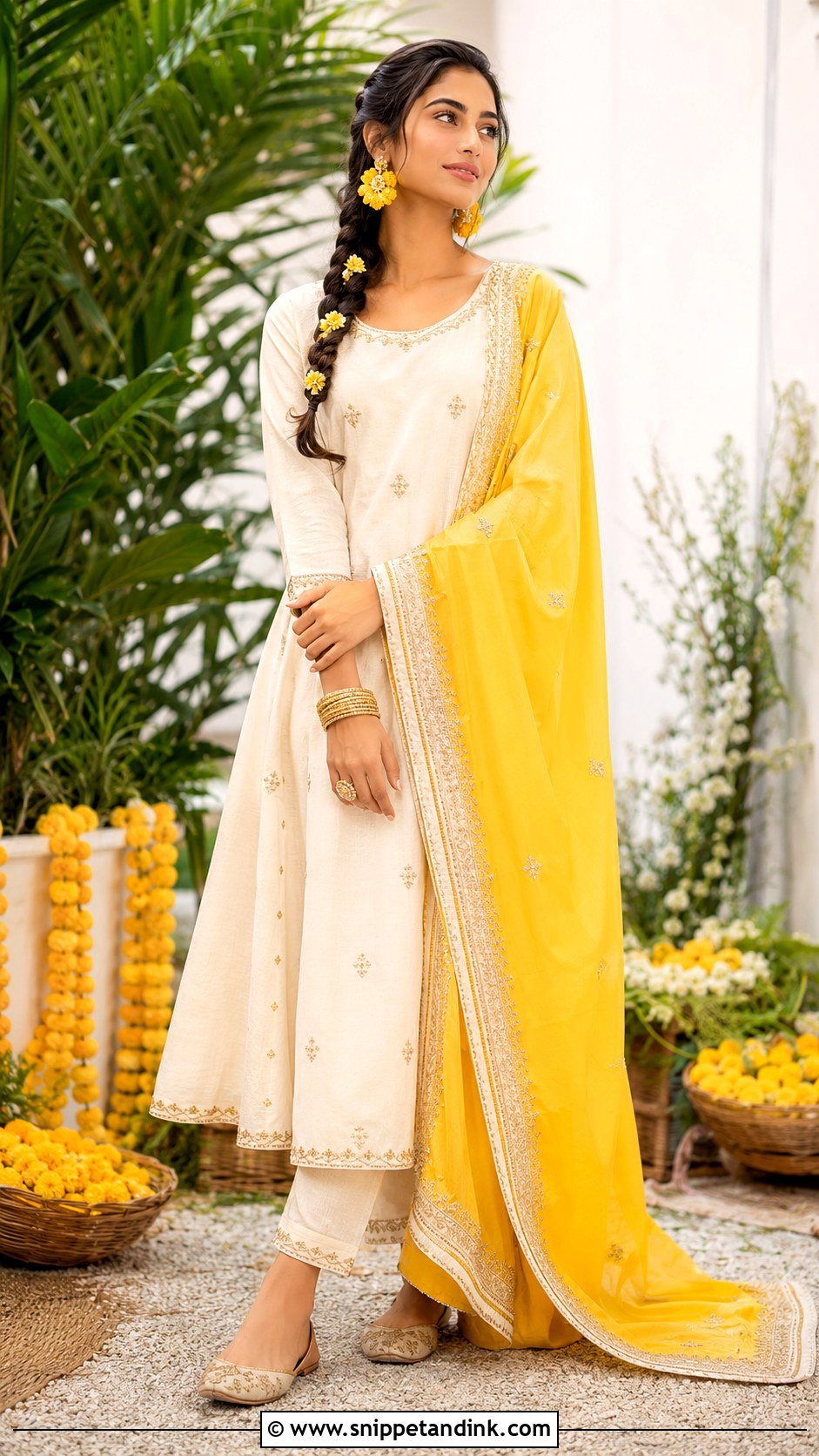
I only put a bride in white and yellow when she’s made peace with staining, because pale fabric rarely comes back fully clean after a generous Haldi. For sisters, bridesmaids and guests who won’t get much paste, it’s a fresh pairing. An ivory kurta, lehenga skirt or saree with a yellow embroidered blouse, dupatta or jacket works, and floral prints or marigold borders tie the two shades together. Yellow flower earrings, gold bangles, neutral juttis or low heels and a braid threaded with small yellow flowers finish it. It looks especially good outdoors against greenery and white flowers.
20. Pink And Yellow Haldi Dress
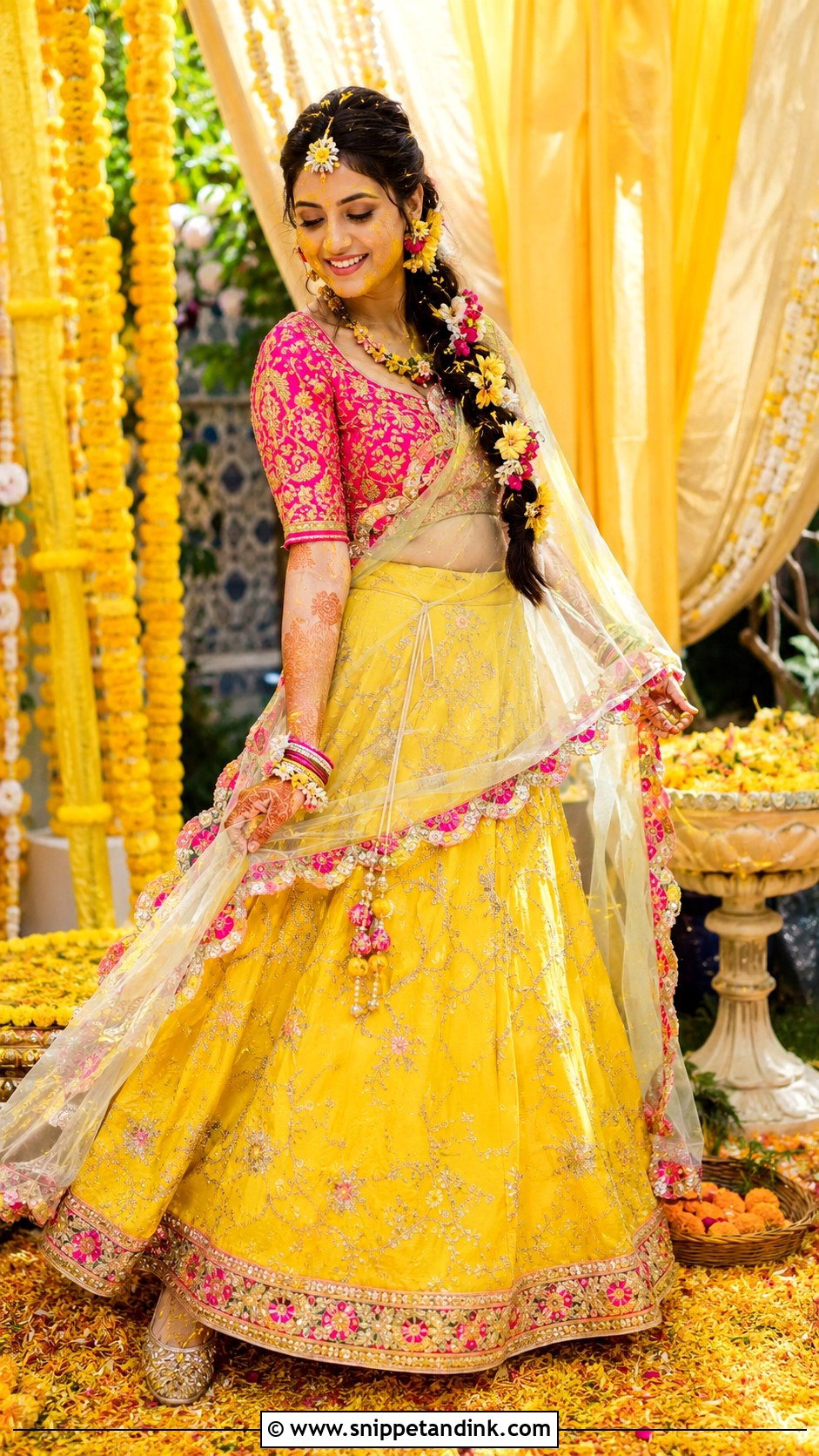
Pink and yellow is the pairing I suggest when the decor is all yellow and the bride needs to stand apart from it. A yellow lehenga or sharara with a hot pink blouse and a dupatta that carries both colors works well; reverse it, pink skirt and yellow top, if the room is wall-to-wall marigold. Gold earrings, multicolored bangles and pink or metallic juttis complete it. Brides can wear floral jewelry in both shades, while guests should keep to one statement accessory. A sleek ponytail, flower-trimmed braid or low bun calms the strong color. It reads clearly in daylight, even against busy floral backdrops.
What Happens After the Paste Comes Off?
Haldi is often followed the same day by another function, so the change of clothes needs as much planning as the outfit itself. These are the things I ask a bride to set aside the night before.
- A dark bag for the wet outfit, so it doesn’t stain the car seat or the rest of the luggage.
- Skin-tone undergarments for the ceremony itself. White ones come out yellow and usually stay that way.
- An old towel you don’t mind losing to turmeric, and slip-on shoes for walking to the bath.
- A gentle cleanser for the skin. Gram flour mixed with yogurt or milk lifts the yellow tint better than harsh scrubbing, and any faint glow left behind usually fades within a day or so.
Keep makeup minimal under the paste and have your makeup artist book the full look after you’ve bathed. Hair is the same: oil, flowers and paste all end up in it, so I don’t plan a polished style for the next event unless there’s time to wash and dry properly in between.
Expect Yellow Hands, and Dress Around Them
A good Haldi outfit is bright, washable or at least forgiving, easy to sit in, and finished with accessories that stay out of the way of the paste. The ideas above cover brides, sisters, bridesmaids, mothers and guests in traditional, modern and Indo-Western cuts. Before you buy, think about the venue, the weather, your family’s customs and how much turmeric is likely to land on you. Firm pinning and cushioned flats make a bigger difference than people expect. Then wear what feels like you, whether that’s a classic yellow saree, a floral lehenga, a simple kurta set or a contemporary co-ord.
You'll Like These Ideas:




Leave a Reply