
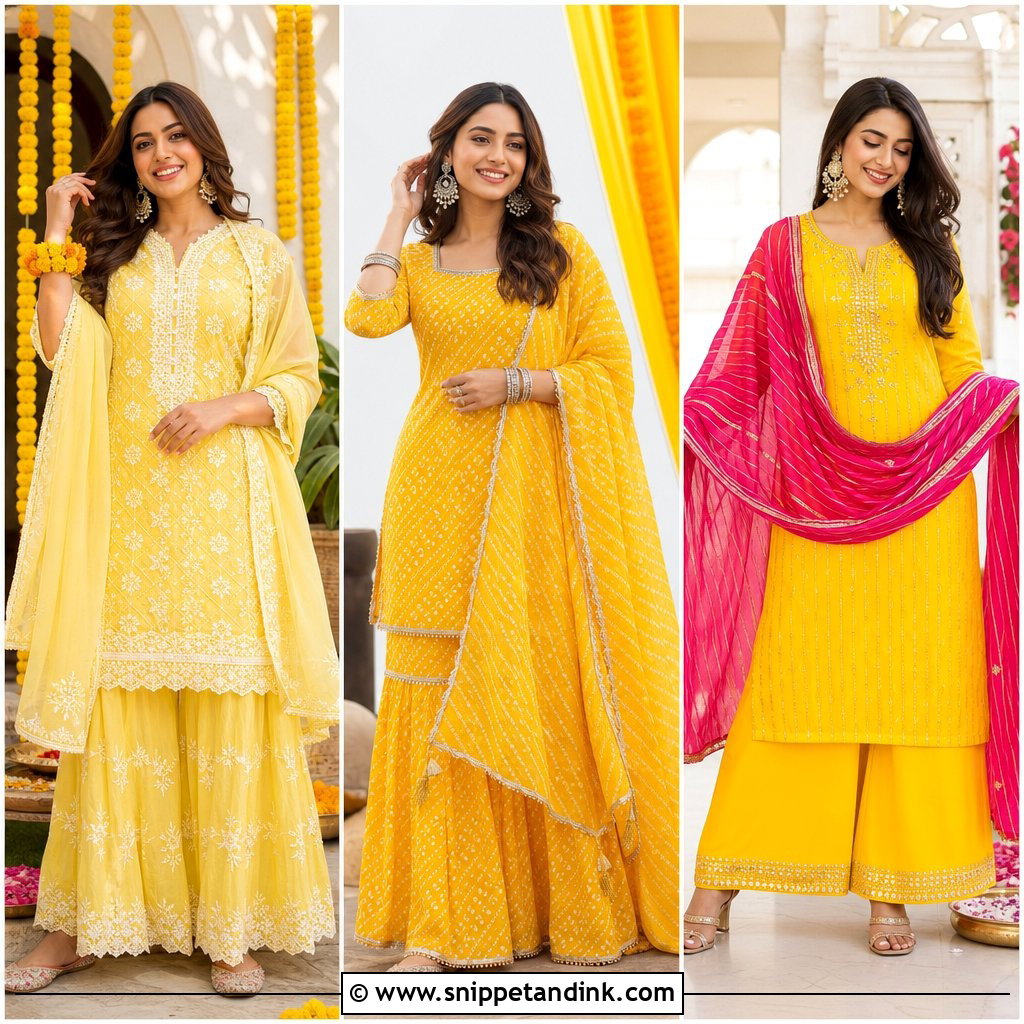
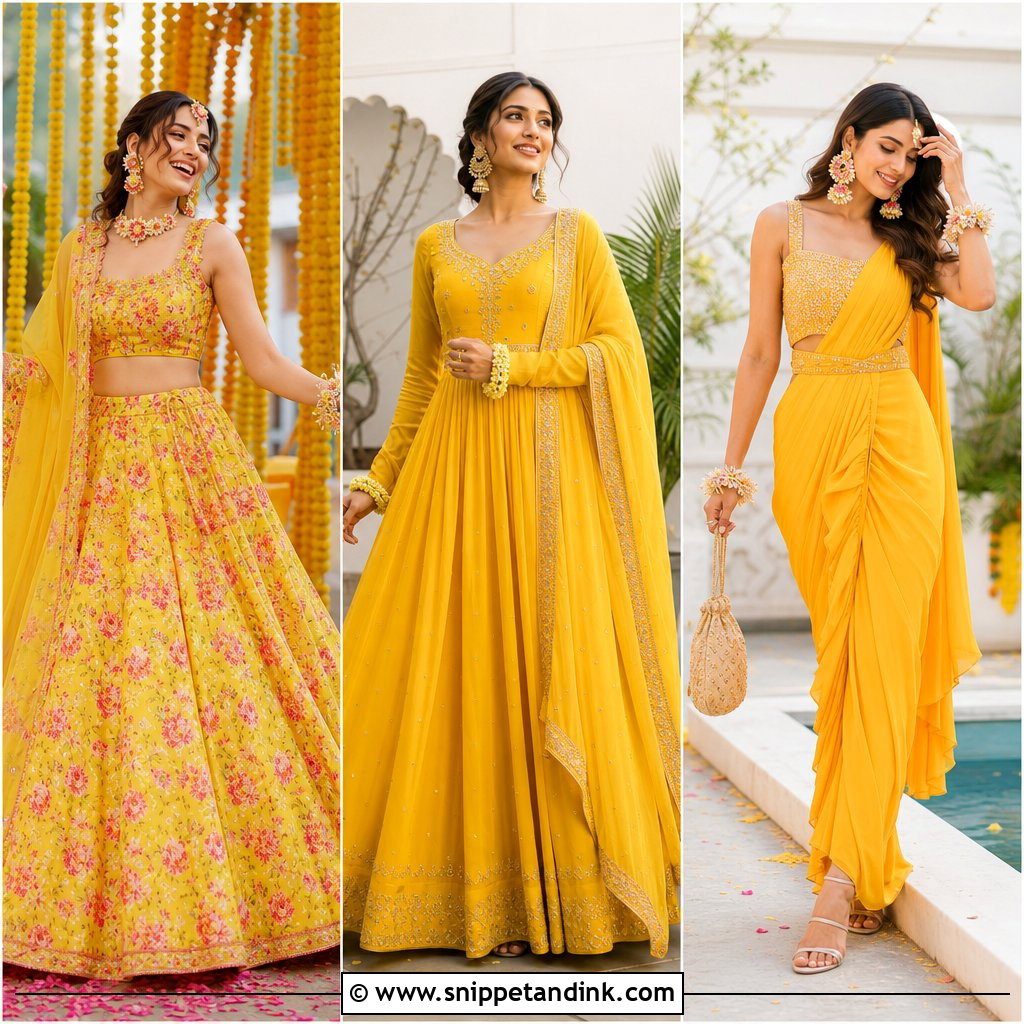
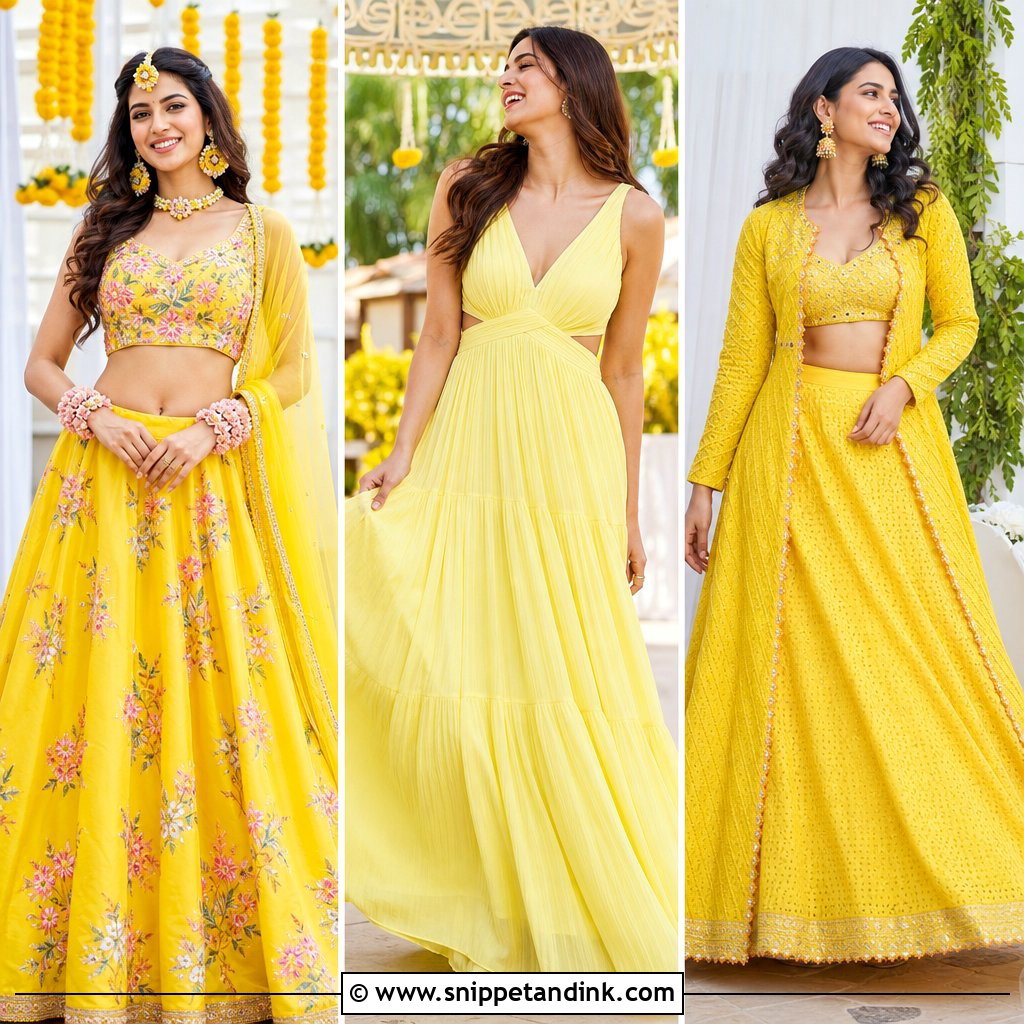
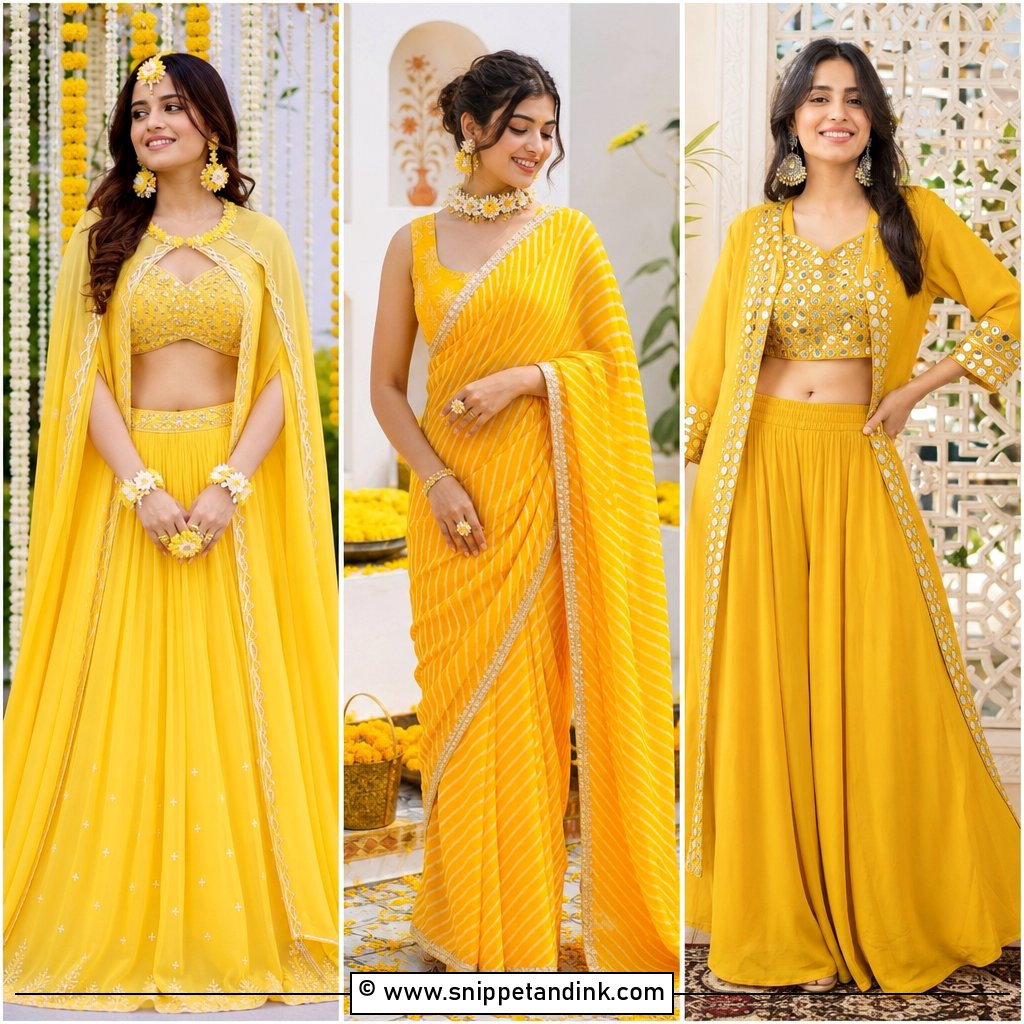
Yellow haldi outfits for brides have a different brief from every other wedding look. You’ll be sitting low, laughing, getting turmeric rubbed onto your face, arms and feet, and possibly getting doused with water at the end. So my first questions are always practical: how much of your arms will be bare, how long will you sit, and how do you feel about the outfit being ruined. The answers decide between a light lehenga, a pre-draped saree, a sharara, an Anarkali, a co-ord or a fusion set. Organza, georgette, cotton silk and chiffon all keep the look festive while letting air through, and floral jewellery, gota patti, mirror work and tassels can make even a simple outfit feel bridal. Each look below includes a note on how it behaves during the ritual itself.
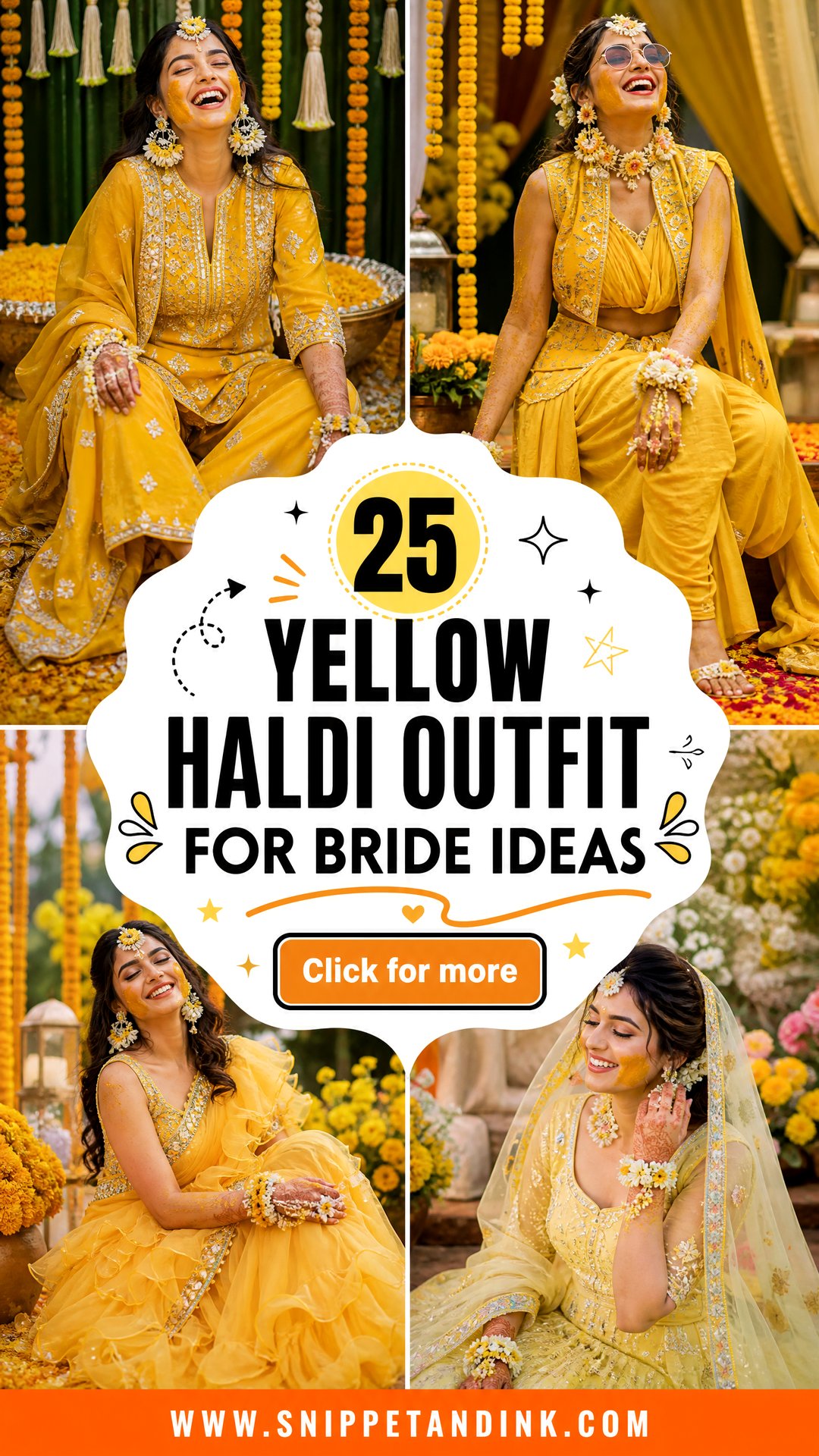
Where the Paste Goes Decides the Blouse and Sleeves
Before I look at fabric, I ask the bride to find out exactly how her family does the ritual. Customs vary, but in most haldis relatives apply the paste to the face, neck, arms, hands and feet, and in some families to the knees and back too. Some end with water poured over the bride. Knowing this changes the cut.
- If arms get covered to the shoulder, choose a sleeveless or cap-sleeve blouse. Long sleeves end up pushed up and stained anyway.
- If feet and ankles are included, wear an outfit that ends above the ankle, or pin the hem up while you sit.
- If water is poured at the end, avoid silk, organza and heavy gota, which mark and tarnish when soaked. Cotton and georgette dry far better.
- If you’re sitting on a low stool or the floor, test the outfit seated before the day. A lehenga waist or fitted gharara feels very different after an hour on the ground.
It’s also worth deciding on hair early. Many brides wear it in a braid or bun with oil or a light serum underneath, which makes turmeric easier to rinse out than from freshly blow-dried hair.
1. Yellow Haldi Lehenga for Bride
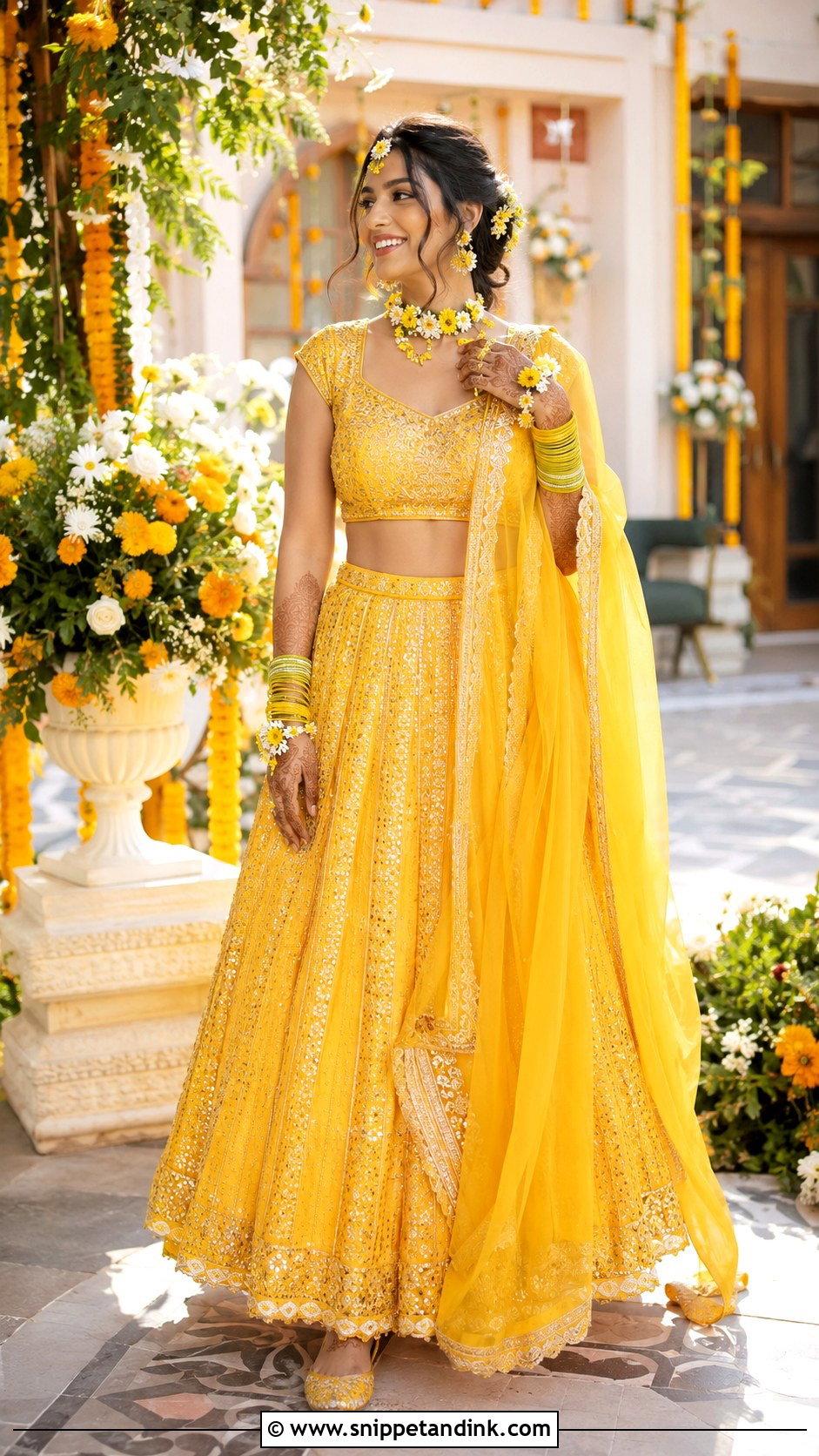
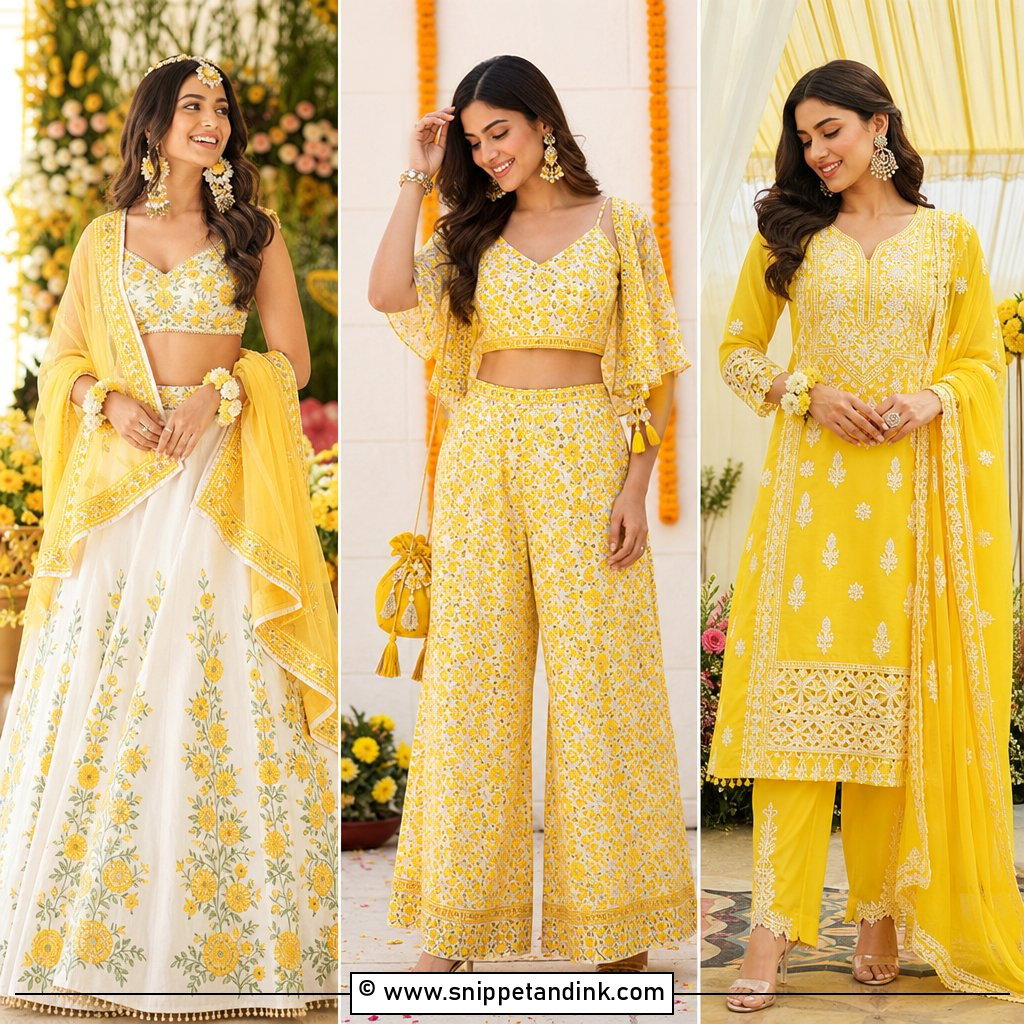
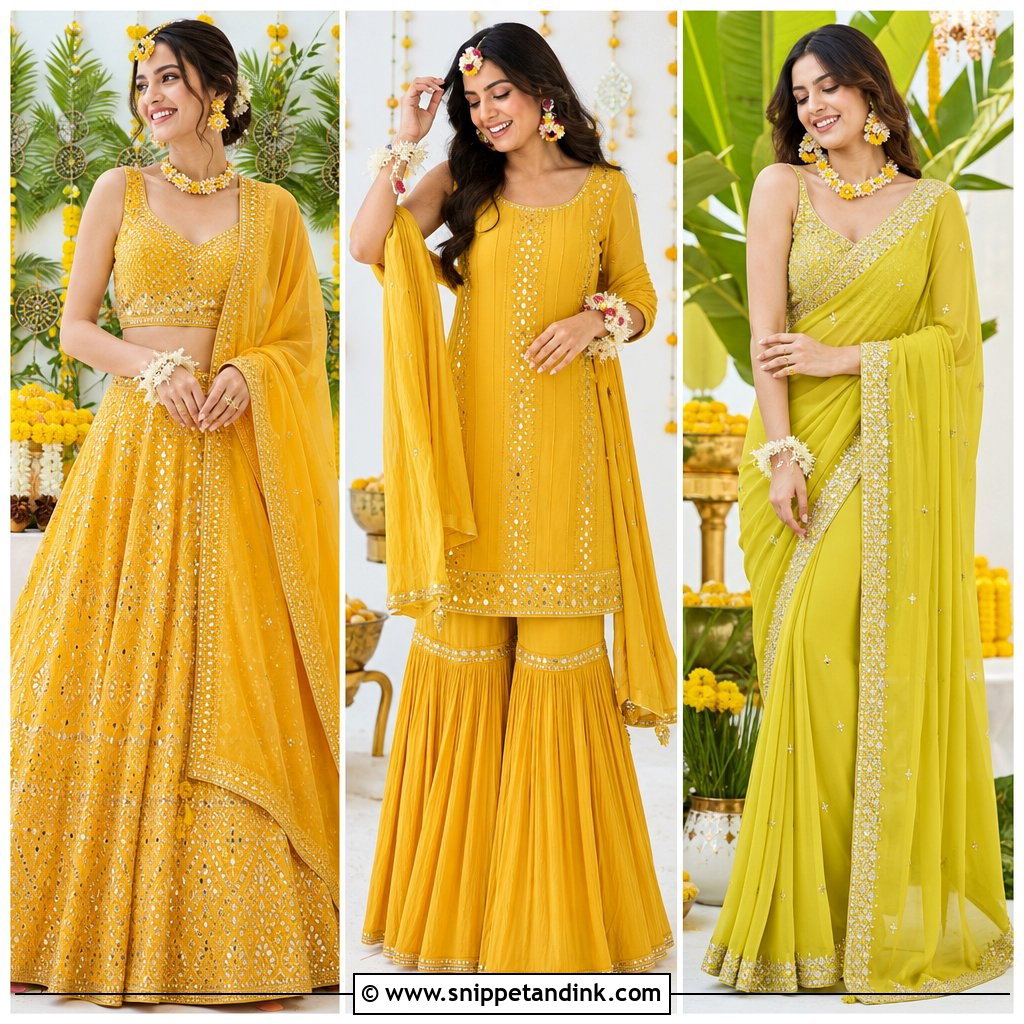
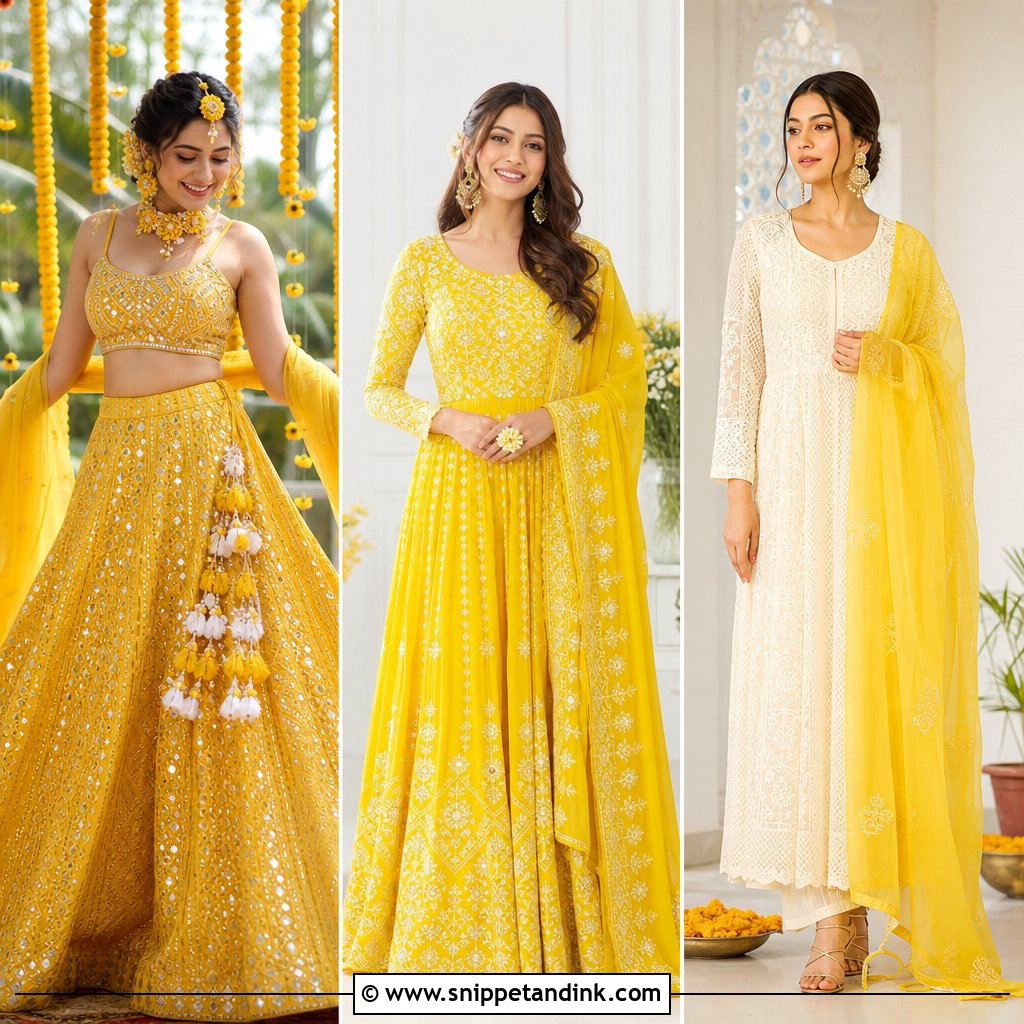
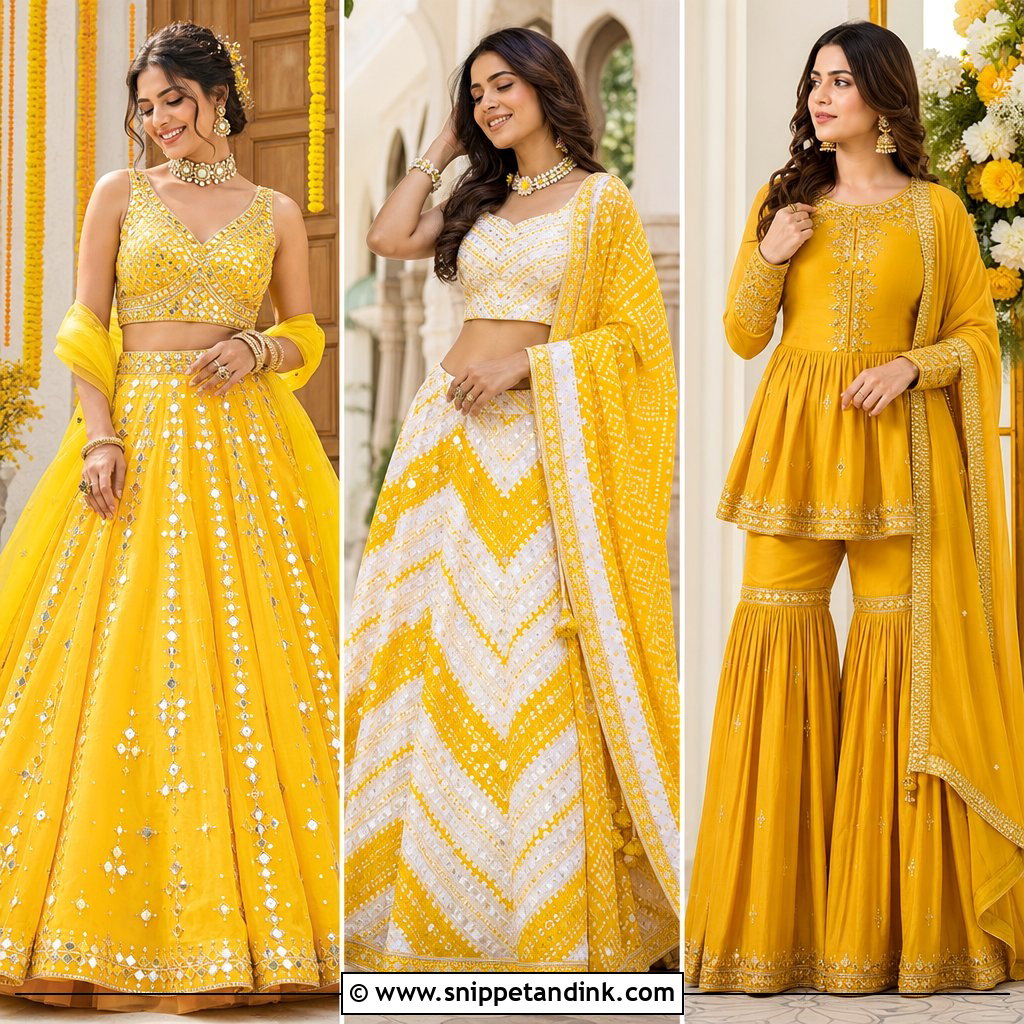
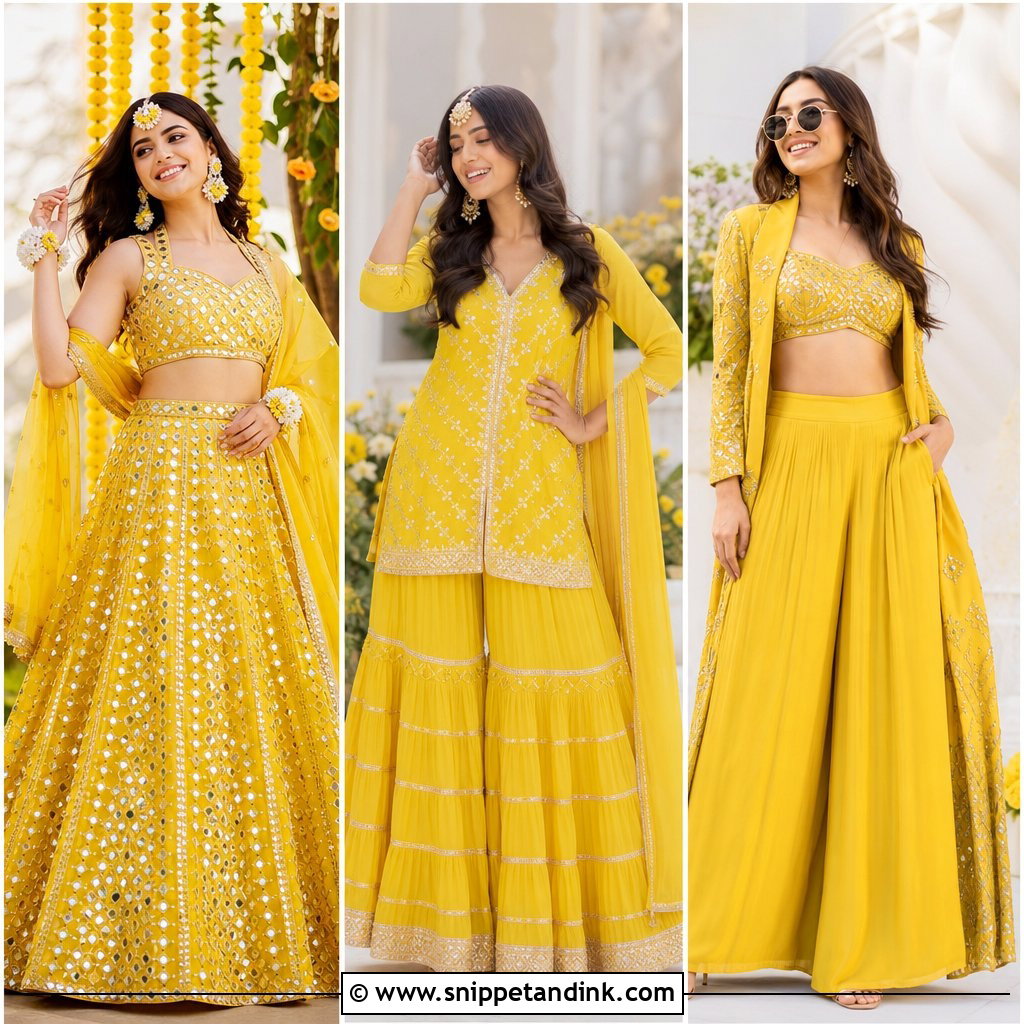
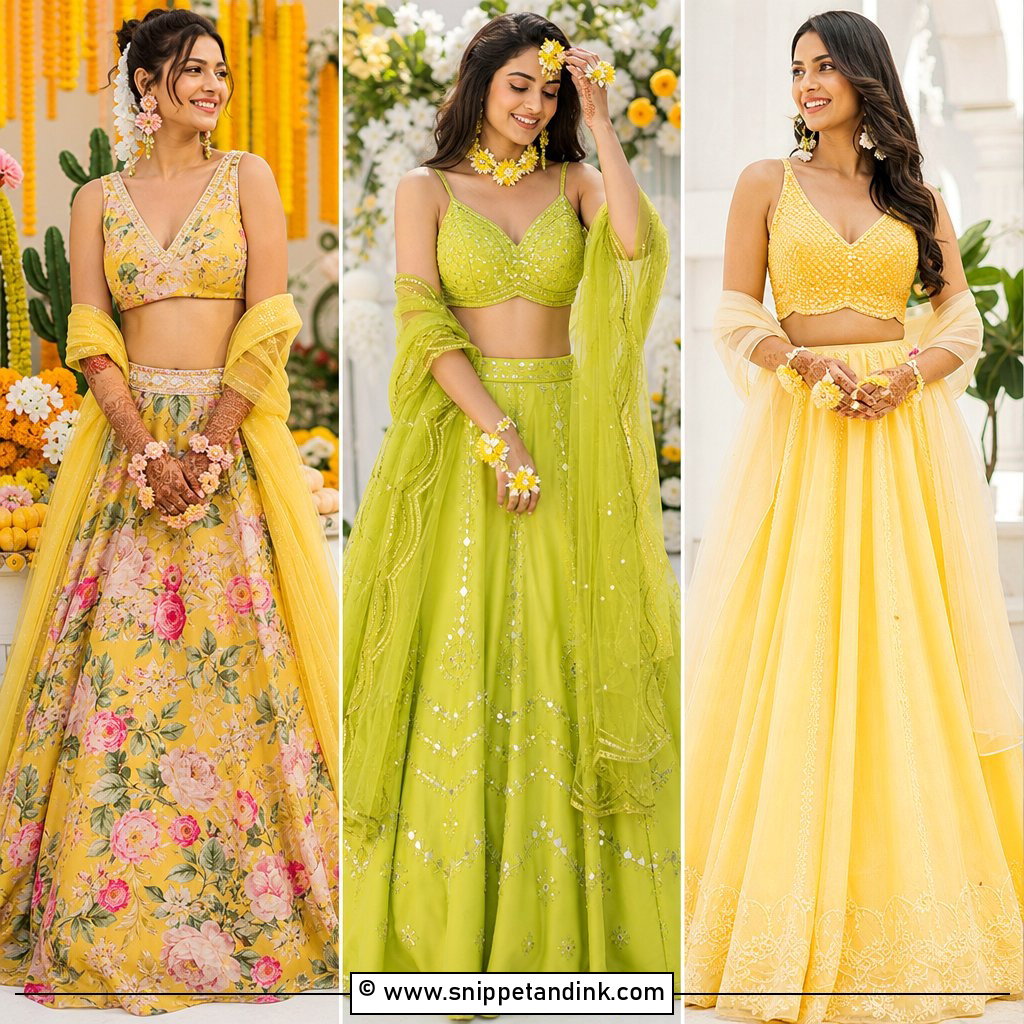
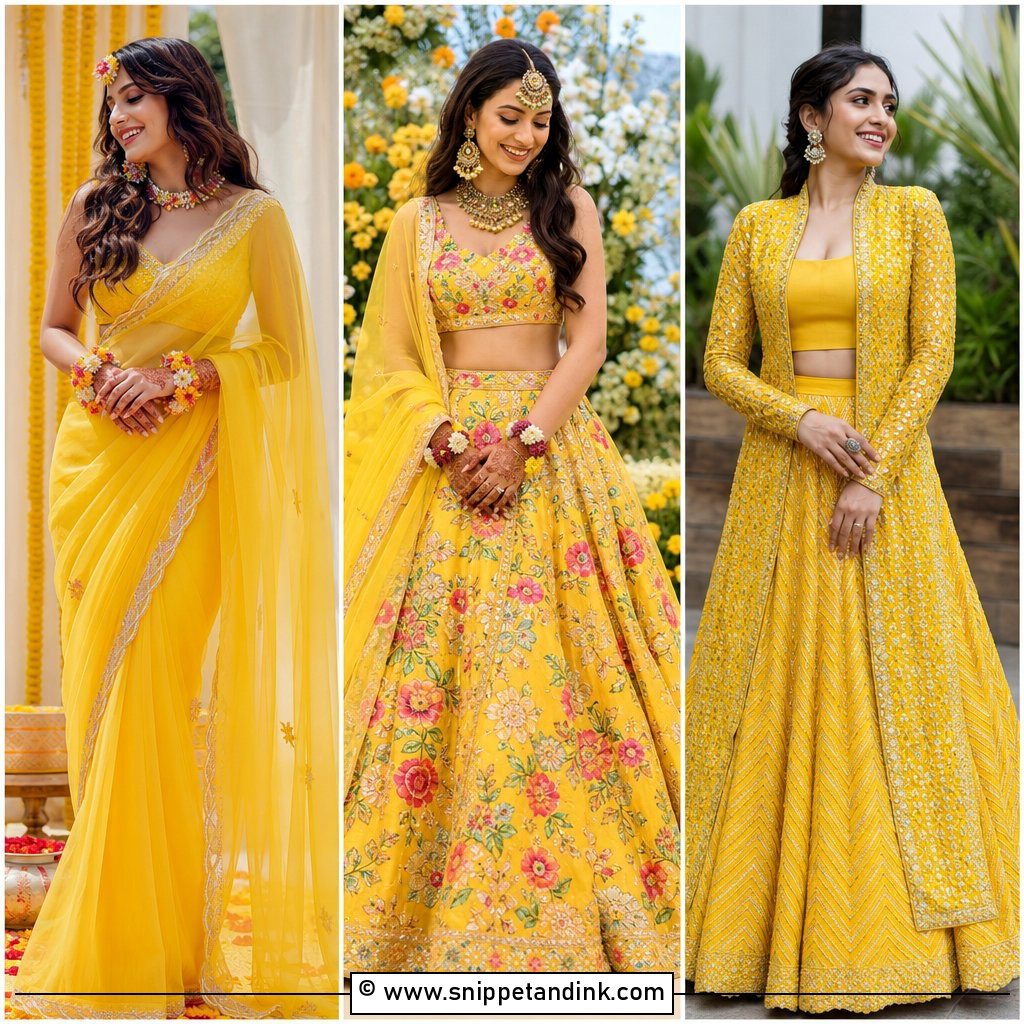
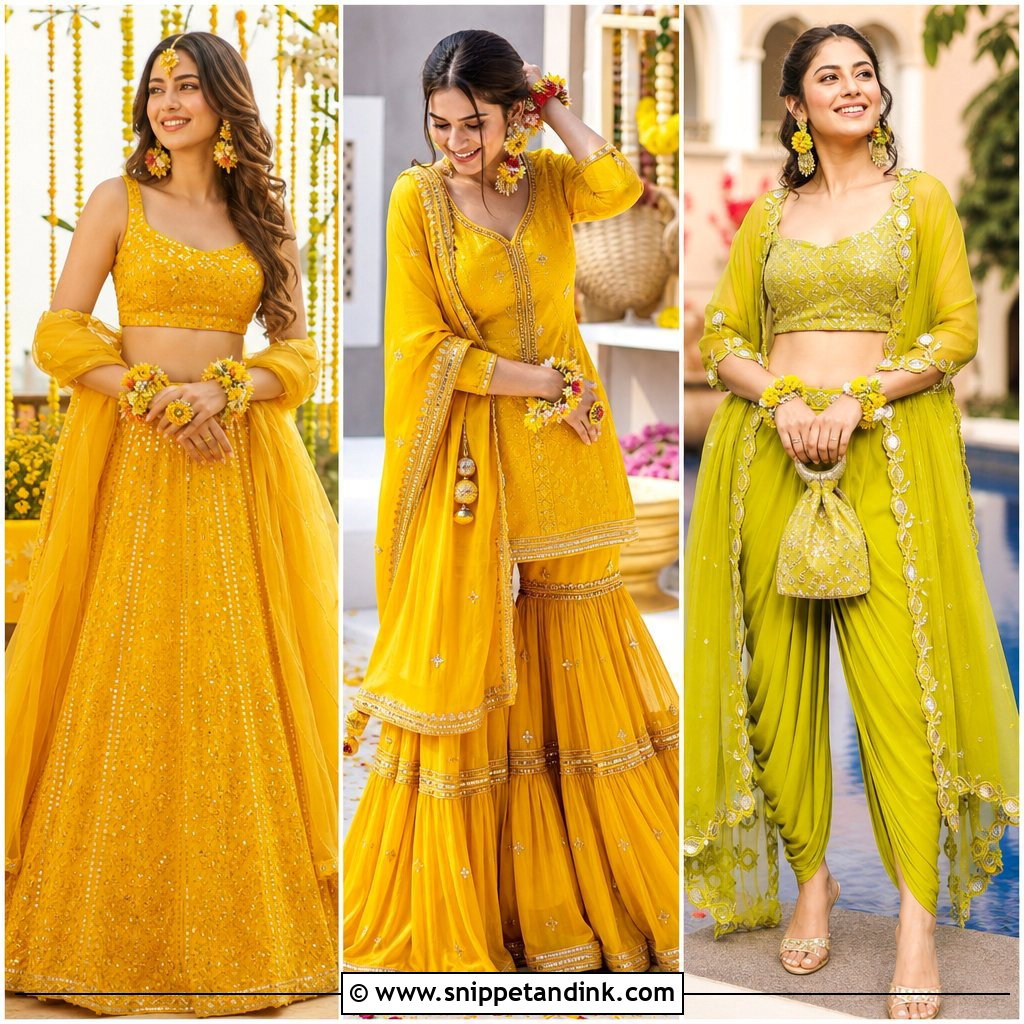
The lehenga is the version most families picture, and it photographs well in twirls. What I change for haldi is the weight. A bridal lehenga for the wedding night can carry several kilos of work; a haldi lehenga should be light enough that you can sit cross-legged for an hour without the waistband cutting in. Gota patti, mirror work, thread embroidery or a scatter of sequins is plenty. Pair a short blouse with a soft dupatta, floral jewellery, juttis and dewy makeup. If your guests are also in yellow, go a shade richer, marigold or golden, so you’re still the one people look at.
2. Yellow Floral Lehenga for Haldi
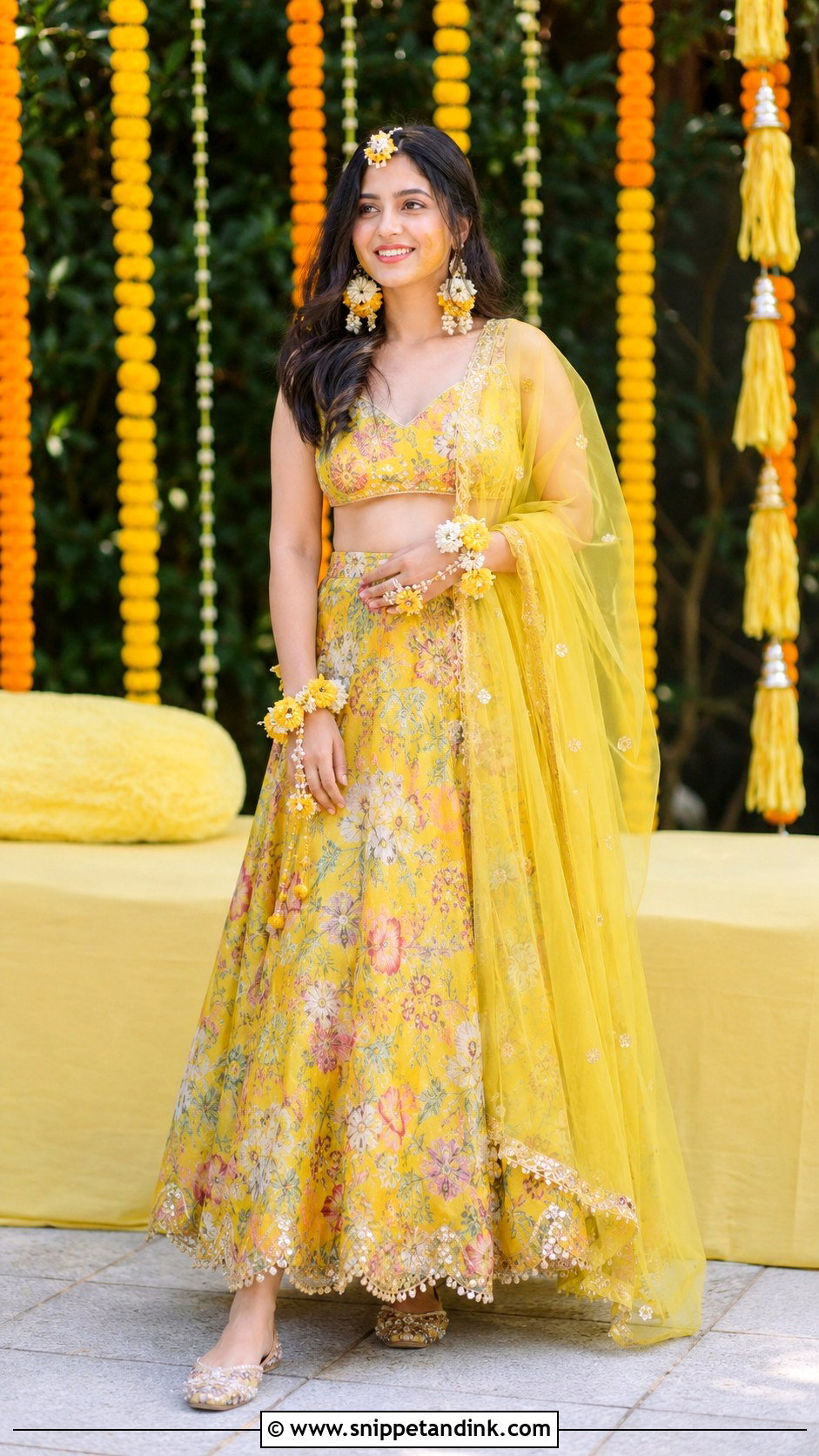
Floral print takes the edge off a strong yellow and suits a daytime ceremony. Large tropical blooms feel resort-like; small motifs feel softer and more garden. A contrast blouse in white, pink, peach or green adds a second colour without fuss. Printed lehengas are also the most forgiving for haldi, since a smear of paste disappears into the pattern. Keep the dupatta sheer, wear flower jewellery and a loose braid, and choose wedges or embroidered flats for uneven ground.
3. Yellow Mirror Work Lehenga for Haldi
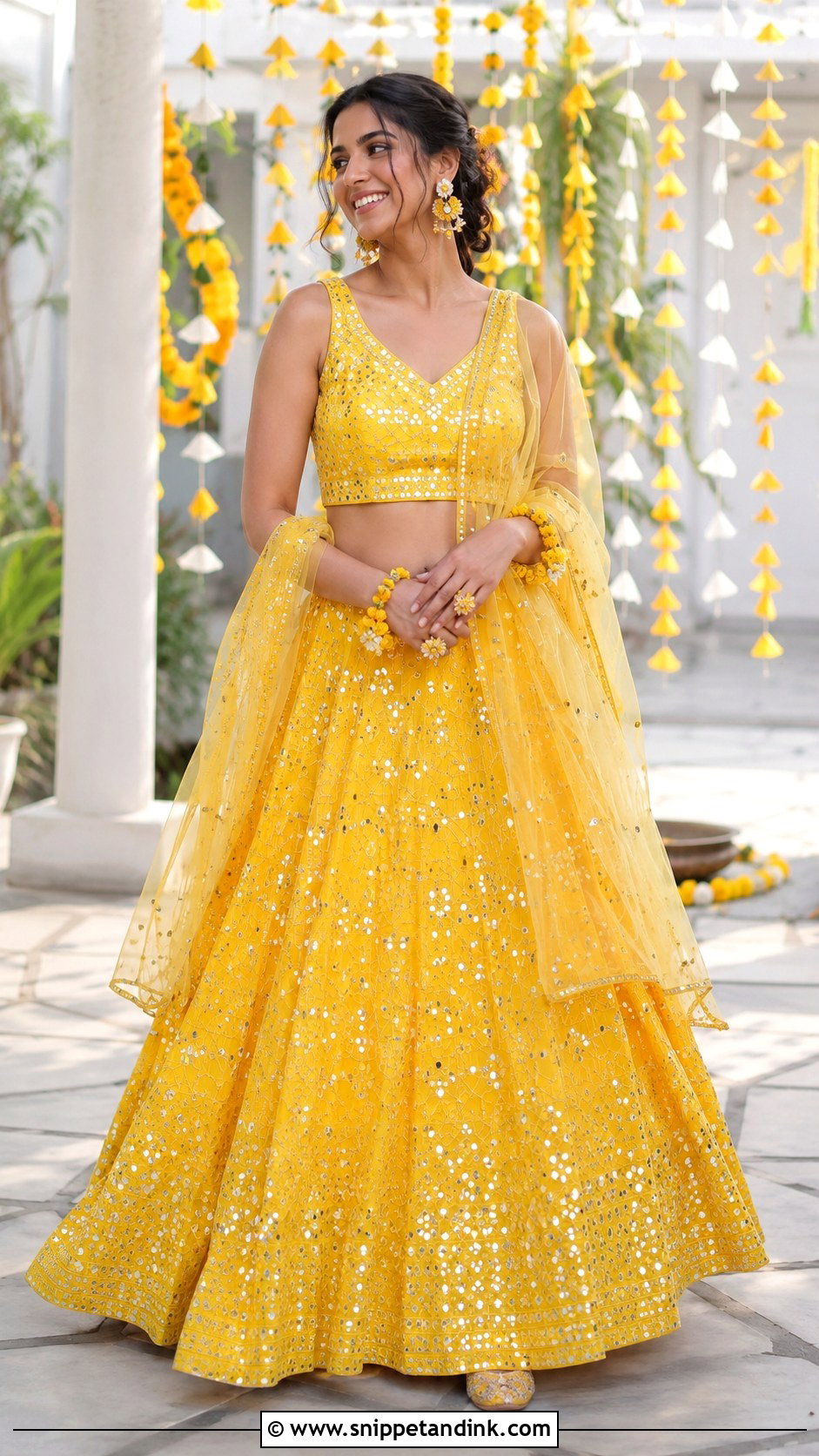
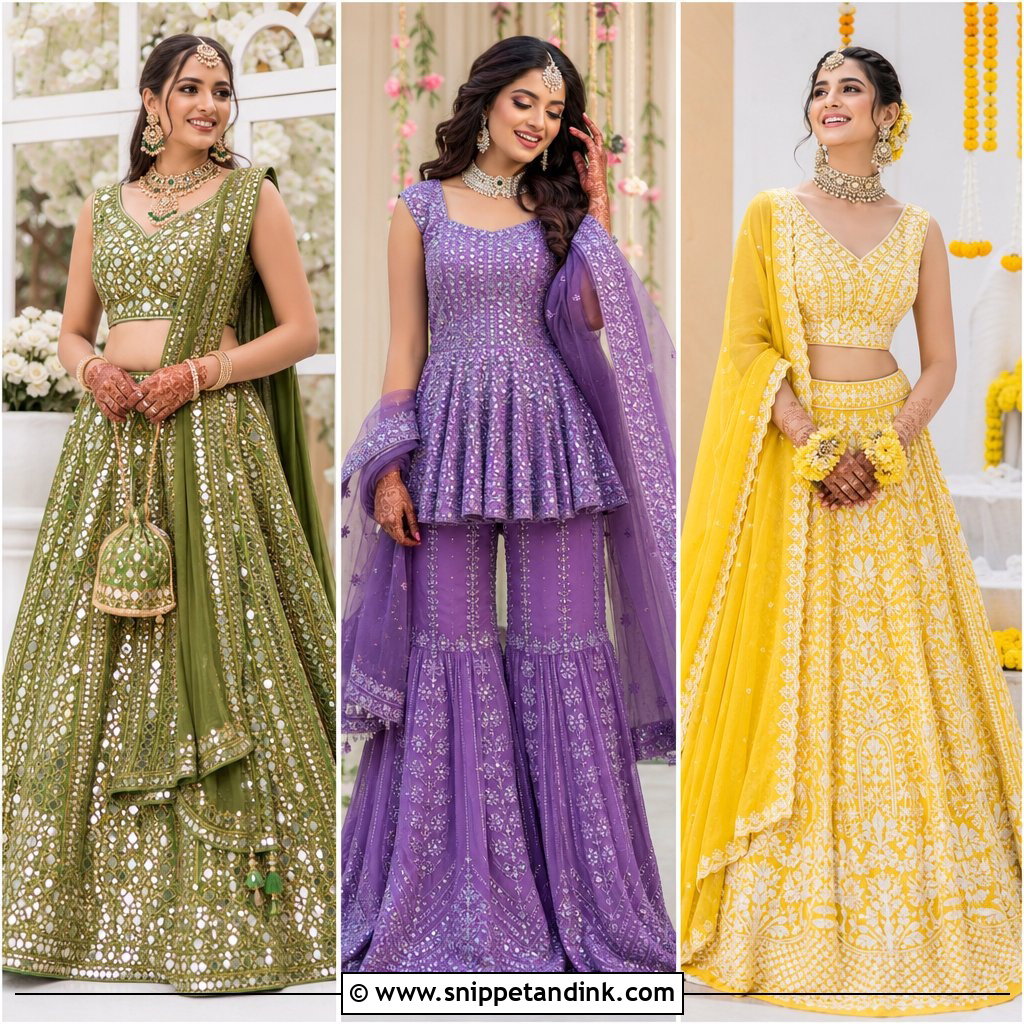
Mirror work catches sunlight better than anything else here, and outdoors it throws little flashes of light in every photo. For a bride, I prefer scattered mirrors over dense rows from waist to hem. Dense mirror work is heavy, stiff to sit in and the glass edges can snag a sheer dupatta. A sleeveless or short-sleeve blouse keeps your arms clear for the paste. Balance the shine with a plain-bordered dupatta, floral bangles, small earrings and fresh flowers in your hair.
4. Yellow Organza Saree for Haldi
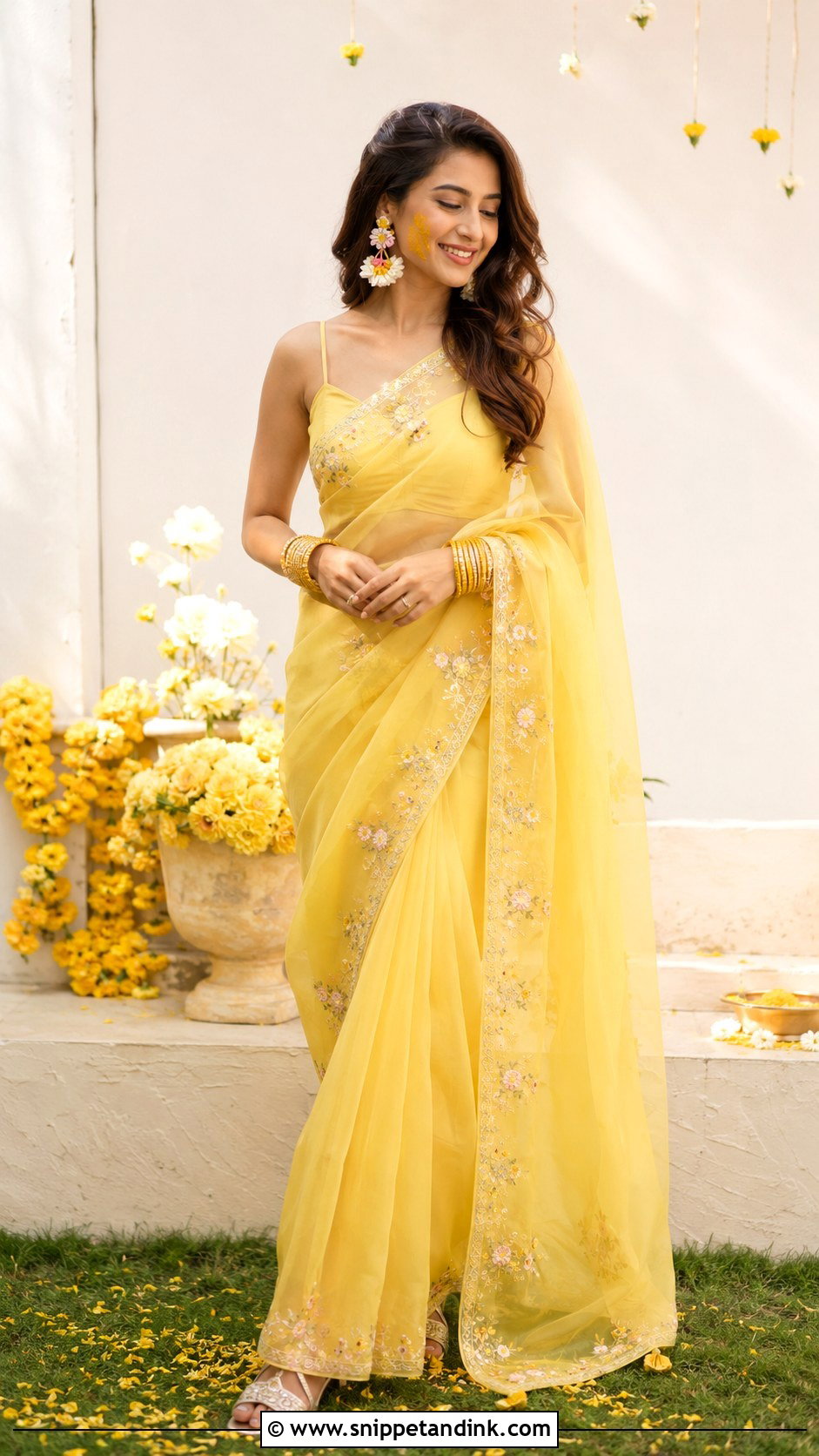
Organza holds a crisp shape and looks airy on camera, which is why so many brides choose it for haldi. Lemon or marigold with floral embroidery, scalloped edges or a fine gota border all work. A same-shade blouse looks polished; a contrast blouse adds personality. The trade-off is that organza is slippery and slightly sheer, so I pin the pleats more firmly than I would on cotton silk, and I’d keep it for a bride who’s happy to have the paste applied gently rather than smeared. Floral earrings, stacked bangles and soft waves finish it.
5. Yellow Pre Draped Saree for Haldi
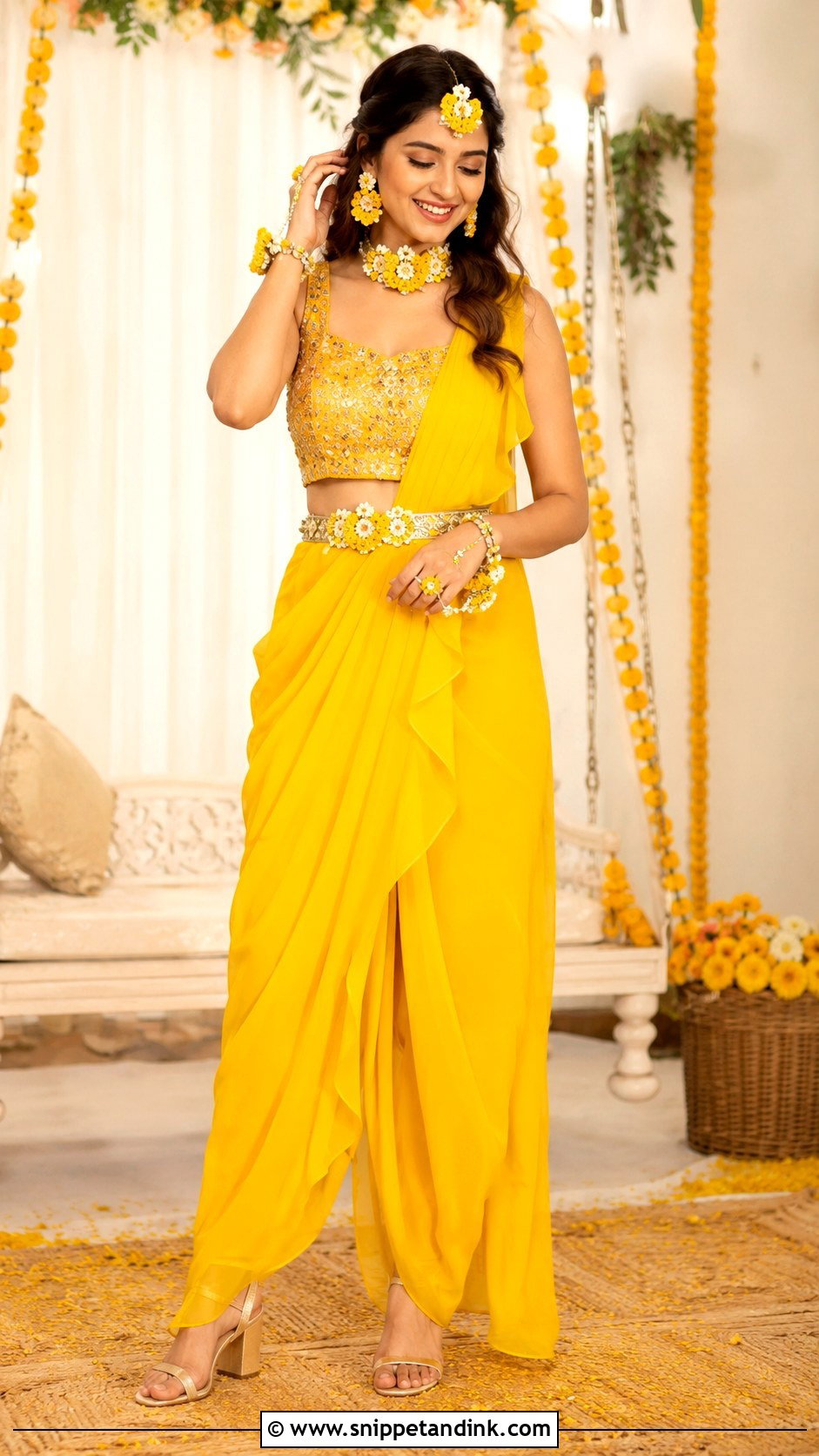
A pre-draped saree gives the look of a saree with none of the re-pleating. It’s stitched into shape, so pleats stay where they are when you stand up, sit back down and get pulled into a dance. Georgette, chiffon or crepe gives a fluid line. A ruffled pallu, a belt or an embroidered blouse brings in the bridal detail. Ask your tailor to add a hook or two at the waist for extra hold. Floral jewellery, block heels and a sleek bun suit it well.
6. Yellow Sharara Set for Haldi Bride
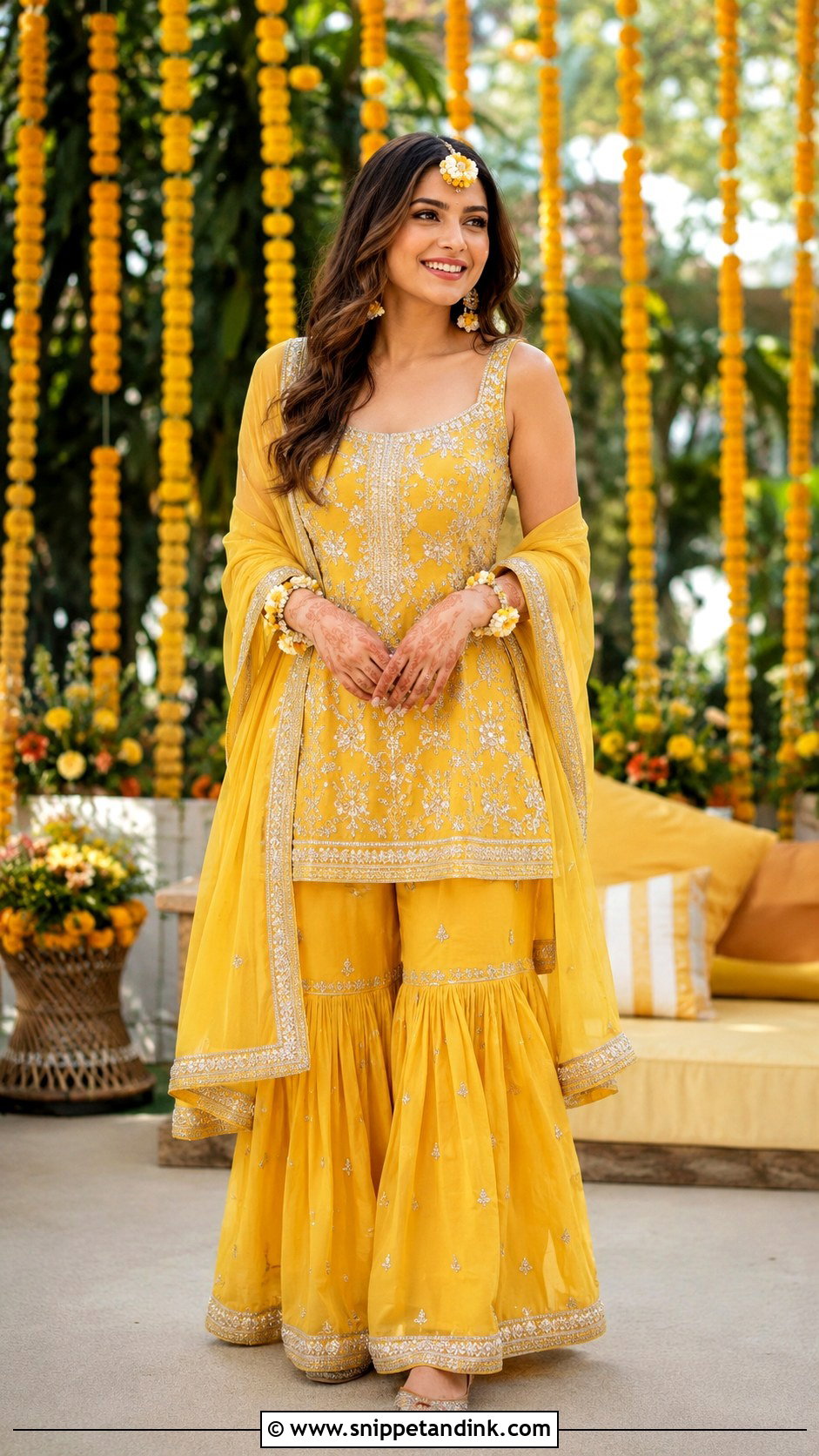
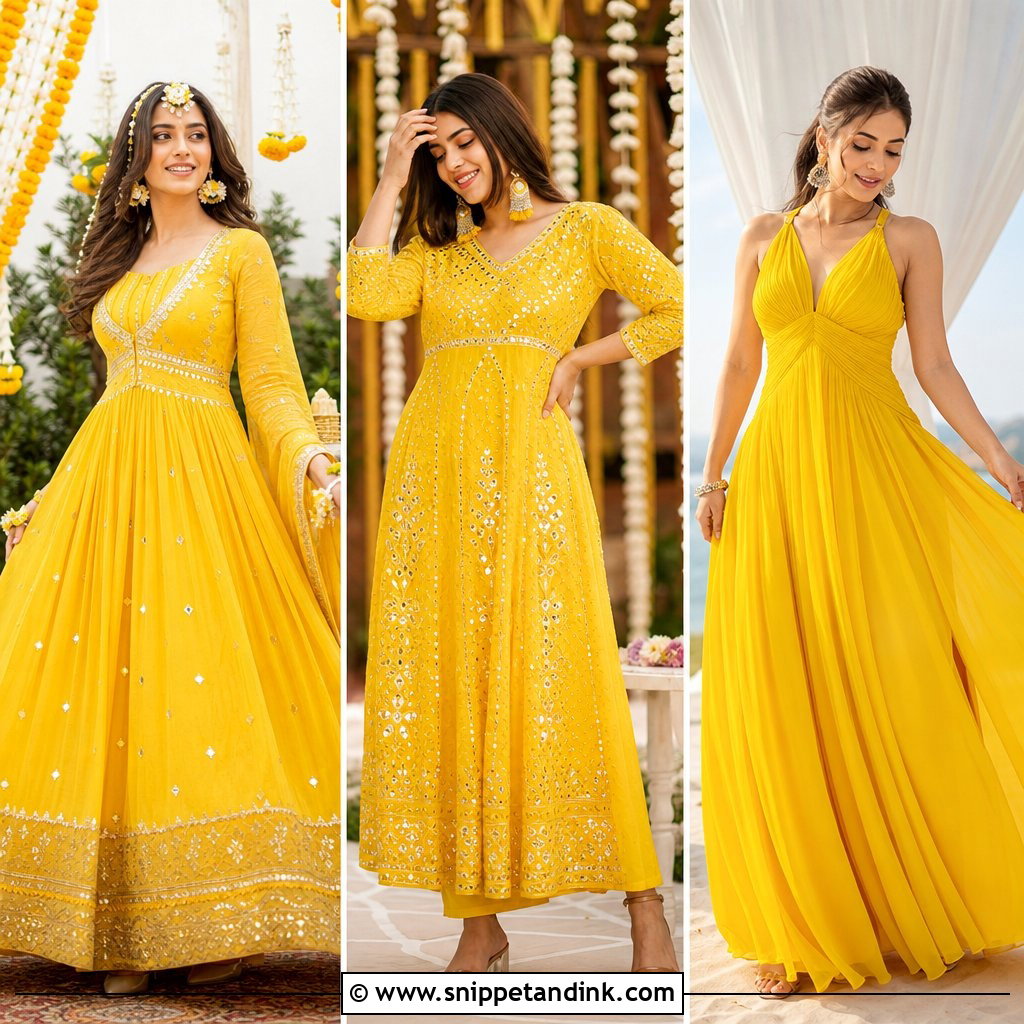
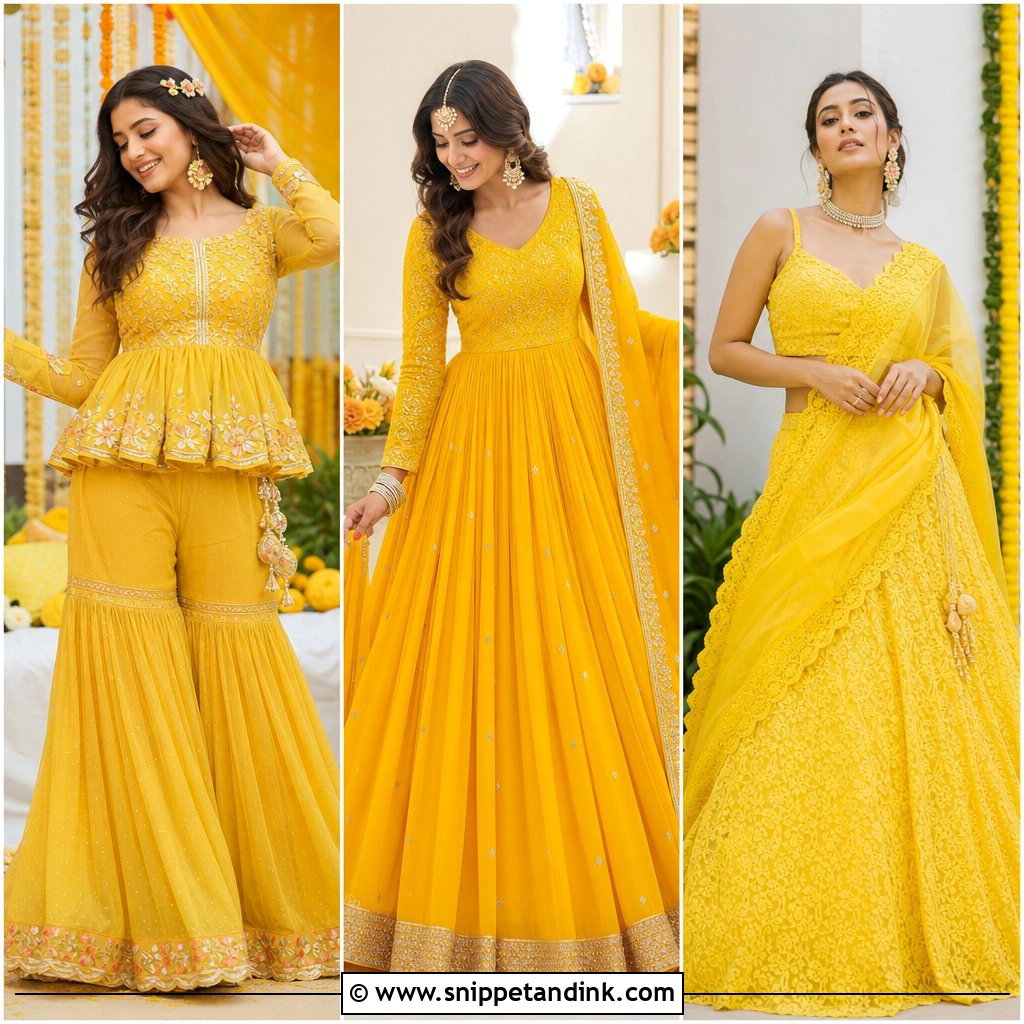
Sharara sets are the outfit I recommend most to brides who want to dance at their own haldi. The wide legs move like a skirt but don’t trap your feet when you stand quickly. A short kurti with gota patti, mirror work or thread embroidery keeps it festive. Pin the dupatta to one shoulder for hands-free comfort, since you’ll be holding plates of paste and accepting hugs. Juttis, a floral haathphool, statement earrings and a fresh gajra complete it without any of a lehenga’s weight.
7. Yellow Gharara Set for Haldi
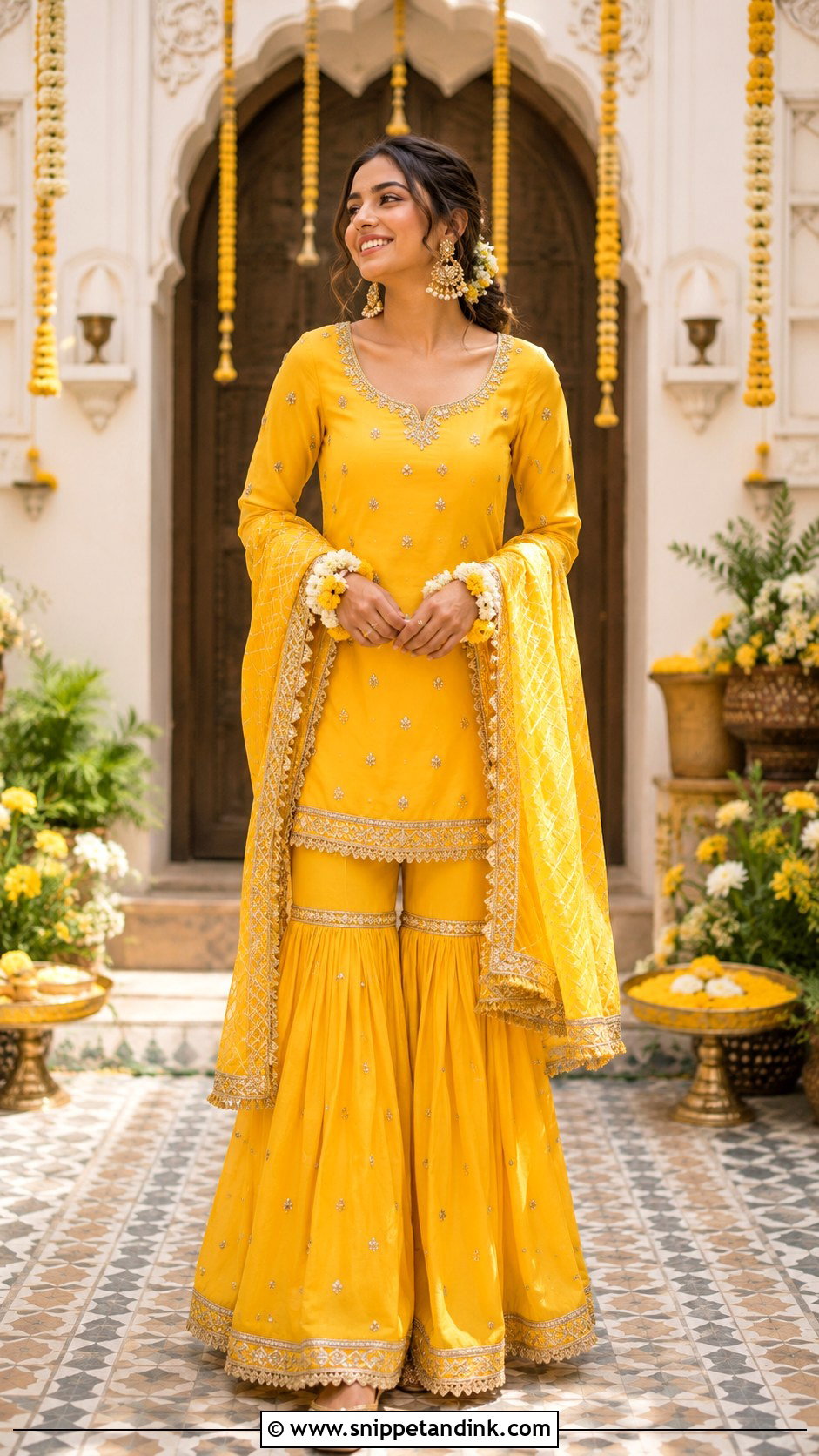
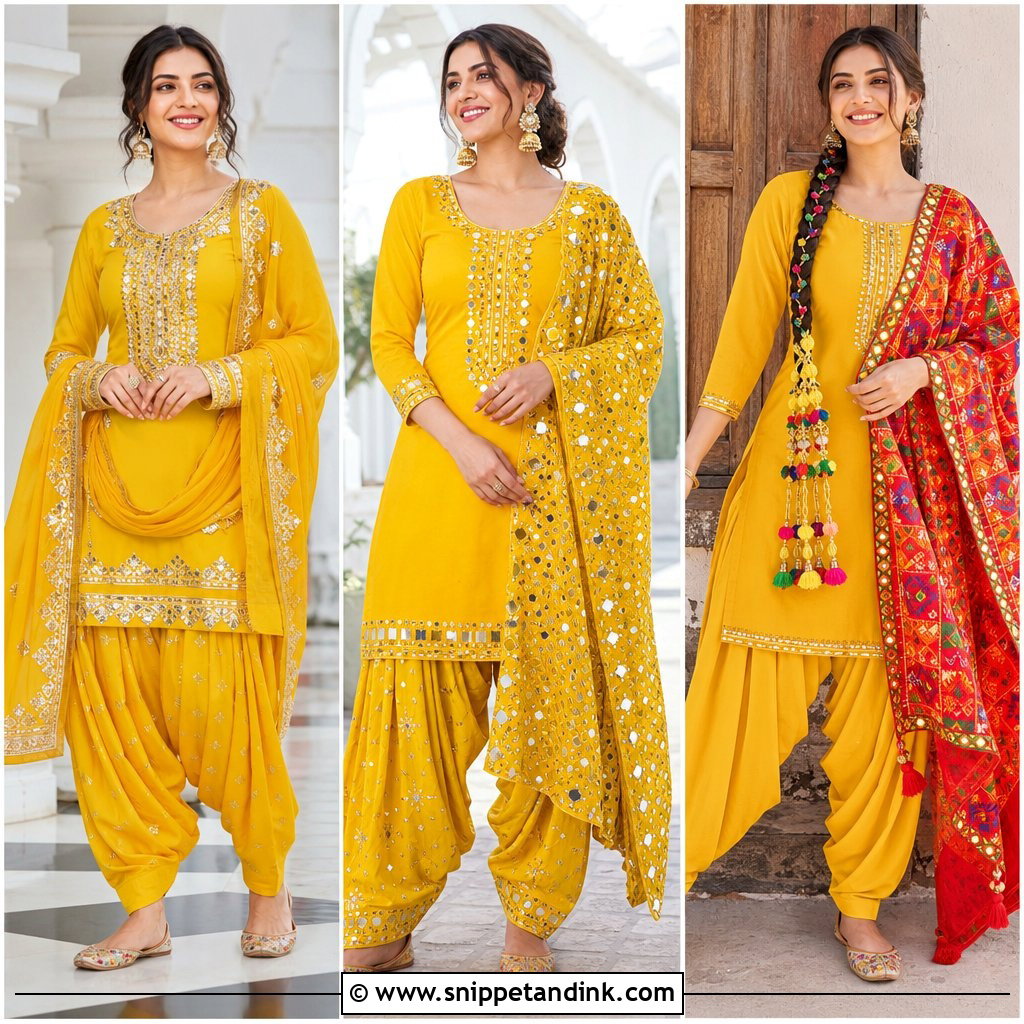
A yellow gharara set has an old-world, courtly feel. It’s fitted through the thigh and gathered into a flare at the knee, usually joined with a decorative band. That shape looks distinct from a sharara, but the fitted upper leg does make sitting cross-legged harder, so I’d try it on the floor before buying. Soft yellow with gold lace, mirror work or chikankari is balanced; a short kurti keeps the proportions right. Passa-style earrings, floral bangles, embroidered flats and a soft pink lip finish it.
8. Yellow Anarkali for Haldi Bride
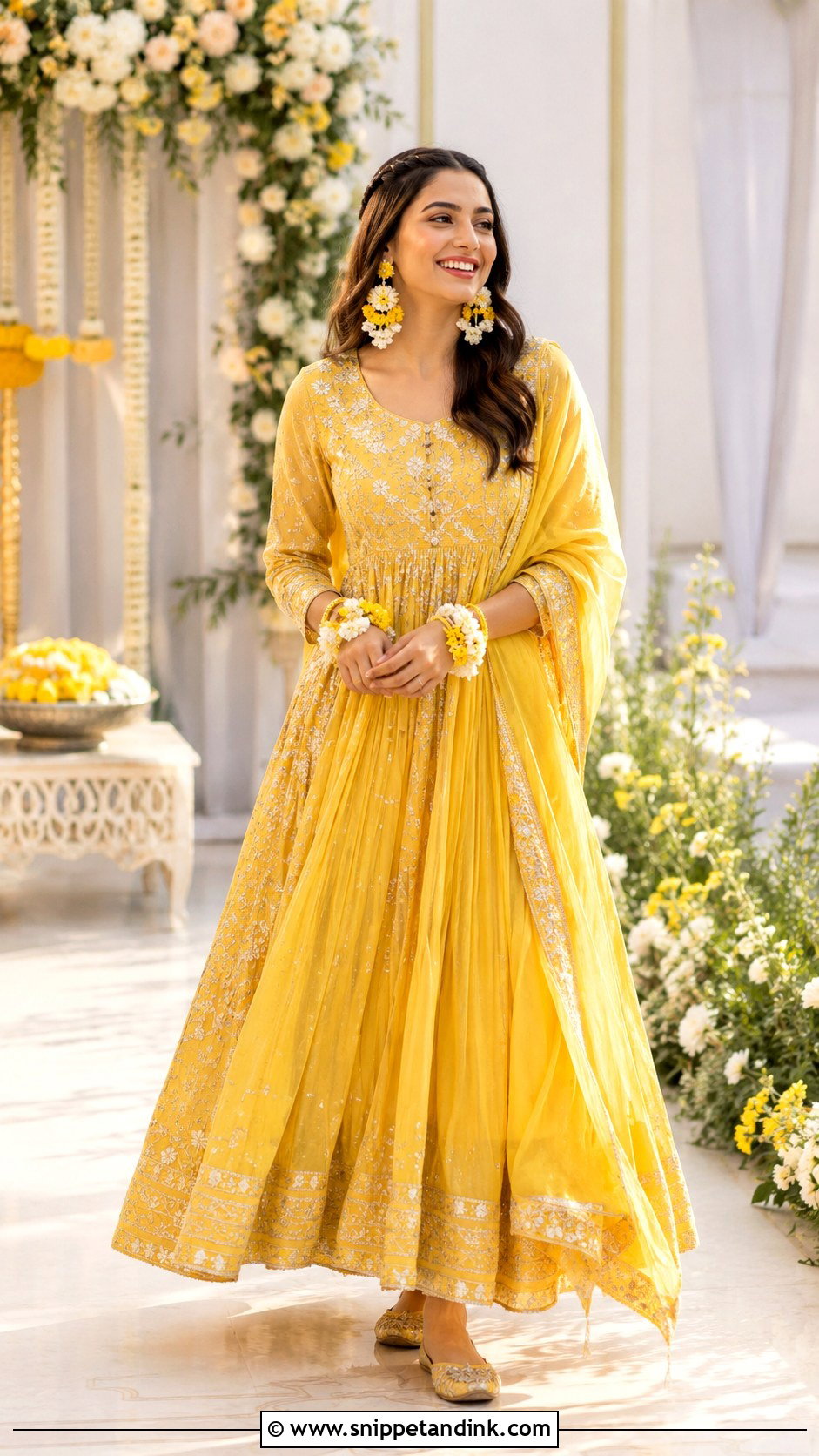
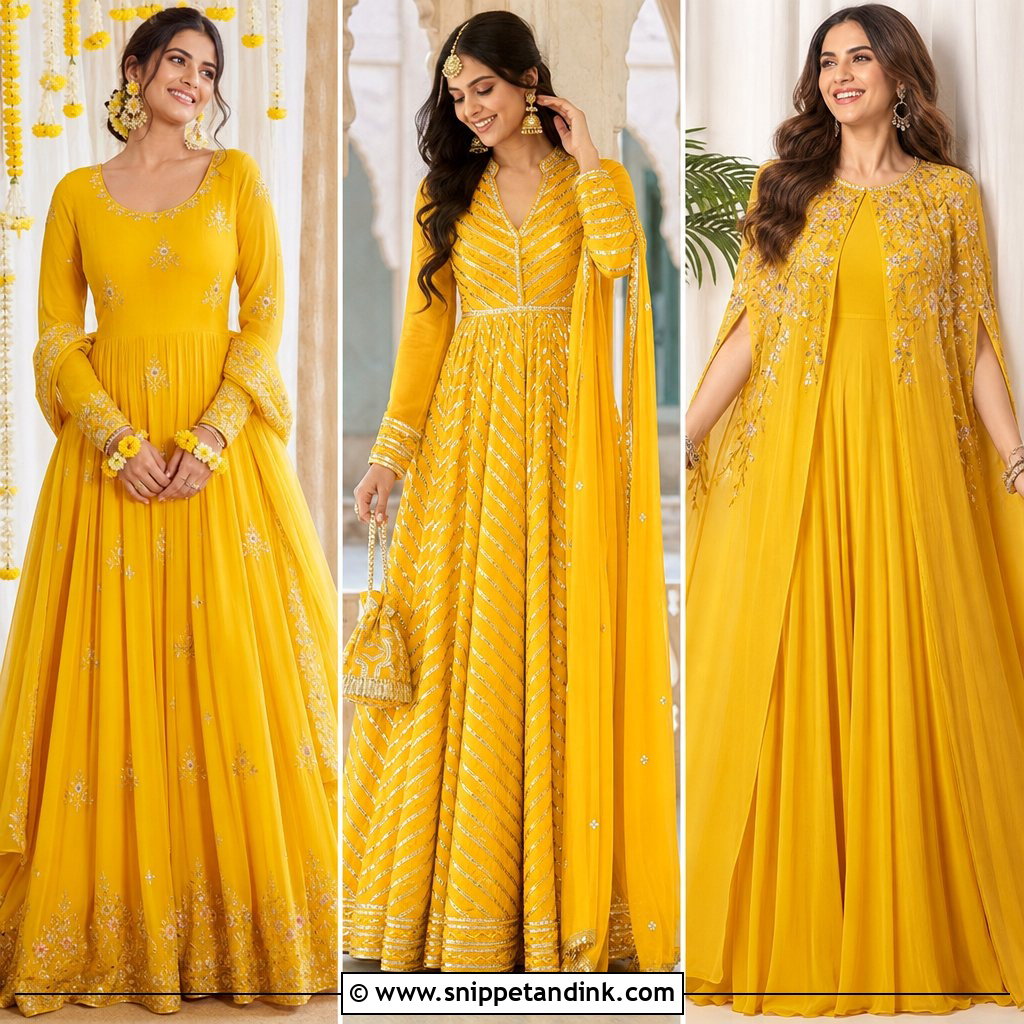
An Anarkali gives a graceful, flowing shape with very little fuss: one piece on top, one underneath, a dupatta. Cotton silk, georgette or chiffon keeps it cool. Embroidery at the neckline, sleeves and hem looks bridal without weight. My one practical edit for haldi is length, because a floor-sweeping Anarkali soaks up turmeric and water from the floor, so I take it to mid-calf or ankle. The fitted bodice and flared skirt suit most figures. Juttis and floral jewellery finish it.
9. Yellow Chikankari Suit for Haldi
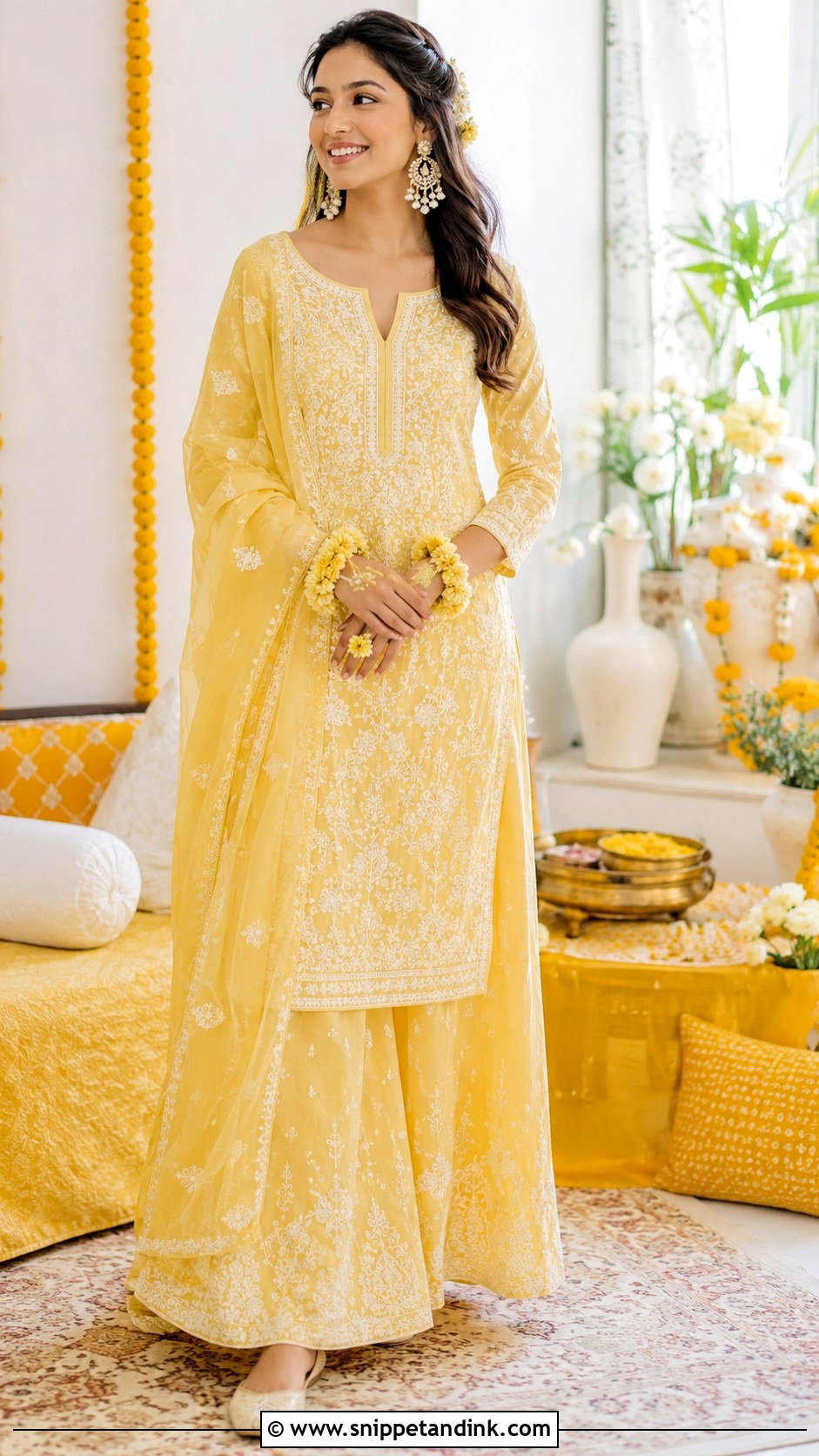
Chikankari suits a quieter, more intimate haldi at home. The shadow embroidery gives texture without shine, and it’s cool in heat. A straight kurta, palazzos and a flowy dupatta with lace edging look refined. Lemon, butter and pastel yellow all work against white threadwork. Fine chikankari cotton can be sheer, so check the lining in sunlight. Pearl jewellery, floral bracelets and flowers in a braid or bun complete it, and it’s one of the few haldi outfits you’ll genuinely wear again.
10. Yellow Kurta Palazzo Set for Haldi
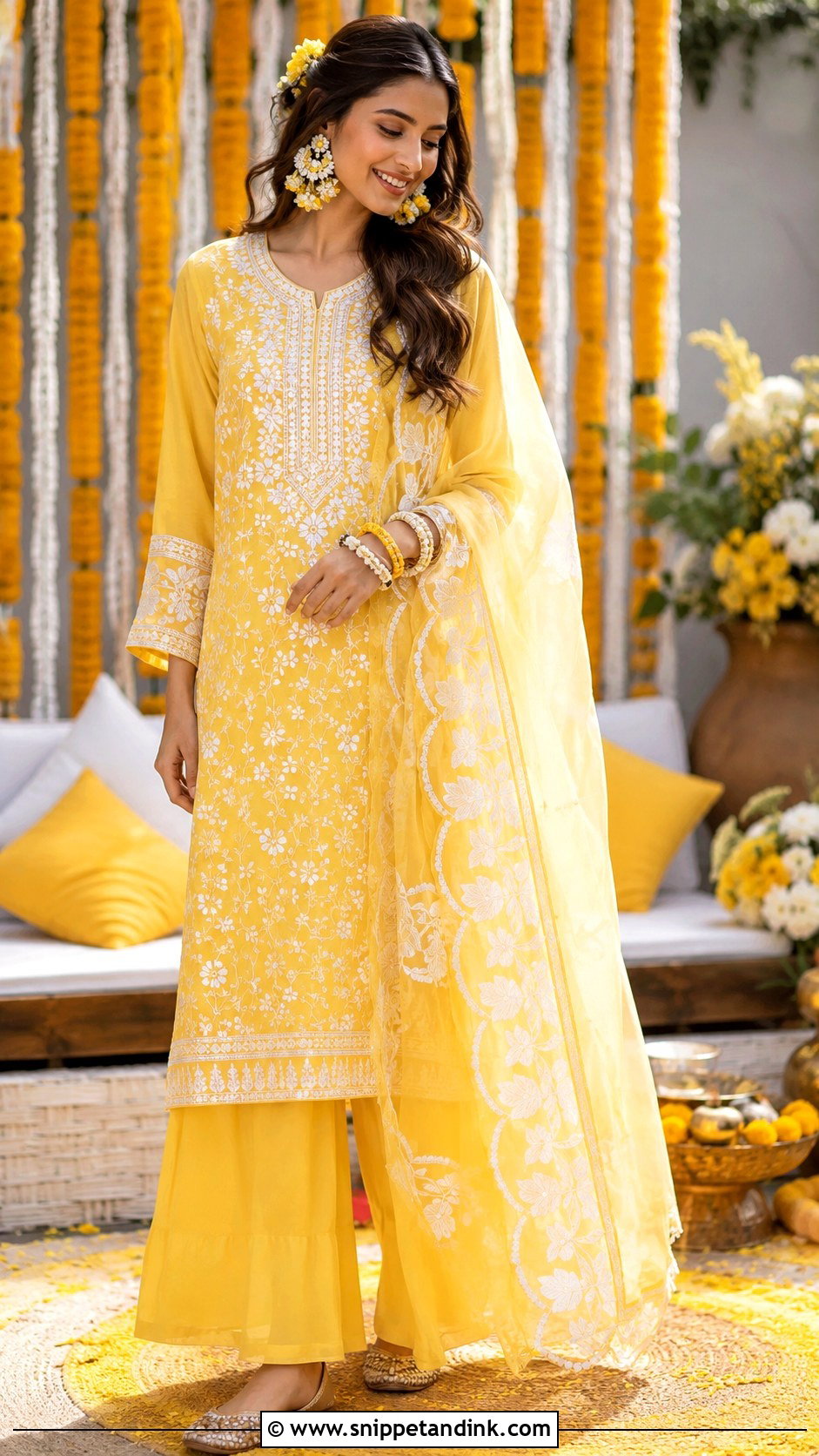
Brides who dislike heavy clothes often feel most like themselves in a kurta palazzo set. Wide palazzos allow movement; the kurta keeps it modest. Embroidery, tassels, mirror details or a strong dupatta make it bridal. A short kurta looks modern; a long one, traditional. Because it’s so simple, the jewellery does more work here, so a bright bindi, floral earrings and stacked bangles matter. Add embellished flats and fresh makeup.
11. Yellow Cape Lehenga for Haldi
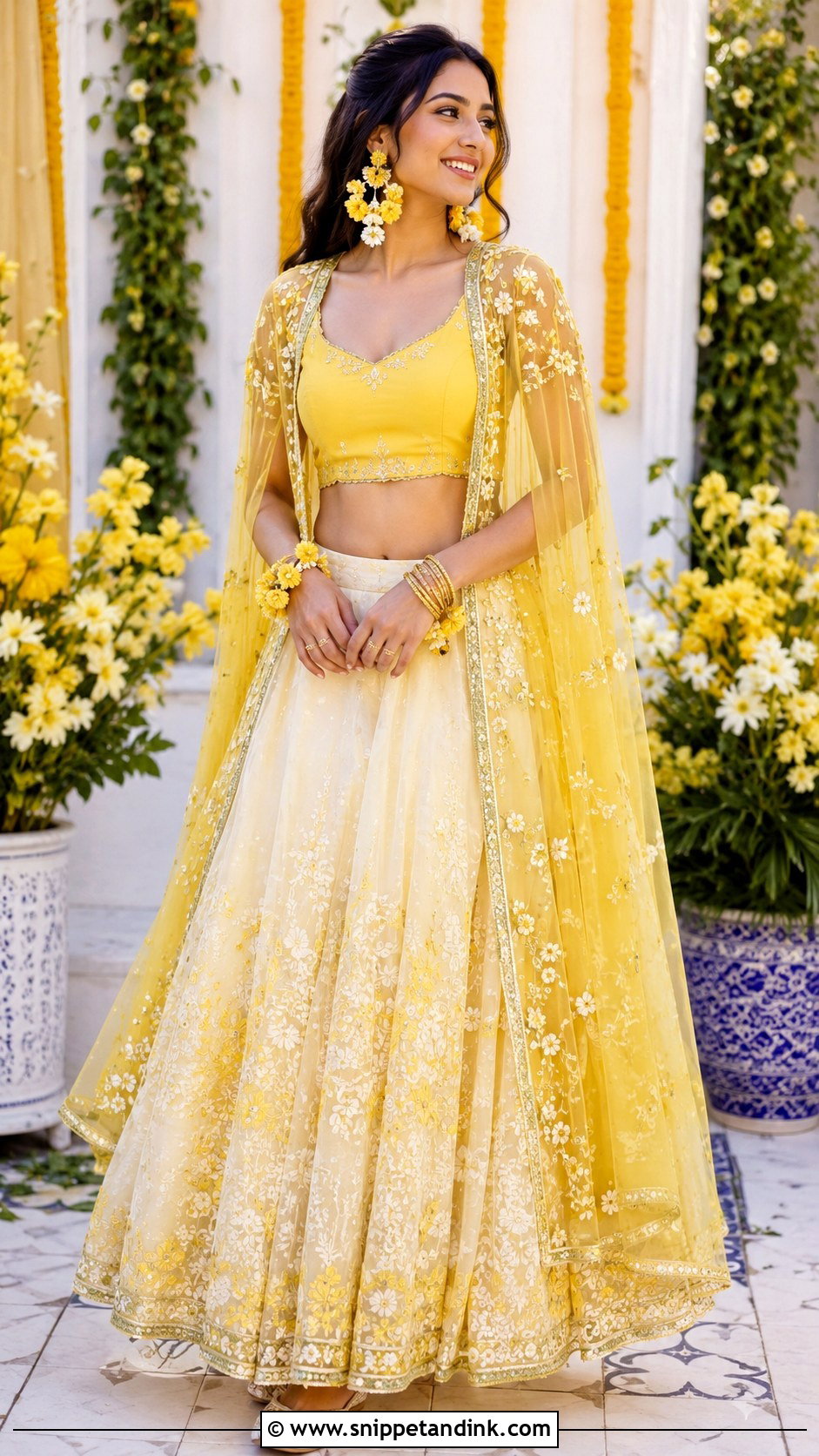
A cape solves the haldi dupatta problem: it’s attached, it moves, and it never slides into the turmeric bowl. Organza, net or chiffon over a light lehenga skirt and crop top gives drama without weight. Embroidery on the cape border frames the outfit. Check the cape’s length before the day; one that reaches the floor drags through paste and water just like a loose dupatta. Keep accessories to floral earrings and simple bangles so the cape stays the focus.
12. Yellow Jacket Lehenga for Haldi
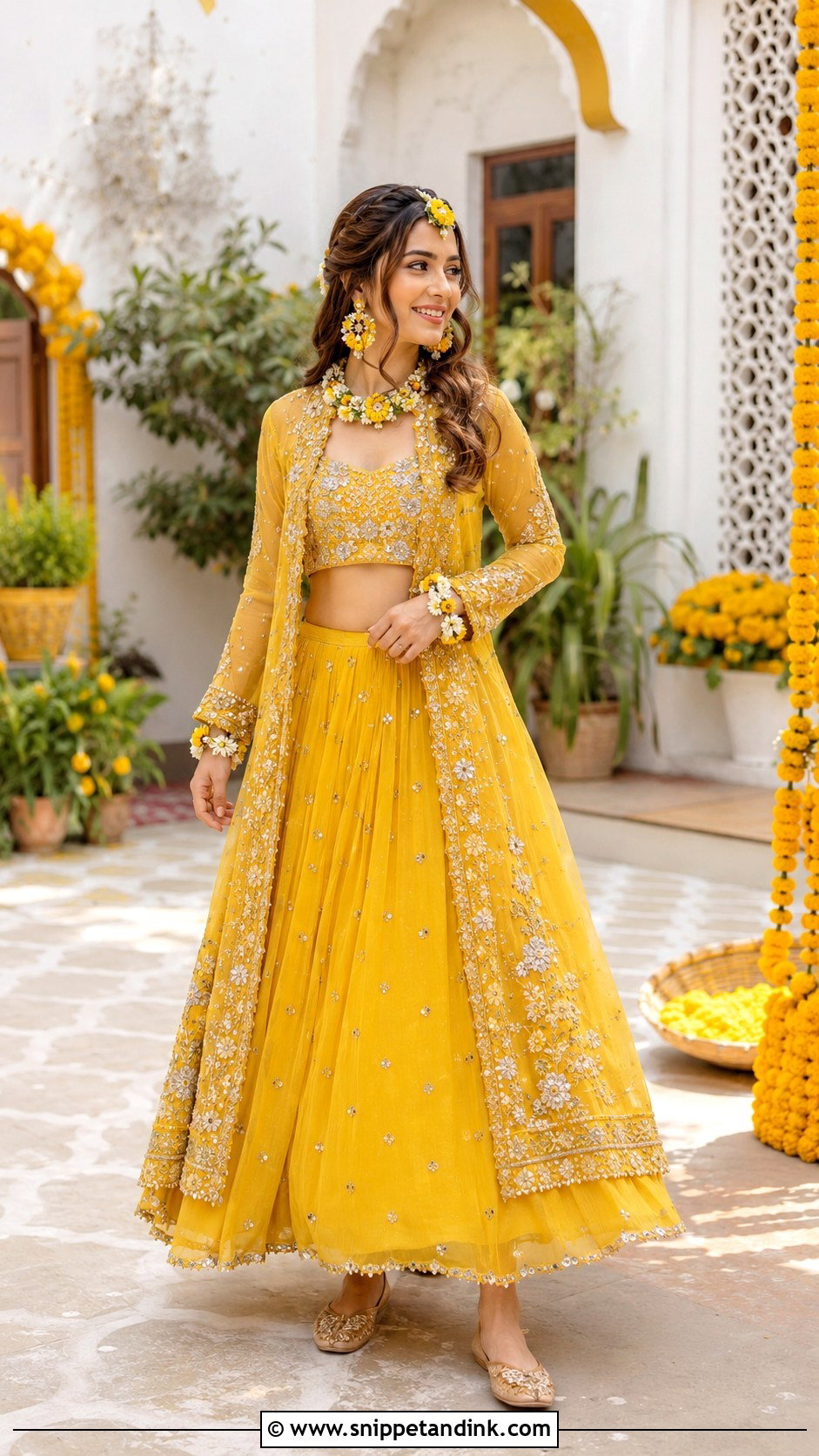
A jacket lehenga swaps the dupatta for structure. Short, long, sheer, embroidered or printed, it stays put and looks finished from every angle. A long open jacket moves gracefully; a cropped one feels younger. Pair it with a matching blouse and a light skirt. The jacket adds a layer of warmth, so I’d save it for a winter or indoor haldi; in summer heat it gets uncomfortable fast. Floral jewellery, juttis and soft glam finish it.
13. Yellow Co Ord Set for Haldi Bride
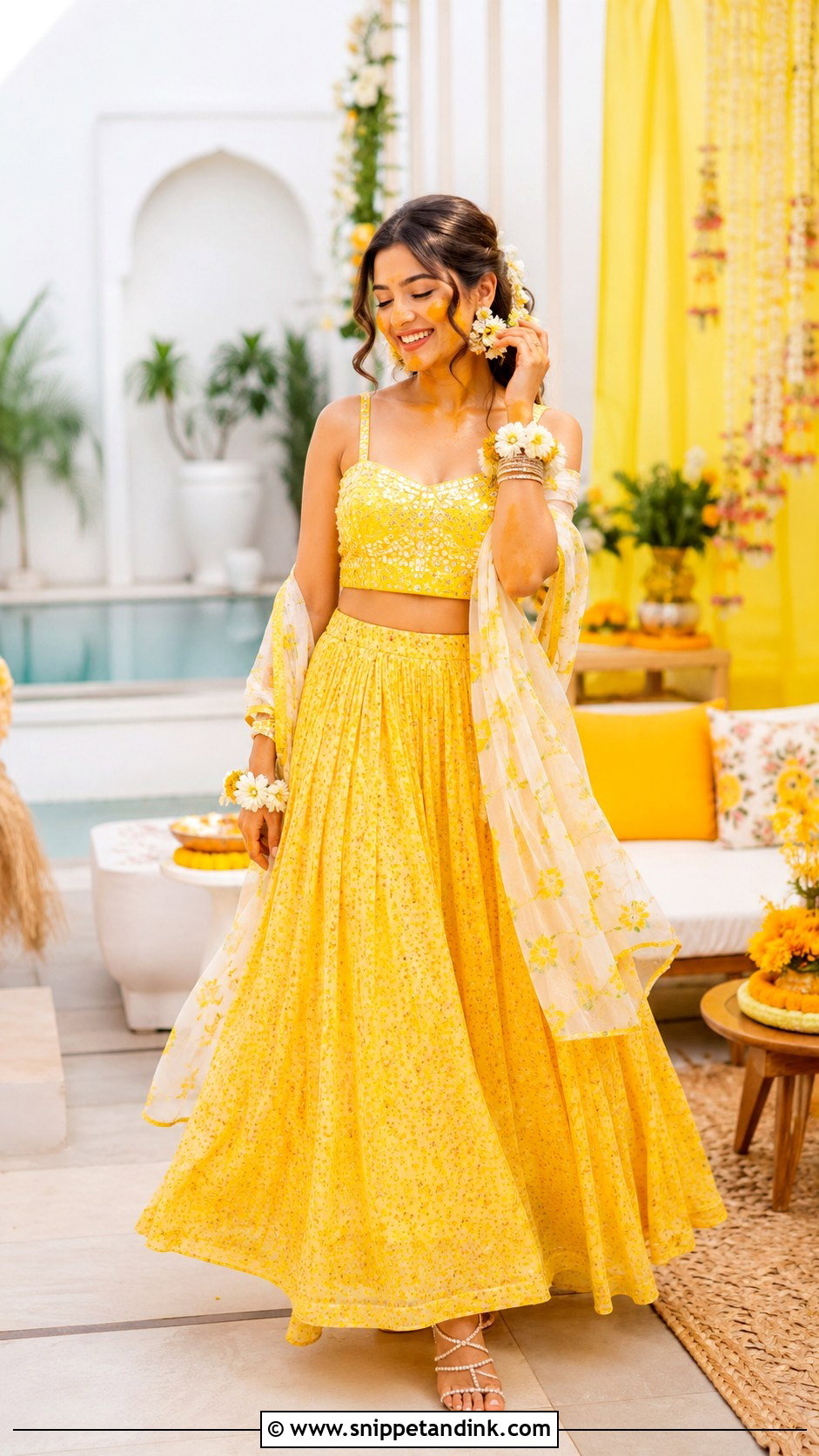
A co-ord set is the low-fuss option for small haldis, poolside functions and casual daytime events. A crop top with a flowy skirt, palazzos or flared pants looks coordinated with almost no styling. Floral prints, mirror borders or light embroidery make it ceremony-ready, and a dupatta is optional. A crop top does leave the midriff open to stray paste, so decide how you feel about that before choosing it. Flower jewellery, comfortable sandals and a sleek ponytail or braid finish it.
14. Yellow Dhoti Set for Haldi Bride
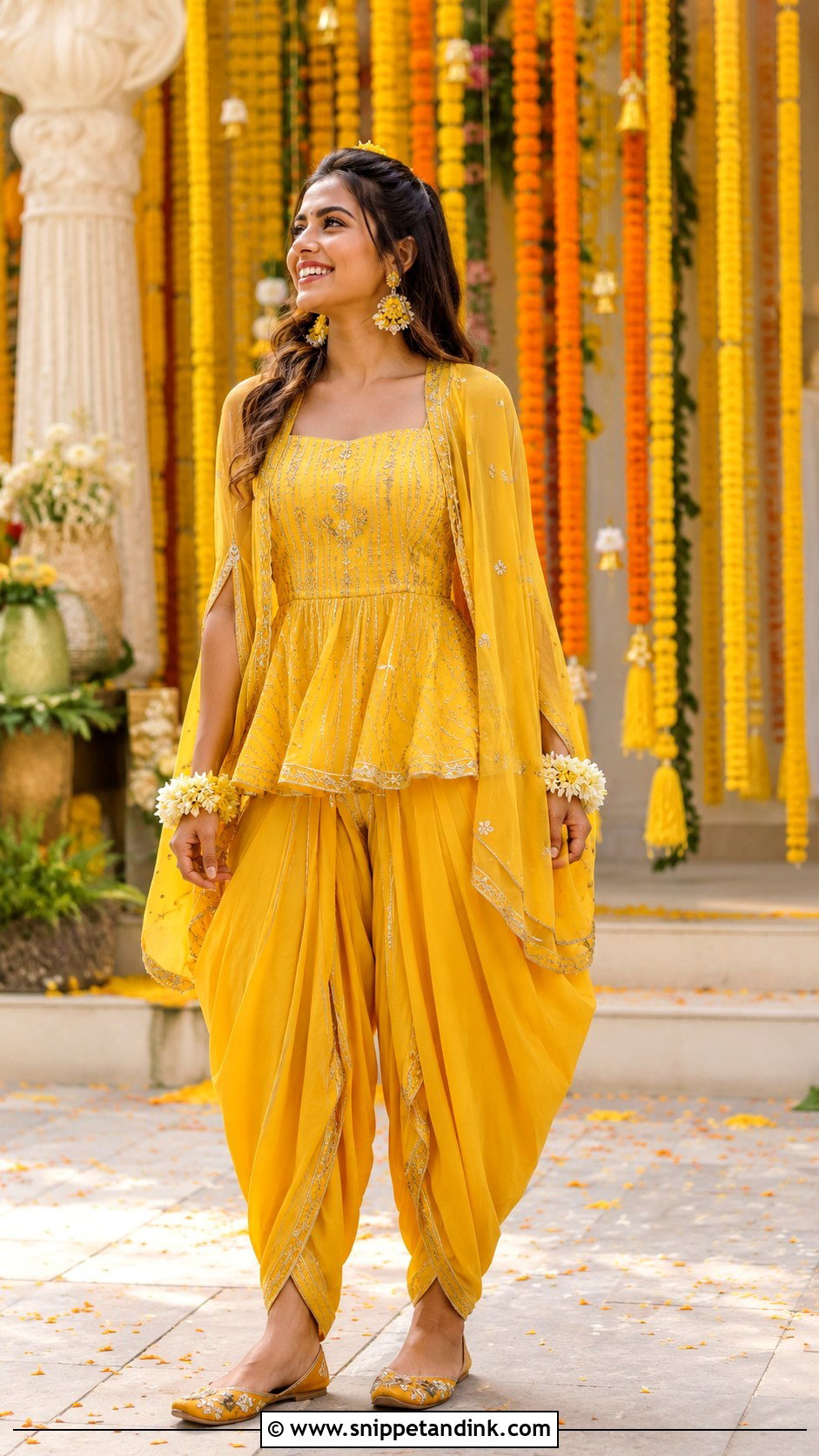
A yellow dhoti set is my pick for the bride who plans to be up and dancing the moment the ritual ends. Draped dhoti pants let you squat, sit cross-legged and jump without any hem to manage. A peplum, crop blouse or short kurti balances the volume on top, and a cape or light dupatta adds bridal detail. Gota borders, mirror work or tassels make it festive. Ask your tailor to secure the drape with an inner drawstring, since dhoti folds can loosen with a lot of movement. Statement earrings, floral bangles and embellished flats finish it.
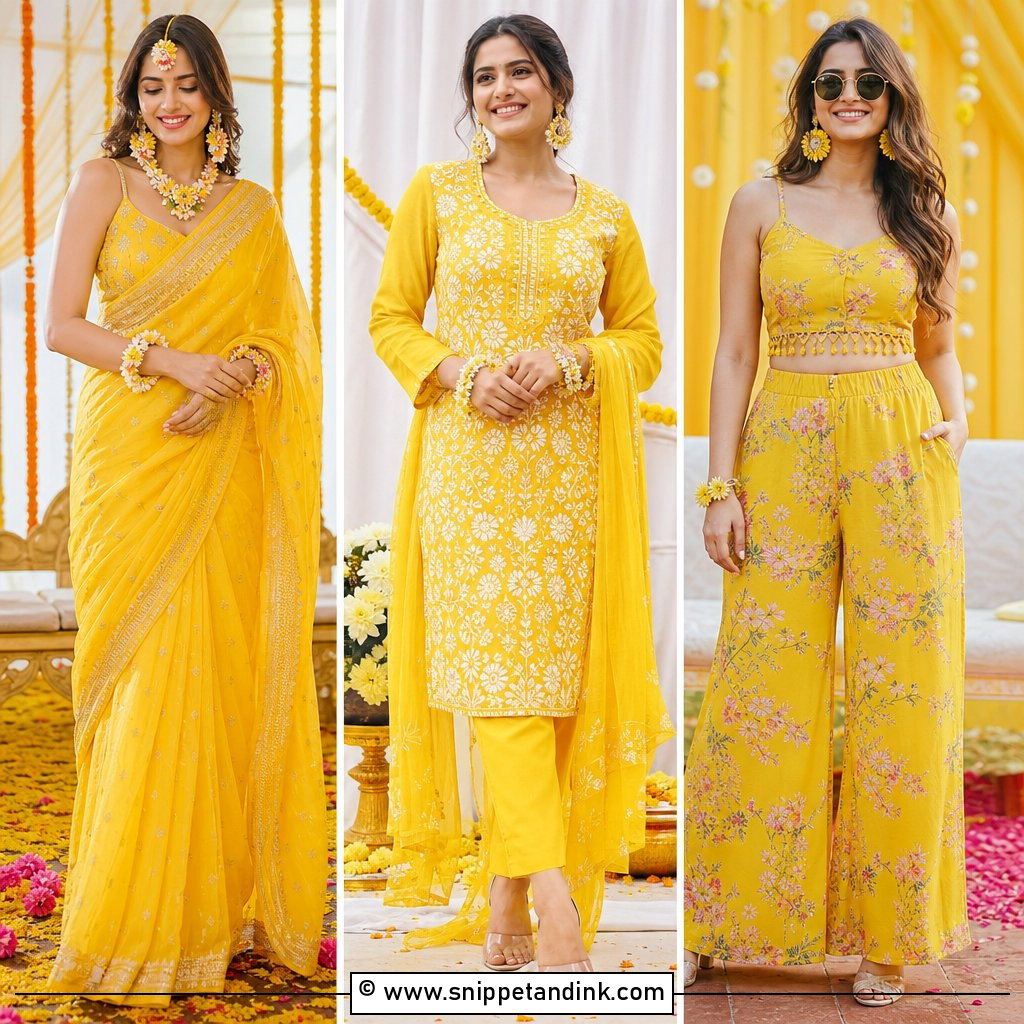
15. Yellow Peplum Sharara for Haldi
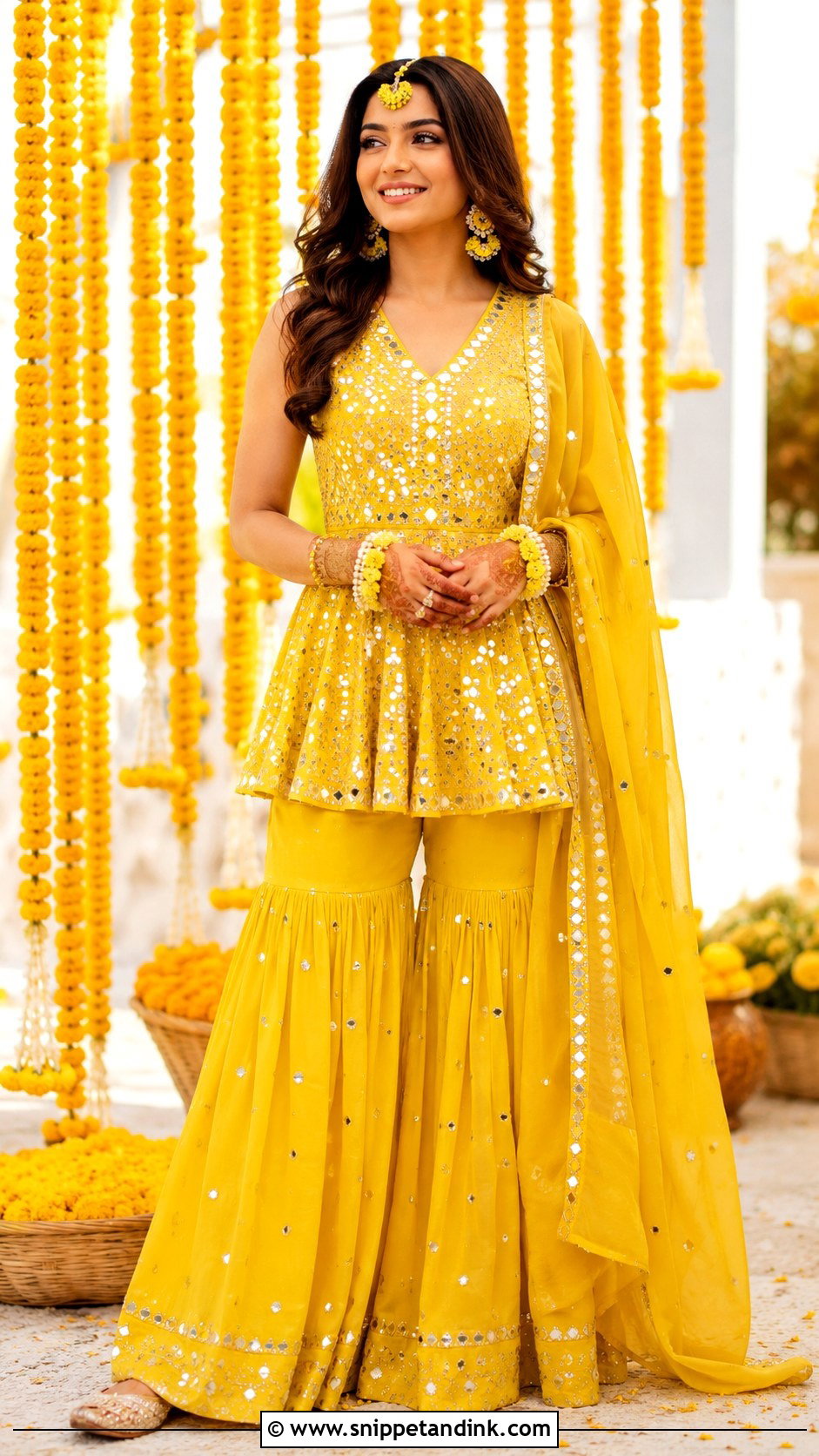
A peplum over sharara pants gives shape at the waist and volume below, so it looks dressy without a heavy dupatta or layered skirt. Mirror work, gota lace or floral embroidery on the peplum keeps it cheerful. Where the peplum flares matters: at your natural waist, it lengthens the legs; too low, it cuts them. Pin a soft dupatta to one side for a more traditional look. A floral maang tikka, bangles and juttis complete it.
16. Yellow Silk Saree for Haldi Bride
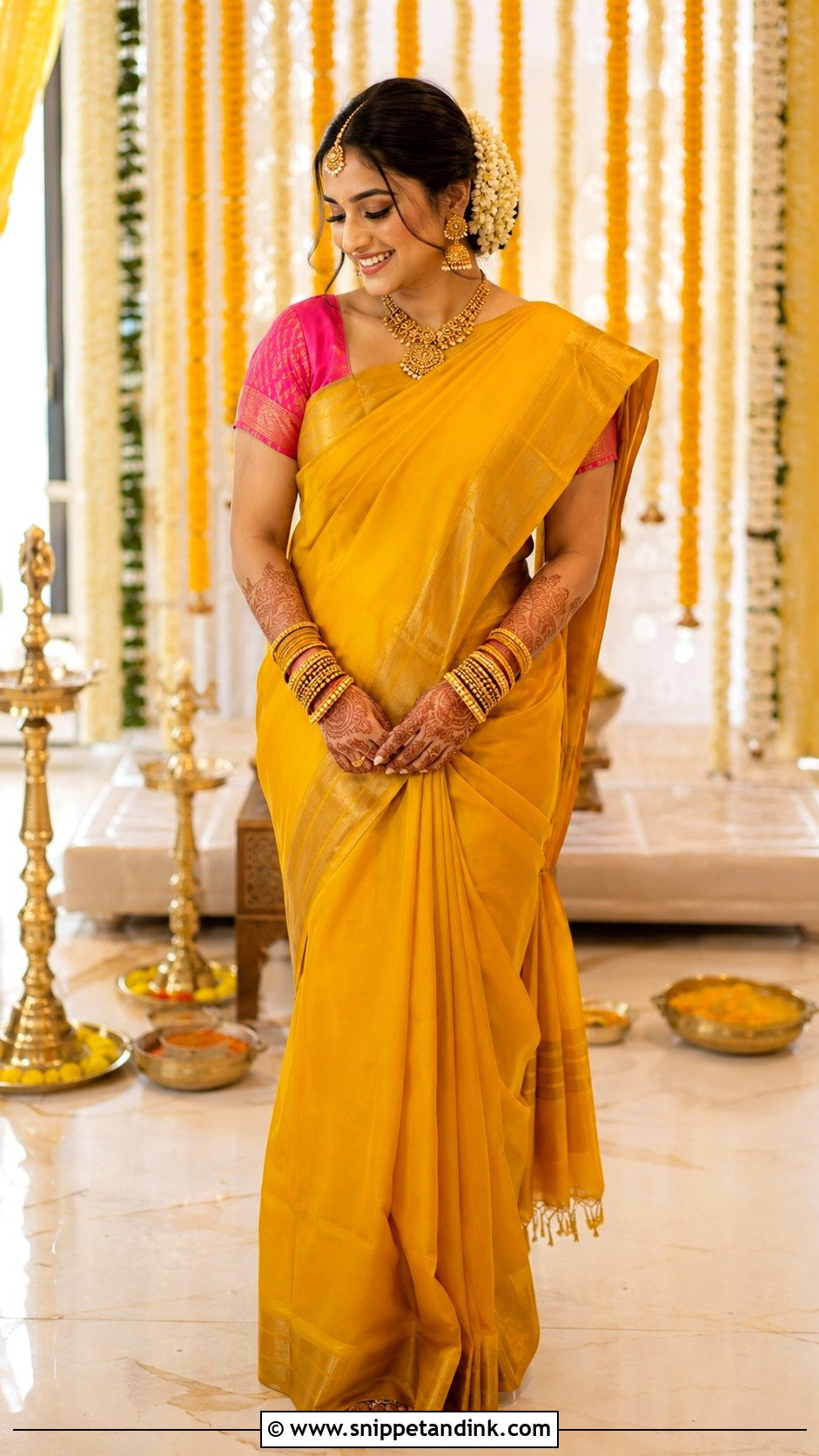
A silk saree is the most traditional and the most formal outfit on this list. Mustard, golden and turmeric yellows glow in silk. I’d choose a simple zari border over heavy brocade, both for comfort and because pure silk is the hardest fabric to rescue if turmeric soaks in; it can water-mark and the stain sets quickly. Many brides wear an older family saree for exactly this reason. A contrast blouse in pink, orange, green or ivory, fresh jasmine, gold-toned jewellery and a neat bun finish it.
17. Yellow Bandhani Lehenga for Haldi
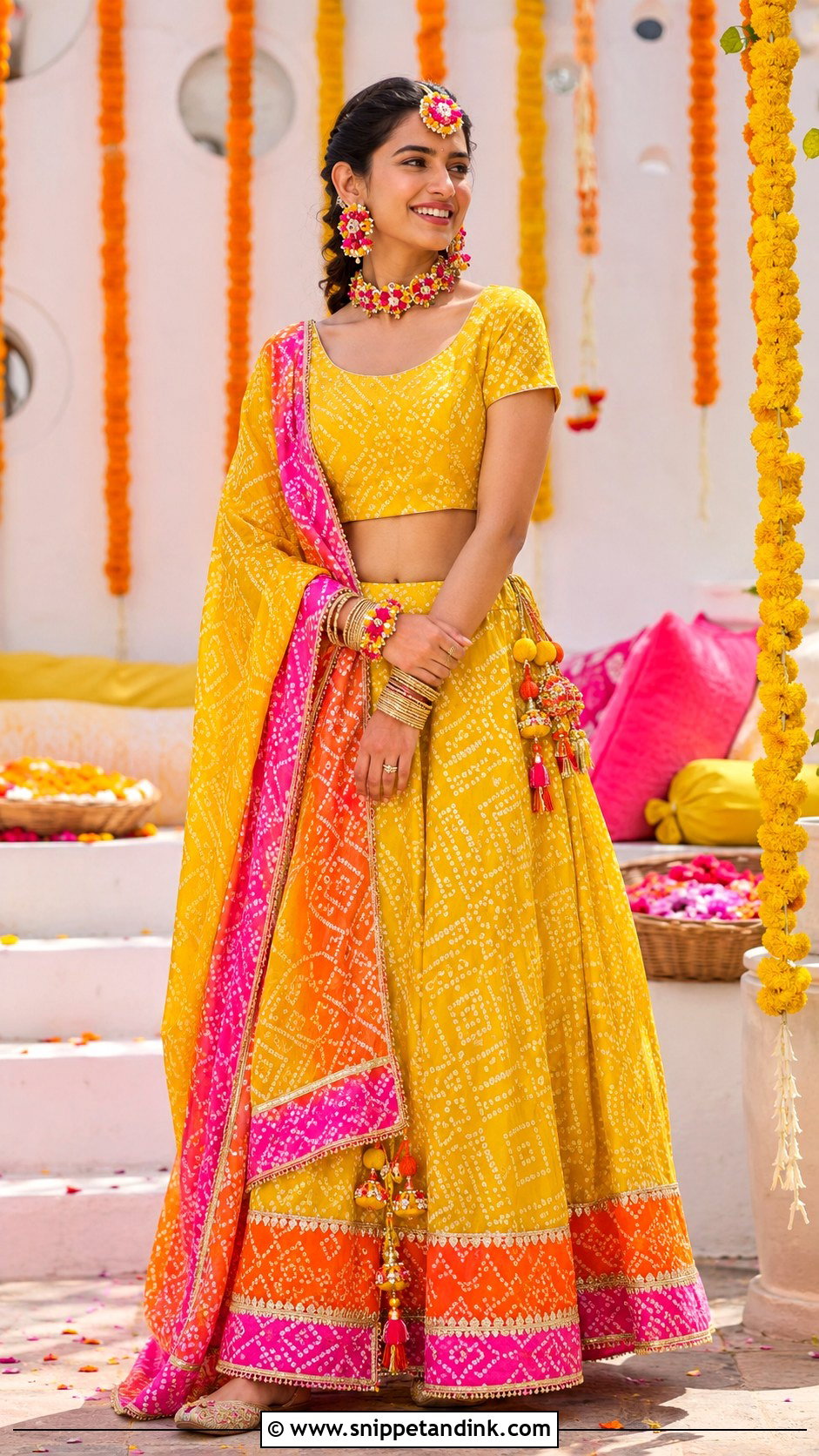
A yellow bandhani lehenga brings tie-dye dots and real festive energy to daytime photos. Bandhani is made by tying tiny points of cloth before dyeing, so genuine pieces have small irregularities, which is part of the charm. A yellow base with orange, pink, red or green accents is the vibrant version; a plain yellow lehenga with a bandhani dupatta is the softer one. Bandhani dyes can bleed in their first wash, so keep it away from white. Oxidised, floral or gold-toned jewellery all suit it.
18. Yellow Leheriya Saree for Haldi
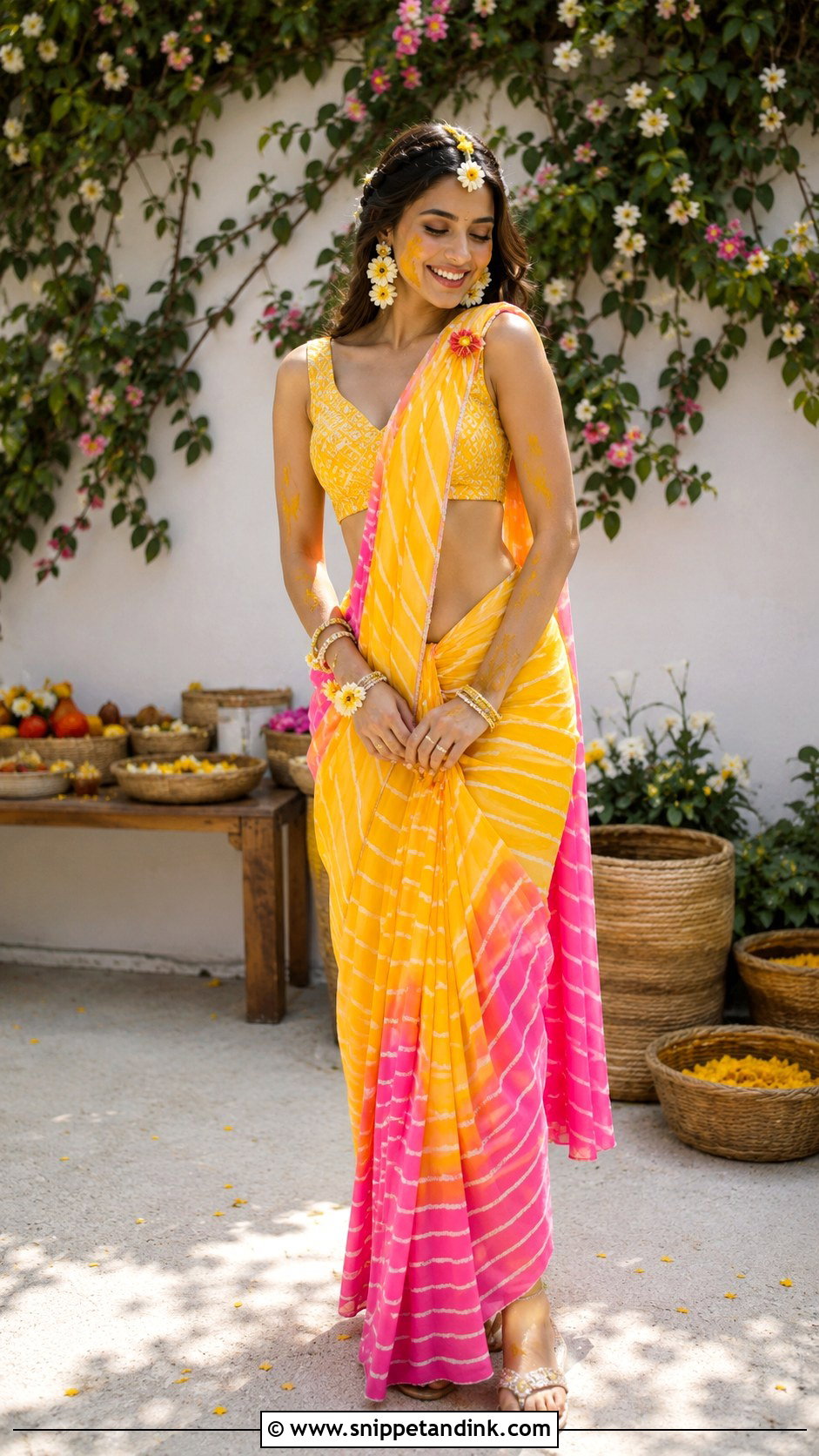
Leheriya is a resist-dyed wave pattern from Rajasthan, and it gives a saree movement before you’ve even taken a step. Yellow with pink, orange, white or green stripes looks bright and traditional. Chiffon, georgette or kota cotton keeps it light for warm weather; kota in particular is airy but creases easily. Pin the pallu so it stays out of the way during the ritual. A fitted blouse and floral jewellery are enough.
19. Yellow Ruffle Saree for Haldi Bride
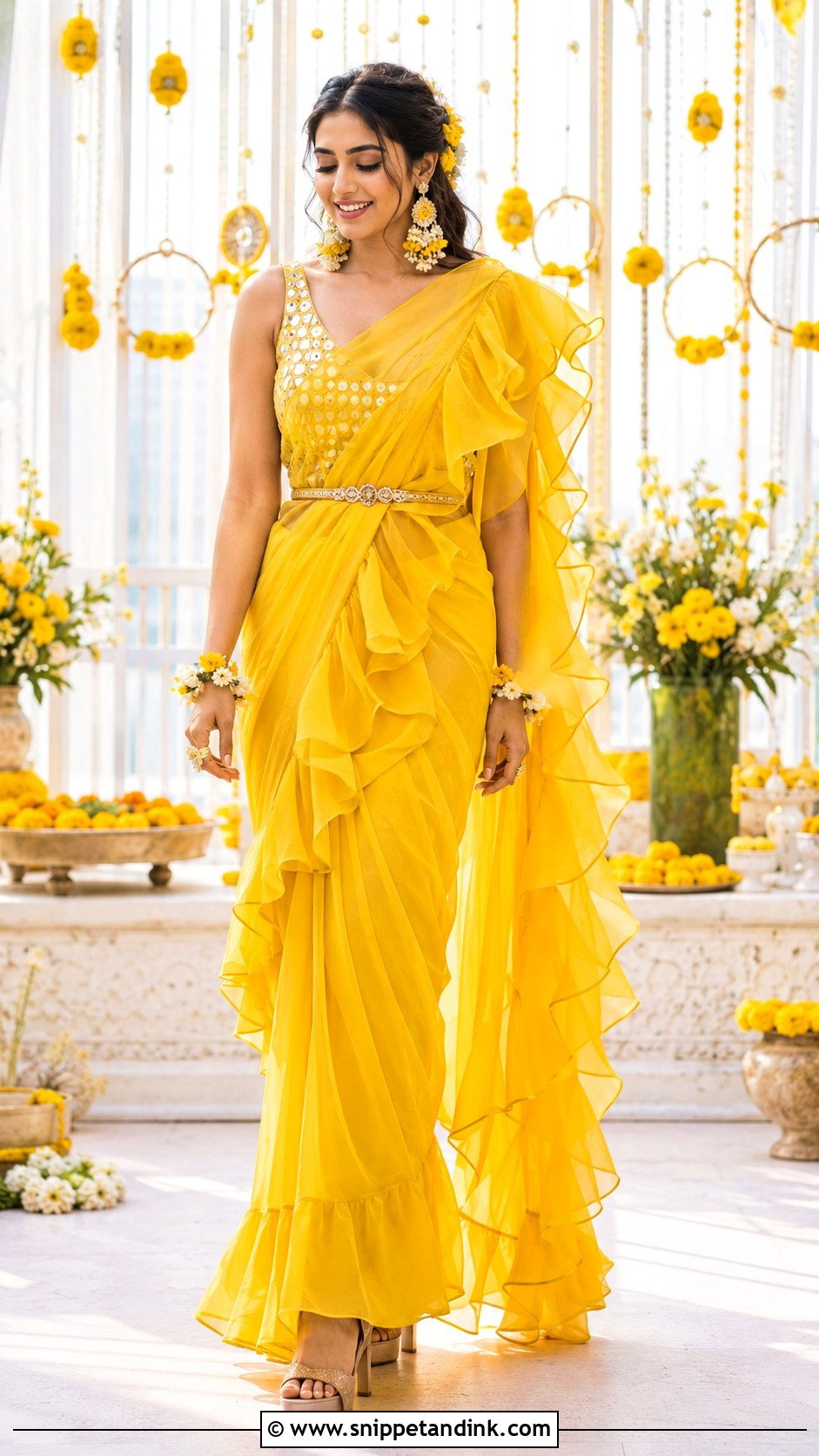
Ruffled sarees look dramatic even with very little embroidery, because the frilled edge does the work. Georgette or chiffon keeps the ruffles soft; stiffer fabric makes them stand away from the body. A mirror-work, embroidered crop or floral blouse brings in the bridal note. A belt is genuinely useful here, as it holds the drape in place when relatives pull you into a dance. Floral earrings and bracelets keep the jewellery playful.
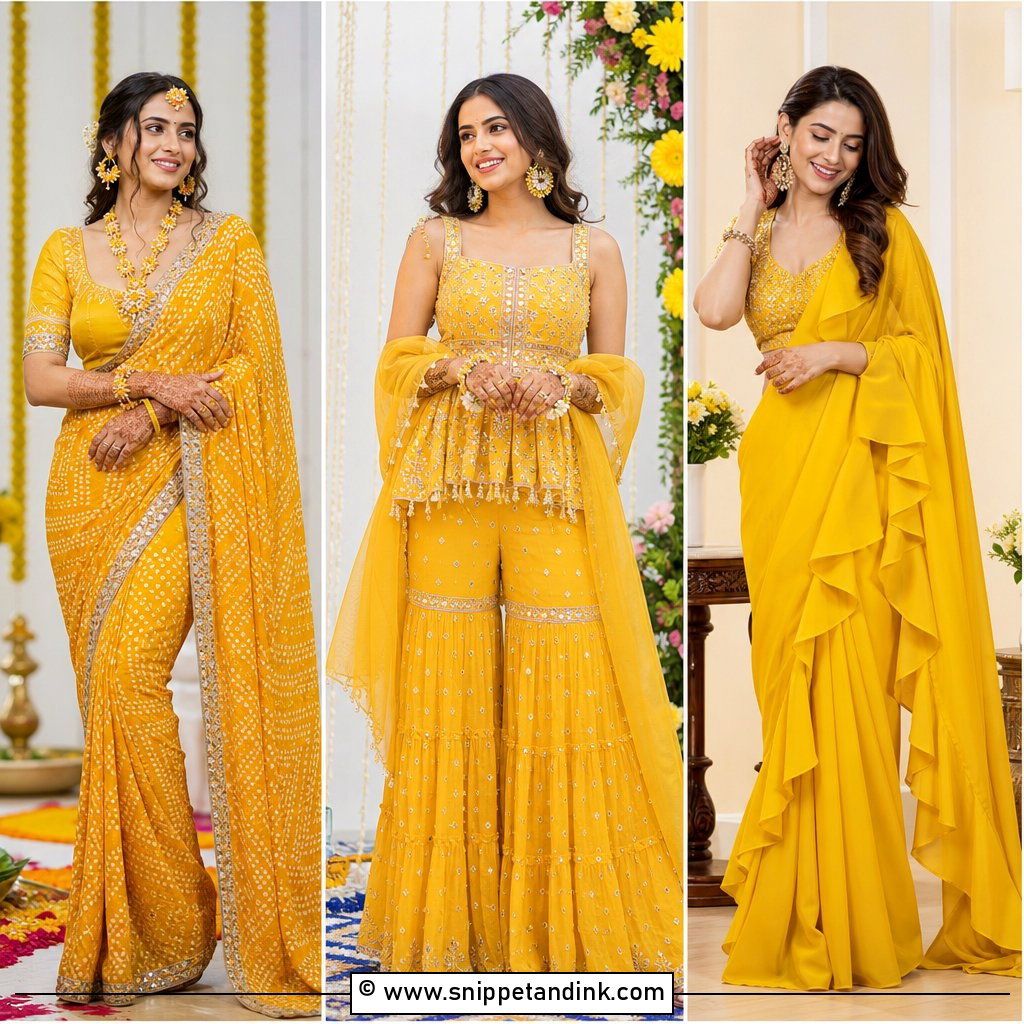

20. Yellow Maxi Dress for Haldi Bride
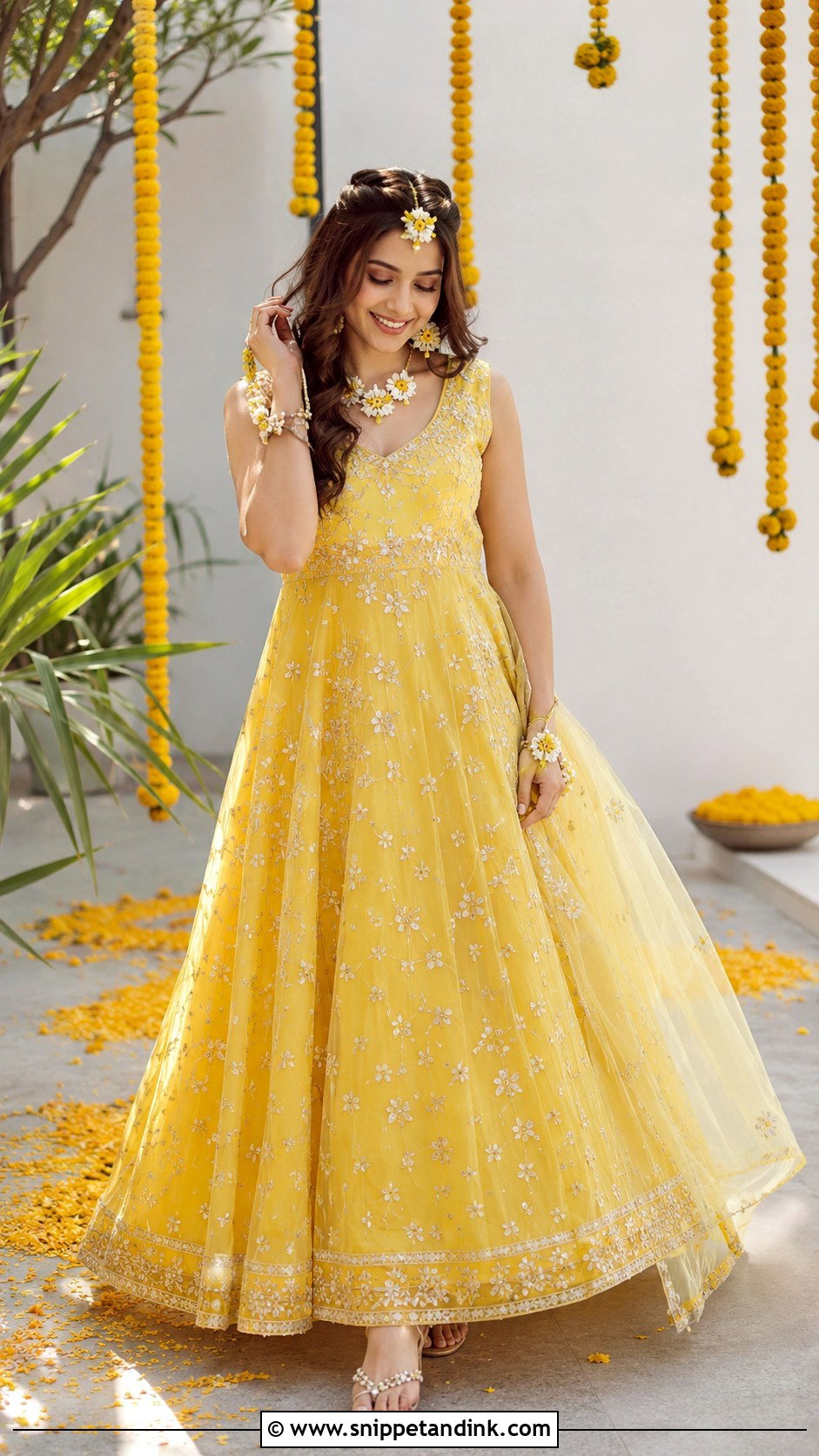
Styled with Indian accessories, a yellow maxi dress suits a relaxed, intimate haldi. Choose embroidery, block prints, mirror details or a tiered skirt to keep it festive. A dupatta, floral jewellery or a waist belt make it feel more bridal. Cotton, georgette or chiffon breathe in warm weather. A maxi is the cheapest outfit here to replace if the paste wins, which some brides find freeing. Juttis or embellished sandals finish it.
21. Yellow Skirt And Crop Top for Haldi
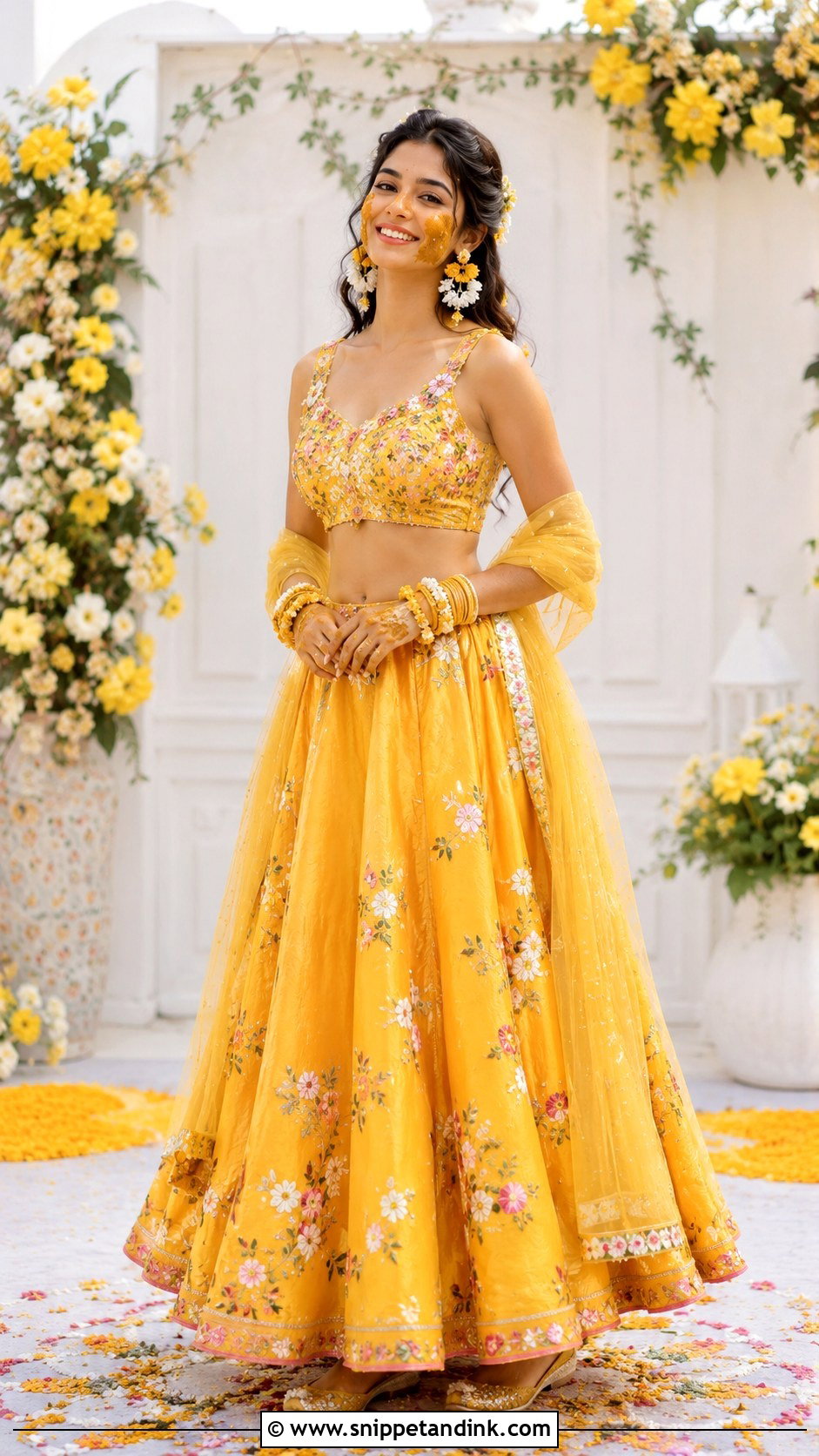
A flared skirt and crop top give a lehenga silhouette at a fraction of the weight. Choose a plain crop top with a printed skirt, or an embroidered blouse with a simpler skirt; let one half carry the detail. A dupatta adds tradition but isn’t required. The waistband should sit firm without digging, as you’ll be on the floor for a while. Floral jewellery, stacked bangles and soft curls finish it.
22. Yellow White Haldi Outfit for Bride
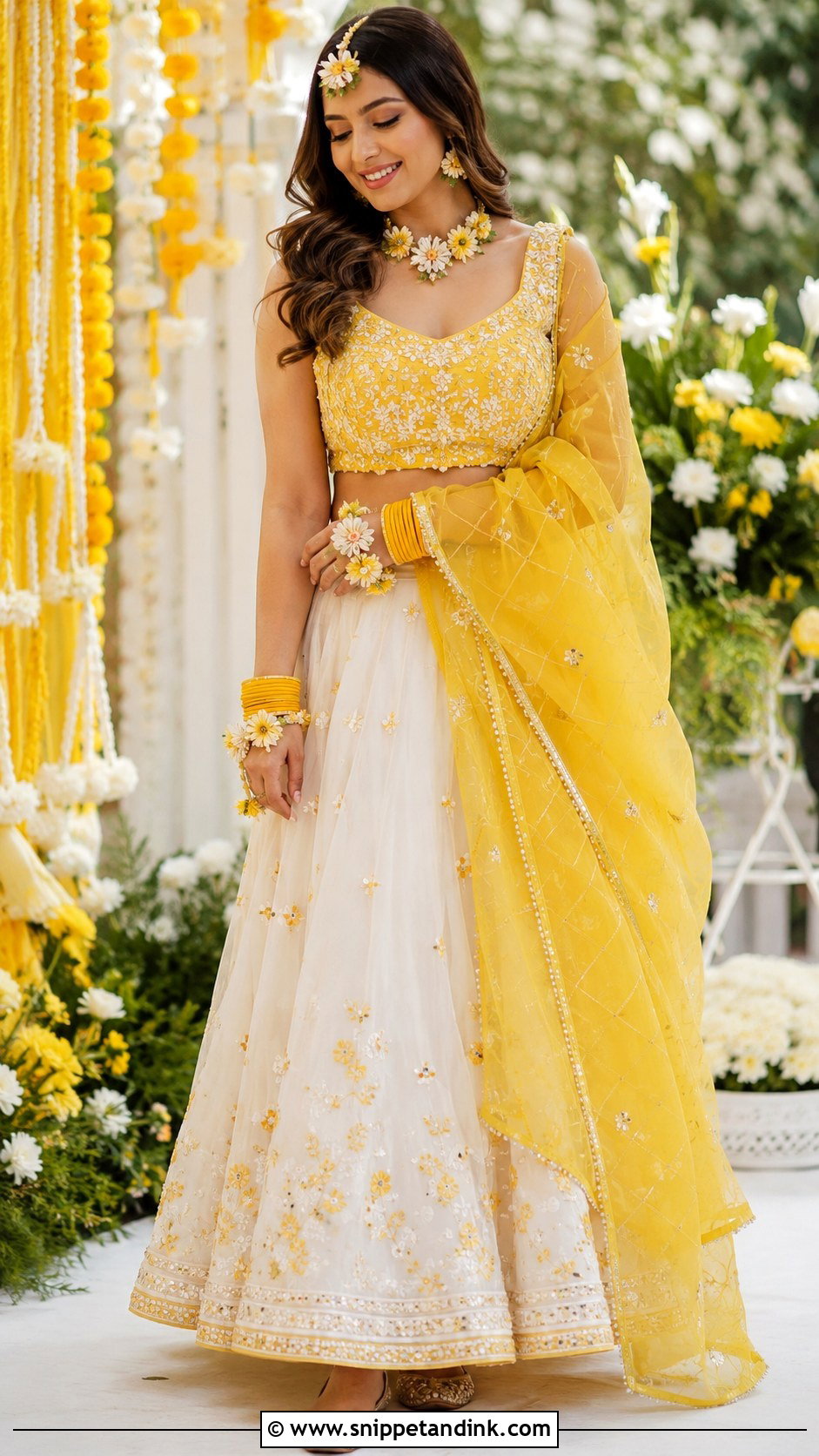
White softens yellow and looks clean against flowers and greenery. A white lehenga with a yellow dupatta, a yellow blouse with a white skirt, or a yellow-and-white printed saree all work. Be realistic: turmeric will mark white, and some stains won’t come out. I suggest this look only to brides who are happy for the outfit to show the day’s history, or who plan to keep the white parts away from the paste. Floral jewellery, fresh makeup and flats complete it.
23. Yellow Pink Haldi Outfit for Bride
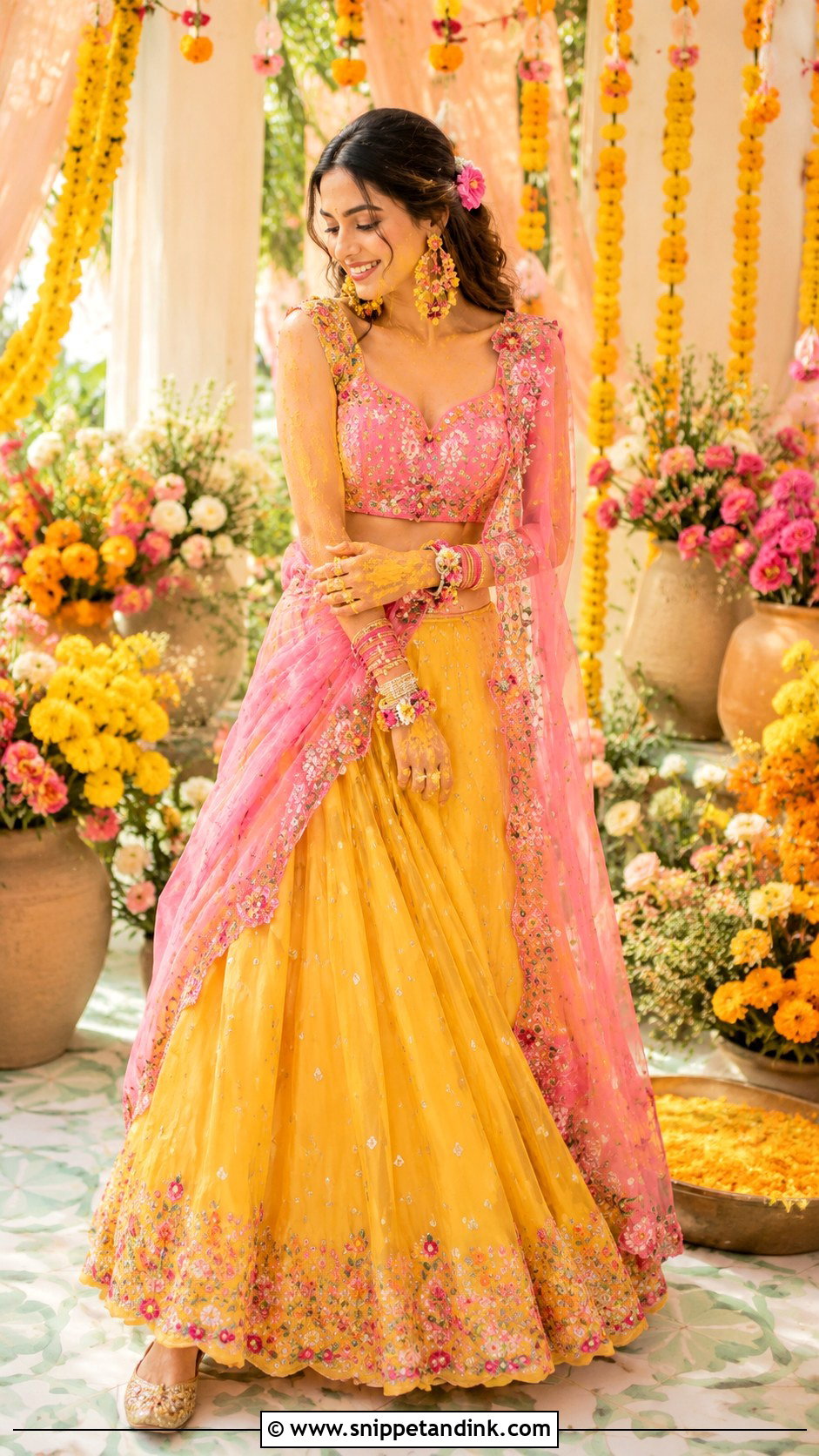
Pink with yellow is cheerful and makes the bride pop against a sea of yellow guests. A yellow lehenga with a pink dupatta, a pink blouse with a yellow skirt, or a printed sharara with both shades all work. Pick a pink with the same depth as your yellow: a pale pink against mustard looks washed out; hot pink against pastel yellow looks harsh. Rose, marigold or baby’s breath jewellery, flushed cheeks and gold-toned juttis finish it.
24. Mustard Yellow Haldi Outfit for Bride
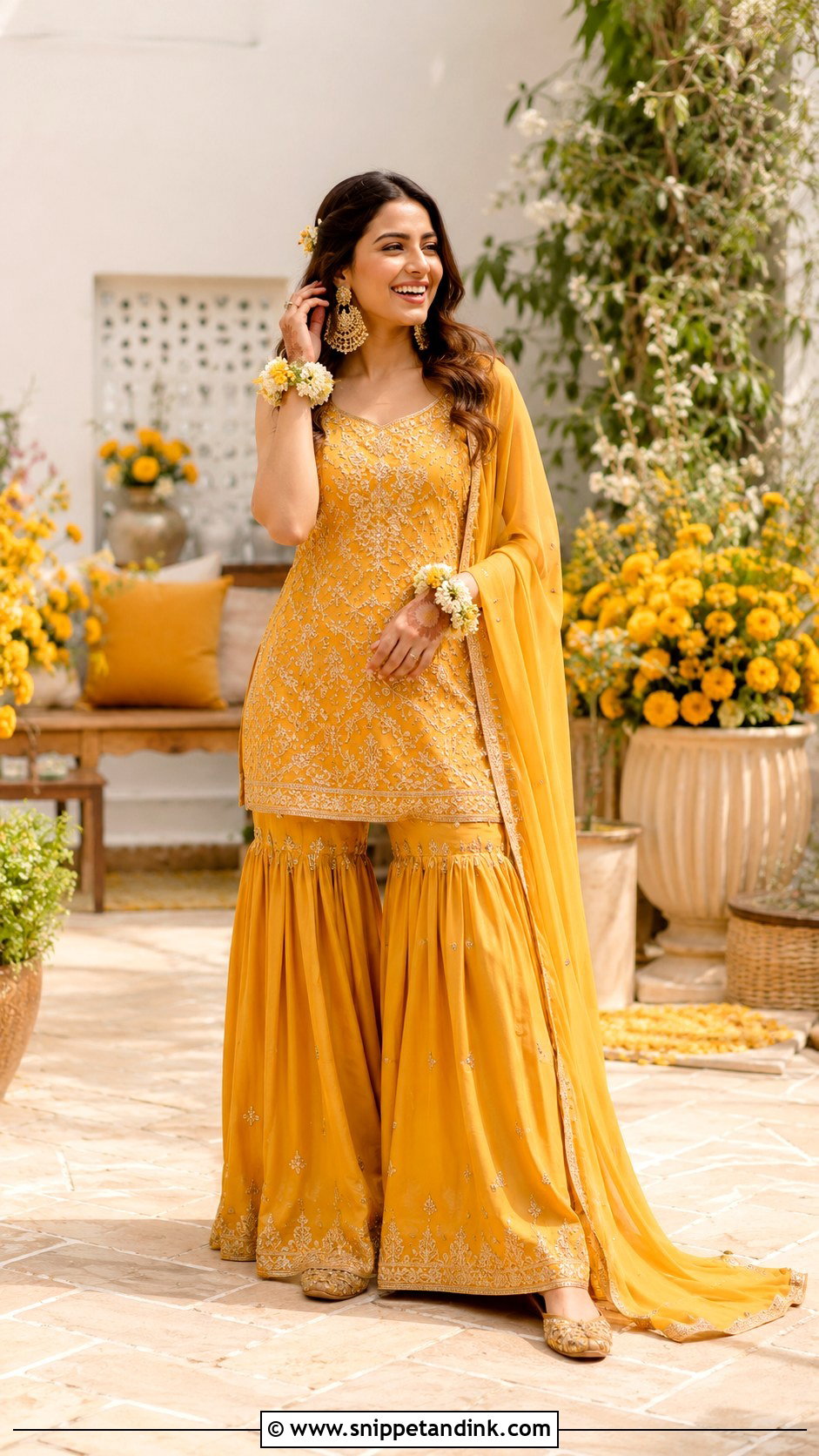
Mustard is deeper and calmer than lemon, and it suits brides who want a more grown-up haldi look. A mustard lehenga, silk saree, Anarkali or sharara set with gold embroidery or mirror work all work. It pairs with ivory, rust, green, pink and antique gold. The paste is a brighter yellow than mustard, so it shows clearly against the fabric; you’ll see every handprint. Keep the styling balanced with fresh flowers and soft makeup.
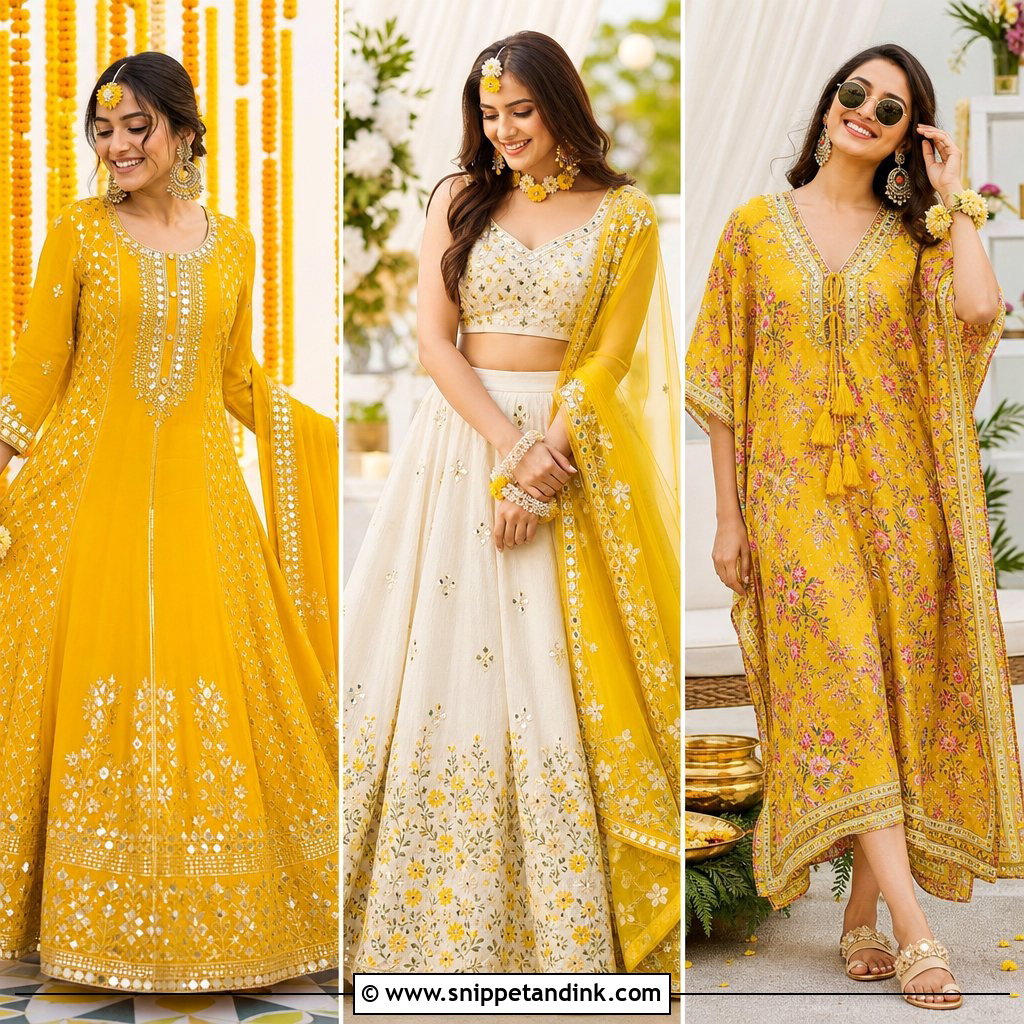
25. Pastel Yellow Haldi Outfit for Bride
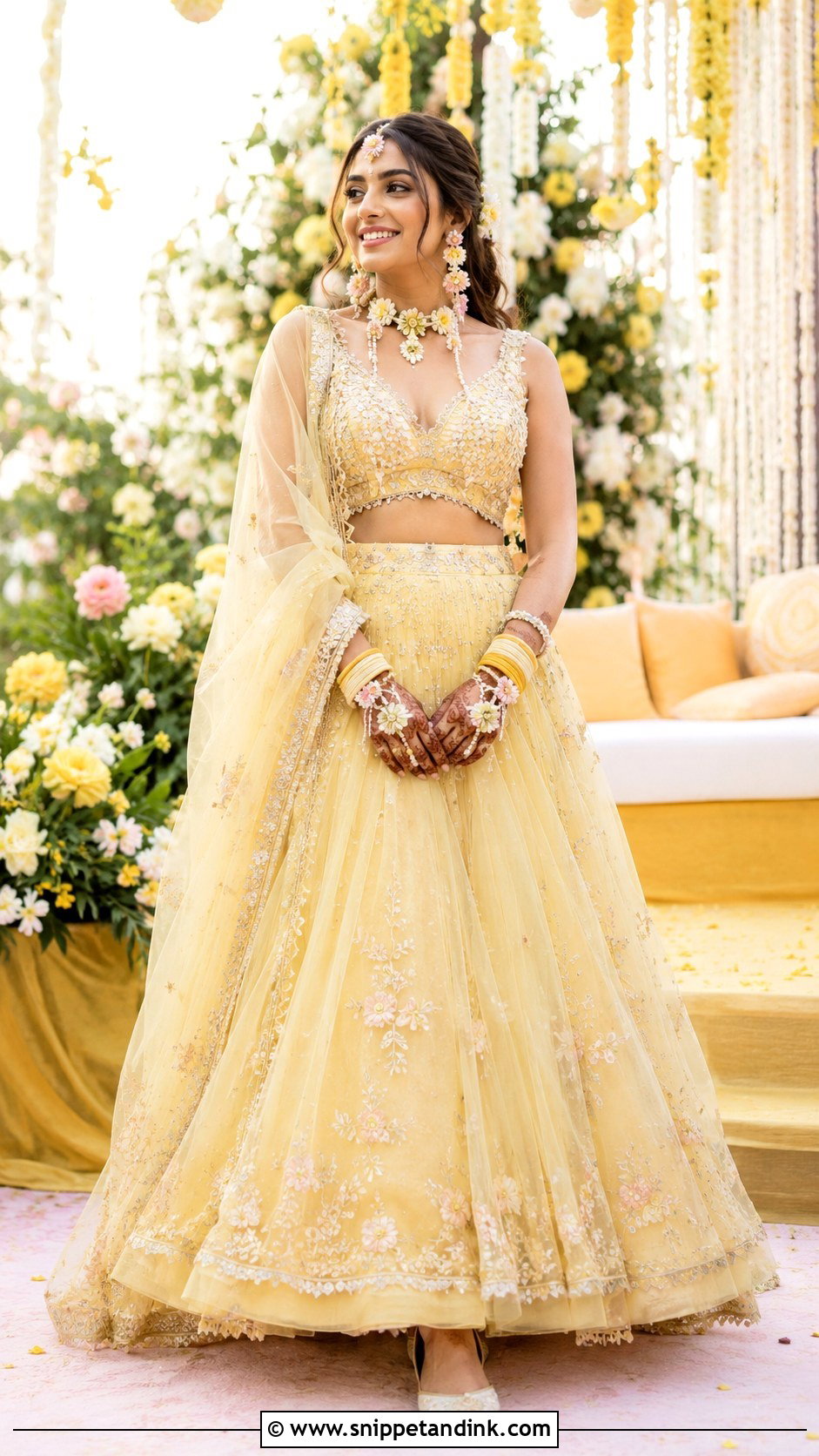
A pastel yellow haldi outfit looks soft and modern while still keeping to the tradition. Organza lehengas, chikankari Anarkalis, floral sarees and embroidered shararas all come in pale yellow. It suits morning ceremonies, when gentle light flatters the shade. Pearls, white flowers and fresh green accents complement it. If your décor is very colourful, pastel helps you stand out by being the calmest thing in the frame. Dewy makeup, soft waves and delicate floral jewellery finish it.
Ordering Floral Jewellery That Lasts the Morning
Flower jewellery is part of the haldi look for most brides, and it’s the piece most likely to wilt before the photos are done. A few things I’ve learned from ordering it again and again:
- Order from a florist who makes it on the morning of the haldi, not the night before. Fresh pieces are crisper and smell better.
- Marigolds and chrysanthemums hold up for hours in heat. Jasmine and roses are softer and start to droop sooner, so keep them for the hair, where they’re shaded.
- Ask for a test piece a week or two ahead so you can check weight, clasp and size. Heavy floral earrings pull on earlobes; an ear chain or a hook over the ear helps.
- Keep the pieces in a cool box, out of direct sun, until you put them on. Mist them lightly with water; don’t soak them, or the stems go limp.
If you’d rather keep your jewellery as a memento, artificial flower and gota sets are a good alternative. They don’t wilt, they photograph well and they survive the paste.
Wear Something You Don’t Mind Turning Gold
The outfit that works for your haldi is the one you can sit, dance and get messy in while still feeling like a bride. A light lehenga suits a traditional ceremony; a pre-draped saree, sharara, cape set or co-ord is easier to move in. Light fabric, secure drapes, comfortable shoes and fresh flowers matter more than heavy embellishment. Bright, pastel, mustard, floral or paired with white, pink, orange or green, the yellow can be whatever suits you. Decide how much you’re willing to sacrifice to the turmeric, then choose accordingly.
You'll Like These Ideas:




Leave a Reply