
The Haldi is the one wedding function where your outfit is supposed to get a little ruined. Relatives smear turmeric paste on your face, arms and feet, you sit low on a stool or the floor for a long stretch, and someone almost always tips a bowl. So when I style a bride for it, I start with fabric and fit, then color, then jewelry. The ideas below run from classic yellow sarees and light lehengas to shararas, co-ords and a few non-yellow palettes like ivory, orange, green and pink. Most of them stay simple on purpose: fresh flower jewelry instead of gold sets, flat footwear, and makeup that can survive a wet, messy hour. Read them with your own ceremony in mind, at home or on a sunny lawn, because the setting changes what will actually feel comfortable.
What Turmeric Paste Does to Each Fabric
Haldi paste is usually turmeric mixed with gram flour and a little oil, milk or rosewater, and it behaves differently on every fabric. Before I talk color with a bride, I ask what the ritual looks like in her family. Is the paste dabbed lightly on the cheeks, or will cousins coat her arms and finish with a bucket of water? The answer decides the fabric more than any trend does.
- Cotton and linen soak paste in fast, but they also wash out best and stay comfortable when damp.
- Silk and silk blends hold on to the oily part of the paste and usually need professional cleaning; plain water can leave rings.
- Georgette, chiffon and mul cotton turn clingy and slightly sheer when wet, so plan the lining and innerwear.
- Zari, gota and mirror work trap paste in the stitching, and scrubbing it out can pull threads.
A five-minute test at your fitting
Sit on a low stool, the way you’ll sit for the ritual. Lift both arms to shoulder height and hold them there, then stand up without using your hands. If the pleats spring loose, the blouse cuts into your arms or the hem lands under your feet, that’s an alteration, not a reason to give up on the outfit. I also ask brides to wear old innerwear close to their skin tone, since the paste marks whatever is underneath.
1. Yellow Cotton Saree Haldi Outfit
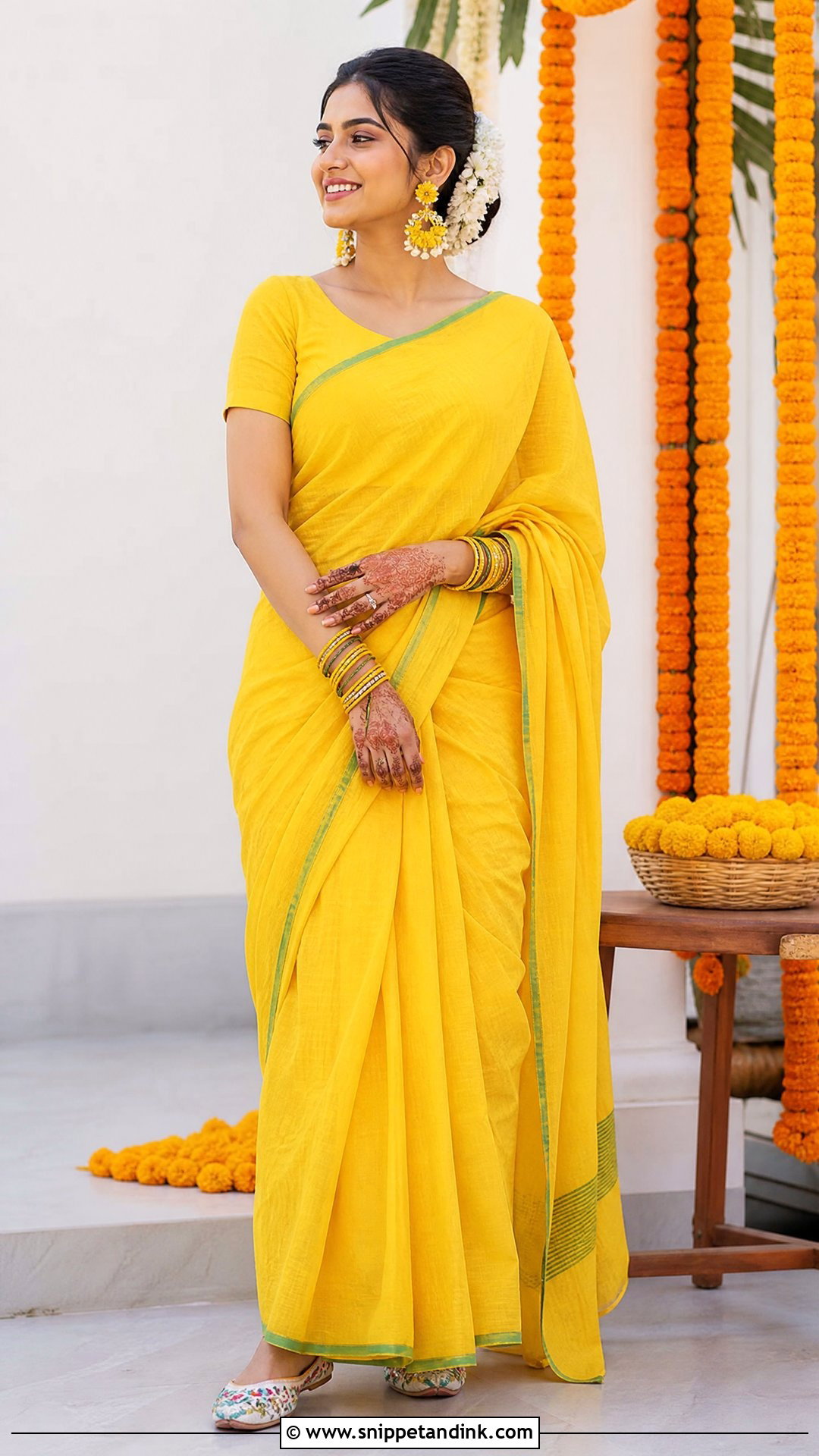
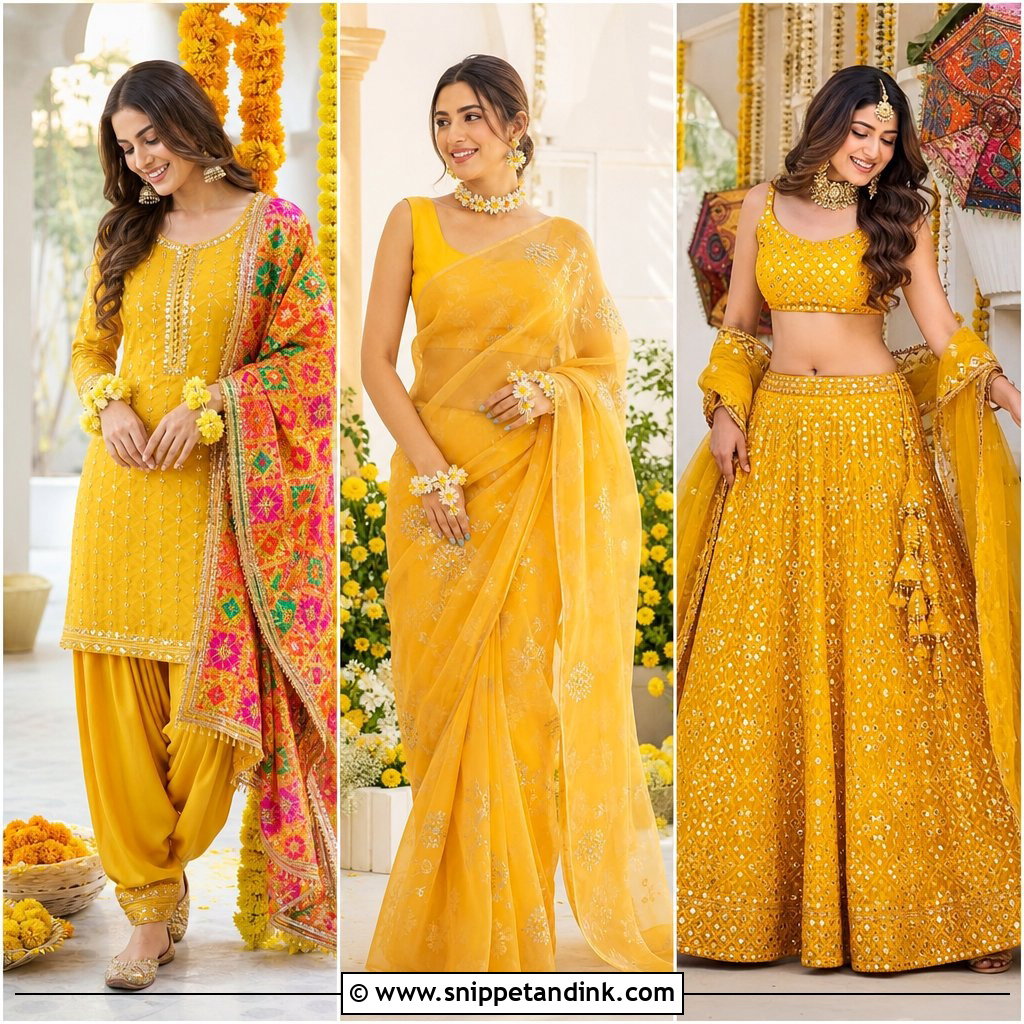
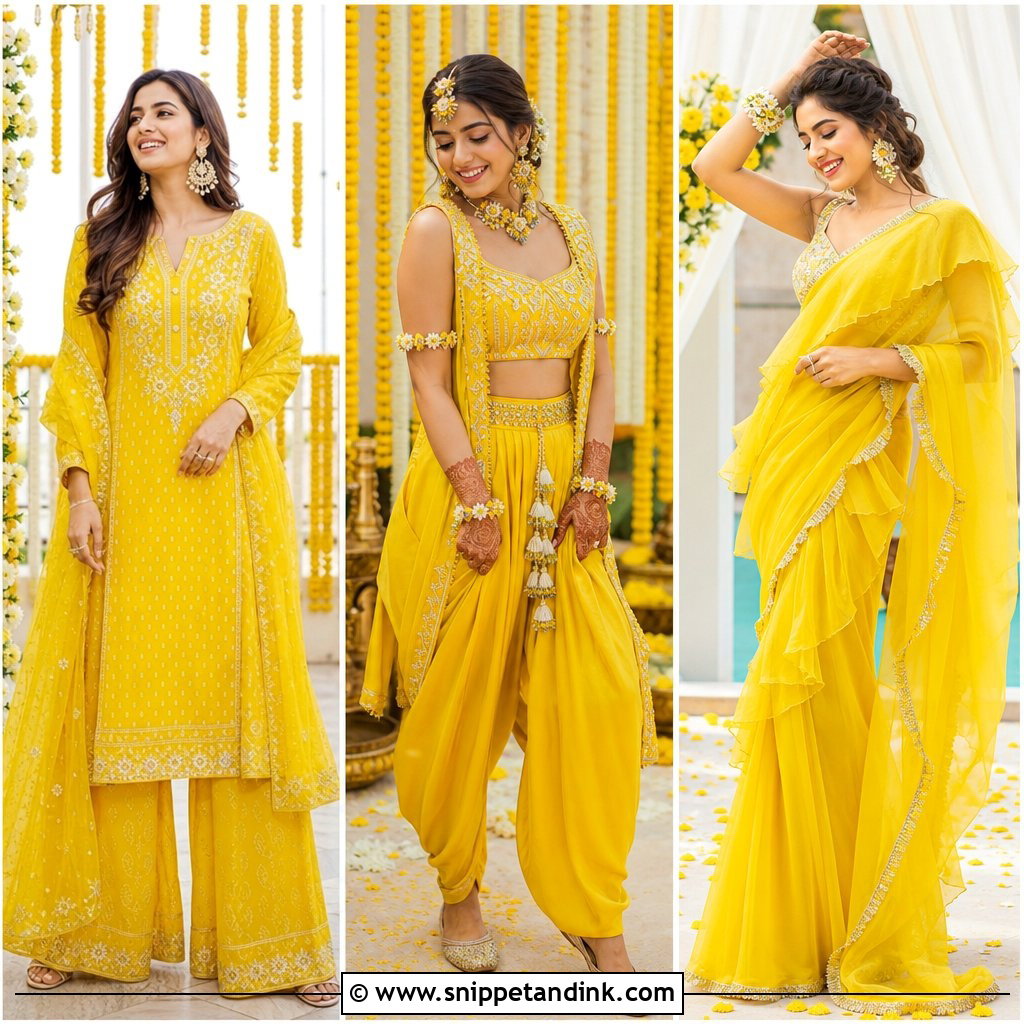
Handloom cotton is the fabric I trust most for a Haldi saree. It breathes in the heat, takes pins without puckering, and doesn’t go slick when the paste soaks in. Go for soft yellow with a slim gold, green or orange border, and an elbow-sleeve blouse that’s fitted but not tight, because you’ll be raising your arms for the paste. I pin the pleats a little shorter than usual so they clear the floor when you sit cross-legged. Jasmine in a low bun, floral earrings and a few bangles are enough. Wear juttis or flat sandals, keep the pallu short, and choose a saree you’re genuinely fine staining.
2. Yellow Organza Saree Haldi Outfit
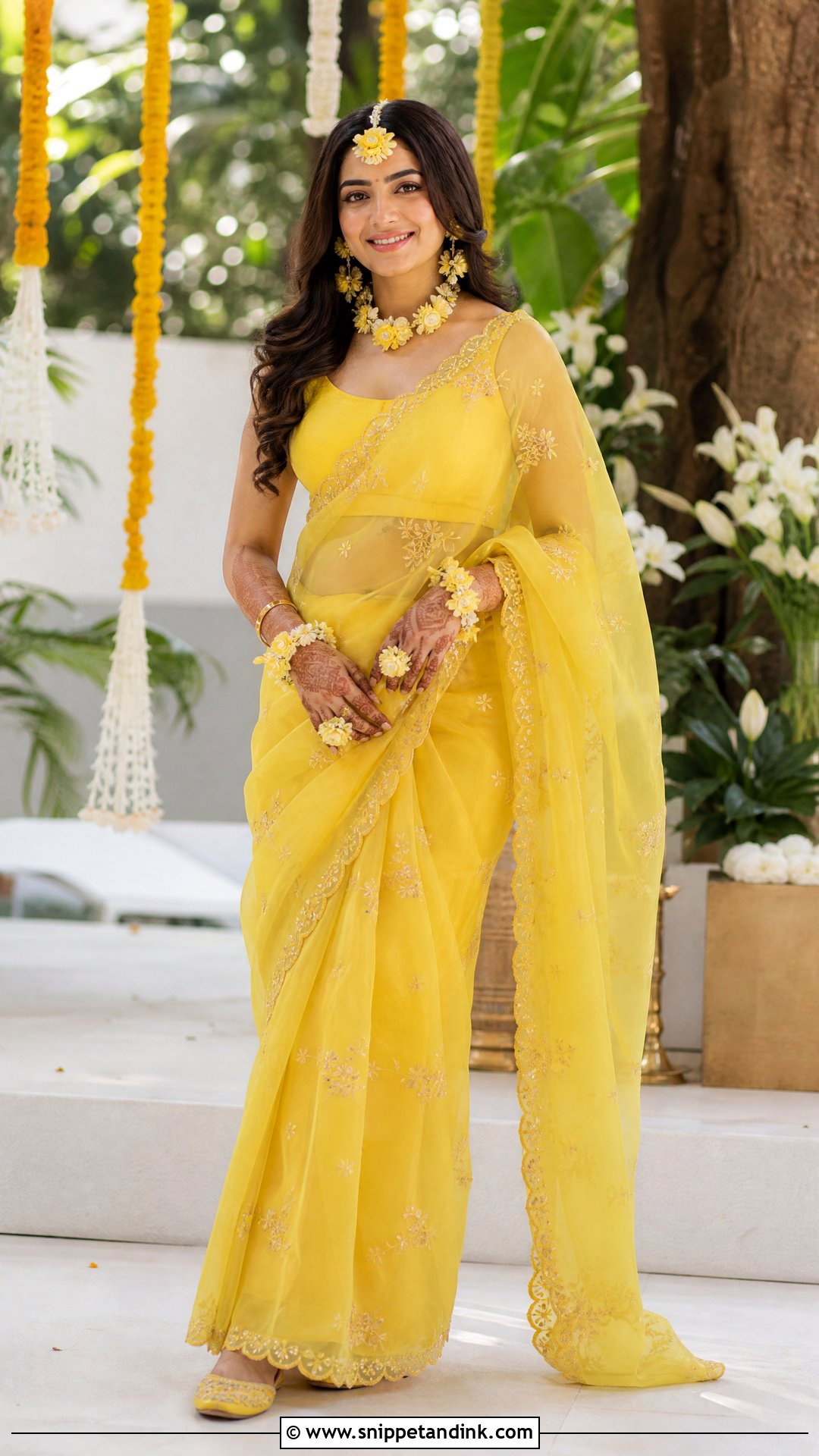
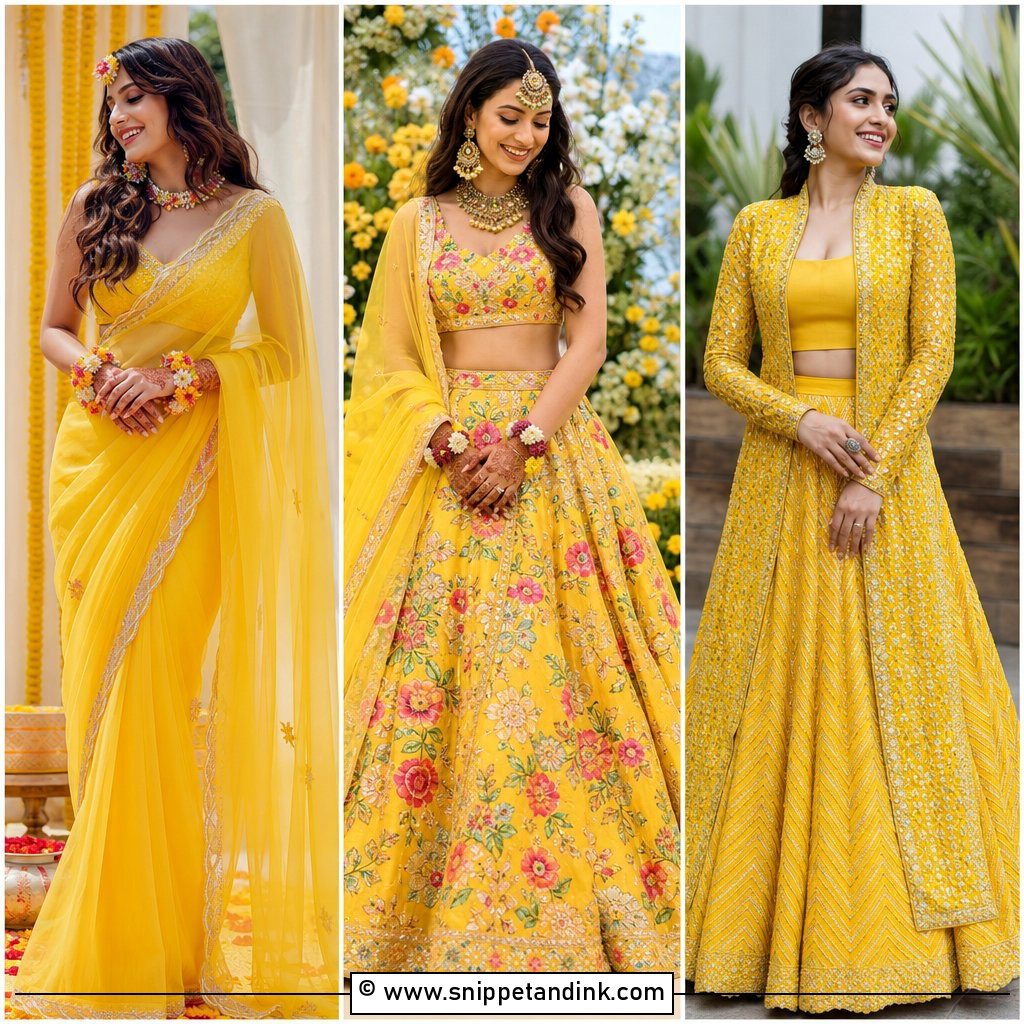
Organza is crisp and slightly stiff. That’s why it glows in daylight photos, and also why it fights you when you sit. A lemon-yellow saree with fine floral embroidery or a scalloped edge looks best with a sleeveless or short-sleeve blouse in a clean cut. I pin the drape at the shoulder and twice at the waist, since organza pleats spring open instead of falling back into place. Paste also sits on the surface of the weave for a moment before it sinks in, so blot spills with a dry tissue rather than rubbing. Floral studs, a small maang tikka and stacked bangles are plenty. Keep the embellishment light; heavy work on an already full fabric looks boxy in seated shots.
3. Yellow Chiffon Saree Haldi Outfit
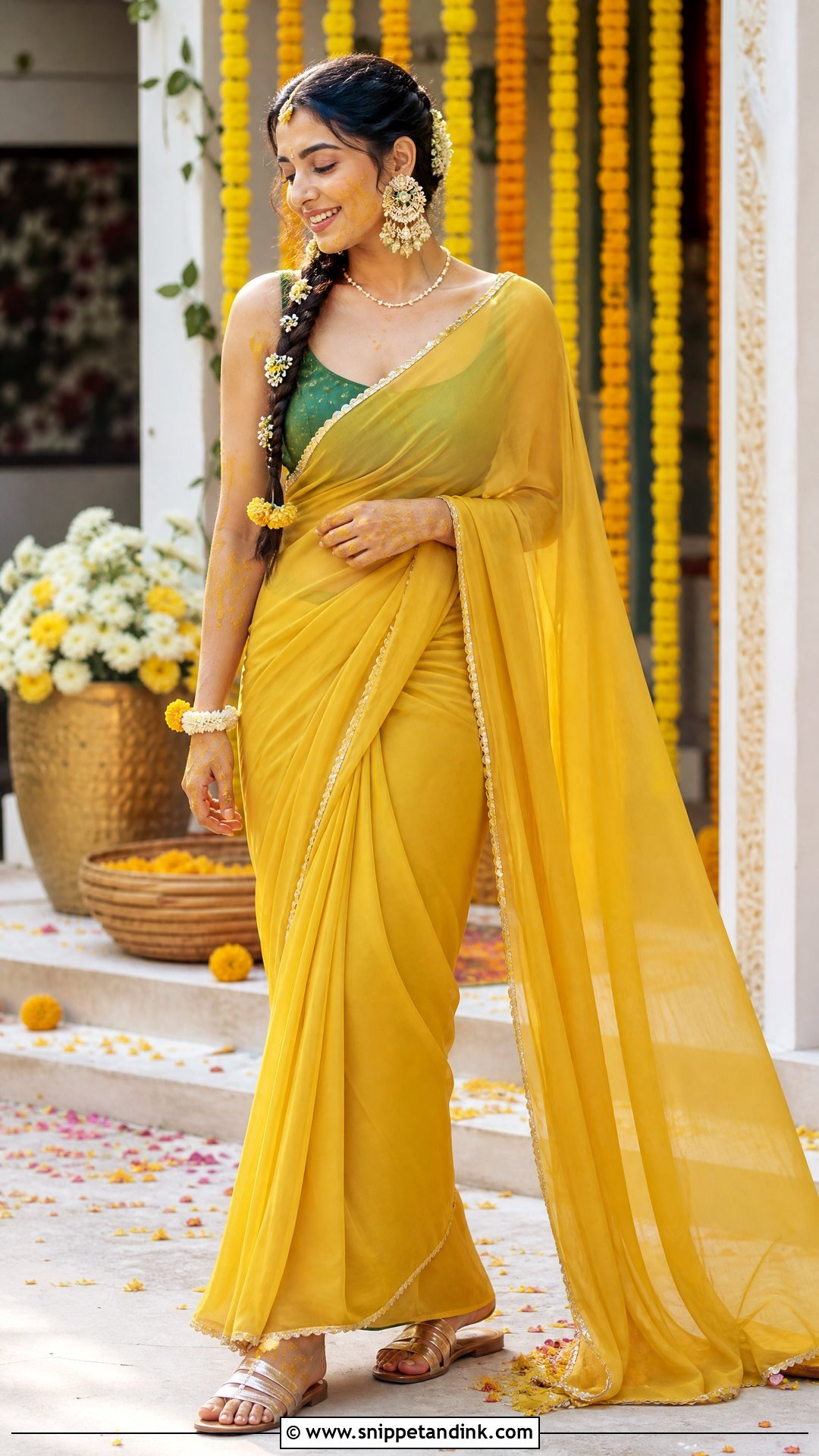
Chiffon has the opposite problem to organza: it clings and moves with every breeze. A plain marigold or mustard saree with a narrow gota patti border keeps things simple, and you can match the blouse for a monochrome look or contrast it in green, pink or orange to give the drape some edges. Because the fabric is so light, I pin it at the shoulder and waist and check the pleats from the side, not just the front. Wet paste makes chiffon cling and turn slightly see-through, so smooth nude innerwear and a fitted petticoat matter more here than anywhere else in this list. Floral chandbalis, a fine necklace and metallic flats finish it, with a sleek braid or low ponytail to keep hair out of the turmeric.
4. Pre-Draped Saree Haldi Outfit
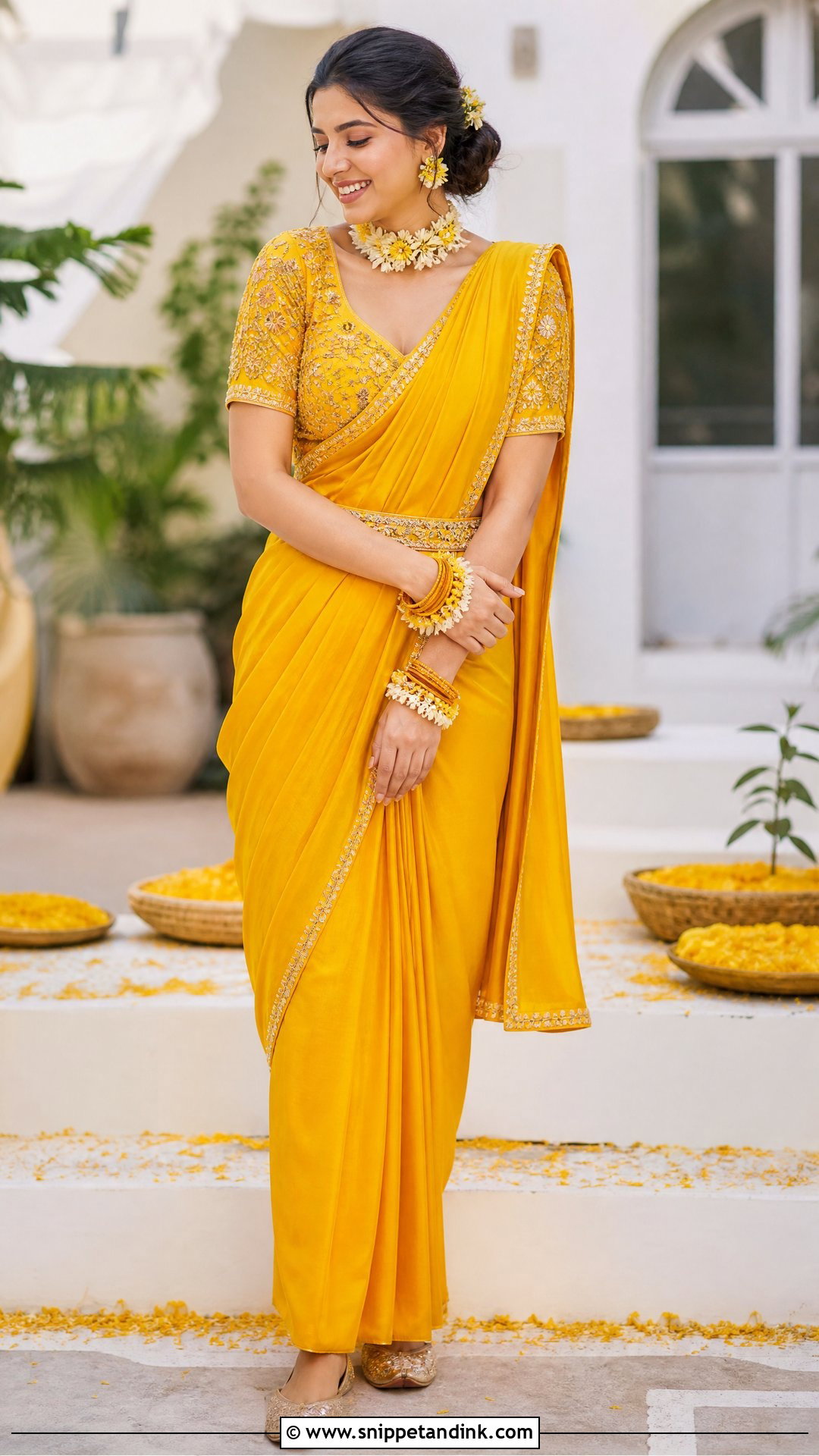
Pre-draped sarees solve the Haldi worry I hear most, which is pleats coming loose halfway through the ritual. The stitched waist and short pallu stay put while relatives lean over you. Choose a lightweight one with a little mirror or thread embroidery, and try it on sitting down before the day, because some pre-stitched pleats ride up and pull at the waist on a low stool. A blouse with room in the armhole lets you lift your arms comfortably. Floral earrings, a small choker and bangles do the bridal work, and flats or juttis suit the hem, which usually sits just above the floor. You can also step out of it in seconds when it’s time to bathe.
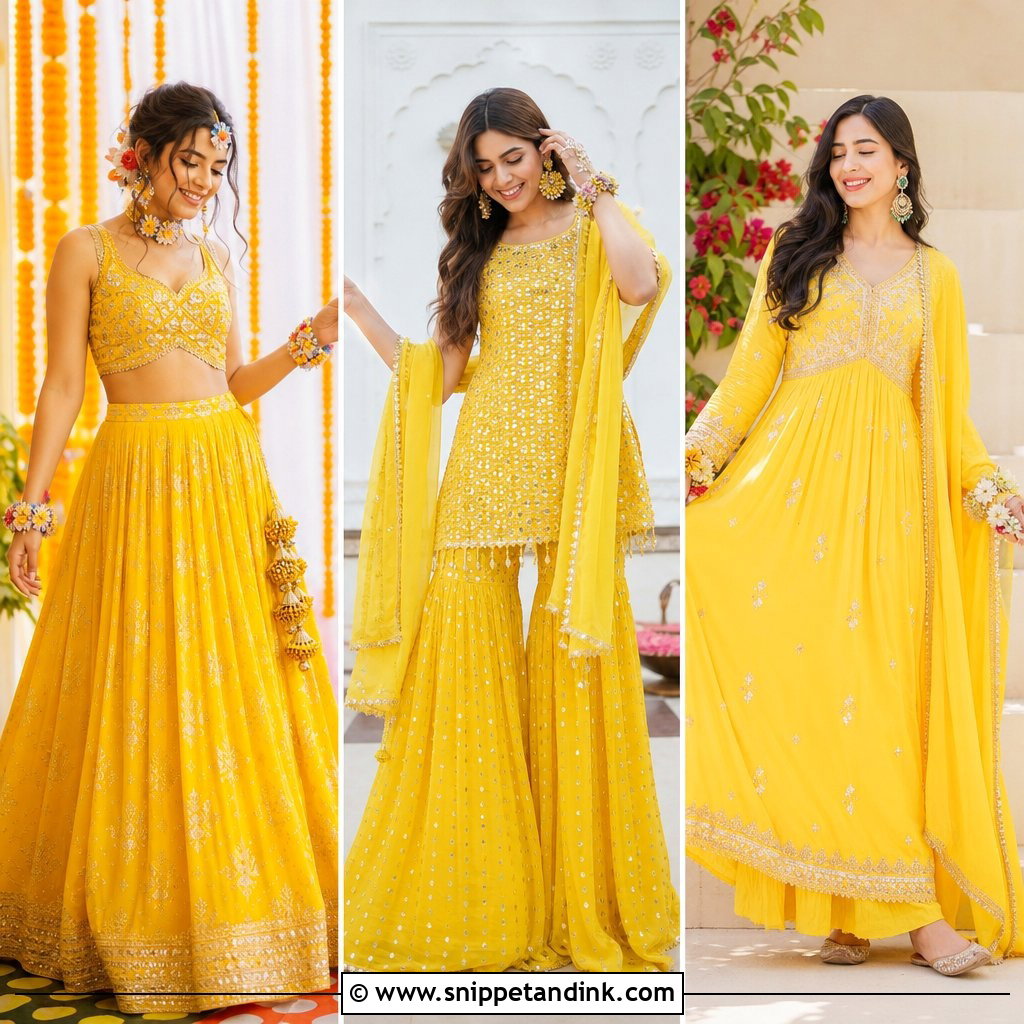
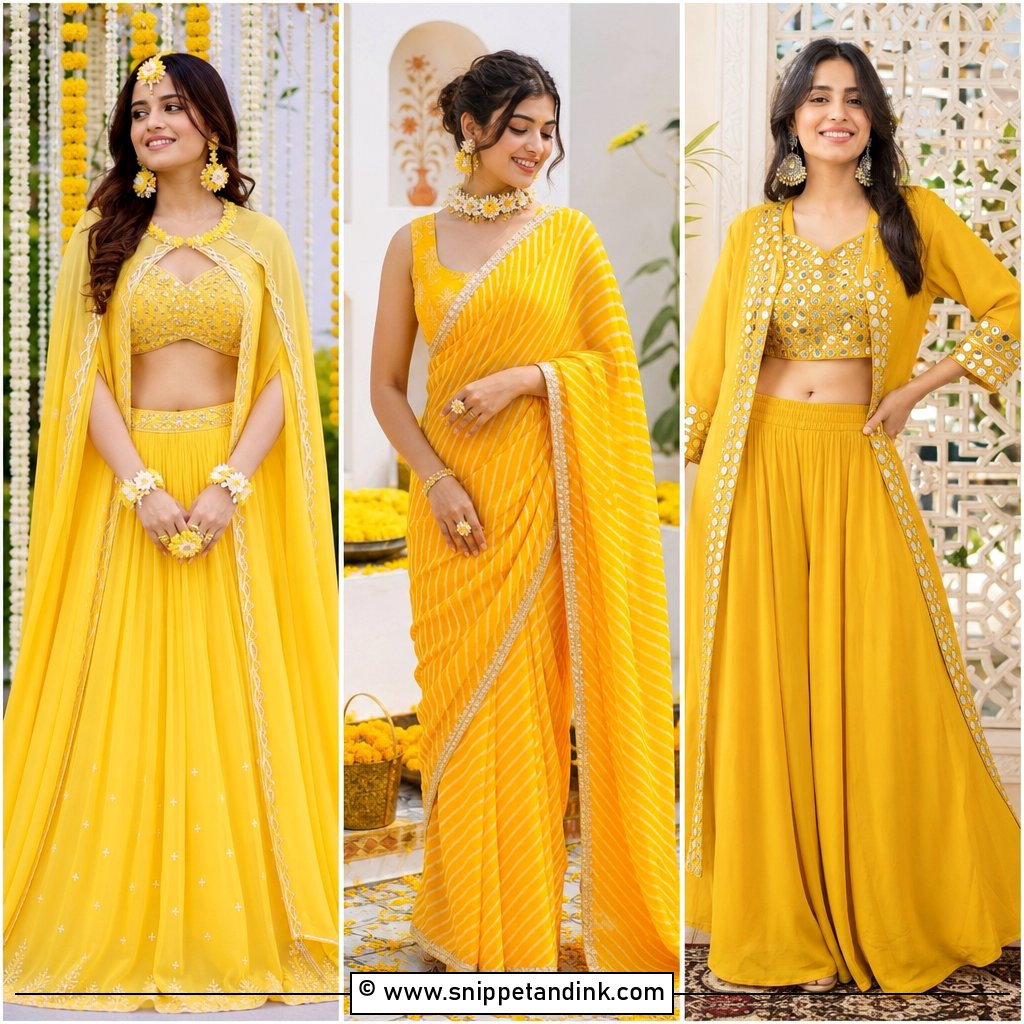
5. Simple Yellow Lehenga Haldi Outfit
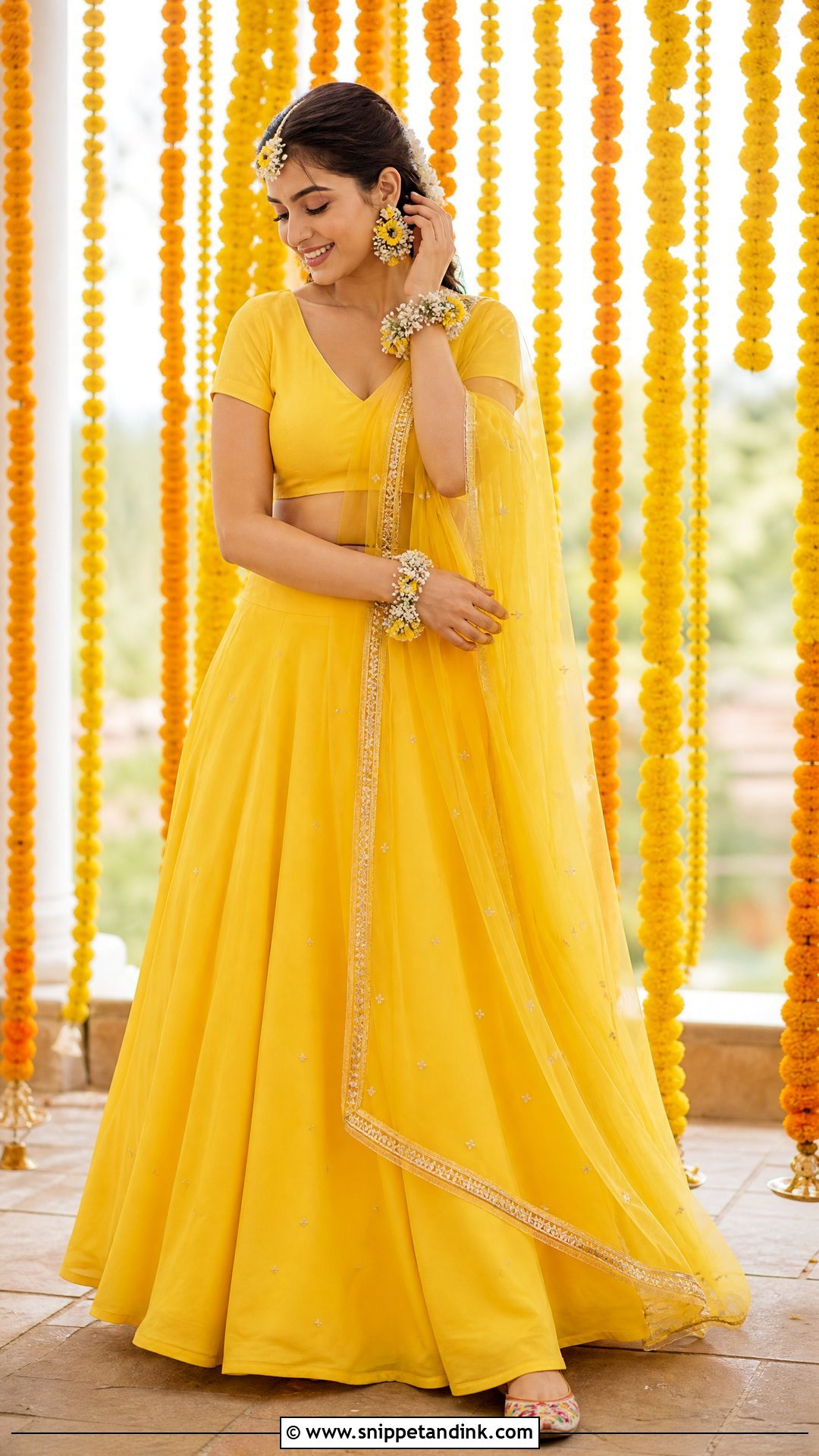
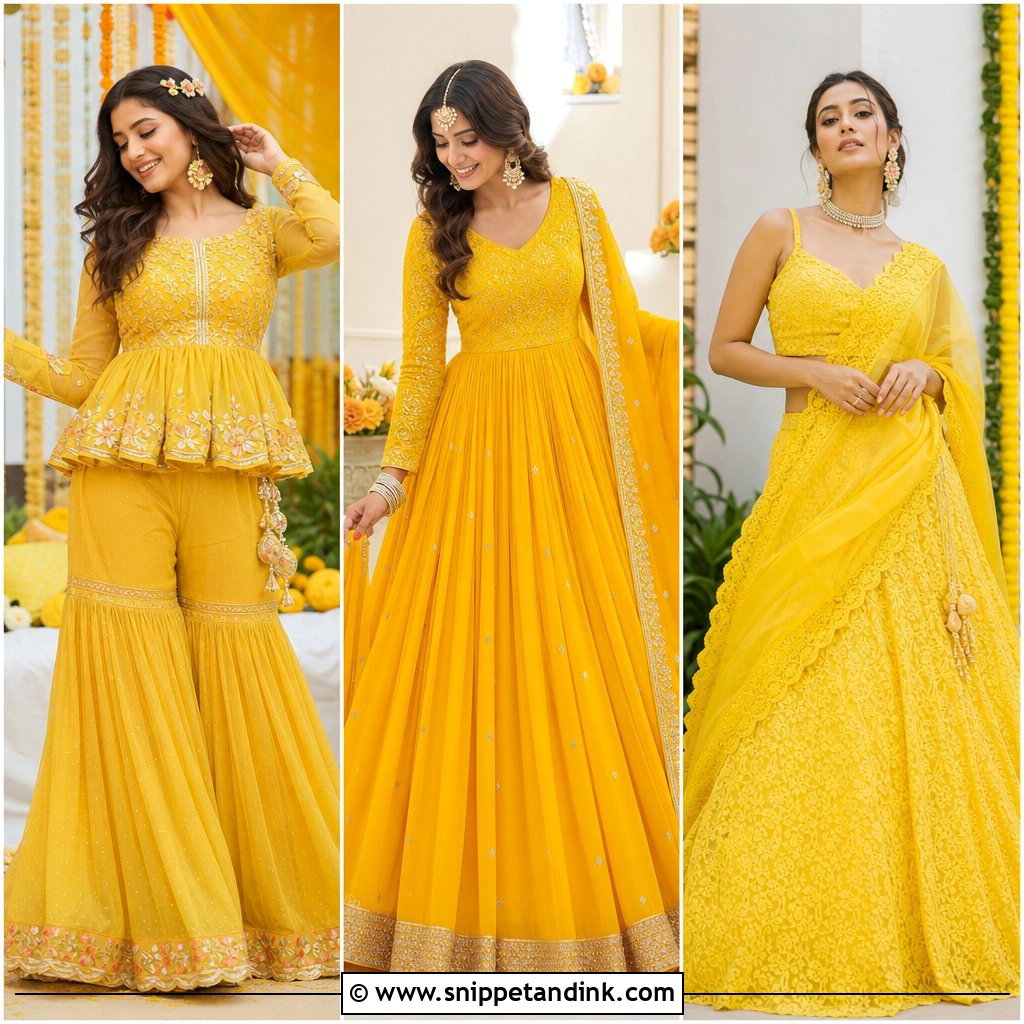
A plain yellow lehenga reads bridal when the color is clean and the fit is right; it doesn’t need heavy work. I’d go for georgette or cotton-silk with a modest flare, because a floor-sweeping skirt mops up paste and water from the floor. Pair a matching blouse with a sheer dupatta edged in narrow gota, and pin the dupatta over one shoulder so both hands are free. Let floral jewelry carry the decoration, then add juttis and a loose braid with small flowers. Later, a different blouse or dupatta turns the same skirt into a mehndi or festival outfit.
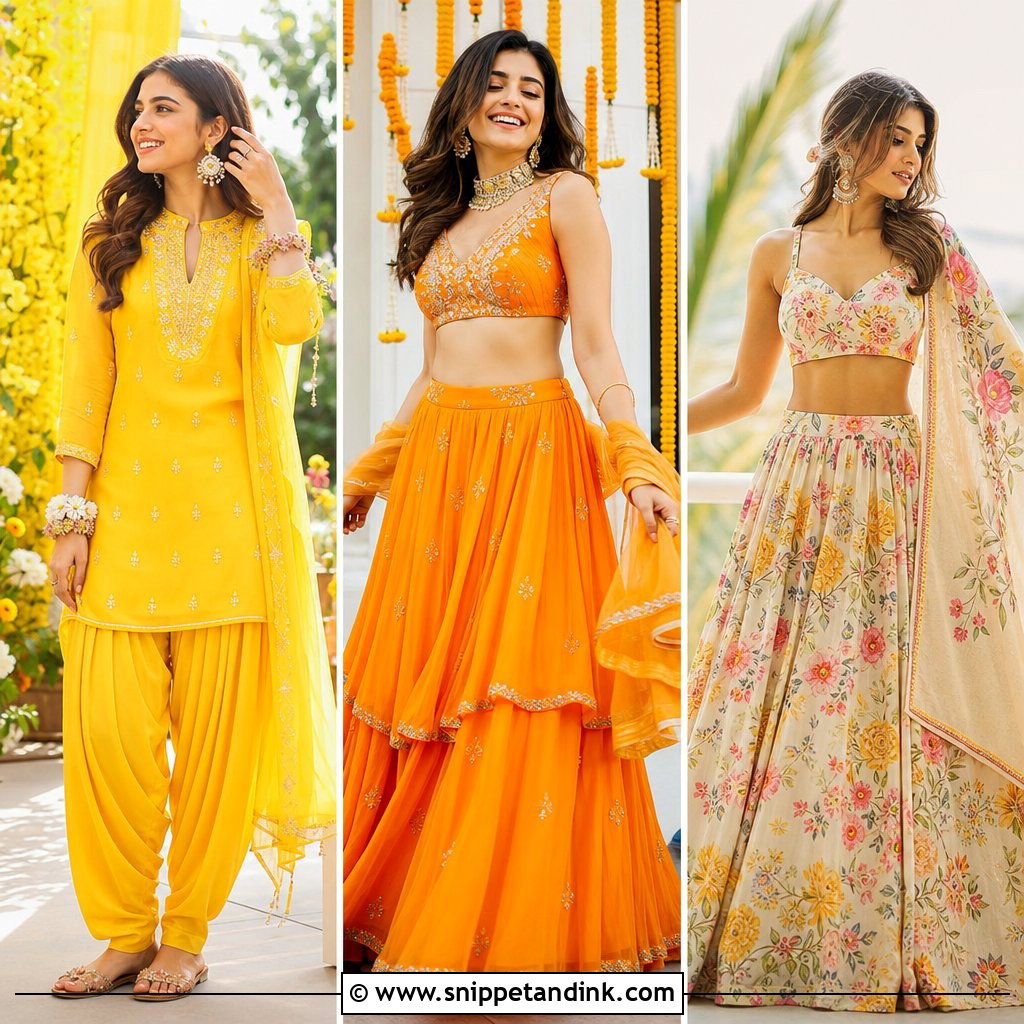
6. Floral Yellow Lehenga Haldi Outfit
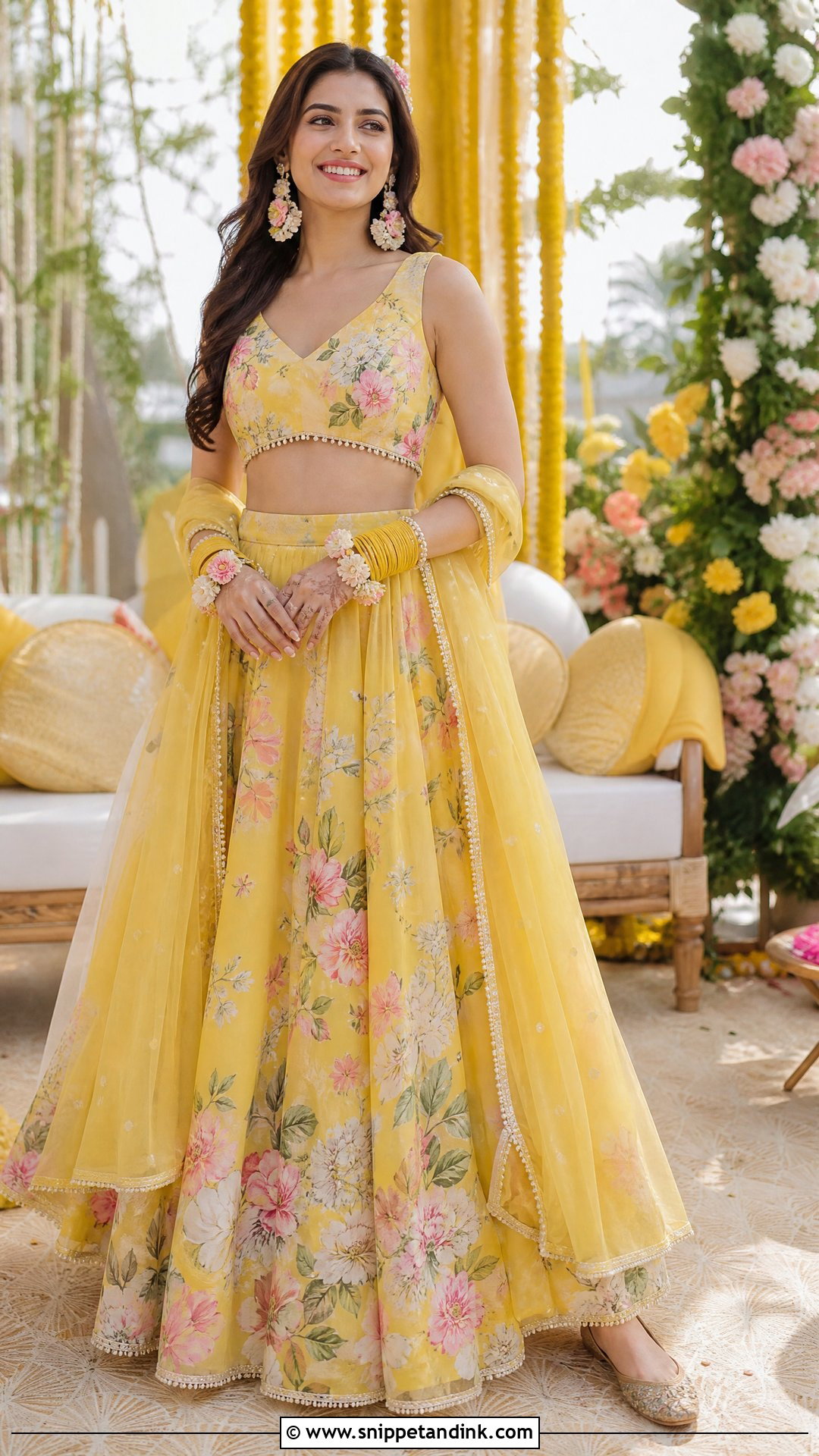
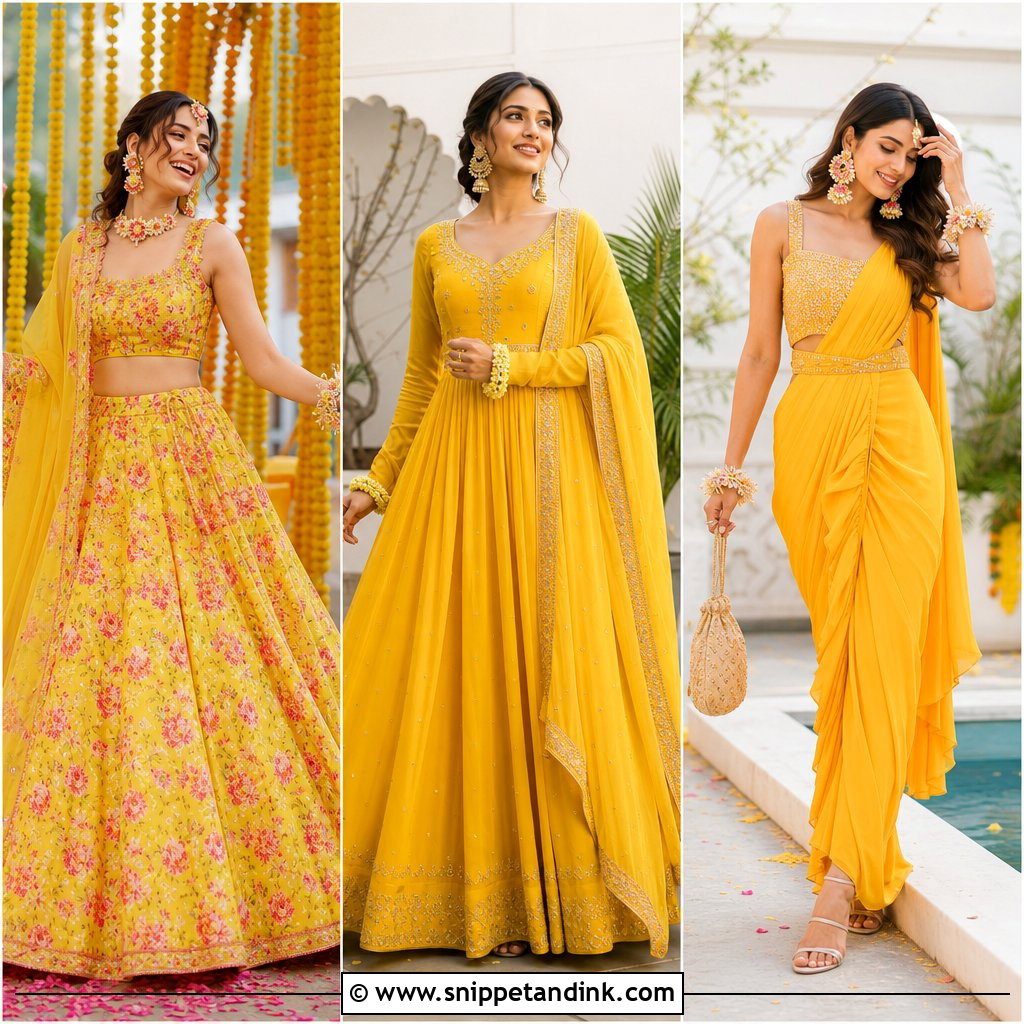
Prints are my quiet favorite for Haldi, because a busy floral pattern hides the small turmeric smudges that plain fabric shows. Look for a yellow or ivory skirt with pink, orange or green flowers, and keep the crop blouse in one coordinating shade so the print stays the focus. A light organza dupatta adds movement without weight. Flower earrings, fine bangles and neutral juttis are enough, with half-up waves or a loose braid with fresh blooms. Keep makeup waterproof and light: glowing skin, a rosy lip and mascara that won’t run once the paste and water start flying.
7. Mirror Work Lehenga Haldi Outfit
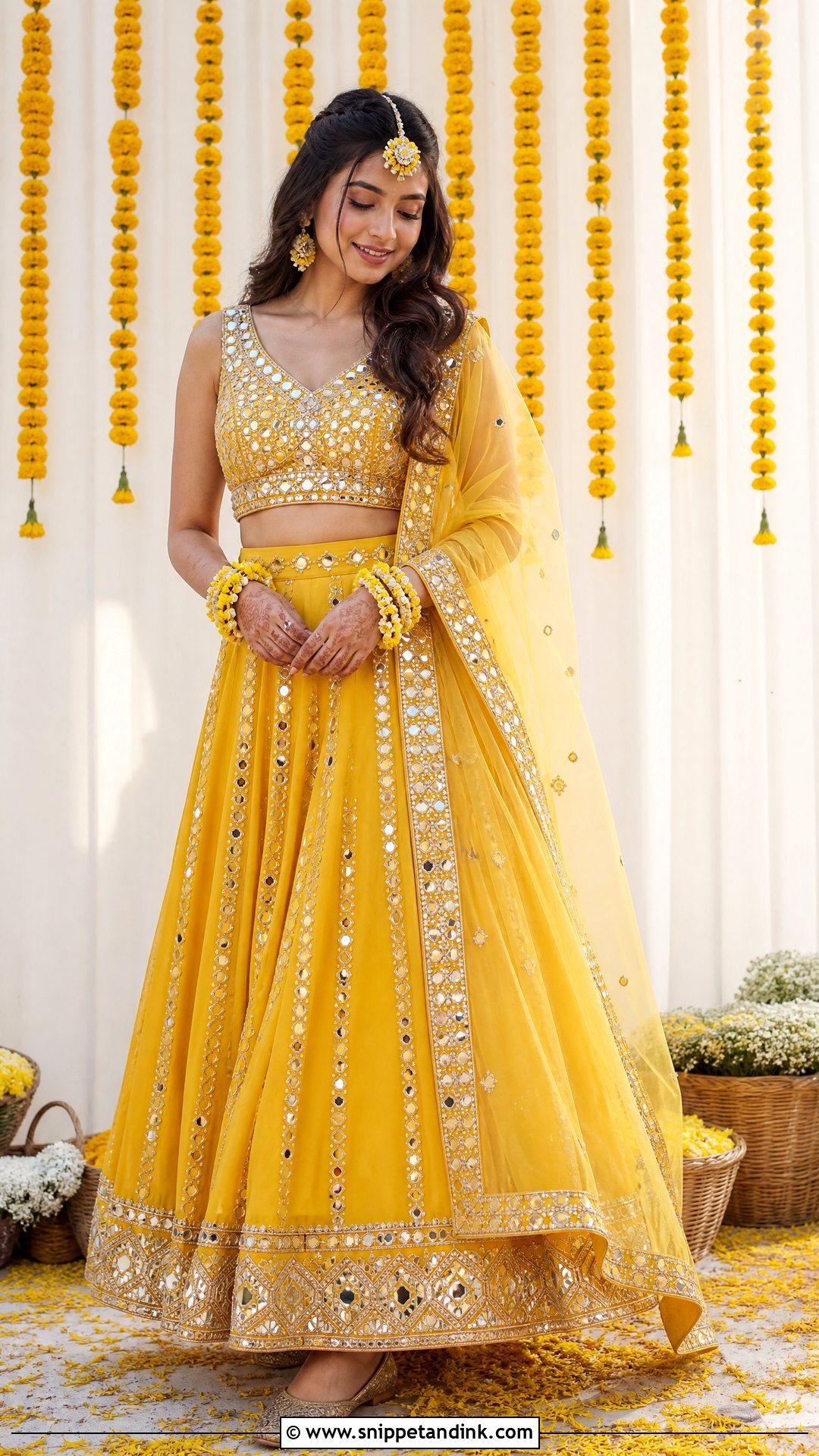
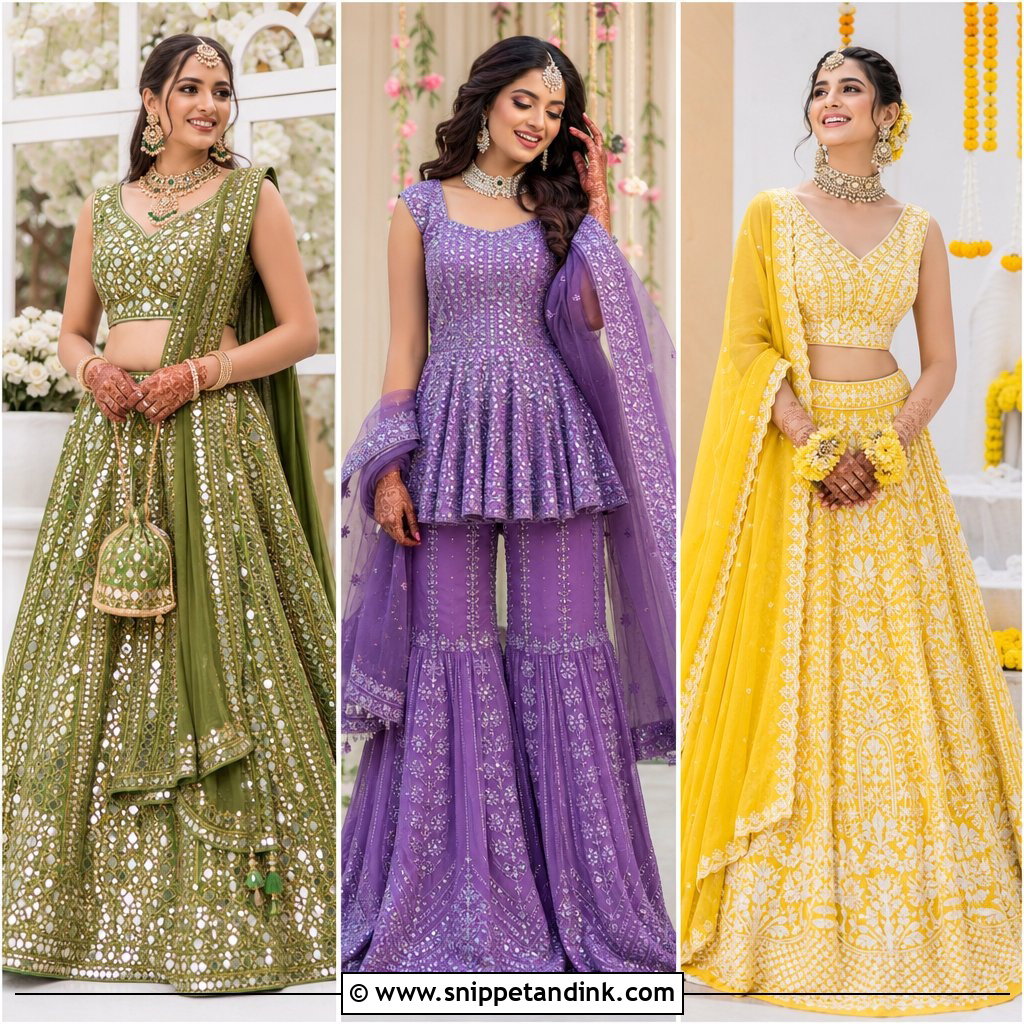
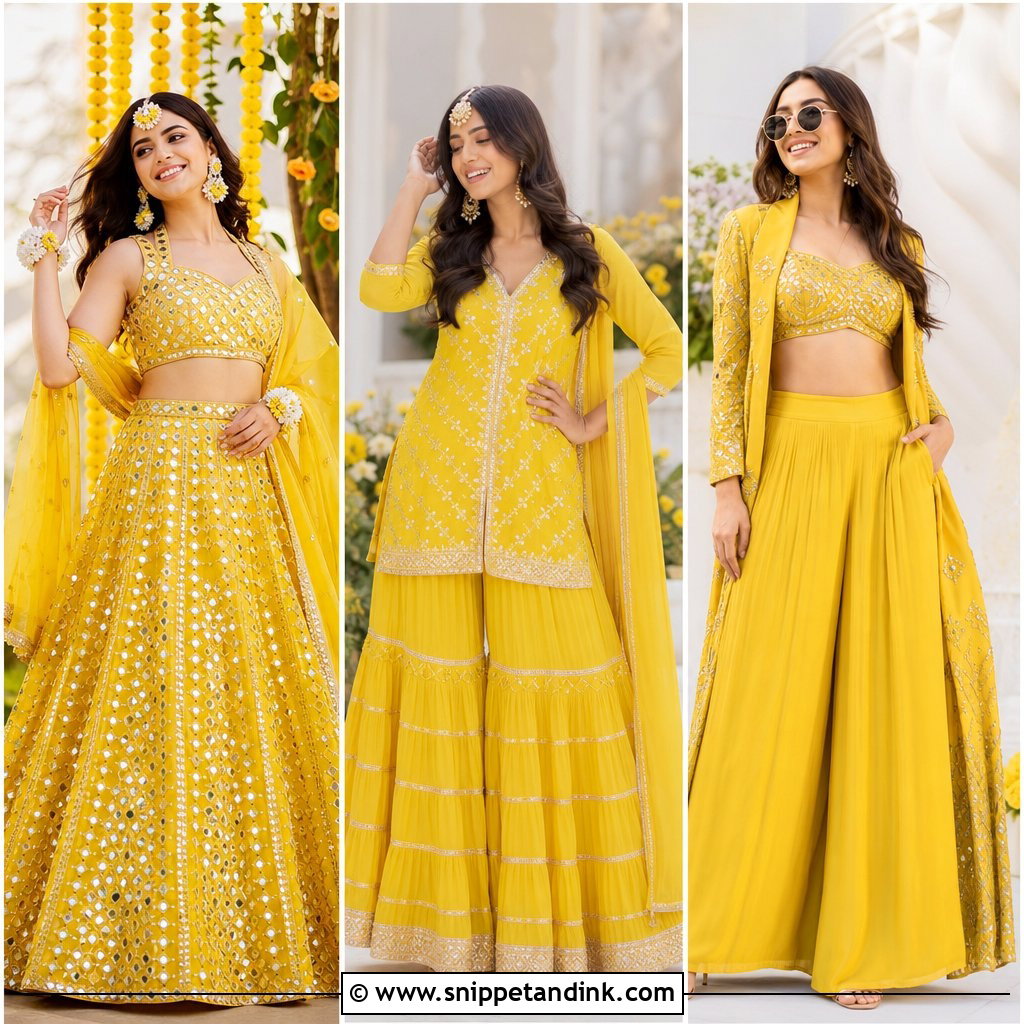
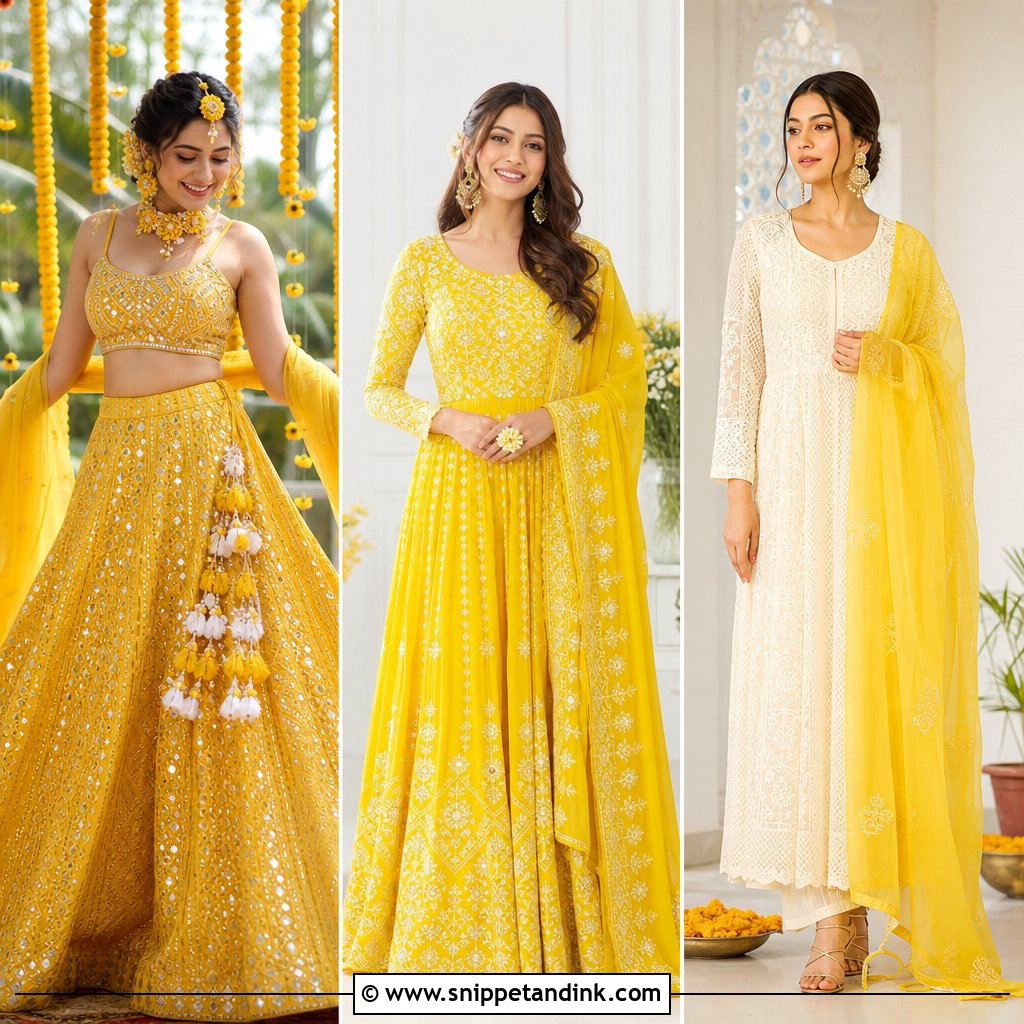
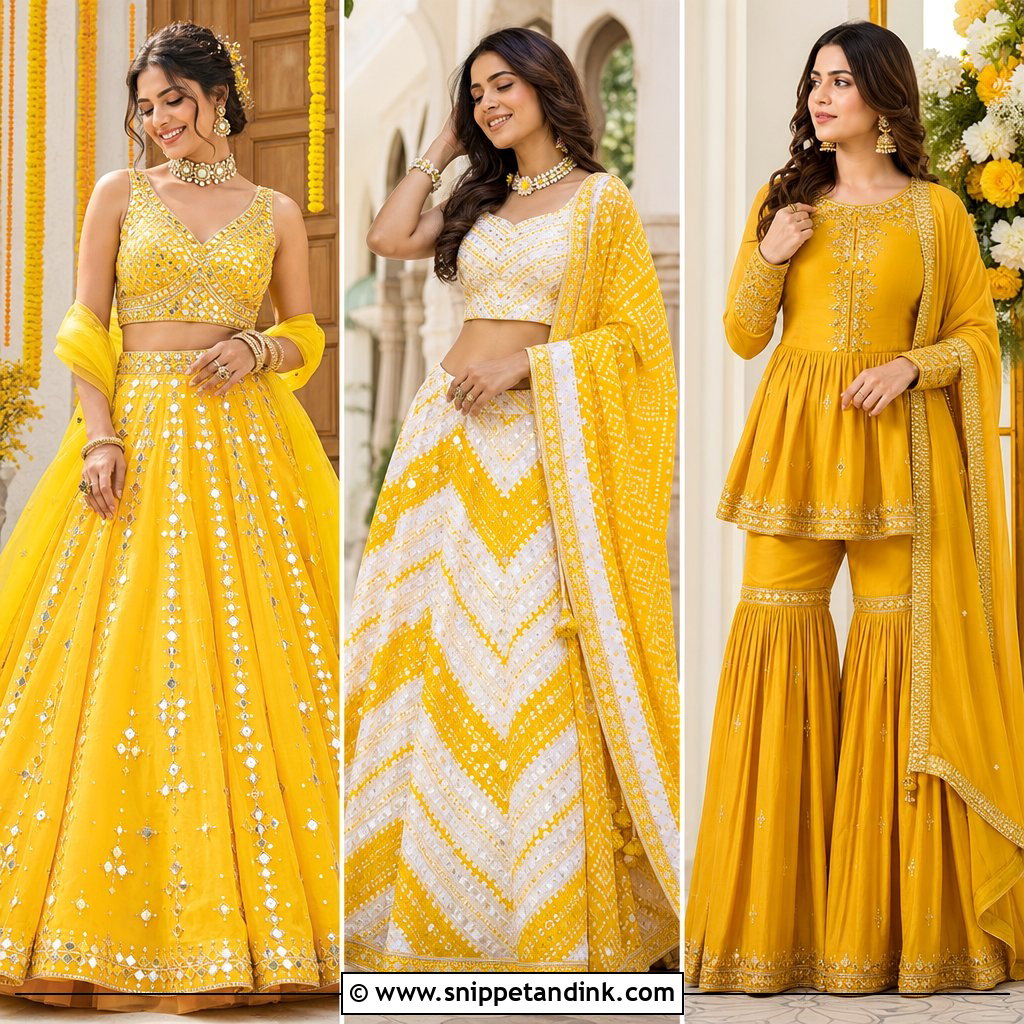
Mirror work catches the sun, so a little goes a long way. I’d choose scattered mirrors over dense panels; heavy embellishment drags at the waistband and gets uncomfortable within the hour. A sleeveless blouse, a moderate flare and a net dupatta keep the balance right. At the fitting, run your hand along the inside of the blouse and the skirt seams. Mirror edges and the thread holding them can scratch the inner arm every time you lift it, and a soft lining fixes that. Keep accessories to floral earrings, a small tikka and a few bangles, add metallic juttis, and pull your hair into a braid or low bun so the neckline shows.
8. Yellow Kurta Palazzo Haldi Outfit
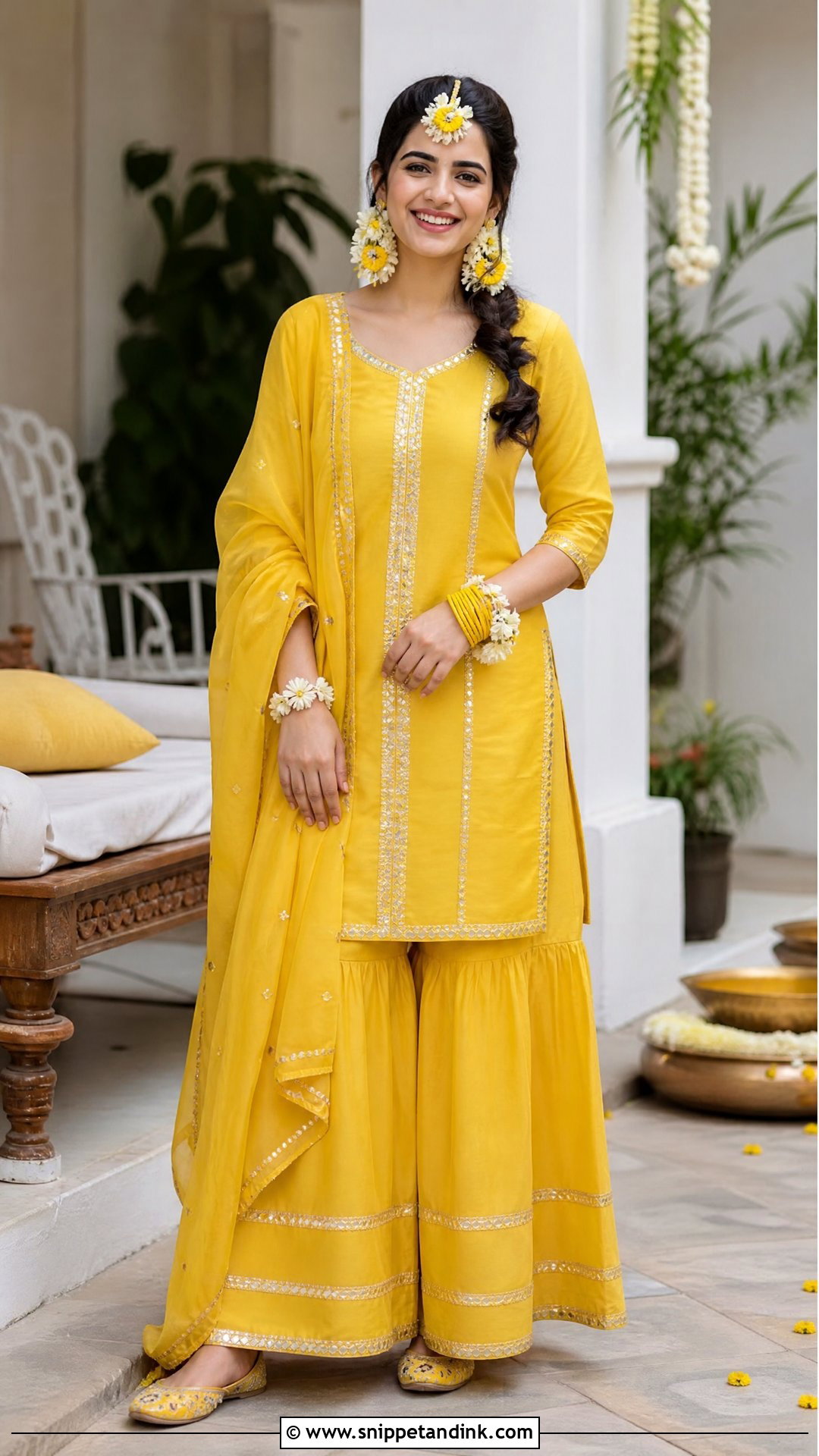
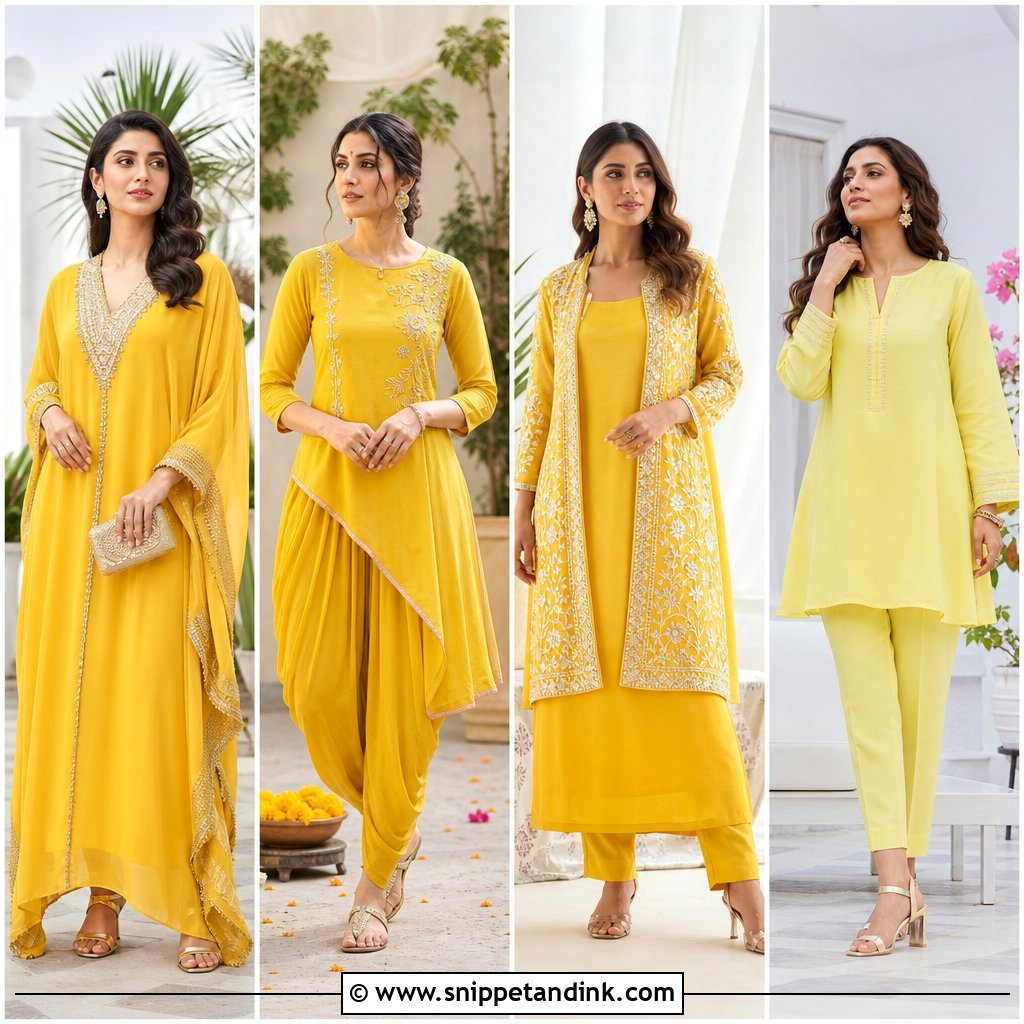
For a small Haldi at home, I often steer brides toward a kurta and palazzo set. You can sit on the floor, get up quickly and move between rooms without managing pleats. Choose a straight or slightly flared kurta with small gota motifs or an embroidered neckline, and check that it isn’t tight across the hips, since that’s where it pulls when you sit cross-legged. Wide palazzos and a soft dupatta complete the outline. Flower earrings, a floral tikka, glass bangles and embroidered flats keep it festive, and a side braid with baby’s breath or tiny marigolds makes it bridal. Cotton, rayon or light georgette will wash far more easily afterward than anything heavily embellished.
9. Yellow Sharara Haldi Outfit
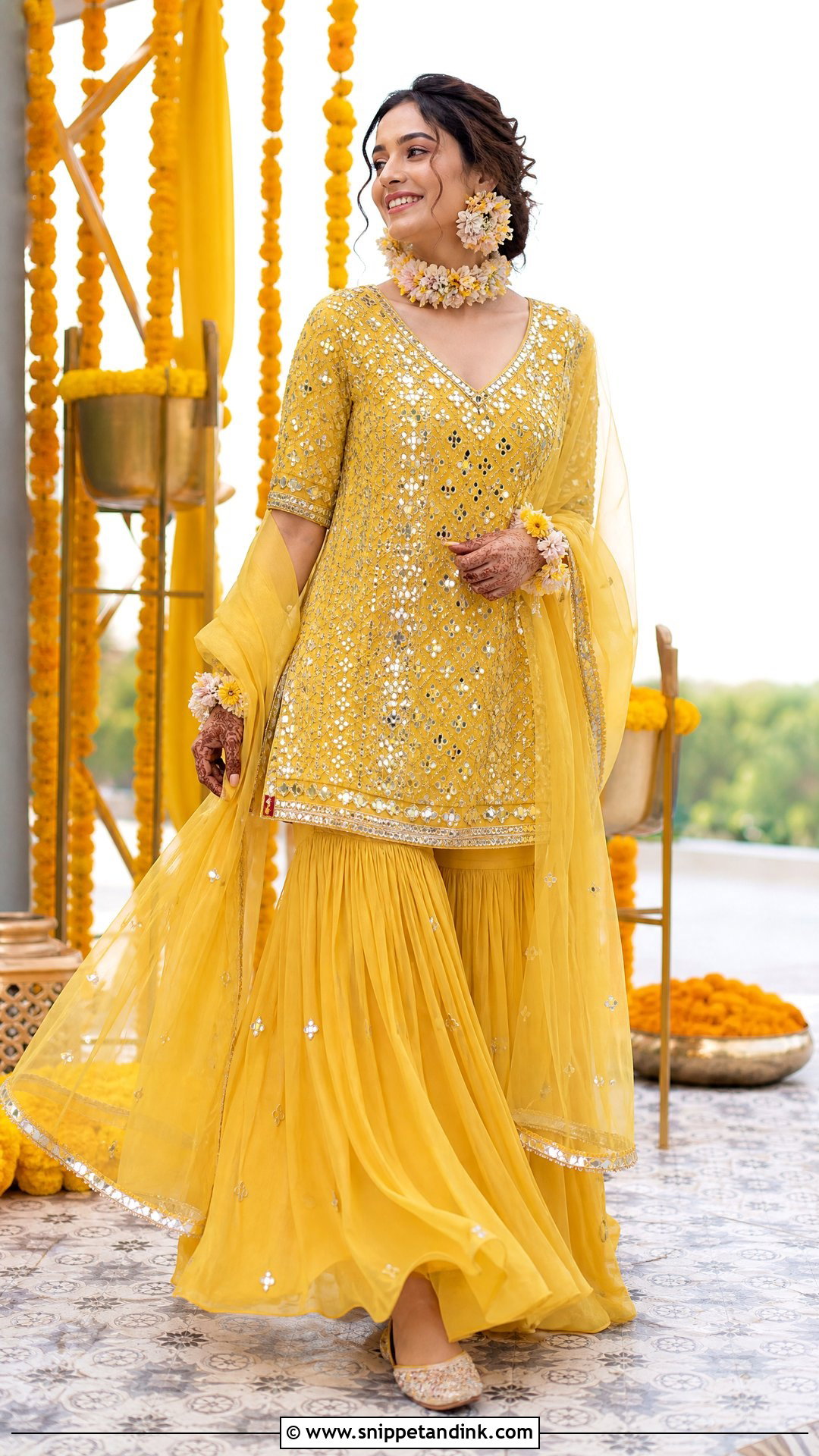
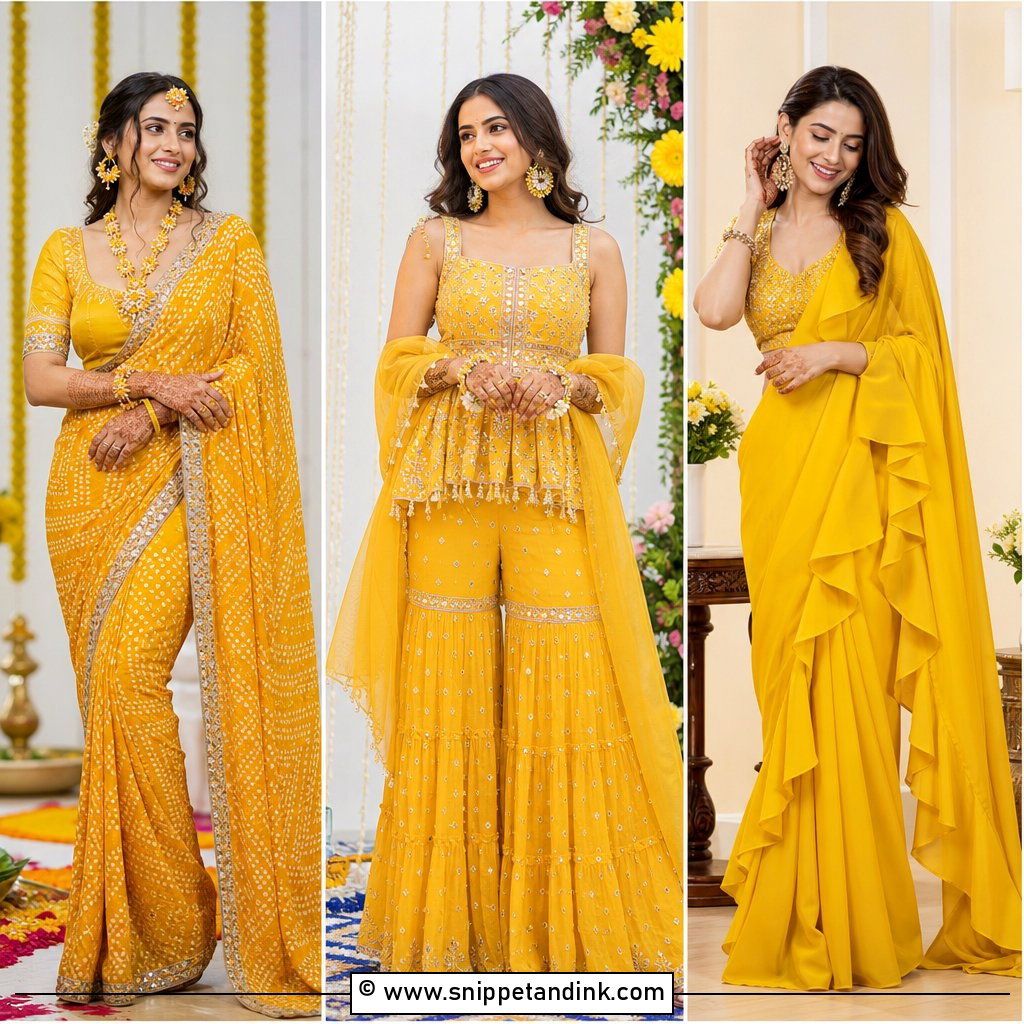
A sharara gives you volume below the knee and freedom everywhere else. Pair a short kurta with light mirror work or gota patti with wide sharara pants, and pin a light dupatta at one shoulder. The fitted top keeps the outfit tidy, and the flare looks lively in dancing photos. Hem length is the thing I always check. Shararas pool on the floor if they’re too long, and at a Haldi the floor is wet with paste and water, so have the hem sit just above the ground in the shoes you’ll actually wear. Floral chandbalis, a simple choker and wrist flowers are enough, with waves or a half-up style.
10. Yellow Gharara Haldi Outfit
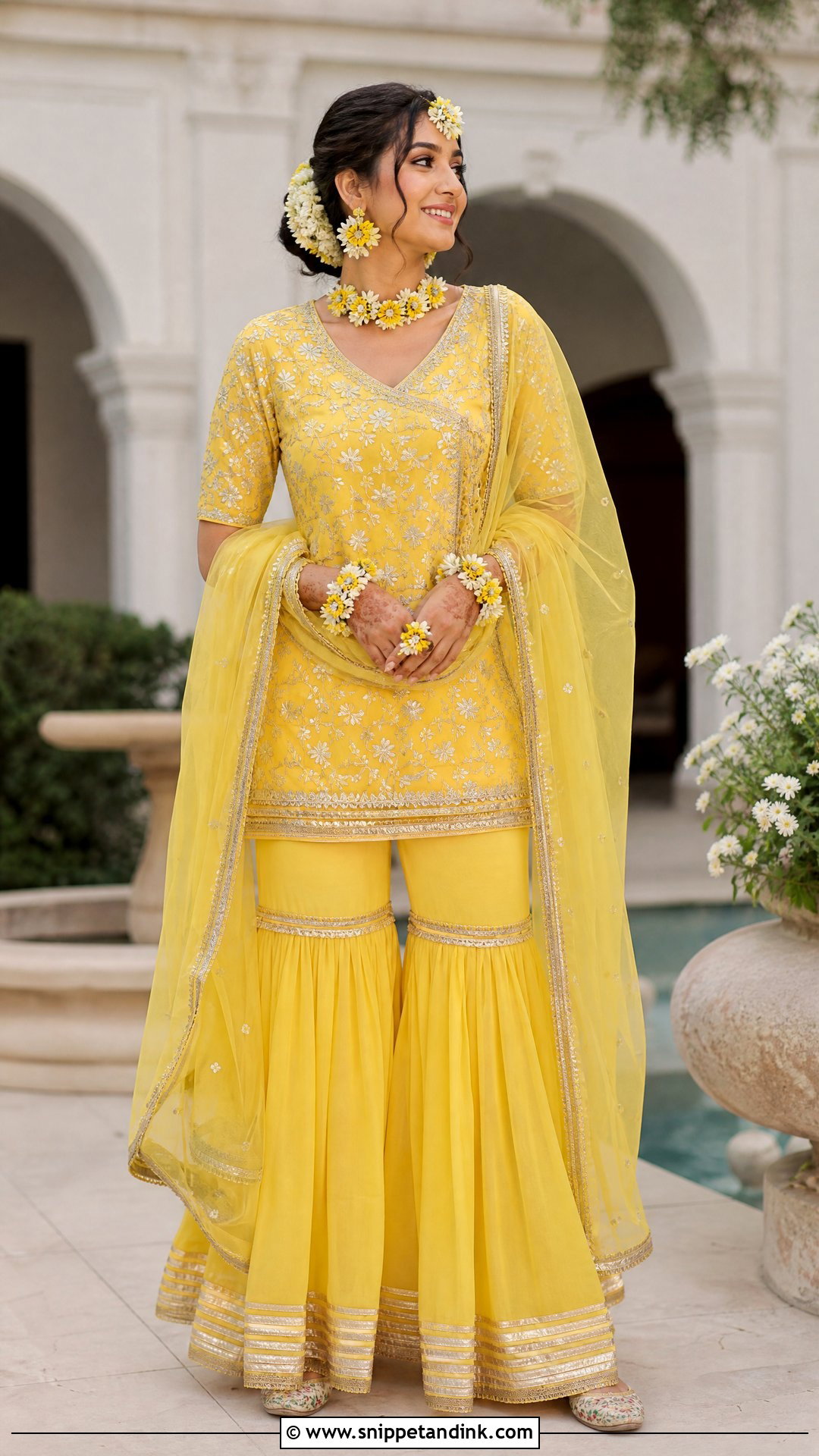
The structured flare of a gharara starts at the knee, which gives a simple yellow outfit a very traditional shape. Since the pants already carry the interest, keep the short kurta clean with a little embroidery at the neckline, and let gota trim at the knee joint mark where the flare begins. A sheer dupatta over one shoulder stays out of the way. I’d pick cotton-silk, georgette or crepe; they hold the gharara’s gathers and still feel soft when you’re sitting through the rituals. Floral jewelry, gold-toned bangles and juttis finish it, with a center-parted low bun dotted with small yellow and white flowers.
11. Yellow Anarkali Haldi Outfit
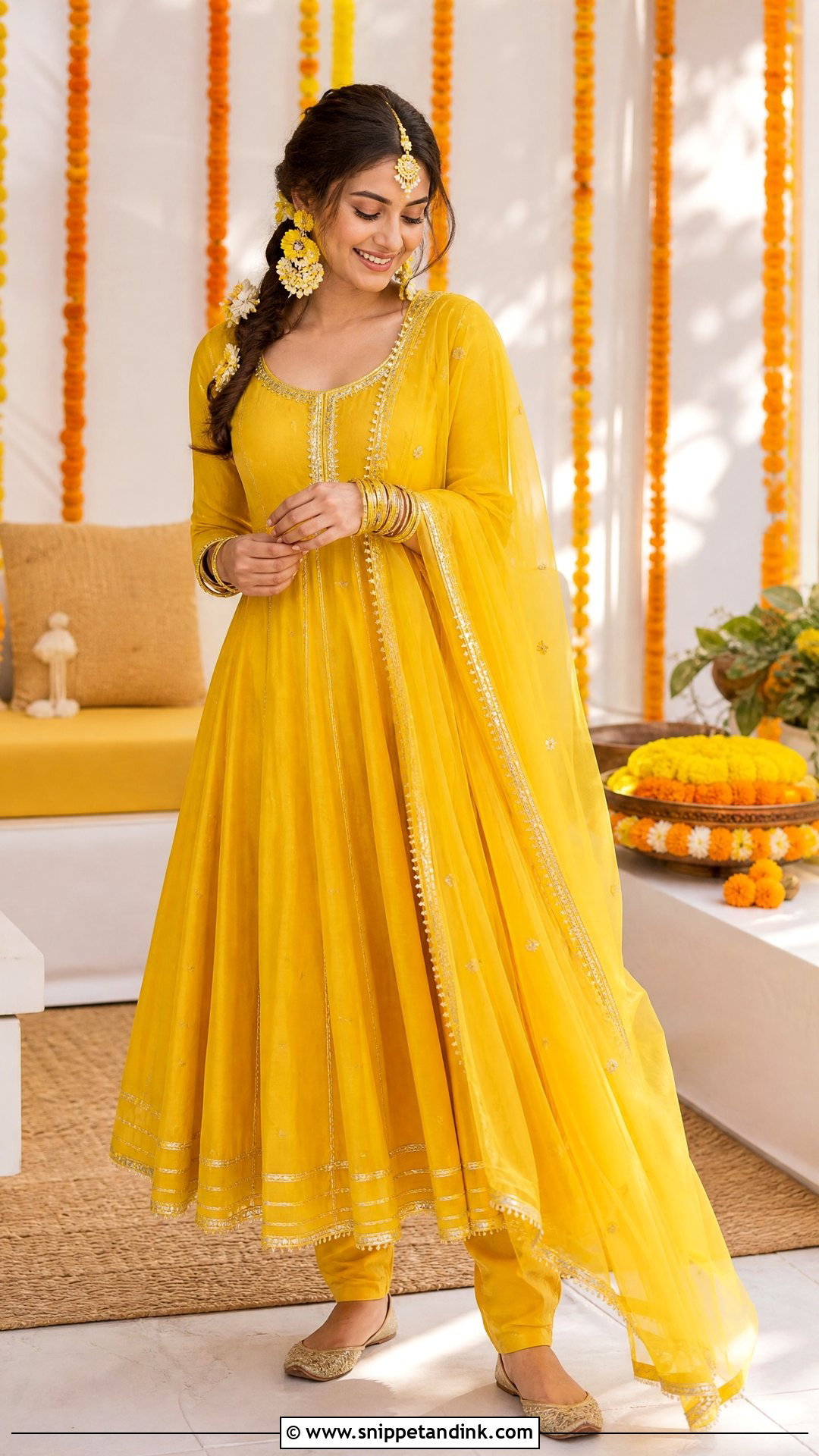
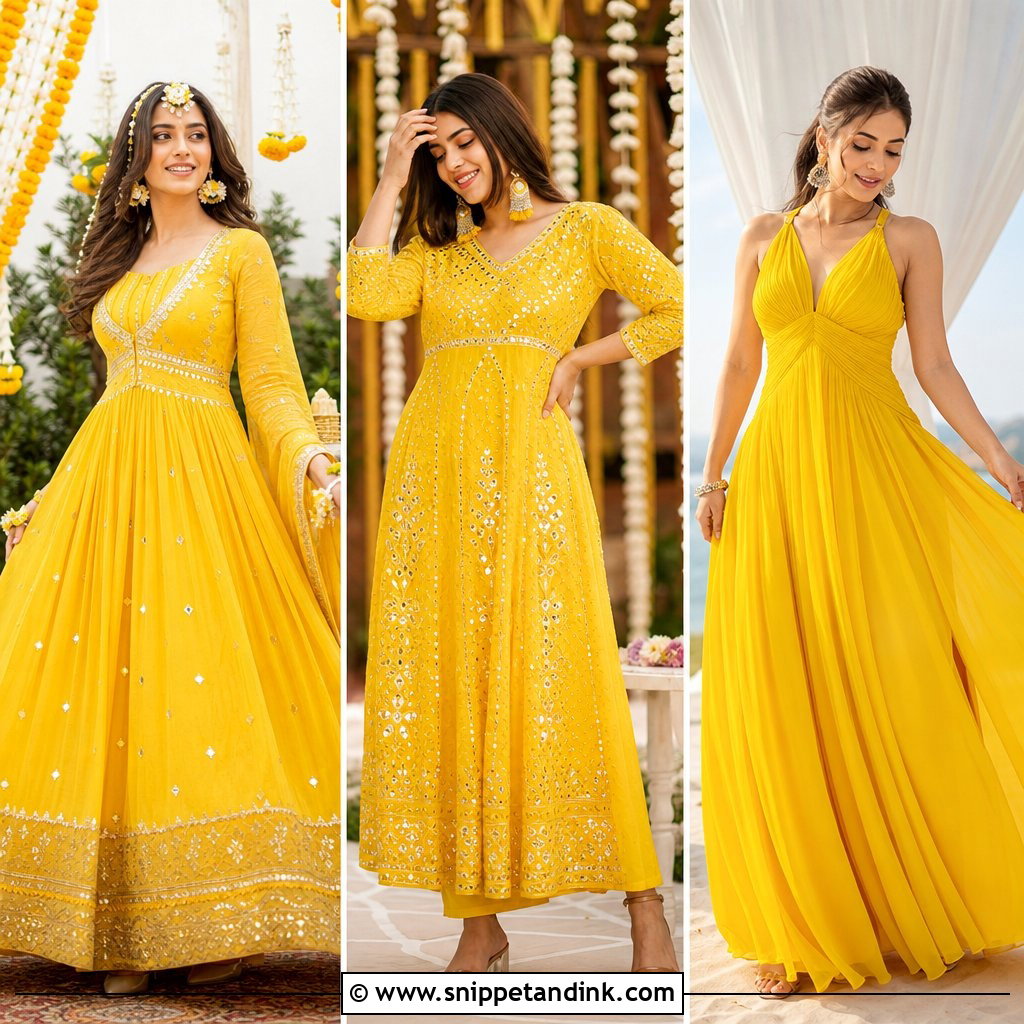
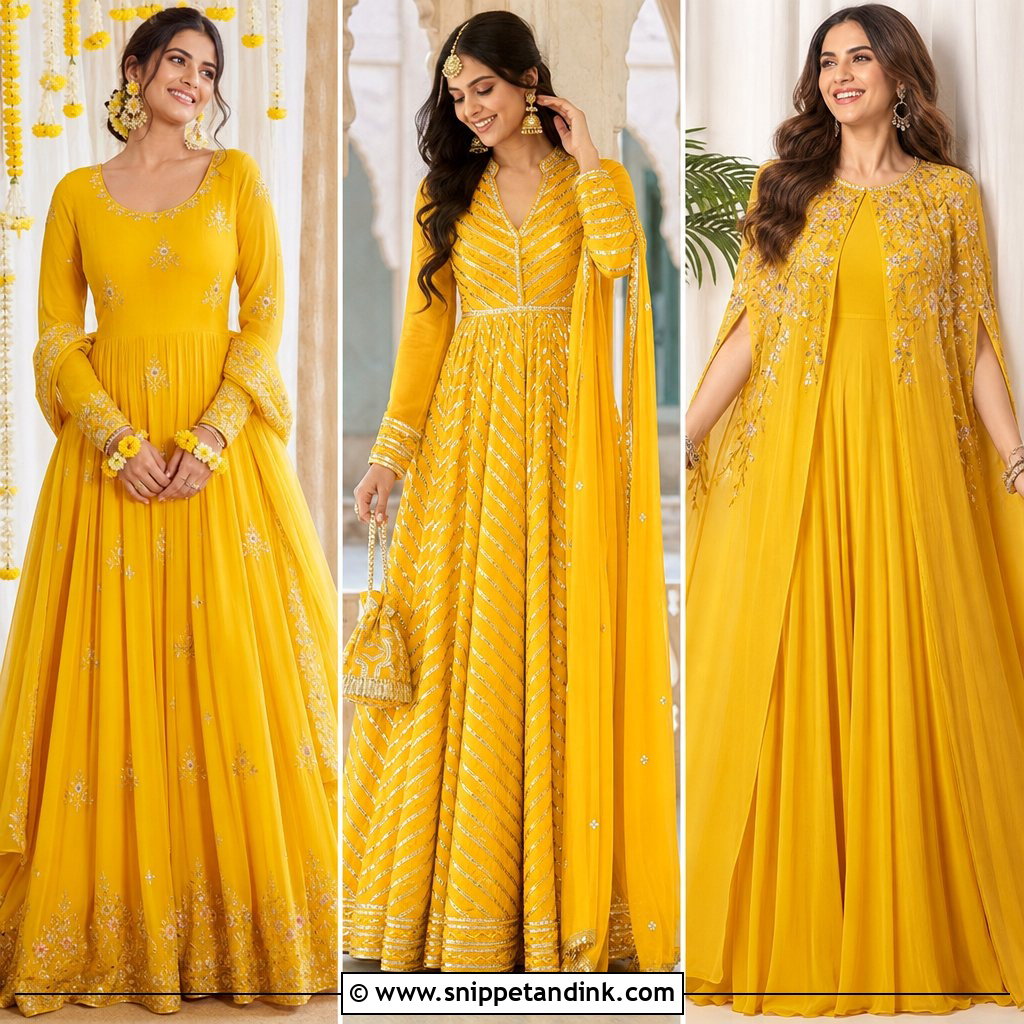
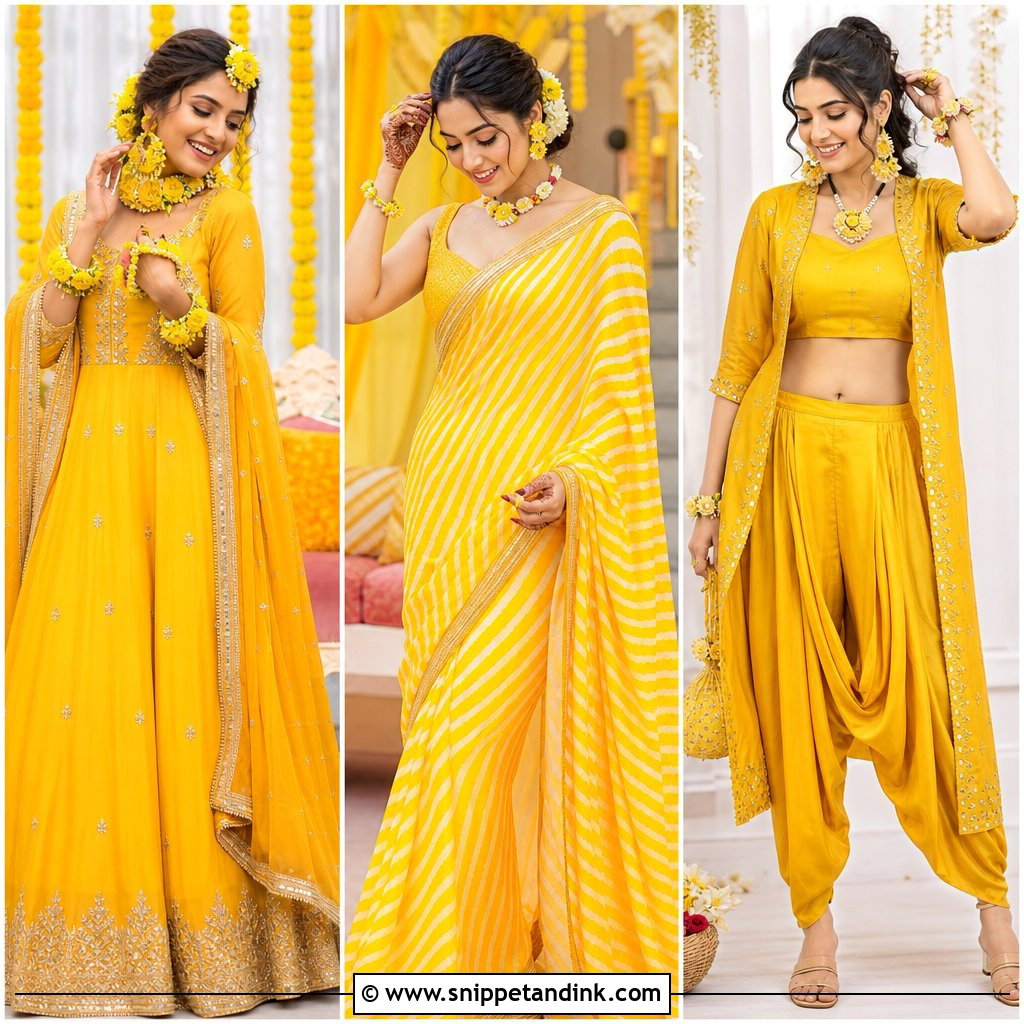
An Anarkali is a single garment, so it’s quick to put on and hard to get wrong. Calf or ankle length in cotton, chiffon or georgette works well. I’d skip floor length for Haldi, because that hem ends up in the paste and the flare spreads across the floor when you sit. A fitted bodice with fine gota lines or a block print gives it enough celebration. Wear it over slim pants with a soft dupatta pinned at one shoulder, then add floral drops, a delicate maang tikka, stacked bangles, flat juttis and a flower-trimmed braid. Leave trains and heavy layers for another function, especially if you’re outdoors.
12. Yellow Salwar Kameez Haldi Outfit
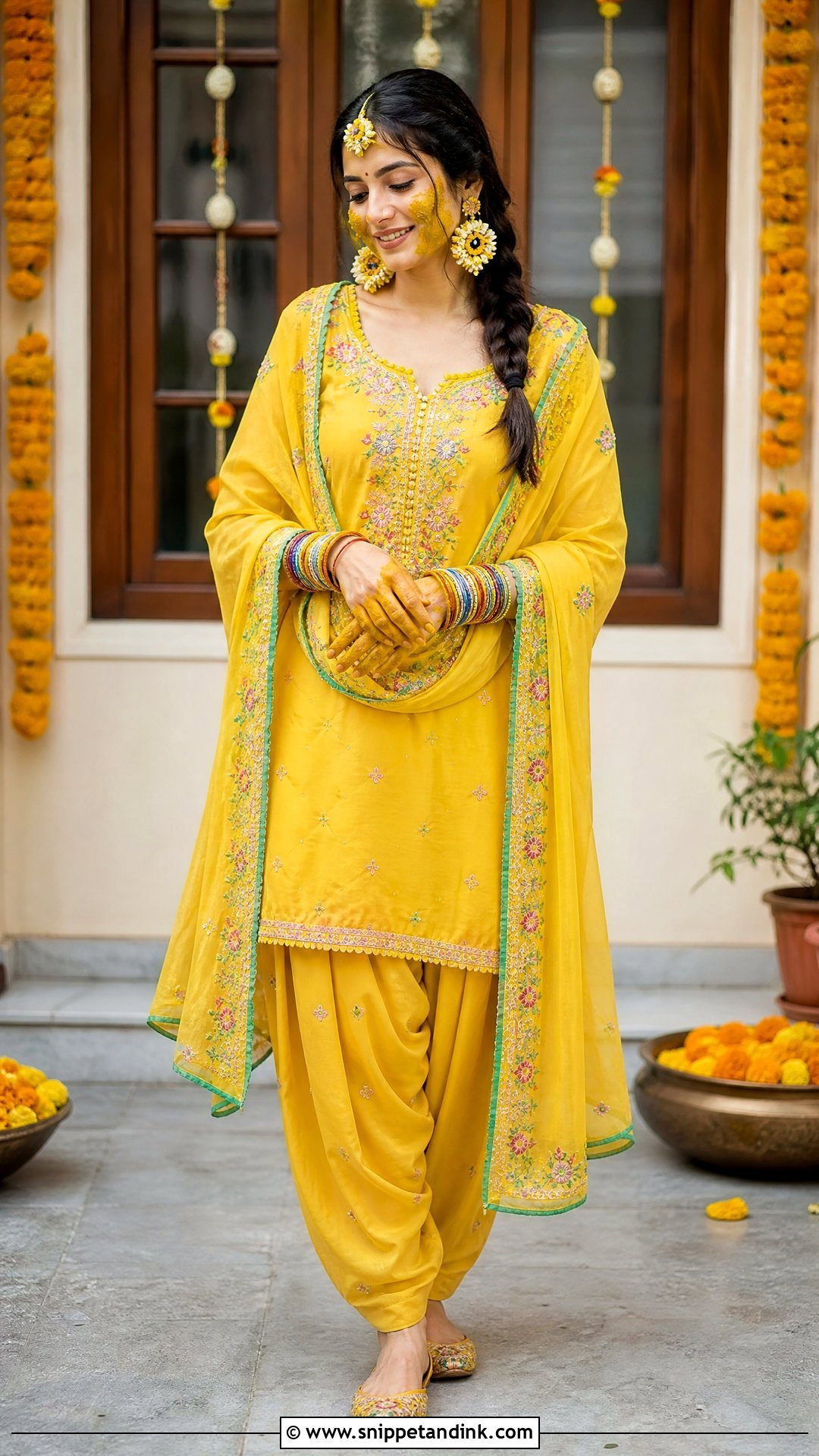
Sometimes the most familiar silhouette is the right one. A knee-length kameez with small embroidered details, a relaxed salwar and a light dupatta give you full movement and modest coverage, which matters at a close family ceremony with elders watching. I like contrast trim in orange, hot pink or green, because a single-shade yellow suit can look flat when it’s photographed against yellow décor. Floral earrings, glass bangles, a small bindi and juttis finish it. Keep hair in a braid, low bun or soft ponytail away from your face, since the paste usually goes on your cheeks first.
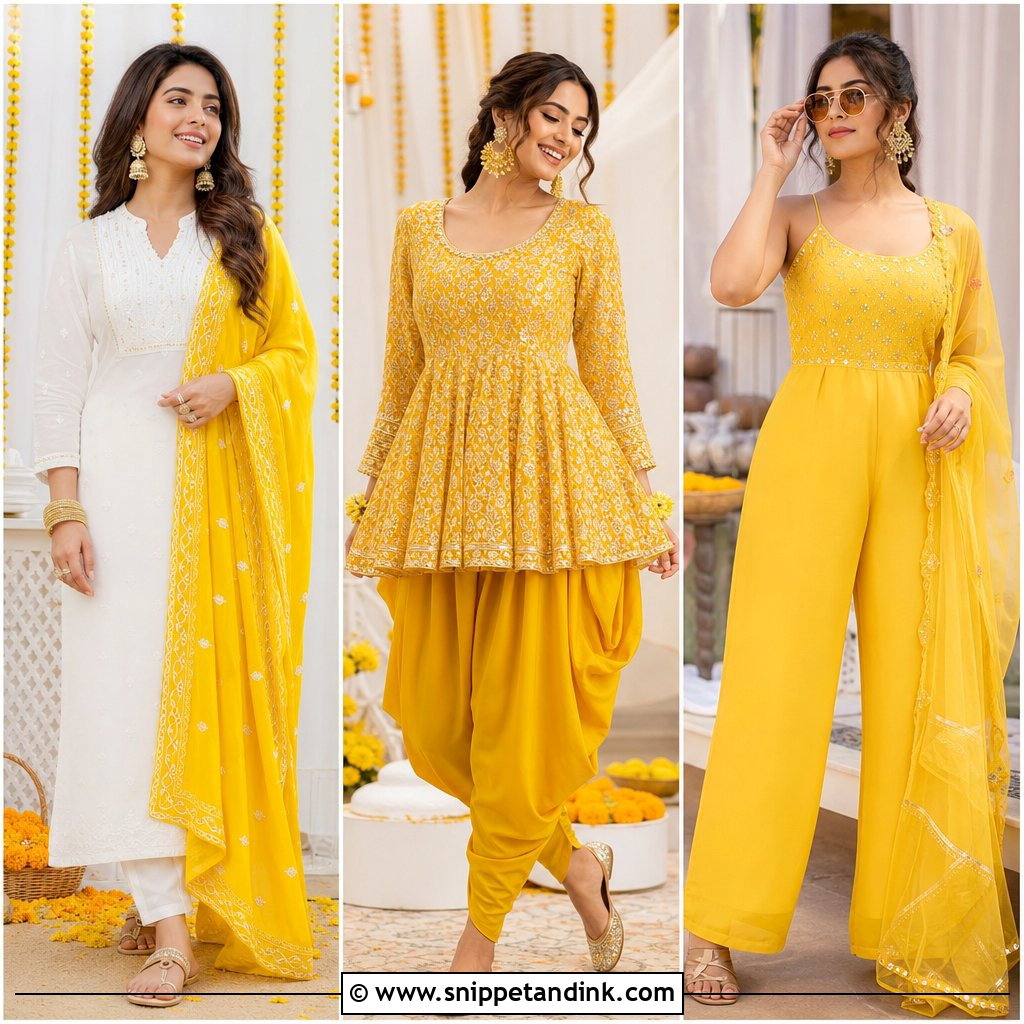
13. Yellow Chikankari Haldi Outfit
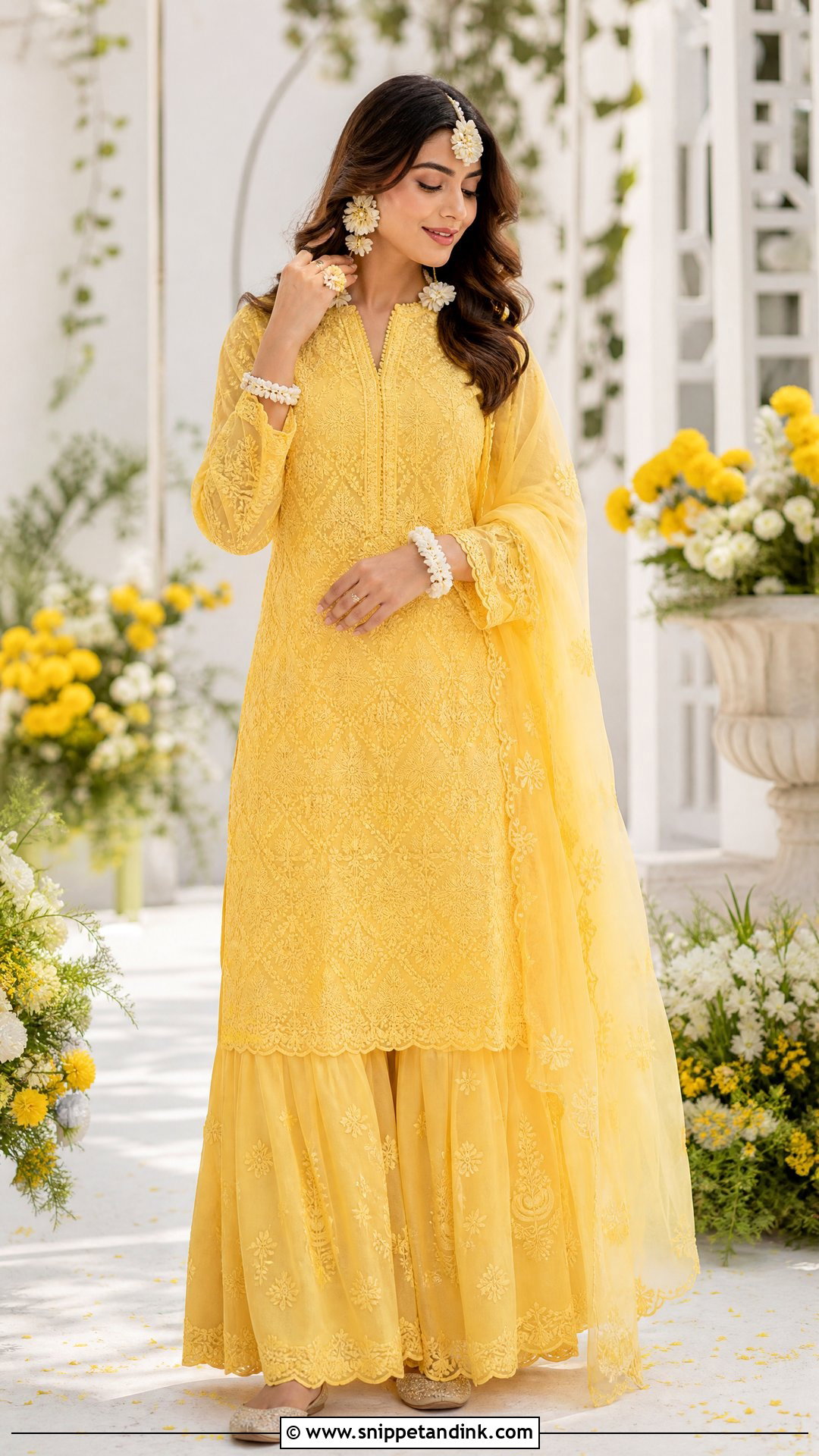
Chikankari brings texture through tonal thread rather than weight. Choose a straight kurta with yellow-on-yellow embroidery and pair it with pants, a palazzo or a sharara. Many chikankari fabrics are sheer, especially mul cotton and georgette, so I always ask for a lining or a matching slip; wet paste turns an unlined kurta transparent fast. An organza dupatta with a narrow embroidered edge finishes the set without hiding the handwork. White flower jewelry, pearls and neutral juttis suit the soft work, and loose waves or a low bun both sit well with it. Because the embroidery is quiet, a floral maang tikka or layered bangles won’t crowd it.
14. Yellow Co-Ord Set Haldi Outfit
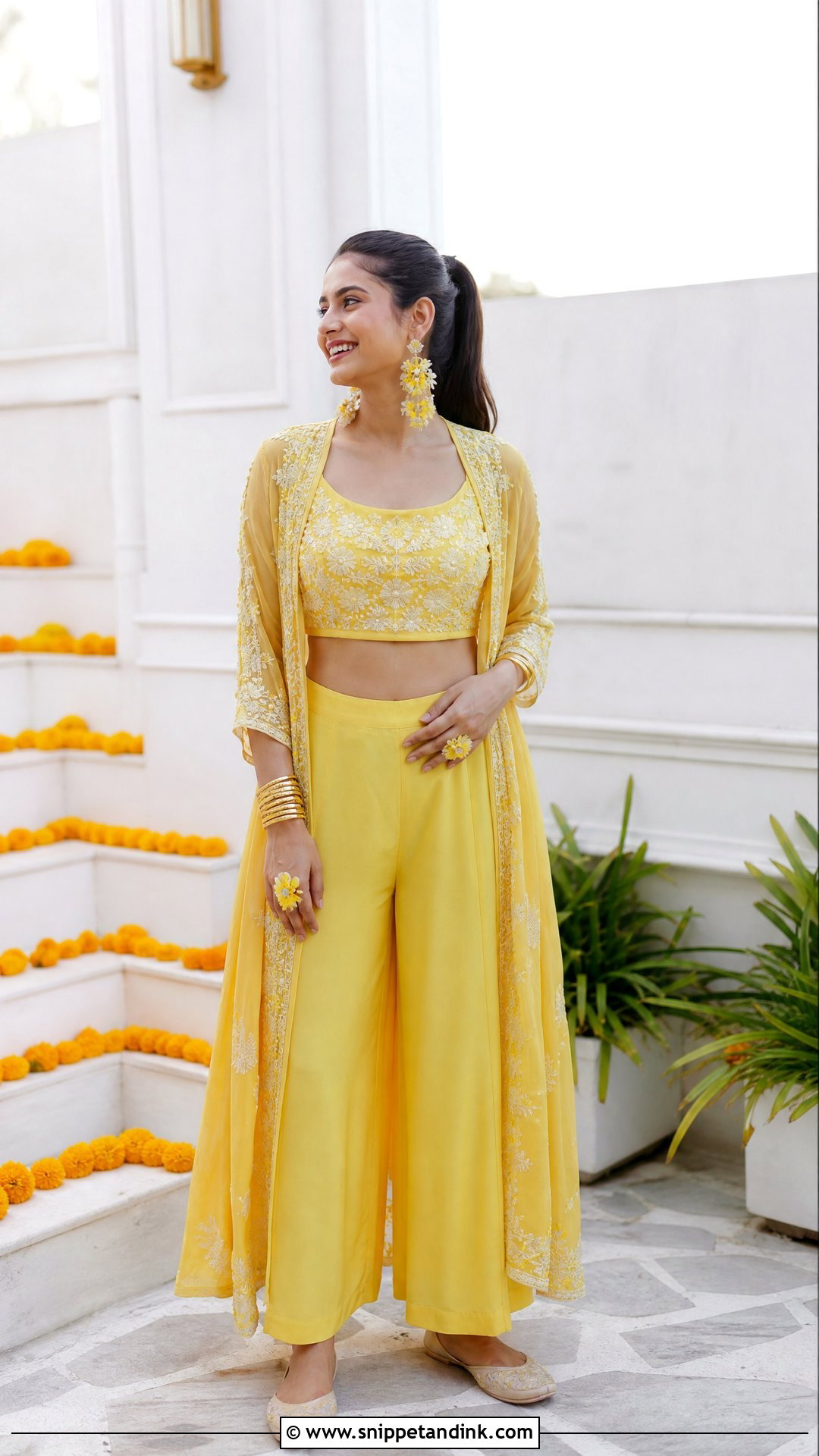
Co-ords suit brides who don’t feel like themselves in traditional drapes. Try a cropped or waist-length top with wide-leg pants and a long jacket, or a tunic with palazzos and a short cape. My one rule for the jacket: it should end above the knee. Long jackets brush the floor when you sit on a low seat and come up yellow at the hem. Keep the embroidery modest so each piece can be worn again on its own. Floral earrings, stacked bangles and juttis tie it back to the ceremony, and a sleek ponytail or half-up style matches the clean lines. It sits naturally at a terrace or poolside function with bright, modern décor.
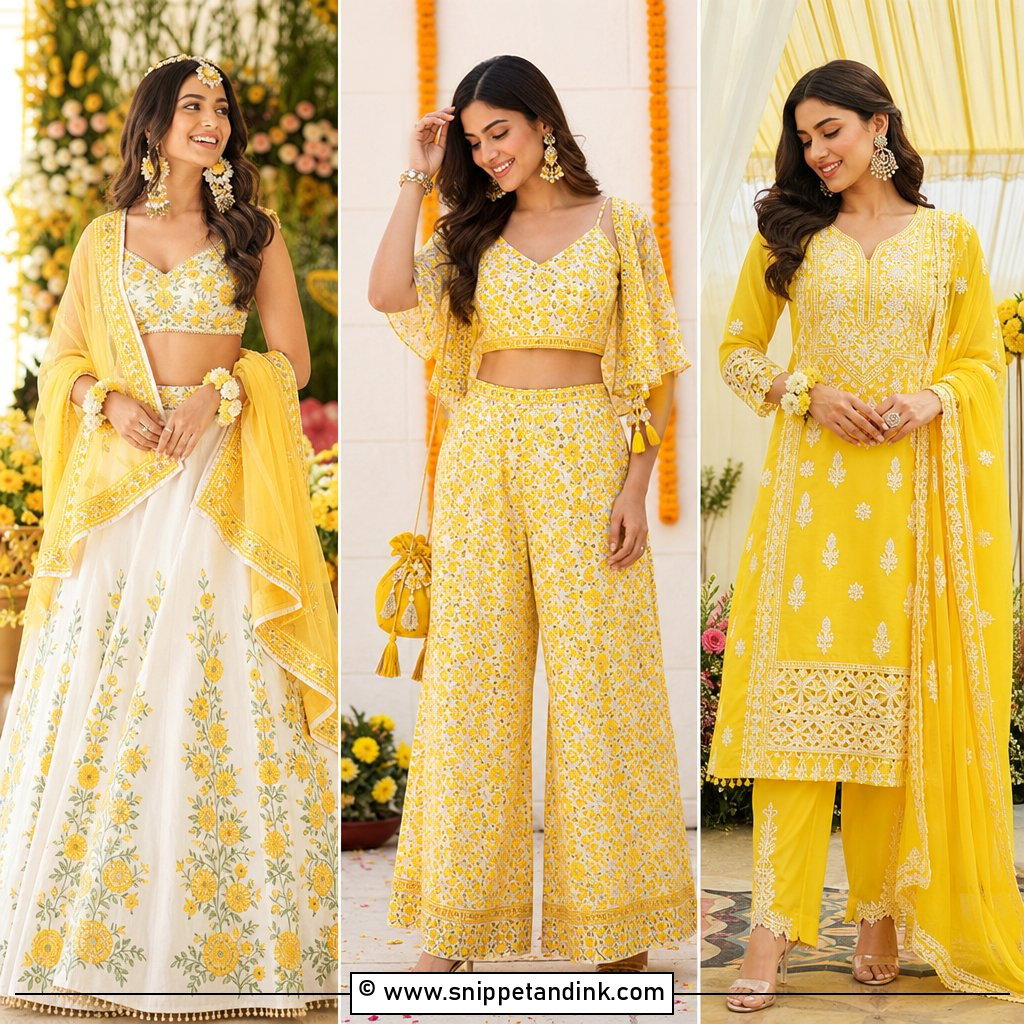
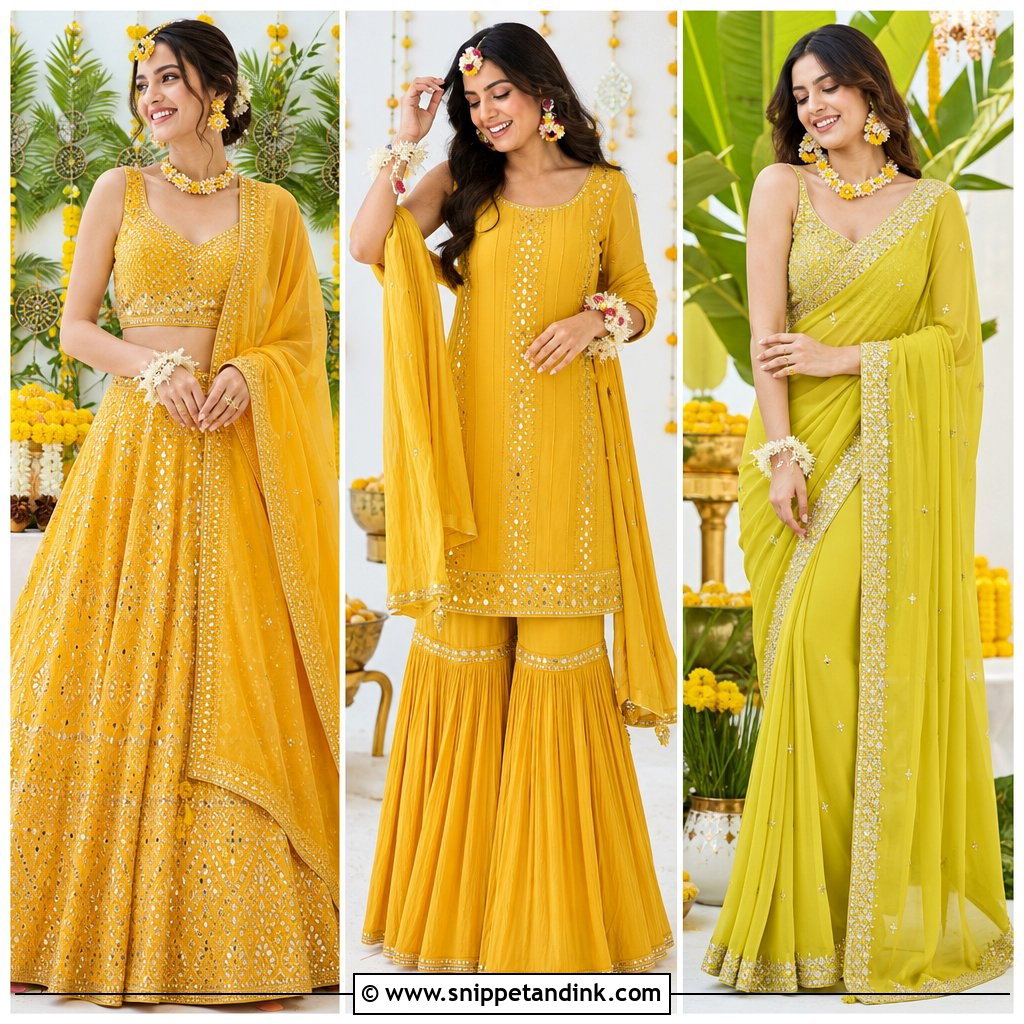

15. Yellow Crop Top And Skirt Haldi Outfit
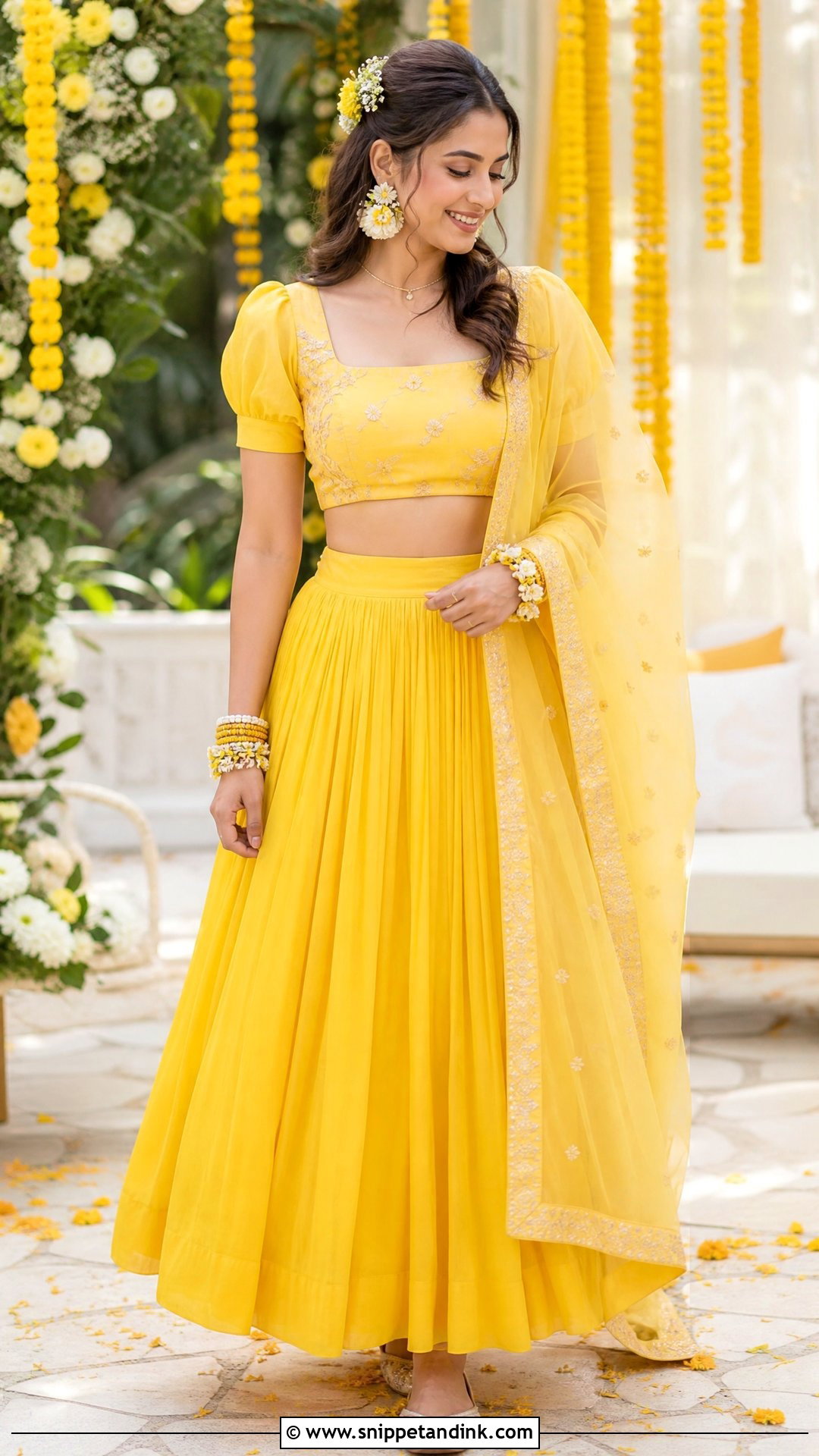
A crop top and gathered skirt look like a lehenga but weigh a fraction as much. Cotton-silk, georgette or printed organza all work for the skirt, and the top can have puff sleeves, a square neck or small floral embroidery. The dupatta is optional here. A secure waistband is not. I have brides sit, stand and raise both arms at the fitting, because a crop top that lifts or a skirt that slips means a whole ceremony spent tugging at it. Floral earrings, a small necklace, bangles and juttis finish the look, with a half-up style and fresh flowers. Separates rewear well too: the top with a saree, the skirt with another blouse.
16. Yellow Dhoti Pants Haldi Outfit
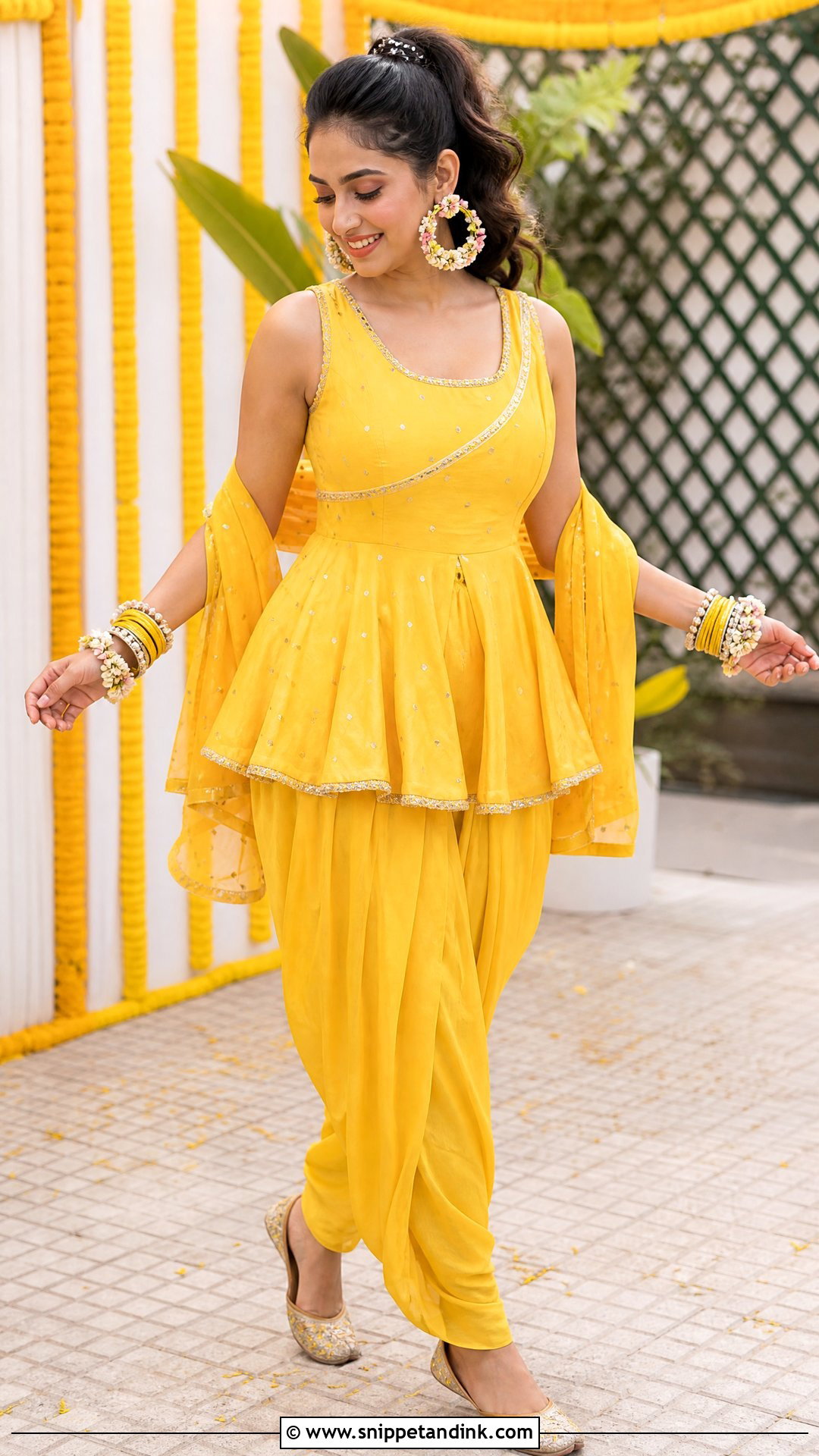
Dhoti pants are what I suggest when the Haldi turns into a party with music and games. The draped pants give you a playful shape and a full range of movement. Pair them with a fitted peplum, a short kurta or an asymmetric tunic; a sleeveless peplum with a little gota defines the waist against the volume below. Ask for the drape to be stitched rather than tied, and squat in it at the trial, because ready-made dhotis usually feel tight through the seat. Skip the long dupatta or pin a short one securely. Floral hoops, stacked bangles and embellished juttis keep it festive, and a high ponytail or flower bun keeps hair out of the action.
17. Yellow Cape Lehenga Haldi Outfit
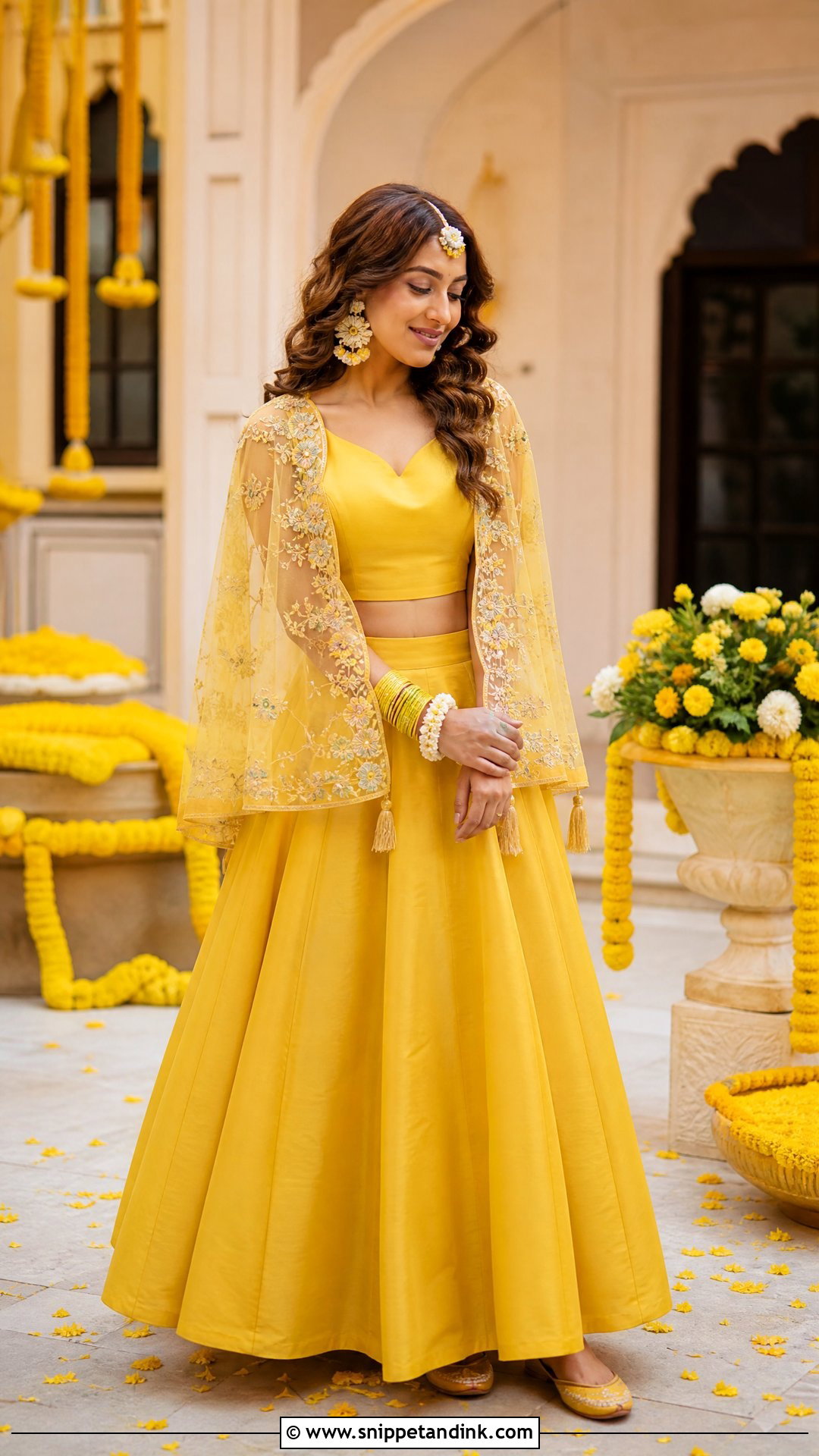
Swapping the dupatta for a light cape is one of the easiest ways to stop fabric from trailing into the paste bowl. Start with a plain flared skirt and a fitted blouse, then add a sheer cape at waist or knee length with fine embroidery, and both hands stay free. Avoid heavily beaded capes; the weight pulls at the shoulders and traps heat on a sunny afternoon. I prefer a detachable cape, because the skirt and blouse can later be worn with a contrasting dupatta or jacket. Floral earrings, a small maang tikka and a few bangles are enough. Choose juttis or low block heels depending on the floor, and soft curls or a low ponytail that sit neatly under the neckline.
18. Yellow And White Haldi Outfit
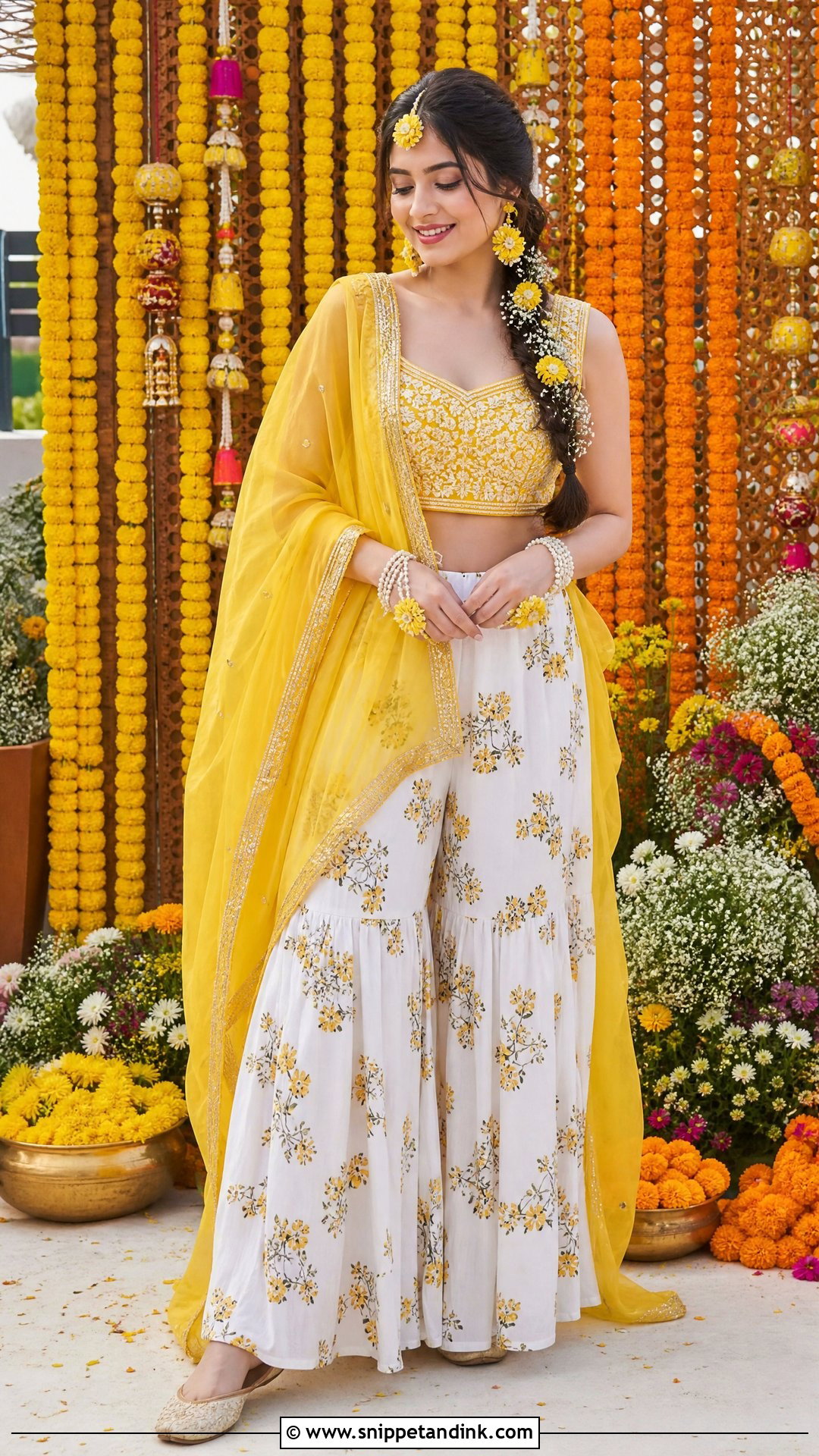
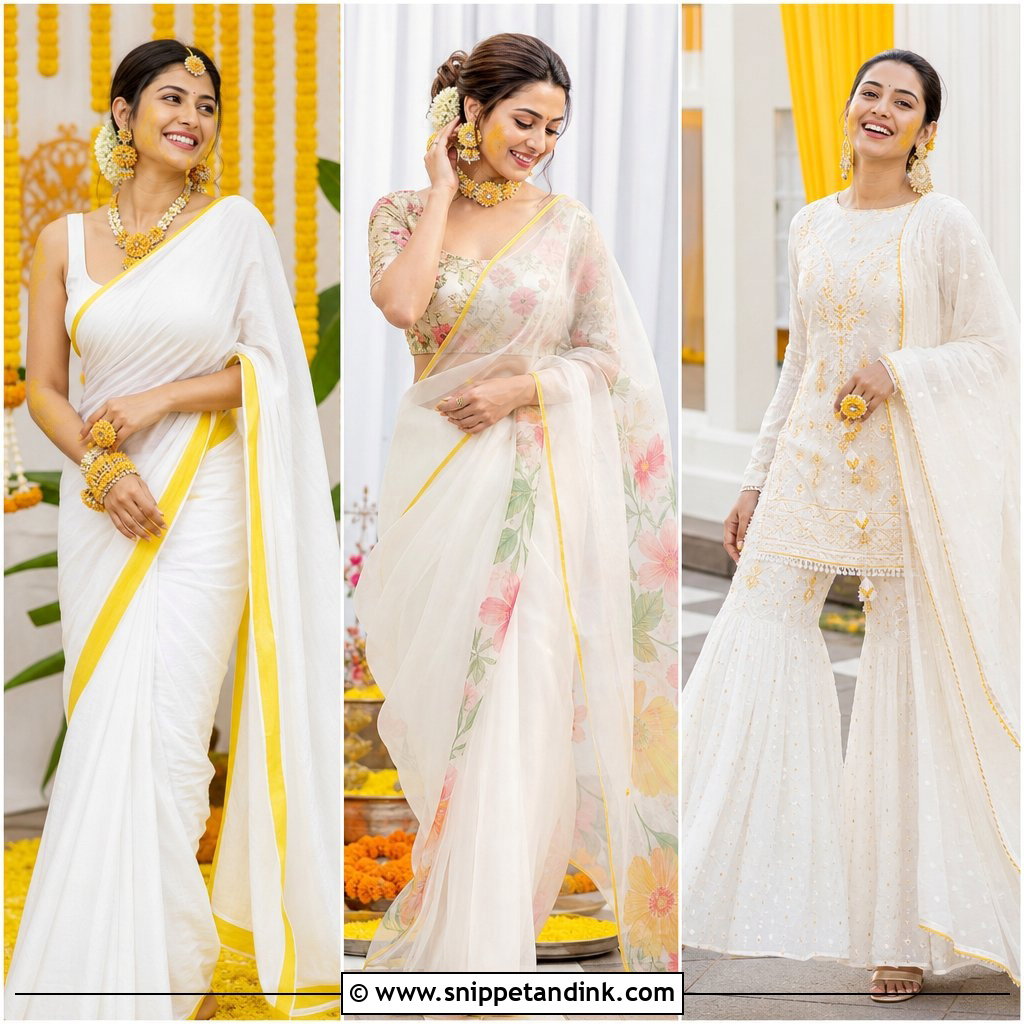
Yellow on white looks fresh against marigold décor, but I always give brides a straight warning: turmeric on white fabric rarely comes out completely. Wear a white lehenga or sharara with a yellow blouse and dupatta, or a white kurta set printed with small yellow flowers. It suits a bride who’s happy to keep the stains as a memory. If you’re not, choose washable cotton or georgette and skip costly handwork. Yellow flower jewelry, pearl bangles and neutral juttis keep the palette tight, and a braid threaded with alternating white and yellow flowers ties it together.
19. Ivory Floral Haldi Outfit
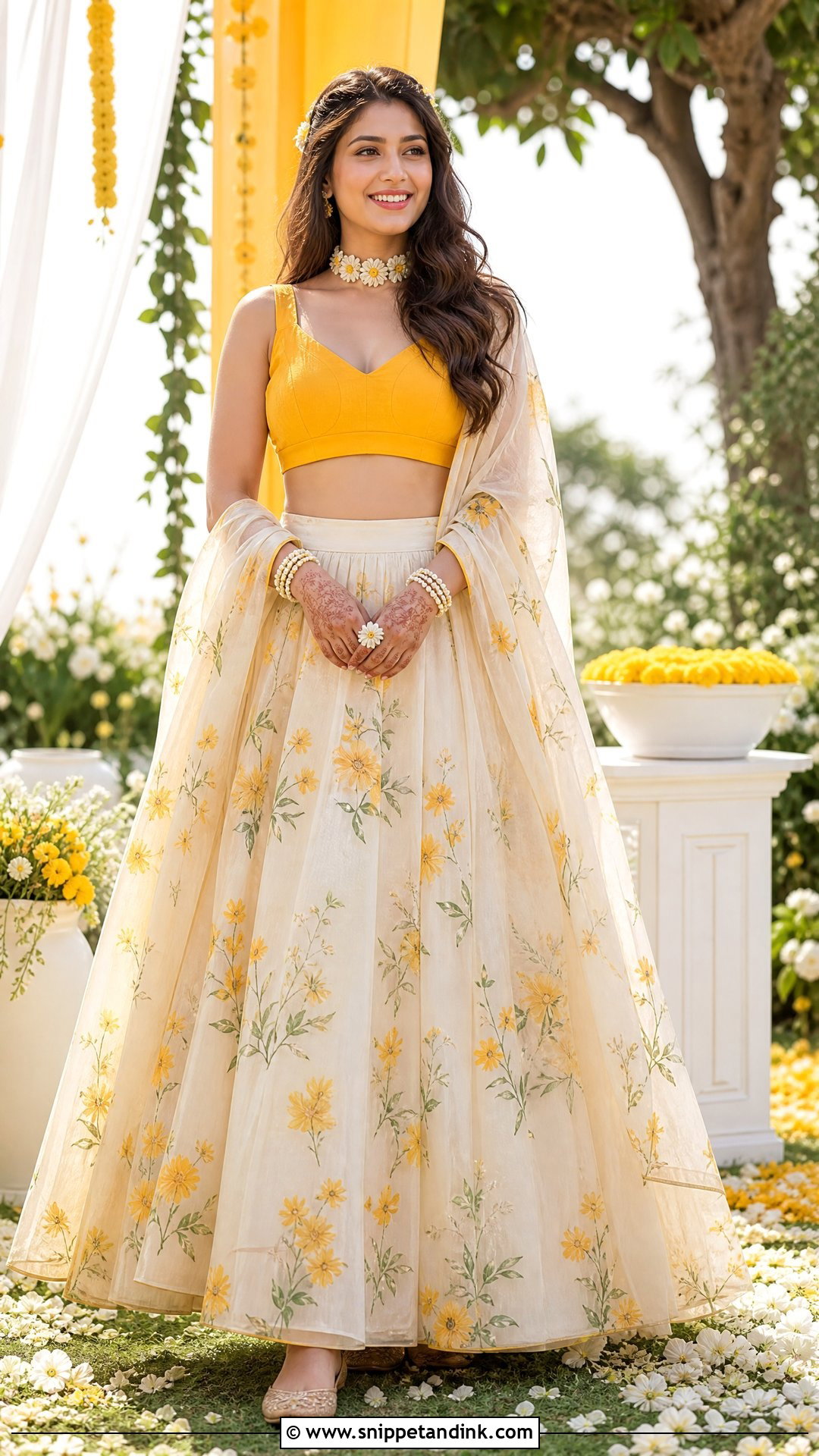
Ivory gives yellow and green flowers room to stand out, and it feels calmer than head-to-toe yellow. An ivory saree, lehenga or sharara with a floral print works best when one piece, usually the dupatta or blouse, is solid yellow so the outfit still reads as Haldi. Fresh flower earrings, a floral choker and pearl bangles suit the soft base, with beige juttis and a peach or pink lip. Pale fabric glows in daylight but shows every turmeric mark. For a lively ceremony I’d choose printed cotton or georgette, and save silk and hand embroidery for a later function.
20. Orange Haldi Outfit
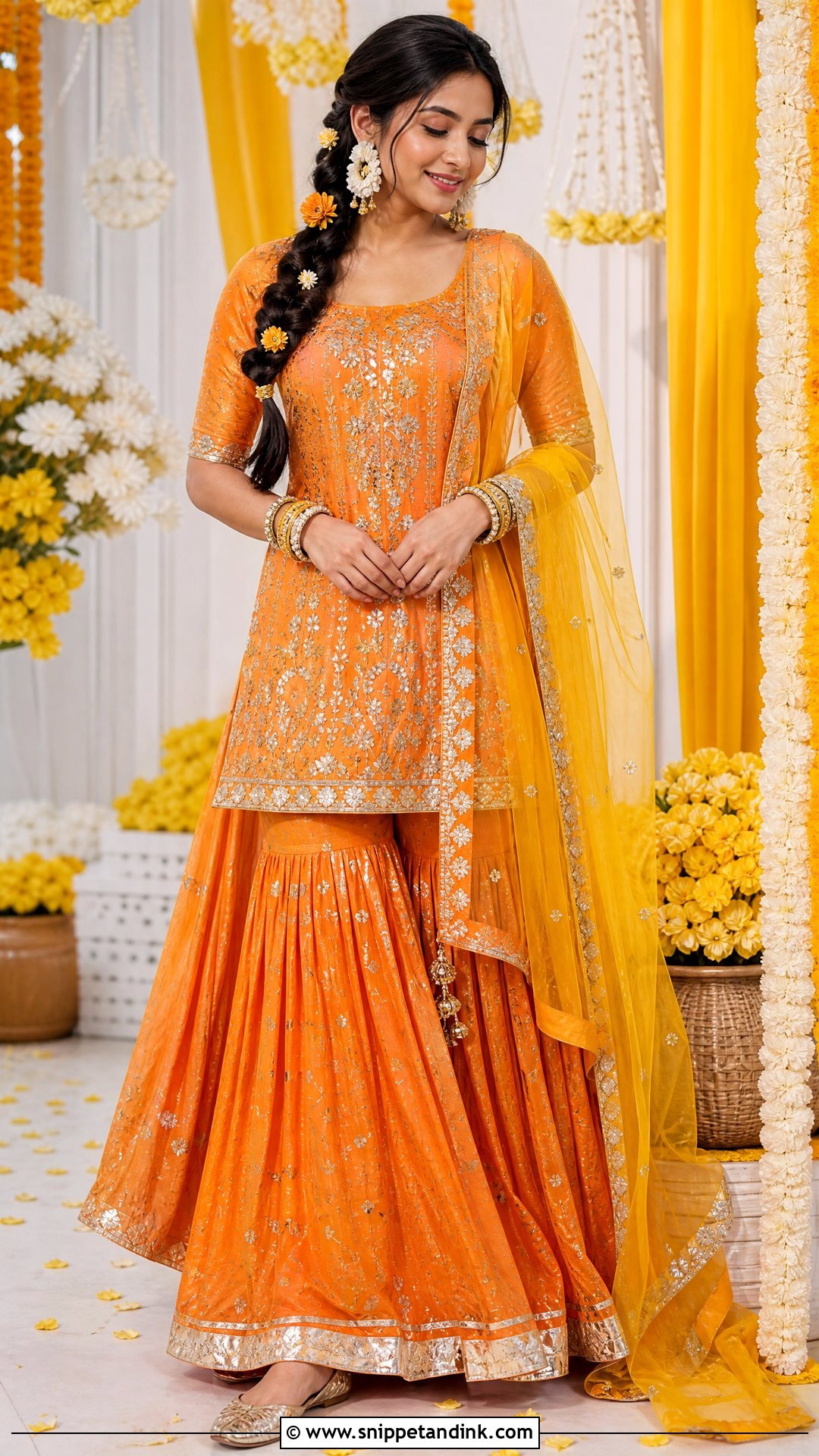
Orange sits right next to turmeric on the color wheel, so it looks natural at a Haldi without being yet another shade of yellow. A marigold-orange lehenga, saree, or sharara with light gold details can go fully monochrome or take a yellow dupatta for a brighter two-tone look. White flower jewelry breaks up all that warmth. Gold juttis, slim bangles and a small bindi keep it traditional, and a textured braid or low bun with white blossoms suits it. Orange can drag warm makeup toward muddy, so keep blush soft and the lip neutral.
21. Green Haldi Outfit
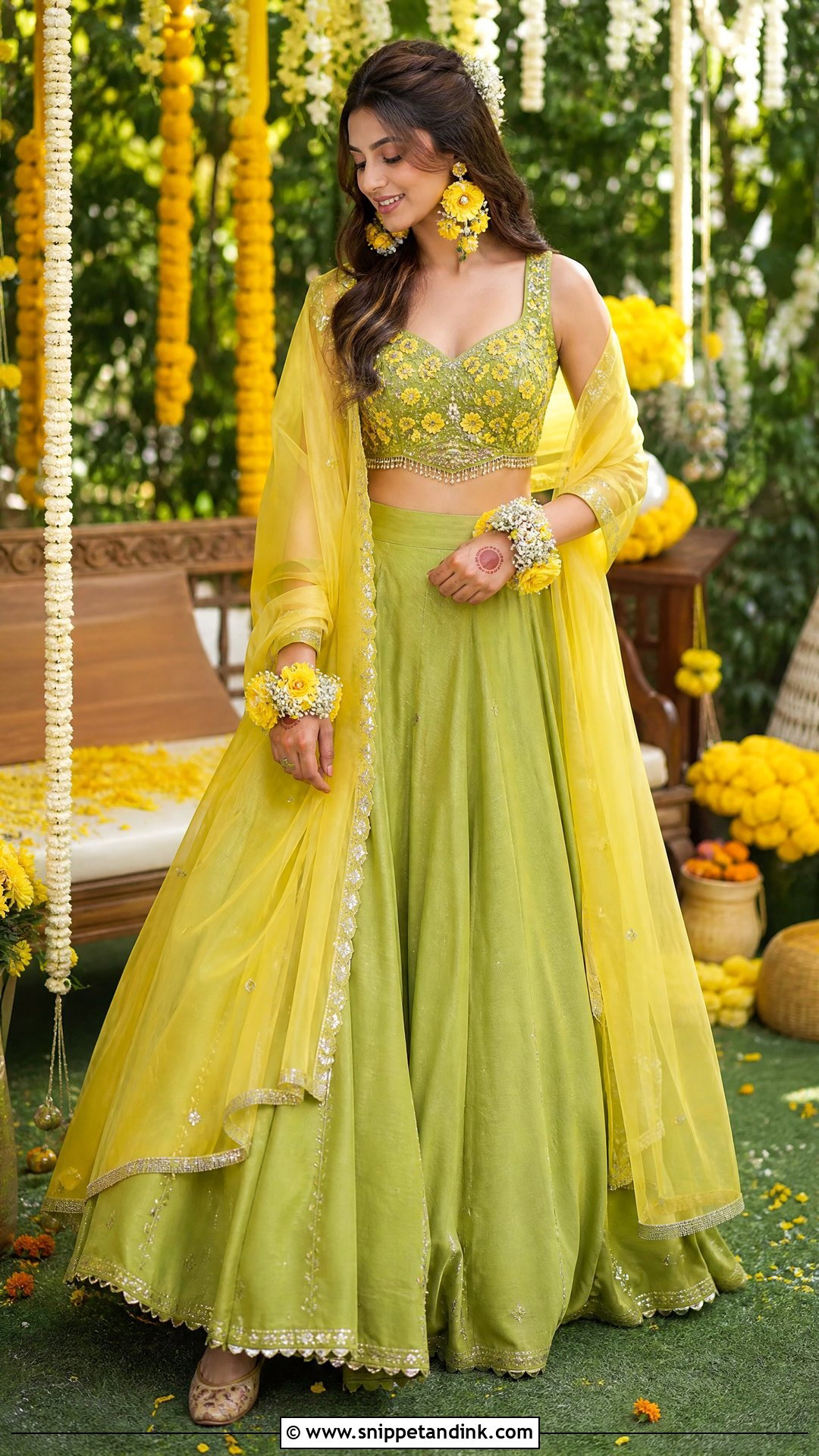
Green is a smart pick when your whole family has been told to wear yellow; you won’t disappear into the group photos. Lime reads bold and playful, pistachio quieter. Choose a lehenga, saree or kurta set with small yellow accents, and bring in a yellow dupatta, border or embroidered blouse so it still belongs to the ceremony. Stick to one shade of green. Two or three greens in a single outfit start to look accidental. Yellow flower earrings, matching wrist flowers and neutral juttis finish it, with a flower braid or half-up style.
22. Pink Floral Haldi Outfit
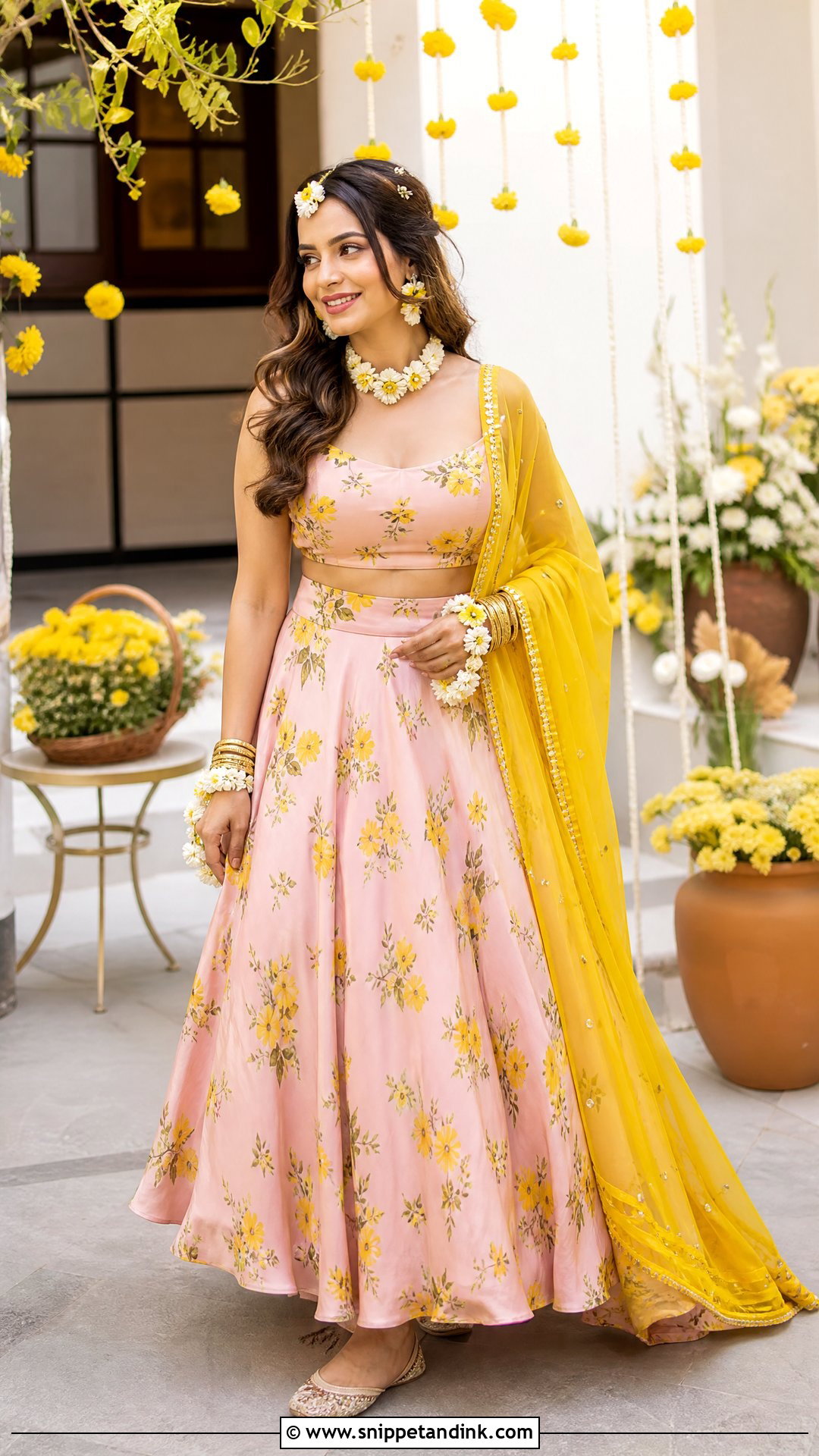
Pink with yellow flowers is a romantic step away from the usual palette. Try a blush or bright pink lehenga printed with yellow blooms, or a pink sharara with a yellow embroidered dupatta, so the ceremony color is still there. I’d ask what color the backdrop and drapes are before committing, because hot pink against orange-pink décor can blend into the wall in photos. Wear white and yellow floral jewelry, simple bangles and gold or neutral juttis, with soft curls, a side braid or half-up hair. A rosy lip and waterproof eye products hold up best, and the print softens any small stains.
23. Yellow Bandhani Haldi Outfit
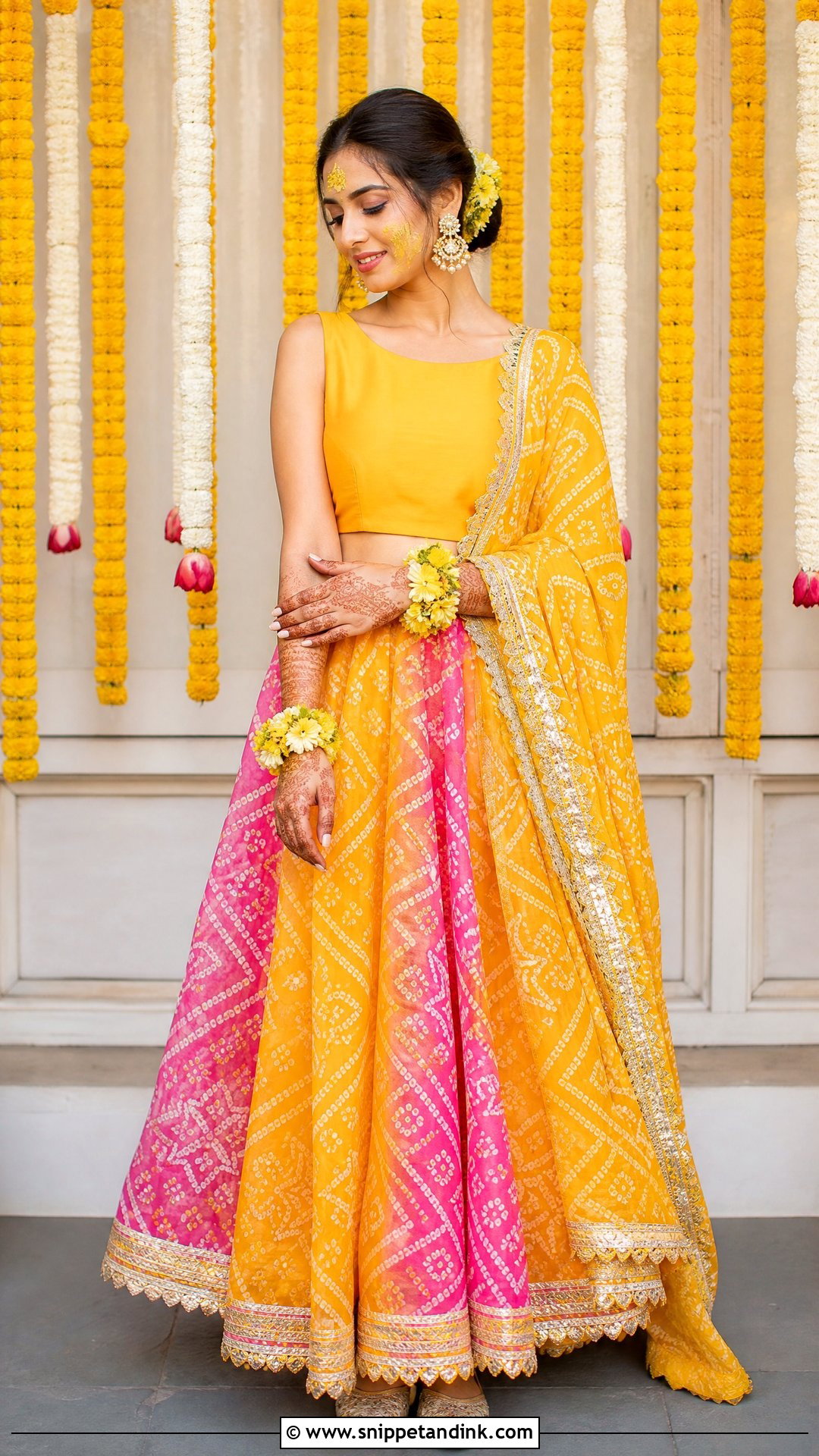
Bandhani’s tiny tie-dyed dots hide turmeric splashes better than almost any other fabric in this list. Choose a yellow saree, lehenga or kurta set dotted in white, red, green or pink, and keep the blouse or kurta plain so the pattern has space; a narrow gota border adds the celebration. Real bandhani has a crinkled texture from the tying, and it relaxes if it’s pressed hard, so I steam or hang it instead of ironing. If the dupatta is your bandhani piece, pin it over a solid outfit. Gold earrings, flower bangles, juttis and a center-parted braid or low bun keep the mood traditional, and you’ll wear it again for festivals and family events.
24. Yellow Phulkari Haldi Outfit
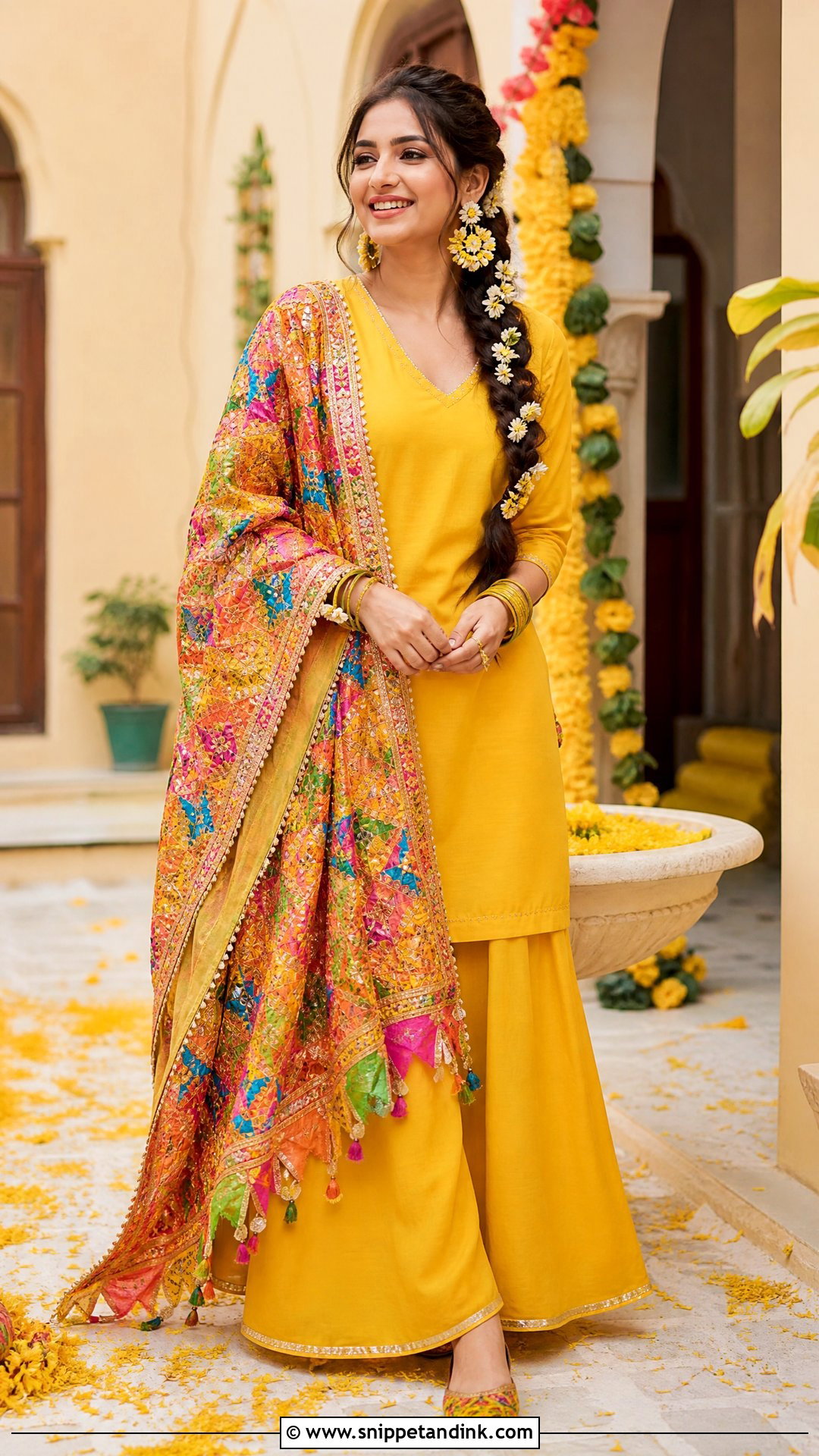
A colorful phulkari dupatta turns a plain yellow suit into something unmistakably Punjabi. Start with a mustard or sunshine-yellow kurta and a matching salwar or palazzo, then let the dupatta carry the pink, orange, green and red embroidery. Dense hand phulkari can be heavy, so for Haldi I prefer a lighter piece that won’t drag on one shoulder for hours. Drape it over one shoulder or across both arms so the work stays visible. Pick juttis that repeat one embroidery color, and finish with flower earrings, stacked bangles and a long braid with a paranda or fresh flowers.

25. Yellow Nauvari Saree Haldi Outfit
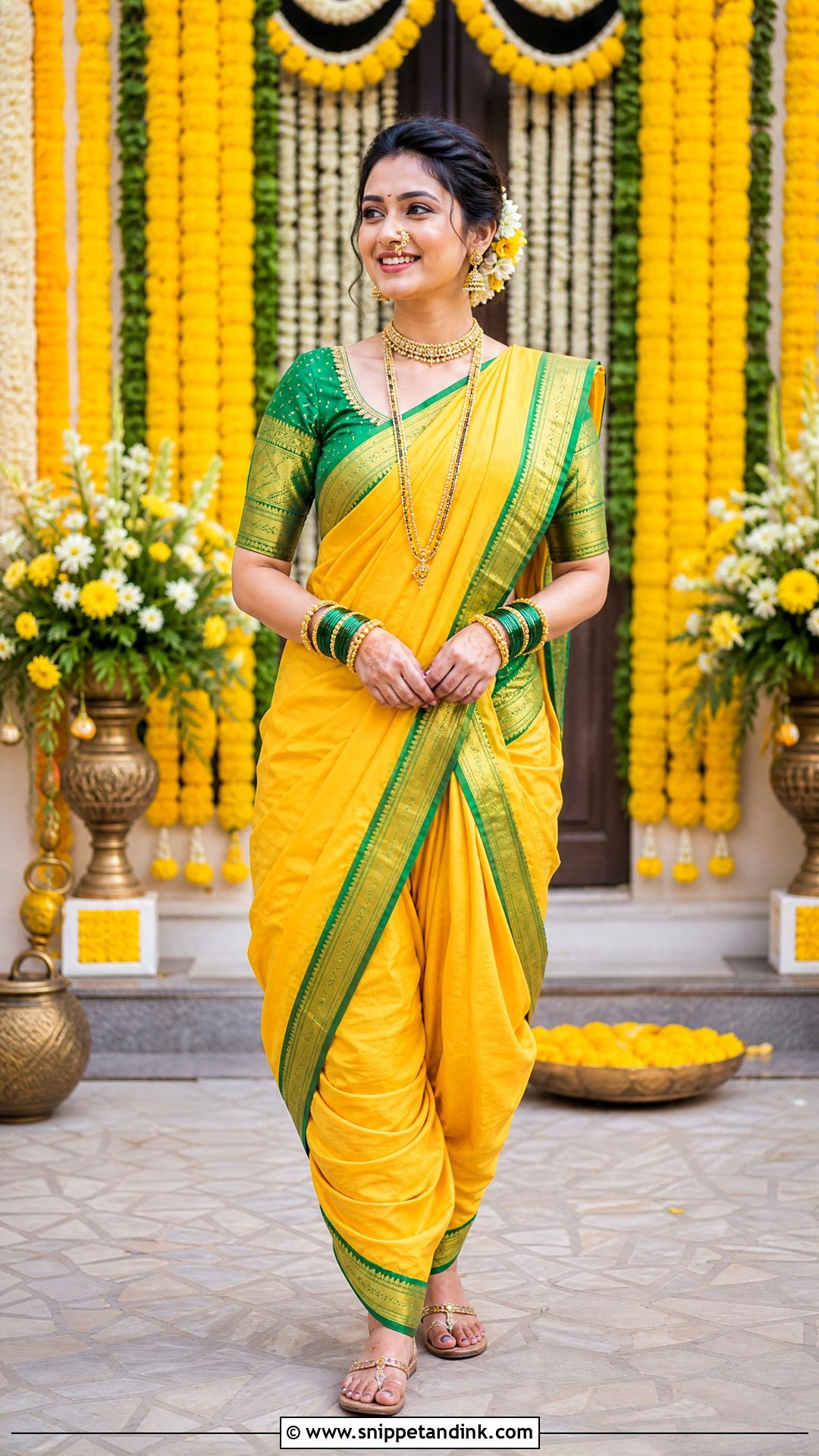
A yellow Nauvari saree is draped between the legs like a dhoti, so you can walk, sit and climb steps more freely than in a standard saree. Cotton or light silk with a green, orange or red border is classic, paired with a contrasting short-sleeve blouse. Unless you’ve worn a nine-yard drape before, book someone who drapes them regularly or buy a pre-stitched one, because a loosening Nauvari is very hard to fix mid-ceremony. A small nath, green bangles and traditional jewelry make it bridal, with a jasmine bun that keeps hair clear of the paste and flat sandals or juttis.
Getting Haldi Stains Out Afterward
Turmeric is one of the stubborn stains I deal with, and the first hour matters most. As soon as you change, scrape off thick paste with a blunt knife and rinse the back of the stain under cold running water, pushing the color out the way it went in. Hot water sets it.
Here’s the part that surprises people: turmeric reacts to alkaline soap. Rub ordinary bar laundry soap on a fresh mark and it can flash reddish brown. That’s the color reacting, not new damage, and it usually shifts back as you rinse. A drop of plain dish liquid, worked in gently with your fingers, does a better job on the oily part of the paste.
Let the sun finish the job
Turmeric color fades in sunlight. After washing, I dry cotton and washable synthetics in bright sun, prints turned inside out, and faint marks often disappear over a day or two. White cotton can take an oxygen bleach soak; skip chlorine bleach on anything printed or embroidered.
Silk, zari, gota and anything with mirrors should go straight to a dry cleaner without a home soak first. Tell them it’s turmeric in an oil and gram flour paste so they treat the oil before the color. Water rings on silk are often harder to fix than the original stain.
Sit Down in It Before You Say Yes
A good Haldi outfit lets you look like the bride without making you guard your clothes from your own family. Cotton sarees and kurta sets suit an intimate ceremony at home; floral lehengas, shararas and pre-draped sarees give more presence at a bigger gathering. Before you decide, sit on a low stool in it, lift your arms, and picture a bowl of wet paste on the floor beside you. If it still feels easy, you’ve found your outfit. After that, relax and let the turmeric fly.
You'll Like These Ideas:



Leave a Reply