
Haldi is the one wedding outfit I tell people to buy expecting it to get messy. Turmeric paste ends up on cheeks, forearms and every sleeve that leans in for a hug, the ceremony often happens outdoors in full daylight, and half of it is spent sitting low on cushions or a wooden patla. So I judge a yellow outfit by how it copes with that, not just how it hangs on a mannequin. Below are twenty I would happily dress a bride, a cousin or a guest in, from outfits for brides, sisters and bridesmaids to fusion separates that skip the dupatta altogether. Shade matters more than most people expect. Sunshine yellow reads happiest on camera, mustard has depth and hides a smear of paste well, and lemon looks clean in shade but can drain fair skin under harsh midday sun.
Assume the Turmeric Will Land on It
Haldi paste is turmeric mixed with things like gram flour, rosewater, milk or mustard oil, and the oil is what makes it cling to fabric. Once it dries into silk or a synthetic weave it is very hard to get out completely. So before I talk shade or silhouette with anyone, I ask a blunt question: are you happy for this outfit to carry a faint yellow mark for the rest of its life?
If the answer is no, that changes what I recommend. Cotton, mulmul and cotton blends wash far better than pure silk, and printed or embroidered fabric disguises a stain that would shout from a plain surface. Mustard and deeper yellow tones hide a smear better than pale lemon or ivory accents do.
- Keep zari, real gold thread and heirloom silk away from the paste bowl. Metallic thread can tarnish and the stain sits in the twist of the yarn.
- Plan the bride’s outfit as the one most likely to be ruined, because she is the one being covered.
- Sleeves that end above the elbow stay cleaner than long, flared ones that brush the bowl.
- If you love an outfit too much to risk it, wear it for photos before the rituals begin and change into a cotton set for the paste.
I’d also check footwear here. The floor around the ceremony often ends up wet and slippery with paste and water, so flat juttis or sandals with grip are worth more than anything with a heel.
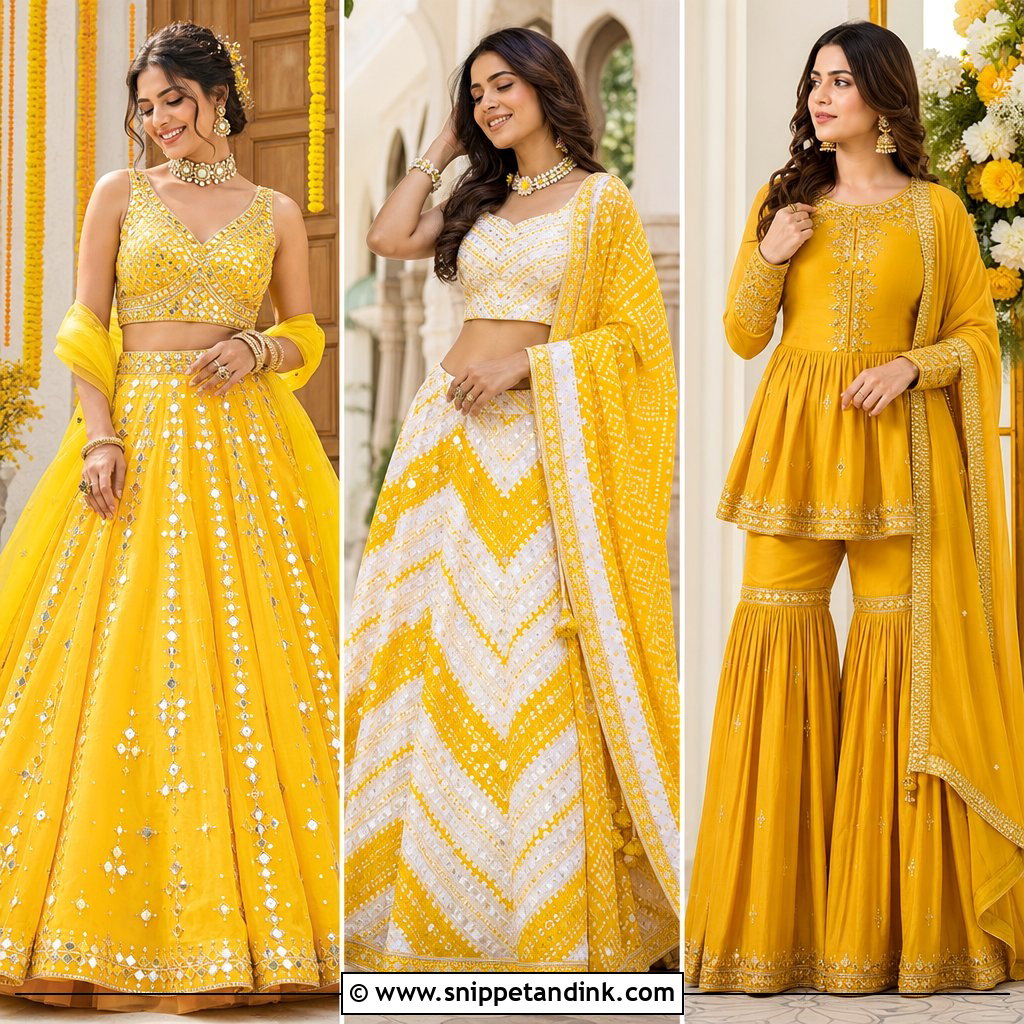
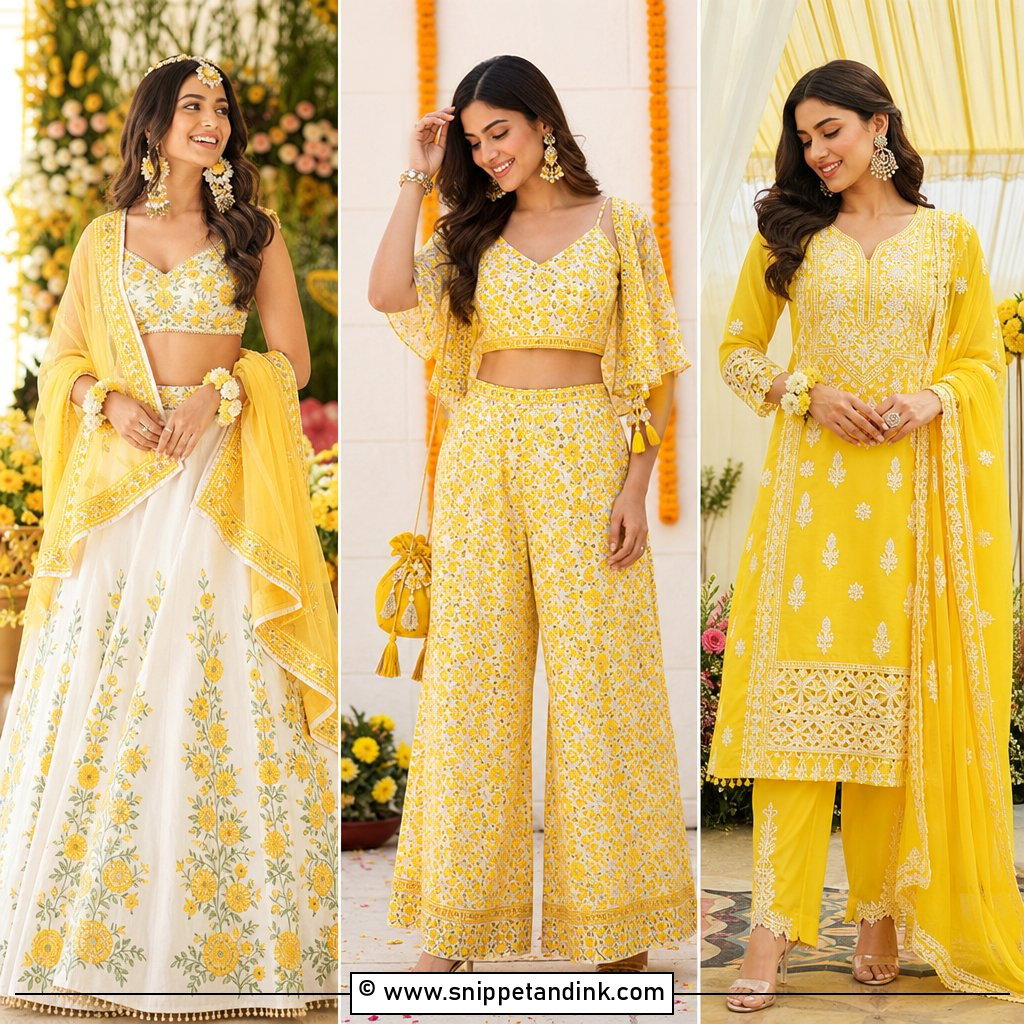
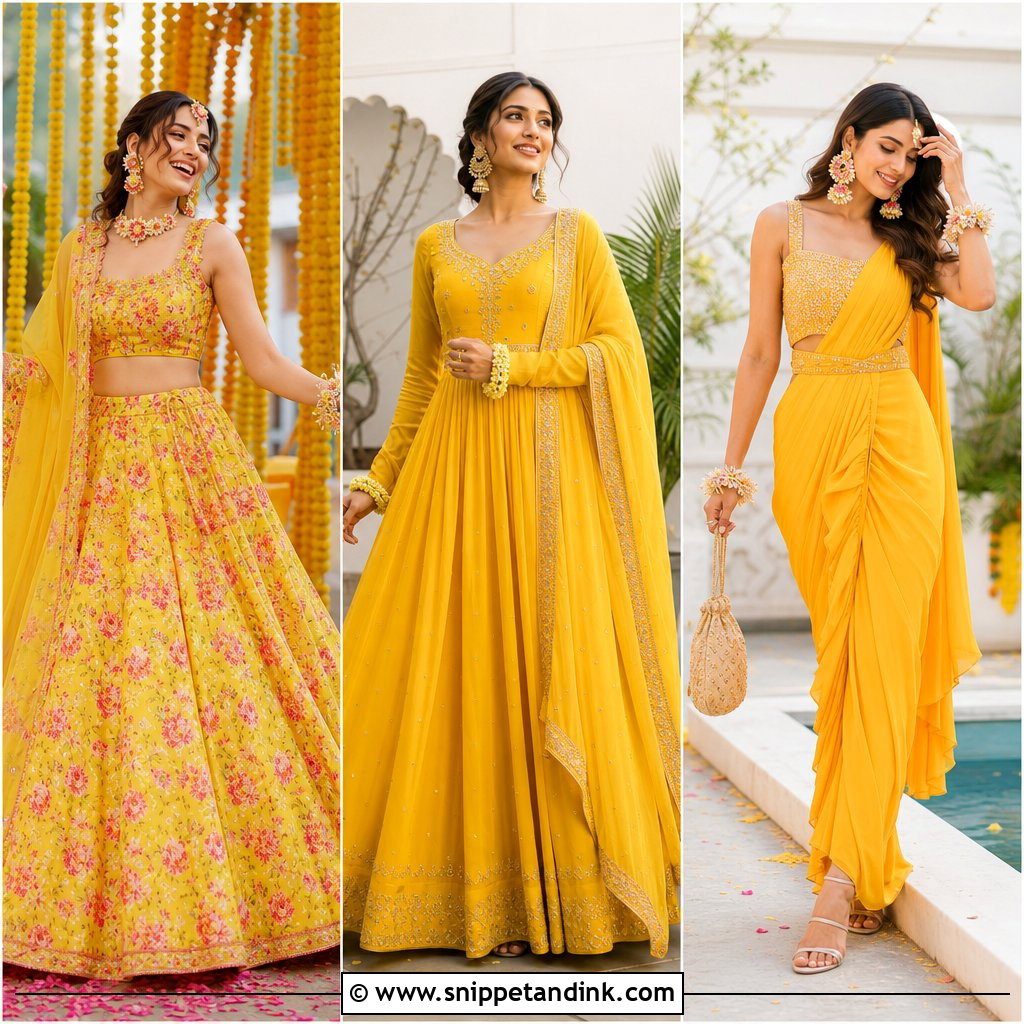
1. Yellow Haldi Lehenga With Floral Blouse
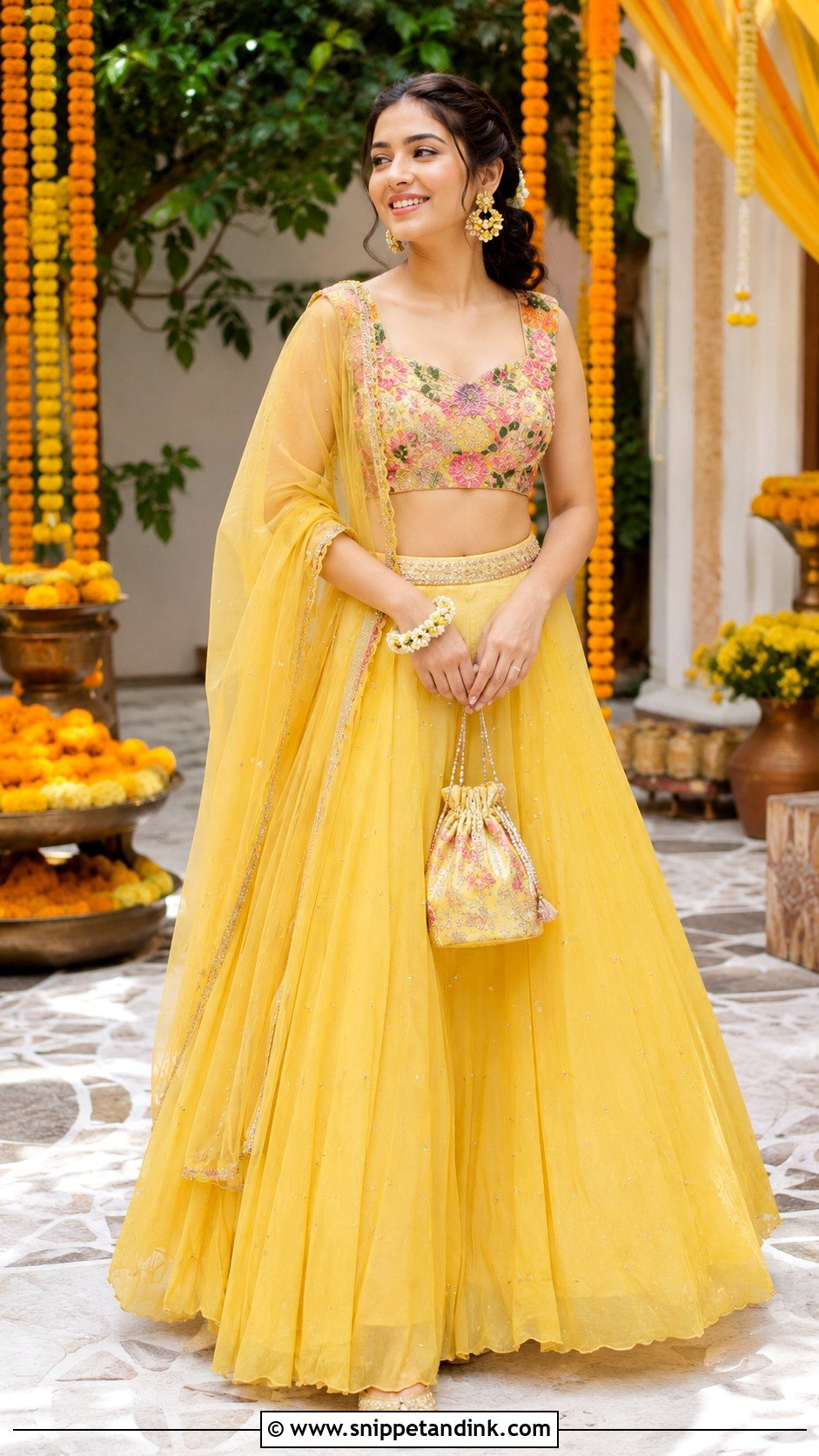
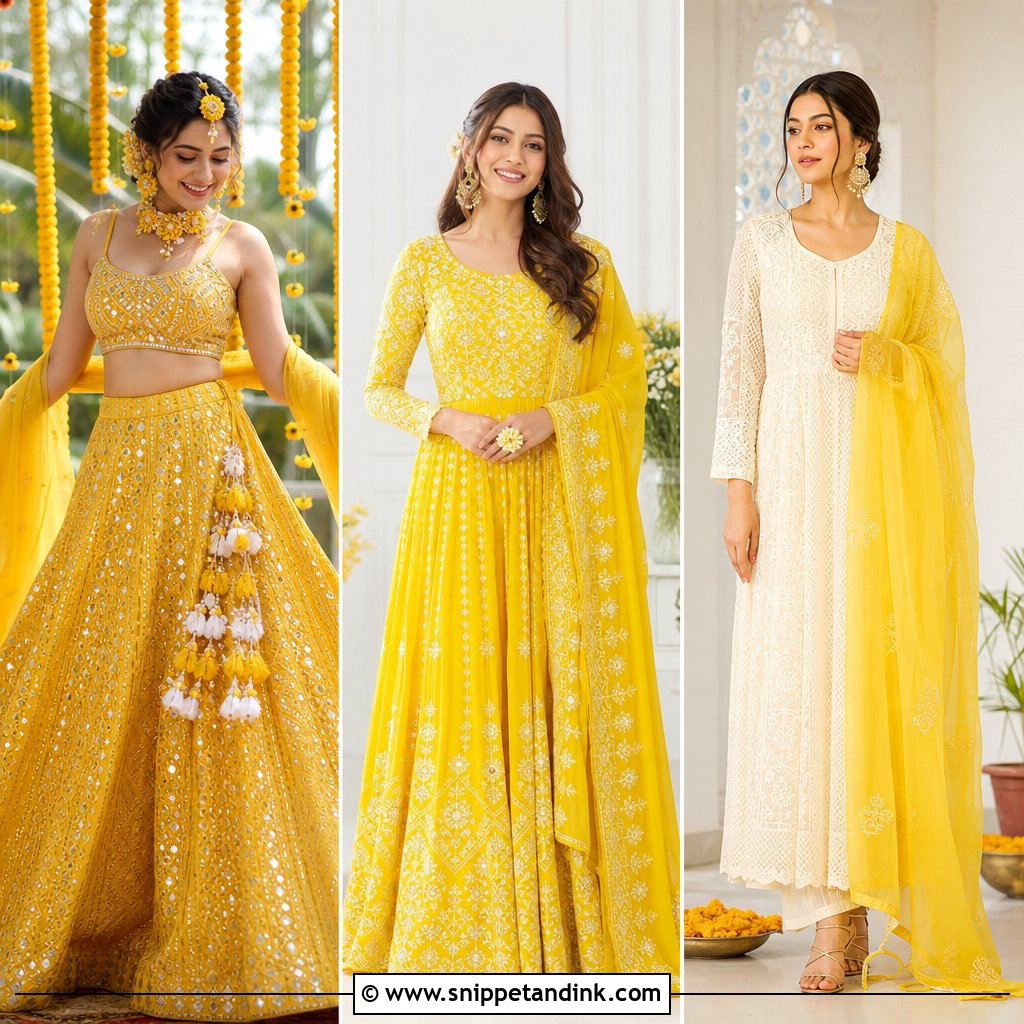
If a bride wants something traditional that still feels relaxed, this is where I start. A georgette or cotton skirt with a soft waistband and enough flare is the base, but at the fitting I always ask her to sit cross-legged, because a skirt that looks generous standing can pull tight across the knees on the floor. The floral blouse in pink, green or white puts color right under the face, which is where most haldi photos are framed. Net dupatta over one shoulder, flat gold juttis, a small potli. Outdoors in the daytime I would swap heavy gold for floral earrings or a flower maang tikka. Bridesmaids can do the same shape in printed fabric. I also hem it a touch above the floor so wet paste and damp ground don’t climb the edge.
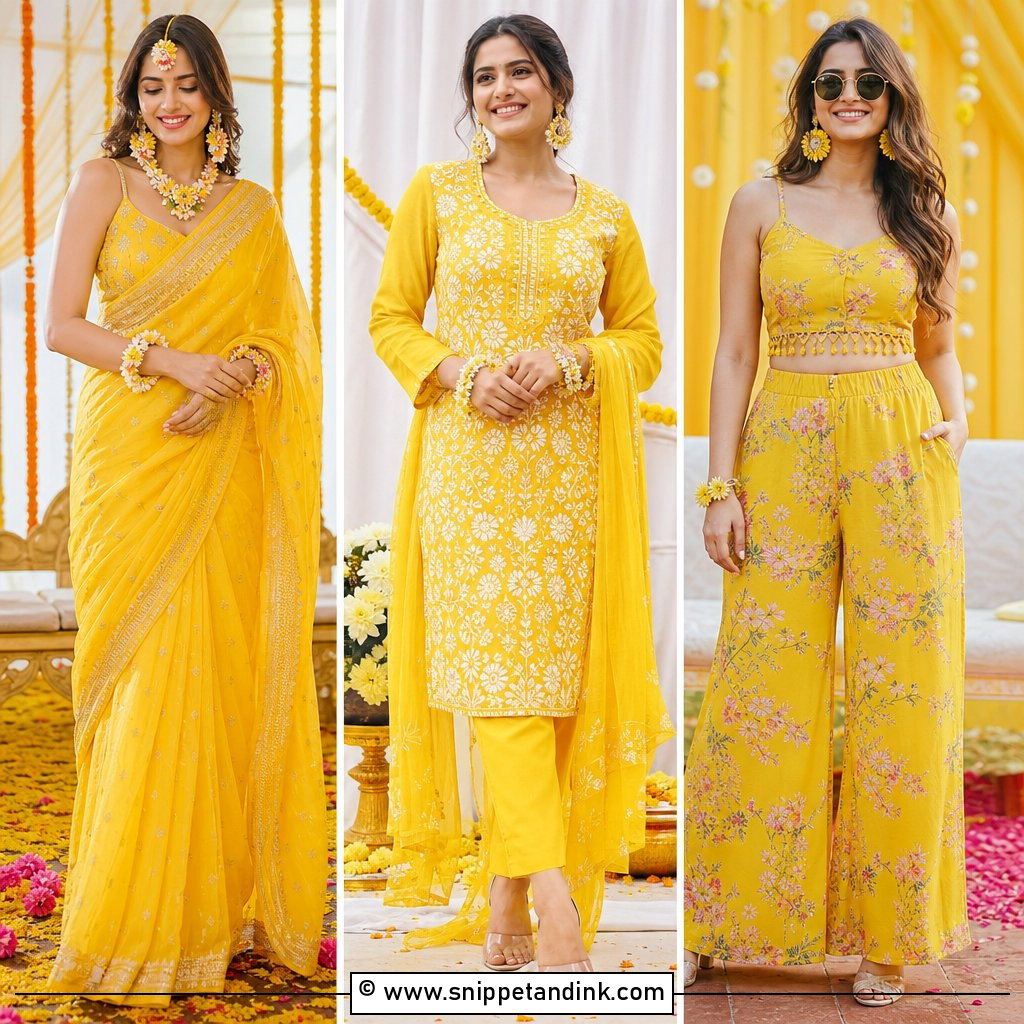
2. Yellow Haldi Saree With Pink Blouse
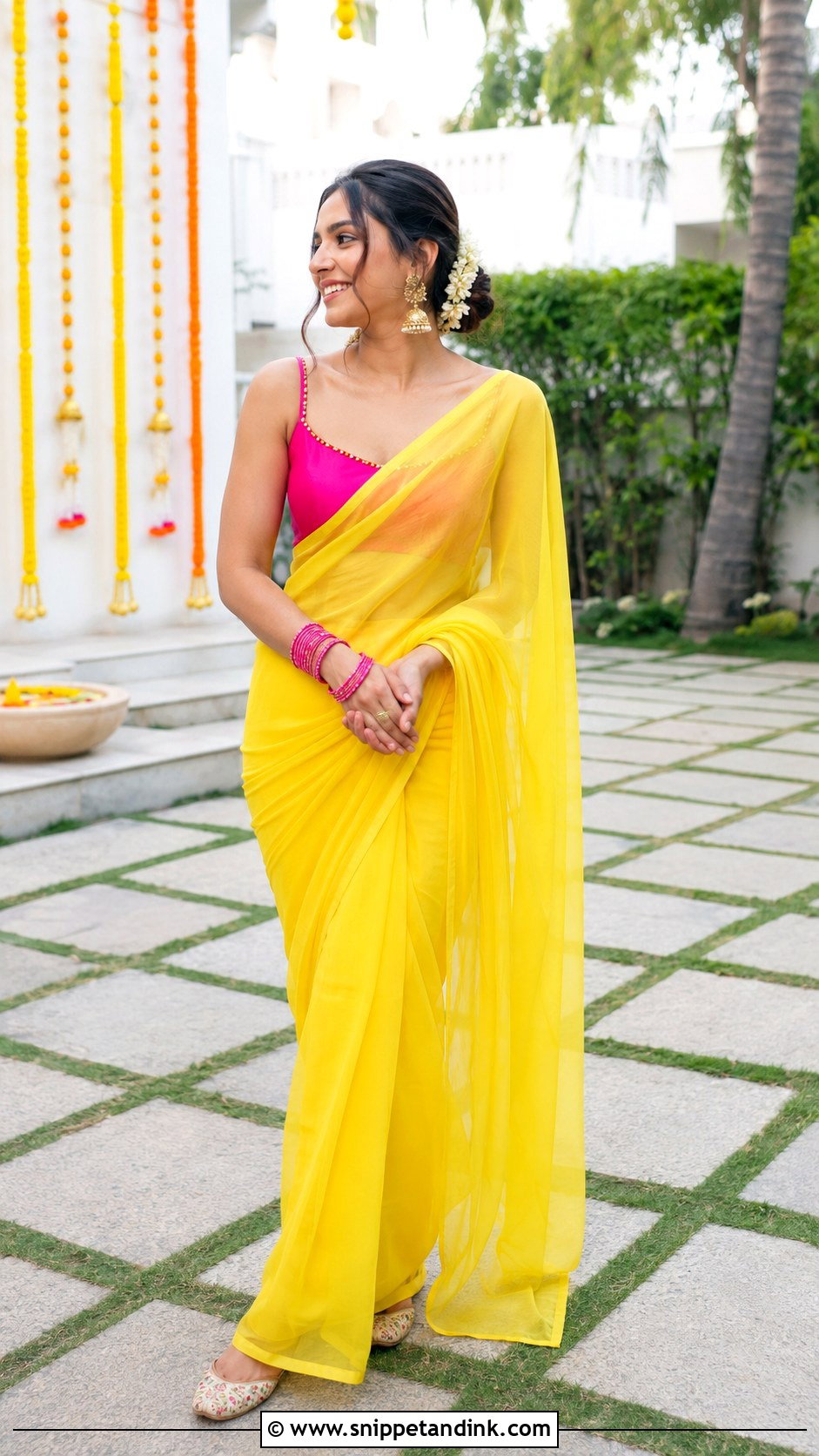
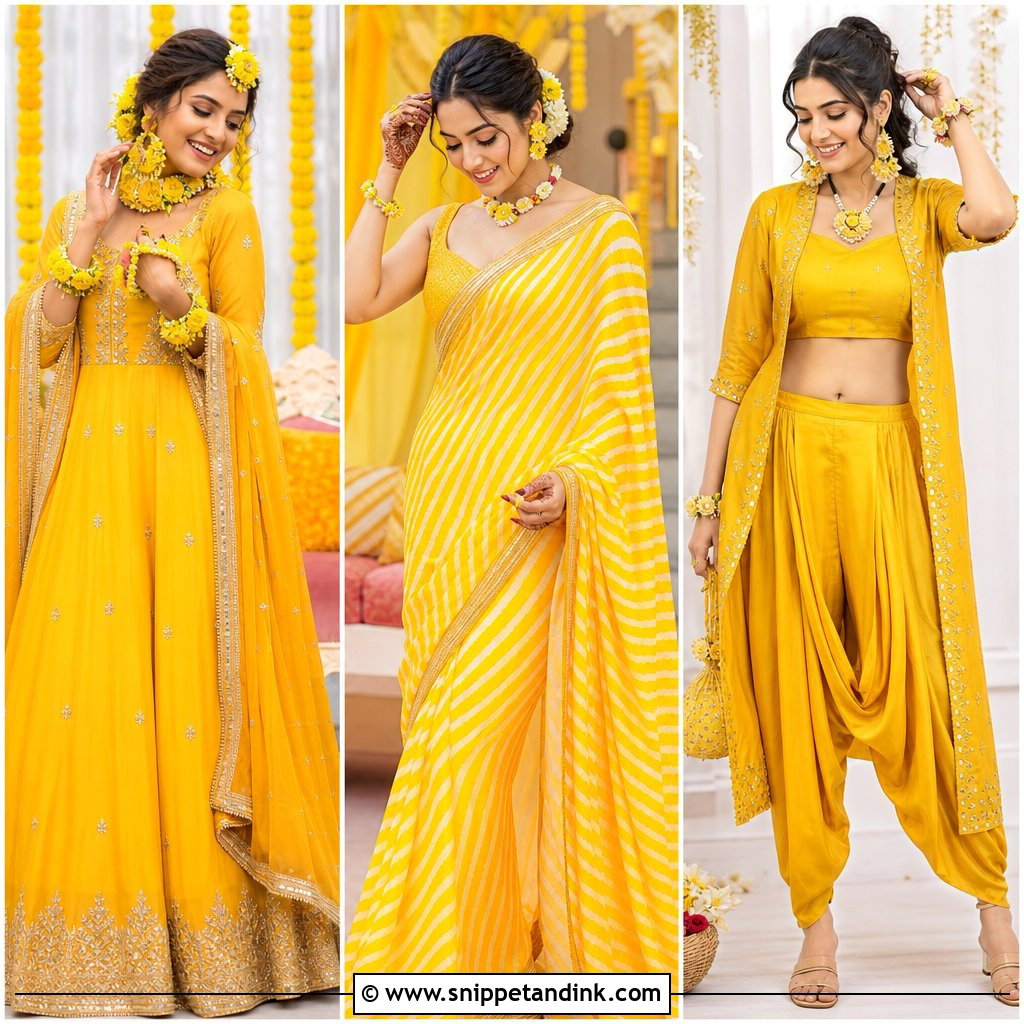
Pink sits next to bright yellow without dulling it, which is why this pairing is my default in a colorful setting. Go for a chiffon, georgette or cotton-silk saree that holds a pin; pure chiffon slides, so I add a second safety pin where the pleats tuck into the petticoat. A fitted hot pink blouse can have elbow sleeves for a traditional feel or no sleeves for something more modern. Gold jhumkas, pink bangles, embroidered juttis and a low bun with small white flowers keep it practical. If the family plays rough with the paste, a pre-stitched saree saves you a redrape halfway through. Brides can add a waist belt; guests keep the drape and jewelry simpler.
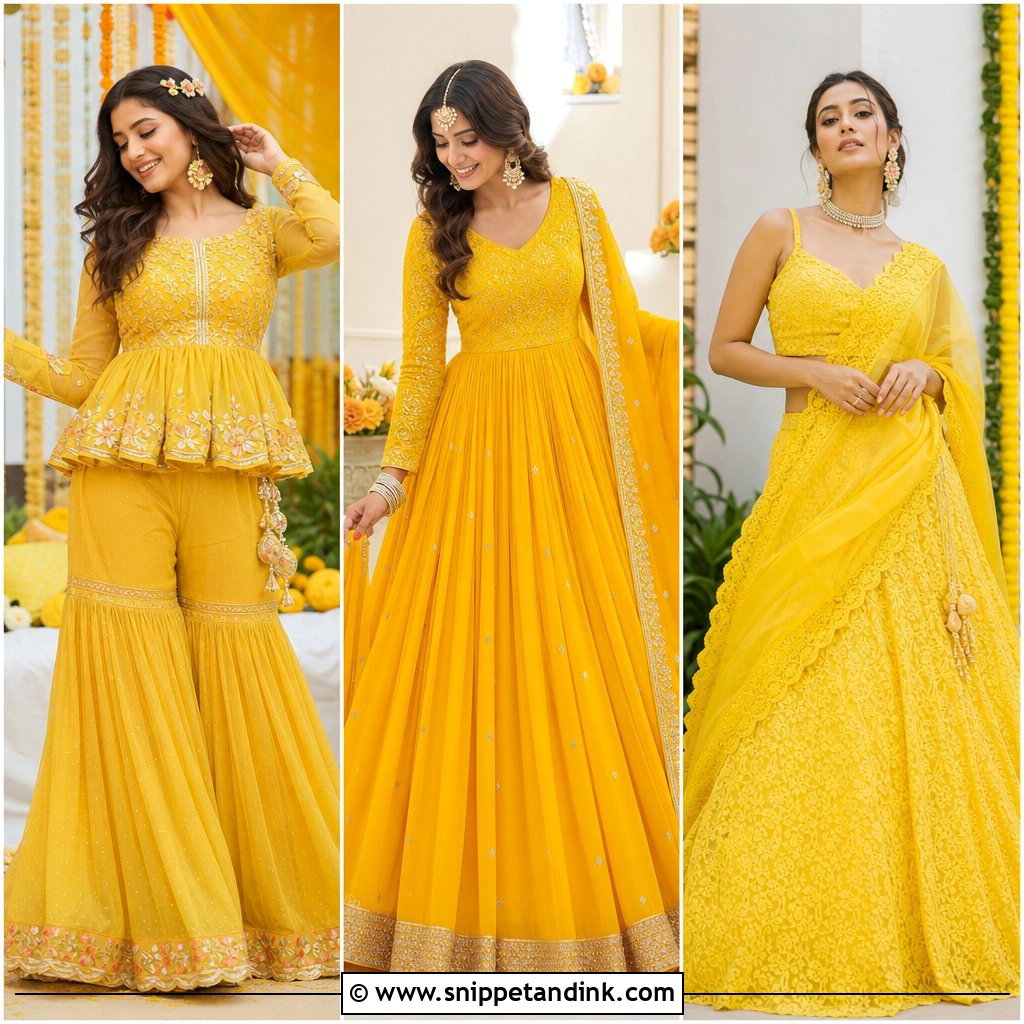
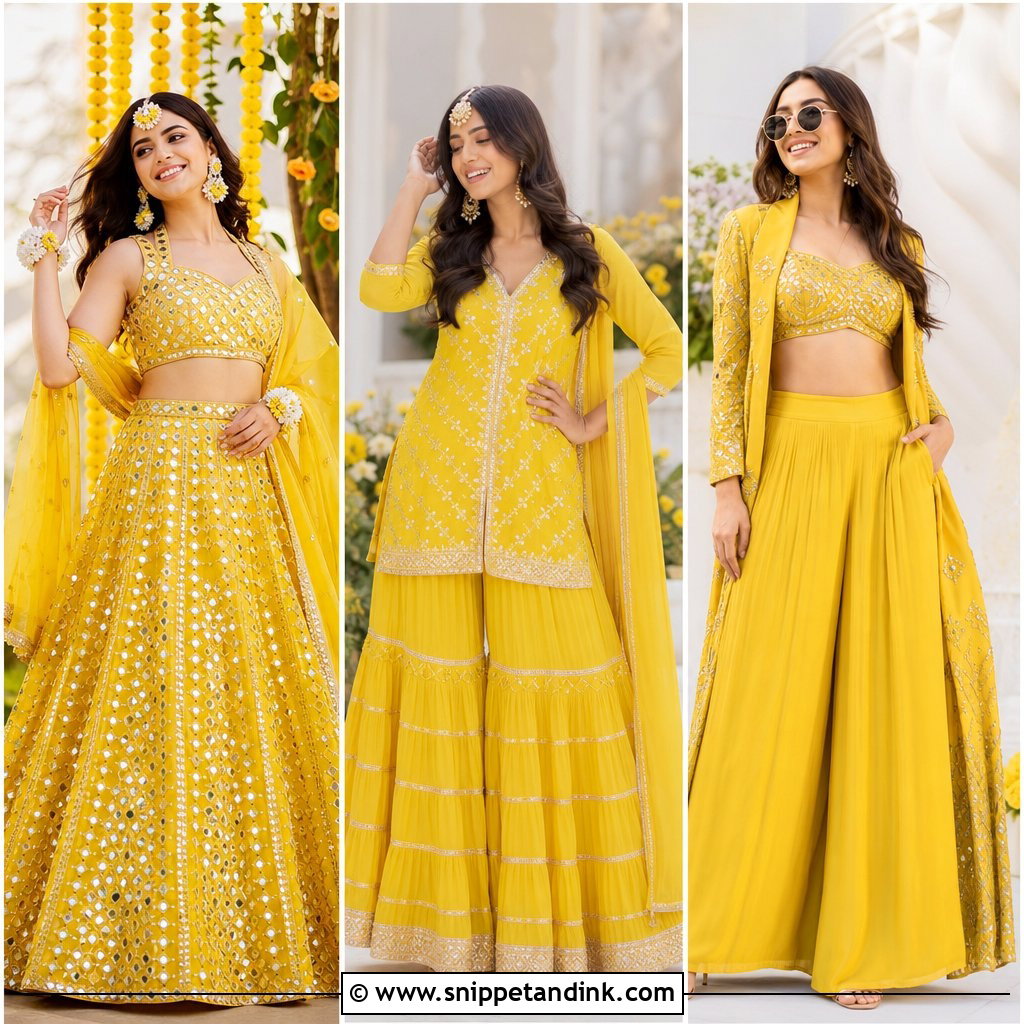
3. Yellow Haldi Sharara With Short Kurti
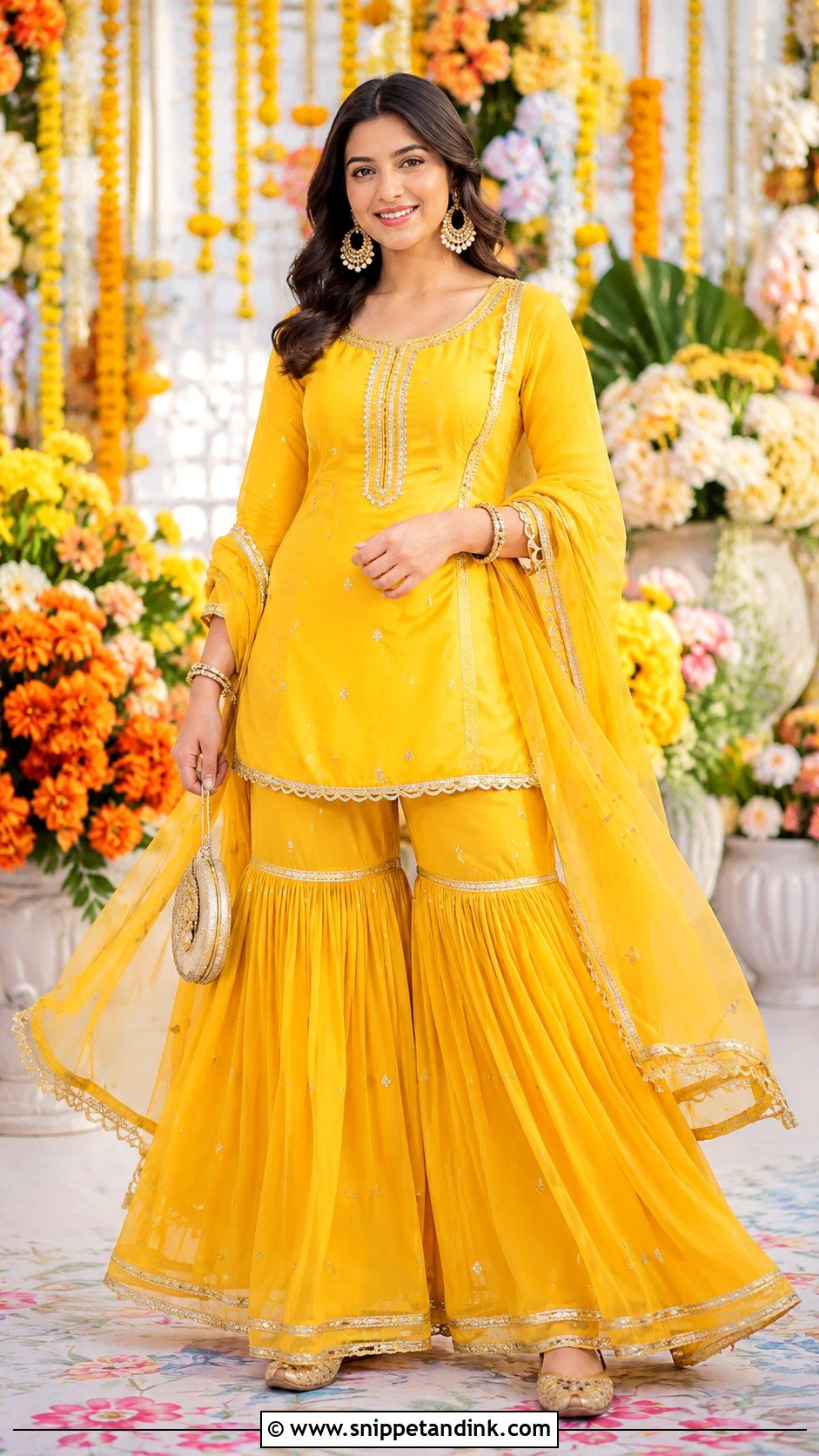
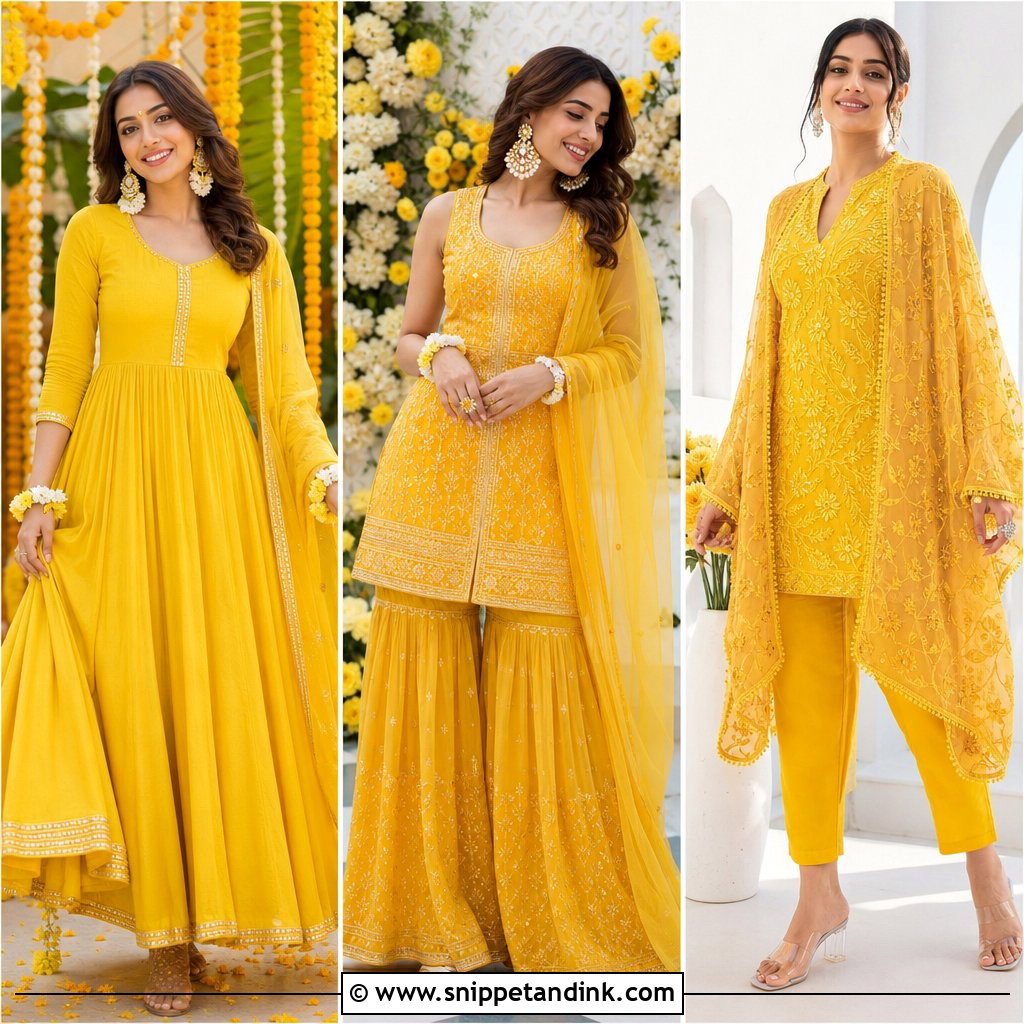
Anyone who plans to dance should look at a sharara first, since the volume starts at the knee and nothing restricts your stride. Start with wide yellow sharara pants in georgette or soft crepe. Crepe has more weight, so it falls back into place after a twirl instead of ballooning in the wind. Pair it with a short kurti trimmed in gota, small mirrors or a little floral thread. Where that kurti ends is the whole trick: at the natural waist or upper hip it balances the flare, and that hem point flatters most figures. Drape the dupatta at the elbows or pin it on one shoulder, wear comfortable juttis and carry a wristlet rather than a big bag. Keep the embroidery light as a guest; the bride’s sister can go brighter.
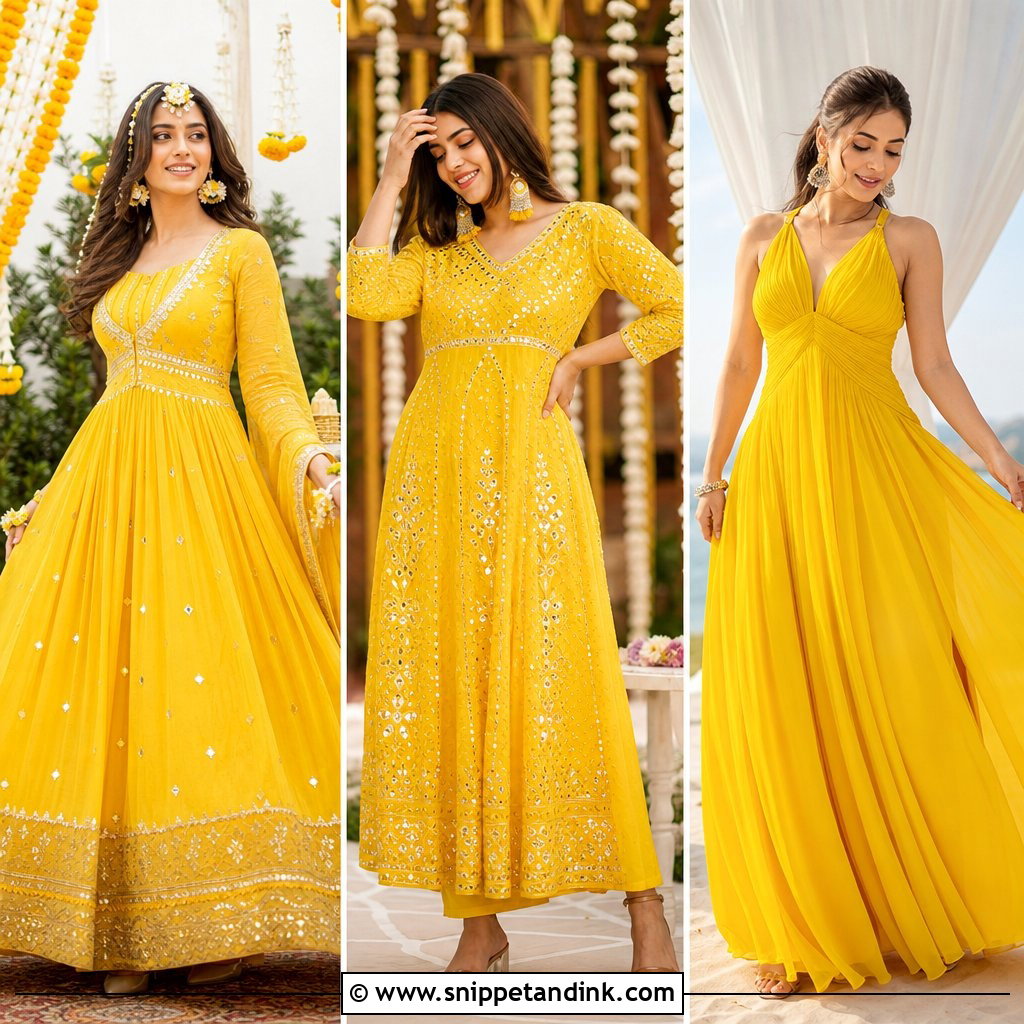
4. Yellow Haldi Anarkali With Dupatta
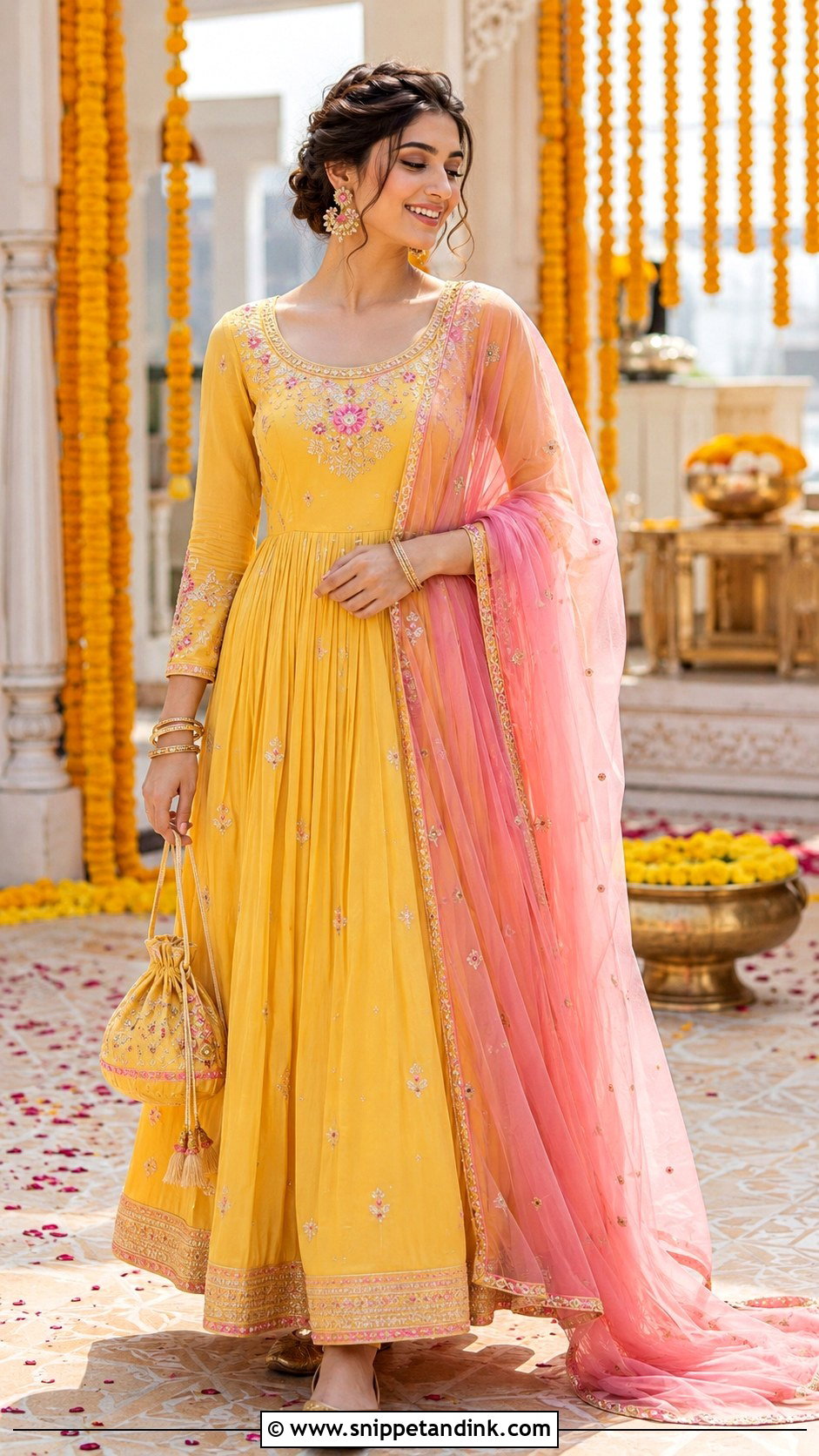
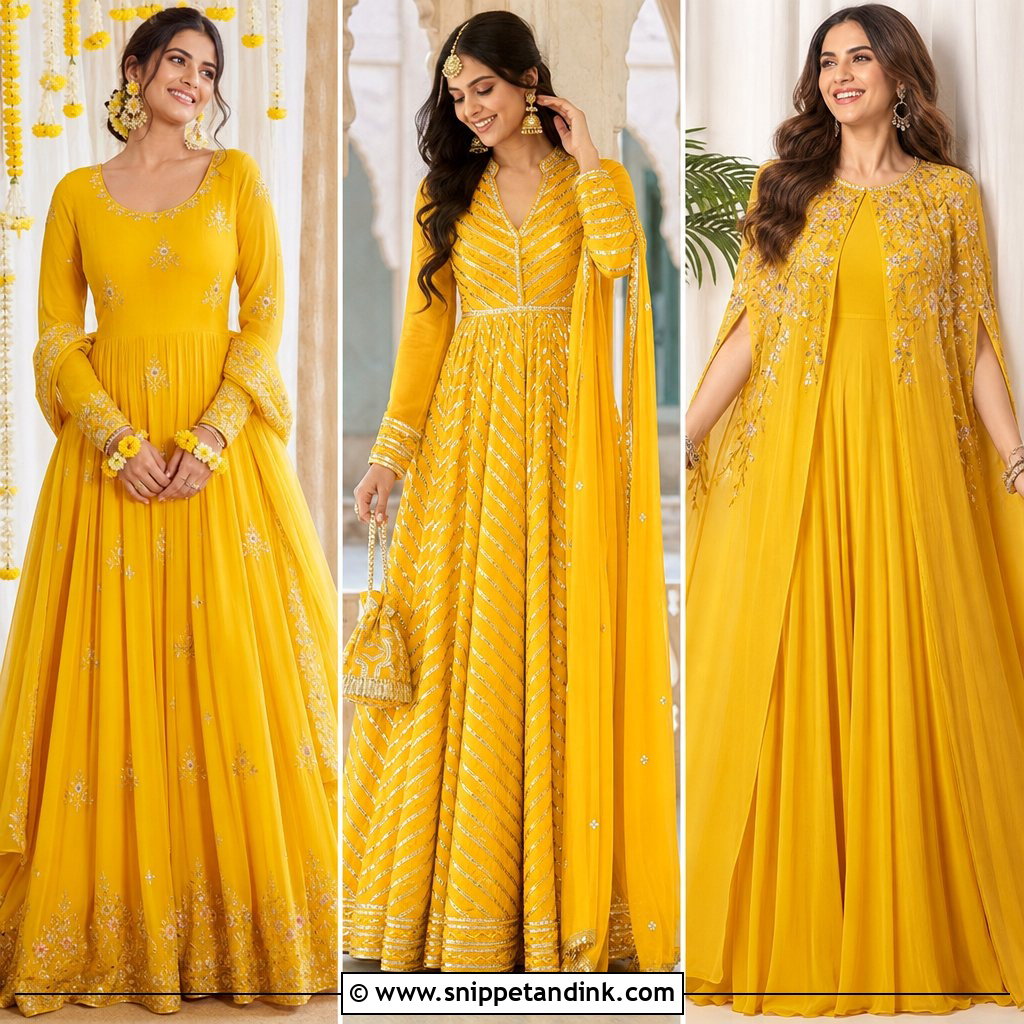
An Anarkali swings around the ankles every time you turn, and that movement is what candid photographers wait for. Look for a yellow Anarkali in breathable cotton, chiffon or georgette with a fitted top and a comfortable flare. The part I check most carefully is the seam under the bust where the panels begin. If it sits too high, the whole dress looks like it is riding up the moment you sit. A scoop, V or square neckline gives floral jewelry room, and a contrasting pink or ivory dupatta adds depth. Petite women usually look better in a moderate flare with a shorter hem; taller women can carry a fuller, floor-skimming shape. Finish with gold flats, a few bangles and a loose braid.
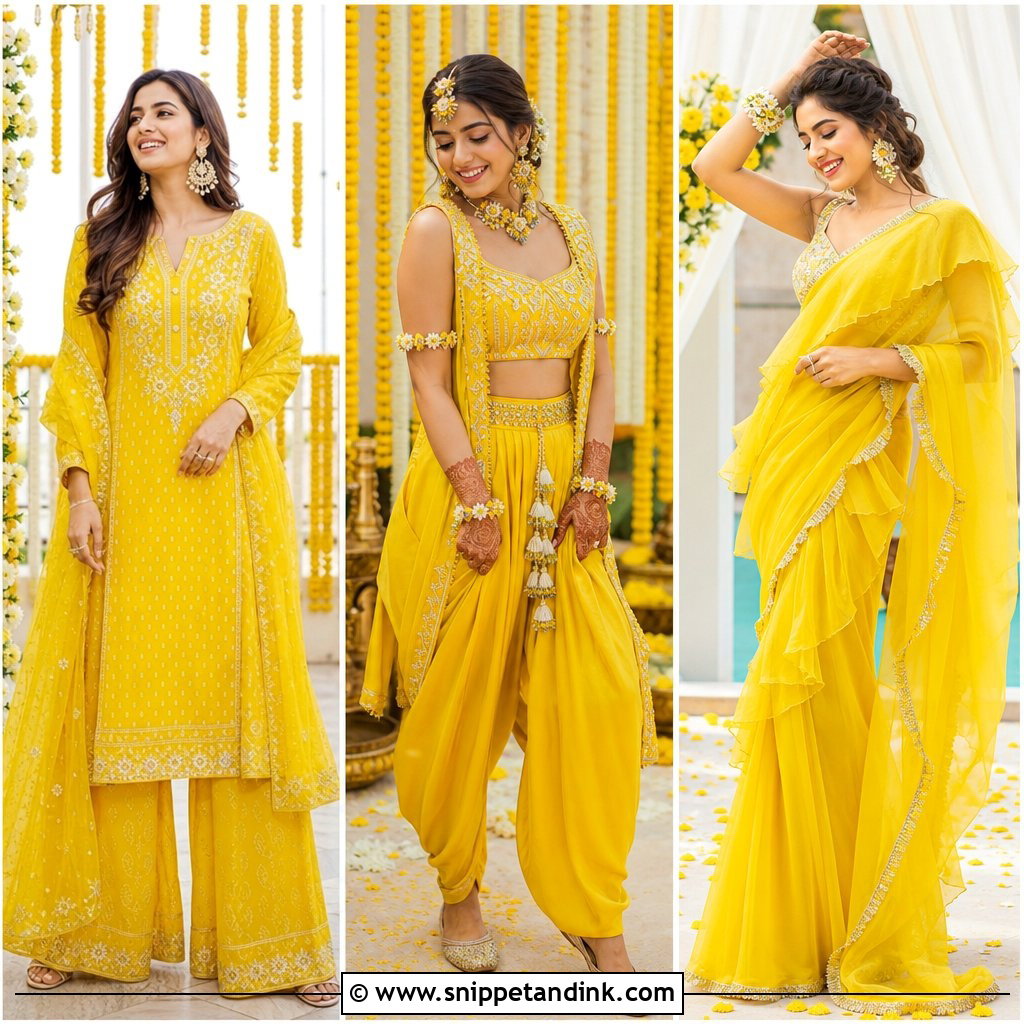
5. Yellow Haldi Kurta Set With Palazzo Pants
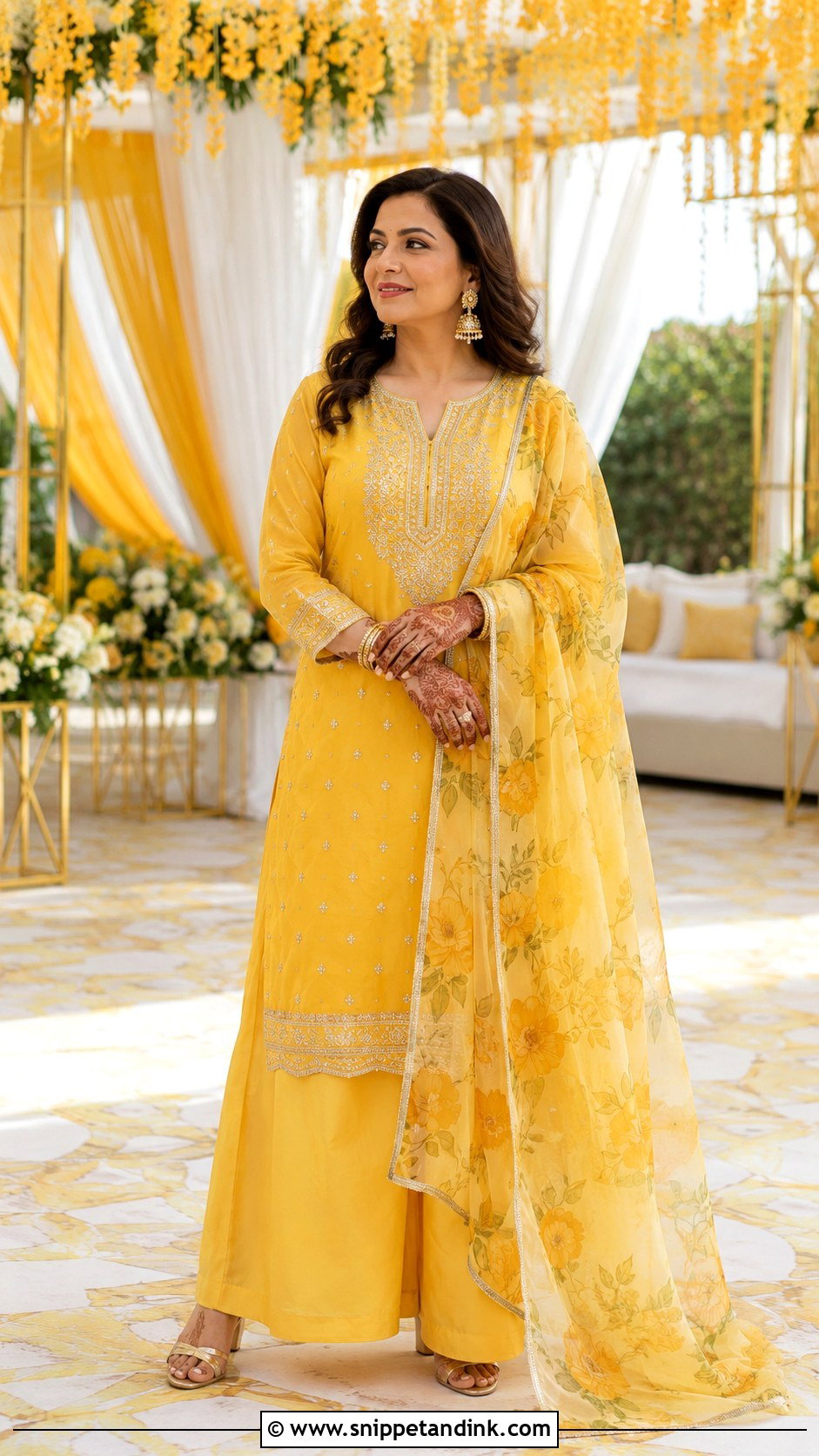
For guests, older relatives and anyone who simply wants to be comfortable, I rarely argue against a straight kurta with palazzos. Choose a knee-length kurta with side slits and light embroidery at the neckline or cuffs; the slits are not decoration, they are what let you sit on the floor without the kurta bunching at the hips. Wide palazzos keep the line clean. A printed organza dupatta dresses it up, or leave it off for a plain co-ord. Metallic sandals, medium jhumkas and stacked bangles are enough. My one fitting note is the shoulder seam: if it drops past the shoulder bone the kurta looks borrowed in photos, so get it taken in rather than sizing down.
6. Yellow Haldi Gharara With Peplum Top
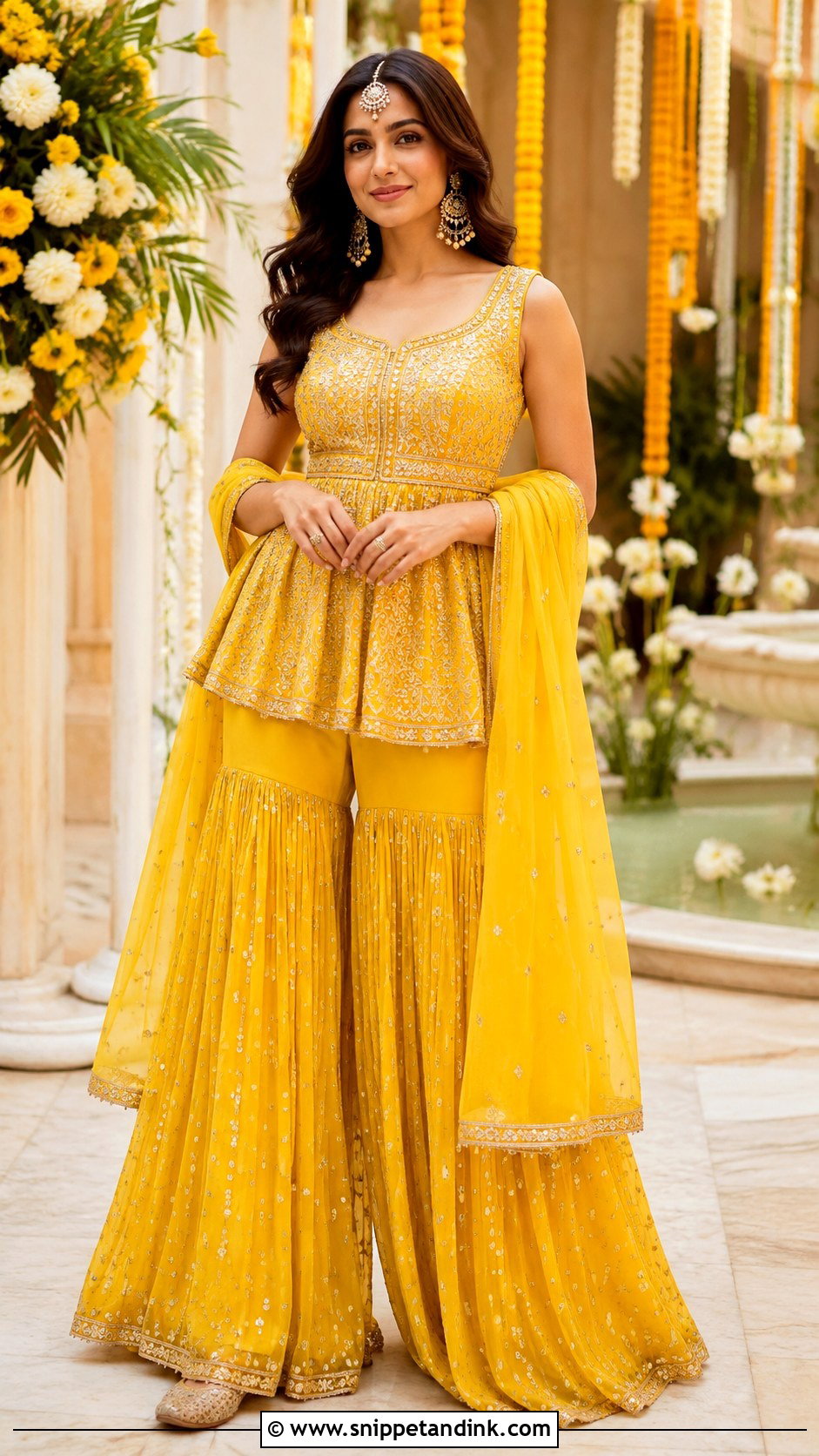
A gharara gives you a defined waist and a lot of drama below the knee. The pants should sit neatly through the thigh and only flare where the knee joint is stitched, and that knee seam takes real strain when you sit and stand all afternoon, so I tug it at fittings to make sure it is reinforced. Pair it with a hip-length peplum top edged in gota or thread. If the gharara is heavily gathered, keep the peplum’s flare moderate or the two volumes fight each other. A light dupatta over one shoulder, pointed juttis and chandelier earrings finish it, with a low ponytail or half-up hair. Bridesmaids can try small floral prints; the bride can carry richer embroidery and a statement tikka.
7. Yellow Haldi Chikankari Co-Ord Set
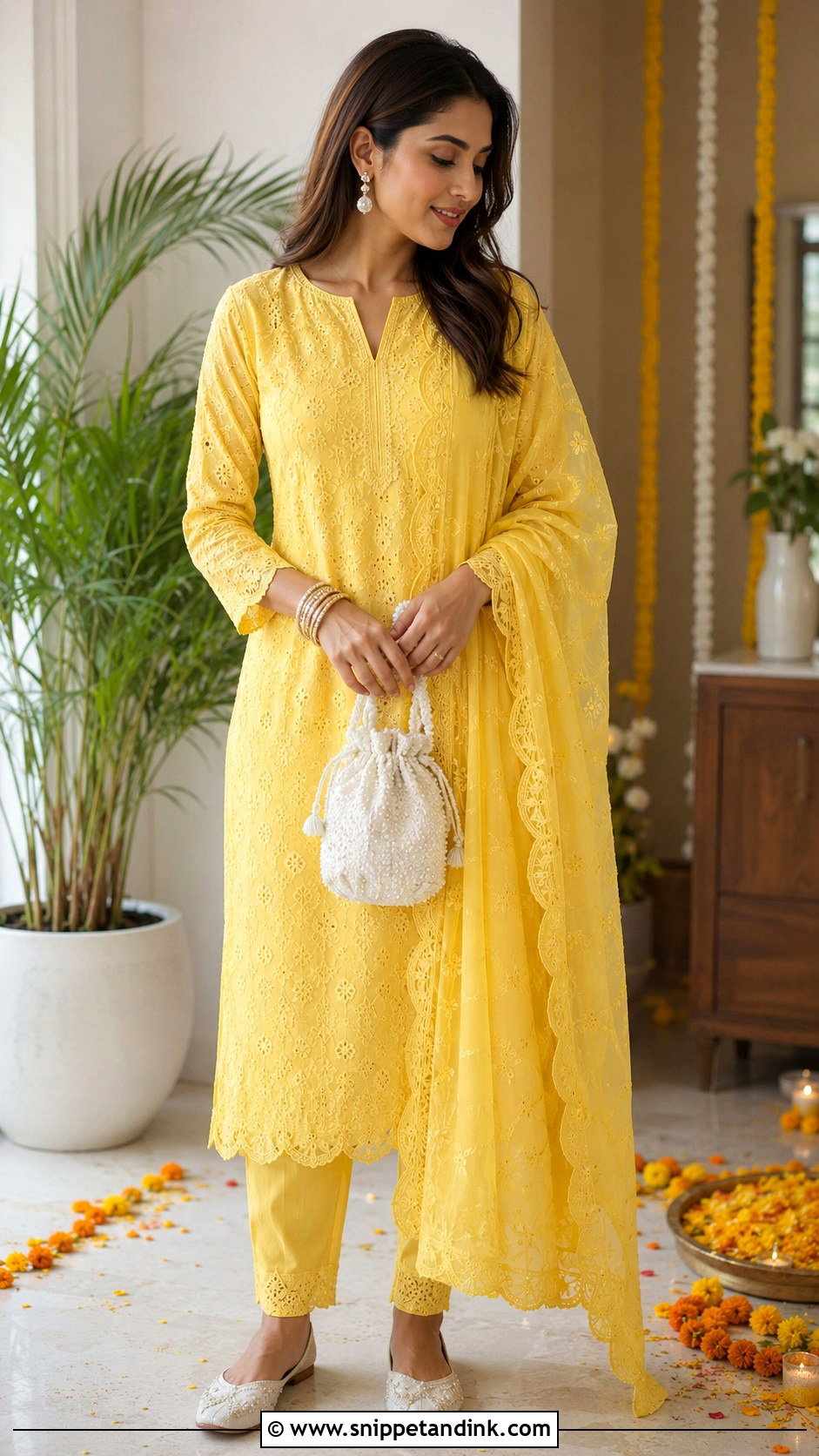
Chikankari is the quiet option, and I love it for an intimate home haldi or a bride who dislikes heavy embellishment. The outfit is a relaxed embroidered kurta with matching straight or wide pants. White thread looks fresh on lemon yellow; tonal thread is subtler. The thing people forget is that chikankari is often worked with open jaali stitches, so in bright daylight it can turn see-through. Ask for a breathable cotton lining before the day, not after the first photo. White or metallic juttis, pearl drops, slim bangles and a small white potli are all it needs. Add a light dupatta with a scalloped border if you want more coverage, and keep hair to soft waves or a tidy braid.
8. Yellow Haldi Jumpsuit With Cape
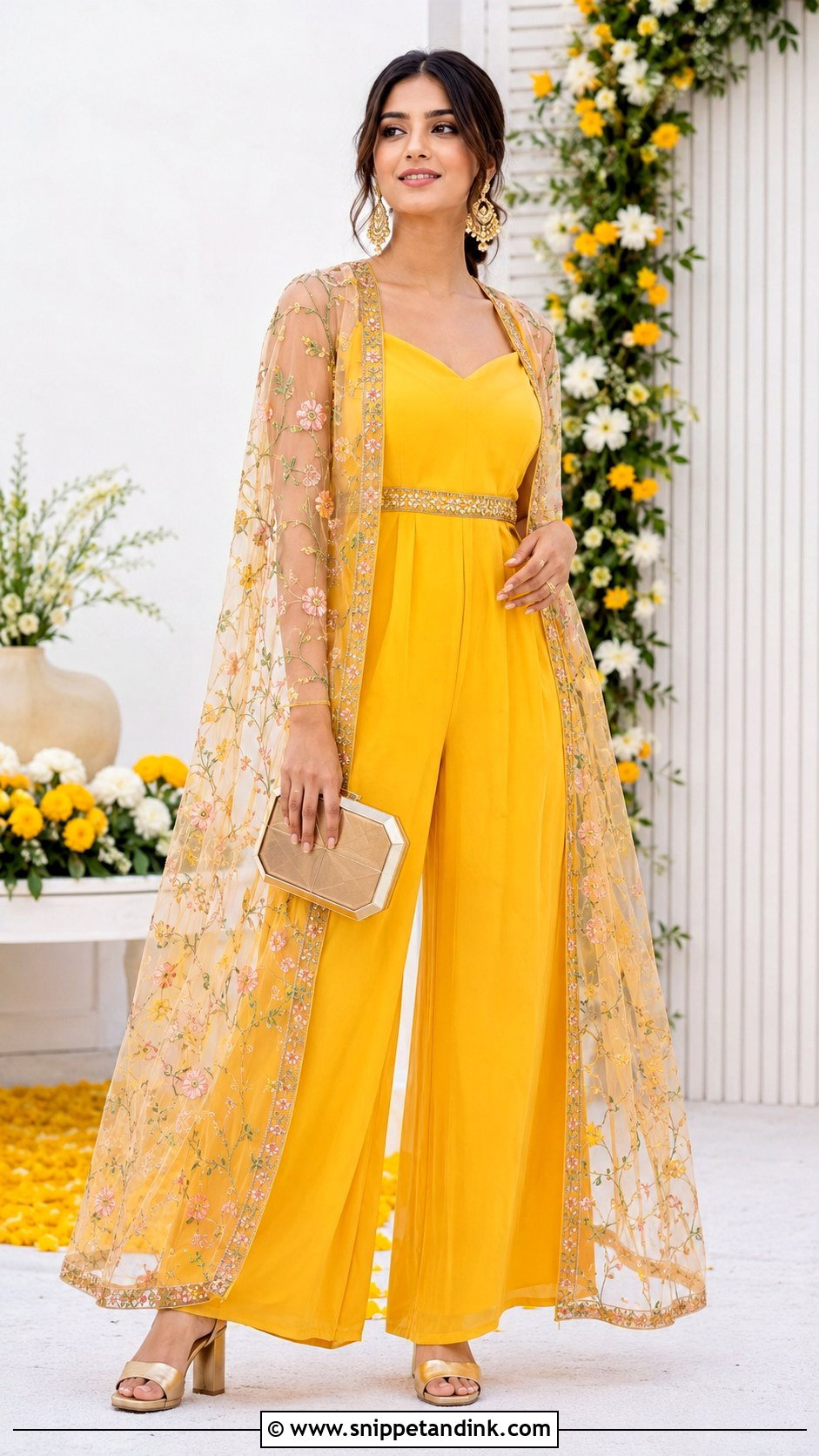
A jumpsuit is the cleanest alternative to layered separates, and the cape is what makes it feel festive. Choose a wide-leg cut with a fitted waist and a secure neckline, then add a sheer embroidered cape with floral thread, mirrors or a narrow gota border. Here is what I check before saying yes: how it opens. A jumpsuit with a long back zip means someone has to help you every time you use the restroom, so look for a side zip or a wrap front. A cropped cape lengthens the legs, while a longer open-front one adds coverage. Block heels, big earrings, a small structured clutch and a sleek ponytail suit a contemporary event, and I’d keep this one for bridesmaids and guests.
9. Yellow Haldi Skirt With Crop Top
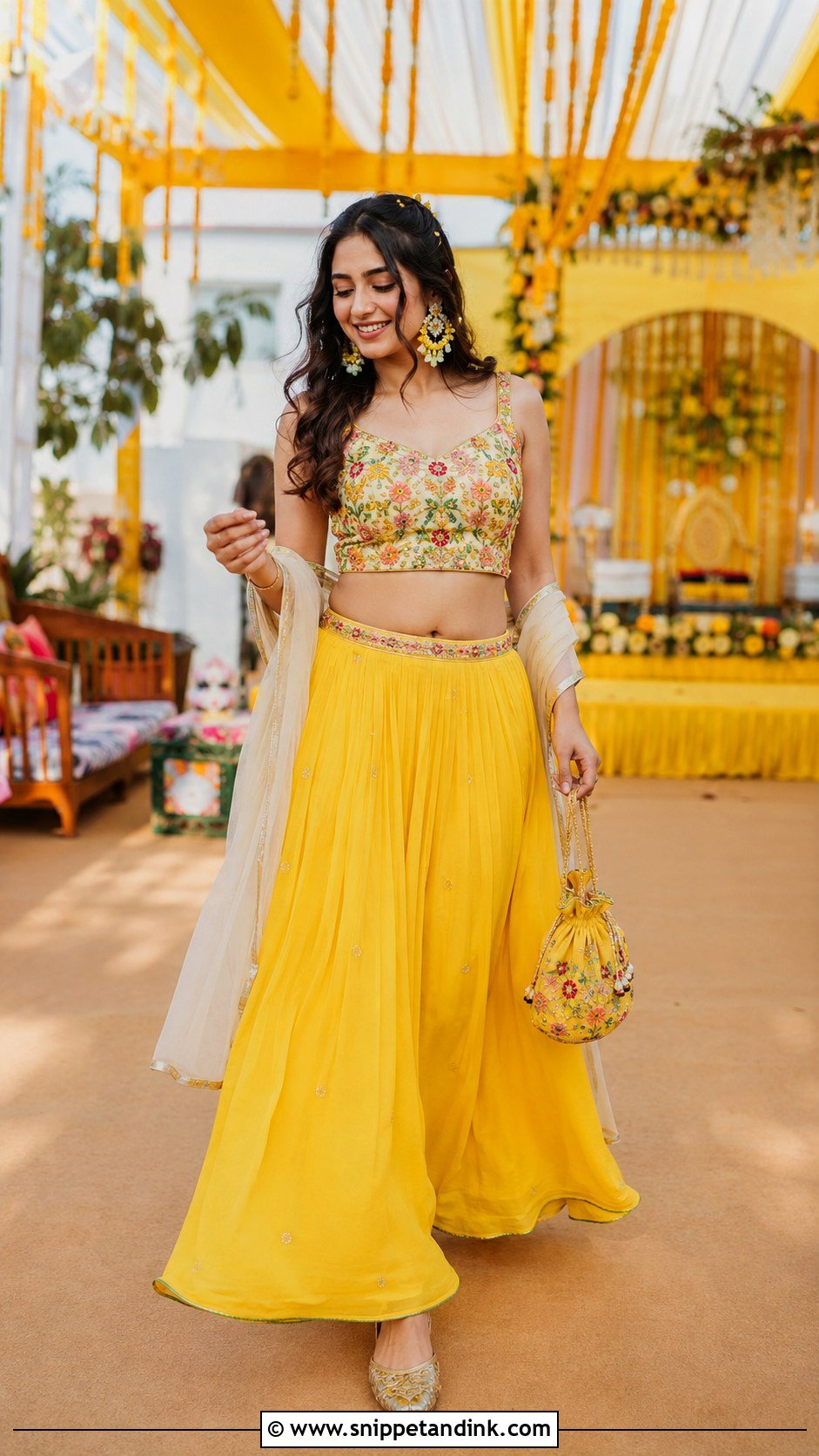
Skirt and crop top works when both pieces clearly belong to the same color story. Pick a flowing yellow midi or ankle-length skirt with a comfortable high-rise waistband and a fitted crop top with floral embroidery, puff sleeves or a modest square neck. Add a light dupatta if the family leans traditional. If you would rather not show skin, have the top cut long enough to meet the waistband; I measure this seated, because the gap always opens wider when you sit. An A-line skirt gives a smooth shape, a gathered one gives more swing. Gold flats, floral earrings and a compact potli. It suits younger guests and bridesmaids best.
10. Yellow Haldi Dhoti Pants With Kurti
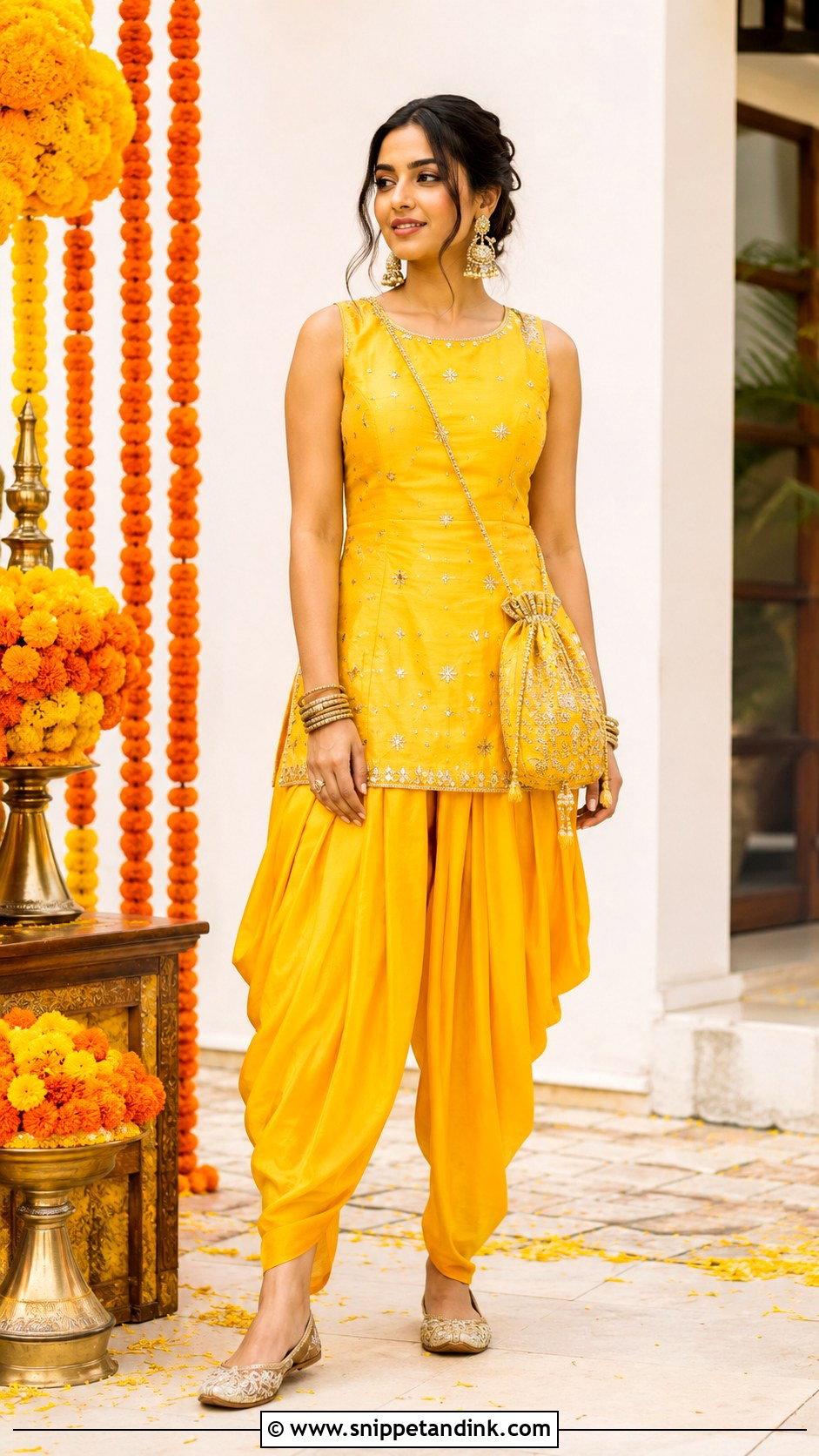
Pleated dhoti pants give a yellow outfit a relaxed, slightly artistic shape. The fabric decides whether it works: soft crepe or a cotton blend holds the pleats, while stiff cotton puffs out at the hip and adds bulk exactly where you don’t want it. Pair the pants with a fitted short kurti so the drape stays visible, sleeveless for a contemporary feel or cap and elbow sleeves for coverage. Traditional juttis, bold earrings and slim bangles, plus a crossbody potli so your hands stay free for the paste. On shorter frames I choose less volume and lift the hem slightly. A shaped kurti or narrow belt adds definition, and a side braid suits the fusion mood.
11. Yellow Haldi Salwar Suit With Phulkari Dupatta
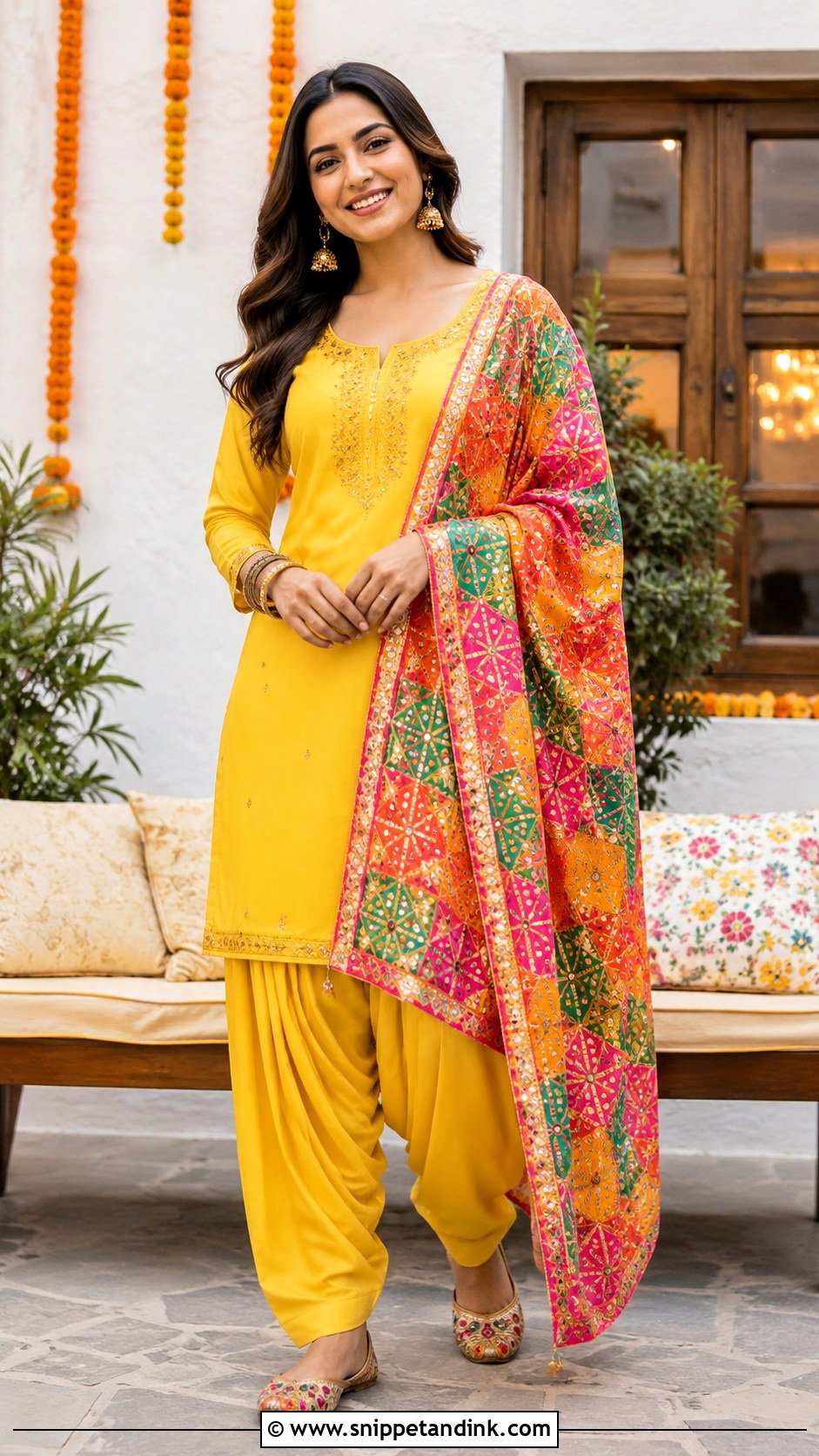
With a Phulkari dupatta, the dupatta does all the talking. Keep the yellow kameez simple and straight or slightly flared, and wear it with a salwar that gathers neatly at the ankle. The pink, orange, green and red embroidery on the Phulkari is dense and fairly heavy, which means it slides off a smooth shoulder faster than a chiffon dupatta would. I pin it in two places, once at the shoulder and once at the back of the waist, using small pins hidden under the embroidery. Embroidered Punjabi juttis, gold hoops or jhumkas, colorful bangles and a neat braid with small hair accessories finish it. It suits every age and can be dressed up or down easily.
12. Yellow Haldi Organza Saree With Sleeveless Blouse
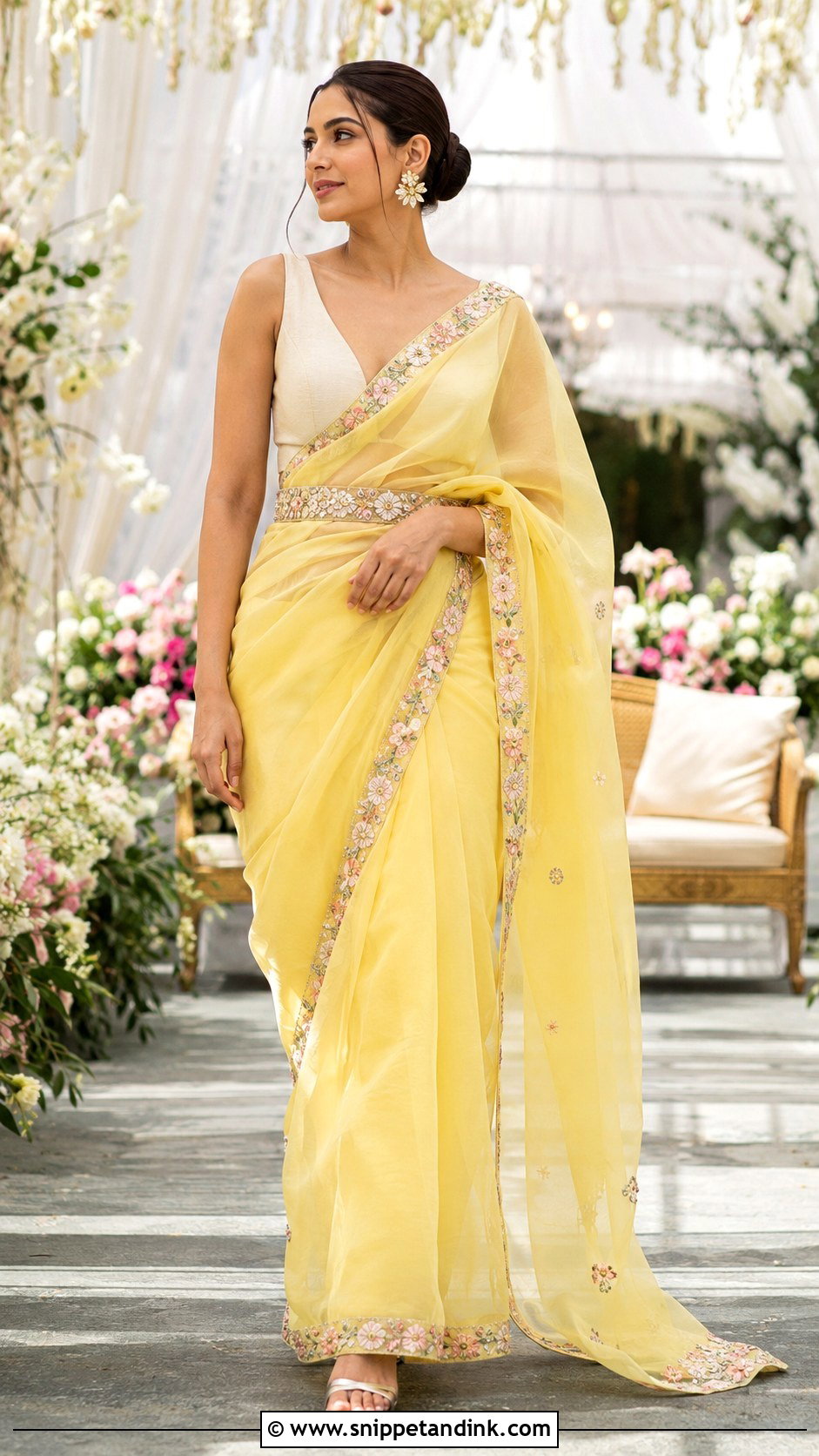
Organza holds its own shape, which makes a yellow saree look crisp in daylight, but it also means the pleats want to stand away from the body. I keep them narrow and pin them firmly at the waist; wide organza pleats look like a fan by the end of the afternoon. Pair it with a fitted sleeveless blouse in matching yellow, ivory or a contrasting green, and ask for a soft lining because organza edges can scratch the underarm. A floral print, scalloped border or small motifs add interest without fuss. A slim belt, floral earrings and low block heels or dressy flats complete it, with a smooth bun to balance the airy drape.
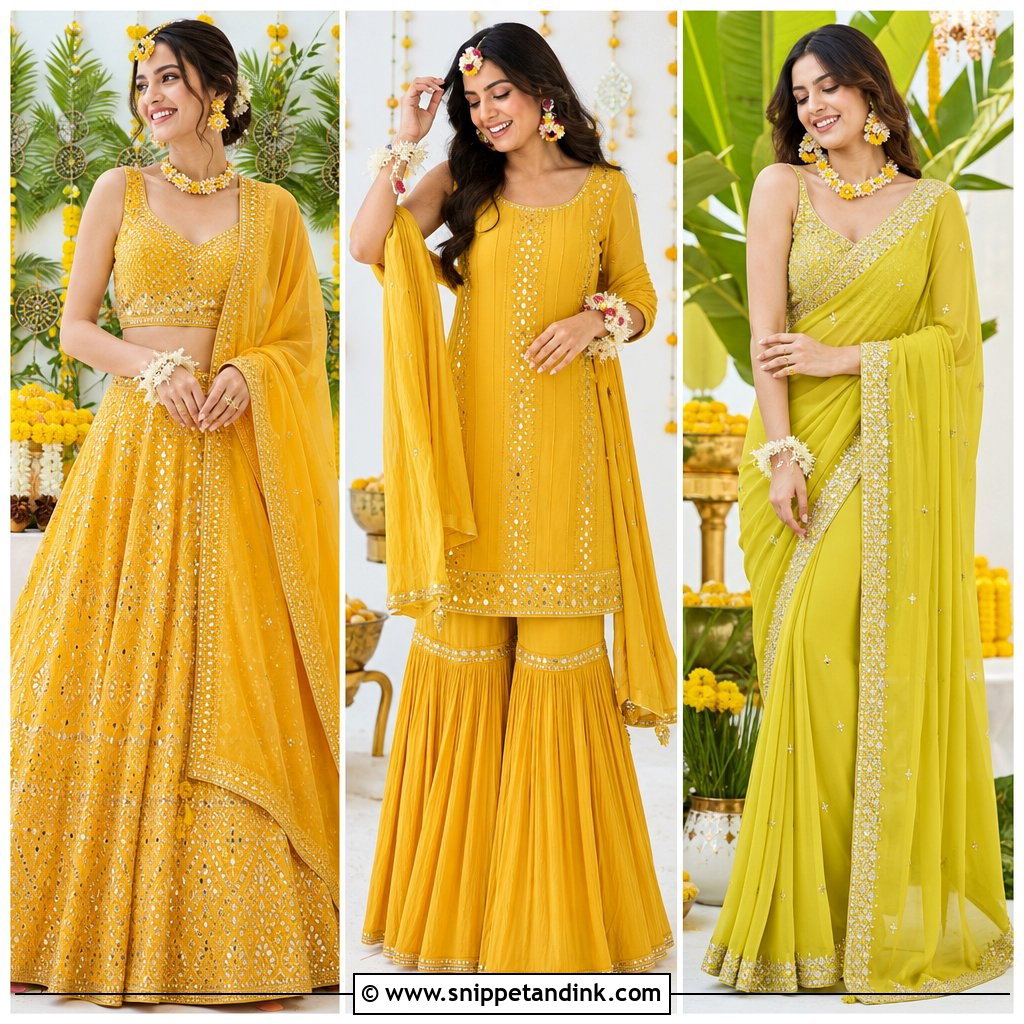
13. Yellow Haldi Bandhani Lehenga Set
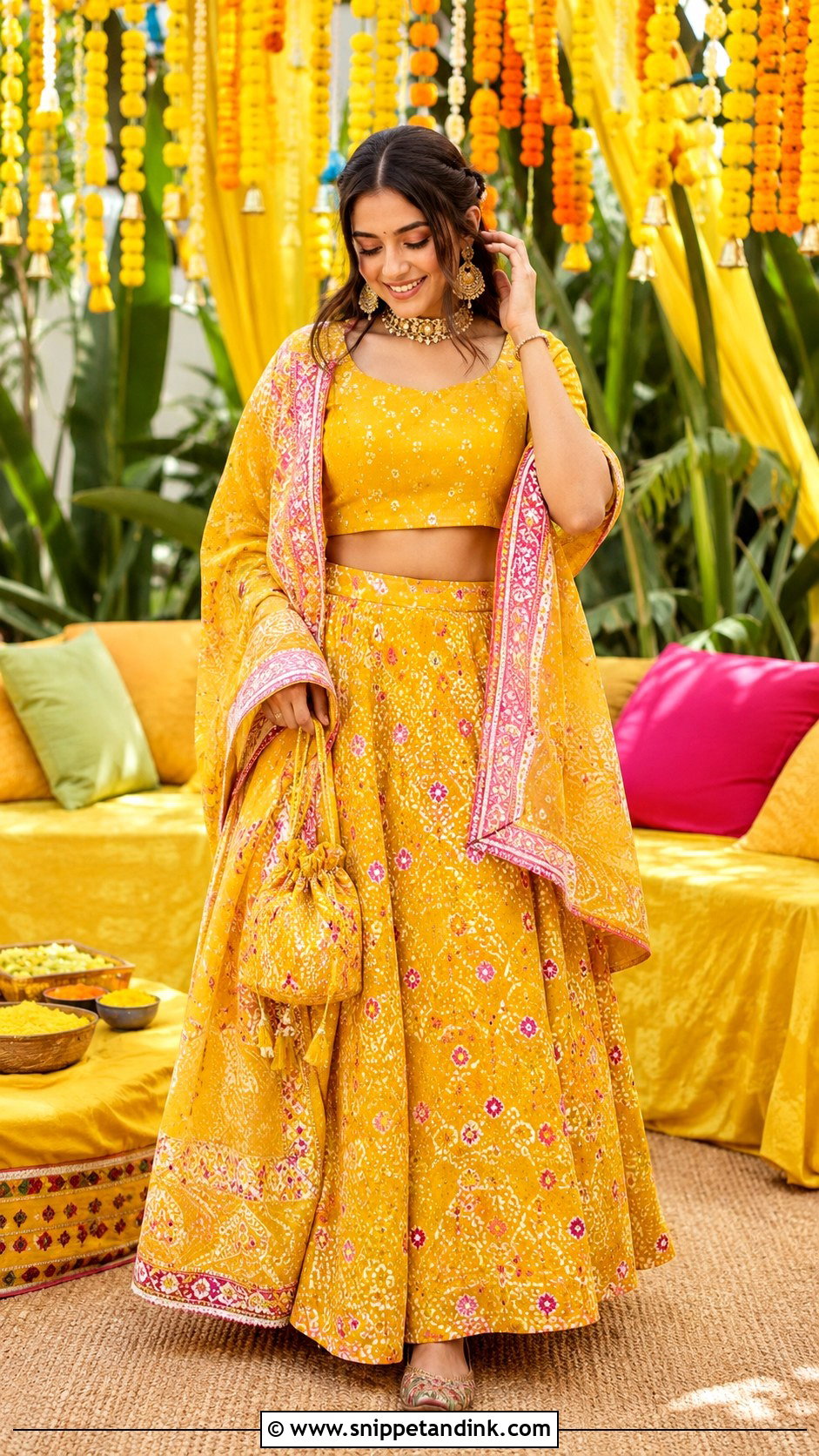
Bandhani carries a lot of character, so the risk is overdoing it. A yellow lehenga set with dotted white, pink or green motifs works best with a plain matching choli, especially when the dupatta is Bandhani too. Real tie-dye can bleed when it gets wet, and haldi involves water, so I do a quick damp-cloth test on an inside seam before the day. Oxidized silver or antique gold jewelry suits the craft, along with embroidered juttis and a fabric potli. A little mirror work at the neckline or hem adds sparkle. Brides can go fuller and layered; guests usually look better in an A-line.
14. Yellow Haldi Mirror Work Sharara Set
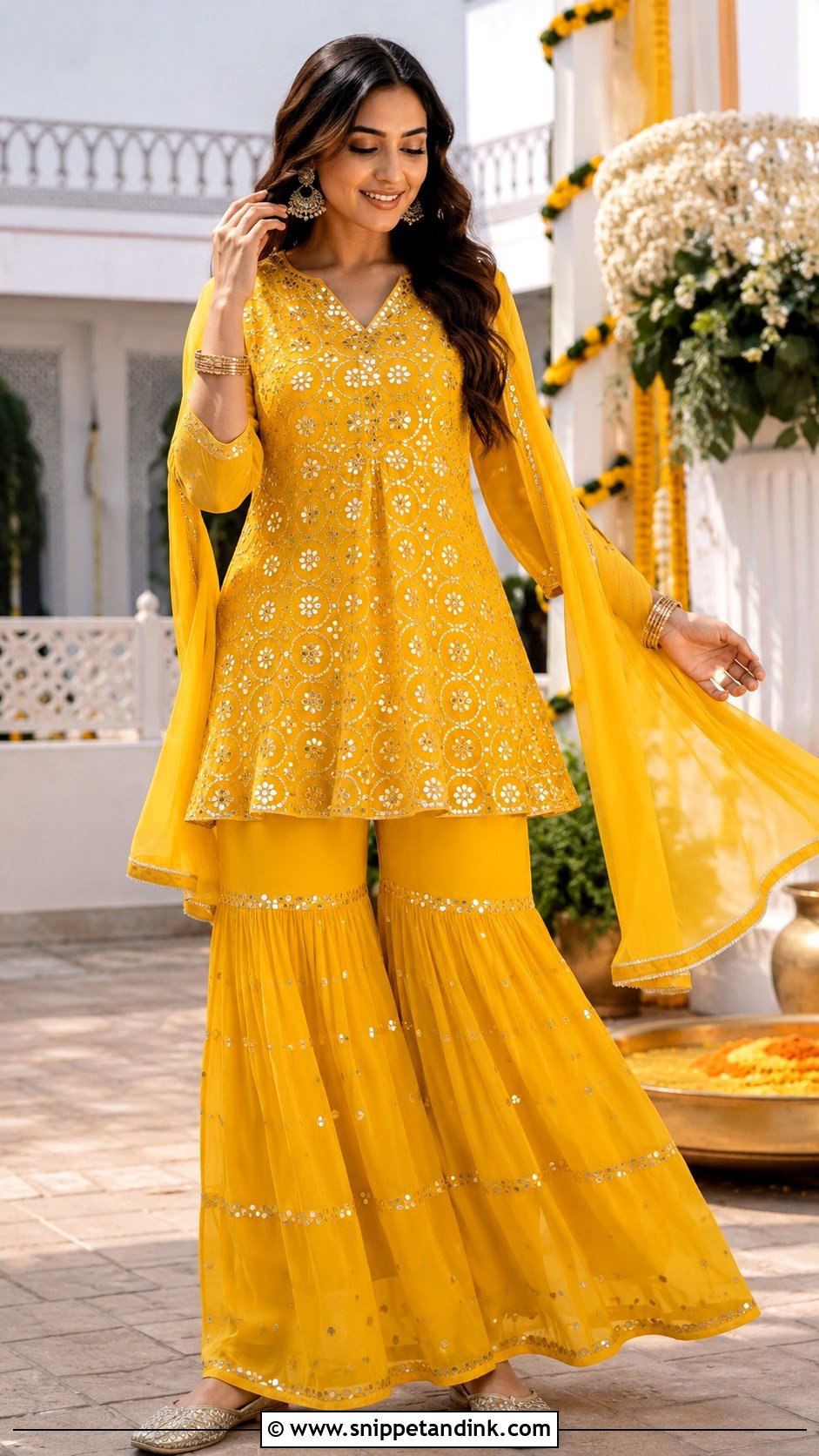
Mirror work does the job of heavy embroidery at a fraction of the weight, and it throws light back toward the camera. Choose a short kurti with small mirrors at the neckline, sleeves or hem, and check that each one is stitched all the way round. Loose or sharp-edged mirrors snag dupattas and scratch whoever hugs you, and haldi is a very huggy ceremony. Flowing sharara pants and a plain chiffon dupatta with a narrow border keep attention on the top. Metallic juttis, medium earrings and a few bangles are plenty. A high or rounded neckline sets off the mirrors best. Finish with a smooth ponytail or braid.
15. Yellow Haldi Cotton Maxi Dress With Dupatta
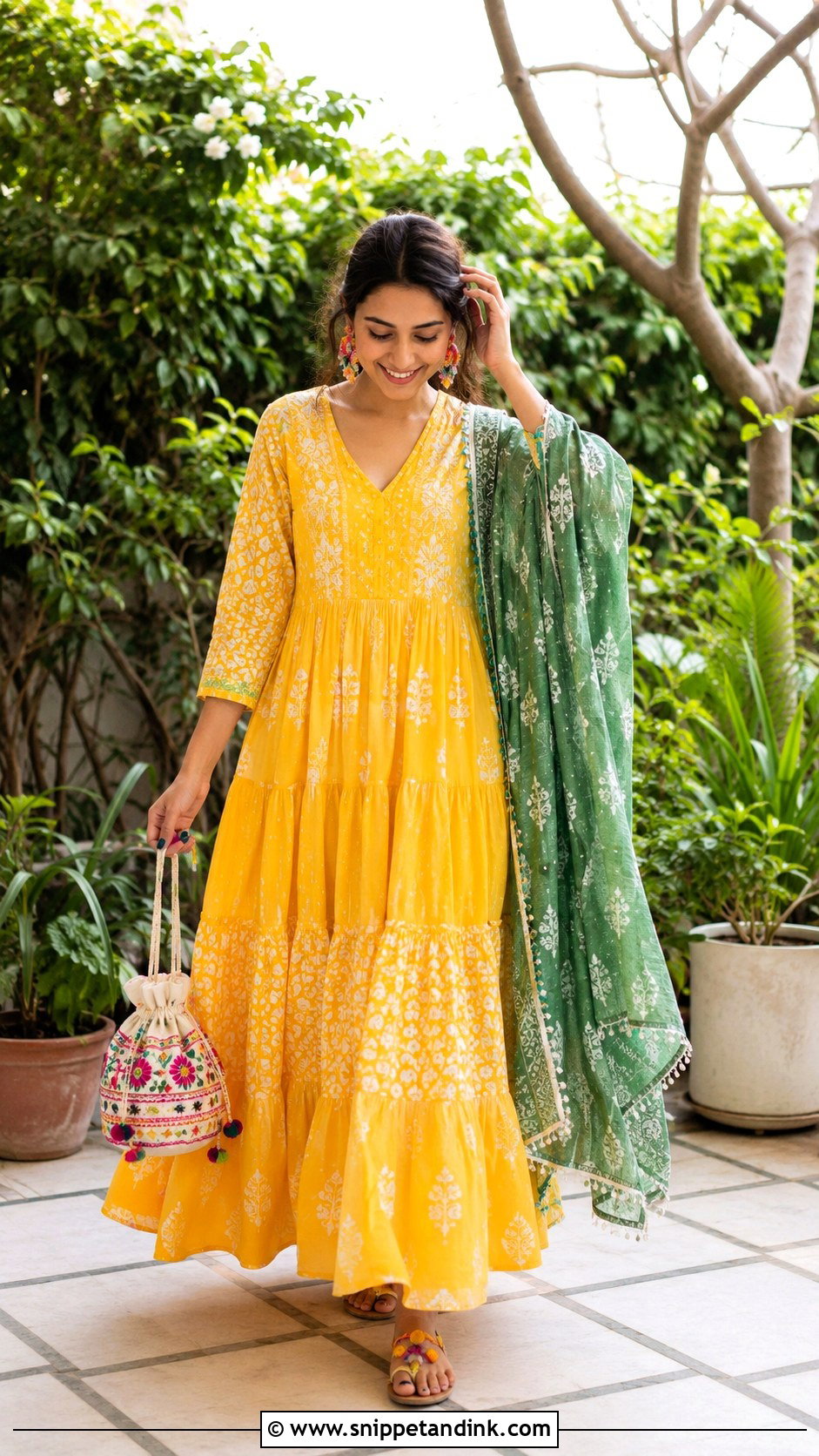
For a relaxed outdoor or at-home haldi, a cotton maxi is the most practical thing on this list. Look for an ankle-length dress with a defined waist, a tiered skirt and sleeves you can push up. Block prints or small florals keep it light, and a pink, green or white dupatta brings in the ethnic element. Pockets are the detail I’d fight for here; you will want somewhere to put your phone that isn’t covered in paste. Flat sandals, colorful earrings and a woven potli. Keep the hem clear of the ground, avoid billowing sleeves that drag through the bowl of turmeric, and wear soft curls or a simple braid.
16. Yellow Haldi Jacket And Palazzo Set
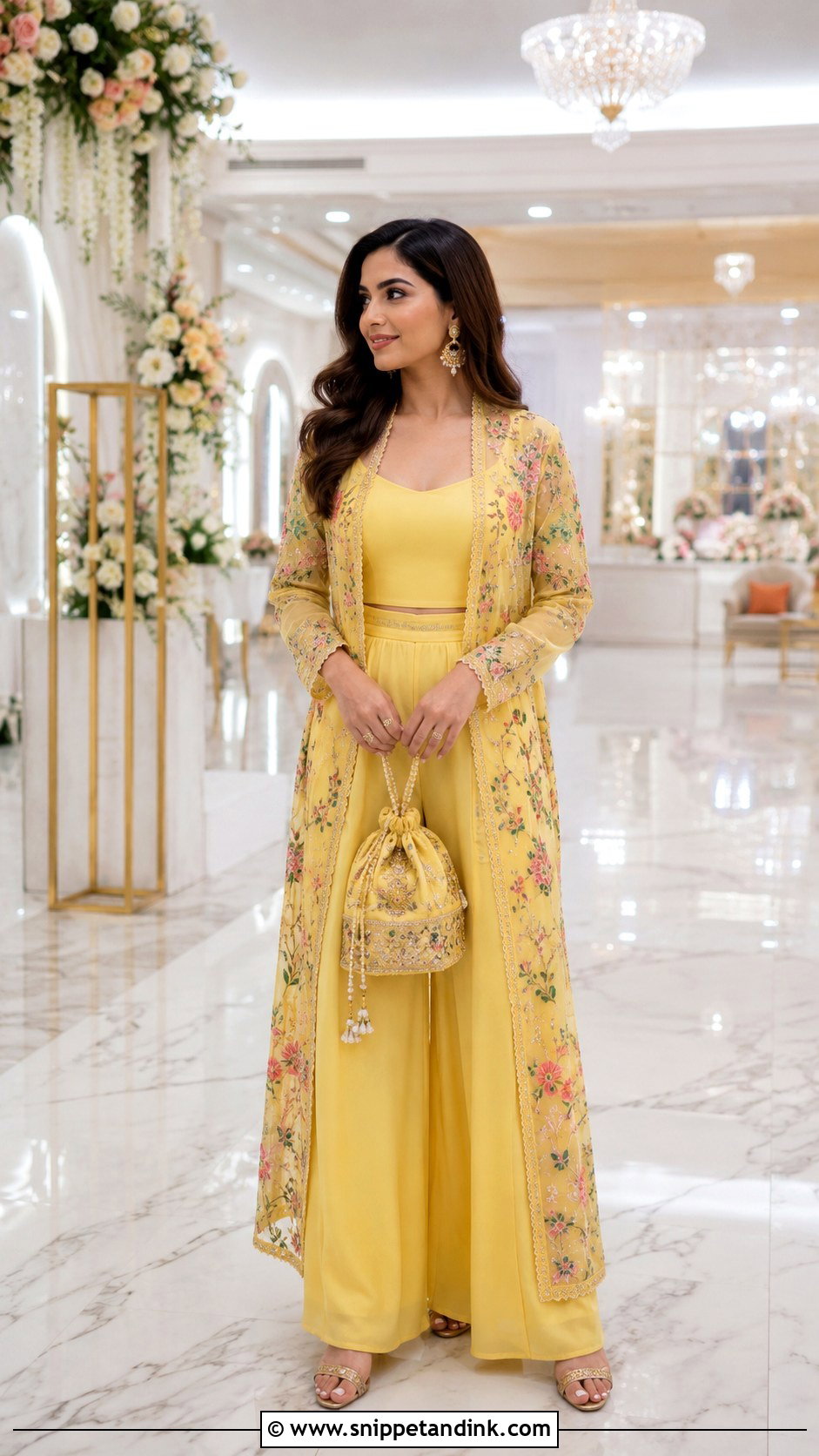
A long embroidered jacket turns a plain top and palazzos into a proper occasion outfit, and it gives coverage without a dupatta to manage. Start with a fitted sleeveless or short-sleeve inner top and high-waisted palazzos, then layer an open-front jacket that falls somewhere between knee and ankle. Floral embroidery, printed panels or light gota can make it the focal point, so keep the inner pieces plain. The vertical front edges draw a long line through the body. My caution: a lined, heavy jacket gets hot quickly at a midday ceremony, so choose an unlined cotton or organza version if it will be sunny. Low heels, statement earrings and hair pulled back to show the neckline.
17. Yellow Haldi Peplum Top With Tulip Pants
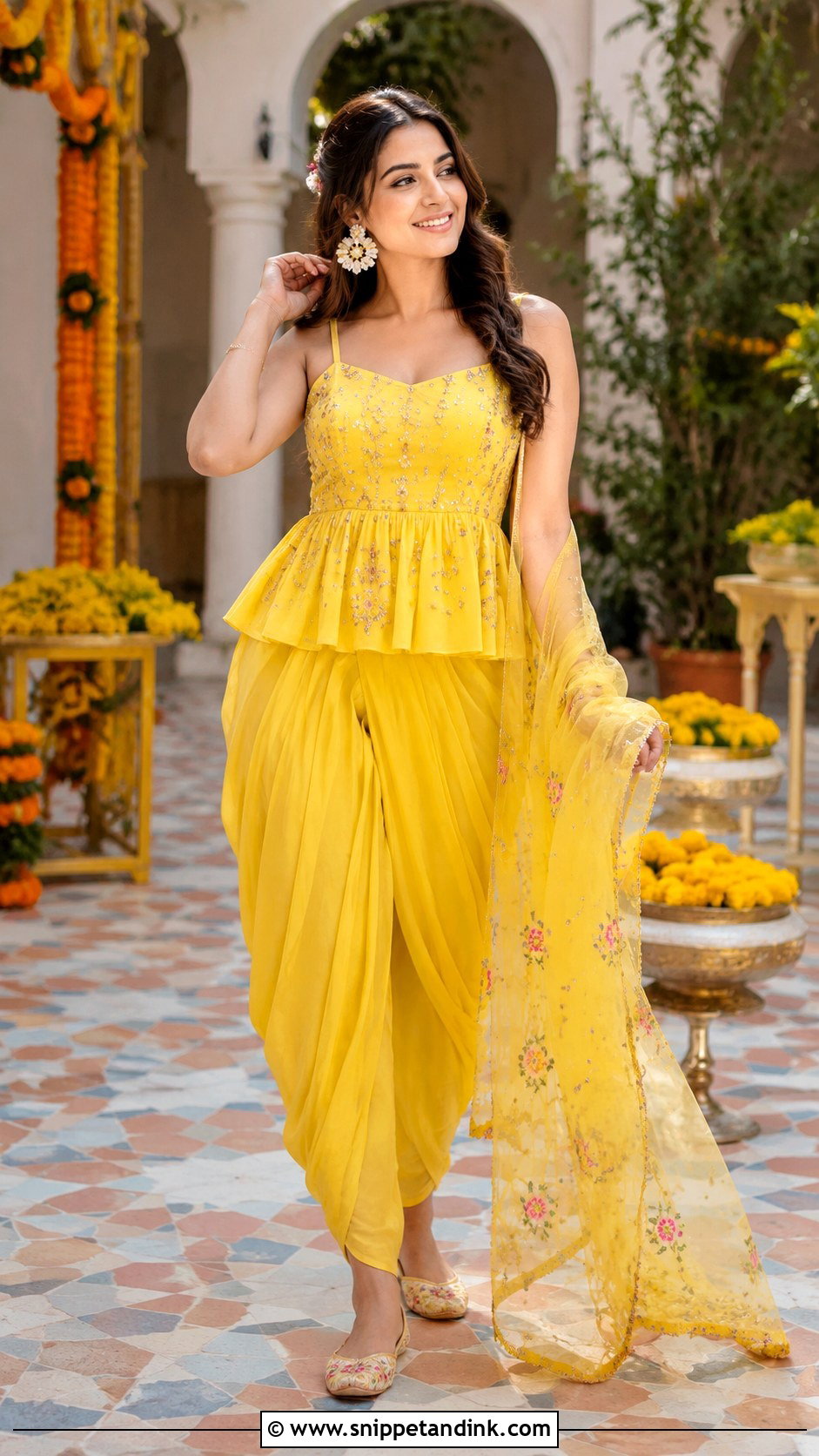
A peplum top with tulip pants feels contemporary while keeping a traditional nod. The top should sit neatly at the natural waist and flare gently over the hips; if it pulls up when you lift your arms, it is too short in the body. Tulip pants wrap and taper above the ankle, so your footwear is on show, which makes this the outfit to wear your best gold or embroidered juttis with. Add a light shoulder dupatta, floral earrings and a narrow bracelet. Plain pants are the right call under a heavily embroidered peplum. A V or square neckline lengthens the upper body. It suits someone who wants more edge than a salwar suit with the same coverage.
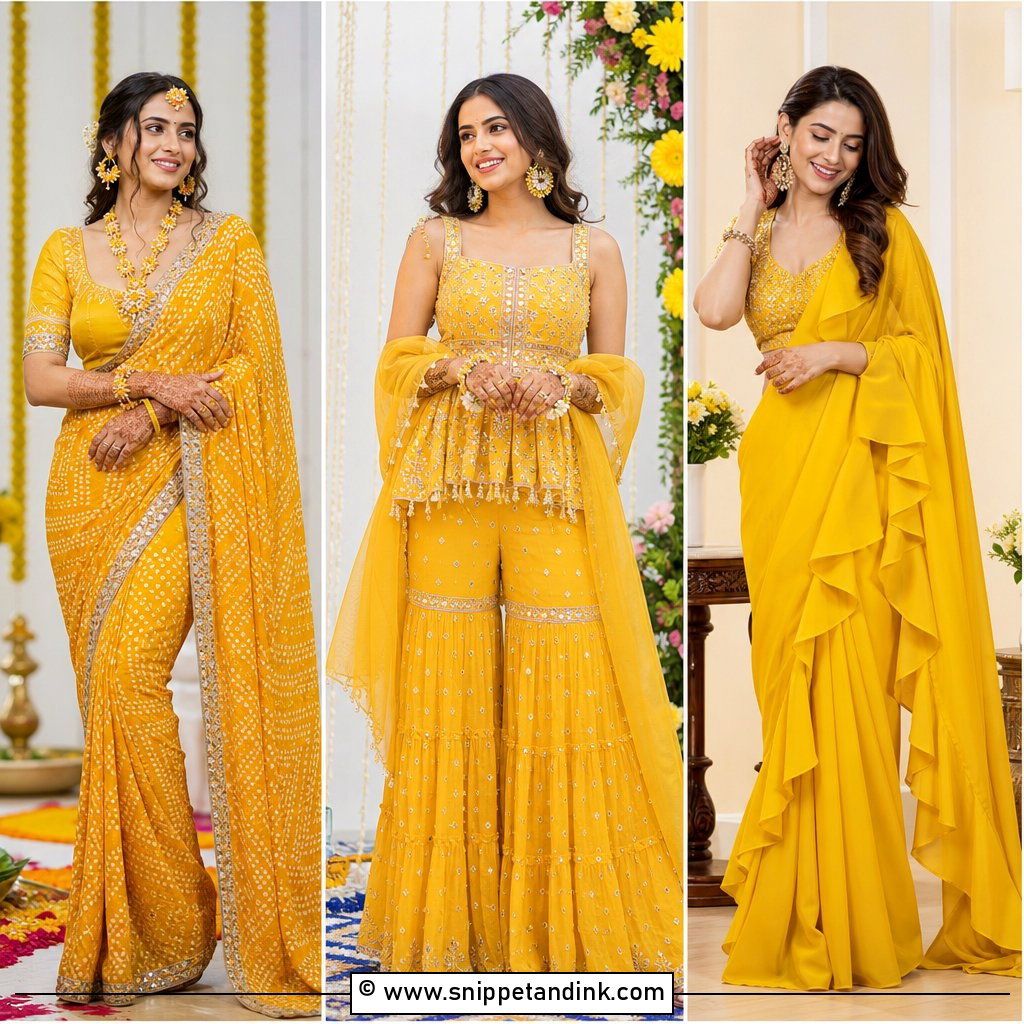
18. Yellow Haldi Ruffle Saree With Belt
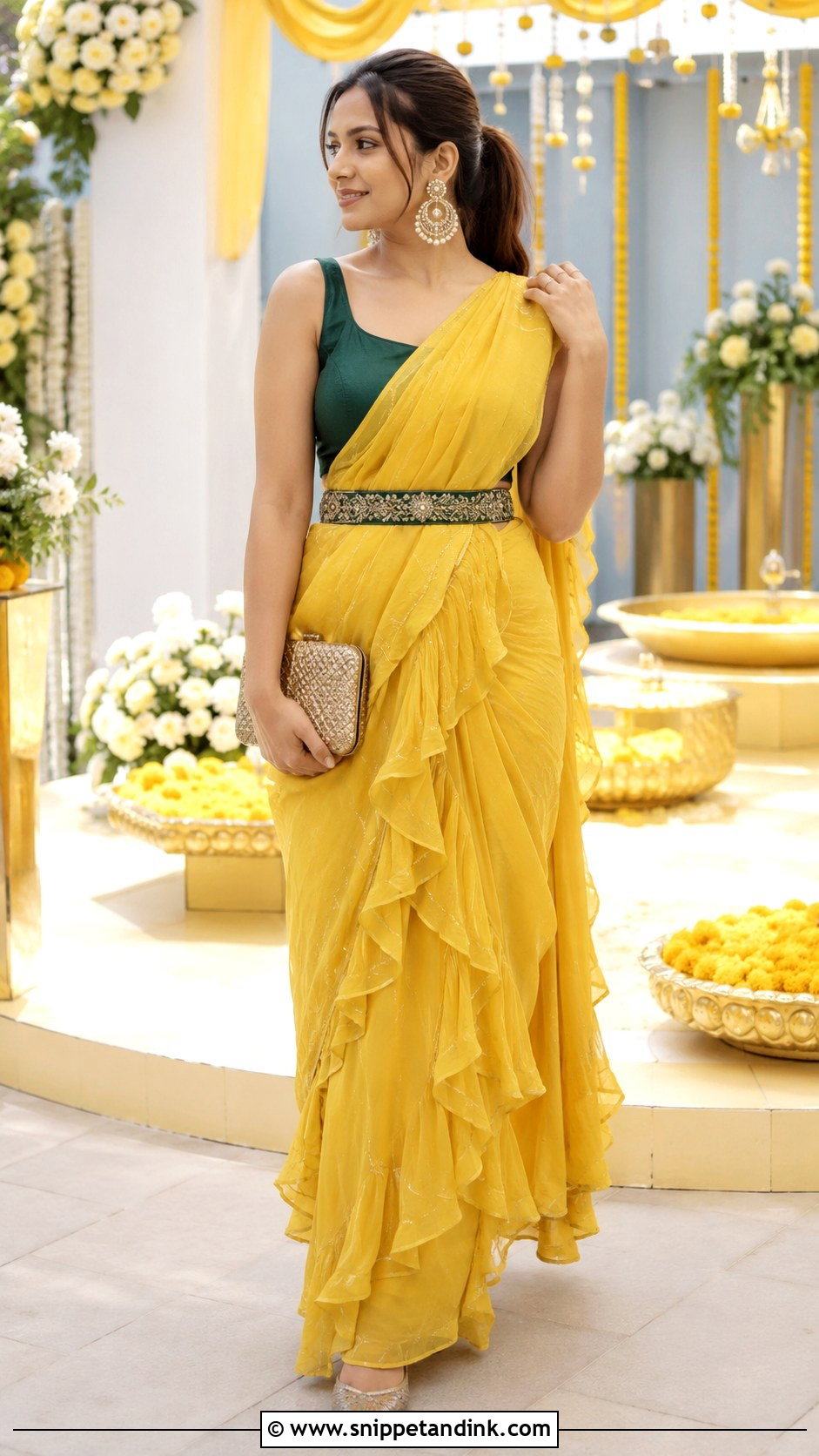
Ruffle sarees look playful, but I am picky about how much ruffle. One controlled ruffle along the edge drapes well; layers of ruffle through the whole saree get heavy, flatten when you sit and soak up water. Choose a lightweight yellow saree and a simple fitted blouse in yellow, hot pink or bottle green. A narrow embroidered belt holds the pleats and defines the waist, which is useful because ruffled fabric tends to shift. Statement earrings, metallic flats and a small clutch are enough, and I’d skip the necklace so the neckline and ruffles stay visible. A pre-draped version gives you reliable pleats. Sisters, bridesmaids and guests who like something fashion-forward tend to love it.
19. Yellow Haldi Printed Kurta With Straight Pants
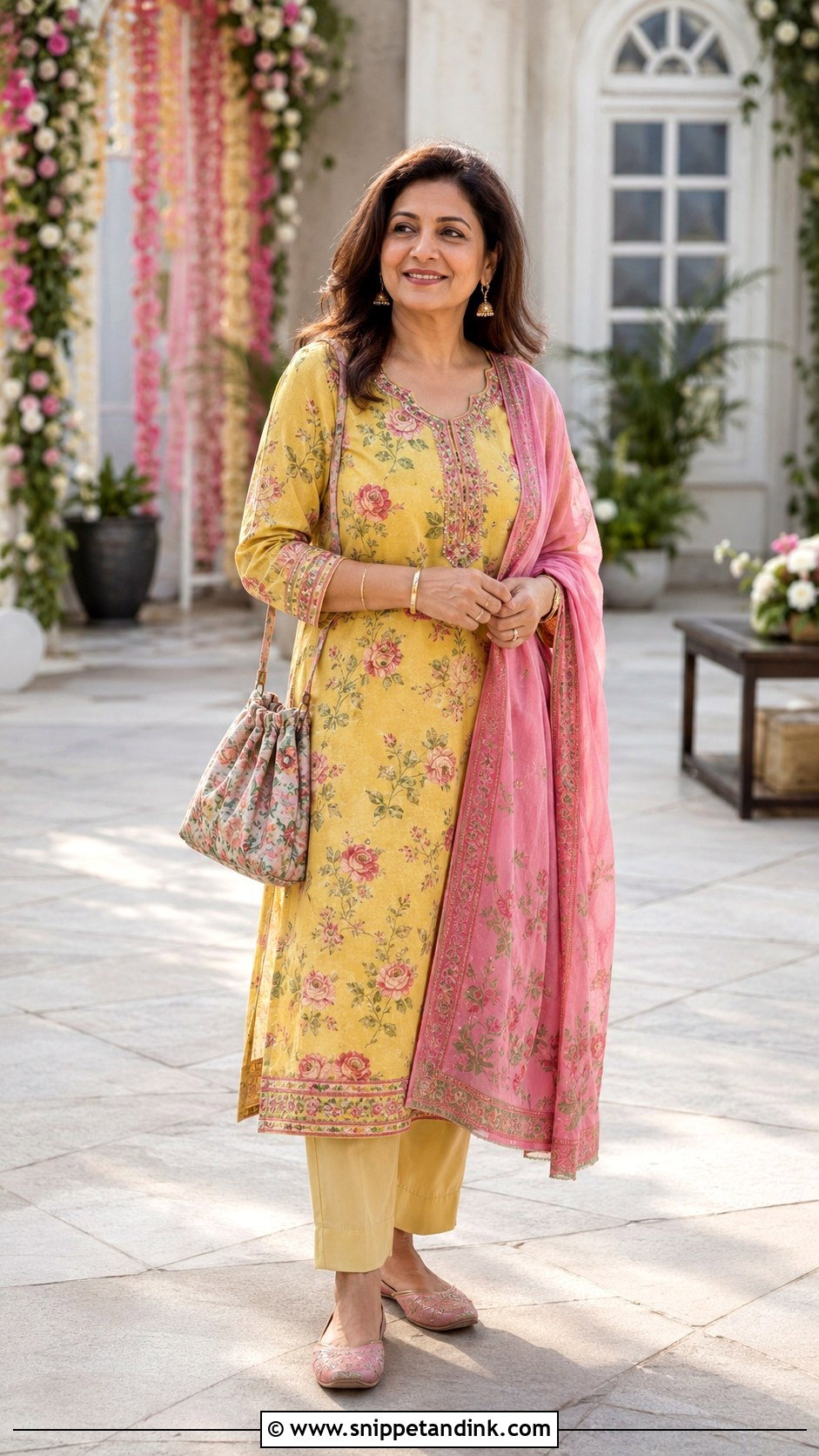
This is the outfit I suggest when someone tells me they don’t want to think about their clothes all afternoon. A calf-length printed kurta in floral, block or geometric motifs goes with solid straight pants to calm the pattern. Pick a dupatta that repeats one color from the print so the whole look connects. Side slits and a relaxed shoulder let you move and sit without the kurta looking oversized. Comfortable juttis, small jhumkas, a few slim bangles and a small fabric bag. A tidy braid or low bun finishes it. It’s a reliable pick for guests and older women.

20. Yellow Haldi Bridal Lehenga With Flower Jewelry
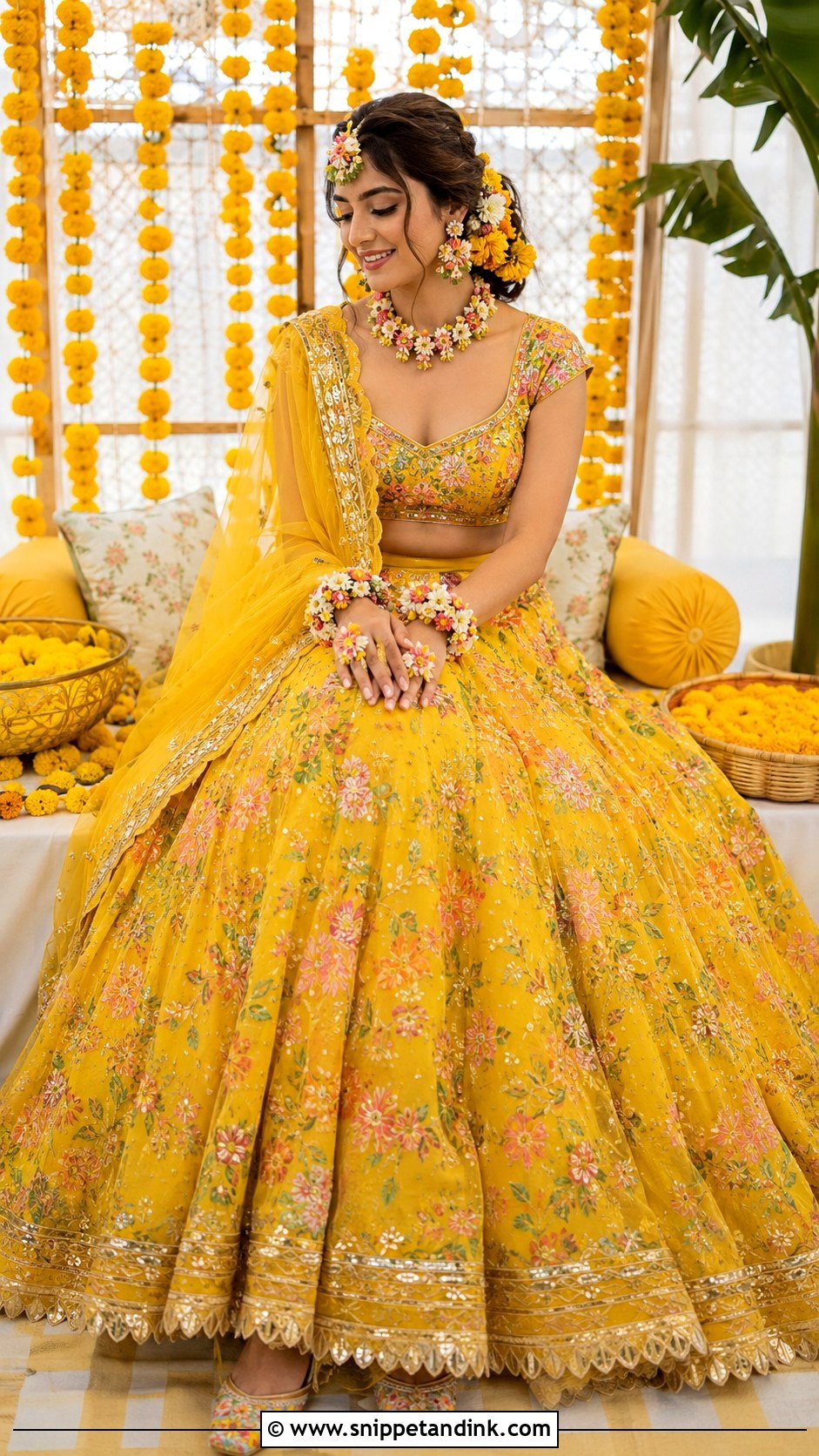
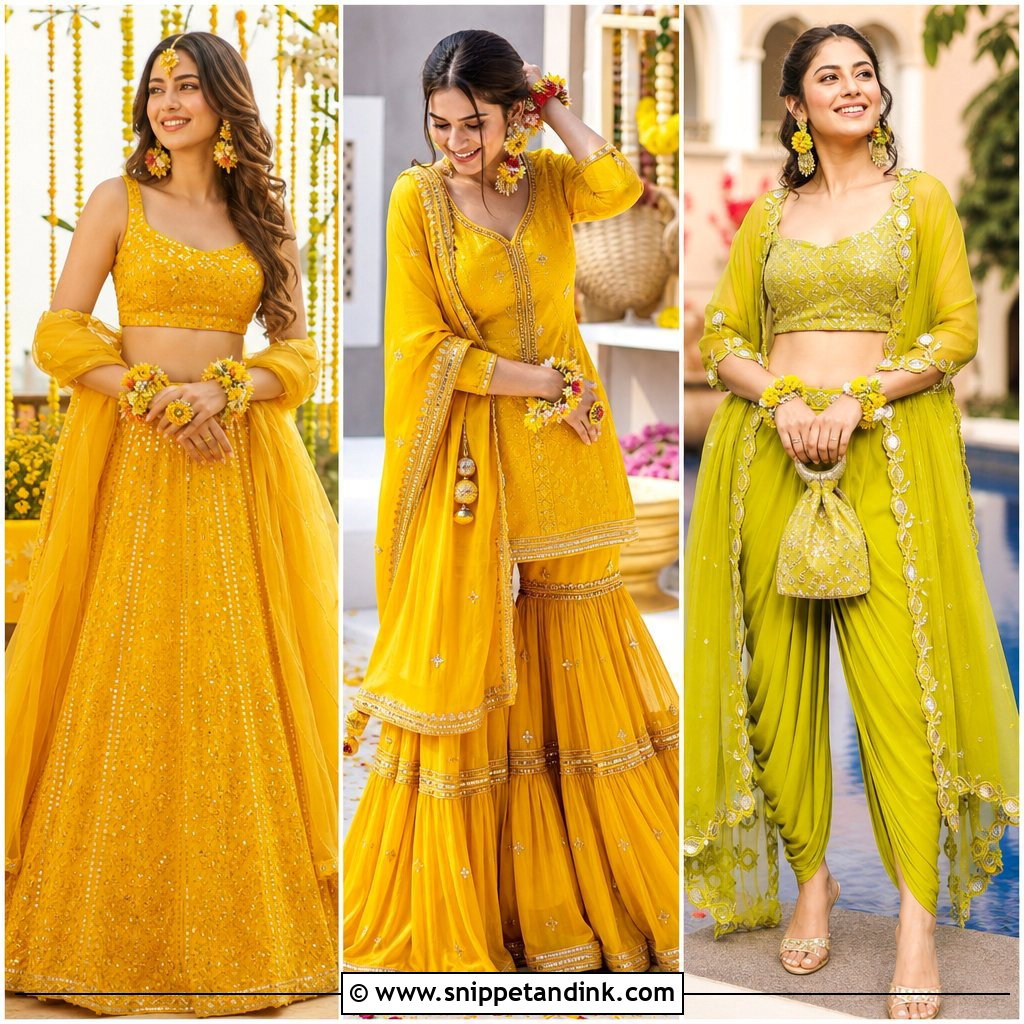
For the bride, a rich yellow lehenga should clearly set her apart from the guests while still being something she can sit, kneel and get paste-smeared in. I’d choose a full skirt with floral embroidery, delicate gota or controlled mirror work, and skip anything with a train, which picks up turmeric and gets stepped on during the rituals. Pair it with a well-fitted blouse and a light dupatta pinned over one shoulder or draped at the arms. Flower jewelry is traditional here: earrings, necklace, bangles and maang tikka. Order it for the morning of the ceremony and keep it cool until then, since fresh blooms wilt fast in heat. Embellished juttis beat heels for seated rituals, and a braided bun holds floral hair pieces securely.
Getting Haldi Out of Fabric Afterward
Treat the stain the same day if you can. Fresh turmeric lifts much more easily than paste that has baked into the fibers overnight, and every hour in a warm room helps it set.
- Let the paste dry, then gently scrape off as much as possible with a blunt knife or a card. Rubbing wet paste pushes it deeper.
- Rinse from the back of the fabric under cold water. Hot water helps set the color.
- Work a little plain dishwashing liquid into the mark to break down the oil, then rinse again.
- Dry the piece in sunlight. Turmeric’s color fades in UV light, and a few hours of sun often does more than any product.
- Silk, zari and anything with heavy embroidery goes straight to a dry cleaner. Tell them it is turmeric so they choose the right treatment.
One thing surprises people every time: some soaps and stain removers are alkaline, and turmeric turns a reddish brown when it meets alkali. If the mark suddenly goes orange-red, don’t panic. Rinse well, and the yellow usually returns before the sun fades it out.
Protecting skin and lining too
Paste also stains blouse linings and the inside of necklines where it rubs against skin. I tuck a folded cotton handkerchief inside the back neckline of brides who are wearing something precious, and pull it out before the photographs.
Yellow Forgives a Lot If the Fabric Is Practical
What I want from a haldi outfit is simple: you should be able to enjoy every ritual without tugging at anything. Pick the silhouette by your role and the setting, a saree or full lehenga if you’re the bride or close family, a kurta set or sharara if you want ease, a jumpsuit or dhoti set if the event leans modern. Then get the practical details right: lightweight fabric, pins in the right places, hems off the ground and shoes you can sit cross-legged in. Choose the shade of yellow that suits your skin in daylight, and treat the outfit as something that is meant to be enjoyed and a little bit ruined.
You'll Like These Ideas:




Leave a Reply