
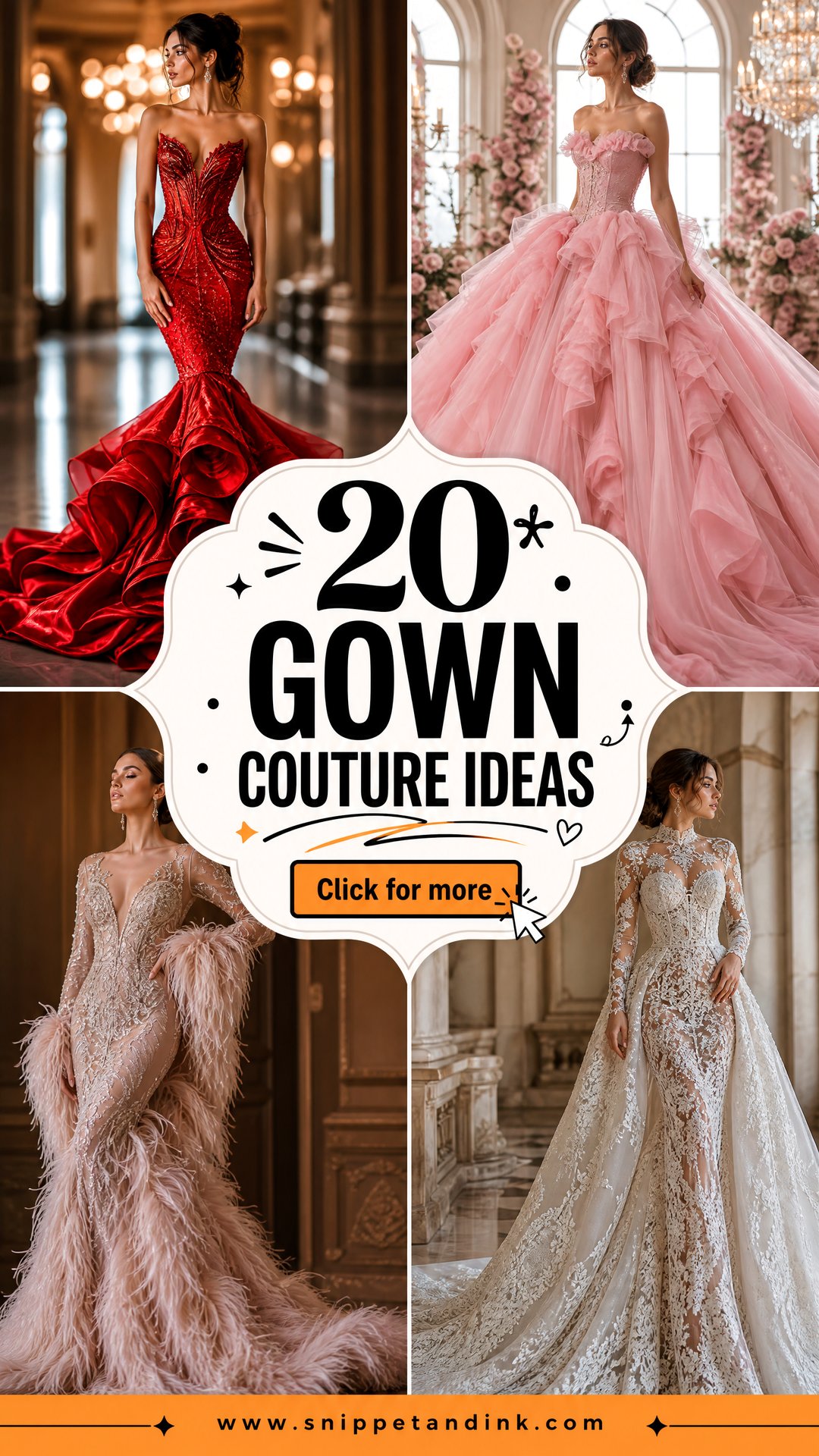
A couture gown earns the name in places most guests never see: the boning channels, the hand-sewn hem, the way a bodice is cut to one body rather than to a size chart. The twenty looks below run from sculptural ball gowns and slim columns to tulle layers, hand-finished embellishment and removable overskirts, and each comes with the shoes, jewelry, bag and beauty choices I’d put with it at a final fitting. Read them with your venue’s formality in mind, and with an honest sense of how much you want to sit, dance and climb stairs, because the most dramatic gown on the rail is rarely the one a bride is happiest in by ten o’clock.
Turning a Gown Inside Out Before You Commit
Plenty of gowns are sold as couture because of how they look in a photograph. I judge them from the inside. A properly finished gown shows its quality in places you can check in a few minutes at a showroom, and those details decide how it behaves after six hours of wear.
- Boning: steel or spiral bones in their own channels hold a bodice upright, while thin plastic strips bend and leave ridges at the waist.
- Seam allowances: generous allowances mean your seamstress has fabric to let out if your size shifts in the months before the wedding.
- Hems: a hand-finished or faced hem hangs evenly, whereas a quick machine hem on silk tends to ripple.
- Beading: beads anchored individually stay put; a chain-stitched row can unravel along its length if one thread snaps.
- Waist stay: an inner grosgrain belt carries the weight of a heavy skirt so the bodice isn’t dragged down by it.
None of this shows in a picture, which is why I’d always try a gown on before ordering, sit down in it, and ask the consultant to turn the bodice out so you can see how it was built.
1. Black Sculptural Couture Gown
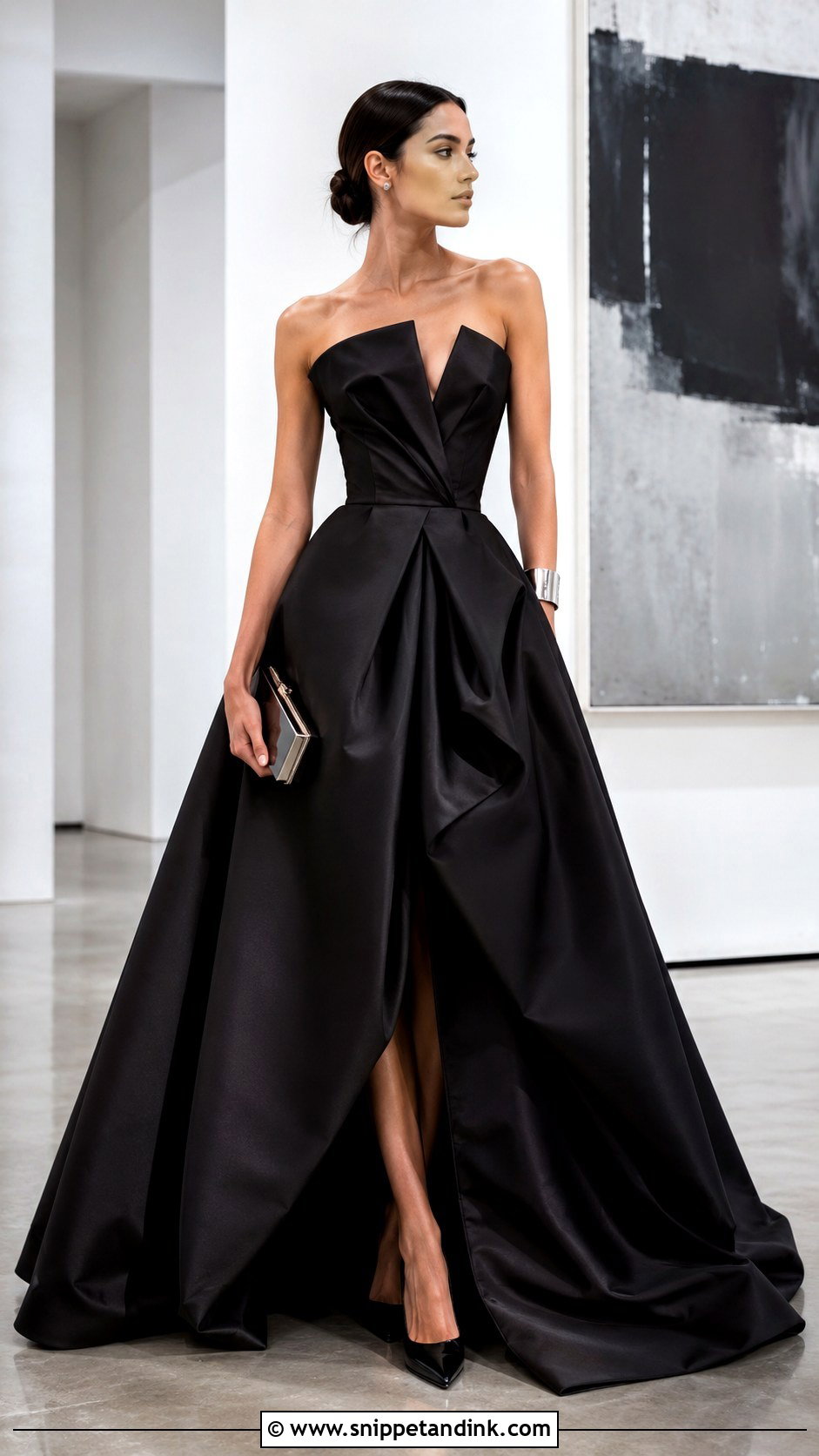
A black sculptural couture gown makes its entrance through shape rather than color, so the fabric has to do real structural work. Mikado silk, duchess satin and bonded crepe will hold an architectural fold; a soft charmeuse collapses into it within an hour or two. When I pull these for a client, I pinch a fold and let go: if it springs back, it will survive a day of sitting. Keep accessories quiet, with pointed black pumps or fine ankle straps, a compact silver clutch and one piece of sparkle, either crystal studs or a slim cuff. A low, polished bun keeps the neckline clear so the construction reads. Black can swallow detail in photographs, so keep makeup defined, with sculpted cheekbones and a red or neutral lip.
2. Red Mermaid Couture Gown
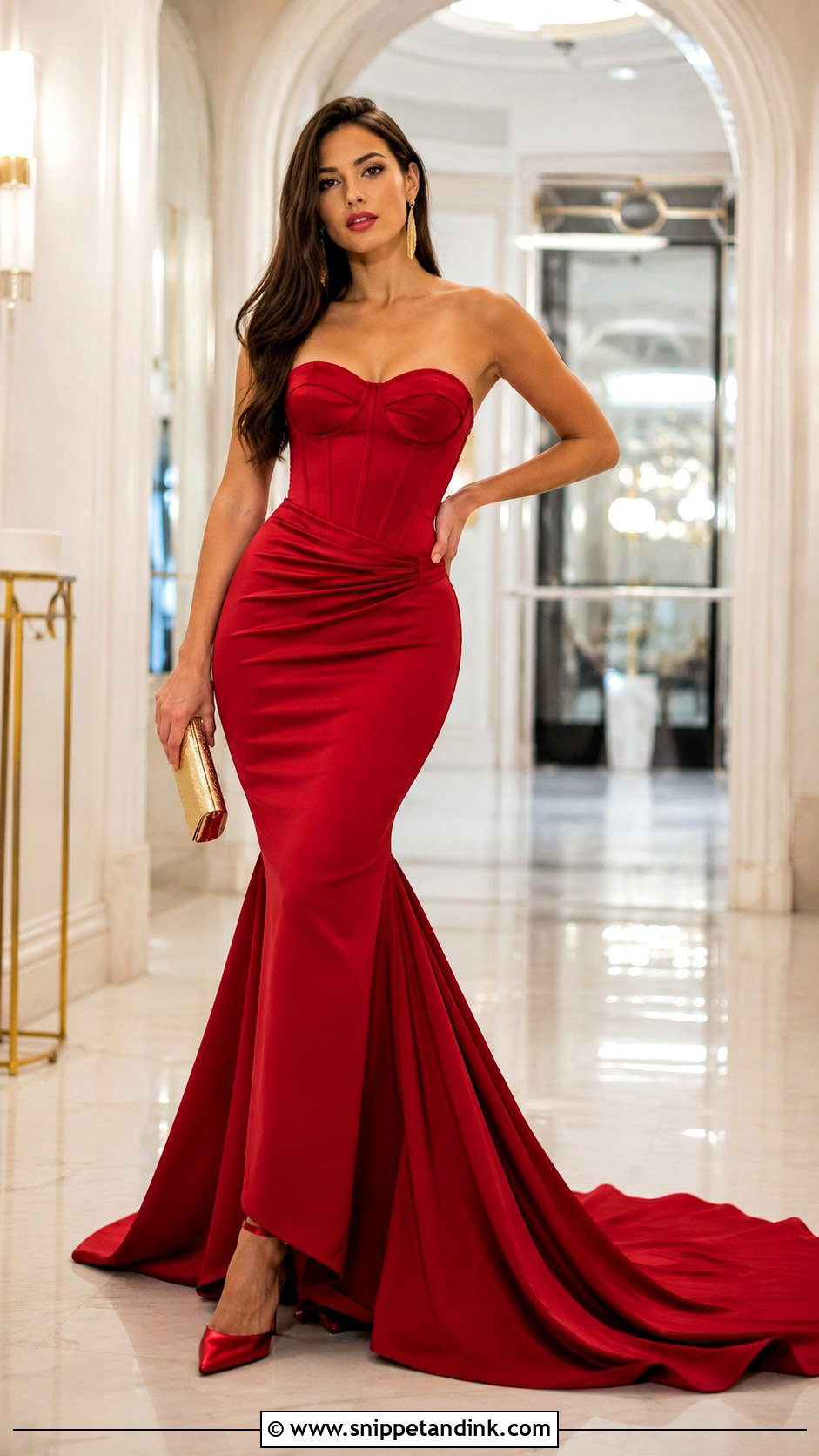
Red in a mermaid cut is unforgiving of a poor fit, which is exactly why it looks so confident when the fit is right. The line should follow the torso and hips and release at or just above the knee; if the flare starts too low, you’ll be taking tiny steps all evening and every staircase becomes a negotiation. Look inside for internal corsetry and shaping seams, in a satin with enough weight that it doesn’t cling to everything underneath. Red satin heels keep the color unbroken, metallic sandals give a little contrast, and a structured gold clutch with small drop earrings is plenty. A side-parted wave or sleek ponytail suits the line. Pick a train you can manage on your venue’s floor.
3. Champagne Beaded Couture Gown
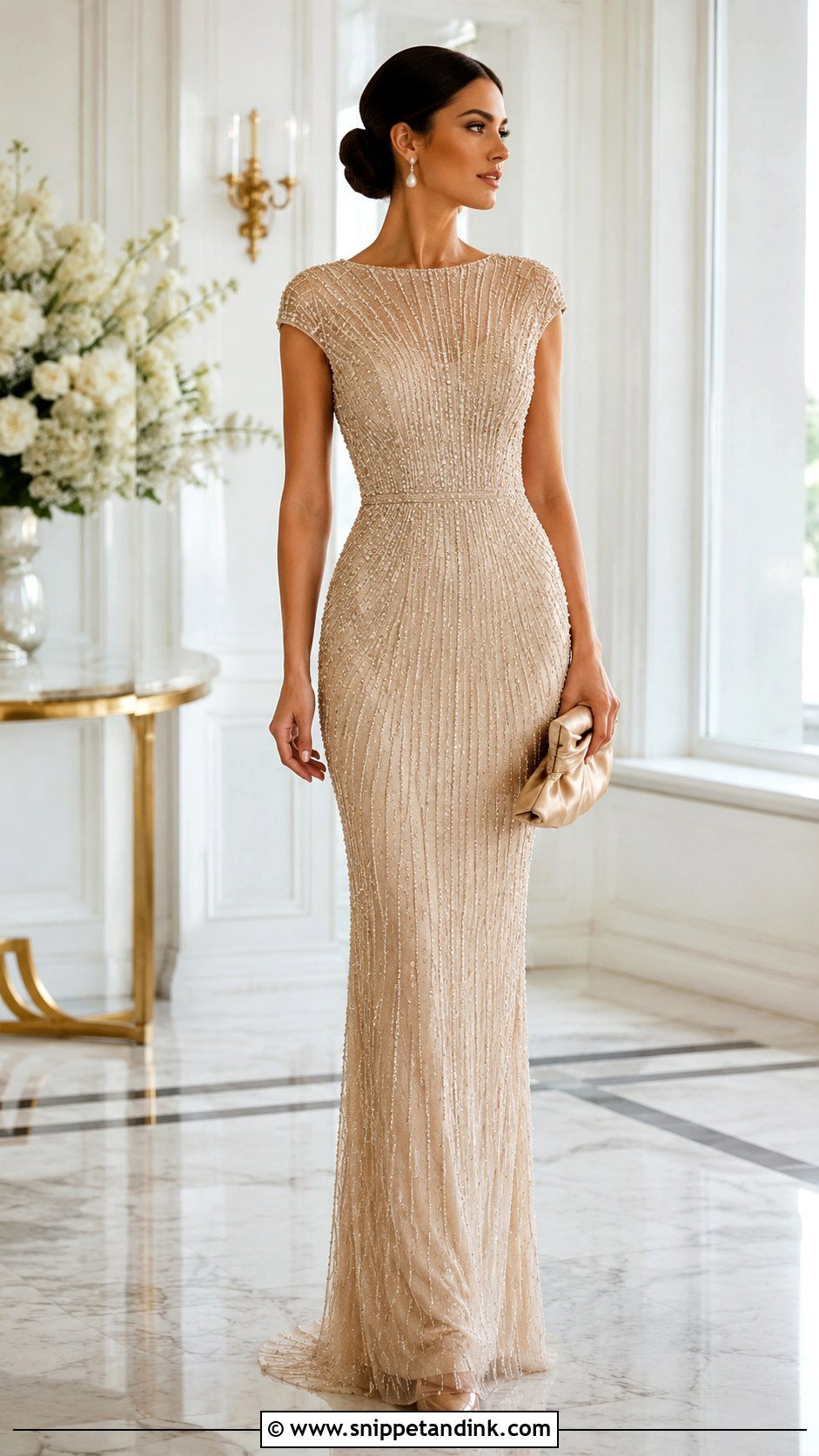
Champagne beading is the softer cousin of gold: it warms the skin and catches candlelight without reading brassy. The best versions mix tonal crystals, seed beads and sequins in vertical or curved runs that define the waist and lengthen the body. Before you fall for one, lift the skirt and feel the weight. Heavy beadwork pulls on shoulder seams and straps over a long day, and a good atelier will have reinforced those points with stay tape or an inner corset. Nude pointed pumps or champagne sandals, a satin clutch in the same family and pearl or crystal earrings keep the palette unbroken. A neat chignon suits a high neck, brushed-back waves a lower one, and a rose-nude lip finishes it.
4. Emerald Velvet Cape Couture Gown
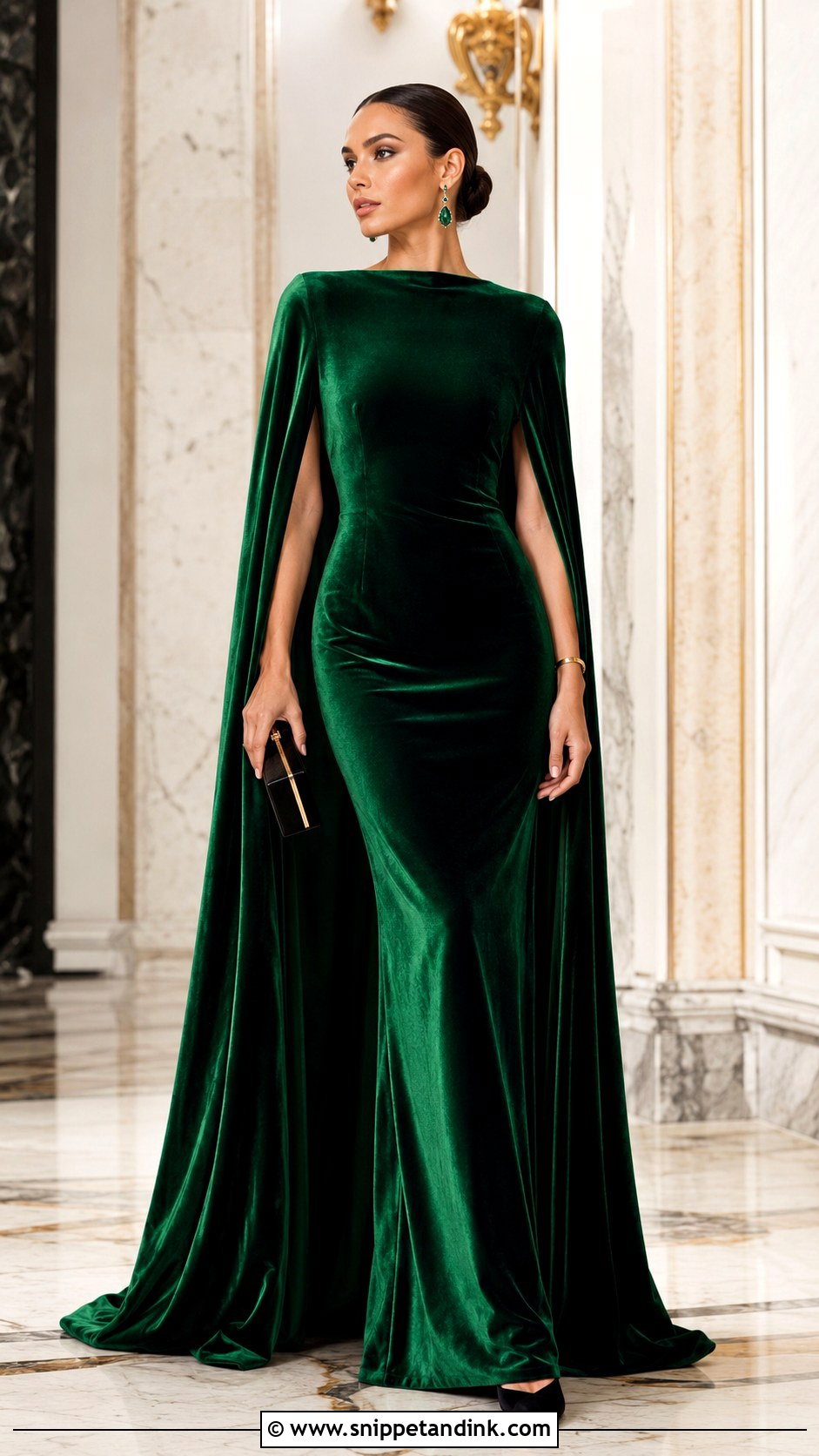
Velvet belongs to autumn and winter evenings; in a summer marquee it is simply too warm. An emerald column with an attached floor-length cape gives you drama and coverage at once, useful for a formal ceremony followed by an evening reception. One care detail matters here: velvet pile shows every crease and press mark, so it should be steamed from the reverse, never ironed, and hung rather than folded in the days before. Black velvet pumps make a classic base and gold sandals brighten it. Add a small black box clutch, emerald earrings and one narrow gold bracelet, and stop there. A smooth updo keeps the cape’s shoulder line clear, and deep berry lipstick suits the color.
5. Blue Draped Couture Gown
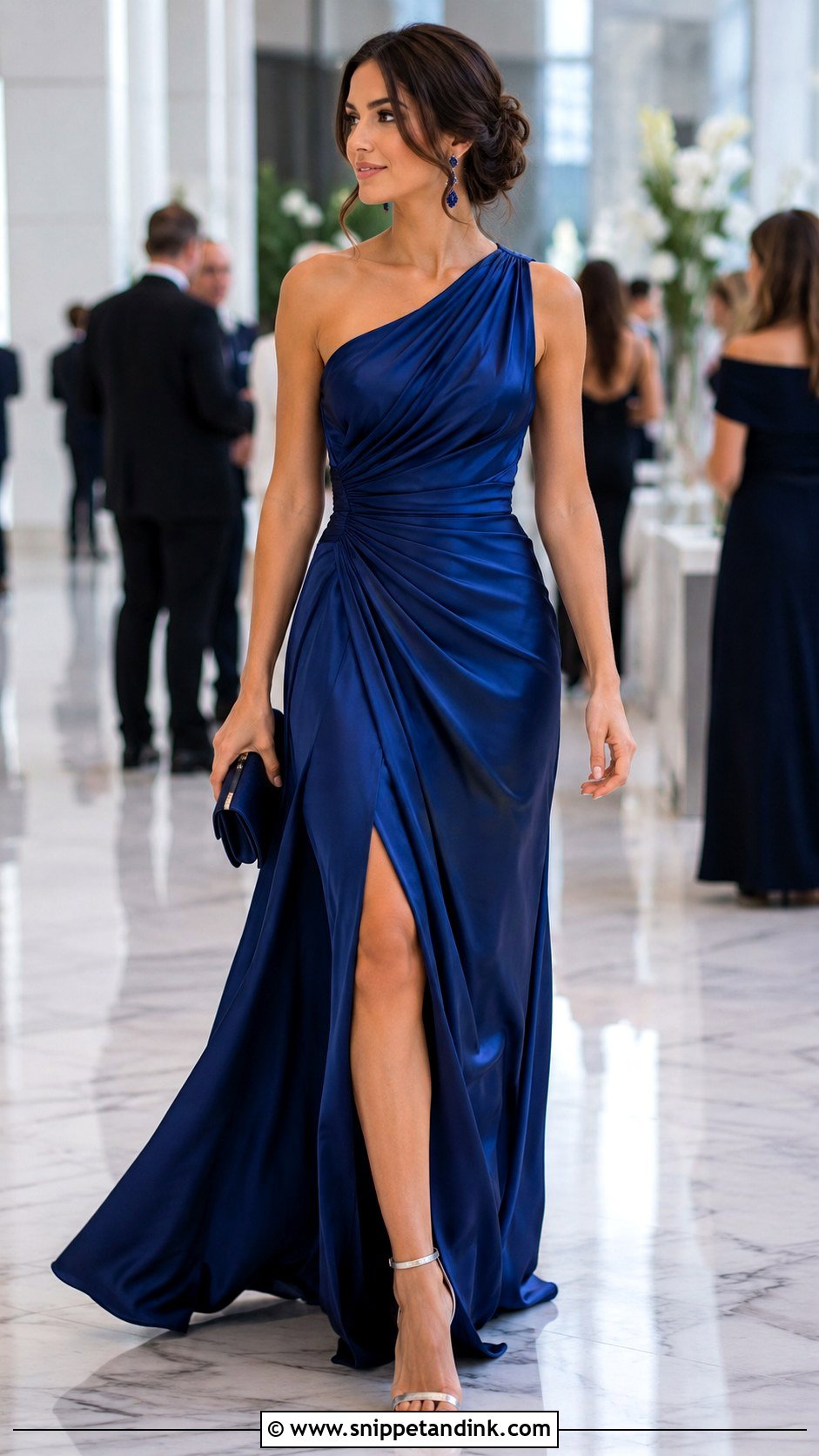
A blue draped couture gown lives or dies by the draper’s hand. Diagonal folds across the bodice should be anchored to a fitted inner layer, or they shift every time you raise an arm to hug someone. Sapphire, cobalt and navy all hold their depth on camera, and the fluid skirt can open into a side slit or a soft train. Silver ankle-strap heels give clean contrast, a navy satin clutch keeps the color story together, and sapphire-toned earrings with a slim silver ring are enough. Side-swept waves soften the folds; a high bun suits a dramatic shoulder. I’d keep makeup cool, finishing with a soft pink lip that complements the blue instead of copying it.
6. Pink Tulle Ball Couture Gown
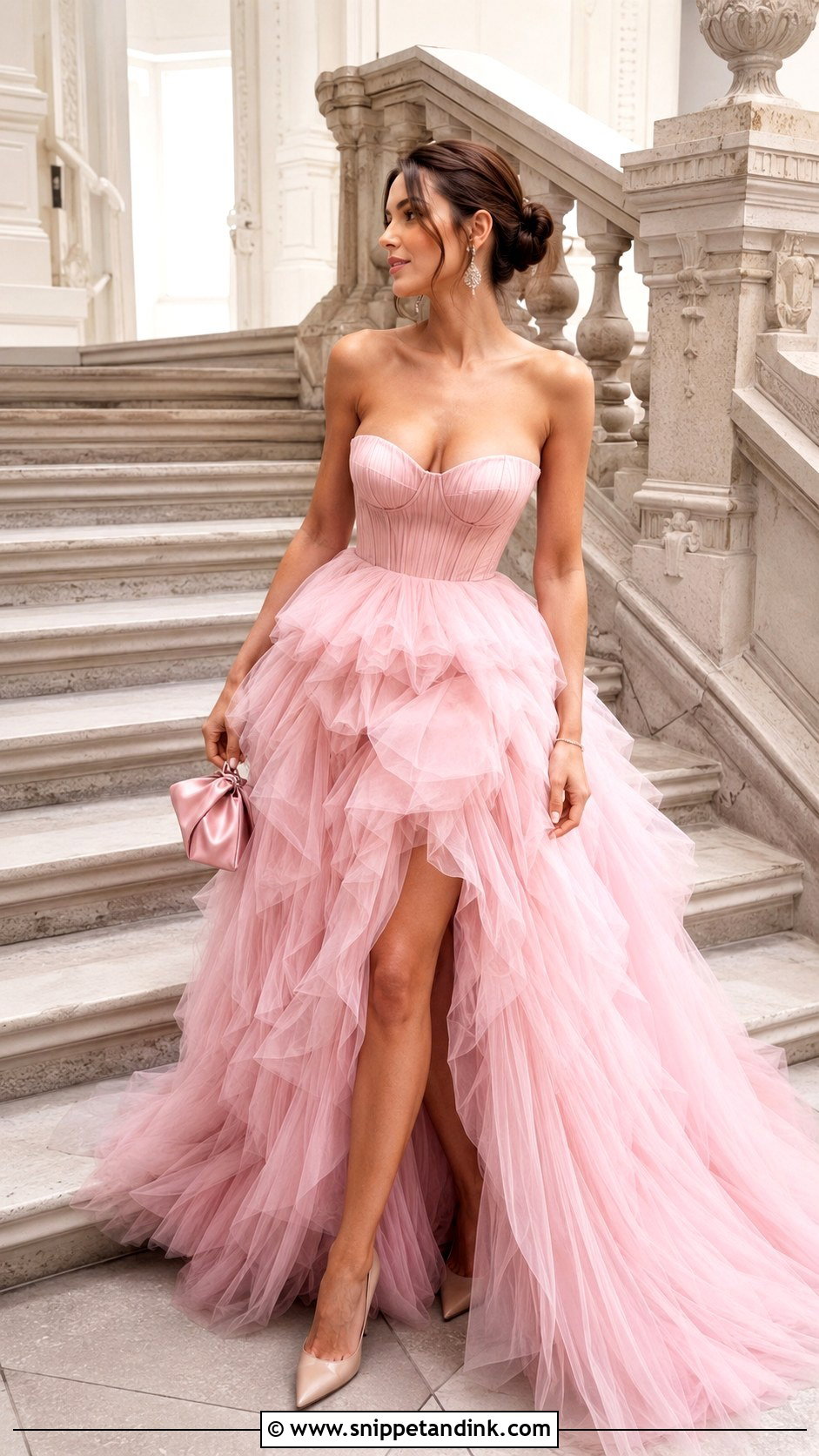
Tulle is lighter than it looks, which is why a pink ball gown can feel easy to wear despite its size. The skirt needs several layers to read as full rather than sheer, and a fitted corset bodice at the natural waist to carry them. Blush, dusty rose and petal pink look grown-up, while a bright candy pink can tip toward prom. Tulle snags on bead edges, bouquet wire and cufflinks, so I keep jewelry smooth: delicate crystal earrings, a narrow bracelet, and no heavy necklace if the bodice has visible boning or dimensional flowers. Nude pointed pumps vanish under the hem. A soft updo with a few loose strands and rosy cheeks suit the gown’s gentle character.
7. Silver Metallic Couture Gown
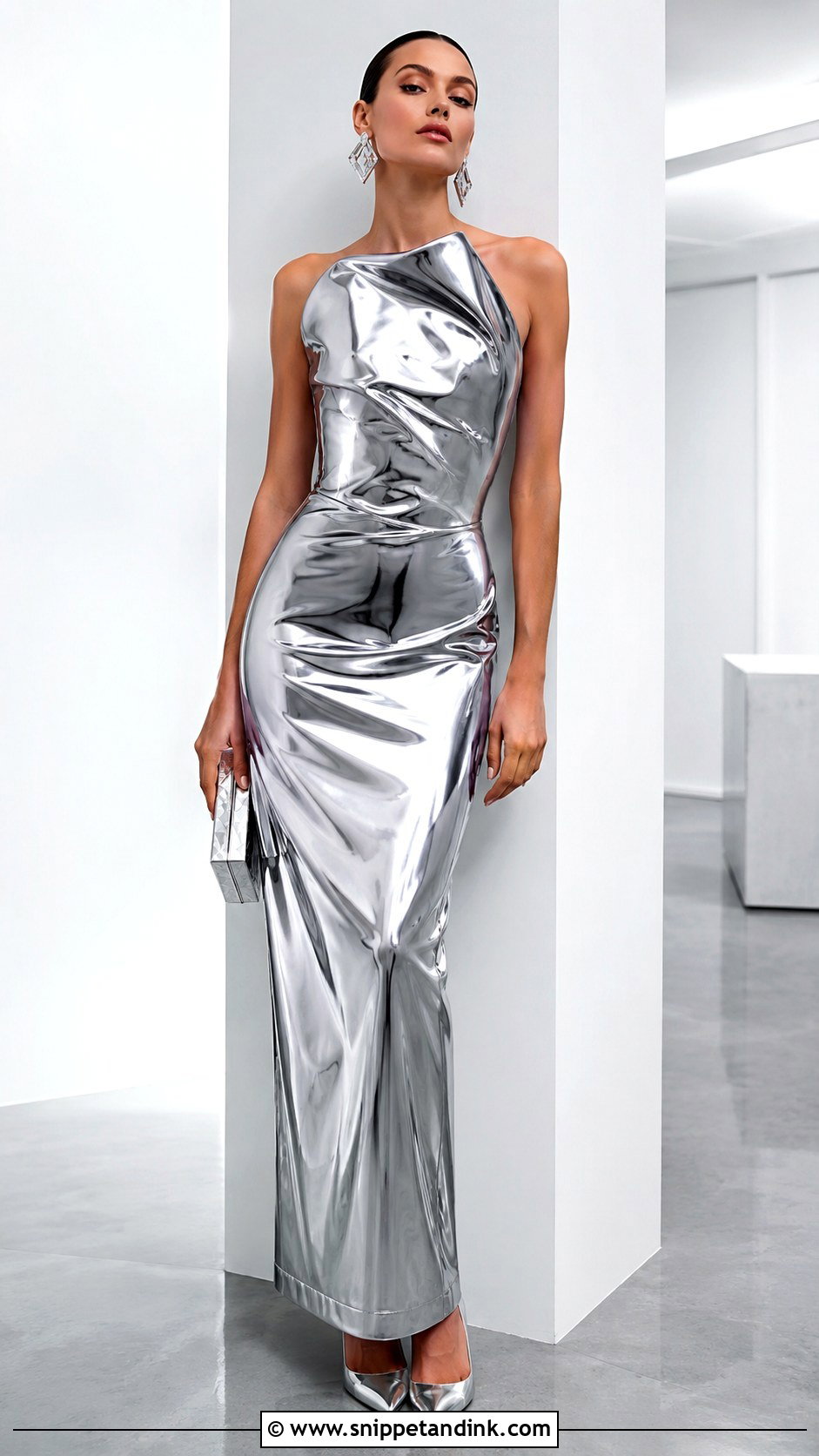
Metallic fabric does the decorating for you, so this is a gown to strip back everywhere else. Liquid satin, lamé or fine paillettes in a streamlined column look sophisticated; the same fabric in a huge skirt can start to look like costume. The honest trade-off is that metallic weaves show every pull line and every crease from sitting, so the fit through the hips must be precise and you should expect some wrinkling by the reception. Silver pumps or minimal sandals, a mirrored box clutch and geometric crystal earrings will do. Slicked-back hair stops the shine from feeling overwhelming, and a cool smoky eye with a neutral lip keeps the attention on the gown.
8. White Minimalist Couture Gown
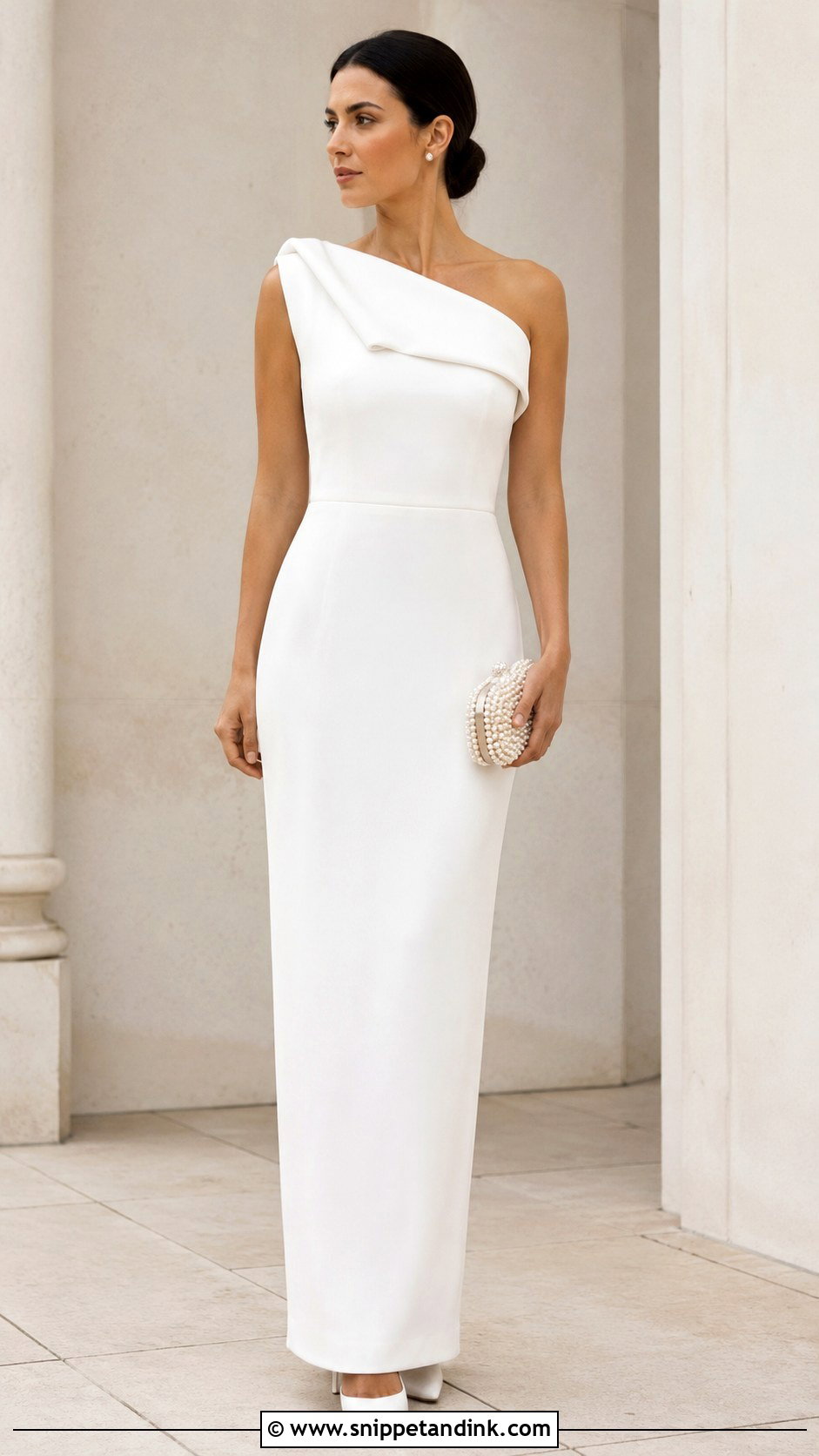
With no embroidery to hide behind, a white minimalist gown is really a test of the tailor. Heavy crepe, silk faille or smooth satin in a column or gentle flare shows every seam, so the interest comes from one asymmetric neckline, folded shoulder or curved seam. White also shows what’s underneath. I ask brides to bring their exact undergarments to every fitting, because a smooth-cup bra in the wrong shade will shadow through bright crepe. White pointed pumps make it monochrome; silver sandals make it cooler. Add a structured pearl clutch and polished studs, a sleek low ponytail or center-parted bun, and precise eyeliner with a muted rose lip.
9. Gold One Shoulder Couture Gown
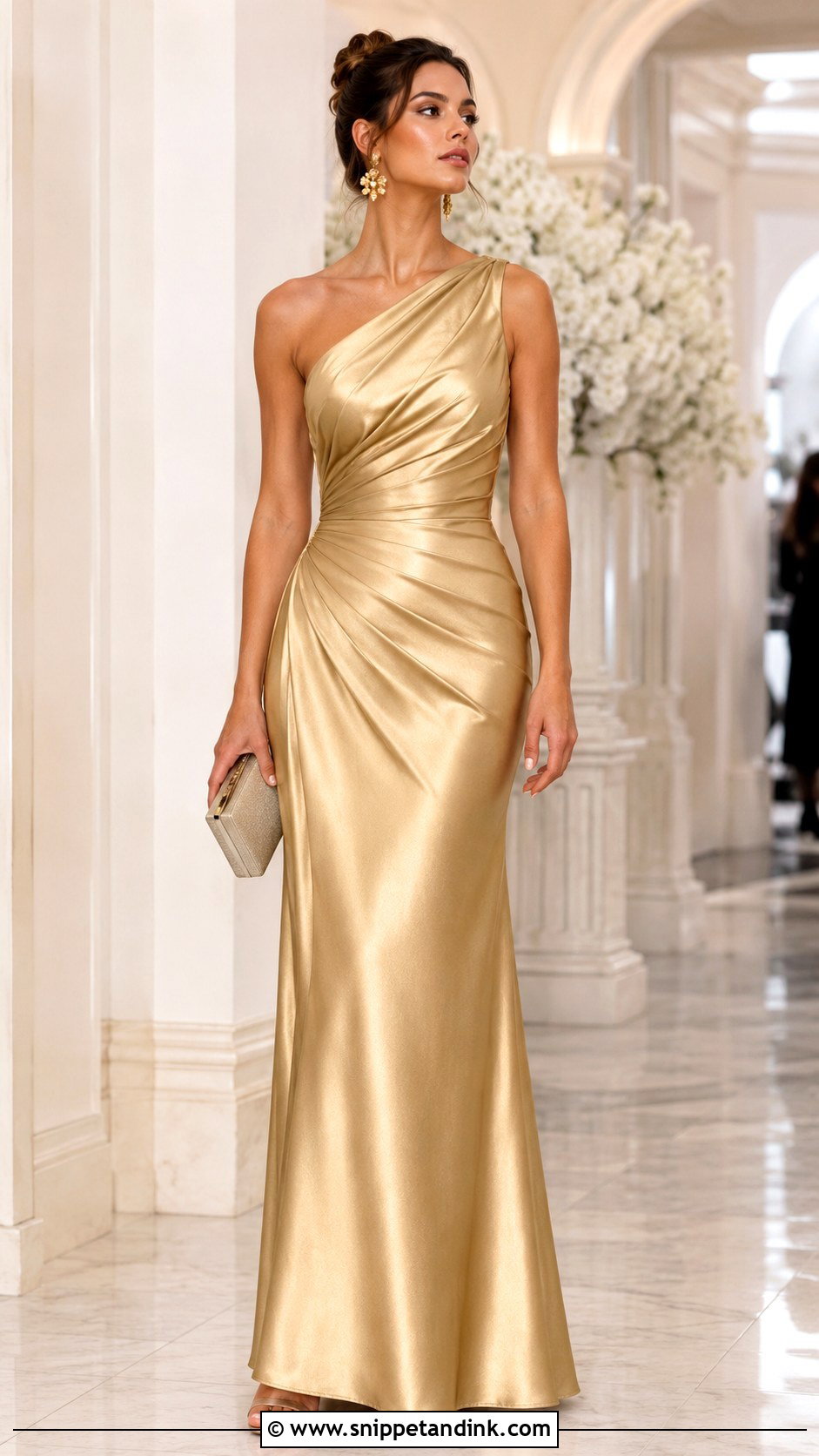
A gold one-shoulder couture gown creates movement because the eye follows the diagonal. The pleating that crosses from shoulder to waist should be stitched down, not just pressed, so it stays crisp all evening. Below it, the skirt can fall straight, flare into an A-line or narrow into a subtle mermaid hem. One-shoulder styles need one test at the fitting: raise both arms as if hugging someone. If the strap side lifts the bodice, ask for silicone grip tape along the top edge. Wear simple gold sandals, a bronze or champagne clutch and statement earrings with no necklace, keep every metal in one tone, and sweep the hair back so the shoulder stays visible.
10. Floral Appliqué Couture Gown
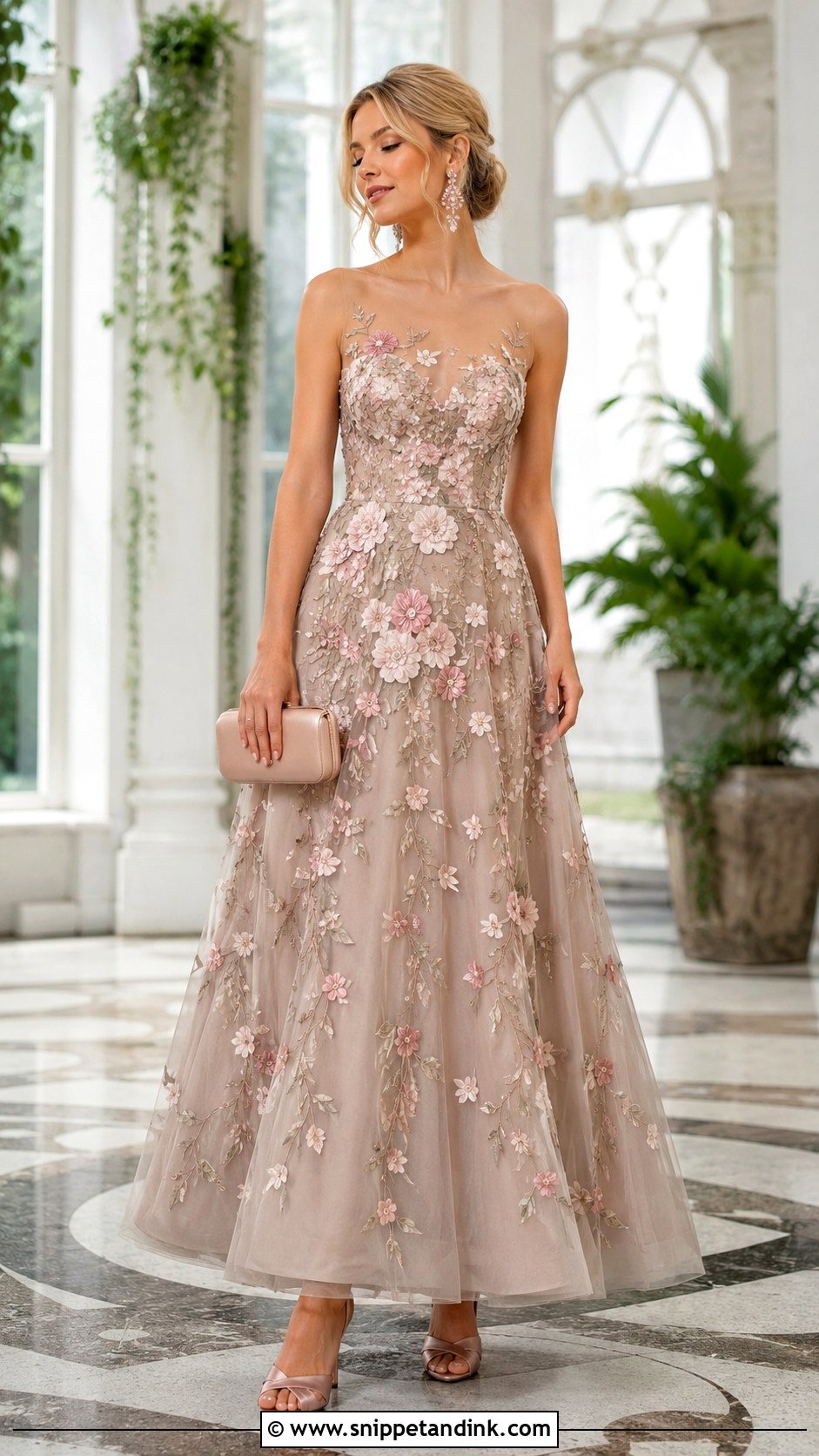
Appliqués look best when they thin out as they travel: dense across the bodice, scattered by the knee. That gradient keeps the silhouette readable from across a room. Hand-placed flowers are often stitched over seams, so ask how the seamstress will handle any that sit where the gown is being taken in; a motif cut in half by an alteration is the flaw I notice first on these gowns. An A-line or fit-and-flare suits botanical detail. Match heels to the base fabric, carry a plain satin clutch, and repeat one embroidery shade in small gemstone earrings. Skip floral jewelry, which tips the look into a theme. A low textured bun and fresh, lightly flushed makeup let the flowers lead.
11. Corset Ball Couture Gown
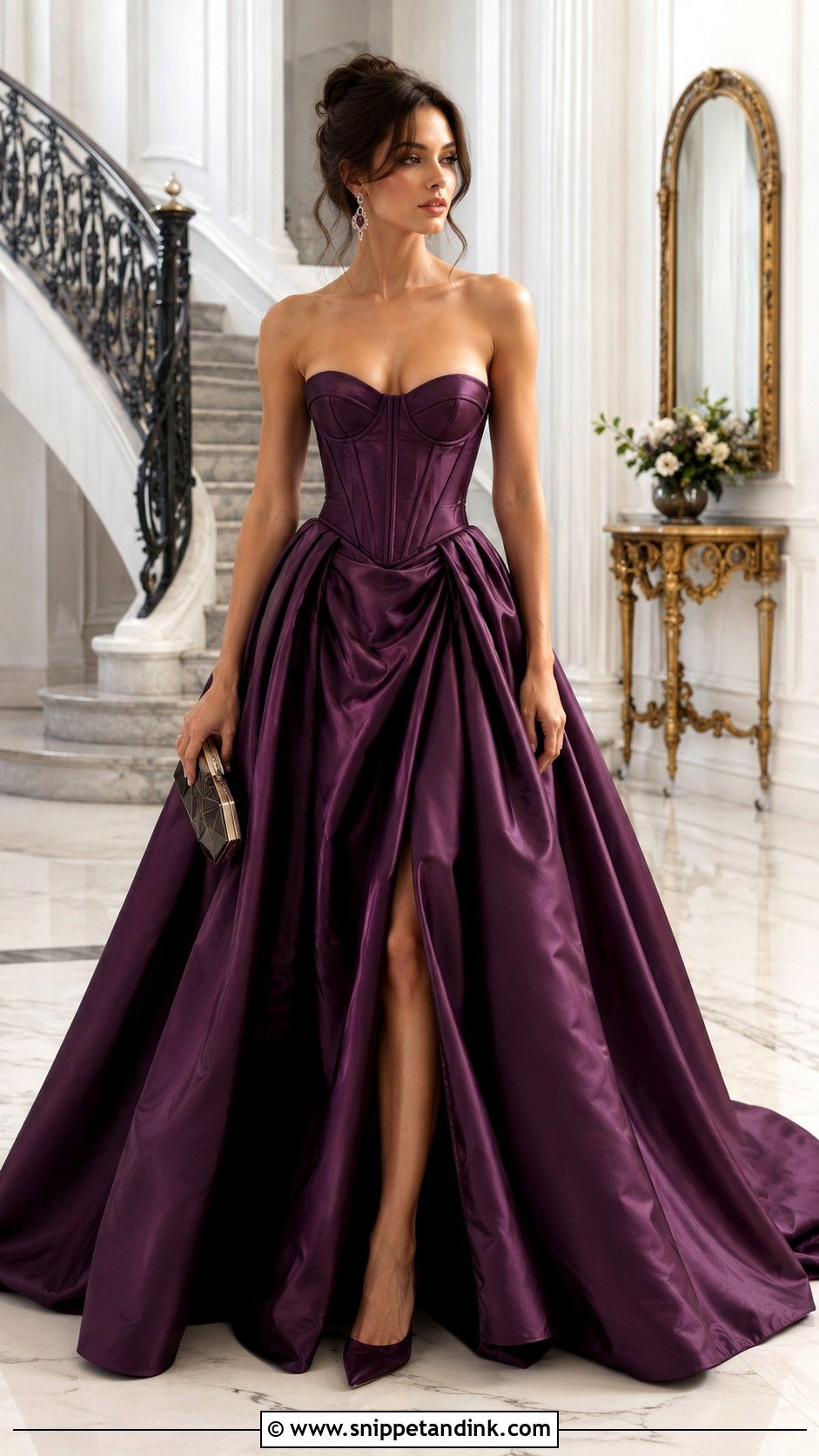
The corset is the engine of this gown. Steel or spiral boning inside a well-built bodice spreads pressure around the ribs, while thin plastic boning bends and starts to dig at the waist after a few hours. At your fitting, sit down, lean forward as if signing the register, and take a full breath: if the neckline gapes or the top edge bites, it needs adjusting before the next appointment. The skirt can be satin, taffeta or layered organza for controlled volume. Pointed pumps, a structured mini clutch and refined drop earrings are right, and with heavy beadwork I’d skip the necklace. A high bun draws a clean line from the shoulders up.
12. Feather Trim Couture Gown
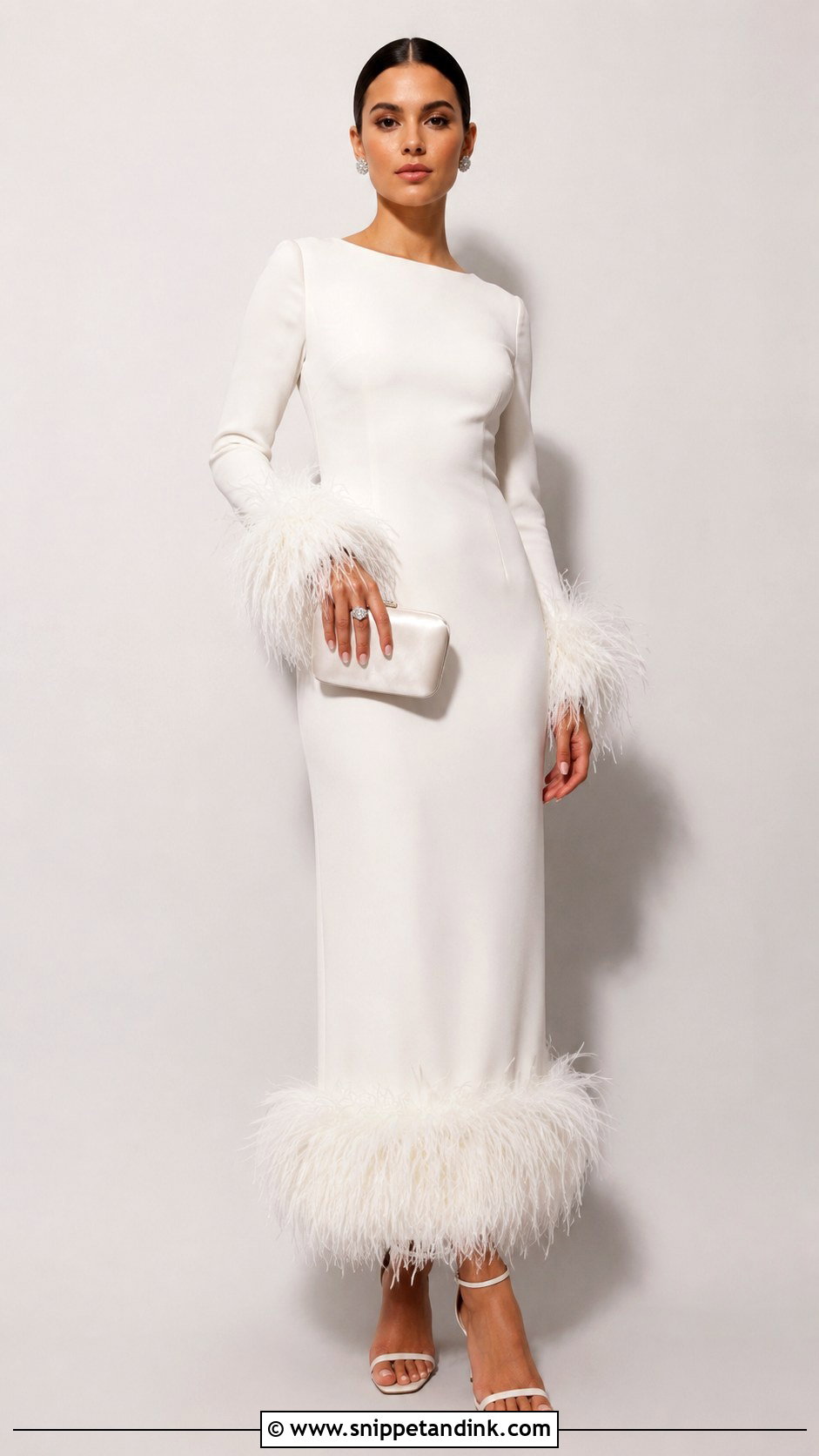
Feathers are wonderful in small doses and exhausting in large ones. Concentrated at the neckline, cuffs or hem of a sleek crepe or satin gown, they add movement; covering the whole dress, they shed onto chairs and onto your partner’s jacket. Ostrich feathers also relax and droop in damp air, so for a humid or outdoor venue I keep them well away from the face. Black, ivory, blush and jewel tones all suit the trim. Streamlined ankle-strap heels, a smooth clutch with no fringe, crystal studs and a single cocktail ring are enough. Keep the hair sleek near feathered shoulders, and steer the gown away from brick walls and rough bark during portraits.
13. Asymmetrical Couture Gown
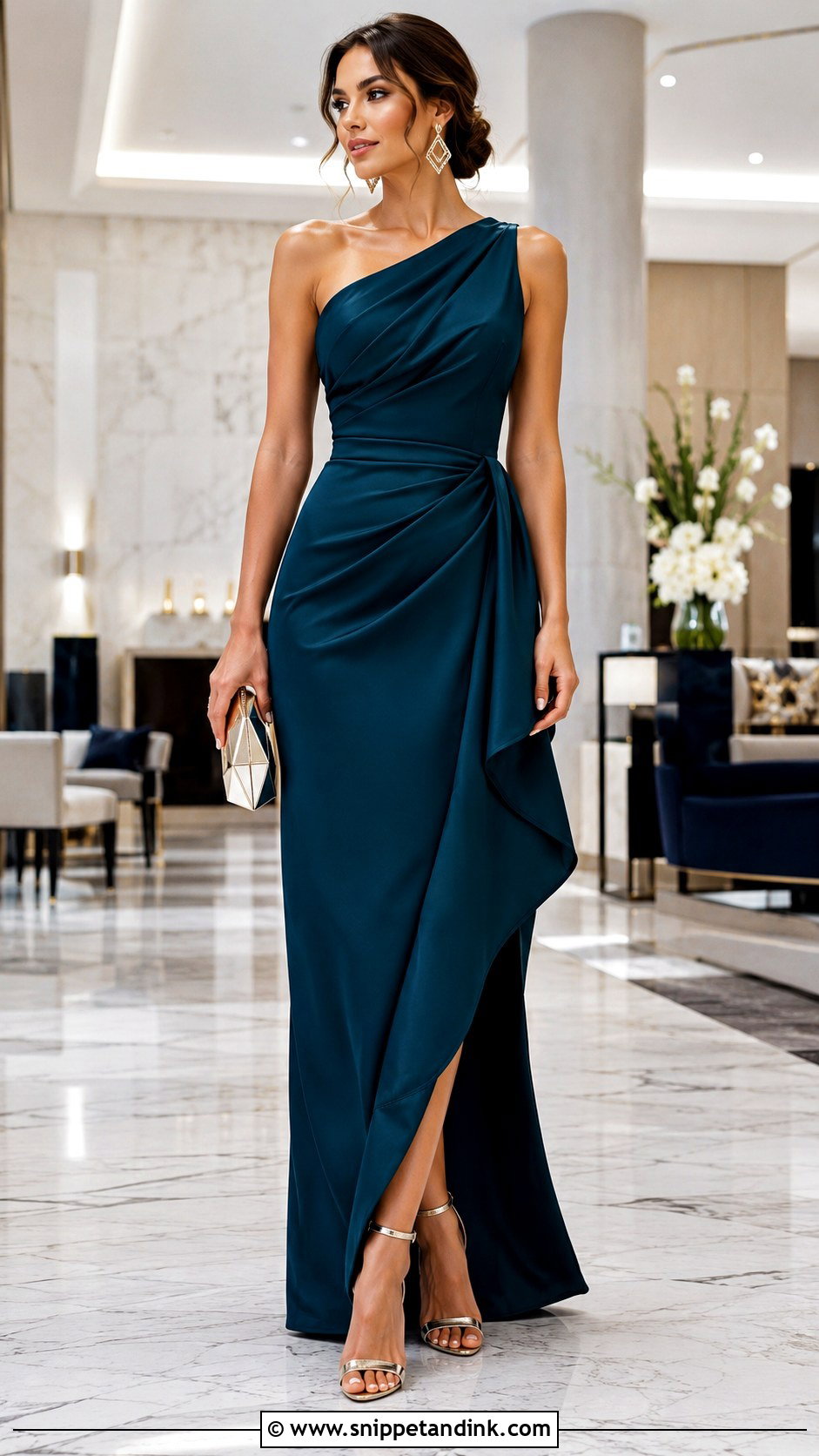
Asymmetry works when it’s one confident decision, not three. Choose a one-shoulder bodice, diagonal draping or an angled overskirt that reveals a narrow line of leg, and let the rest of the gown stay quiet. I’d steer you away from this cut if you tend to settle onto one hip in photographs, since the angle exaggerates any lean. Minimal heels in metallic, nude or the fabric’s own color, a small geometric clutch and earrings that frame the face are all it needs; a necklace only interrupts the line. A slick bun or deep side part follows the direction of the design, and graphic eyeliner suits its modern feel.
14. Long Sleeve Lace Couture Gown
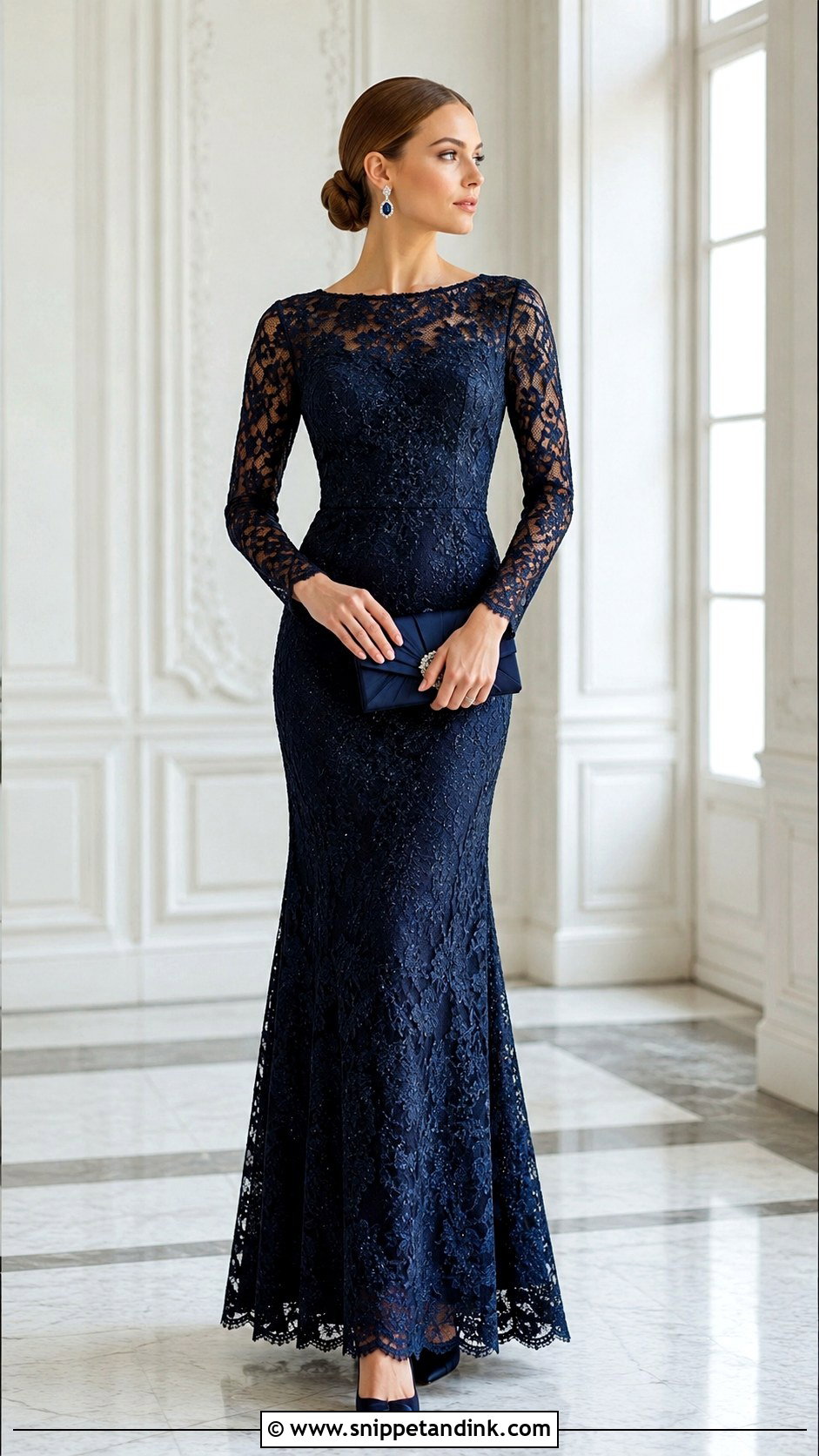
Lace sleeves give coverage without weight, but lace has very little give, so the shoulder and sleeve are where these gowns succeed or fail. At the fitting, reach forward and cross your arms. A sleeve cut too close pulls the motifs out of shape or strains the underarm seam. Look for motifs placed deliberately around the neckline and cuffs, and a properly lined bodice. A column, trumpet or gentle A-line keeps the lace from feeling heavy. Satin pumps, a small structured clutch and pearl drops suit lace far better than chunky pieces. Wear a low chignon to show the back, with soft eye makeup and a muted berry lip.
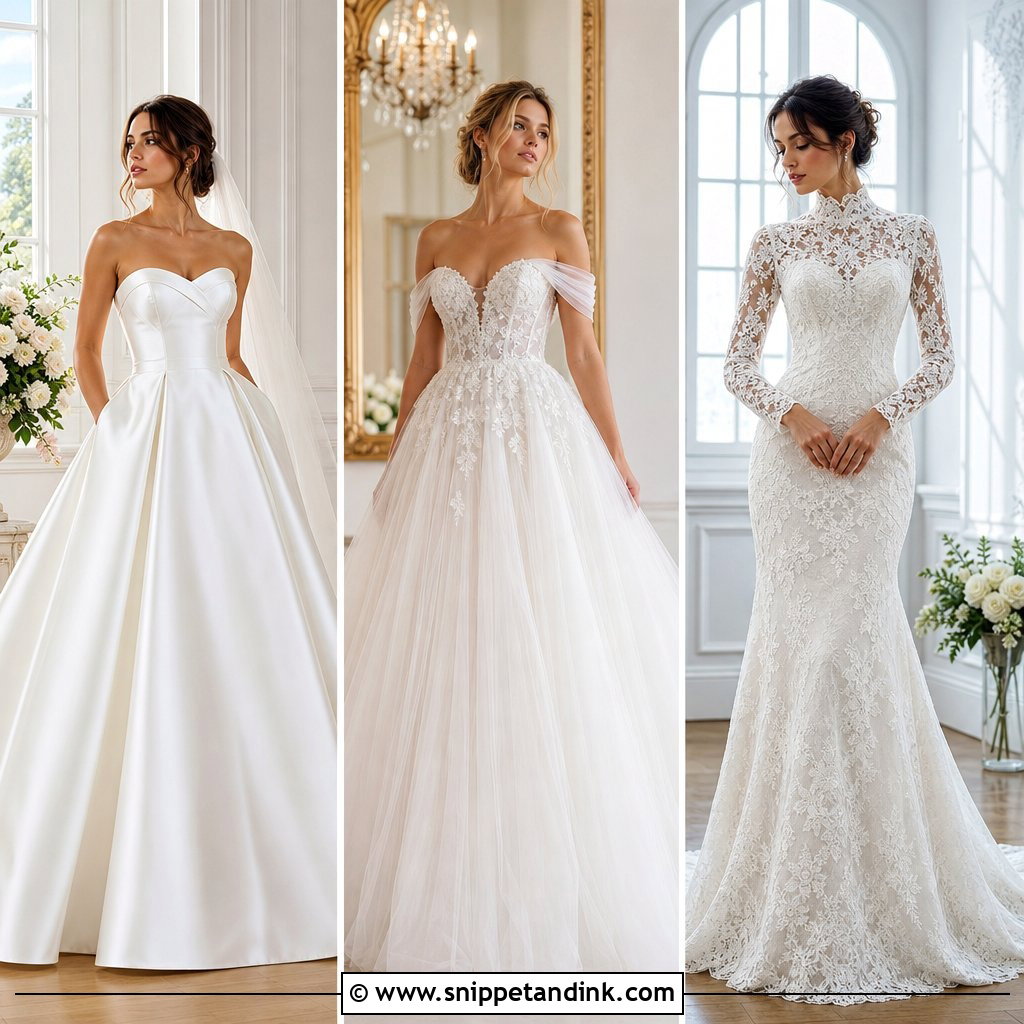

15. Satin Bow Couture Gown
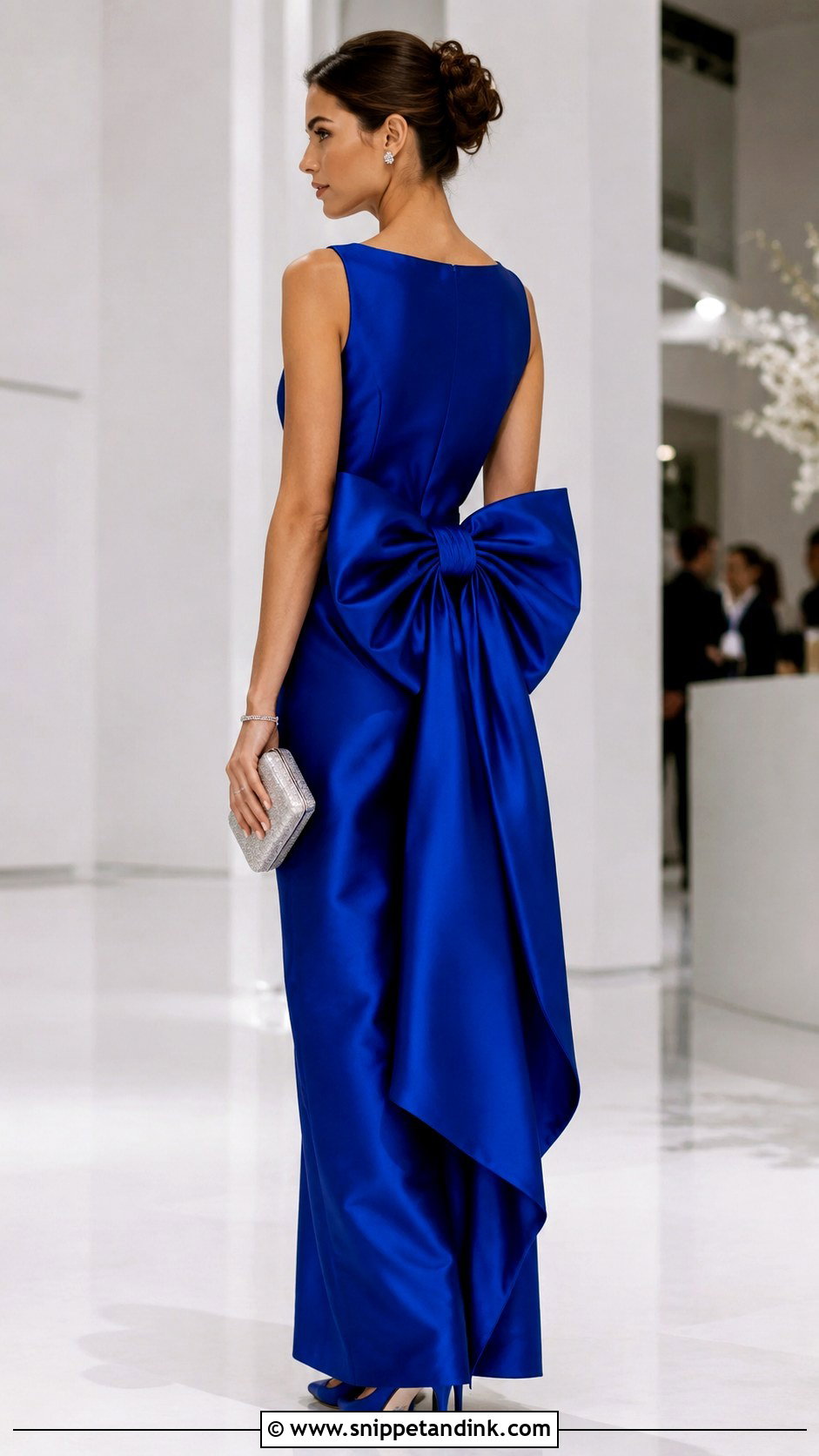
An oversized bow is a single focal point, so it has to be placed with intent at the shoulder, waist or back, never fighting the silhouette. The fabric decides whether it survives the day. Silk satin or faille with interfacing inside the loops stays crisp, while an unlined bow in thin satin flattens the first time you lean back in a chair, which matters most when the bow sits at the back. Simple pumps, a small rectangular clutch, studs and one bracelet leave it room. With a back bow, wear an updo and skip long necklaces or loose hair. Keep the rest of the outfit monochrome.
16. Ombre Tulle Couture Gown
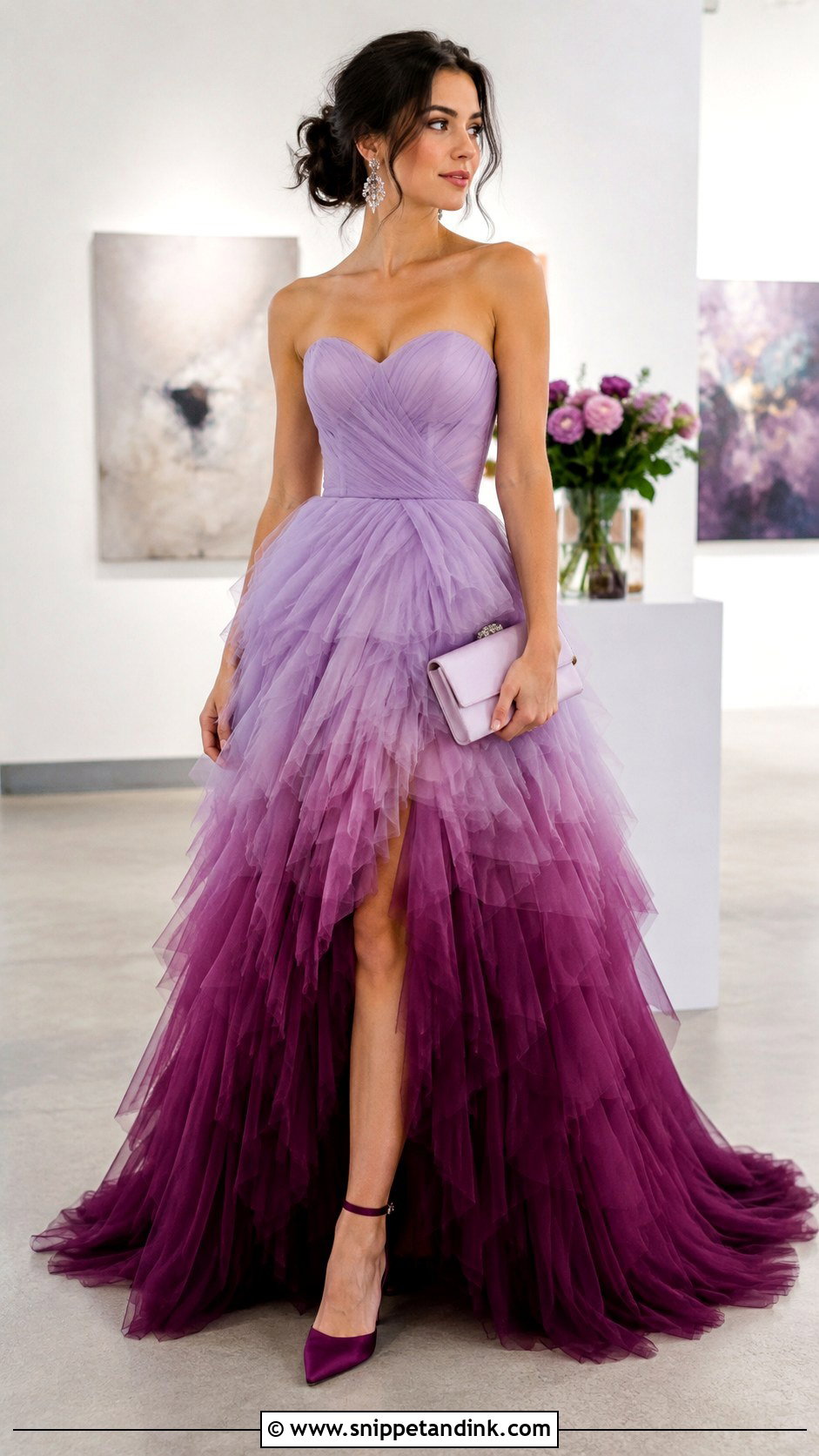
Ombre tulle only works when the dye moves gradually through the layers; visible stripes of color across the skirt are the sign of a rushed piece. Blue to navy, blush to berry and lavender to plum are the combinations I trust for formal wear, partly because the darkest shade sits at the hem, where it also hides floor marks. A fitted bodice and softly expanded skirt keep the effect balanced. Match shoes to the darkest tone, carry a clutch in the lightest, and use crystal earrings rather than adding another color. Soft waves or a loose structured bun and makeup drawn from the gown’s own palette keep the gradient as the thing people remember.
17. Pleated Grecian Couture Gown
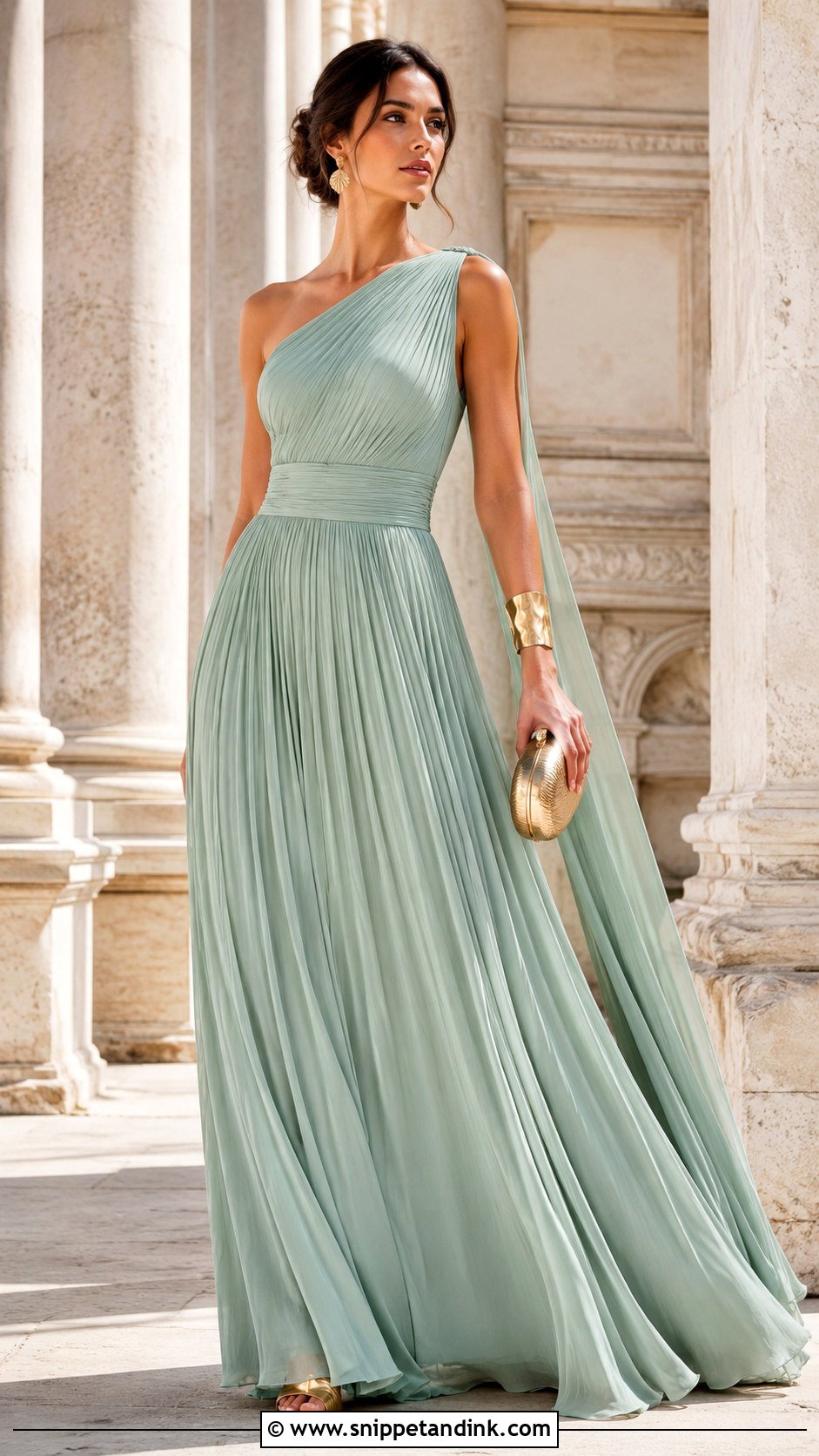
Fine pleats give a Grecian couture gown its movement and long vertical lines, and they are also the detail most easily ruined. Pleated chiffon or georgette must never be ironed flat; if it creases in transit, hang it somewhere steamy or steam it lightly from a distance. A draped bodice, defined waist and floor-length skirt suit one-shoulder and halter necklines. Metallic flat sandals or low block heels are honest choices, since pleats look best when you walk naturally. Have it hemmed to float just above the floor so it doesn’t drag and fray. A small gold clutch, slender drops, one cuff and a twisted updo finish the classical feel without tipping into theater.
18. High Low Couture Gown
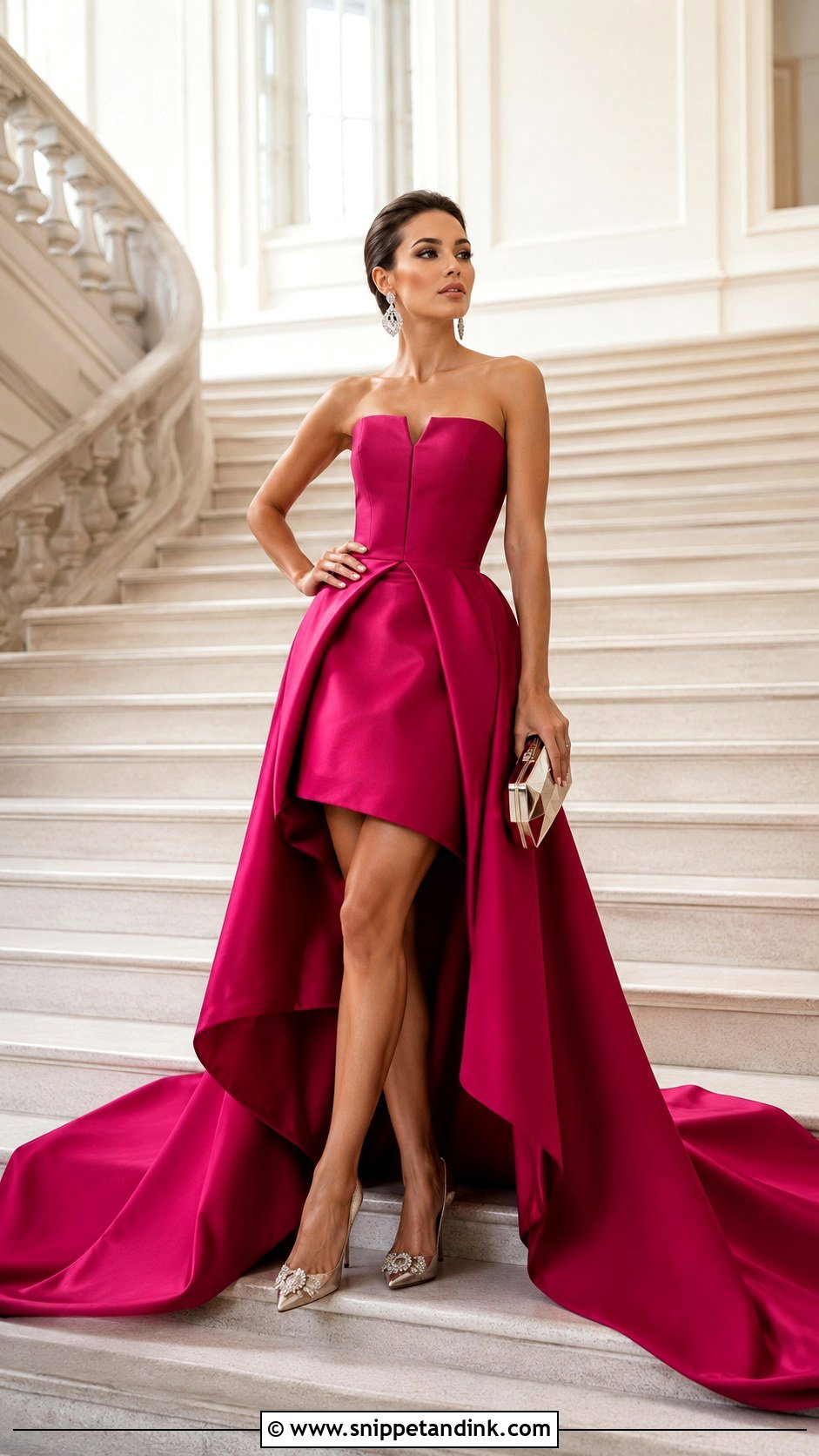
In a high-low gown the shoes stop being an afterthought and become half the outfit, so buy them before the hem is set. The skirt should rise modestly at the front and extend into a shaped train behind, and the difference in length has to look deliberate. I set the front hem at whichever point on the leg is most flattering for that bride, which is impossible without the exact shoes on at that fitting. Embellished pumps, metallic sandals or pointed satin heels all work; coordinate the earrings with the shoe detail and carry a compact clutch. A smooth ponytail or polished waves suit the modern line, and jewelry should stay uncluttered.
19. Peplum Couture Gown
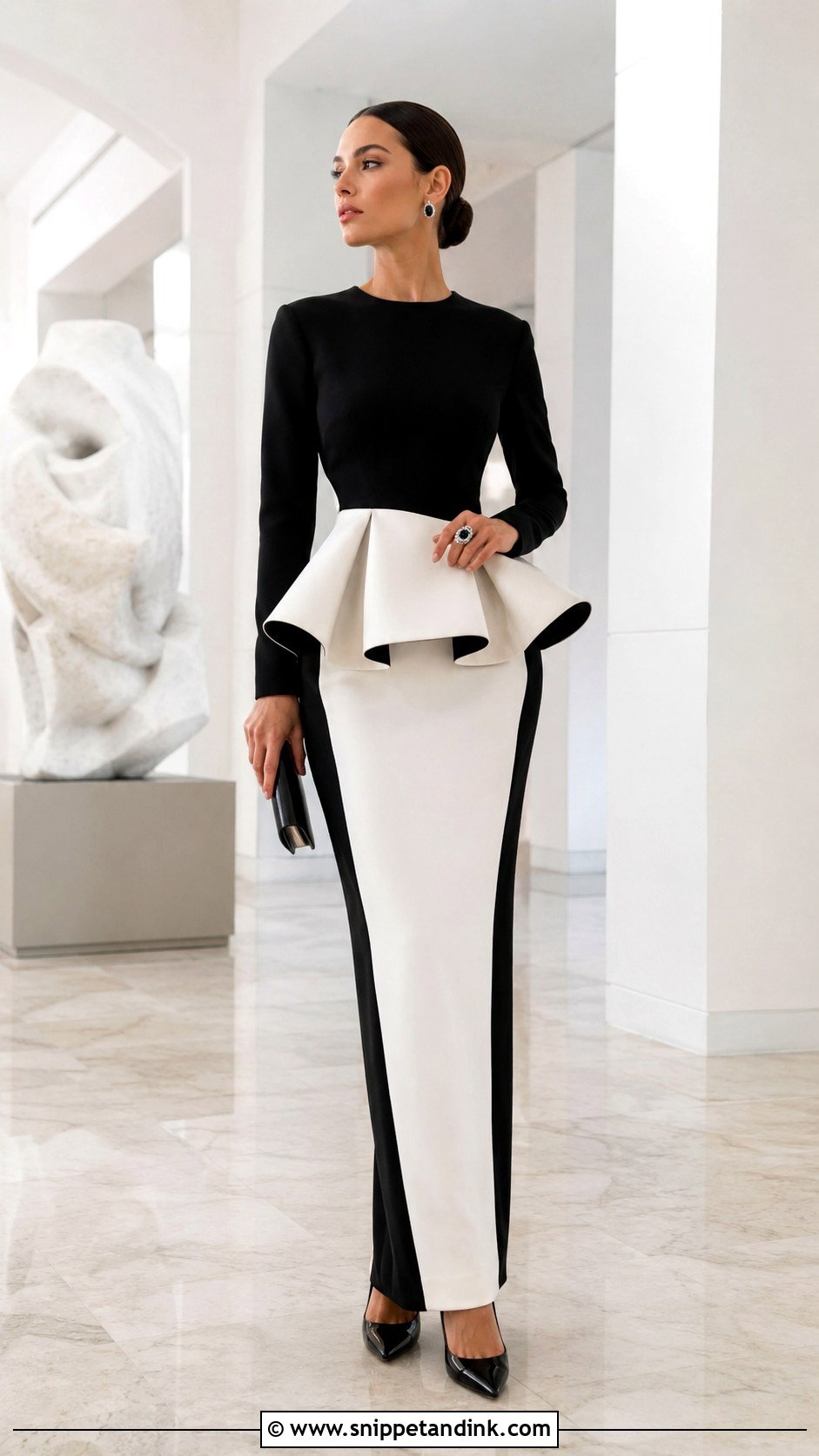
A peplum adds volume at the waist, which can balance narrow hips or exaggerate a fuller midsection depending on where it starts and how stiff it is. Soft sculptural folds that begin at the natural waist and fall over the hips are kinder than a rigid flared shelf. Before ordering, check the side view in a three-way mirror, because a peplum that looks right from the front can jut out in profile. Set it on a fitted column or mermaid base, wear pointed pumps to keep the line long, and add a narrow clutch, understated earrings and one ring. Hair up or behind the shoulders lets the peplum be seen sitting evenly, which is where precise tailoring shows.


20. Detachable Overskirt Couture Gown
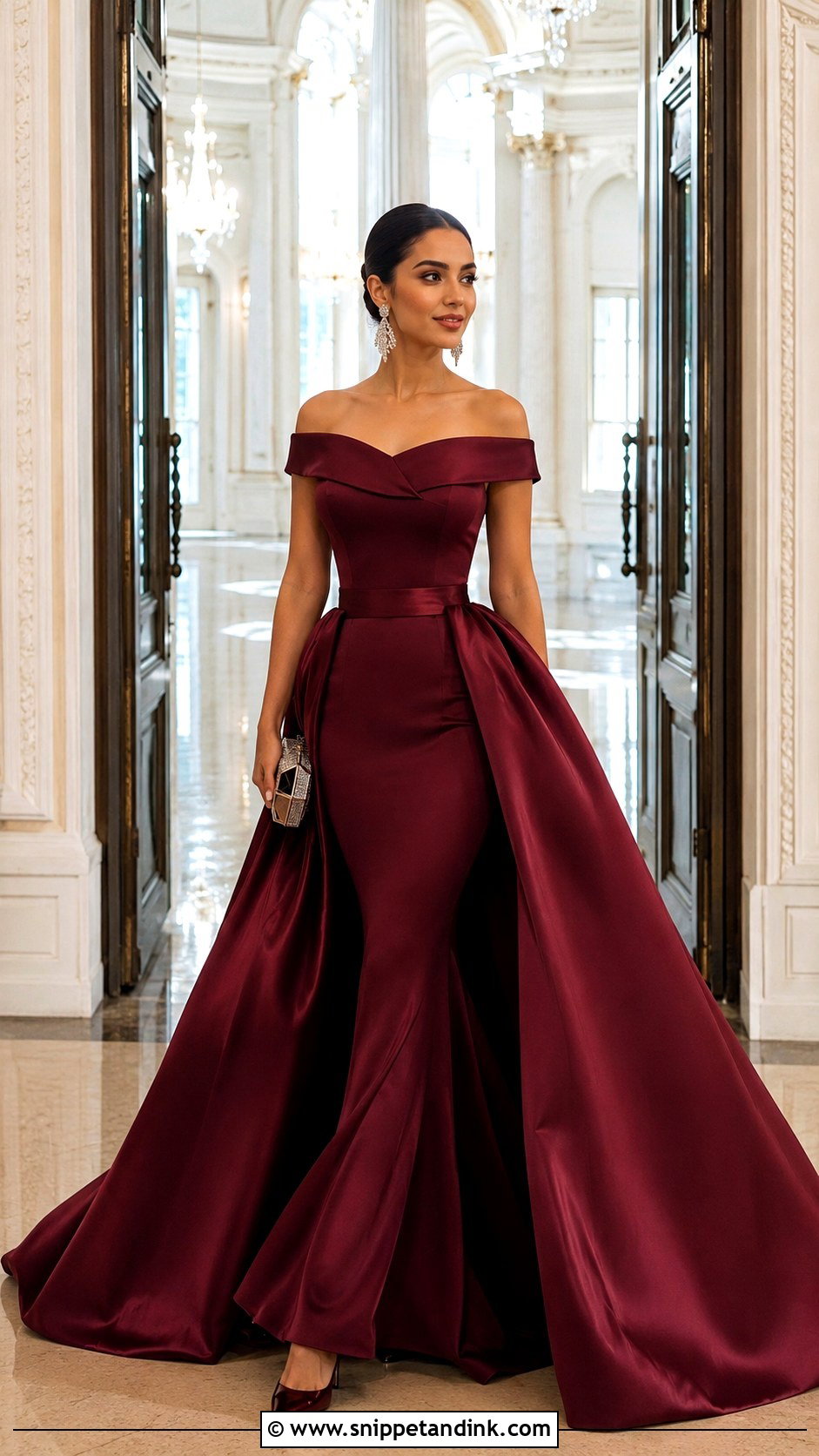
A detachable overskirt couture gown gives you two silhouettes: a full ceremony skirt in satin, tulle or organza, and a fitted column or mermaid base for dancing. The fastening is what I test hardest. Hooks and bars, hidden snaps or a buttoned waistband all work, but whoever helps you change on the day should practice it at the final fitting, with the overskirt on and you in your shoes. Pick pumps, clutch and earrings that suit both versions, and keep the hair in a sleek bun so nothing catches as the skirt comes off. Have a garment bag waiting at the reception, or the removed skirt ends up crumpled on a chair.
How Many Fittings a Structured Gown Really Needs
Made-to-order and couture gowns take longer than most brides expect. Ordering eight to ten months ahead is sensible, with alterations usually starting two to three months before the date; ateliers vary, so ask for their own schedule in writing. A structured gown typically needs three fittings: one to set the bodice, one to mark the hem in your real shoes, and a final check roughly two weeks out.
Bring these to every appointment
- The exact shoes you’ll wear, not a pair of similar height.
- Your wedding-day undergarments and any shapewear.
- A necklace or earrings that sit near the neckline.
- The person who will dress you on the day, so they learn the fastenings.
- A phone to film yourself walking, sitting and turning.
Getting a heavy gown to the venue intact
Beaded and heavy satin gowns should travel laid flat across a back seat or hung from a hook, never folded into a car boot. Unzip the garment bag as soon as you arrive and hang the gown from a high, sturdy point using its inner hanging loops; left on a flimsy hotel hanger overnight, a ball gown can stretch its own straps. A hand steamer handles travel creases on tulle and chiffon, but velvet and metallic fabrics needing more than a light touch are better left to the bridal shop.
What Good Construction Buys You by the Last Dance
Drama is easy to find on a rail. A gown that fits your body, suits the room and lets you move is much harder, and across these twenty looks the same rule keeps returning: fabric, construction, color and accessories have to agree with each other. Sculptural satin reads bold, pleated chiffon reads soft, and beading, feathers, lace and appliqués each bring texture along with their own care demands. Before you decide, weigh the venue, season, dress code, train length and shoes, and leave real time for alterations. A well-fitted gown with restrained accessories will always look more expensive than an elaborate one you spend all night adjusting.
You'll Like These Ideas:





Leave a Reply