
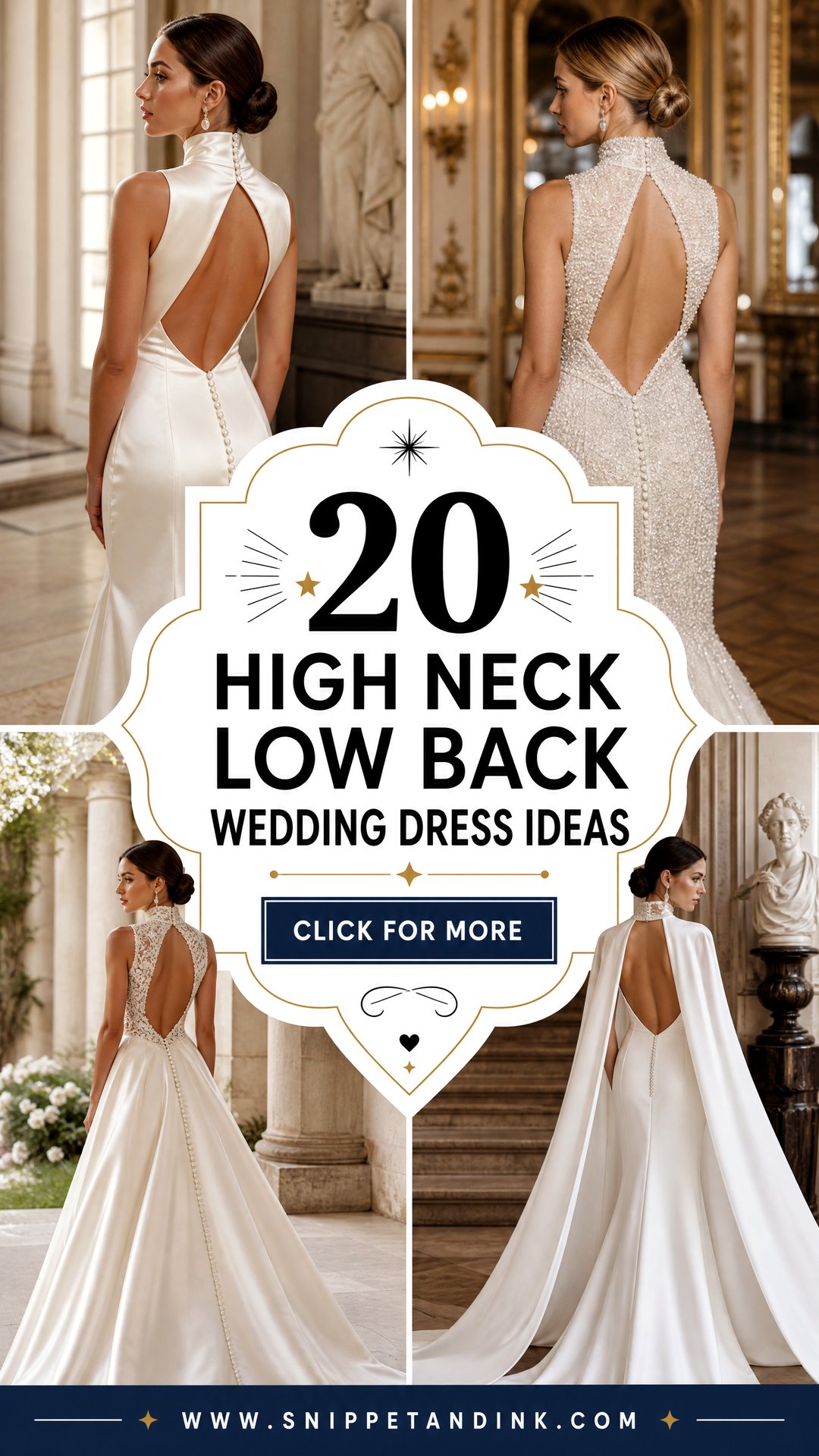
A high neck with an open back is a gown of two halves: covered and composed from the front, then an unexpected, modern reveal as you turn. I love fitting it, but it’s one of the more technical necklines to get right, because the neck has to hold the dress up with almost nothing behind it. It appears in halter gowns, lace, sleek columns, mermaids and ball gowns, in satin, crepe and textured fabrics. Before falling for a sample, think about support, what you’ll wear underneath, your hair and how deep you really want the back to go. Covered buttons, pearl trim, bows and back necklaces can all make the rear view more interesting. Here are twenty versions, with what I’d check on each.
Solving the Bra Problem Under an Open Back
Almost every bride trying this neckline asks the same thing within a minute: what goes underneath? A standard bra won’t work, and the answer depends on your bust and how deep the back goes.
Sewn-in cups
For most brides, cups sewn into the bodice by the seamstress are the most reliable choice. They move with the dress, can’t slip and don’t need adjusting. Ask for them at your first alteration appointment so the bodice can be fitted around them.
Adhesive and low-back options
Stick-on cups and low-back bras with a strap that sits at the waist can work on smaller busts. Adhesive loosens with heat and sweat, so wear it for several hours at home before trusting it on a summer wedding day. Bring whatever you plan to wear to every fitting, since it changes how the bodice sits.
1. Satin High Neck Low Back Wedding Dress
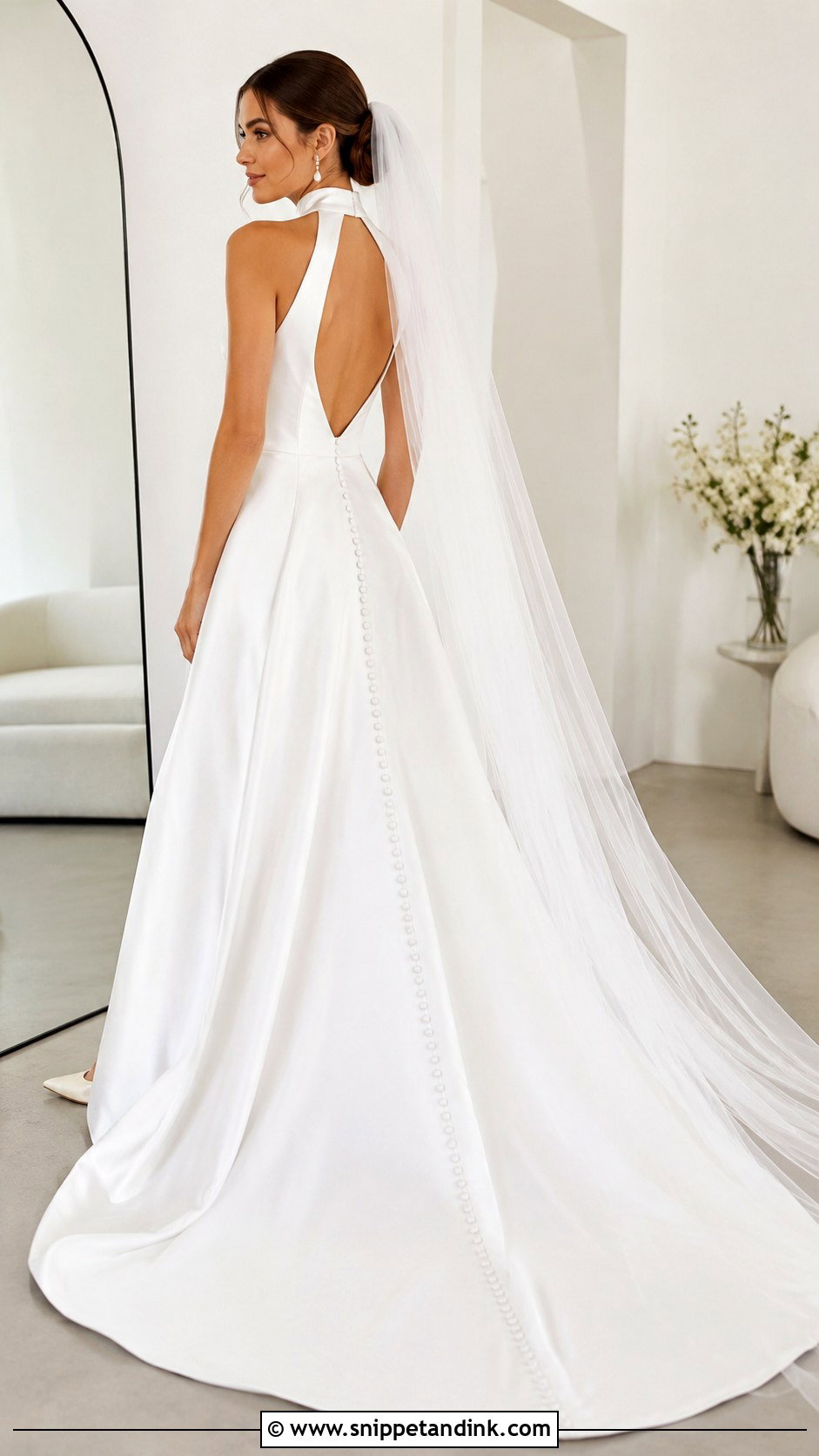
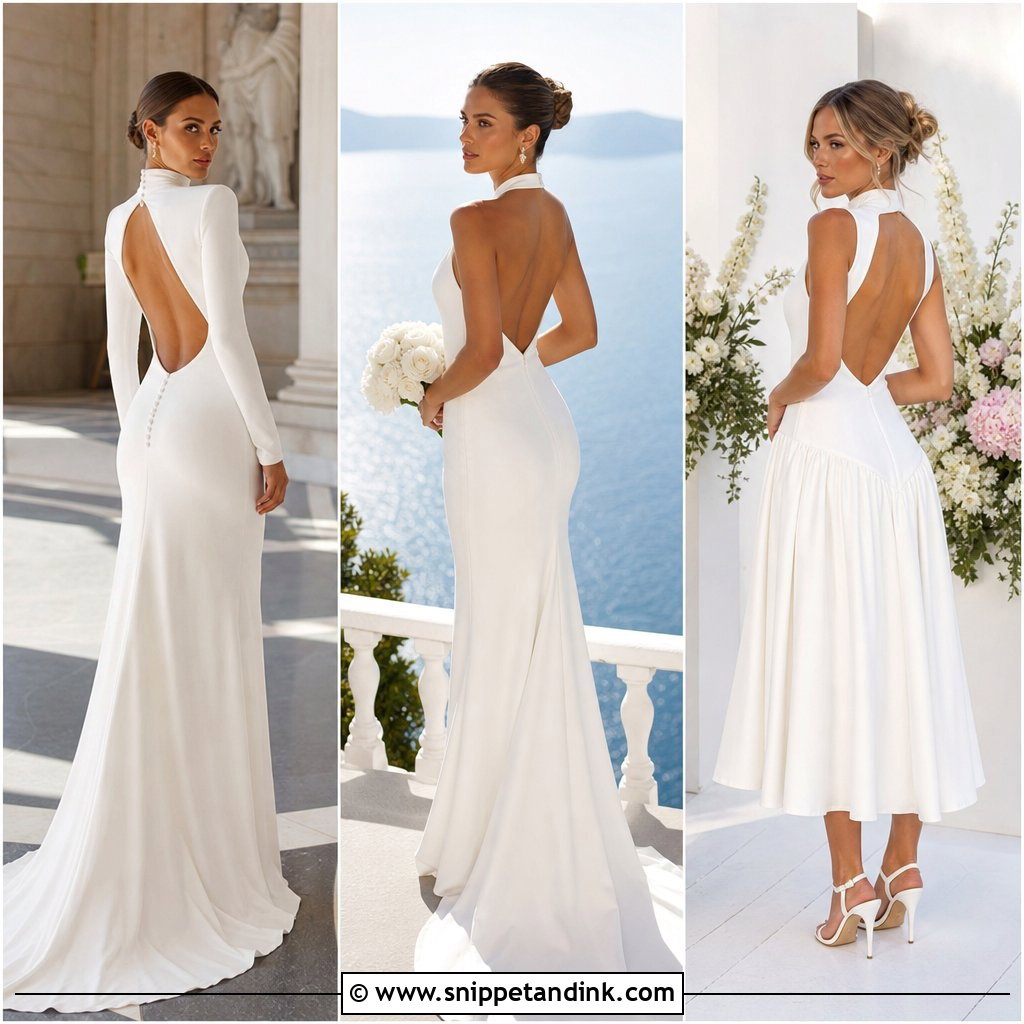
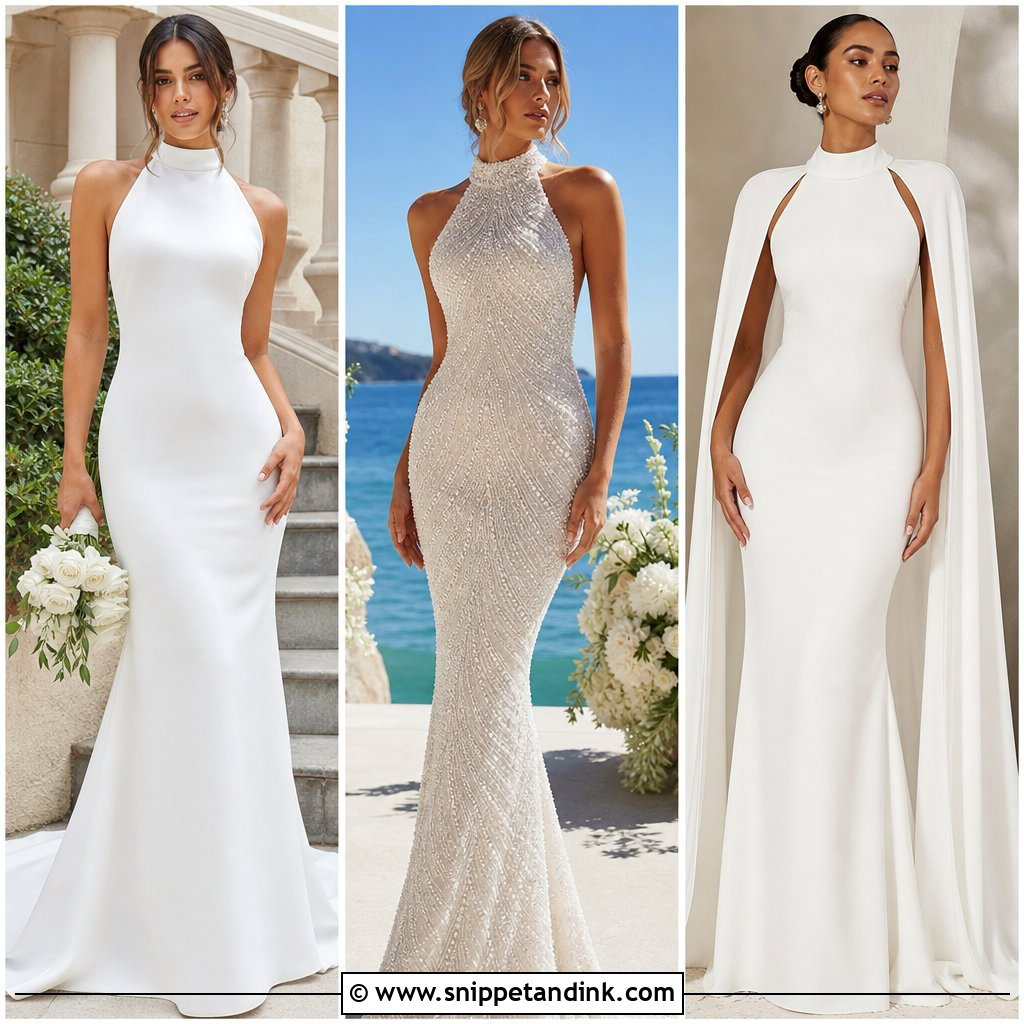
Satin shows the cut of this neckline more clearly than any other fabric. A high halter that frames the shoulders, balanced by a deep rounded or V back, sits best over a gently fitted bodice and an A-line skirt; a satin column with slight waist draping is the more modern version. Satin is unforgiving of a loose halter, though. If the neck strap gapes even slightly, the bodice ripples, so the strap length needs fitting to the millimetre. Pearl drops, pointed heels and a polished bun keep the focus on the shape. Anchor a light veil under the bun and leave the necklace off.
2. Lace High Neck Low Back Wedding Dress
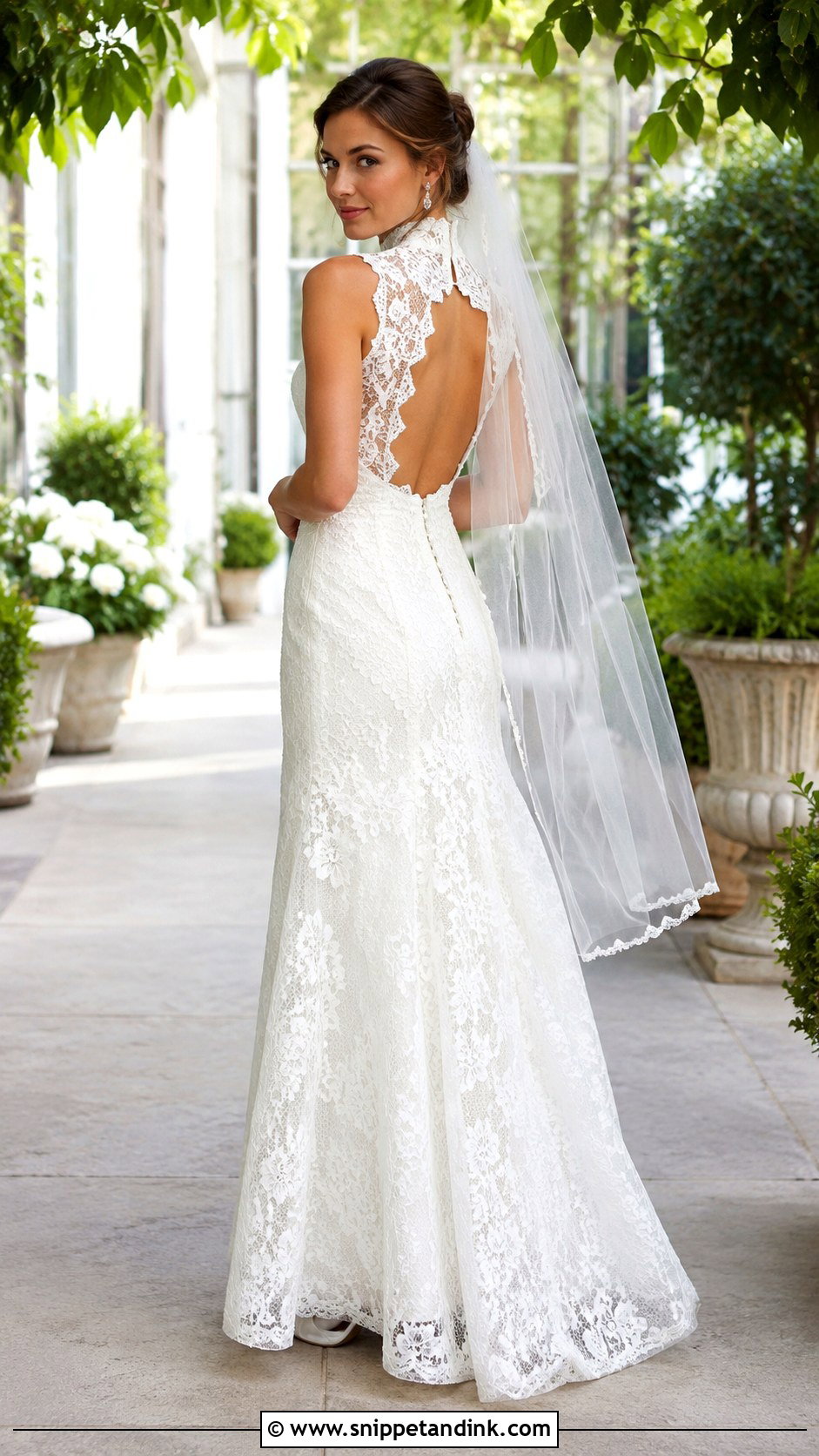
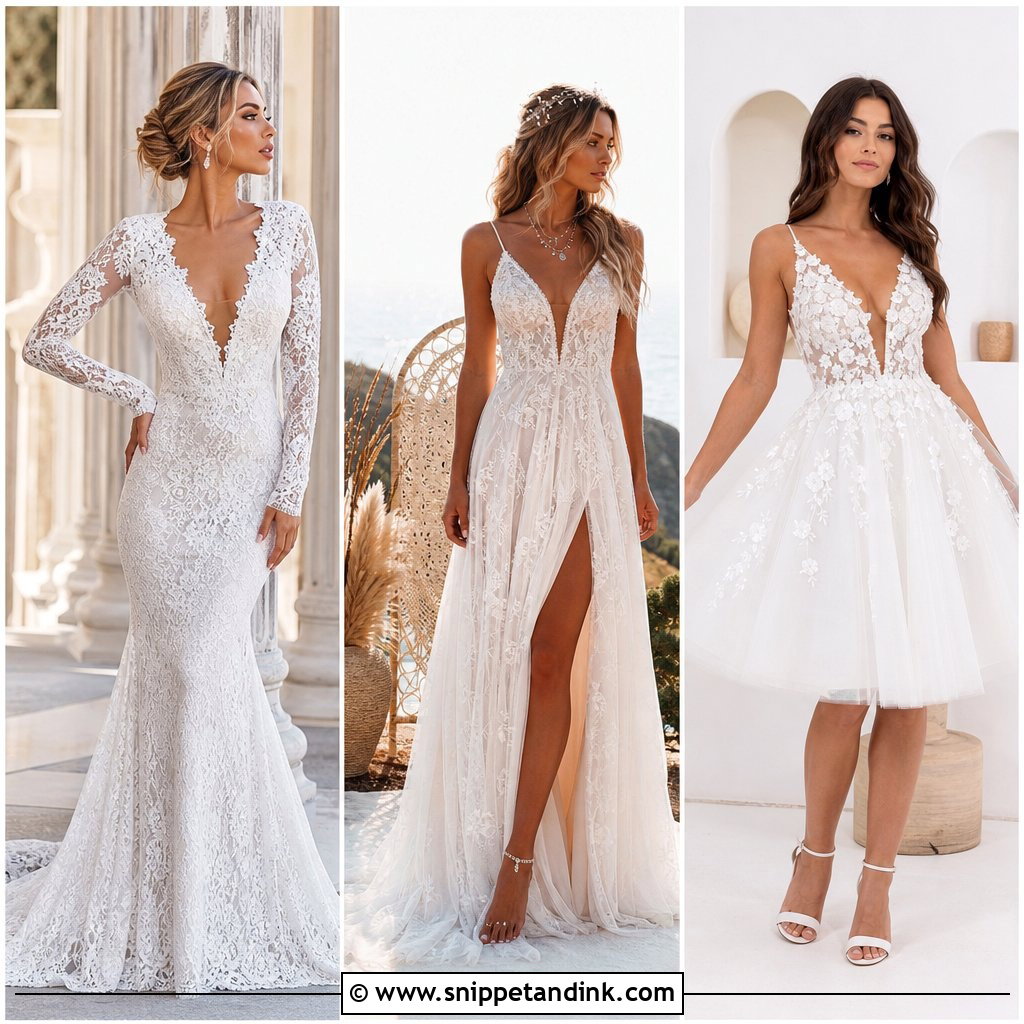
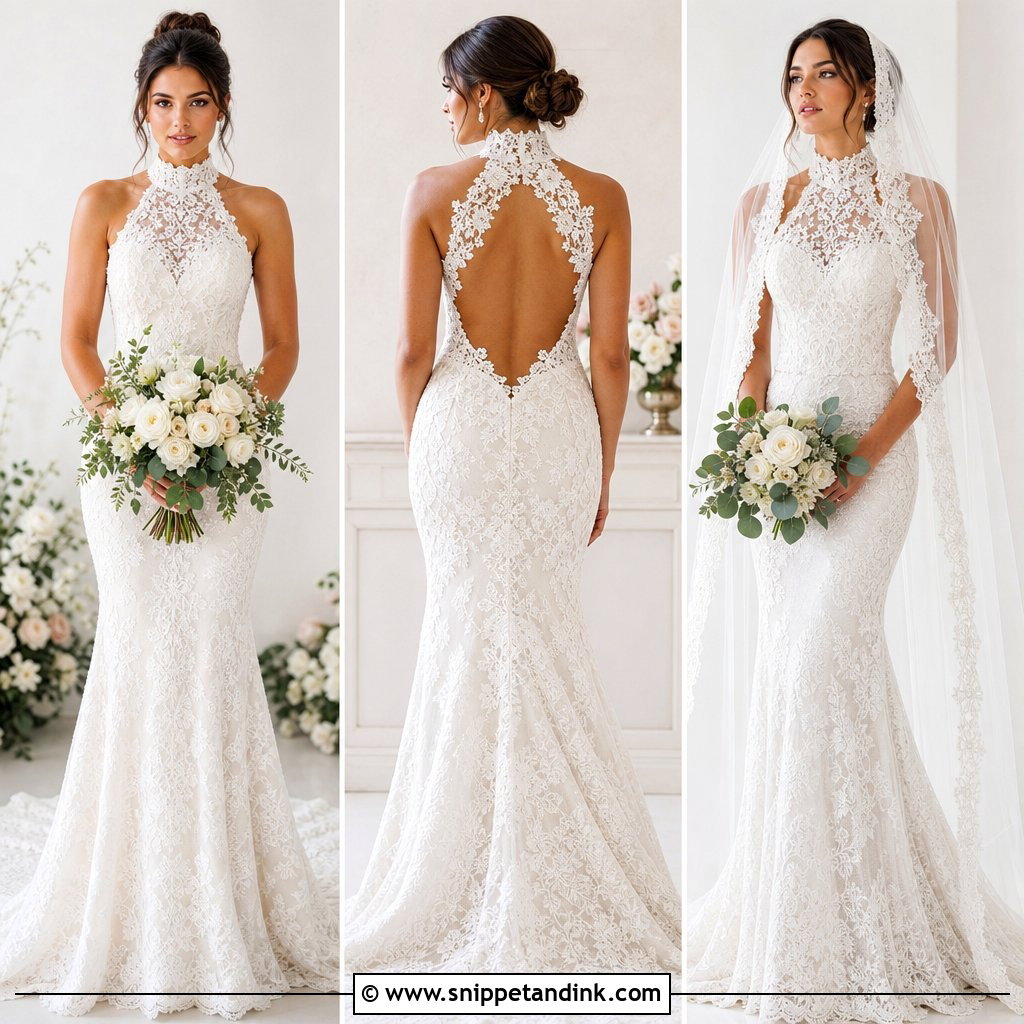
Allover lace softens the severity of a high neck. The best versions I’ve fitted have floral or botanical lace that follows the bodice and flows into the skirt, with the back opening edged in the same lace so it looks finished rather than cut. A scalloped neckline adds delicacy. Choose a sheath for an intimate garden or an A-line for more movement. Lace already holds the eye, so small crystal earrings, satin pumps and a fingertip veil are plenty. A textured low bun suits the softness.
3. Crepe High Neck Low Back Wedding Dress
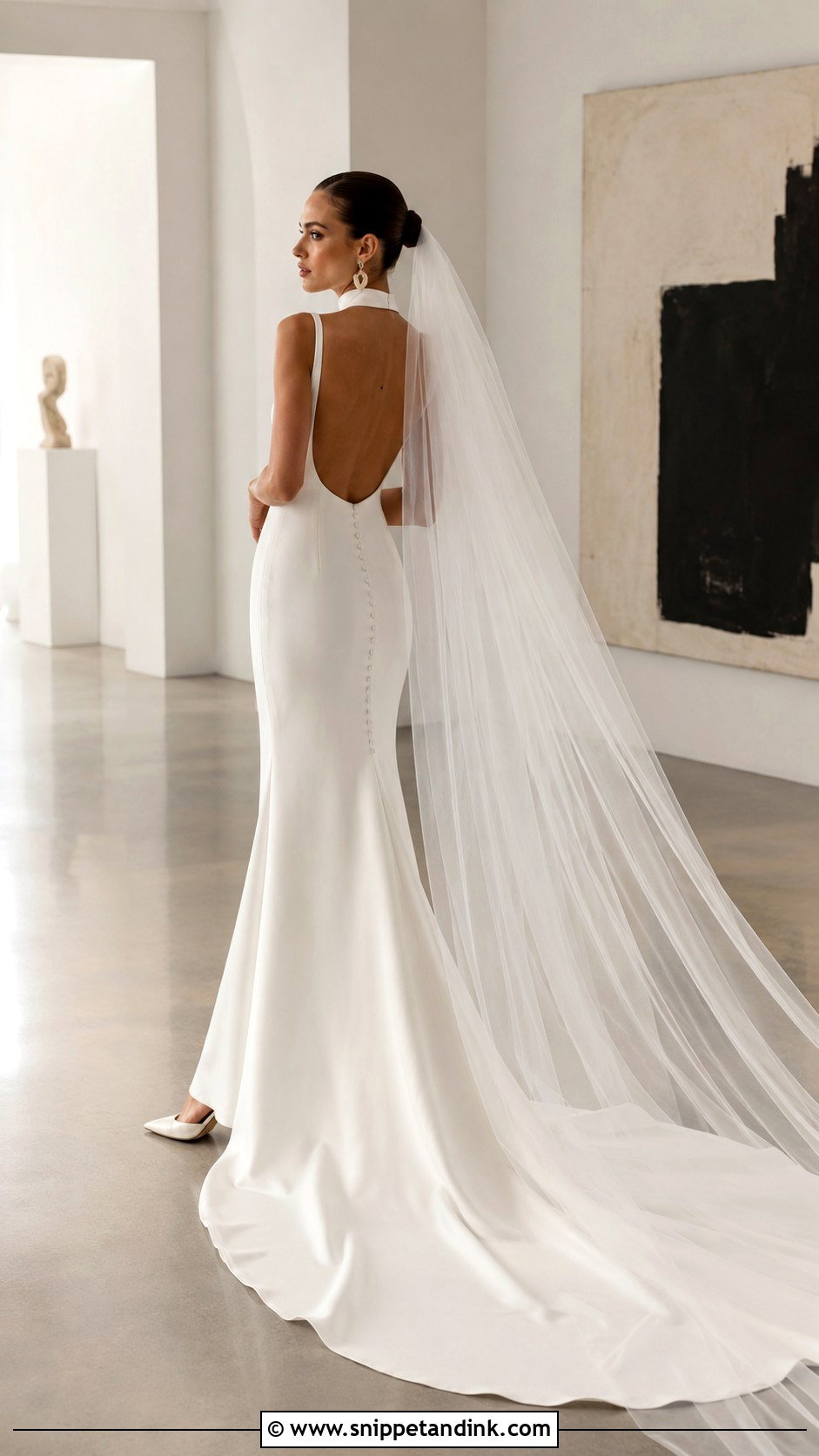
Crepe hides nothing. Its matte, smooth surface shows every seam and every millimetre of fit, which is exactly why minimalist brides love it and why I’d budget more for alterations with this one. A structured high neck and a low scoop back make a clean contrast, and a sheath or fit-and-flare skirt skims without restricting. Covered buttons running from the back opening to the train are a classic finish. Ask your seamstress about hidden support and properly finished back edges, since raw-feeling edges are uncomfortable against skin. Sculptural earrings and a sleek chignon suit it.
4. High Neck Low Back Halter Wedding Dress
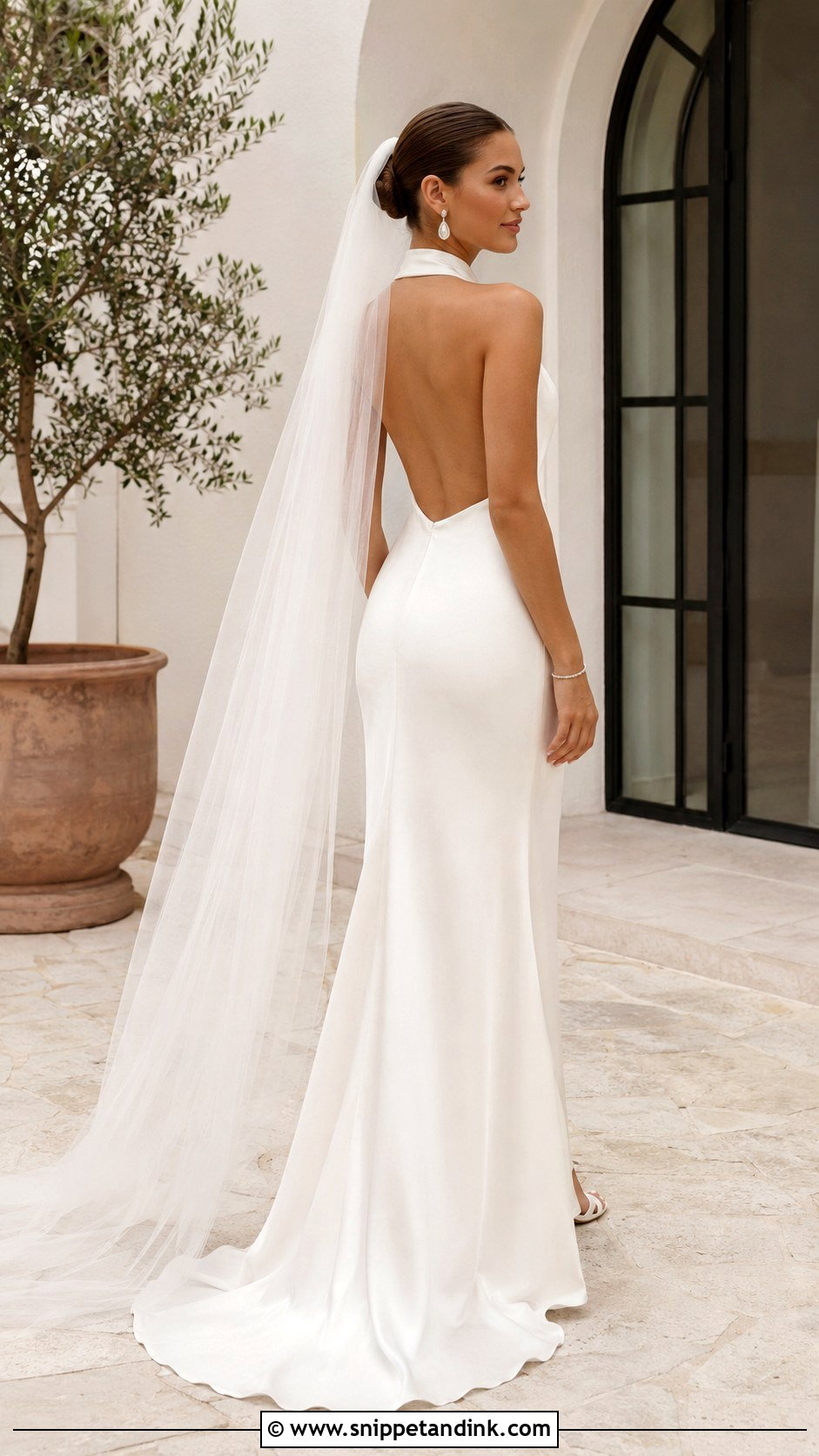
A halter wedding dress pulls attention to the shoulders, neck and back all at once. Wide straps give support and structure; narrow crossed straps feel lighter but carry less weight, so they suit smaller busts better. The skirt can be fitted, flared or bias-cut depending on how much movement you want. Wear hair fully up and attach the veil below the style. At every fitting, sit, walk and lift your arms: a halter that feels fine standing can press on the back of the neck after a few hours, and that’s fixable only before the final hem.
5. High Neck Low Back Mermaid Wedding Dress
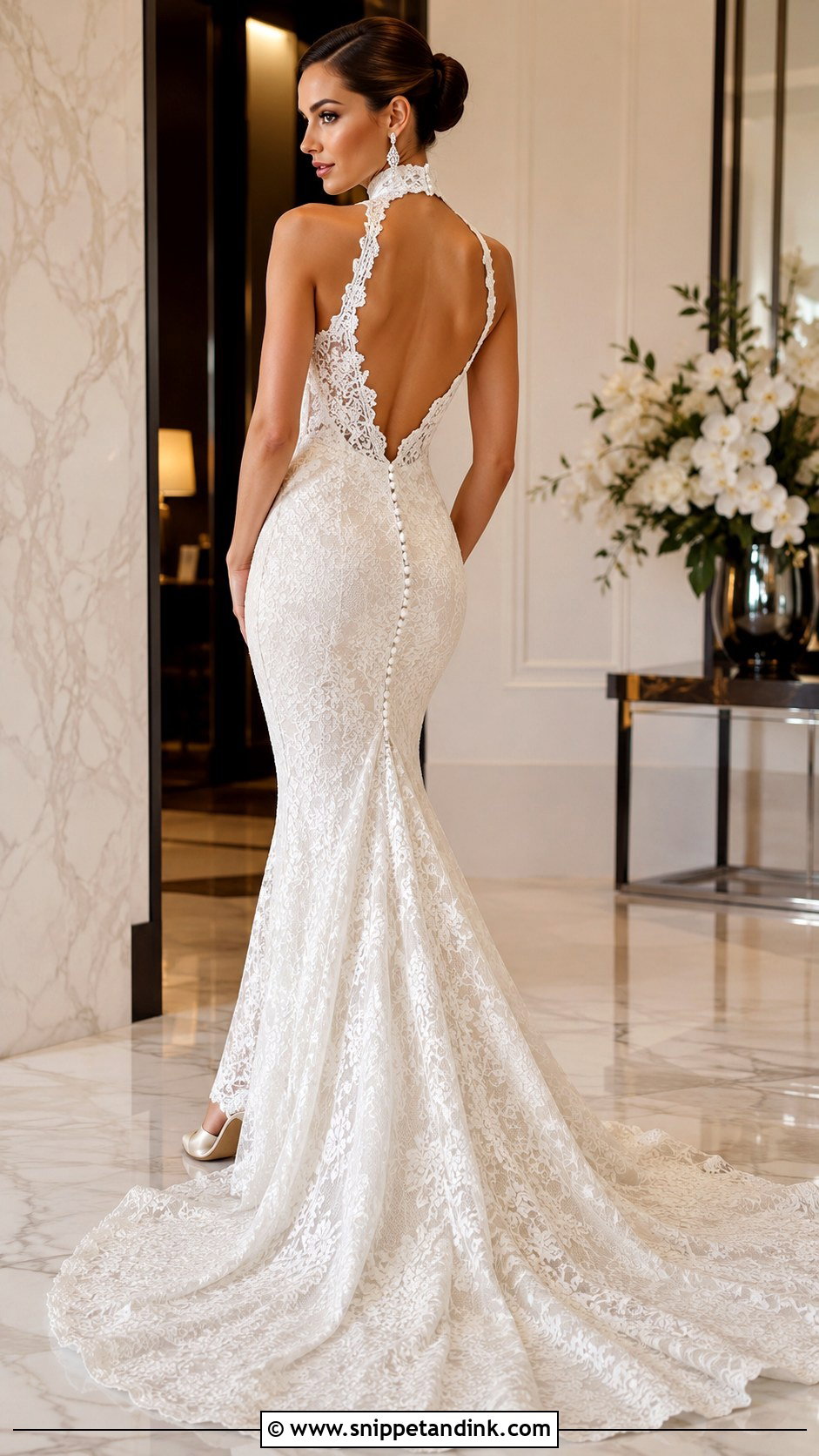
Mermaids are the boldest shape here, fitted through the bodice and hips with the flare starting near the knee. A deep V back lengthens the line further, especially framed with covered buttons or fine beading. Stretch crepe looks modern; appliquéd lace looks romantic. The fit warning I give every mermaid bride: test the skirt by climbing a step and sitting fully, because a flare placed too low limits your stride and makes dancing awkward. Settle that before the hem and bustle are finalised. A smooth high bun and crystal drops finish the look.
6. High Neck Low Back Ball Gown Wedding Dress
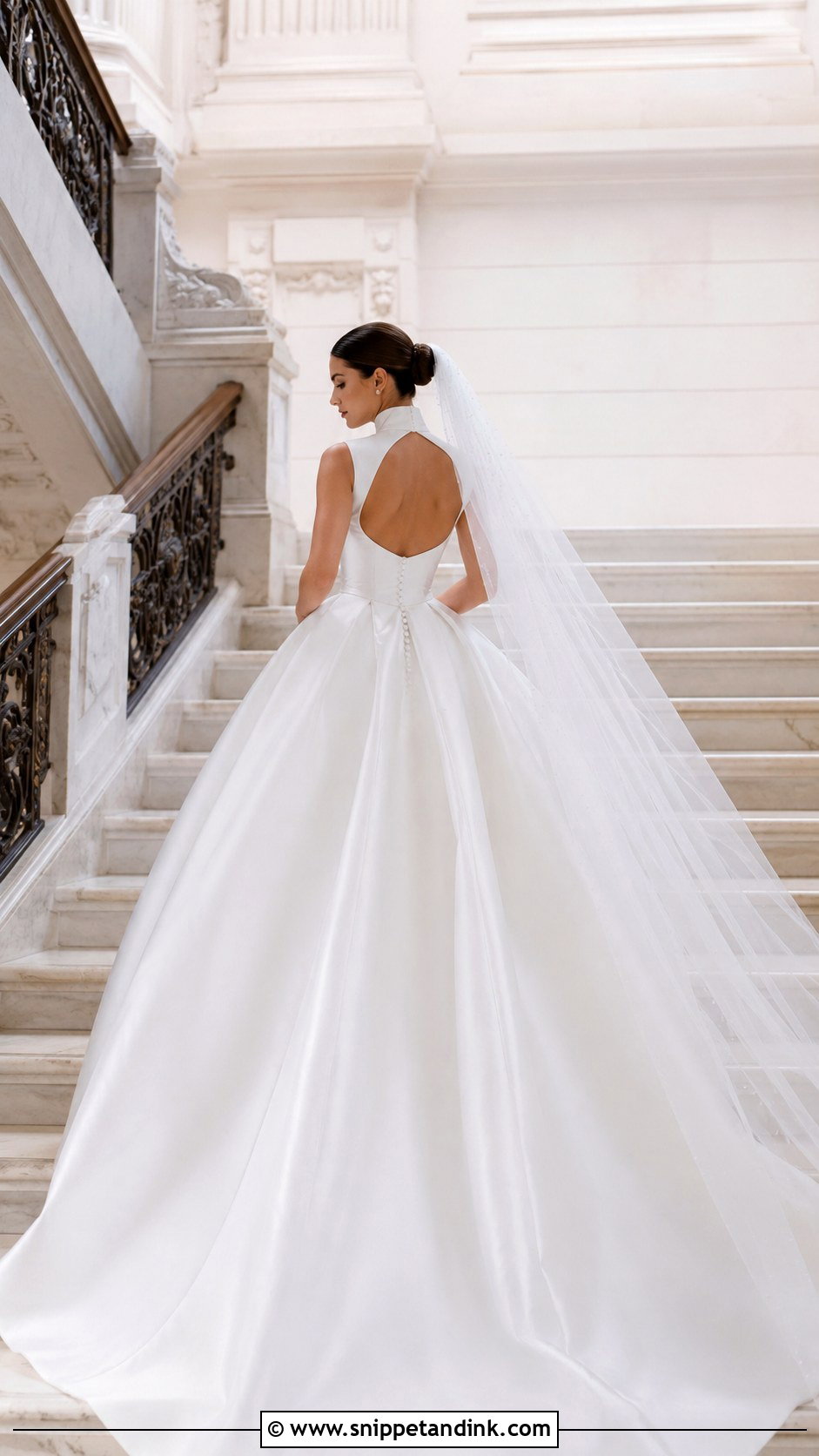
A fitted high-neck bodice over a full ball gown skirt makes the grandest entrance, and the open back keeps all that volume from feeling covered up. Mikado, duchess satin, and structured taffeta hold the skirt’s shape. I like the back opening to end at the natural waist with a row of covered buttons below. Big skirts add weight, and with an open back the bodice must be anchored firmly to stop it pulling backward. Keep jewellery to pearl studs and the bouquet compact. Check the petticoat for comfort and practise the bustle.
7. Long Sleeve High Neck Low Back Wedding Dress
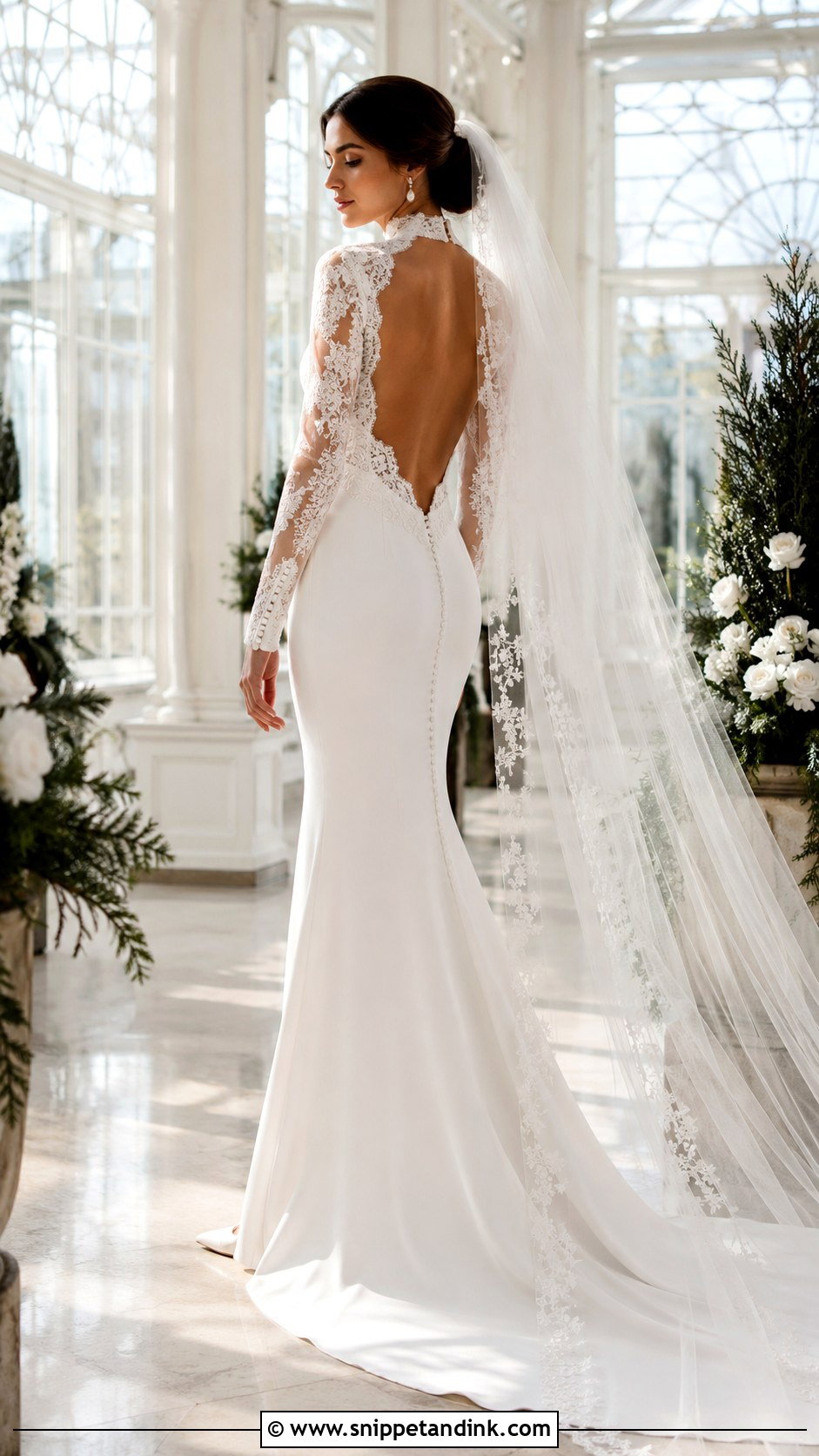
With long sleeves, the open back comes as a real surprise. Fitted illusion lace sleeves feel delicate; smooth crepe sleeves look architectural. A mock neck gives full front coverage. Sleeves change how the bodice moves, so lift your arms at the fitting; tight sleeves on an open-back dress drag the whole bodice up when you hug someone. A narrow lace border can soften the back opening. Pearl earrings and a low bun placed above the back edge suit it, and hidden wrist buttons give a custom finish. It’s a practical choice for cooler months.
8. Beaded High Neck Low Back Wedding Dress
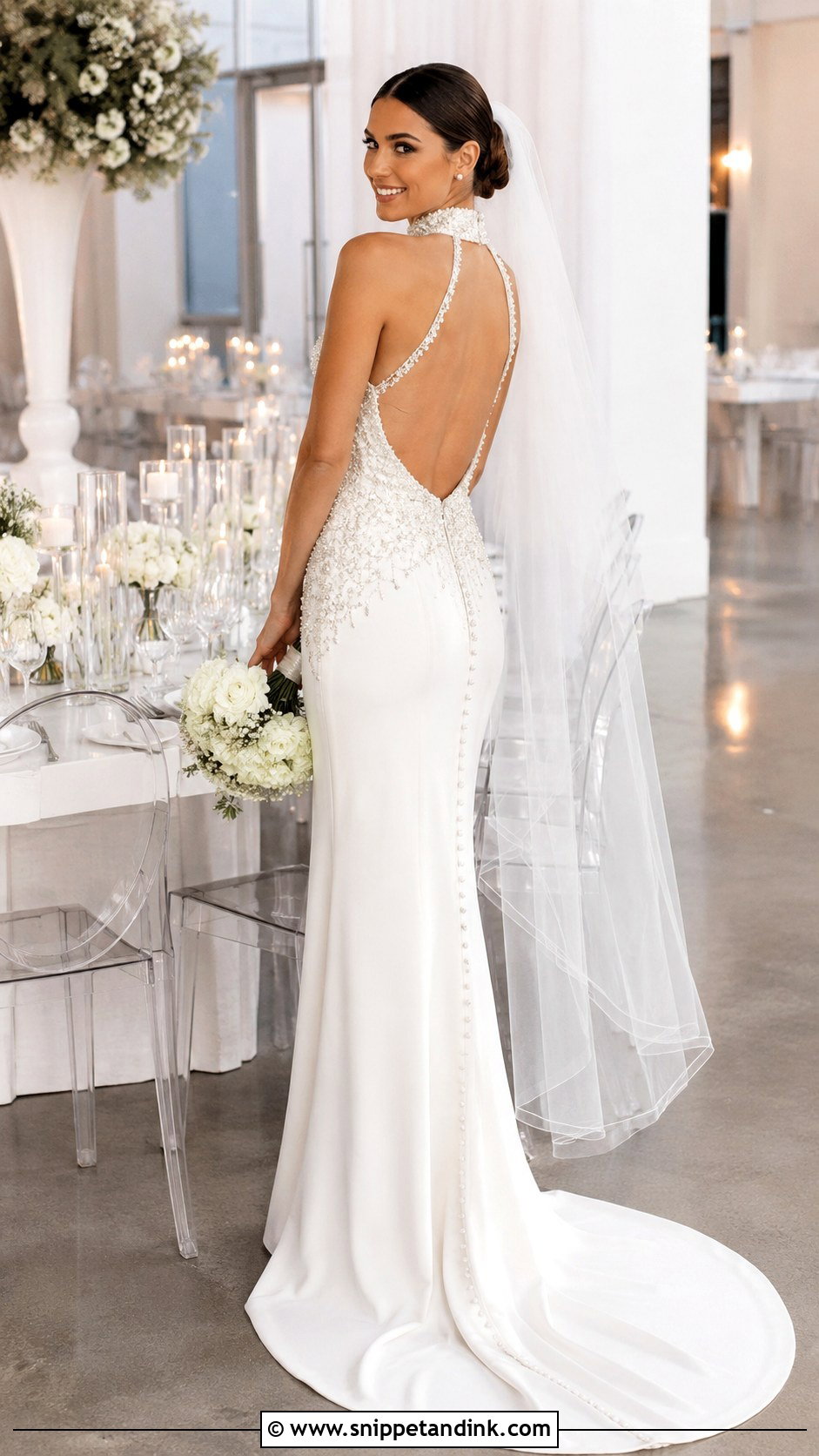
Beading turns a simple shape into an evening look, but placement is everything. I prefer fine pearls, crystals or tonal sequins concentrated on the high-neck bodice and thinning toward the skirt, with beaded straps framing the back. Keep the silhouette streamlined, a column or soft fit-and-flare, and the accessories plain. A simple tulle veil works better than lace here, since beads snag lace. At fittings, run your hand along the back edge: beads that sit proud of the fabric will catch your veil, your hair and your partner’s sleeves all day.
9. Pearl High Neck Low Back Wedding Dress
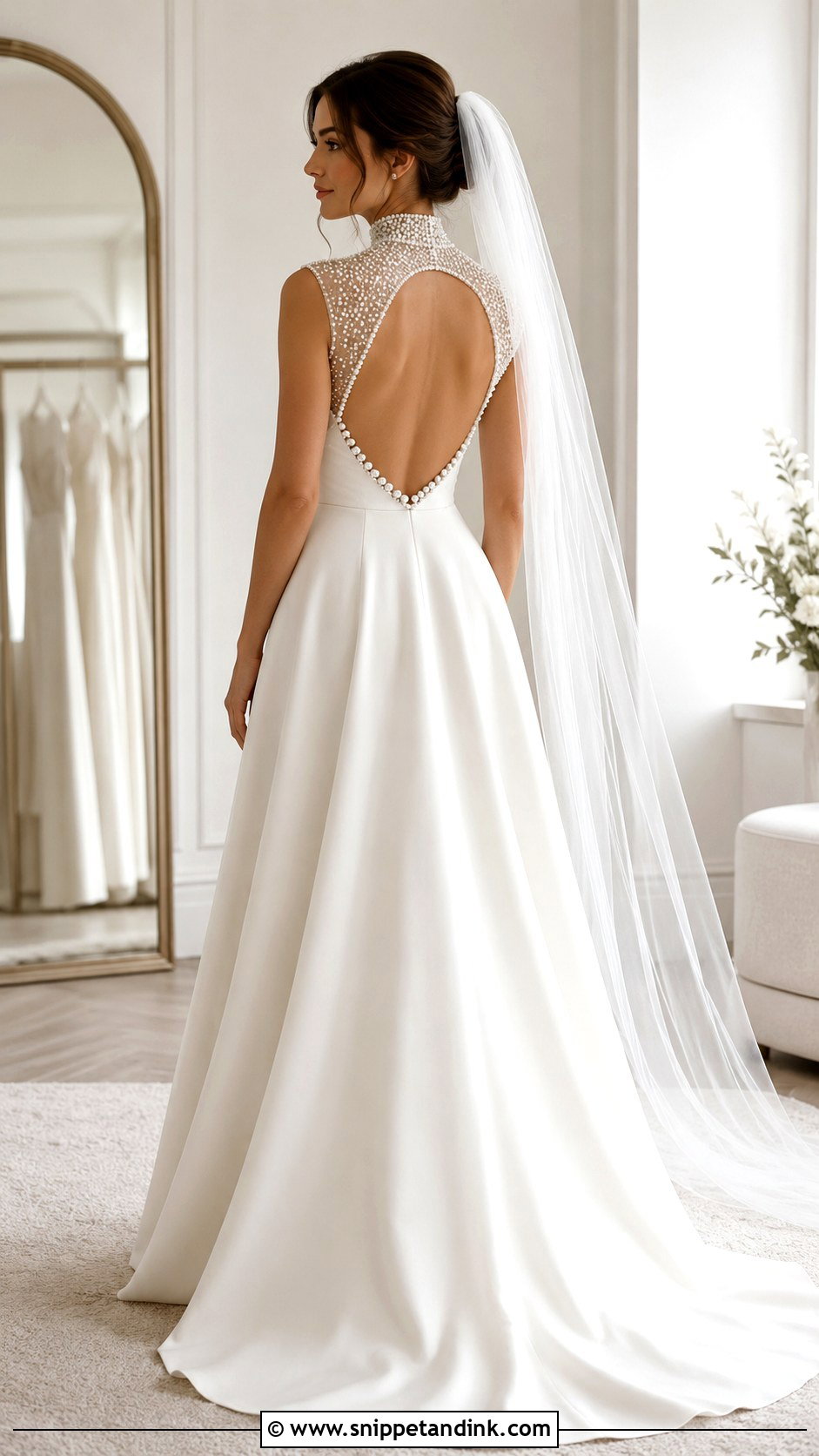
Pearls give texture that stays soft. Look for a sheer high-neck overlay scattered with tiny pearls over a lined sweetheart or straight bodice, and a back finished with pearl-edged straps, a sheer panel or a single draped strand. Density changes the mood: closely set pearls look glamorous, sparse ones look airy. View the dress in both bright and natural light before buying, because pearls can disappear against ivory in flat light. Pearl studs, a plain veil and a French twist keep the texture focused on the dress. Keep the bouquet to one flower variety.
10. Illusion High Neck Low Back Wedding Dress
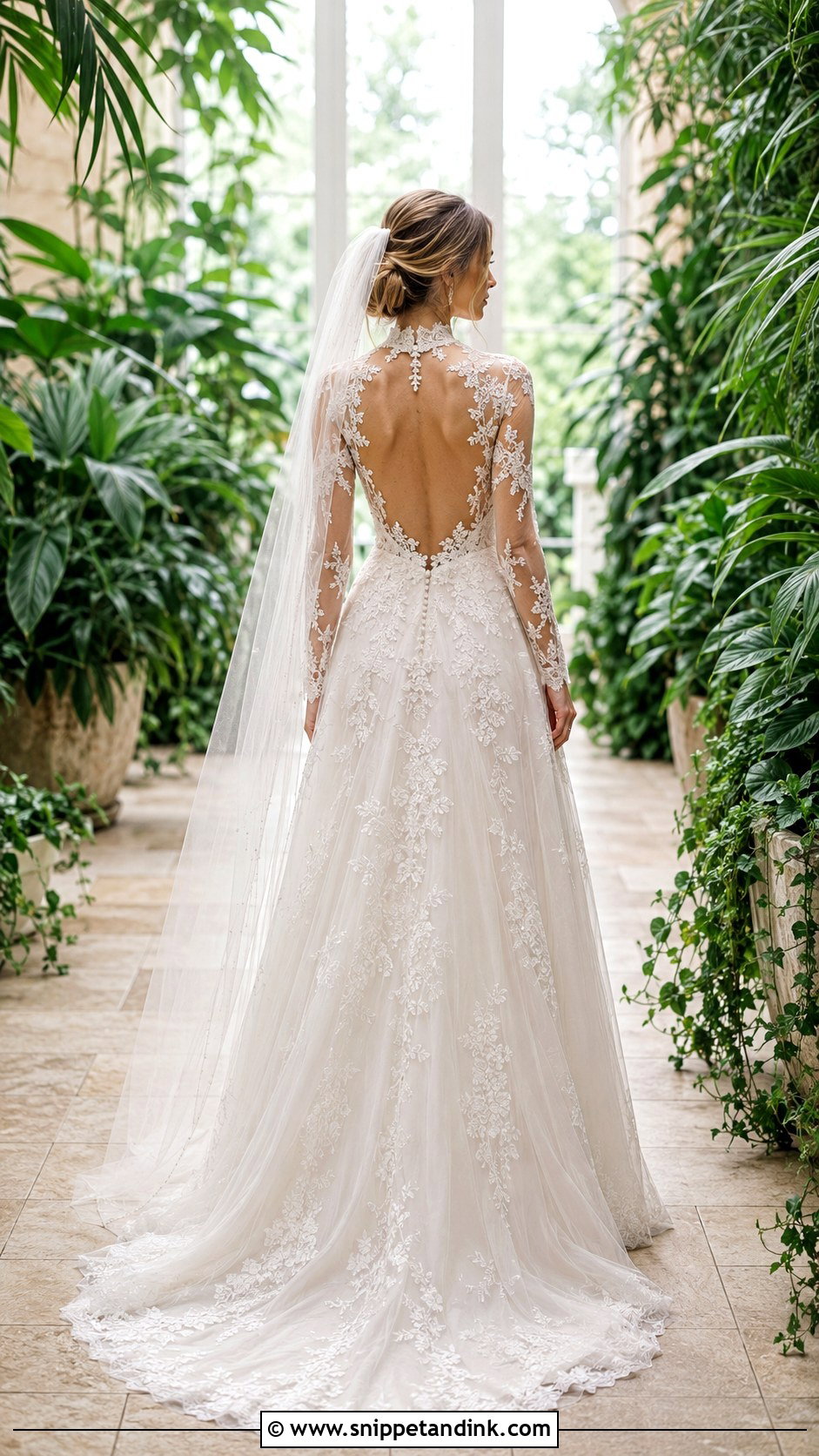
An illusion neckline uses fine mesh so the lace or appliqué appears to float on the skin. The mesh colour decides whether that works. I always check it in daylight and on camera, because a shade that matches in the boutique can turn grey or pink in photos. The right one disappears and is still strong enough to hold the neck and back. Continuing the mesh around the back opening adds security. A soft A-line or sheath skirt keeps attention on the bodice. Crystal studs and a low updo with a narrow comb for the veil finish it.
11. High Neck Low Back Wedding Dress With Bow
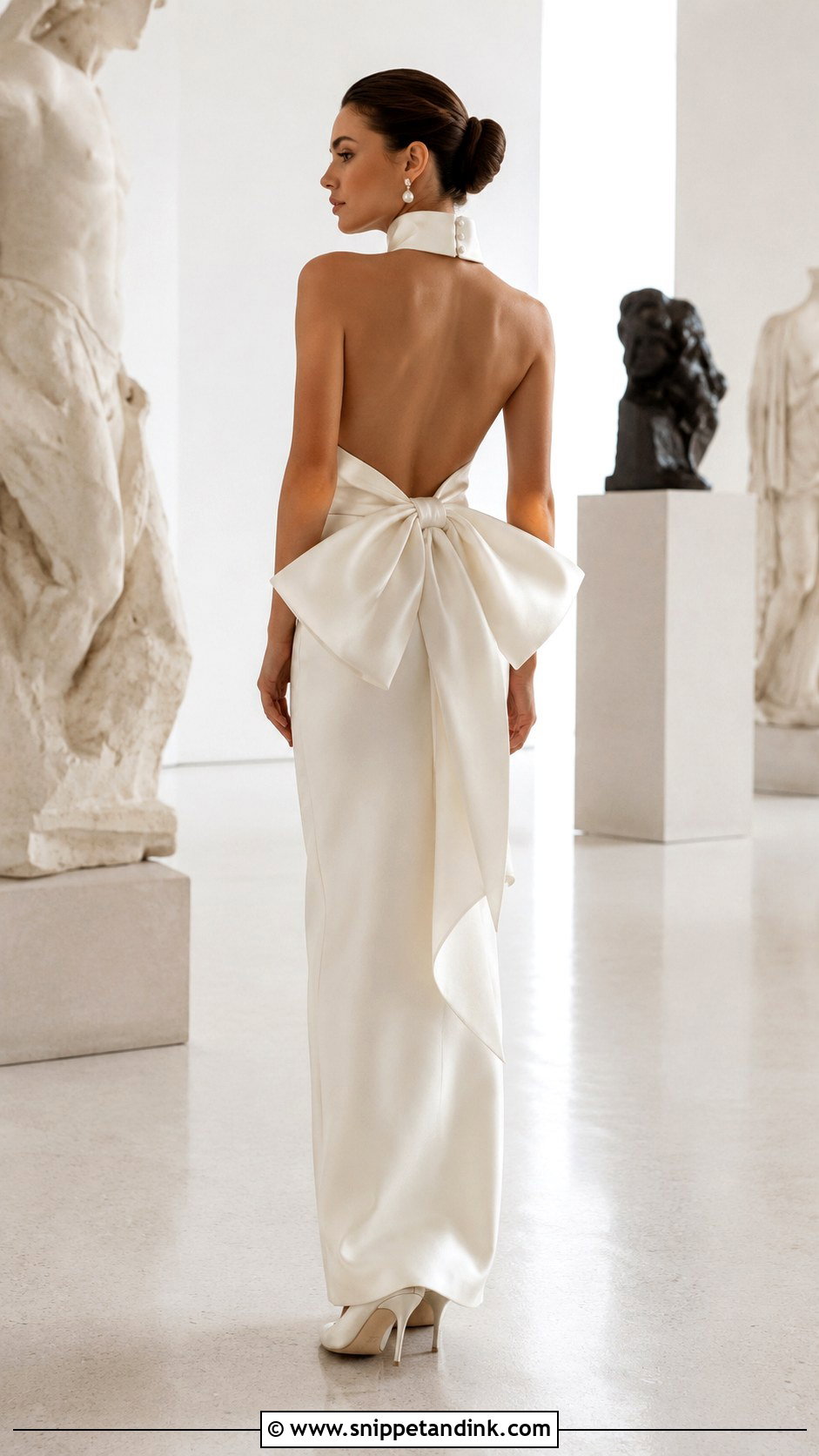
A back bow gives a minimalist gown its focal point. Choose a high-neck satin or crepe dress with a low back and a removable bow at the waist or neck closure. Long ribbon tails flowing into the train look romantic; a compact structured bow is sharper. Keep the front plain so the bow feels intentional. Go short on the veil or skip it, because tulle over a bow flattens it. A detachable bow is useful: wear it for the ceremony, take it off if it gets in the way of dancing. Check its position against the bustle points before the final fitting.
12. High Neck Low Back Wedding Dress With Buttons
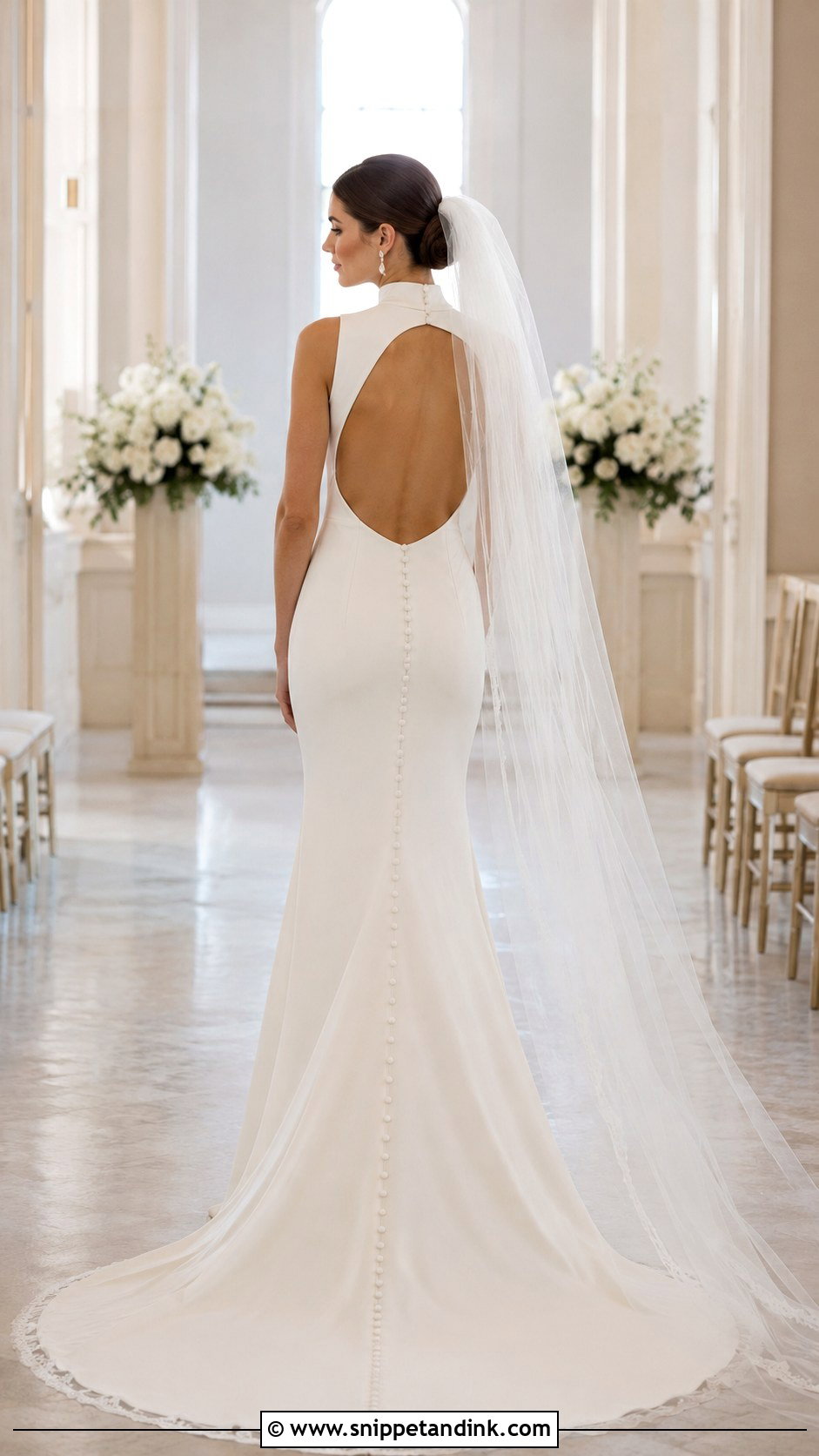
Covered buttons bring a traditional finish to a modern back. They can start below a deep scoop or V and run through the skirt to the end of the train. Self-fabric buttons are subtle; pearl buttons add contrast. A mock neck and fitted crepe make the vertical line especially clean. Ask for elastic or fabric loops that hold firmly but aren’t fiddly, because someone has to fasten every one on the morning. If there’s a long train, plan the bustle so it doesn’t hide the buttons, and photograph the finished bustle at your last fitting for whoever does it on the day.
13. High Neck Low Back A-Line Wedding Dress
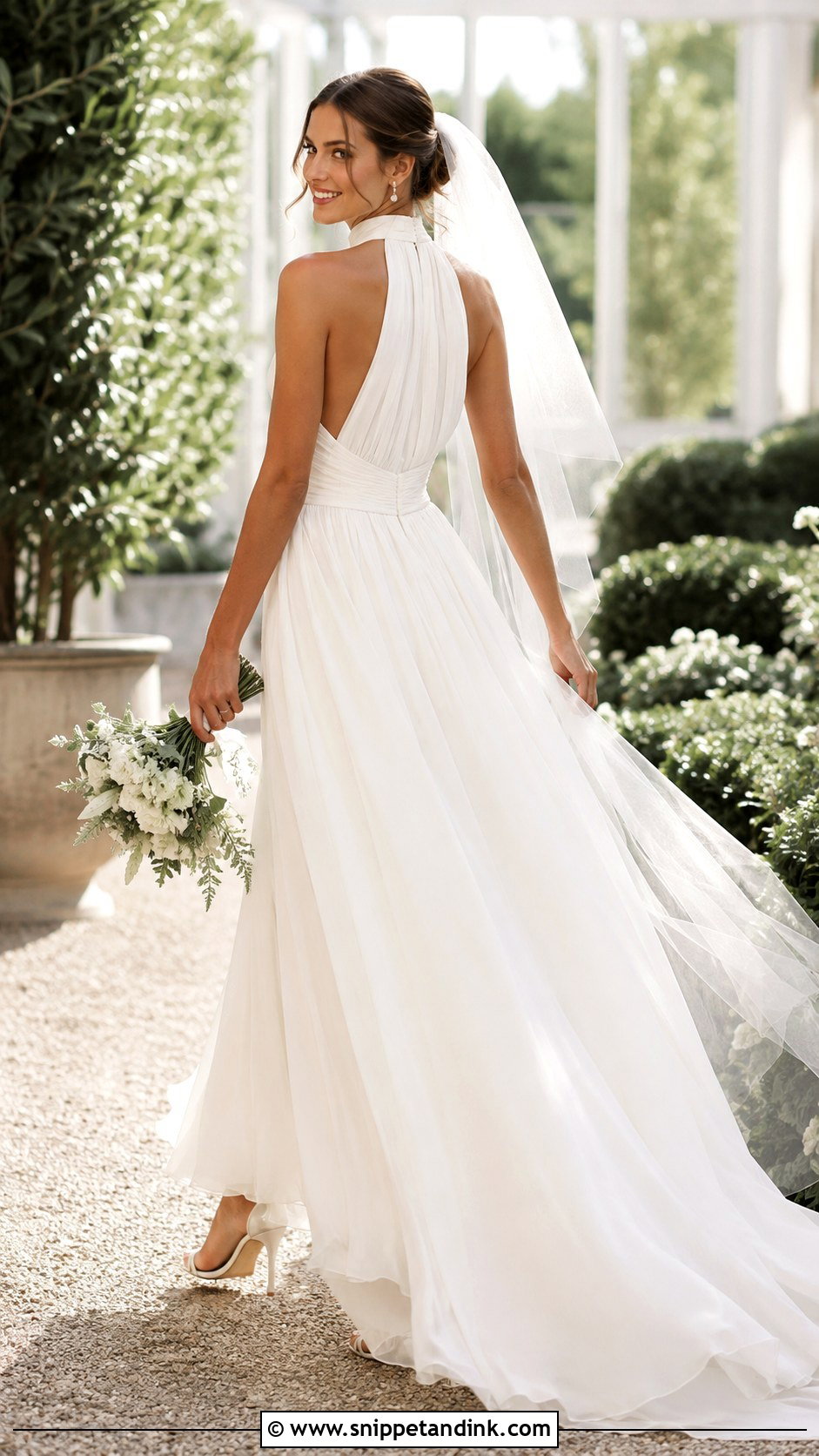
If you’re unsure which skirt suits you, start with an A-line. It fits at the waist and widens gradually, so you can walk and dance freely, and it pairs well with almost any high-neck bodice. Chiffon is soft, satin structured, lace textured. A rounded low back feels gentle; a deep V draws a sharper line. Ask about pockets if the construction allows. The fit detail that matters most is the waist seam: if it sits a centimetre too high or low, the back edges stop lying flat. Medium heels and a fingertip or chapel veil suit it.
14. High Neck Low Back Column Wedding Dress
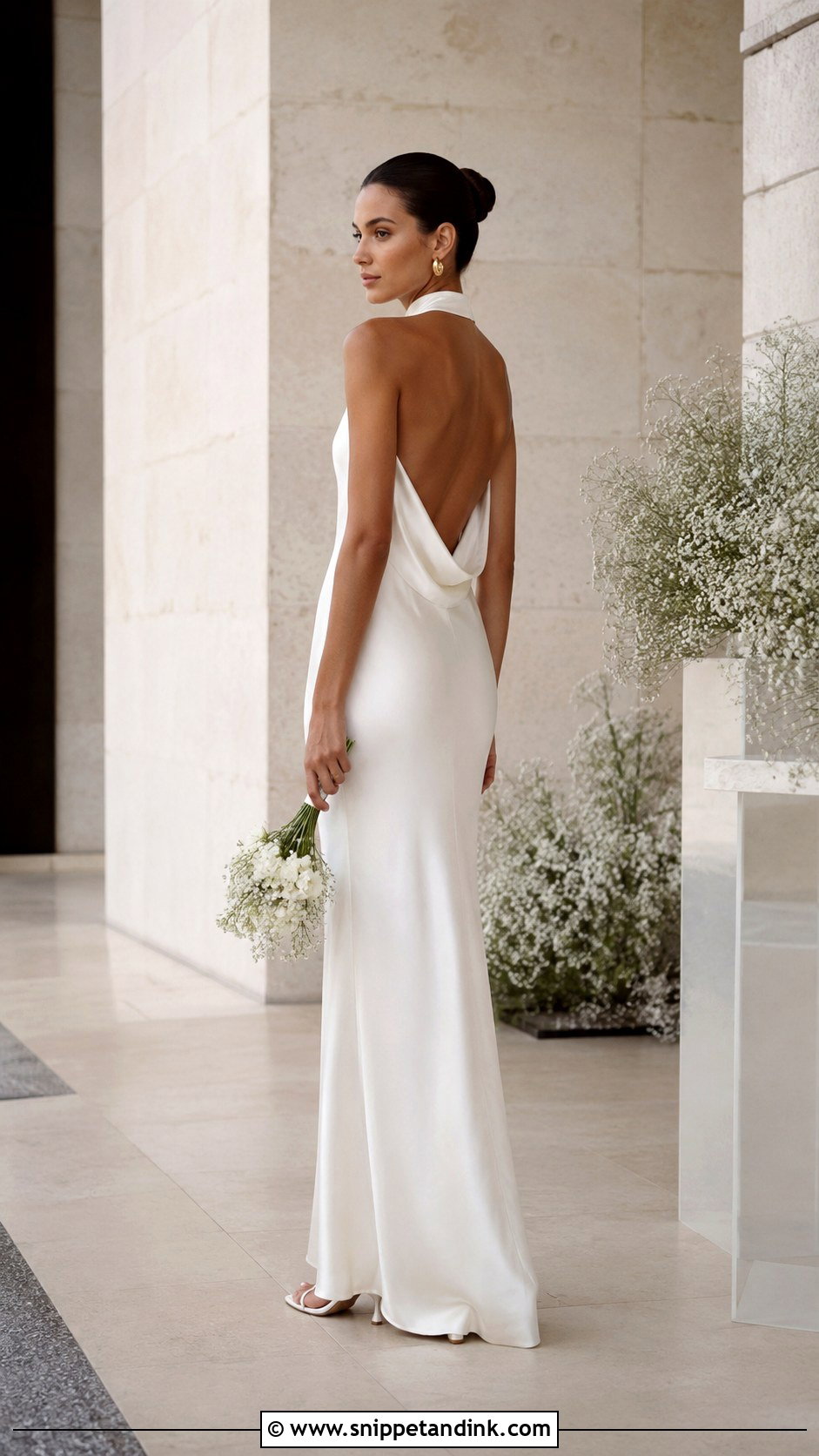
A column falls in one narrow line from bodice to hem, so it suits brides who want refinement without a full skirt. A draped high neck softens the front, and a low back adds definition. Silk satin moves fluidly; crepe is more matte and tailored. Slingbacks and sculptural earrings suit the modern line, with a glossy bun or sleek ponytail. Wear a long veil for the ceremony and remove it afterwards to show the back. The practical check: make sure the skirt has a vent, godet or enough width to walk in, or you’ll be taking tiny steps all evening.

15. High Neck Low Back Chiffon Wedding Dress
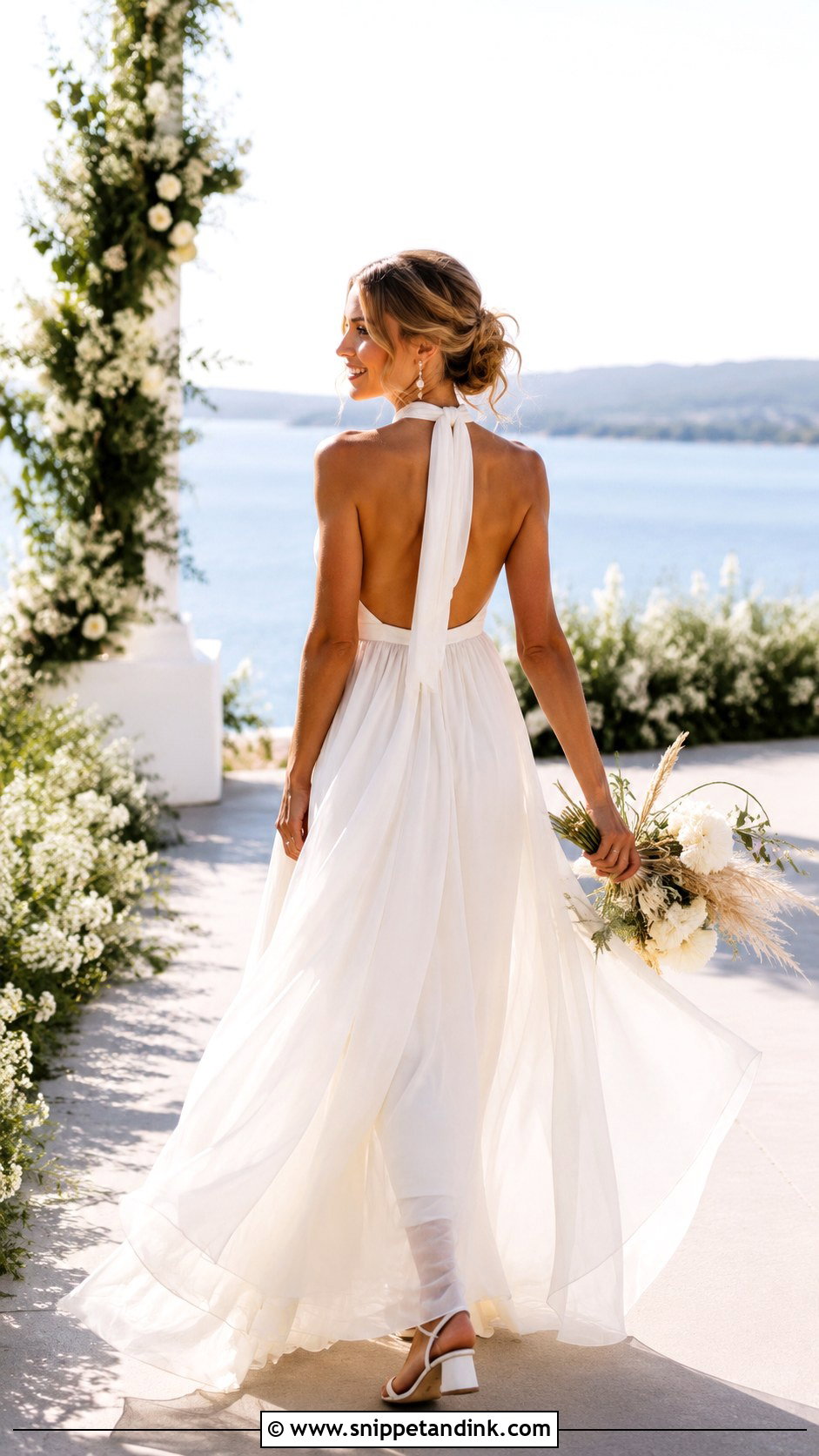
Chiffon makes this neckline feel light and relaxed. A softly gathered high neck, a defined waist and a skirt of several fine layers move beautifully outdoors. The back might use slender ties at the neck or a soft cowl. Chiffon can be sheer, so check the lining in daylight and ask about an extra layer. Ties at the neck need a secure knot or a hidden hook behind them; a bow alone can loosen during the day. Low block-heel sandals, a loose updo and a barely-there veil suit it, and the hem should float just above the floor in your shoes.
16. High Neck Low Back Botanical Lace Wedding Dress
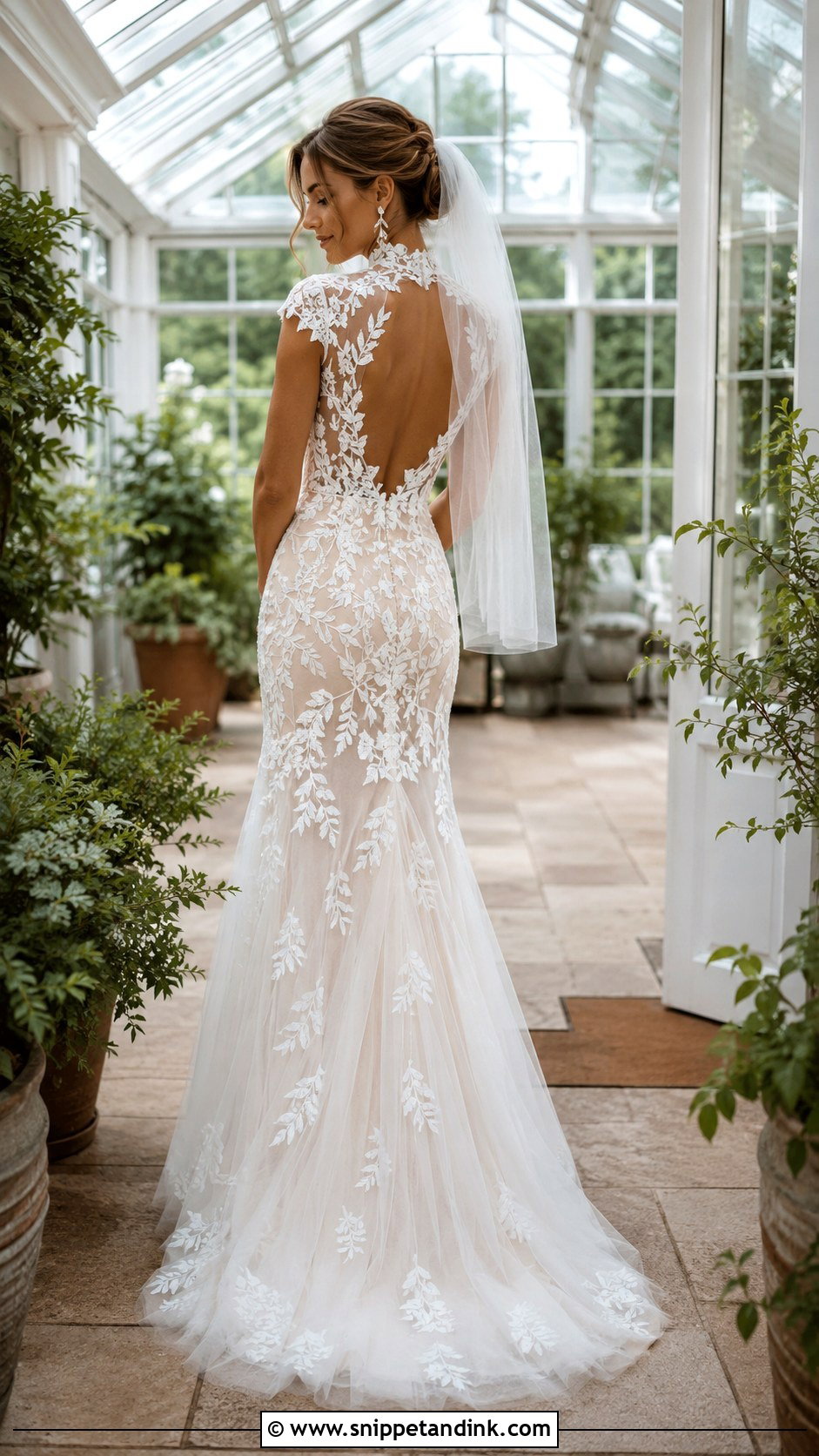
Large botanical lace with leaves, vines or abstract blooms feels fresher than small traditional florals. Look for appliqués across the high-neck bodice and around the back opening, continuing into a tulle A-line or a lace train. Appliqué placement is the thing to watch during alterations; well-placed motifs can define the waist, frame the back and hide the join between lined and sheer areas. Leaf-shaped earrings, simple heels and a plain veil keep the pattern readable. Leave out the flower crown and heavy jewellery, which make it look busy.
17. High Neck Low Back Drop Waist Wedding Dress
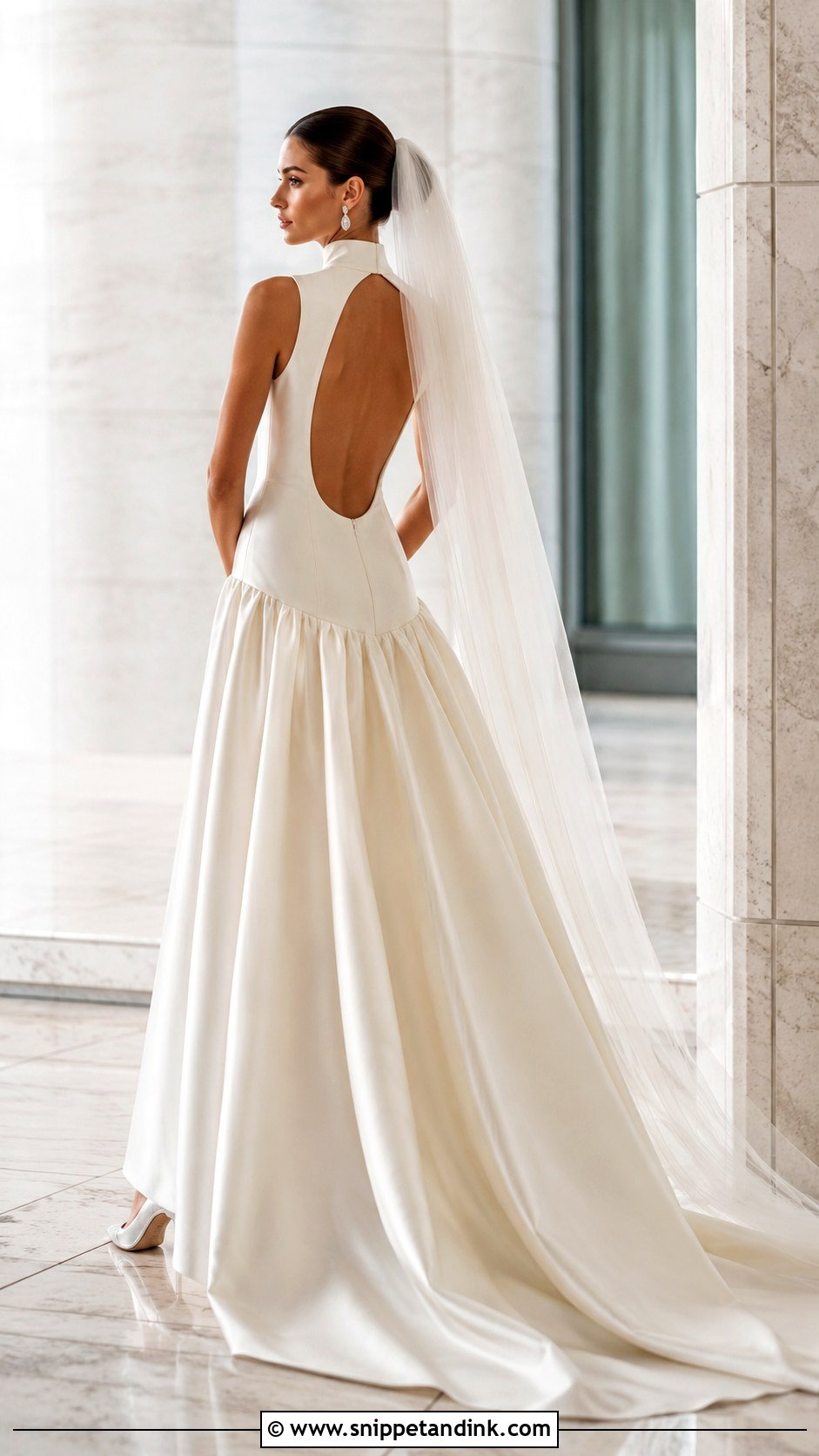
A drop waist extends the fitted bodice below the natural waist before the skirt opens, which reads structured and fashion-forward. Satin or mikado holds the defined bodice and sculpted skirt. A low square back echoes the long torso line, and covered buttons add a classic touch. The waist seam is where this shape succeeds or fails: placed too low on a shorter torso, it cuts the legs off visually. Ask your seamstress to check it from every angle while you sit and stand. A long, plain veil and a sleek bun keep the proportions clean.
18. High Neck Low Back Wedding Dress With Cape
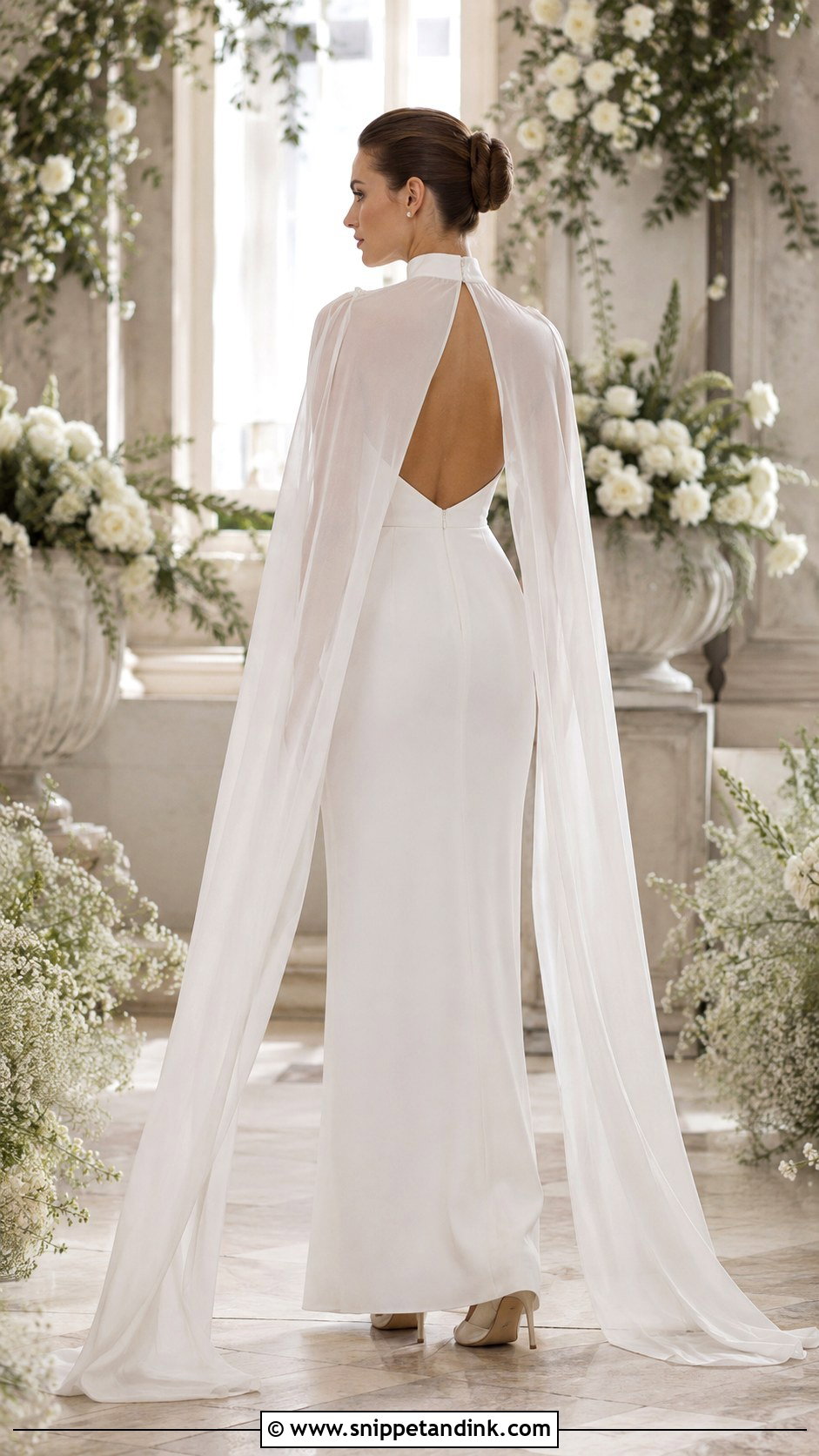
A detachable cape gives coverage for the ceremony without hiding the open back for good. Start with a streamlined high-neck gown in crepe, satin or lace, and add a sheer cape fastened at the shoulders or neck that falls behind like a veil. After the vows, remove it for portraits and the reception. Choose either the cape or an elaborate veil, not both. Test the fastenings at fittings; a heavy cape hung from the neckline pulls the halter backward. It should clear the train and come off easily without disturbing your hair.
19. Plus Size High Neck Low Back Wedding Dress
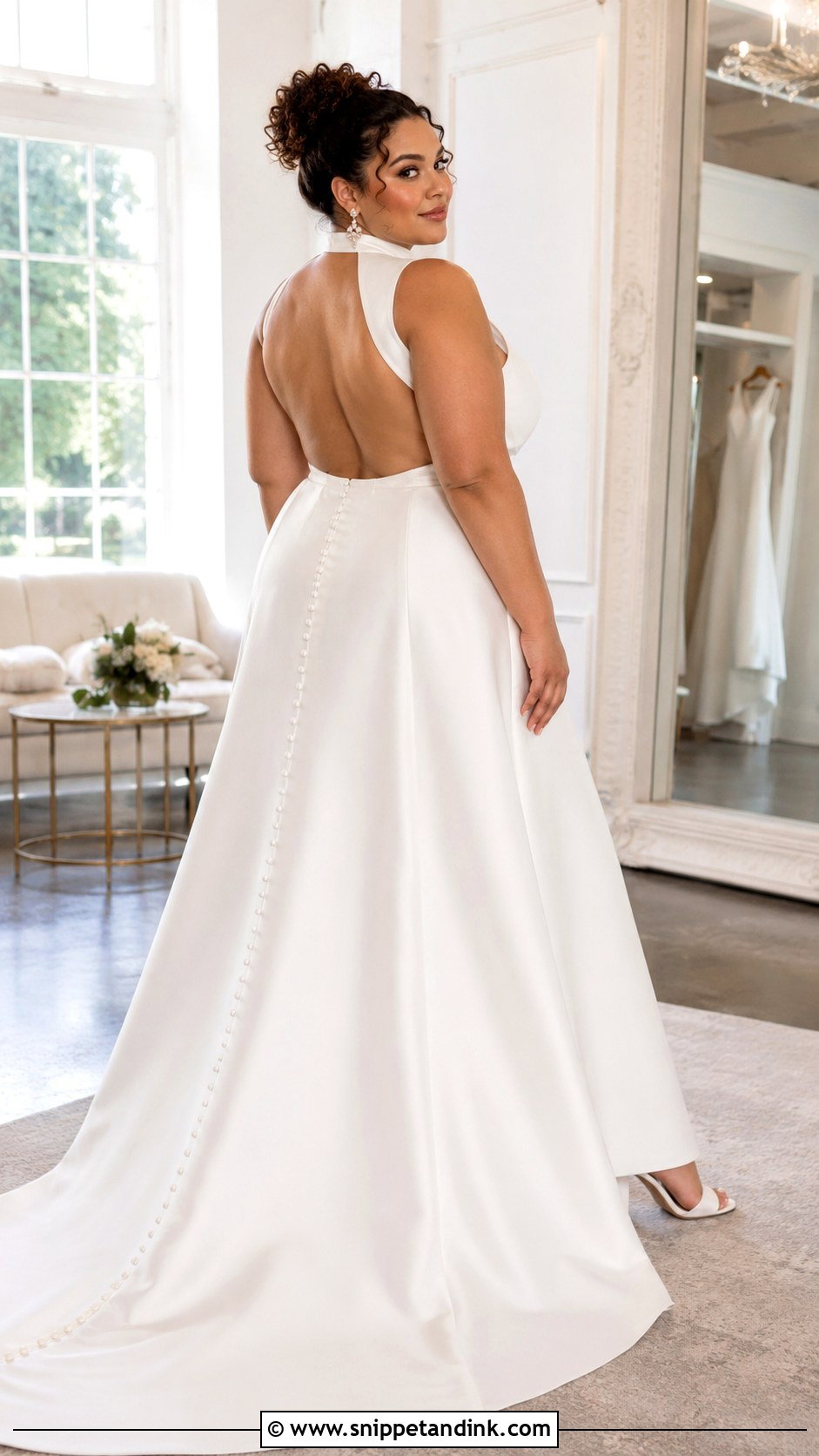
With a fuller bust, the open back is very achievable, but the support has to be built into the dress. Look for a supportive halter bodice, well-placed seams and a back opening shaped around internal structure such as boning and mesh panels. Wider neck straps spread the weight far better than thin ties, which dig into the back of the neck. A-line, trumpet or fit-and-flare skirts all work. Ask about built-in cups at your appointment, and move in the sample instead of judging it standing still. Good tailoring should let you sit, hug and dance without adjusting anything.
20. Petite High Neck Low Back Wedding Dress
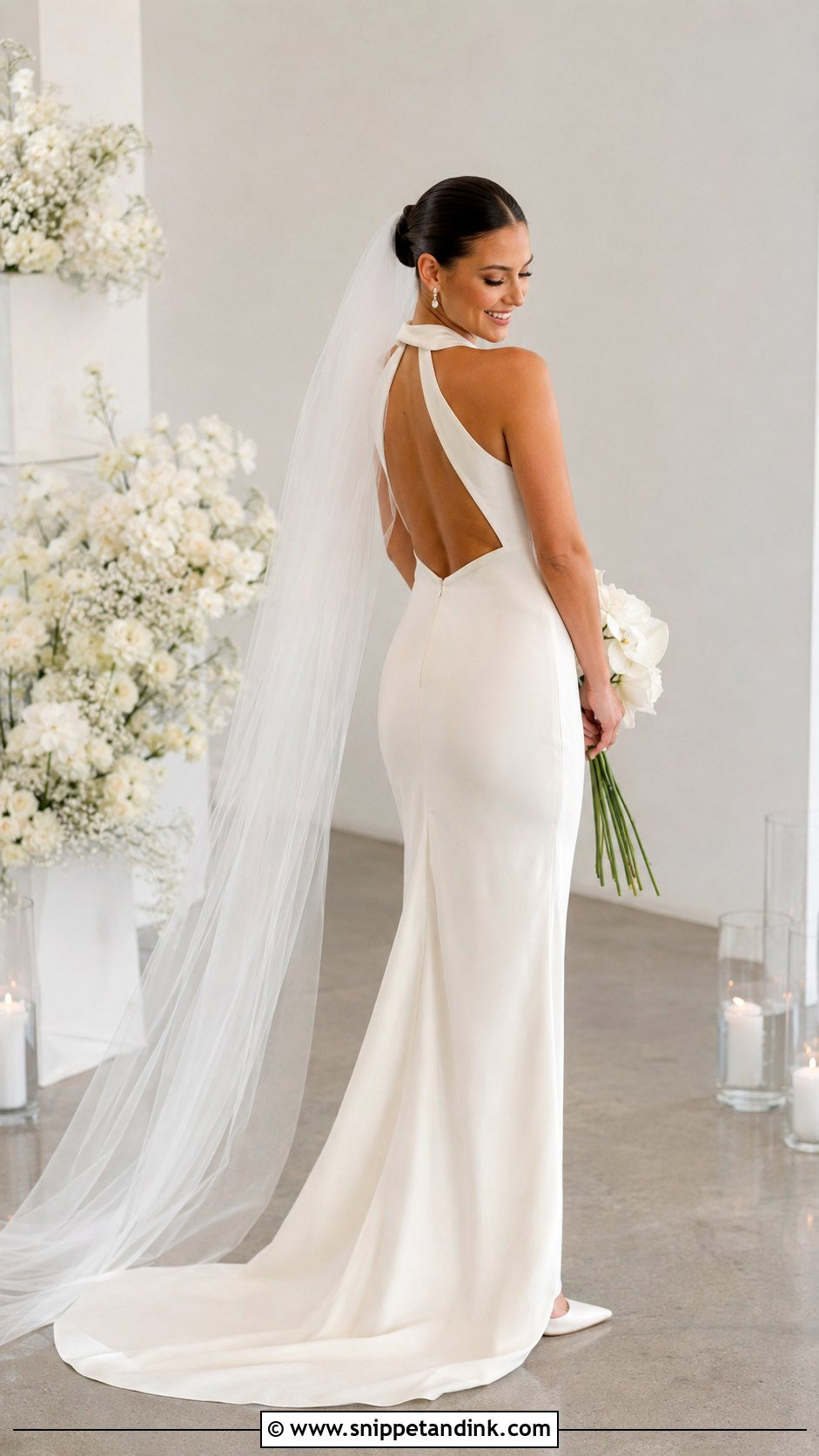
For petite brides, proportion is everything with this neckline. A narrow A-line, sheath or bias-cut column lengthens the body without overwhelming it. Keep the high neck close to the throat and the back opening ending near the natural waist. Very wide straps or a large collar shorten the upper body, so keep them slim. Most bridal gowns are cut for a taller height, and shortening a dress can move the waist, back opening and flare, so ask for petite pattern adjustments rather than a simple hem. Pointed heels and a single-layer veil keep it light.
Your Back Is What Guests Watch During the Vows
At most ceremonies the guests face your back for the entire service, so this neckline gets far more attention than the front of the dress. Plan for that.
- Avoid strap tan lines in the months before. A bikini mark across an open back shows in every ceremony photo.
- Exfoliate and moisturise the back gently in the weeks before, and leave anything new or strong alone in the final week.
- If you use self-tan, apply it a few days ahead, not the night before, so it doesn’t transfer to the lining.
- Ask your makeup artist to blend the face and neck down toward the shoulders, so the skin tone matches.
Think about temperature as well. Churches and air-conditioned halls can feel cold on bare skin, and goosebumps show in close-up photos. A sheer wrap or a detachable cape keeps you warm until the portraits.
Hair matters as much as skin. Loose hair over an open back hides the detail you chose the dress for, so an updo or a low style swept to one side usually works best. Bring a photo of the back of the gown to your hair trial so the stylist can place the style above the opening.
Photograph Every Gown From Behind Before Deciding
This neckline is about balance: coverage at the front, a well-framed back. Satin and crepe give clean lines; lace, pearls and botanical appliqué add texture. Your shape might be an A-line, a column, a mermaid or a ball gown, and plus-size and petite brides each have their own fit priorities. Whatever you choose, put construction, support and alterations ahead of decoration. Wear your hair up or swept aside and keep jewellery simple. Above all, ask someone to photograph you from the front, side and back at every appointment, because the back view is the one you can’t see in the mirror.
You'll Like These Ideas:






Leave a Reply