
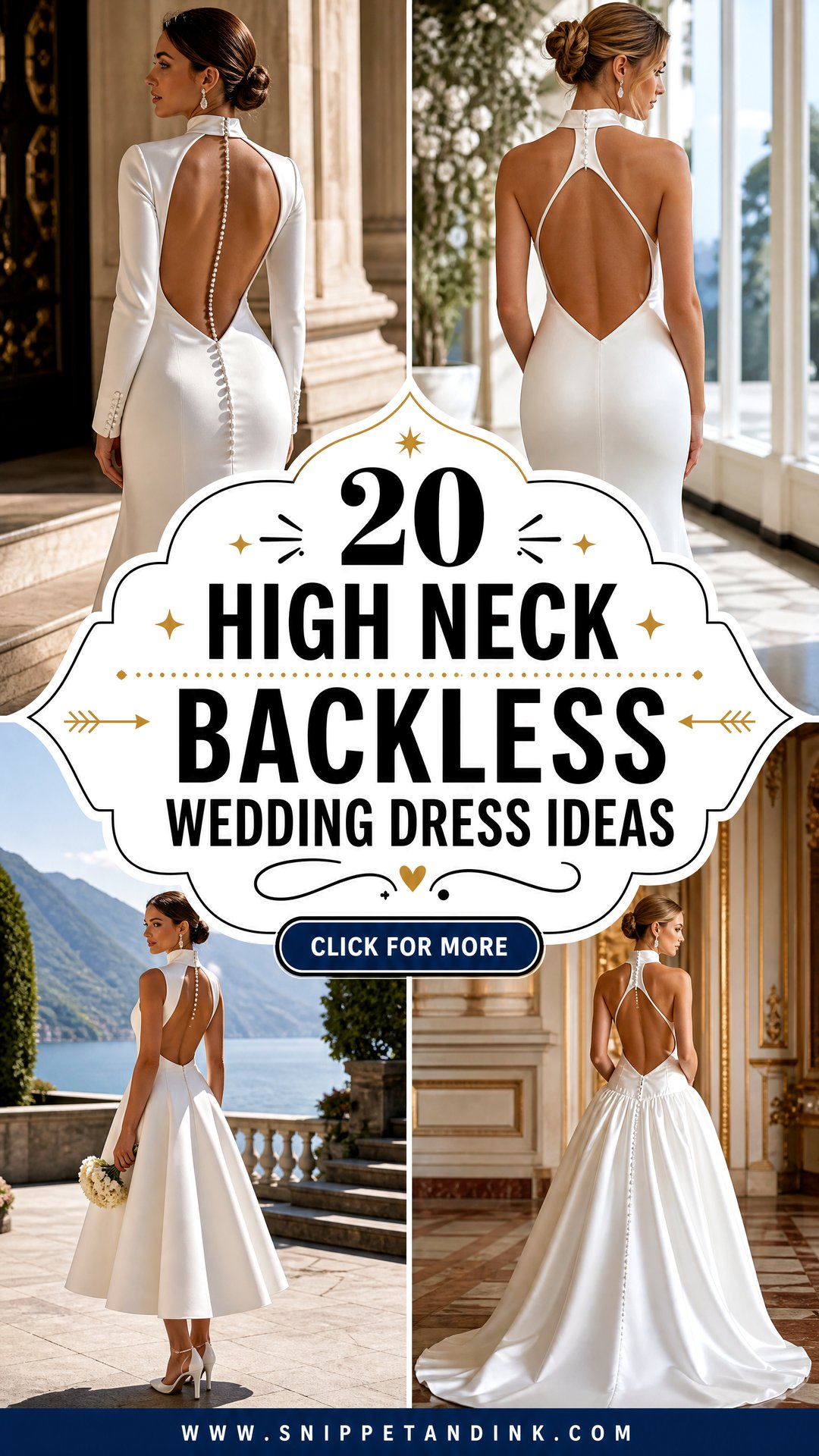
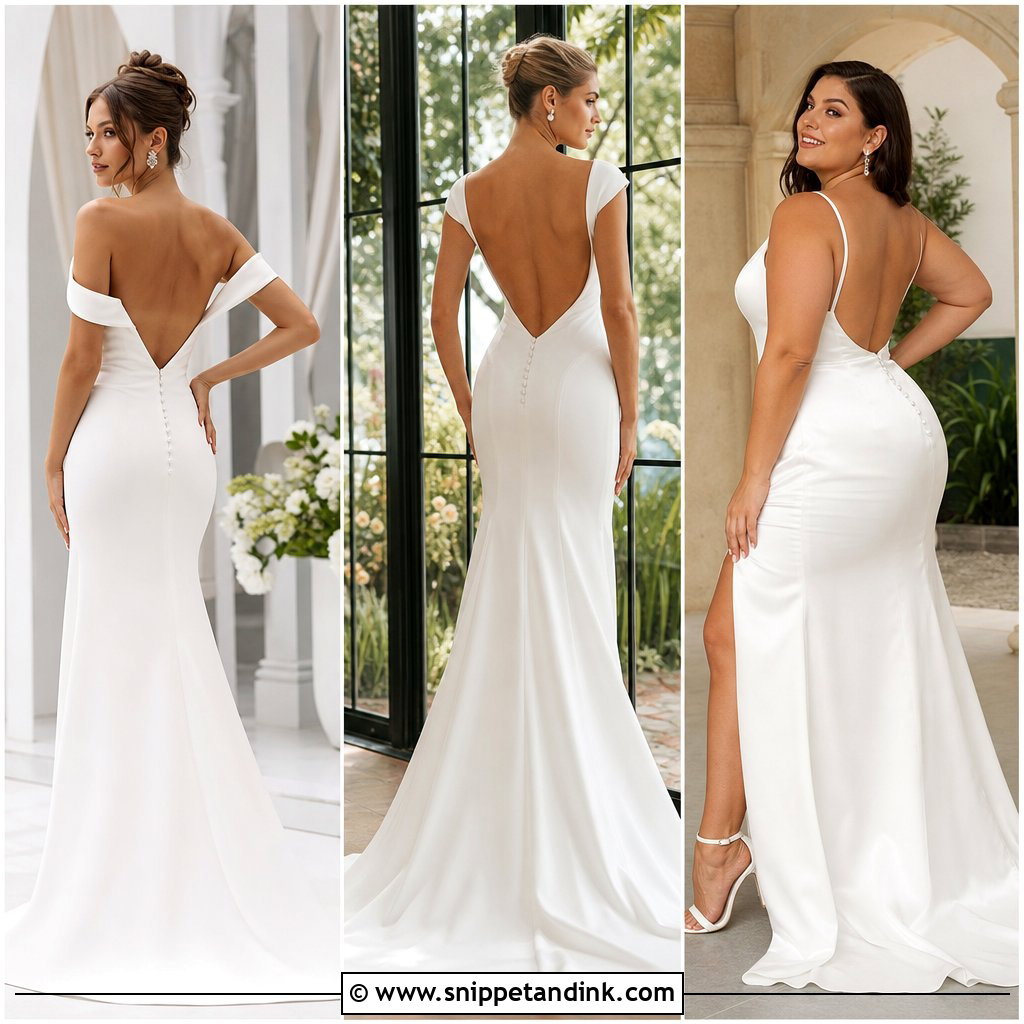
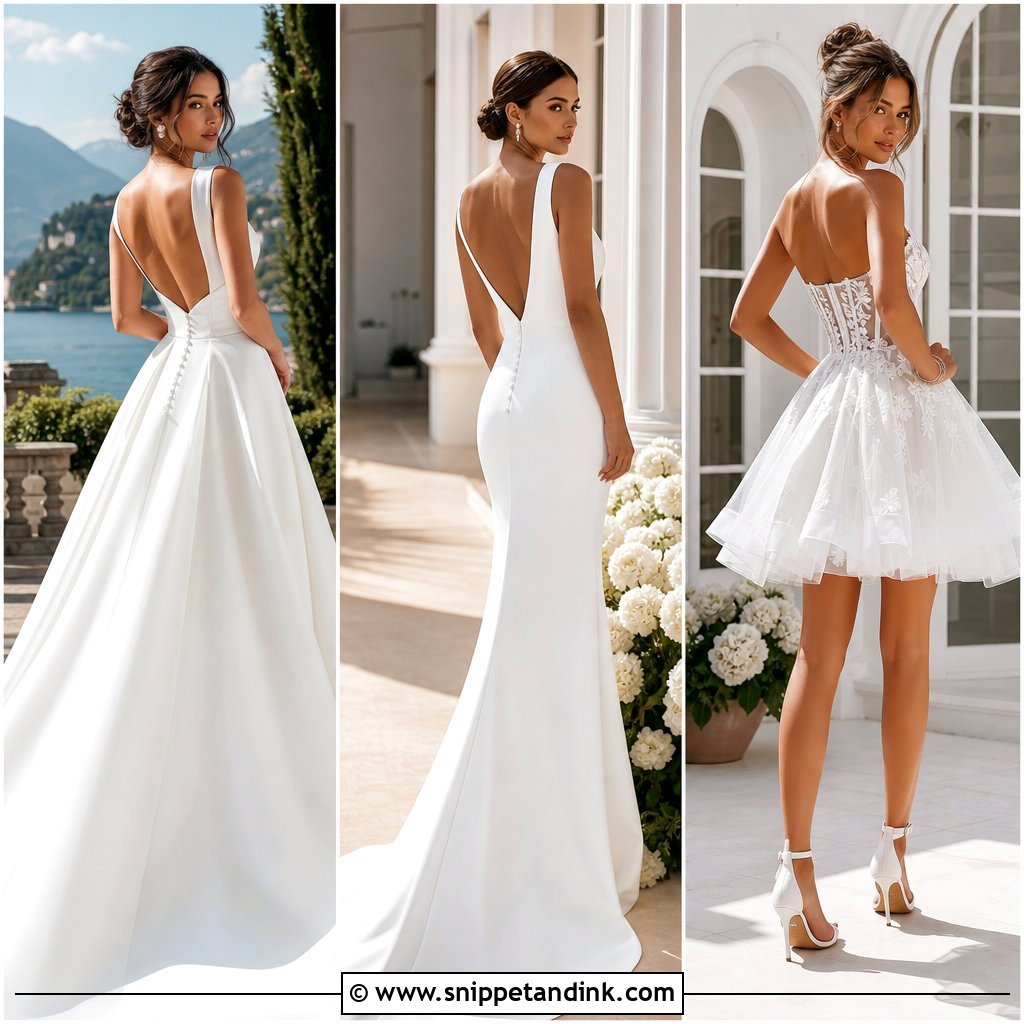
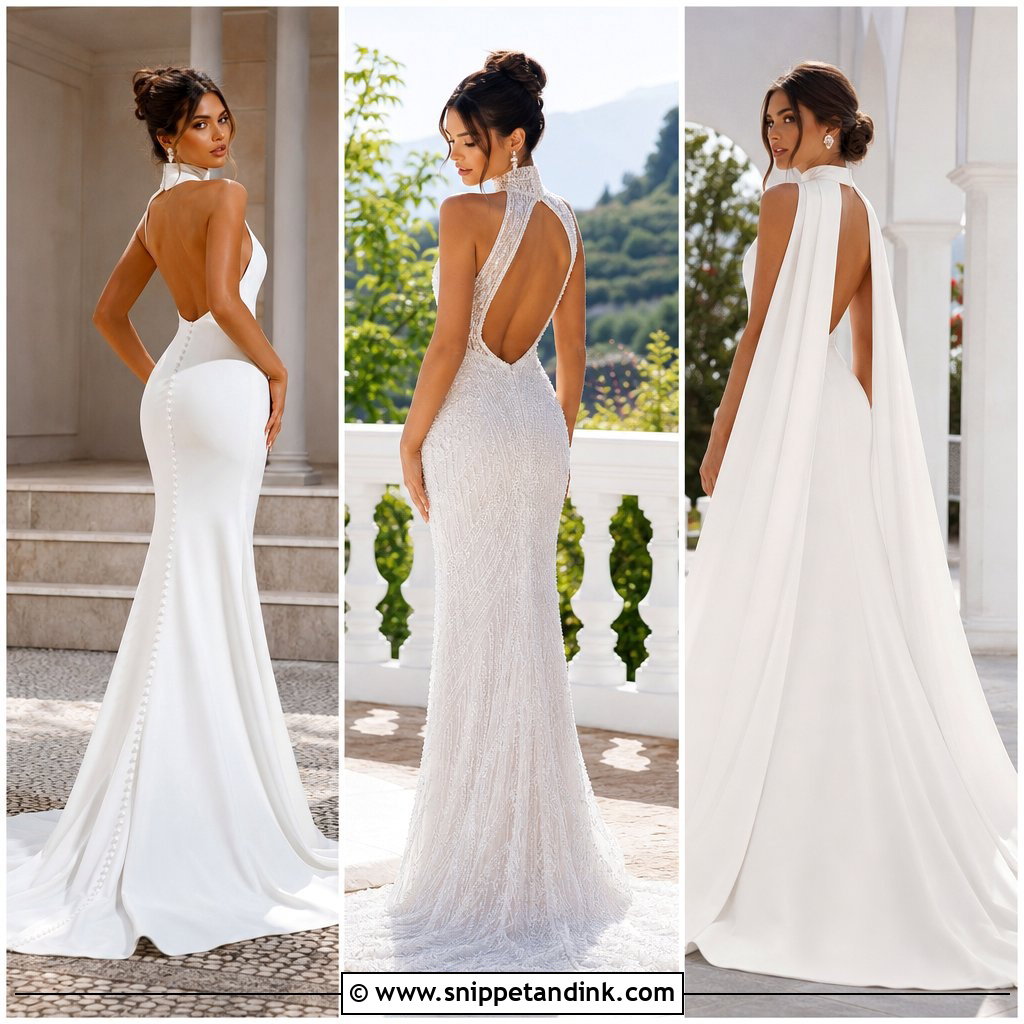
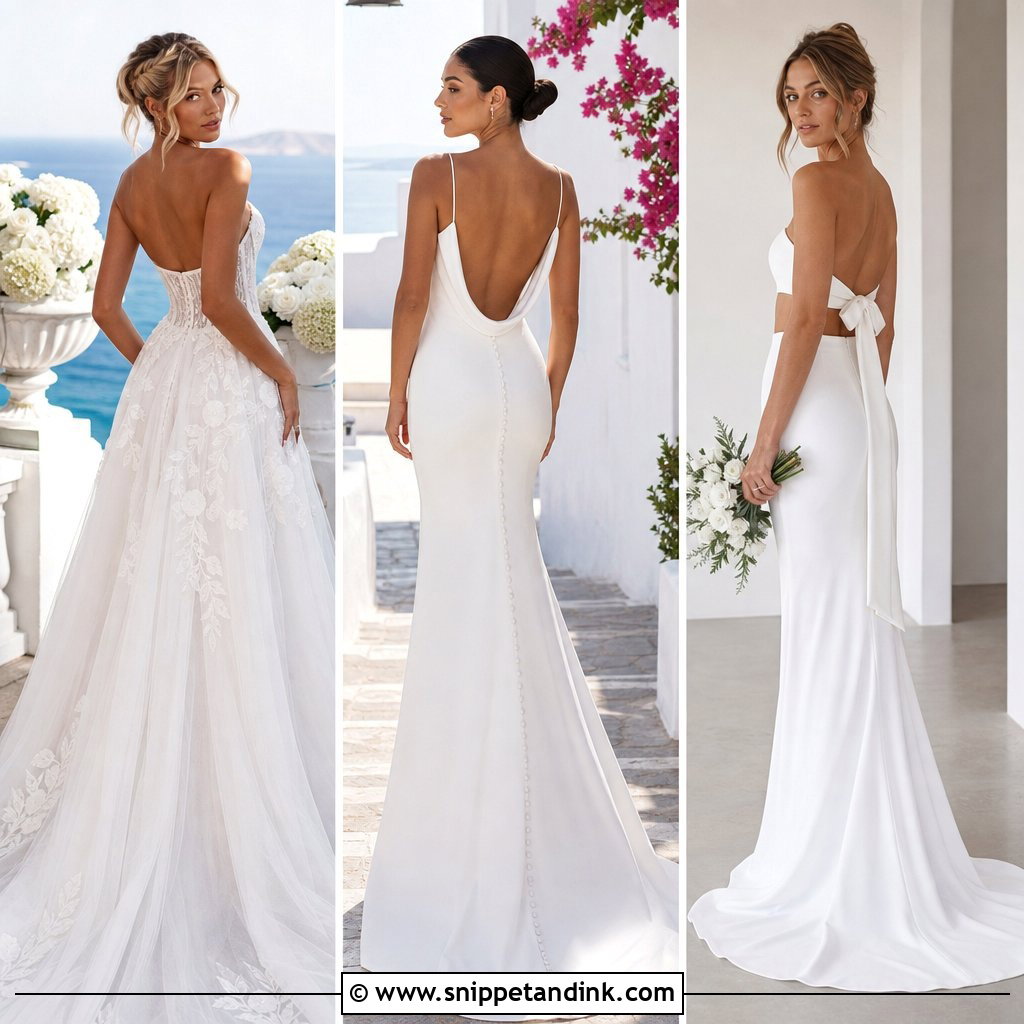
A high neck covers you; an open back undoes that cover the moment you turn around, and that switch is why I keep pulling this combination for brides who stand with their back to guests for most of the ceremony. The pairing works in satin, lace, chiffon, mikado and crepe, and on almost every silhouette from a column to a full ball gown. What changes between them is how the neckline is anchored and where the back opening stops, because those two points decide whether the dress stays put. Below are twenty versions I’d actually put a bride in, with notes on fabric behaviour, support and the hair and veil choices that keep the back on show.
What Holds a Backless Gown Up When There’s No Bra Strap
Every bride who tries this style asks me the same question within a minute: what am I wearing underneath? The honest answer is that support has to come from the dress itself, and you should know which kind you’re getting before you fall in love with a sample.
- Built-in cups are sewn into the bodice lining. They’re the most reliable option, and any seamstress can add or swap them during alterations.
- Power mesh or a corset base inside the bodice holds the fit at the waist so the high neck isn’t doing all the work. Most structured satin and mikado gowns have one.
- Adhesive cups suit lighter chiffon and crepe dresses. Test them on a warm day before the wedding, because sweat and body lotion both weaken the grip.
- A low-back converter strap can drop an ordinary bra band below the opening, but only works when the back stops near the waist.
The neck closure matters as much as the cups. A halter that carries the bodice will pull on the back of your neck, and after a few hours some brides get a headache from it. If the neck feels tight at the first fitting, ask for the weight to be shared by the waist seam rather than just loosening the strap, which only makes the front sag.
1. Satin Halter High Neck Backless Wedding Dress
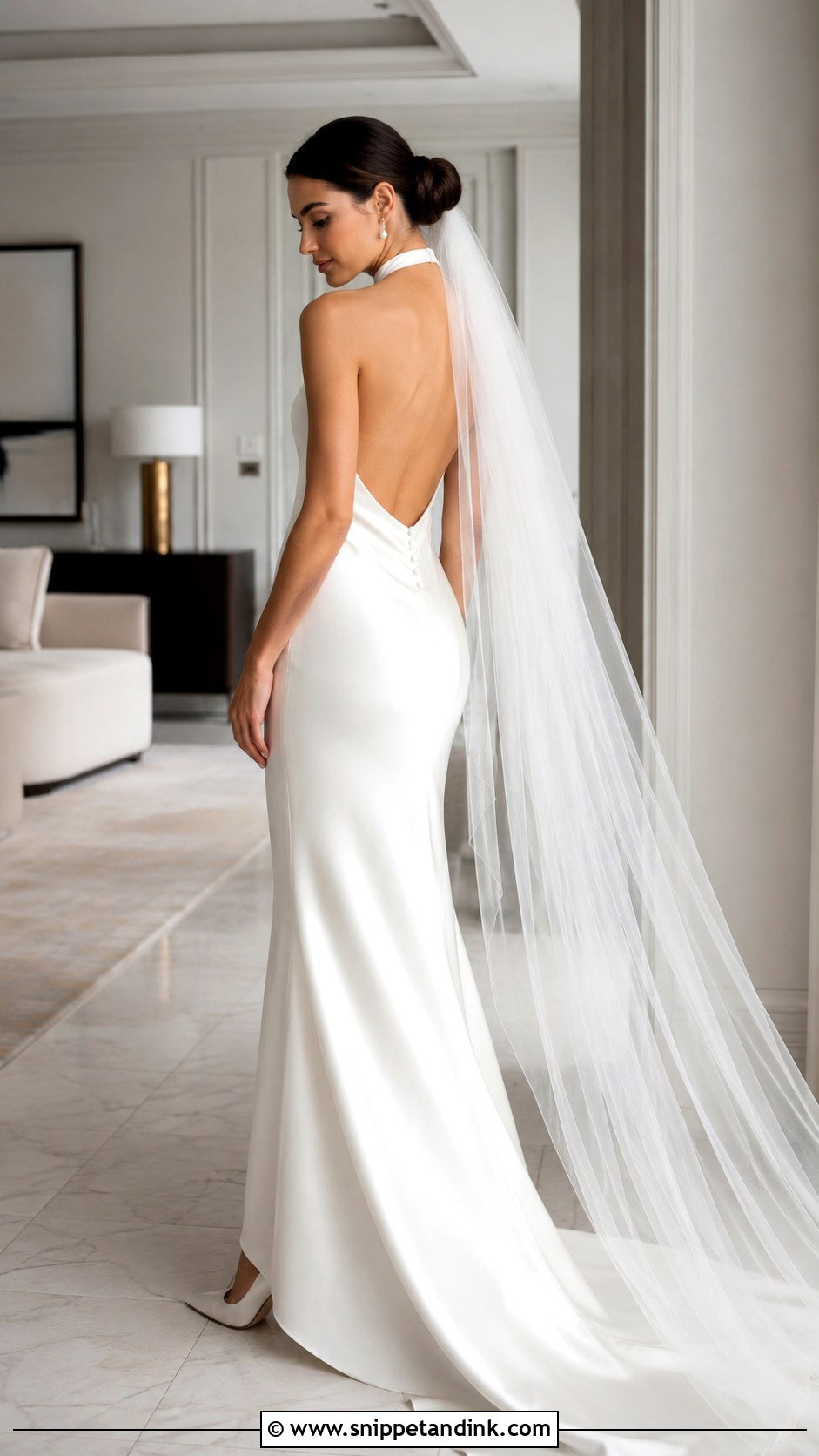
Satin shows everything, so a satin halter needs a precise fit at two places: the neck closure and the point where the back opening meets the skirt. I look for narrow straps that fasten behind the neck with a hook as well as a button, since a button alone can slip under a heavy veil comb. Covered buttons running down below the opening add a classic finish and hide the zip. A low bun, pearl drops and pointed ivory pumps are all this gown wants. Go cathedral for the ceremony if the aisle is long, fingertip if you’d rather the satin did the talking. In a hotel ballroom or on a rooftop at golden hour, the fabric catches light along every seam, so ask for a pressing on the morning, not the day before.
2. Lace Mock Neck Backless A-Line Wedding Dress
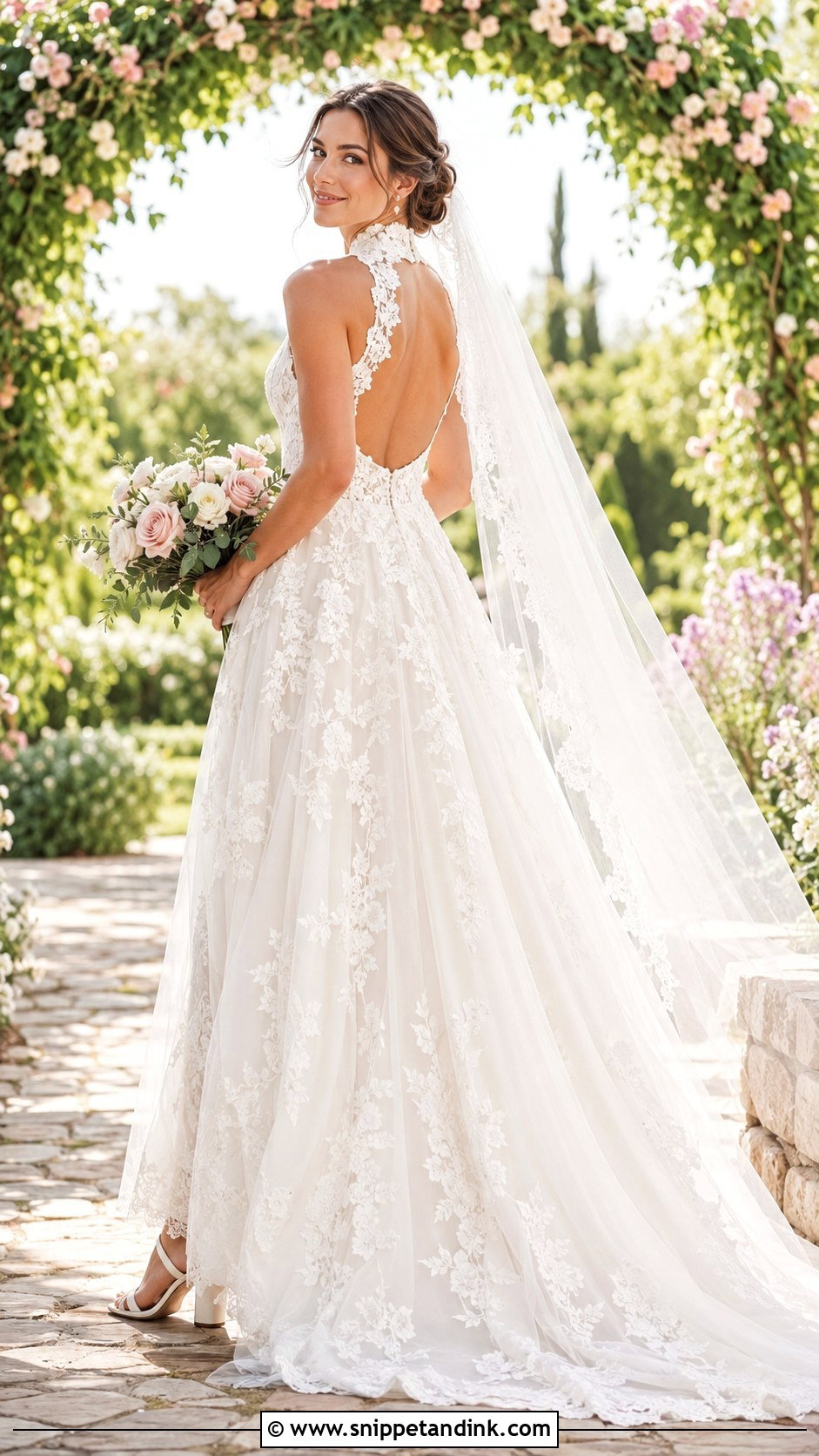
A mock neck in lace is softer than the same collar in crepe because the scalloped edge breaks the line under the chin. The detail I check first is whether the lace pattern actually continues from collar to back opening, or whether it’s been cut and patched; matched motifs are the sign of careful construction. A gathered tulle or chiffon A-line skirt keeps the gown light enough to walk a lawn in. Pearl studs, a lace-edged veil and block heels suit it, and block heels matter on grass. Pull the hair into a textured bun so the back shows. Garden roses with sweet peas finish it for a spring garden or estate ceremony.
3. Long Sleeve High Neck Backless Wedding Dress
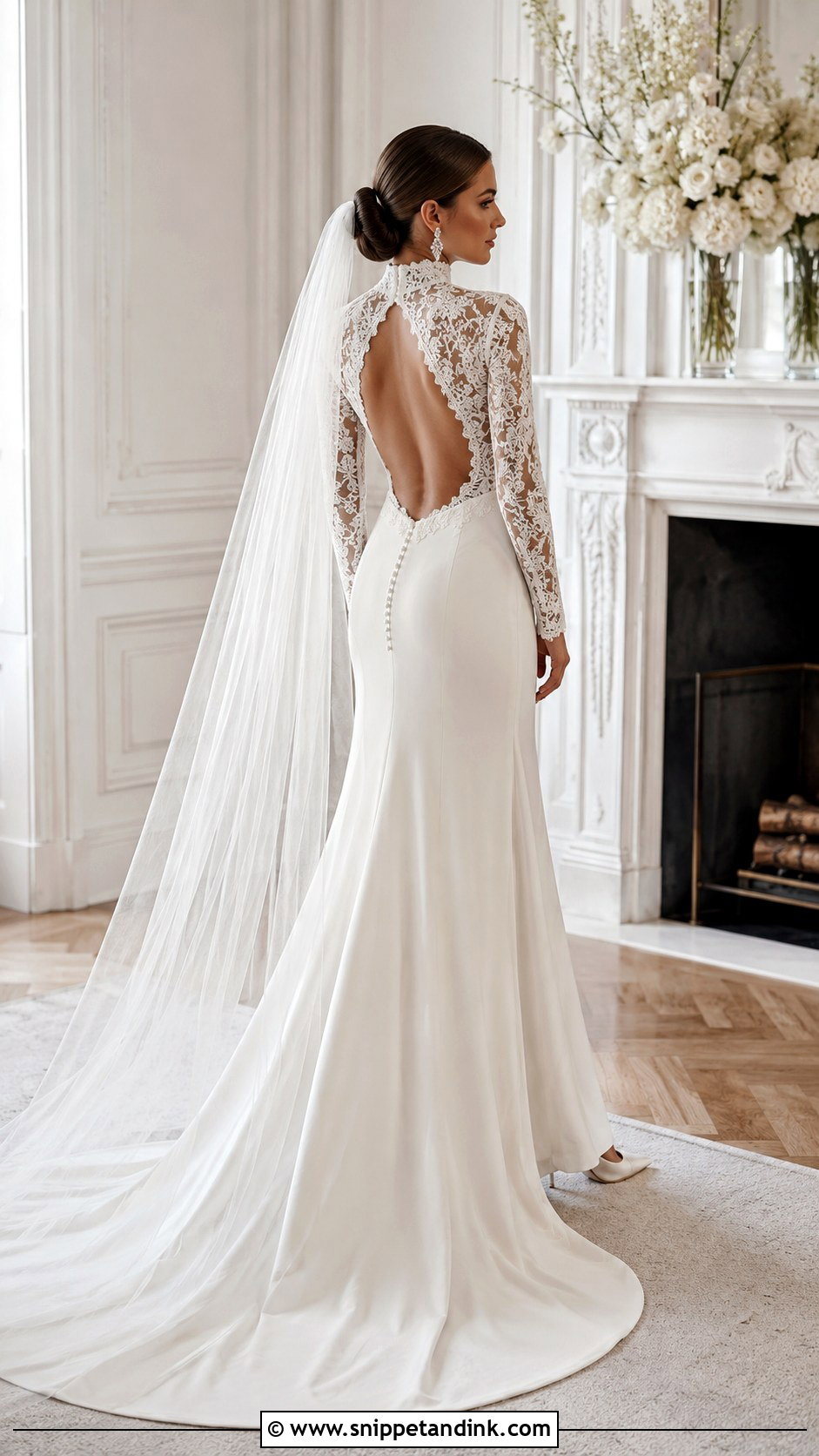
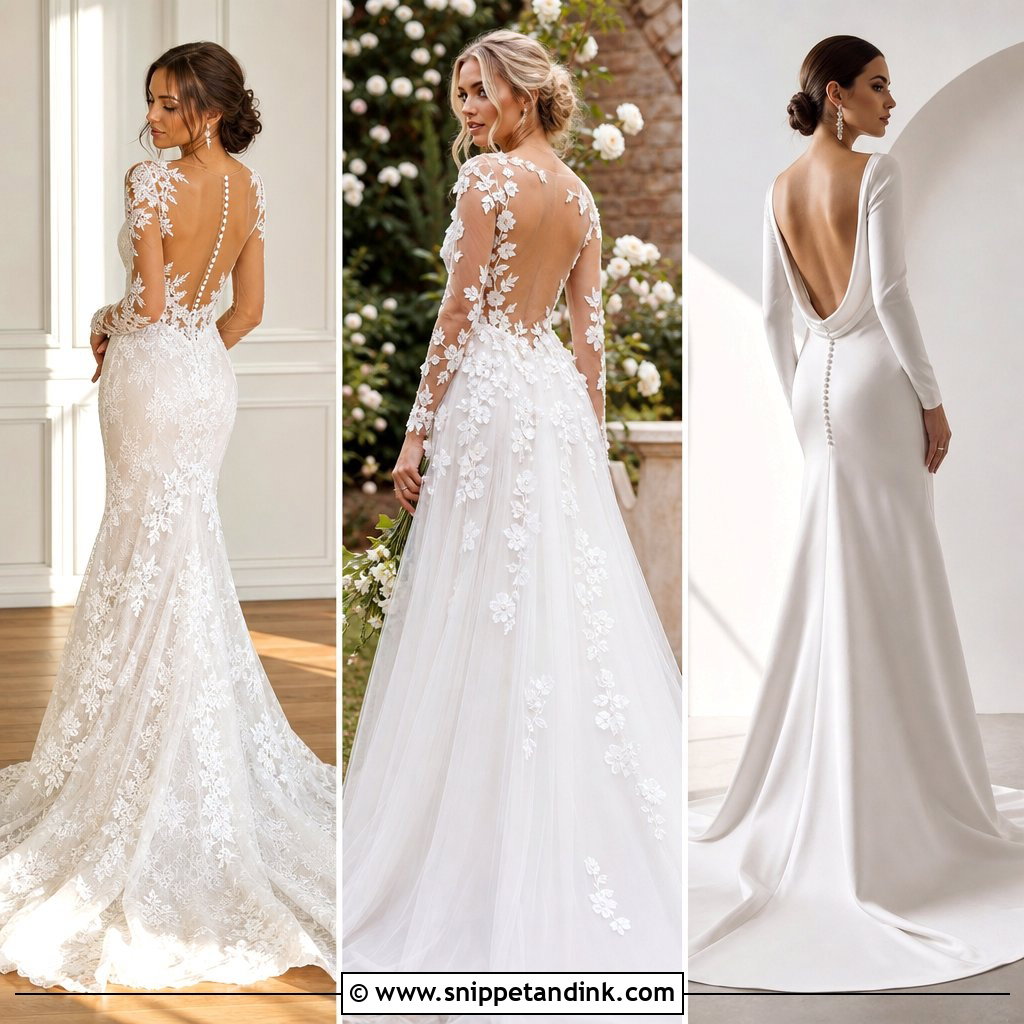
Long sleeves plus an open back is the combination I suggest most often to brides who want coverage for a religious ceremony but still want a reveal later. The sleeves balance the bare skin, so the back reads as deliberate rather than daring. Sheer lace or embroidered tulle sleeves stay cool; crepe sleeves look sharper but get warm. One fitting note: fitted sleeves restrict how high you can lift your arms, so hug your mother and raise a glass in the fitting room before the hem is finished. Small buttons at the neck and waist frame the keyhole. Crystal earrings, closed pumps, a veil set under a smooth chignon and white anemones complete it for autumn, winter or evening.
4. Crepe Mermaid High Neck Backless Wedding Dress
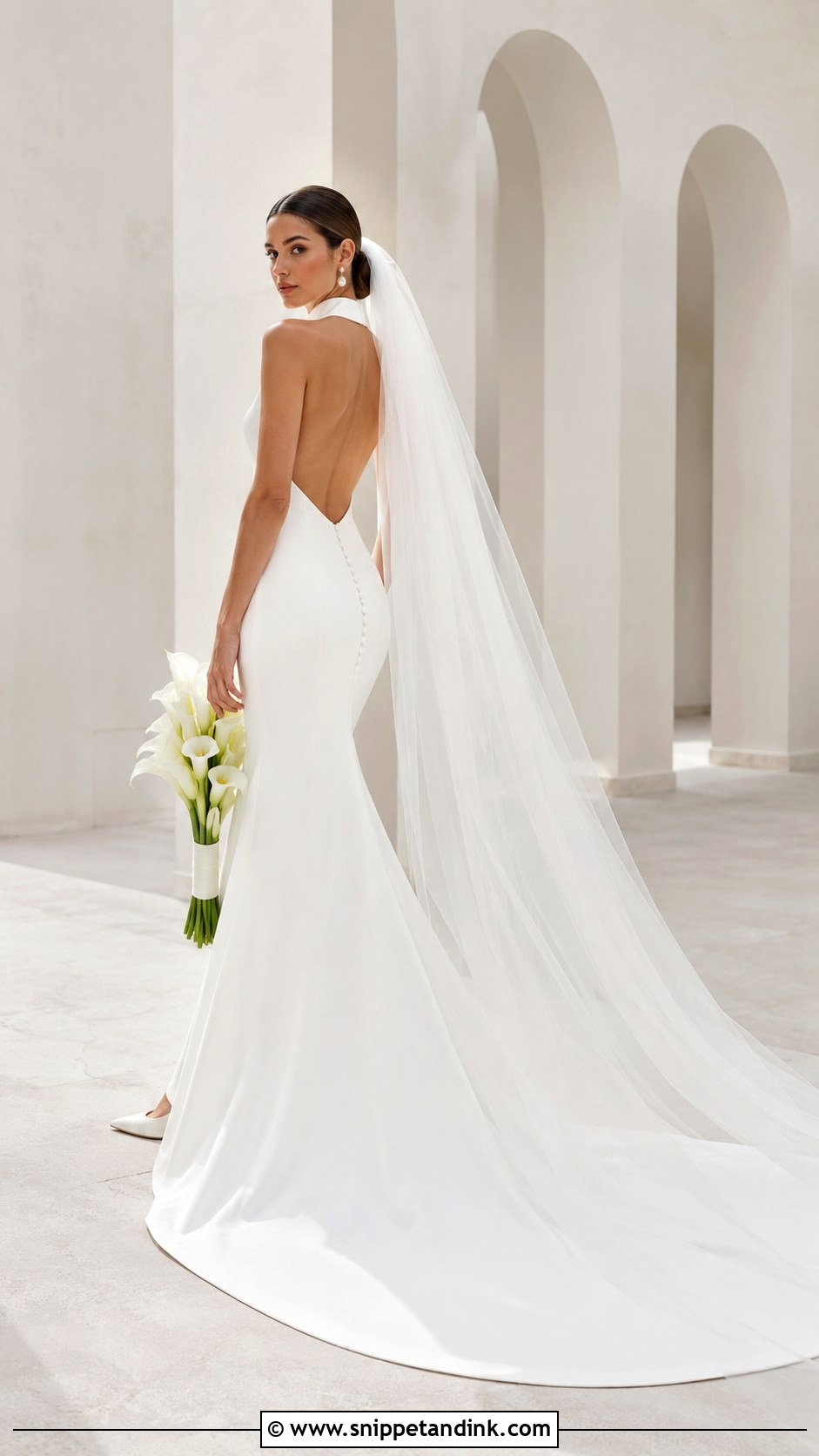
Stretch crepe is the fabric I’d choose for a high-neck, low-back mermaid, because it holds the shape with fewer seams and lies flat against the spine. Satin in the same cut can ripple where the back opening ends. The flare should start at or just below the knee; set it higher and you’ll struggle with stairs. Keep a jewel or mock neckline, curved side seams and an opening that stops near the waist. Skip a necklace entirely. Sculptural pearl earrings, sleek hair, pointed satin heels and a raw-edge veil are enough, with calla lilies or a tight white bouquet in hand. Practise sitting in it at the fitting, since a mermaid skirt decides how you sit at dinner.
5. Chiffon Halter Backless Beach Wedding Dress
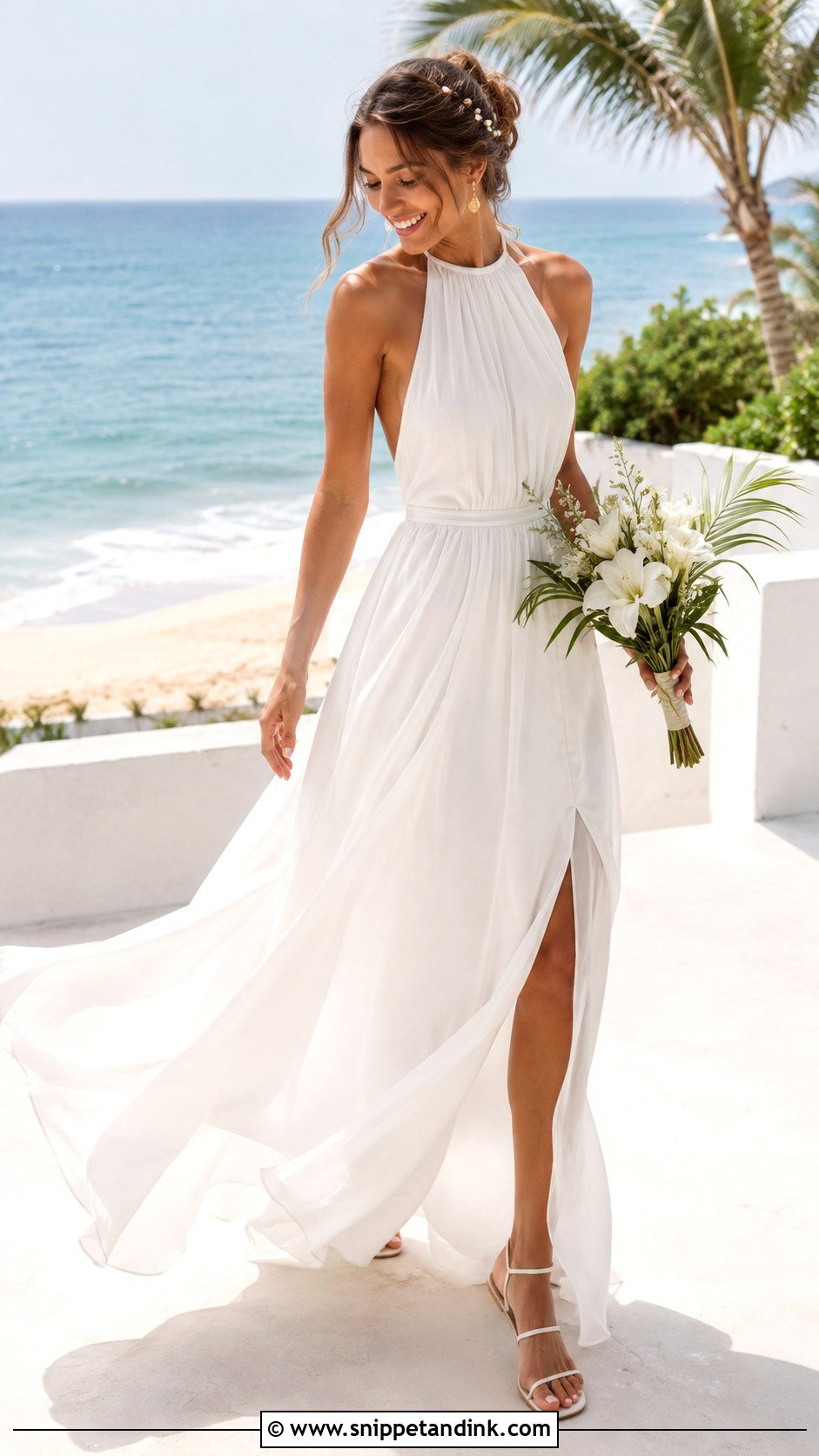
Chiffon is the fabric I trust on a beach, because wind lifts it and lets it fall rather than pinning it to your legs. A gathered halter that ties or buttons at the nape leaves the shoulders and back bare, which also means sunscreen and an even tan matter more here than in any other gown on this list. Keep the skirt a light A-line with a short sweep; a long train collects sand. Pearl pins, small gold earrings and flat sandals handle uneven ground. A loose updo keeps hair off the tie at the neck. Orchids or tropical greenery suit a beach, coastal terrace, or destination ceremony.
6. Beaded High Neck Backless Wedding Dress
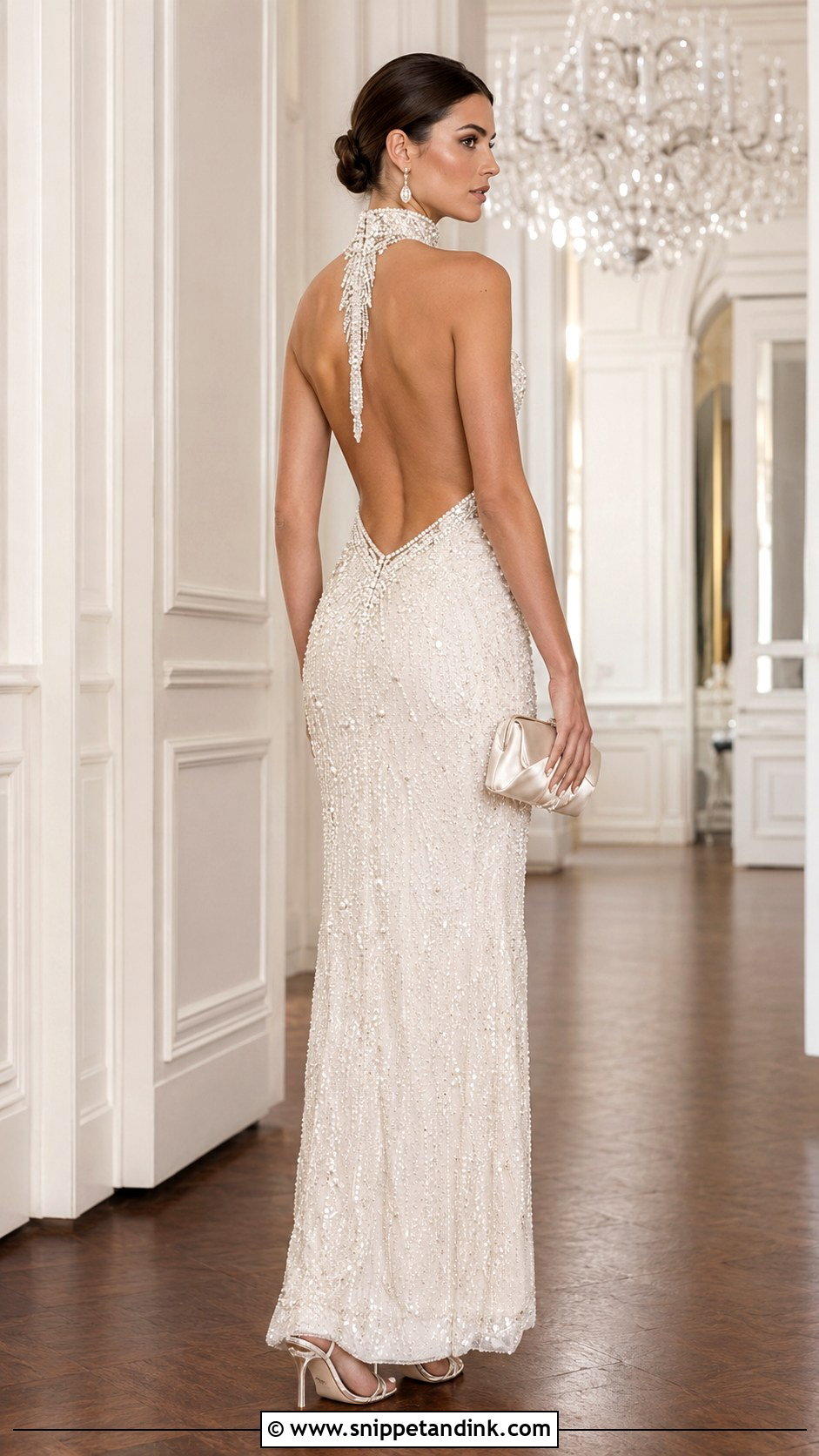
Beading on a high illusion neckline is heavy, and that weight pulls forward on a dress with no back to counter it. When I fit these, I look for a firm inner lining and often a clear elastic strap across the opening so the collar doesn’t drag down through the evening. Crystals, pearls or sequins should continue around the edge of the back so the opening reads as finished. Hair goes up, in a neat bun or twisted updo. Choose a plain tulle veil; a beaded veil fights the bodice and can snag on it. Crystal studs, metallic ivory heels and white roses suit a ballroom or a grand hotel at night.
7. Mikado Ball Gown With High Neck And Open Back
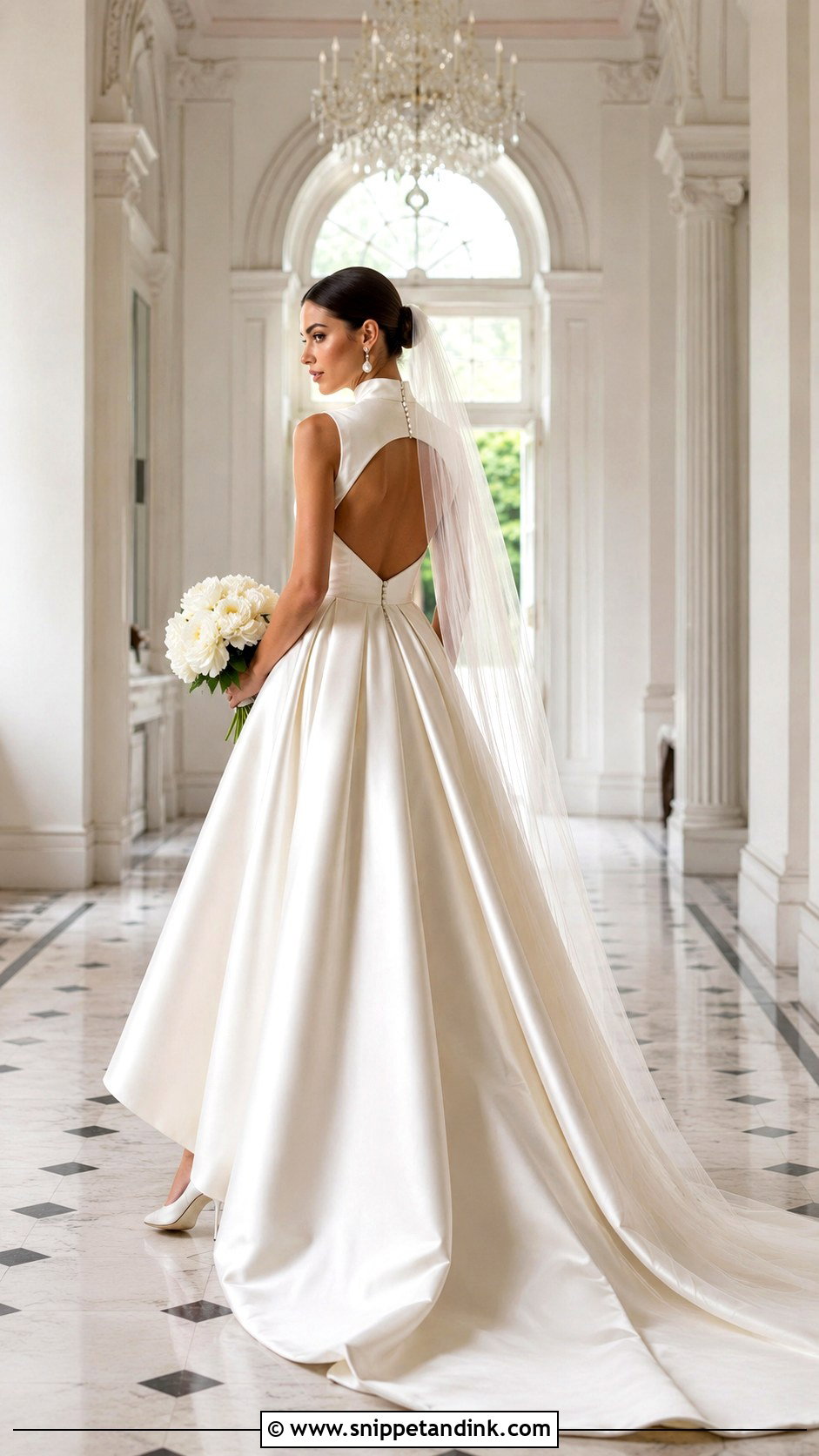
Mikado is stiff enough to stand away from the body, so a mikado ball gown with a jewel neck and wide open back keeps its shape even when you’ve been sitting for an hour. That stiffness is also its limit: it creases sharply at the hip if you slump, so I tell brides to sit forward on the chair edge for photos. Box pleats give the skirt volume without decoration, and pockets disappear into the pleats. A sleek bun, statement pearl earrings and pointed pumps are plenty. A long plain veil lying over the skirt shows off its scale, and a round bouquet of peonies suits a ballroom or historic estate.
8. Boho Lace High Neck Backless Wedding Dress
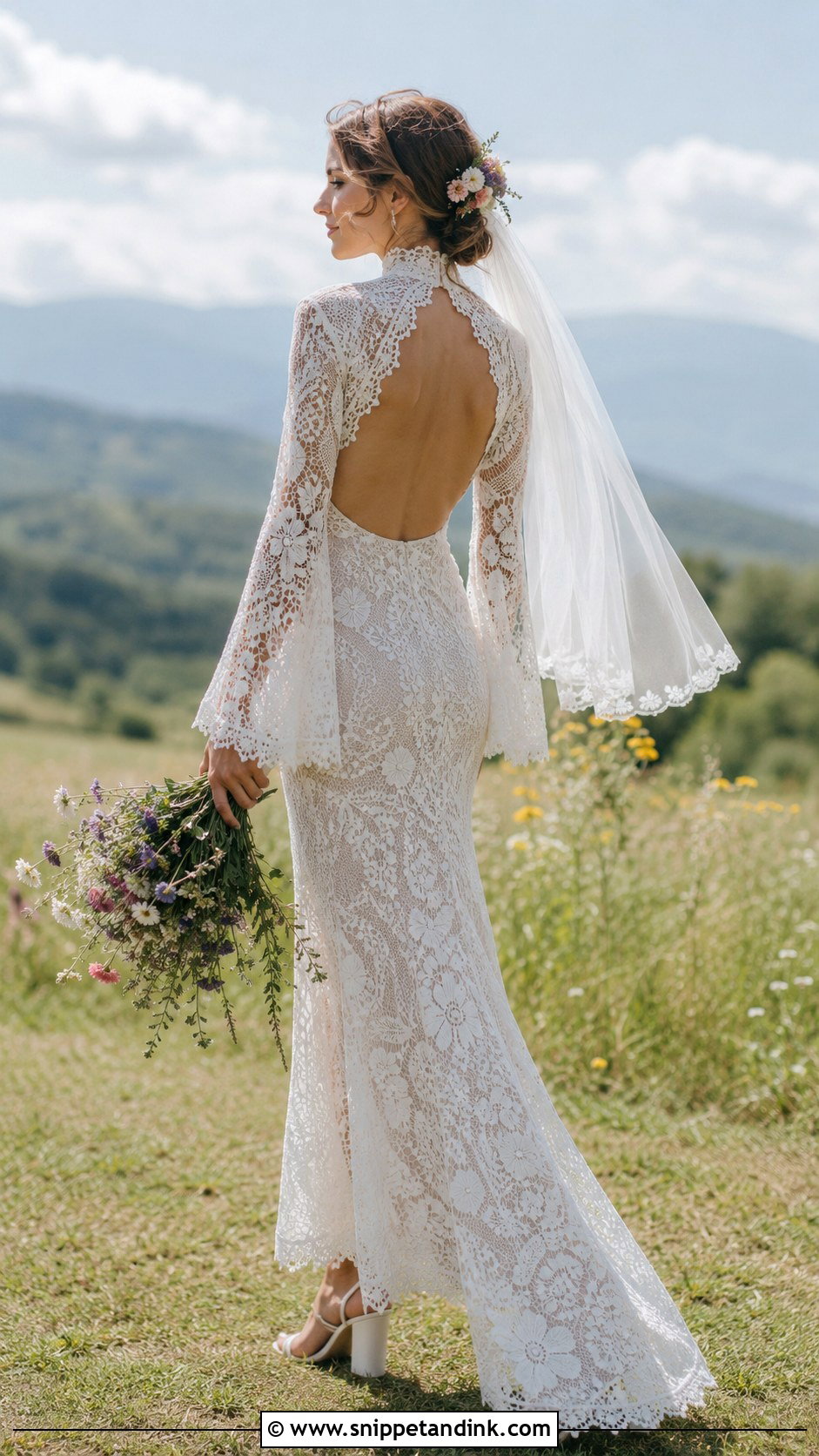
Guipure and crochet lace are thicker than Chantilly, so they suit a relaxed outdoor wedding where the dress will brush against grass and wooden benches without looking delicate. Over a light lining, a sheath with a slightly flared hem moves more naturally than a structured skirt. Bell sleeves or flutter sleeves add movement, though sleeveless is cooler in July. The covered neck and open back keep the look easygoing. Loose braids with floral pins, block-heel sandals, a fingertip veil and a handful of wildflowers fit a meadow or woodland venue.
9. Pearl High Neck Backless Column Wedding Dress
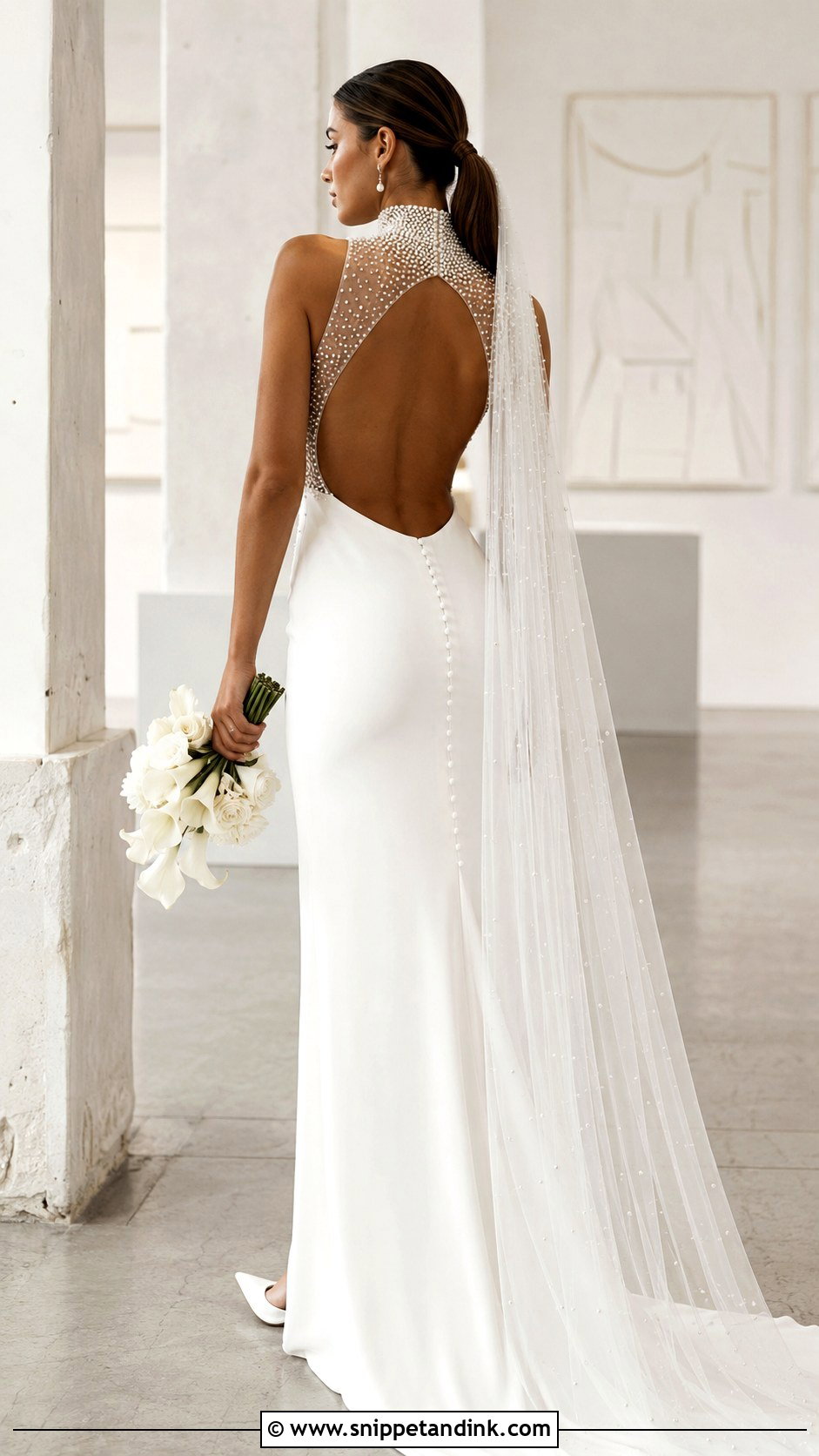
Scattered pearls that grow denser at the collar and the edge of the back draw the eye to exactly the two points this style is about. I keep the skirt plain, in matte crepe or soft satin, so the bodice isn’t competing with anything. A sleek low ponytail shows the back as well as a bun does and survives a long day better on very straight hair, which tends to slip out of pins. Pearl drops, a small comb and pointed heels match the bodice. Wear a veil with a few pearls near the hem, or a structured hair bow instead. It suits a gallery, a restaurant or a small ceremony.
10. Cape Sleeve High Neck Backless Wedding Dress
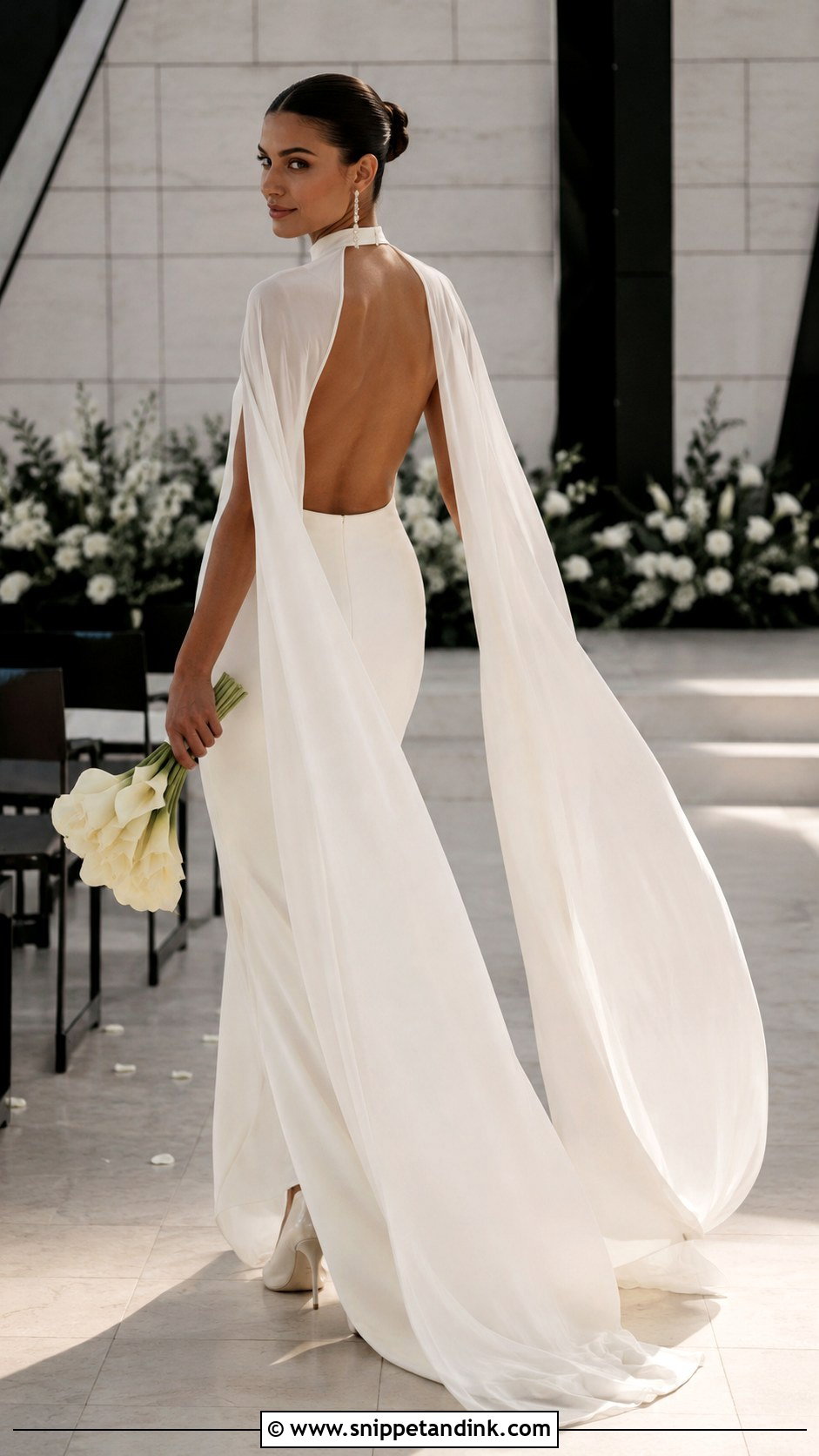
Cape sleeves give you movement and arm coverage while leaving the centre of the back bare, since the chiffon panels attach at the shoulders and fall to the floor on either side. Check how the panels behave when you sit: on some gowns they bunch under you, and I’ve learned to suggest a small wrist loop so you can lift them. Keep the base dress plain, a crepe or satin sheath or soft trumpet. You probably don’t need a veil, as the panels already add length. Crystal earrings, a smooth updo, pointed pumps and long-stem roses suit an architectural venue or a city ceremony.
11. Racer Neck Backless Wedding Dress
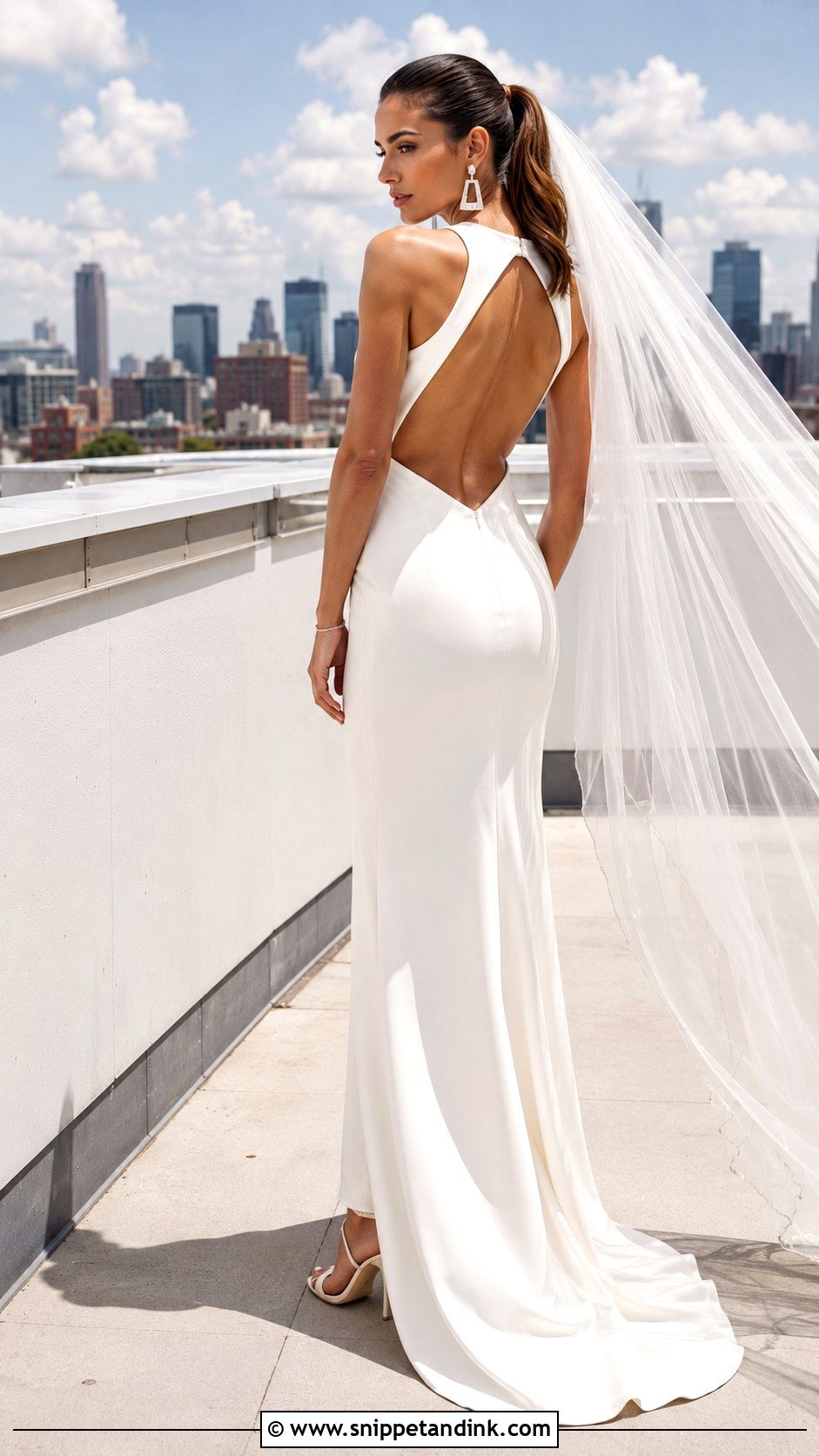
A racer neckline curves in toward the neck at the shoulders, which exposes the shoulder blades and makes this the most athletic shape here. It’s flattering on brides with defined shoulders and less so if you’d rather cover the upper arm. The narrow cut also limits bra options to built-in cups or adhesives. Smooth satin or crepe keeps the construction readable, with a column skirt or a small flare. A polished ponytail, geometric earrings and a slim bracelet suit it better than a necklace. Wear a cathedral veil for the ceremony and remove it afterwards. A loft, a rooftop or any plain modern room works.
12. Floral Appliqué High Neck Backless Wedding Dress
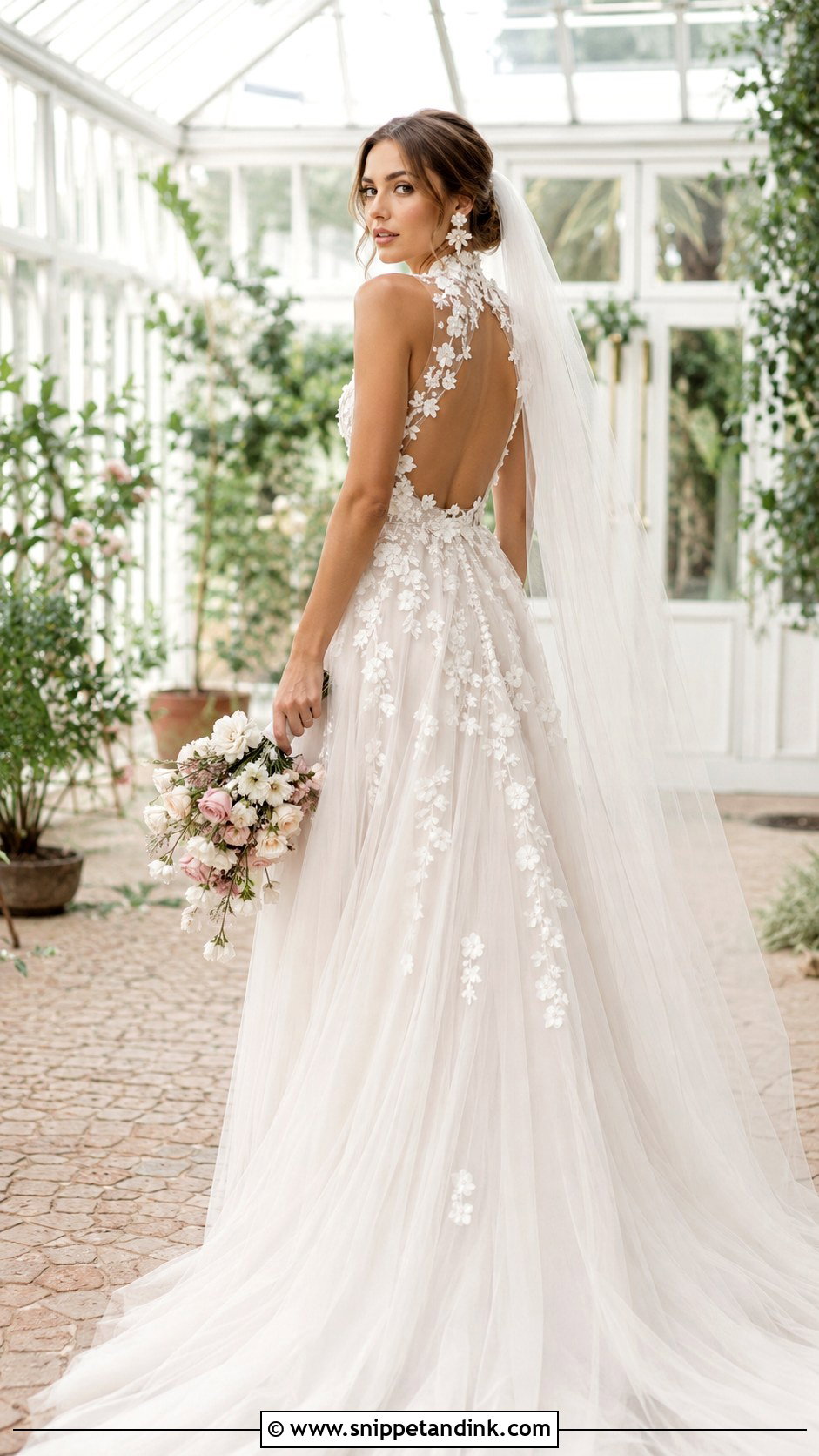
Three-dimensional appliqué looks good at every angle, which matters on a gown people will see from behind for the whole ceremony. The placement I like is dense across the sheer neckline and shoulders, then thinning out down a tulle A-line skirt so the gown doesn’t feel heavy. Placed around illusion and keyhole backs, the flowers make the opening look framed rather than cut out. Flower earrings, a low textured bun and satin block heels are enough. A plain veil keeps the appliqués visible. Hold blush and white flowers loosely for a garden or conservatory wedding.
13. Jewel Neck Satin Backless Wedding Dress
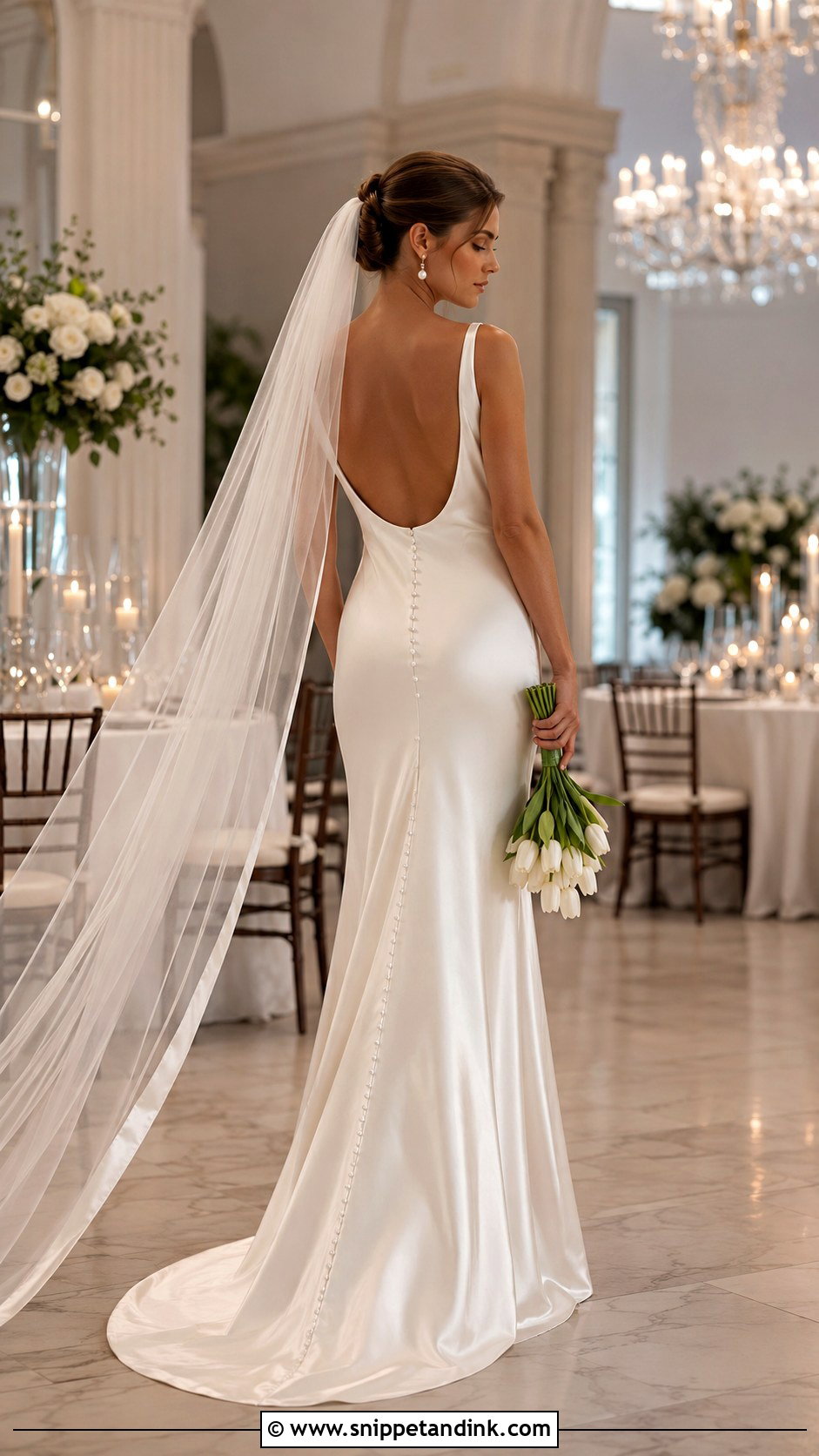
A jewel neckline sits at the base of the throat, the quietest version of a high neck, and a rounded back dipping toward the waist balances it. Bias-cut satin skims the body but shows every line underneath, so this is the gown where laser-cut shapewear with no edges or a built-in cup matters most. Prefer an A-line if you want more structure. Covered buttons below the opening give a clean finish. A French twist, pearl button earrings, low pointed heels and a long veil edged in satin keep it simple. White tulips or roses suit it. It moves from a daytime ceremony to an evening reception without a change.
14. Victorian High Neck Backless Lace Wedding Dress
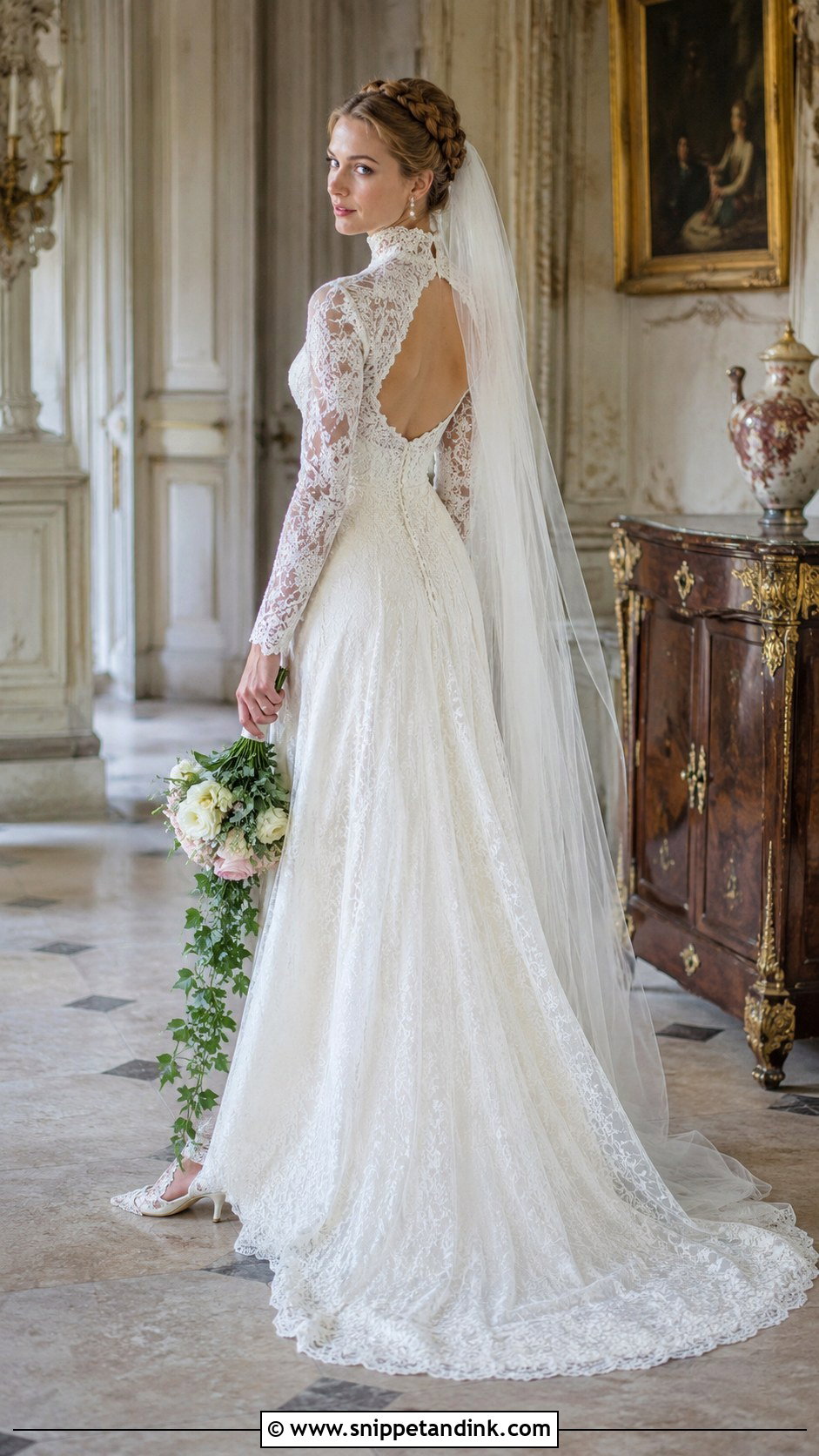
A standing lace collar nods to Victorian bridal fashion, and a teardrop keyhole at the back stops it feeling costume. Collars like this need a stay inside the lace, often a thin boning or horsehair strip, otherwise they wilt by the evening; ask your seamstress if one is there. Scalloped lace, fitted sleeves, a softly defined waist and a flowing A-line skirt keep the collar from looking severe. Leave the neck bare of jewellery. Small pearls, lace-covered pumps and a tulle veil tucked under a braided bun suit a historic house or an autumn wedding with trailing greenery in the bouquet.
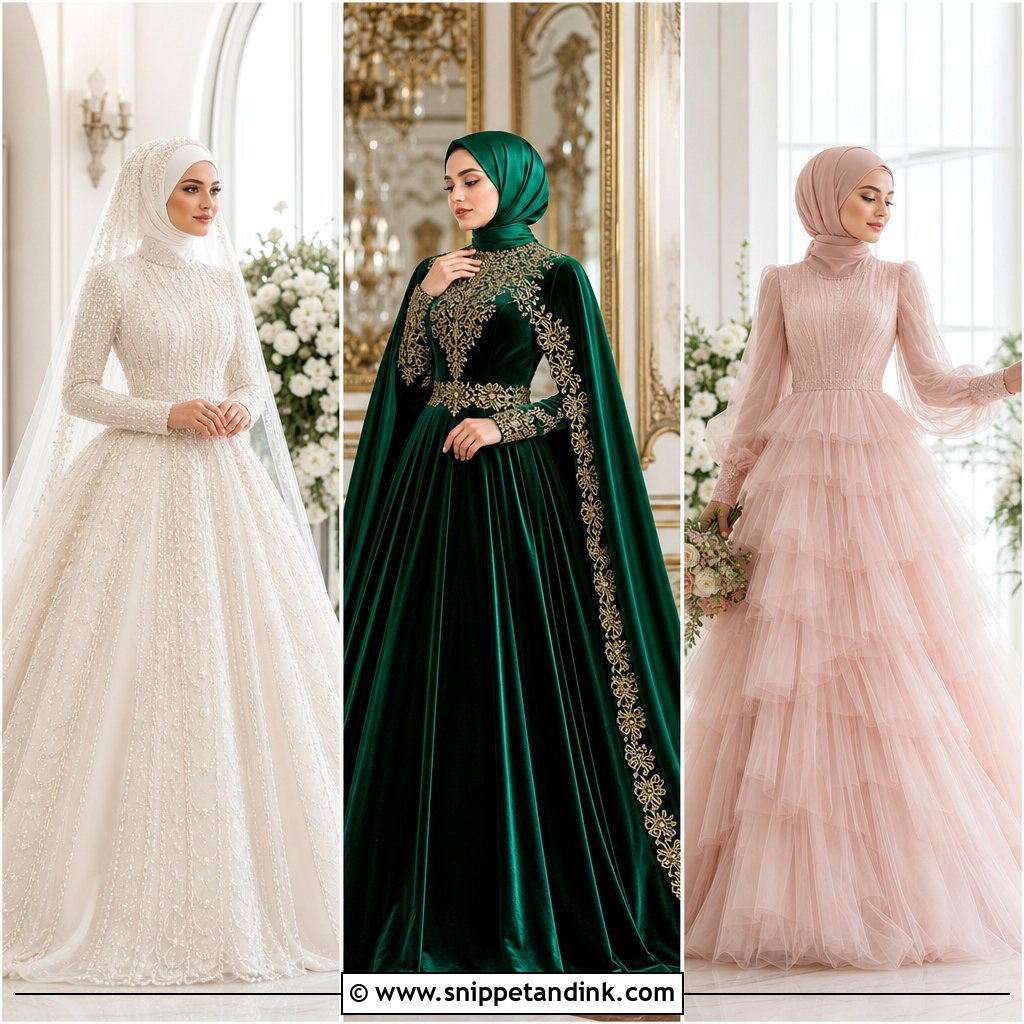
15. Bow Back High Neck Wedding Dress
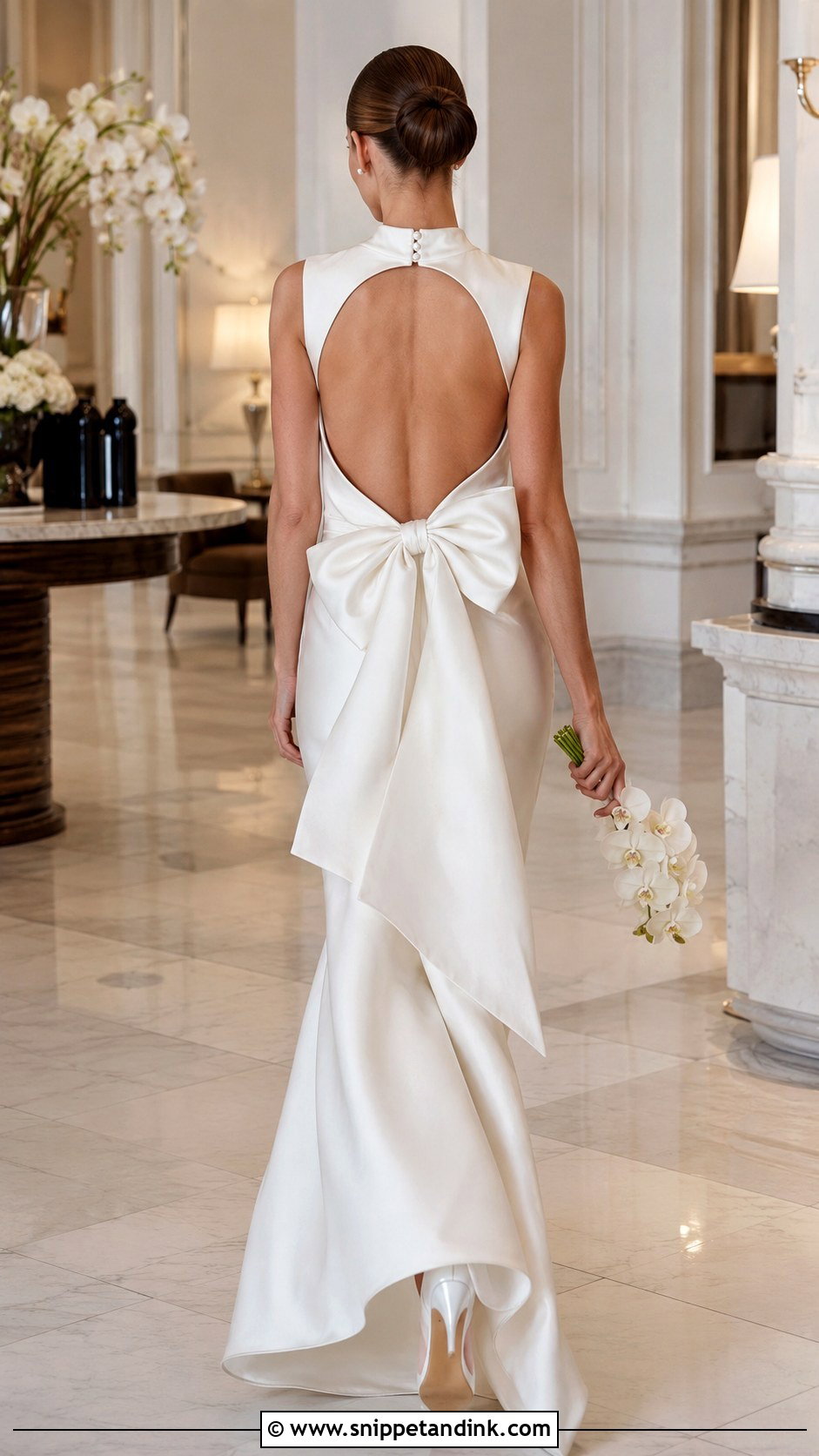
A bow gives the back an actual focal point, but its weight has to be carried somewhere. If it sits at the waist, it’s sewn to the skirt seam and behaves well. If it hangs from beneath the neckline, it pulls the collar backward all day, so I’d only choose that version in a stiff fabric like mikado. Keep the bodice plain and fitted. Pearl studs, a smooth bun, pointed satin pumps and a short veil without its own bow keep things calm. White orchids in a small bouquet finish the look for a hotel or an indoor estate wedding.
16. Tea Length High Neck Backless Wedding Dress
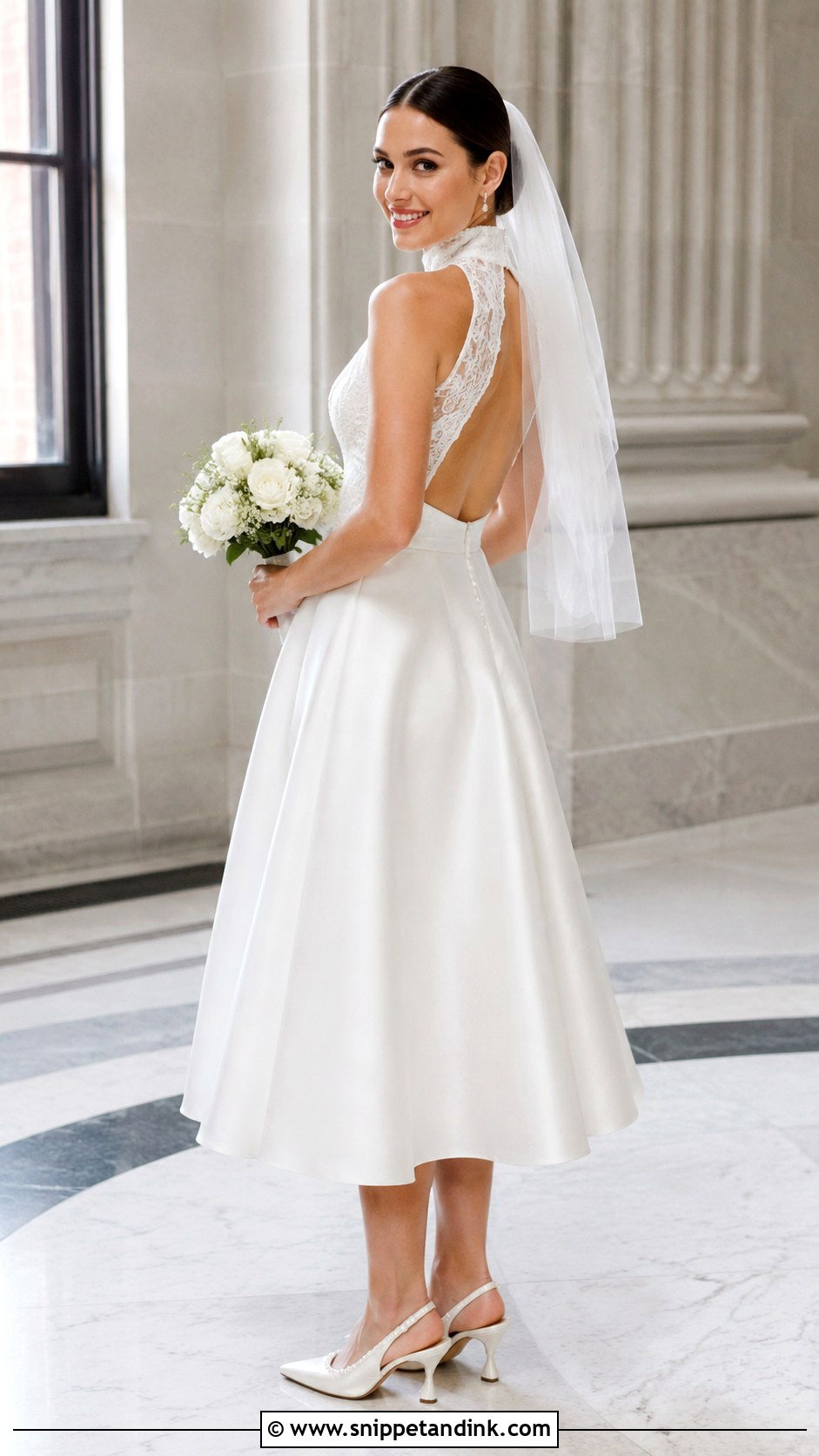
Tea length ends between the knee and ankle, which puts your shoes on show and lets you dance without lifting a hem. A fitted lace or satin bodice with an open keyhole back and a softly flared skirt keeps the proportion light. Since the shoes are now part of the outfit, buy them before the hem fitting, as heel height changes where the skirt falls. Pearl-trimmed pumps or ankle-strap shoes work, along with a birdcage veil or a hair bow. Small earrings and a compact bouquet keep it balanced. It’s my first suggestion for a courthouse ceremony or a second reception dress.
17. Drop Waist High Neck Backless Wedding Dress
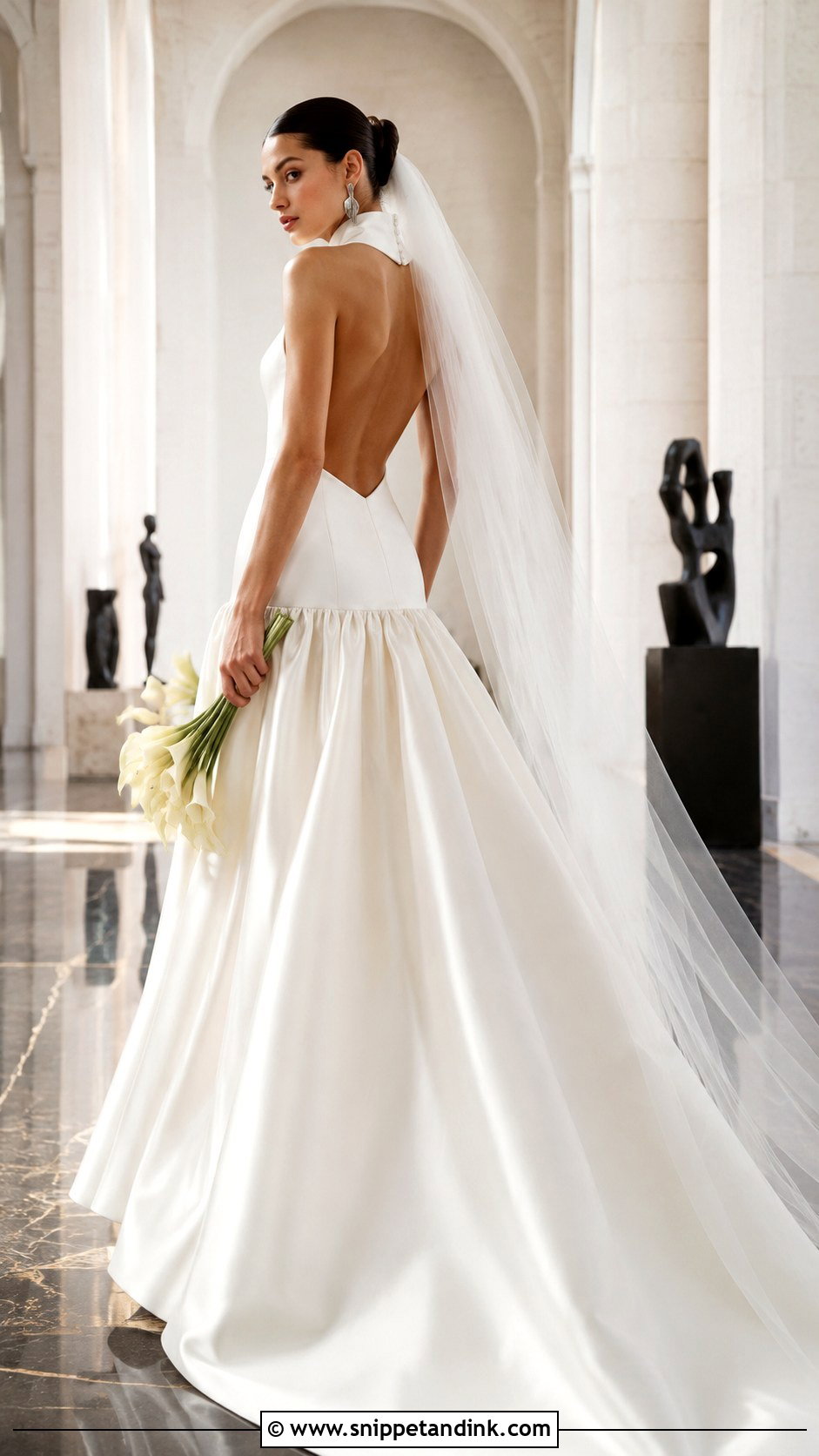
A drop waist moves the fitted bodice below your natural waist before the skirt opens, so the eye travels from the high neck all the way down past the hips. On a short torso this can cut the legs off; I’d test it against an A-line before committing. Satin or mikado gives structure, crepe a softer finish, and curved seams through the torso shape it without beadwork. Sculptural earrings, a low bun and slim pointed heels suit it. Attach a long veil beneath the bun so it covers the back, then falls over the skirt. Calla lilies repeat the long lines in a gallery or grand hall.
18. Pleated Chiffon High Neck Backless Wedding Dress
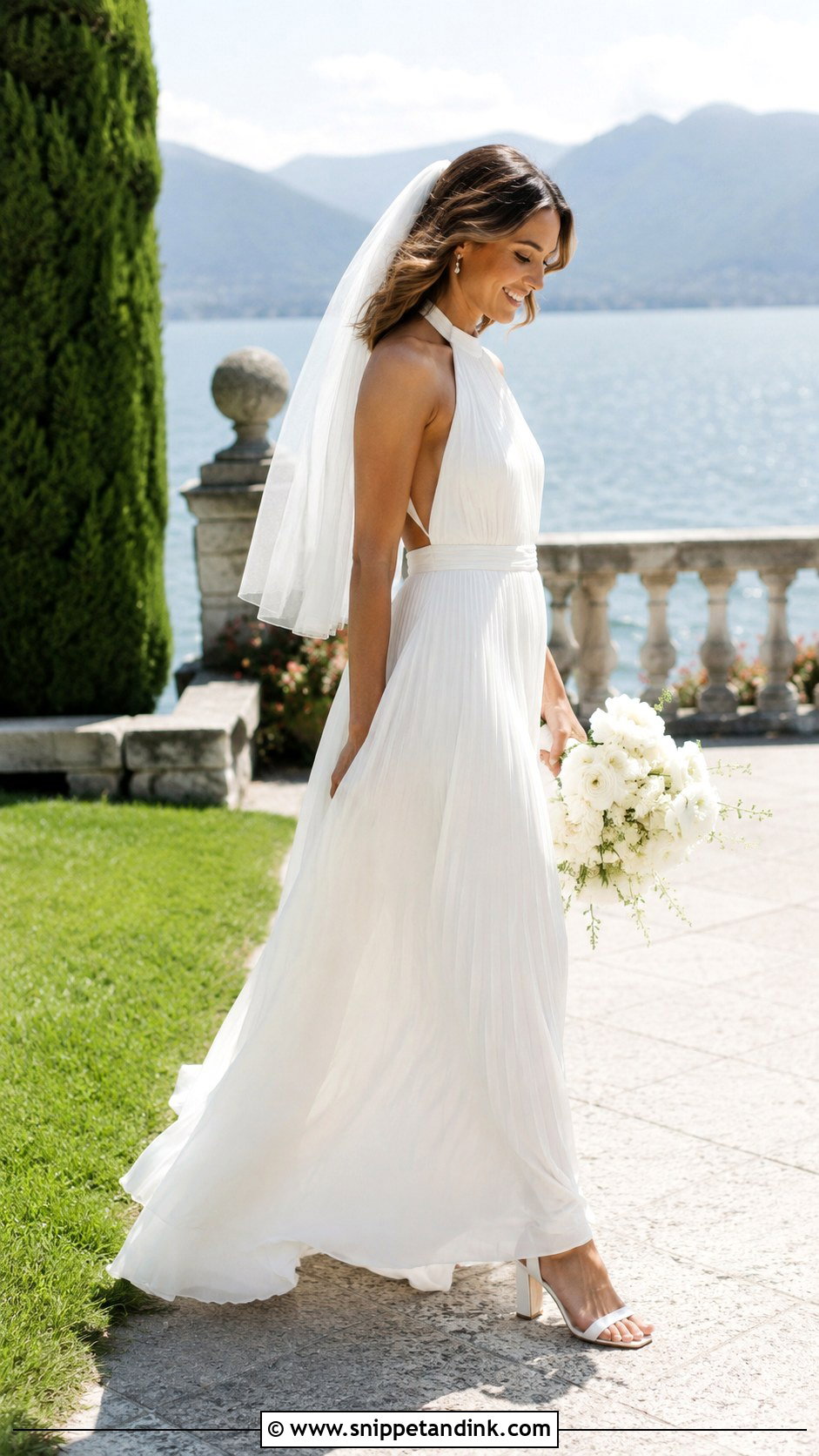
Fine pleats in chiffon give texture without weight, but they’re fragile: steam them from a distance, never press them flat, and pack the dress hanging rather than folded if you’re travelling. A gathered halter with narrow pleats down the bodice keeps the back fully open, held by slim ties or covered buttons at the neck. A soft waistband adds shape. Drop earrings, a twisted low bun and block-heel sandals suit a waterfront or garden. A shoulder-length veil won’t tangle with the skirt. It’s comfortable in heat because chiffon breathes far better than satin.
19. Asymmetric High Neck Backless Wedding Dress
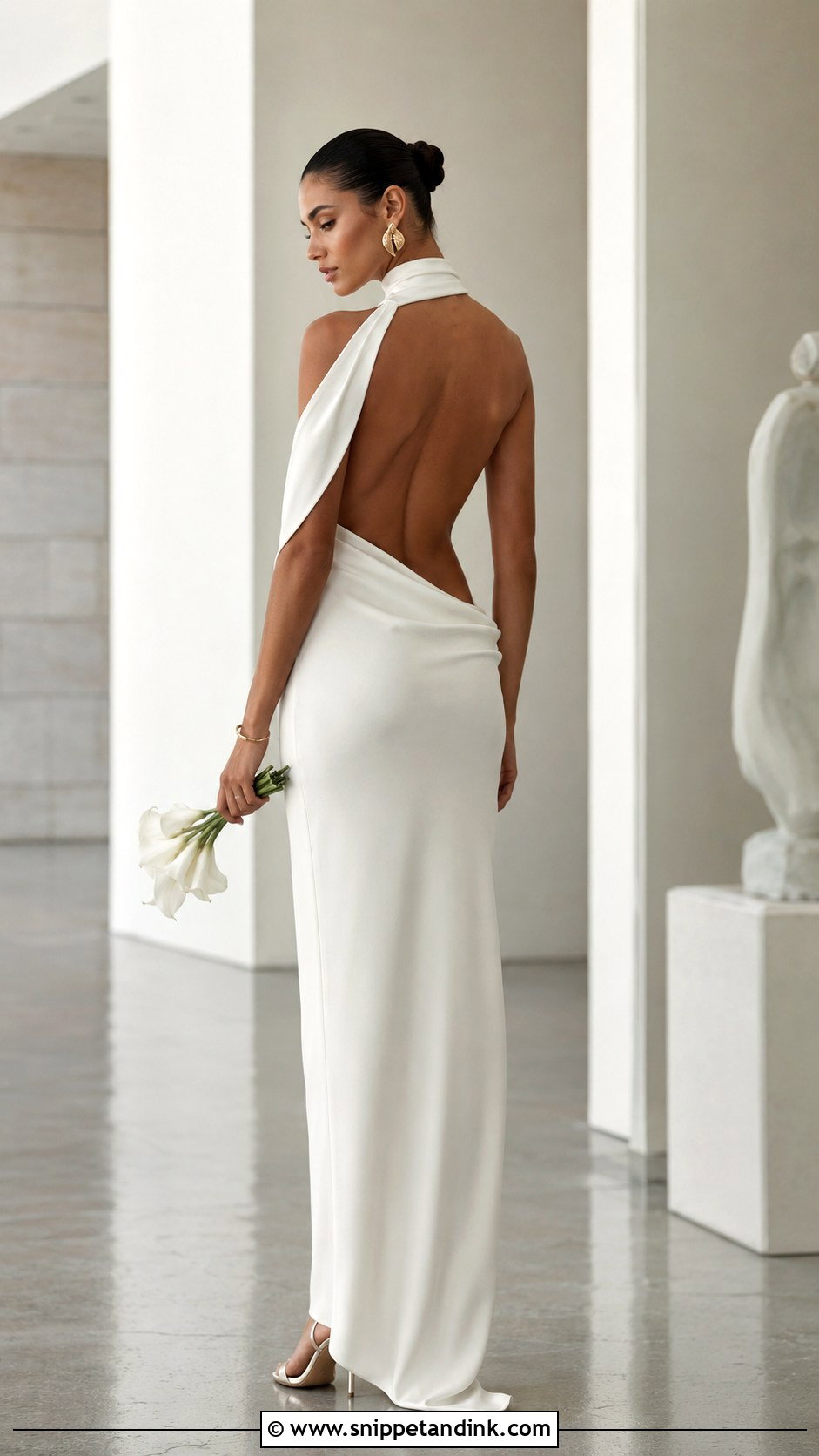
An asymmetric neckline sweeps across the collarbone and fastens at one shoulder or behind the neck, which means one strap carries most of the bodice. I check that strap carefully at the fitting, and often ask for a hidden elastic anchor across the back so the dress doesn’t twist when you raise your arm. Crepe or satin keep the cut legible. One statement earring, or two small sculptural ones, avoids clutter. A sleek bun, metallic ivory heels and a narrow bracelet finish it. Skip the veil if you want the neckline seen clearly. It suits a museum, a rooftop or a stylish hotel.
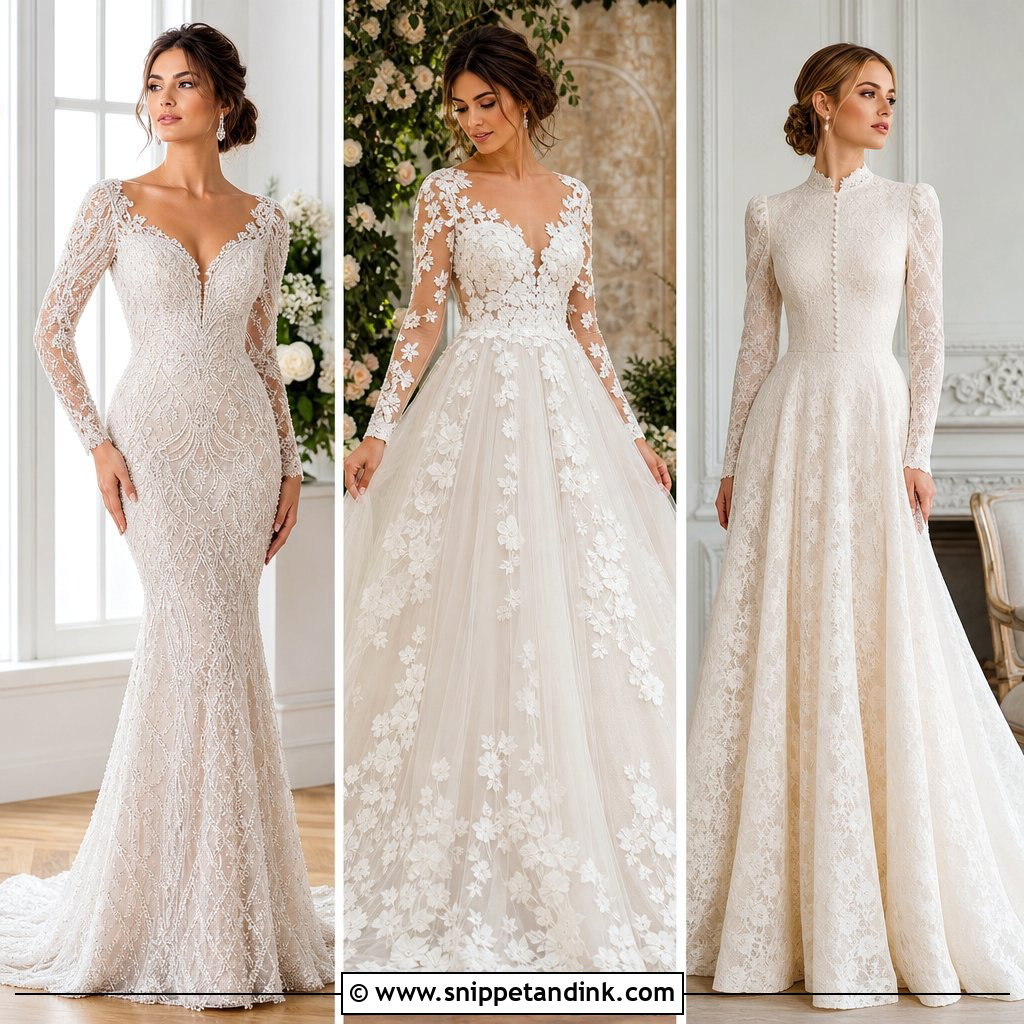
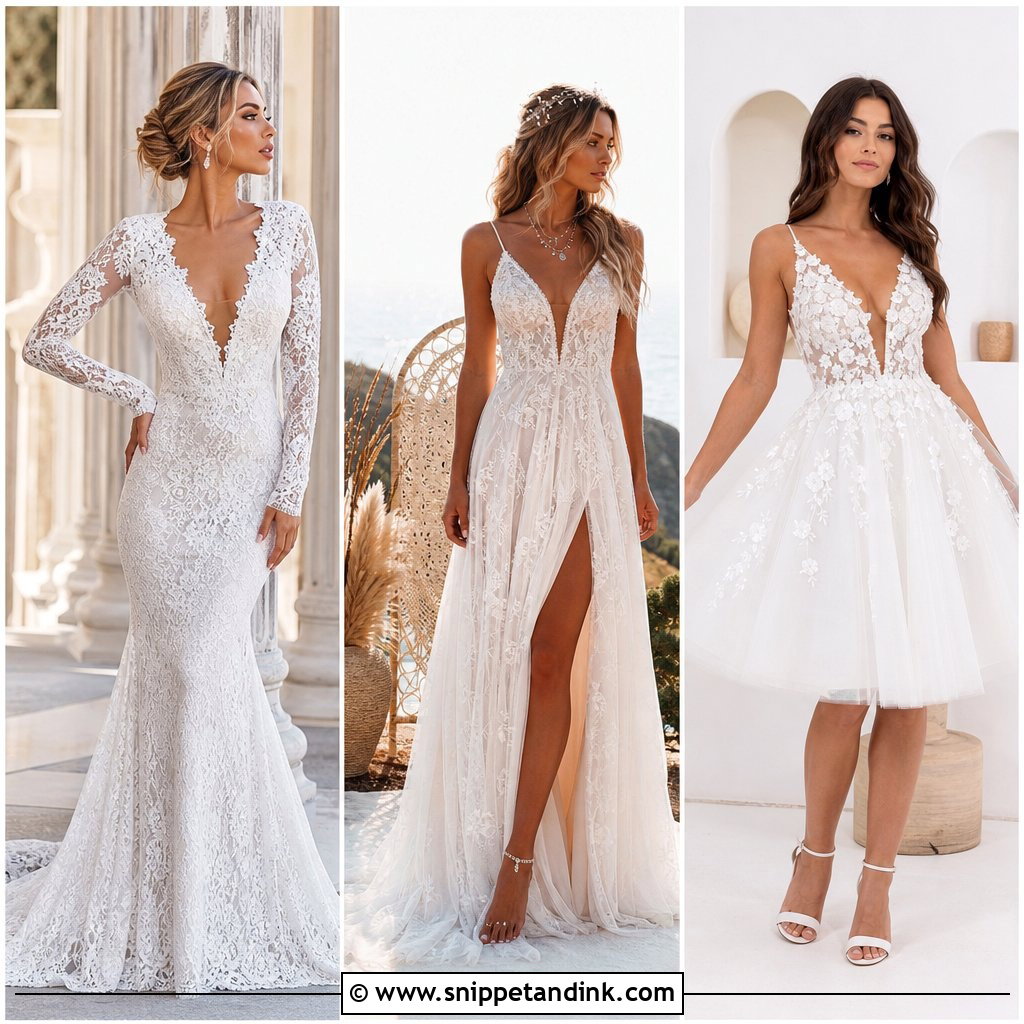
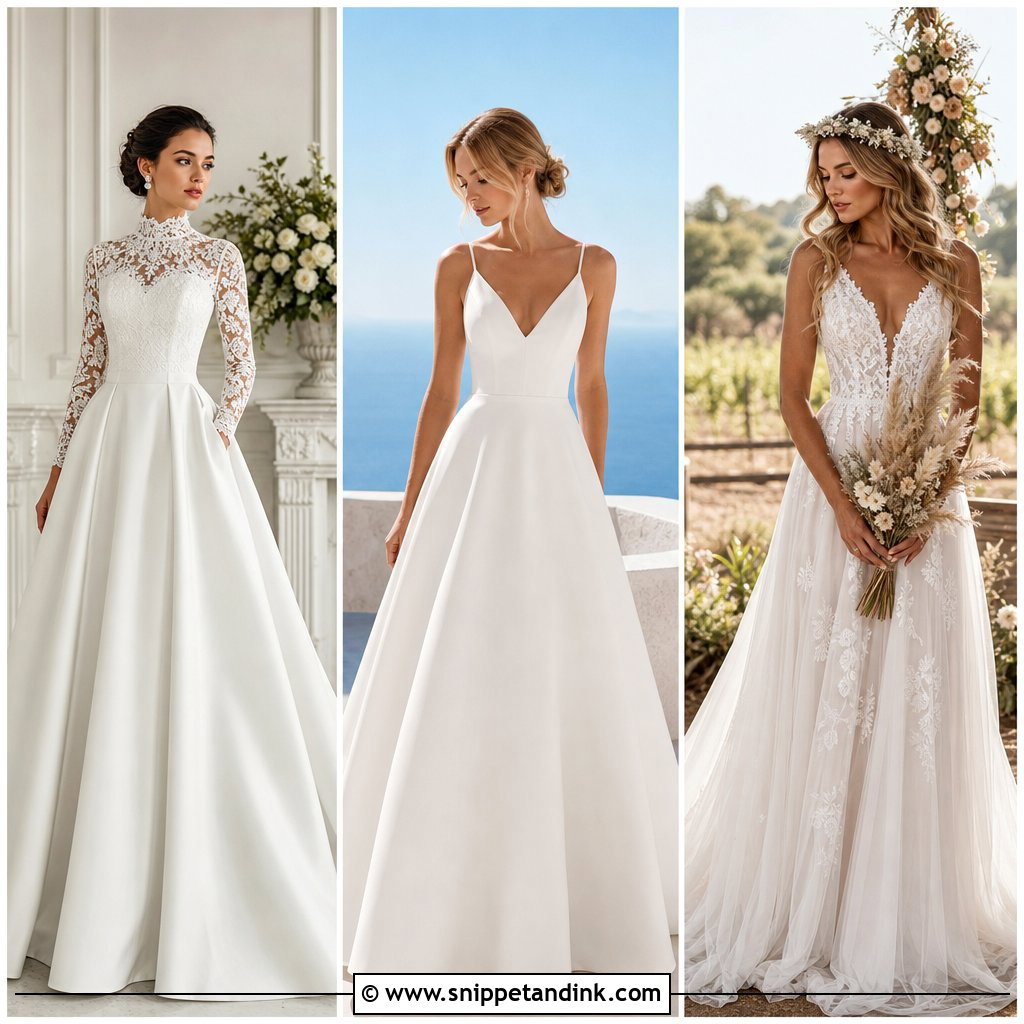
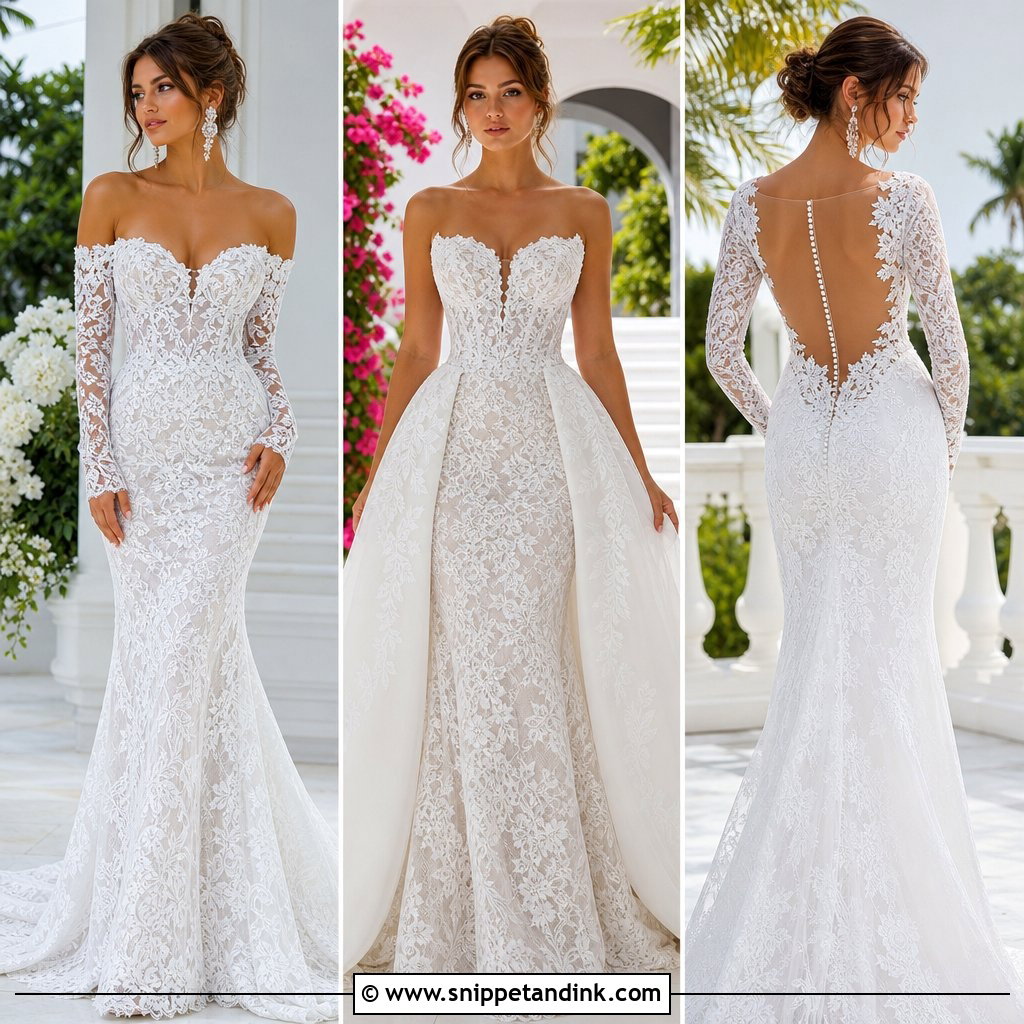
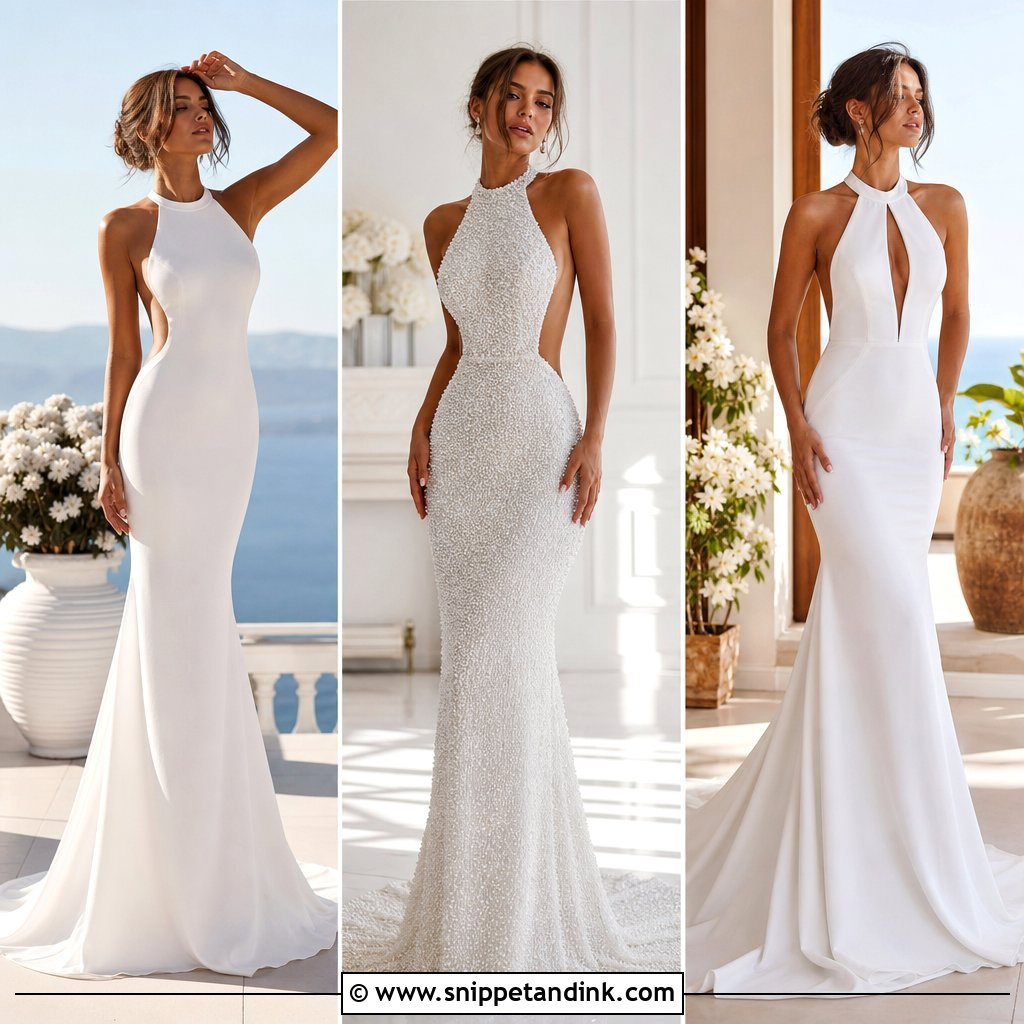
20. High Neck Backless Wedding Dress With Overskirt
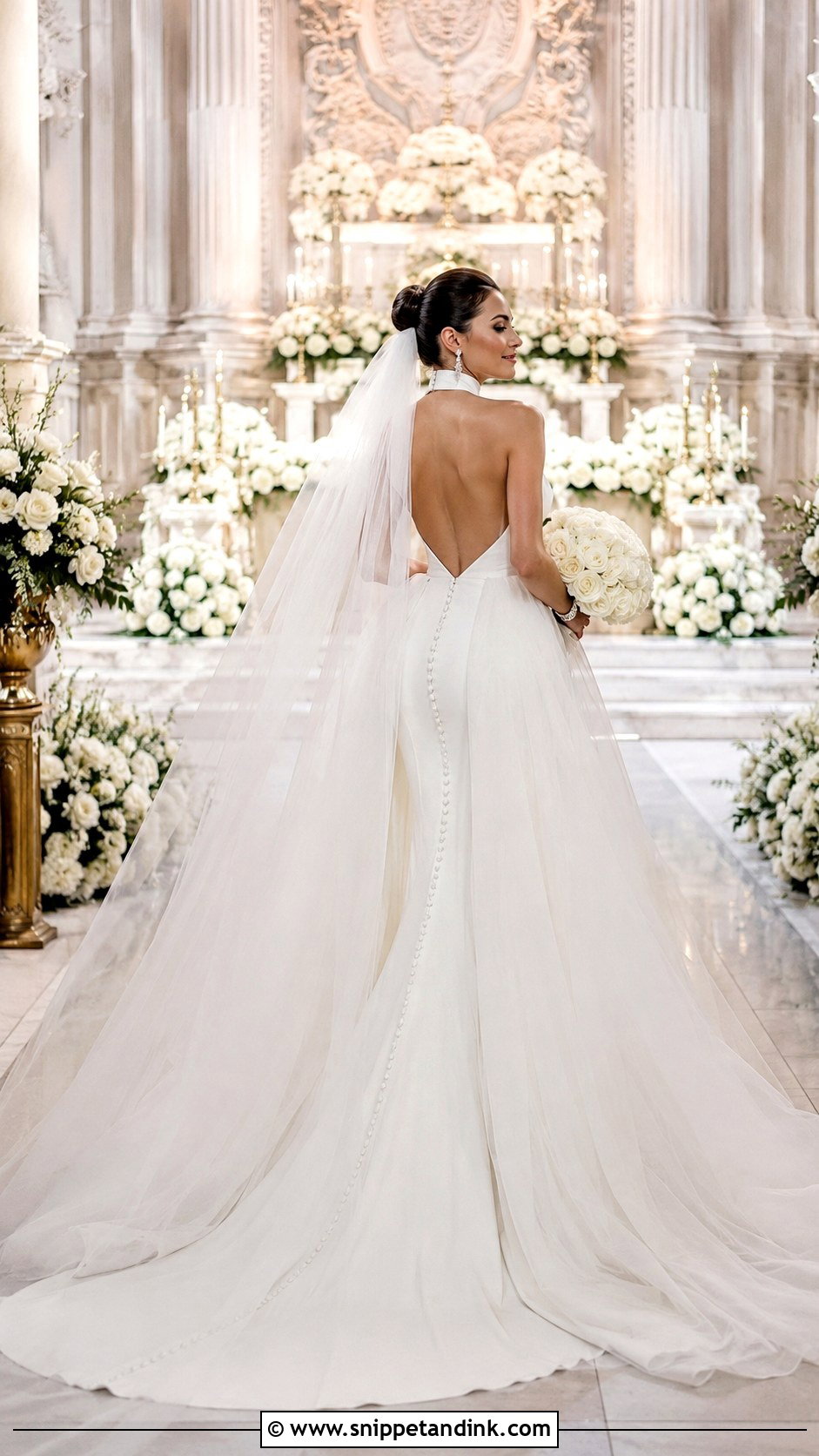
A detachable overskirt gives you two looks from one gown: a full tulle or mikado skirt for the ceremony, then the slim column beneath for dancing. The weak point is the attachment. Hooks or snaps must sit flat at the waist and stay below the back opening, or you’ll see a bump in every photo of your back. Have your maid of honour practise removing it at the last fitting so it takes two minutes, not twenty. Crystal earrings, a polished updo and pointed heels work for both halves. Take the cathedral veil off at the same moment as the overskirt.
Your Skin Becomes Part of the Dress
With an open back, the bare skin between your shoulder blades is on show from the processional to the last dance, and photographers shoot it at close range during the vows. I bring this up early, because the fixes take weeks, not hours.
- Watch tan lines from the moment you order. A summer of racerback tops will leave a stripe that no gown can hide.
- If you plan a self-tan, do a test run at least a month out and keep the formula away from the fabric edges, as it transfers onto ivory linings.
- Ask your makeup artist to blend body makeup down the back if you have marks you’d like softened. Let it set fully before you step in.
- Posture shows. Rolled shoulders crease the skin at the opening, so stand tall in the fitting mirror and see the difference.
Hair, Veils and the Wind
Any loose hairstyle will cover most of what you paid for, so I usually suggest an updo, a low bun or a ponytail swept to one side. Veil placement is the second decision. A comb set above the bun lets the tulle fall over the back and blur it, which some brides like for a soft first look before removing it. A comb tucked beneath the bun keeps the opening clear. Outdoors, ask for a weighted hem or small clear weights on the veil edge, otherwise the first breeze wraps it around the halter strap.
The Back Is Half the Ceremony
One detail, a covered front and a bare back, can read minimal, romantic, glamorous or vintage depending on fabric and cut. Satin gives smooth structure, lace and appliqué soften it, crepe sharpens it and chiffon makes it move. In the fitting room, turn your head, sit, walk and raise both arms before you decide, and check that the support is something you’d trust for ten hours. Plan your hair so the back stays visible, and pick the gown that still looks like you from behind.
You'll Like These Ideas:






Leave a Reply