
Guests look at the back of a wedding dress for the whole ceremony and again as you walk out married, which is why a row of buttons down the spine earns its place. Covered buttons sit quietly on crepe, catch the light on satin and almost disappear into lace, and on many gowns they carry on past the hips into the train. I like them for a practical reason as well: a long button line shows straight away whether the back of a dress has been fitted properly. Below are twenty button-back dresses, from plain sheaths to full ball gowns, with what I would check on each. As you read, think about how your neckline, veil and hair will frame the back.
Working Loops, Decorative Rows and the Zipper Underneath
Before you fall for a button back, find out how it actually closes. There are three common set-ups, and each changes how long dressing takes and how the gown behaves through the day.
- Working buttons with fabric loops. Every button fastens through its own loop. It is the most traditional and the slowest to do up; a long row keeps a helper busy for a good while.
- Decorative buttons over a zipper. The buttons are sewn down and a hidden zipper does the work. It is quick to dress, easy to loosen after dinner, and very common.
- Elastic loops. A stretch cord replaces the fabric loops. It is easier to fasten and a little forgiving at the waist, though elastic can relax over a long day.
Making the buttoning go faster
If your buttons are real, a small button hook or a fine crochet hook pulls each loop over its button far faster than fingers can. Most dressers start at the top, so the bodice is anchored while the rest goes in. Have whoever will dress you practice once at a fitting, and add fifteen minutes to the getting-ready schedule. I also ask the seamstress to sew a few hidden hooks behind the row at the waist, which hold the closure steady if a loop gives way.
1. Satin A-Line Wedding Dress With Buttons Down the Back
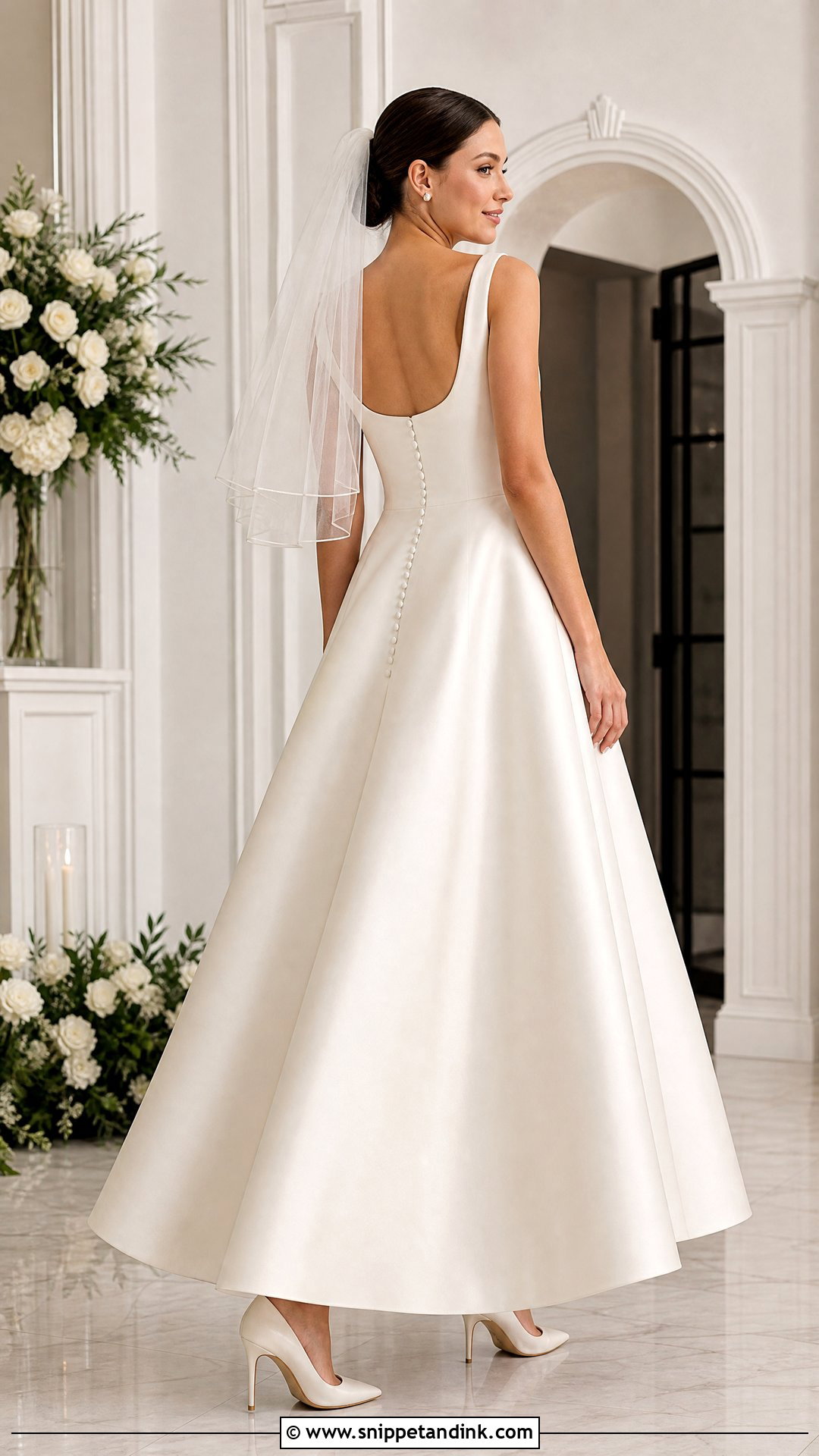
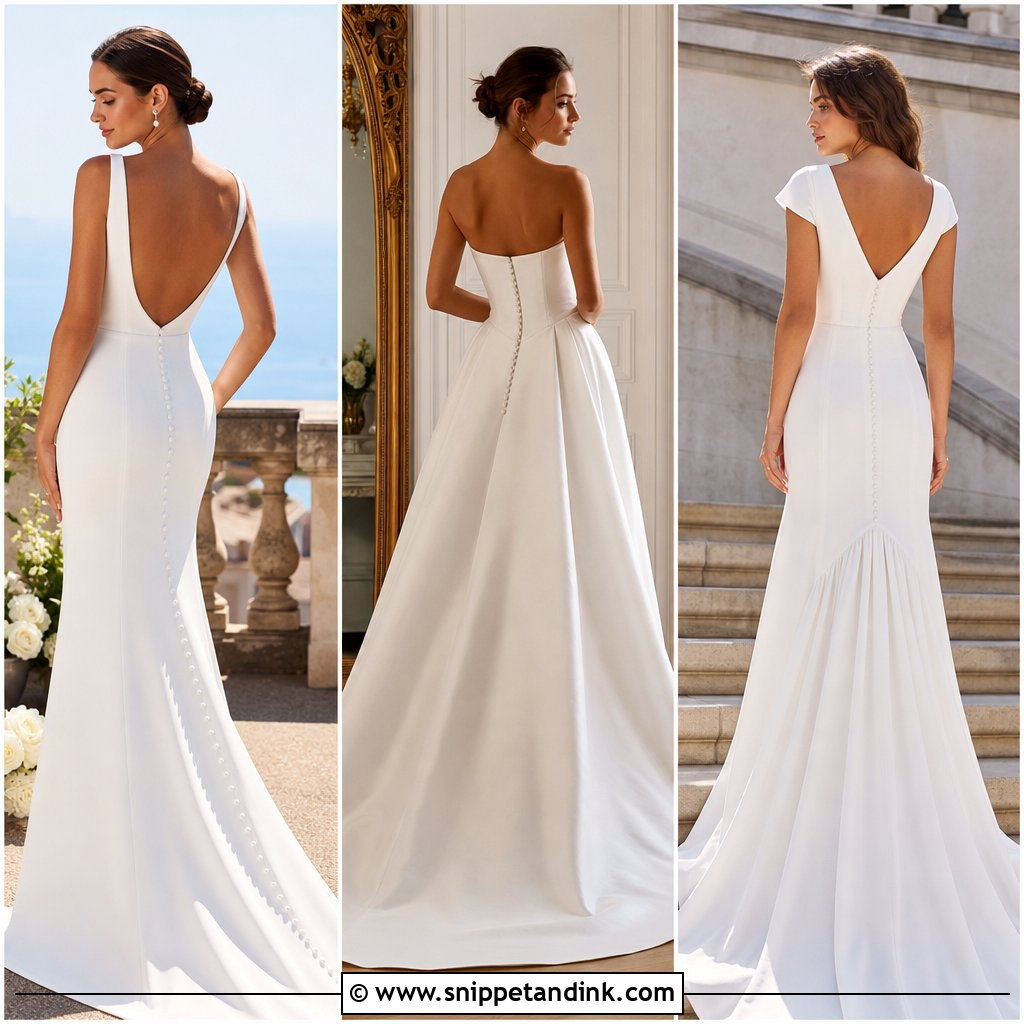
Satin shows every wobble in a line, so on a satin A-line I look straight down the button row from behind at the first fitting. If it bows to one side, the back seam needs correcting before anything else is touched. Once it is centered, the covered buttons run like a ruled line from the upper back into the train. A structured bodice with a square or soft sweetheart neckline keeps the front simple. A sleek low bun leaves the whole row visible, and on very reflective satin the jewelry should stay small.
2. Long Sleeve Wedding Dress With Buttons Down the Back
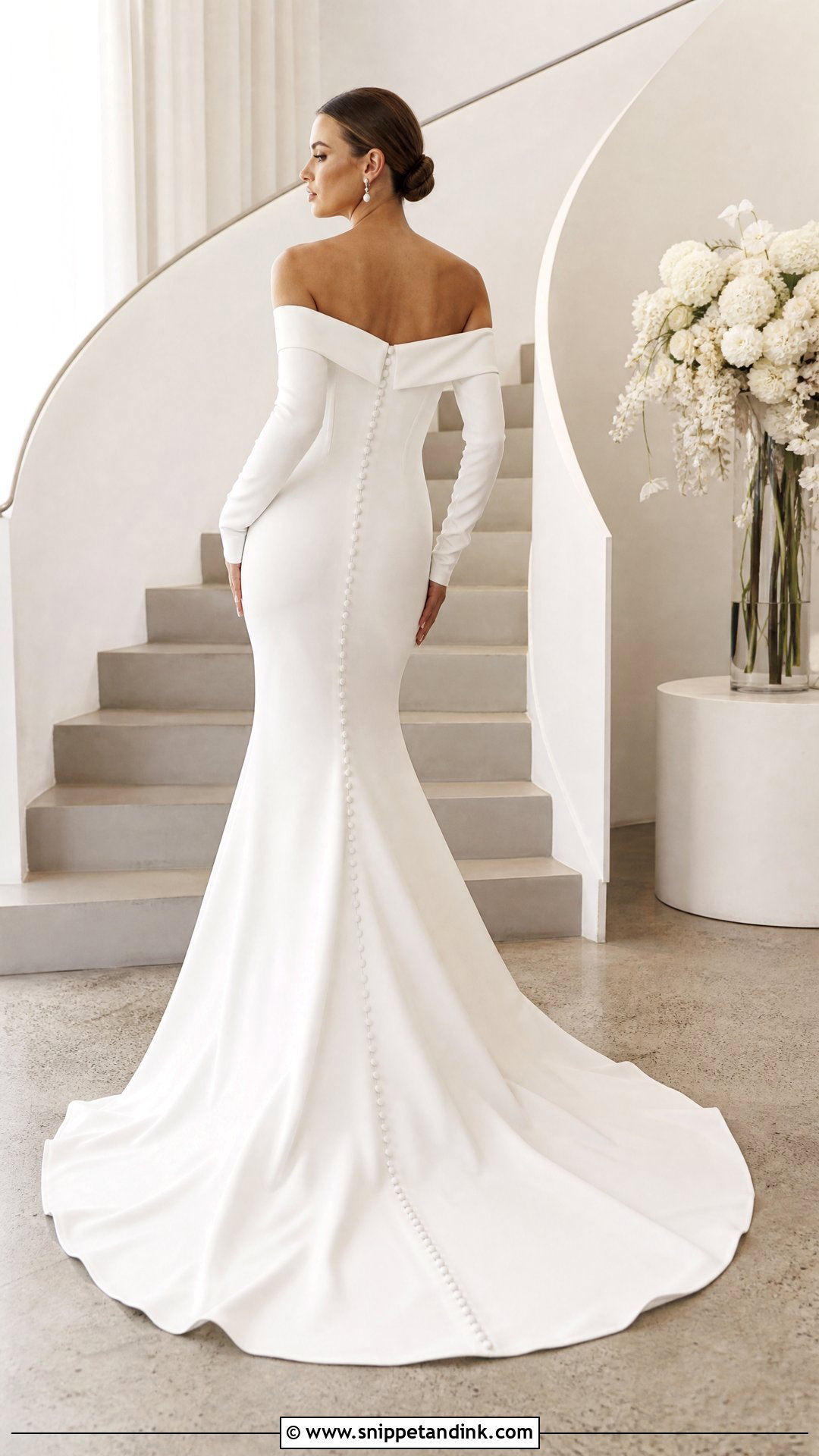
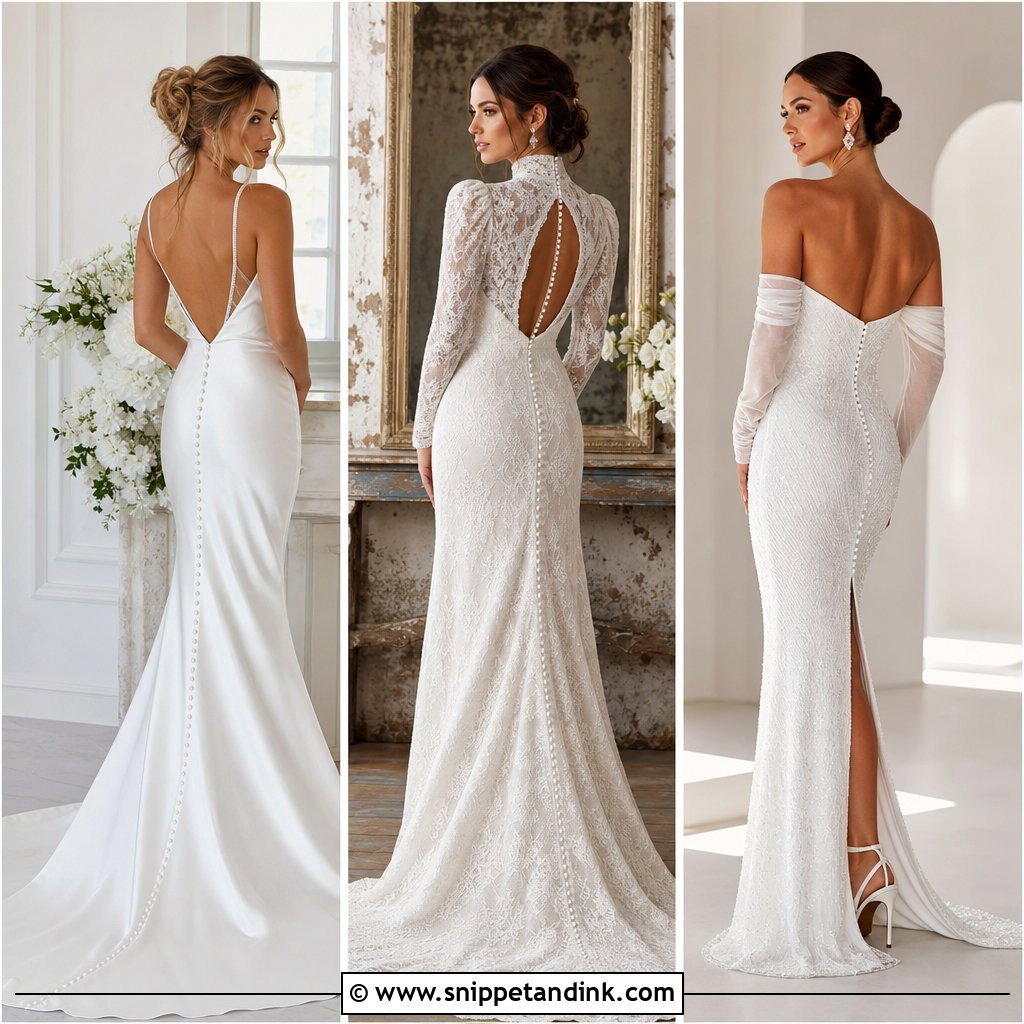
Long sleeves and a high back give a button row its longest canvas, from the nape all the way to the train. The trade-offs are warmth and dressing time, so this suits autumn and winter weddings, and you will want help getting into it. Stretch crepe sleeves move most easily; lace and lined satin feel more structured. If you love the sleeves but want some skin, an off-the-shoulder version keeps the buttons and opens up the neckline. A neat chignon and closed-toe heels suit it, and a plain cathedral veil adds drama for the vows before lifting away for the back shots.
3. Lace Wedding Dress With Buttons Down the Back
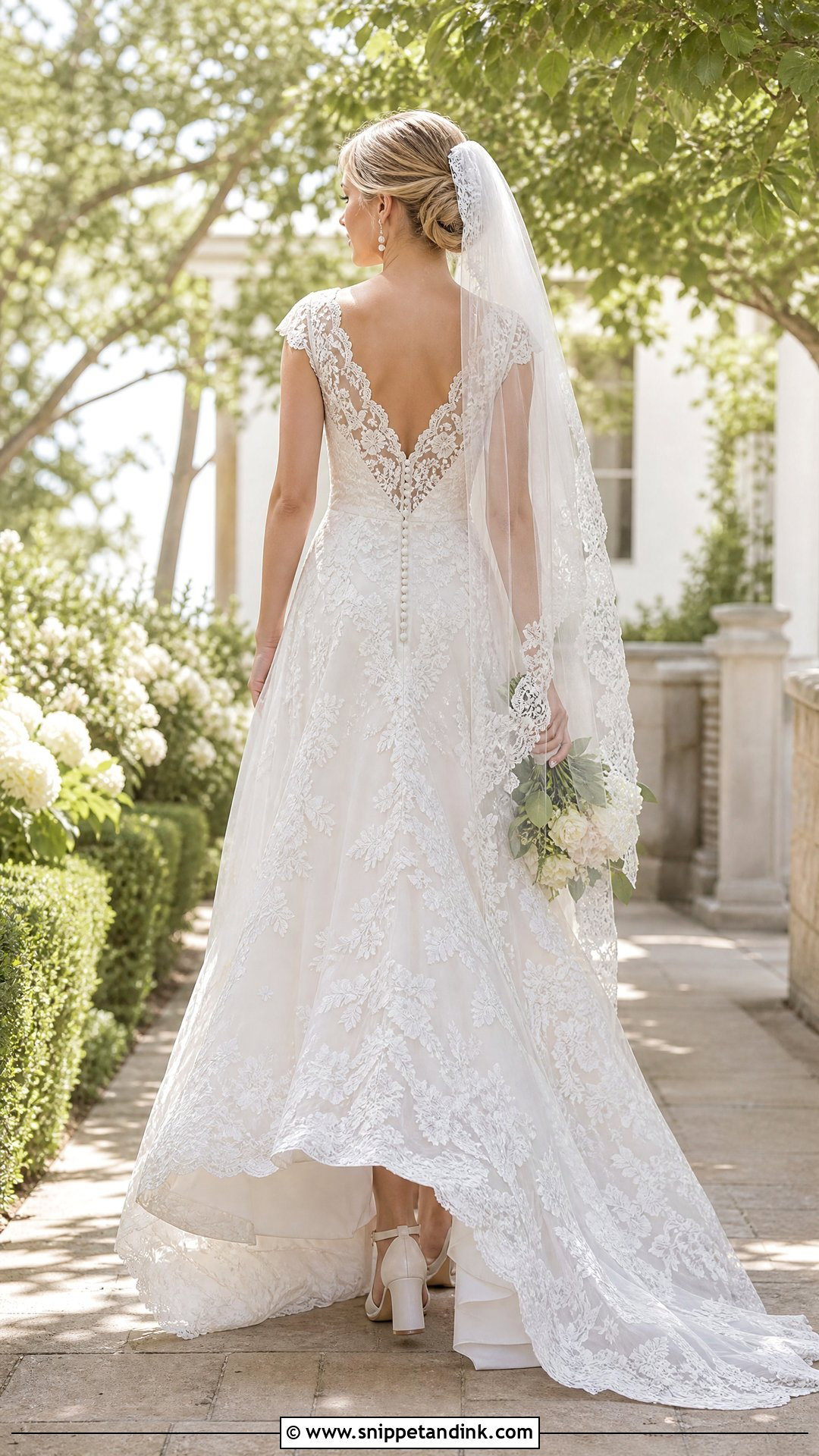
Lace and covered buttons share a scale. Both are small, repeated and meant to be seen close up, so they blend rather than compete. Buttons covered in matching lace fade into the pattern, while pearl ones stand out a little. A scalloped train gives the back a defined edge with no extra embellishment. The practical issue is the loops: fine rouleau loops on lace are fiddly, and closing a long row takes patience, so try it once at the boutique with whoever will dress you. A loose updo keeps both the neckline and the back on show.
4. Crepe Wedding Dress With Buttons Down the Back
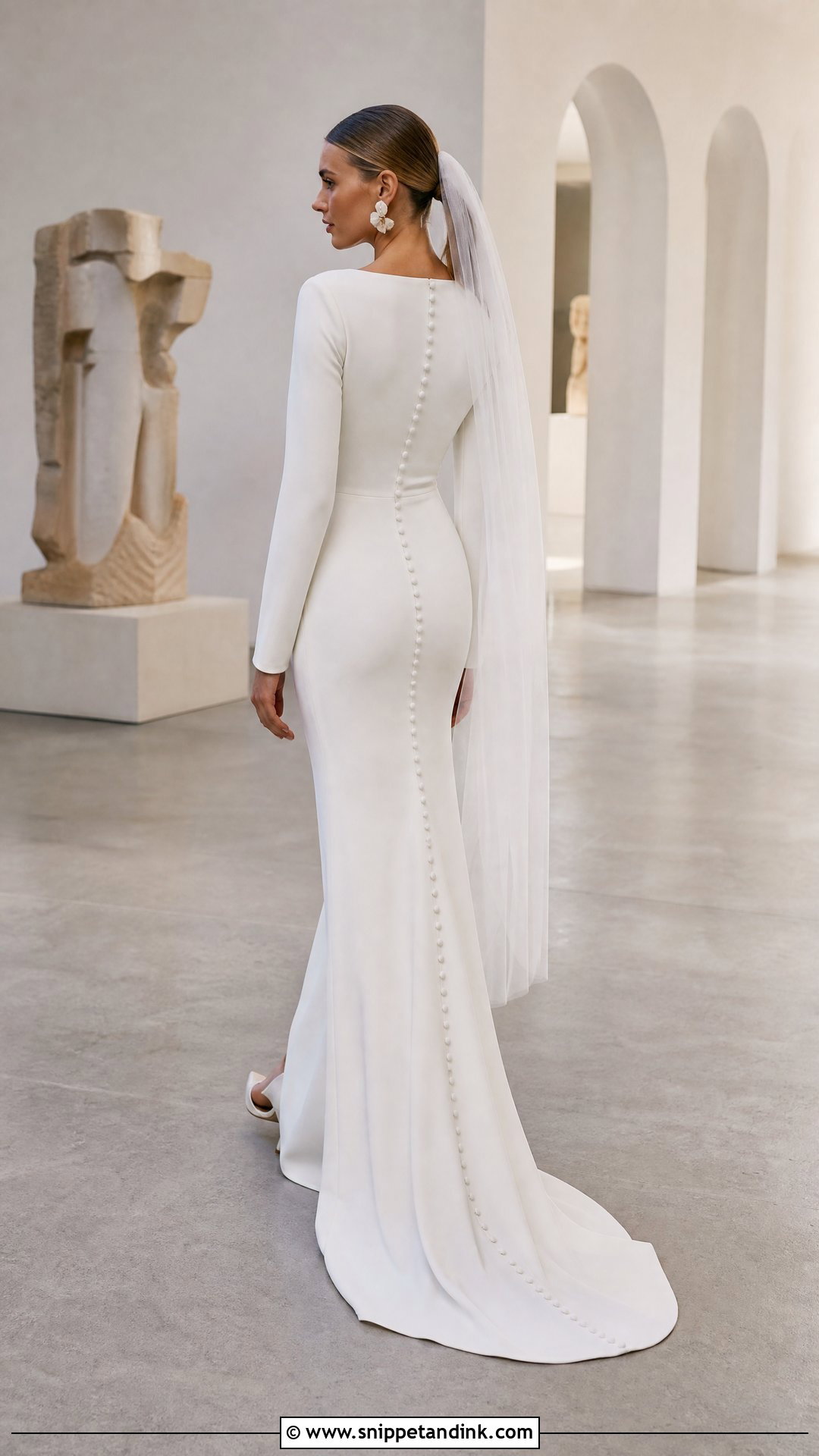
Crepe is the plainest background a button row can have, so the buttons become the decoration. A fitted sheath or gentle fit-and-flare with princess seams keeps the shape clean, and covered buttons can hide a zipper before running on past the hips into a sweep or chapel train. Stretch crepe clings, which means underwear shows through it. Try the dress on with the exact undergarments you will wear and look at it by a window, because boutique lighting hides lines that daylight finds.
5. Mermaid Wedding Dress With Buttons Down the Back
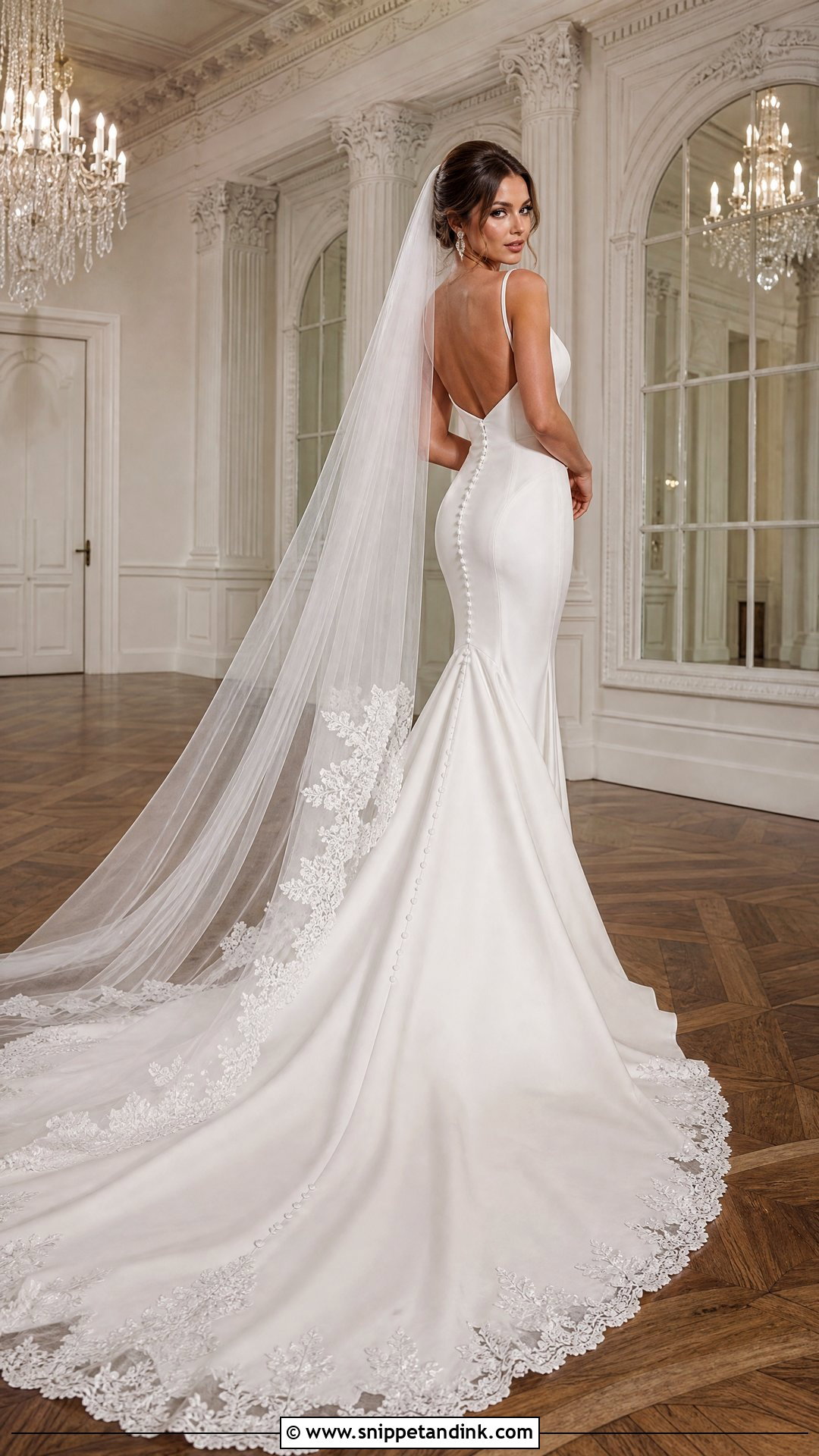
On a mermaid gown the buttons follow the curve of the body down the center back and lead the eye toward the flare. Because the fit is so close, that row takes real strain at the waist and hip every time you sit. If small gaps open between the buttons when you are seated, the gown needs letting out slightly or a hidden zipper behind the row. Crepe-back satin or lace over a supportive sweetheart bodice gives both structure and softness. Platform heels hidden under the hem help with length, and an updo keeps long hair off the back.
6. Ball Gown Wedding Dress With Buttons Down the Back
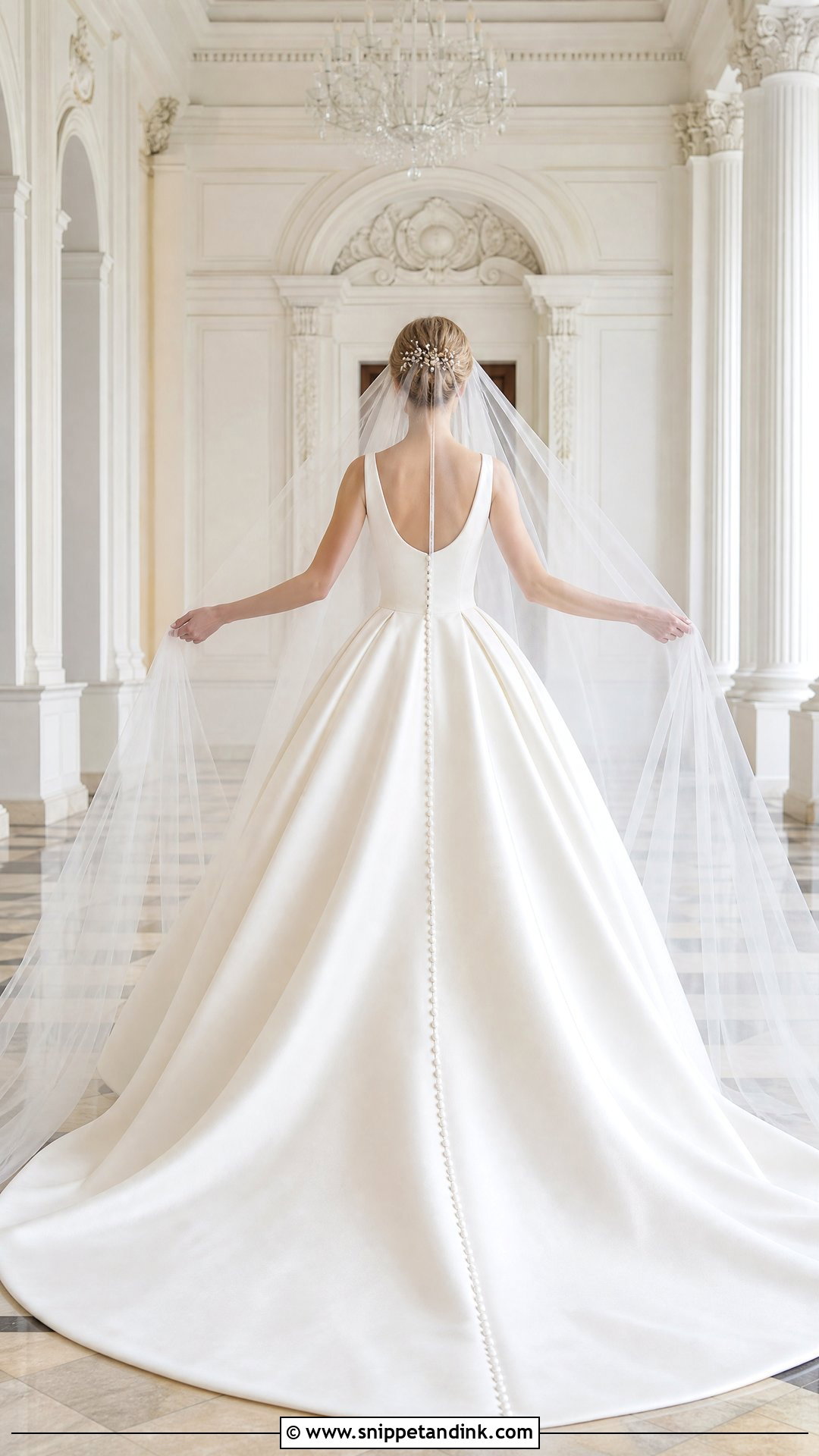
A full skirt can swallow a back detail, which is exactly why a row of buttons helps: it draws one vertical line through the middle of all that volume. A button-back ball gown can start the row at a high back or just below a strapless edge and run it along the center seam of the train. Plan the bustle early. It should lift the train without folding the button line into a zigzag, so ask to see the dress bustled before your final fitting. Pearl pins or a simple tiara suit the classic shape.
7. Square Neck Wedding Dress With Buttons Down the Back
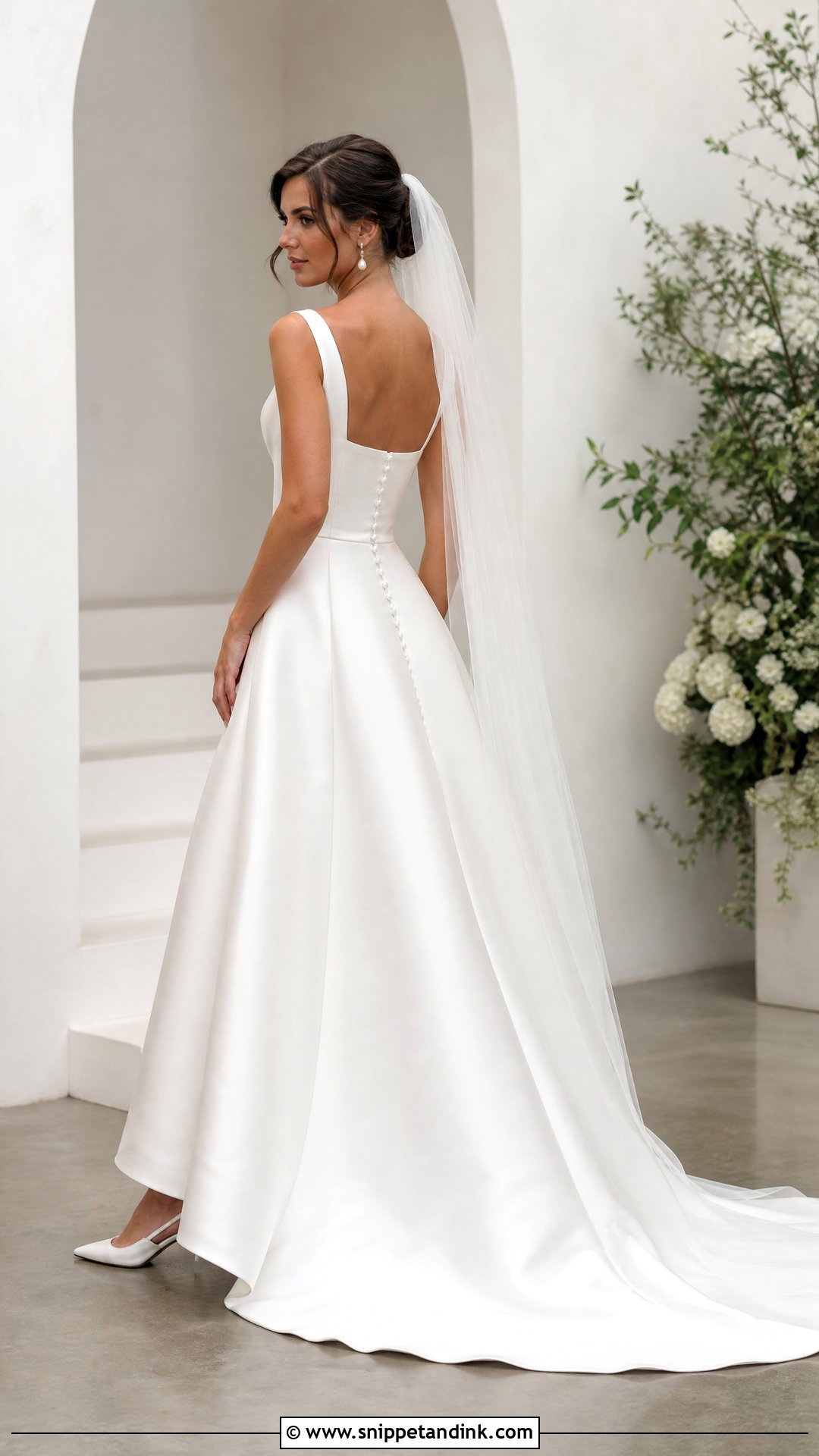
A square neckline often comes with a square back, and the covered buttons then begin between the shoulder blades, right where that back neckline ends. Wide straps carry the bodice, and they need to lie flat; a strap that lifts at its outer edge leaves a gap you will see in every photo taken from behind. Buttons covered in the gown’s own fabric keep the look calm. A center-parted low bun and pointed slingbacks suit it, and a plain chapel veil softens the angles without hiding the back once the ceremony is over.
8. Strapless Wedding Dress With Buttons Down the Back
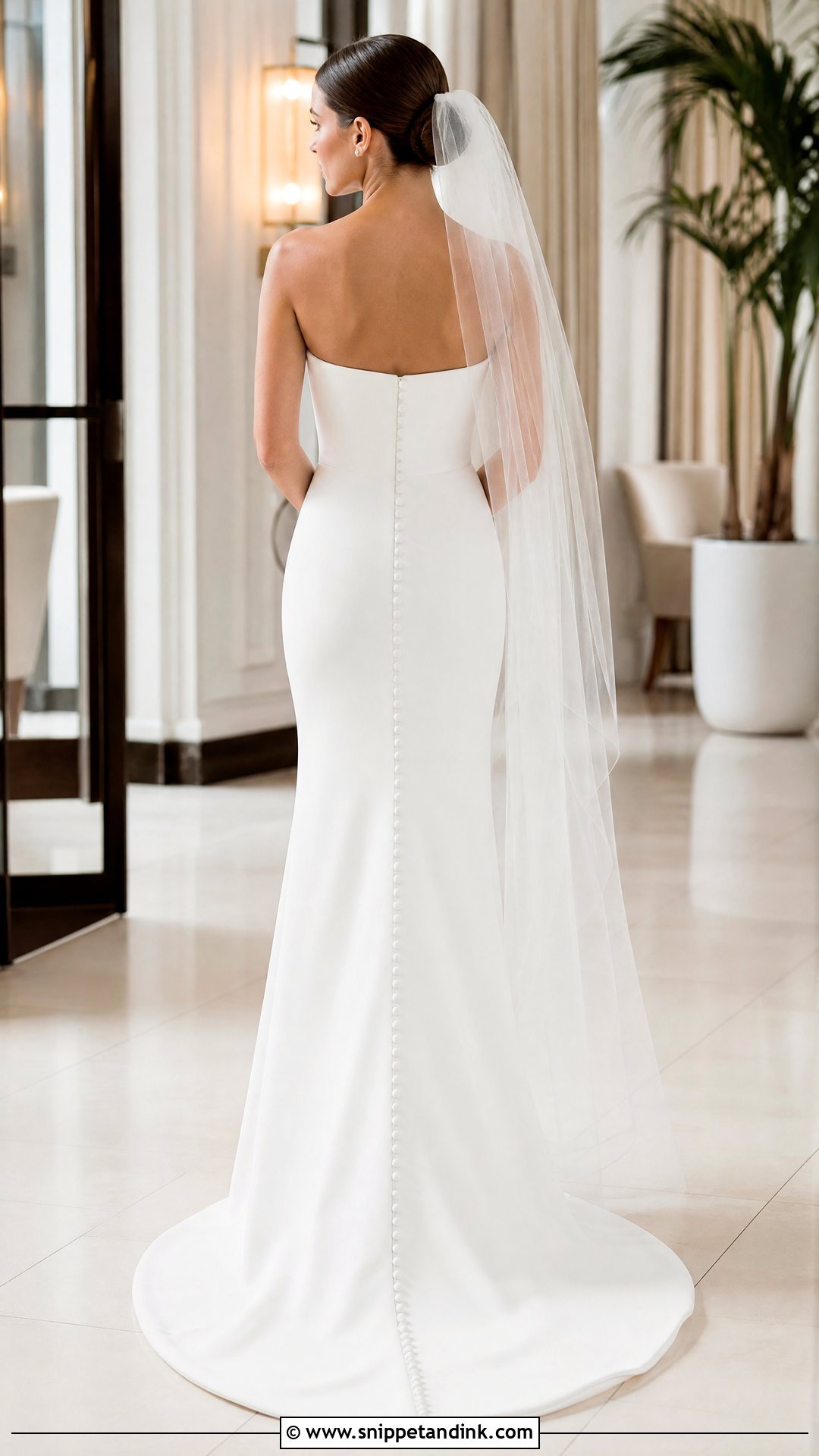
With nothing above it, the button row on a strapless dress runs from the top edge straight down, so whatever holds the bodice up has to be inside it. Good internal boning and a snug waist do that work; the buttons never should. Stretch crepe gives a sleek result and satin a more formal one, and some strapless sheaths carry their buttons all the way to a sweep train. At fittings, lift your arms, sit and walk. If you reach for the neckline even once, it needs taking in.
9. V-Neck Wedding Dress With Buttons Down the Back
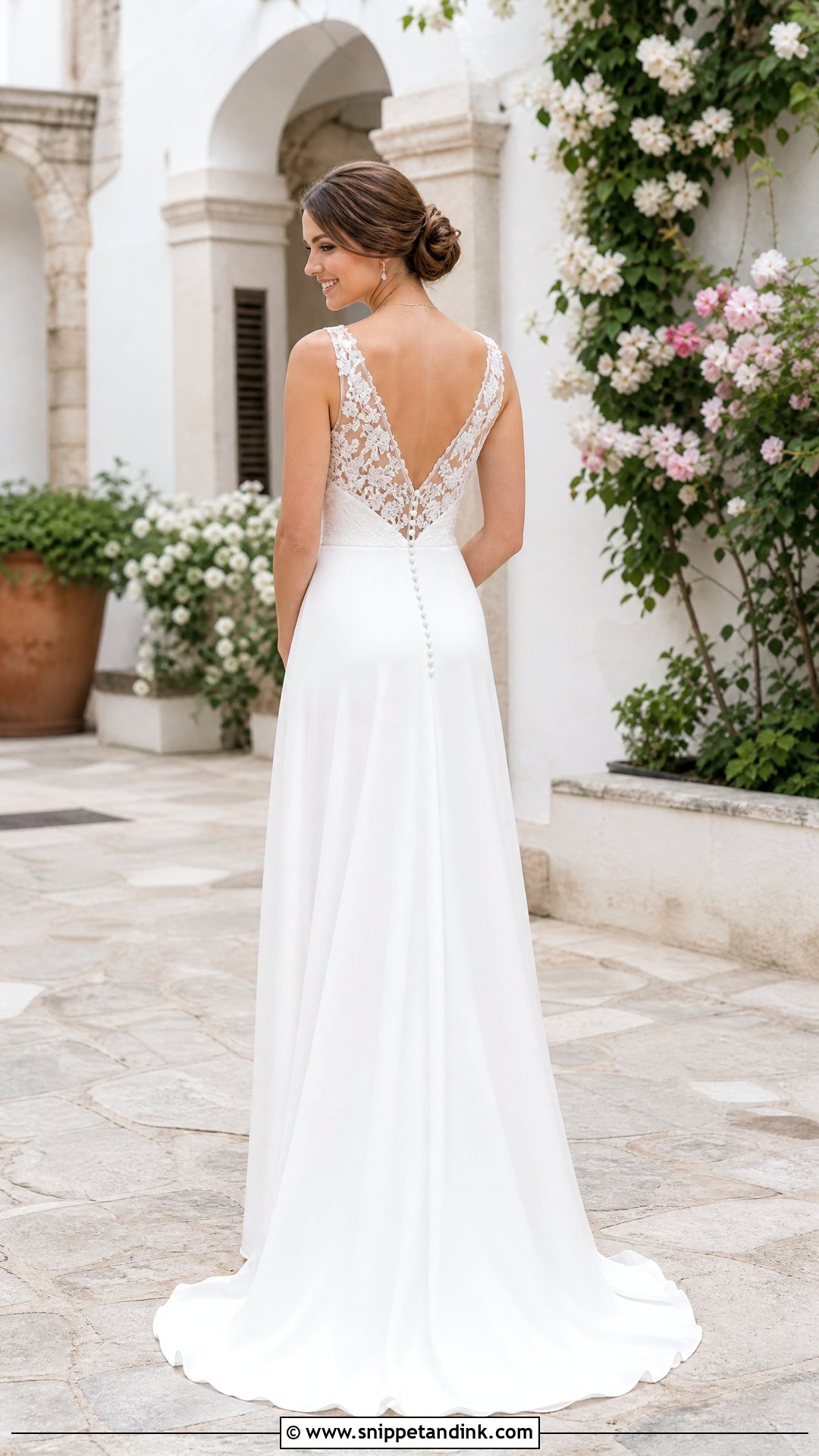
Cut deep at both front and back, a V-neck gown has very little fabric holding it in place, so the button line often runs over an illusion panel that stops the two halves spreading apart. Wide straps support more; narrow ones look lighter. If both necklines plunge, ask about concealed support and illusion inserts before you buy. A crepe A-line skirt keeps it modern and lace appliqué softens it. Lean, hug and dance at the fitting, and watch whether the back V stays where it should.
10. Illusion Back Wedding Dress With Buttons
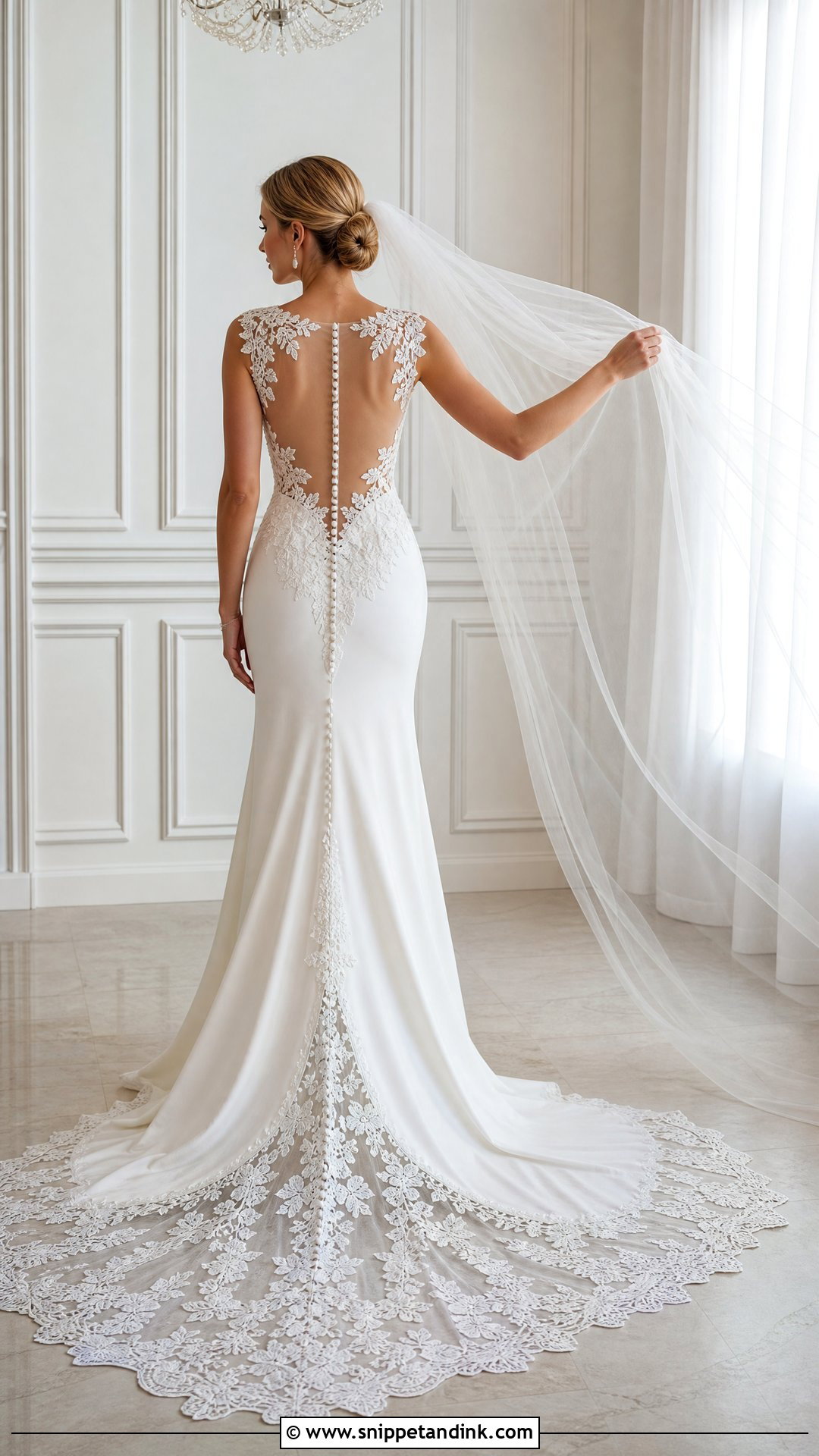
Over sheer mesh, buttons look as though they are floating on skin. Fine net can hold a row of pearl, crystal, or covered buttons while lace appliqués hide the seams at the neckline and sides, and it gives a high back real stability. The mesh has to match your skin closely, since a shade too pink or too grey shows in every back photo. Check that the neckline lies flat without pulling. Earrings that echo the button finish and a plain veil are enough; lace over lace gets crowded.
11. Low Back Wedding Dress With Buttons
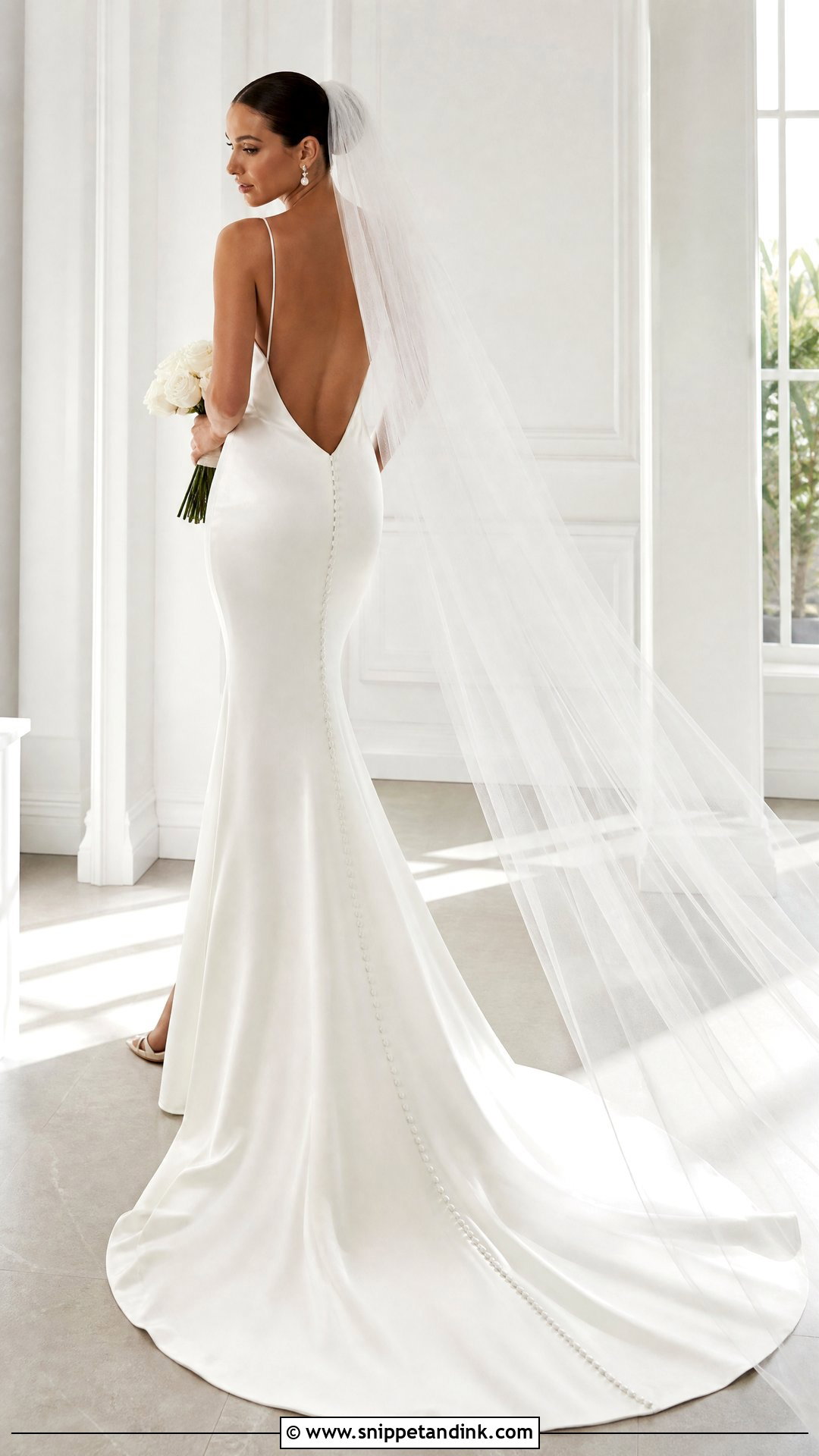
Starting the buttons at the waist leaves the upper back bare and puts the whole row on the skirt and train. Narrow straps frame the opening. The problem to solve first is support, because an ordinary bra will not work here, so ask about built-in cups and internal structure before you buy rather than after. A sheer cathedral veil covers the back for the ceremony and comes off later for the reveal. Wear your hair up or swept to one side, since long hair lying over the buttons simply hides them.
12. High Back Wedding Dress With Buttons
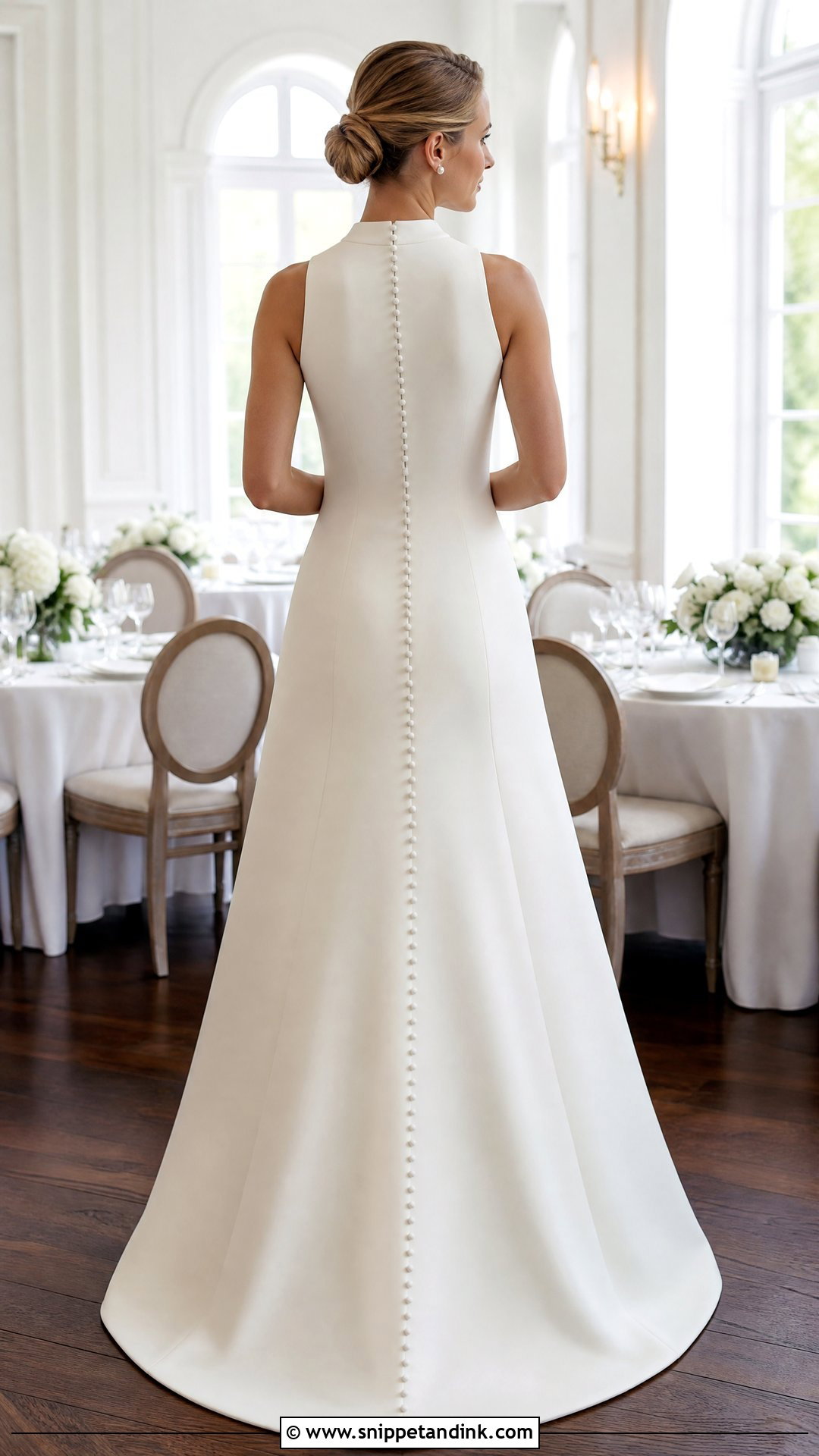
High backs put the button row center stage from behind, starting near the nape. My first question is always whether the buttons are working or decorative. Many gowns hide a zipper under a decorative row, which makes dressing quick. If every loop is real, budget extra time on the morning and keep a button hook in the kit. Long lace sleeves feel traditional, sleeveless crepe cleaner. Pearl studs and a low chignon suit it, and plain tulle can be lifted away for portraits.
13. Off-the-Shoulder Wedding Dress With Buttons
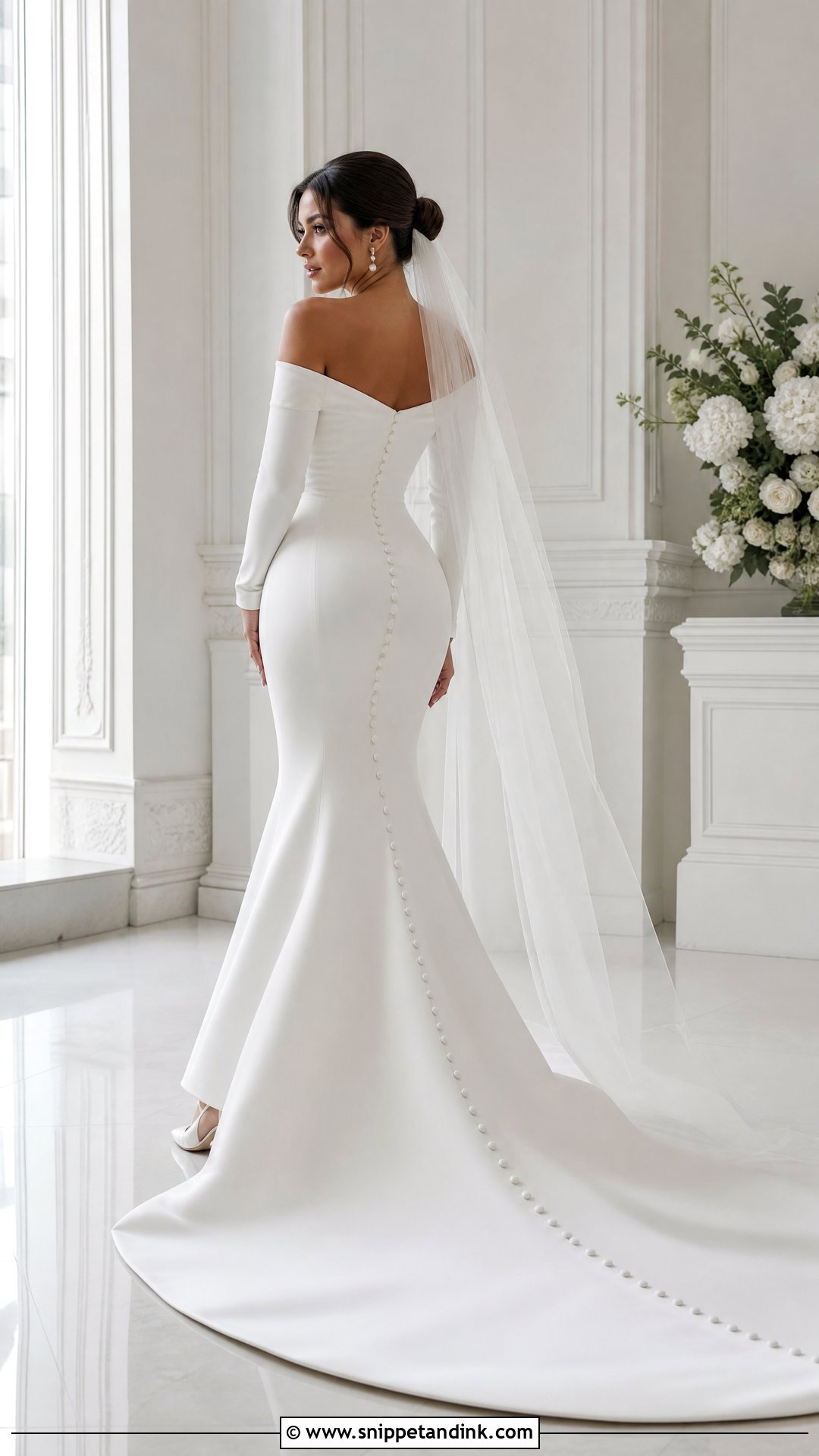
An off-the-shoulder bodice frames the collarbones and leaves a wide stretch of back for the button row, though the sleeves do pin your arms a little. Raise your arms and hug someone at the fitting; if the neckline shifts or the sleeve digs in, it needs adjusting. Fitted long sleeves read formal and short draped ones lighter for warm weather. A crepe mermaid looks sculpted, a satin A-line classic. Skip the necklace and put your hair up so the shoulders and buttons share the attention.
14. Cap Sleeve Wedding Dress With Buttons
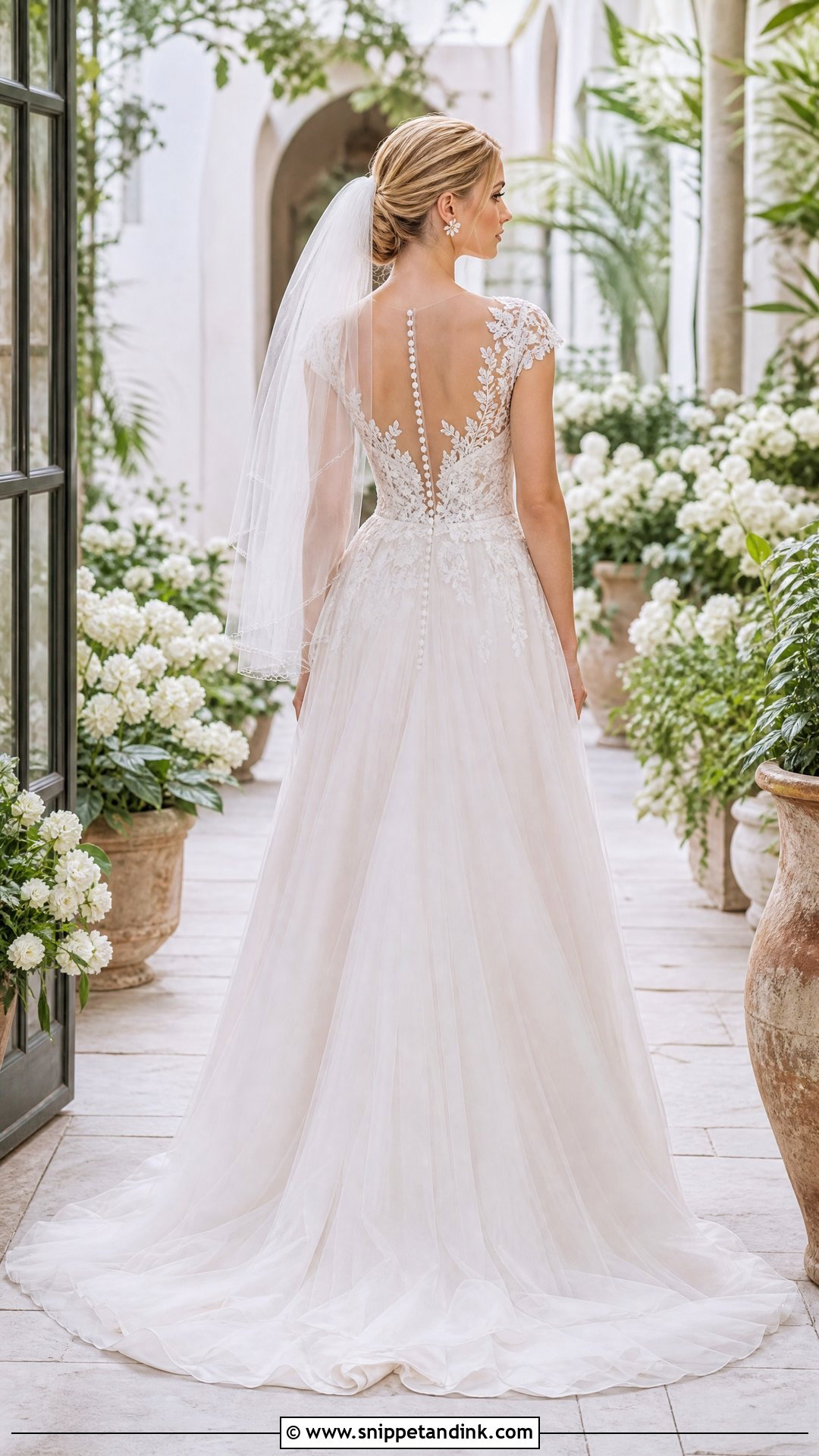
Cap sleeves cover the top of the shoulder without the weight of a full sleeve, and they sit well with an illusion back and a row of small pearl buttons. For an airy version, put lace cap sleeves over a chiffon or tulle A-line skirt; for structure, use satin or crepe. Underarm fit is the thing to watch. A cap sleeve cut too tight pulls the back closure sideways when you lift your arms, and the button row twists with it. A twisted updo keeps the back clear.
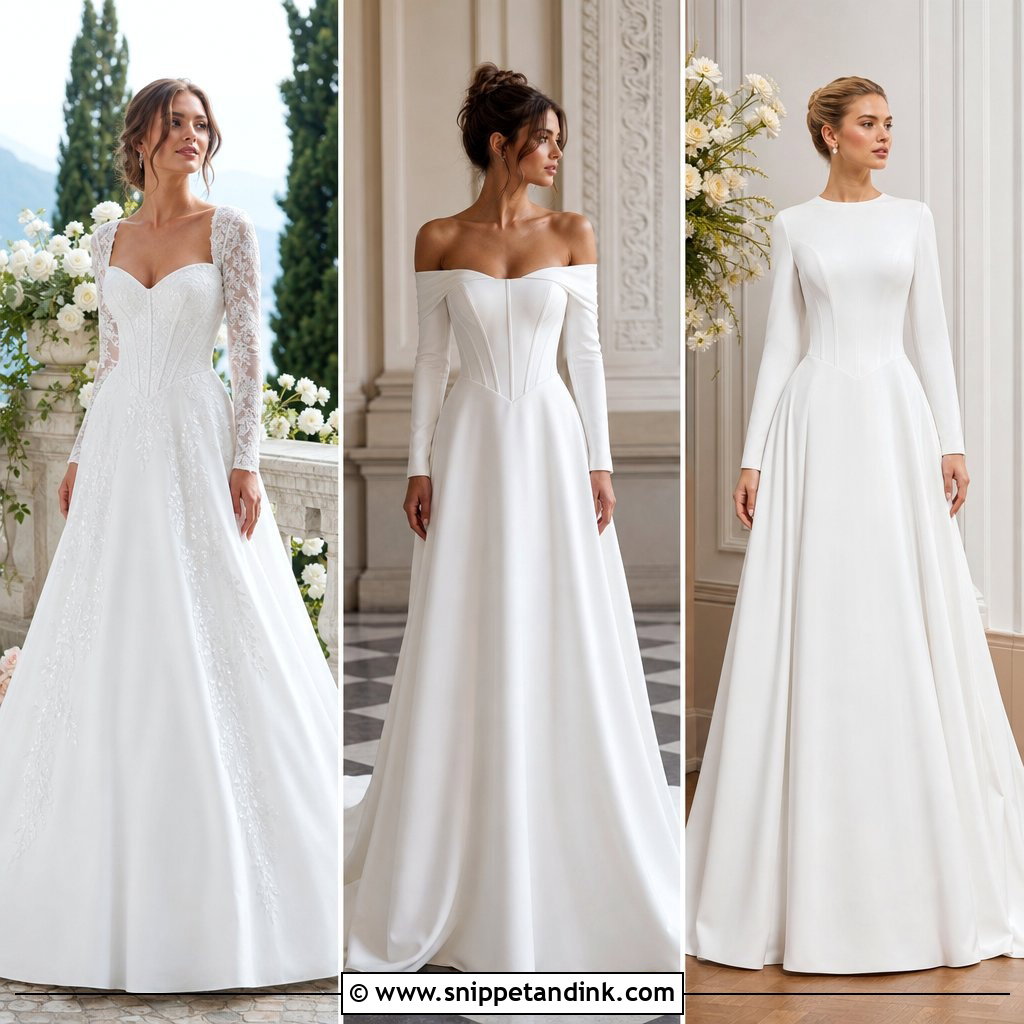
15. Pearl Button Wedding Dress
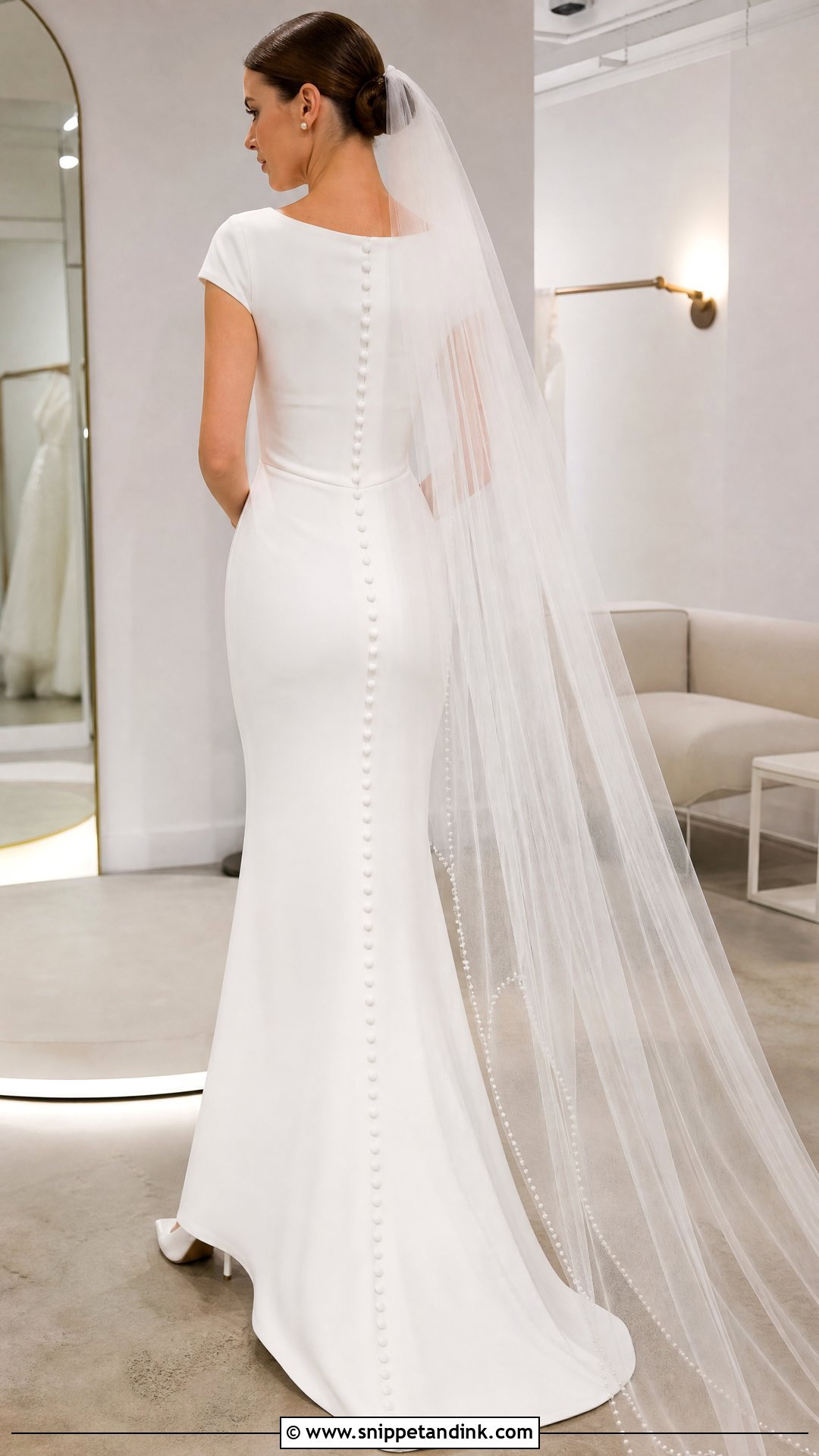
Pearl buttons glow against matte crepe and pick up the sheen of satin. Matched to the gown’s ivory they read tonal, while a slightly brighter pearl stands out along the seam. I repeat pearls in two or three places at most, perhaps studs and a pearl-edged veil, rather than everywhere. Check every button before the wedding. Faux pearl coatings can chip and shanks can loosen, so make sure each one is firmly stitched and ask the boutique for a couple of spares.
16. Wedding Dress With Buttons to the Train
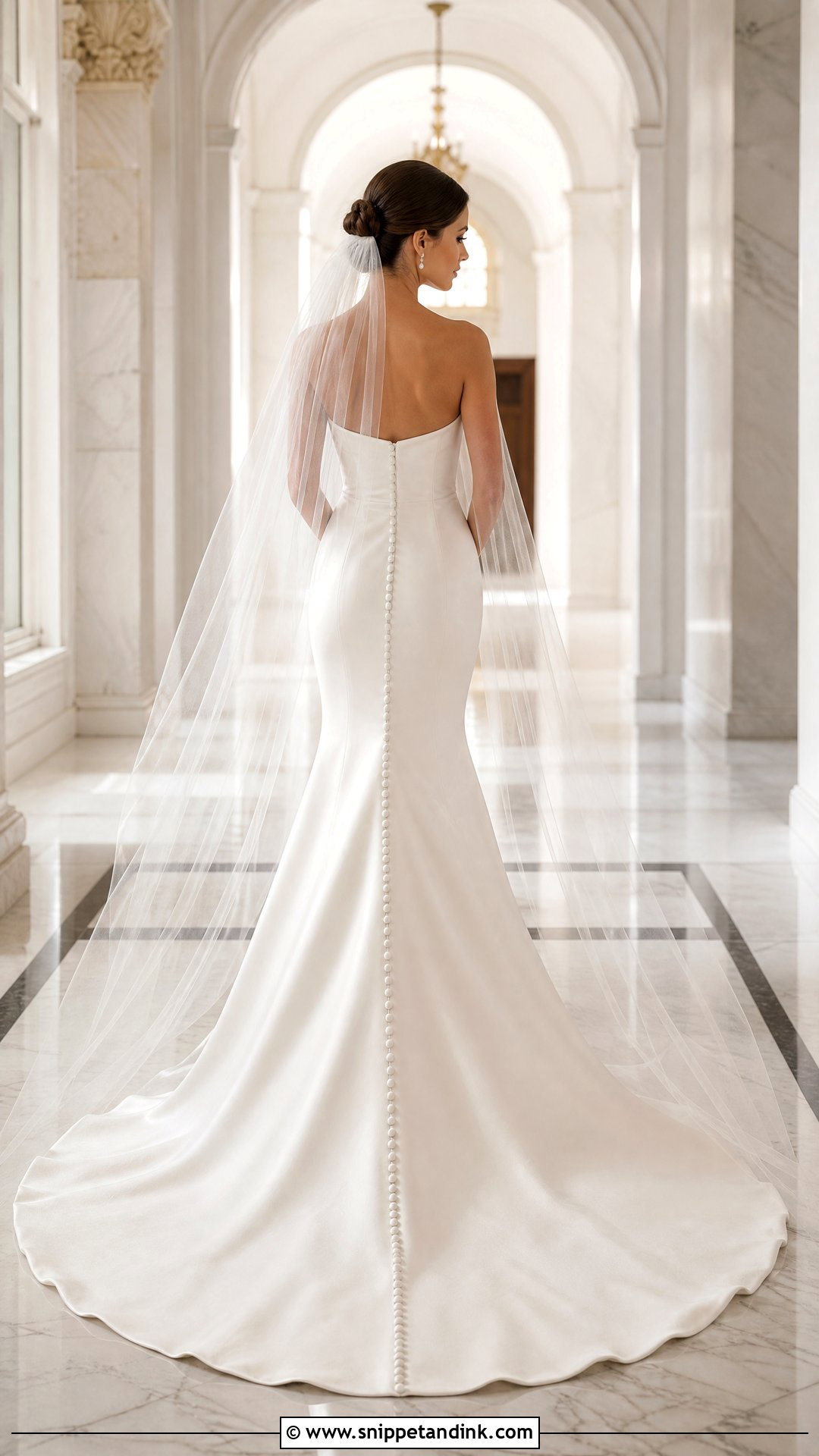
One continuous line from the nape to the end of the train is about as dramatic as a button detail gets, and it shows best on plain satin or crepe, where each button stands clear. A sheath or fit-and-flare stretches the line even further. The bustle is where these go wrong. Ask your seamstress to design a bustle that preserves the central button line instead of folding it awkwardly, and photograph the bustled dress from behind at your fitting. A long sheer veil adds to the length for the walk.
17. Lace Train Wedding Dress With Buttons
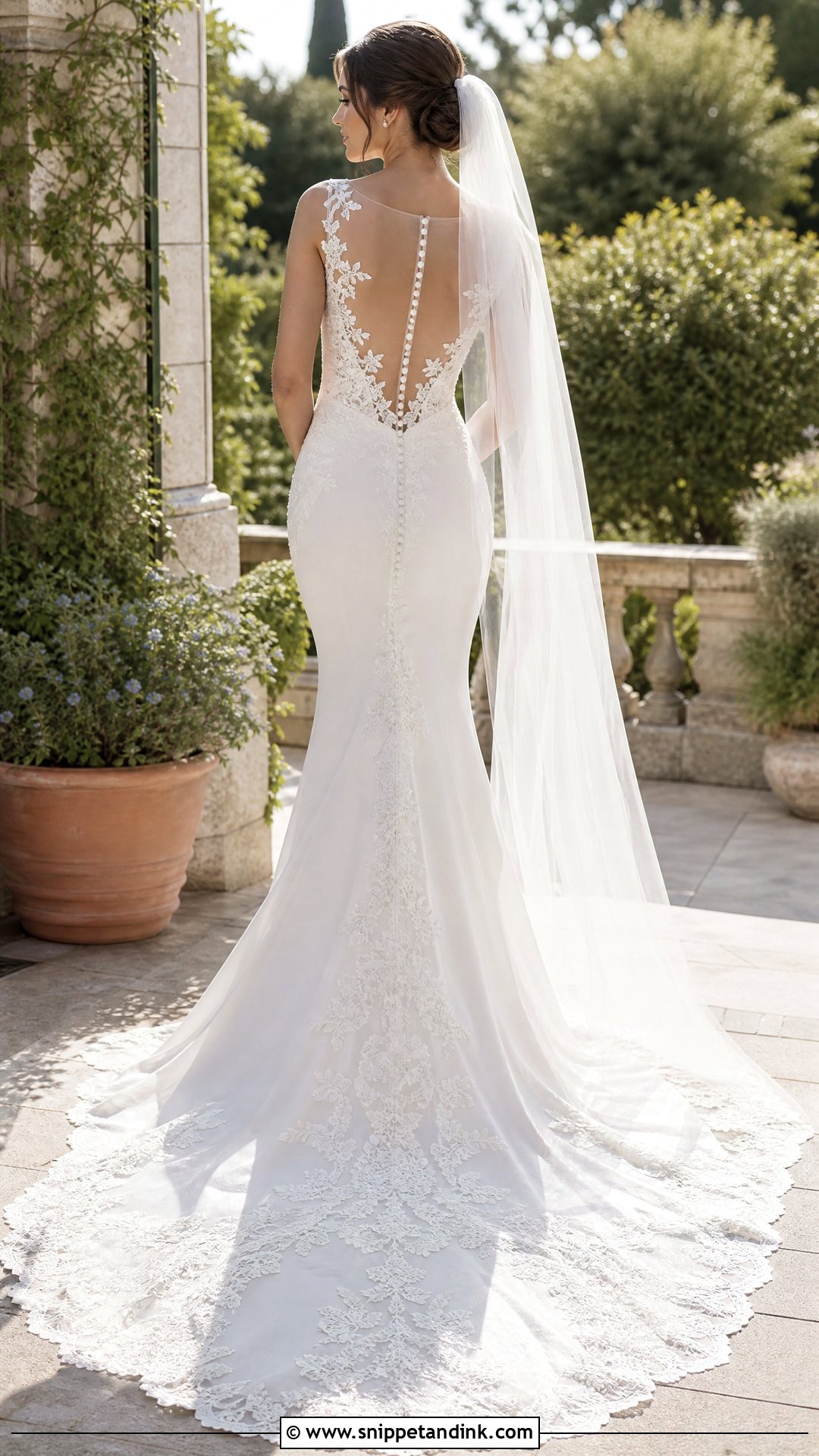
Lace that builds from the hips toward a scalloped hem gives a button-back gown a textured train, and covered buttons running through it hold the center steady. The fitting risk here is alignment. Where lace motifs, seams and train layers meet, the row can drift off-center, so I stand behind the bride at the mirror and check that it runs straight. A plain veil avoids competing with the lace. Wear your hair up or swept to one side to reveal the back.
18. Minimalist Wedding Dress With Buttons
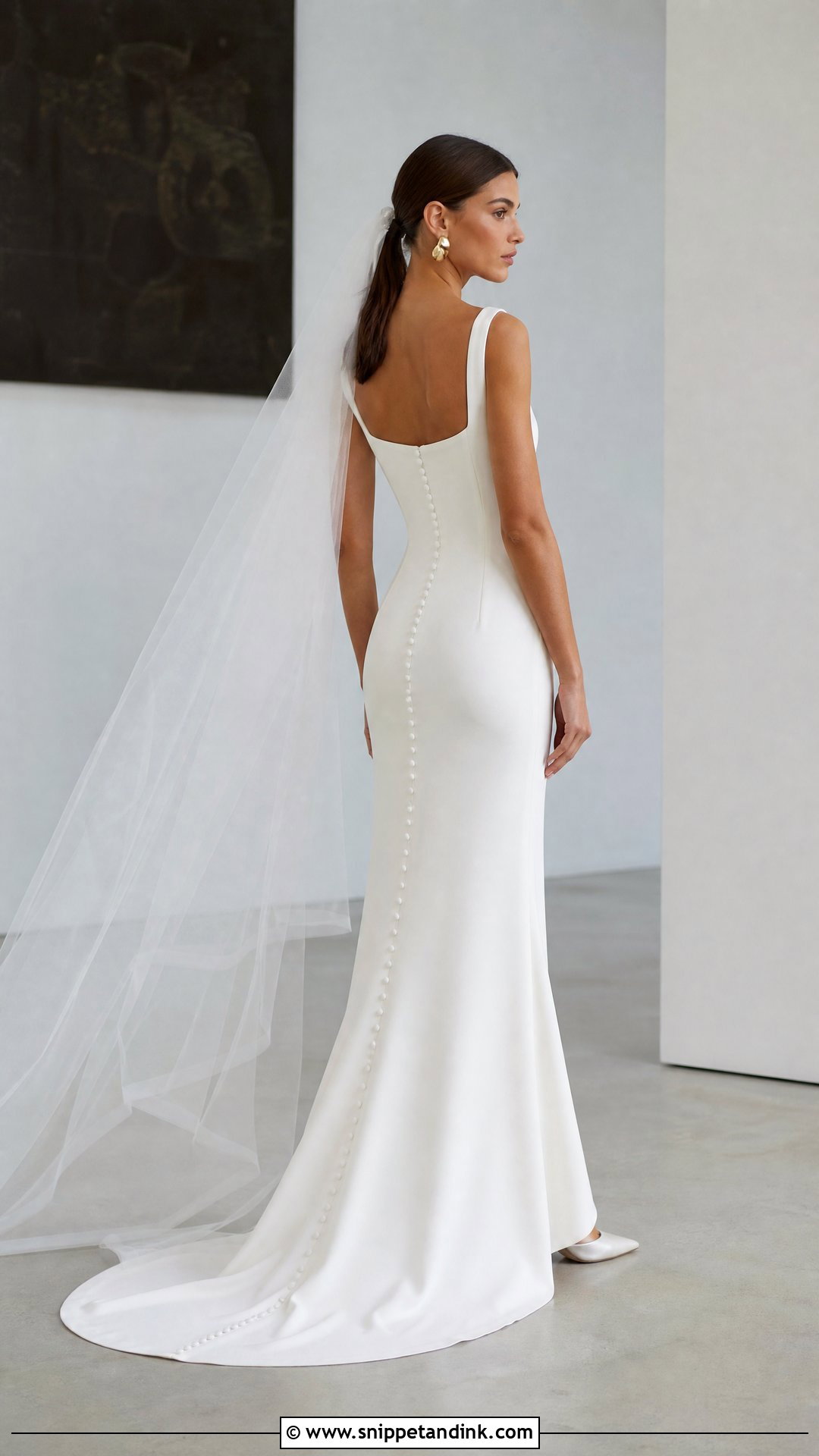
A plain gown has nowhere to hide a construction problem. On unembellished crepe, satin or mikado, I check side seams, hem, button spacing and fit across the back far more carefully than I would on a lace dress, because uneven gaps between buttons are surprisingly visible on a clean surface. A square-neck sheath looks contemporary; a sleeveless A-line moves more freely. Keep the styling to sculptural earrings and a sleek bun, and choose smooth underwear with no visible edges.
19. Plus Size Wedding Dress With Buttons Down the Back
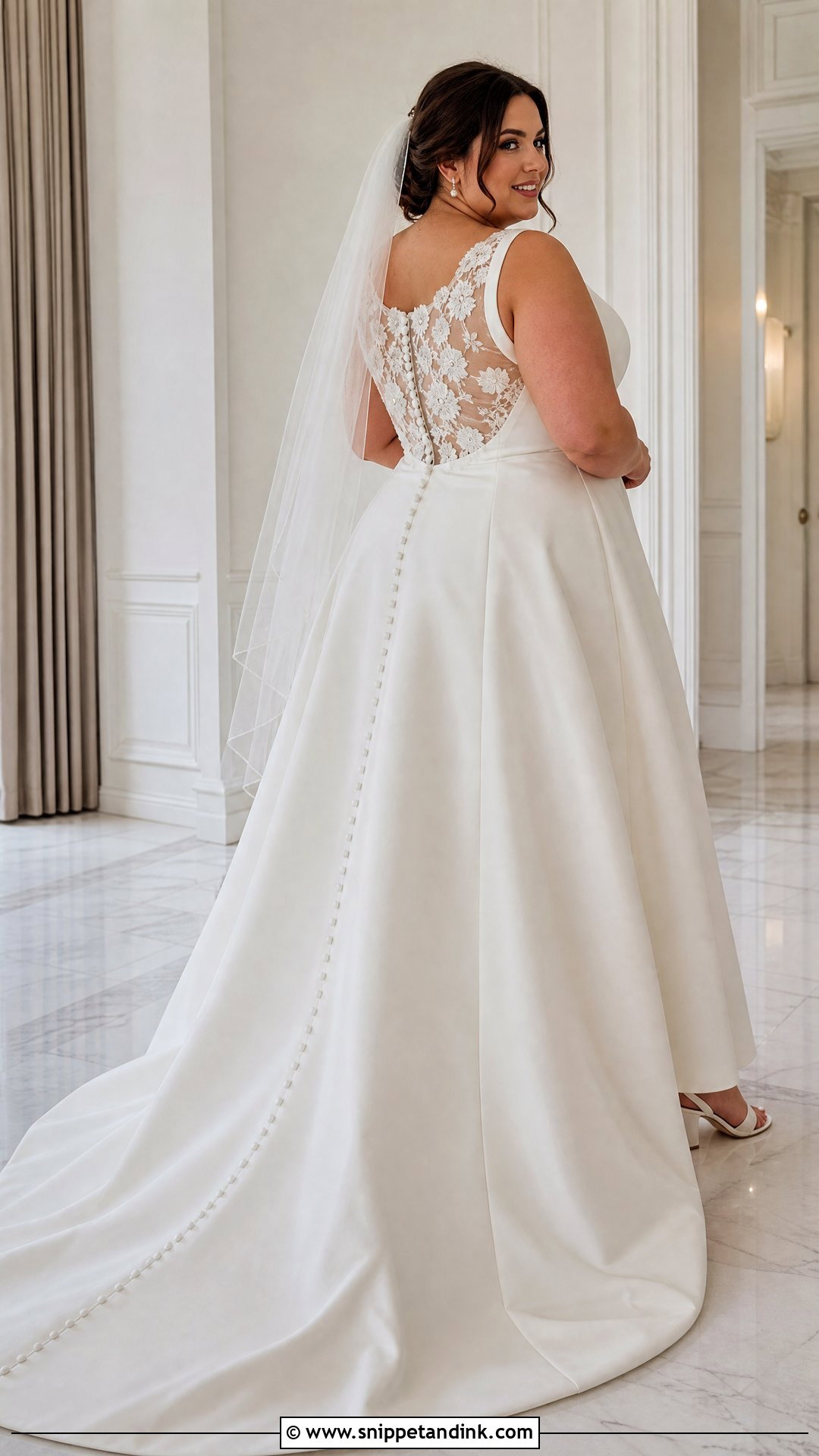
A button row on a curvy bride has to sit on a properly fitted back seam, otherwise the buttons gape at the waist and pull across the shoulder blades. An A-line with wide straps, a structured bodice and stretch lining is comfortable and supportive. A fitted crepe gown works just as well when the princess seams and internal support are placed correctly. Button-back A-lines with supportive straps and illusion details are widely made in extended sizes. Sit, turn and lift your arms at every appointment so the alterations fix comfort and button alignment together. Fit matters far more than the size on the label.
20. Vintage Wedding Dress With Buttons Down the Back
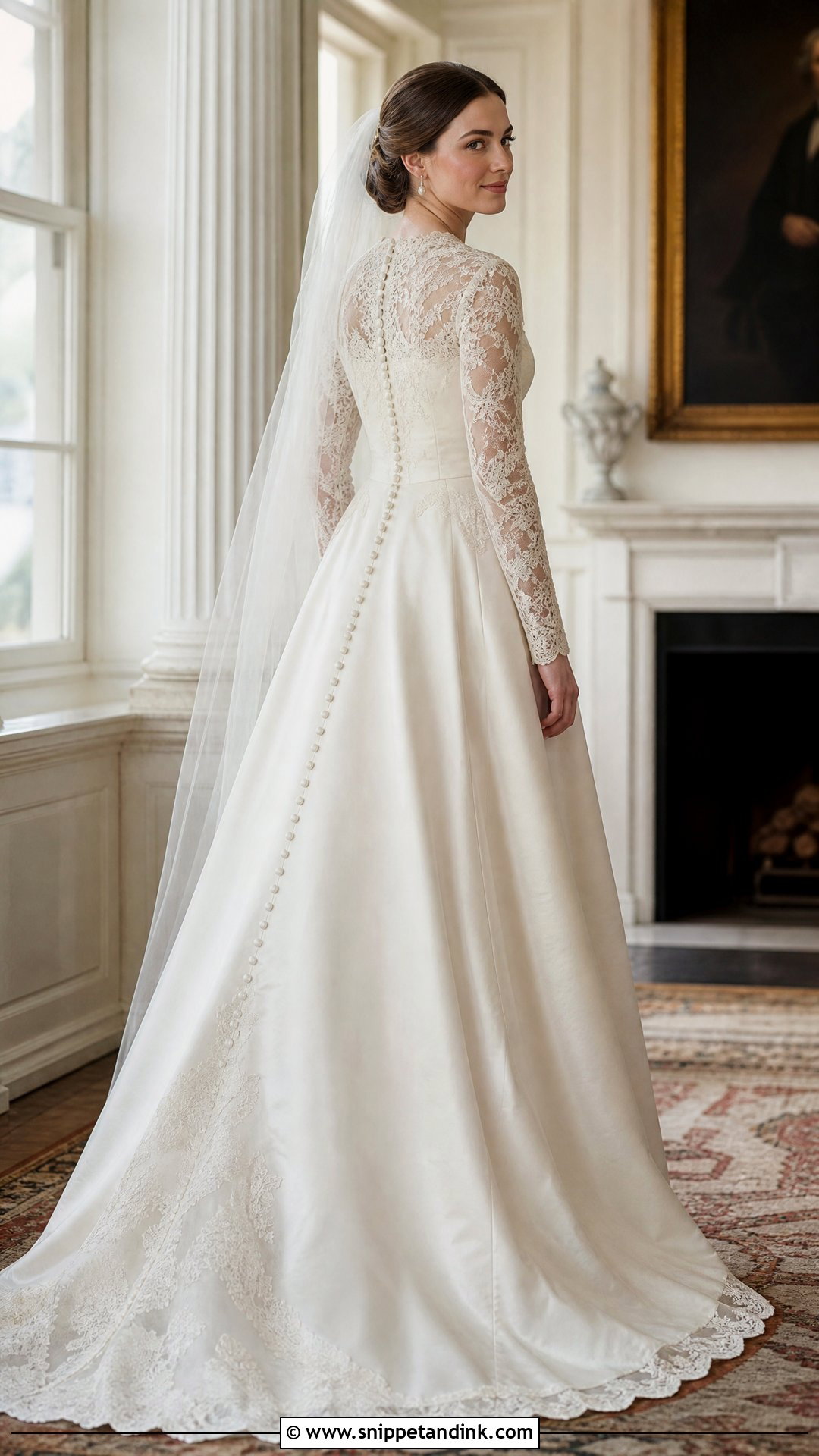
Buttons down the back were a standard closure on older wedding gowns, which is why they make a vintage-inspired dress feel right without trying. Combine them with lace sleeves, a softly defined waist and a modest neckline. Satin leans mid-century, while fine floral lace looks more heirloom. The risk is costume, so I keep to one clear era and one silhouette. A neat chignon, a veil on a small comb and Mary Jane heels or almond-toe pumps finish it.
If a Button Comes Off Mid-Celebration
Hugging and dancing put real strain on a button row, mostly at the waist. Ask the boutique for two or three spare buttons; many gowns come with them, sometimes stitched inside a seam. Keep one in the emergency kit with a needle already threaded in the dress color.
- A lost button can be sewn back in a few minutes, through the original holes, opposite its loop.
- A snapped loop can be bridged with a small safety pin fixed from the inside, where nobody will see it.
- If several loops fail at the waist, a hook and eye or a pin hidden under the row holds until the end of the night.
After the wedding, ask the cleaner to check every button before the dress goes into storage. Shank buttons loosen over time, and securing them while the gown is being cleaned is far easier than finding them hanging by a thread years later.
A Row of Buttons Is Only as Good as Its Fit
A button-back gown should look right from behind and feel secure from the first fitting to the last dance. Sheaths, ball gowns, lace A-lines, illusion backs, low backs and long trains all carry the detail differently. When you compare dresses, turn around. Study the back in daylight, ideally with your hairstyle and veil, check every closure for comfort and see how the bustle treats the button line. A straight, centered row on a well-fitted back does more for a dress than any extra embellishment.
You'll Like These Ideas:






Leave a Reply