
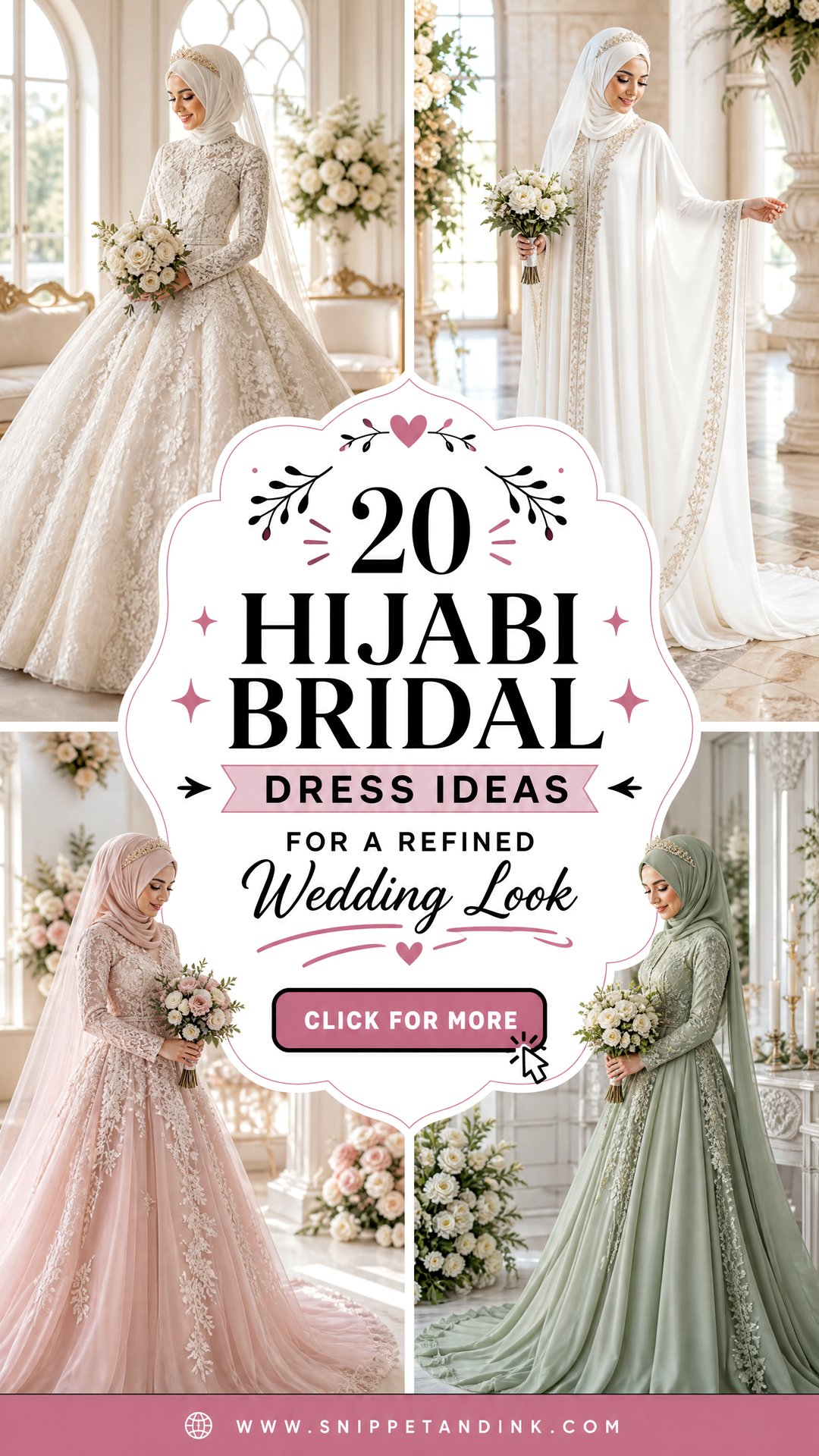
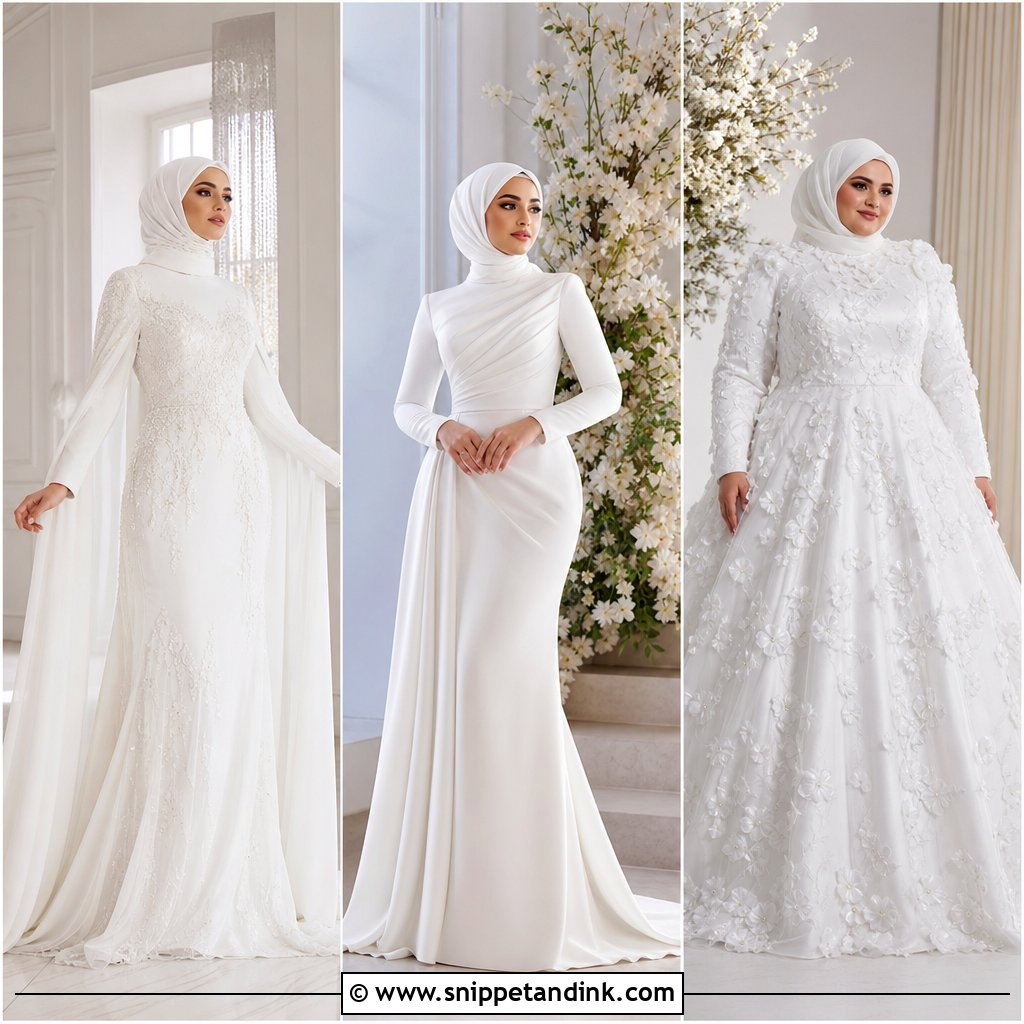
Covered brides usually come to me with one fear: that the gowns they love were never designed with sleeves, a high neck or an opaque skirt in mind. Most of them can be. The twenty dresses below range from white satin and lace ball gowns to lehengas, Moroccan caftans and colored gowns for a second outfit, and for each one I’ve noted the hijab fabric, veil and accessories I’d put with it. As you look, pay attention to the less glamorous details too: how heavy the dress is, whether the lining is truly opaque, and whether the sleeves let you lift your arms. Those decide how you feel at hour eight.
Modesty Alterations Worth Asking for Early
Many bridal gowns are designed strapless or with sheer illusion panels, and a good bridal seamstress can add coverage to most of them. The catch is time. Gowns ordered from a bridal shop commonly take several months to arrive, and alterations need their own run of fittings after that, so I tell brides to mention modesty changes at the very first appointment rather than at the first fitting.
- Sleeves: can be added in matching lace or chiffon. Ask whether the bridal shop can order extra fabric from the designer, since matching ivory by eye rarely works.
- Raised neckline: easiest on lace gowns, where an opaque layer can sit behind the illusion panel.
- Opaque lining: a second lining layer behind sheer skirts or bodices. It adds weight, so try it with your shoes on.
- Back coverage: open or low backs can be filled with lining or lace, often with covered buttons over the top.
One thing I’d steer you away from: buying a gown that needs every one of these changes. When most of the original design is being rebuilt, a dress made modest from the start will usually fit better and cost less in the end.
1. Hijabi Bridal Satin A-Line Gown
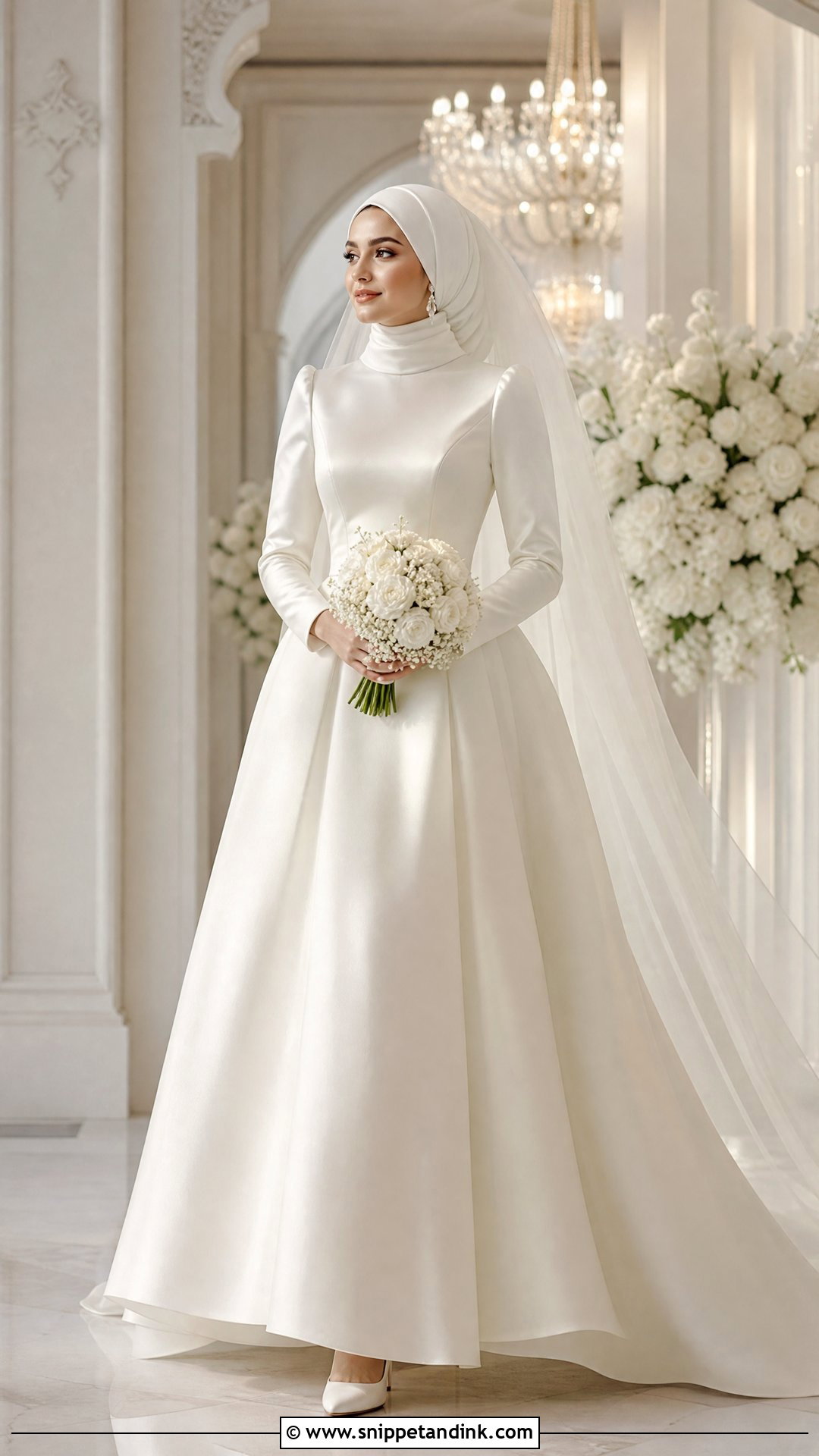
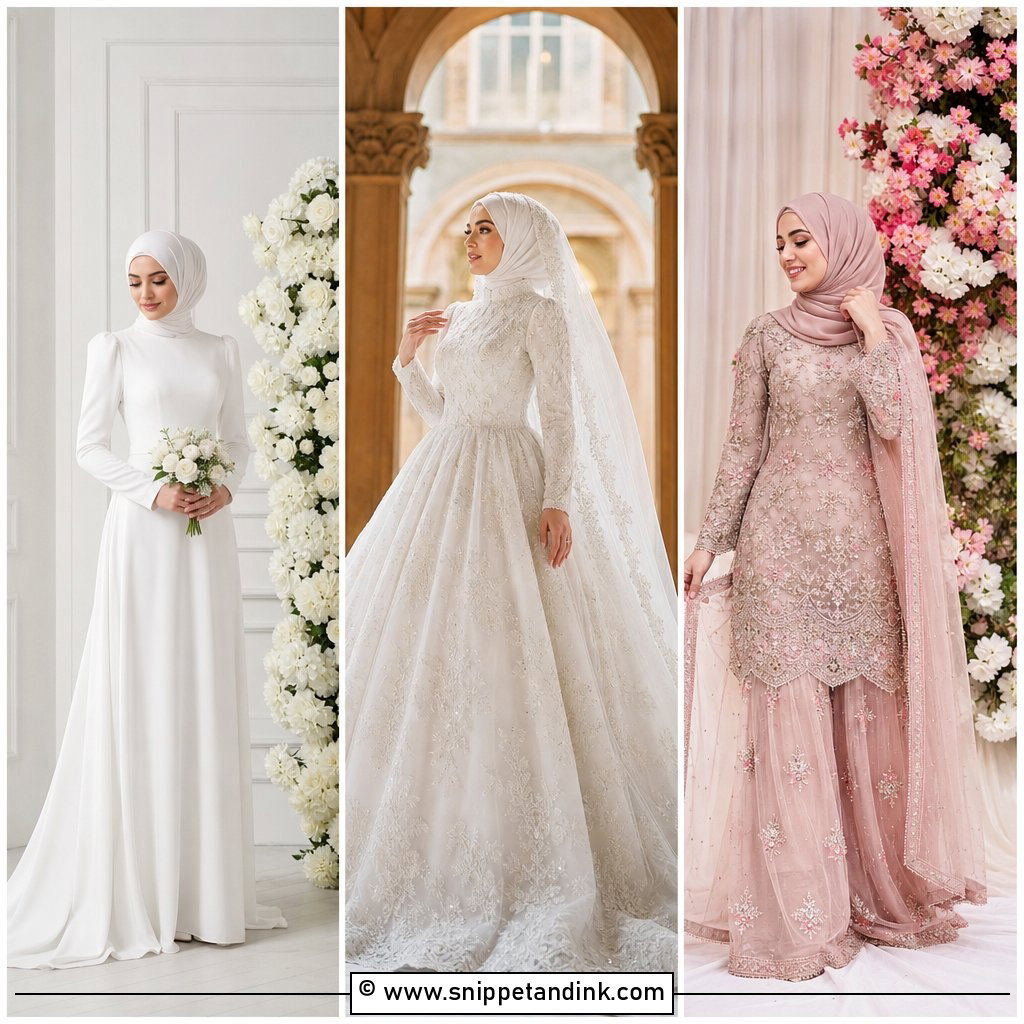
Satin A-lines are the shape I see modest brides settle on most often, because the fabric holds the skirt away from the body and gives a clean outline without any beading. Ask for fitted long sleeves with a little ease at the elbow, and a high neck that clears the hijab rather than bunching beneath it. I pair it with a matte chiffon hijab in the same ivory family, since satin next to satin at the face looks flat. The veil attaches behind the hijab, never on top of the crown, so the neckline stays visible. Closed ivory pumps, pearl drops and a compact bouquet finish a formal nikah or ballroom reception.
2. Hijabi Bridal Lace Ball Gown
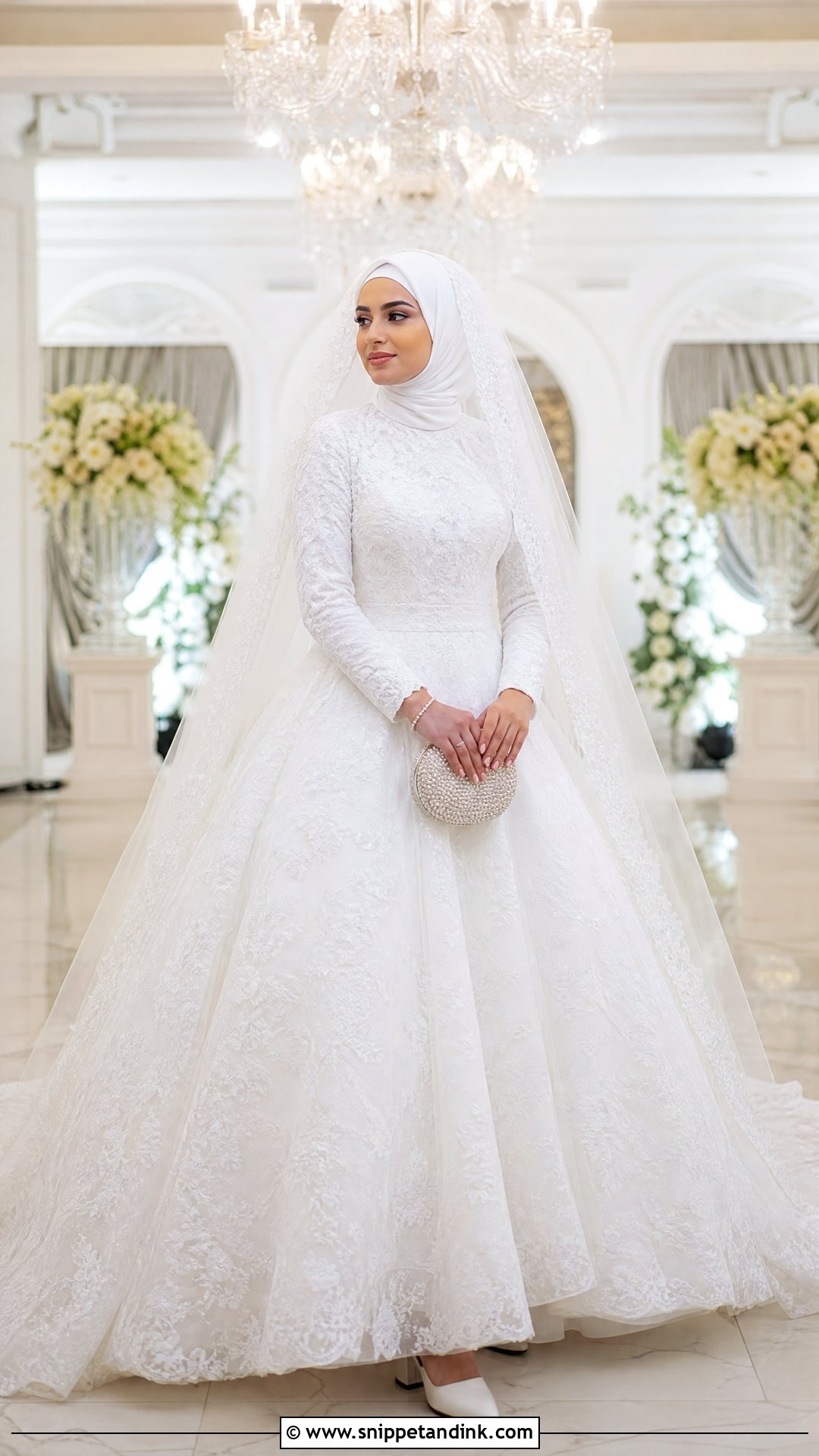
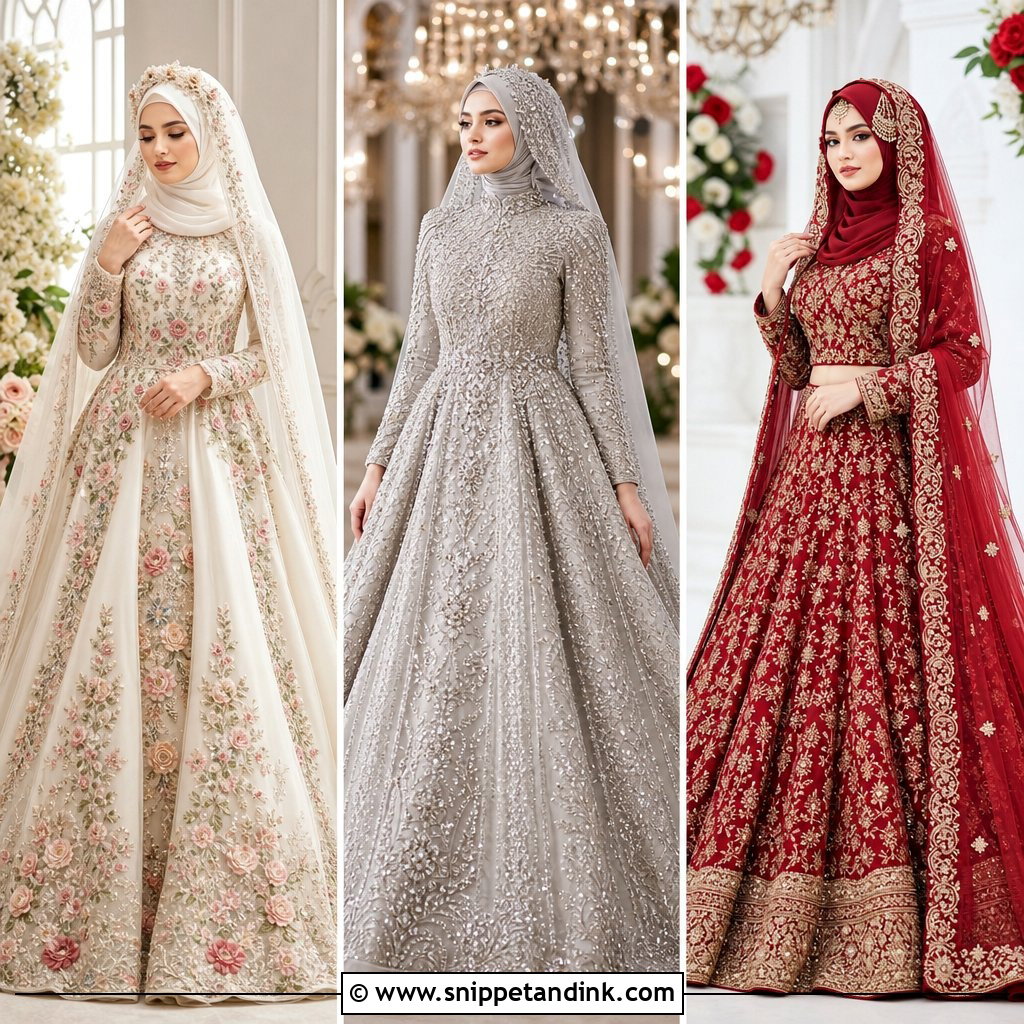
Lace ball gowns carry a lot of fabric, so comfort starts underneath. I’d check the lining is fully opaque, because lace over a thin nude lining can read as skin in flash photos. The lace should cover the bodice and thin out across the skirt; all-over heavy lace starts to look busy with a hijab. A smooth satin hijab lets the lace be the only texture. Choose a cathedral veil with a narrow lace edge that echoes the gown. Block heels will carry you under that skirt better than stilettos. Wear a bracelet over the cuff and earrings pinned under the hijab so nothing catches in the lace.
3. Hijabi Bridal Cape Sleeve Gown
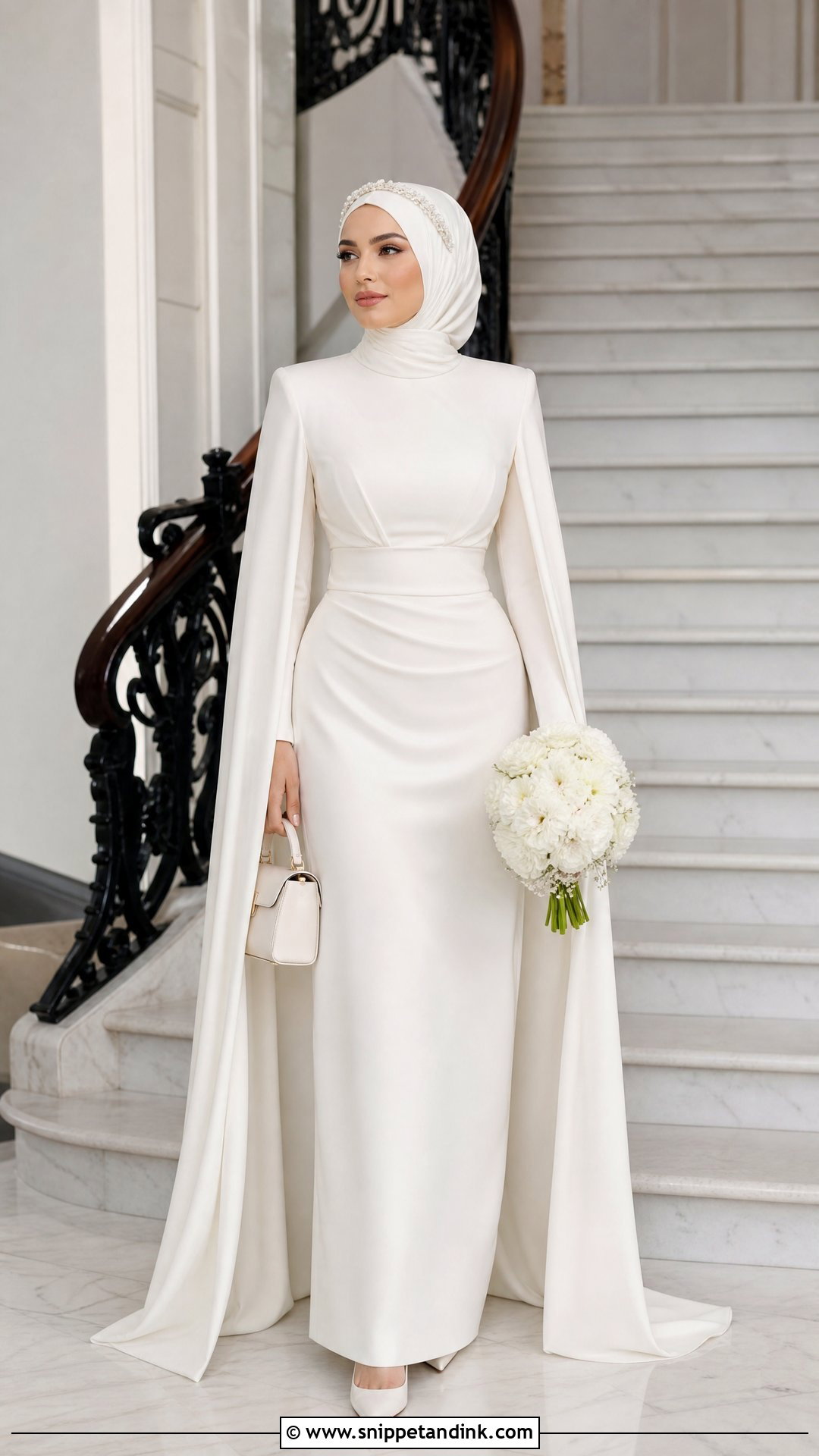
Cape sleeves give you movement and a veil-like effect without a separate veil, which some brides prefer because it means nothing is pinned to the head. The base gown can be straight or softly flared. Where the cape looks sheer, ask for an opaque inner layer; designers often leave capes unlined. A crepe hijab, wrapped close, keeps the top streamlined so the cape construction shows. I’d finish with pointed closed heels, a structured mini bag and a jeweled hijab accessory placed near the back of the head, where it shows in profile shots on a staircase. It’s a good fit for modern venues and evening receptions.
4. Hijabi Bridal Pearl Embellished Gown
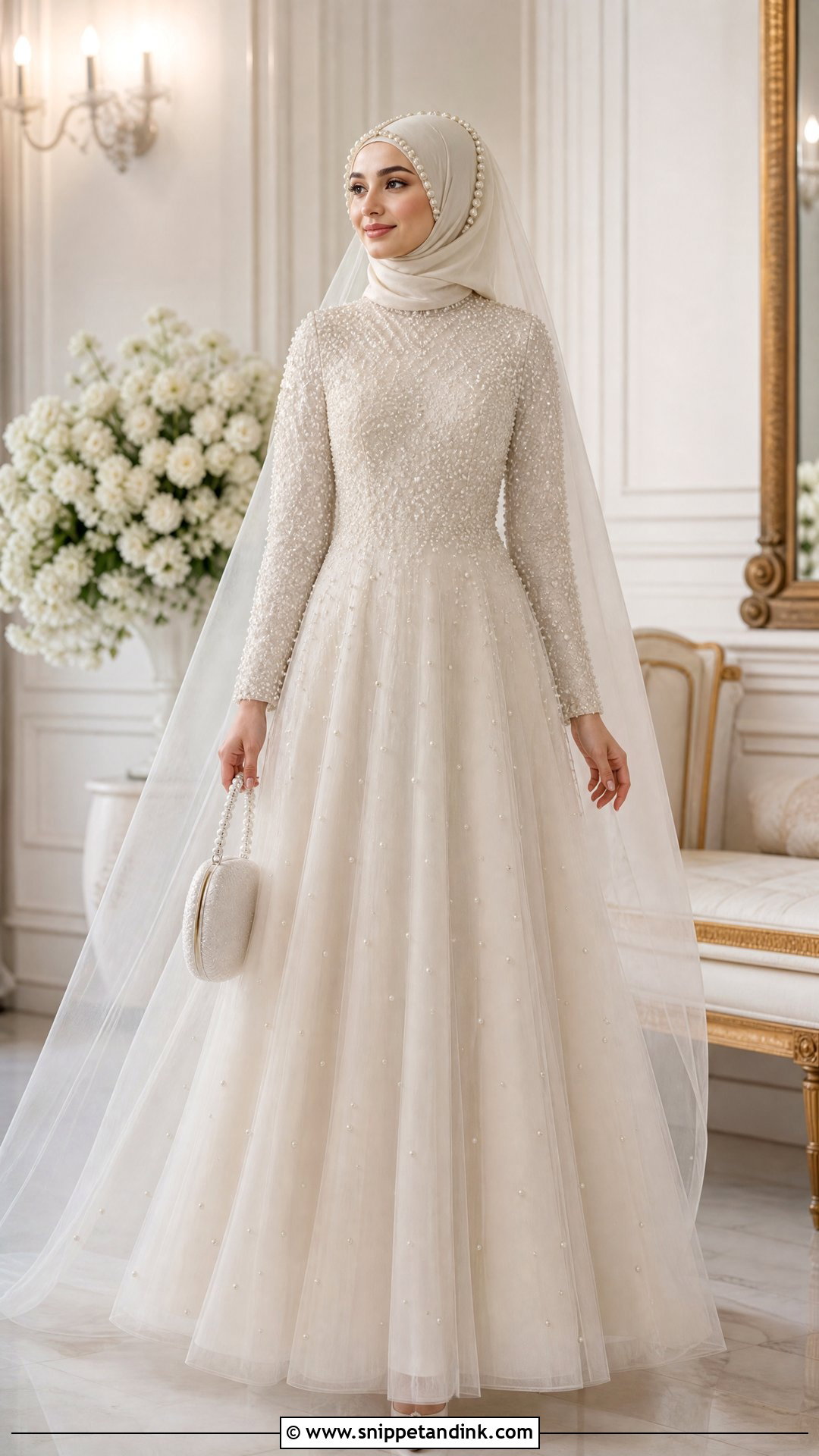
Pearls weigh more than people expect. A gown with pearls scattered across the bodice and cuffs is lovely, but if it’s densely covered, the sleeves pull down and the shoulders shift. I always have the bride lift her arms and hug someone at the fitting to see how it behaves. Look for a lighter scatter with an opaque tulle overlay. A pearl-edged chiffon or crepe hijab repeats the theme, and a plain veil attached beneath a pearl headband keeps the face uncluttered. Satin pumps, a pearl-handled bag and almost no other jewelry are all you need.
5. Hijabi Bridal Mikado Ball Gown
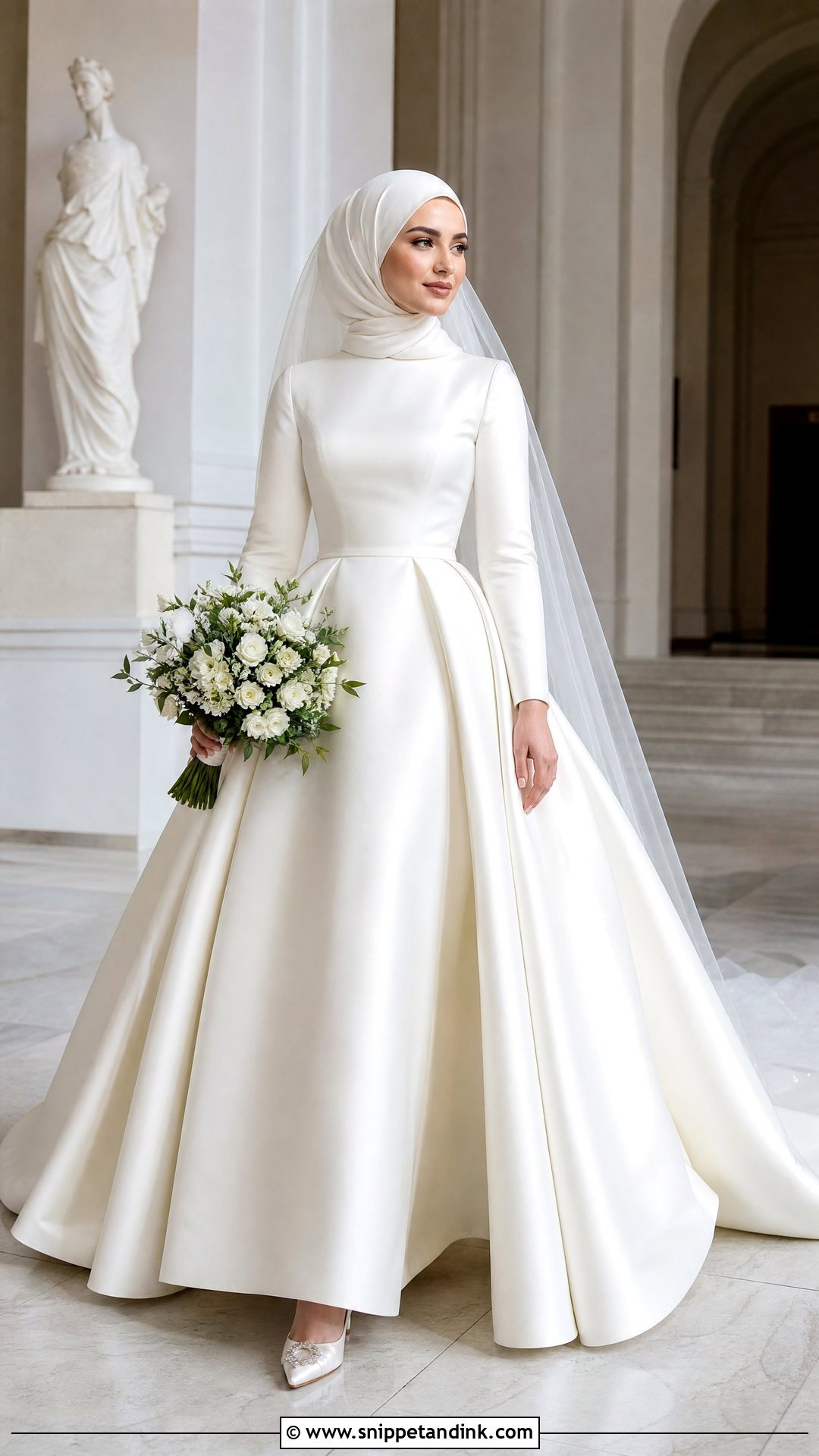
Mikado is the fabric for structure. It’s a heavy, slightly crisp silk blend that holds deep box pleats and a clean bateau neckline without boning doing all the work. Because the shape is the feature, skip heavy beading. Match an ivory satin hijab closely; Mikado comes in many shades of ivory, so bring a swatch when buying the scarf. A long plain veil, low crystal heels and a structured white bouquet suit it. A slim metallic belt can mark the waist, but I’d ask for it to be removable. Mikado is warm to wear, which makes it better for cooler months and air-conditioned halls.
6. Hijabi Bridal Chiffon Empire Waist Gown
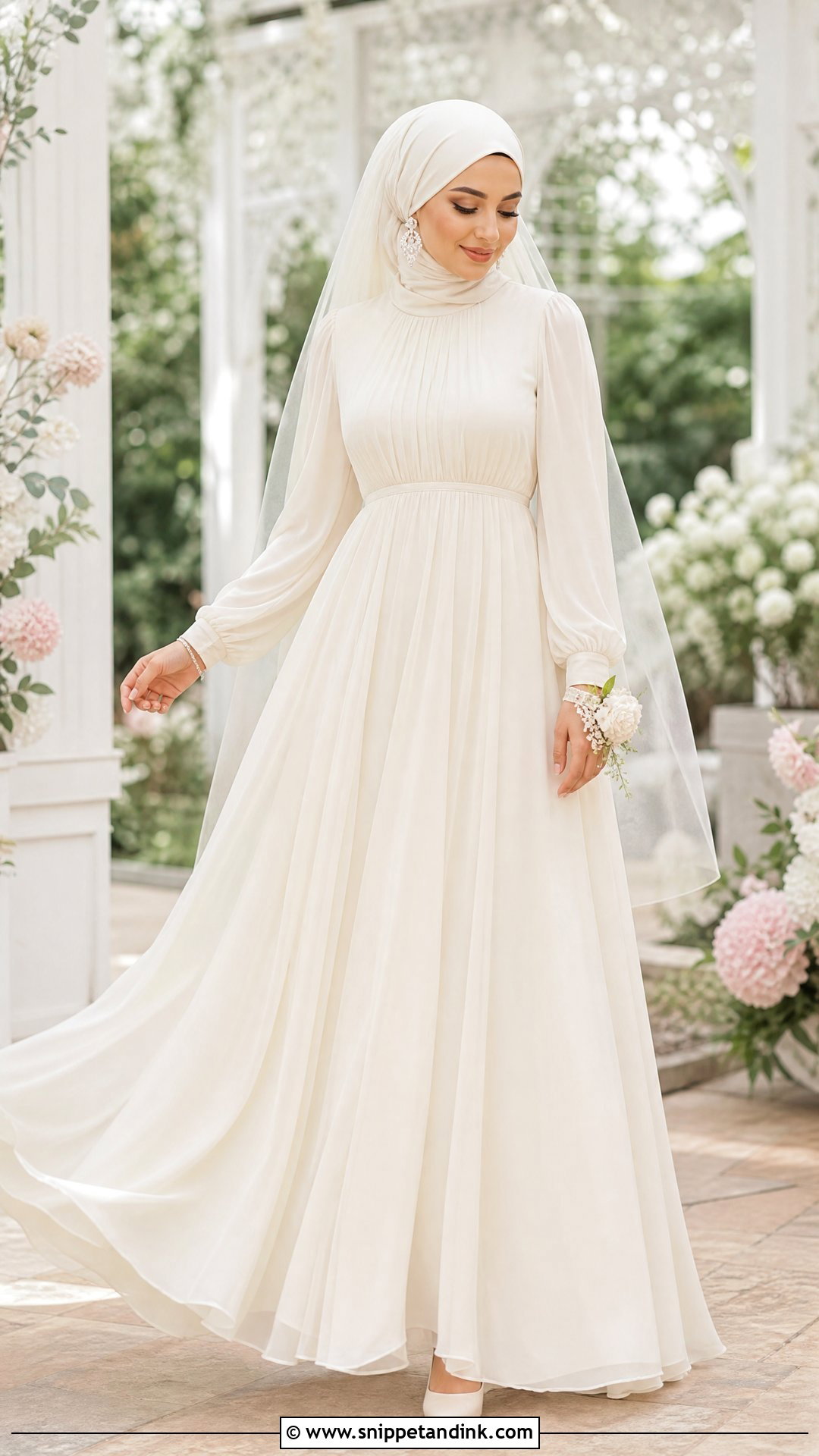
Empire waists are the comfortable choice. A chiffon empire waist gown gathers just under the bust and falls loose to the floor, so there’s no corset pressing on you through dinner. Ask for bishop sleeves with gathered cuffs; they cover the wrist when you raise your hands. Layered chiffon can be semi-sheer, so the skirt needs a proper underlayer. A matching chiffon hijab in a simple drape, plus a light veil that won’t drag on the undercap, keeps the look airy. Low closed heels, a wrist corsage and small crystal earrings. It suits spring and summer and brides who dislike a fitted waist.
7. Hijabi Bridal Embroidered Abaya Dress
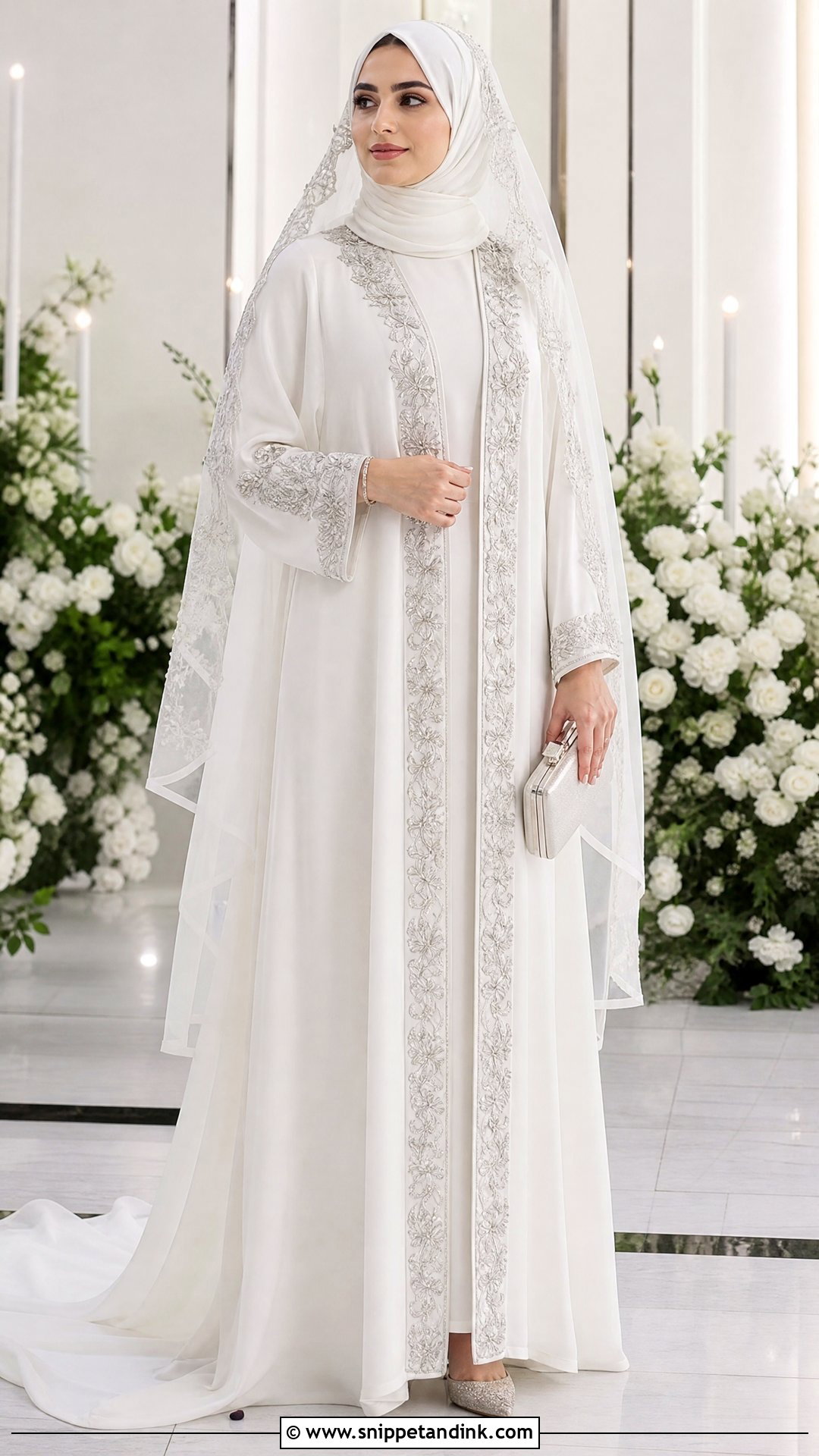
An embroidered bridal abaya works best in a fluid crepe, which drapes instead of standing away from the body. Embroidery along the front opening, sleeves and hem gives it ceremony. Underneath, wear a lined inner dress in exactly the same shade; an ivory abaya over a white slip looks mismatched in daylight. Open fronts swing apart when you walk, so I add a hidden hook or snap at the waist. A chiffon hijab wrapped close to the face and an embroidered veil complete the nikah look. Pointed flats or low heels, a metallic box clutch and a bracelet above the cuff. Gold, silver, pearl or tonal threadwork all suit it.
8. Hijabi Bridal White Kaftan Dress
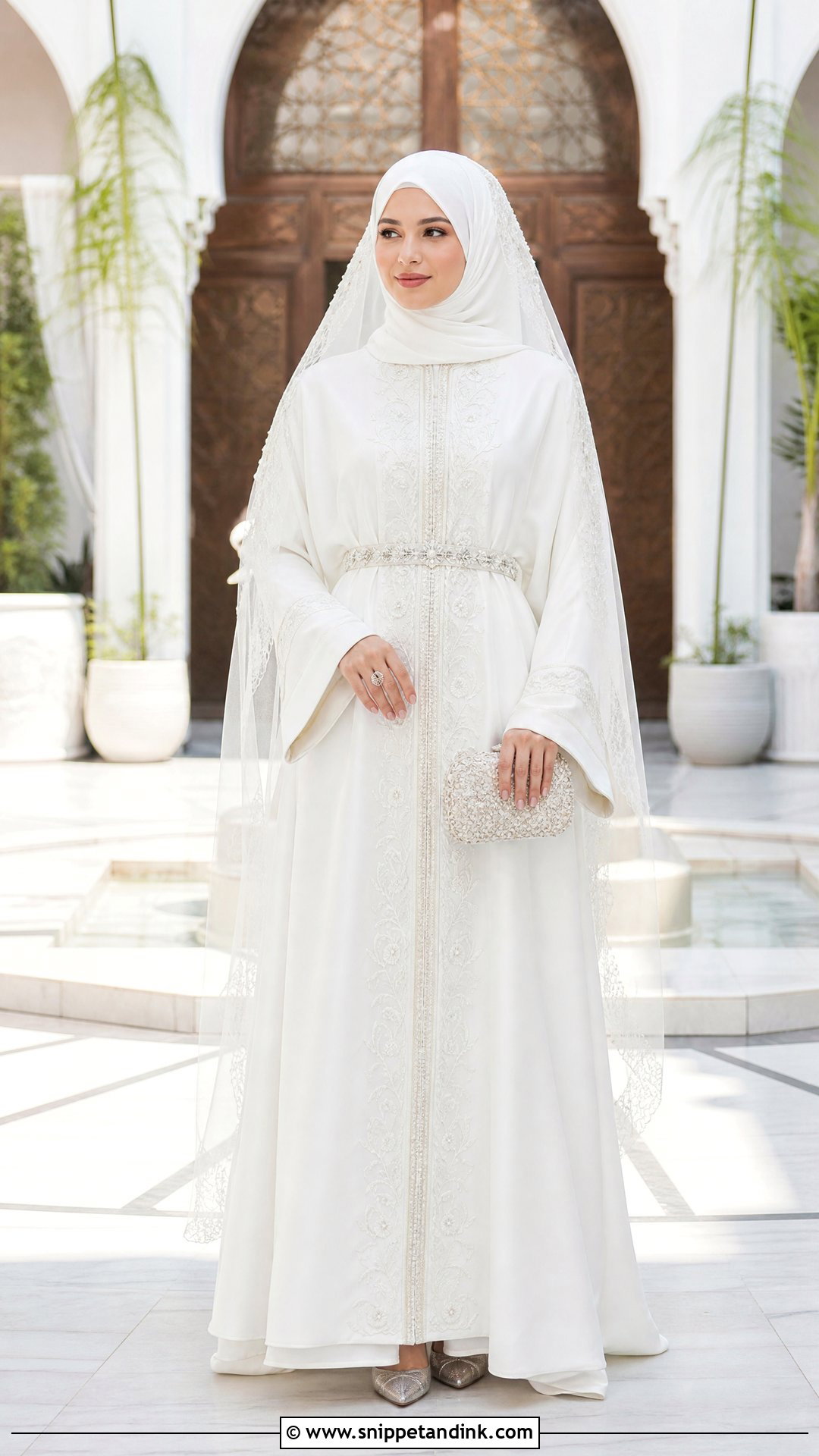
The one thing I always change on a white bridal kaftan is the sleeve length. Wide kaftan sleeves drop into plates and brush against everyone you greet, so I have them shortened to the wrist bone. Choose a floor-length kaftan with a structured lining and a decorative center panel, finished with tonal embroidery, pearls or fine metallic trim at the neckline and waist. A smooth white hijab and a light veil falling behind the shoulders keep the top calm. A slim belt adds shape, though loose is just as graceful. Closed metallic shoes, a beaded clutch and one statement ring are enough for a cultural ceremony or a grand indoor celebration.
9. Hijabi Bridal Ivory Lehenga
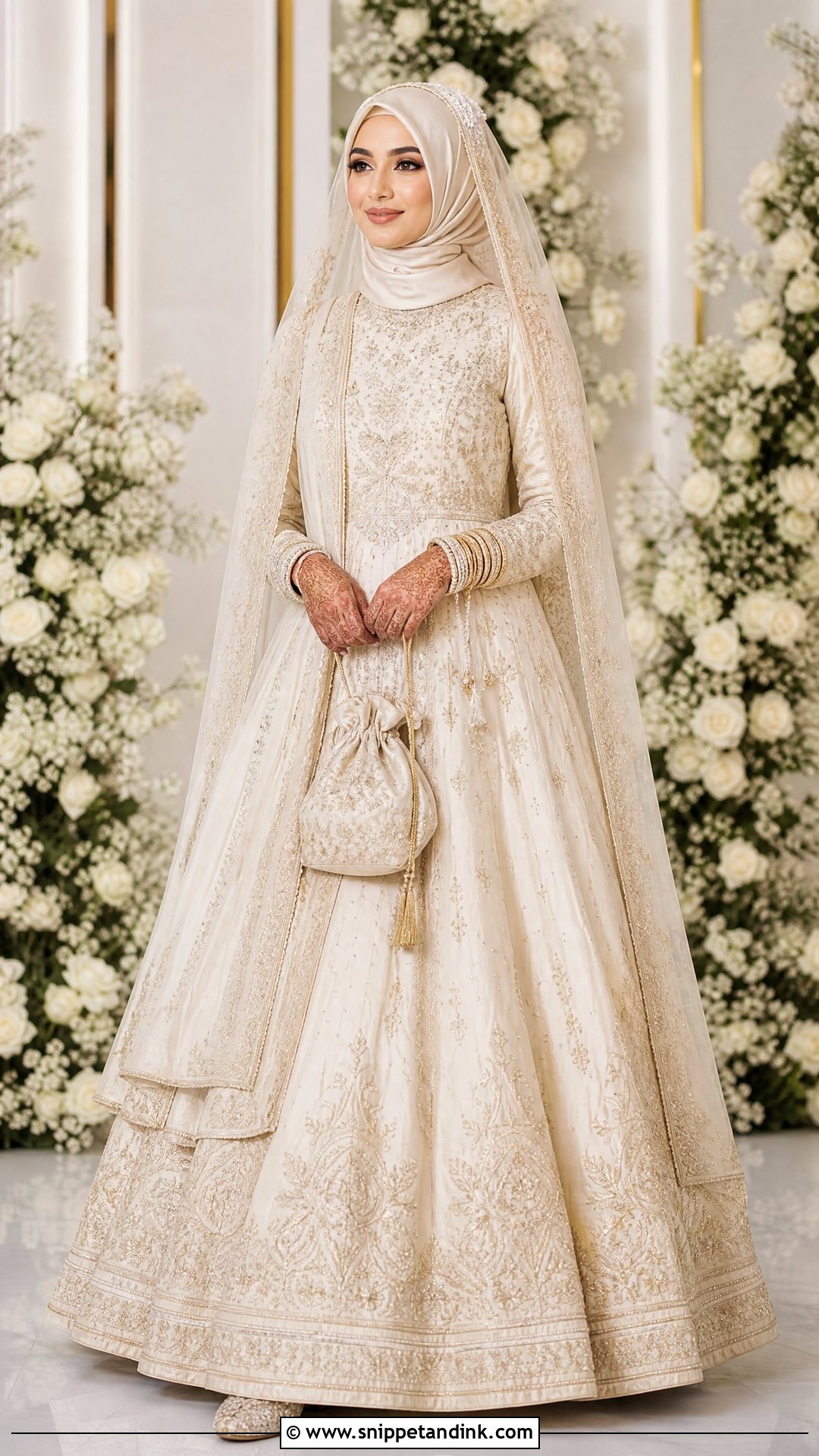
An ivory lehenga keeps a South Asian bride in a light palette while still carrying full handwork. The blouse matters most: high neck, long sleeves, opaque lining, and long enough to meet the waistband with no gap when you raise your arms. Ask the tailor to cut it longer than standard. I wrap a satin or chiffon hijab first, then drape the dupatta over the head and pin it behind the hijab so it can’t drag the scarf back. A second light dupatta across the front adds depth. Closed embroidered shoes, bangles over the sleeves and a potli bag. Tonal thread, pearls or pale gold keep it soft.
10. Hijabi Bridal Red Lehenga
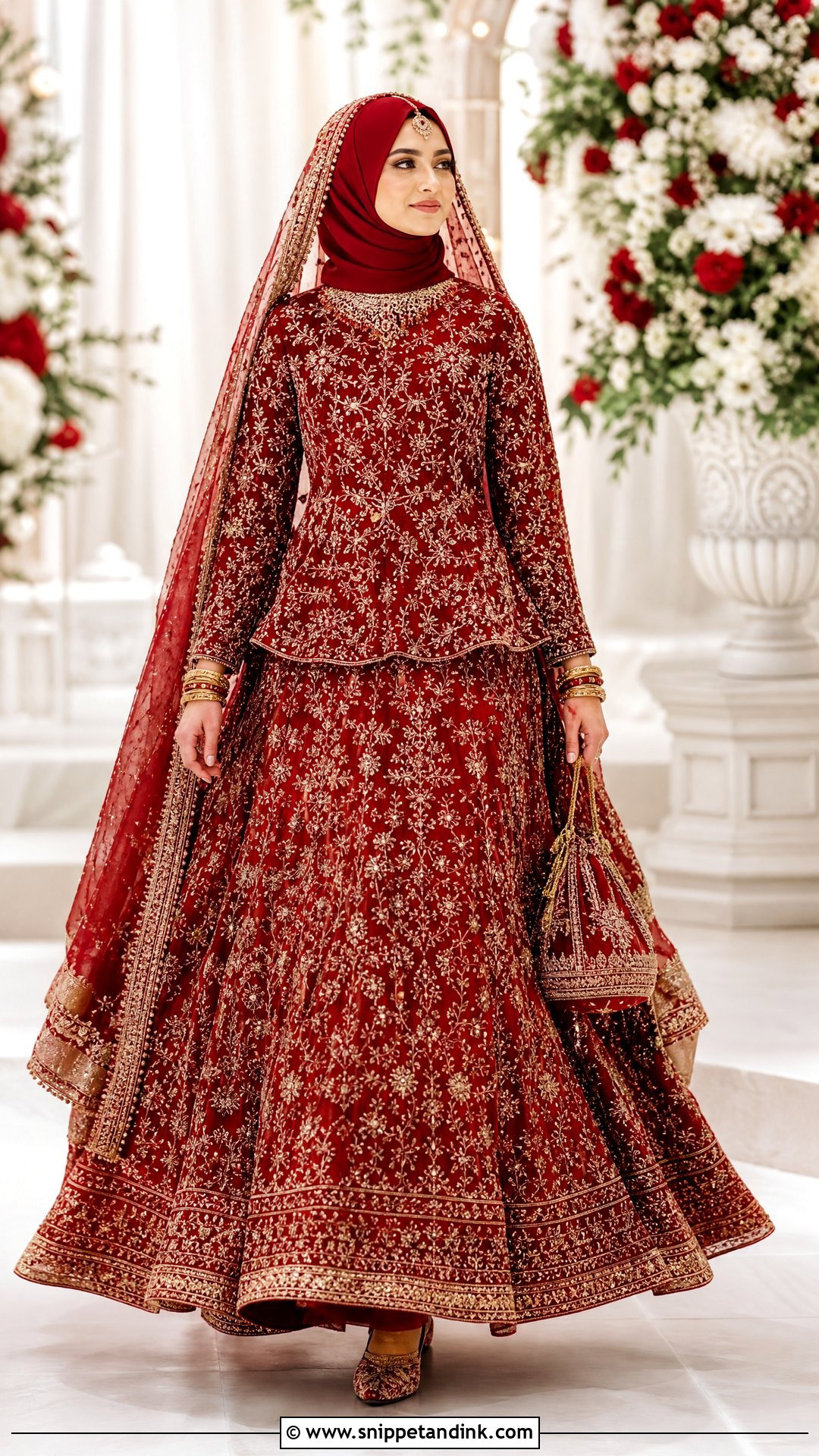
Red lehengas are heavy. With gold zardozi on a full skirt, the waistband can carry several kilos, so the blouse and skirt need to be fitted together and the waistband should sit on your natural waist, not your hips. A longer blouse or peplum cut gives coverage and balances the volume. I wrap a red hijab smoothly and arrange the embroidered dupatta over the head with one side falling across the shoulder. Heavy earrings and a maang tikka can tug the hijab out of shape, so I anchor them to the underscarf rather than the outer layer. Gold closed shoes, bangles and a potli bag. Walk, sit and kneel in the whole outfit at your final fitting.
11. Hijabi Bridal Sharara Suit
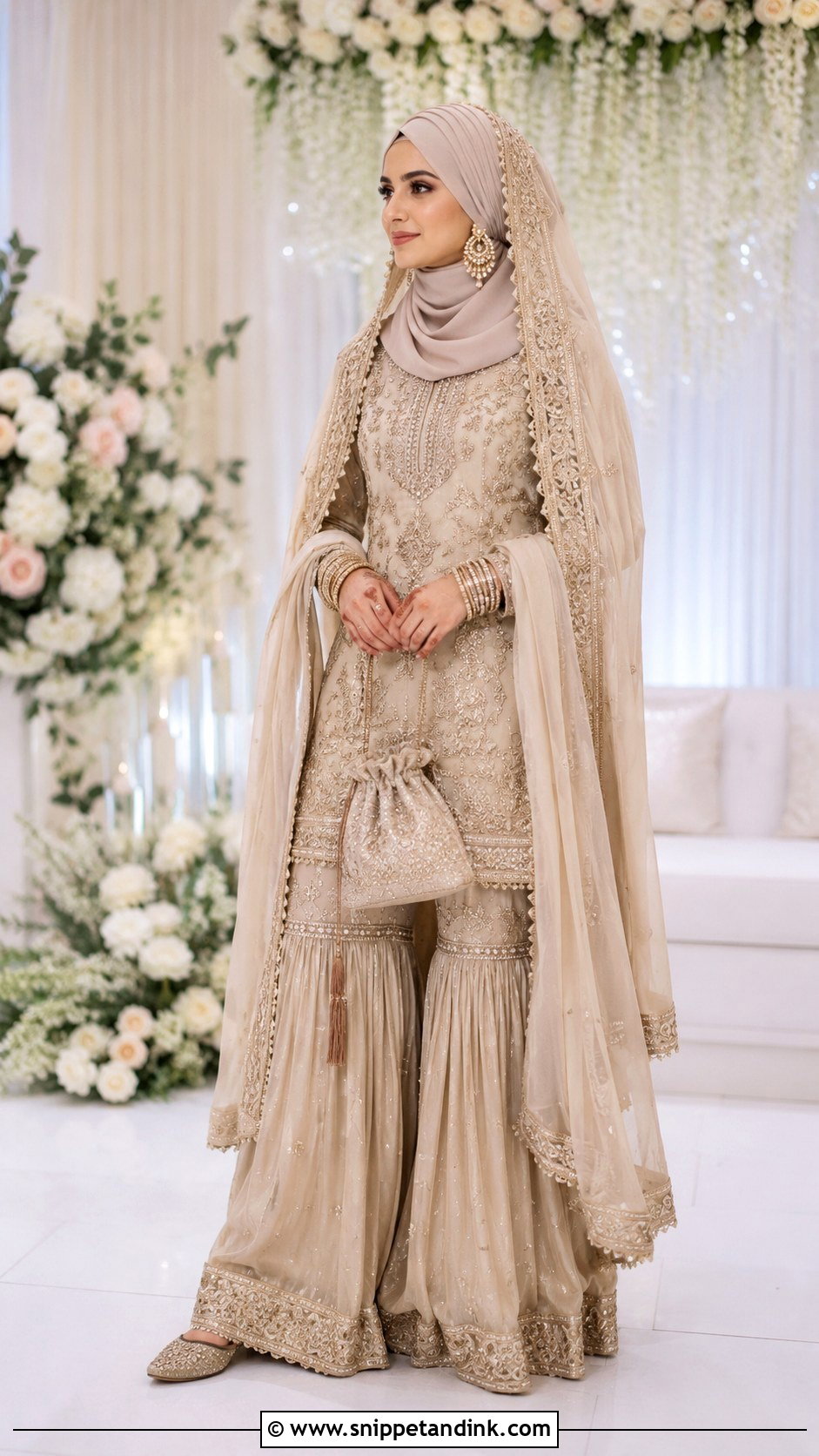
Two pieces mean you can fit the top and the trousers separately, which is the biggest practical advantage of a bridal sharara. The tunic should reach the knee or below, with a high neck, opaque sleeves and dense embroidery at the hem. A chiffon hijab in the main fabric color, plus a matching dupatta from the head or one shoulder. Juttis are the natural shoe here; wide sharara hems hide heels anyway, and flats spare your feet. Chandelier earrings go under the hijab. Champagne, ivory, blush, deep green and red all work. It’s a strong second outfit for a mehndi or reception.
12. Hijabi Bridal Anarkali Dress
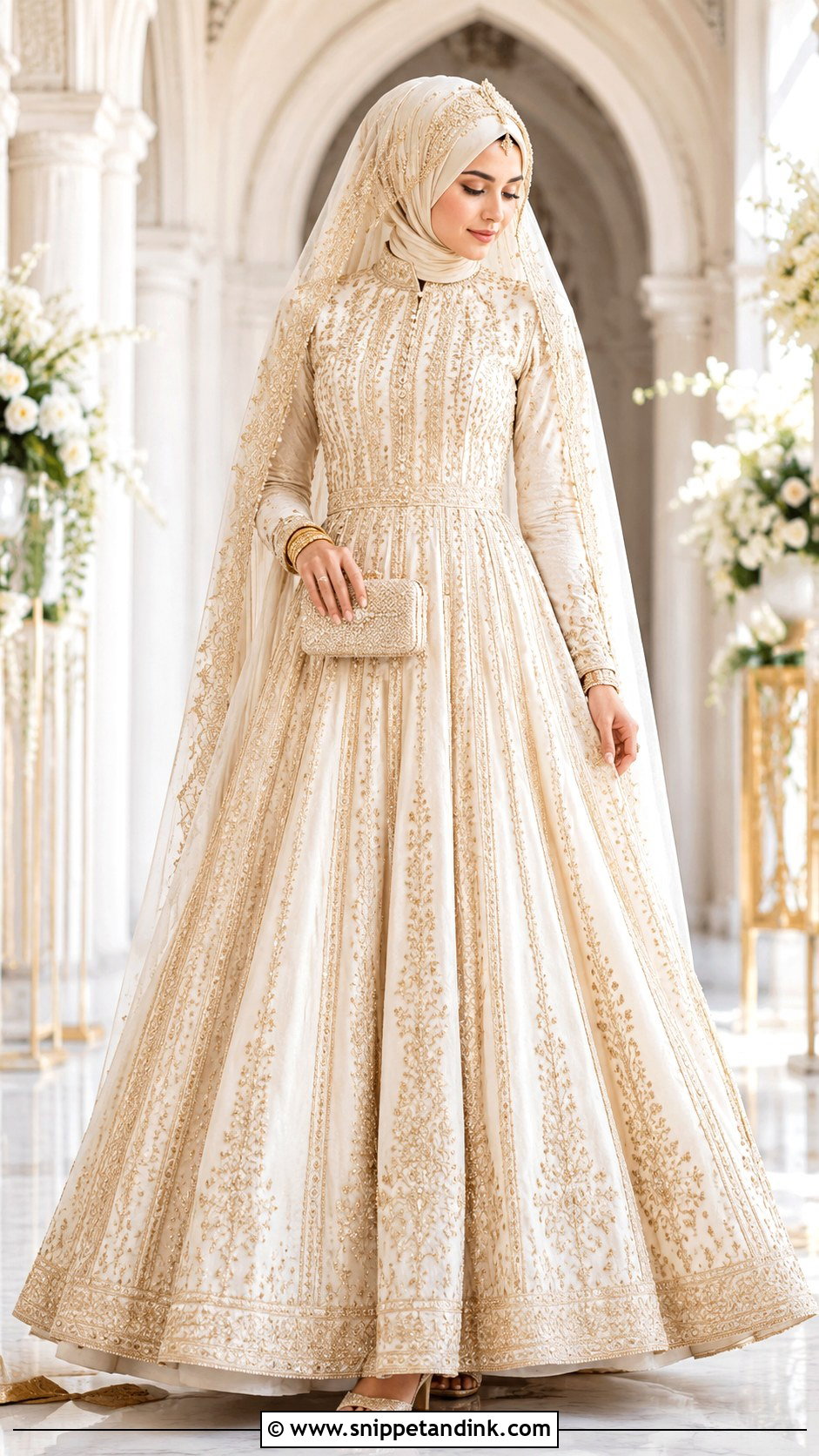
Anarkalis lengthen the body because the flare starts high and vertical embroidery draws the eye down. Choose floor length with a fitted upper section, high neck and long sleeves, and make sure the skirt is opaque from the waist. I’d ask the tailor for enough flare to sit and walk easily but not so much that you’re stepping on the hem; very full Anarkalis gather a lot of weight at the border. Pin the dupatta over the head or across both shoulders and wear a matching hijab under it. Low embellished heels, delicate bangles and a coordinated clutch. Ivory with gold reads bridal, while red, green or blush suits a traditional celebration.
13. Hijabi Bridal Turkish Gown
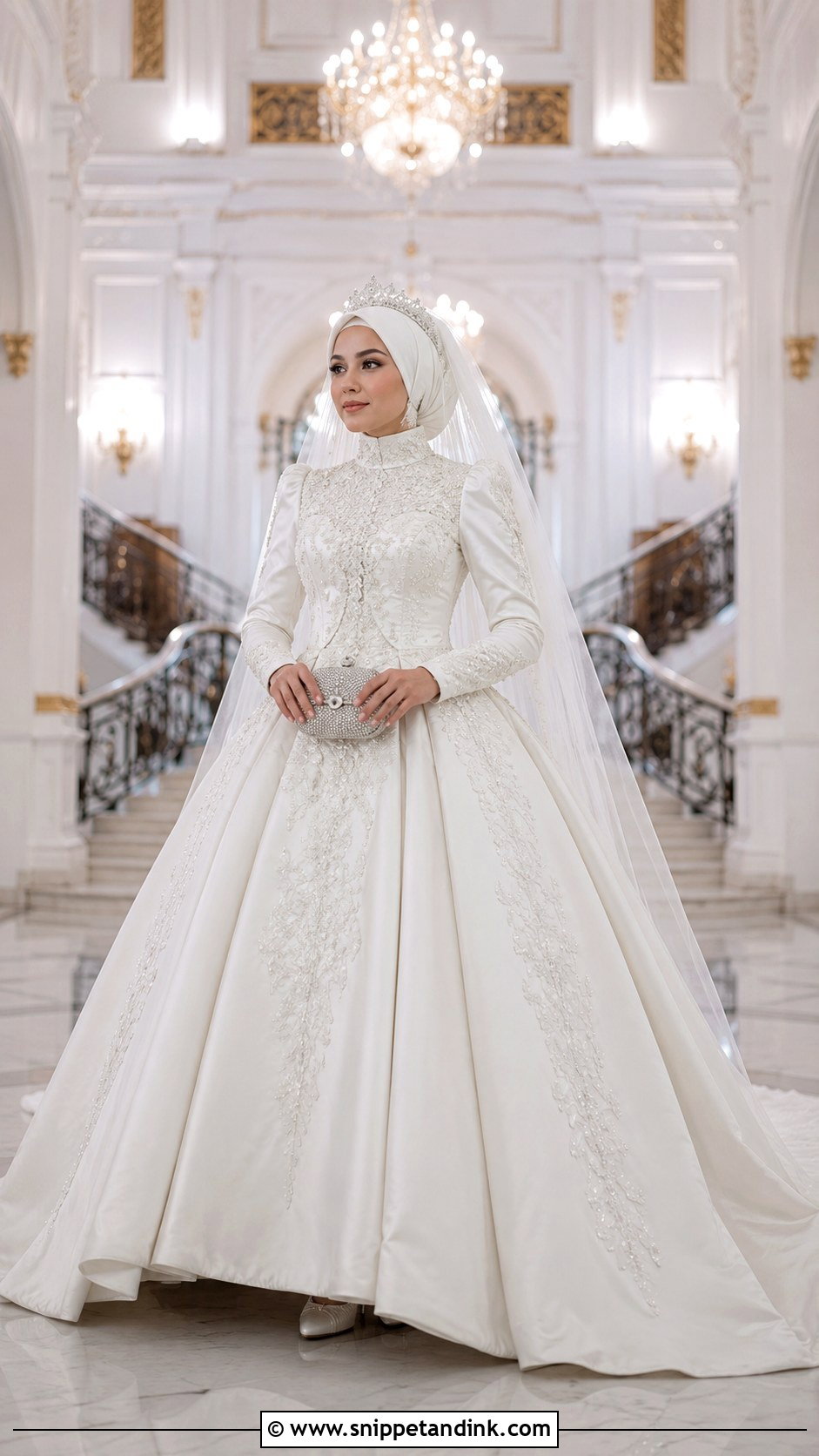
Turkish-inspired gowns tend to have a lot of structure in the bodice and a moderate train, with embroidery placed at the neckline, waist and cuffs. Expect the bodice to be firm. I’d prioritize shoulder and sleeve tailoring, since a structured gown that’s tight at the armhole becomes painful by the reception. A sculpted satin hijab and a long tulle veil fixed at the back suit the formality, and a delicate crown or jeweled band can sit over the hijab if you like. Closed pumps, a crystal clutch and understated earrings. White, ivory and pale champagne all work with this ornate silhouette.
14. Hijabi Bridal Moroccan Caftan
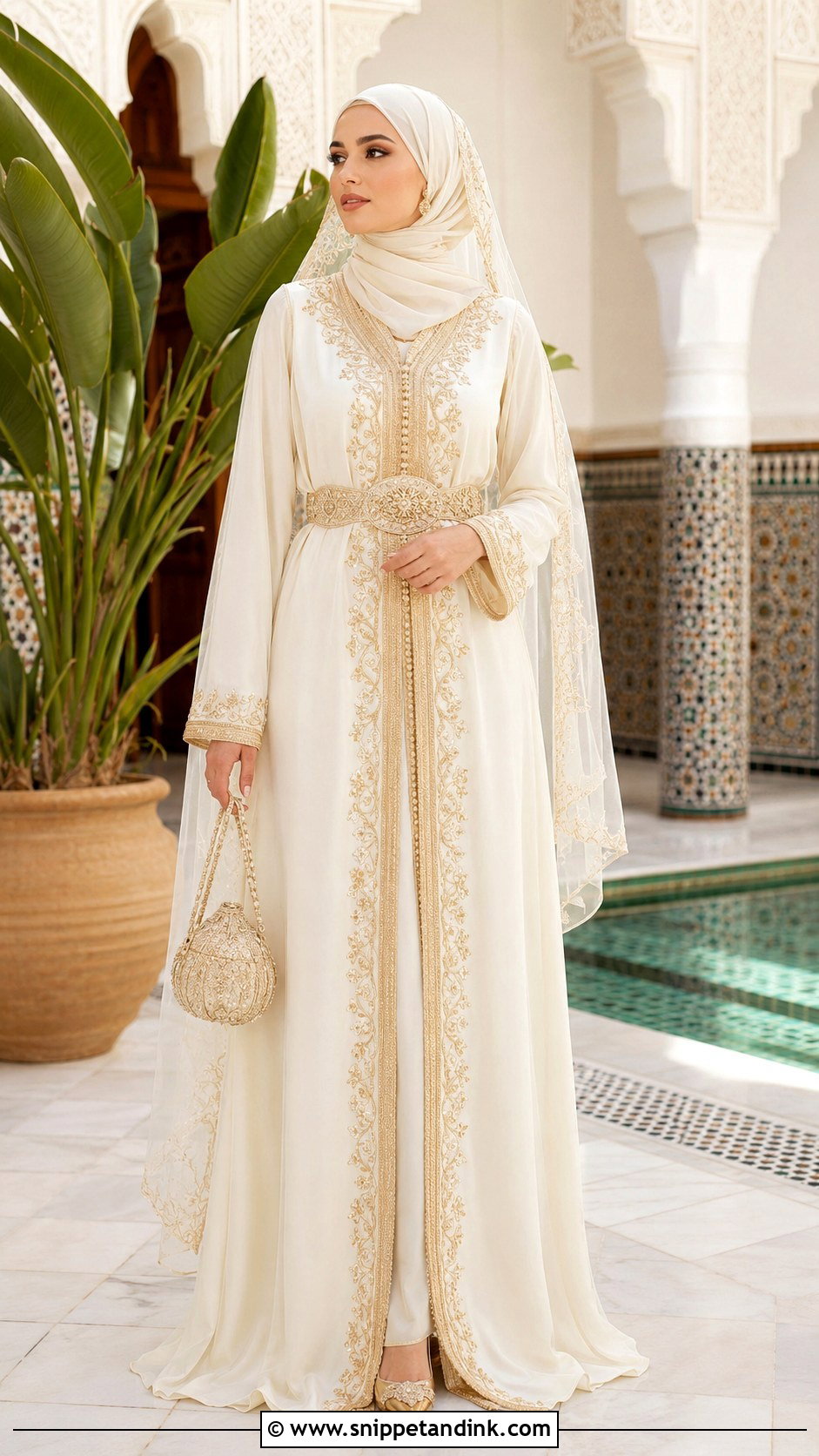
A Moroccan bridal caftan is built around its belt and its vertical trim. The decorative belt shapes the silhouette, and the embroidery running down the front is the focal point, so the hijab wrap should stay simple around the face in the main color. I’d add a veil only if it leaves the neckline visible; many brides skip it with a caftan. Ask for a full opaque underlayer, since caftan fabrics like silk velvet or brocade are often worn over a separate under-dress. Closed metallic heels, a small embellished bag and refined earrings. White and ivory read bridal, while emerald, blush or deep red make a meaningful second-ceremony outfit.
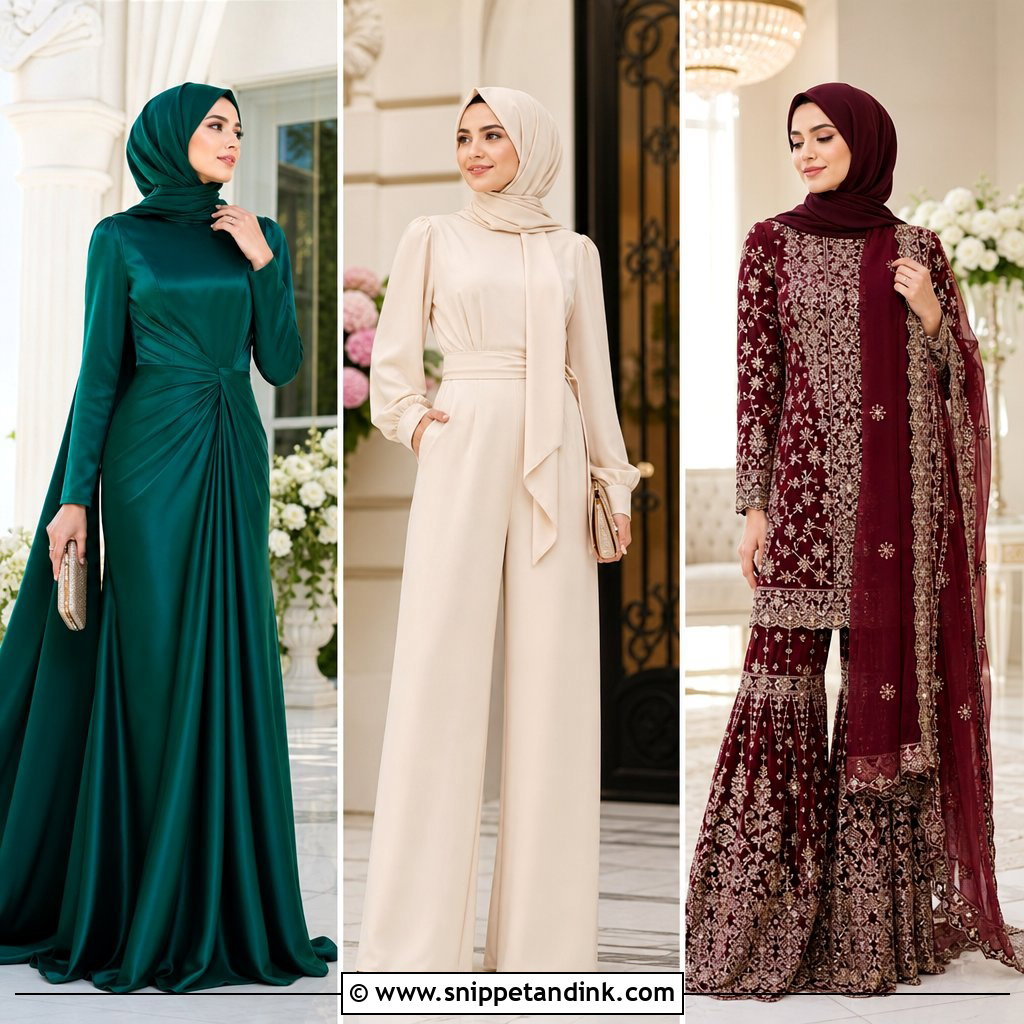


15. Hijabi Bridal Blush Pink Gown
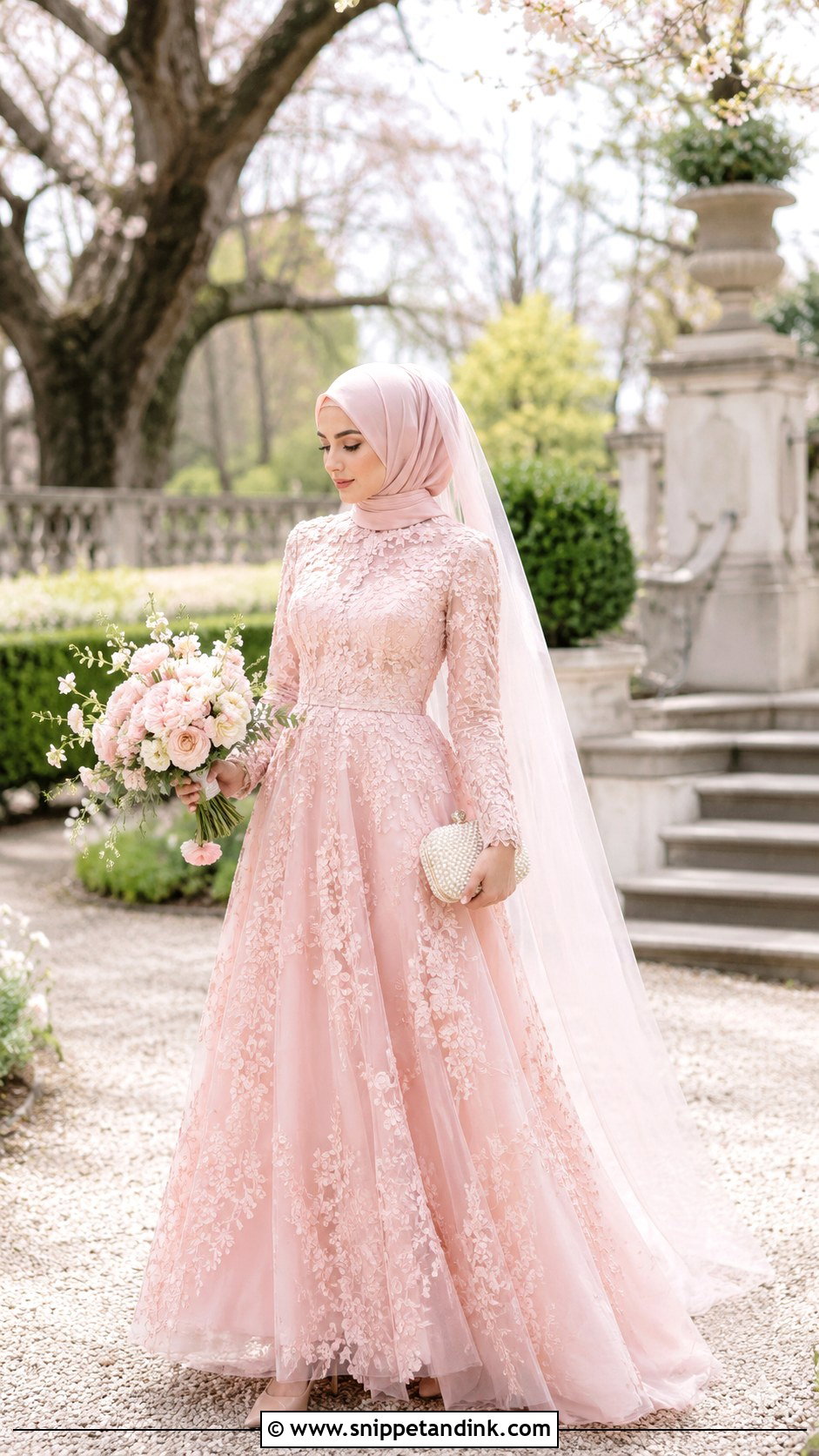
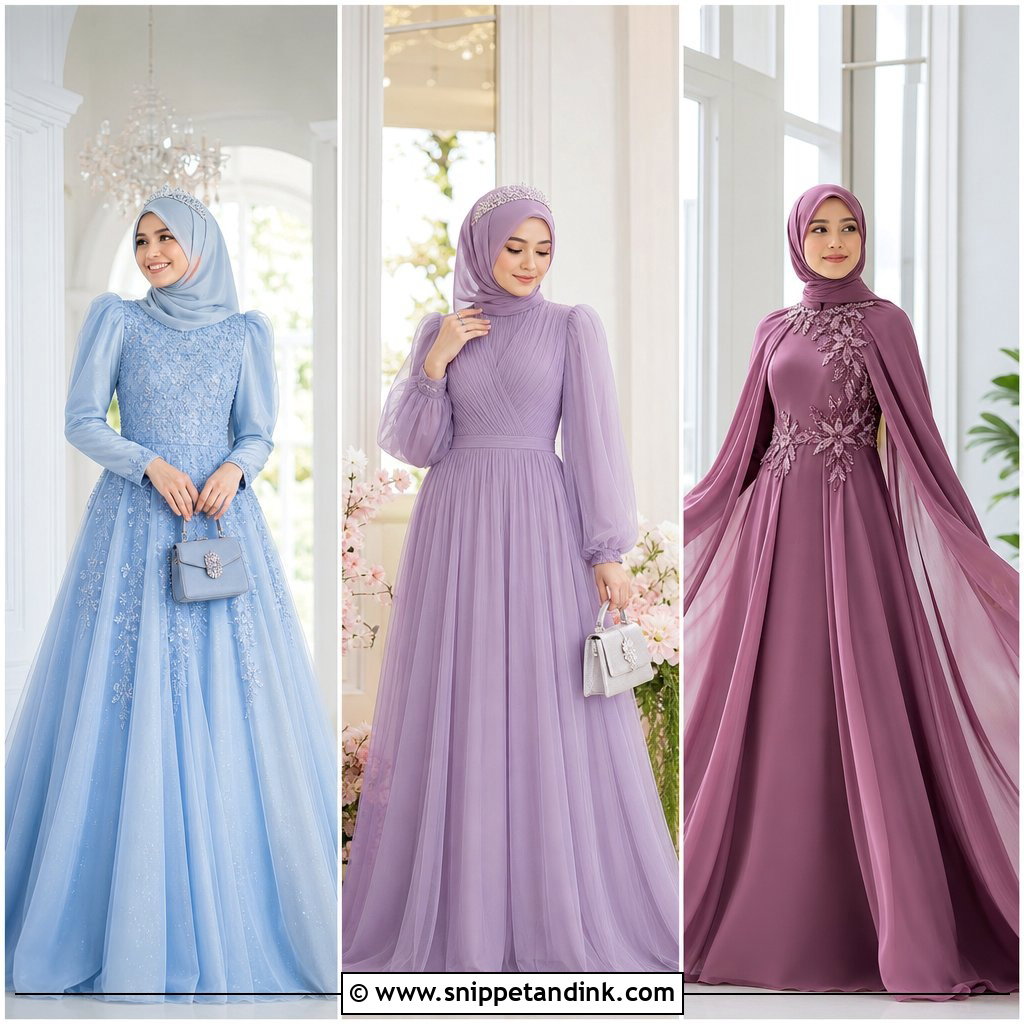
Blush is a color that changes with the light. Under warm indoor bulbs it can look peach, and in shade it can look grey, so I always check a blush gown by a window and under the venue’s lighting, or at least a warm lamp, before committing. Choose a lined A-line with a high neck, long sleeves and floral appliqué across the bodice and skirt. A matte chiffon hijab in the same blush or a lighter neutral pink, with a plain tulle veil so the appliqué doesn’t get crowded. Nude closed heels, a pearl clutch and rose-gold accessories. A bouquet of white and pale pink connects the palette for a spring or garden wedding.
16. Hijabi Bridal Sage Green Gown
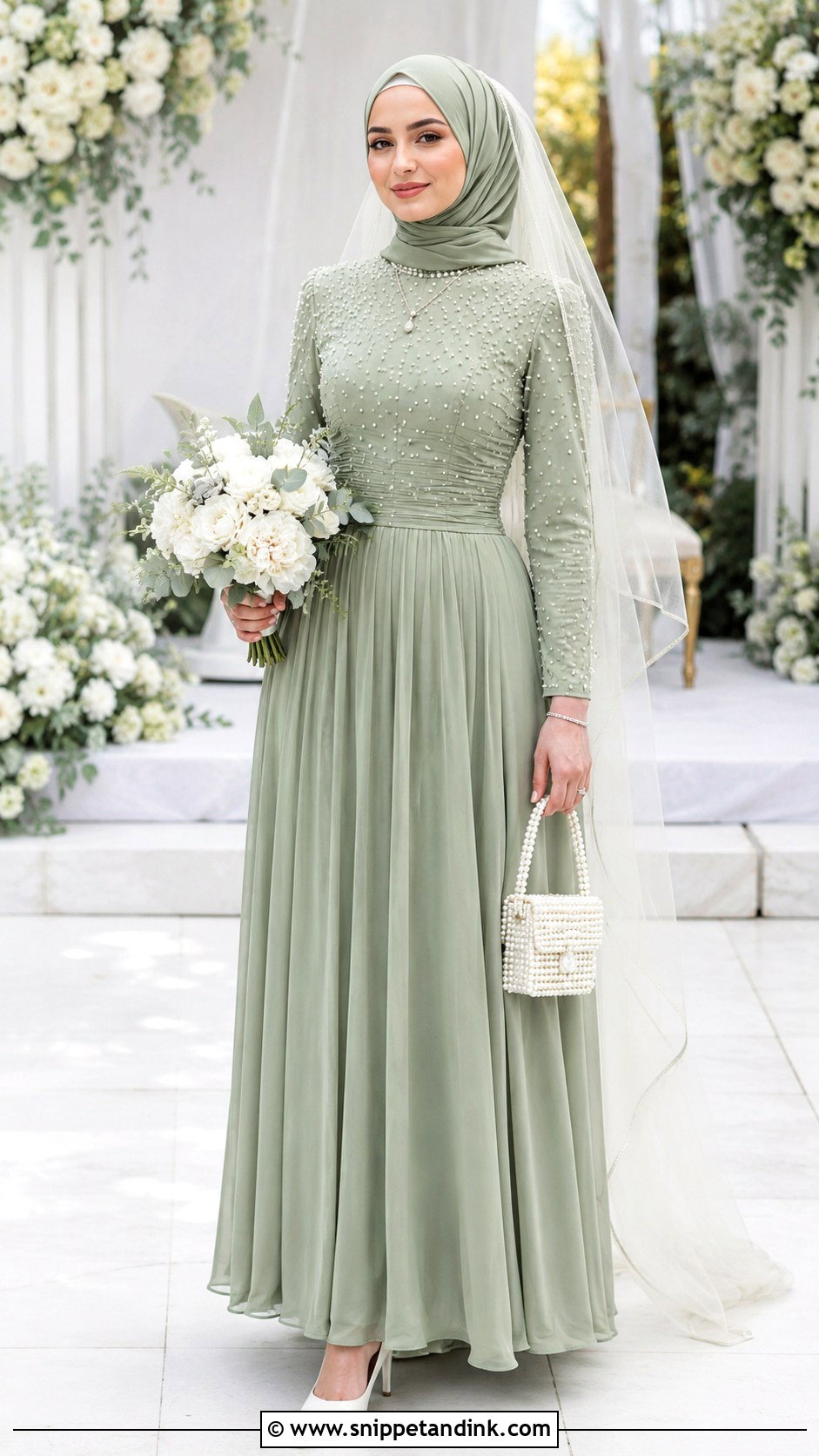
Sage green suits a bride who wants color without loudness. Order swatches before anything else, because sage leans grey in one fabric, blue in another and yellow in a third. A floor-length gown with an opaque bodice, fitted sleeves and a softly pleated skirt, with tonal embroidery or small pearls for formality. A sage chiffon hijab with an ivory veil gives gentle contrast. Ivory closed heels, a pearl bag and silver jewelry keep it light. White flowers and eucalyptus in the bouquet tie it together. It’s a good nikah, outdoor ceremony or second-outfit choice.
17. Hijabi Bridal Detachable Overskirt Gown
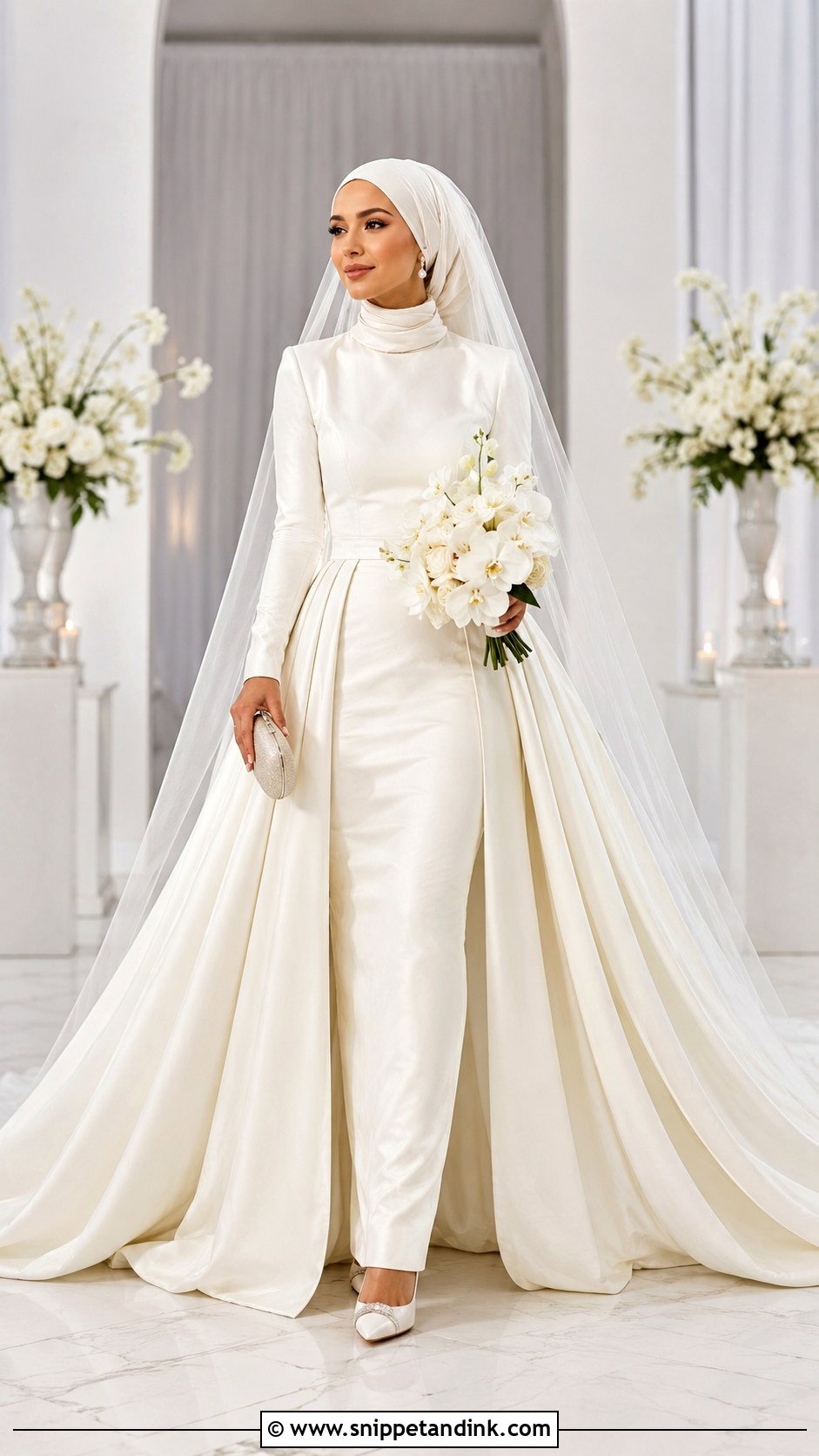
A detachable overskirt is two dresses for one fitting process. Start with an opaque long-sleeved column or A-line with a high neck and clean waist, then add a full overskirt in lace or pleats with a train for the ceremony. After the photos, take it off for the reception. The veil must attach to the hijab, not the overskirt, so you don’t pull it off with the skirt. Pointed pumps, pearl earrings and a compact clutch suit both versions. Ask your tailor to hide the hooks or buttons and to check the double waistband when you sit; two layers at the waist can dig in.
18. Hijabi Bridal Pleated Gown
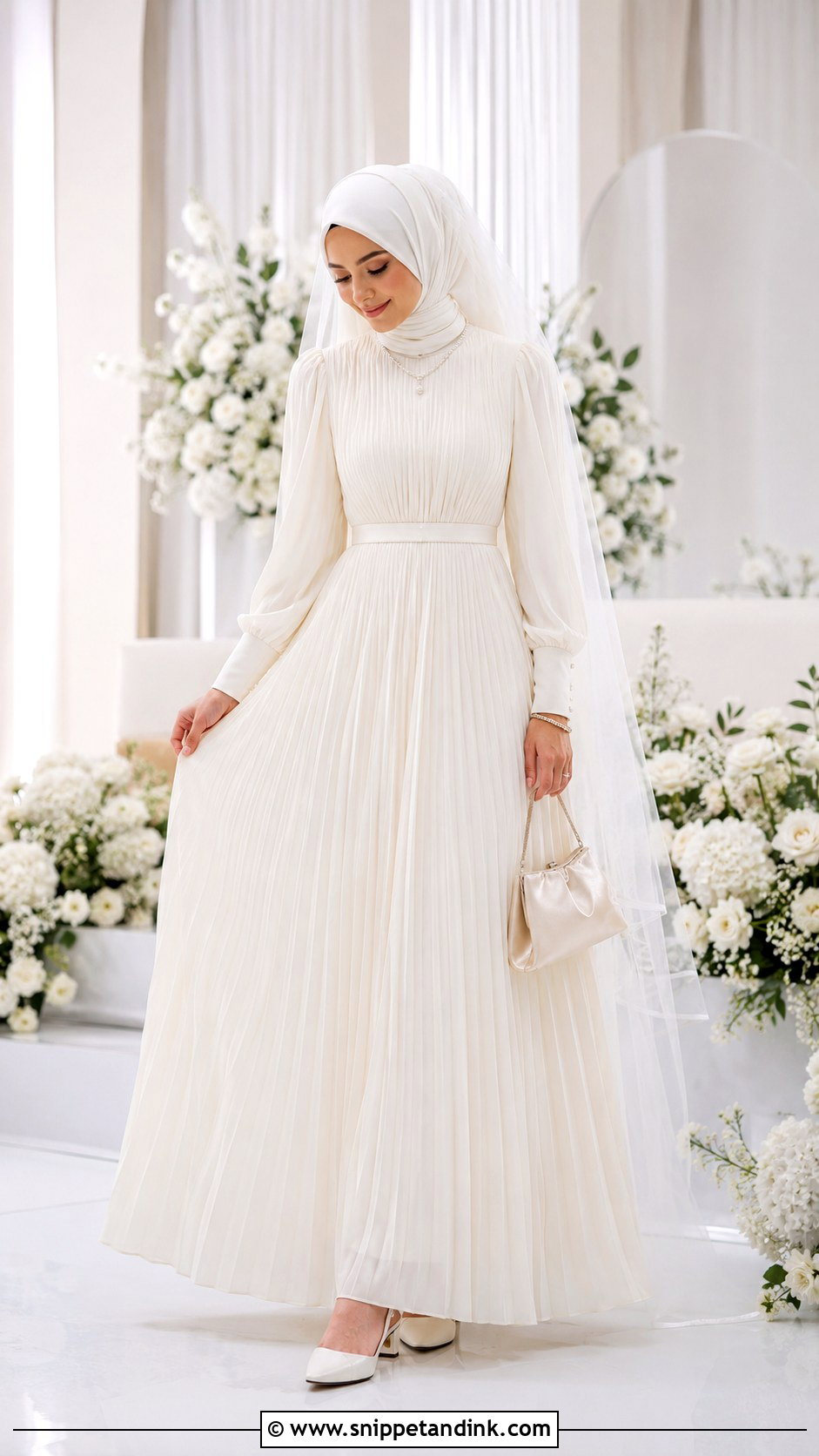
Fine pleats make a minimalist gown look intentional. Look for floor length with an opaque lining, high neck and long cuffed sleeves, with pleating from the shoulder or waist. Pleated fabric should fall straight; if it clings to the hips or splays at the stomach, it’s the wrong size or the wrong fabric weight. A narrow belt adds shape, and a smooth chiffon hijab keeps the textures from competing. A fingertip or chapel veil stays clean. Closed slingbacks, a small satin bag and pearl or silver jewelry. It’s light enough for warm-weather nikahs and intimate venues.
19. Hijabi Bridal High Neck Lace Gown
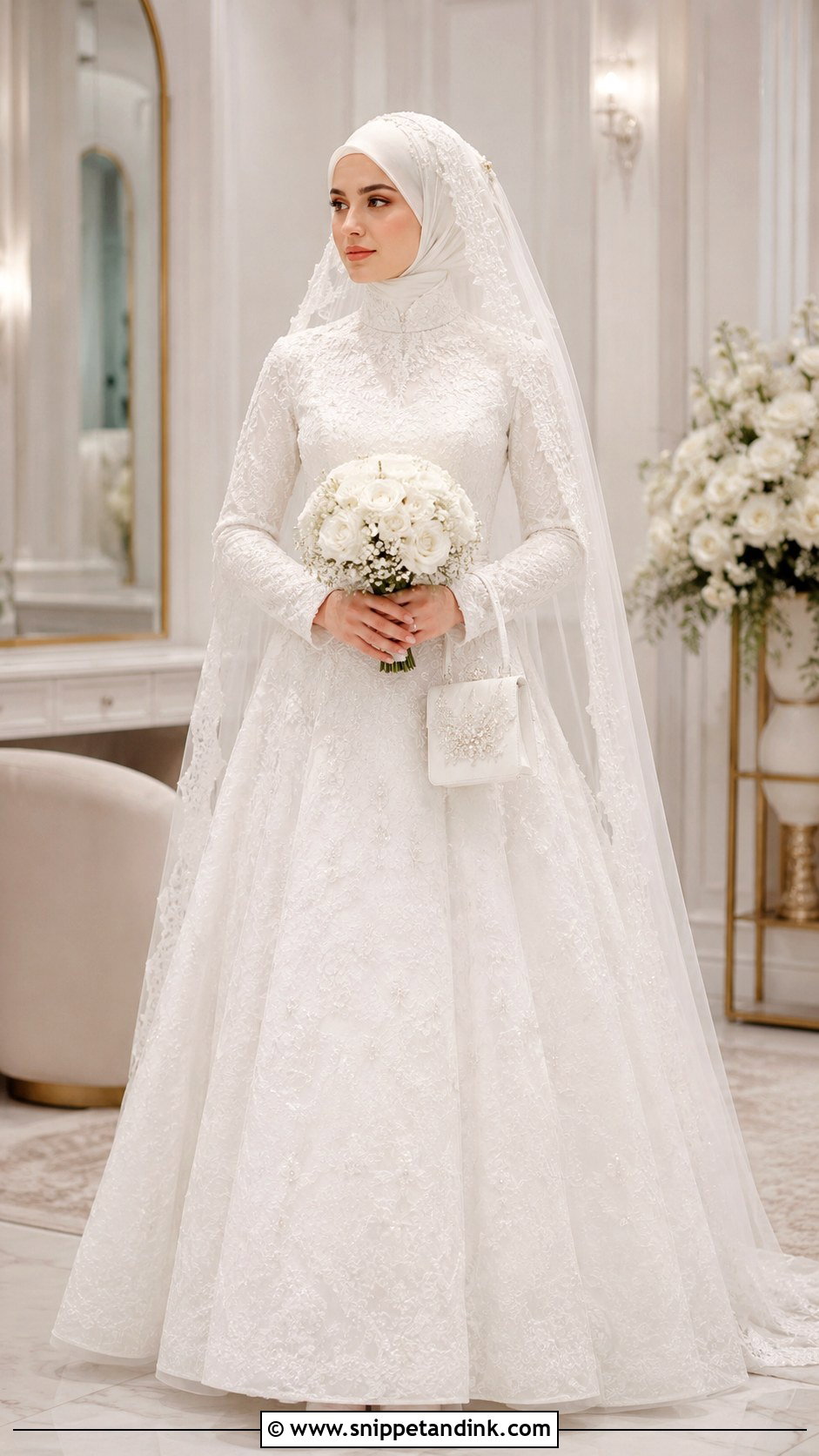
High-neck lace gowns already give you coverage, so the hijab’s job is to tuck under the collar without bulk. I wrap a plain satin hijab close and tuck the ends inside the neckline. Choose an opaque gown with a softly fitted bodice, full sleeves and an A-line skirt, and check that the lace runs continuously at the collar; an added insert in a different lace stands out in close-up portraits. A lace-edged veil, closed pumps and a structured handbag. Pearl pins at the back of the hijab connect to the gown. At the fitting, turn your head both ways; a lace collar that’s tight now will feel worse after hours of photos.





20. Hijabi Bridal Minimalist Crepe Gown
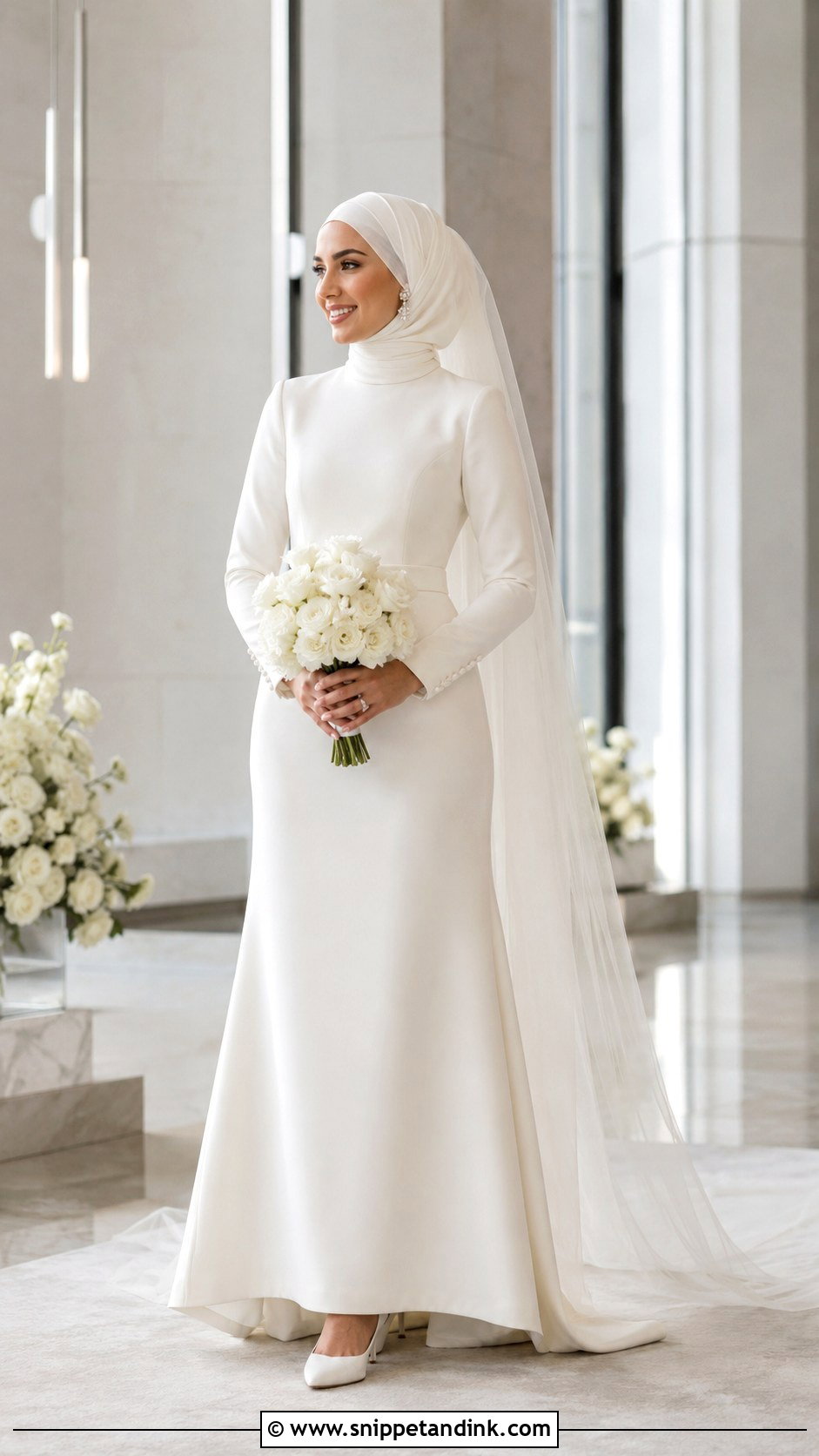
Plain crepe hides nothing, which is why I’d only recommend it if you’re willing to invest in tailoring. Every wrinkle and pull at the hip shows on a minimalist gown. Choose a high neck, long sleeves, a lightly defined waist and a straight or slightly flared skirt, with covered buttons at the cuffs or back for quiet detail. A matching crepe hijab and an unembellished long veil keep the line unbroken. Pointed ivory heels, sculptural pearl earrings and a structured white bouquet. Insist on an opaque lining and enough room through the hips, arms and shoulders to sit and hug. Done well, it suits almost any ceremony.
Fixing a Veil to a Hijab So It Doesn’t Drag Backward
Veils are lightweight on their own, but a long cathedral veil pulls backward with every step, and that pull goes straight to the front of your hijab. The fix is to anchor the veil to something firm underneath.
- Wear a snug undercap or a tie-back bonnet. That’s what the veil really holds onto.
- Pin the hijab with its folds finished before the veil goes on.
- Slide the veil comb into the undercap at the back of the head, then add two or three straight pins through the comb into the undercap.
- Walk across the room and turn around. If the front edge of the hijab moves, the comb needs to sit lower.
Some brides attach the veil to a jeweled band or crown over the hijab instead. It looks regal, but the weight then presses on the top of the head, which gets uncomfortable over a long day. If you’re changing outfits between the nikah and reception, ask whoever helps you dress to practice removing the veil once. Taking it off in a hurry is how hijab pins get pulled out.
Bring the Undercap and Shoes to Every Fitting
The bridal outfit that works is the one you stop thinking about once you’re wearing it. The gowns in these 20 Hijabi Bridal Dress Ideas cover minimalist crepe, full ball gowns, cultural ensembles and softer colors, and almost all of them can be adapted. Before deciding, think about the venue, the season, the fabric weight, how the sleeves move, how opaque the lining is and where the veil will attach. Bring your actual undercap, shoes and jewelry to each fitting so you see the complete outfit, not just the dress. Alterations can add coverage without changing what you fell in love with.
You'll Like These Ideas:



Leave a Reply