
A Pakistani wedding rarely means one outfit. There’s the mehndi, the nikah, the baraat and the walima, and each asks for a different weight of fabric, a different palette and a different way of setting the dupatta over a hijab. These 20 Hijabi Pakistani Bride Ideas run across all four events, from lehengas, ghararas and shararas to pishwas, Anarkalis, gowns and a draped saree. For each one I’ve set out how I’d wear the hijab underneath, where the jewelry sits and which shoes will carry you through a long night. Classic reds sit beside jewel tones, pastels and ivory, and heavily worked pieces sit beside cleaner ones.
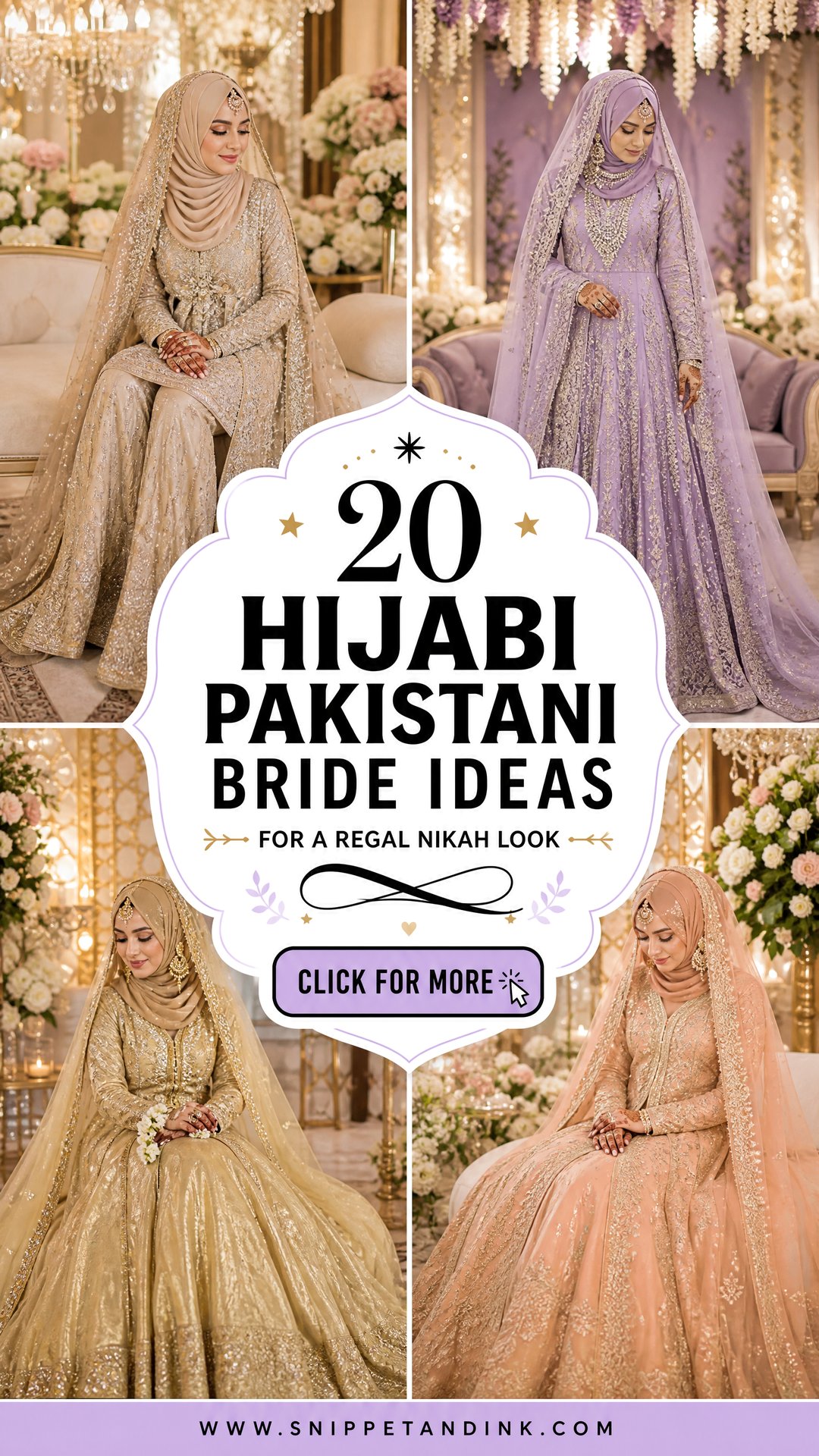
Mapping the Mehndi, Nikah, Baraat and Walima Outfits Together
When I plan a Pakistani bride’s wardrobe, I lay all the events out side by side before anything is ordered. Each one has its own job, and planning them together stops you from ending up with three heavy outfits and no breathing room.
- Mehndi: bright, lighter fabrics, short or no train, and shoes you can dance in. Expect floor seating and lots of movement.
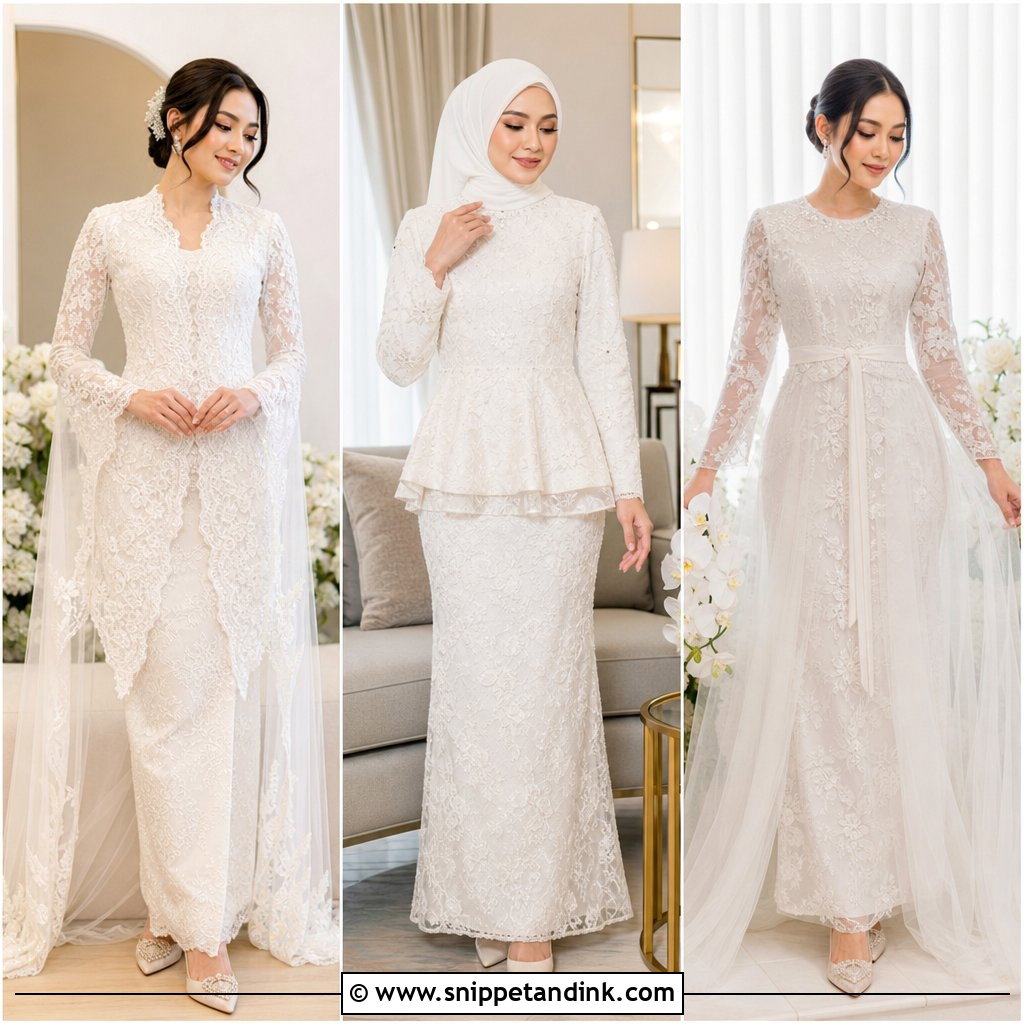
- Nikah: often quieter and more intimate. Ivory, pastels or soft champagne with modest embroidery suit it, and a sheer dupatta can double as a veil.
- Baraat: the heaviest outfit, traditionally red or maroon with dense handwork. Plan for weight and for being photographed for hours.
- Walima: lighter again. Gowns, pastels and cooler metallics work, since you’ll be greeting guests on your feet.
Heavily embroidered bridal pieces are usually made to order and can take several months, with fittings after that, so the baraat outfit is the one to order first. If budgets or timelines are tight, a single ivory or pastel outfit can often cover both nikah and walima with a change of dupatta and jewelry.
1. Red Lehenga Hijabi Pakistani Bride
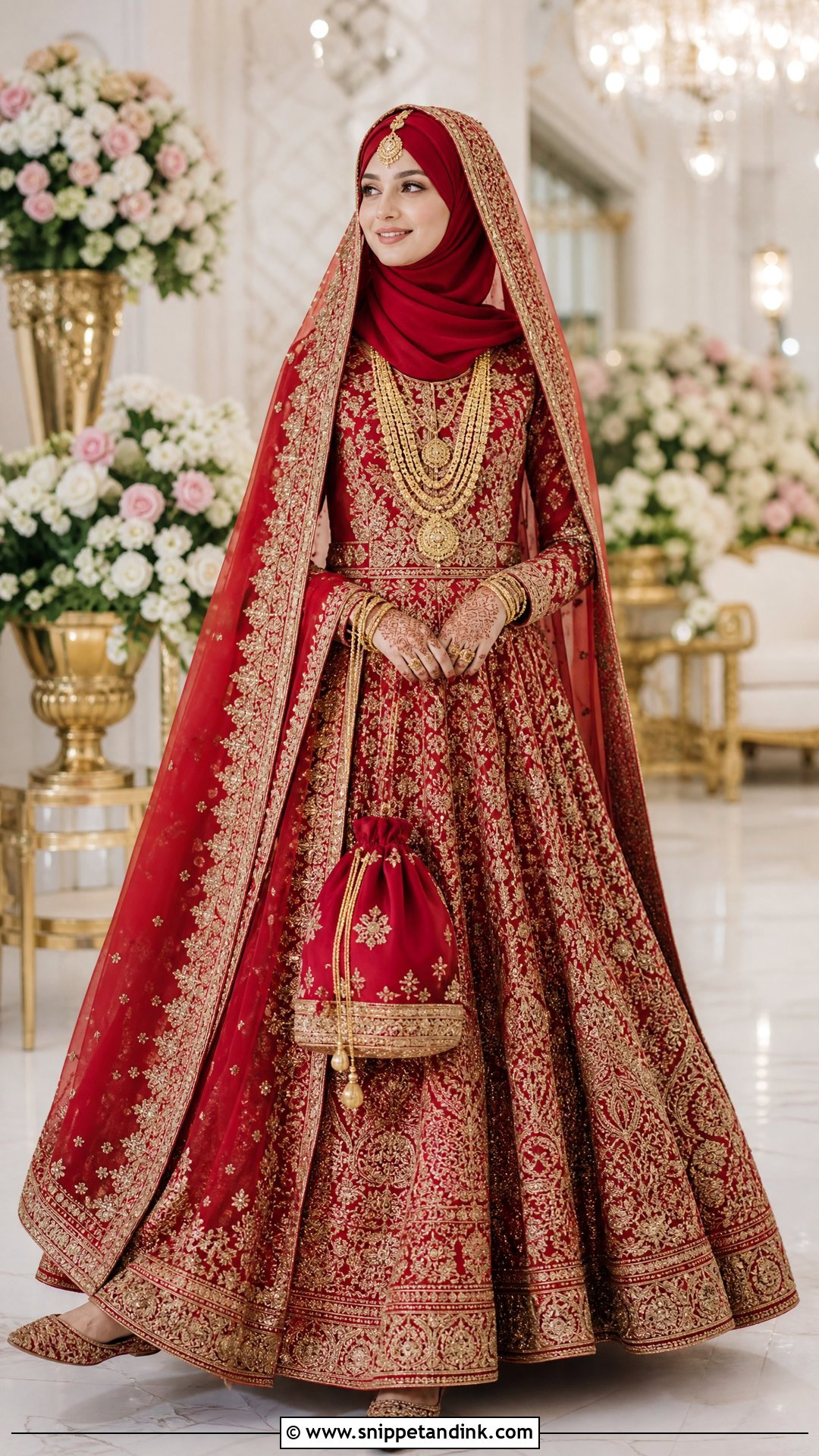
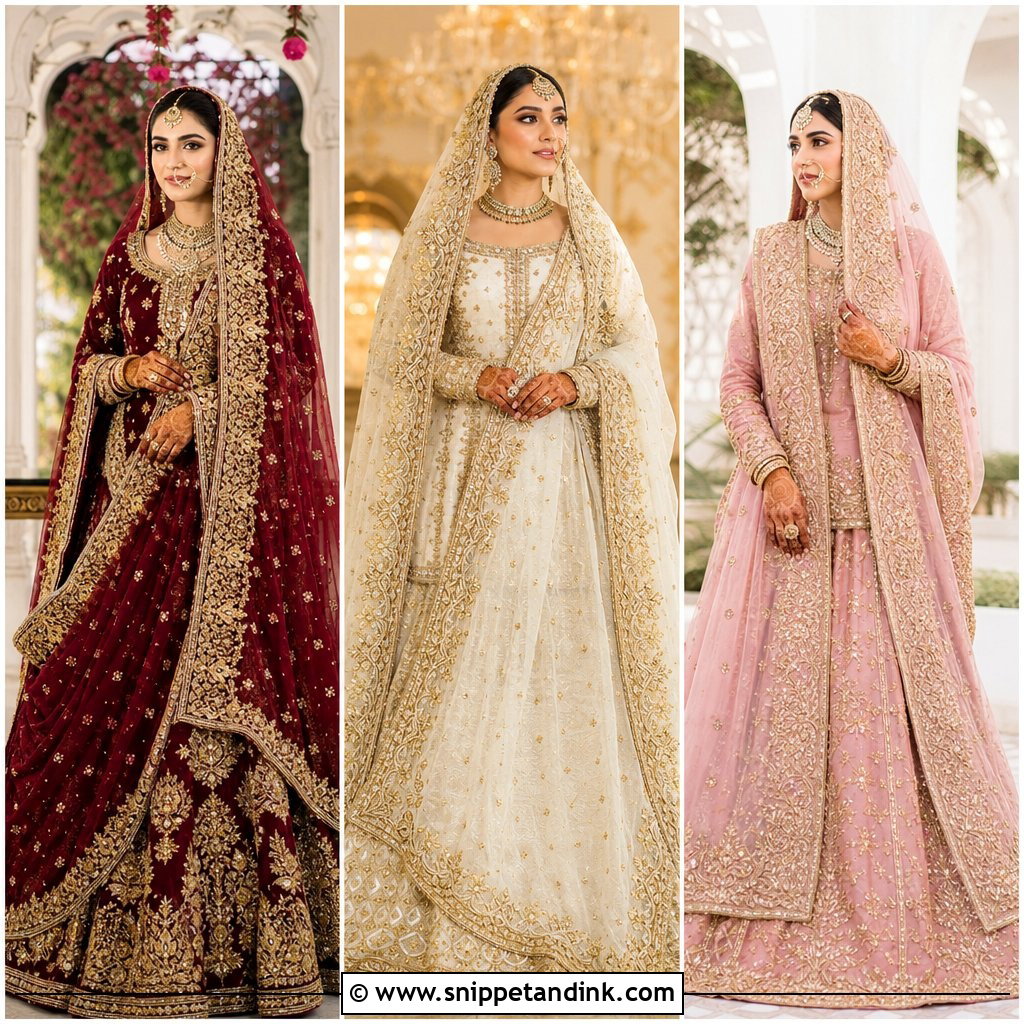
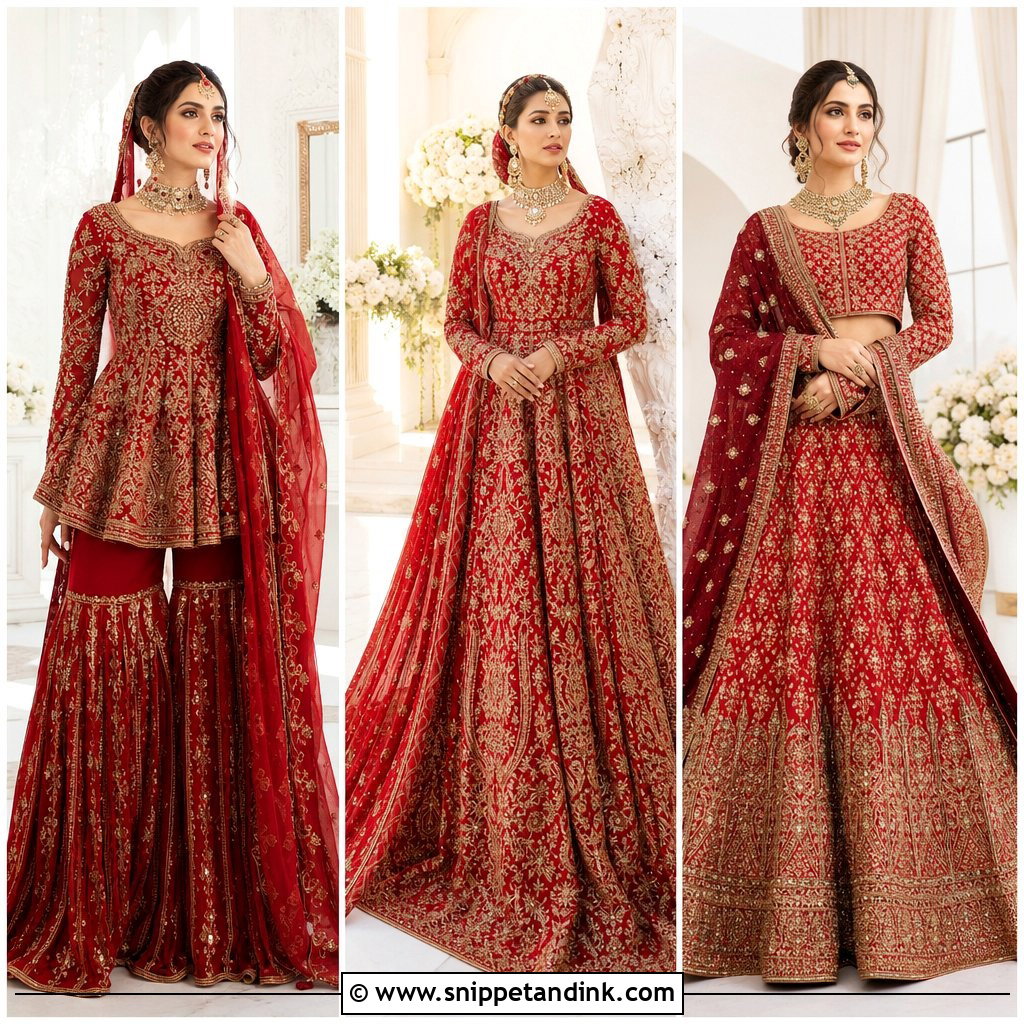
Red is still the baraat color most families picture, and a full-sleeve blouse with a higher neck makes it straightforward to wear with a hijab. The skirt carries the work: antique gold zardozi, dabka or tilla on a wide flare. I wrap a red satin or chiffon hijab close to the face first, then set the bordered dupatta over the crown with one side falling across the shoulder so the blouse embroidery still shows. A gold matha patti sits over the hijab, pinned through to the underscarf so it doesn’t slide forward when you bow your head. Layered necklace, earrings, bangles and embroidered khussas. Keeping the hijab in the dress color lets the handwork lead.
2. Maroon Farshi Lehenga Hijabi Pakistani Bride
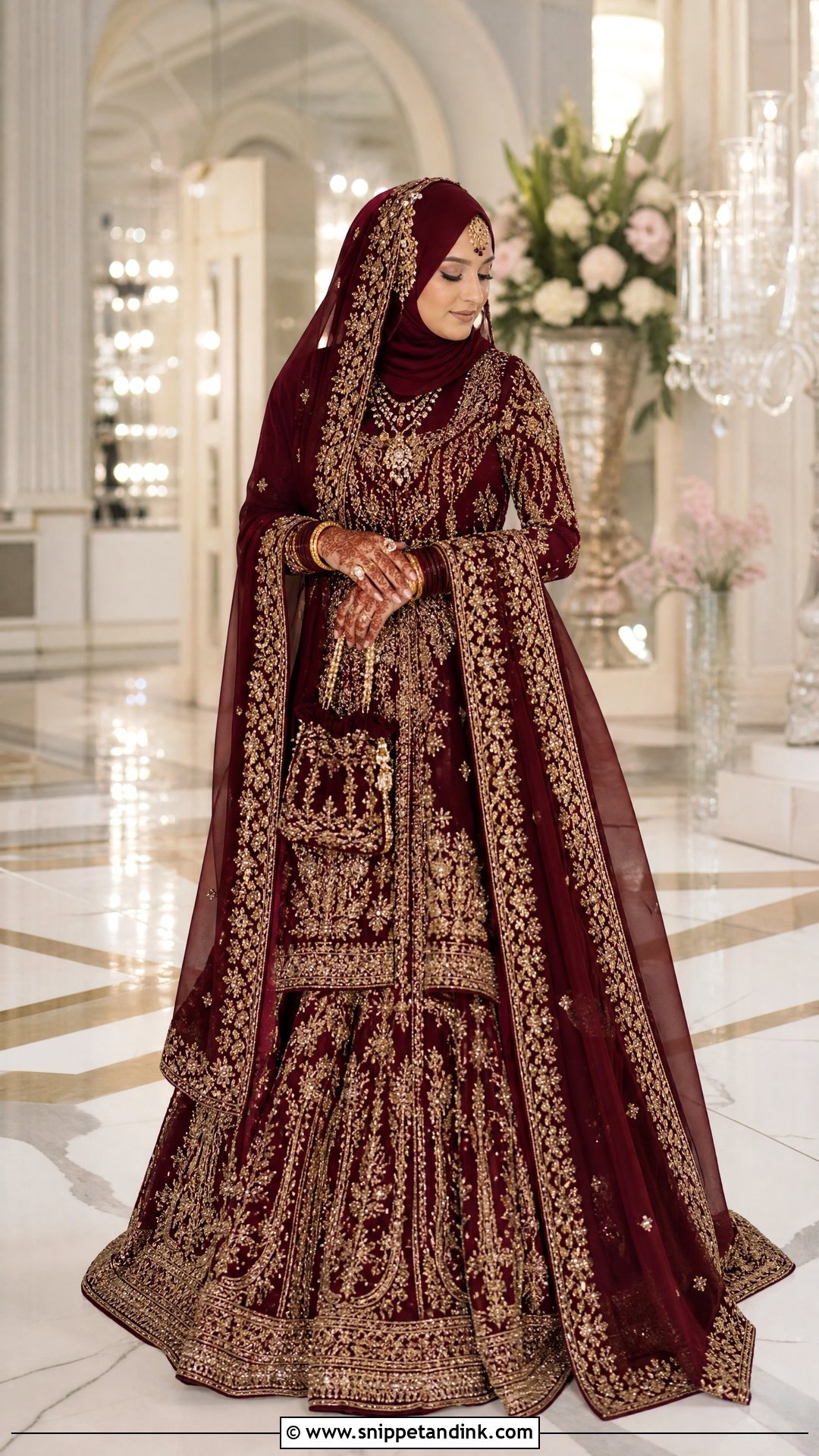
Deep maroon is red’s more grown-up sister, and it suits antique gold embroidery especially well. A farshi lehenga has a long trailing hem that sweeps the floor behind you, which looks regal but needs someone to lift it on stairs. Pair it with a fitted full-sleeve kurti that sits below the waist. I’d pick a matte maroon hijab with no decoration, an embellished dupatta over the head and a lighter second dupatta on the forearm. Antique gold jewelry, a structured potli, bangles and cushioned gold khussas. With the skirt carrying so much weight, resist stacking every statement piece near the face; one strong forehead piece is enough.
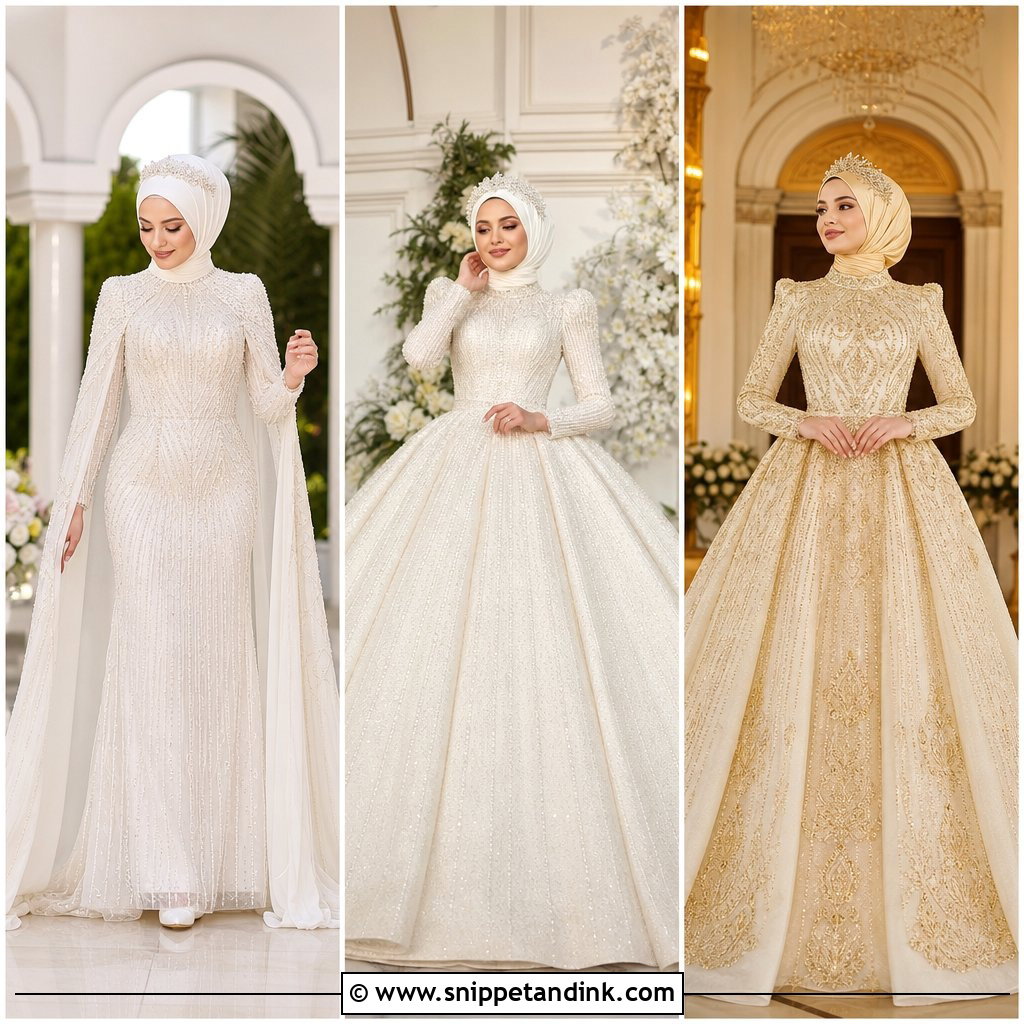
3. Ivory Pishwas Hijabi Pakistani Bride
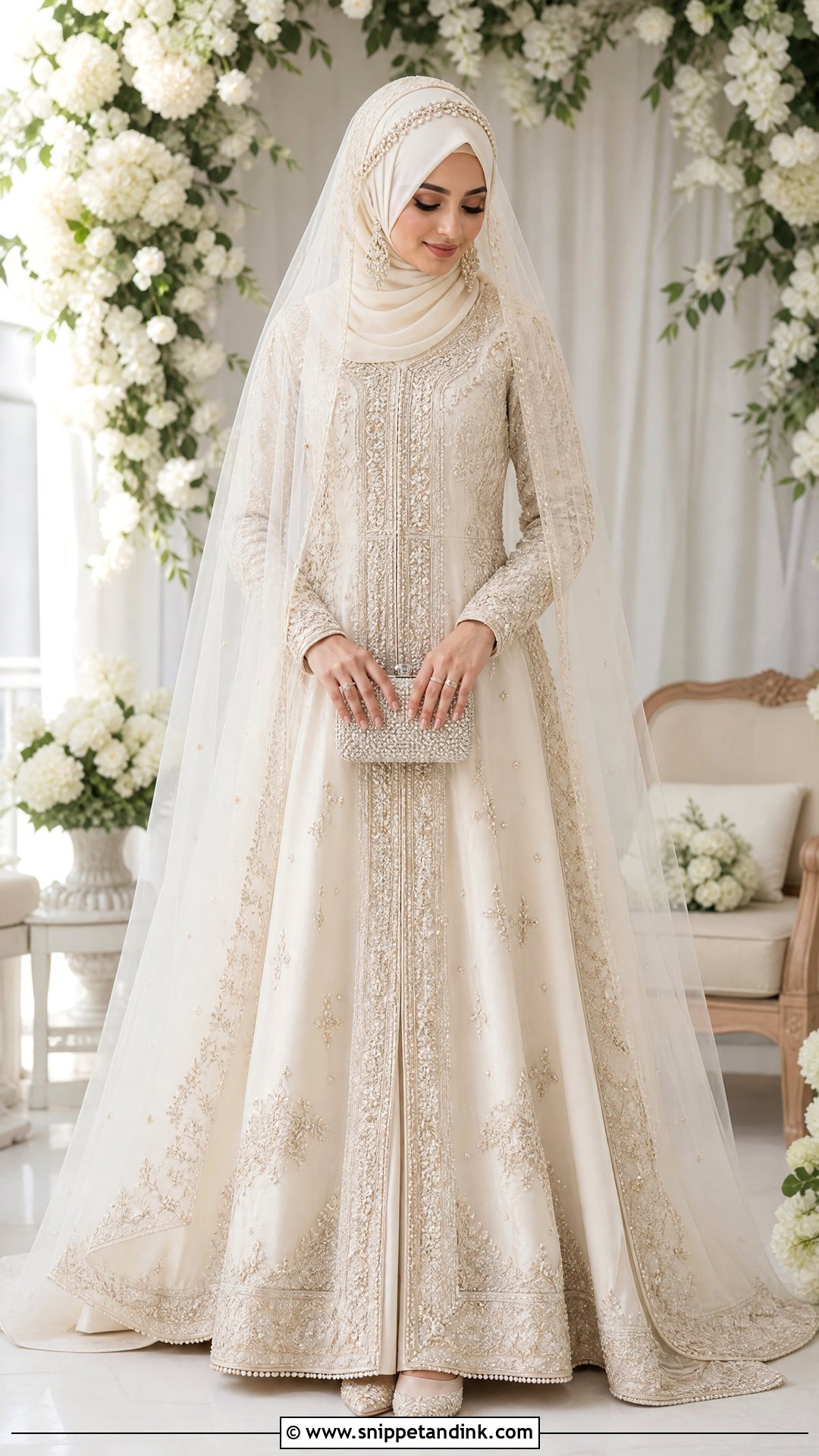
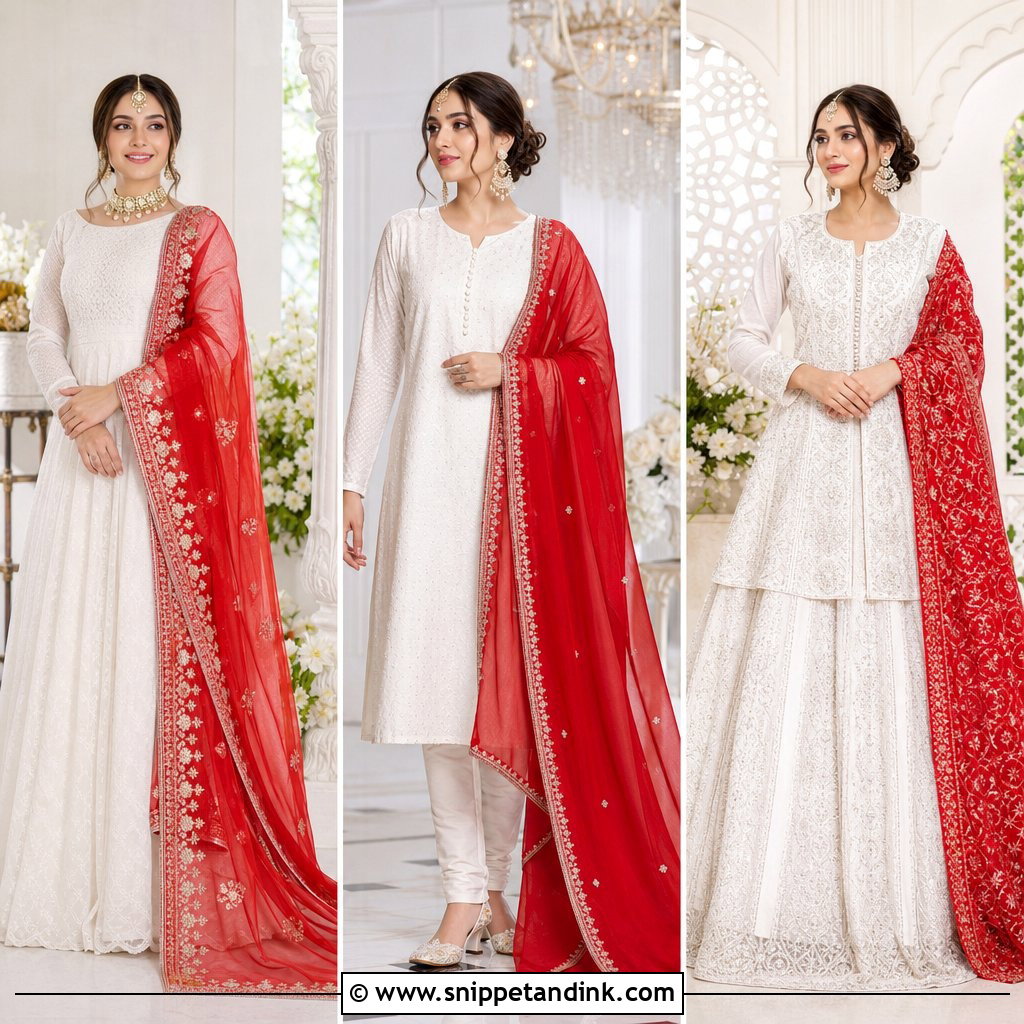
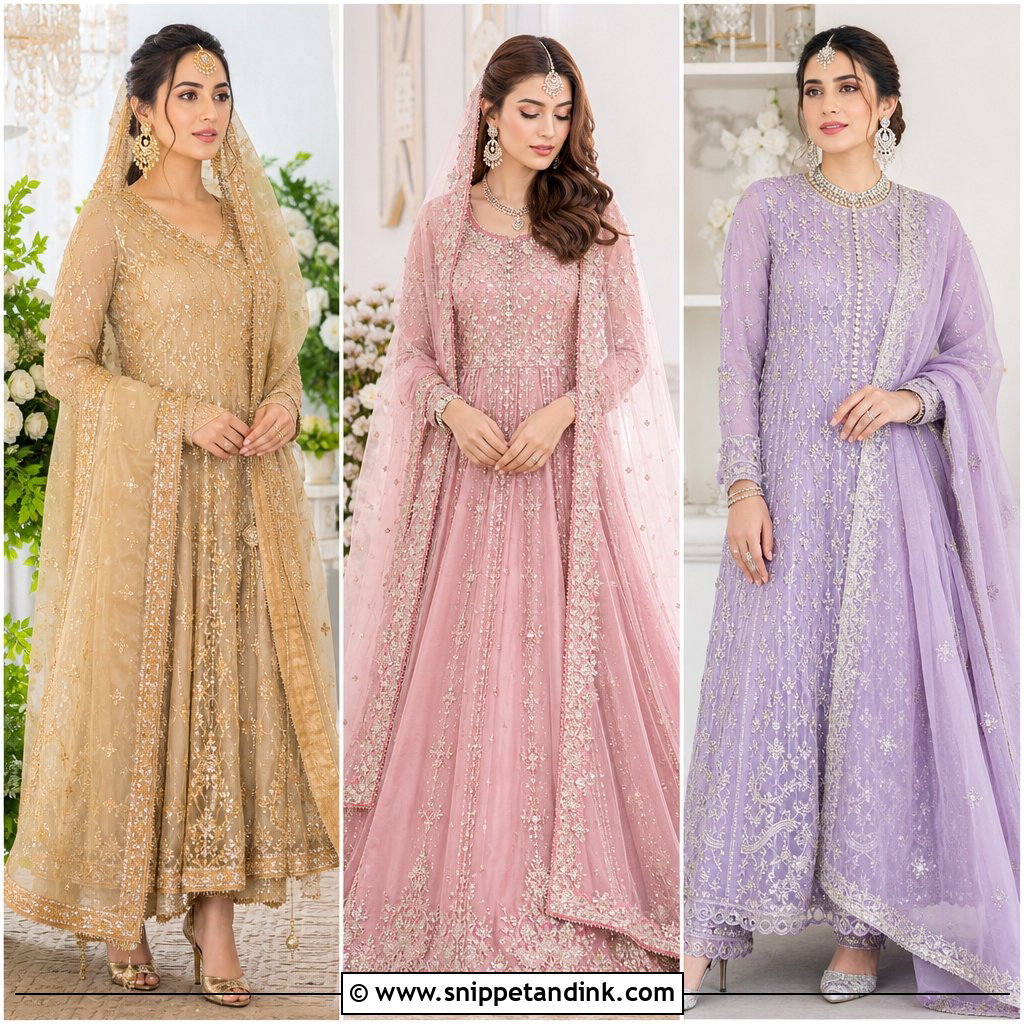
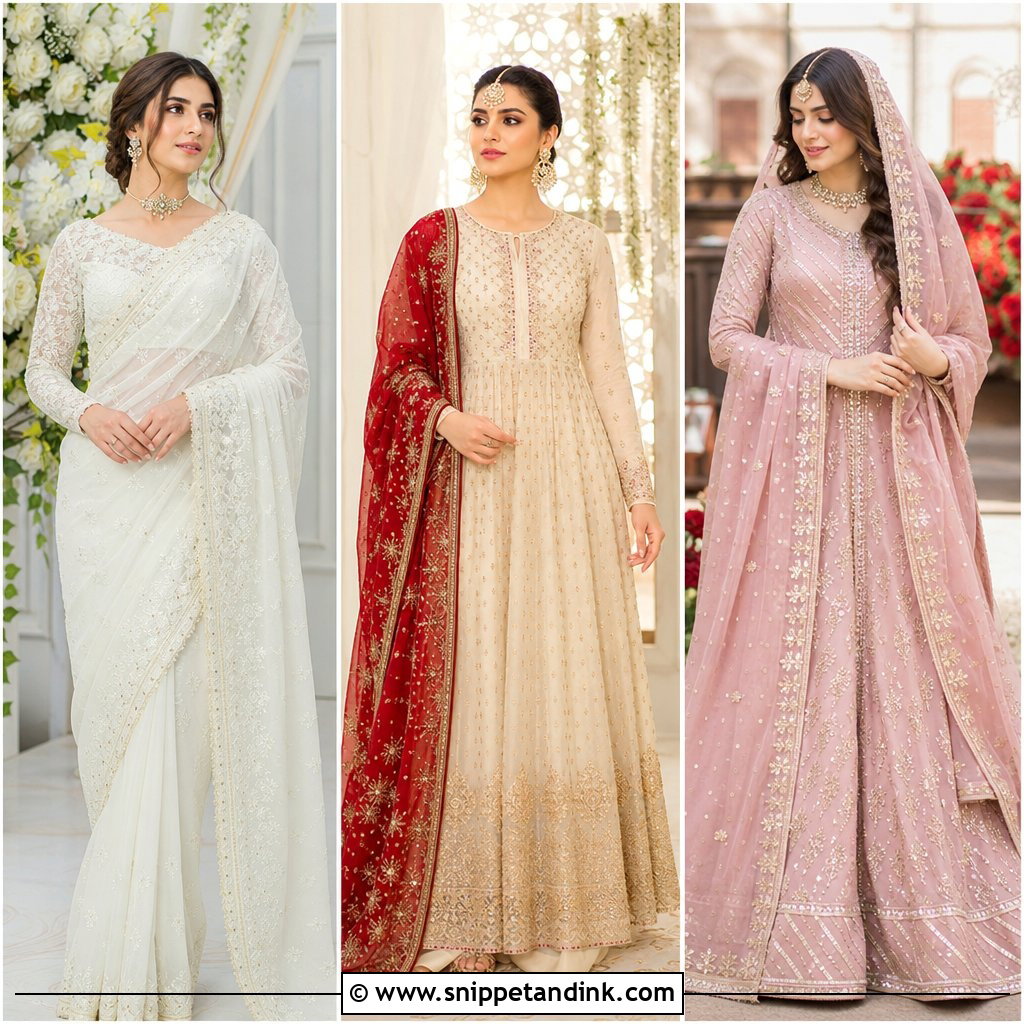
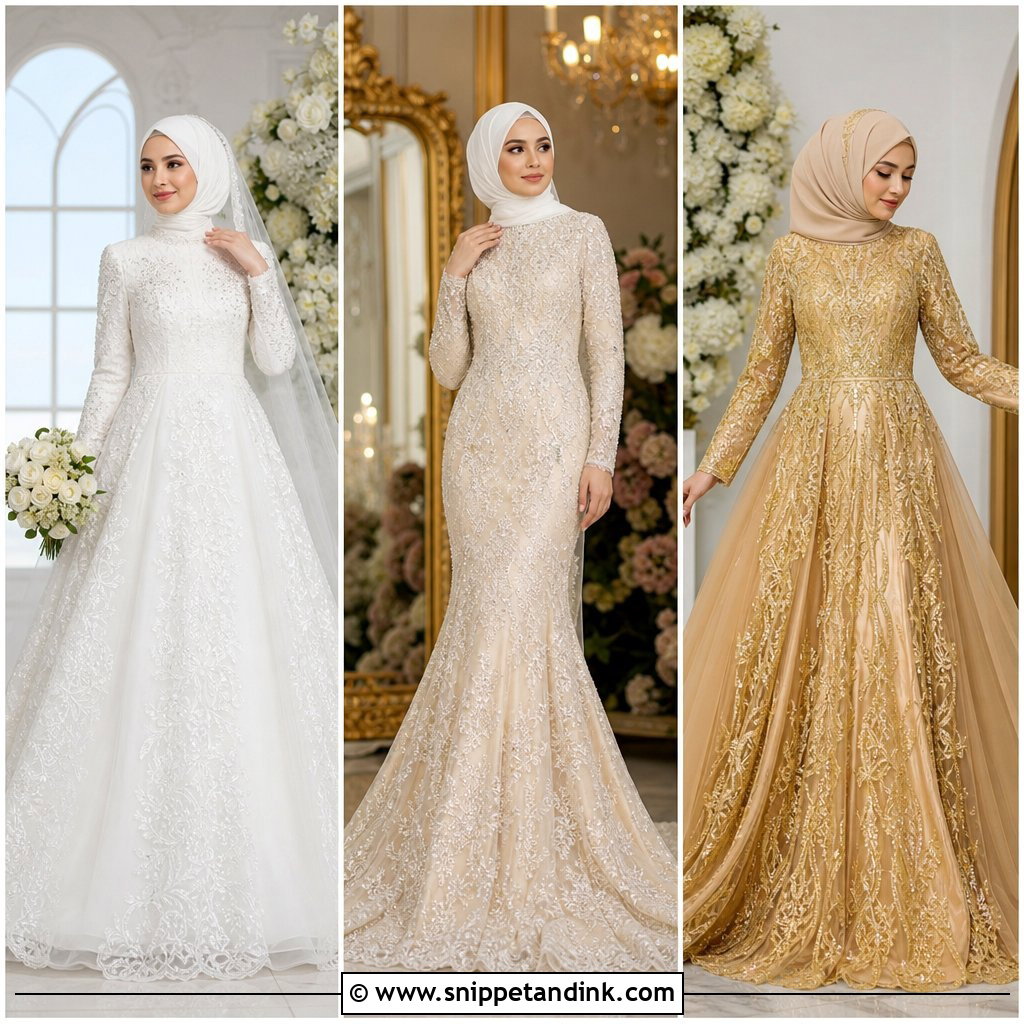
Ivory pishwas suit a quiet nikah. A pishwas is essentially a long, fitted-bodice frock that flares to the floor, so you get shape without a cropped blouse. Choose full sleeves, a modest neck and fine silver, pearl or champagne embroidery. I wrap an ivory crepe hijab close around the face; crepe is matte and grips, so it holds when an organza dupatta goes over it like a veil. A pearl headpiece pins securely above the forehead. Pearl drops, a slender necklace, a silver clutch and ivory flats or low heels. Mix ivory, cream and champagne slightly so the whole look doesn’t photograph as one flat block.
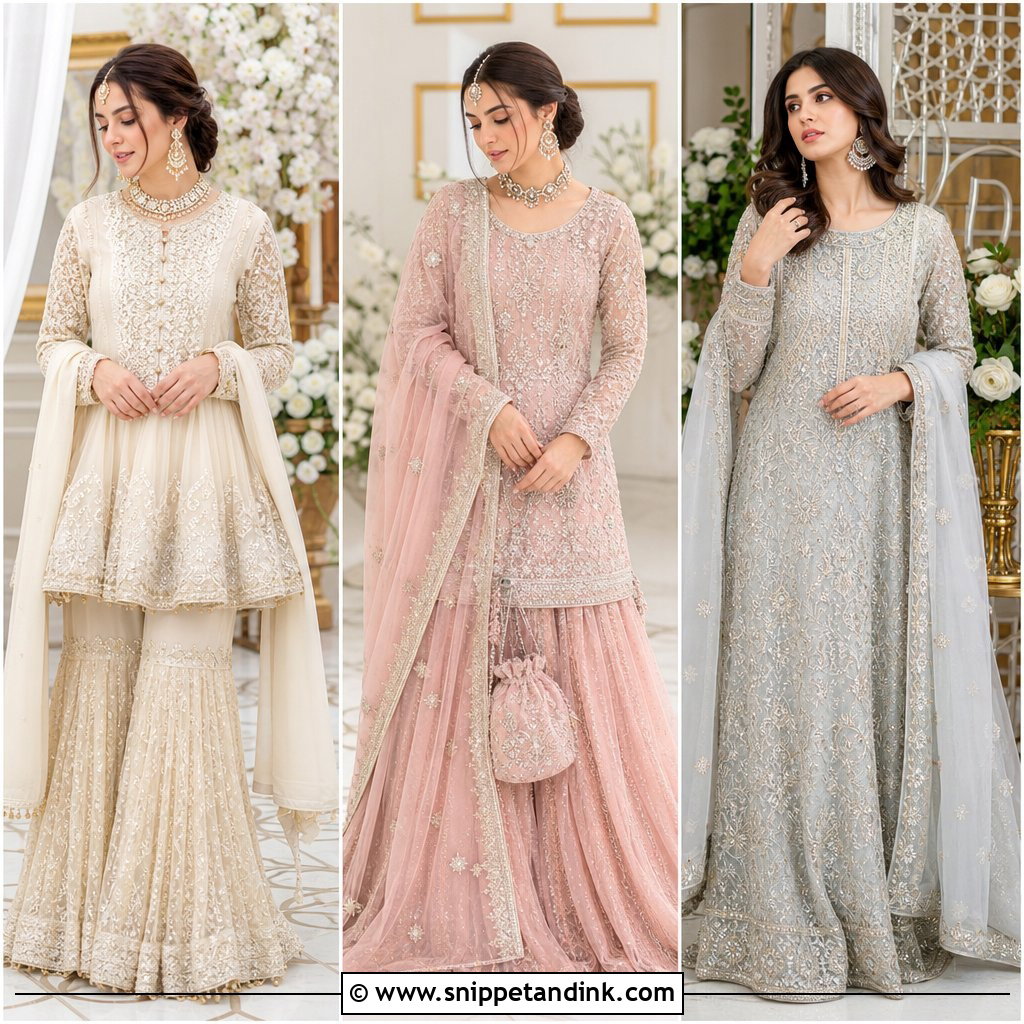
4. White Gharara Hijabi Pakistani Bride
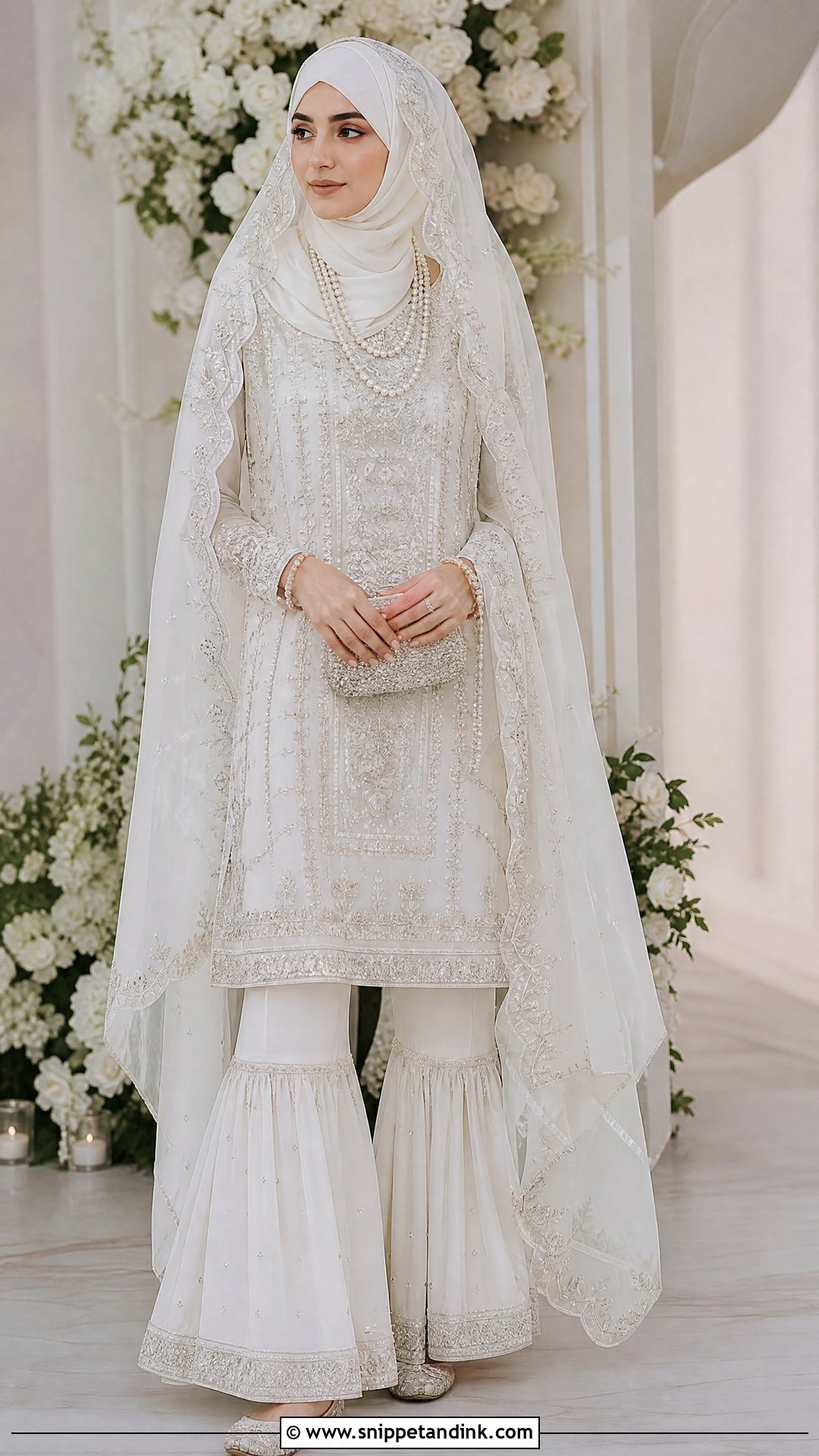
A white gharara is easy to spot: the trousers fit closely through the thigh and then burst into a flare at the knee, usually with a gota-trimmed joint where the two parts meet. That structure means the shirt can stay long and straight with full sleeves and pearl, silver or pale gold embellishment. Walk in it before the day, because the knee joint changes your stride slightly. A white chiffon hijab under a scalloped organza dupatta gives soft layers. Pearl jewelry, a small crystal clutch and silver embroidered juttis. With dense embroidery, keep the hijab plain and low-texture so the area around the face stays clean.
5. Blush Pink Walima Gown Hijabi Pakistani Bride
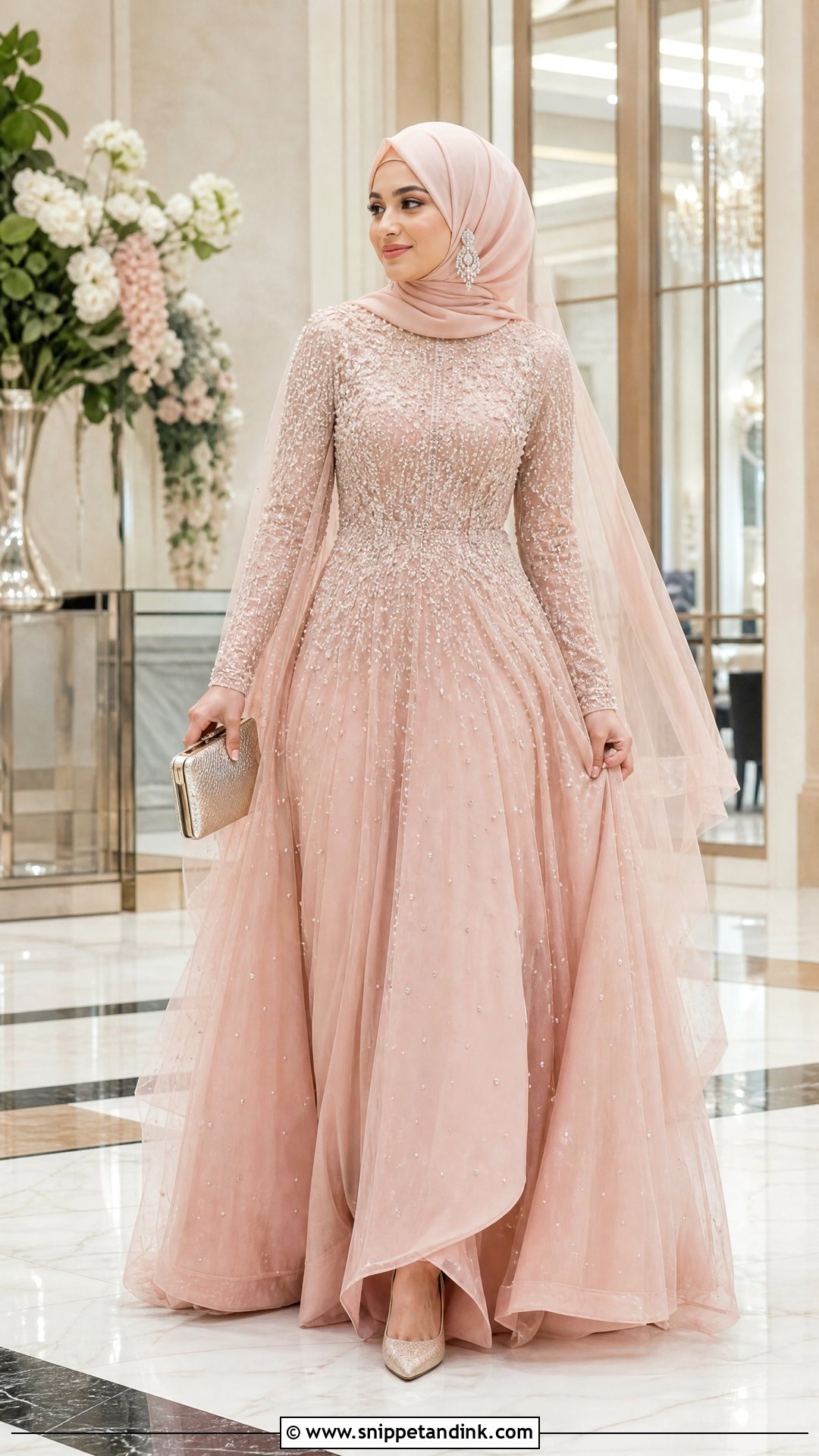
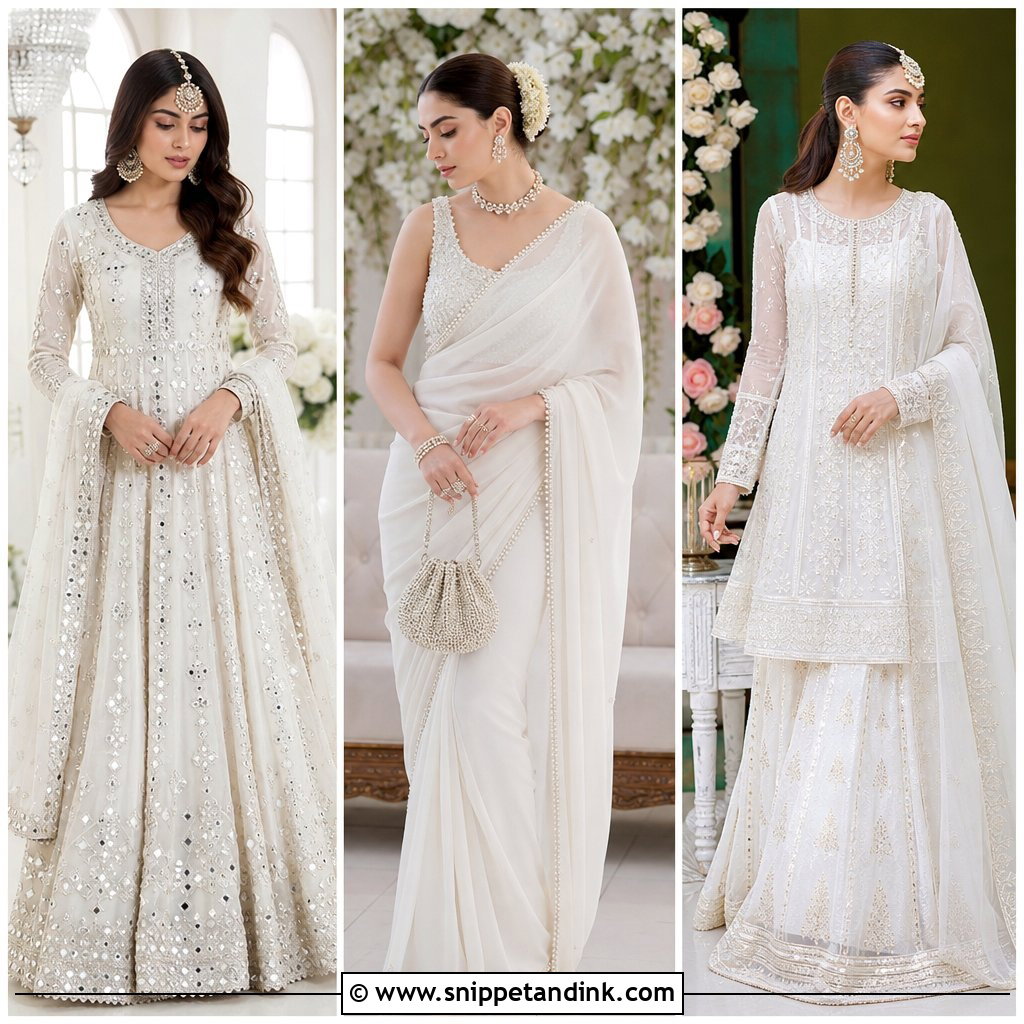
After the weight of the baraat, a blush gown at the walima feels like taking a breath. Choose a floor-length gown with a covered bodice, full sleeves and a softly flared skirt, with tonal threadwork, pearls or silver at the neckline, cuffs and hem. The veil-style dupatta should run just past the train. Under a veil, I use crepe or matte satin for the hijab, since chiffon slides when a long veil pulls backward. Crystal earrings, a delicate headband over the hijab, a metallic clutch and champagne heels. It’s comfortable for greeting guests, which at a walima is most of your evening.
6. Champagne Sharara Hijabi Pakistani Bride
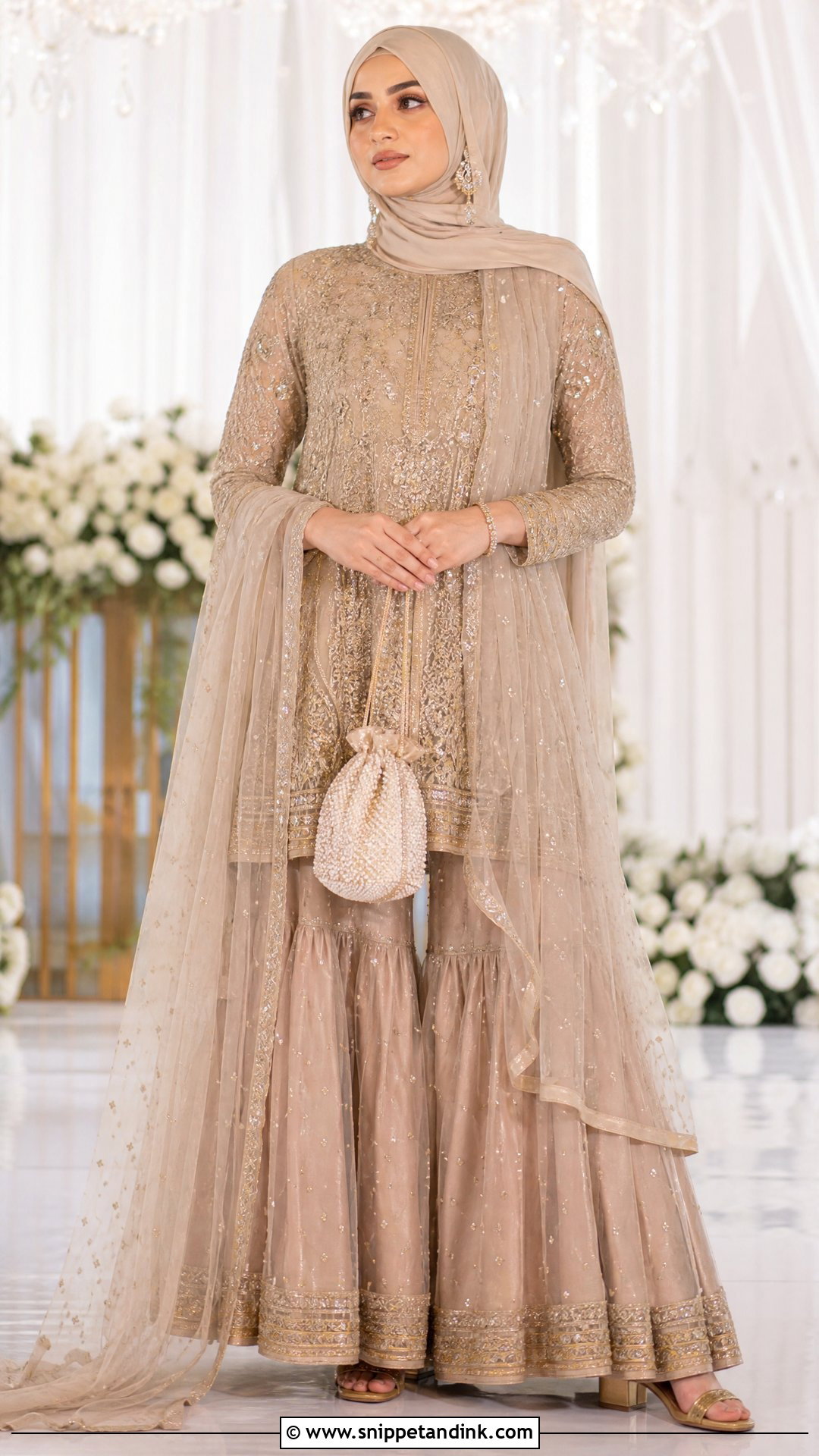
Champagne is one of the most forgiving colors near the face because it reflects warm light without the yellow cast of bright gold. A long embellished kurta and a sharara work well here. Unlike a gharara, the sharara flares loosely from the waist with no knee joint, so it moves more fluidly and is easier to sit in. Keep the gold threadwork, pearls or crystals near the borders. A champagne hijab with a neat front drape blends into the outfit; a sheer dupatta goes over one shoulder or lightly on the head. Chandelier earrings, a slim bracelet, a pearl potli and gold block heels finish a tonal look for a nikah or walima.
7. Emerald Green Mehndi Lehenga Hijabi Pakistani Bride
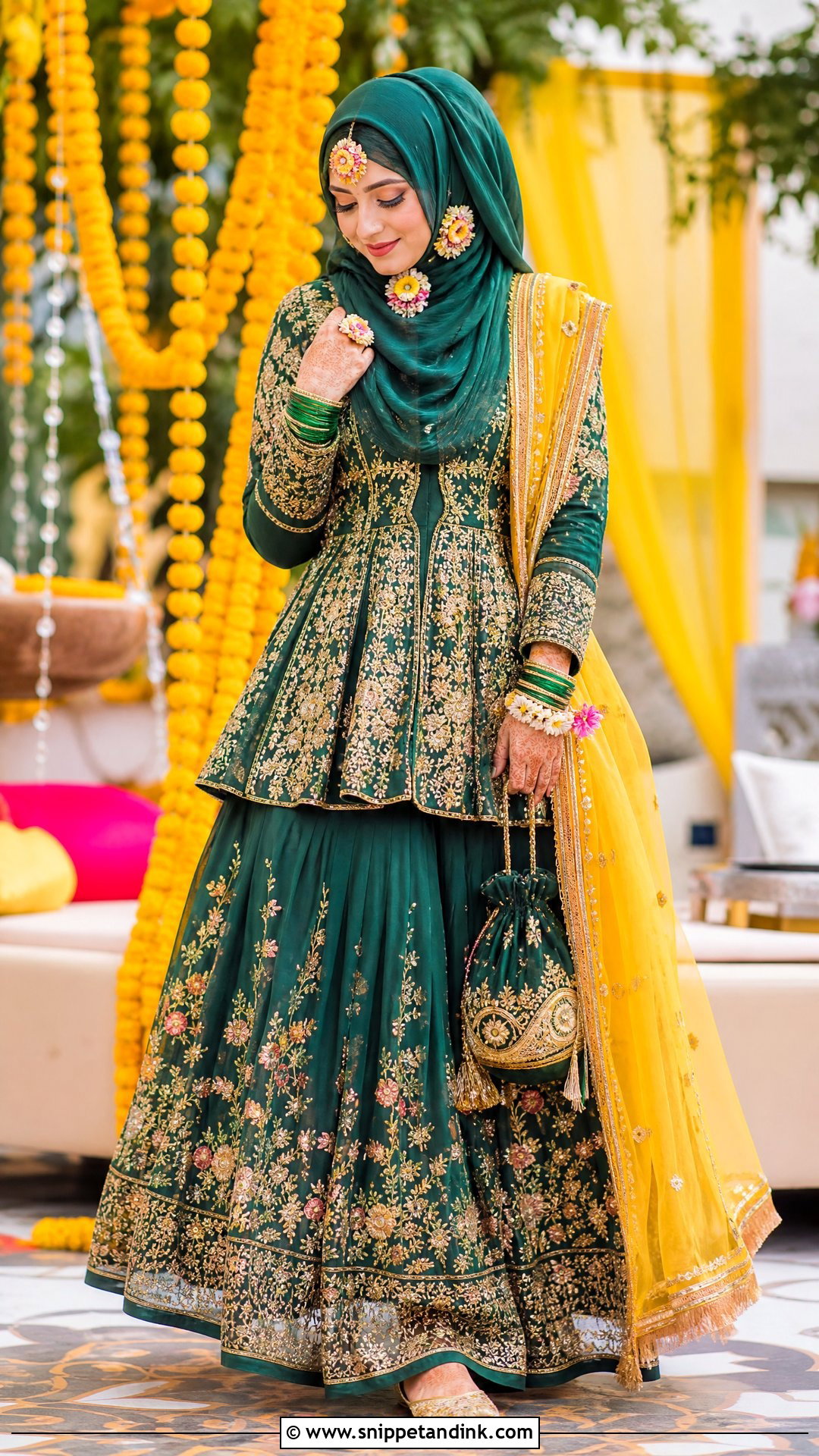
Emerald is the mehndi color I’d suggest for brides who find yellow difficult against their skin. Choose a full-sleeve peplum top with gold embroidery over a flared lehenga with colorful floral borders for this mehndi bridal outfit. A longer peplum covers the waist and hips. Mehndi nights involve dancing and sitting on floor cushions, so I’d wrap the emerald hijab in breathable chiffon or crepe and pin it at three points. A yellow, pink or orange dupatta over one shoulder brings in mehndi color. Floral jewelry, gold bangles, a compact potli and comfortable khussas. Repeat only one accent color in the accessories.
8. Mustard Gharara Hijabi Pakistani Bride
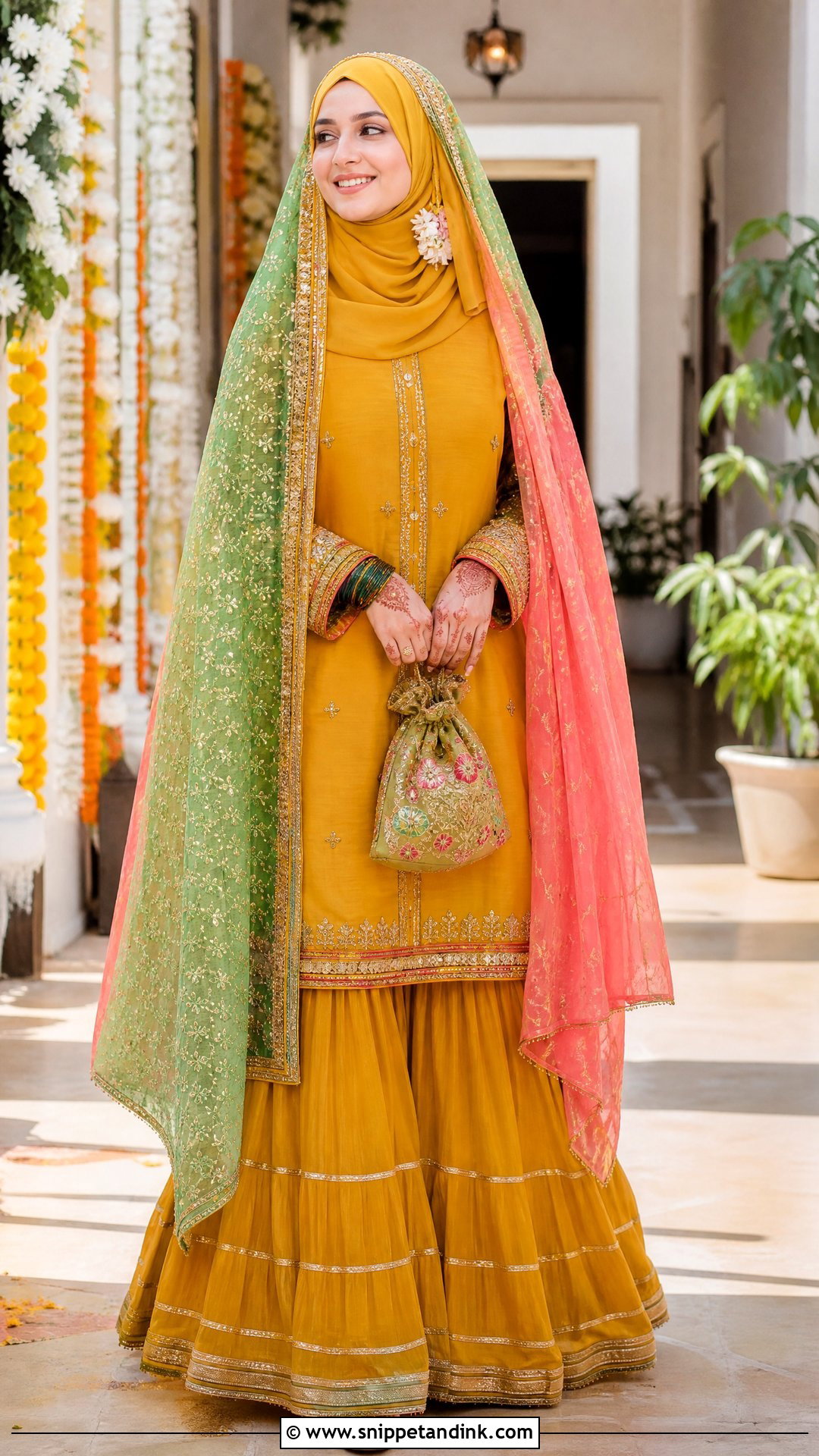
Mustard looks warm and traditional for a daytime mehndi. Pair a kurti with a high neck and full sleeves with a mustard gharara edged in gold gota borders. The kurti can be cut a little longer at the back for coverage while still letting the knee flare show. I keep the hijab plain mustard and drape a green or pink bordered dupatta loosely over the crown and shoulder. Floral earrings need to sit comfortably over the hijab, so choose lightweight fresh or fabric flowers rather than heavy metal pieces. Stacked green bangles, a small embroidered bag and flat gold juttis. Skip any train at a mehndi; you’ll be up and down all evening.
9. Orange And Pink Sharara Hijabi Pakistani Bride
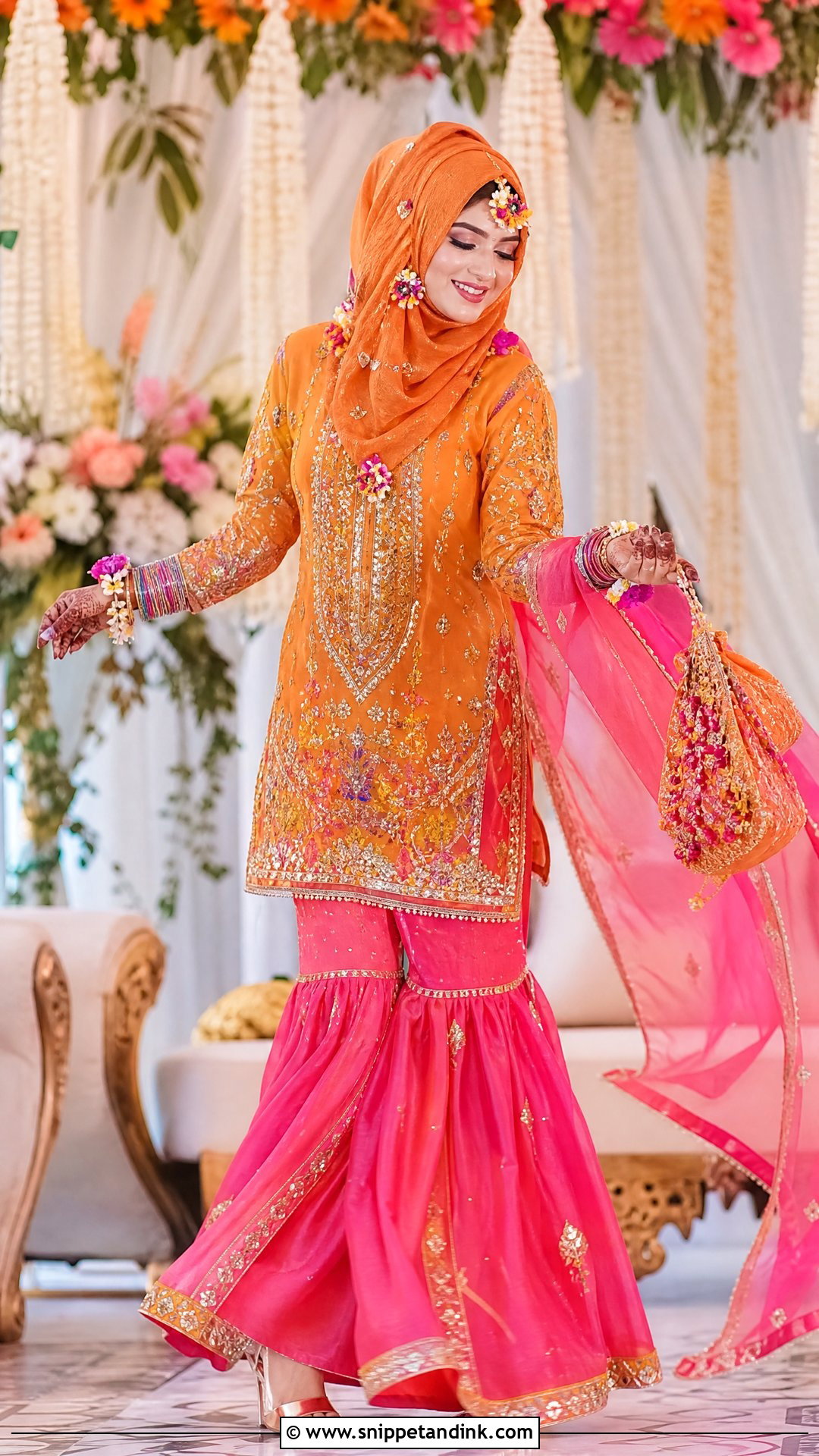
Orange and hot pink together is the boldest mehndi pairing on this list. Start with a full-sleeve orange kurta with colorful embroidery, mirror work or gold borders, and add flowing pink sharara pants for contrast from waist to floor. A plain orange hijab connects the top half, and a light pink dupatta can go over the head or across both arms. Floral jewelry, multicolored bangles, an embellished potli and metallic sandals. Because the colors already shout, the shoes and bag should stay quiet. Mirror work can scratch the inside of the arm, so check the kurta lining at the cuffs.
10. Mint Green Pishwas Hijabi Pakistani Bride
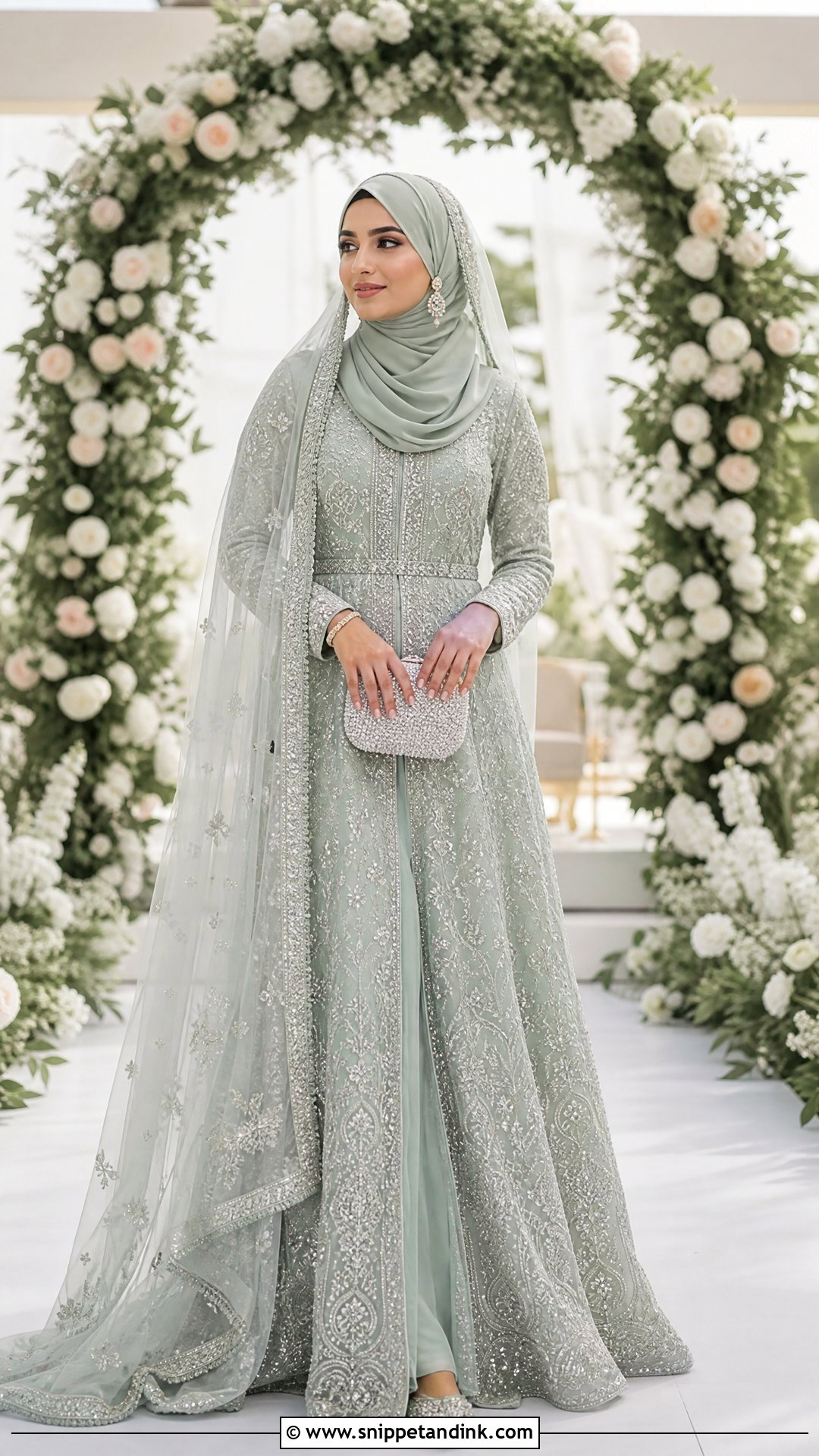
Mint reads fresh in daylight and turns slightly grey under warm evening bulbs, which is why I keep it for a daytime nikah or an intimate garden walima. Choose a long pishwas with full sleeves, a high back and a flowing skirt worked in silver or pearl. A matte chiffon hijab in matching mint with a pale silver organza dupatta over the crown keeps the palette cool. Pearl drops, a crystal bracelet, a small silver clutch and embellished mint flats. Don’t add contrasting colors. If you want more definition, put silver at the waist, cuffs and dupatta border rather than reaching for heavy jewelry.
11. Powder Blue Walima Maxi Hijabi Pakistani Bride
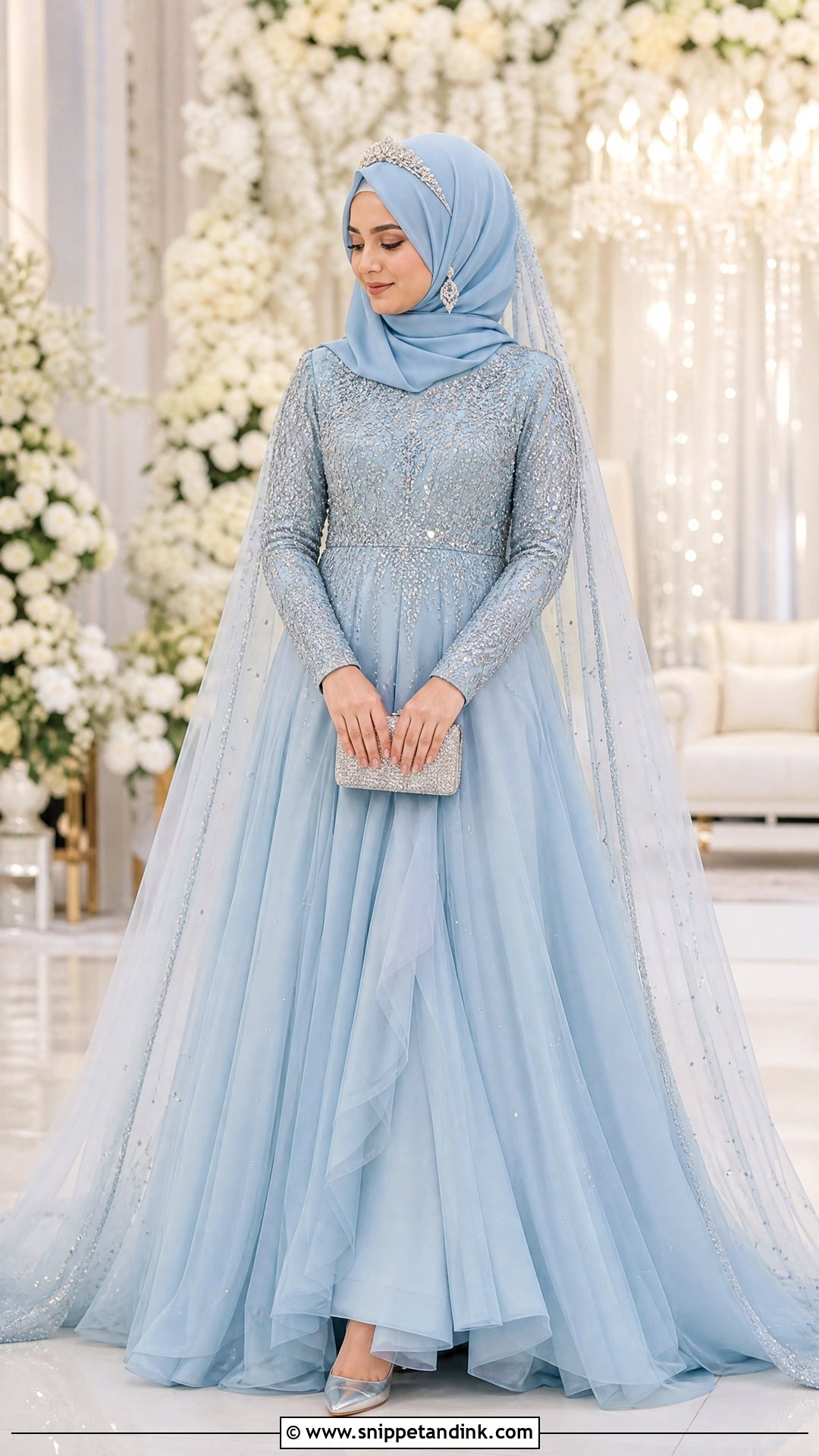
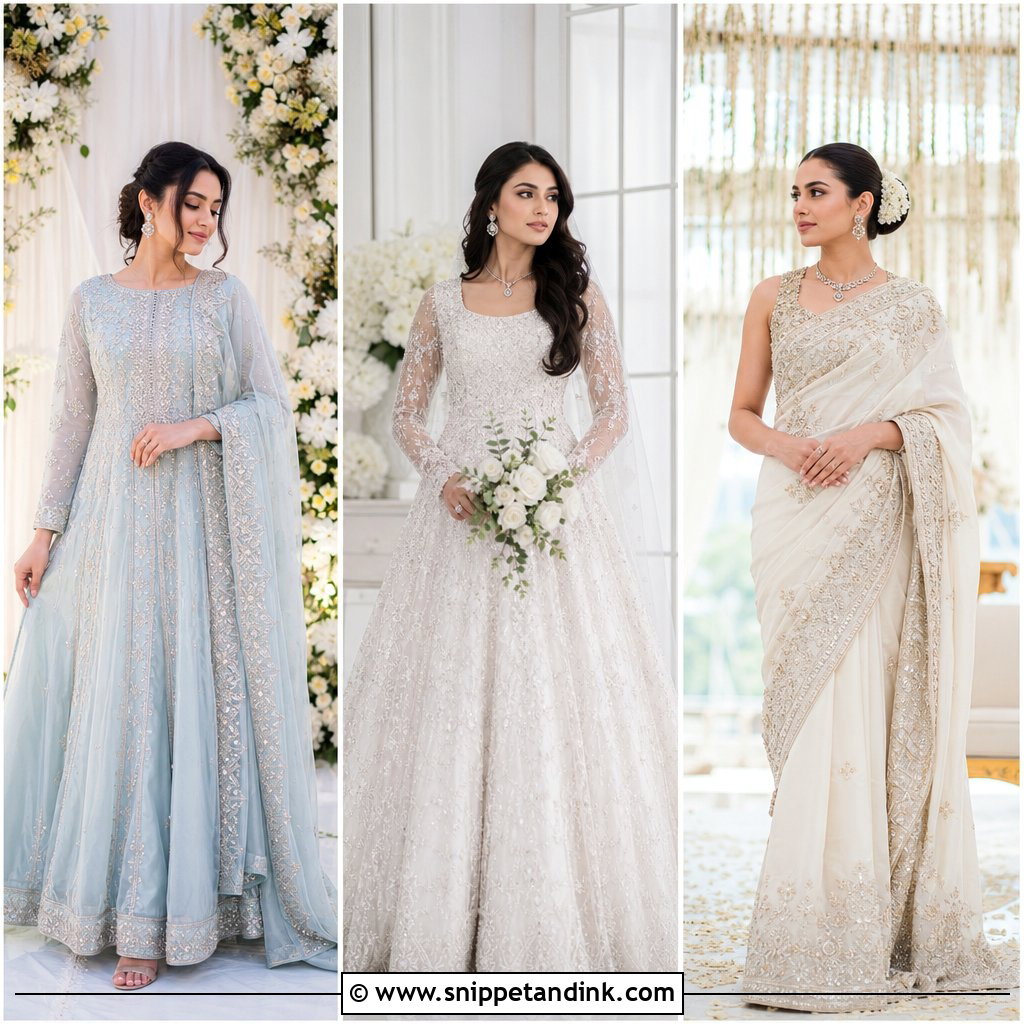
Powder blue is a refreshing break from pink and ivory at a walima. Choose a floor-length maxi with a modestly fitted bodice, full sleeves and a gradually widening skirt, with silver embroidery, small pearls and a little crystal. Wrap the powder blue hijab smoothly around face and neck. A long silver-blue veil attached at the crown falls behind the shoulders. Crystal headpiece, drop earrings, a silver box clutch and blue or metallic heels. Pale blue near the face can look cold, so I suggest a soft cool-toned blush and a neutral lip to keep the complexion lively.
12. Lavender Anarkali Hijabi Pakistani Bride
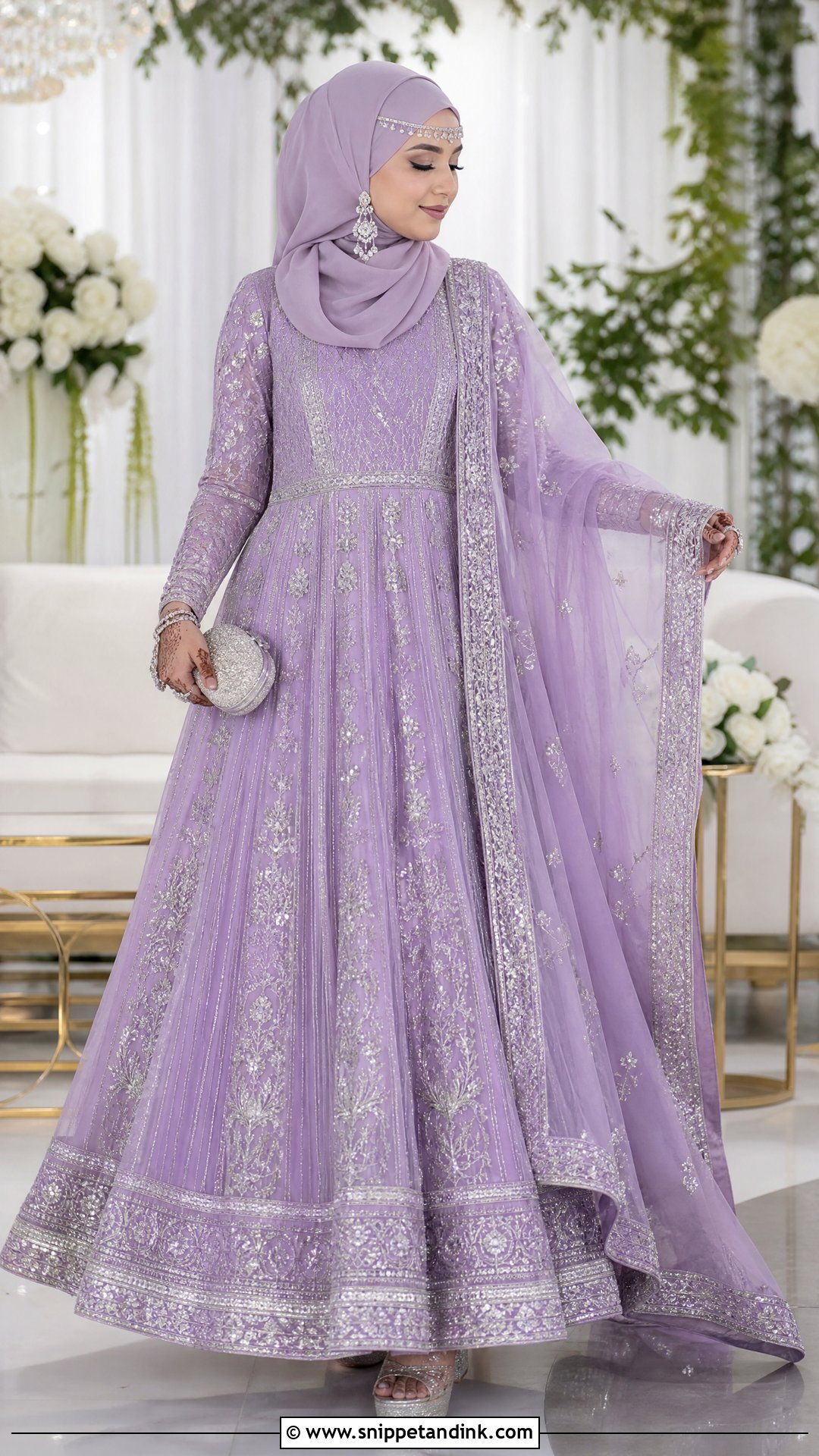
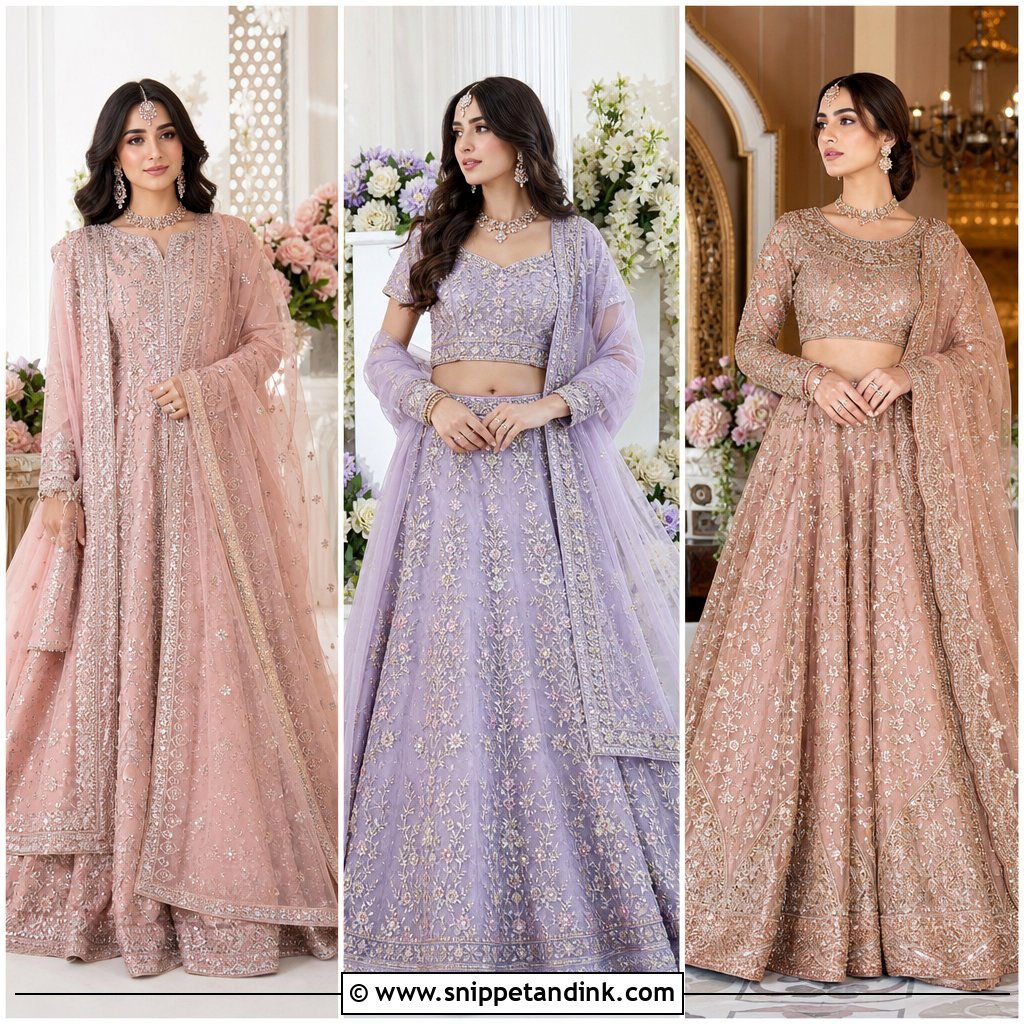
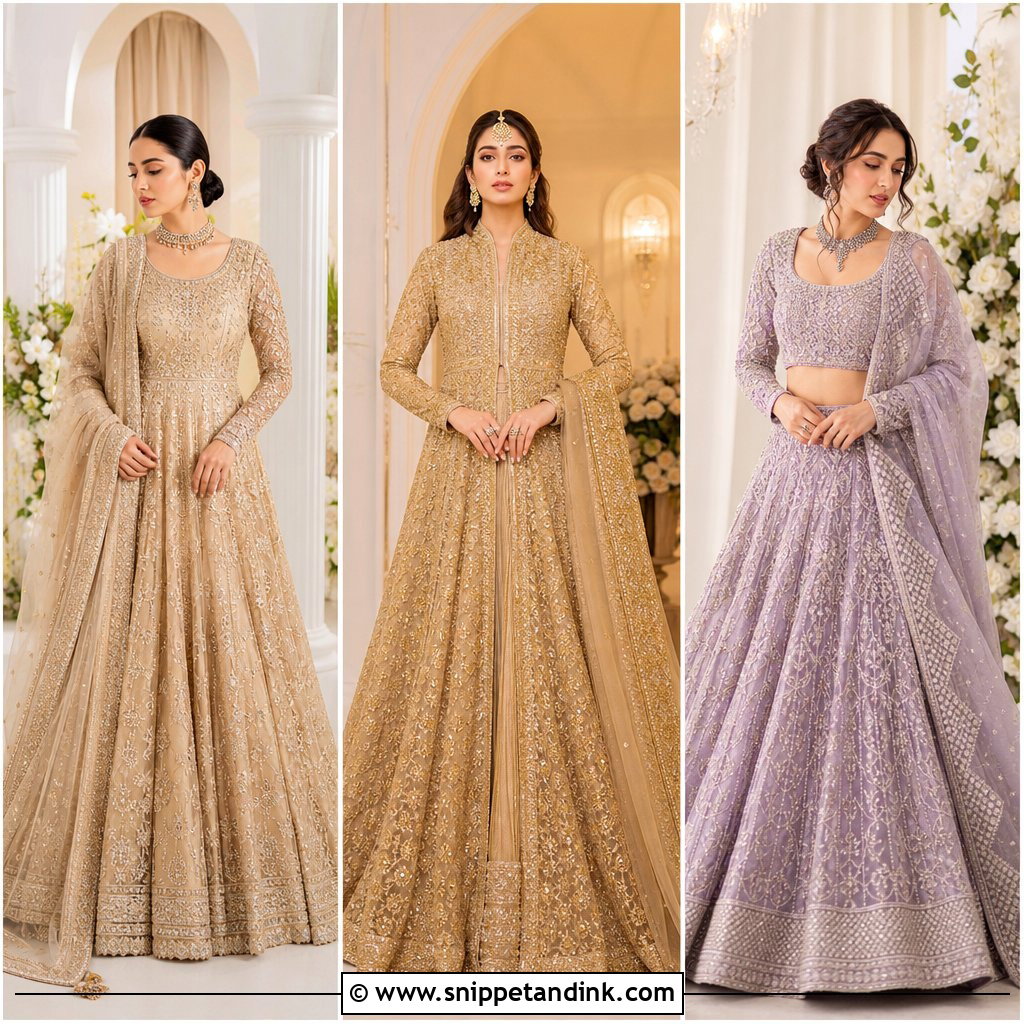
Lavender gives a classic Anarkali outfit a modern softness. Look for a full-length dress with a fitted upper body, long sleeves and generous panels that open into a wide flare, with tonal embroidery, silver borders and scattered pearls. A lavender crepe hijab is the foundation; drape a sheer embroidered dupatta from the head and secure it at one shoulder. Silver matha patti over the hijab, chandelier earrings, a small lavender clutch and cushioned silver heels. An Anarkali already has a lot of volume, so a narrow dupatta works better than an oversized veil and leaves your arms free.
13. Gold Tissue Lehenga Hijabi Pakistani Bride
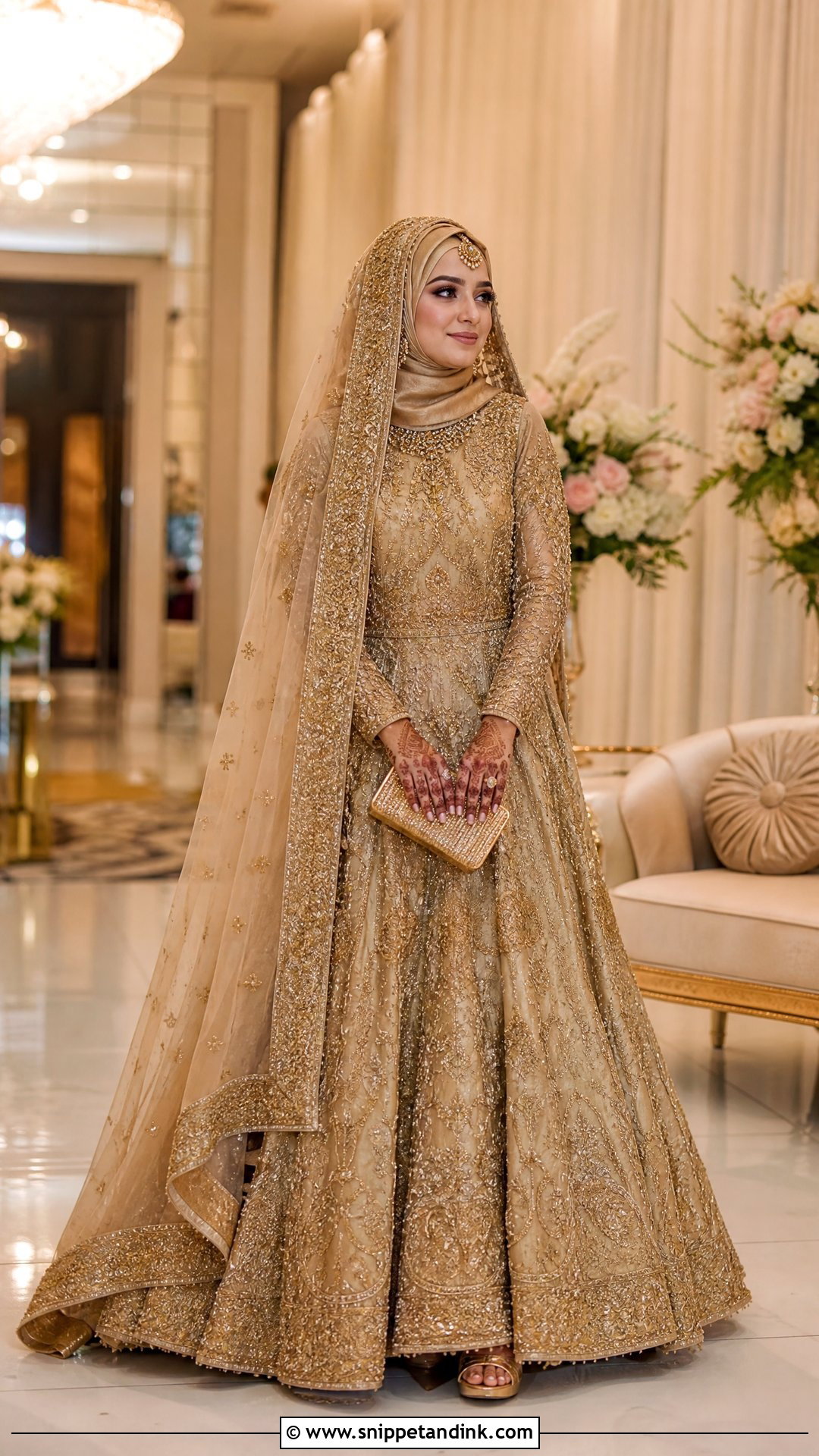
Gold tissue is a sheer, metallic-threaded fabric that glows under venue lights, which makes it a strong baraat or evening reception choice. Pair a full-sleeve blouse with a higher neck and a slightly longer hem with a voluminous lehenga in antique gold. I’d mix matte and reflective details so the outfit shows depth instead of flaring in flash photos. A neutral gold or beige hijab without shine keeps the face clear. Net dupattas slip, so pin it at both shoulders as well as on the head. Antique gold jewelry, a metallic clutch and cushioned gold heels. Use related tones like champagne, bronze and soft gold to avoid a one-note look.
14. Rust Velvet Bridal Dress Hijabi Pakistani Bride
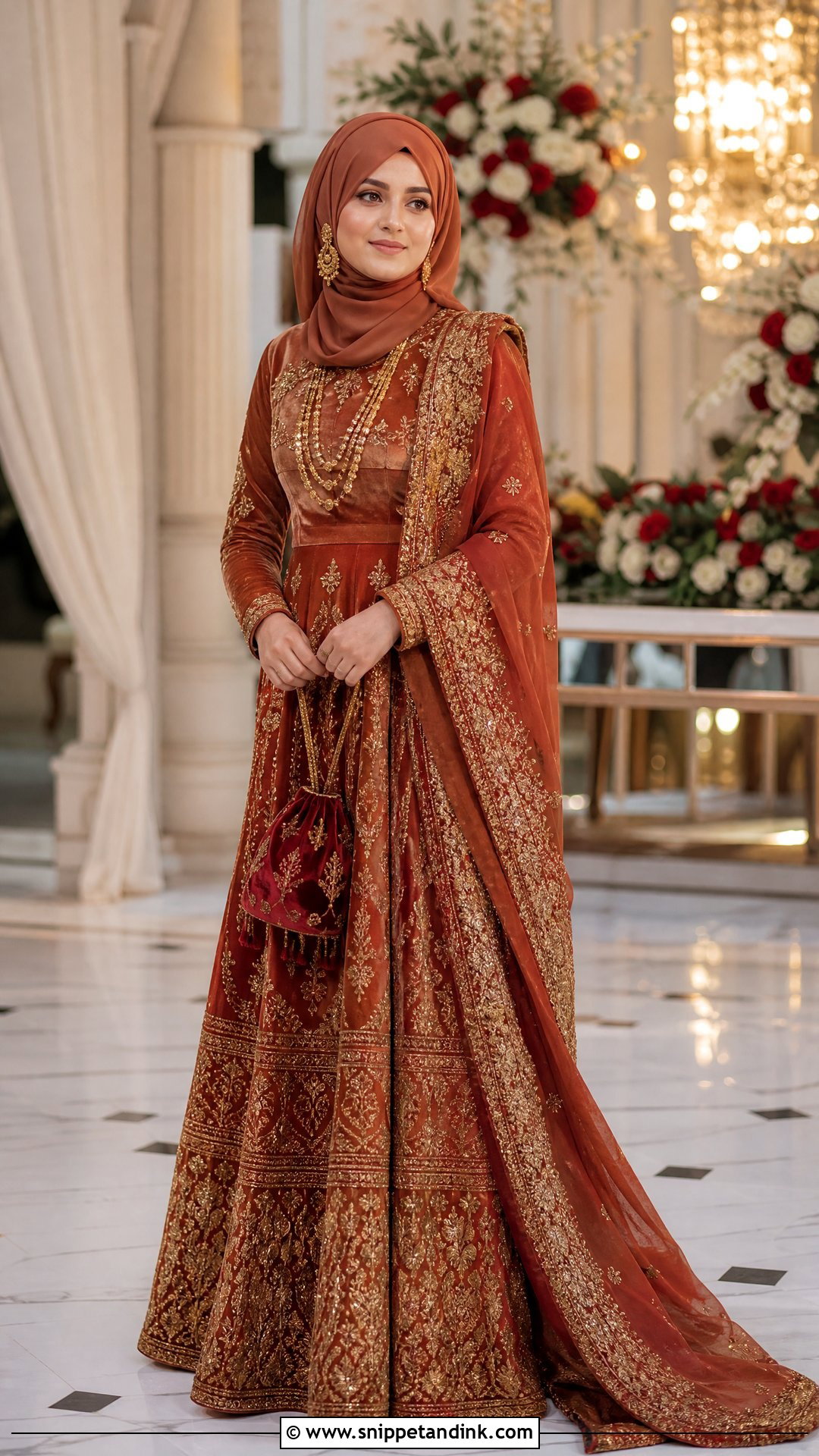
Velvet is a winter fabric, full stop. In a warm marquee it becomes heavy and hot within an hour. For a cool-weather wedding, though, a long rust velvet shirt with full sleeves and dense gold embroidery has real presence. I’d pair it with a farshi lehenga or wide trousers in a lighter fabric so the full outfit doesn’t weigh you down. A matte rust hijab, plus an embroidered velvet shawl or organza dupatta over one shoulder. Antique gold earrings, a layered necklace, a deep red potli and gold khussas. Keep the hijab smooth; bulky folds next to velvet look heavy. A forehead piece adds definition and leaves the face open.
15. Navy Blue Reception Gown Hijabi Pakistani Bride
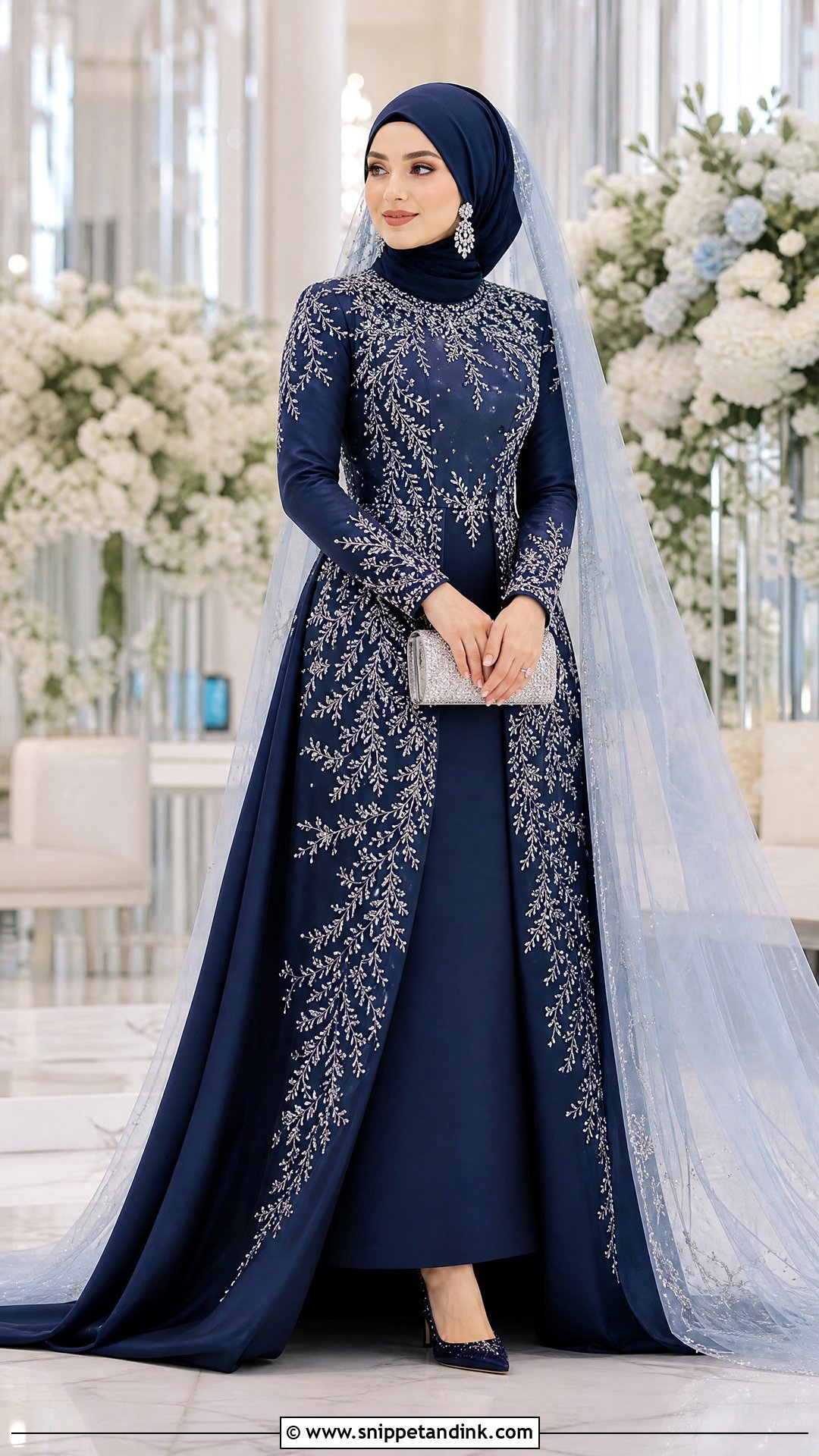
Navy and silver is my go-to suggestion for a bride who wants drama at the reception without the expected red. Choose a floor-length gown with full sleeves, a covered neck and a structured waist into a wide skirt, brightened by silver crystals, beads or floral threadwork. A navy chiffon hijab in a clean face-framing wrap. A lighter blue or silver veil lifts the whole look; an all-navy head looks very dark in evening photos. Crystal earrings, a silver clutch and pointed navy heels. Two well-chosen pieces of cool-toned jewelry beat several heavy necklaces fighting the bodice.
16. Black And Gold Lehenga Hijabi Pakistani Bride
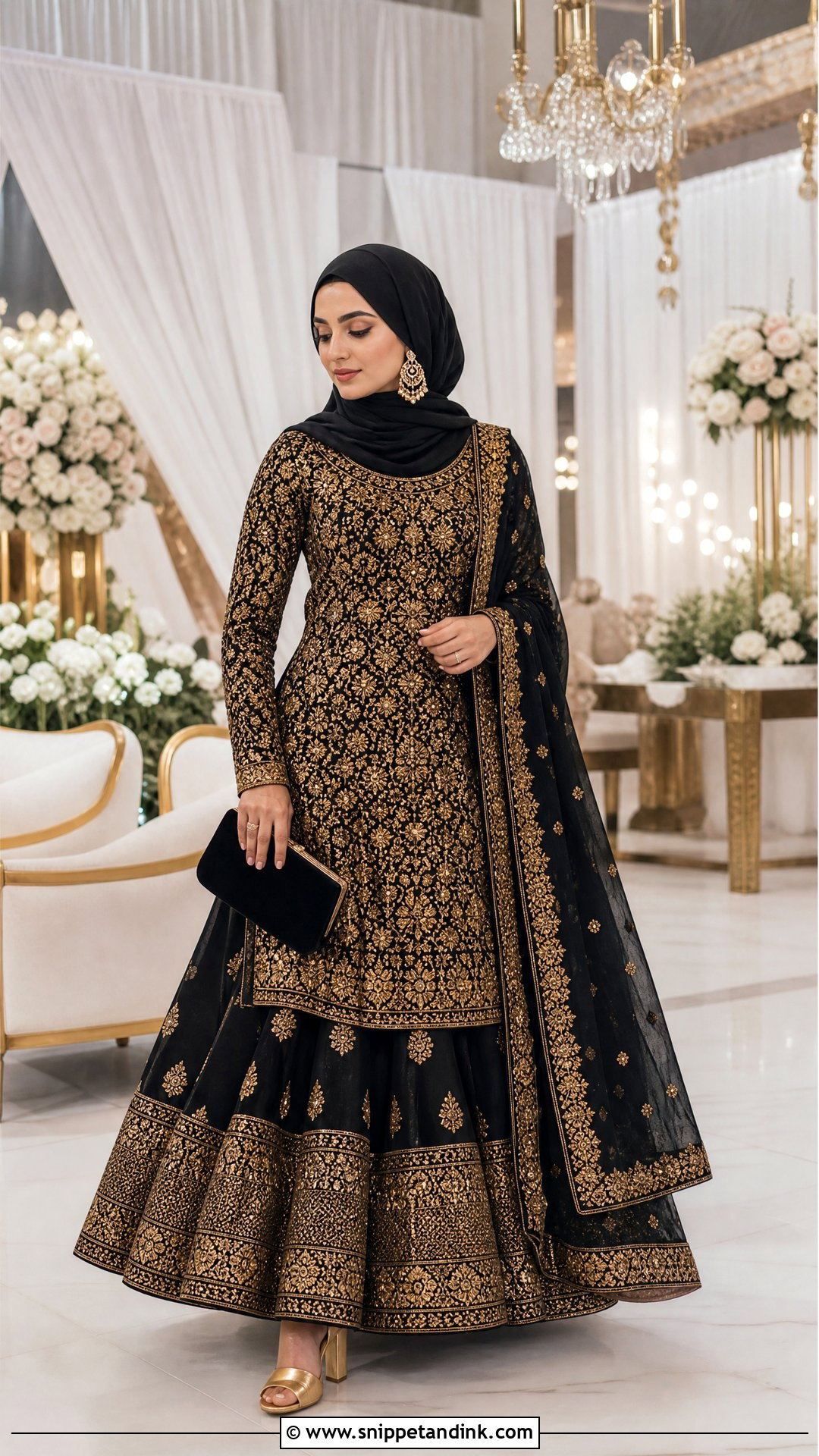
Black bridal wear is a personal choice, and some families will have opinions about it, so I’d raise it with them early. For a reception, a full-sleeve black kurti in antique gold embroidery over a wide bordered lehenga is very formal. A longer top balances the skirt. A plain black hijab with a smooth finish, then a gold-bordered dupatta over the head or one shoulder. Antique earrings, a statement ring, a black velvet clutch and gold block heels. Pure black around the face can look harsh on camera; deep charcoal is softer and still reads as black from a distance.
17. Peach Angrakha Lehenga Hijabi Pakistani Bride
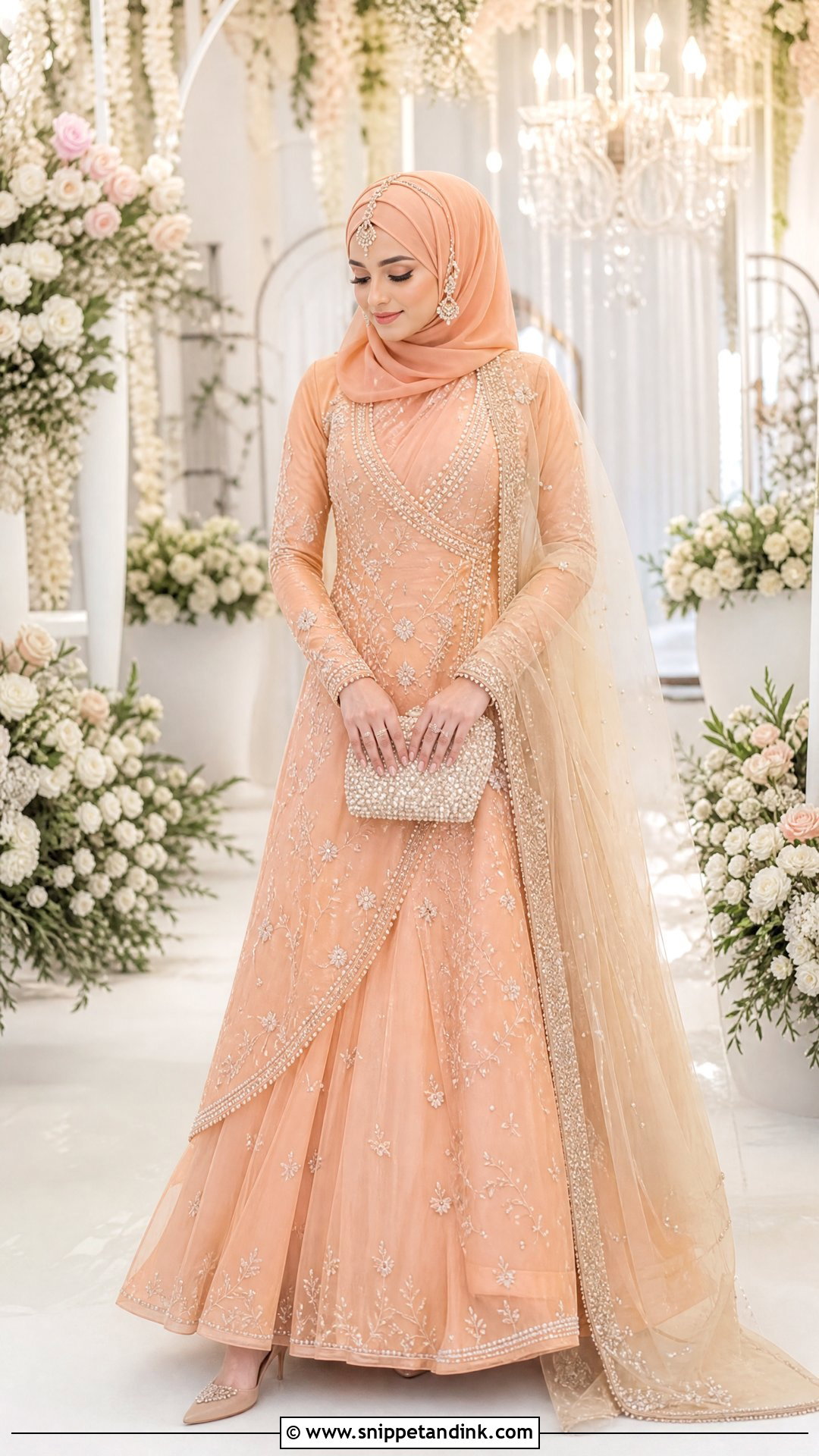
An angrakha crosses over the chest and ties at the side, which gives built-in coverage at the neckline. A peach Angrakha top with a matching flared lehenga in champagne embroidery, pearls or florals makes a gentle nikah or walima look. Choose full sleeves and a hem below the waist. A matte peach hijab tucks neatly under the crossover. Drape a sheer champagne dupatta from the head to one forearm as a veil. Pearl earrings, a slim headpiece, a beaded clutch and champagne heels. Ask for the side tassels to be light; heavy tassels swing and tangle with bangles.
18. Red Bridal Saree Hijabi Pakistani Bride
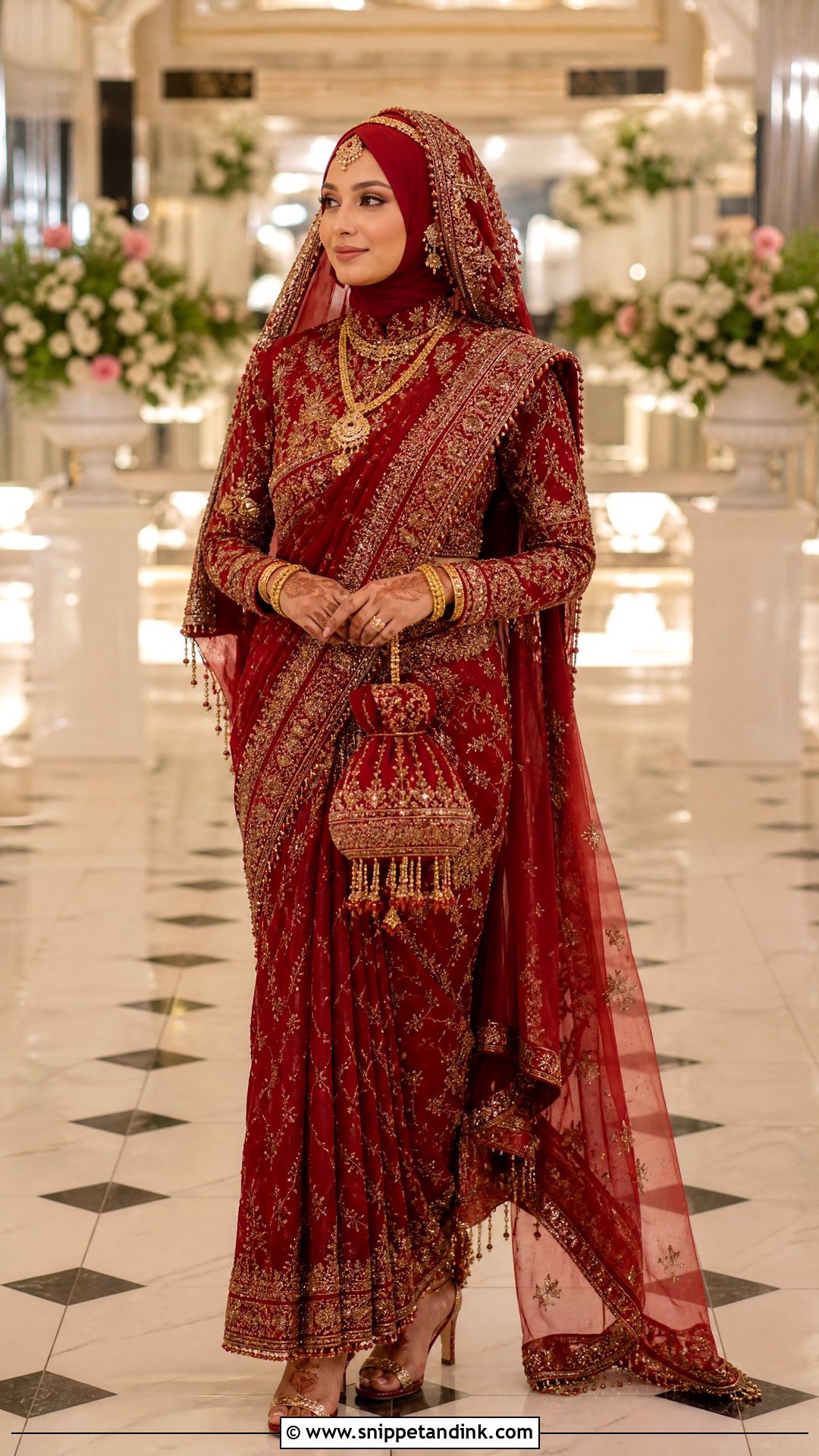
A saree is the most technical outfit here to wear with a hijab, so I’d only recommend it if you have someone experienced to drape it on the day. Start with a full-sleeve, high-neck blouse with a longer hem and a matching underskirt. Pleat the embroidered red saree at the front and pin the pallu across the torso. The red hijab goes on first; the pallu then rests over the head so its border frames the face like a veil. Concealed safety pins at the shoulder and waist are what keep the drape in place through hugs and photos. Choose a saree fabric with some body, like silk or a heavier georgette, since very soft chiffon sarees slide. Gold earrings, a necklace, bangles, a potli and red or gold heels.
19. Ivory Jacket Lehenga Hijabi Pakistani Bride
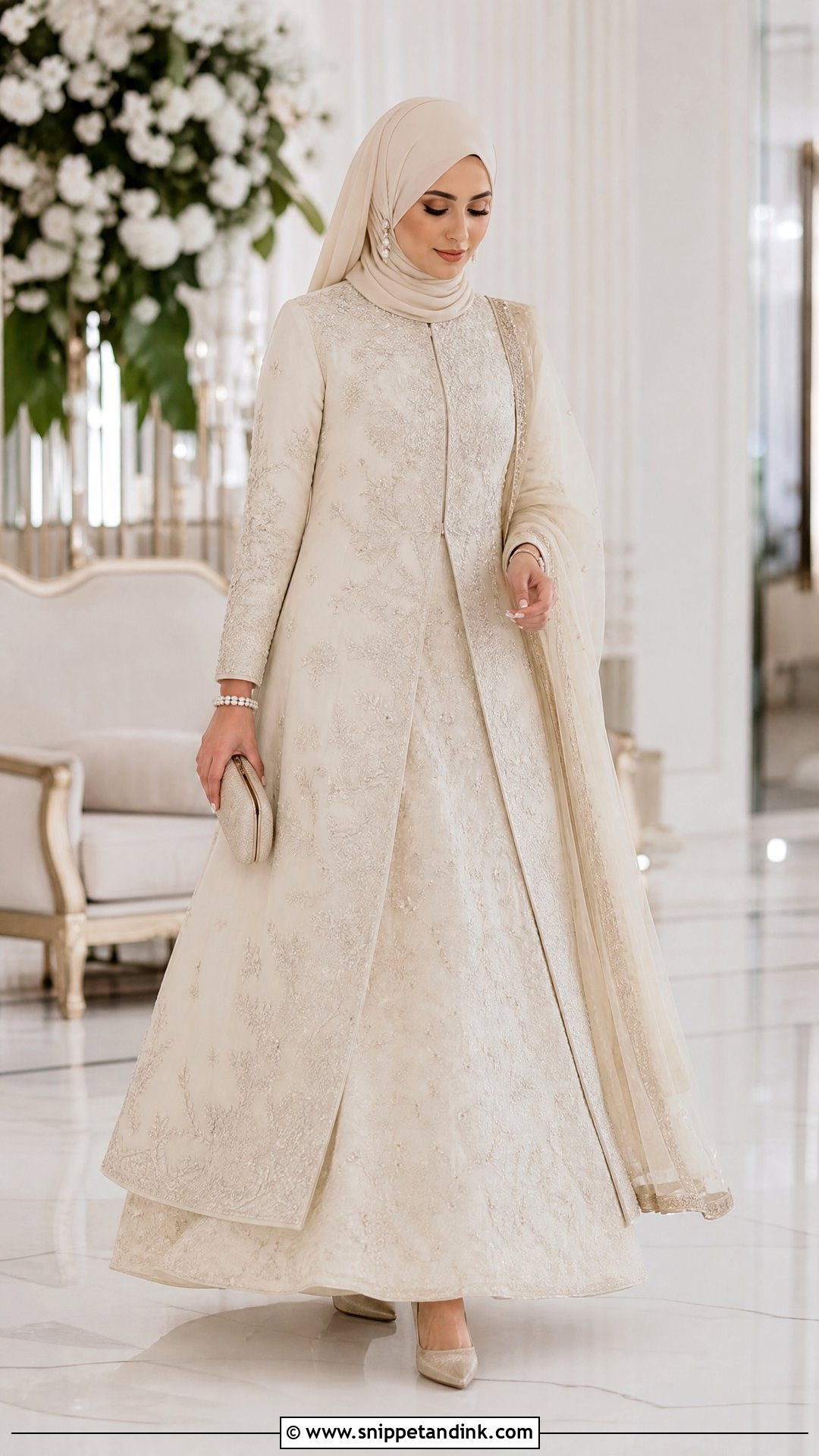
Jacket lehengas are the easiest route to full coverage with a modern edge. A long, fully lined embroidered jacket closes across the chest and falls toward the knee over a simpler inner blouse and a matching flared lehenga. Keep the skirt lighter than the jacket so the weight stays on your shoulders rather than your waist. Have the jacket fitted with enough room in the shoulders and arms to lift your hands. An ivory hijab, with a narrow champagne dupatta over the crown or from the shoulder. Pearl earrings, a delicate bracelet, an ivory clutch and champagne heels. Concentrating the embroidery on the jacket draws long vertical lines.
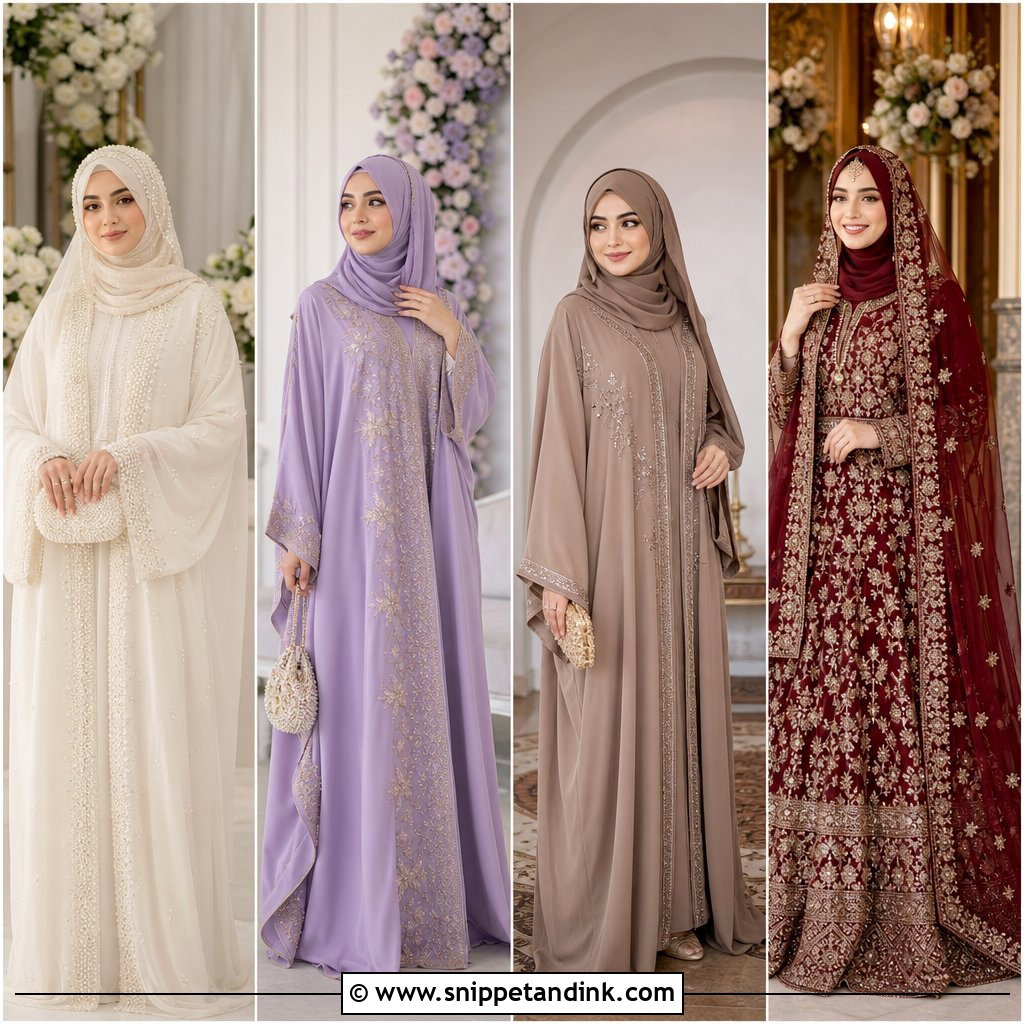
20. Rose Gold Peplum Sharara Hijabi Pakistani Bride
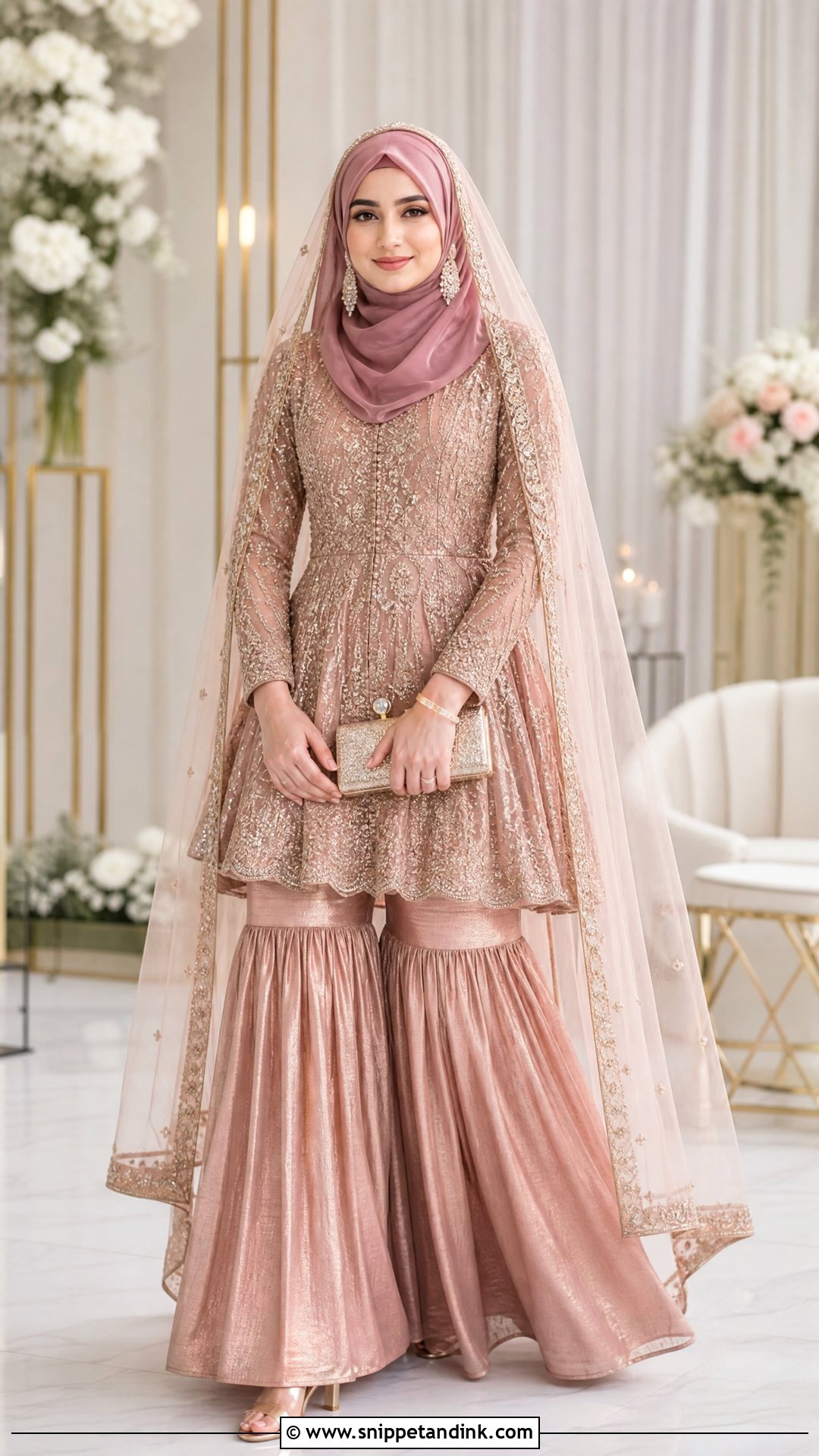
Rose gold sits between pink and metallic, so it’s flattering under most reception lighting. Choose a full-sleeve peplum top with a modest neck and a gently flared hem, over sharara pants in a lighter version of the same color. A dusty rose hijab gives soft contrast; a rose gold net dupatta pins over the head and falls behind one shoulder. Crystal earrings, a small metallic clutch, a bracelet and cushioned rose gold heels. Avoid bright yellow gold jewelry with this palette; it pulls against the pink undertone. Champagne, pearl and clear crystal keep it clean.
Where the Matha Patti, Jhoomar and Earrings Actually Anchor
Traditional bridal jewelry was designed to hang from hair, and a hijab doesn’t give it anything to grip. Everything heavy has to be fixed to the underscarf or undercap, not the outer layer, or the hijab will slowly be pulled out of shape over the evening.
How I Set It Up
- Put on a snug undercap and pin the hijab with all its folds finished.
- Hook the matha patti’s center chain at the hairline and pin each side chain through to the undercap above the ear.
- Set a jhoomar on the left side over the hijab, pinned at two points so it lies flat.
- Heavy earrings get a sahara (support chain) pinned into the hijab above the ear, which takes the weight off the earlobe.
- Place the dupatta last, pinned through to the undercap at the crown and at both shoulders.
Count the pins you used and pack that number again in your potli. If you’re changing outfits between events, the person helping you should take the jewelry off in reverse order. Pulling the dupatta first drags every chain with it.
A Full Dress Rehearsal Two Weeks Out
Whichever event you’re dressing for, the outfit should feel secure and comfortable from every angle as well as look right. Traditional silhouettes adapt naturally to a hijab once the necklines, sleeves and dupatta placement are planned together. Decide on the event, the palette and the shape first, then pick a hijab fabric that will hold under the jewelry and dupatta. About two weeks before, put on everything at once: the outfit, undercap, pins, shoes, bag and jewelry. Then dance a little, sit on the floor and turn your head. A red lehenga, an ivory pishwas, a bright mehndi sharara or a pastel walima gown all come together once nothing is pinching or slipping.
You'll Like These Ideas:



Leave a Reply