
The A-line is the shape I pull first for almost every new bride who walks in unsure, and there’s a reason it keeps winning the first try-on. A fitted bodice marks the waist, then the skirt widens gradually to the hem, so it skims the hips instead of clinging to them. Within that one outline you get clean satin, lace, tulle, floral appliqué, corset bodices, sleeves, bows and square necks. What should decide between them is your venue, the season, how much you want to move and how much detail you want the camera to find. The looks below are styled head to toe, with the fit notes I’d give you in the fitting room.
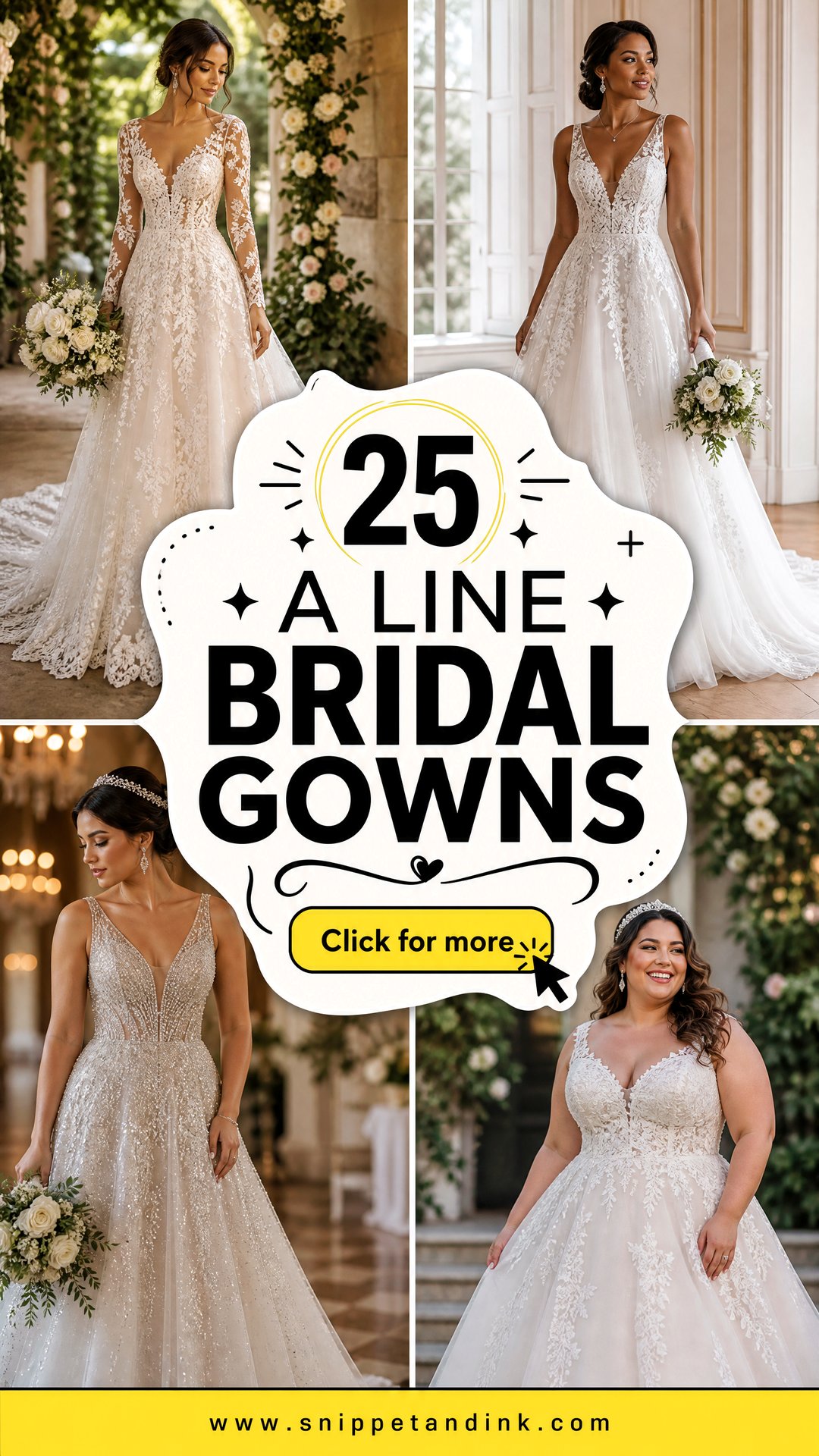
Where the Waist Seam Lands Decides How an A-Line Looks on You
Every A-line has the same basic idea, but the point where the bodice meets the skirt varies a lot, and that one seam changes the whole effect. In the fitting room I look at it before fabric or neckline.
- Natural waist: sits at the narrowest point. It defines the middle and suits most figures, especially an hourglass shape.
- Dropped or basque waist: dips below the natural waist, often to a point. It lengthens the torso and suits taller or long-waisted brides.
- Slightly raised waist: sits just above the natural line. It makes the legs look longer and is kind to petite and short-waisted brides.
- Empire-leaning A-line: seam just under the bust. Comfortable and relaxed, though on a fuller bust it needs good internal support.
Try two or three placements on the same day. Brides are often surprised that a seam two or three centimetres lower or higher makes them like a dress they had dismissed.
1. Satin A Line Bridal Gown
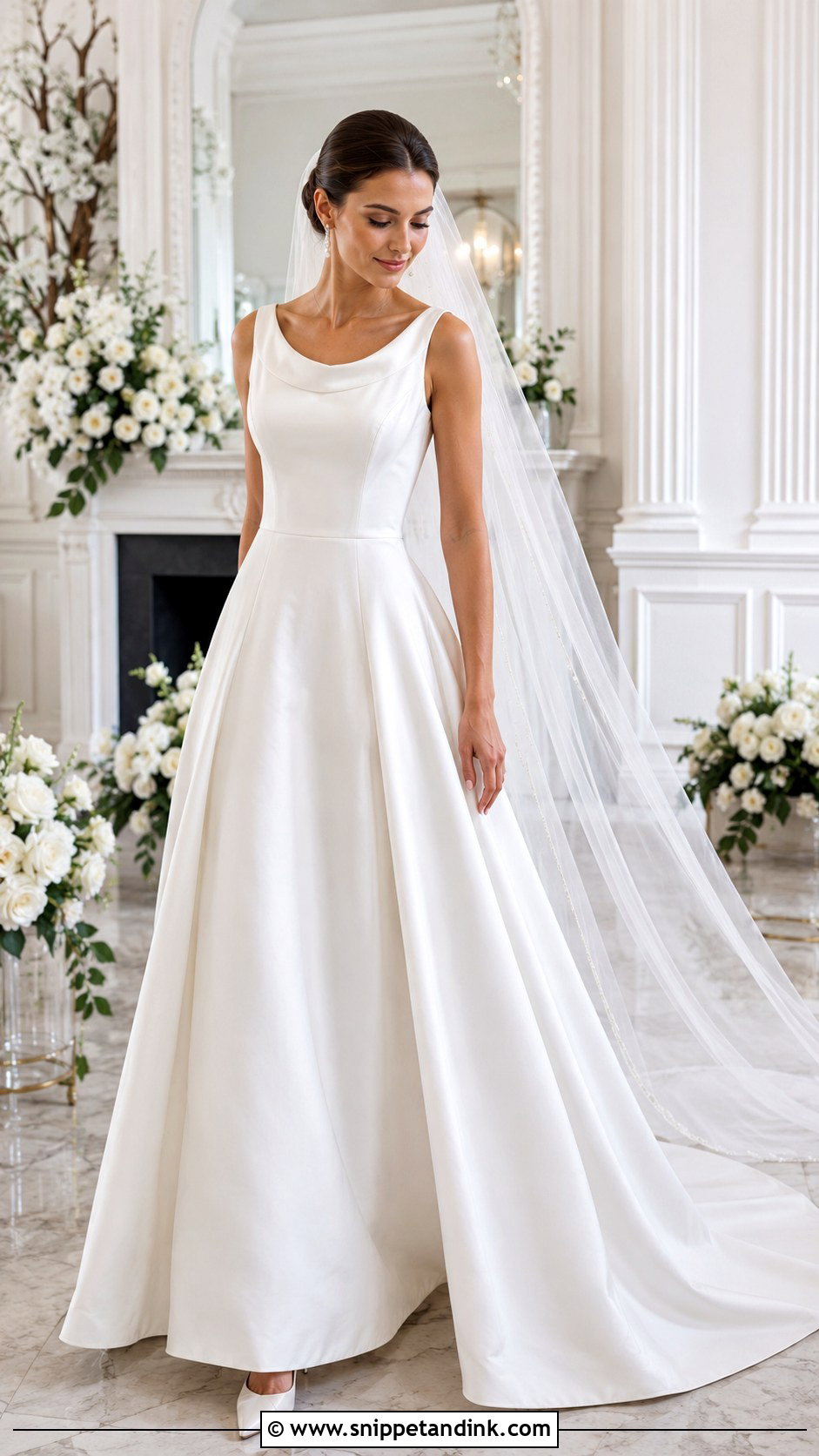
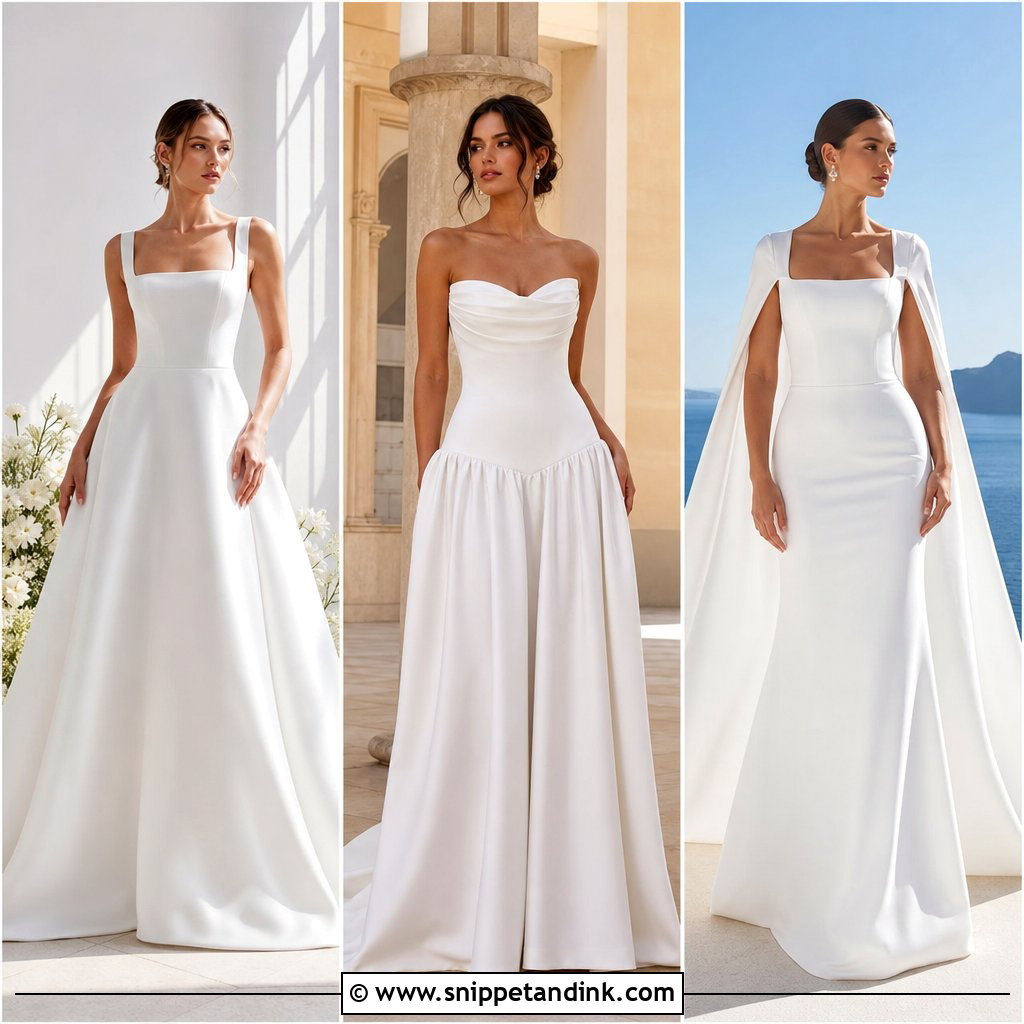
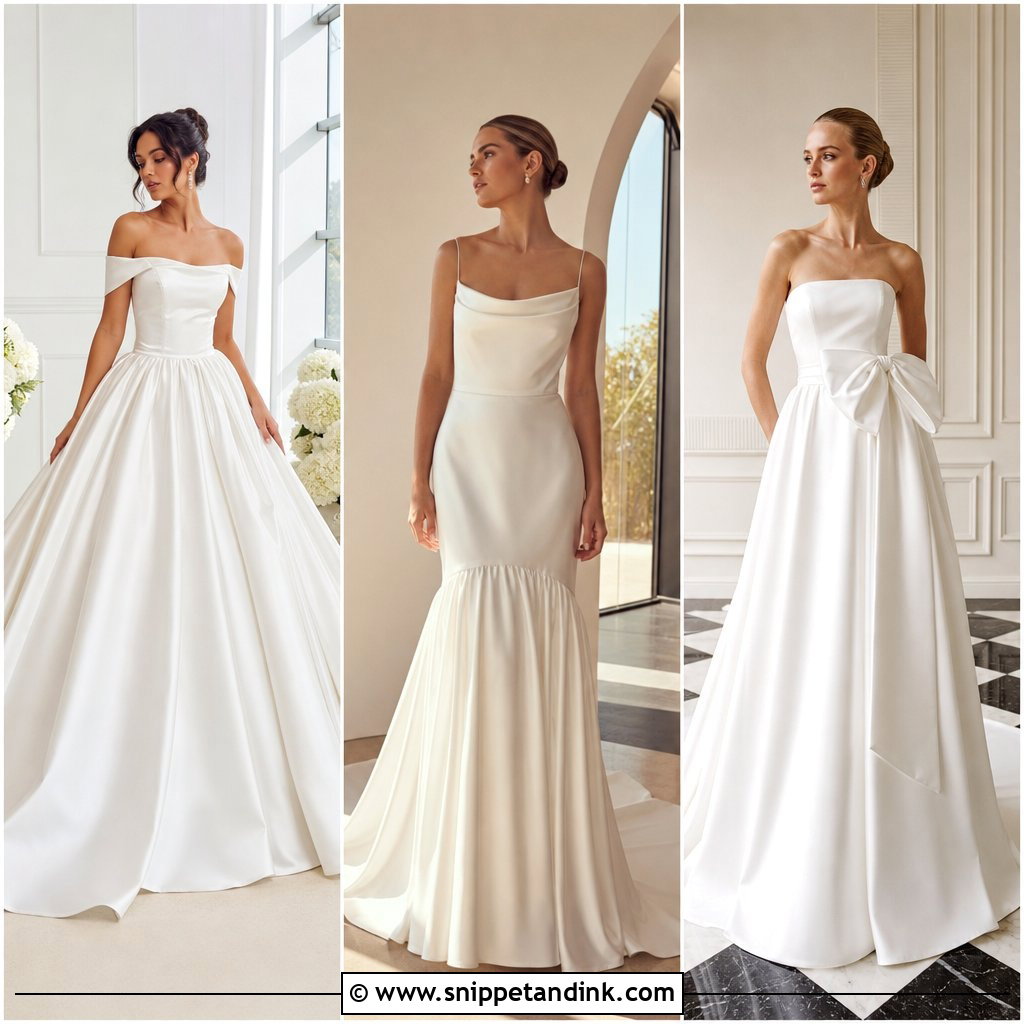
Satin is the cleanest version of this shape, and it relies entirely on fit, because the fabric shows every ripple at the zip and every strain across the hips. A heavier duchess or crepe-backed satin hangs straighter than a thin, shiny one and creases less when you sit. With a defined waist and a softly flared skirt, it needs no embellishment. Pearl drop earrings, a low bun, pointed satin heels and a plain cathedral veil finish it. Formal hotels, black-tie receptions and city venues suit it most.
2. Lace A Line Bridal Gown
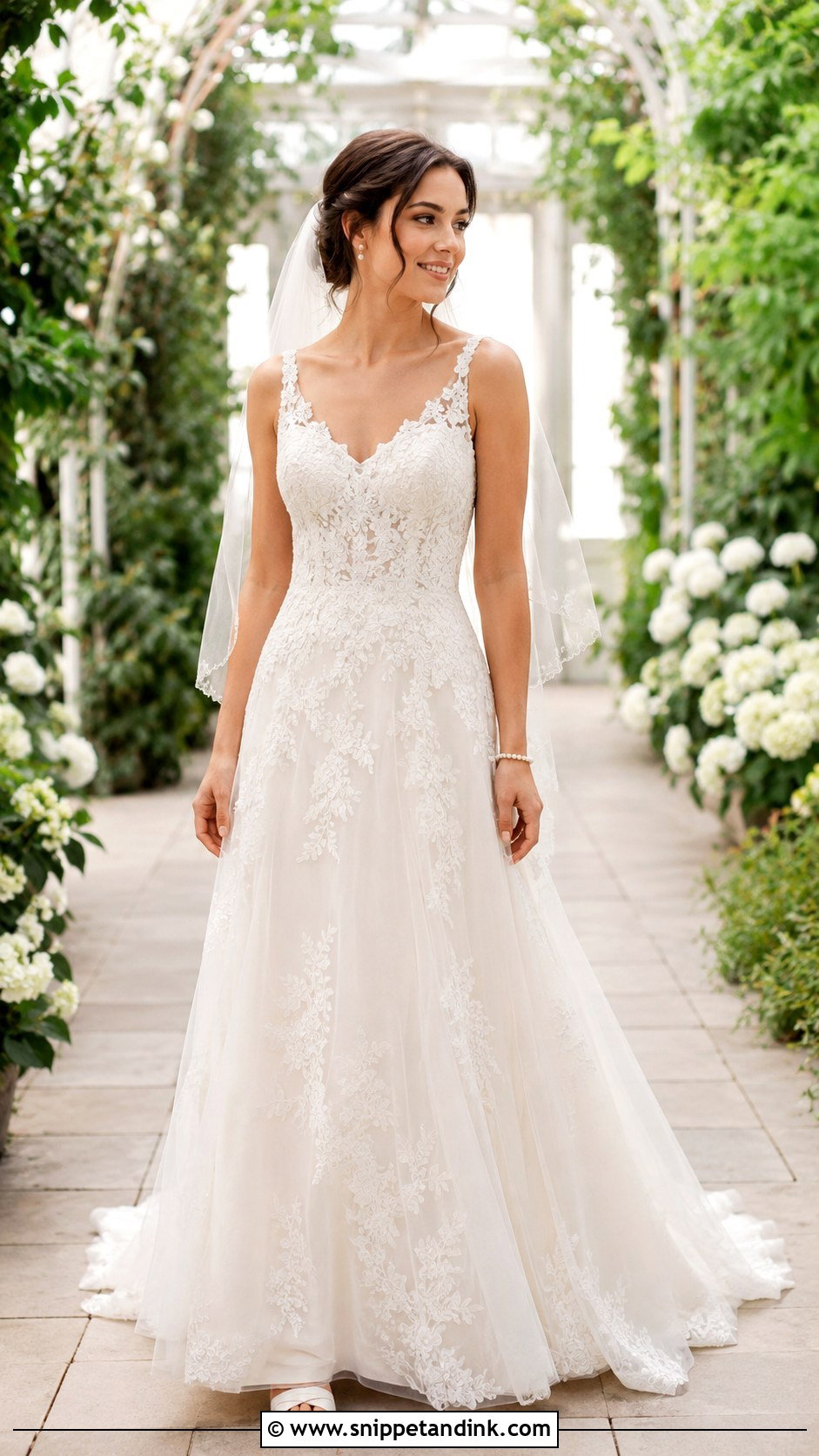
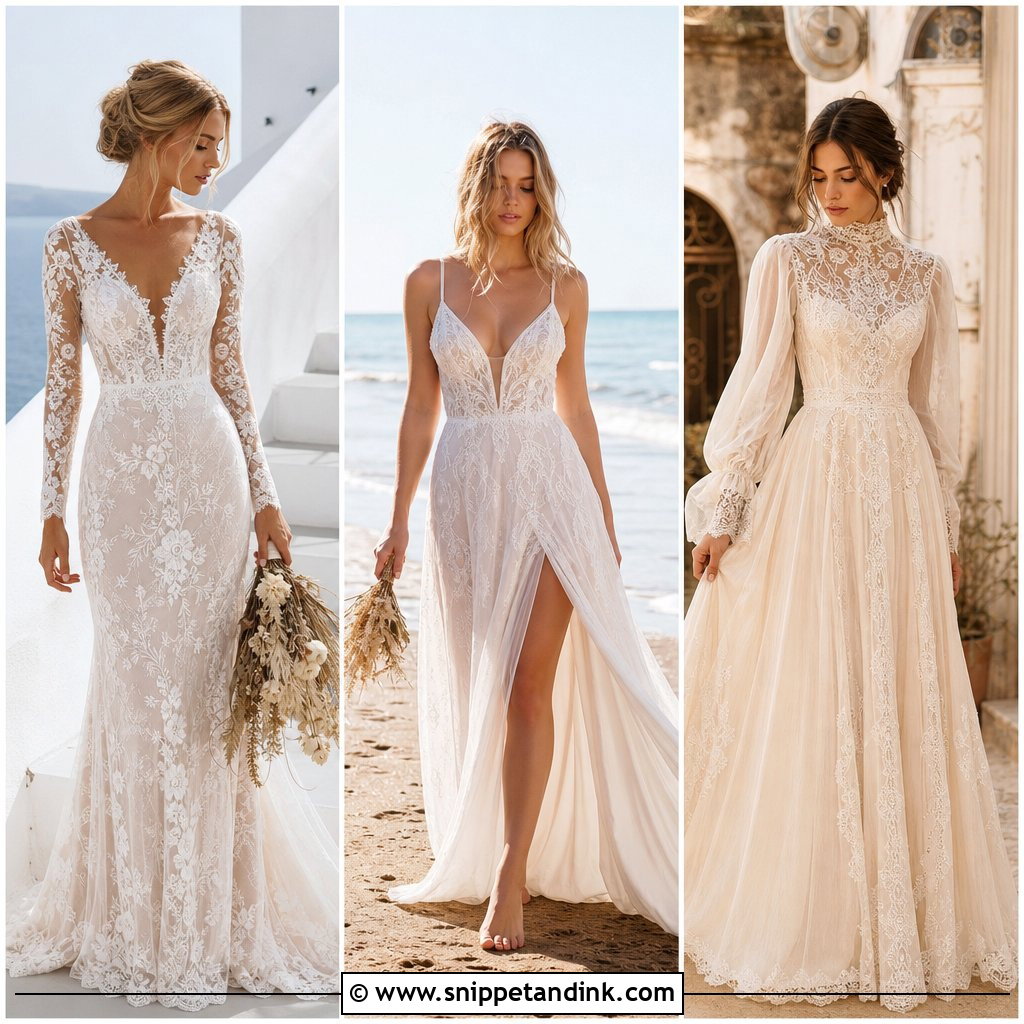
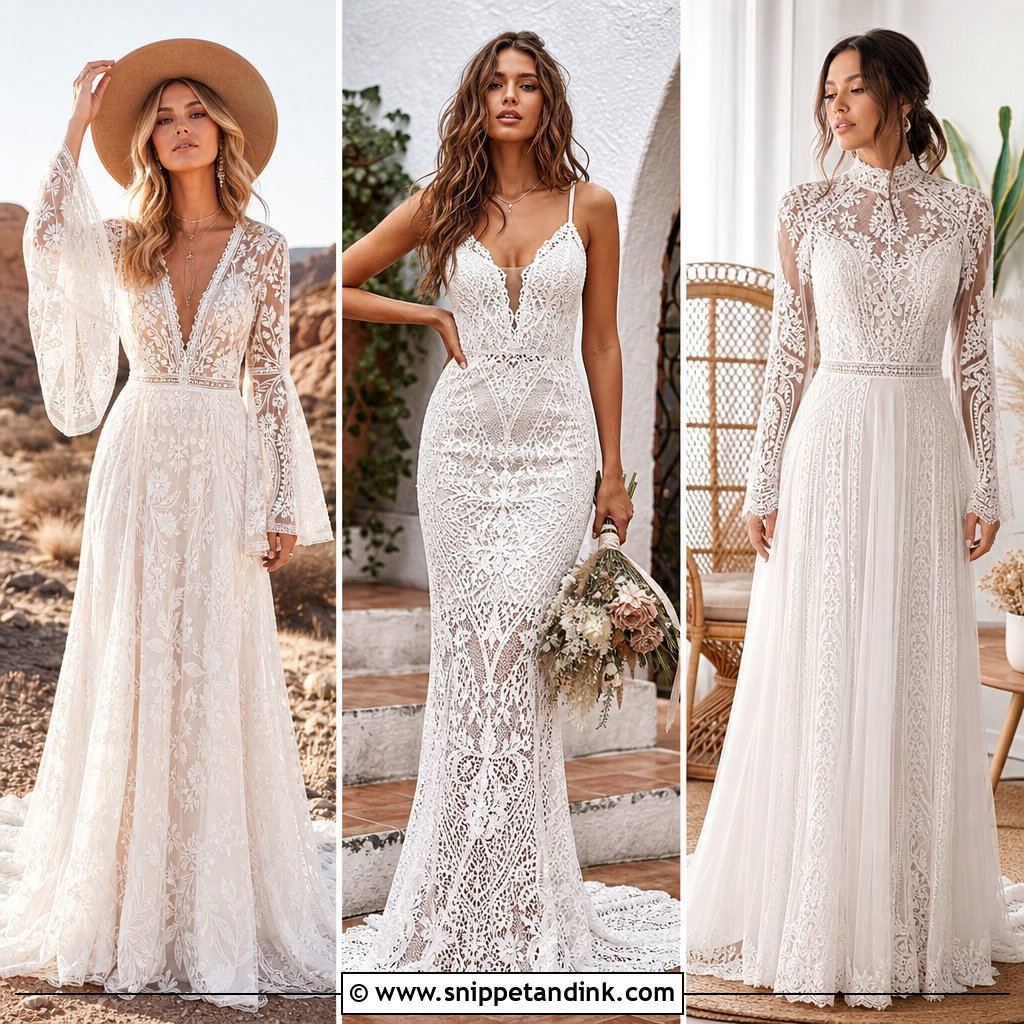
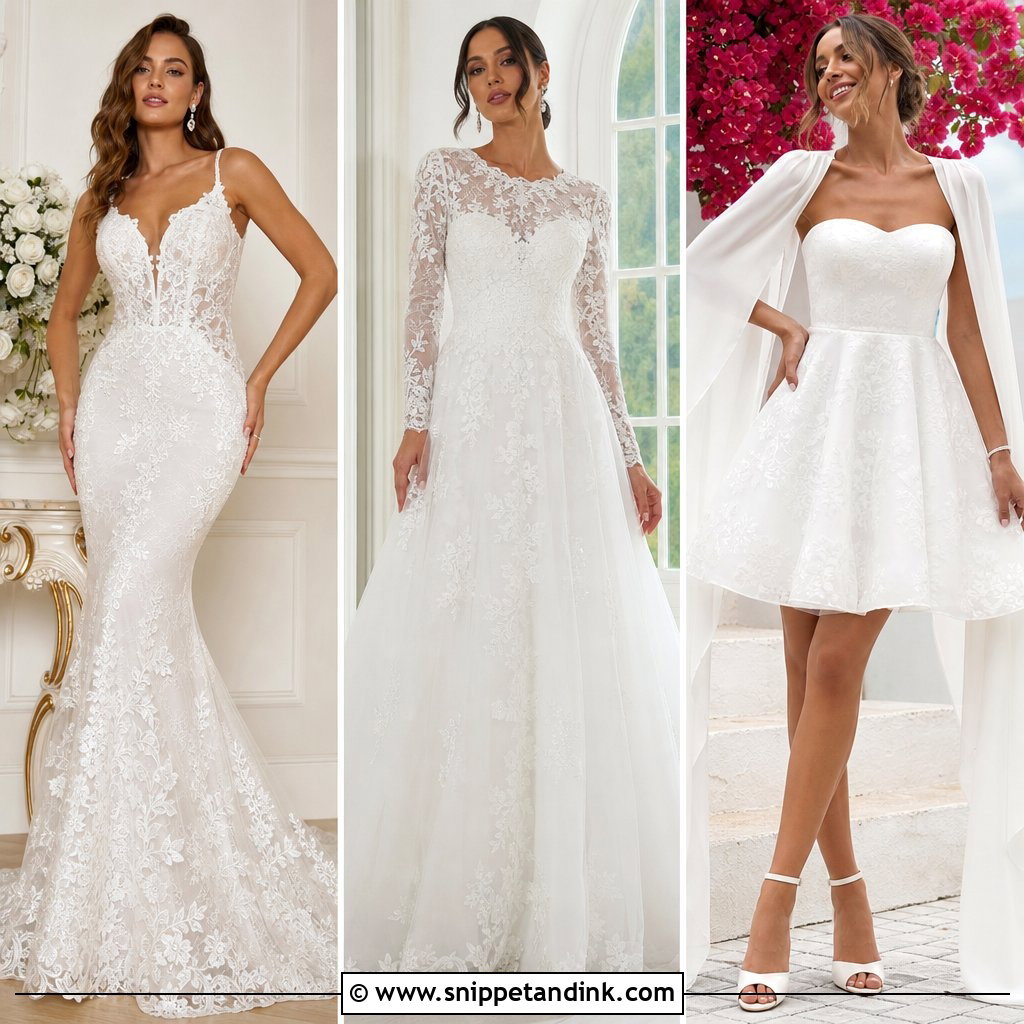
Lace adds romance without weight, usually across the bodice, the straps or sleeves, with a skirt that moves as you walk. Scale matters more than people expect: fine Chantilly reads soft and close to the body, while large botanical guipure lace reads from the back of the room. I hold both against a bride in a mirror at a distance before deciding. Pearl studs, a fingertip veil, soft waves and ivory block heels finish it, and the block heel is a kindness on lawns. Gardens, estates and outdoor ceremonies are where lace looks most at home.
3. Tulle A Line Bridal Gown
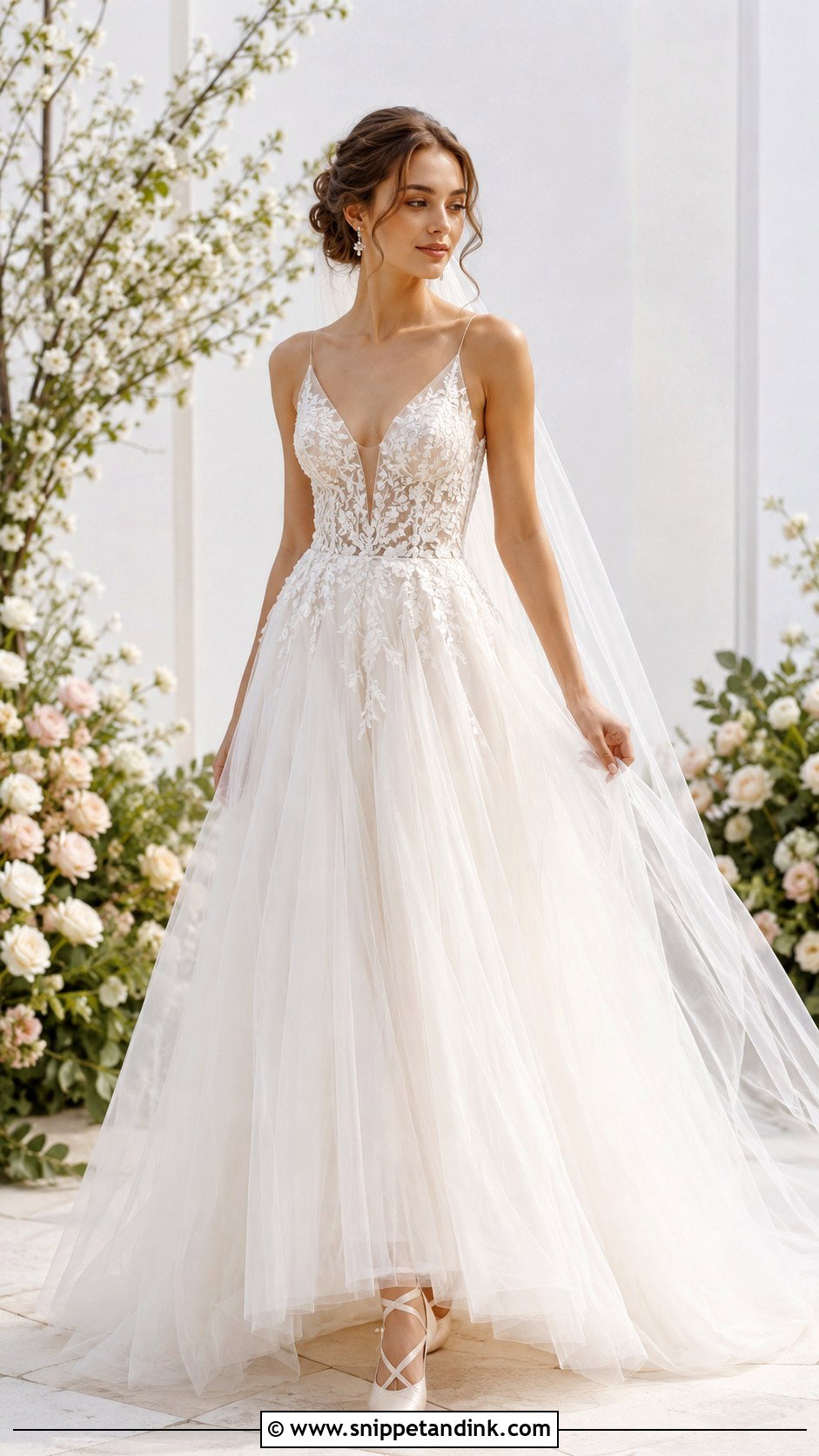
Tulle gives volume without the weight of a ball gown, so the skirt floats and moves with you. Layers are what make it look full on camera; a single layer over lining can look thin in flash photos. Plain tulle stays simple, while a sparkle or glitter tulle adds glow, though glitter does shed a little on everything it touches. Delicate crystal earrings, a sheer veil and ballet-style heels suit it. Spring gardens and soft indoor ceremonies are its best settings. One honest warning: tulle snags on rough stone, so I keep an eye on it during outdoor portraits.
4. Long Sleeve A Line Bridal Gown
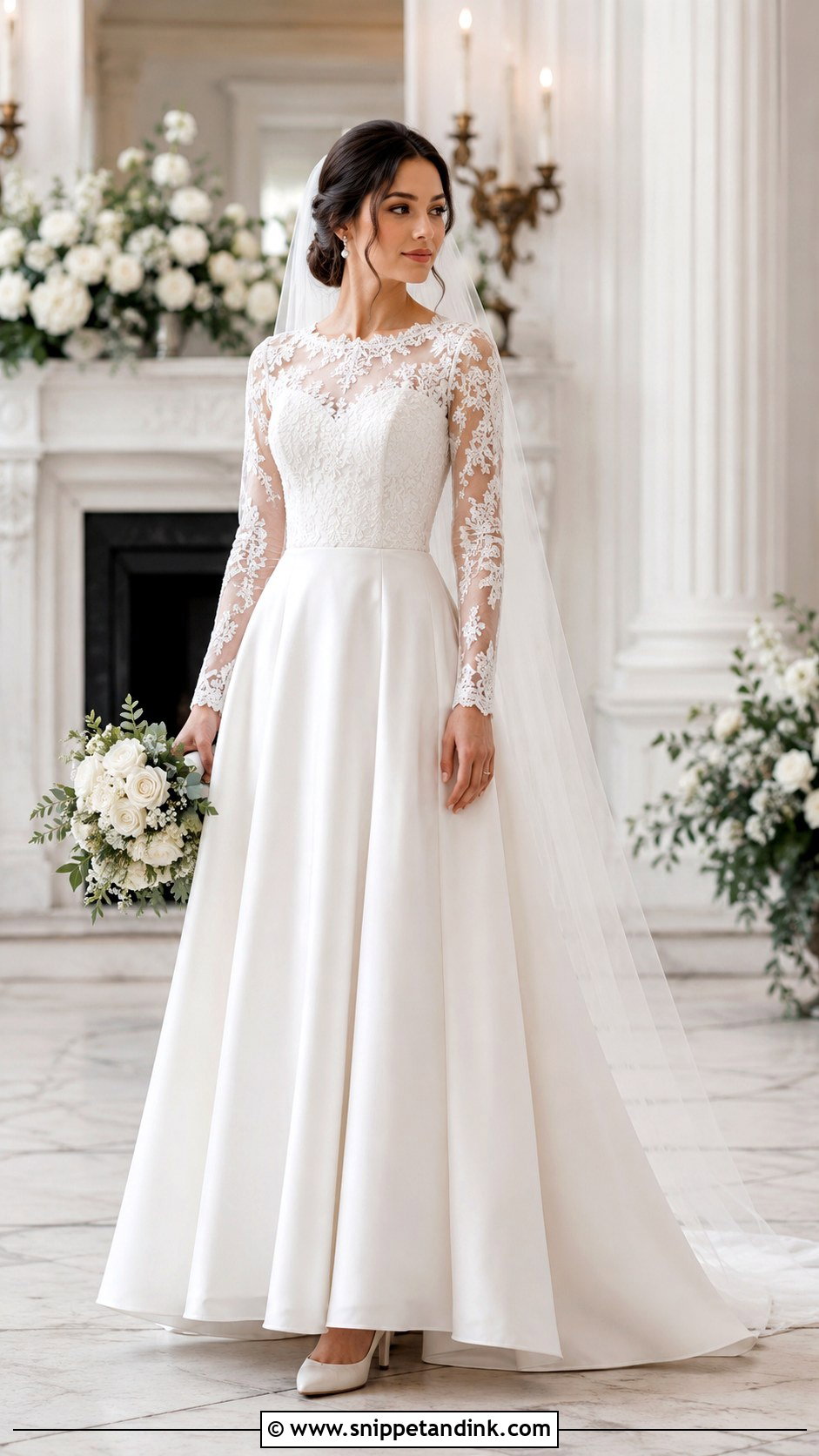
Sleeves change how an A-line feels more than any other detail. Sheer lace sleeves read soft, while crepe or satin sleeves look sleek and modern. My test is simple: I ask a bride to raise both arms as if hugging someone taller, because a sleeve set too low under the arm pulls the whole bodice up when you move. Keep the styling quiet with a neat bun, pearl earrings and a plain veil. Closed-toe heels or embellished flats work. Cooler months, formal churches and close-up portraits all suit long sleeves, especially with lace, buttons or embroidery at the cuff.
5. Off Shoulder A Line Bridal Gown
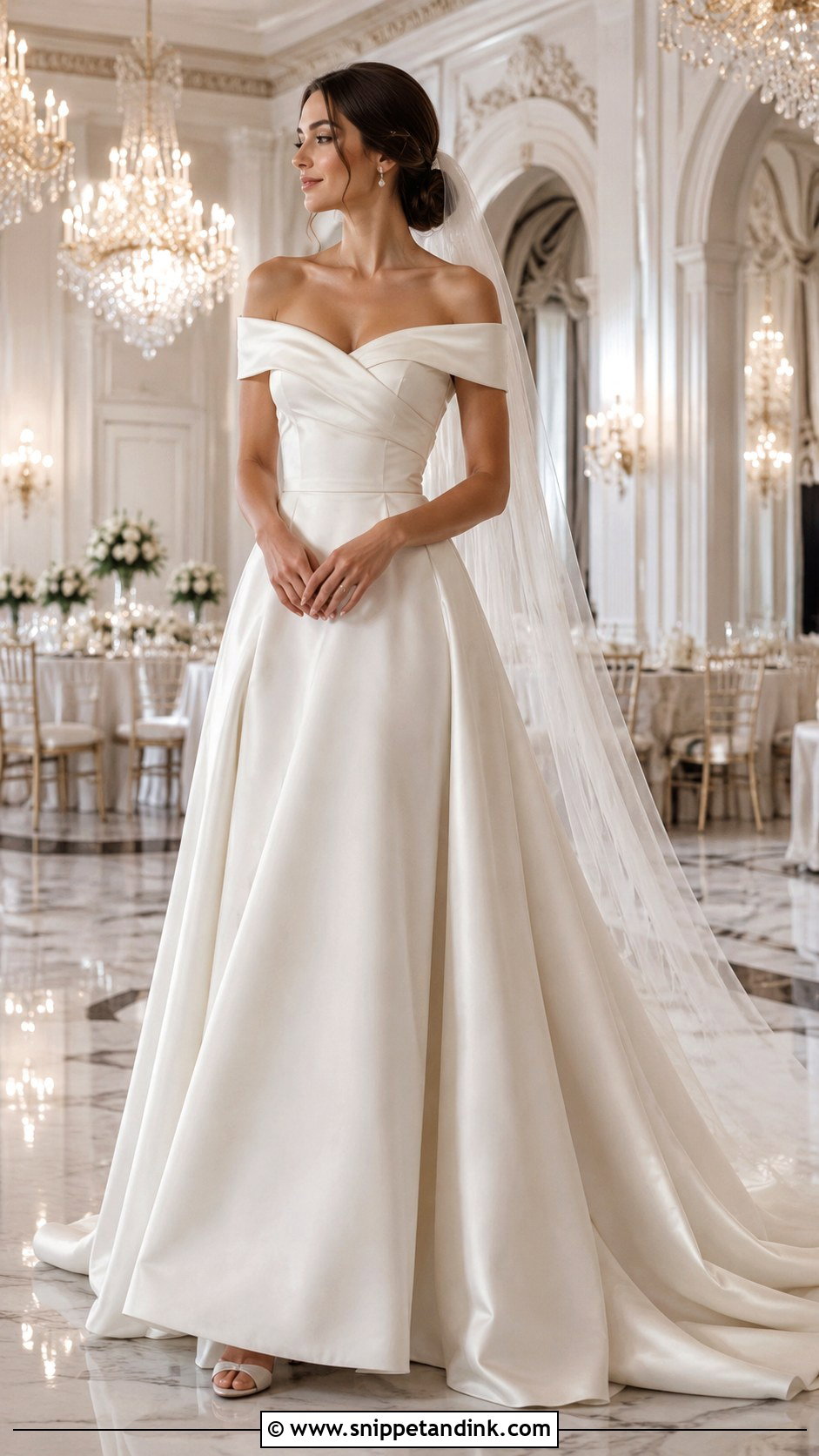
Off the shoulder frames the collarbone, so it needs almost nothing else. The structure underneath does the work here: a boned bodice with a grip strip at the top is what stops the neckline sliding down by the speeches. Without that, you’ll be hitching it up all evening. A smooth updo, small pearl earrings and a veil placed low at the back keep the shoulder line clear. Ballrooms, gardens and coastal venues all suit it, though I’d check arm movement before you plan a big first-dance routine.
6. Square Neck A Line Bridal Gown
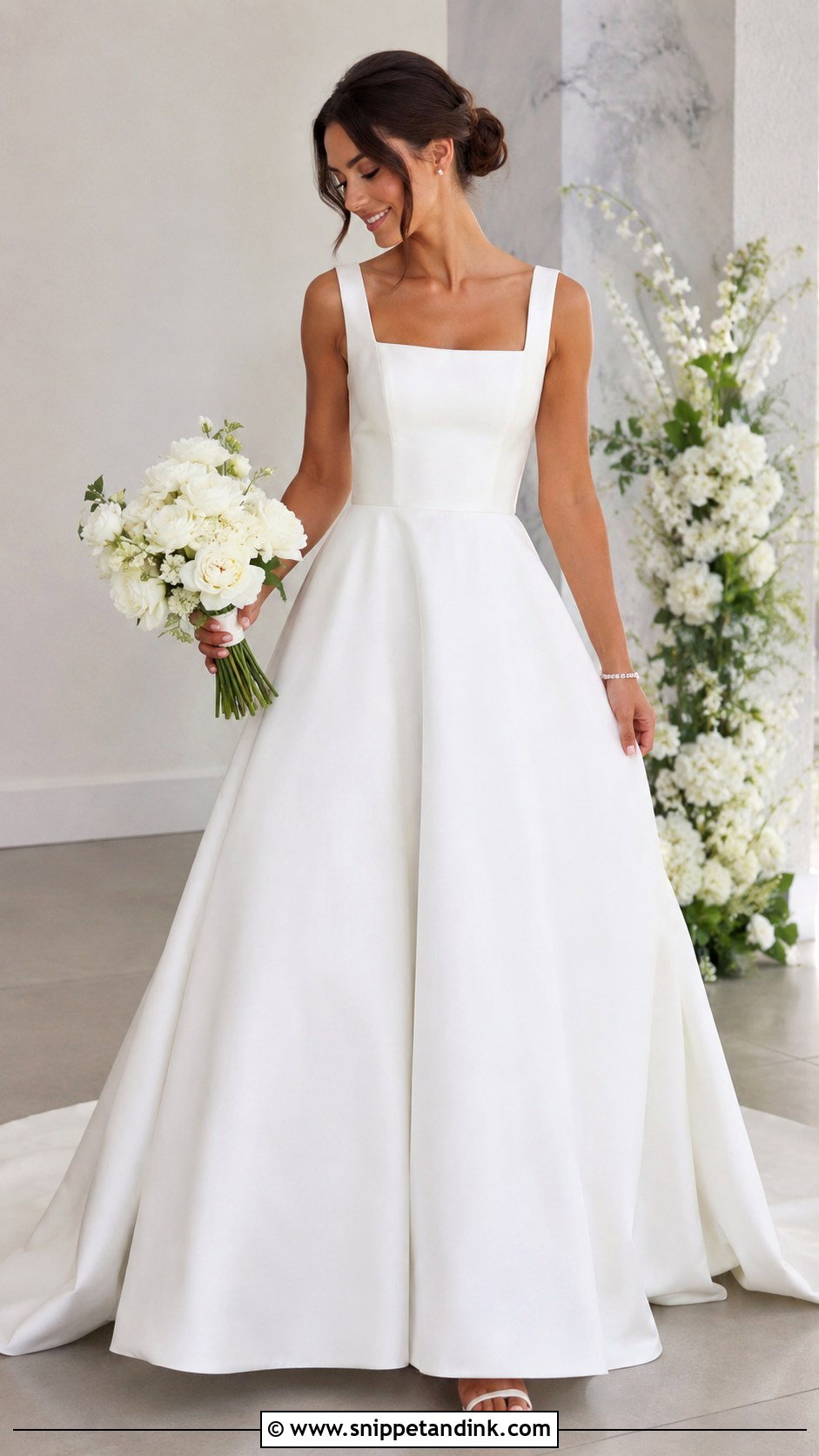
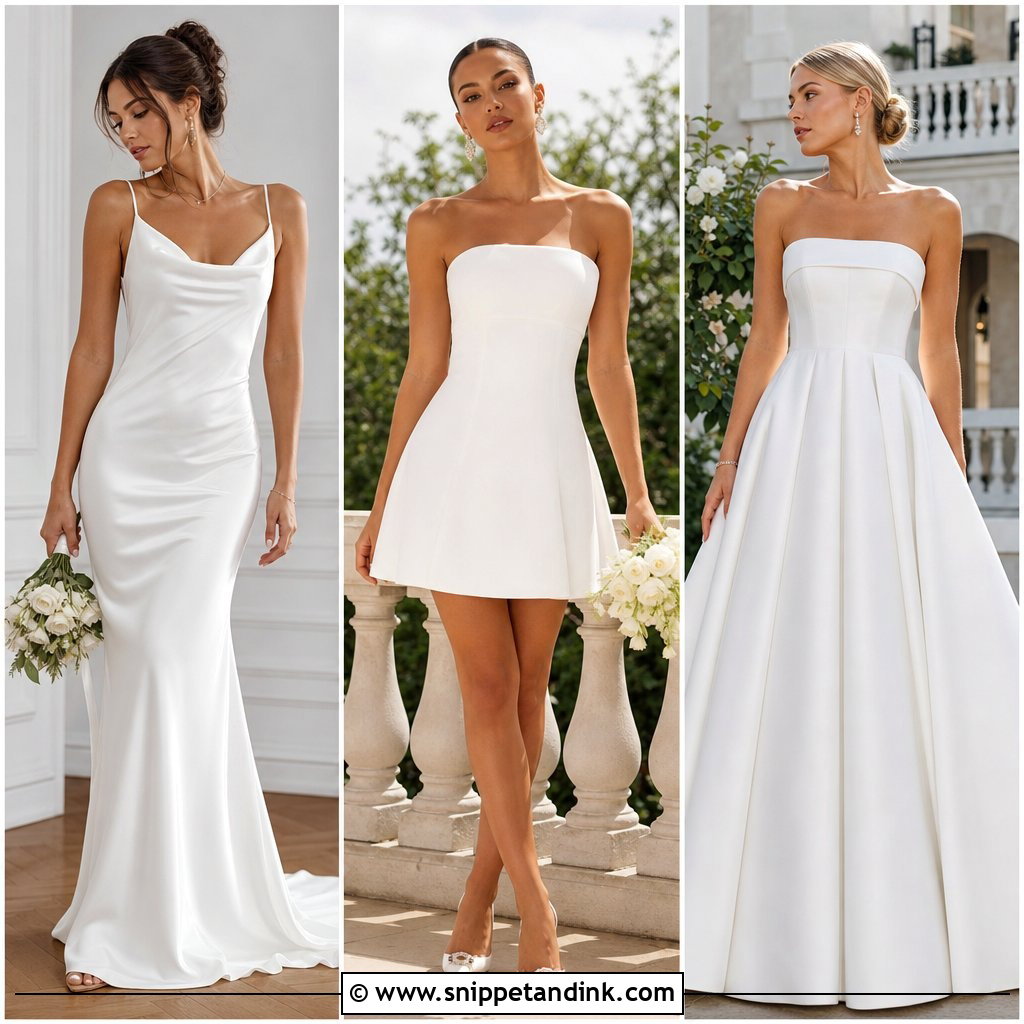
A square neck gives the upper body clean structure, and it pairs well with wide straps, slim straps or long sleeves. Satin or crepe keeps it minimal; lace or jacquard gives texture. I check that the neckline sits flat and doesn’t bow away from the chest when a bride leans forward to sign the register, since that gap shows clearly from above. A sleek bun, pearl studs, a fine bracelet and block heels suit it. A plain veil lets the angular line of the neckline do the talking.
7. Sweetheart A Line Bridal Gown
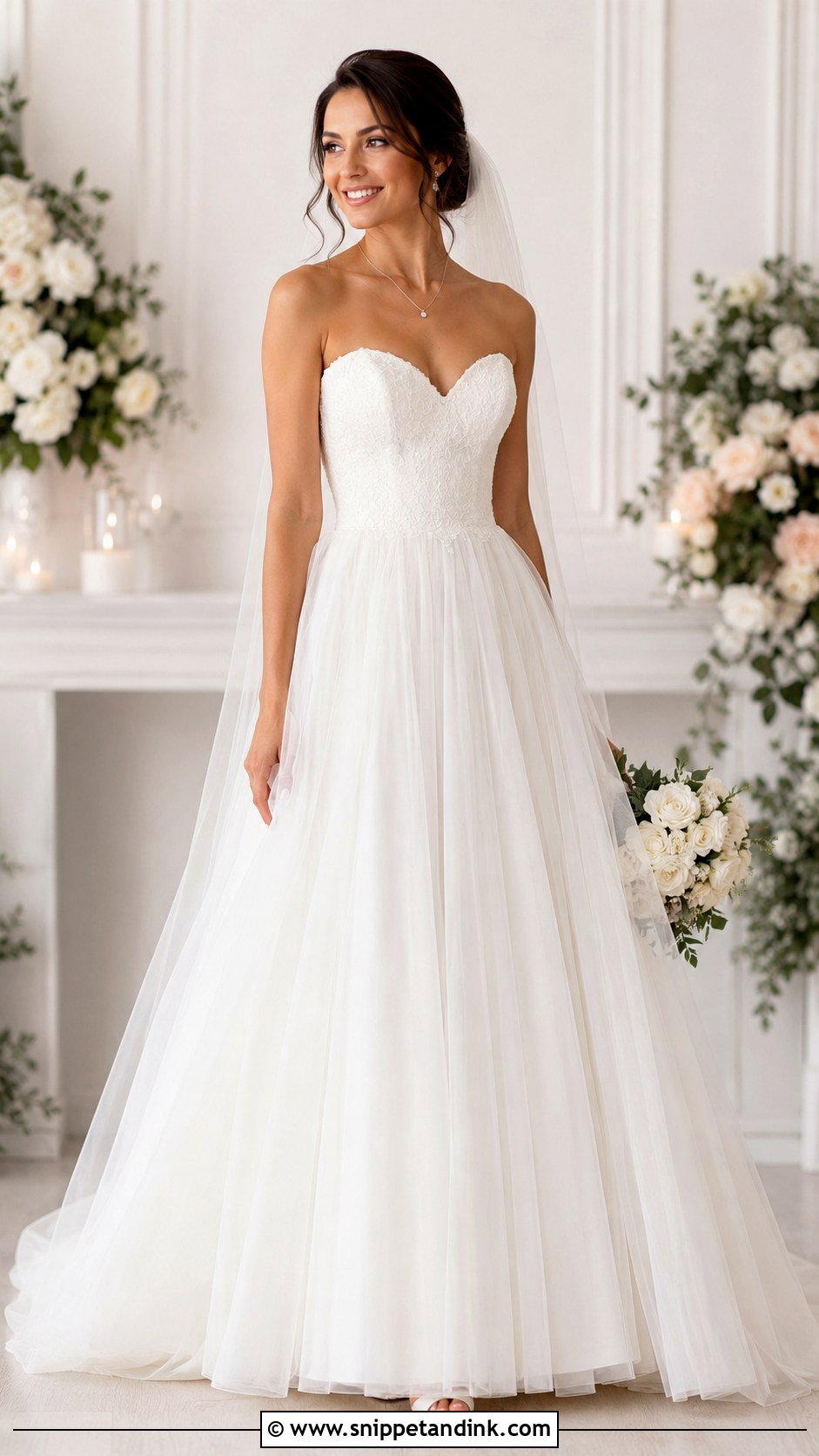
The sweetheart curve softens the bodice and draws the eye to the waist, with the skirt widening below for balance. It suits satin, lace, organza or tulle, so it can be simple or detailed. A plain bodice can carry a delicate necklace; a structured or embellished one wants a light, airy veil and earrings only. Soft curls and ivory heels round it out. The fit point is the dip in the centre: it should stay put when you sit, not gape. Done well, it feels traditional without looking dated.
8. V Neck A Line Bridal Gown
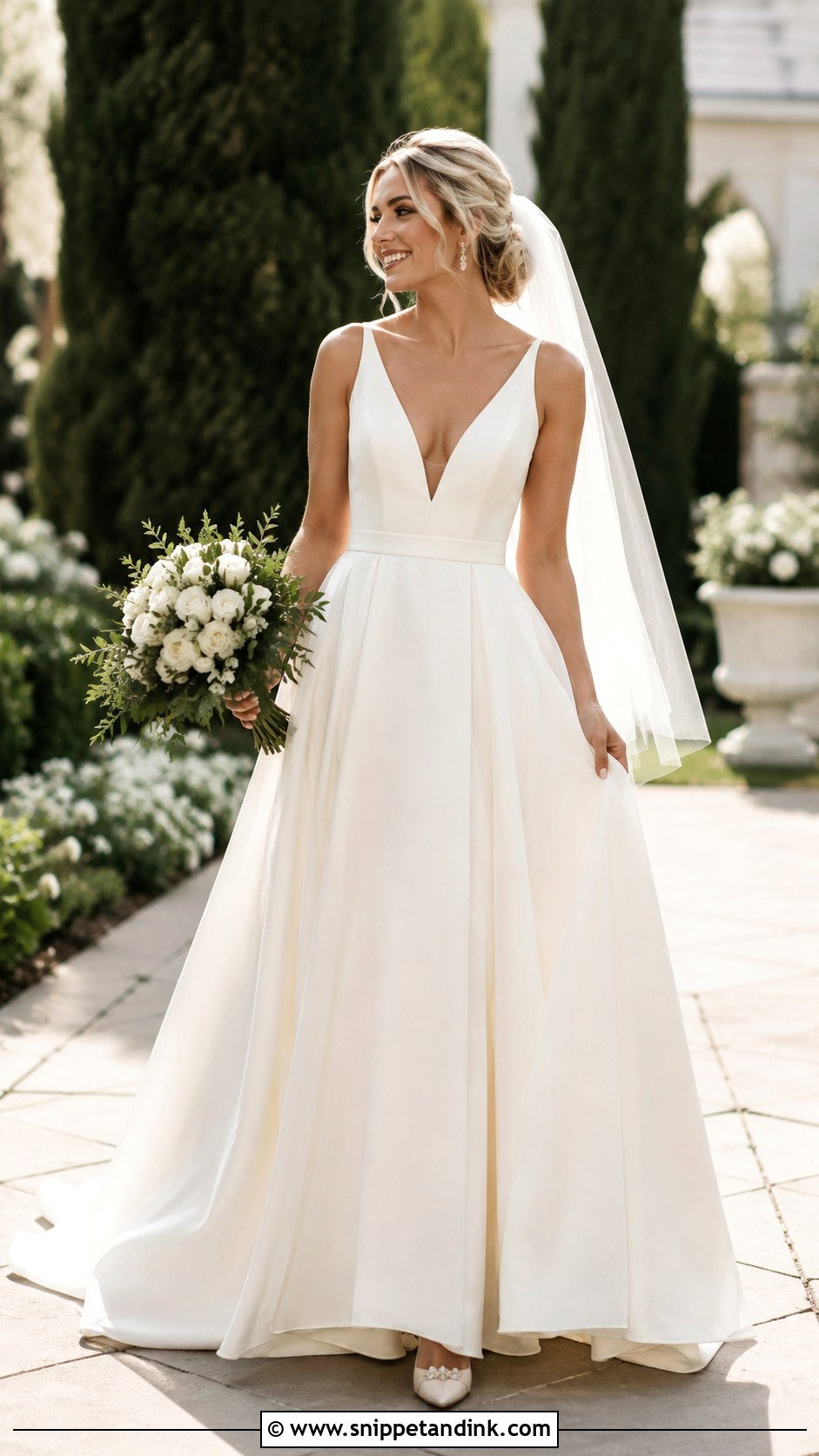
A V neckline draws a long vertical line through the body. A shallow V is easy to wear all day; a deep plunge looks modern but needs illusion mesh or fashion tape to stay where it should, and I’d always test it with a bend and a hug. The A-line skirt balances the open neck, especially with wider straps. Drop earrings, a simple veil and elegant heels keep the neckline clean. It suits most venues, from outdoor ceremonies to formal receptions.
9. Corset A Line Bridal Gown
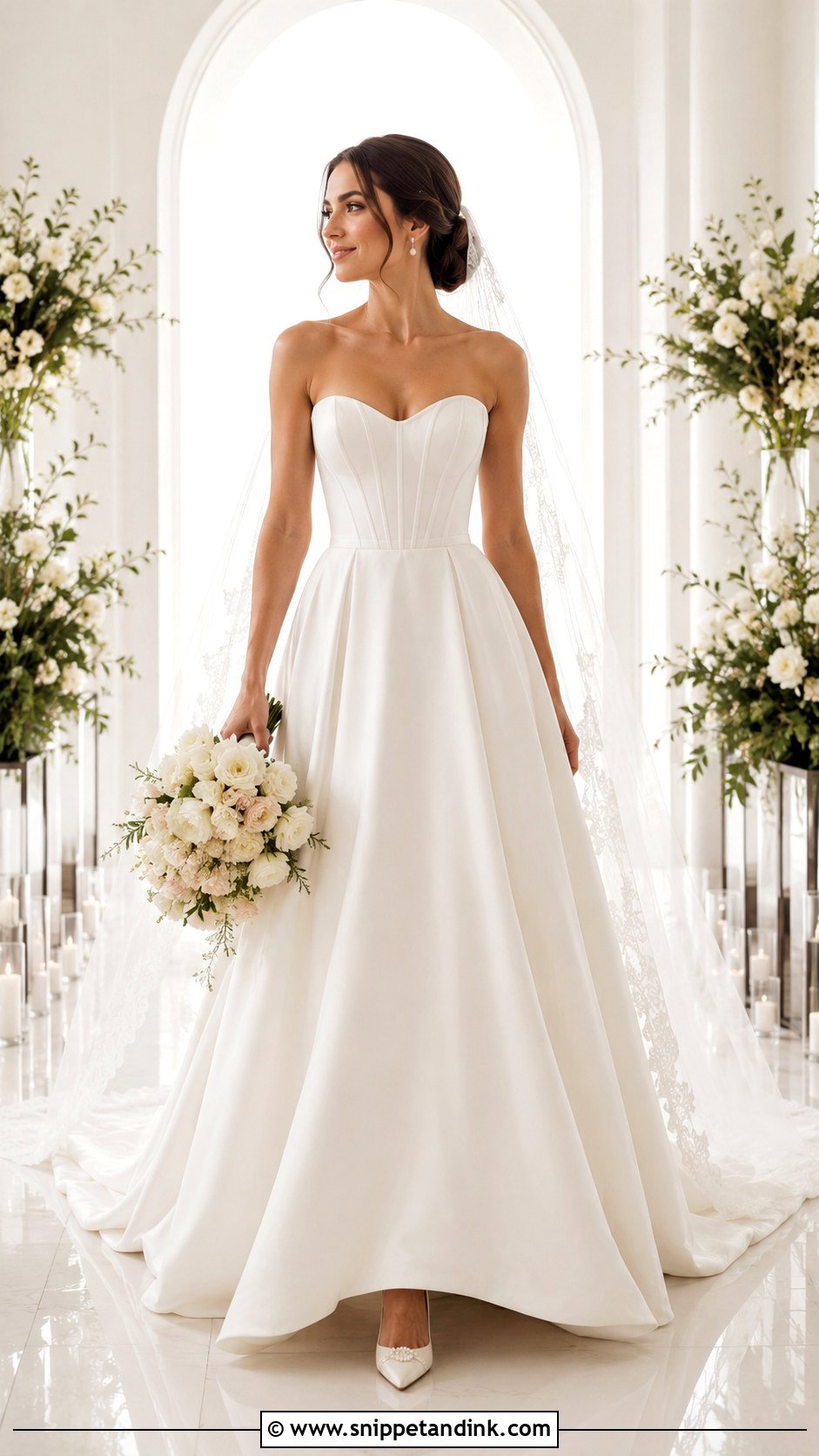
Corset bodices give the A-line its most sculpted waist, with visible boning, lace overlays, satin panels or sheer details above a skirt that softens everything below. Fit here is not optional: a corset should feel firm but let you breathe deeply and eat dinner, and lace-up backs give a little room to adjust on the day. A low chignon, pearl earrings, a chapel veil and comfortable heels suit it. If you love a shaped bodice but a mermaid feels too restrictive, this gets you the waist and keeps the skirt free.
10. Beaded A Line Bridal Gown
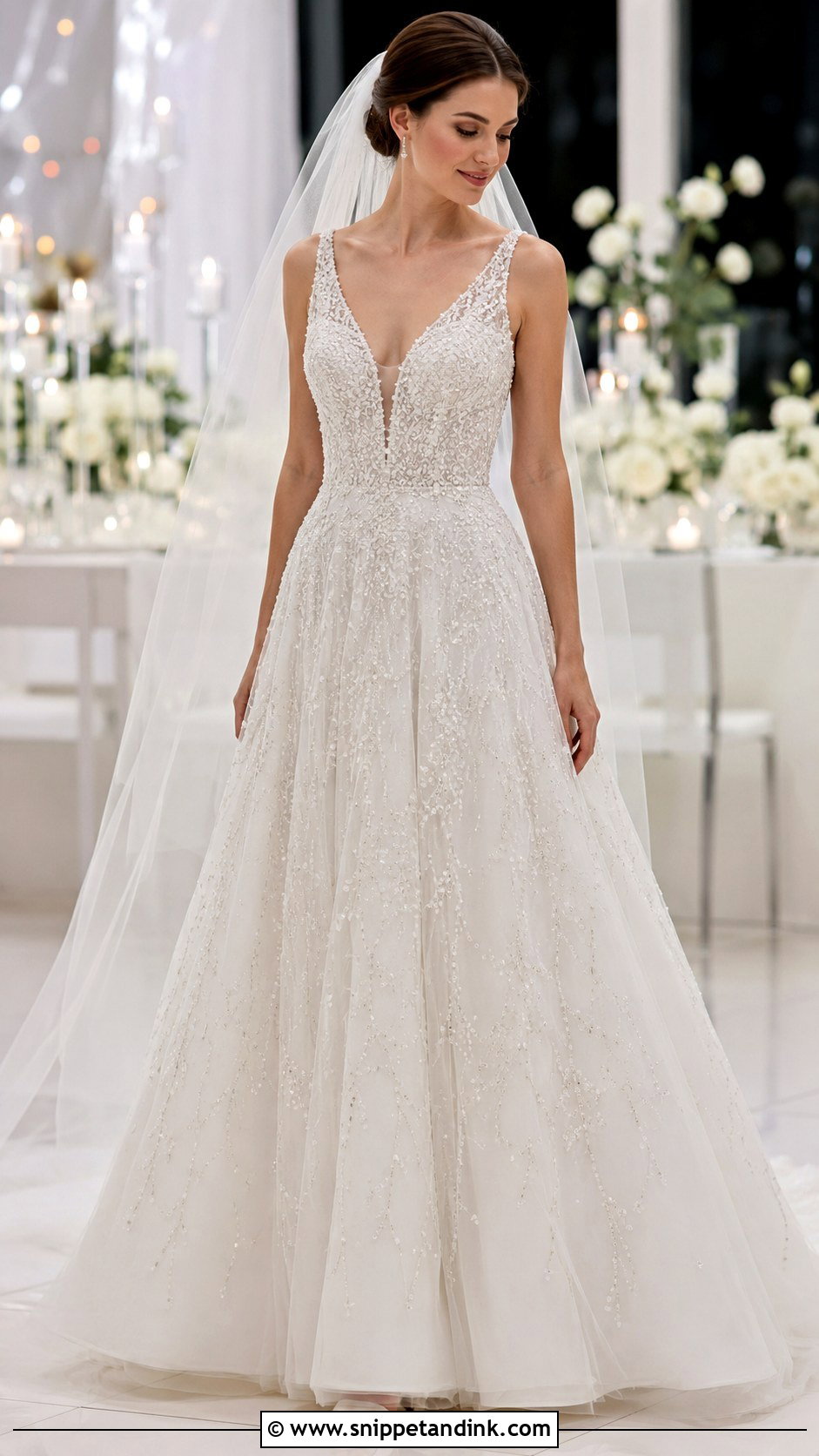
Beading on an A-line can sit on the bodice, trail down the skirt or scatter across the whole gown, in tiny beads, sequins, pearls or crystals. The silhouette keeps it from looking heavy, since the skirt stays soft. What brides don’t expect is the weight: a heavily beaded skirt can pull the waist down over hours, so I check that the bodice is built to carry it. Simple earrings, smooth hair and plain shoes keep the gown in charge. Evening receptions and grand venues under bright light show it off best.
11. Floral A Line Bridal Gown
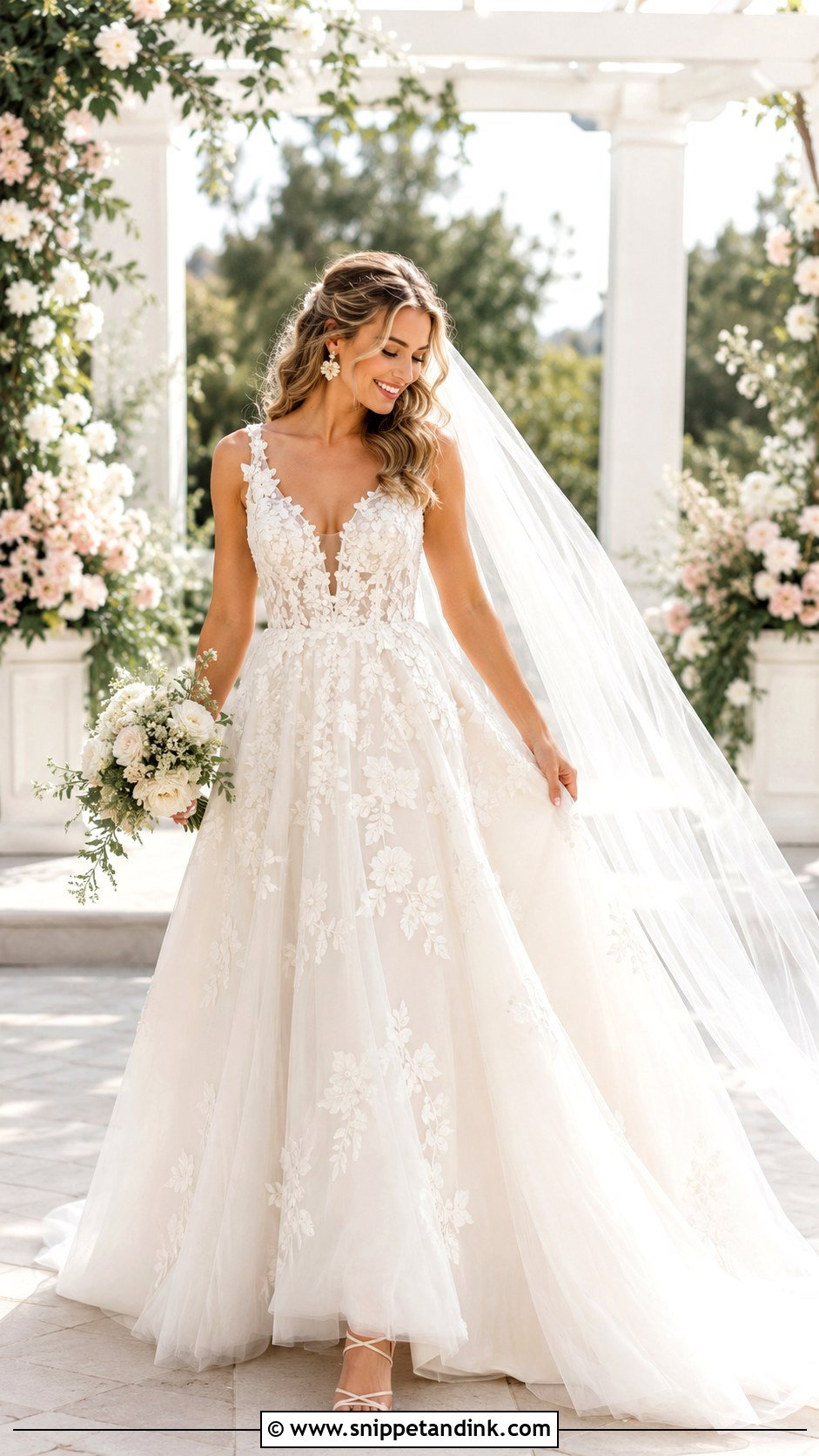
Floral appliqués, embroidery or lace motifs can bloom across the bodice, sleeves, skirt or train. Ivory-on-ivory flowers stay quiet; raised 3D appliqués add real depth and catch side light. Raised flowers do crush, though, so I’d hang the dress rather than pack it folded. Spring and summer suit it naturally, but heavier fabrics carry it year-round. Soft waves, a sheer veil, delicate heels and earrings with a floral feel finish it, and a bouquet in matching tones ties it together.
12. Minimal A Line Bridal Gown
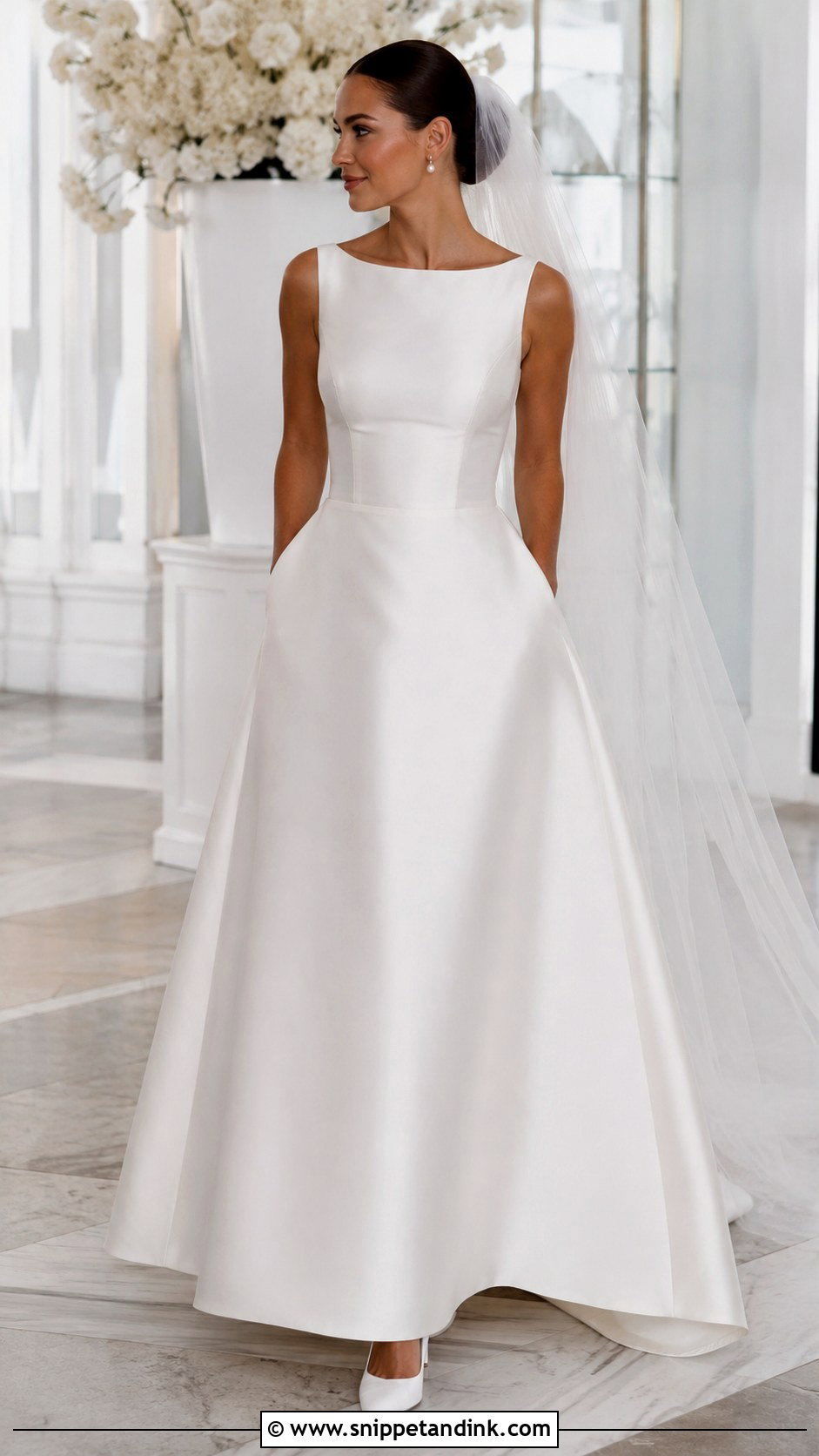
Simple does not mean plain. With clean seams, good fabric and a strong outline, a minimal gown can feel expensive and intentional, and the reason is that there is nothing to hide behind. Satin, mikado and crepe hold their shape best. I’d add interest through one piece: opera gloves, a sculptural bow or a modern bouquet. Pearl earrings, a sleek bun, pointed heels and a structured veil keep it refined. Brides who dislike heavy lace or sparkle tend to love it most.
13. Boho A Line Bridal Gown
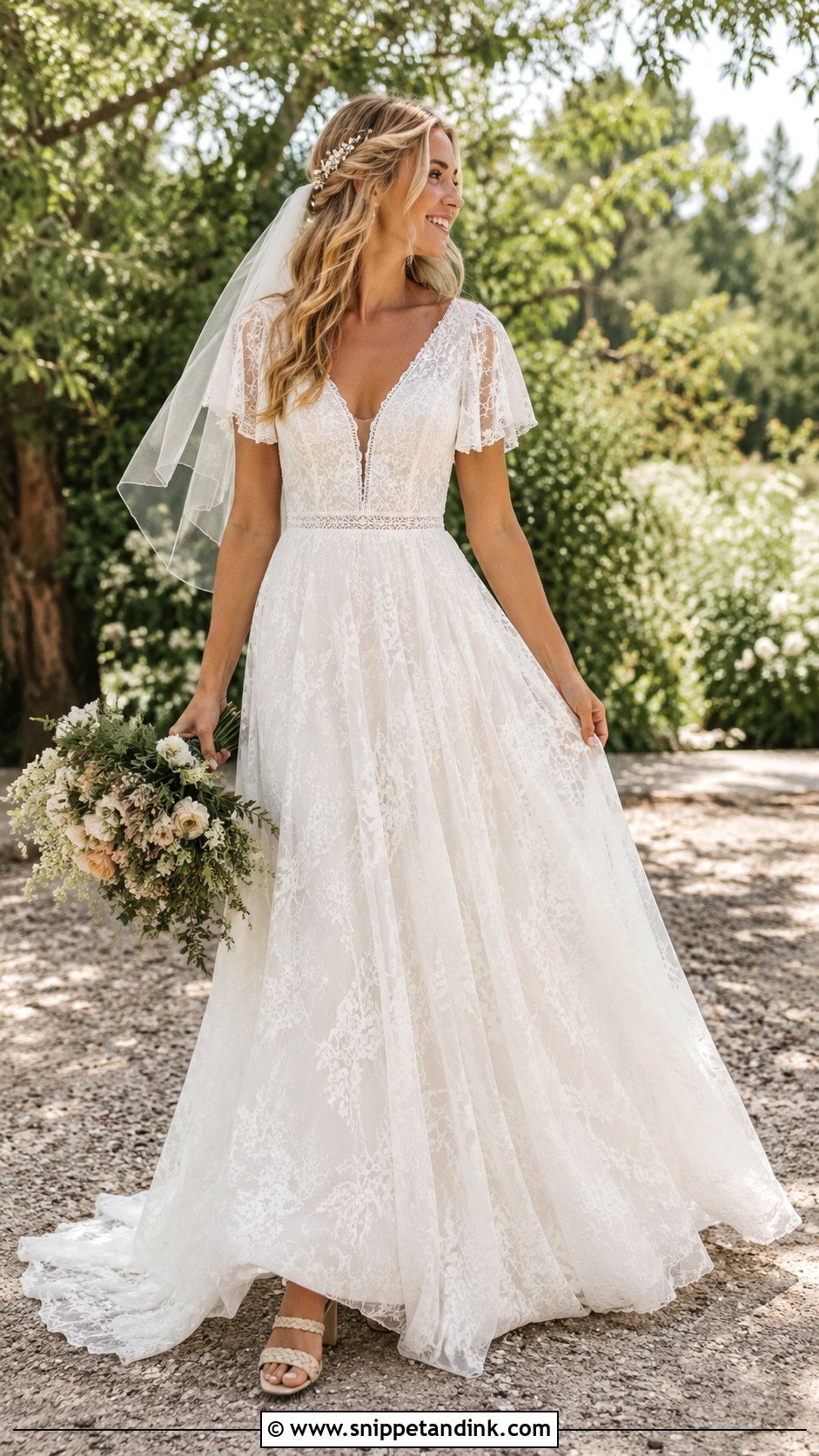
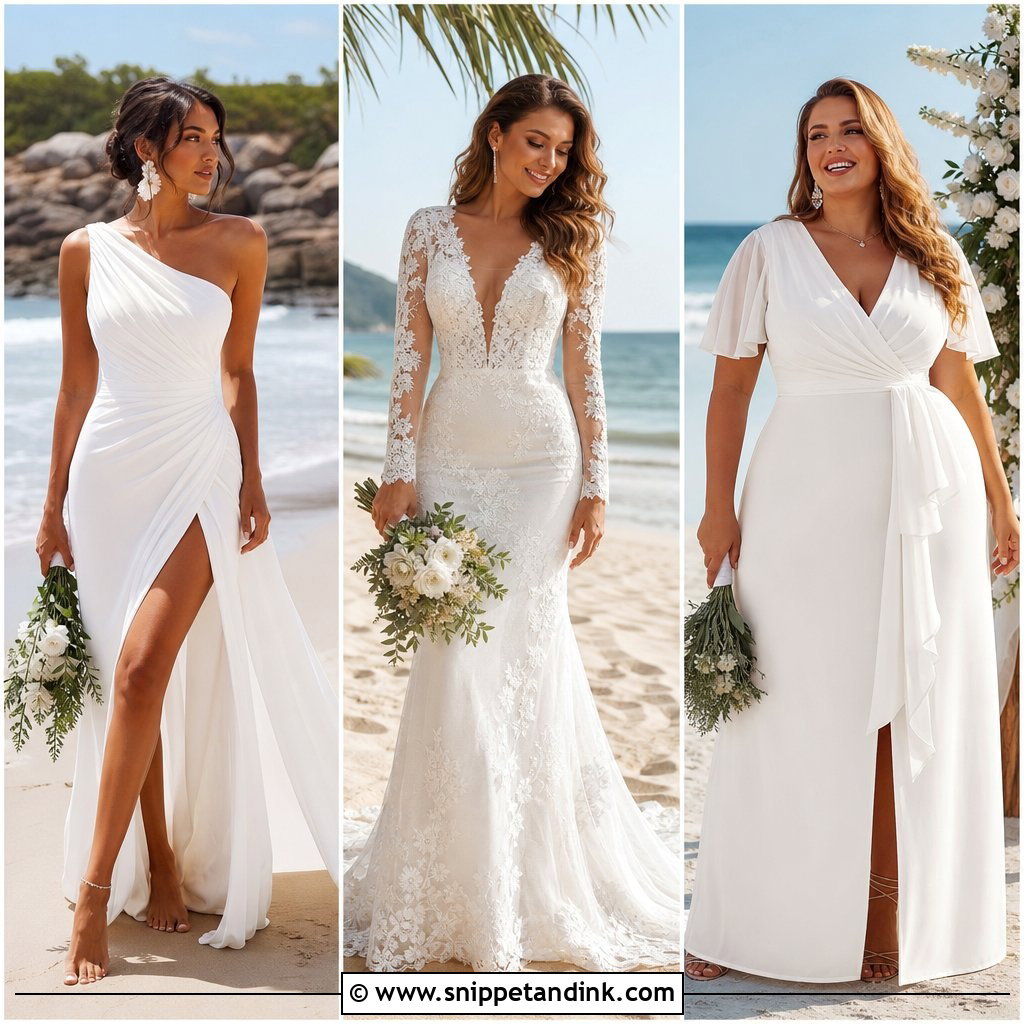
A boho A-line should move like it isn’t trying. Soft lace, chiffon, light tulle, flutter sleeves and gentle embroidery all belong here, and the skirt should swing rather than stand. I’d look at the lining as closely as the outer fabric, since thin chiffon over a stiff lining loses that ease. Loose waves, floral hair pins, woven-look heels and a soft veil suit it for beaches, gardens, mountain venues, and backyard celebrations. Keep jewellery delicate so the look stays relaxed instead of busy.
14. Plus Size A Line Bridal Gown
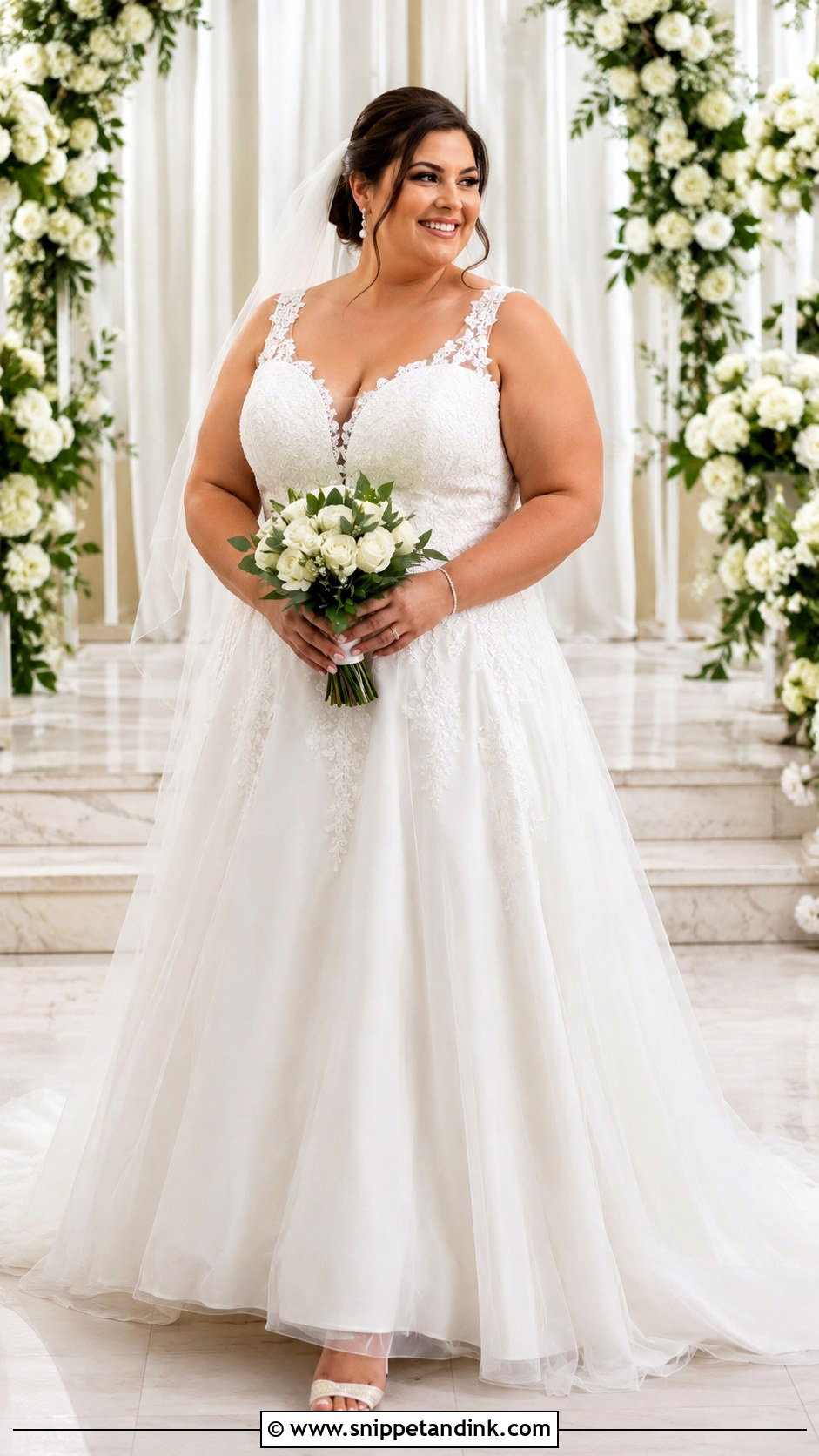
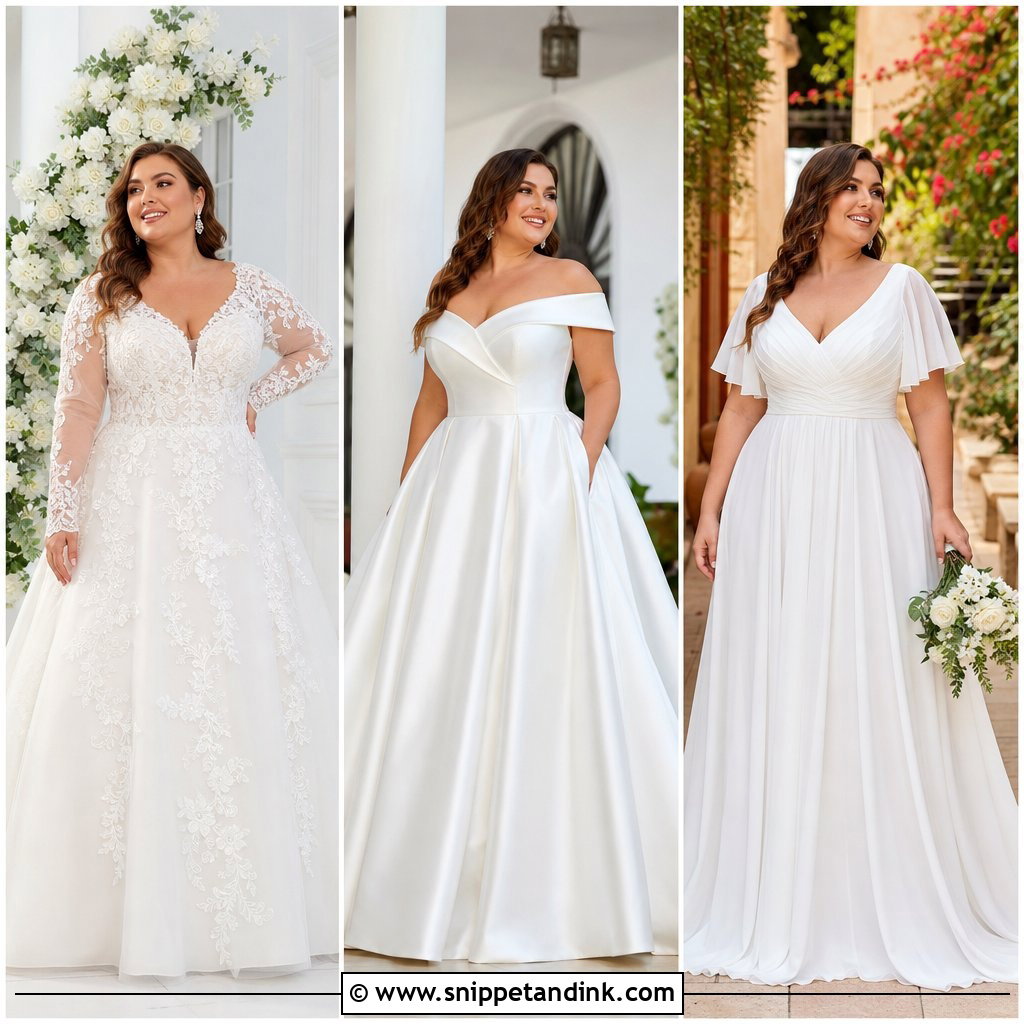
For curvier brides, the A-line works because it supports the bust, defines the waist and flows over the hips. The structure inside is what I check first: good boning, a full lining and a bodice that stays secure without straps digging in. Wide straps, corset backs, square necks and lace sleeves are all good options; it depends on what you feel comfortable in. Supportive shoes, a balanced veil and jewellery that matches the gown’s detail finish it. Don’t dress to hide. Fit and proportion are what make the gown look made for you.
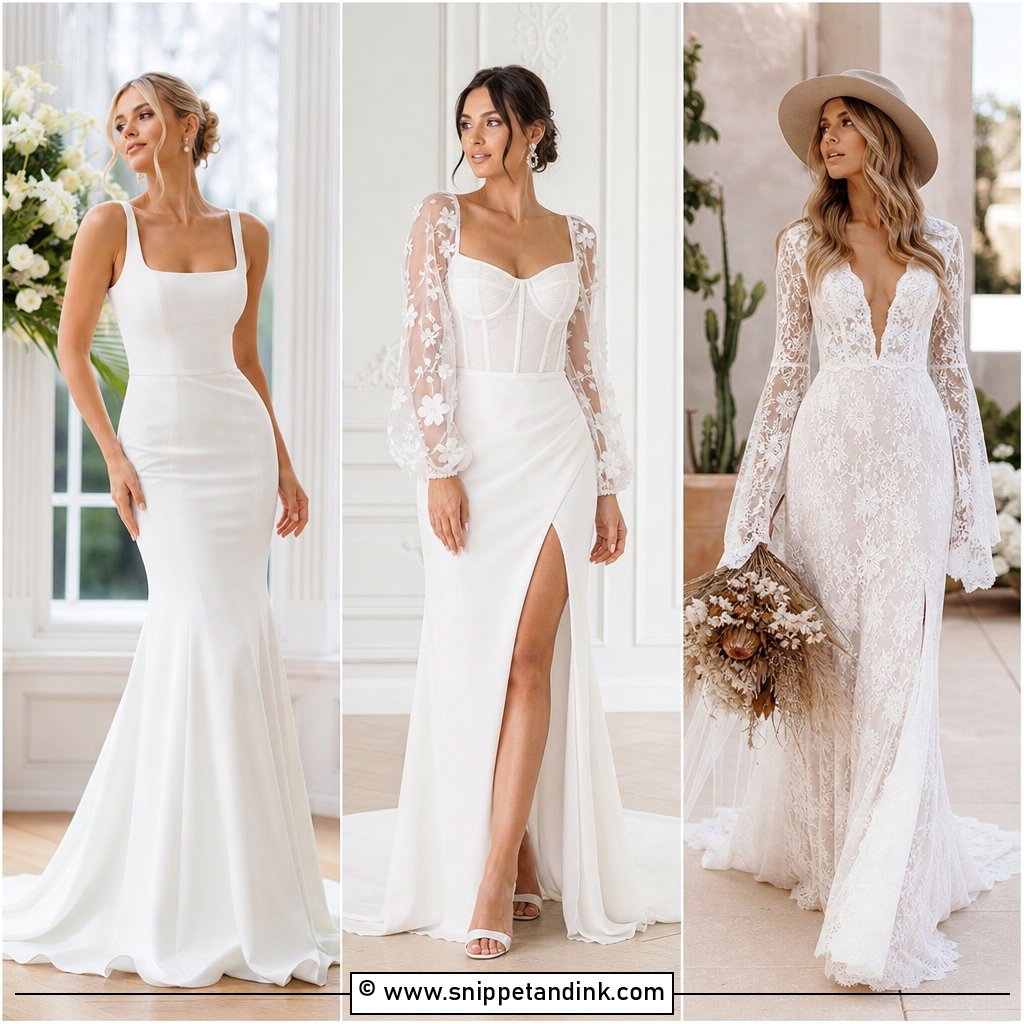
15. Petite A Line Bridal Gown
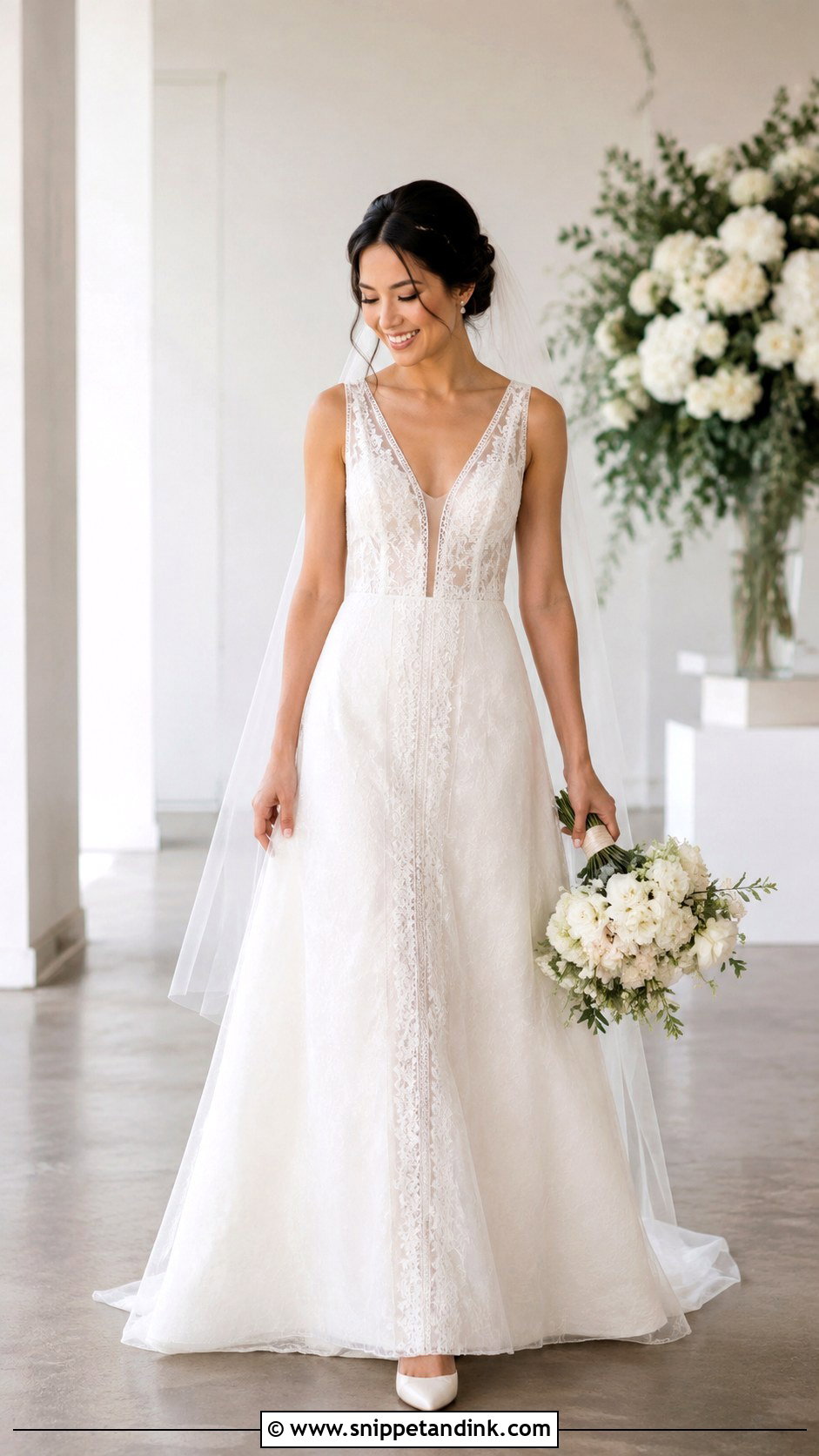
On a petite frame, the A-line should lengthen without burying you in skirt. A slimmer flare, a slightly higher waist seam, a V neckline or vertical lace all help build a longer line. Heavy, multi-layer skirts tend to swamp a shorter body. Satin or crepe keeps the outline clean. Pointed heels, a simple veil and delicate earrings balance it. Hem the dress in the exact shoes you’ll wear, since even a centimetre too long will catch on every step.
16. A Line Bridal Gown With Train
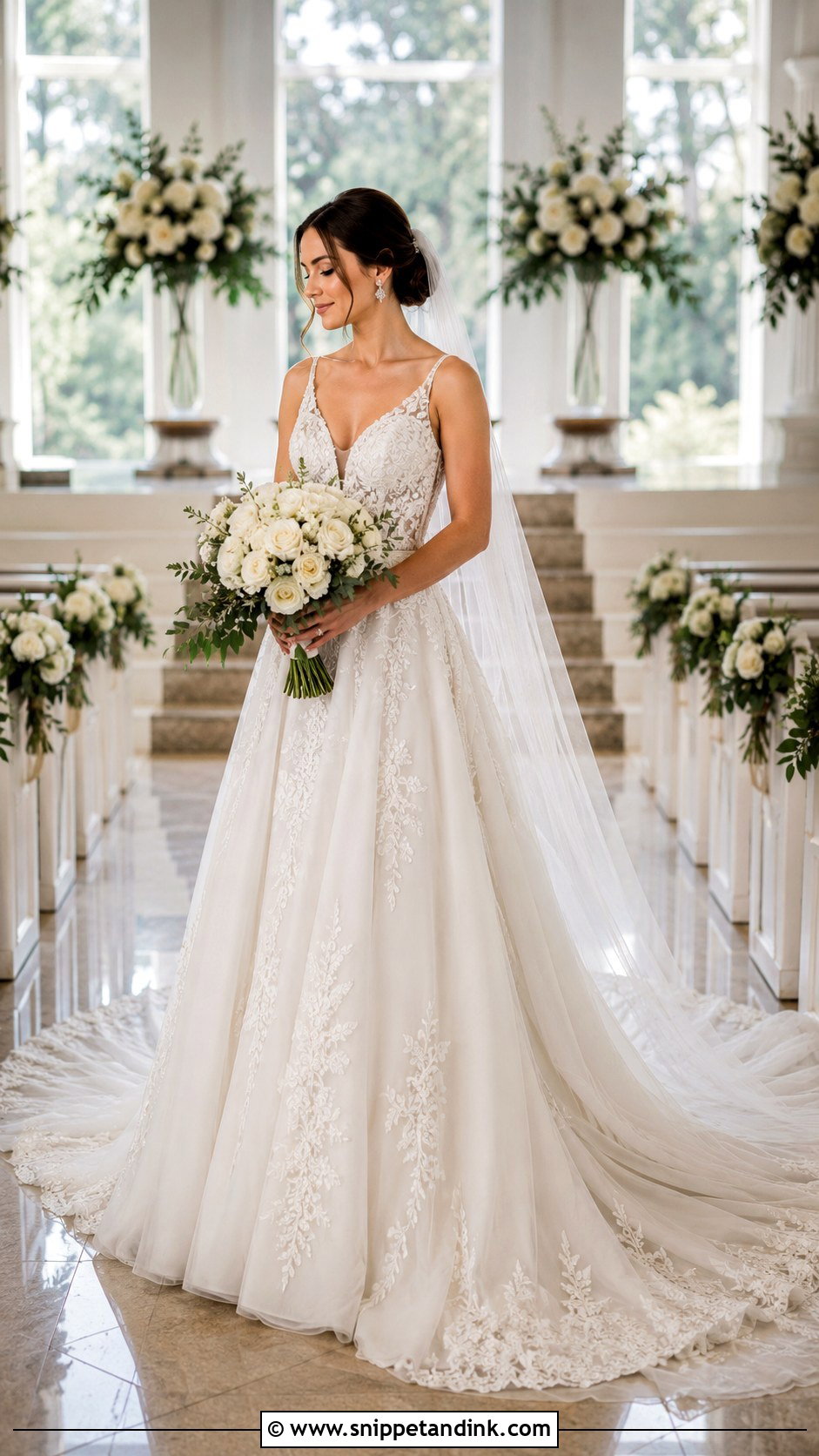
Adding a train gives ceremony drama while the main outline stays wearable. A chapel train is classic and easy to manage, while a cathedral train makes a bigger entrance and needs a long aisle. Satin, lace, organza and tulle all flow naturally from an A-line skirt. The veil should either match the train length or stop short of it, never end awkwardly just past it. Plan the bustle early, add elegant earrings and polished hair, and choose shoes that feel secure under the hem.
17. A Line Bridal Gown With Pockets
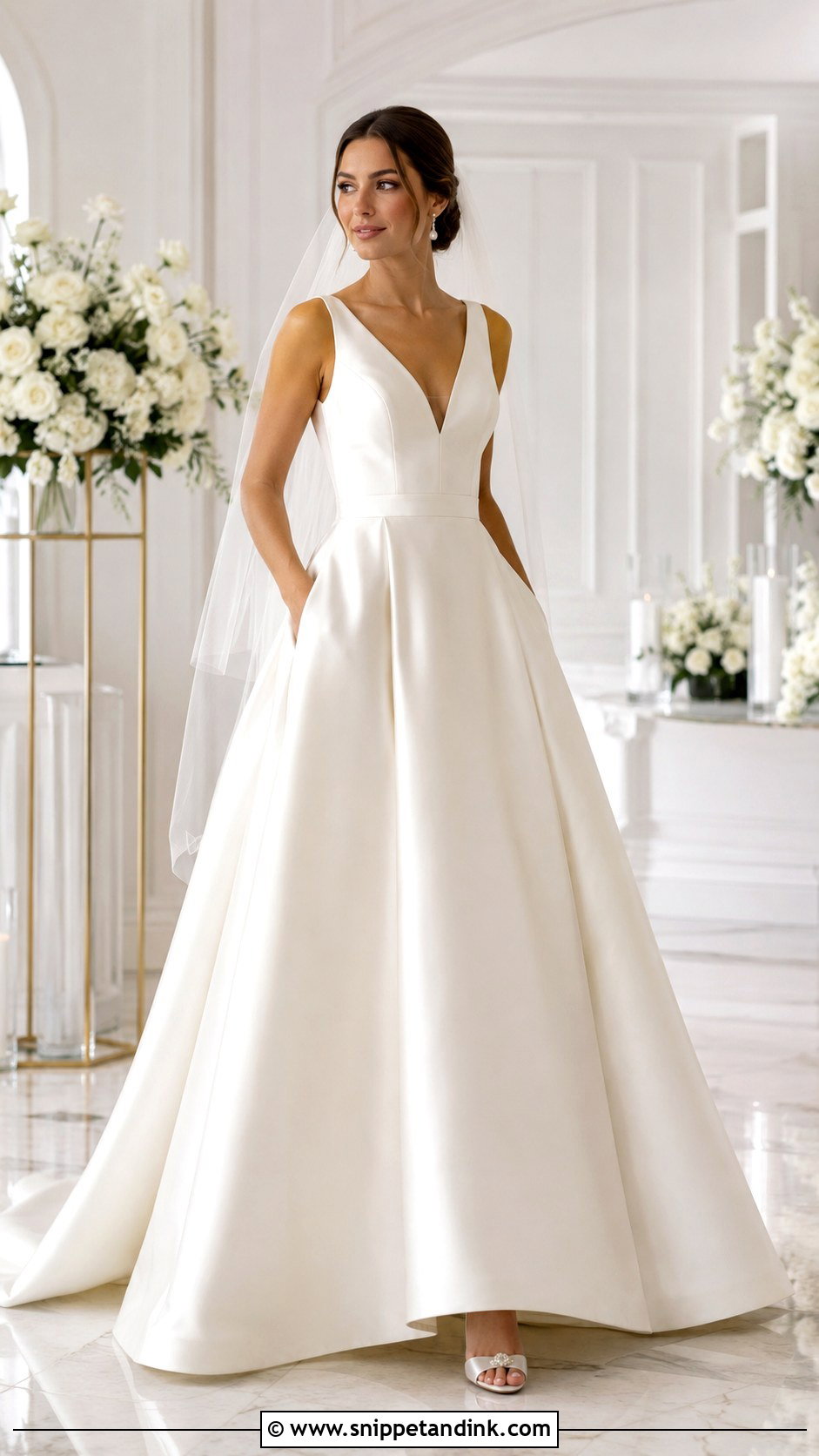
An A-line bridal gown with pockets is the one brides thank me for later. Pockets sit best in fabrics with body, like mikado, satin or organza, because soft fabrics sag once you put something in them. They hold lip balm and tissues, and they give your hands somewhere natural to go in posed photos. I would keep what goes in them small, though: a phone will drag the skirt out of line. Pearl earrings, a clean veil and elegant heels keep it classic.
18. A Line Bridal Gown With Bow
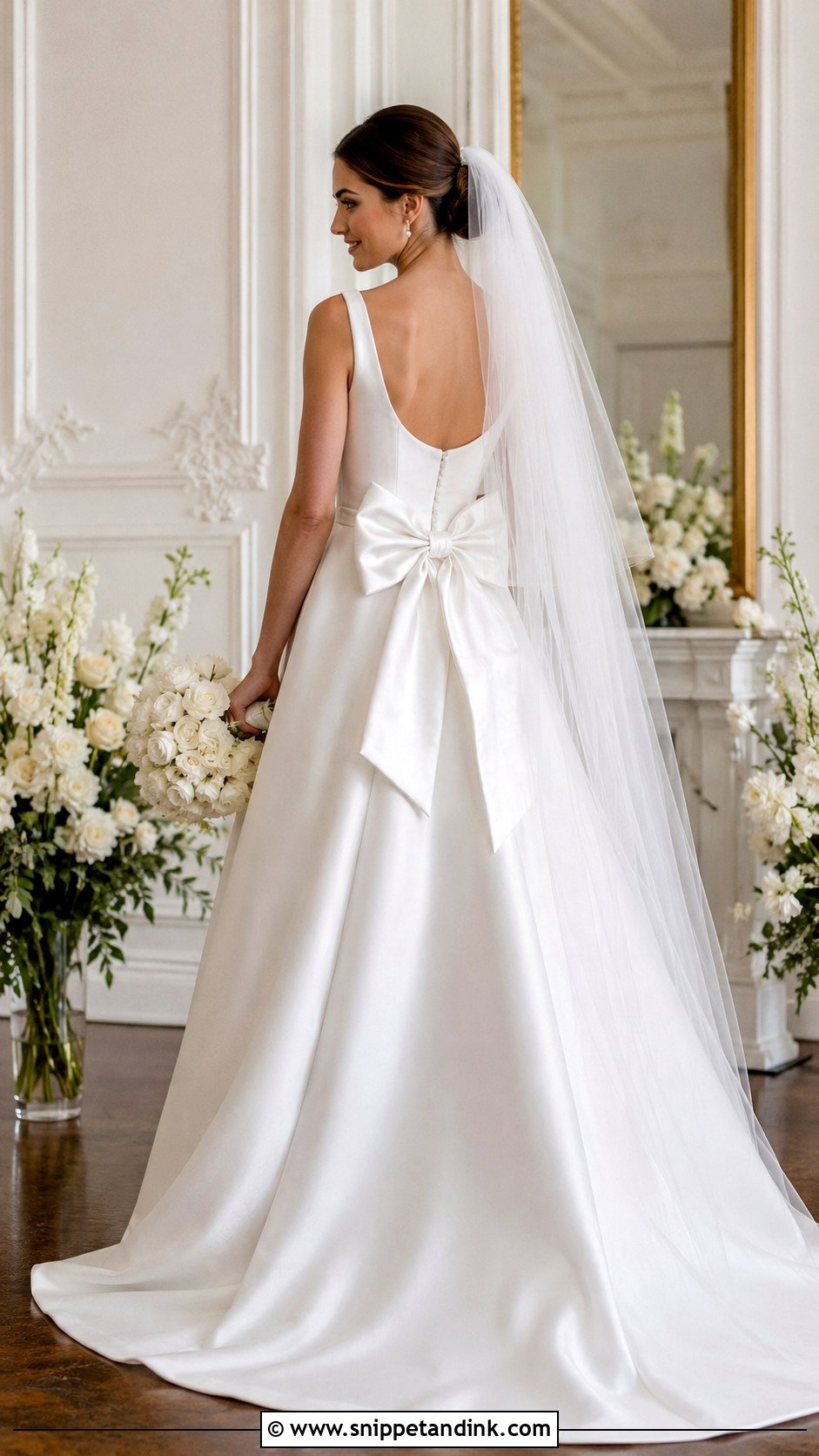
A bow gives one clear focal point. A back bow is traditional; a waist bow reads more fashion-led. Larger bows need fabric with body, like satin or mikado, or they droop by the afternoon, while smaller bows suit lace or tulle. Place the veil so it doesn’t flatten the bow, and check the bow still sits right once the bustle is up. Simple earrings and a neat updo are enough. Indoor weddings, gardens and classic portraits all show it well.
19. A Line Bridal Gown With Slit
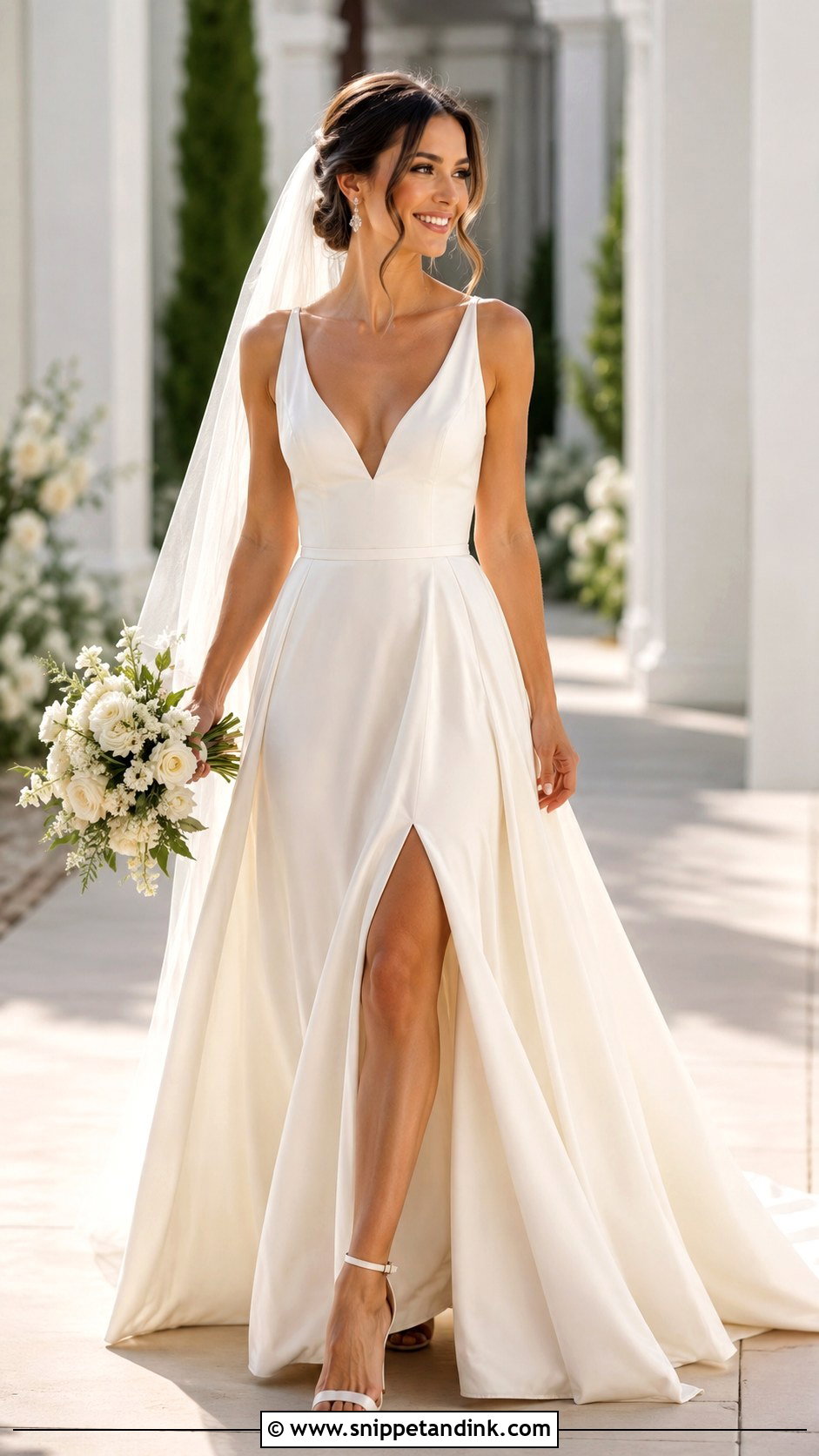
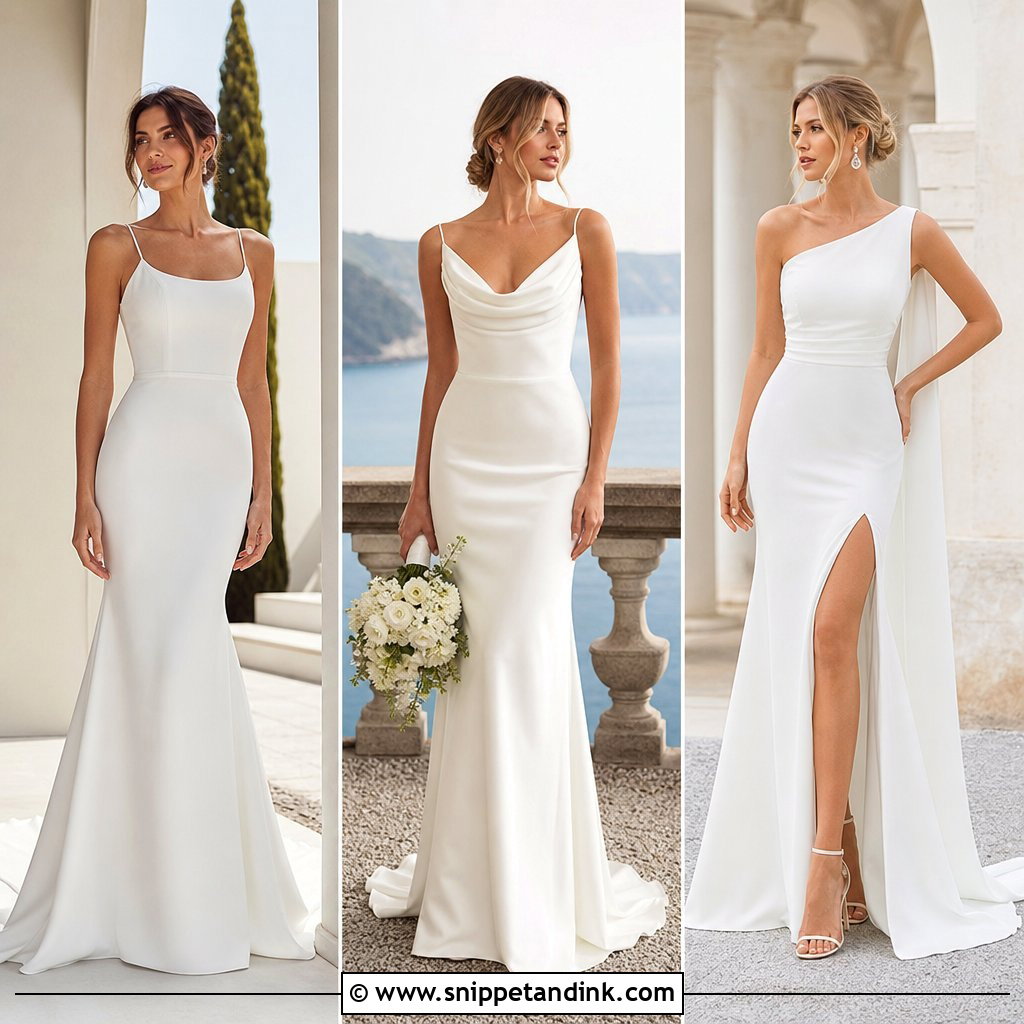
A slit makes walking and dancing far easier while the gown stays bridal. Depth is a comfort decision, and I’d test it seated and on stairs before committing, because a slit that looks modest standing can open much higher when you sit. Satin or chiffon moves best. Shoes are on show, so choose a pair worth seeing, and keep the earrings simple with a soft veil. Warm weather and outdoor venues suit it.
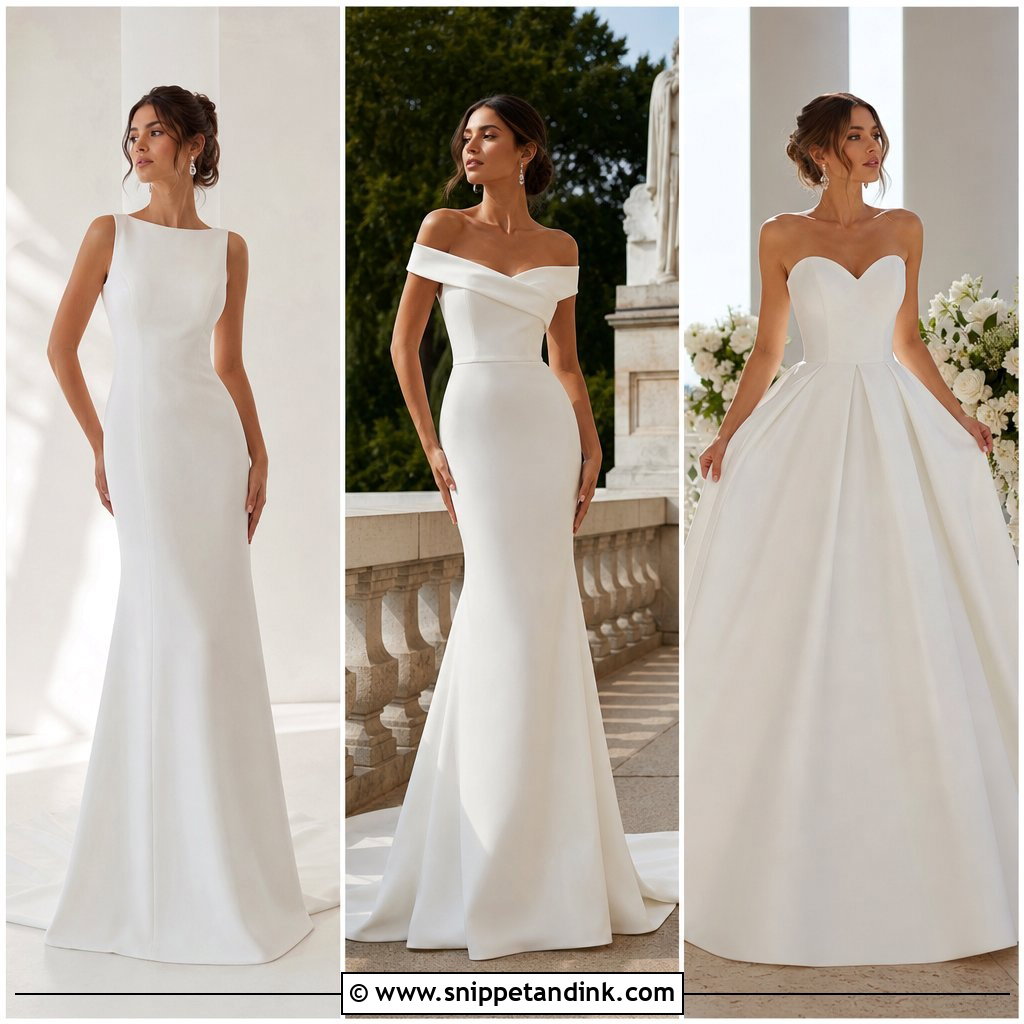
20. A Line Bridal Gown With Sleeves
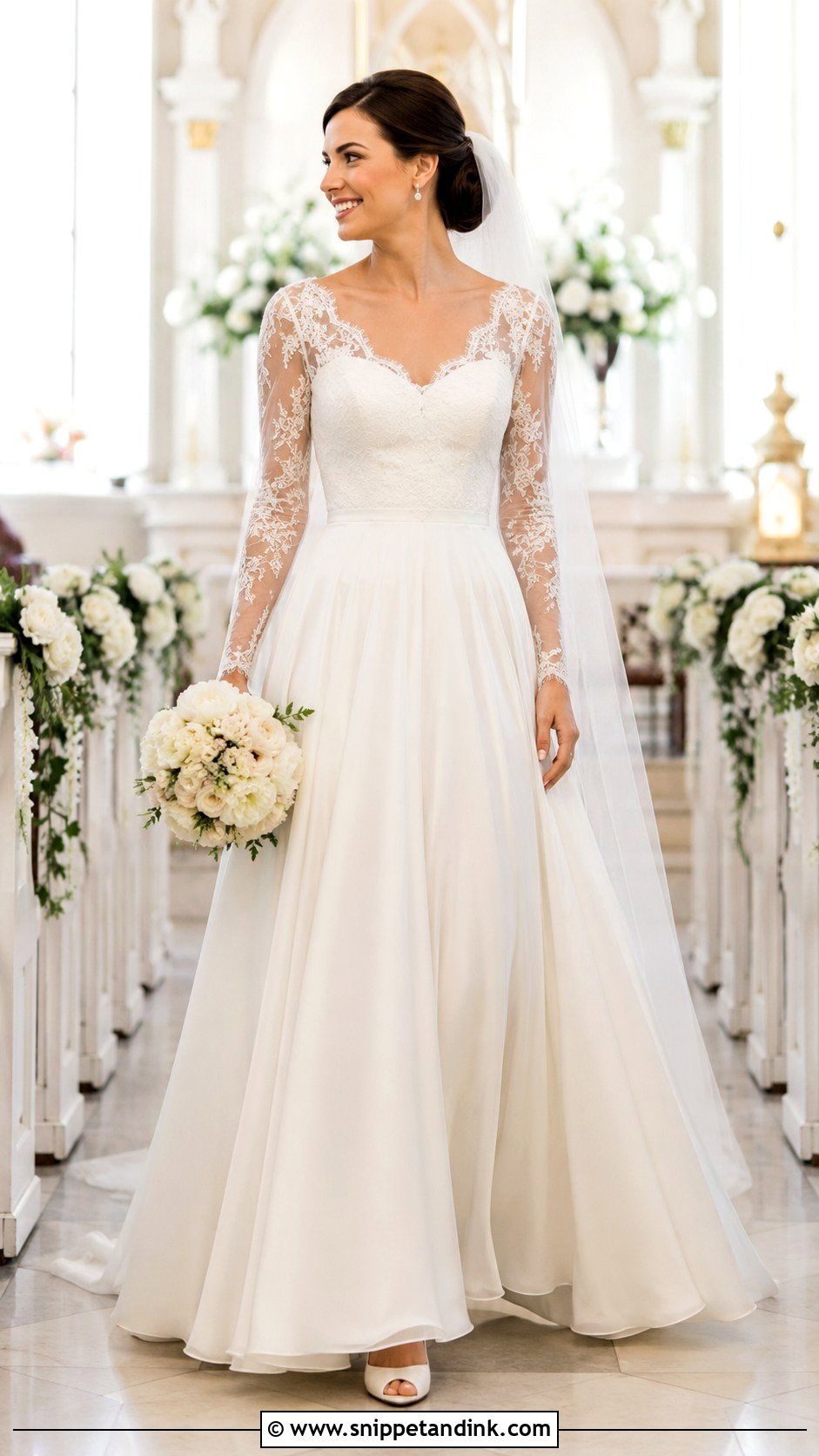
Sleeves set the mood of the whole dress. Cap sleeves are soft and delicate, long lace sleeves feel classic and puff sleeves make a fashion statement. The A-line skirt balances any sleeve with texture or volume. Simple earrings, smooth hair and shoes that match the gown’s formality are enough. I’d consider detachable sleeves if you want coverage in a church and freedom at the party; good bridal shops can make them from leftover fabric.
21. A Line Bridal Gown With Spaghetti Straps
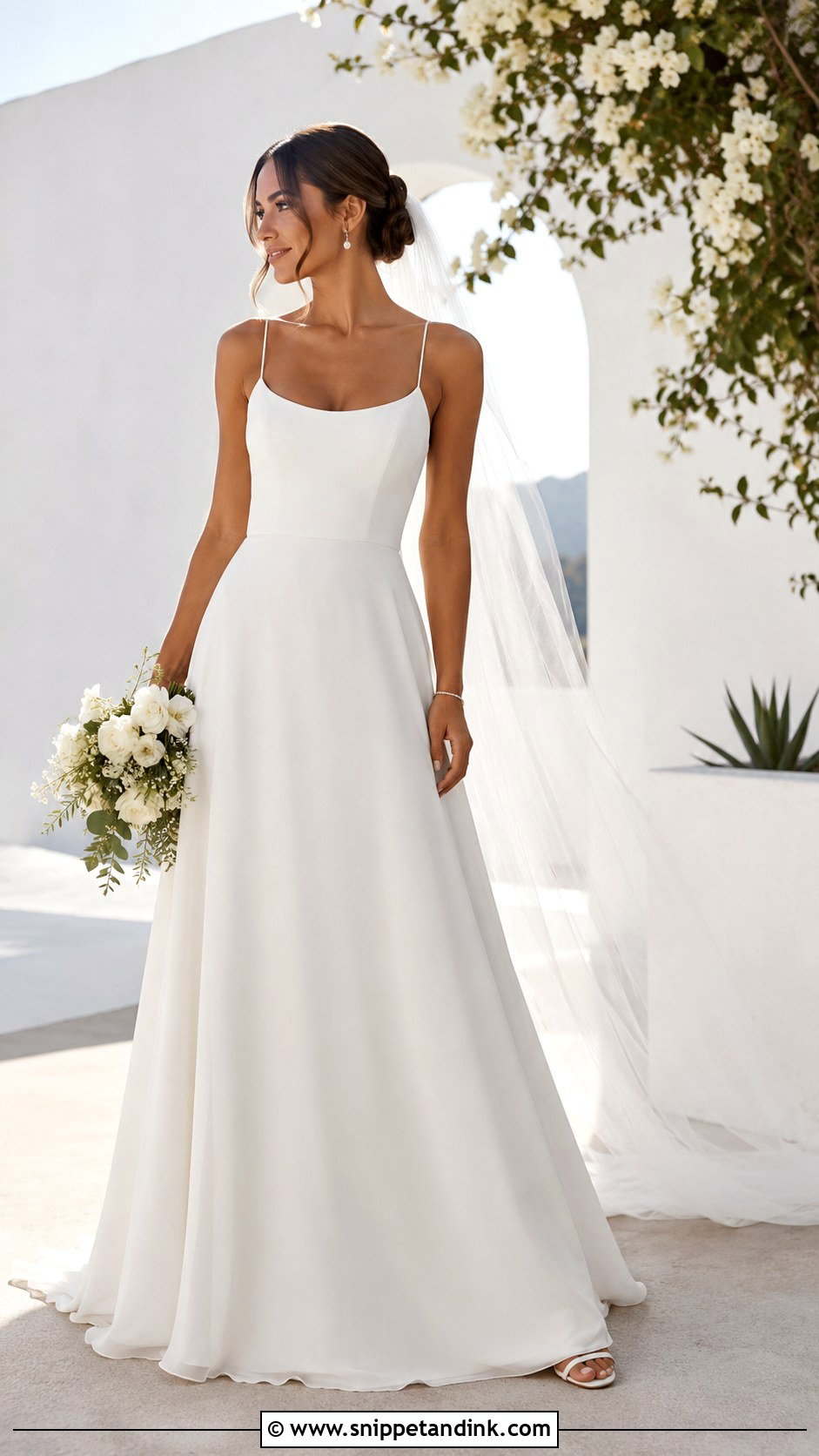
Spaghetti straps keep the neckline open and look light in satin, crepe, chiffon or soft tulle. A plain bodice reads minimal; lace or beading reads romantic. The practical concern is support, since thin straps carry very little, so the bodice structure has to do it. For ceremony coverage, a sheer veil, bridal cape or removable topper works. Delicate earrings, a fine bracelet, soft waves and simple heels complete it, and warm-weather weddings suit it well.
22. A Line Bridal Gown With High Neck
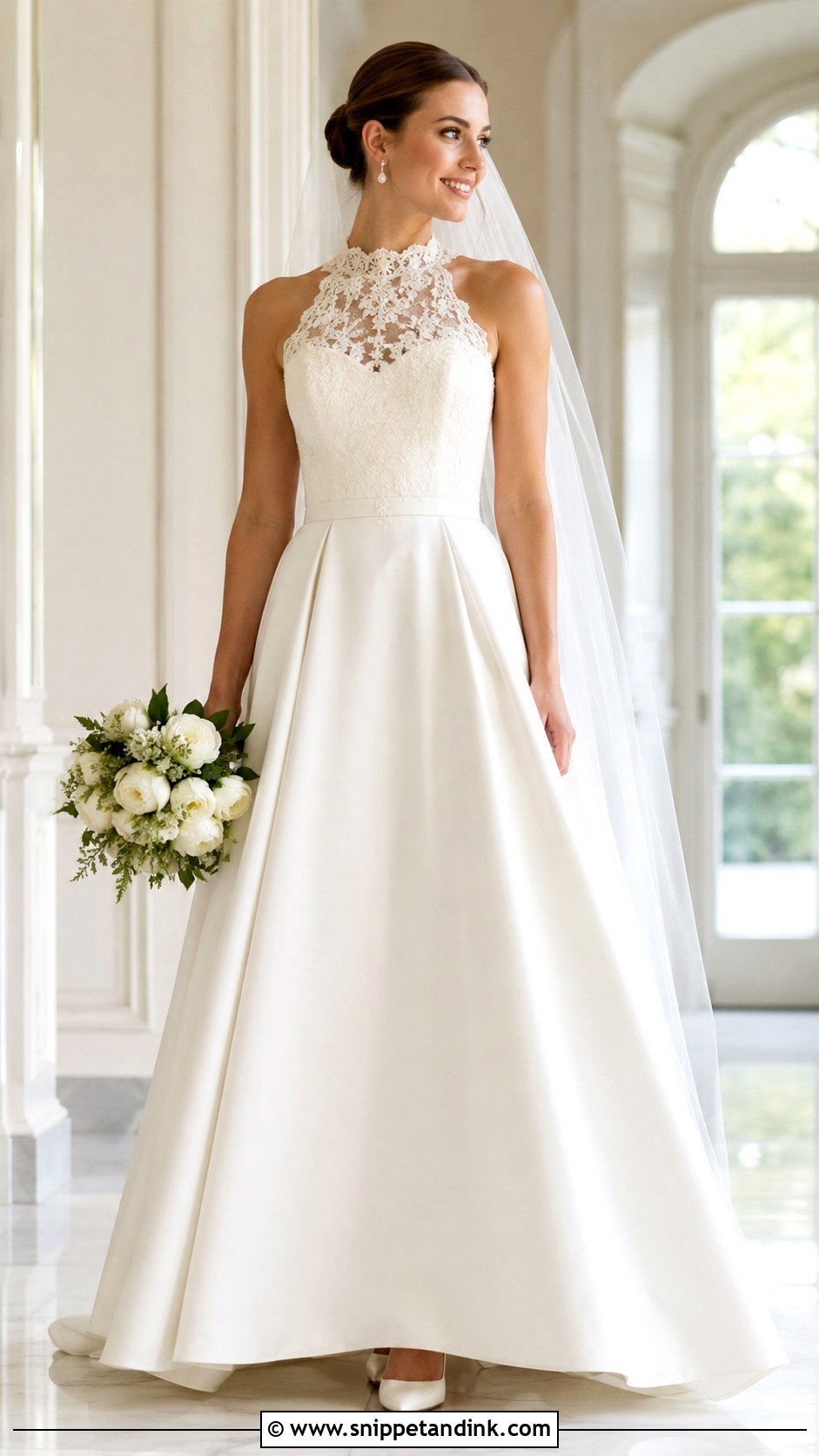
A high neck looks refined and a little vintage. Lace reads romantic; satin or crepe looks modern and clean. Since the neckline covers you, keep jewellery to earrings and pay attention to hair and veil placement. A sleek bun or soft updo shows the collar clearly. The A-line skirt keeps the overall effect from becoming severe. I always make sure the collar has a finger’s width of ease, because a tight neck becomes the only thing you notice by evening.
23. Tea Length A Line Bridal Gown
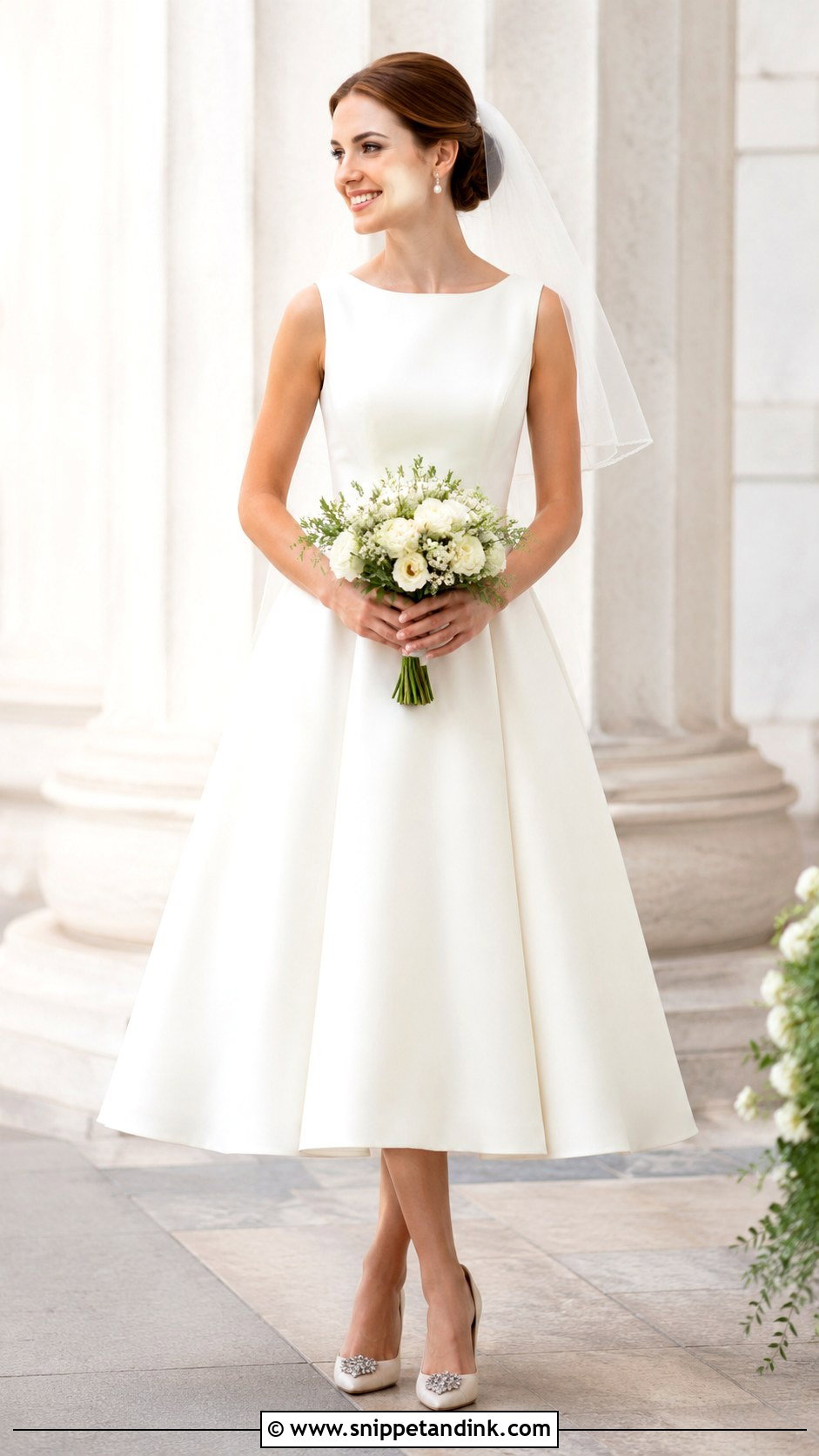
Tea length is playful and practical, landing between knee and ankle so your shoes show and you can move freely. It suits courthouse weddings, garden ceremonies and receptions. Structured satin leans vintage; tulle softens it. Embellished pumps, pearl earrings, a short veil and a neat bouquet finish it. The hem position is crucial, so I pin it at a few heights before cutting, because the wrong spot on the calf shortens the leg.
24. Organza A Line Bridal Gown
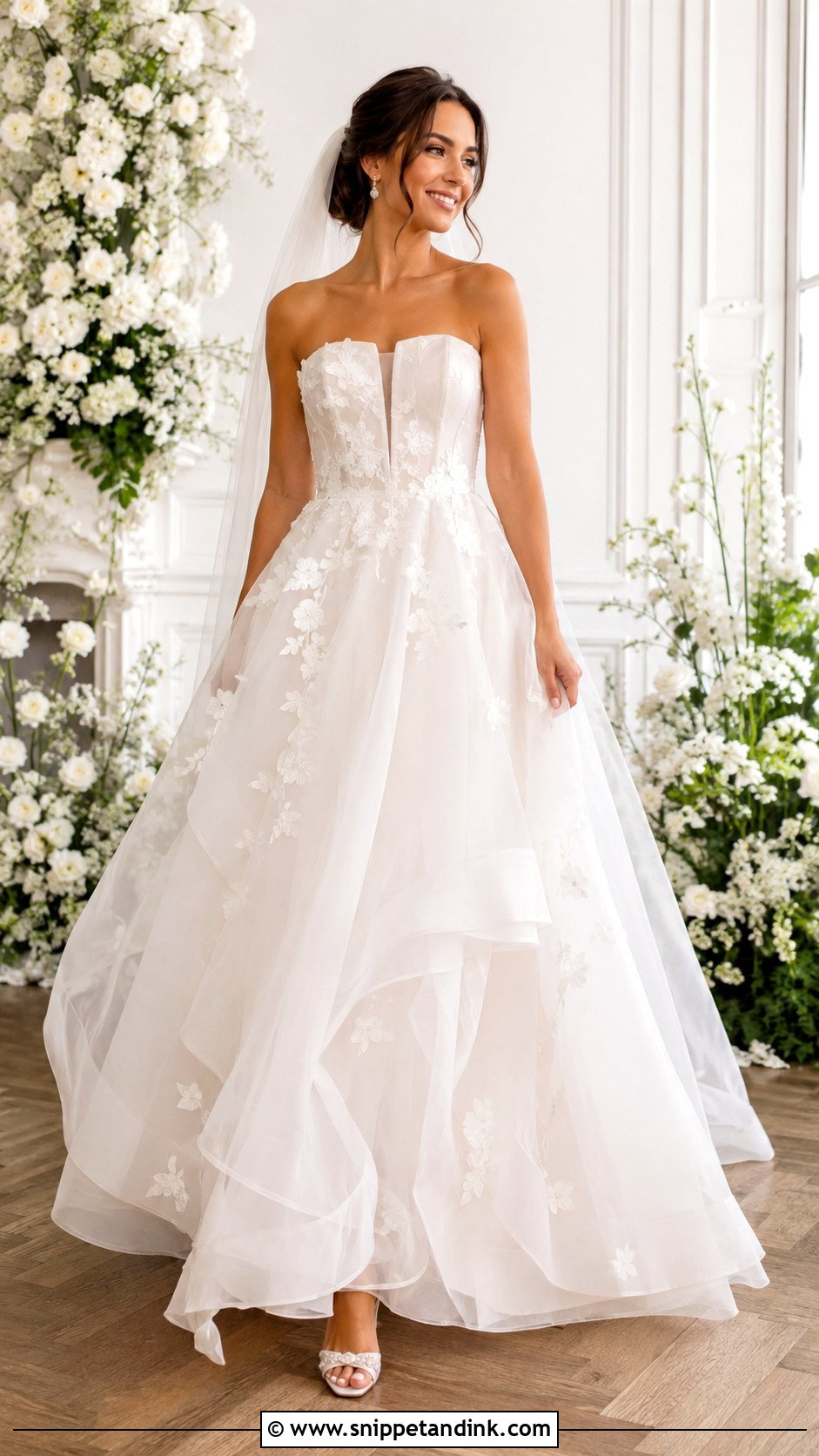
Organza sits between chiffon and satin: crisper than one, lighter than the other. That makes it good for structure without weight. Pleats, floral appliqués and layered hems all look great in it. The catch is that organza marks easily and frays at cut edges, so careful handling during alterations matters. Pearl earrings, a sheer veil and elegant heels keep it refined. Spring, summer and bright indoor venues show its sheen best.
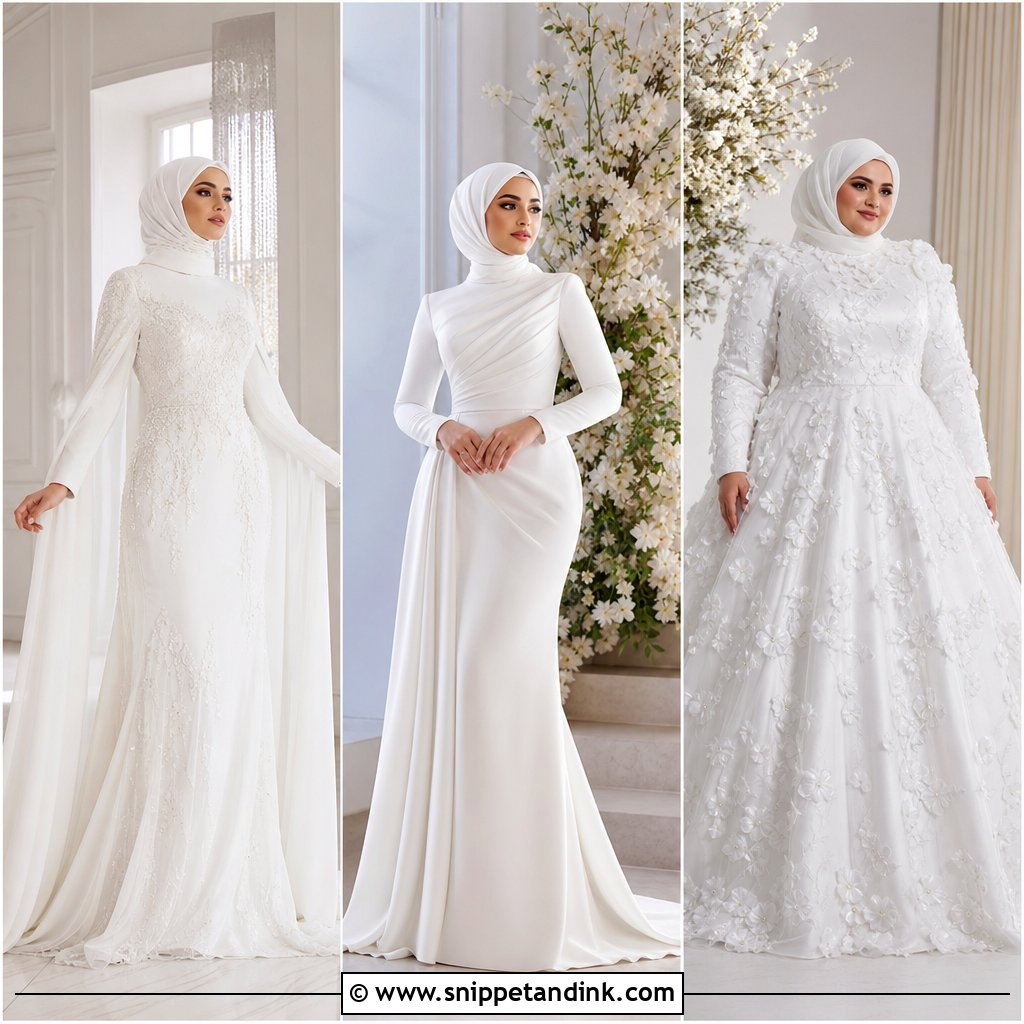
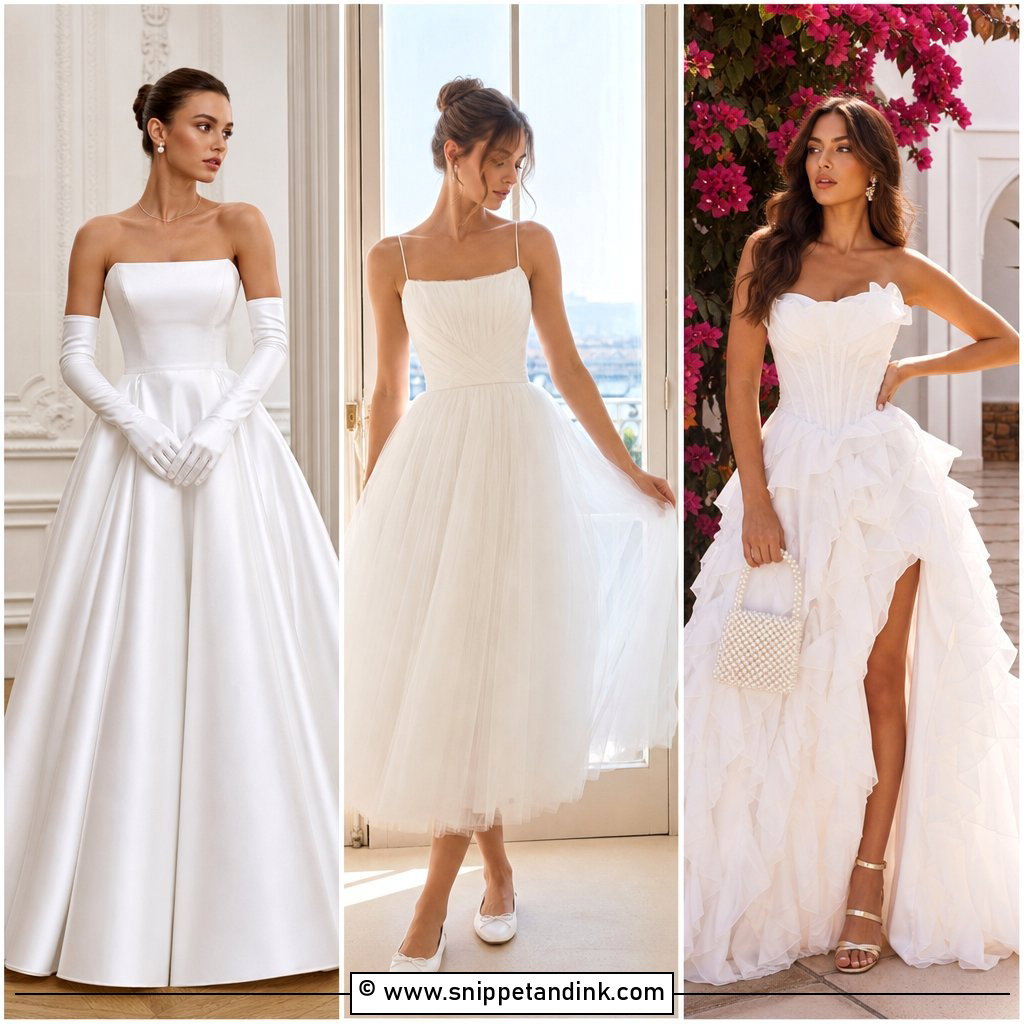
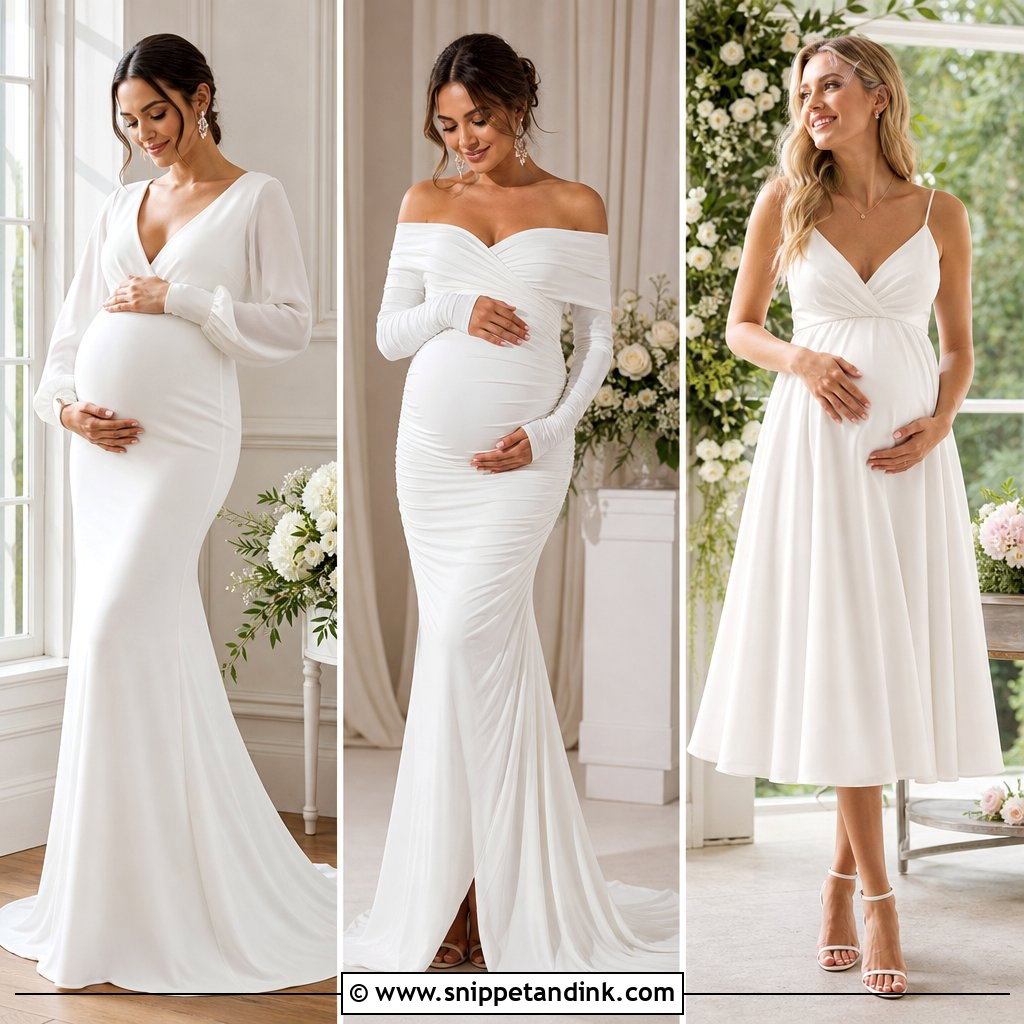

25. Simple A Line Bridal Gown
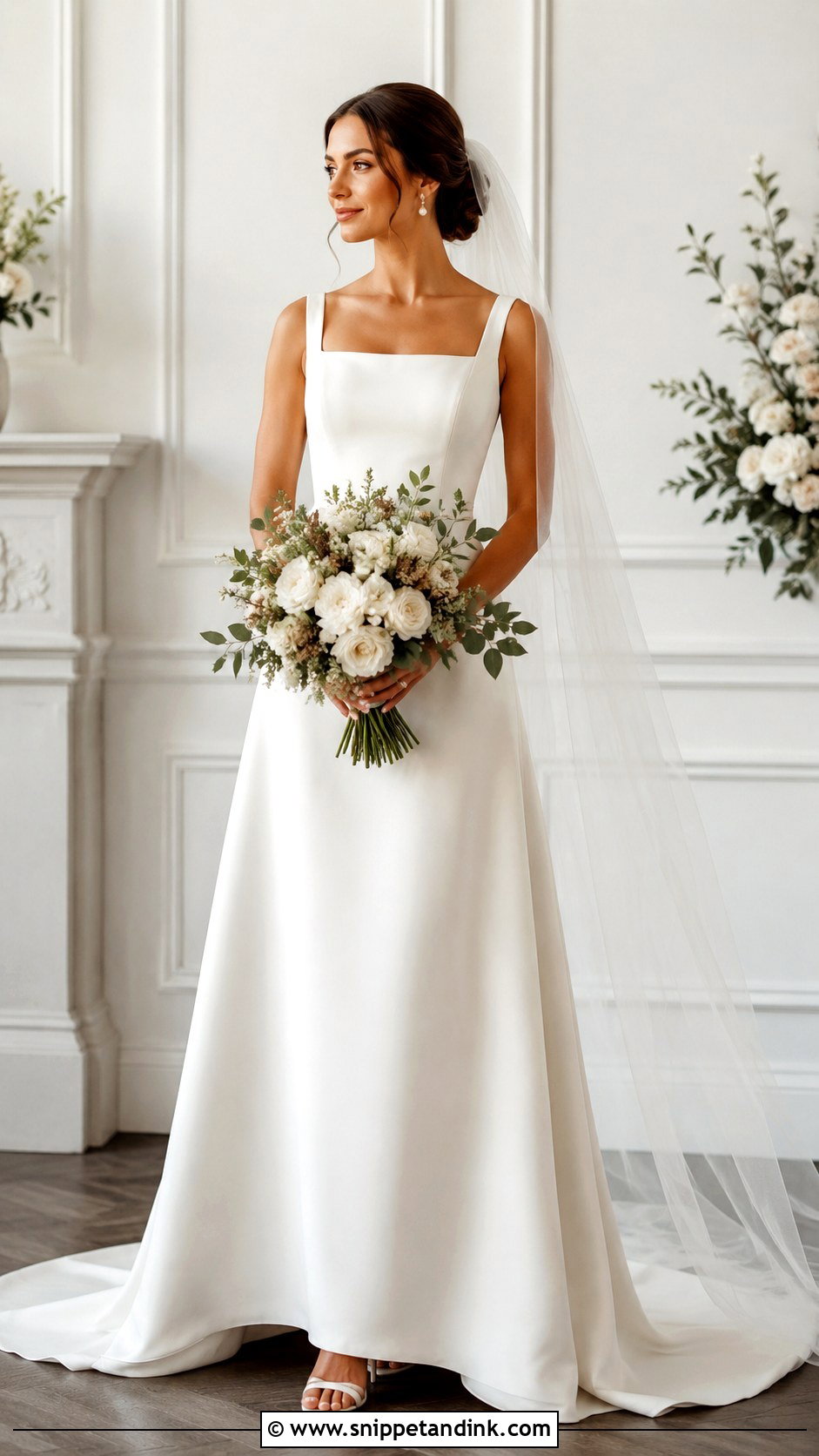
A simple A-line is the dress you’ll still recognise as yours in twenty years. It rests on fit, fabric and an outline that stays comfortable from the ceremony to the last dance. Satin, crepe, mikado and chiffon all work. Personality comes from the veil, pearl earrings, modern heels or a textured bouquet. With so little detail, tailoring is everything, so budget time and money for alterations. It works in nearly any venue and season.
How Many Fittings Does an A-Line Usually Need?
Most gowns from a bridal shop arrive in your nearest standard size and need altering. With an A-line, the common jobs are taking in the bodice at the side seams, adjusting straps, hemming the skirt and adding a bustle if there’s a train.
I plan for two or three fittings. The first sets the bodice and hem, the second checks the changes and the bustle, and a final one close to the date catches any weight change. Book the first one roughly two to three months before the wedding, and bring the shoes and underwear you’ll actually wear, or the hem and bodice will be wrong.
Alterations that are harder than they look
- Hemming lace with a scalloped edge. The lace border has to be removed and reapplied, which takes time.
- Letting a dress out. It depends on seam allowance, and many gowns have very little.
- Shortening a beaded skirt. Each bead near the cut line has to be removed and restitched.
- Adding sleeves. Possible, but the fabric must match, so ask the shop to order extra early.
Prices for these jobs vary widely by region and dressmaker, so ask for a written quote at the first fitting rather than a vague estimate.
Sit Down in It Before You Say Yes
When you shortlist an A-line, picture the whole day, not the dress on its hanger. Venue, season, fabric, neckline, sleeves and how you want to feel in photos all matter. The silhouette is loved because it gives shape without restriction. Satin, lace, tulle, sleeves, a slit, a bow or a minimal line can all work. In the fitting room I ask brides to sit, walk, lift their arms and dance a few steps before deciding. The dress that passes that test is usually the right one.
You'll Like These Ideas:




Leave a Reply