
Dressing a hijabi bride is mostly about the meeting point of two garments: where the gown’s neckline ends and the hijab begins. When that join is planned, the whole look reads as one outfit. When it isn’t, you get a gap at the throat, a sleeve that rides up during the nikkah, or a veil that pulls the scarf off-center. The ideas below cover lace, satin, crepe, abayas, kaftans, lehengas, capes and a few colored options. For each one I’ve noted what I’d check at the fitting, because modest coverage that only works while standing still isn’t really coverage.
Modest Changes to Request When You Order the Gown
Most bridal gowns are designed sleeveless or with sheer illusion panels, and the modest version you see in photos is often a modification. That’s fine, but it has to be planned at the order stage. Made-to-order gowns commonly take four to six months to arrive, and sleeves or linings added afterwards rarely match the original fabric perfectly.
When I go through an order with a hijabi bride, these are the changes we discuss:
- Lining every sheer area, including sleeves and back panels, in crepe or stretch mesh.
- Raising the neckline so it meets the hijab without a visible gap at the throat.
- Ordering sleeves in the gown’s own fabric, plus extra lace or fabric for later adjustments.
- Adding underarm ease or a small gusset so fitted sleeves let you raise your arms.
- Checking that the skirt stays opaque under strong camera flash, not just in shop lighting.
Budget for two or three alteration fittings after the gown arrives, with the final one a couple of weeks before the wedding. Bring the actual hijab, underscarf, pins and shoes each time, because they change how the neckline and hem sit.
1. White Lace Hijabi Wedding Dress
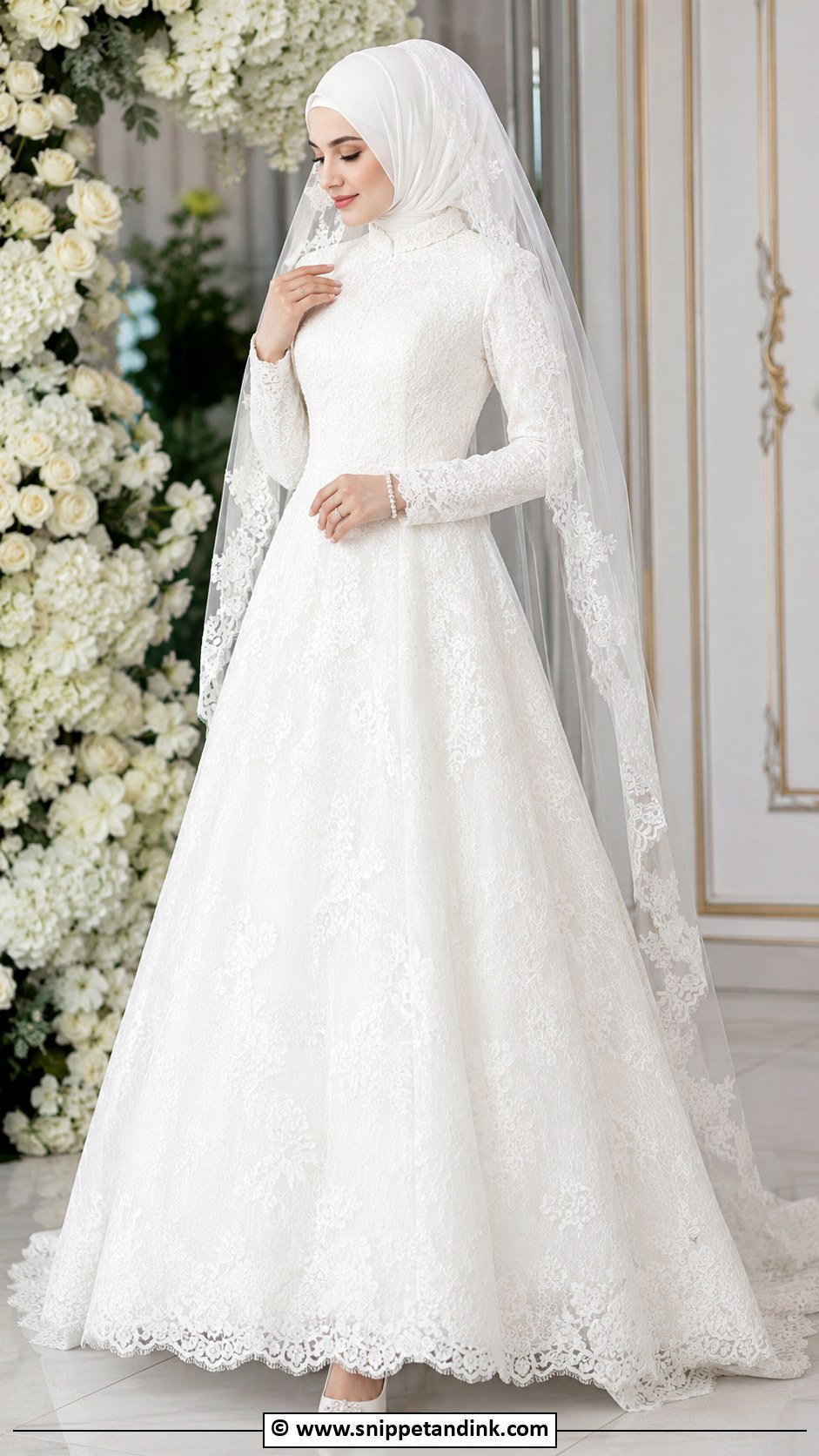
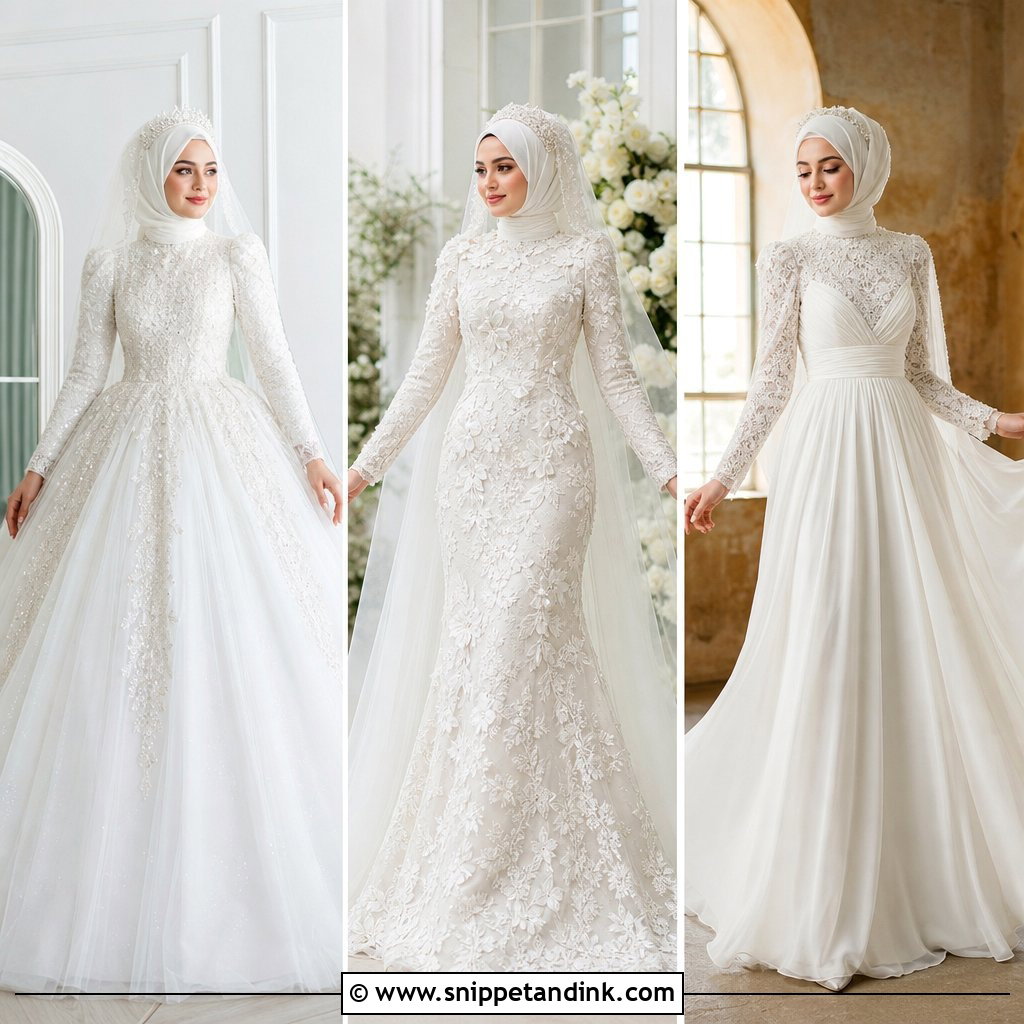
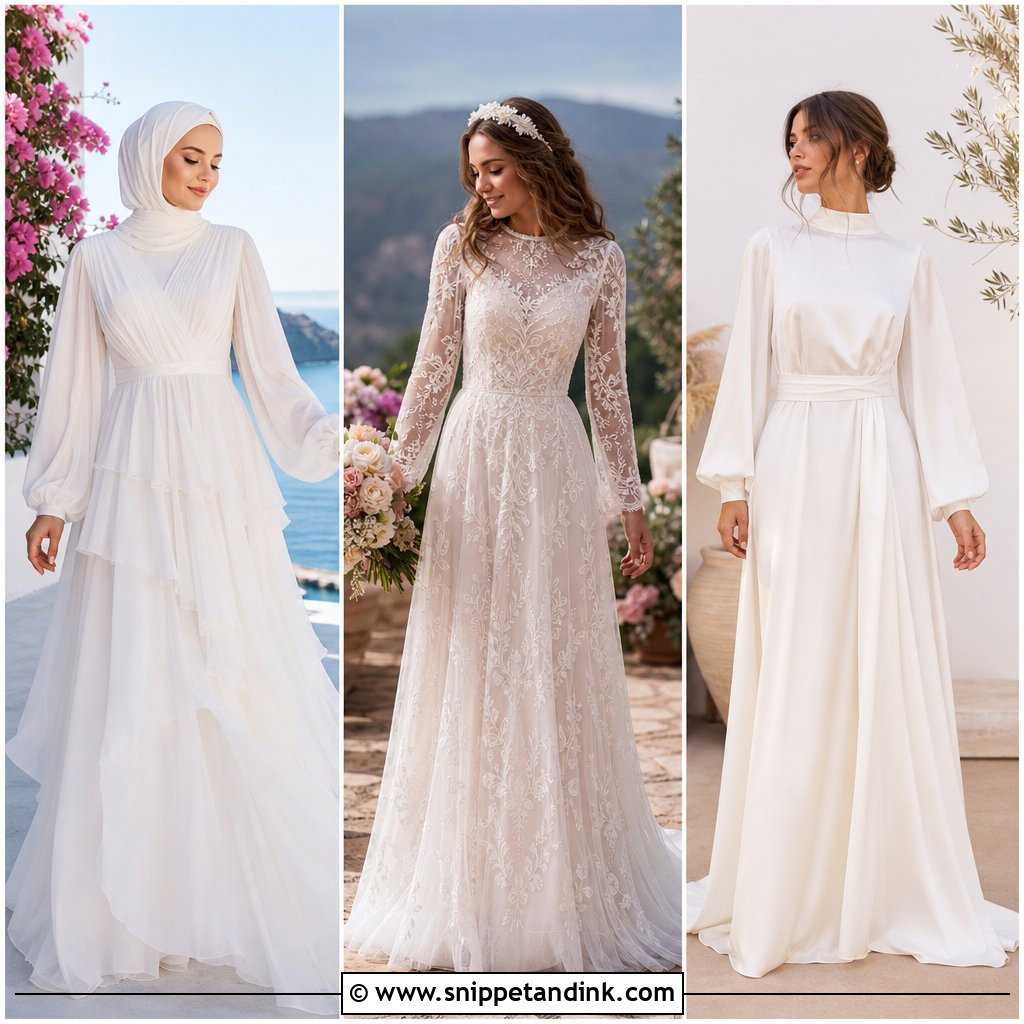
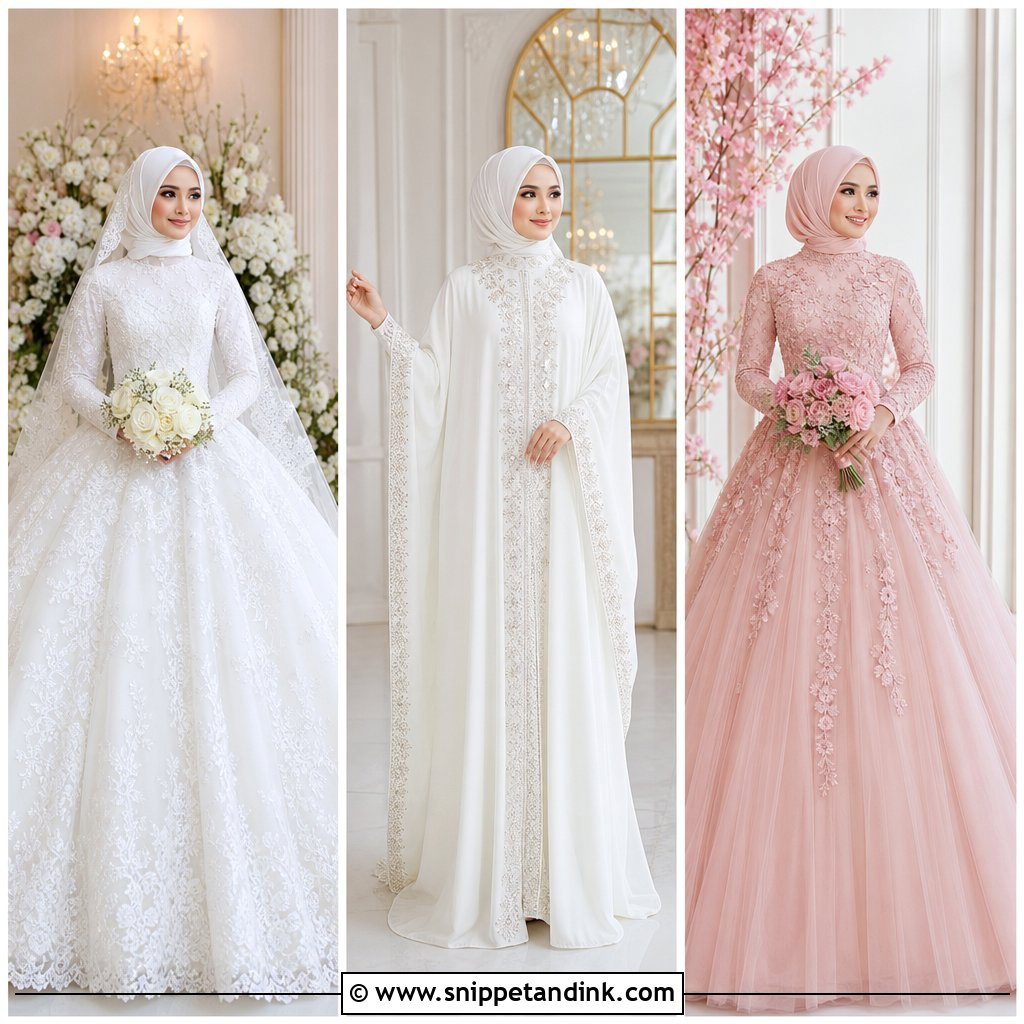
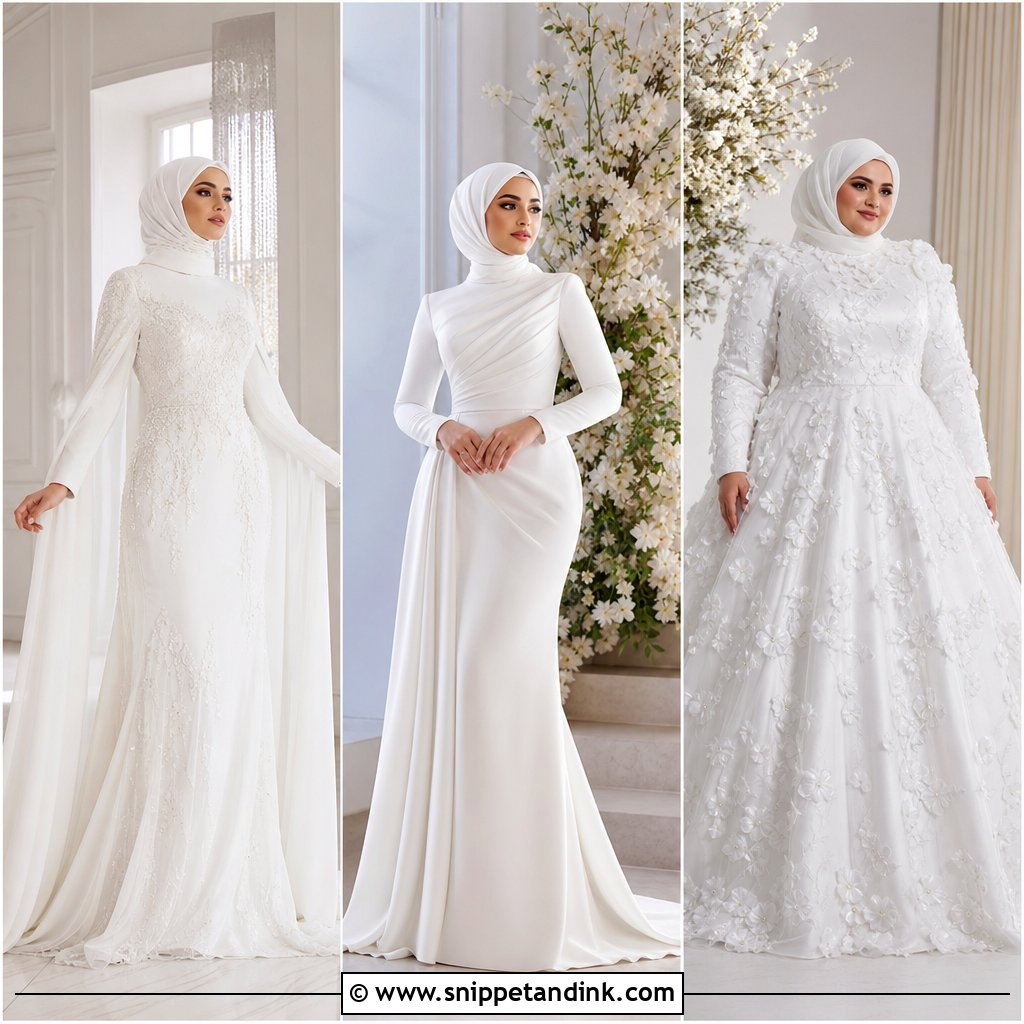
Lace is the most requested fabric I see for modest gowns, and it’s also the easiest to get wrong. Most lace bodices are sold with sheer illusion panels, so you’ll need a full lining in a skin-matching or ivory crepe under every lace area, sleeves included. Ask for this at the order stage, not at alterations. A plain chiffon or silk hijab keeps attention on the lace, and a lace-edged veil adds drama. Under the hijab, small pearl studs are enough; anything with a dangle catches the scarf.
2. Satin Hijabi Wedding Dress
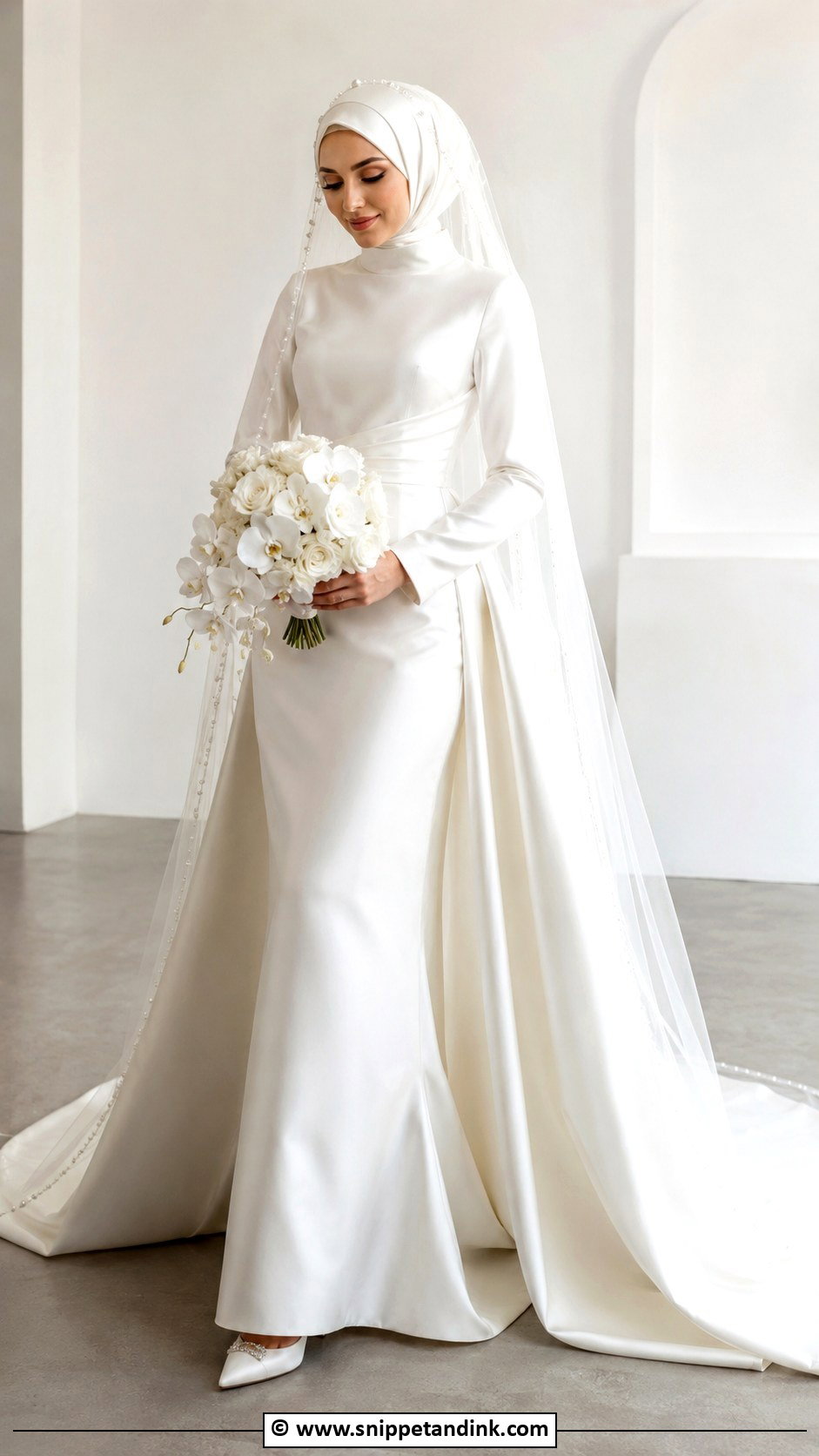
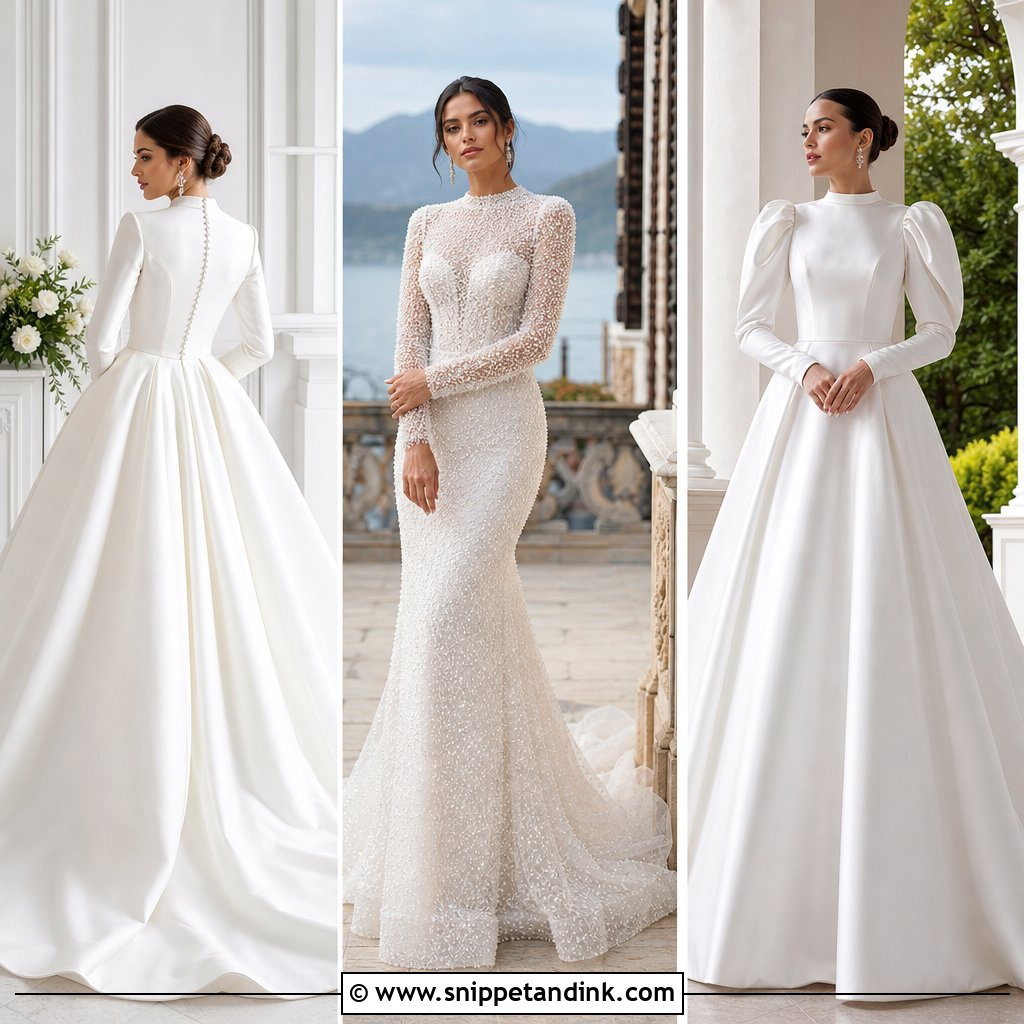
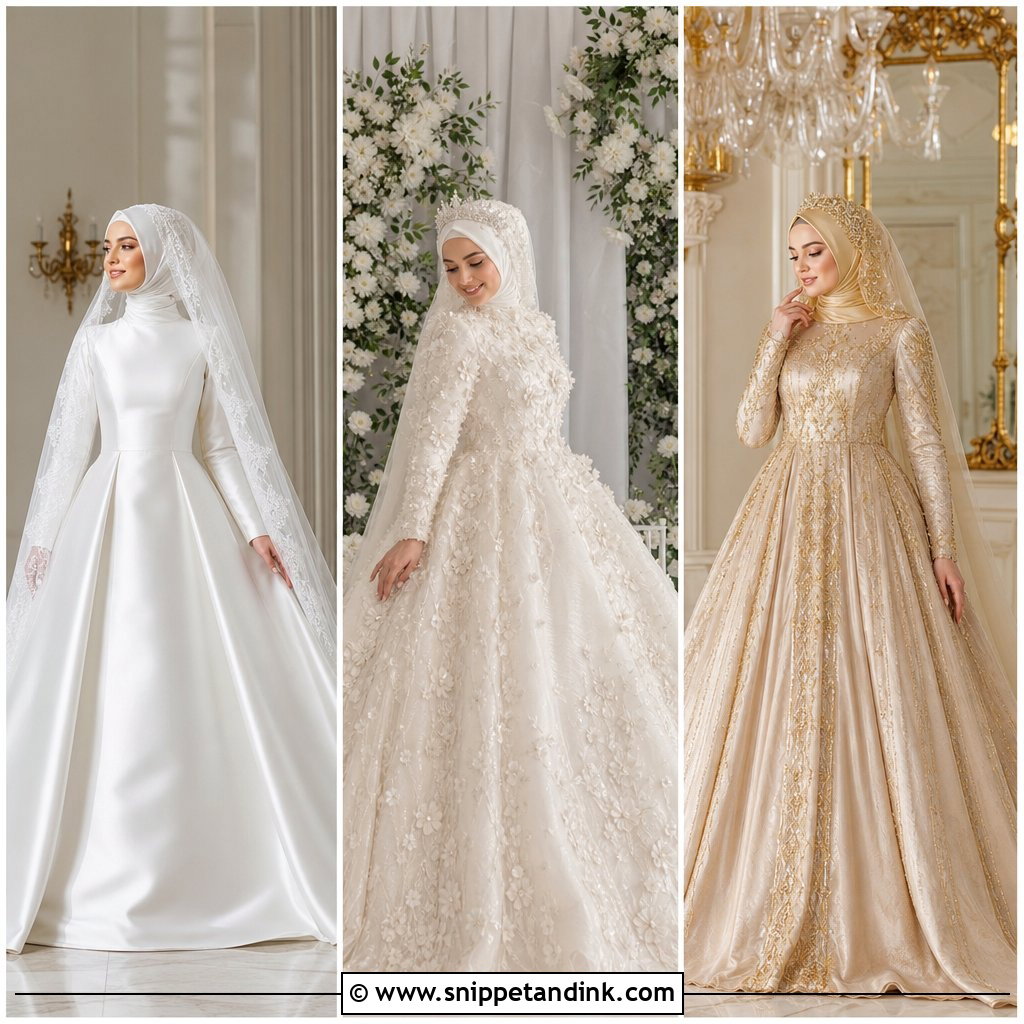
Satin does the work of decoration on its own. It reflects light, so even a plain long-sleeve gown with a high neck and defined waist looks finished. The trade-off is that satin shows every crease, and long sleeves crease at the inner elbow the moment you sit. Heavier duchess or mikado satin creases less than thin charmeuse. Match the hijab in a satin-finish fabric of the same shade, add a pearl-trim veil, and keep jewelry to a small crystal piece pinned over the scarf.
3. Modest Ball Gown Hijabi Wedding Dress
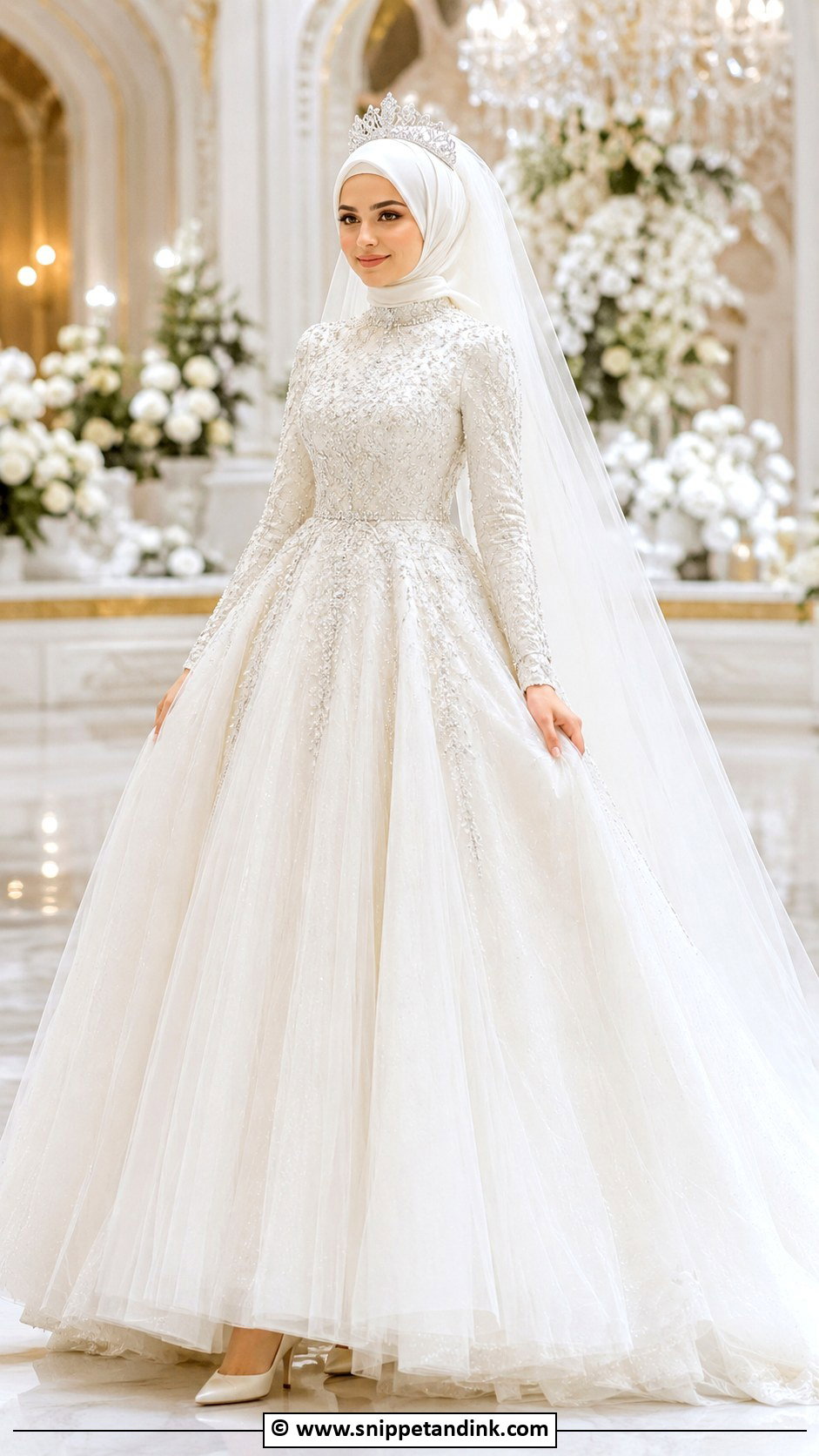
A modest ball gown hijabi wedding dress gives the grand entrance, but the volume needs balance up top. A fitted, embroidered bodice and a neat hijab wrap stop the skirt from swallowing you. I suggest tulle or organza layers over heavy satin, because a full satin skirt can weigh several kilos by the end of the day. Long veils sit well on a ball gown. Practice walking and turning in it, and check you can get through a doorway with your bouquet.
4. Simple Crepe Hijabi Wedding Dress
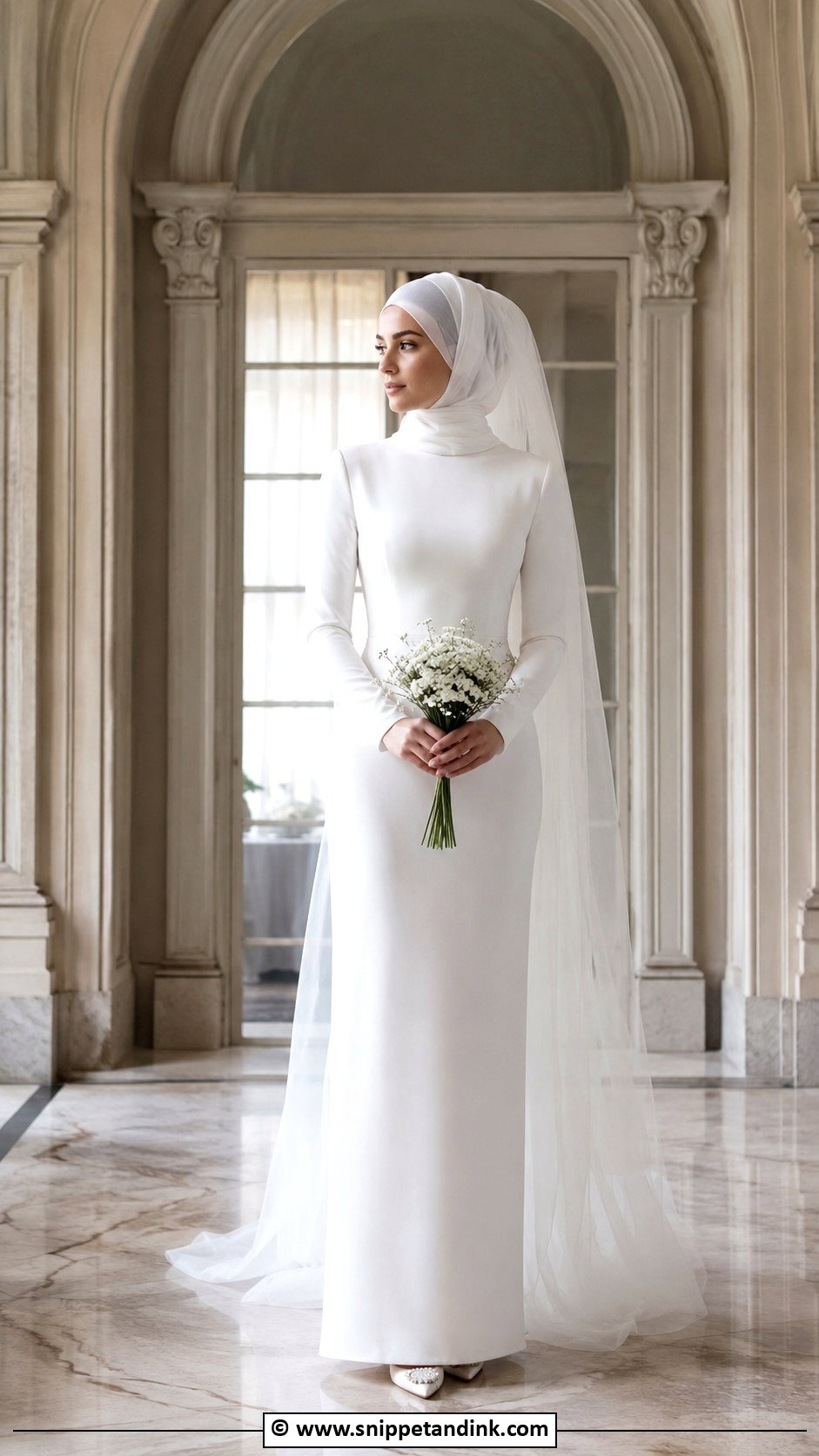
Crepe skims the body without clinging, which makes it my favorite for clean column and sheath shapes. A high bateau neckline, long sleeves and a covered back give a polished modest line. Crepe is matte, so it pairs best with a matte chiffon hijab rather than a shiny one. One honest note: crepe shows the outline of undergarments more than lace does, so bring your exact shapewear to every fitting. Pearl heels, a small bouquet and a slim belt are all it needs for a civil ceremony or small reception.
5. Embroidered Hijabi Wedding Dress
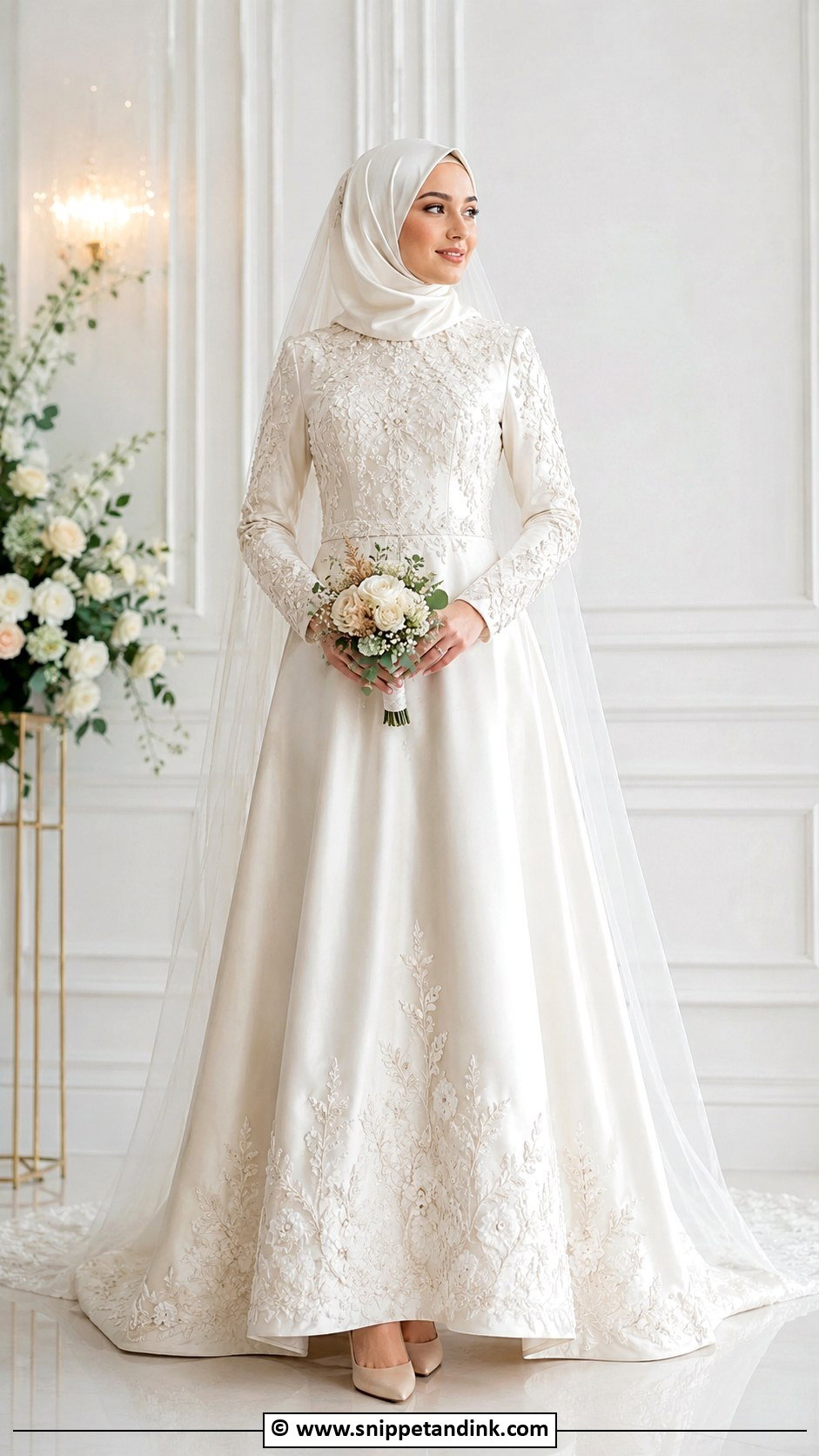
When embroidery runs along the sleeves, bodice and hem, it frames you the way jewelry would on a bride with a lower neckline. Floral vines and silver thread work especially well. Make sure every embroidered panel is lined, because embroidery on tulle is often sheer between the motifs. Keep the hijab plain so the work has room. Ivory, champagne or white thread each read differently against skin, so hold the sample up to your face in daylight before deciding.
6. Pearl Hijabi Wedding Dress
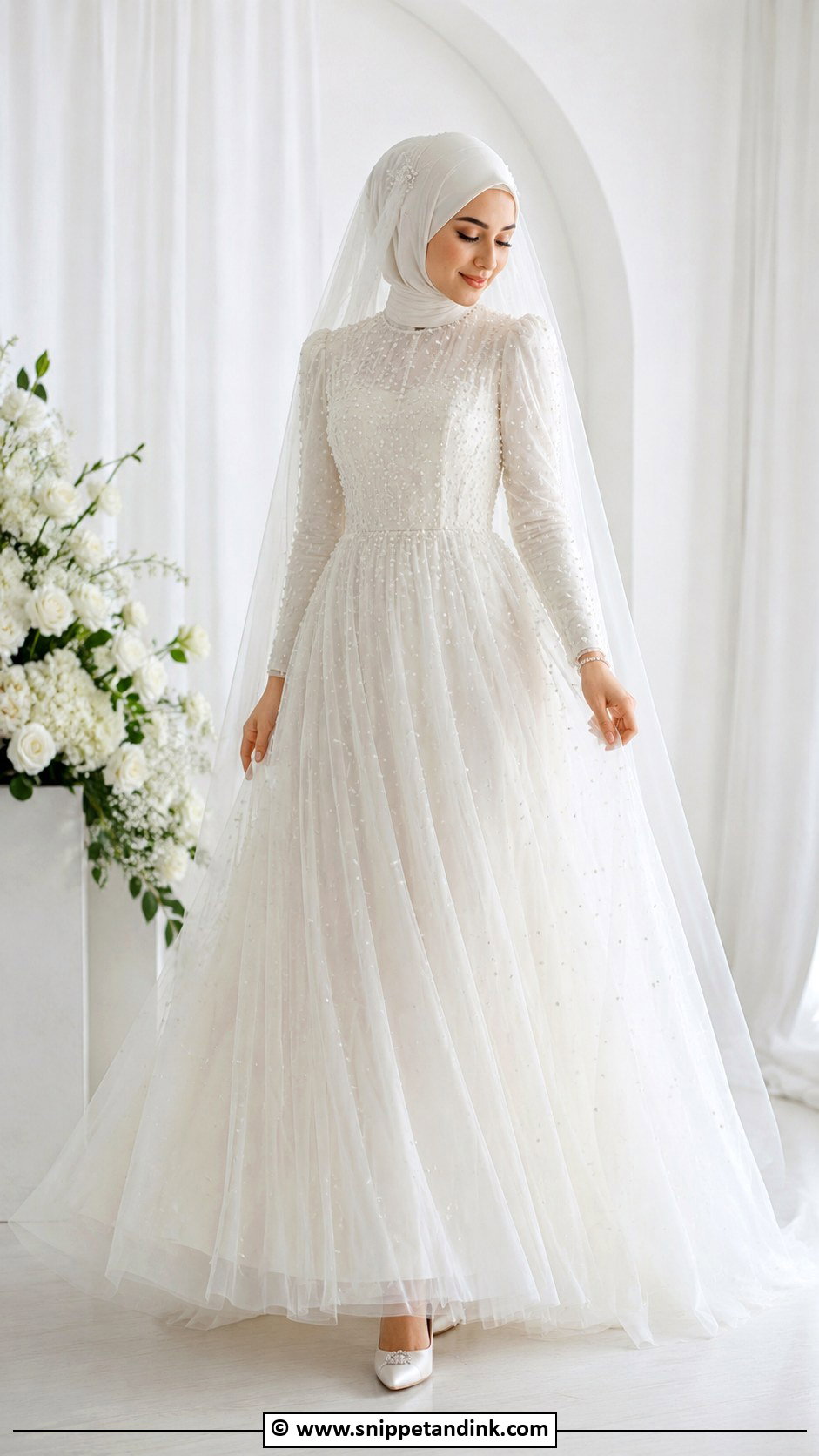
Pearls give a soft glow in photos, but I’d choose one place for them. Scattered pearls on tulle sleeves, pearl cuffs on crepe, or a pearl-edged hijab border: pick one and let the rest stay quiet. Pair the gown with a smooth chiffon hijab and a couple of pearl pins at the side. Sewn-on pearls can snag chiffon, so test how the hijab moves against a pearled shoulder before the day. Satin heels and a simple bouquet finish it.
7. Long Sleeve A Line Hijabi Wedding Dress
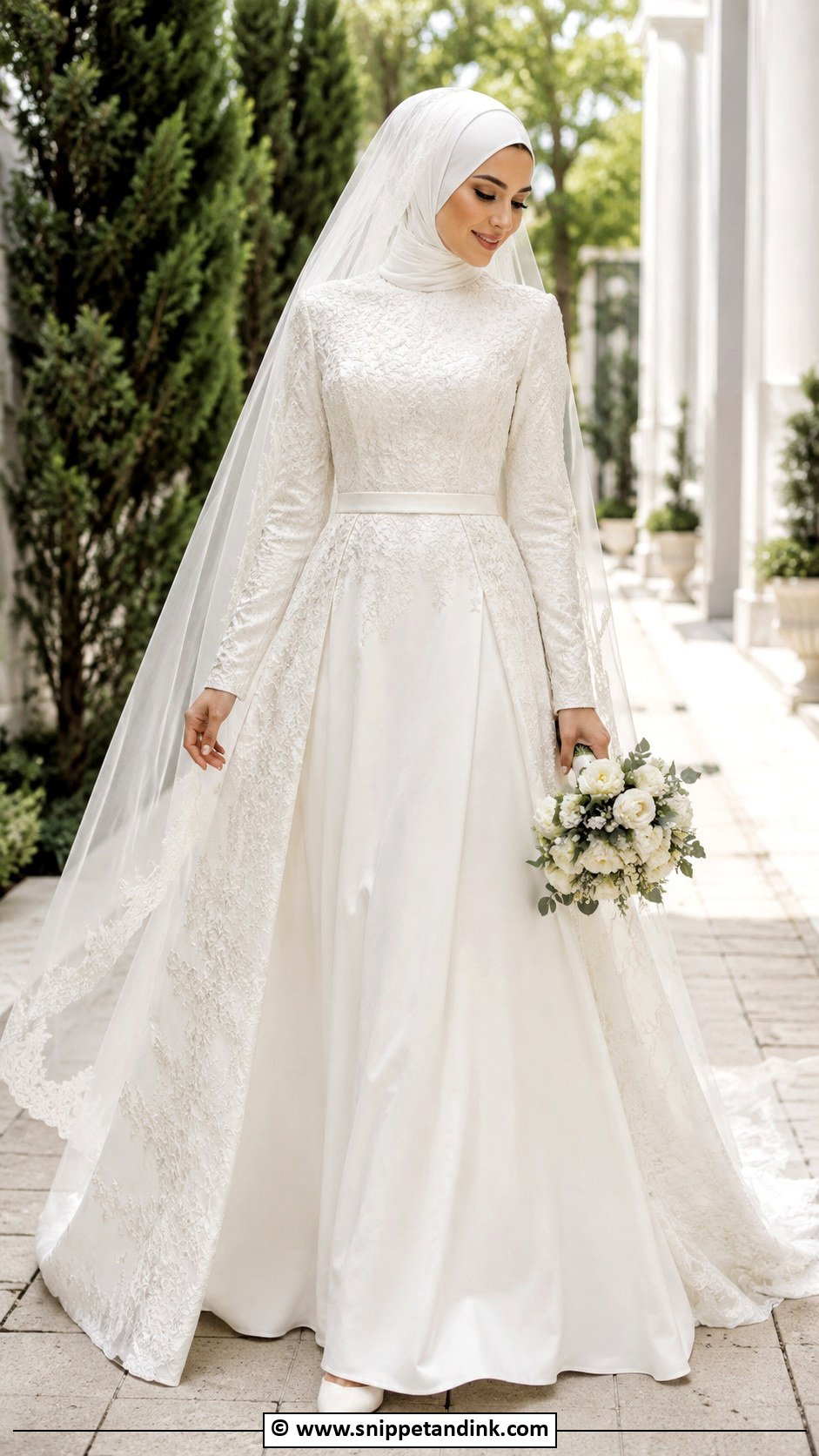
The A-line is the most forgiving shape I fit. It defines the waist and falls past the hips, so it suits most body types and stays comfortable through a long day. The detail I watch on modest gowns is the sleeve: a tightly fitted sleeve looks sleek but stops you raising your arms to hug or to make dua. Ask for a little ease at the underarm or a small gusset. A soft mock neck closes the gap under the hijab. A chiffon scarf, mid-height heels and a chapel veil complete it.
8. High Neck Hijabi Wedding Dress
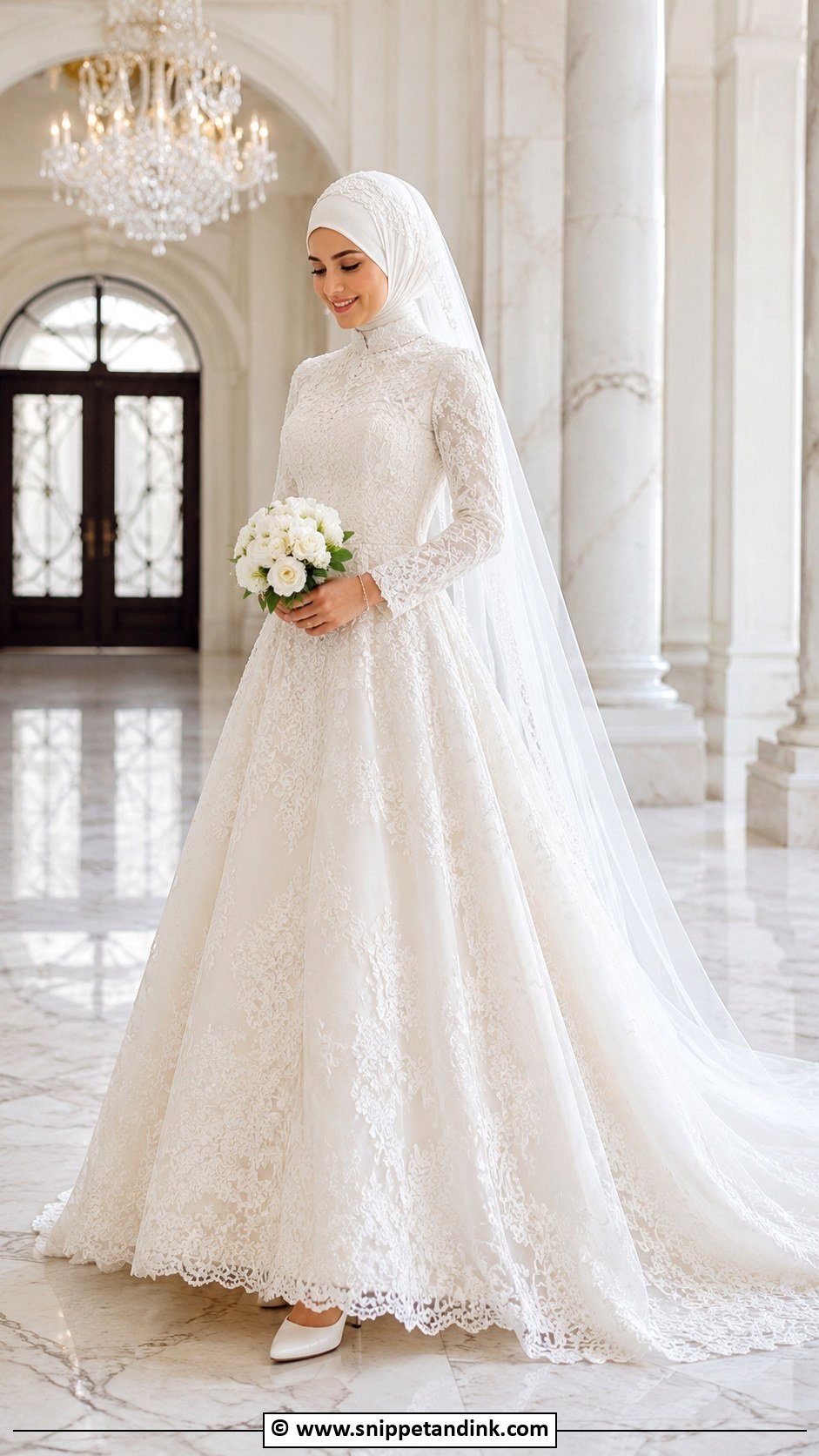
A high neck removes the most common modest-dress headache: the gap between where the scarf ends and the bodice begins. It frames the face cleanly and pairs naturally with long sleeves. Lace reads romantic, satin reads sleek, crepe reads minimal. Wrap the hijab smooth and close so the collar line stays visible. If the collar is beaded, skip necklaces altogether and wear rings or a single bracelet. Make sure the collar isn’t so tight that it pushes the hijab up when you turn your head.
9. Cape Hijabi Wedding Dress
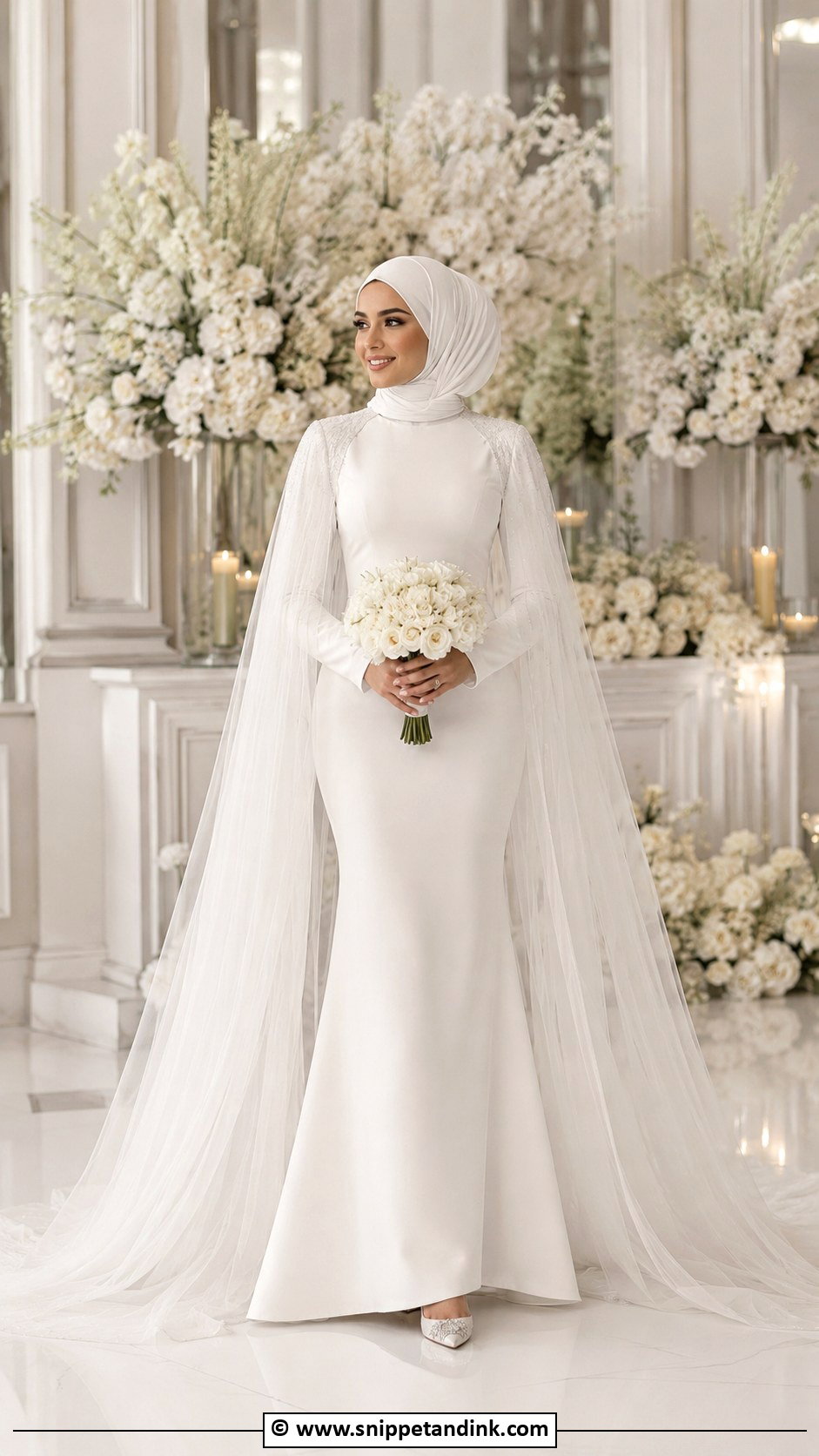
A cape gives the drama of a veil without anything pulling on the hijab, which is why I often suggest it for brides whose scarf slips under a heavy veil. Wear a fitted long-sleeve gown underneath and let the cape take the statement. Tulle capes float, while crepe or satin capes look sharper and more modern. Choose a detachable cape that hooks at the shoulder seams; you can take it off after the ceremony and you’ve got a second look for the reception.
10. Hijabi Wedding Dress With Train
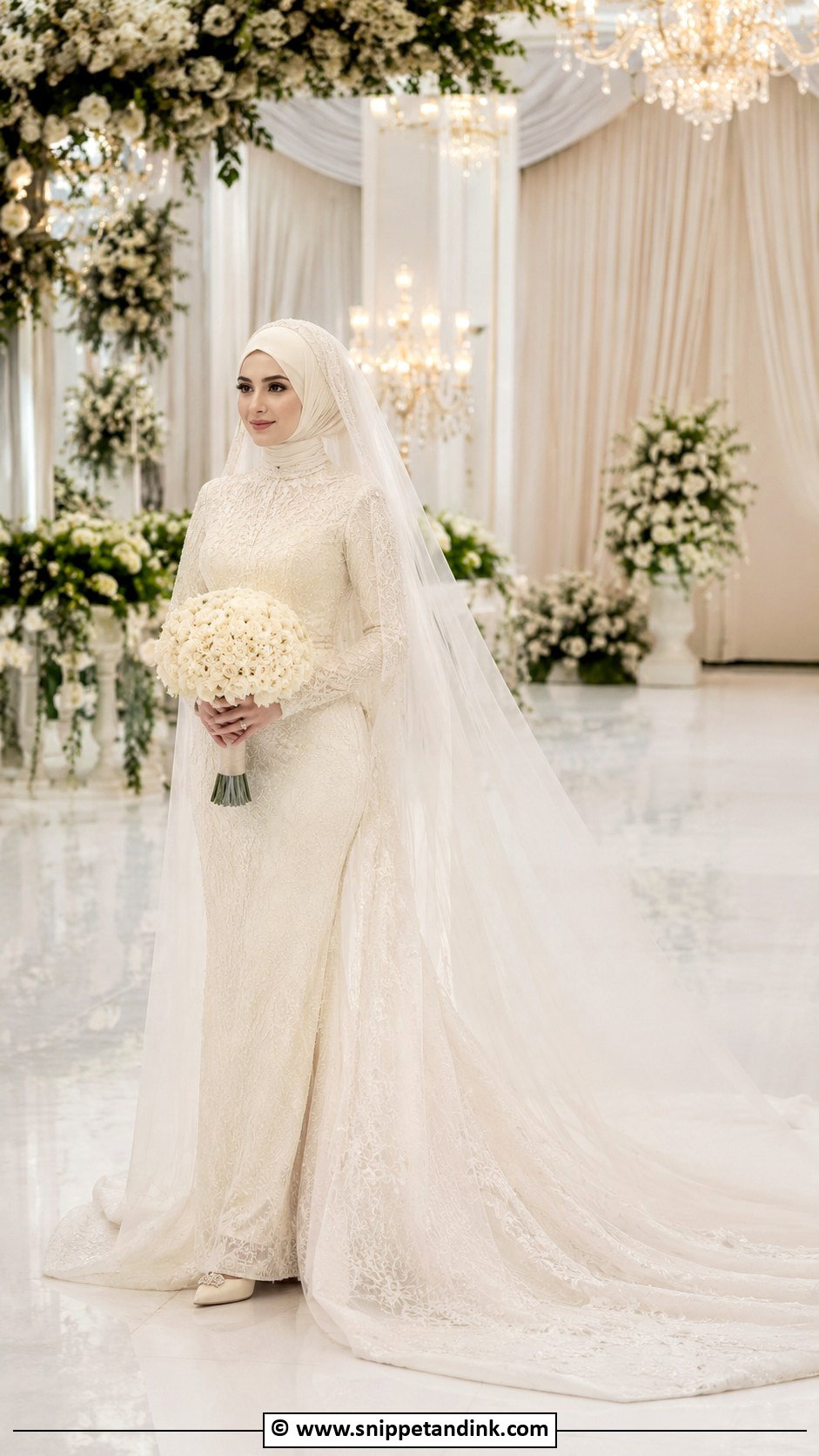
Train length is a venue decision as much as a style one. A chapel train is manageable in most halls, while a cathedral train needs a long aisle and someone to arrange it every time you stop. Ask your seamstress for a bustle so you can lift the train for the reception. Long sleeves, a covered neckline and a lined bodice keep the gown modest, and a structured waist balances the fabric behind you. A veil cut to blend into the train gives one unbroken line in back-view portraits.
11. Modest Mermaid Hijabi Wedding Dress
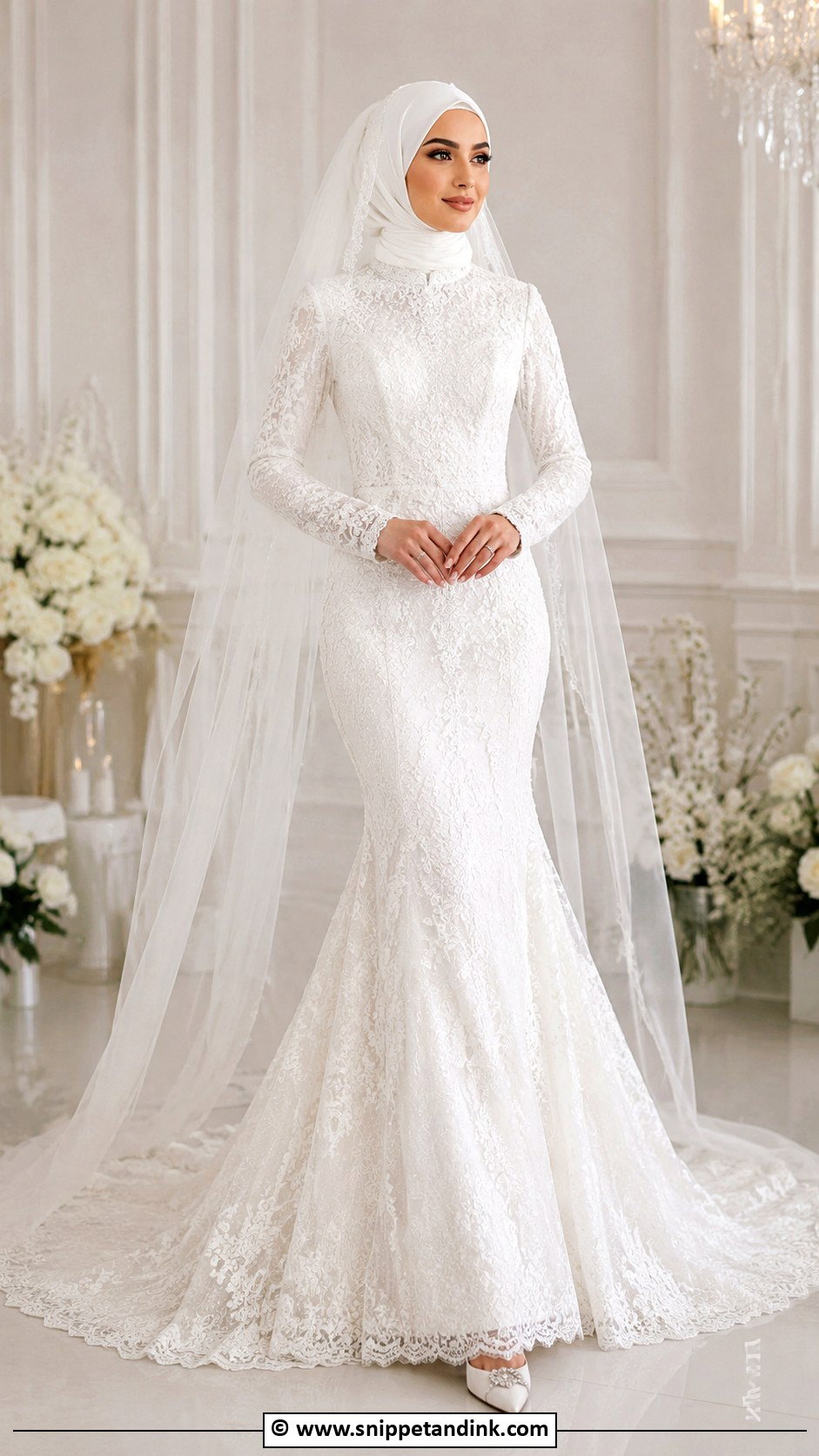
A modest mermaid hijabi wedding dress works when the fit is tailored rather than tight. Ask for the flare to start just below the knee, not mid-thigh, so you can walk and climb a stage step. Stretch crepe or lined lace keeps the shape comfortable. If the silhouette feels too revealing once you see it on, a detachable overskirt or cape softens it without changing the gown. Pointed heels lengthen the line, and a smooth hijab keeps the top half clean.
12. Hijabi Wedding Dress With Overskirt
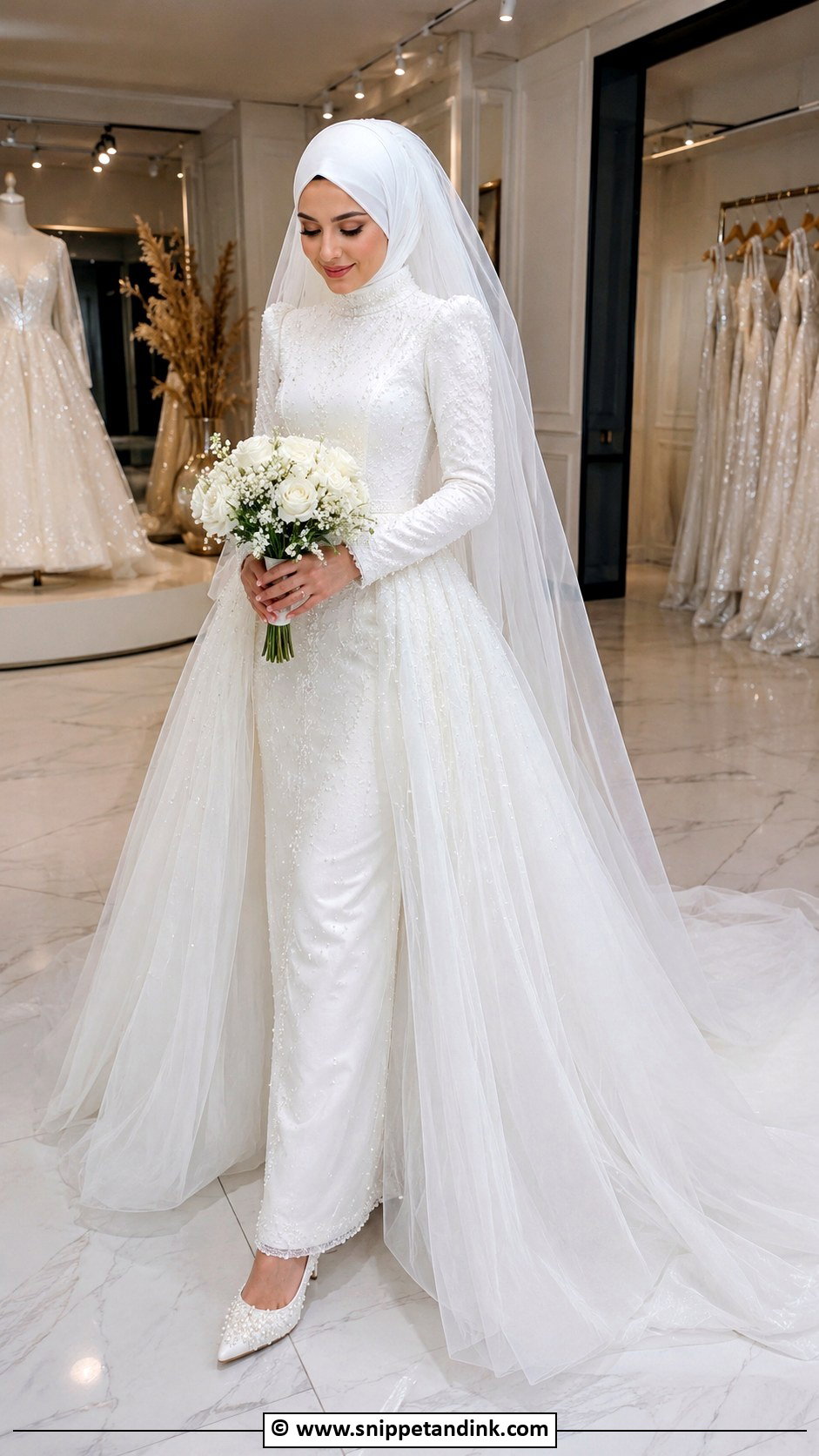
The overskirt is the most practical modest piece I know for a long wedding day. You wear the full volume for the ceremony and portraits, then unhook it for dinner and dancing. The base can be a column, sheath or mermaid shape. Matching fabric looks most polished, while tulle reads lighter. Have the overskirt fastened with hooks and a hidden waistband rather than snaps, which pop open when you sit. A clean hijab wrap and long veil suit both versions of the outfit.
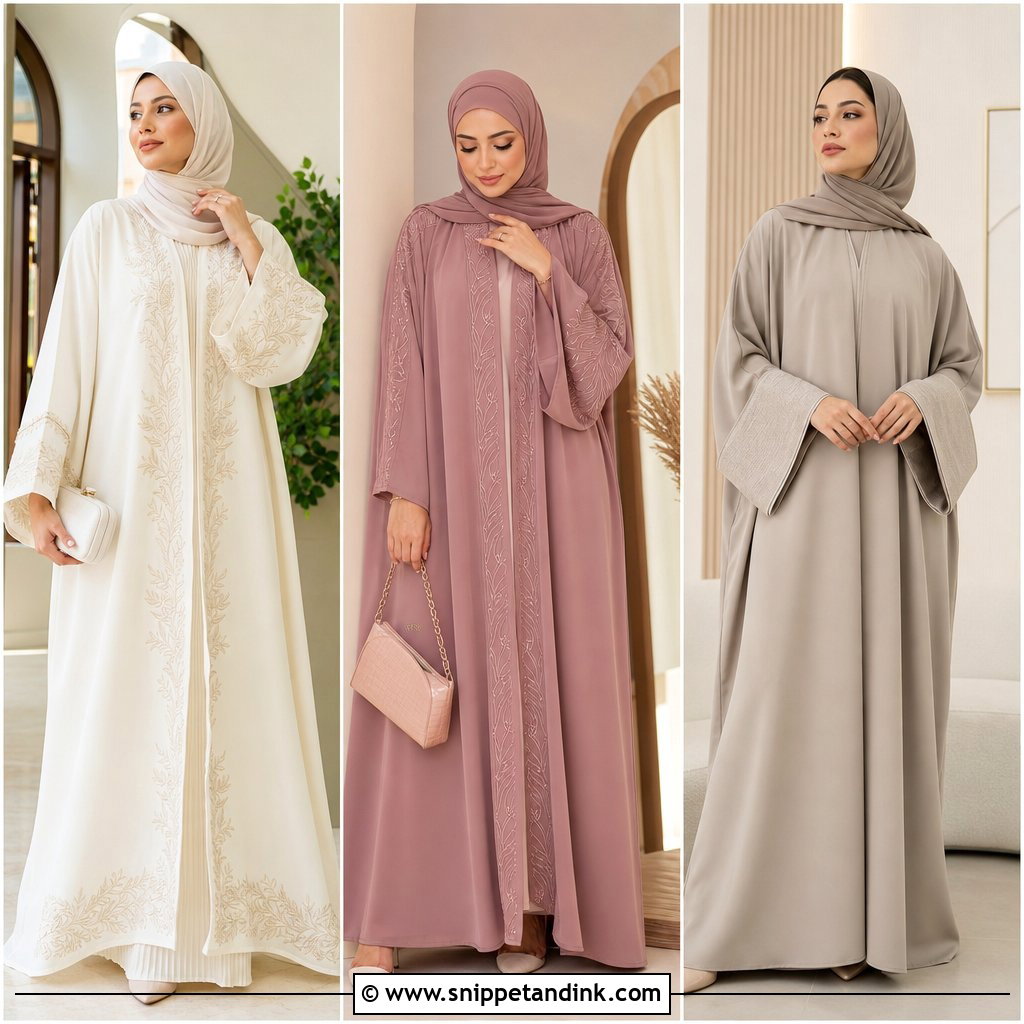
13. Bridal Abaya Hijabi Wedding Dress
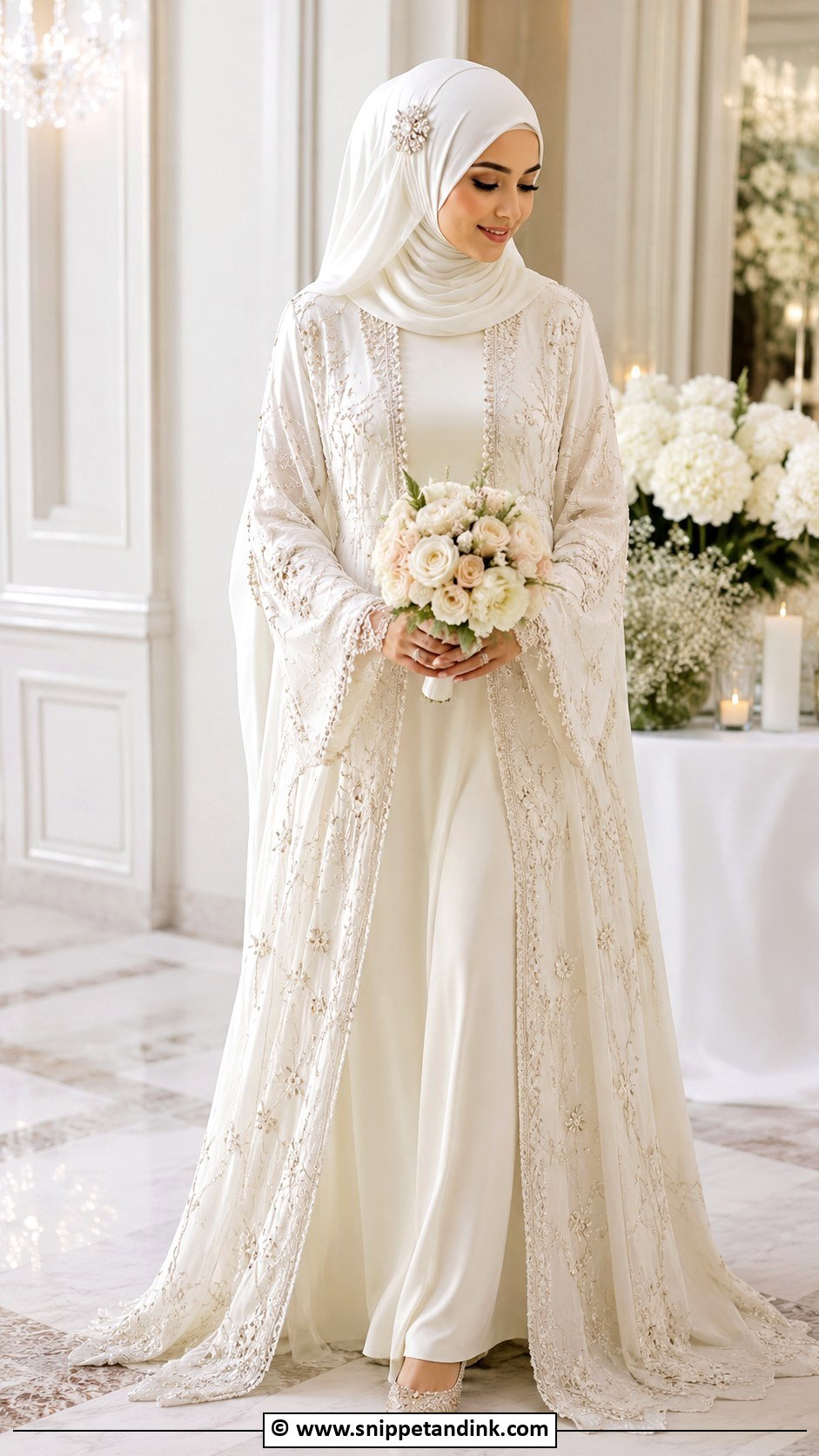
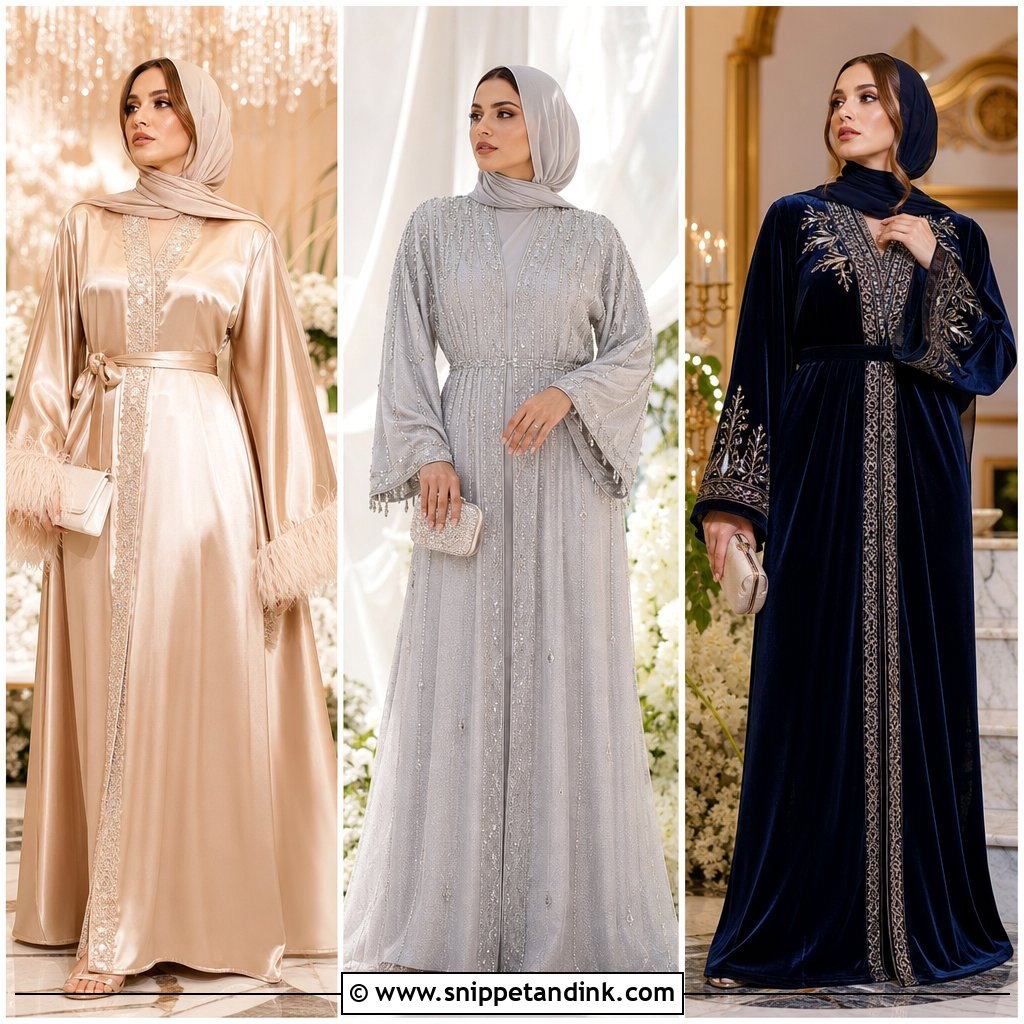
A bridal abaya hijabi wedding dress flows loose, so comfort is built in, and the bridal feeling comes from embroidery, beadwork, pearls or lace panels. A matching inner slip or dress underneath is essential, because many bridal abaya fabrics are semi-sheer under camera flash. Ivory, champagne and soft gold all suit it. Coordinate the hijab in the same fabric family and add a jeweled pin. For a nikkah held seated on the floor, choose flat embellished shoes rather than heels.
14. Kaftan Hijabi Wedding Dress
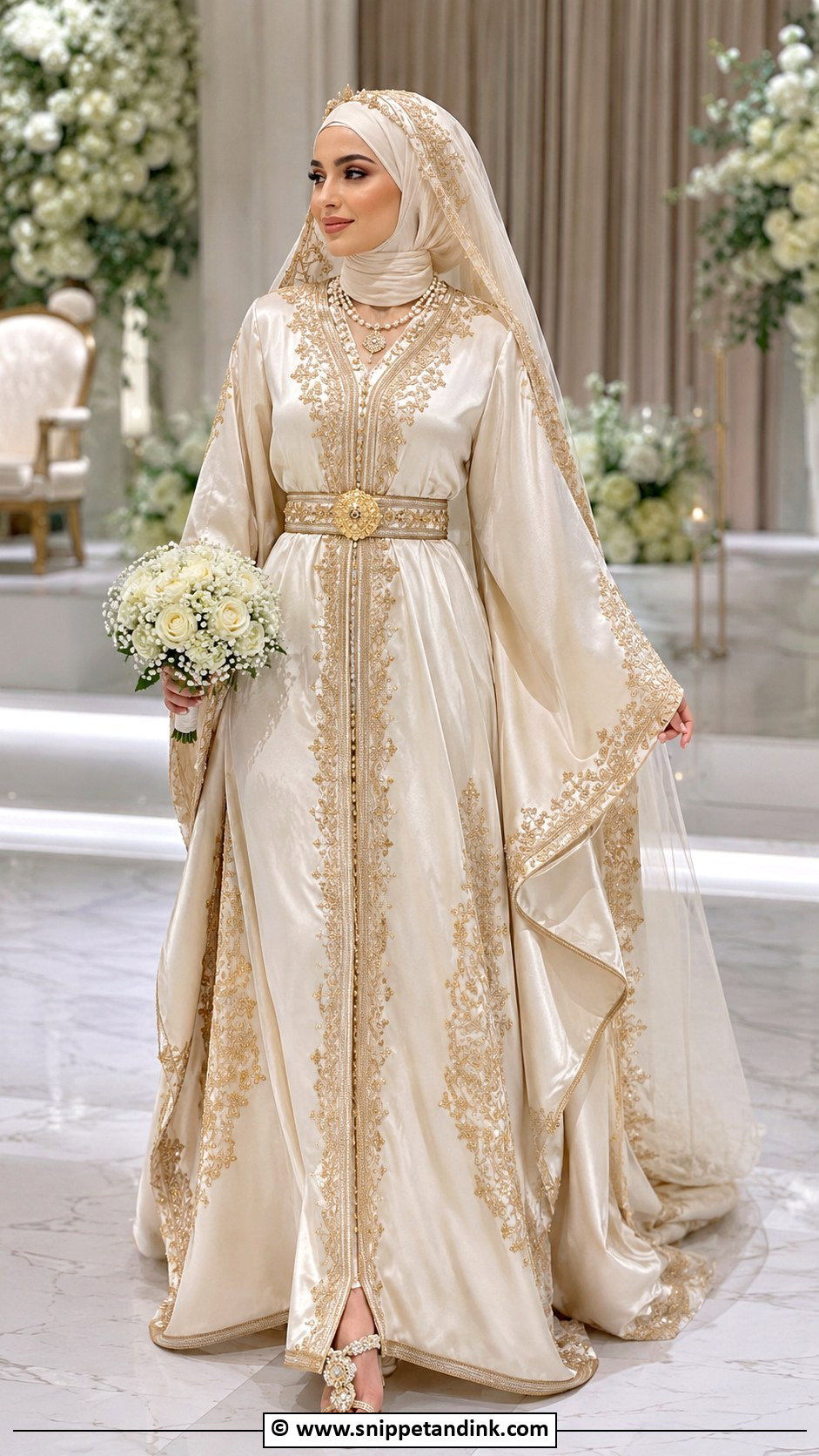
Kaftans are loose and comfortable, but without structure they can look like loungewear. I look for a defined waist seam, a belt or concentrated front embellishment that gives the kaftan a center. Crystals and metallic thread around the neckline frame the face nicely under a matching hijab. A long veil adds a traditional finish if you want one. Gold or pearl jewelry suits ivory and champagne kaftans, and the shape stays cool for indoor receptions.


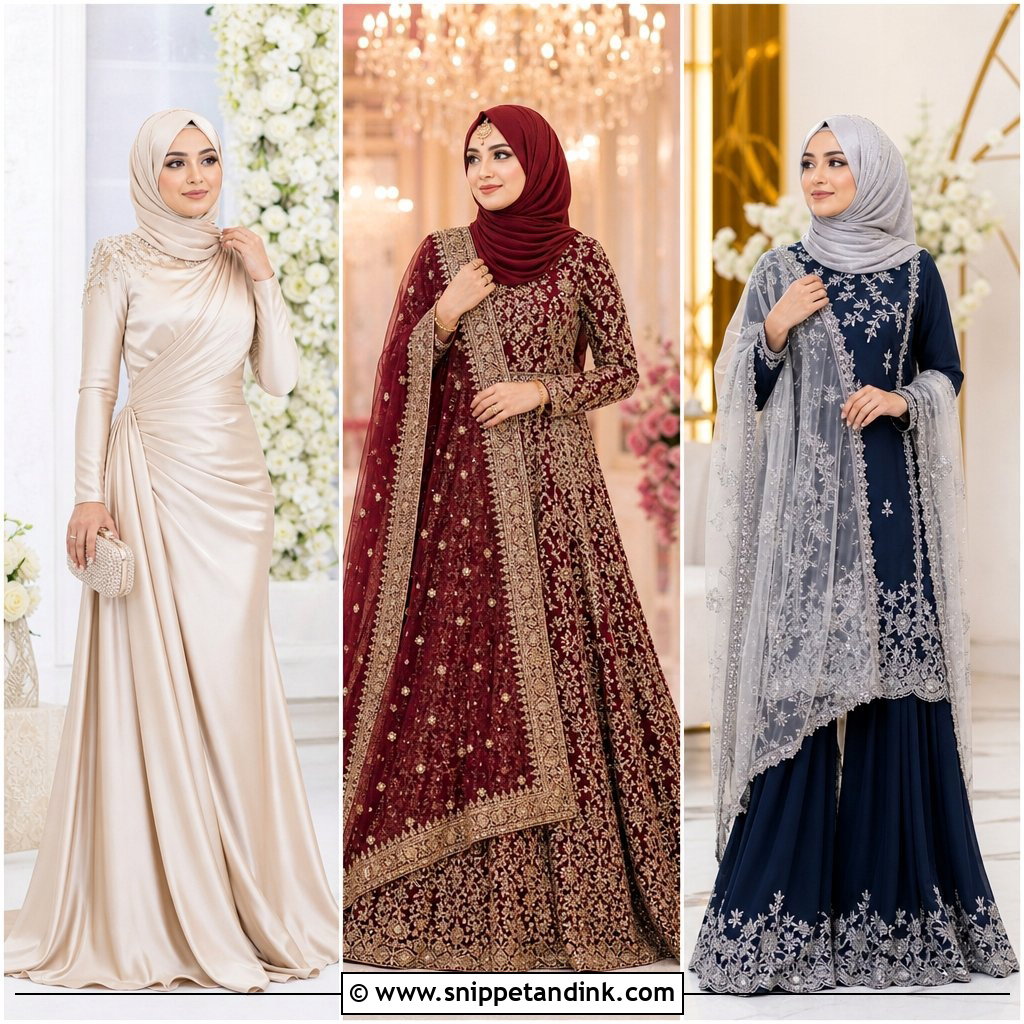
15. Pakistani Hijabi Wedding Dress
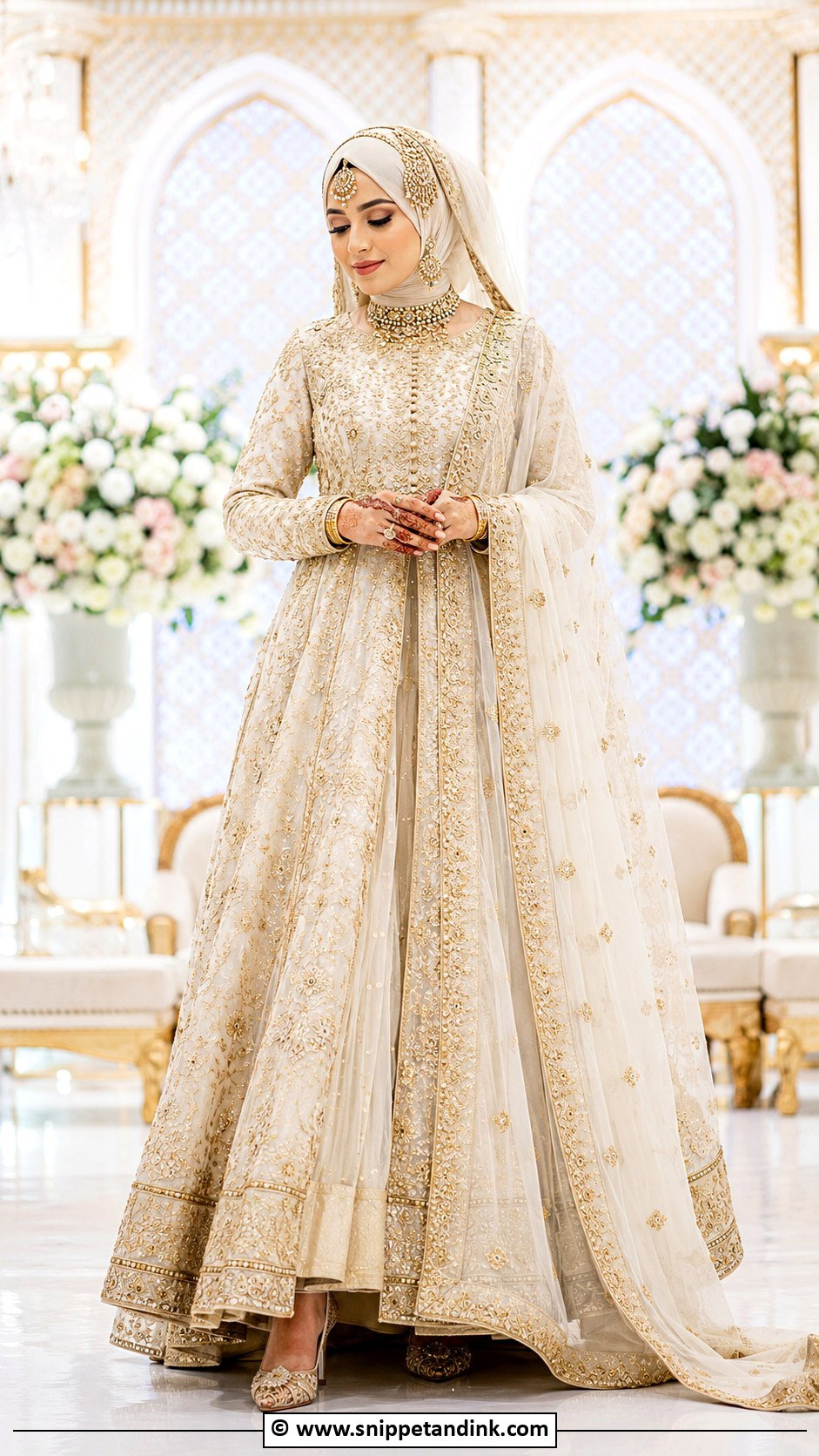
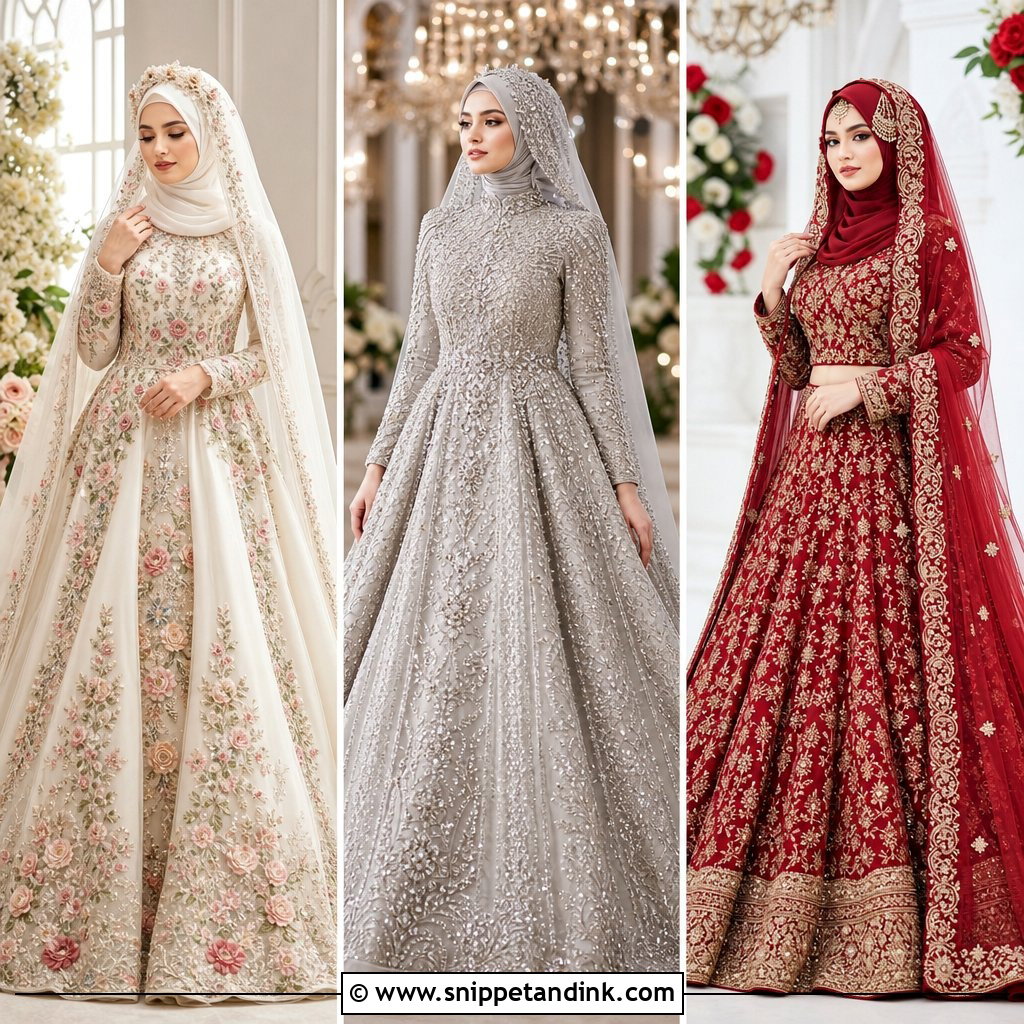
A Pakistani hijabi wedding dress layers rich embroidery over a long frock, pishwas, gharara, sharara or lehenga, so coverage is usually built in. What needs planning is the head: a dupatta draped over a hijab is a lot of fabric, and heavy dupattas drag the scarf back. I pin the hijab first with an underscarf, then anchor the dupatta with pins into that base, not into the hijab itself. Ivory, gold and blush suit a modest look; deeper reds feel traditional. Keep the jhumar or tikka small enough to sit flat on the scarf.
16. Lehenga Hijabi Wedding Dress
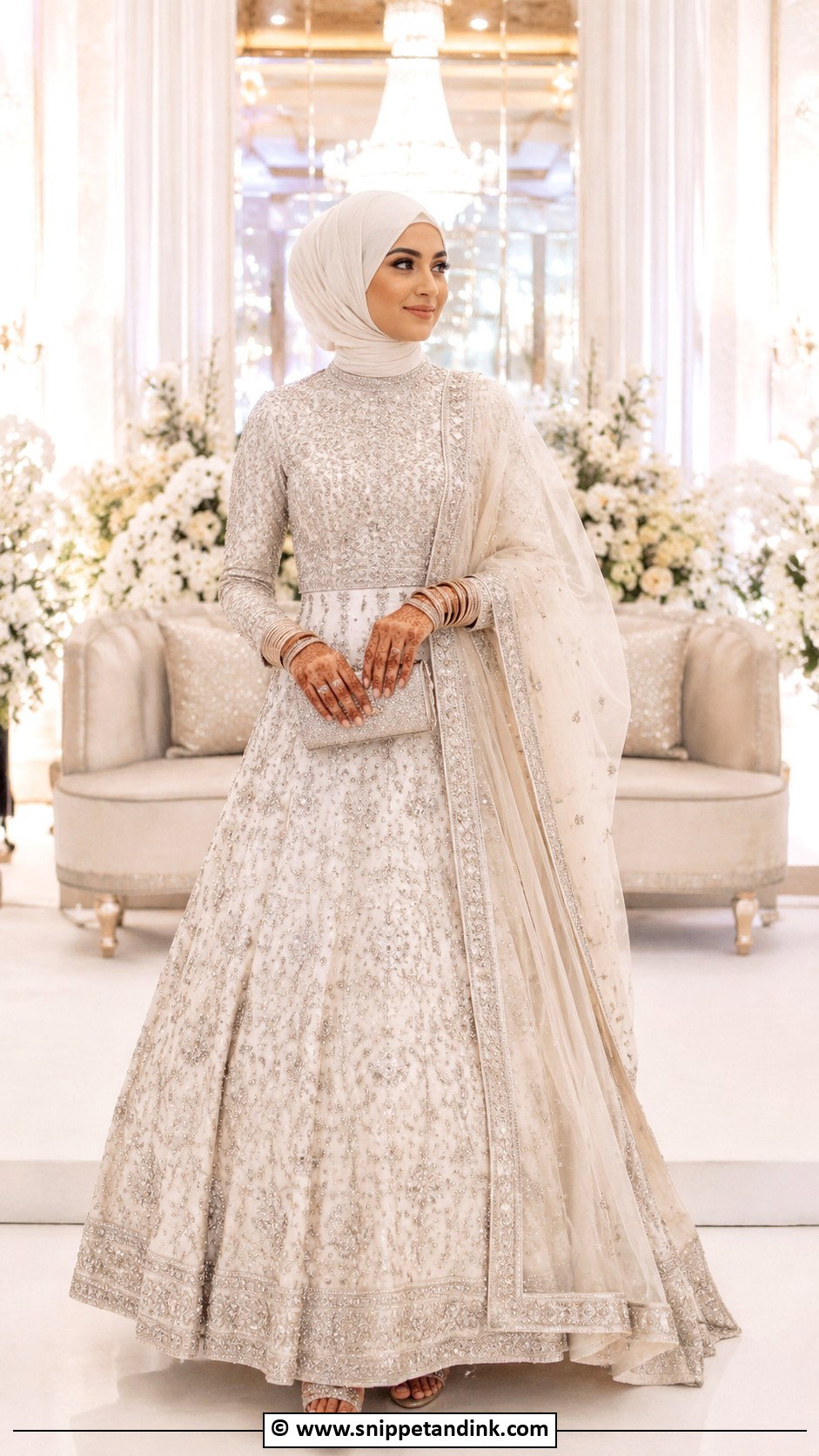
A lehenga gives a skirt-and-blouse look that’s easy to make modest. Choose a long-sleeve, high-neck blouse that’s long enough to meet the skirt, so no midriff shows when you raise your arms. Silk, organza or embroidered net all hold the skirt’s shape. The dupatta can go over the hijab, across the shoulders or be pinned neatly at one side. Keep the hijab close-fitting underneath so the layers don’t shift. Embellished heels and bangles complete the outfit for a South Asian reception.
17. Sharara Hijabi Wedding Dress
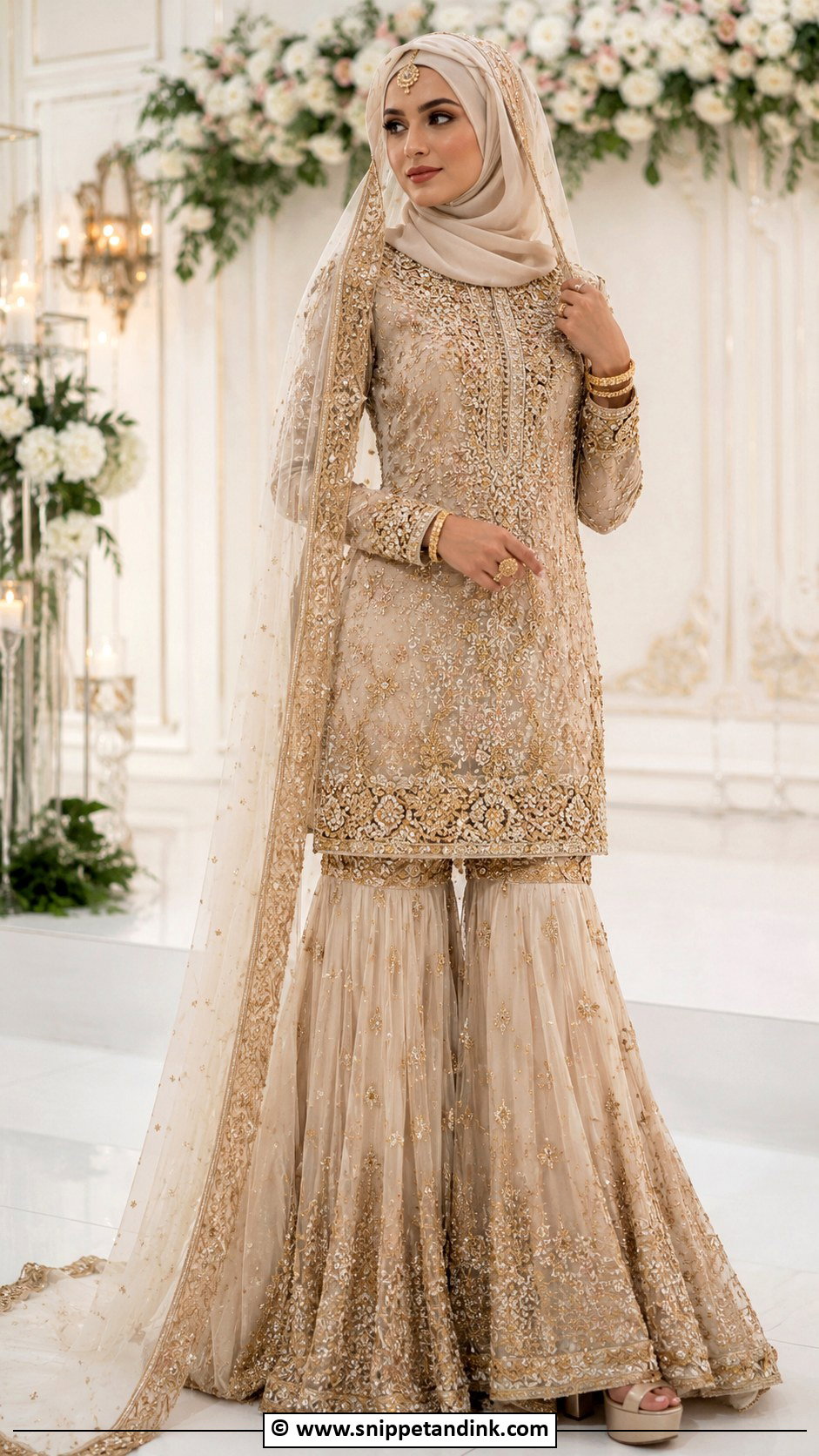
A sharara gives you something you rarely get in bridal wear: the freedom to walk fast and sit comfortably. For modest coverage, pair it with a longer kurta or peplum top with full sleeves and a high neck. Silk, georgette and organza all swing nicely. The wide legs hide your shoes and can catch on heels, so have the hem finished at the height of the exact shoes you’ll wear. Coordinate the hijab and dupatta in soft gold, ivory, blush or champagne.
18. Gharara Hijabi Wedding Dress
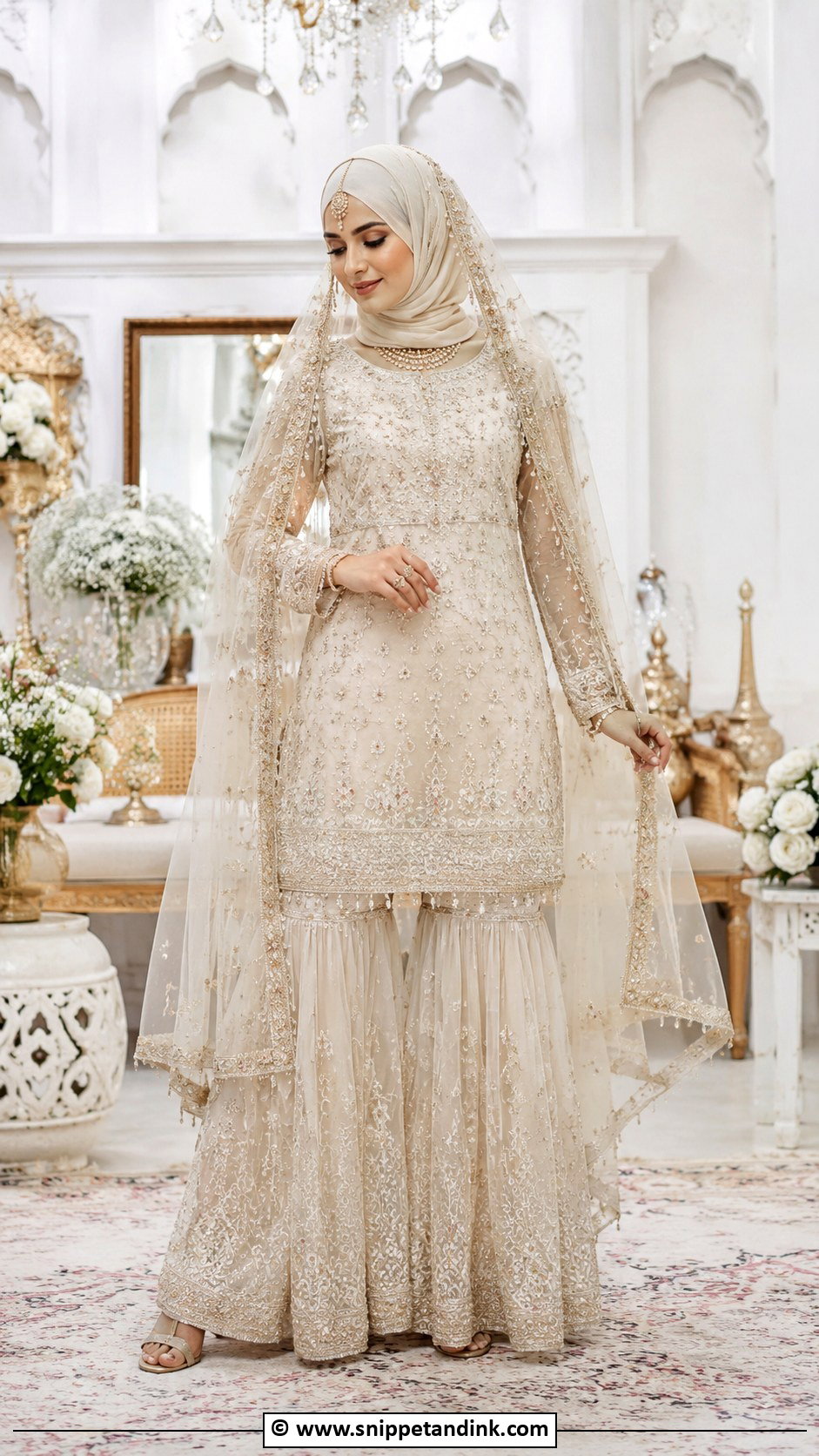
The gharara’s shape, fitted to the knee and flaring below, is unmistakable and heritage-rich. A bridal version carries heavy embroidery at the hem, sleeves and neckline, and a long kurti above keeps it covered. Ask your tailor to leave enough room at the knee seam to sit on a stage sofa without the fabric straining. The flared section is heavy at the ankle, so comfortable heels with a closed back stop you stepping out of them. Match the hijab to the base color and let the dupatta bring shimmer.
19. Moroccan Hijabi Wedding Dress
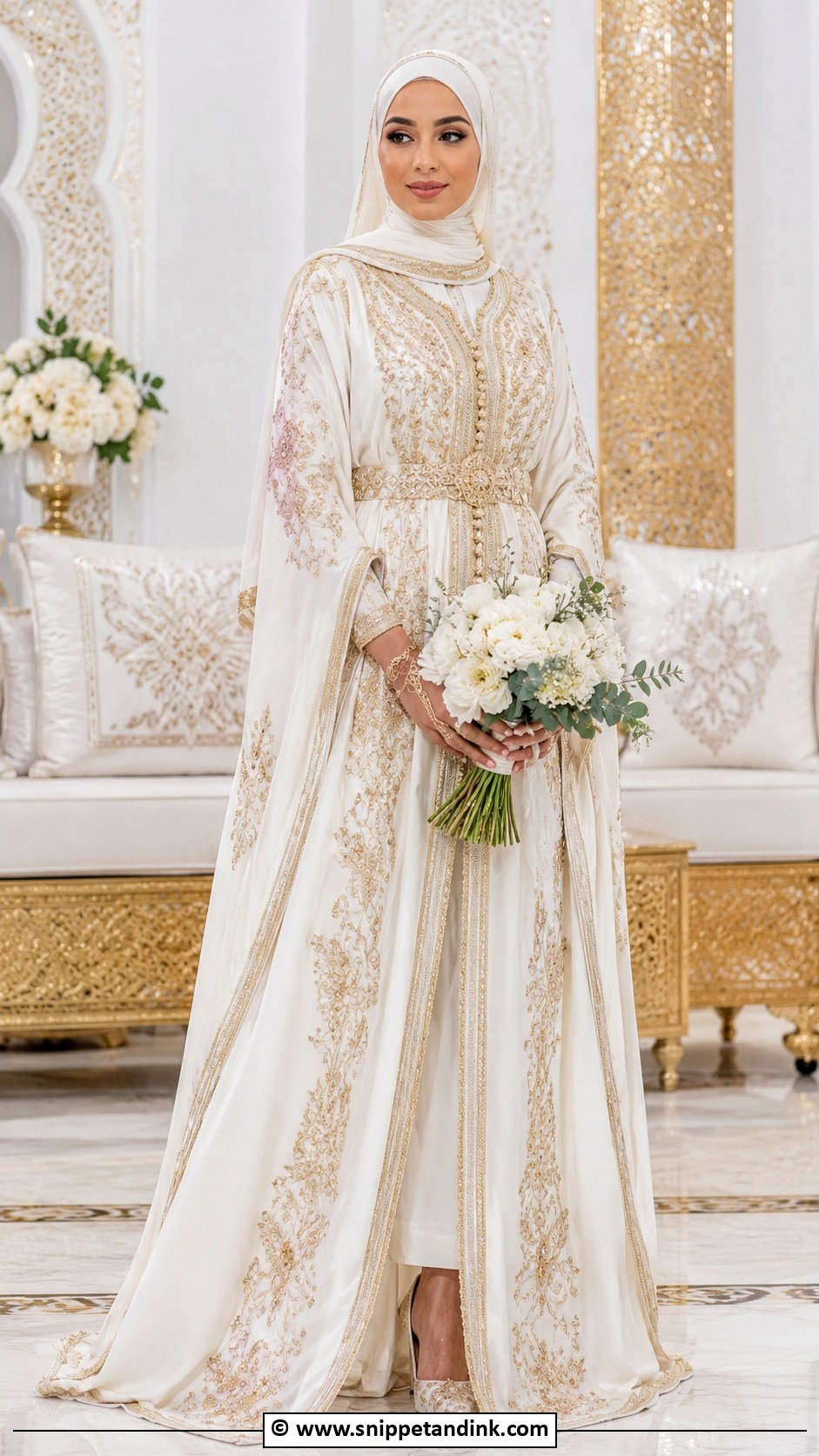
A Moroccan hijabi wedding dress starts from the kaftan or takchita: ornate embroidery, metallic thread and a statement belt at the waist. It’s naturally modest and regal. White, ivory, emerald, gold and soft blush can all be bridal, and Moroccan brides often wear several of them across the evening. Tuck the hijab smoothly under the neckline so the embroidered collar stays visible. The belt is heavy, so try sitting with it on; some brides loosen it a notch for dinner.
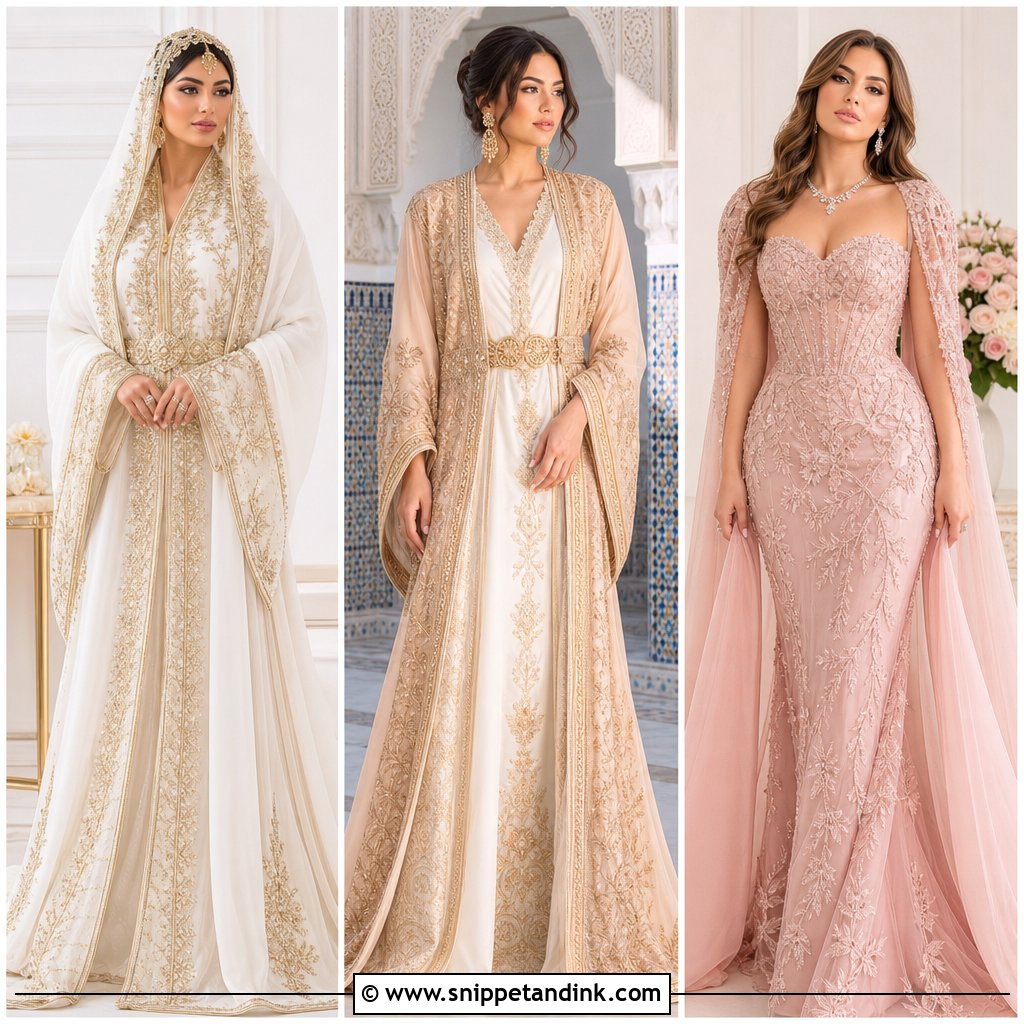
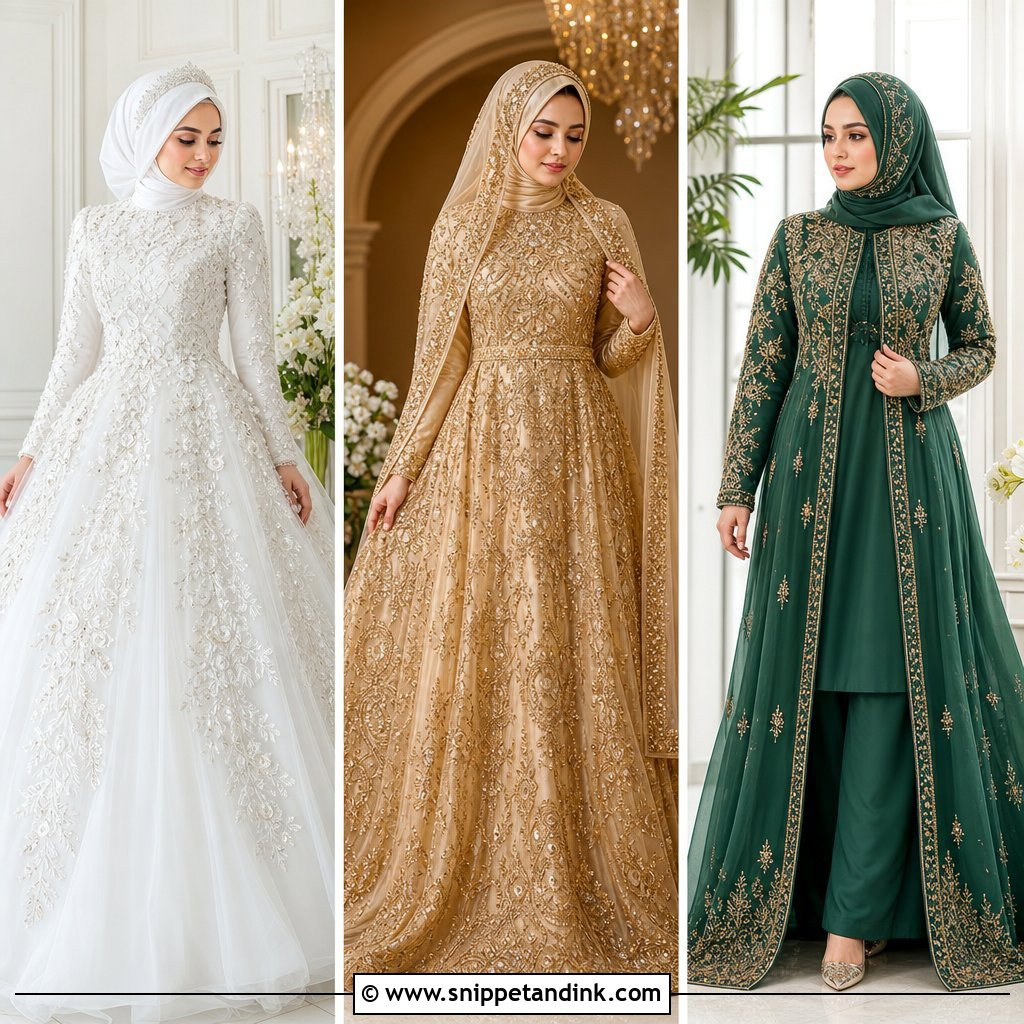
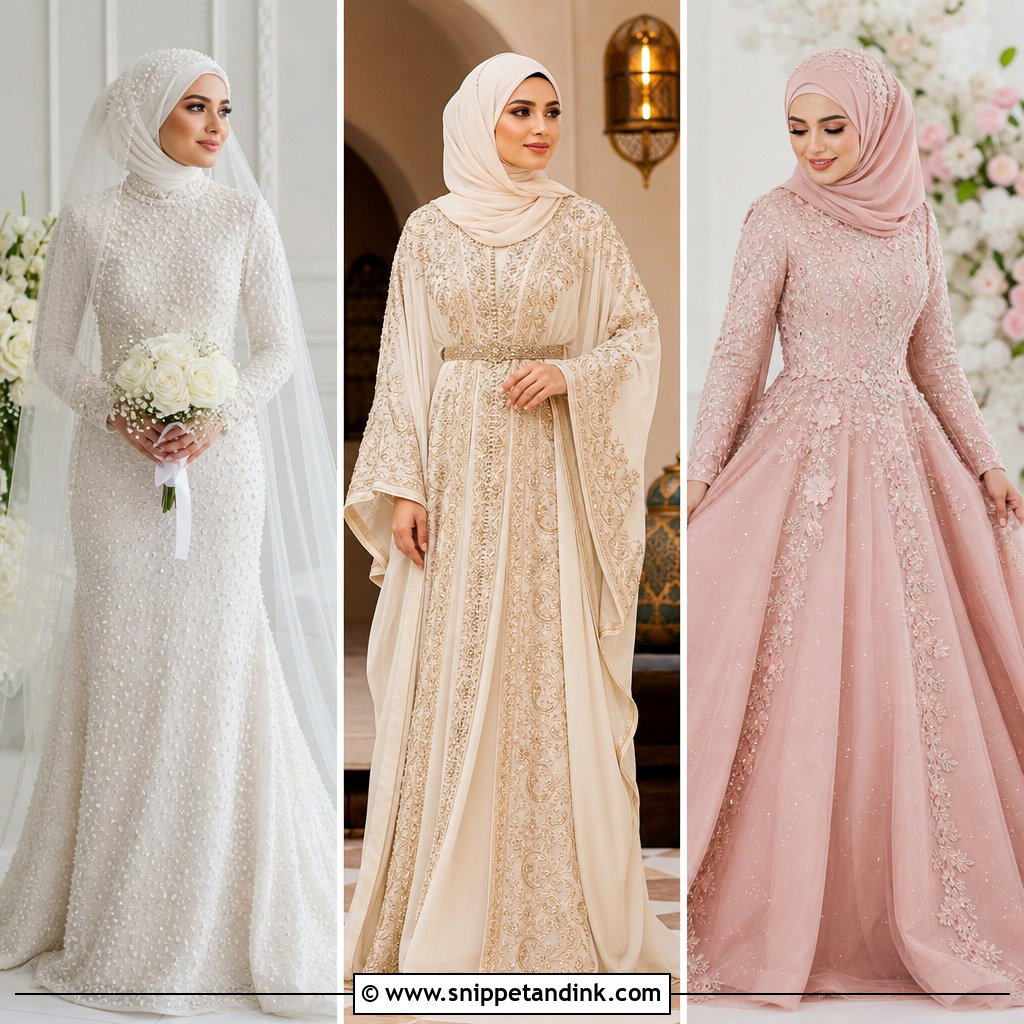
20. Turkish Hijabi Wedding Dress
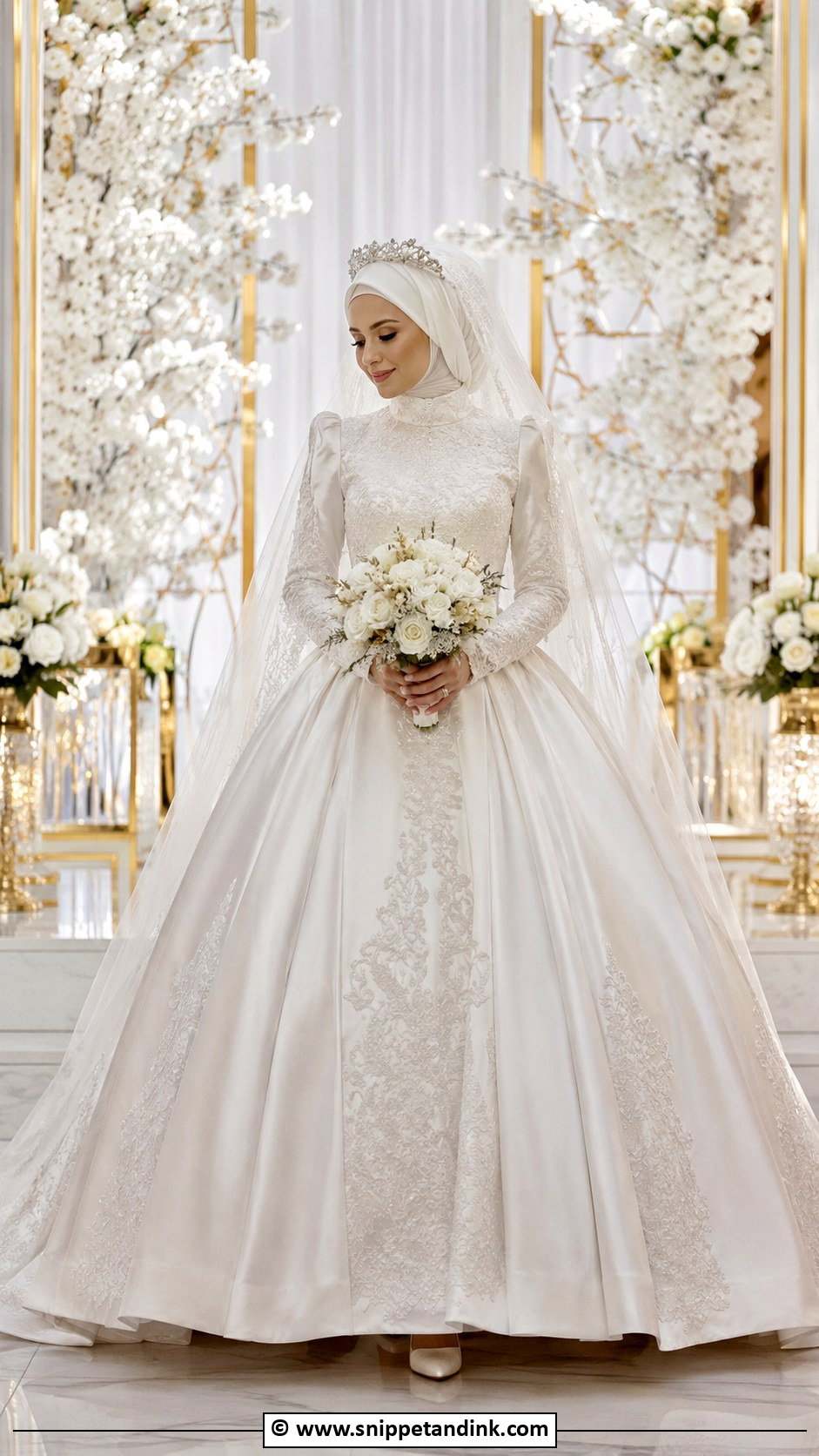
Turkish modest bridal gowns lean toward structure: high necklines, long sleeves, fitted bodices, full skirts and fine lace overlays, often with a jeweled crown sitting on top of the wrapped hijab. For the crown to stay level, the hijab needs a firm base underneath, usually a bonnet-style underscarf with a little volume at the crown. Choose a gown with a skirt that moves easily if there’s dancing at the reception. Satin and tulle with delicate beading are typical.
21. Minimalist Hijabi Wedding Dress
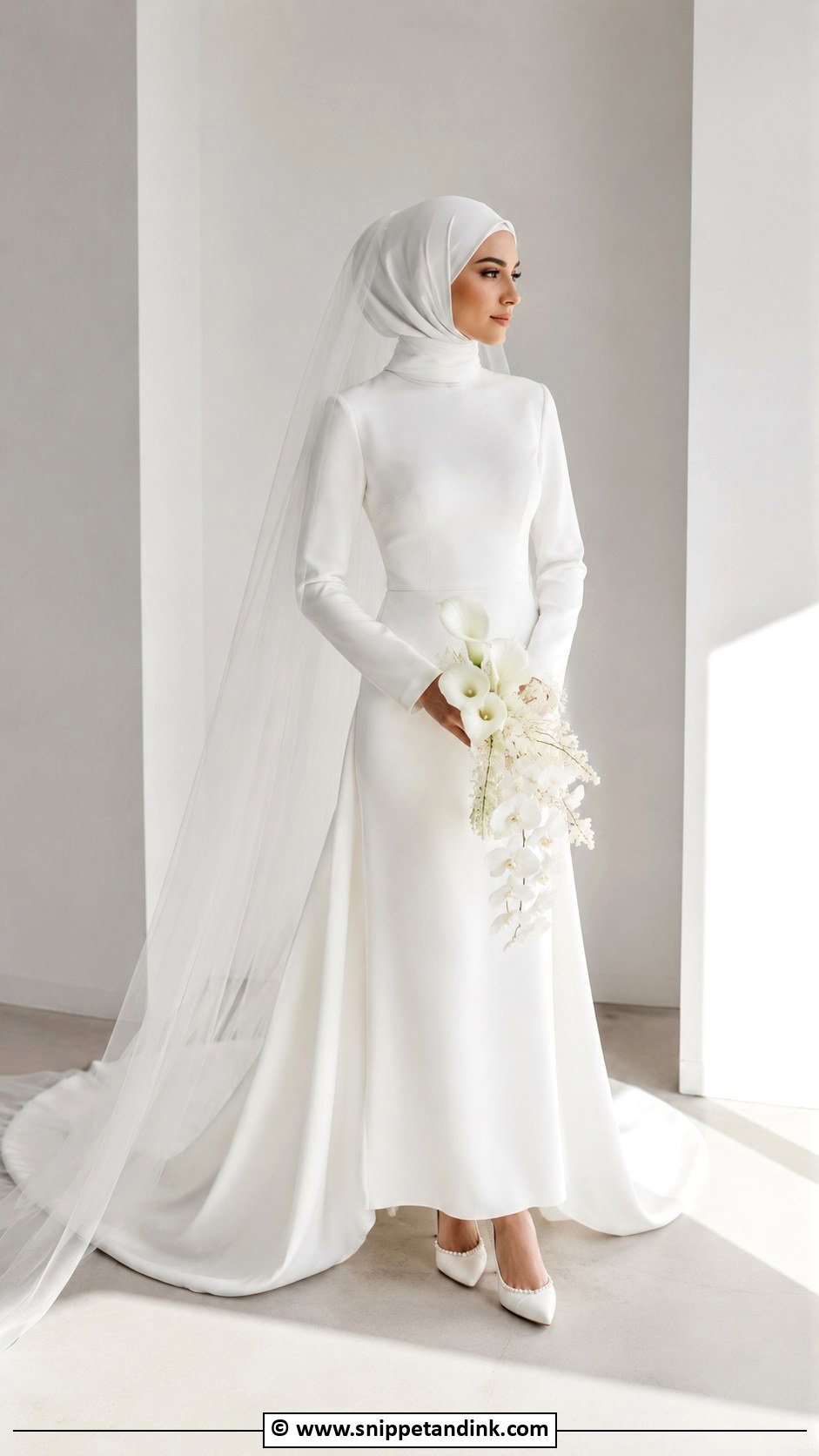
Minimalism in a modest gown means the tailoring has to be flawless, because there’s no lace or beading to hide a wrinkle at the shoulder. Matte crepe, satin and mikado all hold a clean line. Focus on a smooth high neck, long sleeves that end exactly at the wrist bone, and a skirt that flatters your shape. A matching plain hijab and a sculptural bouquet or pearl veil add just enough. I’d book one more fitting than usual for this style.
22. Beaded Hijabi Wedding Dress
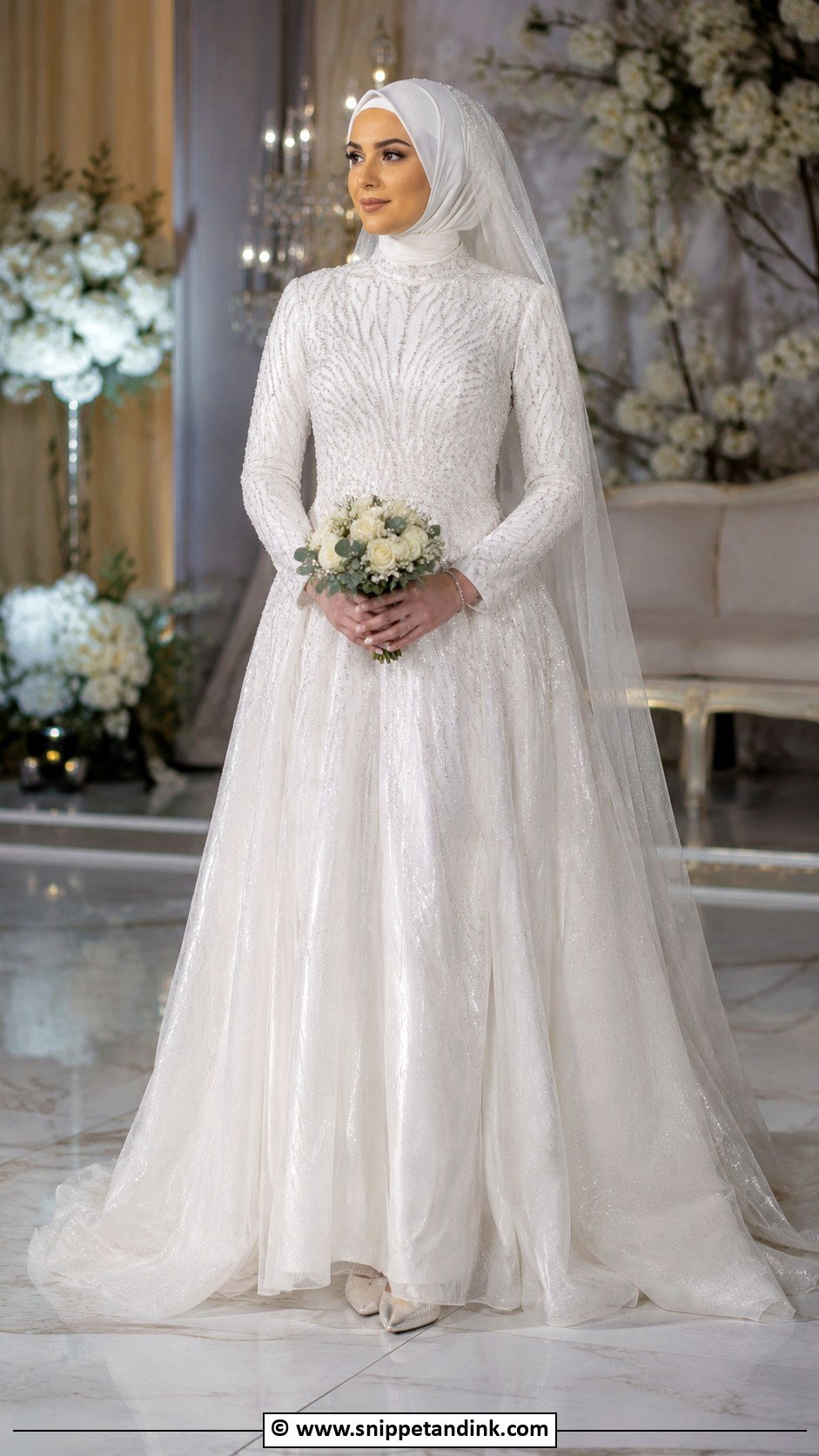
Beading brings sparkle without exposing anything, which suits an evening reception. Ivory beads glow softly, while silver or crystal beading looks more glamorous under lights. Heavily beaded sleeves are heavier than they look, so try lifting your arms for a few minutes at the fitting. Keep the hijab plain and let a lightly shimmering veil tie the look together. Beads can snag a chiffon scarf, so arrange the hijab ends to fall in front of, not over, a beaded shoulder.
23. Tulle Hijabi Wedding Dress
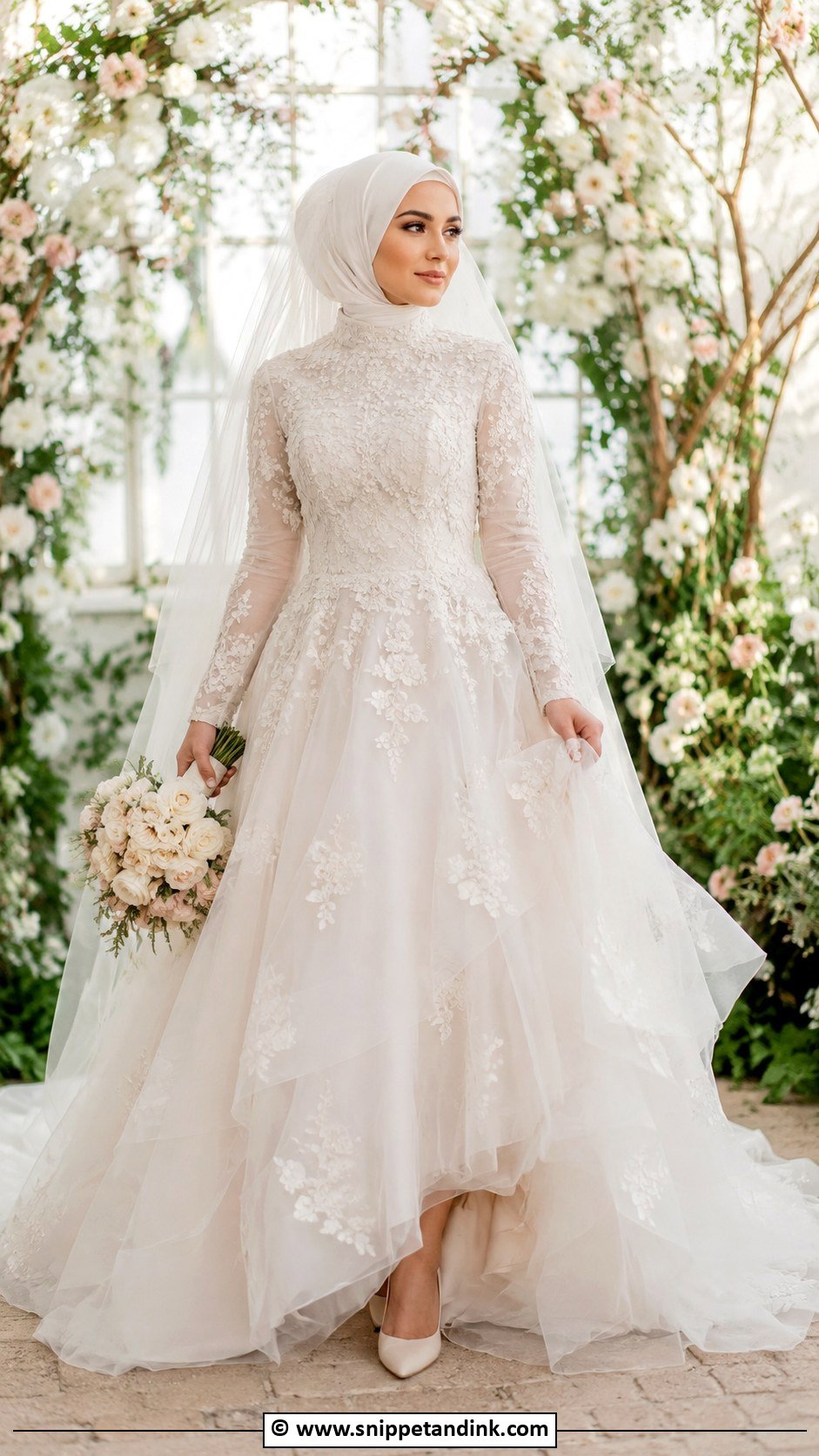
Tulle is airy and soft, good for a spring or summer wedding outdoors. The catch for modest brides is that tulle sleeves are see-through unless they’re lined, so ask for a fine stretch mesh or crepe lining in your skin tone or in ivory. Choose a high neckline. A tulle veil sits naturally with this gown, and a chiffon hijab keeps the face area smooth. Scattered pearls or floral appliqué add texture without much weight.
24. Organza Hijabi Wedding Dress
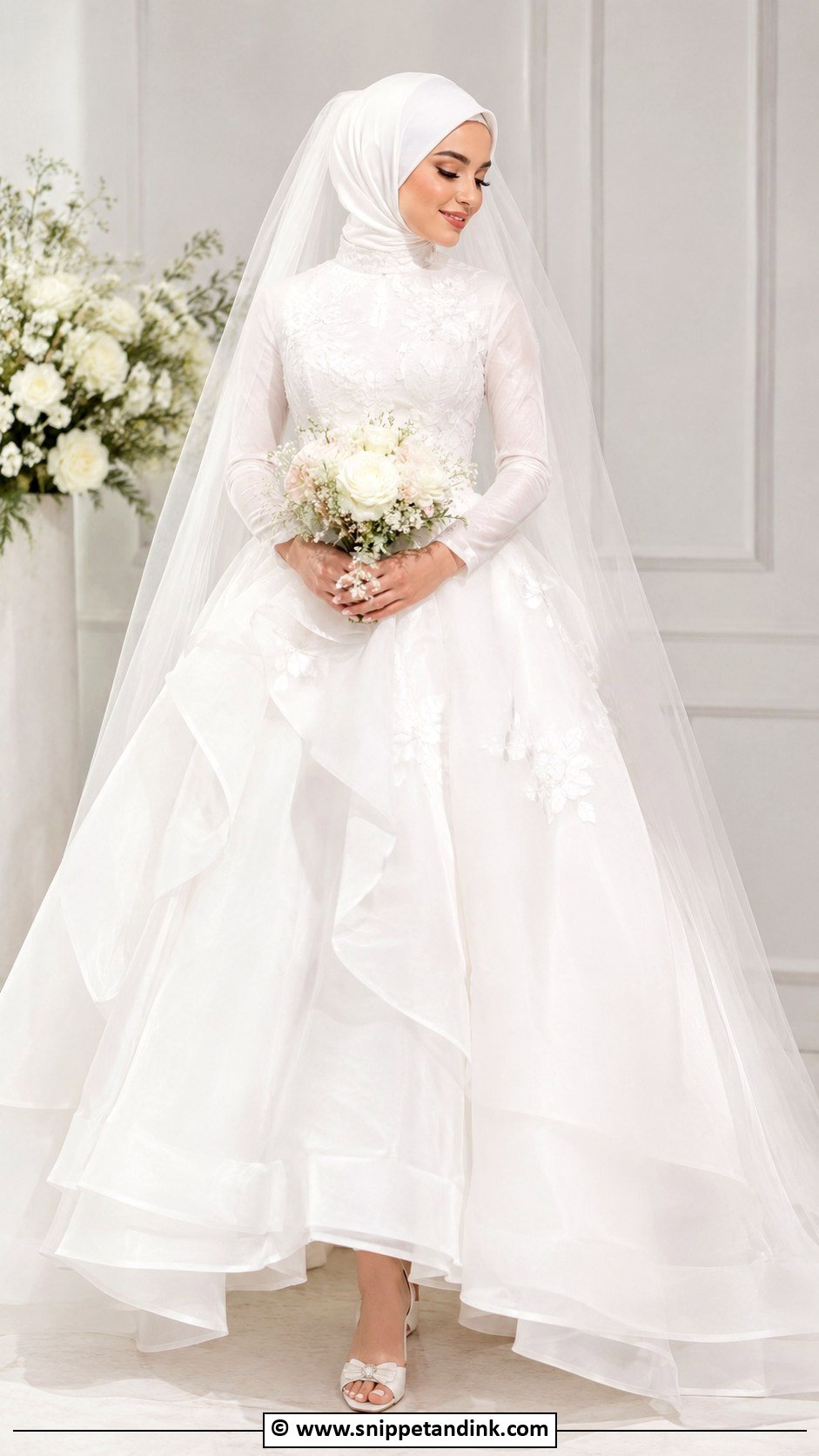
Organza holds volume while weighing very little, so it’s the fabric I’d choose for puff sleeves and structured layered skirts. It’s crisp and slightly sheer, so lining is non-negotiable for coverage. The crispness also means it creases sharply if packed badly; travel it on a hanger in a long garment bag. Subtle floral appliqué suits it. A smooth hijab balances the stiff fabric, and a structured veil keeps everything in proportion.
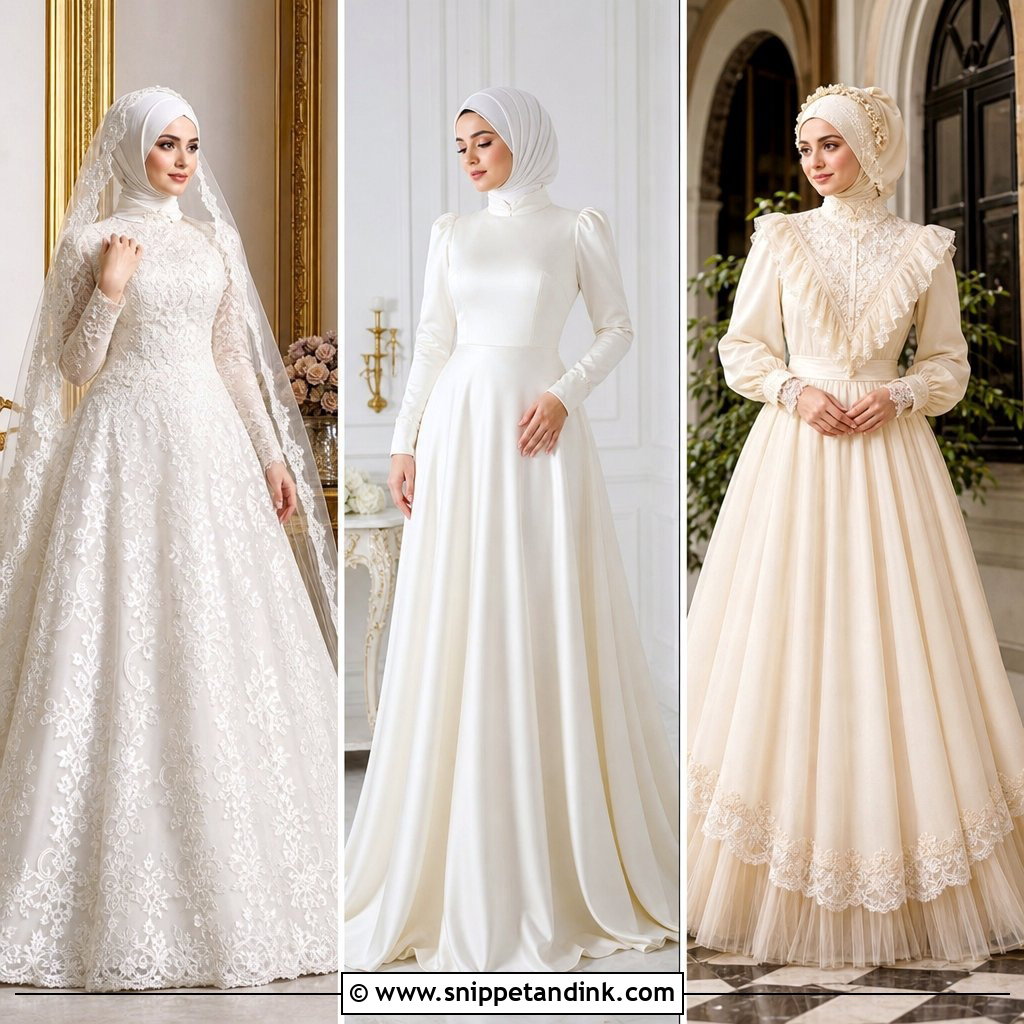


25. Blush Hijabi Wedding Dress
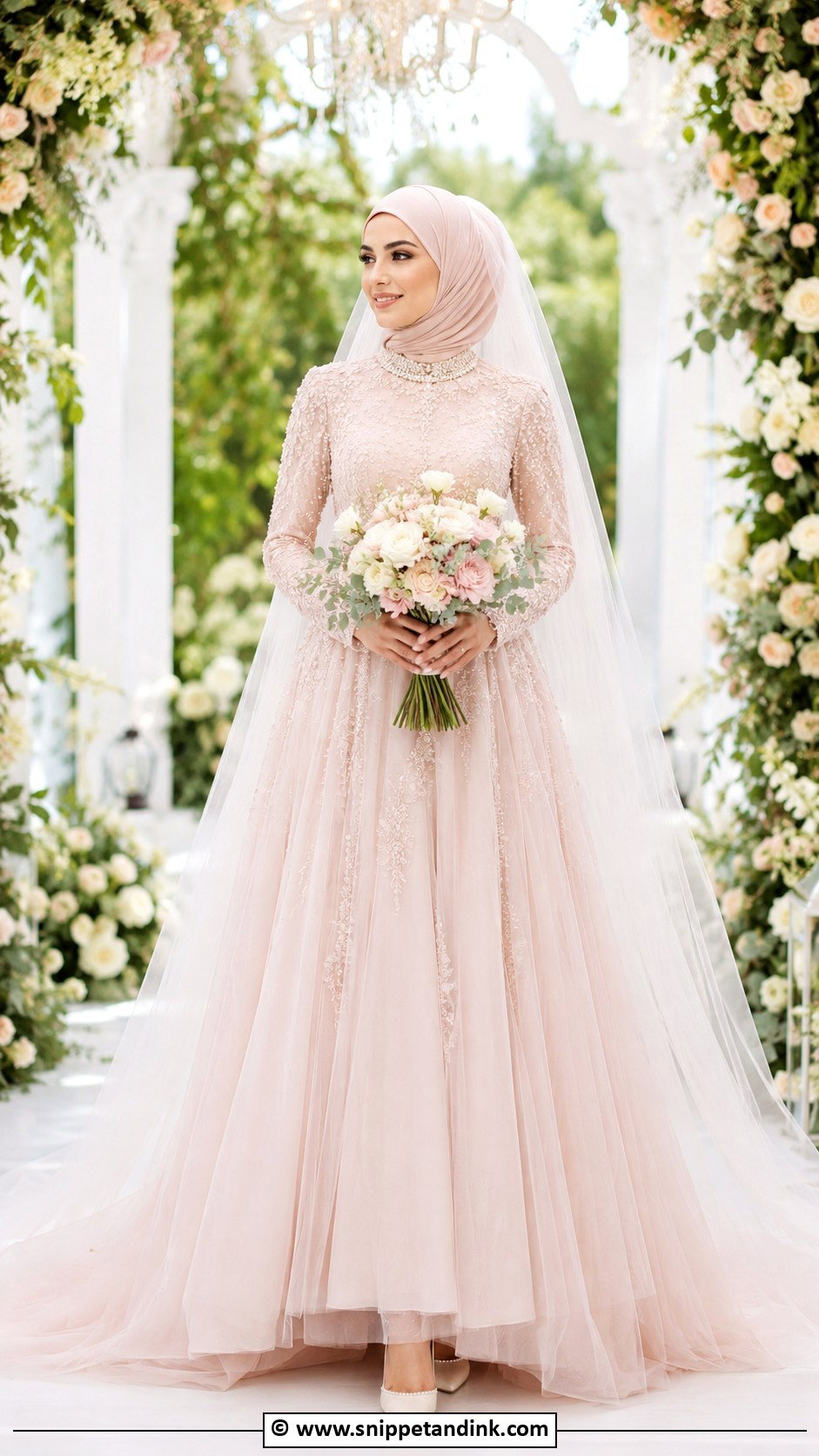
Blush is a soft step away from white that warms most skin tones. Blush satin looks sleek, blush tulle looks romantic, blush lace looks delicate. The tricky part is the hijab: an exact blush match is hard to find, so I usually suggest a shade slightly lighter than the gown rather than a near-miss that looks off. A white veil over blush keeps a traditional bridal note. Ivory heels and pearl accessories suit the color.
26. Champagne Hijabi Wedding Dress
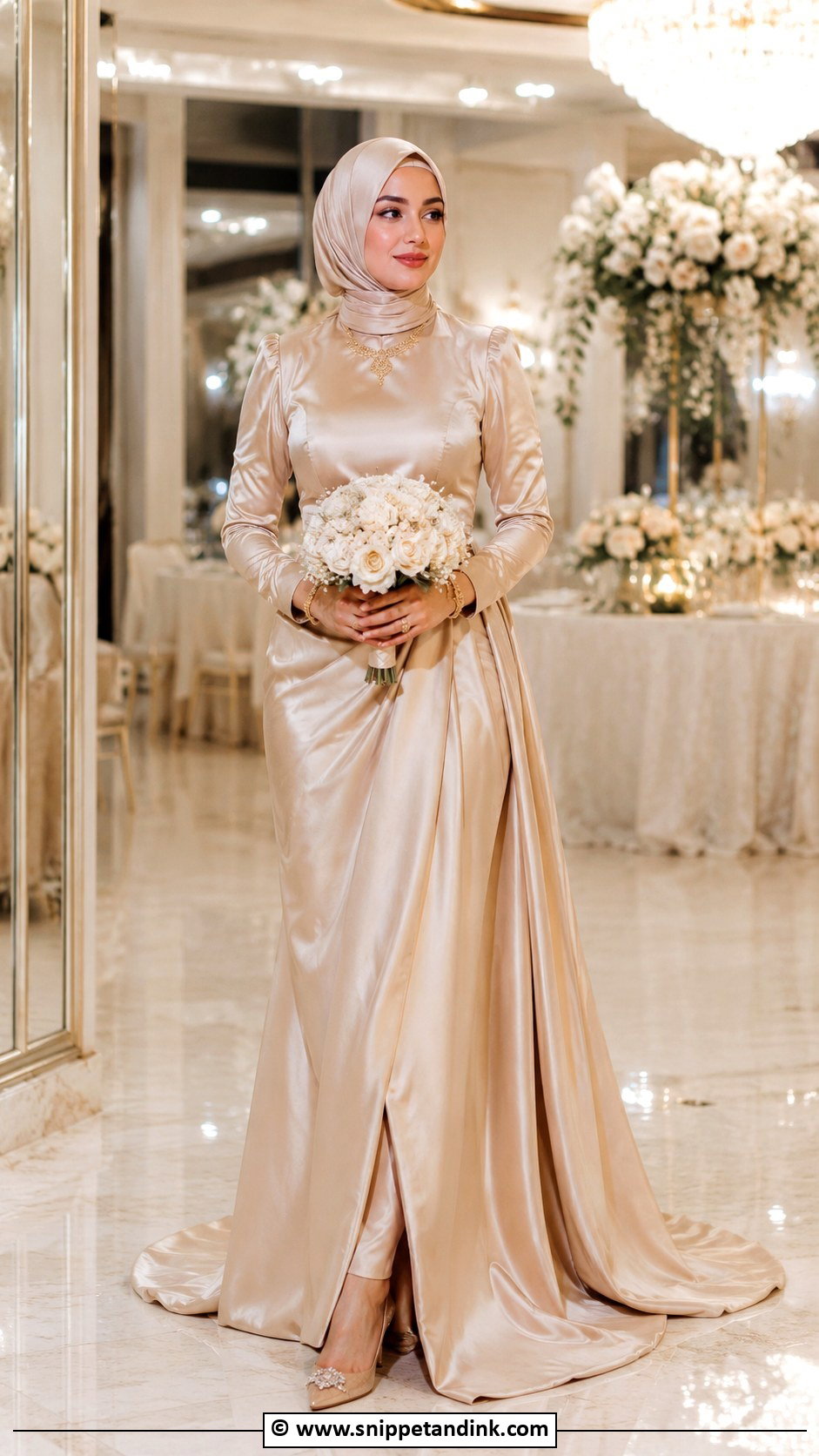
Champagne works best on brides with warm or olive undertones, where bright white can look harsh. It suits satin, beaded tulle, lace and embroidery. Choose a matching hijab in champagne, ivory or soft beige, and check all three against your face in daylight, since champagne shifts toward grey in some light. Gold jewelry pairs well; keep it refined. Nude or metallic heels finish it for an evening reception.
27. Ivory Hijabi Wedding Dress
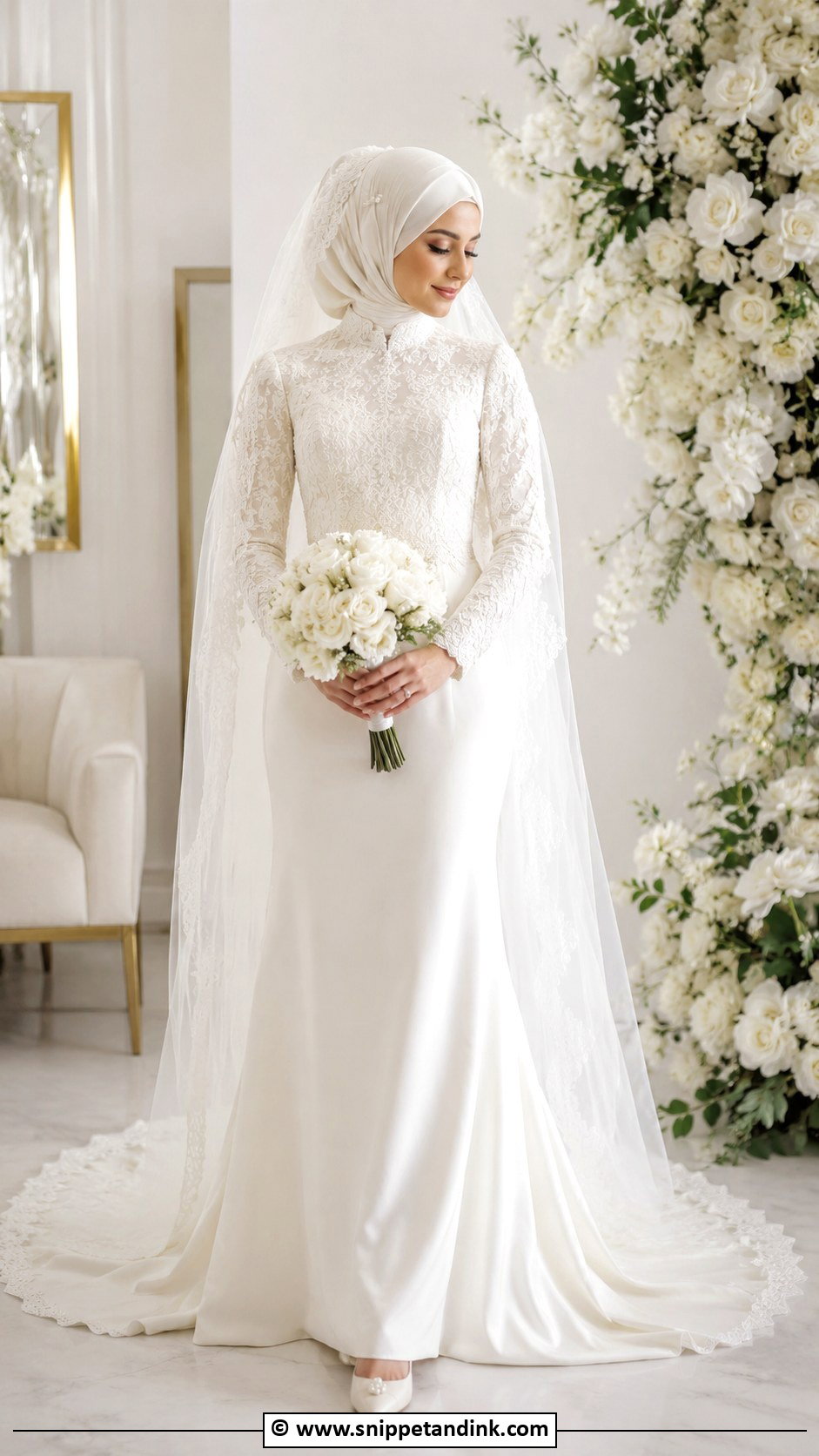
Ivory is softer than optical white and flatters most complexions, which is why it’s the most common color I fit. It suits lace, satin, crepe, pearls and embroidery. The thing to watch is the hijab: a bright-white scarf next to an ivory gown makes the gown look dingy in photos. Match ivory to ivory, or go a shade warmer. Pearl pins, satin heels and a classic veil complete it, and ivory takes gold, silver or crystal equally well.
28. Floral Hijabi Wedding Dress
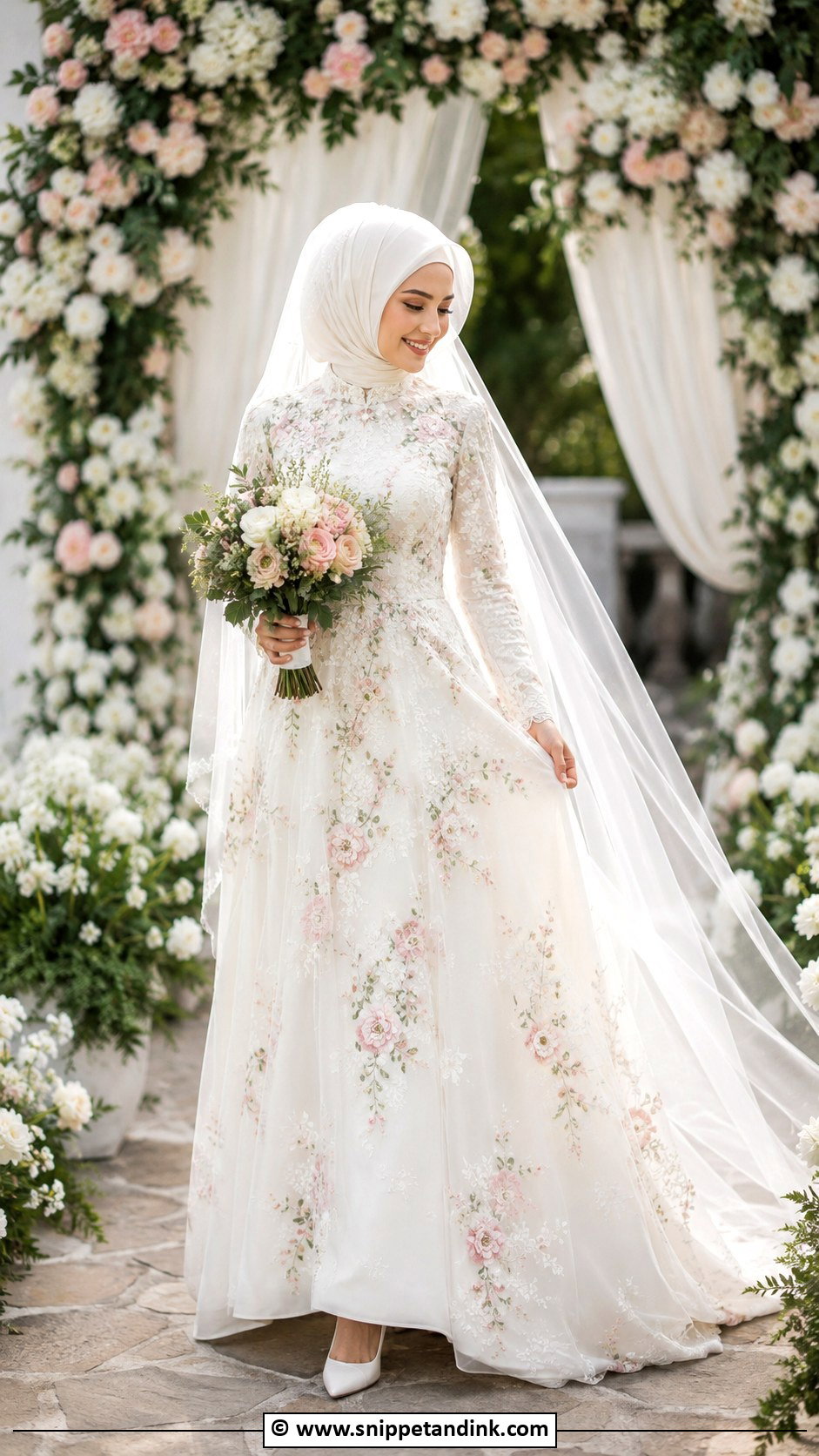
Florals add personality to a modest gown through lace appliqué, embroidery, beadwork or a subtle print. Keep the flowers in ivory, white, blush, silver or soft pastels so the dress still reads bridal. Raised 3D flowers on the shoulders can make a hijab bunch up, so I place them on the skirt or lower bodice instead. A plain hijab keeps the overall look calm. A bouquet that echoes the dress colors ties it together at a garden venue.
29. Vintage Hijabi Wedding Dress
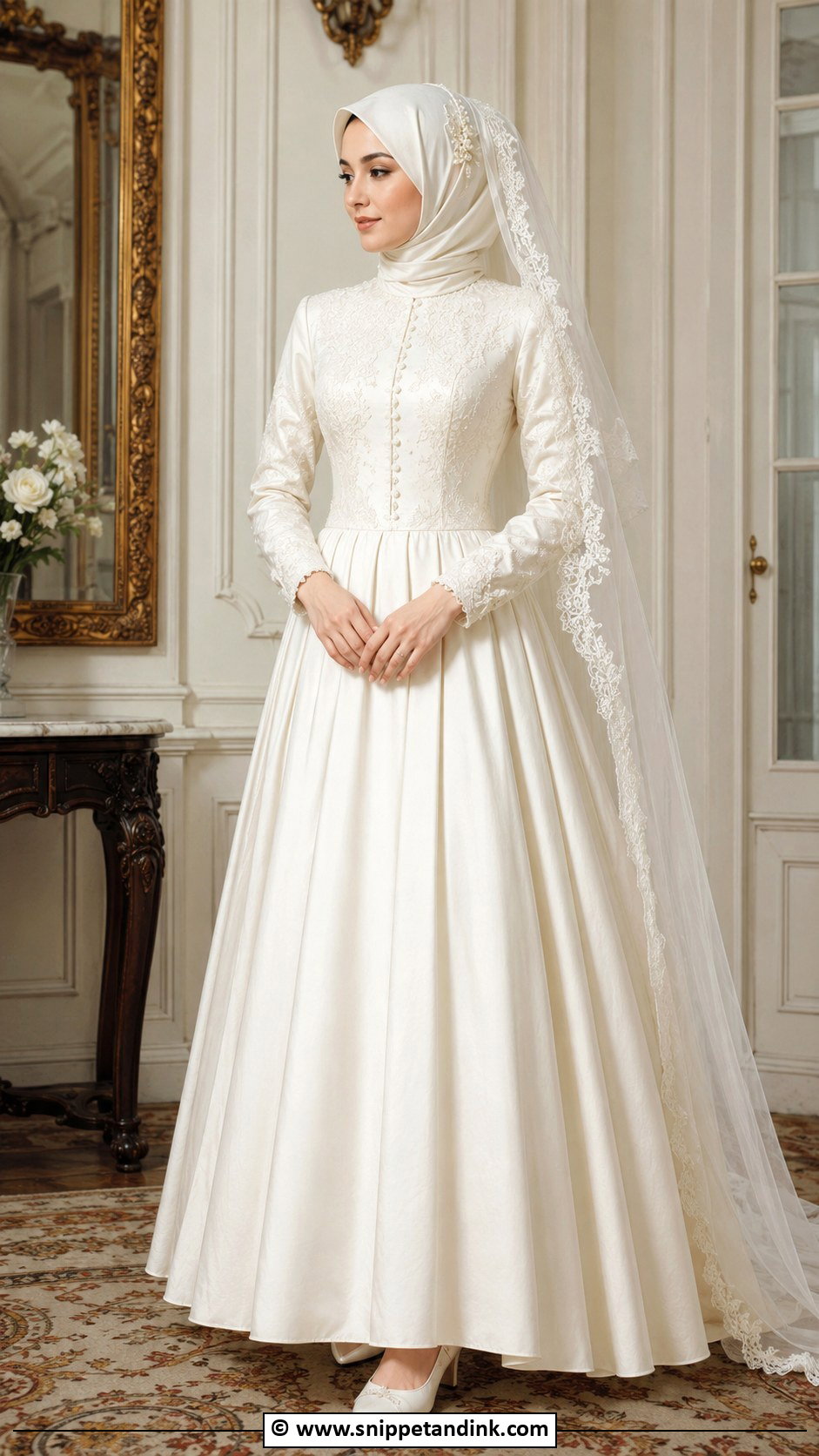
Vintage details suit modest dressing naturally, since high necklines, long lace sleeves and covered buttons were standard in older bridal styles. Look for satin cuffs, pleated skirts and fine embroidery. Real vintage gowns often need sleeves lengthened or a lining added, and old lace can be fragile, so have a seamstress assess it before you commit. A soft hijab wrap with a lace veil or pearl pins suits the era. Ivory, cream and soft champagne are the natural colors.
30. Modern Hijabi Wedding Dress
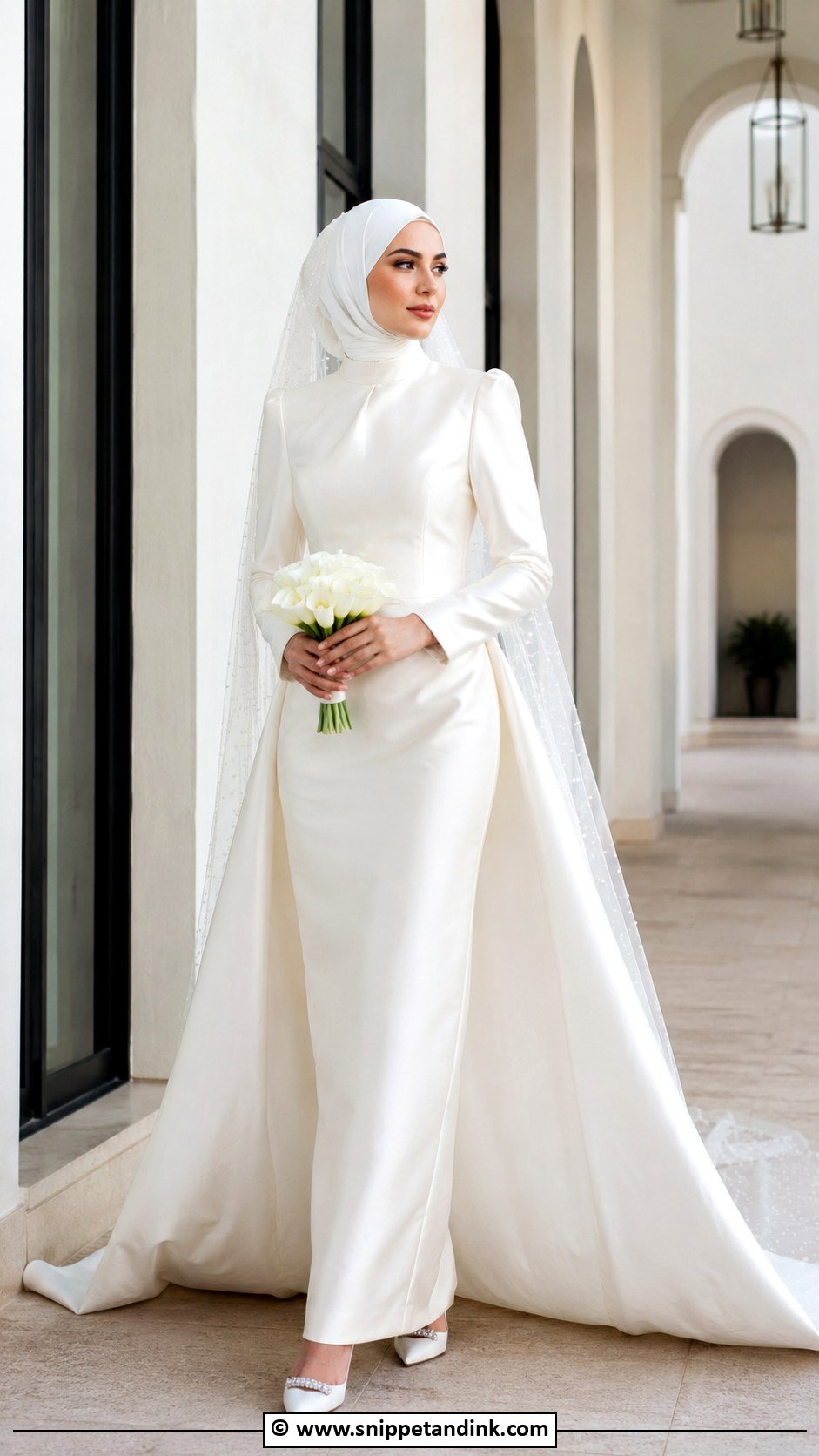
Modern modest bridal is about proportion: a sleek column, sharp structured satin, cape sleeves or a high-neck crepe gown with a long train. The hijab should look deliberate, matching the gown exactly or contrasting softly in the same color family. Sculptural belts, pearl veils and minimal bouquets keep it current. If your celebration runs from nikkah to reception, check that every piece lets you sit, eat and pray in comfort.
Pinning the Hijab So It Holds Through Veil, Crown and Prayer
The hijab carries more on a wedding day than on any other: a veil, sometimes a crown or tikka, and hours of hugging, photos and turning. A good base matters more than the outer scarf.
Building the base
Start with a cotton or jersey underscarf that grips, since chiffon and satin slide on their own. Pin the outer hijab into the underscarf, not into your hair. Use fine pins or magnetic pins near lace and beading, as standard straight pins can pull threads. A veil comb slides into the underscarf at the crown and stays far more secure than pins pushed through the outer layer.
Matching the color
Hold the hijab against the gown in daylight and again under warm indoor light. Whites and ivories that match in one setting can look clearly different in the other, and the camera exaggerates it.
Planning for salah
If you’ll pray during the day, think about wudu before you buy. Fitted sleeves that can’t be pushed up mean taking the gown off or struggling. Buttoned cuffs, a slightly looser sleeve, or a lightweight prayer garment kept in the bridal room all solve it. Ask whoever helps you dress to stay nearby so the hijab can be reset afterwards in a few minutes.
One Outfit From Scarf to Hem
From lace gowns and satin to kaftans, abayas, lehengas and capes, a modest bride has as many directions as any other. The difference is the join between hijab and gown, and the movement test: sitting, lifting your arms, kneeling, turning your head. Bring your hijab, pins and shoes to every fitting, and judge the outfit as one piece rather than a dress with a scarf added. When that join works, the rest of the styling falls into place.
You'll Like These Ideas:





Leave a Reply