
The most traditional gown in the room is rarely the one a bride ends up loving. What I see brides asking for now is personality and comfort, with a dress that actually makes sense for the venue and season. Satin, sculpted necklines, basque waists, pearls, detachable skirts and short reception dresses are all part of the current mix. Below are the silhouettes and fabrics I talk through most at appointments, with what each one does on a real body over a real day, so you can walk in already knowing what to try first.
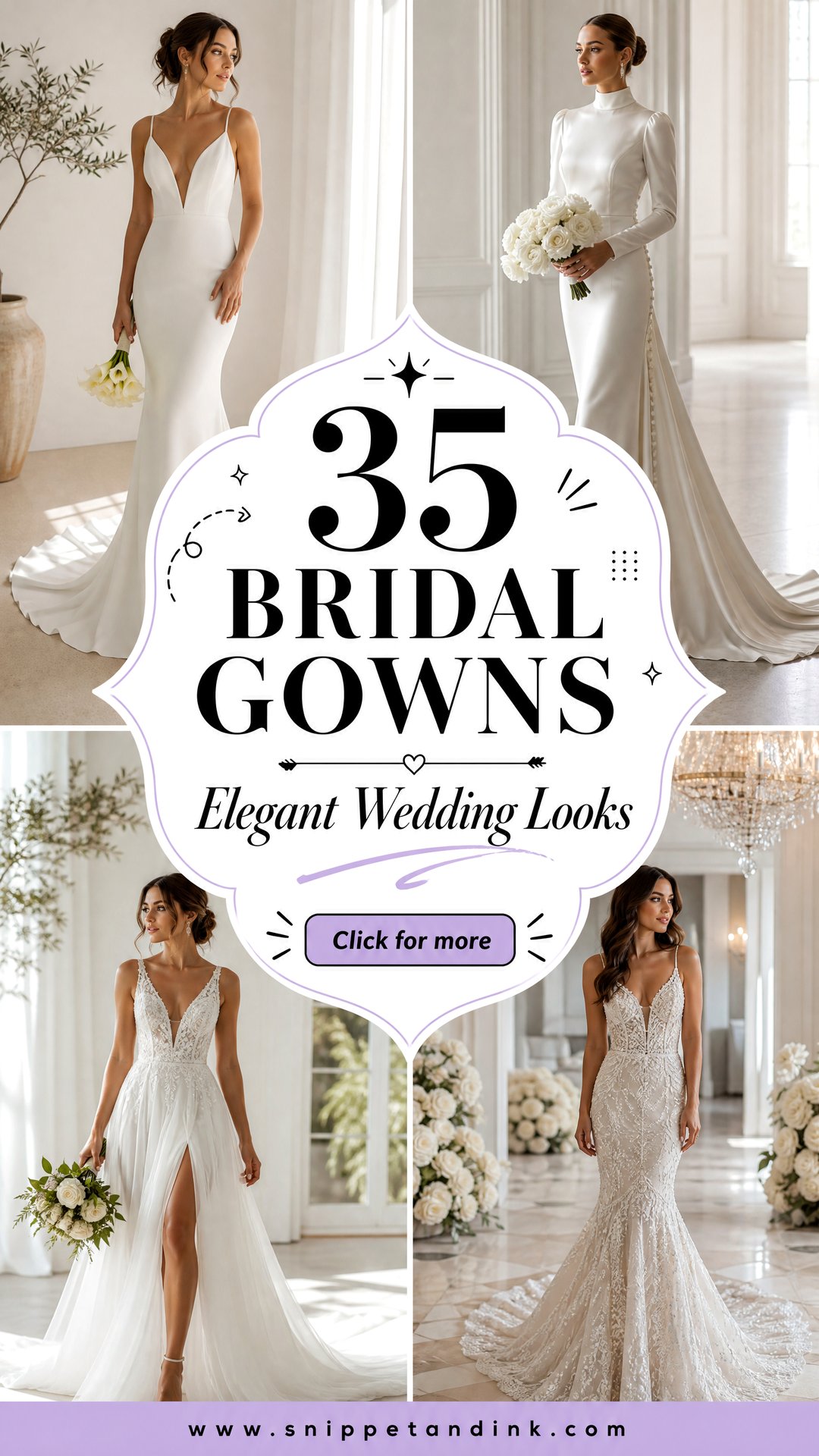
Why Satin Wilts You in August and Chiffon Leaves You Cold in January
Brides usually fall for a silhouette first and think about fabric later. I’d reverse that, because the fabric decides how hot you’ll be, how much the dress creases in the car and how it moves in wind. Here is how the main bridal fabrics behave in practice.
- Heavy satin and mikado hold structure and look rich indoors, but they’re warm. In a hot summer garden, you’ll feel every layer by the second hour.
- Crepe drapes smoothly and resists light creasing, though stretch crepe can cling once you’re warm.
- Chiffon breathes and floats, which makes it my go-to for beaches and heat. It also wrinkles quickly and lifts in wind.
- Tulle is light but can be layered thick enough to trap heat; it snags on brick, stone and bouquet wire.
- Organza holds volume without much weight, yet it creases sharply when sat on, so plan a steamer before photos.
For a winter or coastal wedding, think about the walk between car, ceremony and reception. A long-sleeved lace gown or a satin dress with a wrap will be far more comfortable than chiffon on a cold, windy afternoon.
1. Satin Ball Gown Bridal Gown
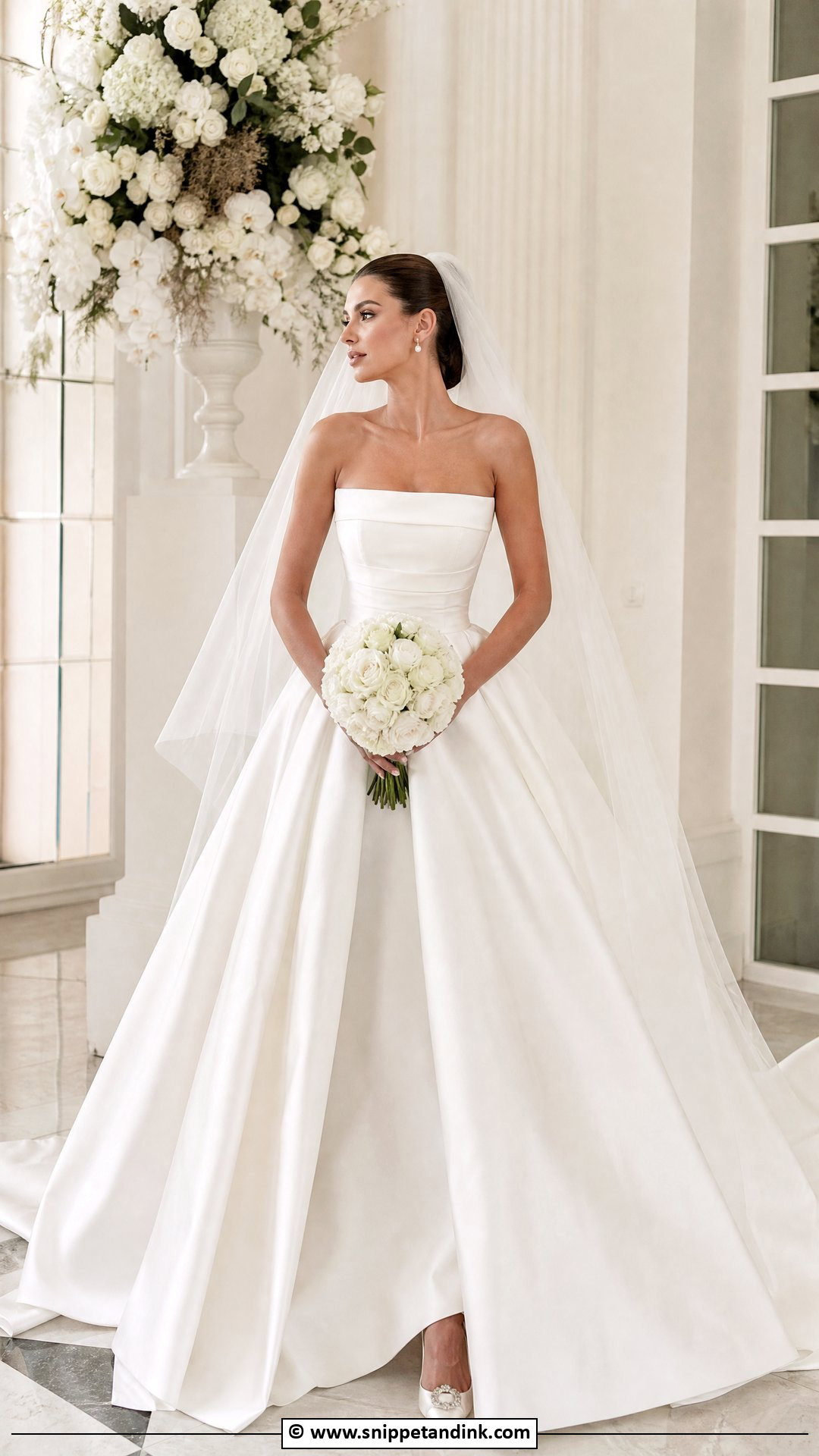
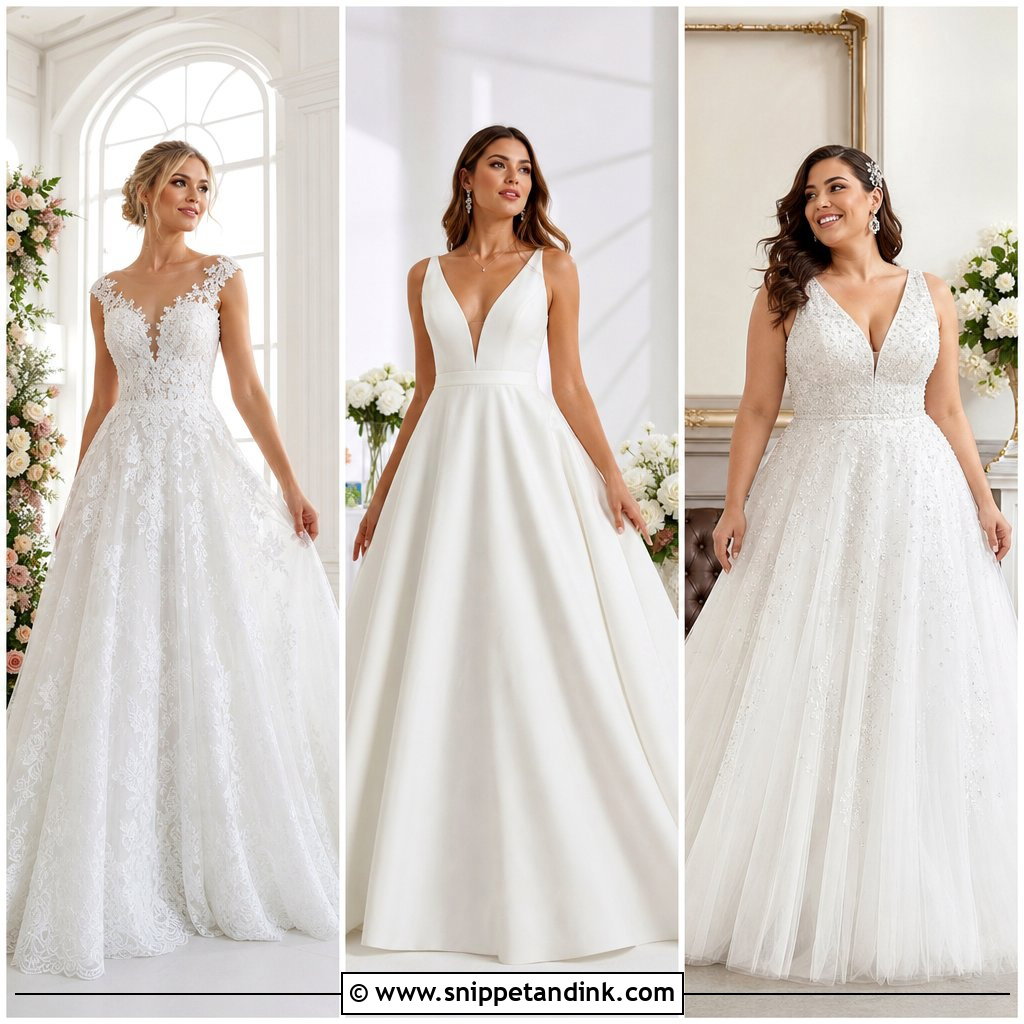
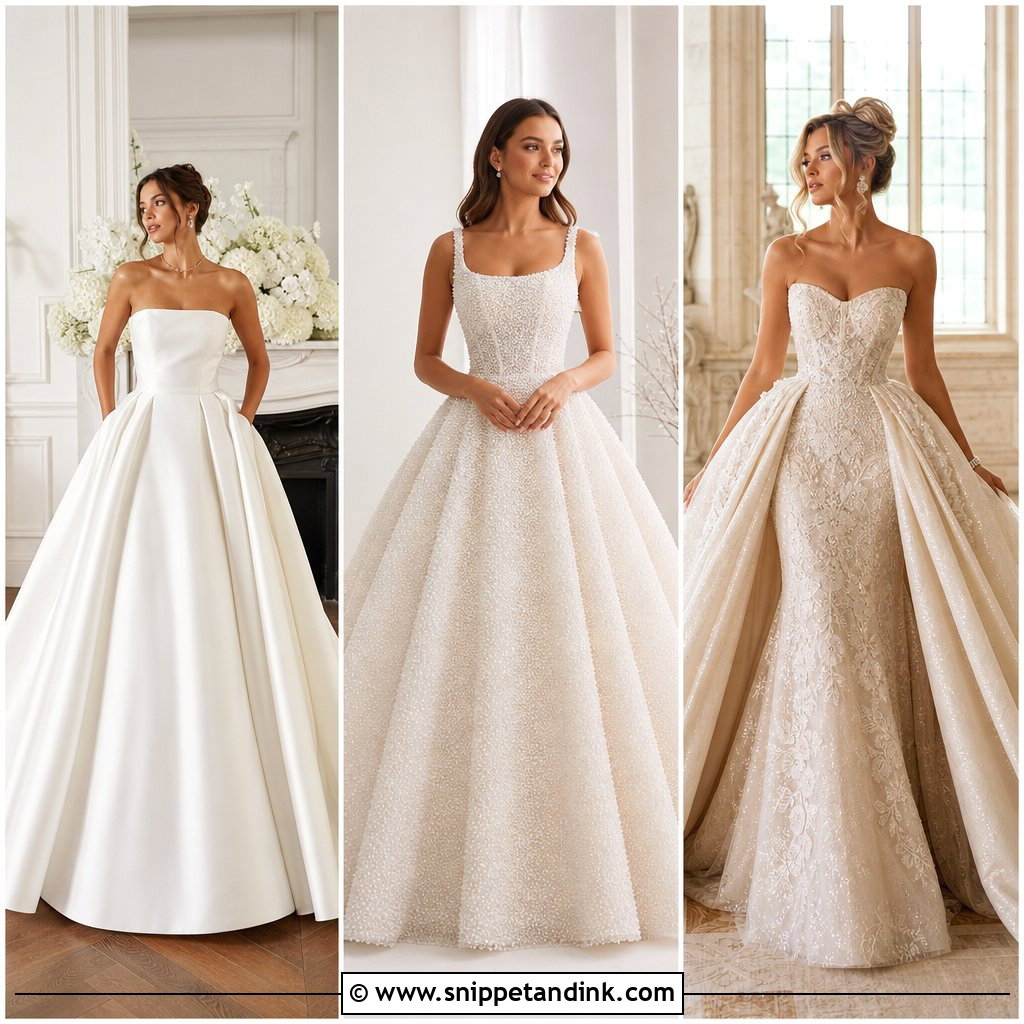
Satin ball gowns give the classic entrance with very little decoration, because the shape does the talking. Under bright indoor light the fabric reads rich and smooth. I look first at the bodice: it needs enough boning that the full skirt’s weight doesn’t drag the waist seam down by mid-afternoon. Strapless feels classic, a square or scoop neck softer. Finish with a long veil, pearl studs, a sleek low bun and pointed satin heels, and keep the bouquet compact so the skirt stays the main event.
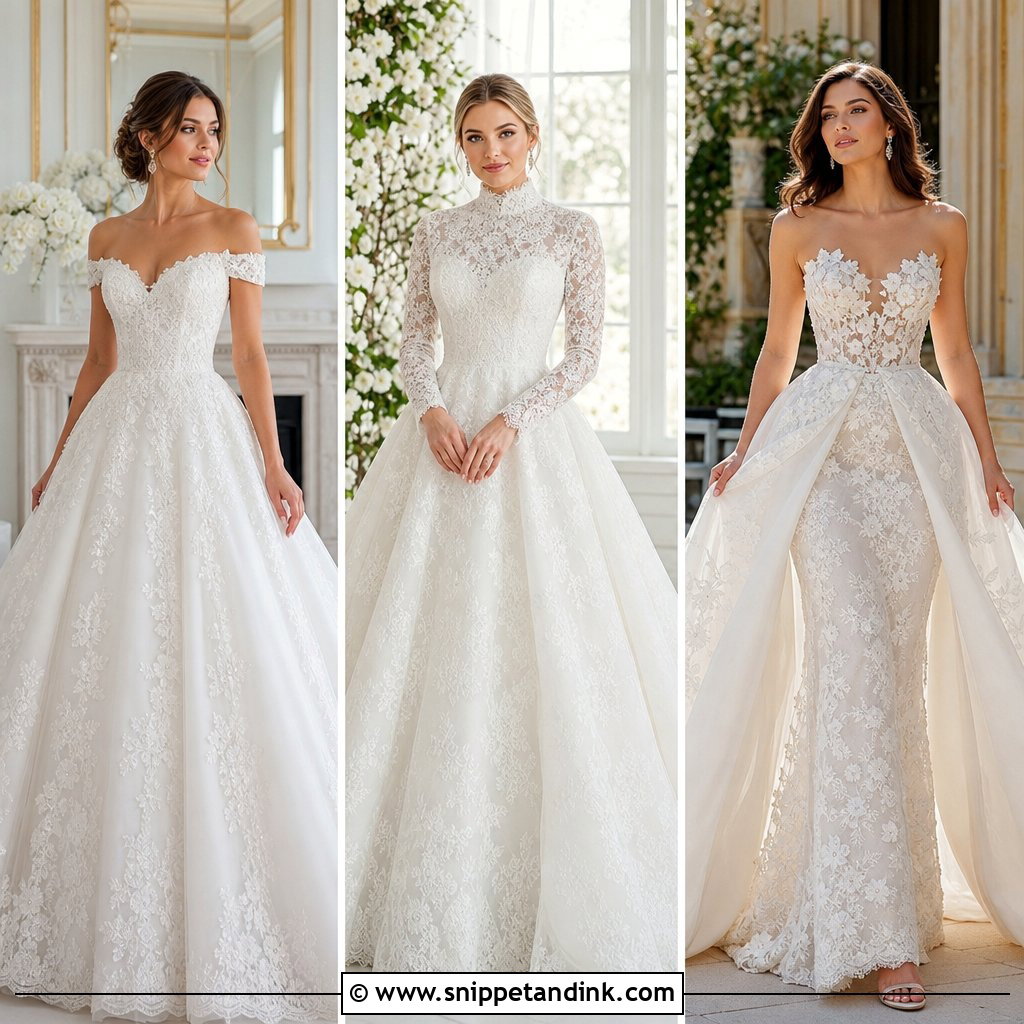
2. Lace A Line Bridal Gown
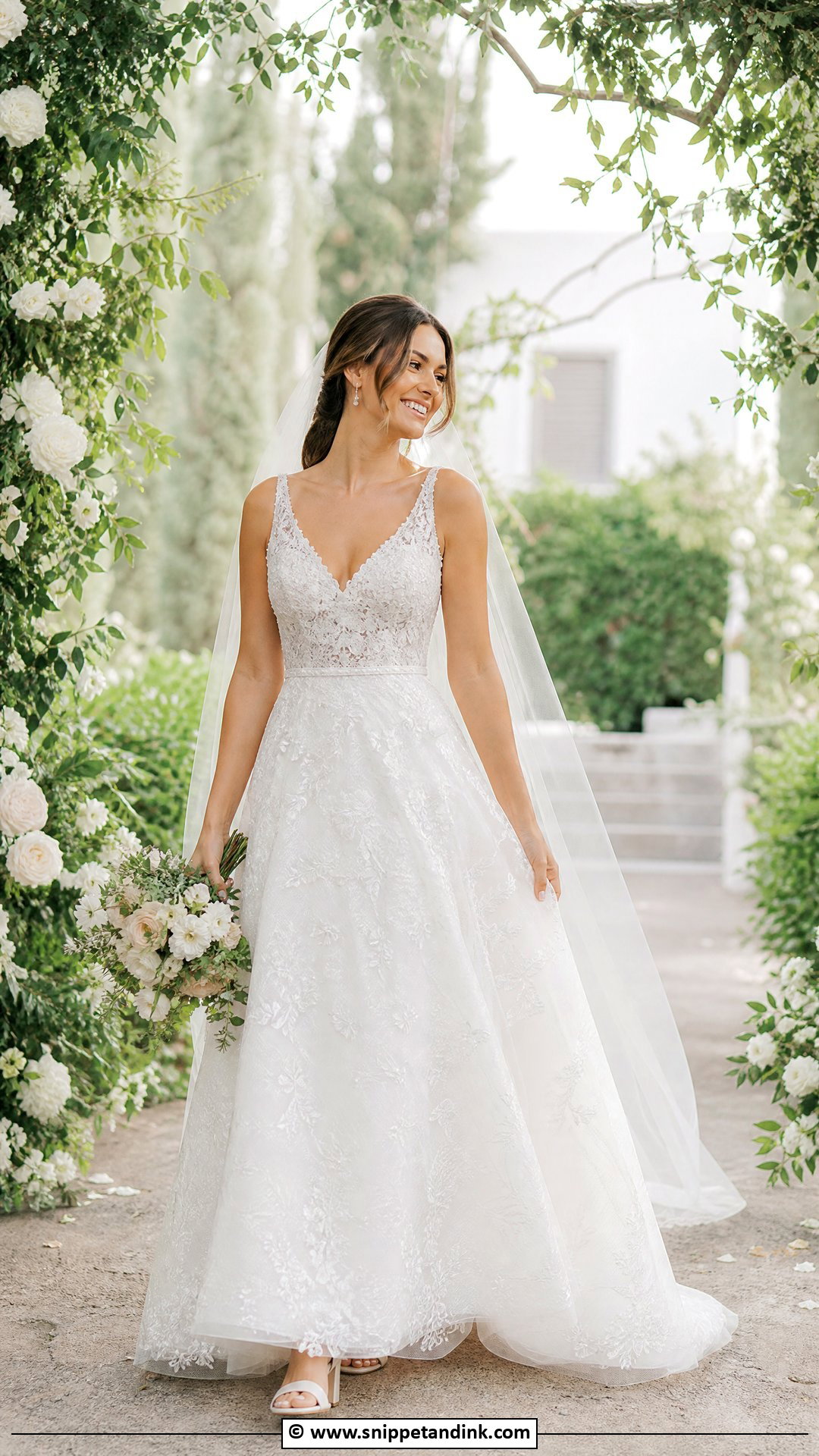
If I had to dress a bride I’d never met in one shape, it would be a lace A-line. Fitted through the bodice and released from the waist, it forgives a lot and lets you walk, sit and dance without fuss. Allover lace looks vintage; lace appliqué on tulle feels lighter and more current. Watch scratchiness at the underarm on corded lace, especially with illusion sleeves, and ask for a soft lining there if it bothers you. Drop earrings, a fingertip veil and block heels finish it for garden, ballroom or estate weddings.
3. Off Shoulder Bridal Gown
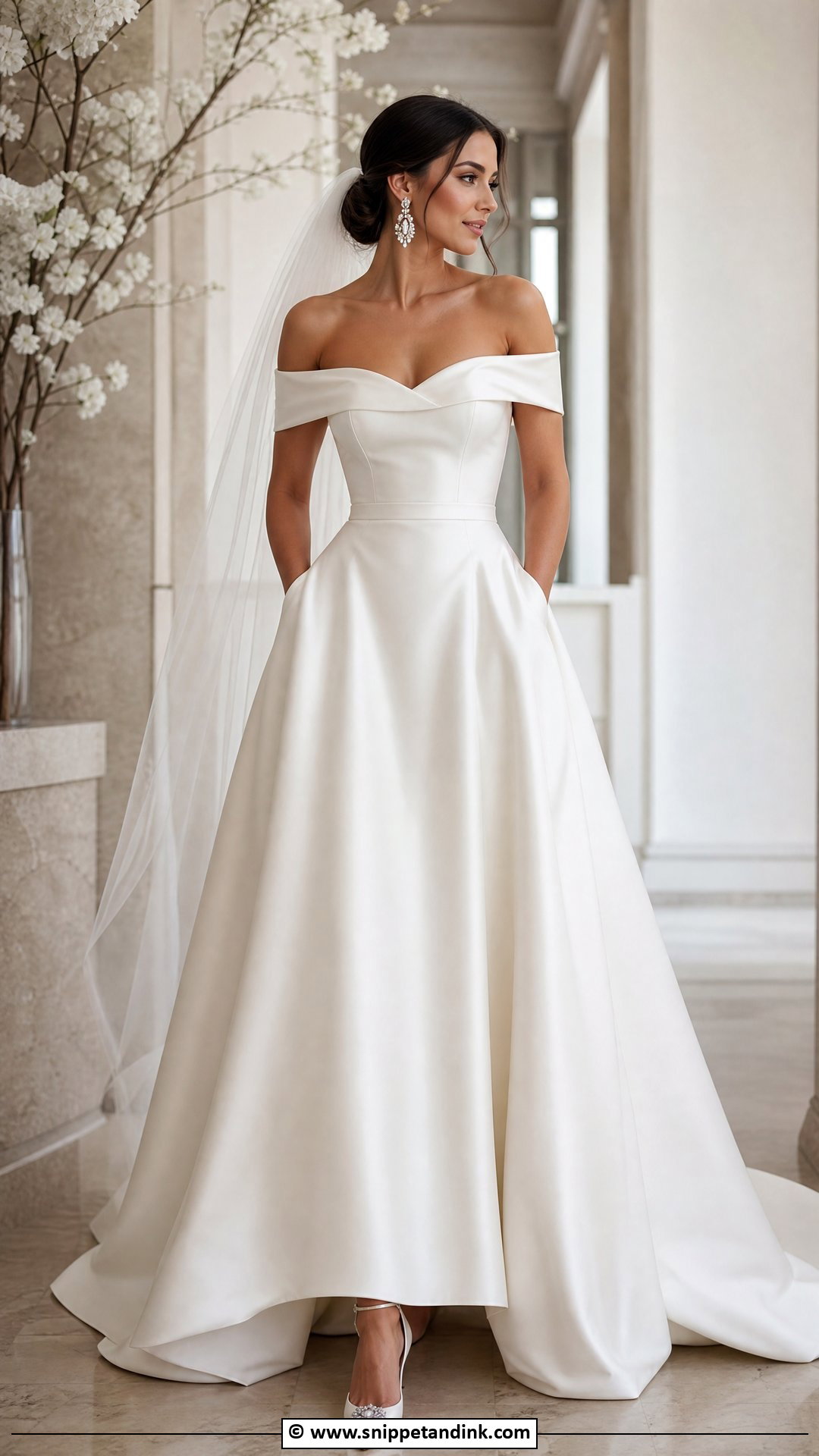
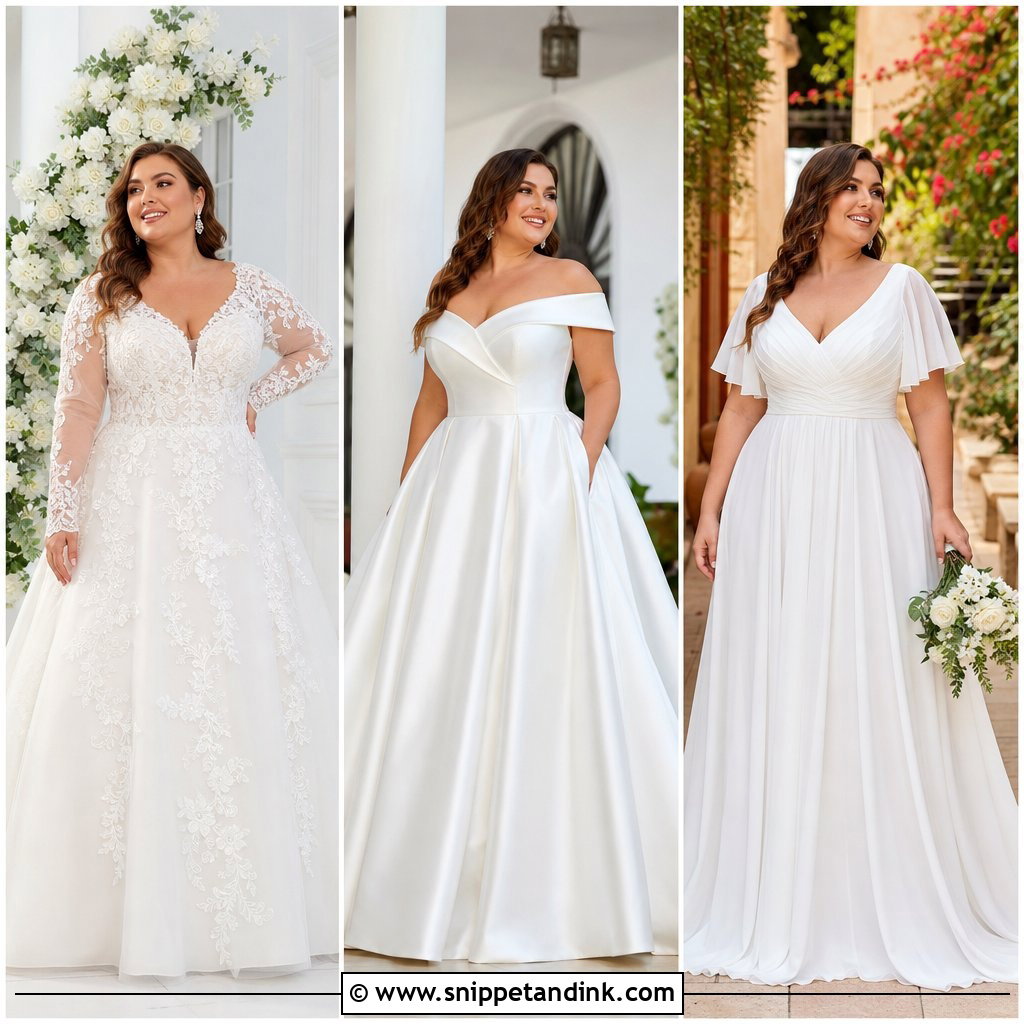
An off-shoulder neckline frames the collarbones and shoulders without showing much, which is why it suits brides who want romance but not exposure. Satin, crepe, lace and organza all hold the shape. What I warn about is arm movement: the band sits across the upper arm, so hugging or raising a glass pulls the bodice. A loose updo keeps the neckline visible. Either a simple pendant or statement earrings, not both, plus pointed heels and a clean veil.
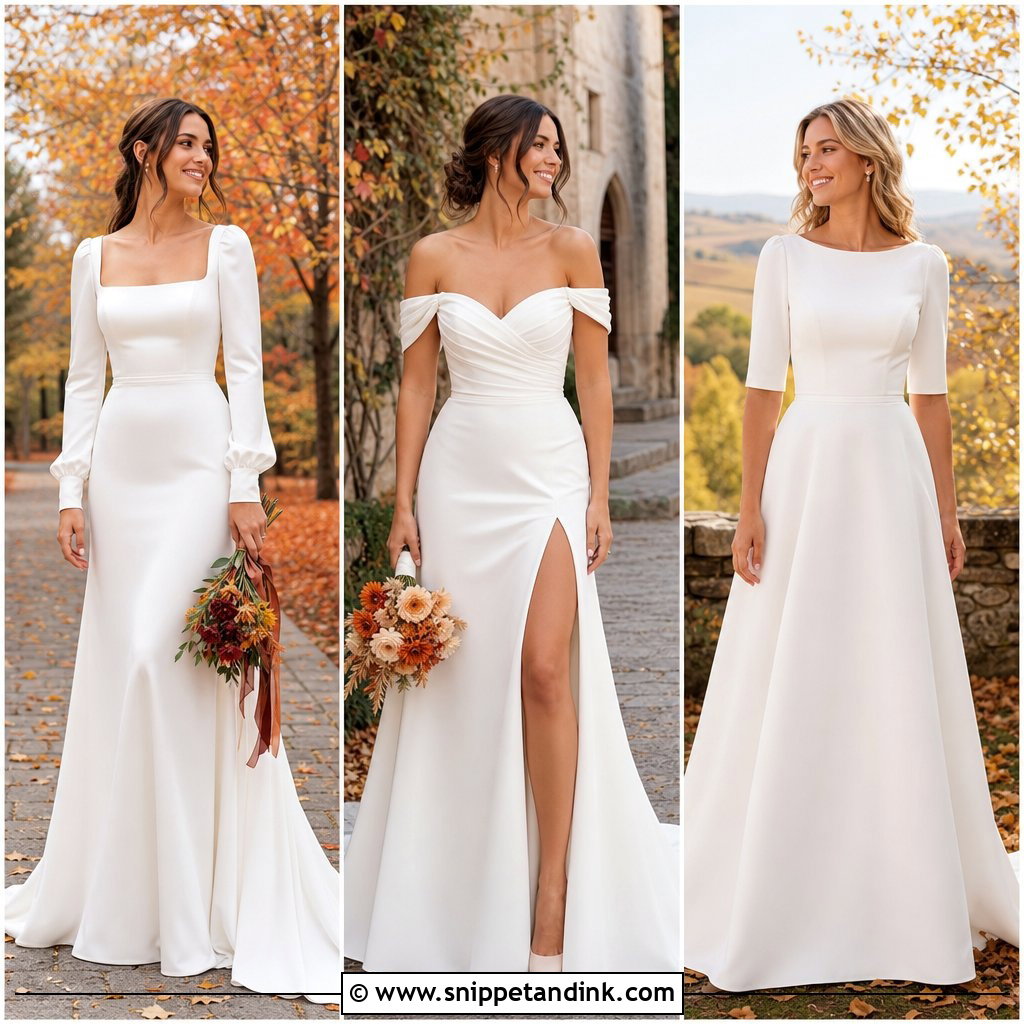
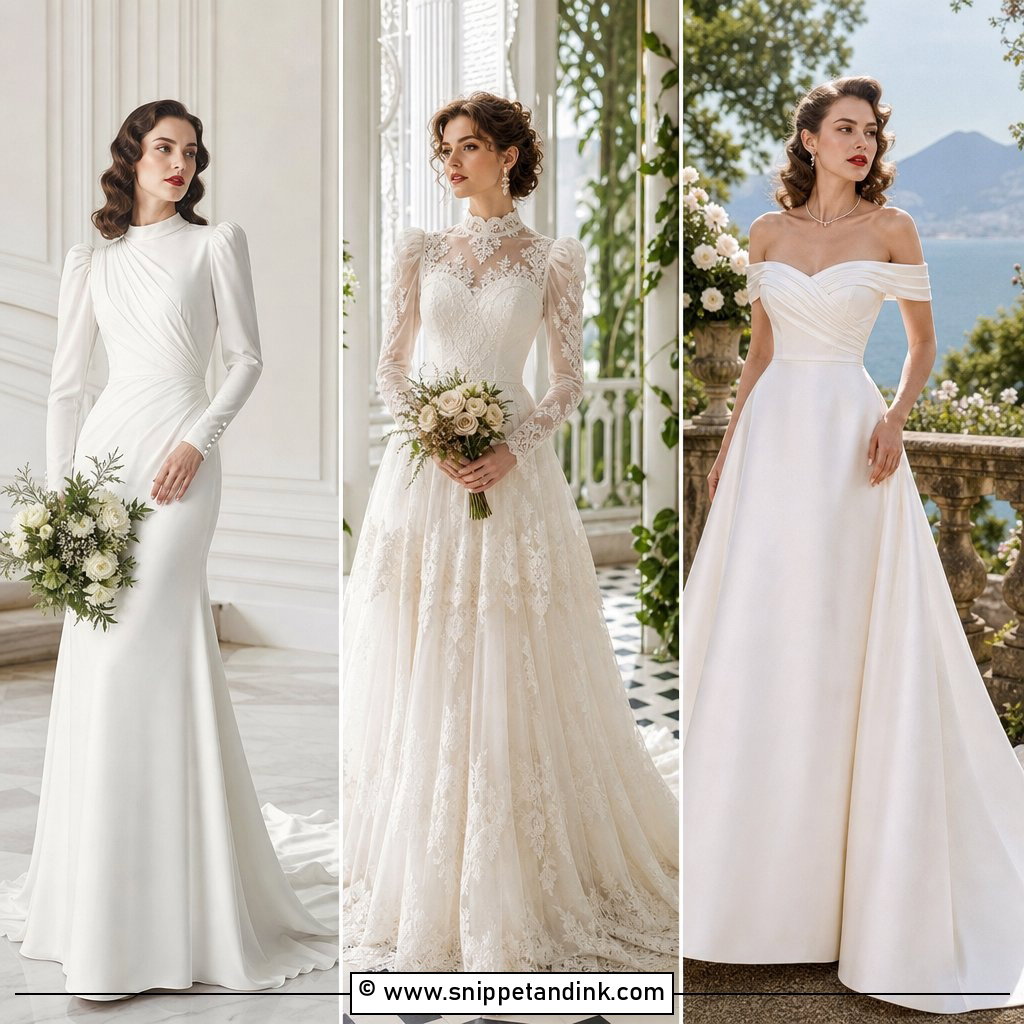
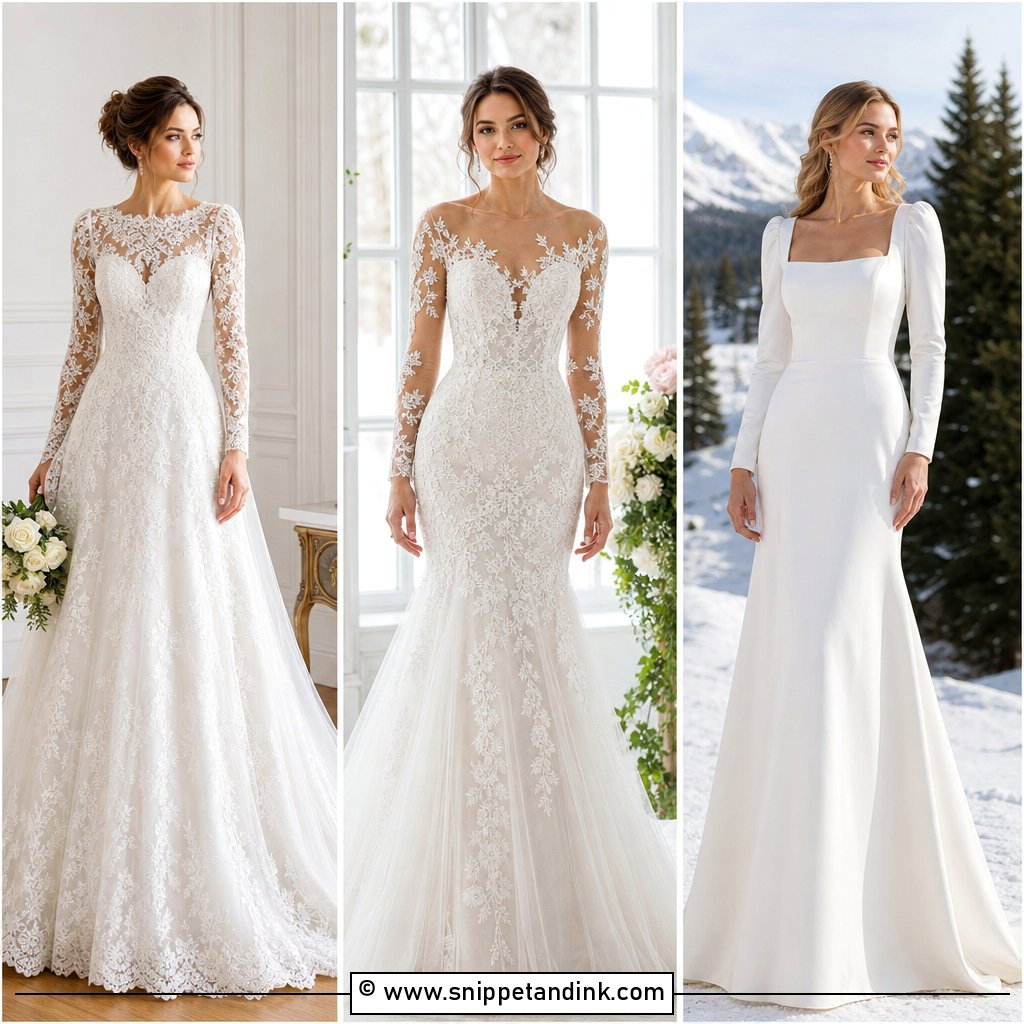
4. Long Sleeve Bridal Gown
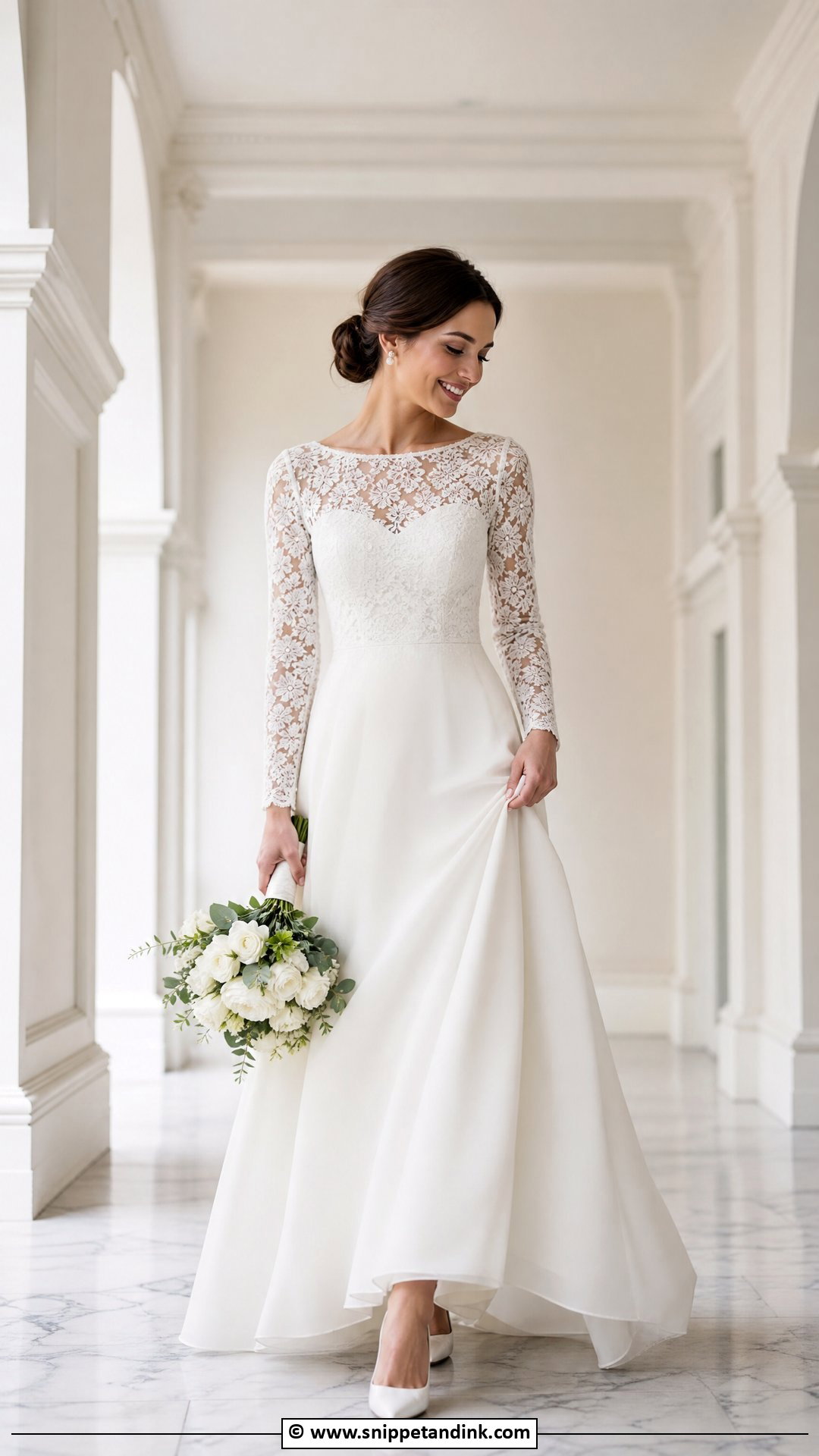
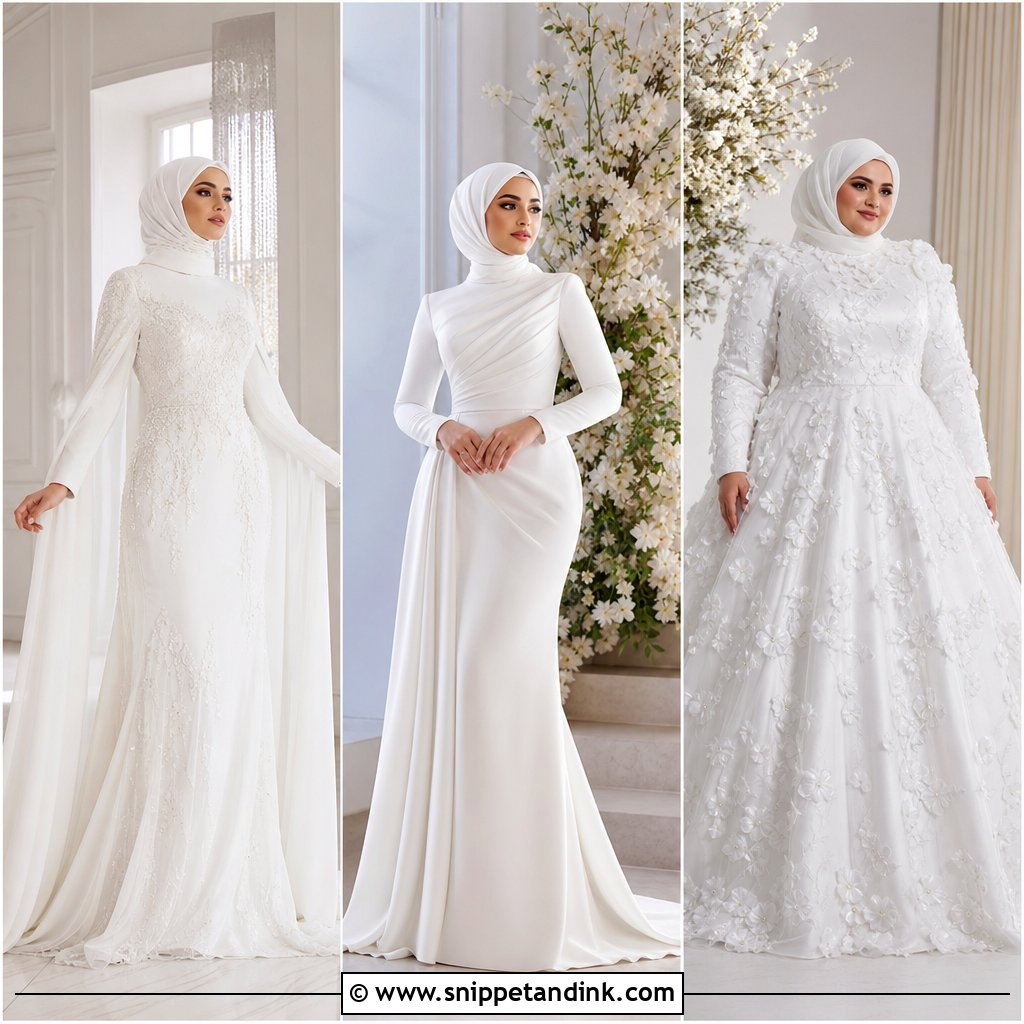
Long sleeves bring coverage and a little old-world feeling. Sheer lace looks delicate; crepe or satin looks crisp and modern. Autumn, winter and formal indoor weddings are the obvious fit, though a light lace sleeve works in spring too. The sleeve fit is the thing to get right: too tight and you can’t raise your arms for portraits or dancing, so I always have brides reach overhead in the fitting room. A low bun, pearl earrings and a veil with minimal edging keep it calm.
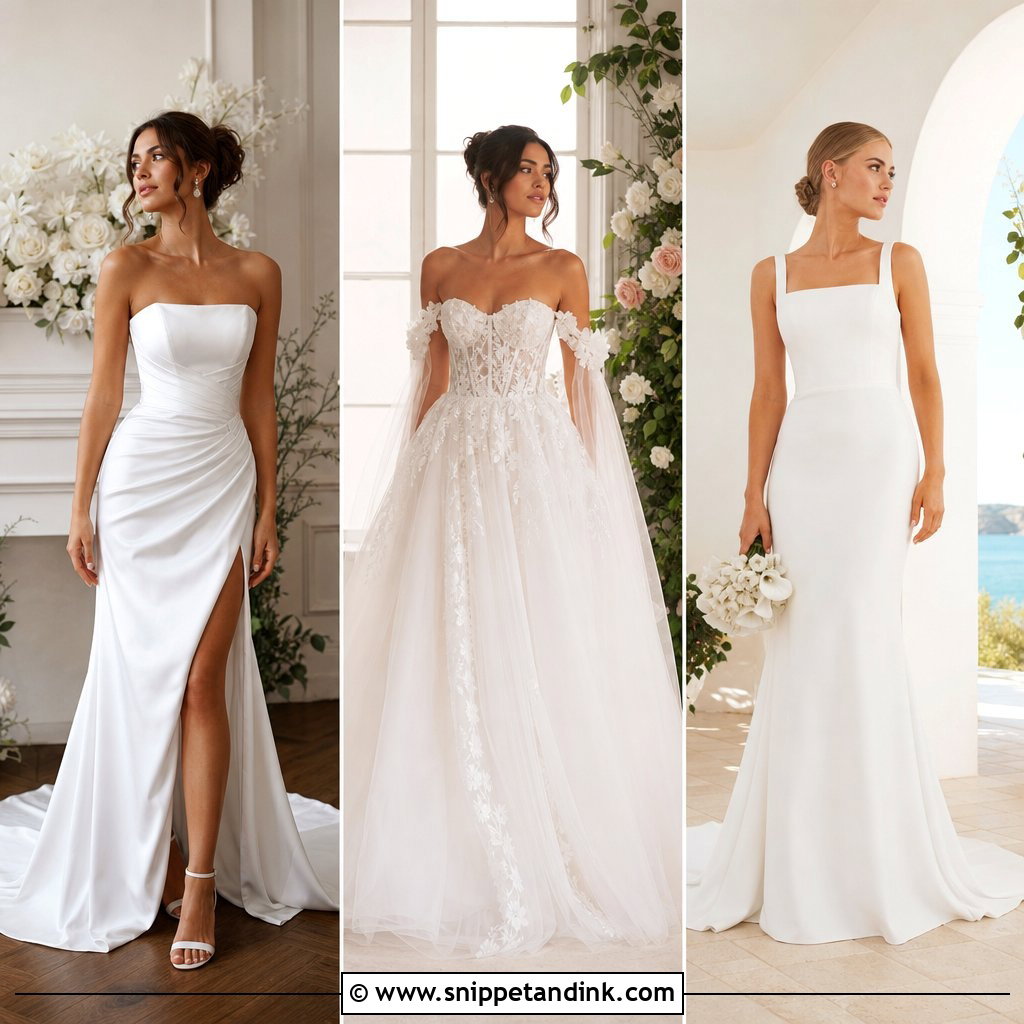
5. Strapless Bridal Gown
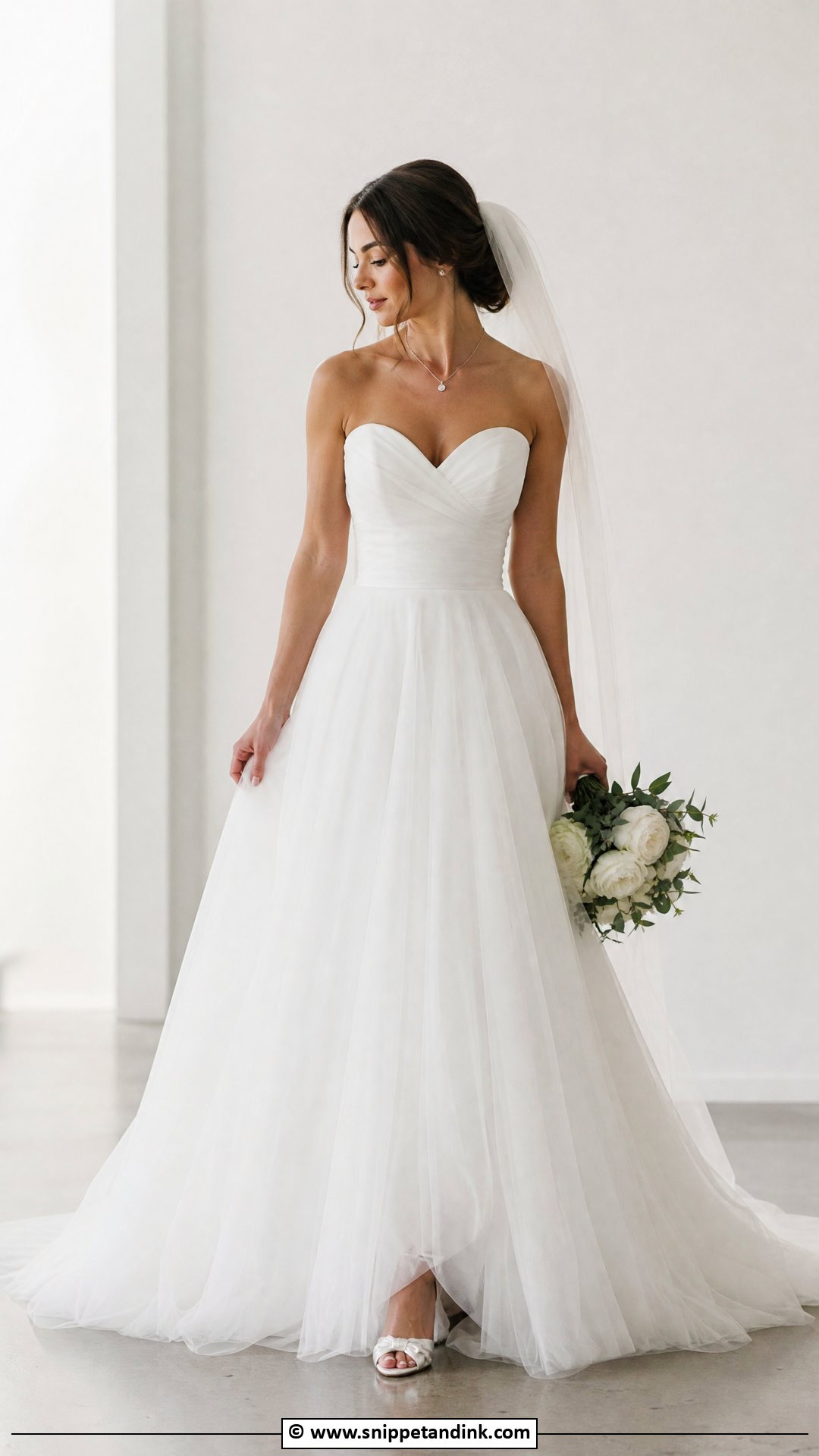
A strapless bridal gown adapts to nearly any skirt, from grand ball gown to column to soft tulle. Everything depends on the internal structure, because a bodice that needs hitching up every ten minutes ruins the day. On a fuller bust I steer toward a curved or sweetheart line rather than straight across, since it gives the bust somewhere to sit. Corset construction helps hold the shape. Then let accessories set the mood: a choker for drama, statement earrings for modern, a simple veil for traditional.
6. Mermaid Bridal Gown
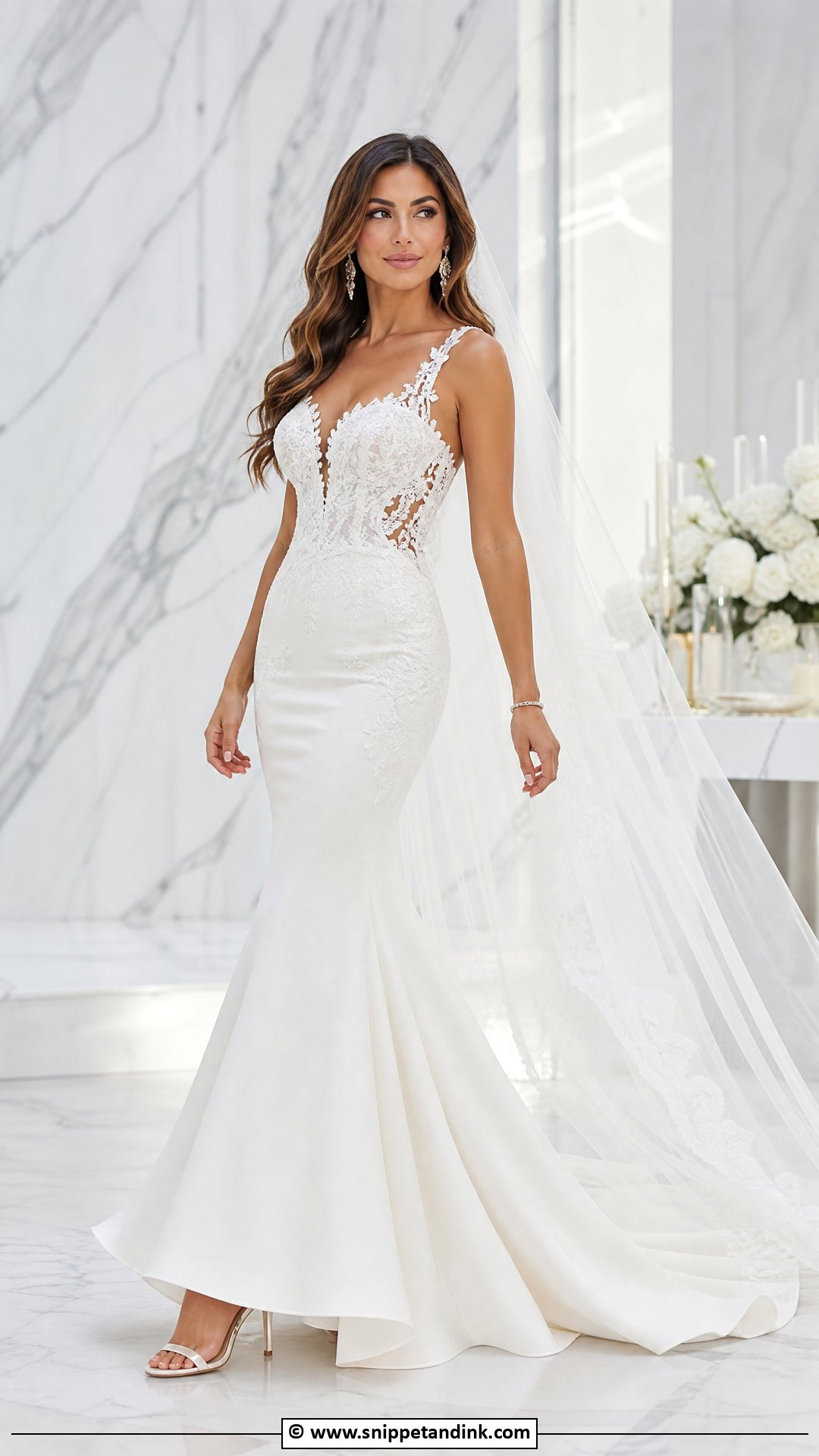
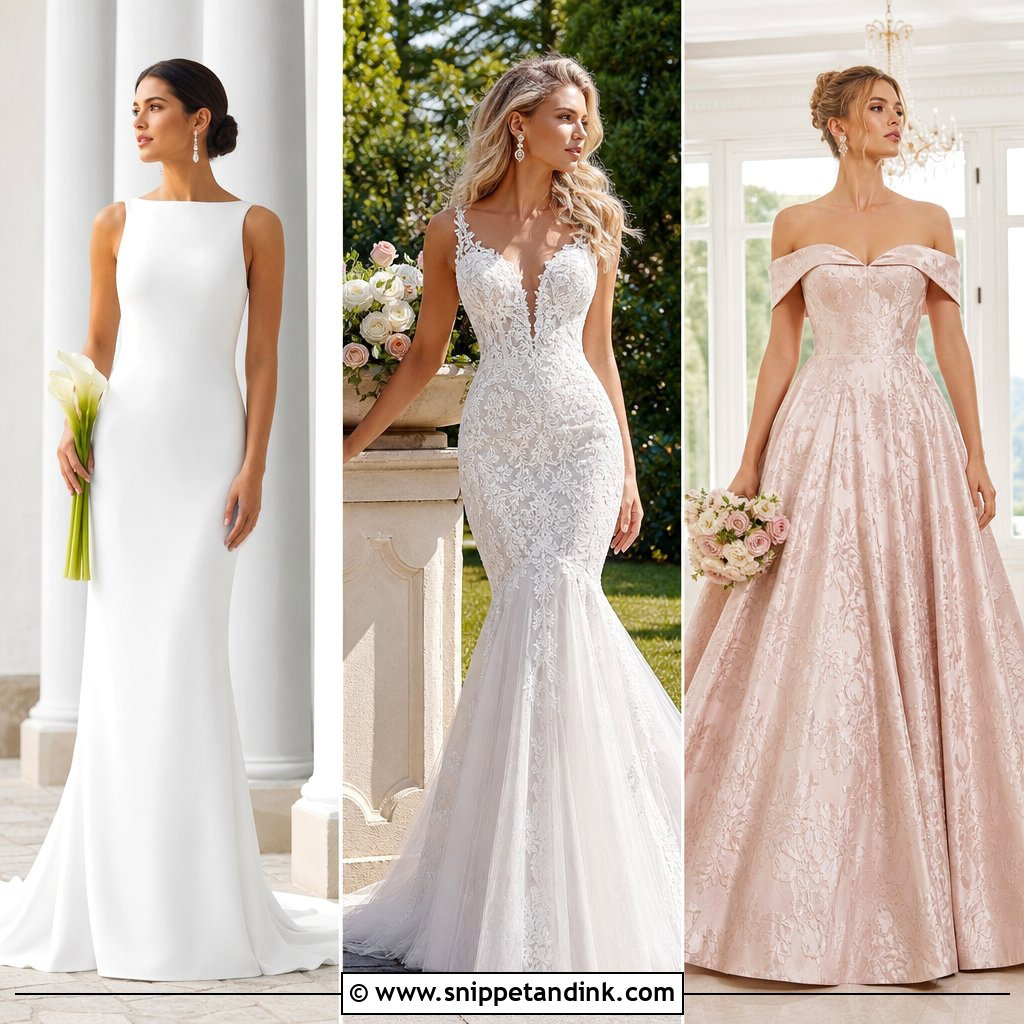
Mermaid gowns hug the bodice, waist and hips before flaring near the knee or just above, which makes the hourglass the whole story. Stretch crepe looks sleek; lace or beading adds texture. Because the fit is close, I make every mermaid bride sit, walk briskly and try a few dance steps before committing. If she can’t get into a car comfortably, the flare point needs moving. High heels, a long veil and polished waves or a sleek bun suit a formal, glamorous venue.
7. Minimalist Crepe Bridal Gown
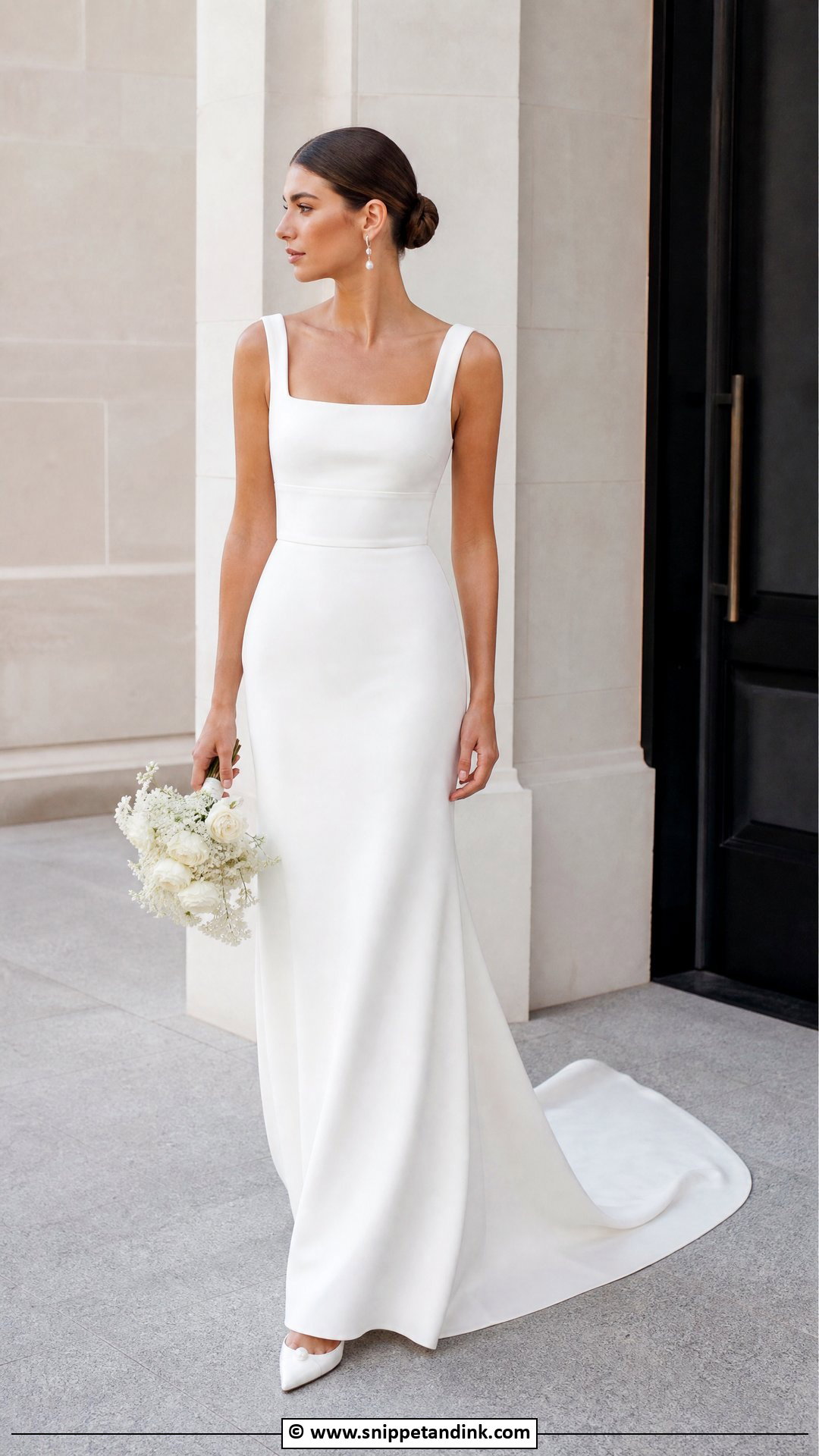
Plain crepe is quietly demanding. There’s no sparkle or lace to distract, so the cut and the fit are everything, and I’d budget a little more for alterations on a minimal gown than on a busy one. Crepe drapes close to the body, which is why a bateau, square or deep V neckline changes the whole mood. Hidden structure, a defined waist or a subtle train add shape without detail. Pearl earrings, a sleek bun, pointed heels and a clean veil keep it current for a city wedding or modern venue.
8. Pearl Embellished Bridal Gown
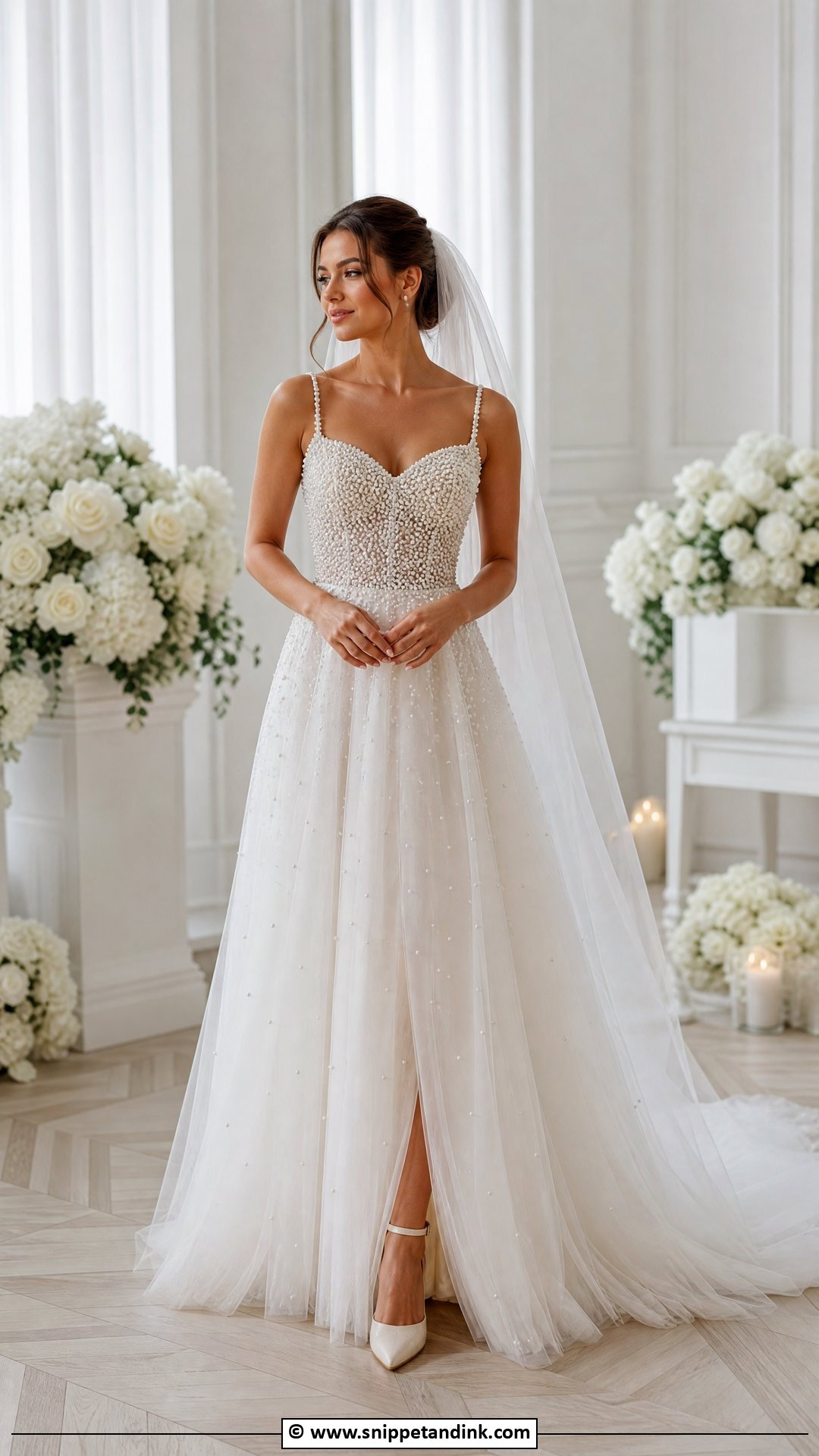
Pearls give texture without the glare of crystals, which suits brides who want detail but find sparkle too much. They can be scattered over tulle, lined along the bodice or trace straps and sleeves, and they look softest in close-up photos. The common mistake is matching pearls everywhere: pearl gown, pearl earrings, pearl necklace, pearl hairpins. Pick one or two pieces. Pearl studs or a single hair pin, a soft veil and neutral heels are enough to finish it.
9. Floral Applique Bridal Gown
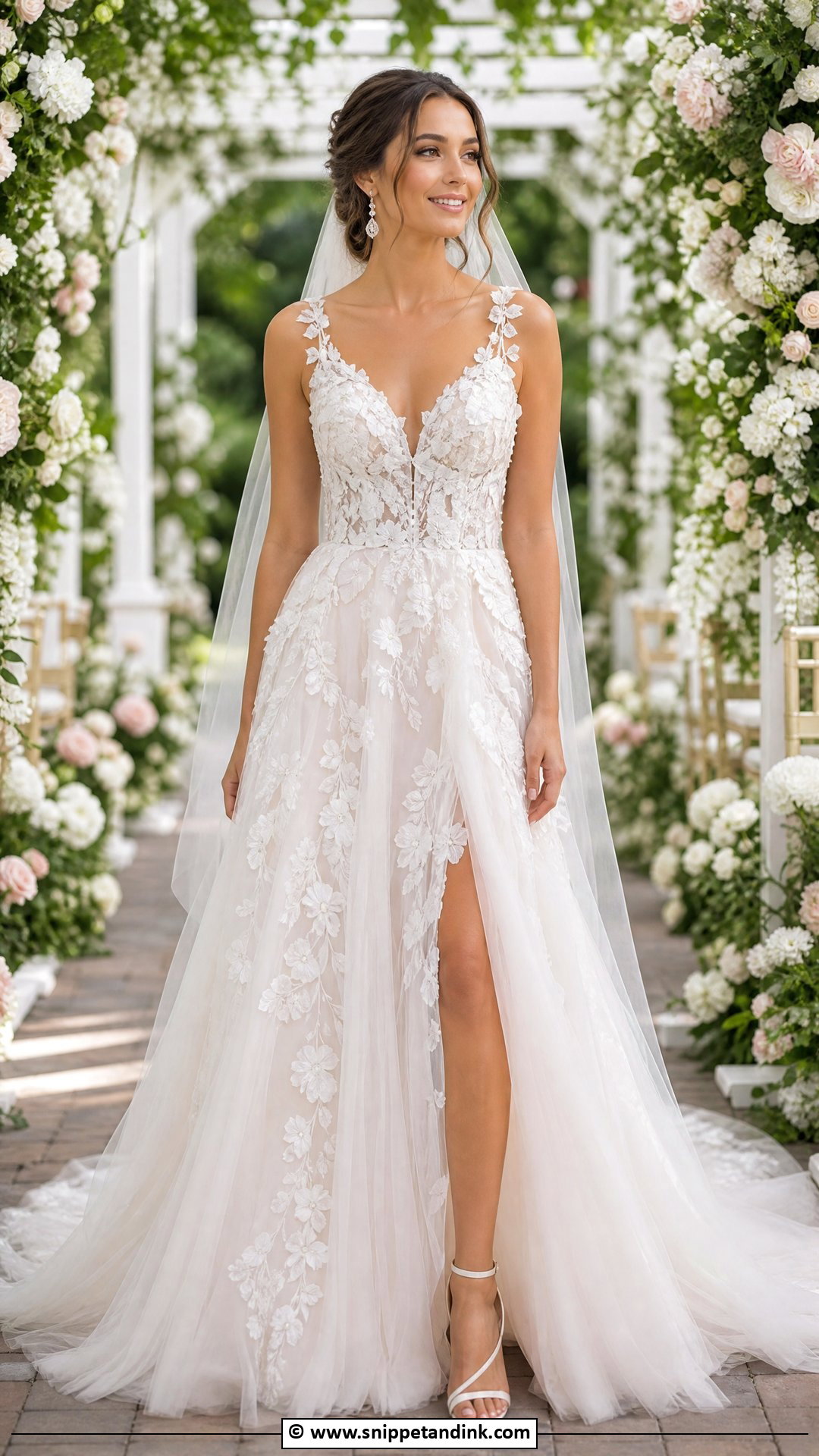
Appliqués sit on top of the base fabric rather than being part of it, so they give a raised, three-dimensional effect, especially on tulle, organza and sheer sleeves. Large flowers feel like a fashion statement; small scattered ones read softer. I check the edges of each motif at fittings, since loose threads at an appliqué edge catch on bracelets and bouquets. Keep accessories light: a simple veil, delicate earrings and strappy heels. Outdoor and garden weddings in spring or summer suit it best.
10. Basque Waist Bridal Gown
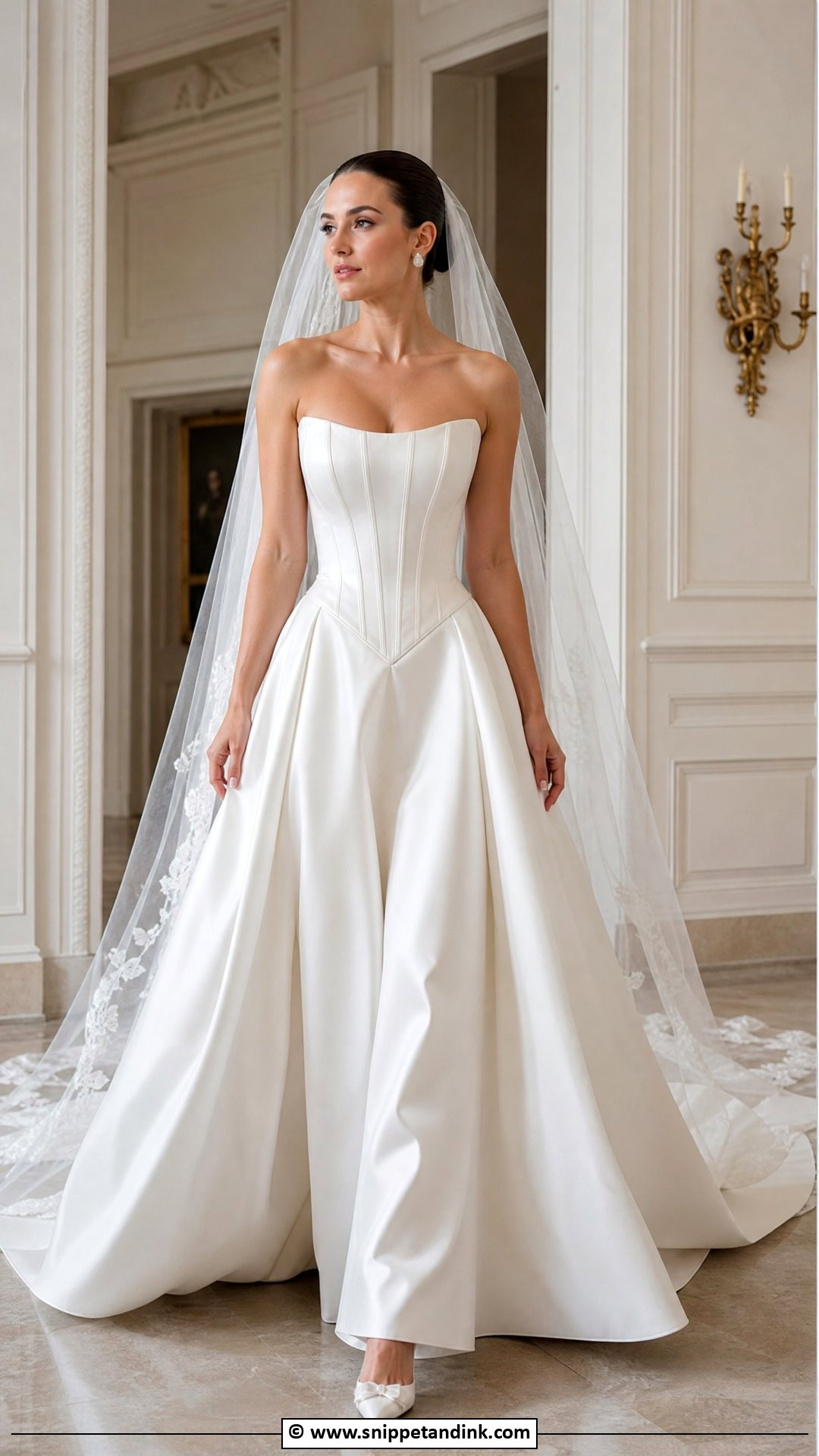
A basque waist dips into a V below the natural waist, lengthening the torso and anchoring a full skirt. It’s back in fashion because it shapes the body without needing a belt. I find it most flattering on brides with a shorter waist, since the dip creates length where there isn’t much. Satin, full skirts and structured bodices carry it best. Balance it with a clean neckline and simple jewelry, and add a cathedral veil if you want the look fully formal.
11. Drop Waist Bridal Gown
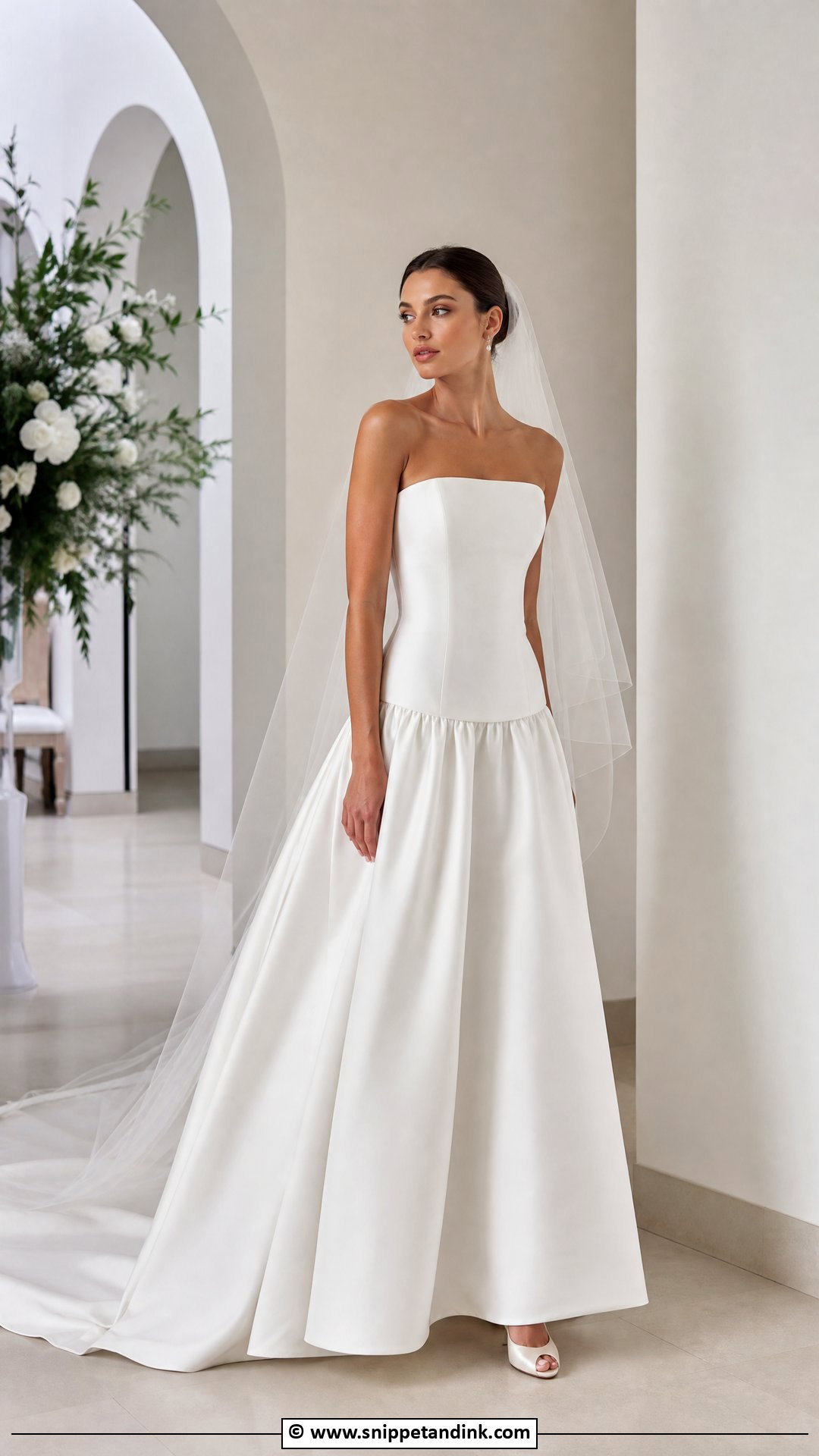
A drop waist extends the bodice below the natural waist before the skirt begins, which gives a long line through the torso. Satin, taffeta and organza hold the shape well. The proportion is what tailoring has to protect: the seam should sit just over the hip bone, and if it drops much further, the legs look short in photos. With a ball gown skirt it’s dramatic; with a soft A-line it’s gentler. Simple heels, a structured veil and polished hair finish it.
12. Square Neck Bridal Gown
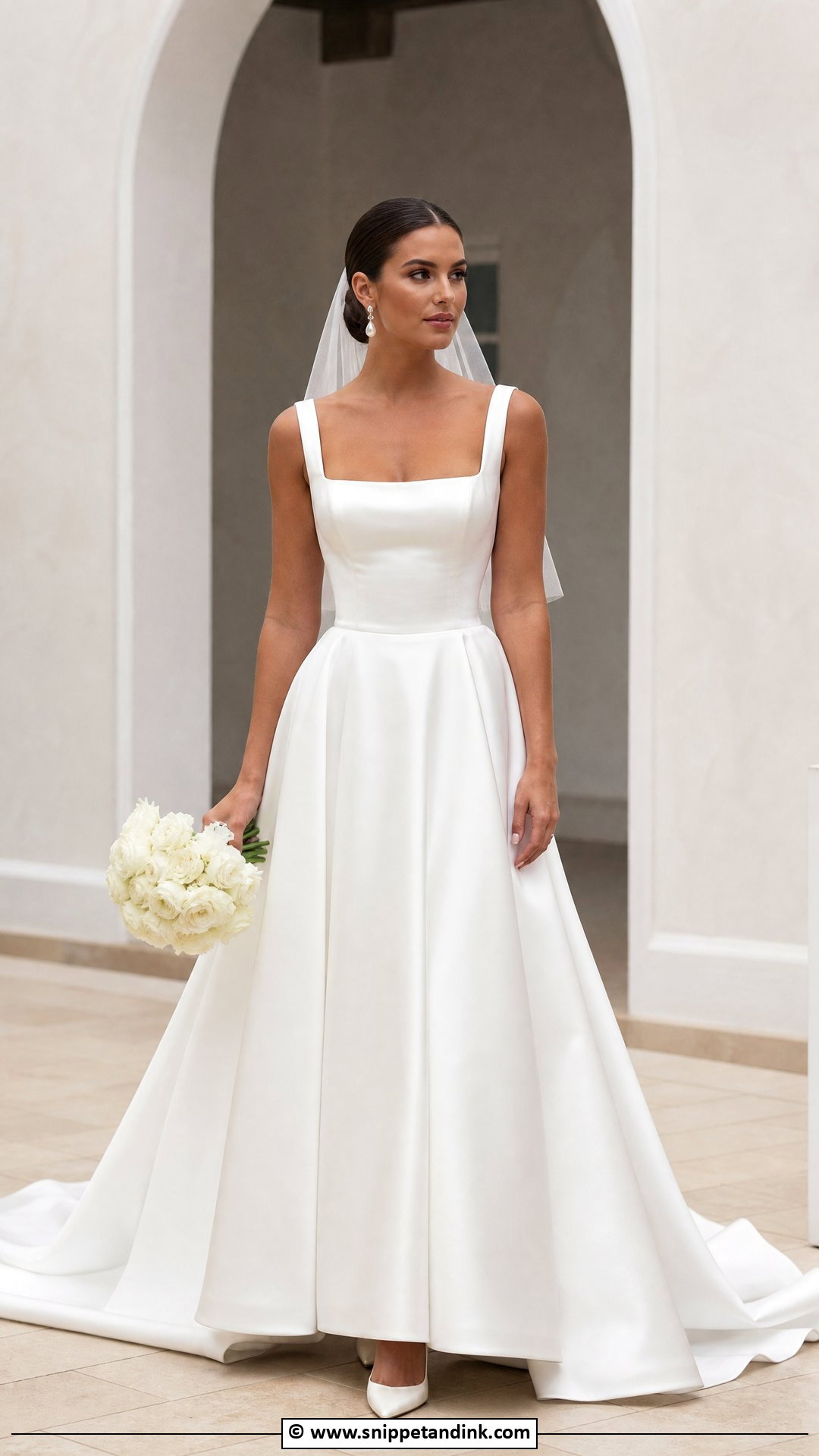
Square necks open the chest while framing the bodice with straight edges, and the wide straps that usually come with them give real support over a long day. They suit satin ball gowns, crepe sheaths, lace A-lines and minimal gowns alike. I like a short veil and pearl earrings with this neckline, and a simple necklace if the square is deep enough to leave room. Smooth fabric looks refined, lace softer. For a classic dress with a modern edge, this is the easiest route I know.
13. High Neck Bridal Gown
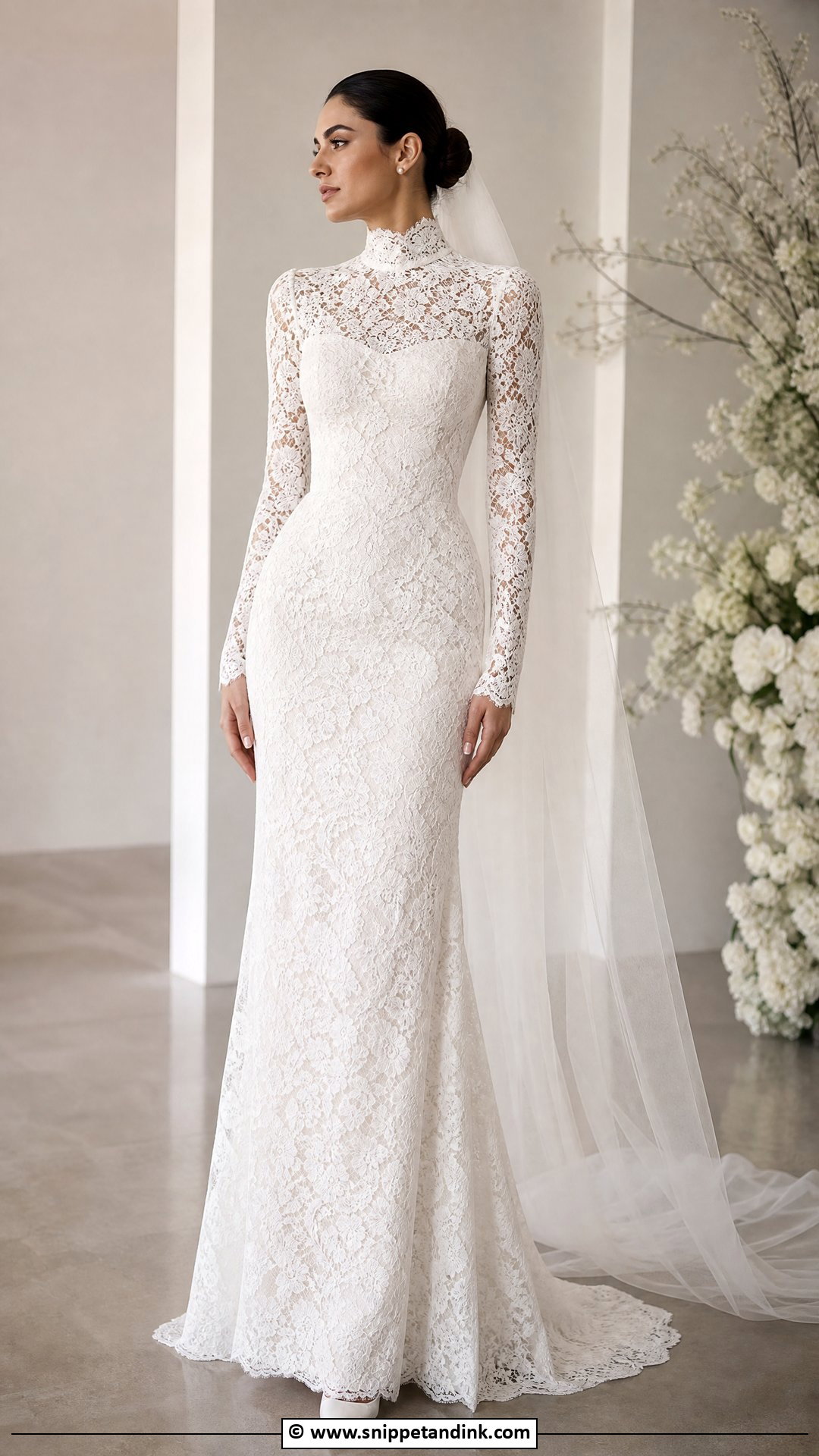
High necks look regal in lace, sleek in crepe and fashion-led in satin. The fit through the shoulders and at the collar has to be comfortable, because you’ll feel a tight collar every time you swallow, laugh or turn your head. Many brides who dislike necklaces love this neckline since it acts as the jewelry. Small earrings, a smooth bun and a long veil keep it refined. A fitted skirt reads modern; an A-line softer.
14. Halter Bridal Gown
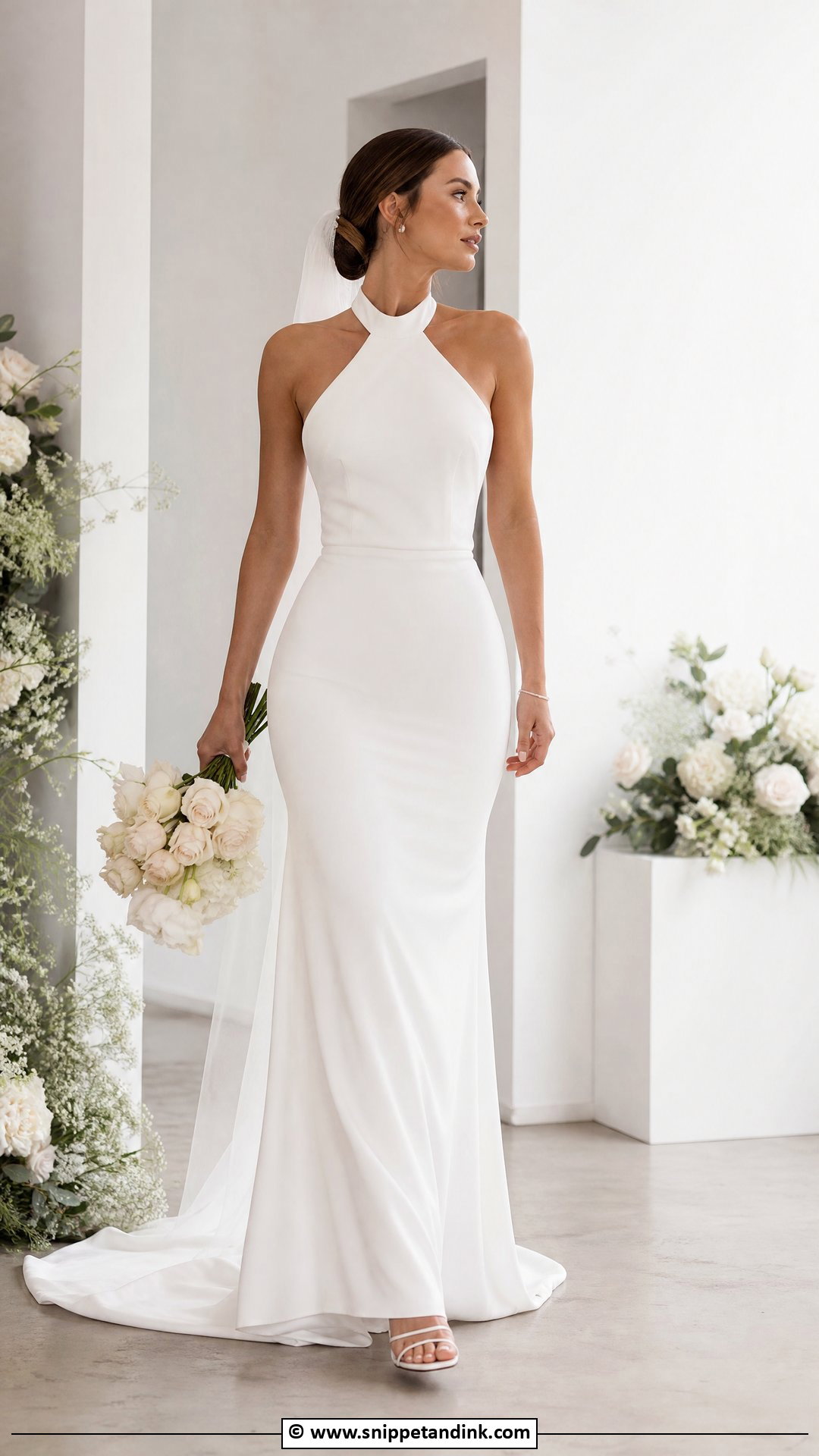
A halter draws the eye to the shoulders and keeps the front clean. Crepe, satin and light chiffon all suit it. It can stay fitted and minimal or flow into a soft A-line. Skip the necklace, since the neckline already defines that space, and choose earrings or a bracelet. I pin halters with the bride’s hair up, because a style worn down covers the straps and changes the whole look. A low bun, strappy heels and a simple veil make it a strong pick for destination weddings.
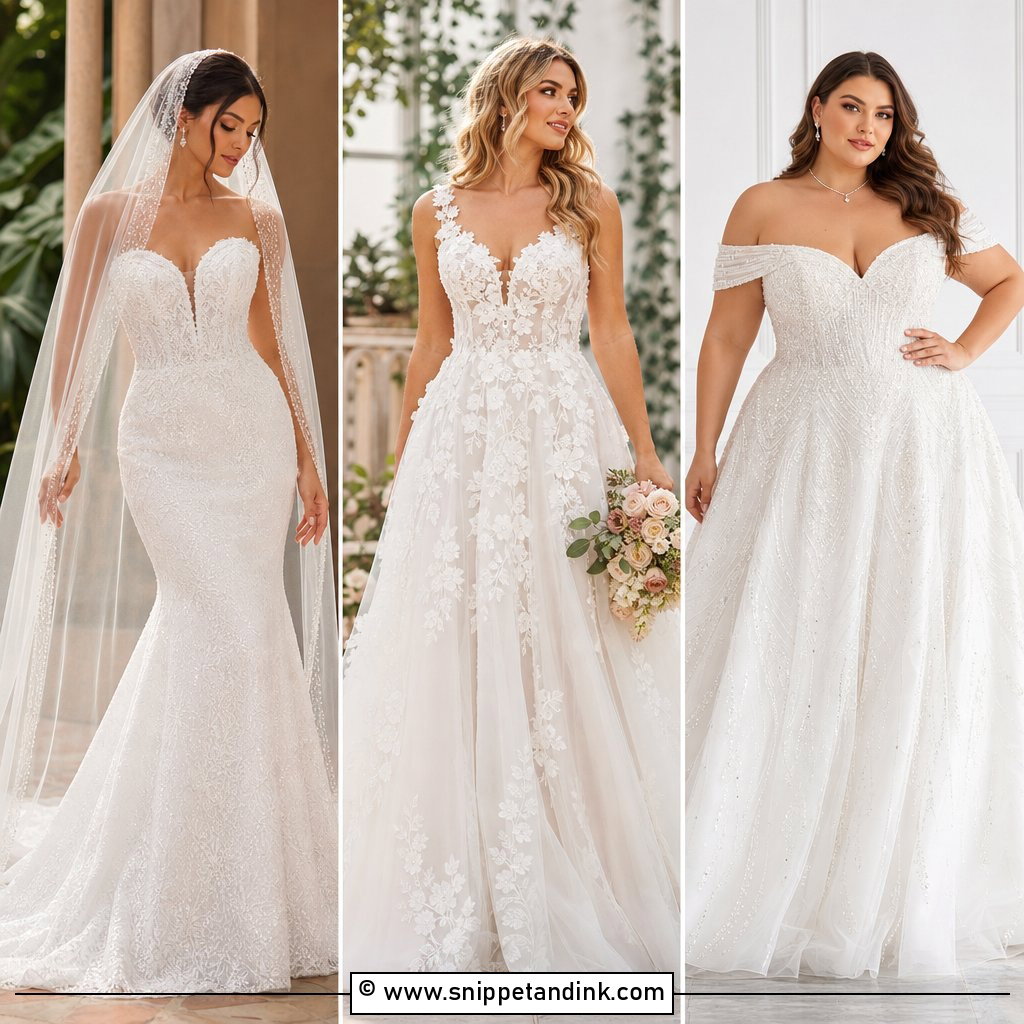


15. V Neck Bridal Gown
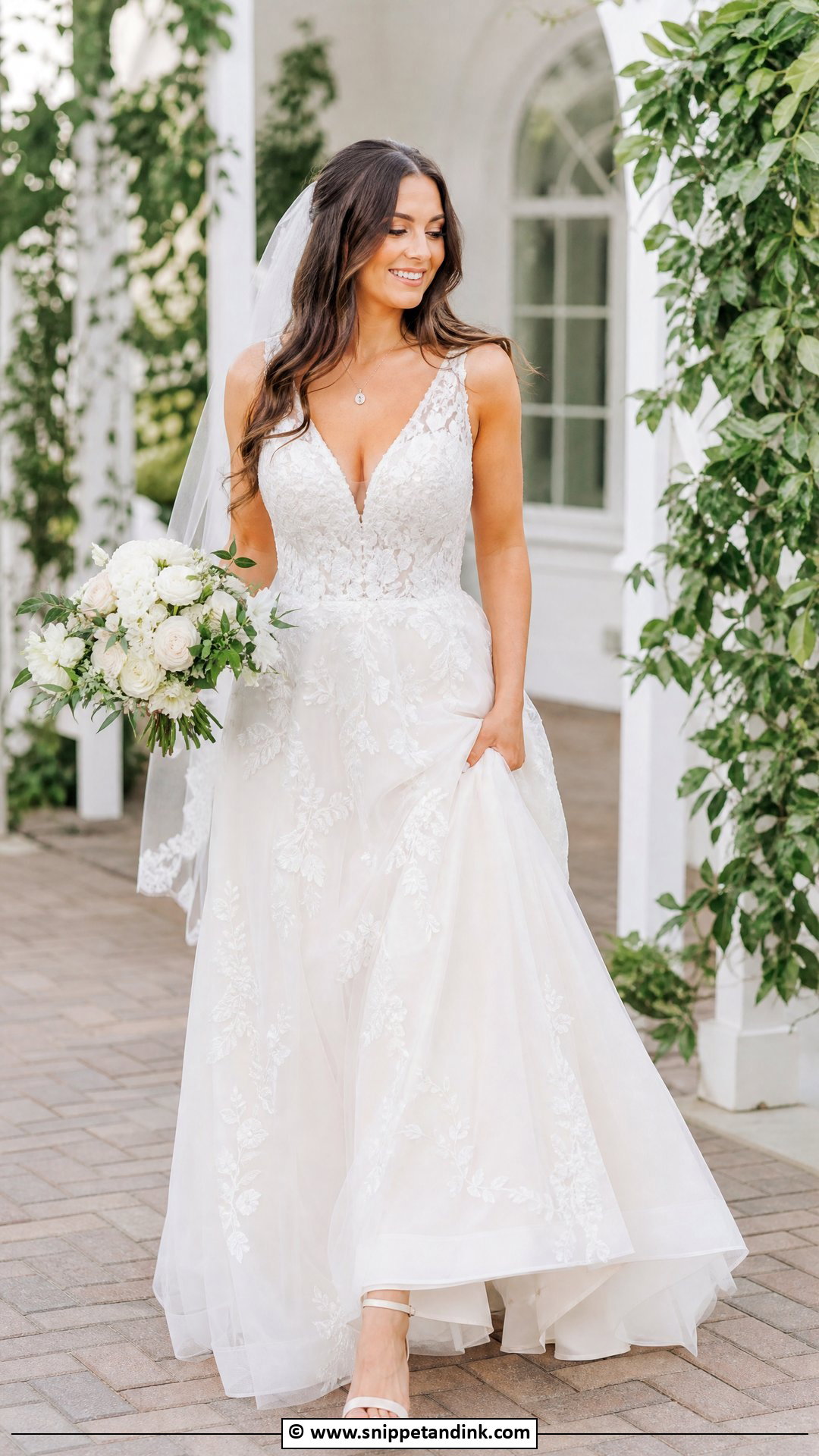
The depth of a V changes everything. A shallow V gives shape without boldness; a deep one is dramatic and needs support. It lengthens the upper body and works with fitted, A-line and flowing skirts. Lace reads romantic, crepe and satin modern. For a deeper V, look for illusion mesh, wider straps or built-in cups. A pendant that sits a little above the point of the V looks deliberate. Soft waves and a veil that doesn’t compete complete it.
16. Sweetheart Bridal Gown
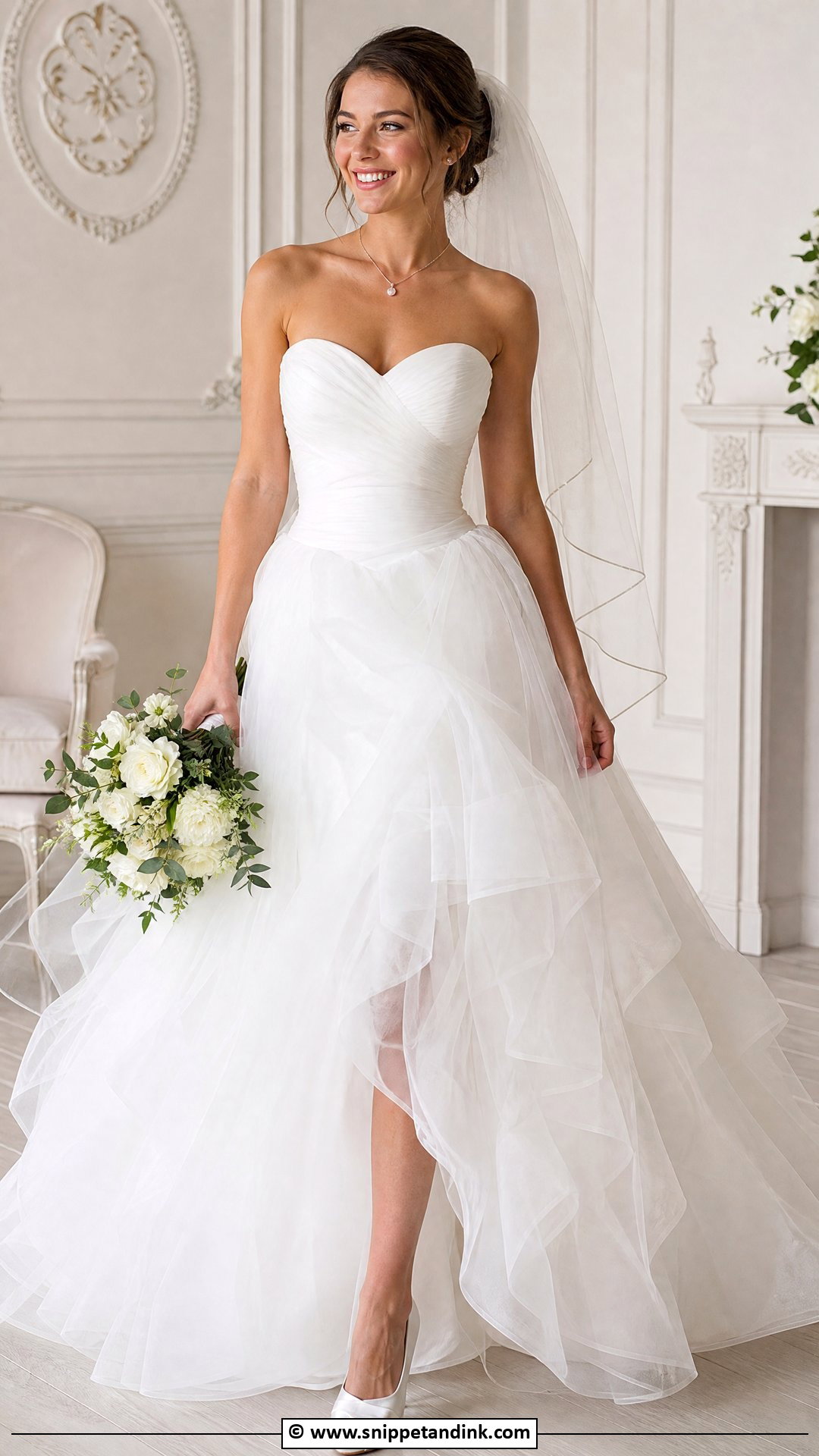
The curve of a sweetheart neckline frames the bust and suits strapless, off-shoulder, lace and full-skirted gowns, which is why it remains so popular. Structured versions give support; softer ones feel relaxed. Lean forward in the fitting room: if the top edge gapes, it needs taking in. A delicate necklace suits a plain neckline, while earrings alone are better with lace or beading. A veil with soft edging finishes it.
17. Corset Bridal Gown
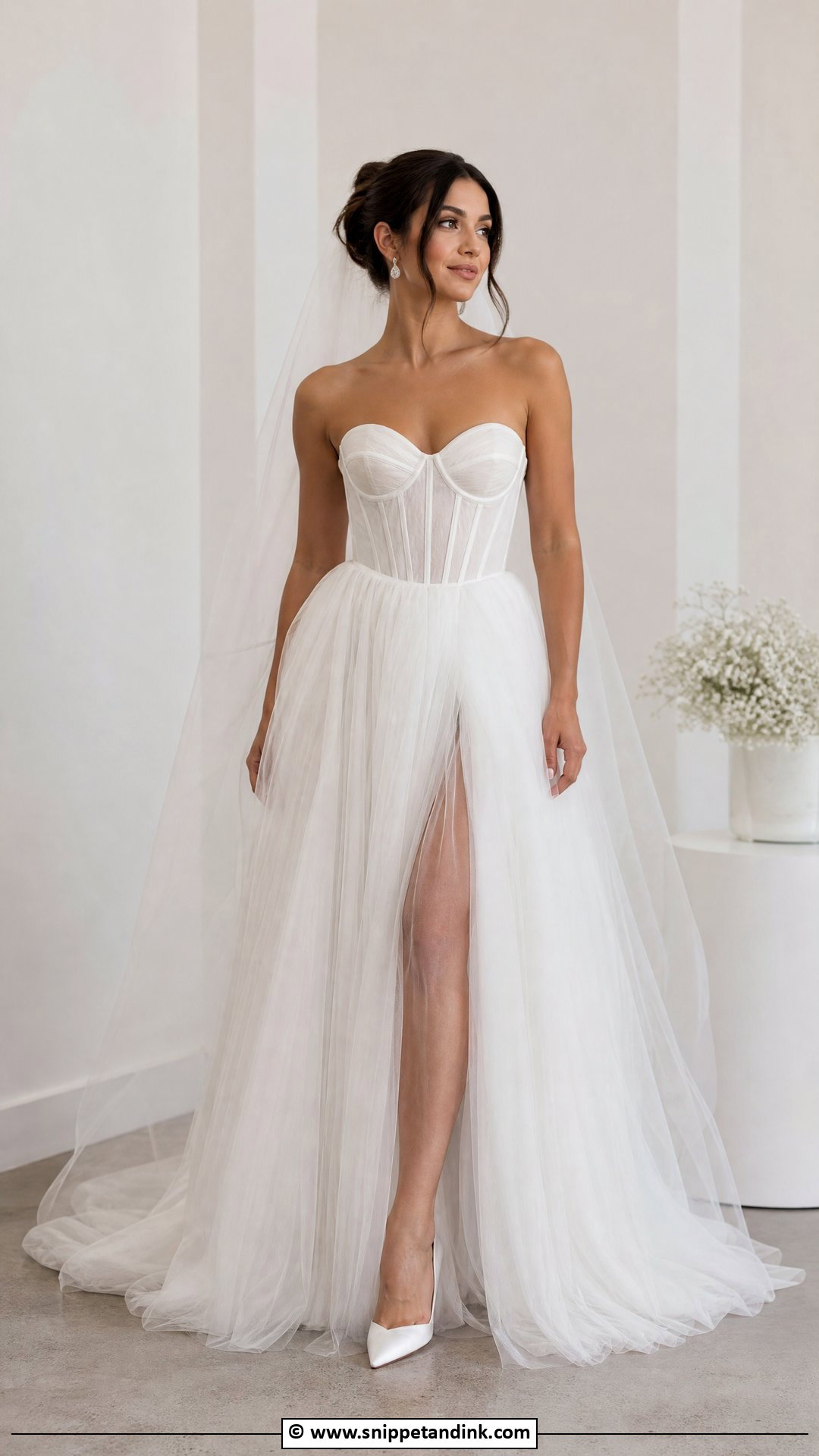
Corset bodices give shape and support, either hidden under smooth fabric or visible as boning lines. They feel secure, which means fewer accessories and less fiddling. They pair with tulle skirts, satin ball gowns, lace mermaids and detachable overskirts. The check I never skip: sit down, breathe deeply and laugh. A corset that’s comfortable standing can be too tight at dinner. A simple veil, good earrings and heels matched to the formality complete it.
18. Tulle Bridal Gown
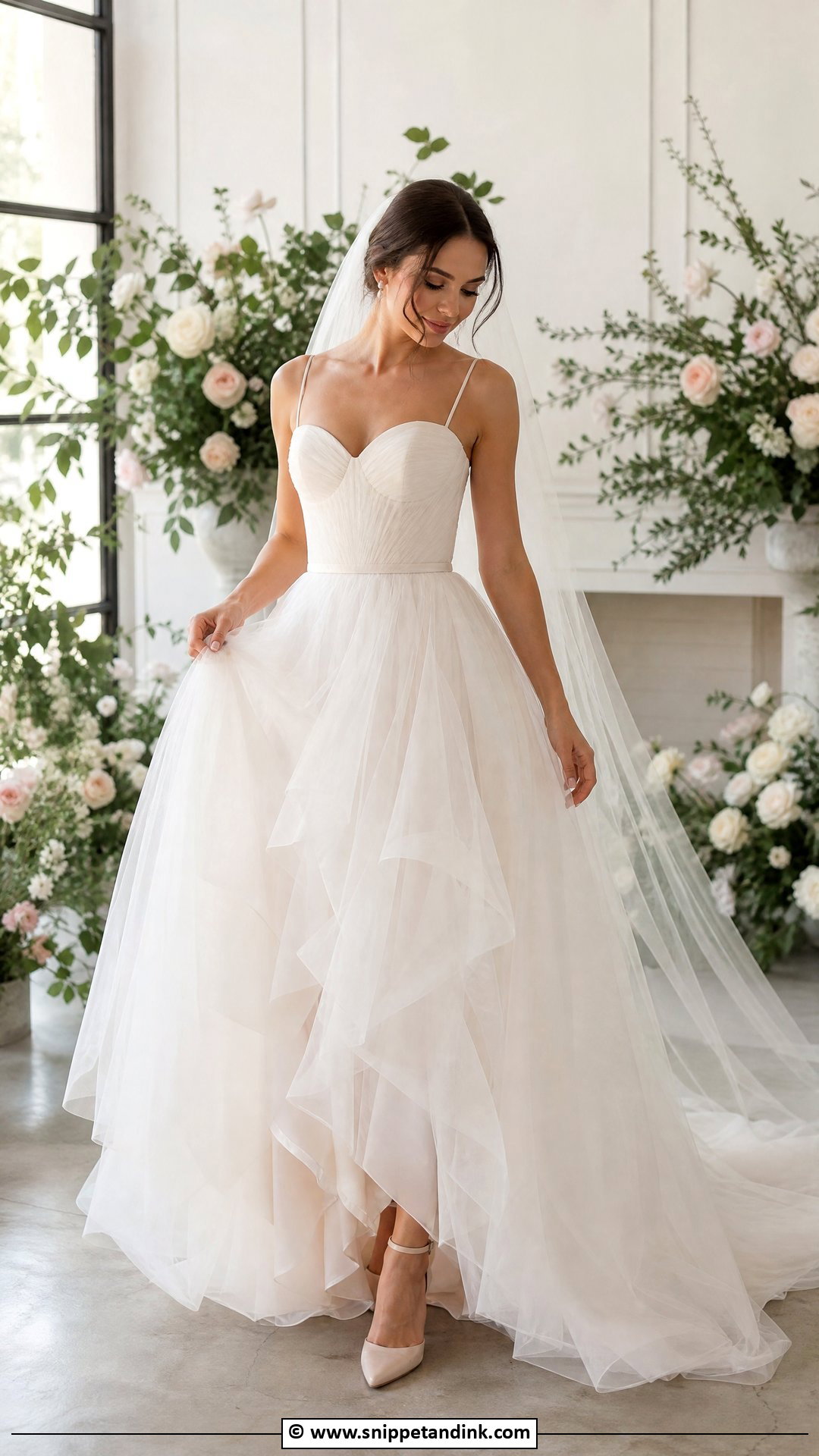
Tulle is light, catches the light and moves, which is why it suits a dreamy ball gown, a soft A-line or a full skirt over a fitted bodice. Plain tulle looks clean, glitter tulle adds a little shine and floral tulle reads romantic. It does snag on rough surfaces, so I warn brides about stone walls, brick steps and bouquet wire. Delicate accessories suit its softness: a veil with a similar texture, pearl earrings and fine heels.
19. Organza Bridal Gown
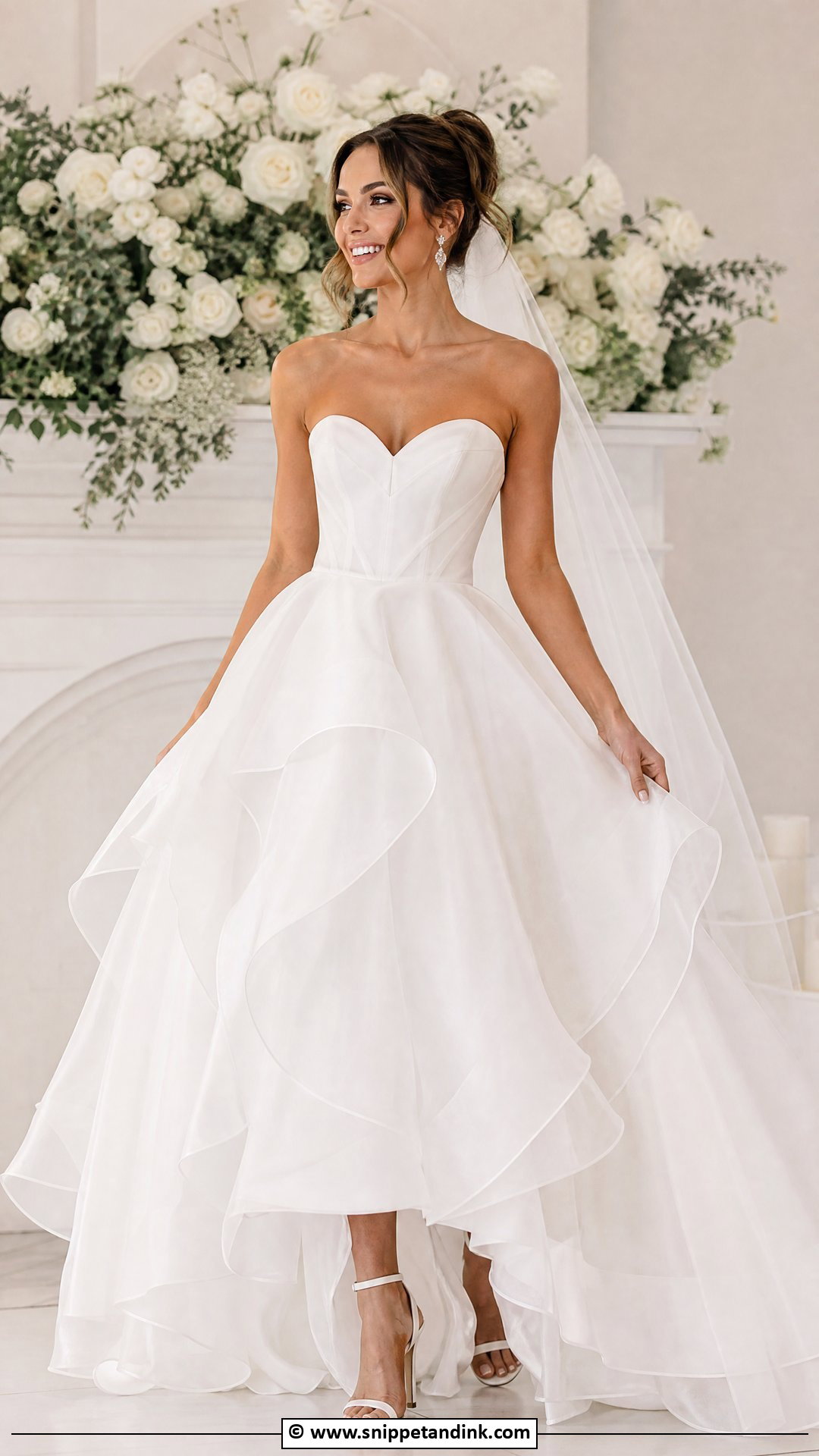
Organza sits between chiffon and satin: crisper than one, lighter than the other. It holds volume without weight, which is why it’s used for full skirts, layered designs, puff sleeves and sculptural details. It also creases if you sit on it for long, so steaming before the ceremony is a must. A plain bodice with an organza skirt looks modern; ruffles look more dramatic. Clean jewelry and a veil that doesn’t overpower it suit spring, summer and bright indoor weddings.
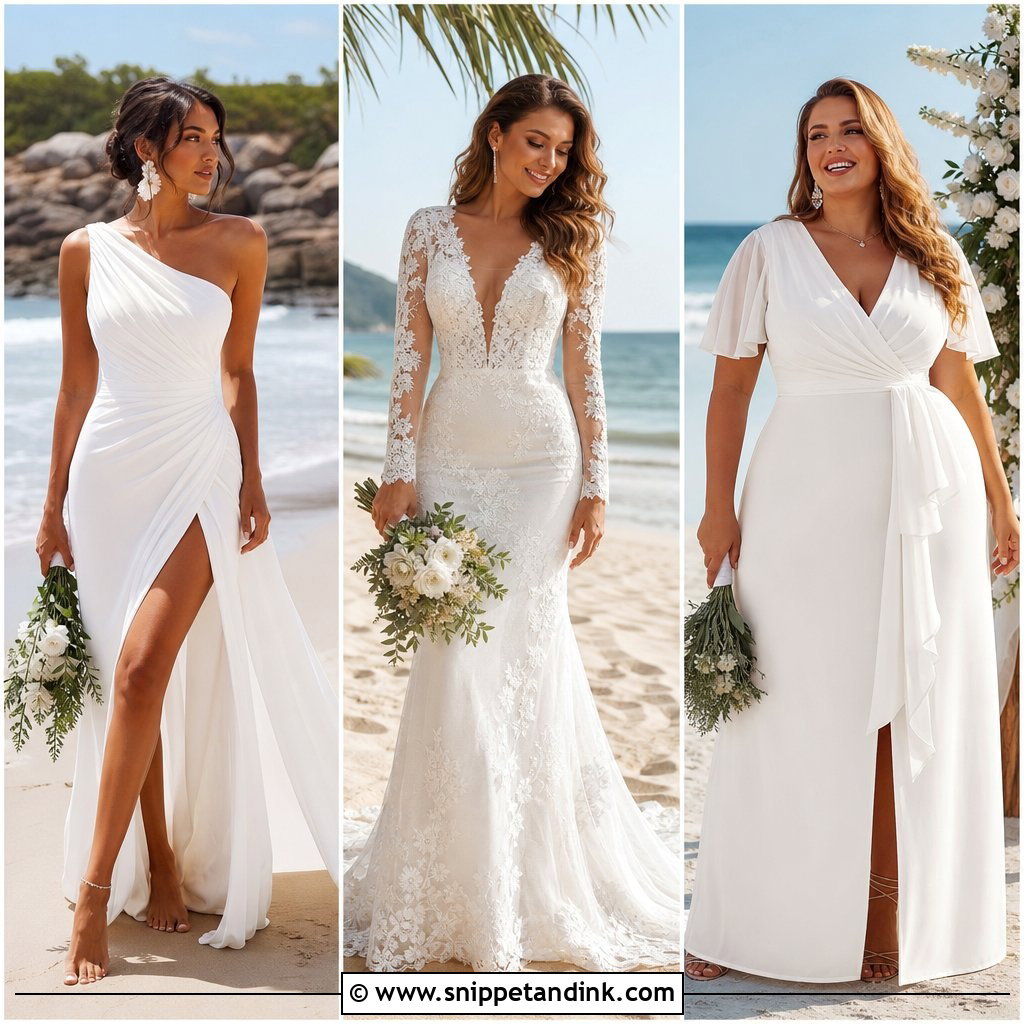
20. Chiffon Bridal Gown
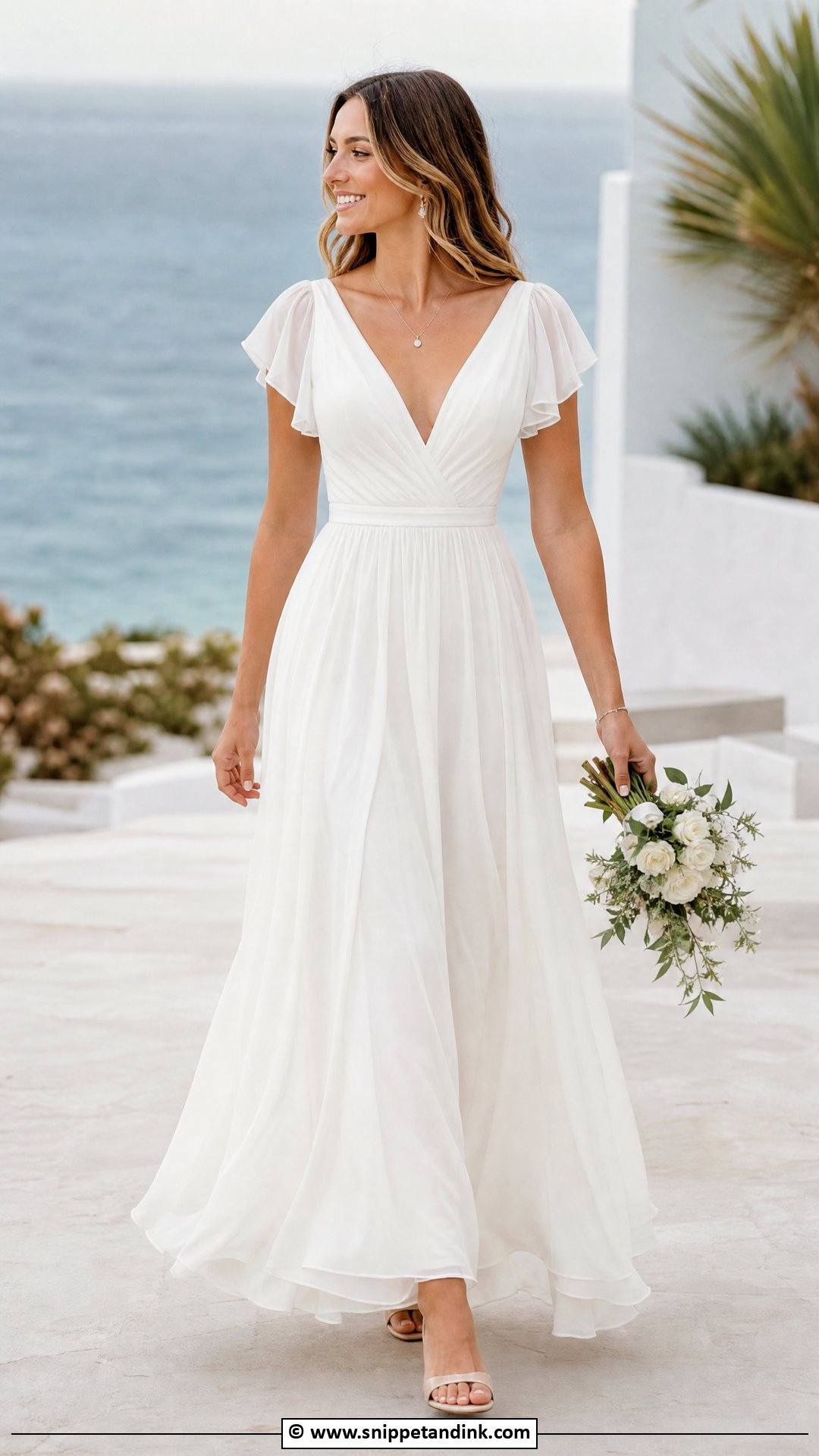
A chiffon bridal gown is about the easiest dress to wear on a hot day. The fabric is light and breathable, which is why it suits beach, garden and warm-weather weddings. Chiffon doesn’t hold stiff volume, so it suits empire, A-line, sheath and draped silhouettes, not ball gowns. It does move a lot in wind, which looks lovely walking but can wrap around the legs on a breezy cliff. A V neckline, flutter sleeves or fine straps, low heels, soft curls and minimal jewelry keep it relaxed.
21. Beaded Bridal Gown
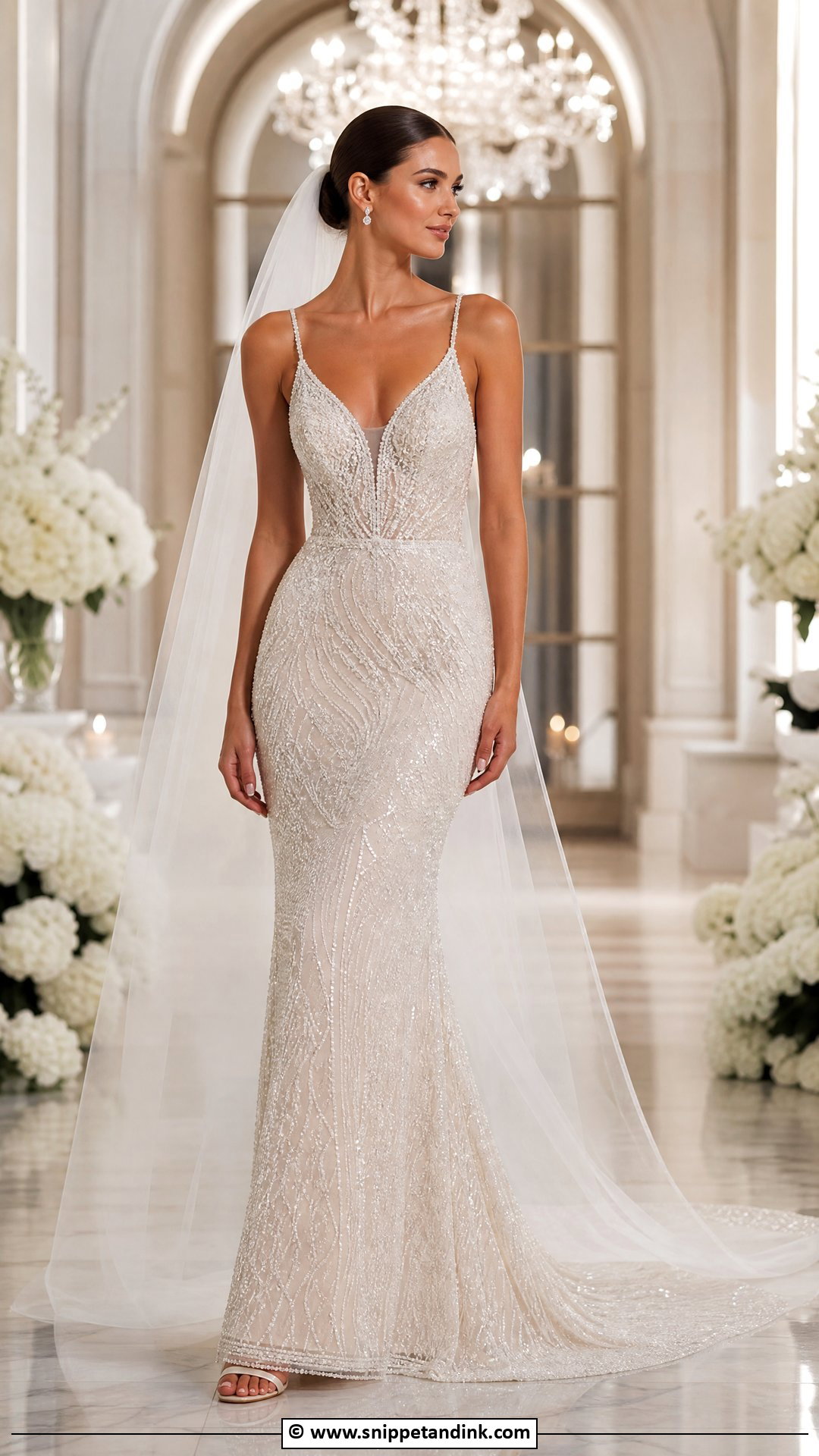
Beading can cover the whole dress or sit only on the bodice, sleeves or train. Art deco patterns feel glamorous and vintage; scattered beads feel softer and more modern. Beaded gowns can be heavy, so walk and sit in them at fittings, and check where the inner arm brushes the bodice, since beads there can scratch. Keep the extras to small earrings, sleek heels and a clean veil. Evening receptions and formal venues show it best.
22. Sequined Bridal Gown
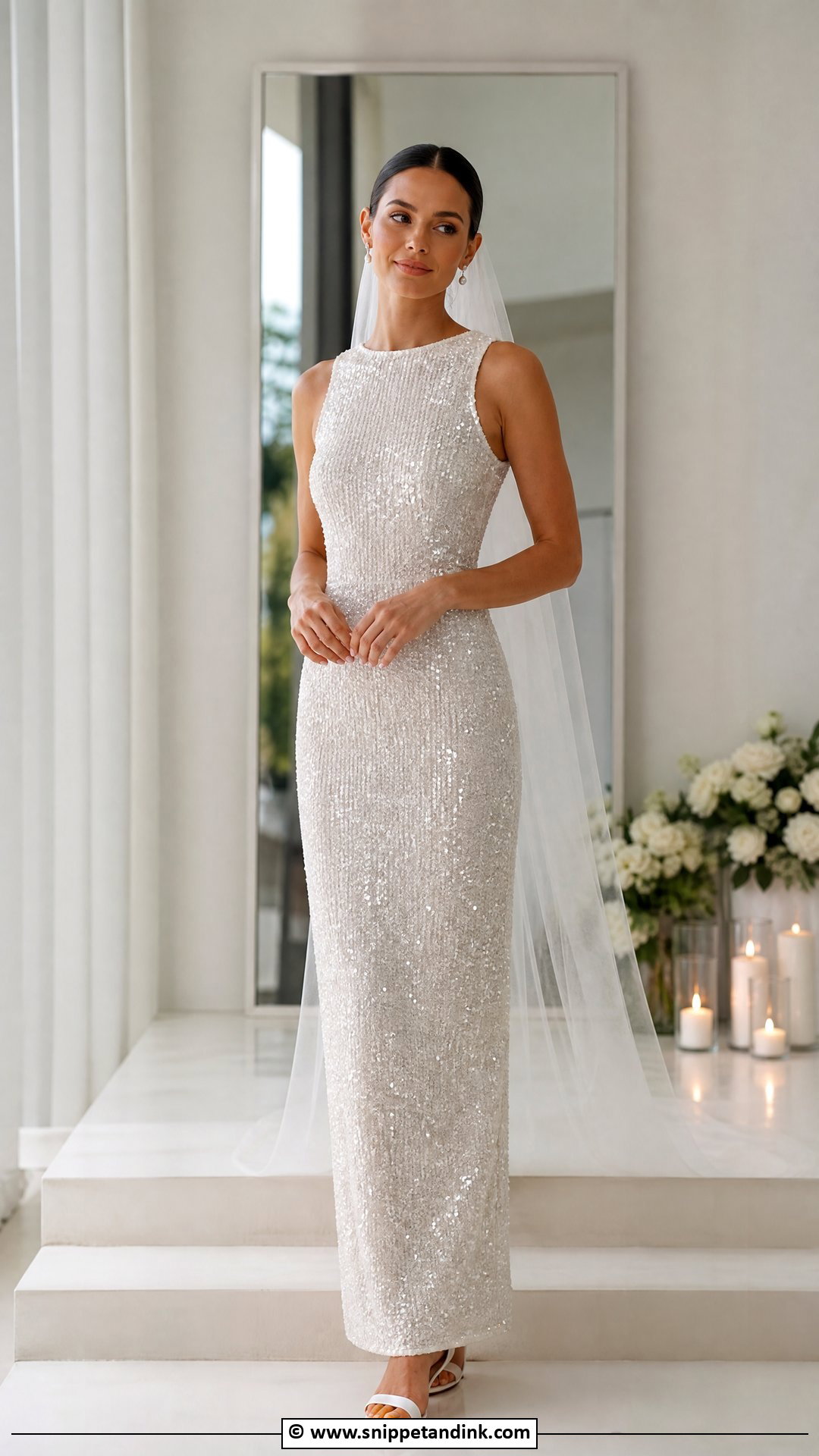
Sequins are a celebration fabric: they glow under reception lights in a way nothing else does. Ivory, pearl or soft champagne sequins keep it bridal rather than party dress. A column silhouette keeps the shine sleek; a fitted gown with a short train feels more glamorous. The practical catch is that sequins scratch the inner arm and catch on lace and hair, so I’d avoid sequined sleeves on a long day. Understated shoes, quiet jewelry and a smooth hairstyle keep the balance.
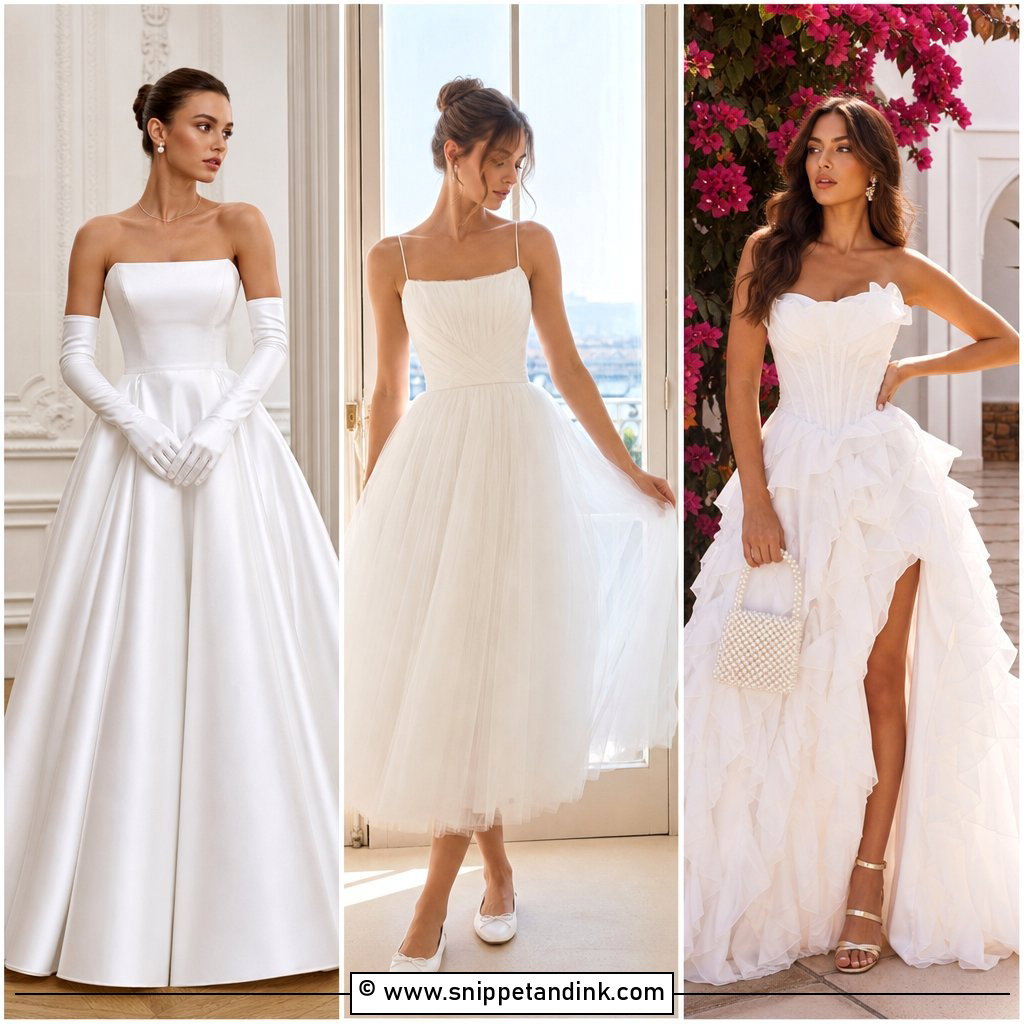
23. Tea Length Bridal Gown
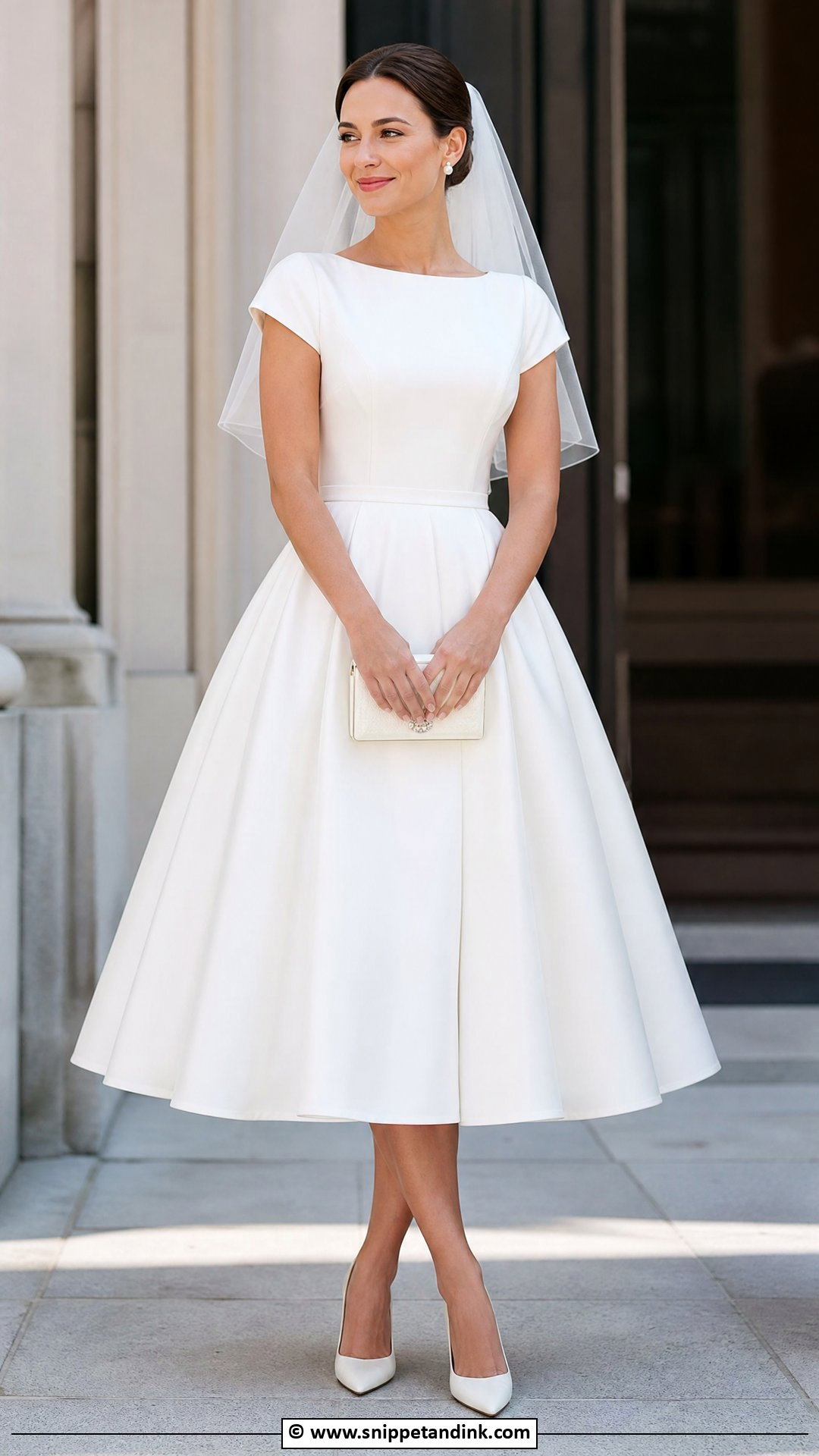
A tea length bridal gown falls between knee and ankle and has a playful, vintage character. Courthouse weddings, garden ceremonies and receptions all suit it, as do brides who simply want to move. The shoes show, so make them count: satin pumps, embellished flats or block heels. A fitted bodice and full skirt with a petticoat underneath gives the 1950s silhouette; without the petticoat the skirt falls flatter and looks more current. A short veil, pearl earrings and a structured clutch complete it.
24. Short Bridal Gown
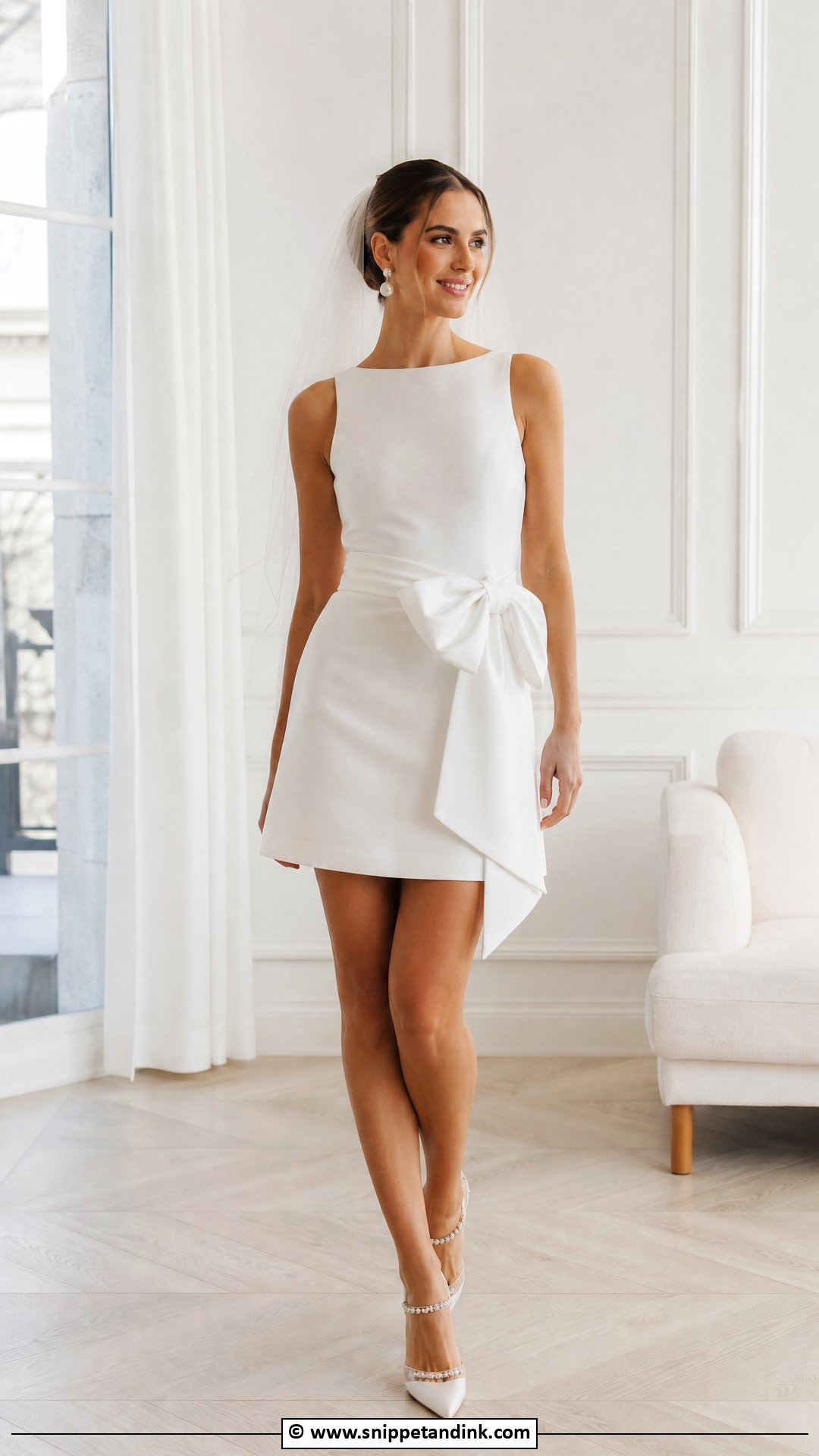
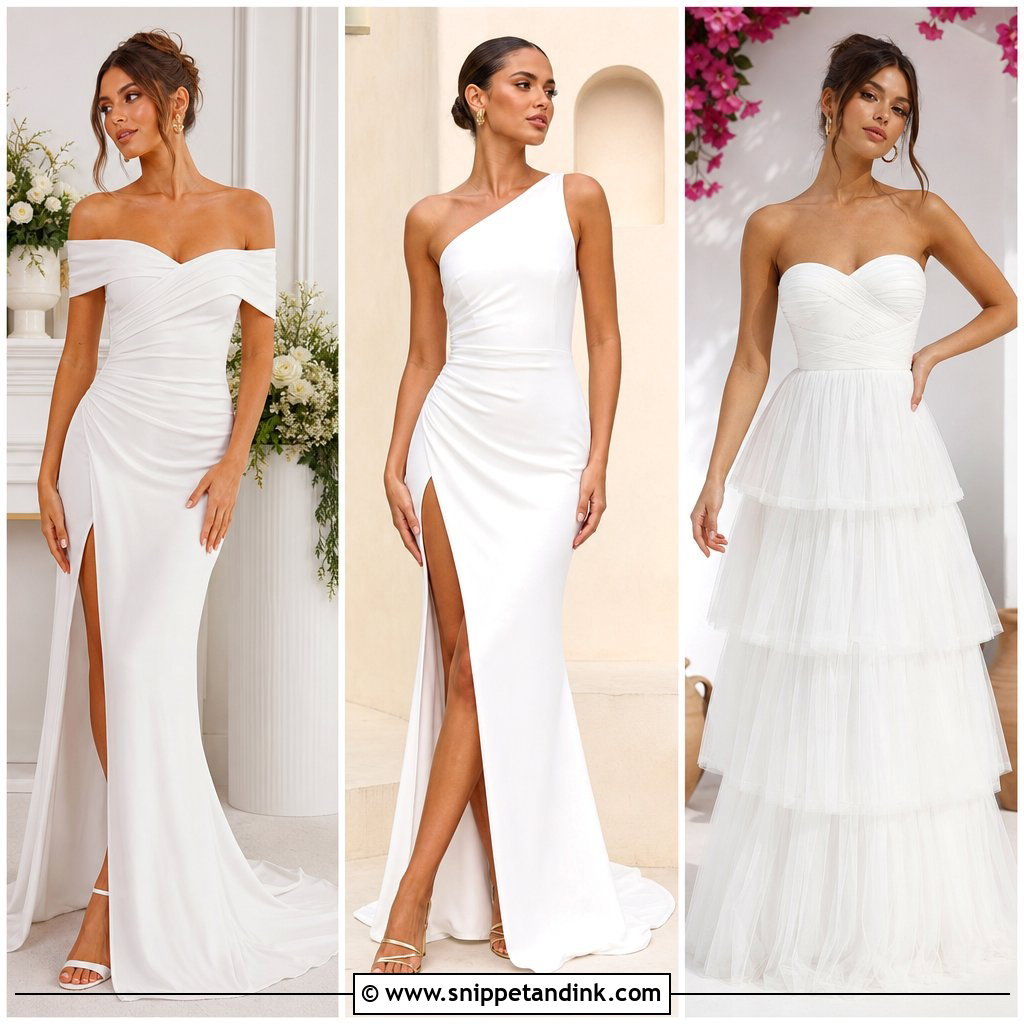
A short gown is practical for civil ceremonies, after-parties, destination weddings and second looks, and it gives you freedom to move. A tailored mini looks clean; lace feels romantic. Details like a bow, feather trim or pearls help it read as a wedding dress rather than a party one. Statement heels, a small veil and polished hair finish it. For a formal ceremony, add gloves or a structured jacket.
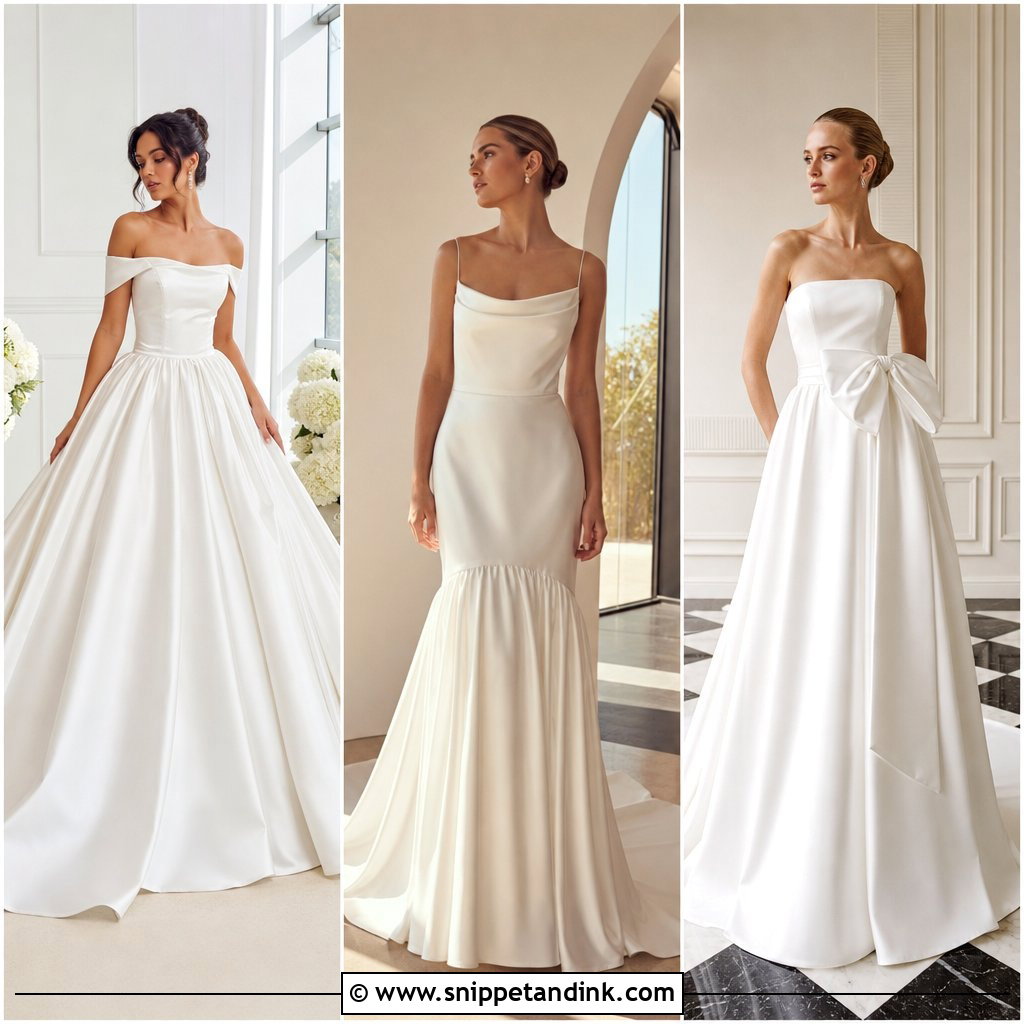

25. Slip Bridal Gown
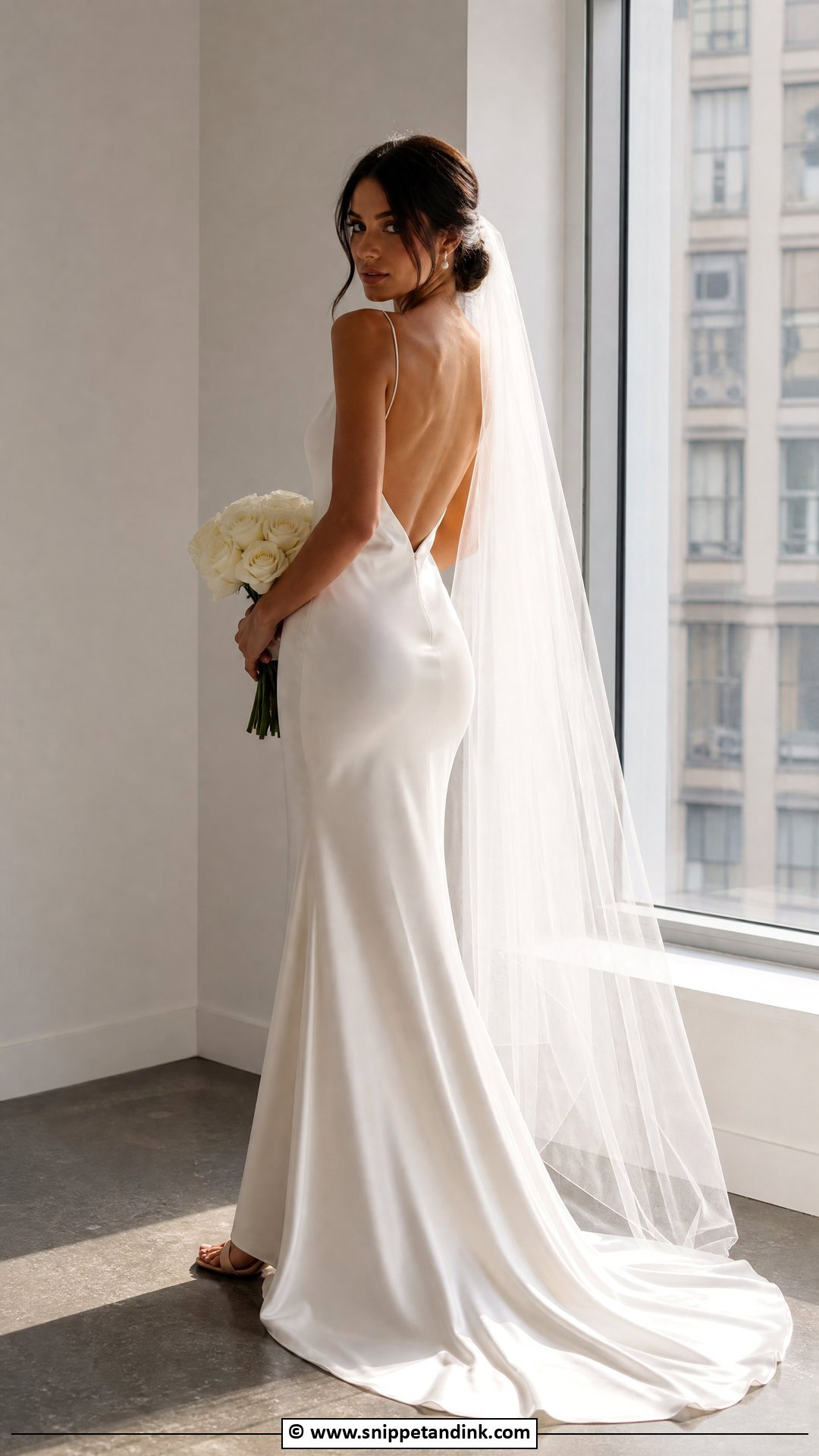
Slip dresses look simple and are hard to fit. They’re usually cut on the bias, which lets the fabric follow the body, but that same cut shows every undergarment line and every bit of tension. The dress should skim, never pull, so try it with the exact underwear you’ll wear and have alterations done by someone who knows bias-cut fabric. Satin and silk-like fabrics give the fluid line. Delicate straps, a low back or a cowl neck add interest. Barely-there heels, small earrings and a soft veil suit an intimate or city wedding.
26. Column Bridal Gown
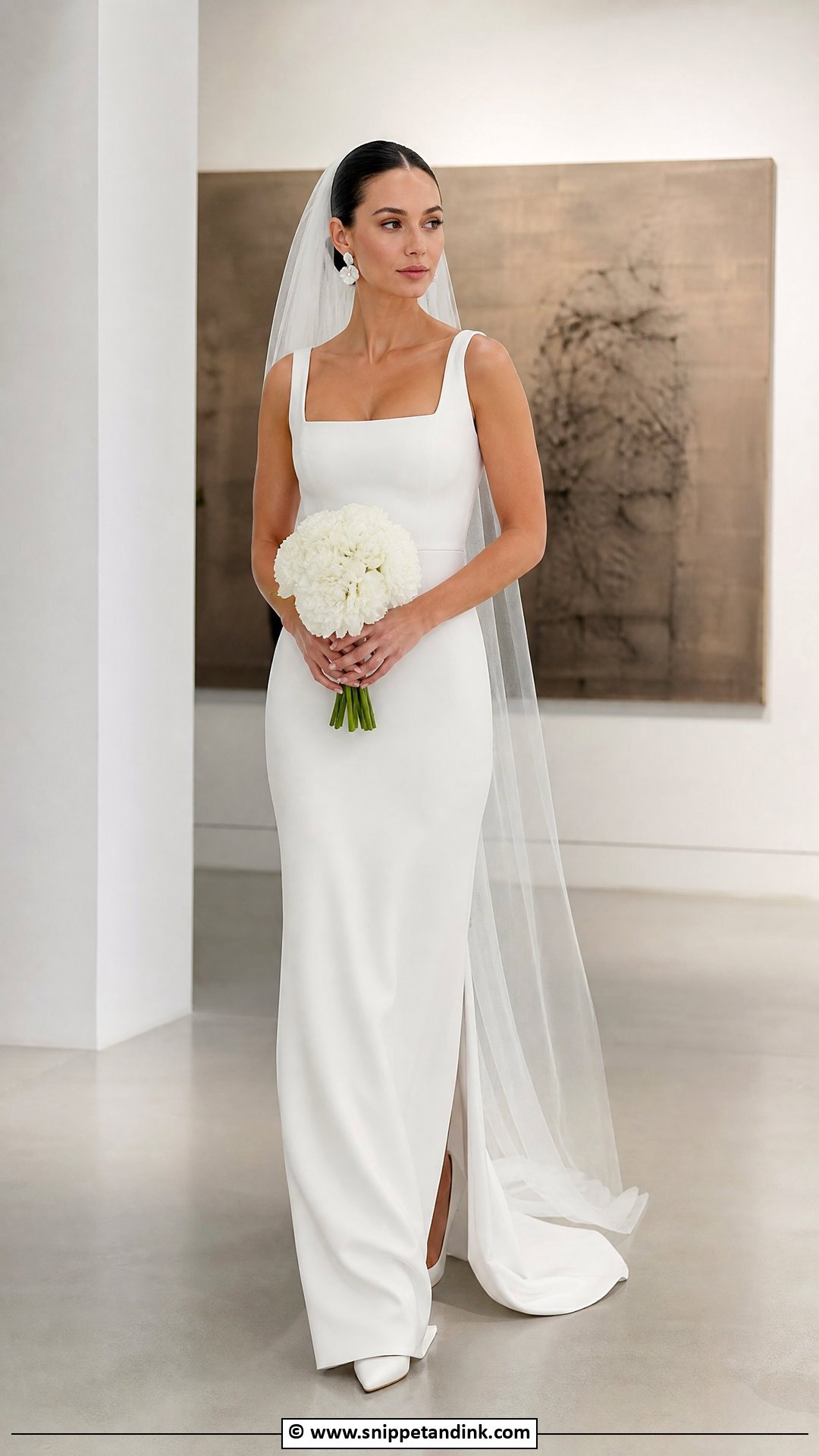
A column bridal gown runs straight from neckline to hem, less fitted than a mermaid and more structured than a sheath. Crepe, satin and mikado keep it smooth. Walking is the check here: a straight column with no slit or kick pleat shortens your stride, so I’d ask for a back vent if the skirt is narrow. A square neck keeps it minimal; a cape, bow or overskirt adds drama. Pointed heels, sculptural earrings and a sleek veil suit galleries and city venues.
27. Sheath Bridal Gown
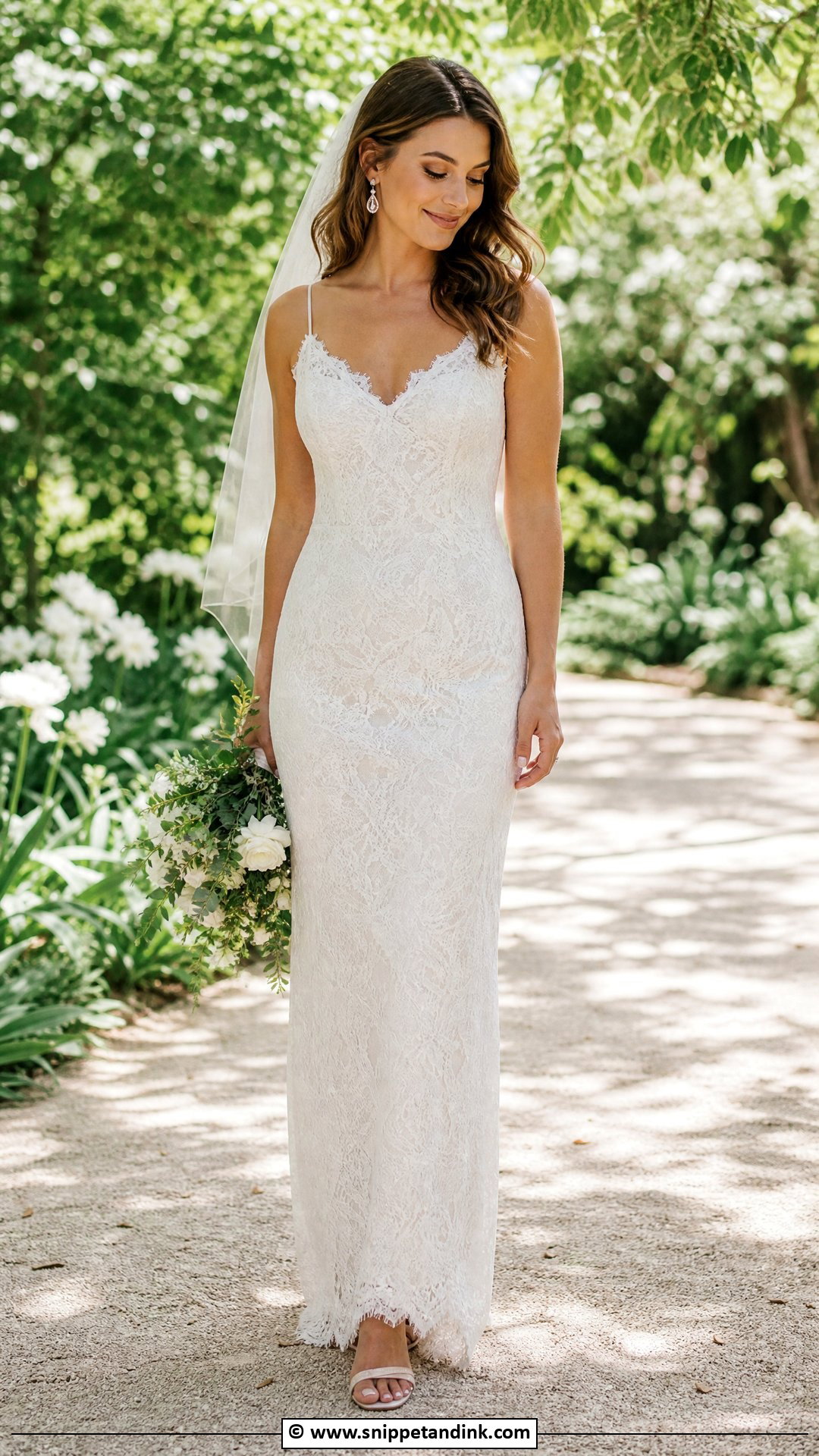
Sheaths follow the body’s natural line without a flare, so they’re comfortable and often easier to wear than fuller shapes. Lace looks romantic, crepe modern and chiffon relaxed. For outdoor ceremonies they’re light and manageable, with no skirt to haul across a lawn. They show the body more than an A-line, so brides who want some freedom at the hips may prefer a soft sheath in chiffon over a clingy crepe. Simple heels, a soft veil and delicate jewelry are enough.
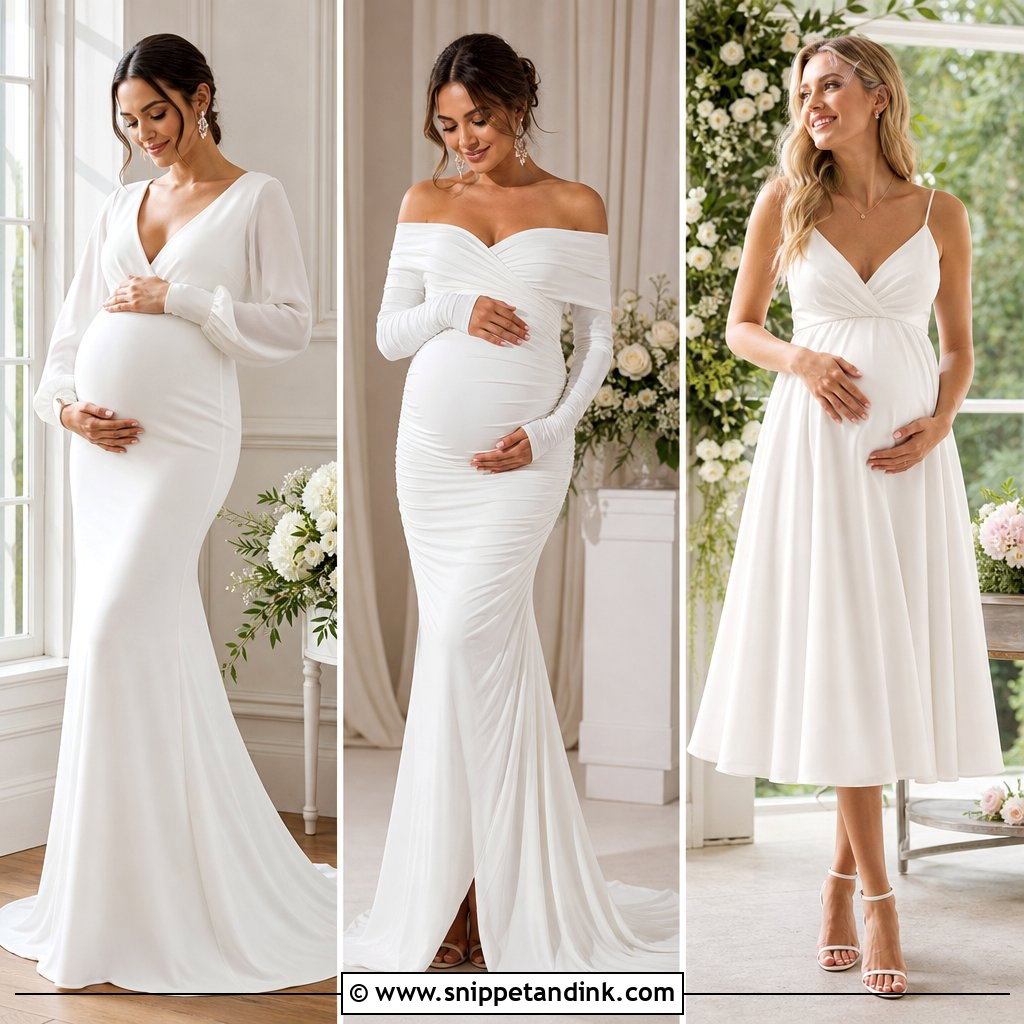
28. Empire Waist Bridal Gown
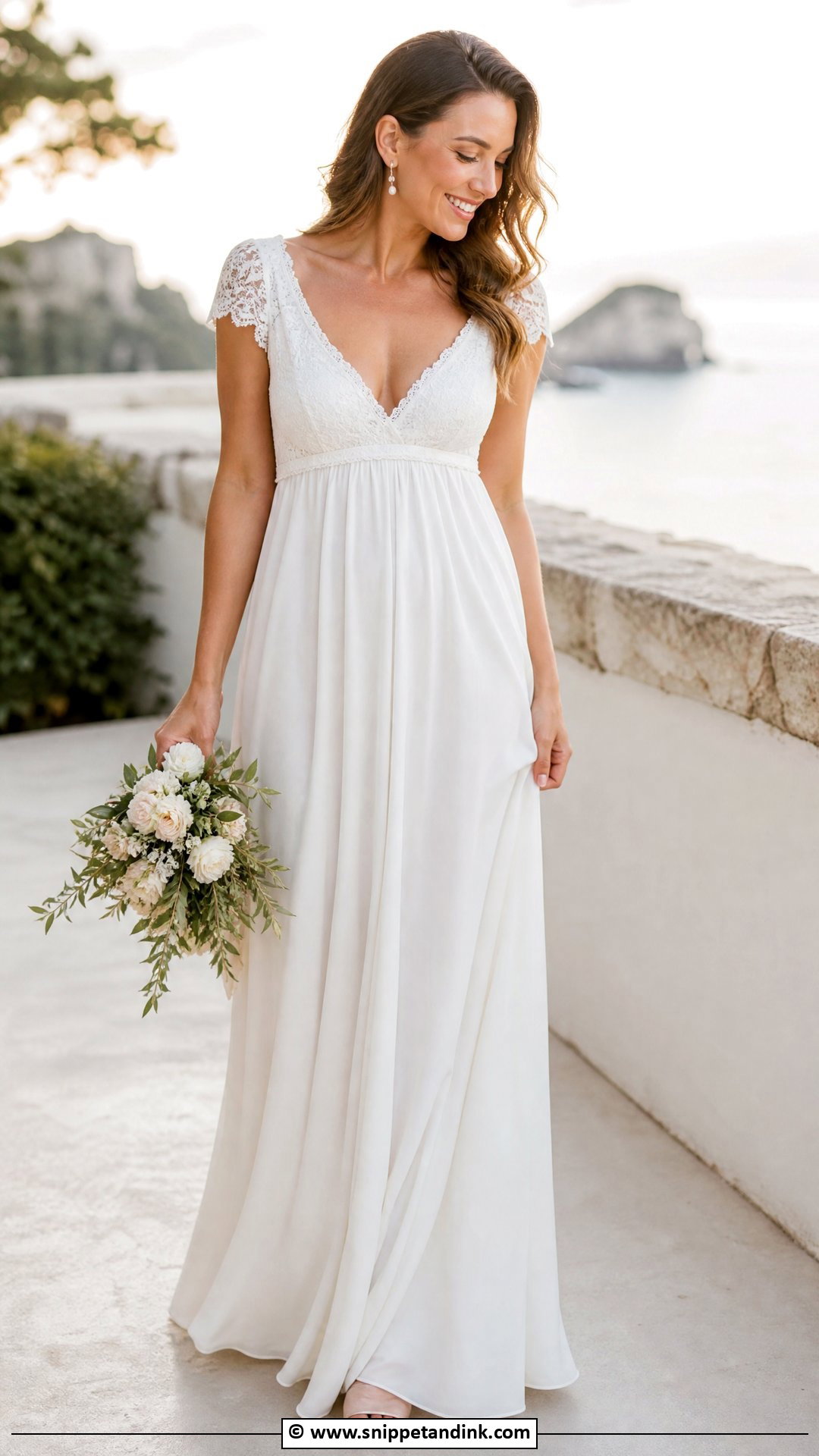
An empire waist sits just under the bust and lets the skirt fall from there, so nothing grips the waist or hips. That makes it comfortable, and it’s often my suggestion for brides who are pregnant on the day or who simply hate structure. Chiffon looks airy, lace more romantic. Delicate straps, flutter sleeves or a modest V neckline balance the high waist. Simple sandals, pearl earrings and loose waves suit warm weather and relaxed venues.
29. Cape Bridal Gown
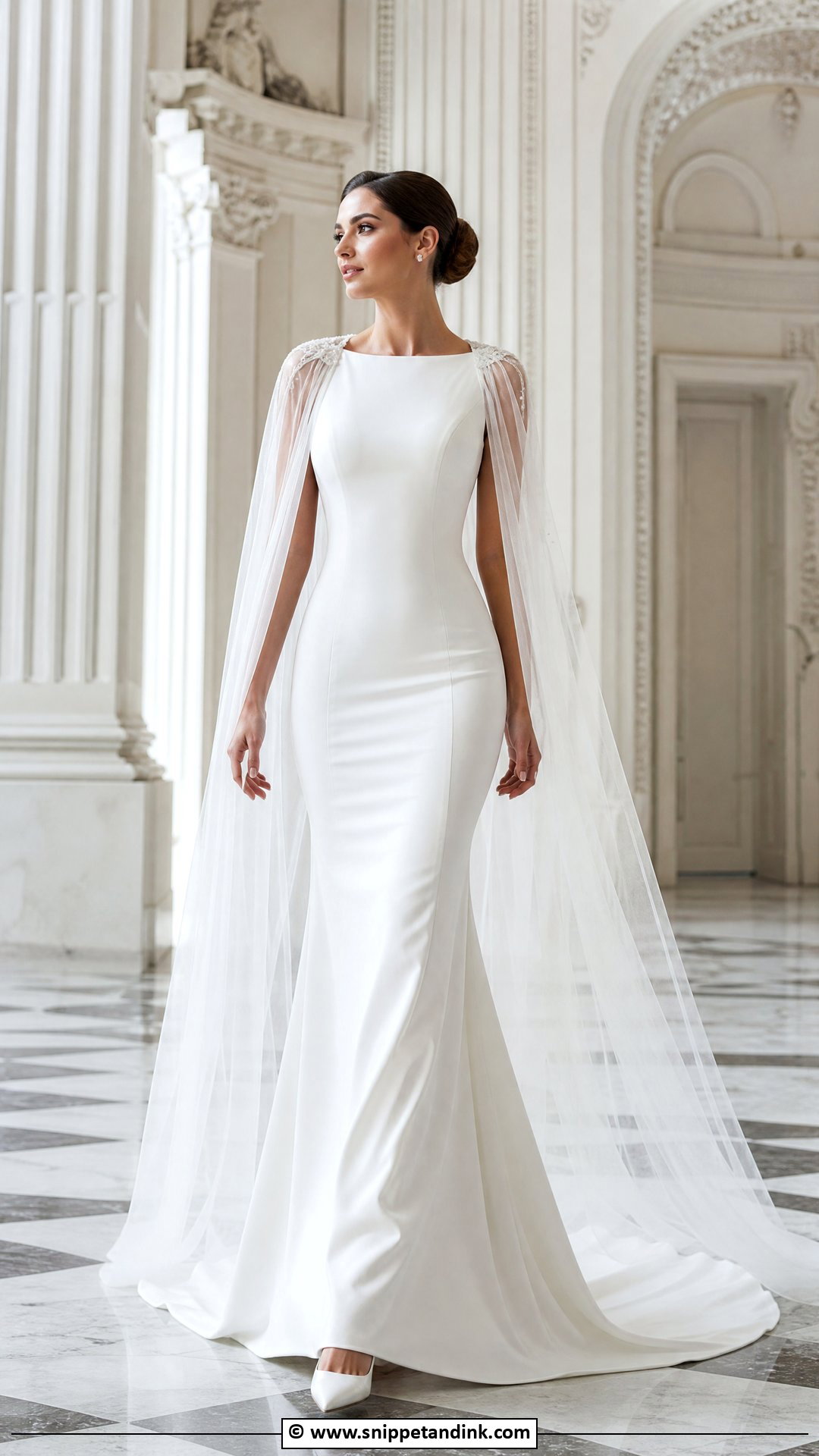
A cape gives the drama of a veil with a more fashion-led feel. It may attach at the shoulders, neckline or back, and it can be sheer, lace, tulle or crepe. It moves in the ceremony and looks wonderful from behind. A plain gown underneath lets it stand out. Brides who don’t want a traditional veil often choose this. Keep jewelry clean and stay clear of the neckline. Ask whether it detaches; a fixed cape is warm and heavy by the evening dancing.
30. Detachable Overskirt Bridal Gown
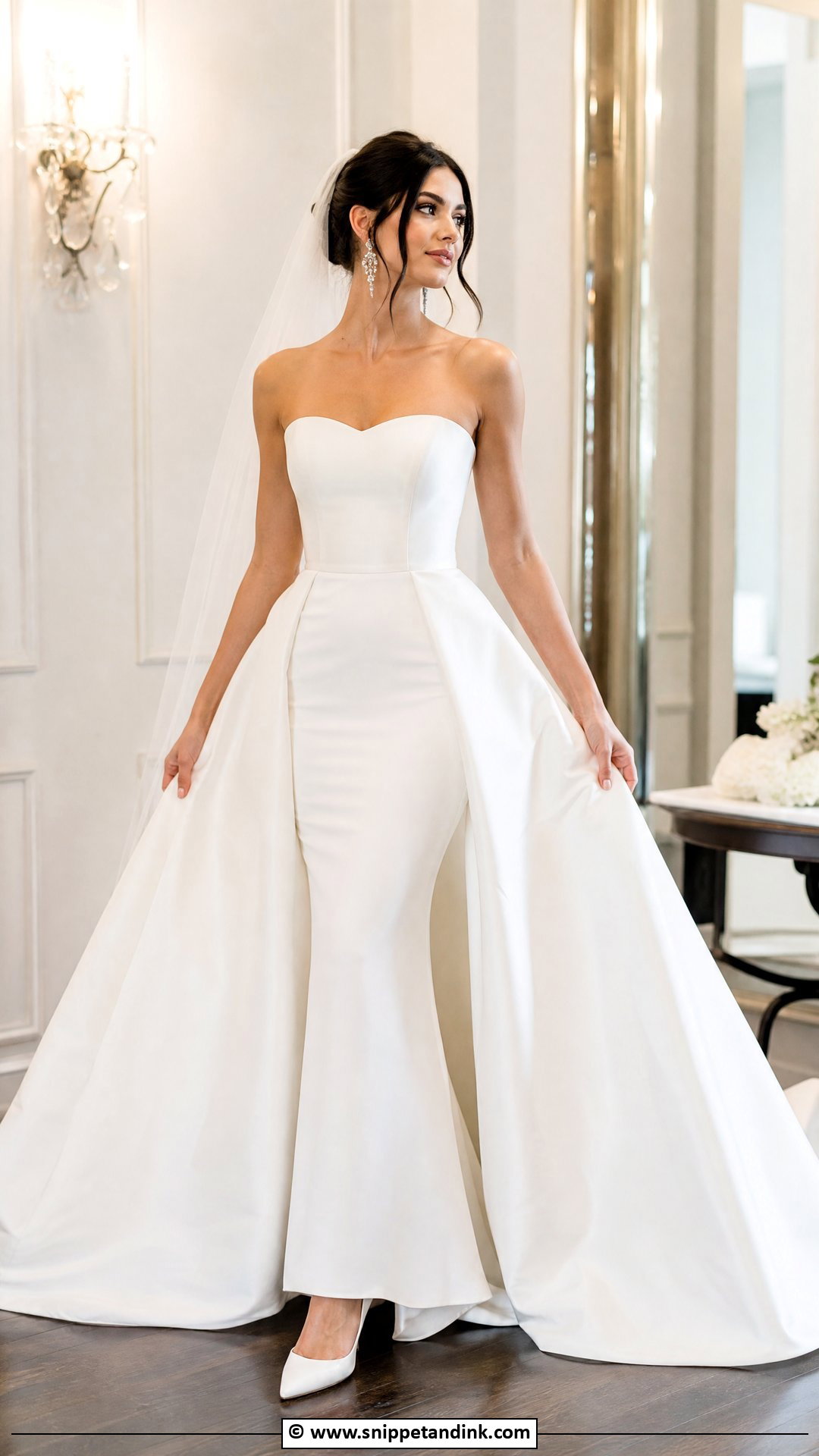
A detachable overskirt gives you two looks without two dresses. The full skirt adds drama for the ceremony, then comes off to reveal a slimmer gown underneath for the party. Fitted crepe, lace or satin works best as the base. The attachment should be secure but simple enough for a bridesmaid to undo in a few minutes; practise at the final fitting. Wear the long veil for the ceremony, then switch to statement earrings after the change.
31. Bow Back Bridal Gown
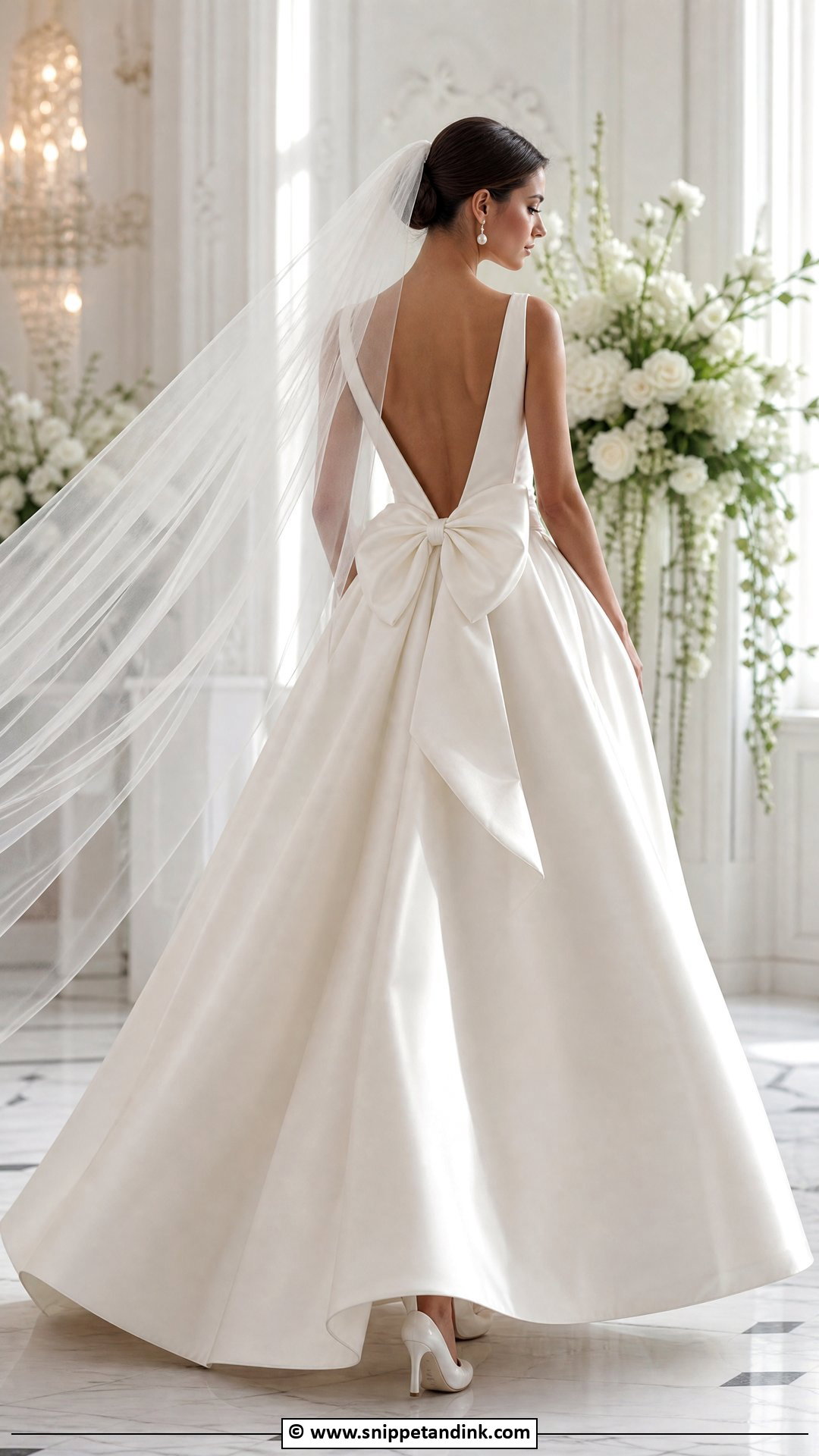
A bow at the back gives the dress a focal point for the walk away and the back-view photos. It can be oversized or small, and sit at the waist, shoulder or train. Satin, mikado and minimal gowns carry it best, since stiffer fabrics keep the loops from collapsing. Keep the front plain, choose simple earrings and a veil that doesn’t hide the bow completely, and finish with pointed heels and a smooth updo.
32. Backless Bridal Gown
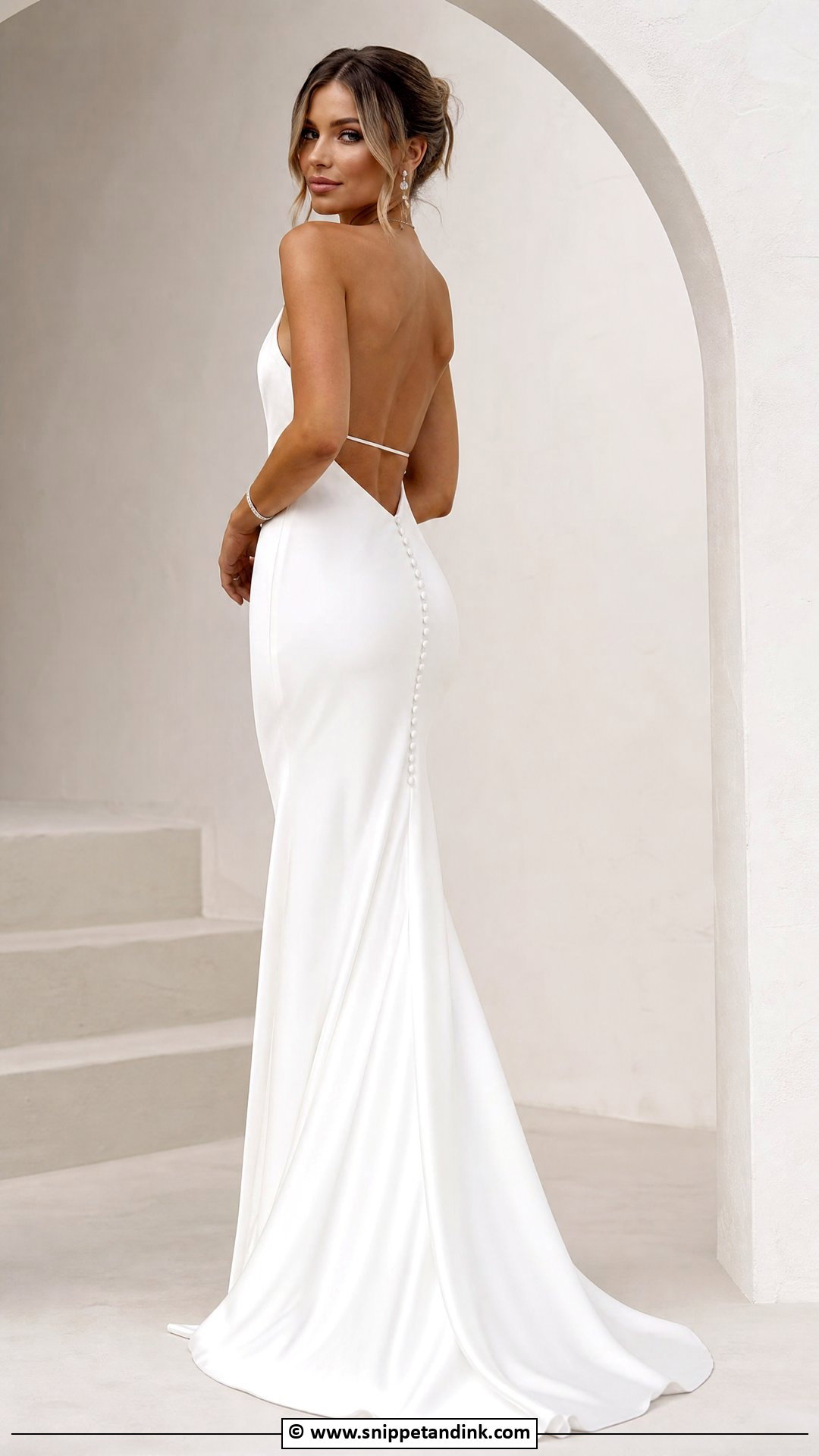
A backless gown leaves the drama to skin rather than beading. It works with plain fronts, long sleeves, halters and fitted shapes. The fit at the shoulders, waist or hips has to hold the dress securely, since there’s nothing across the back to help. Consider built-in cups, structure or fashion tape. Keep the hair lifted or swept to one side, and finish with delicate earrings, a simple bracelet and clean heels. I’d plan a wrap for an evening outdoors; bare backs get cold fast once the sun drops.
33. Colored Bridal Gown
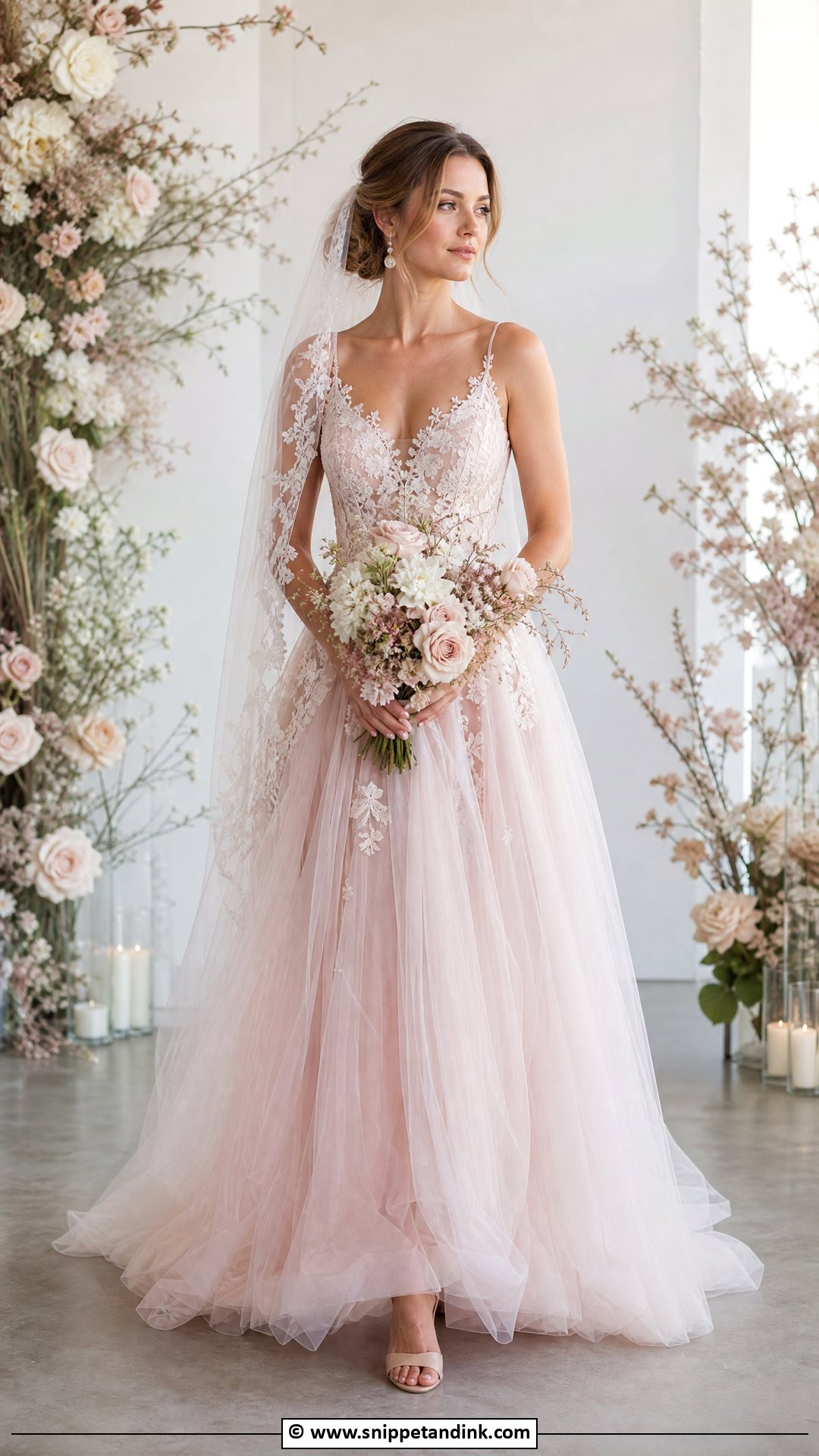
Coloured gowns suit brides who don’t feel right in bright white. Blush, champagne, ivory-nude, pale blue and warm beige all look romantic, and they add depth to lace, tulle and beadwork in photos. The thing I always check is the colour against the bride’s skin in daylight, since a shade that glows on one person can wash out another. Soft metallics, pearls or matching neutrals keep accessories cohesive. A veil in ivory or the same shade completes it.
34. Vintage Inspired Bridal Gown
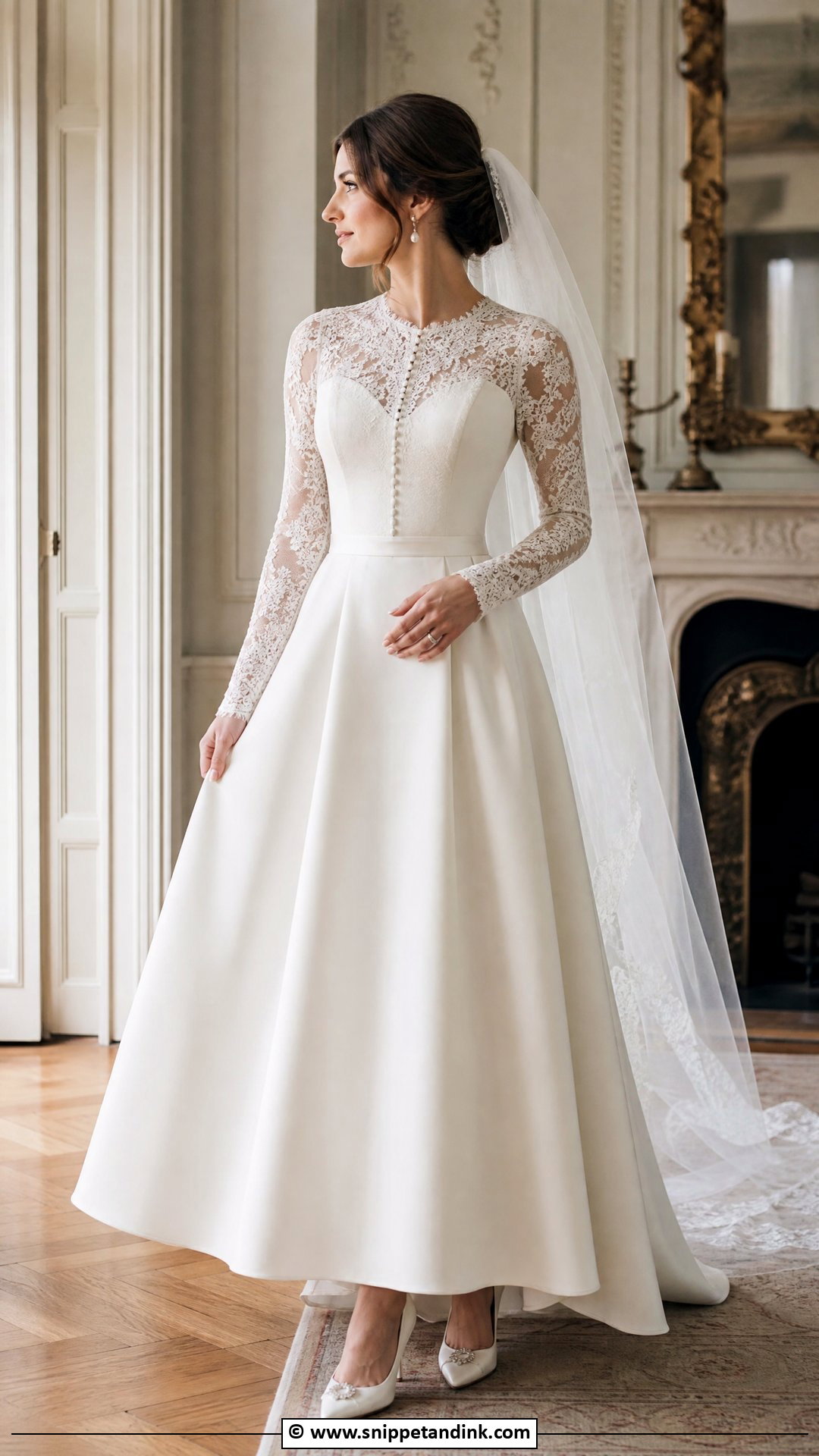
A vintage inspired bridal gown borrows from another era without dressing up as one. Lace sleeves, tea-length hems, basque waists, satin buttons, high necklines and soft draping all carry the reference. The trick is to choose a single decade: a 1950s full skirt is playful, a 1930s slip elegant, a 1970s sleeve romantic. Mixing them looks like costume. Pearl earrings, a soft veil and classic heels are enough.
35. Reception Bridal Gown
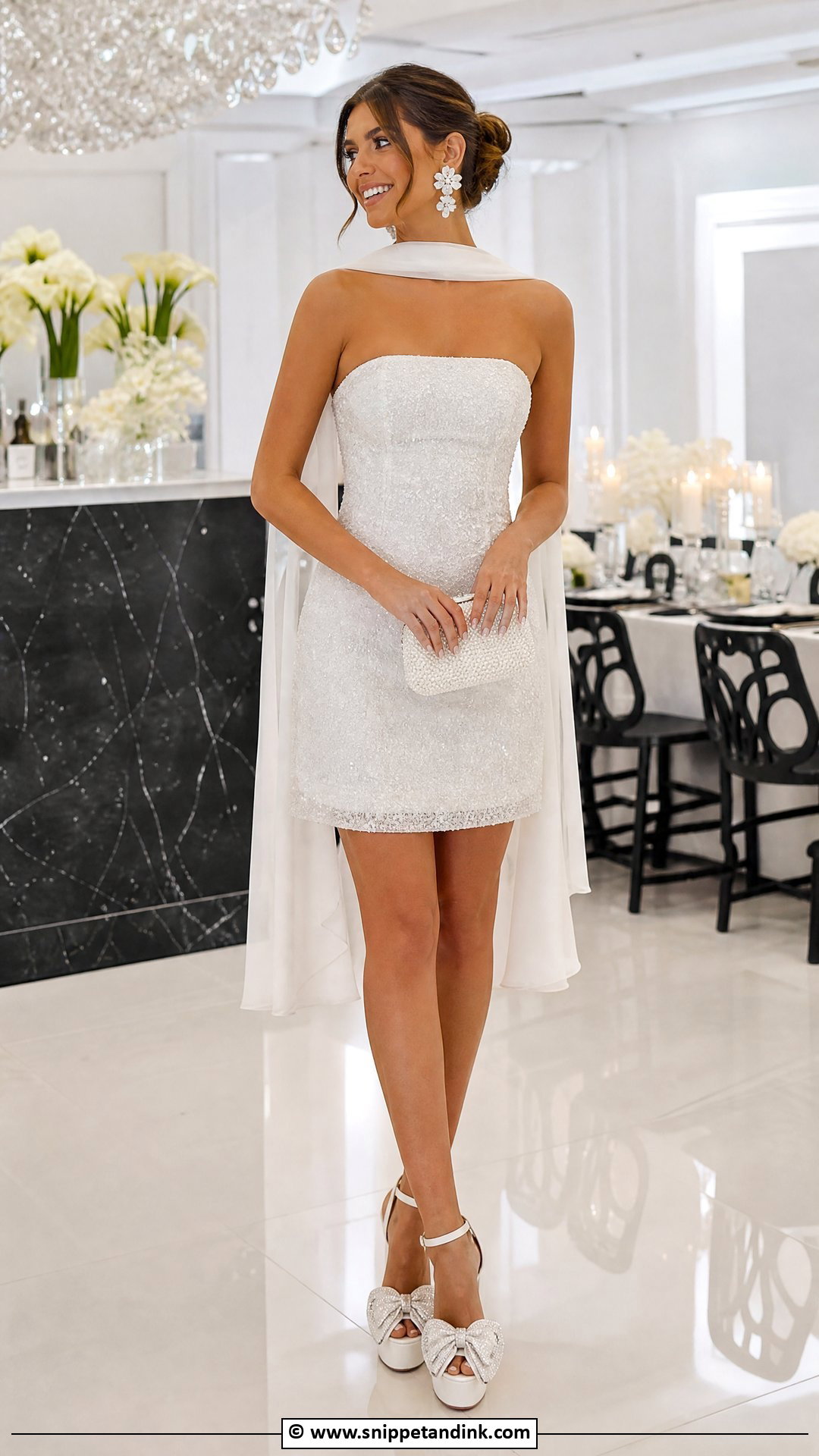
A reception gown exists for movement and comfort after the ceremony. It can be short, fitted, sparkly, feather-trimmed, tea length or a sleek slip. The best ones still feel connected to the main dress, through colour, fabric or a shared detail, so the two looks belong to the same wedding. Brides usually switch when the ceremony gown has a long train or a heavy skirt. Statement heels, fun earrings and a smaller hair accessory give a fresh change.
Fewer Bridal Salons, Better Appointments
Brides who try thirty dresses across eight shops often end up more confused than when they started. Two or three well-prepared appointments usually tell you more. Here’s how I’d set them up.
- Bring one or two people whose taste you trust, not a crowd. Too many opinions blur your own.
- Bring photos of the venue, ideally showing the ceiling height and the light, so the consultant can judge scale.
- Set your budget for the dress plus alterations, veil and cleaning, since alterations alone can add a noticeable amount on a structured gown.
- Expect bridal sizing to run smaller than your everyday clothes, and order to your largest measurement. Taking a dress in is far easier than letting it out.
- Ask about the shop’s alteration options and which fittings are included before paying a deposit.
Steaming and Moving the Gown the Day Before
Gowns arrive creased from the bag, and a hotel iron is the fastest way to scorch satin or melt tulle. Hang the dress by its inner loops somewhere high, away from food and makeup, and use a handheld steamer held a few inches from the fabric, testing first on an inside seam. Never steam beading or sequins directly, as glue can soften. For the journey, lay the gown across the back seat in its bag rather than folding it into a boot, and have a clean sheet ready to protect the skirt when you sit in the car on the day.
Fit the Dress to Your Day, Then to Your Mirror
A gown works when it fits your whole wedding day, not only the hanger. Think about the venue, season, fabric, neckline and how the dress will behave through the ceremony, portraits and dancing. Some brides come alive in a satin ball gown, others in a slip, a tea-length dress or plain crepe. There is no single right answer, only the dress that supports your body, your style and your plans. Keep the shapes that caught your eye here, and try each one on before you rule it out.
You'll Like These Ideas:






Leave a Reply