
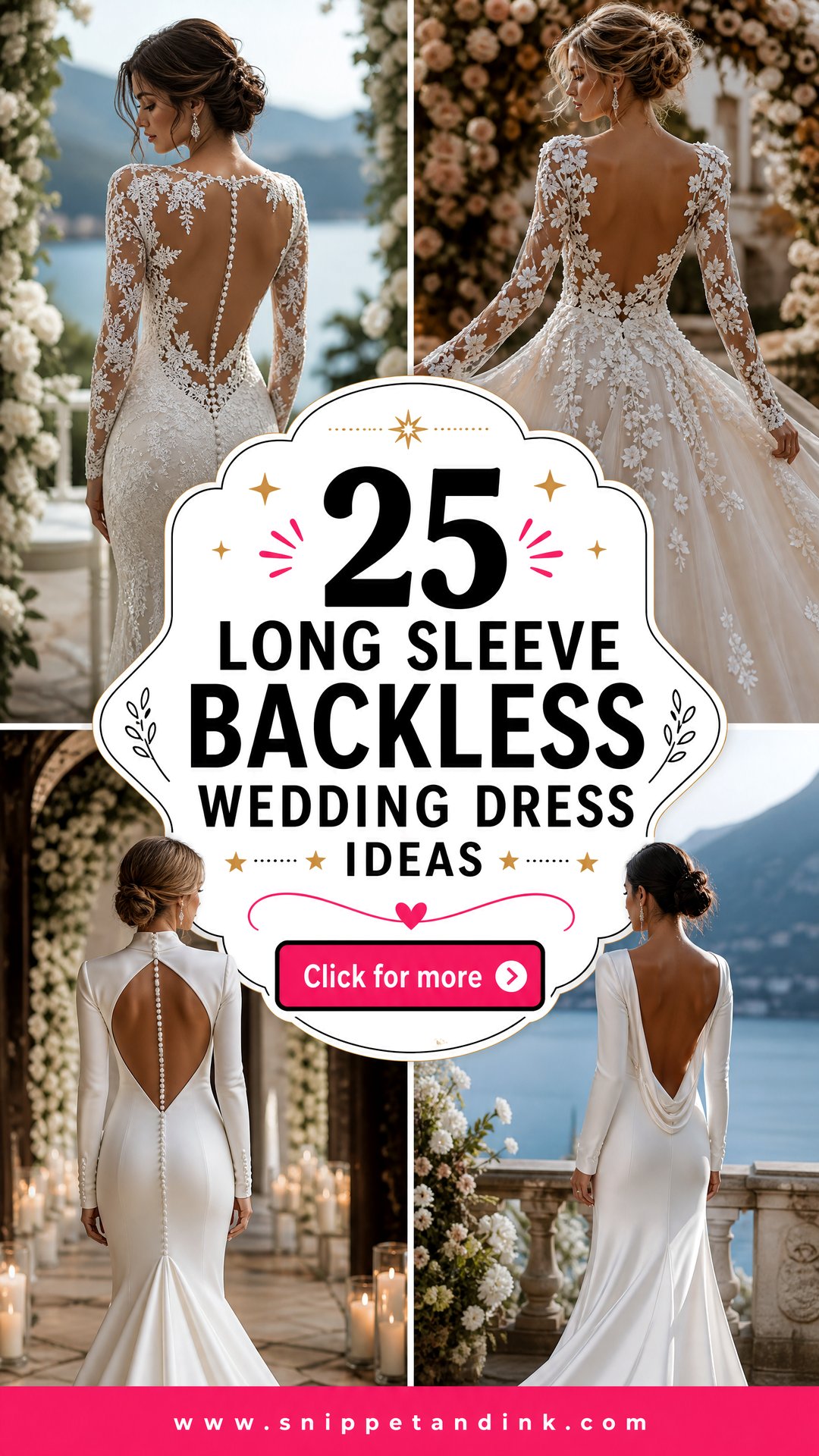
Full sleeves and a bare back is a pairing I love, because it surprises people. From the aisle seats, guests see a covered, almost modest bride; then you turn for the vows and the whole back is open. Open backs, statement sleeves, floral appliques and soft crepe and satin are all showing up in bridal collections right now. It is also one of the harder combinations to fit well, since the sleeves and the low back pull against each other every time you move your arms. Below are the versions I see working, from lace A-lines to winter crepe, with notes on what to check at each fitting and how to style the back so it stays visible.
Why Long Sleeves and a Low Back Fight Each Other
In most gowns, the fabric across your upper back is what lets you move your arms freely. Take that panel away and add full sleeves, and every forward movement, reaching for a hand or wrapping your arms round someone, pulls the sleeves and lifts the edges of the back opening. That’s why some of these dresses feel tight in the arms even when they fit well everywhere else.
Good designs solve it with a high, close-fitting armhole, a little stretch in the sleeve fabric, or an illusion panel that quietly reconnects the two sides. When I look at a gown like this, I check the armholes before anything else.
The movements I make brides do at every fitting
- Hug someone, with both arms fully around them.
- Hold a bouquet at waist height for a full minute.
- Raise one hand as if waving at guests.
- Sit at a table and reach for a glass.
- Bend to pick up the hem.
Watch the back in a mirror while you move. If the edges lift away from your skin, the sleeves pull at the shoulder, or the waist rises, it needs adjustment before the next fitting.
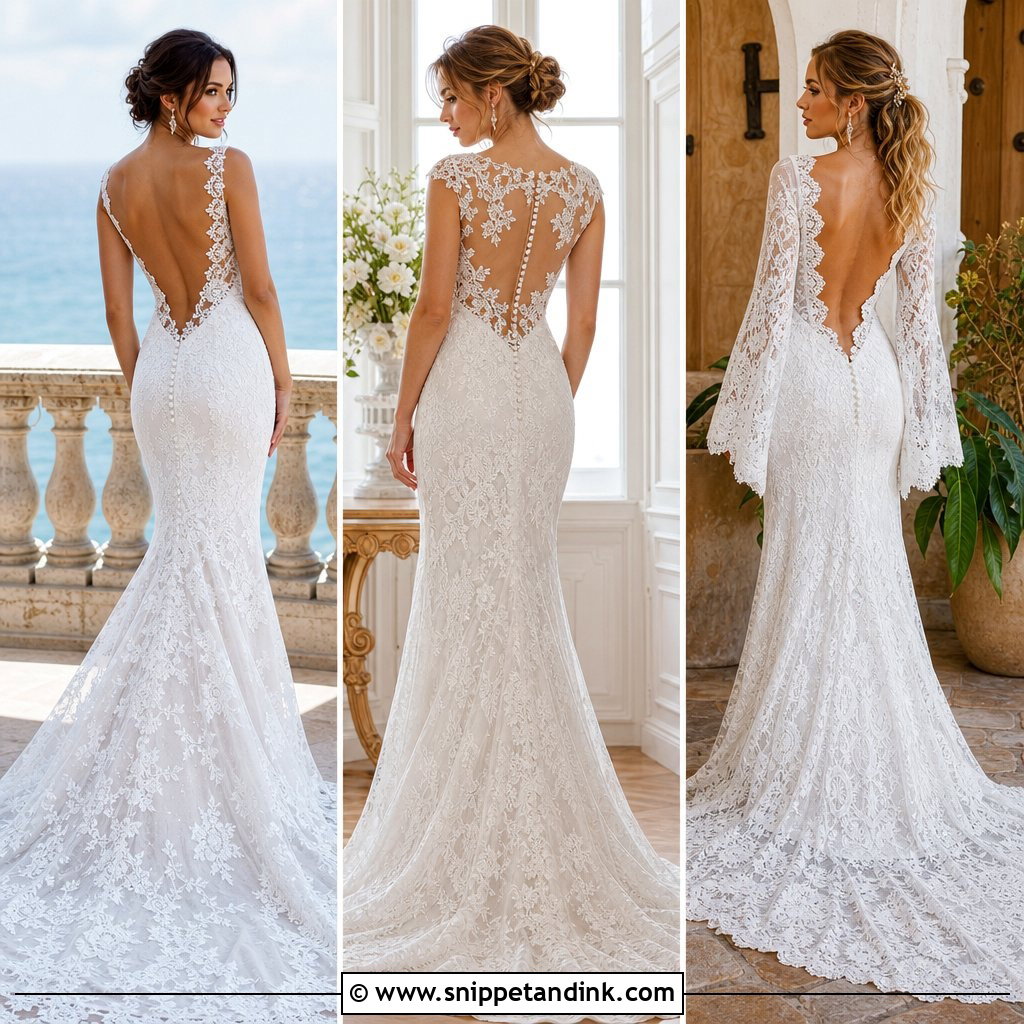
1. Lace A-Line Long Sleeve Backless Wedding Dress
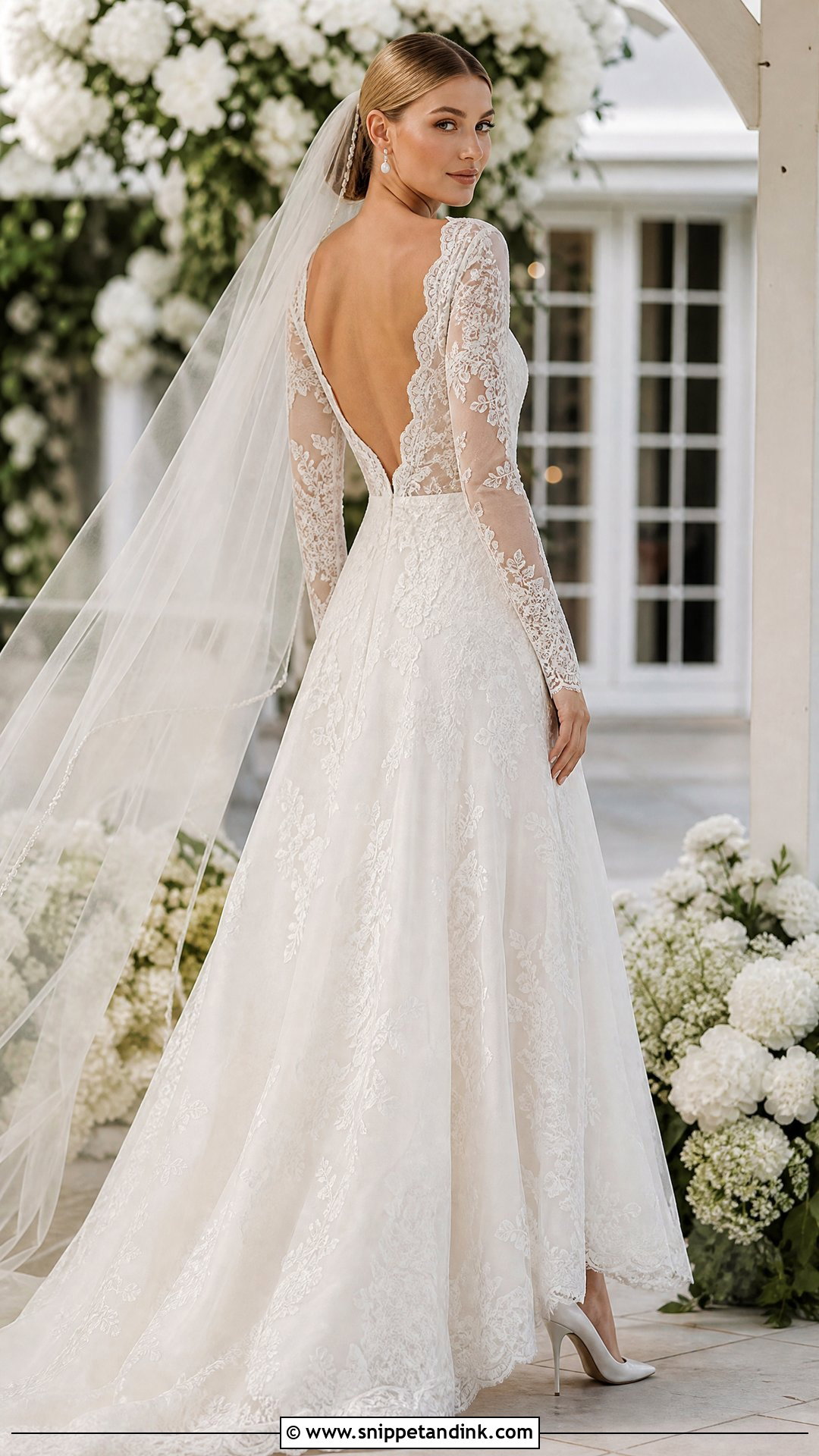
Lace A-lines are the safest place to start. The skirt falls from the natural waist, so you can walk, sit and dance without thinking about it, and sheer floral sleeves keep the top light. I like a low V-back edged in scalloped lace, sometimes with covered buttons running down onto the train. Keep the veil short enough to end above the lowest point of the back, or it hides the very thing you chose the dress for. Pearl drops, pointed ivory pumps and a loose low bun finish it for a garden or historic venue.
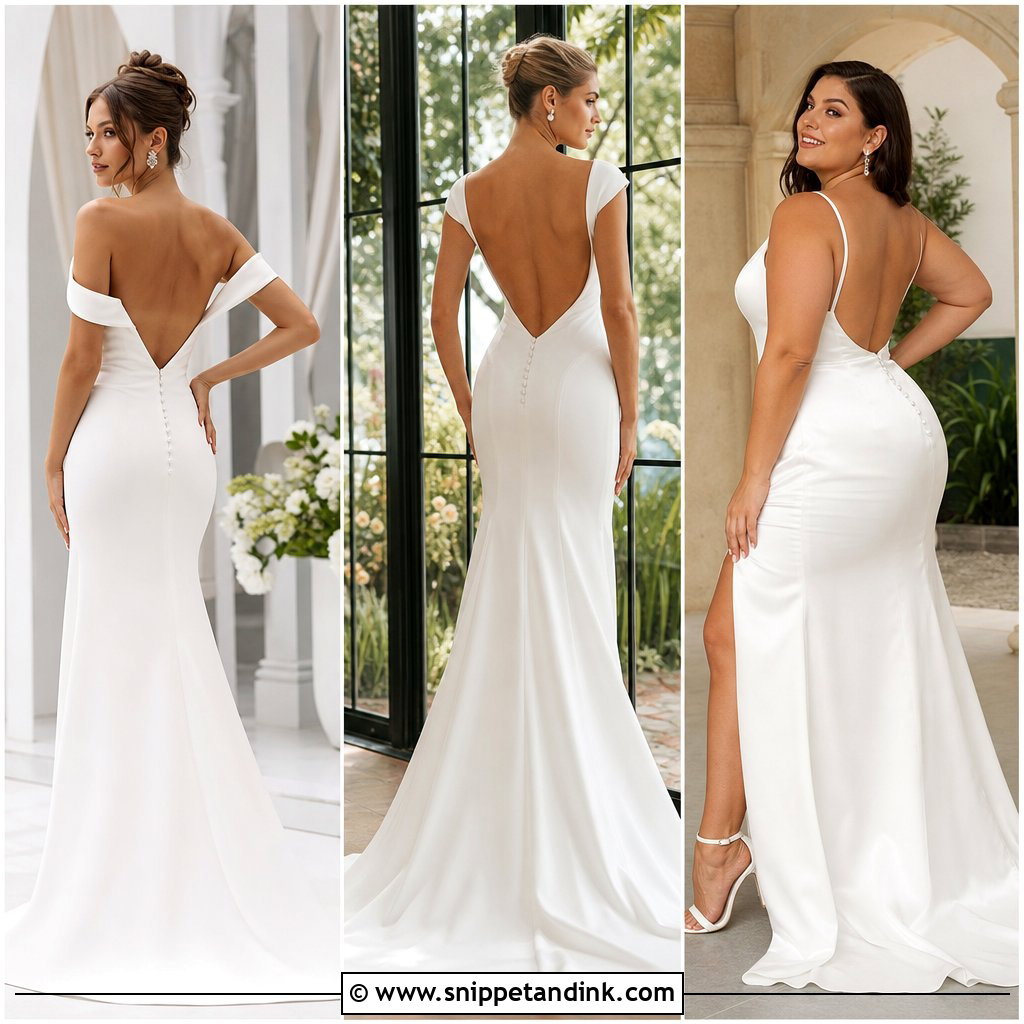
2. Satin Mermaid Long Sleeve Backless Wedding Dress
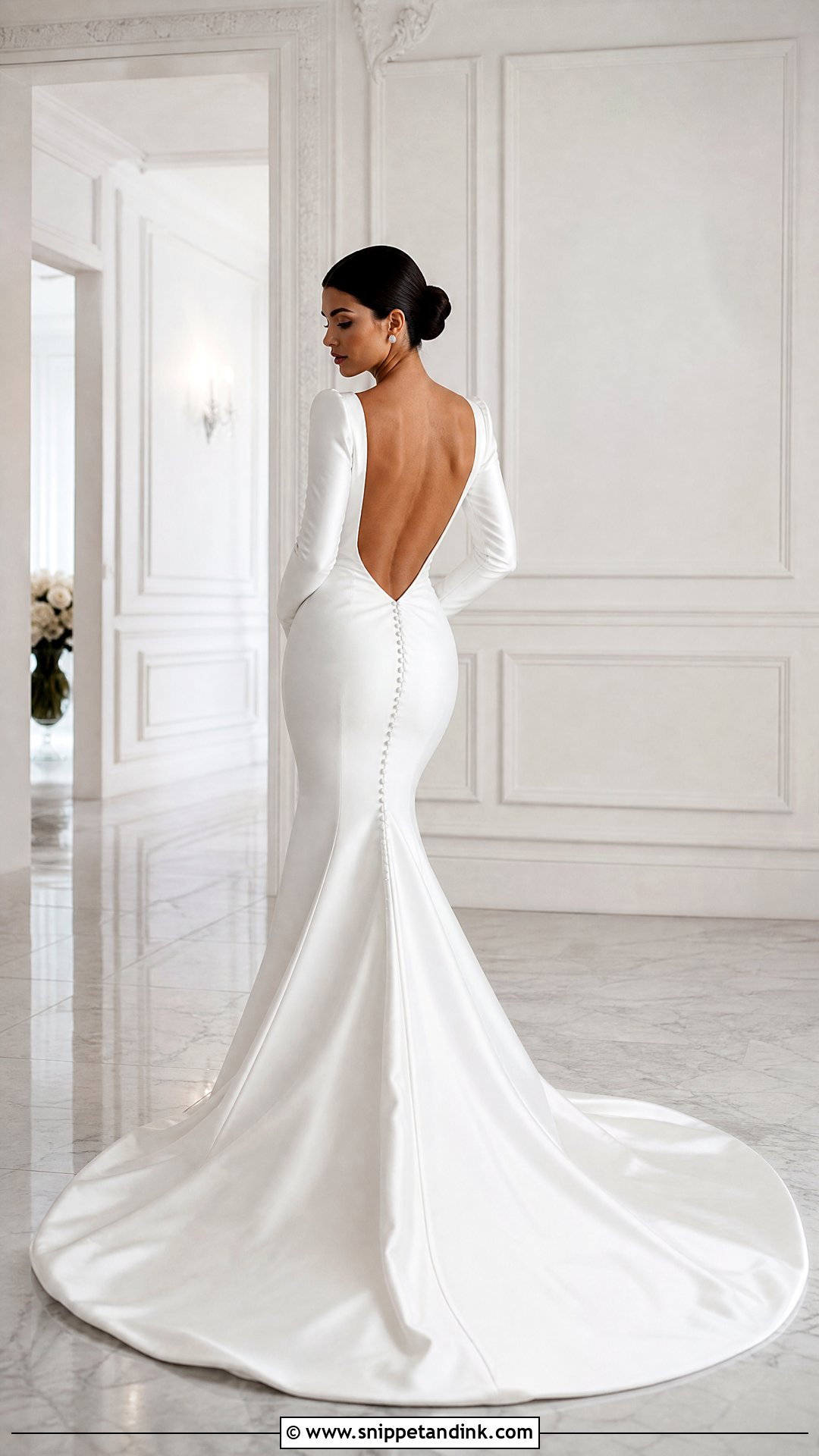
Satin is unforgiving on a mermaid. Every seam, every lumpy undergarment and every alteration shows in the sheen, so this is the gown where I’d spend most on tailoring. Look for a structured front, slim sleeves and a back that follows the curve of your waist, widening below the knee into the train. Keep detailing minimal; small studs, a sleek bun and pointed satin heels are enough. The fit challenge is the sleeves. A fitted mermaid bodice with fitted sleeves leaves little room to reach forward, so test hugging and holding a bouquet at every fitting.
3. Crepe Sheath Long Sleeve Backless Wedding Dress
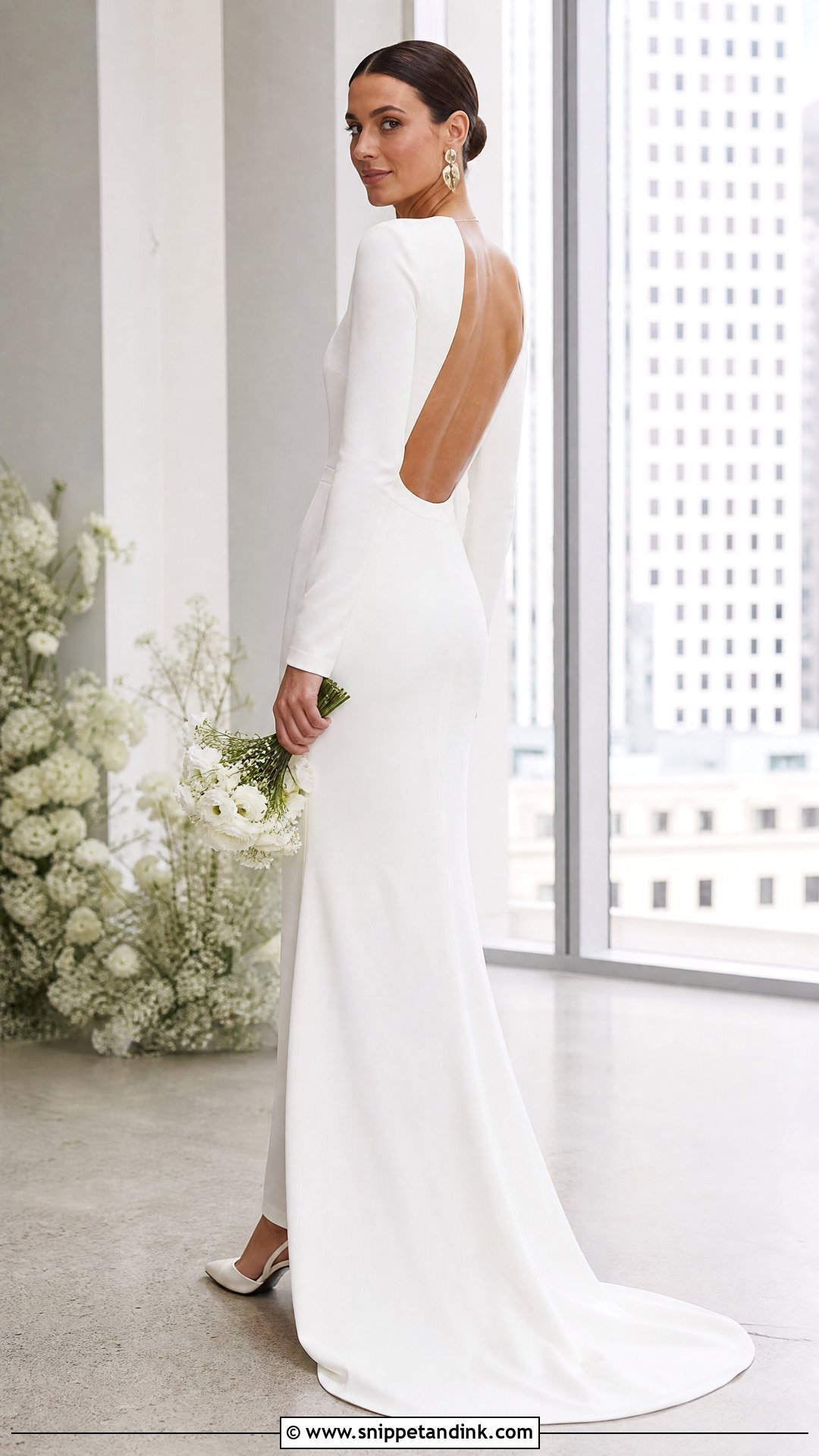
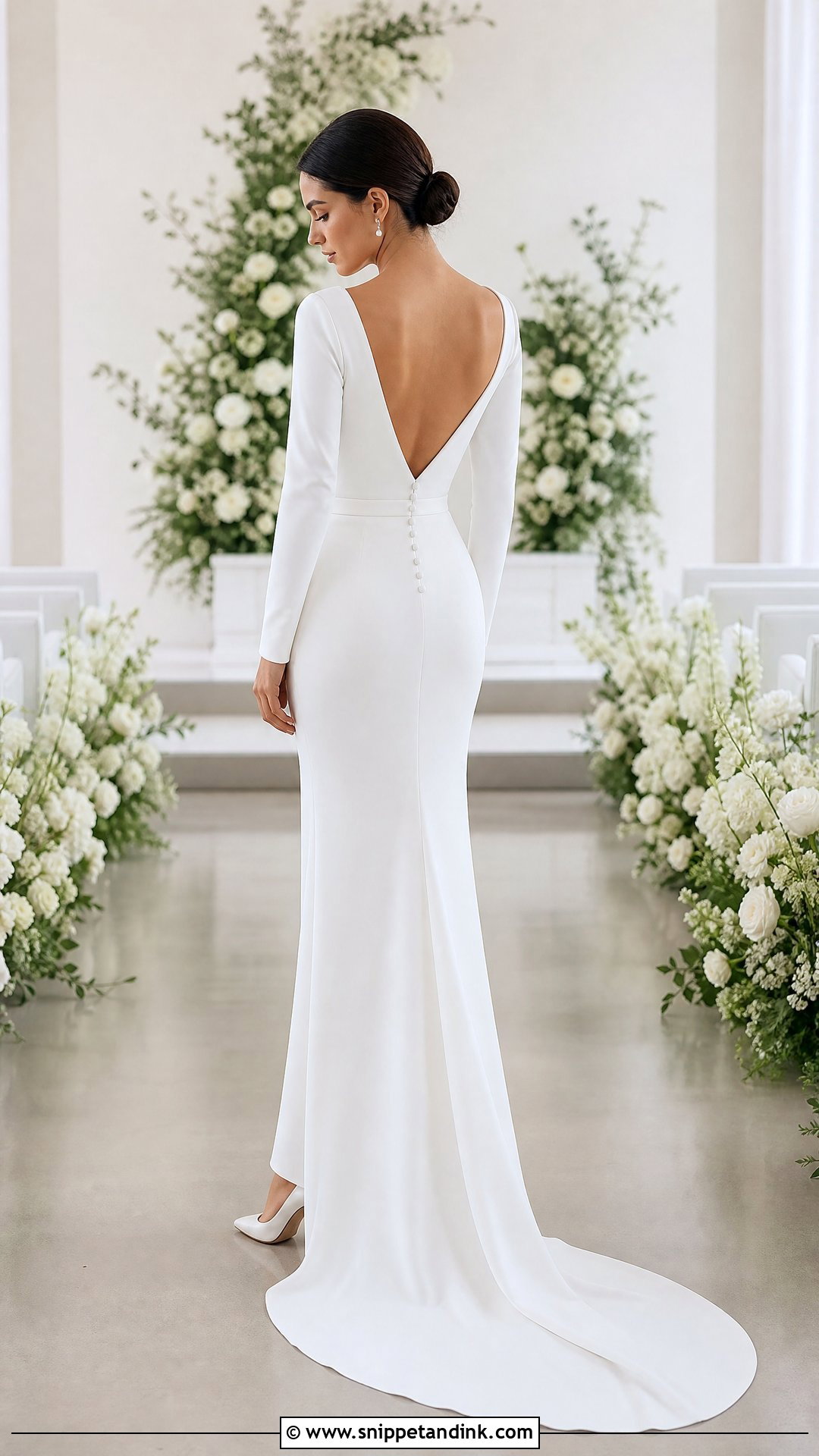
Stretch crepe is the fabric I’d pick for a quiet, modern sheath. It’s matte, it moves with you, and it makes a low back look clean rather than fussy. A high bateau or rounded neckline balances the low back, and narrow sleeves keep the whole line streamlined. Gentle ruching at the back waist or a short row of pearl buttons is all the detail it needs. Sculptural earrings, slingbacks and a low chignon finish it. Crepe shows panty lines more than any other fabric, so bring your actual underwear to fittings.
4. High Neck Lace Long Sleeve Backless Wedding Dress
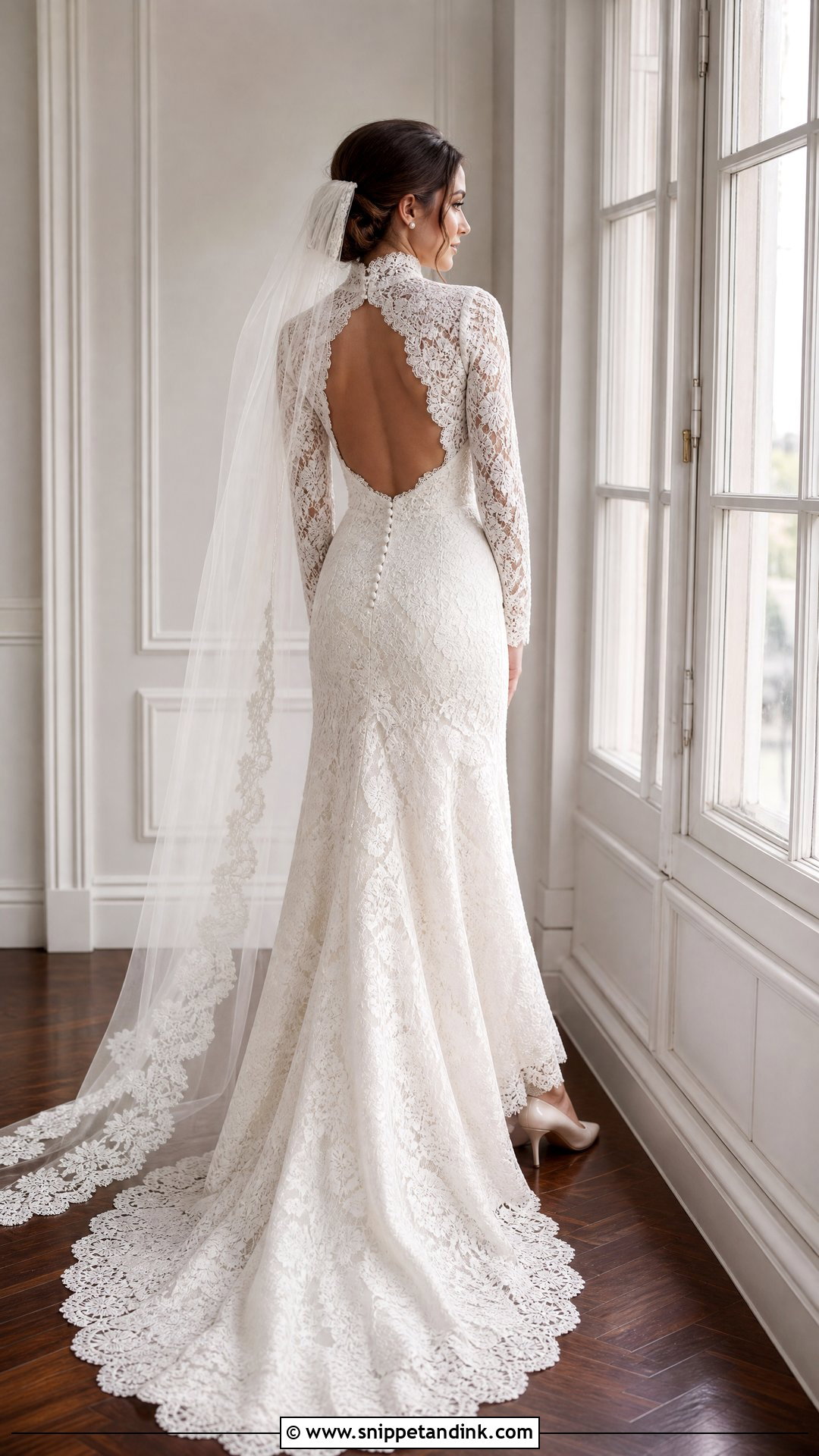
A high neck makes an open back feel sophisticated rather than revealing. The lace runs from collar to cuff and frames an oval or keyhole back, with a soft fit-and-flare skirt below. Skip the necklace; pearl studs and a polished updo are enough. Two things I check: the collar should lie flat when you turn your head, and the back closure at the nape must be secure, because it takes the strain whenever you move your arms forward. A lace-edged veil and ivory pumps finish the look.
5. Square Neck Long Sleeve Backless Wedding Dress
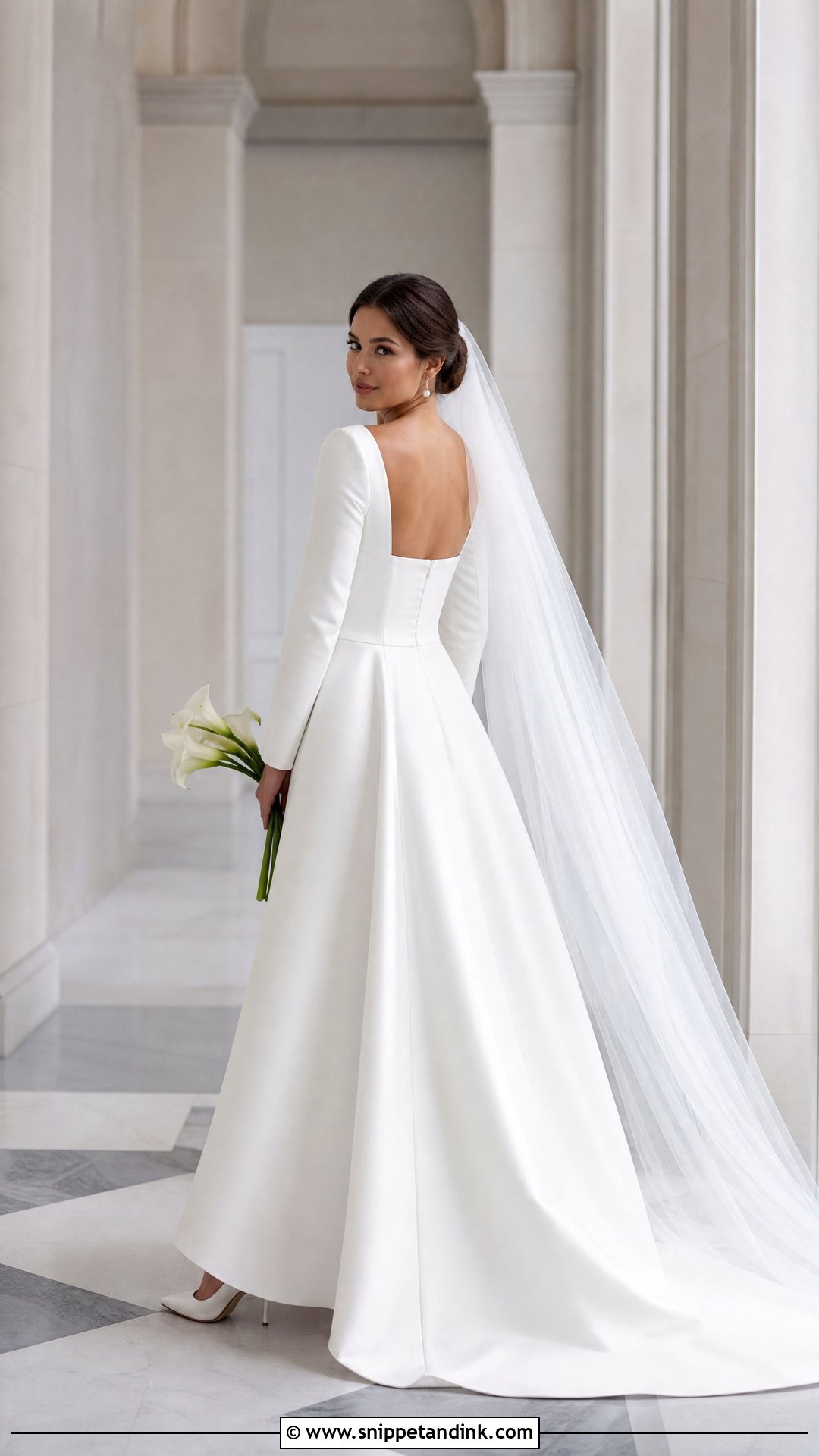
A square neckline gives the gown an architectural feel, and a low square back mirroring it front to back looks sharp. Satin, mikado or heavier crepe holds those straight edges; soft fabrics let them buckle. An A-line skirt balances the strong top. I’d keep accessories crisp: pearl earrings, a fine pendant, pointed heels and a structured bouquet. The test here is lifting your arms. The square back should stay flat against your skin, not lift away into a gap.
6. Bateau Neck Long Sleeve Backless Wedding Dress
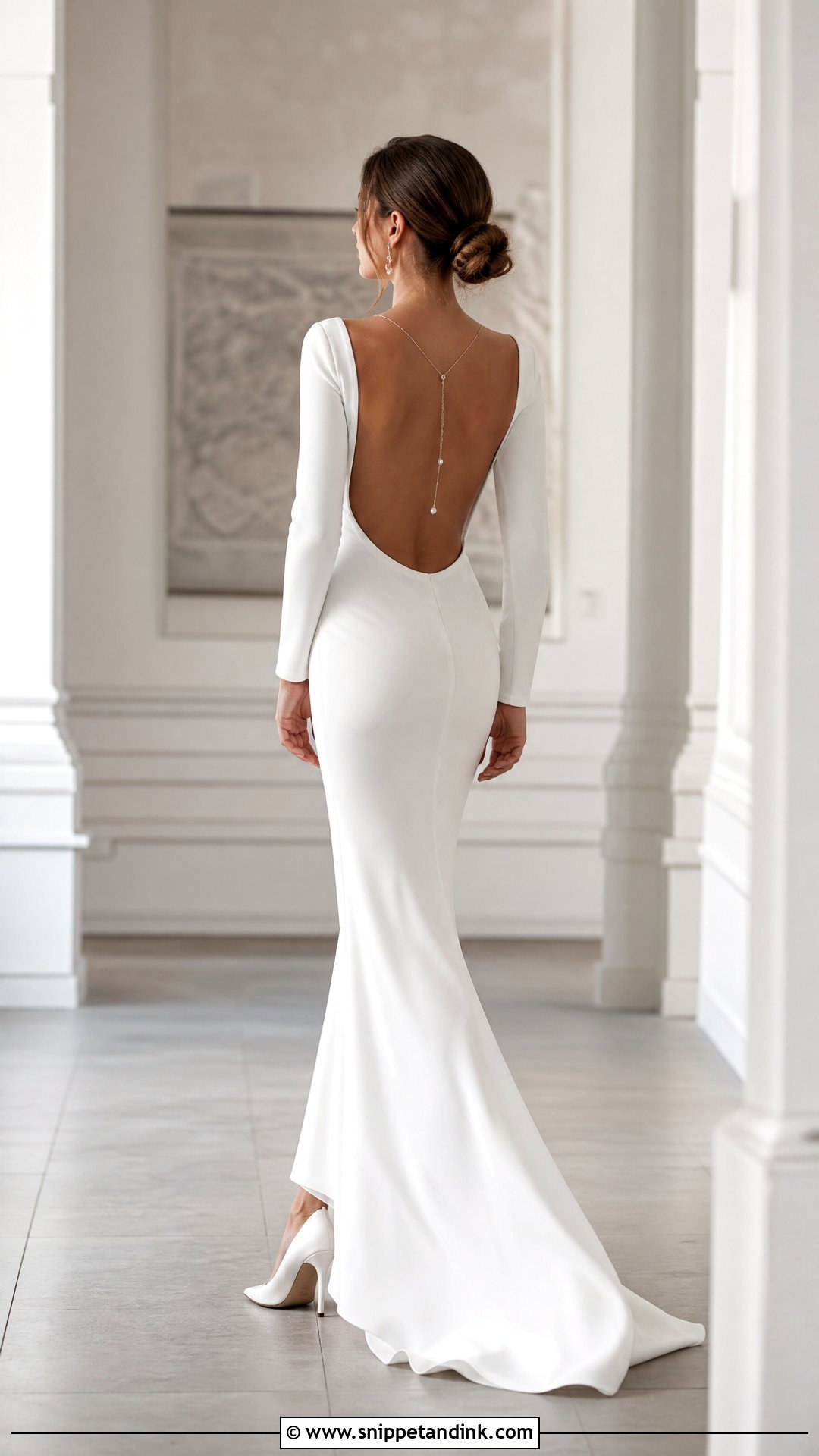
The bateau neckline runs almost shoulder to shoulder, which makes a plunging back all the more dramatic by contrast. A fluid crepe or smooth satin with fitted sleeves and a narrow skirt suits it. I’d end the back curve near the natural waist; lower than that and it reads as evening wear. If the gown is completely plain, a fine back necklace can trail down the spine, but then keep everything else simple. A low side bun keeps the back clear.
7. Off-Shoulder Long Sleeve Backless Wedding Dress
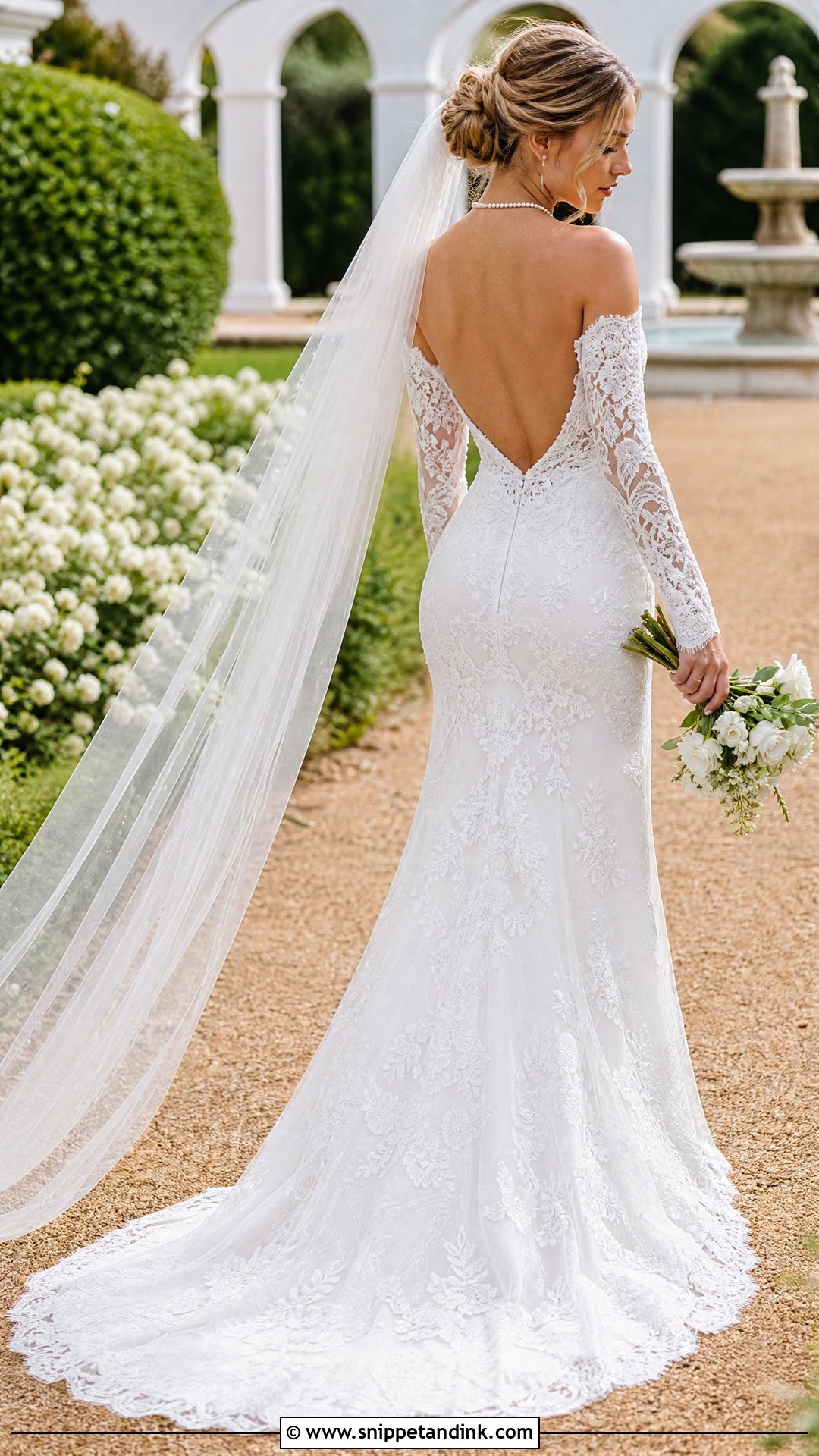
Off-shoulder sleeves show the collarbones and still give you long-sleeve romance. The bodice is doing all the holding here, because nothing sits over the shoulder. I’d only recommend this cut with a well-boned bodice and a gentle V-back rather than a deep one. Reach forward and raise your arms at each fitting; if the sleeves ride up or the bodice slips, it needs more structure or a tighter fit at the ribs. Attach the veil beneath a low textured bun so it falls behind the shoulders, not over them.
8. Illusion Lace Long Sleeve Backless Wedding Dress
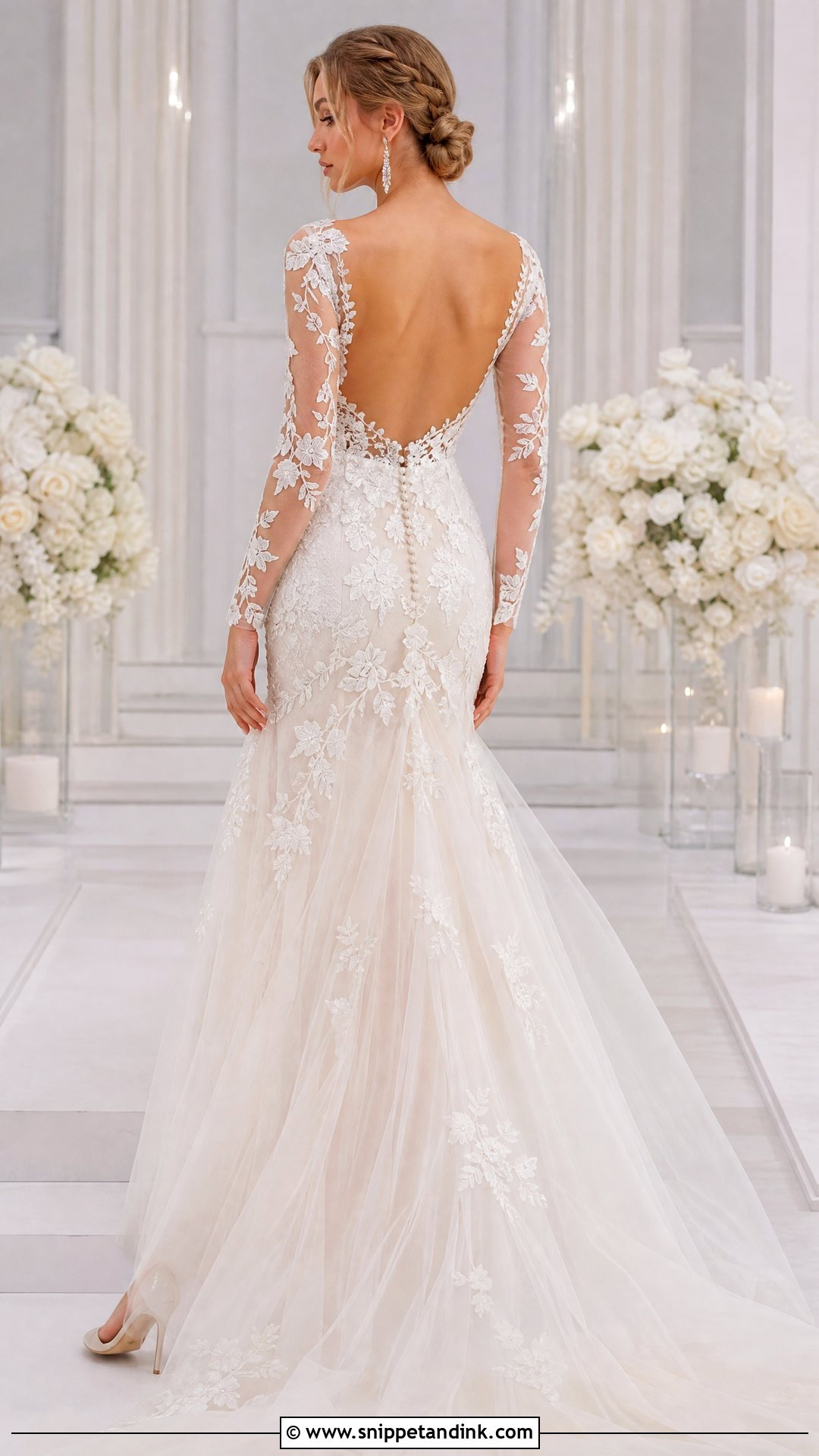
Illusion mesh lets lace motifs look like they’re floating across your back, while quietly giving the dress somewhere to anchor. That’s why I suggest it to brides who want the open-back look but are nervous about support. Small covered buttons can run down the center of the illusion panel. The detail that matters most is the mesh color. It should disappear against your skin, so ask your seamstress to compare mesh swatches against your back in daylight. A sheer veil with minimal edging keeps the lace readable.
9. Floral Appliqué Long Sleeve Backless Wedding Dress
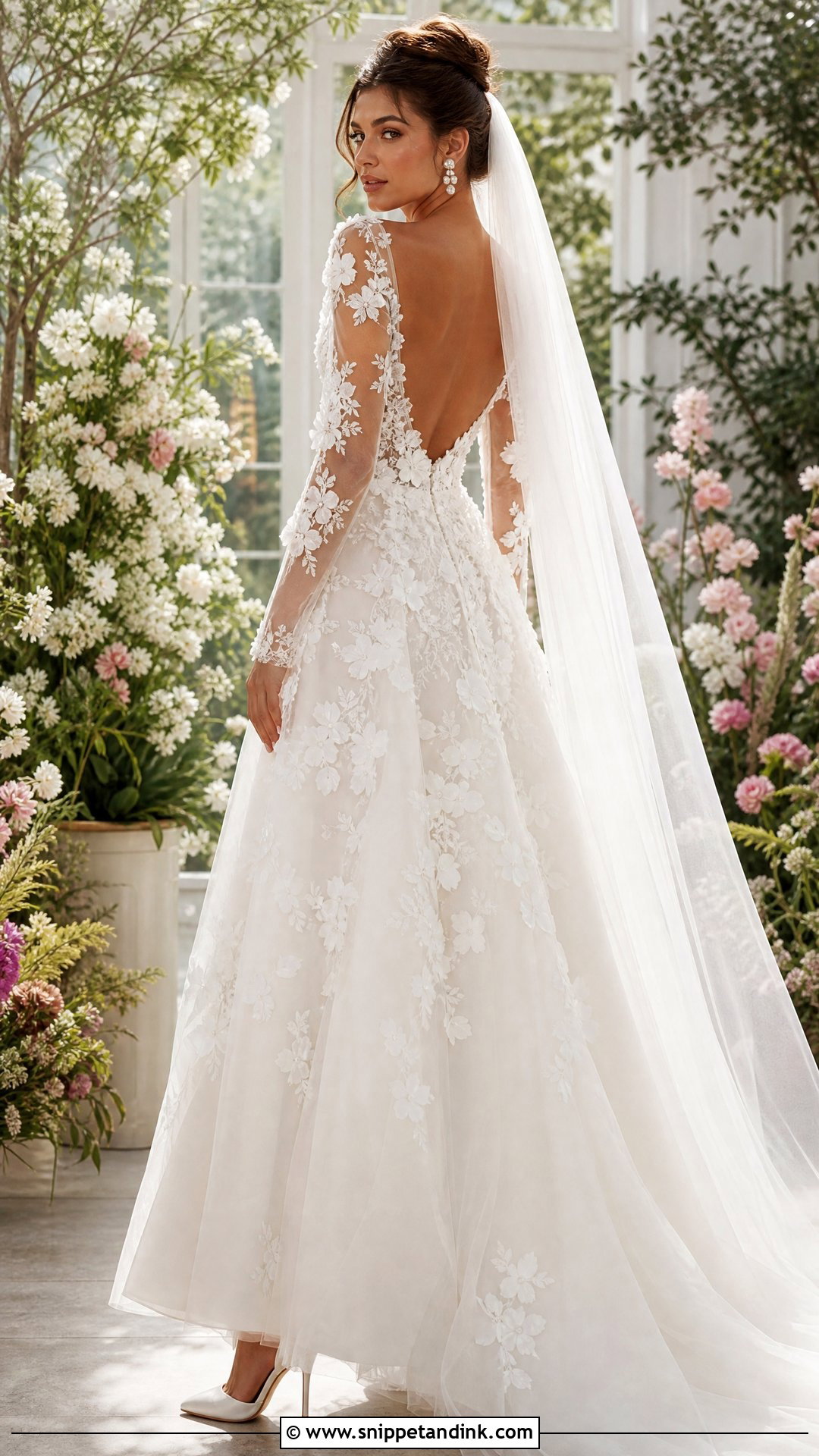
Three-dimensional appliques look best when they travel naturally, from bodice to sleeves and around the edge of the open back, rather than sitting in isolated patches. Over a layered tulle A-line skirt, they seem to float. Keep accessories quiet: pearl clusters, satin pumps and a plain veil without lace edging. When the gown is altered, I ask for the appliques to be lifted and re-placed over the new seams, so the finish looks intentional rather than cut through.
10. Beaded Long Sleeve Backless Wedding Dress
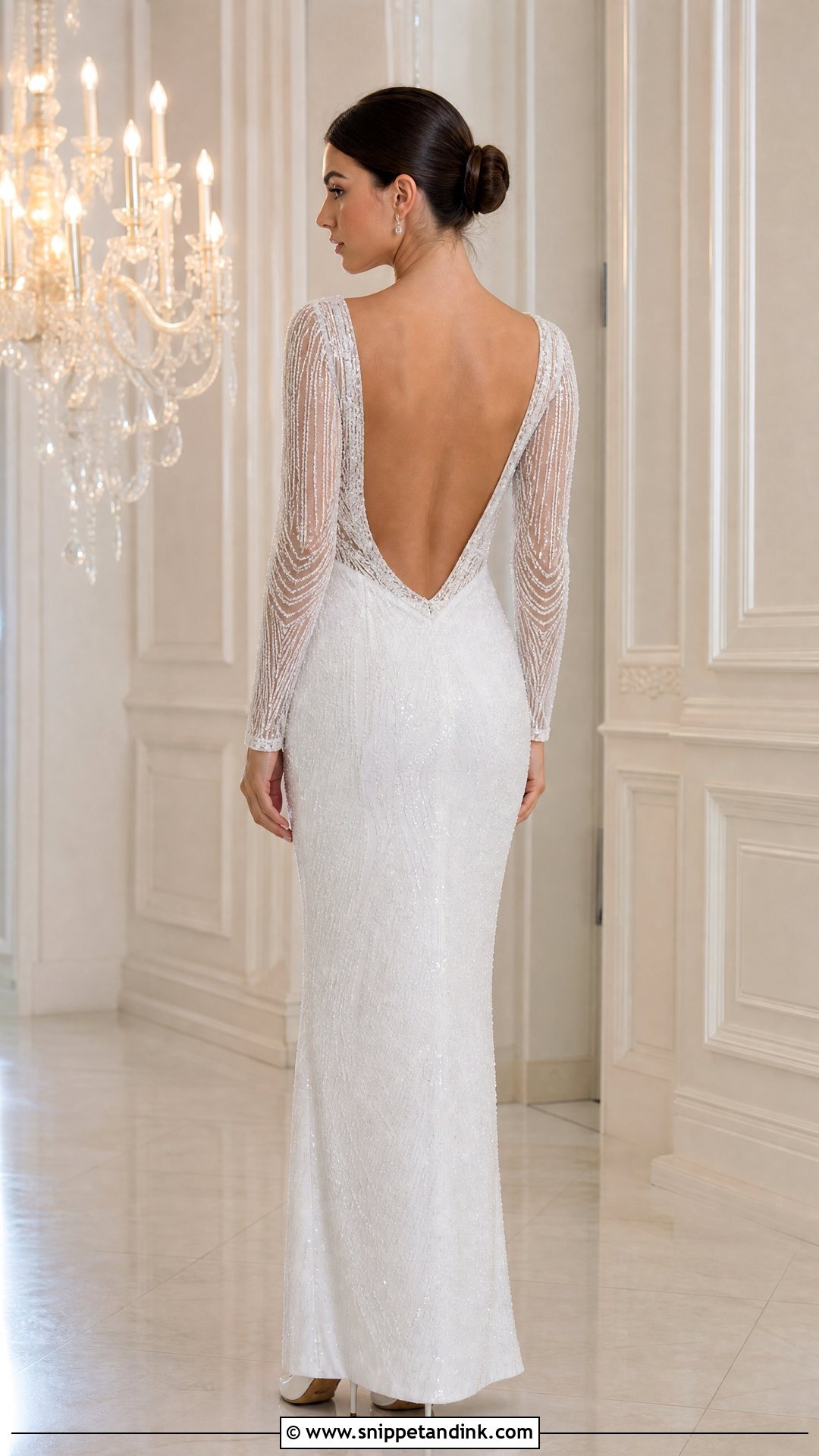
Beadwork sparkles in both daylight and candlelight, and it is heavy. Fine beads across sheer sleeves, a fitted bodice and a beaded edge around the back can add real weight, which is why I pair them with a column or fit-and-flare skirt rather than a full ball gown. No elaborate necklace. Check the inner arms; beaded sleeves rub along the sides of the bodice every time you move. Smooth closed-toe heels are wise, since textured shoes catch the hem.
11. Pearl Long Sleeve Backless Wedding Dress
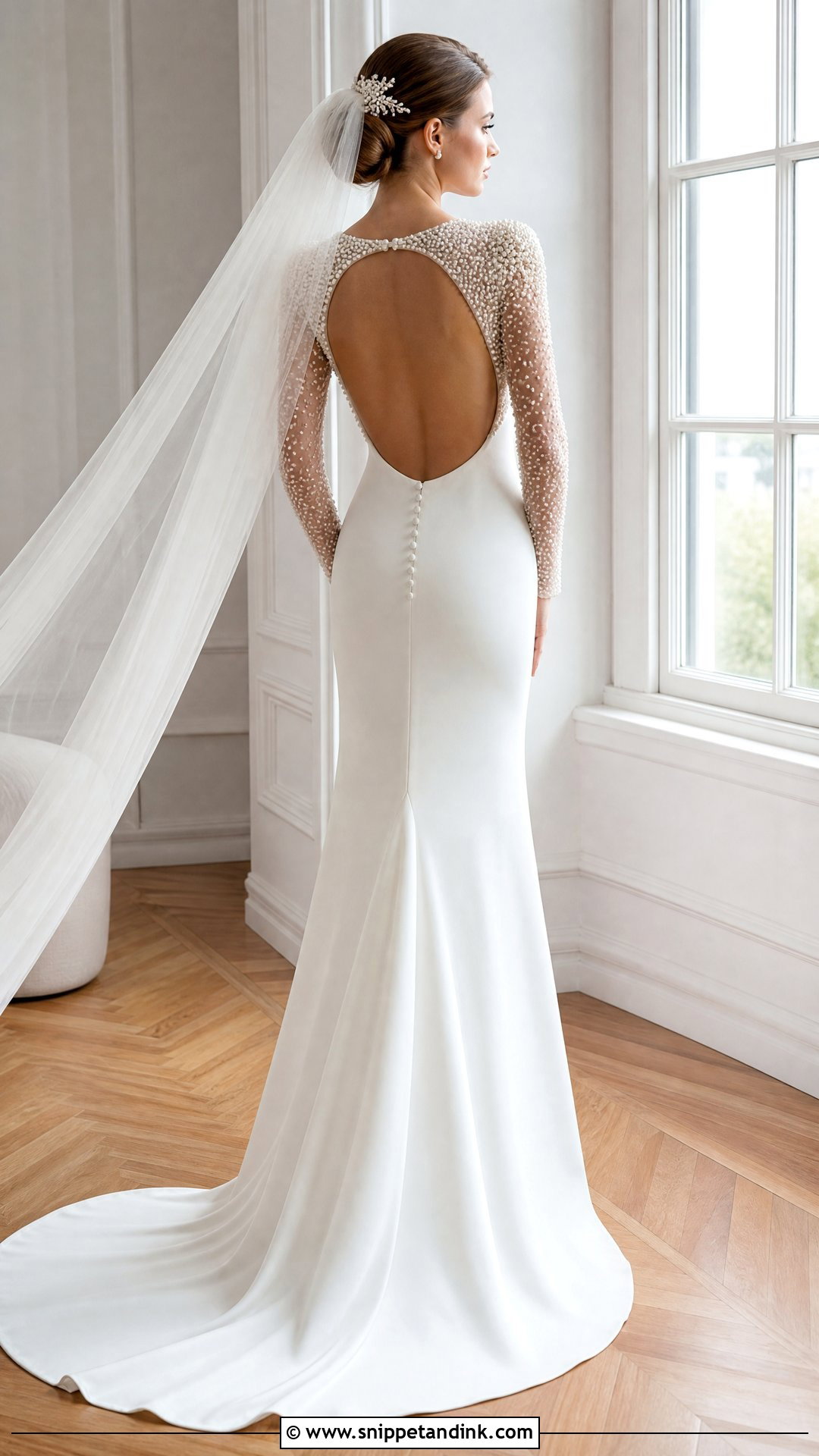
Pearls give a softer glow than crystals. I like them scattered over sheer sleeves, around the neckline and outlining an oval back, with a clean crepe or airy tulle skirt below. Pearl studs and a pearl comb complete the theme; a plain veil keeps the back readable. Sit down in it before you buy. Pearls stitched along the inner sleeve can press into your arms once you rest them on a table.
12. Button Back Long Sleeve Wedding Dress
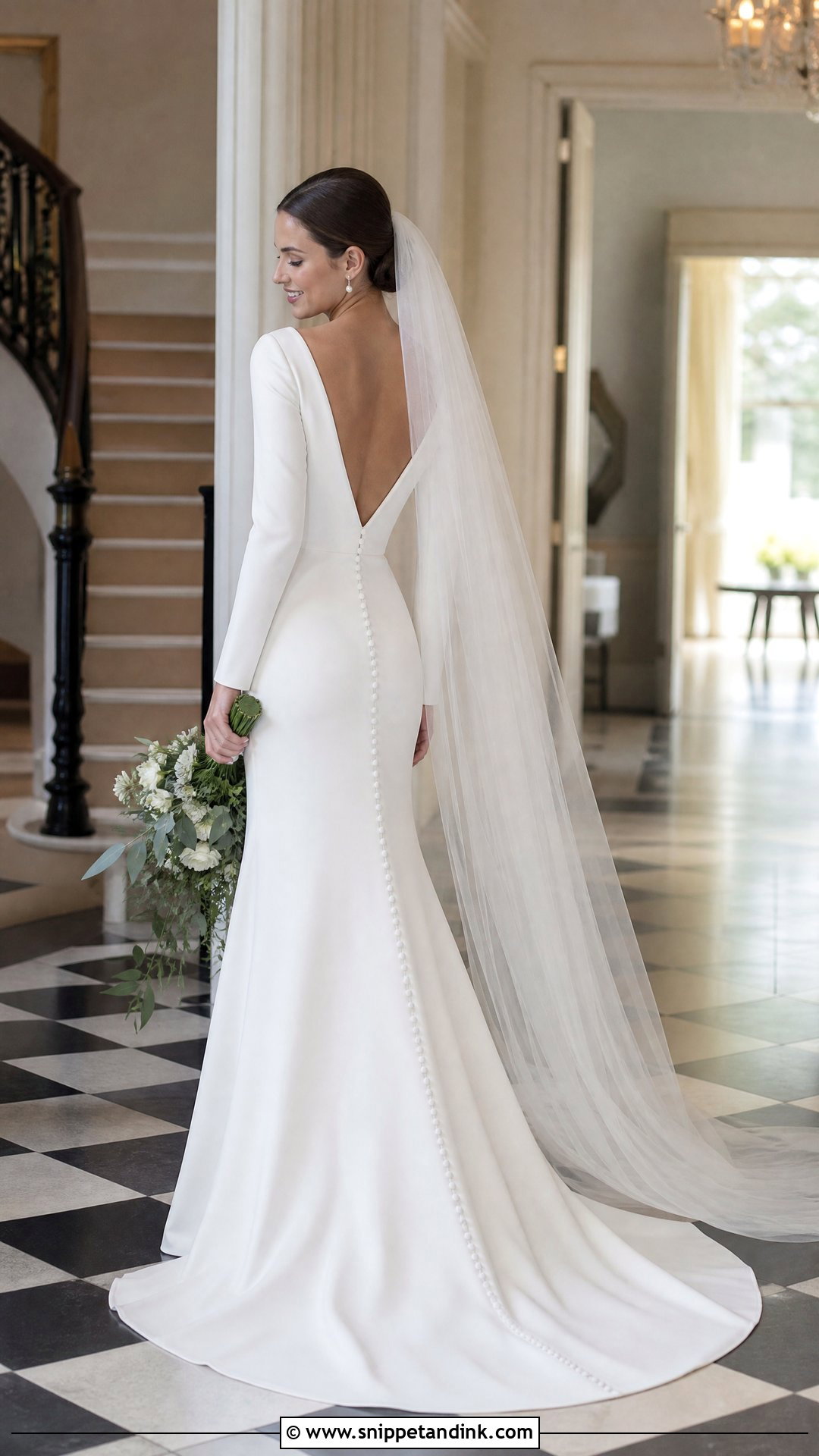
A partly open back framed by fabric-covered buttons mixes old and new. Long fitted sleeves, a deep V and buttons starting at the waist and running onto the train look clean in satin, crepe or mikado. Covered buttons are often decorative, with a zip or hidden snaps underneath, and I’d ask for that; dozens of loops take a long time to close on the morning. Make sure your photographer gets a full back shot with the train laid out.
13. Bow Back Long Sleeve Wedding Dress
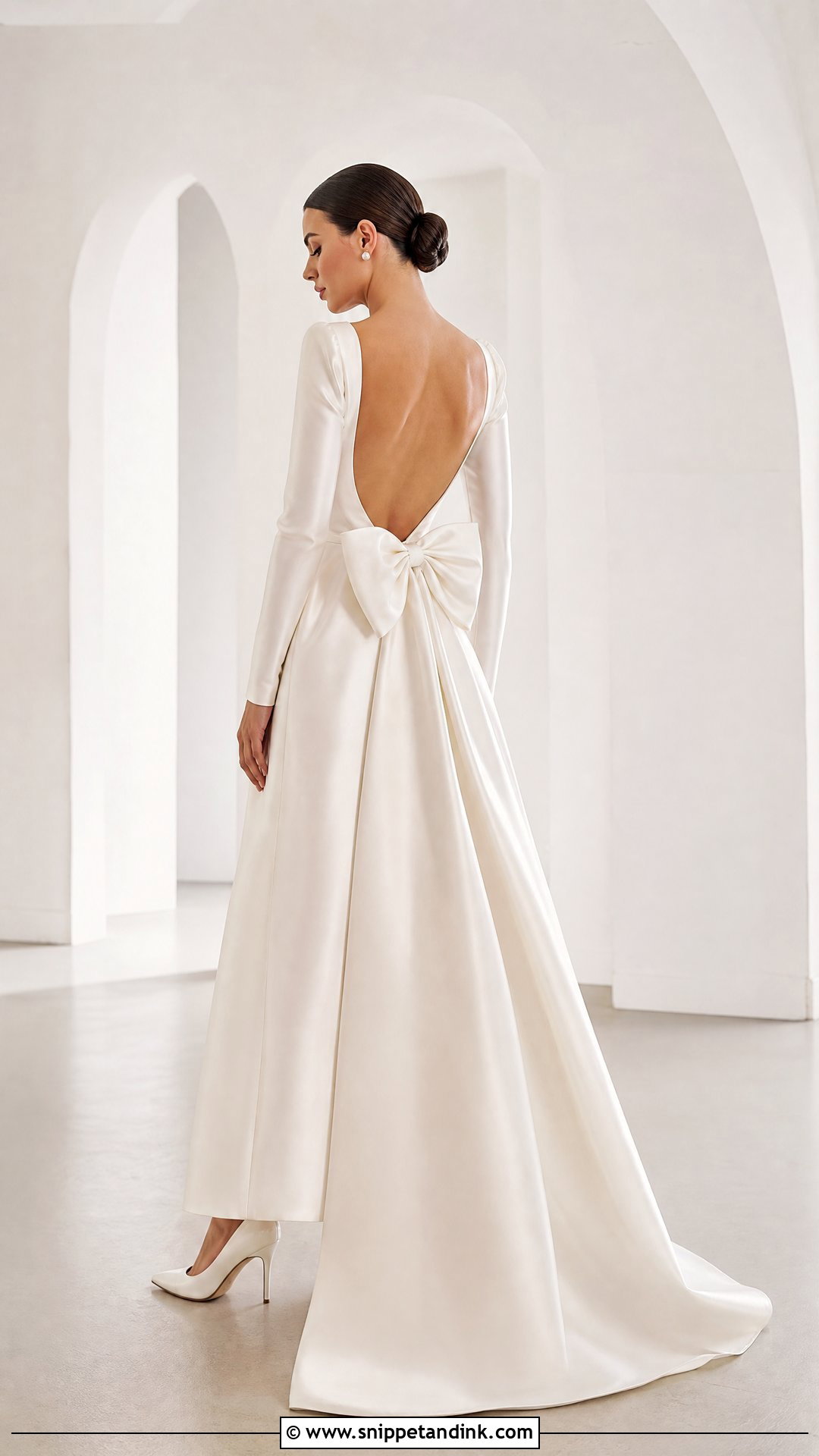
A structured bow at the waist gives an open back a single focal point. Smooth satin or mikado holds the shape; soft fabric lets it droop by the reception. Proportion matters most. A bow that suits a tall bride can look swamping on a petite one, so I try two sizes pinned on before anything is stitched. Long fitted sleeves and a clean A-line keep it grown up. Wear your hair up so nothing falls over it, and let a plain veil sit above the bun.
14. Cowl Back Long Sleeve Wedding Dress
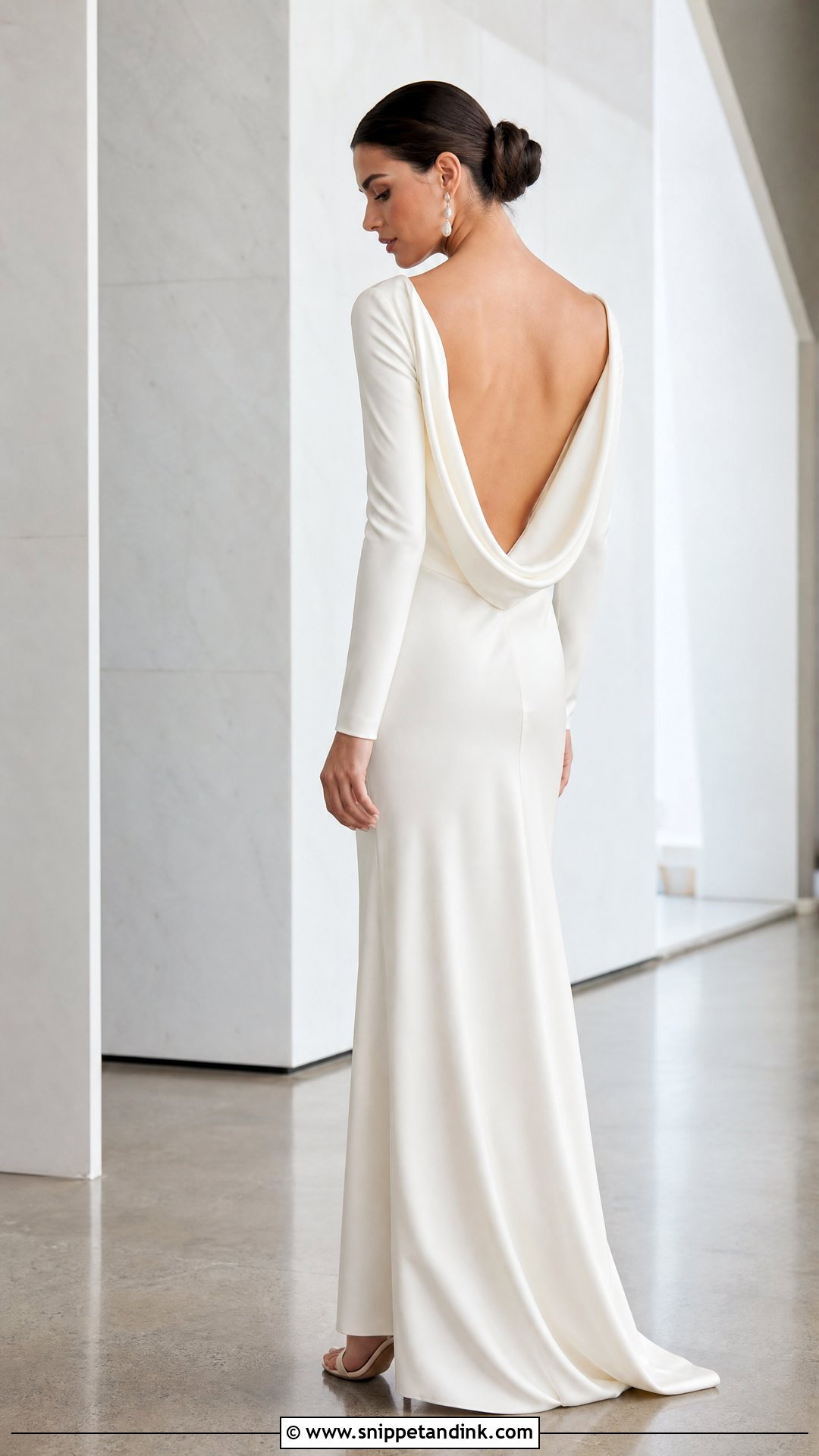
A cowl back gives you movement without a hard-cut opening. The fabric drapes in soft folds across the lower back, so a fluid satin or silk blend with a high front and slim sleeves is the right match. My concern with any cowl is that it collapses or swings sideways after a few hours of hugging. A good seamstress can add small hidden weights inside the drape so it settles back into place. A very light veil, or none, keeps the drape visible.
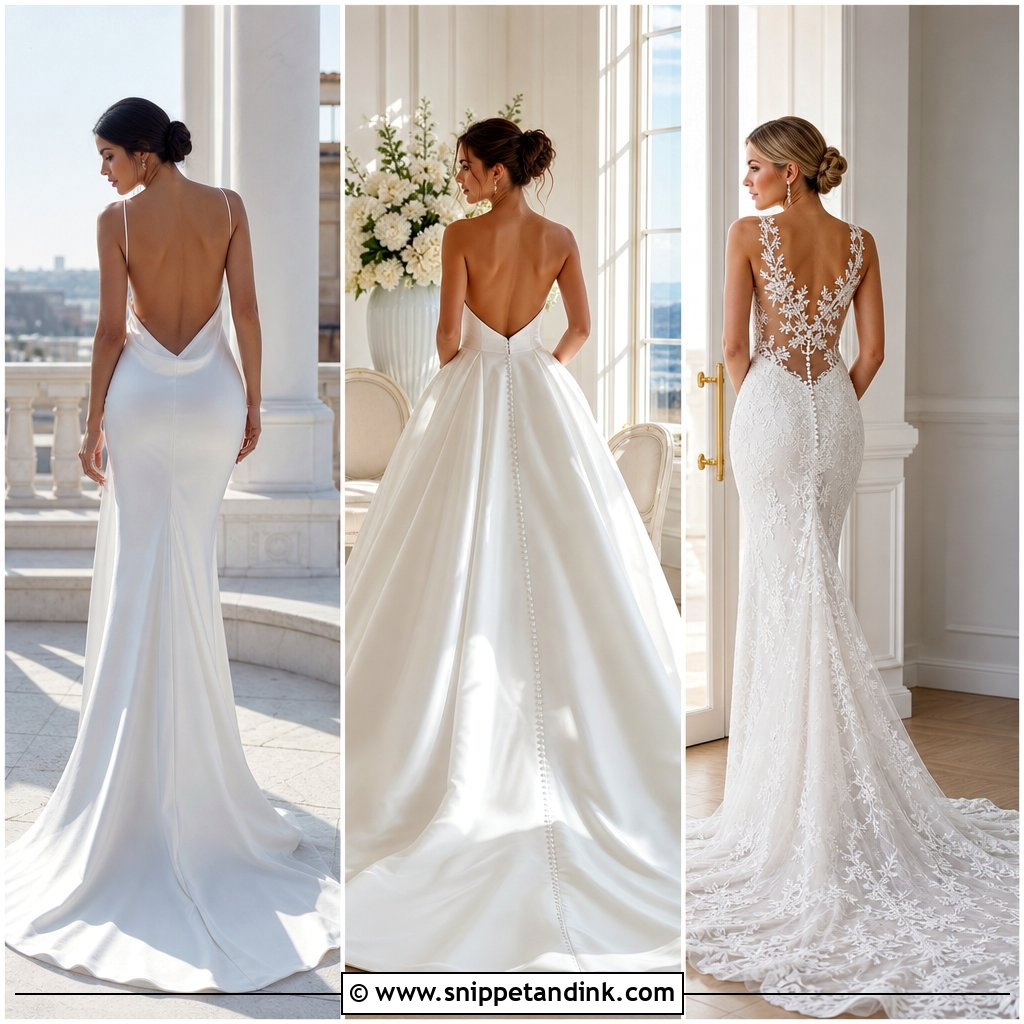


15. Corset Long Sleeve Backless Wedding Dress
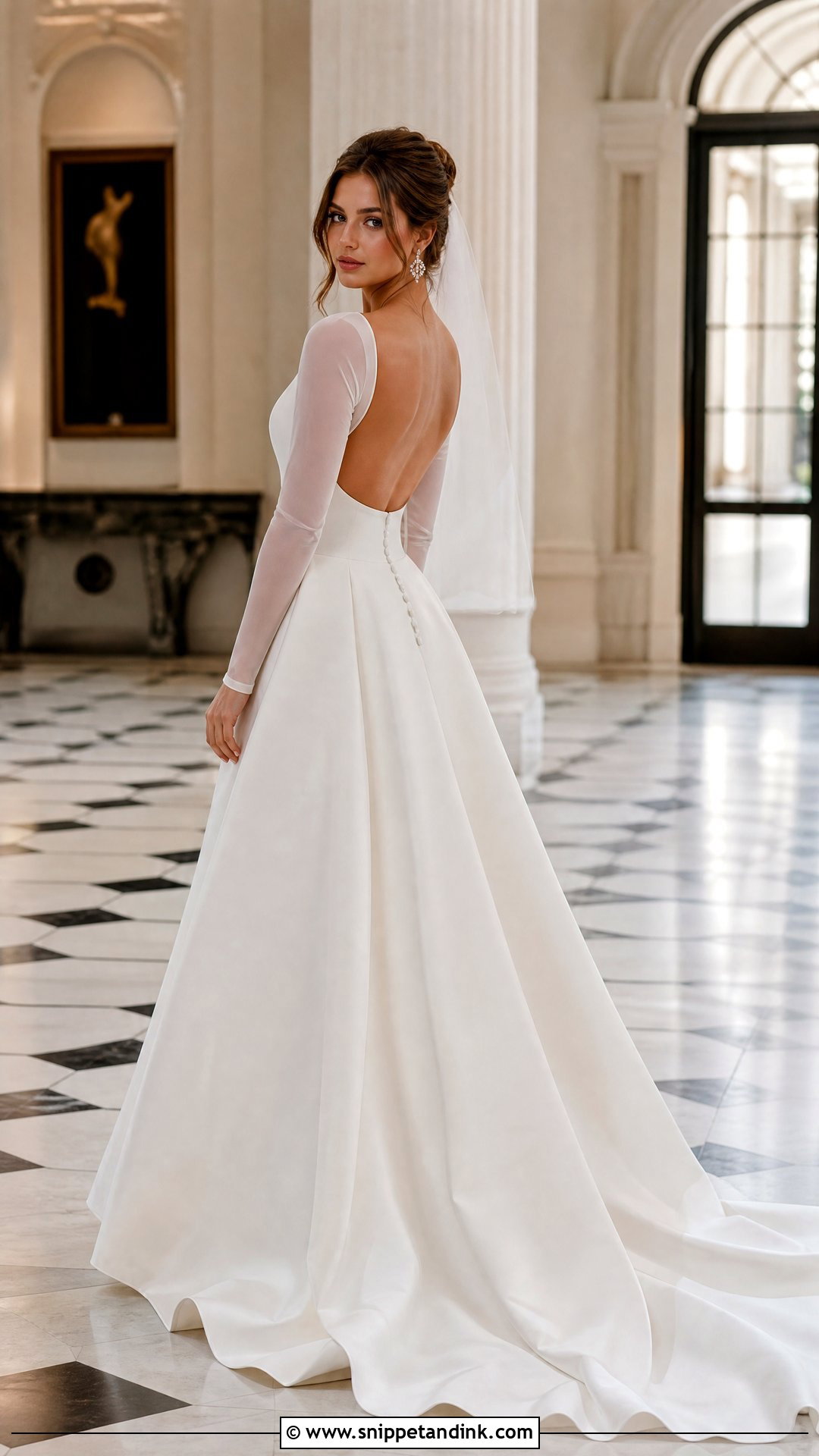
A corset bodice gives the structure that an open back otherwise lacks. Subtle exposed boning at the front, sheer sleeves and a low back supported by shaped side panels work together. A full A-line skirt softens it; a fitted skirt sharpens it. The corset should support, not squeeze, so at fittings I ask brides to sit, breathe deeply and laugh. If any of those hurts, it’s too tight for a full day. A center-parted low bun keeps the styling modern.
16. Minimalist Satin Long Sleeve Backless Wedding Dress
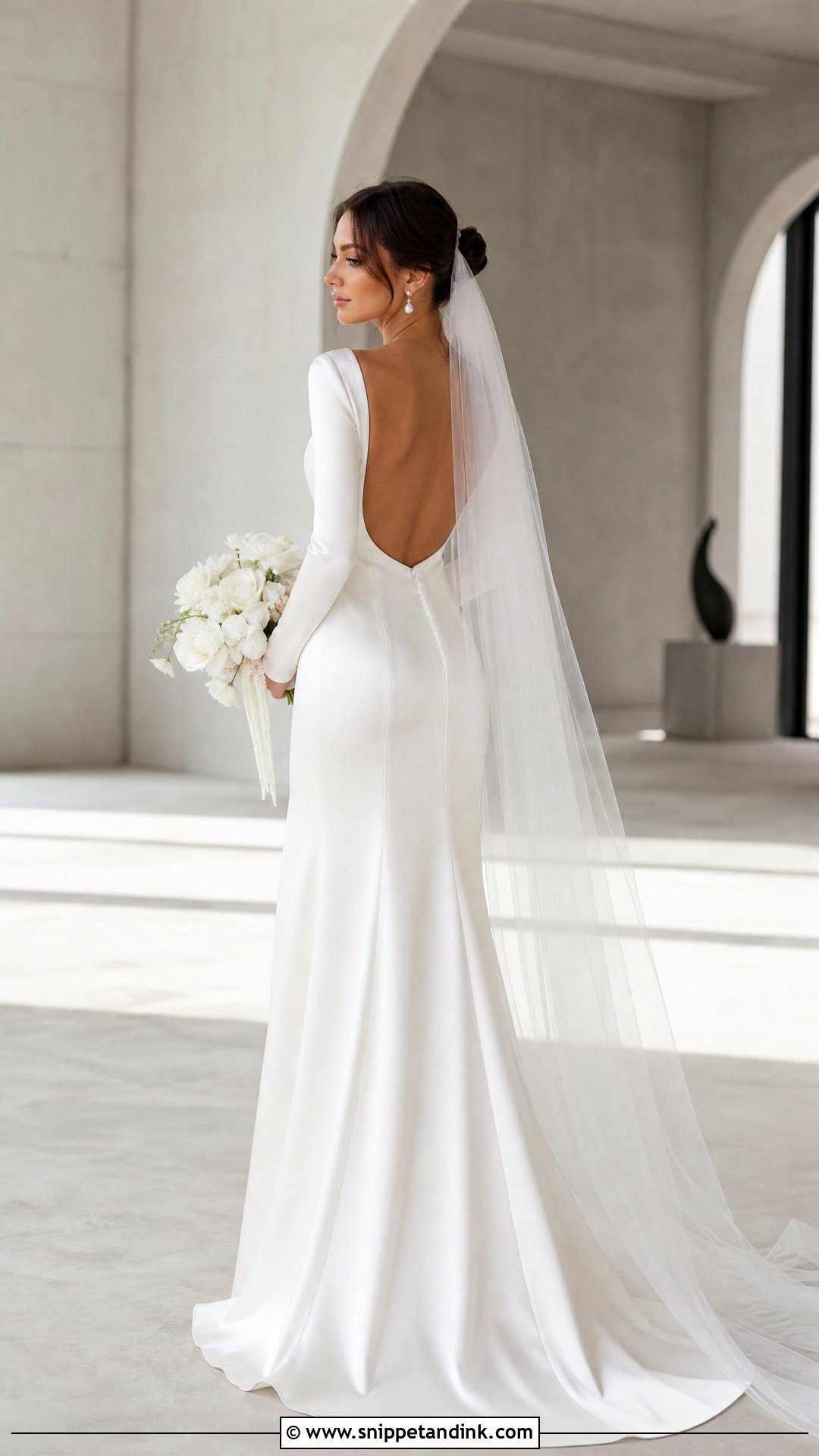
With no lace or beading to distract, a minimalist satin gown lives or dies on fit. A crew or boat neck, narrow sleeves, a low rounded back and a softly flared skirt are the whole design. I check the shoulder seam position, sleeve length at the wrist bone, waist placement and the edge of the back opening, which should lie flat with no gaping when you breathe out. Pearl drops, satin pumps and an unembellished veil finish it. It suits gallery spaces and city venues best.
17. Boho Lace Long Sleeve Backless Wedding Dress
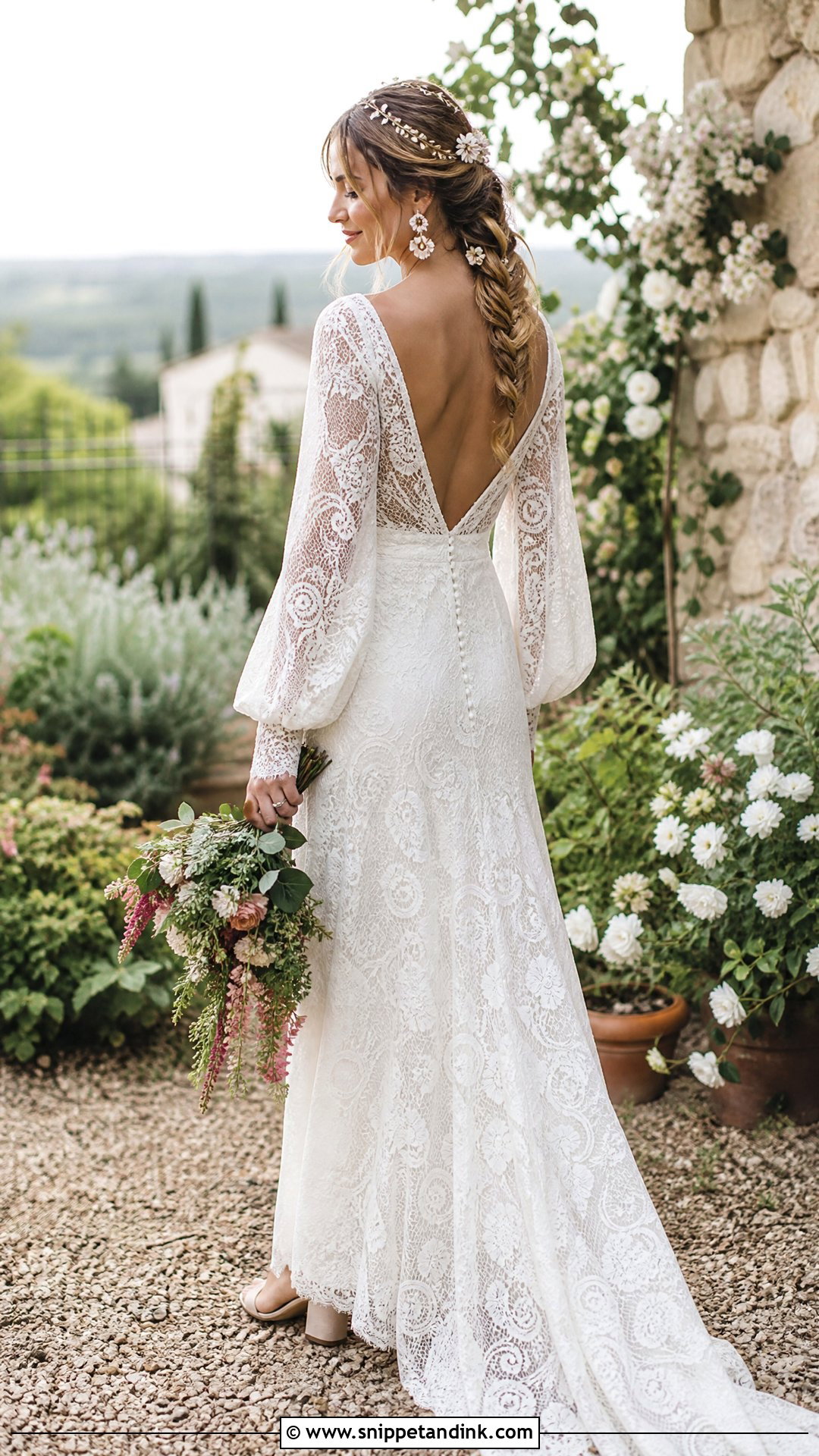
Boho lace has a looser, lighter feeling, with slightly relaxed sleeves, a fitted waist, a V-back and a flowing, lightly layered skirt. Low block heels make sense for grass. A hair vine or textured low braid replaces a tiara. Pay attention to the lining color, which should contrast enough to show the lace pattern. And avoid bell sleeves that flare widely at the wrist. They trail through bouquets, cake and candle flames at outdoor dinners.
18. Vintage Lace Long Sleeve Backless Wedding Dress
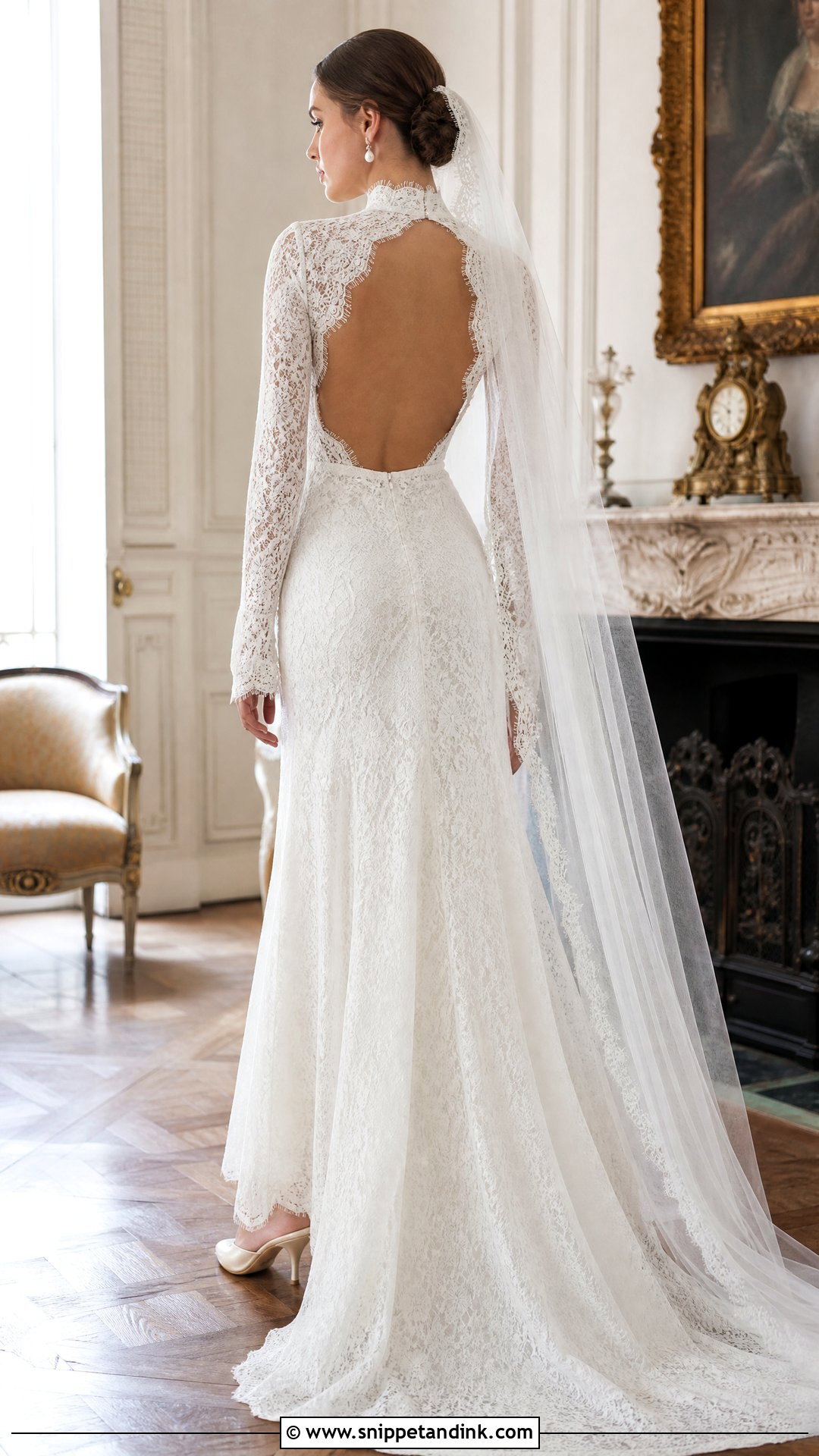
A vintage-leaning gown takes fine lace, a high neck, fitted sleeves and a keyhole or oval back, with a defined waist and a soft skirt. Covered buttons and scalloped cuffs add period detail without crossing into costume. I check the cut edges of the lace at the neckline and wrists; delicate lace frays quickly and can scratch once the edges loosen. A small comb above a smooth chignon and a narrow lace-edged veil complete it, as long as the veil lace is close in pattern to the gown.
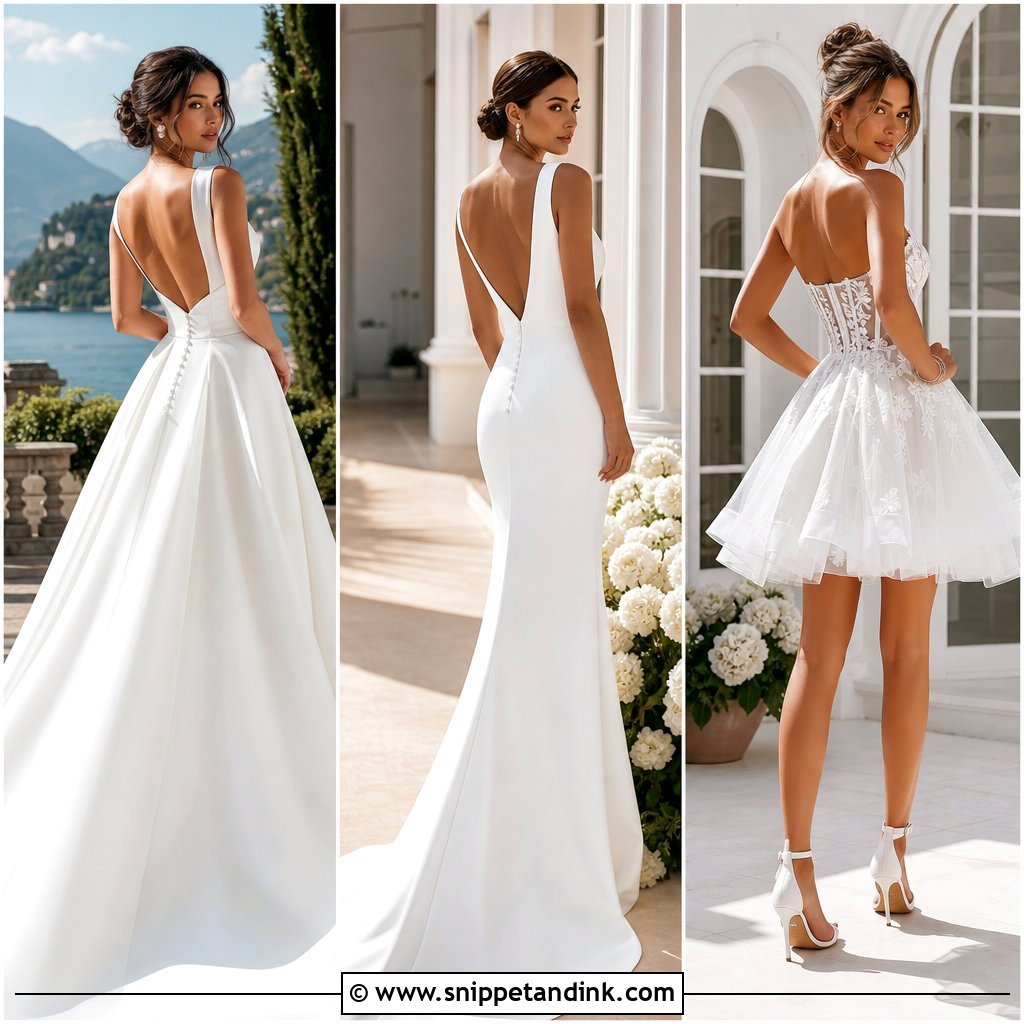
19. Backless Long Sleeve Ball Gown Wedding Dress
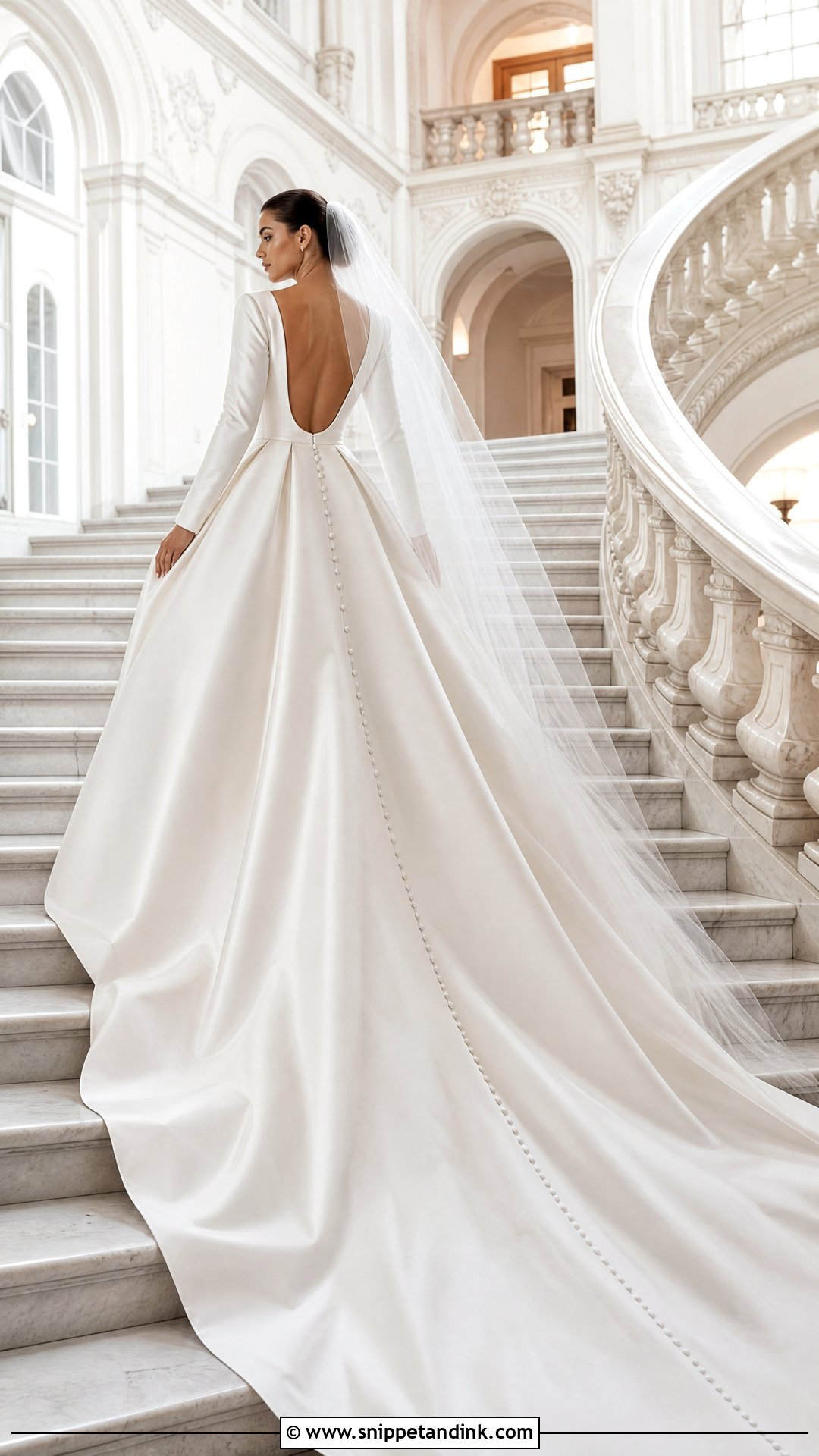
A ball gown makes the contrast extreme: a fitted, open-backed bodice over a huge skirt. Structured satin, mikado or layered tulle hold the volume, and a defined waist stops the skirt from swallowing you. Weight is the hidden issue. A heavy skirt pulls the bodice down at the back, so the waist and side seams need firm support. Ask about the bustle, and practice walking, turning and sitting before the wedding. It belongs in a grand space with room to move.

20. Backless Long Sleeve Fit-And-Flare Wedding Dress
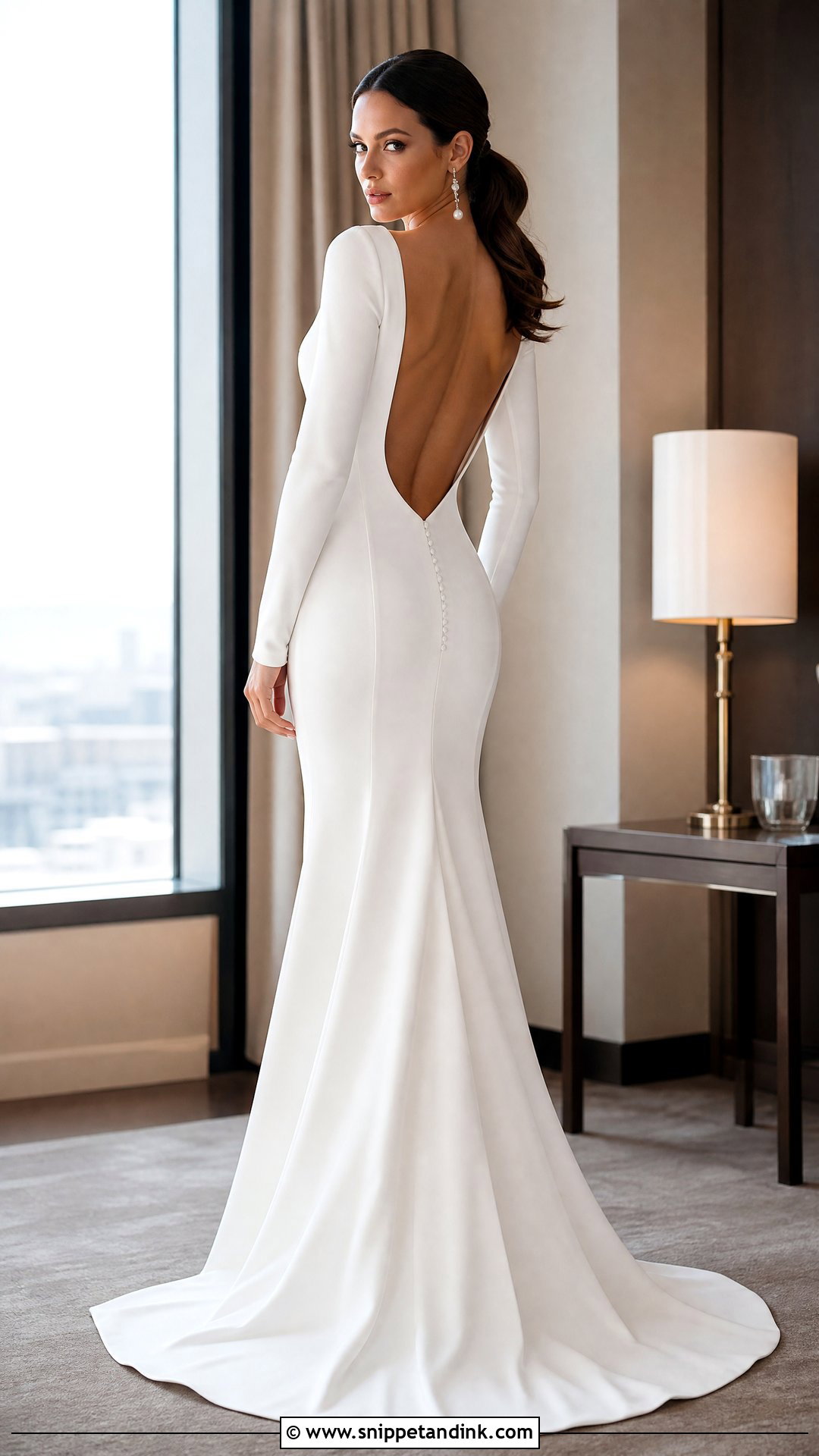
Fit-and-flare follows the body through waist and hips and opens gradually below. Stretch crepe or lace allows movement; internal seaming adds support with no visible embellishment. Pair it with fitted sleeves and a low curved back. At fittings, take full steps and sit down, since a skirt that grips the thighs gets uncomfortable fast. A wrist loop or secure bustle keeps the train off the floor later. It moves far more easily than a mermaid while keeping a similar line.
21. Backless Long Sleeve Chiffon Wedding Dress
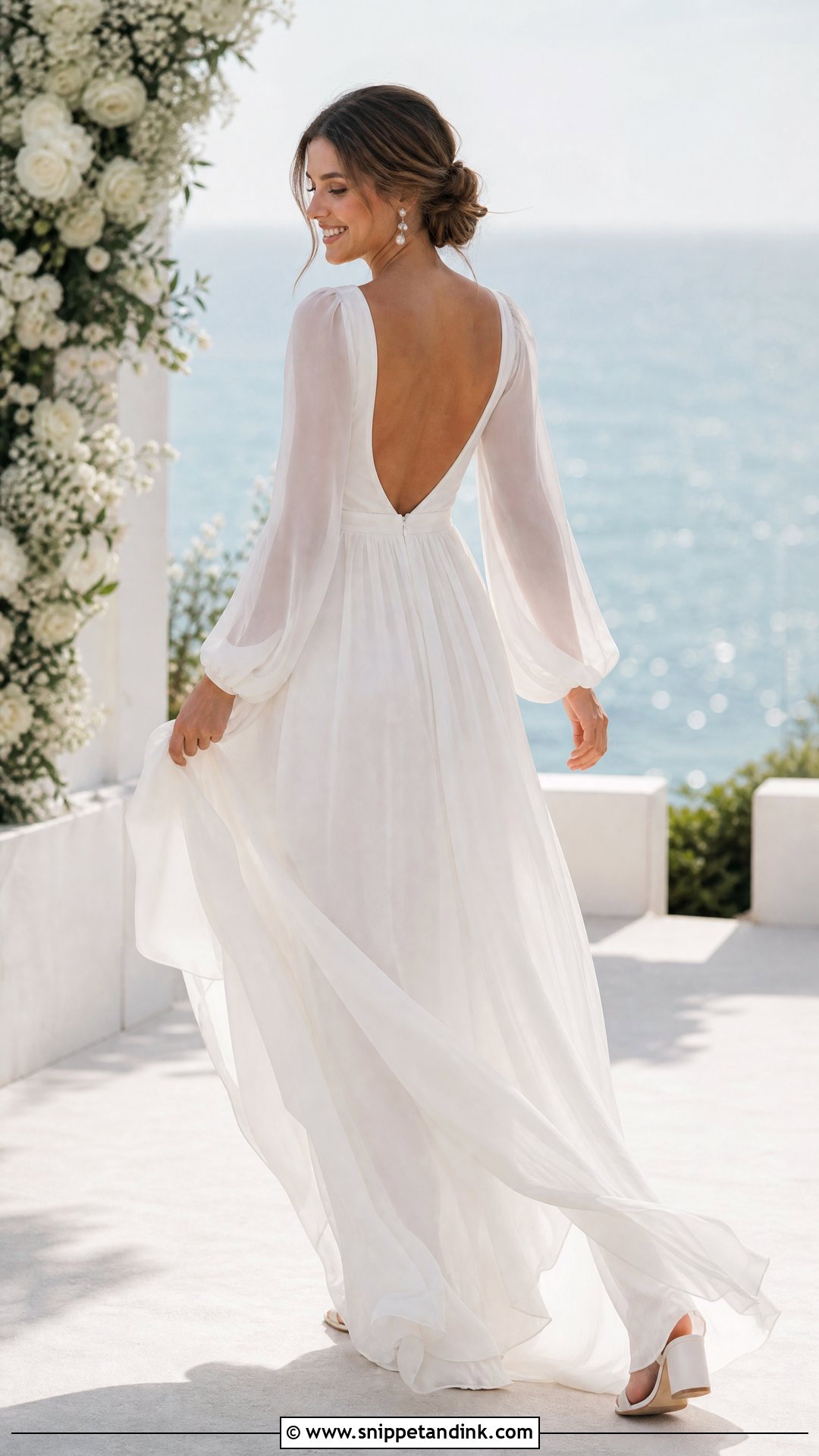
Chiffon makes a long-sleeved gown feel airy, which is welcome on a warm day. A lined bodice, sheer chiffon sleeves, a softly gathered waist and an open back closed with delicate ties or covered buttons keep it light. Stand under bright light before you commit; chiffon can turn transparent in sunshine, and you want to know the lining covers what you expect. Comfortable block heels and a loose low bun suit coastal and outdoor ceremonies.
22. Backless Long Sleeve Tulle Wedding Dress
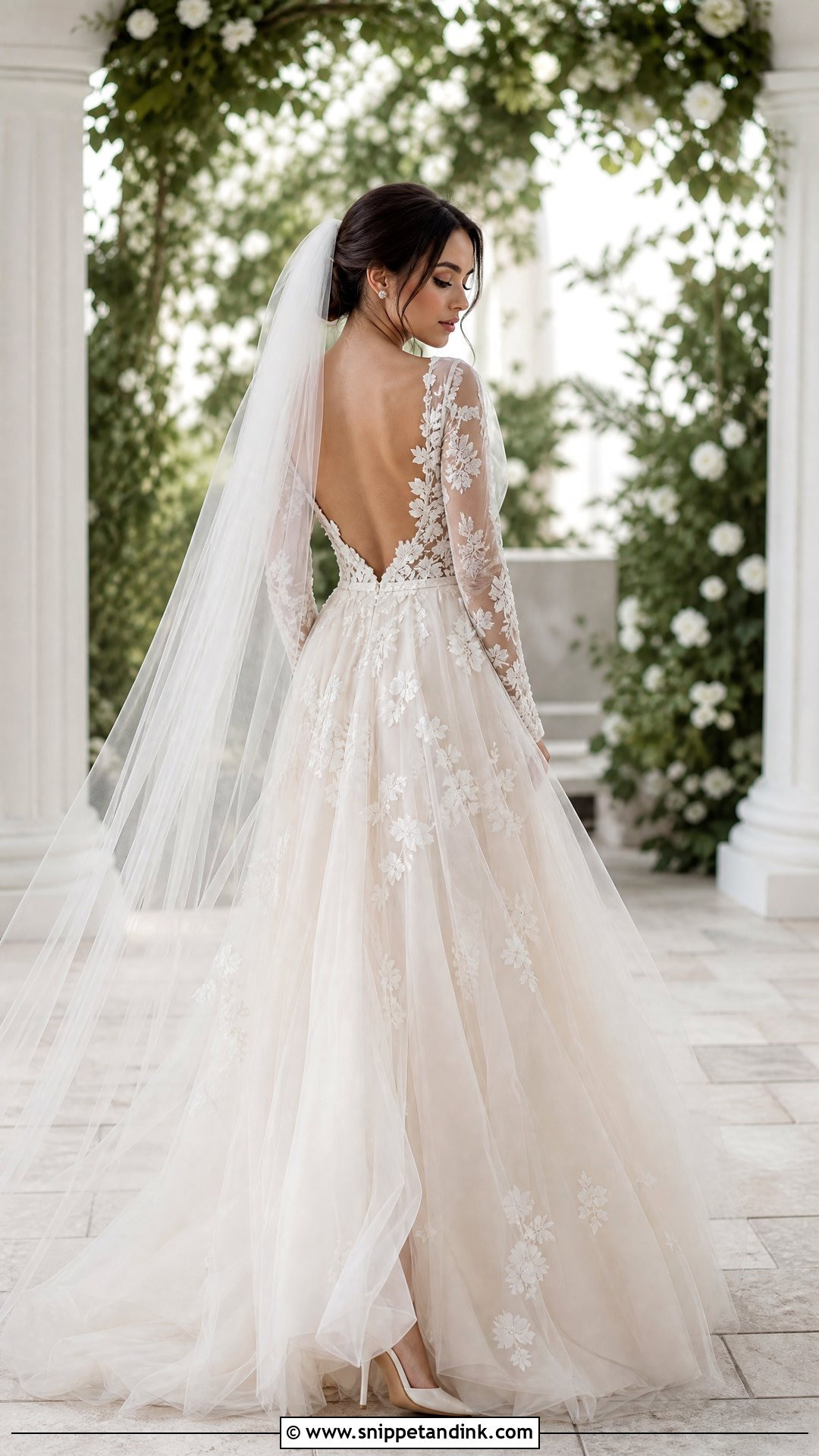
Tulle gives volume without much weight. A fitted bodice with sheer tulle sleeves, scattered appliques and a deep open back framed by embroidery sits over a full A-line skirt. Choose a veil in a different length from the skirt, so it reads as its own layer instead of merging into the gown. During fittings, run your hand over the inside of the sleeves; applique backs can scratch. A bustle protects the train once dancing starts.
23. Petite Long Sleeve Backless Wedding Dress
Petite brides often worry that a backless gown will make them look shorter. It doesn’t need to. A carefully proportioned backless gown with a slightly raised waist, a narrow A-line skirt and a V-back draws the eye up and down rather than across. Lightweight crepe or lace avoids bulk. Keep the train moderate so it bustles cleanly. I’d avoid oversized appliques and very wide sleeves. Have the sleeve length altered to the wrist bone; extra length bunches and makes arms look shorter.
24. Plus Size Long Sleeve Backless Wedding Dress
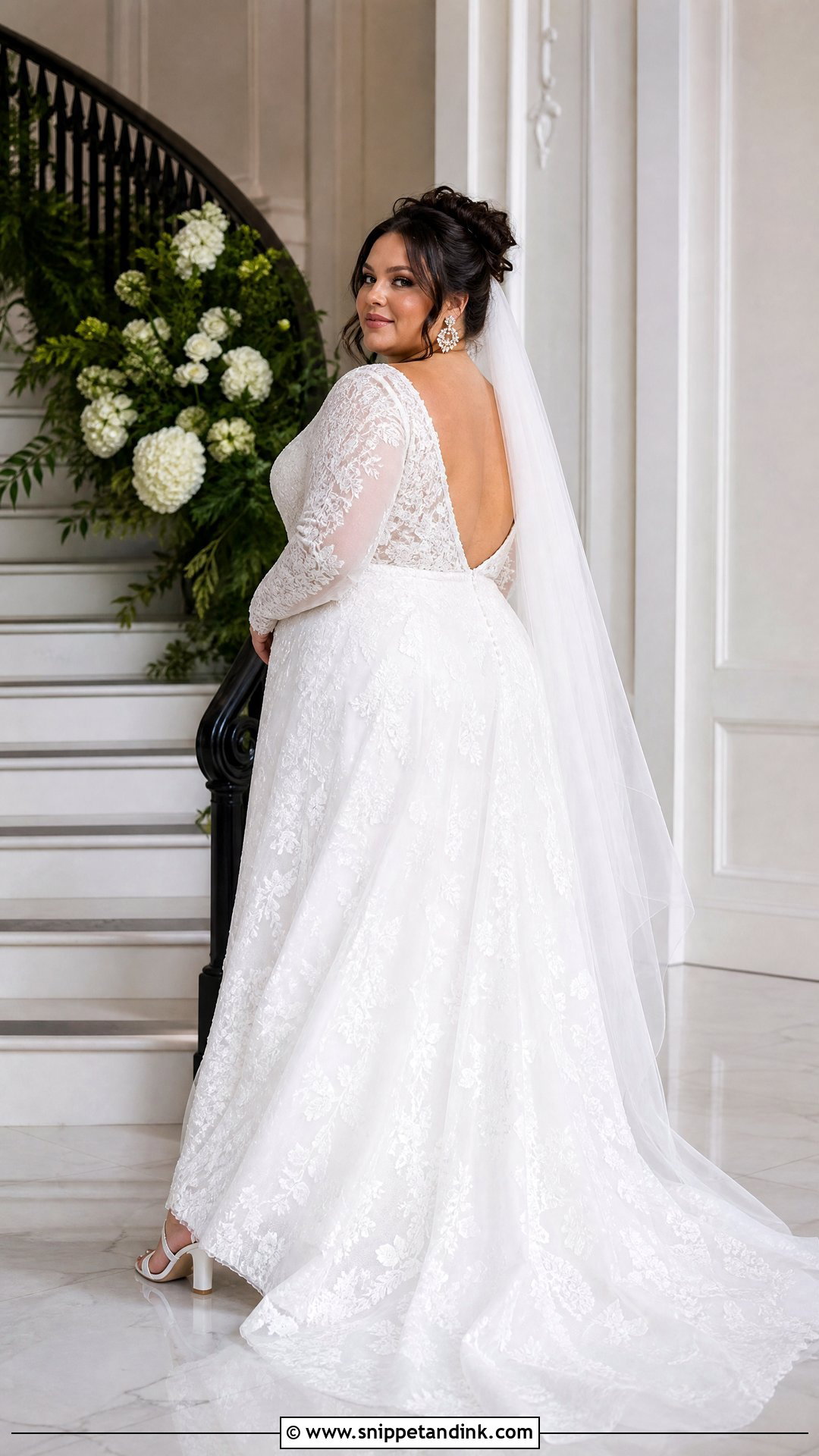
Plus-size brides can absolutely wear an open back, and the structure underneath is what makes it comfortable. I look for shaped side panels, internal boning, a defined waist and a back opening positioned so the built-in support still works. Stretch crepe, lined lace and structured satin all suit it, with an A-line or fit-and-flare skirt. Talk to your seamstress early about sewn-in cups, mesh panels and reinforcement. The fit should let you sit, hug and dance without adjusting anything.
25. Winter Long Sleeve Backless Wedding Dress
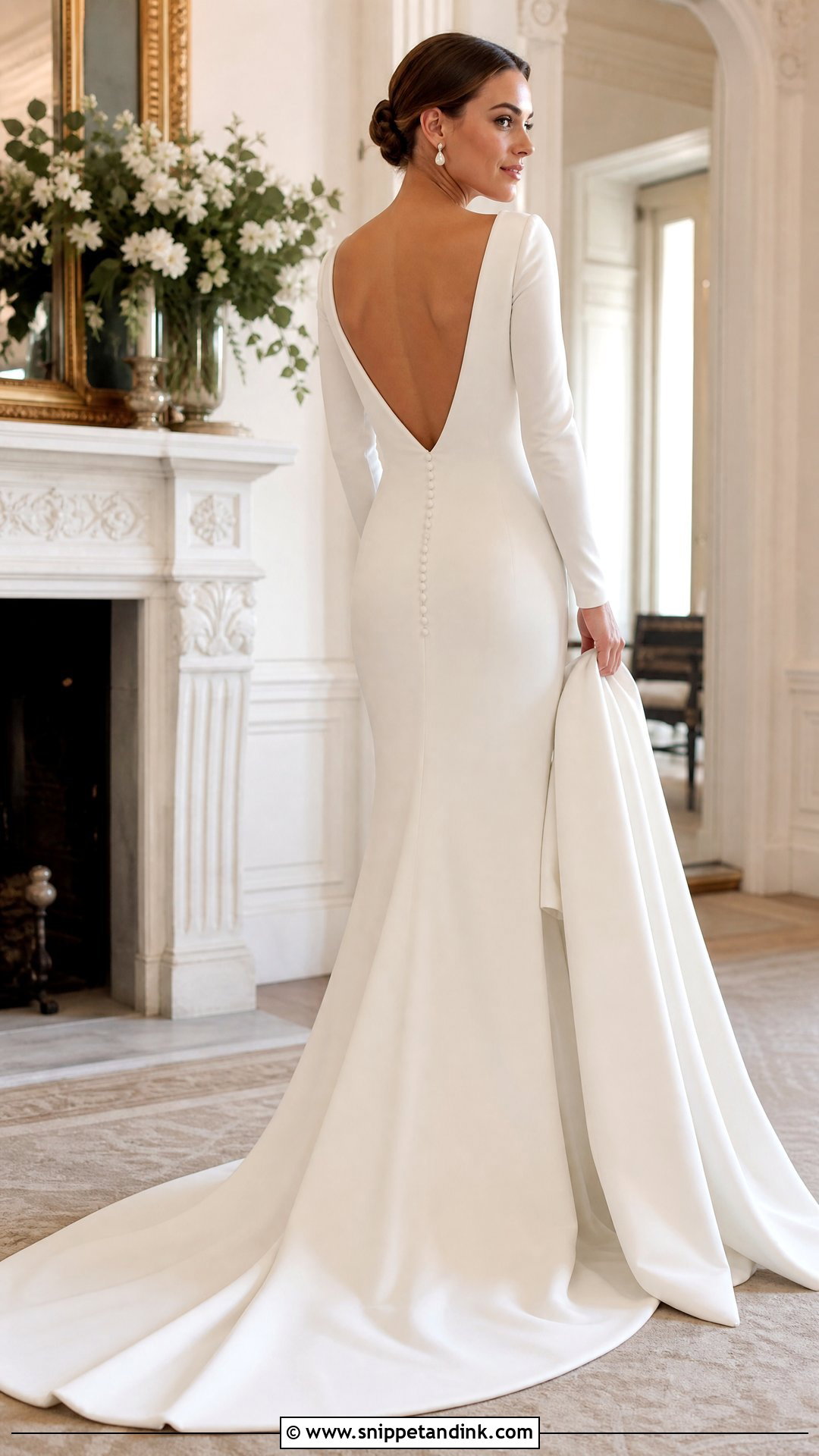
Winter makes an open back trickier, but heavier crepe, satin or lined lace with fitted sleeves looks right for the season. A full-length skirt and a sweeping train add formality. For outdoor photos and car rides, add a removable faux-fur wrap or a tailored cape, or structured coat, then take it off indoors for the big reveal. Closed-toe pumps and a sleek bun finish it. Warm linings can make sleeves stiffer, so I check arm movement at every fitting.
What Goes Underneath an Open Back
Bra choice is the most common question I get about these dresses, and it should be decided before alterations begin, not after. Seamstresses fit around whatever you wear underneath, so bring it to the first appointment.
- Sewn-in cups are the most secure option for most brides. They move with the dress and can’t shift.
- Adhesive or stick-on bras suit smaller busts. Body lotion, oil and heat weaken the glue, so skip moisturizer on that area on the morning.
- Low-back bras with straps that hook around the waist work when the opening stops at the waist or below.
- Fashion tape can hold a lifting edge of the back opening flat against your skin. Test it on your skin a few days before.
Your Back Will Be in Half the Photographs
With so much of your back on show, it gets photographed during the vows, the first dance and every walk away from the camera. Gentle exfoliation in the weeks before helps, and a body moisturizer applied the night before rather than the morning keeps fabric and adhesives clean.
If you use self-tan, do it at least a couple of days before the wedding and shower it off well; fresh tan can transfer onto ivory lining at the back edges. Ask your makeup artist whether a light body makeup on the back is worth it, and set it so it doesn’t rub off onto the dress. Watch for strap lines from summer sun, too. A bra strap tan line across an open back shows in every photograph, and it’s easier to avoid than to cover.
Look at It From Behind Before You Say Yes
A long-sleeved, open-backed gown should look balanced from the front, the side and the back, and still let you move. Lace softens, satin polishes, crepe simplifies and tulle adds volume. Before you commit, test the sleeves, sit down in the gown, walk with the train and ask an experienced bridal tailor about support. Then style it so the back stays visible: an updo, quiet jewelry and a veil that falls clear of the opening.
You'll Like These Ideas:



Leave a Reply