
The dress you say yes to is rarely the one you walked in planning to buy. In fittings I watch brides change their minds the moment they see how a silhouette moves, how a fabric holds light and how a neckline sits once the hair is up. The 25 Yes to the Dress Ideas cover ball gowns, lace, satin, sleeves, minimal crepe and short reception dresses, and each comes with the veil, shoes, jewelry and hair I’d put beside it, because a gown never reads on its own. Use them to decide which shapes to pull at your first appointment, ceremony, courthouse or party alike.
Shoes, Underwear and Two Honest Opinions
A first bridal appointment usually lasts an hour or so, and it goes faster than you’d think. I get far more done with brides who arrive with the right things in hand.
- Shoes at roughly the heel height you plan to wear. The hem and the whole line of a gown change with a few inches.
- Smooth nude underwear and a strapless bra, so you aren’t judging a dress with straps and lines showing.
- Two or three people whose taste you trust. A big group pulls you in five directions at once.
- Pictures of dresses you like, plus a couple you dislike. The dislikes tell me nearly as much.
Expect samples that don’t fit. Shop samples come in a limited range of sizes and are clipped or pinned onto you, so picture the shape rather than the gaps. Bridal sizing also tends to run smaller than everyday clothes, so ignore the number on the tag; your gown will be ordered from your measurements.
1. Ball Gown Wedding Dress
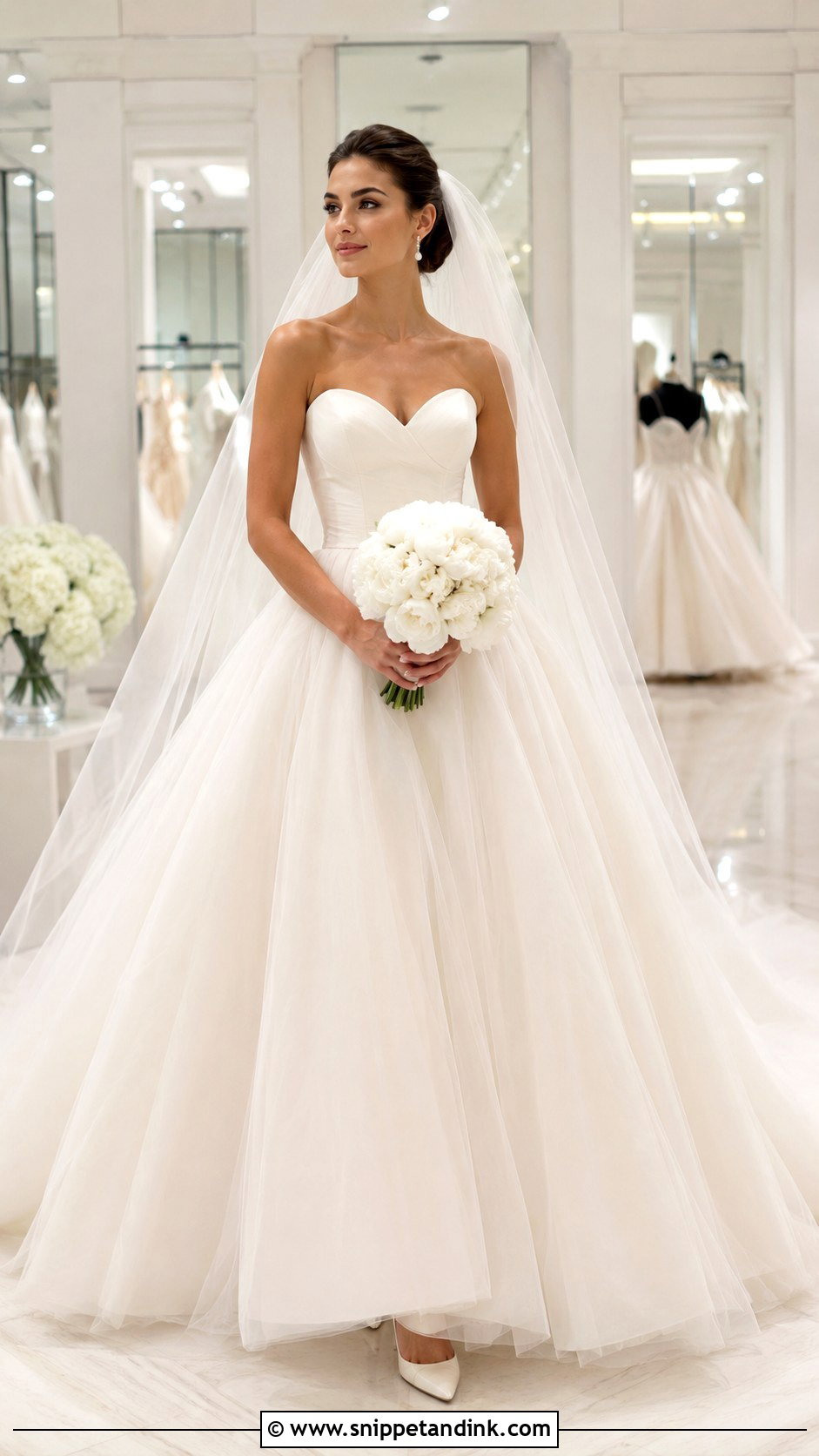
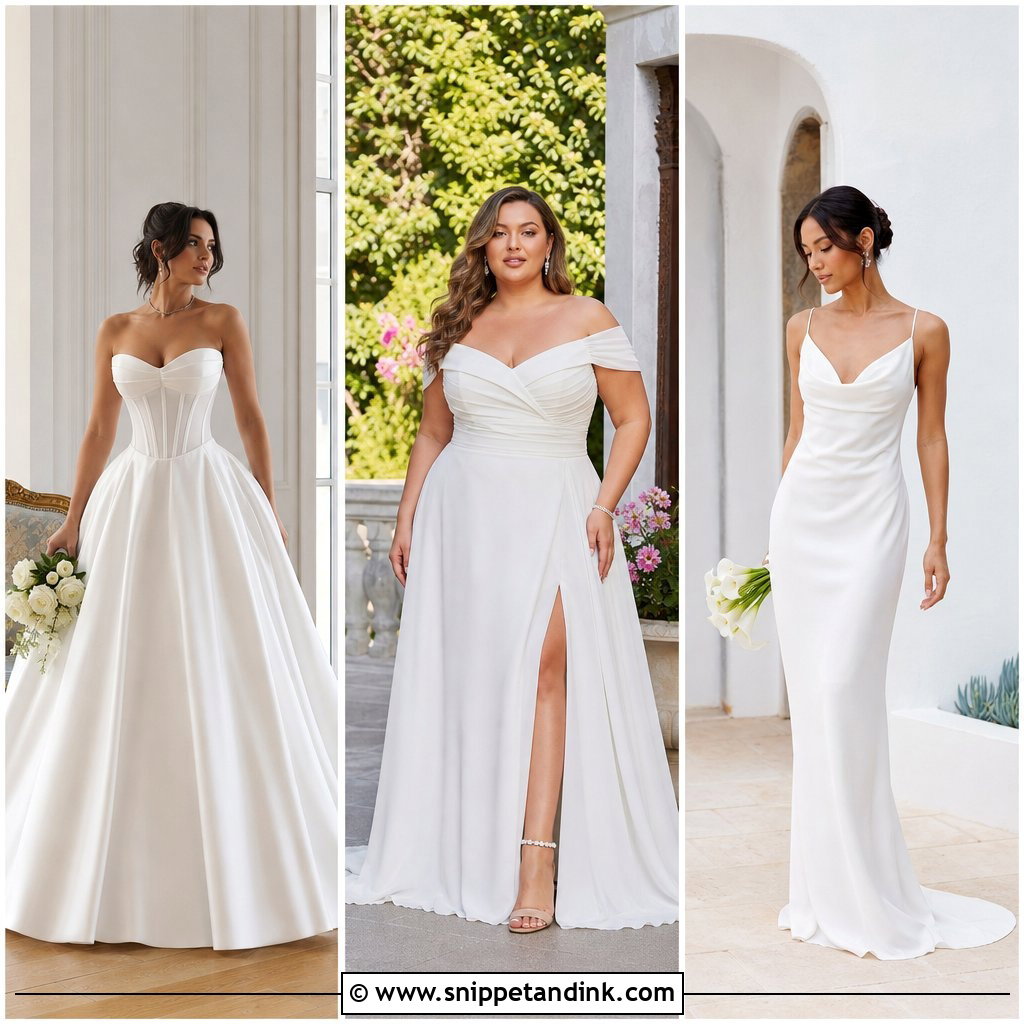
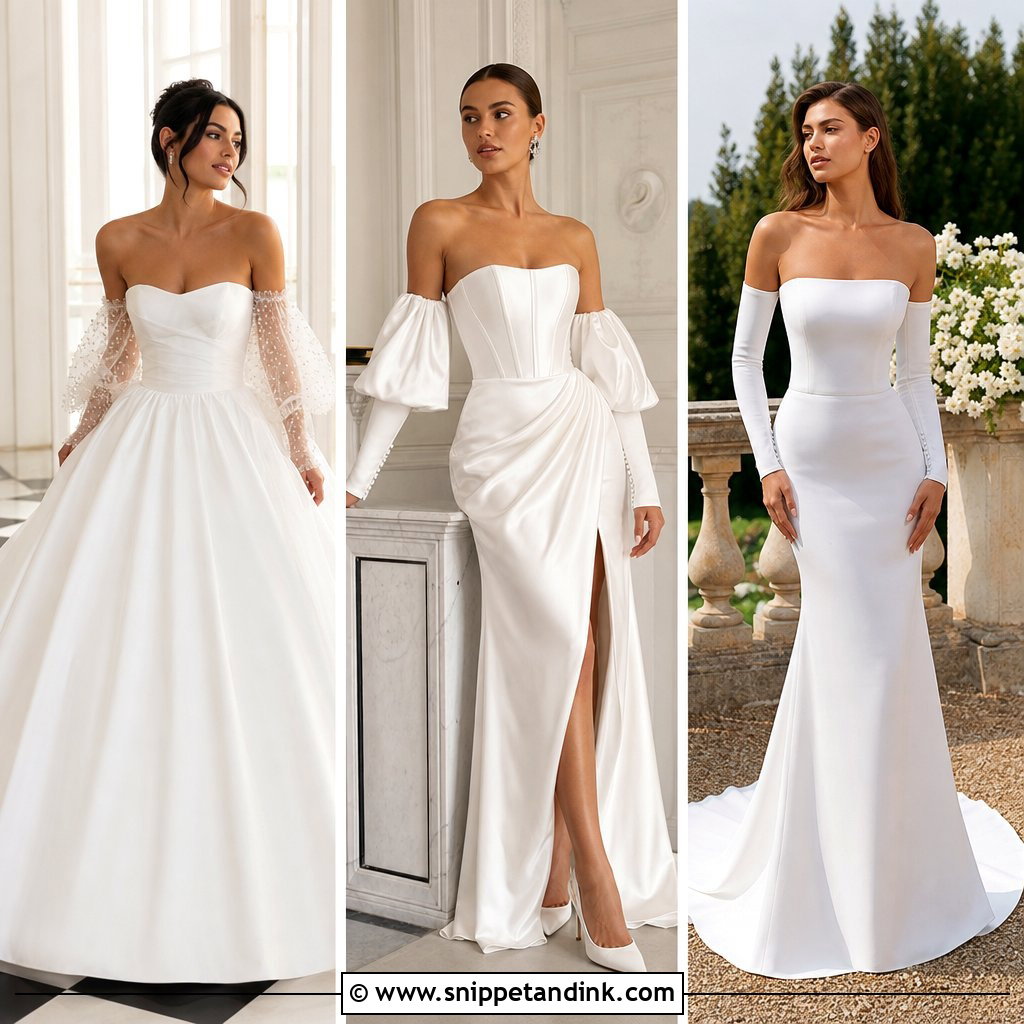
A ball gown makes the biggest entrance on this list, and it’s also the heaviest dress to wear for a full day. Full skirts are built over layers of tulle or a crinoline, so I always ask brides to walk, sit and climb a step in the sample before committing. A structured bodice holds the shape. Sweetheart necklines read romantic, while off-the-shoulder ones frame the collarbones. Pearl studs, a soft updo and a cathedral veil that trails past the hem keep everything in proportion, and pointed ivory heels are plenty, since only the toe will show.
2. Lace Wedding Dress
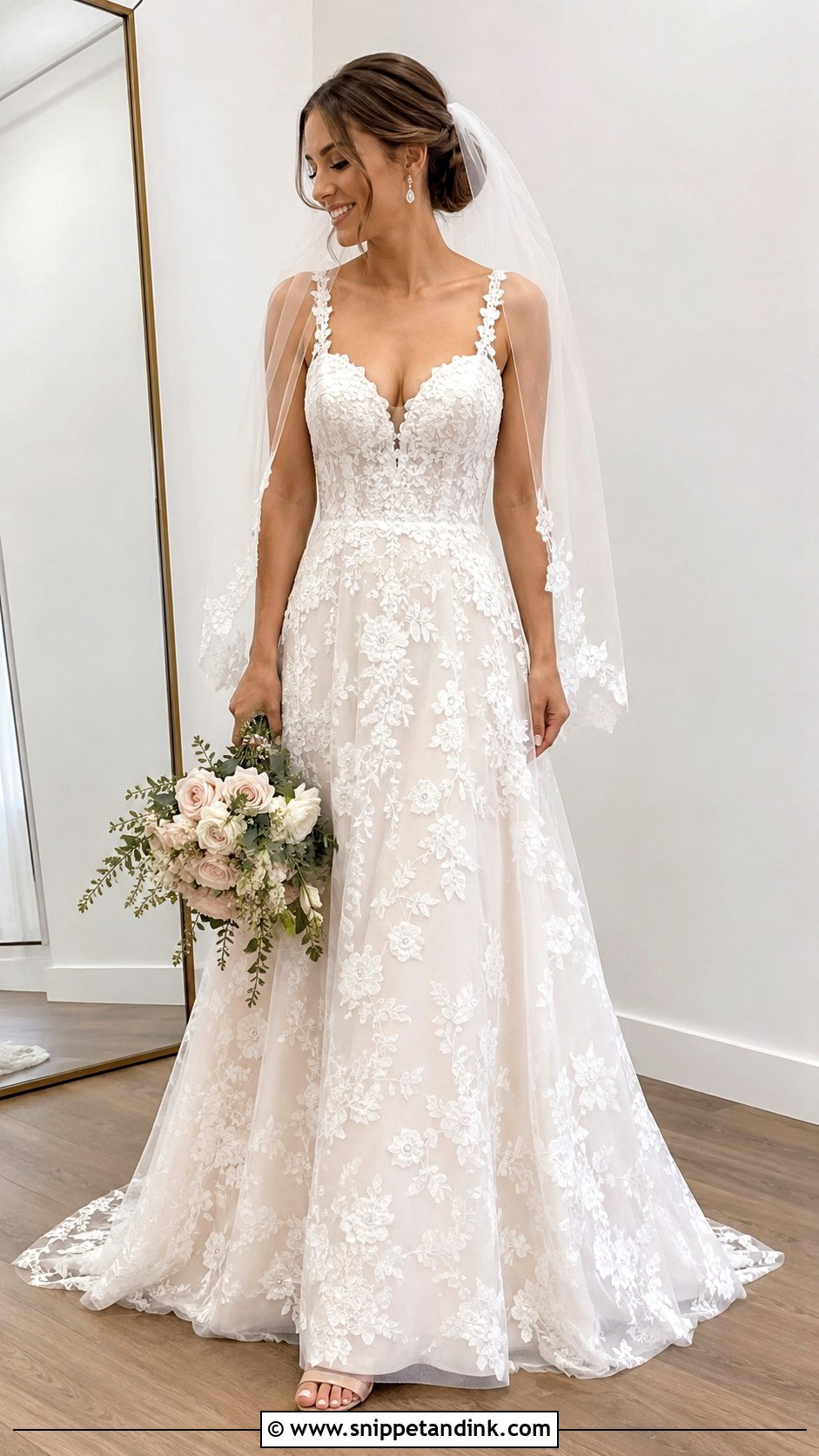
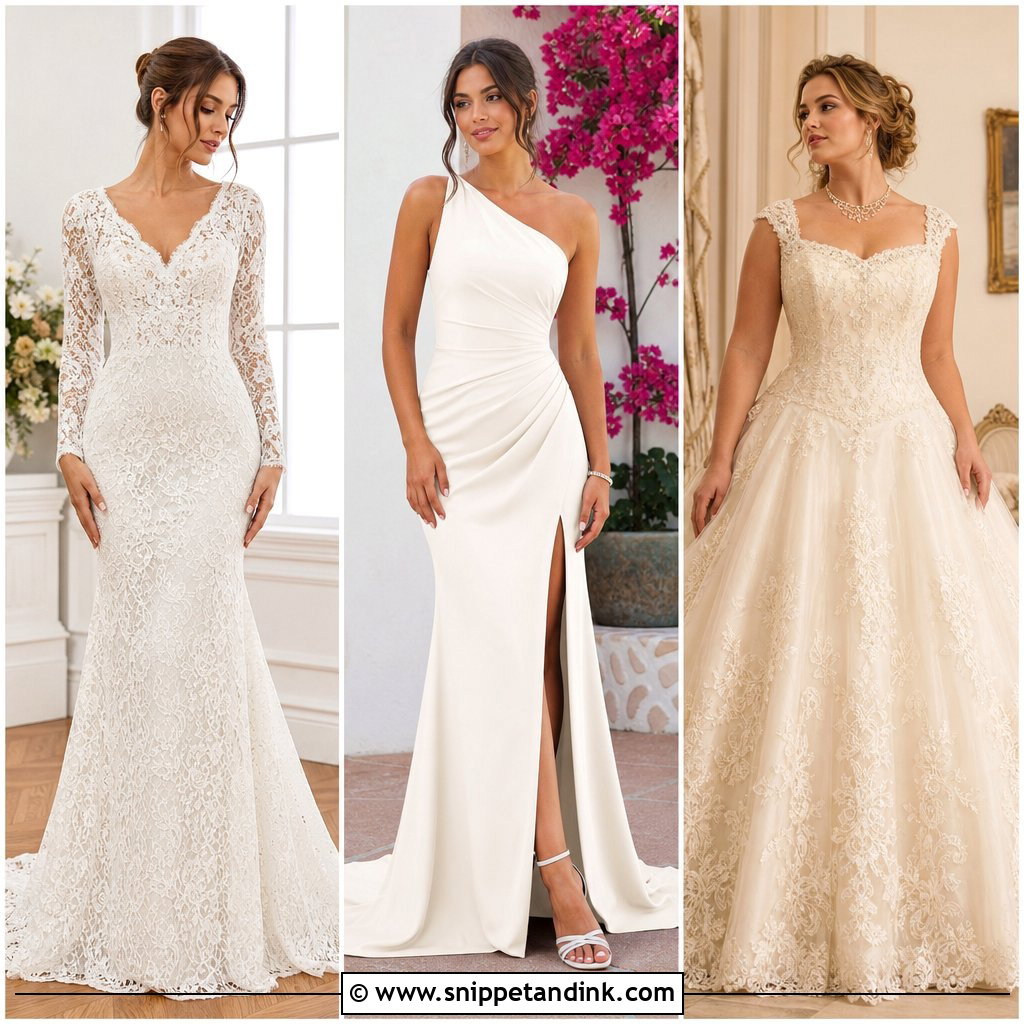
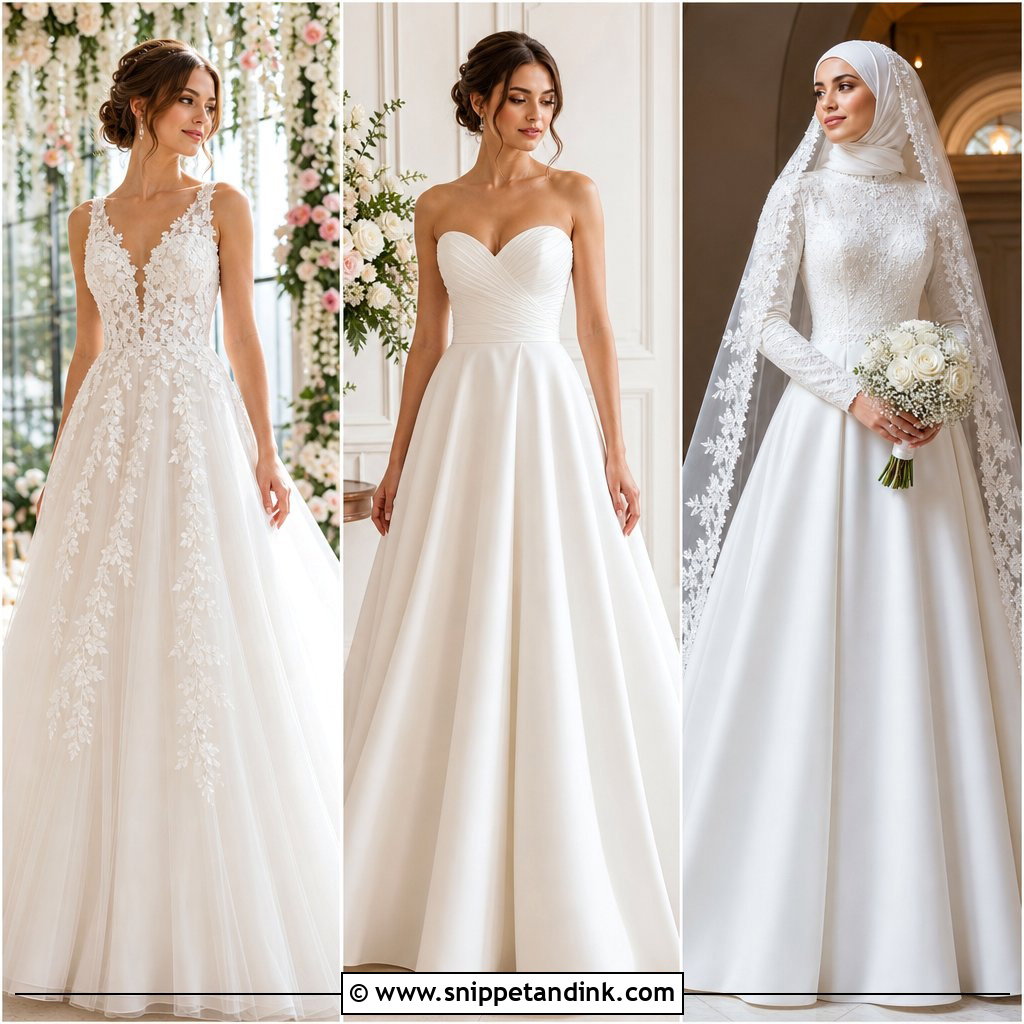
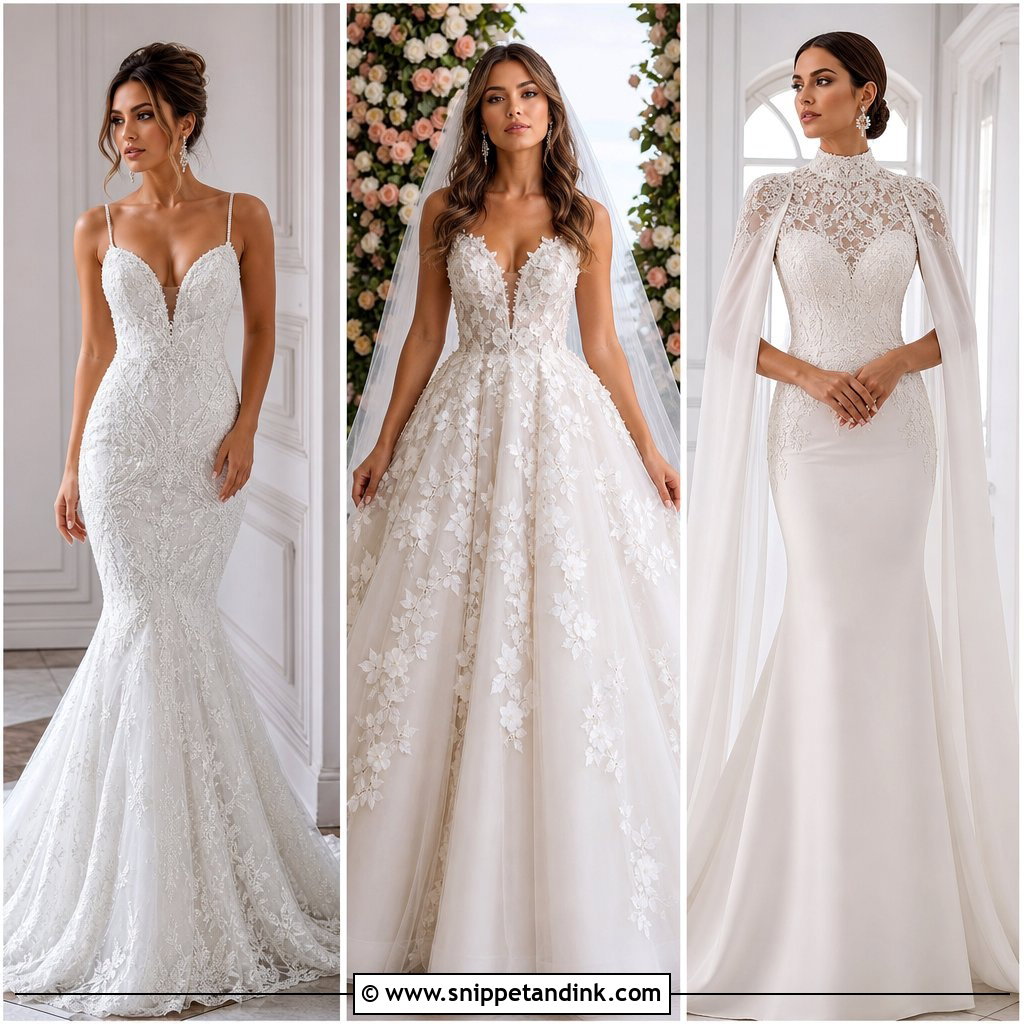
Lace photographs best over a lining close to your skin tone, which is why so many lace gowns sit on a nude or ivory base: the pattern stands out instead of melting into white. A fitted bodice with a gentle A-line skirt defines the waist without squeezing it, and it suits most of the figures I fit. Pick a fingertip veil with a plain edge so two lace patterns don’t fight around your face. Delicate drops, a low bun, nude or ivory block heels and a white and blush bouquet finish it. One practical note: a scalloped lace hem has to be lifted and reattached to shorten, so it needs a skilled seamstress.
3. Satin Wedding Dress
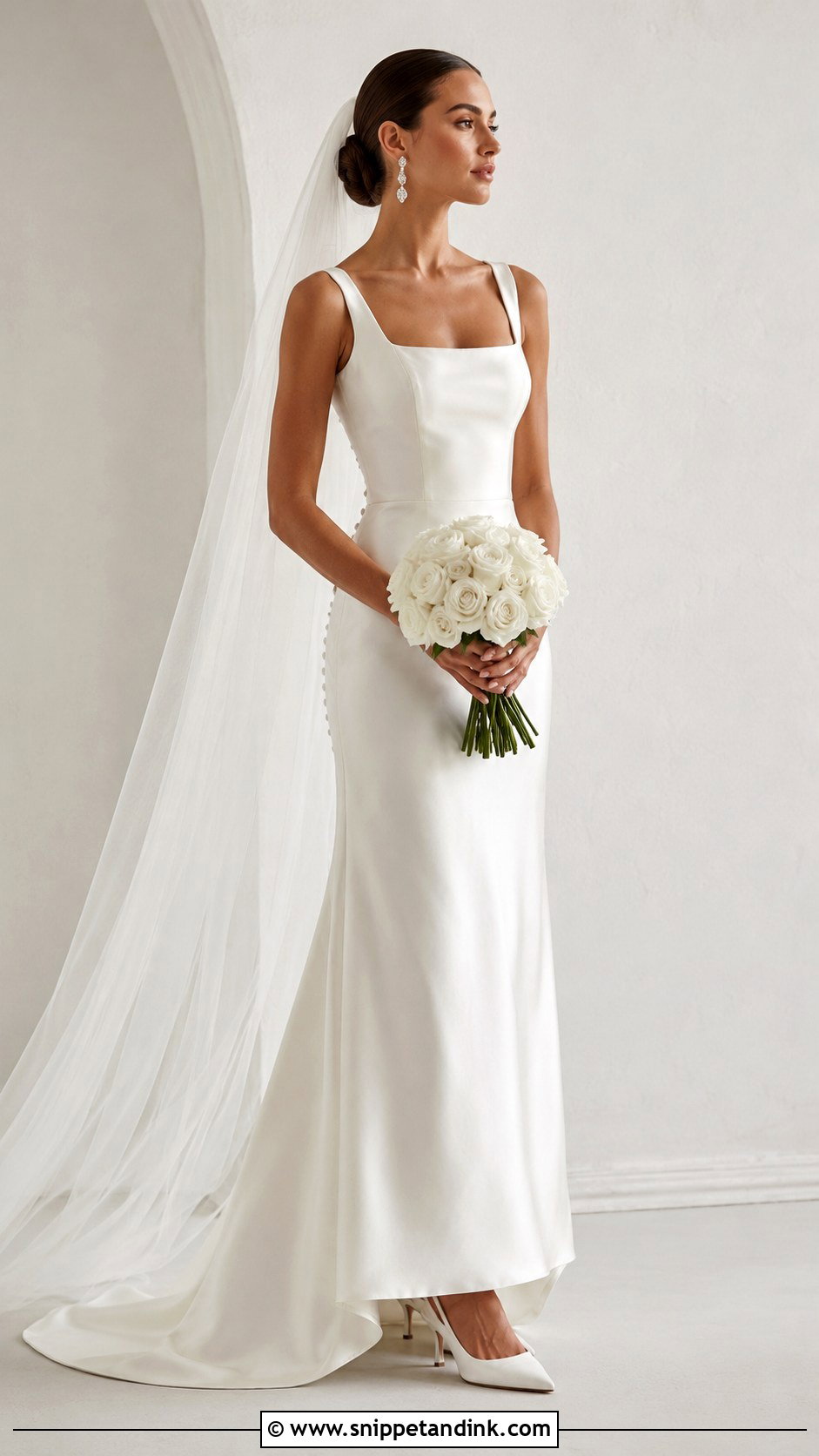
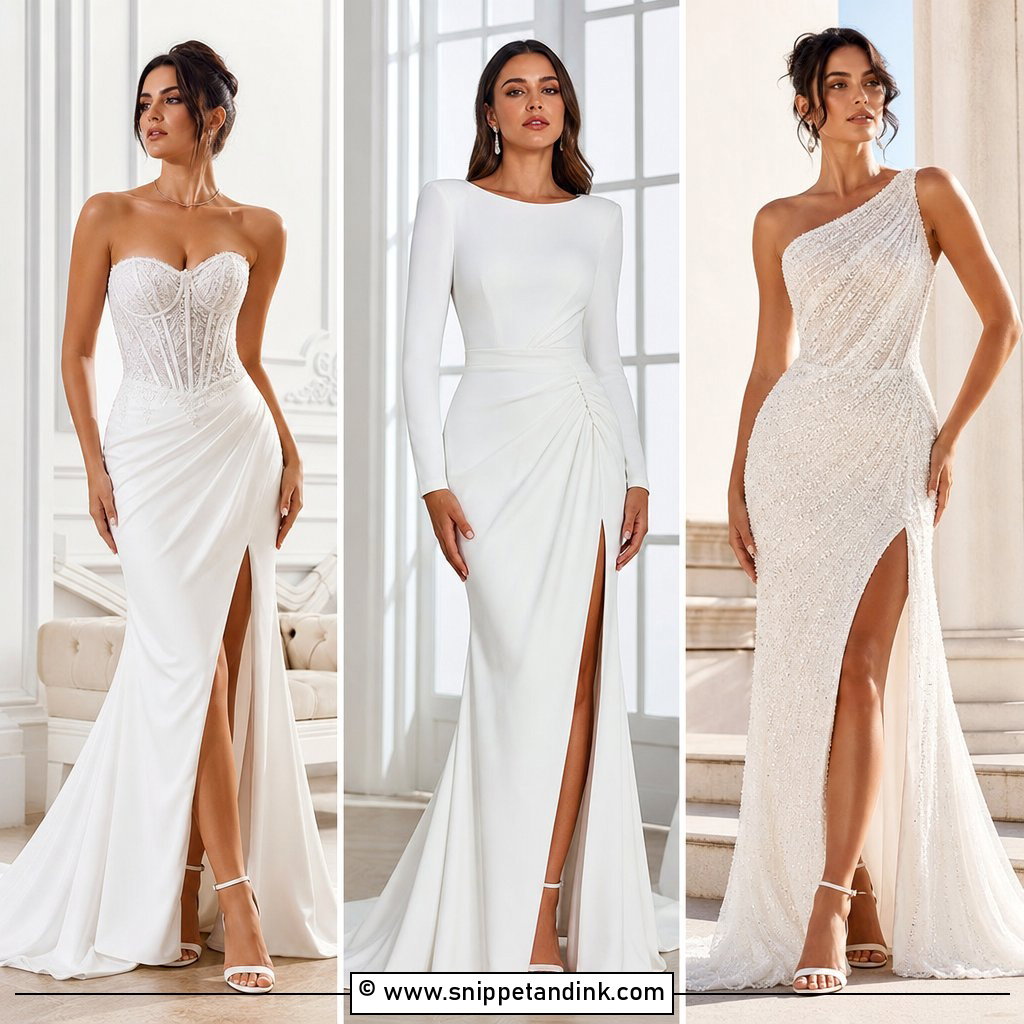
Satin shows everything, and that’s both its appeal and its risk. The smooth shine reads expensive, but it also reveals every seam, every ripple from shapewear and every crease from the car ride, so I only fit satin close to the body when the construction underneath is good. A fitted gown with a square neckline, hidden buttons and a soft train is the classic shape. Crystal earrings, a smooth low bun and a long plain veil keep it sleek, while white pointed pumps or satin slingback heels carry the finish to the floor. A small bouquet of white roses or calla lilies suits the clean line.
4. Mermaid Wedding Dress
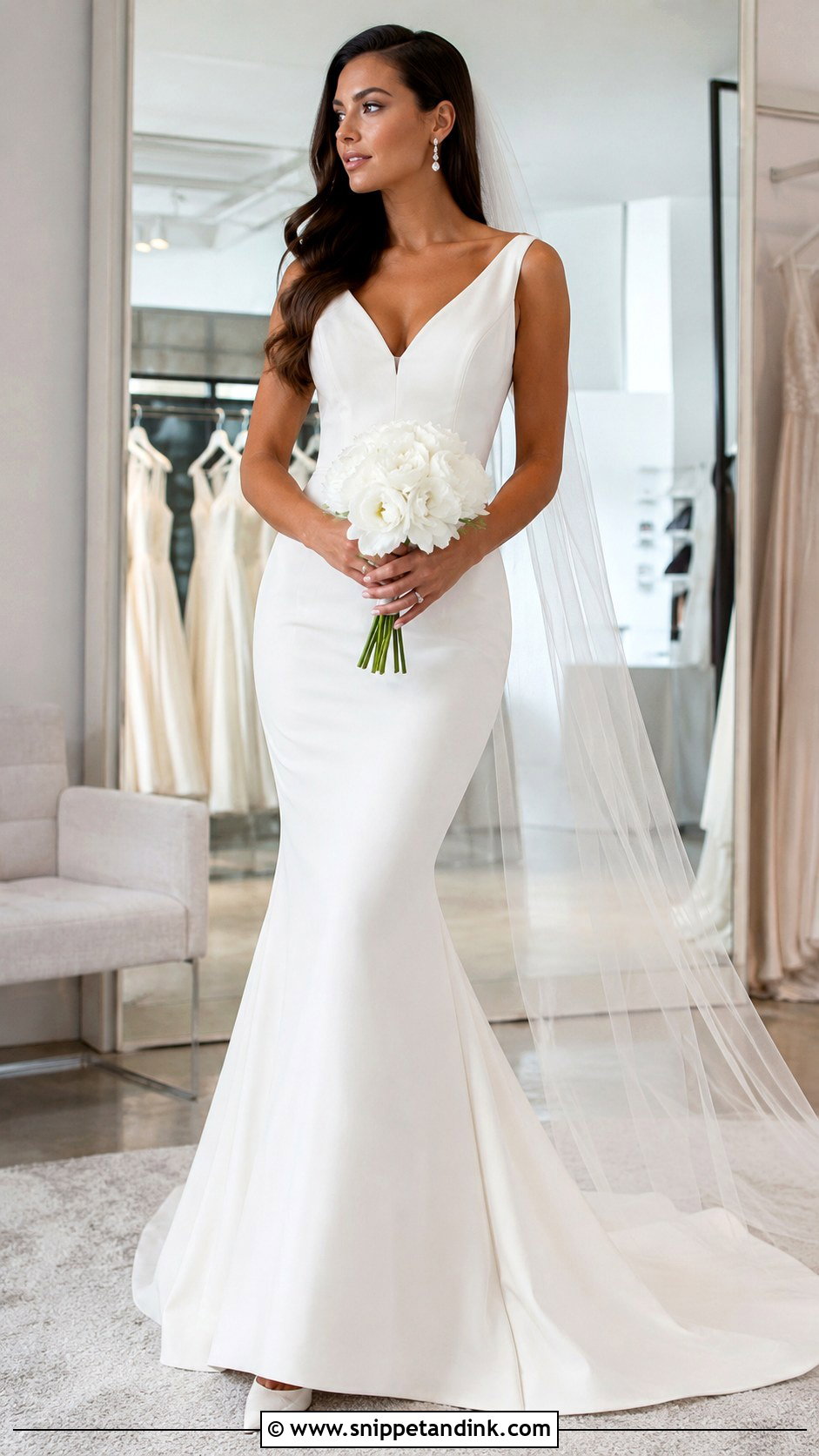
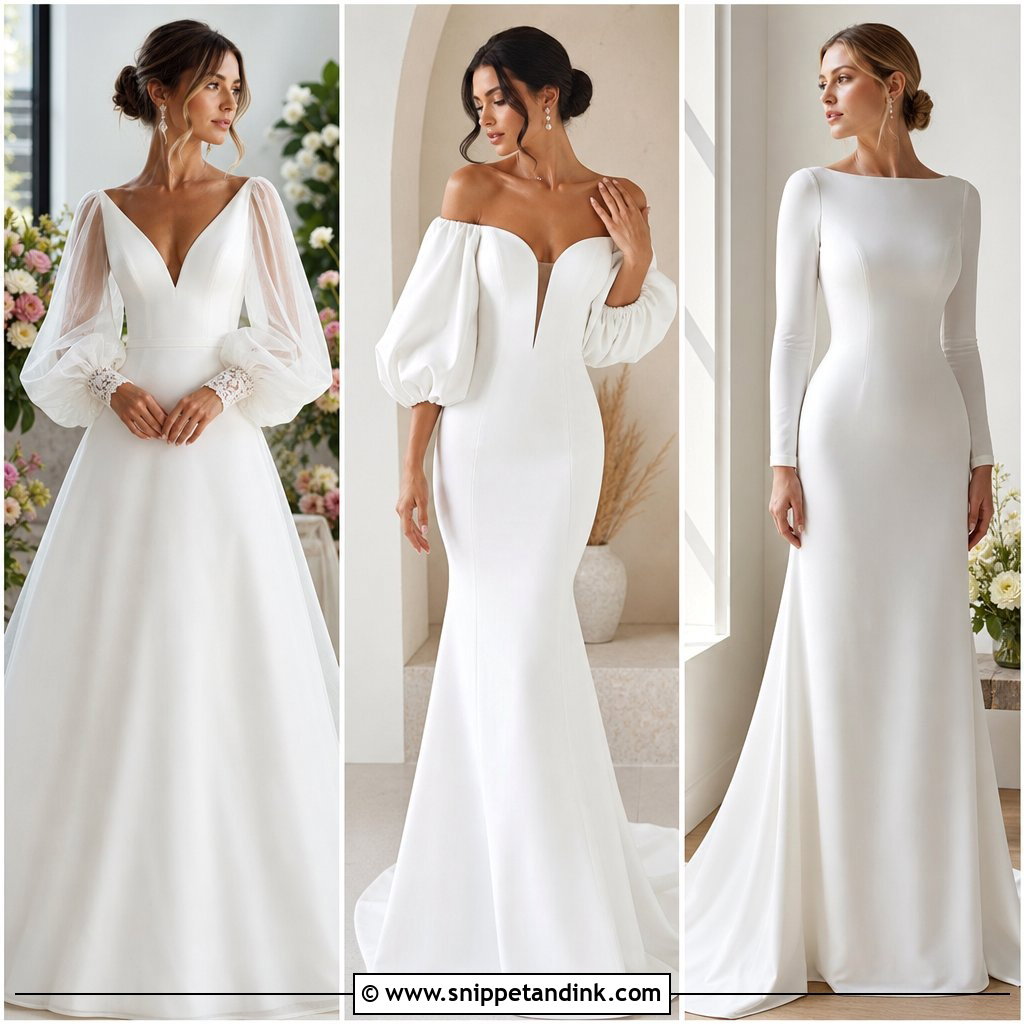
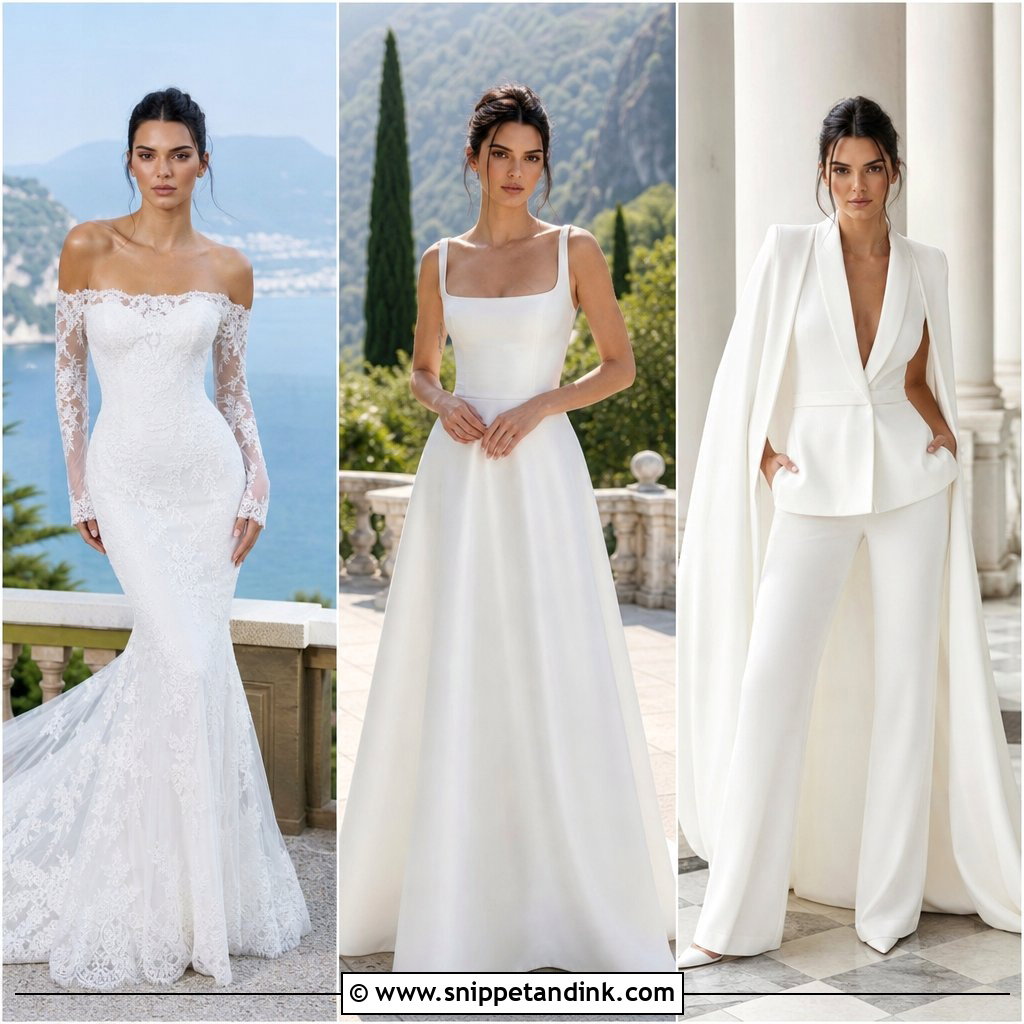
Mermaids fit through the bodice, waist and hips and flare below the knee, so where that flare starts matters more than anything else. Set too low, it turns your walk into a shuffle, which is why I have brides sit and climb steps in one before deciding. Lace, crepe and satin all work. A fitted veil, long earrings and sleek heels suit the sculpted line, and a side-parted wave or polished bun balances it. Skip oversized jewelry. If you love the shape but want more room to move, a trumpet flares from mid-thigh and gives a similar look.
5. A Line Wedding Dress
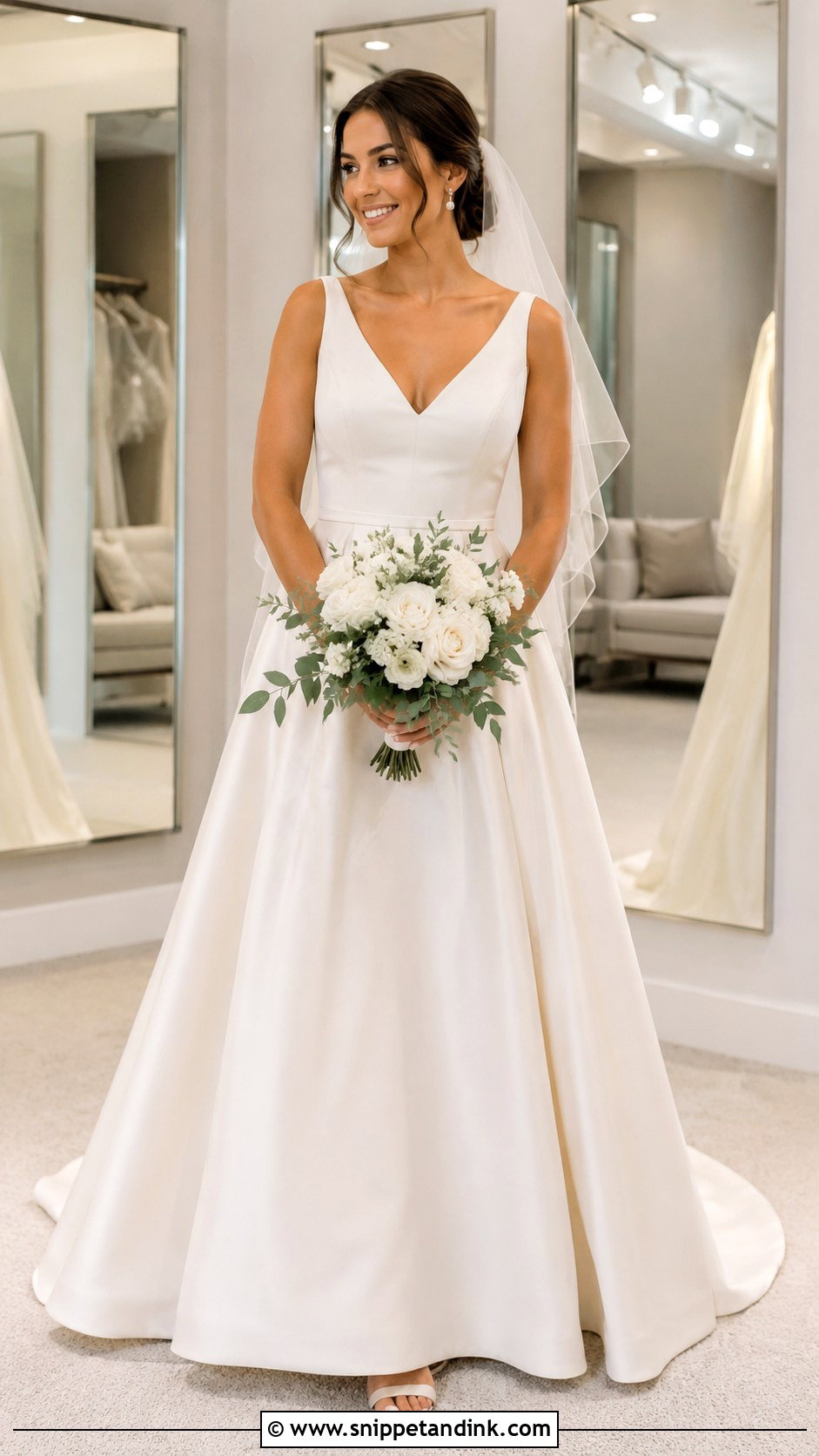
Not sure where to start? Start here. The A-line defines the waist and then falls away from the body, so it flatters a wide range of figures and moves without fuss. Chiffon makes it soft, satin gives it structure and lace adds romance. Pearl earrings, a simple bracelet and ivory heels you can genuinely walk in keep it light, with a shoulder-length or fingertip veil. It adapts to nearly any venue and season, which is why I pull one for almost every first appointment.
6. Simple Wedding Dress
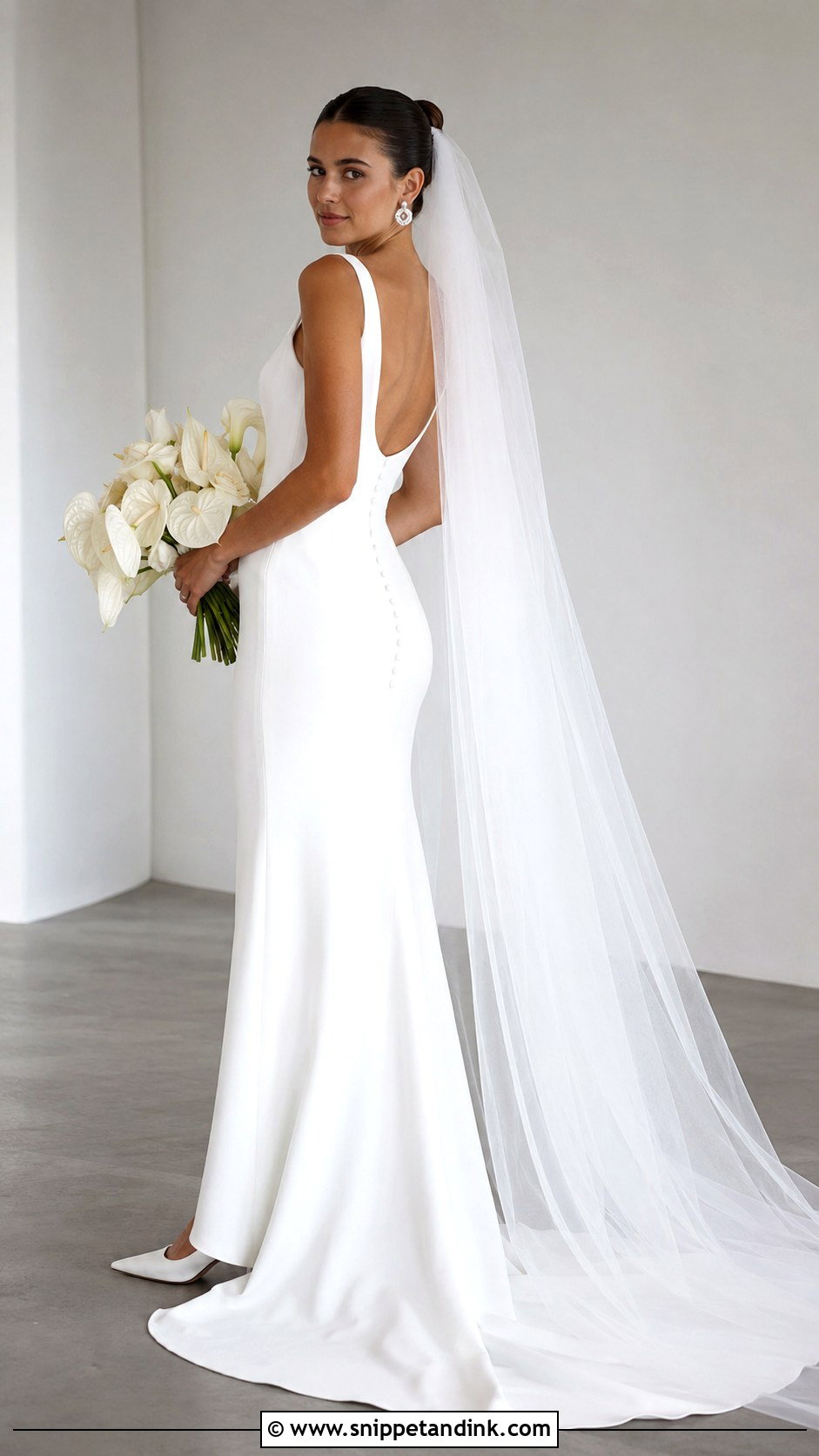
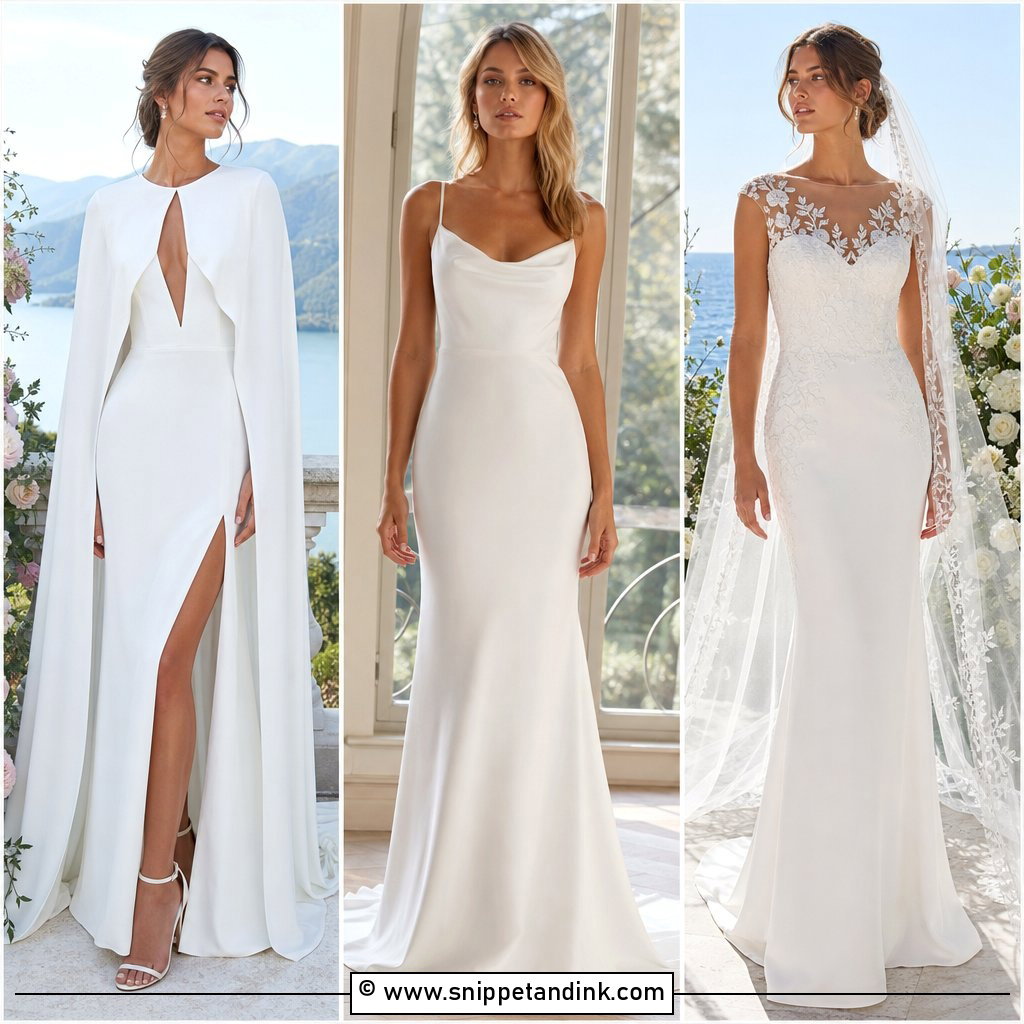
A plain dress hides nothing, so fit and fabric decide whether it looks intentional or unfinished. I look for heavy crepe or a thick satin that skims rather than clings, with only a few seams placed exactly where they should be. A square neckline or a soft scoop back gives the shape some interest. Sculptural earrings, a sleek bun and a long veil add quiet drama. White pumps, barely-there sandals or slingbacks suit the season, and a structured bouquet of white blooms and greenery keeps it fresh.
7. Off Shoulder Wedding Dress
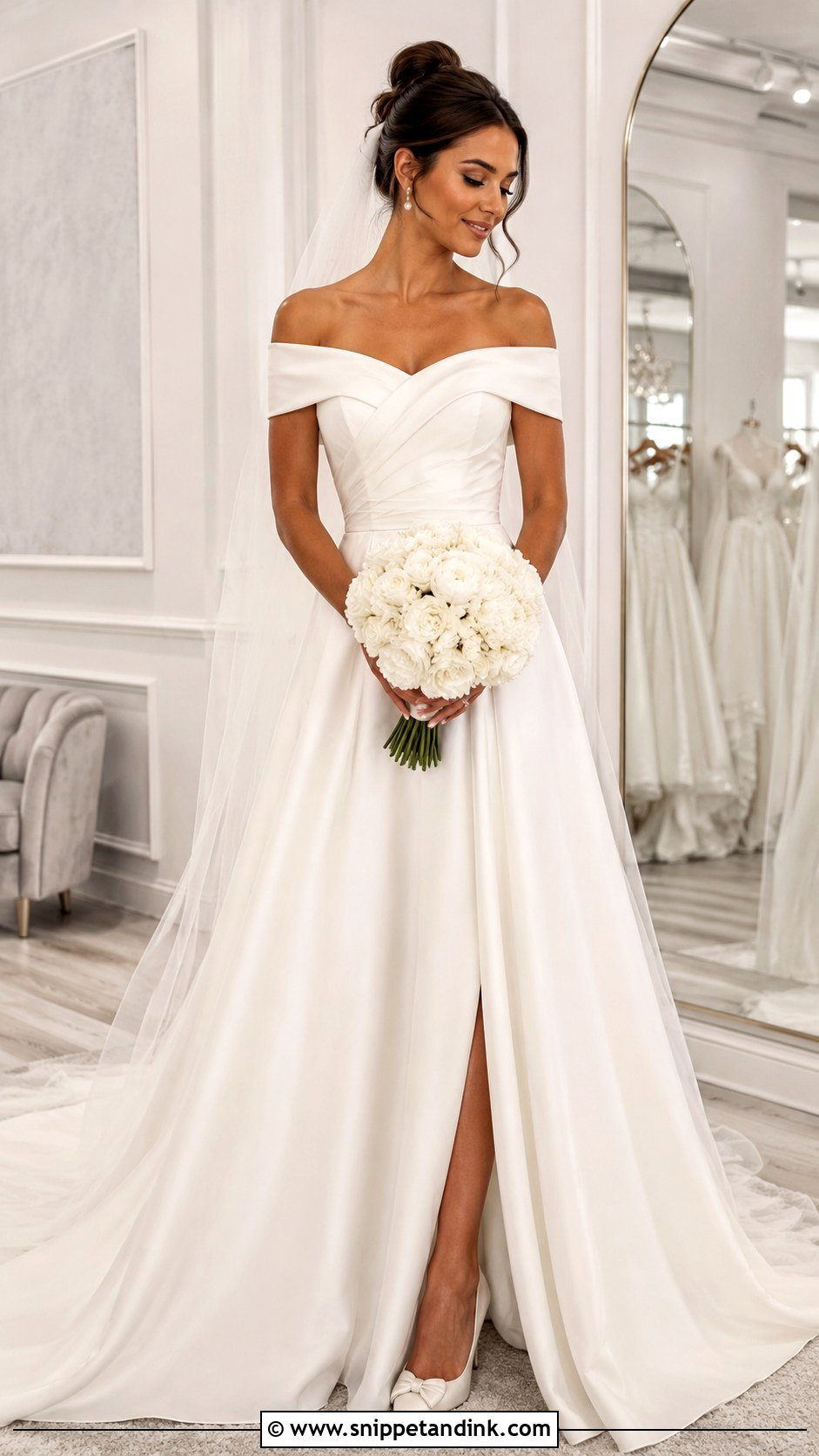
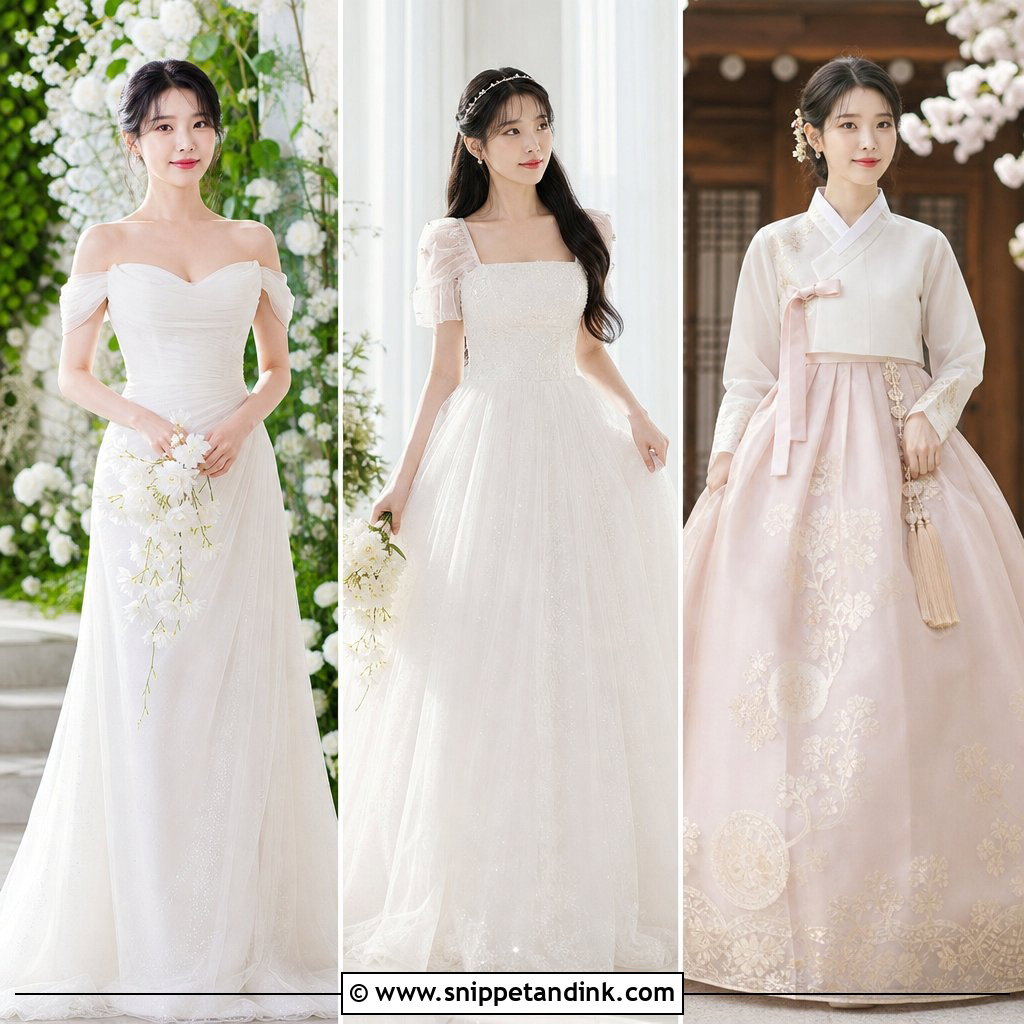
Off-the-shoulder necklines frame the collarbones, so they show best with the hair lifted into a soft updo or swept-back waves. What I check at fittings is arm movement. Fitted off-shoulder straps can stop you raising your arms very high, which matters for hugging and dancing, so I have brides lift their arms before any alteration is pinned. A fitted bodice with an A-line skirt and a satin column both suit it. Pearl drops or small crystal earrings keep the neckline open; a medium veil, ivory heels and a rounded bouquet finish it.
8. Long Sleeve Wedding Dress
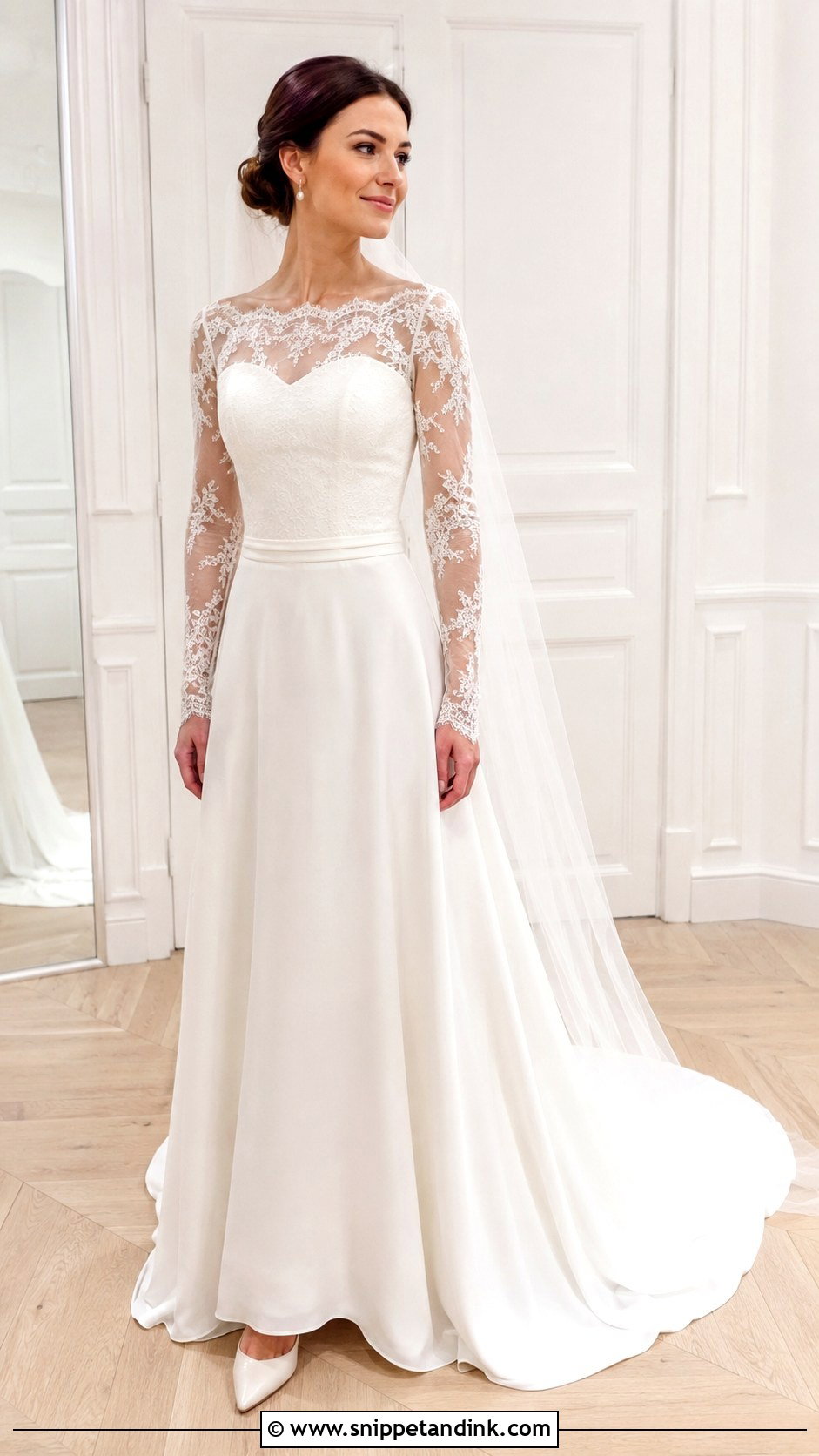
Long sleeves come in three quite different moods. Lace feels romantic, sheer tulle feels soft, and crepe reads clean and modern. Sleeves also need the most precise fit of any part of a gown, because too tight at the upper arm and you can’t hug anyone, so I leave about a finger’s room. Choose a veil that doesn’t compete with the sleeve detail, a low bun and small earrings, and skip the necklace if the neckline is high. Closed-toe pumps suit cooler months and formal venues.
9. Strapless Wedding Dress
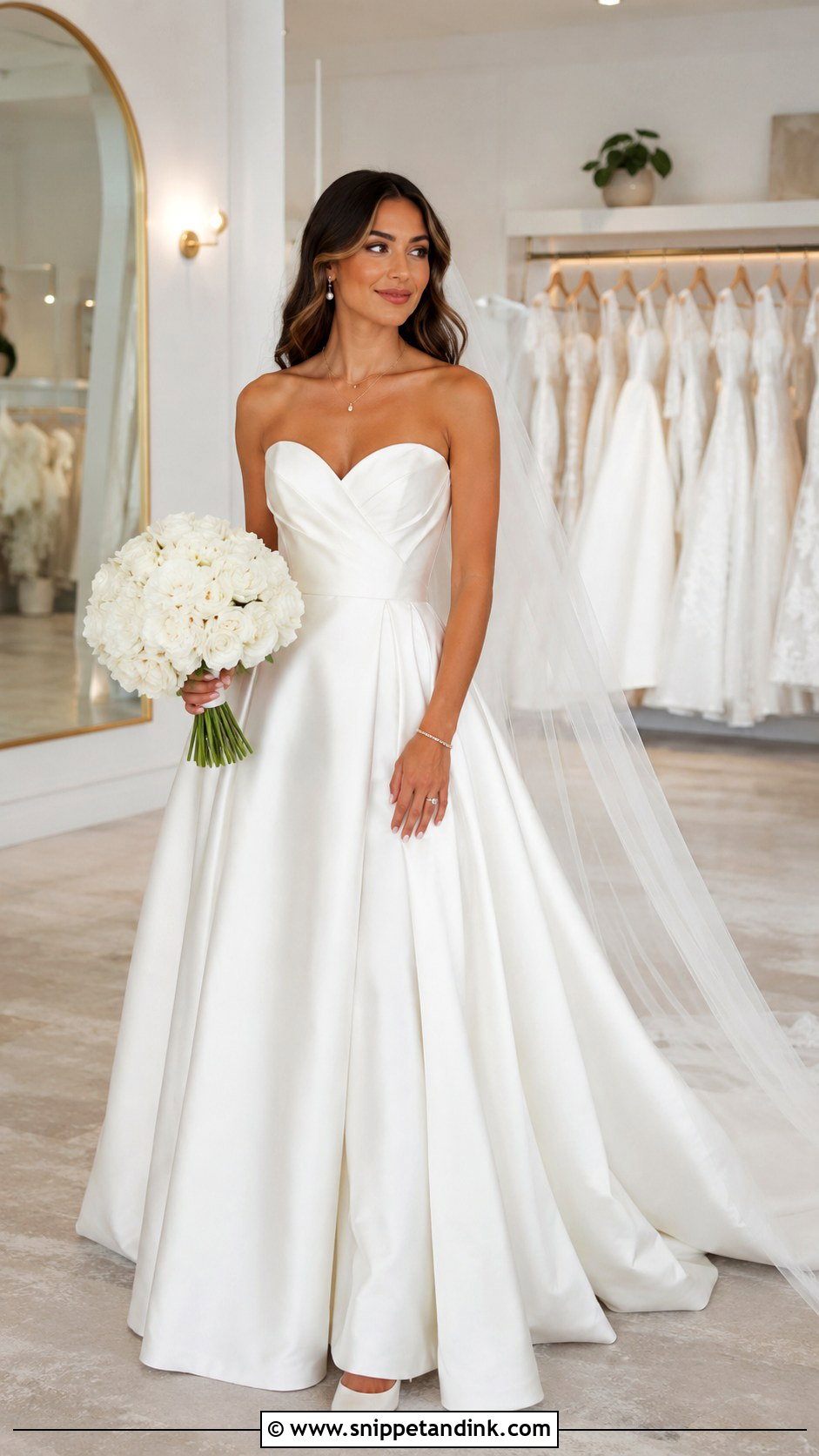
A strapless dress lives or dies by its bodice. Built-in boning and an inner waist stay are what hold it up; without them you’ll spend the night tugging at the top. A straight neckline is the most secure, while a sweetheart shows more. Bare shoulders leave room for a delicate necklace, statement earrings or a choker. Waves feel romantic and an updo feels formal. I like a long veil for the ceremony, swapped for a small hair piece at the reception, with ivory heels and a simple bouquet.
10. Square Neck Wedding Dress
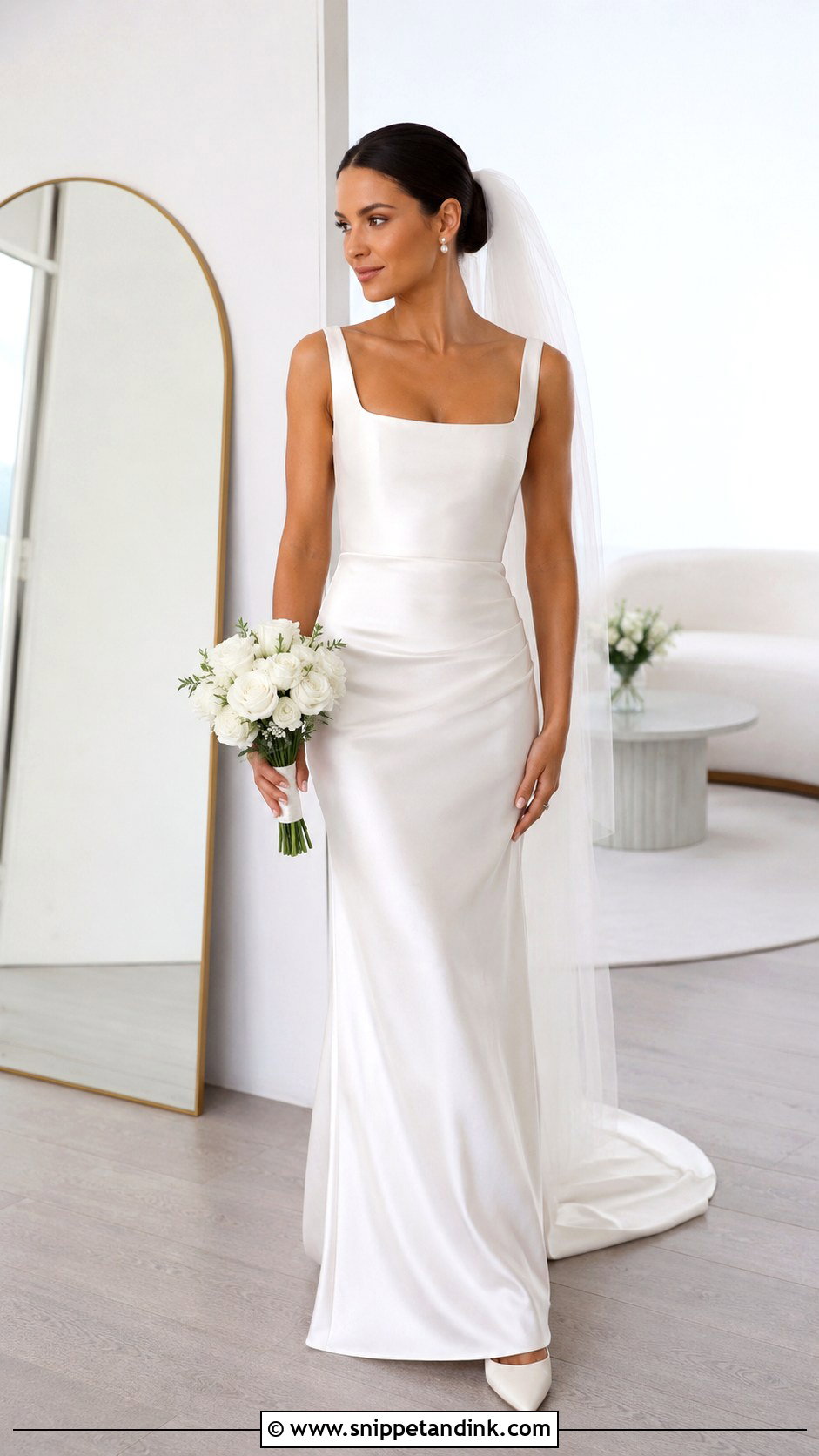
Square necklines give the upper body clean structure, but the corners have to sit flat. If they gape when you lean forward, the bodice needs taking in at the side seams, and I check that before anything else. Satin or crepe in a column, A-line or slight fit-and-flare all suit it. Pearl studs, a neat bun and a simple veil keep it polished. Pointed pumps or block-heel sandals stay quiet beside the sharp line, and a small bouquet of soft white flowers finishes it.
11. V Neck Wedding Dress
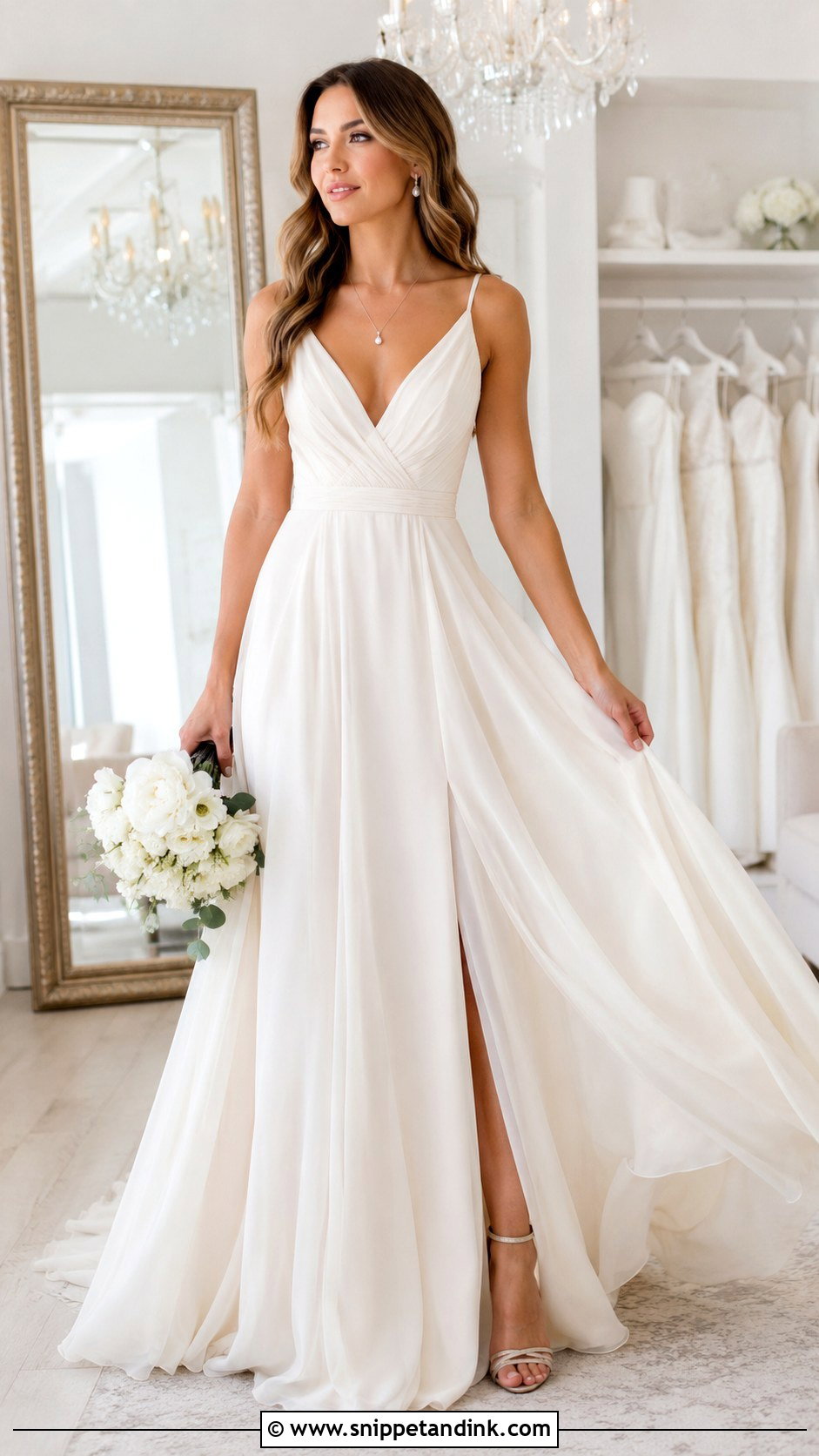
A V neckline lengthens the neck and torso, which is why I often suggest it to petite brides. You control the depth: a modest V, a soft plunge, or an illusion panel that fills the gap with sheer mesh. A flowing A-line skirt feels romantic, while a fitted crepe skirt looks more current. With a plain bodice, wear a delicate pendant and drop earrings; with lace or beading, earrings alone. Deep plunges need a built-in cup or fashion tape, and a fitting in the exact bra you’ll wear. Soft waves and ivory heeled sandals finish it.
12. Corset Wedding Dress
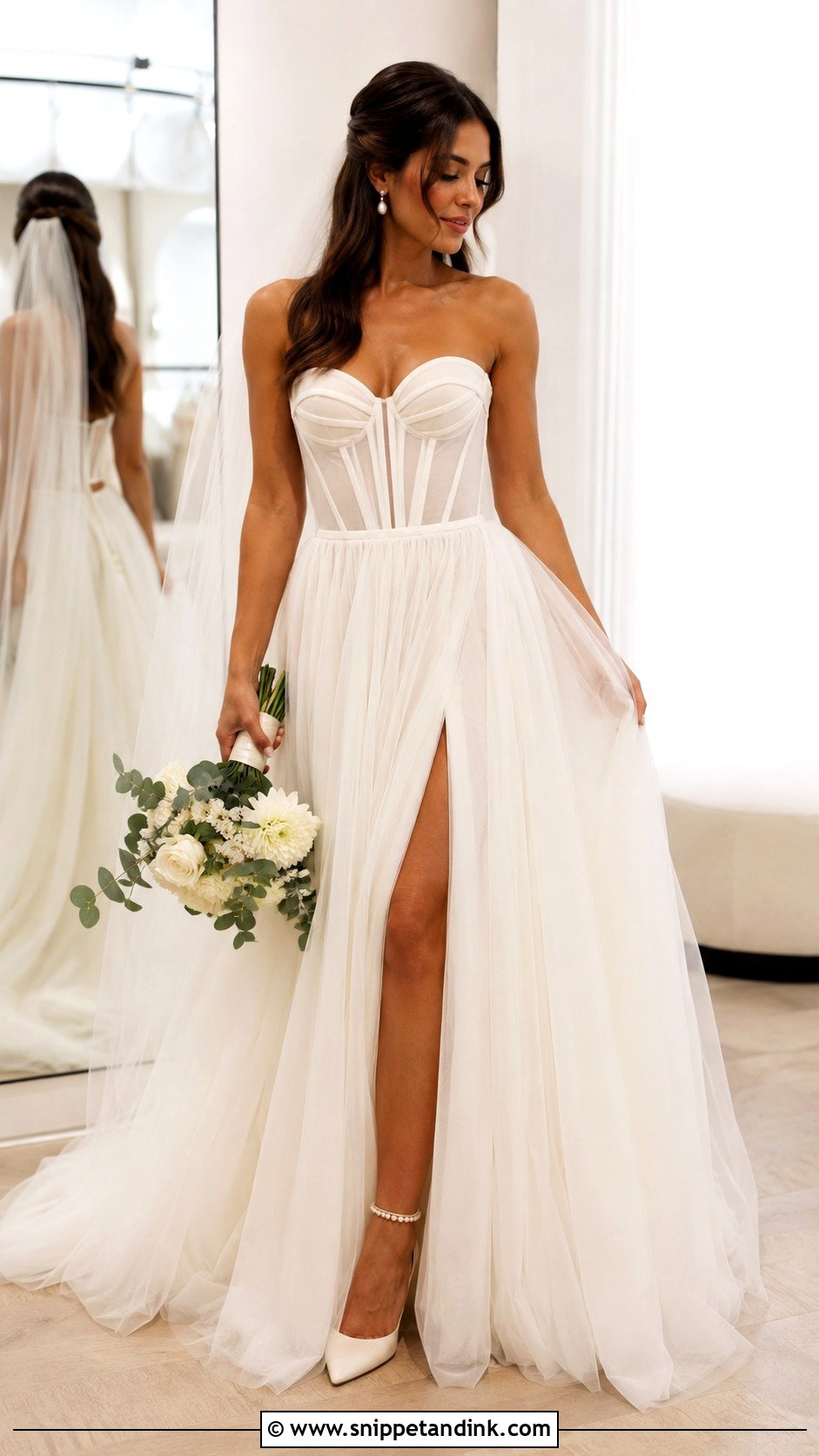
Real corset bodices use boning, and often lacing, to shape and support, so many brides find them more comfortable than they expect. The catch is fit. Laced too tight, you’ll feel it the moment you sit down to dinner, so I always do a seated check. Tulle skirts soften the structure, satin keeps it sleek and lace gives a vintage tone. Pearl earrings, a clean veil and heels matched to the gown’s shade are enough, and a half-up style softens the bodice. The boning is already the focal point, so leave bold accessories at home.
13. Tulle Wedding Dress
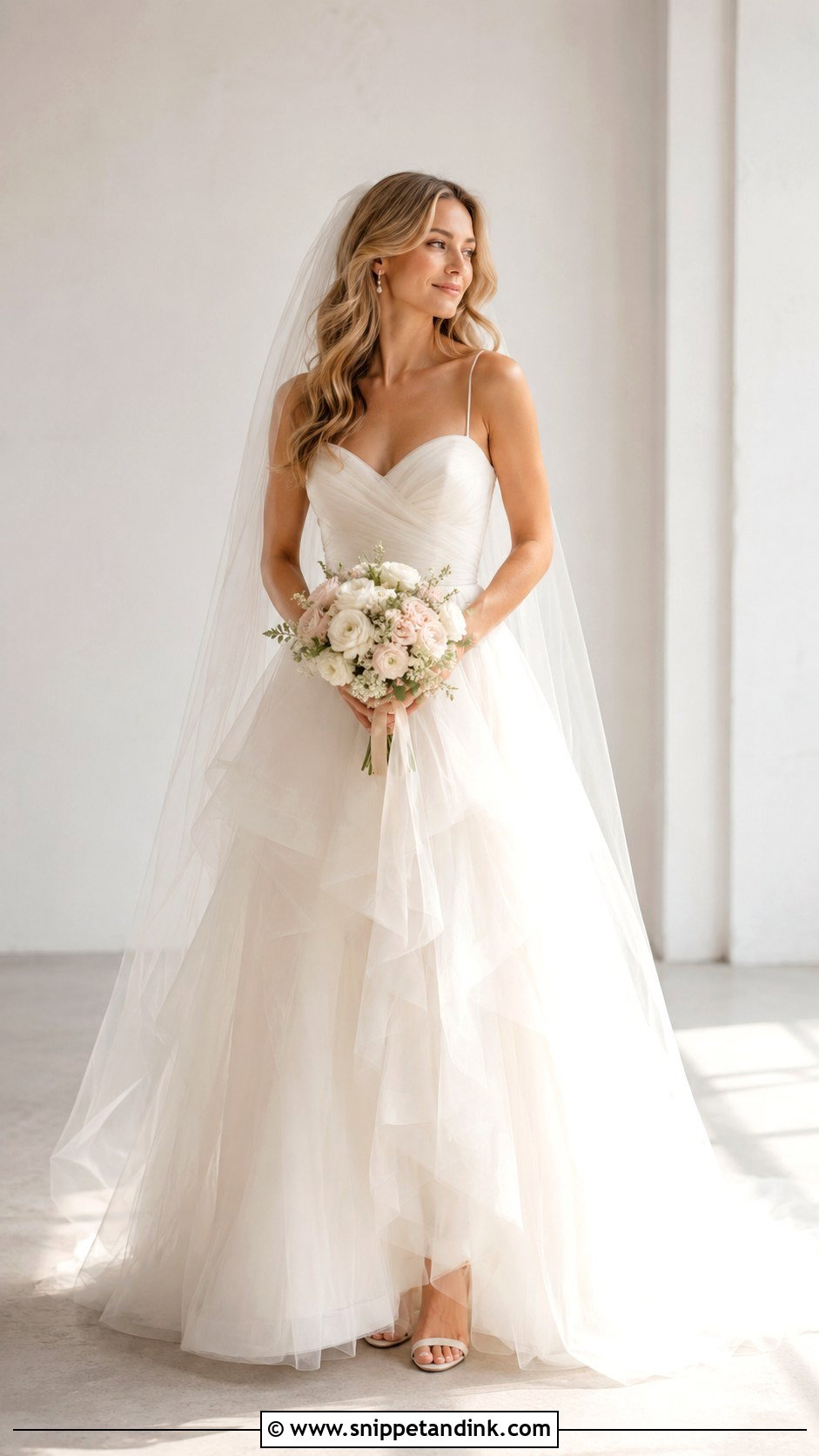
Fine tulle floats and stiff tulle puffs; the difference is the weave and the number of layers. If you want movement rather than volume, ask for the softest tulle the designer offers and fewer petticoats. It also catches on bark, rough steps and jewelry clasps, so lift the skirt when you’re outdoors. A soft A-line or ball gown shape suits it. Delicate earrings, a soft veil, and loose waves or a low textured bun keep it light, with simple heels and a bouquet in white or pastel tones.
14. Beaded Wedding Dress
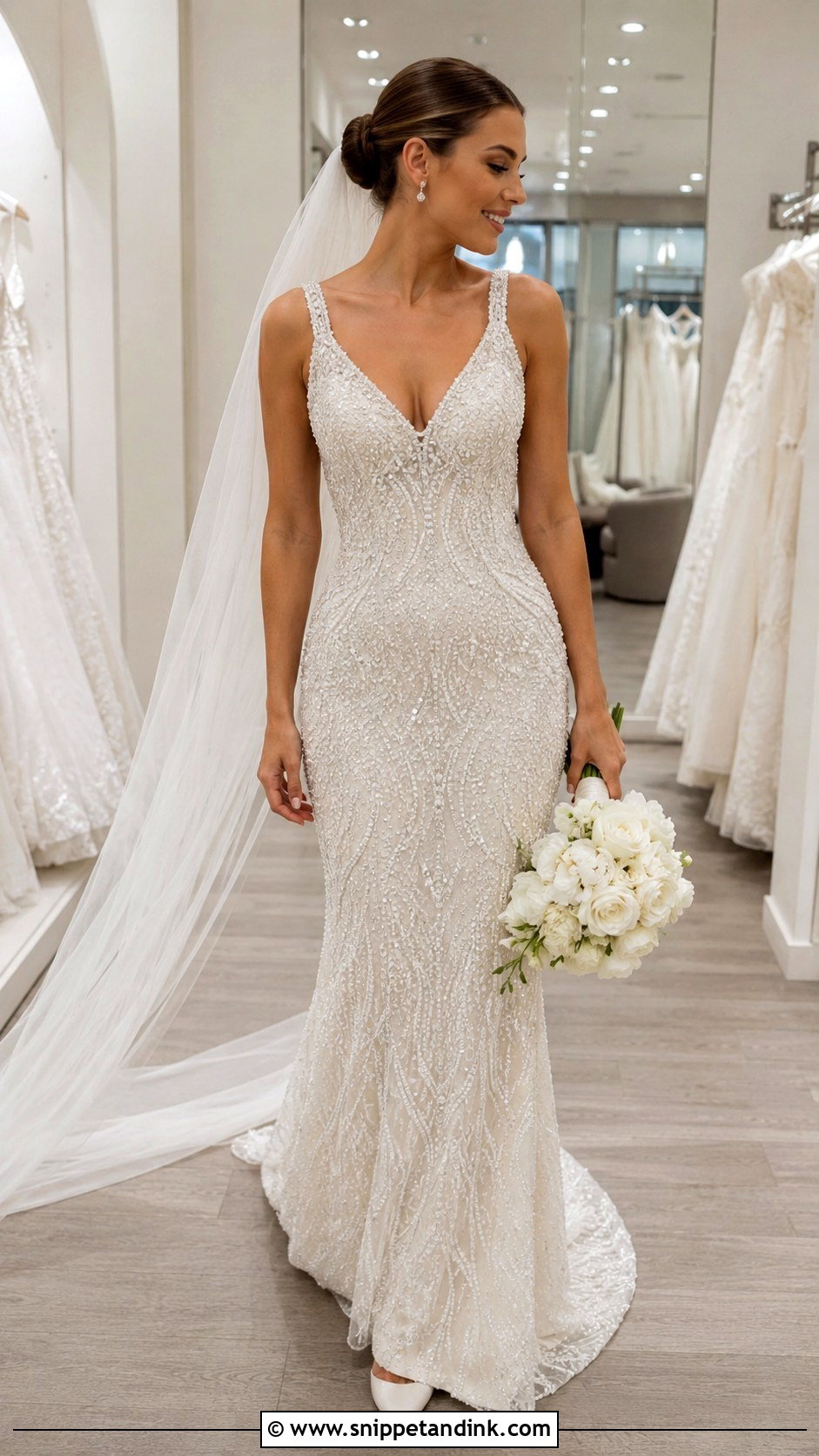
Beading is heavy. A fully beaded gown can weigh far more than a plain one, and that weight pulls on straps and seams over a long day, so I check how the beads are attached and how the dress supports itself. Fine beadwork, pearls or soft crystal patterns catch the light every time you move. Small earrings and a thin bracelet are all you need. A sleek hairstyle keeps it sophisticated, a plain veil keeps it from looking busy, and neutral heels with a clean shape finish it. It comes alive under evening lighting.
15. Floral Wedding Dress
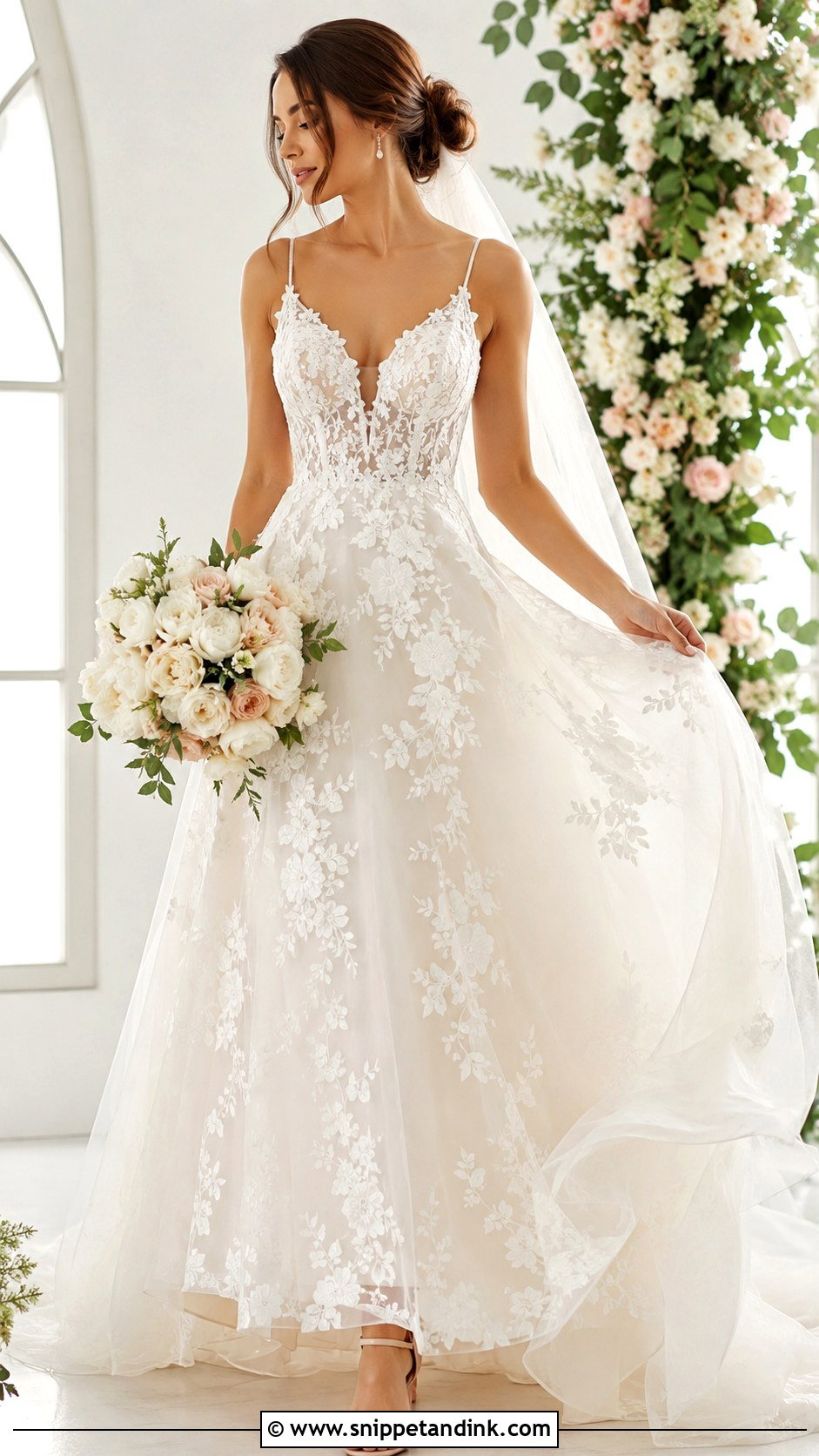
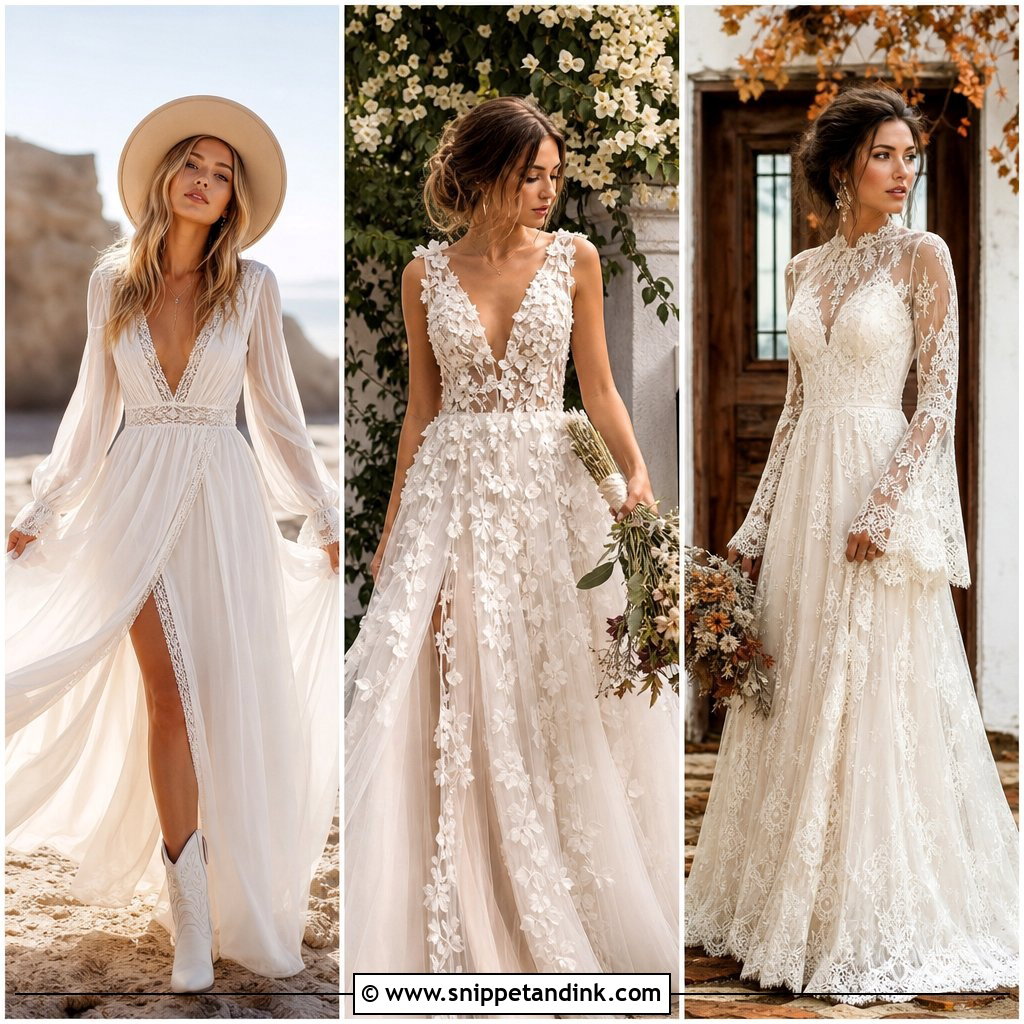
Placement is everything with 3D florals. Flowers clustered at the hips add width, while flowers scattered across the bodice and trailing down the skirt draw the eye up and down. Floral lace, embroidered blooms and appliqués all count here. Keep the rest quiet with simple earrings, a loose bun and a plain veil, and heels in ivory, nude or soft blush. I’d choose a bouquet that echoes the dress loosely rather than copying it, so the two don’t merge into one blur in photos.
16. Boho Wedding Dress
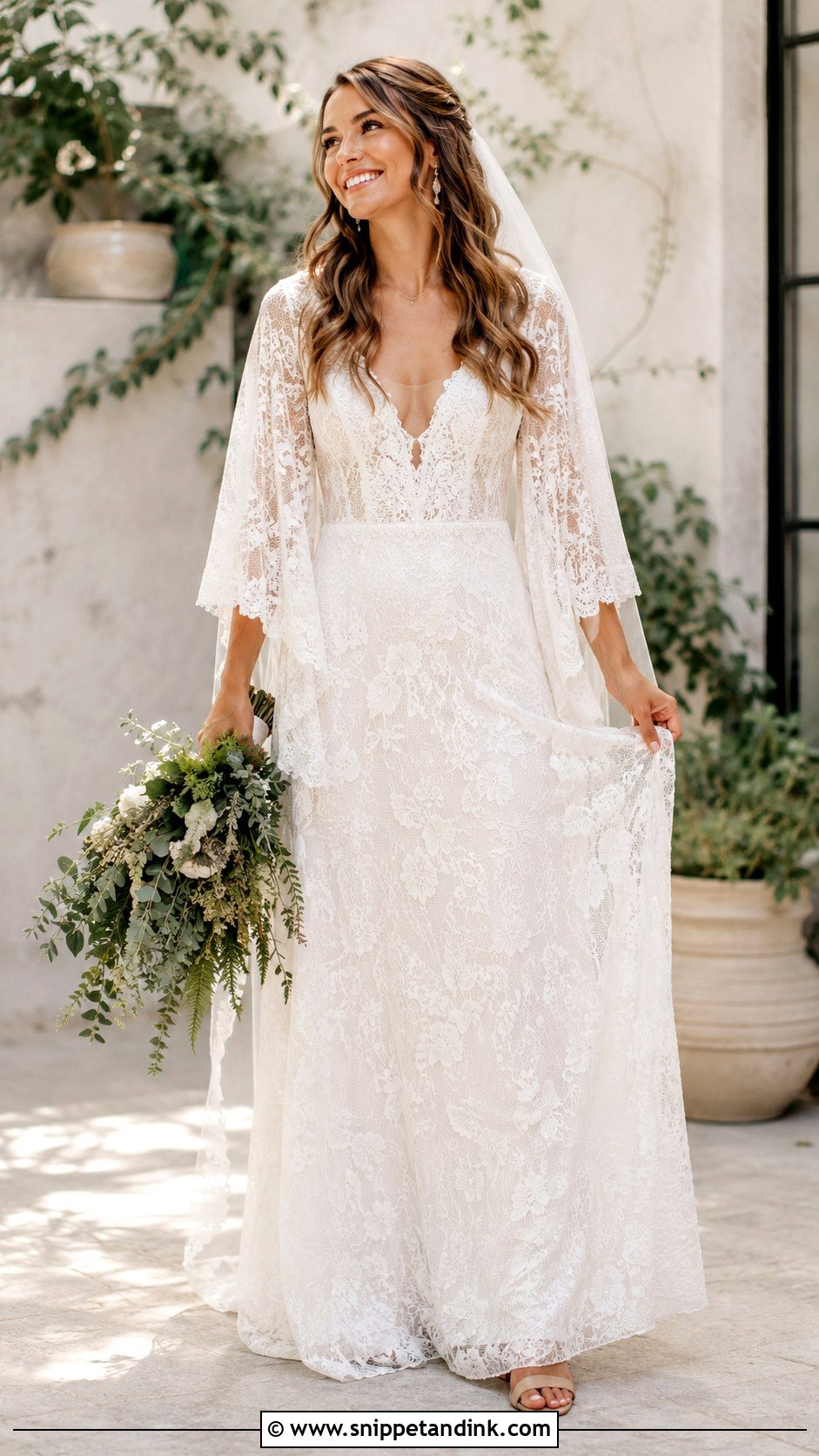
Boho dresses are light and easy to move in, which makes them my first suggestion for barefoot or outdoor weddings. Look for soft lace, flowing sleeves and an airy skirt. That light skirt lifts in wind, though, so a slip underneath or a little weight in the hem saves your photos on a breezy hillside. Loose waves, delicate earrings, block heels or dressy sandals, plus a soft veil, floral pins or a comb complete the look. A bouquet of greenery and white flowers keeps it natural.
17. Vintage Wedding Dress
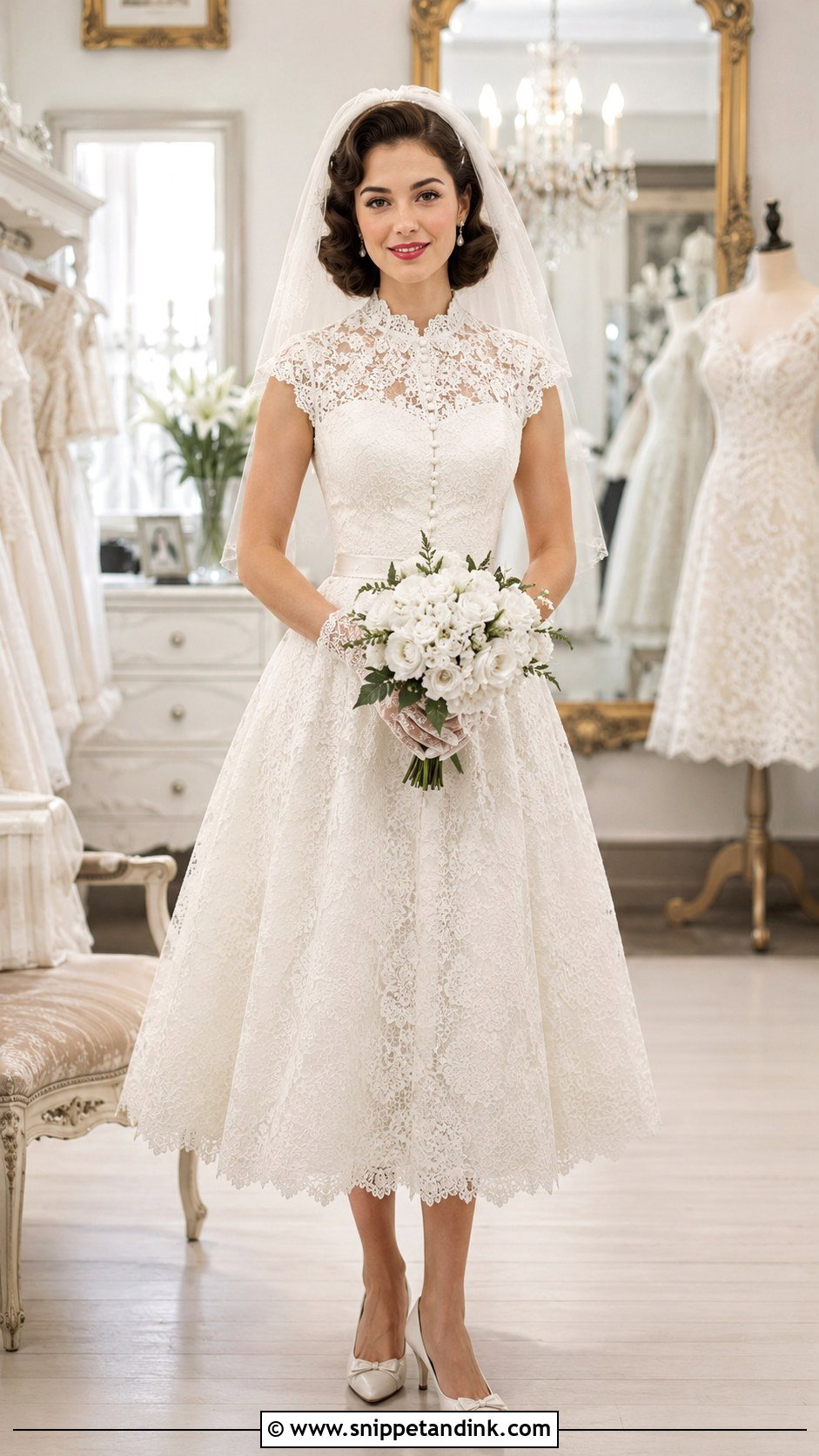
Vintage-inspired gowns borrow from a specific decade, so I ask brides which era they love before pulling anything. Lace sleeves and high necks lean Edwardian, tea-length skirts lean fifties, and satin buttons on a bias-cut slip lean thirties. Pearl earrings, a natural lip and a neat updo or sculpted waves suit most of them, with closed-toe pumps, kitten heels or Mary Janes underneath. Add a short veil, a birdcage-inspired accessory or a simple comb depending on the shape, and a classic bouquet of white flowers and greenery. If you’re buying a genuinely old dress, budget for restoration as well as alterations.
18. Modern Wedding Dress
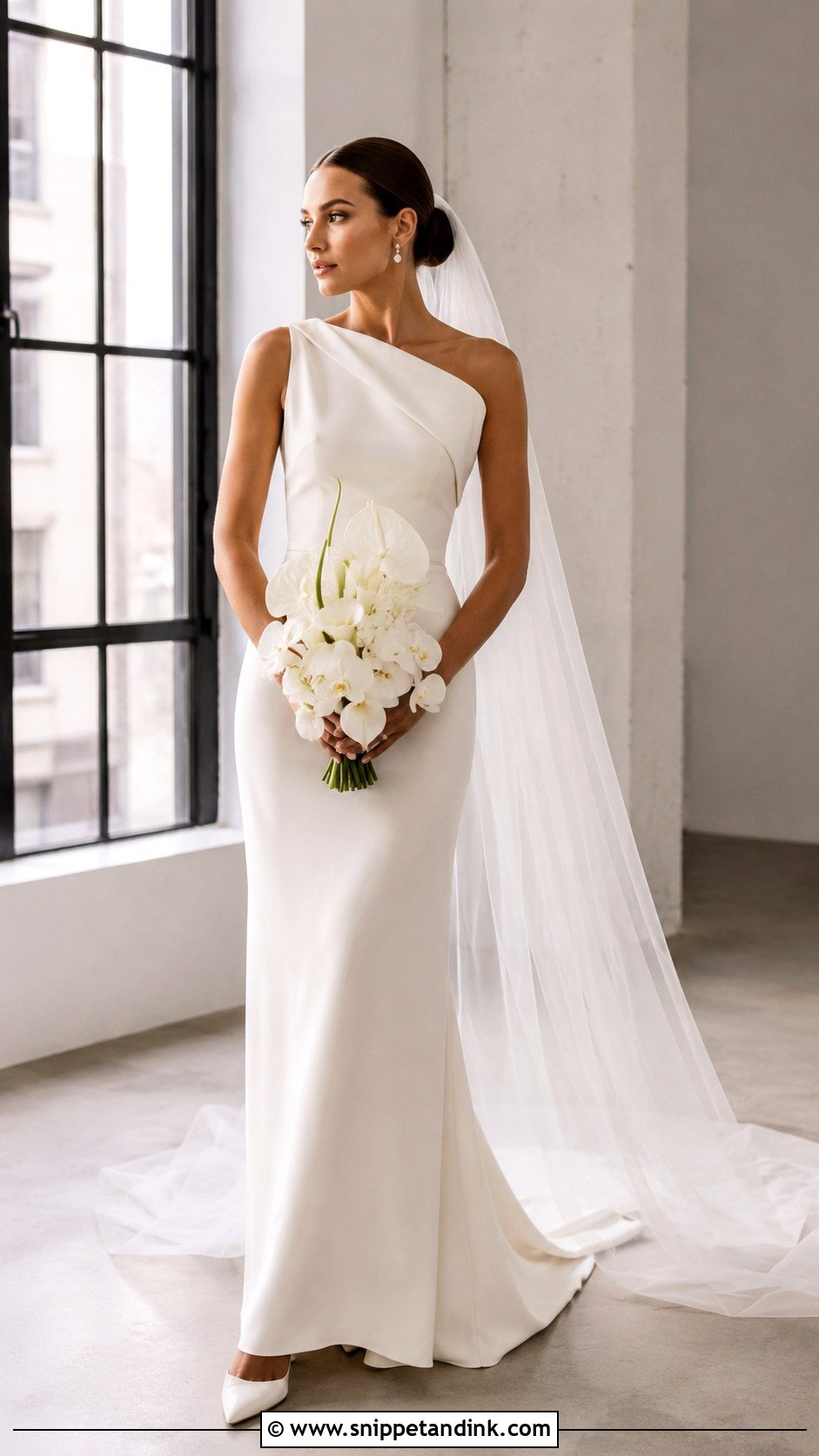
Modern bridal is about structure and restraint: an architectural neckline, smooth crepe, a column silhouette, a statement back. With no lace or beading to distract, every piece has to be deliberate, because a stray accessory stands out immediately. Sleek earrings, a polished bun and sharp white heels. A long plain veil adds ceremony impact without breaking the line. For a bolder finish, try a structured bouquet, then a simple clutch at the reception. City venues suit it best.
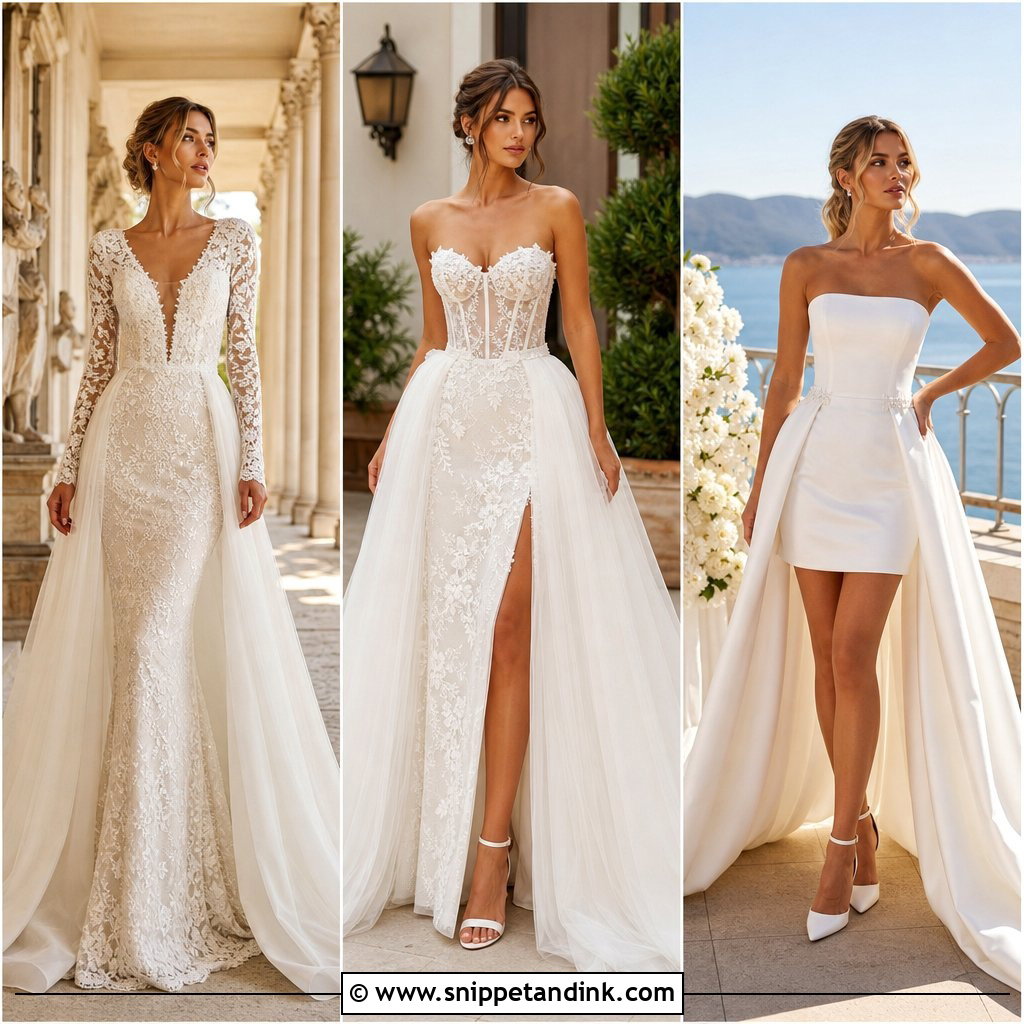
19. Short Wedding Dress
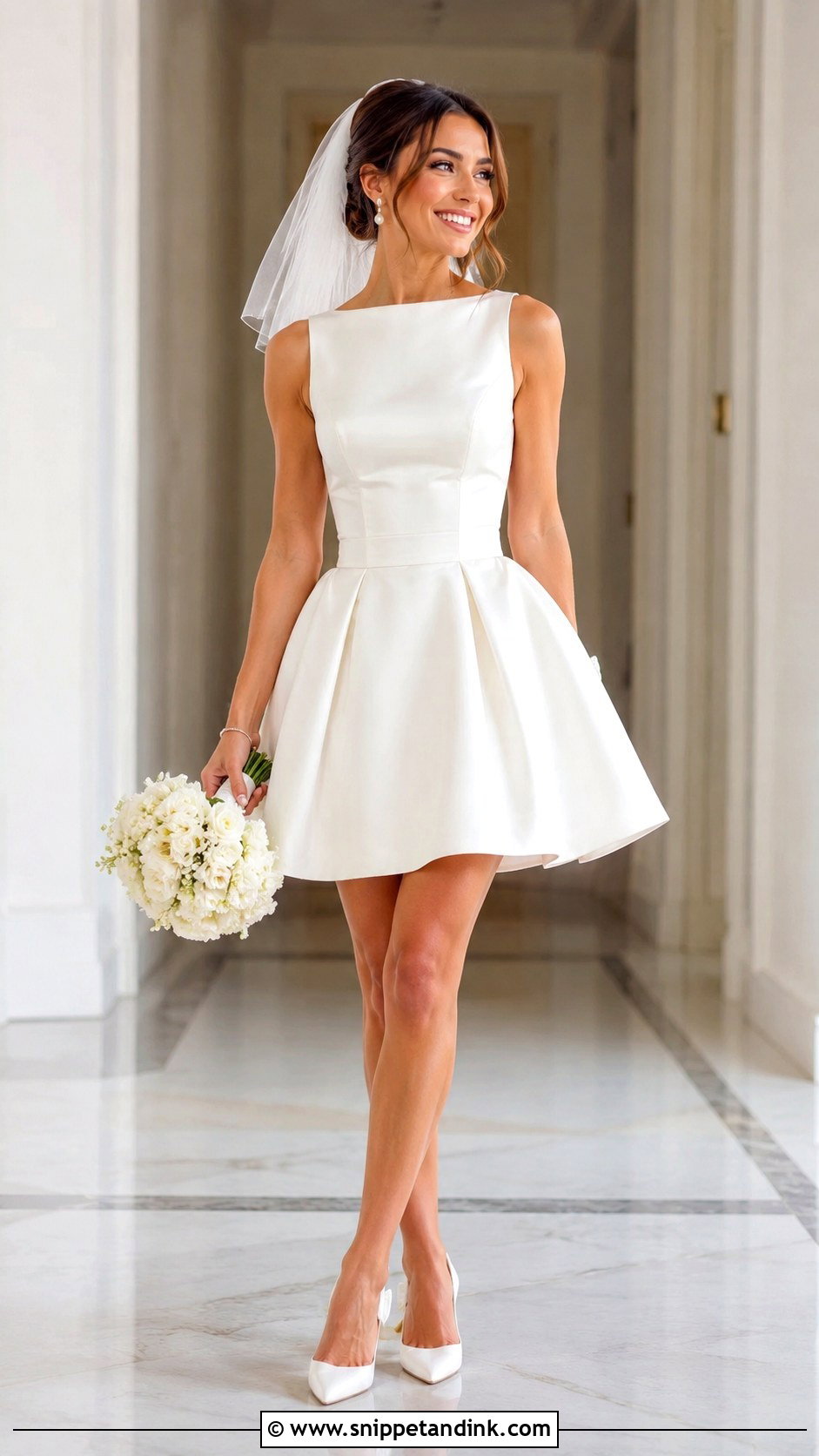
Short dresses belong at courthouse ceremonies, reception changes, showers and second looks. Mini, knee or tea length comes down to comfort and venue. A structured short dress with a fitted waist looks chic, while lace or satin reads more bridal. Your shoes become part of the outfit at this length, so pointed pumps, bow heels or slingbacks are worth the thought. Pearl earrings and a short veil or headband finish it. One check I always do: sit, then stand, and make sure the hem hasn’t crept up.

20. Tea Length Wedding Dress
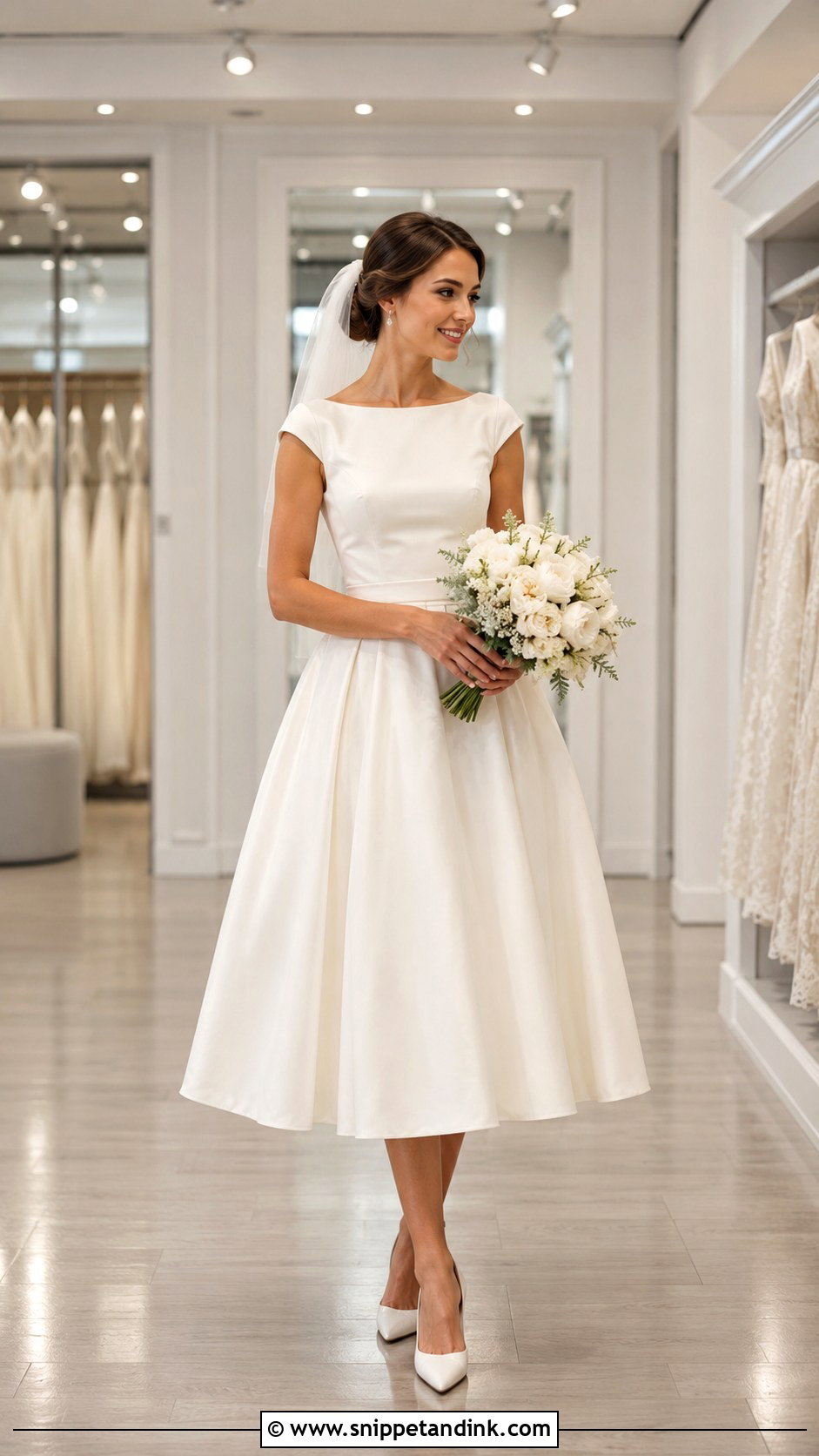
Tea length falls between the knee and the ankle, and that hemline puts your shoes on display, so I treat them as half the outfit: satin pumps, embellished heels, or a block heel you can dance in. A fitted bodice with a full skirt feels fifties; a tea-length column looks cleaner and more current. Have the hem set while you wear the shoes, because half an inch shows at this length. Pearl earrings, a short veil and a polished hairstyle suit courthouse, garden and reception settings.
21. Wedding Dress With Bow
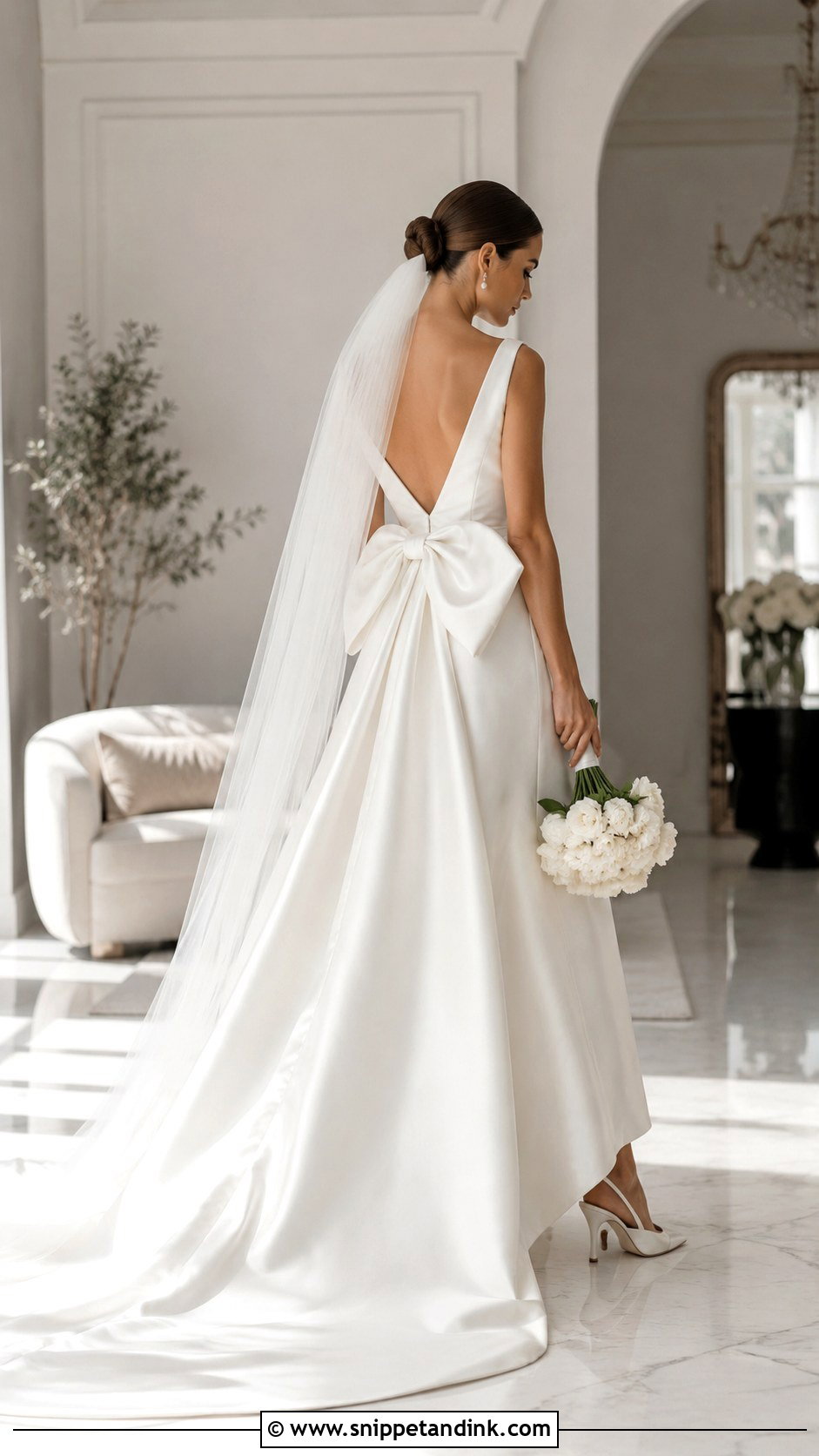
A bow has to look designed into the dress, not added afterwards. A back bow on a satin gown gives drama from behind, which is the view guests have for the whole ceremony; a shoulder bow is softer. Satin bows crush when you lean back against a chair, so I ask how the bow is stiffened, since interfacing inside keeps it from collapsing. Simple earrings, smooth hair and a plain veil, with ivory heels or slingbacks. With an oversized bow, skip the necklace and the busy hair pieces.
22. Wedding Dress With Detachable Sleeves
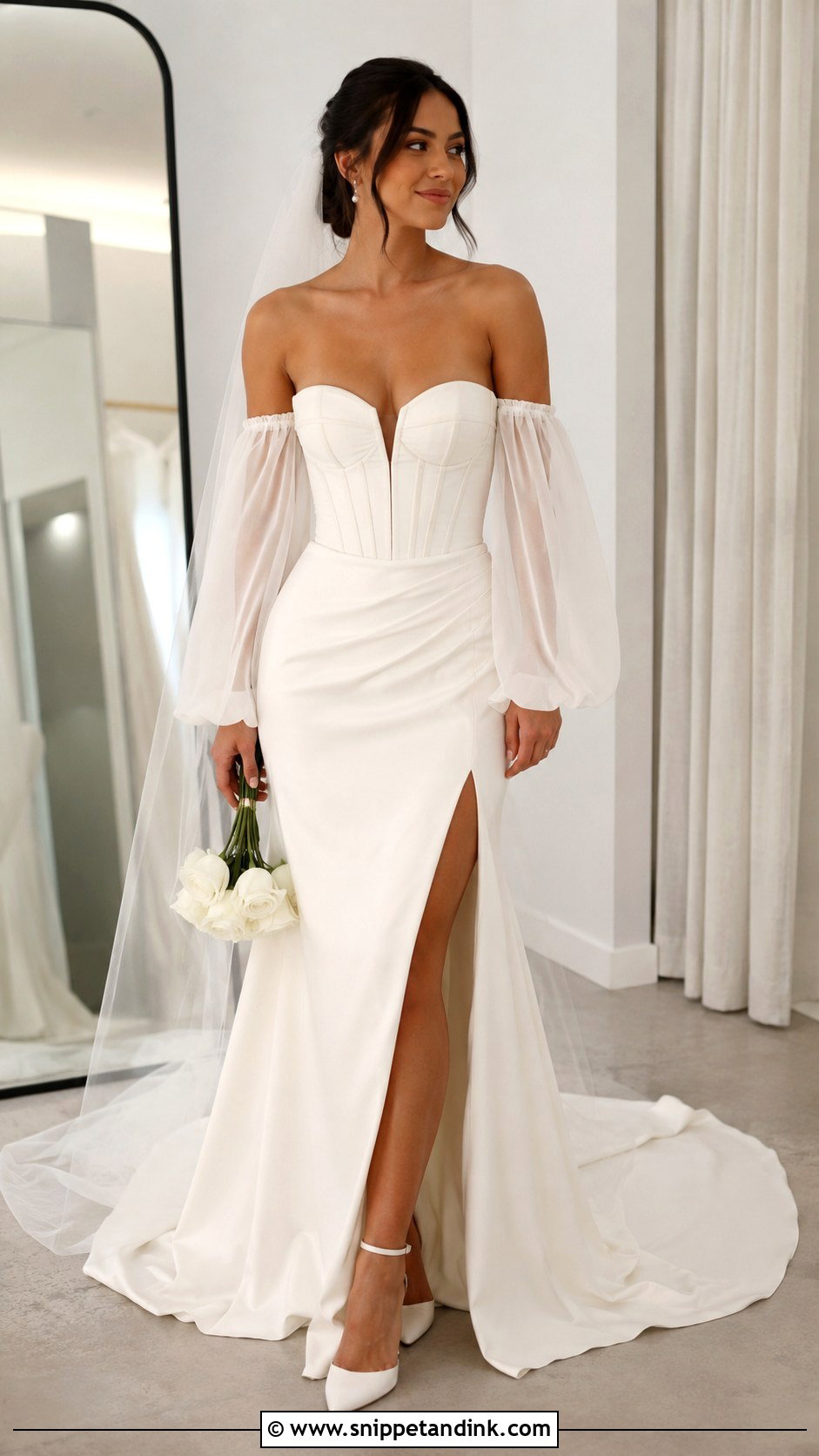
Detachable sleeves give you a covered ceremony look and a lighter reception look without buying a second dress. They pair naturally with strapless, corset and straight-neck gowns. Lace sleeves feel romantic, puff sleeves playful and fitted tulle sleeves refined. Ask how they attach. Elastic bands, snaps and hooks all exist, and snaps are by far the quickest to remove in a small bathroom between ceremony and reception. Pearls or small crystal earrings work both ways, with a simple veil and classic heels.
23. Wedding Dress With Cape
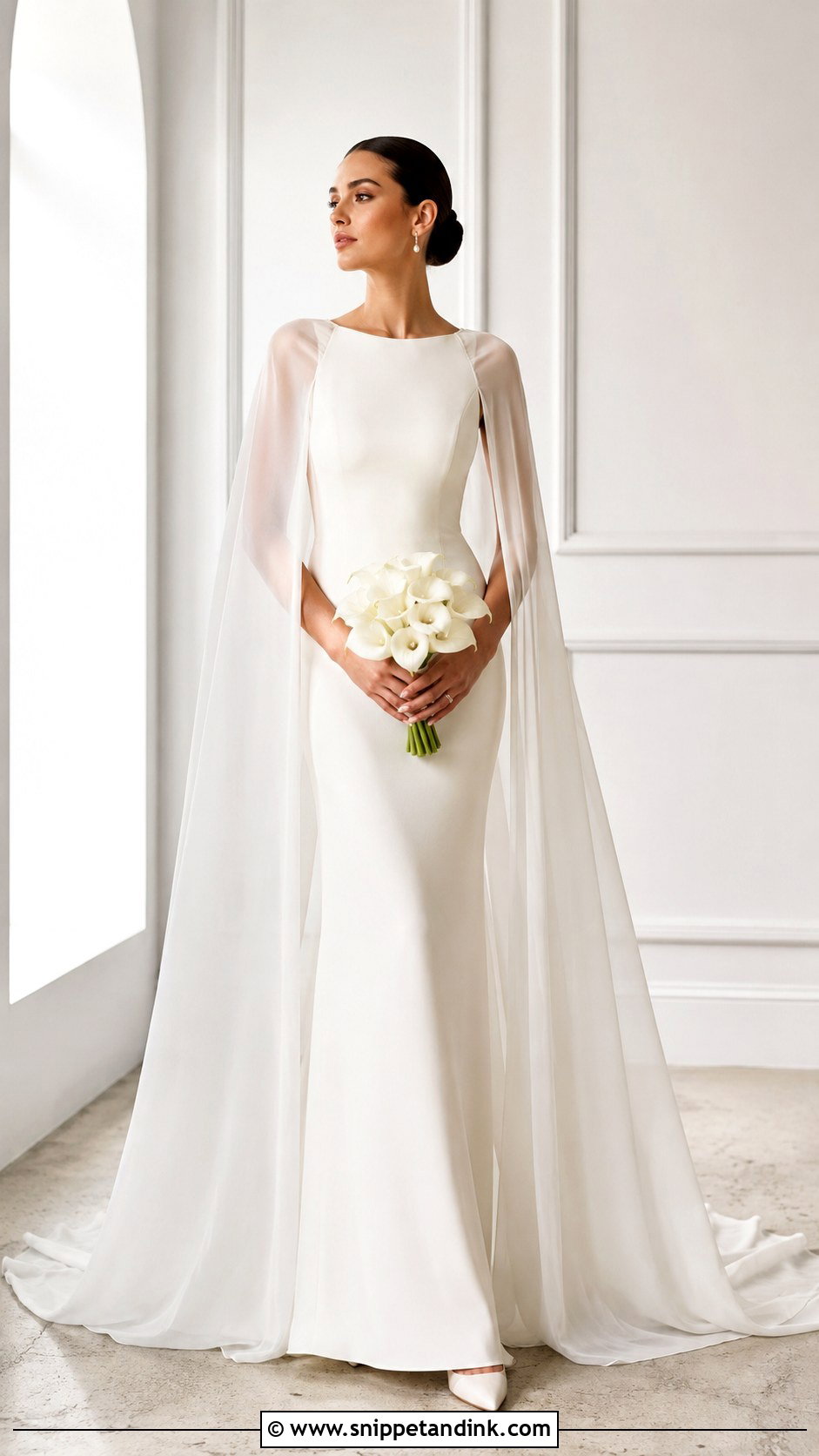
A cape can replace the veil altogether, or a longer one can trail behind you like a train. It needs a plain dress underneath to have room: a crepe column, a satin slip or a minimal A-line. Capes sewn in at the shoulder move with you, while those that clip to the straps can drag the neckline back when you raise your arms, so test that at the fitting. Sleek hair and minimal jewelry keep the neckline uncrowded, with pointed pumps or refined sandals.
24. Two Piece Wedding Dress
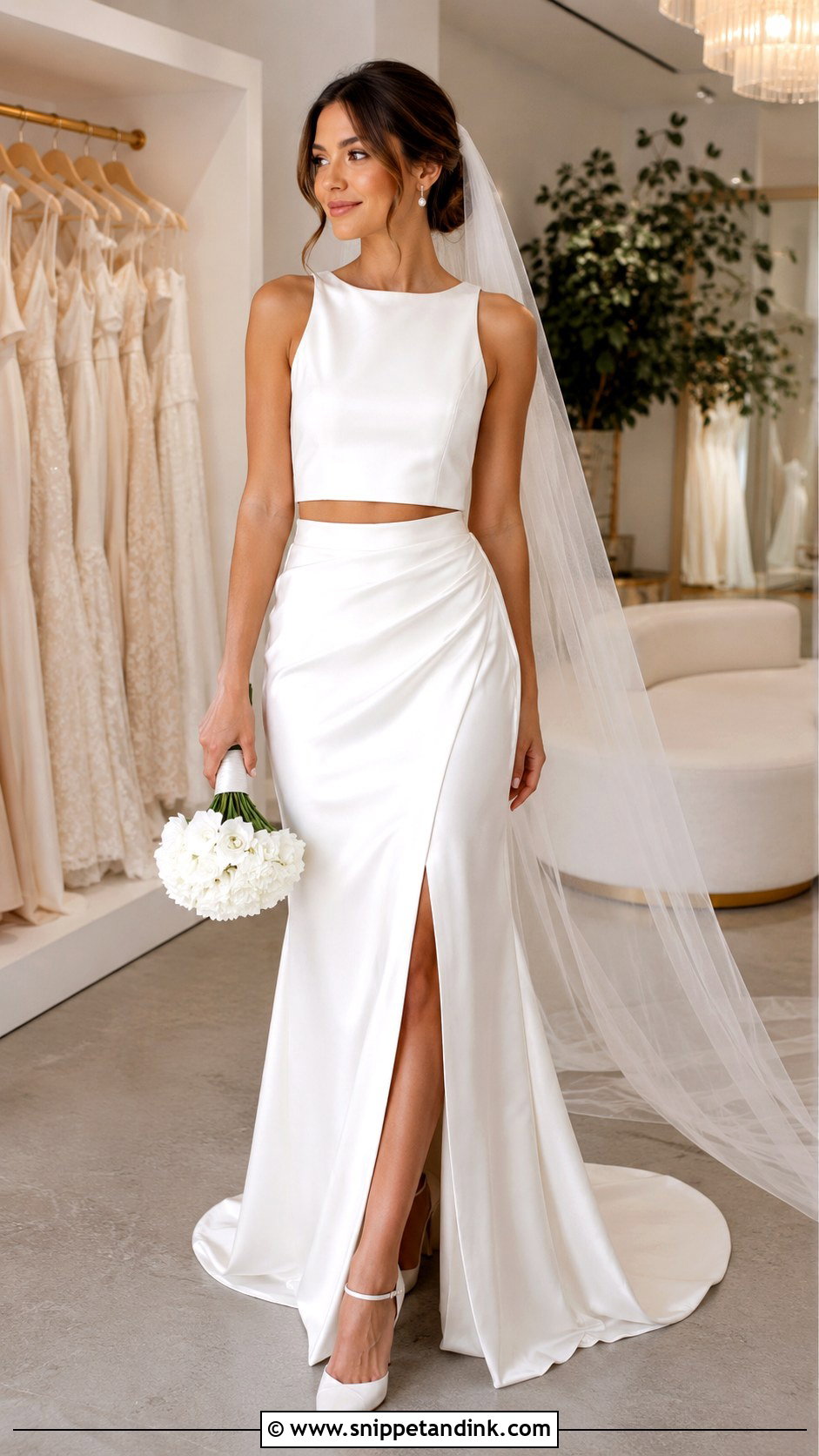
Two-piece bridal looks let you buy the top and skirt in different sizes, which solves one of the most common fitting headaches I see. Try a structured top with a high-waisted satin skirt, a lace crop top with an A-line skirt, or a bandeau with a clean column. Match the whites exactly, because ivory beside bright white looks like a mistake under flash. Simple earrings, sleek heels and a soft veil or hair bow finish it. Most brides choose a top that shows only a sliver of skin above the waistband.
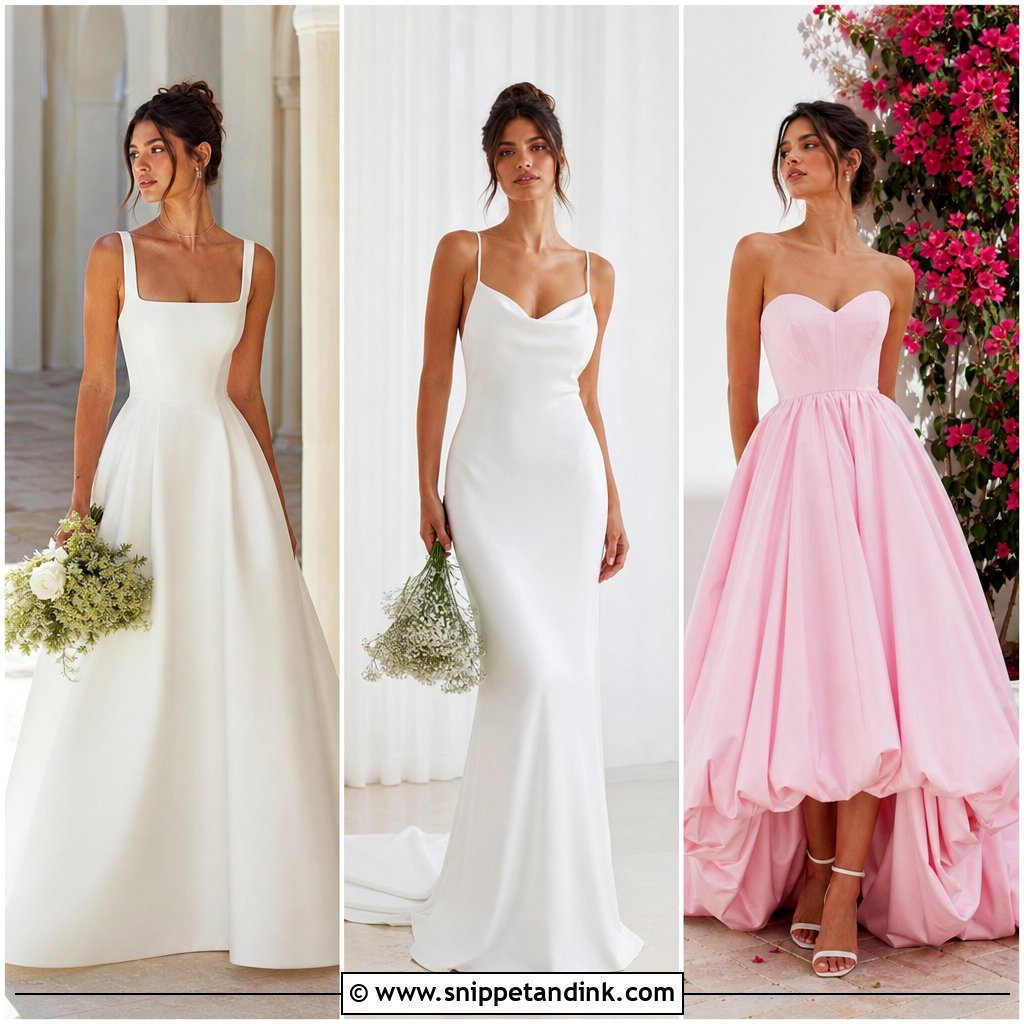


25. Reception Wedding Dress
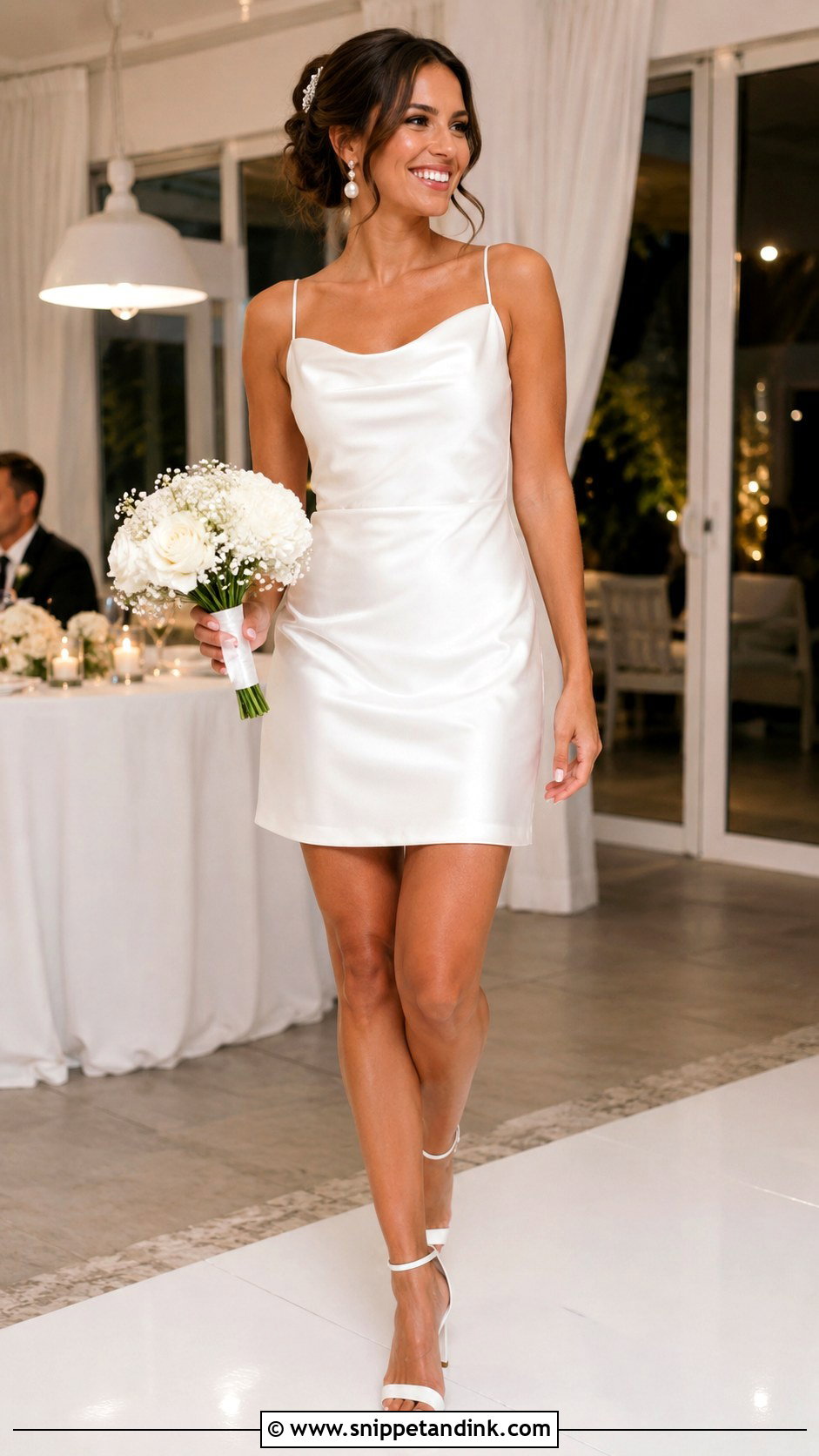
Your reception dress should do what the ceremony gown can’t: let you dance, sit and eat freely. A shorter satin dress, a feather-free embellished mini, a slip dress or a lightweight column all work. If the ceremony gown is dramatic, go simpler at night; if it’s minimal, this is the place for sparkle or a fun shape. Comfortable heels, pearl earrings and a small hair accessory finish it. Plan the change itself too: who helps you out of the gown, where it hangs, and who takes it home.
Satin Creases, Lace Forgives: How Fabrics Look by Midnight
A dress looks flawless in the fitting room mirror and different after a car ride, a ceremony and four hours of sitting. This is how the main fabrics behave over a long day.
- Satin creases at the lap and hips as soon as you sit. Heavy duchess satin creases less than thin, slippery satins, and a steamer at the venue helps.
- Crepe feels smooth and cool, but it shows shapewear lines and sweat, so fit and underwear matter more.
- Lace is the most forgiving. Its texture hides creases and small marks.
- Tulle barely creases, but it snags on rough surfaces and loses a little body in humid air.
- Silk chiffon is light and breezy and can water-spot, so blot spills instead of rubbing them.
From Yes to Final Fitting, Month by Month
Many made-to-order gowns take several months to arrive after you place the order, often somewhere around four to six, though it varies by designer and season. Alterations then need another couple of months. That’s why I suggest shopping nine months to a year out when you can. Rush orders exist, usually for an extra fee, and off-the-rack gowns skip the wait entirely.
- First fitting, about two to three months before the wedding, for the big changes: side seams, straps and hem.
- Second fitting to check the work and choose a bustle, so the train lifts off the floor for dancing.
- Final fitting around two weeks out, in your exact shoes, underwear and jewelry. Learn the bustle yourself, or teach whoever will do it on the night.
If your body changes between fittings, tell the seamstress early rather than at the last appointment. Small adjustments are easy in the final week; big ones aren’t.
Say Yes in the Shoes, Veil and Light You’ll Marry In
Confidence is the honest test. When the right dress goes on, most brides stop asking questions about it. Pull the silhouettes you already love plus one or two you’d never pick, because gowns look different on a body than on a screen. Then judge the whole outfit at once, with a veil in, heels on and arms raised, and say yes to the one that still feels like you after you’ve sat down in it.
You'll Like These Ideas:




Leave a Reply