
Bridal hair at an Indian wedding is a balancing act. It has to hold up in close-ups, last through long rituals and make room for jewelry, a draped dupatta, flowers and an outfit that may weigh more than you’d guess. Lately the brides in my chair are asking for polished buns, softer braids, jasmine, pearls and hair that looks like them rather than a costume. South Indian braids and sleek low buns haven’t gone anywhere, and waves, half-up styles and reception ponytails sit alongside them. Here are fifteen styles that work with sarees, lehengas, a matha patti or maang tikka, and every function on the calendar.
Your Hair in the Weeks Before the Shaadi
Most of what I can do on the morning depends on what happened to your hair in the previous month. A few treatments that make hair look good day to day actually work against bridal styling.
- Keratin and smoothing treatments leave hair slippery, so curls drop and pins slide. If you want one, have it done well ahead of the wedding, not in the final weeks.
- Colour, including henna or indigo, should go on two to three weeks before, so the tone settles and your stylist sees it at the trial.
- Trim your ends about three to four weeks out. Freshly cut blunt ends can look harsh in curls.
- Deep conditioning is fine, but stop heavy oils and masks a few days before, or the hair won’t take hold.
Haldi needs its own thought. Turmeric paste can leave a yellow tint on light or highlighted hair, so for that function I tie the hair up in a simple bun or braid and keep it away from the face.
1. Indian Bridal Bun With Gajra
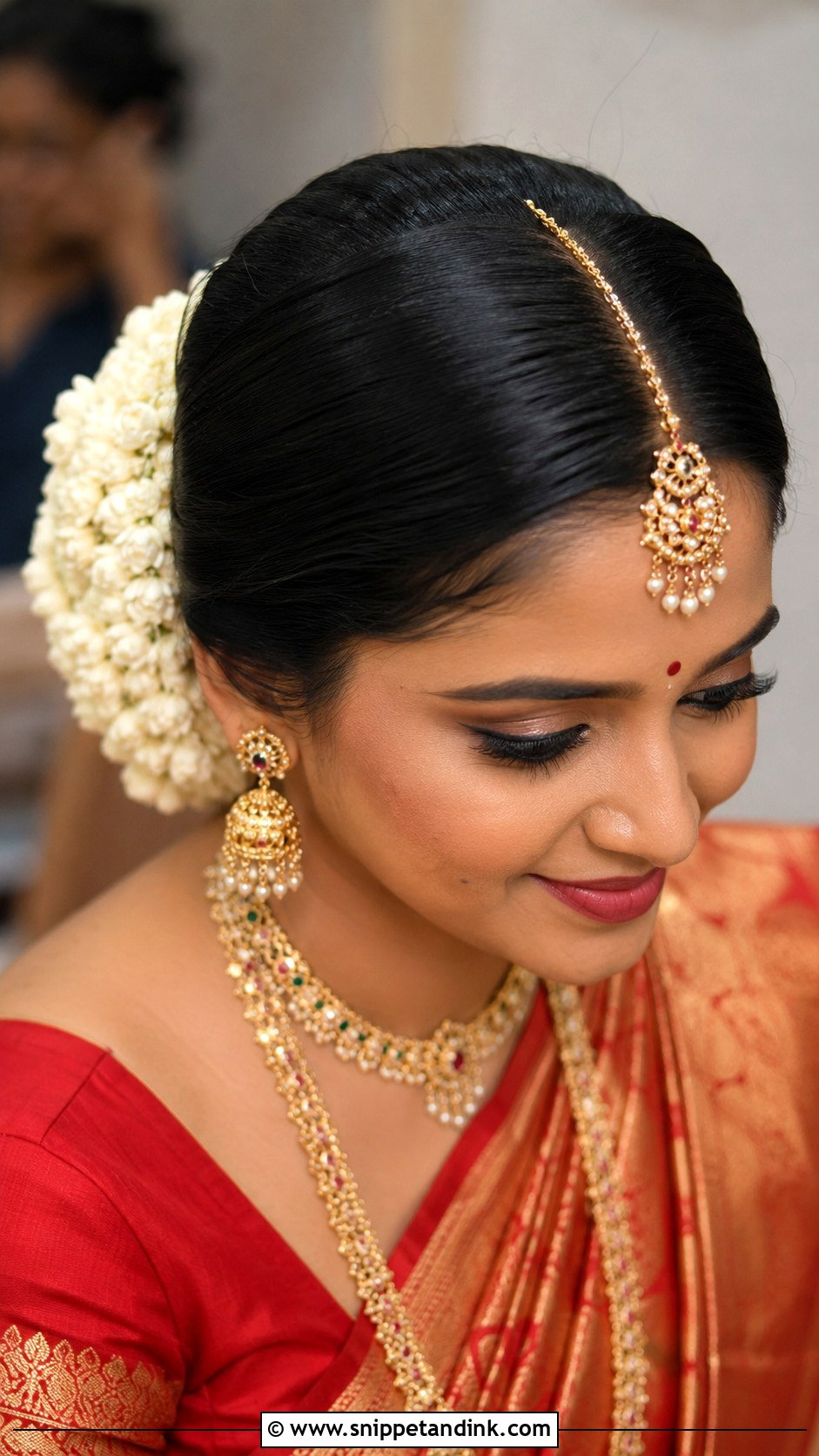
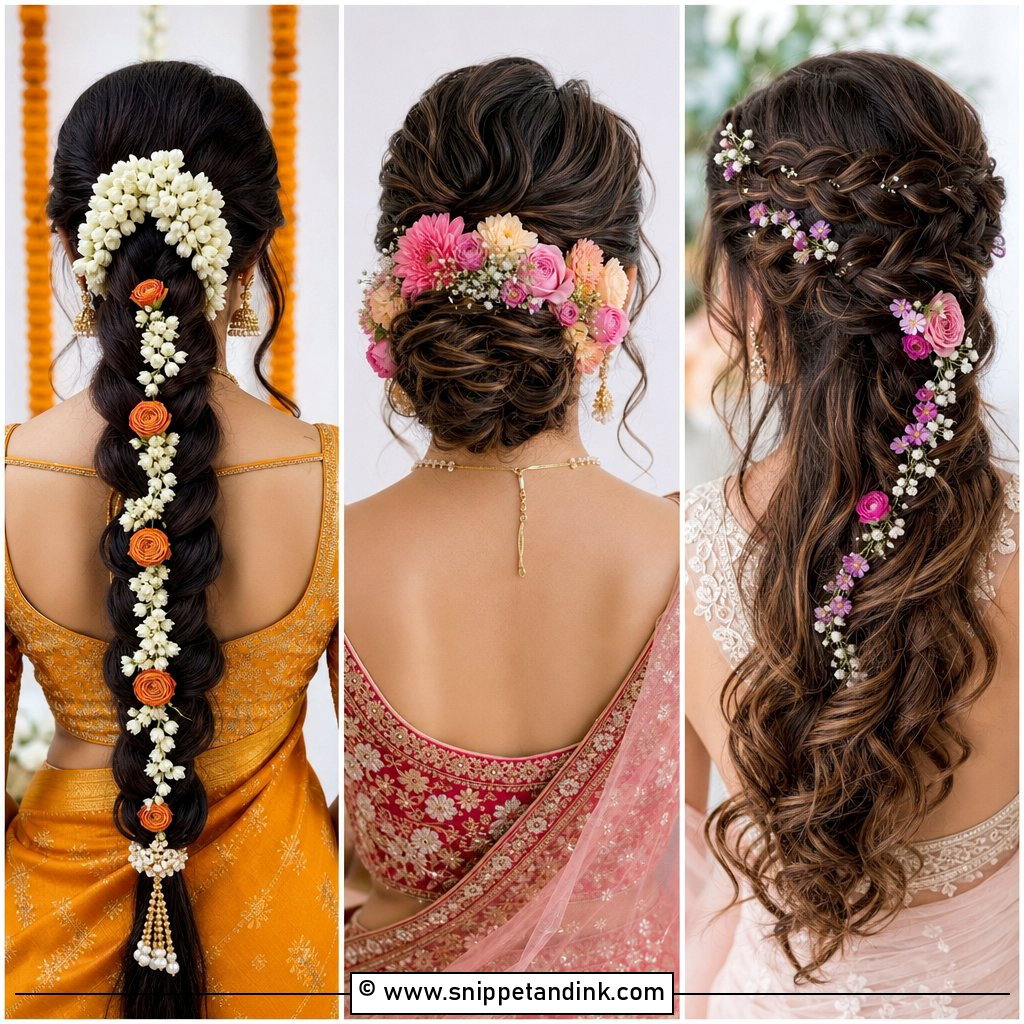
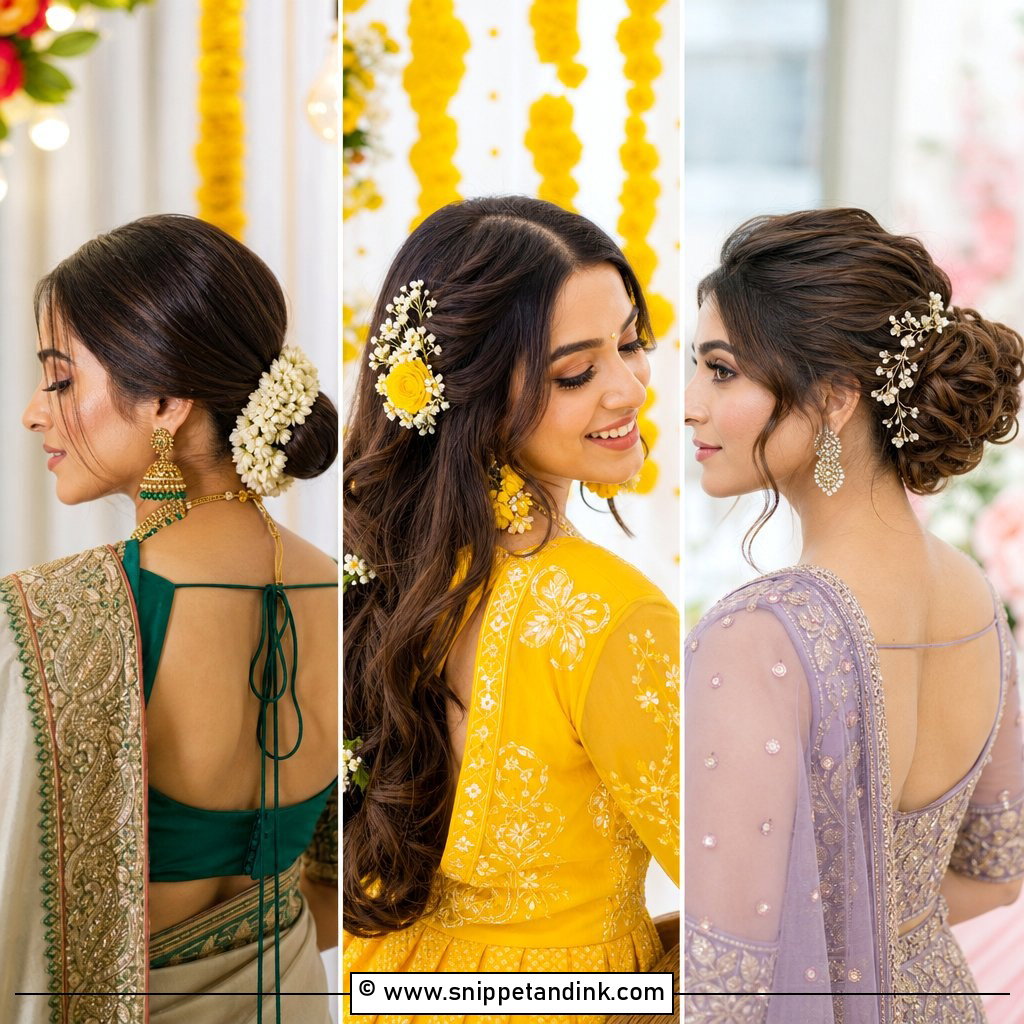
For the ceremony itself, an Indian bridal bun with gajra is hard to beat. The bun stays secure under a dupatta and the jasmine softens the whole silhouette. It suits sarees, lehengas, temple and kundan sets and a matha patti. Go tight and polished for a classic South Indian look, or slightly looser with a few face-framing pieces for something more modern. I keep the gajra to one or two neat rounds, because a thick coil of flowers turns into a white blob in side-profile photos.
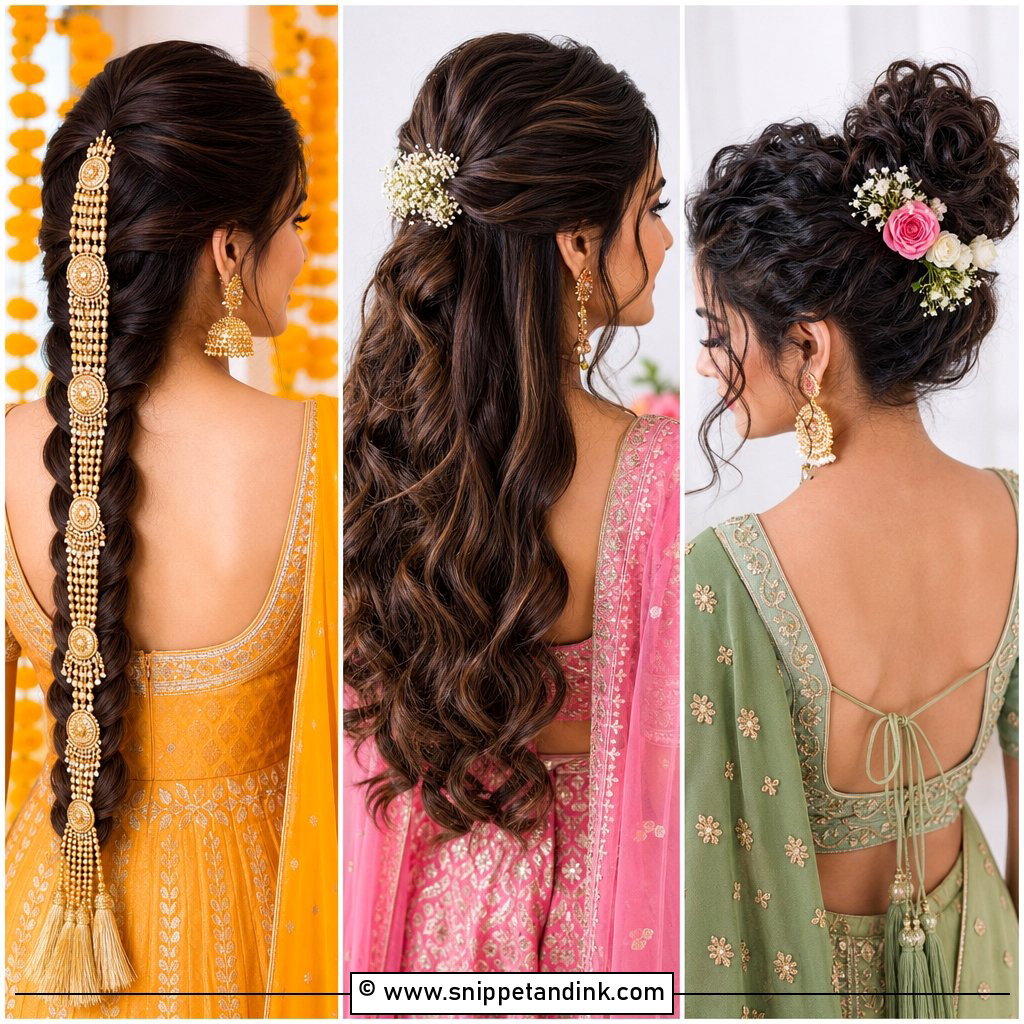
2. South Indian Bridal Braid
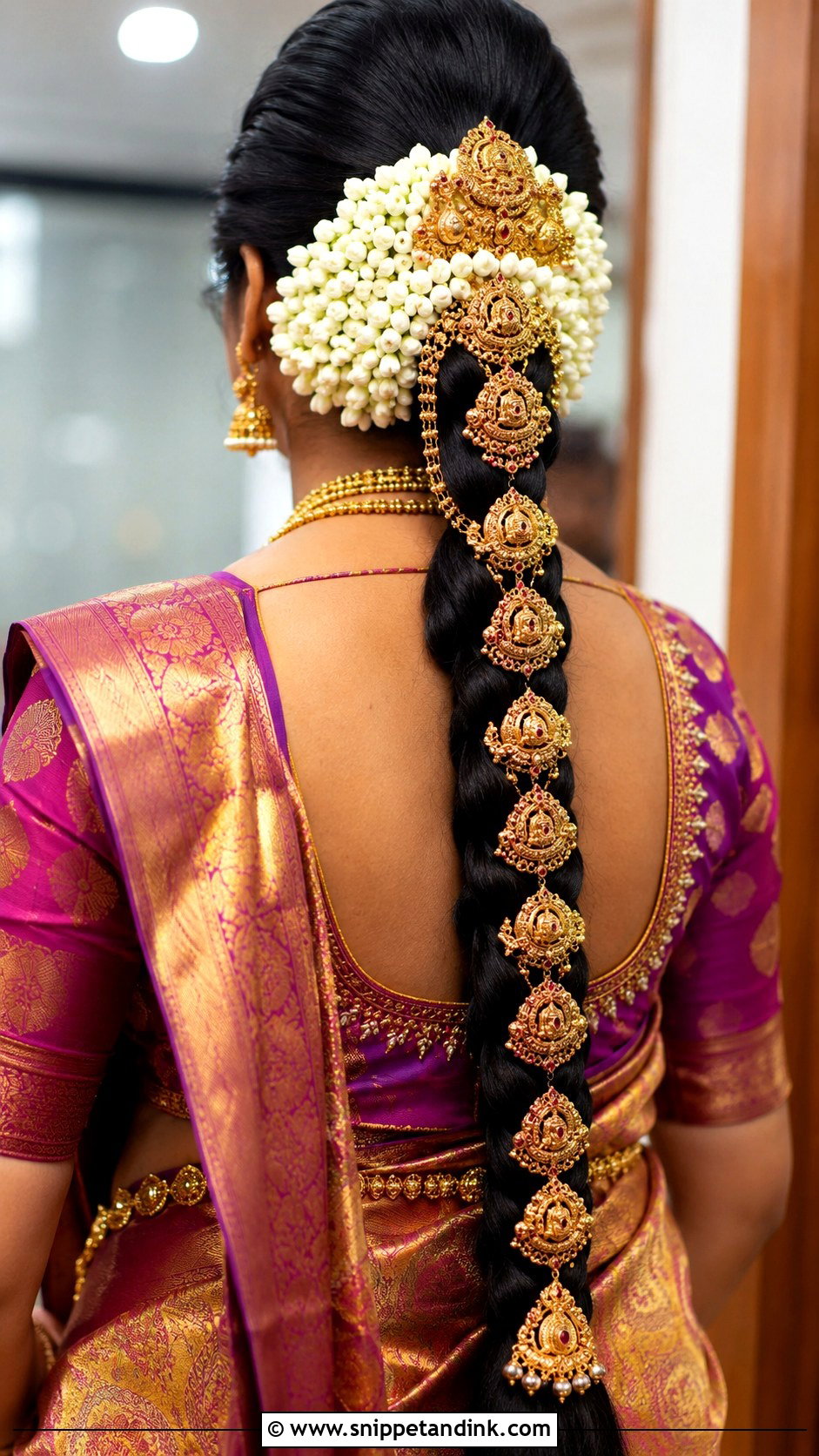
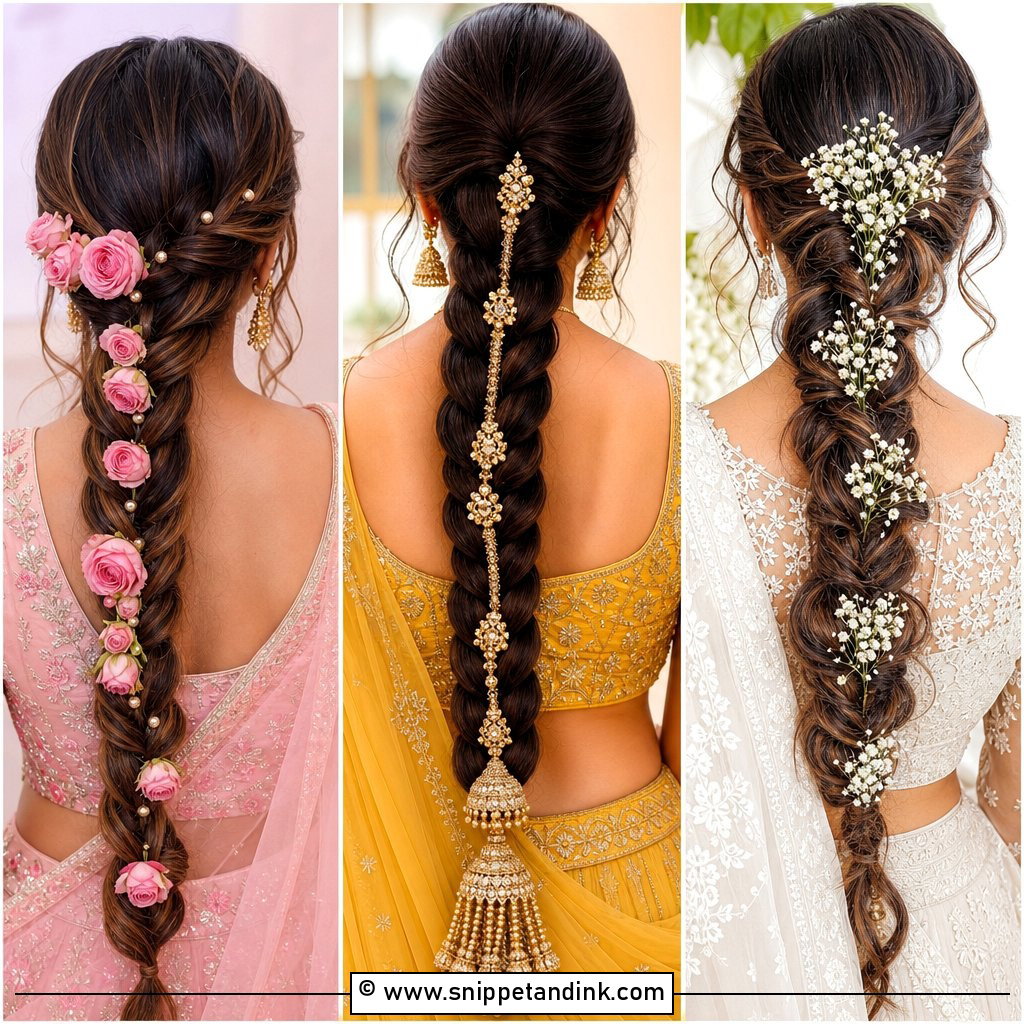
A South Indian bridal braid carries meaning as well as ornament. It’s made for silk sarees, temple jewelry and fresh flowers, and can be dressed with a gold jada, pearls, jasmine or small roses. If your hair isn’t long, extensions are normal; what makes them look fake is a texture mismatch, so if your hair is coarse, avoid a very silky extension. The back of a South Indian bride is on view for much of the ceremony, so this braid works hard. Keep the crown smooth so the jewelry lies flat.
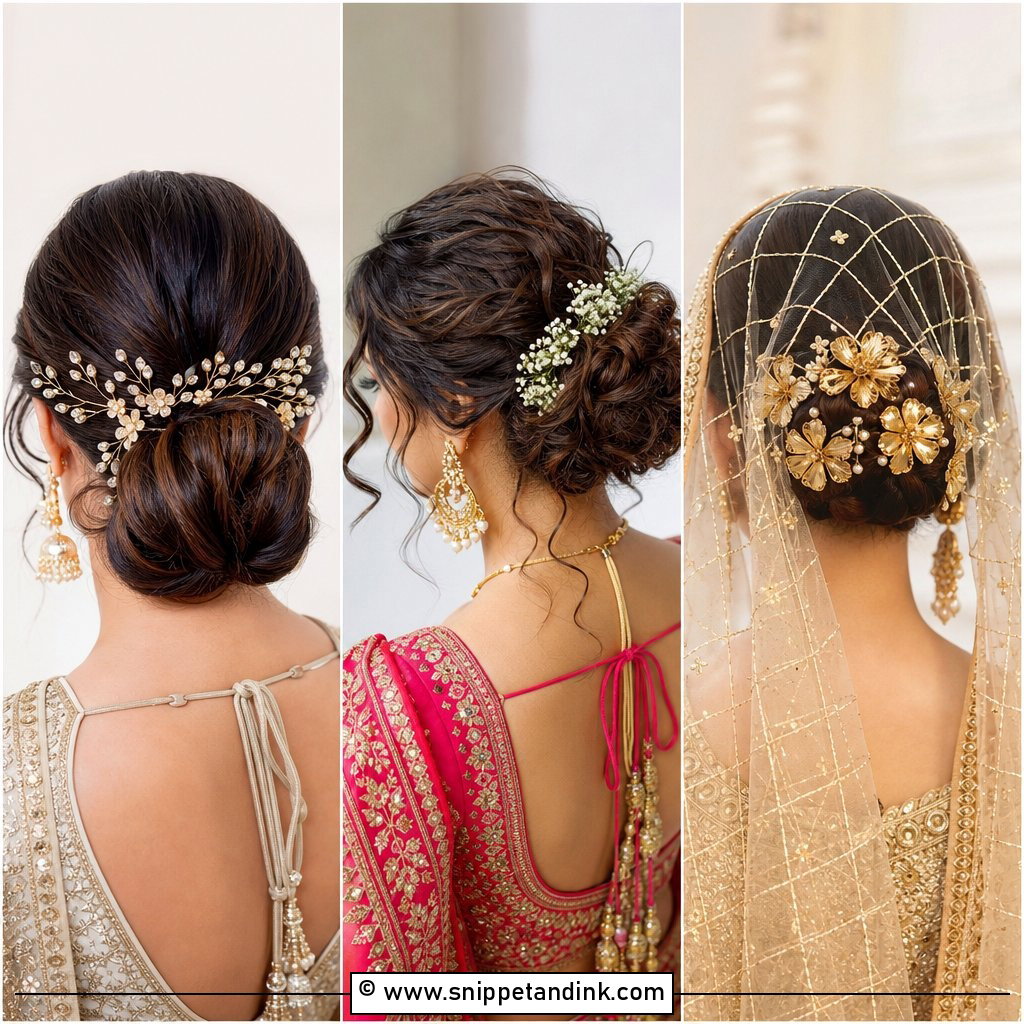
3. Indian Bridal Low Bun
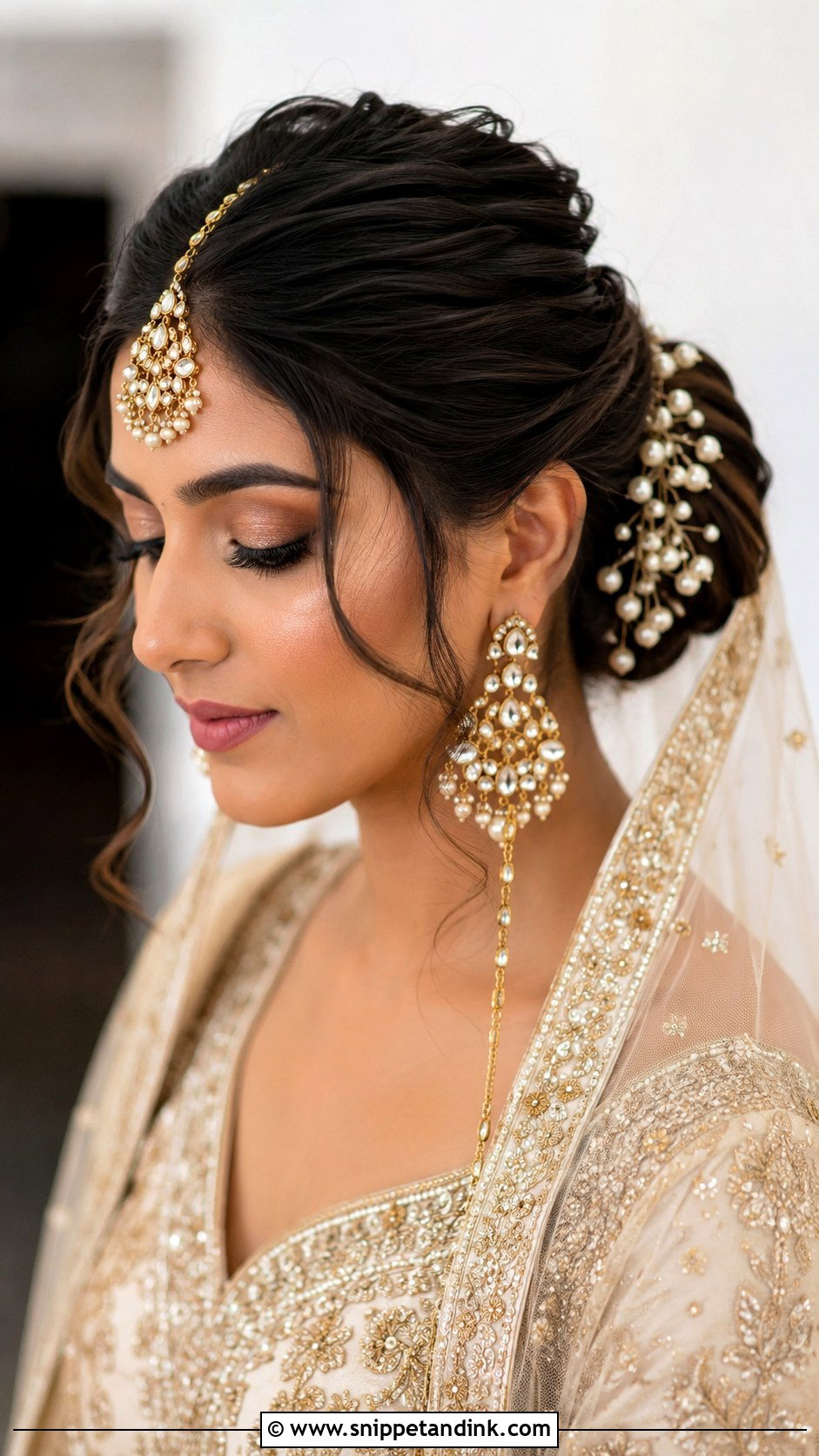
A low bun is simple and very forgiving in photos. It sits at the nape, so it handles heavy dupattas, veils and big earrings without fuss. Keep the front center-parted with a maang tikka, or soften it with a few side pieces. One thing I check: large earrings with screw or hook backs can catch in a bun set very low, so I tilt it a fraction higher for chandbalis. Pearls, fresh flowers or a single decorative pin are enough.
4. Indian Bridal Messy Bun
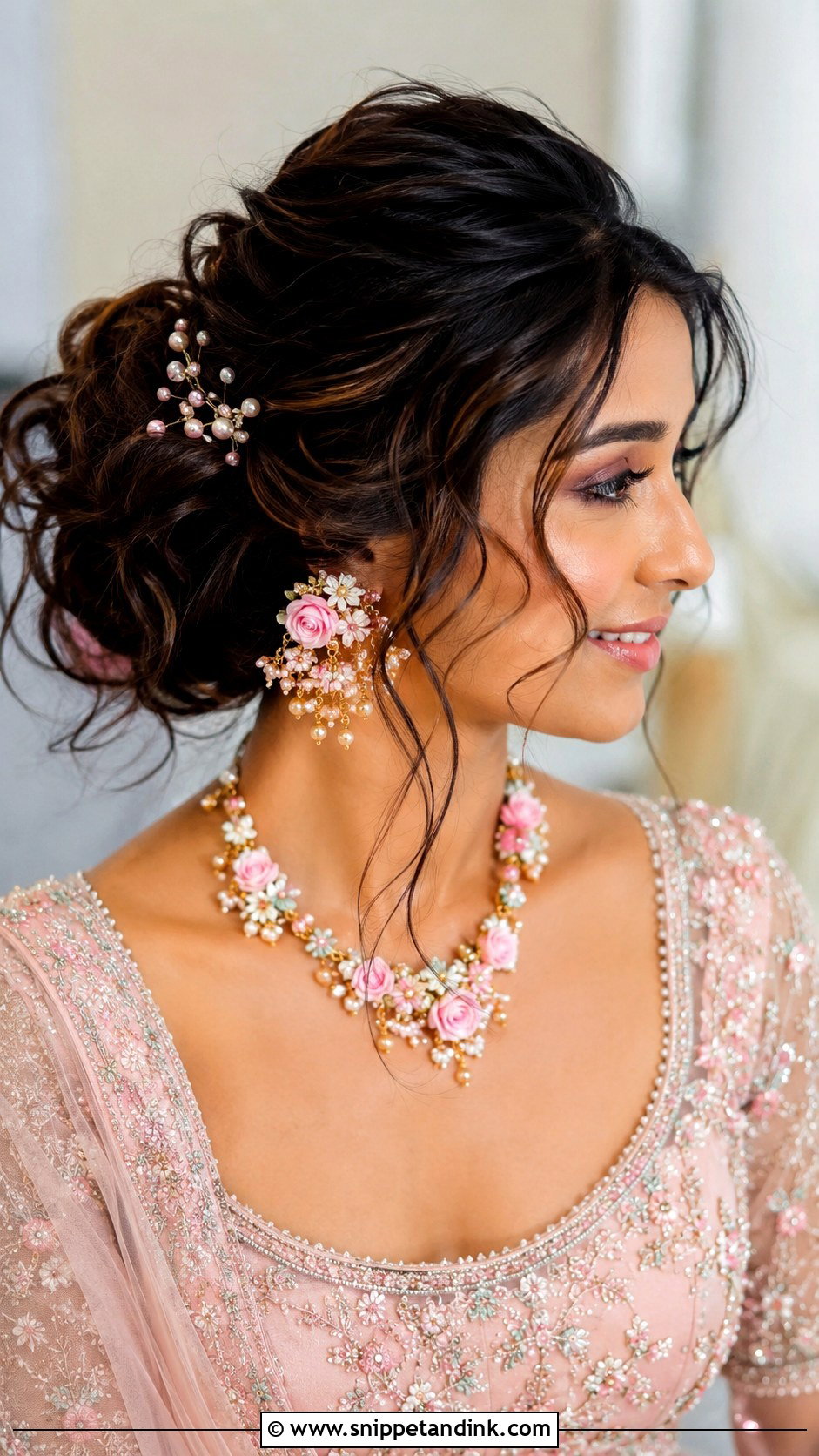
The messy bun is the relaxed sister of the ceremony bun, and it suits engagement, sangeet, reception or a modern wedding. I build it from loose twists rather than teasing, so it has volume without frizz, and every pin goes inside the twists where you can’t see it. A soft lift at the crown keeps it from looking flat. Leave a few strands around the cheeks. Pastel lehengas, floral or pearl jewelry and soft glam makeup sit naturally with it.
5. Indian Bridal Bun With Matha Patti
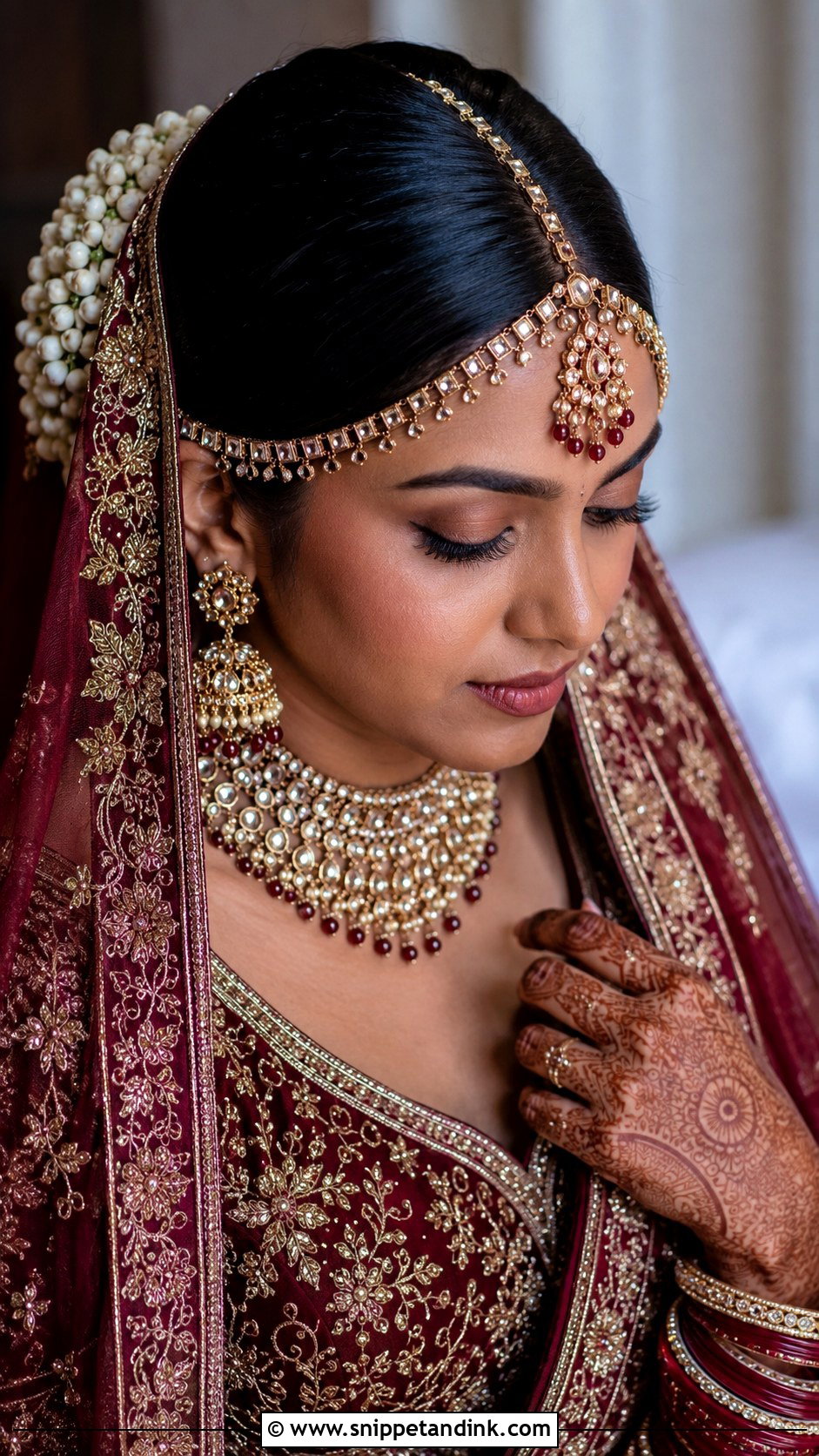
With a matha patti, the bun’s job is to stay out of the way. The headpiece already frames the forehead, so a sleek or lightly textured bun works best. Most matha pattis have a center chain running back over the crown, and I set the bun just below where that chain ends so it can be pinned straight into the top of the bun. Keep the part immaculate. Any flowers should stay tight around the bun, away from the head jewelry.
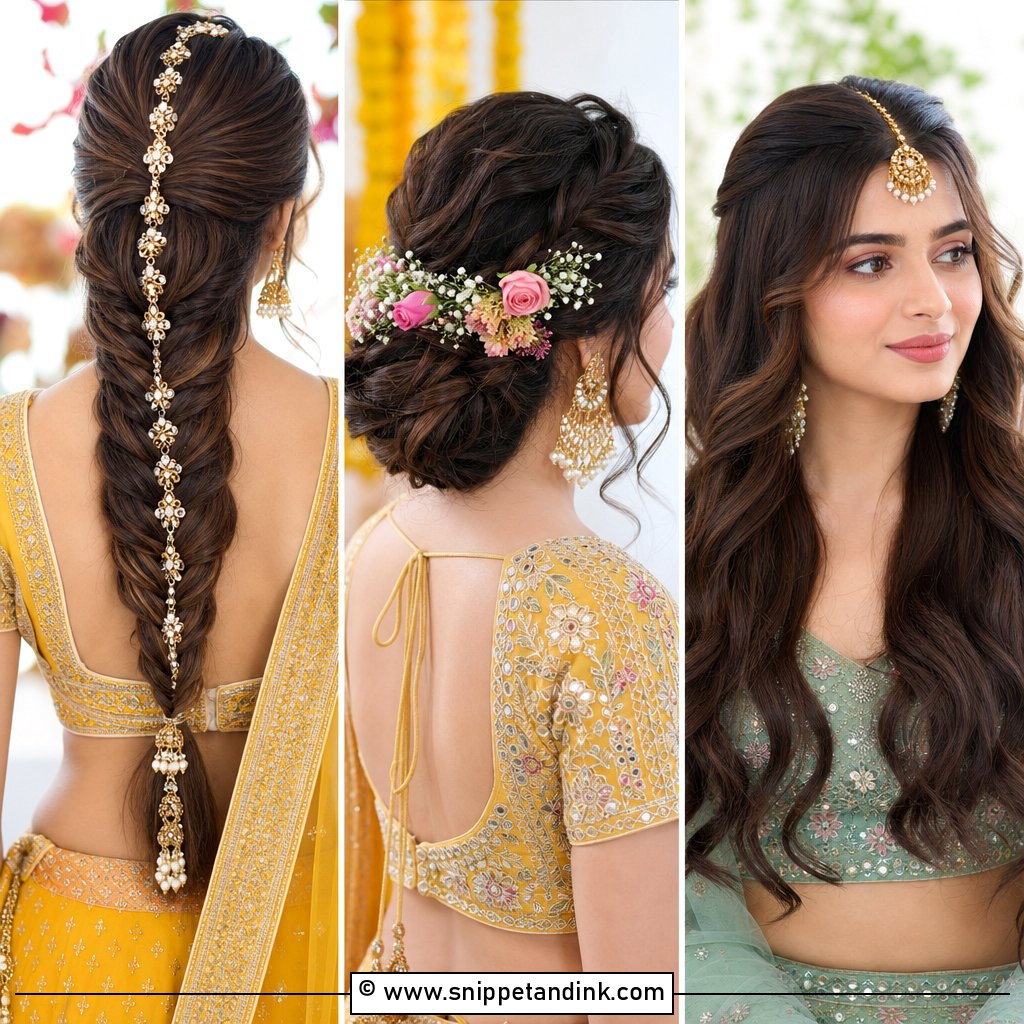
6. Indian Bridal Half Up Half Down Hairstyle
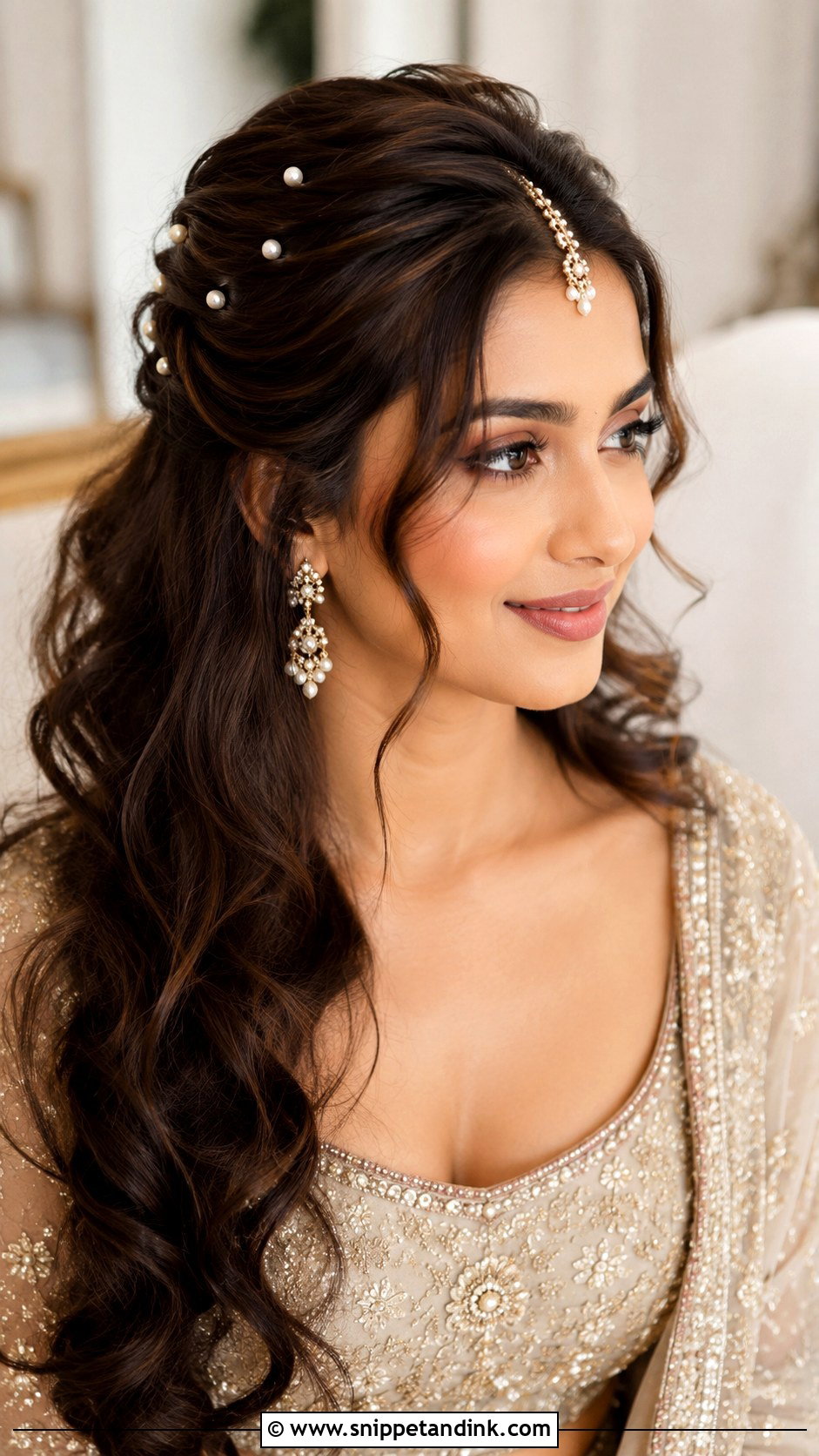
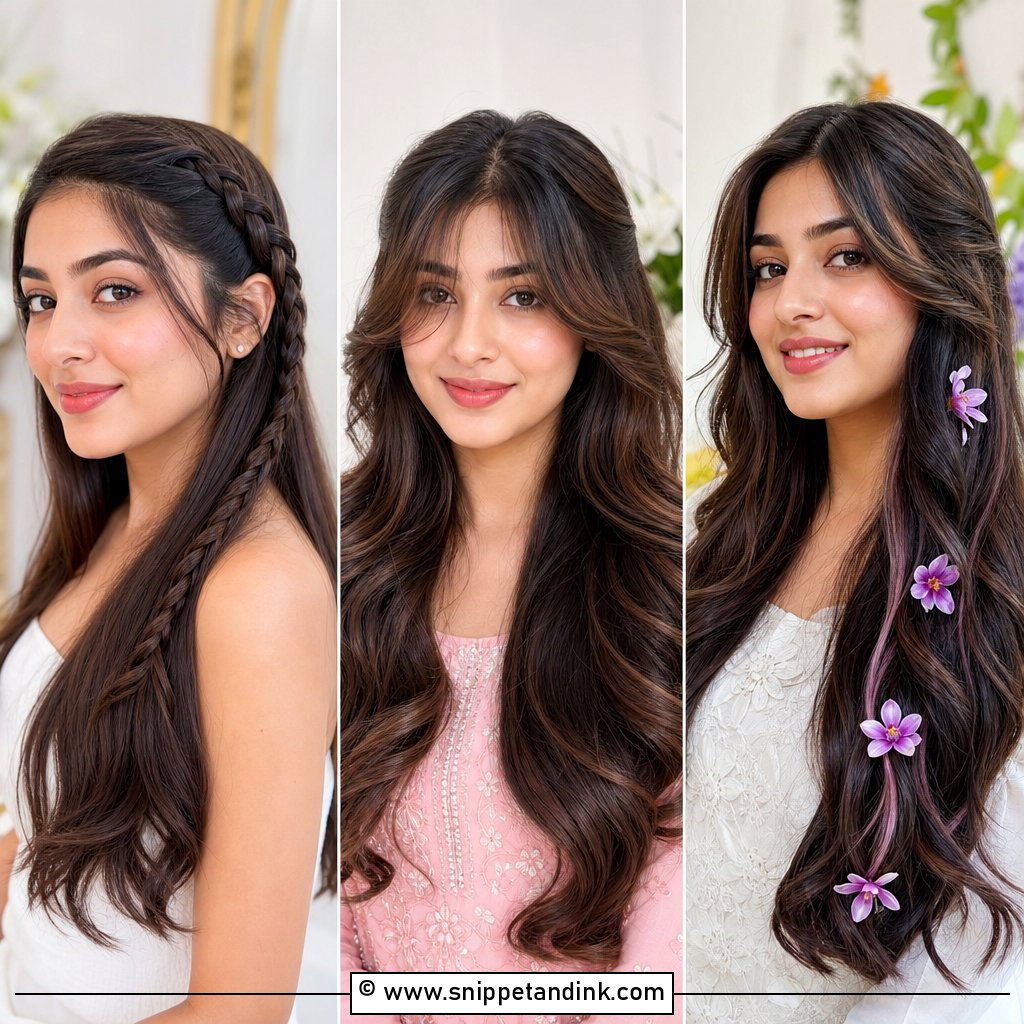
Half up, half down gives you softness around the shoulders with a secure crown for a maang tikka or small accessory. It suits engagement, sangeet, mehendi and reception outfits, and it’s a good middle ground if open hair is what you’re used to. I ask brides to show me the back of the blouse first. If it’s heavily worked, I keep the curls shorter or sweep them to one side so they don’t cover the embroidery. Smooth crown volume and a few pearl pins finish it.
7. Indian Bridal Open Hairstyle With Curls
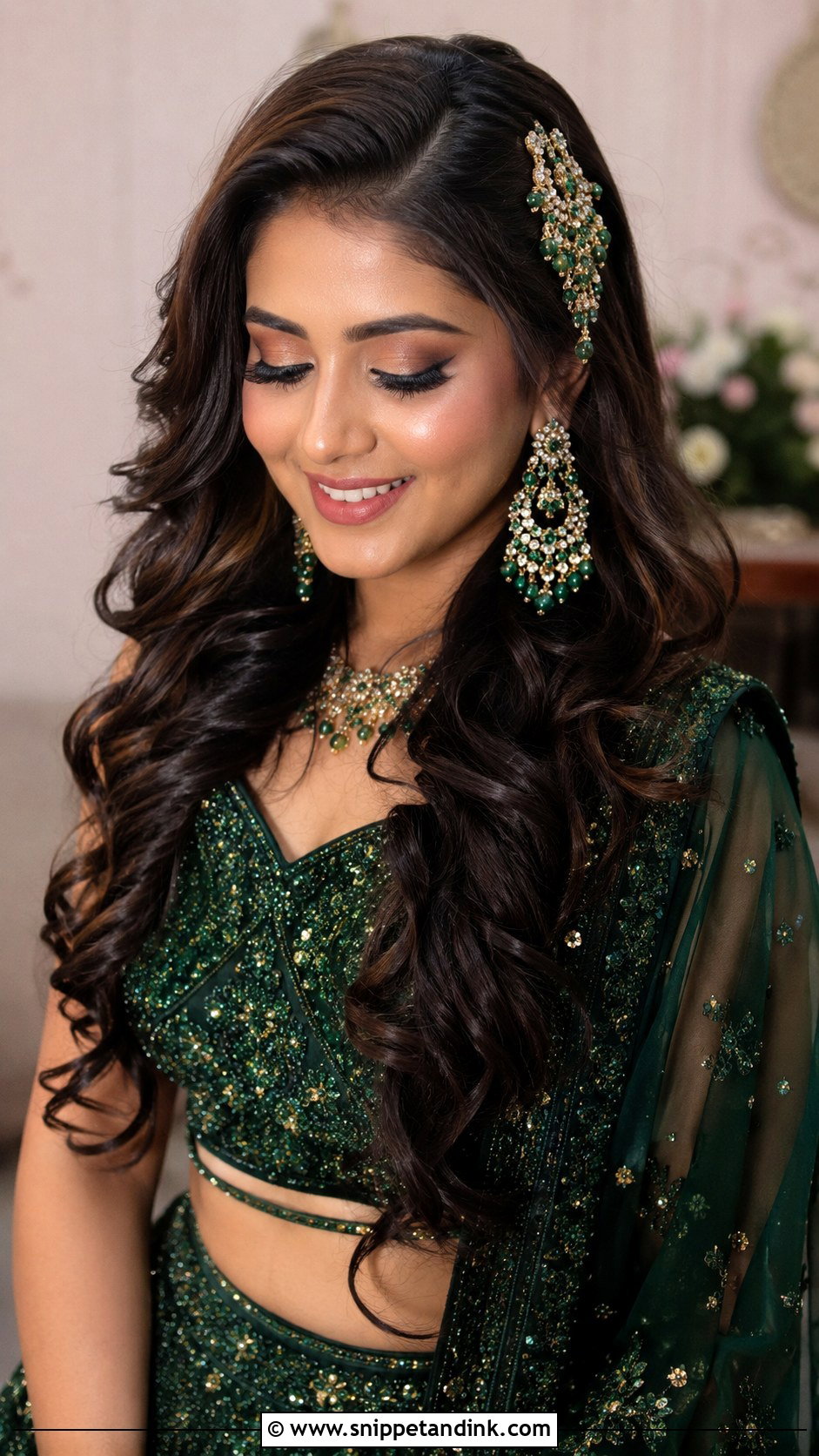
An Indian bridal open hairstyle with curls belongs to the reception, cocktail night or any outfit with a light dupatta. The curls can be brushed out soft or left defined for volume. Hot lights, a crowded hall and dancing all relax a curl, so I set it with a flexible spray and let each curl cool before touching it. A maang tikka, jeweled clips or one side accessory keeps it bridal. It suits lehengas, gowns and modern saree drapes.
8. Indian Bridal Side Braid
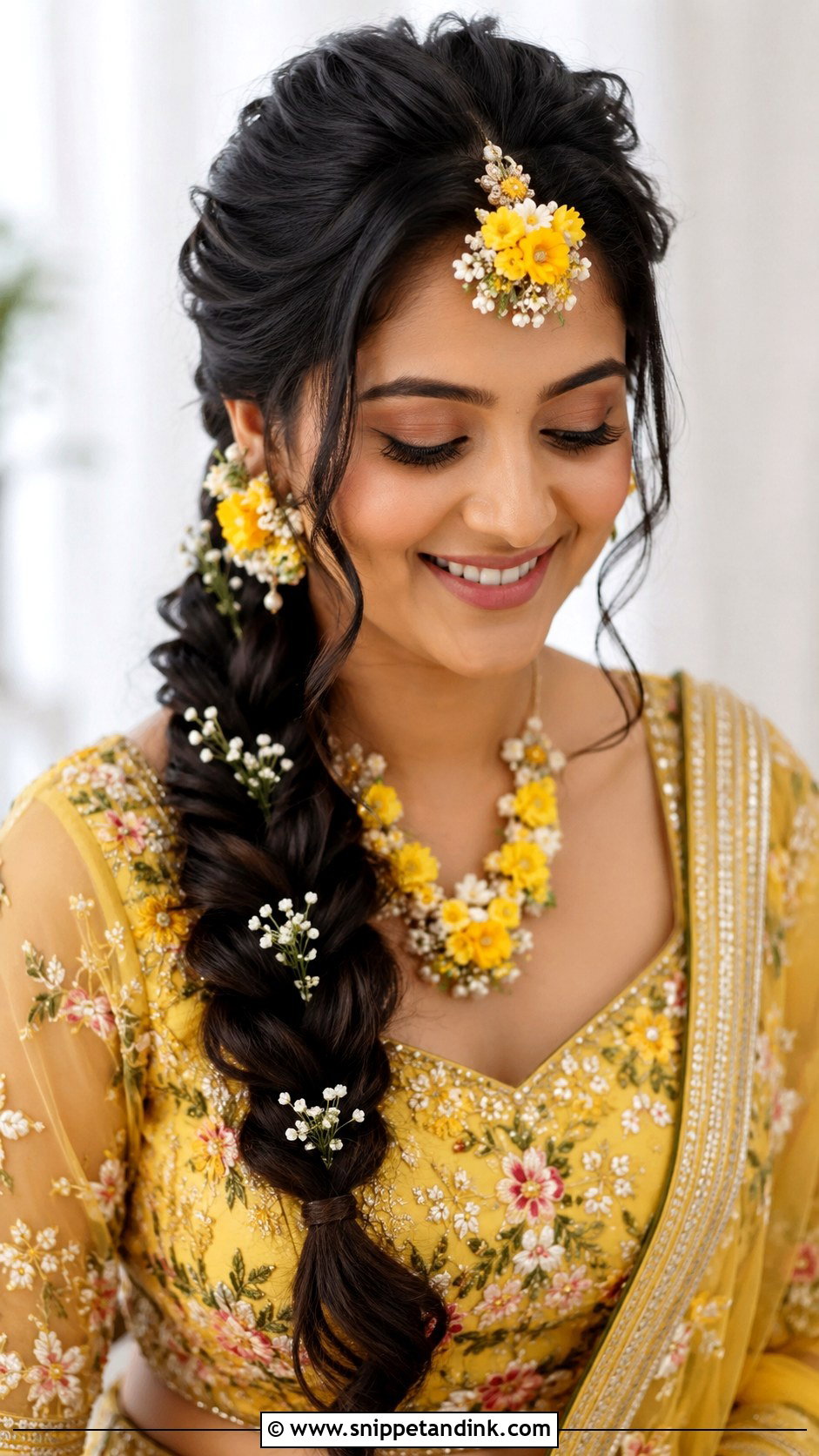
The side braid brings detail forward into front-facing portraits instead of hiding it at the back. It’s lighter than a full traditional braid, which is why I suggest it for mehendi, haldi and engagements. Loose and textured with tucked flowers, or smooth with pearls, both work. Lift the crown before braiding. A side braid on a flat crown drags the eye downward and makes the face look longer than it is.
9. Indian Bridal Fishtail Braid
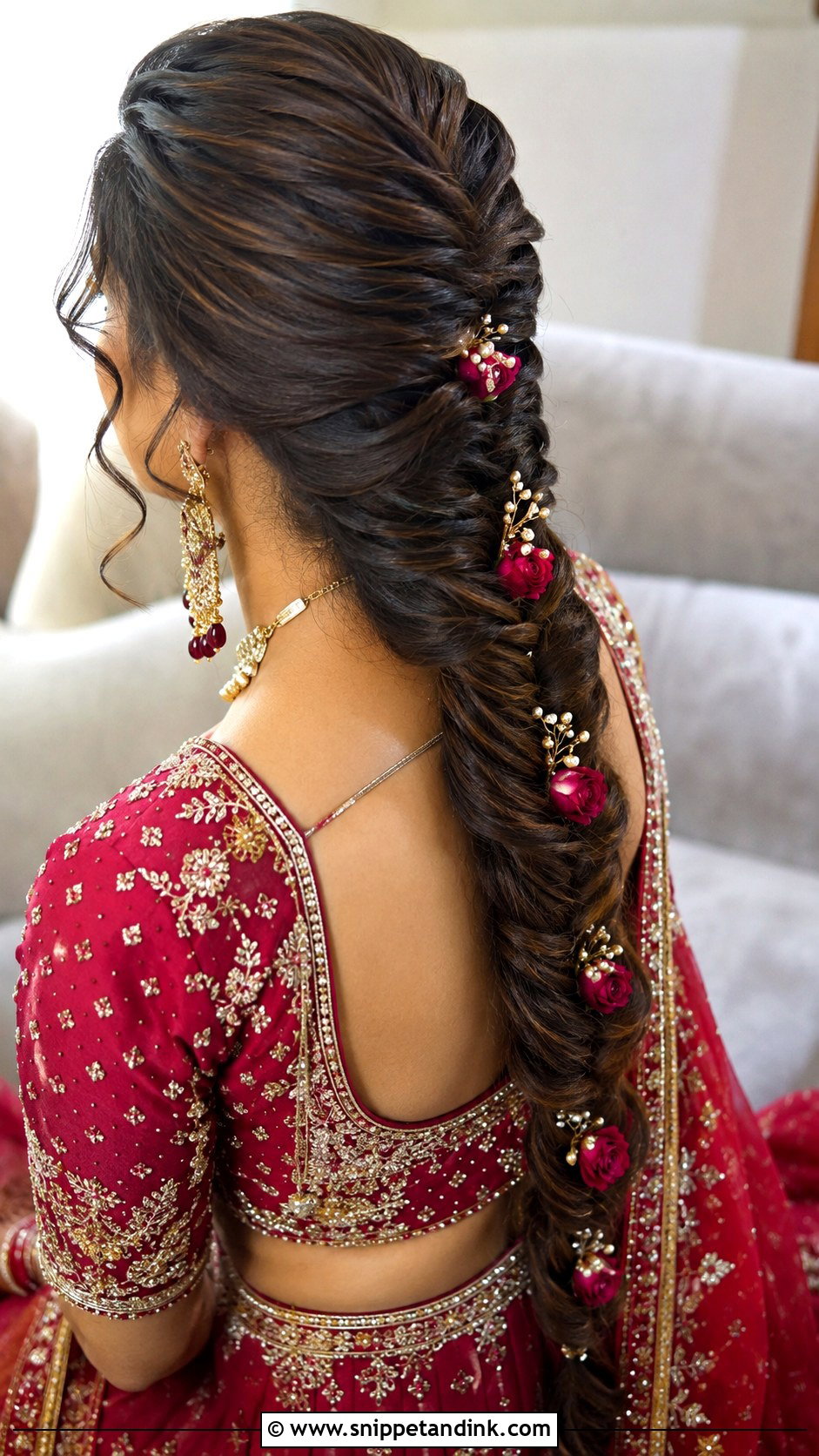
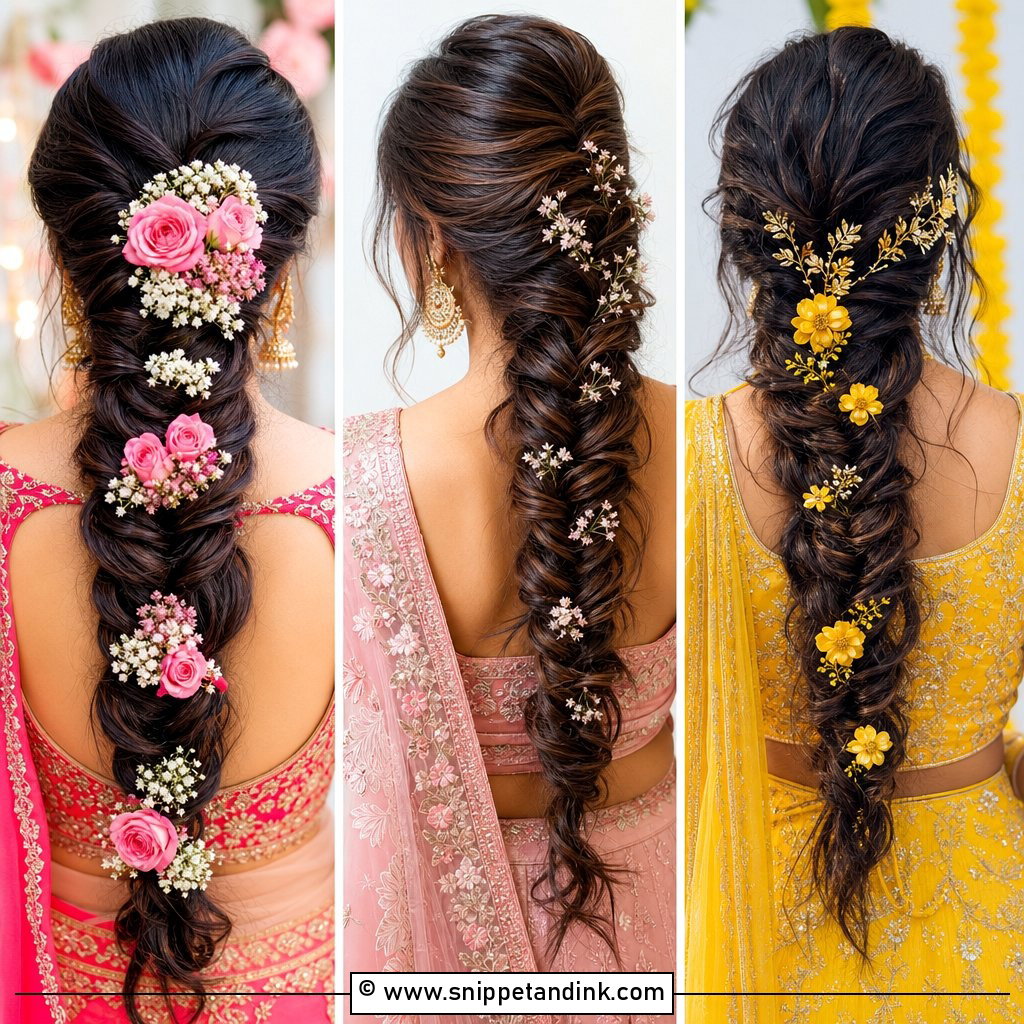
A fishtail is the modern braid that still reads as wedding hair. Its small woven sections give thick hair a neat, sculpted texture. Wear it down the back or eased to one side. Ask your stylist to pancake it gently, pulling the outer edges flat and wide, which makes it look fuller without loosening the core. Mirror-work lehengas, pastels, pearl jewelry and small white flowers or gold pins all suit it, as long as you leave some braid showing between them.
10. Indian Bridal Ponytail
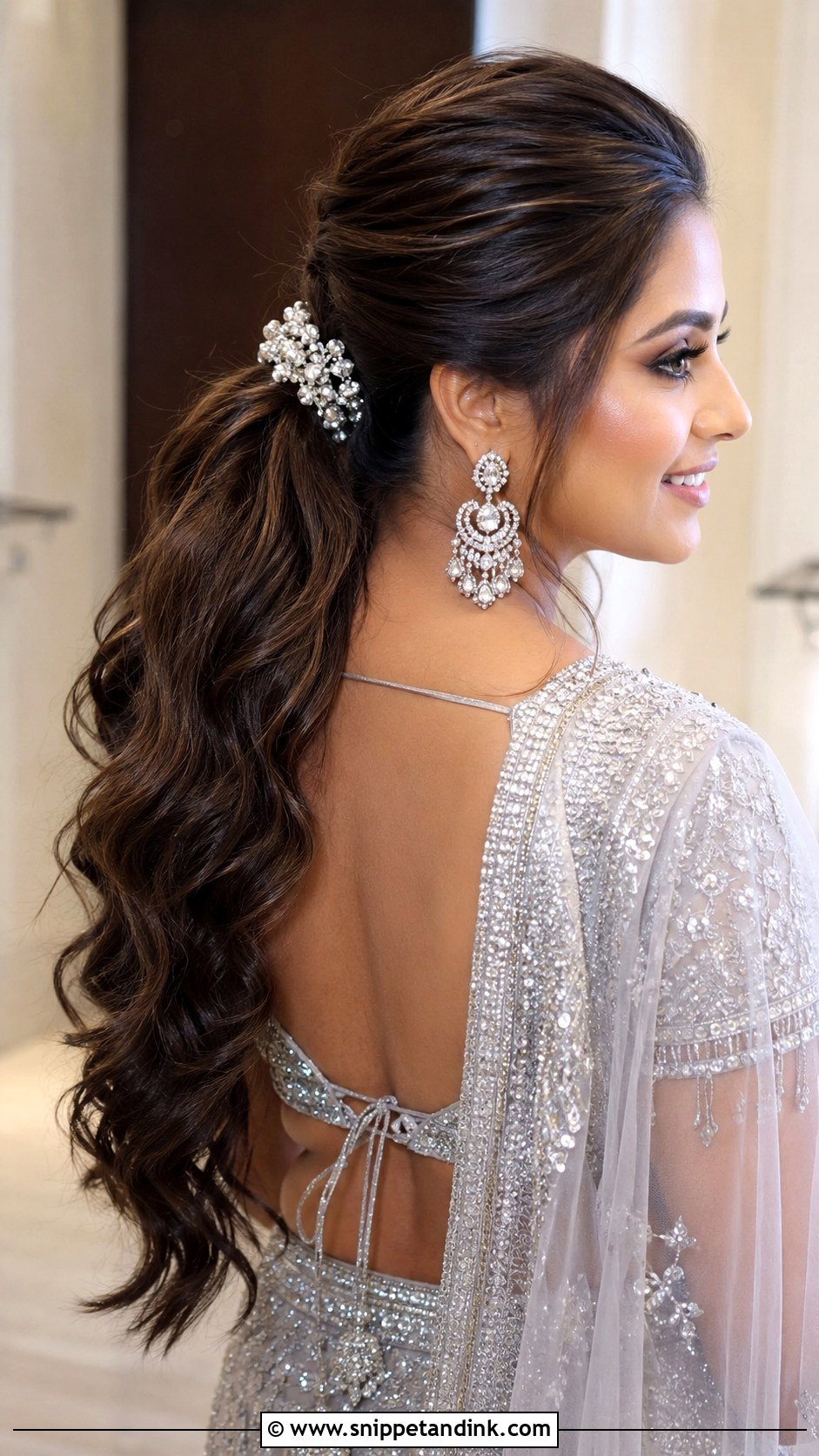
Surprisingly practical, the ponytail works for sangeet, reception, cocktail events or a contemporary lehenga. The crown can be smooth with a center part, gently lifted, or waved at the front, and the tail can be curled or wrapped with its own hair. I’d keep it for functions where the dupatta isn’t over your head. A jeweled band, pearl pins or a small floral detail at the base make it feel dressed. It keeps the neckline and earrings completely clear.
11. Indian Bridal Sleek Bun
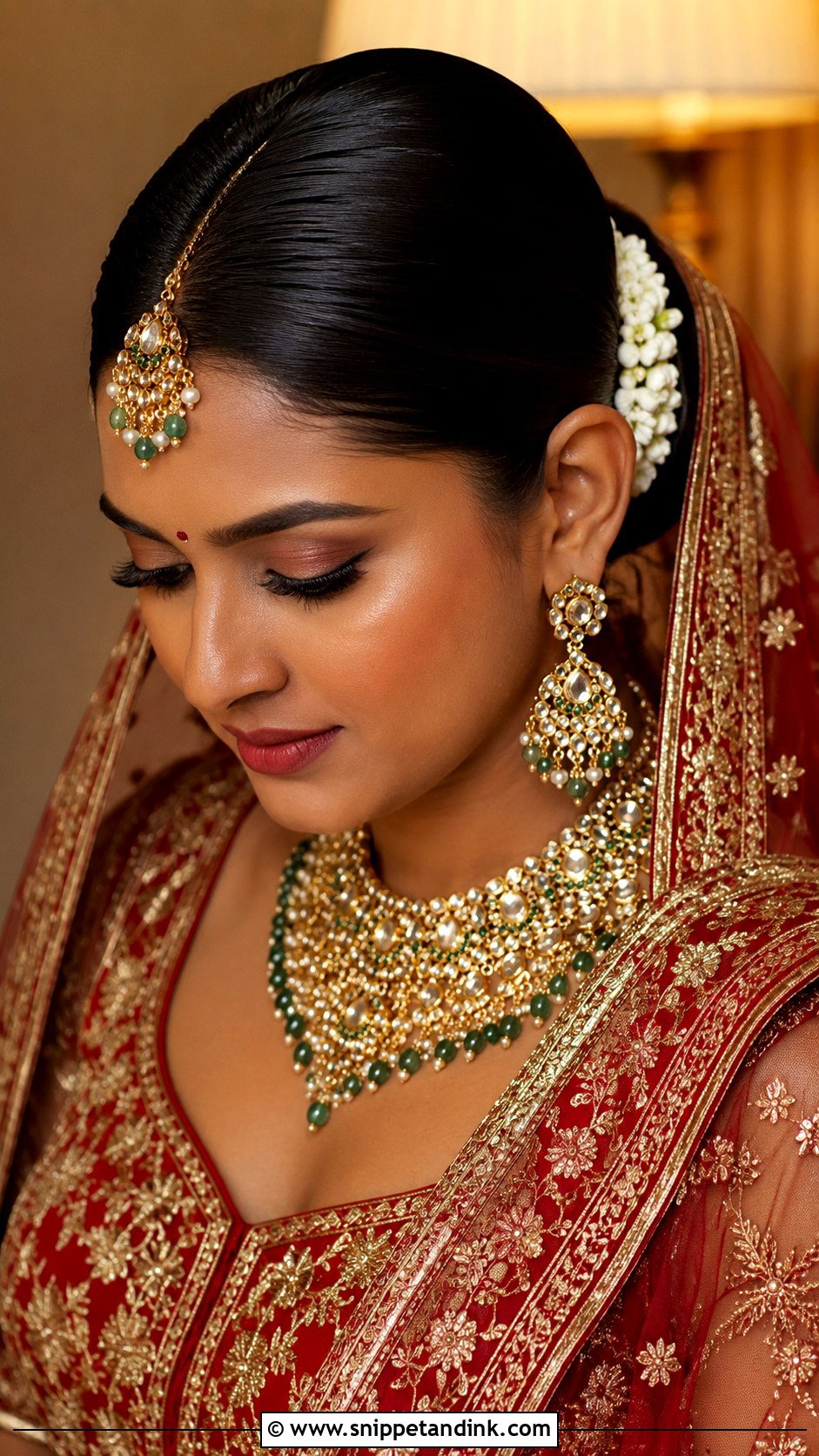
A sleek bun is all line and finish. It suits bold eye makeup, red bridal lehengas, silk sarees and big jewelry, and it stays put through long ceremonies and warm weather. A middle part is the classic version; a side part softens the face slightly, which helps if strong features and strong makeup feel like too much together. Add a gajra or a single jeweled pin if you like, but minimal is the point of this one.
12. Indian Bridal Floral Bun
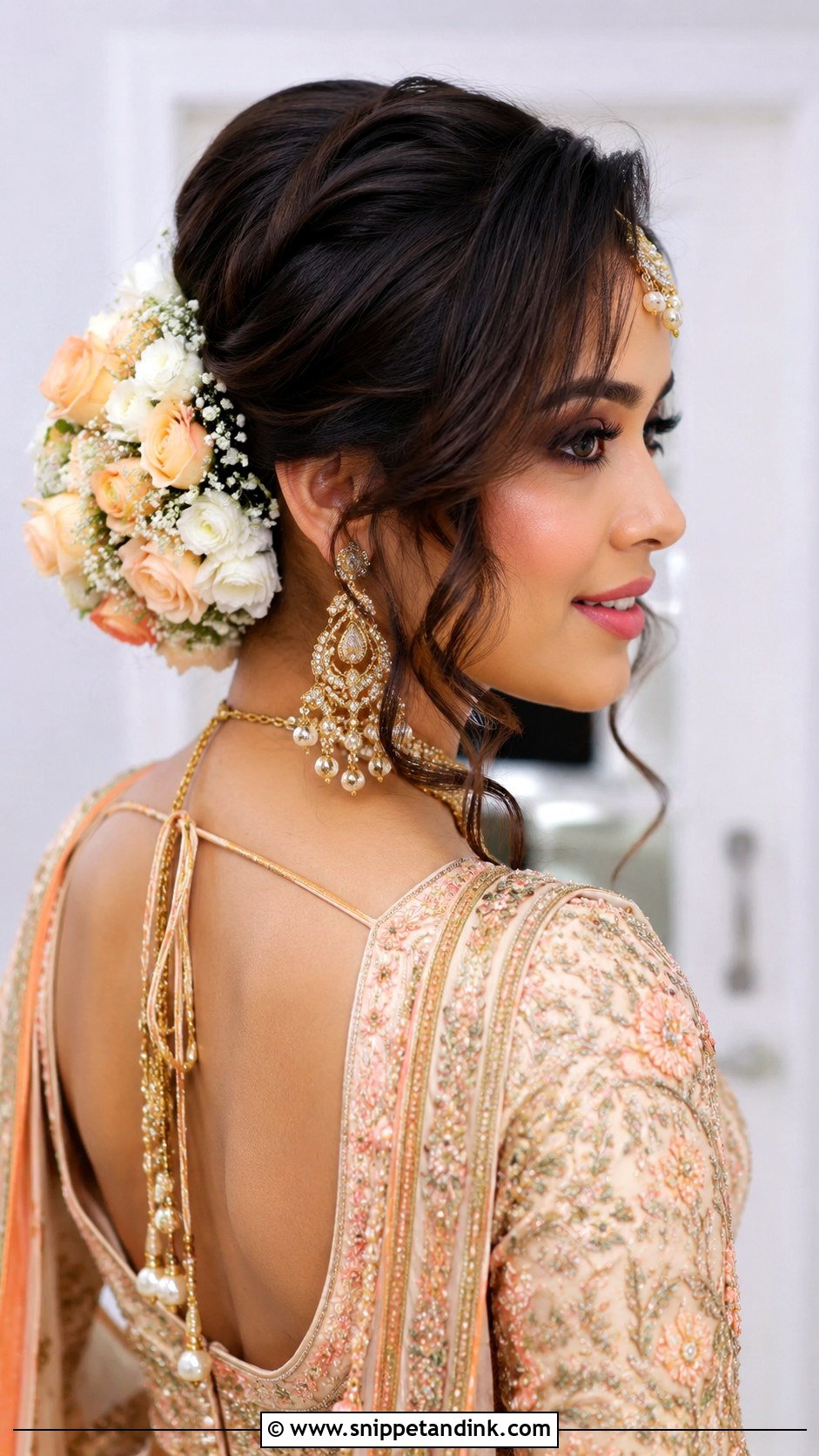
An Indian bridal floral bun can be dressed with jasmine, roses, baby’s breath, orchids or a mix matched to the outfit. A neat bun ringed with flowers at the base reads traditional; scattered blooms over a textured bun look more modern. Pick colours that sit with your lehenga or saree rather than against it. Flowers hold water and get heavier as the day goes on, so the bun underneath needs firm pinning, ideally around a donut or padding.
13. Indian Bridal Reception Waves
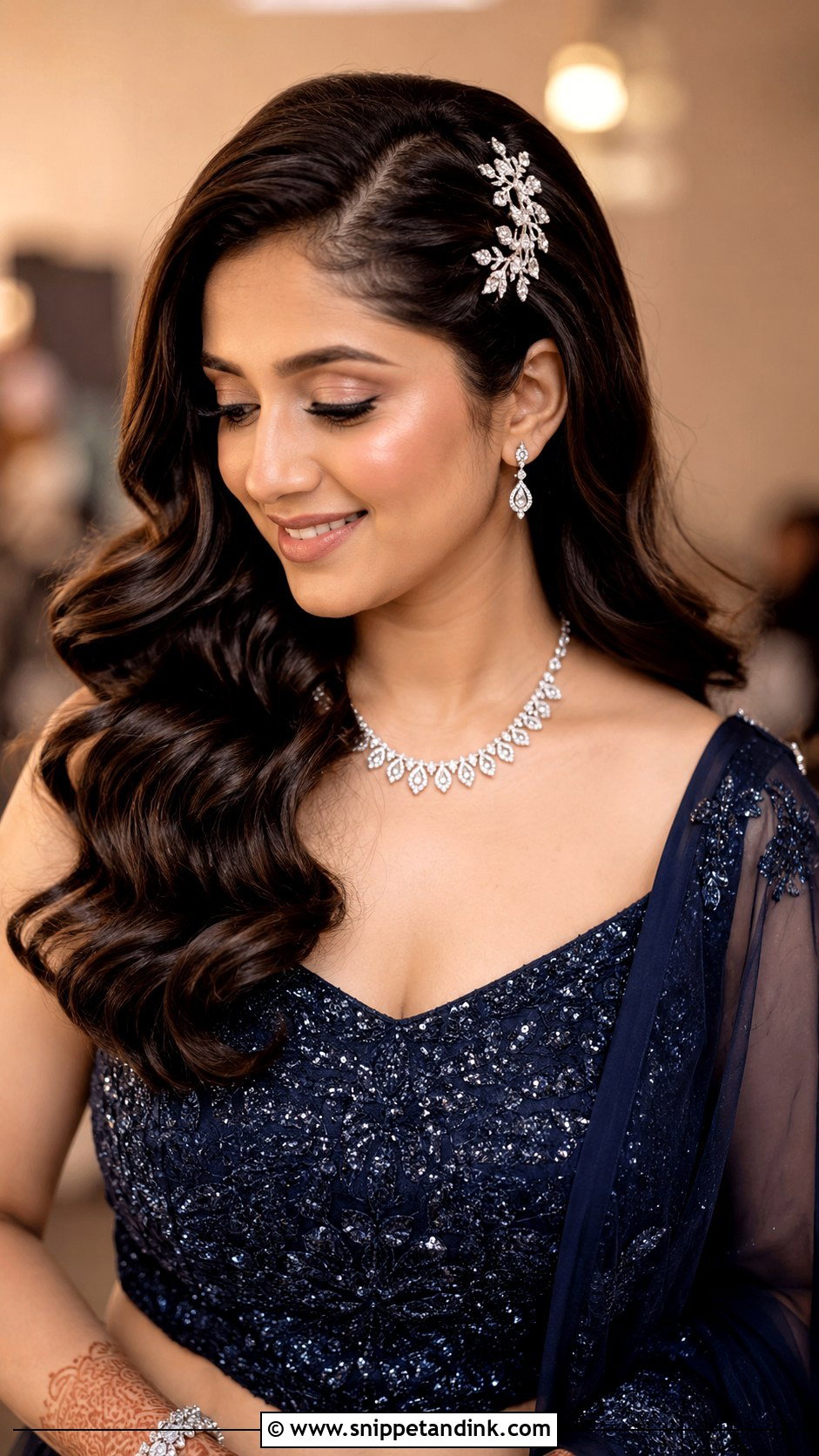
Reception waves are what many brides change into after a traditional ceremony. The hair is worn open in polished waves, and the look suits gowns, lehengas, pre-draped sarees and lighter dupattas. Waves catch reception lighting well. A side part adds drama, while a middle part is more current. Keep the top smooth and brush the ends together so the waves move as one; separate, stringy ends make the look fall apart. A statement clip or a few pins near the face are all it needs.
14. Indian Bridal Crown Braid
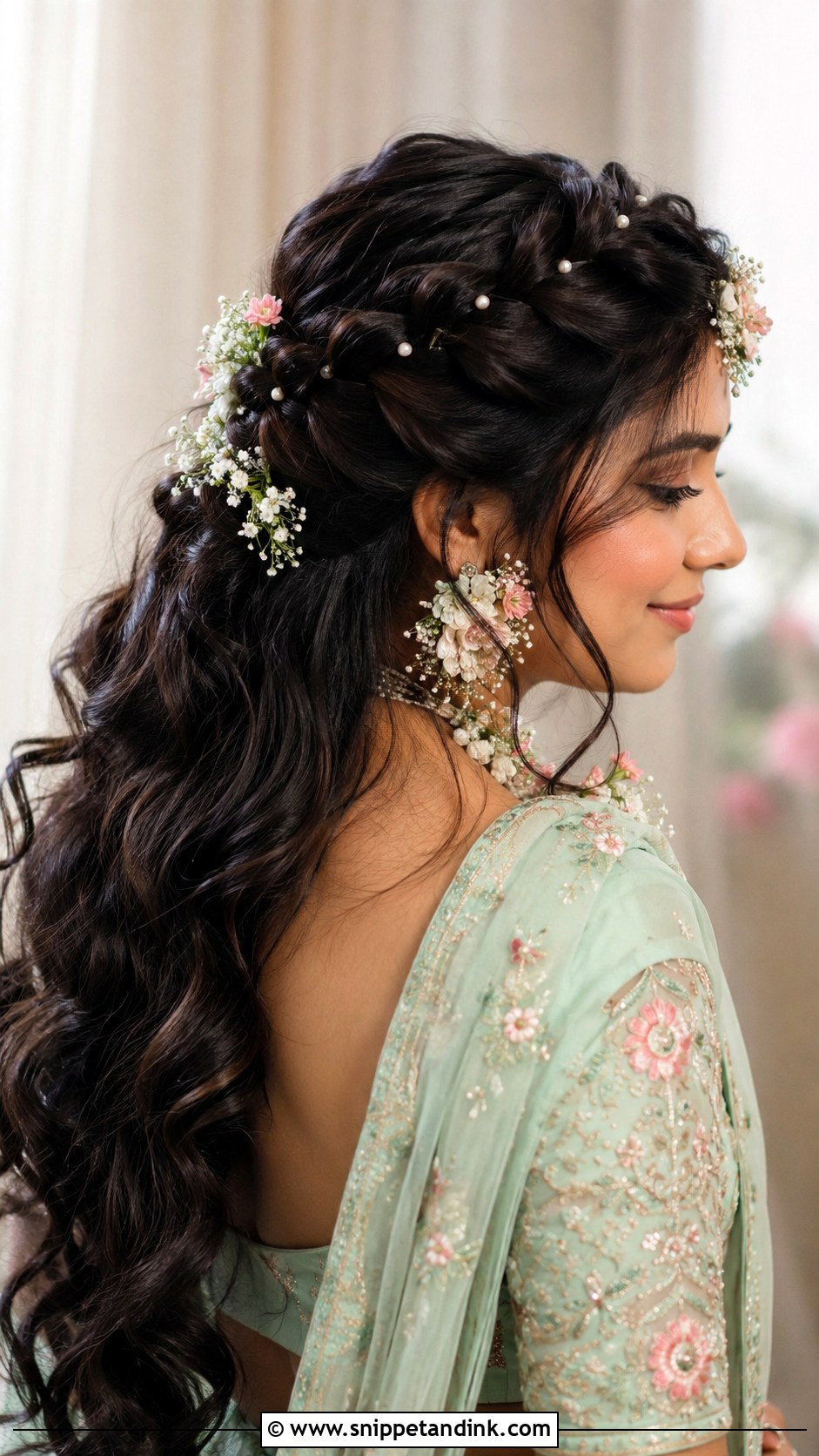
A crown braid frames the head like a halo, and it’s my pick for a mehendi, engagement or haldi bride who doesn’t want a bun. It can wrap across the front, sit round the head, or feed into a low bun at the back. On a long face, I keep it lower on the head so it doesn’t add height. Keep the braid slightly soft rather than tight. Floral jewelry, pastel lehengas and minimal dupatta draping suit it, with tiny flowers or pearl pins along the plait.
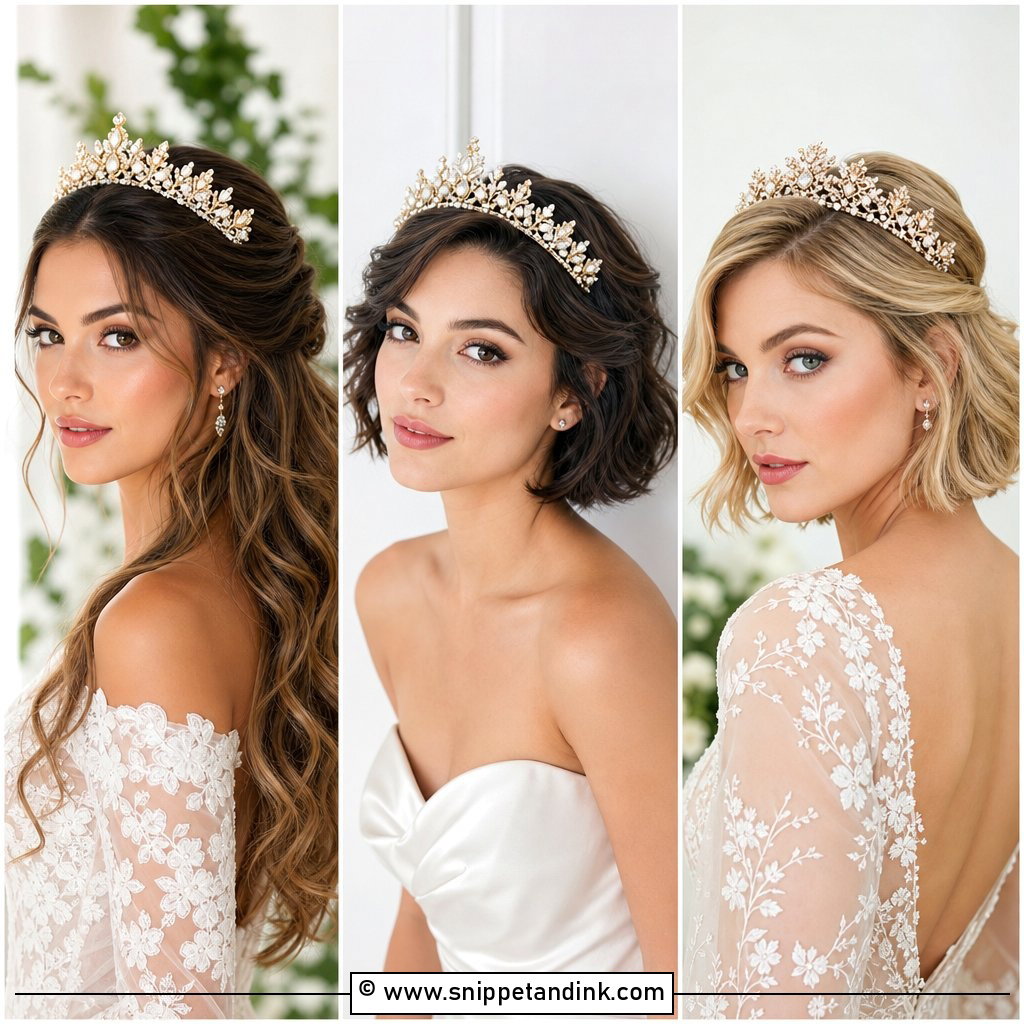
15. Indian Bridal Braided Bun
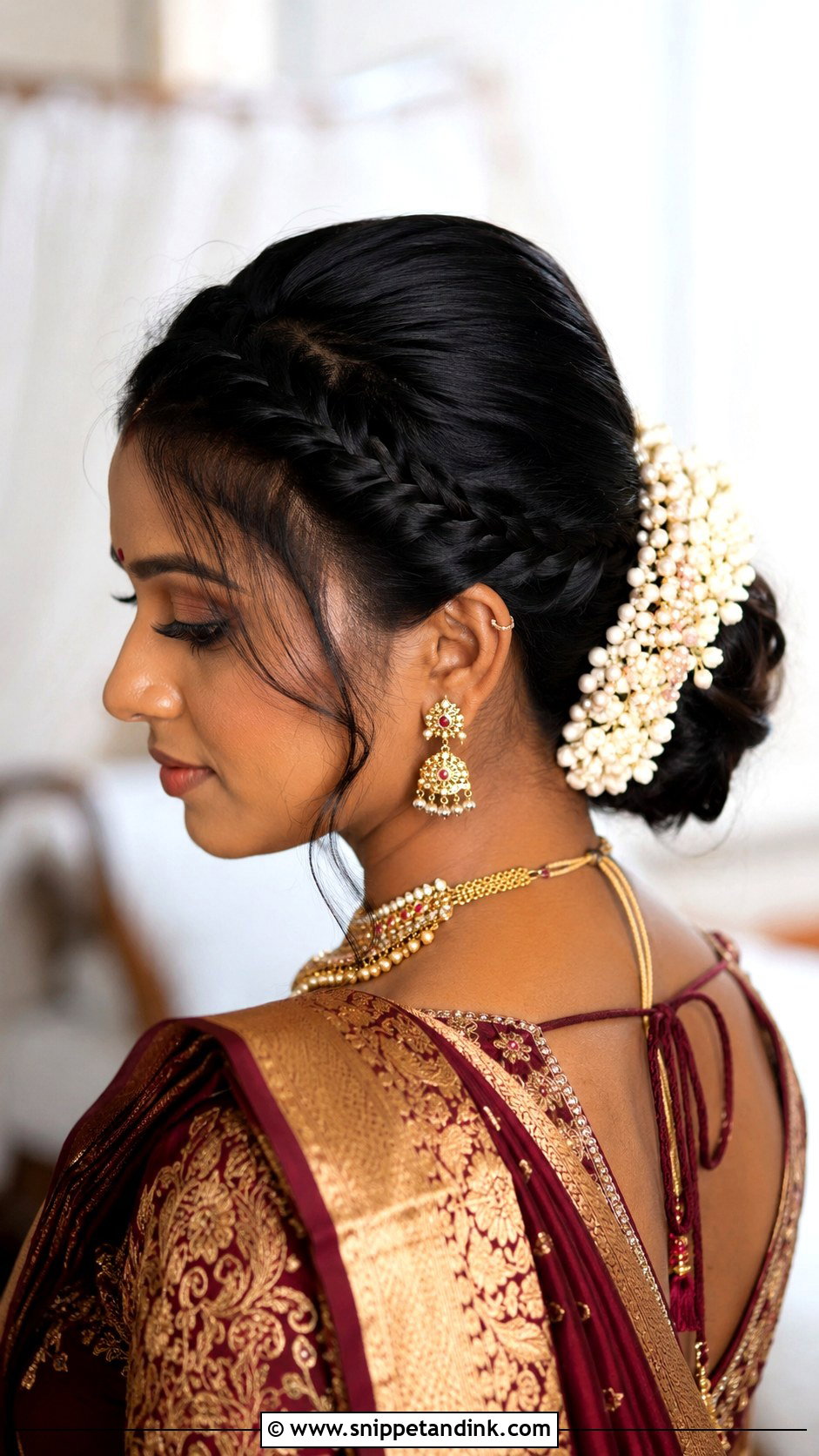
A braided bun gives you a bun’s security with the detail of a braid, without leaving any hair open. The braid can run into the crown, wrap the bun or shape the back. Because it stays compact, a dupatta sits over it well, and it goes with sarees, lehengas, a matha patti and floral accessories. I keep the front smooth with soft volume and put the braided detail at the side or back, where the photographer will catch it during the rituals.
Switching From Ceremony Hair to Reception Hair in Under an Hour
Many brides want two looks on the same day, and the change usually has to fit between photos and the reception entry. I plan both looks together at the trial, because some ceremony styles convert easily and some don’t.
Pairs that convert well
- A bun built over curled hair, which opens into soft waves once the pins come out
- A half-up ceremony style, which only needs the top section loosened and the front re-curled
- A braided crown, which can stay in place while the rest of the hair is let down
A tight sleek bun is the hardest to change, since it leaves a kink and flattened roots. If you want a sleek ceremony look and open reception hair, plan on a quick re-wash and blow-dry or a ponytail instead.
The change itself goes in this order: dupatta off, head jewelry off, every pin out, then fingers before brush. A stylist can usually manage it in thirty to forty-five minutes if someone else is handling your outfit change.
Test It With the Dupatta Pinned and the Earrings In
Your hairstyle has to support the outfit, jewelry, your comfort and the timings of the day. A gajra bun or a sleek low bun suits traditional rituals, while waves, ponytails and half-up styles belong to the reception and sangeet. Braids are for when you want detail people can see, particularly with sarees, flowers and long ornaments. Before the wedding, do a full trial with your dupatta, earrings, maang tikka and blouse. Photograph it from the front, side and back. If it looks right in those pictures and still feels comfortable an hour later, you’ve found it.
You'll Like These Ideas:








Leave a Reply