
The blouse is the piece of a bridal saree or lehenga that sits closest to you all day, and it changes the mood of the whole outfit more than people expect. Neckline, sleeve, embroidery, the back and the fabric all decide which jewellery works and how the drape falls. Some brides want classic red silk with temple jewellery; others want pastel florals, pearls, mirror work or a corset cut. When I help a bride decide, I ask about the ceremony first, then how long she’ll be sitting, then the drape, and only after that the embellishment. A blouse that photographs well but pinches at the armhole by the second ritual isn’t the right one. Below are thirty designs, each with what I’d look out for at the fitting.
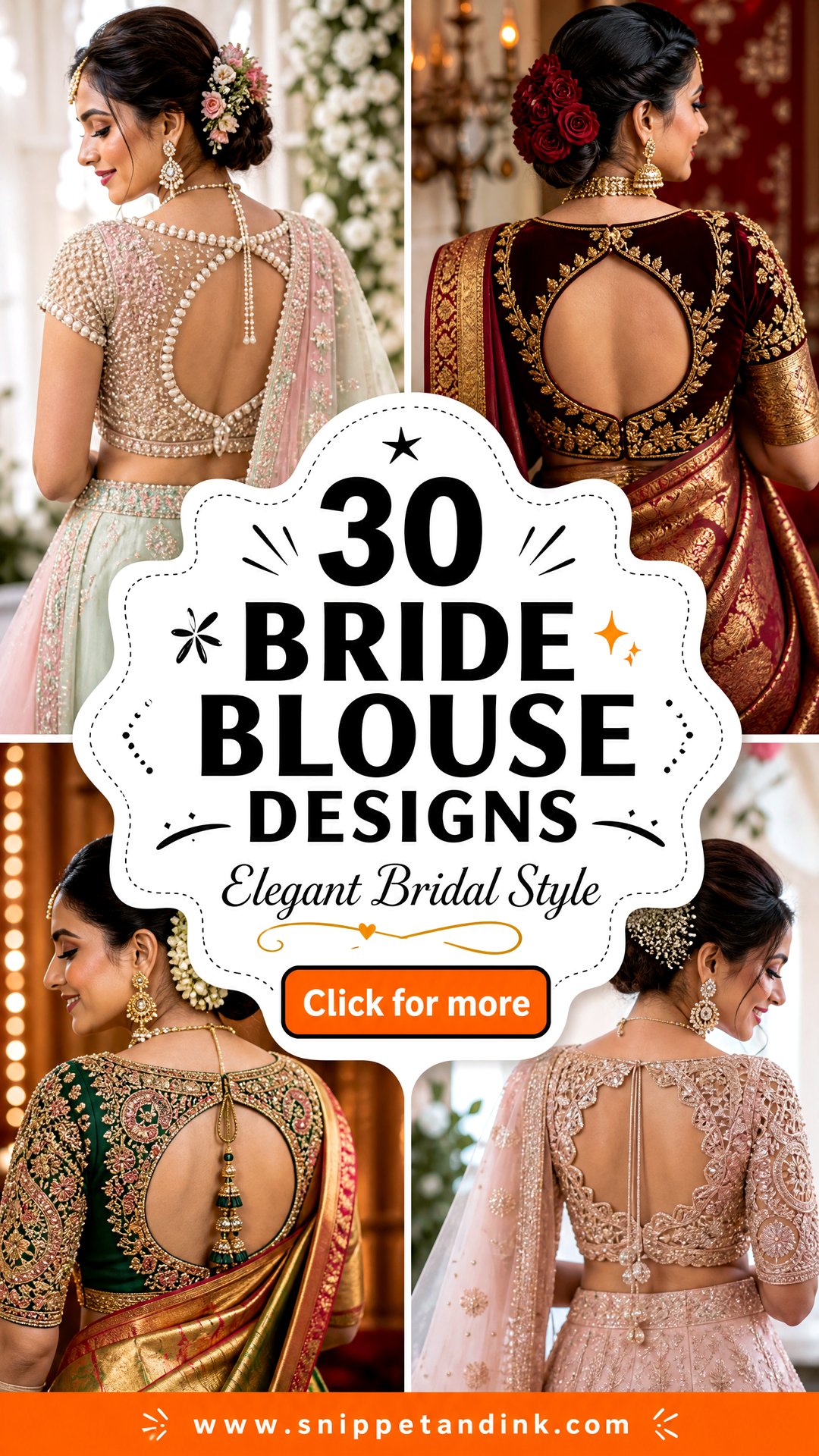
Giving Your Tailor a Blouse Brief That Works
Most blouse problems start with a vague brief. A tailor can’t guess how you’ll drape the pallu or which necklace you’ll wear, and both change where the neckline and embroidery should sit. Before the first measurement, I bring everything that touches the blouse.
- Bring the saree or lehenga, the dupatta and the main necklace. The neckline is cut around the jewellery, not the other way round.
- Decide on padding or cups early, and have them sewn in. Loose pads shift during long rituals.
- Ask for cotton lining, especially under handwork. It absorbs sweat and protects your skin from the back of the embroidery.
- Ask for generous seam allowances. Weight can change in the months before a wedding, and a blouse with spare fabric can be let out.
- Plan time. Handwork such as zardozi, Aari and maggam takes weeks, so I place the order at least two to three months ahead and book a final fitting a week or two before the wedding.
At the trial, wear the full outfit, sit down, bend forward and raise your arms. If you only stand in front of the mirror, you’re testing the one position you’ll hardly use.
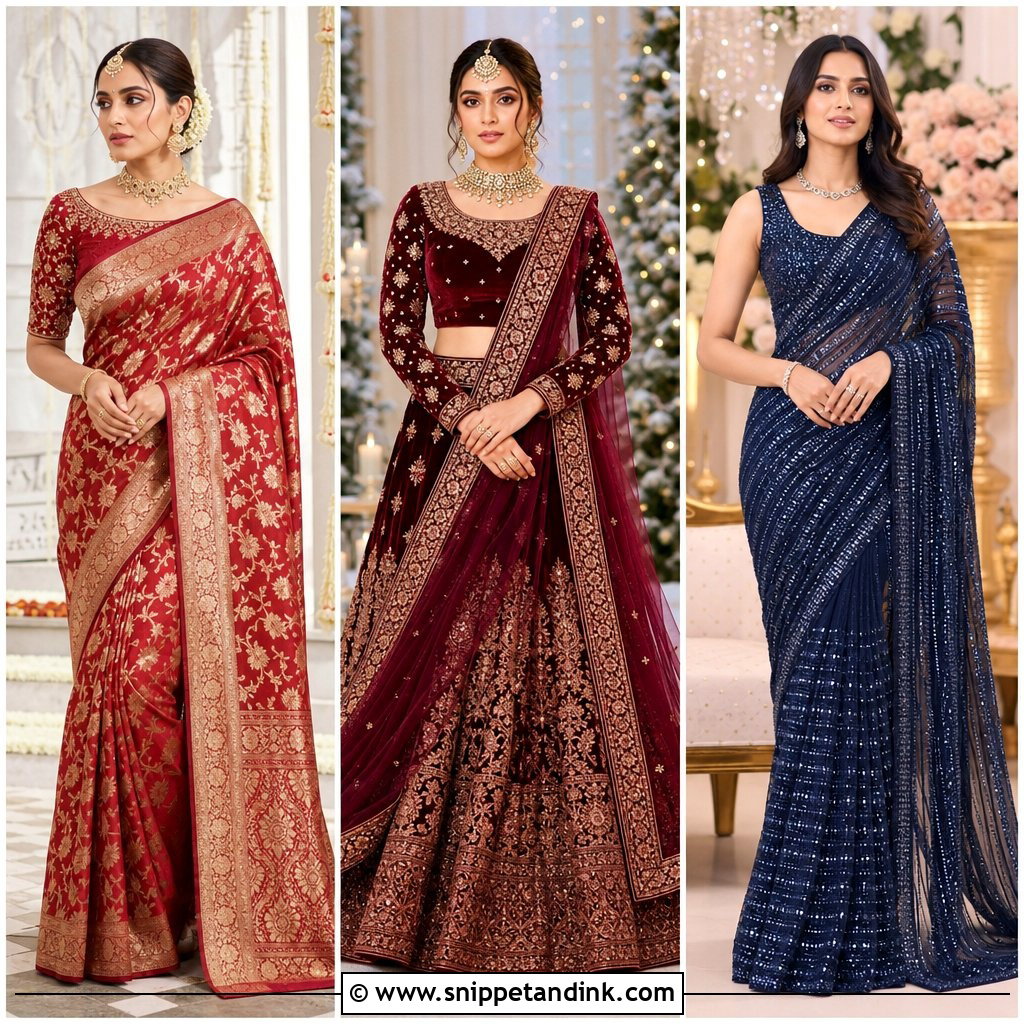
1. Red Bridal Blouse With Silk Saree
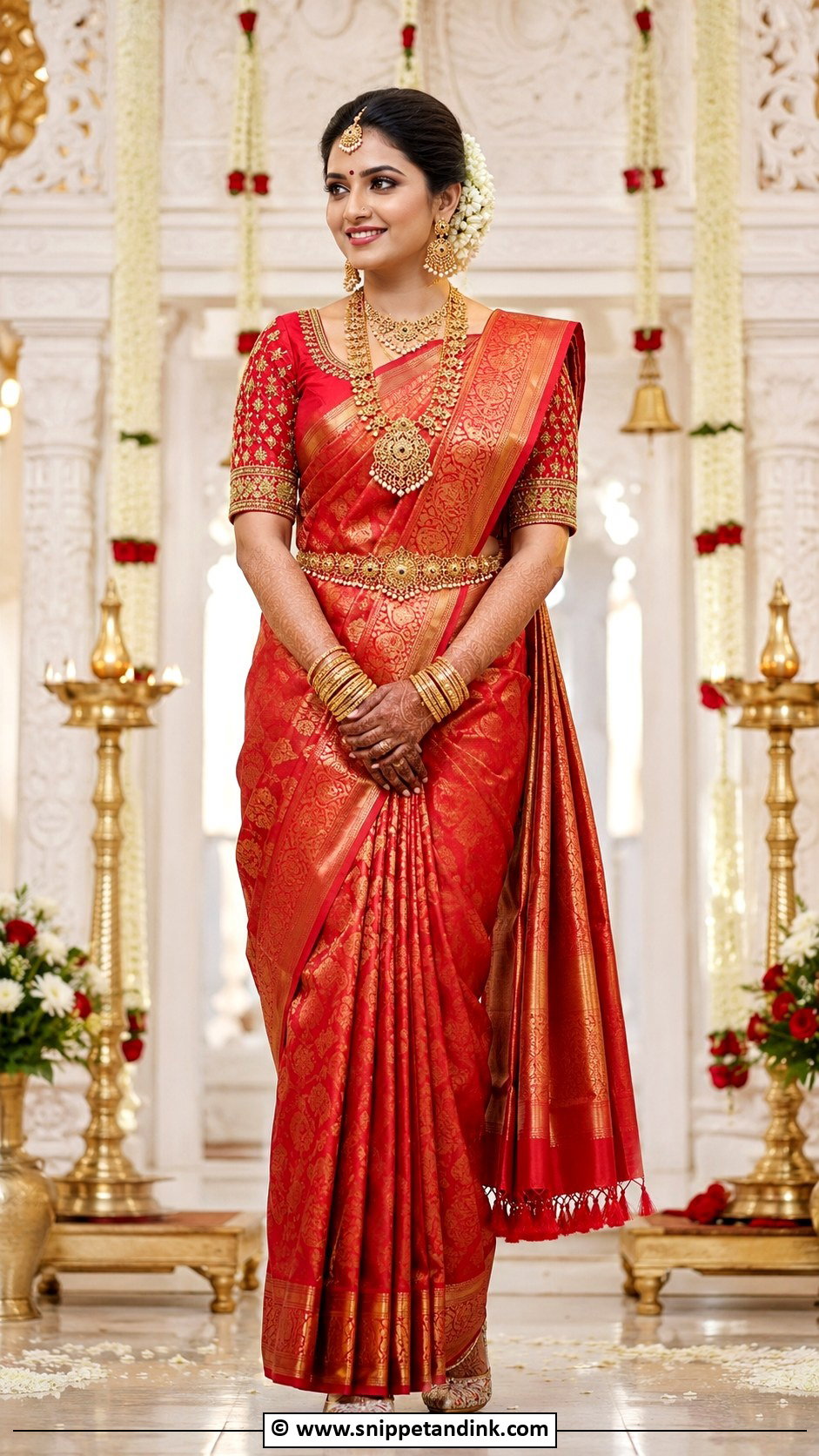
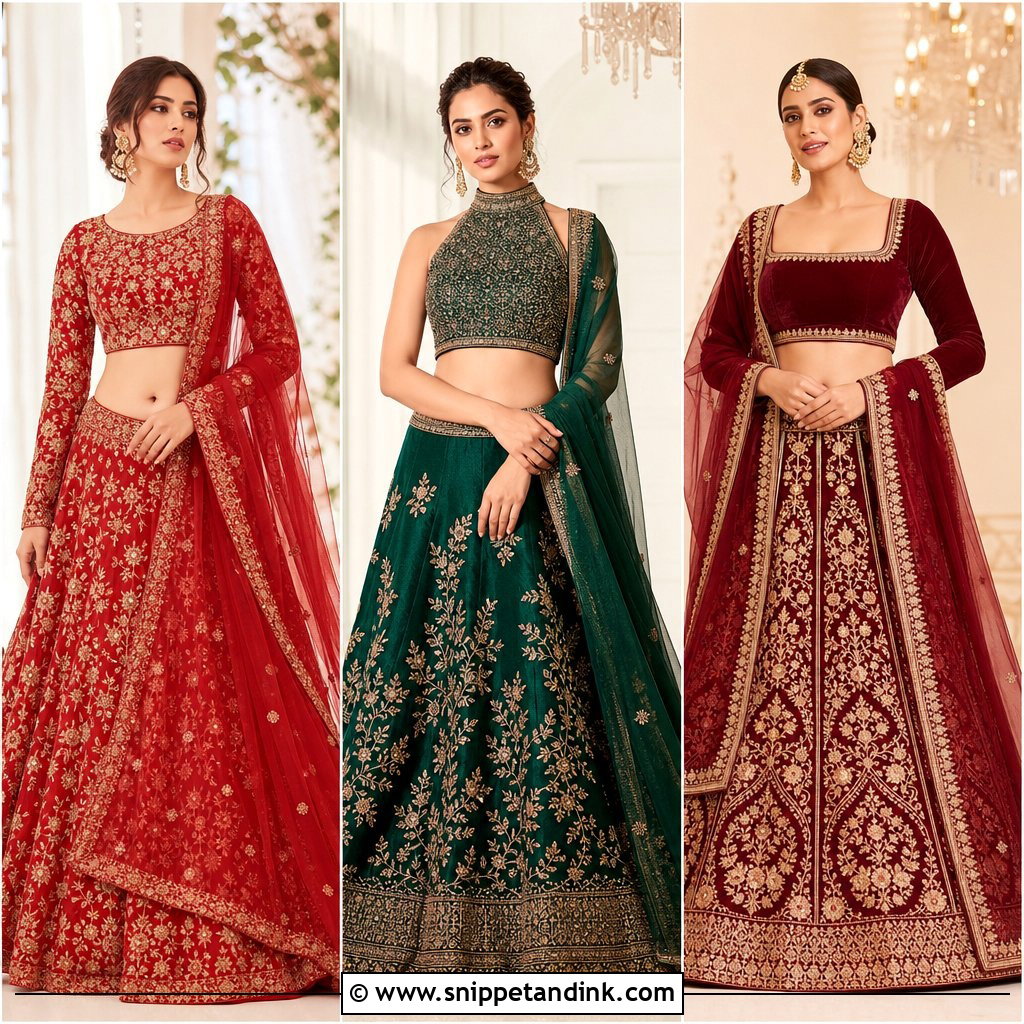
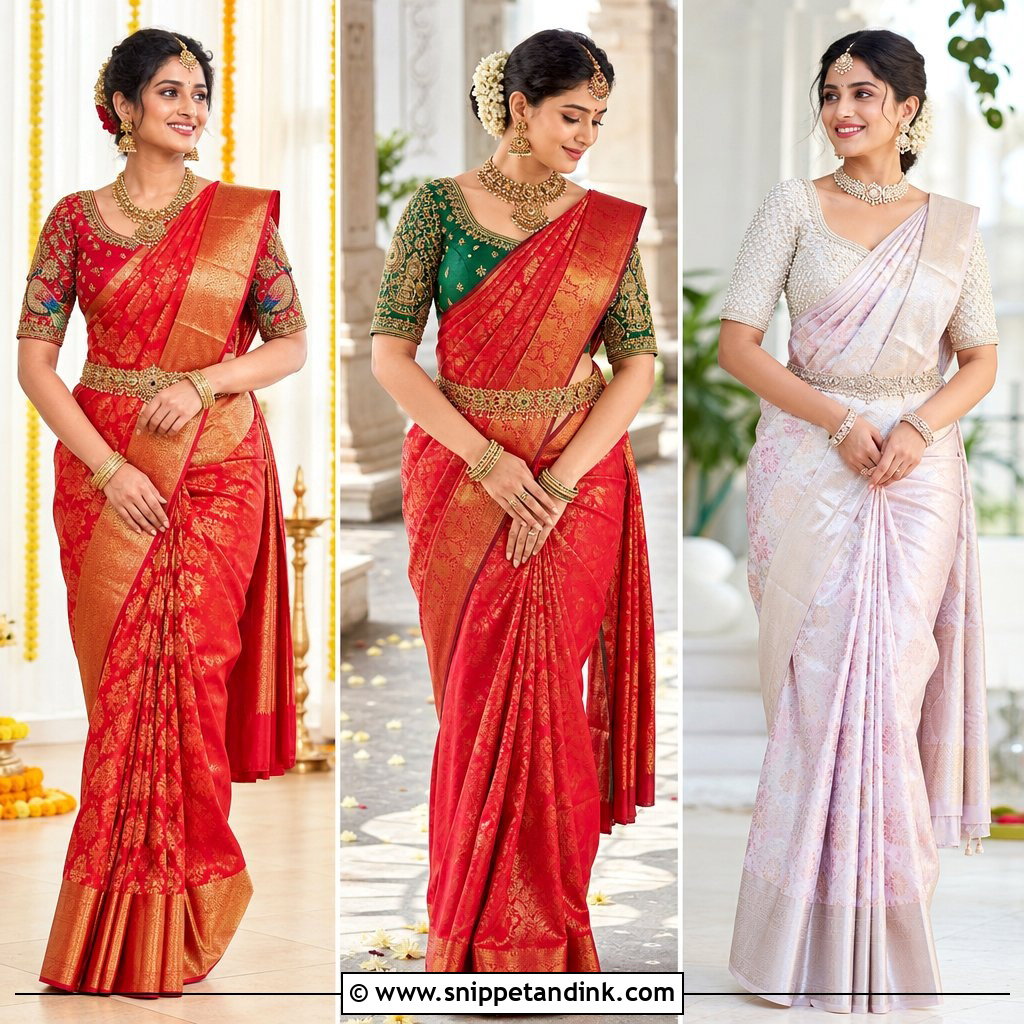
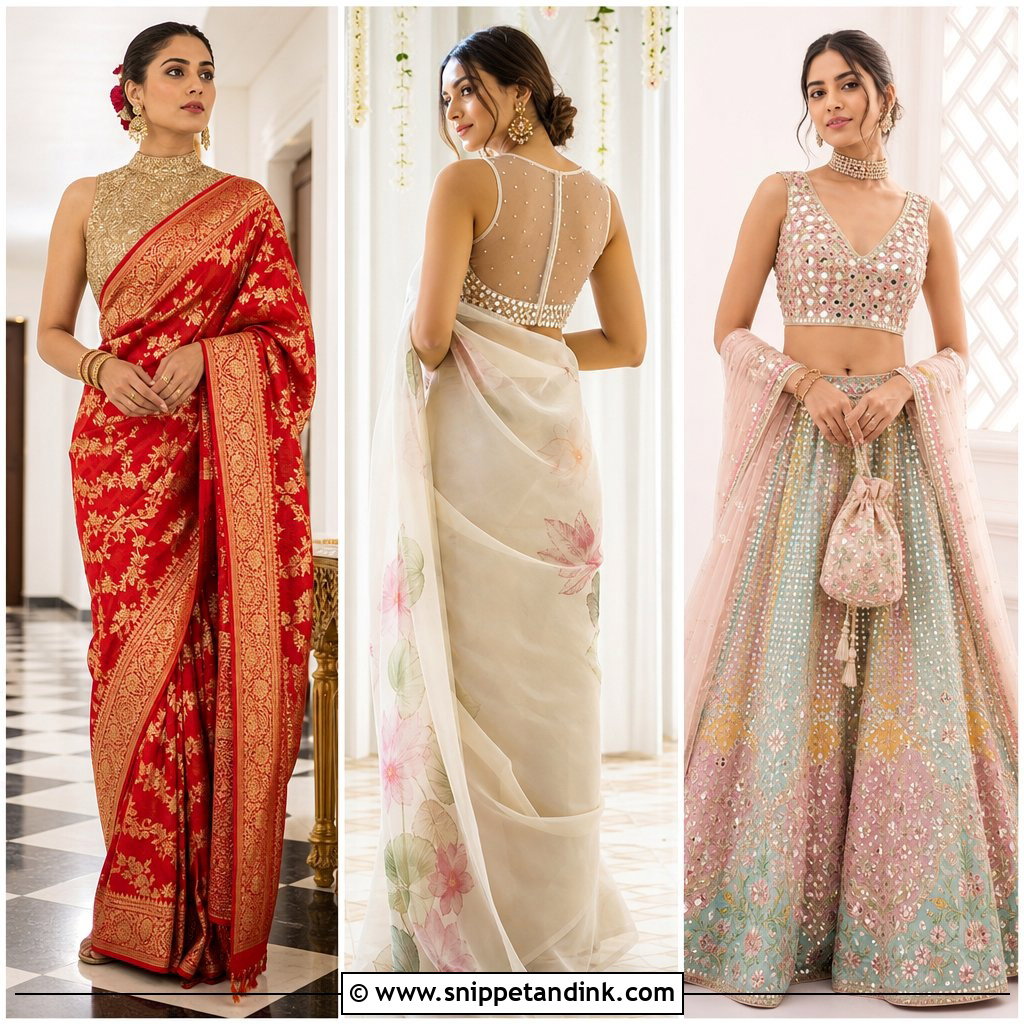
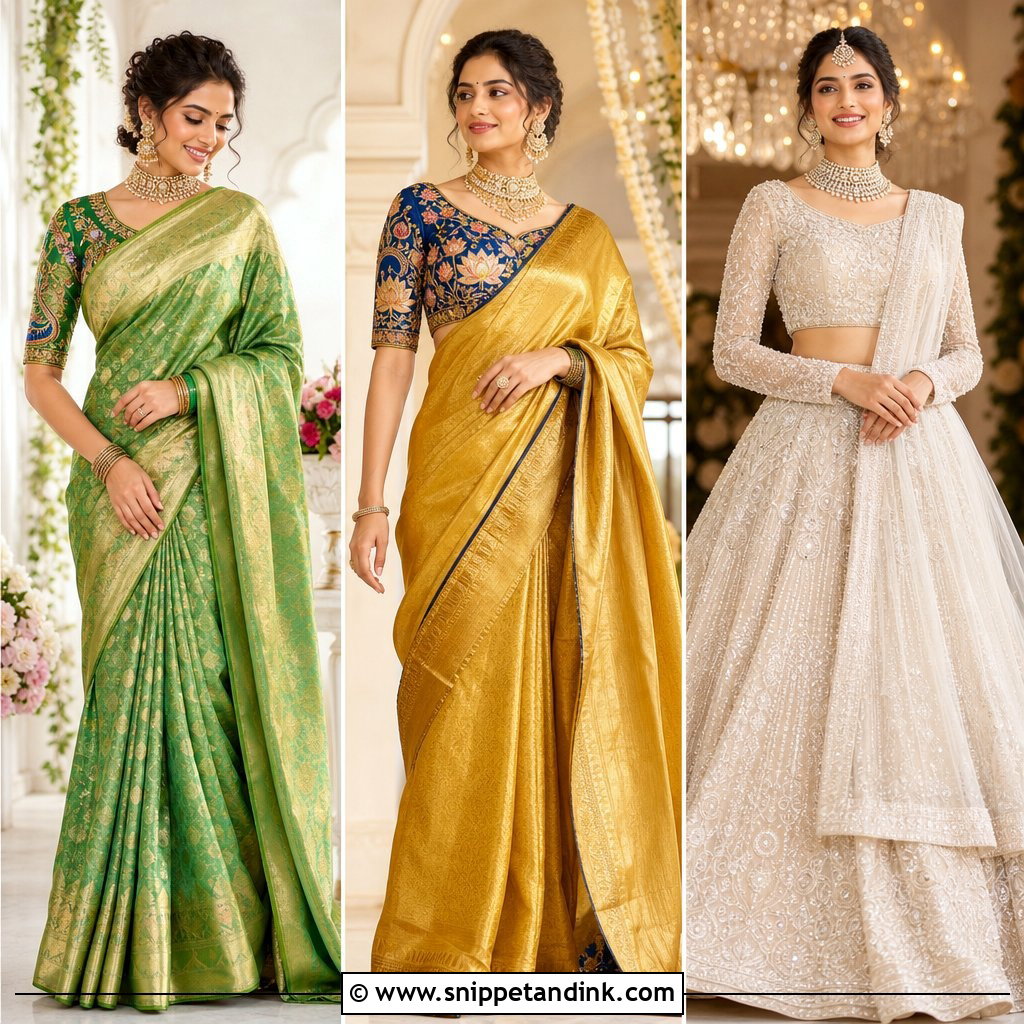
A red bridal blouse with a silk saree is the look most families picture, and it earns that place. Rich red with gold zari, elbow sleeves and a structured round or sweetheart neck, against a red, maroon or gold silk saree. Temple jewellery, layered necklaces, bangles and a sleek bun with fresh flowers complete it. I always match the reds in daylight, not in the shop’s warm lighting: a blue-red blouse beside an orange-red saree looks mismatched in every photo. The fit should be close at the shoulders so the pallu has something firm to sit on without dragging the sleeve down.
2. Gold Bridal Blouse With Red Lehenga
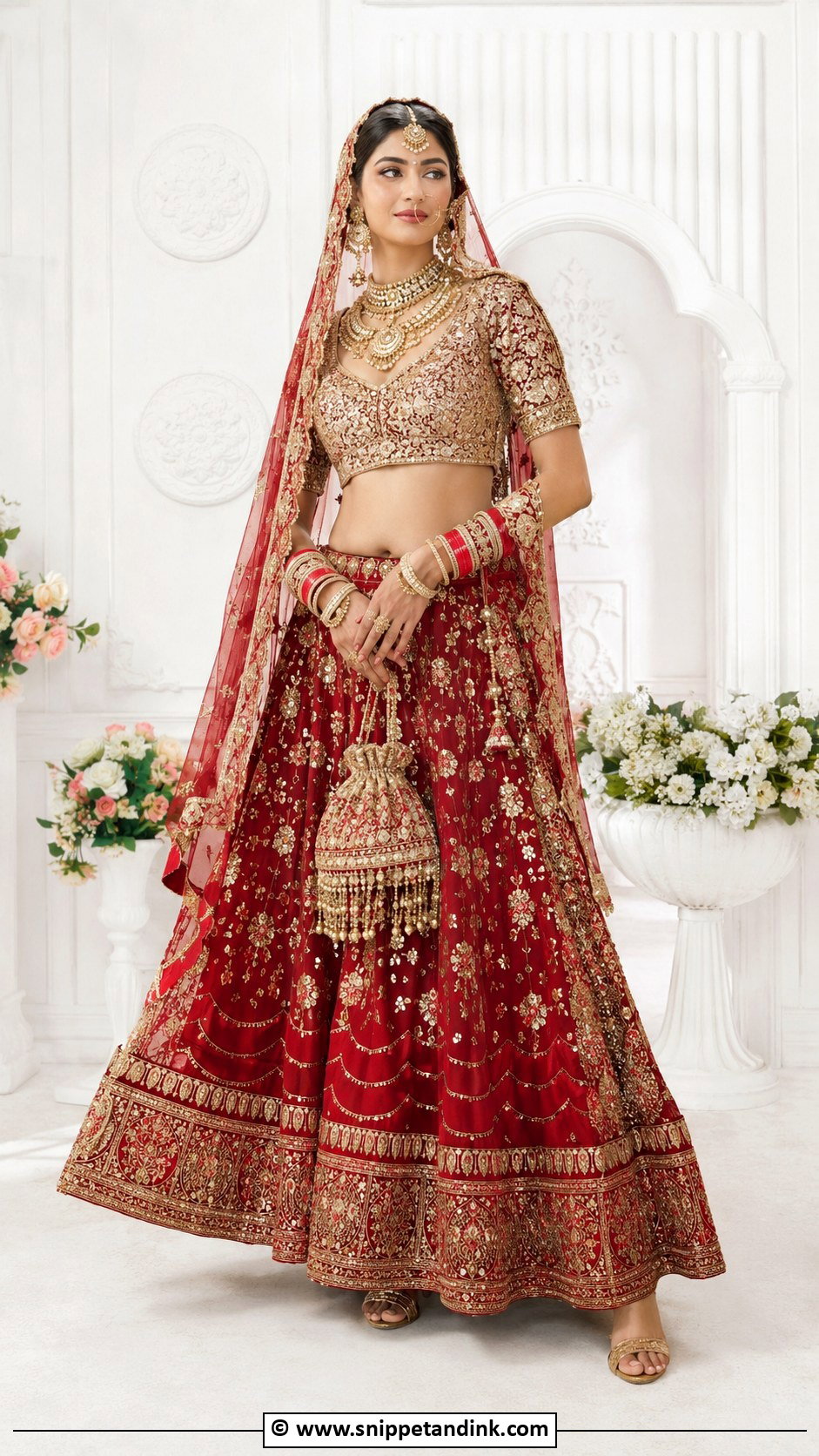
Gold against a red lehenga gives contrast without making the outfit heavier. A gold blouse with zardozi, sequin or thread embroidery, with a deep red skirt and matching dupatta. Half or elbow sleeves, and a slightly deeper neck to let some skin break up all that richness. Add a choker, long necklace, maang tikka and embroidered juttis or platform heels. One quiet advantage: a gold blouse is the easiest bridal piece to rewear afterward with sarees and festive skirts, so it’s worth paying for good lining.
3. Full Sleeve Bridal Blouse With Lehenga
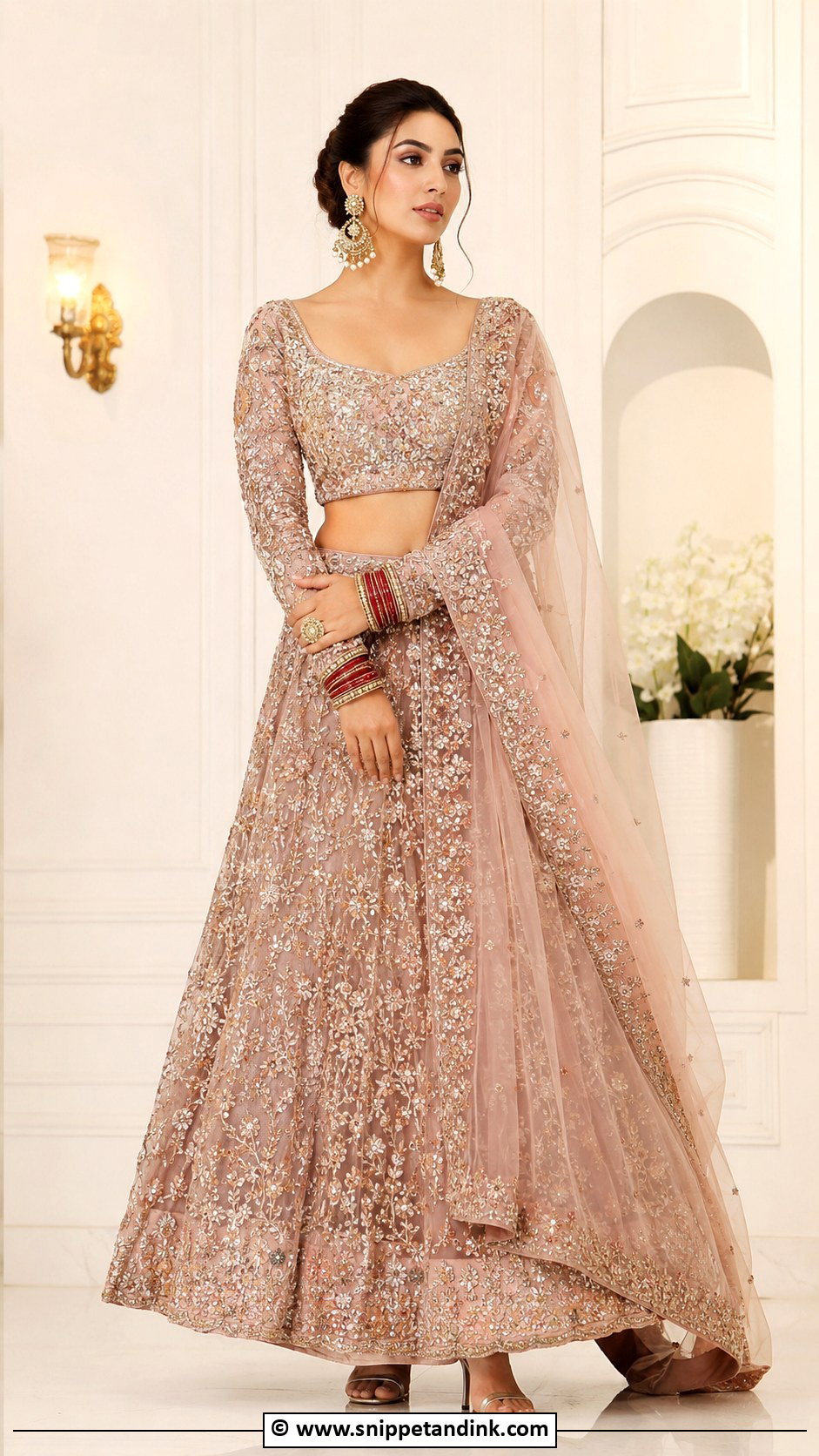
Full sleeves give coverage and a finished look from every angle, and they’re the first thing I suggest for winter weddings and evening ceremonies. Sheer net sleeves with embroidery, velvet with zari, or silk with a border all work. Pair the blouse with a heavily embroidered lehenga and a lighter dupatta so the top half doesn’t feel weighed down. My fitting check is to raise both arms as if putting on a garland. Fitted full sleeves without enough ease at the armhole pull the whole blouse upward, and you’ll do that movement many times. Statement earrings, a centre-parted bun and soft makeup finish it.
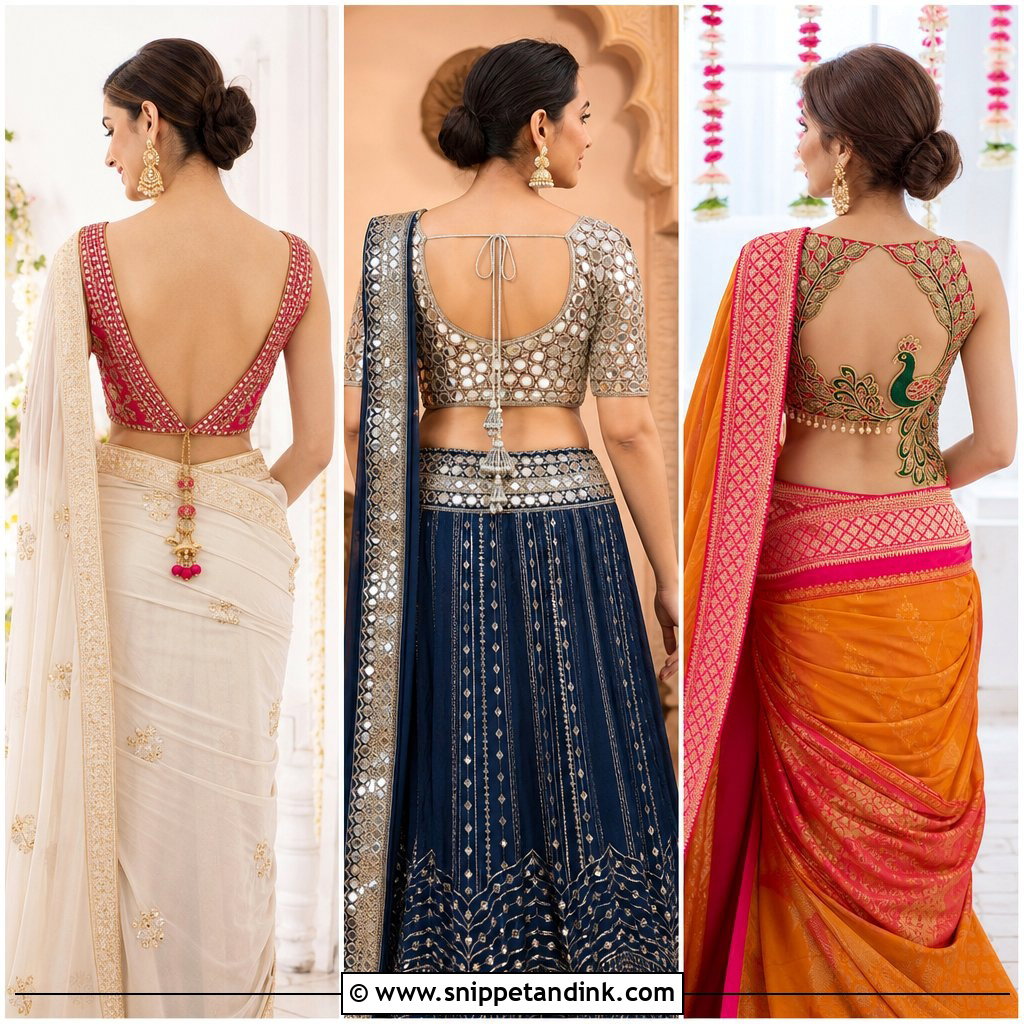
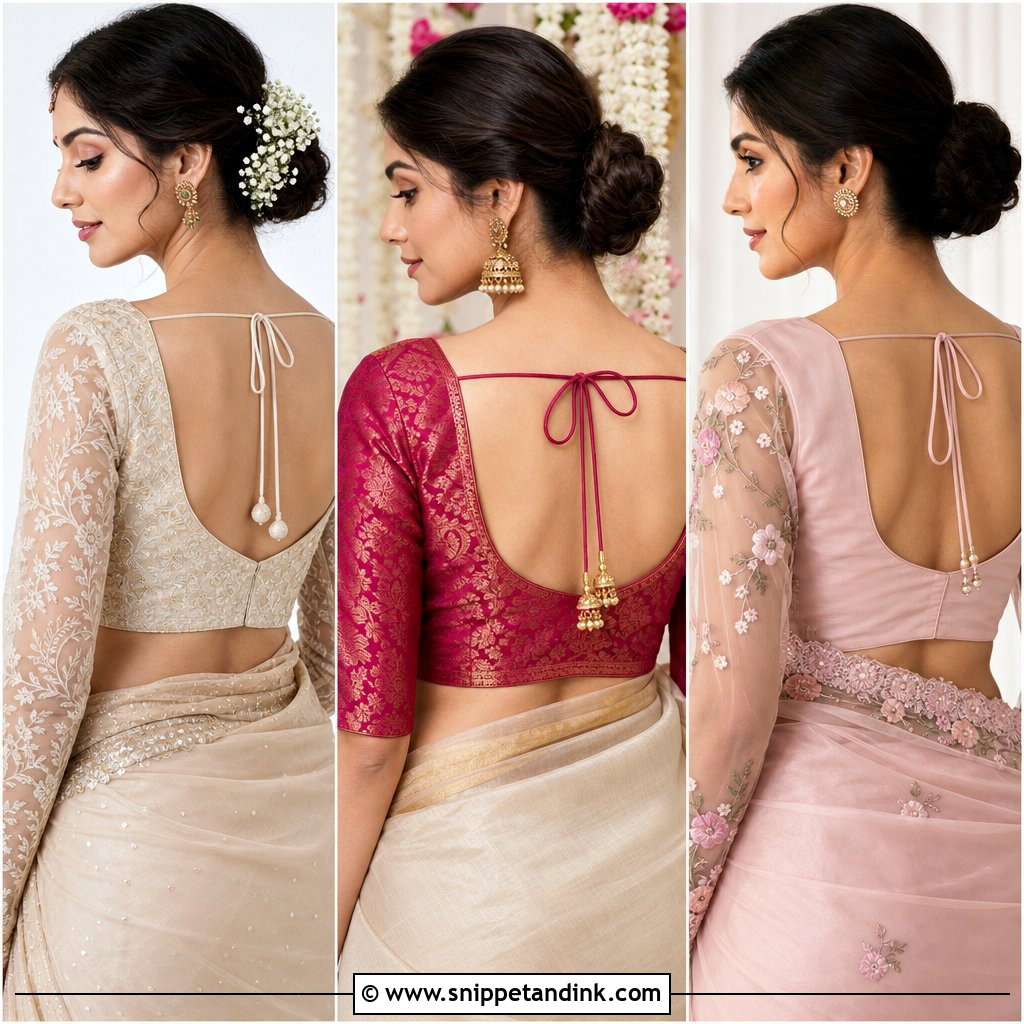
4. Backless Bridal Blouse With Saree
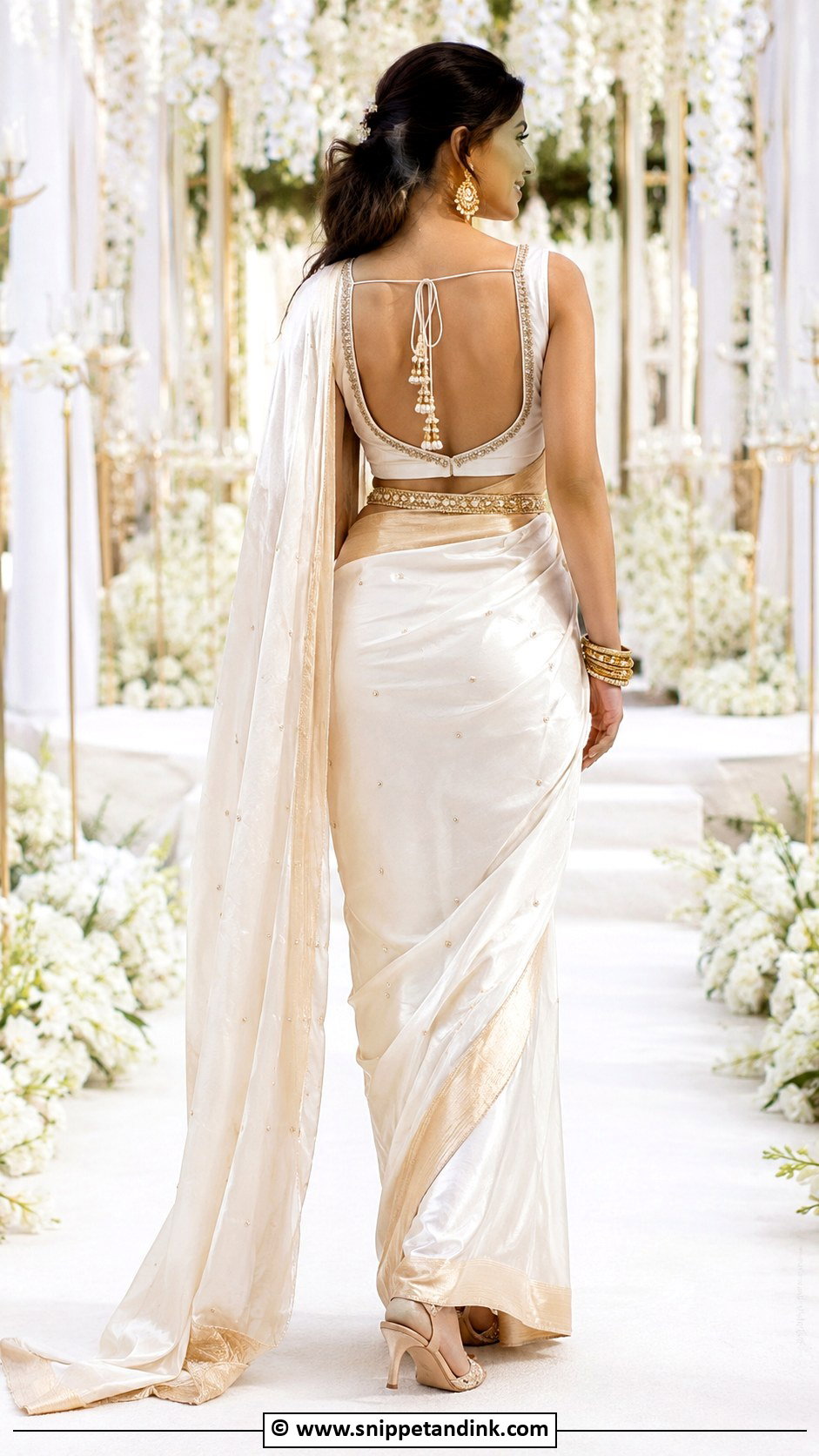
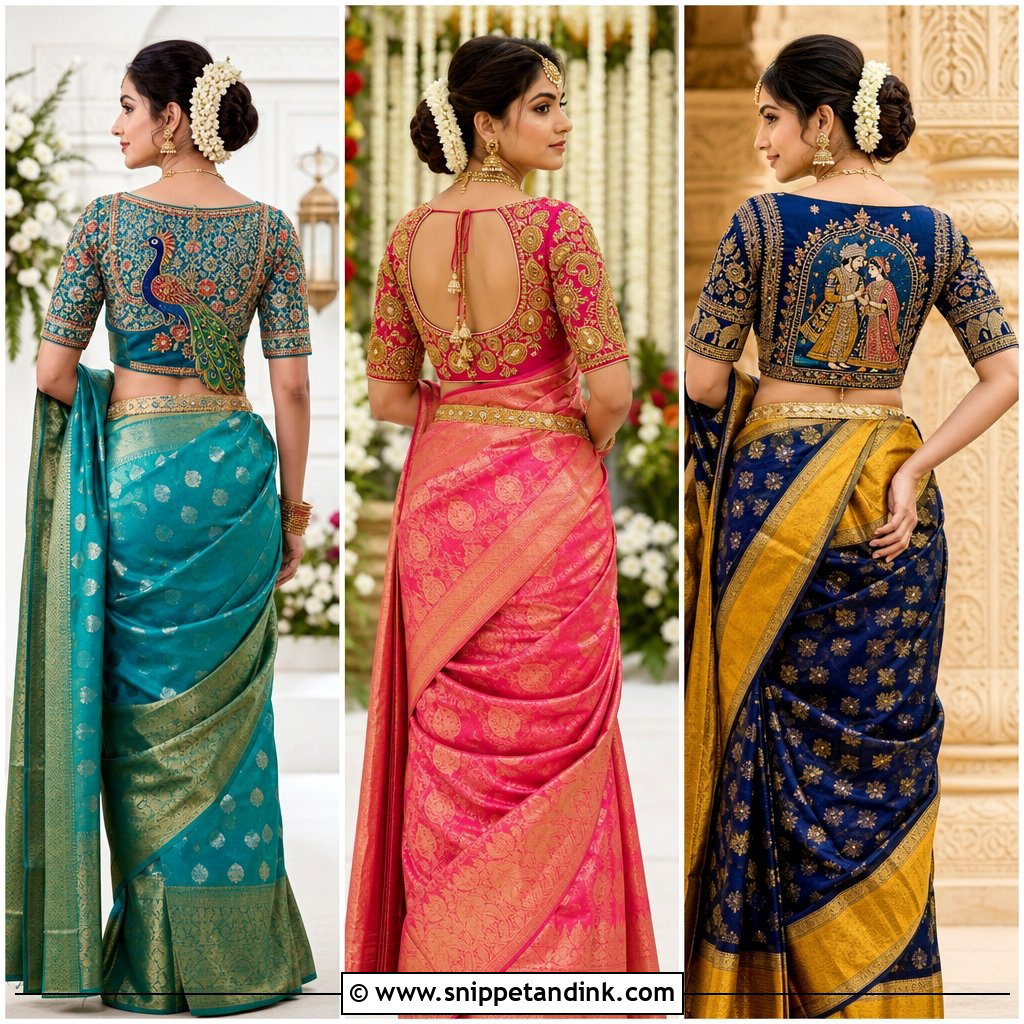
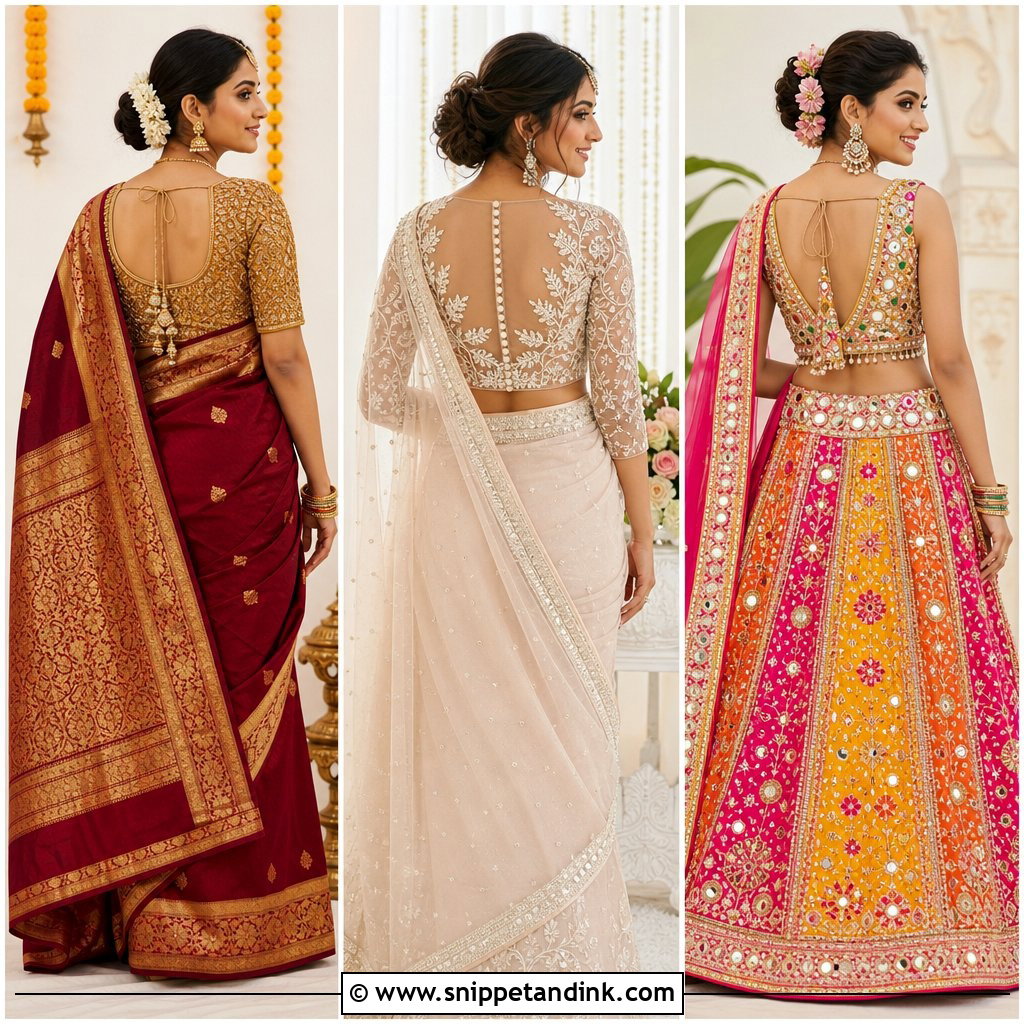
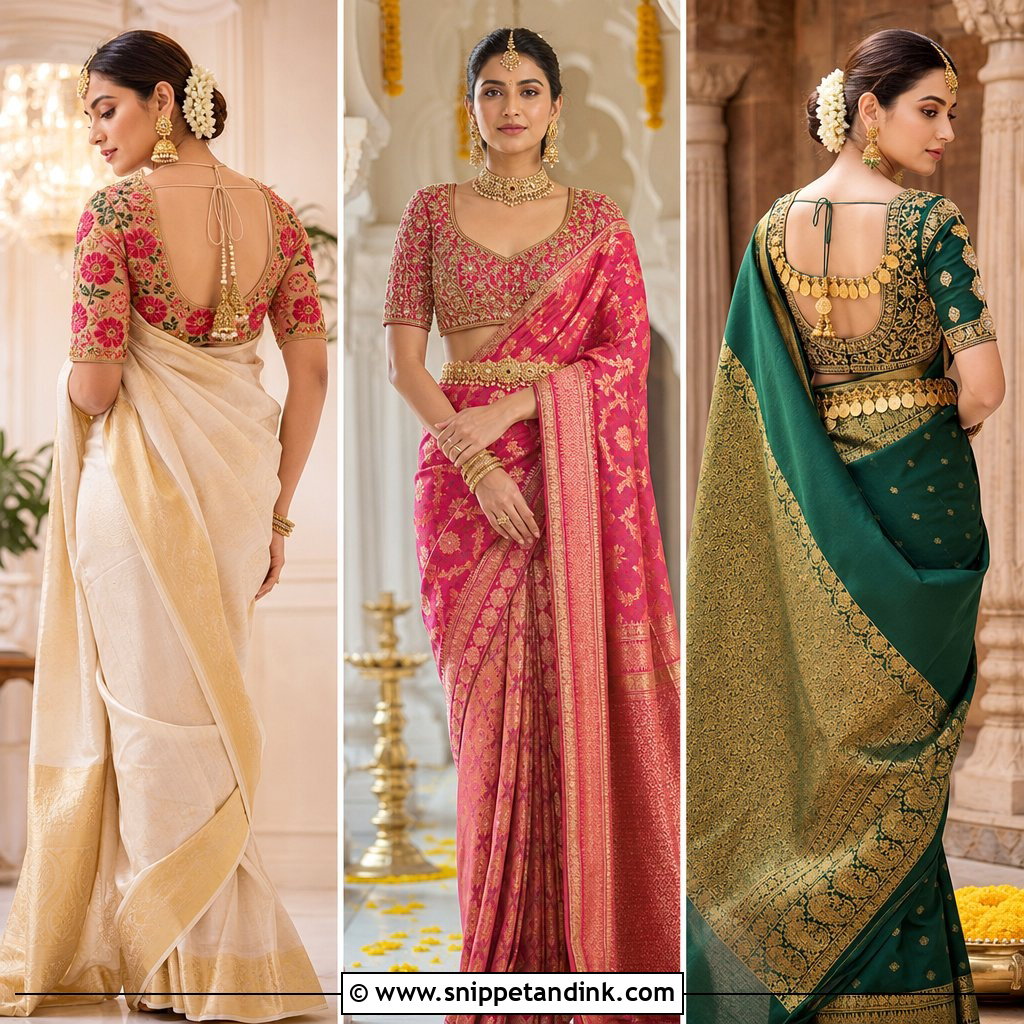
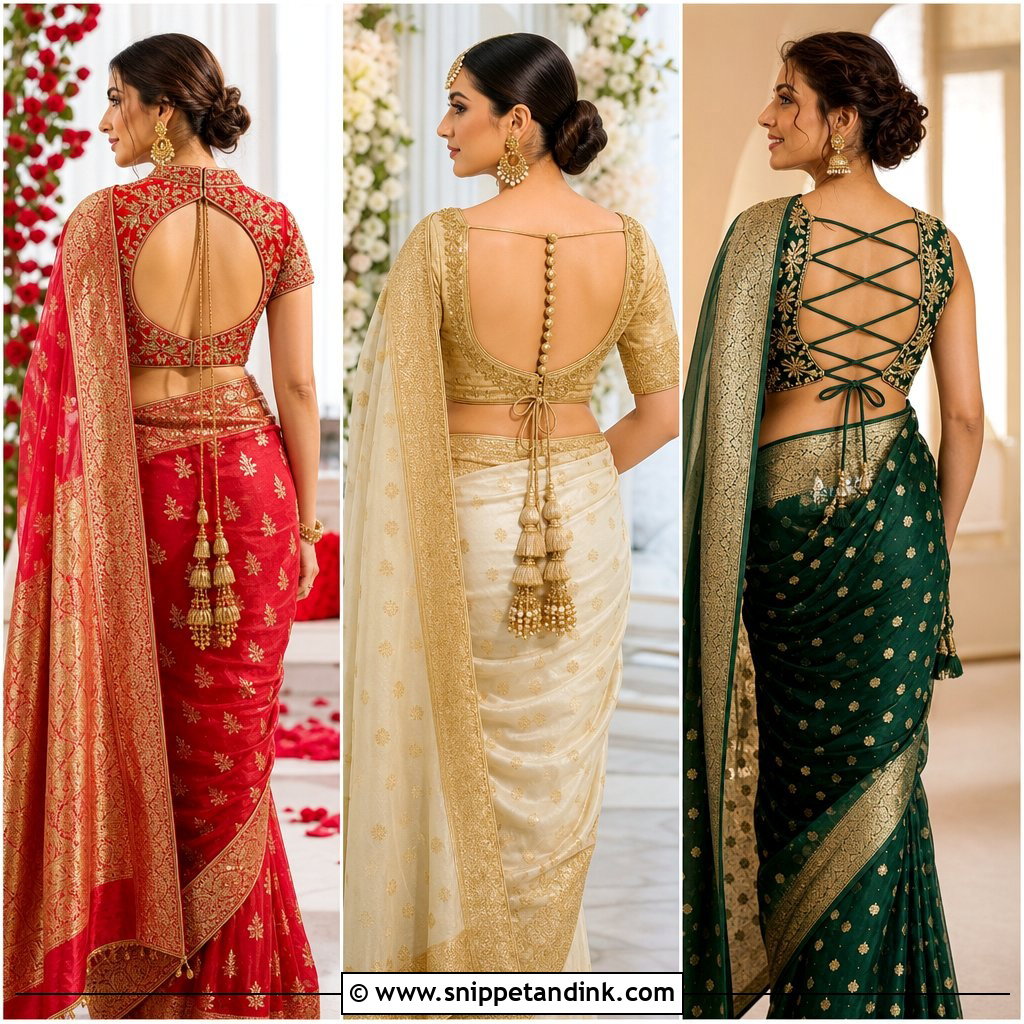
A backless blouse needs more engineering than any other design here. A secure tie-up back, embellished tassels or a wide embroidered border around the opening, with a silk, georgette or organza saree depending on formality. Without a back band, support has to come from built-in cups and a well-shaped front, so I ask the tailor for padding sewn in, not loose. Keep the front neckline modest when the back is dramatic. Long earrings, a neat bun and a waist belt keep it bridal. Tie dori tight enough to hold but not so tight that it marks the skin by evening.
5. Deep Neck Bridal Blouse With Dupatta
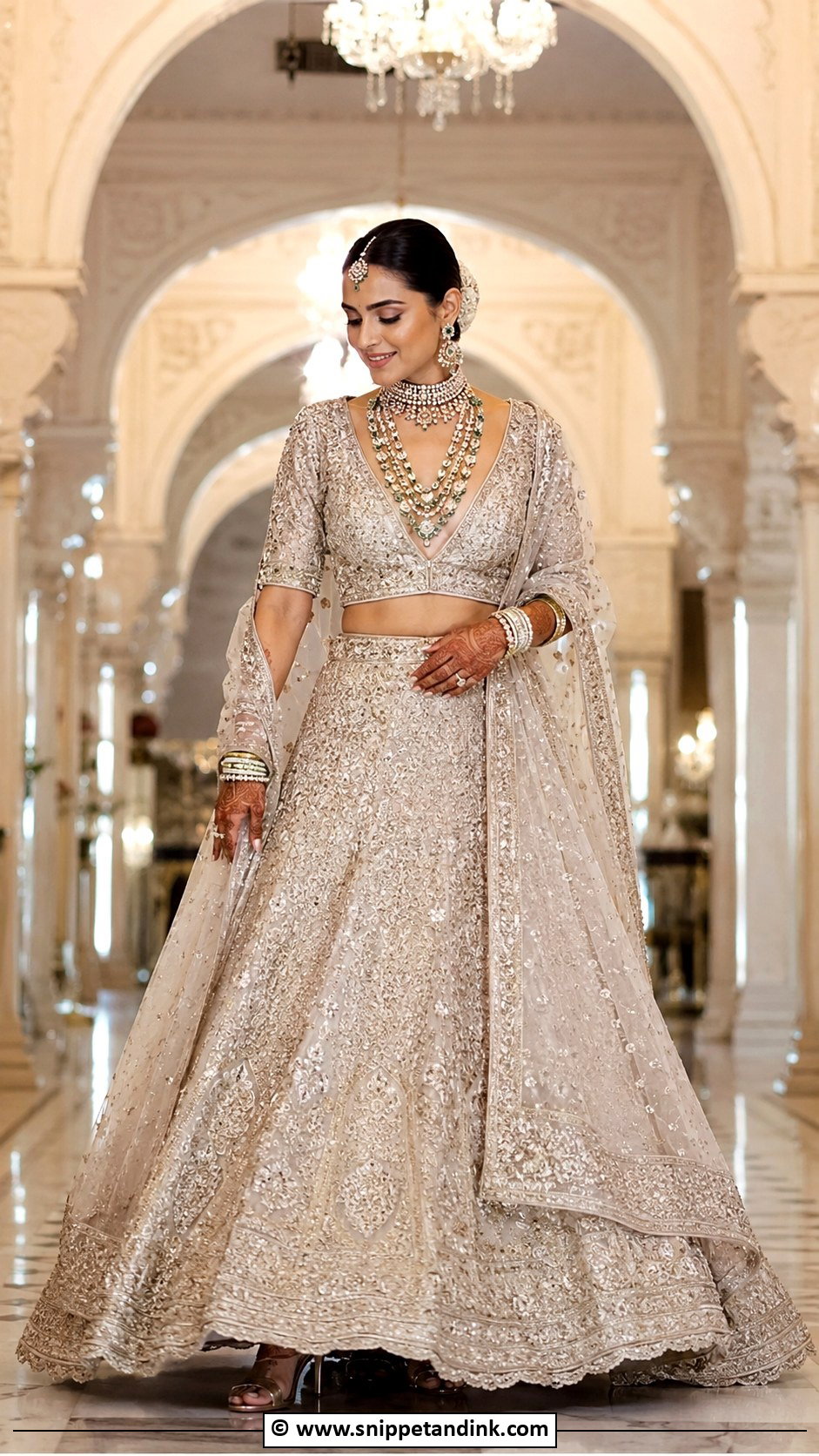
A deep neck works when the proportions are right and the dupatta is pinned with care. V, sweetheart or deep U, with a lehenga or saree, and embroidery around the edge so it frames the face. If the blouse is heavy, choose a soft net or organza dupatta that lets the work show through. I’d test the depth while bending forward at the fitting, since a neckline that’s fine standing can gape when you lean in for rituals. Layered necklaces, a choker and a fine maang tikka add the bridal finish without losing tradition.
6. High Neck Bridal Blouse With Saree
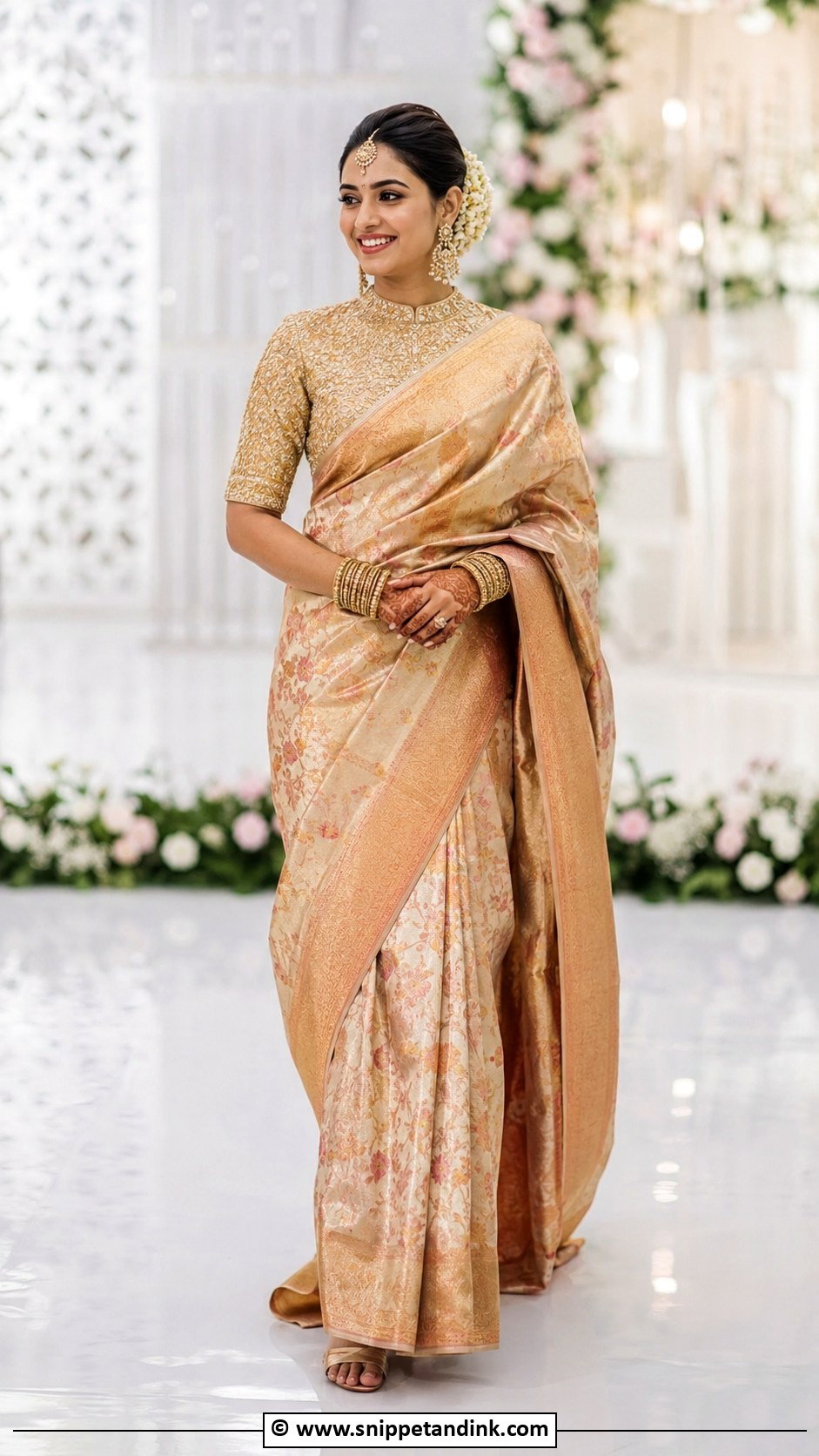
High necks give a regal, structured look, especially with silk and Banarasi weaves. Delicate embroidery, beadwork or zari along the collar and sleeves. With the neck covered, I skip the heavy choker and let earrings, bangles and a bold maang tikka carry the jewellery. The collar height matters: too high and it creases under the chin every time you look down at the mandap, so I keep it just below the jawline’s natural fold. A sleek bun or braid keeps the collar visible in close portraits and full-length shots.
7. Sweetheart Neck Bridal Blouse With Lehenga
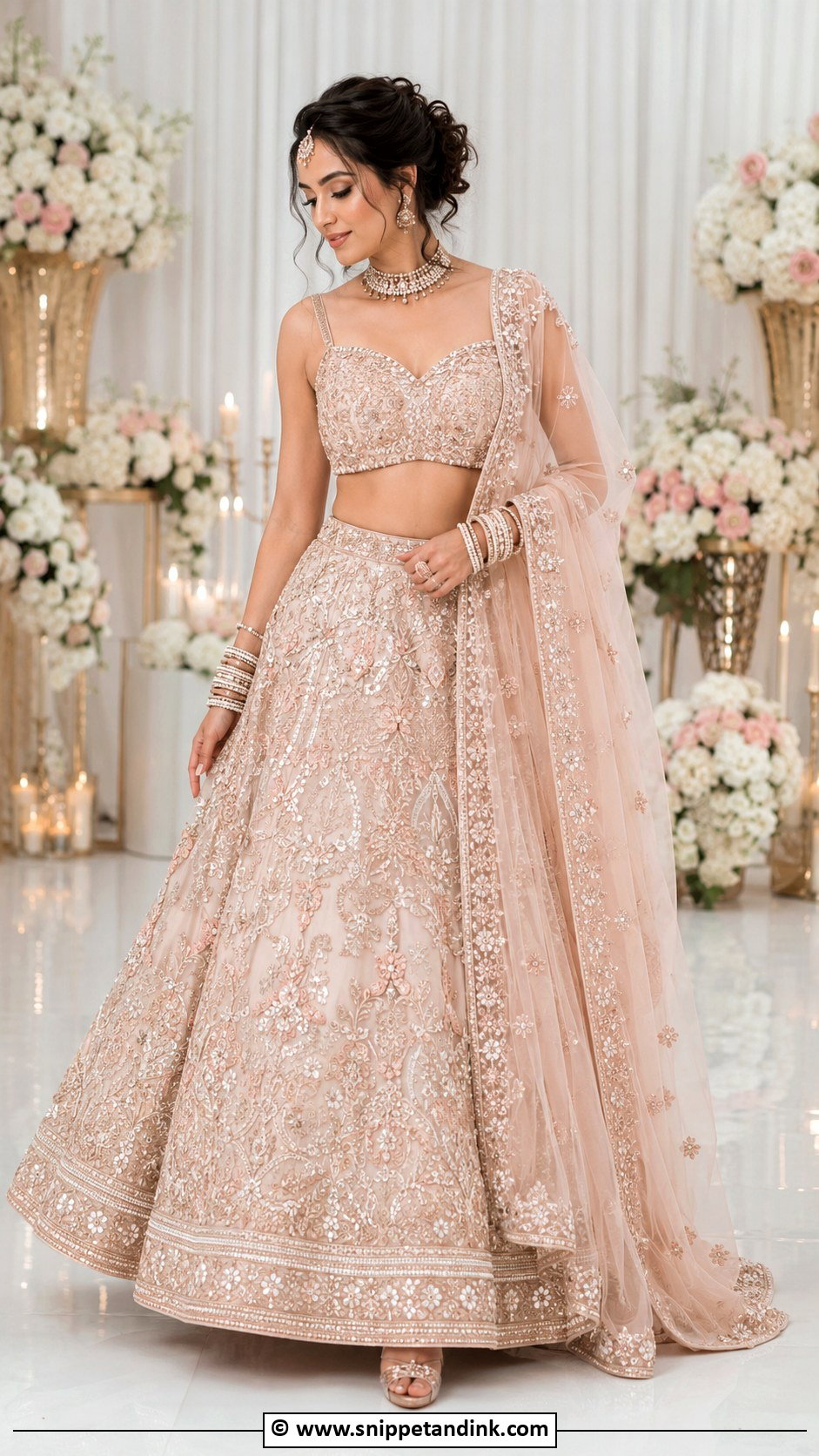
Sweetheart necklines soften a heavily embroidered outfit. The curve flatters the collarbone and takes both a delicate choker and layered necklaces. Red, blush, gold, ivory or emerald, with a matching lehenga and a dupatta over one shoulder. It’s romantic without being revealing, which makes it a safe middle ground when the family’s expectations and the bride’s taste differ. The curve needs a firm underlining so the dip at the centre doesn’t fold inward. Bangles, earrings and embroidered heels balance it.
8. Square Neck Bridal Blouse With Silk Saree
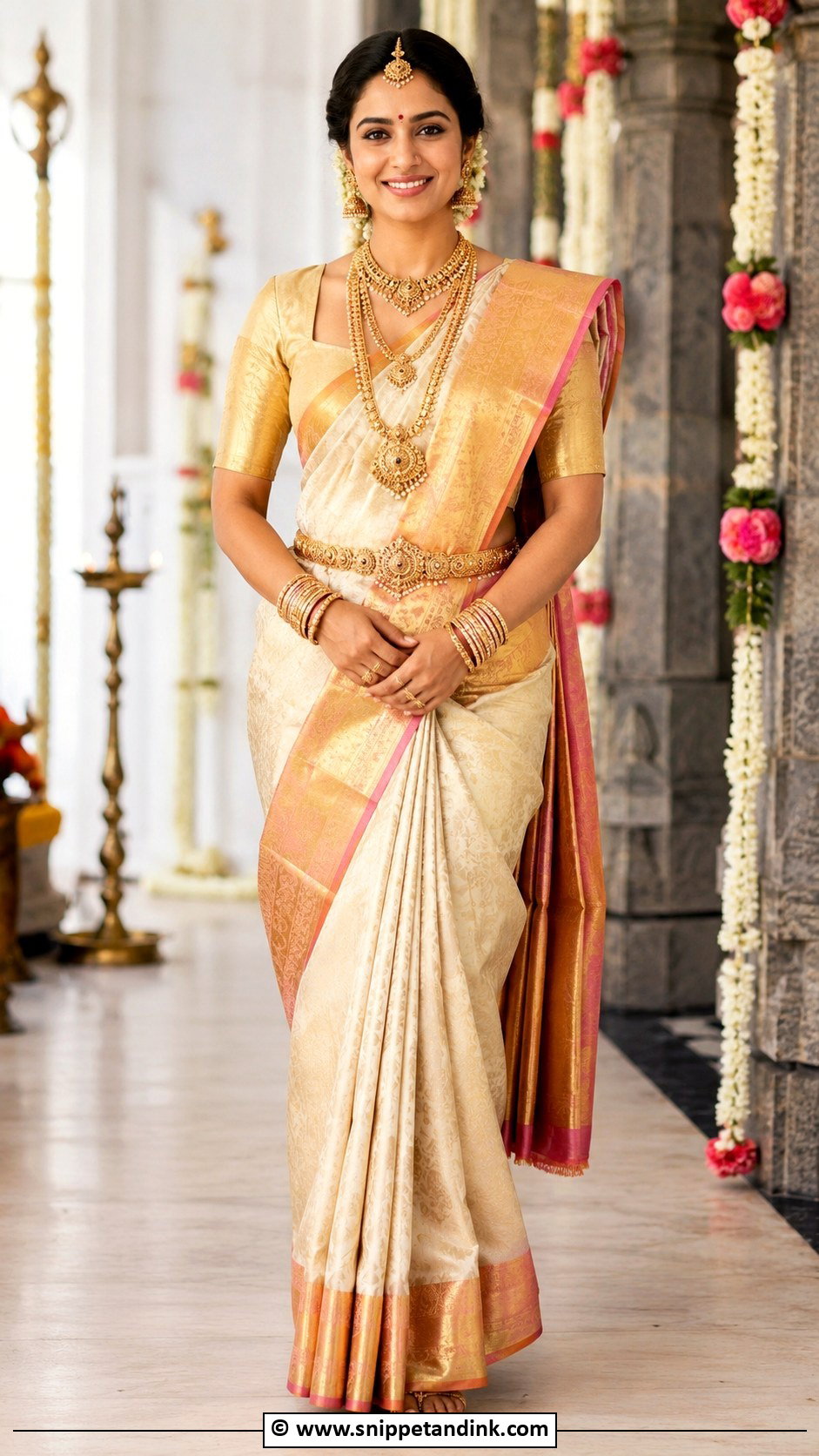
A square neck with a silk saree is neat and quietly flattering, and it leaves a clean frame for heavy jewellery. Choose a silk blouse with zari borders, buttas or subtle handwork, and pair it with Kanjivaram, Banarasi or Paithani. Temple necklaces and layered gold chains sit perfectly inside the square. Short, elbow or puff sleeves all work. Ask for the corners to be stay-stitched and lined; square necks stretch at the corners when the fabric is soft, and a rounded square looks careless.
9. Boat Neck Bridal Blouse With Lehenga
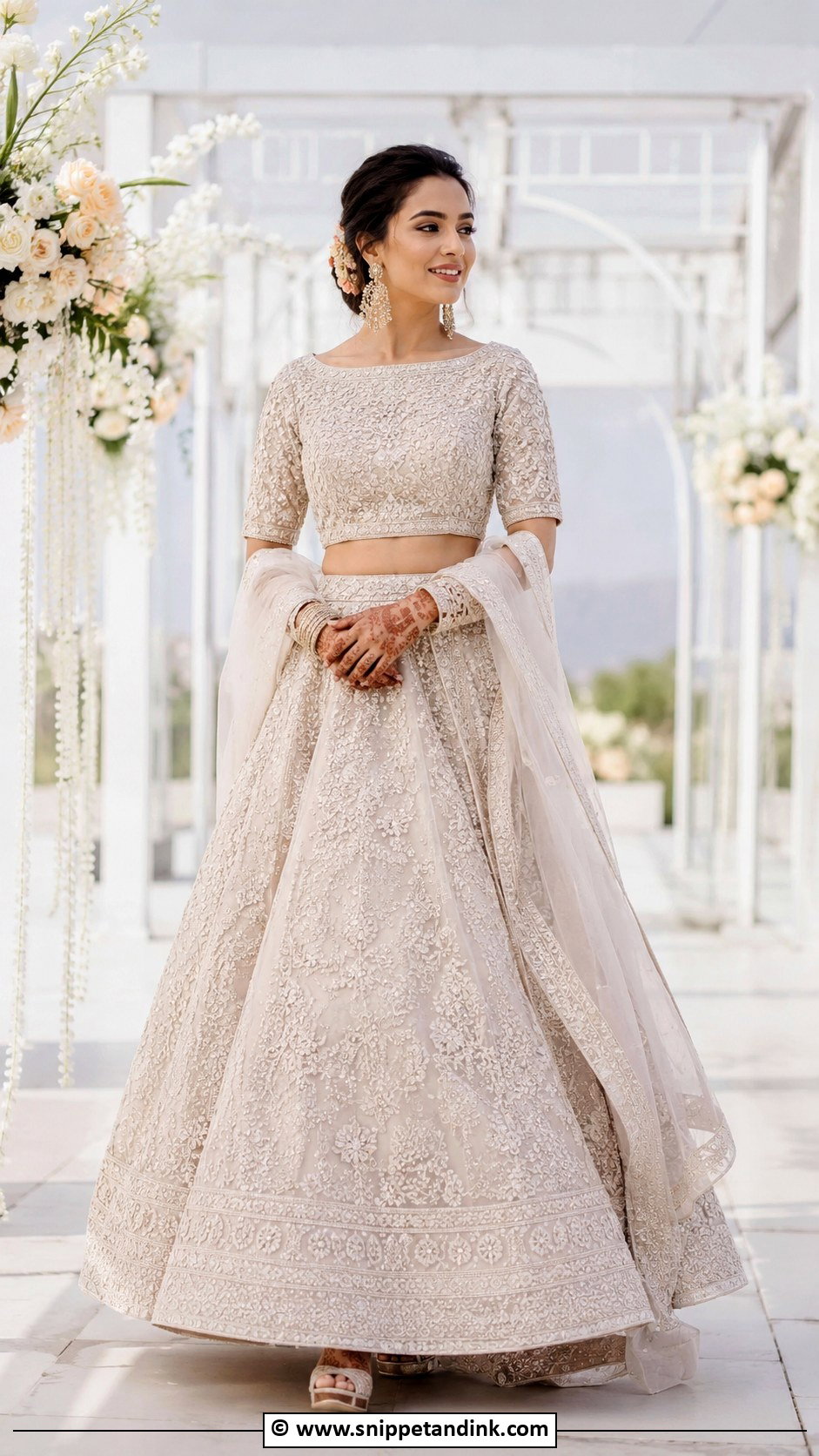
Boat necks sit wide across the collarbone and give coverage that still looks deliberate. Embroidery along the neckline and sleeves, a flared lehenga and a light dupatta. Because the neckline does the work, long earrings suit it better than a heavy necklace. The risk is slipping: a wide neck on narrow shoulders slides toward one arm, so I have the tailor add lingerie guards inside the shoulder seams. A low bun, soft makeup and embellished heels finish it.
10. Mirror Work Bridal Blouse With Lehenga
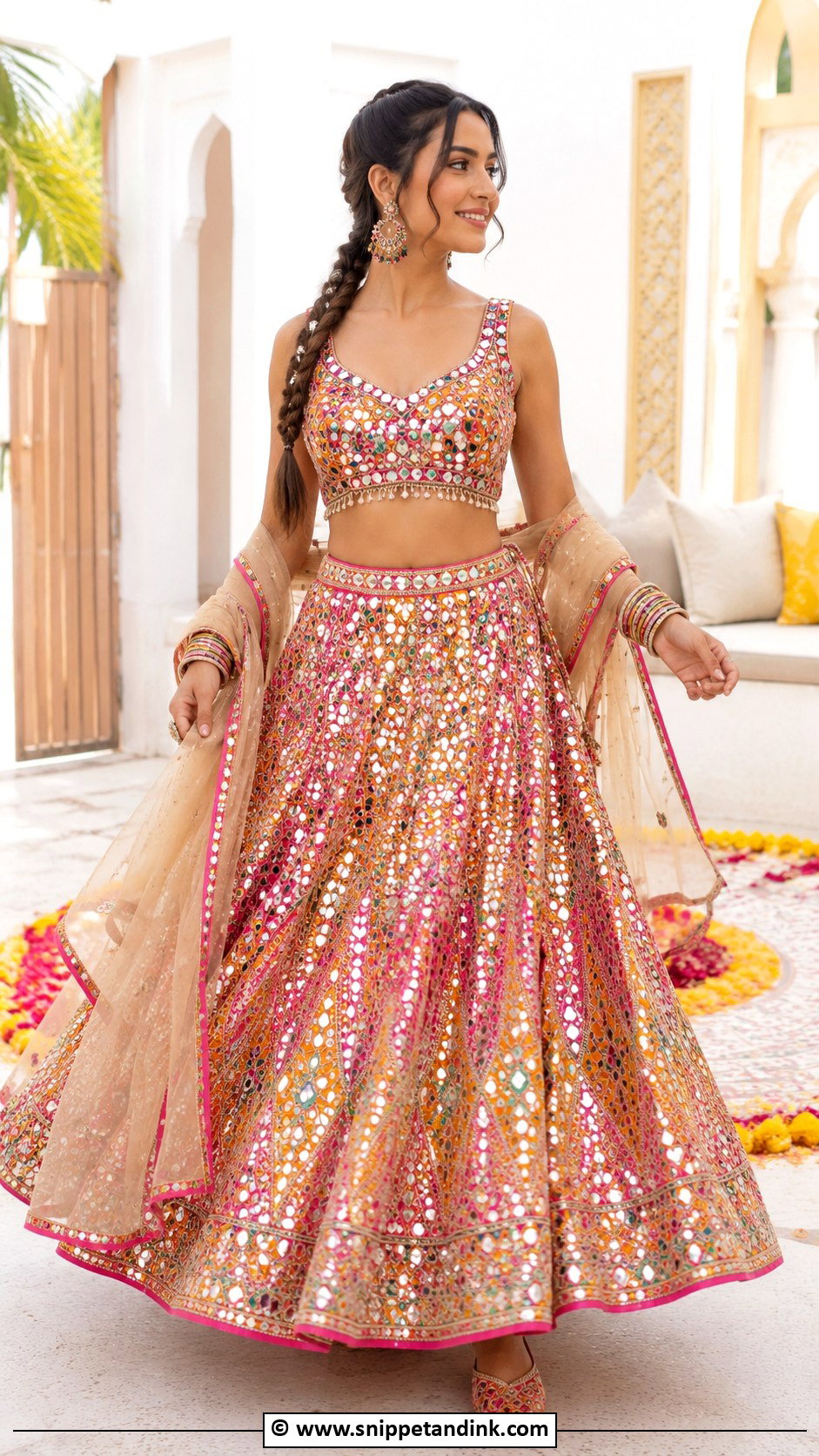
A mirror work bridal blouse catches light in a warmer way than sequins. Small mirrors across the front, sleeves and back, with a matching or contrast lehenga in red, yellow, pink, orange, green or ivory. Since the blouse already reflects so much, I keep jewellery lighter. Hand-stitched mirrors have a thread ring around each one; check the edges are smooth on the inside of the sleeve, where they can scratch the arm. A braid, coloured bangles and juttis suit the wedding and pre-wedding functions alike.
11. Pearl Bridal Blouse With Pastel Lehenga
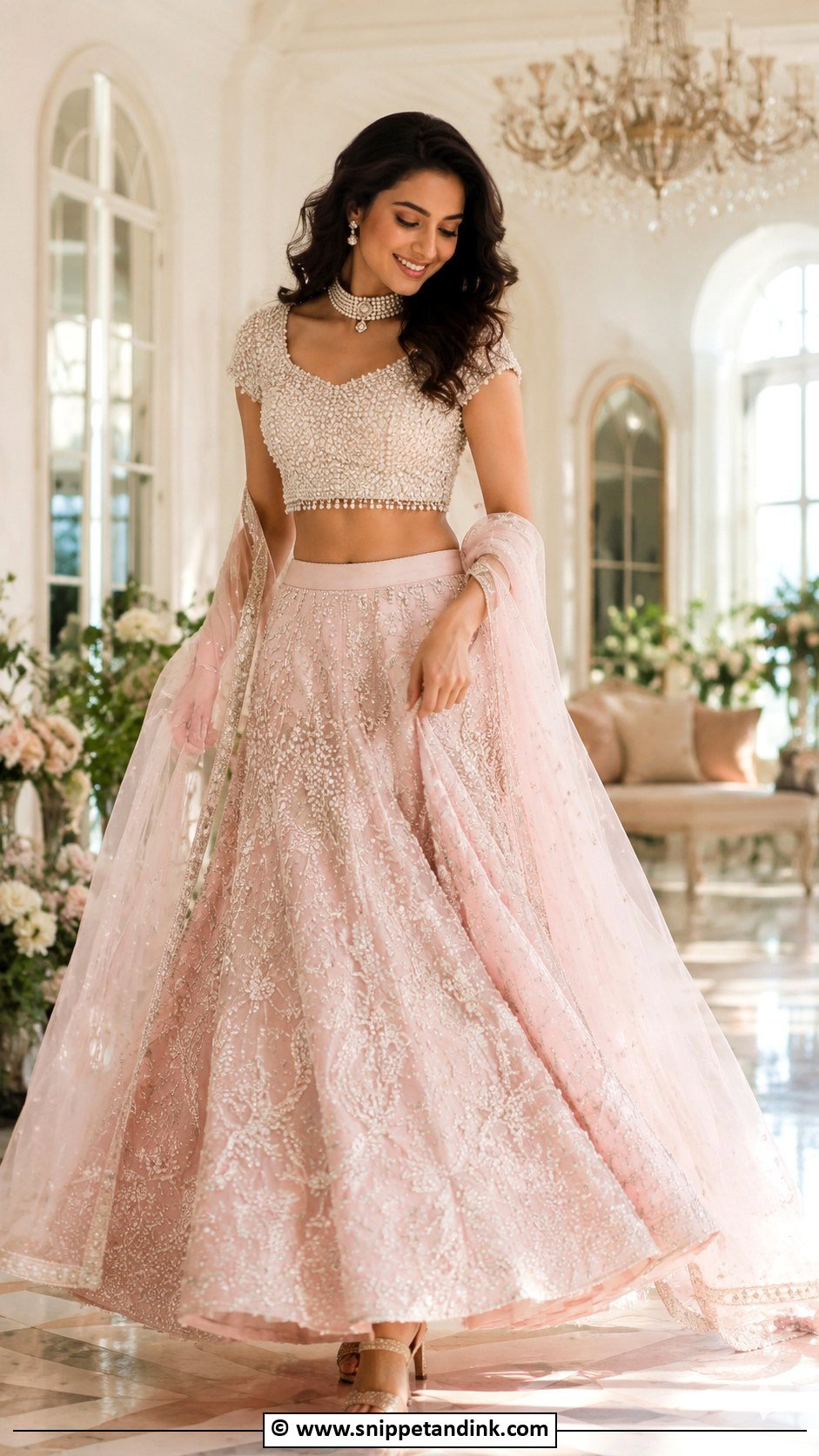
Pearls on a pastel lehenga give a softer, modern bridal look. Pearl beads, fine sequins or subtle threadwork, with pink, ivory, powder blue, mint or champagne. It suits daytime weddings, engagements and receptions with a light palette. Pearl work is heavier than it looks, so the blouse needs a firm base fabric and lining or it sags and the rows of beads ripple. Pearl earrings, a delicate choker and soft curls or a low bun complete the mood.
12. Floral Bridal Blouse With Organza Saree
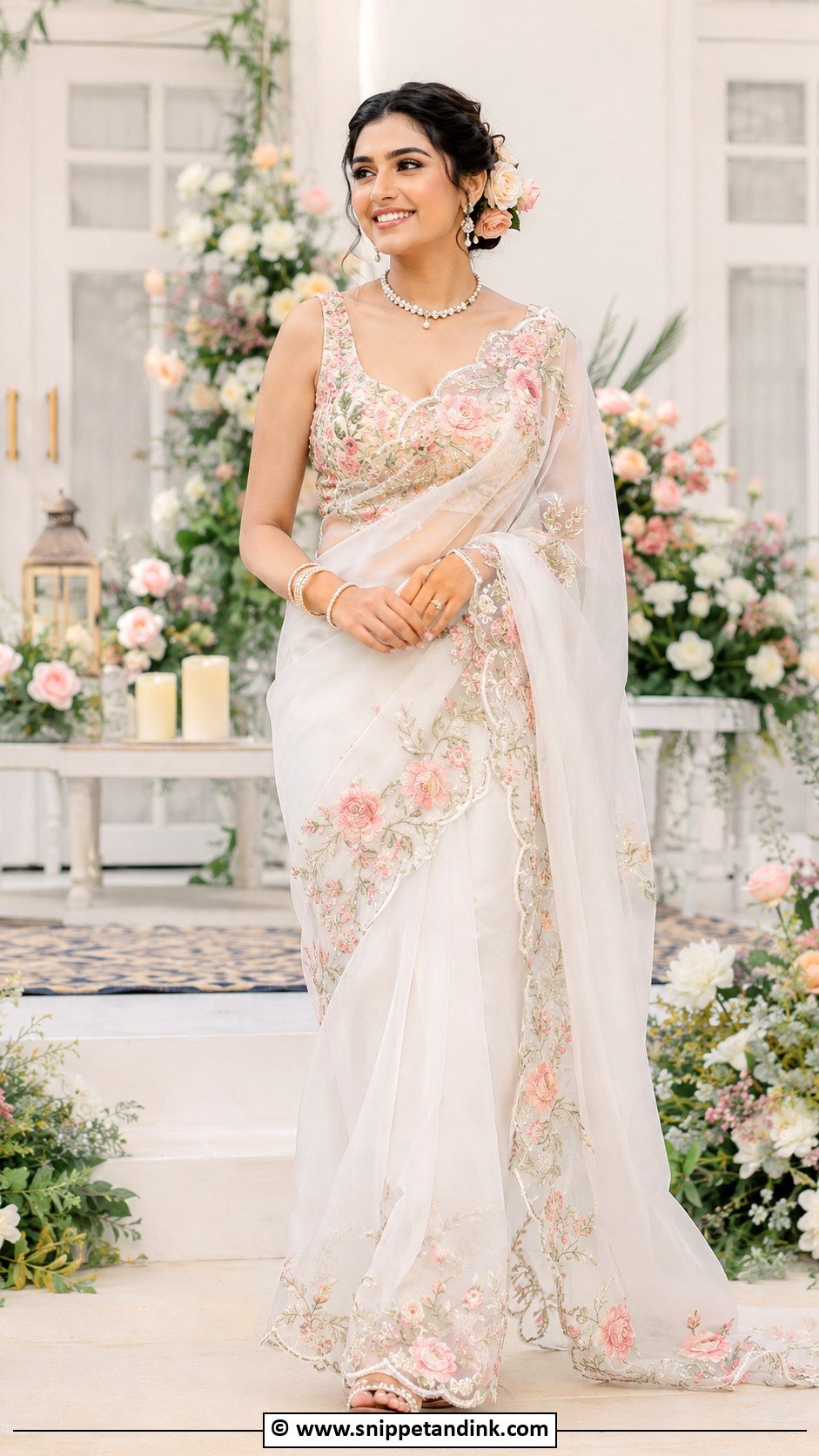
Floral embroidery with an organza saree suits daytime ceremonies. Embroidered flowers, pastel threadwork or 3D blooms, with sheer organza in ivory, blush, lavender, peach or soft green. Keep accessories fresh: pearls, floral hair pieces, simple bangles. Organza holds its shape and stands slightly away from the body, so the blouse must be fitted neatly at the waist and shoulders, otherwise the saree looks bulky over it. Be careful with raised 3D flowers on the shoulder where the pallu sits; they get crushed and catch the fabric.
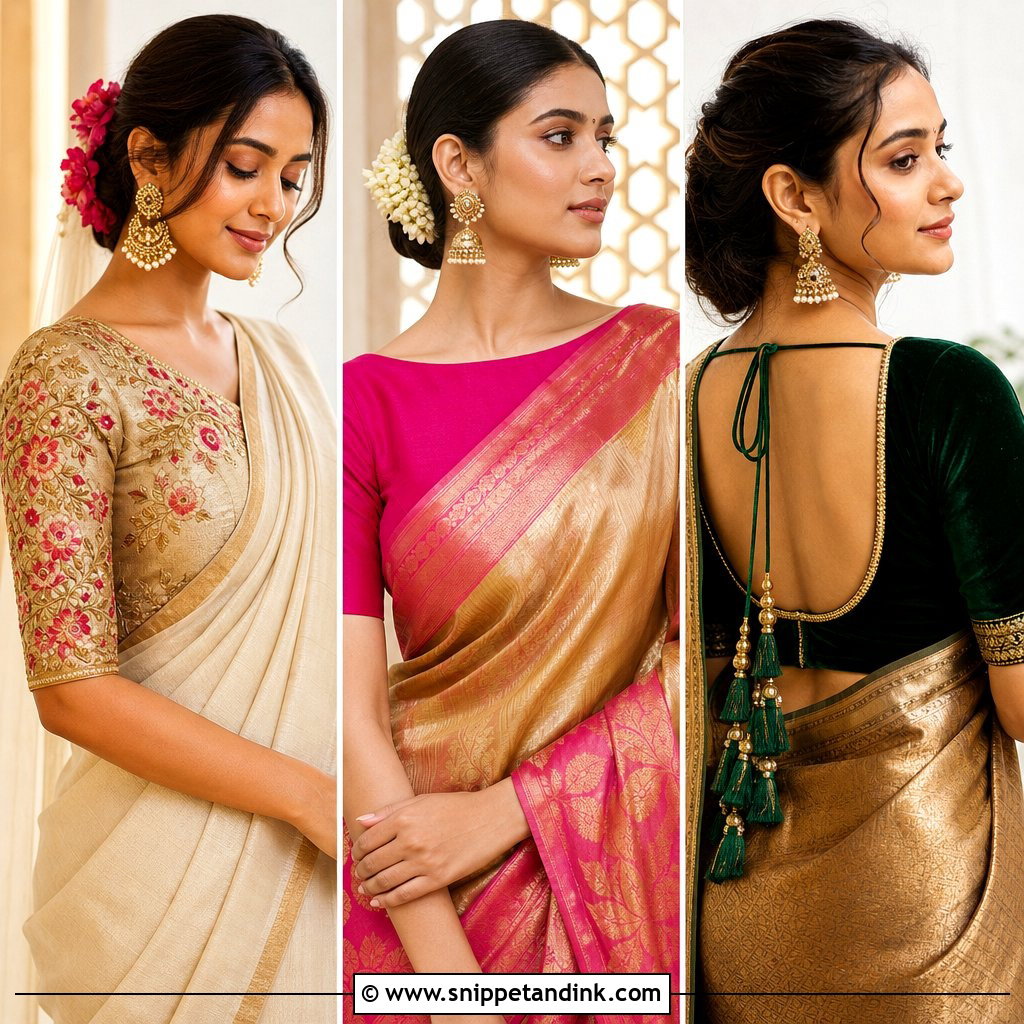
13. Velvet Bridal Blouse With Banarasi Saree
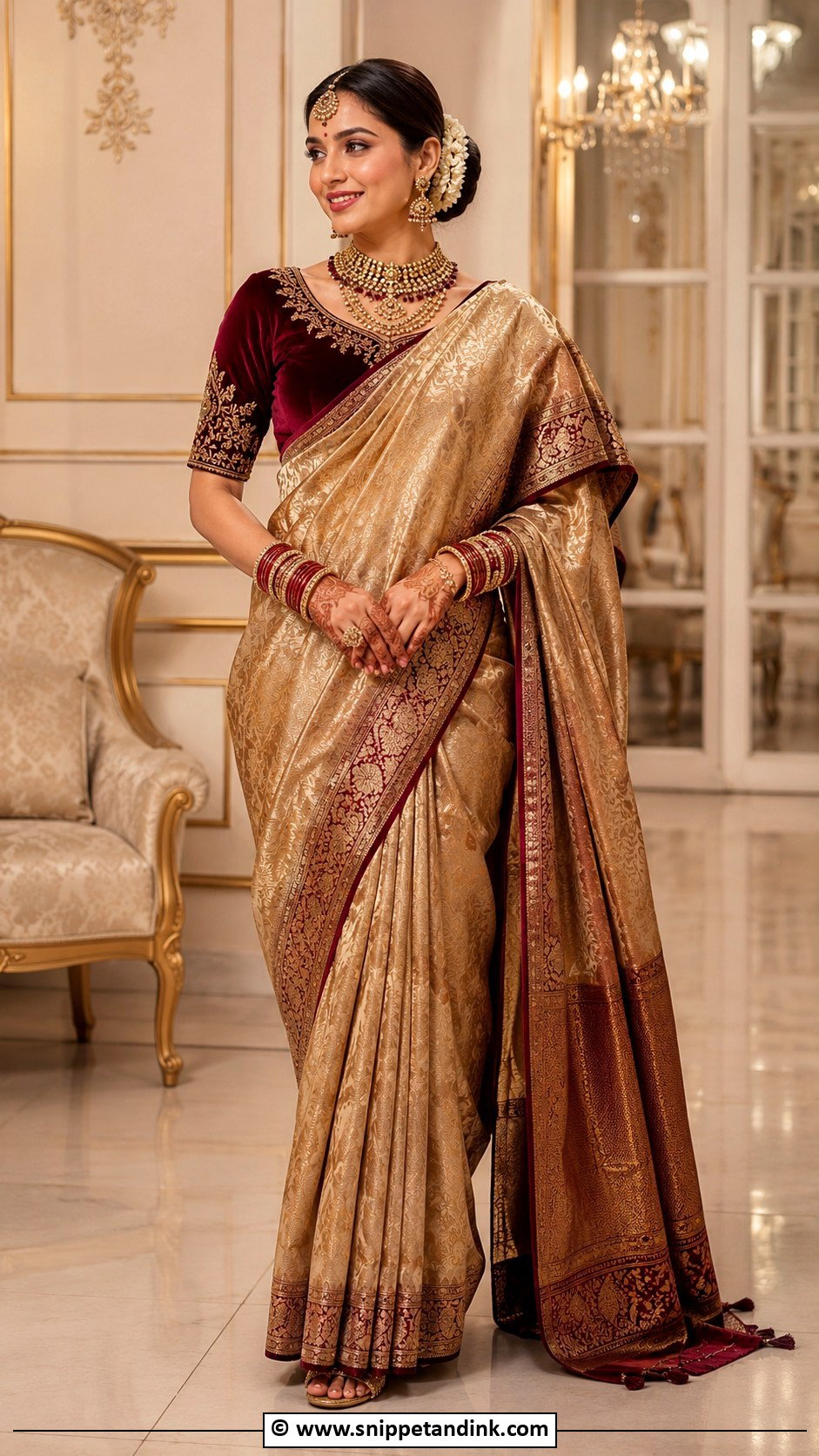
Velvet with Banarasi is rich and dramatic. Maroon, emerald, navy, plum and wine all look deep in velvet, against a gold, red or jewel-toned Banarasi saree. I limit embroidery to the neckline, sleeves or back so the velvet’s pile does the talking. Velvet is warm, so I’d only put a bride in it for cool weather or an air-conditioned venue. It also shows crush marks, so it should be steamed from the inside, never pressed flat. Antique gold, kadas and a classic bun suit it.
14. Sequin Bridal Blouse With Net Saree
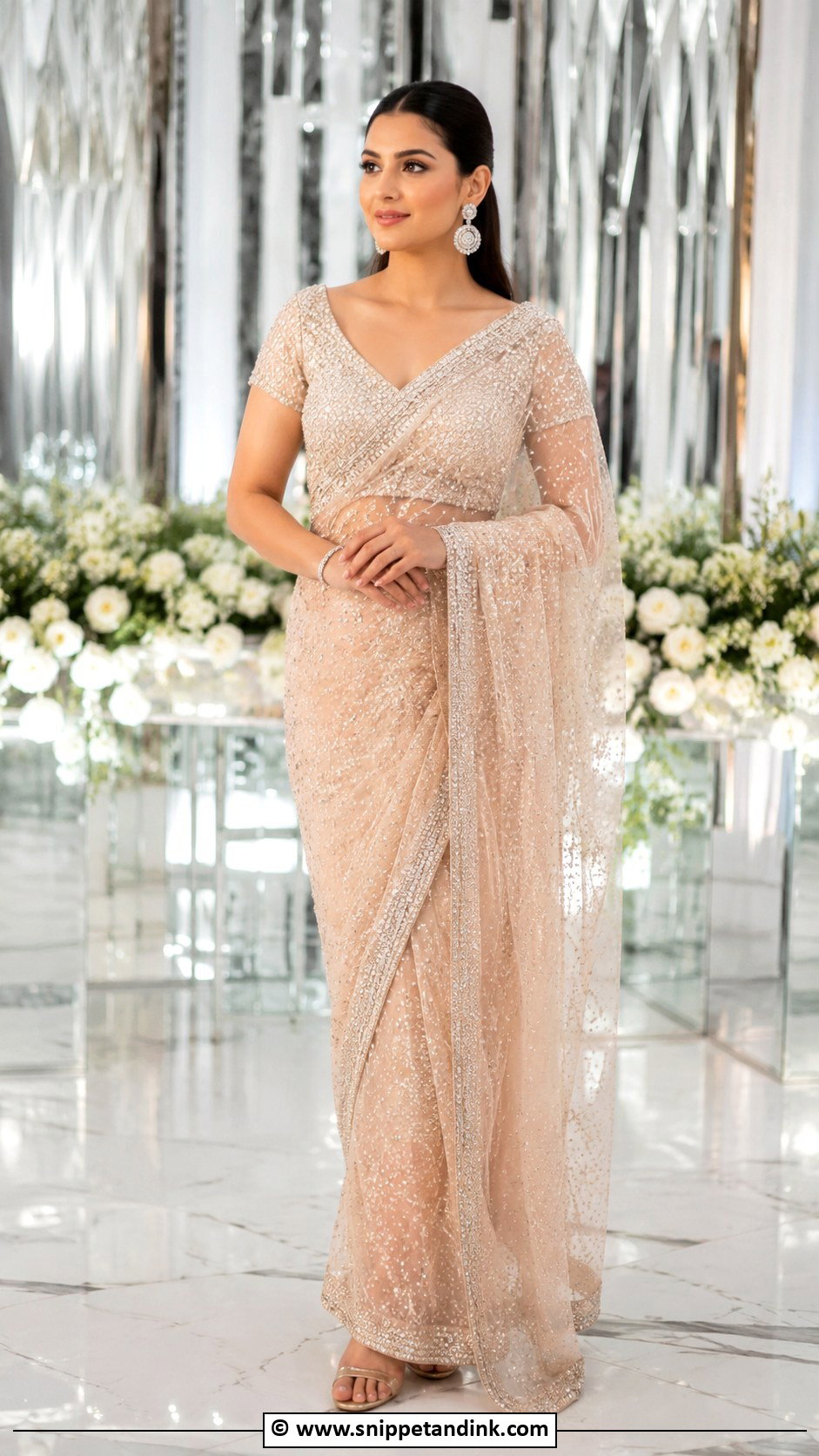
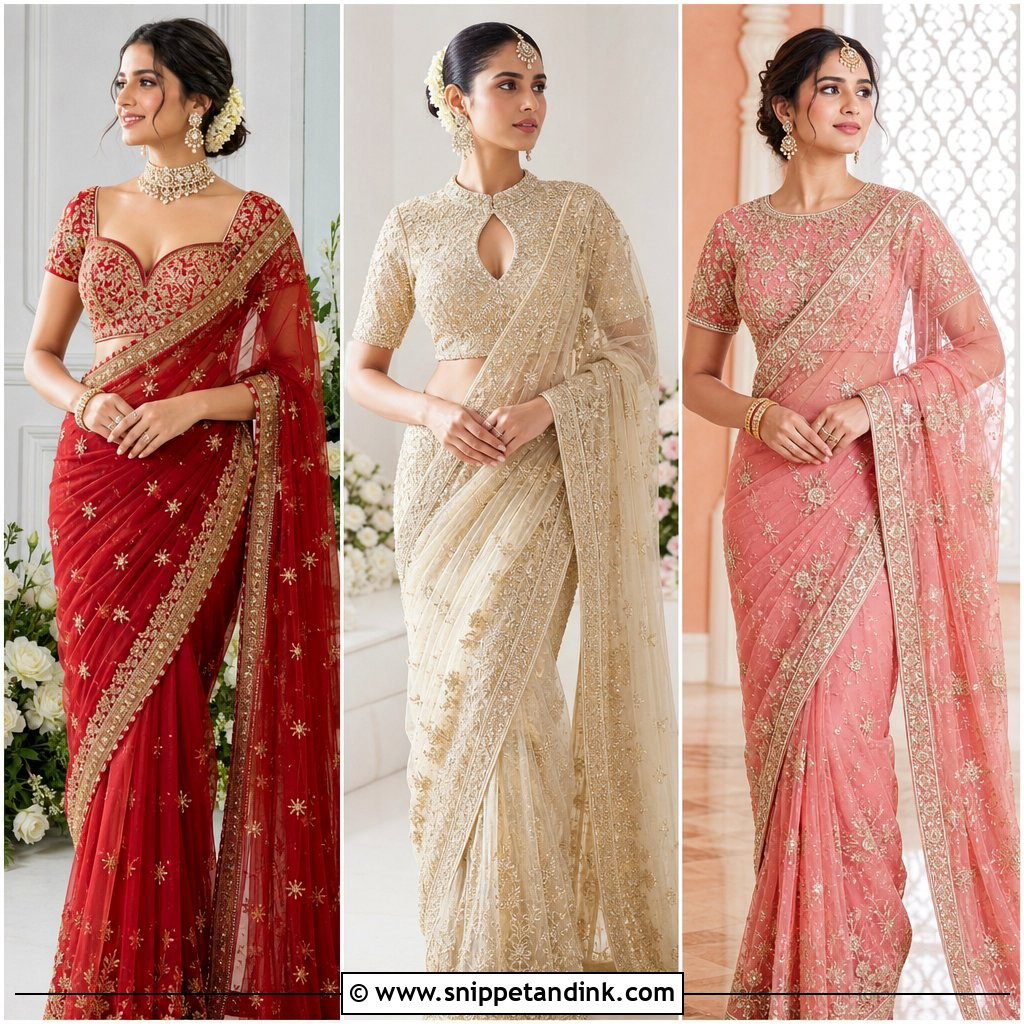
Sequins with a net saree belong at receptions and evening events. All-over sequins or a mix of sequins and thread, with a soft net saree that has a matching border or scattered work. Champagne, silver, rose gold, ivory and deep red all shine under strong lighting. Keep accessories sleek: crystal earrings, a bracelet, metallic heels. Sequinned fabric is scratchy against the inner arm, so ask for the underarm panel and armhole edge to be lined in soft cotton, and you’ll still be comfortable after the last dance.

15. Zardozi Bridal Blouse With Lehenga
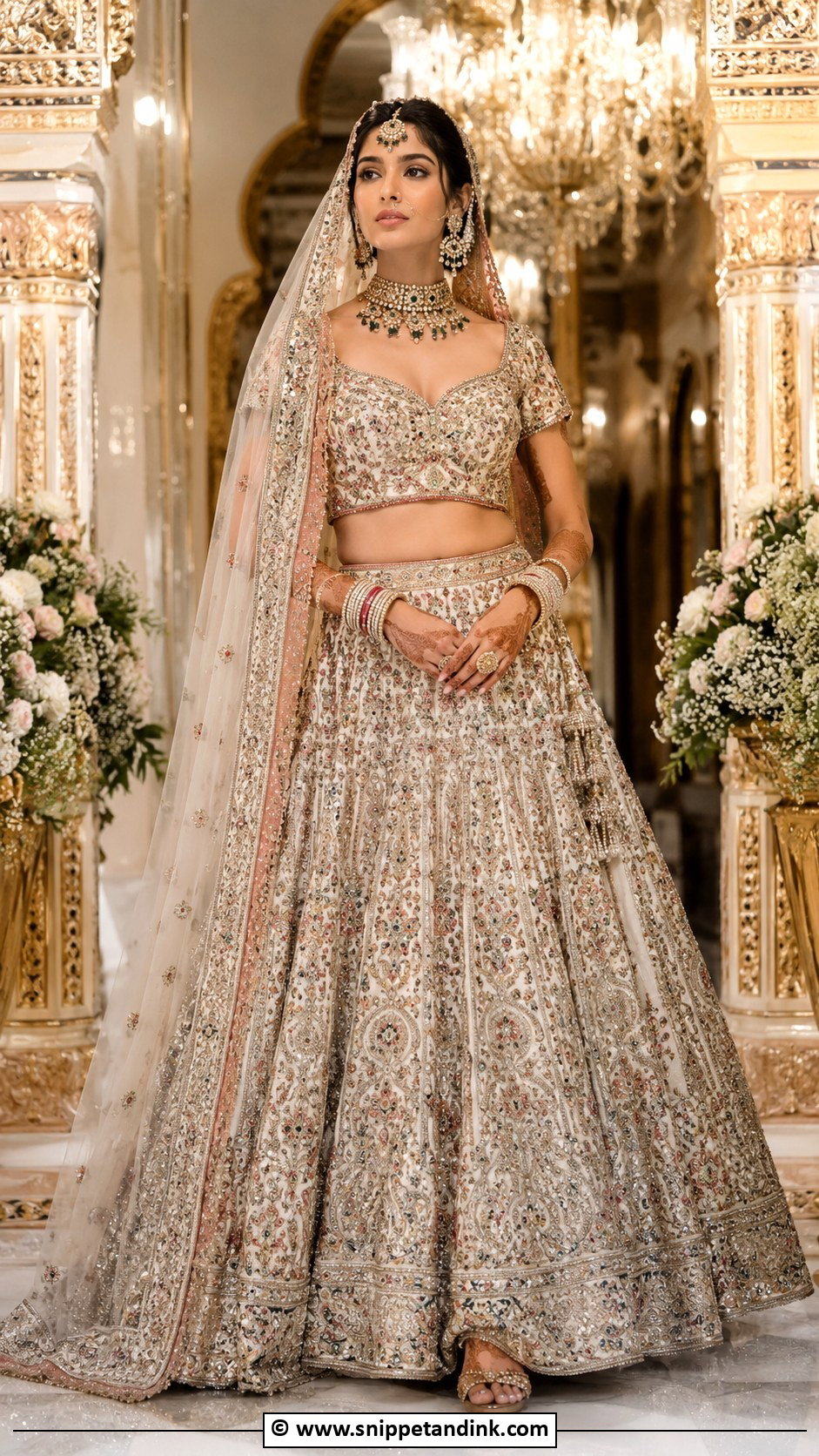
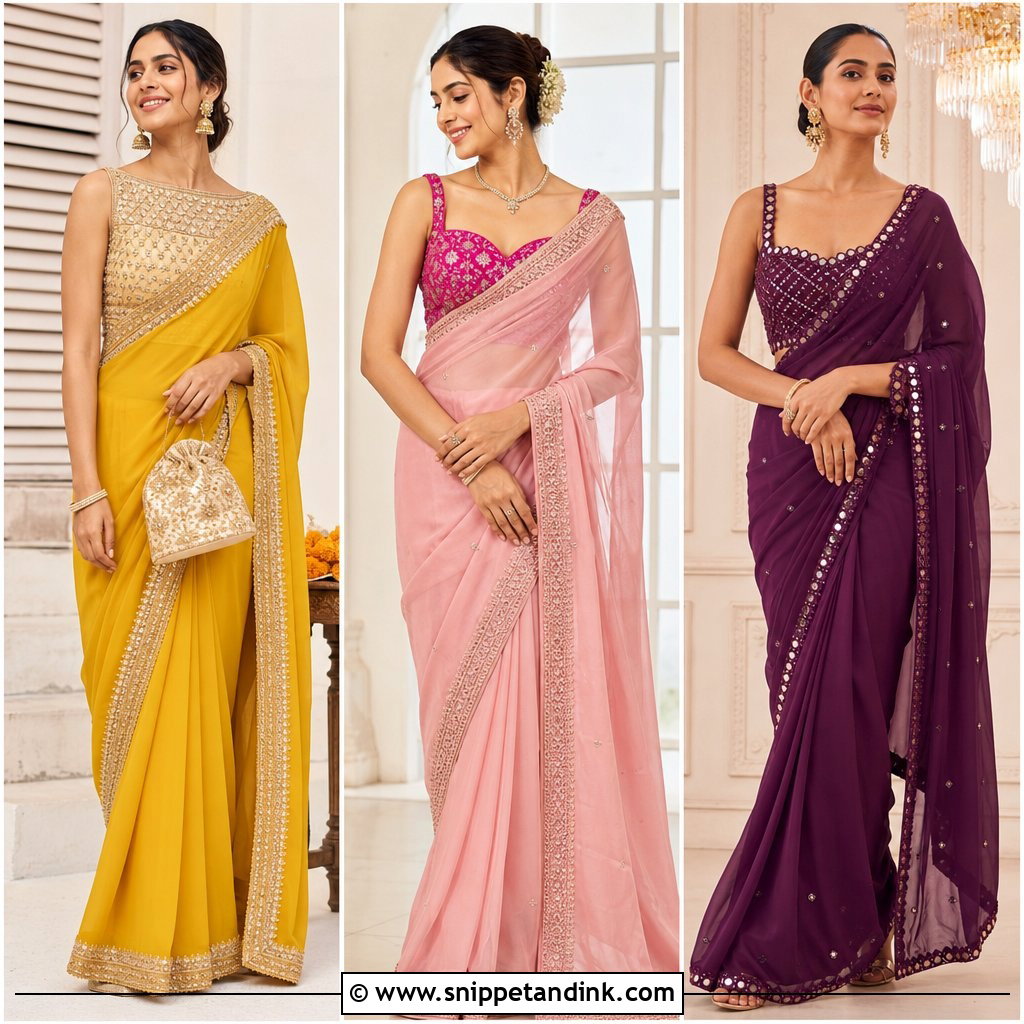
A zardozi bridal blouse with a lehenga is the grand, ceremonial choice. Zardozi’s metal thread gives depth and a raised texture. Embroidery around the neckline, sleeves, hem and back, with a matching lehenga and a bordered dupatta, in red, maroon, gold, emerald or ivory. Traditional jewellery, a maang tikka, bangles and embroidered heels complete it. Dense zardozi adds real weight and makes the fabric stiff, so I ask for strong hooks, a cotton lining and slightly more ease at the armhole than a plain blouse would need.
16. Aari Work Bridal Blouse With Silk Saree
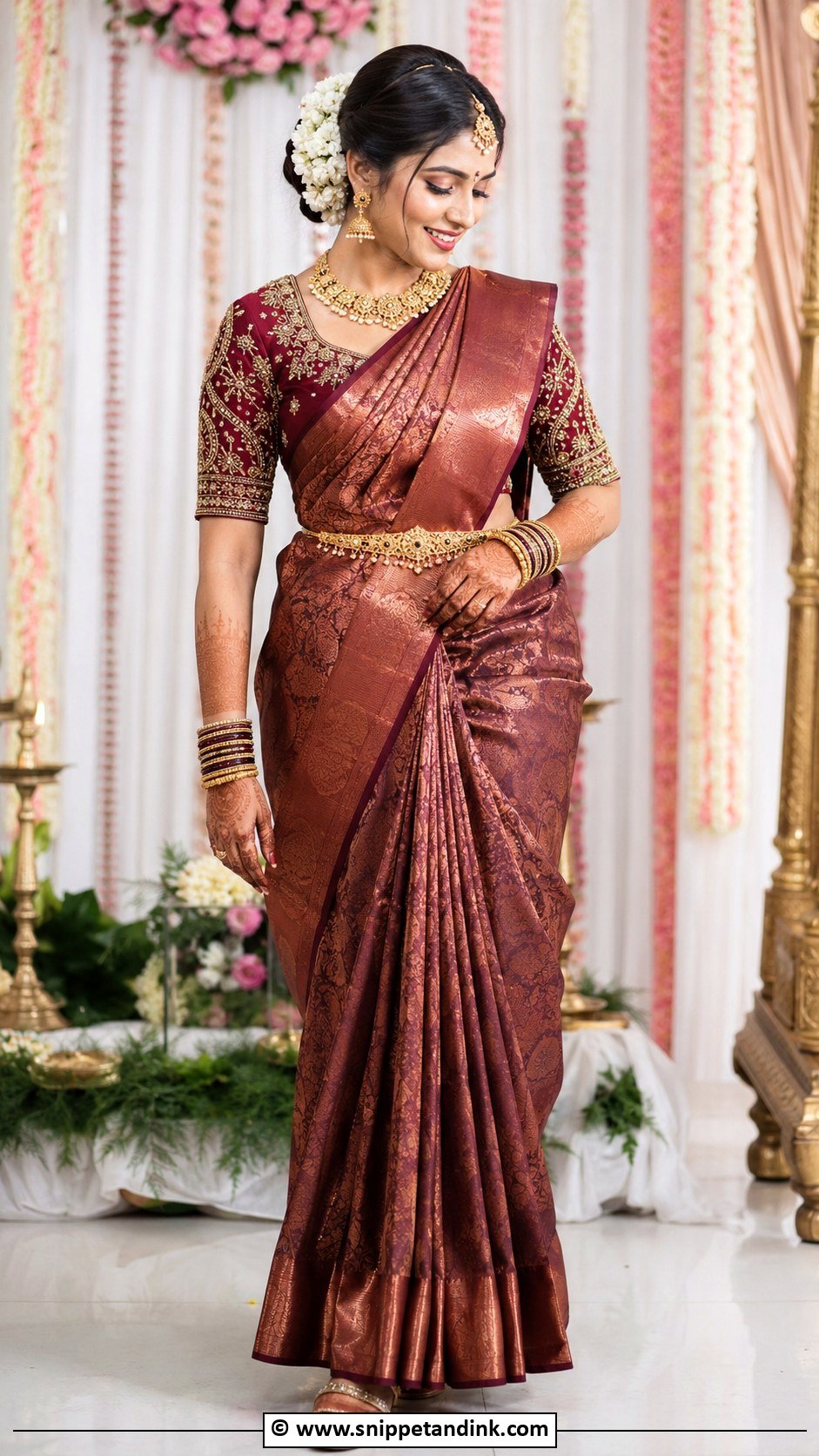
An Aari work bridal blouse with a silk saree is fine, traditional handwork. Aari can draw floral vines, paisleys, peacocks, temple motifs, initials or small symbols. Pair it with a matching or contrast silk saree, gold jewellery and a bun with flowers. Plan where the motifs go around your drape: the pallu covers most of one shoulder and the front, so the back and the uncovered sleeve are where the work will actually be seen. Aari is done on a frame before the blouse is stitched, so get your measurements final before the embroidery starts.
17. Maggam Work Bridal Blouse With Pattu Saree
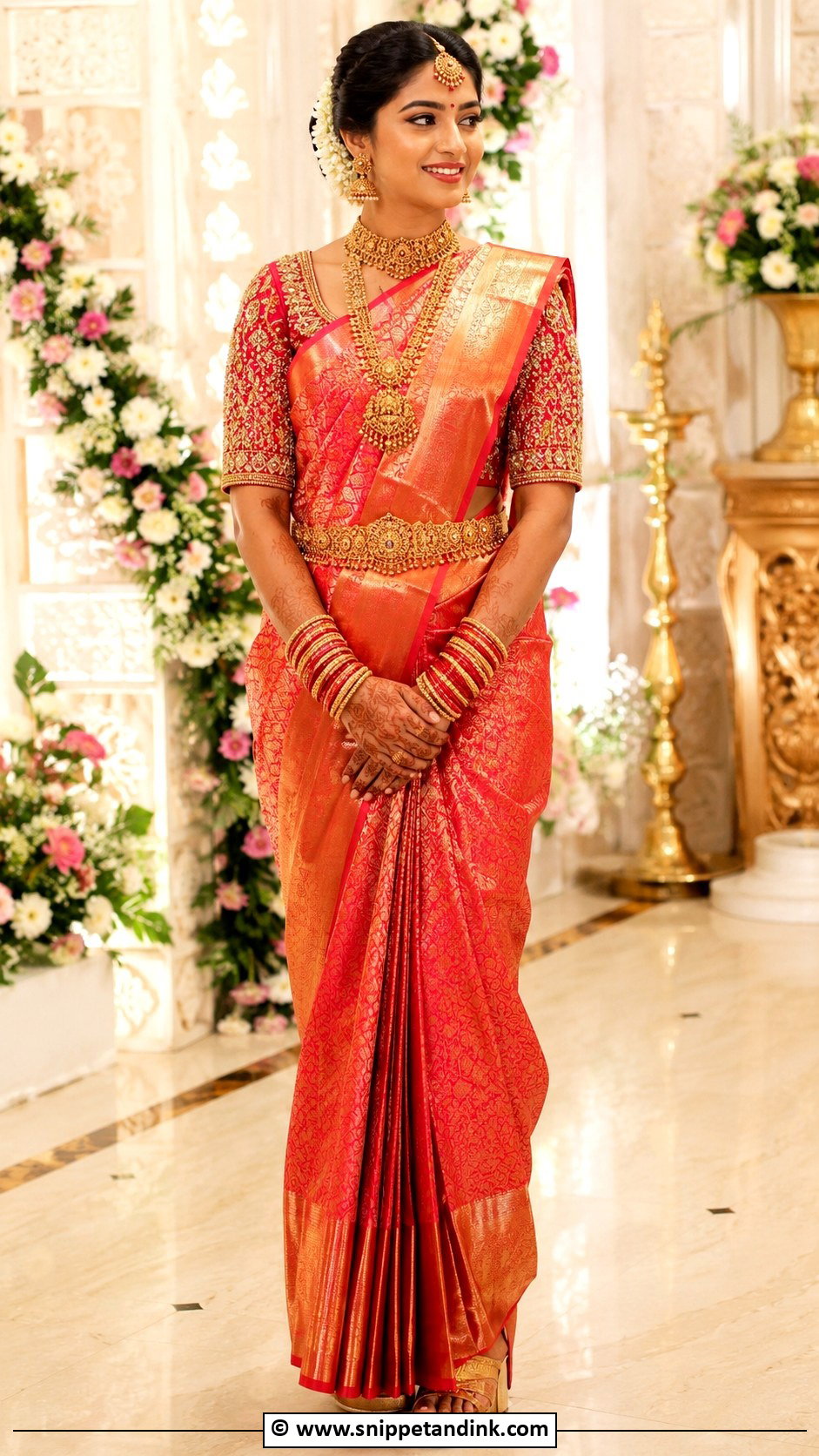
Maggam work with a pattu saree is a favourite in South Indian bridal dressing. Stones, beads, zari, cutdana and thread in bold patterns, with a rich pattu saree and traditional gold. Elbow sleeves are popular because they give space for the design. Motifs can be flowers, paisleys, parrots or temple borders. The rituals are long and seated, so ask for soft lining and skip stiff padding. I also check the back of the stonework inside the blouse; uncovered stitching rubs the skin raw over a few hours.
18. Elbow Sleeve Bridal Blouse With Saree
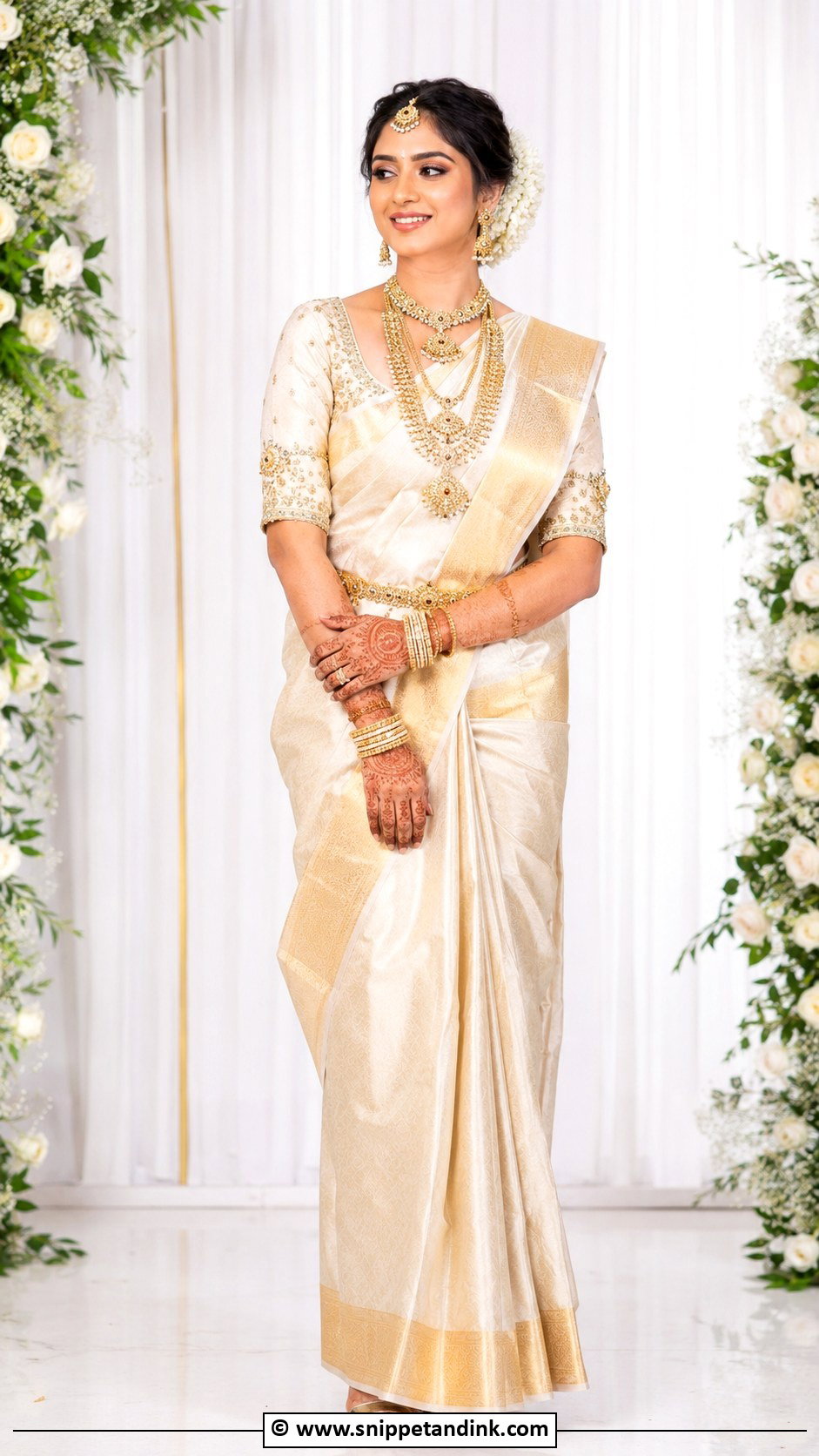
Elbow sleeves are the length I recommend most often. There’s room for embroidery, the look stays traditional, and the cuff sits clear of a stack of bangles instead of catching on them. Silk, Banarasi, organza or georgette sarees all suit it. A border at the sleeve hem gives a clean finish. Choose the neckline around your jewellery: round for temple sets, square or sweetheart for chokers, V for long layers.
19. Puff Sleeve Bridal Blouse With Silk Saree
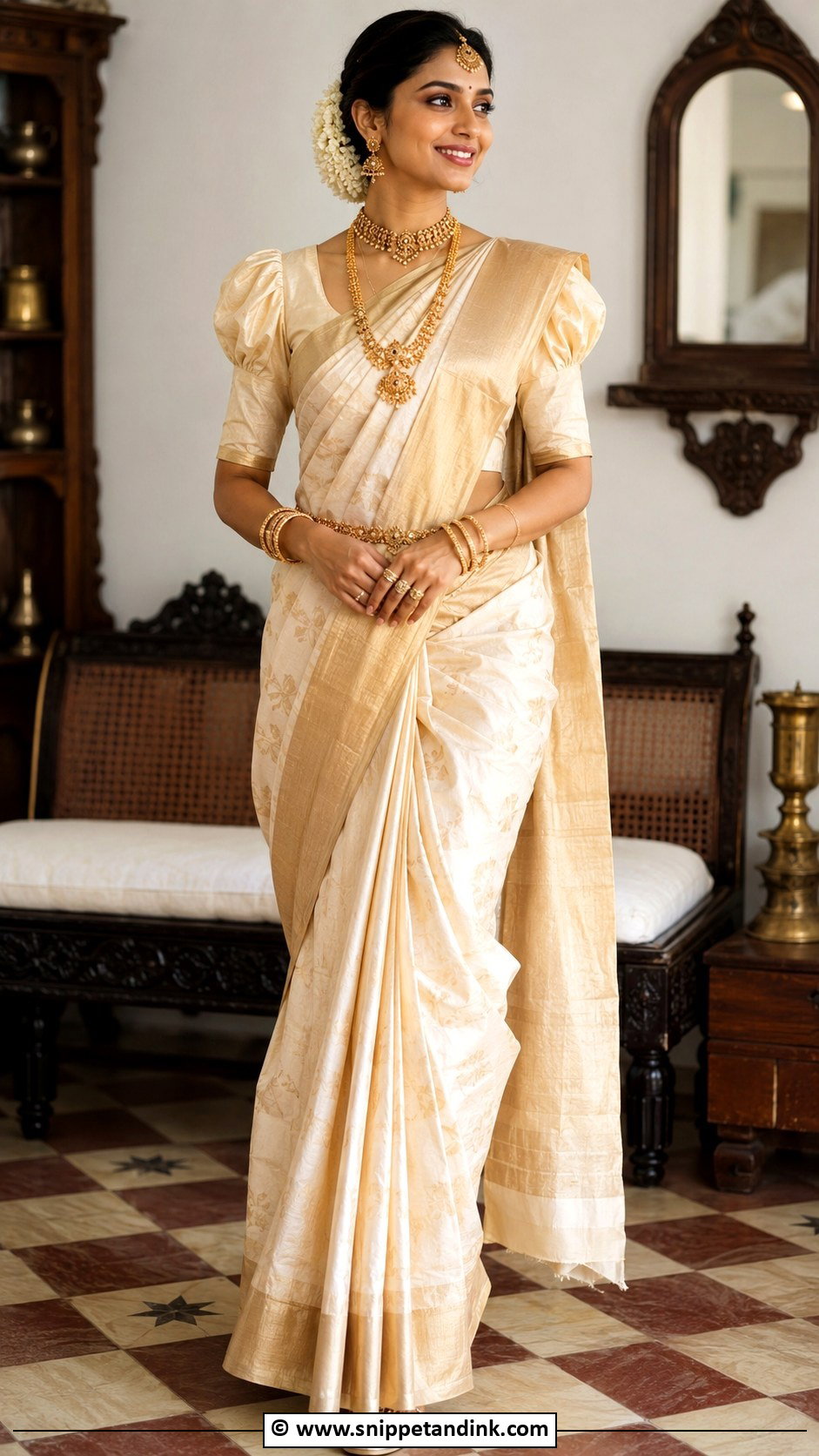
Puff sleeves give a vintage charm and add volume near the shoulder. Soft puffs with zari borders, small motifs or embroidered cuffs, with silk in red, mustard, green, pink or gold. Gold earrings, bangles and a layered necklace keep it traditional. Keep the puff modest. A large one fights the pallu on the shoulder, pushing it out of place, and widens the frame in photos. A small, gathered puff with a firm cuff is easier to wear all day.


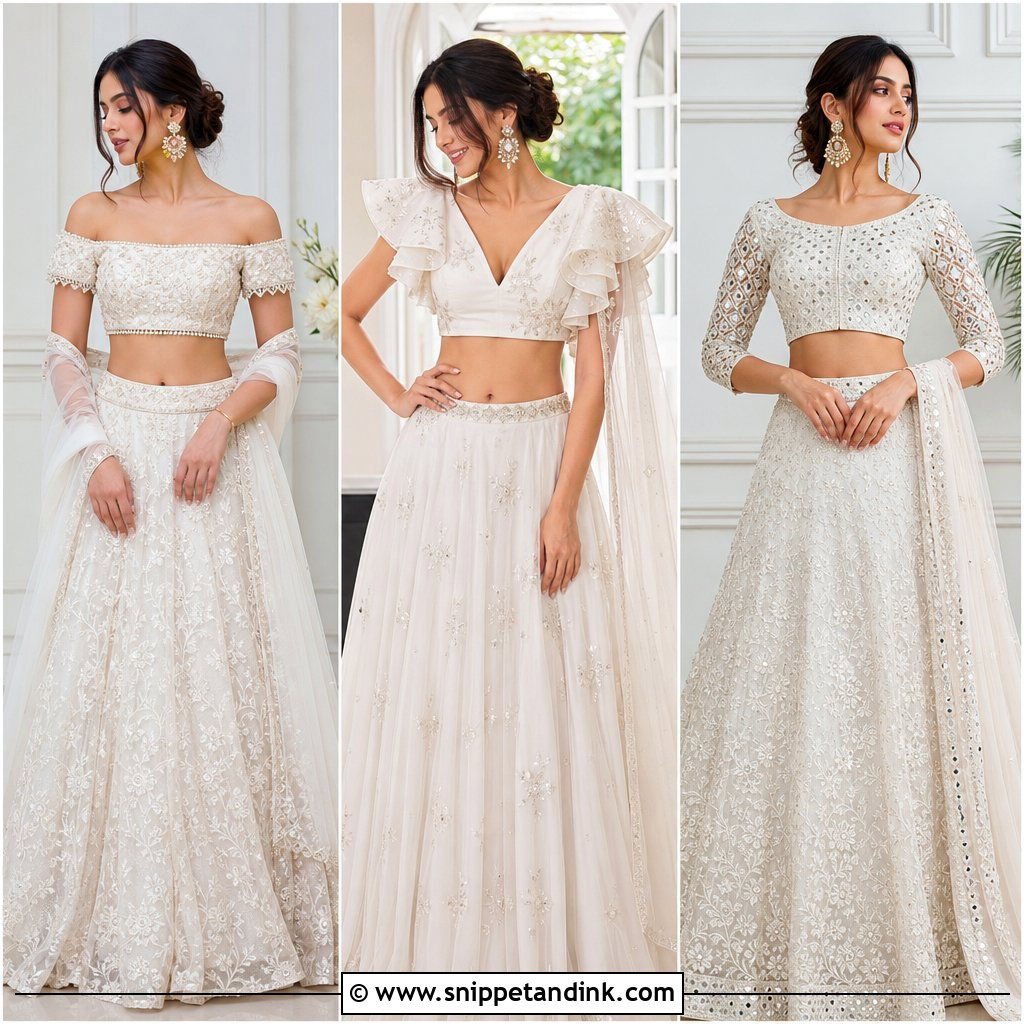
20. Cape Bridal Blouse With Lehenga
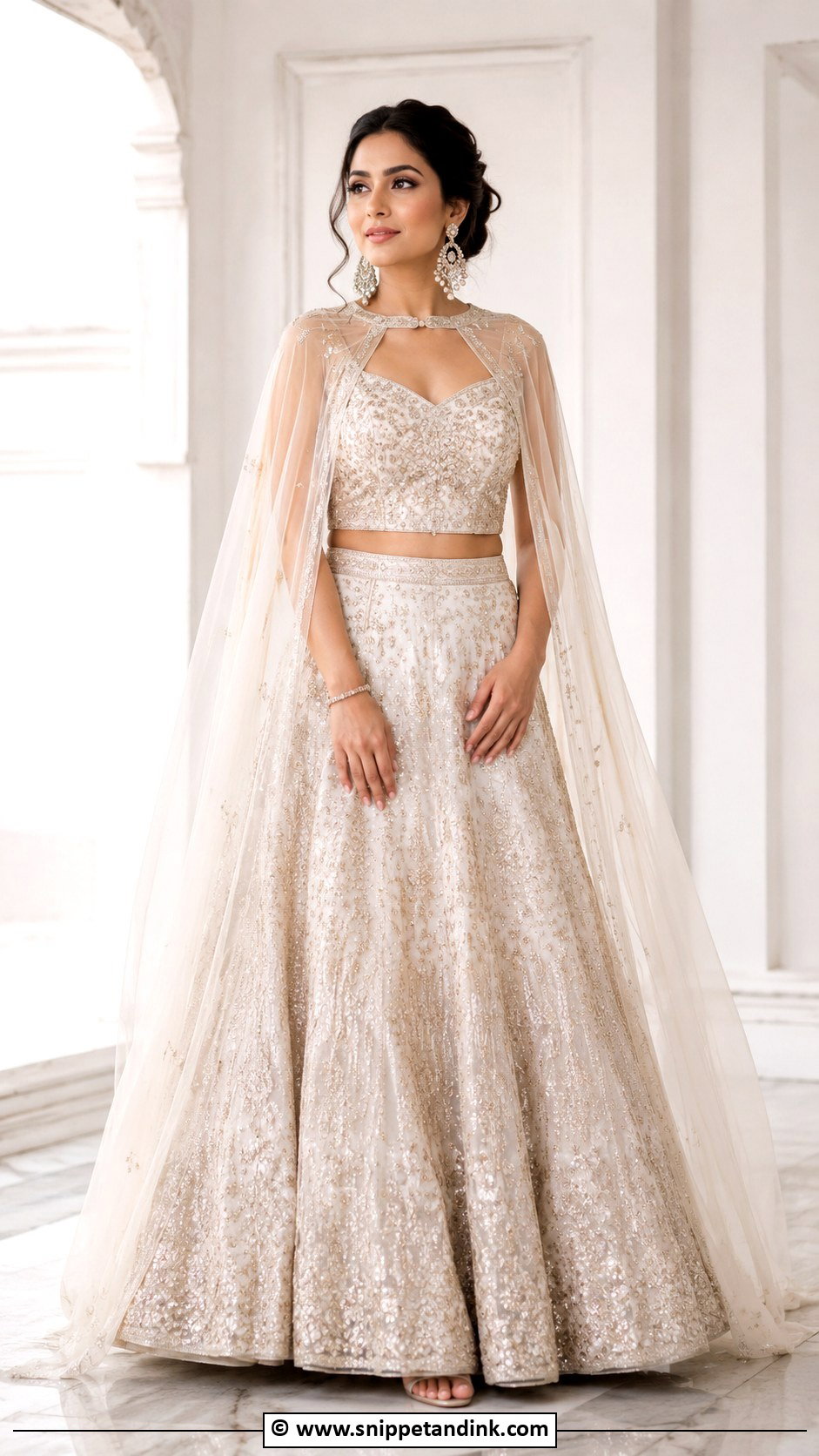
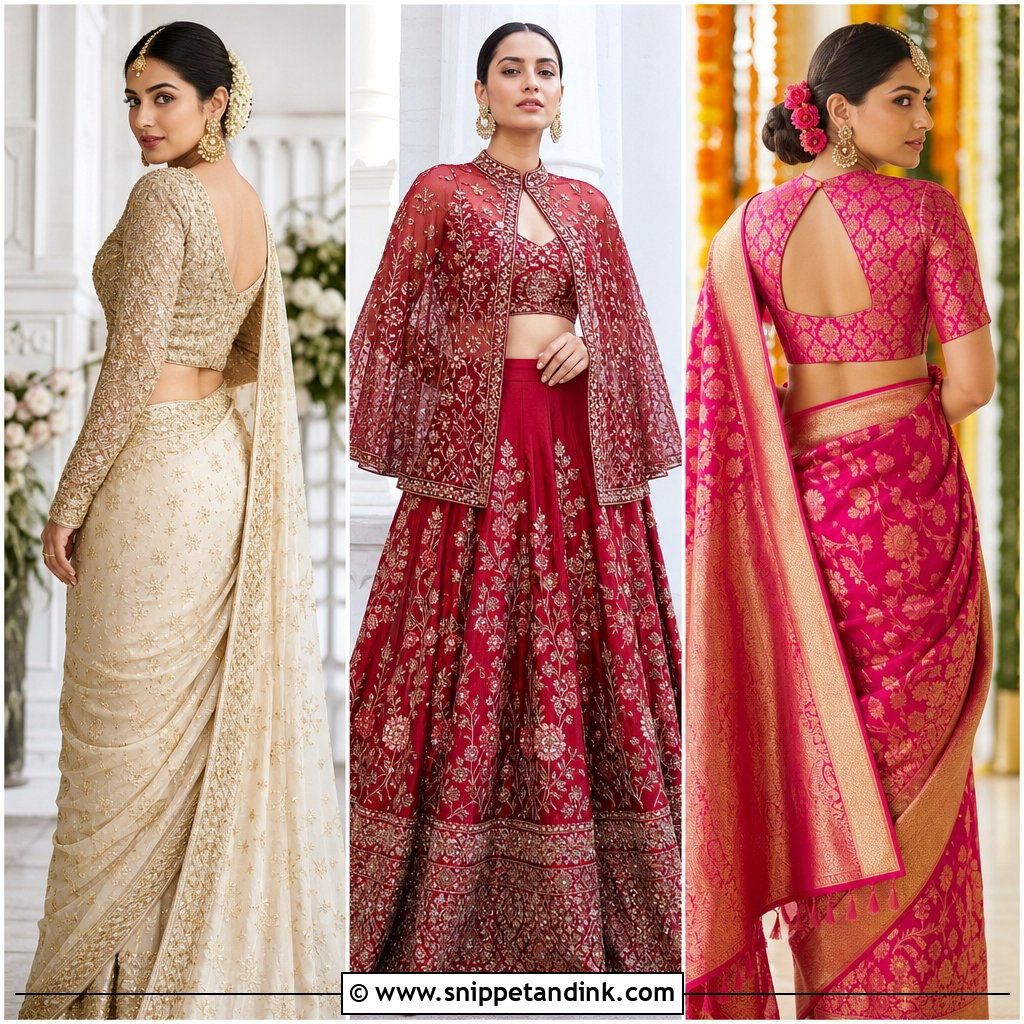
A cape blouse replaces the dupatta with something lighter and more modern. The cape can be sheer, embroidered, pearl-trimmed or lightly sequined, over a fitted blouse and flared lehenga. It works best at receptions, engagements and contemporary ceremonies. Keep the jewellery clean: earrings, a bracelet, a sleek hairstyle. Choose a featherweight fabric so it flows when you walk, and have the cape attached at the shoulder seams rather than just the neckline, so it doesn’t slide back and choke you when you lift your arms.
21. Jacket Bridal Blouse With Lehenga
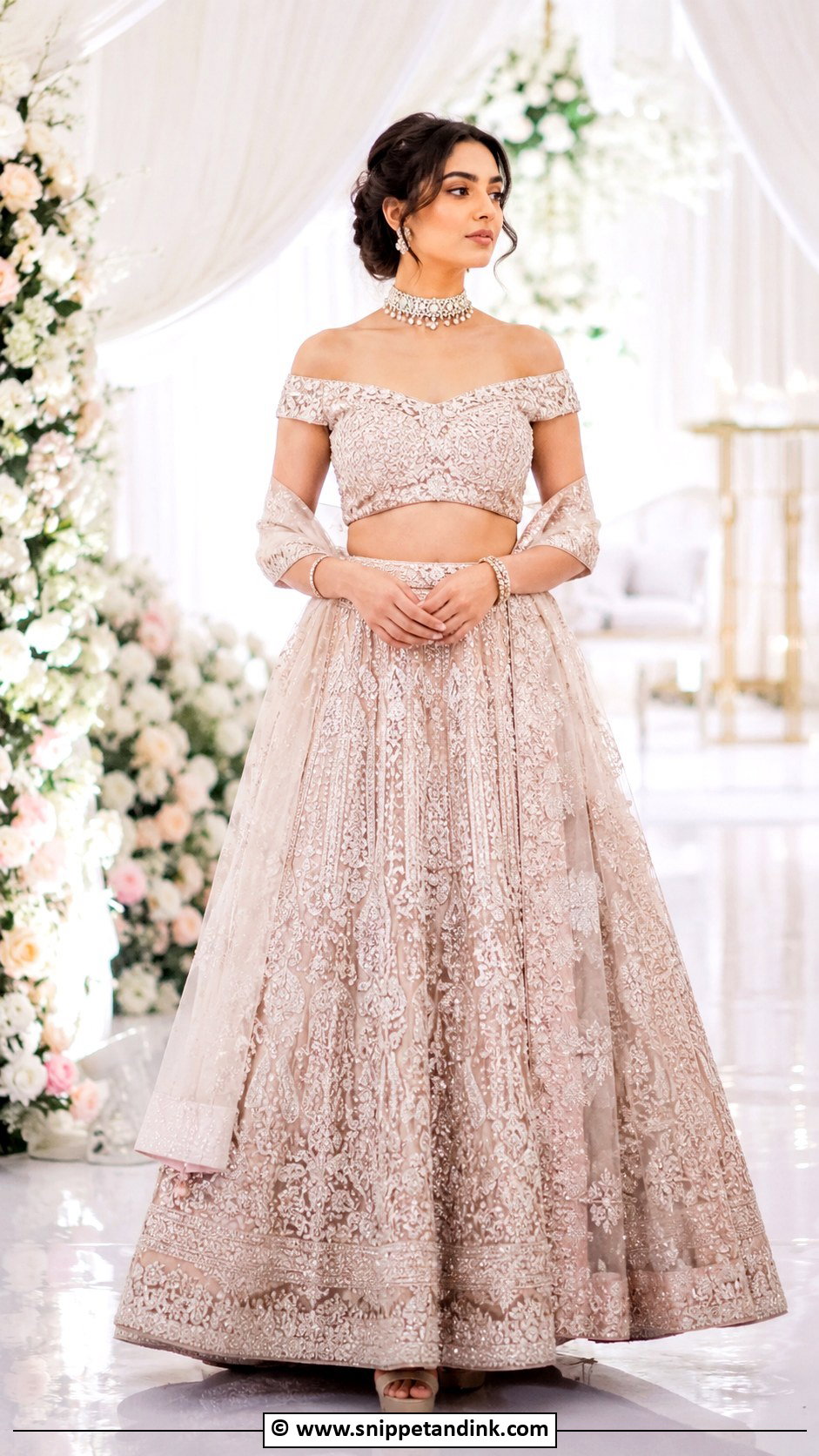
Jackets layer a simpler blouse underneath with embroidery, zari, mirror or beadwork on top. Long jackets feel dramatic; cropped ones look modern. With a matching skirt, the dupatta becomes optional. It’s a good answer for cool weather, formal indoor venues and brides who want coverage and structure. Have the jacket and blouse fitted together, worn at the same time; a jacket fitted over thin air will be tight over the finished blouse. Statement earrings, soft waves or a bun, and comfortable heels.
22. Peplum Bridal Blouse With Lehenga
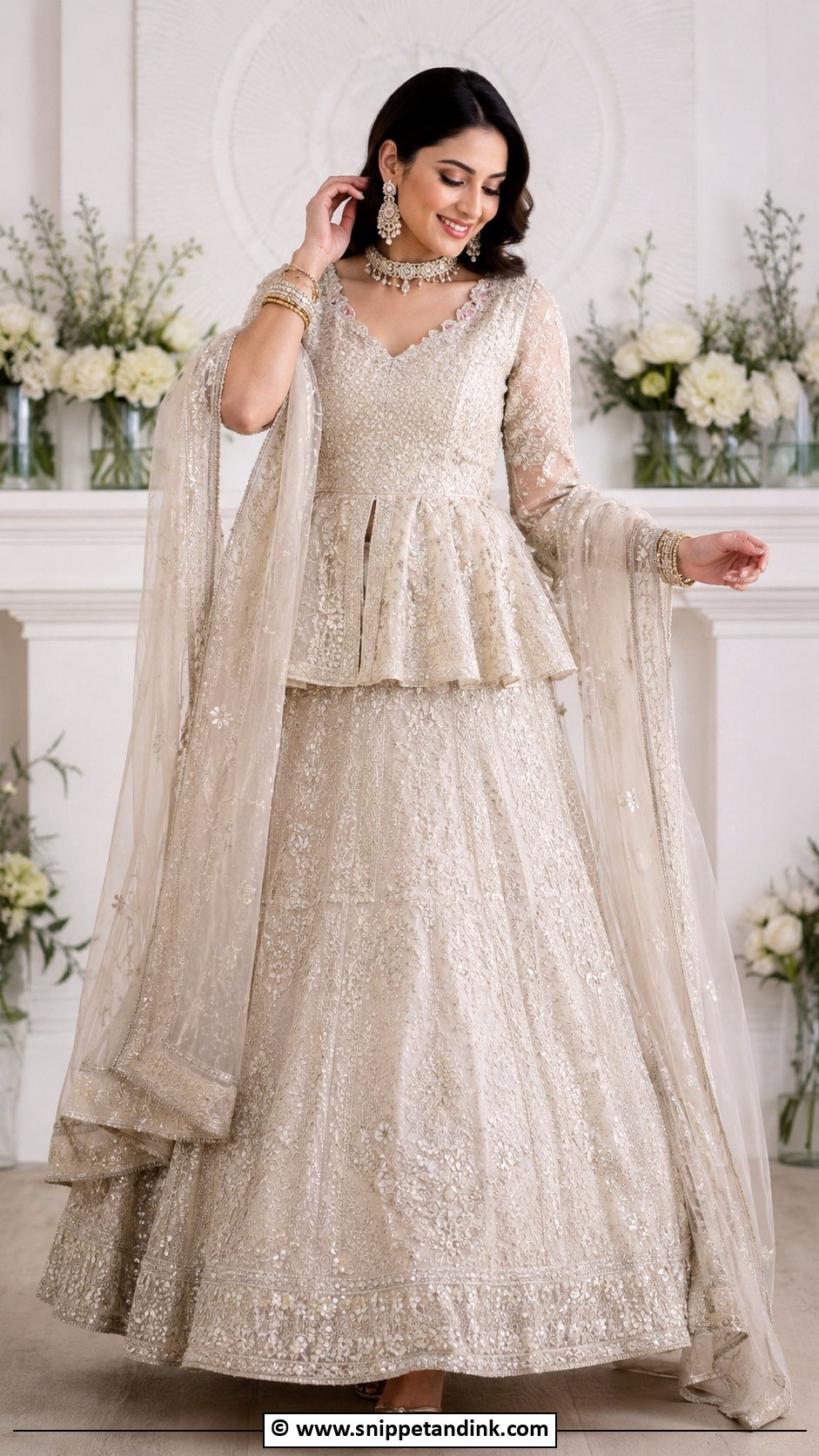
A peplum bridal blouse with a lehenga covers the waist while still giving shape. The flare sits over the skirt waistband and hides it, which helps if the lehenga is heavy and tends to slip. Embroider the neckline, sleeves and hem, and choose a lighter dupatta so the peplum shows. It gives more ease for sitting and dancing than a fitted choli. A choker, earrings and embellished heels finish it.
23. Corset Bridal Blouse With Lehenga
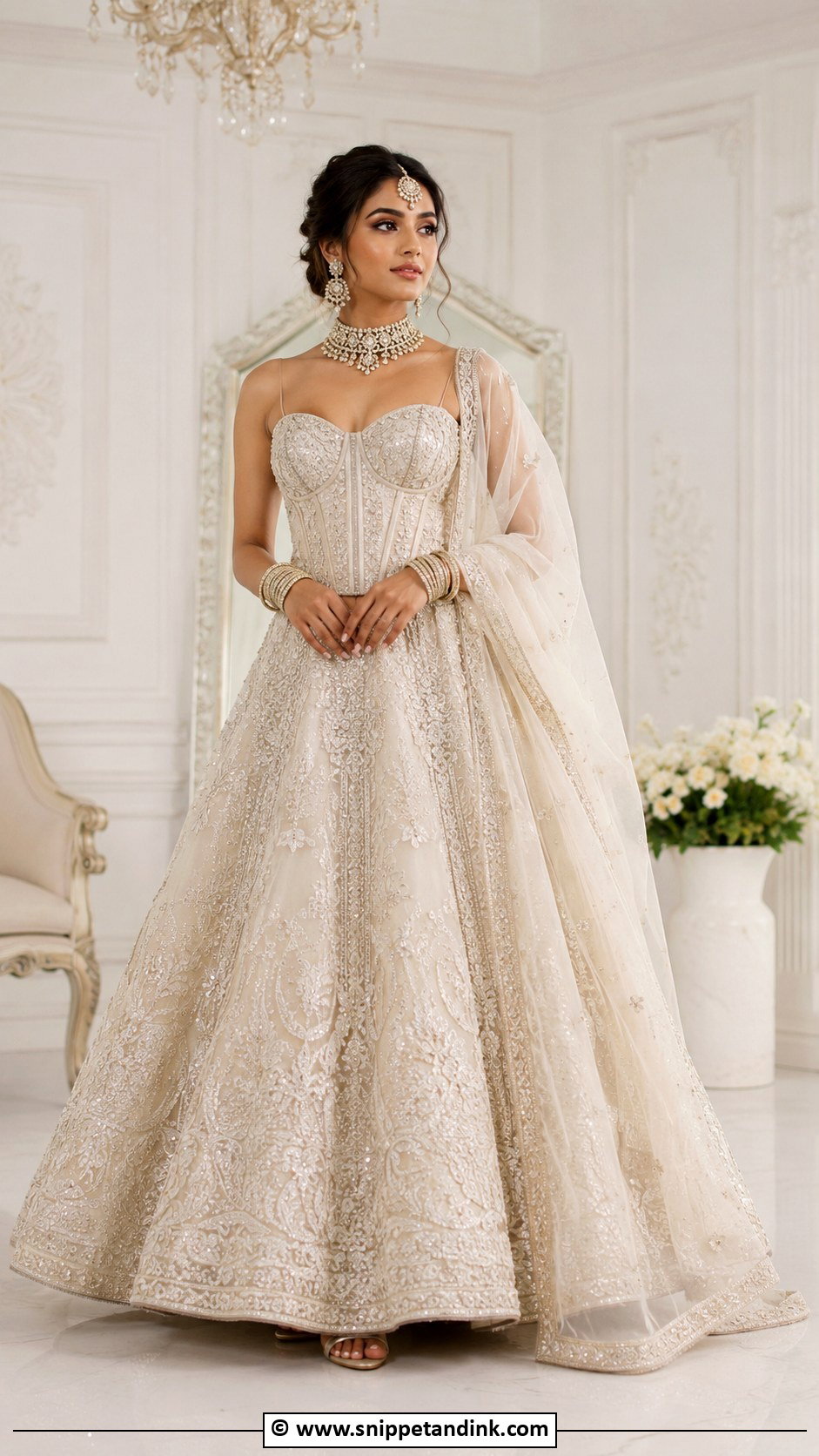
Corset blouses give a sculpted shape, but only if they are built properly. Real boning, embroidery and a secure back closure, made to your exact measurements; a loosely fitted corset rides up the moment you sit. Pair it with a full lehenga and a soft dupatta across the shoulder or arms. Soft gold, ivory, blush, red and champagne all work. A statement choker or layered necklace frames the neckline. I always have the bride sit cross-legged at the fitting, since bridal rituals often ask for exactly that.
24. Off Shoulder Bridal Blouse With Lehenga
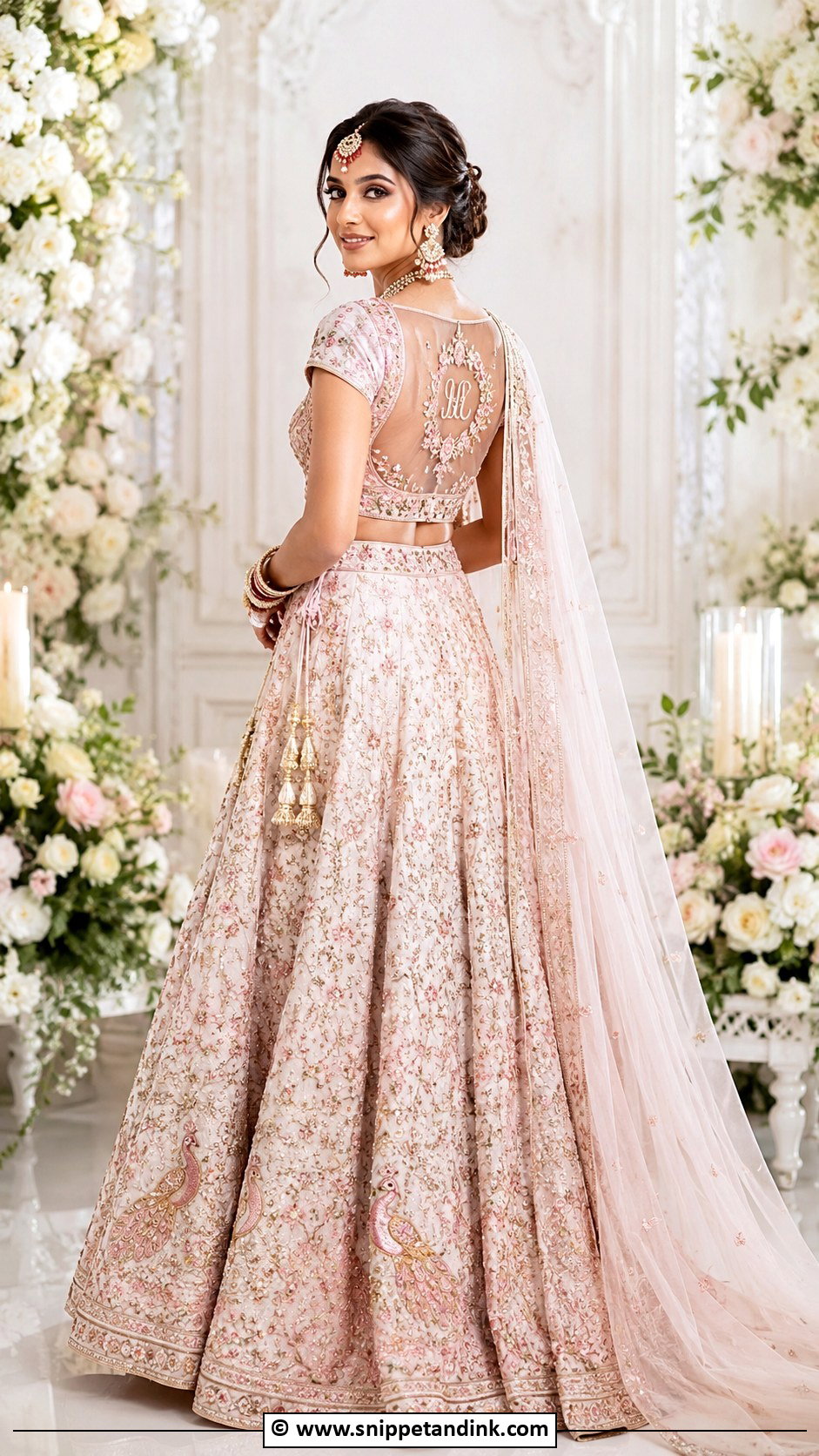
Off-shoulder blouses are modern and feminine, but they need a plan for the dupatta. Embroidery on the neckline and sleeves keeps it bridal, with a full lehenga and a sheer dupatta draped over the arms or pinned at the waist. A choker or short necklace suits the open neck. Elastic or silicone grip inside the band keeps it from sliding up. Keep the hair soft, waves, a low bun or a side parting. I’d only suggest it to a bride who’s comfortable showing her shoulders through every ritual.

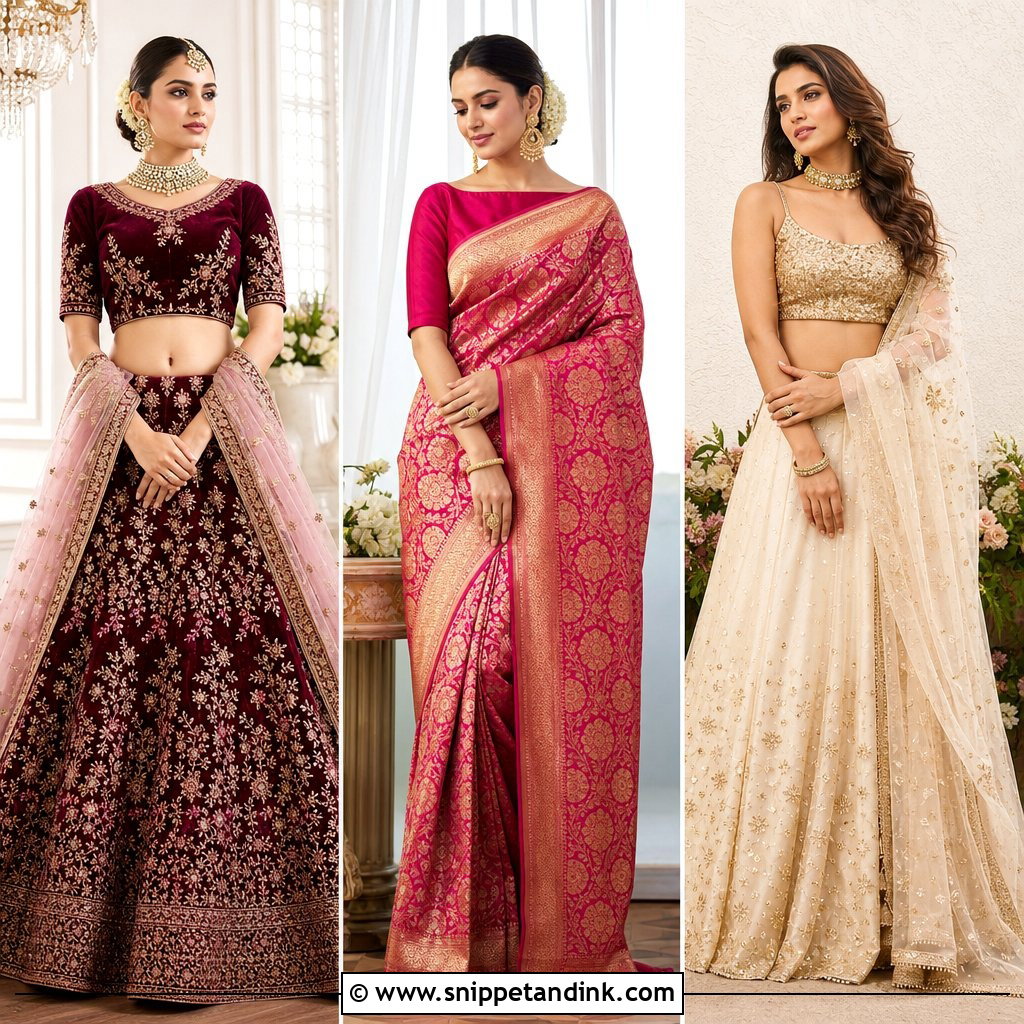
25. Halter Neck Bridal Blouse With Saree
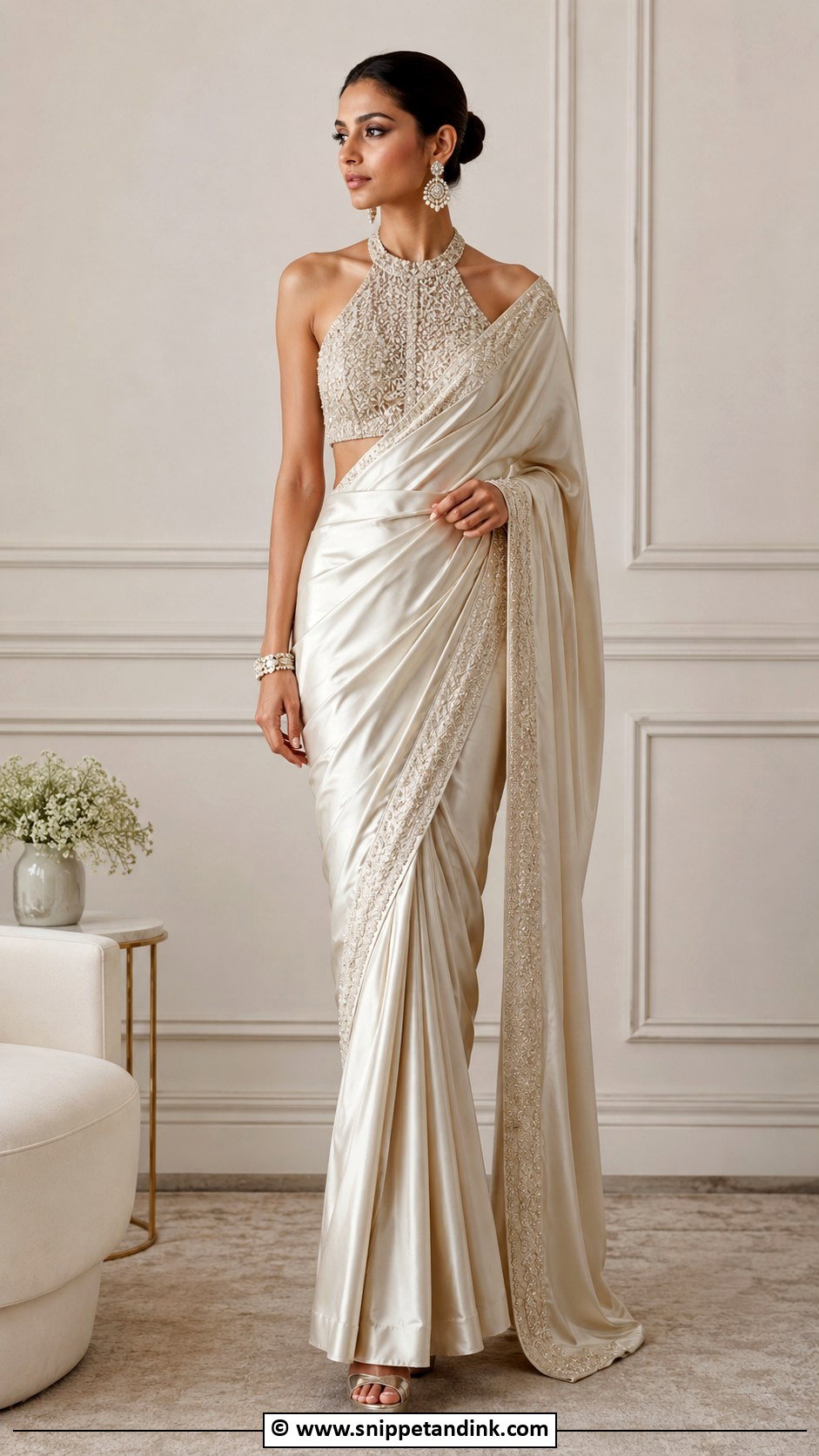
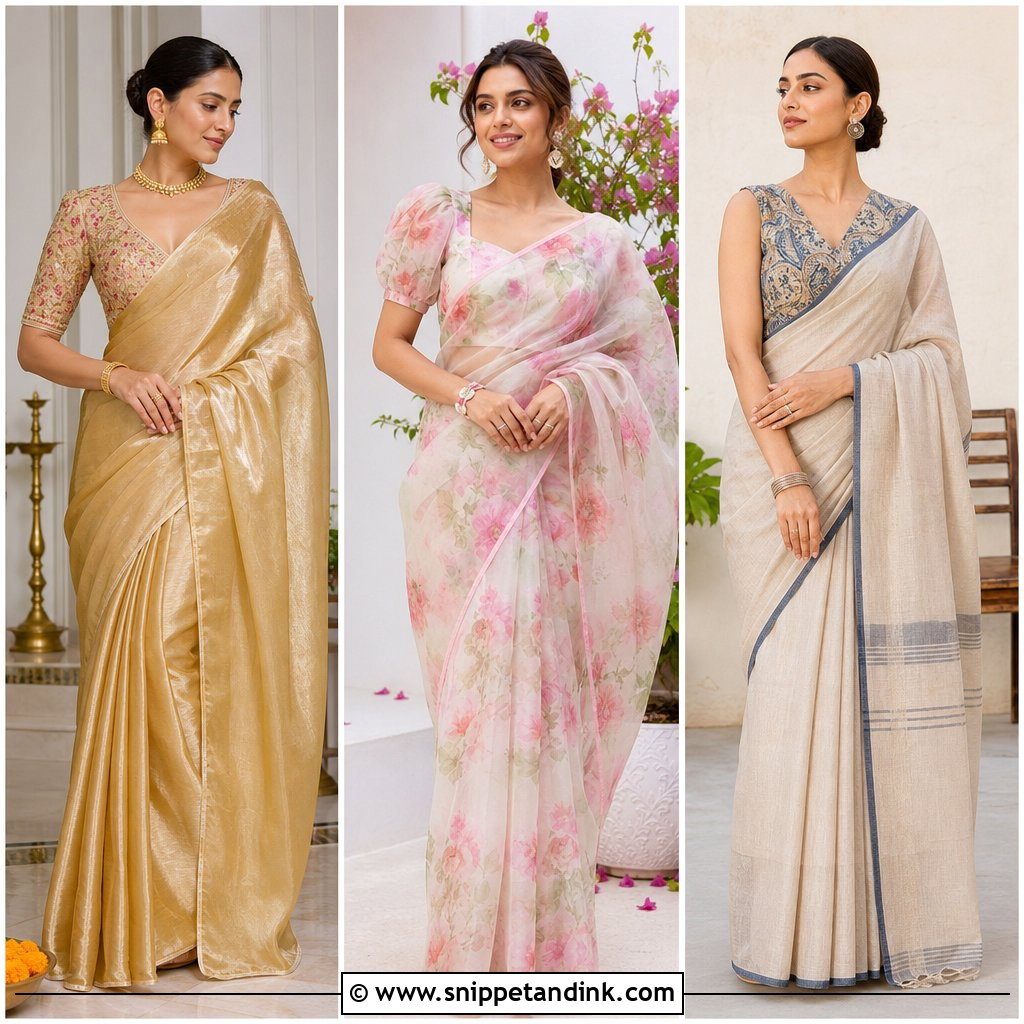
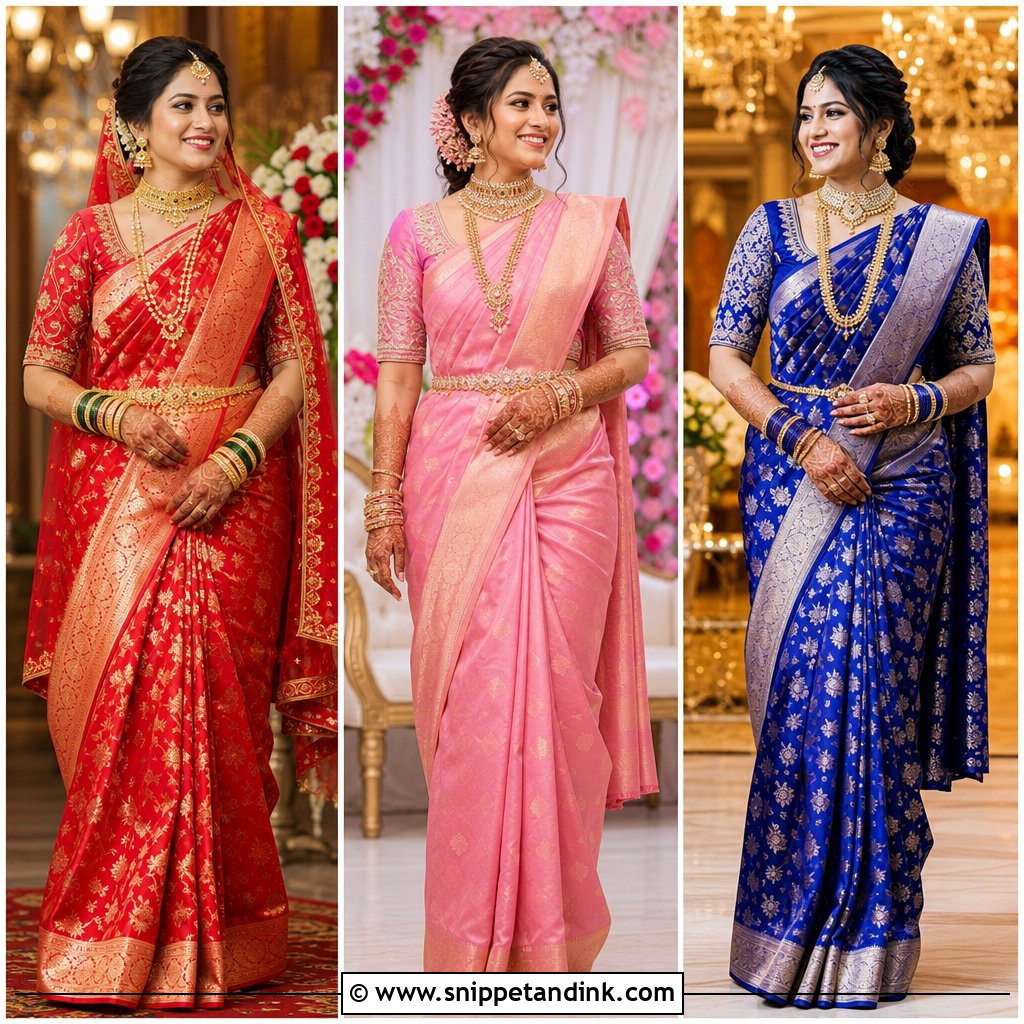
A halter neck is sleek and works best with pre-draped, satin, chiffon or lightweight embellished sarees. Beadwork, sequins or fine embroidery around the neckline. Skip the necklace and wear statement earrings. A neat bun or sleek ponytail shows off the shape. The weight of a halter hangs from the back of the neck, so heavy embellishment gives you a sore neck by evening; I keep halters for receptions and cocktail-style events rather than long ceremonies, and the armholes need careful cutting to stay secure.
26. Sheer Sleeve Bridal Blouse With Saree
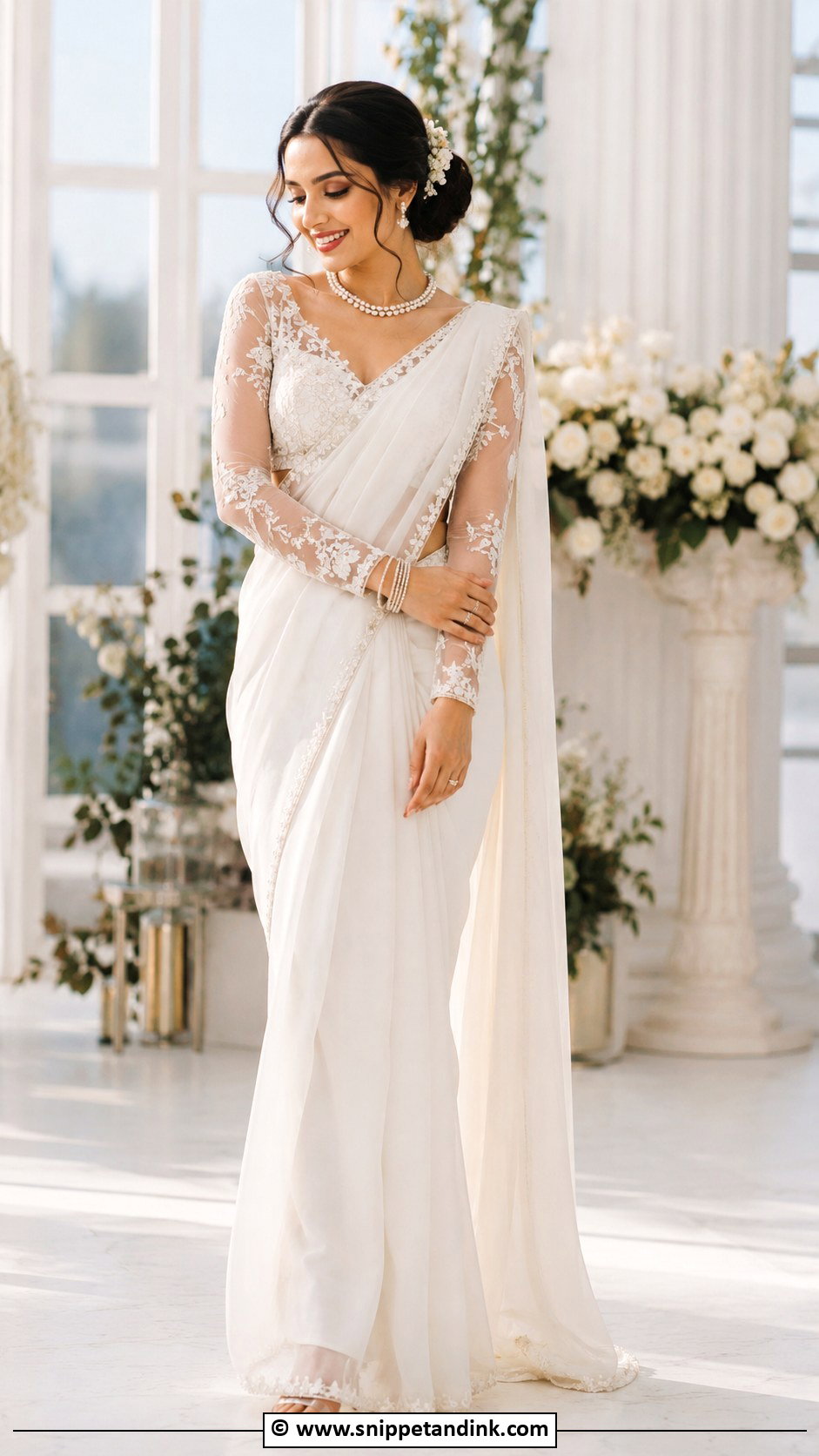
Sheer sleeves give arm coverage that feels lighter than silk or velvet. Net, organza or tulle with small florals, beads, sequins or thread. Pair with silk, georgette or organza, in ivory, blush, gold, red or pastels. Fine jewellery, bangles and a neat style keep it polished. Net can scratch inside the elbow, so I ask for a soft binding along the sleeve seam. Choose a skin-matched net if you want the motifs to look like they’re floating on your arm.
27. Cutwork Bridal Blouse With Lehenga
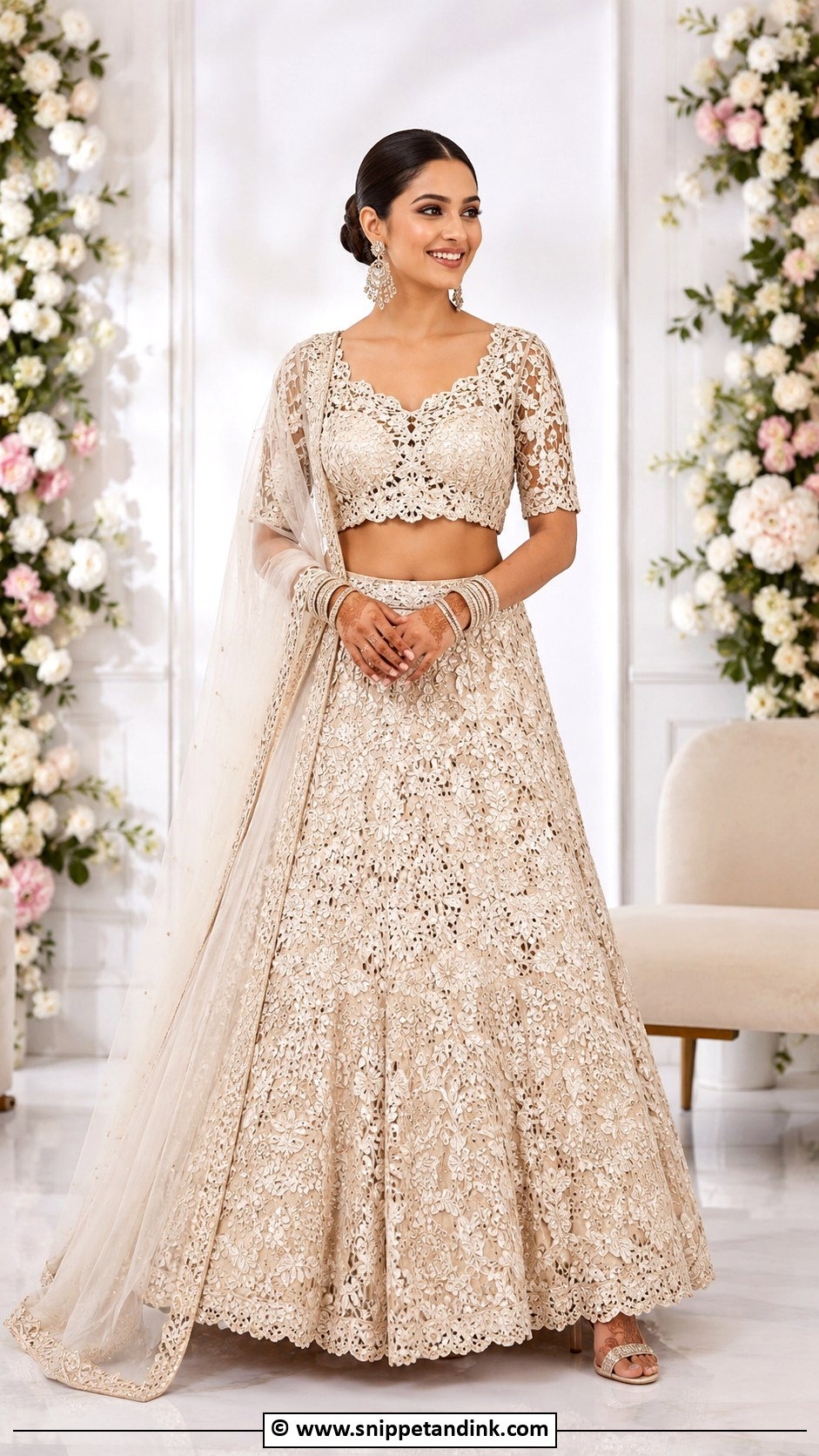
Cutwork adds an artistic, handmade texture to the sleeves, back, neckline or hem. Pair it with a lehenga that has matching embroidery, in gold, ivory, red, blush or jewel tones. Keep the dupatta simple so the pattern stays visible. Statement earrings, bangles and a clean hairstyle. Cutwork is only as good as its edge finishing; turn the blouse inside out at the trial, and if the cut edges are fraying or loosely stitched, they’ll open up by the end of the day.
28. Bridal Blouse With Tassel Back
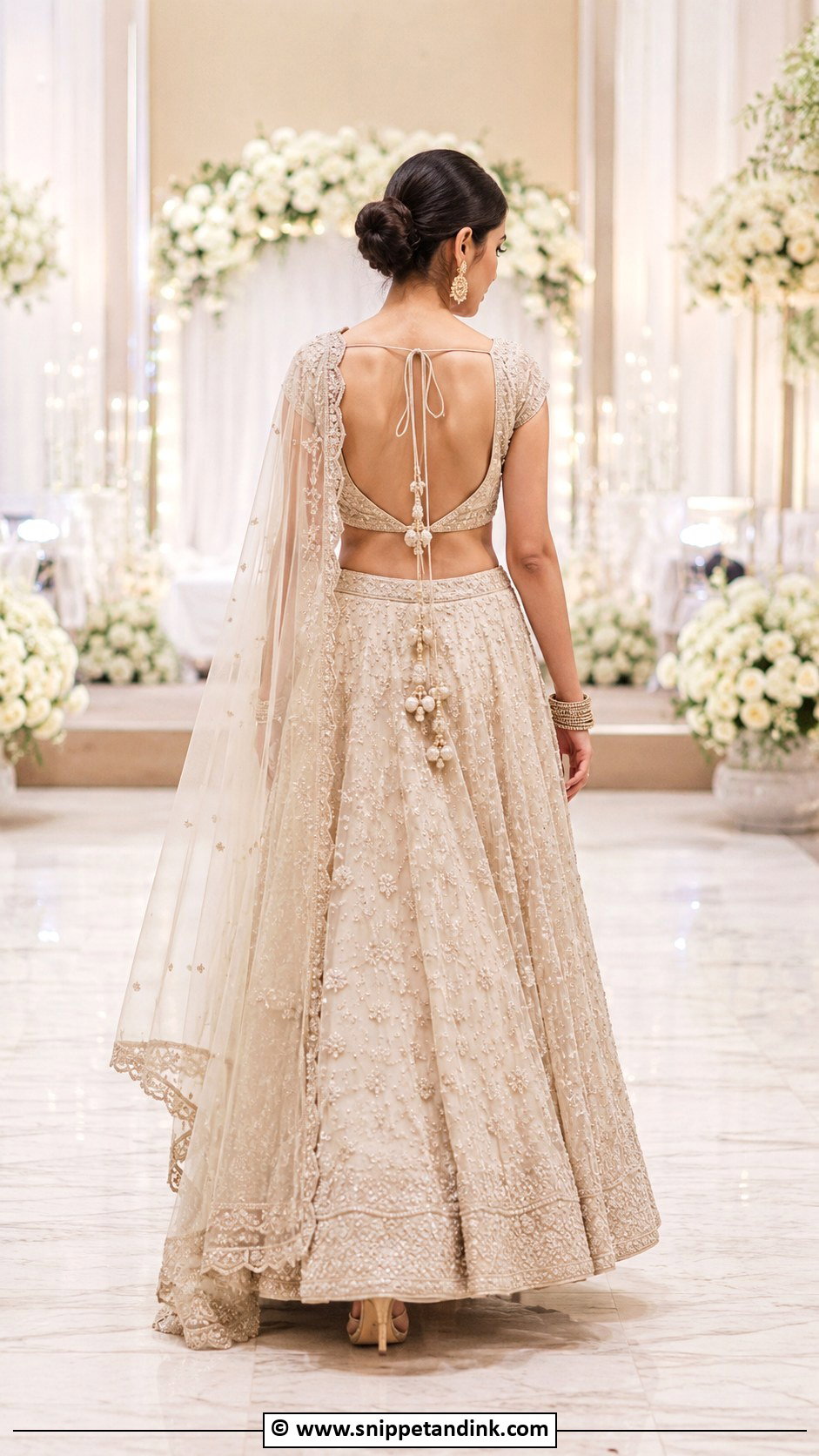
Tassels add movement at the back. Beads, pearls, silk thread, small mirrors or embroidered latkans, on a saree or lehenga blouse where the back shows clearly. A tie-back works, but it still has to support you. Keep the front neckline comfortable. Tassels swing when you walk and tangle with long loose hair, so I usually pair them with a bun or a side-swept style that clears the back.
29. Personalized Bridal Blouse With Lehenga
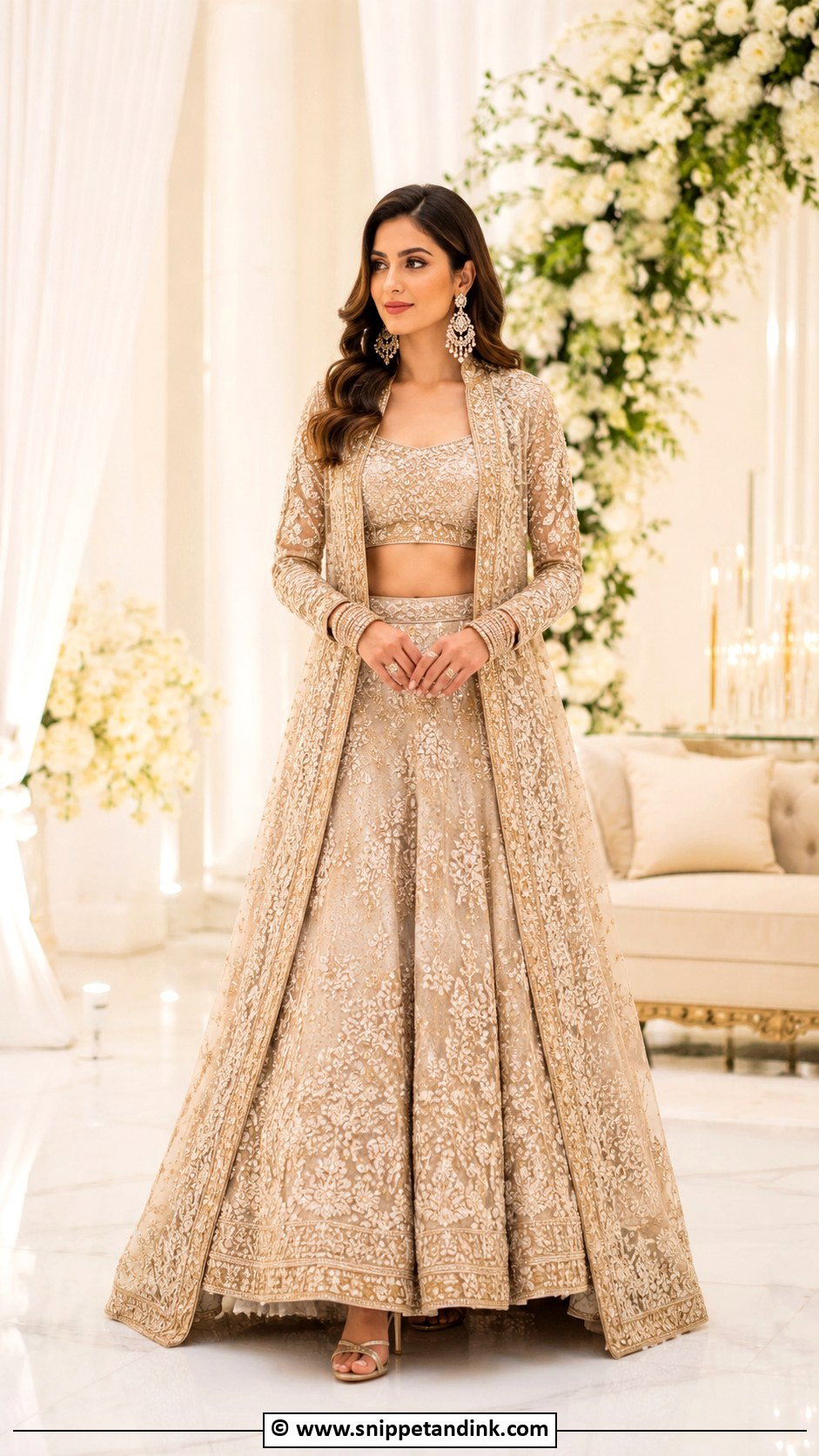
Personal embroidery turns the blouse into a keepsake. Initials, the wedding date, couple symbols, favourite flowers or small cultural details can be stitched into the sleeve, back or hem. Pair it with a lehenga in your wedding palette, red, ivory, pink, gold or green. Keep it small and placed where the dupatta won’t hide it; a name on the back is invisible if the dupatta covers the back all day. Coordinated jewellery and a soft dupatta keep the custom detail visible.
30. Minimal Bridal Blouse With Heavy Saree
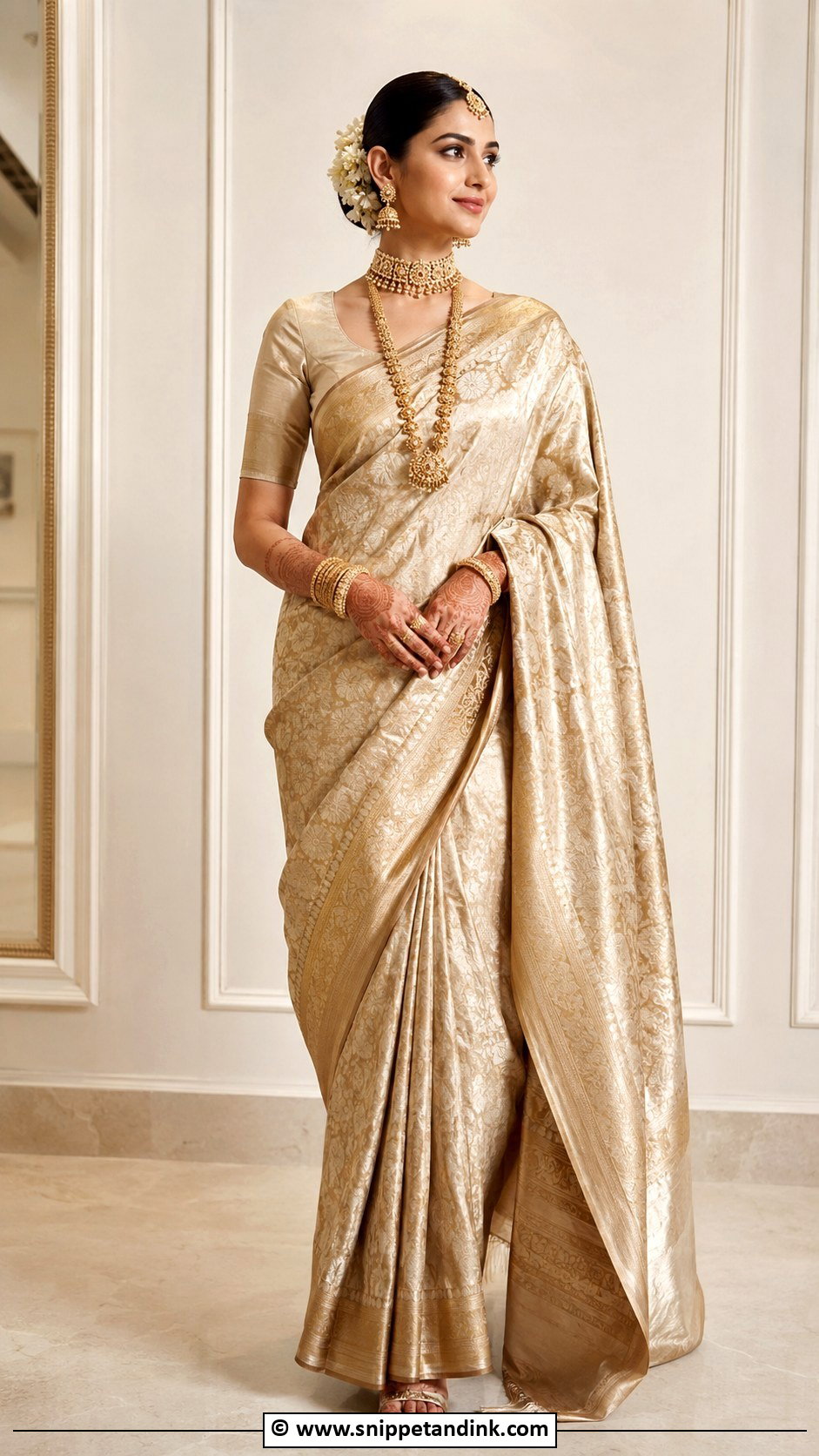
When the saree is a heavy Banarasi, Kanjivaram or embroidered piece, the blouse should step back. A clean blouse in silk, satin, velvet or brocade with a simple neckline and neat sleeves. Let the jewellery, choker, long necklace, earrings and bangles, carry the bridal weight. This balance stops the outfit from feeling crowded, and a plain blouse is much easier to rewear afterward. Match the blouse to the saree’s border colour rather than its body, which usually looks more intentional.
How a Fitted Blouse Feels in Hour Four of the Rituals
Long ceremonies are where blouses fail. Heat, sitting cross-legged, lifting garlands and hugging relatives all put stress on the armhole and the hooks. The armhole should be snug but not cutting in; if it leaves a red line after twenty minutes at the trial, it will hurt by the end. I’d rather have a tailor lower it slightly than have a bride tug at her sleeve all through the pheras.
In warm weather, sweat marks show on silk. Underarm shields sewn into the lining save the blouse and the photos. Hooks at the back are more secure than a zip under heavy embroidery, but they need a second pair of hands, so make sure whoever dresses you knows how they close.
Storing a Heavily Embroidered Blouse
After the wedding, air the blouse inside out before it goes anywhere, then have it dry cleaned by someone used to handwork. Store it folded flat in soft muslin or cotton, not plastic, and never on a hanger: heavy zardozi and stonework stretch the shoulders. Zari can tarnish, so keep it away from damp and refold it every few months so the creases don’t set.
The Blouse Holds the Drape Together
The right blouse is the one that suits your saree or lehenga, your ceremony and how long you’ll be wearing it. Traditional or modern, modest or dramatic, it has to support the whole bridal look. Before you finalise the design, think about the fabric of the drape, your jewellery, your hairstyle, sleeve comfort and the back fit. Heavy embroidery matters, but tailoring matters more. Silk, velvet, pearls, mirror work, zardozi or a personal motif will all look their best on a blouse that fits you properly.
You'll Like These Ideas:


Leave a Reply