
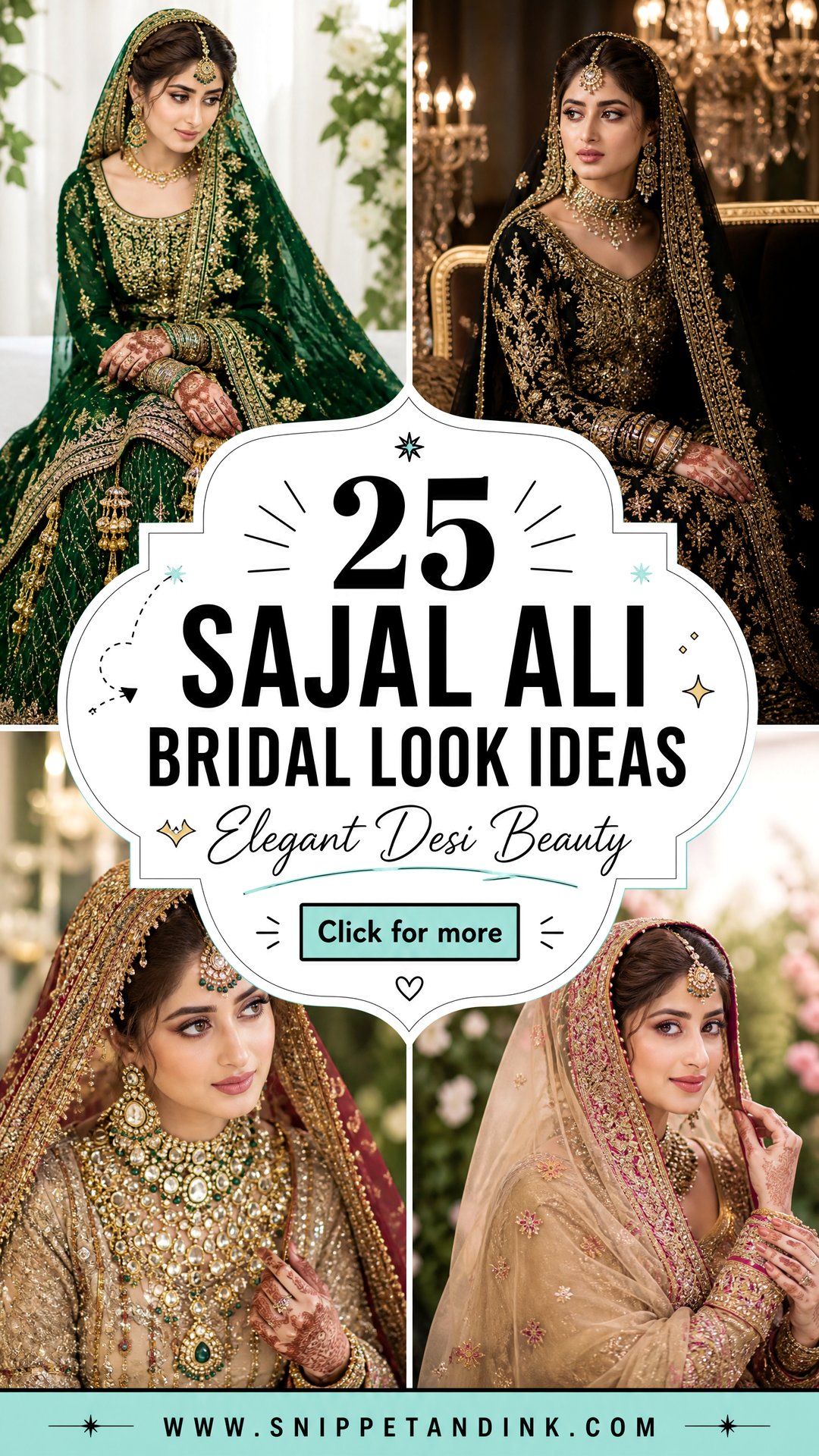
When a bride brings me a screenshot of Sajal Aly, she is rarely asking for a copy of one outfit. She wants that mood: rich embroidery, a sheer dupatta, kundan or pearls, and skin that looks like skin rather than a mask. That softness is harder to achieve than heavy glam, because there is nothing to hide behind. Below are twenty-five Sajal-inspired looks across nikah, mehndi, baraat and walima, from red lehengas to ivory ghararas and a pastel walima, each with the jewelry, hair and makeup I would pair with it, and why.
Planning Dholki to Walima So No Two Looks Repeat
Pakistani weddings run over several functions, and the photos sit side by side in the album. I plan the whole week with the bride at once, so colours, jewelry and makeup intensity build and contrast instead of repeating.
- Dholki and mehndi: bright colours, floral or light jewelry, dewy skin and waterproof eye products. These are the nights for dancing and heat.
- Nikah: often daytime and more solemn. Ivory, peach or soft pastels, minimal jewelry and natural light makeup that looks right up close.
- Baraat: the heaviest outfit and the most defined makeup, built to last the longest day and to hold up under strong stage lighting.
- Walima: a cooler or lighter palette than the baraat, so the two sets of photos look clearly different.
I also ask for photos of every outfit in daylight before the trial. Embroidery that looks gold in the shop can lean copper or brass outdoors, and that decides whether I warm or cool the eyes.
1. Sajal Ali Red Bridal Lehenga Look
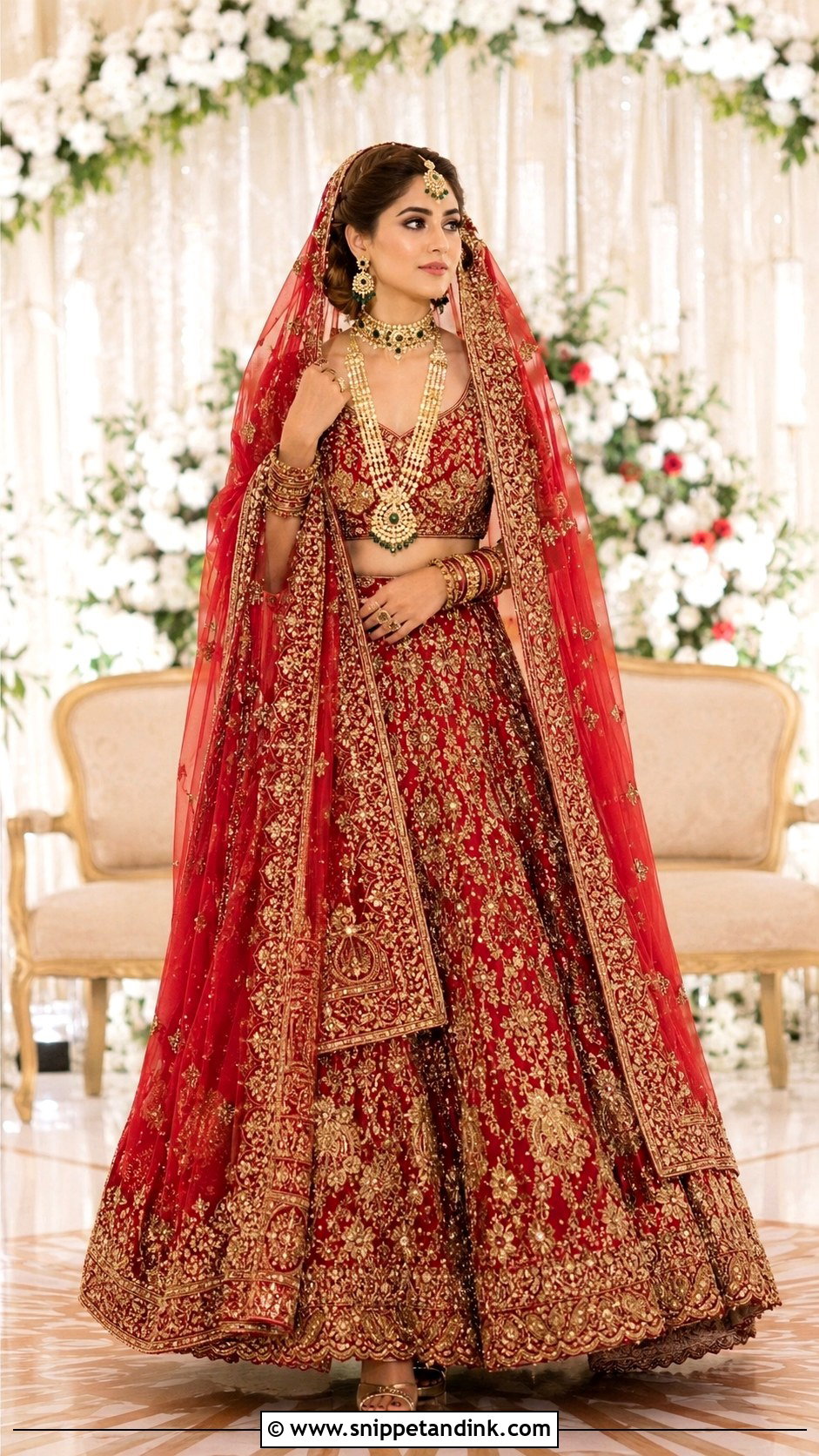
The red bridal lehenga is still the baraat classic: a heavily worked red lehenga and choli in zardozi, dabka and gota, with a sheer dupatta over the head. Kundan choker, rani haar, jhumkas, bangles and a statement tikka complete the traditional set. With that much gold and red, I keep the face soft: glowing skin, defined but blended eyes and a muted rose lip rather than a matching red. A bright red lip next to a red dupatta tends to flatten the face in photos, and a softer lip lets the outfit stay the loudest thing in the frame.
2. Sajal Ali Ivory Nikah Gharara Look
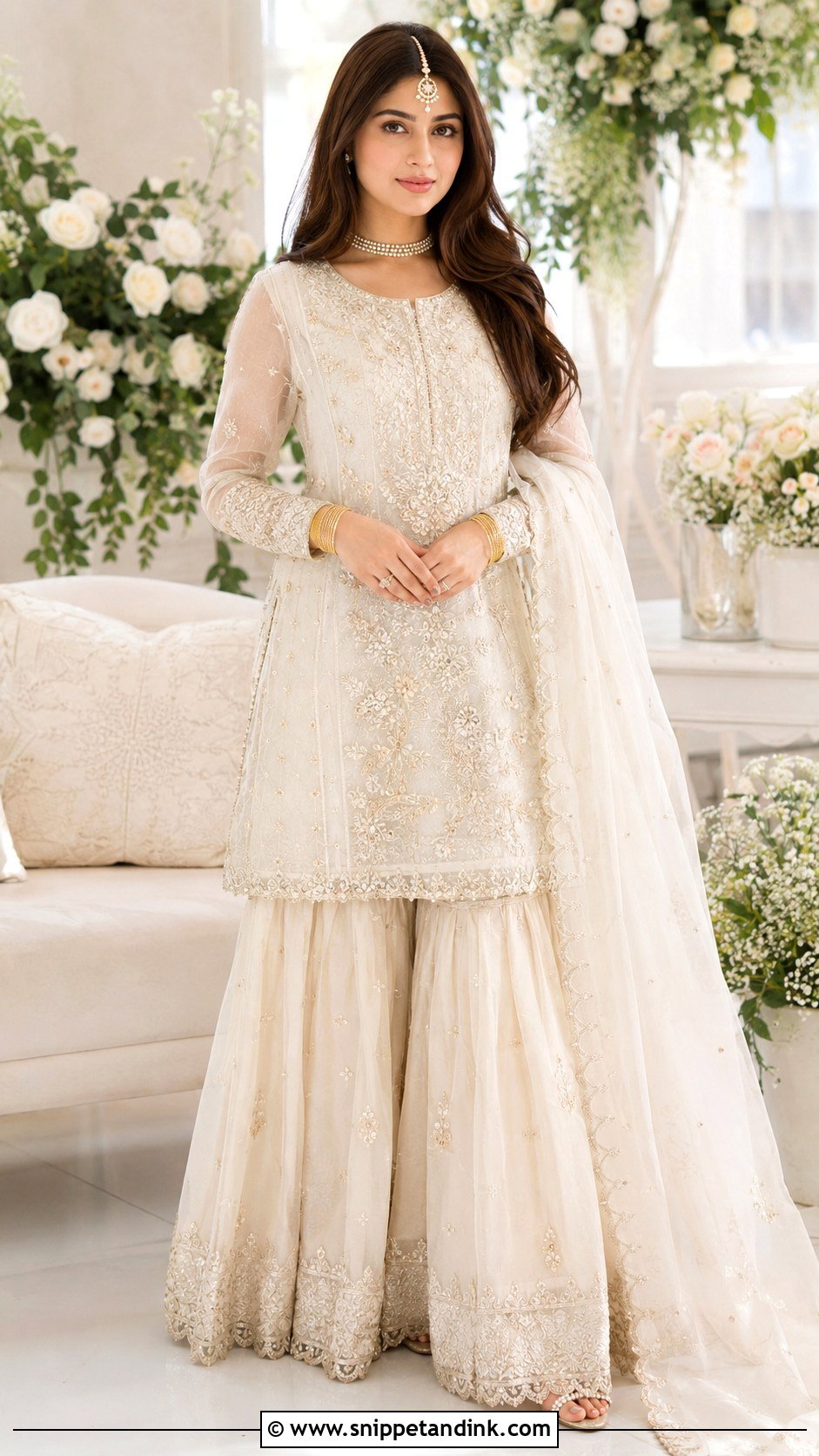
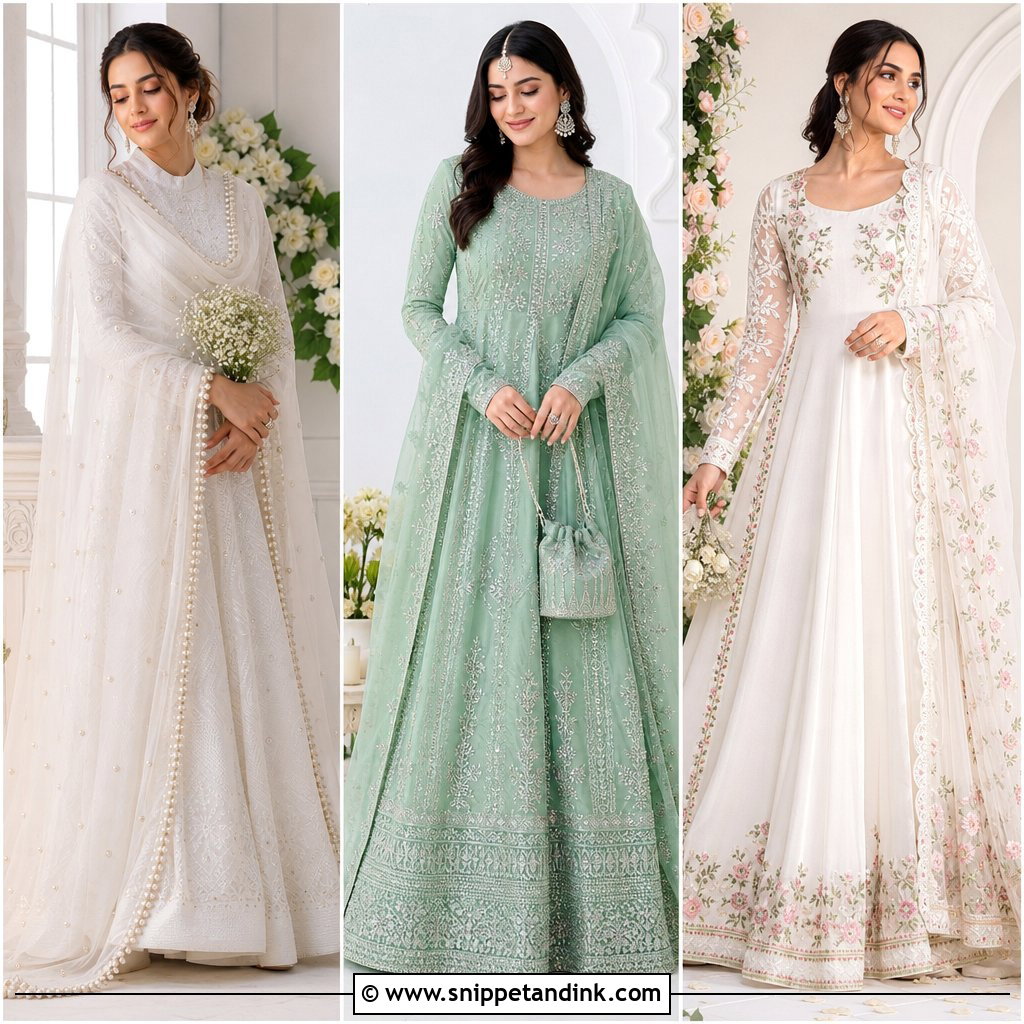
Ivory for the nikah has become a favourite, and it suits the calm, serious mood of the ceremony. An ivory gharara with fine gold embroidery, a short kurti and a light organza dupatta is all you need; pearls, a small passa, dainty bangles and soft jhumkas keep it delicate. My concern with ivory is always foundation. White fabric bounces light up under the chin, so if the base is even half a shade too light, the face looks grey next to the dress. I match at the jaw in daylight and keep the eyes lightly smoked with a peachy nude lip.
3. Sajal Ali Gold Bridal Pishwas Look
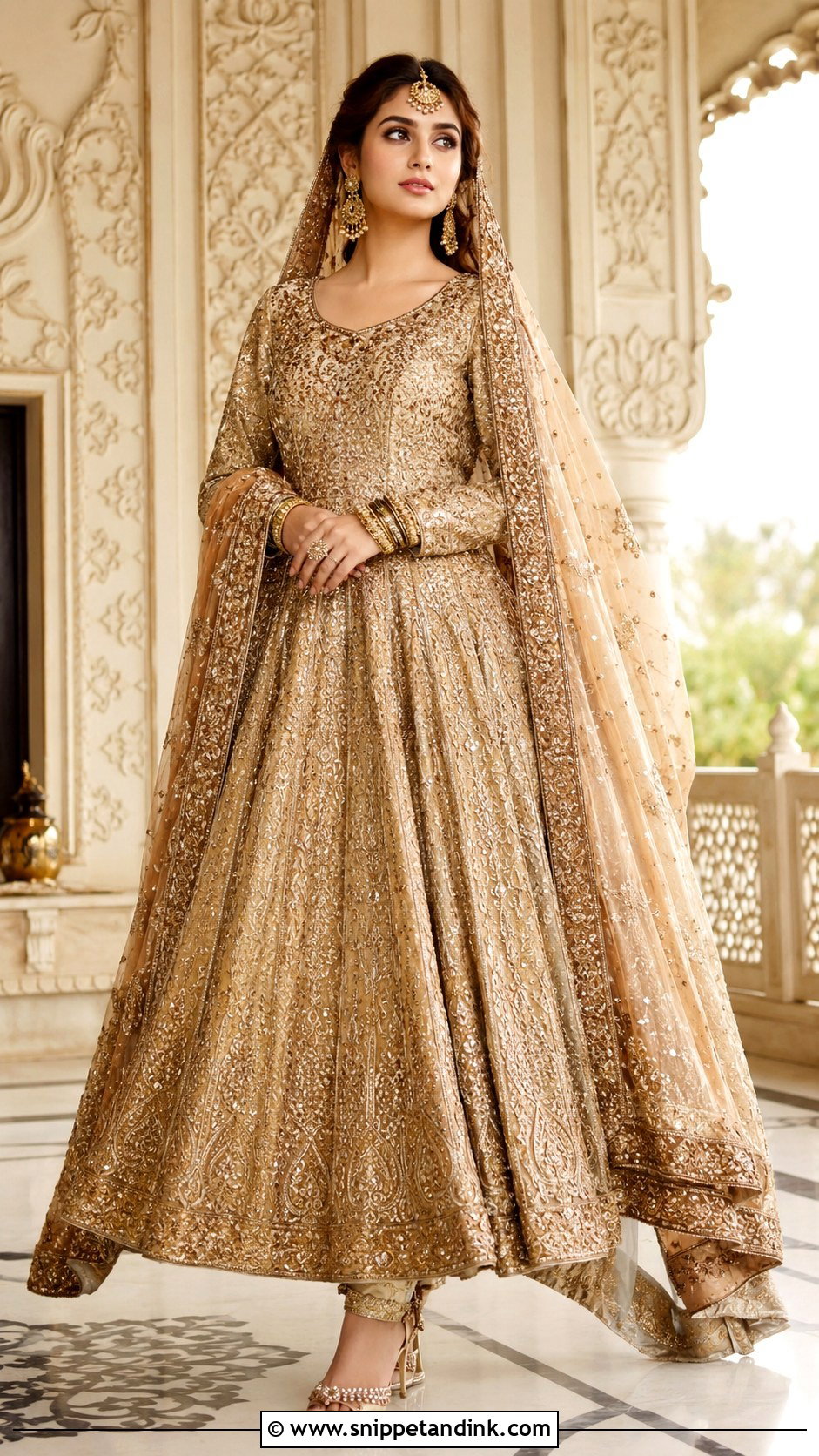
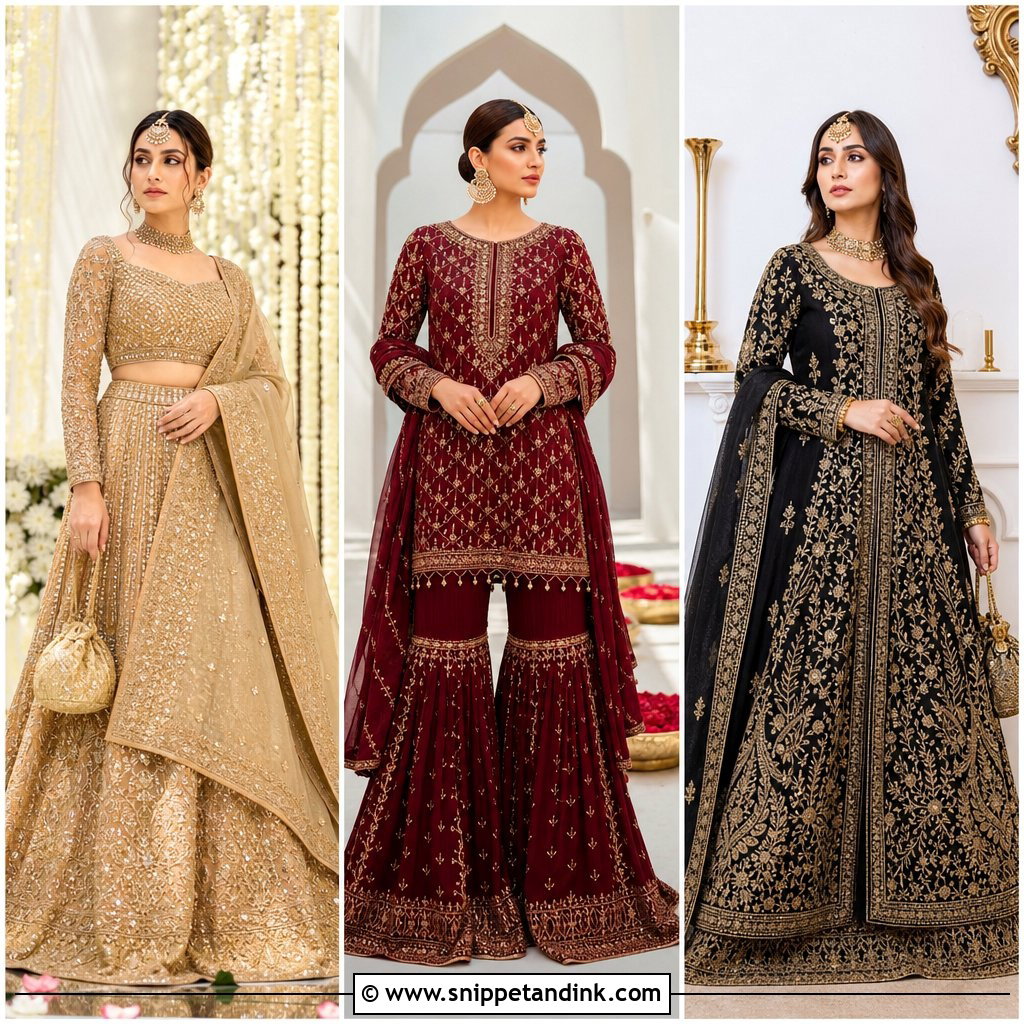
A gold pishwas gives volume and shimmer while staying graceful. A floor-length, hand-embroidered pishwas with a fitted bodice and wide flare, over a churidar or a lehenga for extra volume, keeps it traditional. Antique gold jewelry, a matha patti and stacked bangles match the warmth. I warm the makeup to suit: bronze and nude tones, kohl along the waterline and a polished bun. Gold fabric reflects onto the skin, so I go lighter on highlighter than usual or the cheekbones turn shiny under flash.
4. Sajal Ali Pastel Walima Lehenga Look
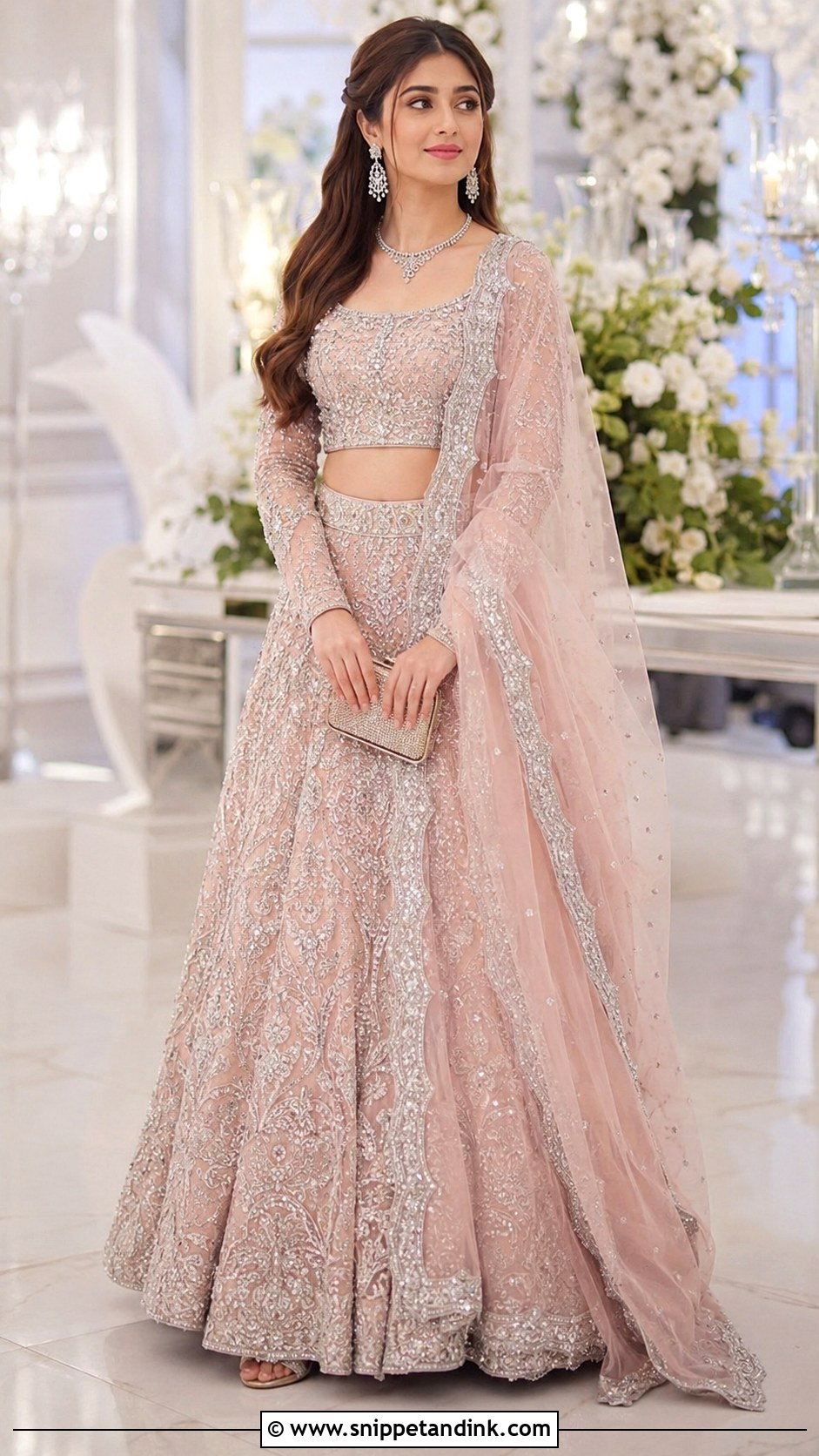
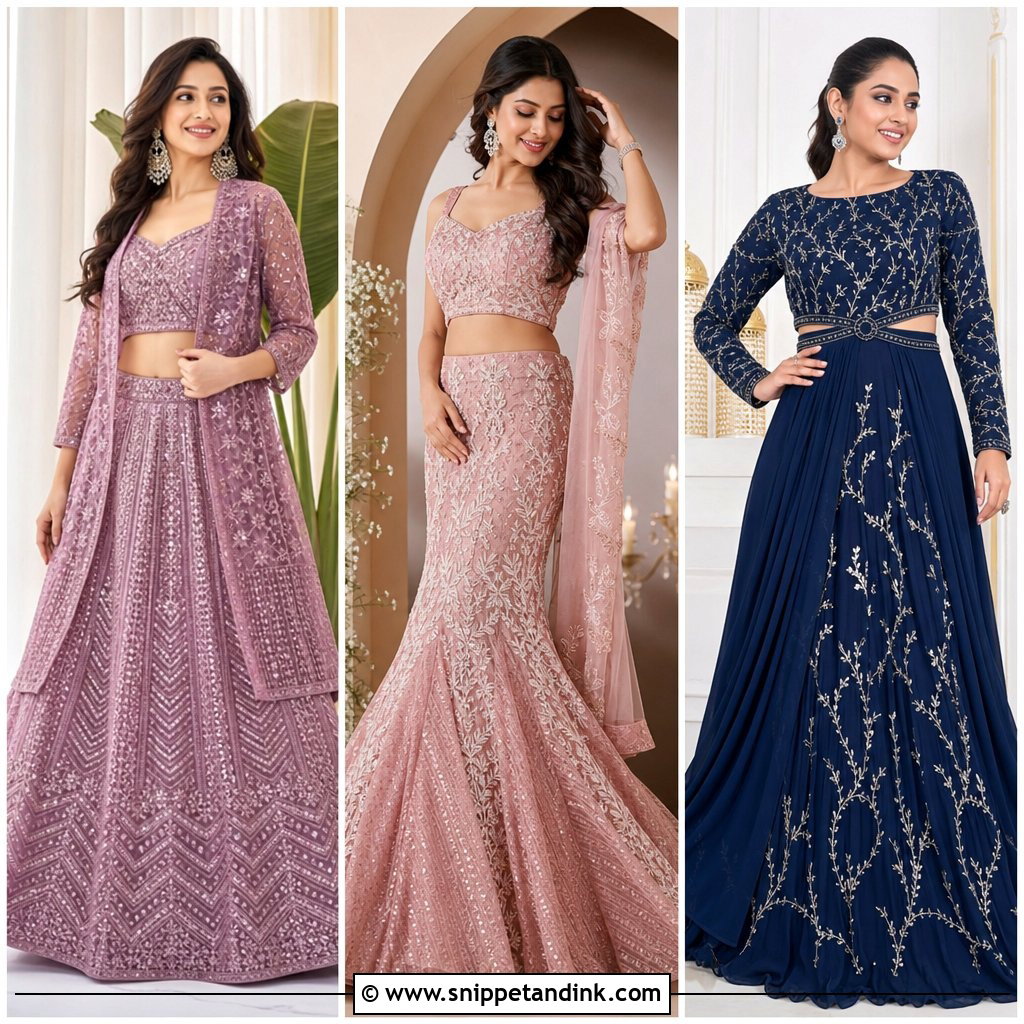
For the walima, a pastel walima lehenga in powder pink, mint, lilac, blush or champagne contrasts nicely with the red of the baraat. Silver, pearl or sequin embroidery glows under hall lighting. Diamond-style jewelry, crystal earrings and a neat clutch suit it, with loose curls or a soft side part. I keep makeup clean and luminous: a glossy lip, fluttery lashes. Pastels can wash out deeper skin tones, so on darker complexions I add a bit more warmth to the cheeks and choose mint or champagne over powder pink.
5. Sajal Ali Maroon Velvet Bridal Look
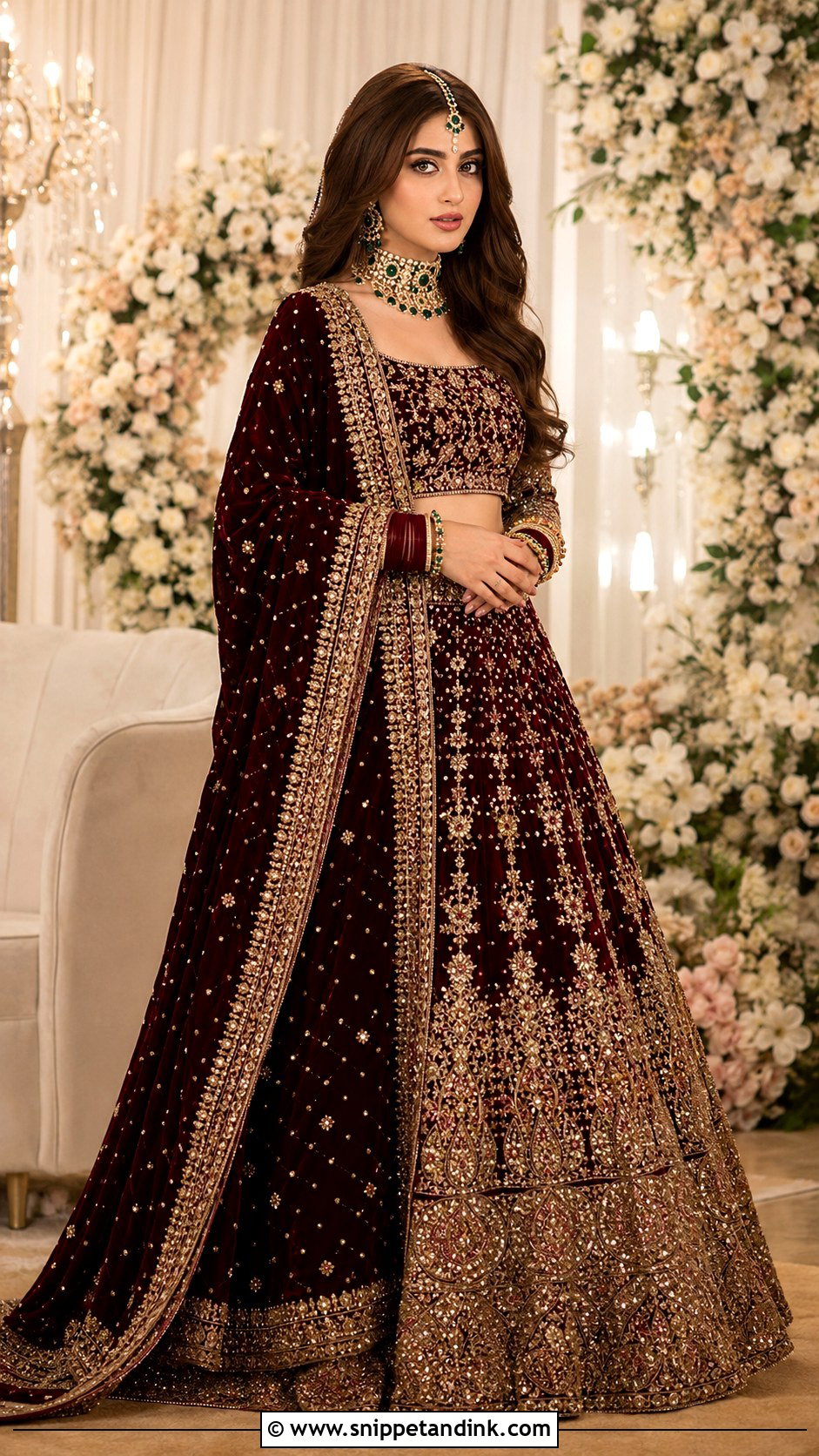
Maroon velvet belongs to winter weddings. A velvet lehenga or long shirt with a heavily embroidered dupatta already feels rich, so keep the rest in proportion: gold jewelry, a few emerald accents and traditional bangles. A centre-parted bun with fresh flowers or hair jewelry finishes it. Velvet absorbs light, so I lean matte on the skin, with defined eyes, sculpted cheeks and a deep rose lip. Velvet also traps heat, which matters in a packed evening hall; I set the base with more care for that reason.
6. Sajal Ali White Bridal Saree Look
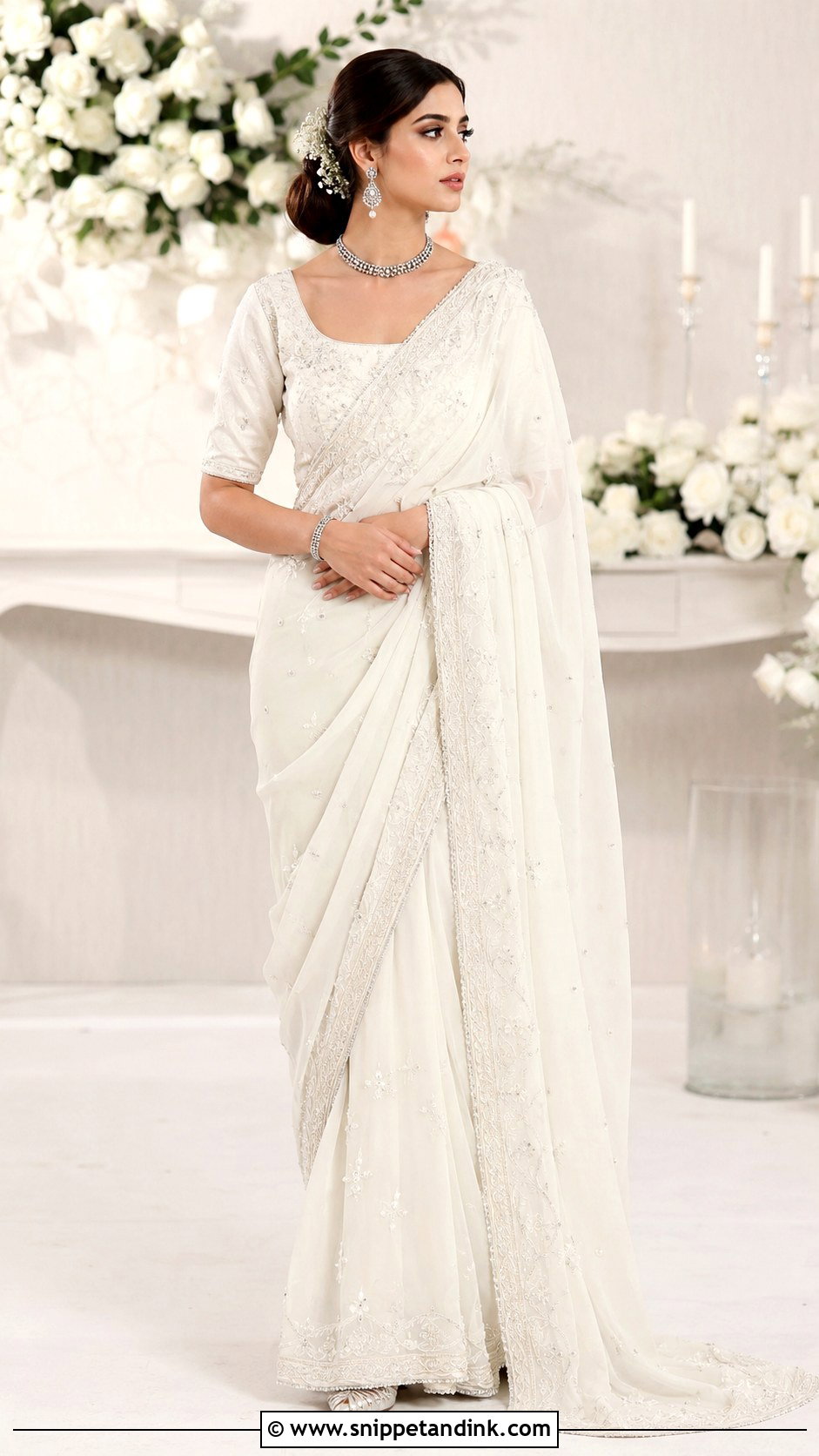
A white or pearl bridal saree is a quieter route than a lehenga. Choose fine embroidery, sequins or a delicate lace border, and a structured blouse with detailed sleeves or a modest neckline. Pearls, diamonds or silver-toned pieces keep it refined. Hair can sit in a neat bun, soft waves or a low ponytail. I use champagne eyeshadow and a soft pink lip, and I always ask if the bride is comfortable walking in a saree, since the pleats need practice. If not, a pre-stitched saree solves that problem.
7. Sajal Ali Mehndi Sharara Look
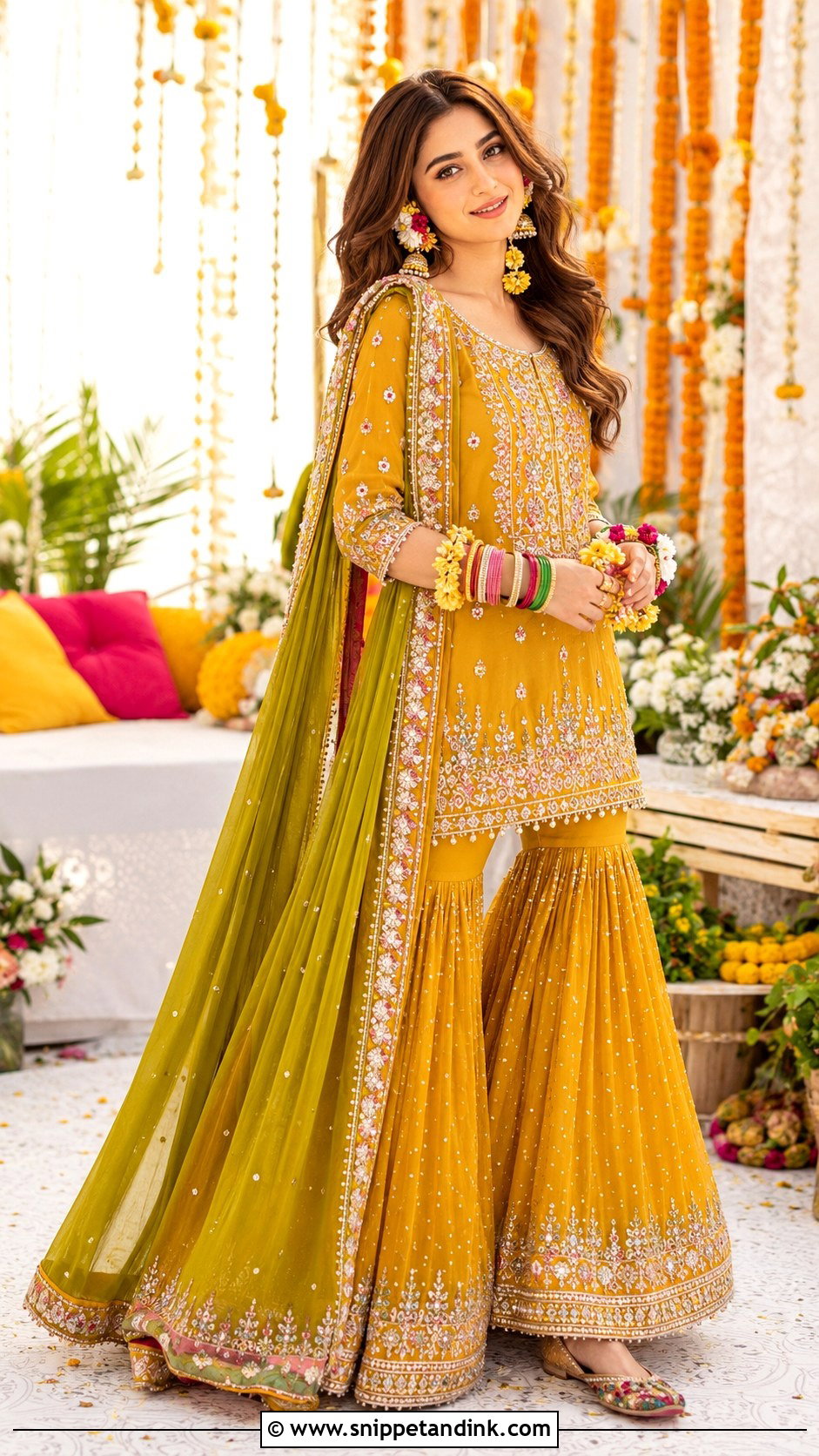
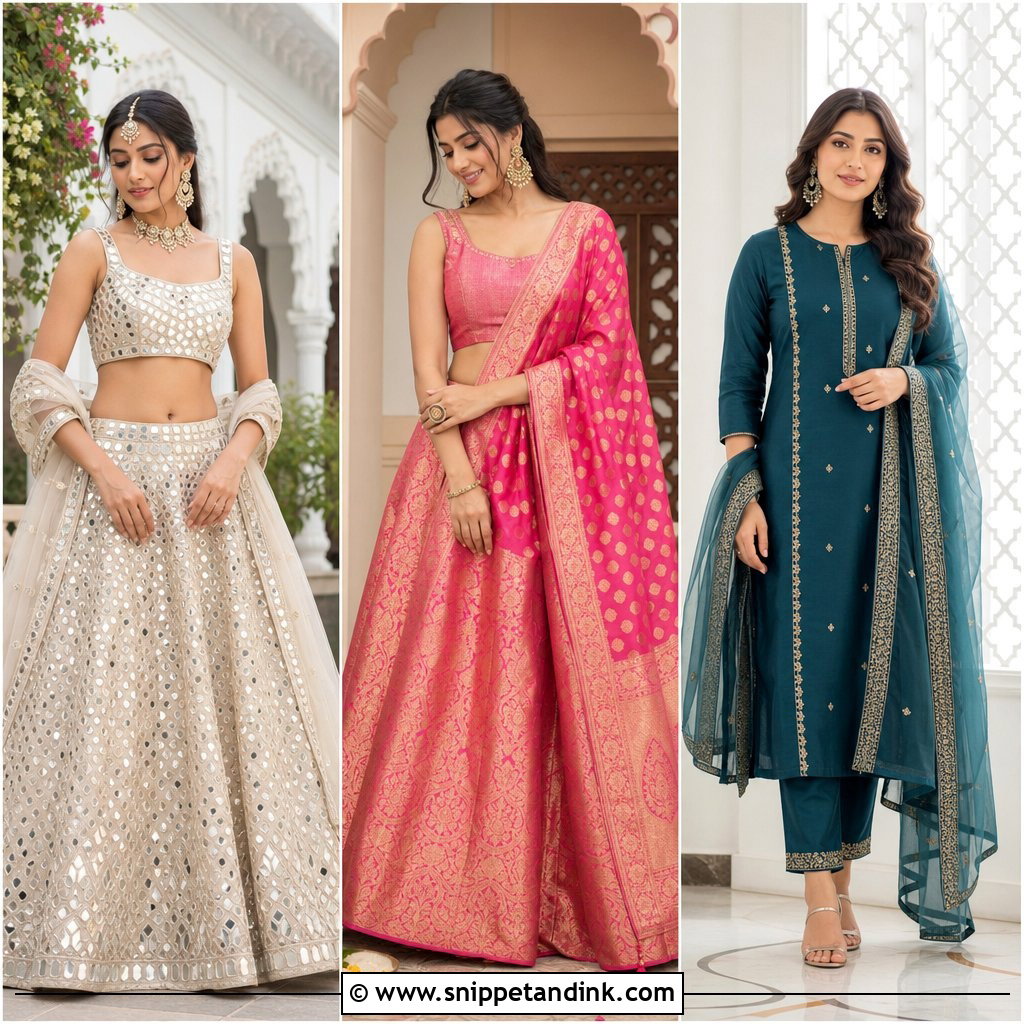
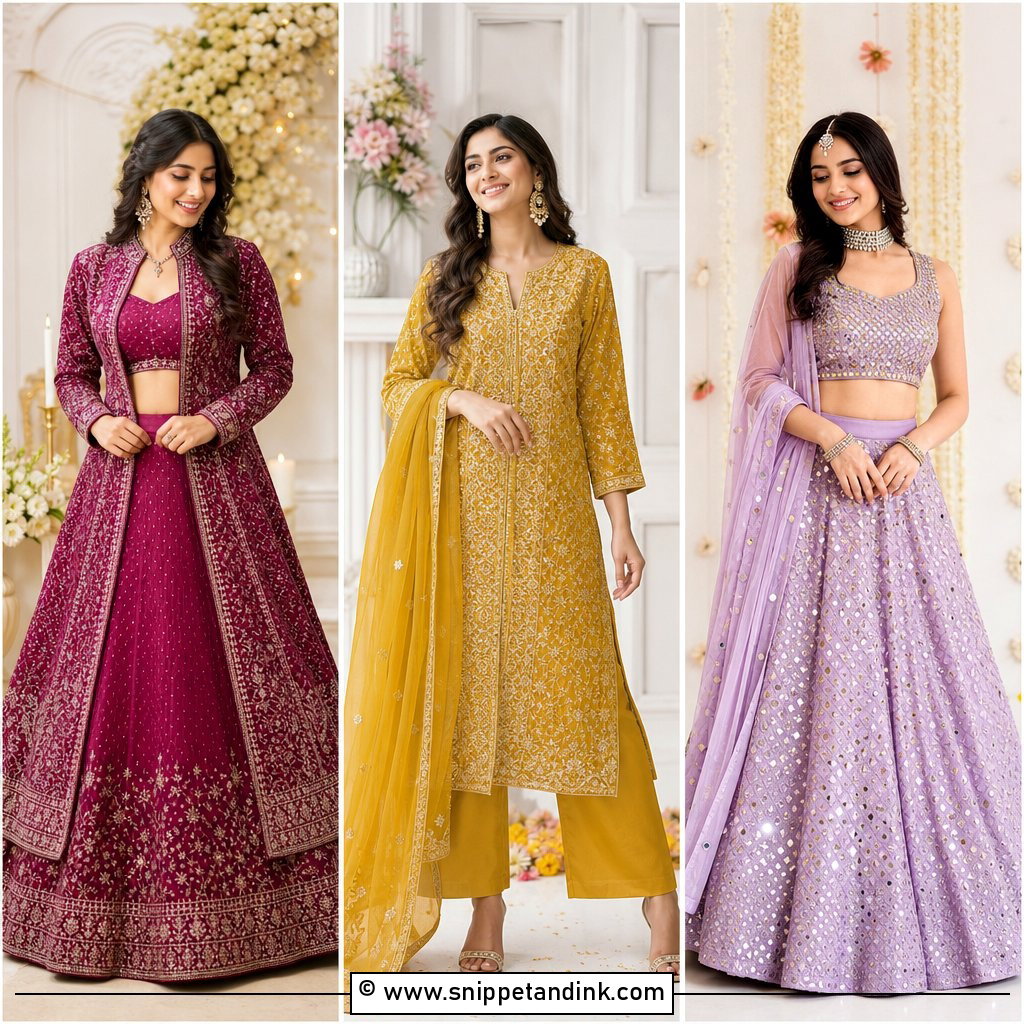
A mehndi sharara needs to move, because you will be dancing. Yellow, mustard, green or orange with mirror work, gota and thread embroidery gives that wedding-week brightness; a short kurti and contrasting dupatta keep it playful. Floral jewelry, small jhumkas and bangles are lighter than metal. I keep makeup dewy with coral lips and defined lashes, but I use a waterproof mascara and liner here, since mehndi nights involve heat, dancing and usually some tears.
8. Sajal Ali Mughal Bridal Lehenga Look
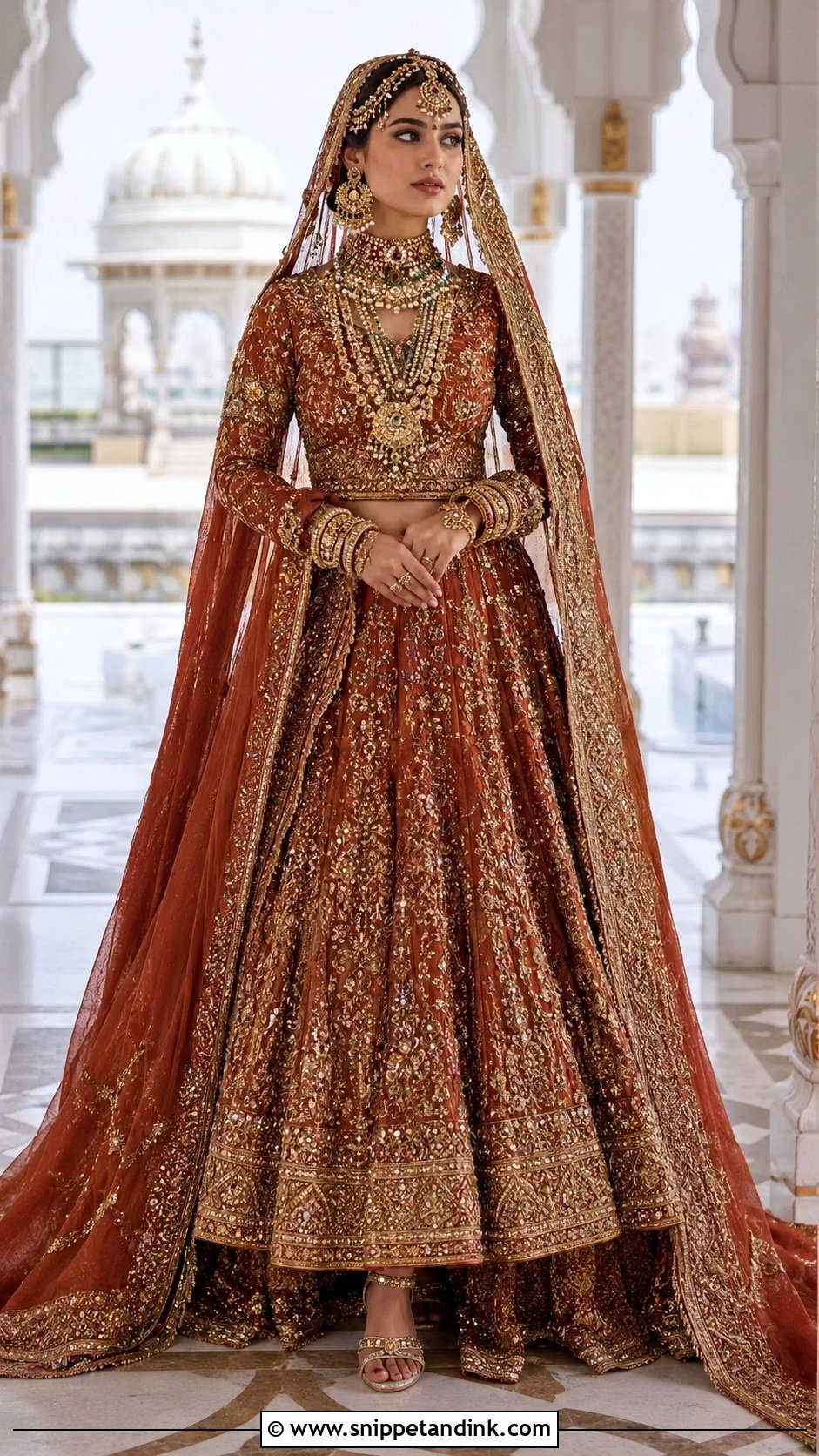
Mughal-inspired lehengas are the most ornate looks in this list. Choose red, rust, gold, emerald or deep pink, with a long blouse, a structured dupatta and traditional motifs. The jewelry is equally grand: matha patti, choker, rani haar, passa, bold earrings. With this much going on, I place one focus on the face, defined eyes, and keep the lip muted. Ask the jeweler how heavy the full set is; a matha patti, passa and earrings together pull on the scalp and earlobes over several hours, and ear chains or supports help.
9. Sajal Ali Pink Bridal Lehenga Look
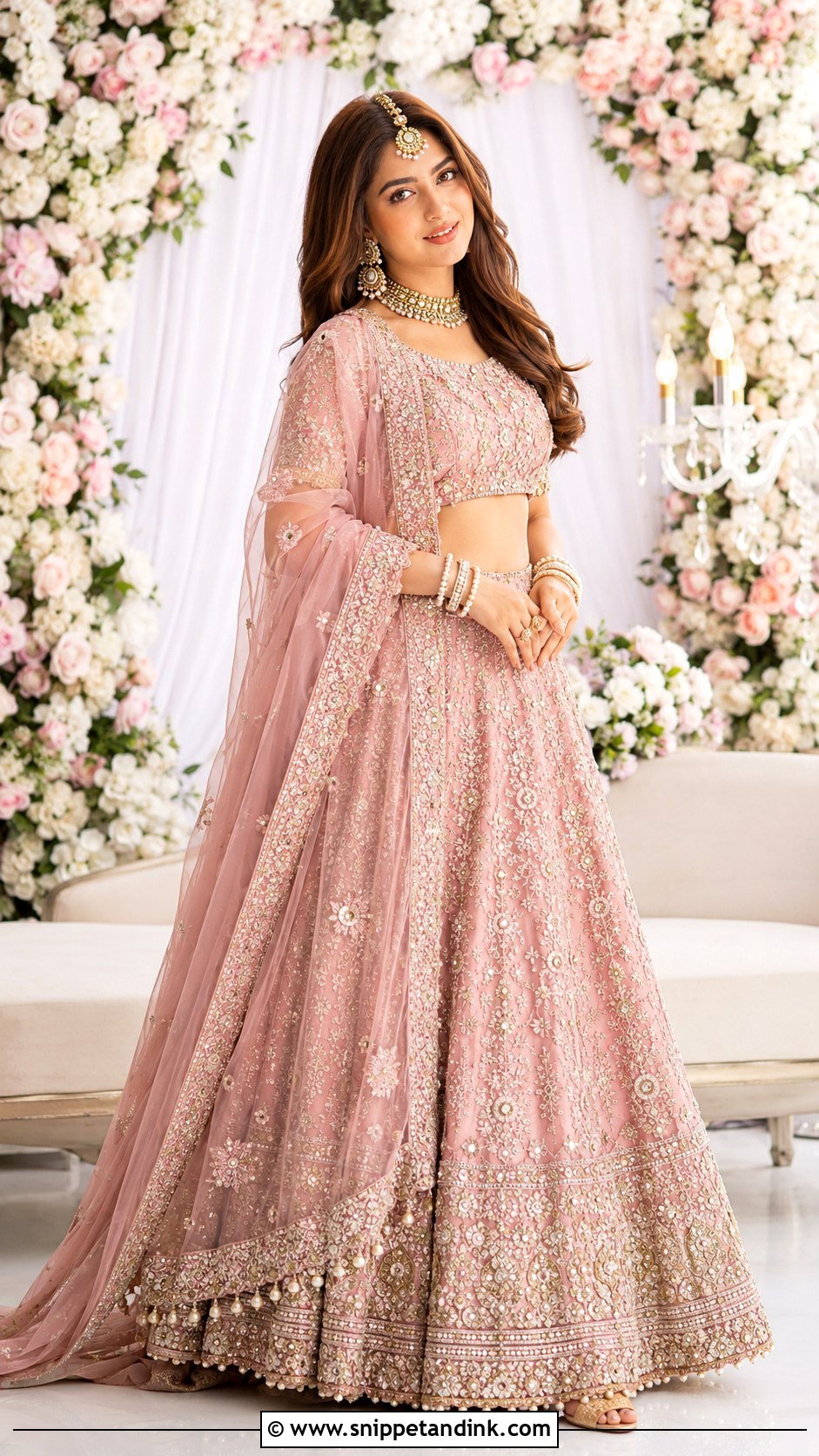
Pink is the softer way to do a bridal lehenga. Rose, blush or dusty pink with gold or silver embellishment reads romantic, and a well-draped dupatta keeps it bridal. Polki, pearl bangles and a fine tikka suit it. I match the blush to the lehenga: pink-toned blush on a rose lehenga, a warmer peach on dusty pink. Soft brown eyes and glowing skin finish it. Curls or a sleek bun both work, so choose based on the neckline: a high neck wants the hair up.
10. Sajal Ali Green Bridal Gharara Look
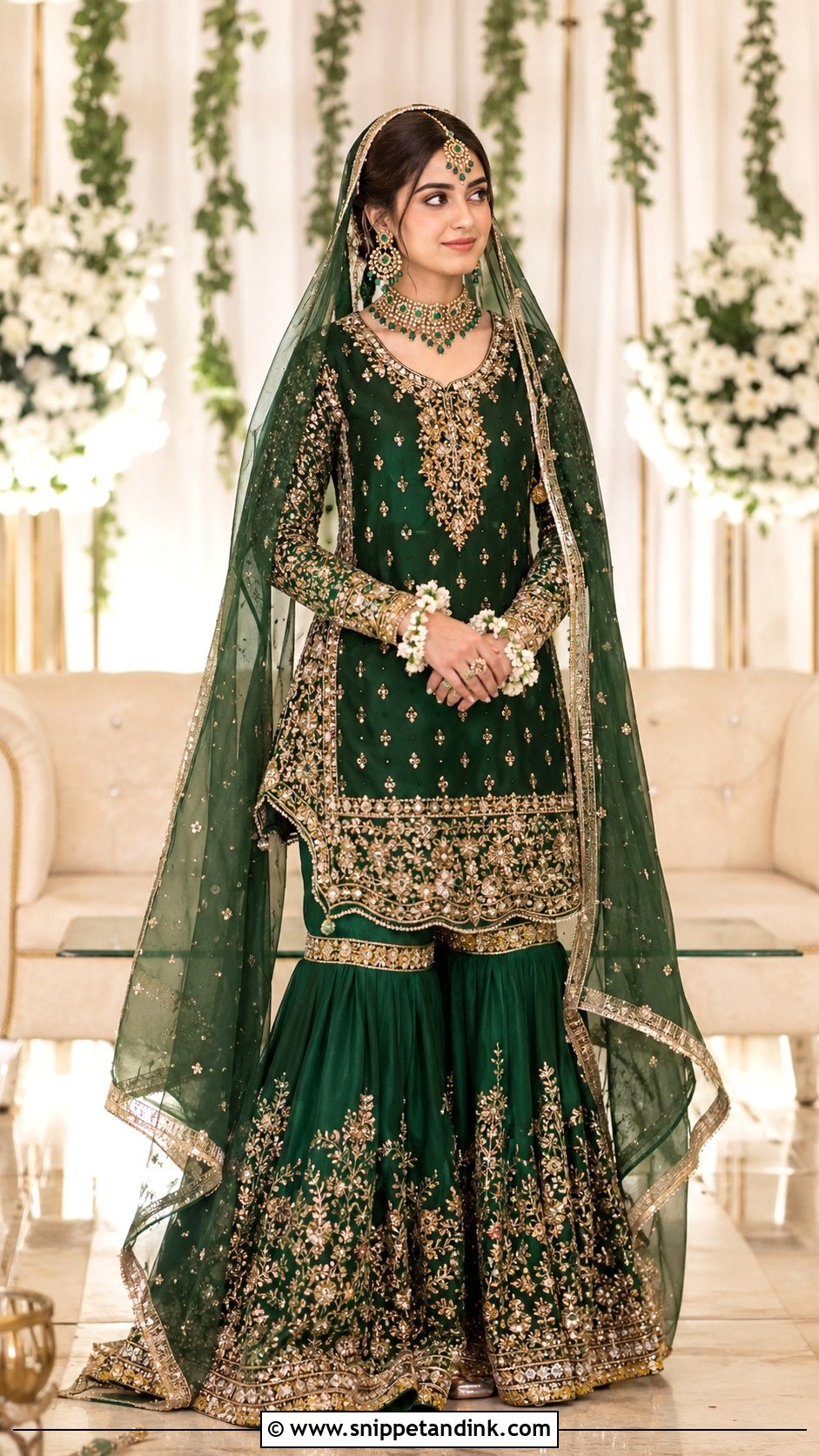
Green gharara looks feel royal and a little unexpected. A short embroidered shirt, flared bottoms and a sheer dupatta with gold borders work in emerald, bottle green, sage or mehndi green. Antique gold with green stones and traditional bangles complete it. A middle-parted bun with the dupatta pinned over the head is the classic finish. On makeup, I avoid green-toned eyeshadow; bronze eyes and peach lips warm the face against the cool colour instead of competing with it.
11. Sajal Ali Champagne Bridal Look
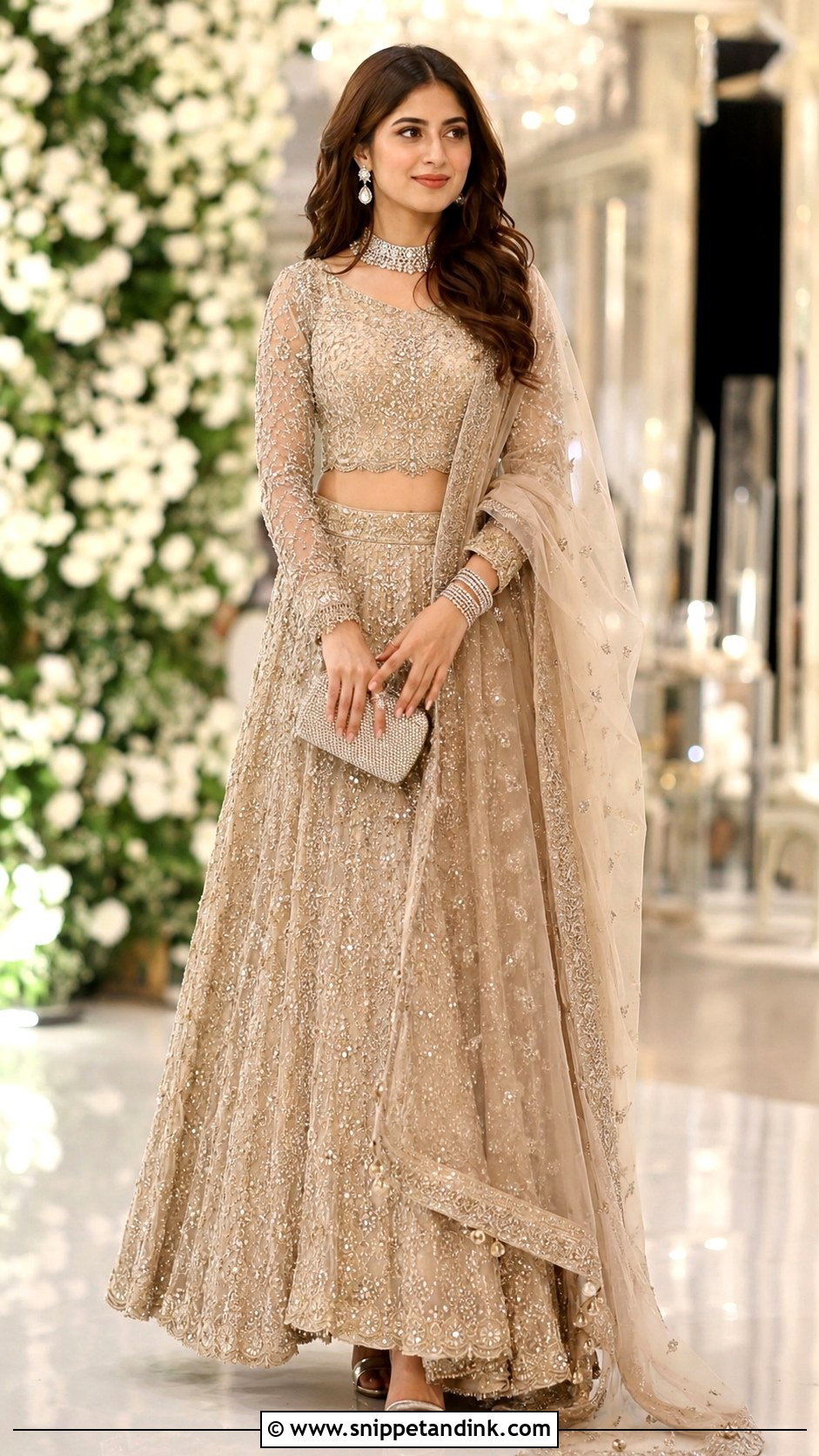
Champagne gives shimmer without the weight of bright gold. A champagne lehenga or pishwas with fine sequins, crystals, pearls and thread, plus a sheer matching dupatta, looks light on camera. Diamond-style jewelry, pearl earrings and a slim bracelet stack fit the mood. Hair stays soft, open waves or a low bun. I use luminous skin, nude lips and softly defined eyes, but I check the nude lip against the outfit, since a lip that’s too pale next to champagne makes the face look unwell.
12. Sajal Ali Black And Gold Bridal Look
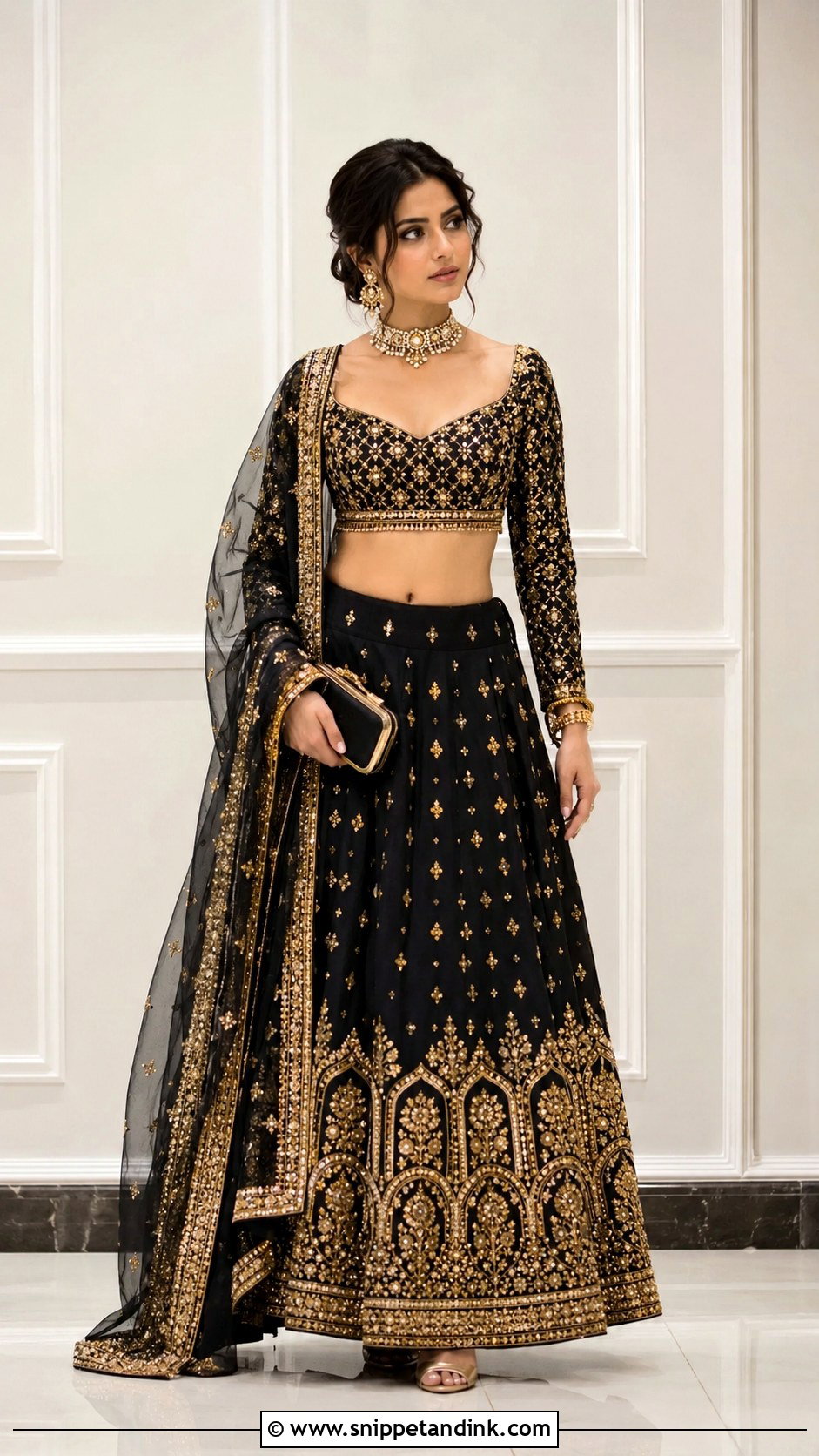
Black and gold is not a baraat colour for most families, but it works well for a reception, engagement or portrait session. A black lehenga or long shirt with gold embroidery, softened by a sheer dupatta, plus a kundan choker and statement earrings, is festive and modern. Winged liner and a nude or rose lip suit it. Black is unforgiving on makeup though: any powder or foundation transfer on the neckline shows immediately, so I set the neck and chest carefully and dress the bride before the final powder.
13. Sajal Ali Peach Bridal Anarkali Look
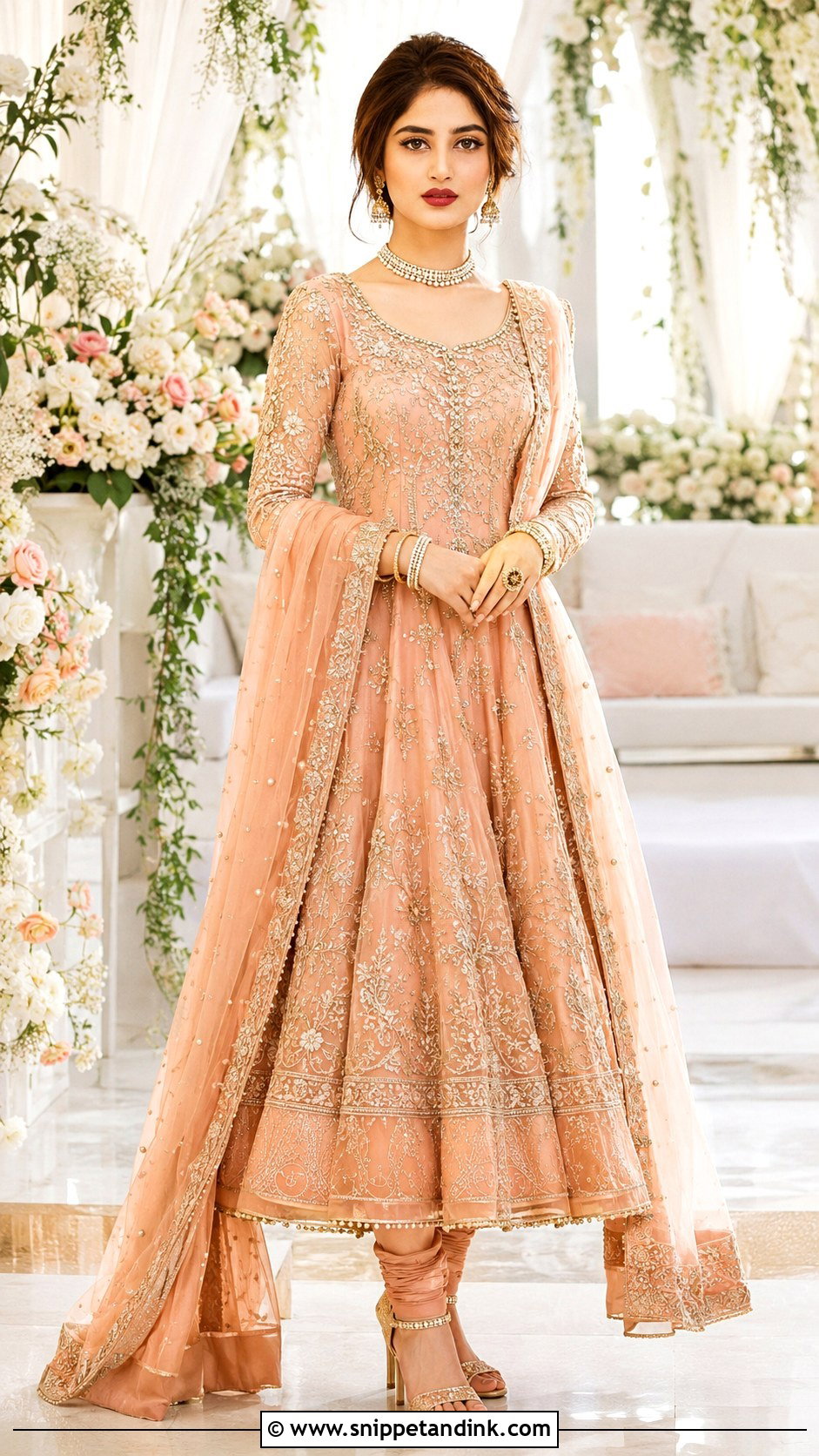
Peach flatters nearly every skin tone. A long, flared anarkali with fine embroidery on the bodice, sleeves and hem, over churidar with a lightweight dupatta, moves gracefully. Pearls, soft gold and small jhumkas keep it delicate. I keep the face fresh: peach blush, softly shimmering eyes, a natural lip, and a sleek bun or loose waves. Peach is my favourite colour for daytime nikahs because it looks warm in natural light where heavier colours can look dull.
14. Sajal Ali Bridal Maxi Look
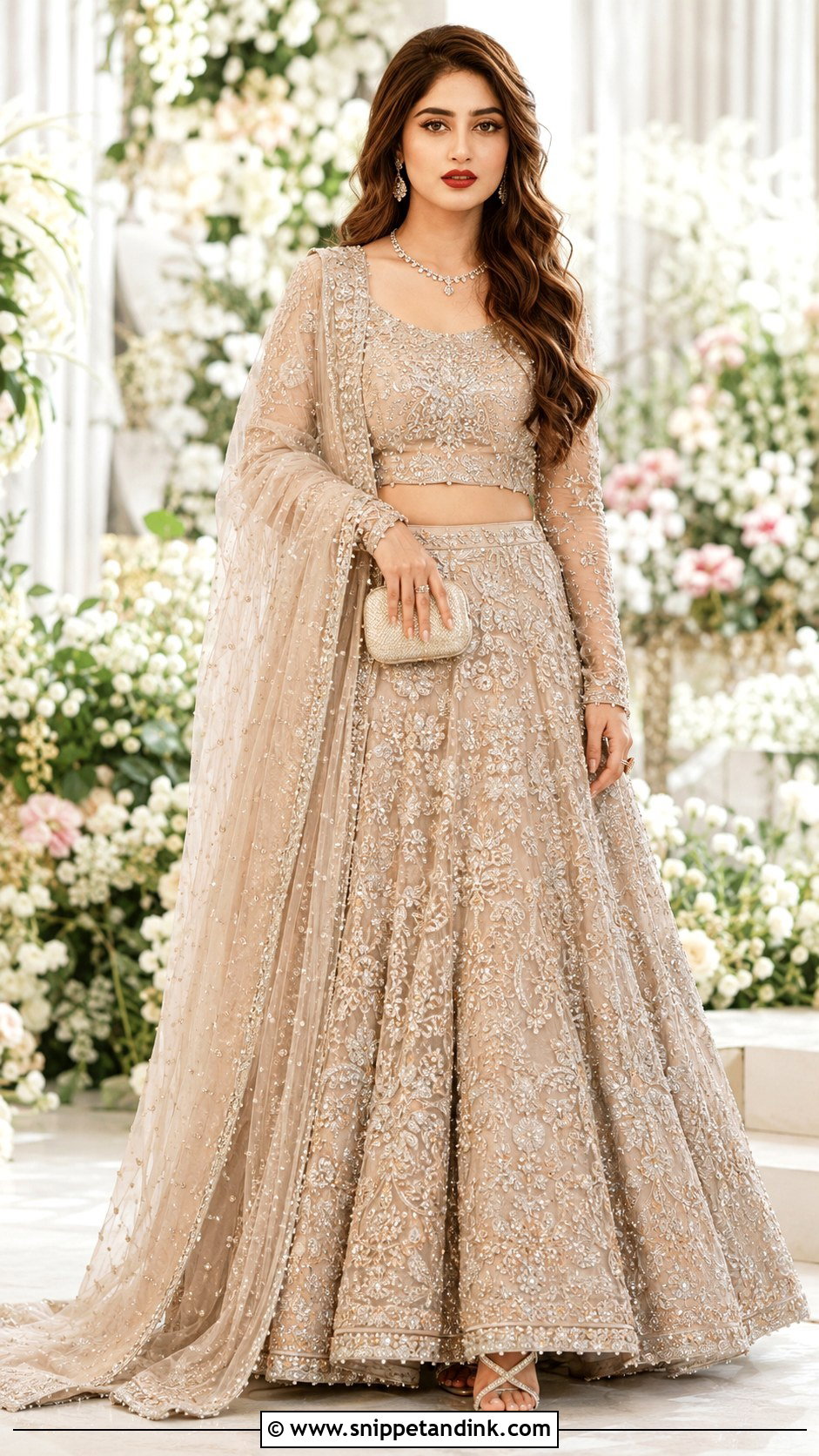
A bridal maxi offers a graceful line with less volume than a lehenga. Ivory, blush, gold, mint or deep red, embroidered but cleanly structured, suits nikah, walima or a reception. A matching dupatta, heels and a choker with drop earrings frame the neckline. Keep hair neat, down or in a low bun. Fresh glam with glowing cheeks and defined eyes completes it. A maxi is also much easier to sit in for a long dinner, which brides often forget to think about.
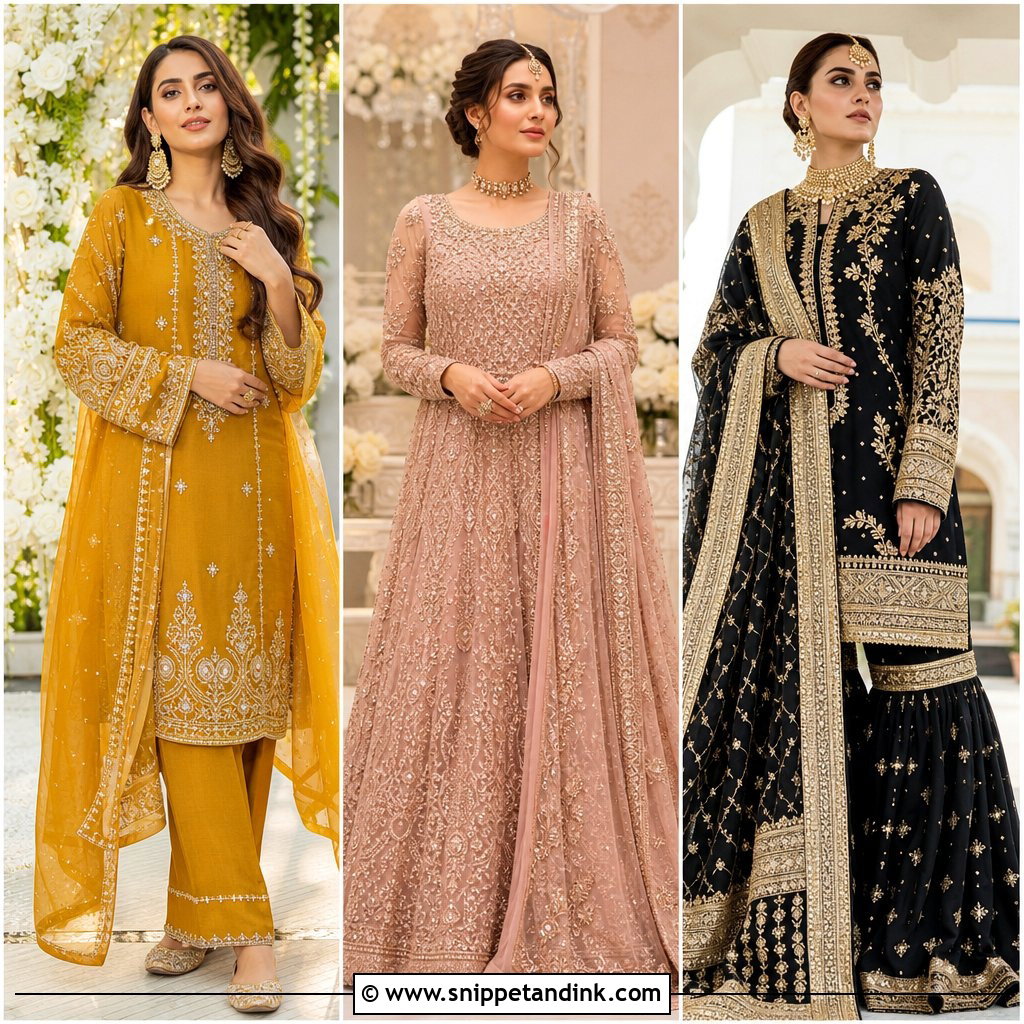


15. Sajal Ali Double Dupatta Bridal Look
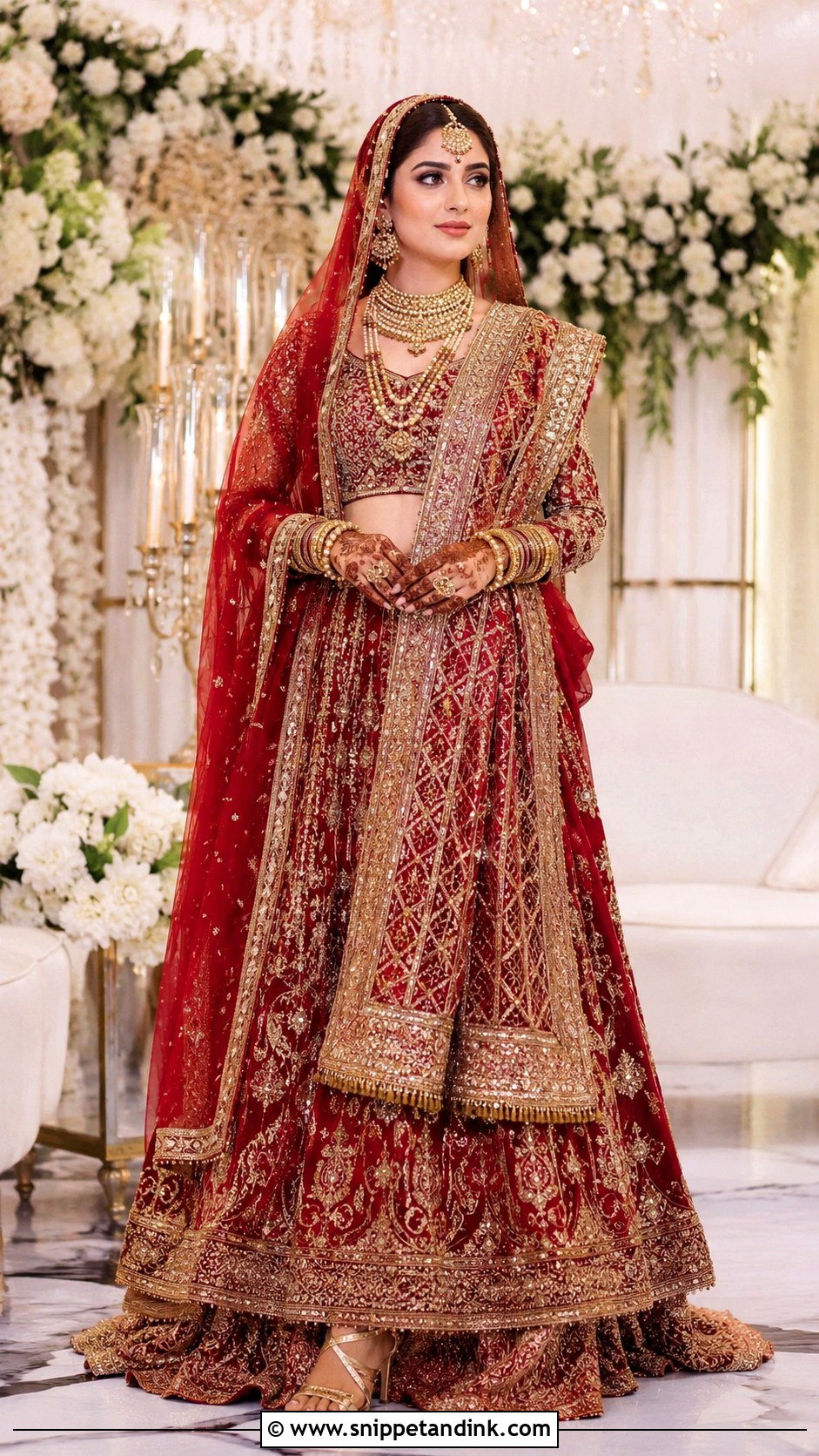
Two dupattas make any outfit feel more traditional: one draped over the head, the other across the shoulder or wrapped around the front. It suits red, ivory, gold, pink and maroon lehengas. For the Sajal-inspired version, keep both sheer with borders, embroidery or small motifs rather than solid heavy work. Layered jewelry, bangles and a statement tikka complete it. With this much fabric around the face, I soften the makeup further so the face still reads. The head dupatta is the heavier one to pin, which I describe below.
16. Sajal Ali Minimal Nikah Look
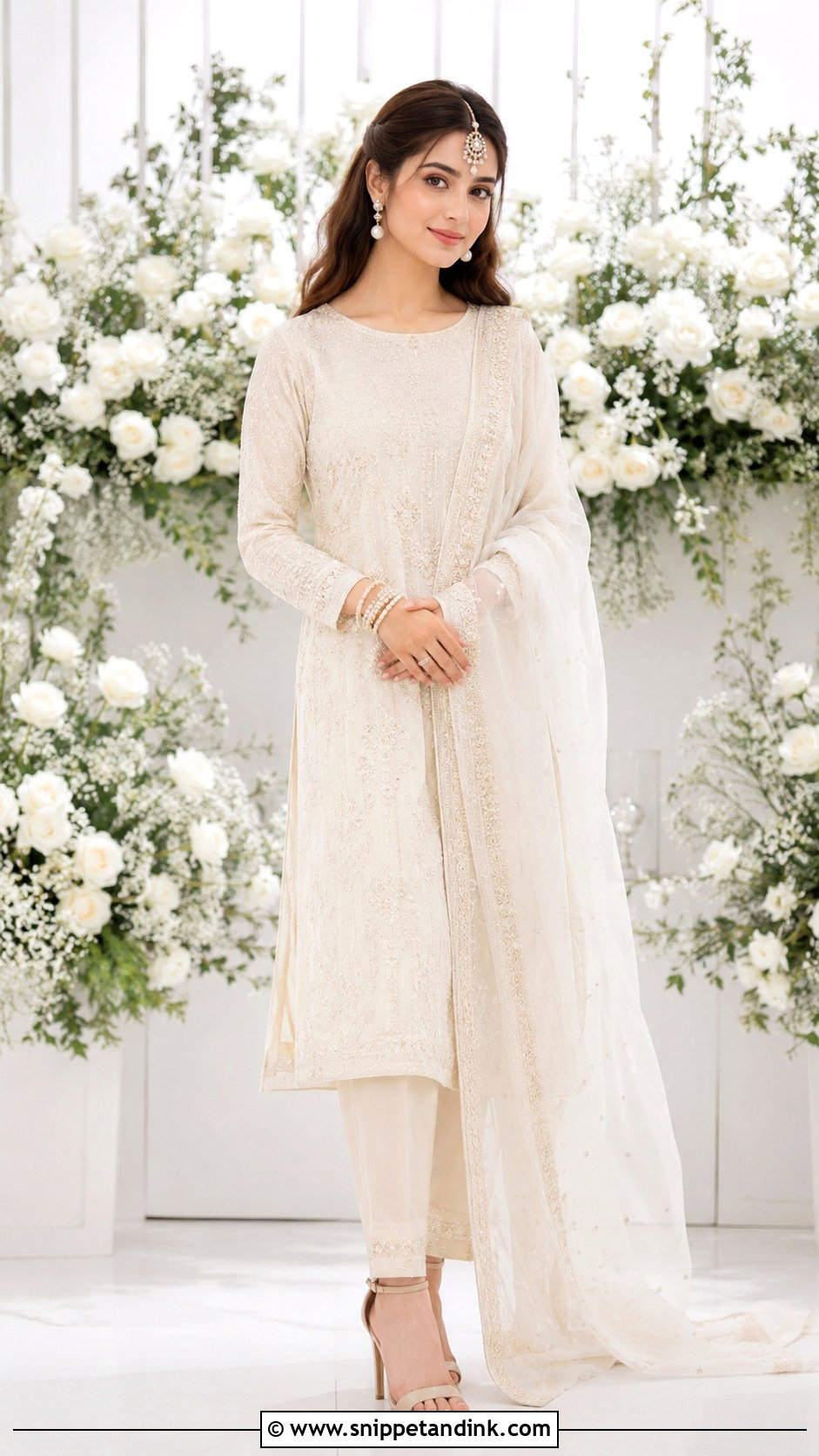
Not every bride wants heavy dressing at the nikah, and a minimal look can be the most moving one. A plain or lightly embroidered white, ivory, beige or blush outfit, a straight shirt with trousers, a simple gharara or a soft pishwas, plus a sheer dupatta with a fine border, is enough. Pearl earrings, a small tikka and a few bangles finish it. Minimal outfits put more focus on the skin, so this is where good prep in the weeks before matters most. Dewy makeup and natural waves keep it calm.
17. Sajal Ali Heavy Kundan Bridal Look
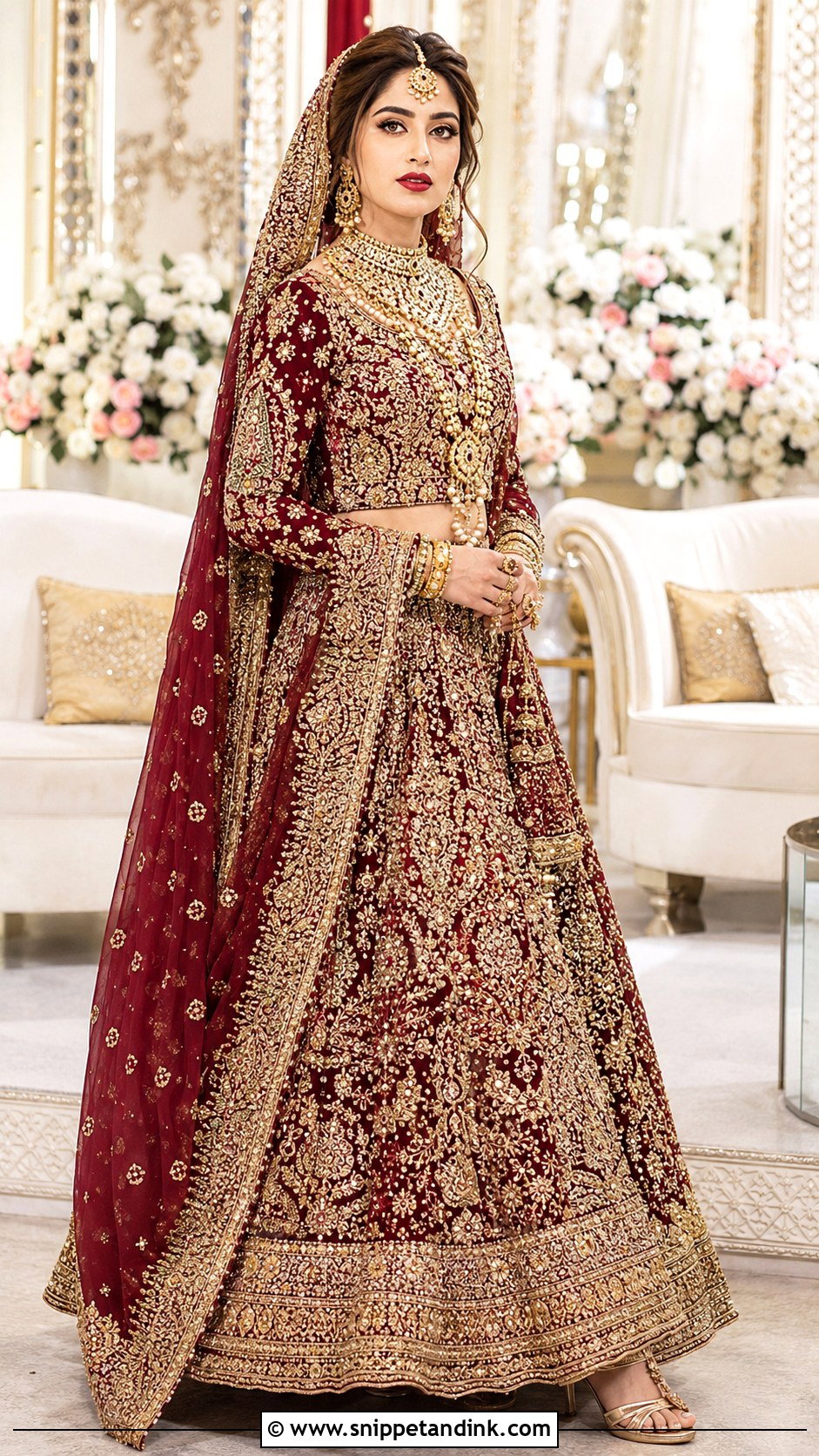
Kundan is central to Pakistani bridal jewelry. Start with a rich lehenga, gharara or pishwas in red, gold, maroon, ivory or green, then add a kundan choker, long necklace, jhumkas, tikka and bangles. If the outfit is very heavy, choose one strong necklace instead of layering three. Pin the dupatta neatly so the jewelry stays visible. Kundan reflects a lot of light onto the jaw and neck, so I blend foundation well down onto the neck and chest; any line at the jaw shows clearly against gold.
18. Sajal Ali Soft Glam Bridal Look
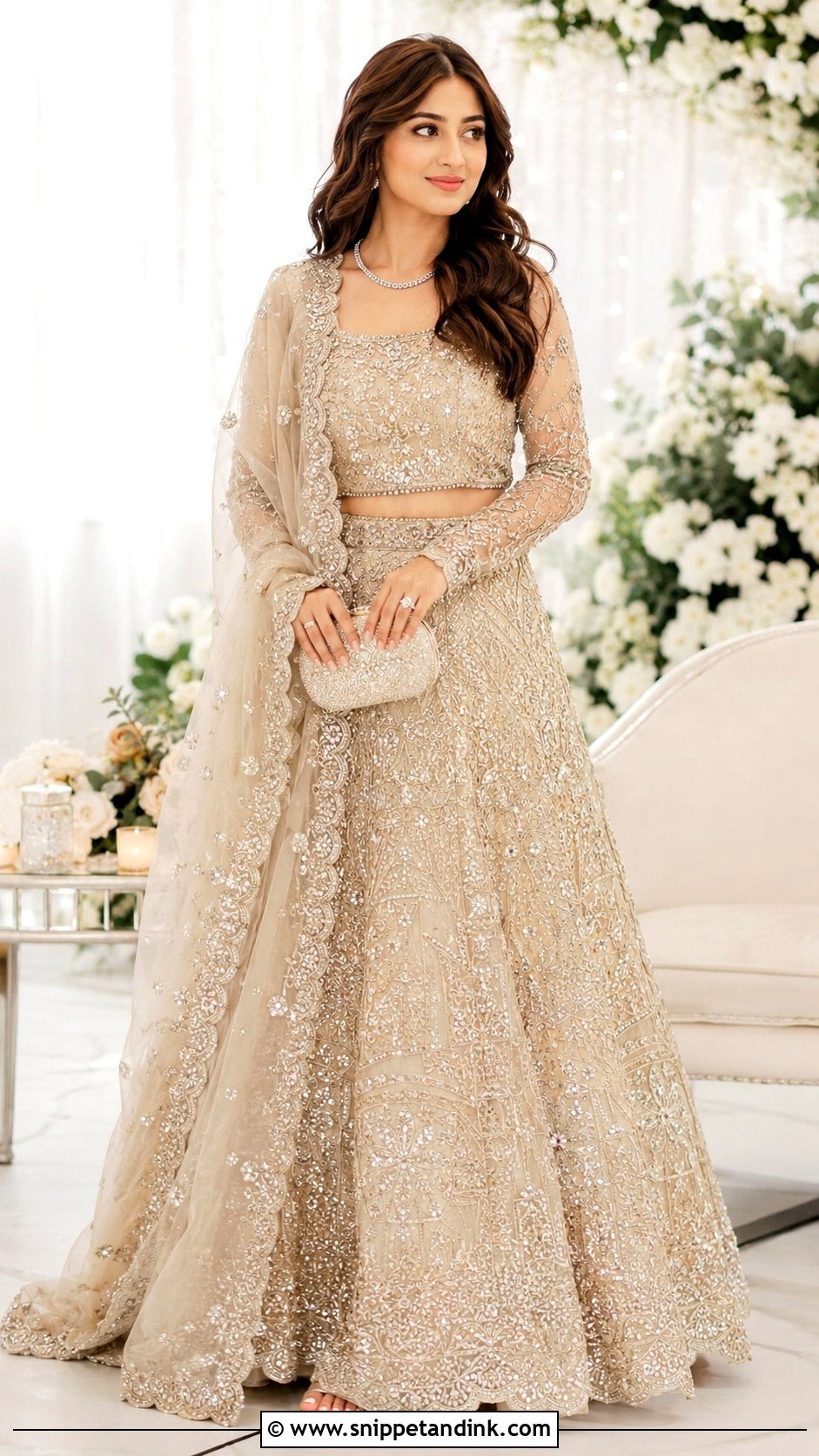
Soft glam is the easiest way into the Sajal mood. It works with a pastel lehenga, ivory gharara, champagne pishwas or blush maxi. Fresh skin, softly blended eyeshadow, curled lashes, a gentle contour and a nude-pink lip are the base. The trick is restraint in the jewelry, so it shines without taking over the face. Loose waves, a low bun or a clean middle part suit it, especially for nikah and walima events. Soft glam still needs proper setting, because it fades faster than full glam in a hot hall.
19. Sajal Ali Traditional Red Gharara Look
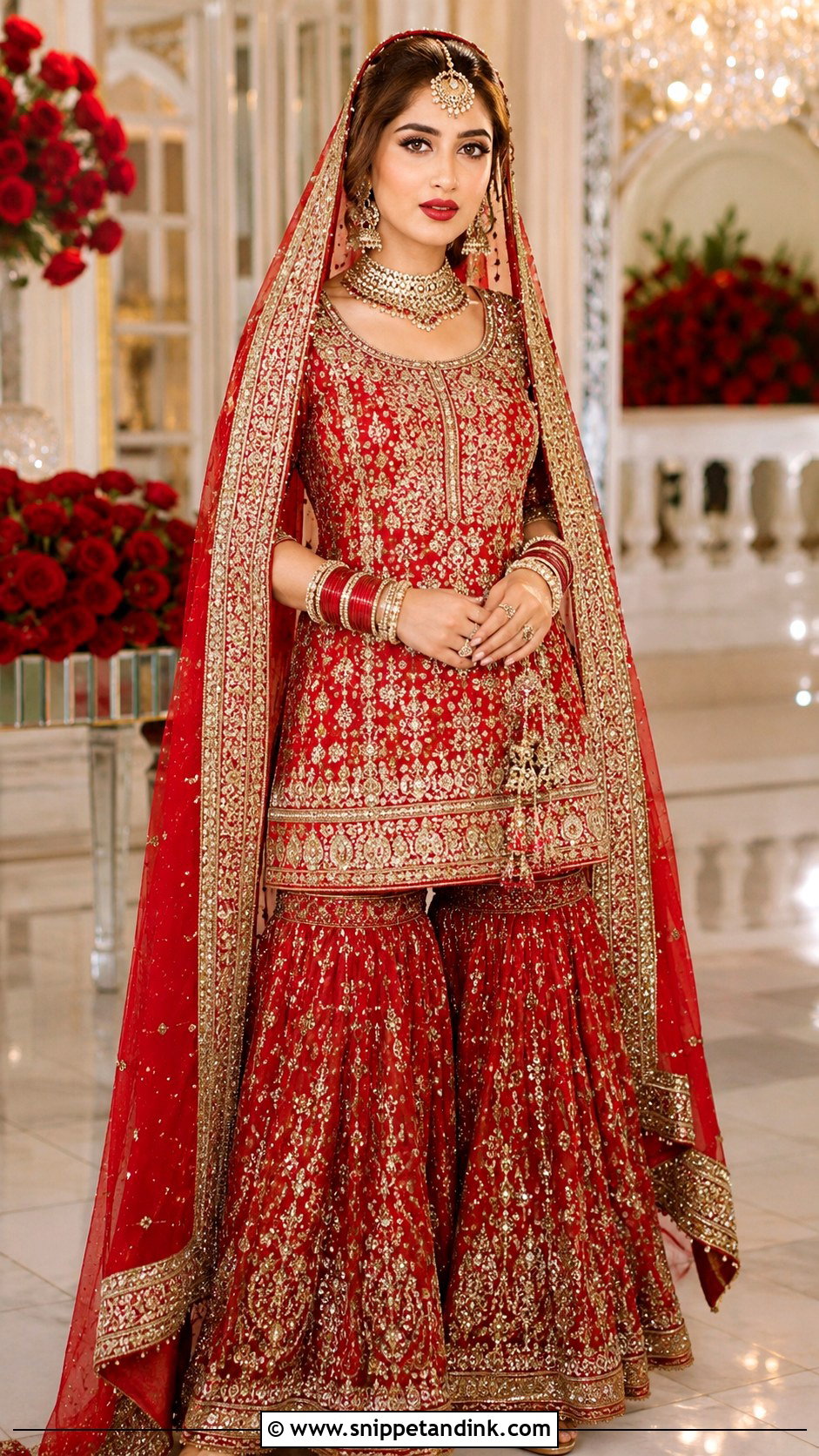
A red gharara has a slightly vintage feel that a lehenga lacks. A red short shirt with gold embroidery, a flared gharara and a heavy-bordered dupatta keep it traditional. Antique jewelry, jhumkas, a tikka and red or gold bangles suit it, with a classic bun and the dupatta over the head. I keep the makeup soft but defined, with kohl, blush and a muted red or rose lip. Ghararas are heavy at the knee where the flare starts, so practise walking and sitting in it before the baraat.
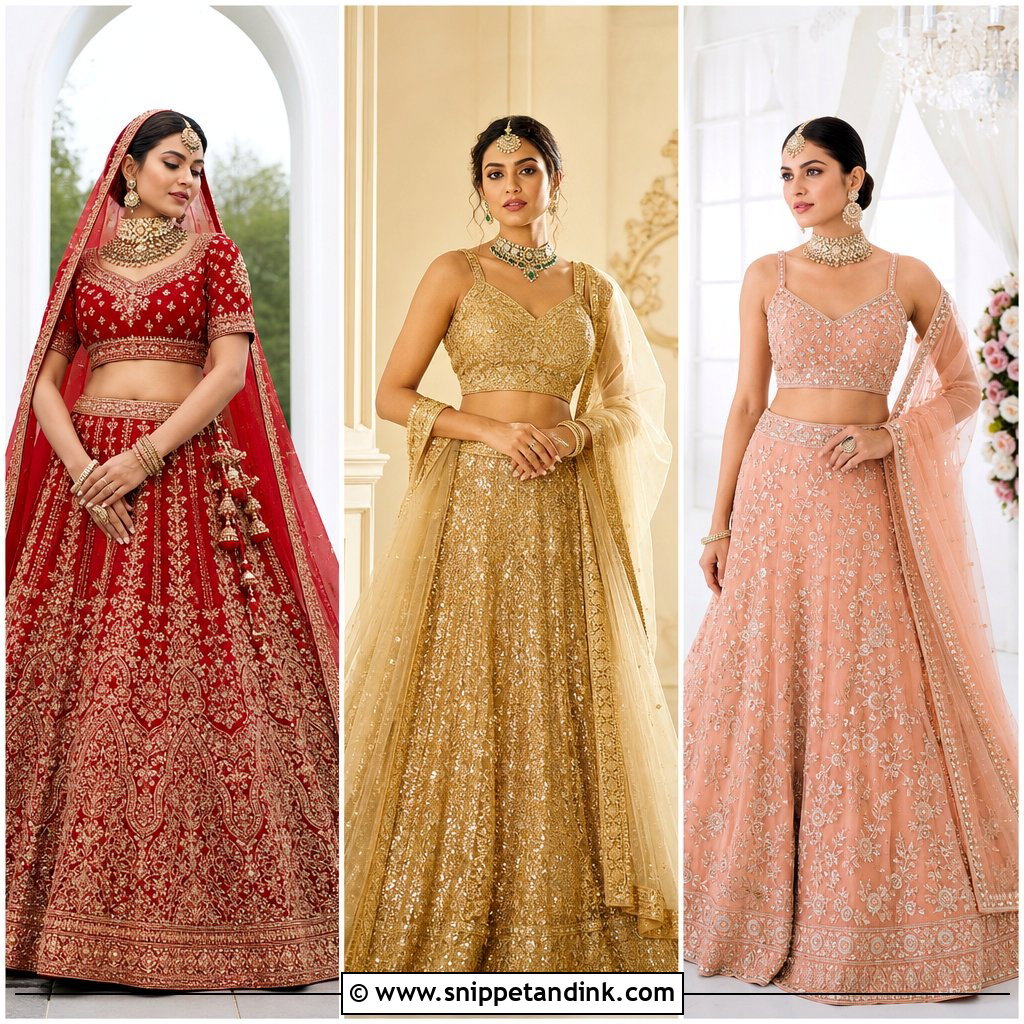

20. Sajal Ali Silver Walima Look
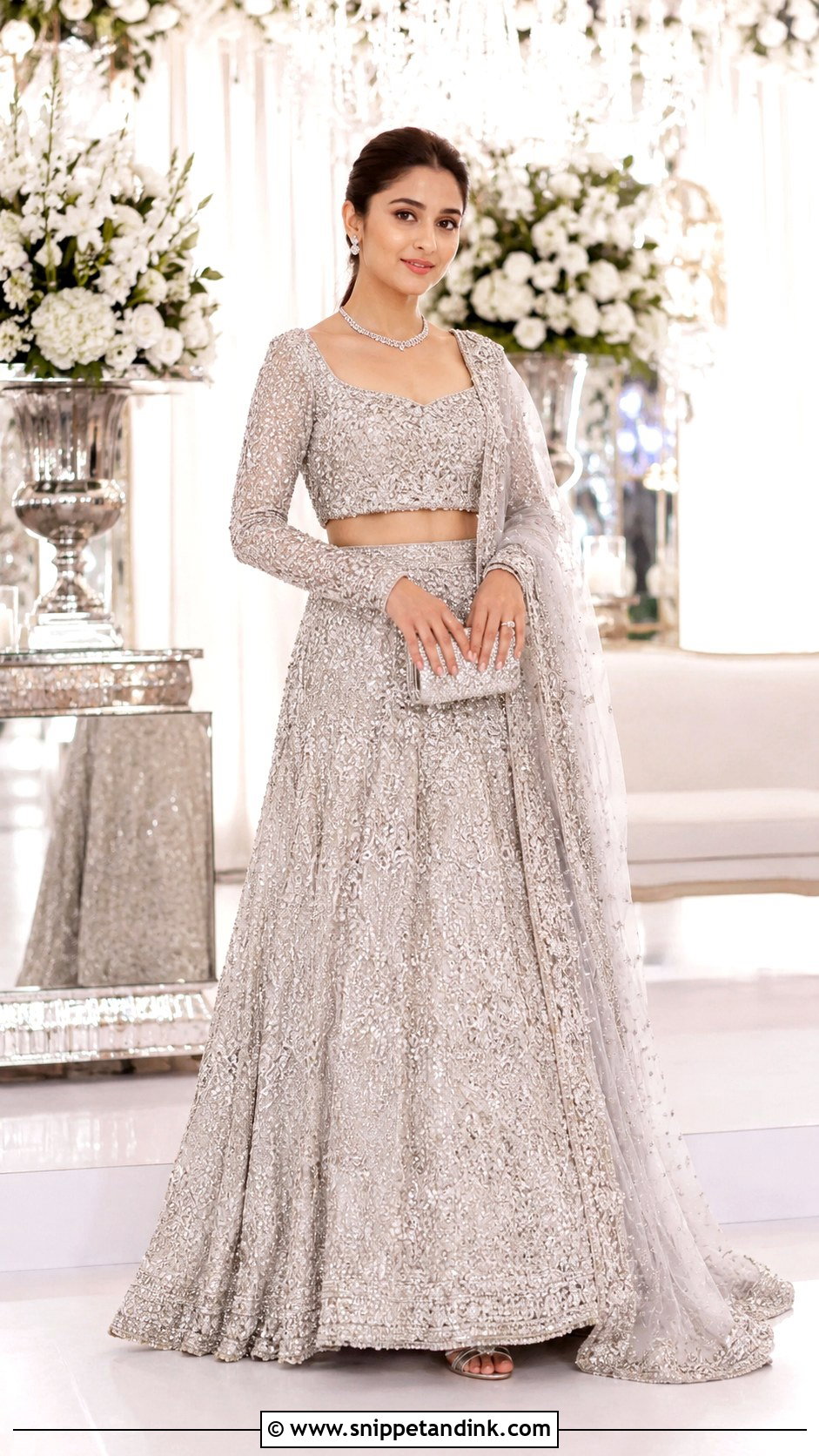
Silver suits walima evenings because it looks cool against the warm golds of earlier functions. A silver lehenga, gown-style maxi or pishwas with crystals, sequins and pearls catches hall lighting. Diamond-style jewelry, a sleek clutch and delicate heels complete it, with a side-parted bun or smooth waves. Silver eyeshadow is tricky on warm skin, so I usually use a taupe base with silver only on the centre of the lid, plus soft lashes, highlighted cheeks and a nude lip.
21. Sajal Ali Bridal Dupatta Draping Look
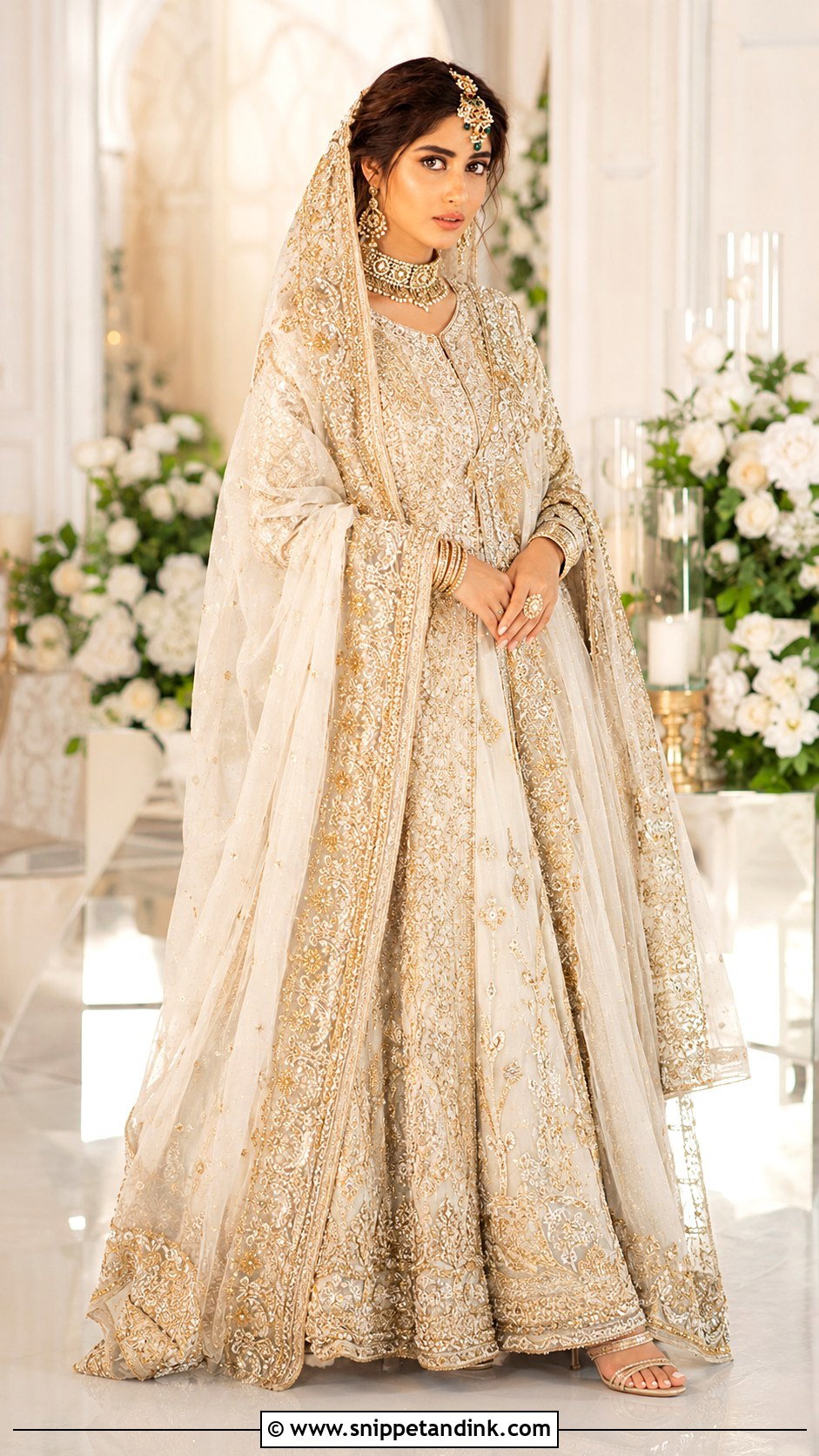
A dupatta drape can change the whole look. Choose a lehenga or gharara with an embroidered dupatta and make it the main feature: over the head for tradition, pinned to one shoulder for a cleaner line, or draped softly in front for photos. Jewelry that frames the face, a choker, tikka and earrings, keeps balance. The fabric needs to be light enough to sit smoothly; a stiff net dupatta stands away from the head and looks boxy in profile, which is a common complaint I hear after weddings.
22. Sajal Ali Bridal Choker Look
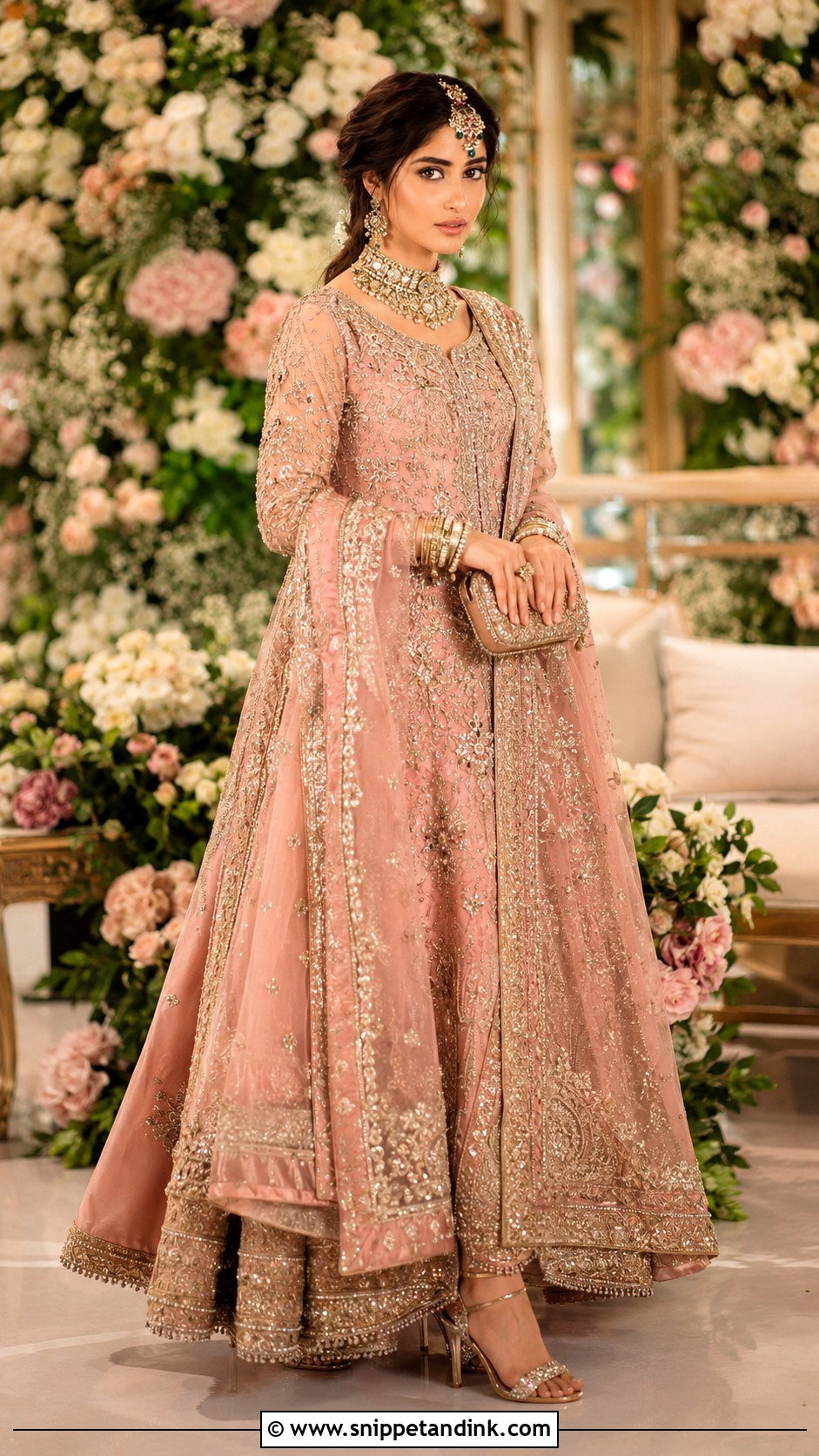
A choker finishes even a simple outfit. Kundan, polki, pearls or diamonds suit lehengas, sarees, pishwas and ghararas alike. If the neckline is deep or wide, add a longer necklace below it; if the shirt is heavily embroidered, let the choker stand alone. Matching earrings, a tikka and bangles complete it, with hair pulled back so the jewelry shows. A tight choker presses on the throat when you look down for signing, so I check that it fastens with a little room.
23. Sajal Ali Bridal Open Hair Look
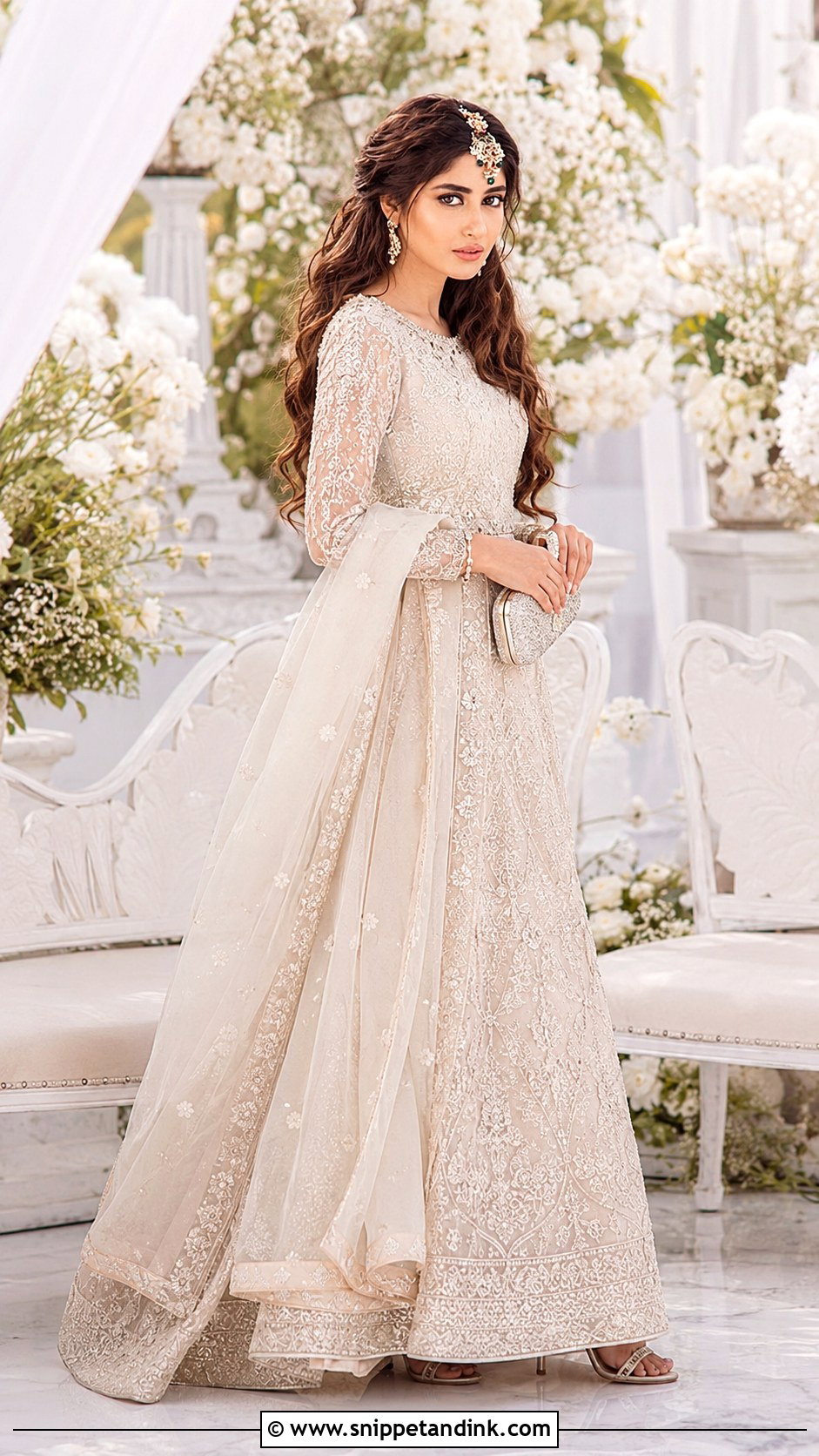
Open hair looks soft with a pastel lehenga, ivory nikah outfit, champagne pishwas or pink bridal look. A tikka or side passa makes it bridal. Pin the dupatta carefully at the crown so it doesn’t flatten the curls, and keep earrings lighter, since heavy jhumkas tangle in loose hair. Open hair drops in humidity faster than any bun, so I set curls cold and use a strong-hold spray; in a hot, crowded venue I’d suggest a half-up style instead.
24. Sajal Ali Bridal Bun Look
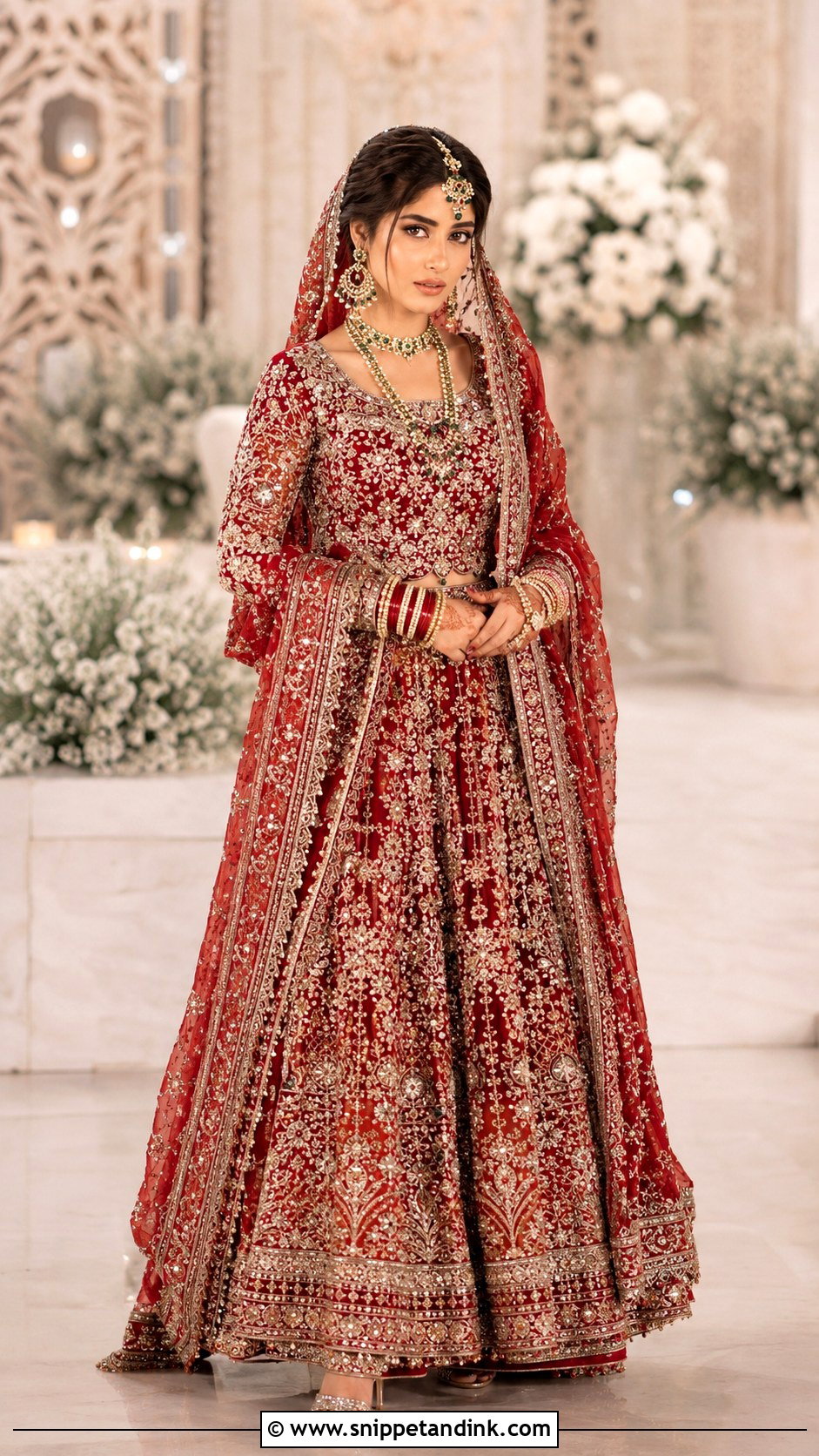
A bun is the most secure base for a heavy dupatta, which is why it remains the baraat standard. It suits a red lehenga, maroon velvet, gold pishwas or a traditional gharara. A centre-parted bun frames a matha patti, maang tikka or passa neatly. Add fresh flowers or fine hair jewelry for detail. With the hair back, earrings and necklaces show more, so match them to the embroidery. Makeup can go a little more defined here, with kohl, lashes and sculpted cheeks.

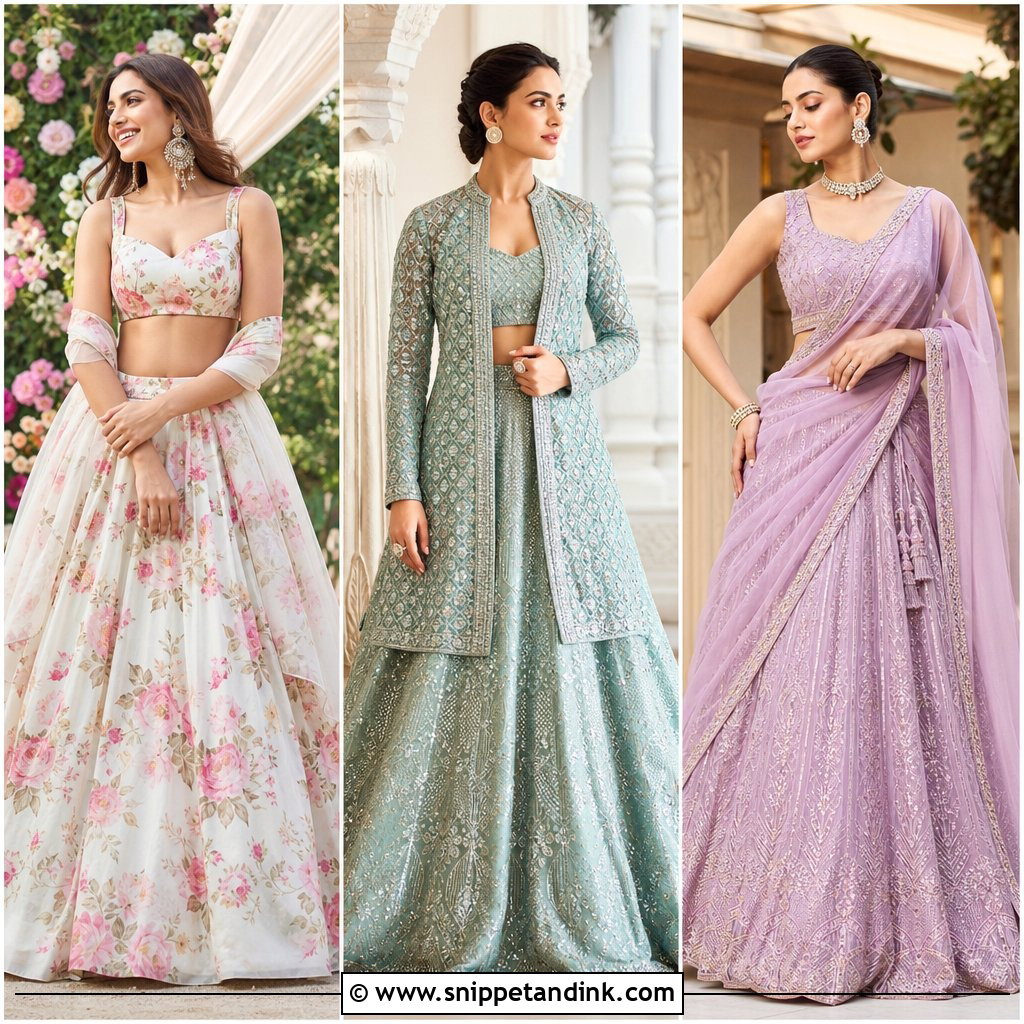
25. Sajal Ali Reception Saree Look
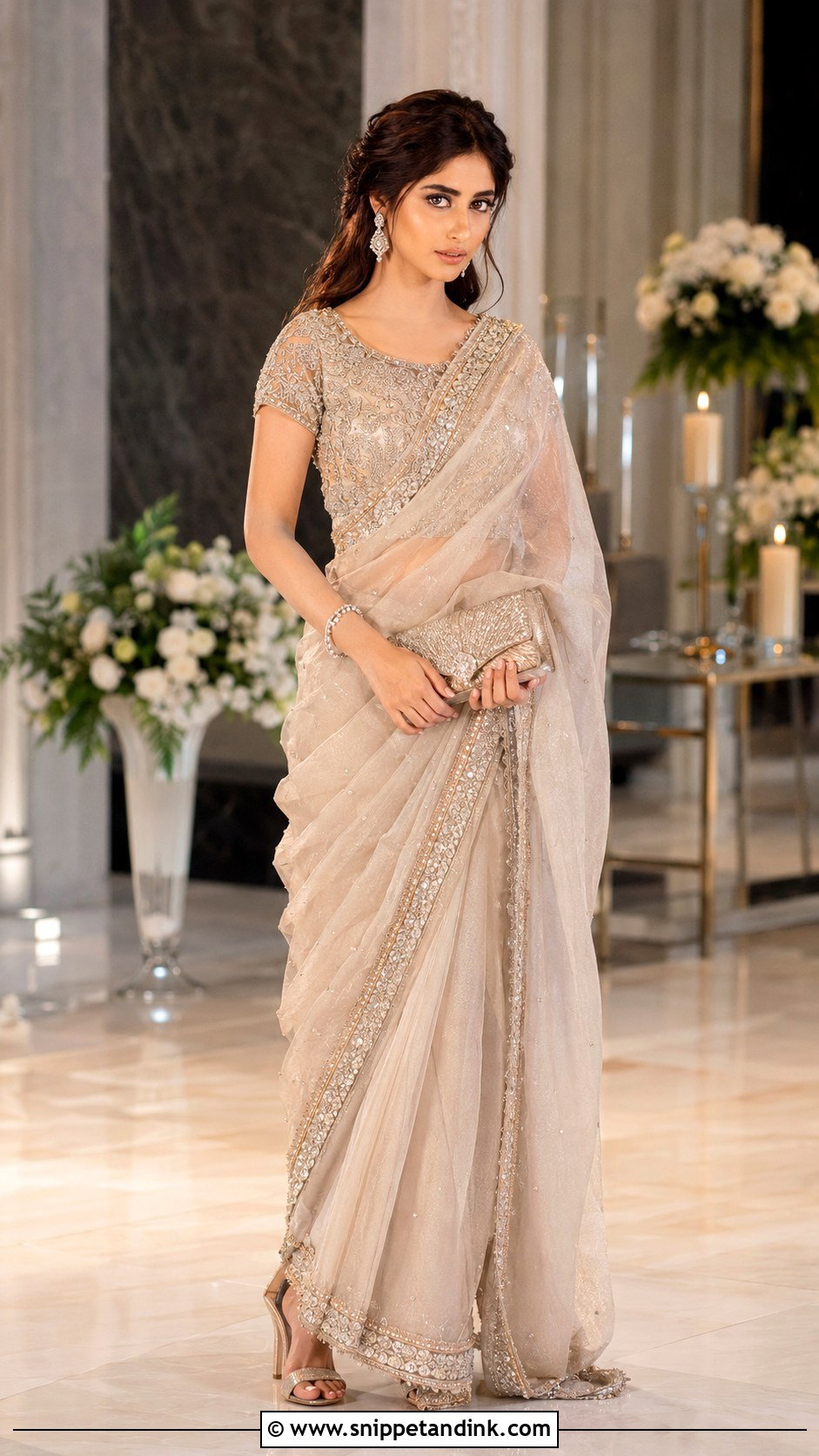
A reception saree in soft silk, organza, chiffon or net feels grown-up after the wedding functions. Champagne, silver, blush, ivory or pastel blue suit it; let the blouse carry the bridal detail through embroidery or beadwork. Diamond-style earrings, a bracelet and a sleek clutch complete it, with a low bun, side-parted waves or a smooth ponytail. I go slightly lighter on makeup than at the walima, since chiffon and silk reveal any heaviness at the neck and shoulders.
Pinning a Heavy Dupatta Without Wrecking Hair or Makeup
Dupatta setting is usually the last step of the day, and it is where a finished look gets damaged. The order matters: hair first, then the tikka or matha patti, then the dupatta, and the earrings last so they aren’t caught underneath.
- Pin into the hair, not just the fabric. U-pins anchored into the bun take the weight; bobby pins alone slide out under a heavy border.
- Leave an inch of forehead clear so the dupatta edge doesn’t rub foundation off the hairline.
- Ask your designer to add small fabric loops at the pinning points of a very heavy dupatta, which spreads the pull across the head.
- Bring spare safety pins and a pin cushion in the clutch; someone will need them.
Long Functions, Hot Halls and Flash Photography
A baraat can run for hours under hot stage lights. I build the base thin and in layers rather than one heavy coat, set it with a light powder and a setting spray, and leave the bride with blotting papers, a compact and her lipstick. Blot first and powder second, since powder over oil creates patches.
One thing to avoid on the day: heavy sunscreen and some very fine setting powders can reflect camera flash and leave a white cast in photos. Use a skincare SPF in the morning, keep loose powder to the T-zone and test your base with flash at the trial.
Three Functions, Three Moods, One Face
The appeal of a Sajal-inspired wardrobe is balance: rich clothes, a face that still looks like yours. A red baraat lehenga, an ivory nikah gharara, a pastel walima and a Mughal set each carry a clear mood, and the jewelry, dupatta drape, hair and makeup should serve that mood rather than all compete at once. Go heavy at one function and quiet at another. Your guests will remember the contrast, and you will recognise yourself in every set of photos.
You'll Like These Ideas:






Leave a Reply