
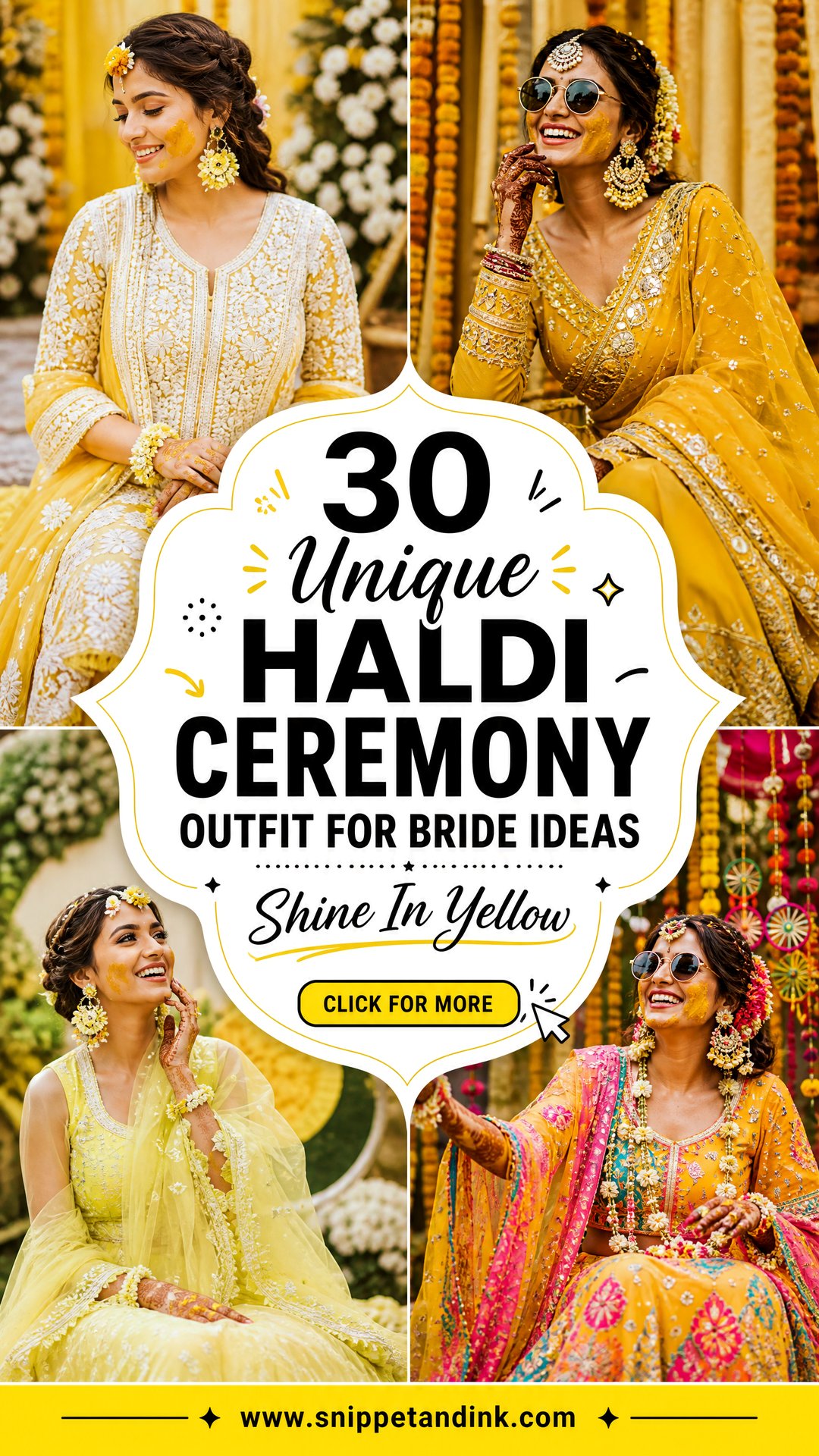
For years the Haldi meant one yellow lehenga, and that’s still a great answer. Brides now also wear breezy sarees, shararas, co-ord sets, floral lehengas and pre-draped styles, and every one of them can work. What the outfit has to survive is very specific: turmeric paste rubbed onto your face, arms and feet, a long stretch sitting on a low seat, then dancing, splashing and hugging. I plan Haldi outfits around breathable fabric, colors that glow in daylight, flower jewelry and flat shoes. Yellow is still the favorite, though ivory, lime, peach, orange and mint look just as fresh. Here’s how I’d think about each option.
Keepsake or Sacrifice? Deciding Before the Paste Comes Out
The first question I ask a Haldi bride isn’t about color. It’s whether she wants to wear the outfit again. Turmeric paste is usually mixed with oil, milk or gram flour, and the oil carries the pigment deep into the fibers. Some outfits recover from that; plenty don’t.
If it’s a keepsake, choose fabric that rinses. Georgette, chiffon and synthetic blends release turmeric far more readily than raw cotton or silk, and yellow, orange or busy prints disguise whatever stays. If it’s a sacrifice, wear the white or ivory you love, budget accordingly, and enjoy every handprint.
Either way, ask your family how the ritual usually runs. Some households apply a gentle dab and move on; others end with buckets of water and a full turmeric fight. That one answer tells me whether sheer chiffon, stiff organza or a floor-length hem is a good idea.
1. Yellow Lehenga Haldi Outfit
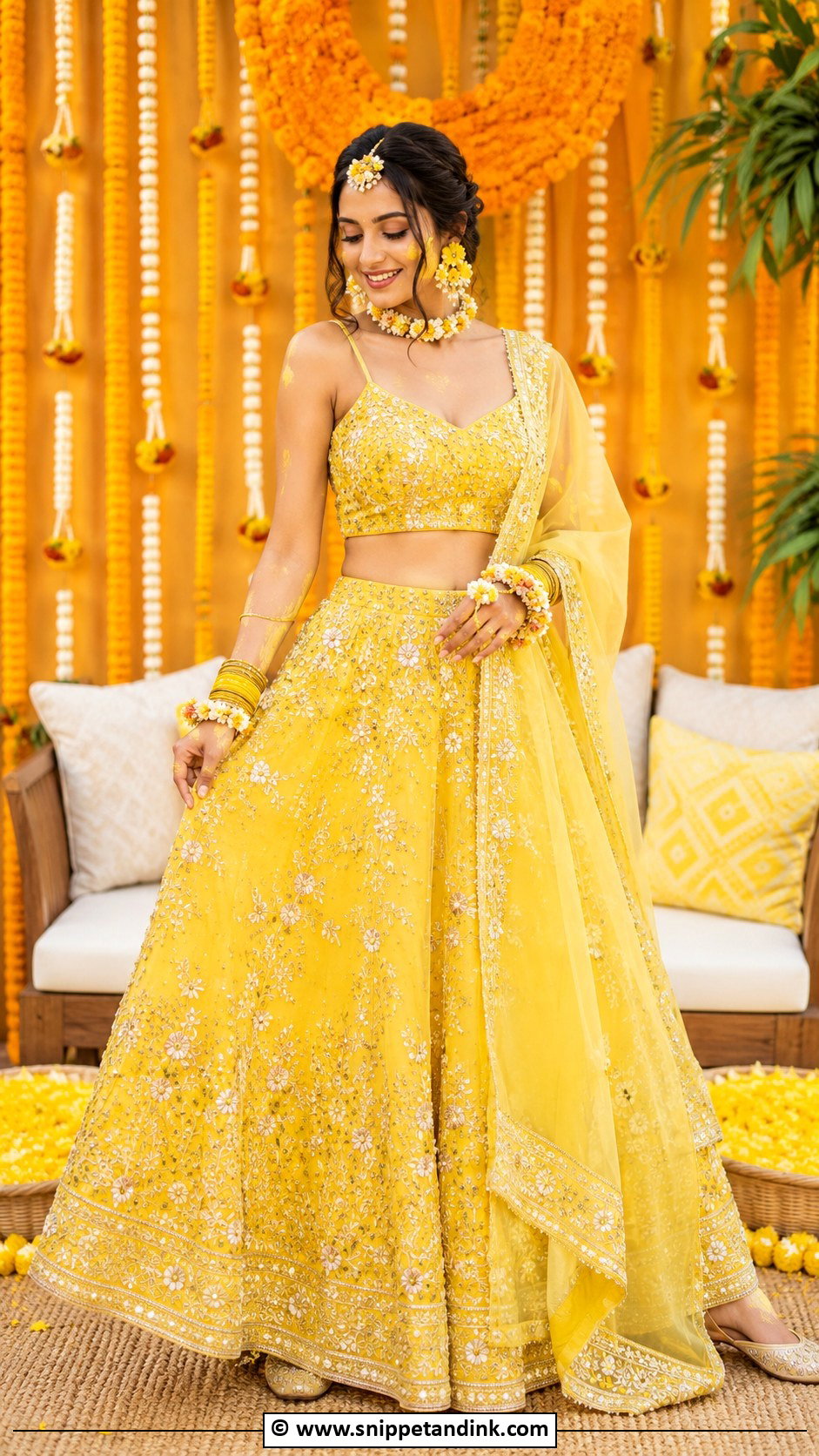
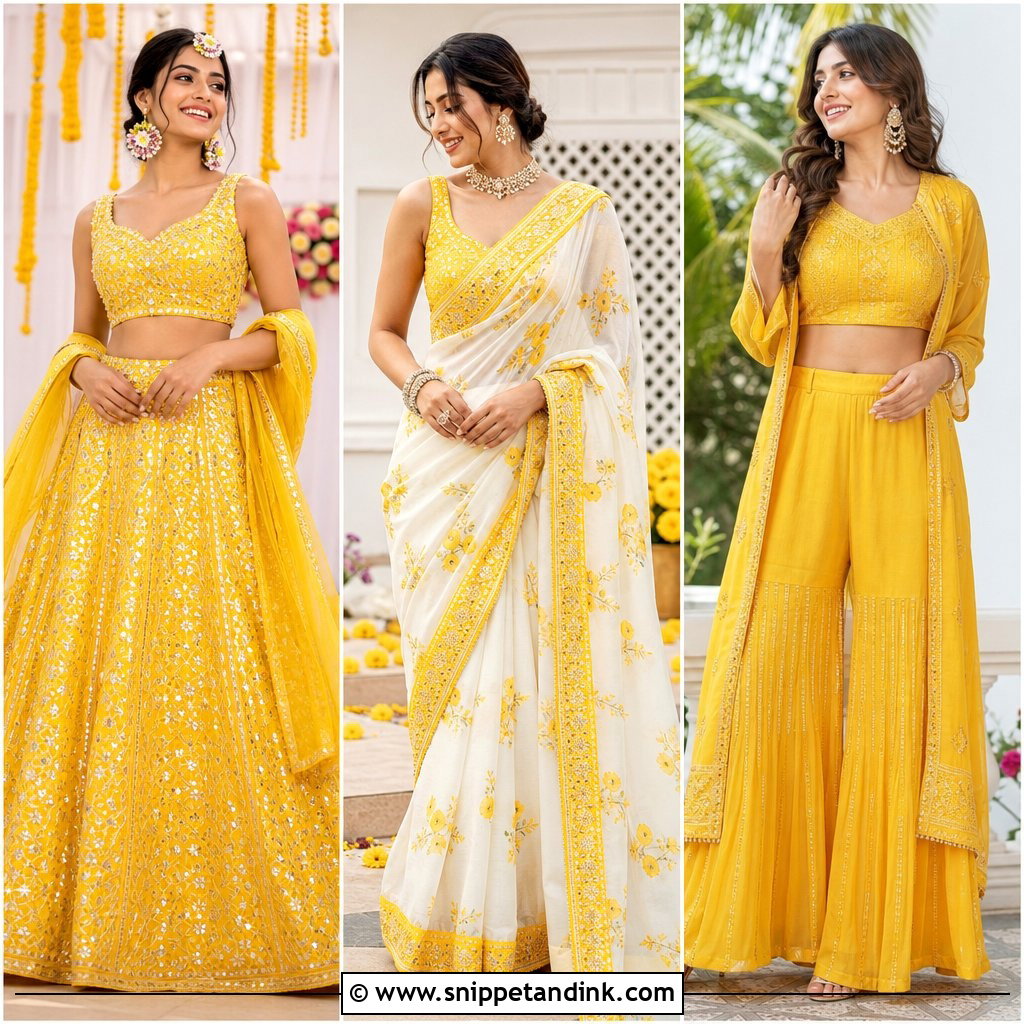
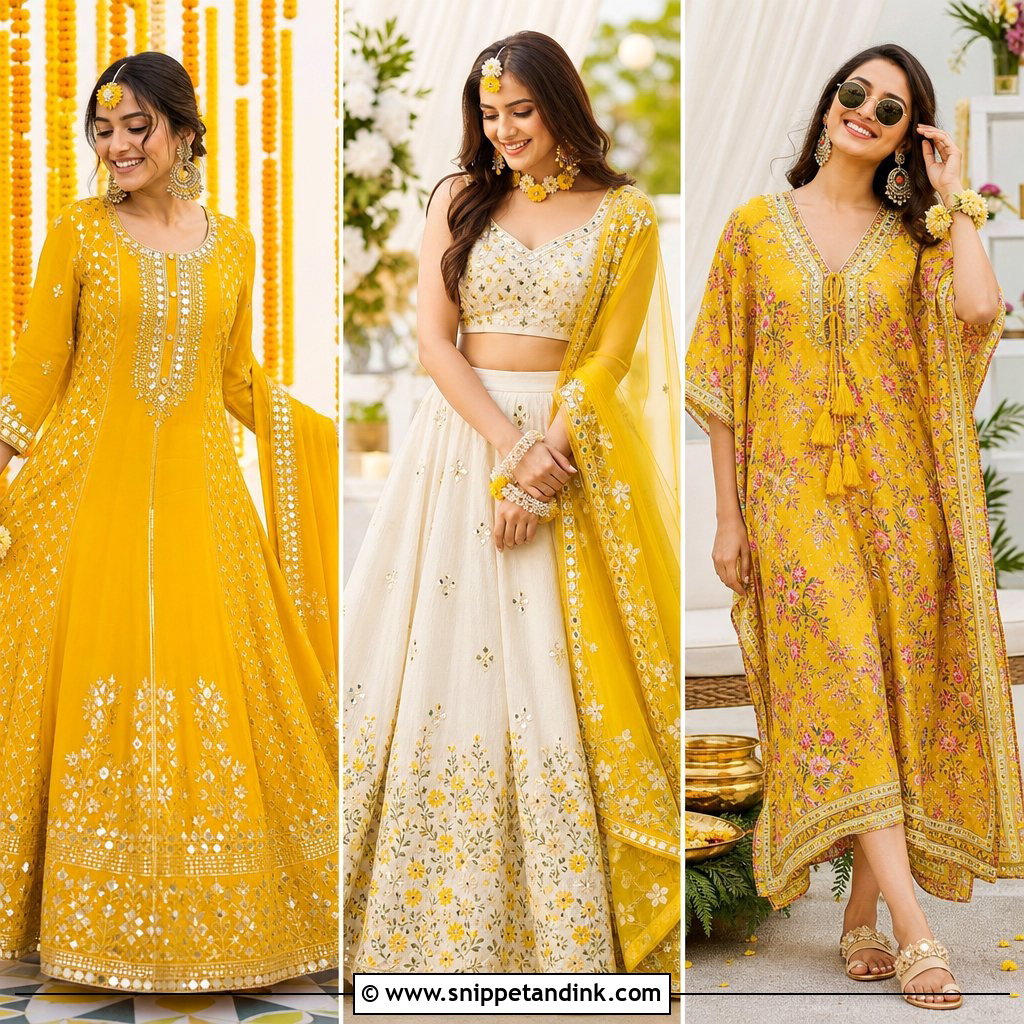
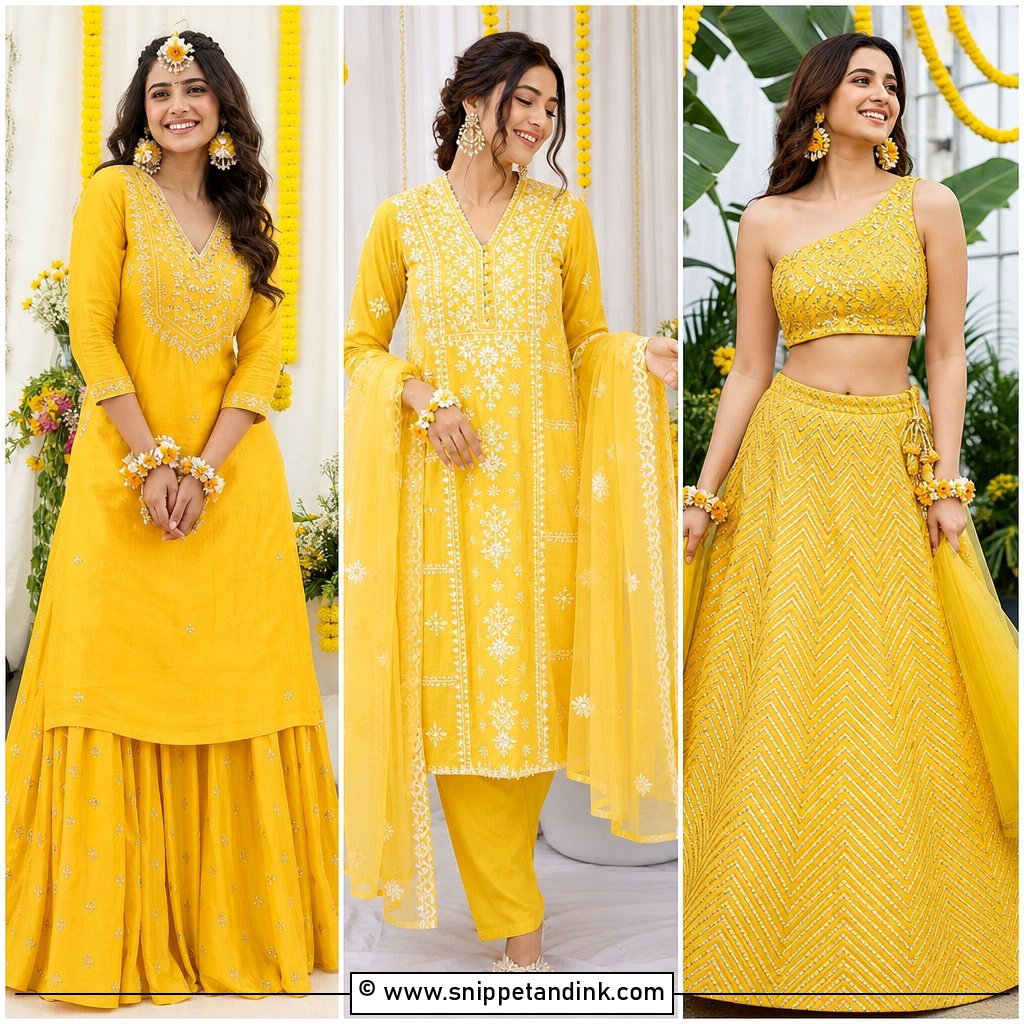
Yellow is the obvious pick for a reason: turmeric on yellow barely shows, so the outfit still looks fresh in the evening photos. For a traditional Haldi look, I’d choose a light skirt in organza, georgette, cotton silk or chiffon, because heavy can-can and layers make sitting cross-legged on a low chowki miserable. A short blouse with mirror or thread work gives enough sparkle. Pin the dupatta firmly, especially if your family applies Haldi generously, then add marigold earrings, a flower maang tikka and embroidered juttis.
2. White Lehenga Haldi Outfit
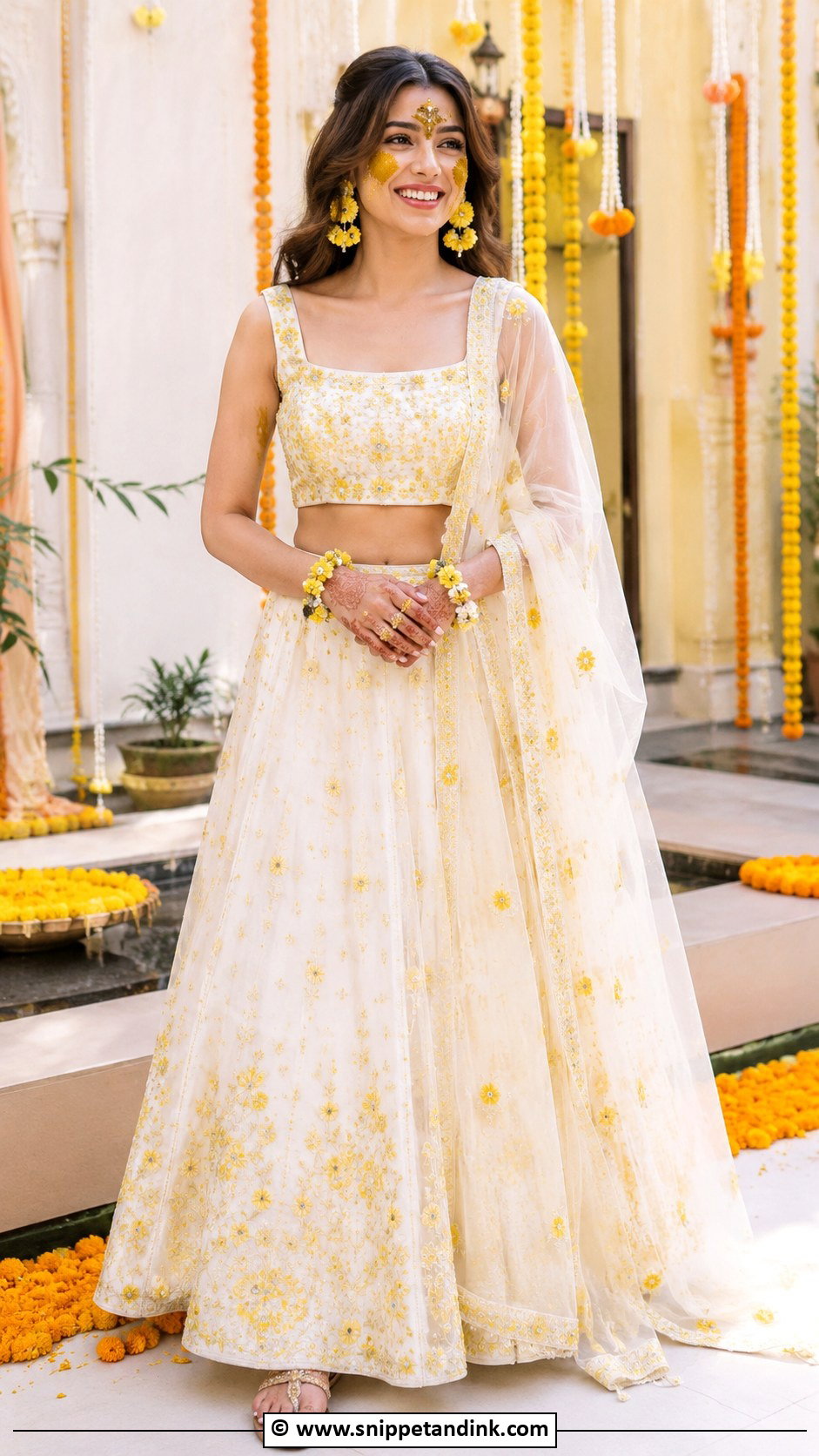
White and turmeric is the most photogenic pairing there is, and the riskiest. Every yellow handprint shows, which is exactly why the candids look so warm. I’d only suggest it if you’re at peace with the outfit staying marked, and I’d set the budget with that in mind. Ivory with yellow embroidery or scalloped borders, a sleeveless or strappy blouse and a sheer dupatta, plus yellow flower jewelry and flat sandals. Raw cotton holds the stain most stubbornly, so a synthetic georgette gives you a better chance of rescuing it.
3. Floral Print Lehenga Haldi Outfit
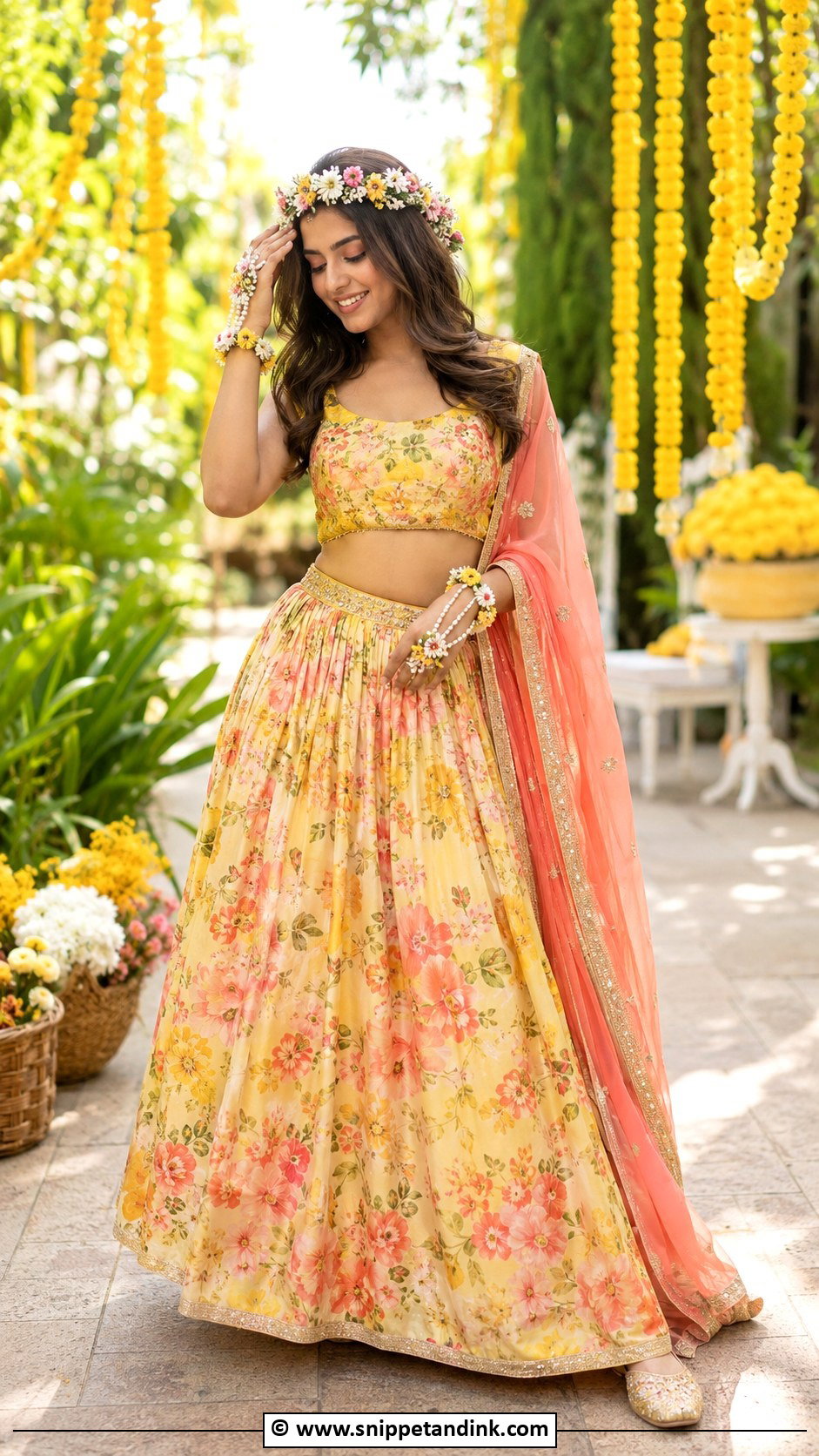
Prints hide turmeric smudges better than any solid color, an underrated reason to choose one. A floral lehenga feels festive without being formal, so it suits lawns, poolside events and home functions. I’d pick soft yellow, peach, ivory or mint flowers over dense, heavy patterns, with a matching blouse and a contrast dupatta in yellow or green. A flower crown, floral haathphool or jasmine earrings soften the whole look. Dewy makeup, flat shoes, done.
4. Yellow Saree Haldi Outfit
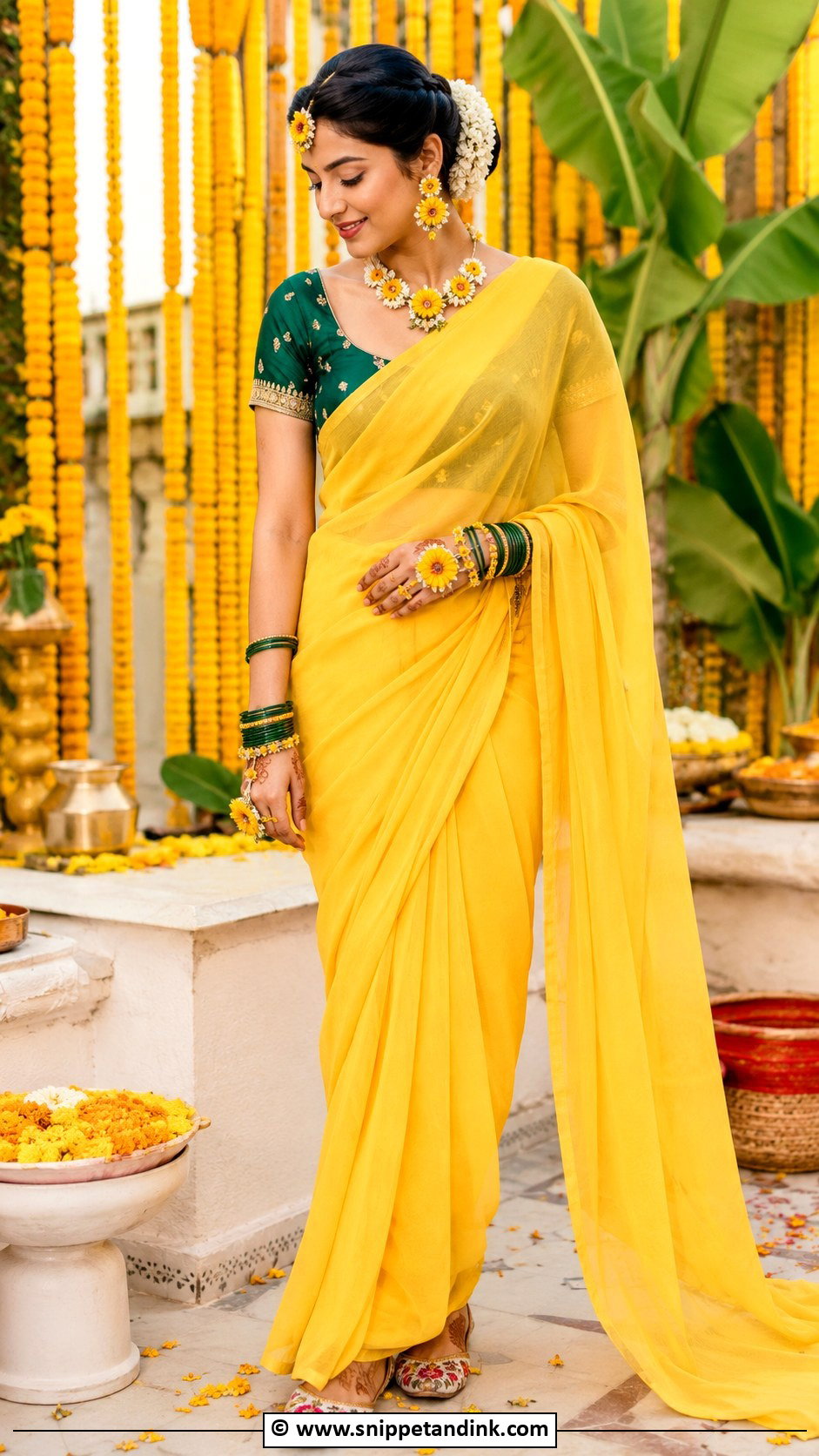
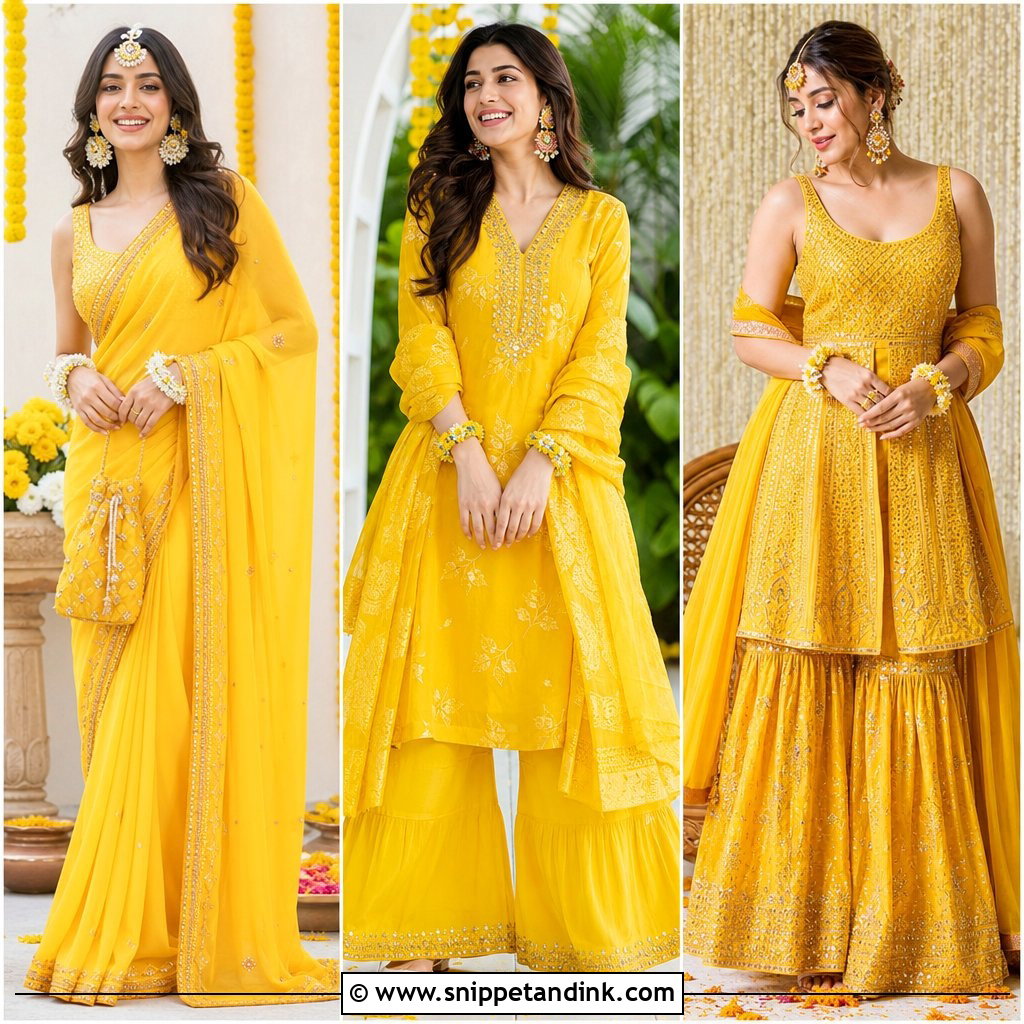
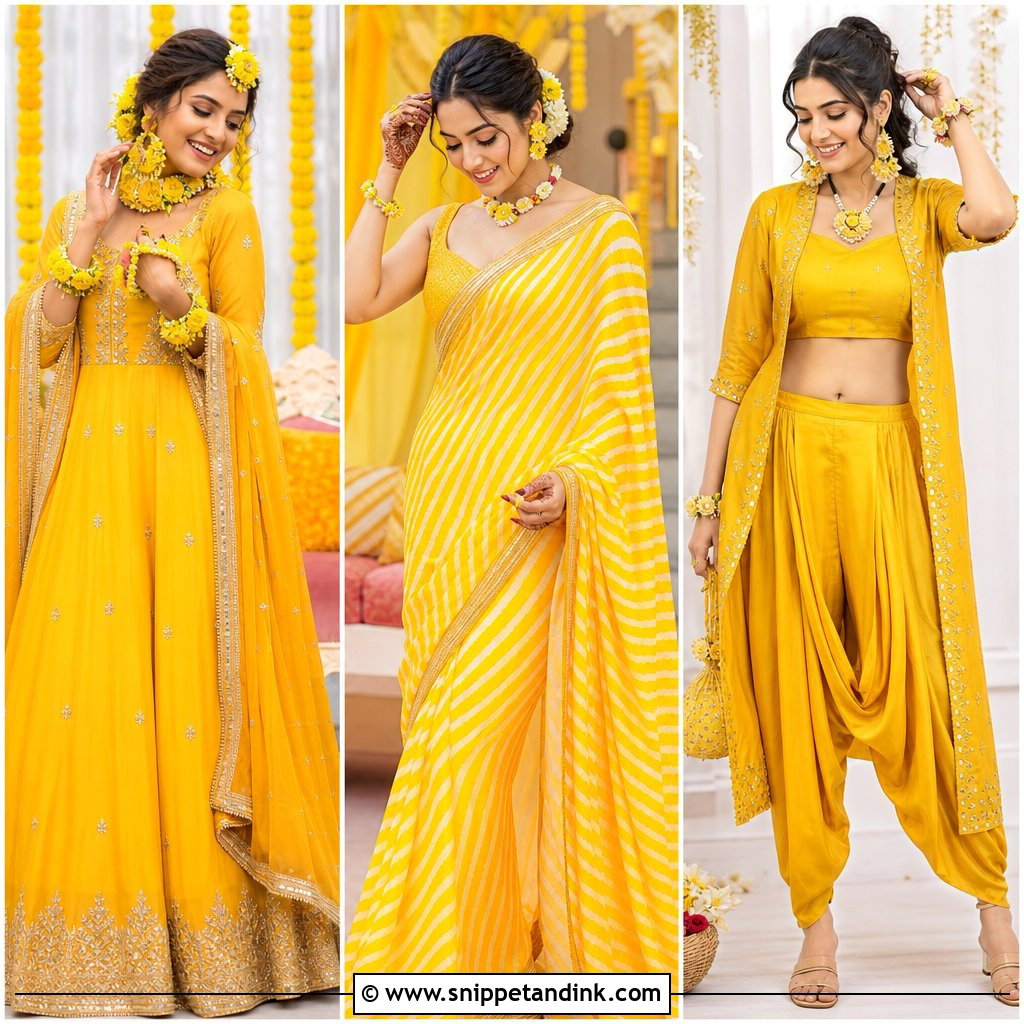
A yellow saree suits the bride who loves tradition. Cotton silk, organza, chiffon and georgette all drape easily, but they behave very differently once wet. Chiffon and georgette cling and turn see-through when soaked, so if your family’s Haldi ends with buckets of water, I’d pick cotton silk or wear an opaque petticoat. A contrast blouse in pink, green or ivory makes it personal. Pin the pleats and pallu well, then add glass bangles and a bun with gajra.
5. Pre Draped Saree Haldi Outfit
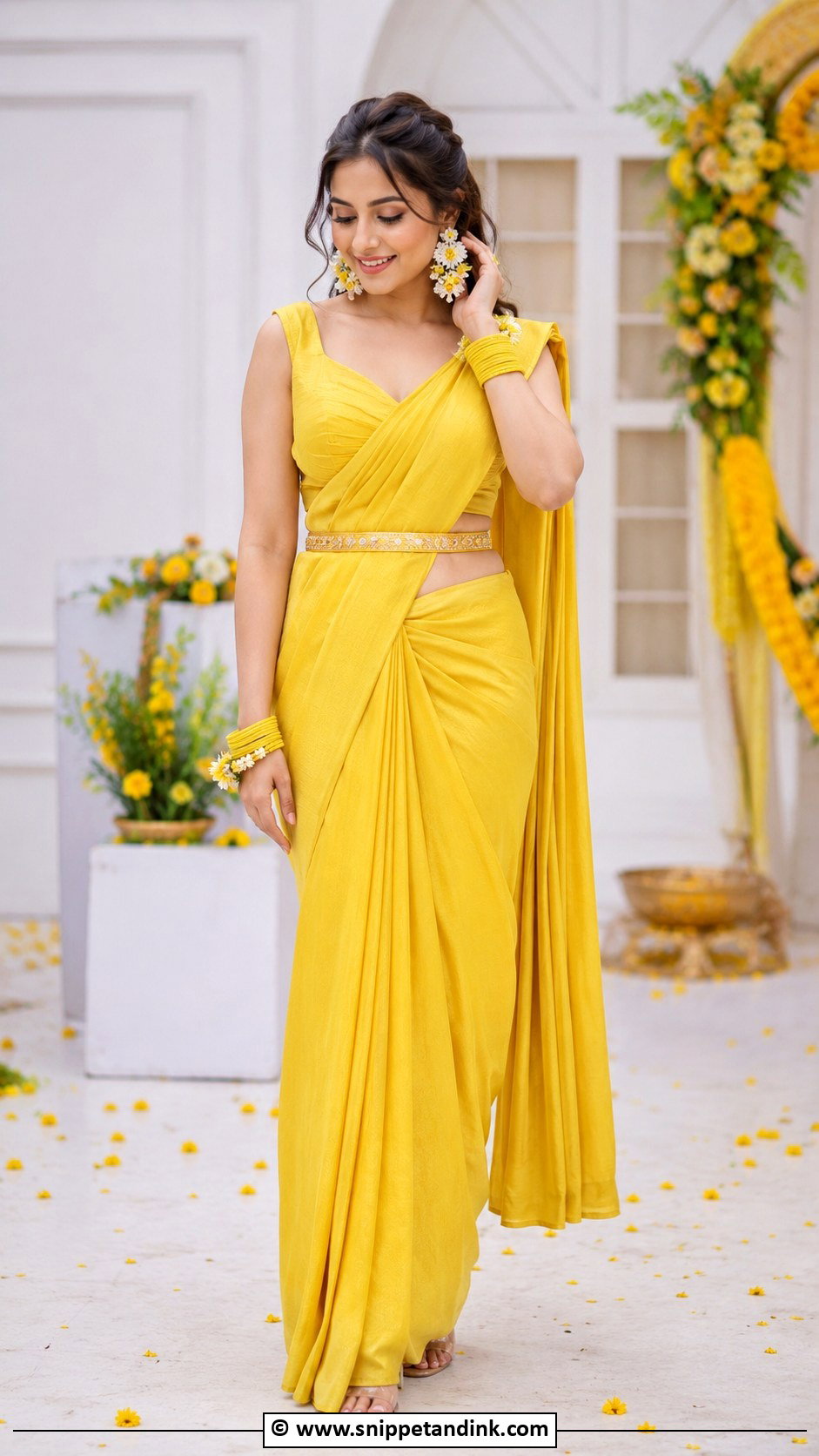
Love the saree but dread the pleats? A pre-draped saree keeps the silhouette and stays put through dancing, rituals and family photos. Yellow, ivory or lime with a structured blouse or crop top suits Haldi, and ruffled edges, cape sleeves or a belt make it current. The belt does real work here, holding the drape at the waist when relatives pull you into a hug. Statement earrings, floral bangles and flats finish it.
6. Yellow Sharara Haldi Outfit
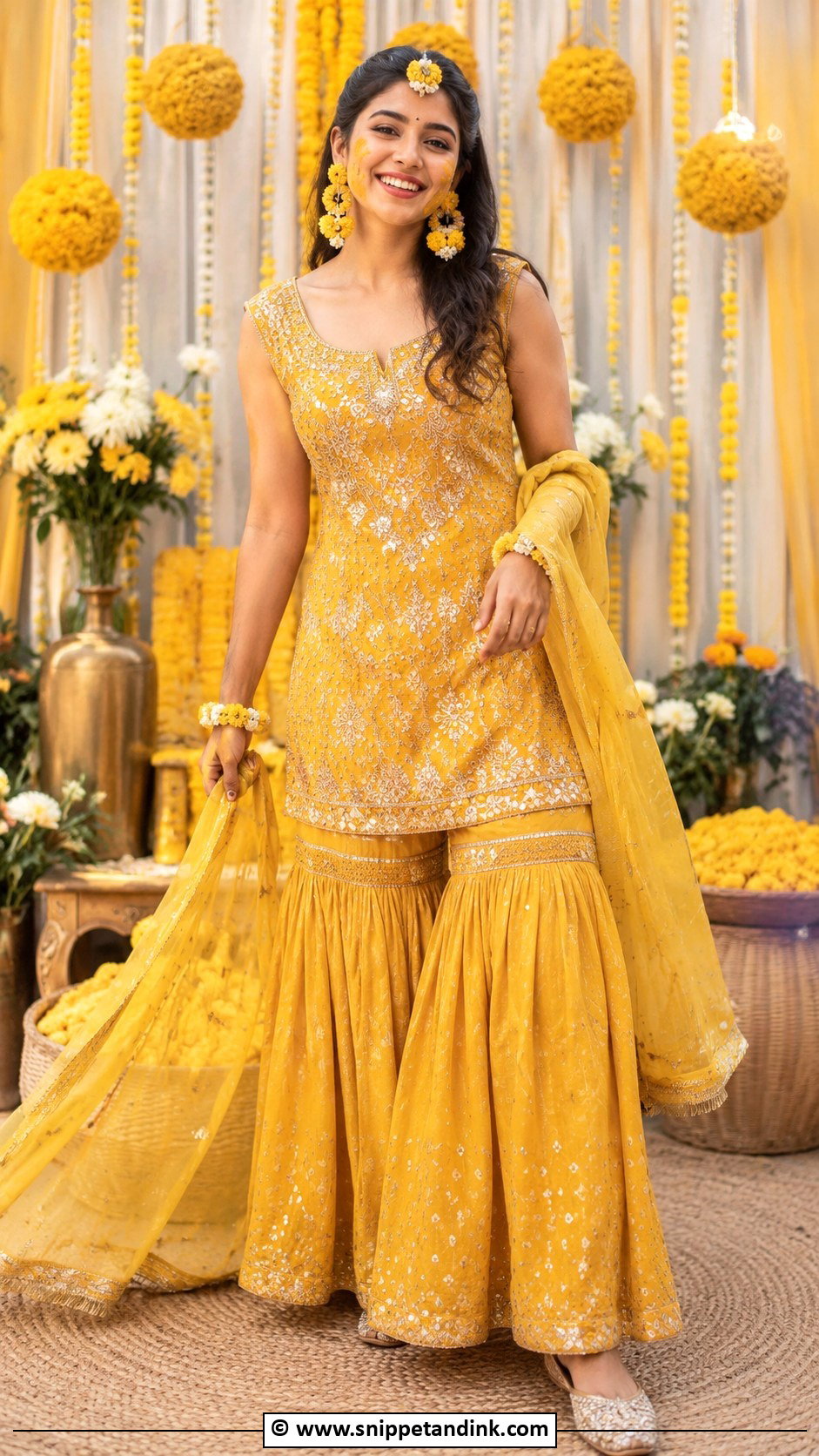
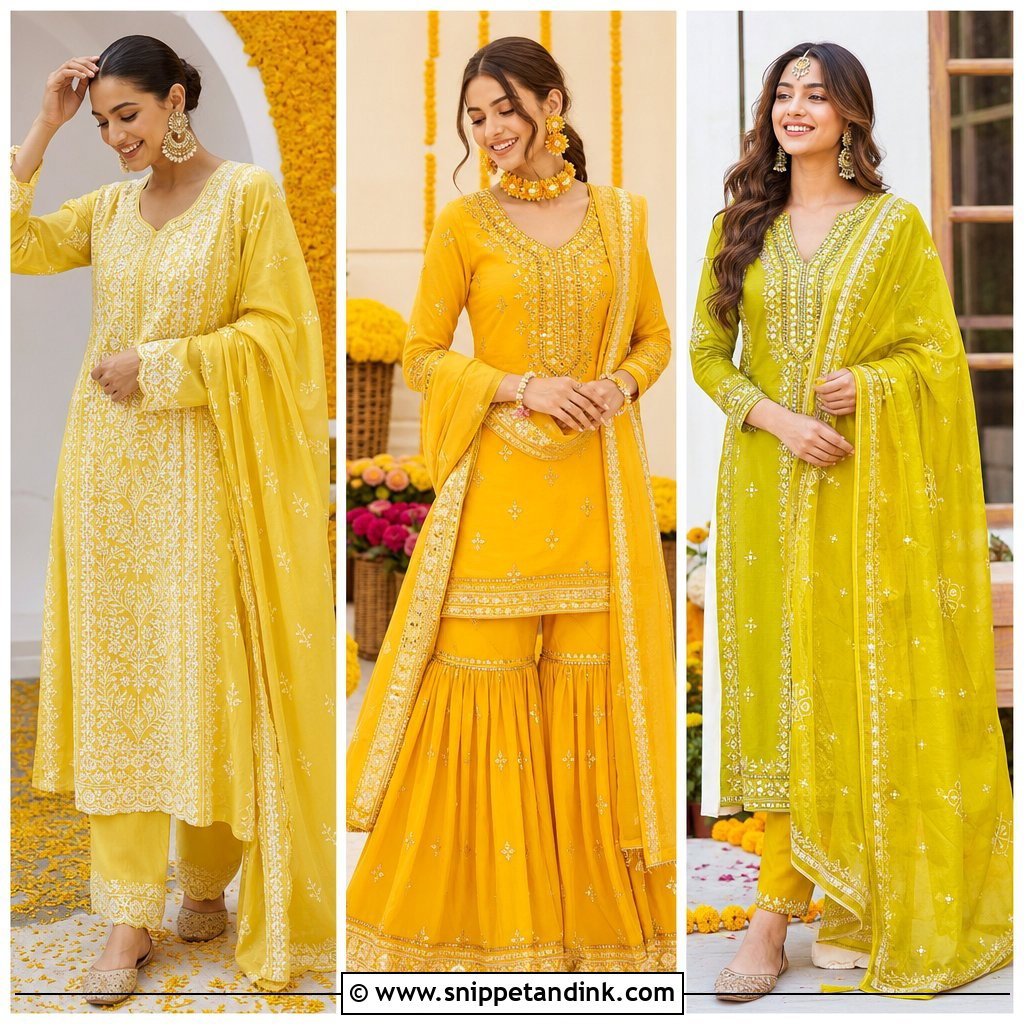
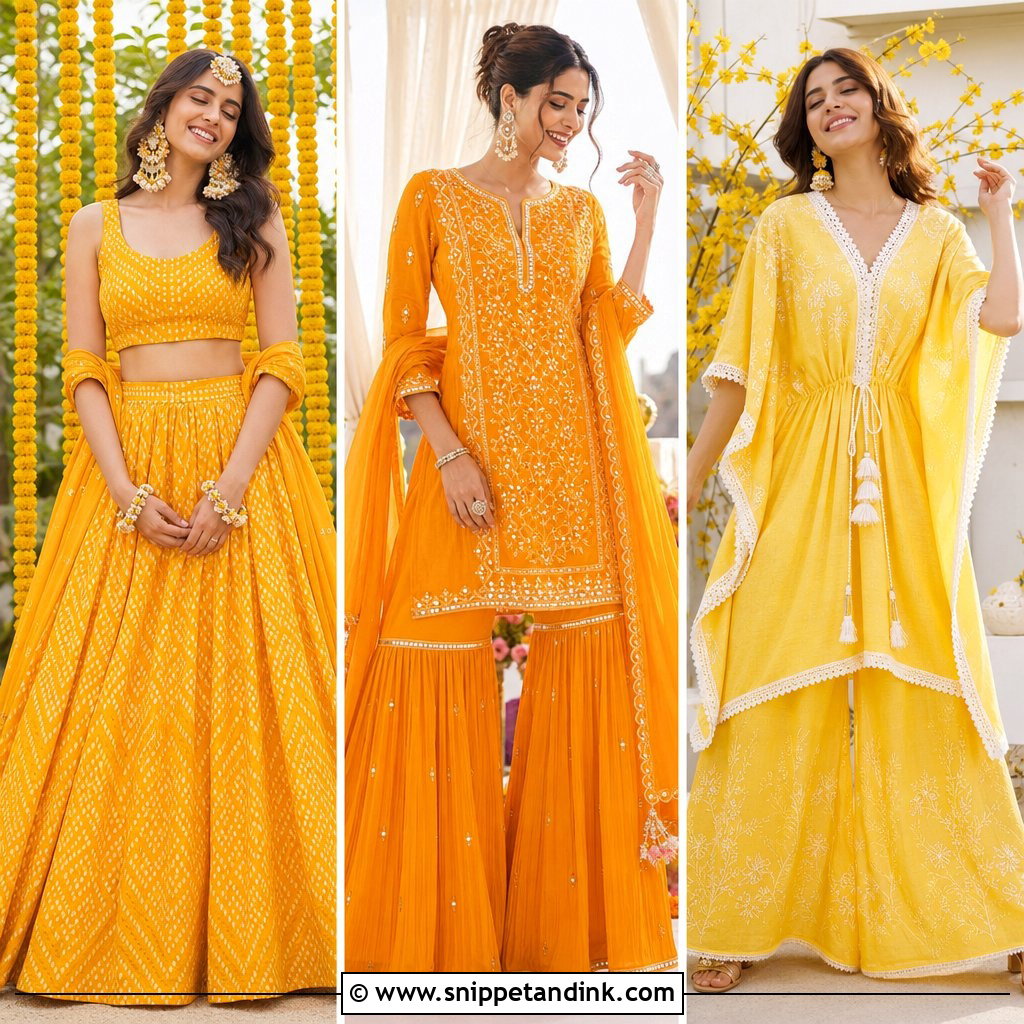
Shararas give you the swing of a skirt with the freedom of pants, which matters if you’re expecting a lot of dancing. The short kurti keeps it playful, and gota, mirror work, thread embroidery or light chikankari each set a slightly different mood. I pin the dupatta on one shoulder so it doesn’t trail through the paste bowl. Flower jewelry, a small bindi and soft curls finish it, with flat juttis to balance the wide hem.
7. Yellow Gharara Haldi Outfit
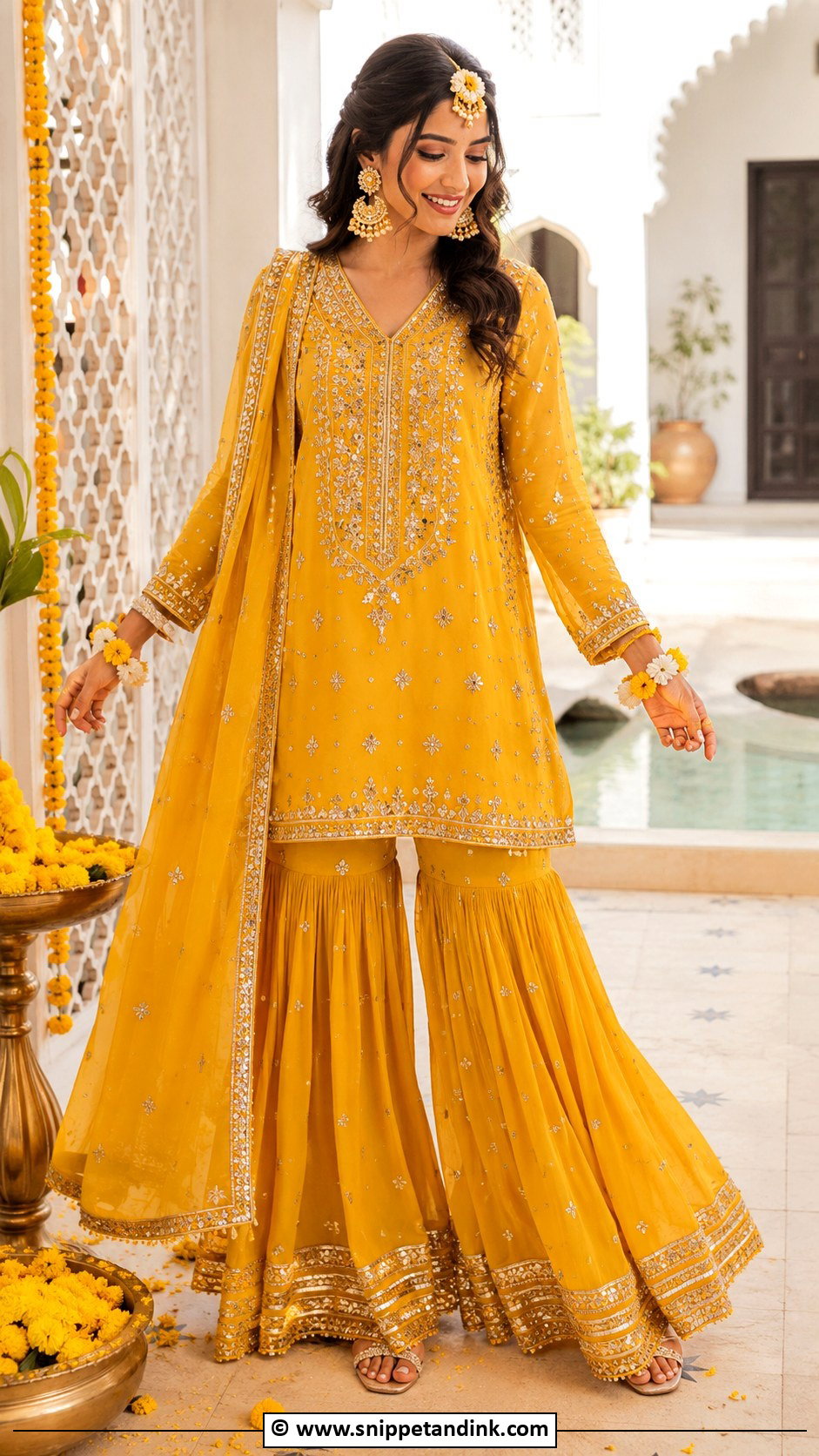
A gharara looks regal without the weight of a heavy lehenga. It’s fitted down to the knee, then flares from a joining band that’s often finished with gota. That knee joint is where I check the fit, because if it’s too snug, sitting cross-legged on the floor for the ritual strains the seam. A short kurta with zari, gota or pearl work and a light bordered dupatta complete it. Add a passa, jhumkas and floral bangles, and keep the makeup fresh so the outfit carries the drama.
8. Chikankari Kurta Haldi Outfit
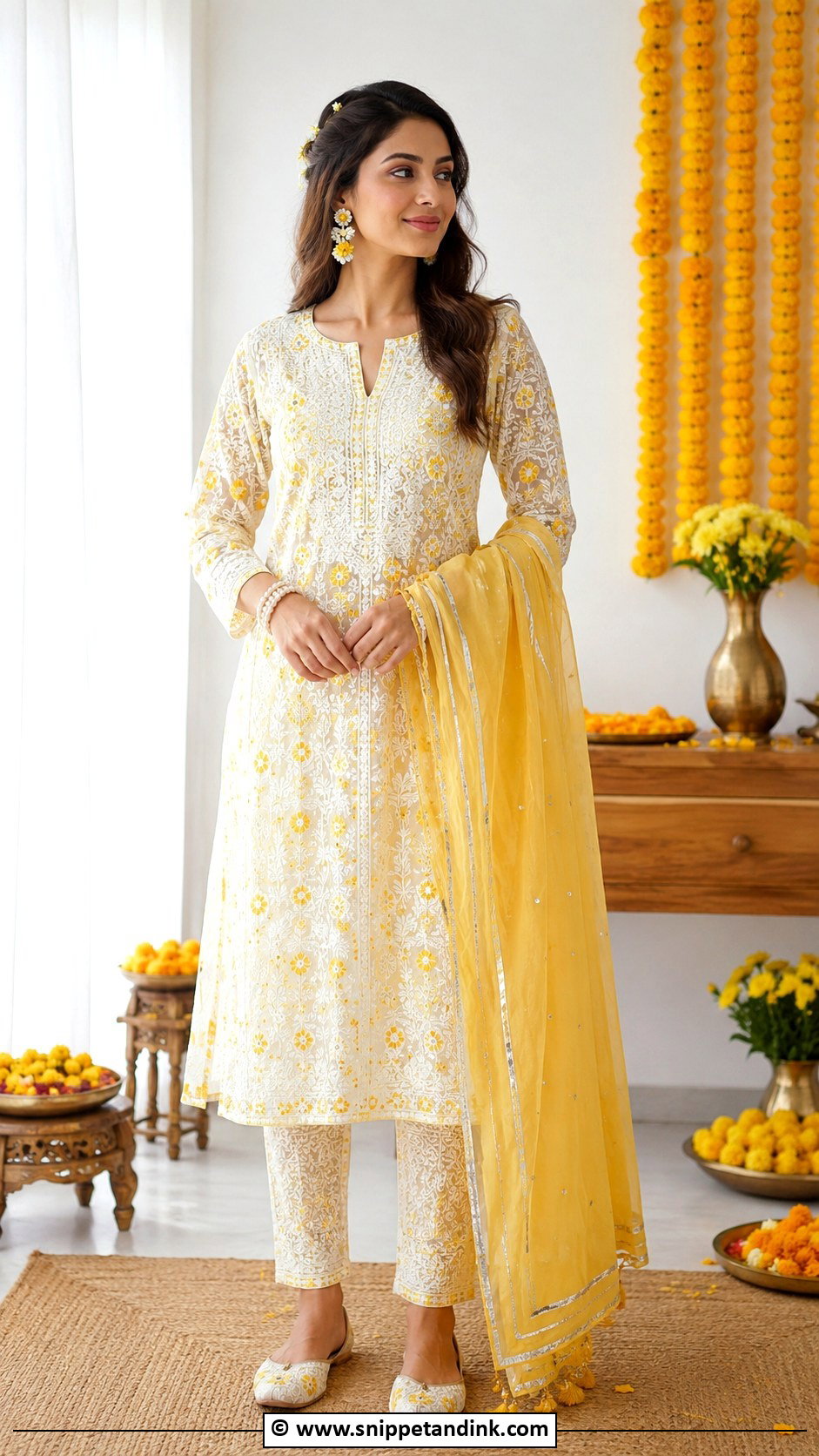
A chikankari kurta set is the quietest outfit here and one of the most practical. The hand embroidery on fine cotton or georgette breathes well in daytime heat. Yellow, ivory or lemon pairs with straight pants, palazzos or a soft sharara, and a bright dupatta with gota or mirror borders, floral earrings and embellished juttis make it bridal. Real chikankari on cotton mulmul is quite sheer, so I always check whether it’s lined before the water comes out. Every piece can be worn again after the wedding.
9. Yellow Anarkali Haldi Outfit
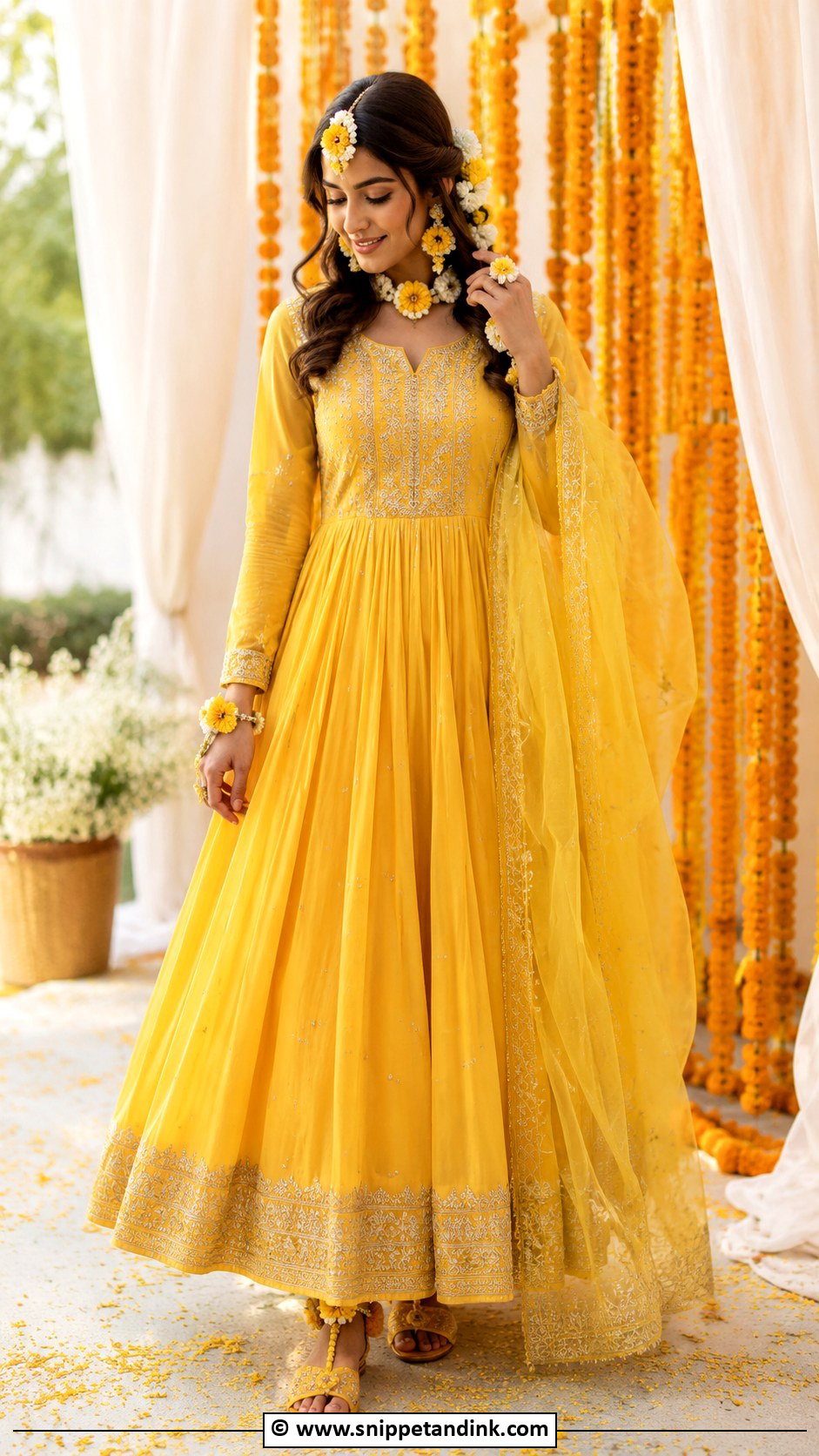
An Anarkali’s flare swings when you walk and twirl, which looks lovely in video. Choose georgette, cotton silk or organza so it doesn’t trap heat, and whichever sleeve length you’re comfortable in. Floor-length Anarkalis have one catch at a Haldi: the hem sweeps through spilled paste and water every time you move, so I’d have it cut to ankle length. A dupatta with tassels or gota edging, floral jewelry, flats, and hair tied back if the ceremony is outdoors.
10. Floral Anarkali Haldi Outfit
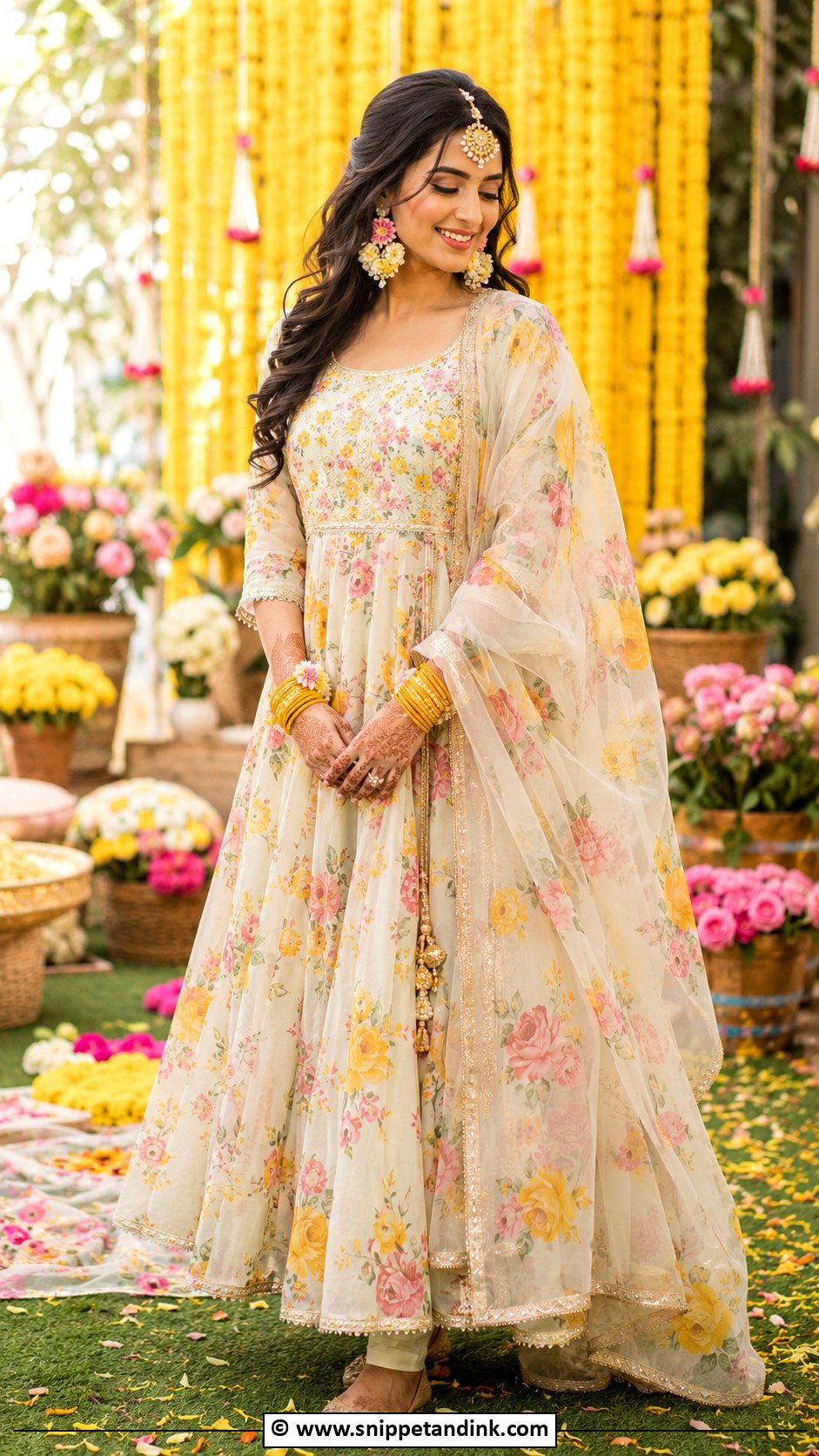
Flowers, flowing fabric and daylight belong together. A floral Anarkali feels romantic without weight, whether it’s a yellow base with pink or green flowers or ivory with yellow prints. A sheer dupatta adds the bridal note, and a statement maang tikka draws focus to the face. Keep the rest light so the print leads. The relaxed flare suits a wide range of body shapes and stays comfortable through a long ceremony. Soft curls, fresh flowers and embellished flats complete it.
11. Yellow Co Ord Set Haldi Outfit
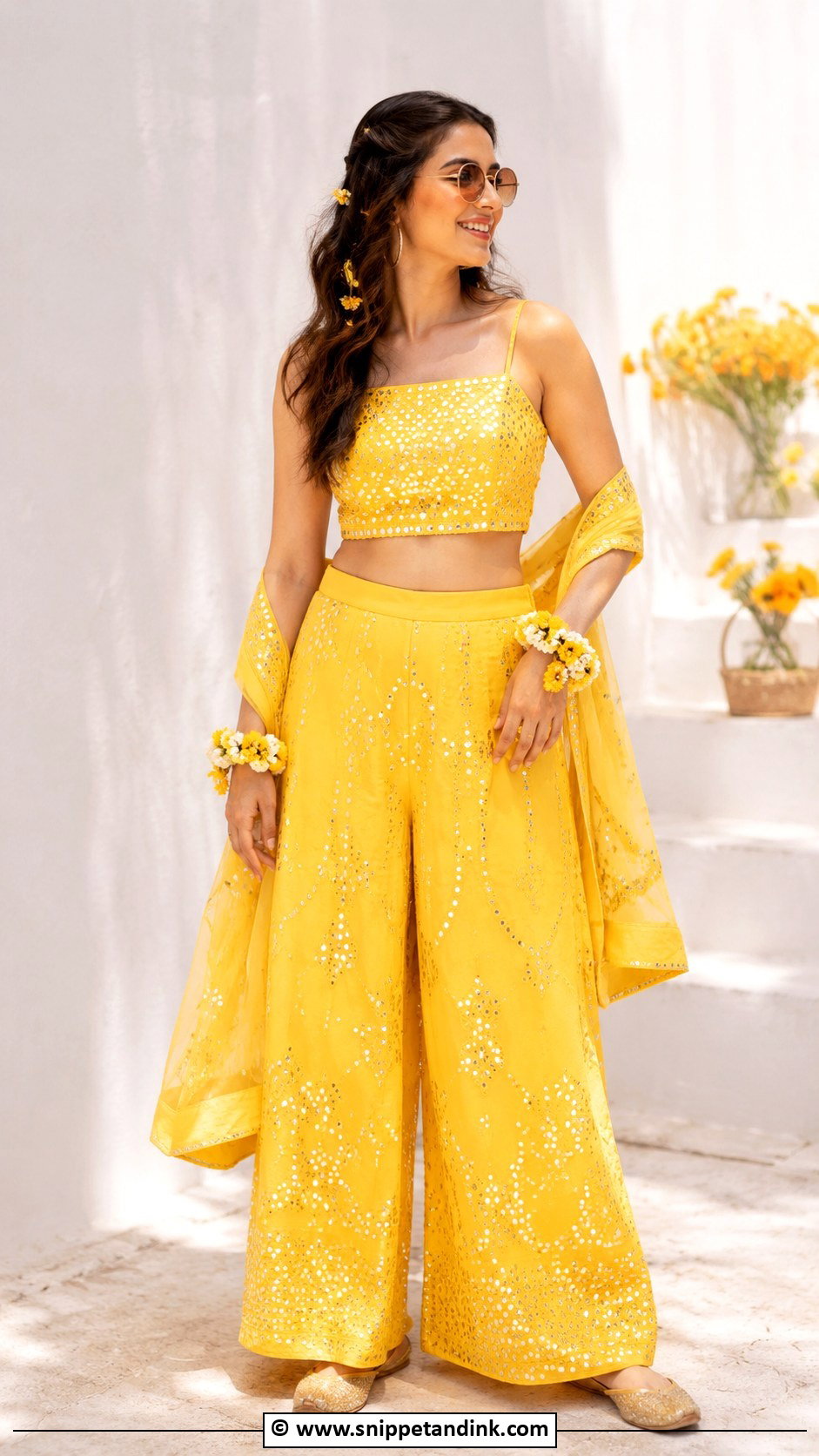
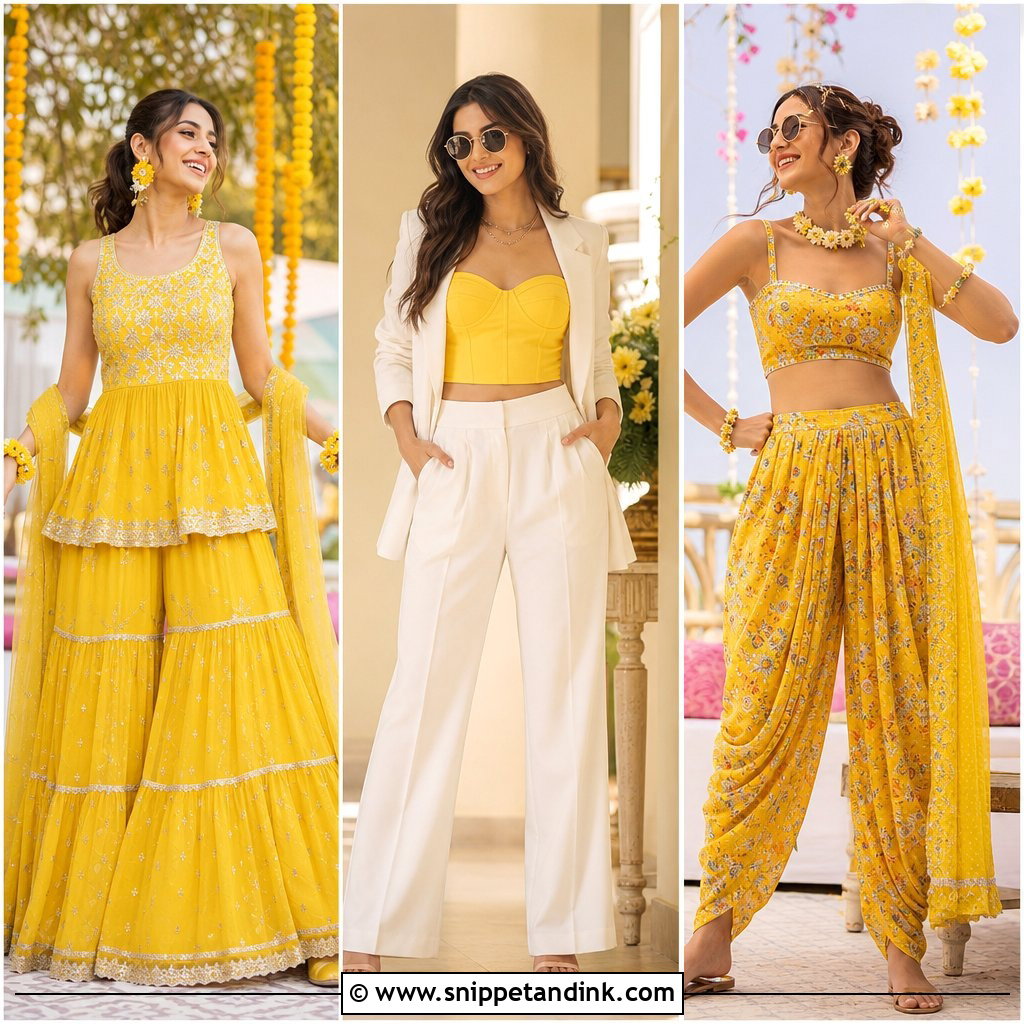
Co-ord sets are the fuss-free modern option: a crop top with a flared skirt, a short kurta with wide-leg pants, a tunic with palazzos. Matching pieces look intentional and feel comfortable. Small mirror work, floral embroidery or a print makes it wedding-ready. Skip the dupatta if you like, since it’s one less thing to hold out of the turmeric. Hoops, flower bracelets and sleek hair finish it. For a destination Haldi, a co-ord packs smaller and creases less than a lehenga.
12. Cape Lehenga Haldi Outfit
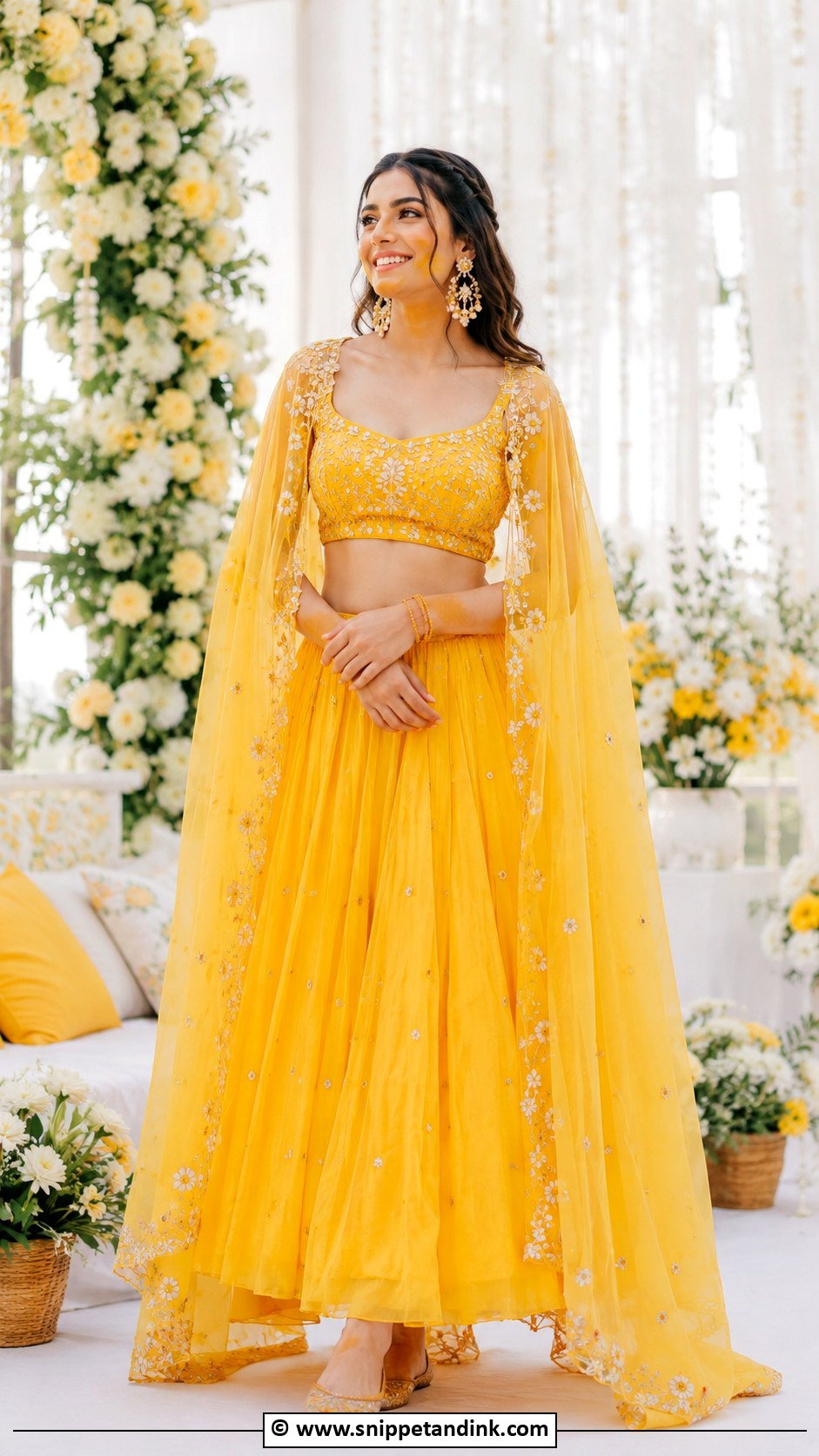
A cape replaces the dupatta, which means your hands stay free for the rituals and nothing slides off your shoulder into the paste. Go for a yellow or ivory lehenga with a sheer cape in organza or net, finished with floral embroidery, pearls or small mirrors. Net capes do snag on chunky bangles, so I keep anything on the wrists smooth. Statement earrings balance it, and flat sandals or juttis keep it practical.
13. Dhoti Pants Haldi Outfit
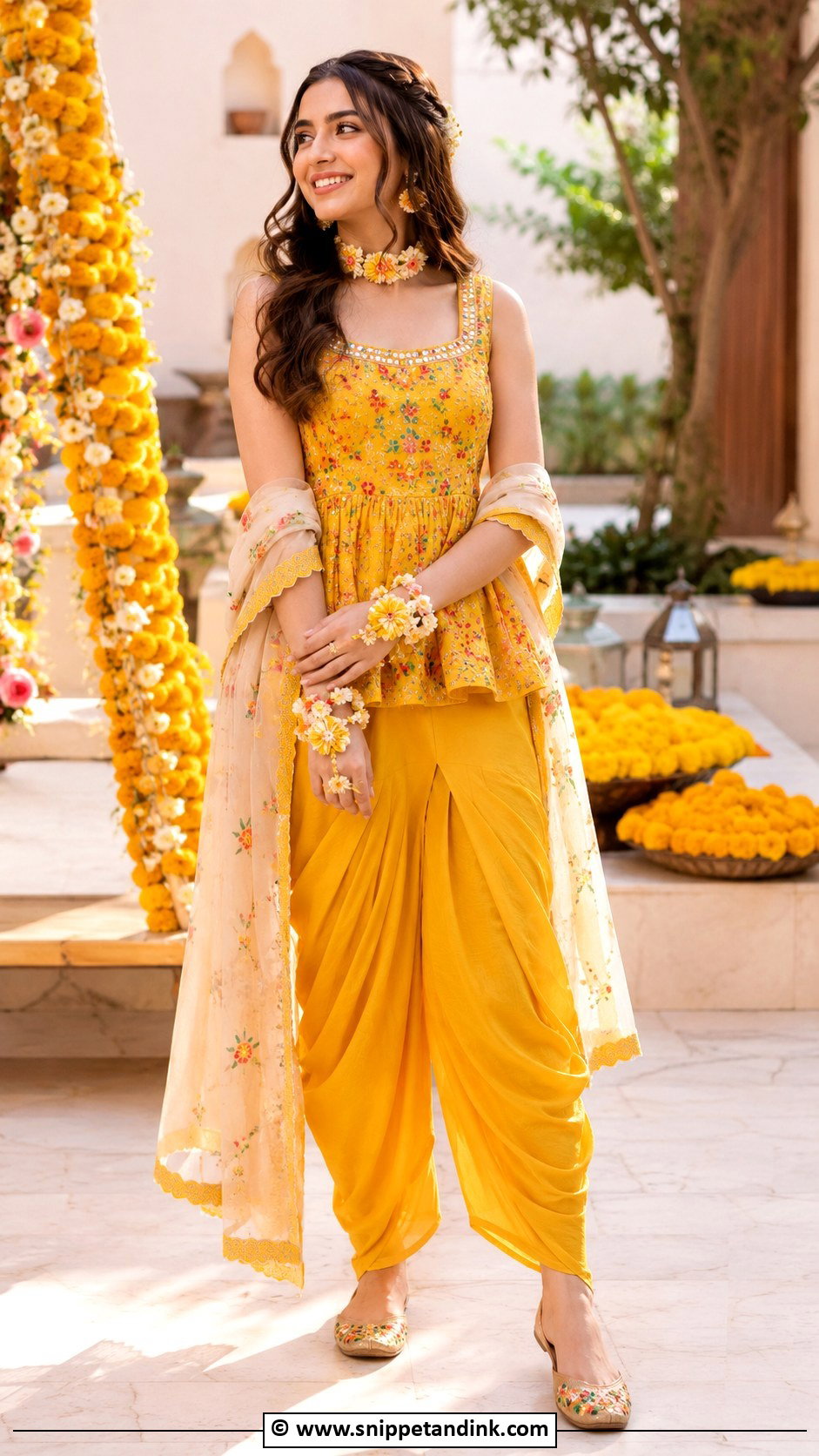
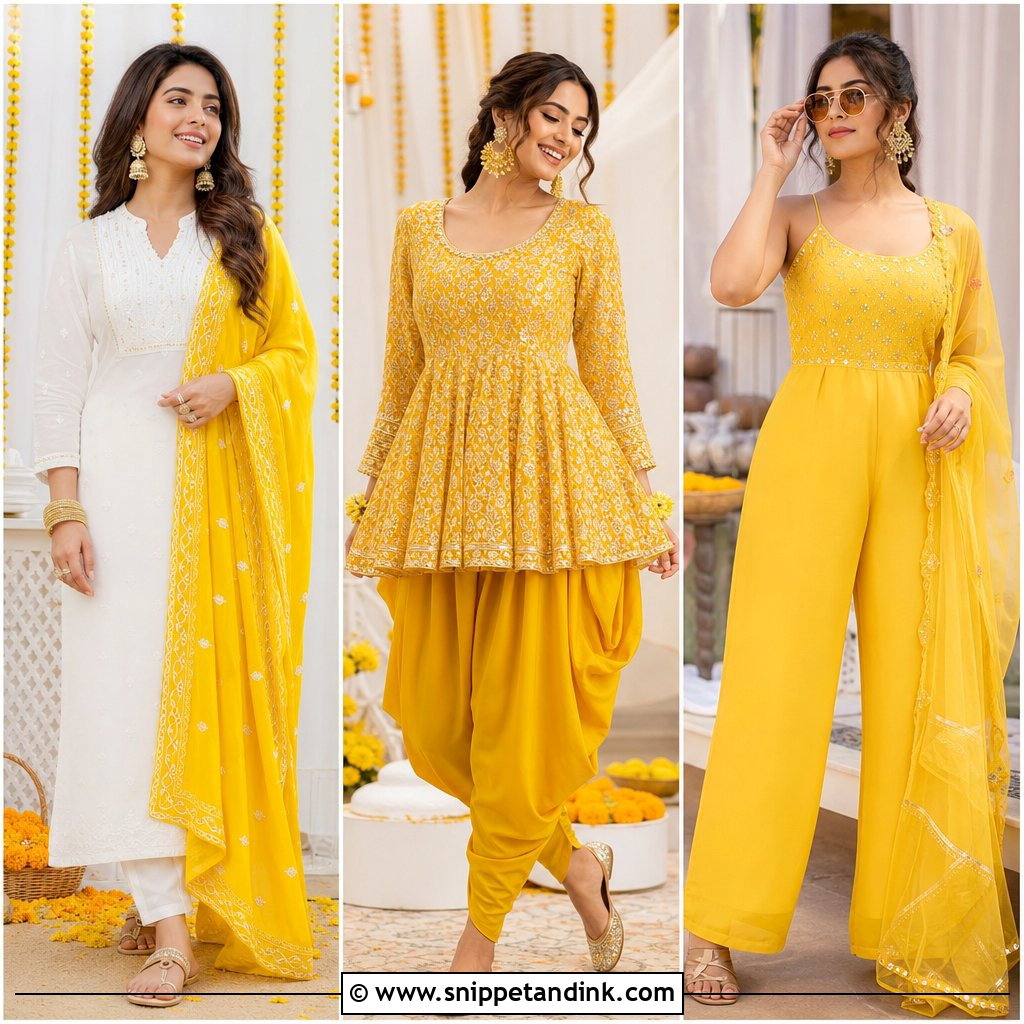
A dhoti pants Haldi outfit is bold and comfortable. Yellow dhoti pants with a peplum top, crop blouse or short kurti give an Indo-western look, and the draped bottom makes sitting on the floor easy. It’s a smart pick if you don’t want a lehenga or saree at every function. Add a light dupatta or cape for more bridal detail, then a choker, a floral haathphool and juttis. The low drape is forgiving, but I check that it doesn’t hang so low it catches your heel as you step.
14. Peplum Top Sharara Haldi Outfit
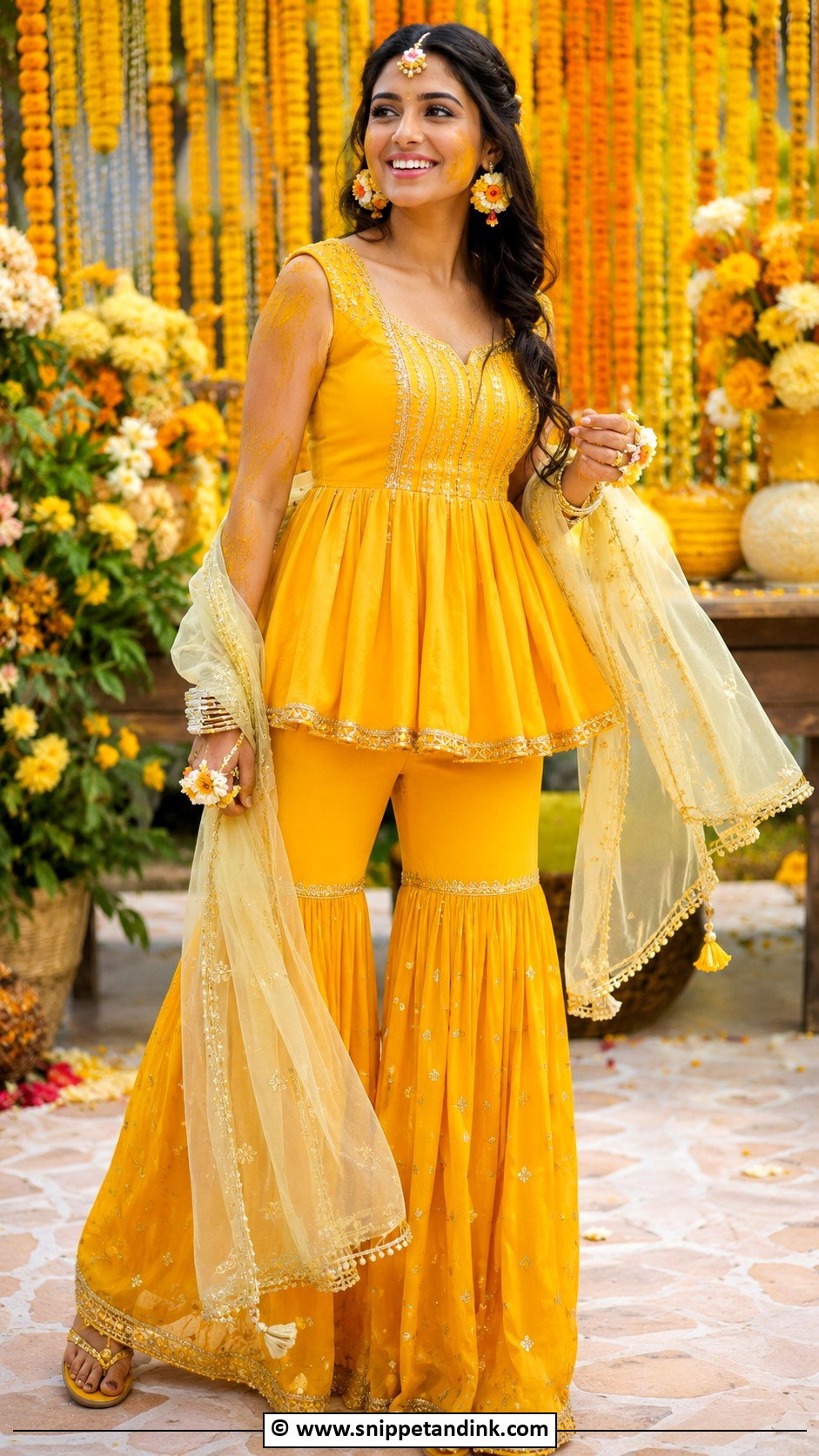
The peplum defines the waist while the sharara adds volume underneath, so you get shape and coverage together. Yellow, mango, ivory or lime with mirror or gota details suits Haldi, and if the peplum carries enough work, skip the dupatta. Floral earrings, bangles and a simple maang tikka make it bridal; shoes stay flat. I’d insist on a lined peplum. An unlined georgette flare goes limp and clings to the hips once it’s damp.
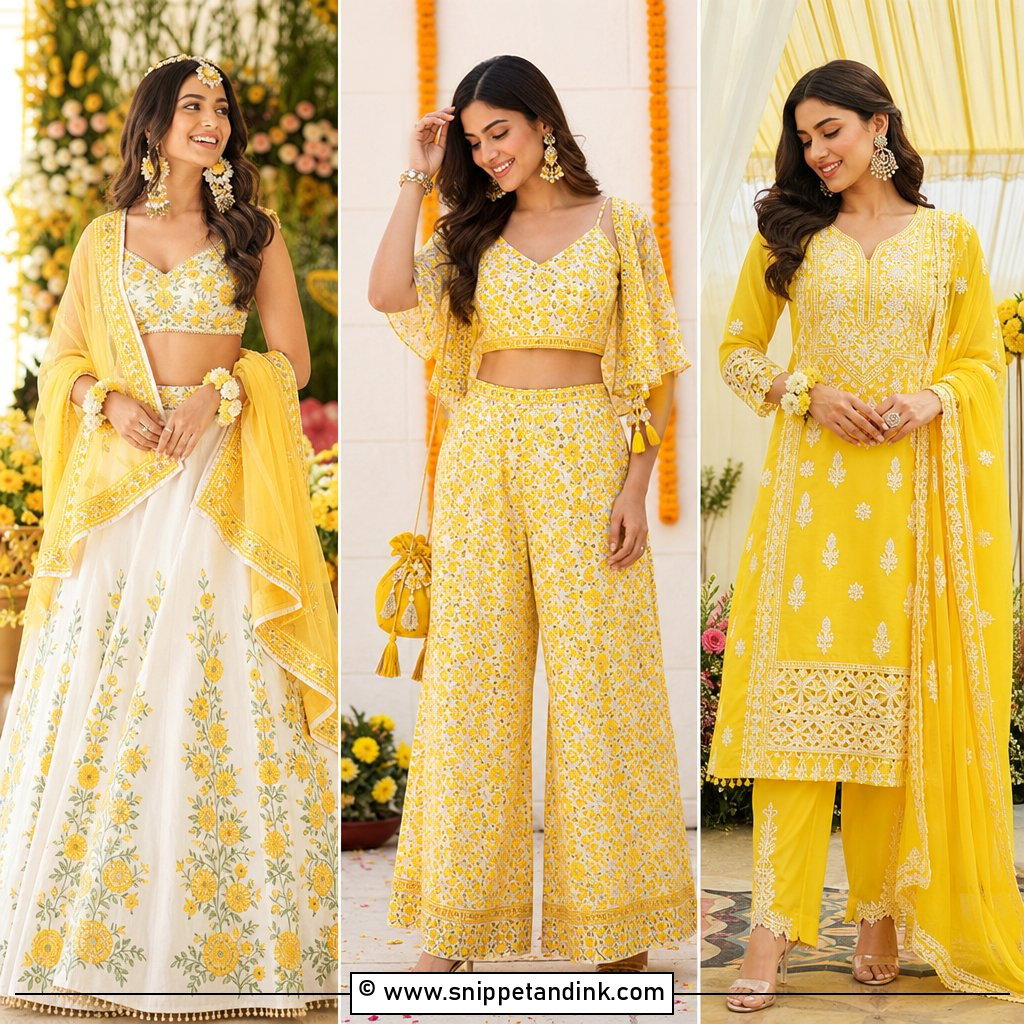

15. Mustard Yellow Haldi Outfit
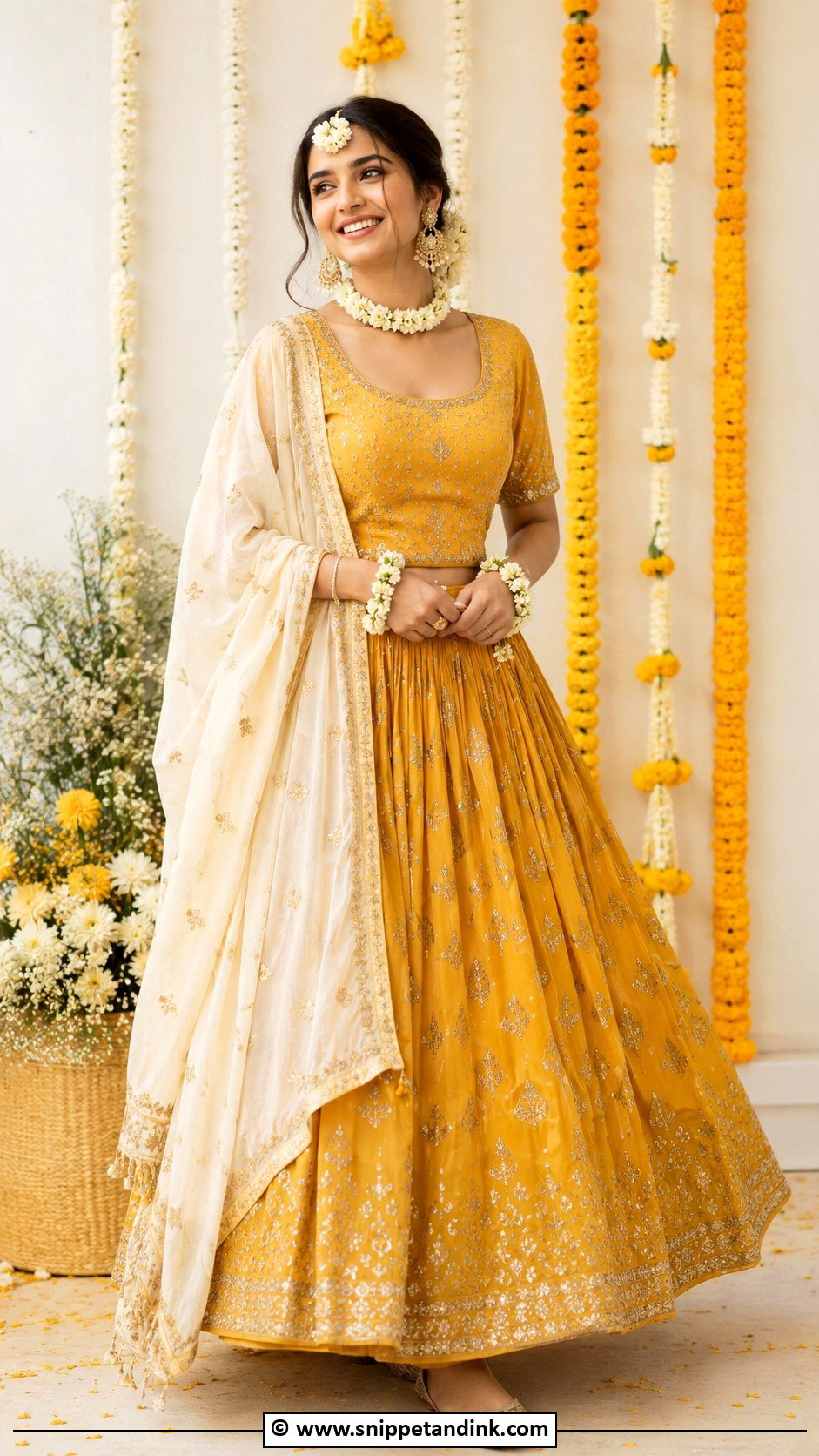
Mustard is richer and warmer than lemon, and it rescues brides whose skin looks washed out in pale yellow, which often happens with deeper or olive skin. It works as a lehenga, saree, sharara or kurta set. Antique gold jewelry, marigold decor and fresh white flowers all sit well beside it. The color already has depth, so I keep the embroidery light and the fabric breathable. An ivory, peach or green dupatta adds contrast if you want it.
16. Lemon Yellow Haldi Outfit
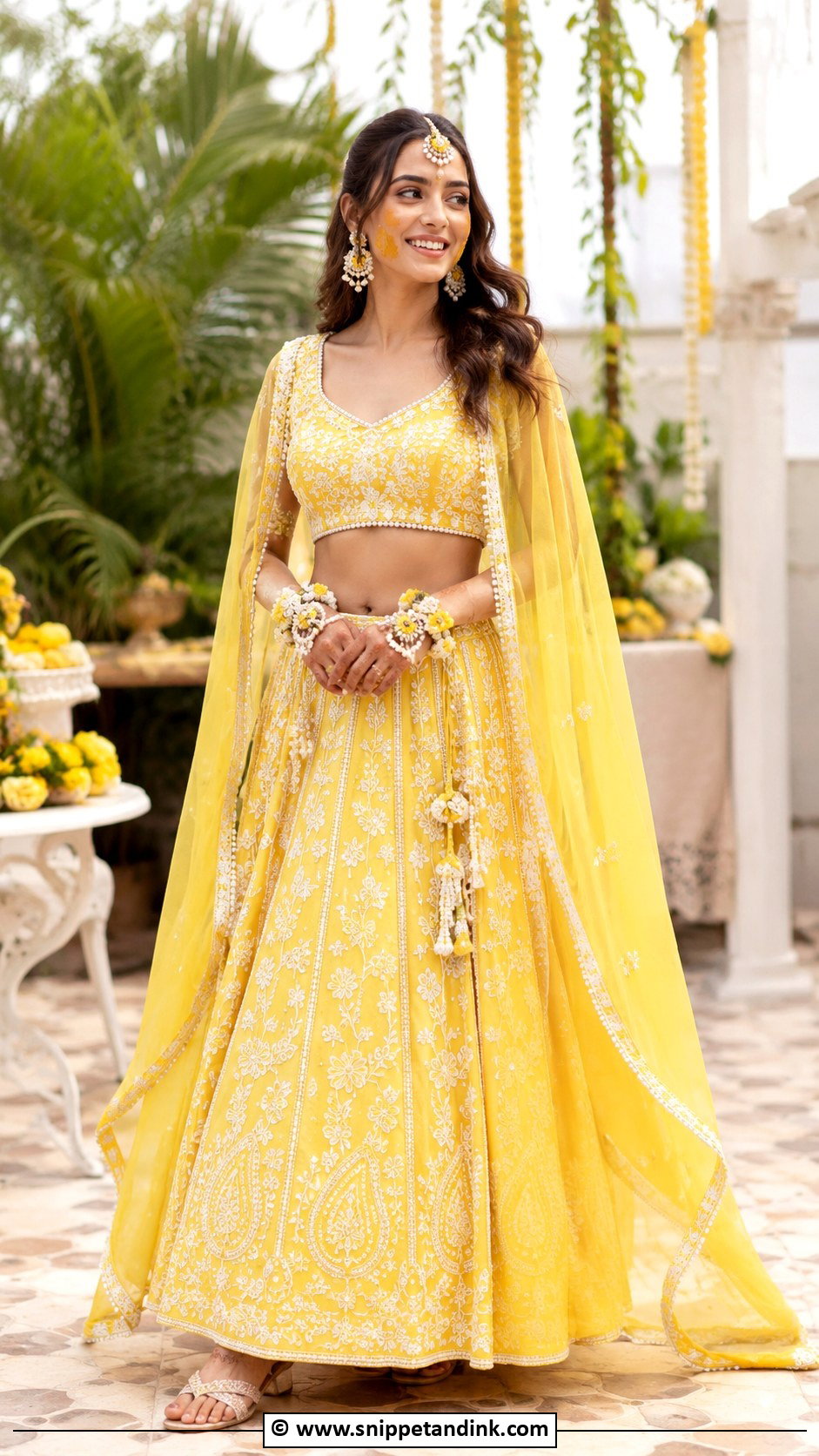
Lemon yellow is bright and youthful in daylight and makes skin look fresh outdoors. Try it as a lehenga with a matching blouse, a breezy saree or a light Anarkali, finished with silver mirror work, white thread embroidery or pearls rather than gold, which can feel heavy against such a pale shade. White, yellow or pink flower jewelry suits it; keep everything airy. On lemon, deep turmeric orange shows as a darker smudge, which most brides end up loving in the candids.
17. Lime Green Haldi Outfit
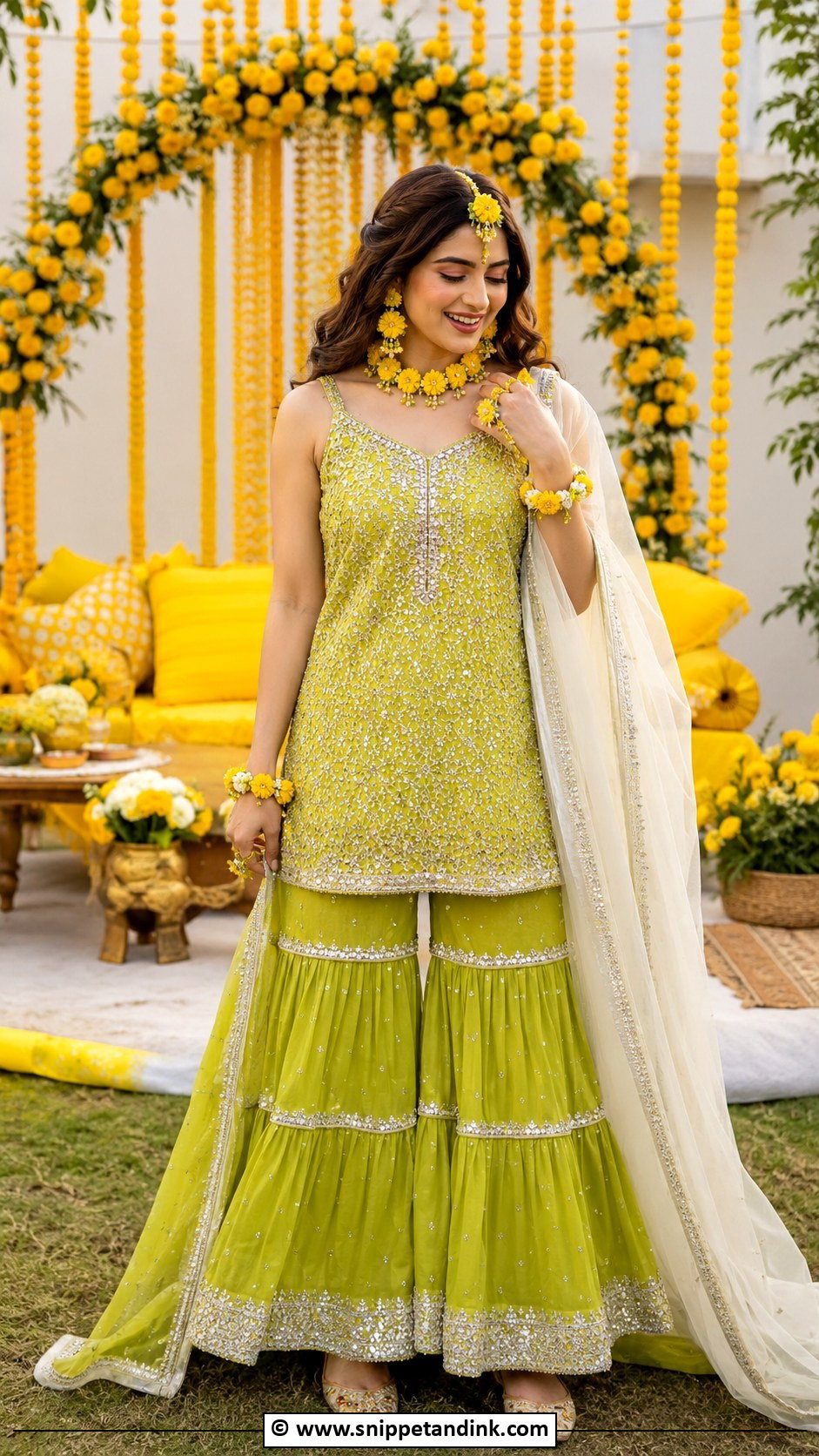
Lime is the fun break from yellow, and it stands out against yellow decor instead of disappearing into it. Wear a lime green lehenga, sharara or pre-draped saree with yellow flower jewelry, or soften it with ivory or gold. It looks natural in a garden. Keep the embroidery light and the fabric flowing. Lime can throw a green tint onto the face in close-ups, so I’d pair it with dewy makeup and a warm pink lip to bring color back.
18. Peach Haldi Outfit
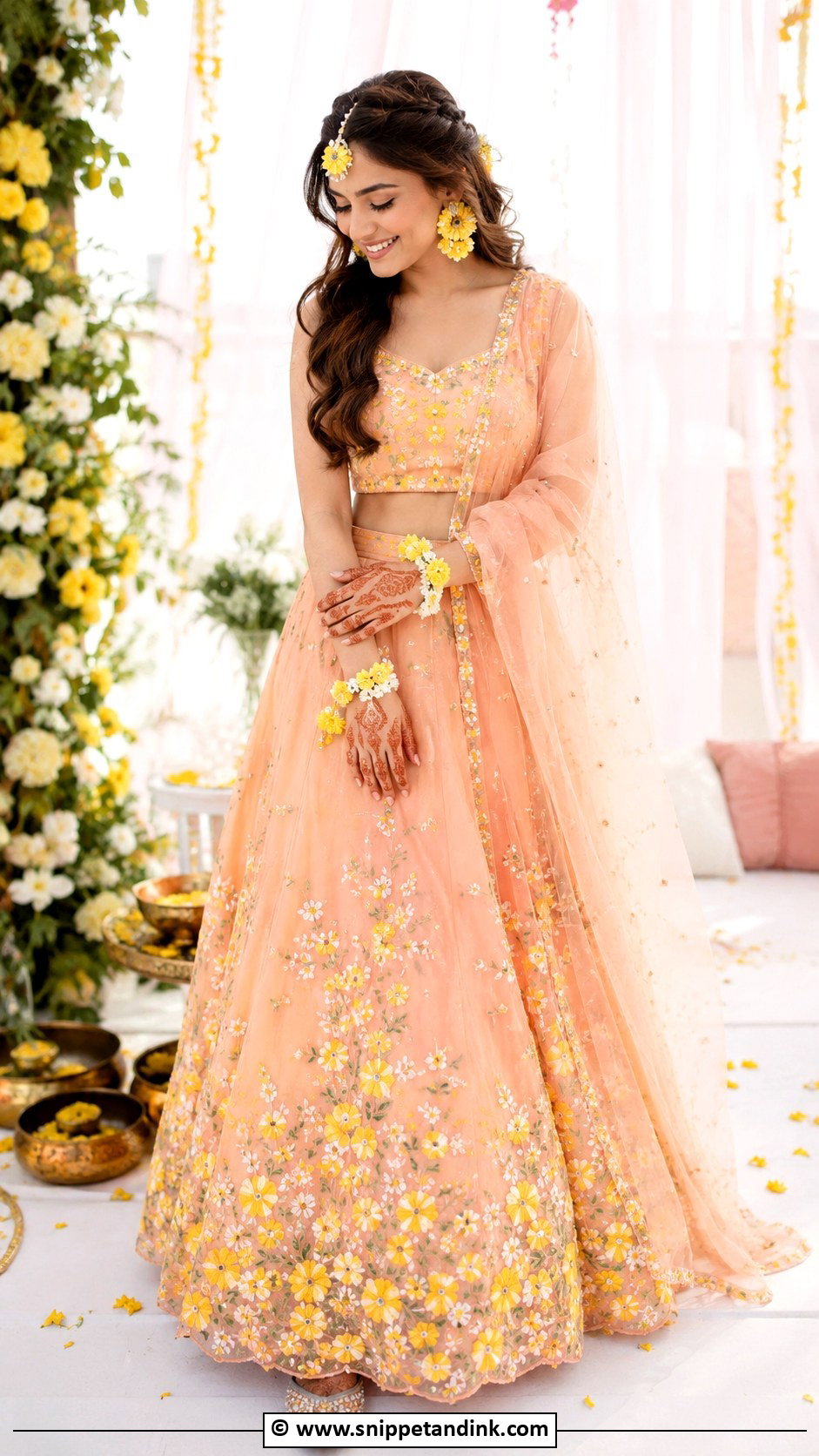
Peach gives warmth without going full yellow, and it sits comfortably with turmeric, marigolds and gold. A peach lehenga with yellow floral embroidery, a peach saree with a contrast blouse or a sharara with gota work all suit it, and yellow flower jewelry ties it to the ritual. Because peach sits close to many skin tones, it can look washed out in harsh noon sun; brighter yellow flowers near the face help. Soft waves and minimal makeup suit an intimate ceremony.
19. Orange Haldi Outfit
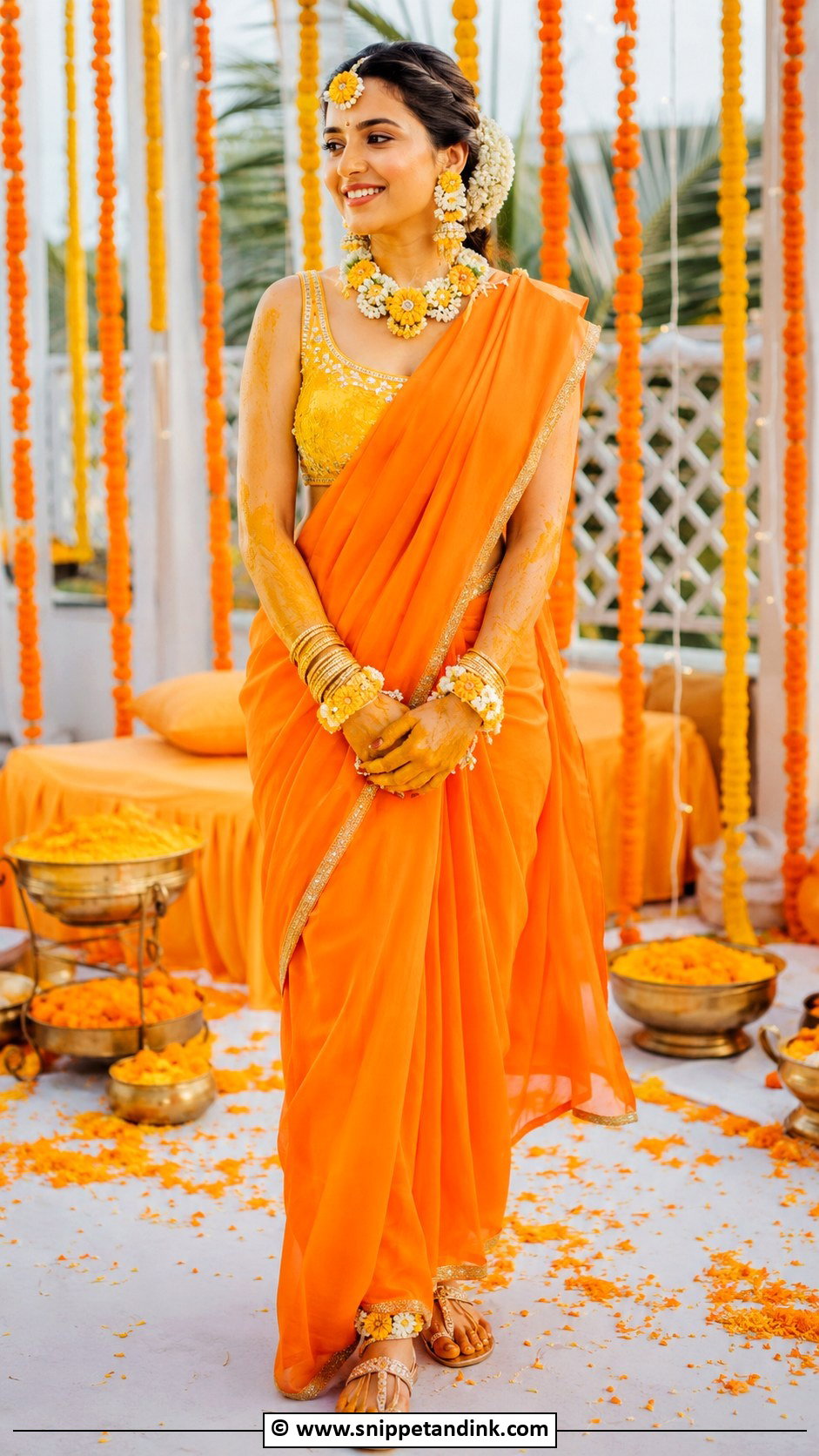
Orange brings more energy than peach and reads differently from yellow. Burnt orange, tangerine or a brighter orange sharara all pop against yellow decor, with gold accents, flower jewelry or a yellow contrast dupatta. Keep the fabric light so the color stays joyful. Orange bounces warmth onto skin in daylight, which flatters most brides, but very bright orange beside turmeric-covered skin can make the face look overly orange in photos. If your skin is already warm, I’d pick burnt orange.


20. Ivory And Yellow Haldi Outfit
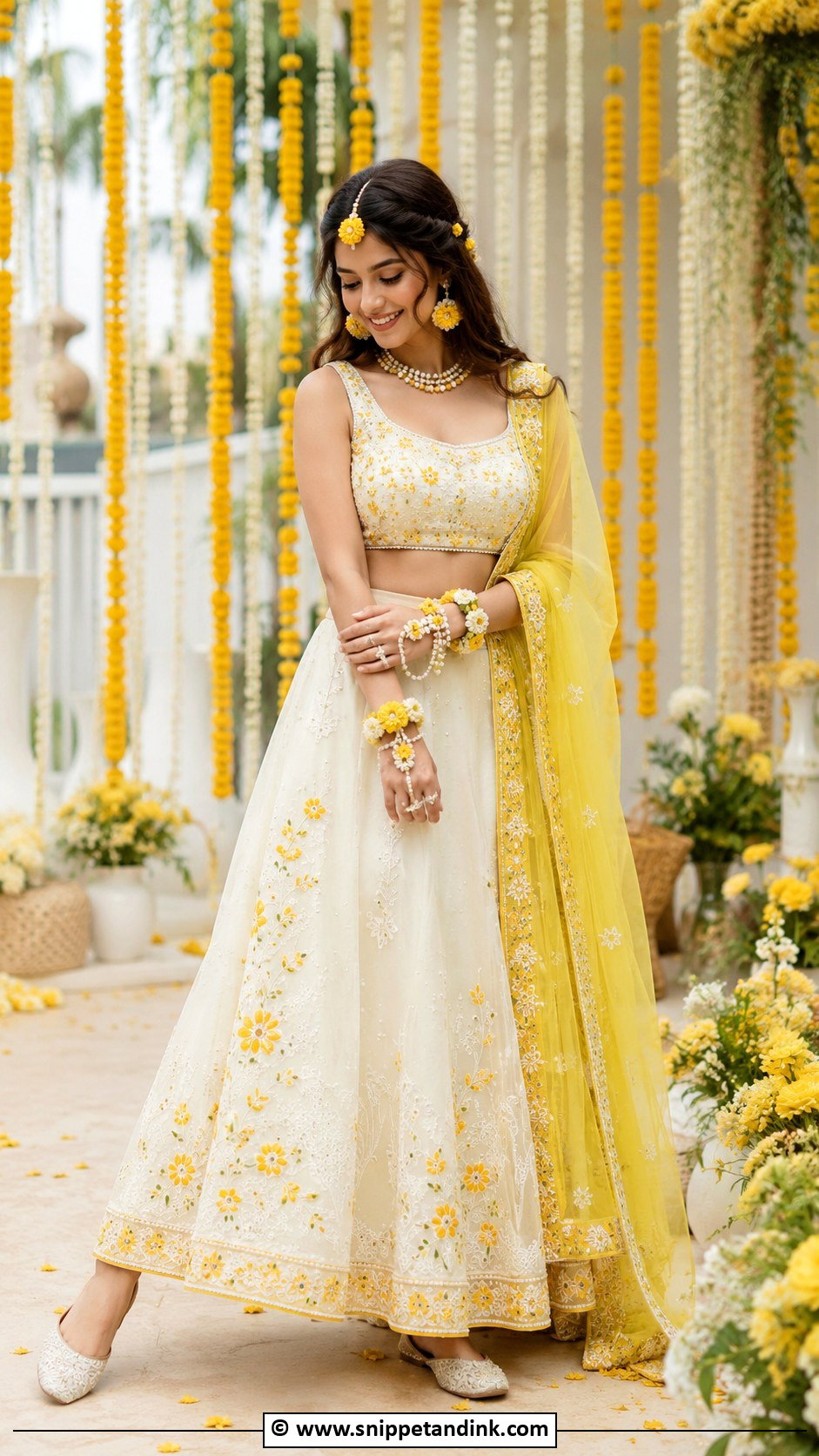
Ivory keeps the outfit fresh while yellow details tie it to the ceremony. An ivory lehenga with yellow embroidery, an ivory kurta set with a yellow dupatta, or a white saree with a lemon blouse are all easy wins. Fresh yellow flowers, pearl jewelry and soft gold bangles finish it. As with any pale outfit, stains come with the territory. I’d put the yellow where the paste lands most, on the dupatta and sleeves, so the marks blend in.
21. Mirror Work Haldi Outfit
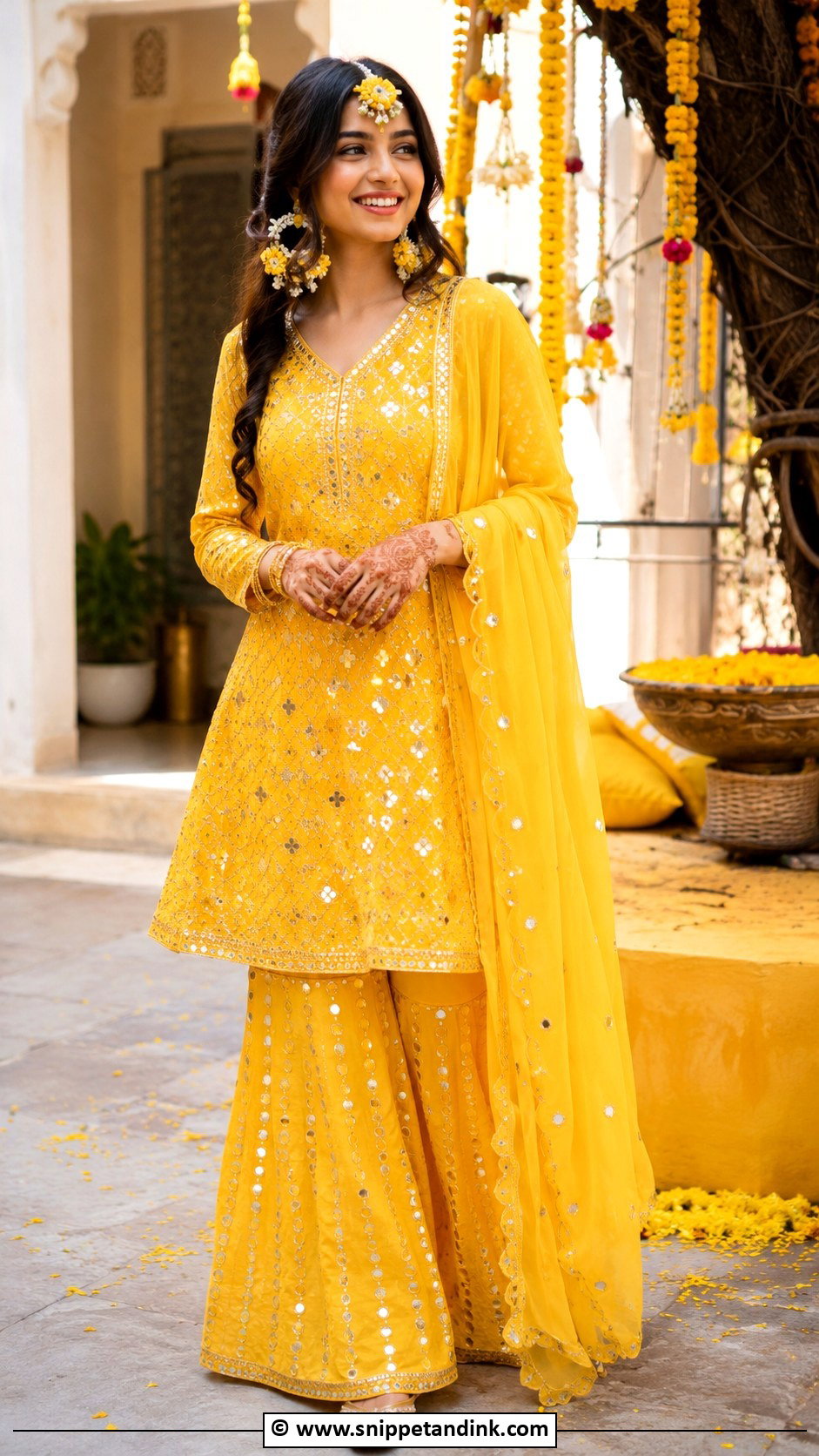
Mirror work sparkles in daylight without needing much jewelry. For Haldi I’d choose small mirrors over large ones; big glass pieces with rough edges scratch arms and catch on the dupatta. A mirror-work lehenga, sharara or kurta set in a simple shape, with flower jewelry and a minimal maang tikka, balances the shine. Check the lining behind the mirrors, because the backs of the stitches can rub. Wet turmeric wipes off glass easily, which makes mirrors a forgiving choice.
22. Gota Patti Haldi Outfit
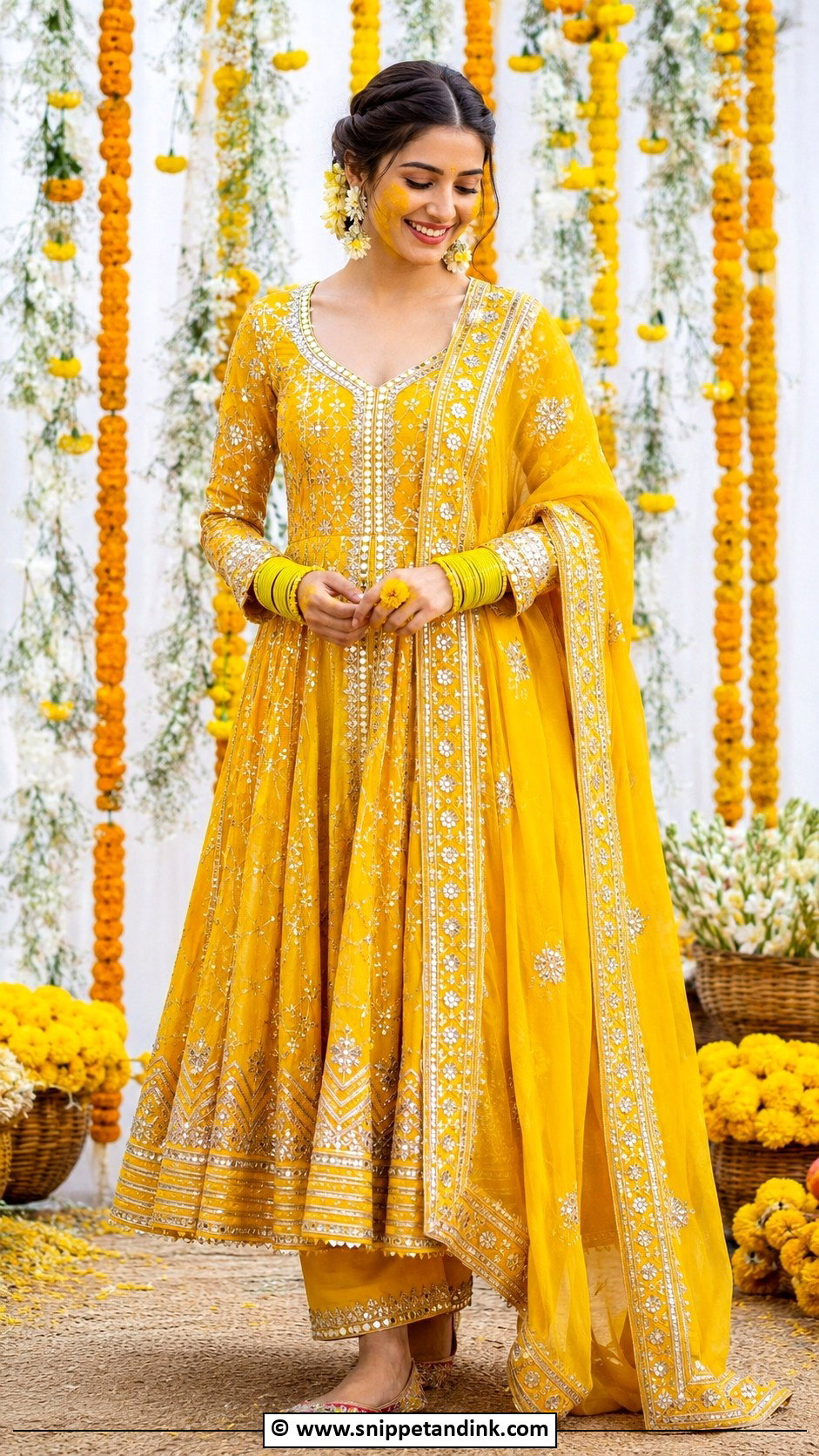
Gota patti is the classic Haldi embellishment, festive and light. A yellow gota patti lehenga, Anarkali, sharara or kurta set feels dressed up without heavy bridal embroidery, and the metallic ribbon catches daylight softly. Pick a dupatta with a gota border; for a modern take, keep the blouse plain and let the border shine. Traditional metal gota can tarnish when wet paste sits on it, while most modern gota is a coated film that holds up better, so ask which you’re buying. Juttis, glass bangles and a neat hairstyle finish it.
23. Organza Lehenga Haldi Outfit
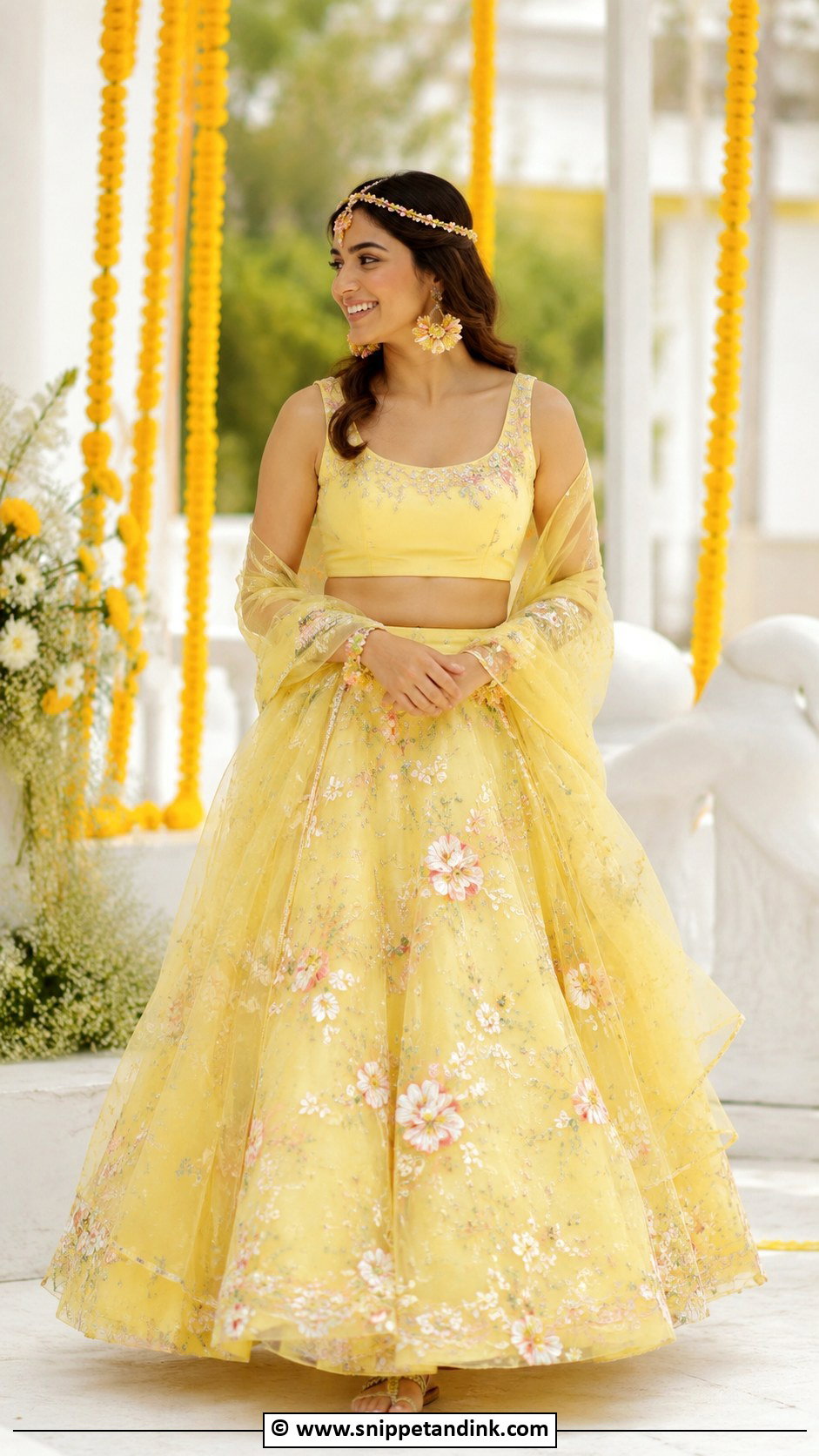
Organza has enough structure to look special while staying lighter than most bridal fabrics. Yellow organza with floral embroidery, ivory with marigold motifs or a pastel with a little shine all suit Haldi. A plain blouse and soft dupatta balance the volume, with floral earrings, a delicate matha patti and flat sandals. Organza stiffens and water-spots as it dries, so after a full water fight it looks crumpled. I’d wear it if your family’s ritual is gentle.
24. Cotton Silk Saree Haldi Outfit
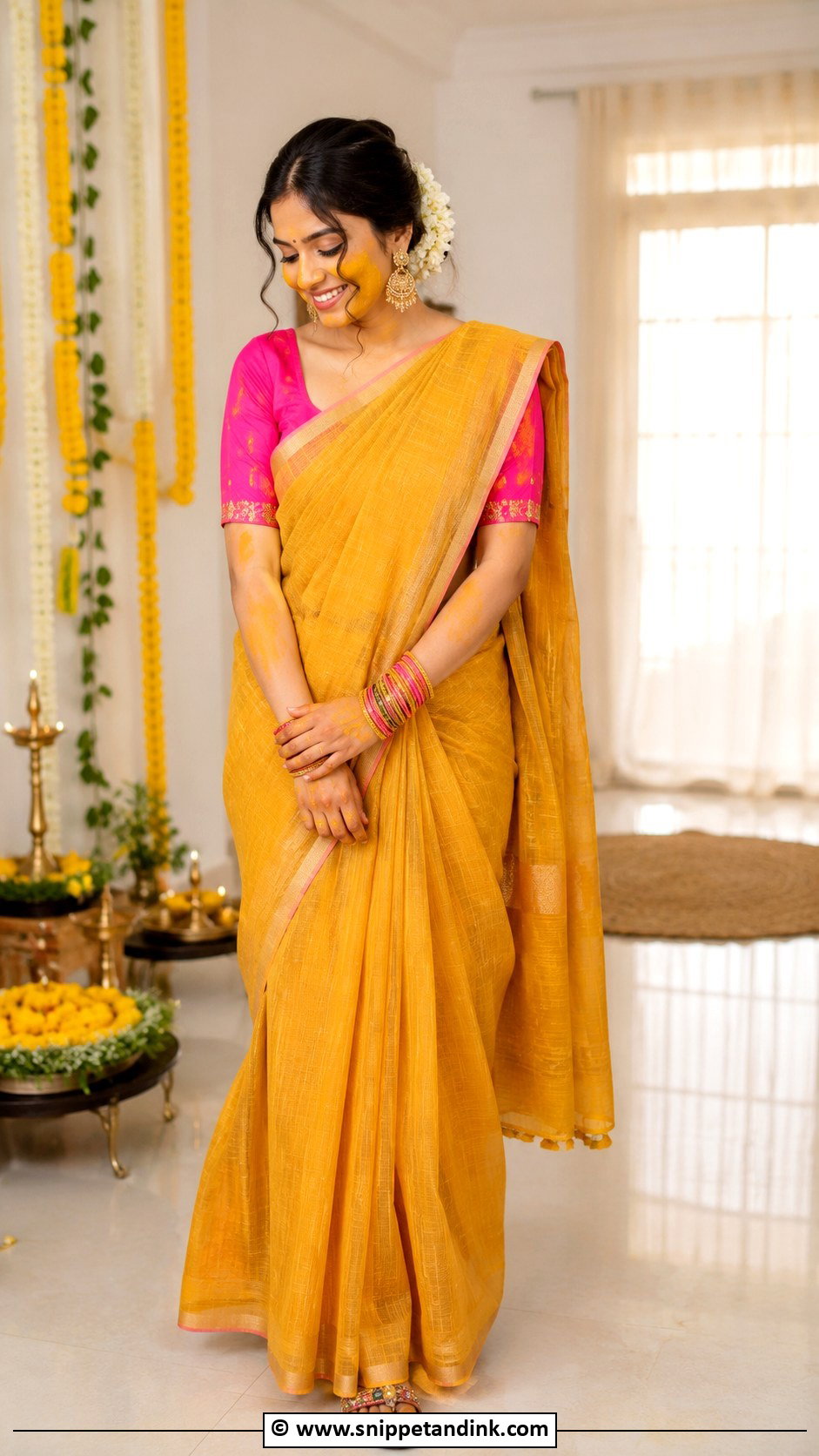
Cotton silk drapes easily, breathes and holds its pleats through a long ceremony. Yellow, mustard, ivory or orange with a simple border, and a contrast blouse in green, pink or gold for a styled finish. Jasmine in the hair, gold jhumkas and glass bangles feel classic, and it’s far easier to manage than delicate chiffon at a home or temple-style ceremony. Cotton silk does absorb turmeric, so treat any stains that same day; left overnight, they set.



25. Yellow Palazzo Suit Haldi Outfit
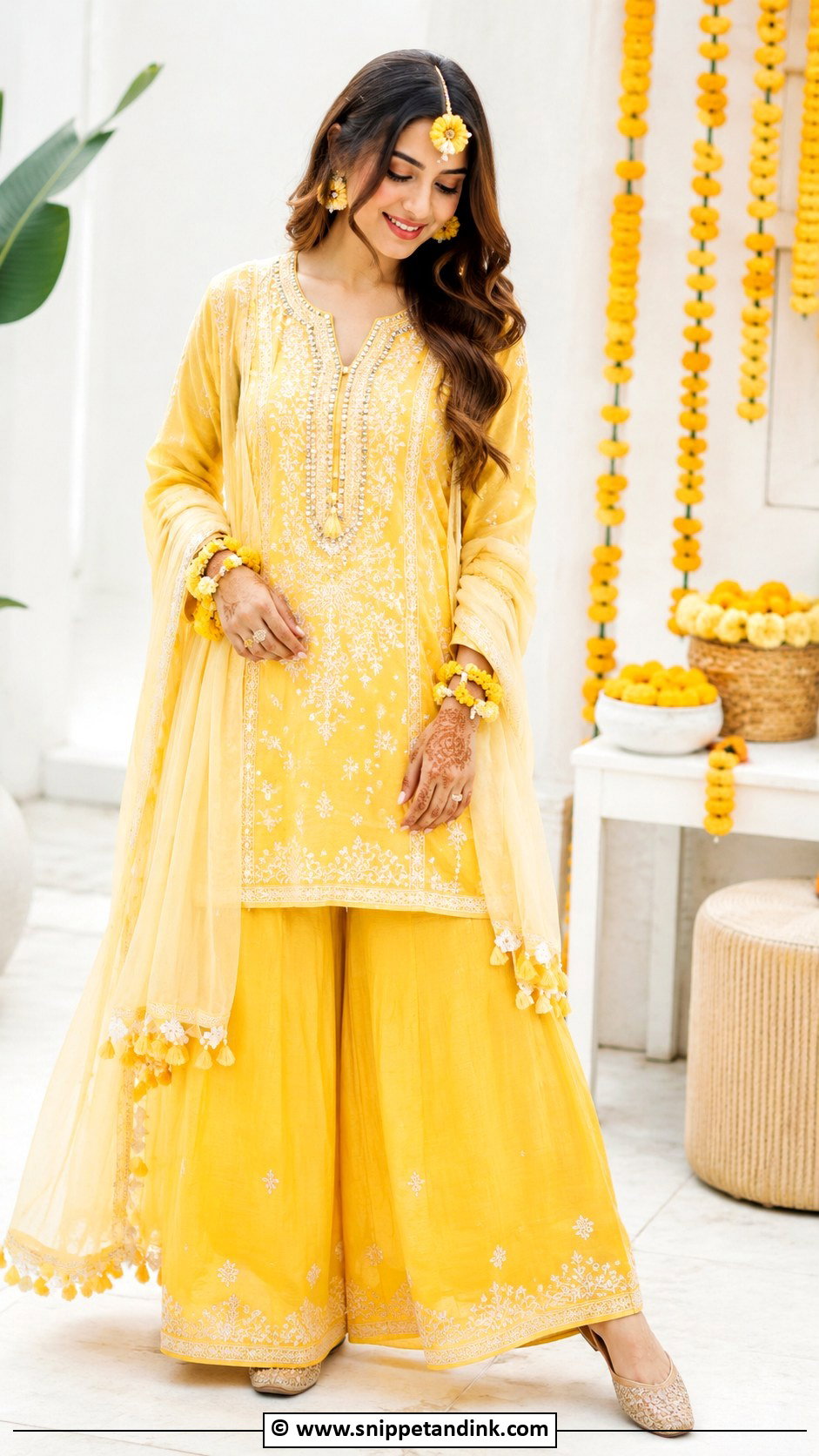
Wide-leg palazzos give you the freedom of pants and, standing still, the drape of a skirt. A yellow palazzo suit with embroidery at the neckline, sleeves or hem looks bridal enough, with a light dupatta trimmed in tassels or gota. Small ceremonies and morning rituals suit it, as do brides who dislike heavy outfits. I hem palazzos to ankle length for Haldi, because long wide legs mop up wet floors. Floral jewelry, soft makeup and flat juttis complete it.
26. Yellow Skirt And Crop Top Haldi Outfit
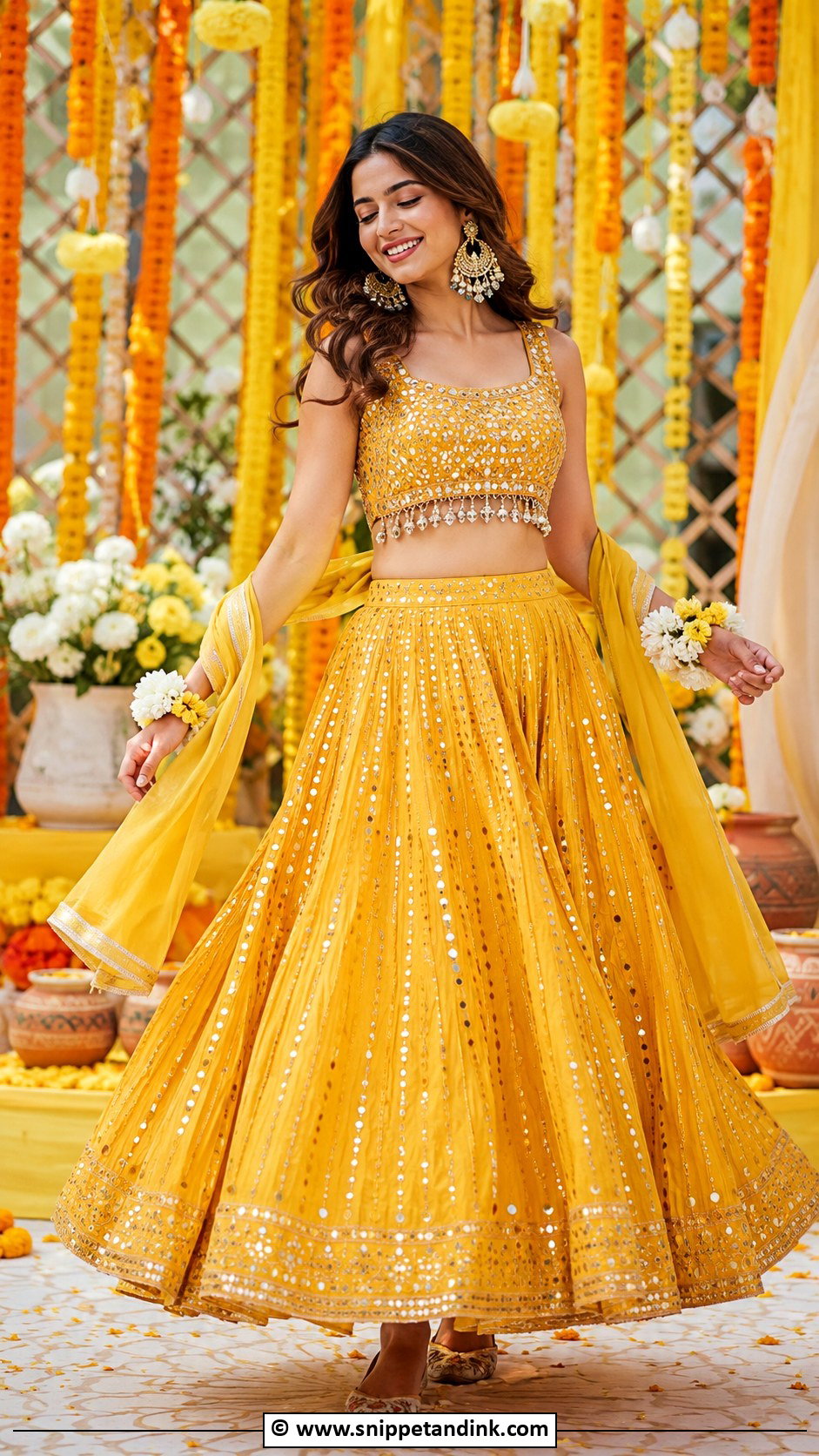
A skirt and crop top gives the feel of a lehenga in a lighter, easier-to-rewear form. Pair a flared skirt with a printed, embroidered or mirror-work crop top, then add a dupatta for tradition or skip it to keep things relaxed. It’s one of the most dance-friendly options here. A bare midriff means turmeric on the waist too, so pick a top whose hem can take a little paste. Floral bracelets, statement earrings, soft waves and flat shoes finish it.
27. Yellow Jacket Set Haldi Outfit
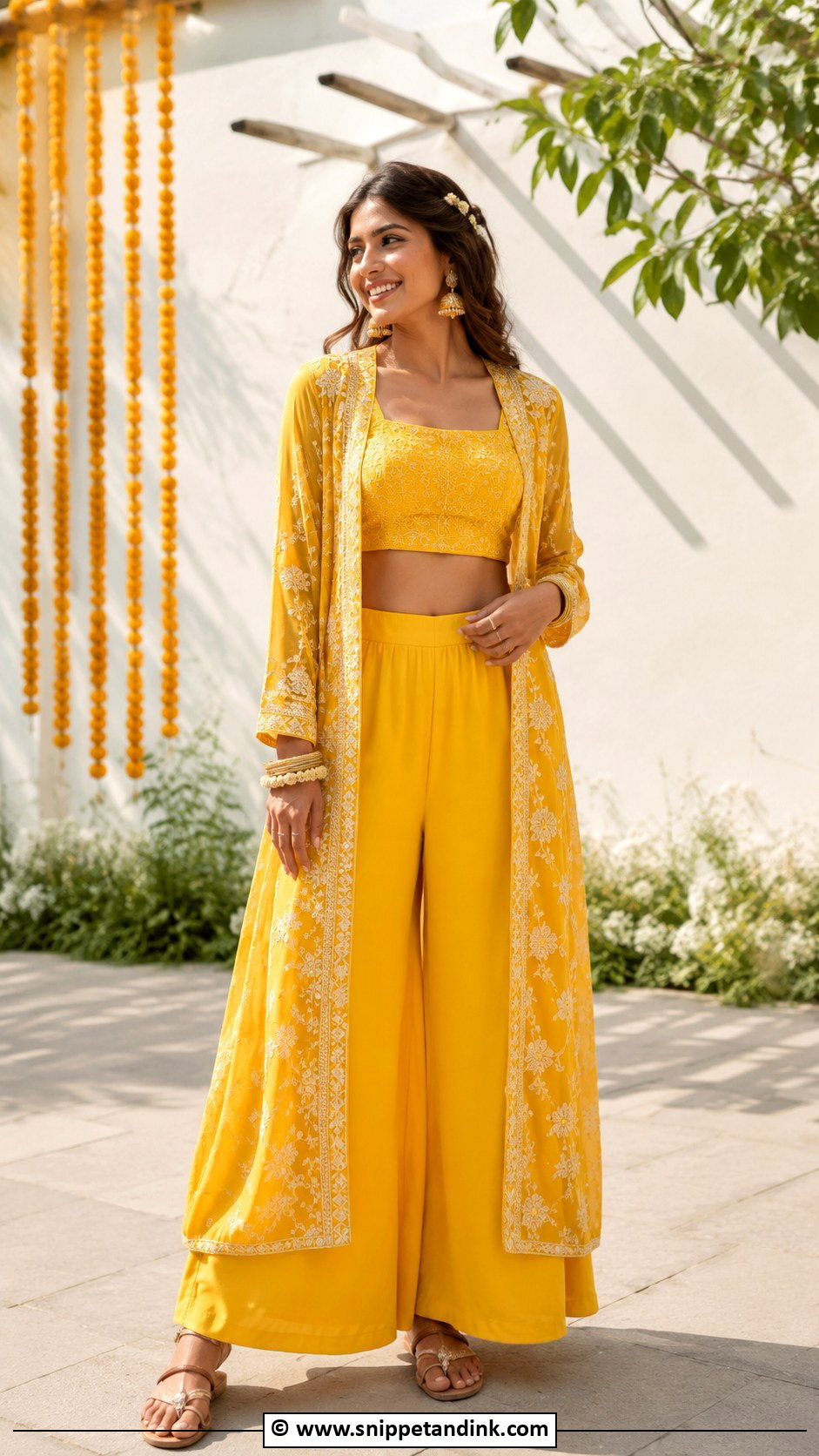
A long embroidered jacket gives structure and coverage without a dupatta. Wear it over a crop top or kurti with palazzos, sharara pants or a skirt, and it moves with you as you walk. In daytime heat, an unlined jacket in georgette or cotton is far more comfortable than a lined silk one. Mirror work, thread embroidery and florals all suit it; keep jewelry to earrings and bangles. A practical bonus: slip the jacket off before the paste starts and put it back on for the clean portraits.
28. Hand Painted Saree Haldi Outfit
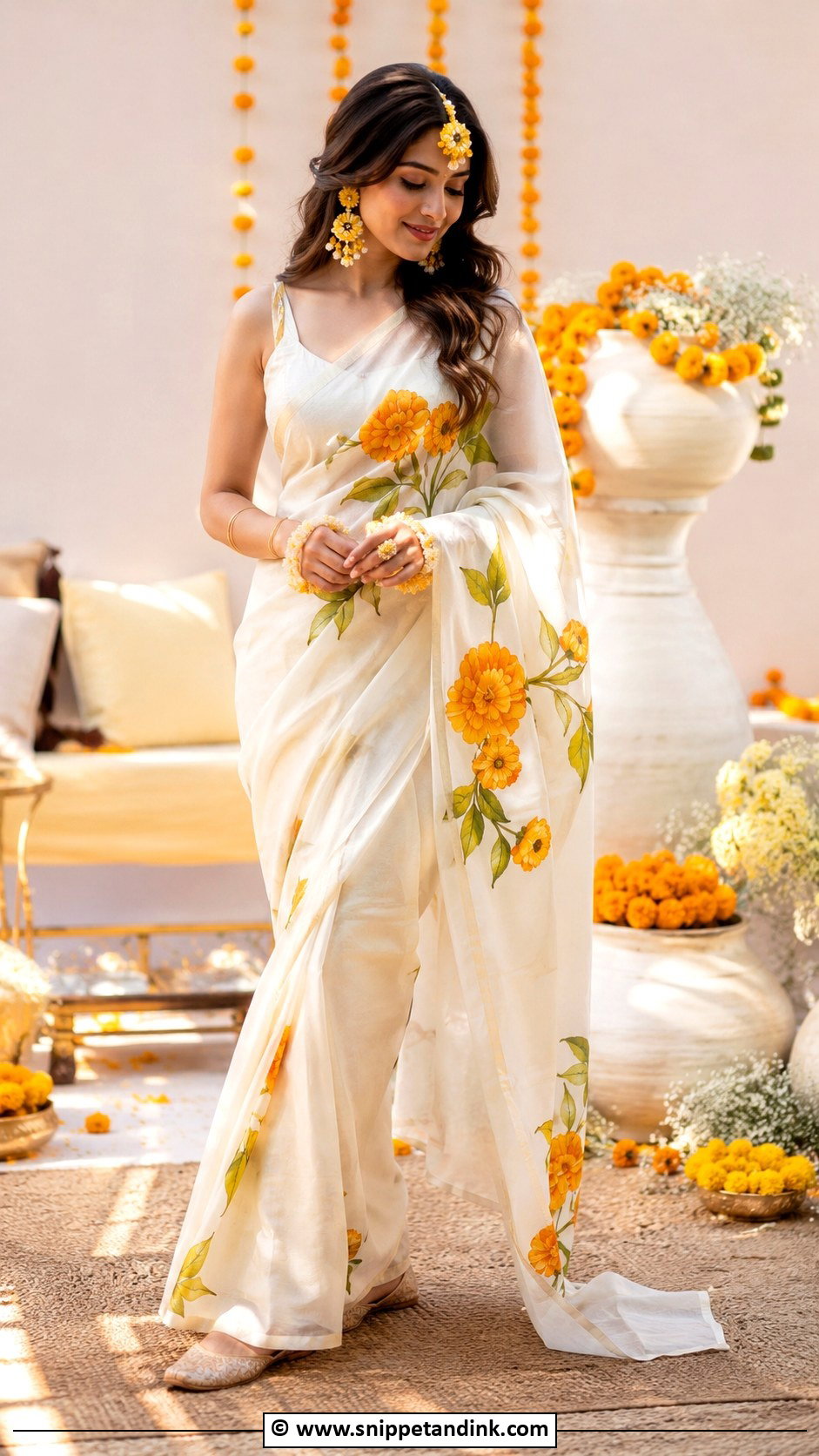
A hand-painted saree feels deeply personal: marigolds, peacocks, florals or abstract yellow motifs on ivory, peach or a pastel base. A plain blouse keeps the art in focus, with flower jewelry or minimal gold depending on how busy the painting is. Before the ritual, ask the artist whether the paint is fixed for washing, because some fabric paints bleed when wet, and a Haldi saree will certainly get wet. Keep the drape secure. It suits an intimate ceremony where details get noticed.
29. Multicolor Haldi Outfit
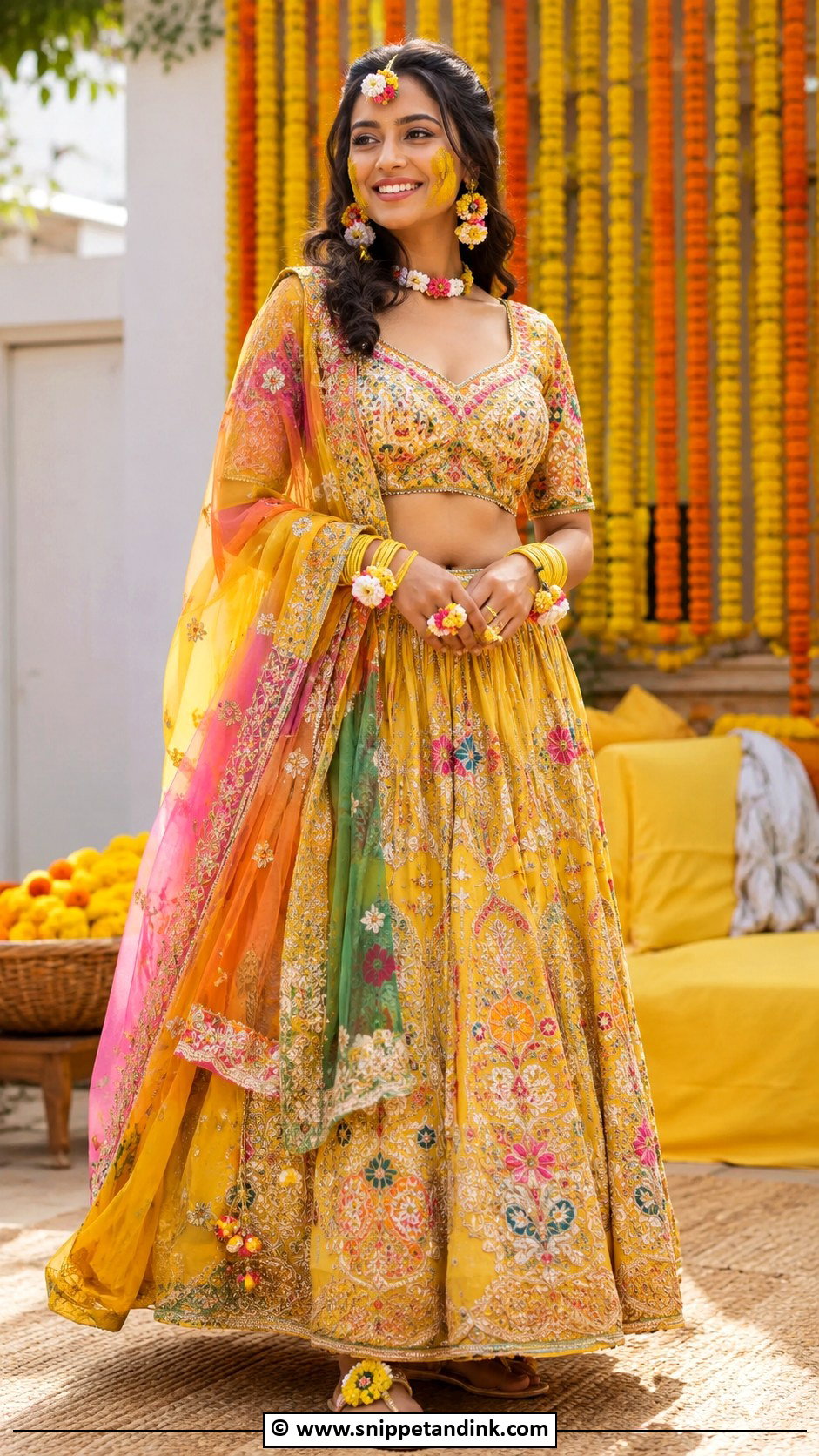
A multicolor Haldi outfit brings a carnival mood. Keep yellow as the main color with accents of pink, green, orange or ivory so it reads bright rather than random, through prints, patchwork or embroidered borders. Jewelry stays simple, and flower accessories in one color, yellow or white, tie everything together. Multicolor also hides turmeric splashes well, which is handy at an outdoor ceremony with plenty of color around you.
30. Simple Kurta Set Haldi Outfit
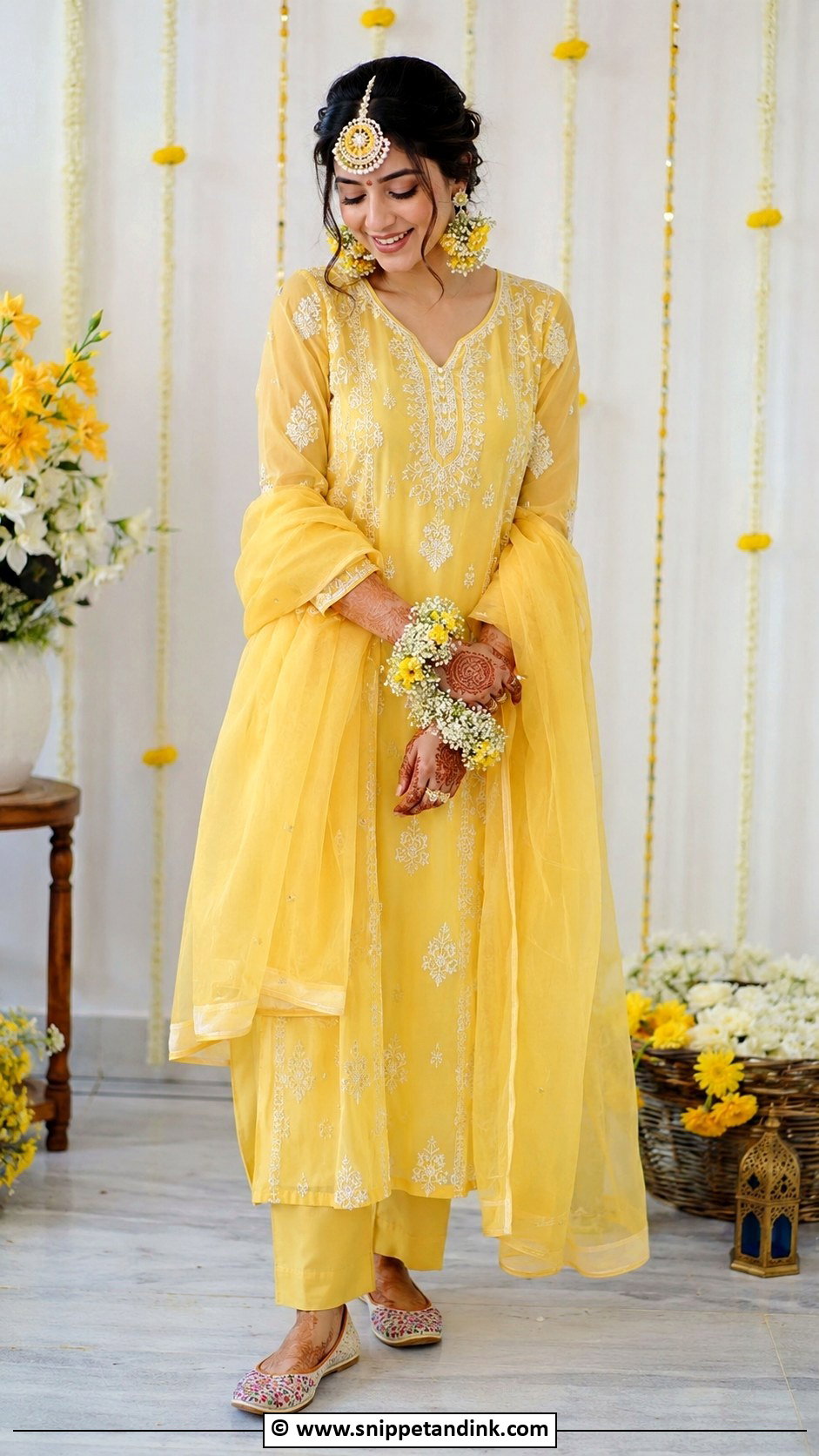
Styled well, a simple kurta set is the most practical Haldi outfit of all. Yellow, ivory or pastel with straight pants and a light dupatta, then the bridal details come from fresh flowers, bangles, a statement maang tikka or an embroidered dupatta. If your family’s ritual gets very messy, or you plan to give the outfit away afterward, this is the sensible choice. Cotton, mulmul, linen blends or soft silk keep you cool. Fit, color and accessories do the rest.
Getting Turmeric Out Afterward, and Why It Turns Red First
Act the same day. Turmeric sets as it dries, and a stain left overnight is far harder to shift.
- Lift off dried paste gently with a blunt edge, then rinse the stain from the back of the fabric under cold water.
- Work in a little liquid dish soap to break down the oil, and let it soak in cool water.
- Don’t panic if the mark turns reddish-brown when the soap goes on. Turmeric’s pigment changes color with alkaline cleaners; it hasn’t spread.
- Dry the piece in direct sunlight. Sun fades turmeric remarkably well, and a day or two outdoors often does more than any product.
Silk, zari, gota and heavily embroidered pieces should go straight to a dry cleaner instead, with a note that the stain is turmeric. Never put chlorine bleach on silk; it weakens the fiber and yellows it.
A Small Bag for the Chowki
- An old towel, plus a cloth to cover your seat.
- Rubber slippers you can rinse, so your juttis survive.
- Spare safety pins for the dupatta and pleats.
- A full change of clothes and a plastic bag for the wet outfit.
- Coconut oil and soft wipes to lift turmeric off skin before the evening event.
Dress for the Mess, Then Make It Bridal
A good Haldi outfit is more than something yellow. It lets you sit on the floor, laugh, dance and get covered in turmeric without fussing over your clothes. Lehenga, saree, sharara, co-ord or kurta, start with breathable fabric, flat shoes and a drape that stays put, then add the flowers and jewelry that make it feel bridal. Decide early whether the outfit is a keepsake or a sacrifice to the paste, and choose the fabric to match.
You'll Like These Ideas:







Leave a Reply