
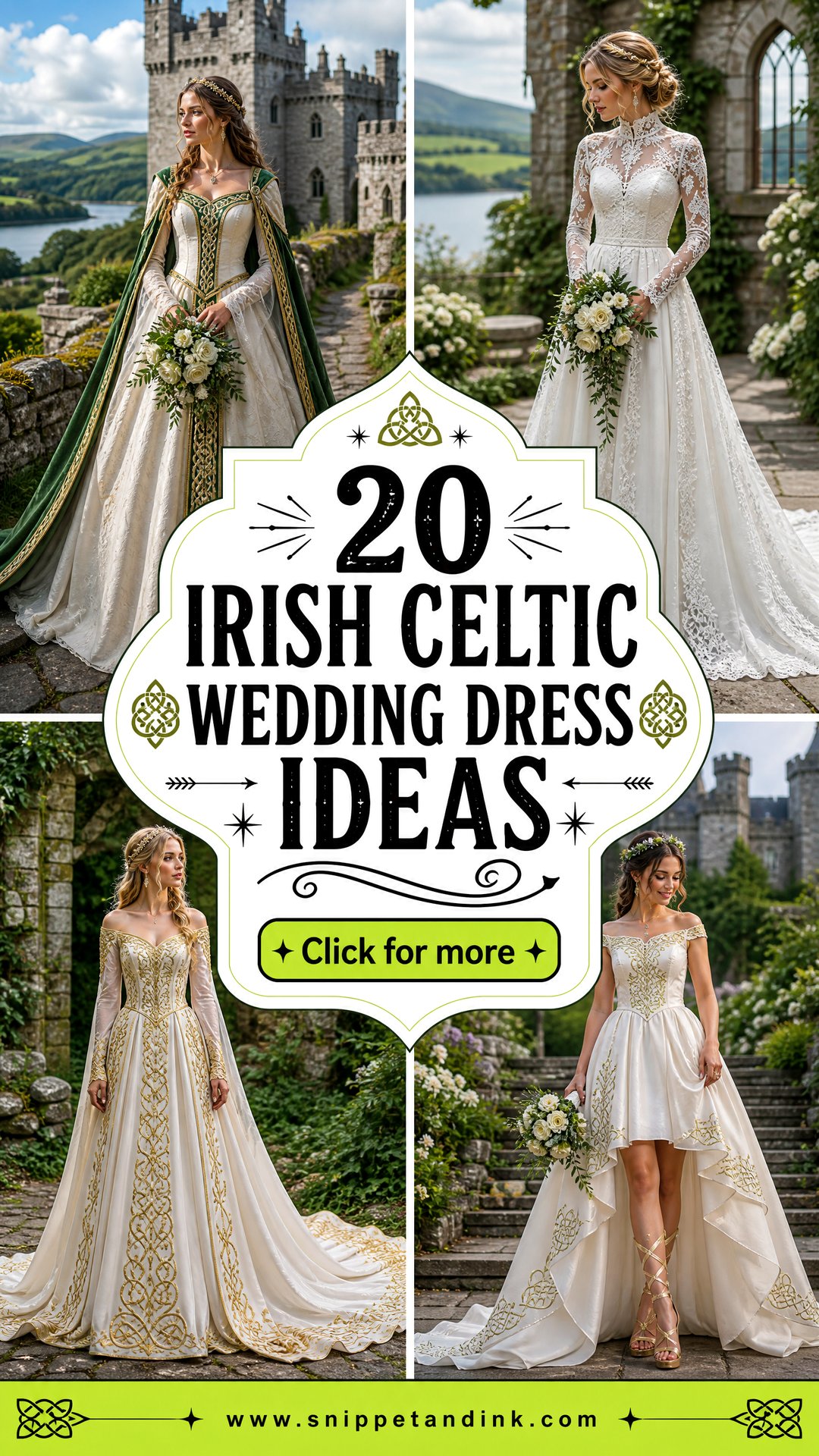
Irish heritage gives a bride plenty to work with: delicate lace, long flowing sleeves, knotwork, natural fabrics and the deep greens and greys of the landscape. The trick I spend most fittings on is using those elements so they carry meaning without tipping into fancy dress. Irish lace, Celtic embroidery, Claddagh jewelry, a tartan accent or a set of handfasting cords can each say something about your family on their own. Use two or three, not all of them. The twenty outfits below range from romantic and bohemian to medieval, minimal and regal, and they suit castles, woodland handfastings, coastal hillsides and plain indoor venues alike.
Dressing for Irish Weather on the Wedding Day
Brides planning a wedding in Ireland, or anywhere with Irish weather, should assume rain and wind even in summer. That changes the dress more than any trend does. I plan every outfit from the ground up: what the hem will touch, what covers the shoulders between the church and the car, and which shoes survive a wet lawn.
- Hems: a long train on a wet castle lawn picks up mud and grass stains. A bustle or a shorter train for the outdoor part saves it.
- Layers: a cape, wool wrap or fitted jacket in a matching ivory looks planned in photos; a borrowed coat does not.
- Fabric: chiffon and tulle blow around in wind, while crepe, satin and heavier lace hold their shape.
- Shoes: block heels or flats with a grippy sole on stone steps and grass. Spare shoes in the car are a good idea.
- Veil: a long veil in wind needs firm pinning into a bun and someone ready to gather it.
1. Irish Celtic Lace Wedding Dress
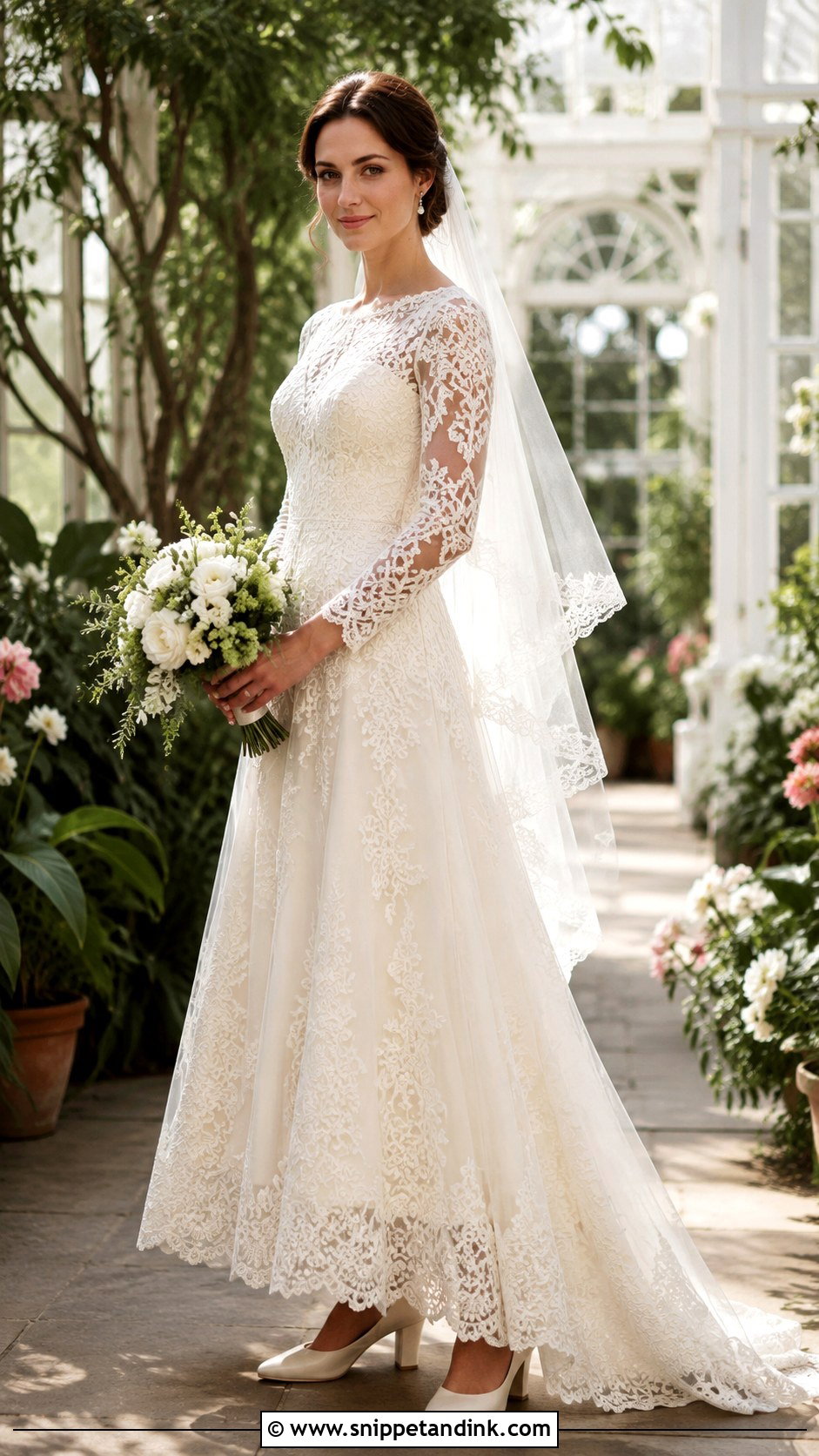
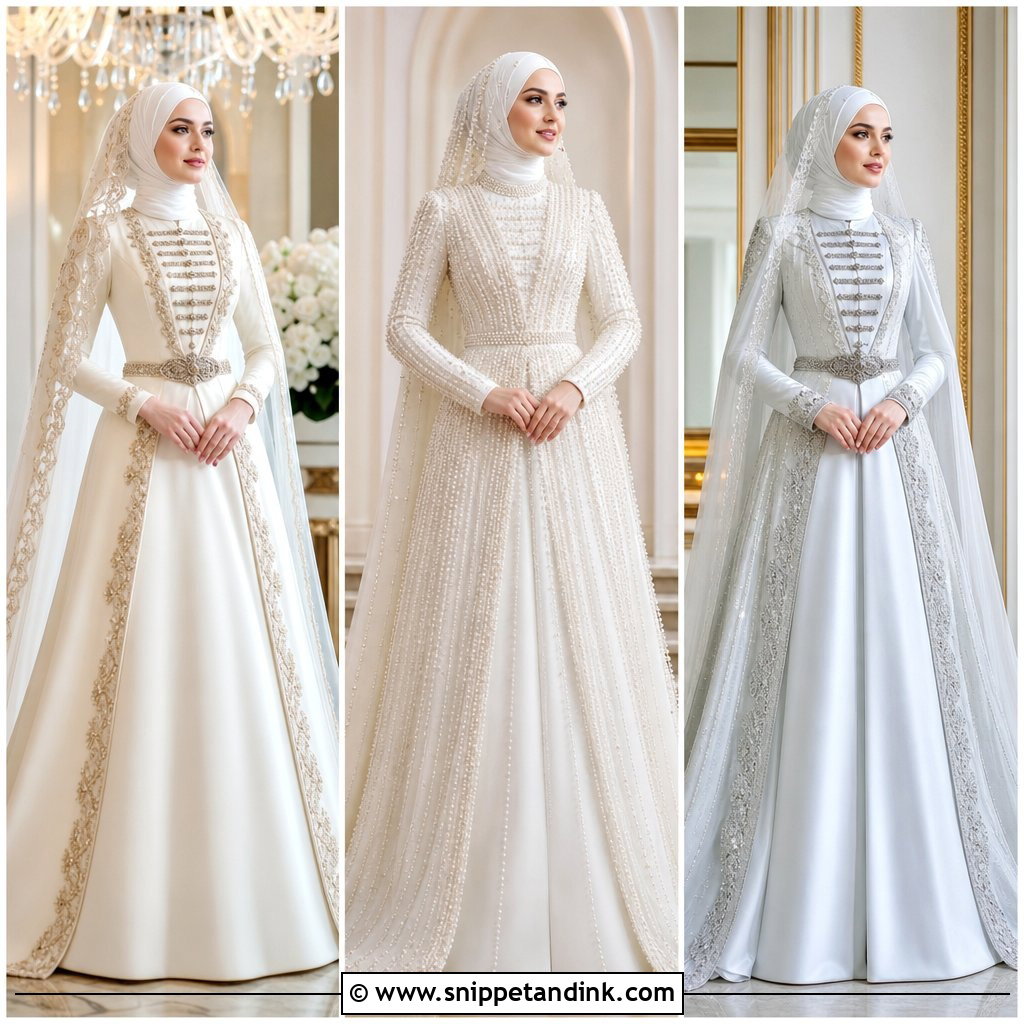
An Irish Celtic lace wedding dress feels traditional without looking dated when the shape underneath is modern. I’d start with an ivory A-line, a fitted lace bodice, long sheer sleeves and a soft layered skirt. Floral lace is fine, but knot-like patterns or genuine Irish lace make it unmistakable. Carrickmacross lace, where fine fabric is appliquéd onto net and the edges hand-stitched, has a long association with Irish bridal wear, and even a small panel of it at the cuff or veil edge reads differently from machine lace. Pearl drops, a Claddagh ring and ivory block heels finish it, and a fingertip veil keeps the sleeves on show.
2. Celtic Knot Embroidered Wedding Dress
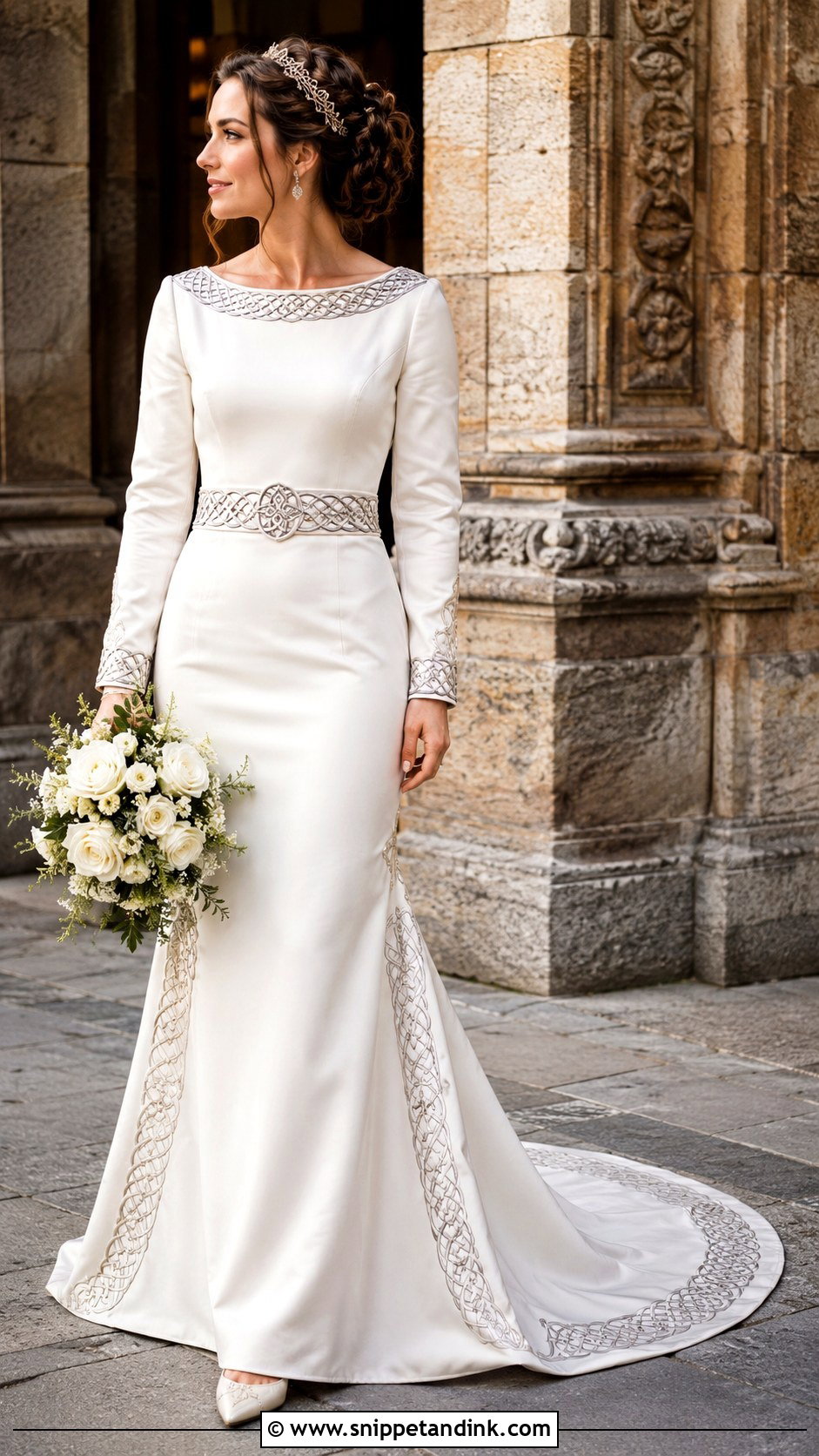
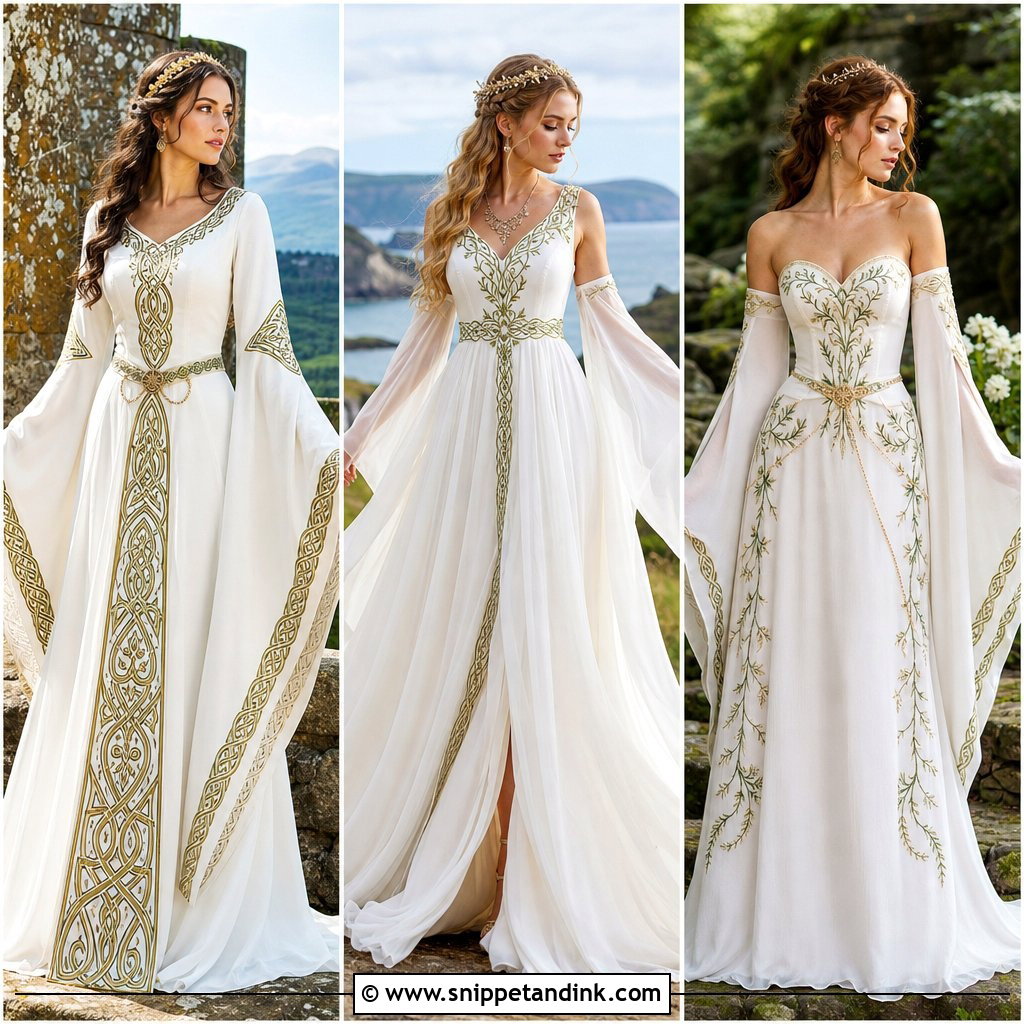
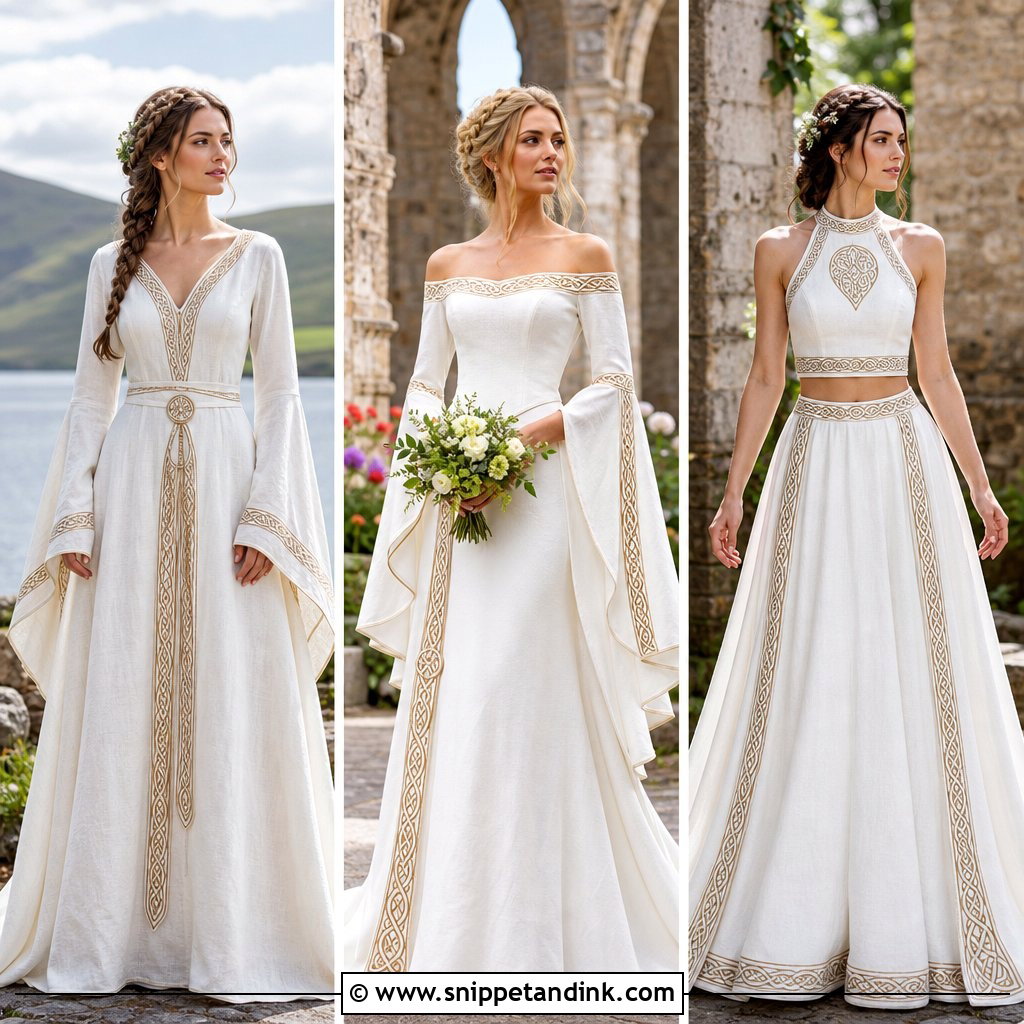
Knot embroidery turns a plain gown into something with a story, as long as it is placed rather than scattered. Silver knotwork tracing the neckline, waist, cuffs or train edge of an A-line or fit-and-flare is enough. I check one thing at the fitting: where a knot motif crosses a seam, the lines should meet. Mismatched knotwork at the side seams is the first thing a guest standing behind you notices. A slim silver circlet or leaf hairpins beat a jeweled crown here. Pointed ivory flats suit an outdoor ceremony and low satin heels a formal one, and if you’re having a handfasting, pick cords in the same silver, ivory and green.
3. Blue Irish Celtic Wedding Dress
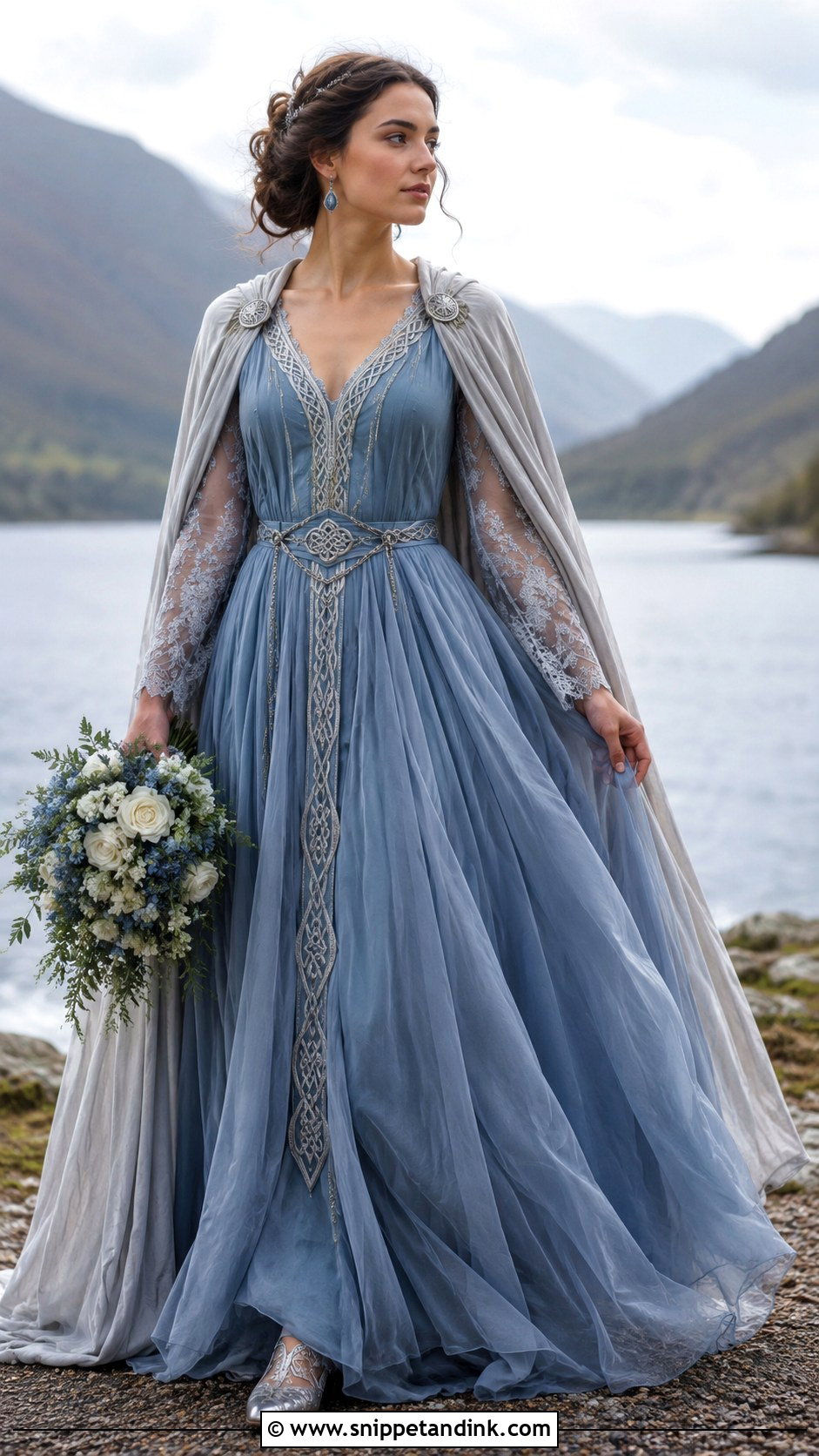
Blue has historical ties to Irish bridal tradition, long before white became the default, and it is still a good alternative. Choose a misty blue chiffon with a fitted waist, flowing skirt and delicate lace sleeves, with silver knot embroidery at the neckline. Blue is very personal to skin tone. Cooler, greyer blues flatter some brides and drain others, so hold several swatches against your bare face in daylight before you commit. Silver flats, moonstone earrings and a pale gray cape for the evening chill finish it. It looks especially right beside a lake or in a stone venue.
4. Irish Celtic Wedding Dress With Tartan Sash
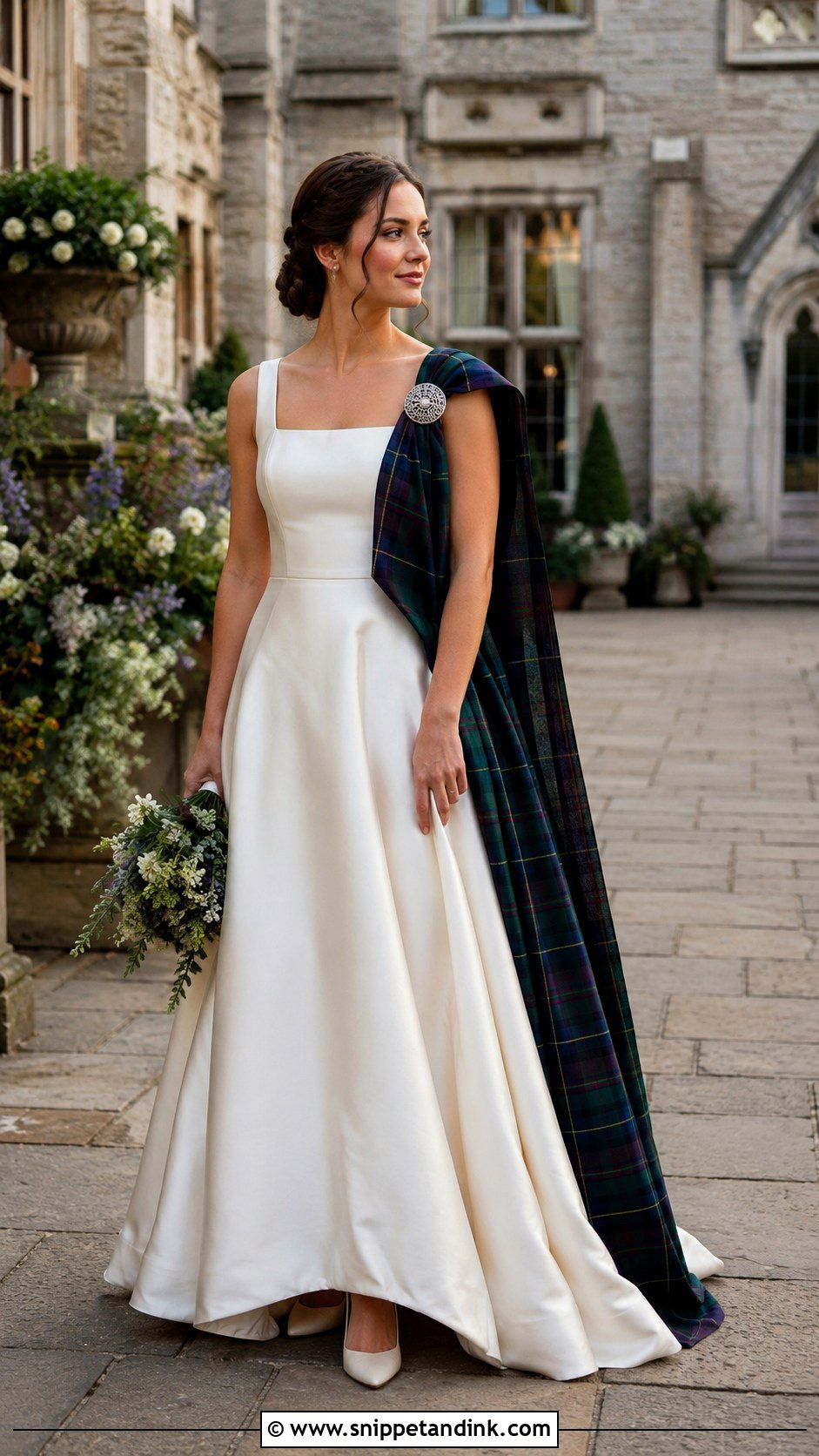
A tartan sash brings colour and family meaning to an otherwise plain ivory satin gown with a square neckline and gently flared skirt. Drape it from one shoulder or tie it loosely at the waist with a silver Celtic brooch, and keep embroidery to a minimum so the pattern leads. Brooch pins tear satin if they’re pushed straight through, so I add a small fabric tab inside the sash for the pin to catch instead. Make the sash detachable. You wear it for the ceremony and portraits, then take it off before the dancing starts. The same tartan colours can guide the cords, the bouquet ribbon and your partner’s accessories.
5. Bell Sleeve Celtic Wedding Dress
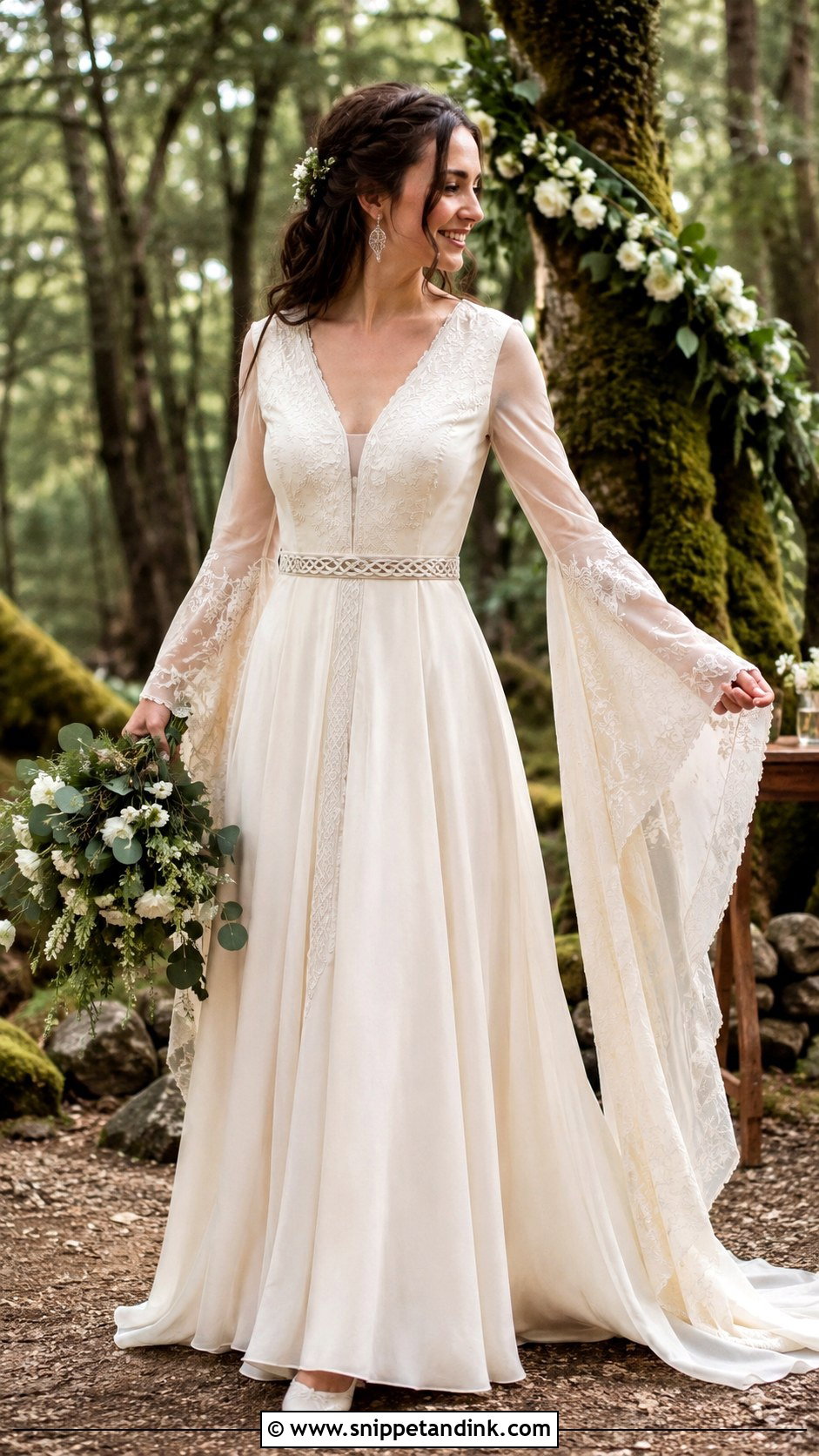
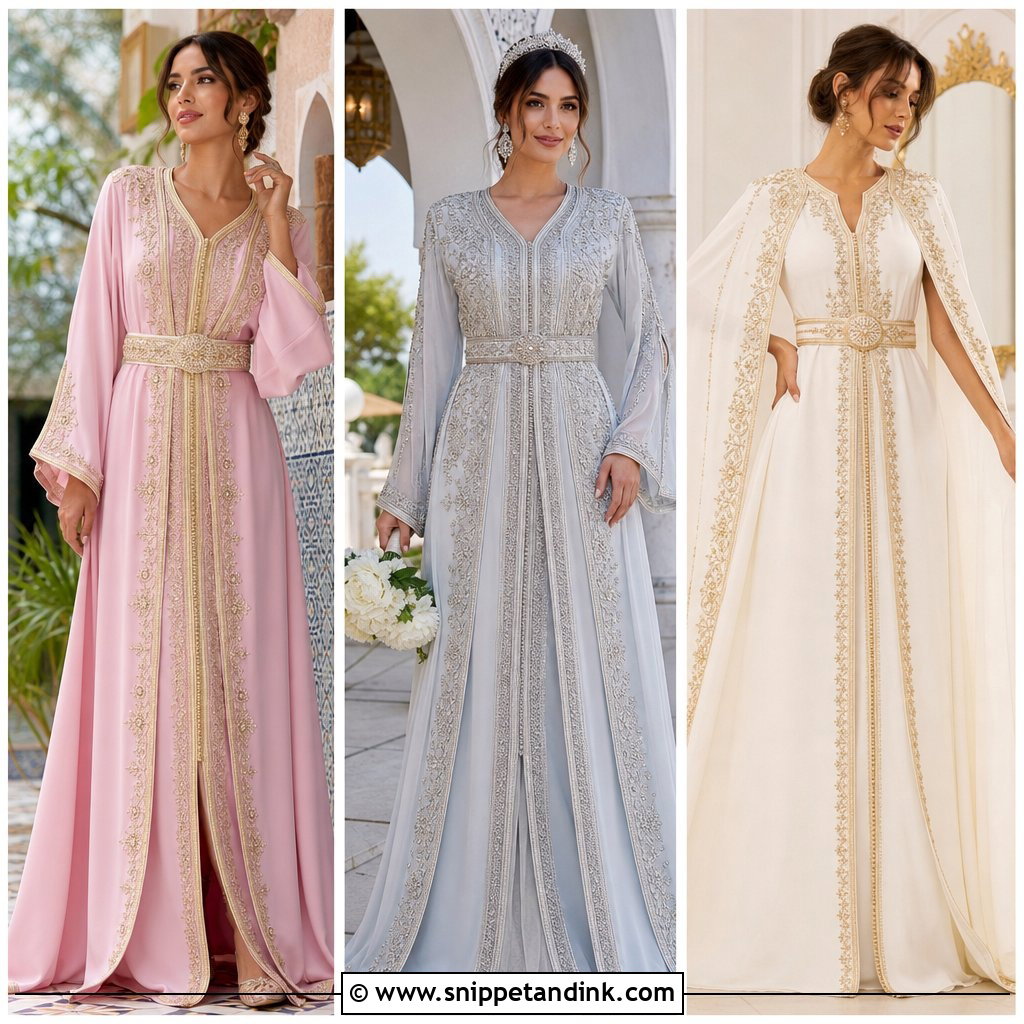
Bell sleeves give a relaxed medieval influence and lots of movement. Pick a soft ivory gown with a fitted underlayer, a lightly gathered skirt and sheer lace sleeves that widen below the elbow, balanced by a V-neck. Wide sleeves drag through cake, candle flames and bouquet stems, so at the trial I have the bride pretend to sign the register and lift a glass. A braided half-up, small silver earrings and a narrow knotwork belt finish it. Low boots or leather-look flats handle grass and uneven paths, which suits woodland elopements and handfastings.
6. Irish Celtic Wedding Dress With Hooded Cape
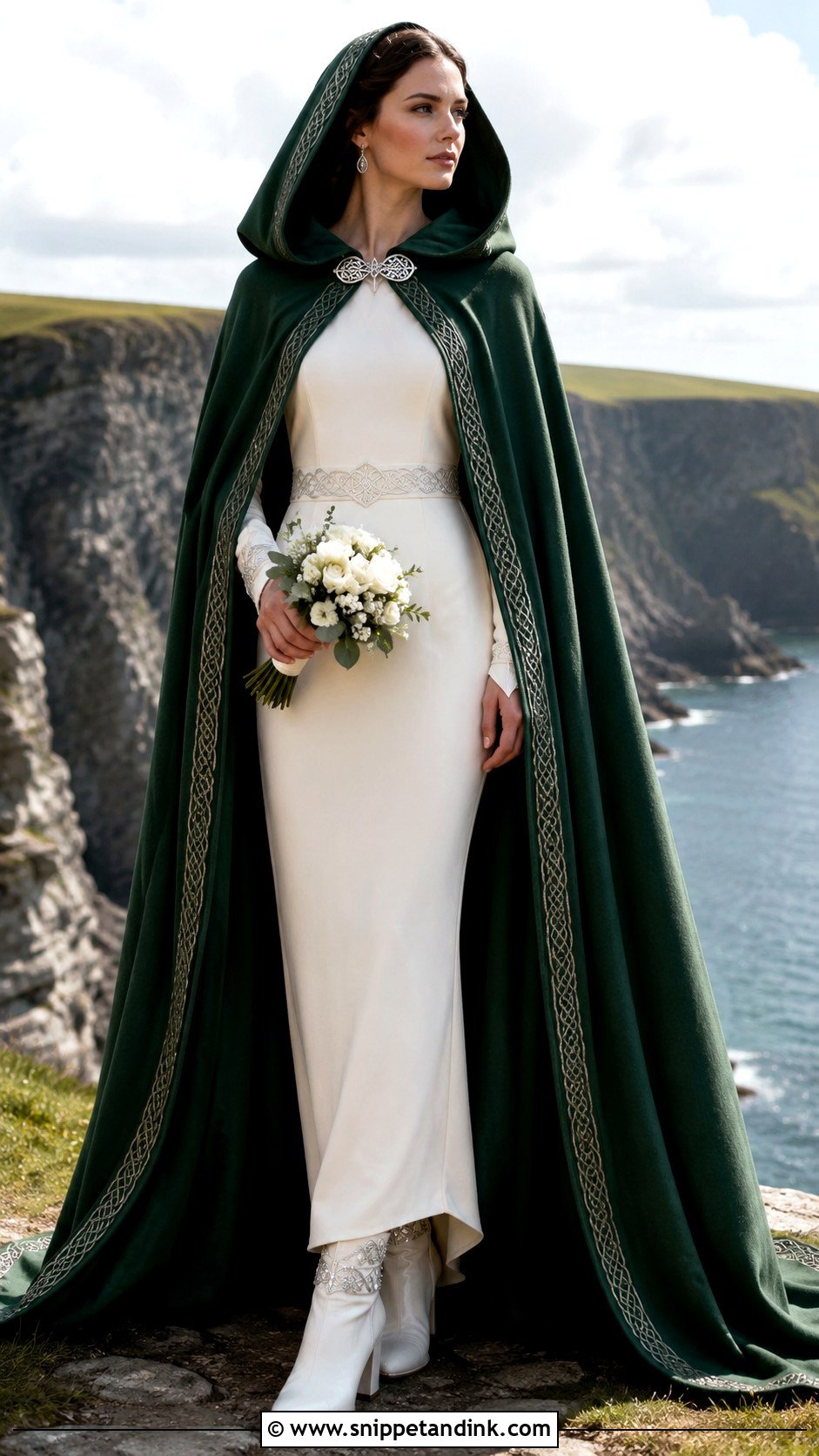
A hooded cape is the most practical piece in this list. Pair a fitted ivory crepe gown with a full-length cape in lightweight wool, velvet or lined chiffon, in emerald, deep blue, soft gray or matching ivory, fastened with a silver knot brooch near the collarbone. Wool is the warmest but also the heaviest on the shoulders, so I have the cape fitted with the gown on, not on its own. Keep the dress underneath streamlined. A low bun stops the hood from crushing the hairstyle, and the cape can replace a veil entirely for portraits against cliffs or stone.
7. Medieval Irish Celtic Wedding Dress
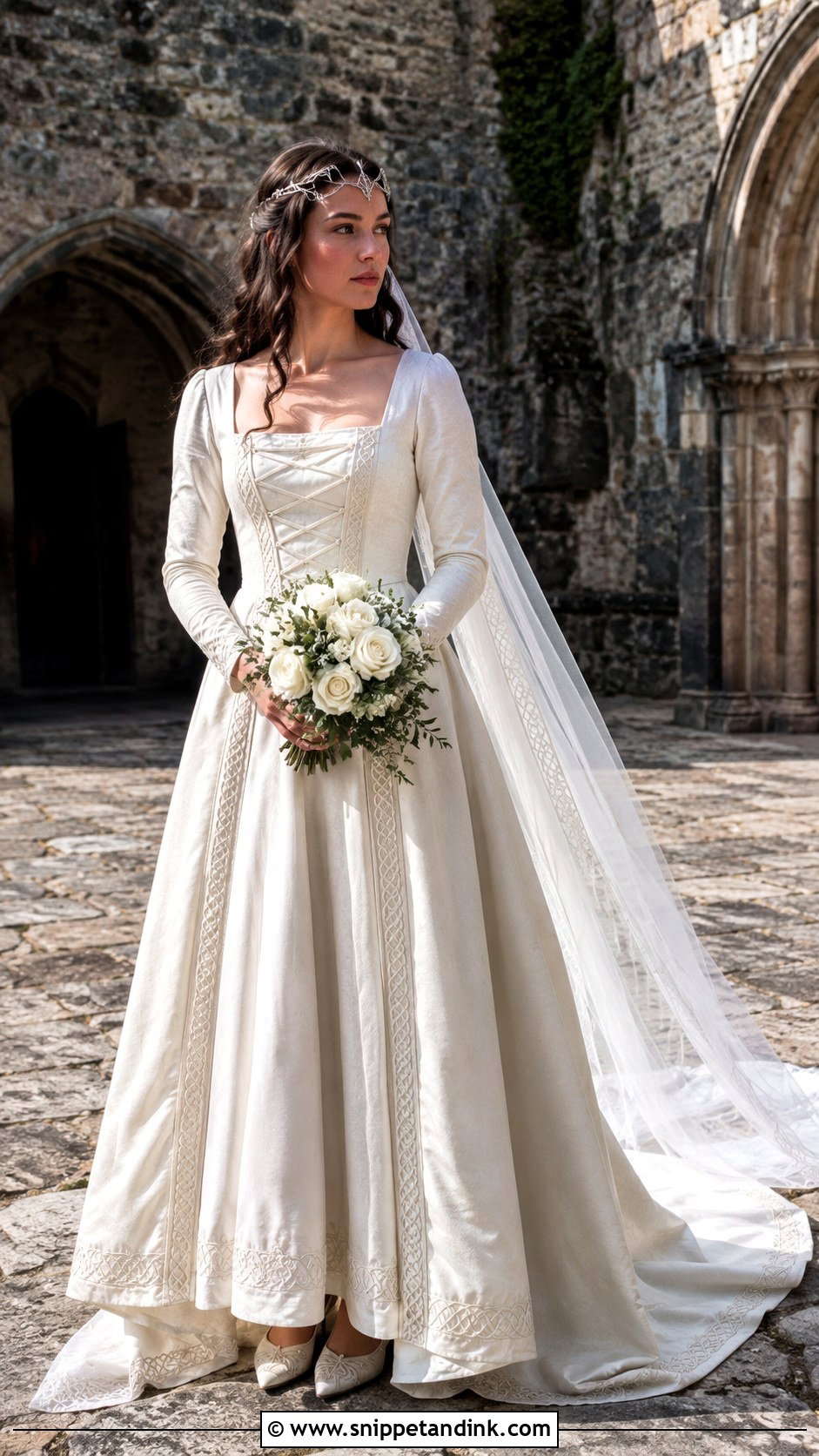
Medieval details need modern tailoring to avoid looking like a fair costume. An ivory gown with a structured square-neck bodice, fitted sleeves and a full skirt from the natural waist is the base, with lacing at the back or sides and subtle knot embroidery. One circlet and one embroidered feature are enough. Real lacing loosens over the day as the fabric warms and relaxes, so a hidden zip or hook closure under it keeps the bodice firm. Pointed bridal flats, drop earrings and a soft chapel train suit castles, outdoor ruins and formal handfastings.
8. Green Velvet Irish Celtic Wedding Dress
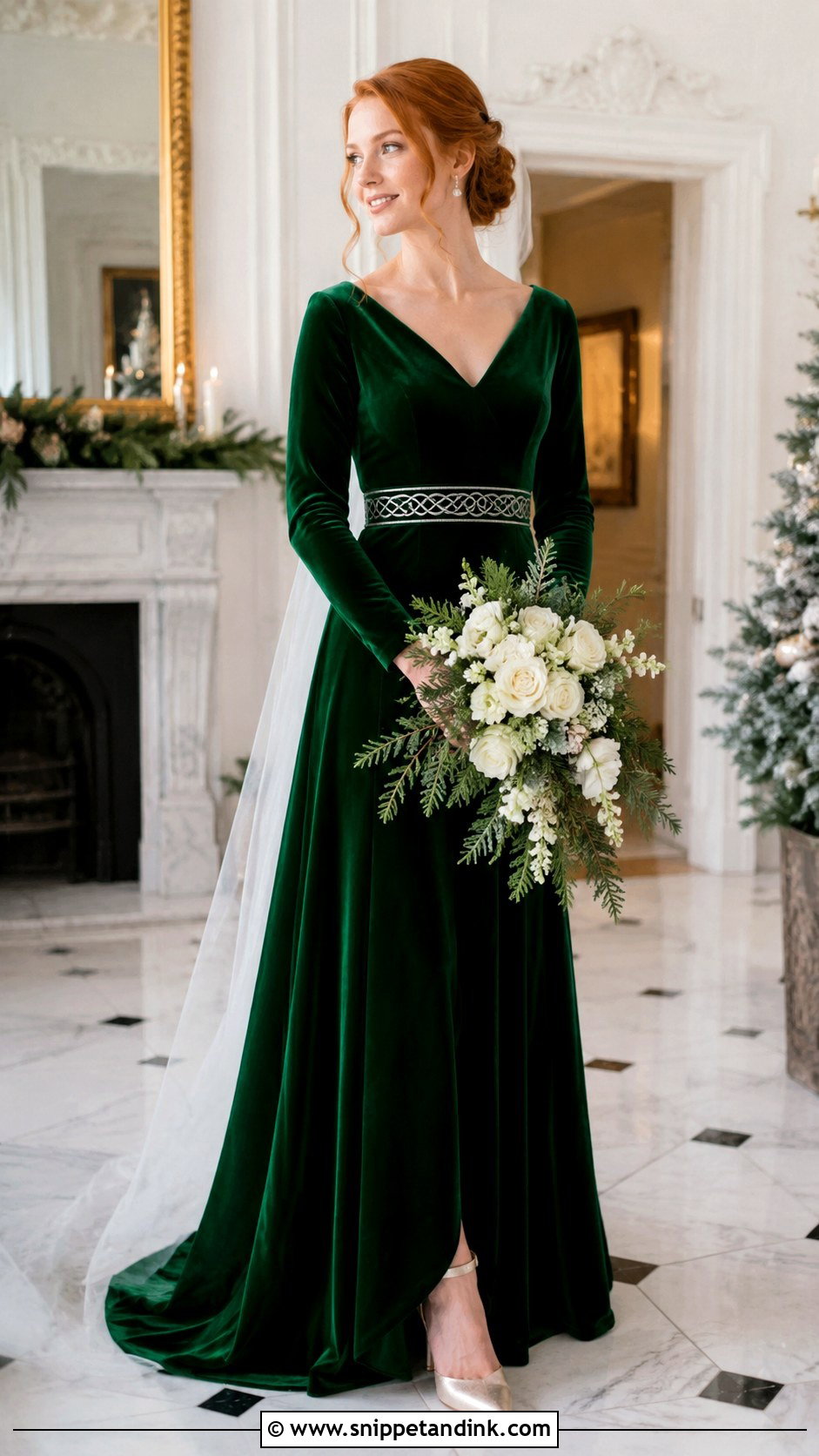
Deep green velvet is a bold bridal choice for autumn and winter. A floor-length gown in emerald, forest or moss with a fitted waist, long sleeves and a gently sweeping skirt echoes the Irish landscape. Black accessories look harsh against it; metallic heels, champagne flats or green velvet shoes work better. A silver Celtic belt, pearl earrings and a delicate comb brighten the fabric, and white flowers with evergreen foliage keep it clearly bridal. If full green feels like too much, try an ivory dress with a green velvet overdress or detachable cape. Velvet pile looks lighter or darker depending on direction, so every panel should be cut the same way.
9. Linen Irish Celtic Wedding Dress
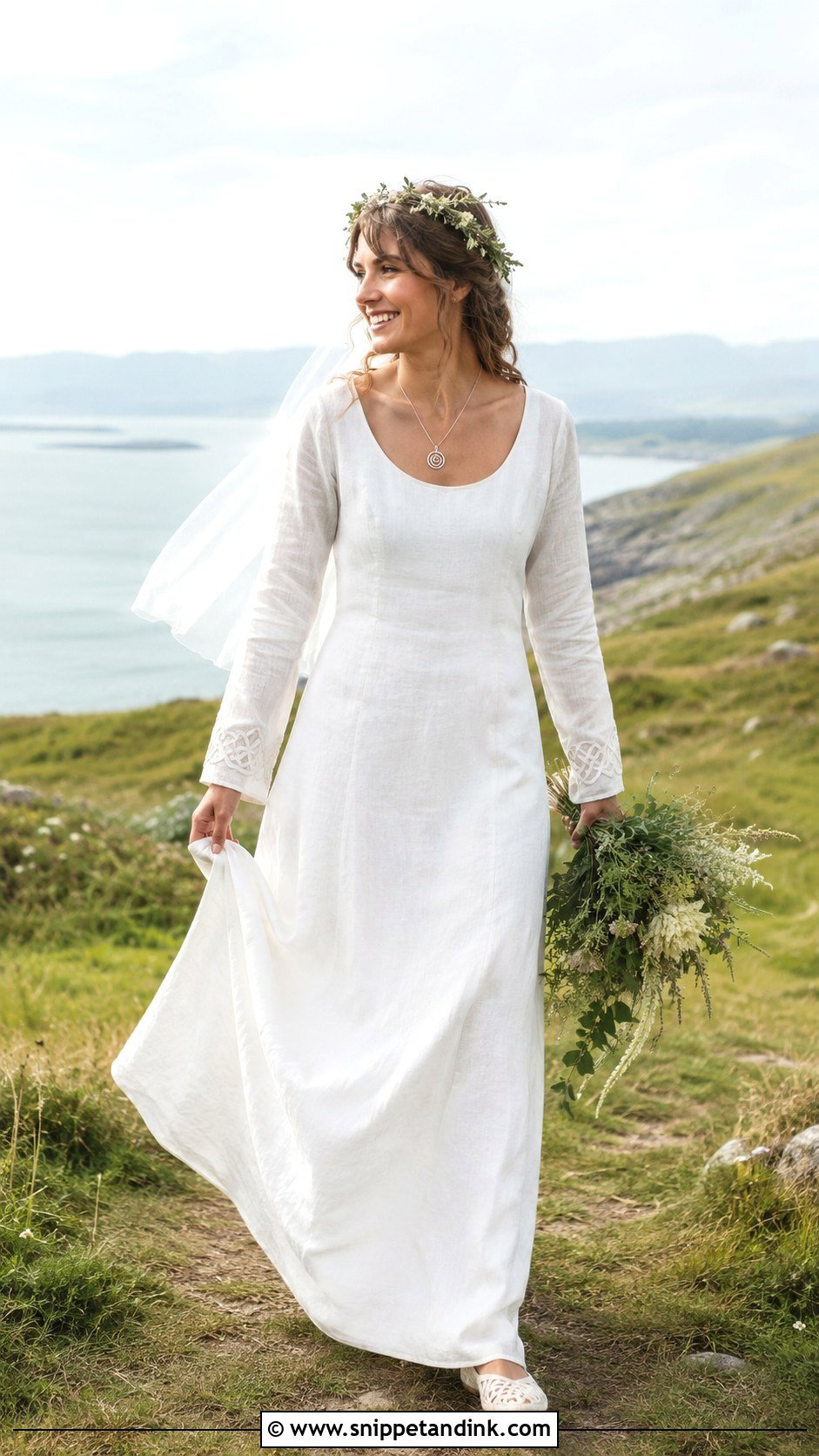
Linen is the honest choice for a warm-weather wedding, and the honesty includes creasing. It will wrinkle the moment you sit in the car. A linen blend creases less, or you can accept the texture as part of the look. Choose a softly structured ivory gown with a scoop neckline, fitted waist and ankle-length or floor-length skirt, with small knot embroidery at the cuffs or hem. Woven ivory flats, a lightweight veil, a small silver pendant and a crown of greenery suit coastal, countryside and destination weddings.
10. Off Shoulder Celtic Wedding Dress
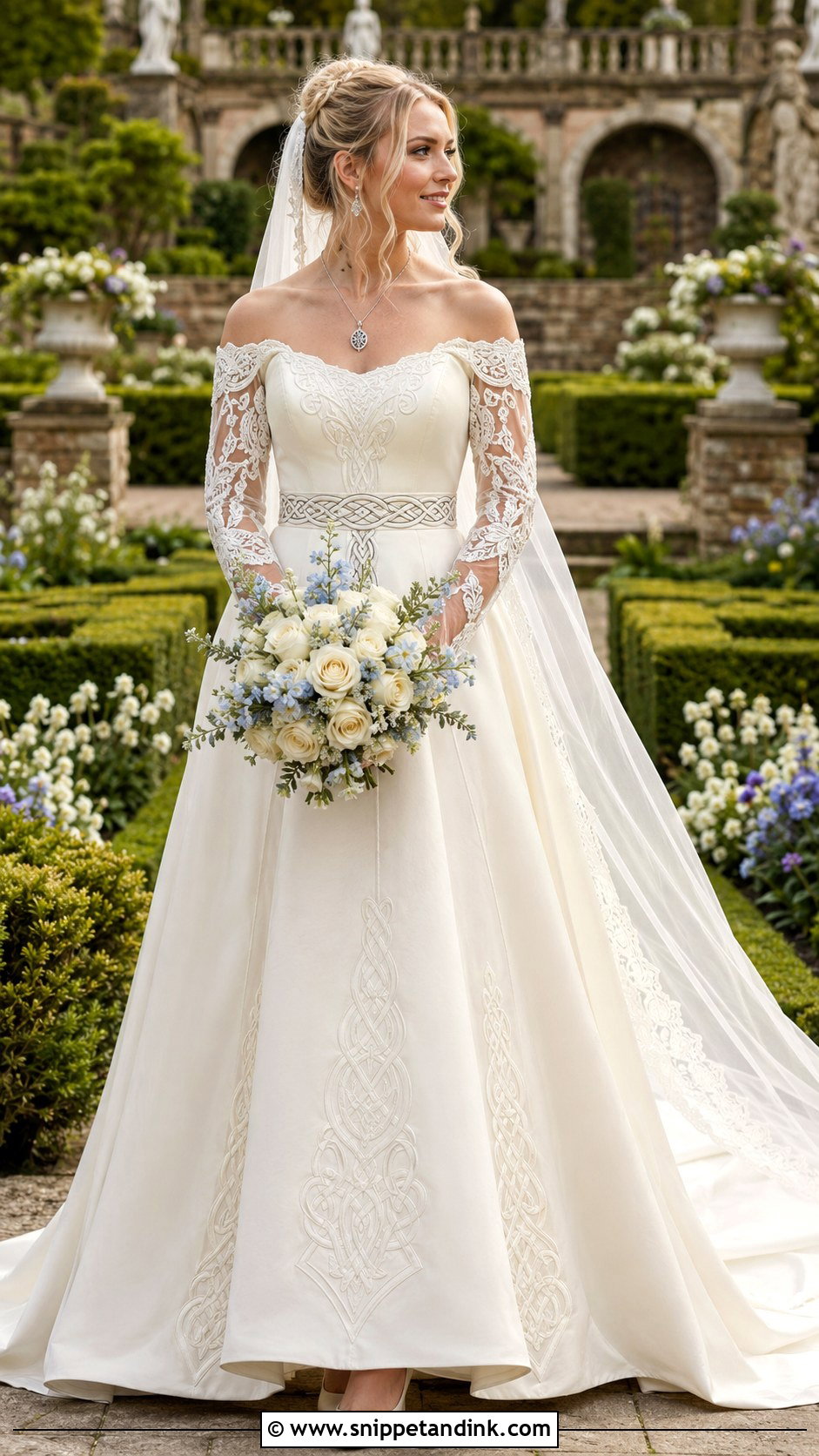
Off-the-shoulder lace sleeves only work if the bodice holds everything up on its own. Choose an ivory A-line with lace sleeves resting just below the shoulders and a structured, boned bodice, and test it at the fitting by raising both arms; if the sleeves ride up or the bodice slips, it needs more support before it needs decoration. Knot embroidery at the neckline or waist frames the silhouette. A silver pendant, pearl earrings and a loose braided updo keep the neckline clear. Cathedral veil for formality, shorter for outdoors, and pale blue flowers in the bouquet for a little colour.
11. High Neck Irish Lace Wedding Dress
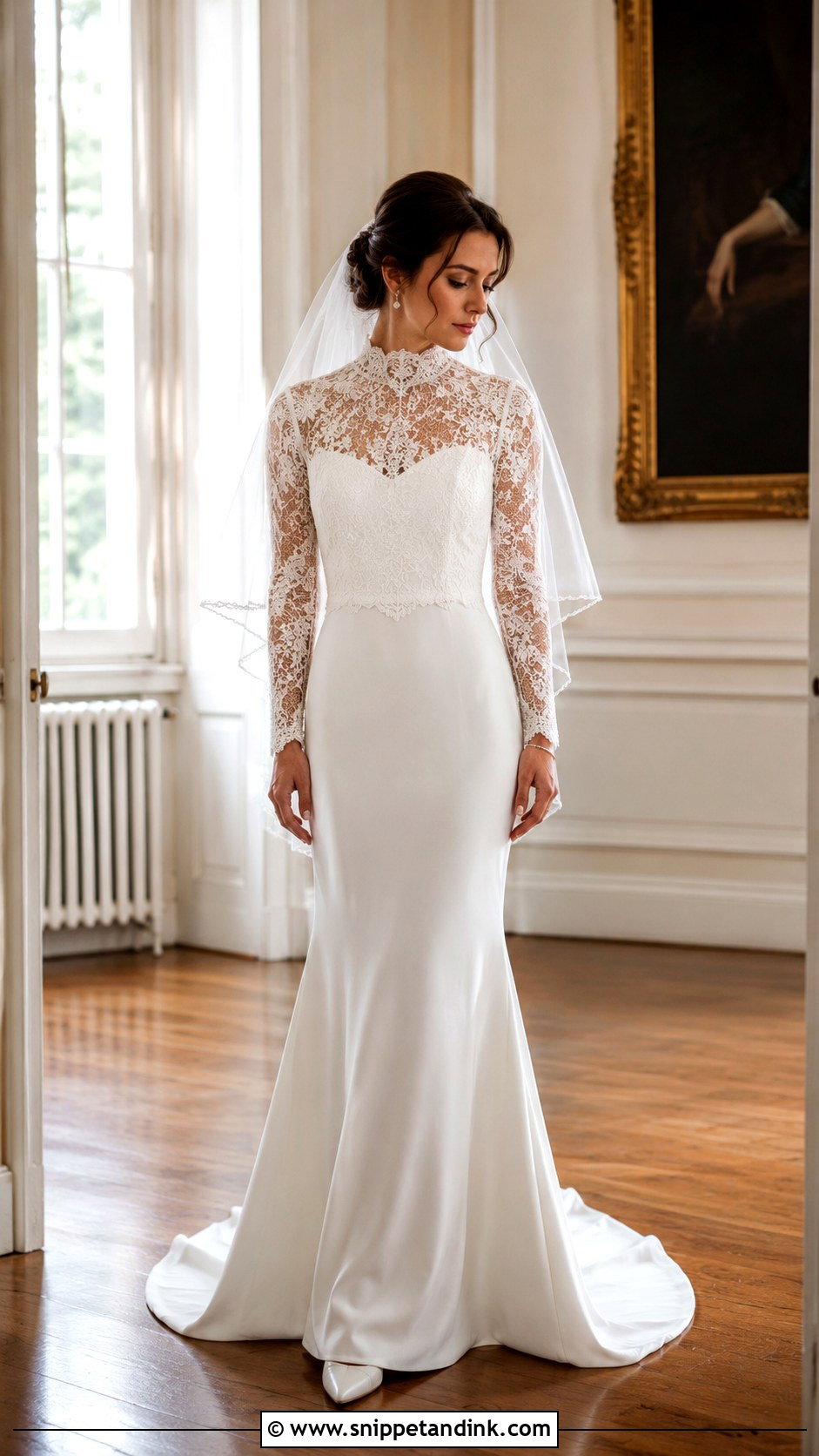
A high neck draws attention up to the face and the lace. Select a fitted lace bodice over a lined sweetheart underlayer, with a sheer upper neckline, long sleeves and a clean chiffon or crepe skirt; the contrast between busy lace and a plain skirt keeps it from feeling heavy. Skip the necklace altogether and wear pearl or silver drops. Hair goes up, in a low bun or braided updo, so the neckline shows. Sheer illusion necklines need the right tone of mesh for your skin, otherwise they show up as a visible band in photographs. It suits formal venues, cooler seasons and anyone who wants graceful coverage.
12. Plus Size Irish Celtic Wedding Dress
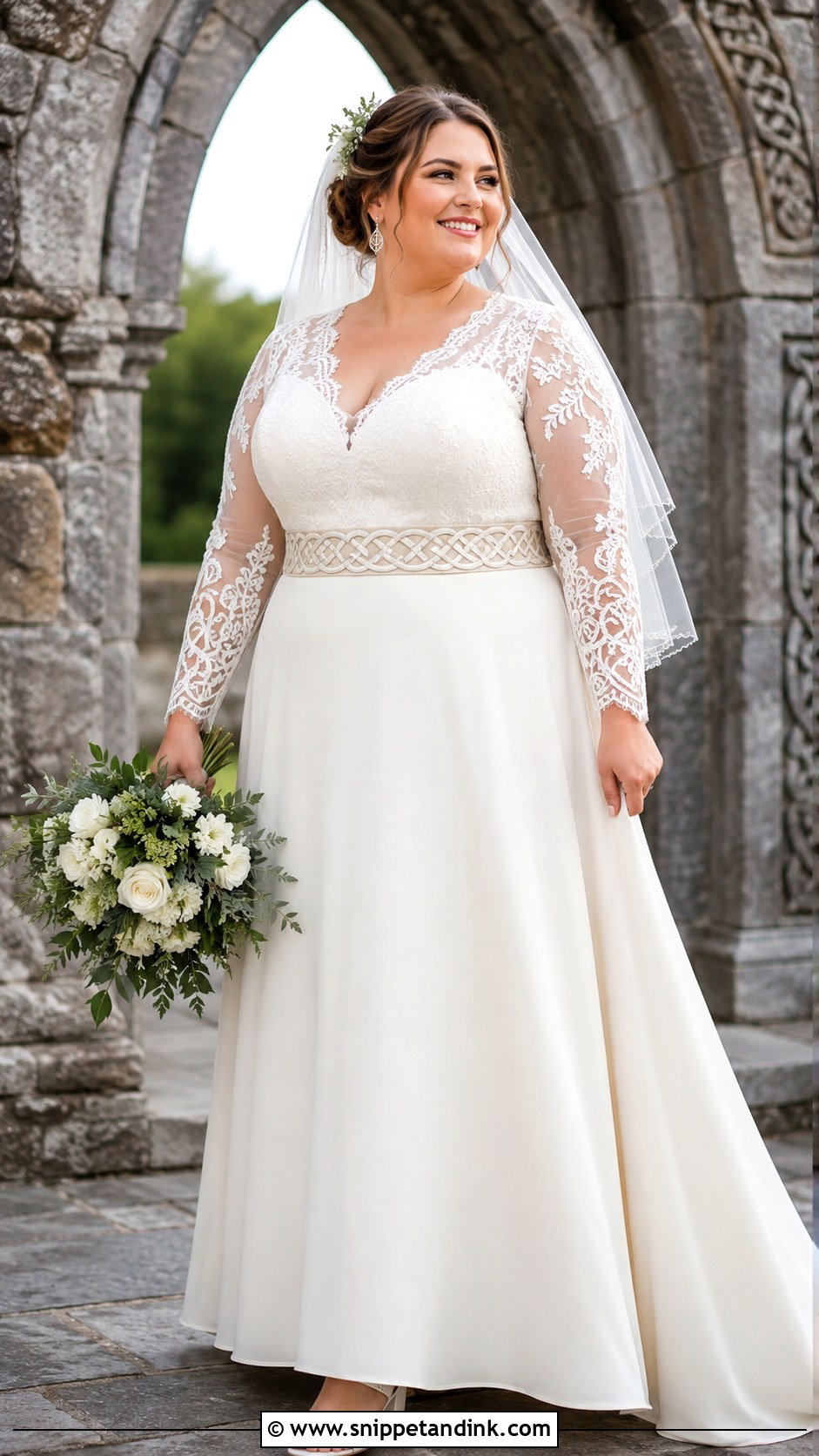
Support first, then detail. For a plus-size Celtic look I’d start with an A-line gown, a structured V-neck bodice, wide supportive straps and lace sleeves cut with enough room to lift your arms. A knot-embroidered waistband defines the shape without a tight corset. Ask for soft lining and flexible boning; rigid boning digs in once you sit for the meal. Cushioned block heels, a fingertip veil and silver earrings that echo the embroidery complete it, and a capelet adds coverage without hiding the dress. Have it altered to the body you have now, never a size you hope to reach.
13. Petite Irish Celtic Wedding Dress
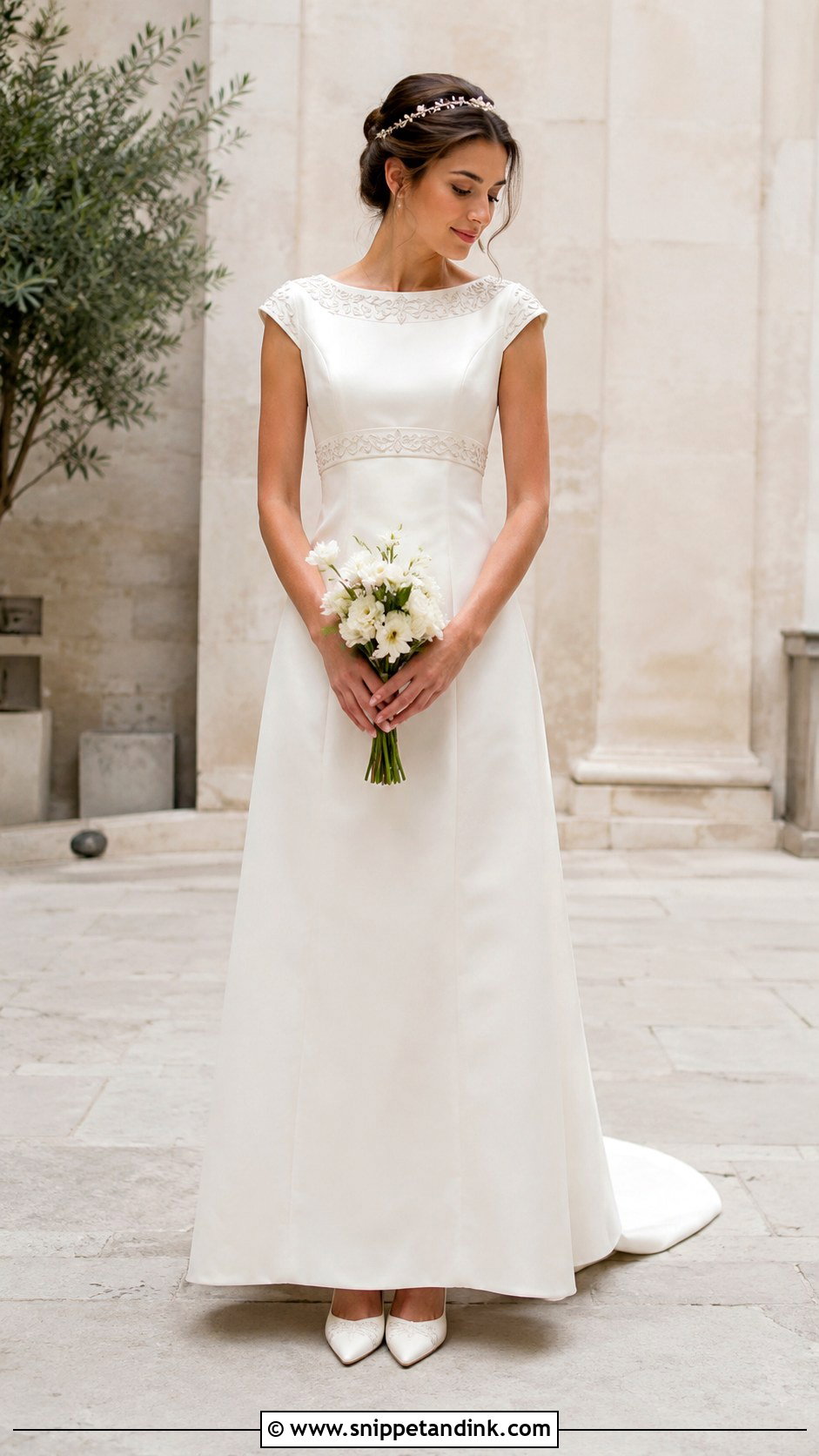
On a petite frame, Celtic detail has to stay fine or it swallows you. A column or narrow A-line gown with a raised waist, clean vertical seams and delicate embroidery at the neckline gives length, and a moderate V-neck with an uninterrupted skirt continues the line. Keep the train short for paths and steps. Wide bell sleeves are the thing I’d steer you away from; fitted lace sleeves give the same romance without the bulk. Pointed heels, a slim silver hair vine, a narrow bouquet and a fingertip veil keep the proportions light.
14. Tea Length Irish Celtic Wedding Dress
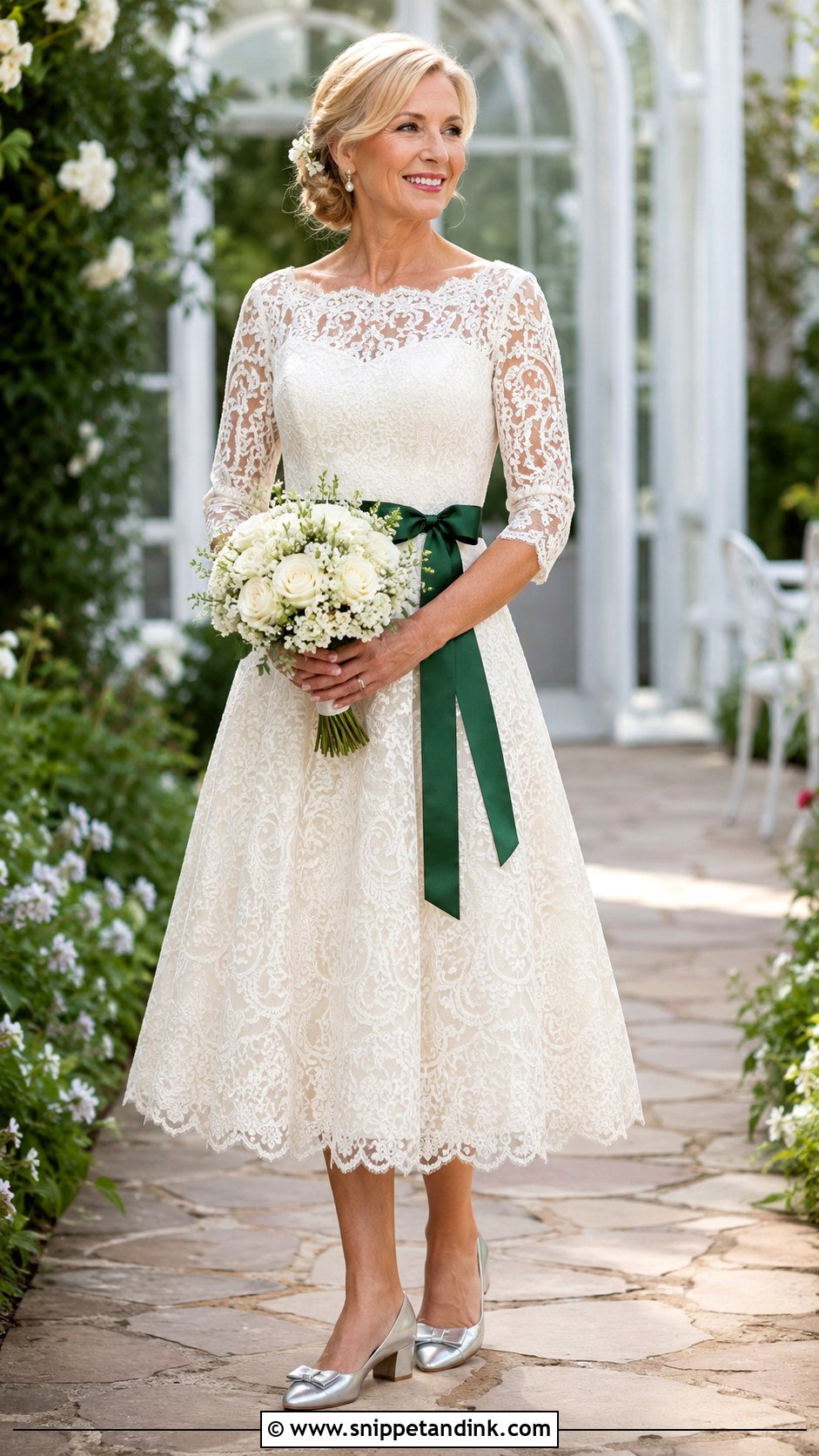
Tea length is comfortable and finally lets your shoes be seen. Look for an ivory lace gown with fitted three-quarter sleeves, a defined waist and a skirt ending between knee and ankle, with a slim emerald ribbon belt or a subtle knotwork waistband. The skirt needs moderate fullness, usually a petticoat, or it reads as an everyday lace dress. Low silver heels, pearl earrings and a birdcage veil or floral comb finish it. It suits courthouse weddings, daytime celebrations and brides who want to dance for hours without bustling a train.
15. Maternity Irish Celtic Wedding Dress
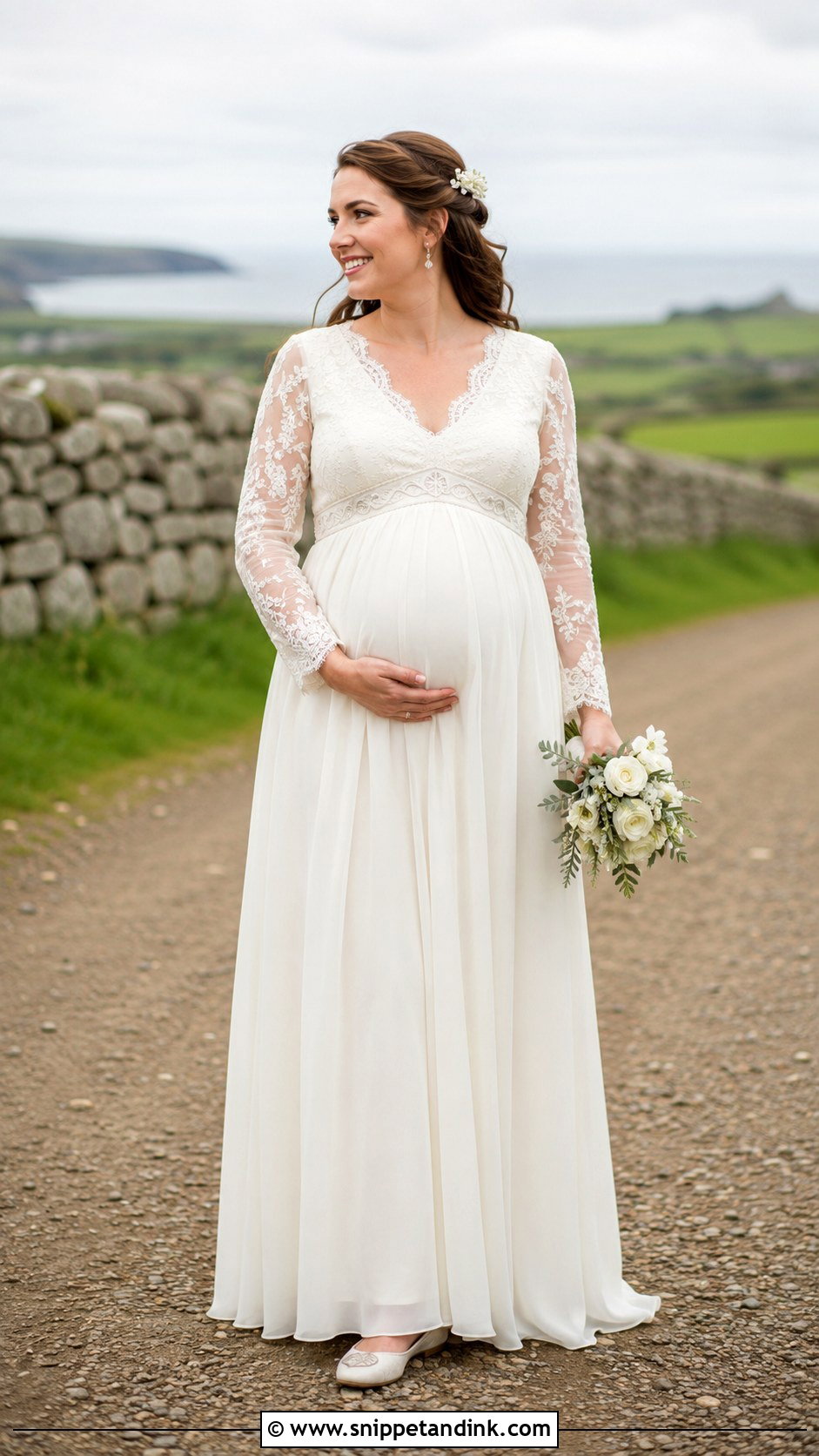
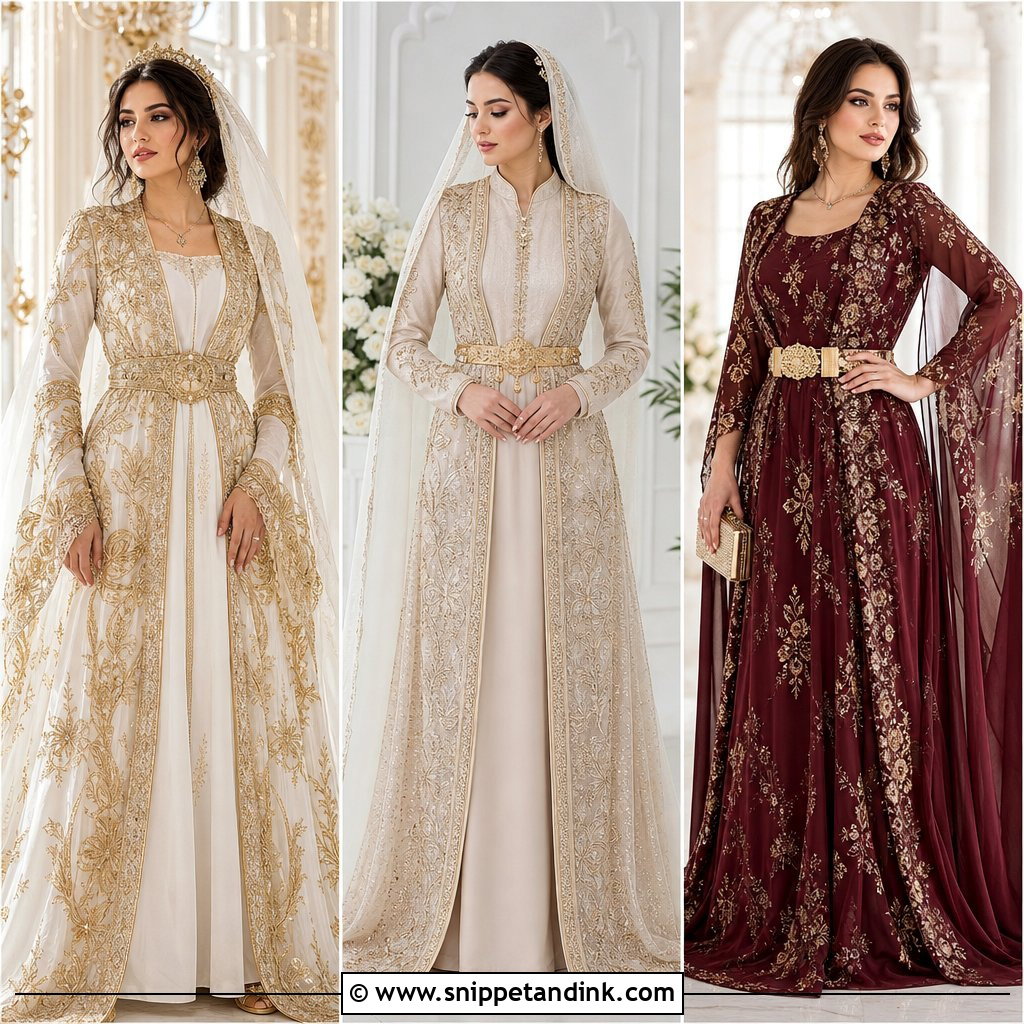
With a maternity gown, plan for change. An empire-waist dress with a soft lace bodice, flutter or fitted sleeves and a chiffon skirt falling freely over the bump avoids pressure at the natural waist, and Celtic embroidery under the bust defines the shape. Ask for breathable lining and an adjustable back, laced or with extra hooks, especially if you buy months ahead. I book the final alteration as close to the date as the seamstress allows, often within the last couple of weeks, because fit can change quickly. Supportive flats, a light cape and a flower comb rather than a heavy headpiece keep you comfortable.
16. Silver Embroidered Celtic Wedding Dress
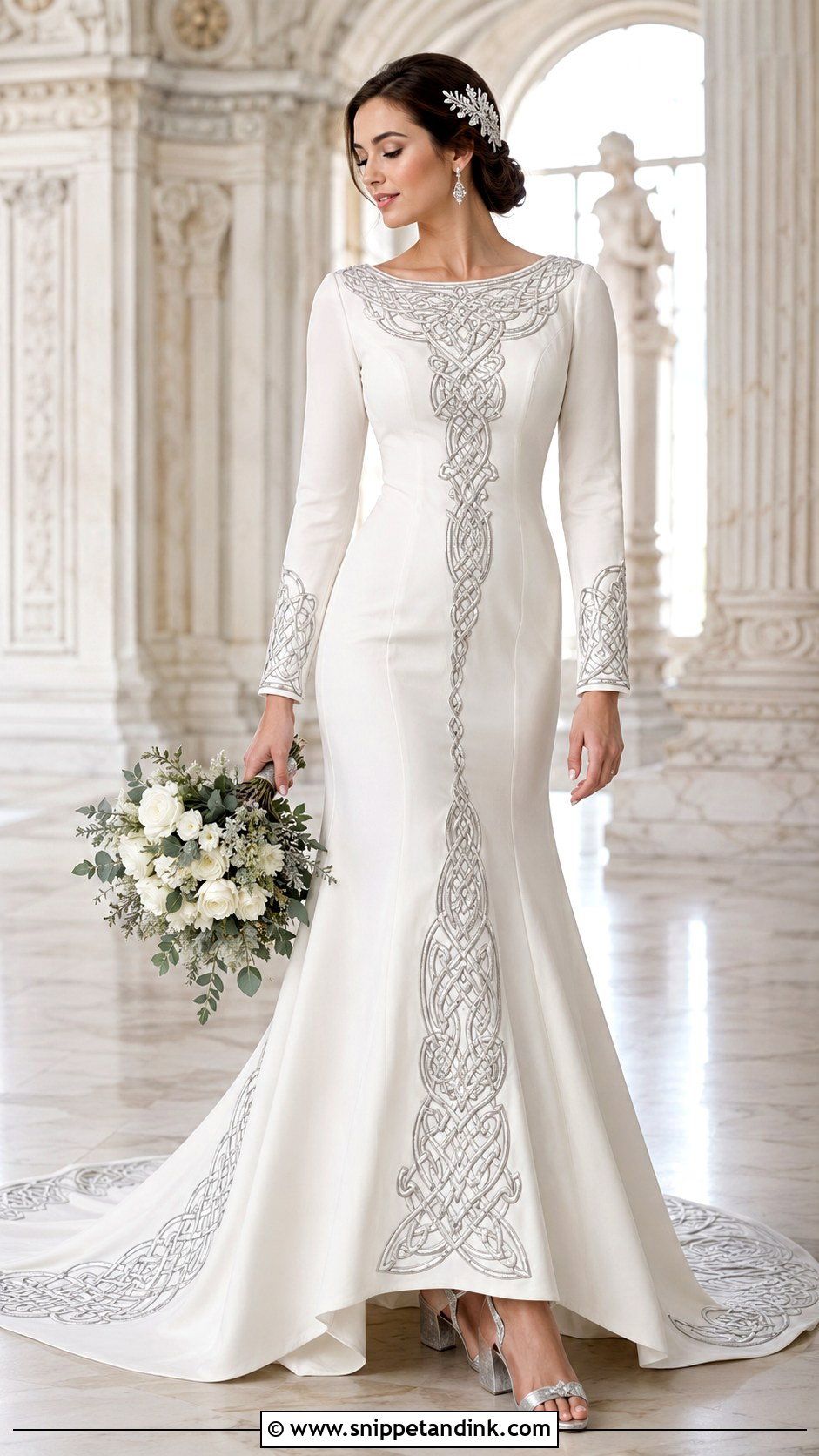
Silver embroidery shimmers without the weight of crystals or sequins. Choose an ivory fit-and-flare with knotwork around the bodice, cuffs and train edge; it looks most refined on matte crepe, soft satin or a smooth silk-like fabric. Metallic thread tarnishes if the dress is stored damp, so after the wedding it should be cleaned and kept dry. Silver block heels, a knot-inspired comb and understated drops suit it. With busy embroidery, choose a plain veil with a clean edge, and if you add a silver belt, match it to the thread exactly. It holds its own in a grand venue.
17. Gold Embroidered Celtic Wedding Dress
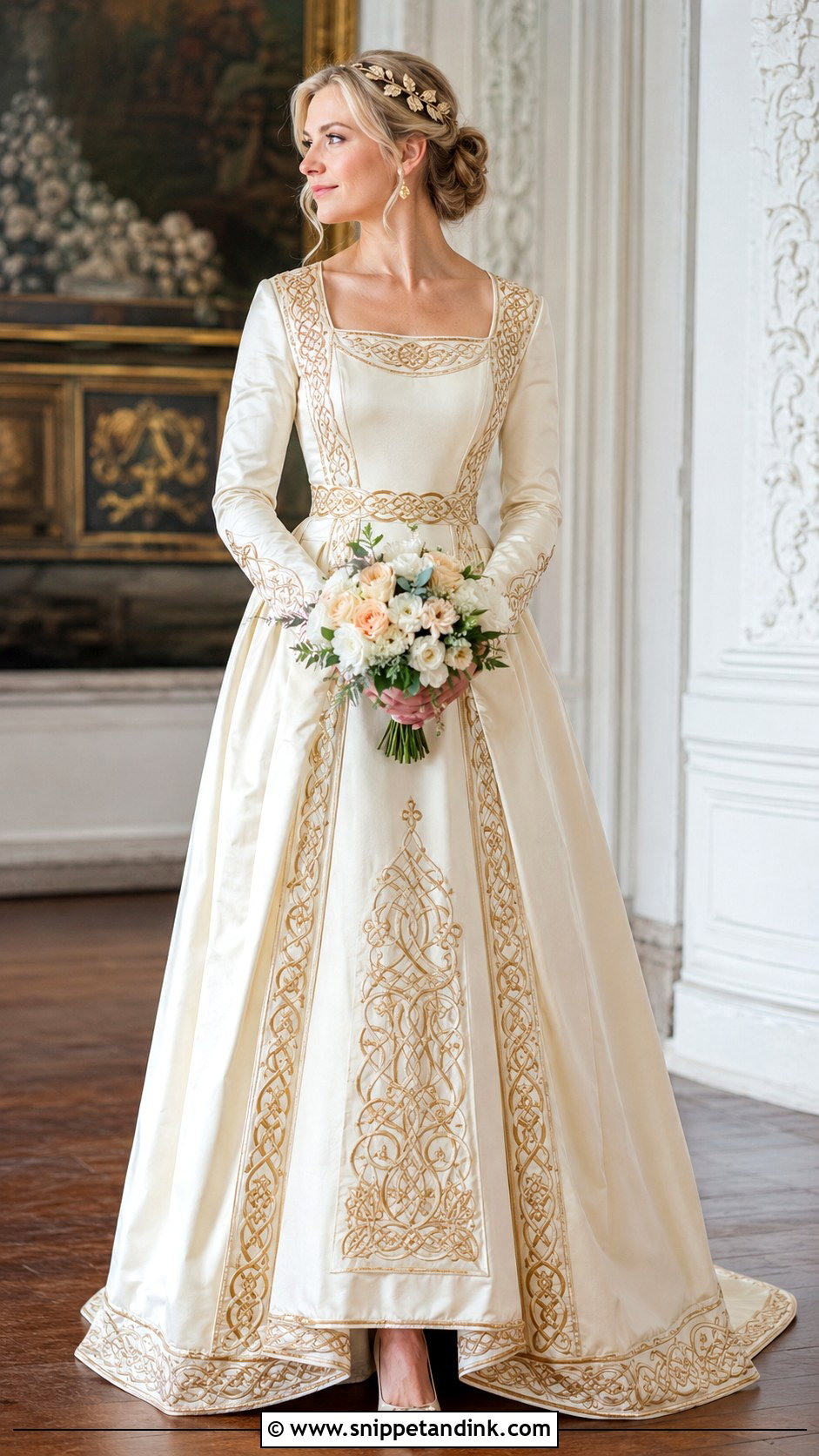
Gold knotwork is warmer and more regal than silver. Start with cream or soft ivory, which blend with antique gold far better than bright white does. A square-neck bodice, fitted sleeves and full skirt carry trim at the neckline, waist and cuffs. Pick one metal and stick to it; bright silver accessories against gold embroidery look like a mistake. Champagne heels, small gold earrings, a leaf-shaped hairpiece and a bouquet with pale peach accents suit autumn celebrations, historic interiors and brides who look better with warm colours near the face.
18. Two Piece Irish Celtic Wedding Dress
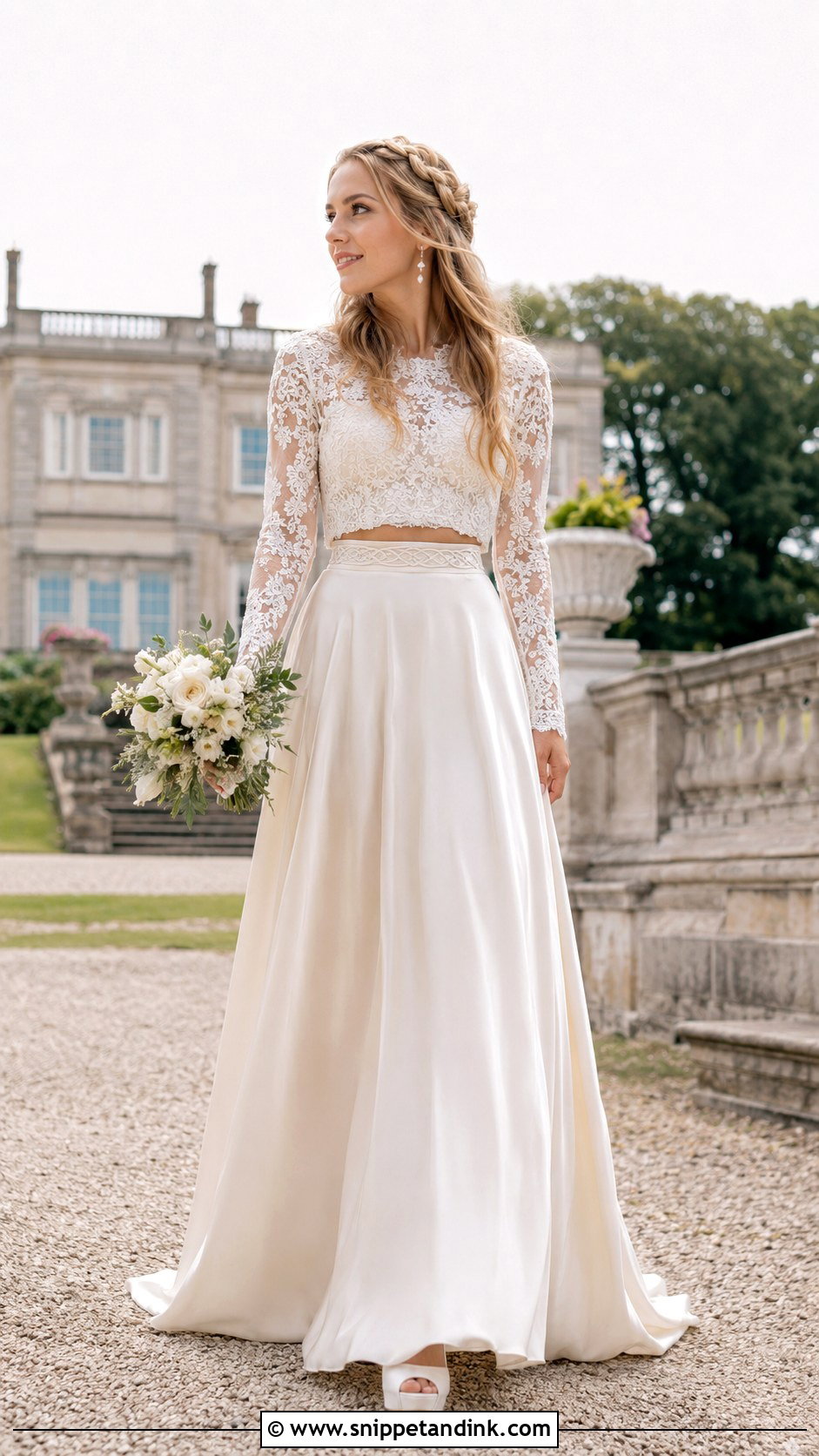
A two-piece gives you flexibility. Pair a fitted long-sleeve Irish lace top with a high-waisted flowing skirt in ivory chiffon, satin or crepe; the pieces can show a narrow strip of skin or meet completely. A Celtic knot belt ties them together visually. Make sure the skirt waistband has a grip strip or the top has a small loop to catch it, because separates drift apart when you dance. For the reception you can swap the lace top for a simpler blouse and keep the skirt, and both pieces are easy to wear again later.
19. High Low Celtic Wedding Dress
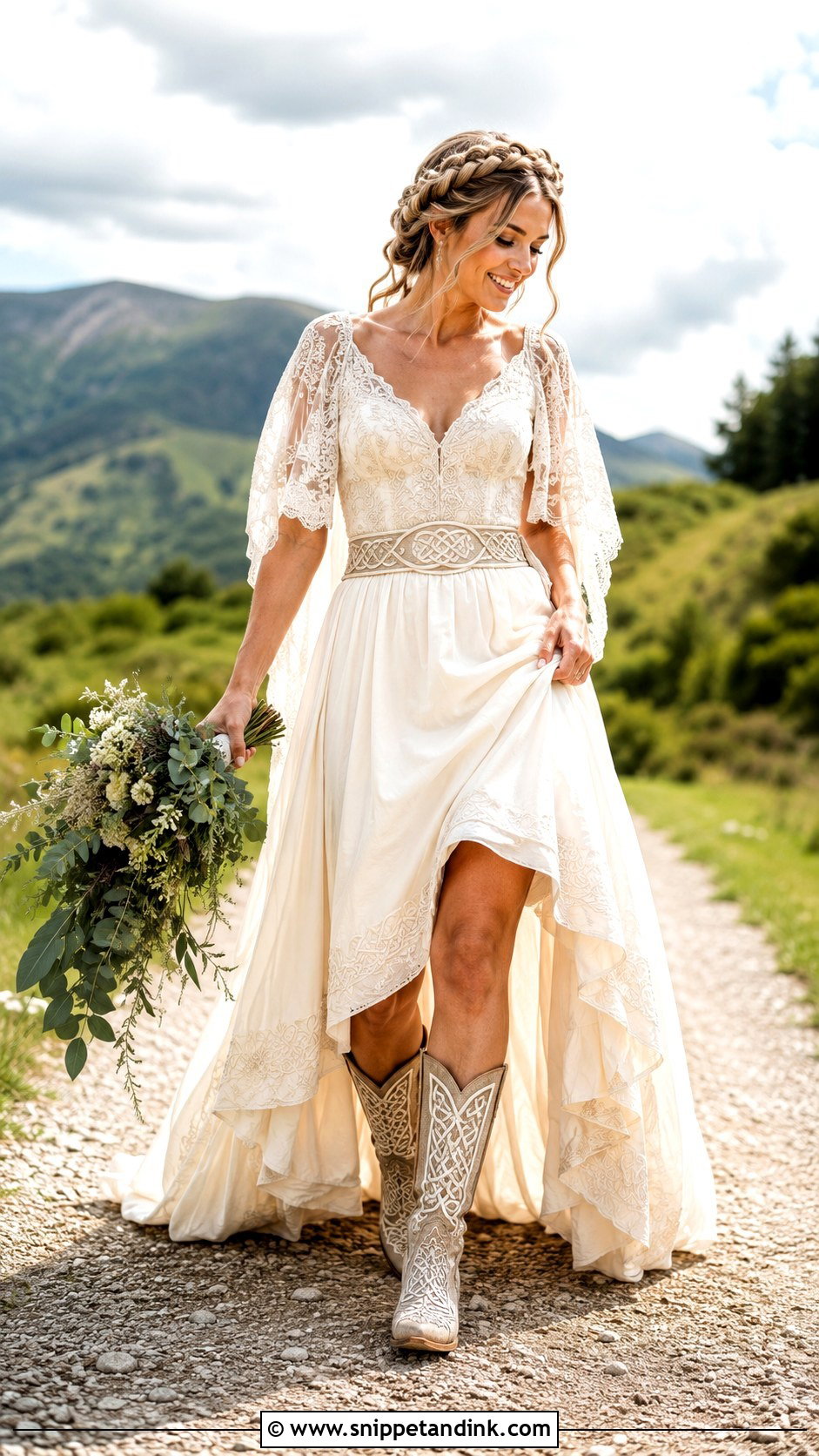
A high-low hem puts your shoes into the design. Choose an ivory dress with a shorter front, floor-length back, fitted lace bodice and flowing sleeves, keeping the drop between front and back moderate so it stays elegant. The front hem should be finished as carefully as a neckline, since it’s now at eye level in every seated photo. Embroidered knotwork at the waist or hem, detailed silver heels or bridal ankle boots, a braided crown and a loose greenery bouquet suit outdoor ceremonies, adventurous elopements and lively receptions.
20. Minimalist Irish Celtic Wedding Dress
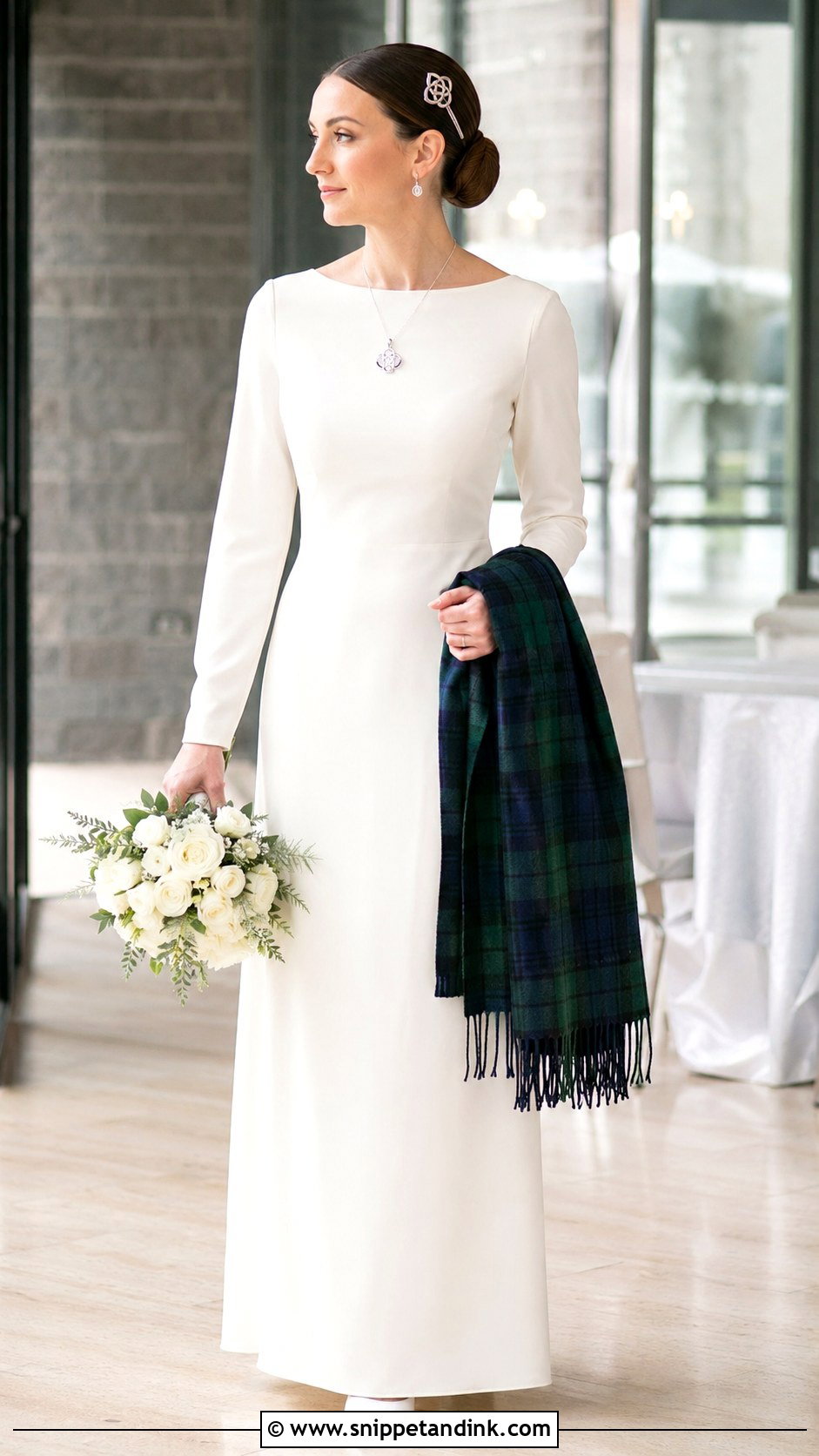
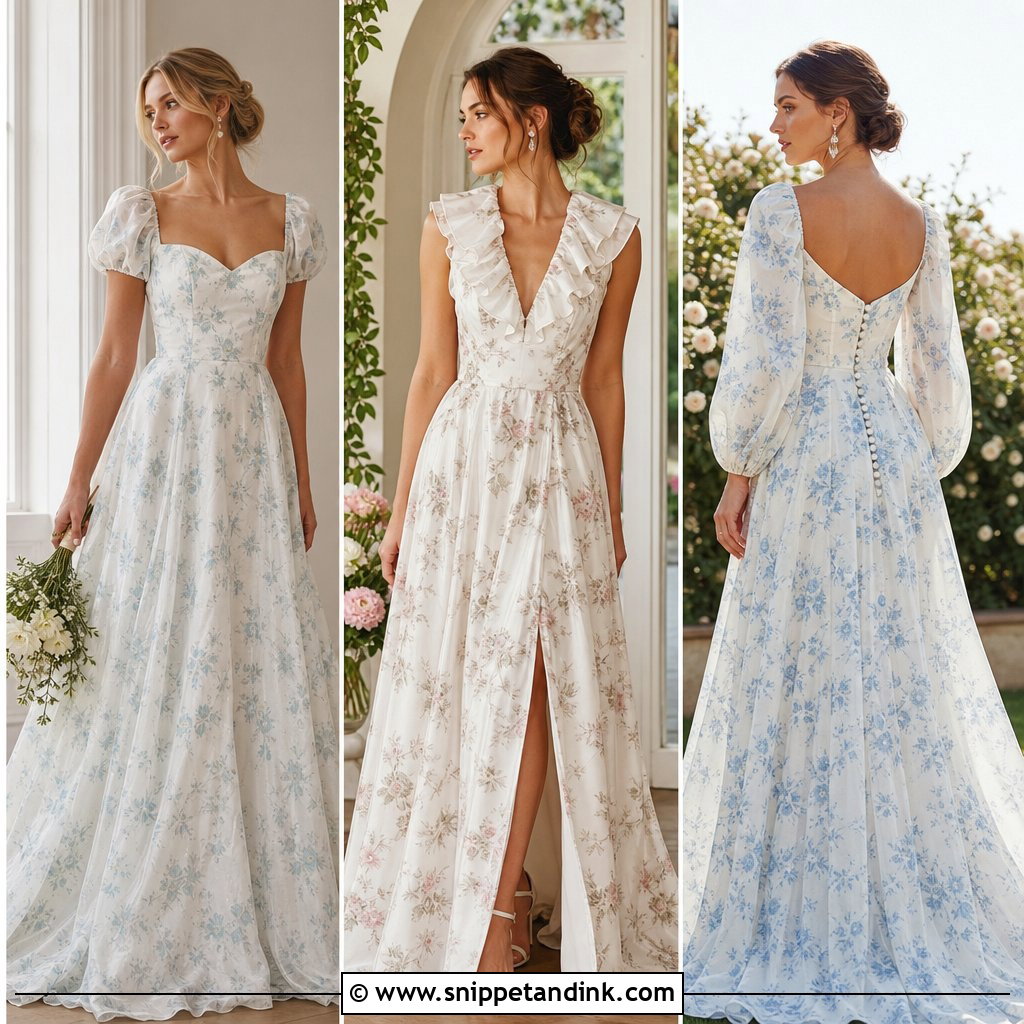
Minimal works when one or two Irish details are allowed to lead. A clean ivory crepe dress with a boat neckline, fitted waist, long sleeves and a fluid column skirt is the canvas. Then add a Claddagh pendant, a Celtic knot hairpin or an embroidered veil, not all three. The Claddagh’s hands, heart and crown stand for friendship, love and loyalty, which is why it suits a bride so well. Crepe shows every lump of underwear and every bad seam, so it needs a precise fit. Pointed ivory pumps, a sleek low bun and a detachable tartan wrap for outdoor photos finish it.
Working an Heirloom Into a New Gown
Many Irish brides have a piece of family lace or a relative’s veil they would like to wear. Old lace is fragile, and it should be cleaned by someone who handles antique textiles before a seamstress touches it. Never bleach yellowed lace to match a bright white dress. Choose an ivory or cream gown that suits the lace instead.
Small pieces go a long way. A strip of old lace can edge a veil, cover a bodice panel or be sewn inside the dress where only you know it’s there. Tartan works the same way: a scrap of family cloth wrapped around the bouquet stems is enough. Irish county tartans are fairly modern designs, so choose the one that means something to your family rather than worrying about history.
What a Handfasting Asks of Your Sleeves
In a handfasting, the couple’s hands are joined and wrapped with cords or ribbon, often while the officiant speaks. Wide bell sleeves fall straight into the binding and get tangled, and heavy beading at the cuff can snag a cord. If a handfasting is planned, choose fitted sleeves or cuffs that can be pushed back, and rehearse once in the dress with the real cords.
One Irish Detail Worn Well
A good Irish Celtic bridal outfit mixes heritage with the practical facts of your day. Lace, knot embroidery, sleeves, tartan, capes, natural fabrics and meaningful jewelry all express it differently, and you need only one or two of them. Think about the season, the ground you’ll walk on, your footwear and what the ceremony asks of you, especially if there’s a handfasting. Then wear the full outfit at your last fitting and stand still for a minute in front of the mirror. If it feels like you, it’s right.
You'll Like These Ideas:




Leave a Reply