
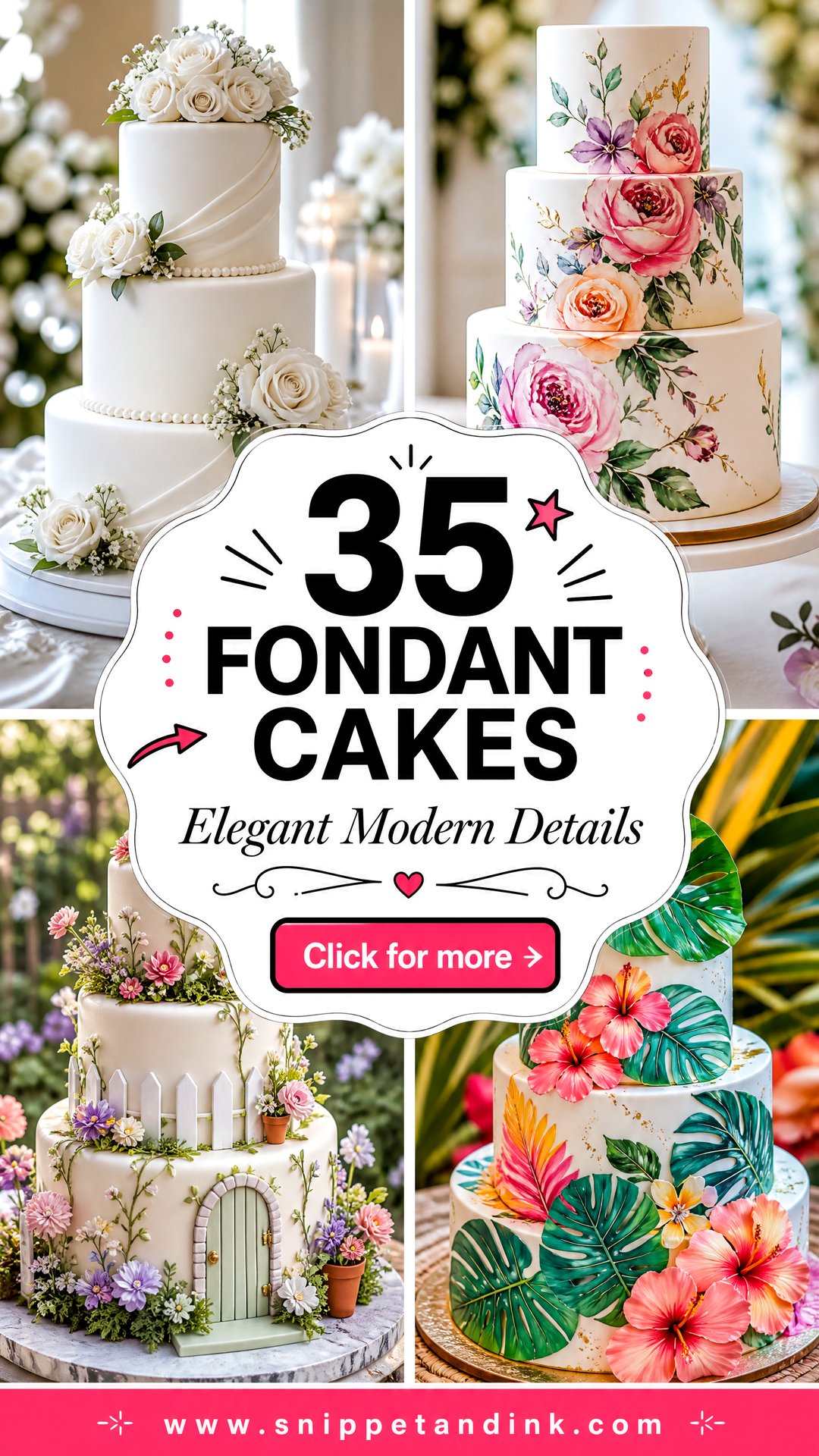
Fondant gives a wedding cake a finish nothing else quite matches: a smooth, matte skin with corners you could check with a ruler. As a cake designer, I value it most as a canvas. It holds lace imprints, pearls, painted flowers, marbling and metal leaf in a way soft buttercream can’t. It also comes with trade-offs that never show up in a photo, and I’ll point those out as we go through the 35 cakes below, so you can take the ones you love to a tasting knowing what each one asks of your baker.
Under the Sugar Skin: How a Fondant Cake Is Built
Rolled fondant is a pliable paste of sugar, water, gelatin or gum and glycerin, rolled thin and smoothed over a cake that has already been filled, stacked and coated. That coat underneath matters more than most couples realize. I use chocolate ganache under fondant whenever I want razor-sharp edges, because it sets firm; buttercream gives a softer shoulder and a less exact corner.
Fondant also changes how the cake behaves on the day. It seals the cake and protects the decoration, but it hates humidity, which makes it tacky, and it hates going from a cold fridge into a warm room, because condensation beads on the surface and can streak colors. A finished fondant cake usually keeps best in a cool room rather than a fridge, unless a filling needs chilling, and your baker should tell you which applies.
Taste is the honest drawback. Fondant is sweet and slightly chewy, and some guests peel it off. I roll mine thin and suggest flavors that hold their own against it. If your family is firmly in the frosting camp, a cake covered in fondant only on the top tier, with buttercream below, is a reasonable compromise.
1. White Fondant Wedding Cake
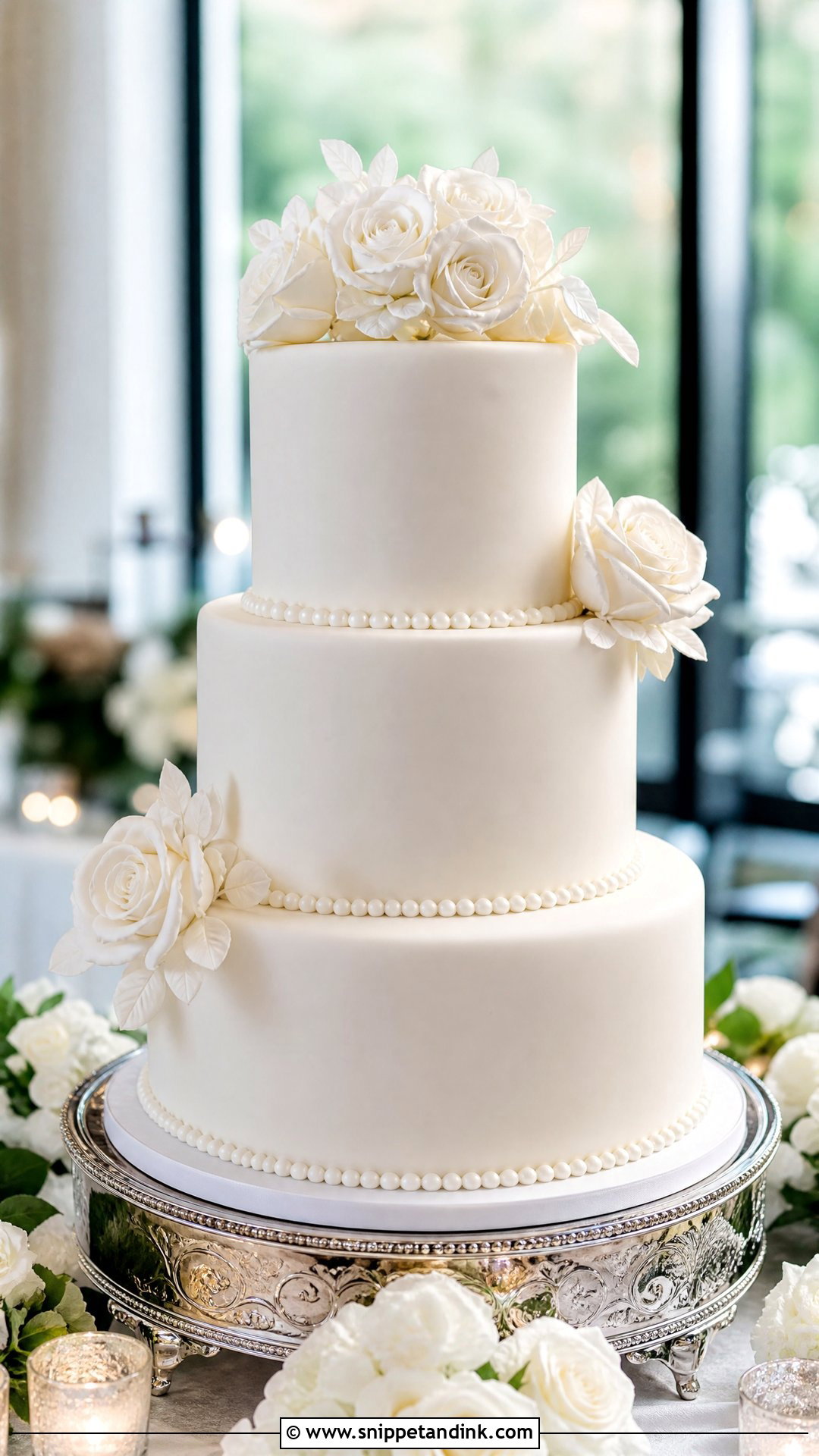
A white fondant wedding cake suits nearly any venue, season or flower palette, which is why it’s still the cake I’m asked for most. Pure white is less forgiving than people expect, though. Every air bubble, crumb or fingerprint shows, so I cover the tiers in firm ganache first to get sharp edges underneath. Three or four tiers with a satin ribbon at each base is plenty, and I back the ribbon with a thin strip of fondant so butter from the cake can’t seep through and spot it. If your dress or florals are already detailed, this is the cake that lets them lead.
2. Ivory Fondant Wedding Cake
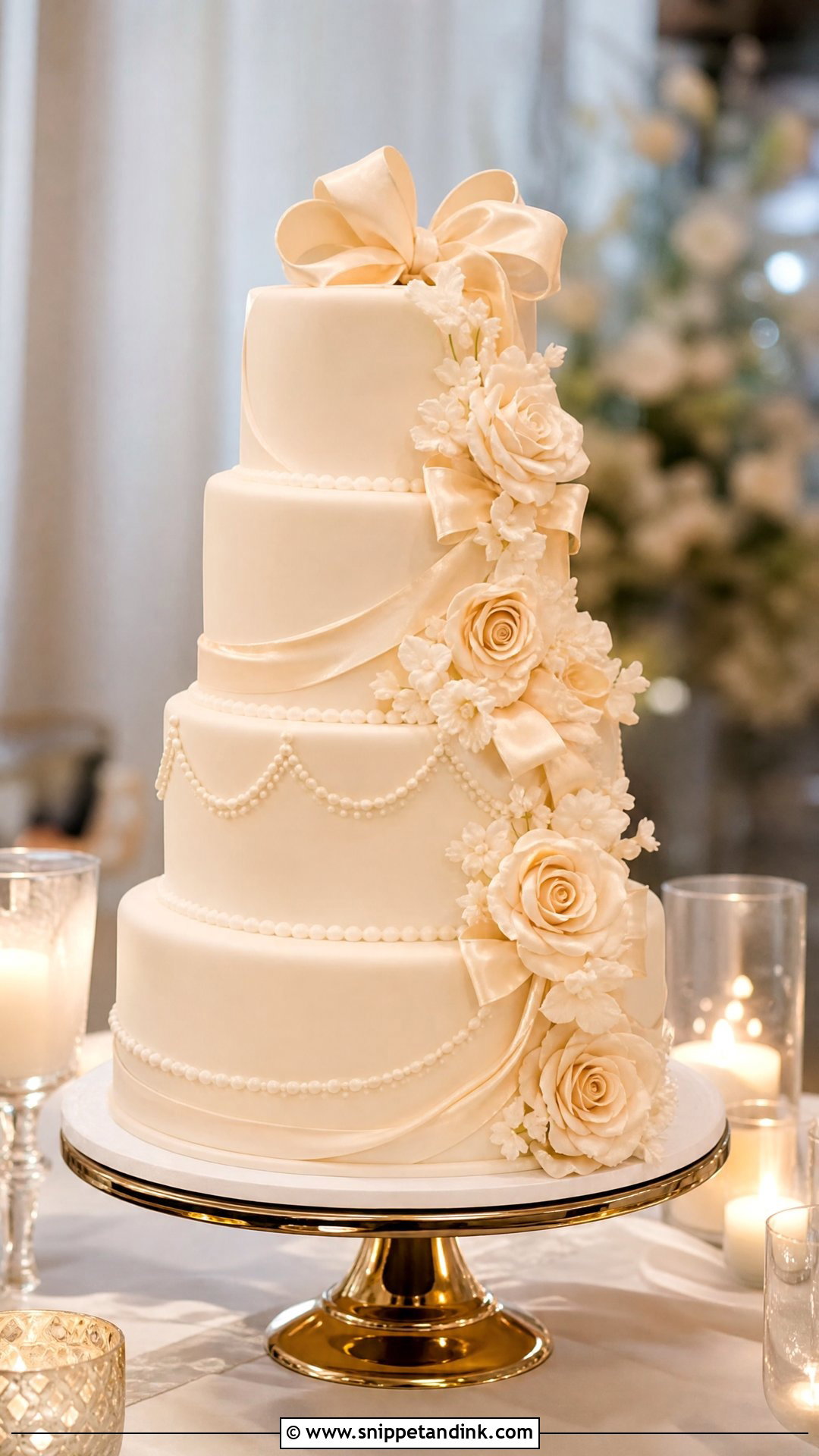
Ivory reads warmer than white and kinder under candlelight, so I steer evening and vintage-leaning receptions toward it. The catch is that ivory varies a lot between fondant brands and tint mixes. I color a small sample and hold it against a swatch of the dress or the linens before committing a whole batch. Hand-made sugar roses or a row of piped dots is all the decoration it needs, and almond or white chocolate sponge suits it inside.
3. Lace Fondant Wedding Cake
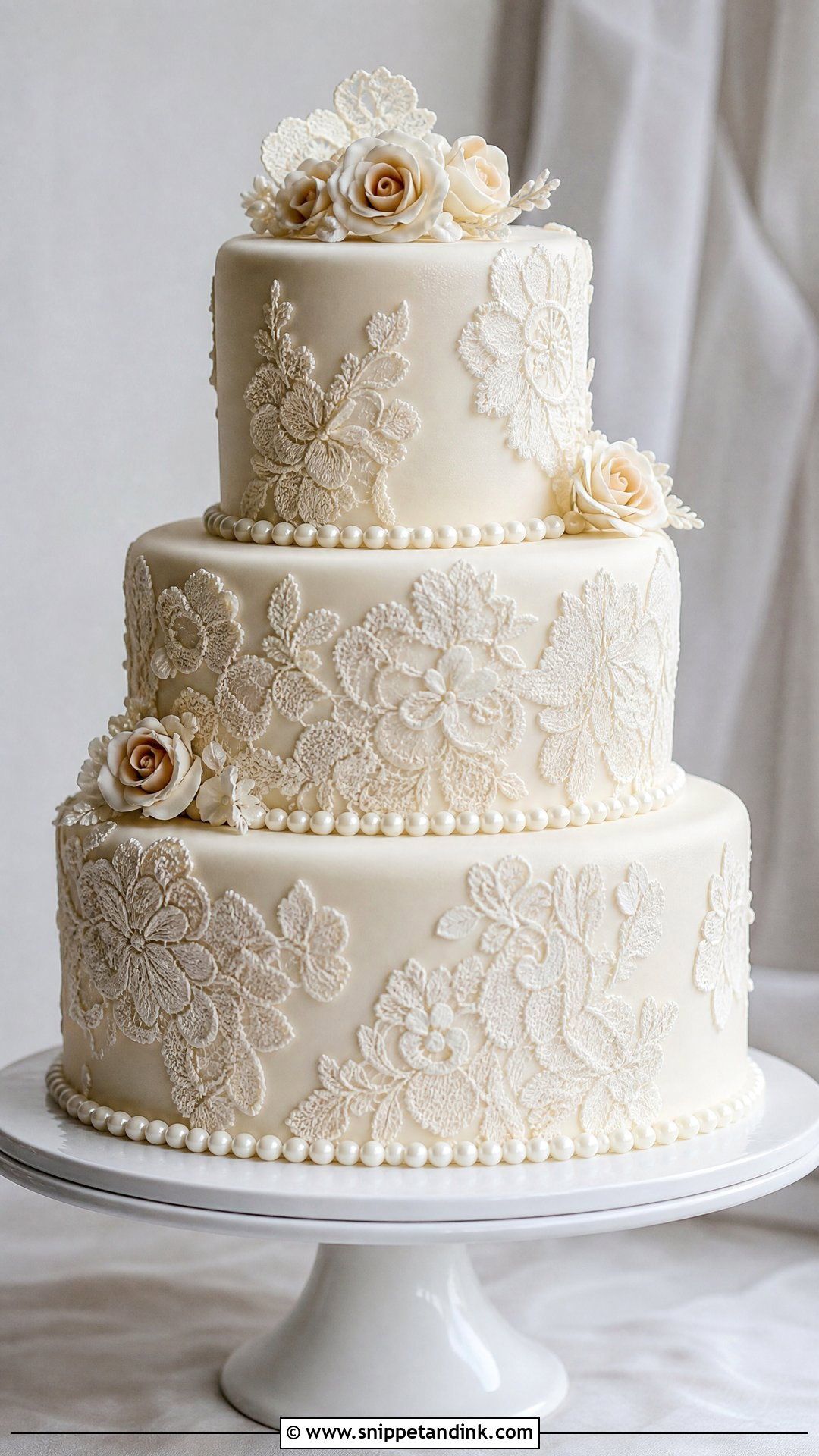
Fondant lace is usually made one of two ways: edible lace set in a silicone mat, or royal icing piped by hand. Mat lace is quick and very even. Piped lace takes hours and has the slight irregularity of real fabric, which is why I prefer it when a couple wants the cake to echo the gown. Bring a close-up photo of your bodice to the consultation and I can copy a motif from it. One lace tier between plain ones usually reads better than lace all over, and keeping the color to ivory or pale blush lets the pattern stay legible from across the room.
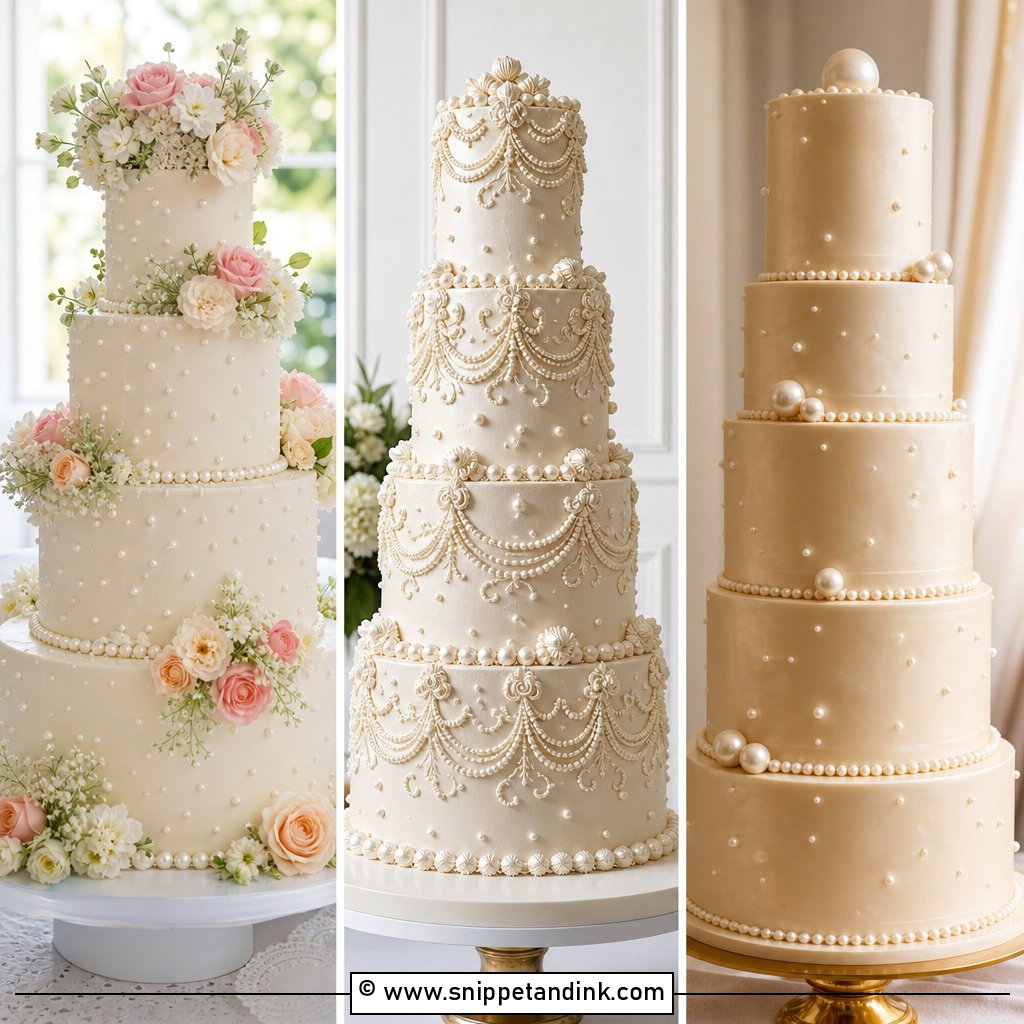
4. Pearl Fondant Wedding Cake
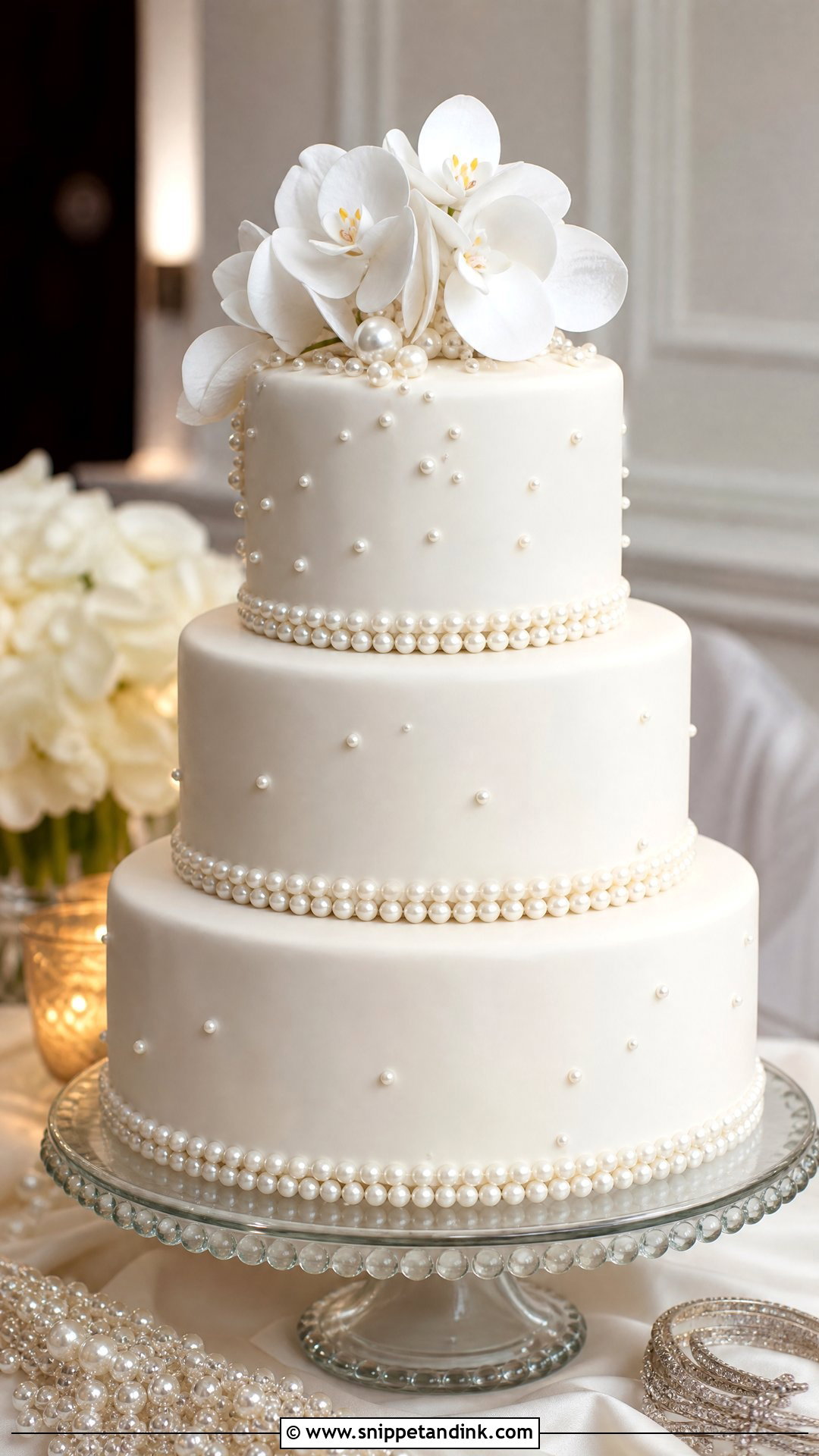
Edible pearls are sugar balls coated in luster, and they are fiddly. Each one is set by hand with a dot of royal icing, and on a warm day the shine dulls if they’re handled too much. I place them either in tight rows along the tier seams or graduated like a necklace across one tier. Pearls scattered at random only look intentional when the spacing has been planned. They sit naturally beside satin gowns and pearl veils, with vanilla bean or coconut cake underneath.
5. Gold Fondant Wedding Cake
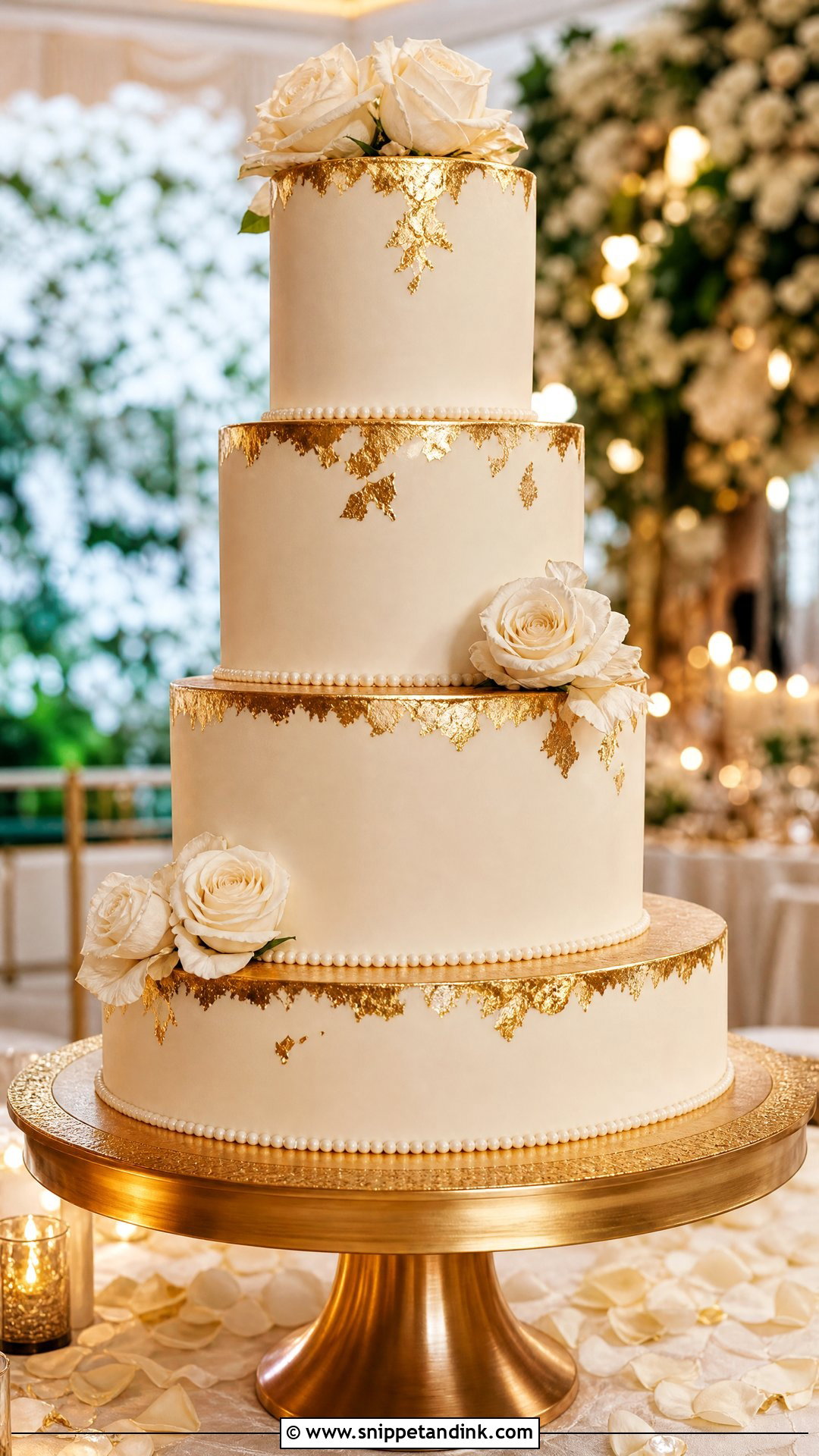
Gold leaf is real metal beaten paper-thin, edible in the tiny amounts used, and very fragile. One breath at the wrong moment and a sheet folds onto itself, so I apply it to edges, bands or a single tier rather than a whole cake. Full gold coverage reads more like sculpture than dessert, and I’d keep it for a reception that’s openly about luxury. Leafed edges catch evening light well. Caramel or chocolate inside matches the richness.
6. Silver Fondant Wedding Cake
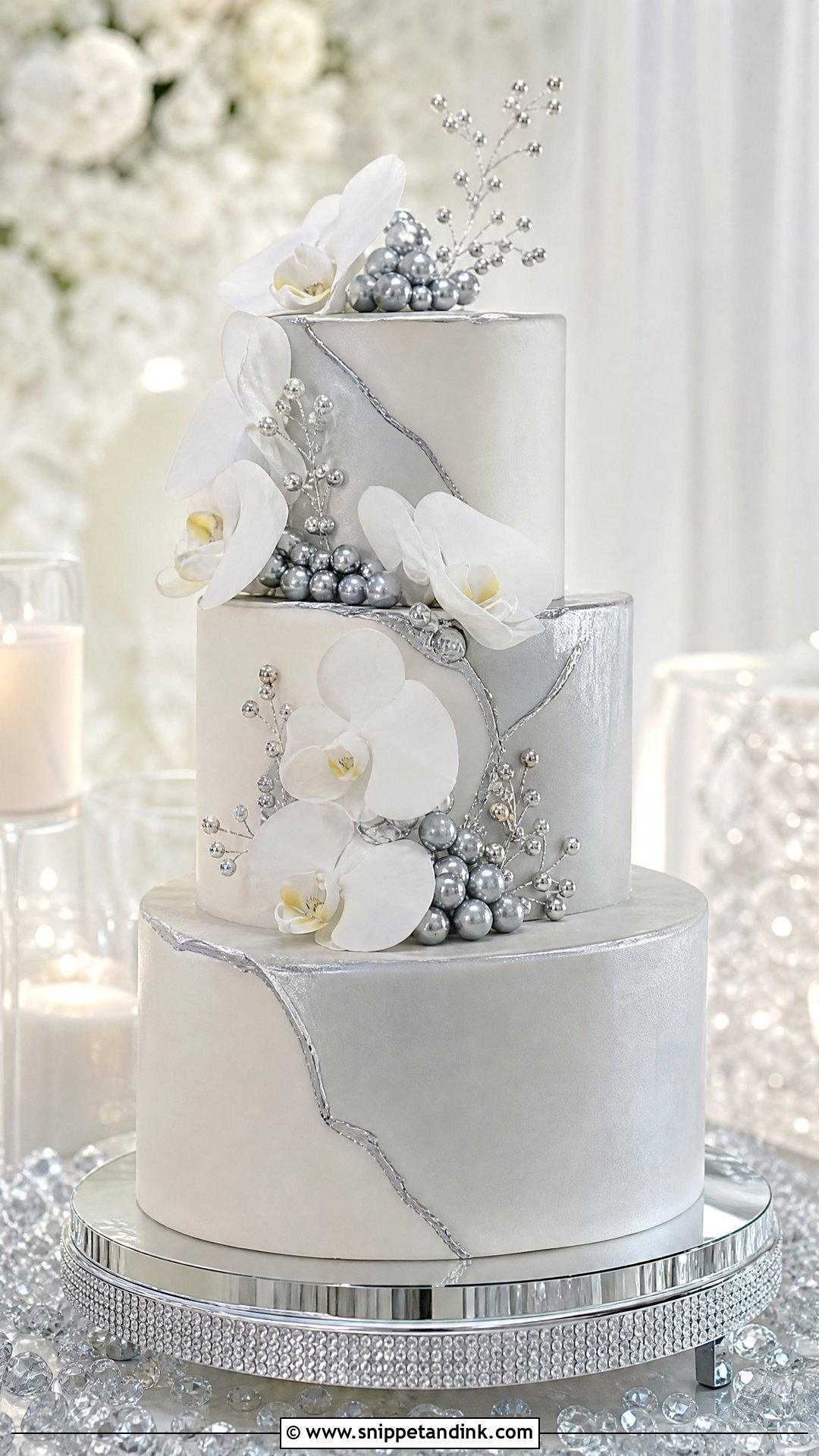
Silver is harder to get right than gold. Silver paints and dusts can look grey and flat under warm reception bulbs, so I test a painted sample under warm light before I commit. I also only use dusts labeled edible on anything that will be eaten; many metallic powders are sold as non-toxic decoration and are not meant for food, and it’s worth asking your baker which kind they use. Silver is strongest as trim, metallic lace or thin geometric lines on white or pale grey tiers, at a city wedding or a winter palette without the holiday look. Lemon or blueberry cake suits the cool color story.
7. Marble Fondant Wedding Cake
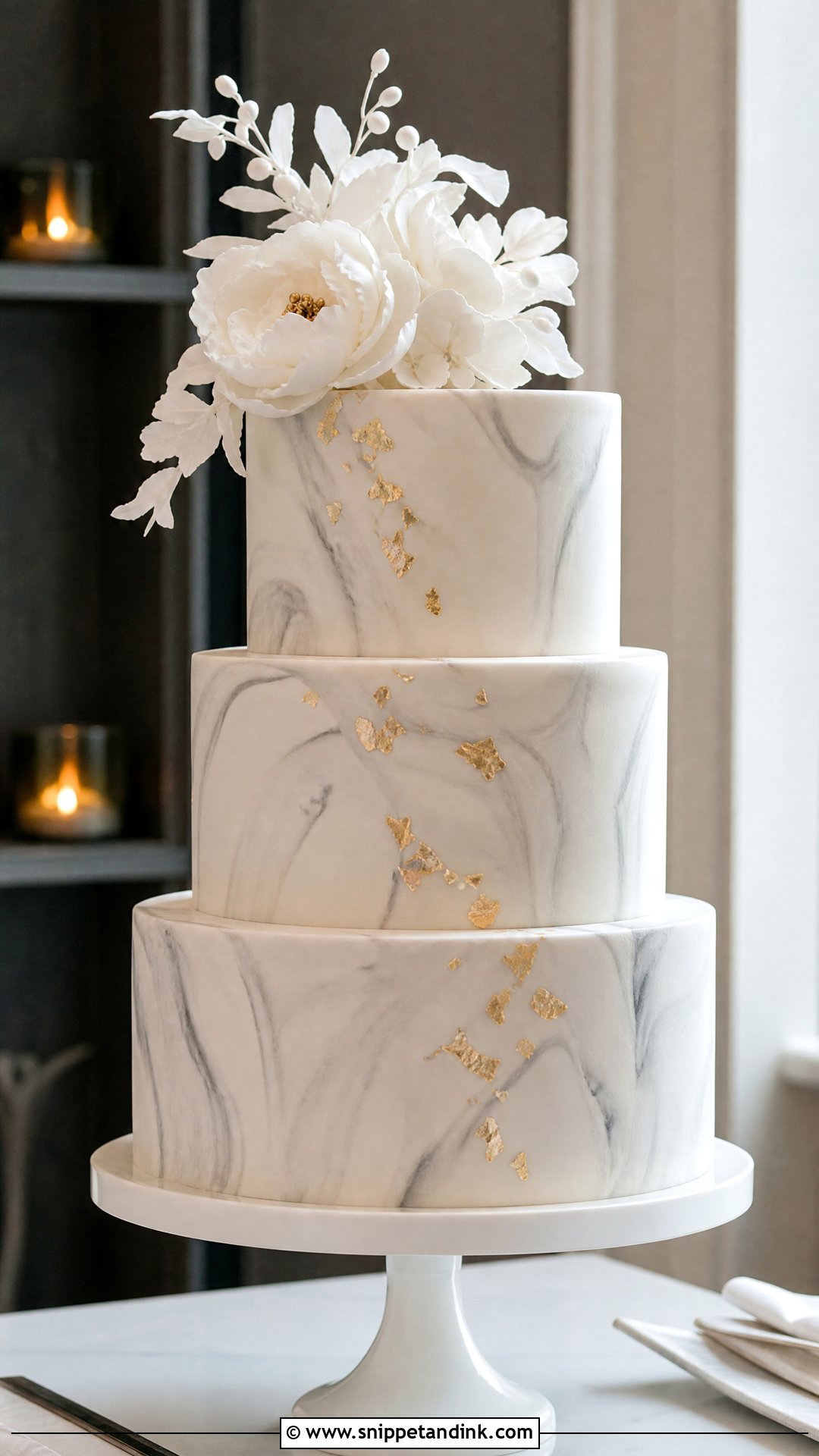
Marble is made by twisting colored fondant into white and rolling it out, and no two sheets come out the same. That’s the charm, and also the risk. Overwork the paste and the veins blur into a muddy grey, so I stop twisting earlier than feels right. Hexagons and extra-tall tiers show the pattern off. Because marble already has movement, I limit the extras to a little gold leaf or one sugar flower.
8. Black Fondant Wedding Cake
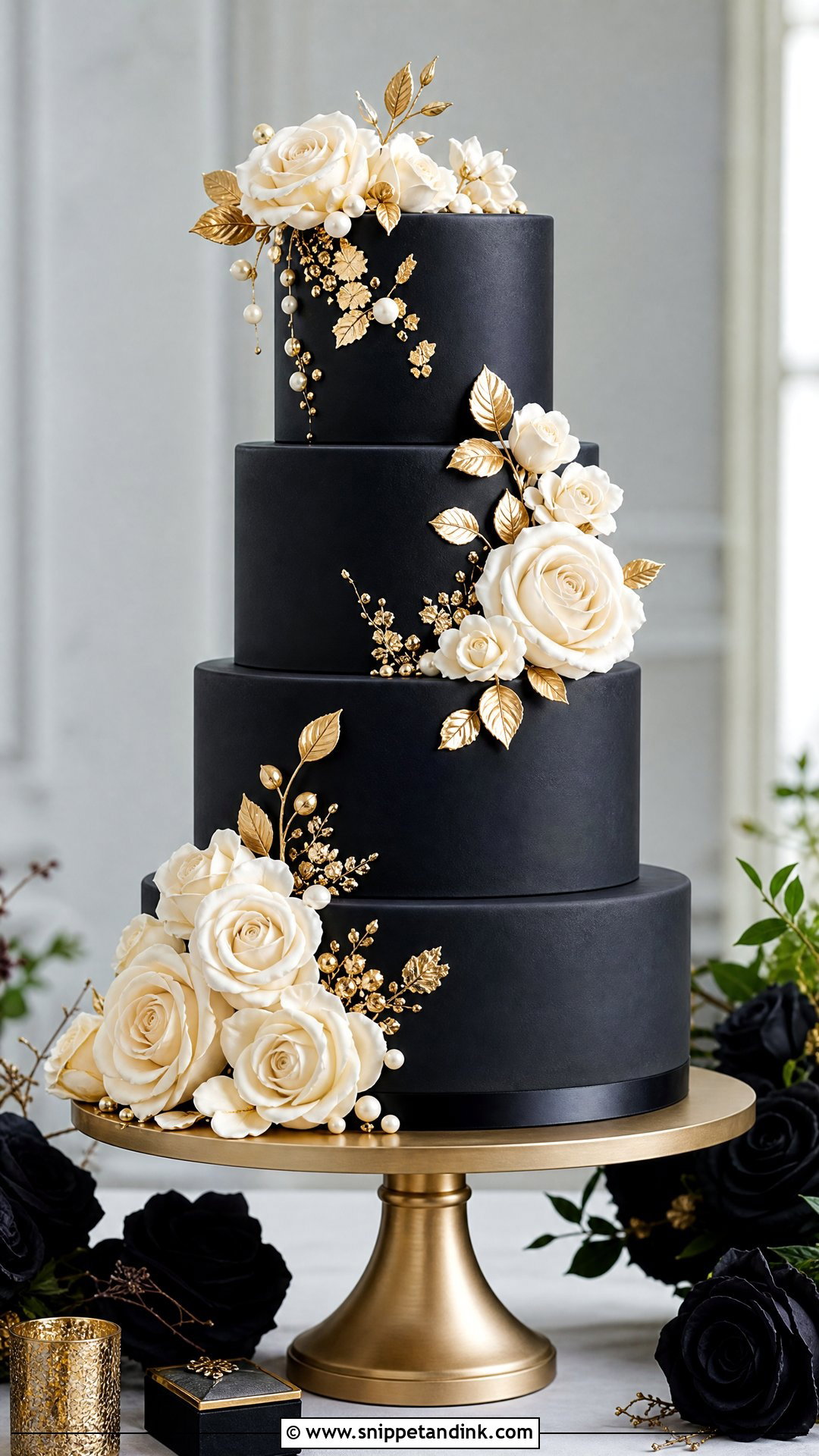
I’ll happily make a black fondant cake, with two warnings. True black takes a lot of coloring, which can stain lips and teeth, so I start from a dark chocolate fondant to cut down the dye or keep black to one tier. It also shows every speck of cornflour used while rolling, which makes finishing slower. The payoff is contrast: white sugar flowers, gold leaf and painted monograms jump off it. Chocolate, mocha or red velvet inside suits the evening mood.
9. Blush Fondant Wedding Cake
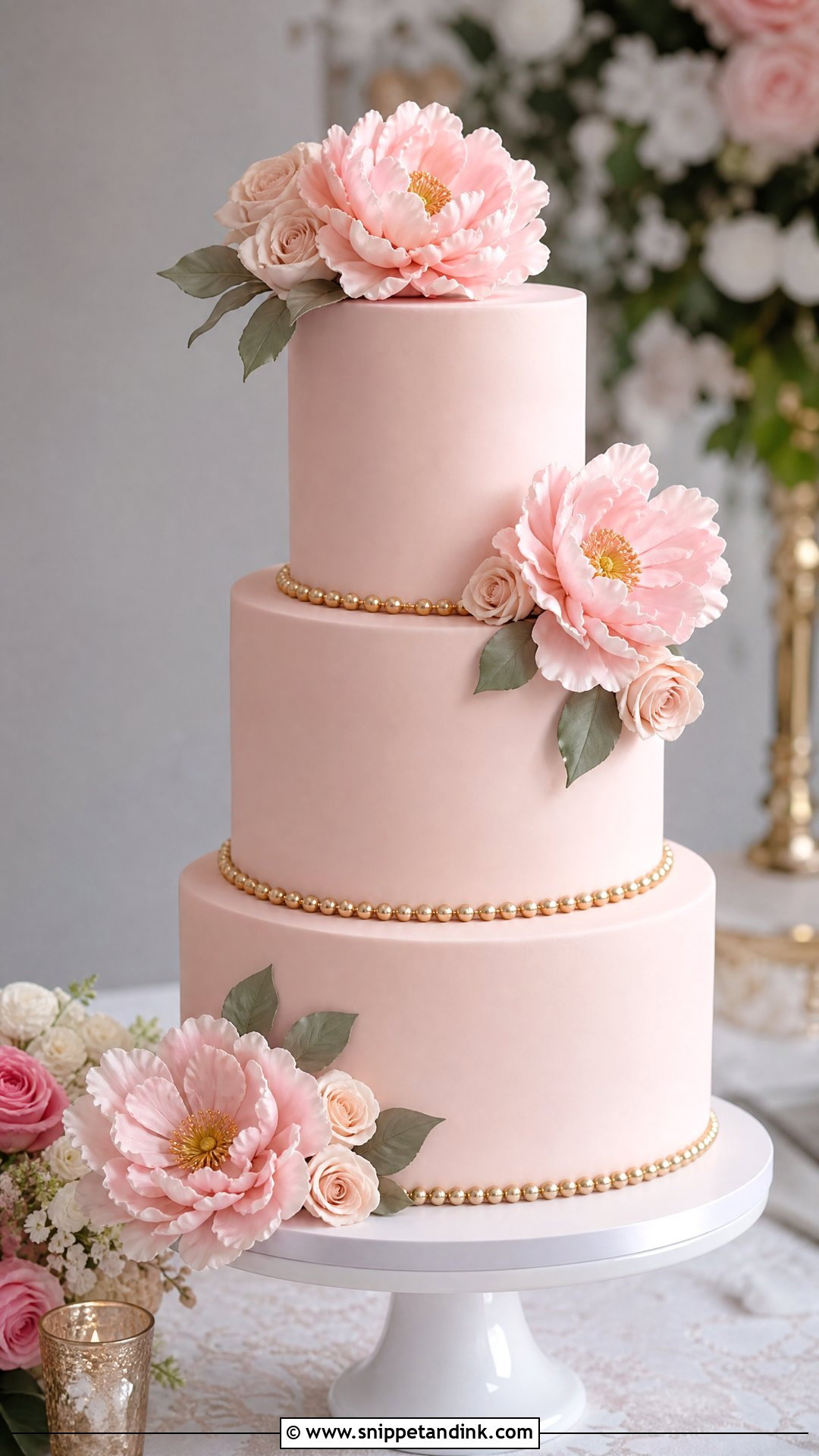
Pale pink fondant fades. Pink and purple colorings are among the most light-sensitive, and a blush cake near a sunny window can be noticeably paler by late afternoon, so I ask where the cake table will sit before I mix the color. Blush works with peonies, ranunculus and a little gold. Alternating blush and ivory tiers gives contrast with very little decoration, and a few sugar flowers set on a diagonal add movement. Strawberry or raspberry make sense inside.
10. Blue Fondant Wedding Cake
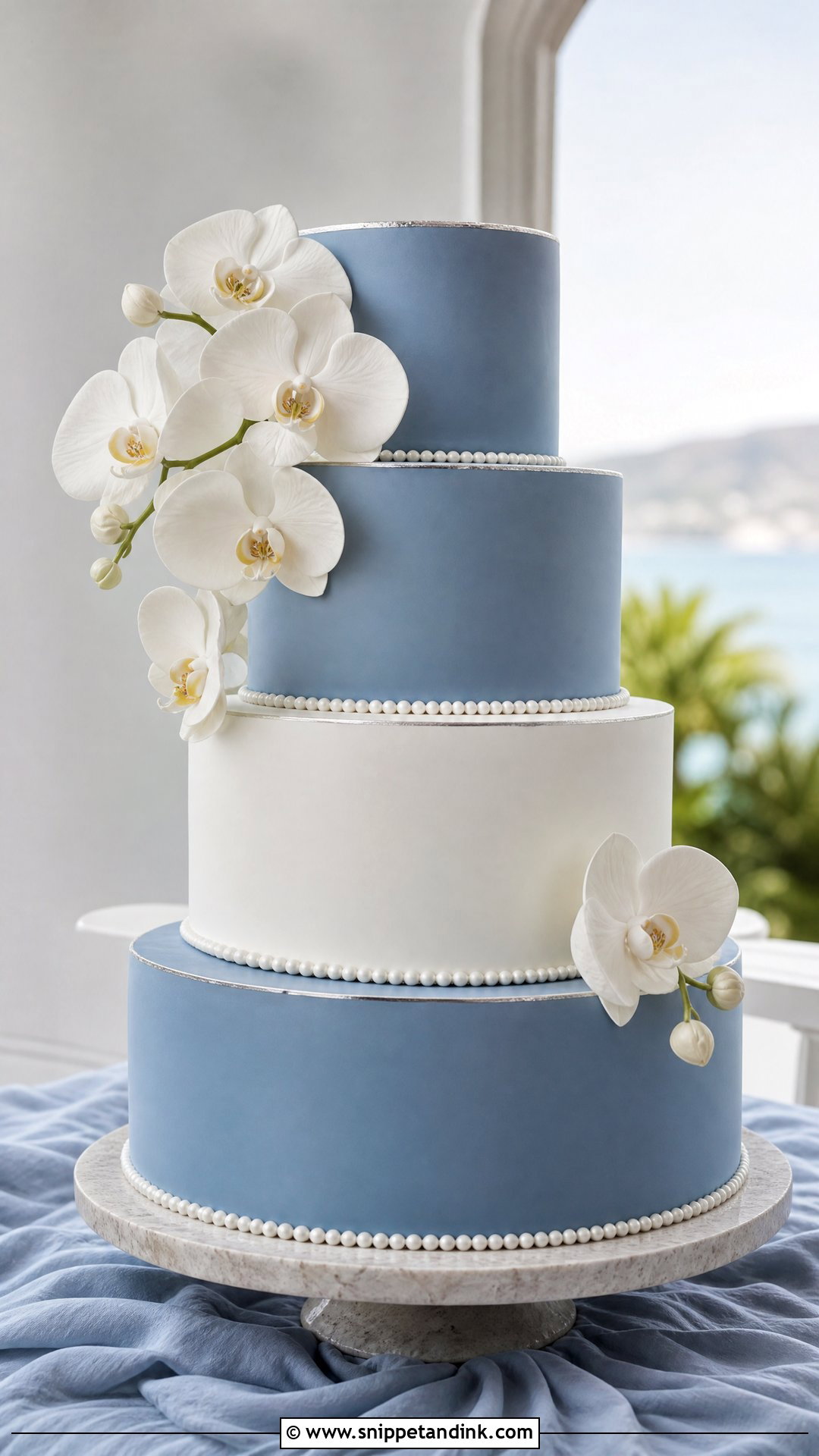
Blue changes character with depth. Pale blue is airy, dusty blue is restrained, navy is formal. Navy has the same problem as black, heavy coloring, so I keep it to a band or a single tier. I’d also check the shade in daylight and under reception lighting, because blues drift toward grey or teal on camera. White sugar flowers and silver leaf sit well against it, and lemon blueberry or coconut cake suits a waterfront reception.
11. Green Fondant Wedding Cake
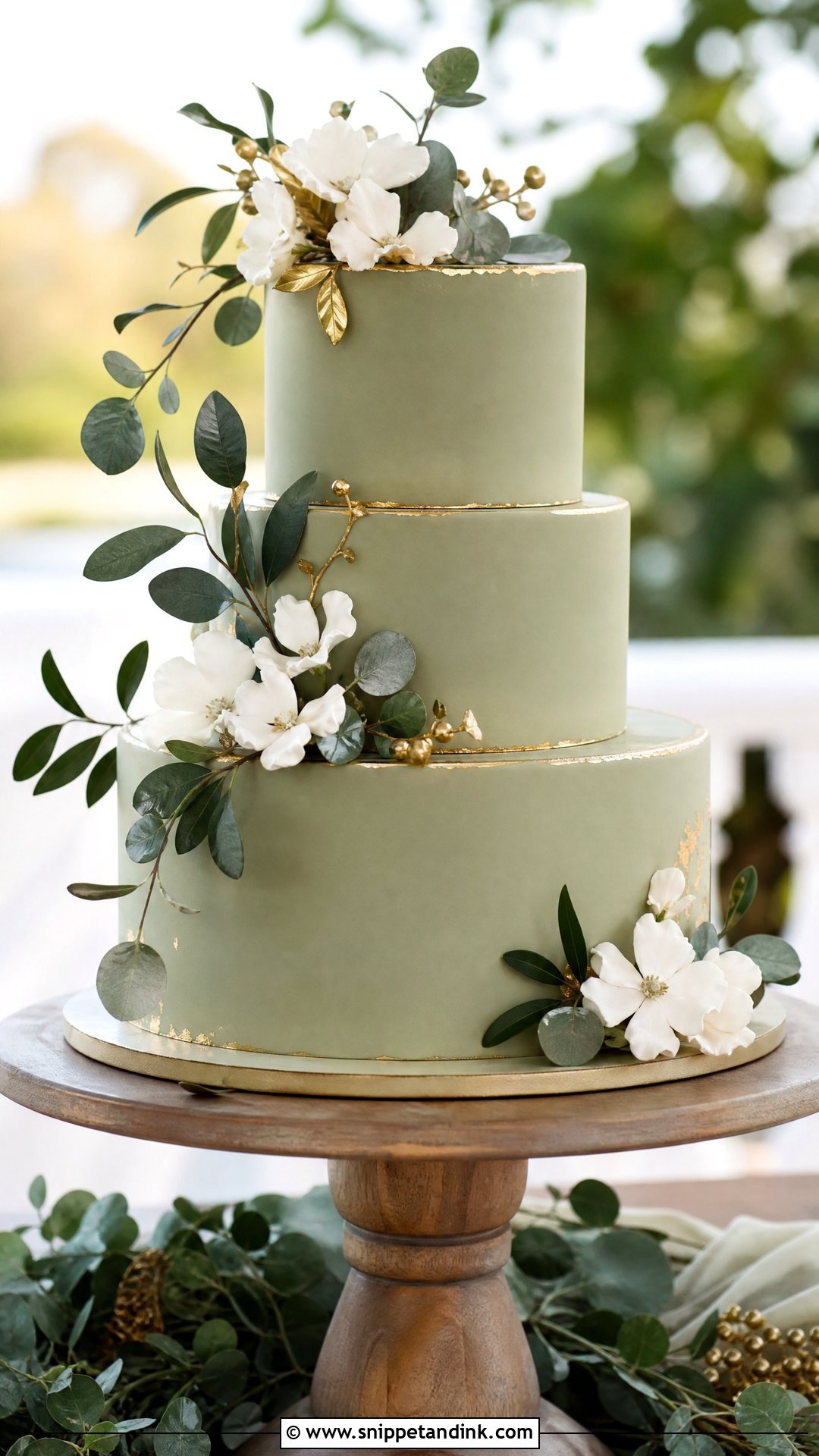
A green fondant wedding cake leans garden or formal depending on the shade. Sage and eucalyptus read soft and modern; emerald reads rich. Pure green coloring tends to give a minty, artificial tone, so I knock it back with a touch of brown or grey until it looks like a real leaf. Smooth sage tiers with sugar leaves and white flowers are a combination I come back to for greenhouse and outdoor receptions. Pistachio or matcha inside is a quiet nod to the color.
12. Floral Fondant Wedding Cake
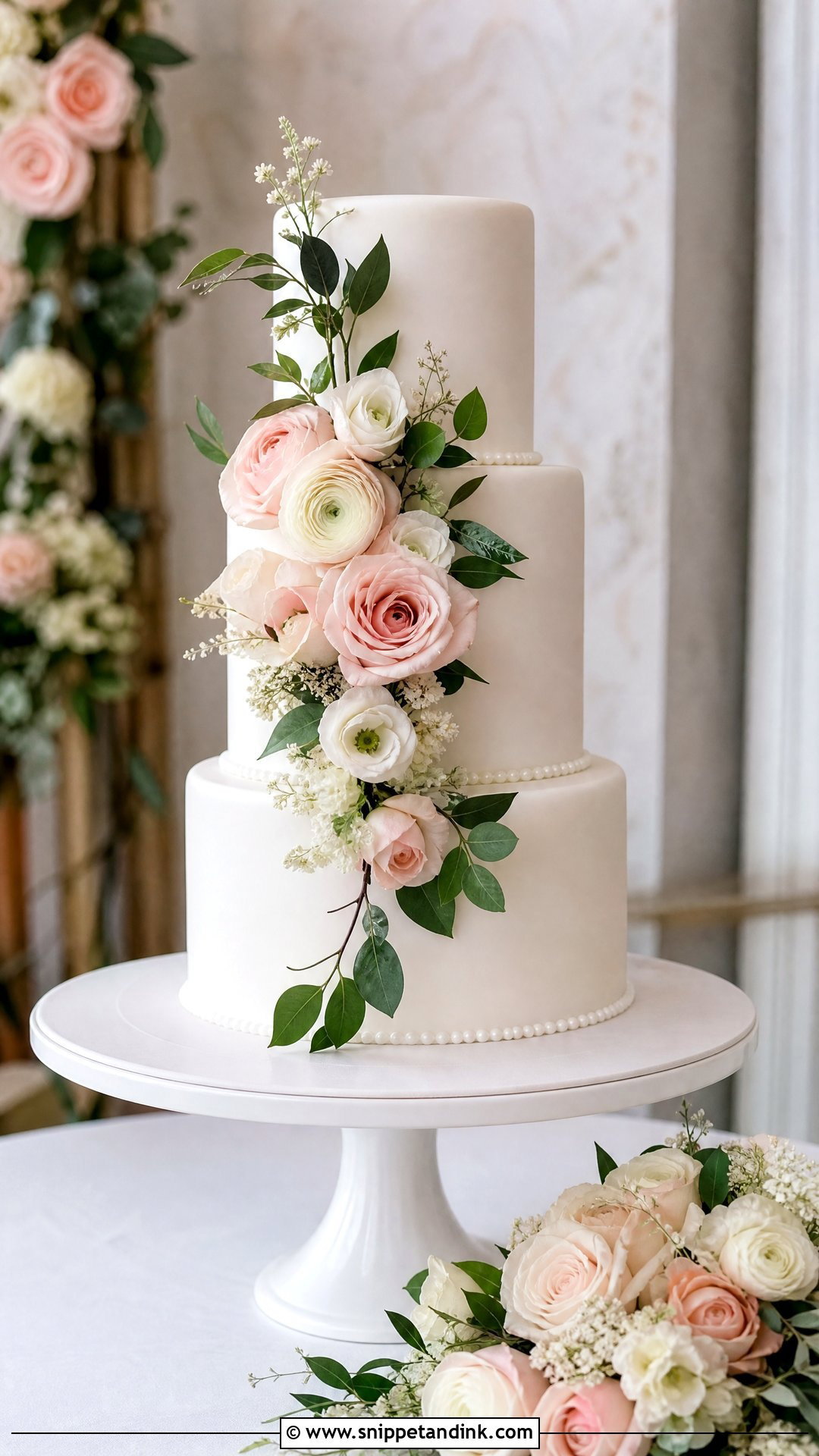
Flowers are the decoration I’m asked for most, and the one most often misplaced. The blooms should come from your bouquet and table arrangements, which means your florist and I need to talk before the day. On smooth fondant, a side cluster or small blooms tucked between tiers both work. What I avoid is spreading flowers evenly over every tier; the cake loses its outline. One main grouping and a smaller echo lower down looks far more considered.
13. Sugar Flower Fondant Wedding Cake
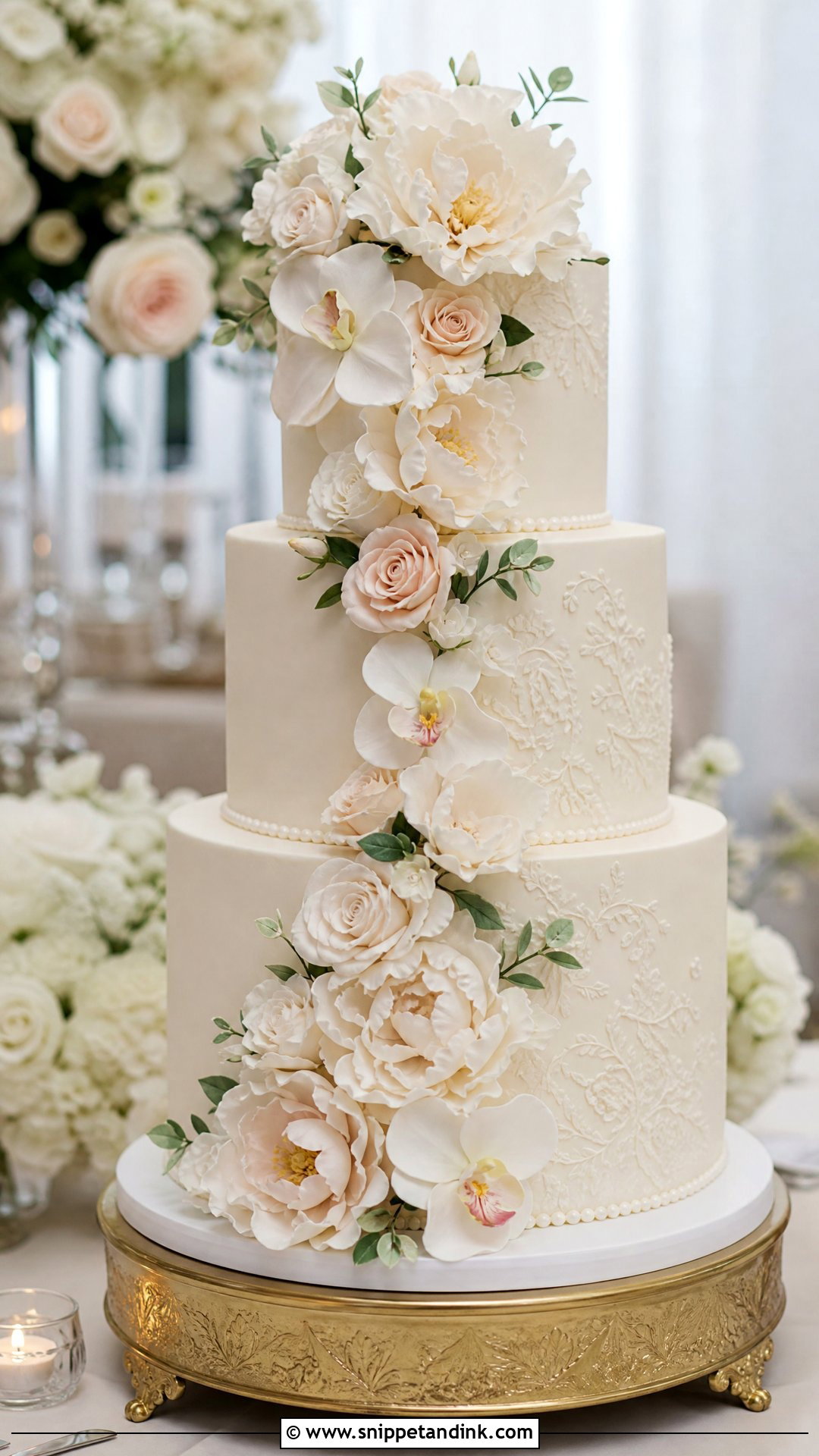
Sugar flowers are built petal by petal from gumpaste, wired, dried and dusted, and a large peony can take several hours. Most designers make them weeks ahead, so this is a detail to order early. Their advantages are real. They match your palette exactly, they never wilt, and they can copy blooms that are out of season, which also helps at venues that restrict fresh flowers on food. Because of the wires they aren’t eaten, but many couples keep them afterward. I like them on ivory tiers with a fine pearl border, letting the flowers carry the design.
14. Fresh Flower Fondant Wedding Cake
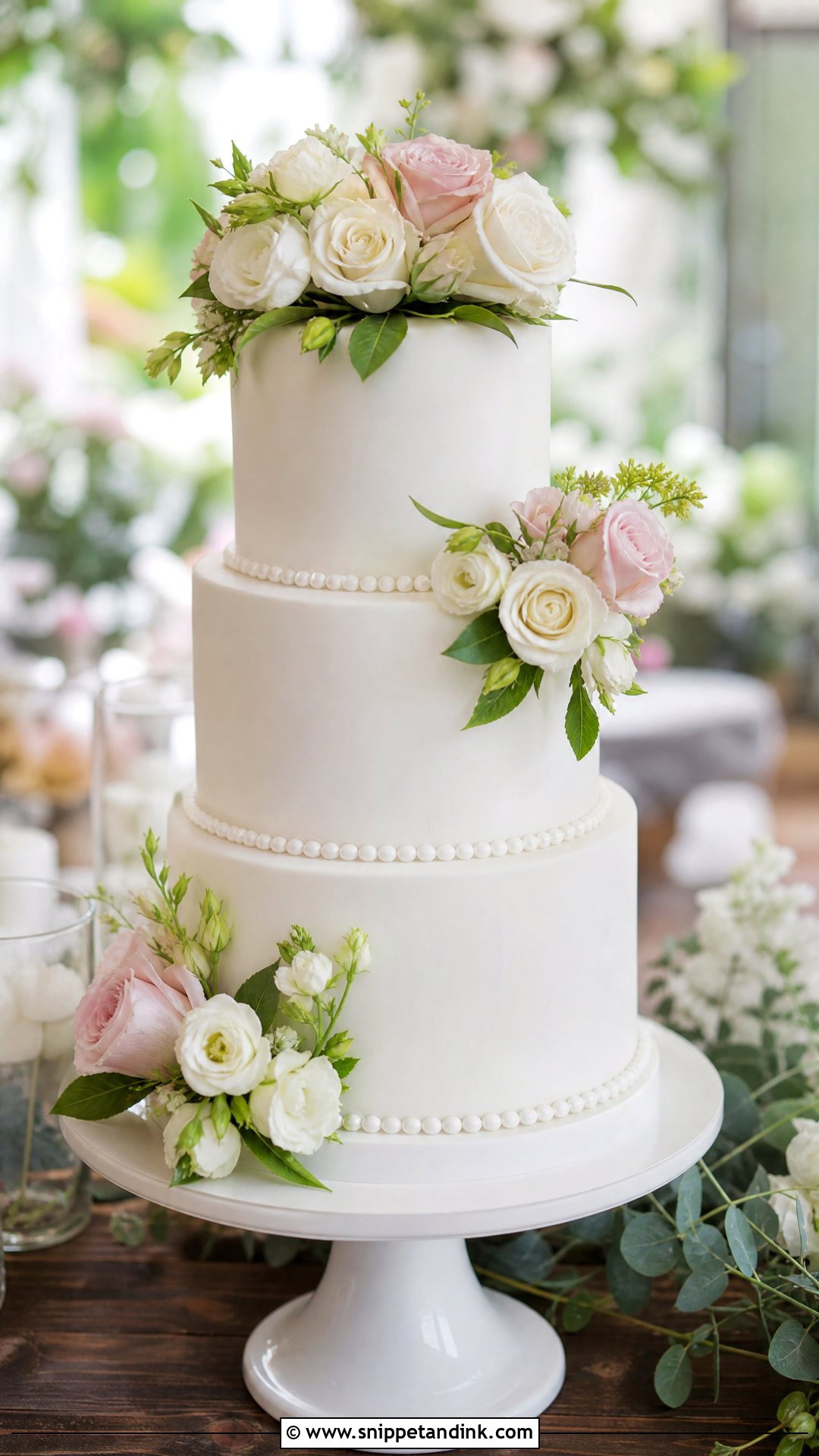
Fresh flowers look natural against fondant, but not every bloom belongs near food. Several popular wedding flowers, hydrangea and lily of the valley among them, are toxic, and florist stock is often sprayed. I ask the florist for unsprayed stems, then wrap every one in floral tape and push it into a food-safe straw or set it on a small barrier so nothing touches the cake directly. Roses, orchids, ranunculus and lisianthus are the usual picks. The flowers go on as late as possible, on site, before they can wilt or weep moisture onto the fondant.


15. Ruffle Fondant Wedding Cake
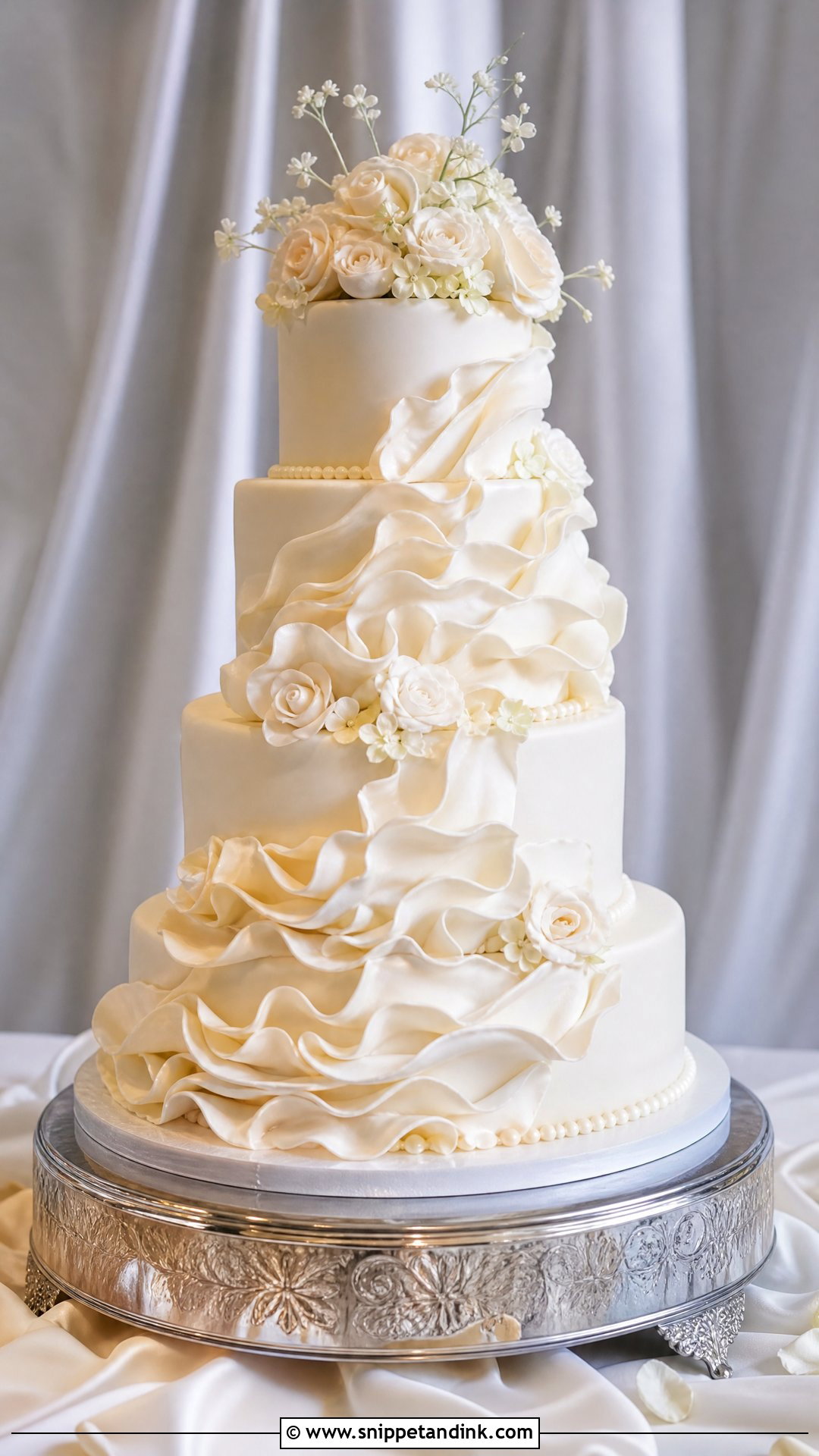
Ruffles are thin strips of fondant, often stiffened with a little tylose, frilled along one edge and layered from the bottom up. They’re heavier than they look, so on a tall cake I keep them to the lowest tier or two, where the structure can carry the weight. The resemblance to a bridal skirt is the whole point, and white or ivory keeps that reference clear. Next to ruffles, everything else should be quiet: a pearl border or one small floral topper.
16. Bow Fondant Wedding Cake
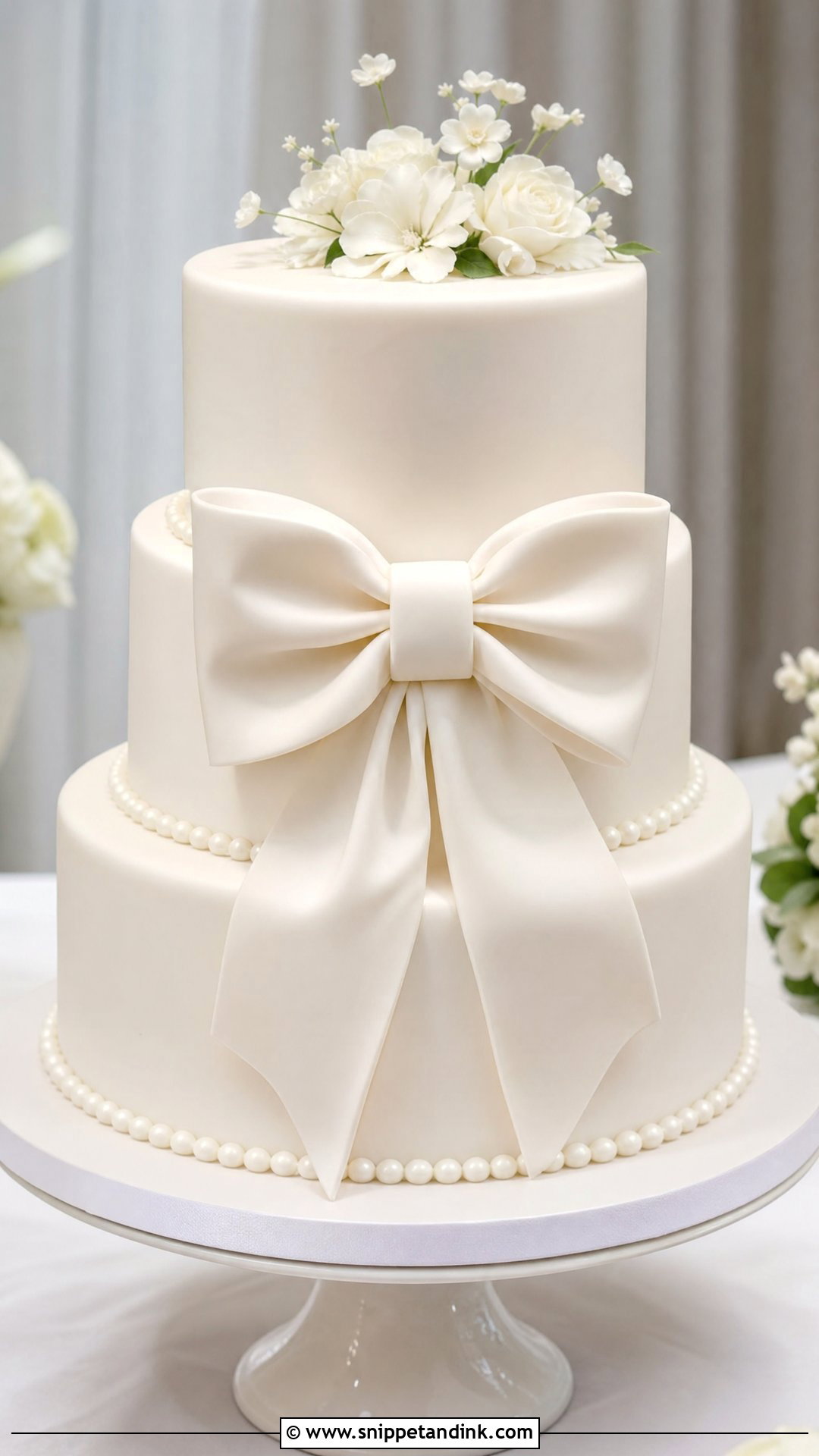
A sculpted bow has to dry over supports before it goes on the cake, or the loops sag by evening. I make large bows a few days ahead in fondant strengthened with gumpaste. A small bow on the front of one tier reads sweet. An oversized one reads like fashion and needs a very plain cake behind it. Black on white and champagne on ivory set quite different moods, and pearl trim or a simple monogram are the only companions I’d add.
17. Monogram Fondant Wedding Cake
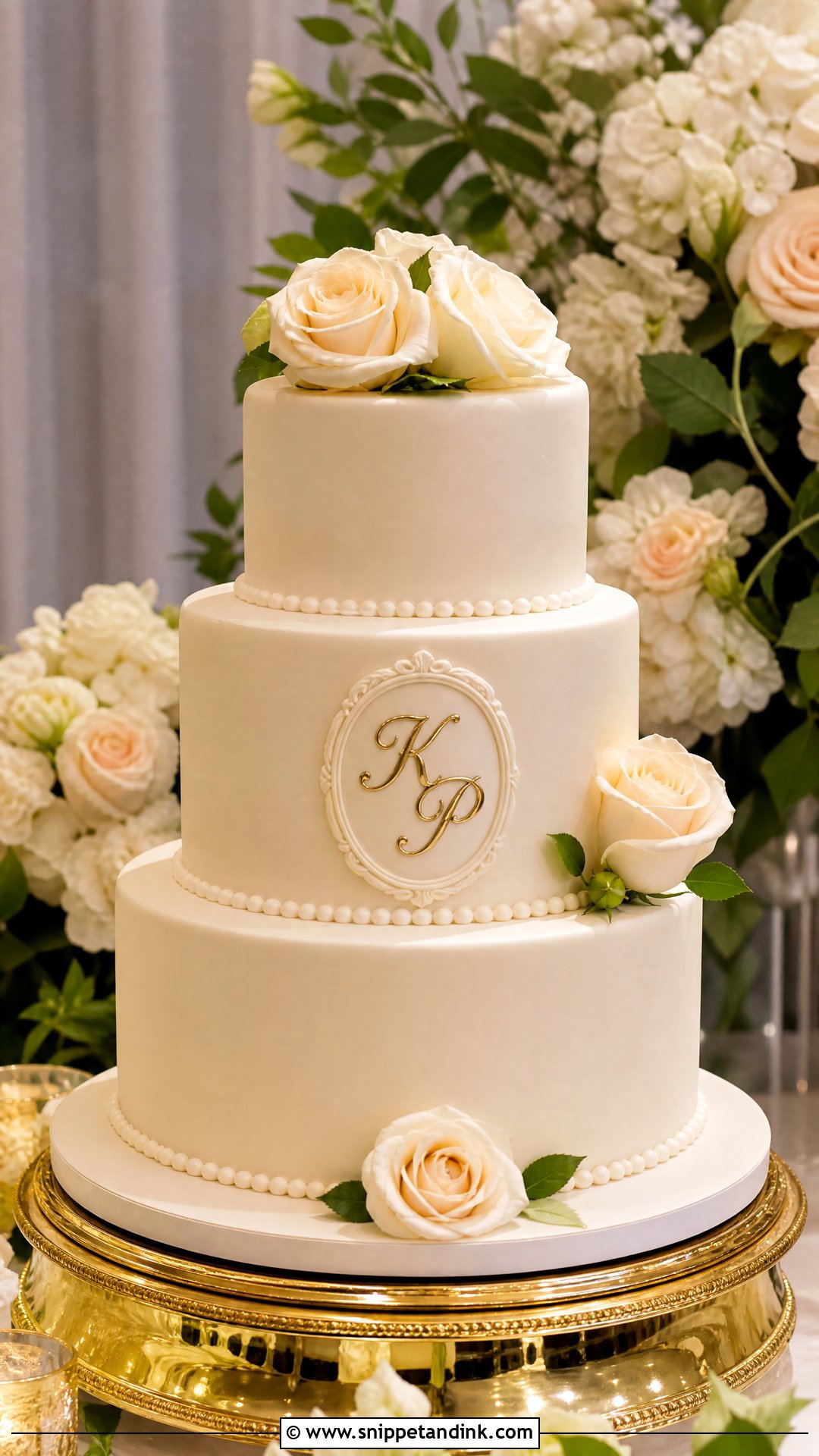
Initials are where I slow down. A monogram sits at eye level in the cake-cutting photo, so a letter that leans even slightly will show. I cut it from a printed template, then paint it in metallic, pipe it in royal icing or mount it as a raised plaque, and I confirm the spelling and the order of the initials with the couple in writing before I start. Keep the rest of that tier plain. Sugar flowers or a ribbon border elsewhere finish the cake without crowding the letters.
18. Geometric Fondant Wedding Cake
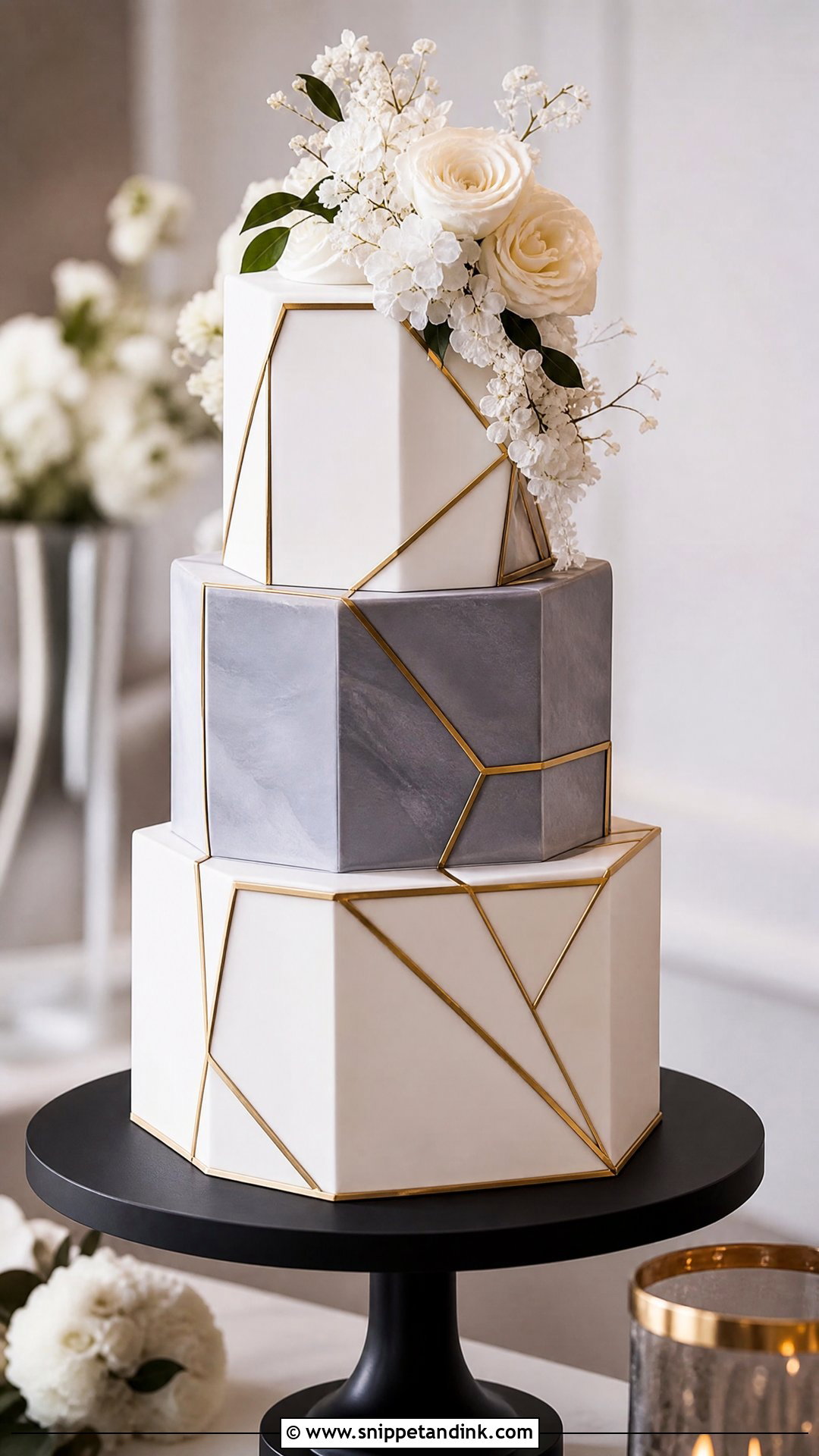
Geometric cakes live or die on precision. Hexagon and square tiers need fondant applied with crisp corners, sometimes panel by panel, and I fill and coat these in ganache rather than buttercream because ganache sets hard and holds a straight edge. Metallic lines and blocks of color give the architectural look. If the result feels cold, one small floral cluster softens it. Espresso or salted caramel suits the mood inside.
19. Square Fondant Wedding Cake
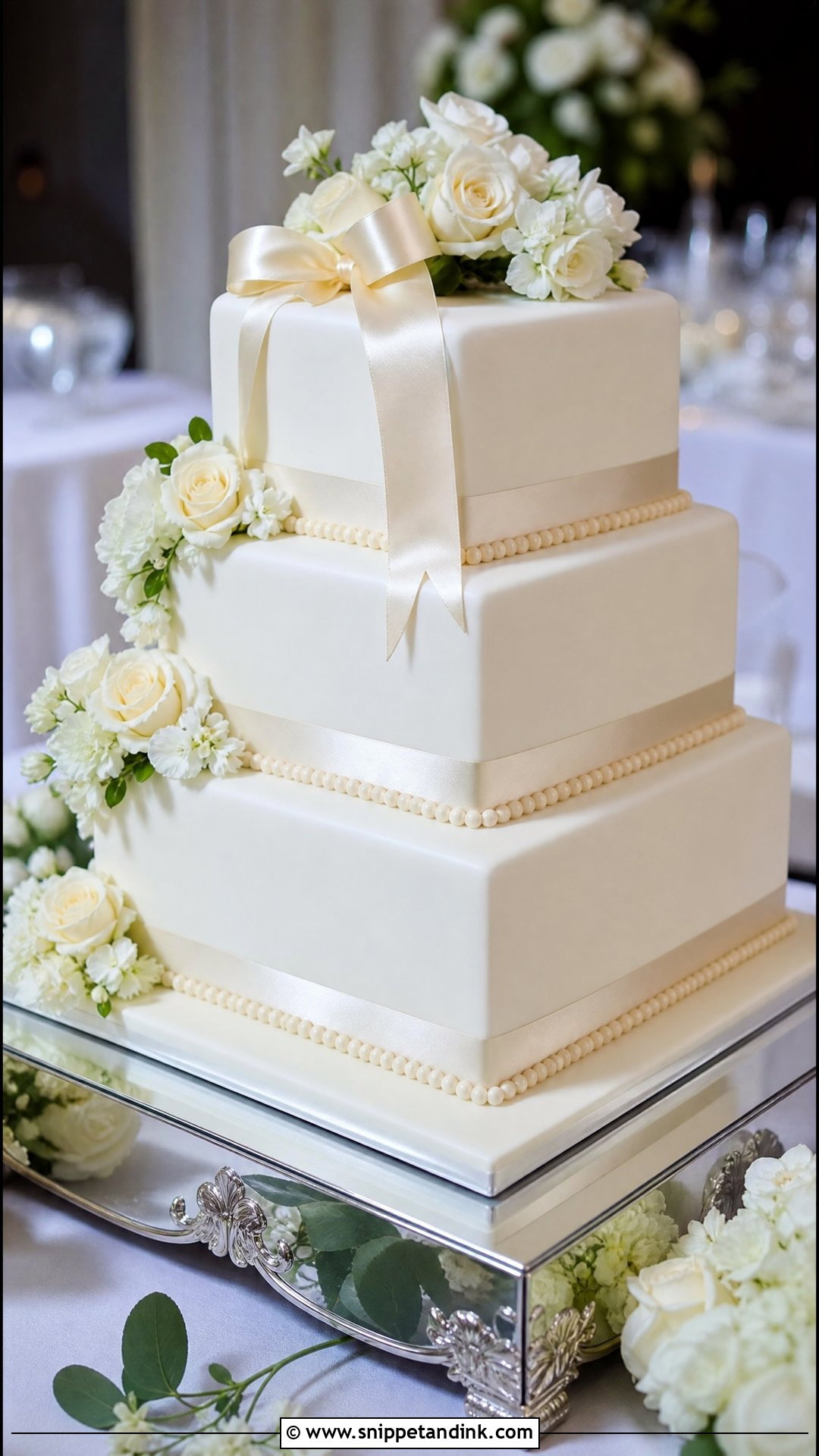
Square tiers are harder to cover than round ones. Fondant has to stretch around four corners without tearing or pleating, and cracks like to start right there, so ask any baker you’re considering to show you photos of their square cakes specifically. There’s a practical upside: square tiers cut into neat, even portions and serve more guests than a round tier of the same width. Ribbon borders, piped lace and flowers at the corners all suit the shape.

20. Tall Tiered Fondant Wedding Cake
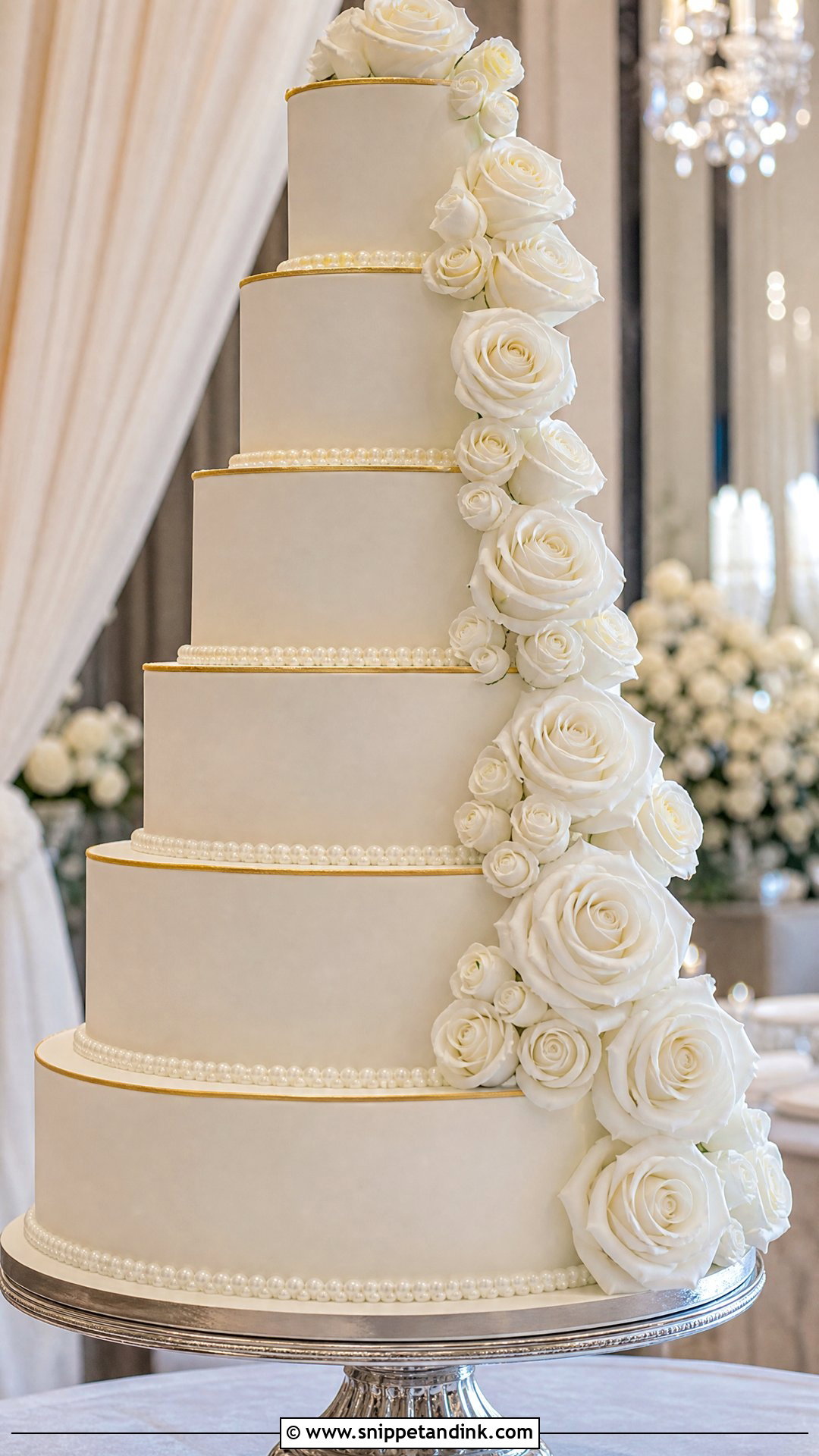
A tall tiered fondant wedding cake turns the cake table into a landmark in a large ballroom. Height needs engineering, though. Every tier sits on its own board supported by dowels, and on very tall cakes I run a central rod through the stack. Cakes of five tiers or more are often stacked on site rather than driven assembled. A floral cascade or matching lace ties the tiers together, and giving each tier a different flavor offers guests a choice.
21. Two Tier Fondant Wedding Cake
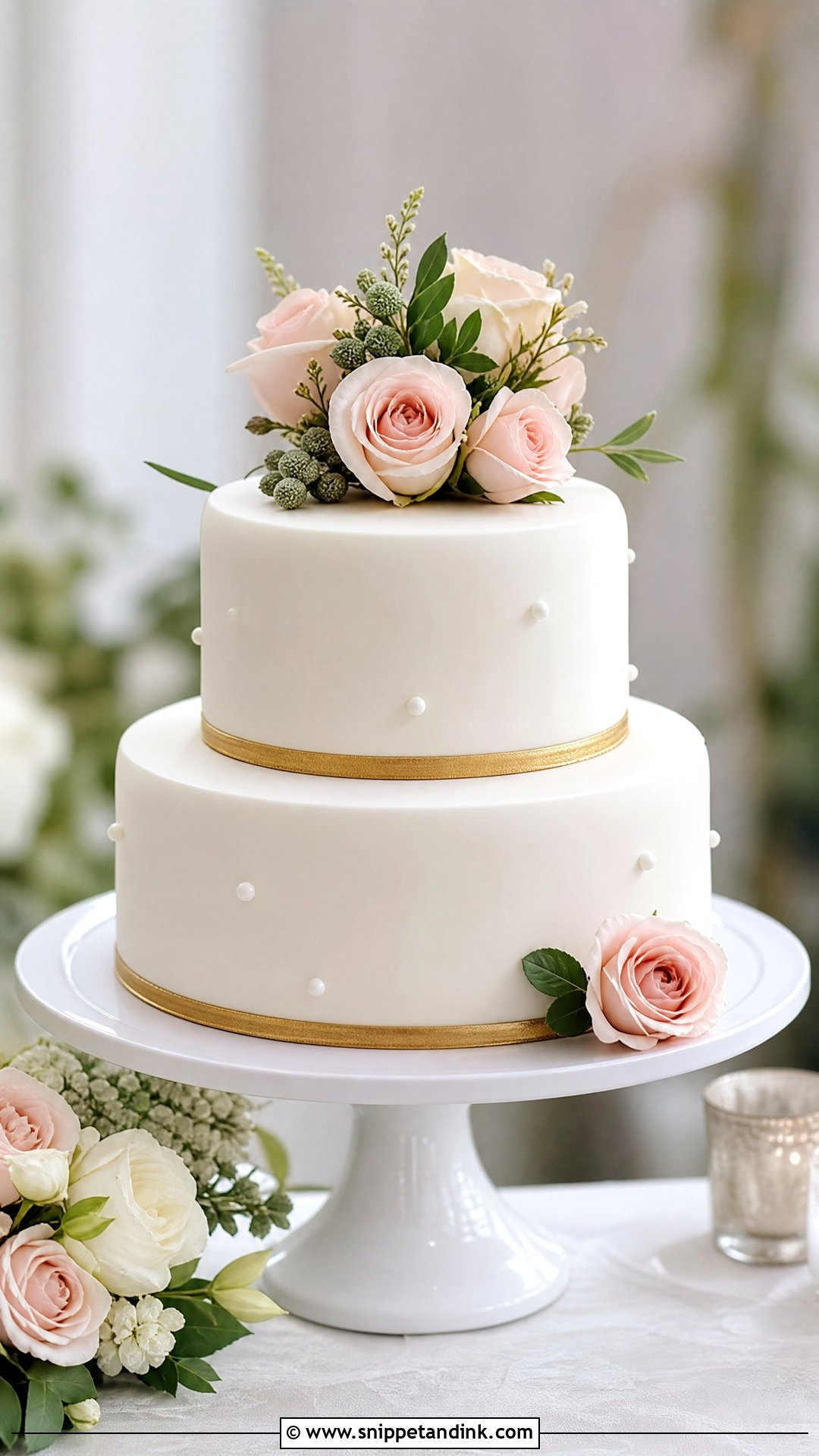
Two tiers suit courthouse celebrations, backyard receptions and small guest lists without swamping the table. Plain fondant can look a little empty at this size, so I’d add one personal detail, such as a bow, a monogram or a painted border. It pairs easily with dessert bars, cupcakes, or mini pastries when the guest count outgrows the cake. I always work out servings before we talk design, because a two-tier cake usually feeds fewer people than couples assume.
22. Three Tier Fondant Wedding Cake
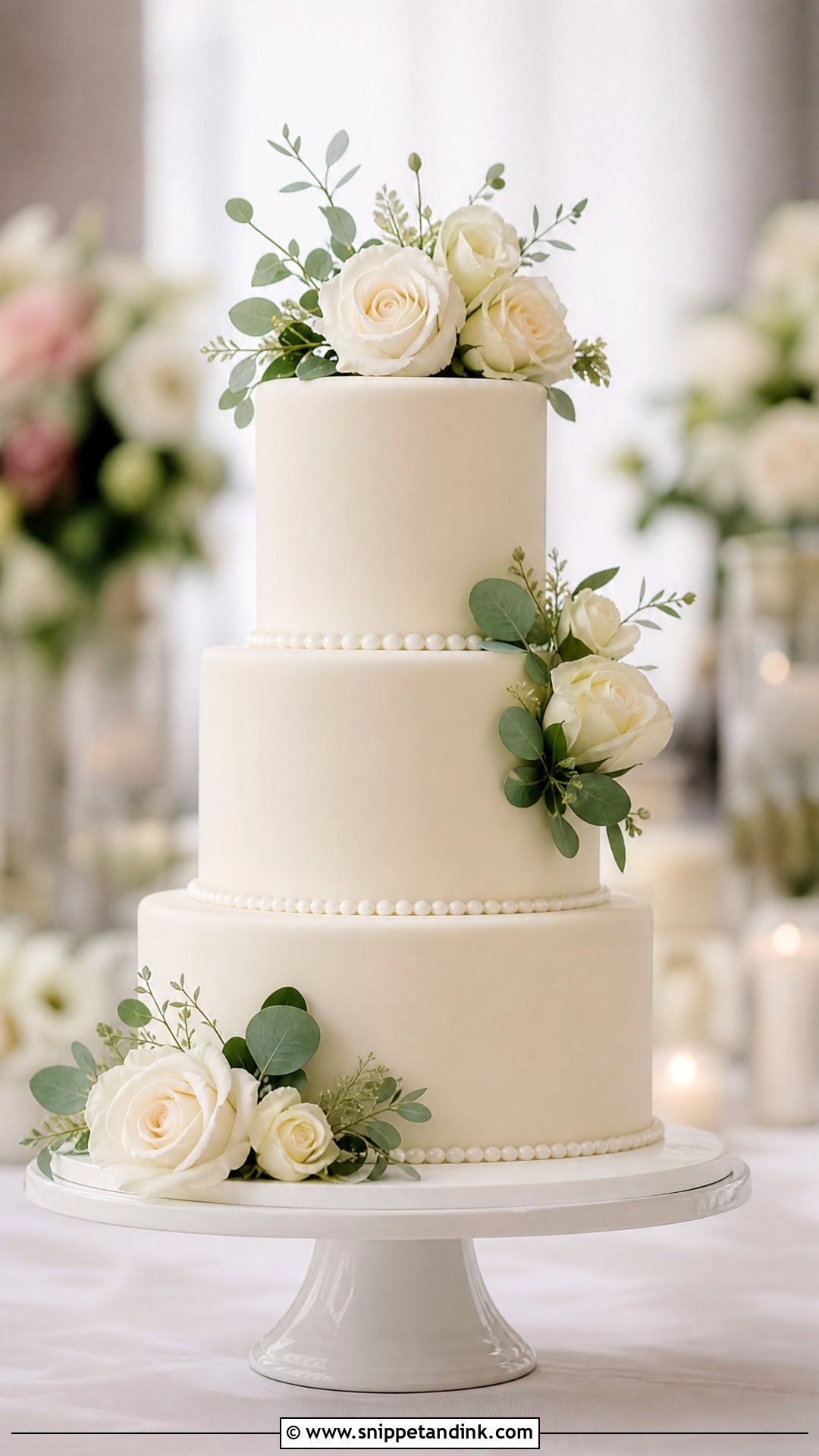
Three tiers is the size I recommend most often for a mid-sized wedding: enough height to hold the room, enough portions to be useful. It takes almost any treatment, from white with flowers to marble with gold leaf. It also gives room for three flavors, which helps when guests have strong preferences. If you plan to save the top tier, tell your baker so it’s left out of the serving count and boxed separately at the end of the night.
23. Five Tier Fondant Wedding Cake
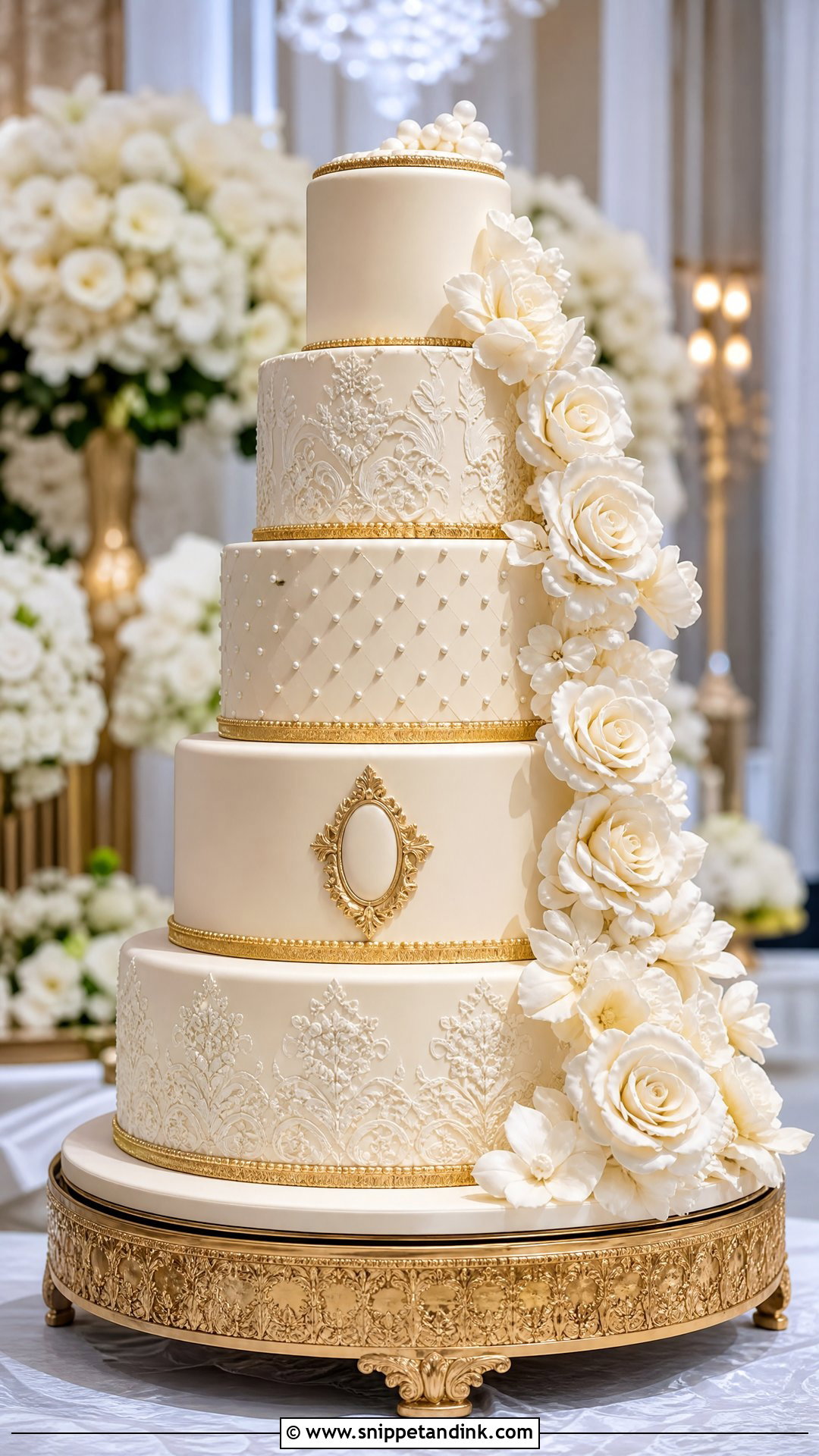
Five tiers is a commitment, structurally and on the budget. On a raised stand with flowers at the base it holds its own in a big room. To stop it looking heavy, I vary the treatment between tiers, lace on one, pearls on another, plain fondant on the rest, and let a floral cascade link them. Some five-tier cakes include one or two dummy tiers, polystyrene covered in fondant, which keeps the height without baking for guests you don’t have. Ask your baker whether that’s an option.
24. Watercolor Fondant Wedding Cake
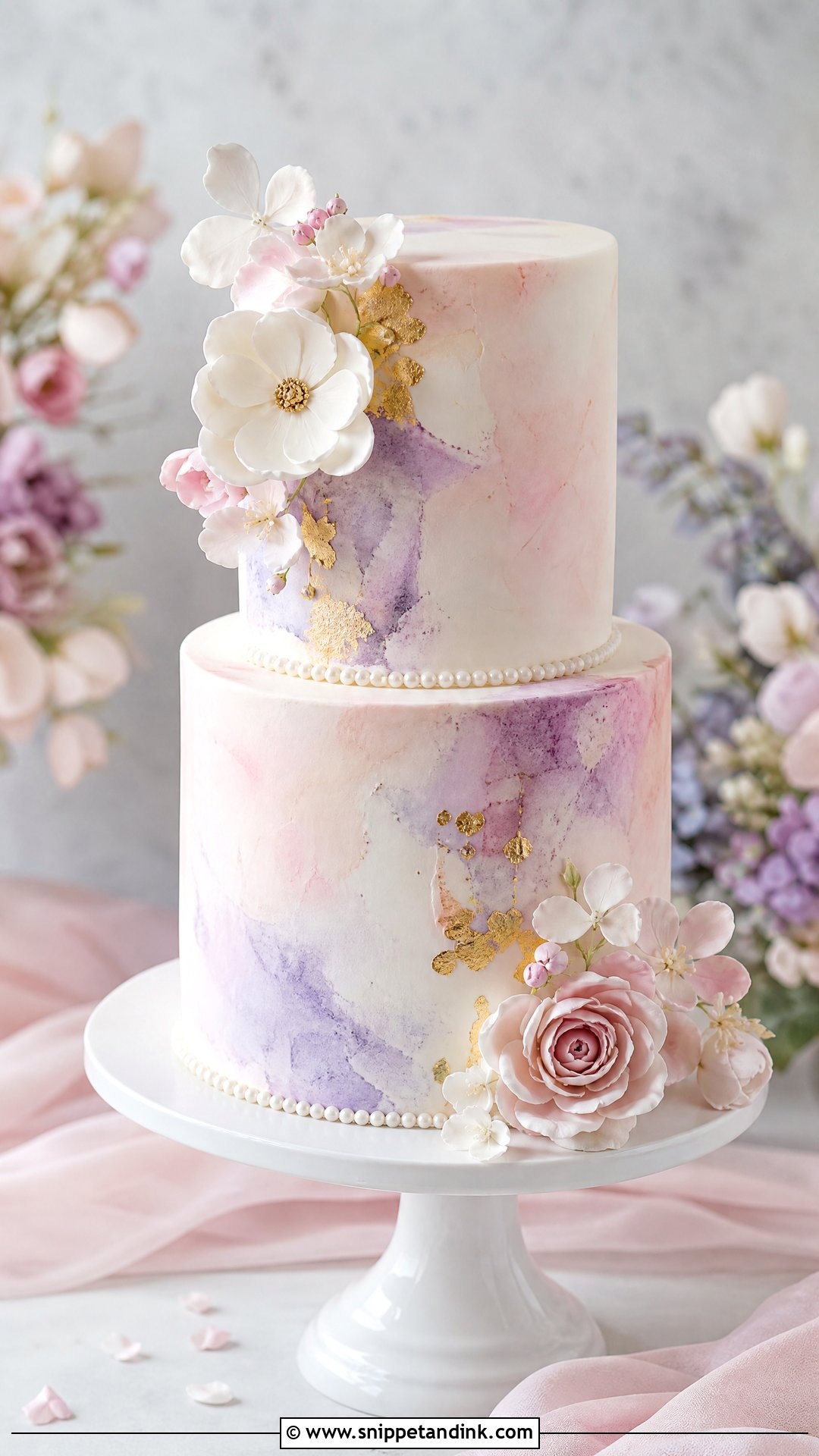
Watercolor effects are painted onto fondant with food coloring thinned in clear alcohol, which evaporates and leaves only the pigment behind. Fondant doesn’t absorb like paper, so too much liquid pools and dries with a hard edge; it’s a technique that needs a light, quick hand. Blush, lavender, blue, peach and sage washes all work. I keep the topping simple, one white flower or a little gold leaf, so the brushwork stays the feature.

25. Hand Painted Fondant Wedding Cake
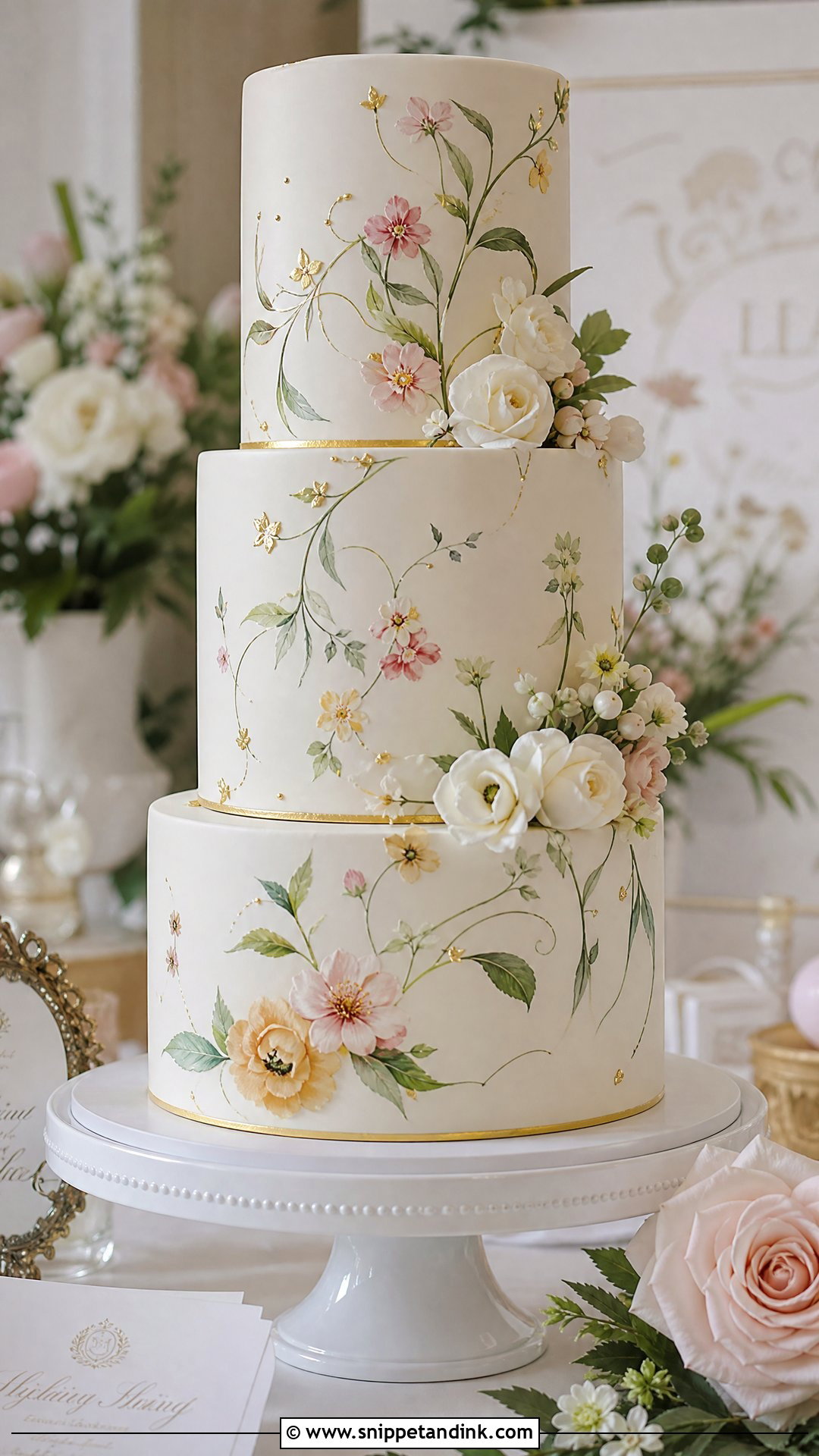
Hand painting turns the cake into a canvas for florals, vines, birds, initials or the motif from your invitation suite. Fondant suits it because the surface is smooth and dry, and I let covered tiers firm up overnight before painting so the brush doesn’t drag. Expect it to cost more and take longer than most finishes, since it’s freehand work tier by tier. Bring the invitation to your consultation. A few sugar flowers or metallic touches add depth, as long as they don’t cover the painting.
26. Ombre Fondant Wedding Cake
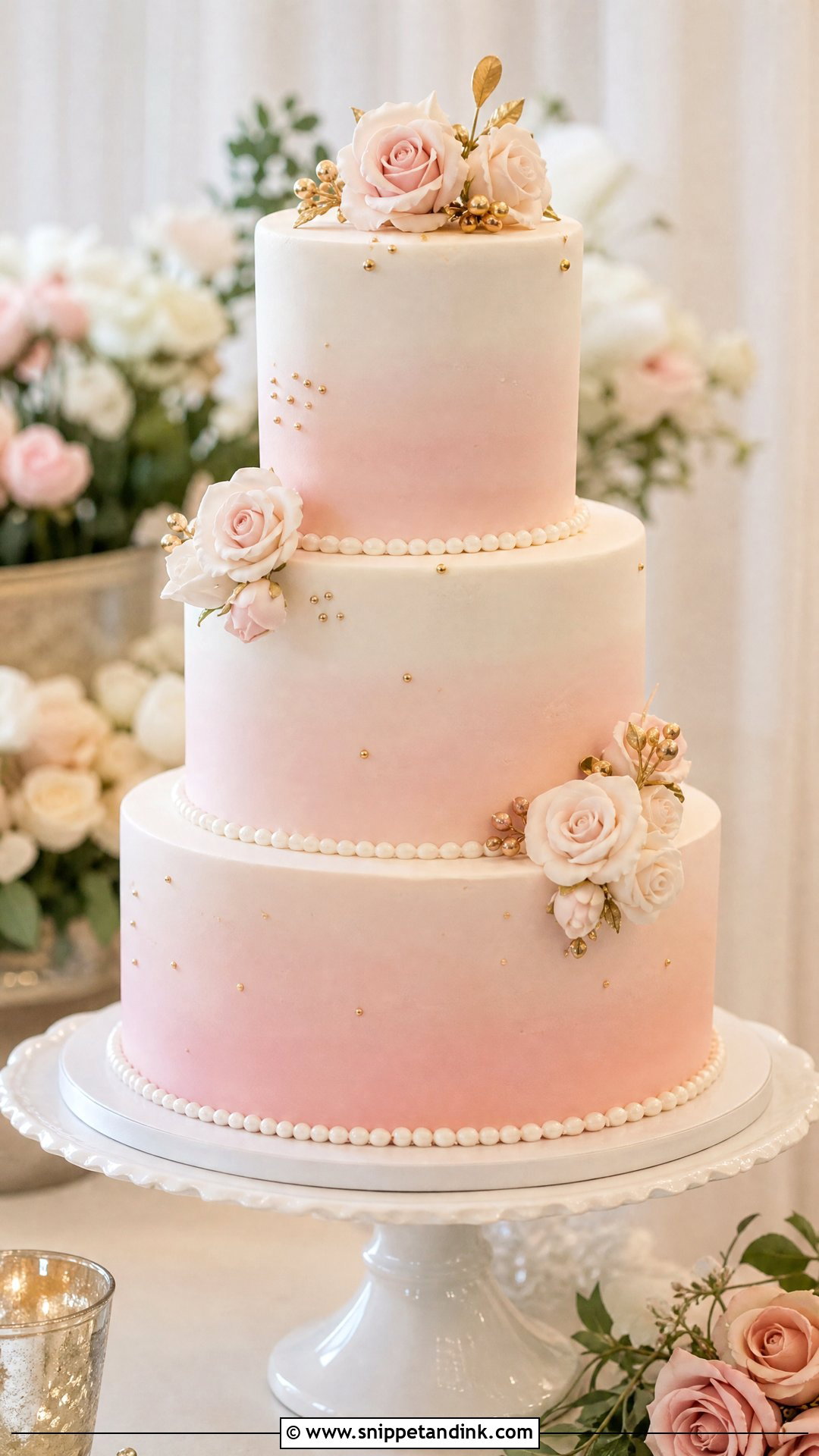
Ombre only works if each tier’s color steps evenly from the last. I mix every shade on the same day from one base color, because matching a single shade later almost never succeeds. White to blush, ivory to champagne, pale blue to navy and sage to deep green are reliable progressions. The color change does the decorating, so a few flowers at the top are enough.
27. Vintage Fondant Wedding Cake
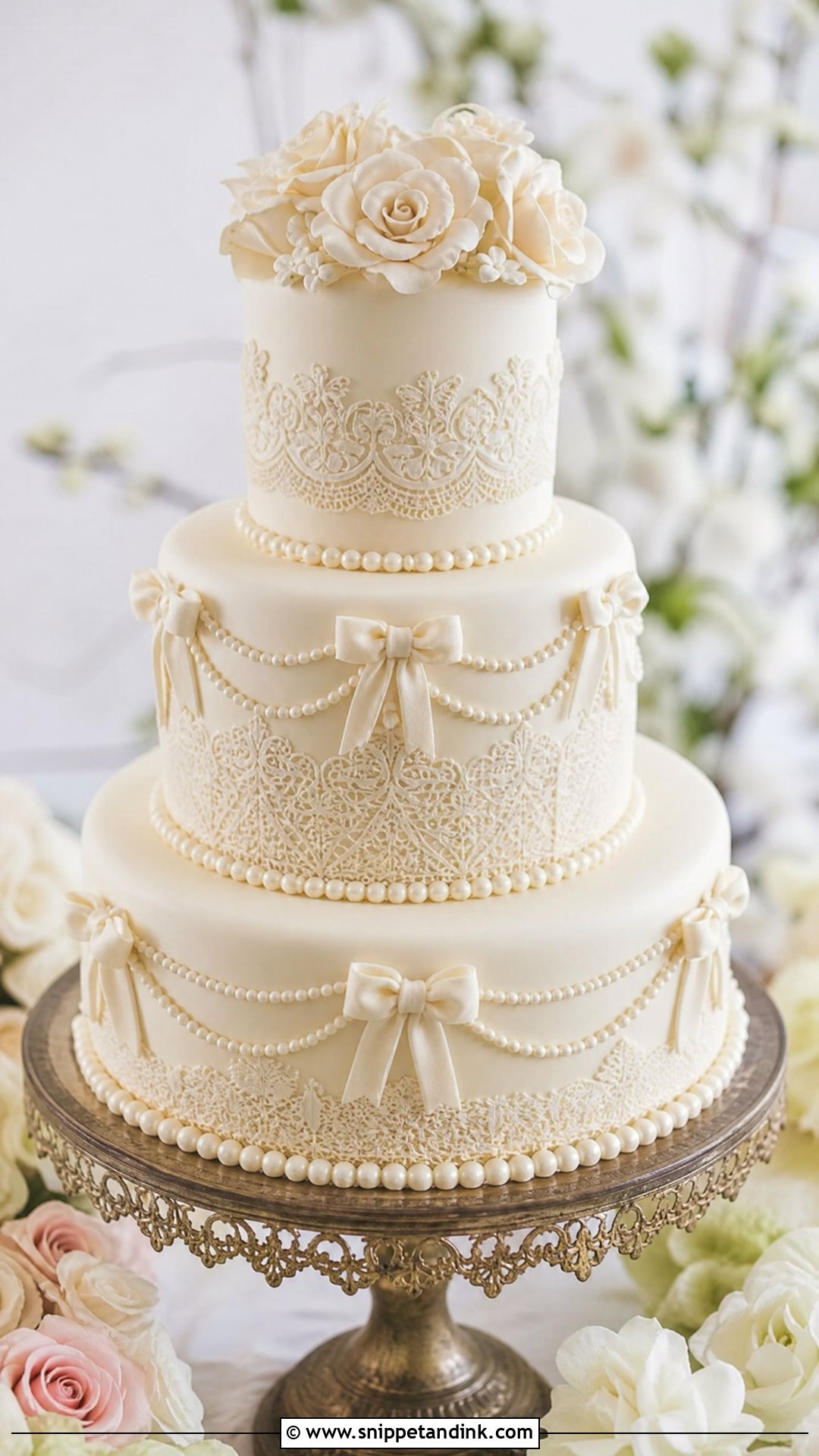
Vintage cakes borrow from older wedding cakes: piped borders, lace panels, swags, pearl trim and small bows on ivory tiers. Lambeth piping, the layered over-piping of mid-century cakes, has come back and sits well on fondant. The skill is keeping it current, so I’d pick two of those details rather than all of them. It suits historic venues and weddings with an heirloom dress or family pieces, and almond or spice cake inside carries the nostalgic feel.
28. Minimalist Fondant Wedding Cake
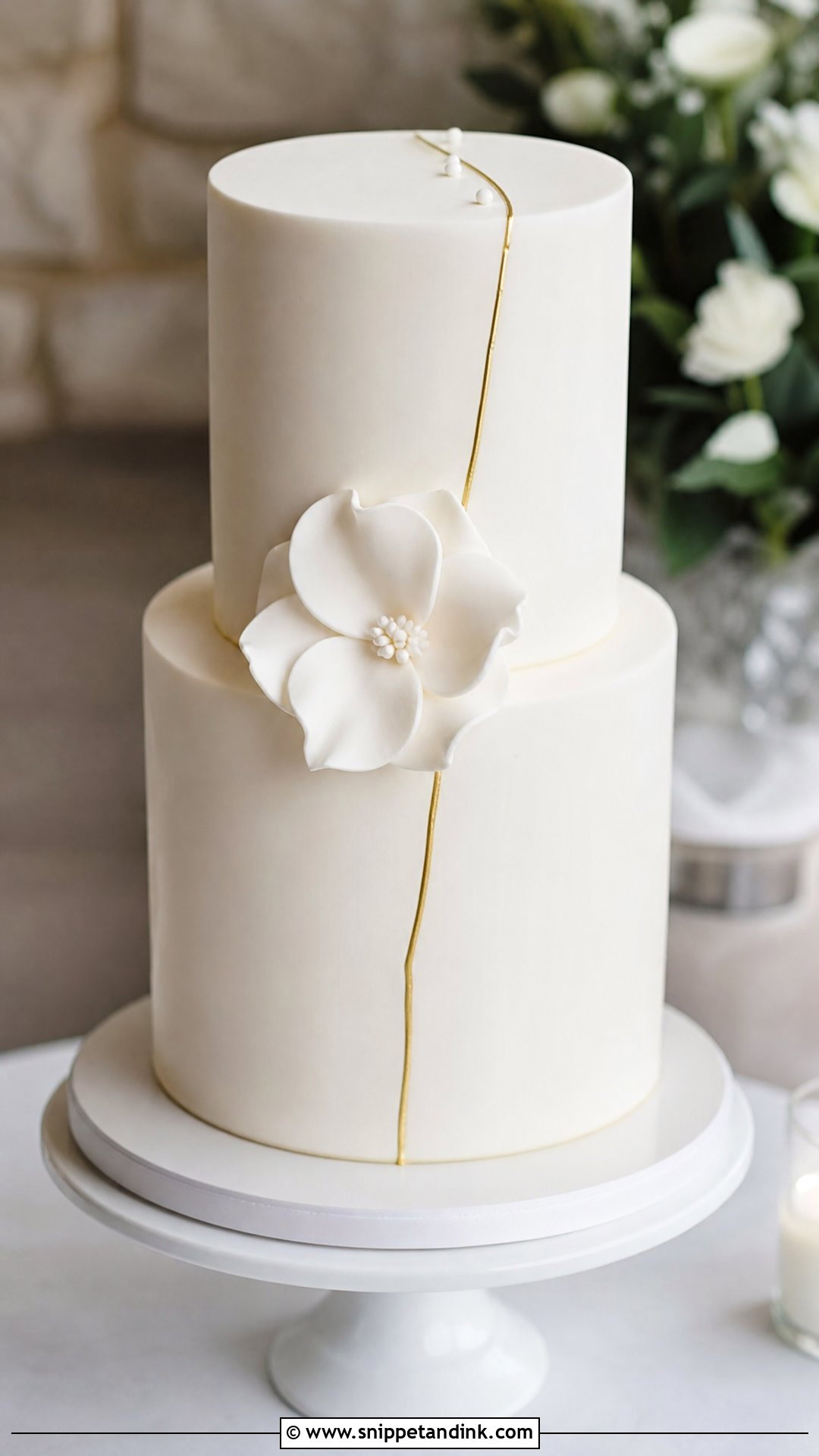
Minimal cakes are the least forgiving thing I make. With one detail, perhaps a single sugar flower or a thin gold line, there’s nothing to hide a bulge, a settling tier or a dent in the fondant. That makes a plain cake a good test of a baker’s finishing, so look closely at those in a portfolio. Keep the stand and table equally restrained.
29. Modern Fondant Wedding Cake
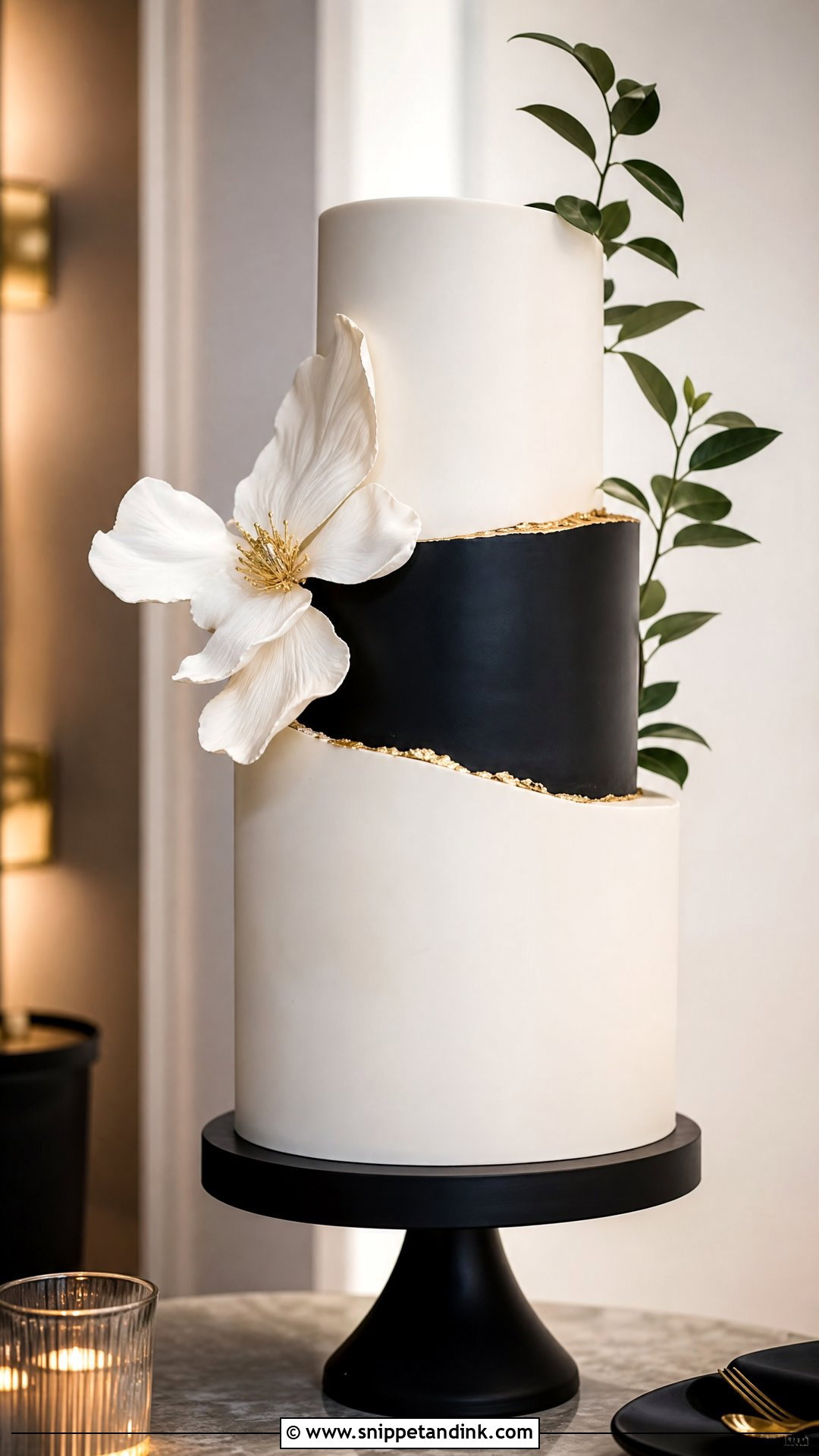
Modern fondant cakes rely on shape and negative space: flowers set off-center, one geometric panel, a strong color like navy or sage. The trap I see is trend-stacking, where marble, a gold drip, geometric panels and flowers all land on the same cake. I’d pick one idea and let the tier shapes carry it. City weddings, rooftop receptions and museum venues suit this approach.
30. Rustic Fondant Wedding Cake
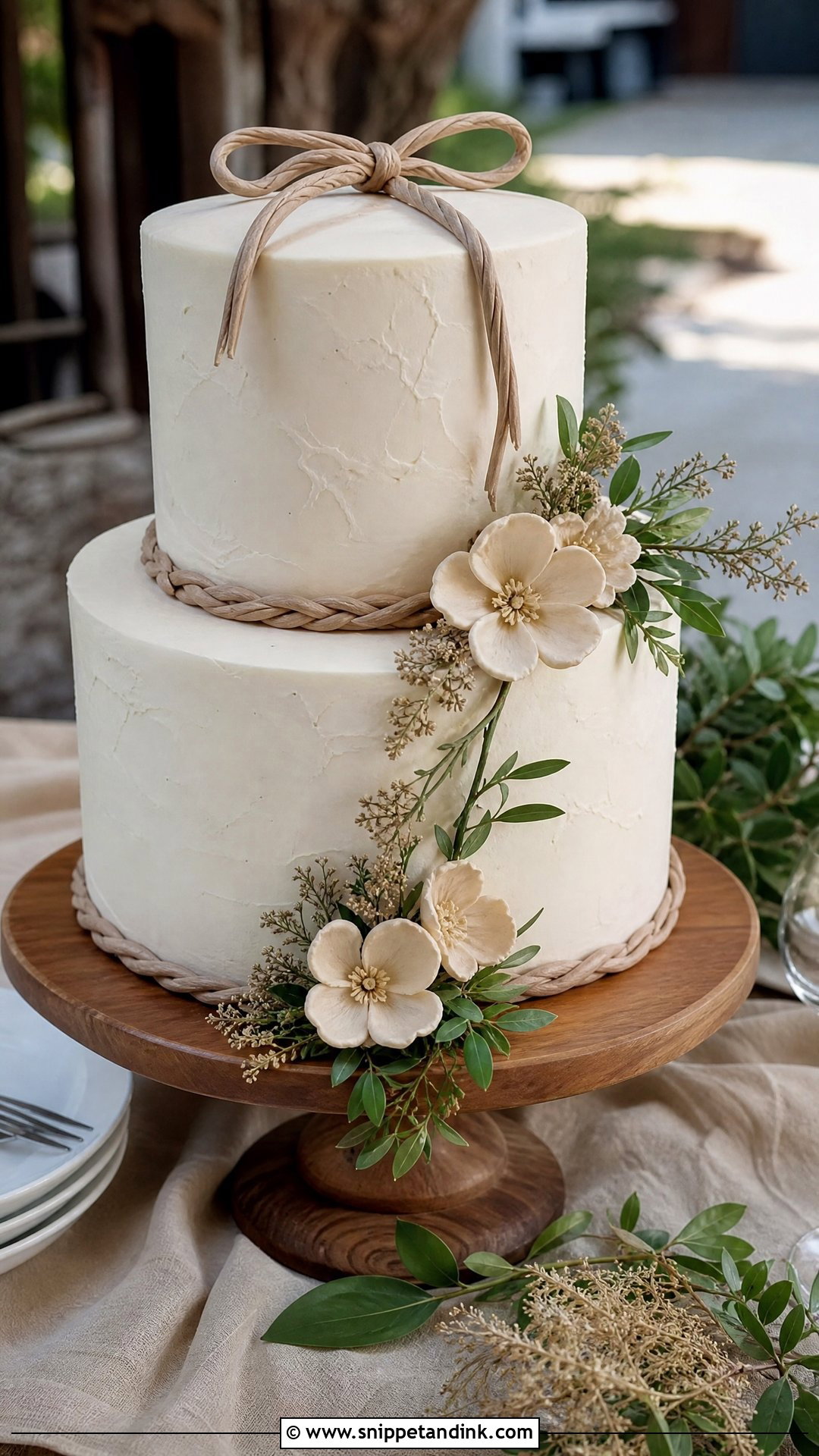
Rustic and fondant sound like opposites, since rustic cakes are usually rough buttercream. Fondant gets there through texture instead: bark impressions, wood-grain mats, fondant twine and greenery, in ivory, sage, taupe or warm white. Dried flowers suit the look too, but many dried stems are dyed or treated, so I keep them on a barrier rather than pushed into the cake. Barns, vineyards and relaxed garden venues are its natural home, with carrot, spice or maple cake inside.
31. Garden Fondant Wedding Cake
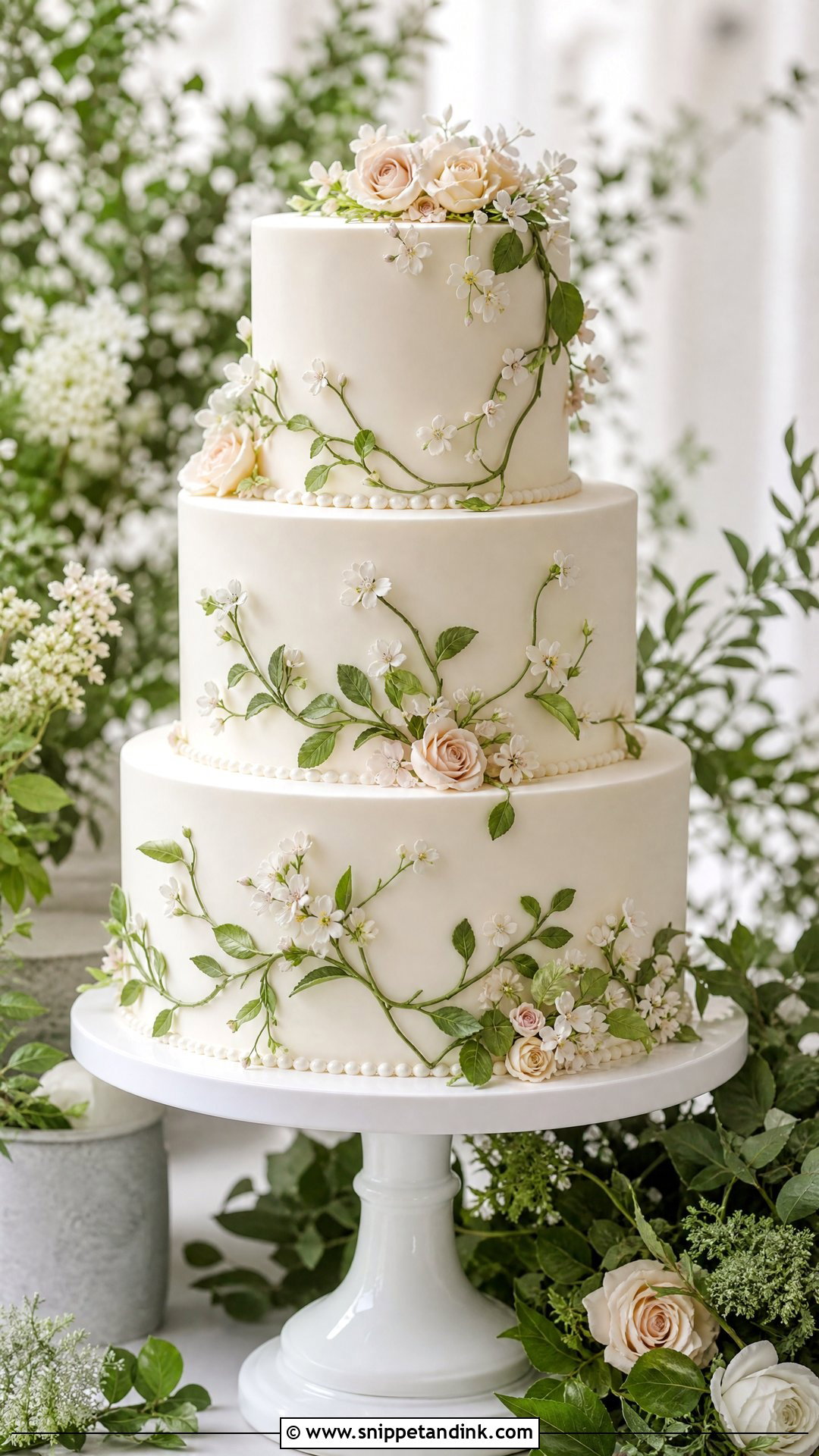
A garden cake should look as if it grew there: sugar vines climbing a tier, small blossoms and leaves, a cluster of roses or ranunculus. I leave gaps between the pieces, because a crowded garden cake reads as a wall of sugar. Pastels, ivory and light green suit tented receptions and summer ceremonies. Plan shade for the cake table if it’s outdoors. Lemon elderflower or pistachio inside fits the season.
32. Beach Fondant Wedding Cake
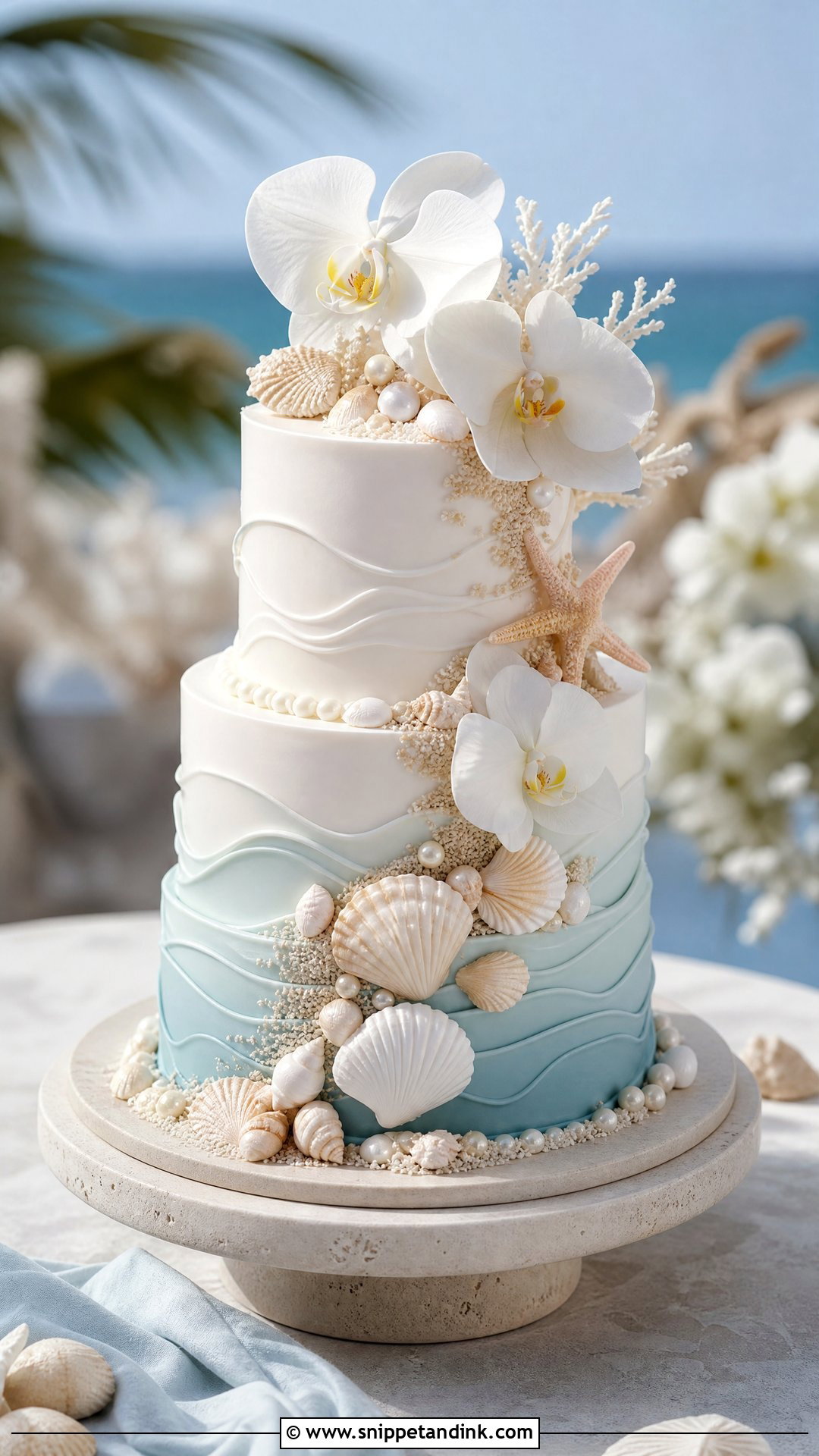
A beach fondant wedding cake is better restrained. Sand, white, pale blue and sea-glass tones with a subtle wave texture or a few sugar shells set the scene without turning into a theme party. The bigger issue is weather. Fondant softens and turns tacky in sea air, and a cake on a terrace in direct sun can start to lean within the hour. I deliver beach cakes as late as the schedule allows and ask for a shaded table, indoors if possible. Coconut, lime or passion fruit suits the setting.
33. Tropical Fondant Wedding Cake
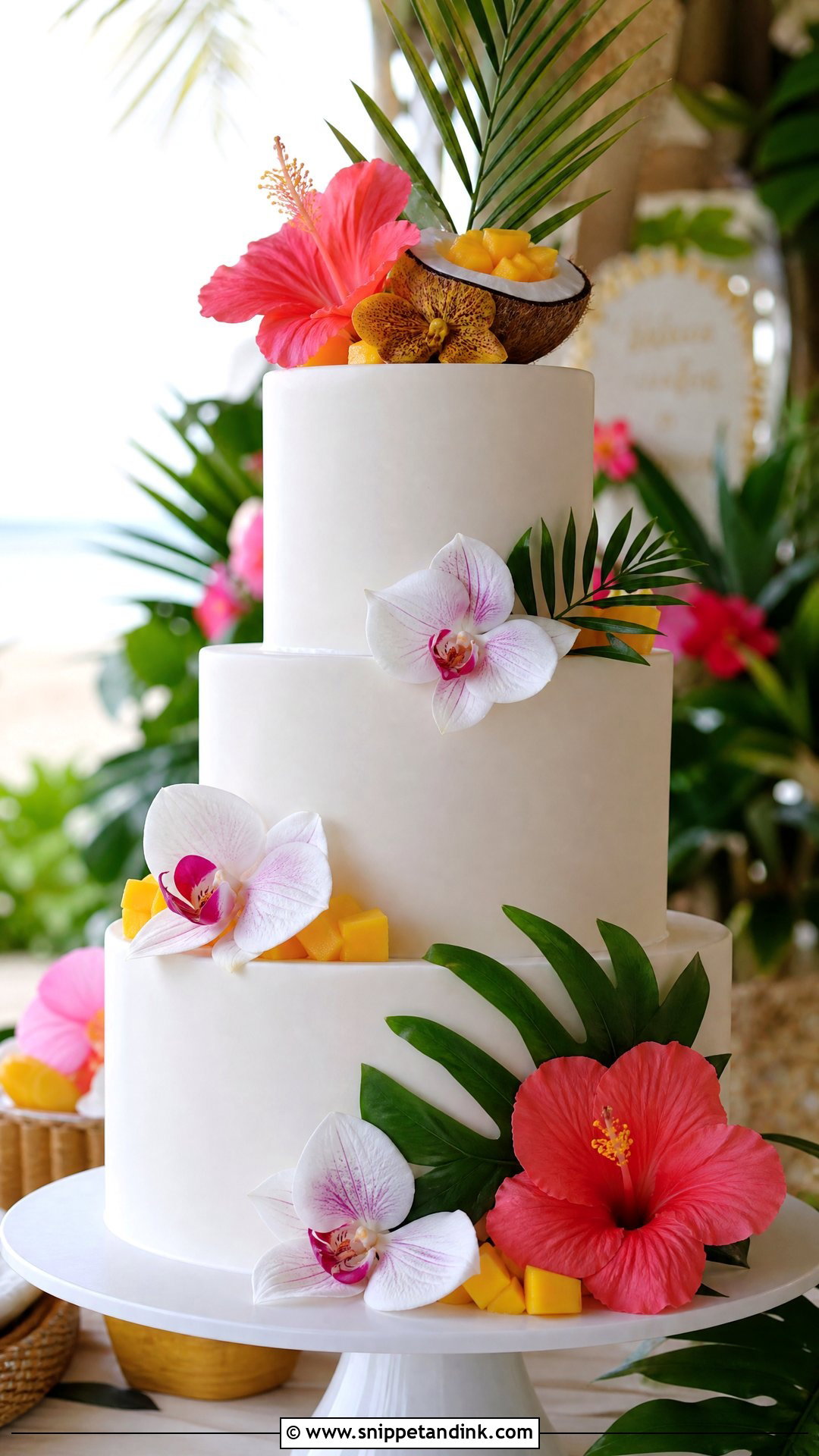
A tropical fondant wedding cake can tip into party cake quickly, so I keep the tier shapes clean and the palette disciplined: white or pale green with sugar orchids, hibiscus or palm leaves. Real fruit is risky on fondant because its juice dissolves the sugar and leaves wet spots, so I’d use sugar fruit, or place real fruit on a barrier just before serving. Mango, pineapple or passion fruit fillings bring the flavor without the mess.
34. Floral Cascade Fondant Wedding Cake
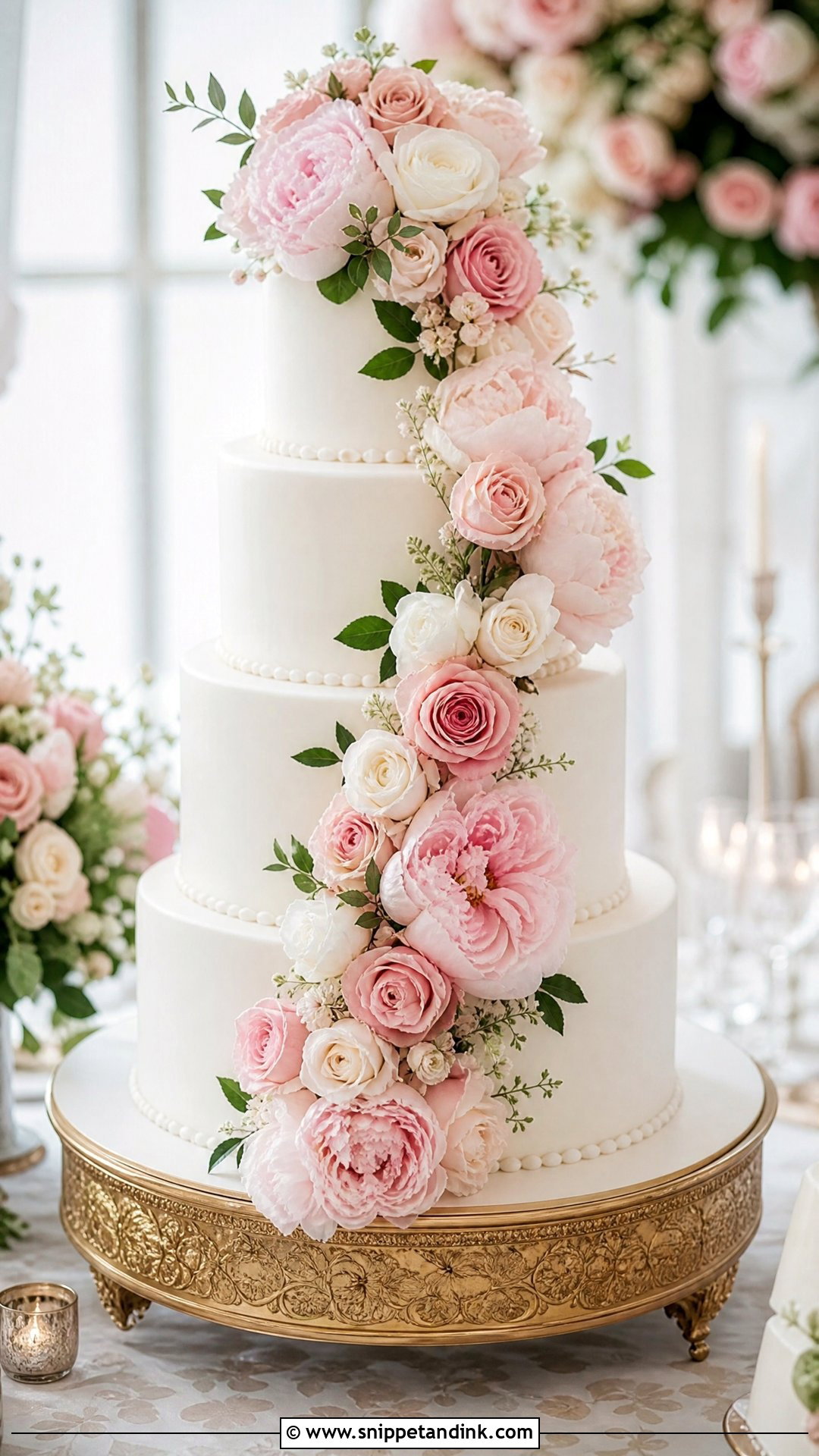
A cascade starts with a larger cluster near the top and trails diagonally down the tiers. The angle matters more than the flowers. Too steep and it looks as if it’s sliding off; too shallow and it reads as a band. I sketch the path on paper before placing anything. Sugar, fresh or mixed flowers all work, and tall cakes gain the most because the cascade links every tier. Keep the rest plain.
35. Fondant Wedding Cake With Cake Topper
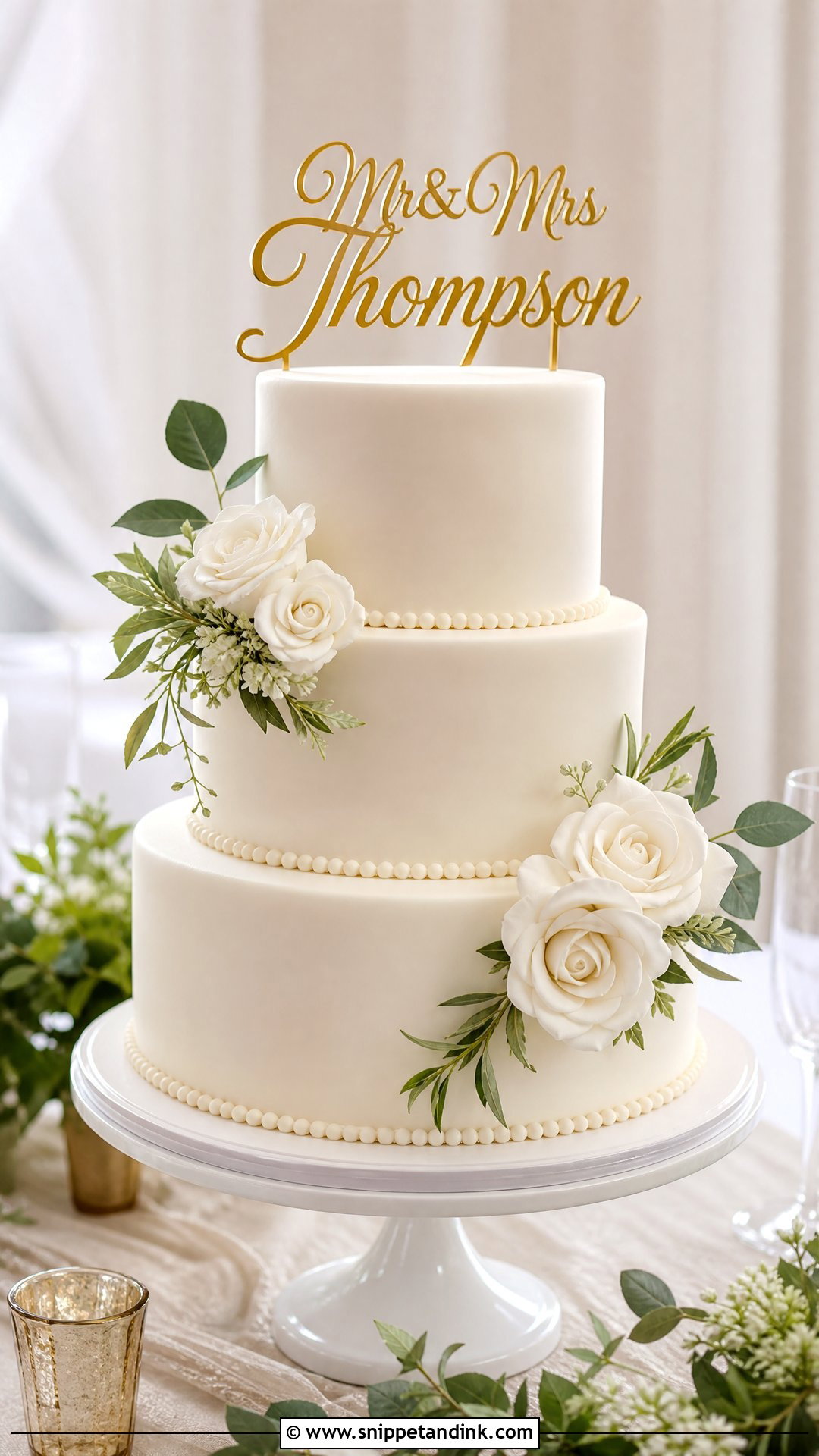
Toppers are where I see proportion go wrong most often. A topper should be in scale with the top tier; a large acrylic name sign on a six-inch tier looks ready to tip over. Anything with weight also needs support, so I set a dowel or straw into the top tier first. Custom names, initials, a floral accent or a sculptural piece all work, and repeating the topper’s metal finish or flower somewhere lower on the cake ties the design together.
Getting the Cake From My Kitchen to Your Reception Table
Most of the work on a fondant cake is finished days before the wedding. Sugar flowers and sculpted bows are made weeks ahead, the tiers are baked and covered a day or two before, and the last decision is how the cake travels. Short, sturdy cakes can go fully stacked in an air-conditioned car on a flat surface. Tall ones go in separate tiers and get assembled at the venue, which takes time you’ll want built into the schedule.
What I ask a venue for:
- A level, sturdy table that doesn’t wobble when someone leans on it. A cake stand on a folding table that tilts slightly will slowly lean the whole cake.
- A spot out of direct sun and away from heaters, kitchen doors and the dance floor speakers, which vibrate more than you’d think.
- Access to the room an hour or more before guests arrive, so fresh flowers go on late and I can repair any scuffs from the drive.
- A named person who will cut and serve, with the internal dowels and boards pointed out to them, since those have to come out before slices go on plates.
Questions That Belong on Your Tasting Agenda
A tasting is the moment to ask the practical things, not only to pick a flavor. These are the questions I’d want a couple to ask me.
- Is the coat under the fondant ganache or buttercream, and how will that affect the edges in the design I’ve chosen?
- Do any of my fillings need refrigeration? Fresh cream and cream cheese fillings sit awkwardly under fondant at a long reception.
- Who places the flowers, you or the florist, and how are the stems protected from the cake?
- How many servings does this size give, and would a dummy tier or a kitchen sheet cake cover the rest?
- If we save the top tier, how should it be wrapped and frozen, and how should we thaw it so the fondant doesn’t sweat?
Where Fondant Is Worth the Extra Work
Fondant earns its place when you want structure, crisp lines or detail work that needs a firm surface. If the cake will sit outdoors in July heat for hours, or your crowd cares more about frosting than finish, ask your baker honestly about ganache or buttercream alternatives. Whichever of these 35 you take to a tasting, look at it from every side of the table, and tell your baker exactly where and when it will be displayed. Those details decide how it looks at the cutting as much as the design does.
You'll Like These Ideas:







Leave a Reply