
A white cake shows every choice a baker makes, which is exactly why I enjoy designing them. With no color to carry the design, the finish does the talking: smooth buttercream, crisp fondant, a ruffle, a band of lace, a single bloom. Small details read loudly on a white surface, so one well-placed accent usually looks better than four. The ideas below run from two-tier elopement cakes to long sheet cakes for a big crowd, with notes on how each finish behaves and where it tends to go wrong.
Why Your White Cake Might Come Out Ivory
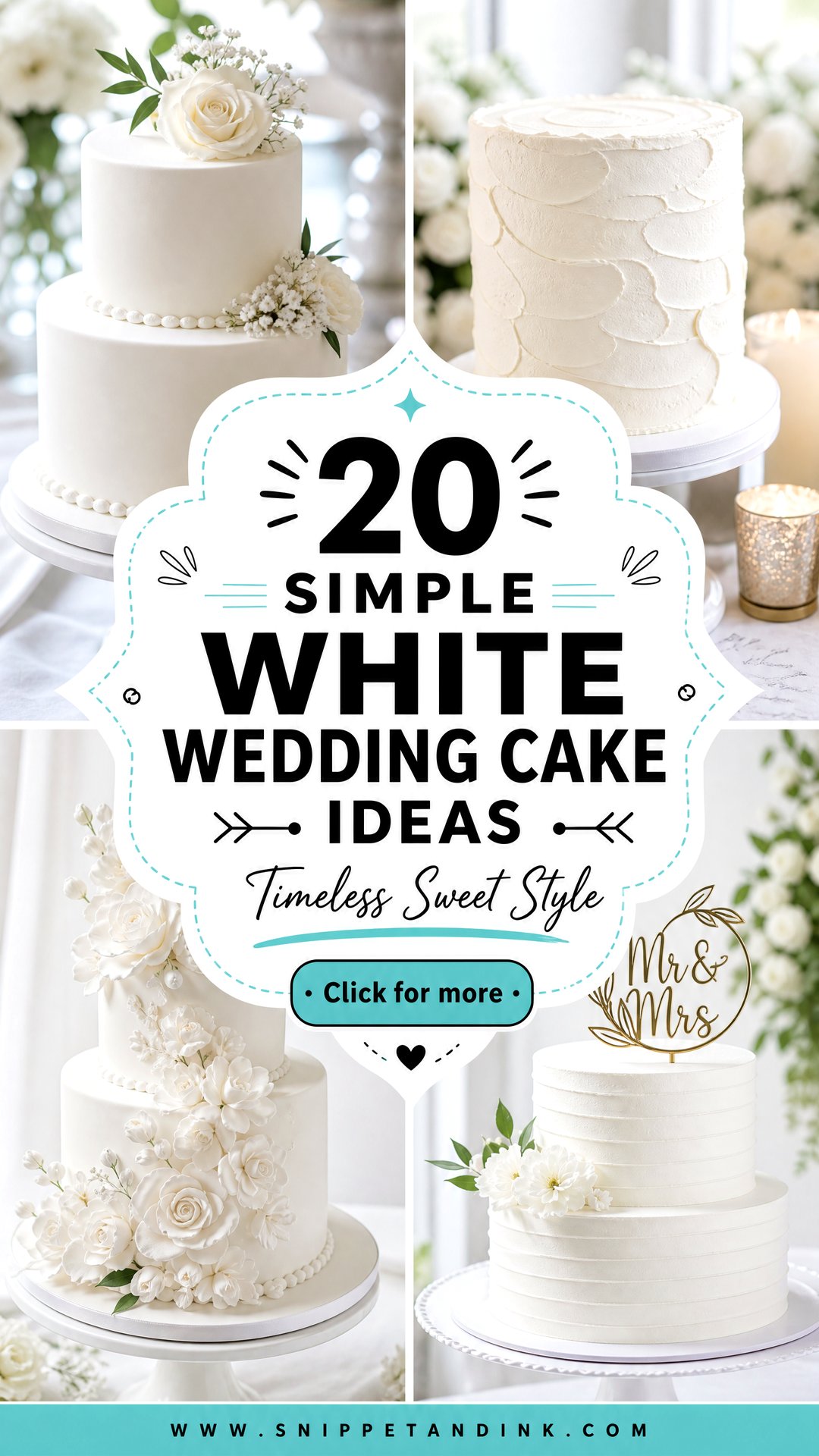
Couples are often surprised when I tell them a buttercream cake is rarely pure white. Butter is yellow, so any frosting made mostly from butter lands somewhere between cream and ivory. That’s not a flaw, and next to an ivory gown it often looks better than stark white. If you want bright white, it’s worth knowing how each finish gets there.
- Fondant is the whitest option and stays that way, which is why it suits a snow-white dress.
- Buttercream can be brightened with a tiny touch of violet coloring that cancels the yellow, or made with part shortening, which changes the taste slightly.
- Swiss meringue buttercream is silkier but usually ivory, and it shifts warmer as it softens.
- Ganache under fondant gives a firm, clean base; on its own it isn’t white at all.
Bring a fabric swatch from your dress or linens to the tasting. Holding it beside a frosted sample is the quickest way to agree on which white you actually mean.
1. Simple White Buttercream Wedding Cake
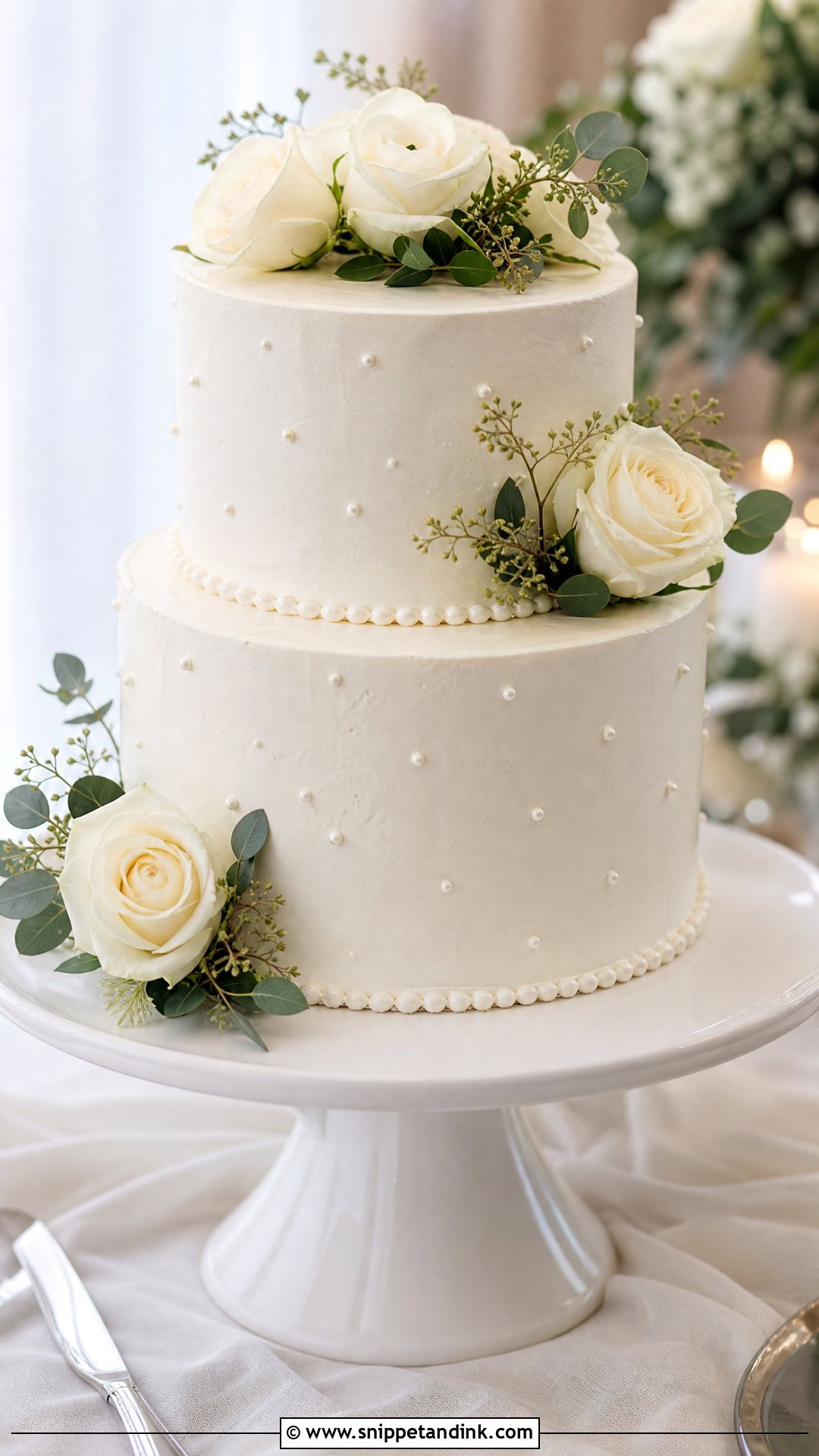
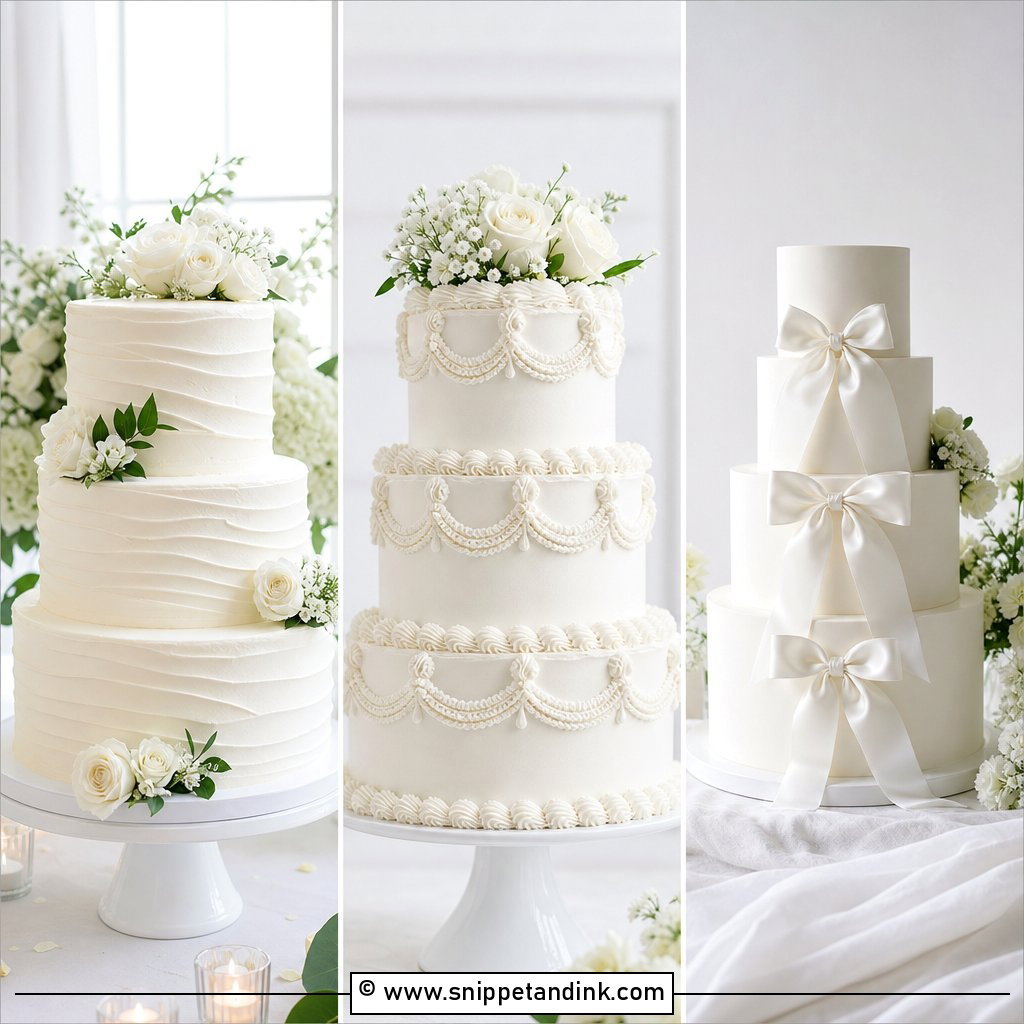
Smooth buttercream is the cake I suggest to most couples who aren’t sure what they want. It’s soft to cut, most guests prefer the taste to fondant, and it takes a few piped borders or pearl dots well. The trade-off is warmth. Buttercream softens in a hot room, so for a summer reception I want to know where the cake table sits before I design anything. Vanilla bean, lemon or white chocolate sponge keep the inside light, and a few white roses or a sprig of greenery finish it.
2. Two Tier White Wedding Cake
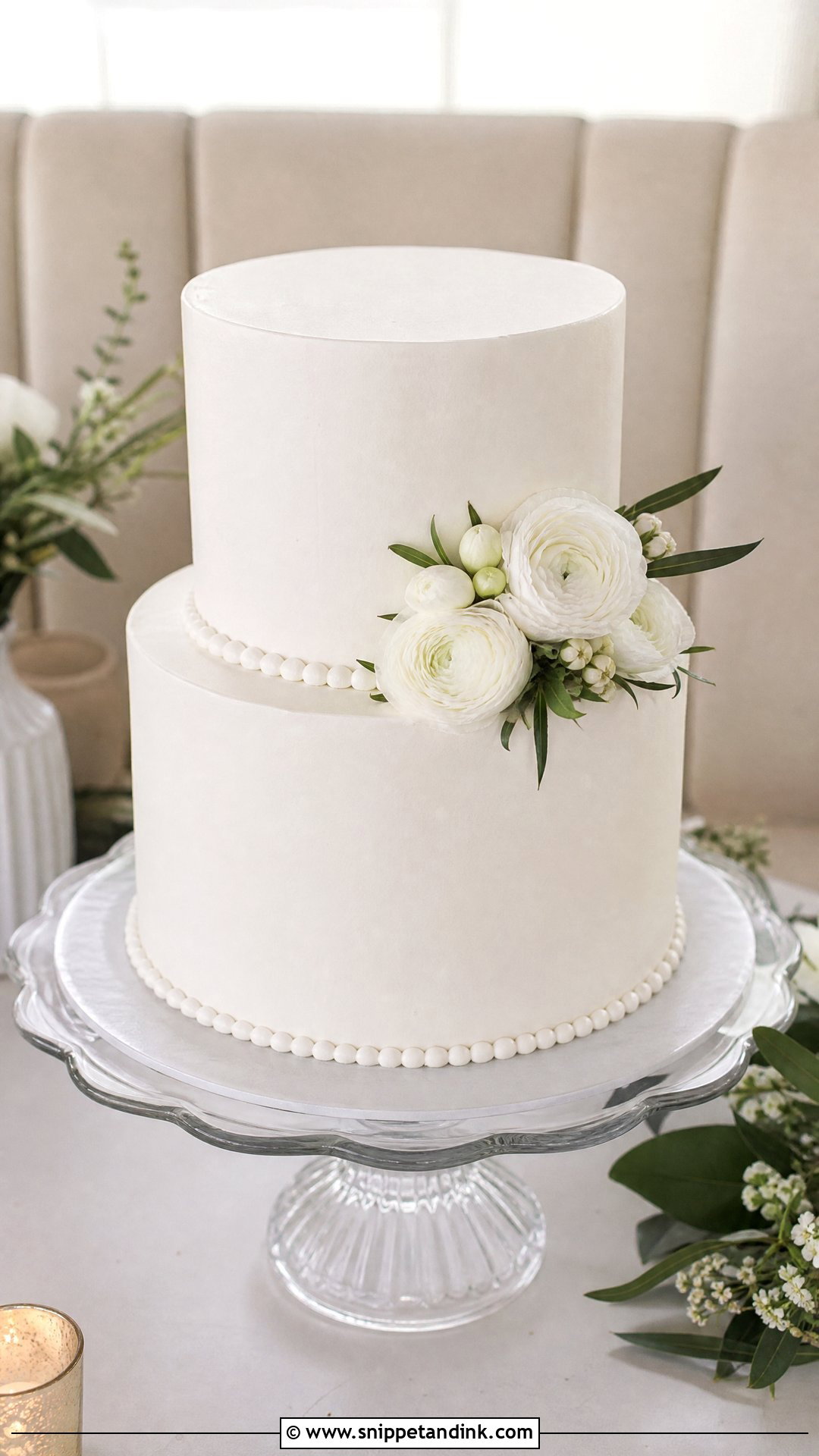
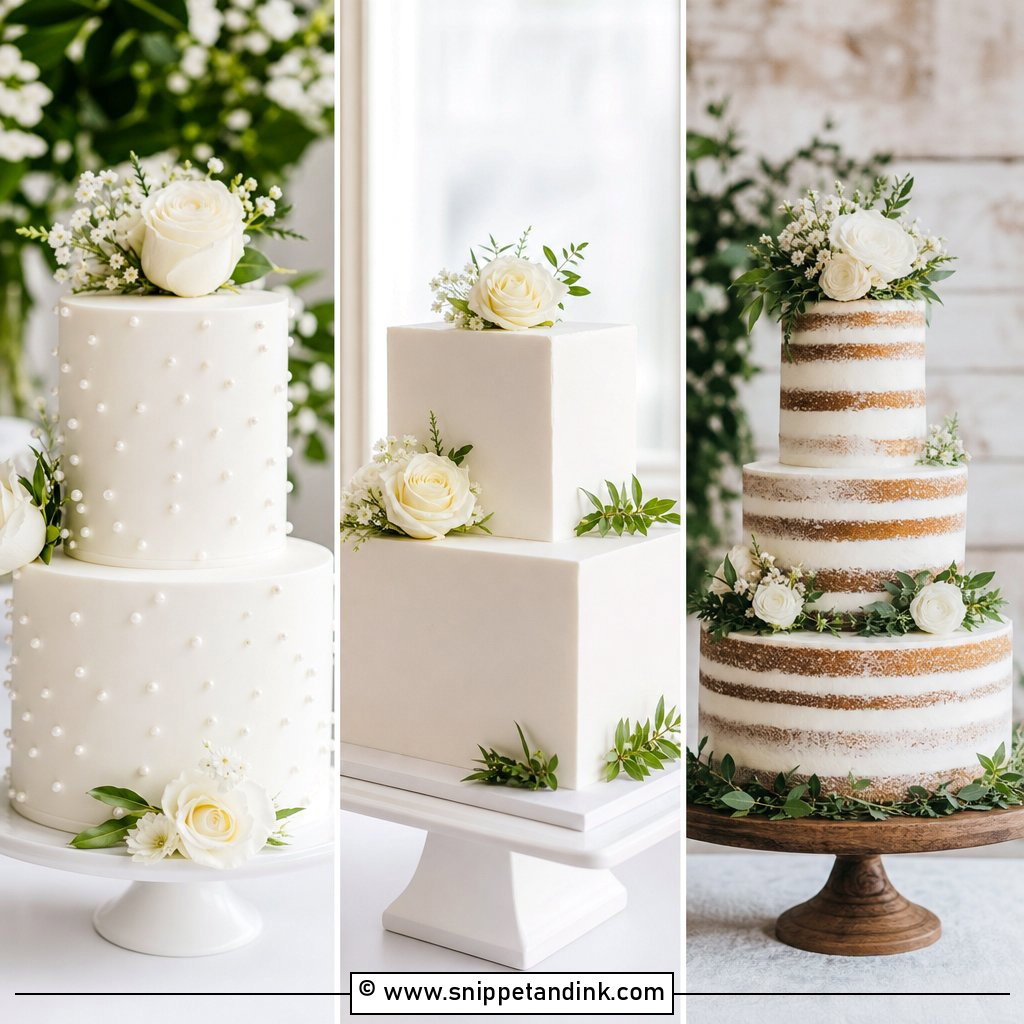
Two tiers are enough for a proper cake-cutting moment at a smaller wedding or elopement, and the proportions sit nicely on a stand. I often pair a 6-inch tier with an 8-inch one, or go to 9 inches underneath for a broader base. One floral cluster, a satin ribbon or a few sugar pearls is all it needs. Inside, white almond cake with raspberry filling is a reliable favorite, and vanilla with Swiss meringue buttercream suits even the pickiest eaters.
3. Three Tier White Wedding Cake
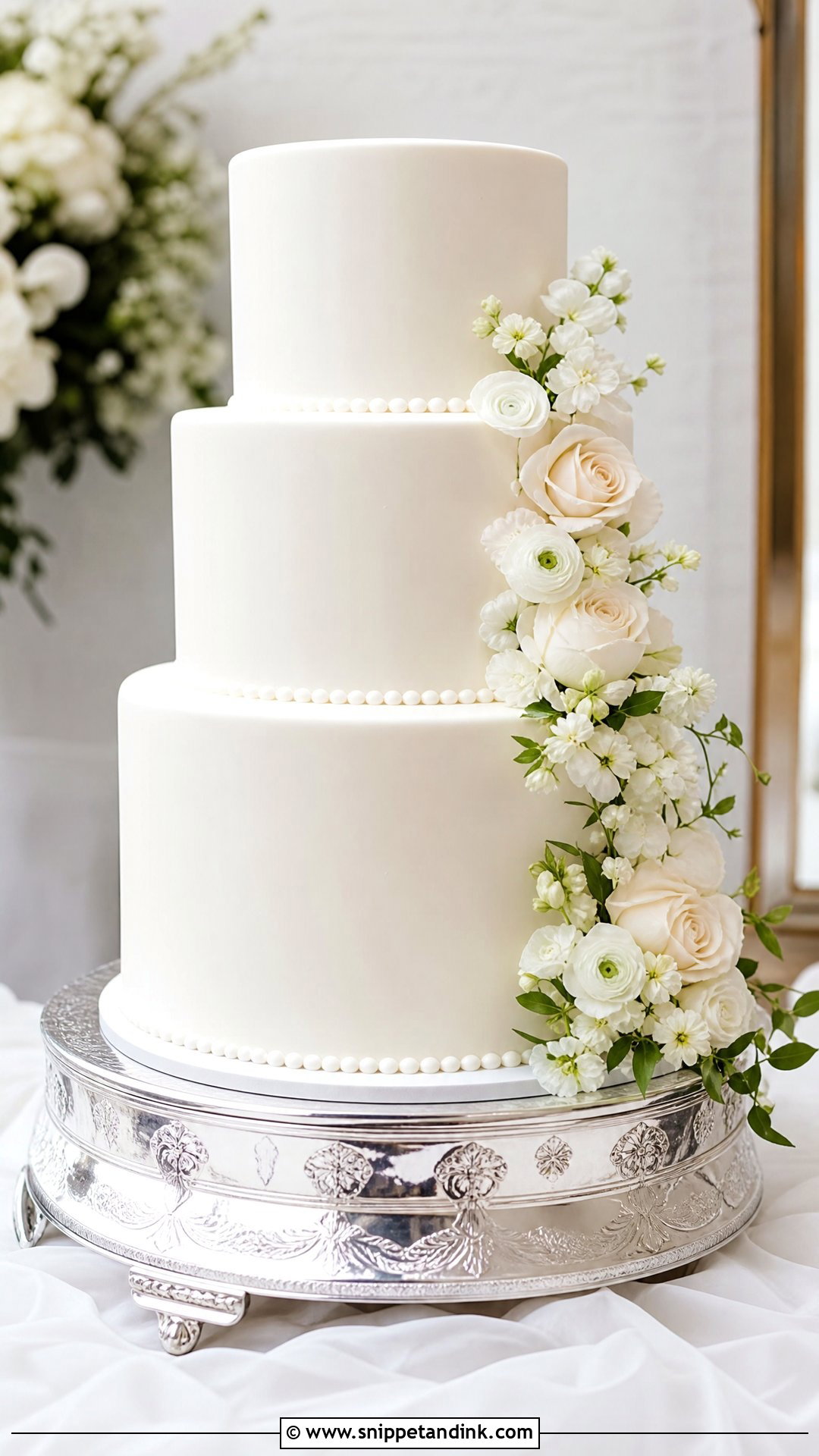
A three tier white wedding cake gets its presence from height, so the decoration can stay restrained. Every tier above the bottom sits on its own board with dowels underneath, which is what stops a tall white cake developing a lean or a bulge by the end of the evening. Smooth fondant or buttercream makes a polished base for one subtle detail, such as thin piping or a pearl border. Three tiers also give you room for three flavors, handy when your guests have different tastes.
4. White Fondant Wedding Cake
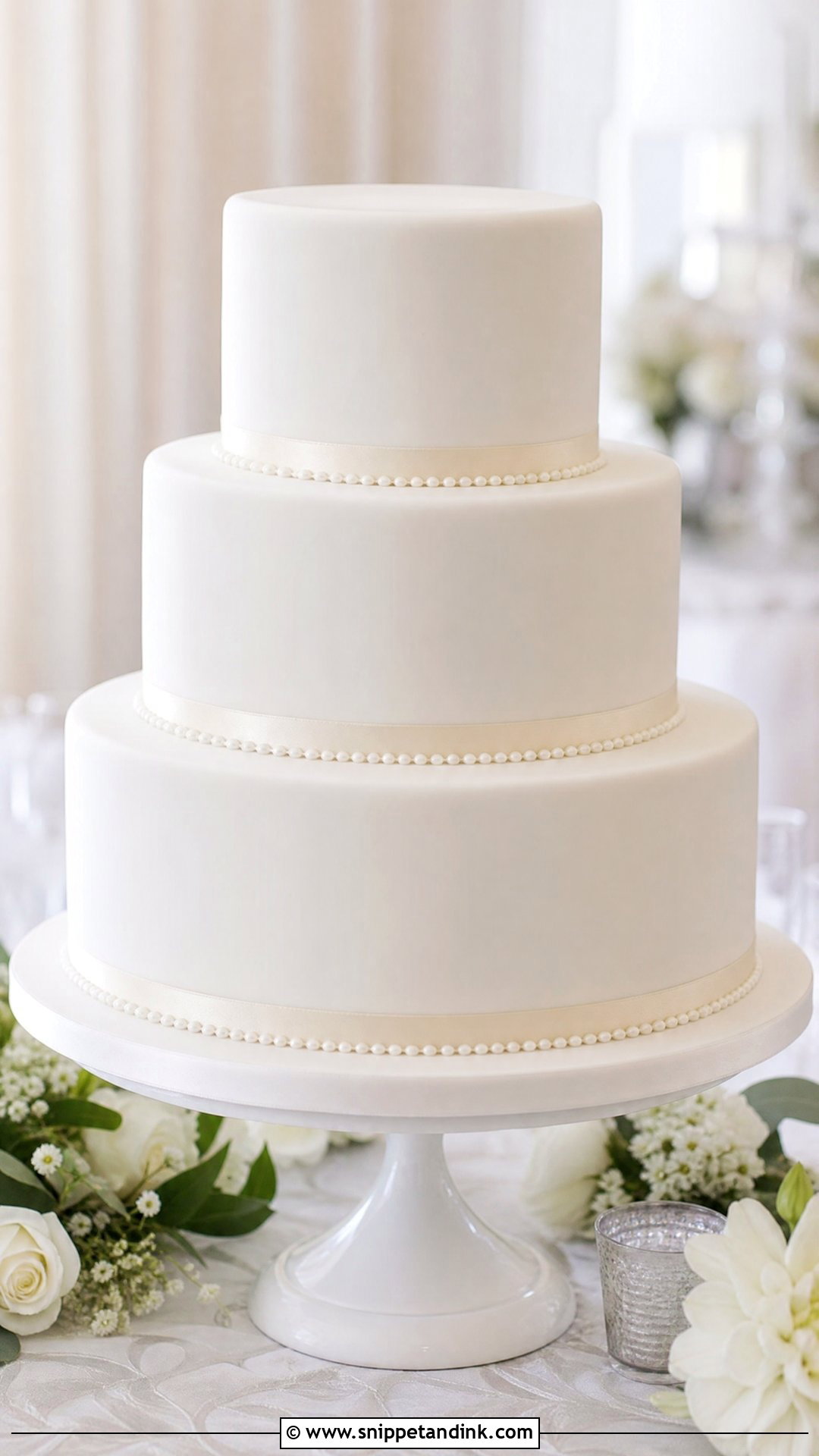
Fondant gives the sharpest edges and the smoothest surface of any finish, and it’s the purest white too. Underneath there’s still a layer of buttercream or ganache, which is what the fondant clings to and what most guests actually taste. I lean toward it for formal venues and hot days, because it shields the buttercream from the air. The catch is condensation: a fondant cake carried from a cold fridge into a warm, humid room can bead with moisture, so I bring it up to room temperature gradually.
5. White Wedding Cake With Fresh Flowers
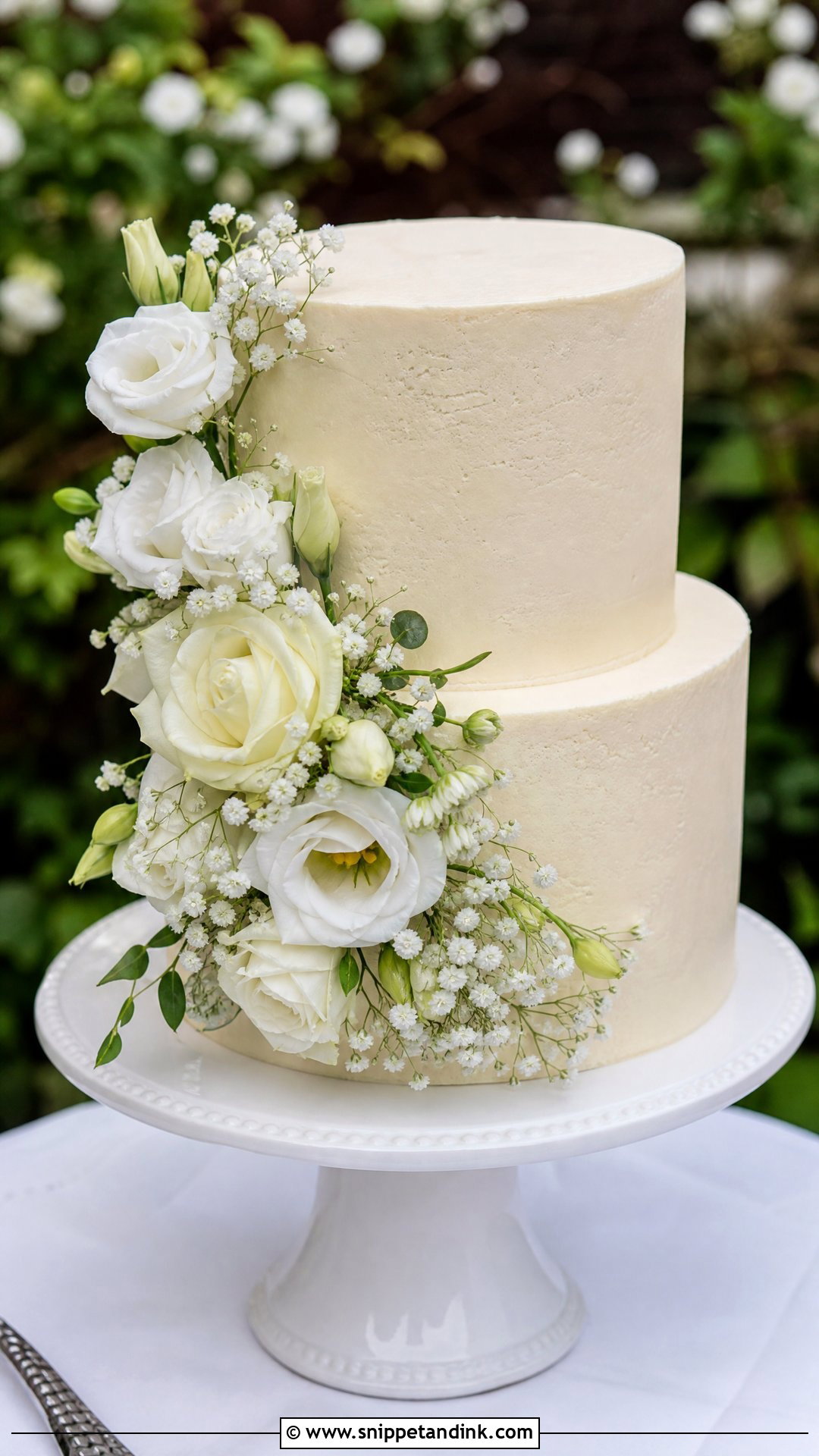
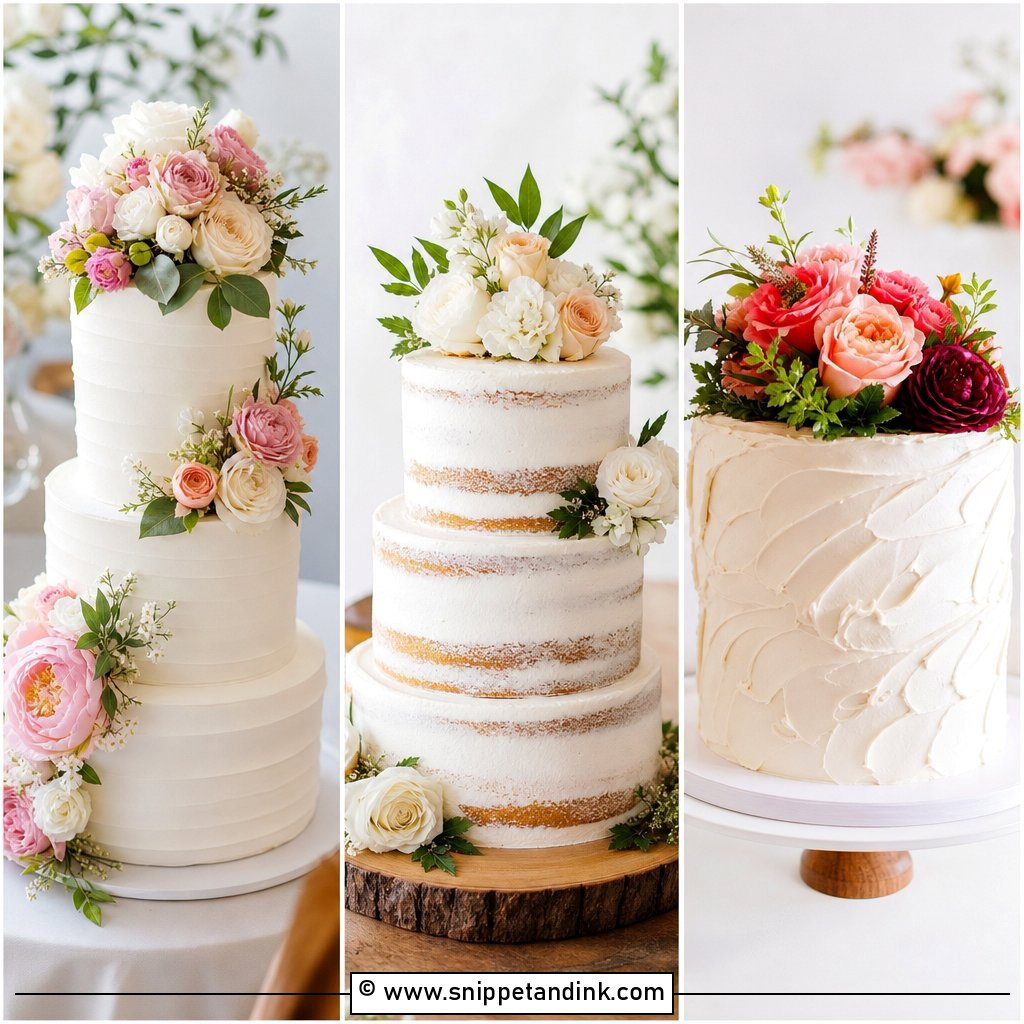
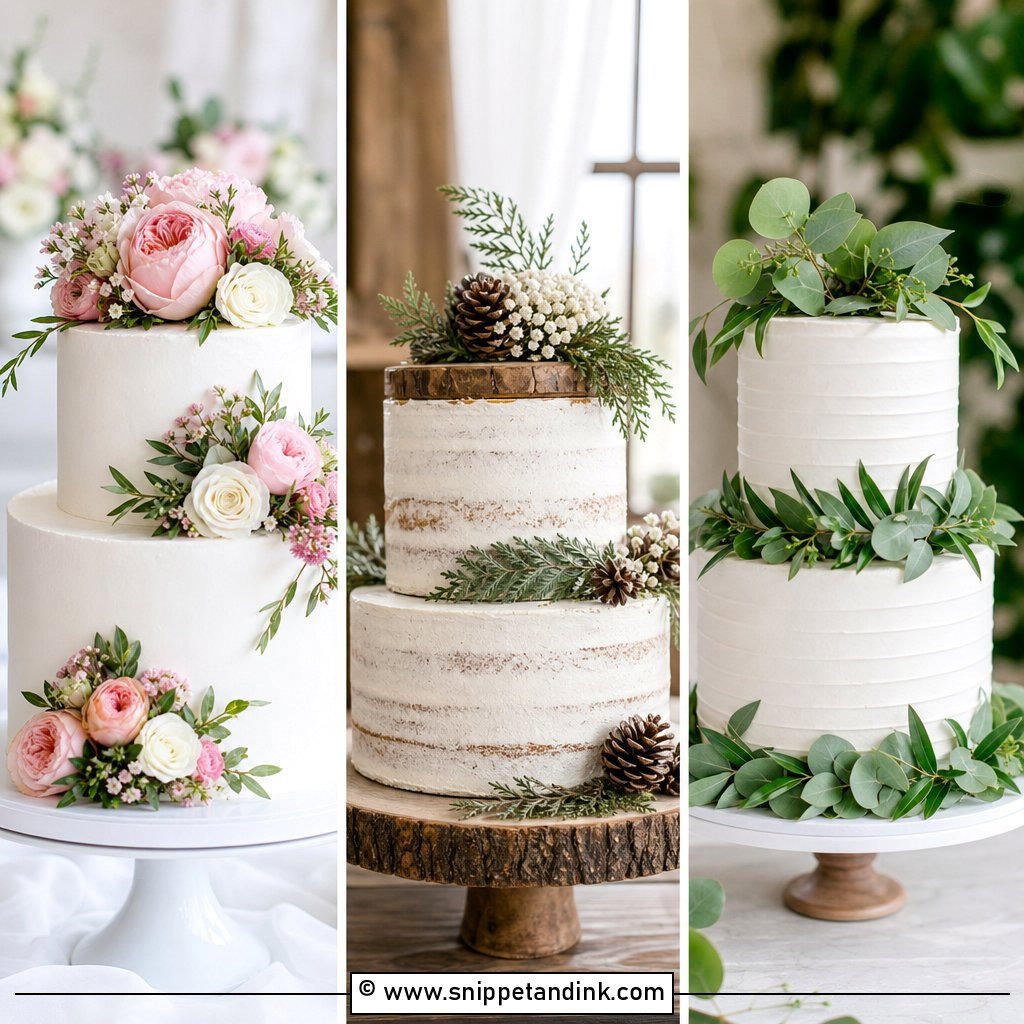
Fresh flowers can finish a white cake with very little arranging, but they have to be chosen with food in mind. White roses, lisianthus, orchids and peonies are dependable, and I ask the florist for blooms grown without pesticides. Stems never go straight into the cake; they’re wrapped in floral tape or set into food-safe picks first. One cluster on the top tier or a loose cascade down one side is plenty, and repeating a bloom from your bouquet ties the cake to the rest of the day.
6. White Wedding Cake With Pearls
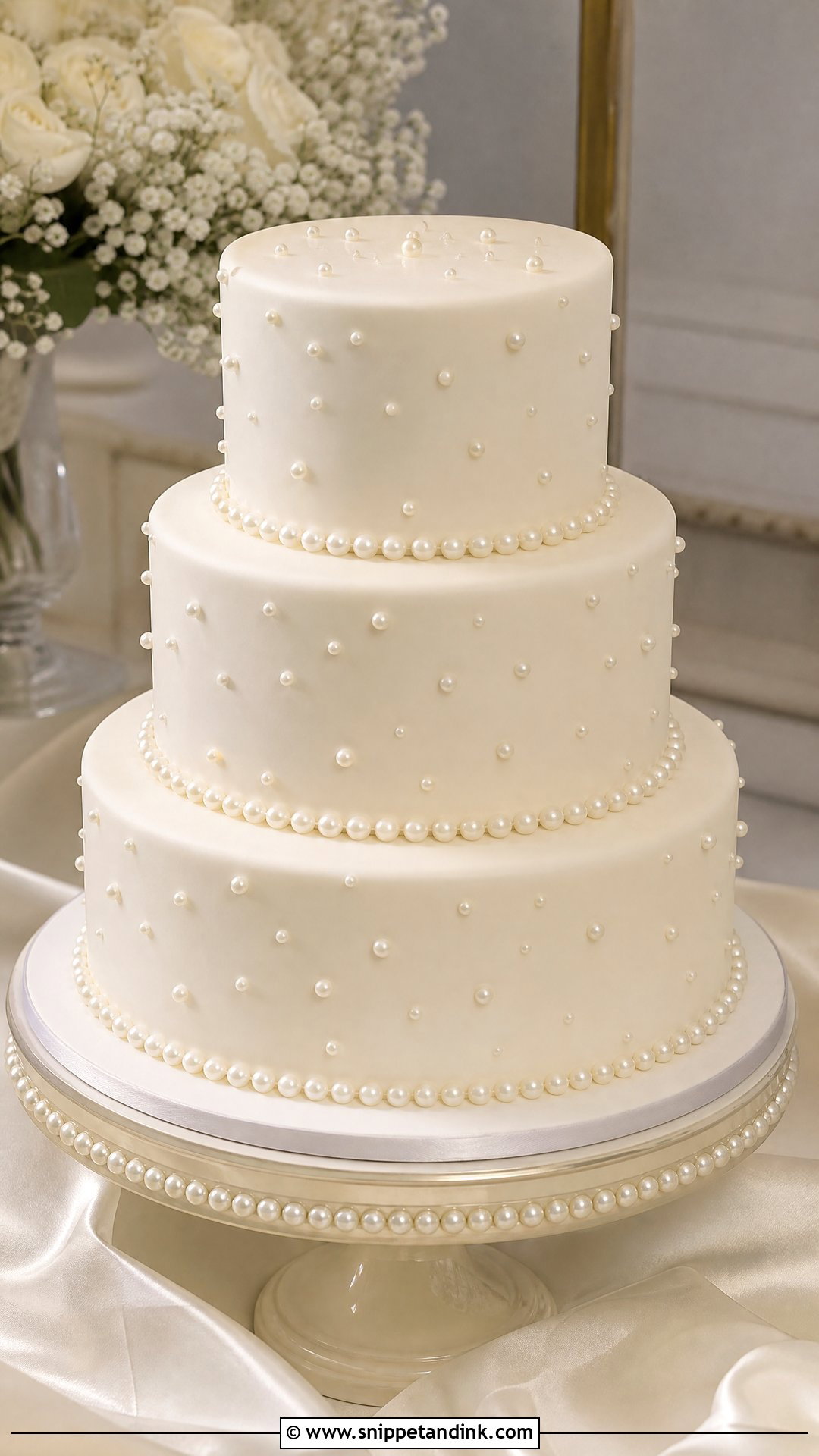
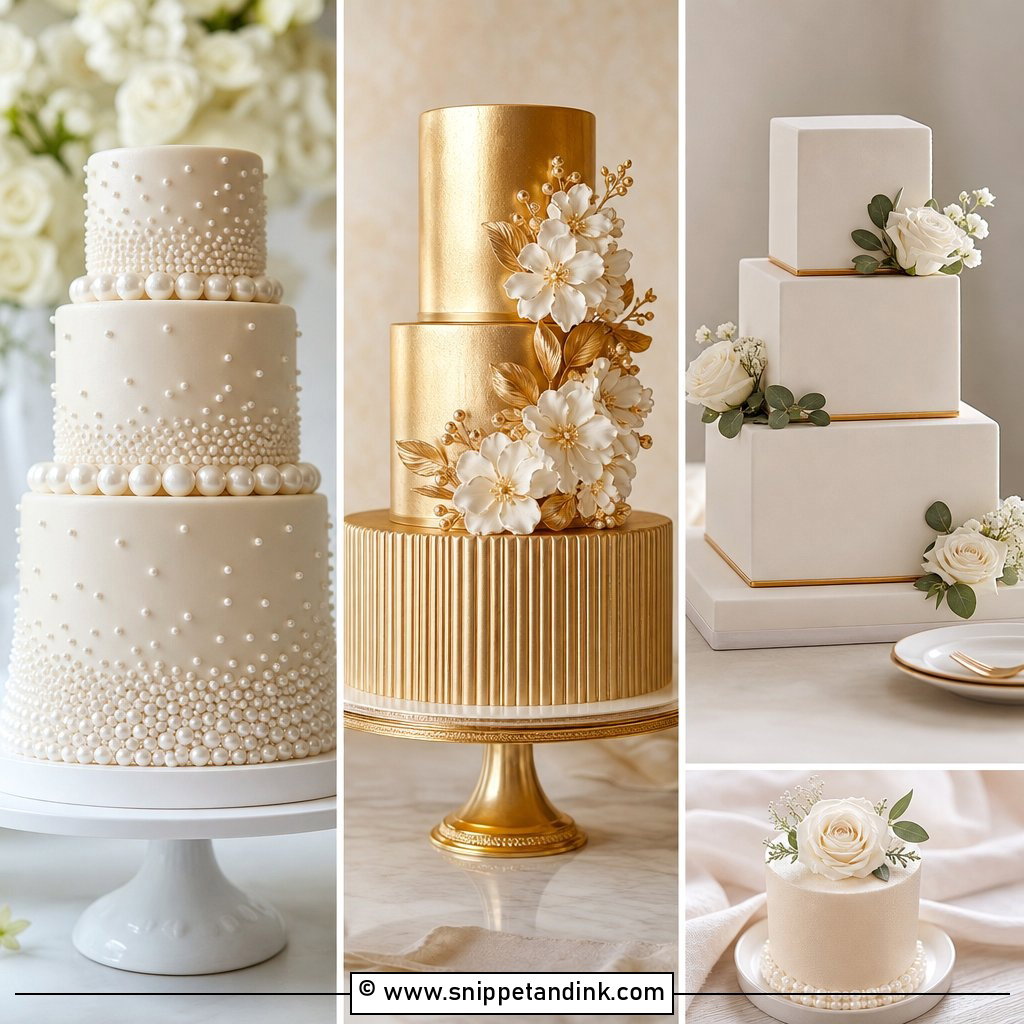
Pearl details are usually sugar pearls or edible beads, sometimes brushed with pearl lustre so they catch the light. I place them with tweezers while the buttercream is just set, so they grip without sinking. A single ring of pearls around each tier looks classic; scattered pearls feel looser and more modern. Large sugar pearls are hard on teeth, so I keep the big ones for decoration and use small ones wherever guests will actually be eating.
7. White Wedding Cake With Gold Accent
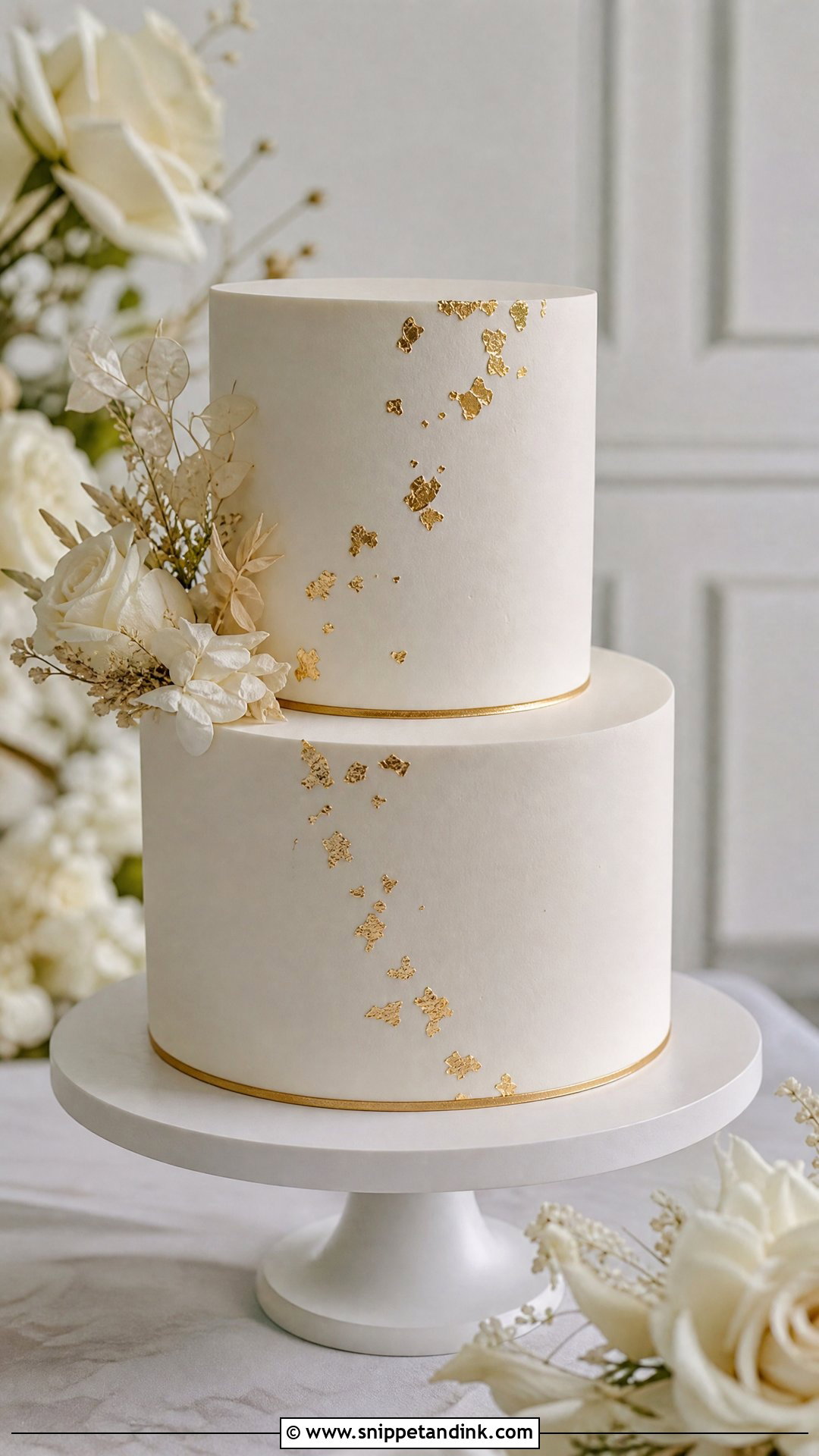
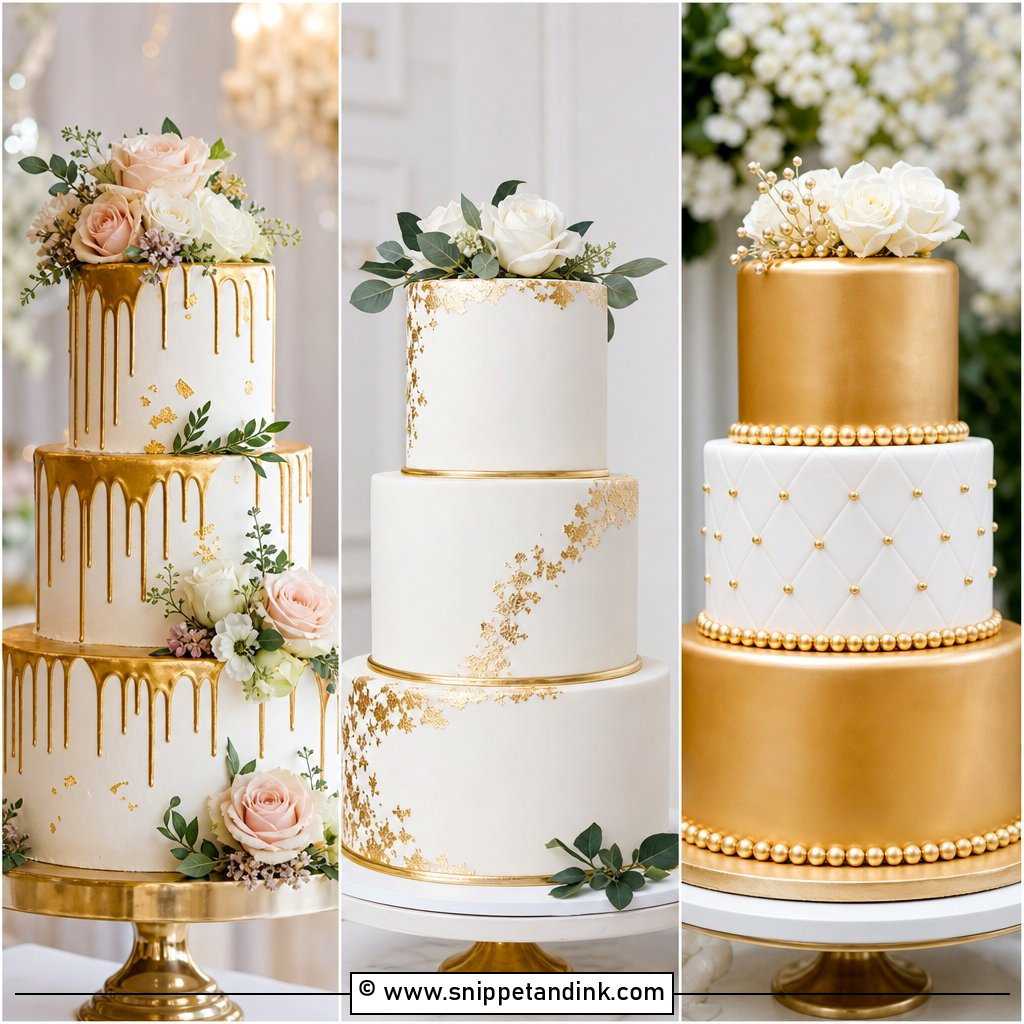
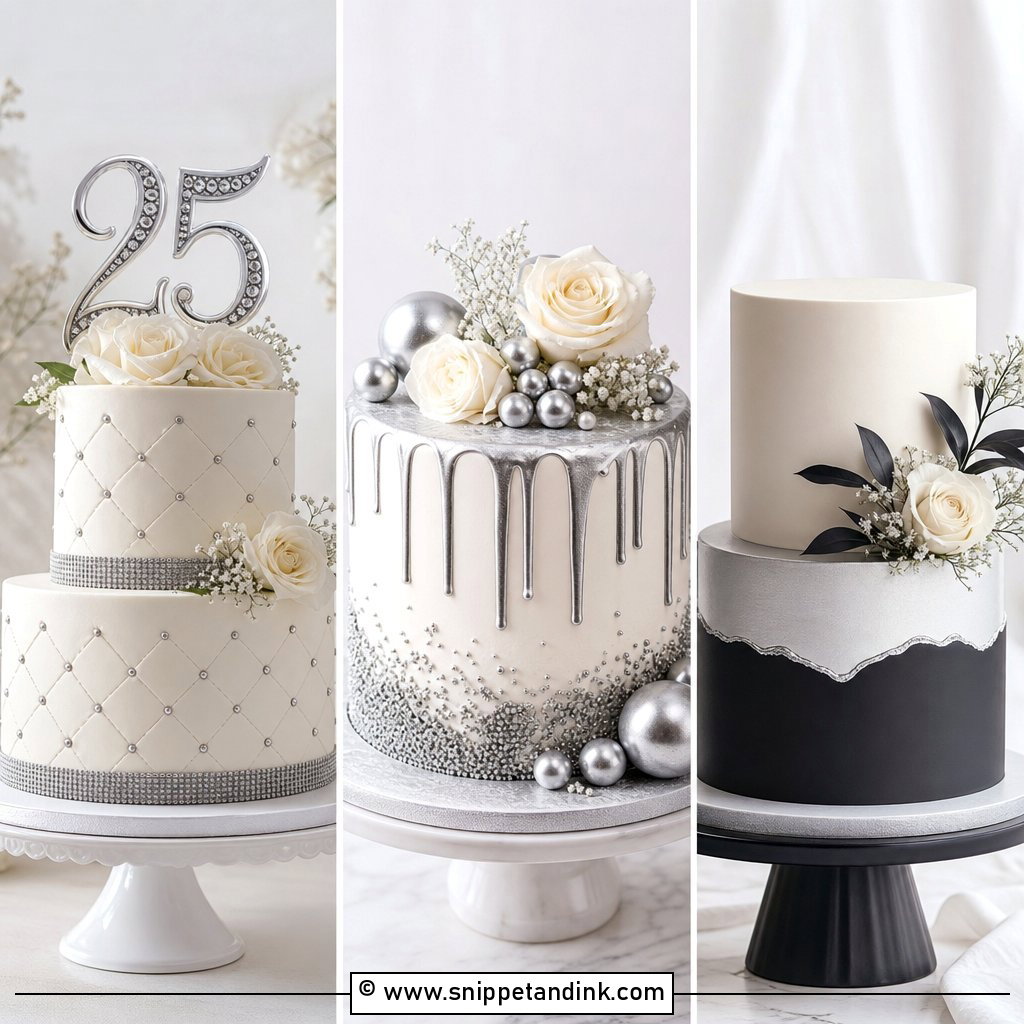
Gold on a white cake works when it’s treated like jewelry: small and deliberate. A thin line between tiers, a few flecks of gold leaf or a brushed edge warms an all-white cake under candlelight. I only use gold leaf and paints sold as edible. Some craft golds and lustre dusts are labeled non-toxic, but that isn’t the same as food-safe. Vanilla, honey and white chocolate flavors pair well with it.
8. White Wedding Cake With Greenery
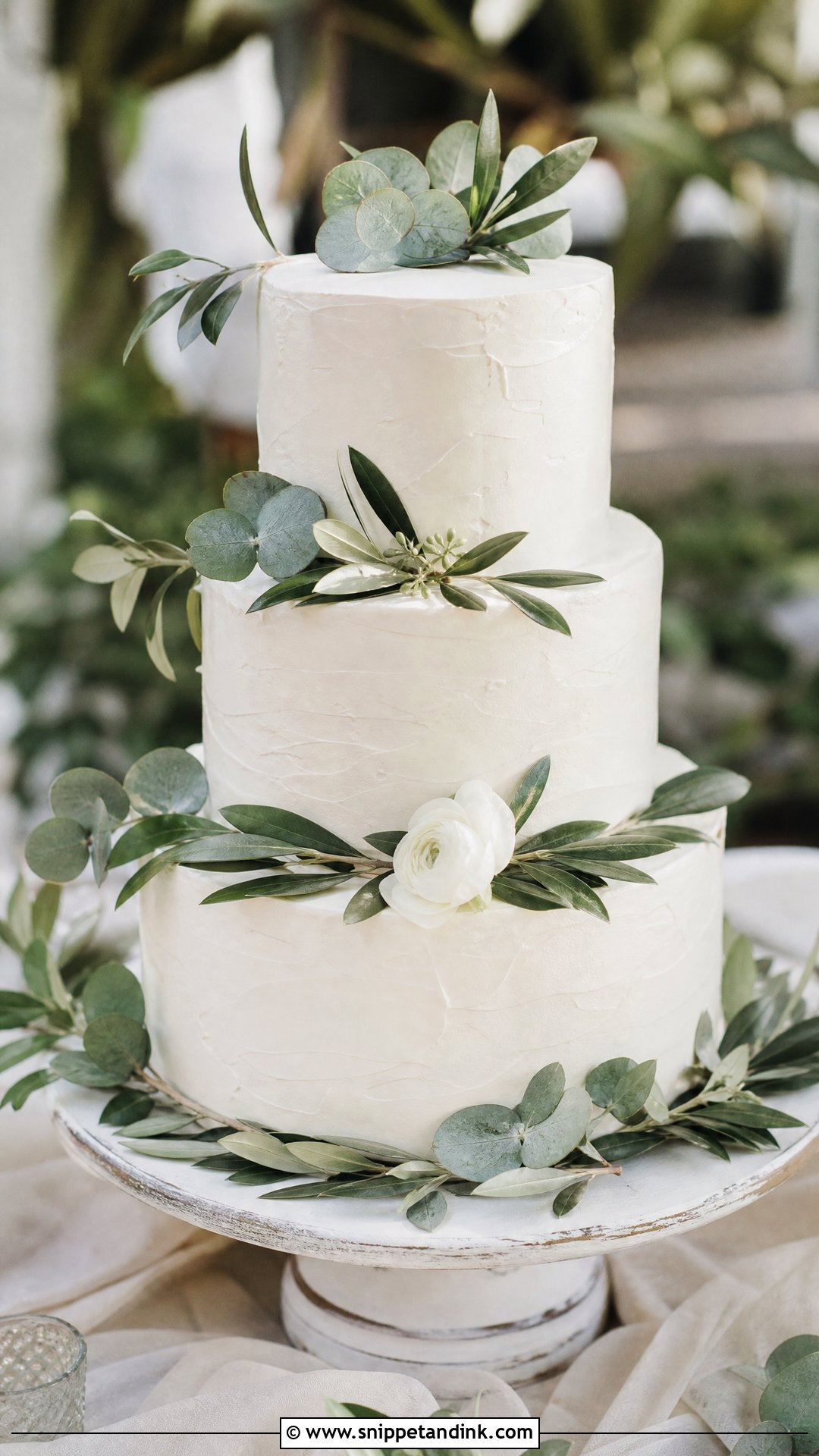
Greenery gives a white cake a natural feel without bringing in color. Eucalyptus, olive and rosemary are the usual picks, and they behave differently. Eucalyptus isn’t edible, so I wrap the stems, keep it on the surface and lift it off before slicing; rosemary is a kitchen herb and far friendlier near frosting. Lightly textured buttercream suits this style, and one white bloom softens it if the greenery looks sparse.
9. White Wedding Cake With Ribbon
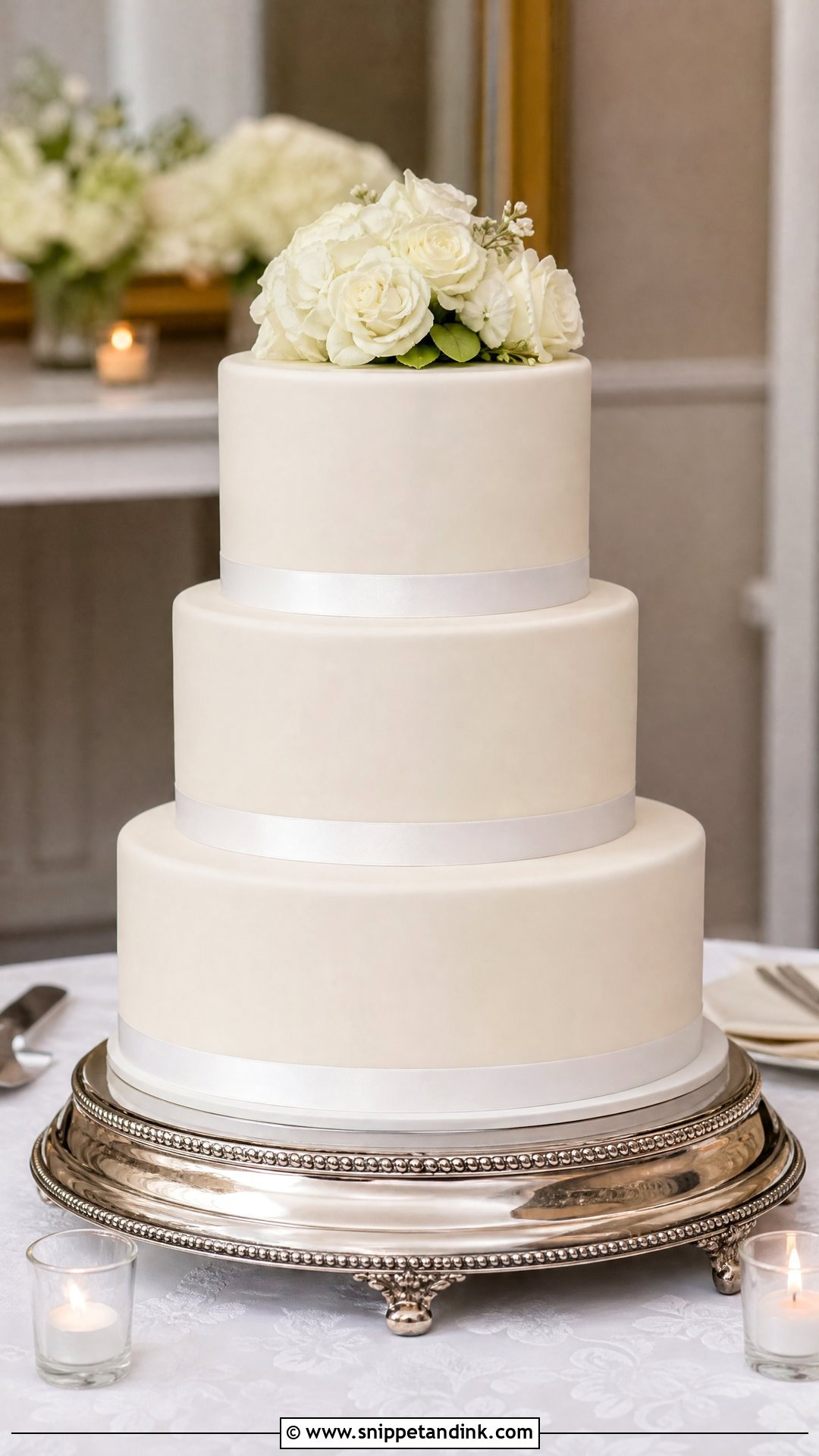
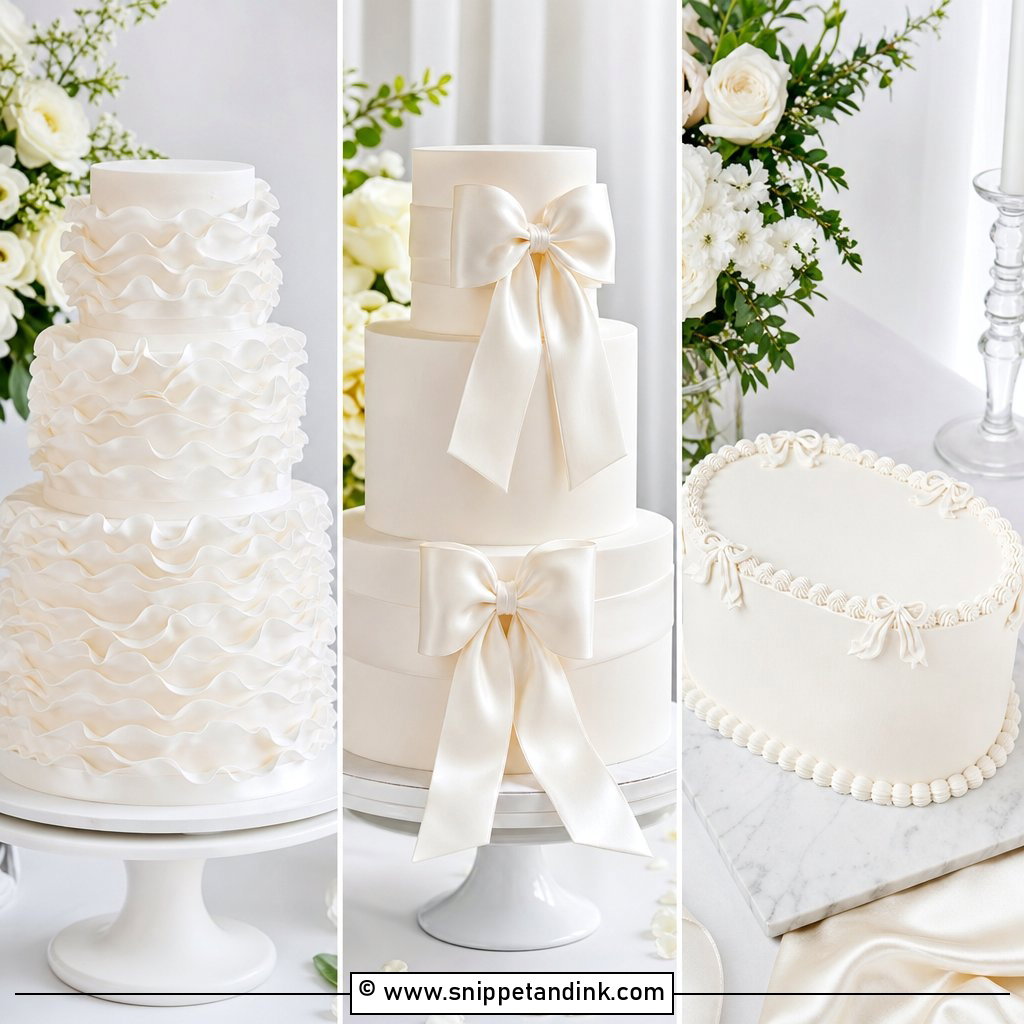
Ribbon at the base of each tier gives clean definition, and it neatly hides the join where one tier sits on another. On buttercream, satin needs a thin backing strip, because the fat in the frosting seeps through fabric and leaves grease spots by the reception. White-on-white looks soft; ivory adds warmth. Keep the frosting smooth and let the ribbon be the only detail.
10. White Wedding Cake With Ruffles
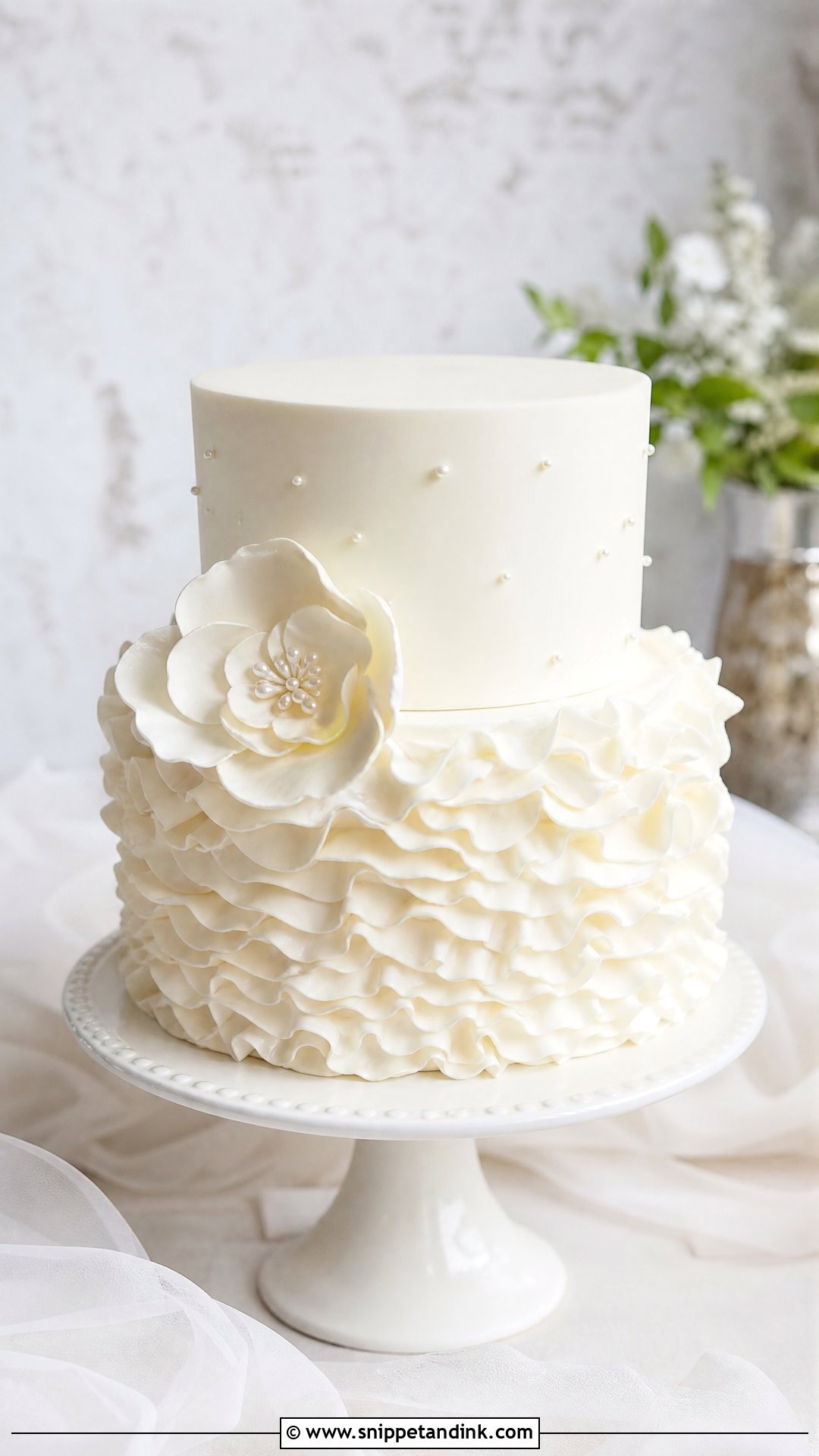
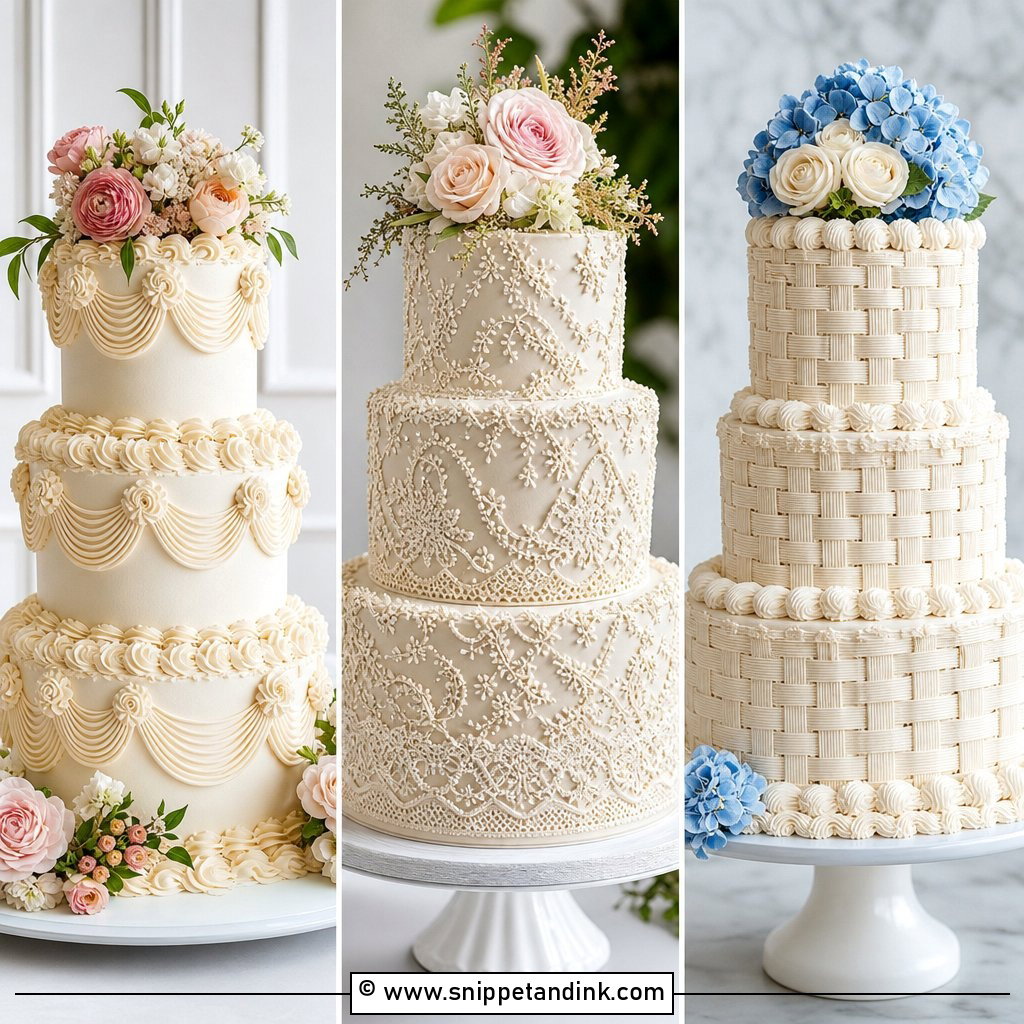
Ruffles bring movement without bringing color. Buttercream ruffles feel airy, while fondant ruffles hold a crisper, more modern edge. One ruffled tier is often enough, with the others kept smooth for balance. I’d think twice about buttercream ruffles at a hot outdoor venue, since those thin edges are the first thing to soften. They echo tulle and chiffon dresses well.
11. White Wedding Cake With Lace
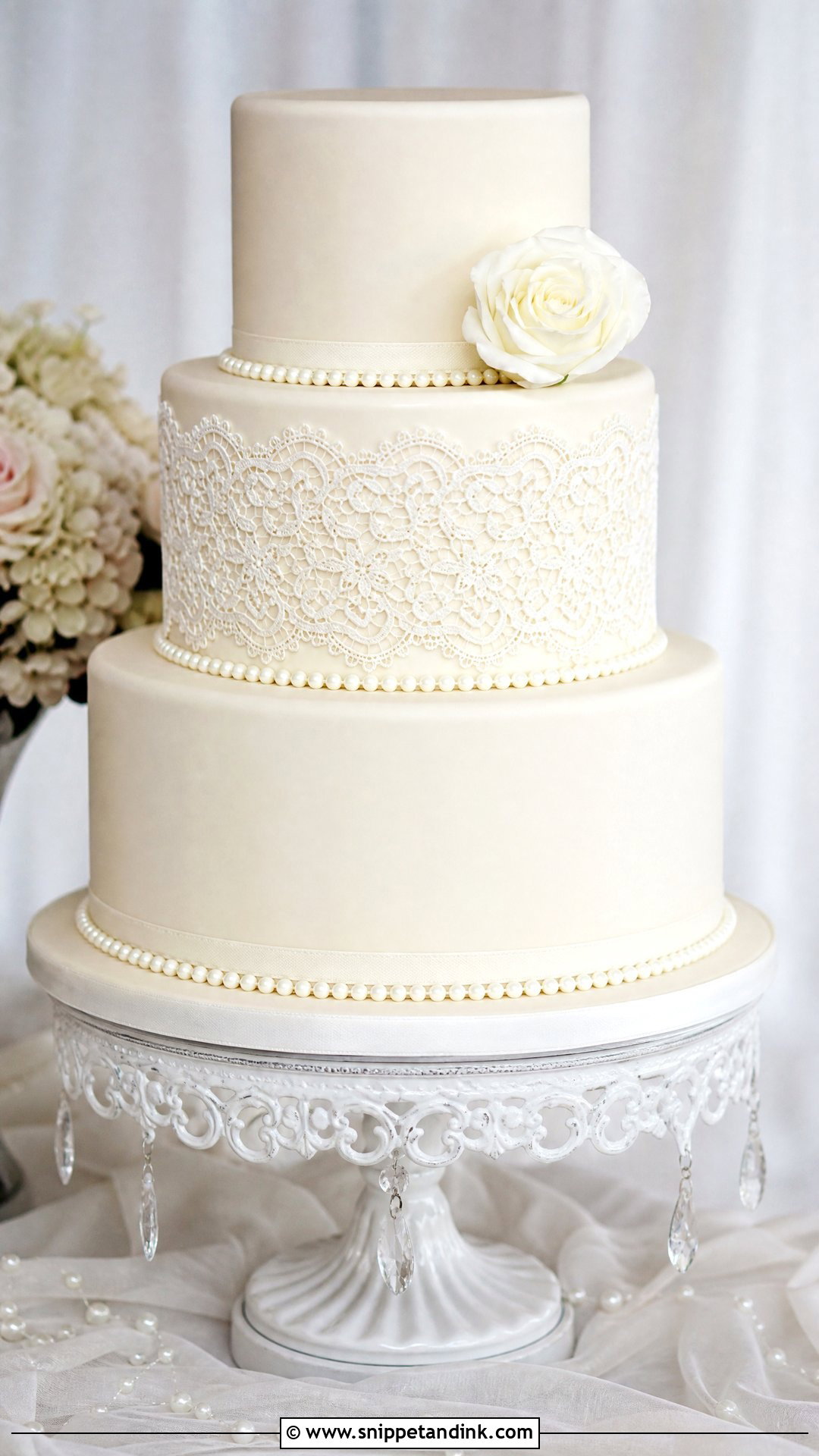
Lace can be piped by hand, cut from fondant, or set as an edible lace sheet. The sheets look the most delicate, but they need a firm surface beneath them, because they can turn soft and limp against damp buttercream. Keep the lace to one tier or a band around the cake so it doesn’t overwhelm the design. It sits naturally beside vintage dresses and chapel weddings.
12. White Wedding Cake With Piped Borders
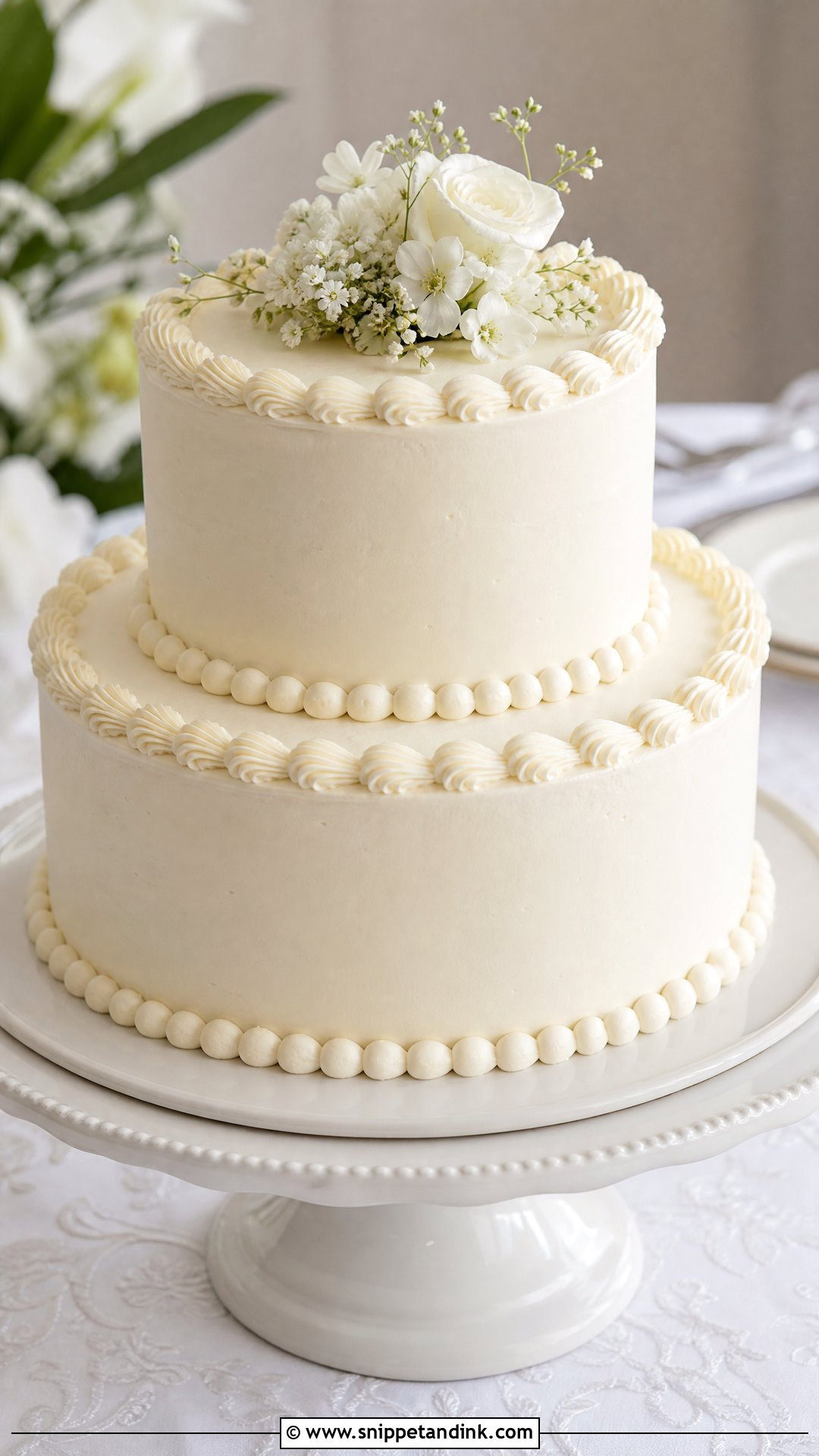
A white wedding cake with piped borders is traditional bakery work, and good piping is a skill you can see from across the room. Small shells, dots, beads or scallops frame each tier. Ask for small, even piping rather than chunky borders, which date a cake quickly. It’s also one of the more affordable details, because piping takes minutes where sugar flowers take hours.
13. White Wedding Cake With Swiss Meringue Buttercream
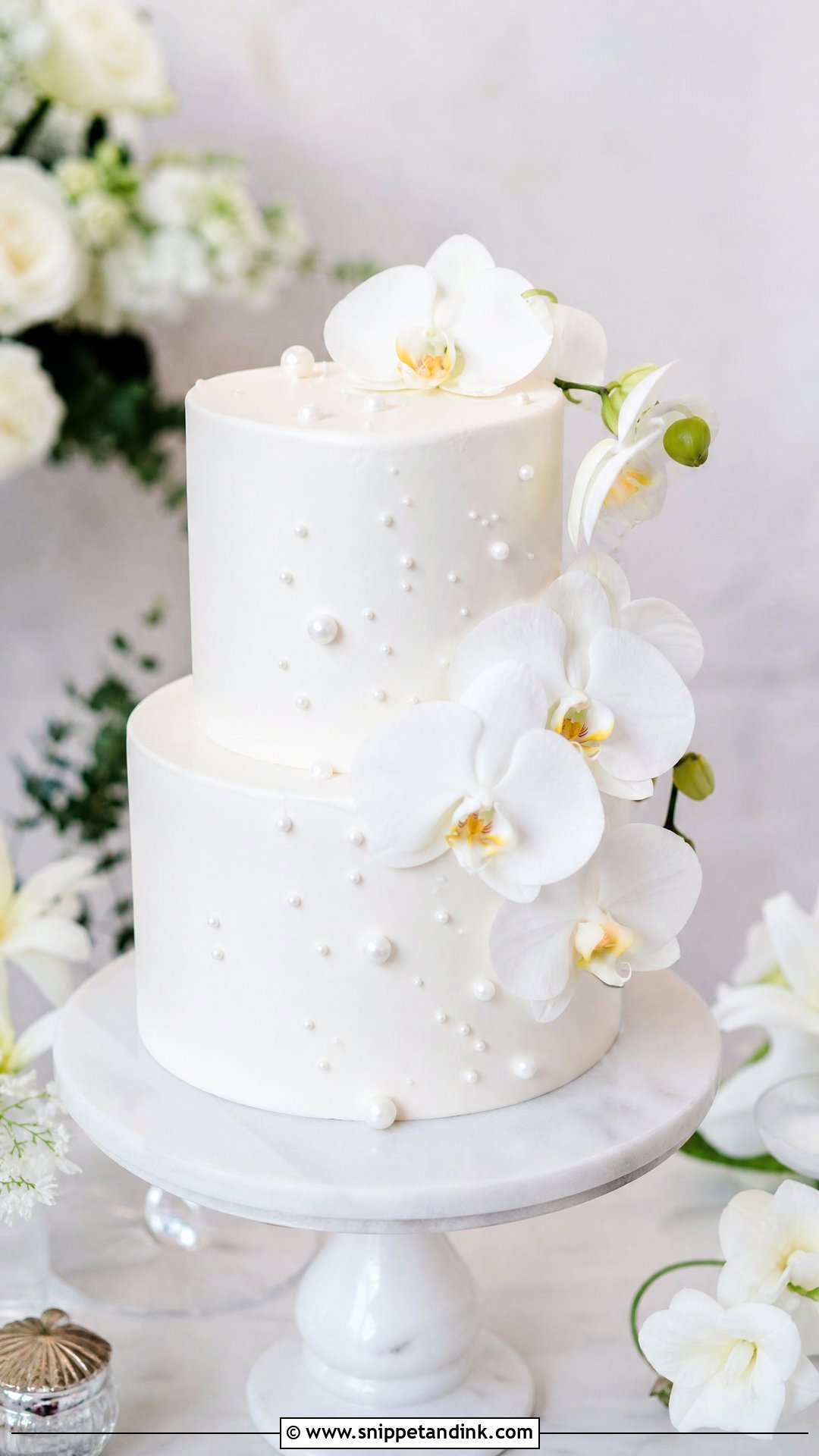
A white wedding cake with Swiss meringue buttercream tastes lighter and less sweet than a classic powdered-sugar buttercream, and it smooths to a silky finish. Because it’s mostly butter, it comes out slightly ivory rather than snow white, and it softens faster in heat. I chill each tier firmly before stacking. Sharp edges give a modern look, softer edges a romantic one, and lemon curd or raspberry filling suits it beautifully.
14. White Wedding Cake With Textured Buttercream
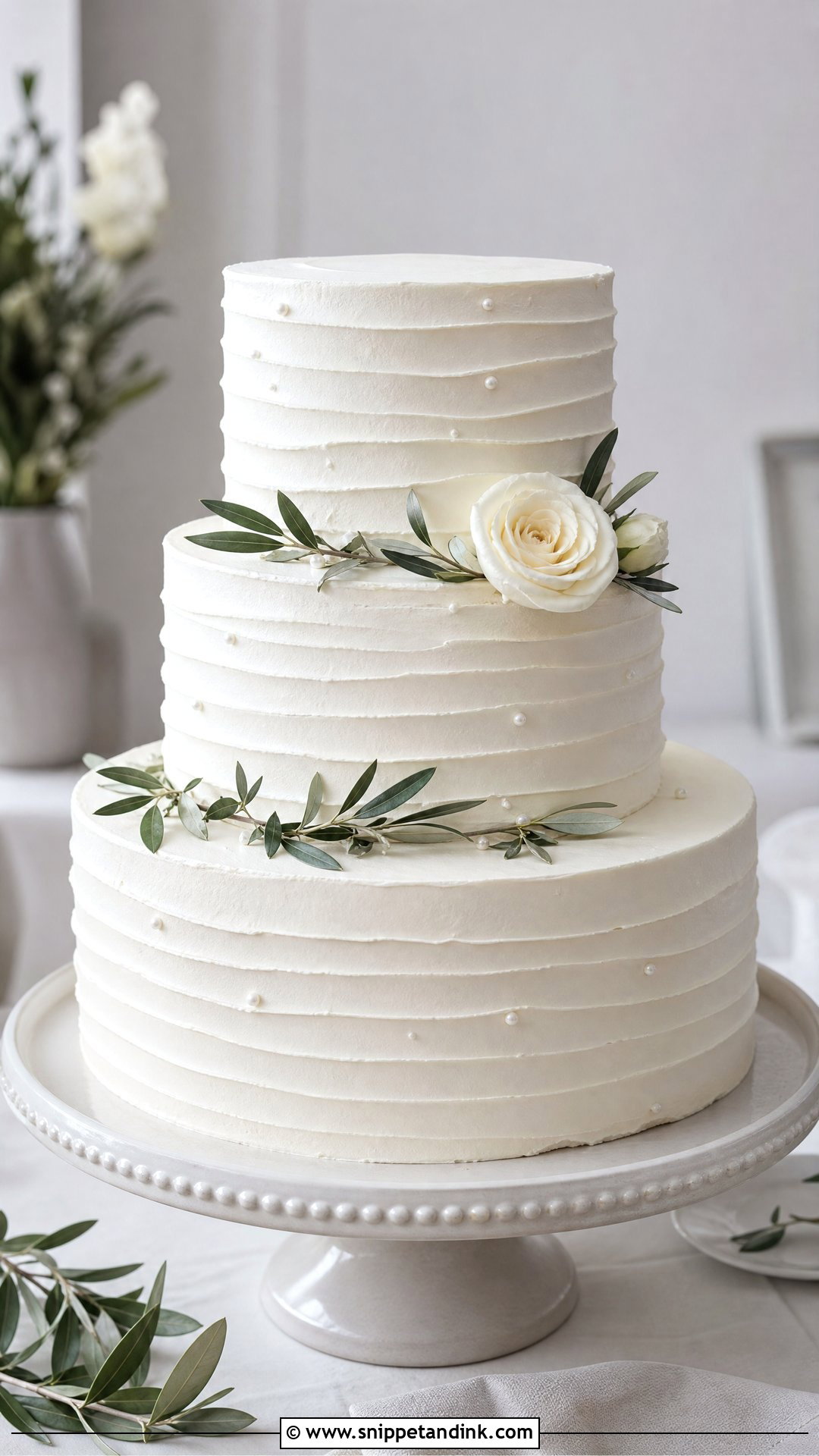
Texture is swept on with a palette knife, combed, or ridged around each tier. Because everything stays white, the cake still looks clean. It’s a smart pick for relaxed and outdoor receptions, as small dents or a slight softening in warm air show far less on texture than on a smooth finish. Add greenery or one flower cluster, or leave it plain.



15. White Wedding Cake With Sugar Flowers
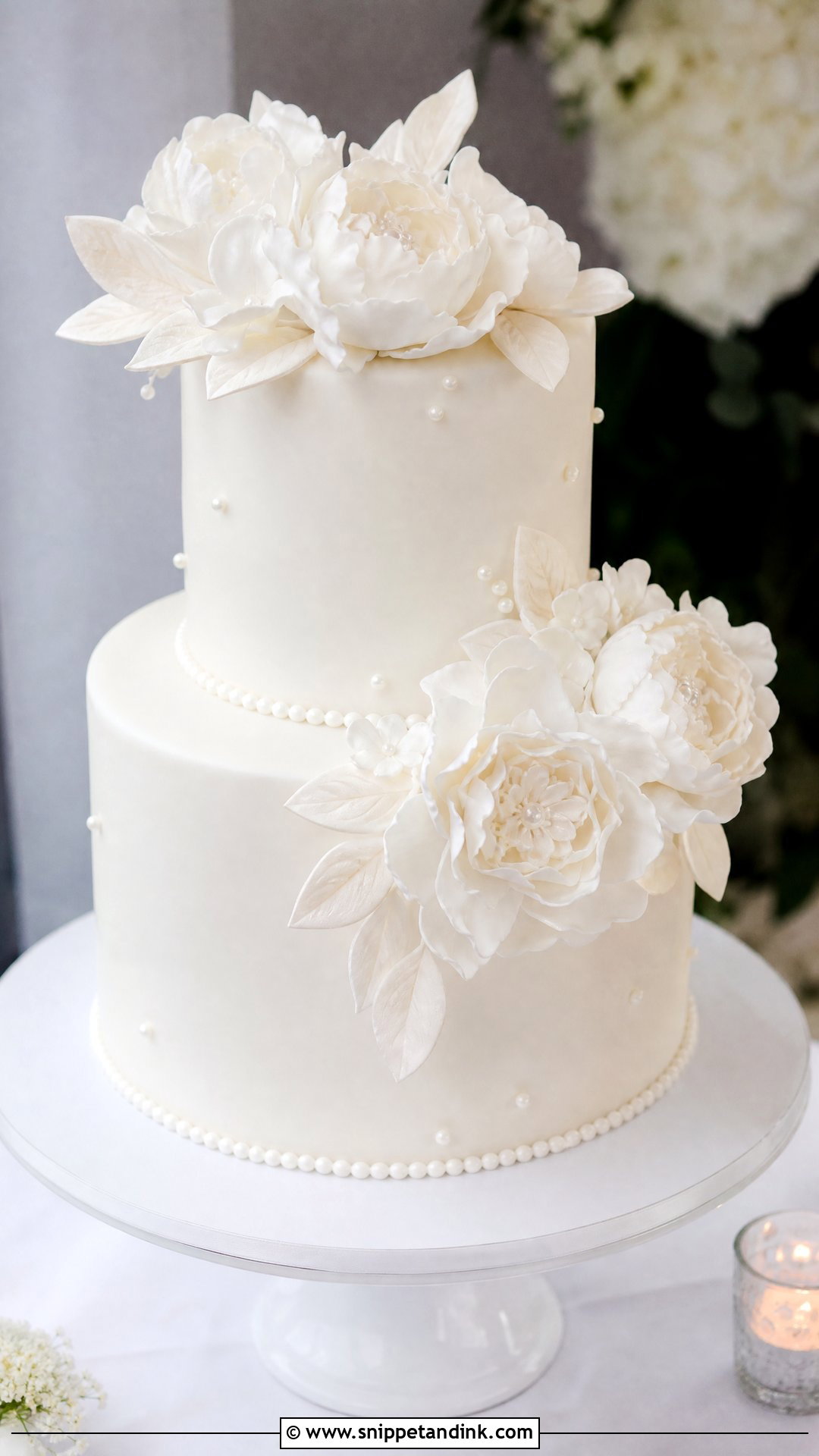
A white wedding cake with sugar flowers keeps its look all evening, which fresh flowers can’t promise. For a simple design I’d pick one or two white sugar flowers, a rose, magnolia or peony built petal by petal from gum paste. They take hours to make and need days to dry, so order them well ahead. They’re also the answer when your favorite bloom is out of season or unsafe near food, and kept dry, they make a keepsake.
16. White Wedding Cake With Cake Topper
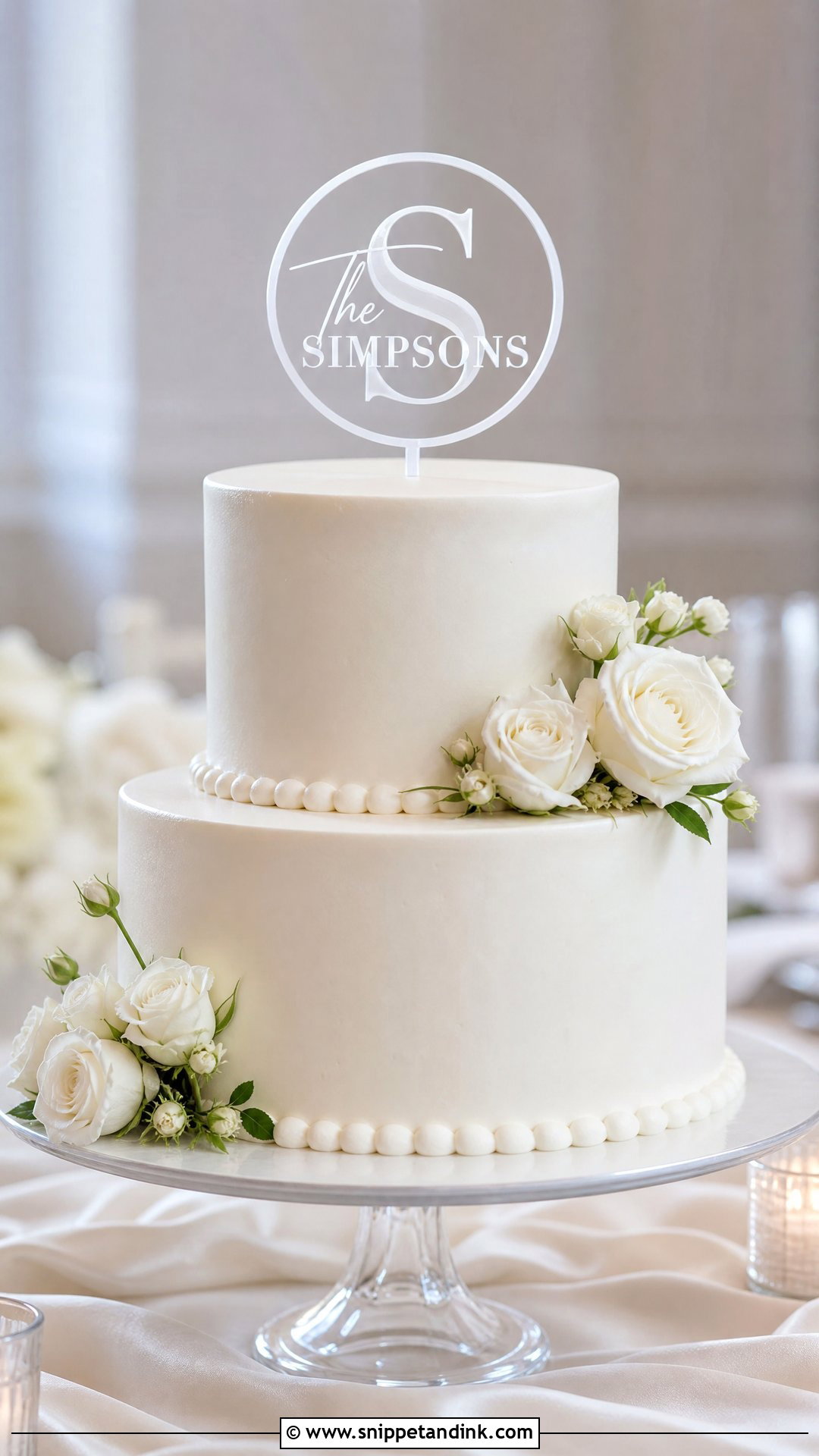
A topper is the simplest way to make a white cake personal, with initials, a surname, a small floral piece or an acrylic phrase. Size it to the top tier, because a topper wider than the tier makes the whole cake look top-heavy. Acrylic toppers need picks long enough to anchor in soft buttercream, or they tilt as the room warms up. Keep the rest minimal.
17. White Wedding Cake With Single Flower
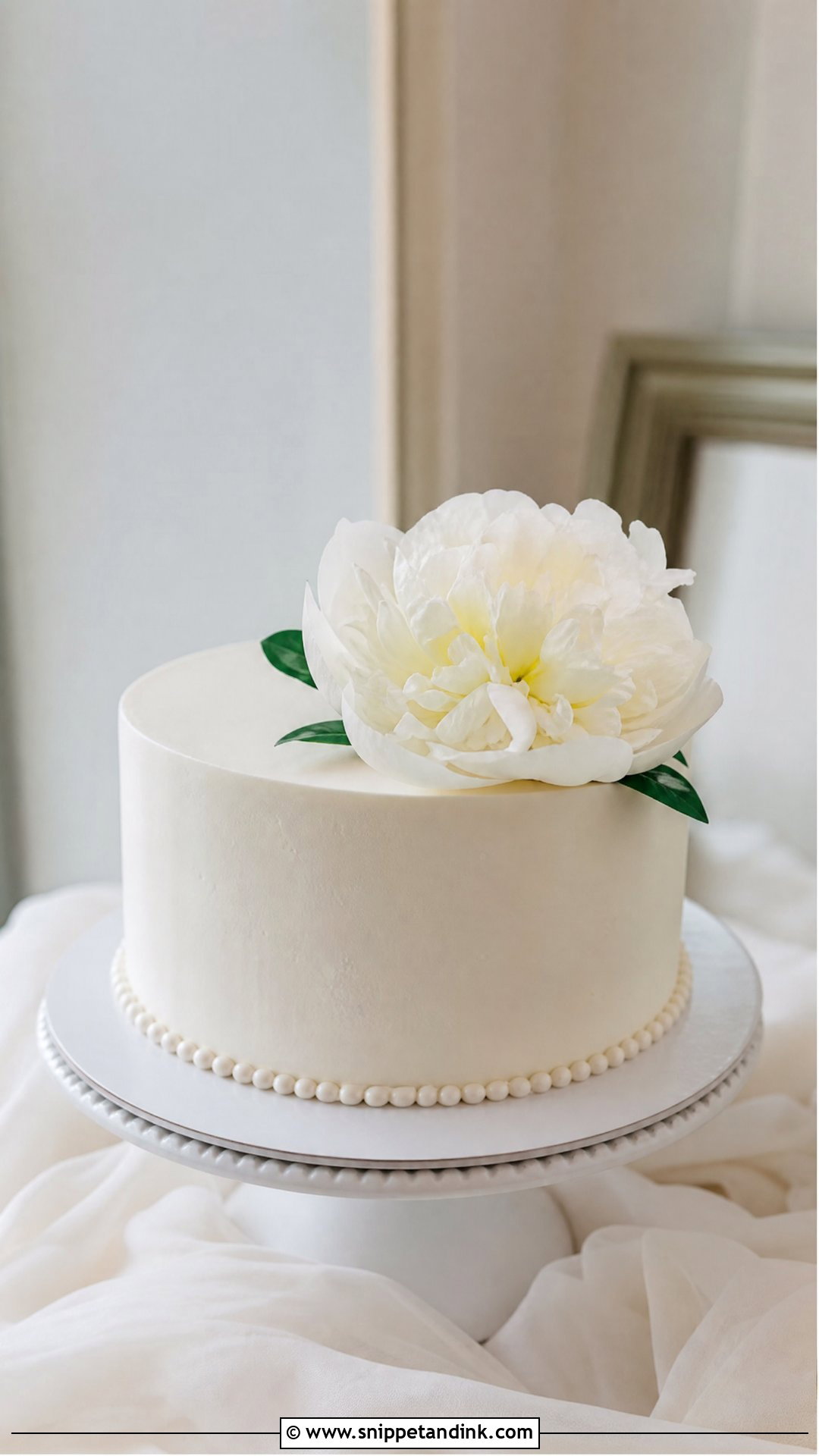
One flower looks intentional only when the scale is right. A single rose on a 6-inch top tier looks considered; the same rose on a broad tier looks forgotten. Place it on top or slightly off-center. It suits minimalist couples, courthouse weddings and intimate dinners, where a smooth finish and a good stand do the rest.
18. White Square Wedding Cake
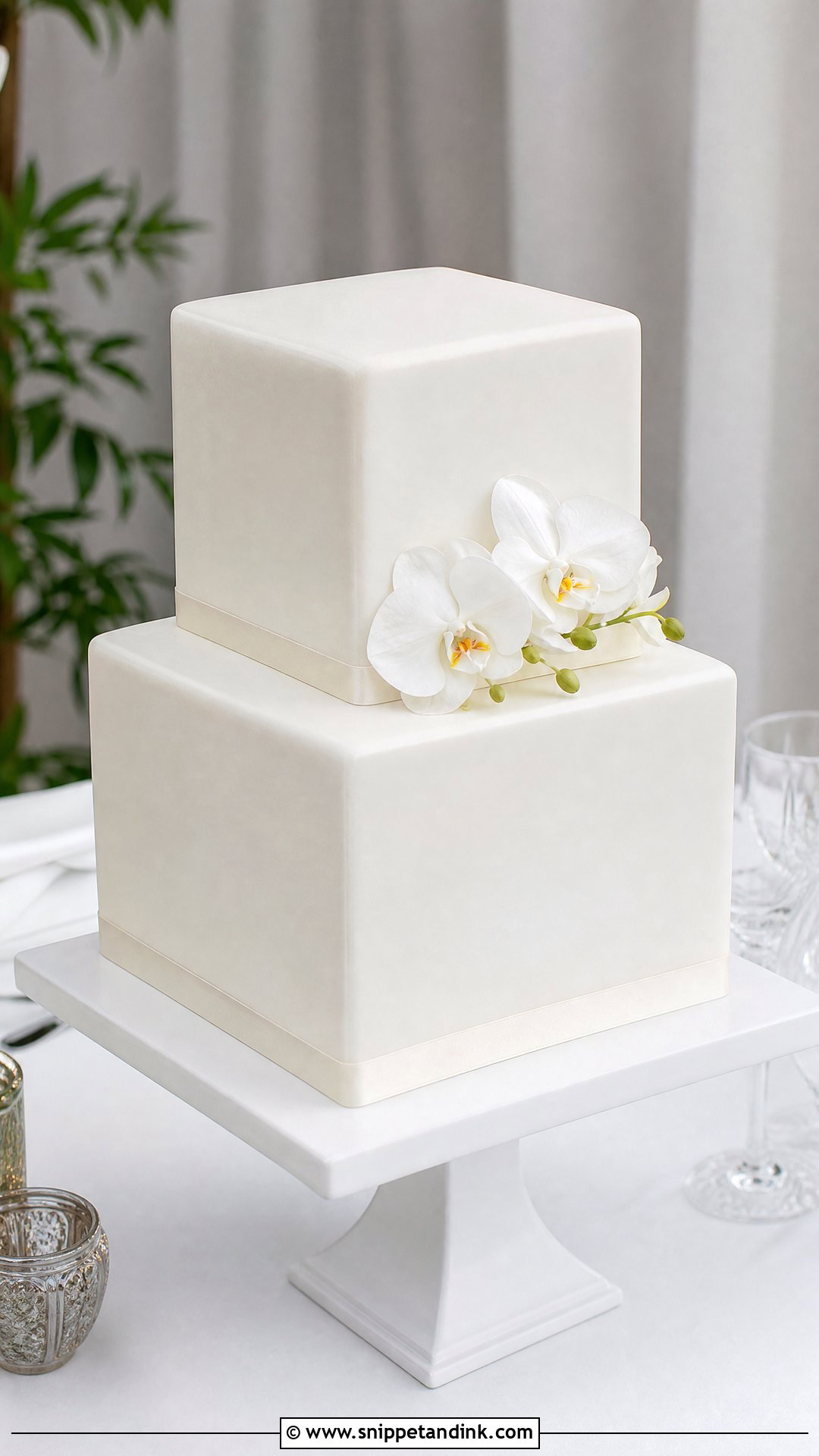
A square white cake looks modern and shows every flaw. Crisp corners are hard to hold in buttercream, so I usually recommend fondant, or a firm ganache base under the finish. A ribbon or a thin piped border is enough decoration. Square tiers also give more slices than round tiers of the same width, which helps with a larger guest list. Vanilla, lemon or almond keep it crowd-friendly.
19. White Heart Wedding Cake
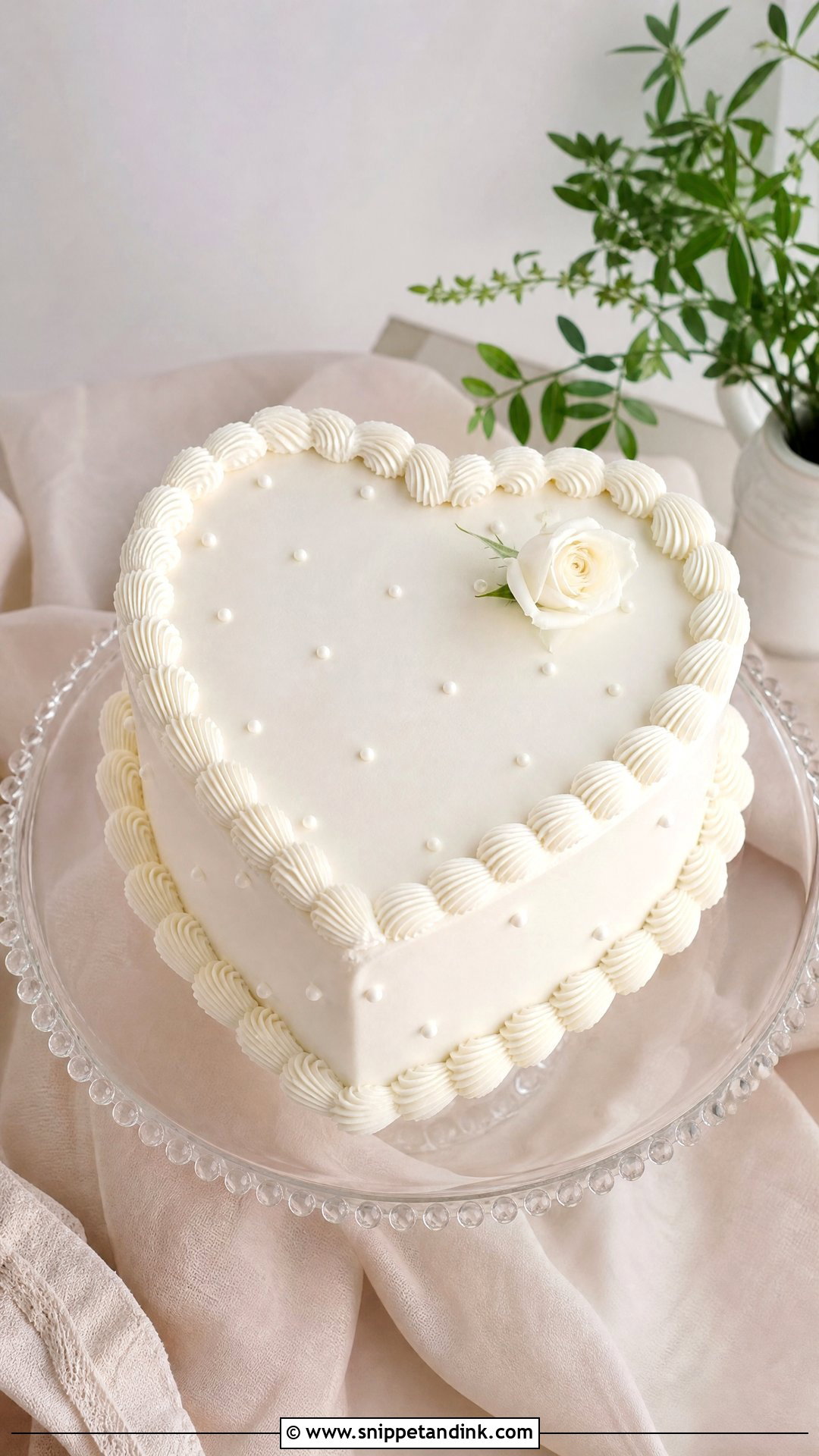
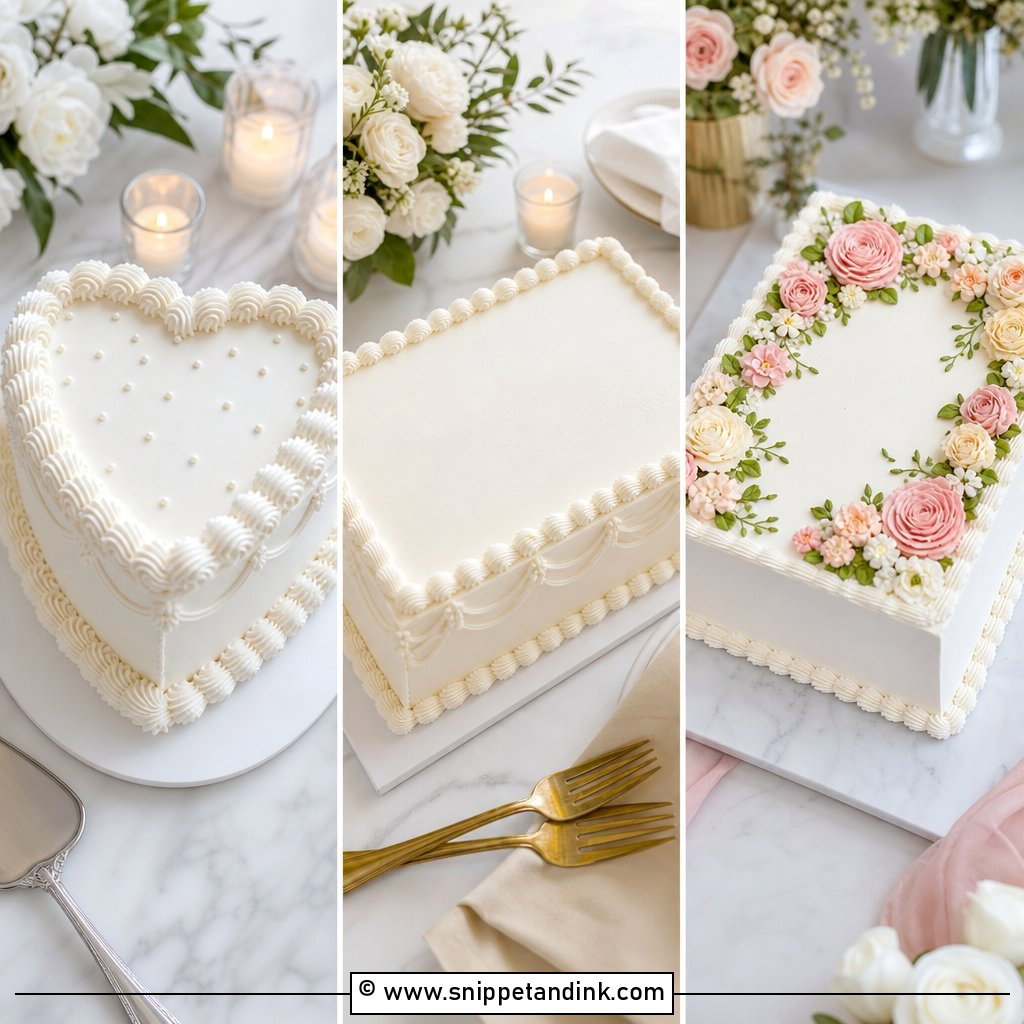
A heart-shaped cake is playful, and it works best as a cutting cake for a small wedding or beside a dessert table. Smooth white buttercream keeps it bridal, while shell piping around the edge leans nostalgic. The point and the two curves are tricky to keep neat, so I usually finish the edges with a piped border that tidies the shape. Overhead shots show the heart outline best.
20. White Sheet Wedding Cake
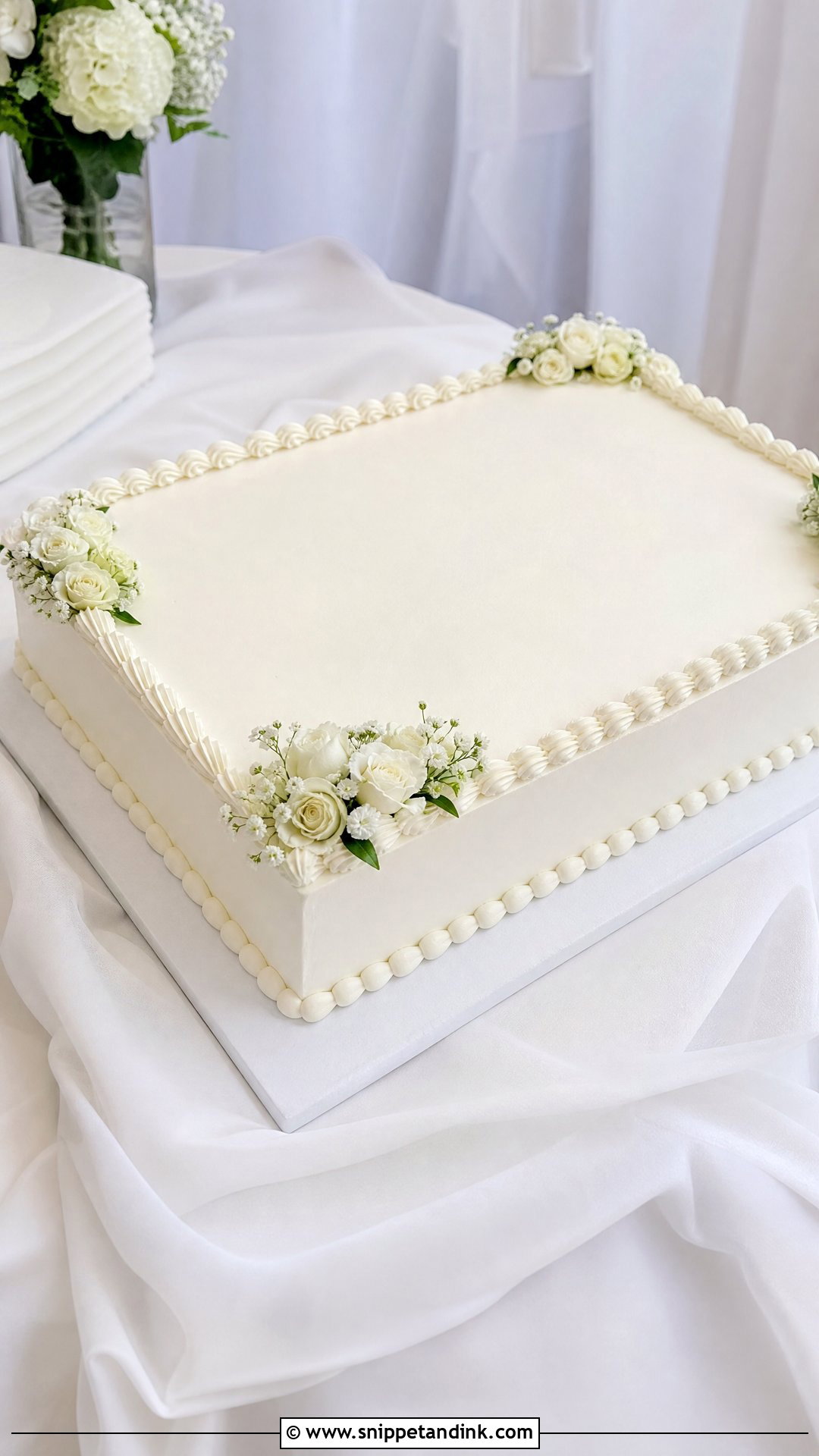
A sheet cake is the practical answer for a large guest list, and it doesn’t have to look plain. Smooth buttercream, piped borders and a few neat floral clusters give it a finished look on a styled table. Many couples pair a small decorated display cake with kitchen sheet cake in the same flavor, sliced out of sight, which speeds up service. It usually costs less per serving than tiered cake, though prices vary widely.
How Many Tiers Feed Your Guest List
Wedding portions are cut smaller than party slices, usually a tall narrow finger of cake about an inch wide. Using those portions, these are the rough counts I plan with for round tiers about four inches tall. Every baker cuts a little differently, so check yours.
- A 6-inch round serves around 12.
- An 8-inch round serves around 24, so a 6 and 8 two-tier covers roughly 36 guests.
- A 10-inch round serves around 38, so 6, 8 and 10 stacked feeds roughly 74.
- A 12-inch base serves around 56 on its own, enough to take a four-tier cake past 100.
If you’re keeping the top tier for an anniversary, take it out of the count. For bigger guest lists, a smaller display cake plus a kitchen sheet cake in the same flavor saves money without anyone noticing at the table.
Heat, Sunlight and the Hour Before Cutting
Most cake disasters I hear about happen after delivery, not in the kitchen. A white cake on a sunny table or in a warm marquee can soften, slide or yellow before anyone reaches for the knife.
- Set the cake table away from windows, heaters, candles and the dance floor lights.
- For an outdoor reception, keep the cake indoors or in the shade until shortly before the cutting.
- Fondant protects buttercream from warm air, so it’s the safer finish for summer and humid venues.
- Ask the venue to keep the cake room cool, and don’t move it once it’s set up; tiers shift most when carried.
Plan for the cake to arrive an hour or two before guests, not the morning before, unless the venue has proper cold storage. And if the schedule slips, cut the cake earlier rather than leaving it out through a long run of speeches.
Is One Accent Enough on a White Cake?
White cakes suit almost any wedding because they leave room for everything else. Match the finish to your venue first: buttercream for softness and flavor, fondant for crisp lines and warm days. Then pick one accent, maybe pearls, ribbon, lace or a single flower, and let the fillings carry the surprises. Give your baker your venue, guest count and timeline early, and the cake will still look fresh when it’s finally cut.
You'll Like These Ideas:







Leave a Reply