
A cake reads as elegant when one idea leads and everything else steps back. That’s the brief I come back to with almost every couple: make the finish, the shape or the flowers the hero, then keep the rest quiet. The ideas below run from plain white buttercream to pearls, old-fashioned piping, pressed petals and sculptural modern tiers, and I’ve added notes from the bench on how each one behaves in a warm room, on a stand and under the knife. Use them to find the feeling you want, then take that feeling to your baker.
Buttercream or Fondant Depends on the Thermostat
Before we talk flowers or color, I ask where the cake will stand and for how long. That one answer narrows the elegant styles below faster than anything else.
Summer tents and garden receptions
Swiss and Italian meringue buttercreams are silky, but they soften once the air gets warm, and in a tent without air conditioning a tall buttercream cake can slump or let its decorations slide before the cutting. Fondant over firm ganache holds its shape far better, which is why I lean toward it outdoors in summer. If you love buttercream anyway, keep the display time short and the cake indoors or in deep shade until the last moment.
Cool ballrooms and hotel suites
In an air-conditioned room, nearly every finish on this list is safe, delicate piping and soft ruffles included. The risk there is the journey from fridge to table. A chilled cake carried through a humid kitchen or loading dock can bead with condensation, and that moisture dries on its own if nobody touches it. I ask venue staff not to wipe it, because a cloth smears the surface for good.
1. White Buttercream Wedding Cake
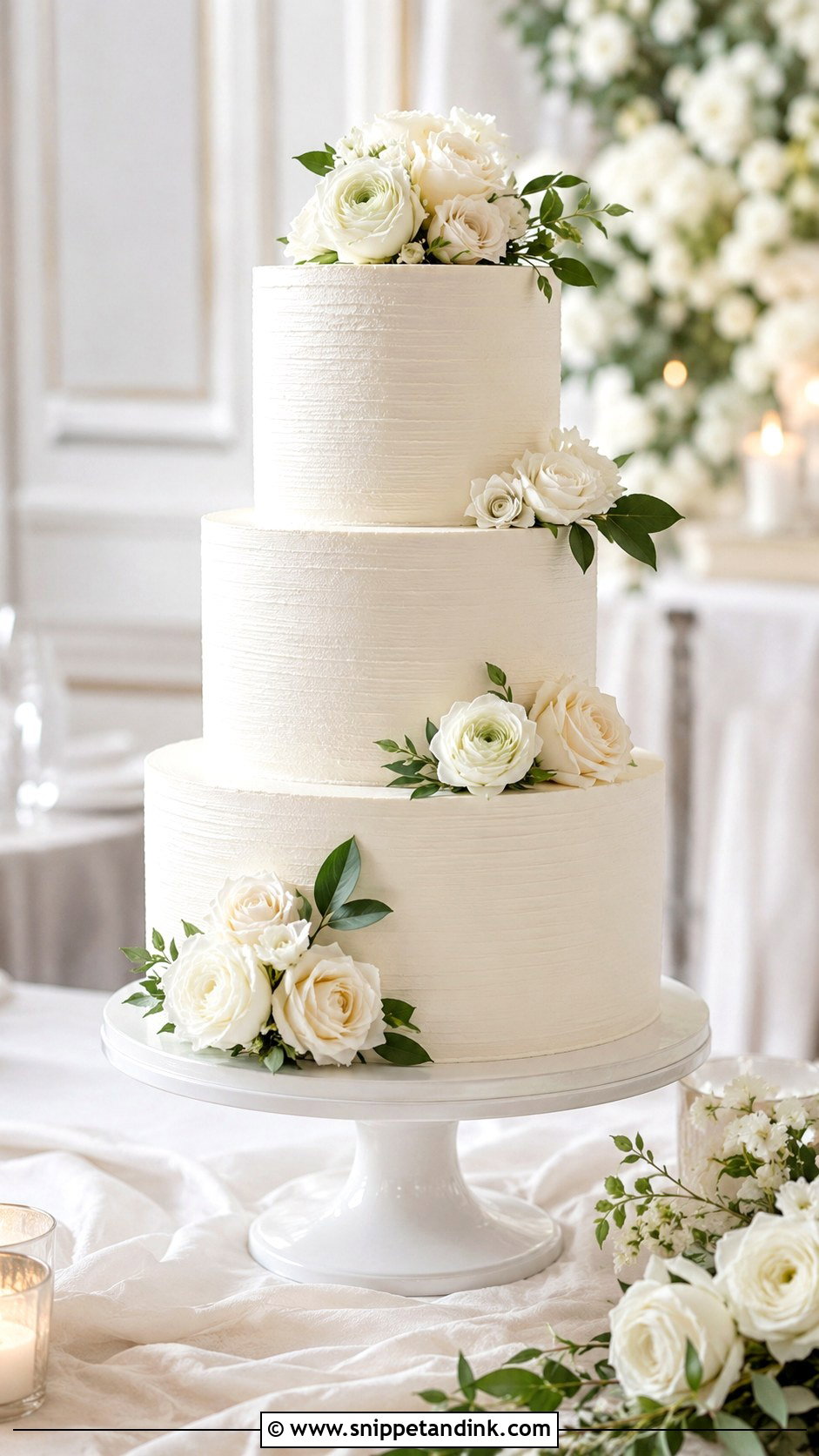
Nothing hides on plain white buttercream, which is exactly why I love it and why it’s harder to do well than it looks. Swiss meringue gives that silky, slightly hand-finished surface, and it pairs naturally with vanilla bean, almond or white velvet layers. The catch is heat. Meringue buttercream starts to soften once a room warms up, so for a summer tent I chill the tiers thoroughly and set the cake out late. A few white roses or lisianthus and a plain white or silver stand are all it needs.
2. Three Tier Wedding Cake
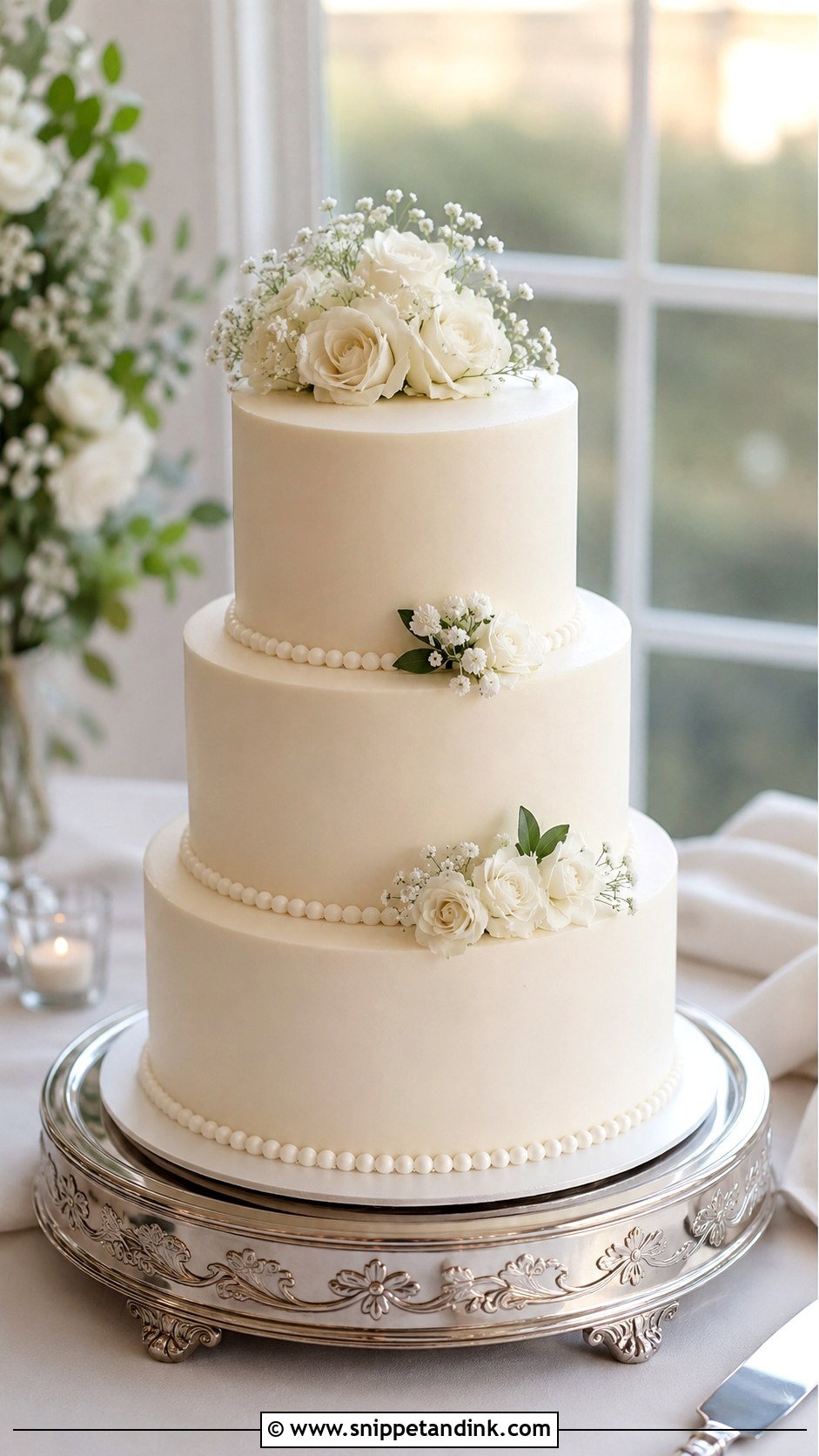
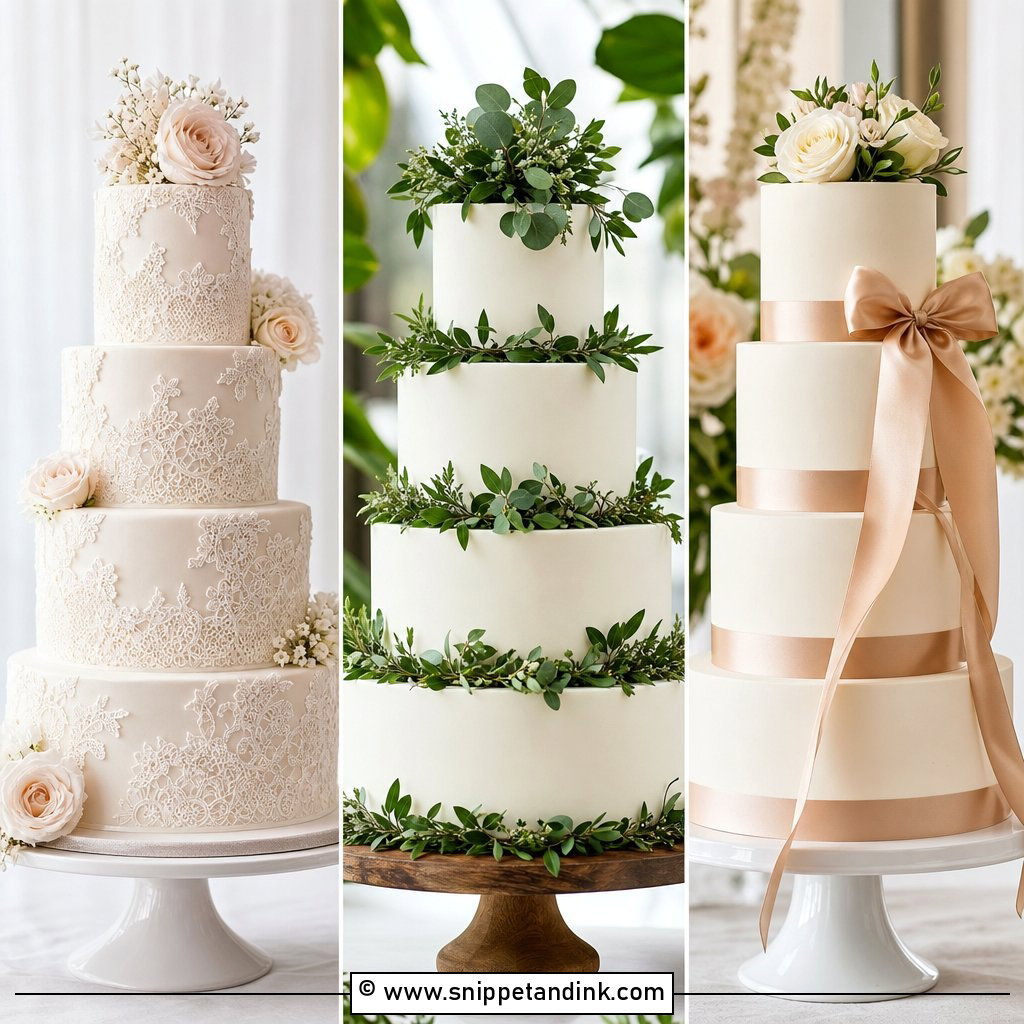
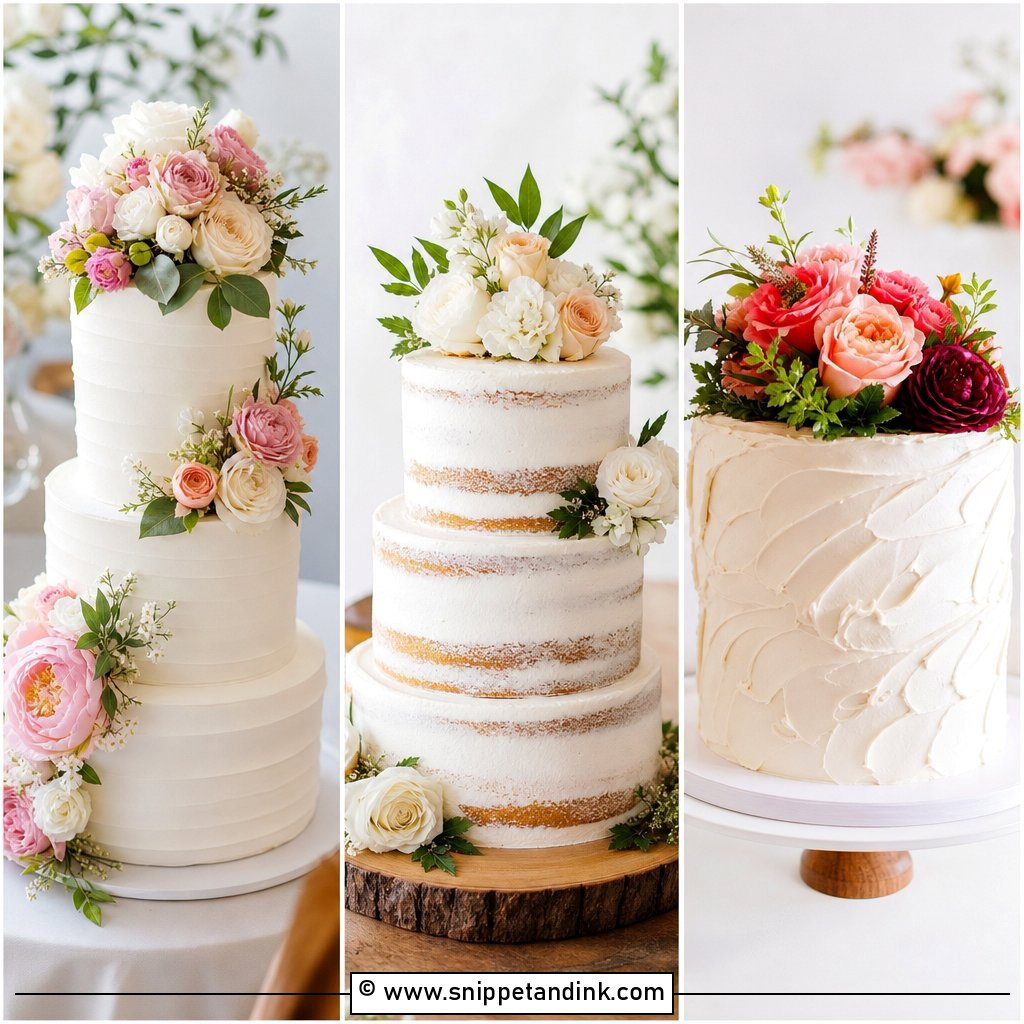
For most mid-size guest lists, a three tier wedding cake is the size I build most often, because it gives real height without needing dummy tiers to look grand. The bottom tier carries most of the servings, the middle can hold a second flavor, and the top is the one you cut for photos or freeze for your first anniversary. Each tier sits on its own board with dowels underneath, so the stacked weight never crushes the layers below. I keep the decoration to one idea, usually a cluster of blooms or a ribbon around each base.
3. Pearl Wedding Cake
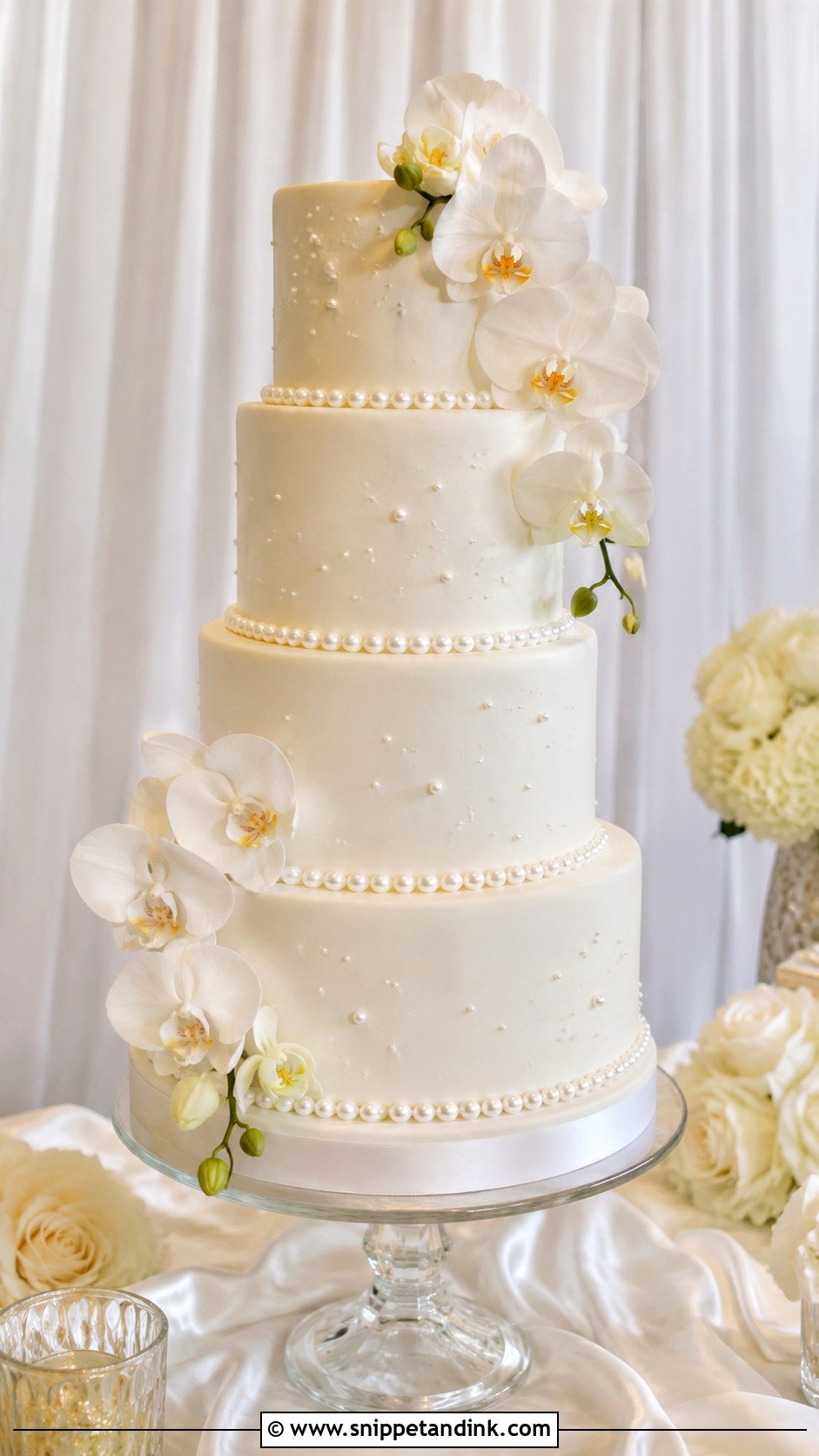
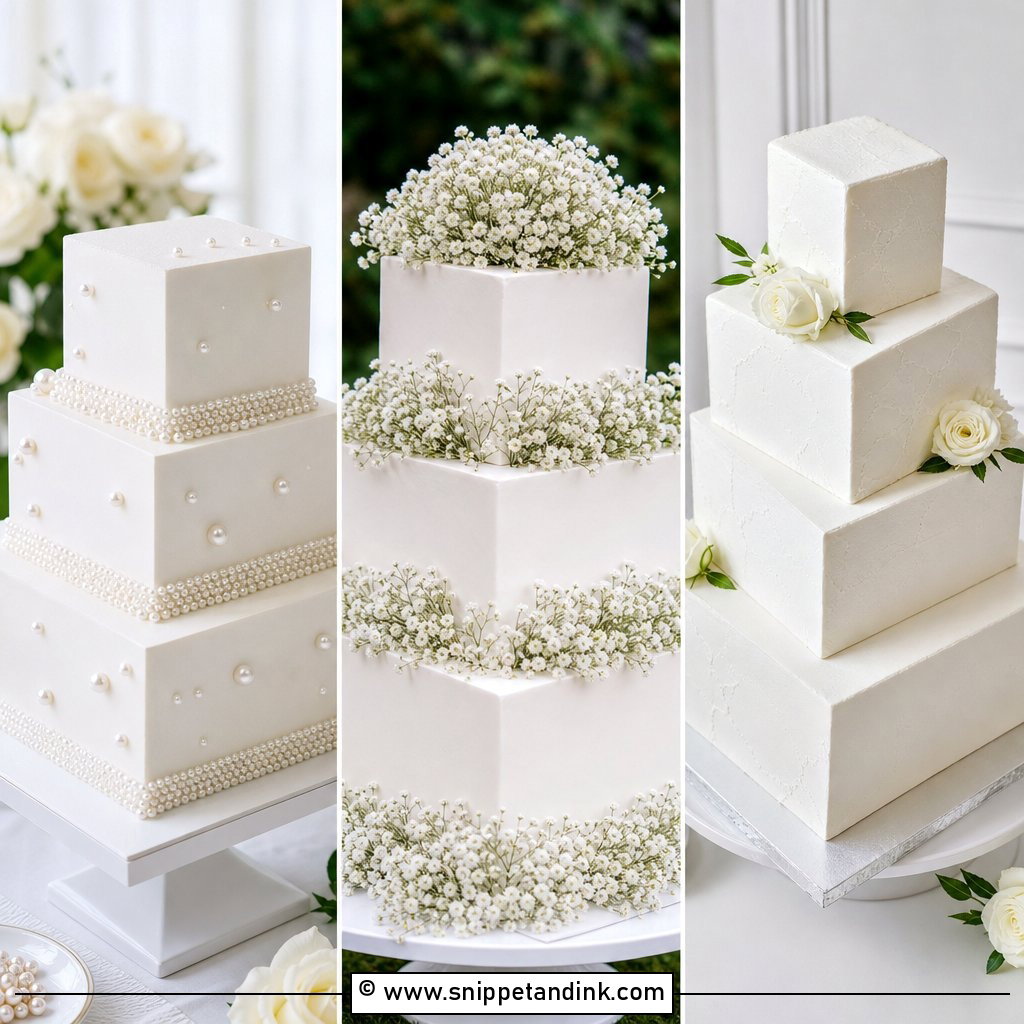
Edible pearls are sugar dragées, and each one goes on by hand with a dot of piping gel or royal icing. On soft buttercream they can slide if the cake warms, which is why I usually put pearl borders on fondant or on a well-chilled buttercream. Restraint matters more here than almost anywhere else. One neat border at each tier base looks bridal; pearls scattered over every surface start to look fussy. Vanilla almond, coconut or lemon elderflower suits it, with a couple of white orchids or roses to finish.
4. Vintage Piped Wedding Cake
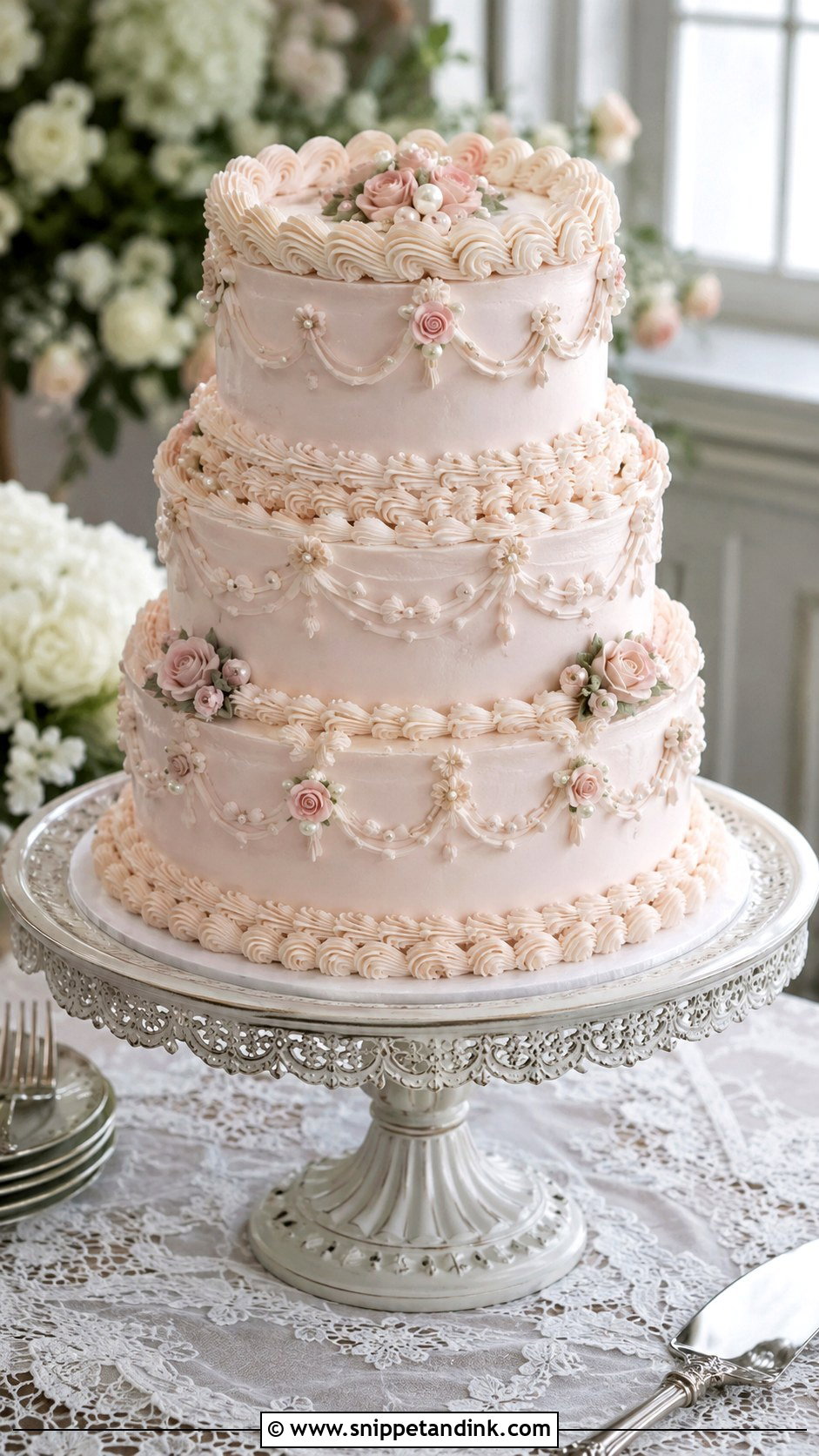
Overpiped shells, swags and scallops come from a very old decorating tradition, and they take a steady hand and many hours at the turntable. When a couple brings me a vintage piped reference, my first question is how much of the cake they want covered, because labor drives the cost of this style far more than the sponge does. All white feels bridal, while a faint wash of blush or pale blue reads more playful. Pick one motif and repeat it so the cake stays orderly. Raspberry or almond layers fit the nostalgic mood, in a round, heart or tiered shape.
5. Floral Wedding Cake
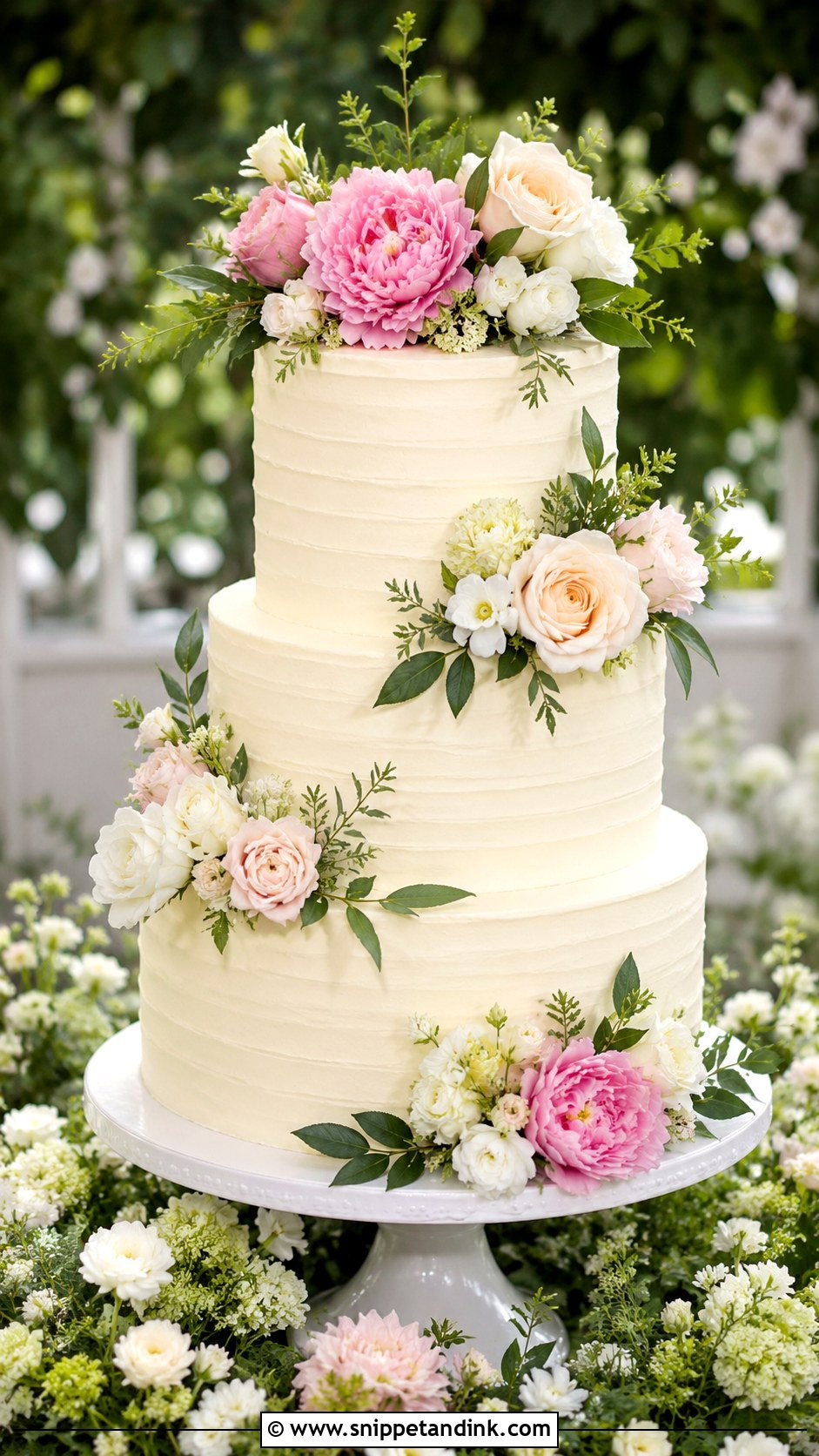
Flowers are the quickest way to tie the cake to the bouquet and centerpieces, which is why I ask couples to connect me with their florist early. Roses and orchids are easy to place on a cake. Hydrangeas and sweet peas look romantic but aren’t food-safe, so their stems are wrapped and kept off the frosting, as I explain further down. An ivory base lets the flowers look placed rather than crammed in. I follow the curve of the tiers with small clusters, and vanilla raspberry or lemon cream keeps the inside as fresh as the outside.
6. Minimalist Wedding Cake
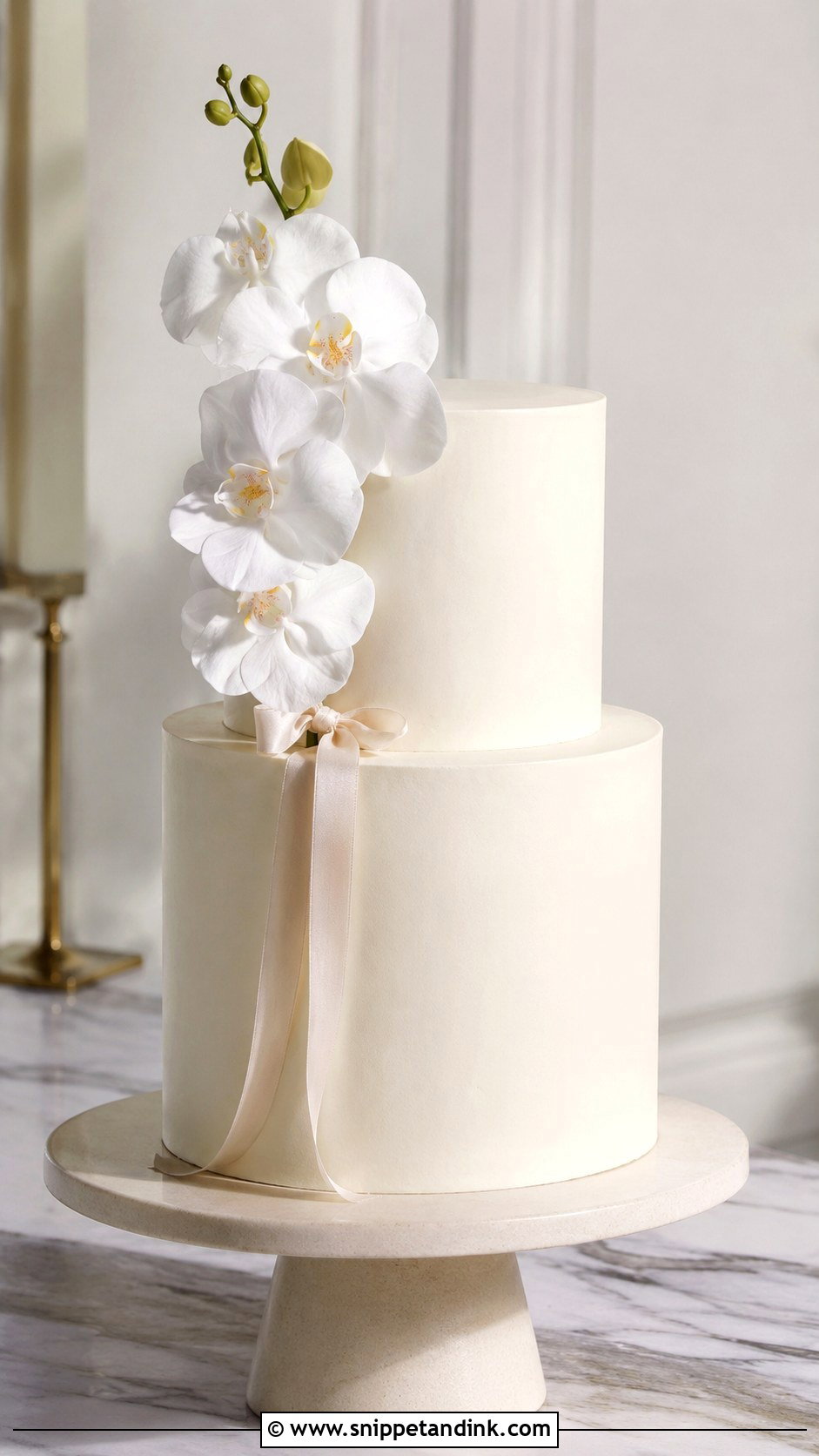
Minimal cakes are the least forgiving thing I make. With no flowers or piping to distract the eye, every bulge in the buttercream and every slightly leaning tier shows, so the baker’s finishing skill becomes the whole design. A tall single tier or two sleek tiers in soft white suit a gallery or city venue, with one orchid stem, a silk ribbon or a single pearl border. Before booking this style, ask to see photos of a baker’s plain cakes. Vanilla bean or lemon keeps the flavor as clean as the look.
7. Gold Wedding Cake
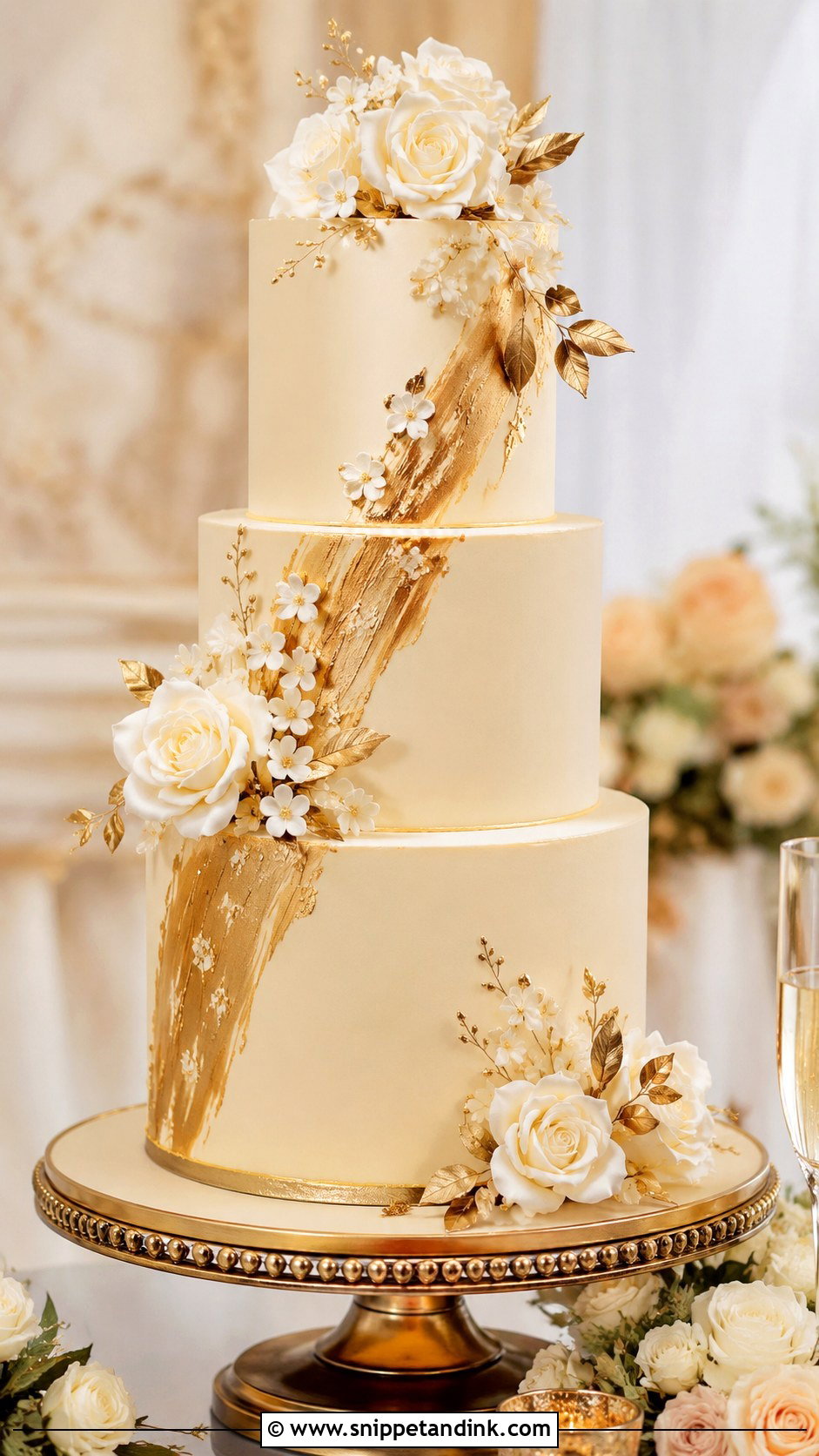
Gold on a cake is either edible lustre dust mixed with a drop of alcohol and painted on, or real gold leaf laid with a dry brush. Leaf catches candlelight in a way paint can’t, so I reach for it at evening receptions and hotel weddings. One caution: some dusts sold as non-toxic are decorative only, not edible, so confirm your baker uses food-grade products on anything guests will eat. Keep gold to an accent on ivory, such as one tier or a broken-leaf edge, and soften it with white roses. Caramel, honey or almond layers echo the warmth.
8. Black And White Wedding Cake
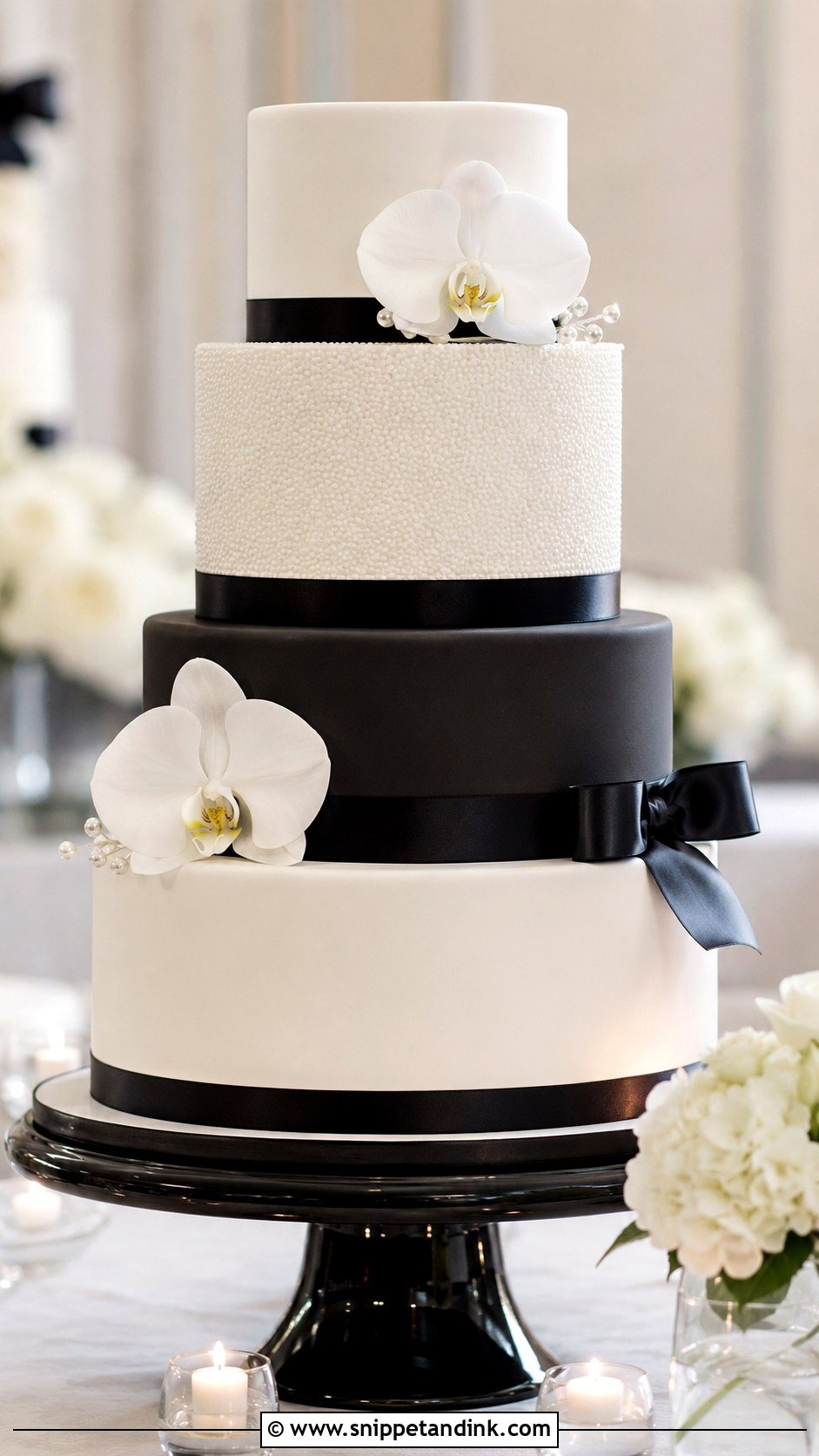
Getting frosting truly black takes a lot of coloring, and that much dye can stain teeth and taste bitter, so I rarely cover a whole tier in it. I’d rather build the contrast with a black ribbon, a piped black lace band or a few black sugar bows on white. Leave plenty of white space and the cake stays formal instead of harsh, which suits black-tie receptions and city venues. Chocolate, vanilla and cookies and cream all sit comfortably with the palette, and white orchids or pearls keep it bridal.
9. Tall Wedding Cake
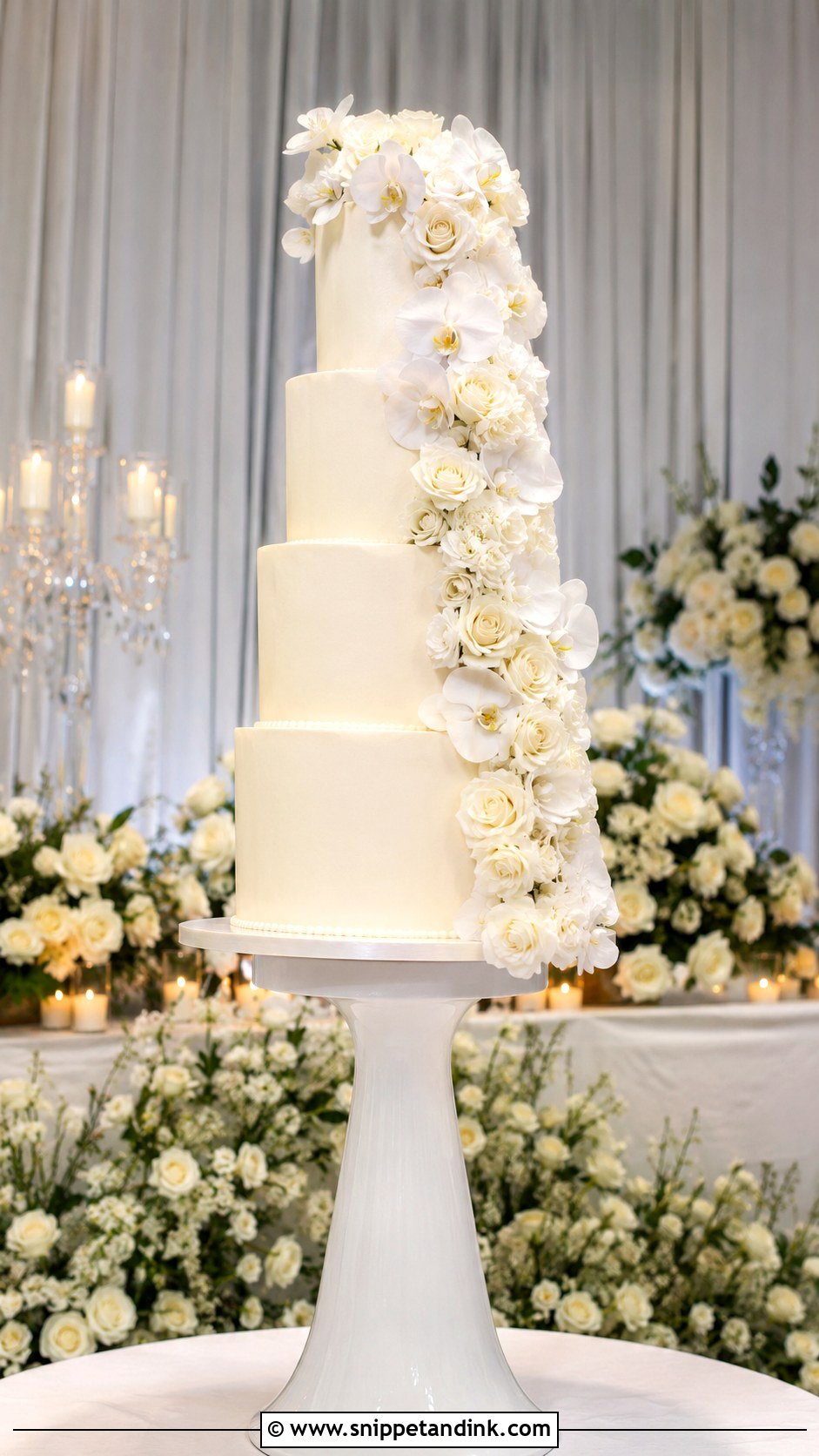
Height doesn’t have to mean more tiers. I often build extra-tall tiers by stacking two cakes on separate boards inside a single tier, which gives a grand silhouette without doubling the servings. That hidden board matters: a tall tier with no support in the middle can bulge or sag by the end of the evening. Sharp buttercream edges or smooth fondant suit the shape best, in white, ivory or pale blush. Let flowers trail down one side, or leave it bare with one refined topper.
10. Square Wedding Cake
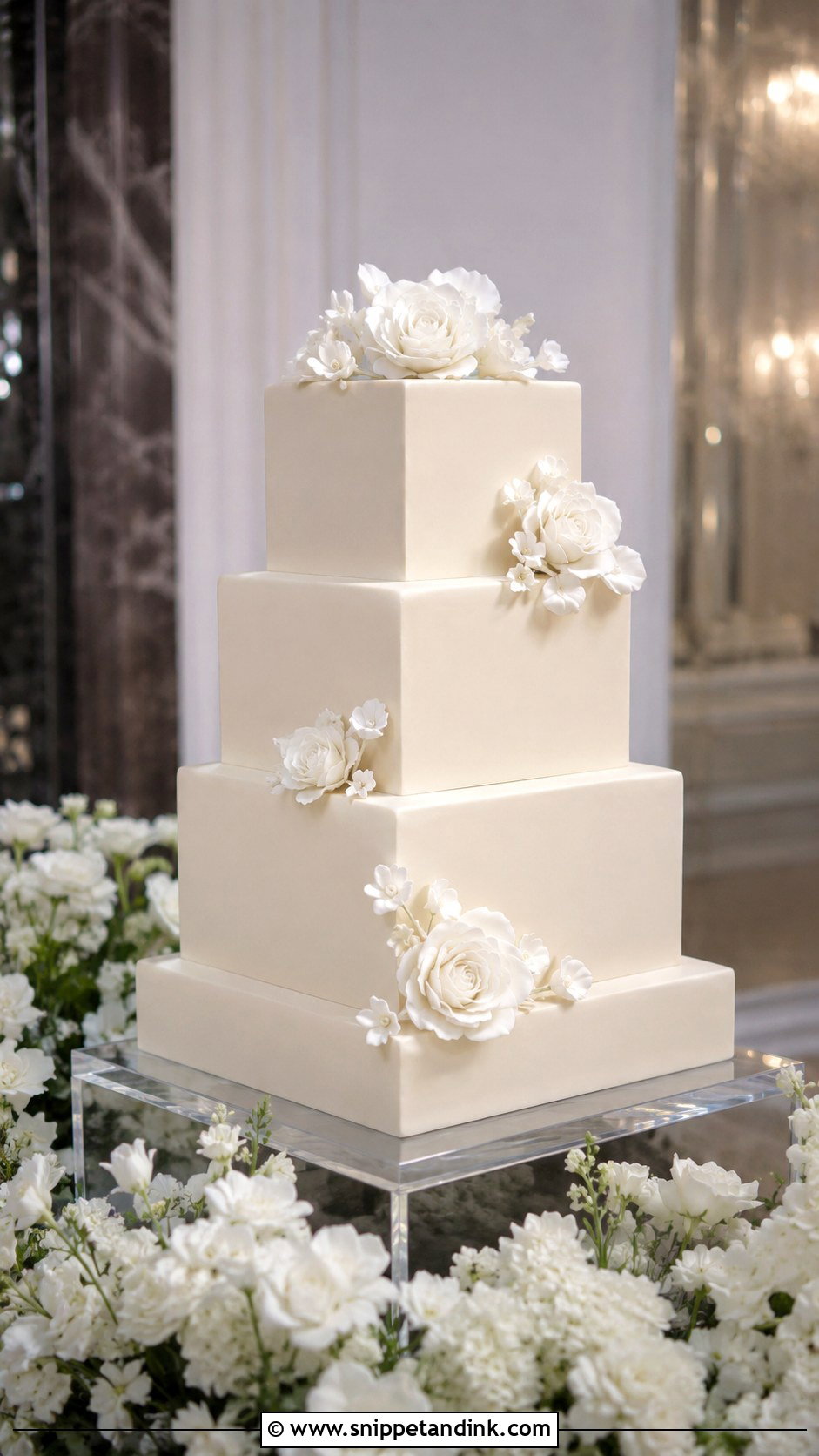
Square tiers feel architectural, which is why they suit rooftop and contemporary venues. They also take longer to finish, since crisp corners are much fiddlier in buttercream than a smoothed round, so many bakers default to fondant for this shape. A square tier serves noticeably more slices than a round of the same width, worth knowing if your budget is tight. I place sugar flowers on one corner per tier rather than all four, or pipe a thin line along the edges. Vanilla, chocolate or almond keeps the inside familiar.
11. Round Wedding Cake
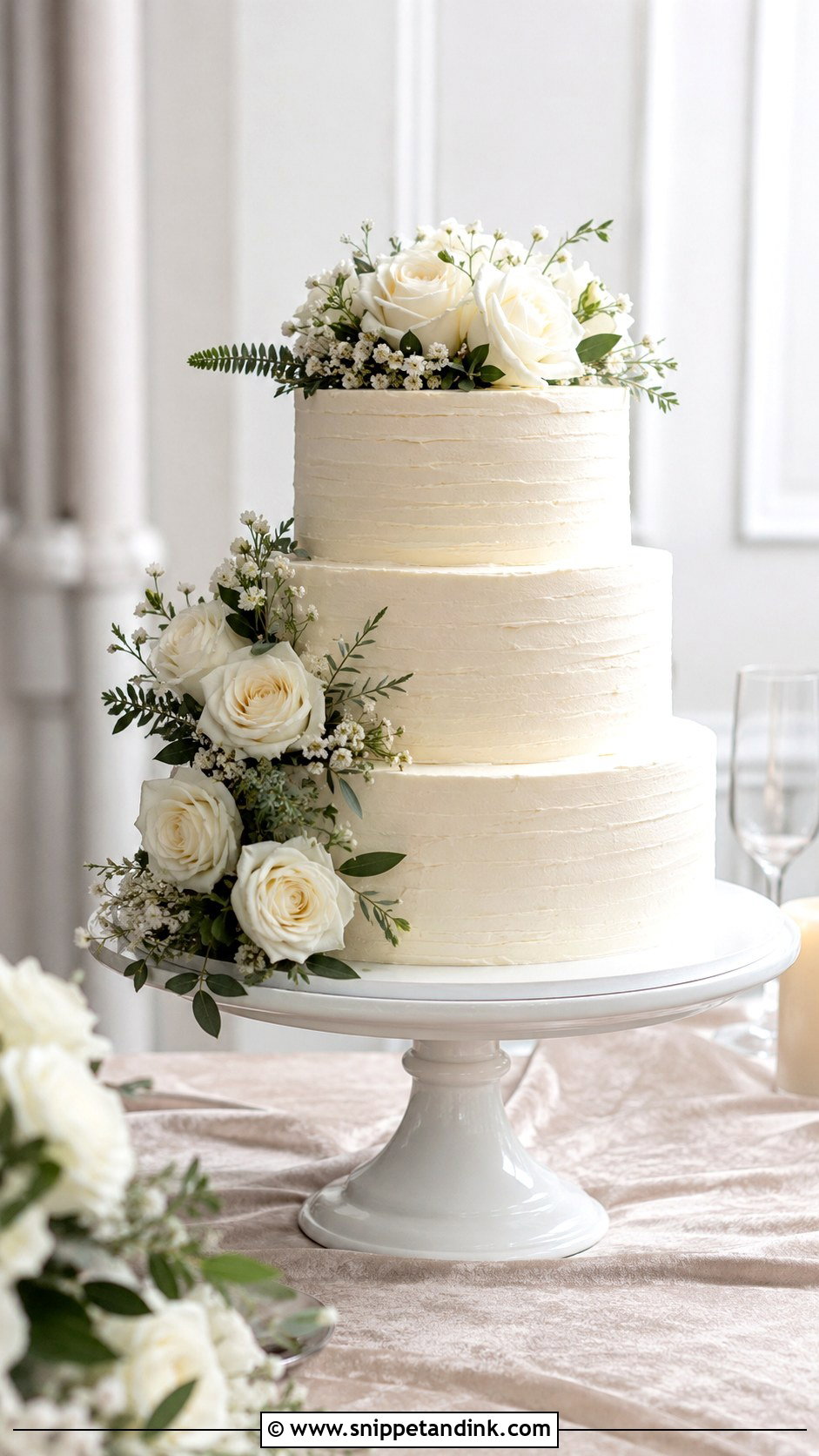
Round is the default for good reason. It’s the easiest shape to cut evenly, it stacks most predictably, and flowers follow a curve more naturally than a corner. The same round cake can go formal with fondant and sugar flowers or relaxed with textured buttercream, so it’s the shape I suggest when a couple hasn’t settled the reception style yet. Ivory buttercream, a few white flowers and a simple stand look polished. Vanilla bean, lemon or strawberry cream will please most of the room.
12. Fondant Wedding Cake
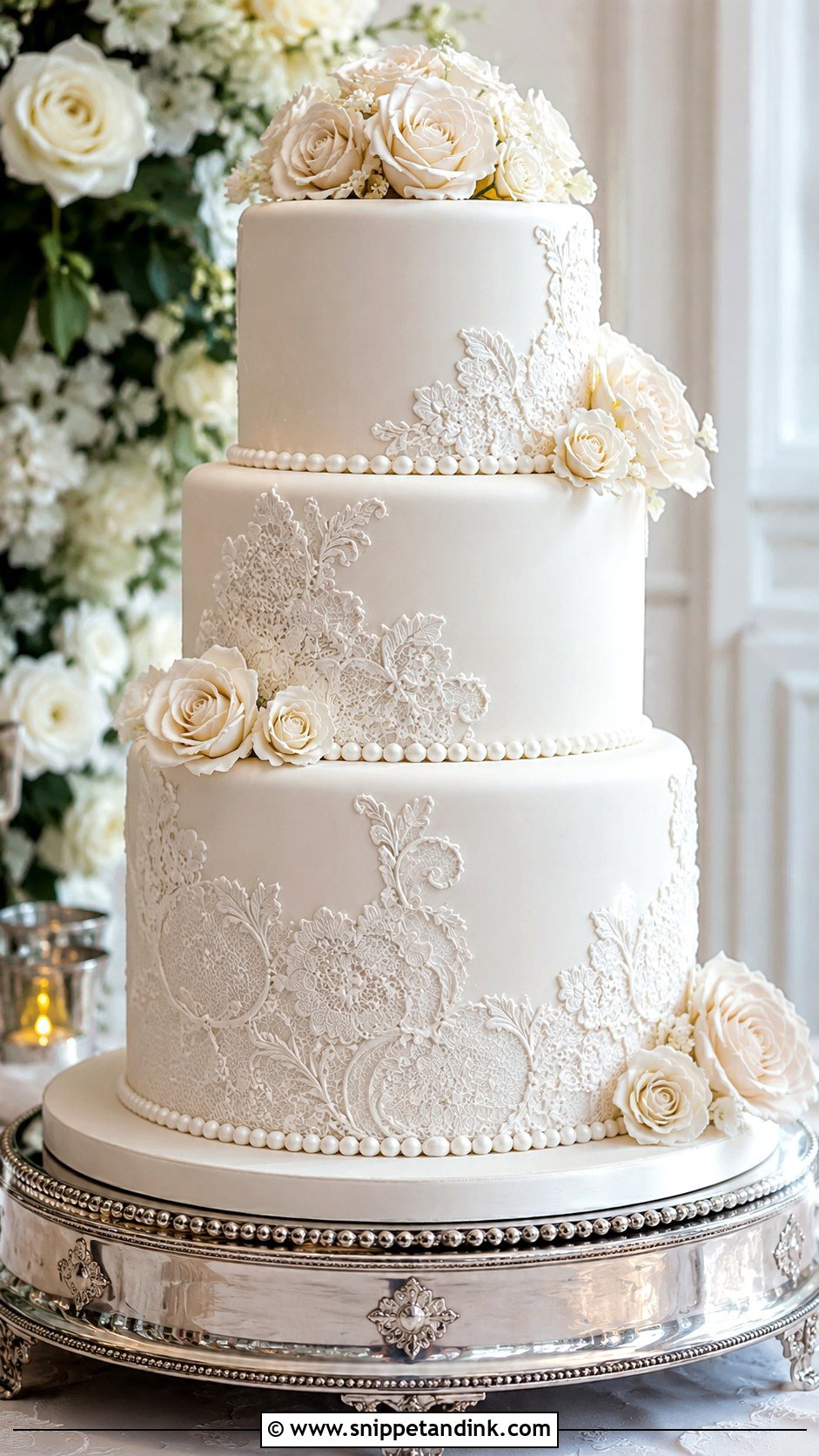
Long receptions are where a fondant wedding cake earns its place. Fondant seals the cake underneath, so the surface stays crisp for hours, and it takes edible lace, embossing and sugar flowers better than any frosting. I’m honest with couples about two things: plenty of guests peel it off, and fondant over a soft buttercream base can sag in heat. Under fondant I prefer ganache, which sets firm and gives those sharp edges. One texture or one floral spray is plenty, with raspberry vanilla, chocolate ganache or lemon curd inside.
13. Textured Buttercream Wedding Cake
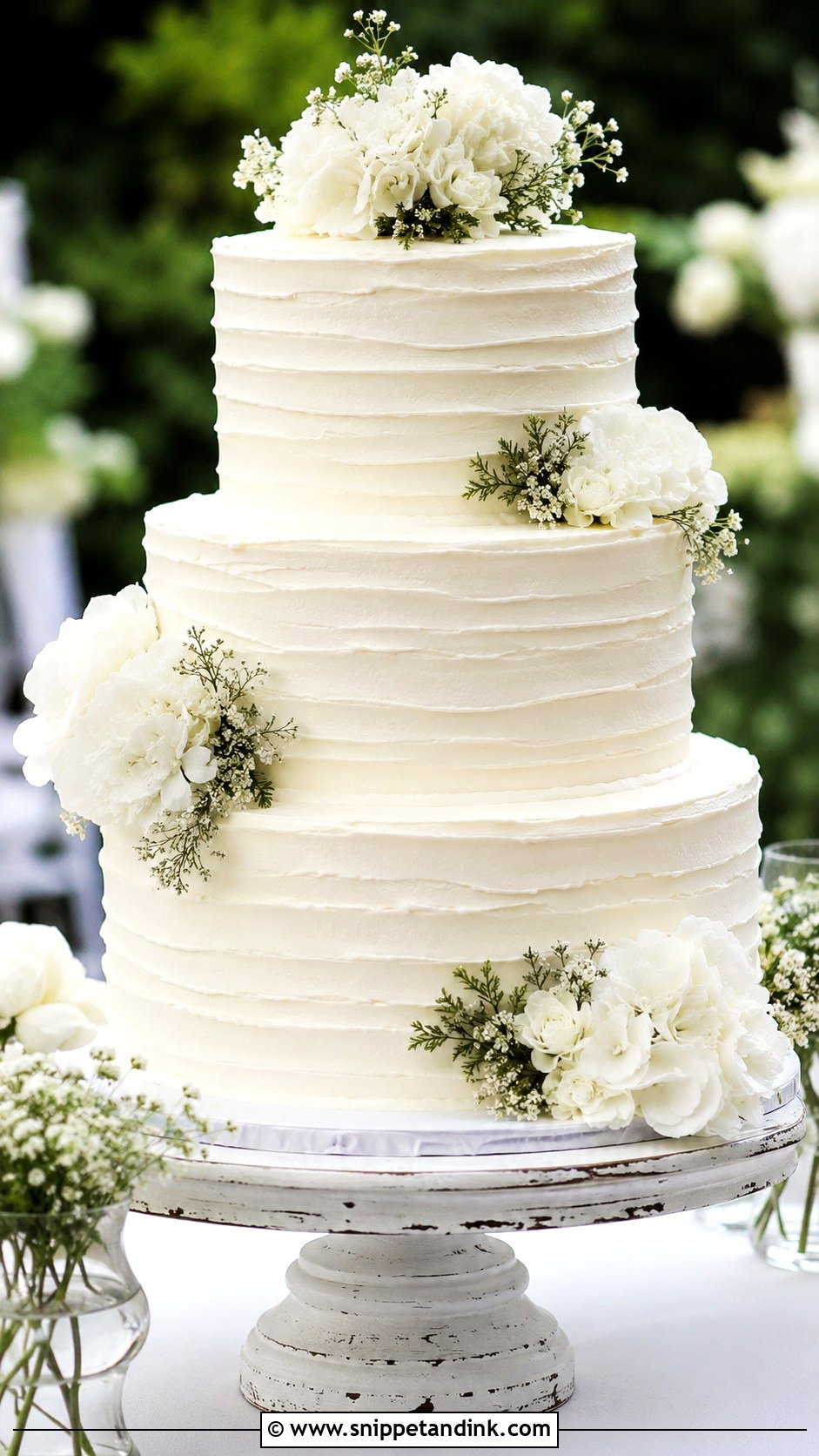
Ridges, palette-knife strokes and linen-like combing all come from the tool held against the cake as it turns, and each one hides small imperfections a smooth finish would show. That makes textured buttercream the more forgiving choice outdoors, where a little softening won’t read as a flaw. It’s less formal than fondant but stays refined in white, cream or pale blush. I add fresh flowers or sugar petals in tight clusters rather than scattering them. Lemon, coconut or almond suits a garden reception.
14. Pressed Flower Wedding Cake
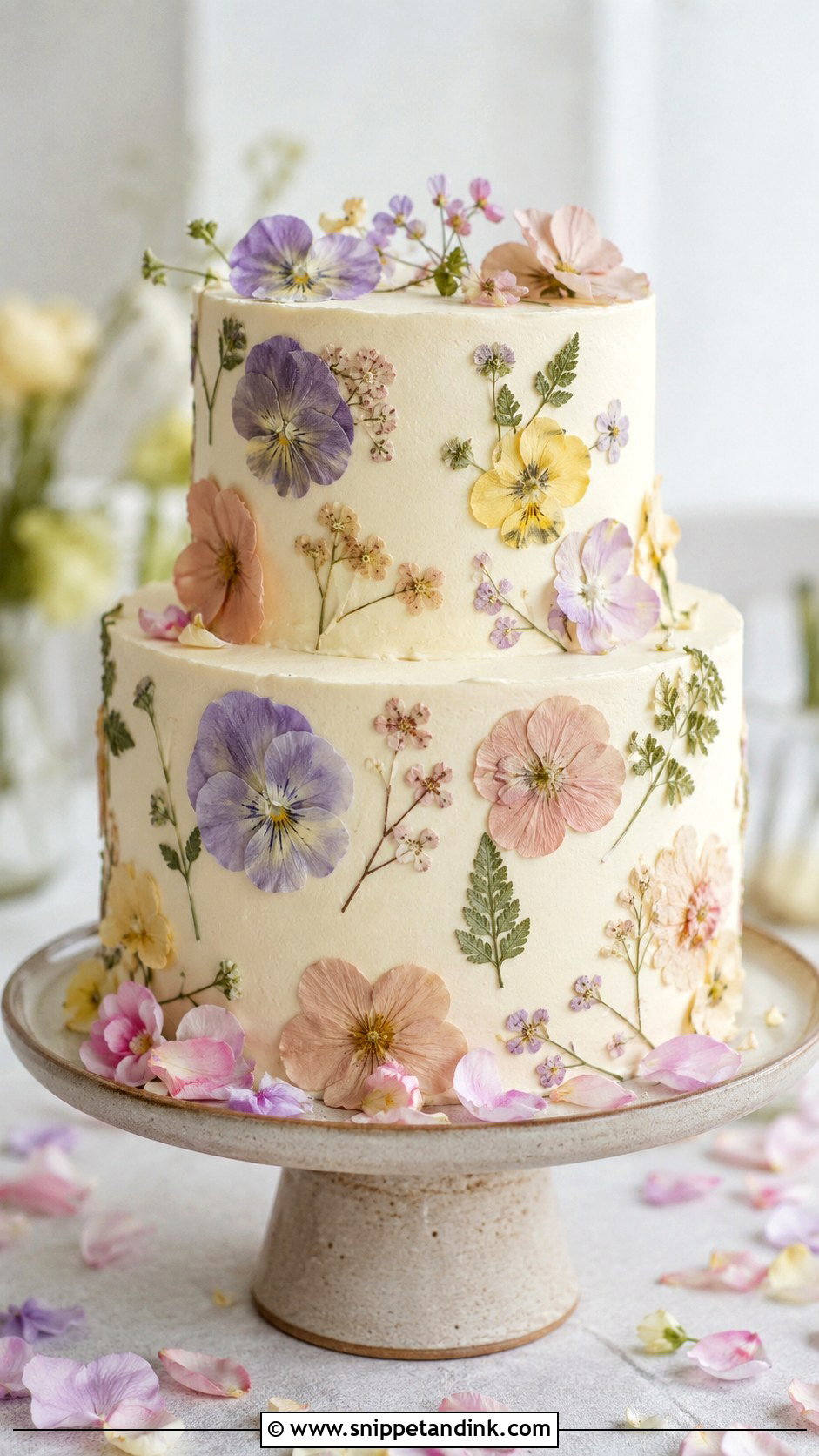
Pressed flowers for a cake need to be edible varieties grown without pesticides, such as violas, pansies and cornflowers, never blooms pulled from the bridal arrangements. I press them flat for several days, then set them lightly into chilled buttercream or onto fondant brushed with a little water so they cling. Give each flower breathing room; a cake covered edge to edge loses the botanical feel. Pale ivory frosting makes the petal colors show. Vanilla lavender or berry cream matches the garden idea.


15. Sugar Flower Wedding Cake
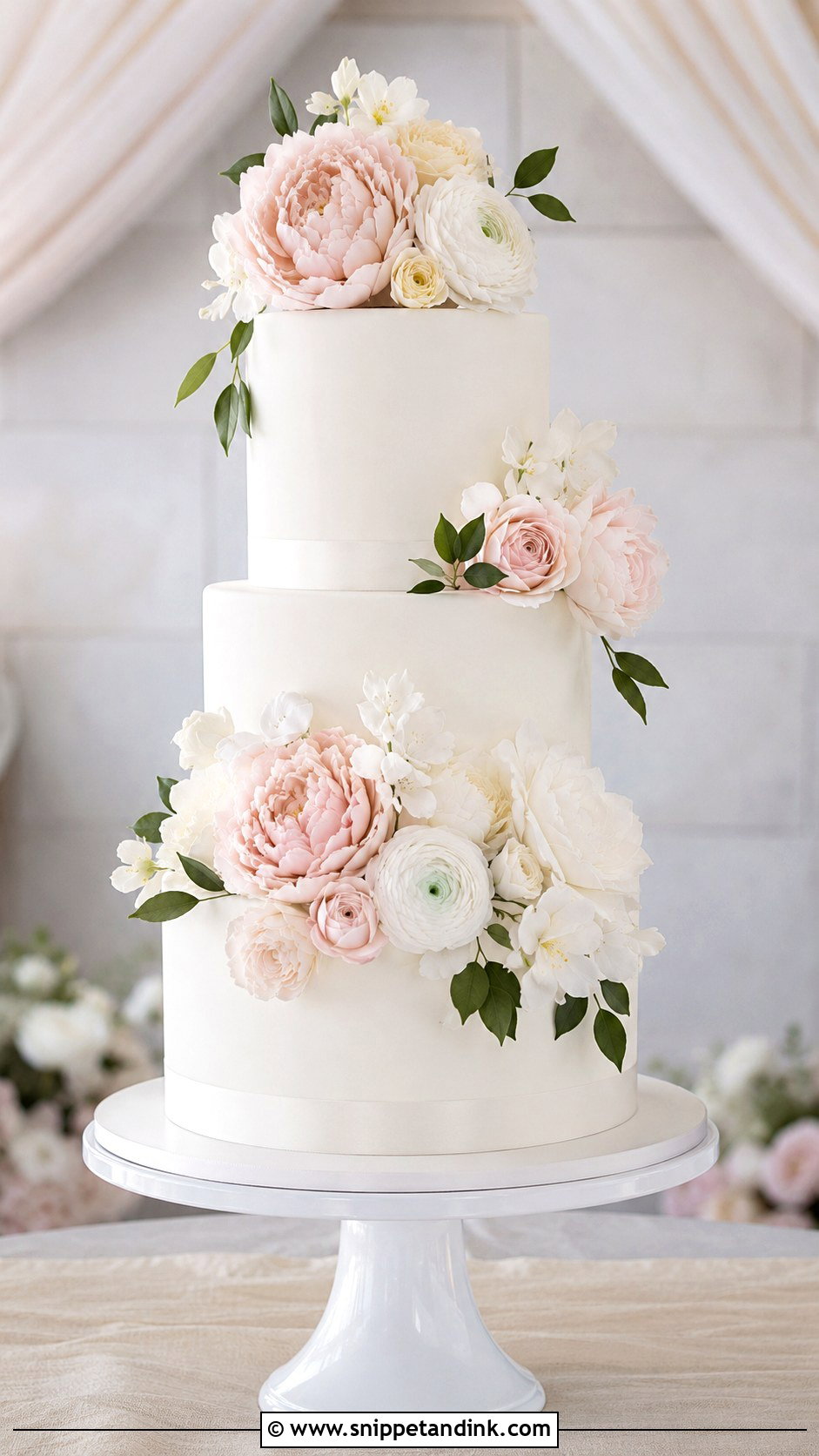
Sugar flowers are built petal by petal from gum paste, wired and left to dry, and a full peony can take hours. That’s where the cost goes, but the payoff is blooms that never wilt, can be made in any season and go home in a box as a keepsake. They’re also the safest answer if your bouquet uses flowers that shouldn’t touch food. Smooth ivory fondant or buttercream gives them a clean background. Order them early, because sugar work needs drying time before it travels. Almond, vanilla bean or raspberry cream suits the formal style.
16. Orchid Wedding Cake
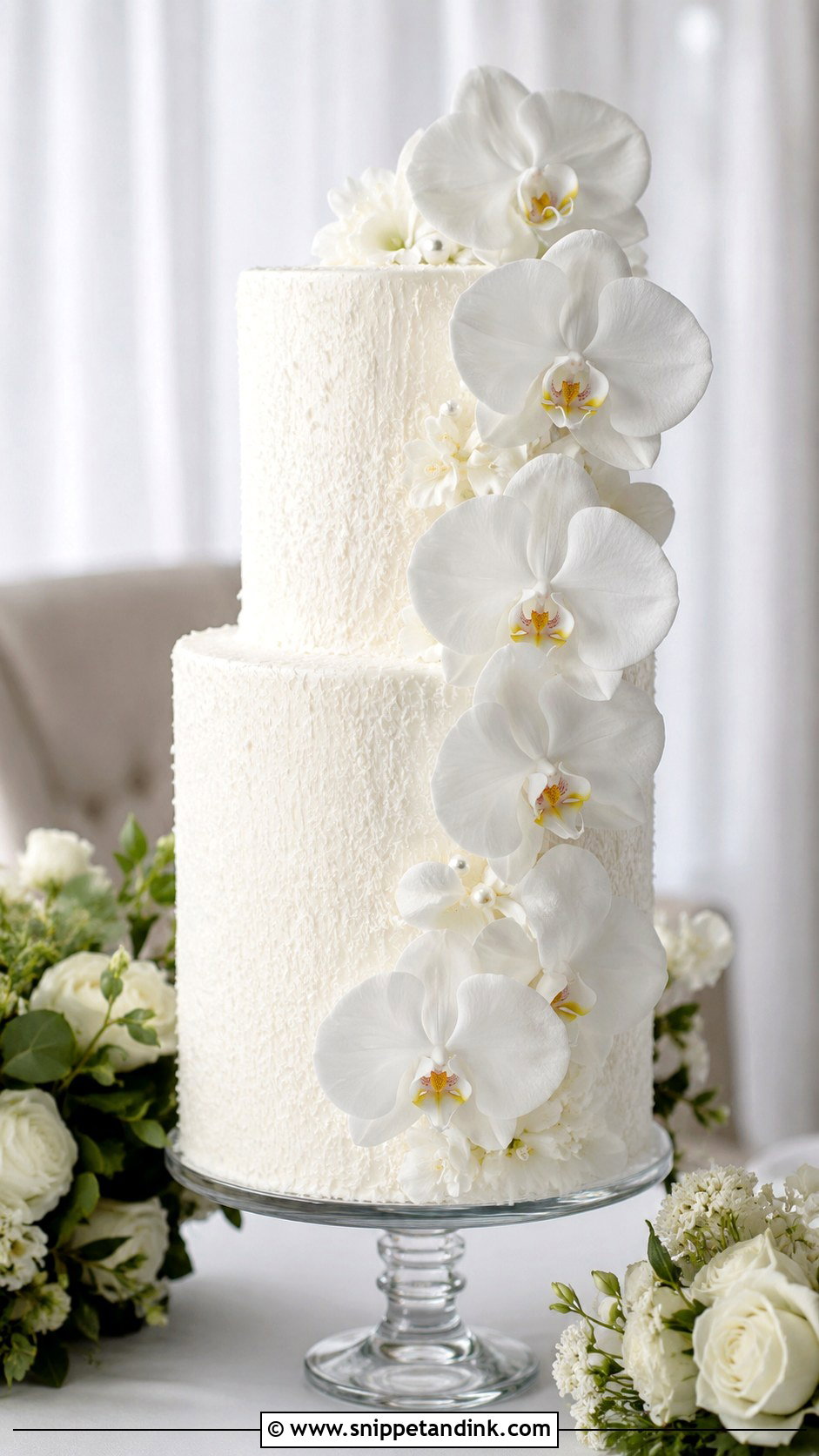
Orchids have a sculptural shape that makes a plain cake look finished with very few stems. White phalaenopsis are the classic pick because their flat faces sit neatly against ivory frosting and pearl details. Real orchids bruise wherever they’re handled, so I place them last, on site, with stems wrapped and set into a food-safe pick. A cascade down a tall cake reads dramatic; two or three blooms at the base reads minimal. Coconut, passion fruit or lemon cream fits the fresh style, and the frosting should stay smooth so the outline of each flower shows.
17. Rose Wedding Cake
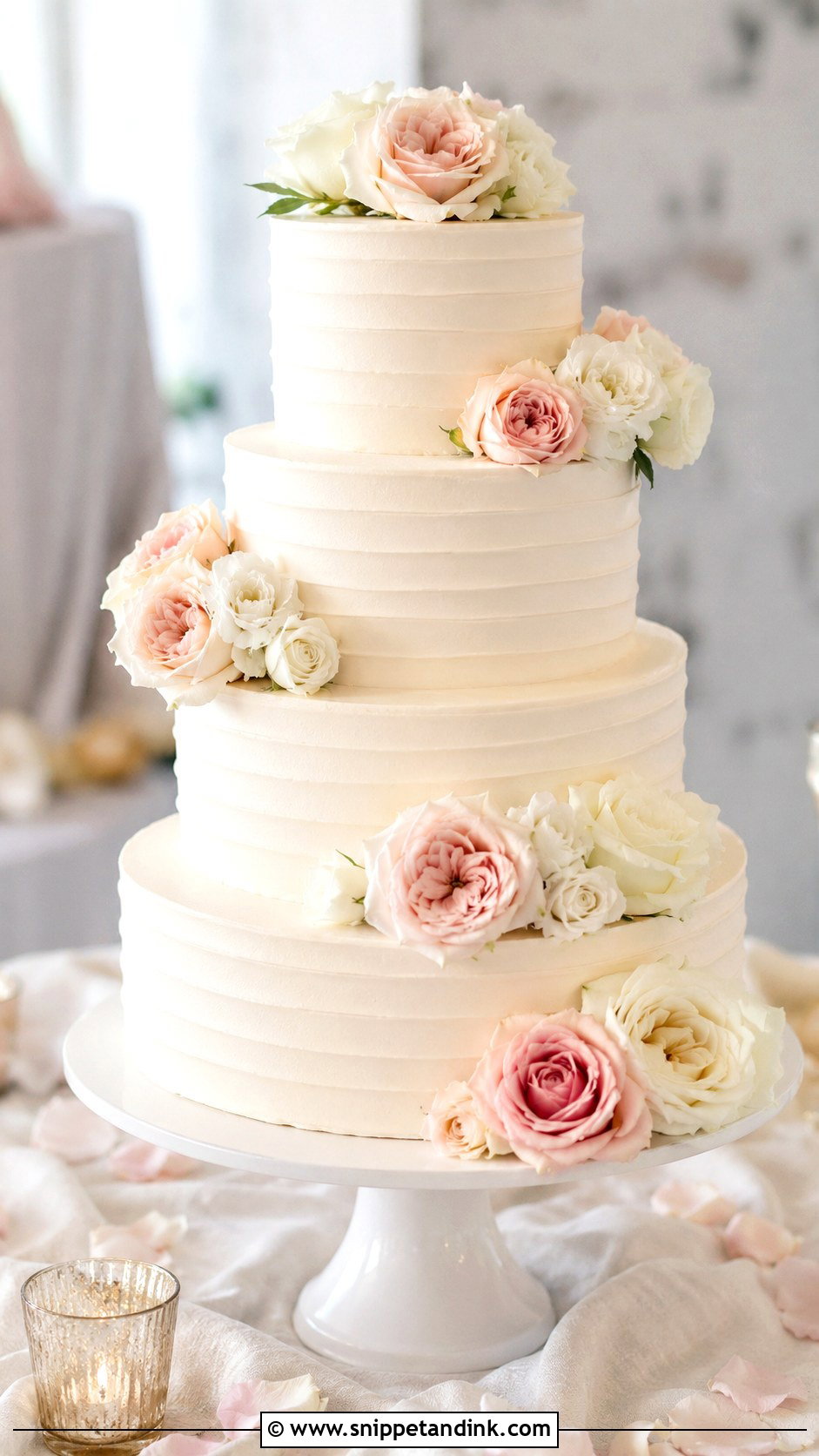
Roses are the flower I put on cakes most often. They’re sturdy, available all year and hold up well out of water for a few hours. White feels bridal, blush feels softer and garden roses add ruffled volume. I tuck small clusters between tiers or let a line of them drift down one side, stopping before the tiers disappear. If you want the cake to match the bouquet exactly, ask your florist to set aside a few unsprayed stems for the baker. Strawberry cream, raspberry or vanilla almond carries the theme inside.
18. Blush Wedding Cake
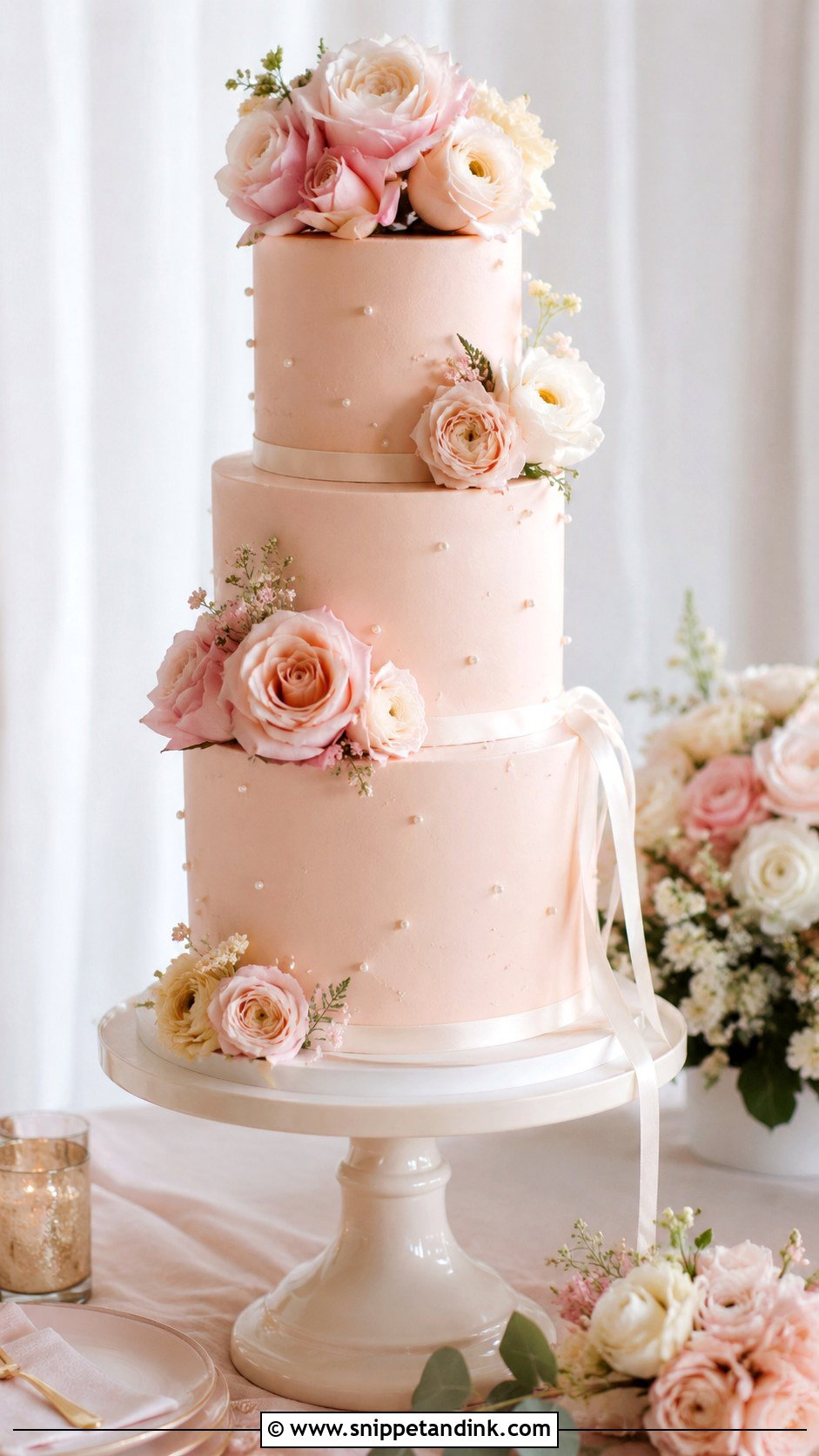
Blush is hard to mix consistently. A drop too much color takes it from barely pink to bubblegum, and the shade deepens slightly as buttercream sets, so I always match it against a physical swatch from the couple, like a ribbon or a bridesmaid fabric, never a phone screen. Dusty rose and muted mauve read more grown-up than bright pink. Ivory, champagne and a little gold suit it, along with roses or a thin ribbon. Raspberry cream or rosewater vanilla echoes the color in flavor, and spring garden weddings suit it well.
19. Blue Wedding Cake
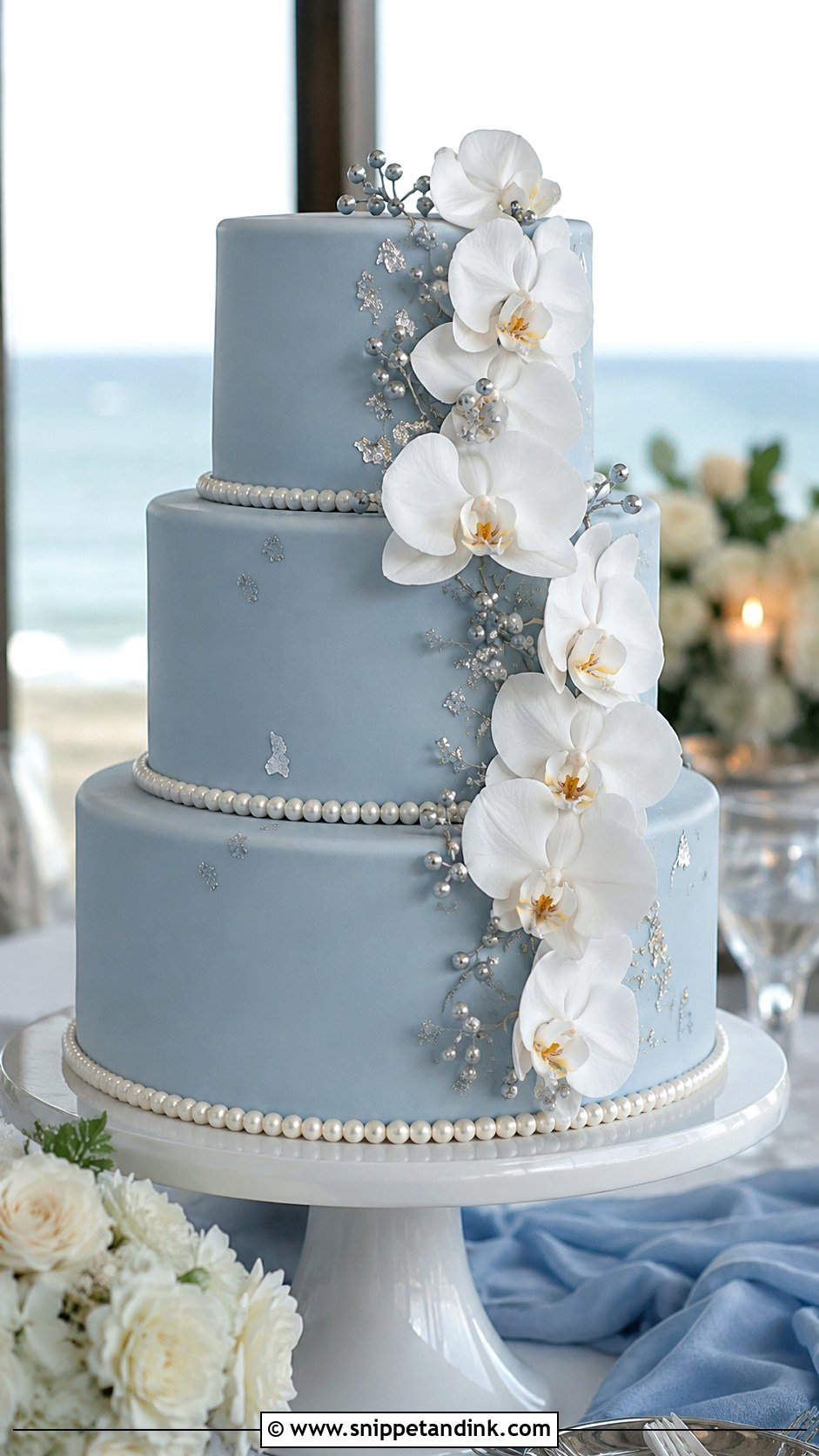
Pale blue is one of the trickier frosting colors. Butter gives buttercream a yellow cast, and blue on a yellow base drifts toward green, so bakers often use a whiter frosting or fondant to keep the shade true. Ask which yours uses before you fall for a powder-blue sample. Misty and dusty blues look refined with white flowers and silver accents, and suit coastal or winter palettes without any holiday styling. Lemon, almond or blueberry cream fits, and a white or silver stand keeps it crisp.


20. Green Wedding Cake
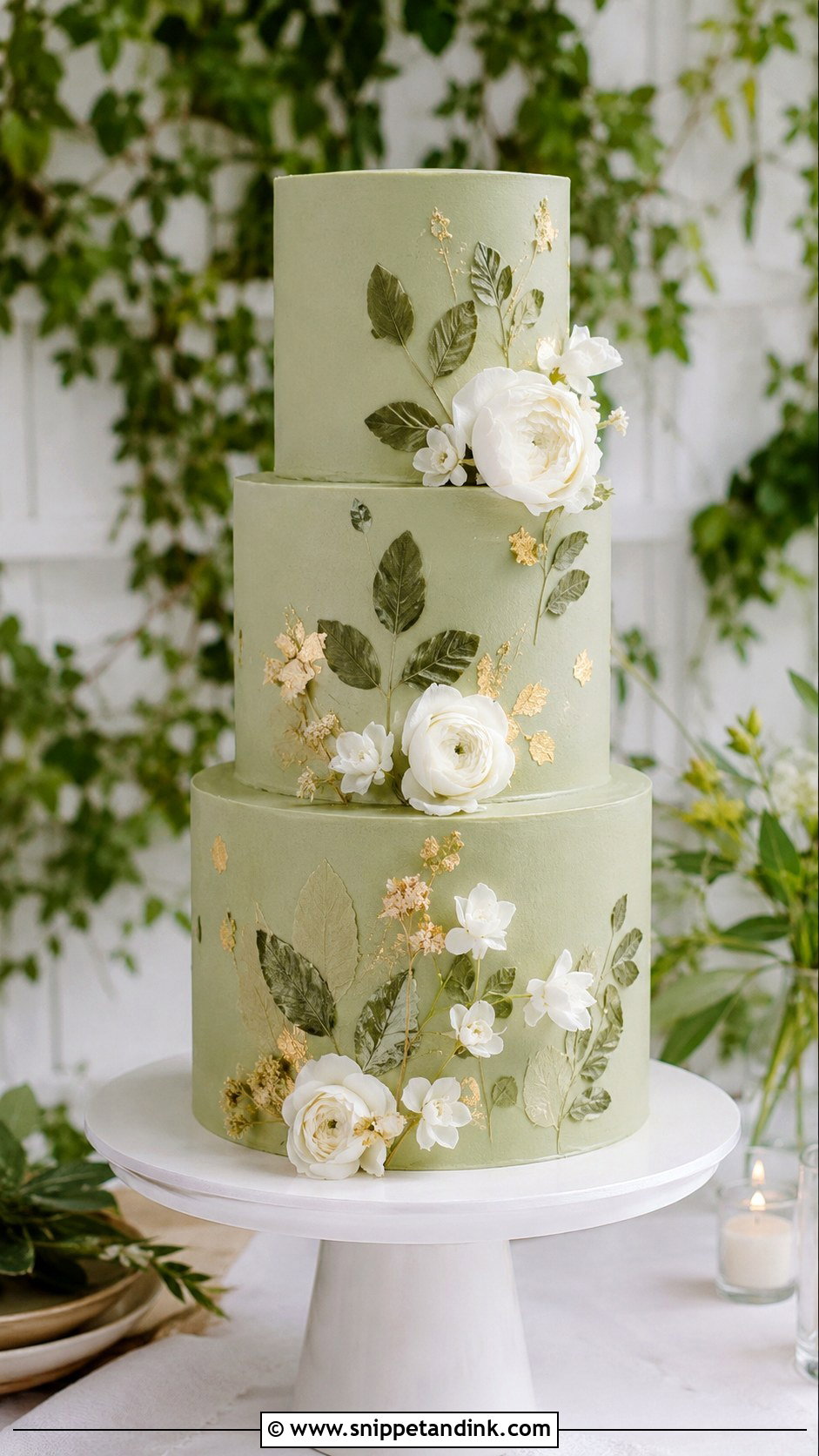
Sage, eucalyptus, olive and pale pistachio are the greens I’d steer you toward; brighter shades tend to look artificial across a large surface. A green wedding cake sits naturally in a greenhouse or garden venue, and white flowers, pressed leaves or sugar botanicals keep it soft. Gold leaf looks especially good against sage. Pistachio and matcha vanilla give the color a flavor that makes sense. Colored frosting can fade in strong light, so I keep finished green cakes out of direct sun.
21. Marble Wedding Cake
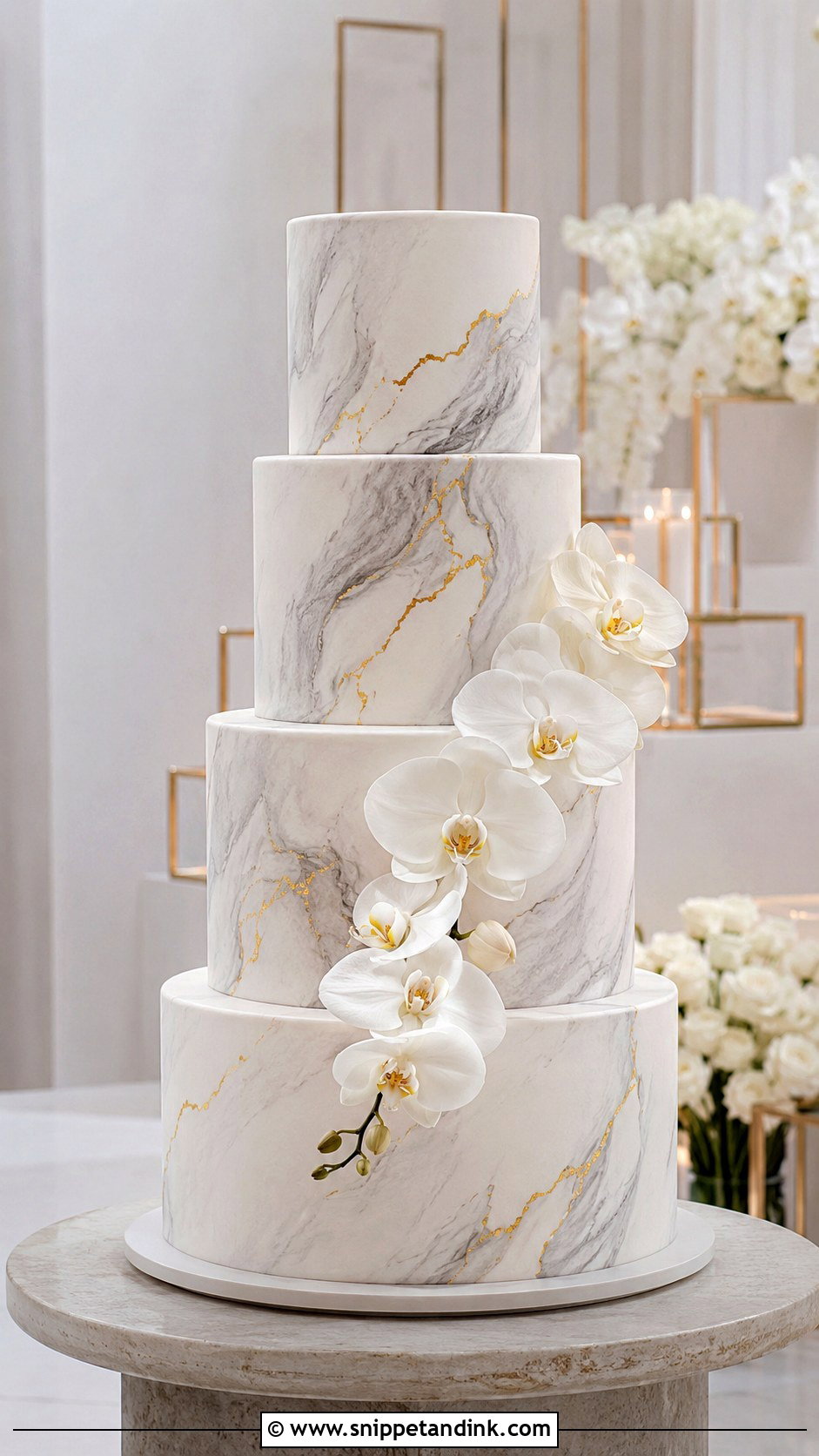
Marble is cleanest in fondant. I knead loose streaks of gray into ivory, roll it out, and the veining appears on the surface, sometimes with a fine line of gold painted along one vein. In buttercream the effect comes from spreading color and scraping, which gives a softer, smudgier stone. The mistake I see most is too much contrast: subtle veining looks like marble, heavy streaks look like tie-dye. Keep flowers minimal and try chocolate, espresso or almond layers for a city or hotel reception.
22. Ruffle Wedding Cake
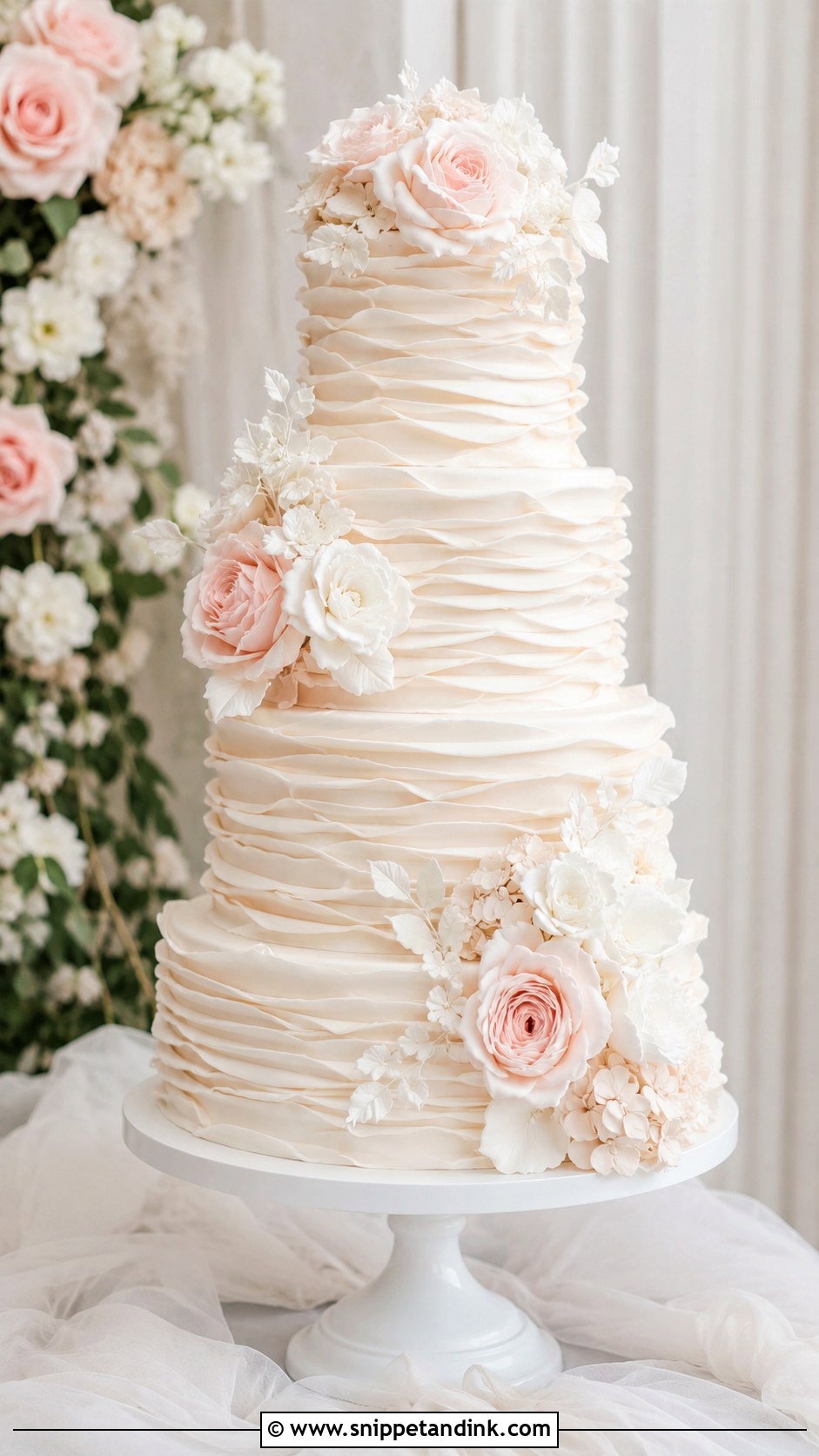
Ruffles look like gown fabric because they’re made much the way a dressmaker makes them, from thin strips gathered and layered. Fondant ruffles hold their shape longest, wafer paper gives the airiest edges, and buttercream ruffles are piped with a petal tip and soften fastest in heat. Fine ruffles feel delicate; deep ones bring drama to a ballroom. Keep the color white, ivory or blush and add only a few flowers so the texture does the work. Vanilla, coconut or lemon suits it.
23. Lace Wedding Cake
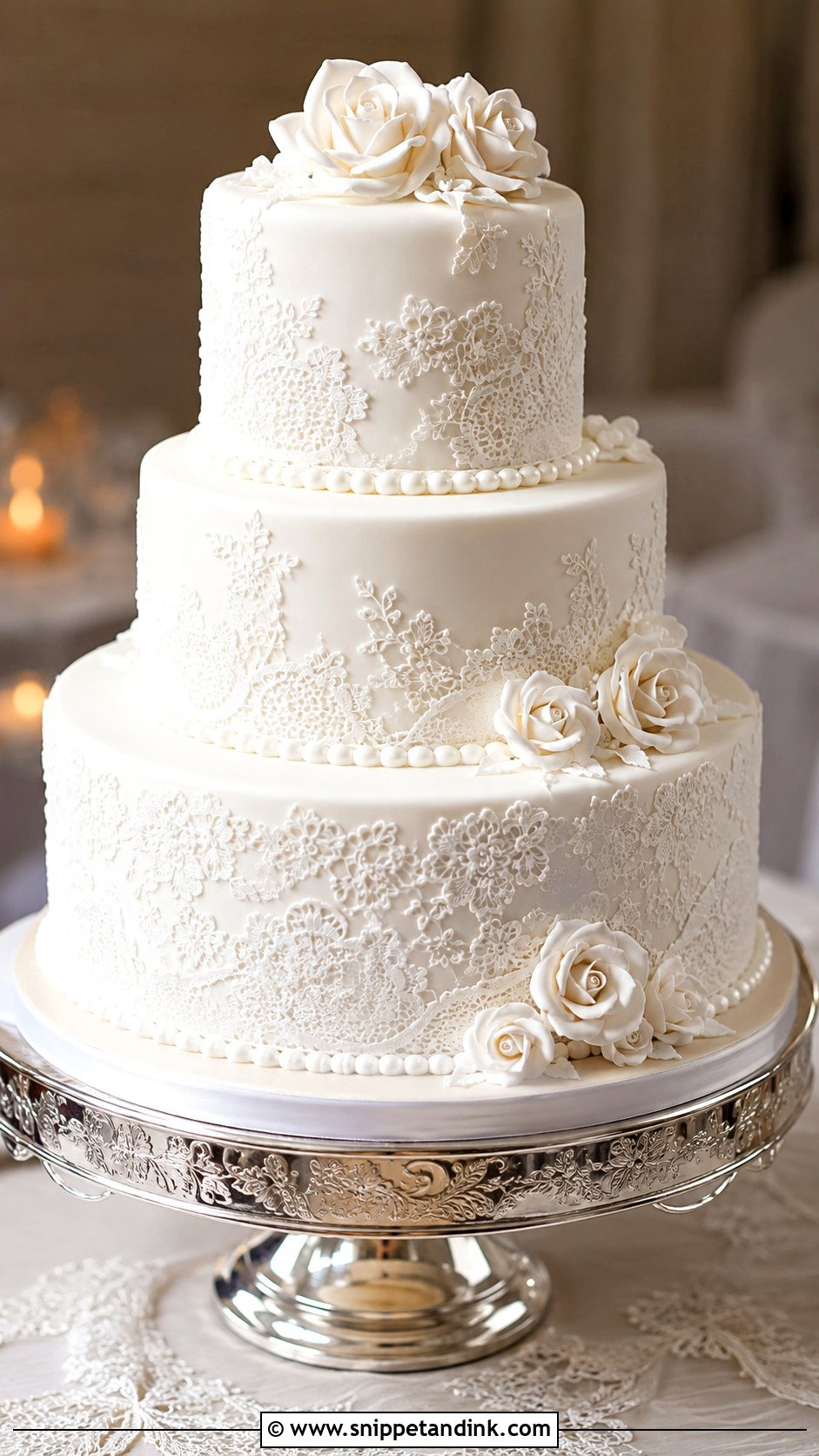
Lace cakes are where I ask to see the dress. Sugar lace is cast in silicone mats, piped freehand in royal icing or embossed into fondant, and borrowing a motif from the sleeves or veil makes the cake feel personal. Cast lace can turn brittle in dry air and limp in humidity, so I apply it as close to the wedding as possible. White or ivory lets the texture lead, perhaps with a pearl border or satin ribbon. Vanilla bean or white chocolate raspberry keeps it classic for church weddings and formal receptions.
24. Watercolor Wedding Cake
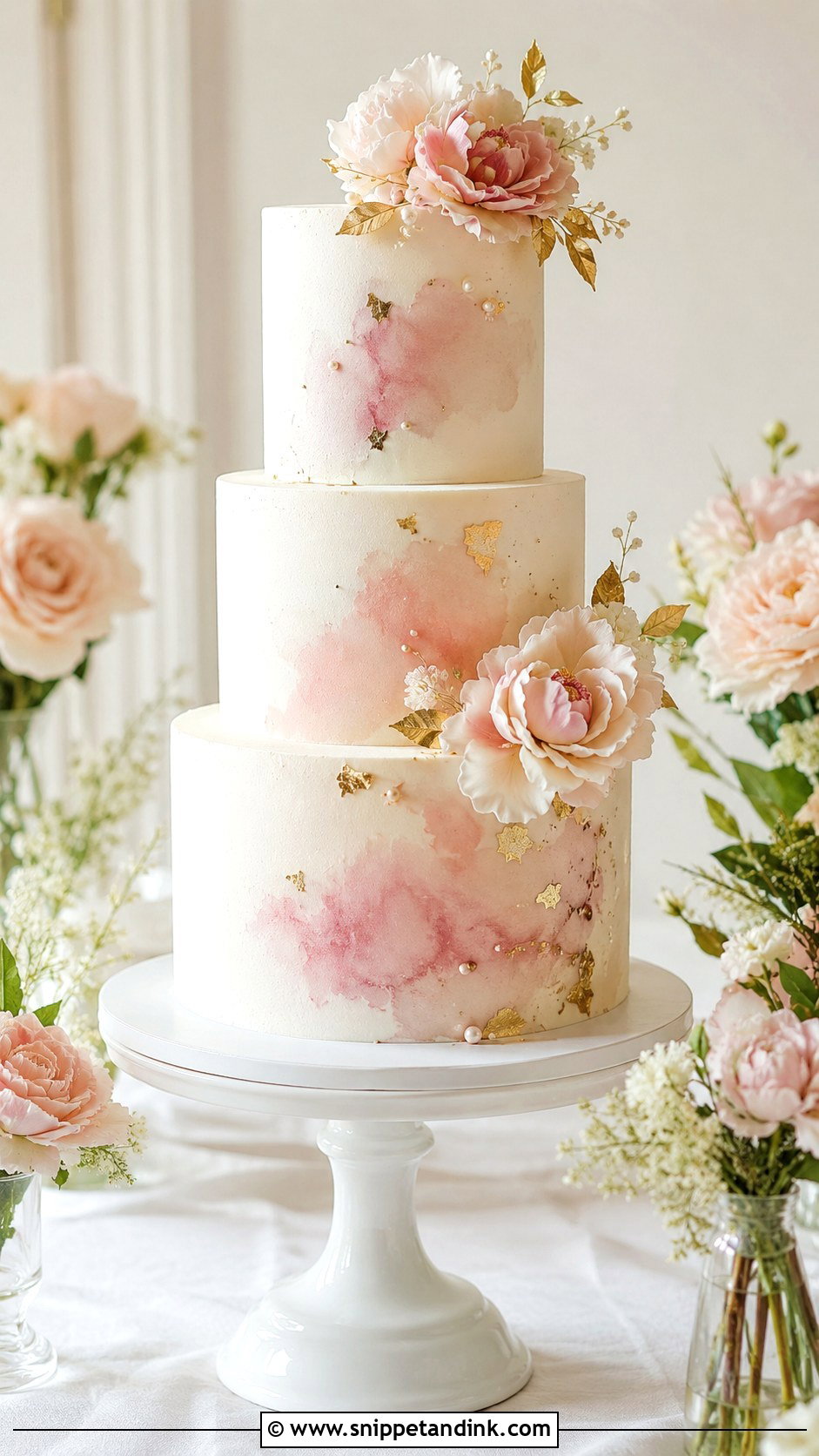
The watercolor effect is painted by hand. I thin gel color with a little clear alcohol, or use softened tinted buttercream, and blend it across a chilled white base with a brush or palette knife. Pale layers that fade into each other are the goal, because one heavy stroke reads as a smear rather than a wash. Blush, dusty blue, lavender and peach all work if you stay with two or three neighboring shades. A few sugar flowers or gold touches finish it, with vanilla, lemon or berry layers inside.




25. Modern Wedding Cake
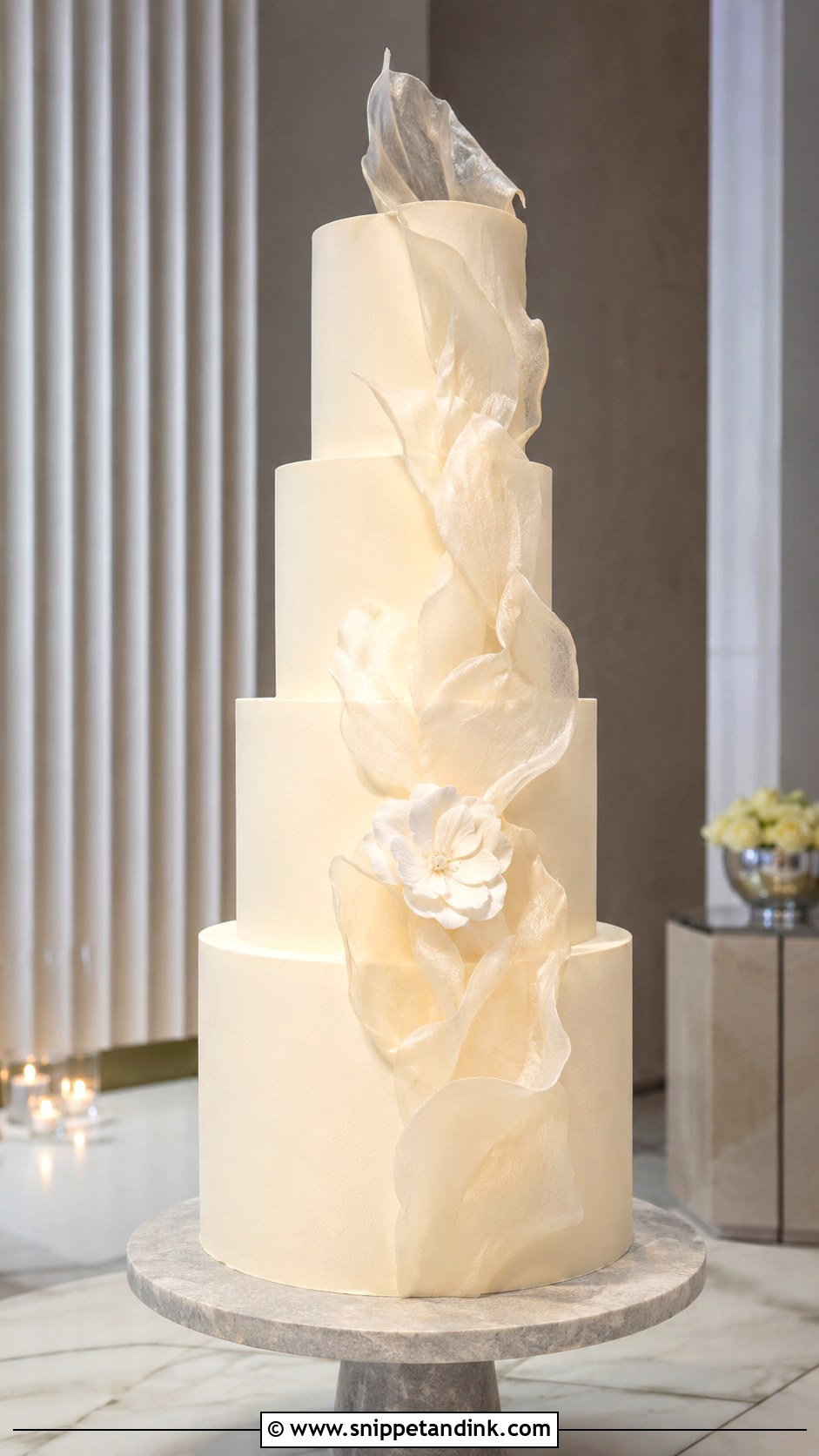
Modern design is mostly proportion: offset tiers, an extra-tall middle tier, sharp edges, or one sculptural element such as curved wafer paper sails. I sketch these before quoting, because an asymmetric stack needs more internal support than a straight one. Stay with a narrow palette of white, ivory, beige or black and allow a single statement detail. Flavor can be classic or a little surprising, from vanilla almond to chocolate espresso. If you catch yourself adding a second statement, take one away.
26. Rustic Wedding Cake
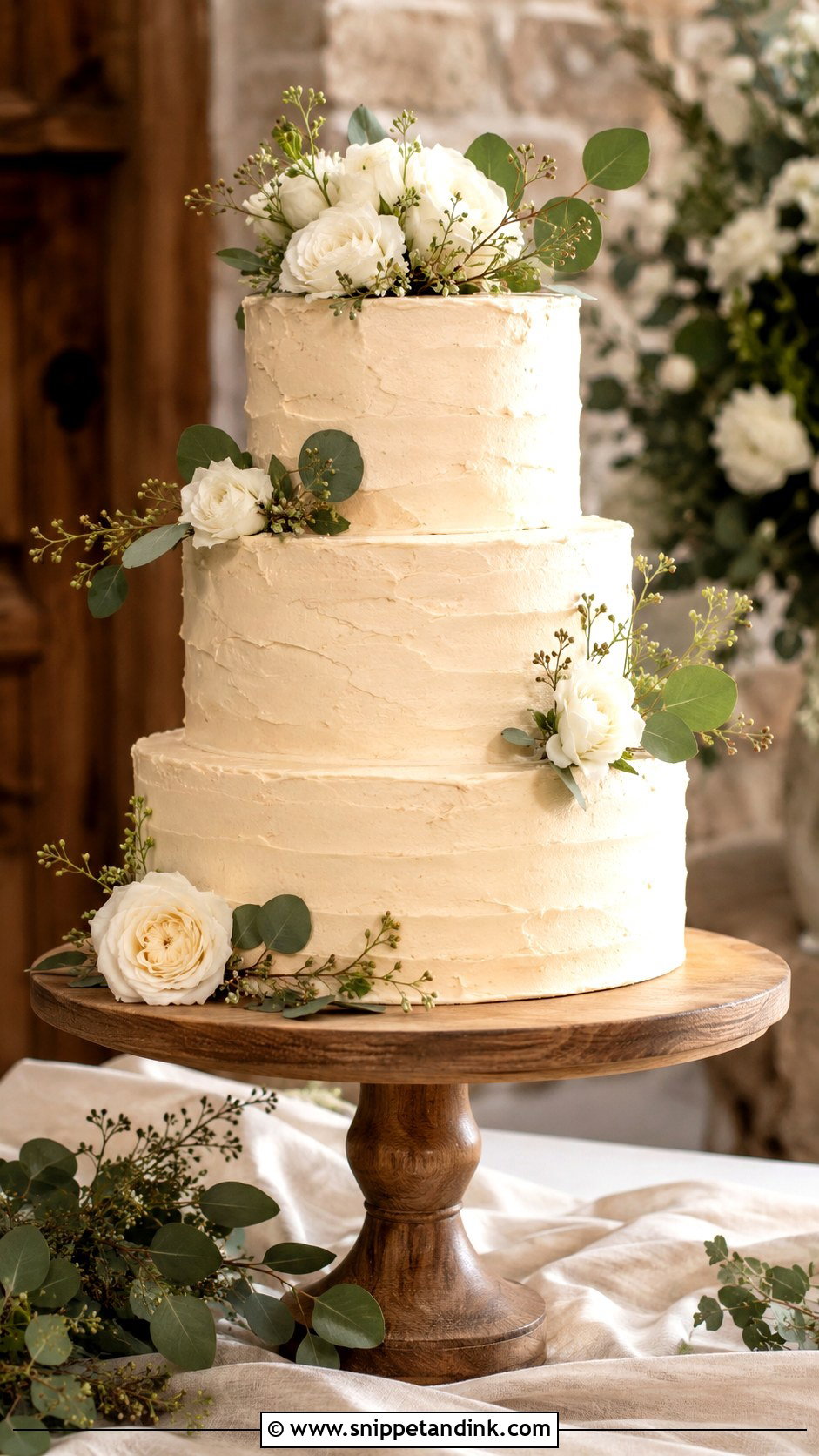
Rustic doesn’t need burlap. A semi-naked or lightly ridged buttercream finish, some greenery and seasonal flowers give a barn or countryside reception warmth without looking casual. Semi-naked cakes have only a thin crumb coat showing the sponge, so they dry out faster once uncovered; I finish them close to the event and keep them wrapped until display. An ivory finish on a wooden stand with loose floral clusters stays polished. Carrot, spice, lemon or vanilla bean suits the season.
27. Garden Wedding Cake
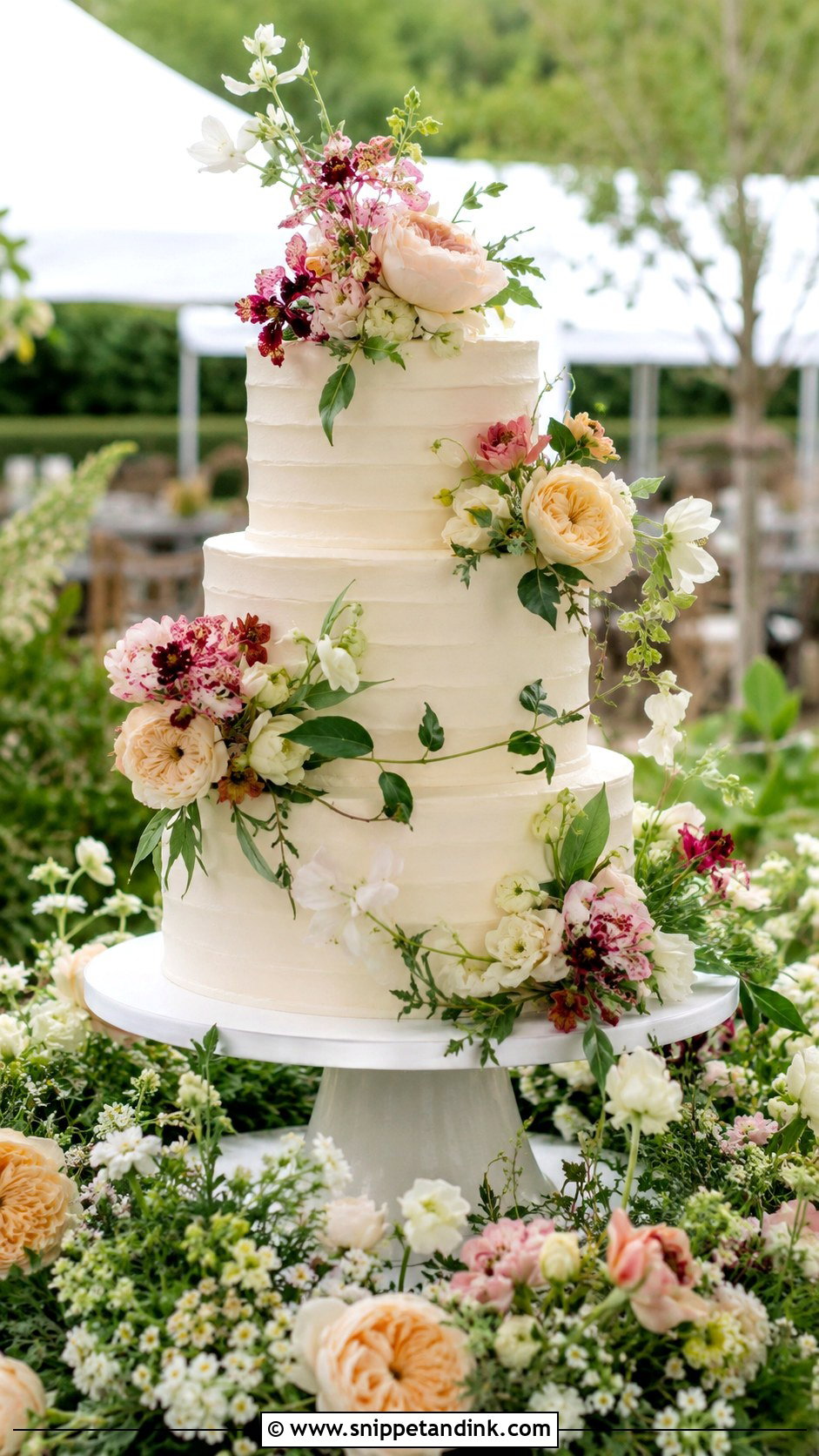
A garden cake should look gathered rather than arranged. That means mixing bloom sizes, letting greenery trail a little and leaving frosting visible between clusters. Roses, lisianthus and small greenery stems all work, while sweet peas belong on a barrier instead of pushed into the cake. White, ivory or pale blush frosting keeps the flowers in front. Set it on a pedestal with petals or low arrangements around the base, and pick lemon, berry or almond layers for an outdoor afternoon.
28. Coastal Wedding Cake
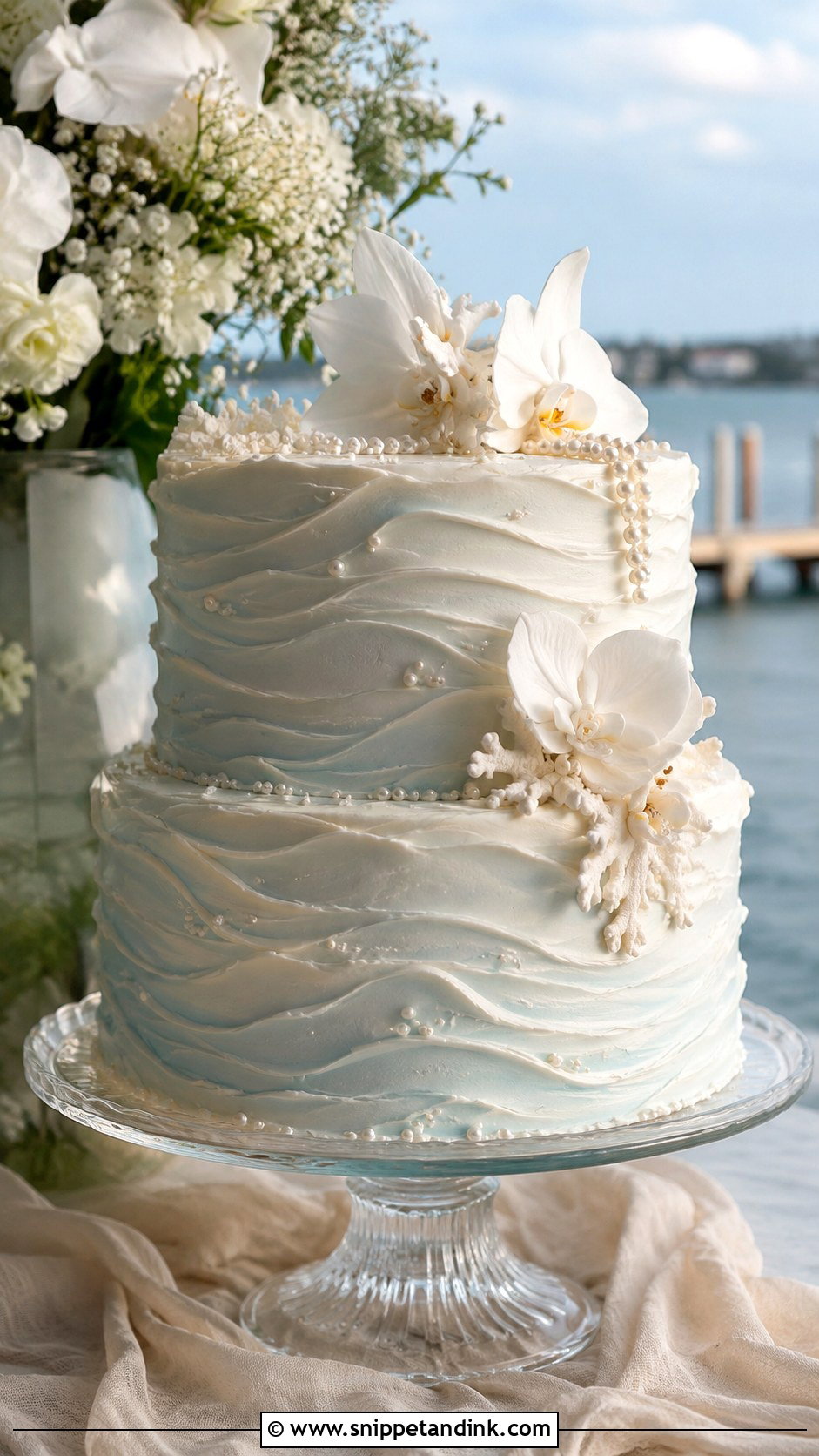
Seaside receptions don’t need shells piled on every tier of a coastal wedding cake. I prefer a quiet hint of the sea: a pale blue or sand-colored wash, a wave texture combed into buttercream, a few pearls and white orchids. Sun and salty, humid air are the real challenge at a waterfront venue. Buttercream softens quickly outside, so I set up in shade and as close to the cutting as the timeline allows. Coconut, lemon or passion fruit suits the setting, on a white stand or glass pedestal.
29. Single Tier Wedding Cake
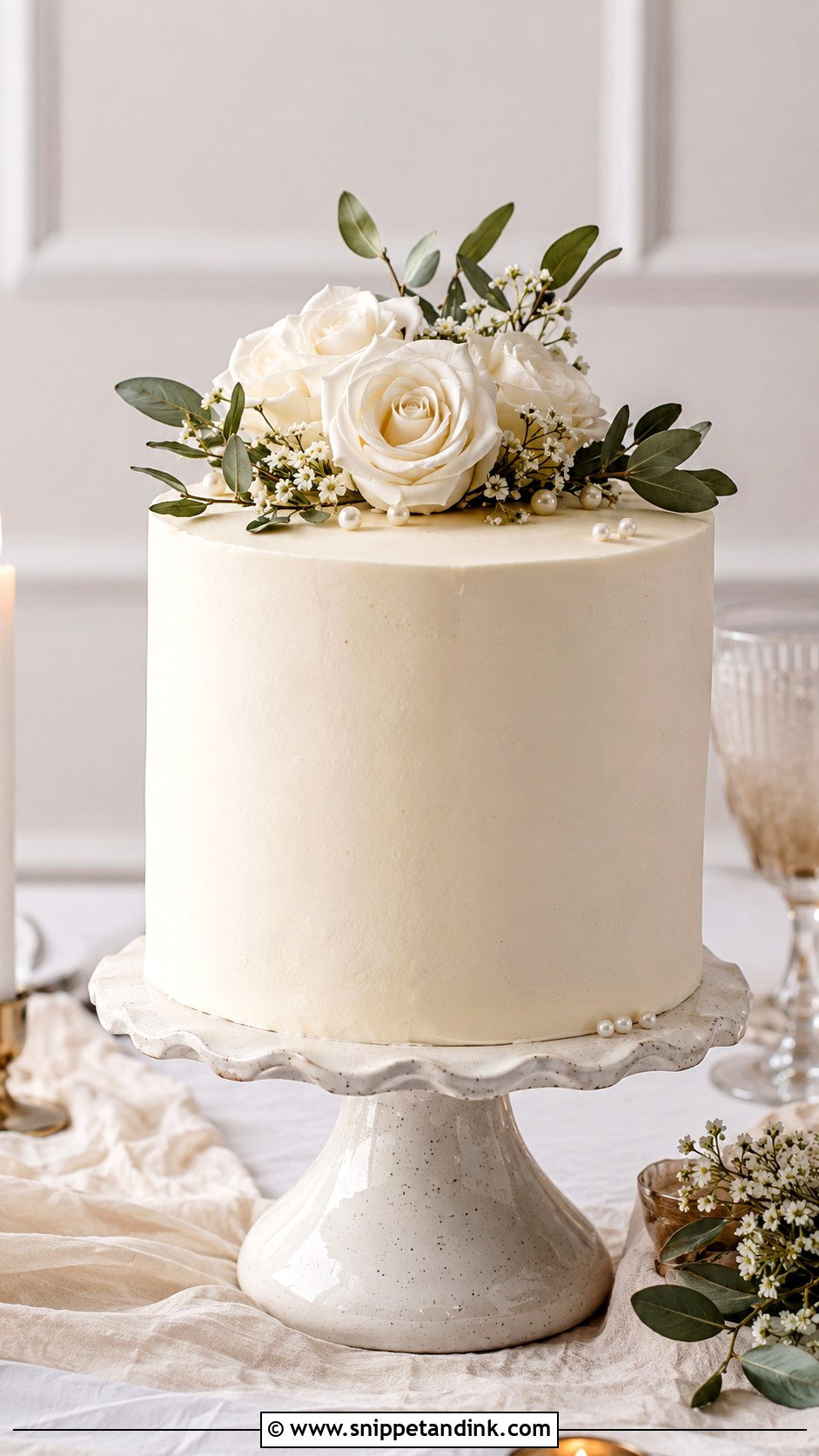
For an elopement, a short guest list or a dessert table with several sweets, a single tier wedding cake makes sense. Height is what separates it from a birthday cake, so I build these taller than usual with a board hidden in the middle. That gives room for a sugar flower, a pearl border or a small floral topper. Choose a flavor you both genuinely love, since there’s no second tier to please anyone else. A raised stand gives it presence on the table.
30. Heart Wedding Cake
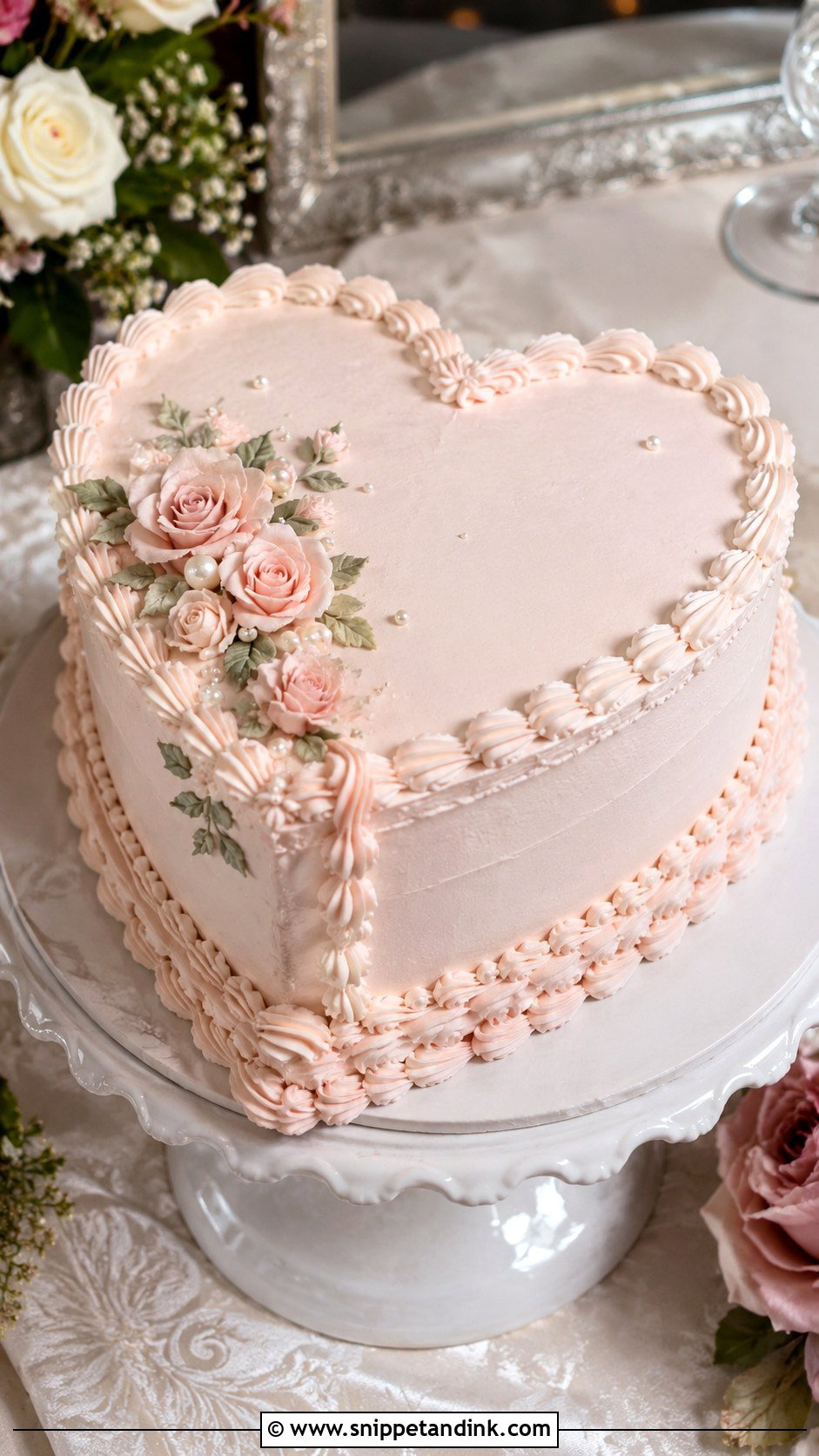
Heart cakes come out best with restraint, since the shape already carries the personality. I either bake in a heart pan or cut one from a square and a halved round, and the point is the hardest part to keep sharp in buttercream. Shell piping, a pearl border and a few small roses suit vintage receptions and intimate weddings. A short piped message works if it’s neat. White, ivory, blush or pale blue all suit the shape. Try vanilla strawberry or almond raspberry, and set it on a pedestal with flowers nearby.
How Many Tiers Your Guest List Actually Needs
Couples often fall for a design and only later find it feeds half the room. Wedding cake is portioned in narrow slices, roughly one inch by two inches and as tall as the tier, which is smaller than a dessert slice at home. At that size, a round stack of six, eight and ten inches feeds around seventy guests, and adding a twelve-inch base takes you past a hundred and twenty. Exact counts vary by baker and by how your caterer cuts.
Want height on a small list? Ask about a dummy tier, a foam form decorated to match the real ones. For a big list on a modest design, a plain kitchen cake in the same flavor can be sliced out of sight. Both are ordinary practice, and nobody at the tables can tell.
Hydrangeas, Lilies and Other Flowers That Need a Barrier
Plenty of popular wedding flowers aren’t food-safe, and florist stems are usually grown with pesticides because they’re meant to be looked at, not eaten. That doesn’t rule them out. It changes how they go on the cake.
- Never on the cake: lily of the valley, foxglove, oleander and daffodils. Their sap is toxic enough that I keep them to the table display around the stand.
- Only with a barrier: hydrangea, sweet pea, ranunculus, peonies, orchids and florist roses. Stems are wrapped in floral tape and set into a food-safe pick or straw, and heads rest on a small disc of parchment or wafer paper.
- Fine against frosting: edible flowers grown for eating, such as violas, pansies, cornflowers and unsprayed roses.
Settle with your florist and baker who supplies the cake flowers and who places them. On the day I want single stems, conditioned and dry, handed over in their own box, never pulled from a centerpiece an hour before the cutting.
Bring Your Venue and Your Florist to the Cake Conversation
Match the cake to how the day will feel. A ballroom can carry fondant, pearls and sugar flowers; a garden suits buttercream, pressed petals and greenery; a modern reception can take a sharp minimalist shape, a marble finish or a black and white detail. Beyond the look, tell your baker the room temperature, your guest count and what the florist is supplying. Save the photos you keep returning to and share them early, along with your palette, so the design you settle on actually works in your room.
You'll Like These Ideas:











Leave a Reply