
Country-style wedding cakes look like they didn’t try too hard, which is exactly why they take planning. They belong at barns, gardens, backyards, woodland ceremonies and fall receptions, and right now they lean on semi-naked frosting, palette-knife texture, pressed and dried flowers, greenery, fruit and wood stands. Rustic doesn’t mean messy. The texture is deliberate, the fruit is placed, and the cake still has to hold up in a room that’s often warmer and less controlled than a hotel ballroom. Below are 30 rustic cakes, with what I’d plan for each one as the baker.
What a Barn or a Field Does to a Cake
Most rustic cakes end up somewhere less controlled than a hotel: a barn with no air conditioning, a tent in full sun, a garden table on uneven grass. Before I design anything, I ask where the cake will stand, for how long, and whether that spot gets afternoon sun. The answer often decides the frosting more than the mood board does.
- Heat. Buttercream and cream cheese frosting soften fast in a warm barn, so plan a shaded, cool spot and bring the cake out shortly before guests arrive.
- Insects. Fruit, honey and sugar draw wasps and flies outdoors. A mesh dome over the cake until cutting saves a lot of trouble.
- Uneven ground. A cake table on grass or old floorboards can lean without anyone noticing, so I check every table with a small level before setting up.
- No kitchen. In a field there’s often no fridge or running water, so your baker should arrive with repair frosting and tools in a cooler.
None of this rules out an outdoor cake. It just means the design should come after the logistics, not before. For a hot afternoon in a field, I’d usually suggest a smaller display cake with the serving cake kept cool in the caterer’s van or kitchen tent until it’s time to slice.
1. Rustic Semi Naked Wedding Cake
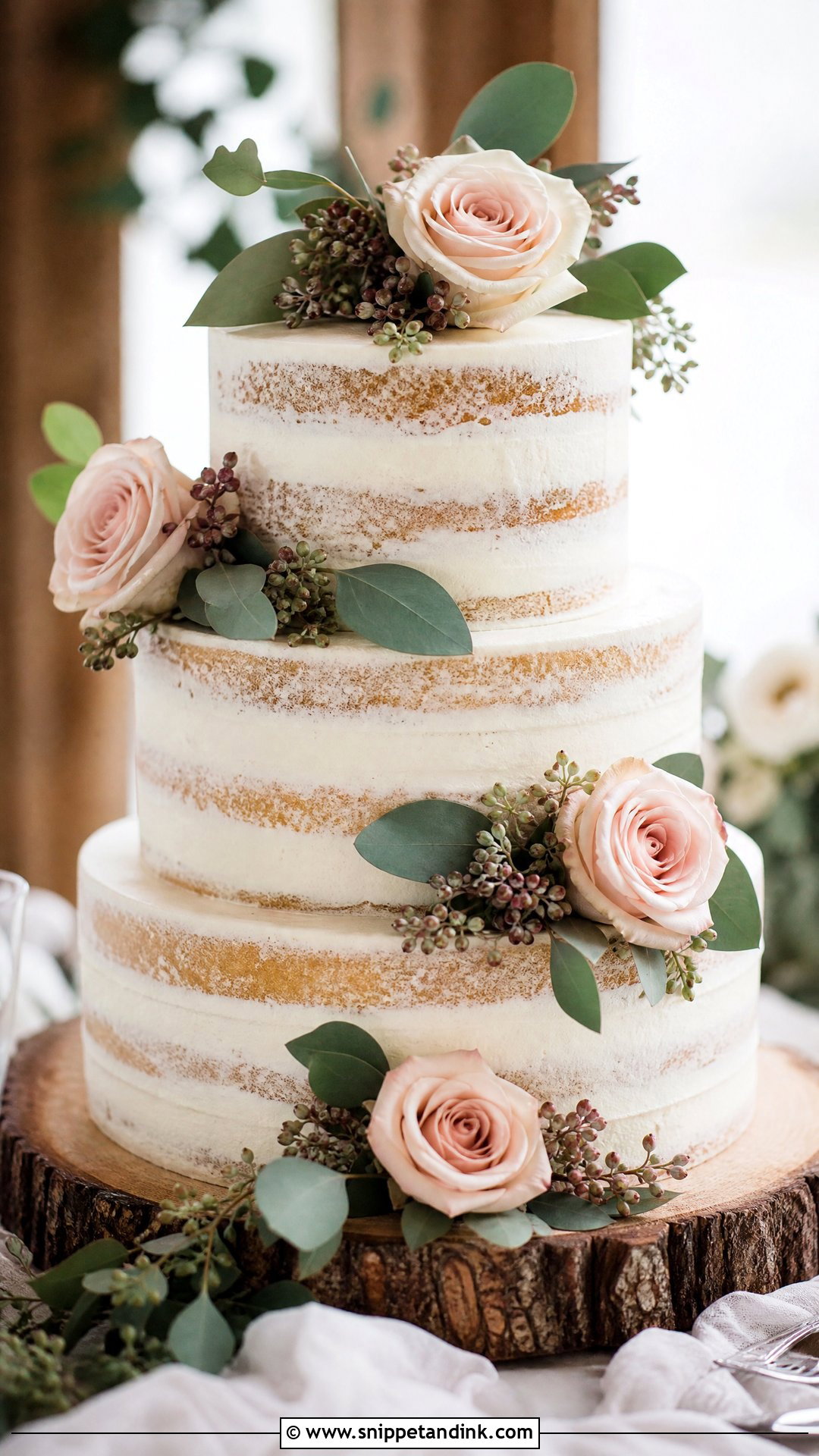
This is the cake I’m asked about most for barn weddings. A thin coat of buttercream is scraped back until the layers show through, so the edges of the sponge are on display and have to be level and evenly baked. That’s also why it rewards generous filling: thick, even bands of cream between layers look moist rather than dry. Vanilla, almond, lemon, carrot and chocolate sponge all suit it. Soft flowers, berries, a little greenery or a small wooden topper finish it, and it reads relaxed rather than formal.
2. Rustic Naked Wedding Cake
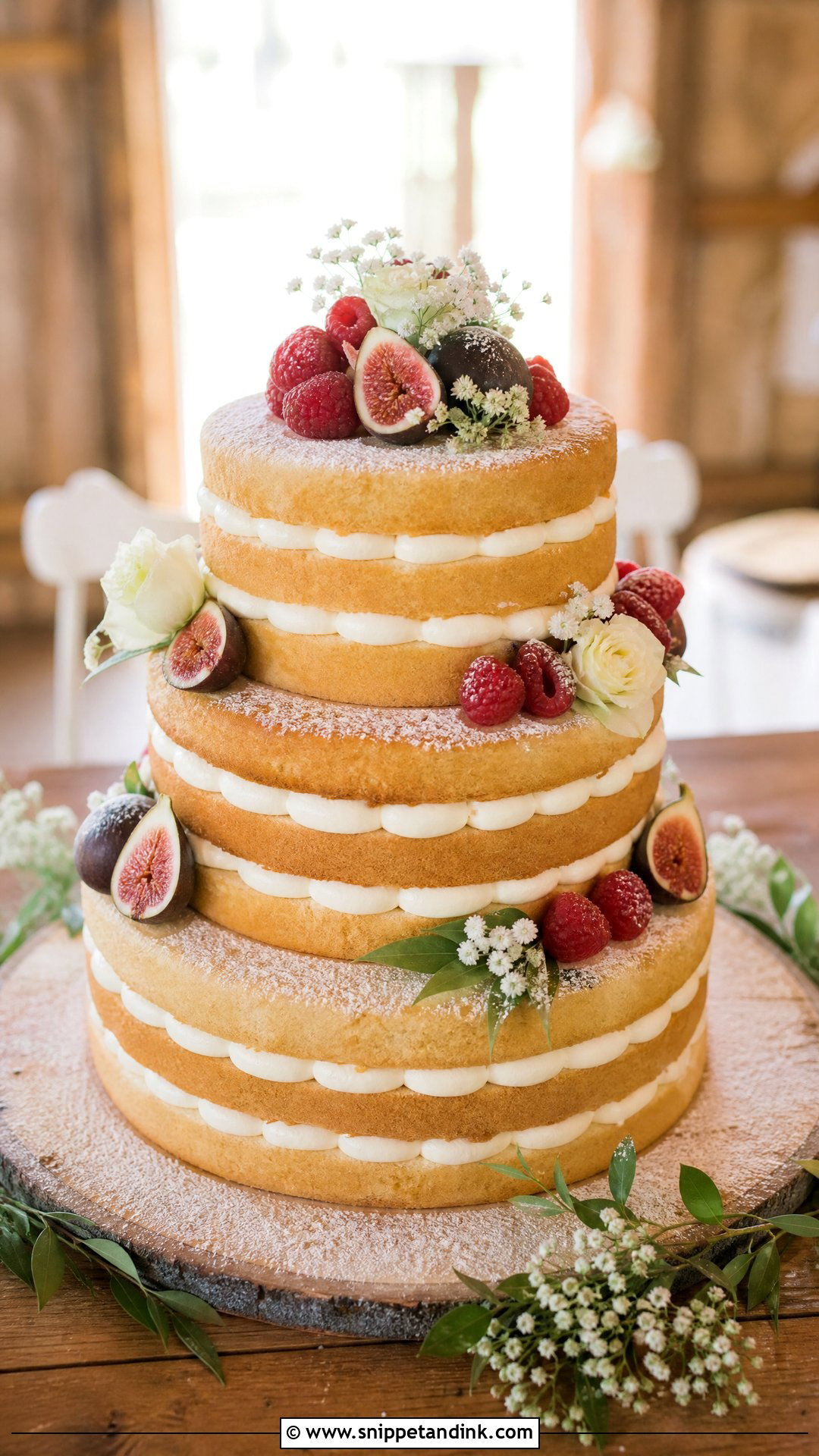
With no frosting on the sides, the cake itself is the decoration, so I’m pickier about the sponge for this than for any other style. It has to be tender but firm enough to stack, and I trim every layer to the same height so the stripes line up. Exposed sponge starts drying within hours, which makes a naked cake a same-day job: assembled late and kept wrapped until display. Cream, jam or fruit fillings show between layers, and fresh berries, figs, soft roses and greenery stop it looking plain. Two or three tiers suit barns and outdoor receptions.
3. Rustic Buttercream Wedding Cake
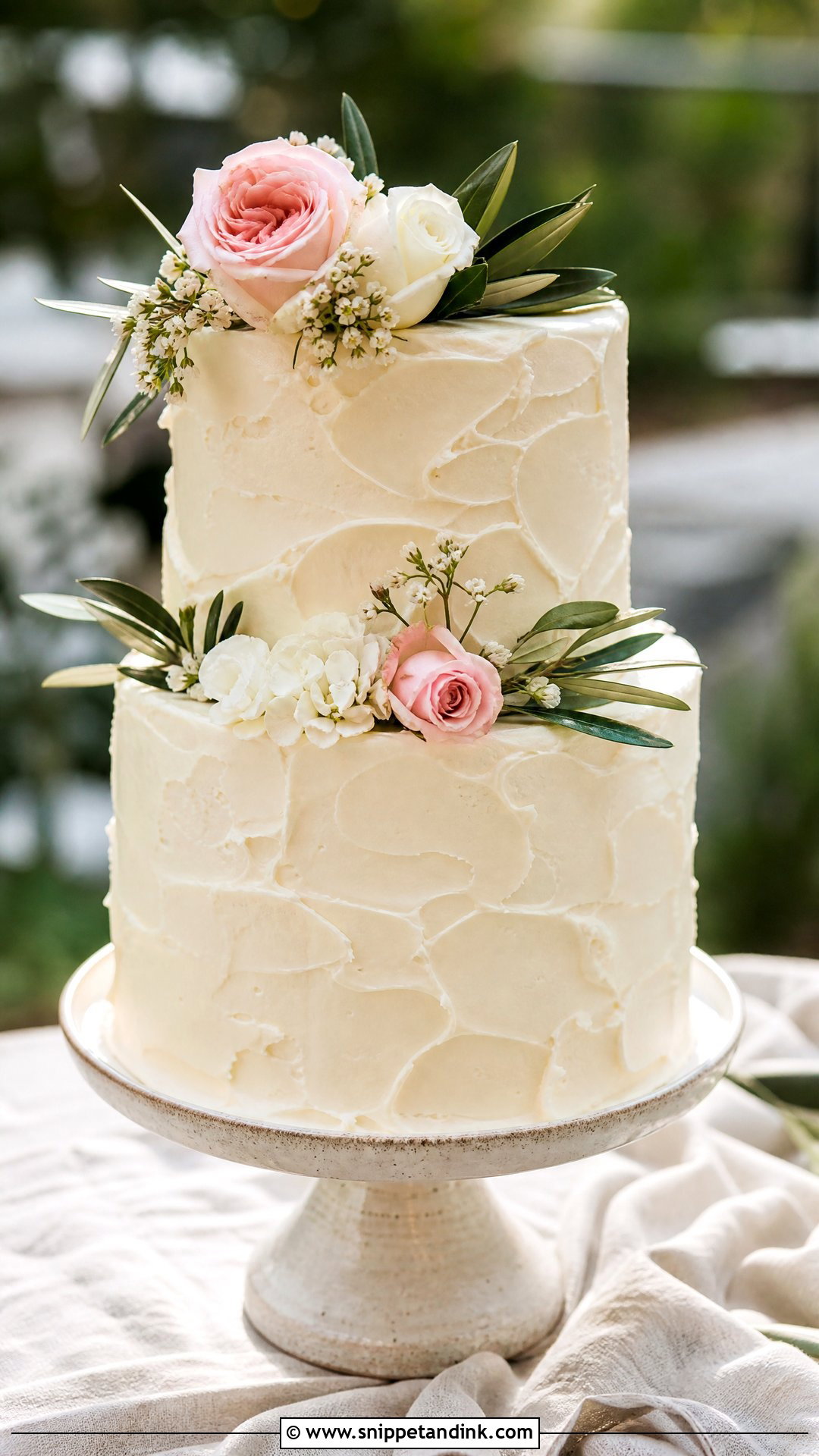
Textured buttercream is the forgiving middle ground: more coverage than a naked cake, with the same relaxed feel. I spread it with a palette knife in soft swirls or light ridges, and because the texture is the point, small marks from a warm day or a bumpy drive simply blend in. Ivory, cream, taupe, blush and pale sage all suit rustic styling. Fresh flowers, herbs, greenery or seasonal fruit finish it. It’s the one I’d recommend to a couple worried about heat at an outdoor venue.
4. Rustic Wedding Cake With Fresh Flowers
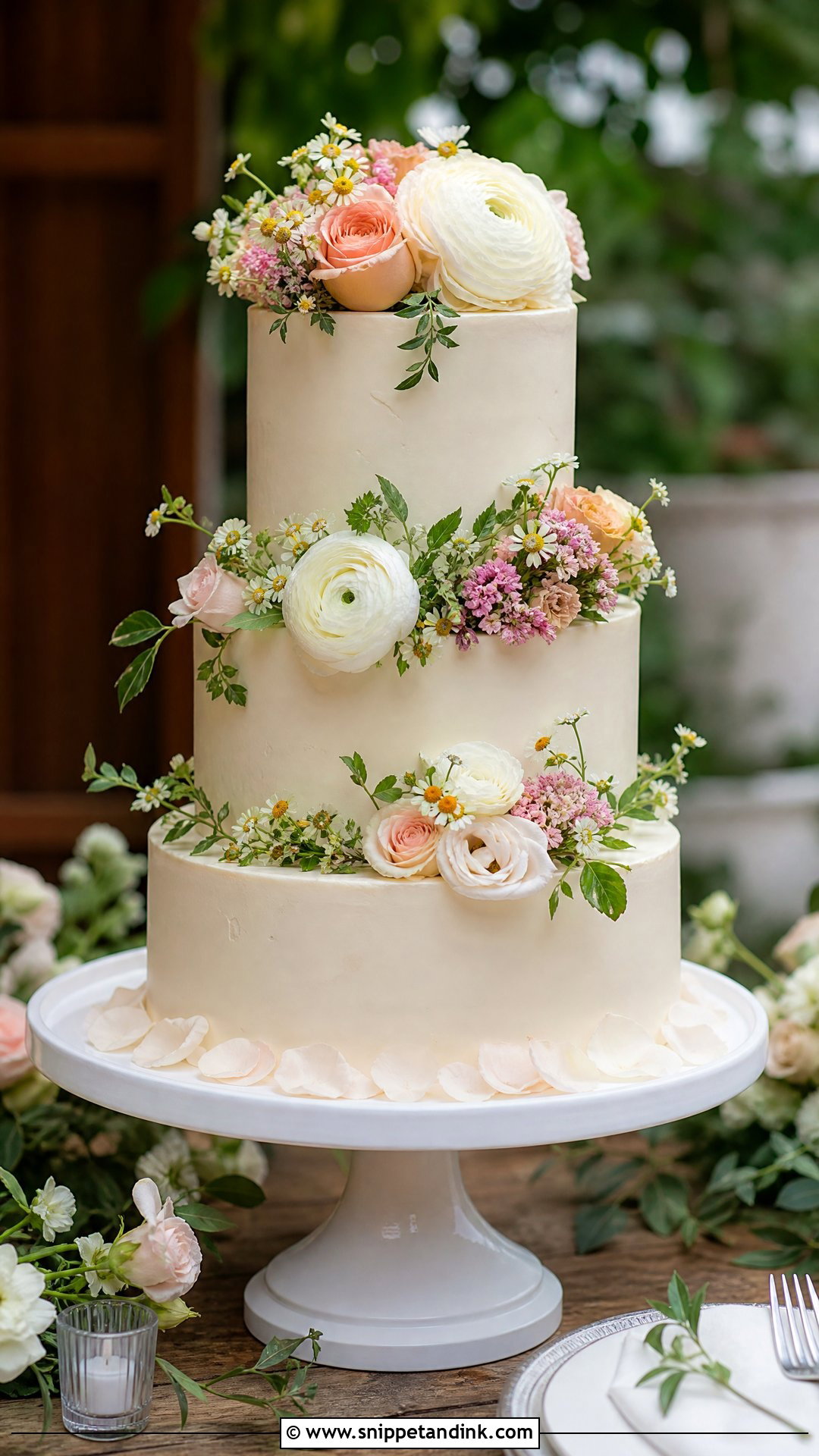
Natural-looking blooms suit this style better than perfect ones. Garden roses, ranunculus, chamomile, lavender, dahlias and small wildflower clusters all work, set between tiers, trailed down one side or gathered on top like a little bouquet. Keep the frosting plain so the flowers stay the focus. Some of these aren’t safe to eat, ranunculus included, so your baker and florist need to agree on what touches the cake directly and what sits on a barrier. Spring, summer and garden weddings suit it.
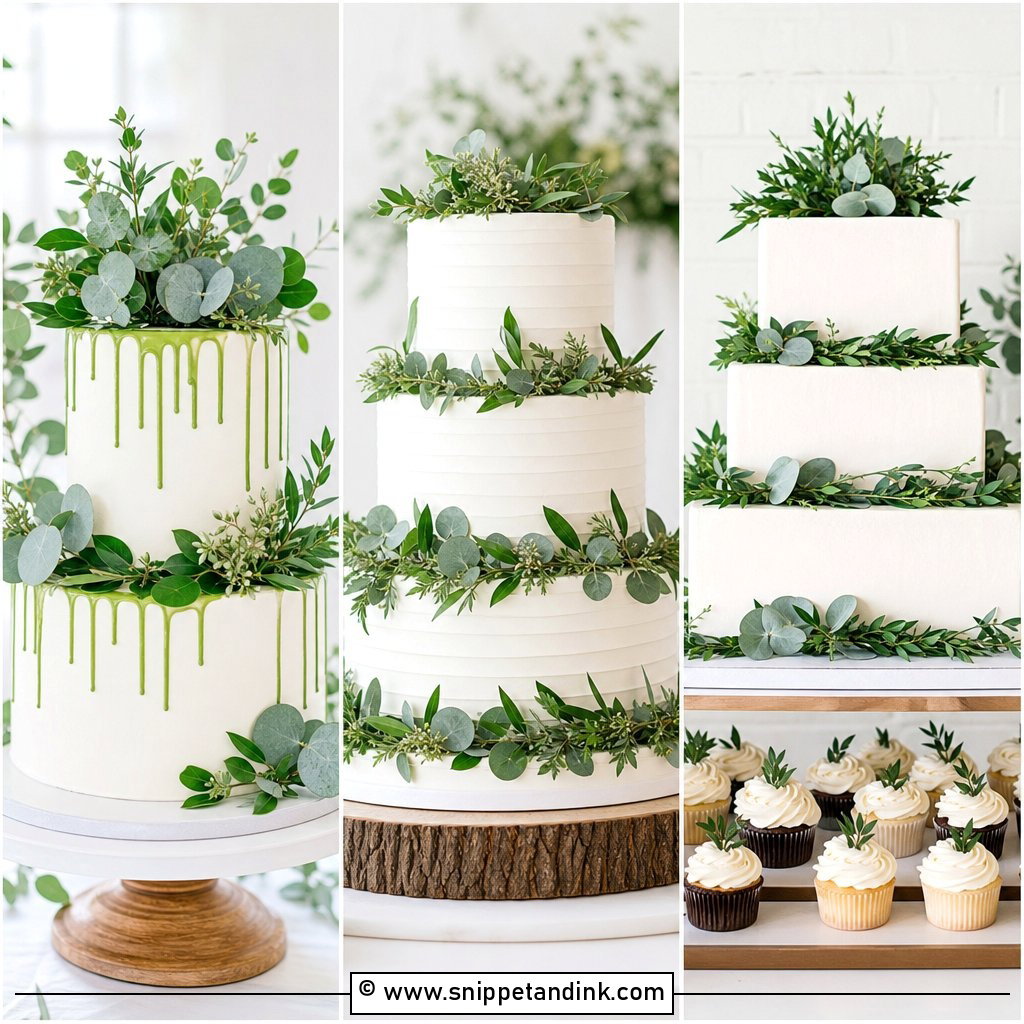
5. Rustic Wedding Cake With Greenery
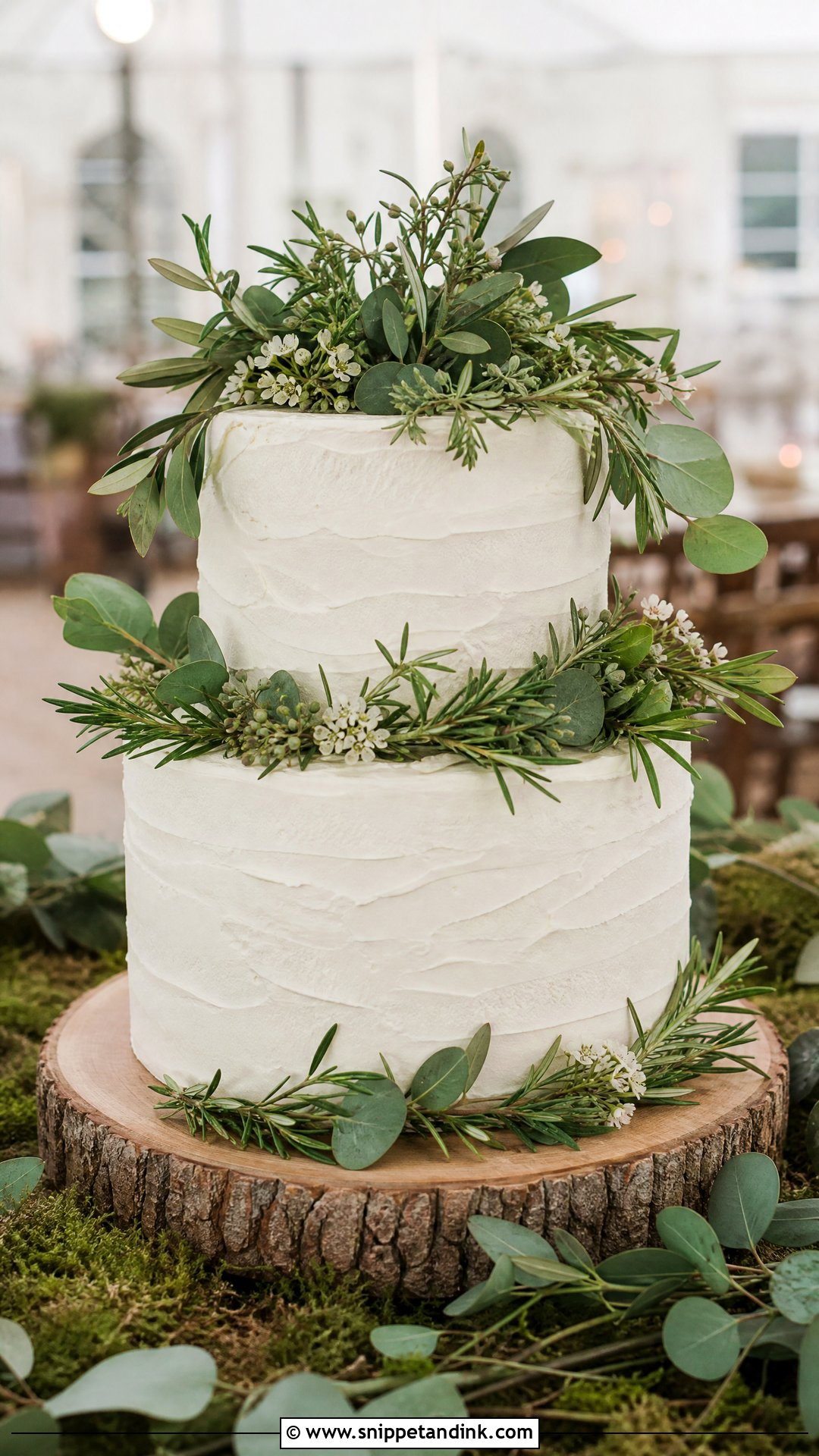
Greenery is the choice for couples who want a styled cake without many flowers. Olive leaves, rosemary, ruscus and fern-style accents can wrap around tiers or sit in small clusters. Eucalyptus is popular too, but it’s toxic, so its stems get wrapped and it never rests on anything that’s served. White or ivory buttercream makes the green stand out, and a wooden stand adds warmth. Smooth, semi-naked and textured finishes all work, especially at barns, woodland receptions and in neutral palettes of sage, cream, tan and brown.
6. Rustic Wedding Cake With Wildflowers
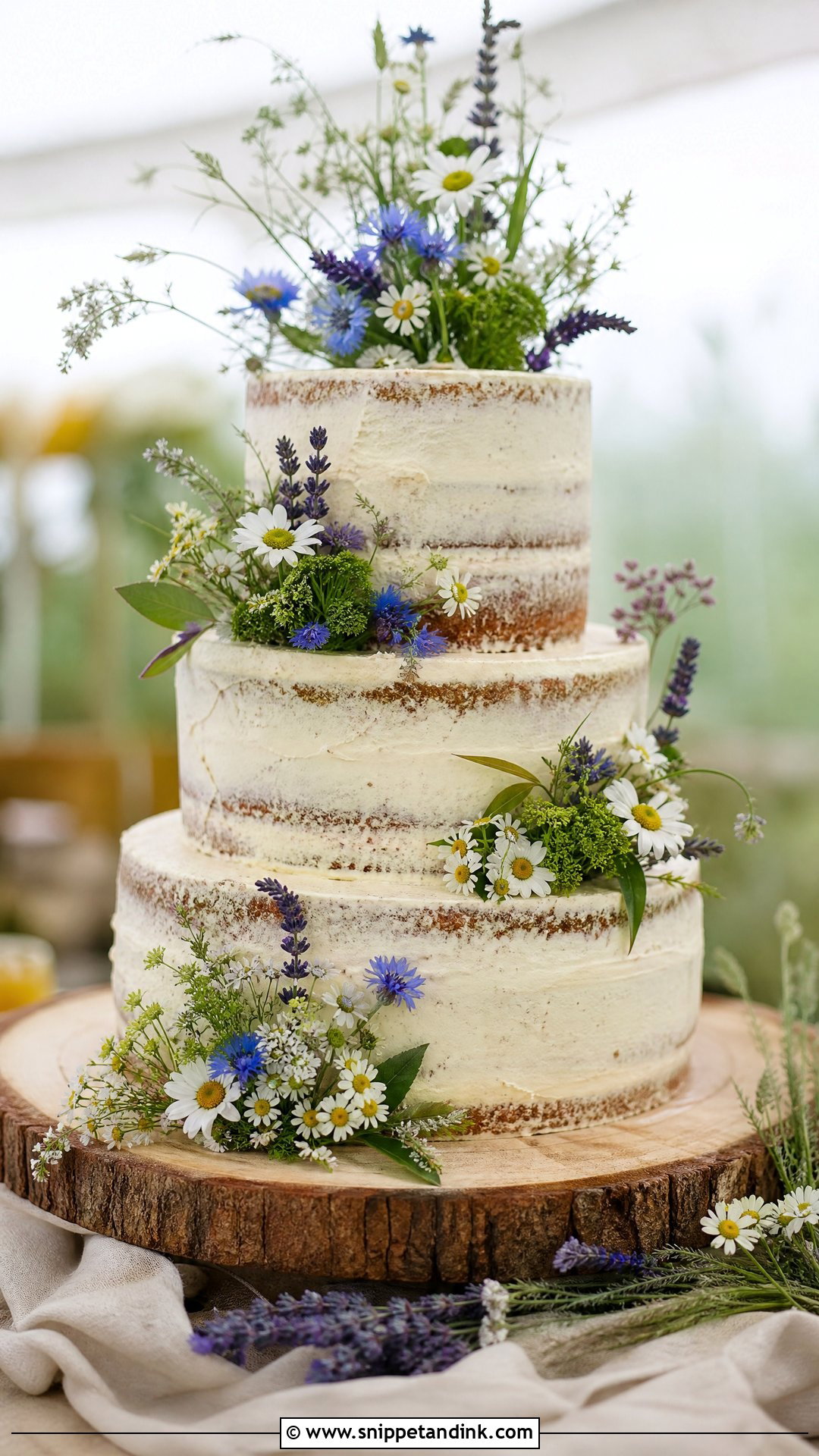
Couples who want the cake to look gathered from a field usually ask for a rustic wedding cake with wildflowers. Small daisies, chamomile, cornflowers, lavender and tiny seasonal blooms are scattered lightly or arranged around the tiers. Wildflowers wilt fast once cut, so I add them at the venue and keep a few spares in water. A plain base matters: semi-naked, rough buttercream or smooth ivory, never heavy piping. A wood slice stand with linen, candles and simple greenery completes it at meadow and backyard receptions.
7. Rustic Wedding Cake With Dried Flowers
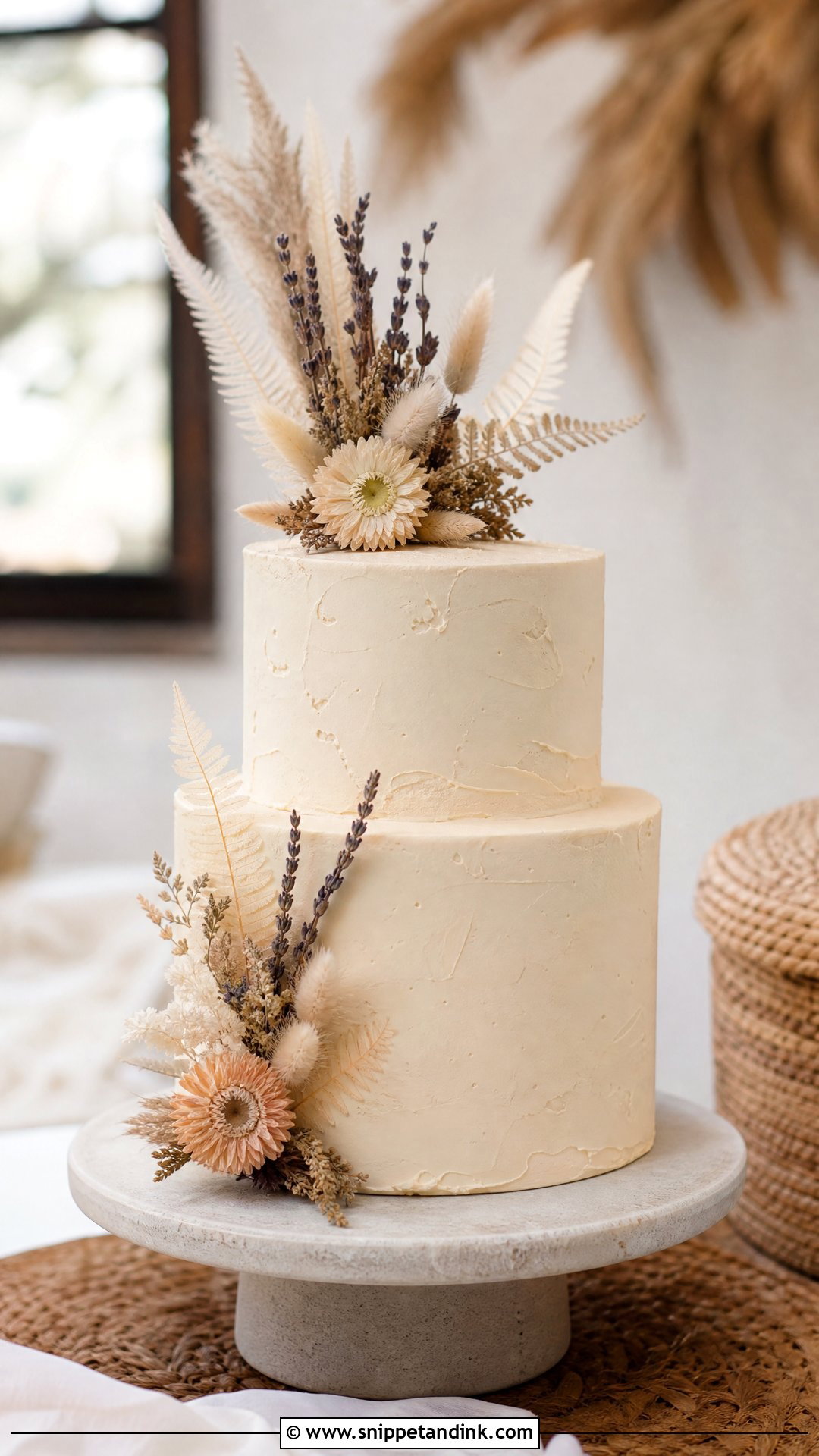
Dried stems give a cake boho softness and height without bright color. Pampas grass, bunny tails, dried lavender, strawflowers and preserved ferns all add texture. Many dried flowers are dyed, bleached or sprayed to hold their shape, so I put them in picks or on a barrier rather than straight into the frosting, and pampas sheds, which nobody wants on their slice. Ivory, beige, caramel, terracotta, dusty rose and muted peach suit the palette. Keep the arrangement airy so the cake still looks like food.
8. Rustic Wedding Cake With Pressed Flowers
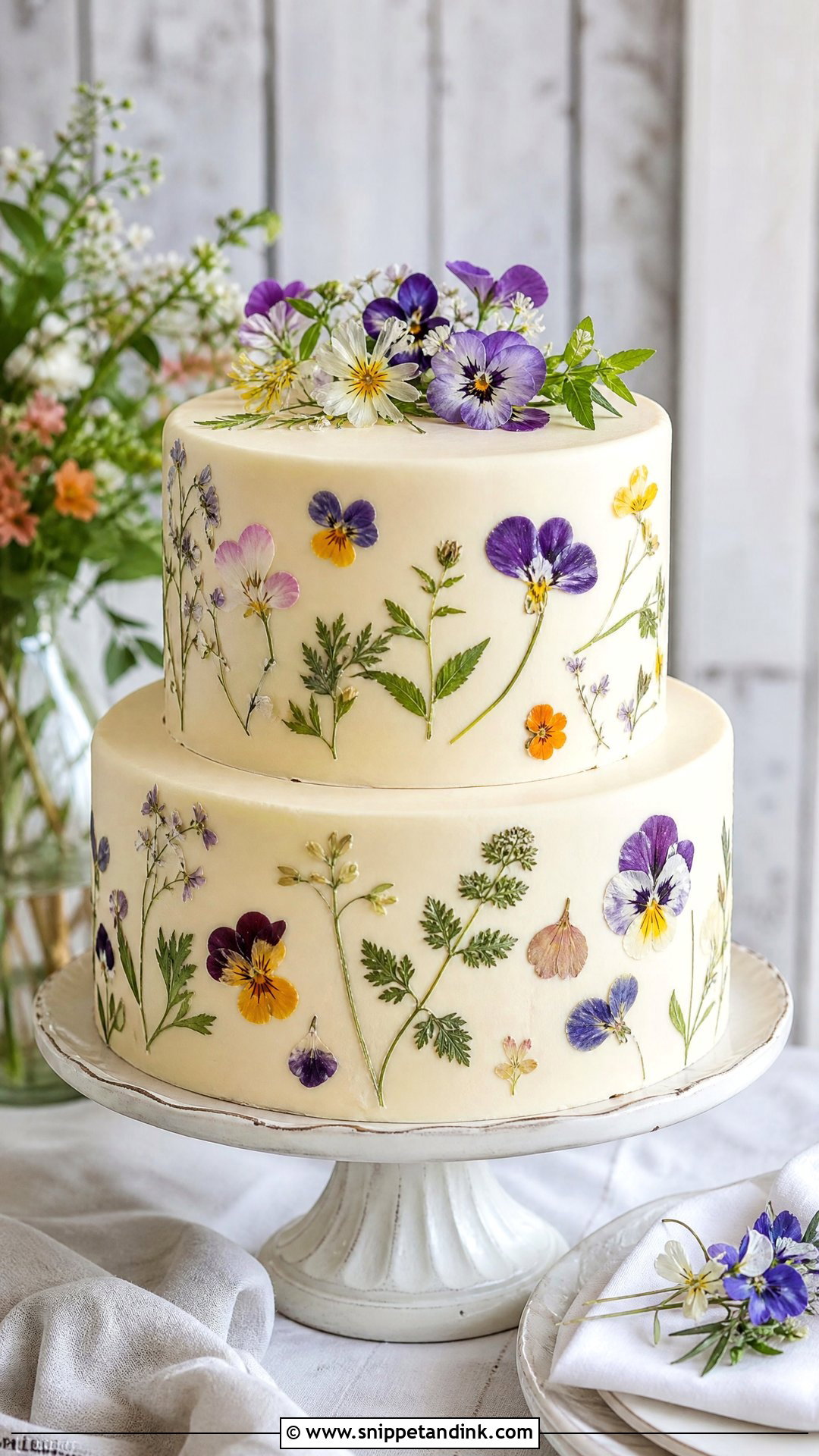
Pressed flowers are laid flat against the frosting, so the cake looks like a page from a botanical notebook. Pansies, violas, small petals and herb leaves are the usual choices, and they need to be edible varieties grown without sprays, then pressed between paper for several days. They stick best to smooth buttercream or fondant, pressed on gently with a dry fingertip. Couples who want color with a light hand like this one. Spring weddings and cottage venues suit it; keep the rest of the cake minimal so the flowers read clearly.
9. Rustic Wedding Cake With Berries
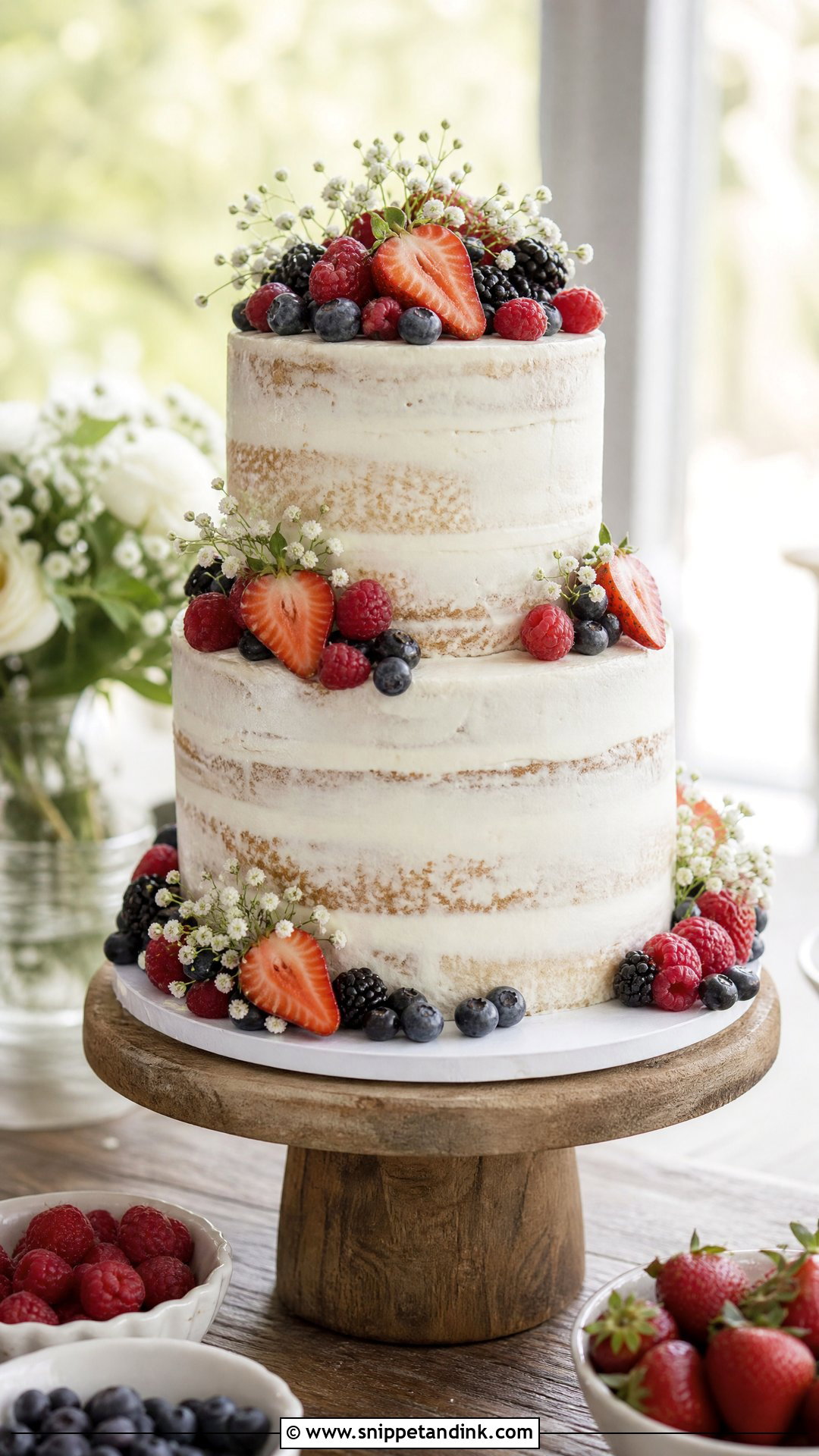
Berries bring color and natural sweetness, but they don’t all behave the same. Blueberries and blackberries are sturdy; raspberries crush and bleed; cut strawberries weep. I wash and dry everything thoroughly, since water beads mark buttercream, and pile berries on just before display. Set them between tiers, around the base or on top of white buttercream, whipped frosting or a semi-naked finish at summer weddings and garden receptions. Lemon, vanilla or almond sponge pairs well, with a few flowers or sprigs of greenery for polish.
10. Rustic Wedding Cake With Figs
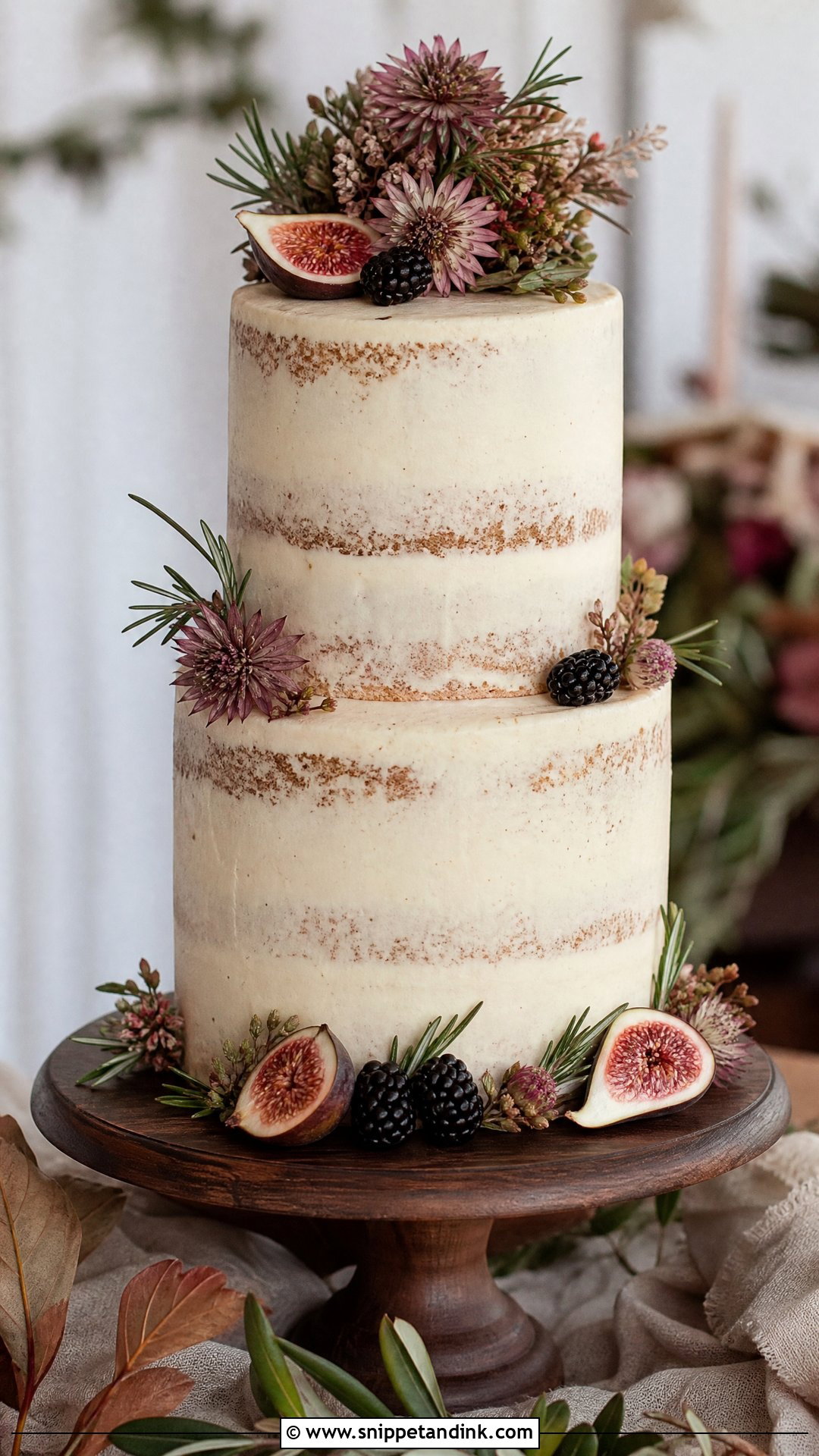
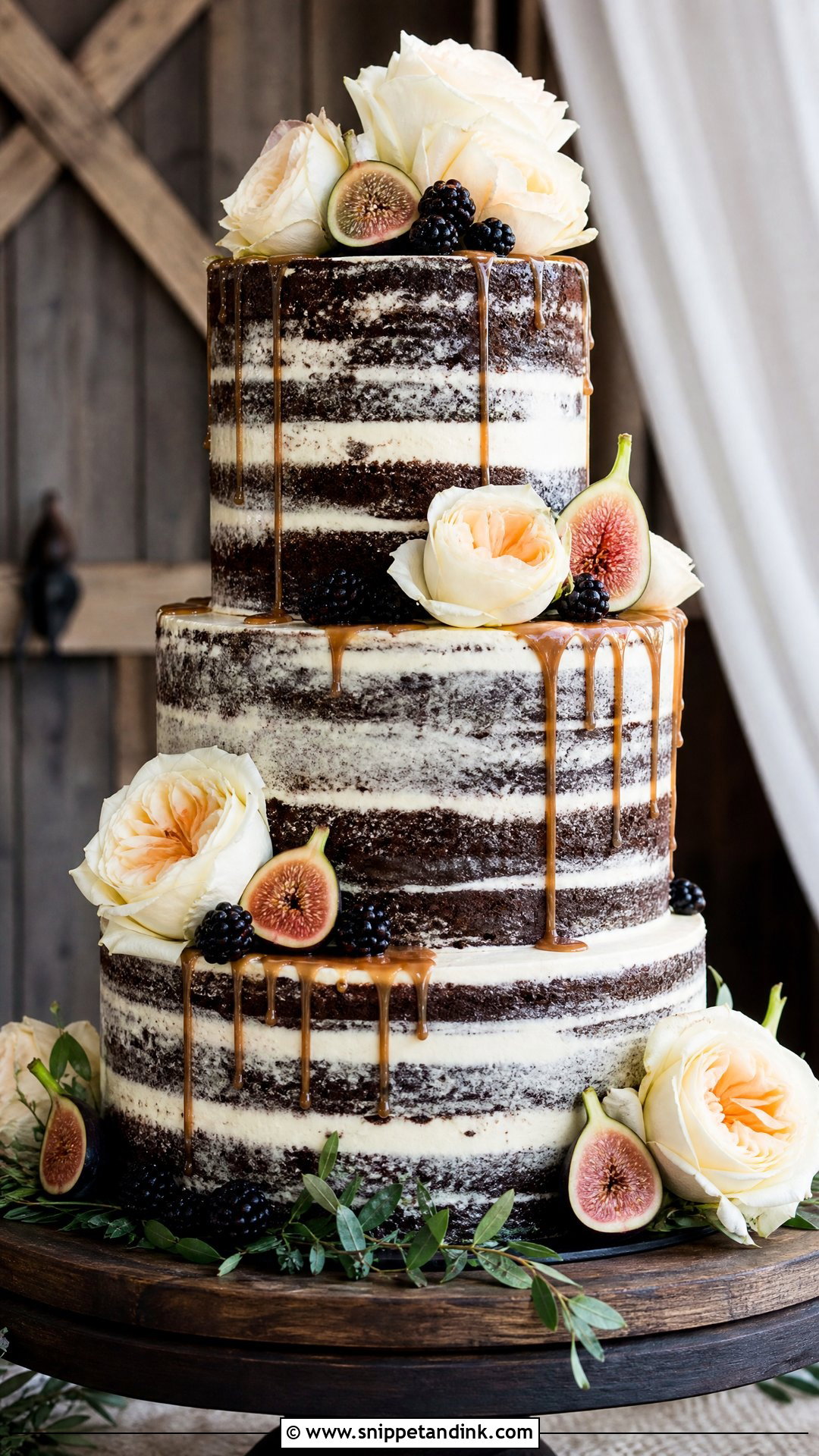
Figs are the fruit I reach for in late summer and fall. Their purple skin, pink centers and natural shape add instant texture. Cut figs dry out and dull within a few hours, so I halve them on site, or brush the cut faces with a little warmed apricot jam or honey to keep them glossy. Honey-colored or ivory buttercream, a caramel drip, rosemary and soft greenery all suit them, and blackberries or pears add depth. Burgundy, mauve, sage, copper and warm brown palettes pick up the colors.
11. Rustic Wedding Cake With Succulents
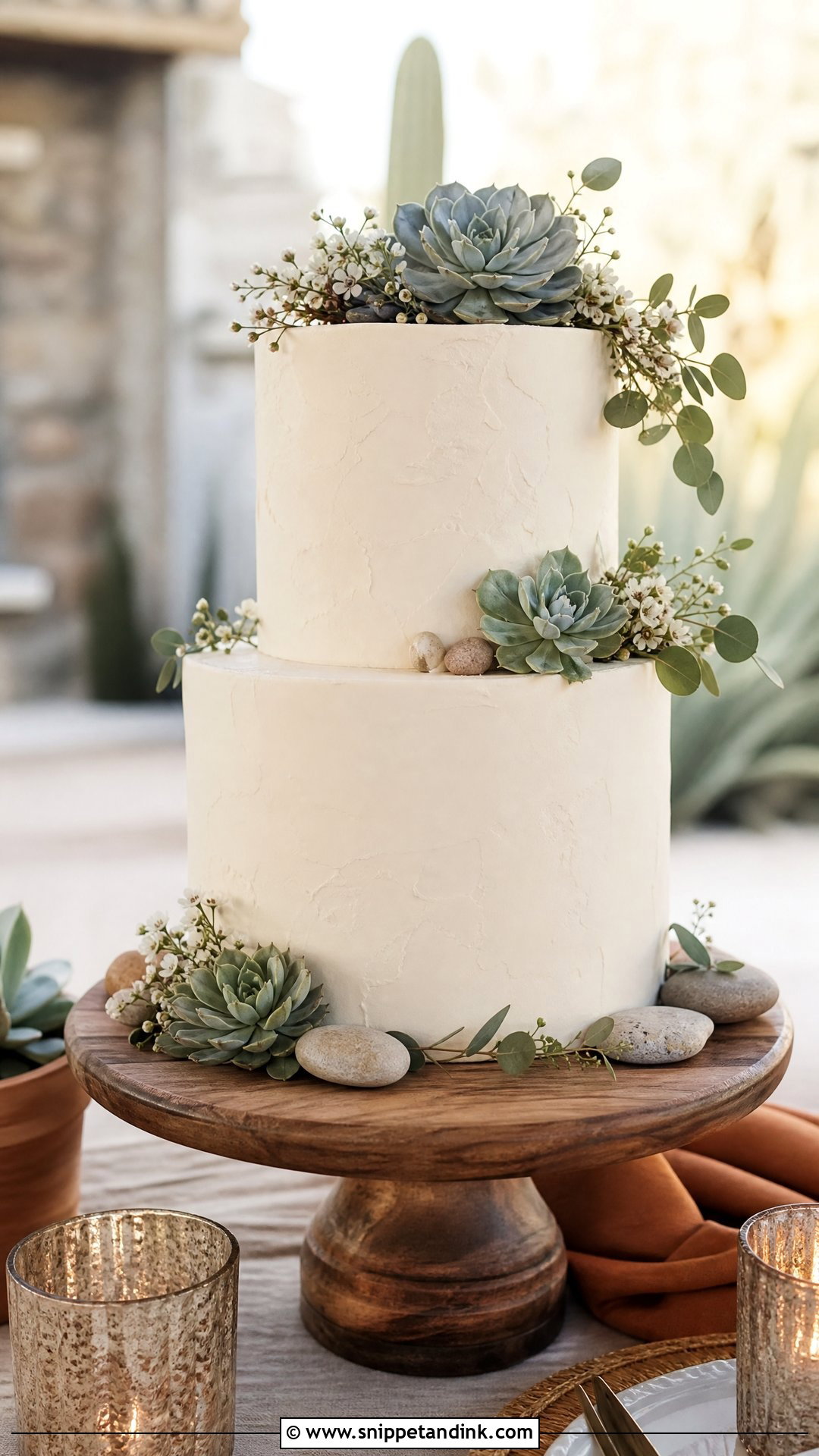
Succulents add shape and structure without making the cake floral, which suits desert, boho and outdoor weddings. I’d always choose sugar or buttercream succulents over live ones: they’re safe to eat, there’s no soil near the cake, and the colors can be matched exactly. Ivory buttercream, tan frosting or a lightly textured finish make good bases. Wood stands, macramé, terra-cotta and neutral linens suit the look, and small white flowers soften it.
12. Rustic Wedding Cake With Burlap Ribbon
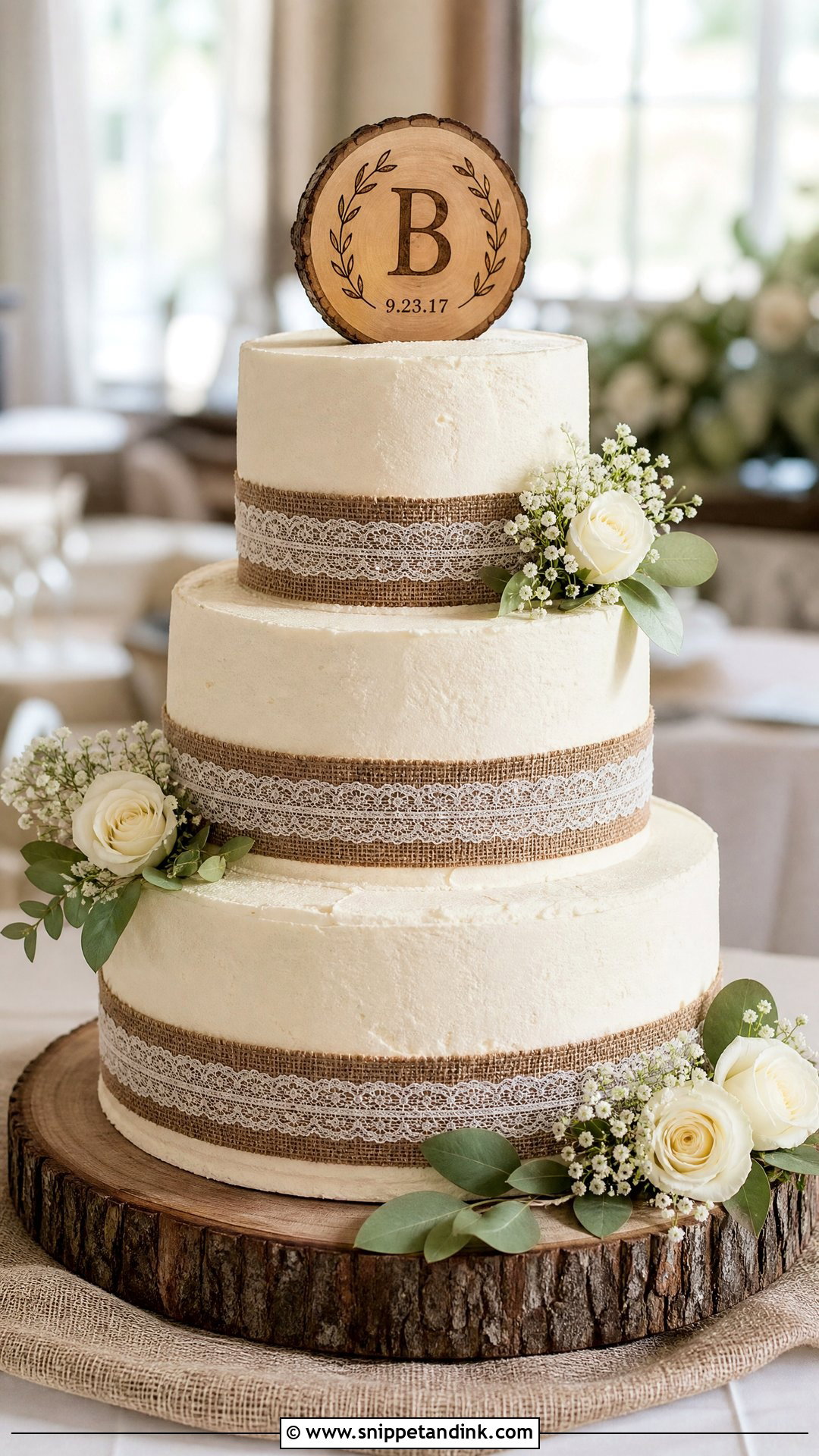
Burlap is instantly recognizable as country, and that’s its risk: too much and the cake looks like a craft project. I use it on one tier or at the base, often with a thin strip of lace over it to soften the weave. Burlap sheds fibers and absorbs grease, so it needs a backing strip between it and the frosting. Ivory buttercream softens the rough texture best. A wooden topper or simple initials finish it at barns and farmhouse venues.
13. Rustic Wedding Cake With Lace
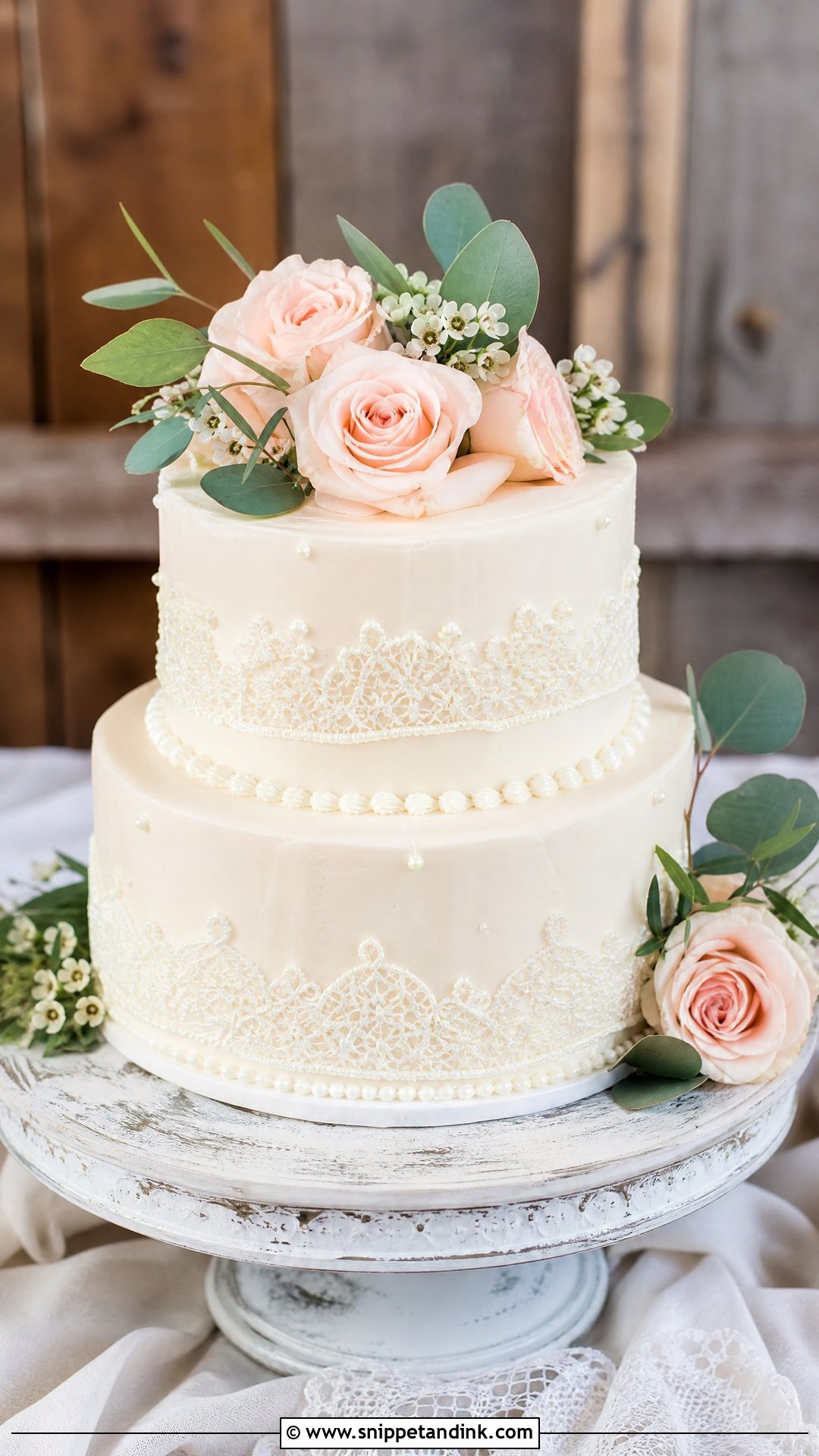
Lace on a rustic cake can be real ribbon around the tiers, piped in buttercream or pressed into fondant with a texture mat. Real lace is decoration only and comes off before cutting; piped lace can be eaten. Ivory frosting, blush flowers and greenery suit it. A semi-naked base with a lace ribbon feels homespun, while a fully frosted cake with piped lace looks more dressed up for a barn that needs a graceful centerpiece. Keep the colors gentle so the lace stands out.
14. Rustic Wedding Cake With Wood Slice Stand
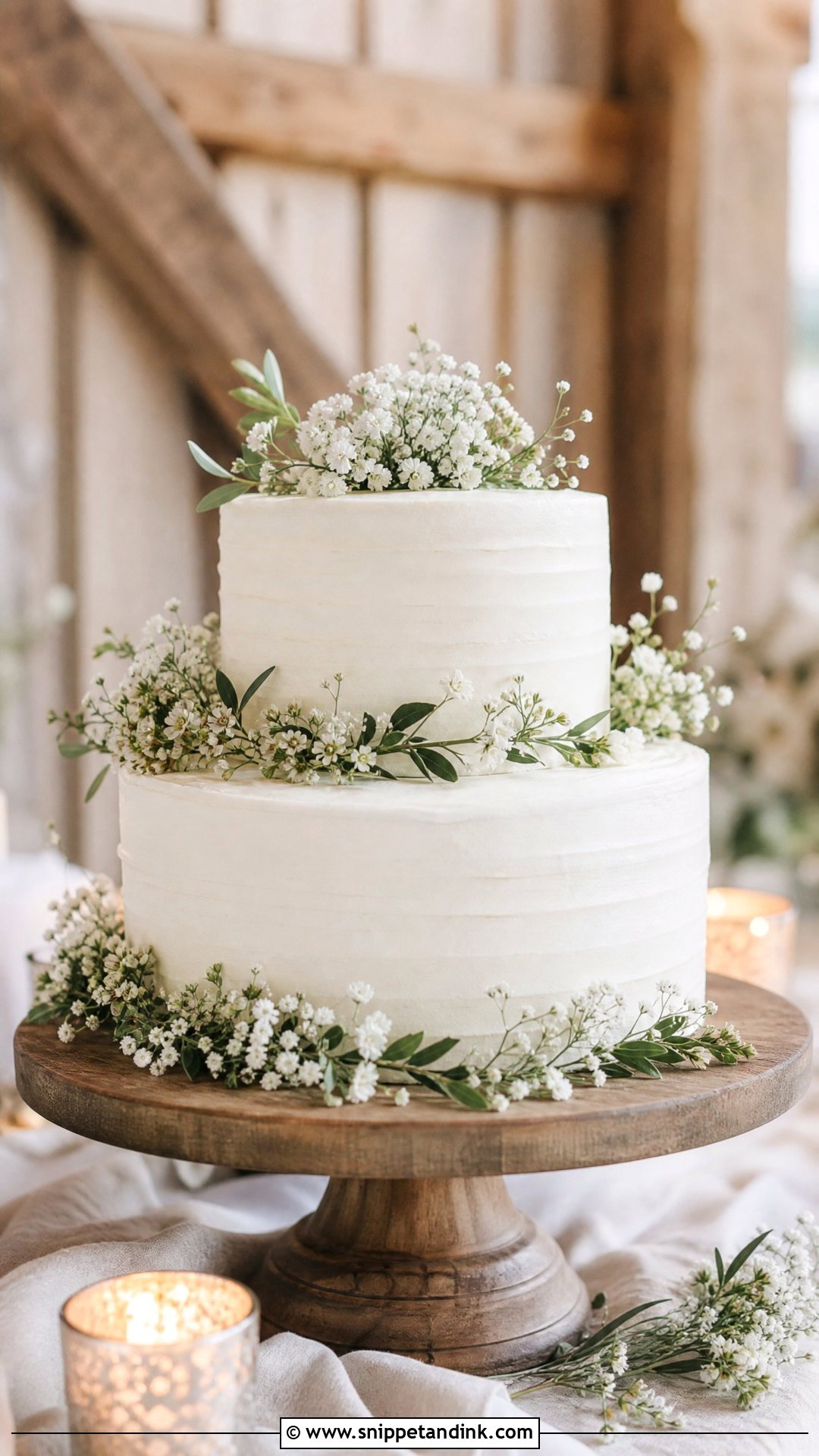
Sometimes the stand does most of the work. A cake set on a wood slice stand looks warm and grounded straight away, whether it’s semi-naked, floral, fruit-topped or plain buttercream. Two practical checks: the slice must be dry, sanded flat and sealed with a food-safe finish, and the cake should sit on its own board, never directly on the wood. A slice that rocks even slightly is a real hazard under a tiered cake. Keep the cake clean so the grain stays the feature, with flowers, berries or candles around the base.

15. Rustic Wedding Cake With Tree Bark Texture
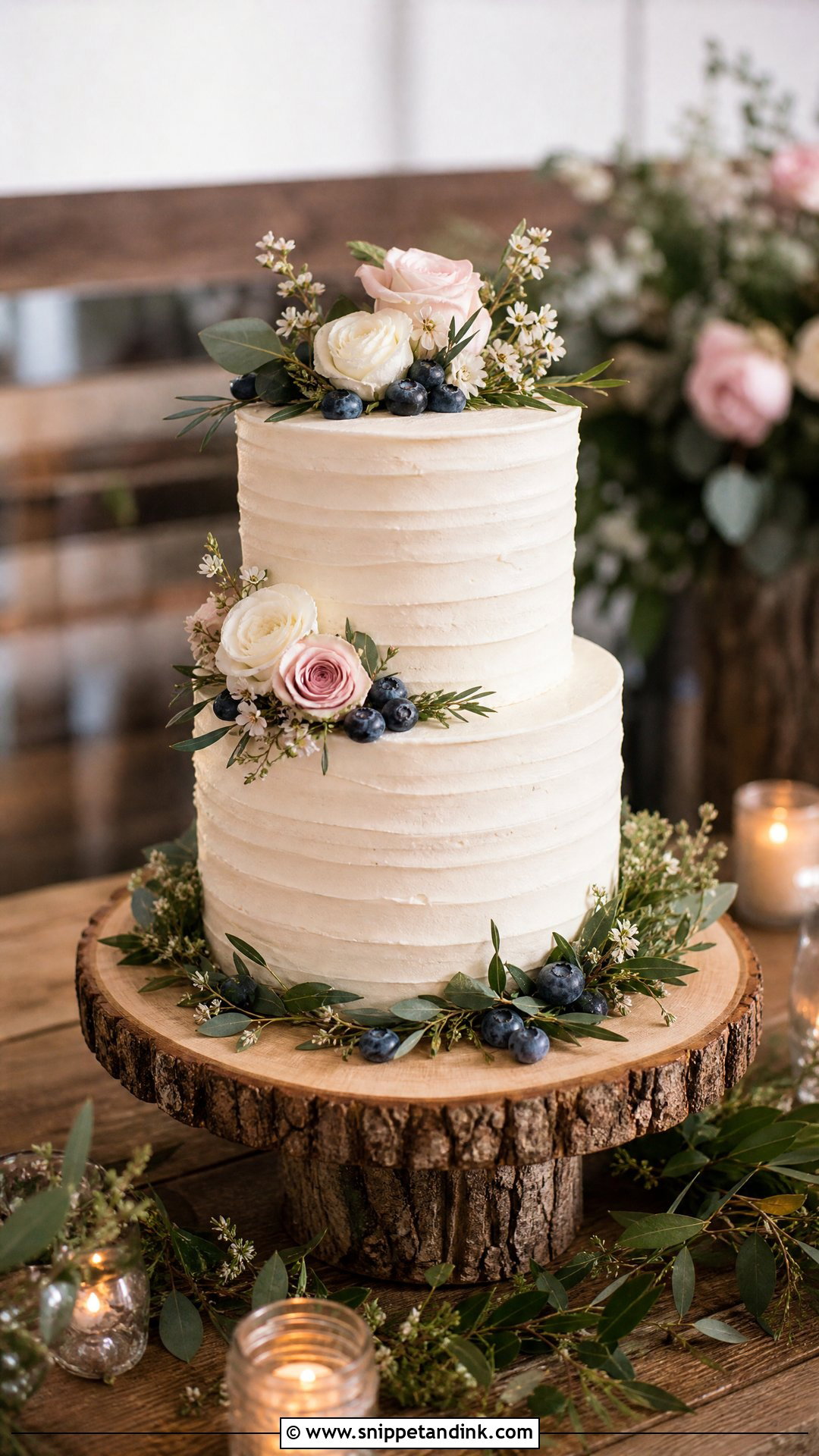
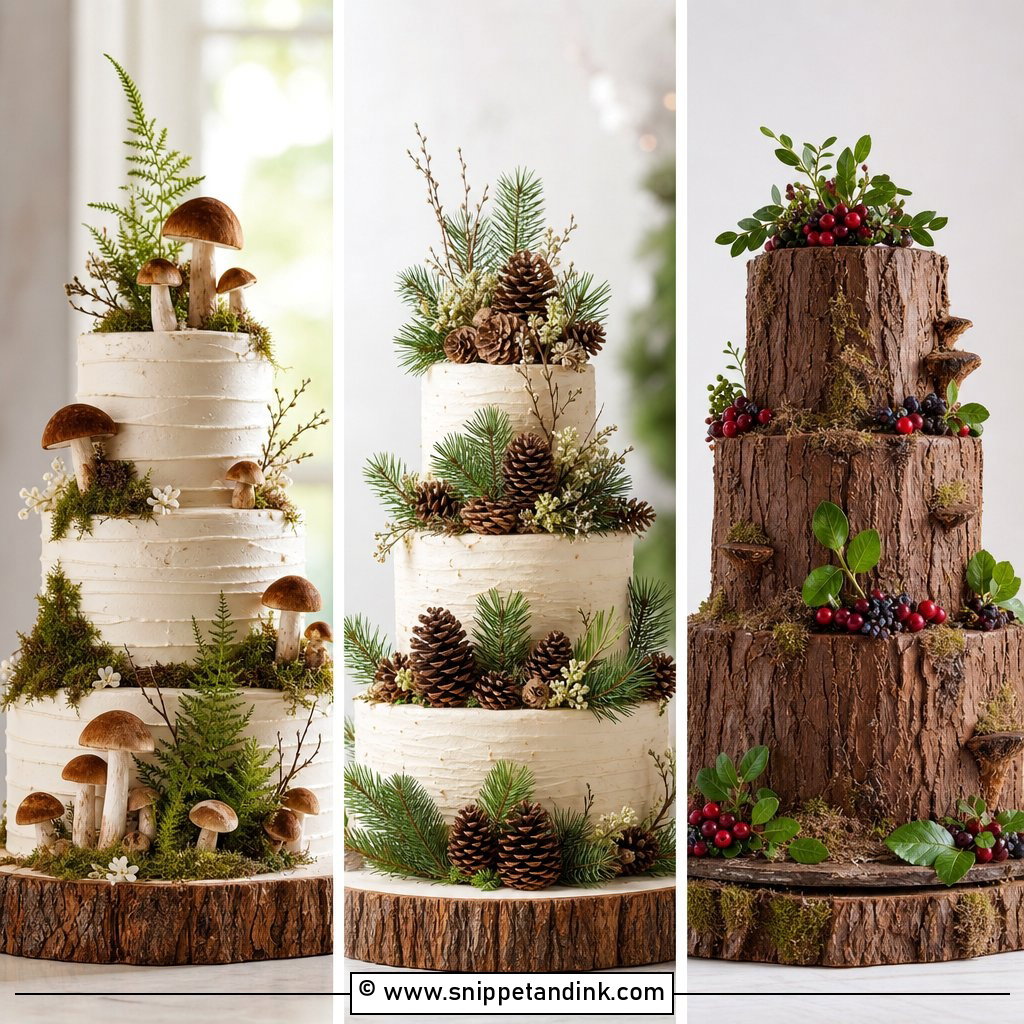
This is a bold one for woodland weddings. A tree bark texture wedding cake has frosting or fondant shaped and combed to look like bark, often chocolate buttercream dragged with a fork or a stiff brush. I balance it with soft details: white flowers, moss-style greenery or small leaves. Chocolate, mocha or spice cake match the color. Two or three tiers feel dramatic without being too much, and simple table styling with wood and linen keeps the cake the focal point.
16. Rustic Wedding Cake With Drip
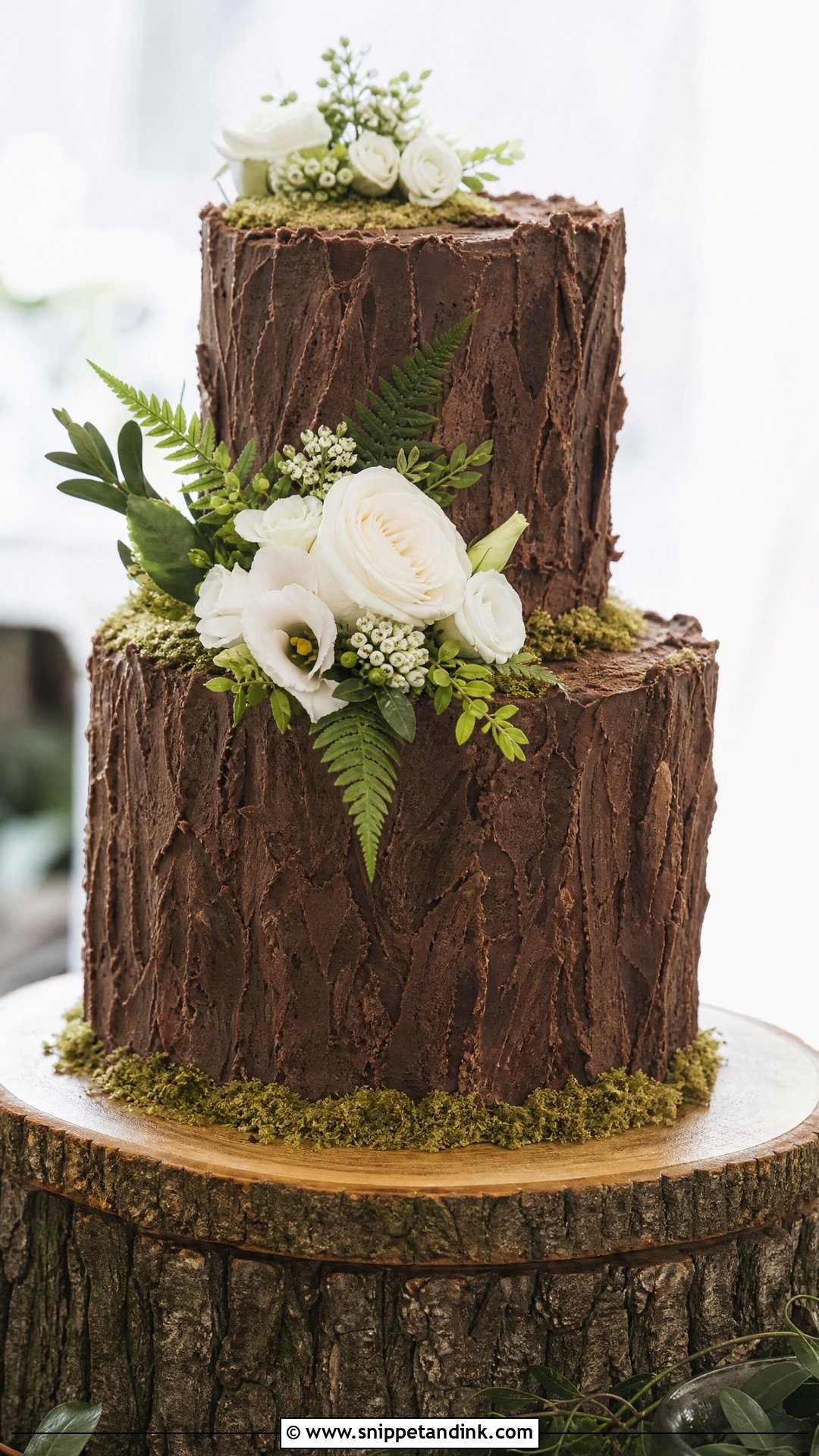
Drips add movement while staying casual. Caramel, white chocolate, dark chocolate, honey glaze and berry sauce all work, but they set differently: ganache firms as it cools, while honey and berry sauces stay runny and keep creeping down the cake in a warm room. For those, I thicken the glaze or add it at the venue. A thin drip looks softer than a heavy one. Caramel suits fall, white chocolate suits spring and summer, and fresh fruit, flowers or greenery finish it.
17. Rustic Chocolate Wedding Cake
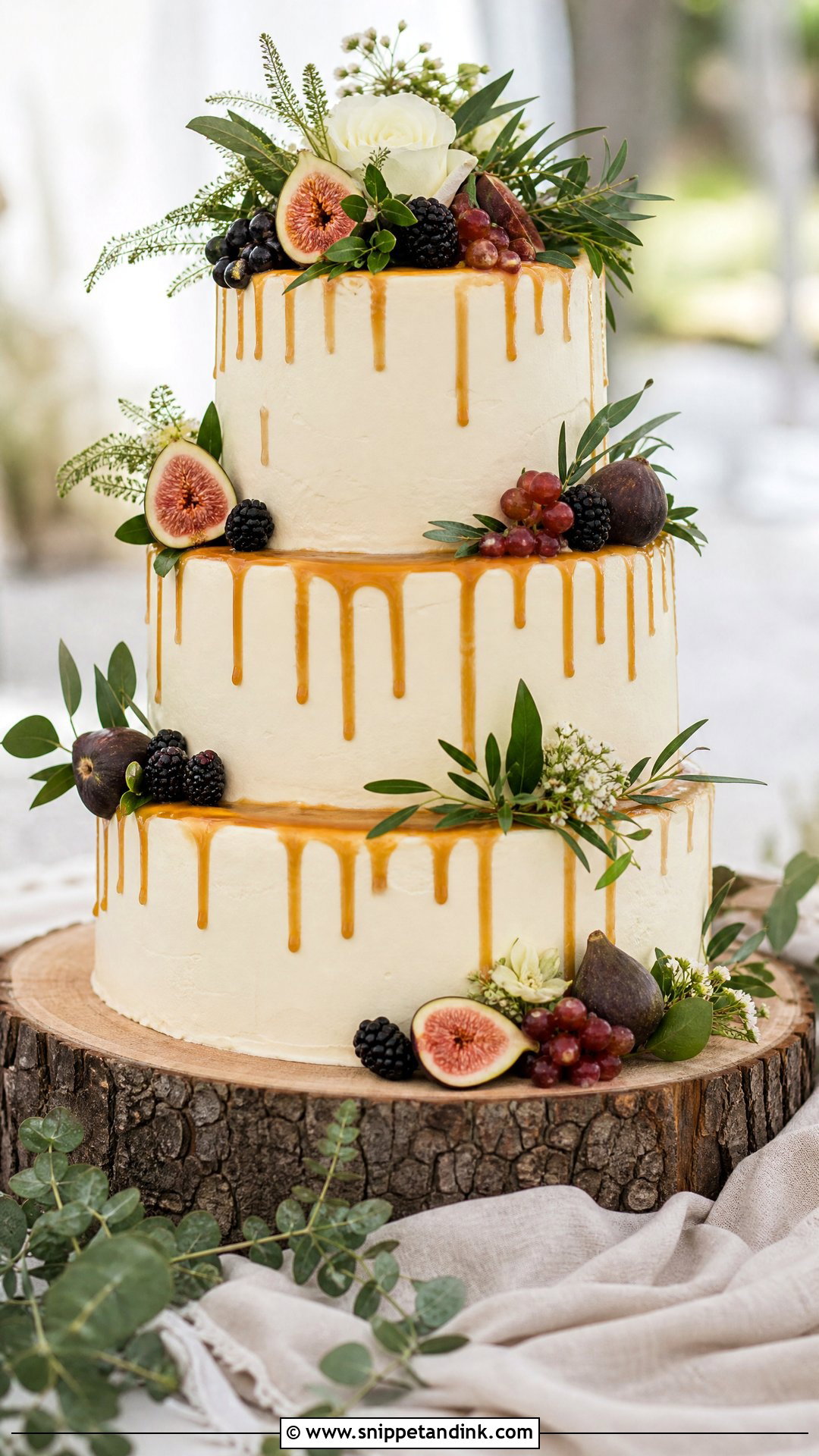
Chocolate takes rustic in a darker, cozier direction. Chocolate sponge with chocolate buttercream, ganache or cocoa-dusted frosting all work, decorated with figs, berries, caramel, greenery or ivory flowers to keep it bridal. My favorite version is a semi-naked chocolate cake with vanilla buttercream, because the dark crumb and pale frosting show every layer. Fall, winter, barn and evening weddings suit it, and it’s less expected than a white cake.
18. Rustic Lemon Wedding Cake
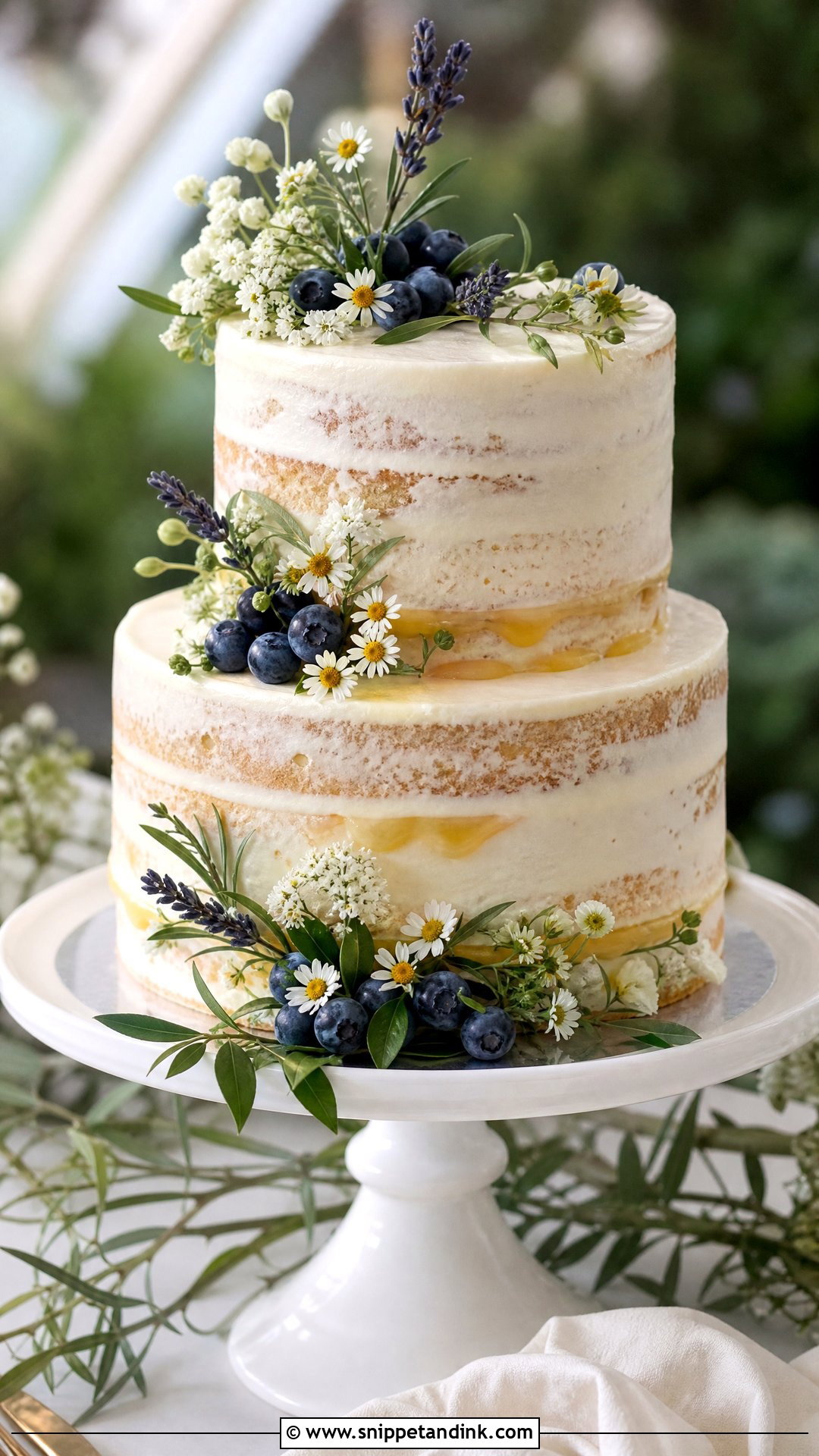
Lemon is the bright option for warm weather. Pale yellow sponge, lemon curd filling and light buttercream look sunny without bold decoration. On a semi-naked cake the curd peeks through the layers, but curd is wet, so I pipe a firm ring of buttercream inside each layer to stop it seeping out of the sides in the heat. Blueberries, raspberries, chamomile, lavender or small white flowers finish it at garden weddings and tented spring receptions.
19. Rustic Carrot Wedding Cake
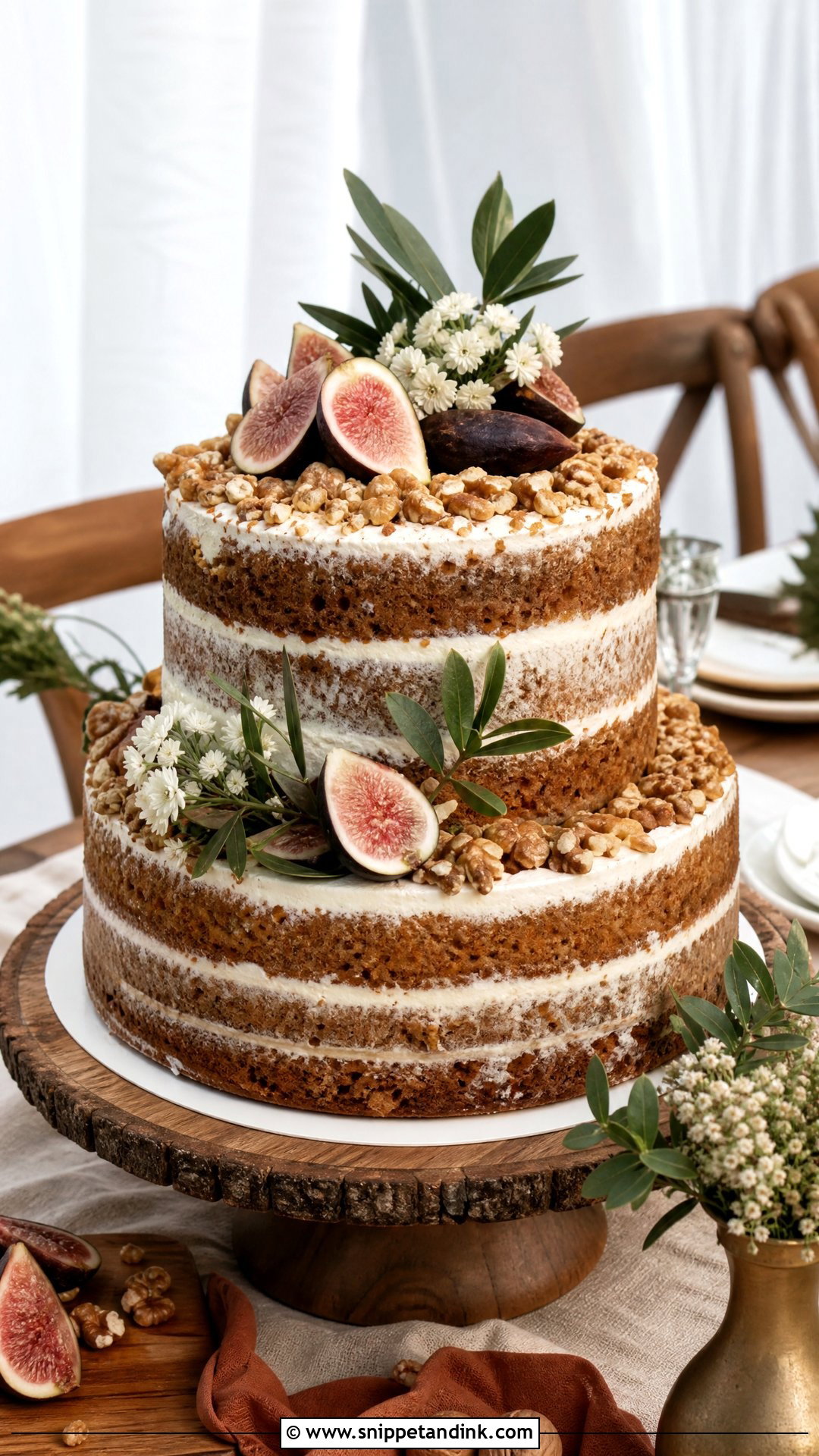
Carrot cake already looks rustic, with a golden-brown crumb flecked with carrot and spice. Cream cheese frosting is the classic partner, and on a semi-naked or textured finish it shows that crumb well. It needs to stay cool, though, so for a long outdoor display I’d use a firmer cream cheese buttercream on the outside. Chopped nuts, small flowers, figs, greenery or a caramel drizzle decorate it; flag the nuts on your menu cards if you use them. Fall weddings and farmhouse venues suit it.
20. Rustic Red Velvet Wedding Cake
Under a thin coat of frosting, deep red layers show through the sides, so the color surprise happens before anyone cuts it. I scrape the frosting back carefully, because red crumbs drag easily into pale frosting and leave pink streaks. White flowers, greenery, berries or a wooden topper finish it. Ivory frosting rather than bright white keeps it warmer and more rustic. Romantic barns and vintage receptions suit it.
21. Rustic Vanilla Wedding Cake
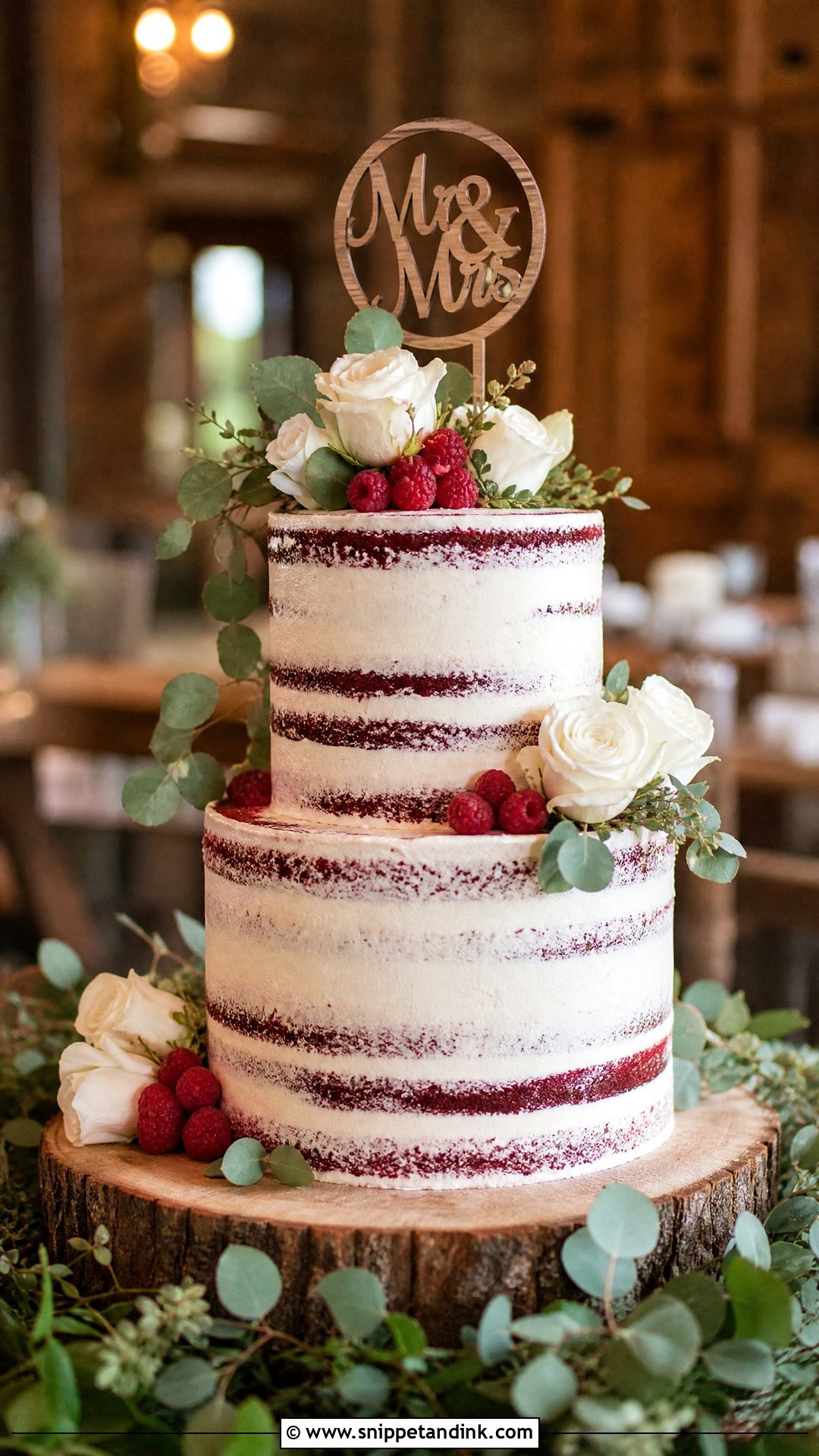
Vanilla is the flexible one. It can go semi-naked, textured, smooth, floral or fruit-topped, and nearly every guest will eat it. Good vanilla cake should taste of real vanilla, so ask at the tasting whether your baker uses extract or bean paste; bean paste leaves visible specks. Seasonal flowers, berries, greenery or a wood topper fit any theme, and raspberry, lemon, almond or salted caramel filling adds interest between the layers.
22. Rustic Almond Wedding Cake
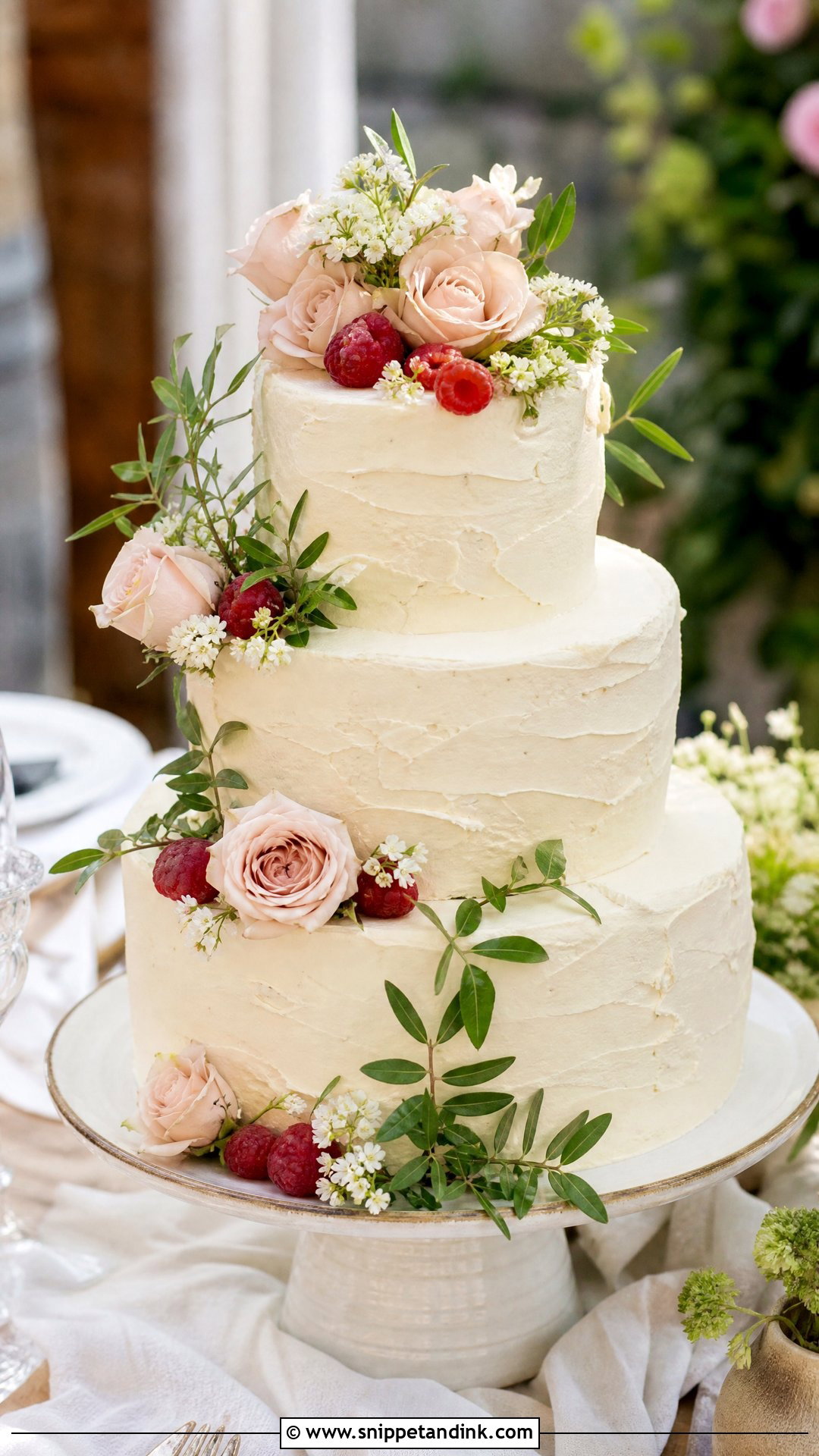
Almond sponge has a soft, nutty flavor that pairs well with vanilla buttercream, raspberry, apricot preserves or honey cream. It can stay simple with textured ivory frosting and a few flowers, or lean further rustic with toasted sliced almonds pressed around the base. Any cake with almonds in it needs clear labeling for guests with nut allergies. A semi-naked finish makes the layers look handmade, and the flavor works across spring, summer and fall.
23. Rustic Wedding Cake With Lavender
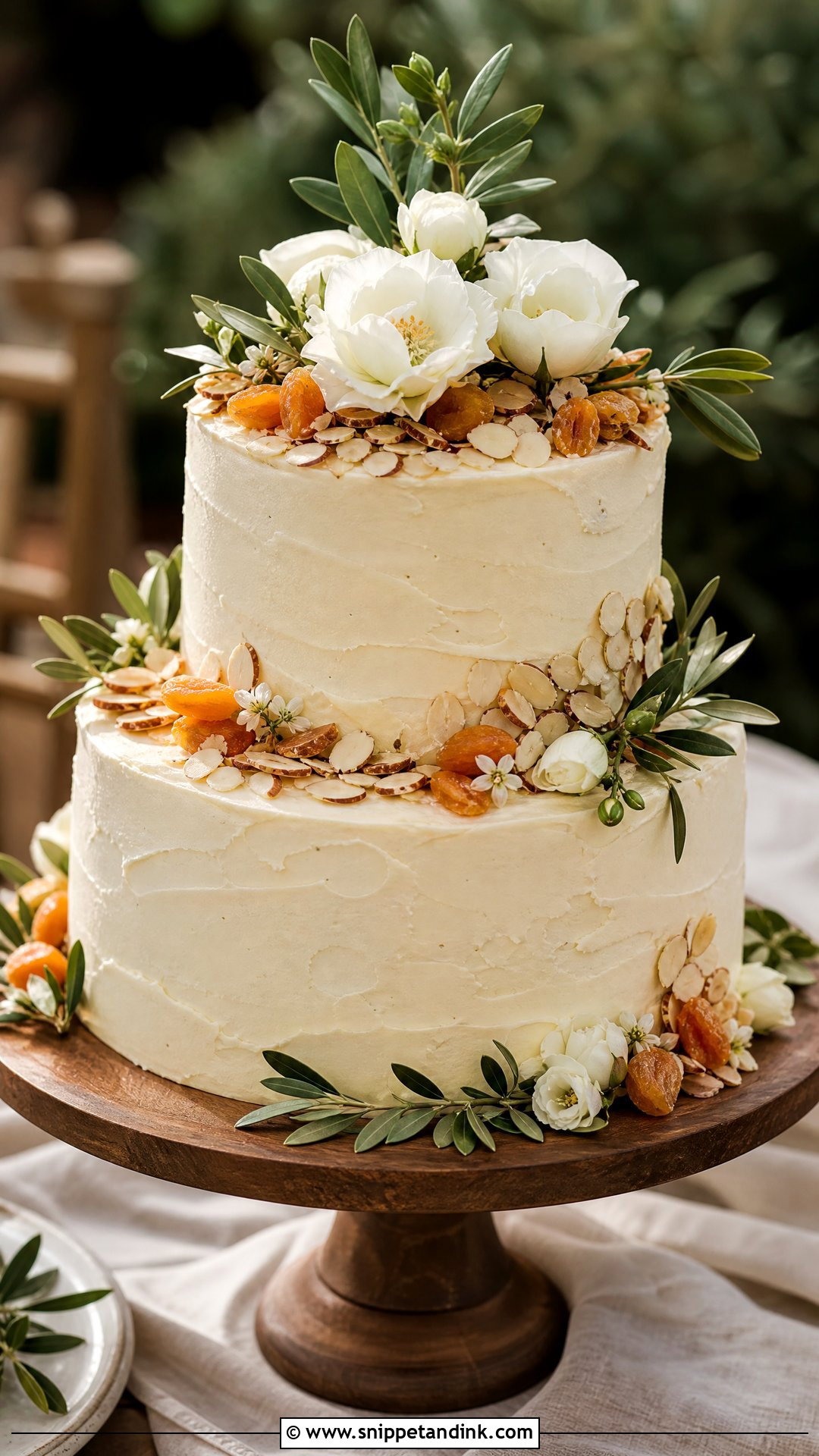
Lavender gives a cake soft color, texture and scent, with a Provence feel. Fresh stems can be tucked around the tiers or gathered on top with small white flowers and greenery. Culinary lavender inside the cake goes a long way; too much tastes soapy, so I infuse it lightly into the syrup or buttercream rather than baking buds into the sponge. Lemon, honey and blueberry pair well. A semi-naked or smooth buttercream base works best at garden weddings and outdoor ceremonies.
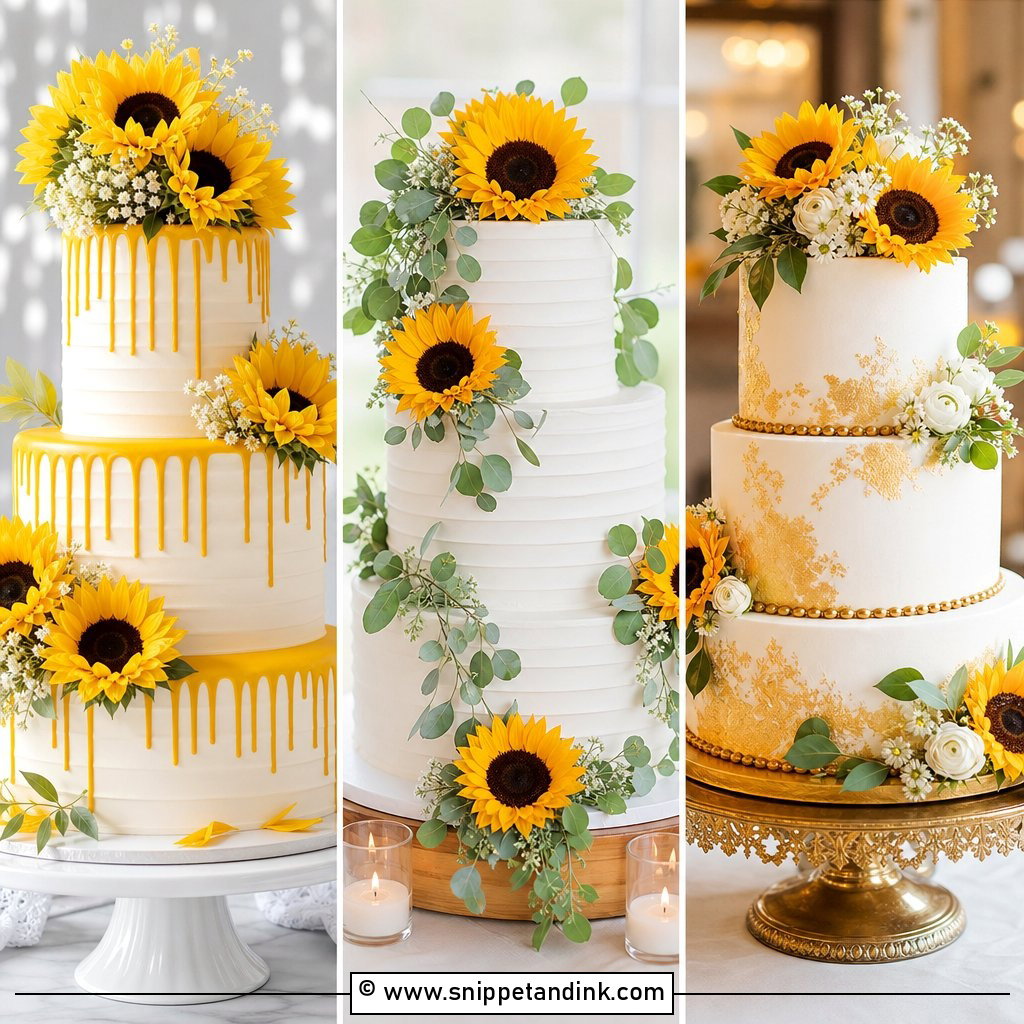
24. Rustic Wedding Cake With Sunflowers
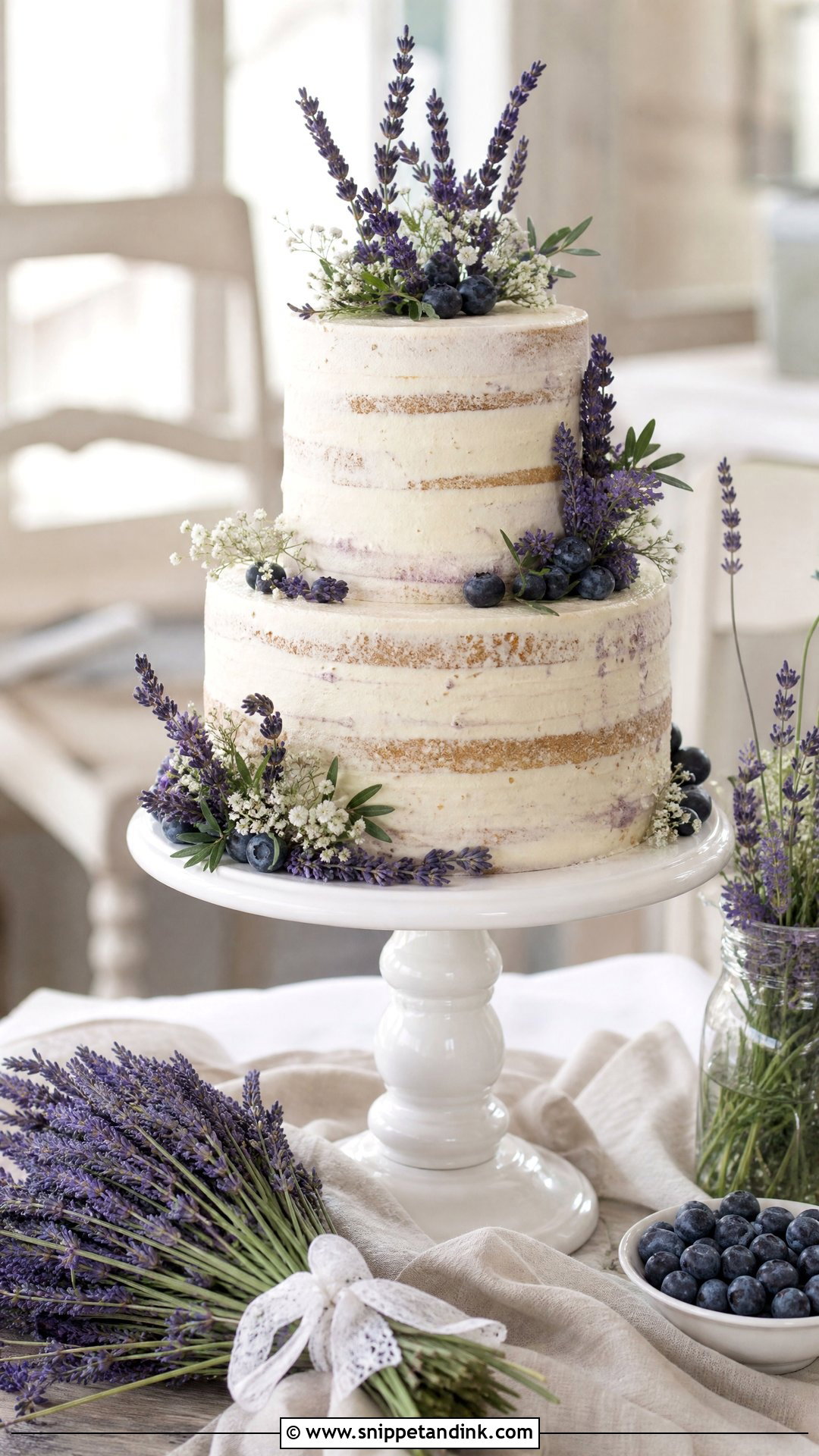
Sunflowers take over quickly, so two or three blooms are usually enough. Their heads are heavy, and I cut the stems short and seat them in picks so they don’t tilt or drag down soft frosting. Ivory buttercream or a semi-naked finish keeps the base simple. Greenery, small white flowers or a little burlap complete it on a wooden stand at barns and farm weddings in late summer and early fall.

25. Rustic Wedding Cake With Roses
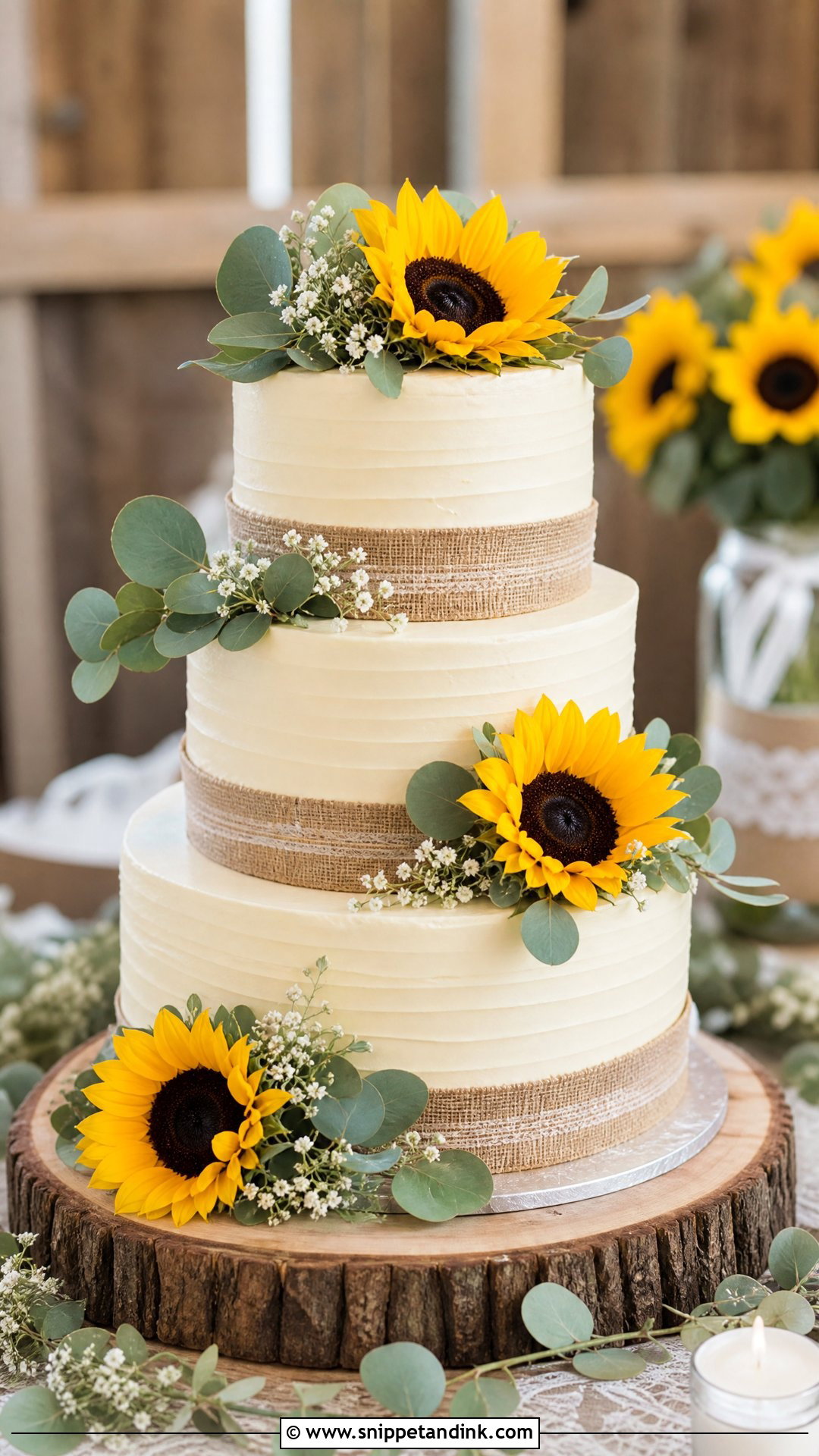
Roses turn rustic when they’re styled loosely. Garden roses, spray roses and open blush or ivory blooms suit textured buttercream or semi-naked tiers, placed in small clusters rather than stiff rows. Eucalyptus, olive leaves, berries or dried accents add texture, and blush, cream, dusty rose, mauve, peach and soft white are the easiest colors. Unsprayed garden roses are edible, which makes them one of the safer flowers to place directly on a cake. Barns, garden receptions and vintage celebrations suit it.
26. Rustic Wedding Cake With Baby’s Breath
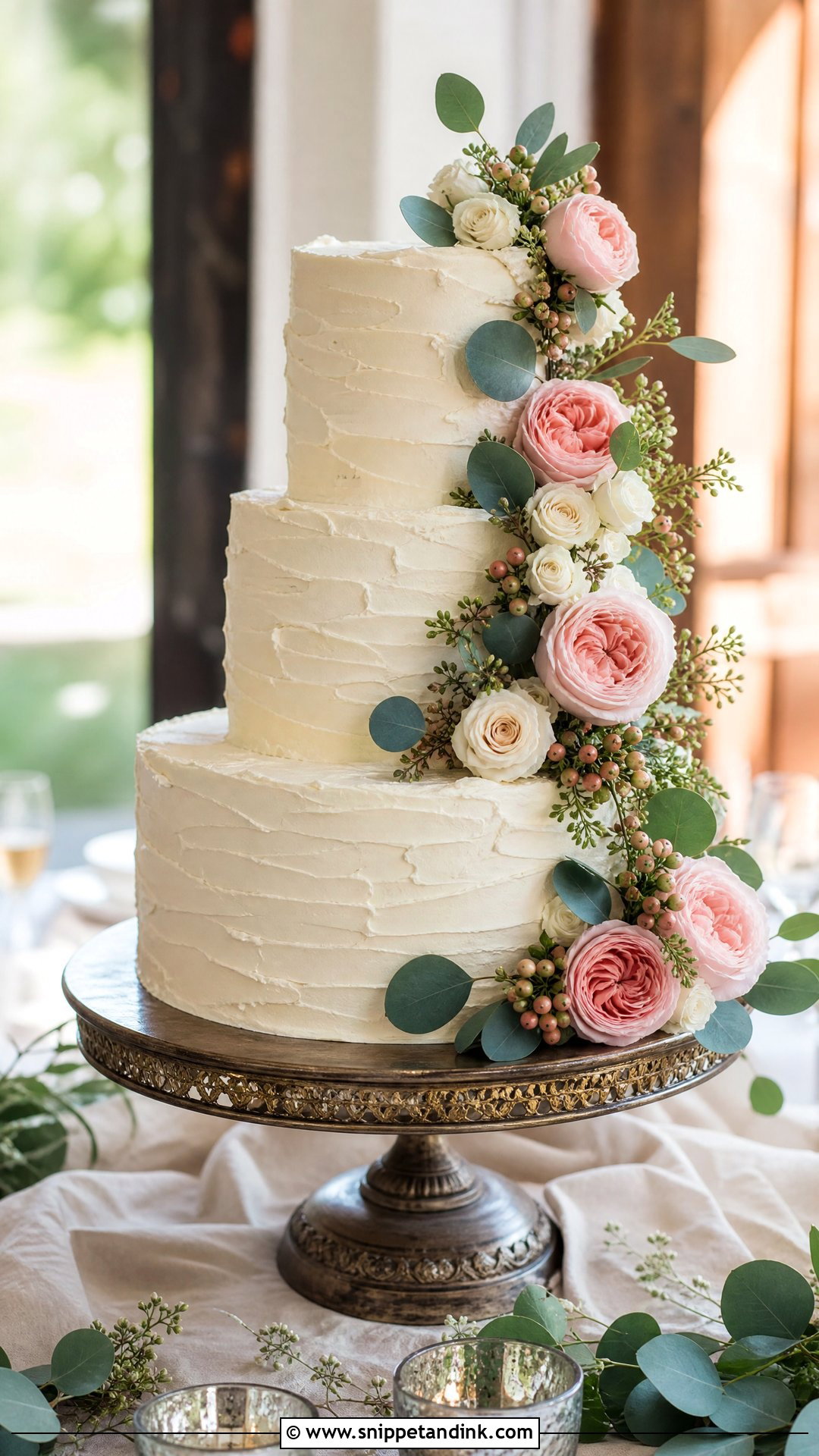
Baby’s breath gives an airy, budget-friendly look and softens burlap, wood stands and rough buttercream. It isn’t food-safe, though, so I keep it out of the frosting: it sits on a small board on top, in picks between tiers, or around the base on the table. White or ivory buttercream keeps it soft and clean. Keep the placement loose so it looks gathered rather than arranged. Barns and minimalist rustic receptions suit it.
27. Rustic Wedding Cake With Macrame
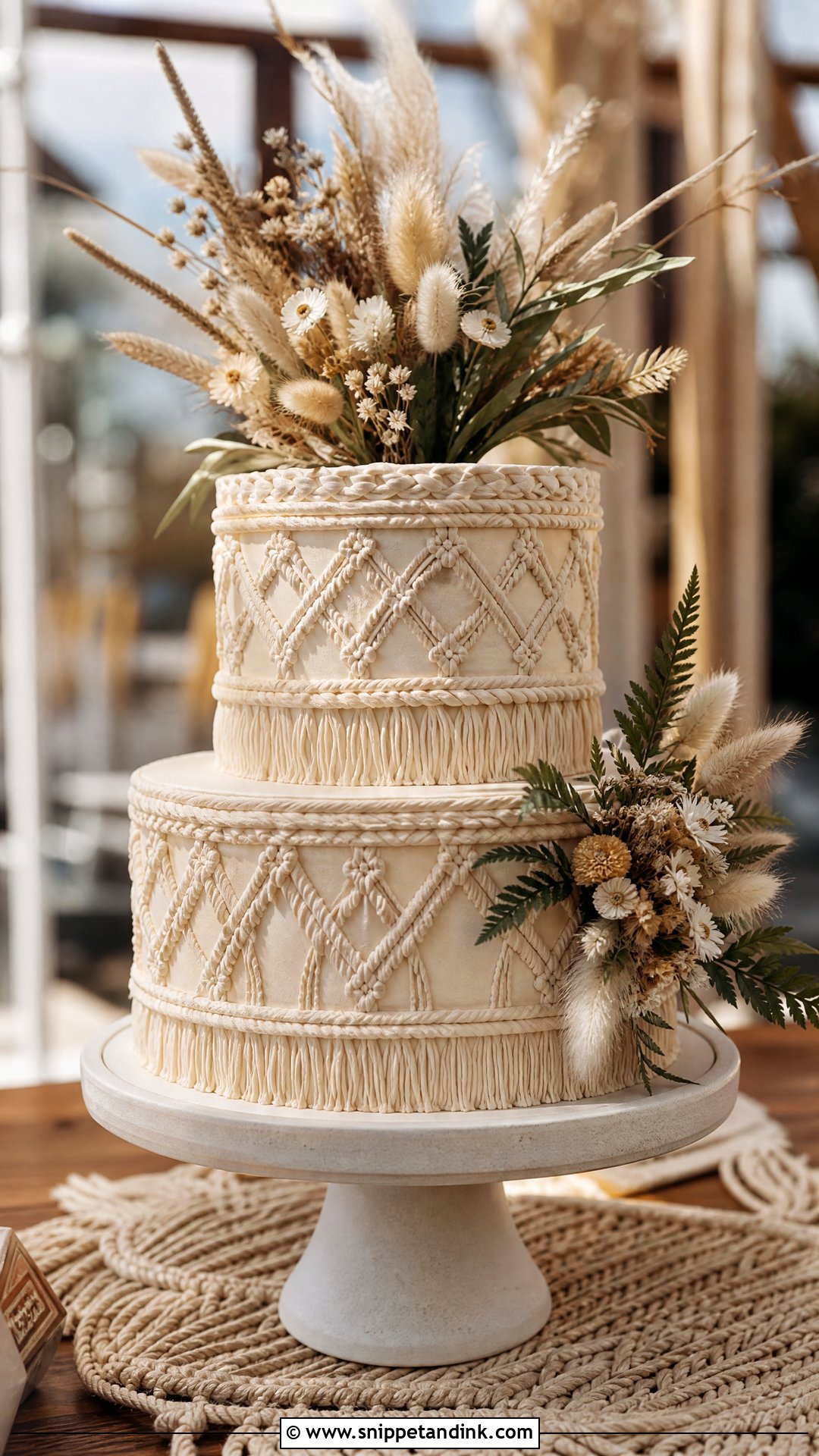
For boho weddings, a rustic wedding cake with macrame details borrows the knotted look of wall hangings. The pattern can be piped in buttercream, molded from fondant cord, or come from a decorative topper set near the cake. Piped macrame takes time, since each knot is built from several strands. Cream, beige, taupe and warm ivory keep it soft alongside dried flowers, pampas and wood accents. Two textured tiers carry the pattern well at tented and desert receptions.
28. Rustic Wedding Cake With Pears
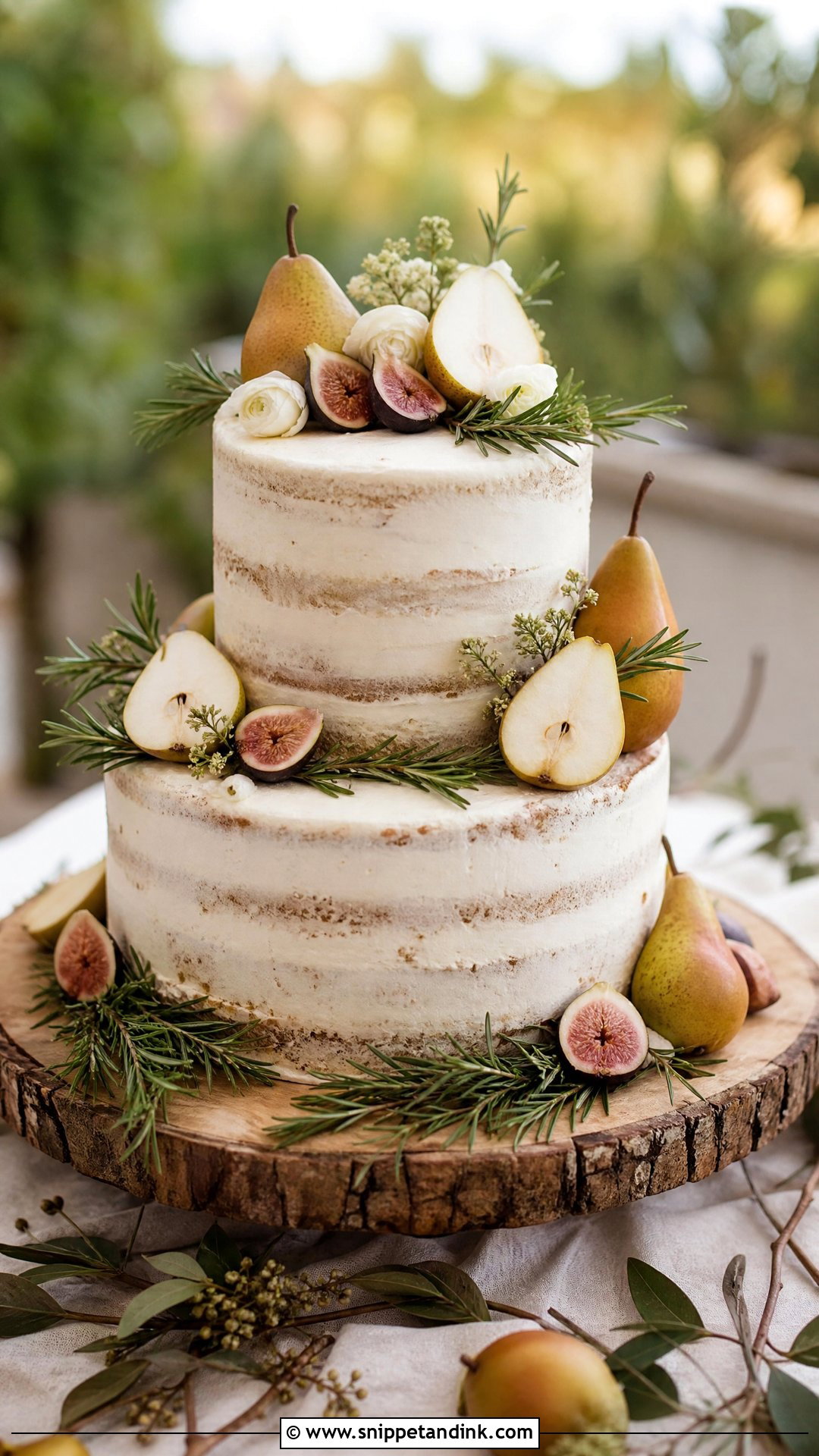
Pears give a calm, seasonal look in soft green, gold and brown. Freshly cut pear browns within minutes, so I use small whole pears, poached pears or caramelized slices, which hold their color. Sugared pears look frosted and pretty on a fall table. Vanilla, almond, spice, honey or caramel cake pair well. A smooth or semi-naked buttercream finish keeps the fruit looking fresh, and rosemary, figs or small flowers fill out the design.
29. Rustic Wedding Cake With Honeycomb
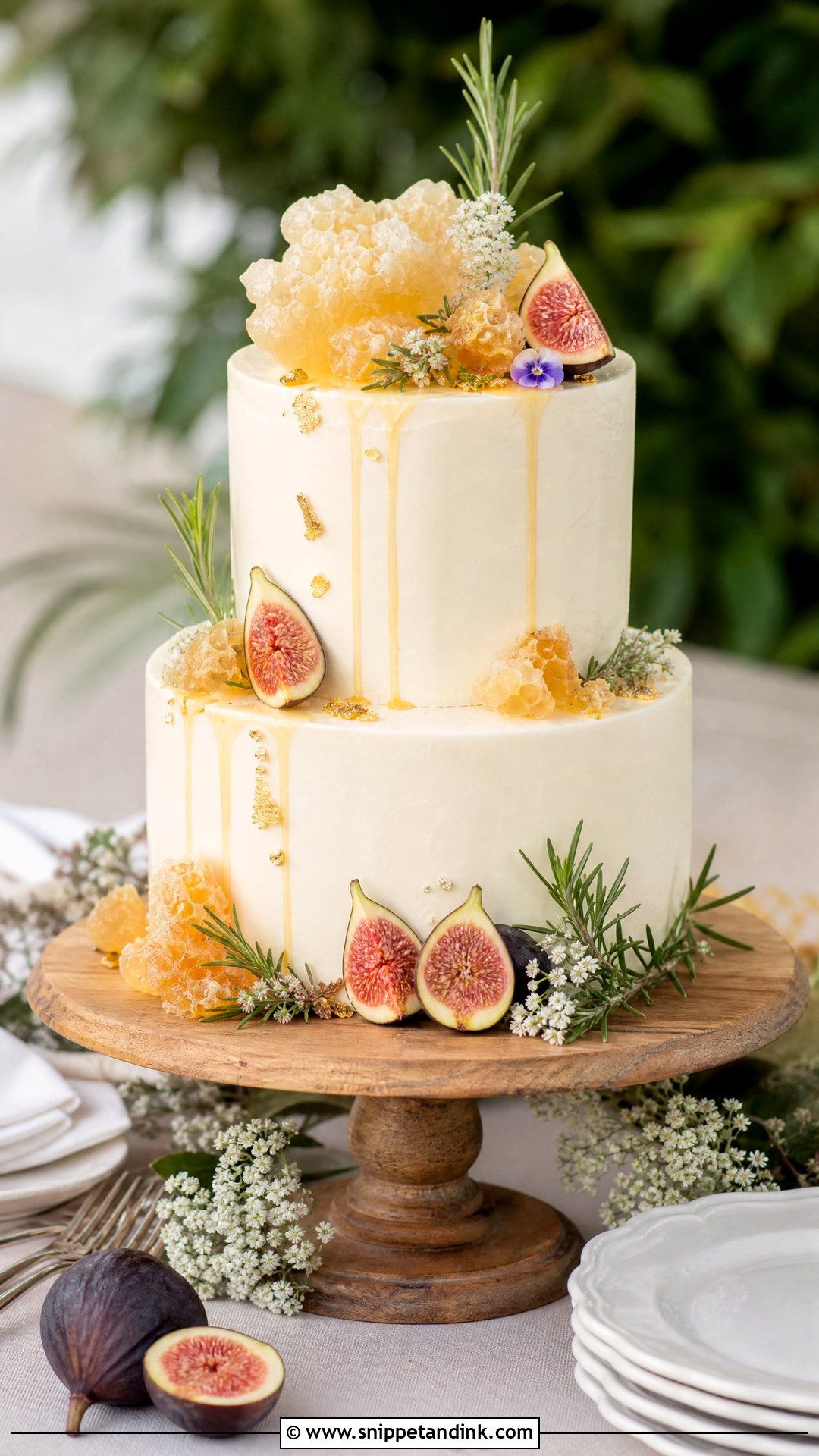
Real honeycomb looks wonderful and is the trickiest topping here. It weeps honey steadily, especially in warmth, and outdoors it draws bees and wasps, so I set it on the cake as late as possible, on a small piece of acetate. Honeycomb-style candy is a sturdier alternative. Its golden color suits ivory frosting, wood accents, figs and pears, and vanilla, lemon, spice or honey cake match it. Keep any drip light so the cake doesn’t look sticky.
30. Rustic Mini Wedding Cake
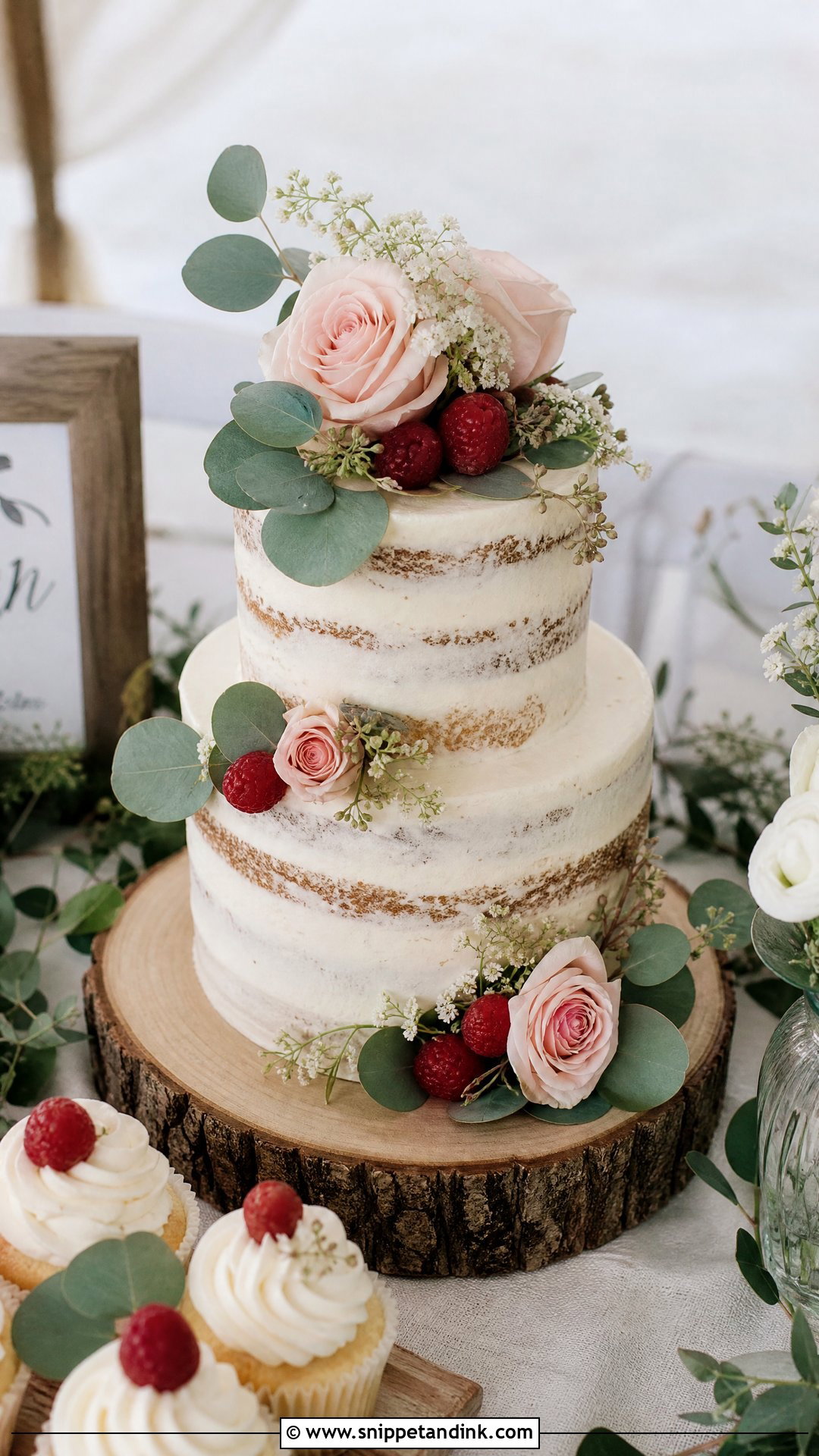
For elopements and small receptions, a rustic mini wedding cake often makes more sense than a tall one, especially with sheet cake served from the kitchen. One or two tiers still feel special with a semi-naked finish, textured buttercream, fresh flowers, berries or a small topper. On a wooden stand surrounded by cupcakes or cookies, it anchors a dessert table. A small cake also leaves room for a more unusual flavor, since it doesn’t have to please a whole crowd.
Which Blooms Can Sit Right on the Frosting
Rustic cakes carry more real flowers and foliage than any other style, so this matters more here than anywhere. Edible varieties grown without pesticides can touch the cake; everything else needs a barrier, such as floral tape, a flower pick or a small disc of parchment underneath. Florist stock is often treated, so even an edible variety should come from a food-safe source if it sits directly on the frosting.
Usually fine when grown unsprayed
- Pansies and violas
- Garden roses
- Chamomile
- Cornflowers
- Culinary lavender
- Calendula petals
Keep these off the frosting
- Baby’s breath
- Eucalyptus
- Ranunculus
- Hydrangea
- Most dried, dyed or bleached stems
If you’re unsure about a flower, ask your florist to confirm the exact variety and how it was grown. Your baker can then decide what goes on the cake and what goes on the table around it.
Relaxed on the Table, Planned Behind the Scenes
The rustic cakes that work best share natural texture, soft color and decoration that suits the season and the venue. Semi-naked frosting, rough buttercream, greenery, flowers, berries, figs, wood and dried accents can all play a part, just not all at once. Before deciding, think about where the cake will stand and for how long, what the weather might do, how many people it must feed and what they like to eat. A rustic cake should look relaxed, but everything behind it should be planned.
You'll Like These Ideas:







Leave a Reply