
The hair brides ask for when they bring up Kashees is easy to recognise: a smooth, glossy front, a lifted crown, and a back that is built to carry flowers, jewelry and a dupatta without moving. It sits squarely in the tradition of Pakistani wedding beauty, where hair is styled around what will be pinned to it. That changes how I work. Before I pick up a brush I want to know how heavy the dupatta is, where the matha patti chain falls and how many hours the event runs. The twenty styles below go from baraat buns to walima waves and mehndi braids, with notes on what each one needs underneath to last.
How a Heavy Dupatta Decides Your Hairstyle
A baraat dupatta with heavy embroidery can weigh more than you’d expect, and every gram of it hangs from the pins in your hair. So the first thing I ask at a trial is to see the actual dupatta, or at least know its fabric and how it will be draped. Net and organza sit lightly. Velvet and heavily worked silk need a solid bun or puff to pin into.
- I always pin the dupatta into the bun or a backcombed base, never into smooth hair alone.
- Pins cross in an X, with at least two at the crown and two at the back.
- The matha patti and tikka go on before the dupatta, so the fabric doesn’t pull them out of line.
- If the dupatta has to come off for the walima reveal, I leave a few loose pins in place so it can be lifted without wrecking the shape.
Bring your jewelry to the trial too. A jhoomar, passa or large tikka changes where the volume should sit, and that is much easier to plan with the real pieces in hand.
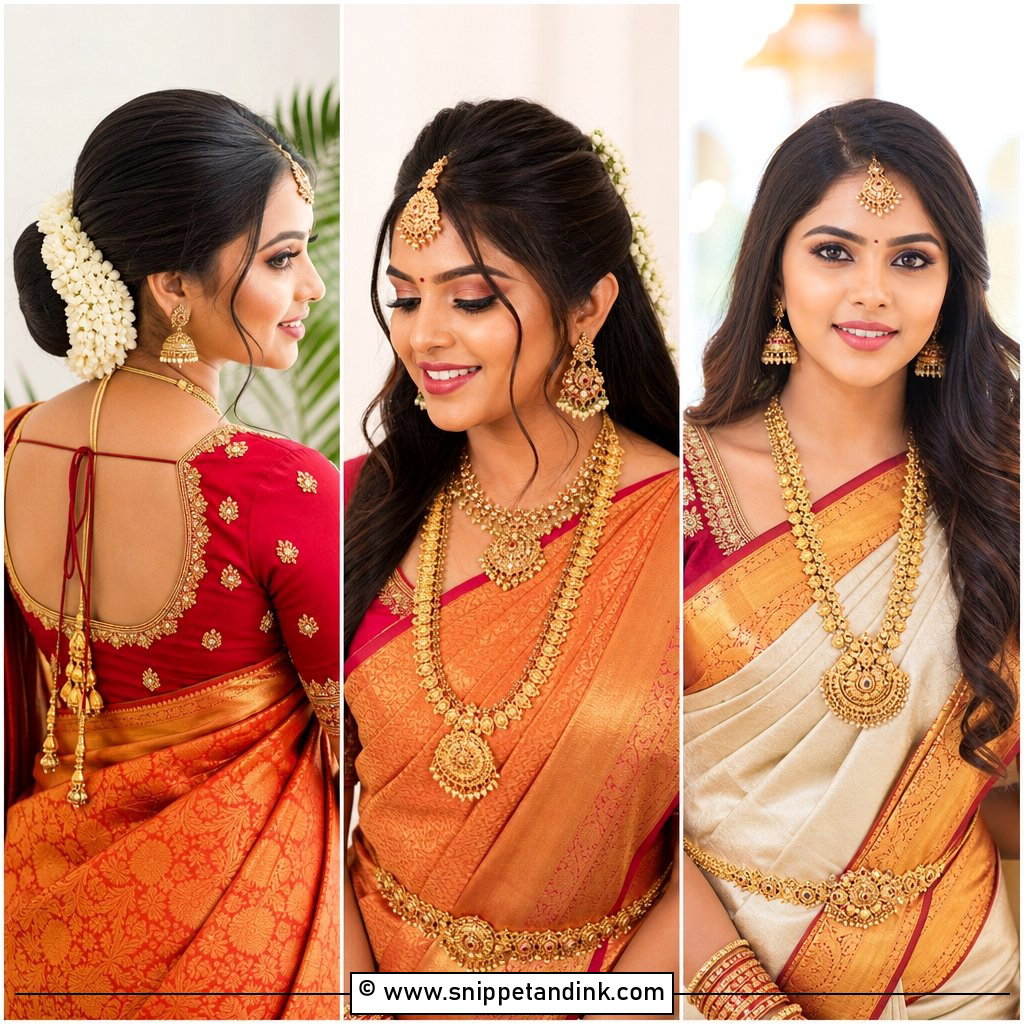
1. Kashees Bridal Low Bun With Gajra
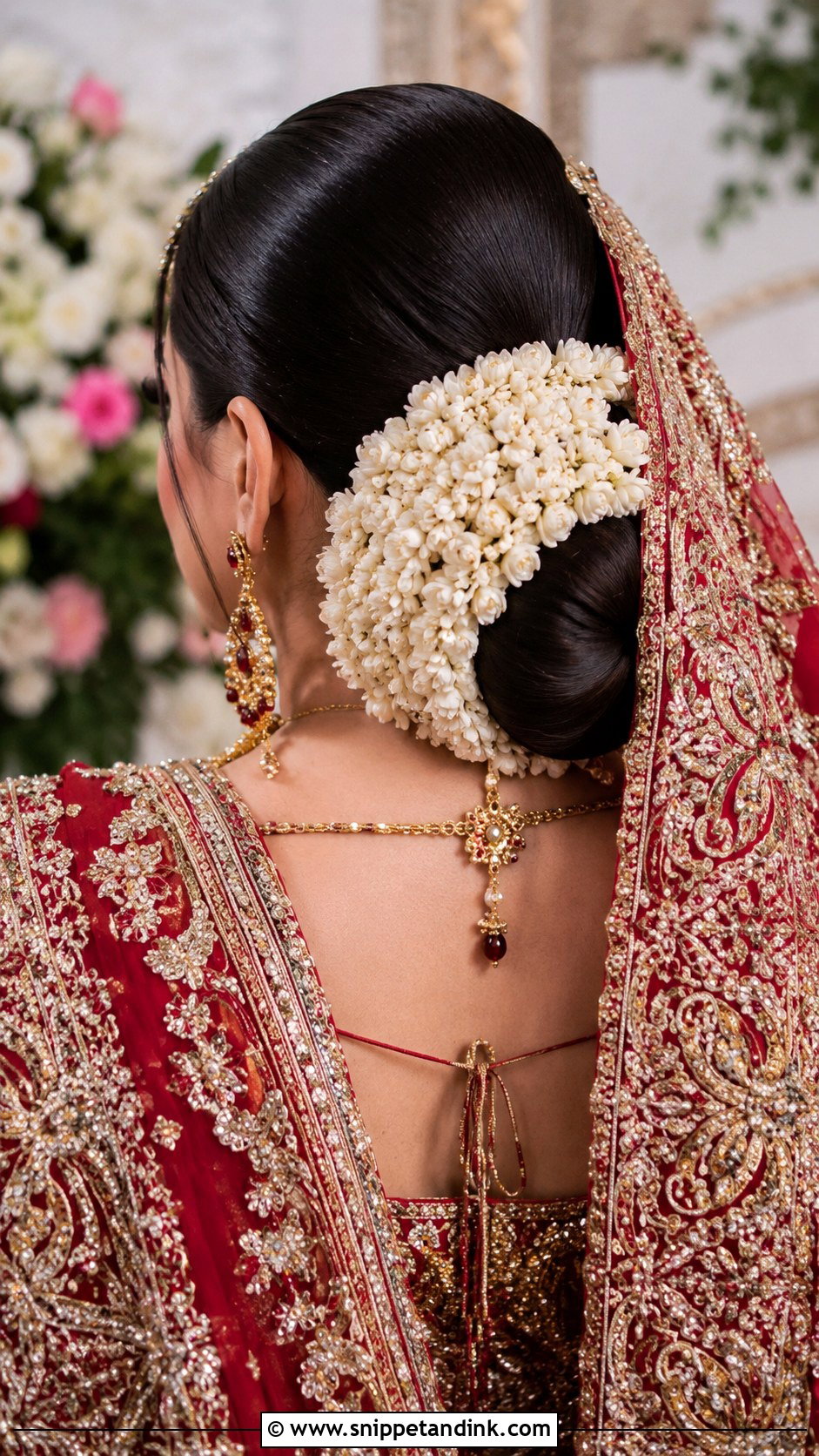
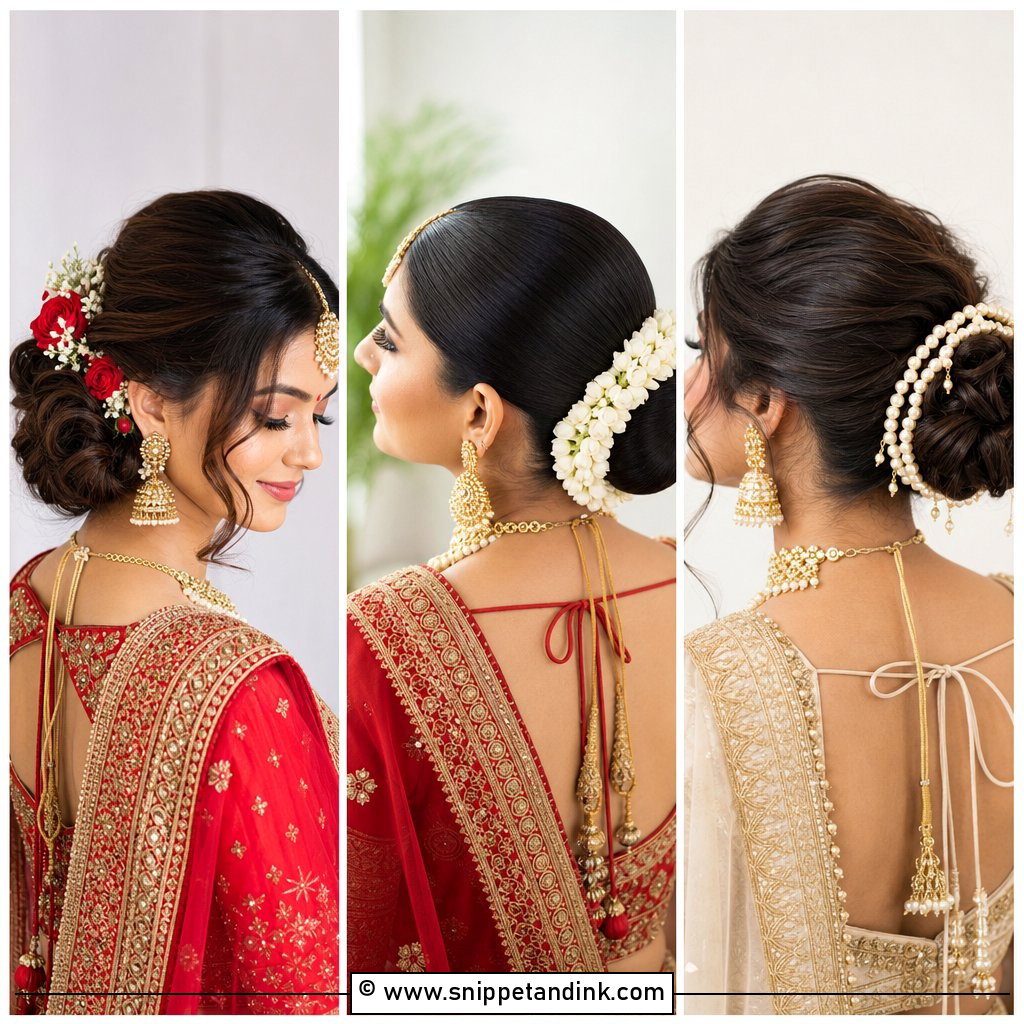
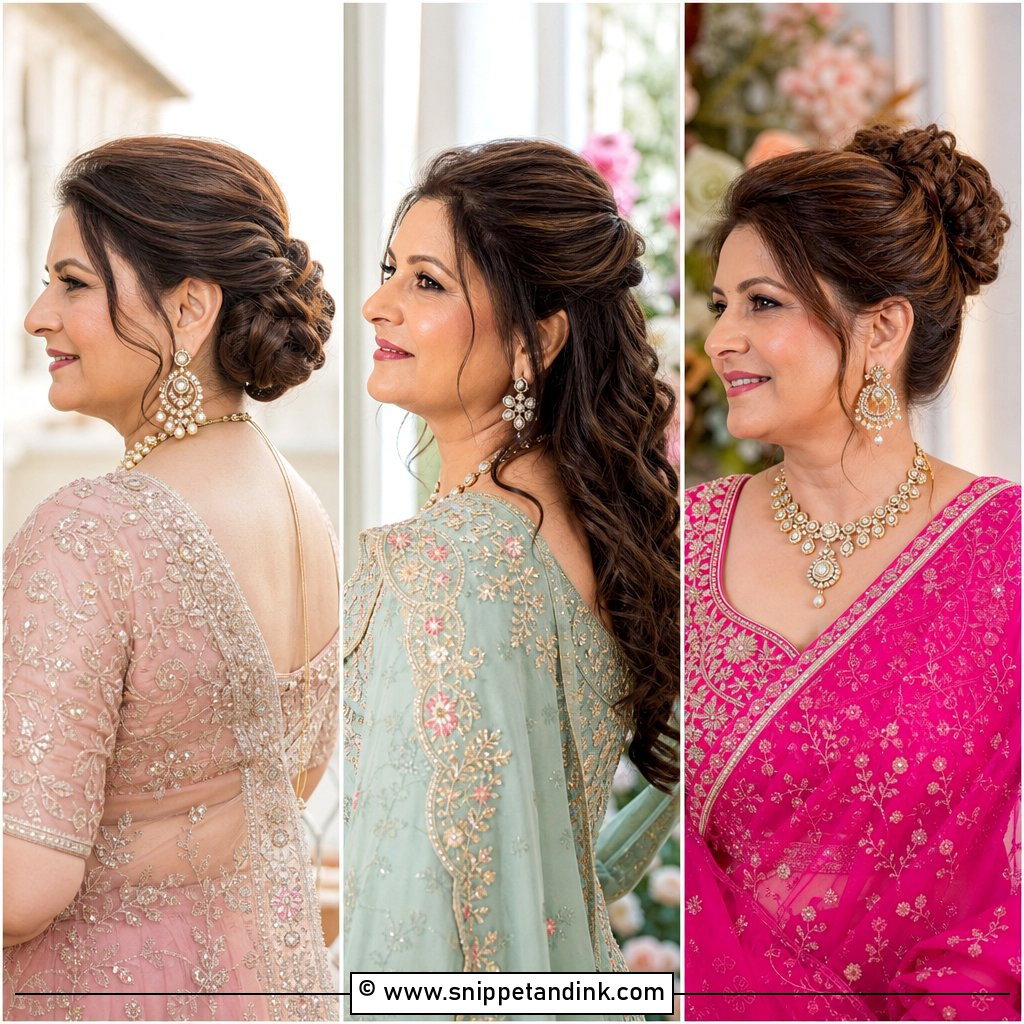
This is the bun I’d choose for a bride wearing her heaviest dupatta. I smooth a center part, gather everything at the nape and pin the bun with U-pins pushed into the base, because the dupatta pins later need something solid to bite into. A jasmine gajra softens all that gold jewelry, but fresh jasmine browns within a few hours in a warm hall, so I keep it wrapped in a damp cloth in the fridge and put it on last. It suits red, maroon or ivory equally.
2. Kashees Bridal High Bun With Dupatta
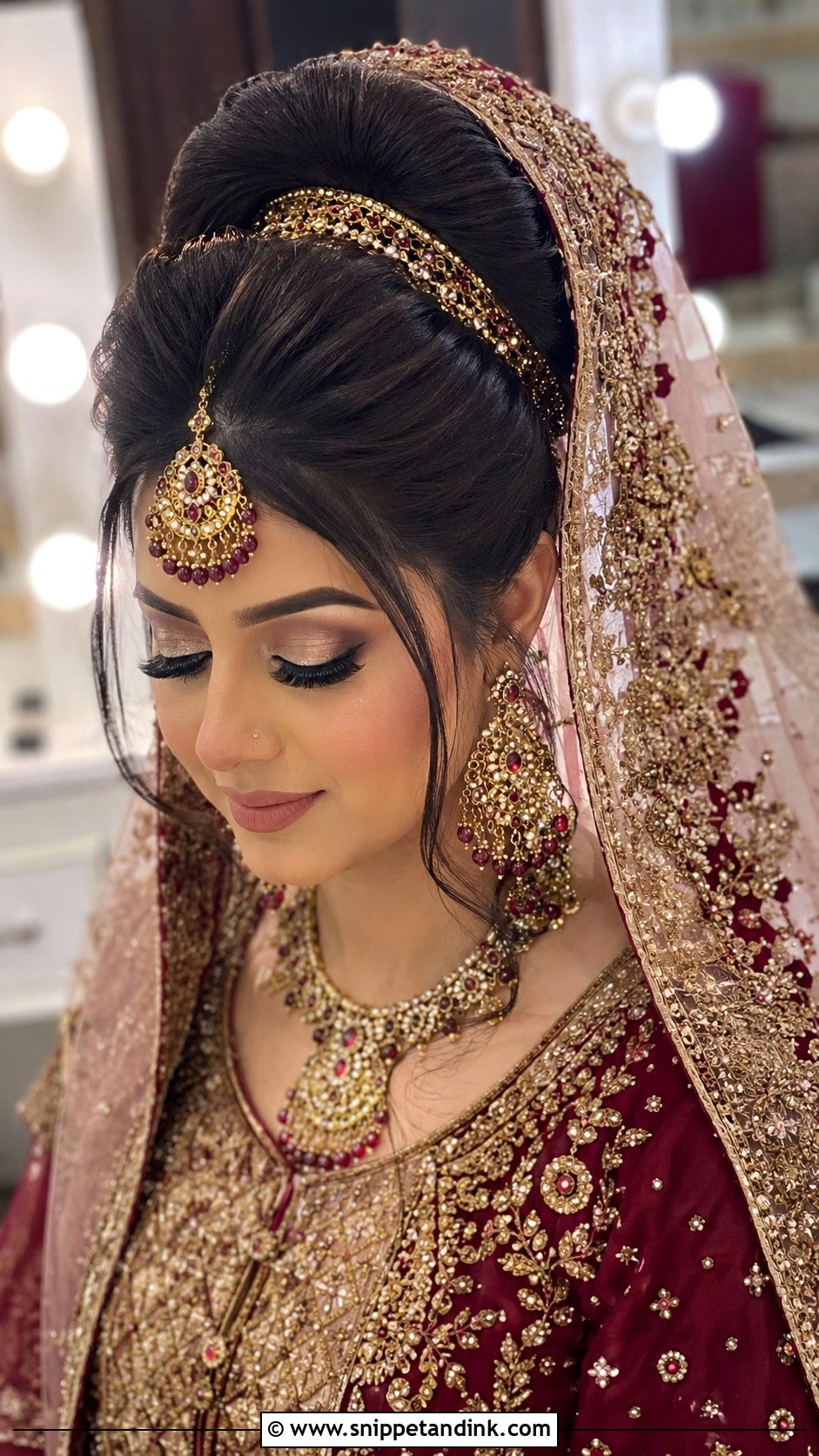
Height at the back of the head balances big earrings and a full matha patti, which is why so many baraat brides want this one. The bun is built higher than you’d think, since the dupatta flattens it by a centimetre or two once pinned. I tease the crown at the roots only and smooth a top layer over it so the backcombing never shows. Finish with pearl pins or small flowers, but keep them below the dupatta line or they’ll snag the net.
3. Kashees Bridal Center Part Curls
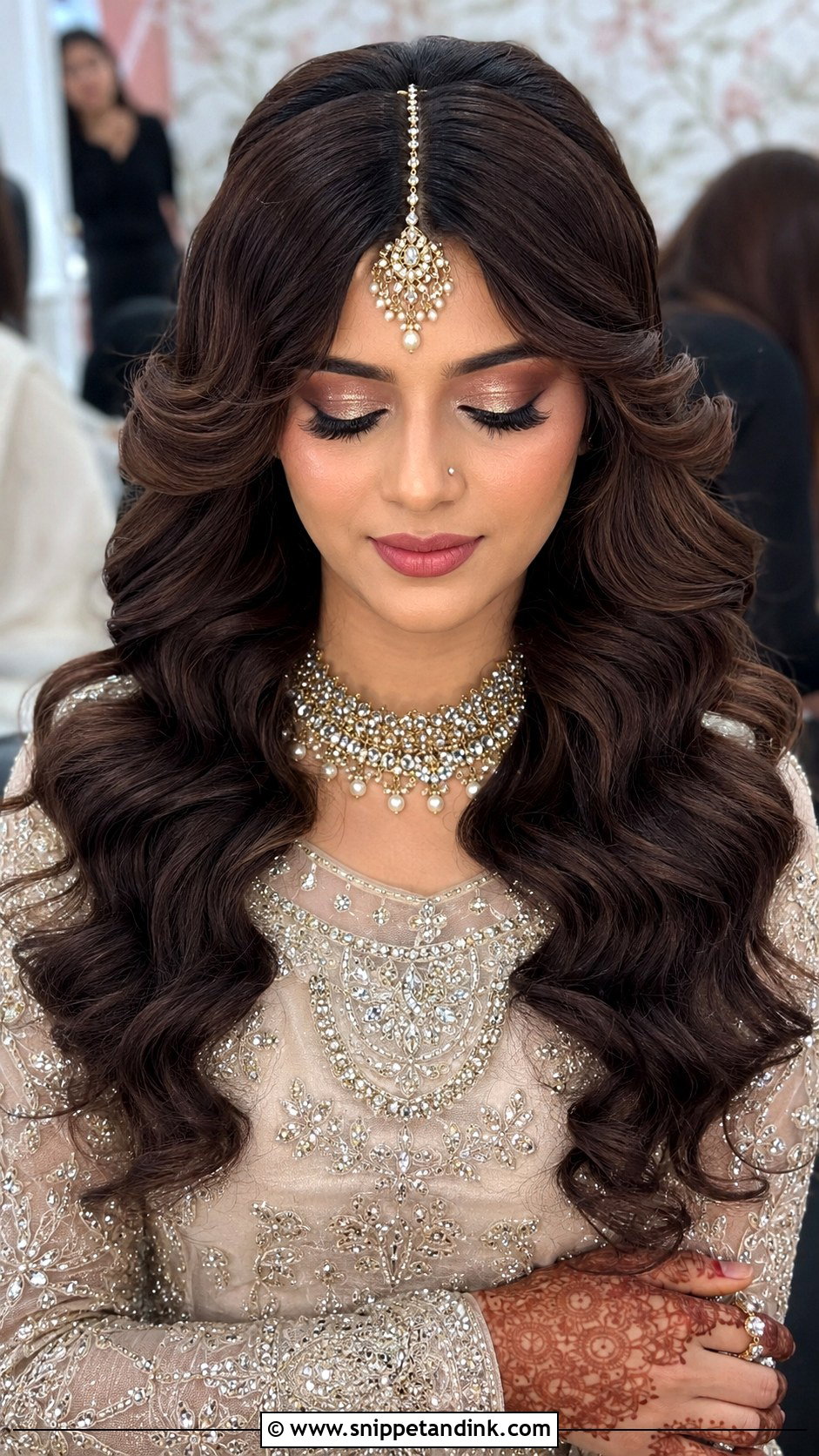
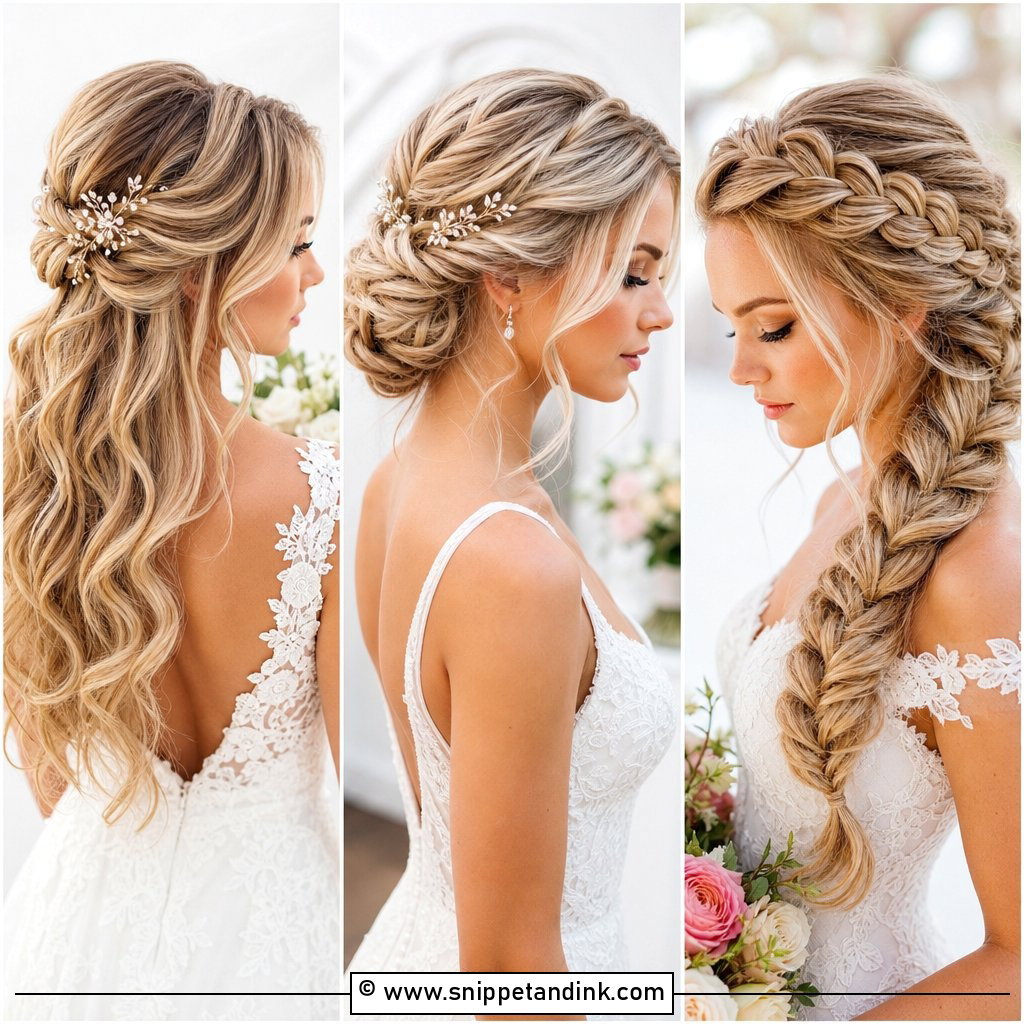
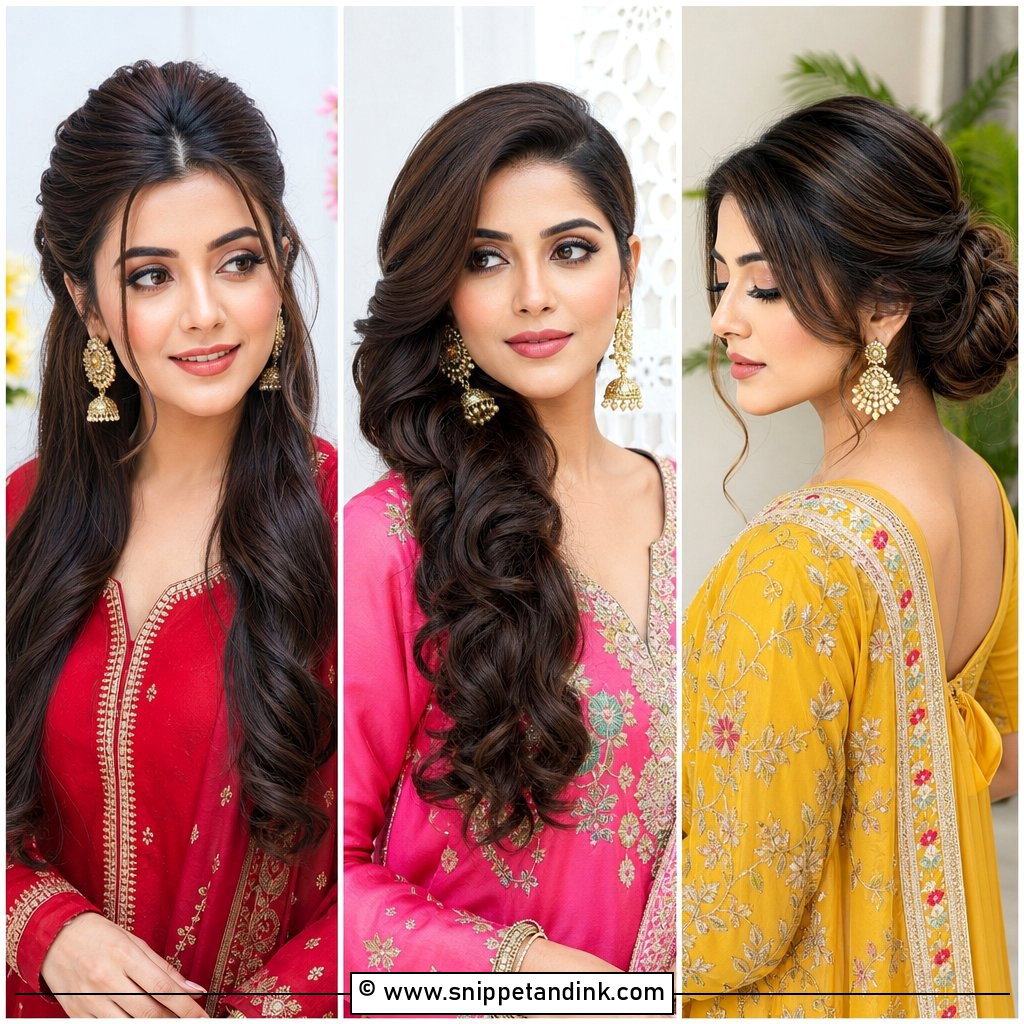
Curls with a middle part keep the face symmetrical, which gives a maang tikka a clear runway. The catch with open curls is weight: thick, long hair pulls curls straight within hours, so I set each one with a hot tool and pin it up to cool before I brush anything out. For walima, engagement, and reception events this is a softer option than a bun. Pin a light dupatta behind the crown so the curls stay on show.
4. Kashees Bridal Side Swept Curls With Passa
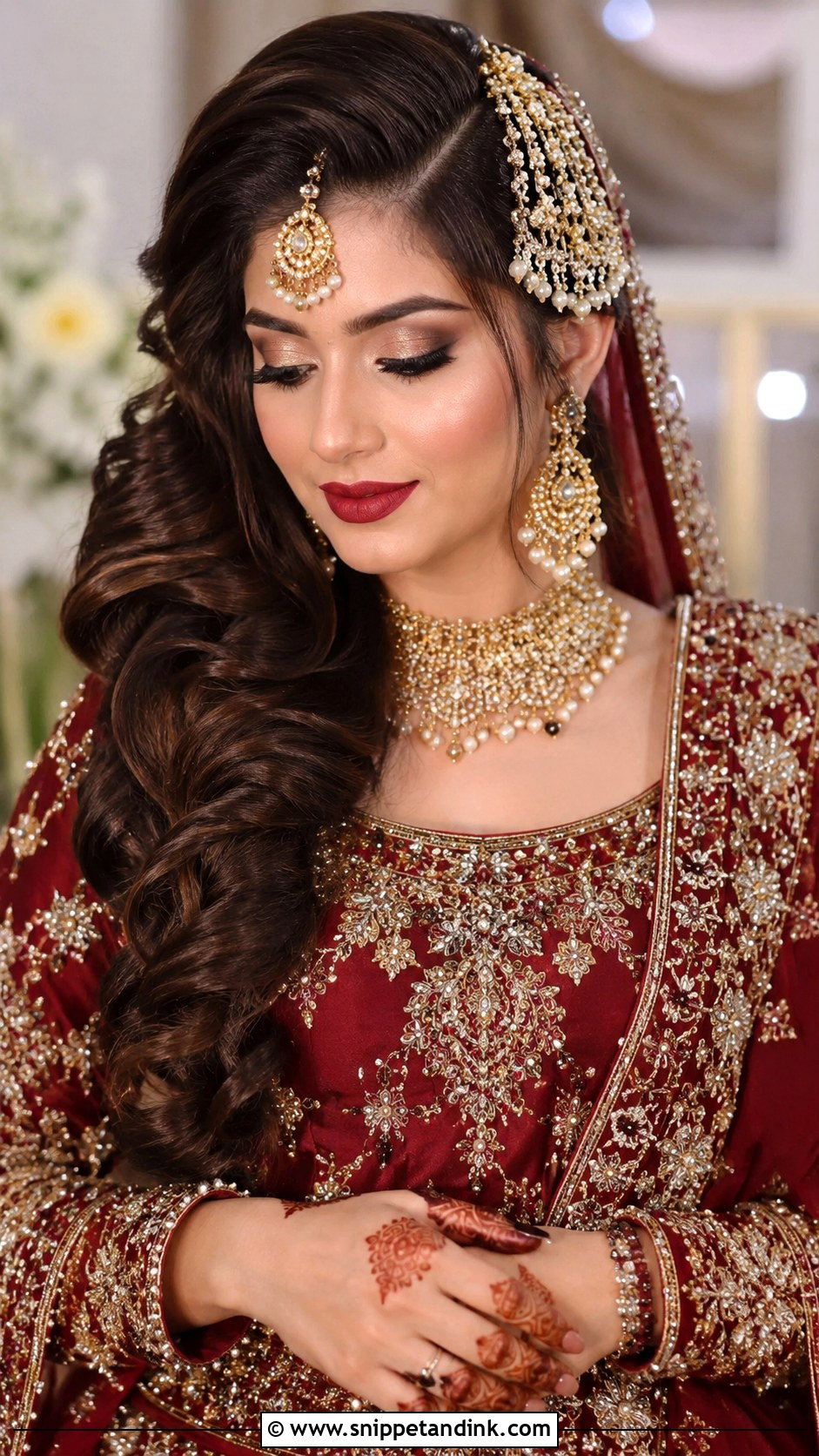
A passa sits on one side, so the hair has to be built around it. I sweep the volume to the same side as the passa, then hide a small anchor braid underneath where its hooks can be pinned, because a passa clipped only into loose curls slides down by the second hour. Opening the other side of the face shows off a long earring and a deep neckline. If you can’t decide between open hair and a full updo, this is the middle ground.
5. Kashees Bridal Braided Bun
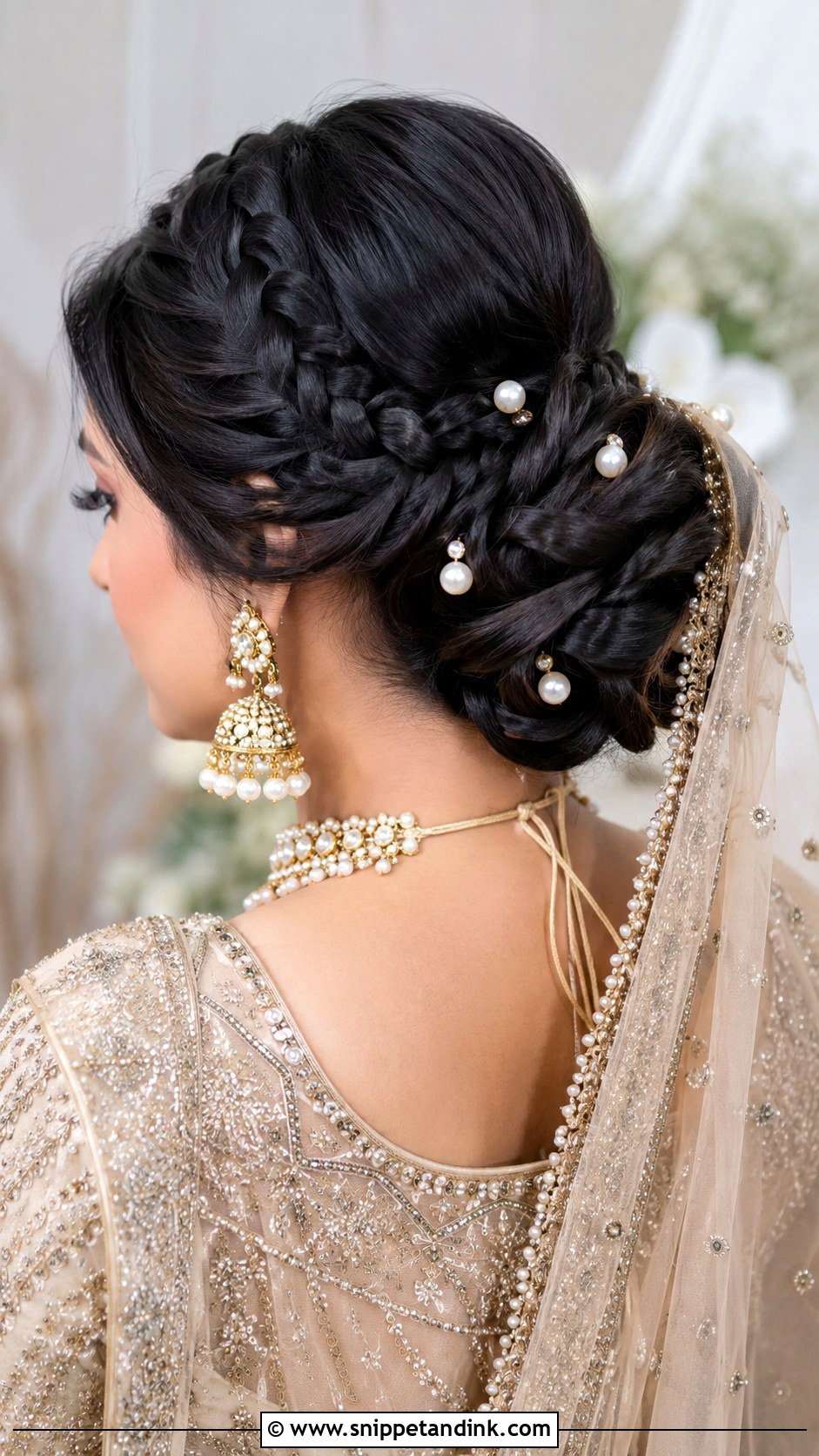
Braiding along the crown before wrapping the bun gives texture and, more usefully, grip. A braid holds pins far better than smooth hair does, which makes this the style I trust for a long nikah plus portraits plus family photos. It takes a middle or side part. Pearls and a gajra both sit neatly in the plaits without extra support.
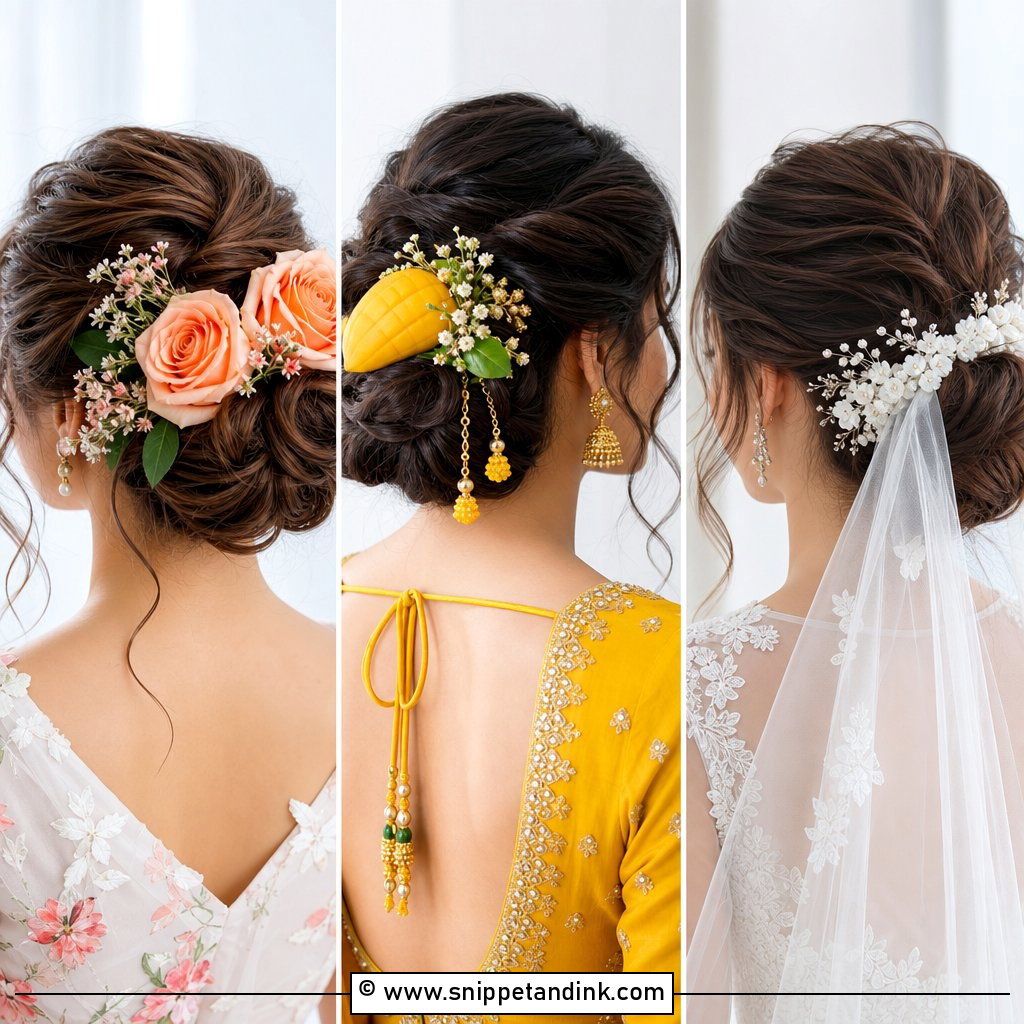
6. Kashees Bridal Messy Low Bun
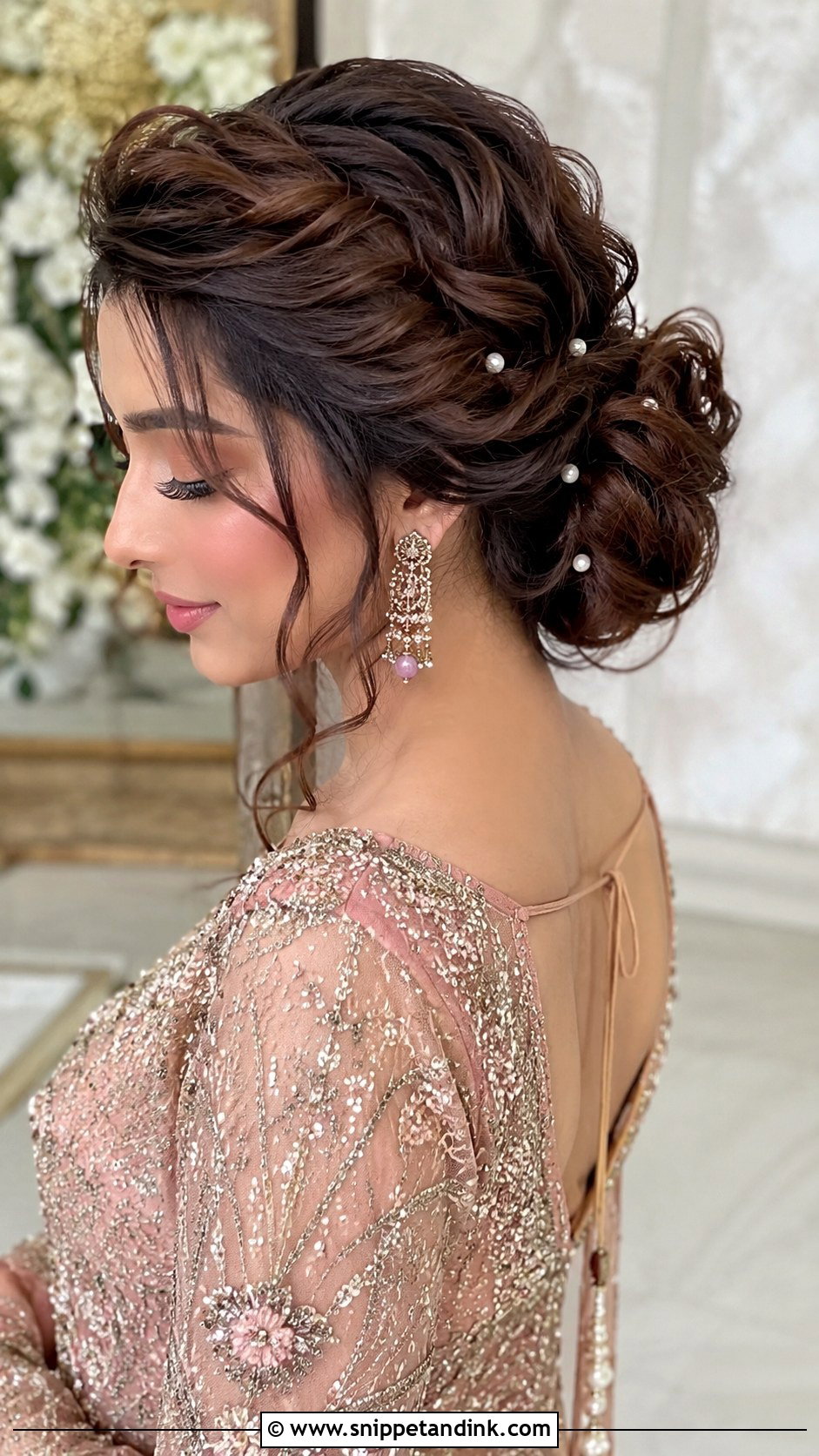
Messy is the hardest finish to keep looking deliberate. I curl the whole head first, pin the bun loosely, then pull out a few face-framing pieces at the very end, so they don’t get flattened under a dupatta while the rest is being done. It’s softer than the traditional bun and better suited to a daytime walima or an outdoor nikah than to a heavy baraat outfit. Tiny crystal pins are enough decoration.
7. Kashees Bridal Half Up Curls
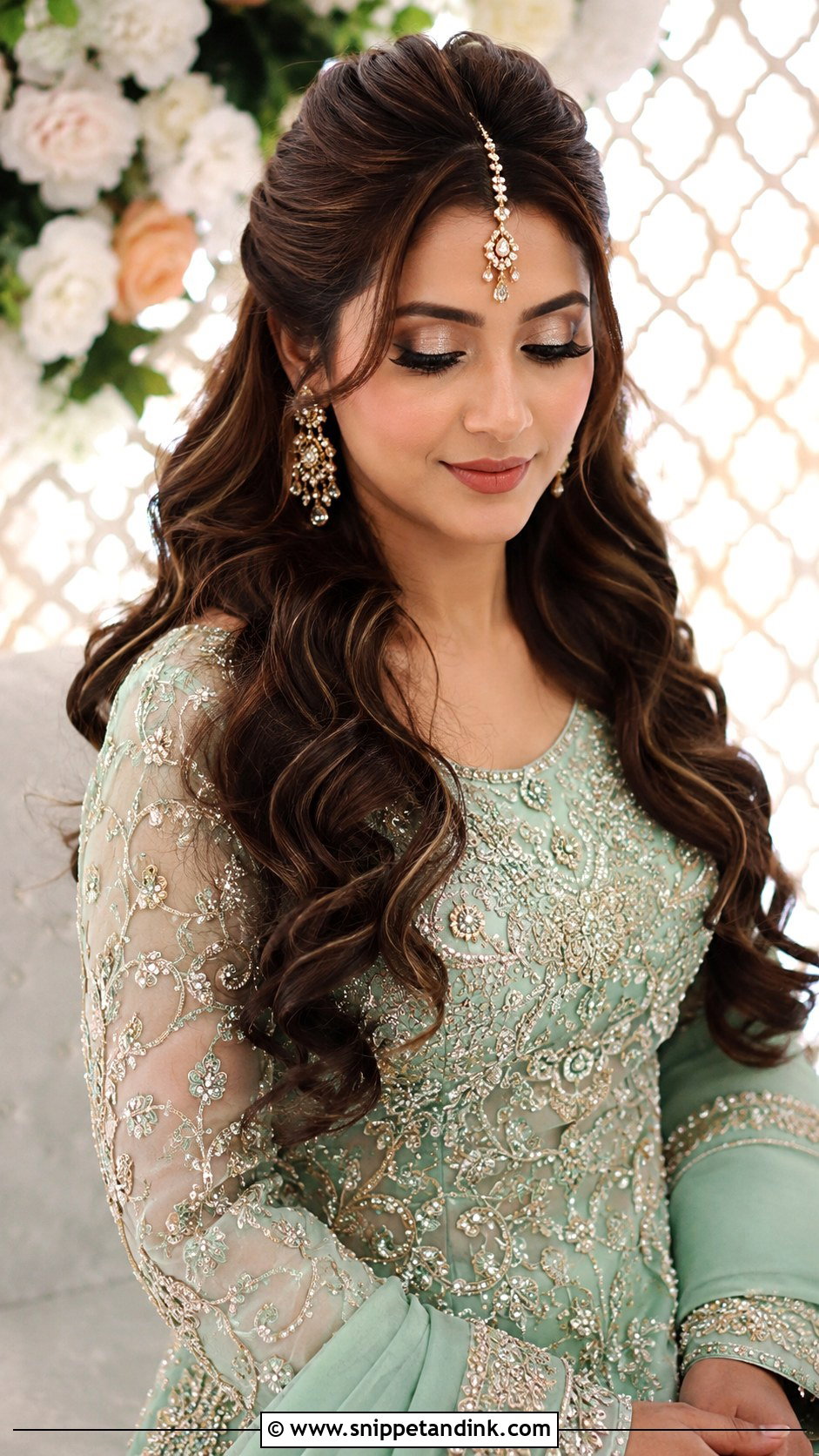
Half up gives you open hair without curls falling across the jewelry. I section from the temples back, lift the top for height, and secure it with crossed bobby pins under a small backcombed base so the tikka chain has something to hook into. It’s comfortable through a long reception. Very heavy, straight hair can drag the lifted section flat by evening, so I add a light texturising spray before pinning.
8. Kashees Bridal Open Waves
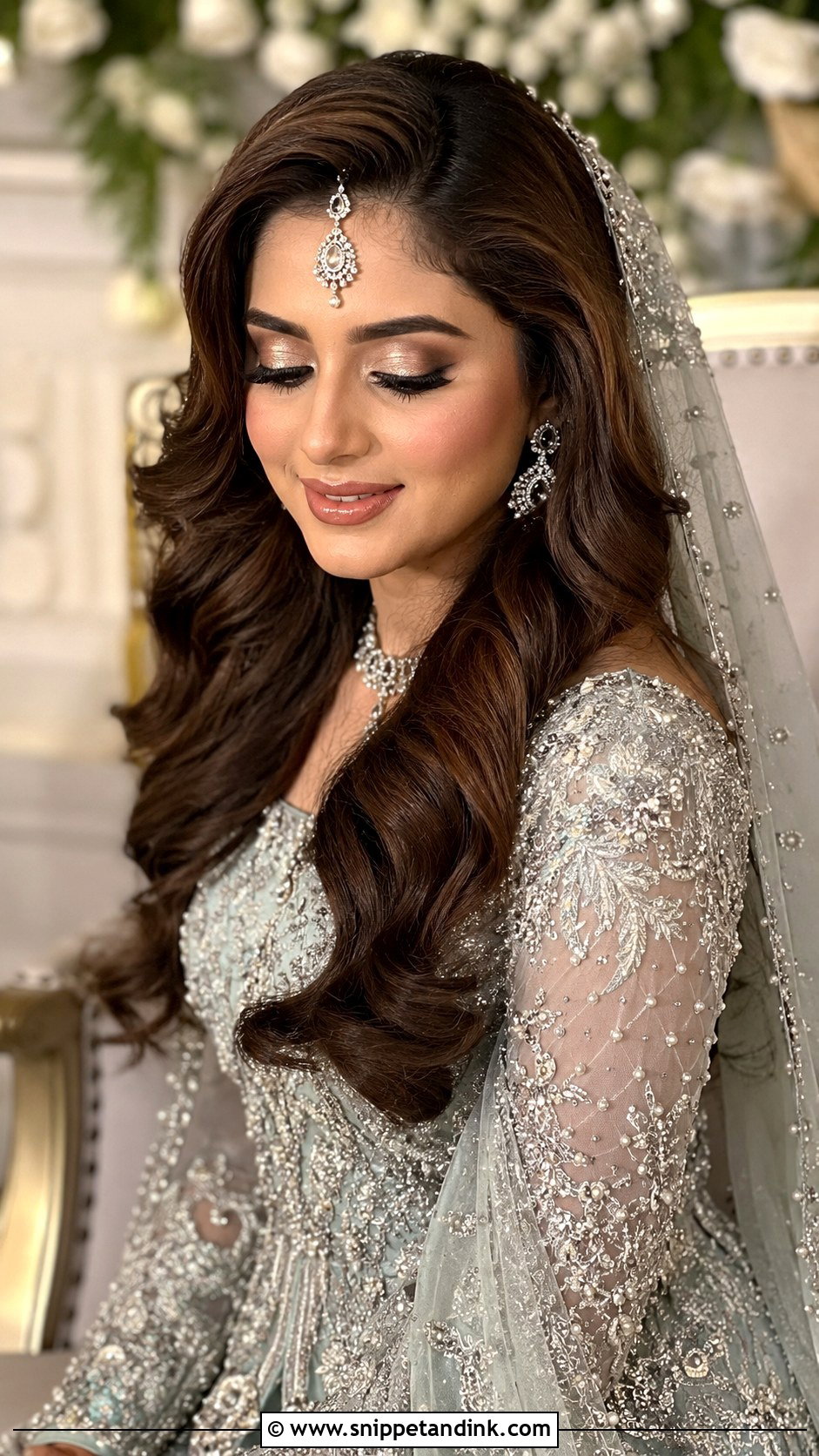
Open waves begin with a smooth blow dry, not with the curling iron; if the base is frizzy, every wave looks frizzy. I’d keep this one for lighter dupattas, gowns and maxis, since a heavy embroidered dupatta crushes waves at the crown. Choose the part by the jewelry: center for a tikka, side for a jhoomar. A couple of hidden pins at the crown keep everything in place under the fabric.
9. Kashees Bridal Fish Braid
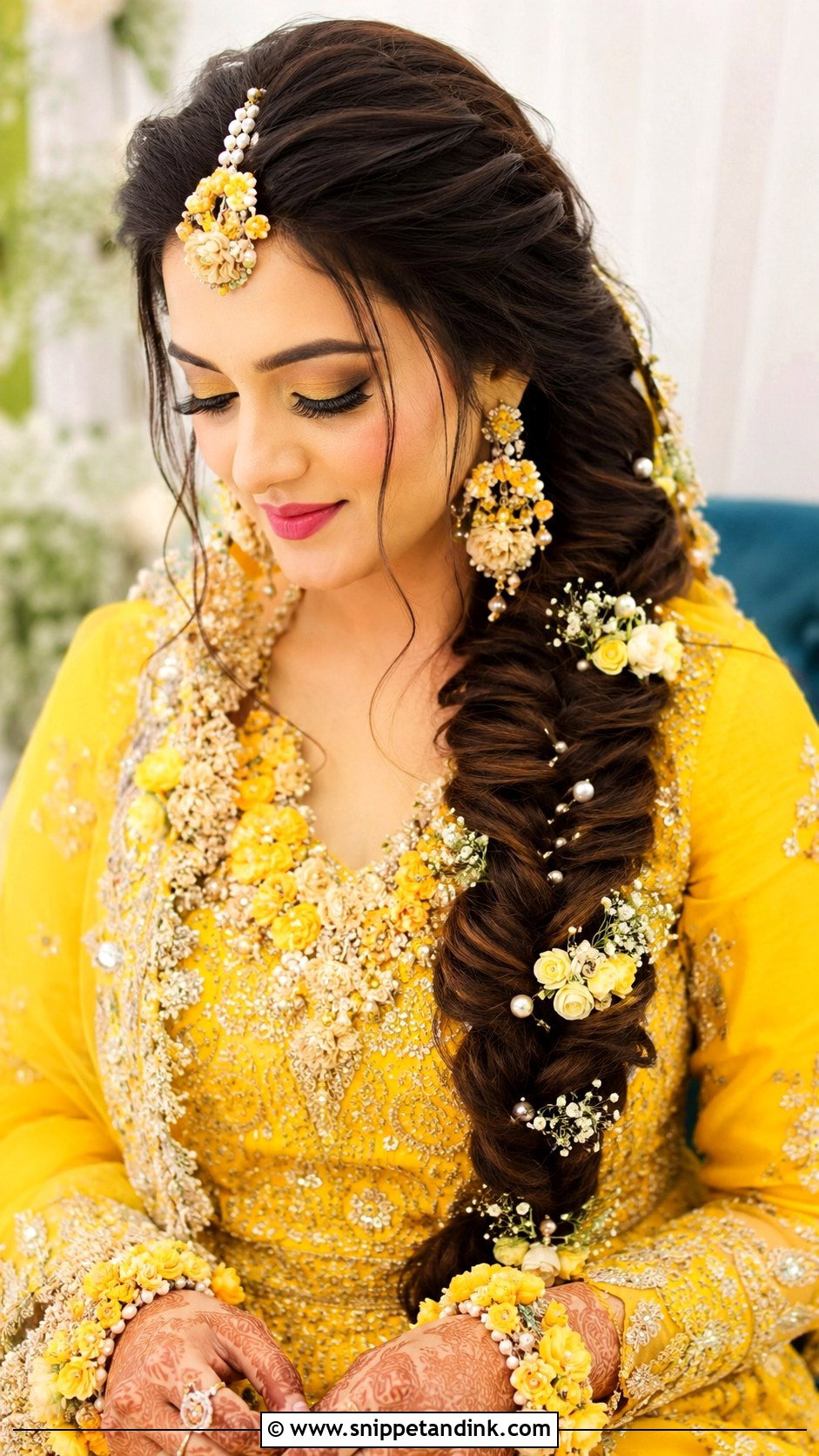
Fishtail braids are slower than three-strand ones, but they look fuller once pulled apart, which is why mehndi brides with medium thickness hair love them. I braid tight first and loosen afterwards, tugging the outer edges gently from the bottom up. Worn over one shoulder or down the back, it takes fresh flowers, pearl pins or colored thread well. It keeps hair out of your face for dancing.
10. Kashees Bridal Long Braid With Parandi
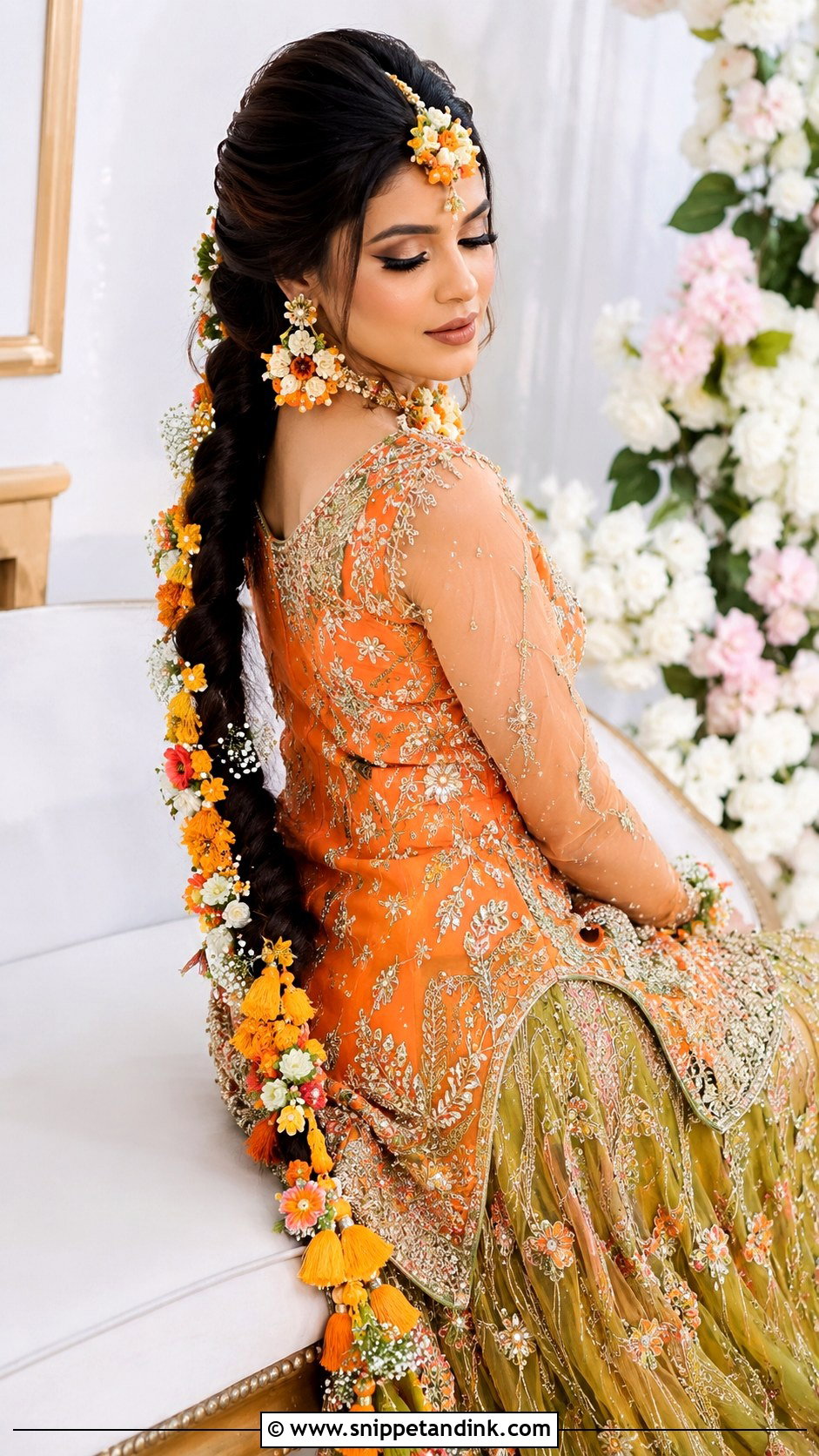
A long braid with parandi is the classic mehndi and mayun look, and the parandi does half the work. It’s tied into the last few inches of the braid and adds length, so even shoulder length hair can carry one. I braid firmly from a soft crown and secure the end with a small elastic before wrapping the parandi threads round it. Bright yellows, greens and pinks in the outfit pick up the tassels. It holds through hours of dancing.
11. Kashees Bridal Front Puff Bun
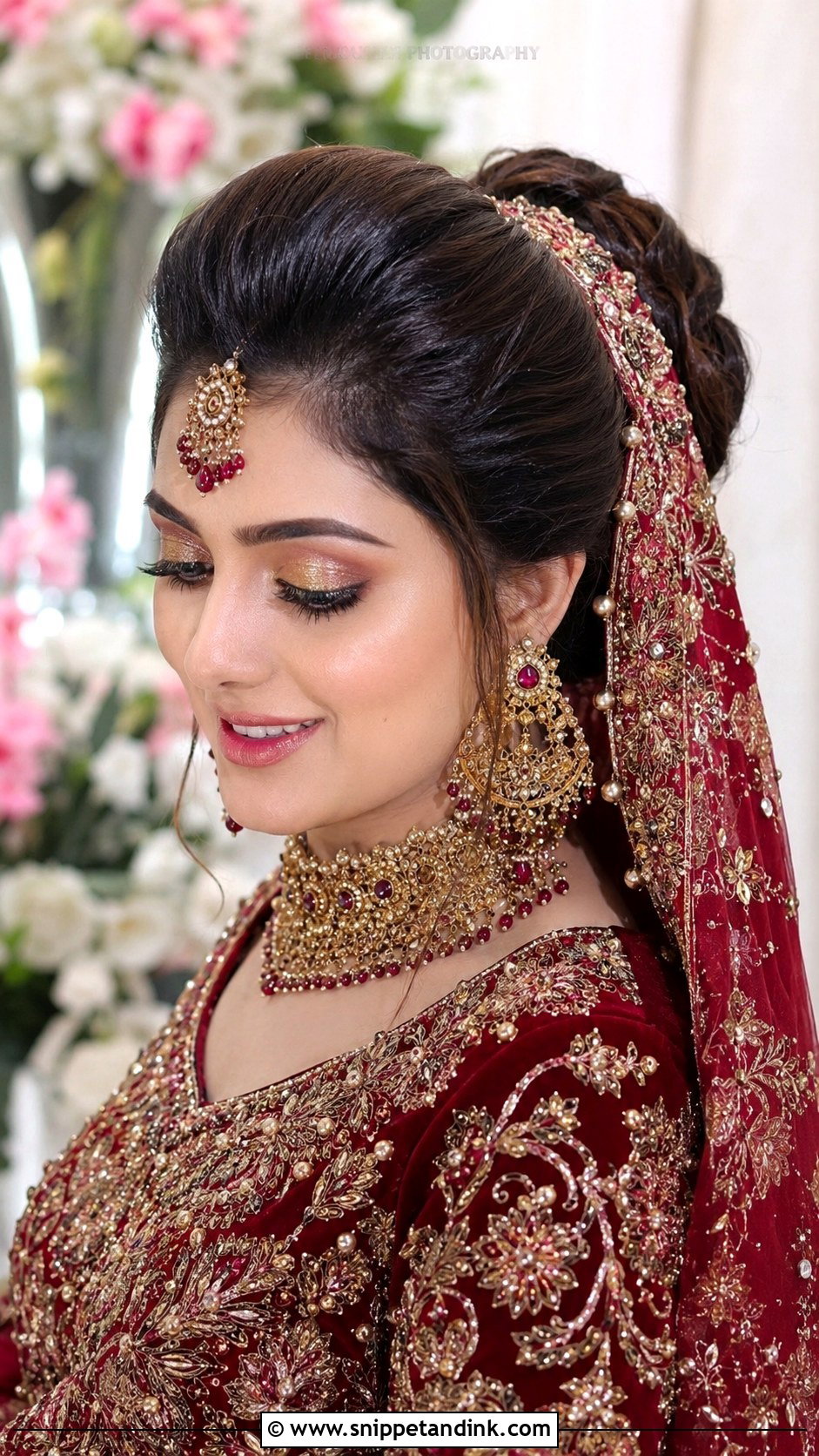
The front puff is the shape most people picture with this style. I lift the front section, backcomb the roots, smooth the top layer and lock it with crossed pins behind the puff, not inside it. The puff is also what keeps hair from looking flat once the dupatta goes over the head. Brides with a short forehead or a round face usually suit a lower puff; a tall one can overpower small features. The bun behind can be plain, braided or floral.
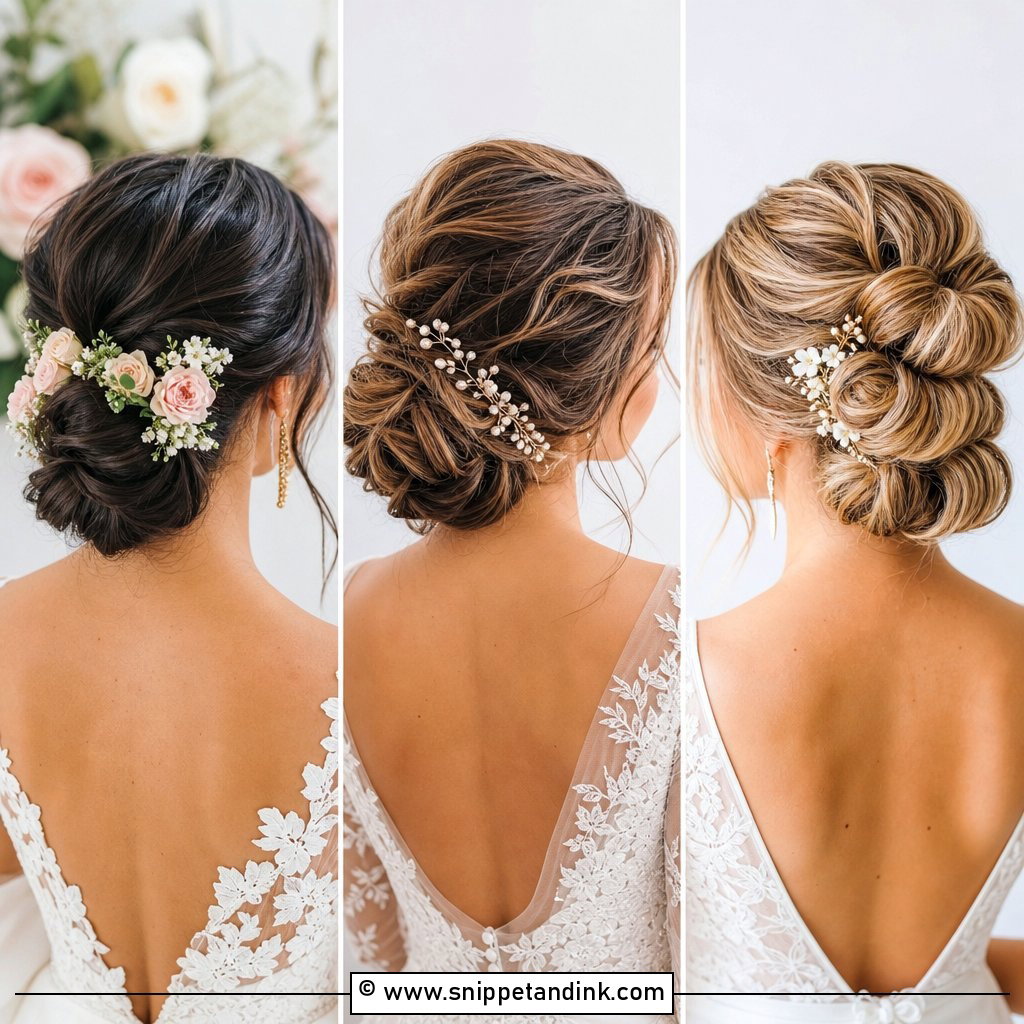
12. Kashees Bridal Sleek Middle Part Bun
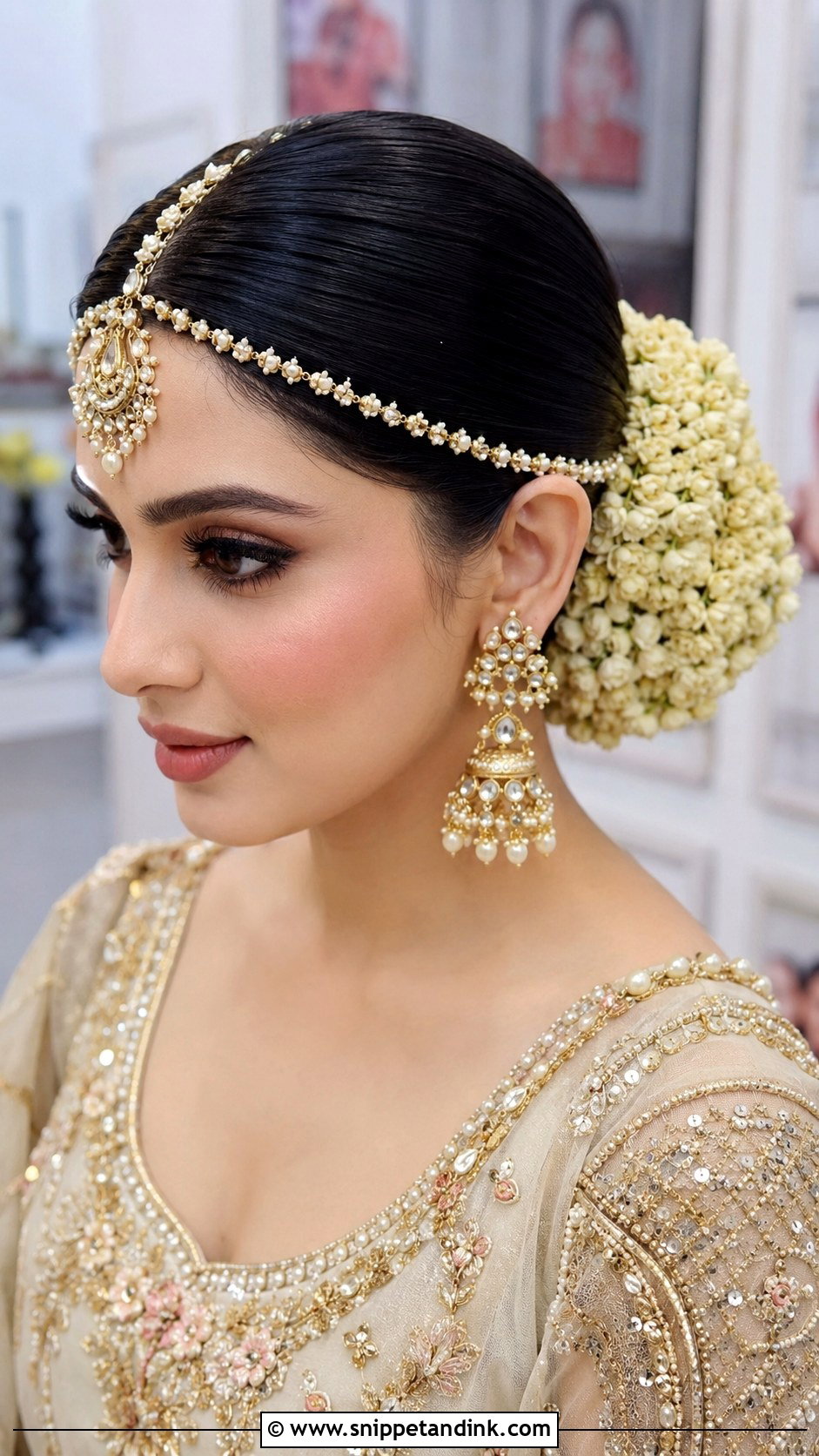
A sharp center part shows every flaw, so this is a style I prep the night before: hair washed, conditioned and blow dried smooth, with a little shine serum on the ends. The bun sits low so a matha patti, tikka or jhoomar has the front to itself, and the hair never competes with heavy eye makeup. Roses or jasmine finish the back. It also flatters almost every face shape, which most styles here can’t claim.
13. Kashees Bridal Crown Braid Bun
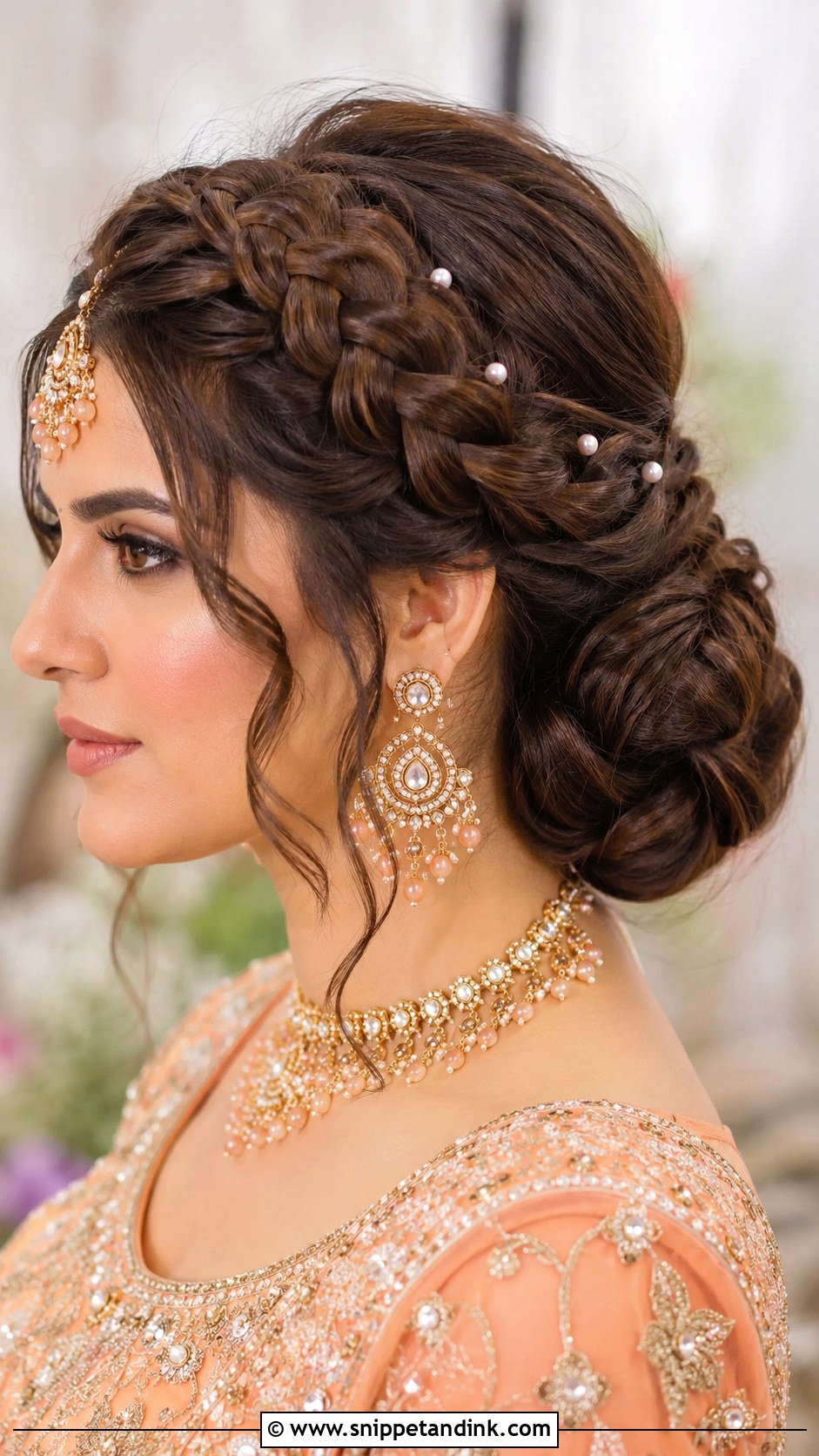
Crown braids need length. If your hair doesn’t reach well past your shoulders, I’ll add a clip-in piece so the braid can cross the head without gaps. The braid gives a firm base for pins and a more designed look than a plain bun. Leave out a few face-framing strands for softness or keep the edges sharp. Pearl accessories sit naturally inside the plait.
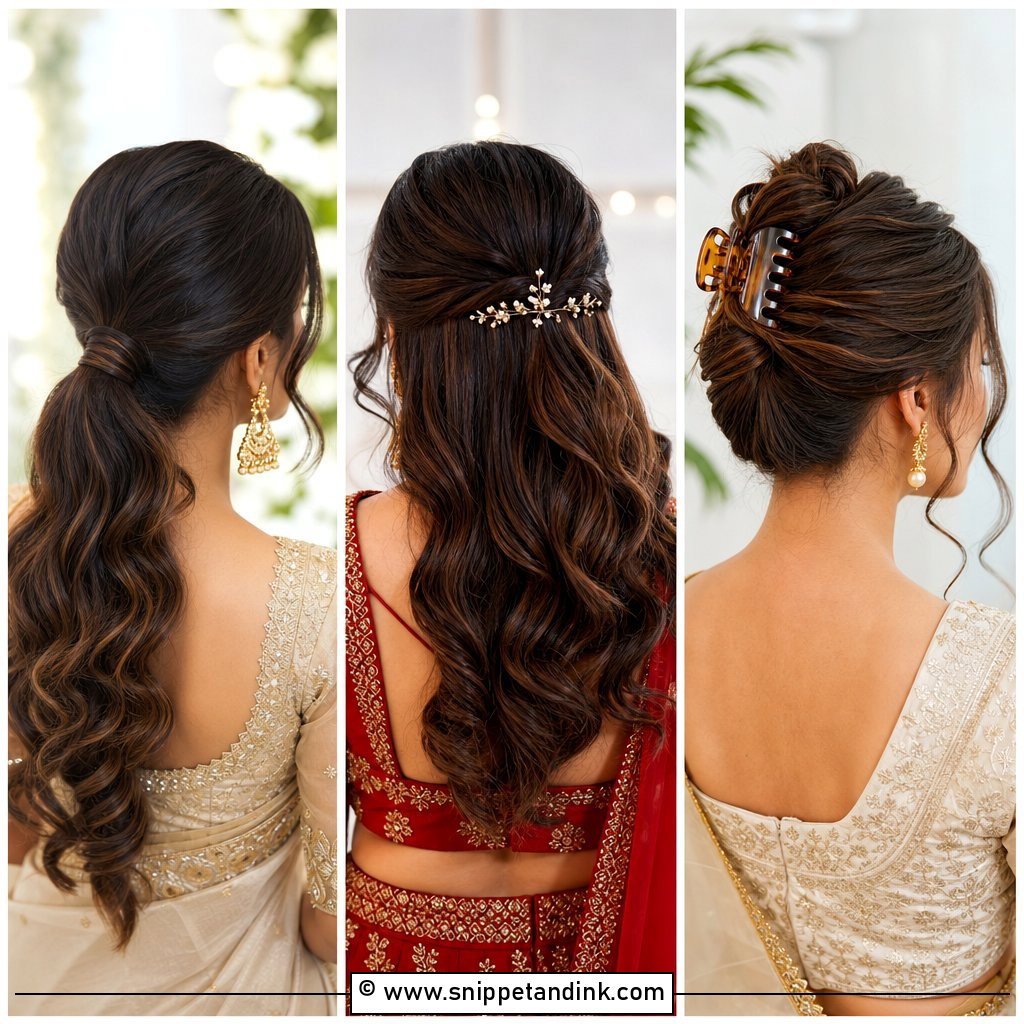
14. Kashees Bridal Ponytail With Curls
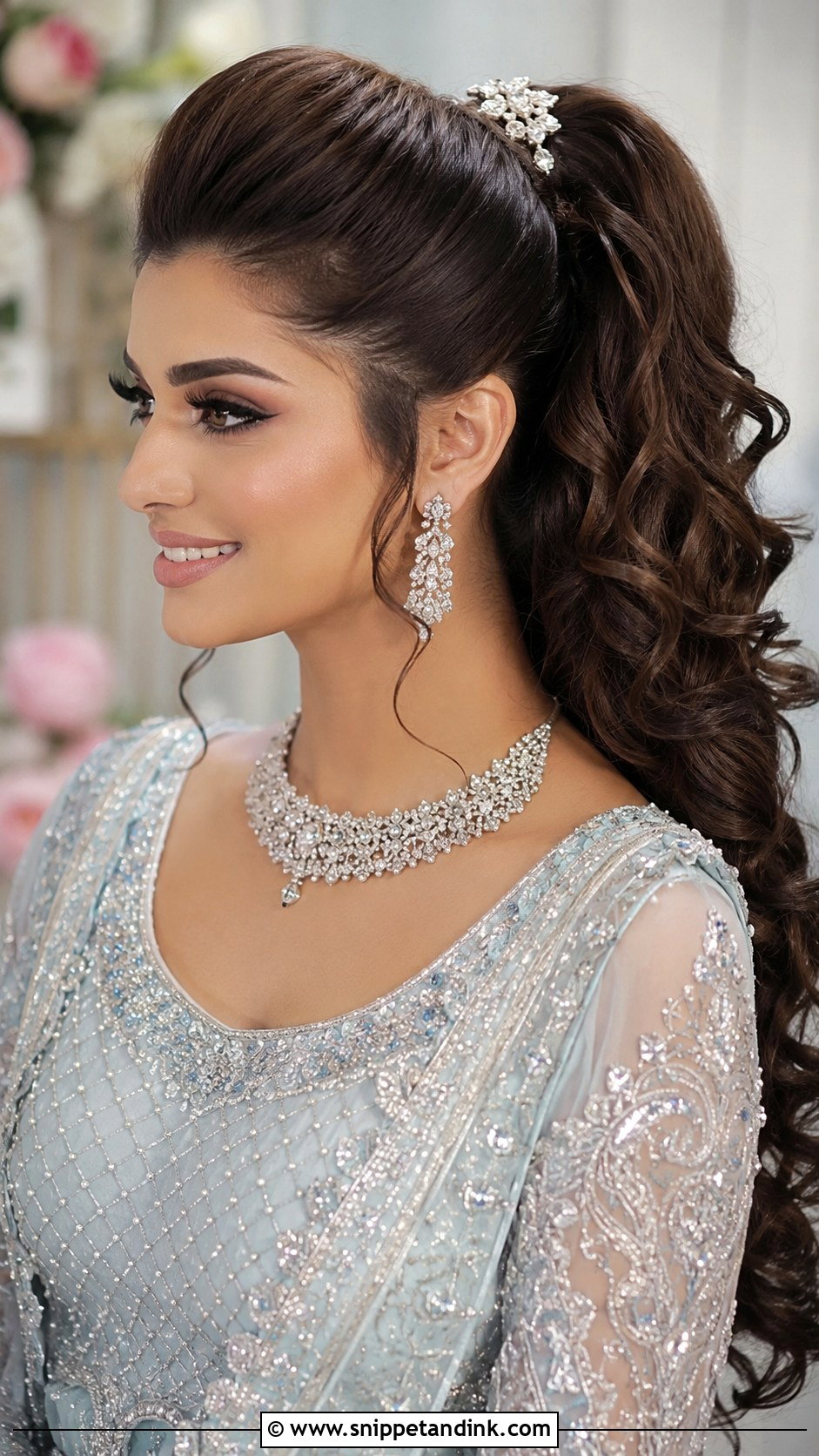
Ponytails pull on the scalp all evening, and that’s the part nobody warns you about. I build this one on a hidden base, a small braided or pinned section, rather than a single tight elastic, so the weight is spread out. Big curls fall down the back and the front stays sleek. It’s a strong choice for a walima gown or an engagement maxi. A crystal clip at the base hides the elastic.

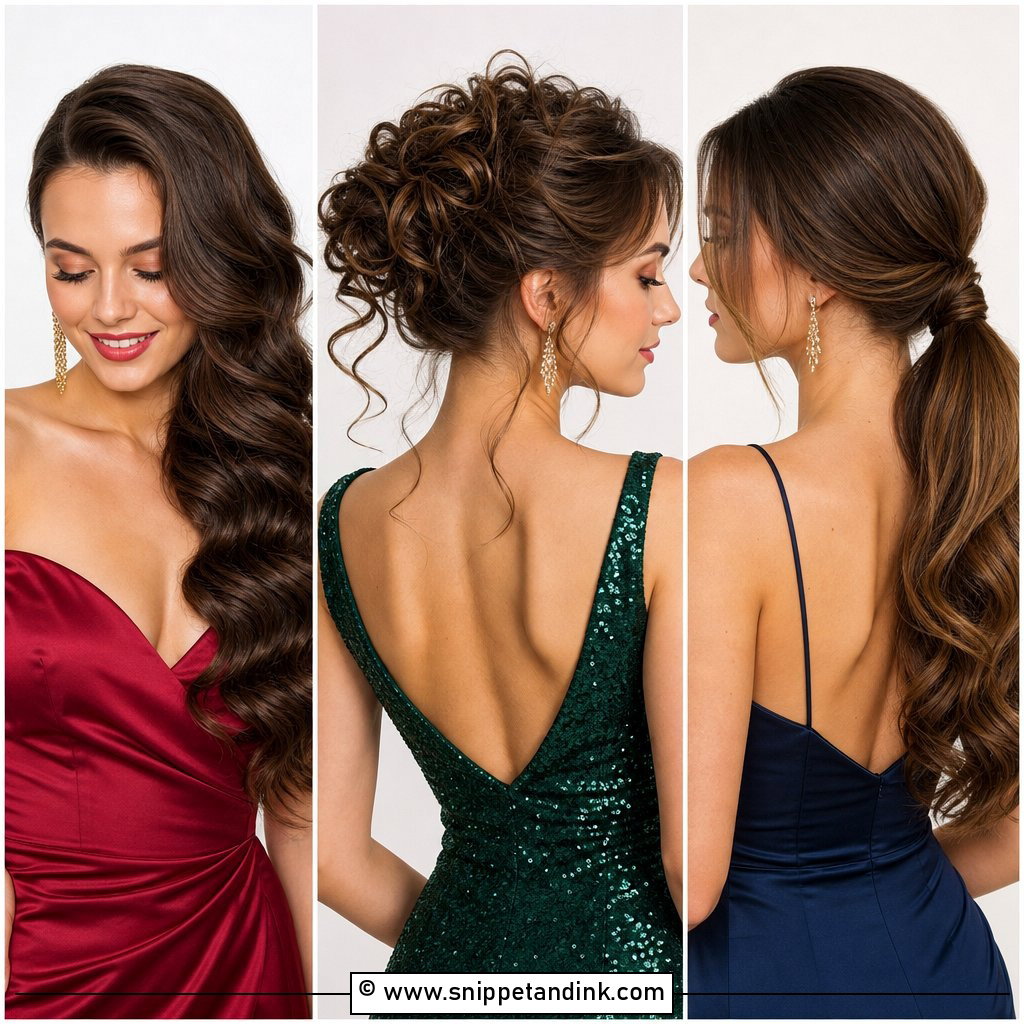
15. Kashees Bridal Volumized Curls With Tiara
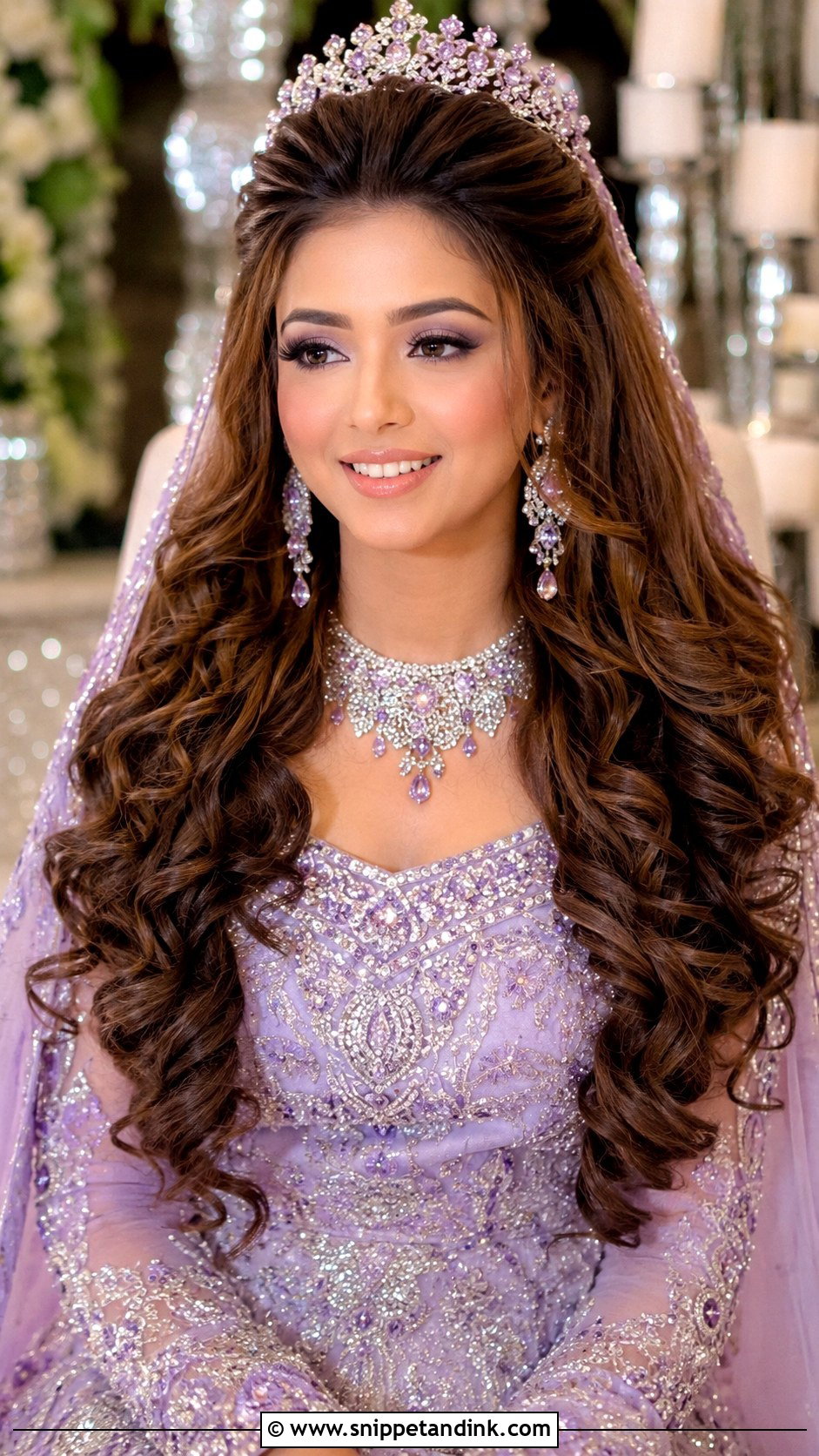
A tiara needs a backcombed bed at the crown, or it sits on smooth hair and slips forward every time you look down. I set its combs into that teased section and add bobby pins through the frame on each side. Volumized curls around it suit pastel outfits and silver jewelry for a reception. Curls behind the shoulders give a cleaner neckline, which matters if your necklace is heavy.
16. Kashees Bridal Floral Braid
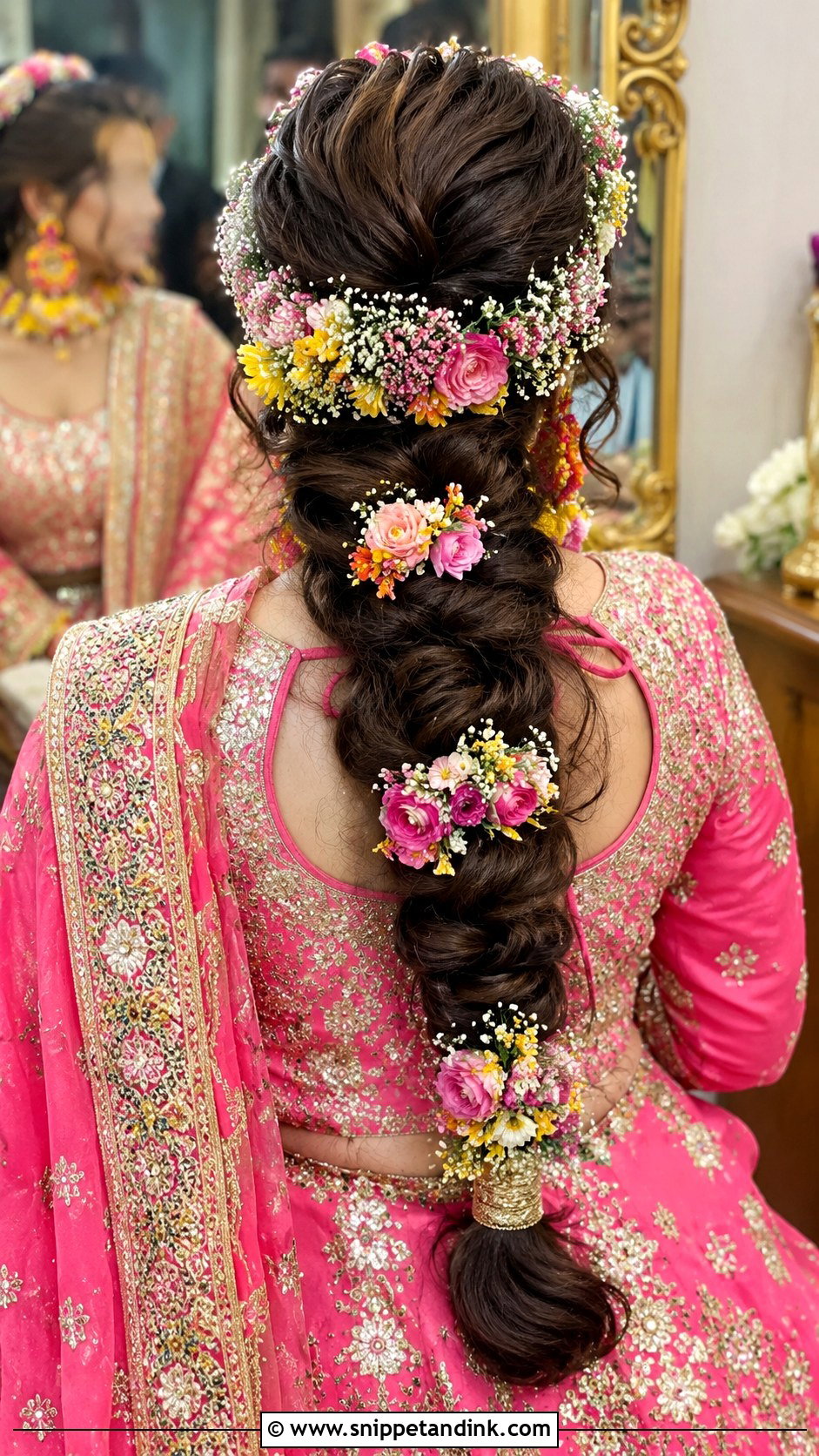
Mehndi brides spend the evening dancing and sitting on low seating, so I build this braid loose but anchor its top tightly. Fresh flowers are tucked in with short pins along the plait, using sturdy blooms like small roses or baby’s breath that won’t wilt as fast as jasmine. Gota and mirror work in the outfit look good beside it. From behind, the braid carries those entry shots.
17. Kashees Bridal Loose Side Braid
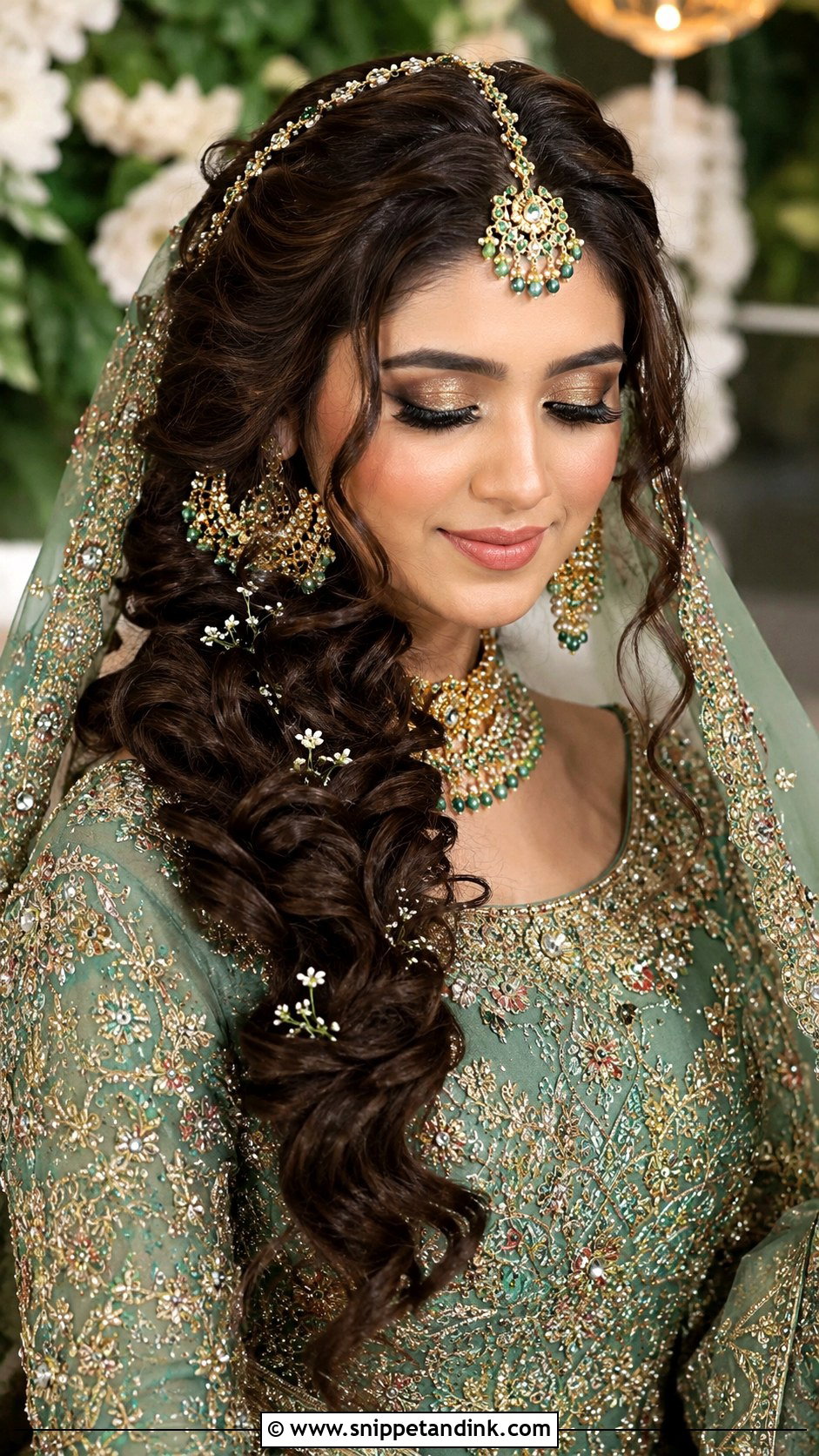
A side braid shifts all the attention to one shoulder, so I pair it with jewelry on the opposite side or the same side, never both. Pulled over and loosened, it shows off long hair better than any bun. It’s less formal than an updo and suits a mehndi or an intimate nikah. Brides with fine hair may find it looks thin once loosened; a little texture powder before braiding helps.
18. Kashees Bridal Bun With Matha Patti
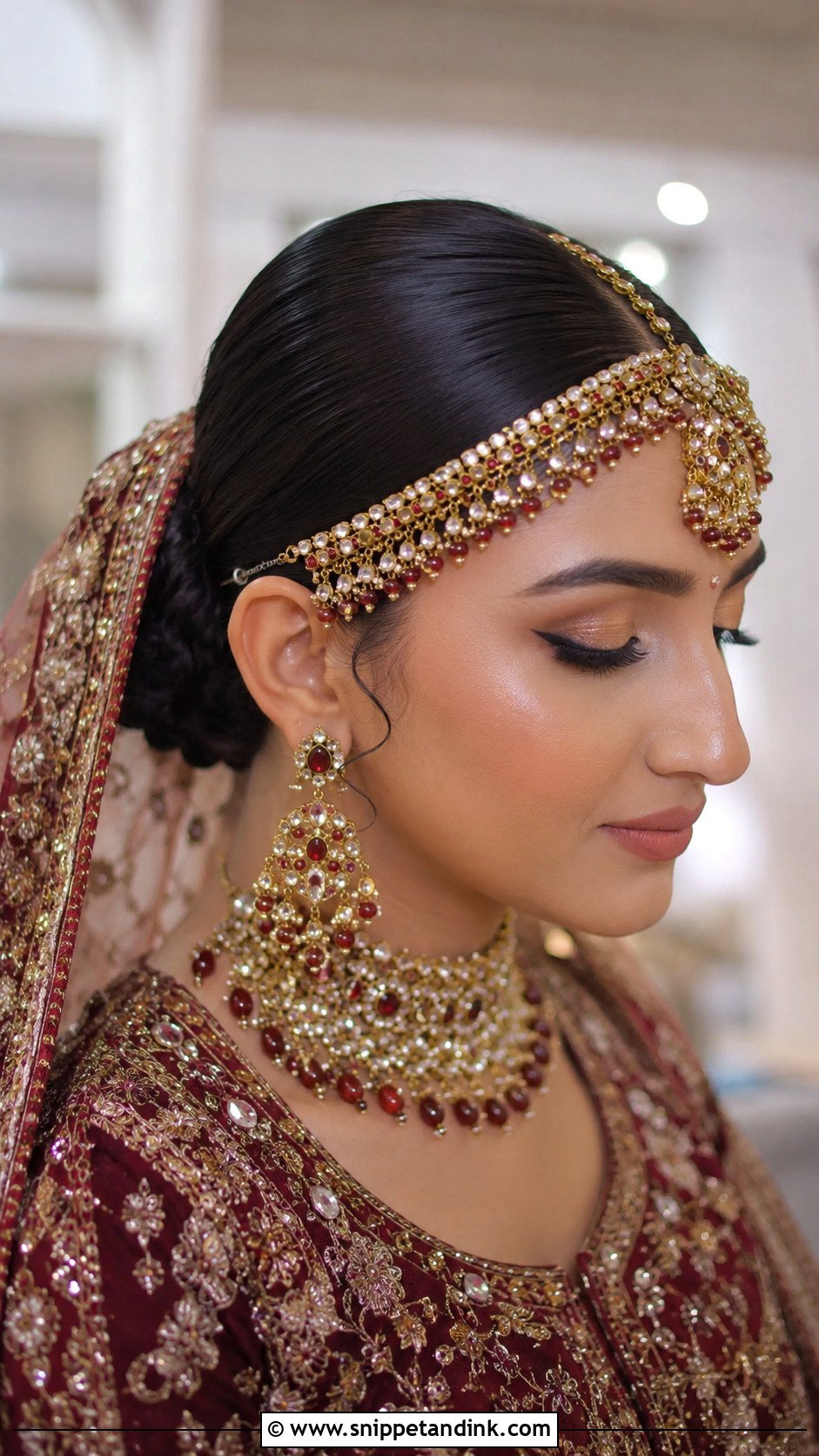
The matha patti decides how I place the parting. I pin its center chain along the part first, then fit the side chains into the hair just above the ears, and only then shape the front. Doing it in the wrong order means re-pinning everything. A bun keeps the back secure under heavy lehengas and dupattas draped over the head. Sleek, center parted or softly lifted fronts all work depending on your features.
19. Kashees Bridal Open Curls With Jhoomar
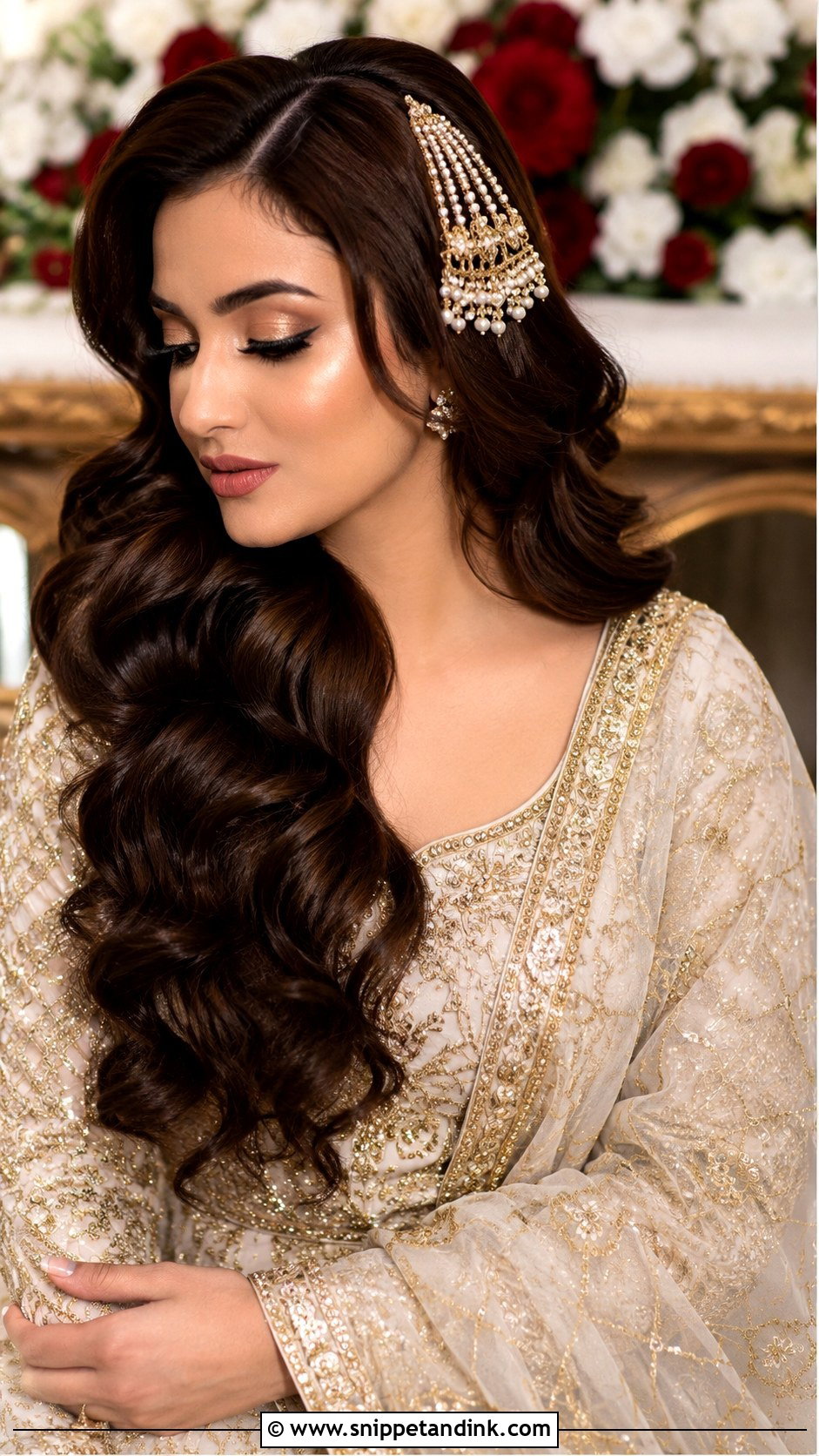
A jhoomar is heavier than it looks, and it hangs from one side, which pulls the parting over during a long event. I create a small anchor braid near the side part, hook the jhoomar into it and add a bobby pin cross underneath. Open curls on the other side balance the weight visually. This works for nikah, walima, or reception brides wearing a lighter dupatta pinned well back.
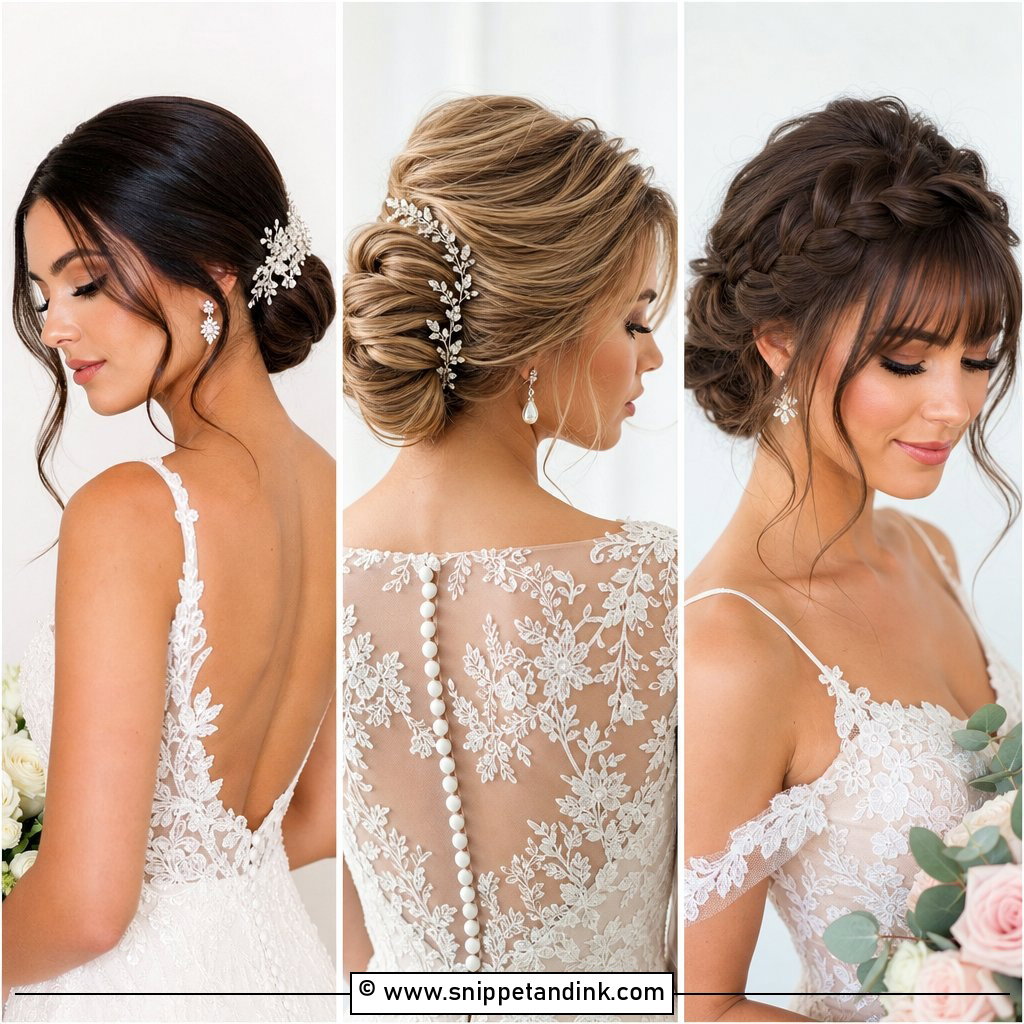
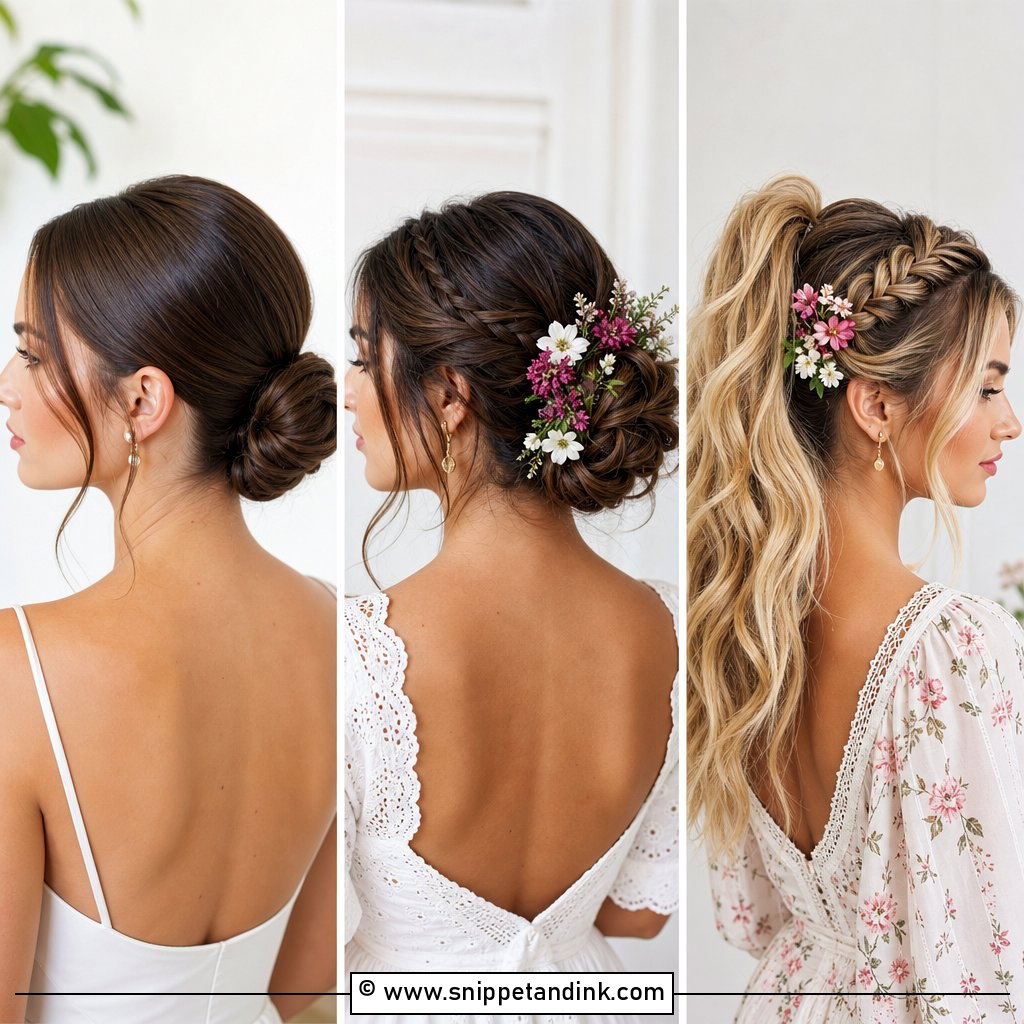
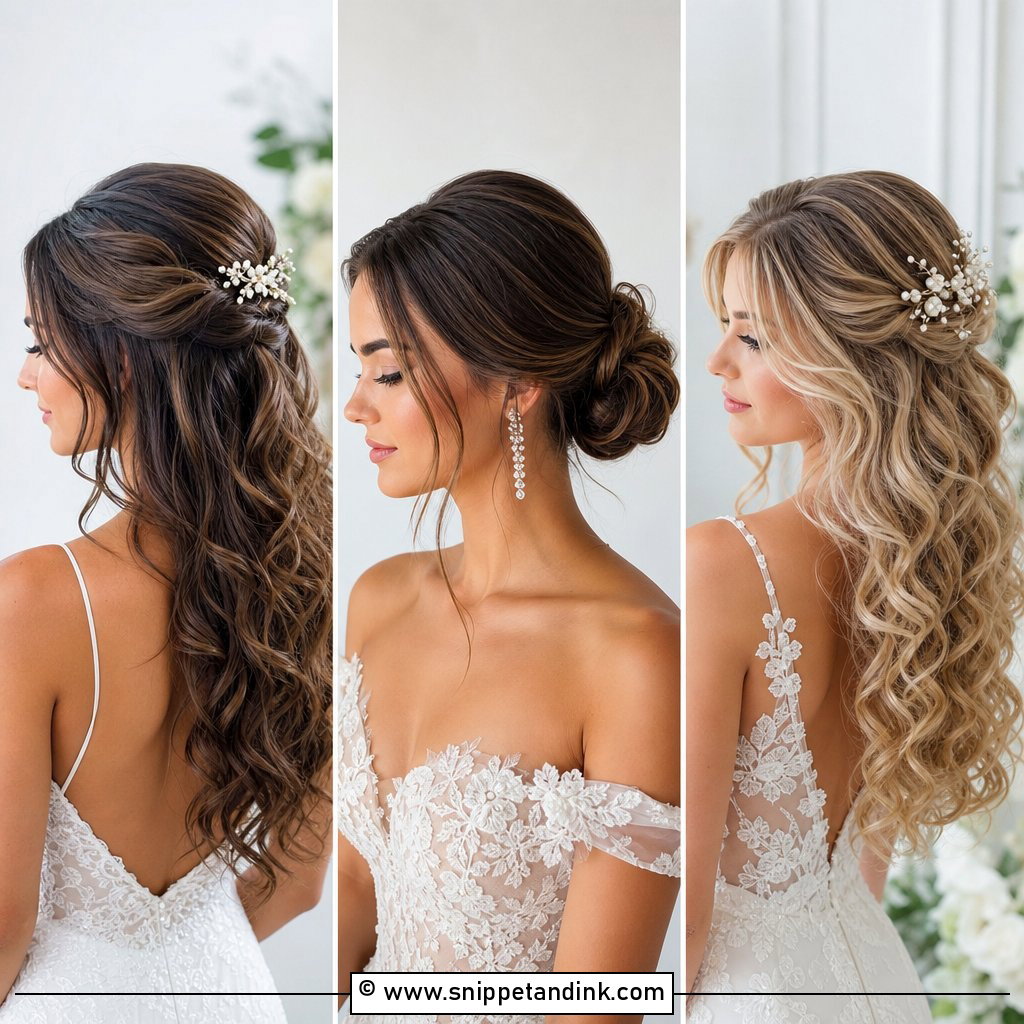
20. Kashees Bridal Soft Bun With Roses
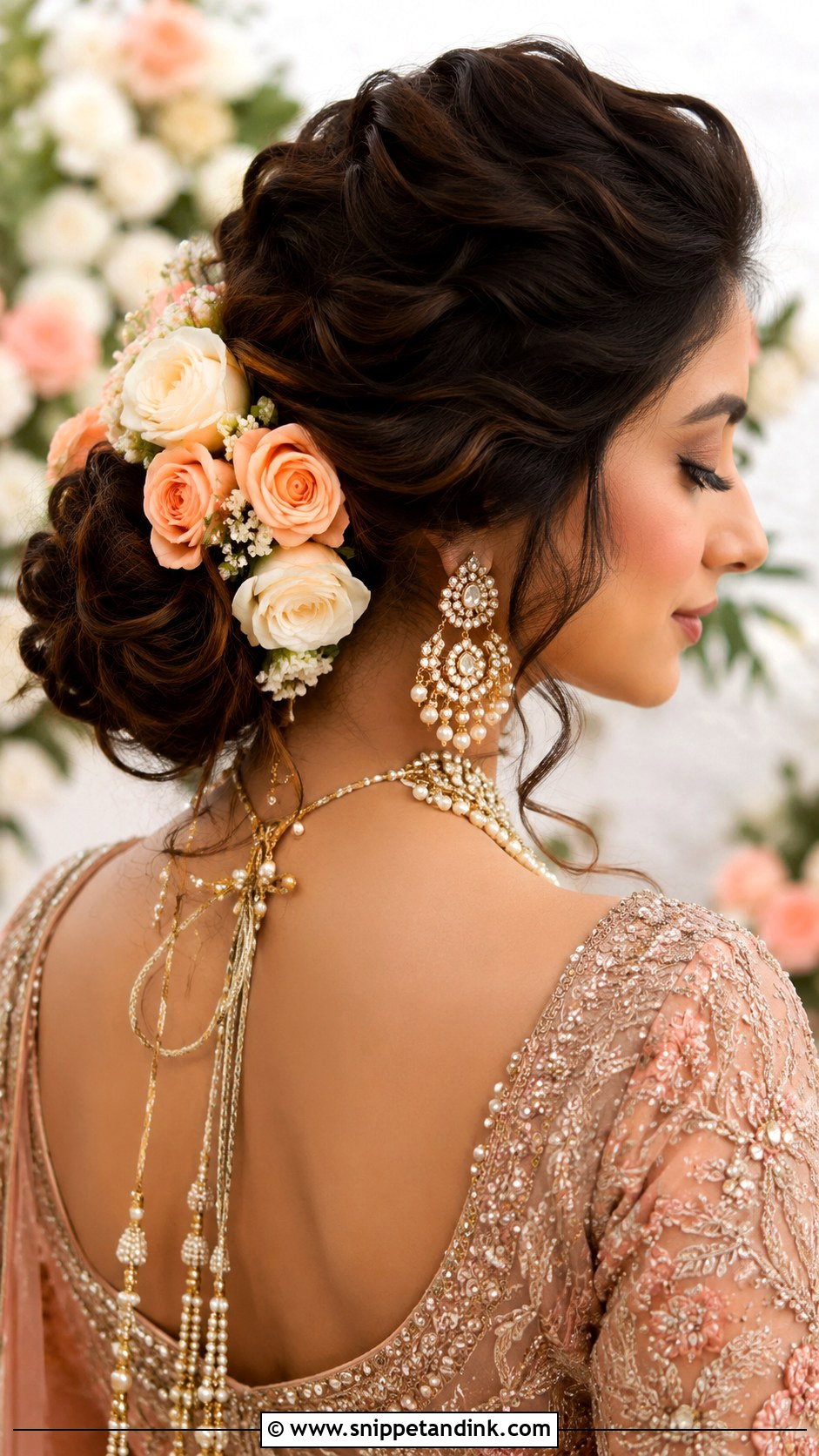
Roses hold up better than most fresh flowers, so this is my answer when a bride wants florals but the event runs late. The bun sits low with some height at the crown and loose pieces at the face. Red suits a baraat, while pink, ivory or peach feel right for a nikah or walima. Pin each rose with a short wire or U-pin through the stem base, never just tucked in, since they work loose during hugs and photos.
Mehndi, Baraat and Walima on Back to Back Days
Hair takes a beating over a run of events. Two or three nights of strong-hold spray, backcombing and pins leave the scalp tight and the lengths tangled. Wash your hair between events if you can; building a new style on day-old product is what makes a third style look dull and stiff.
When there’s no time to wash, take the style down gently. Remove every pin first, then brush out the backcombing from the ends upward with a wide comb and a little conditioner or oil on the lengths, never yanking from the roots. Sleep on a silk pillowcase if you have one. I’d also save the sleekest look for the day you have freshly washed hair, because a sharp middle part on tired hair always looks a bit flat.
Shorter or thinner hair
Most of these styles assume long, thick hair. If yours is shoulder length or fine, it’s no barrier. Clip-in extensions matched to your color add length for braids, and a bun filler or donut gives a full bun shape. Mention it when booking so your stylist can bring the right pieces or ask you to buy them before the trial.
What Holds Up Through a Long Pakistani Wedding Day
This kind of bridal hair is styled from the inside out: a base that holds pins, then the shape, then the jewelry and dupatta. Pick by event and by what you’ll carry on your head. A low bun with gajra suits a baraat; open curls or a curled ponytail are lovely for a walima. Braids with flowers and parandi belong at mehndi and mayun celebrations. If a style looks right but feels tight or heavy at your trial, say so then, because it won’t feel any lighter six hours later.
You'll Like These Ideas:



Leave a Reply