
A South Indian bridal hairstyle is carrying weight, sometimes literally. Temple jewellery, metres of fresh flowers, a heavy silk saree and rituals that keep you seated, standing and bending for hours all test the hair underneath. Brides today mix the classics, poola jada, jasmine buns and long braids, with softer waves and sleeker finishes for the reception. Below are fifteen looks, with what I check for each: how much weight it can carry, how it reads from behind at the mandap, and what it needs from your own hair.
Jasmine, Jada and Temple Gold Weigh More Than You Think
A full jada with a floral panel and gold billalu can be very heavy once everything is attached. The weight pulls at the crown for hours and is the most common reason brides end up with a headache by the reception. Most of my prep goes into spreading that weight.
- Several anchor points: I secure the braid and panel at the crown, the nape and partway down, so no single spot carries everything.
- A base under ornaments: sun and moon pieces and nethi chutti chains are pinned into a small section of hair, not straight onto the scalp.
- A test with real weight: at the trial, wear the actual jewellery or something close to it for at least an hour.
- Timing of flowers: jasmine goes on last, close to the muhurtham, so it is fresh and fragrant at the ceremony.
Jasmine is usually bought as buds that open during the day, so order with your florist for delivery the morning of the wedding and keep the strings wrapped in a damp cotton cloth somewhere cool until I need them.
1. South Indian Bridal Poola Jada
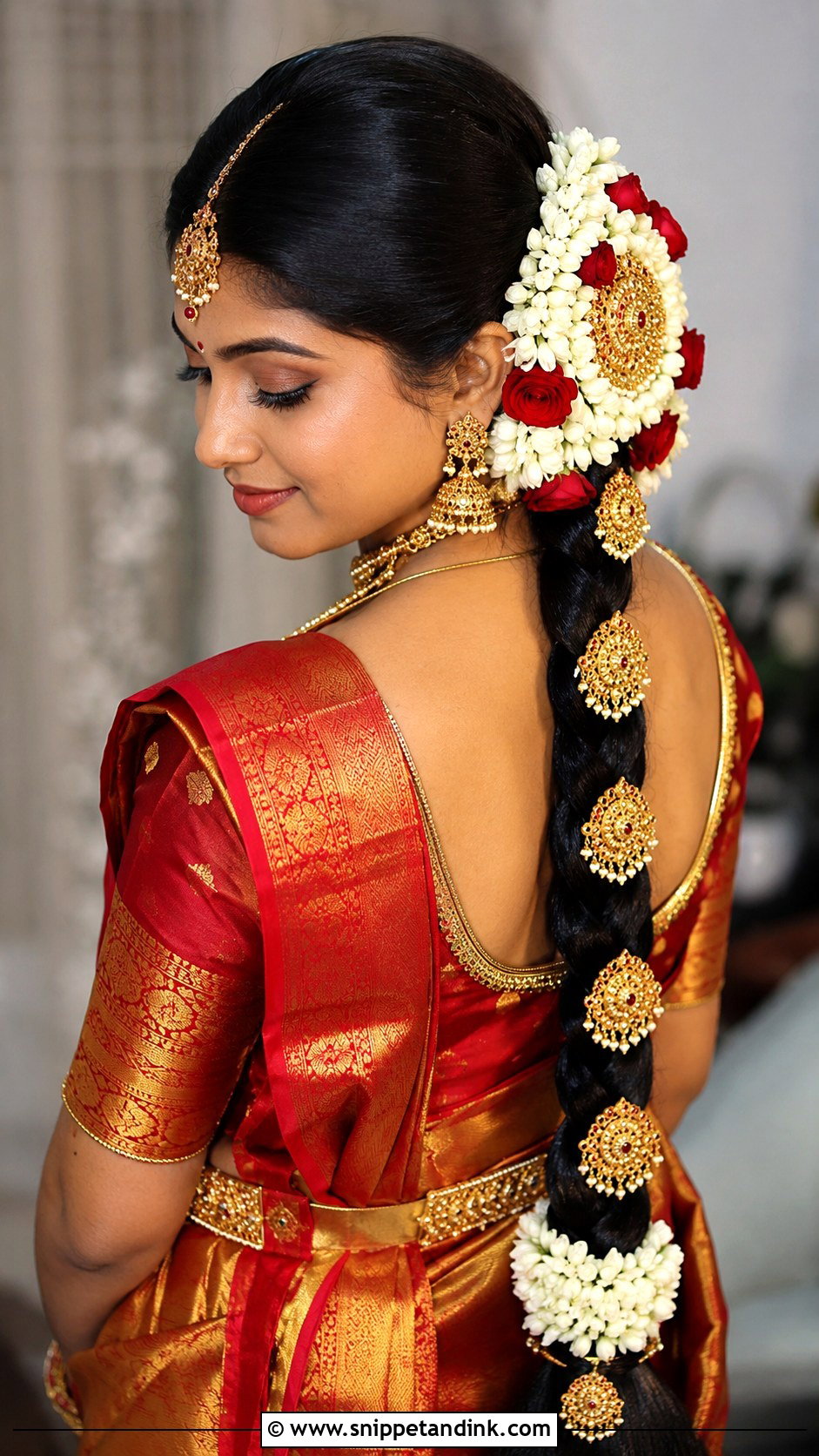
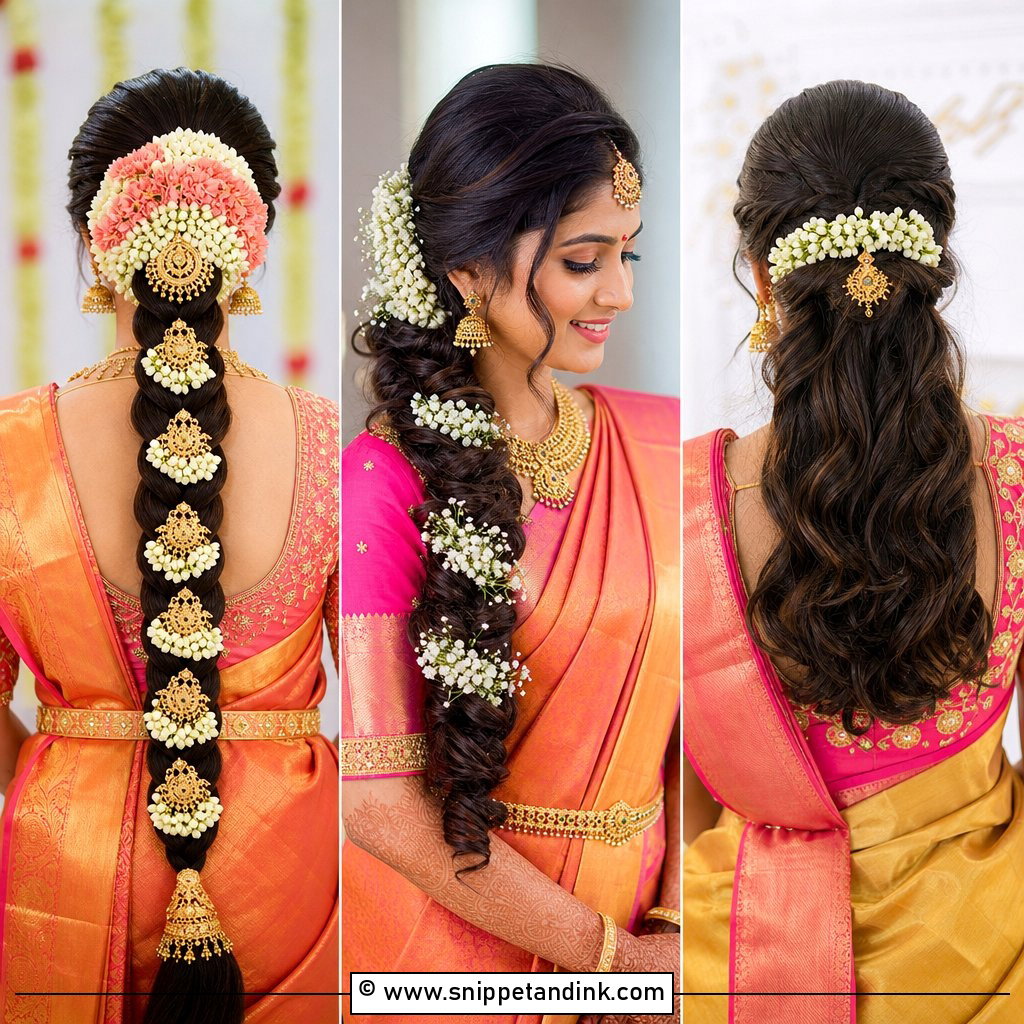
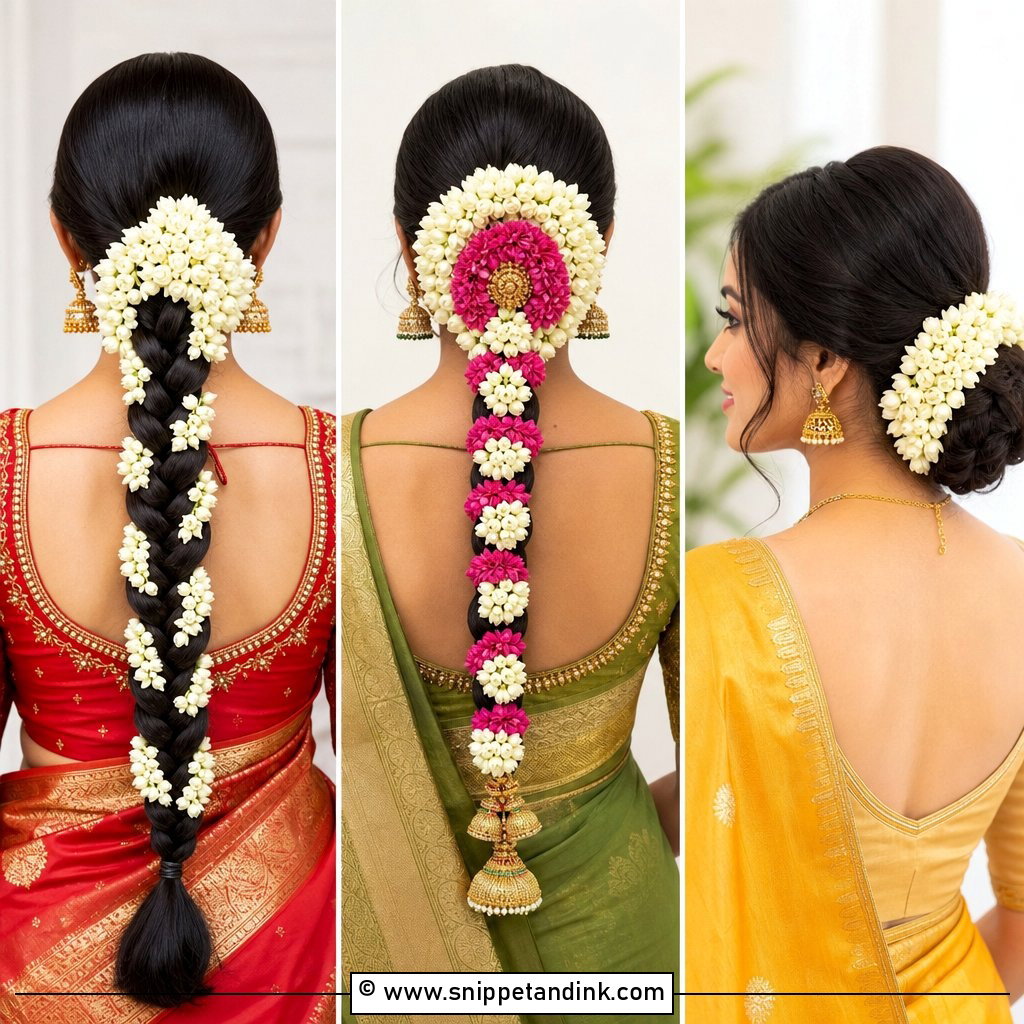
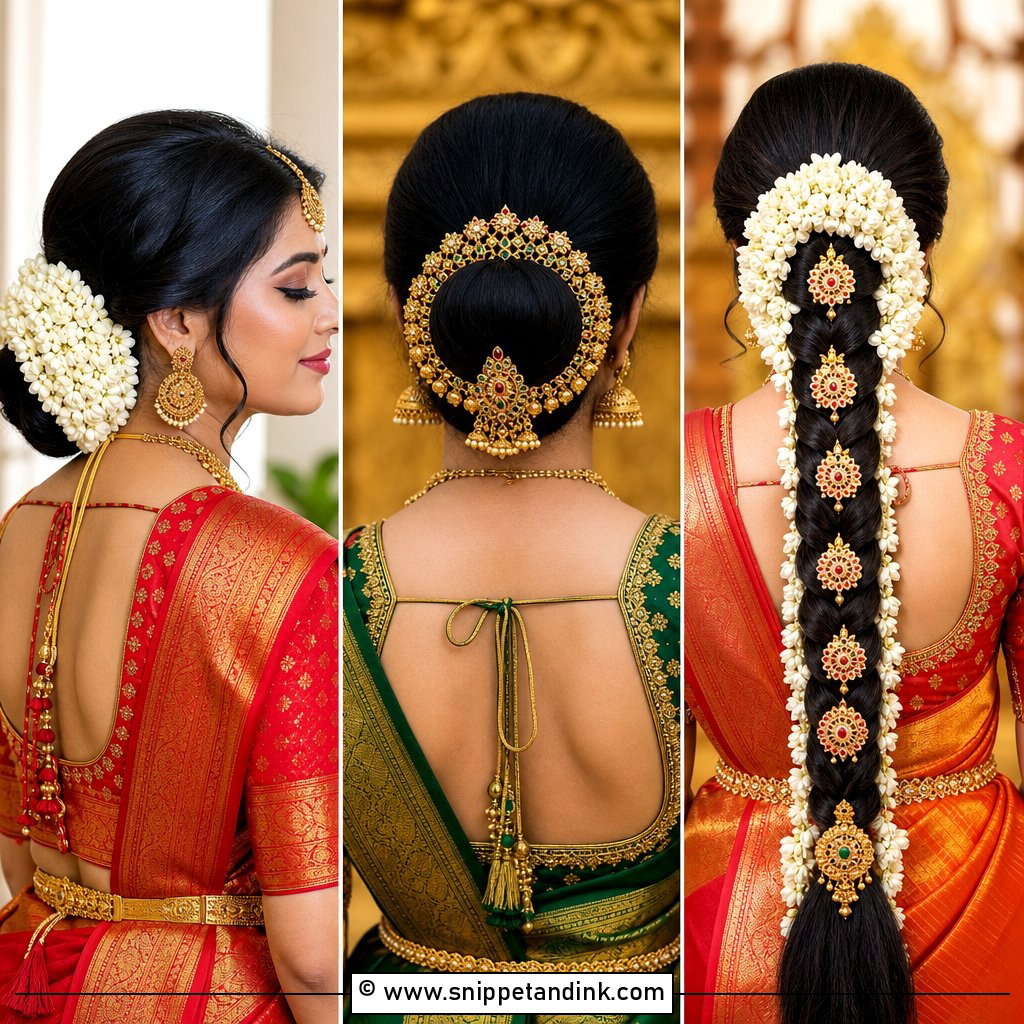
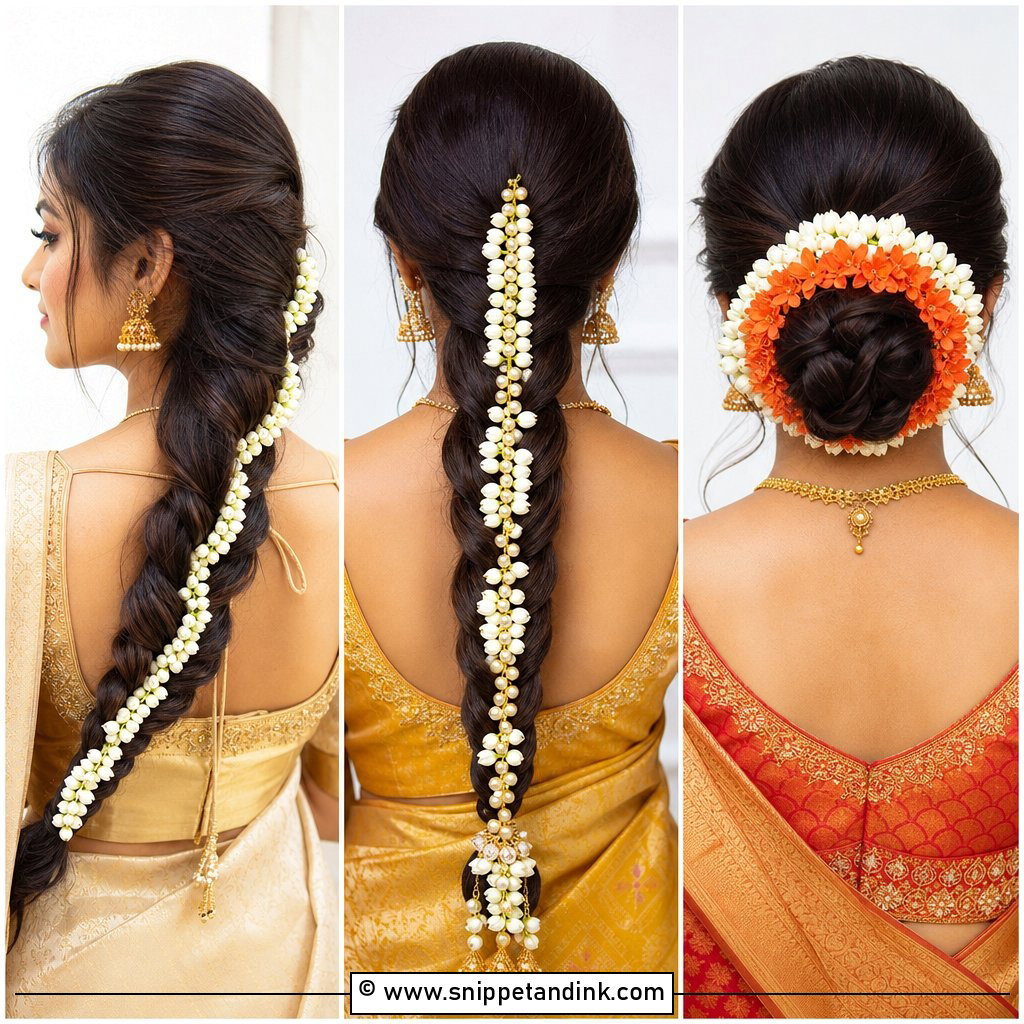
A South Indian bridal poola jada is the signature look for many Telugu, Tamil and Kannada brides: a long braid covered in jasmine, roses, gold jada billalu or floral panels. From behind, during the rituals, it is the most photographed part of you. The braid has to be tight at the top so the flower panel does not drag it down, and I stitch or pin the panel to the braid in several places, not just at the crown. A braid extension gives the length when your own hair stops short. A smooth centre part keeps it traditional.
2. South Indian Bridal Jasmine Bun
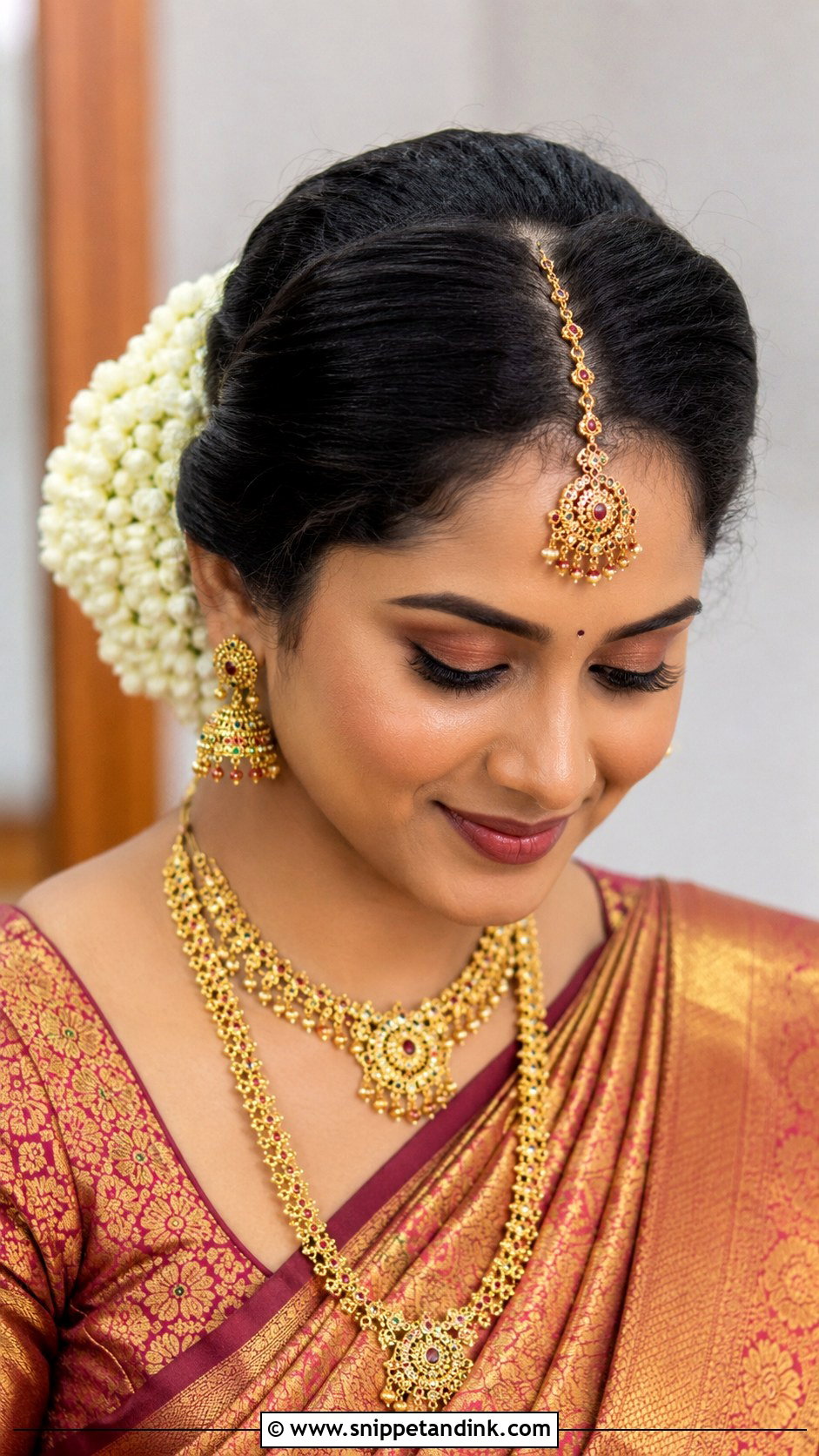
A jasmine bun swaps the long braid for a firm low or mid bun wrapped in layered strings. It shows the back of the blouse, which matters when you have paid for heavy embroidery there. I build the bun over a donut or a padded base, so the jasmine wraps into a round, even shape and the pins have something to bite into. Heavy gold, a kanjeevaram and a nethi chutti or maang tikka all sit well with it. Size the bun to your face: an oversized jasmine ring on a small face looks top-heavy in photos.
3. South Indian Bridal Long Braid
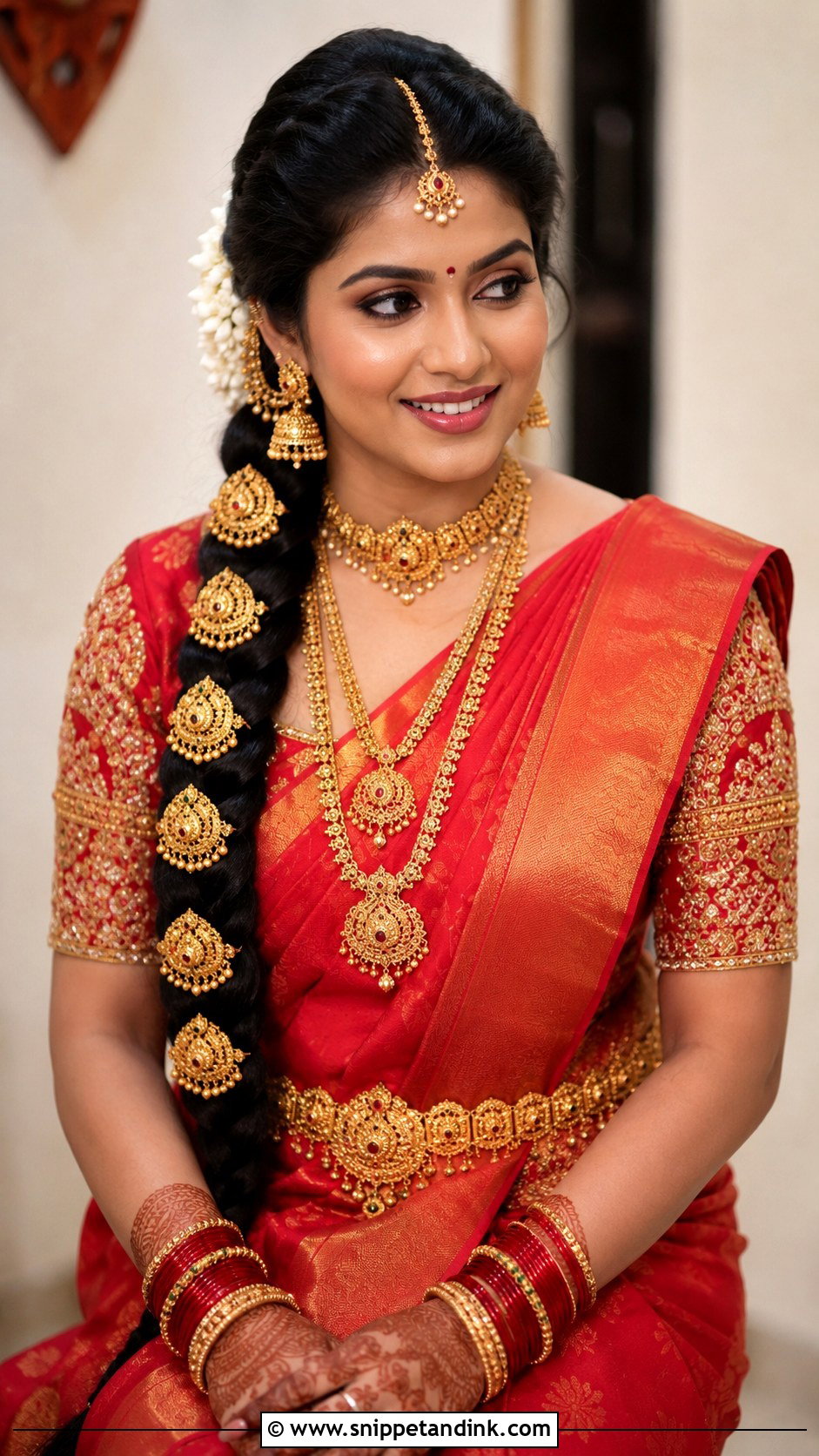
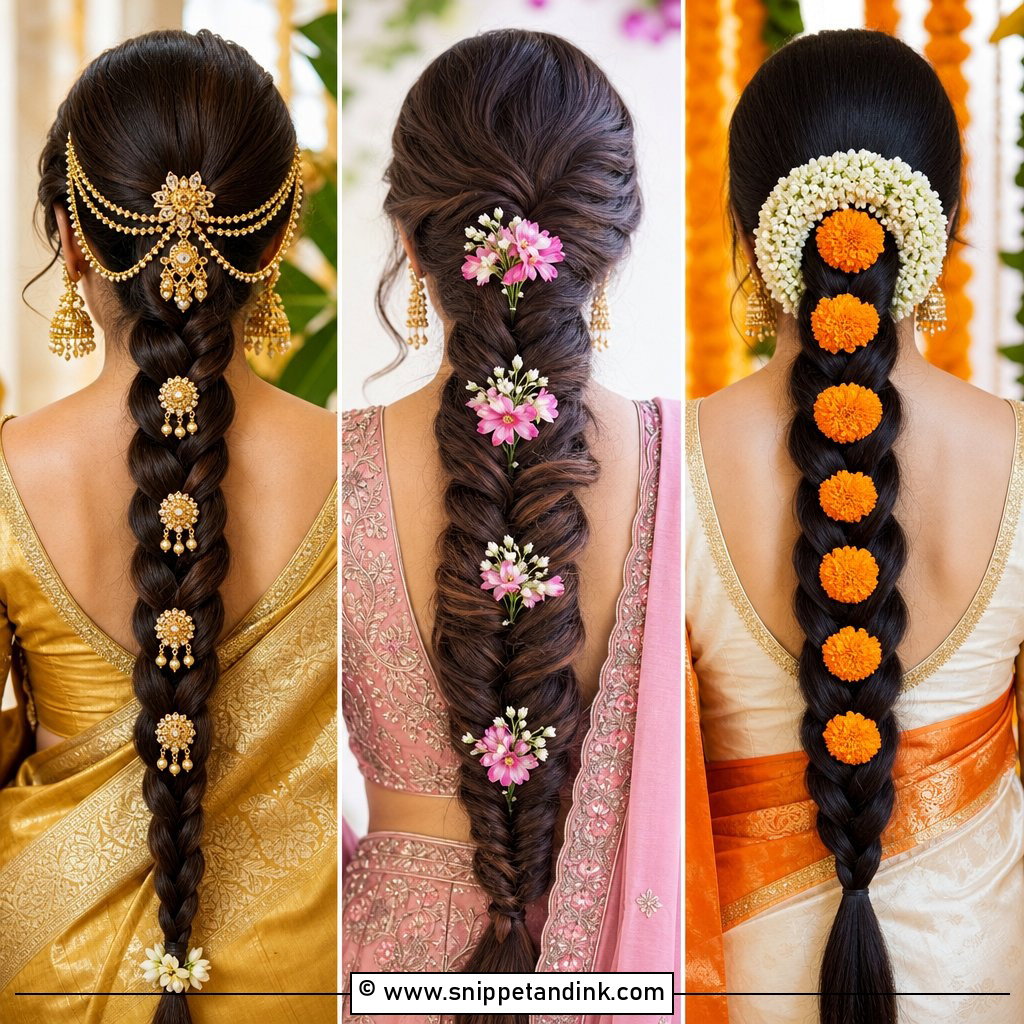
The long braid draws a vertical line down the back, and that line makes most brides look taller. It can carry gold accessories, pearl pins, a few flowers or a full jada. Thick or long hair braids easily; fine hair benefits from an extension braided in from the nape. I keep a little crown volume and avoid braiding too tightly, which stops the braid from looking flat. It is a reliable style for long ceremonies and outdoor weddings, as nothing falls loose.
4. South Indian Bridal Bun With Gajra
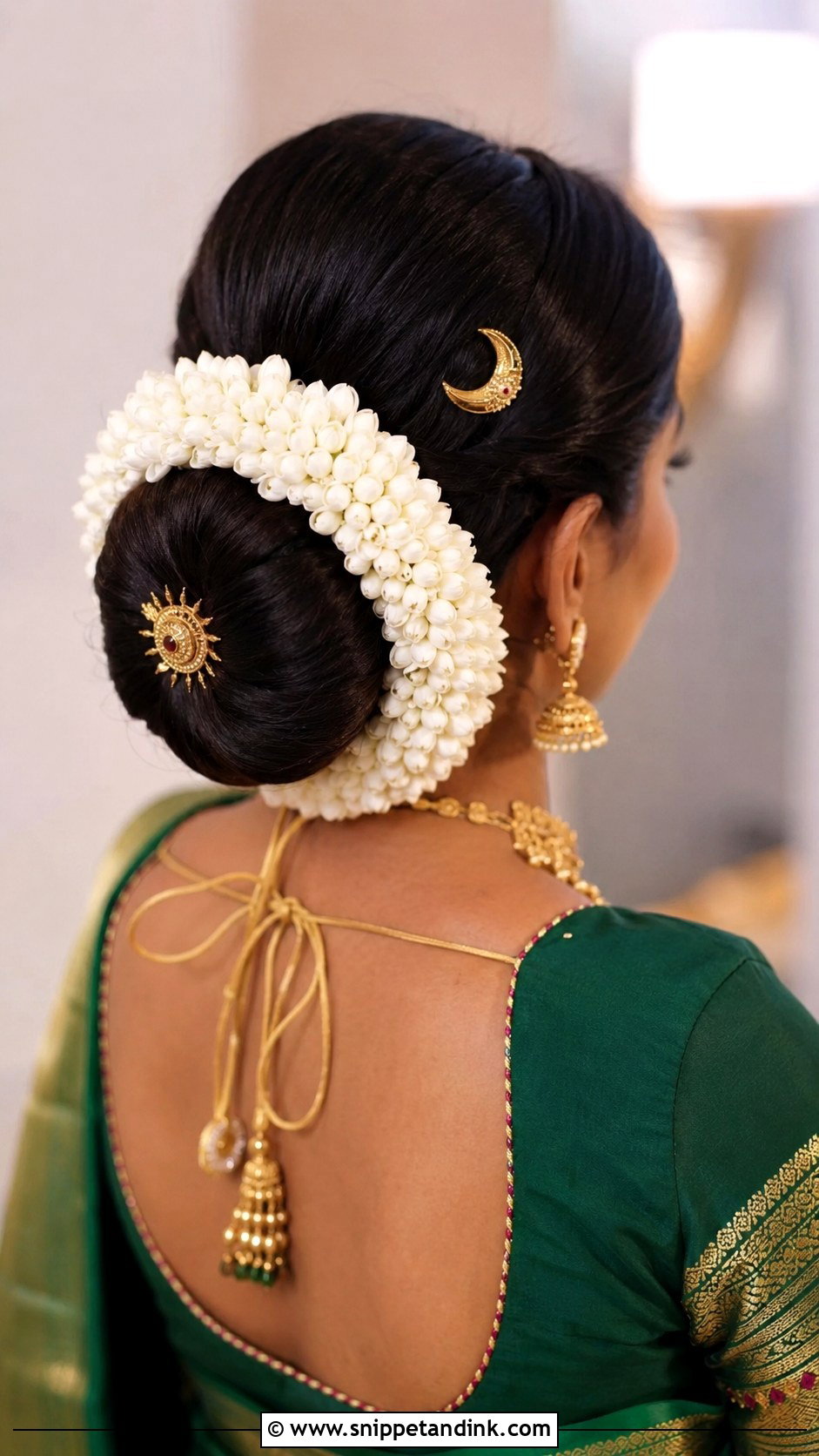
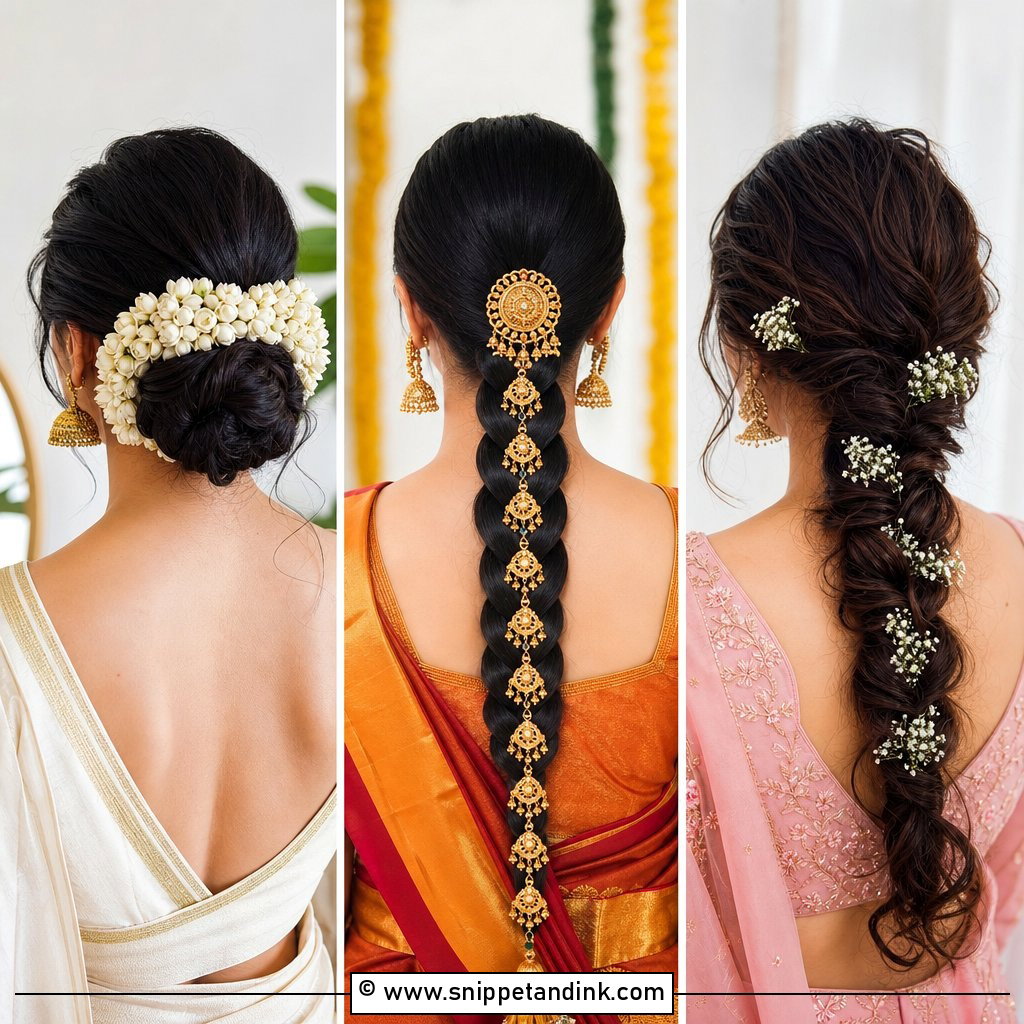
A bun with gajra has a crisp, traditional outline. The circular jasmine string sits around the base, adding fragrance and brightness. I place the bun at the nape for a seated ceremony, since a higher bun hits the backrest of the chair or mandap seat. It frames heavy earrings, layered necklaces and a bold bindi. A sleek middle part reads modern; a few soft pieces at the temples ease the look for a rounder face.
5. South Indian Bridal Half Up Hairstyle
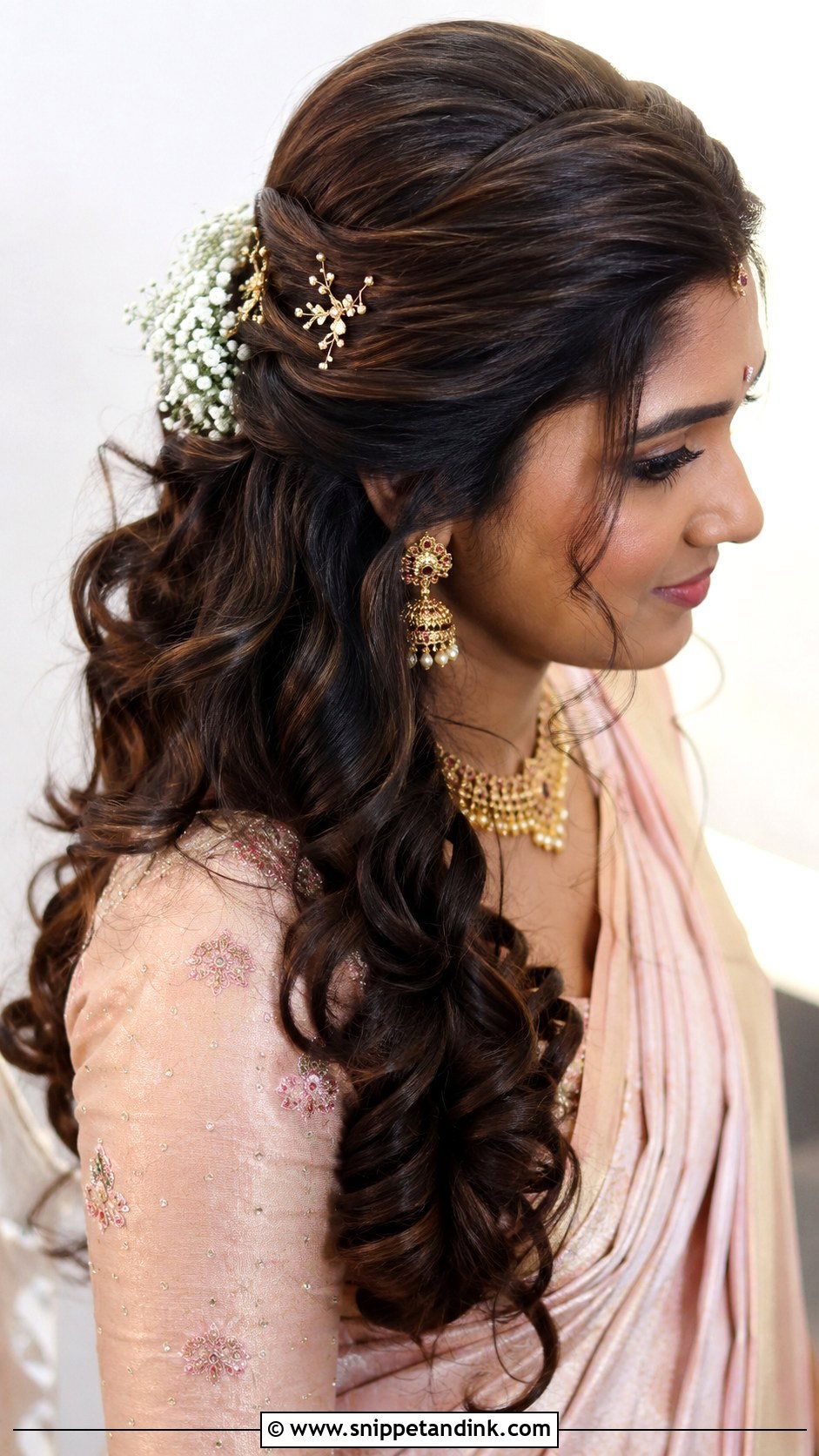
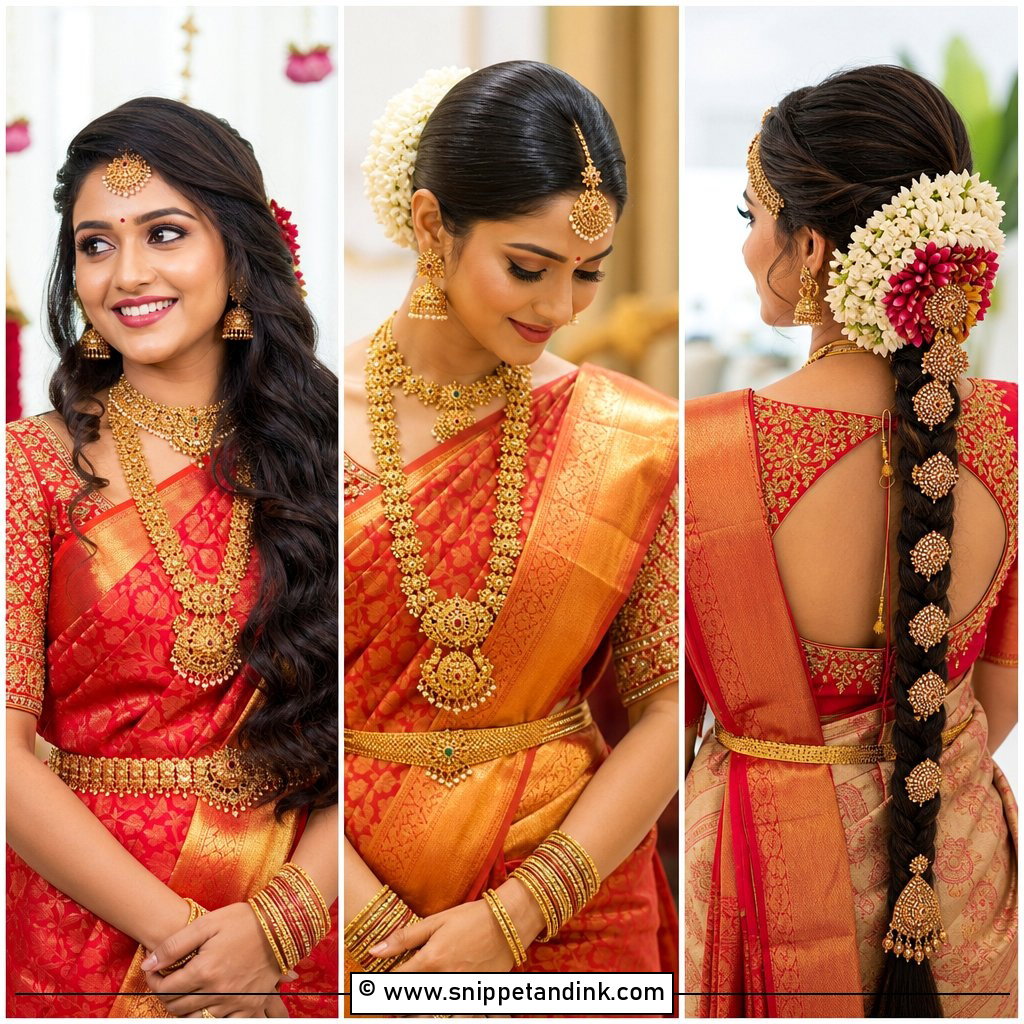
Half-up hair is my usual suggestion for the reception or engagement rather than the muhurtham. The top section is pinned back with volume and the rest falls in waves or curls. Jasmine strings, pearl pins or light gold pieces tie it back to tradition. It suits lehengas, modern saree drapes and softer makeup, and it is a relief after hours under a heavy jada. The curls need a proper set, because South Indian humidity drops them quickly.
6. South Indian Bridal Open Hair
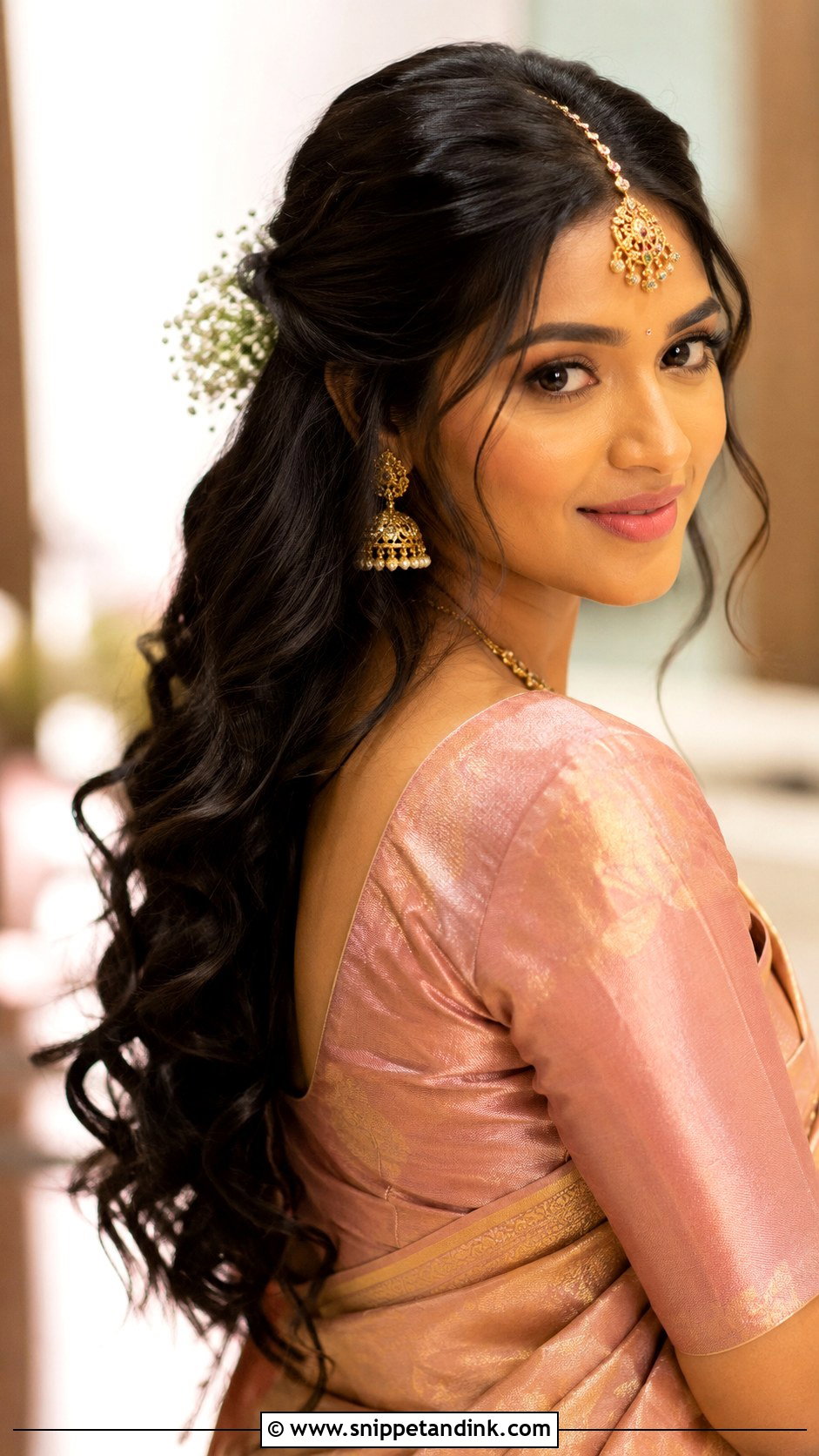
Open hair looks bridal only when it is polished, shaped away from the face and glossy. Soft waves, a centre part and temple jewellery give it that structure. I keep this look for receptions and pre-wedding functions, or for brides in lighter sarees. In humid weather, open hair frizzes fastest, so I use an anti-humidity serum before waving and finish with a light hold. Thick hair takes controlled waves; fine hair usually needs extensions for body.
7. South Indian Bridal Braid With Flowers
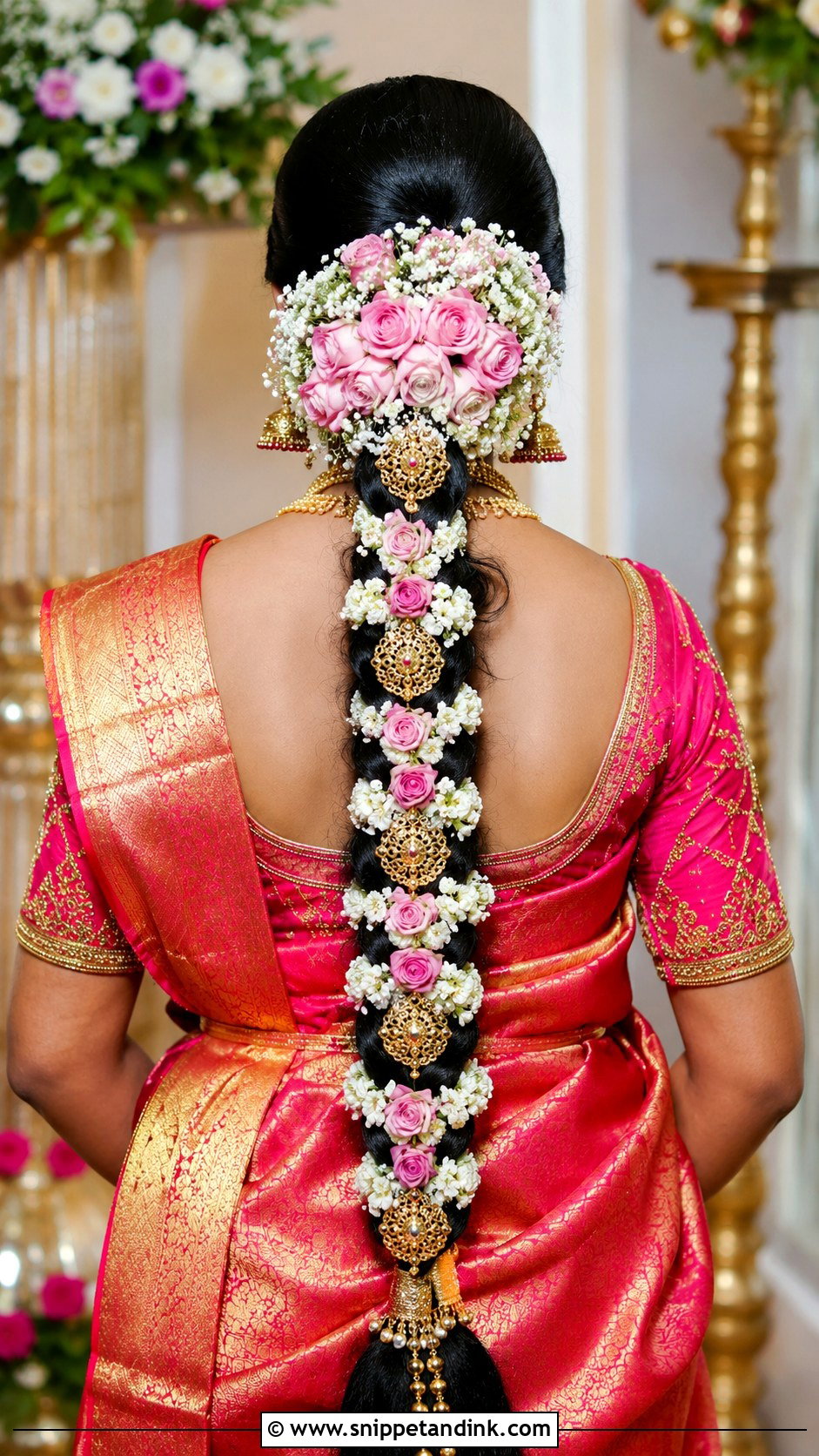
A braid with flowers is a festive look, especially for morning weddings. Jasmine, roses, baby’s breath or marigold accents can follow the colour of the saree. Flowers can run the full length or gather at the bottom. Fresh flowers are heavier than they look once there are several strings, so I anchor the braid base with crossed pins near the crown. White jasmine is classic; red and pink roses add a stronger contrast against a pale saree.
8. South Indian Bridal Bun With Temple Jewelry
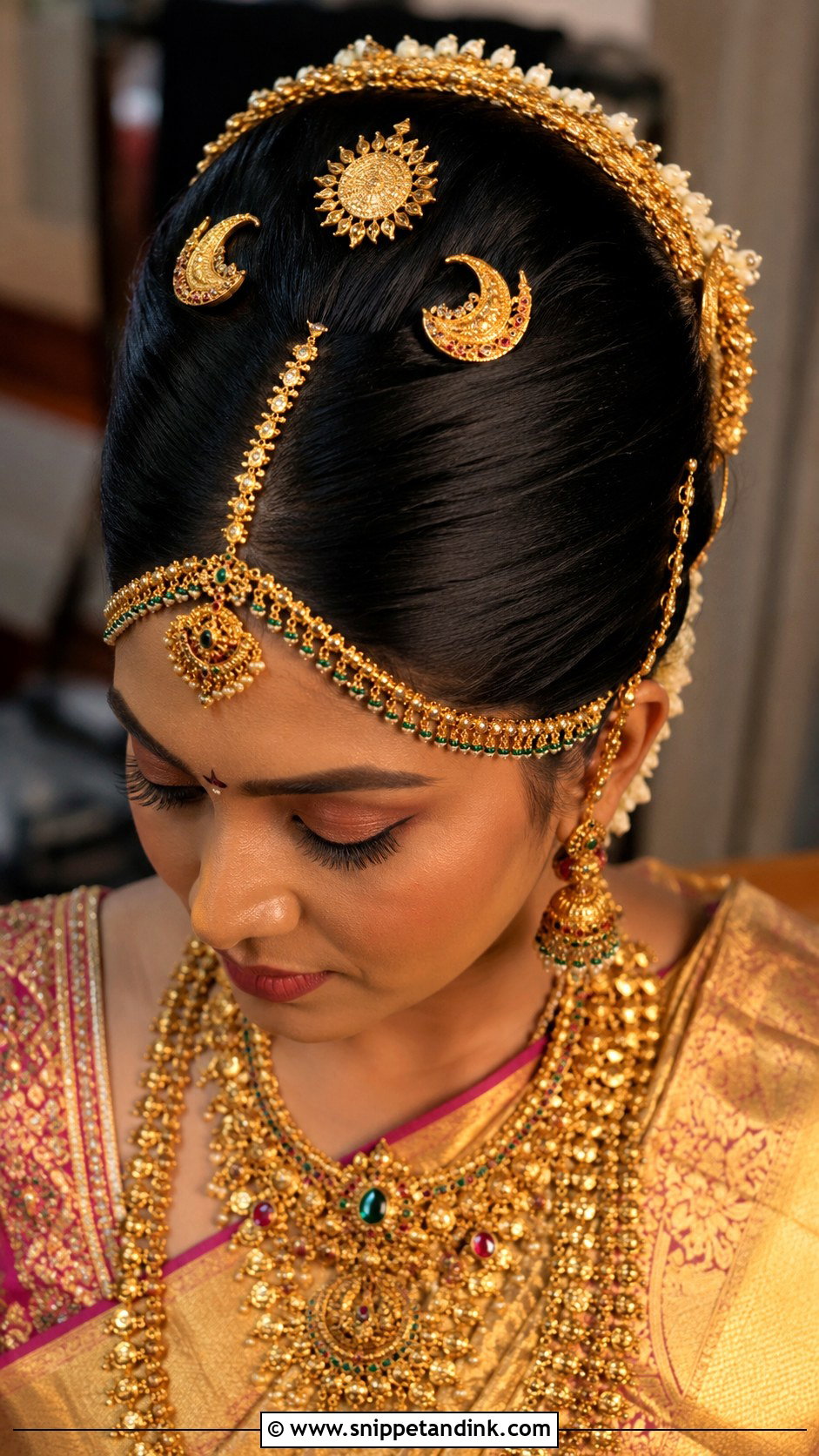
The bun with temple jewellery is the most ornamental style here. I part the hair in the centre, smooth it into a bun and dress it with a nethi chutti, sun and moon ornaments or gold pins around the bun. Classic silk sarees and layered gold necklaces suit it. The bun needs to be large enough to carry the ornaments; a small bun under heavy gold slides. Heavy pieces get pinned into the bun’s base, not just the surface. This one comes into its own in ceremony portraits.
9. South Indian Bridal Side Braid
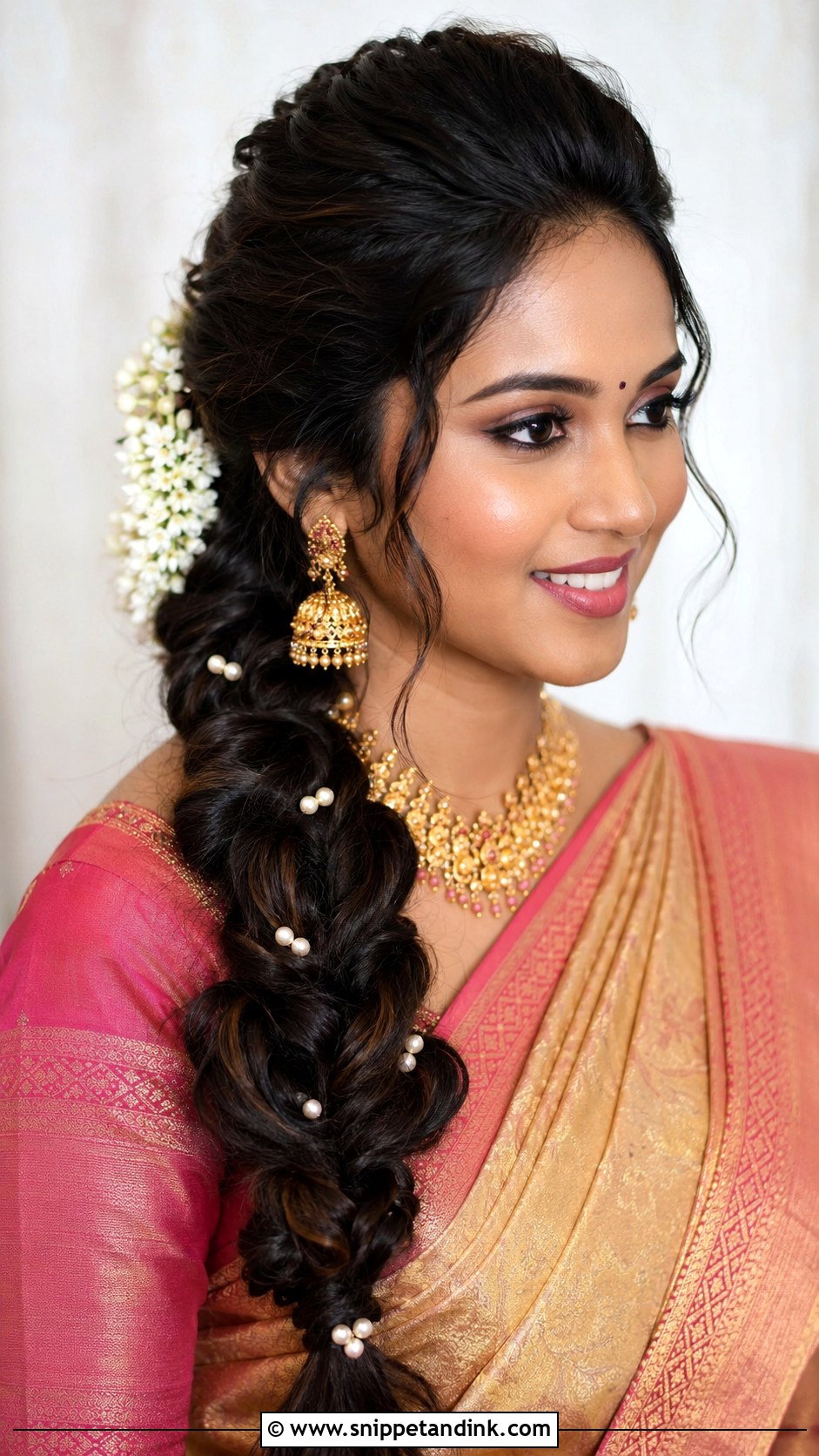
A side braid moves the traditional braid over one shoulder, where it shows in front-facing photos. Florals and jewellery are visible from the front, rather than only from behind. It works on long or layered hair and can have curls woven through it. I anchor it behind the ear on the opposite side so the weight does not drag the part across. Jasmine, small pearls or gold pins finish it. I usually suggest this for the engagement or reception.
10. South Indian Bridal Low Bun
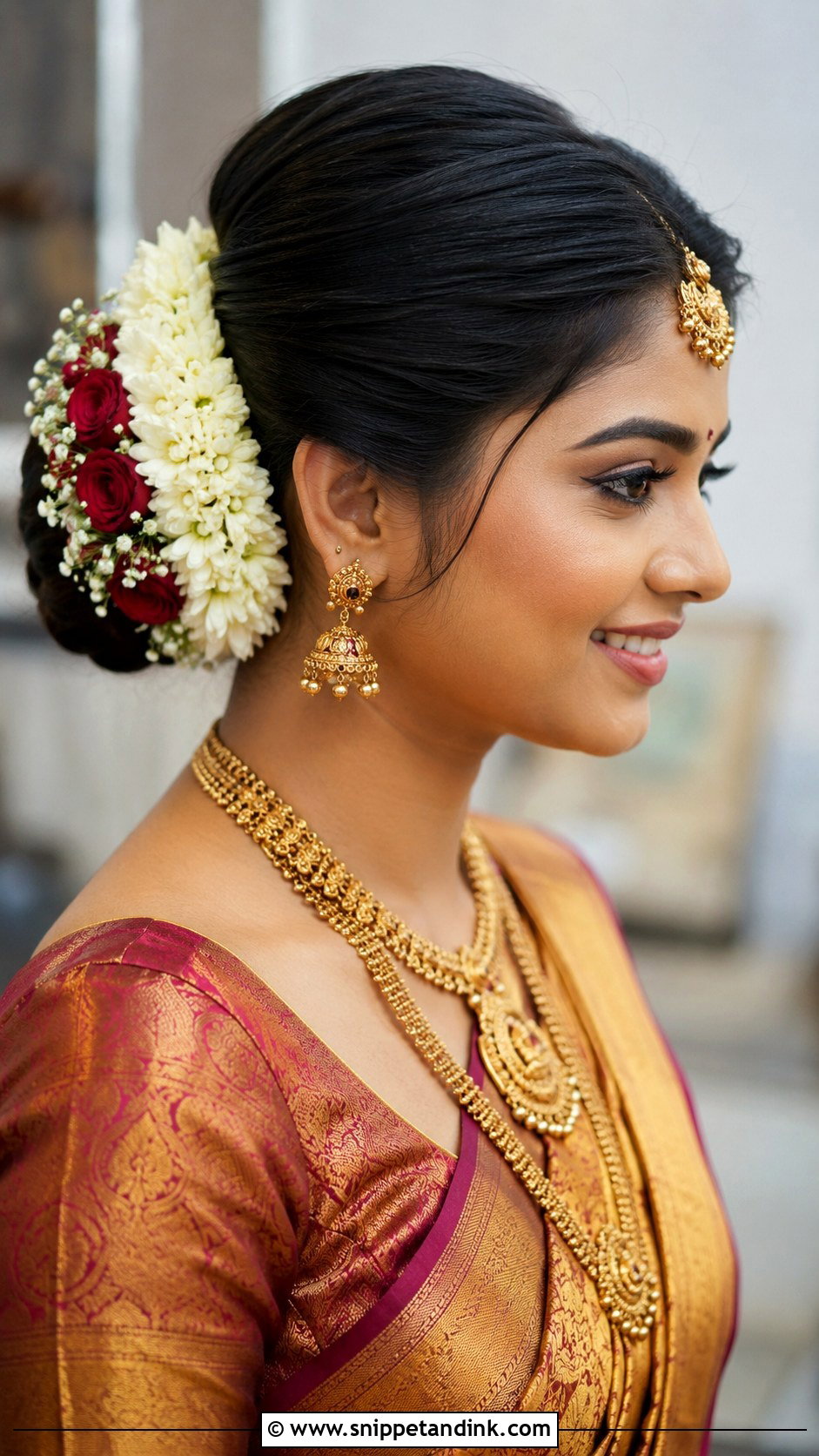
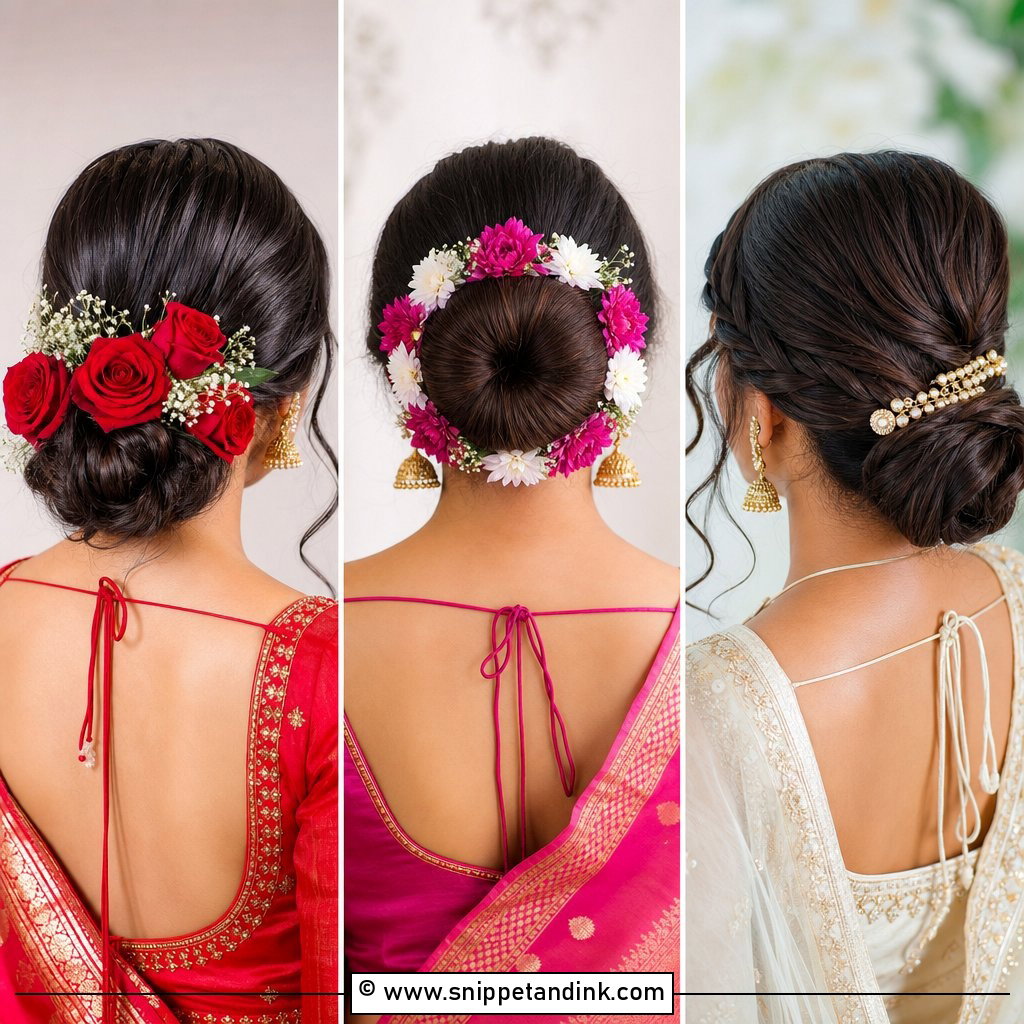
A low bun at the nape gives a composed profile and stays comfortable through long rituals. It pairs with traditional sarees, heavy earrings and statement necklaces, and it keeps hair off the face when you lean in for ceremonies. Jasmine, roses, gold pins or a simple gajra ring all dress it up. Gentle crown volume suits softer face shapes. A polished middle part with a glossy finish gives a sleeker look.
11. South Indian Bridal Curls With Maang Tikka
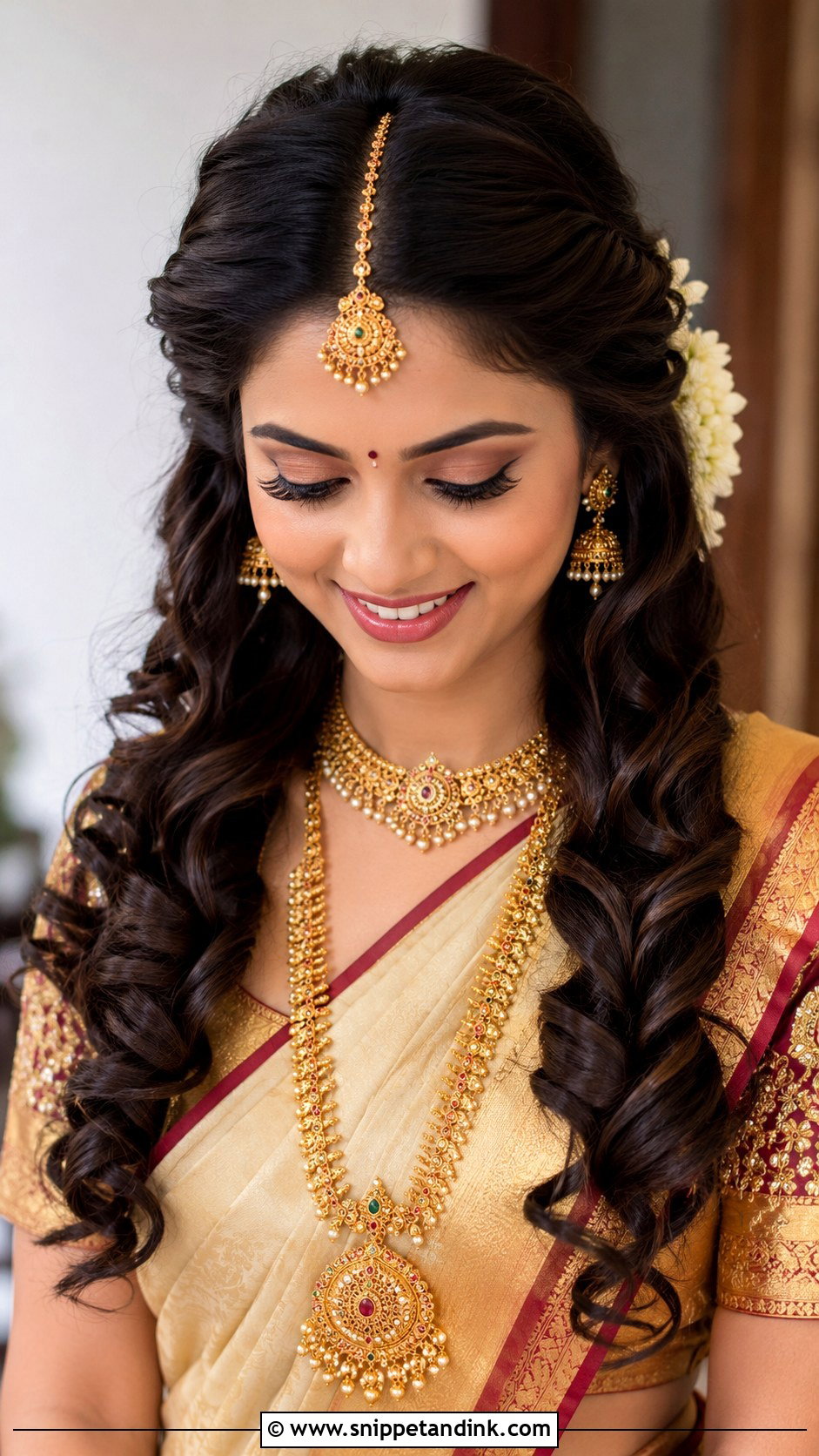
Curls with a maang tikka give movement with a clear centre focus. The curls can be pinned partly back or worn down, and the tikka or nethi chutti sits along the part. I pin the tikka chain under a small section of hair so it does not shift every time you turn. Defined curls look more polished than loose waves here. A small cluster of jasmine at the back keeps a South Indian touch without adding weight. I suggest it for receptions and modern portraits.
12. South Indian Bridal Sleek Bun
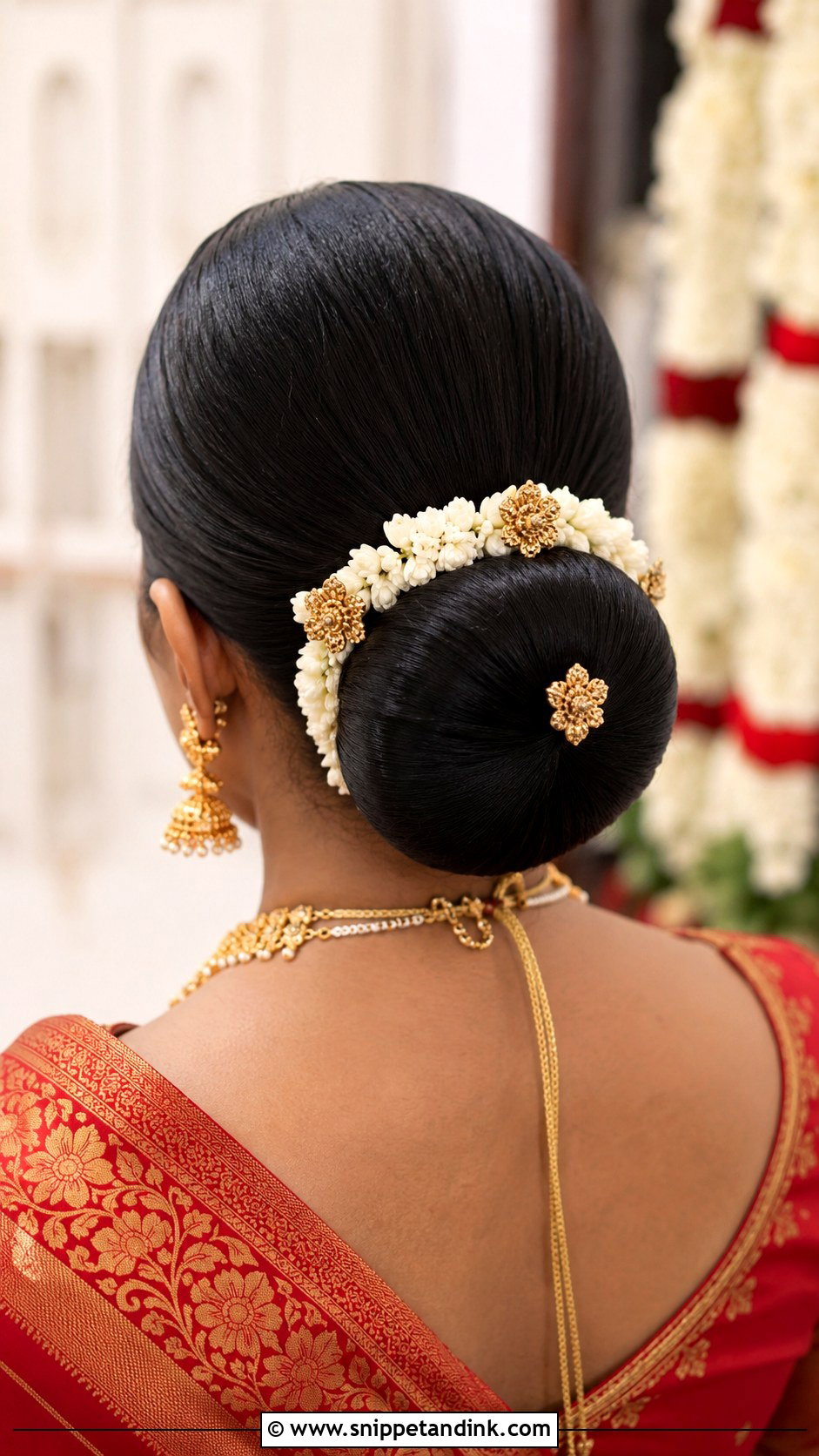
A sleek bun suits a bride who wants the saree, jewellery and makeup to take centre stage. Clean part, smooth surface, very little flyaway. It holds better in humidity than open hair, which is why it is popular for summer weddings. I smooth it with a gel or cream, then finish with a light mist so the surface stays touchable instead of crunchy. A jasmine ring, gold pins or a small floral cluster add to it.
13. South Indian Bridal Bubble Braid
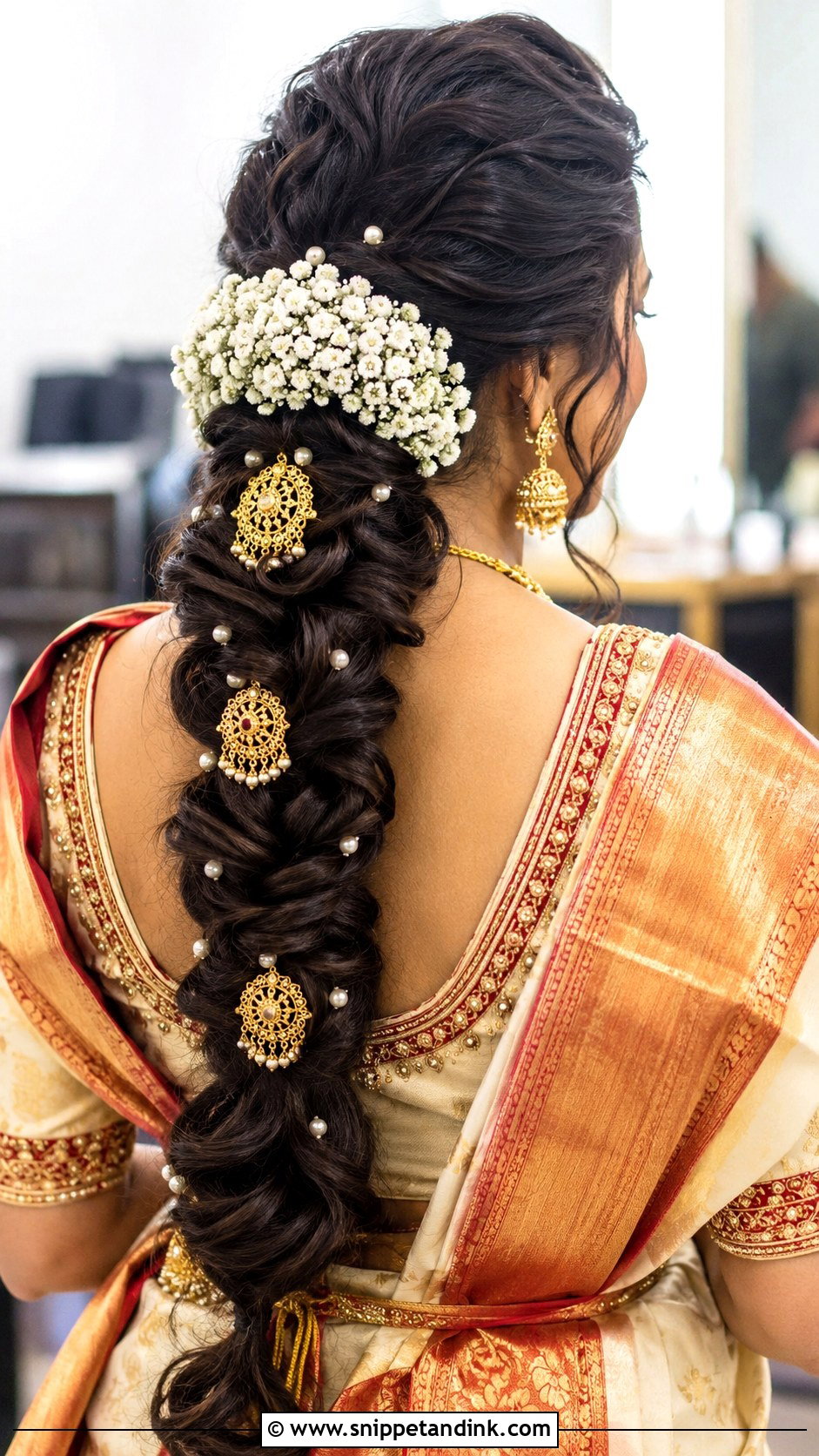
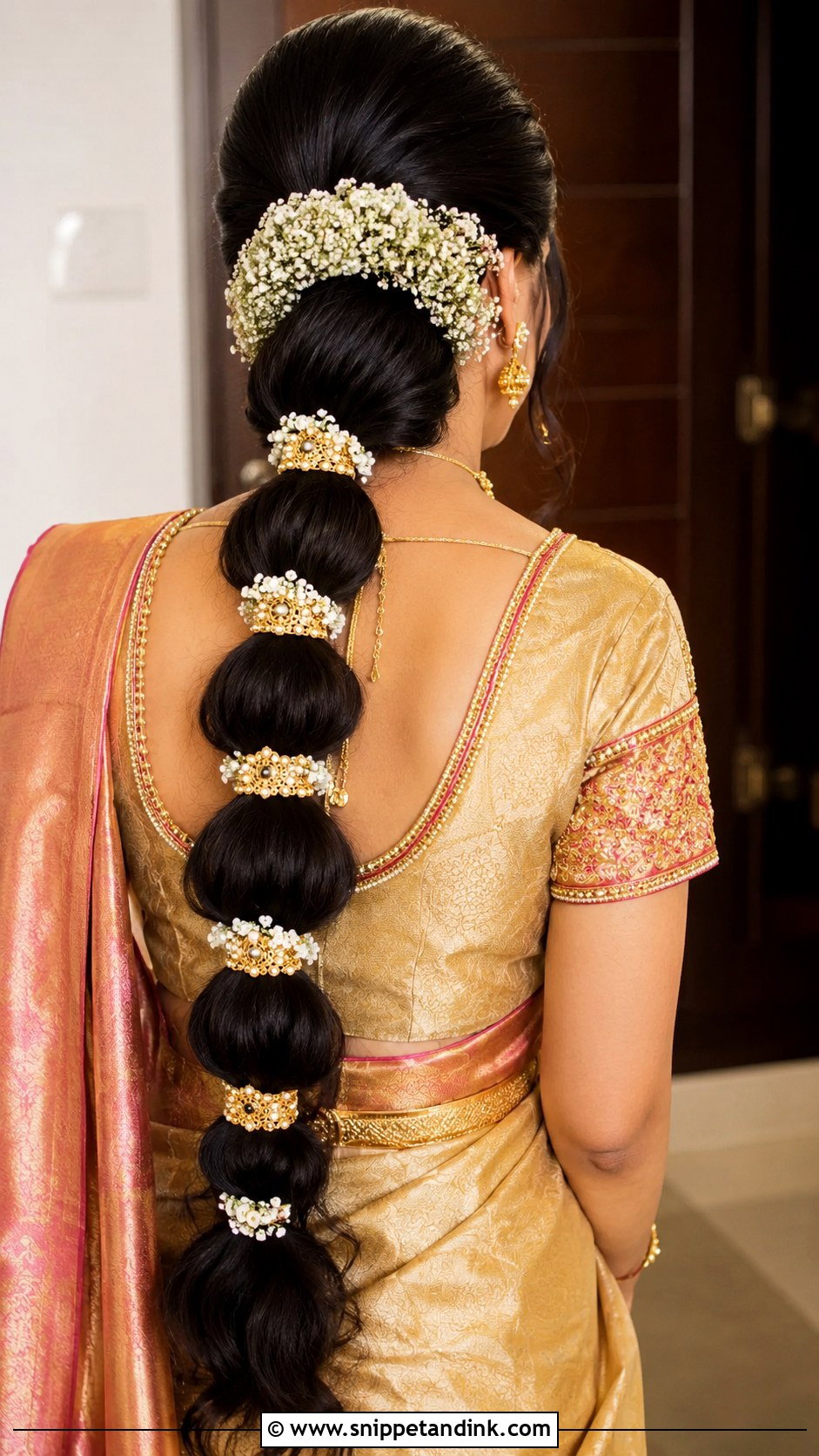
A South Indian bridal bubble braid divides the length into rounded sections with bands, rather than plaiting it. It needs thick hair or extensions, since thin hair makes small, sad bubbles. I pull each section out evenly before setting the next band, then place gold rings, pearl pins or small jasmine clusters between them. The crown stays smooth and structured. It is modern enough for a reception and still traditional with the right accessories.
14. South Indian Bridal Floral Bun
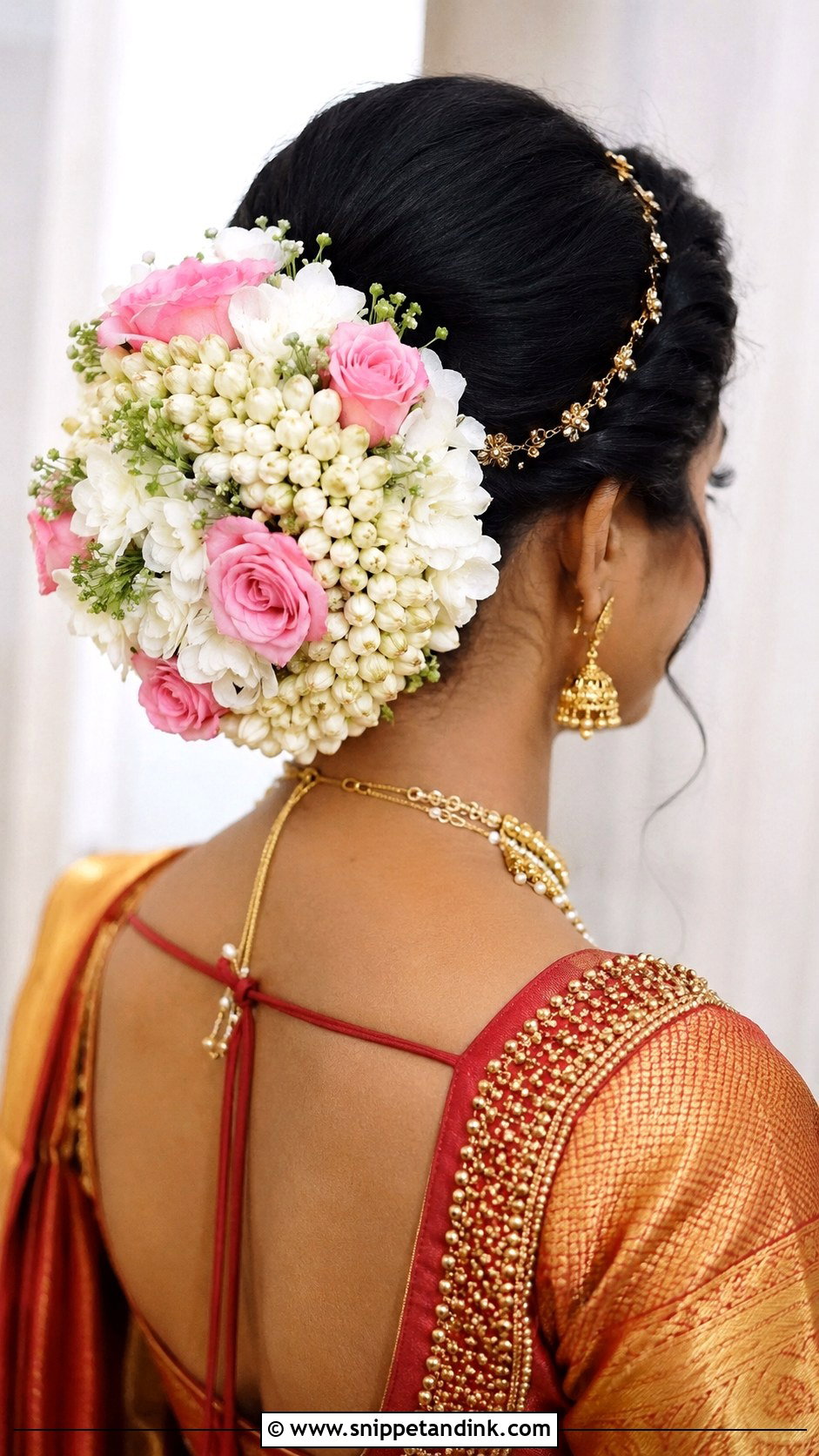
A floral bun lets the flowers be the main accessory. Roses, orchids, tuberose and seasonal blooms can join jasmine, chosen to match the saree. The bun can be fully covered or framed with a crescent. Orchids are a good choice for hot venues because they hold up well, while roses can bruise and petals drop if squeezed against the head. Keep the front clean if the flowers are colourful, and choose softer shades if the saree is already bold.
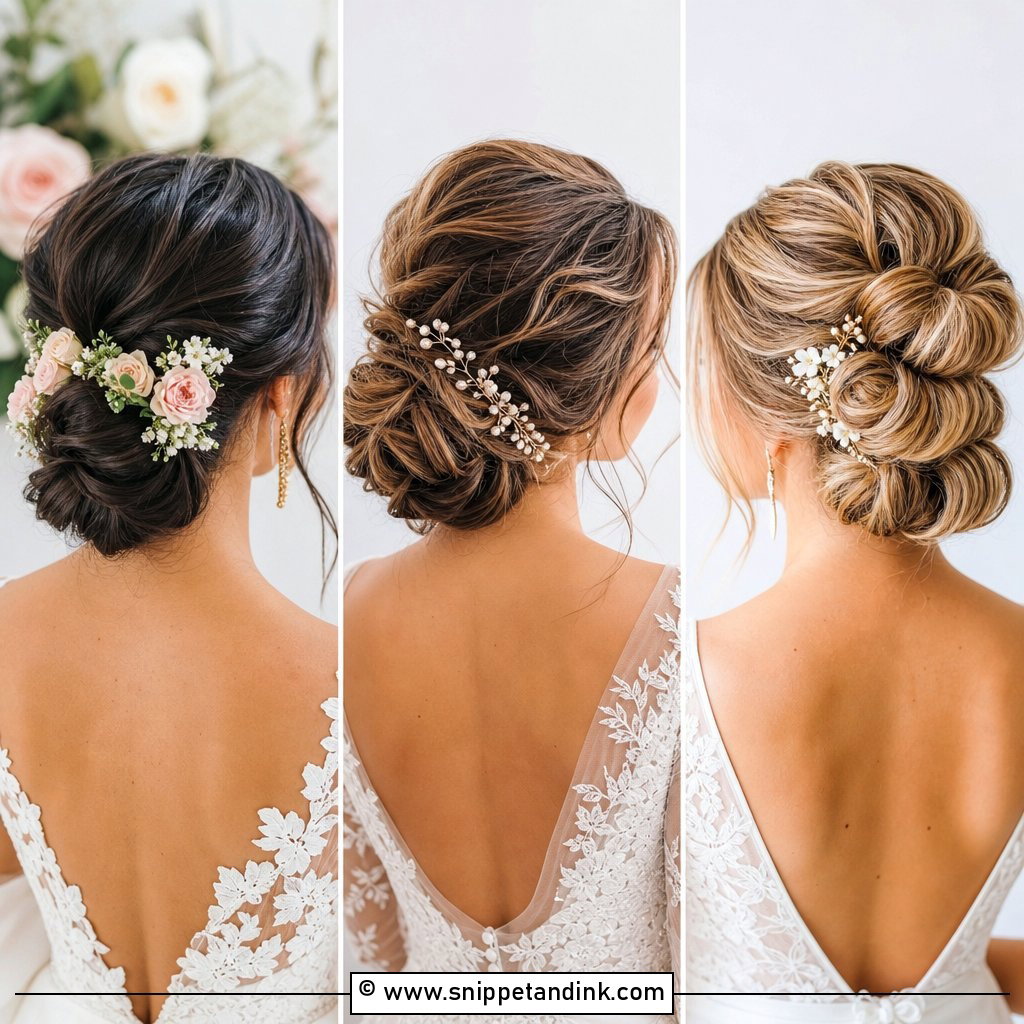
15. South Indian Bridal Wavy Braid
A wavy braid combines texture with a traditional shape. The crown has gentle waves or twists, and the braid stays full rather than tight. I add waves before braiding so fine or medium hair looks thicker, and I pull the outer edges a little looser. Floral strings, pearl details and gold jada pieces sit well along it. The front stays polished so the softness at the back reads as intended. Brides who want tradition without the stiffness of a classic jada often choose it.
From a Dawn Muhurtham to an Evening Reception
Many South Indian weddings start before sunrise and end with a reception in the evening, which means the hair has to change. Planning the switch saves both time and your scalp.
I design the ceremony style with the reception in mind. A braid with a jada can become a half-up style with waves if the hair was curled before braiding, as the braid holds a soft kink when released. A bun can be let down and brushed into waves. Allow about an hour for the change, including taking out every pin and flower carefully, as pulling a jada off in a hurry tears at the hair.
Between the two, give your scalp a break. Remove the heaviest pieces as soon as the rituals finish, eat something and drink water, and avoid washing the hair, since product-free clean hair is slippery to restyle.
If the reception look needs heat styling, ask your stylist to bring a small kit to the venue rather than rushing back to a salon. Twenty quiet minutes in a side room with a curling iron is usually all the change needs.
Which Look for the Muhurtham, Which for the Night?
From the classic poola jada to sleek buns, jasmine gajra, soft curls and modern bubble braids, the choice depends on your saree, jewellery, face shape, hair length, timing and comfort. Many brides wear a traditional braid or bun with flowers for the ceremony and switch to open waves, half up or a clean low bun for the reception. Book a trial, particularly if you plan to use extensions or a full jada, and wear the flowers and jewellery during it so you feel the real weight.
You'll Like These Ideas:







Leave a Reply