
Picture the baraat bride an hour after her entrance. She’s been on stage greeting relatives, the photographer has asked for the same pose again and again, and her dupatta has been adjusted by several well-meaning aunties. That’s the real test I build baraat hair for. It has to sit under a dupatta, carry a matha patti or passa, frame the face and still look fresh at the rukhsati. Below are smooth buns, gajra, braids, open curls and waves, with notes on which jewelry and outfits each suits, from lehengas to ghararas and shararas.
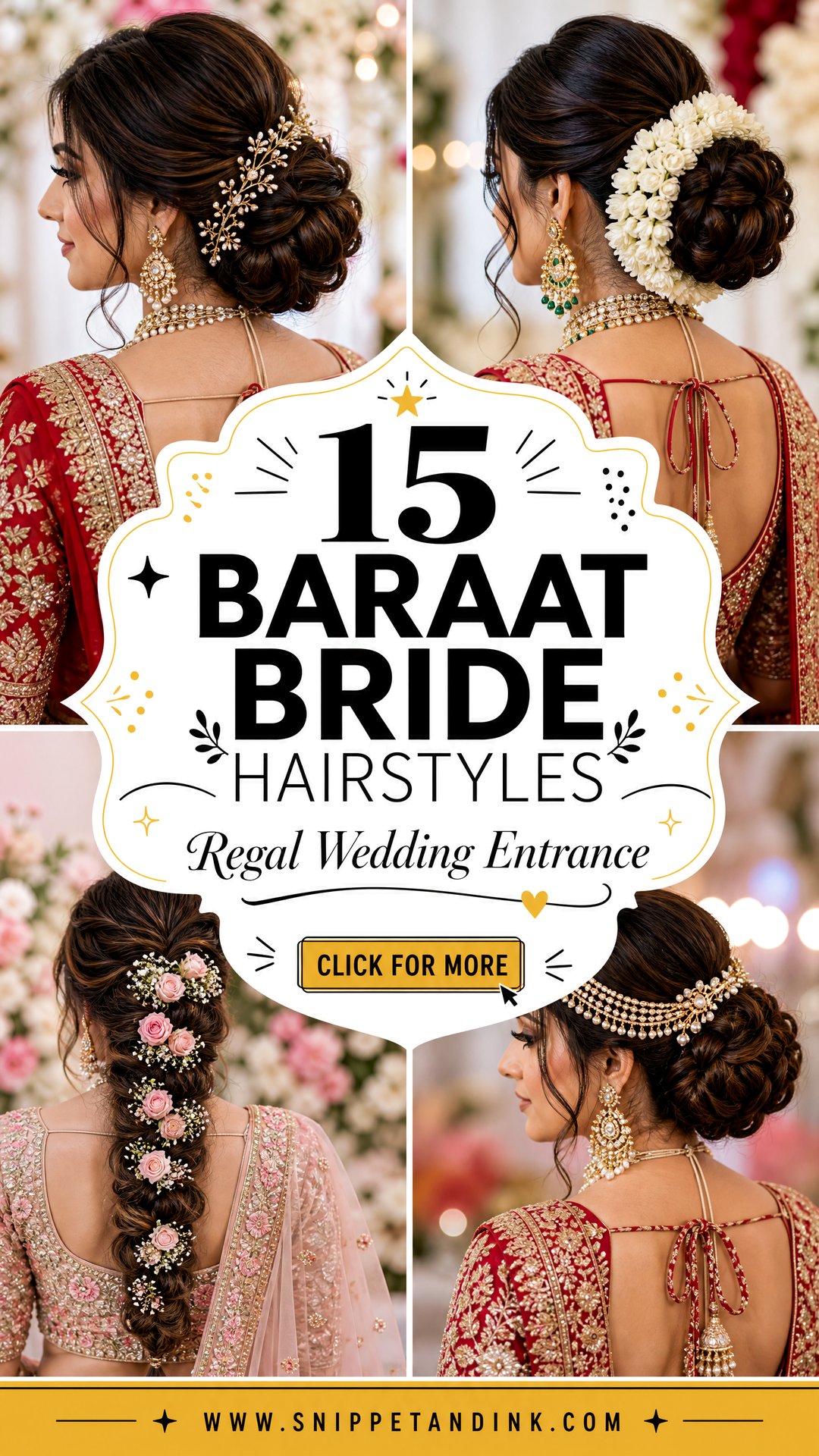
One Dupatta or Two? Let the Draping Decide the Hair
The way your dupatta is draped changes which hairstyles will actually show, so settle the draping with your stylist before you fall for a particular bun or wave.
- Single dupatta on the head, set back from the hairline: the classic setup. A low or middle part bun gives it a firm anchor, and the front of the hair stays visible with your jewelry.
- Two dupattas, one on the head and one across the shoulders or arms: very common for baraat. The head dupatta is often the heavier, embroidered one, so you need a secure bun or a front puff that lifts it and spreads the weight.
- Ghoonghat style, drawn forward over the face for the entrance: the hair underneath should be compact and low. Big crown volume pushes the fabric up awkwardly, and loose curls get caught.
- Dupatta pinned back or on the shoulders only: this is when open curls, side part waves and side braids get their chance, because nothing presses them down.
With a very heavy dupatta, I pin it in several places along the bun and crown rather than relying on two pins at the front. It’s more comfortable, and it won’t drag your hairline back as the evening goes on.
1. Baraat Bridal Low Bun
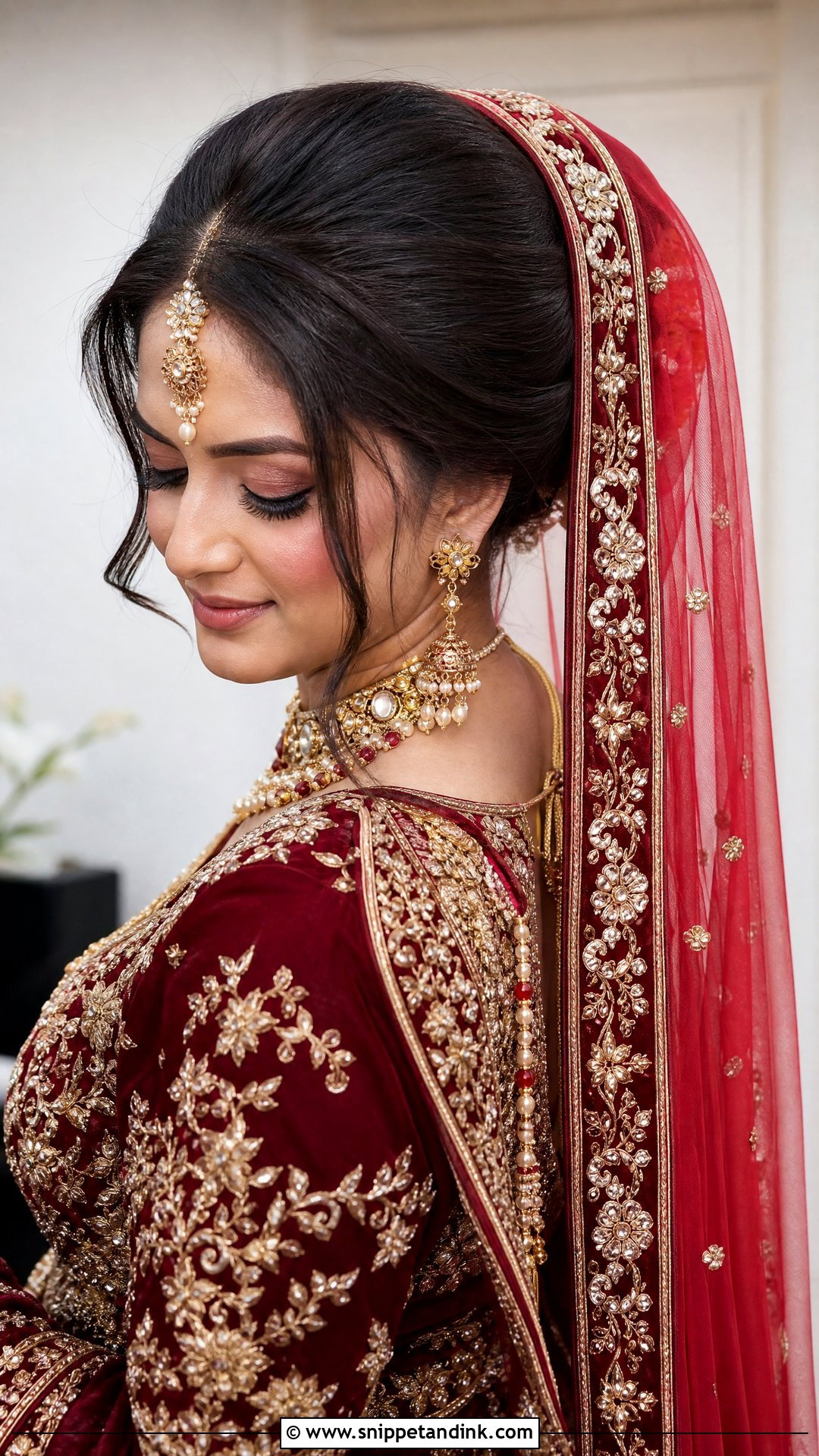
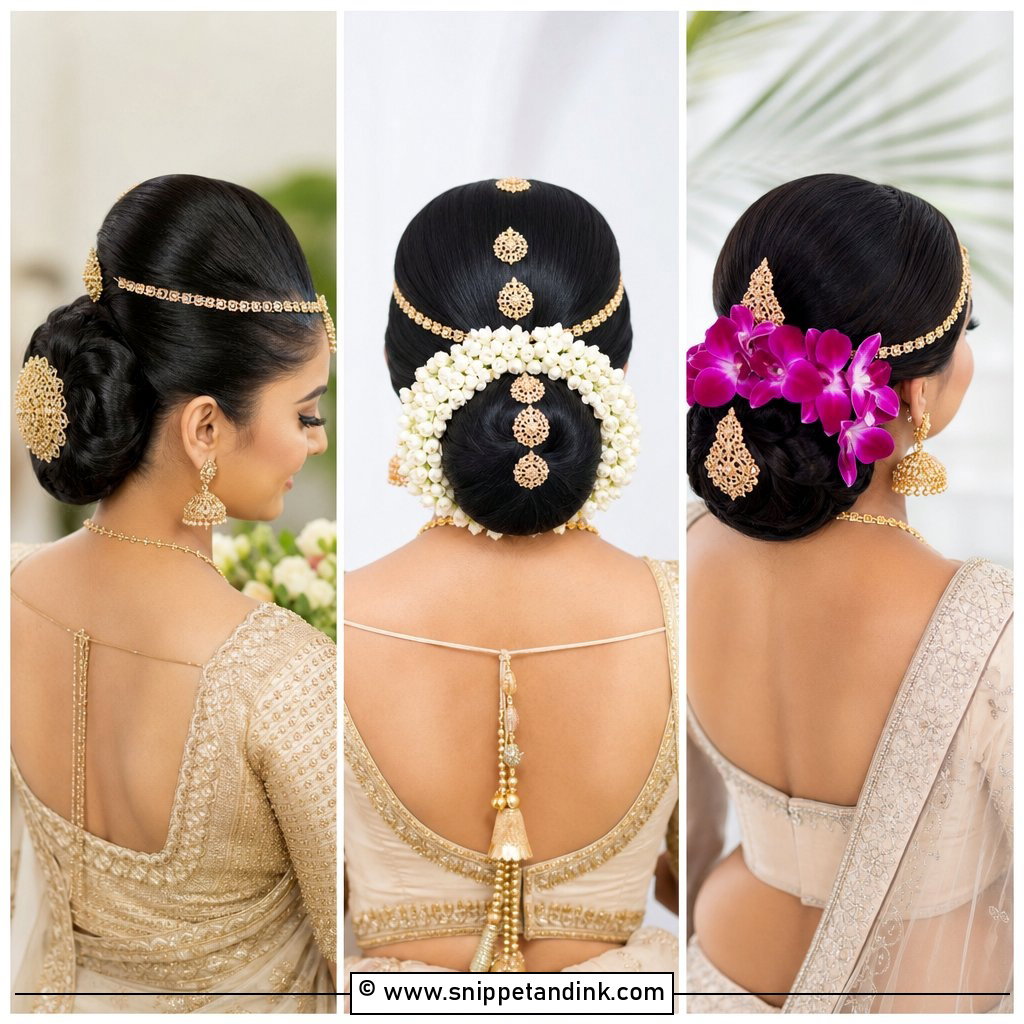
If I could only offer one baraat style, it would be this. A low bun keeps everything secure and gives the outfit a regal outline, and a heavy dupatta pins comfortably at the crown or just behind it. Middle part for the classic look, a soft lift at the front for more framing. A smooth low bun leaves room for a jhoomar, matha patti, passa or big earrings. I usually keep a little texture in the bun itself; a hard, tight coil looks severe once the dupatta frames it.
2. Baraat Bridal Bun With Gajra
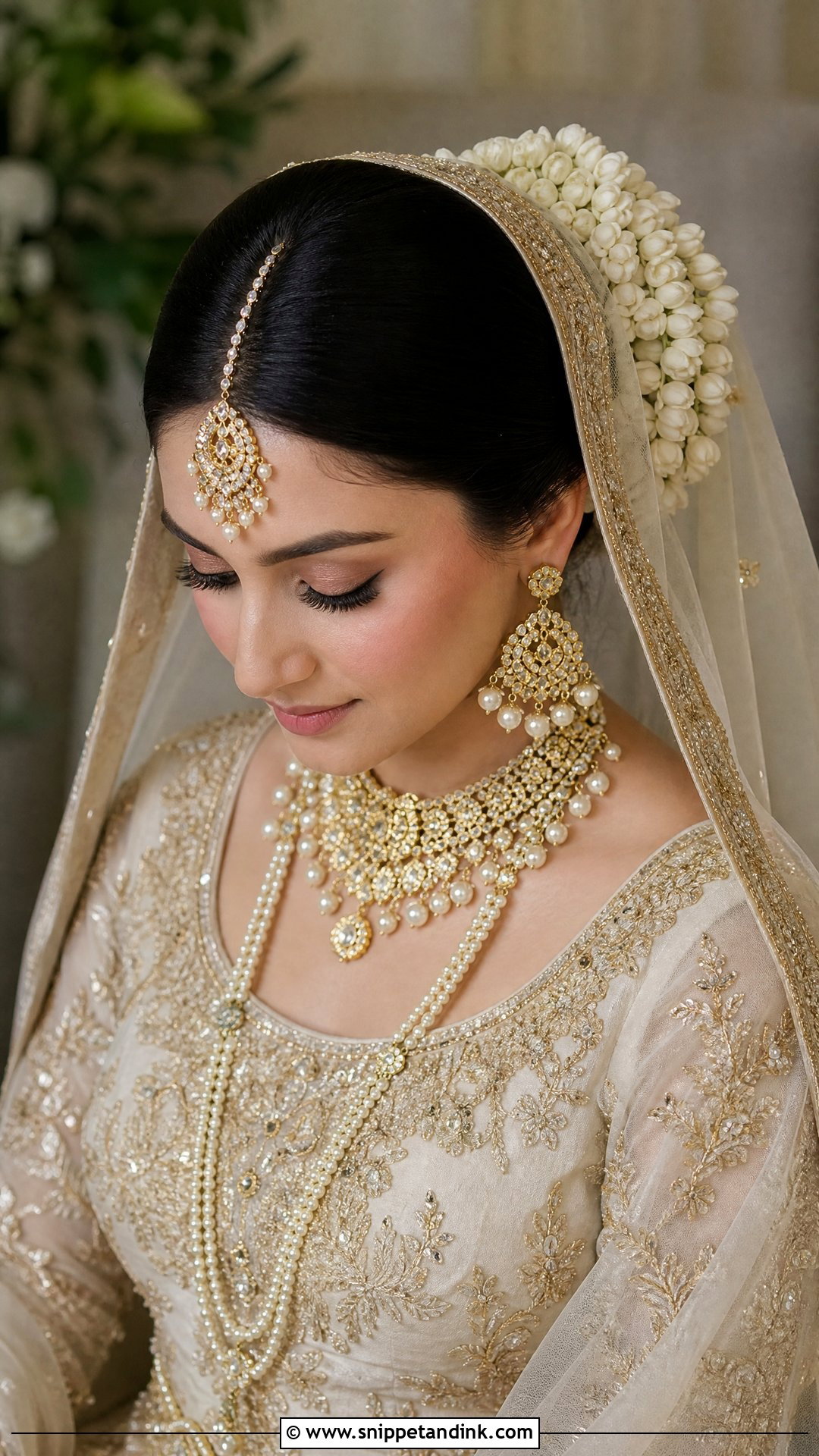
Nothing smells like a baraat quite like fresh motia. A bun wrapped in gajra feels deeply traditional, and the white flowers stand out against red, maroon, gold, ivory and deep jewel-toned bridal outfits. The strands can wrap the whole bun, sit to one side, or peek out from under the dupatta. Center part, smooth sides, controlled crown. Gajra is heavier than it looks when it’s several strands deep, so I pin each strand into the bun’s base with U-pins, not just around its surface, and the flowers go on after the last spray.
3. Baraat Bridal Sleek Bun
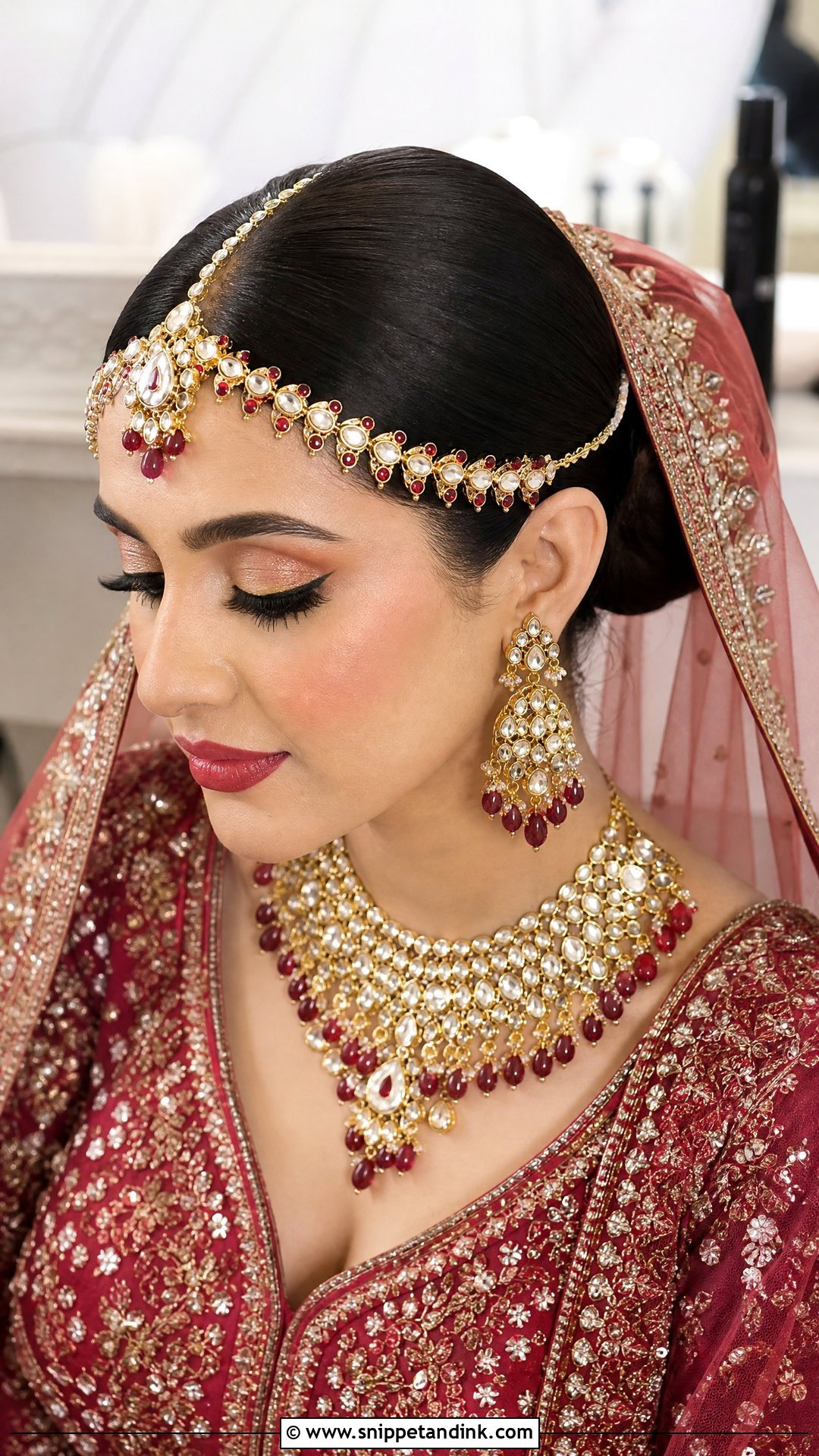
Heavy embroidery on a lehenga or gharara needs calm hair beside it, and that’s what a sleek bun gives you. Sharp center part, glossy finish, and a parting that stays neat for the matha patti. Low at the nape or slightly higher for lift. The weak spot is the hairline: baby hairs frizz under stage lights. I smooth them with a little gel on a toothbrush and set the bun with shine spray and strong pins, so it survives portraits and a long line of hugs.
4. Baraat Bridal Messy Bun
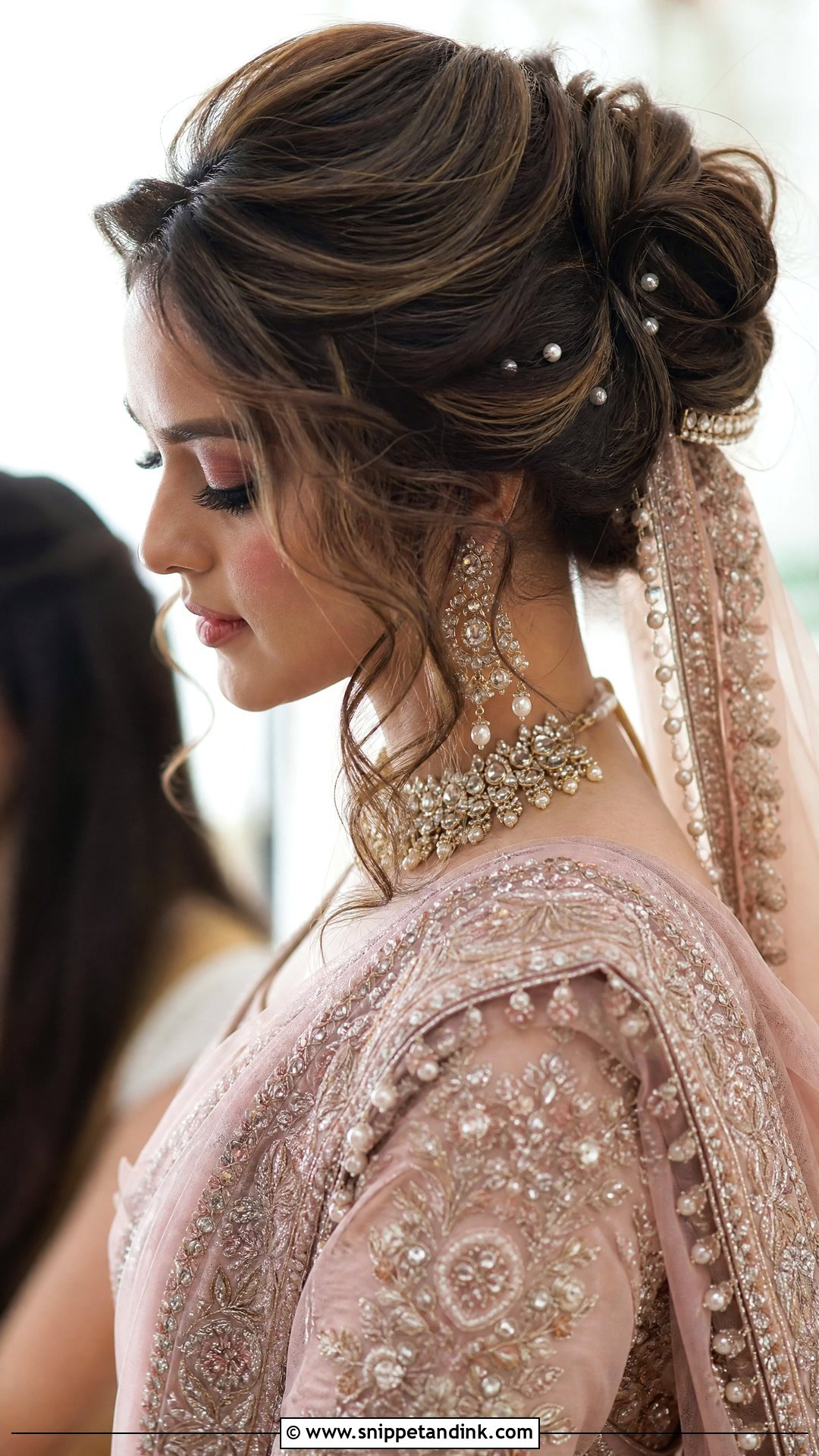
For a bride, messy means planned. This style gives volume without stiffness: loose face-framing pieces, airy texture, a fuller bun. Lighter dupatta draping, soft glam and pastel, champagne, rose or antique gold outfits suit it best. I’d steer you away from it under a heavy, fully embroidered dupatta, which squashes the texture flat within an hour. Inside, the bun is tight and structured; only the surface is loose.
5. Baraat Bridal Open Curls
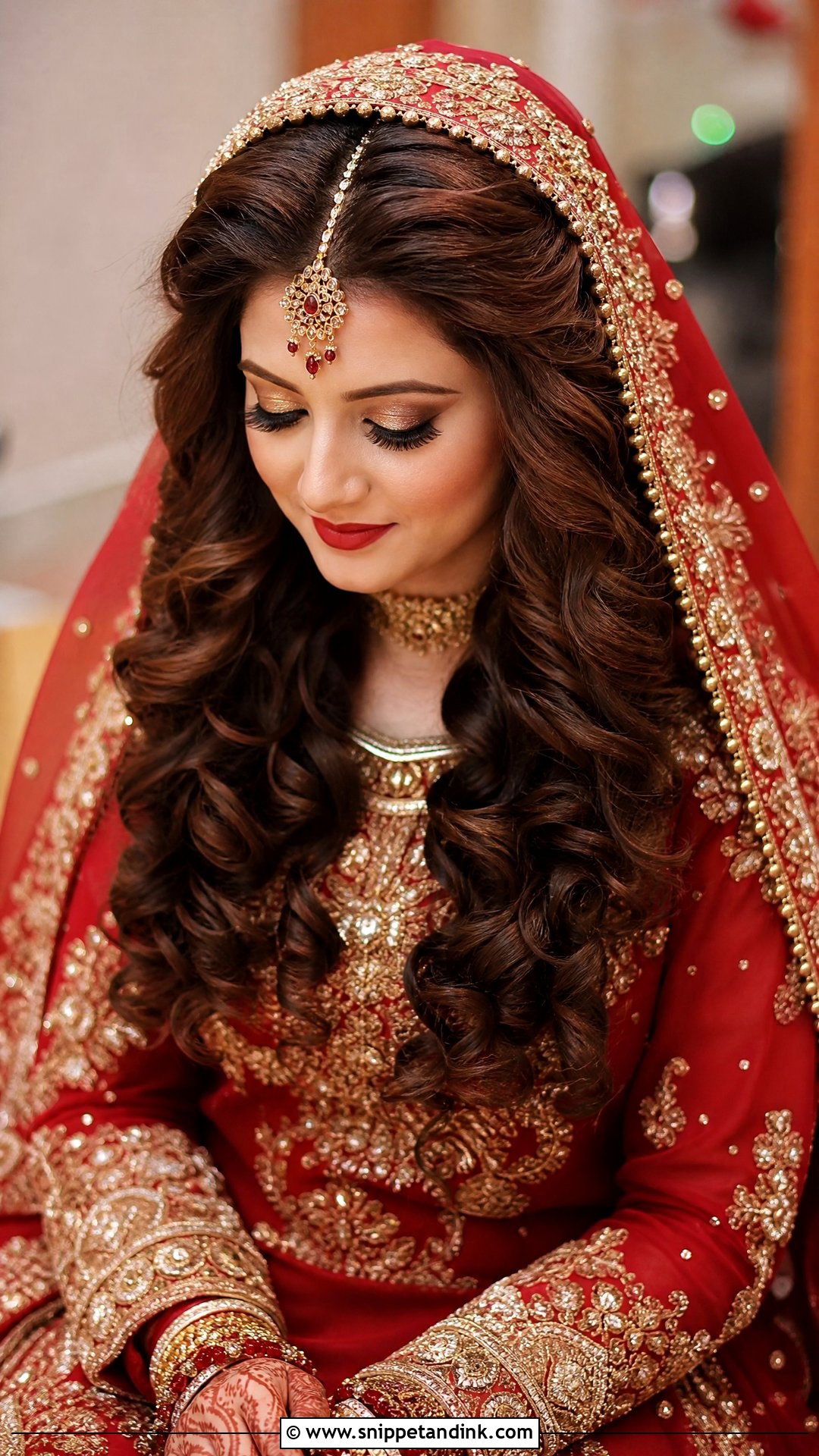
Open curls keep your hair on show instead of tucked away, with the dupatta pinned lightly at the crown or draped behind the shoulders. Brush them into defined waves rather than tight ringlets, which look dated in a bridal context. A little crown lift supports jewelry and keeps the face open. Your neckline and necklace need to allow hair over the shoulders, otherwise it tangles in the jewelry. For a long or outdoor baraat, I set each curl on a cool pin and use a firm-hold spray before brushing out.
6. Baraat Bridal Hollywood Waves
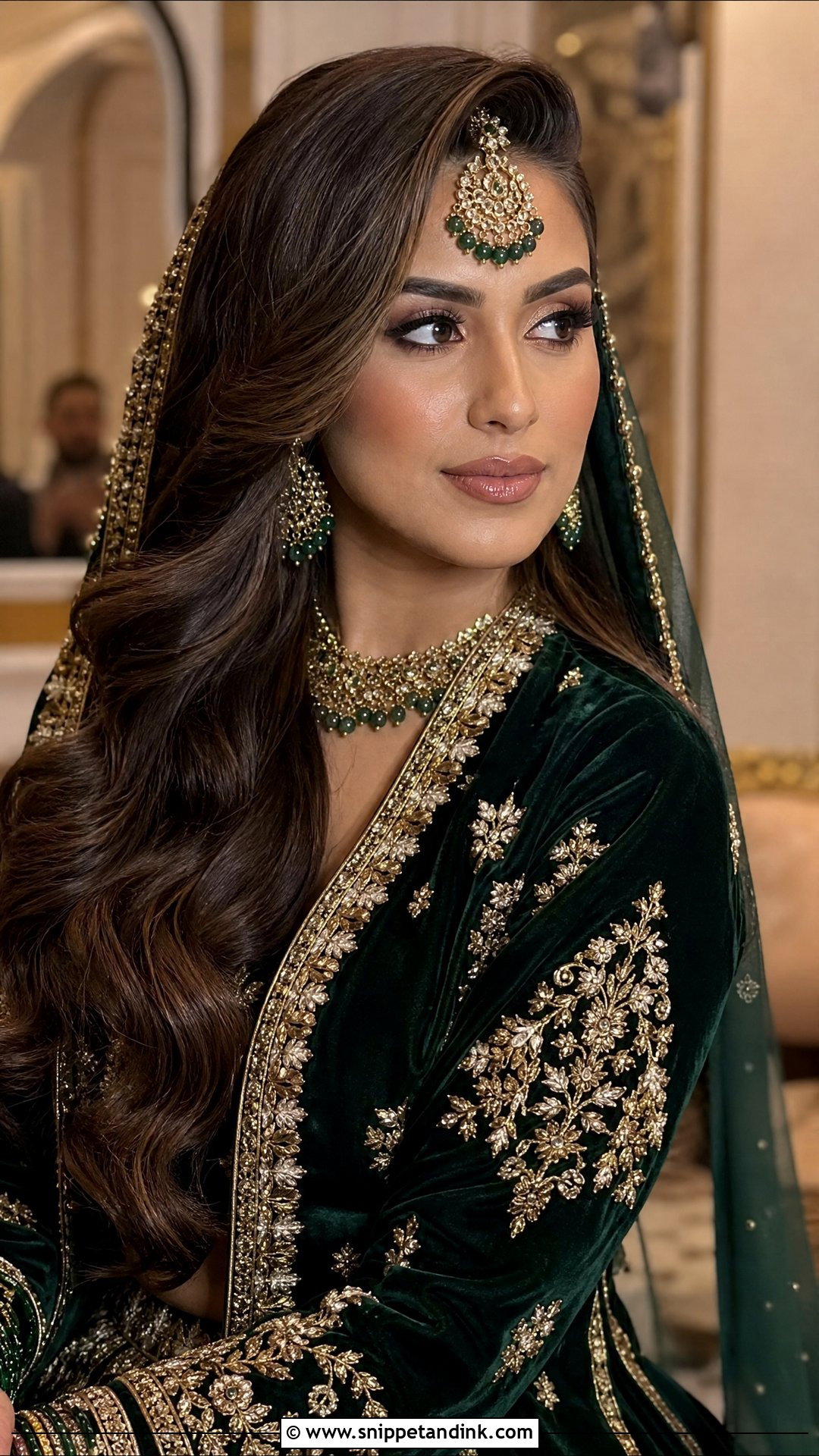
Deep, smooth waves all running in one direction give baraat hair a red-carpet polish that still sits well with South Asian jewelry. They suit brides who want open hair but something more controlled than loose curls. A side part with a passa looks glamorous; a center part suits a matha patti better. Velvet, silk, heavily embroidered lehengas and fitted blouses all pair well. Keep the dupatta light or pinned well back. Under a heavy one, the waves get pressed flat and you lose the whole point of them.
7. Baraat Bridal Half Up Hairstyle
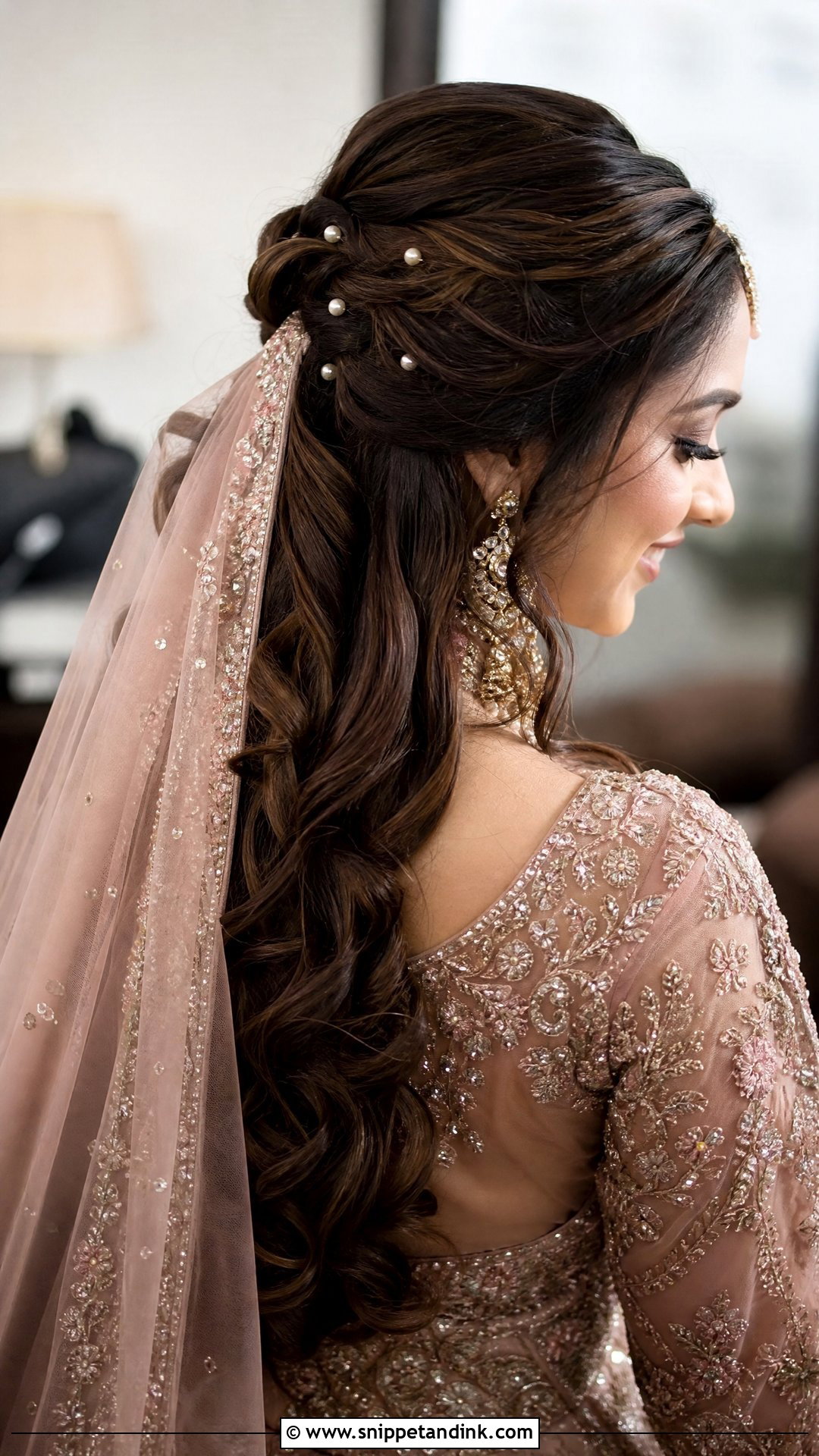
Half up solves a common baraat problem: you want open hair, but you need somewhere solid to pin the dupatta. The top section is twisted, braided or pinned with crown volume, and that becomes the dupatta’s anchor while the rest falls in curls or waves. Face-framing pieces stay, but the jewelry area is under control. Layered necklaces, soft glam and medium to long hair suit it. Extensions add fullness if needed; I clip them below the pinned section so the tracks stay hidden under the half-up.
8. Baraat Bridal Braid With Flowers
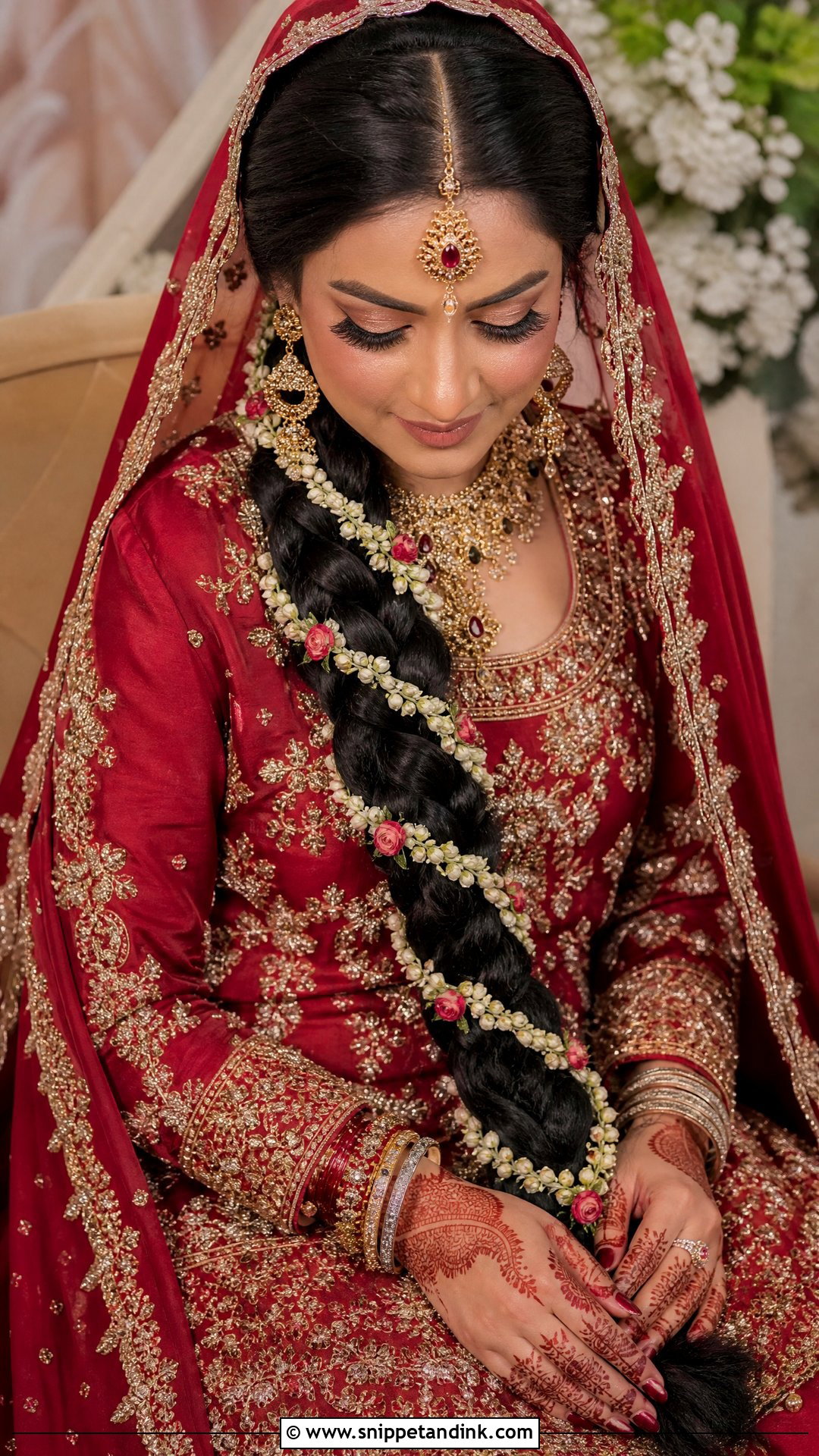
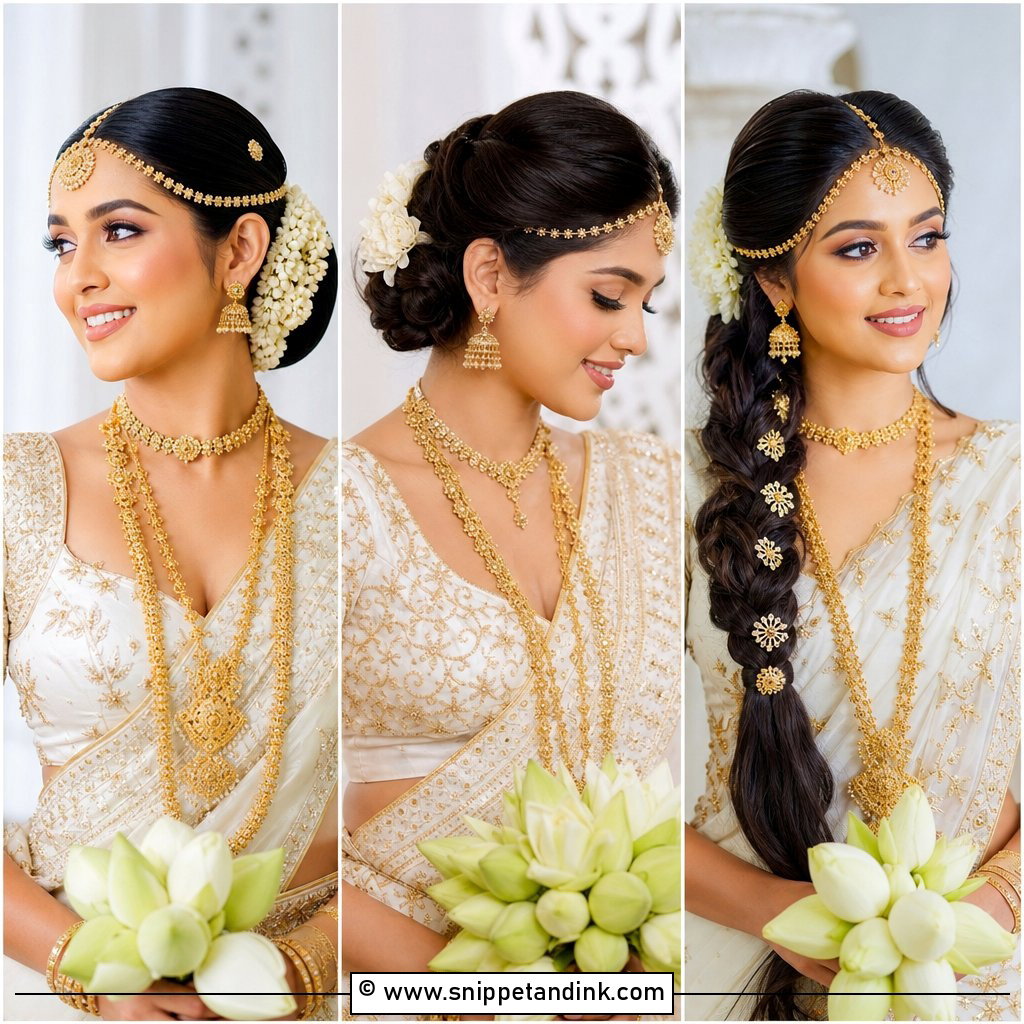
A long braid with flowers becomes part of the outfit itself, running down the back of a gharara, sharara or lehenga with strong traditional detailing. Long hair or extensions make it full. Jasmine, tiny roses, pearls or gold pins can echo the embroidery. Under a dupatta, a braid stays controlled for hours. The front can be sleek, softly puffed or center-parted. The braid should be tight enough at the nape that the flowers’ weight doesn’t pull it loose there; that’s the spot I check before the bride leaves the chair.
9. Baraat Bridal Side Braid
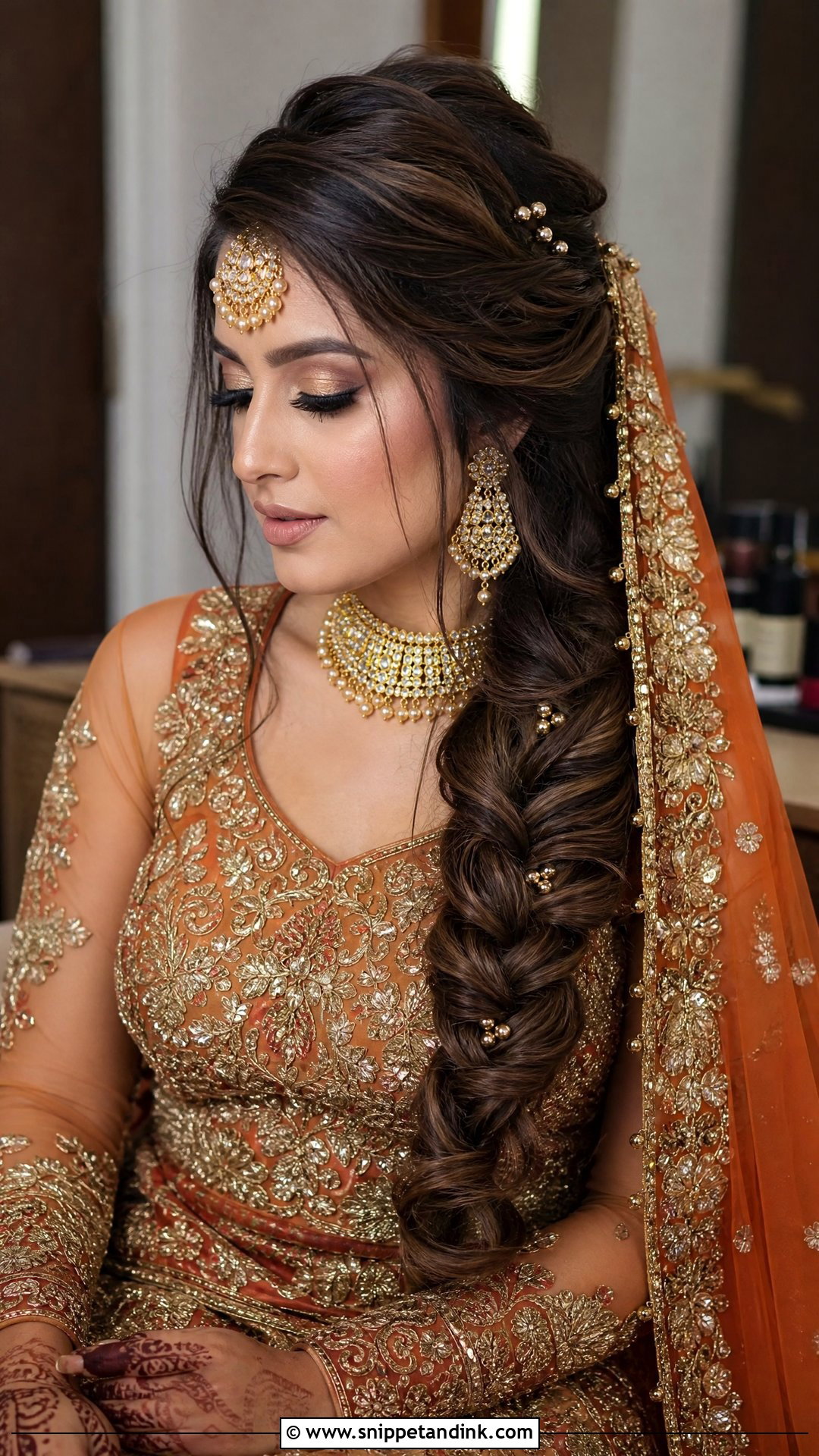
Bringing the braid over one shoulder puts the detail where the camera is. Fishtail, textured three-strand, or a fuller braid with extensions all work, finished with pearls, flowers or small gold accessories. It’s the smart choice when the dupatta will cover the back of your head, since the braid stays visible anyway. Keep the front smooth and lifted so it reads bridal, not casual. On thick hair, I start the braid slightly behind the ear so it lies flat against the neck instead of jutting out.
10. Baraat Bridal Front Puff Bun
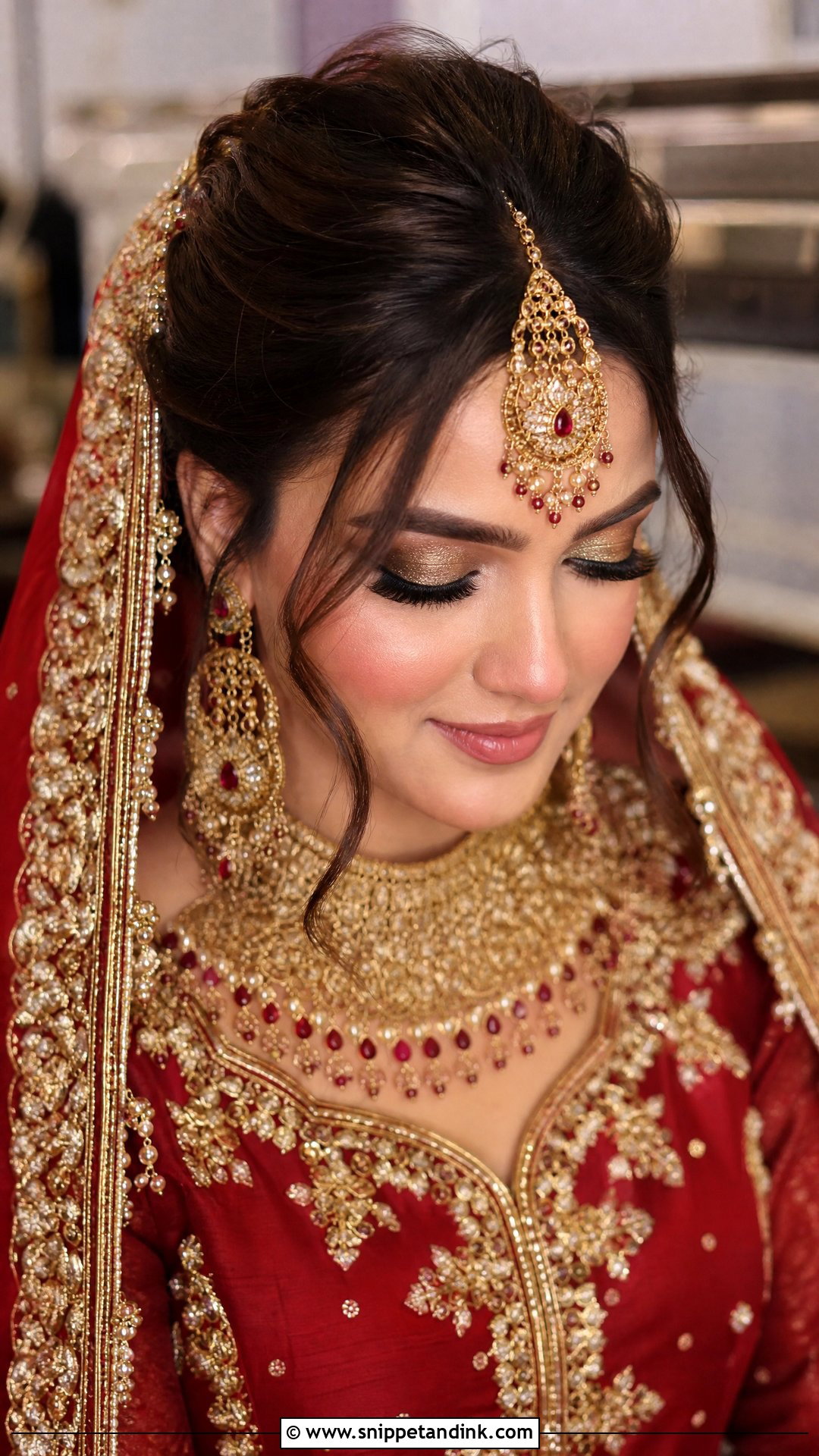
Height at the crown does two jobs at once. A front puff bun gives the dupatta lift so it doesn’t sit flat on the head, and it makes heavy jewelry look proportional. Round, heart-shaped and shorter faces gain length from it. The bun can be smooth, braided or textured. Keep the puff soft and moderate; a very tall puff looks dated and pushes the dupatta up into a peak in photos. Pair it with a center part, passa or matha patti.
11. Baraat Bridal Middle Part Bun
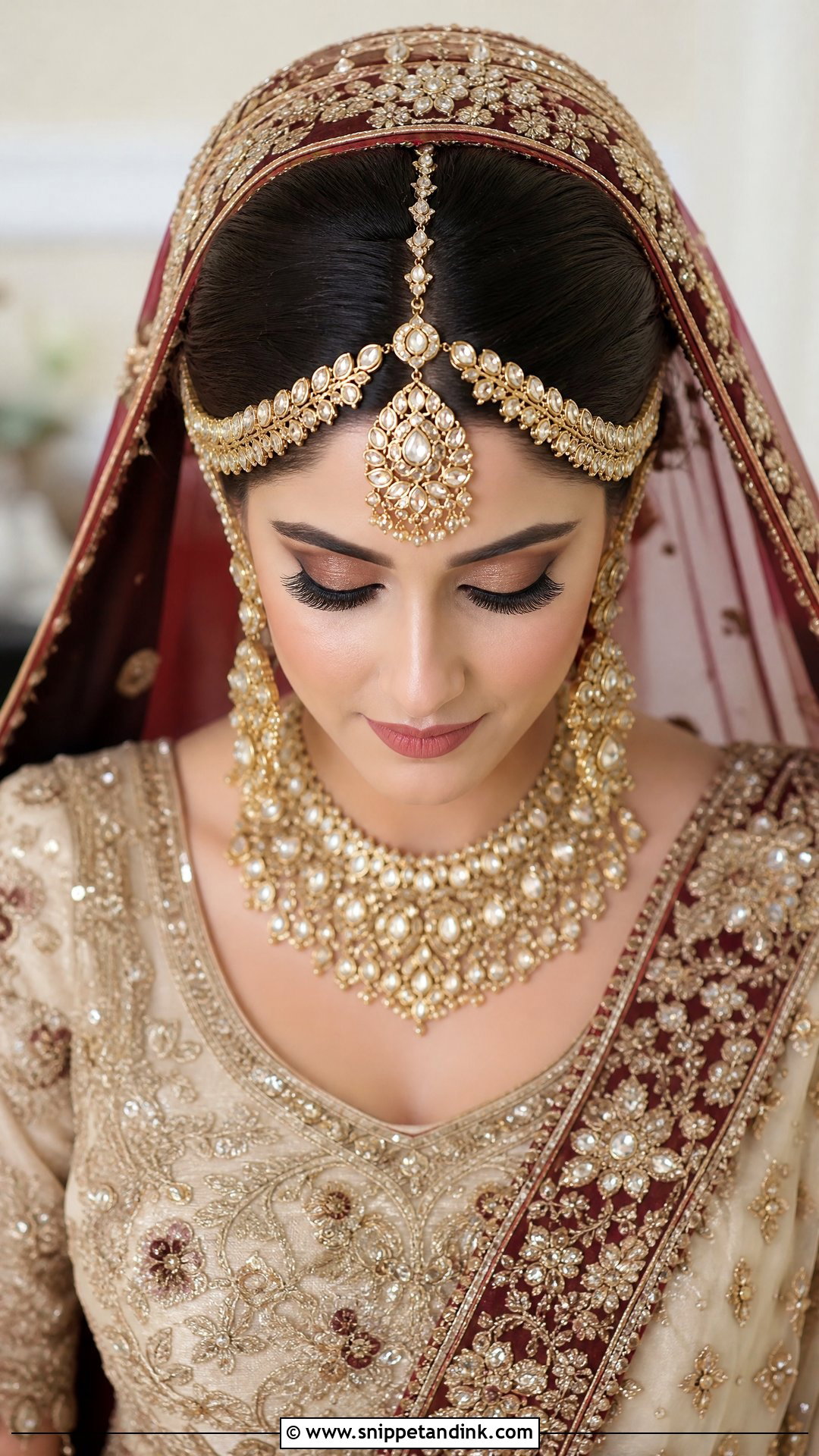
This is the baraat look most brides picture first, because nothing frames traditional jewelry quite as well. The center part gives a clean line for the tikka or matha patti, and the bun keeps hair controlled under the dupatta. Sleek, softly waved at the sides or textured near the bun all suit it. Deep red lehengas and ivory and gold ghararas both work. I measure the part from the middle of the nose bridge rather than trusting the hairline, which is rarely centered, so the tikka hangs straight.
12. Baraat Bridal Side Part Waves
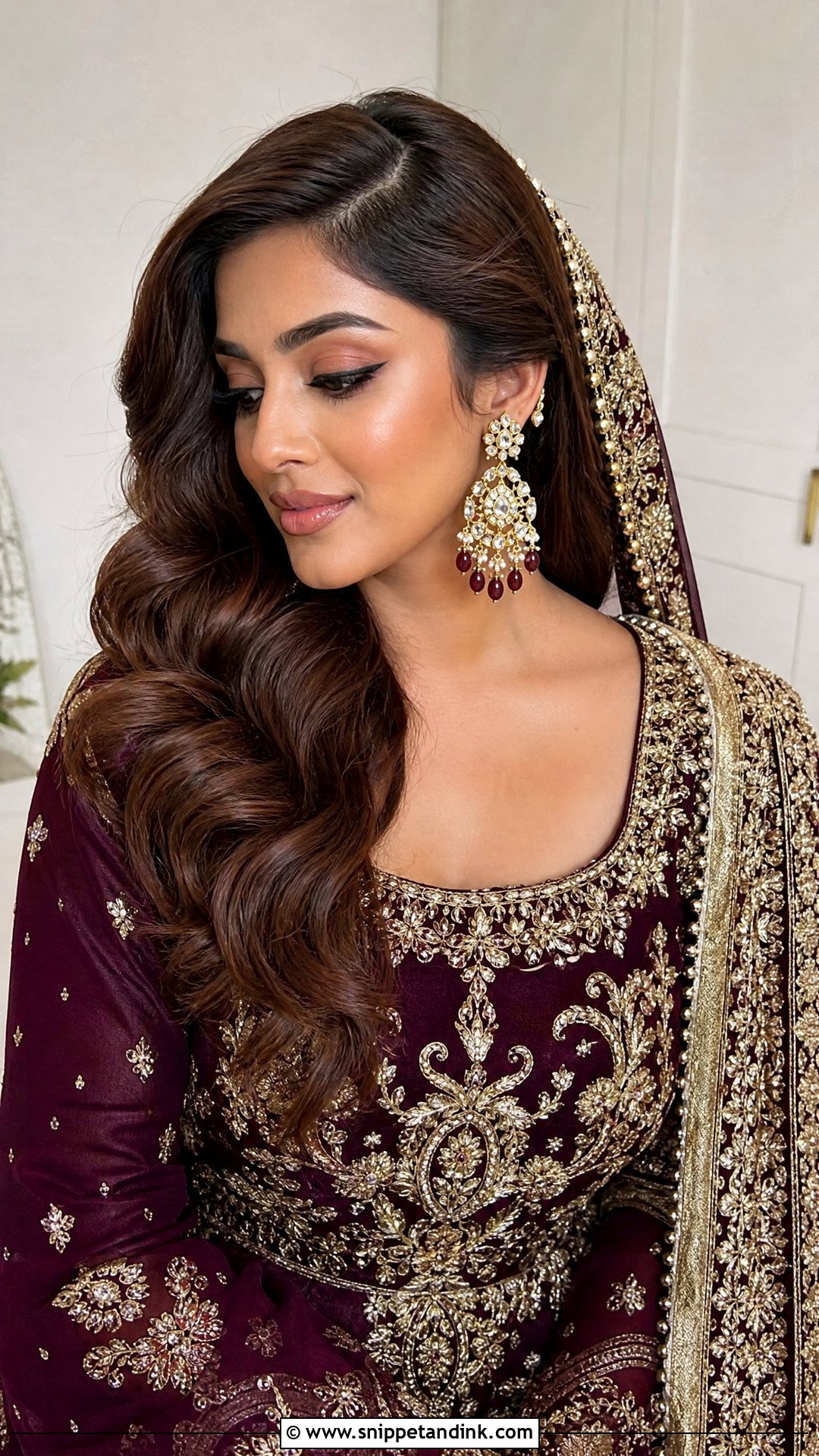
A deep side part adds drama around the face and pairs naturally with a passa or statement earrings, without committing to an updo. The waves need to be smooth, full and set firmly so they hold through the event. One side tucked behind the ear, the other flowing over the shoulder, is the shape I aim for. I hide two pins behind the tucked ear to keep it there; tucked hair tends to escape the first time you turn your head. It suits lighter dupatta placement and open-front portraits. A little crown volume keeps it balanced.
13. Baraat Bridal Braided Bun
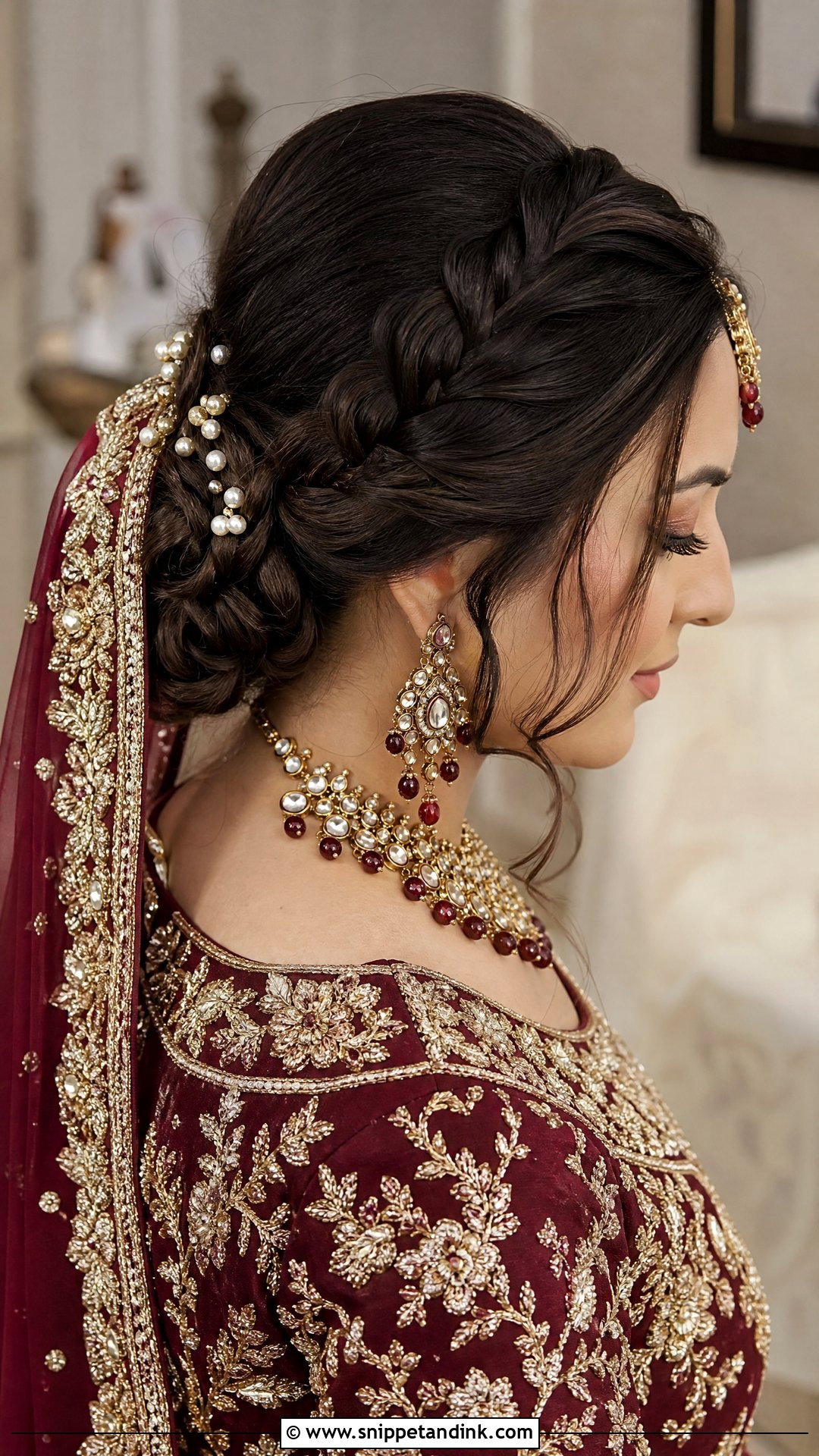
Braiding gives a bun both texture and grip, which is why I suggest it for long events, heavy outfits and structured dupattas. The braid can wrap around the bun, blend into it, or form a crown-like detail at the back. Pearls, pins and small fresh flowers tuck neatly into the braid sections. Sleek front for polish, a soft lift for something more romantic. It’s my answer for brides who ask for tradition, comfort and strong hold in one style.
14. Baraat Bridal Open Hair With Dupatta
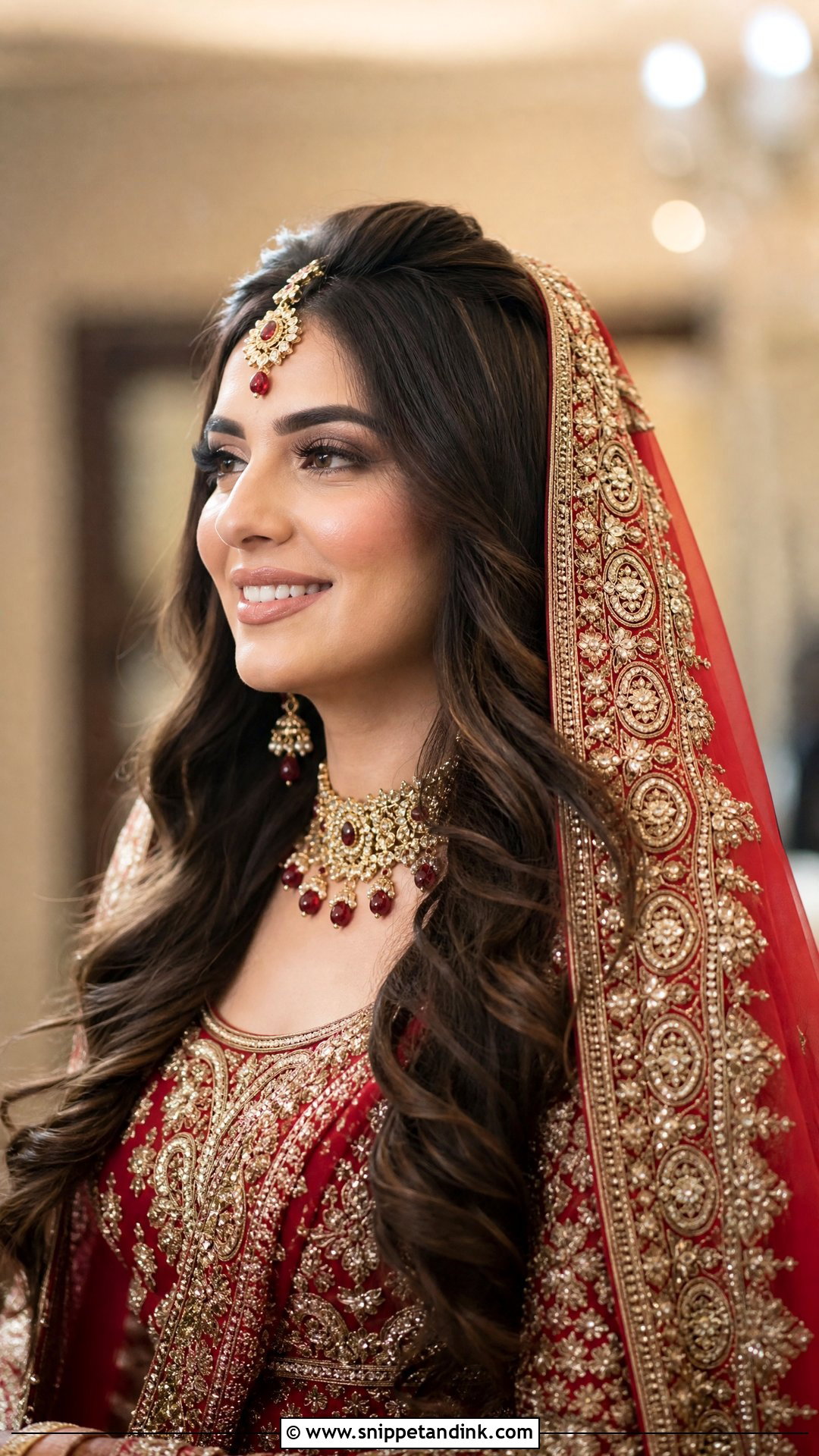
Open hair under a dupatta works only when it’s planned. The challenge is a veil placement that doesn’t flatten the crown or bury the curls. Soft waves, brushed-out curls or smooth loose curls usually hold up best, staying graceful without turning bulky under fabric. It suits brides who want their hair visible in portraits. I pin a small hidden braid or twist at the crown first and attach the dupatta to that, and I keep heavy product away from the face so the hair moves when you do.
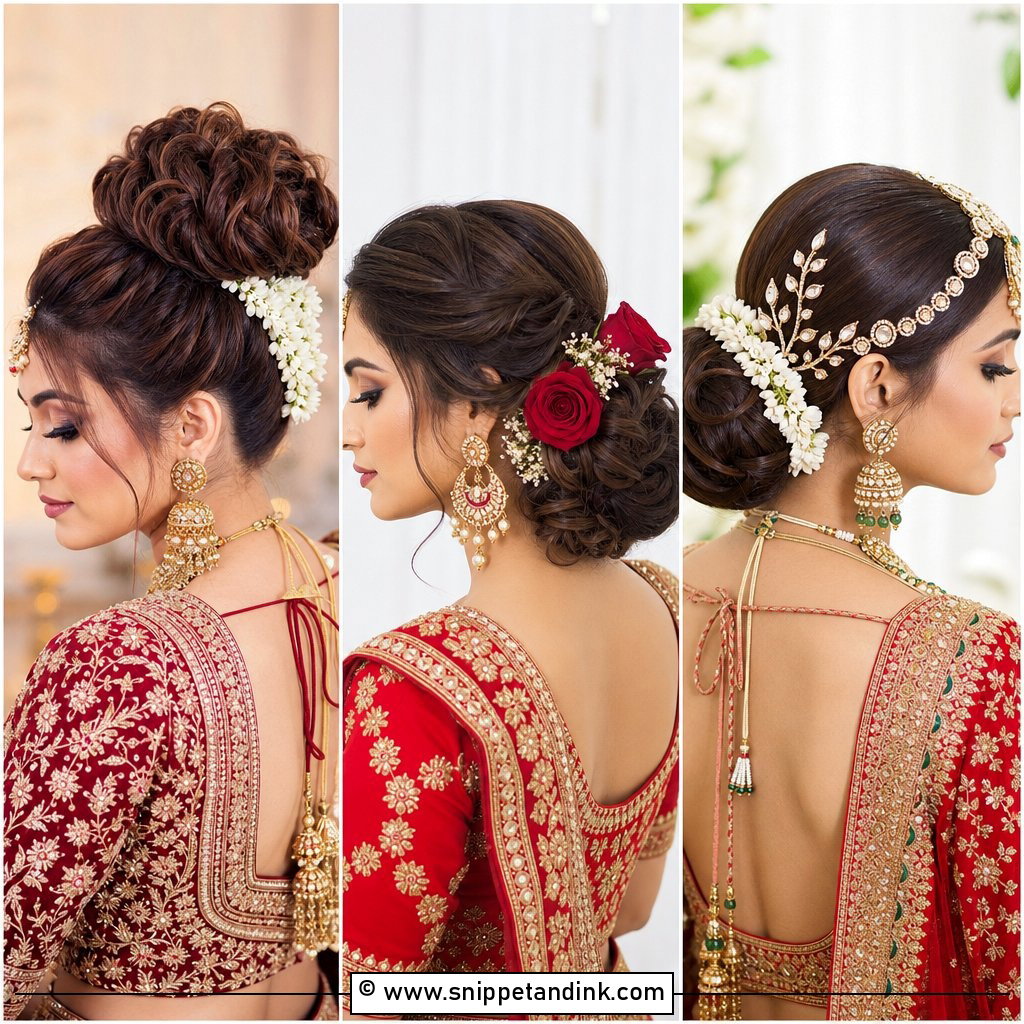
15. Baraat Bridal Bun With Matha Patti
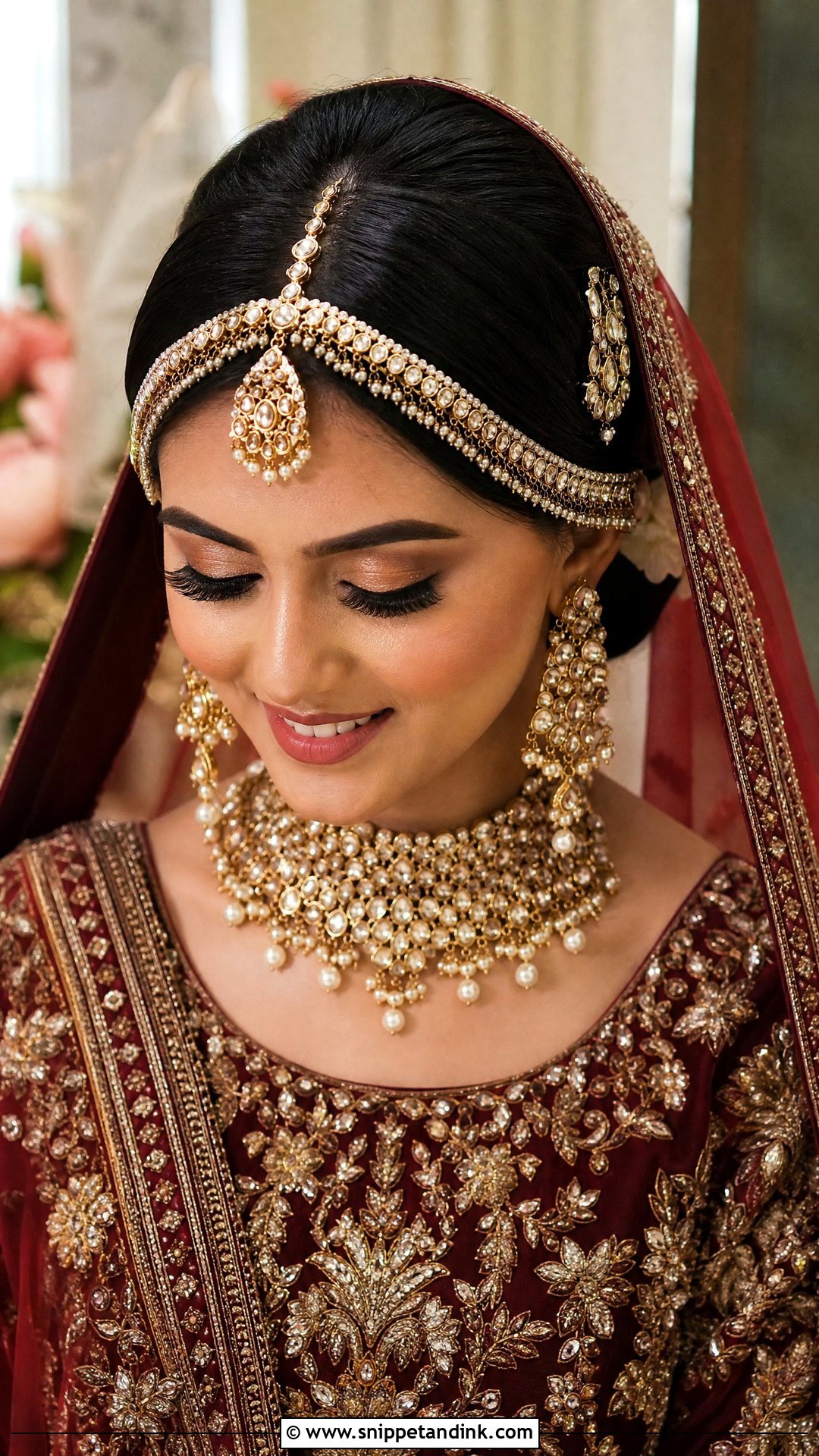
A bun with matha patti feels royal straight away, and the jewelry is the focus at the hairline, so the base must be clean. Middle part, bun low or mid-level to support the dupatta. Traditional red, maroon, gold or heavily embellished outfits suit it. Keep the sides smooth so the patti lies flat; any bump of hair underneath tilts the chains. I pin the side chains into the hair just above the ear so they don’t swing forward when you bow your head. Finish the bun with flowers, pearls or soft texture.
The Car Ride, the Stage and the Rukhsati
A baraat day has a few specific moments that are hard on hair, and each is worth planning for.
Getting from the salon to the venue
Many brides get ready at a salon and are driven to the venue in full outfit. A low car roof and a headrest can crush crown volume or knock a jhoomar sideways. Sit forward, keep your head off the headrest, and ask for a car with some headroom. Have someone carry pins, a mini hairspray and a comb, because a quick touch-up on arrival is normal.
Hours on stage
Sitting under lights for a long stretch is warm, and you’ll be turning your head constantly for photos. Sleek styles cope with heat better than open curls, which drop. If you’re wearing your hair open, the curls need setting firmly and cooling fully before they’re brushed out.
The rukhsati
The farewell brings a lot of hugging, often a Quran held over your head, and plenty of tears. It’s usually one of the last big photo moments too. Ask a sister or friend to check your dupatta and front pieces just before it starts, and keep tissues and blotting papers close. The hair doesn’t need to be perfect here; it just needs to still be in place.
Red, Gold and a Hairstyle You Can Sit In for Hours
Every style here can look regal; the real question is which one you’ll still be comfortable in when the rukhsati comes. Sleek buns feel polished, open curls feel softer, braids lean traditional and half up gives you both structure and movement. Do the trial with your real dupatta, matha patti and earrings, then sit in them for twenty minutes, the way you will on stage. Take a few photos from the side and from above. If nothing pulls or slips, you’ve found your baraat hair.
You'll Like These Ideas:



Leave a Reply