
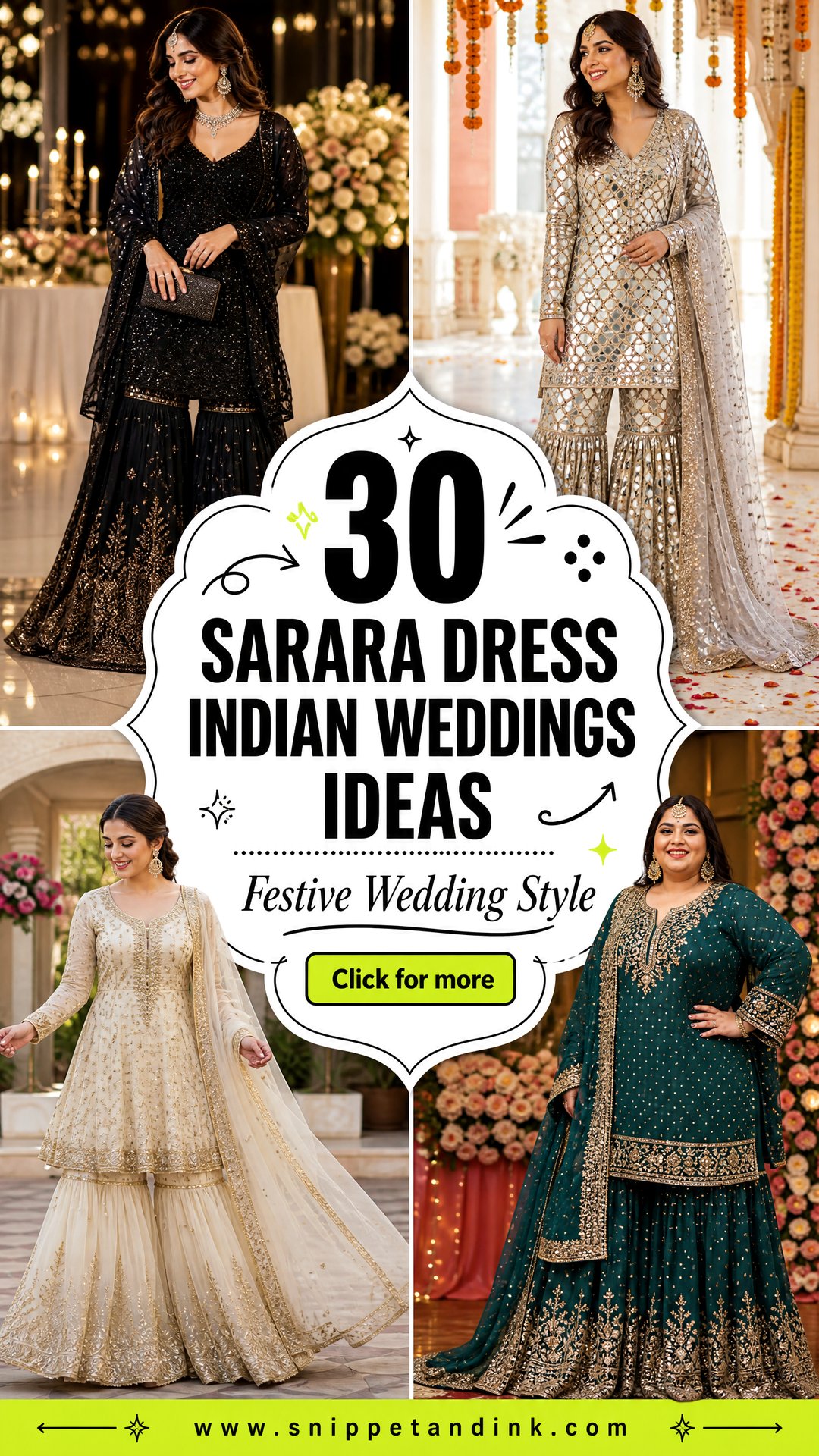
Of all the outfits I fit for Indian weddings, the sarara (often spelled sharara) is the one people underestimate. It has the swing of a lehenga, the ease of trousers and a kurta that does most of the decorating. It works from the haldi to the reception, and the fabric and embroidery decide which. The thirty looks below cover bridal red, haldi yellow, chikankari, velvet, Banarasi and modern cuts, each with the detail I’d look at before buying.
How Many Kalis Make a Sarara Swing
A sarara is wide-legged trousers cut so each leg flares from the hip, and the flare comes from panels called kalis stitched together down each leg. More kalis and more fabric mean more swing. A ready-made sarara with too little fabric hangs like palazzo pants, which is the most common disappointment I see.
- Hold each leg out at the hem. A good sarara should open into a generous half circle or more.
- Check the length in your shoes. The hem should just touch the top of the foot, not puddle on the floor.
- Choose a waistband you can sit in. Drawstrings and soft elastic suit floor seating; side zips suit fitted, formal looks.
- Remember the difference from a gharara: a gharara is fitted to the knee and then flares, joined by a decorative band. If the flare starts at the knee, it’s a gharara.
I always ask clients to sit down and stand up in the trial room. Wide pants catch under you when you rise, and it’s better to discover that in the shop than on the stage steps.
1. Red Bridal Sarara Dress
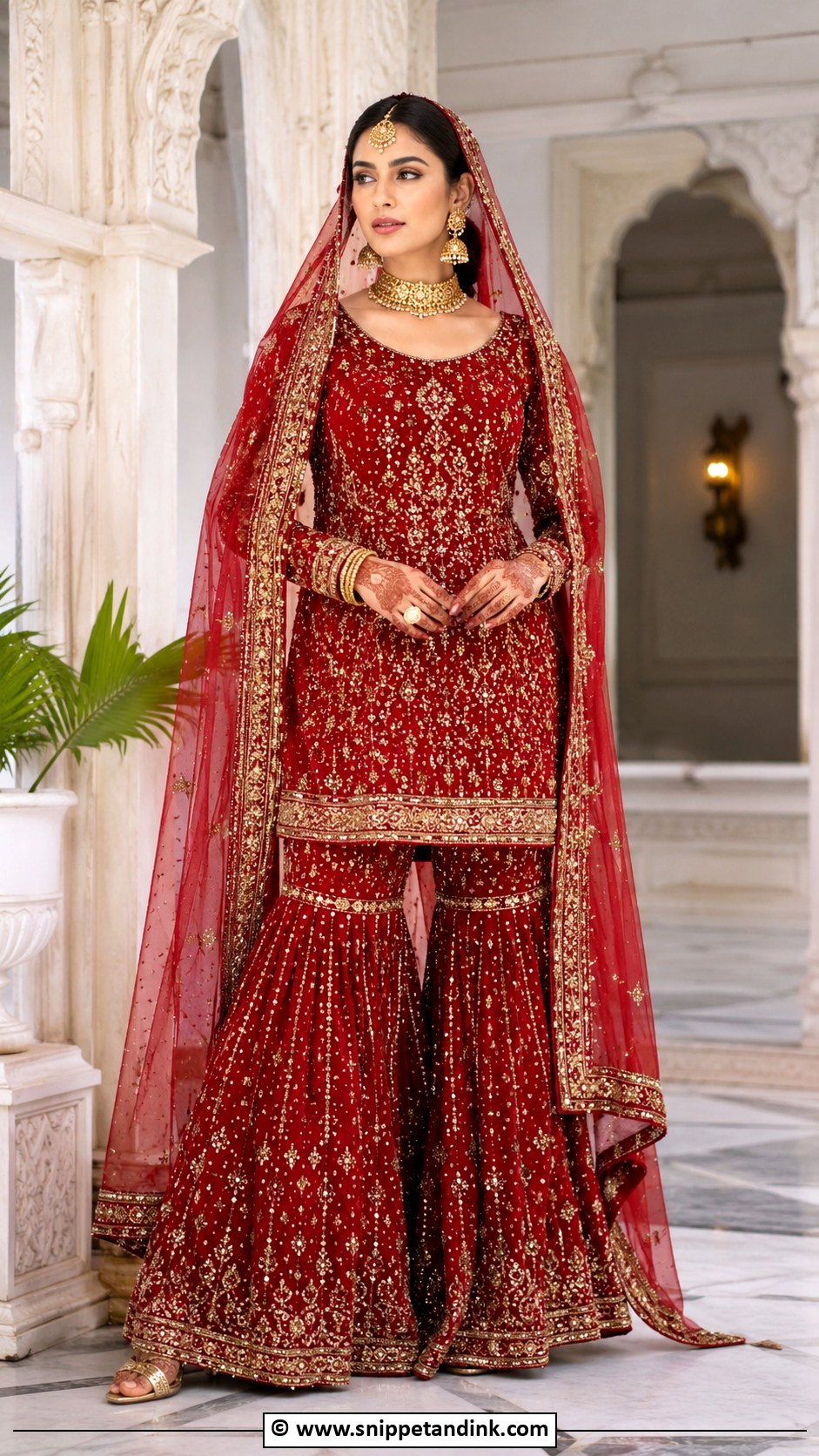
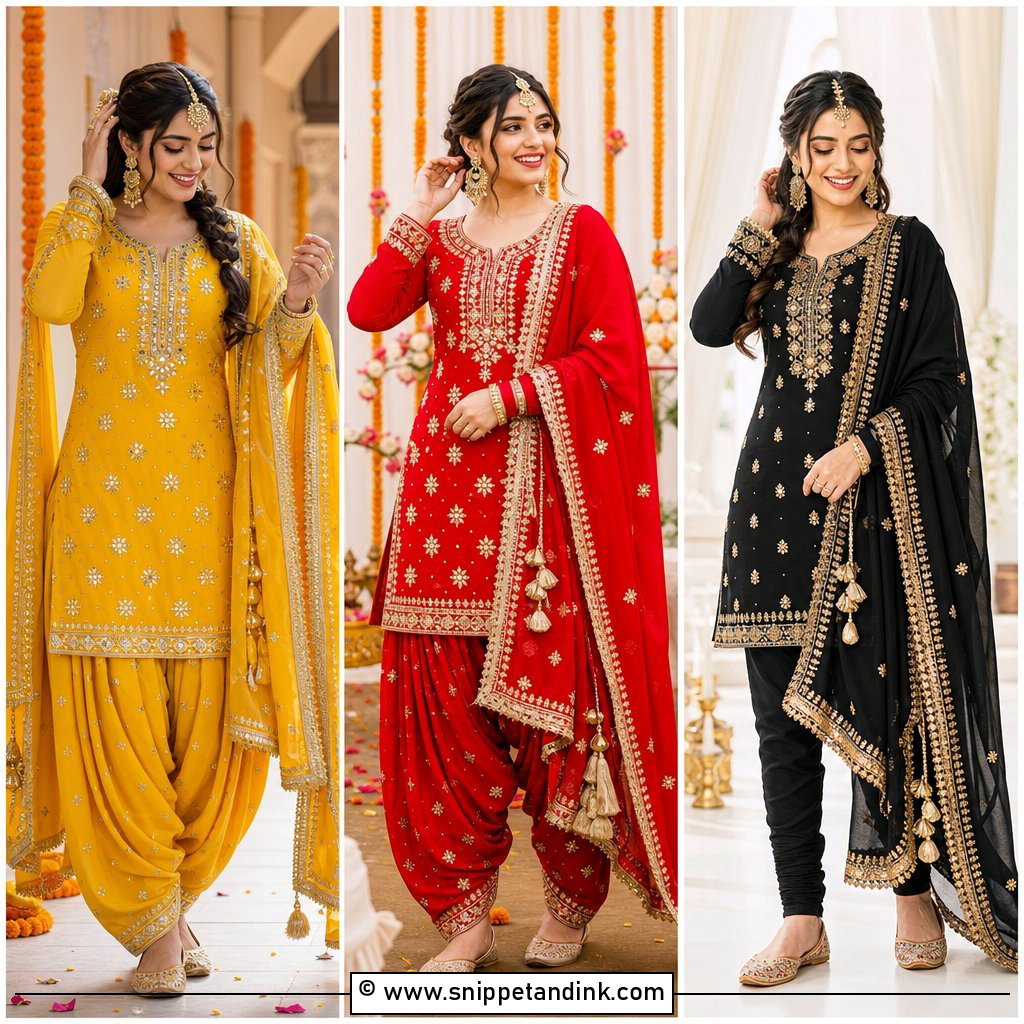
Red sararas are a strong option for a bride’s smaller functions, a nikkah, or a court ceremony followed by a dinner. The kurta carries the zardozi or zari, and the flared pants need enough panels to move properly, otherwise they hang flat. I’d balance heavy embroidery with a choker rather than a long rani haar, because a long necklace fights the short kurta’s neckline. Bridesmaids can take this in softer reds or rust. Gold juttis are kinder than heels for a long ceremony.
2. Pastel Pink Sarara Suit
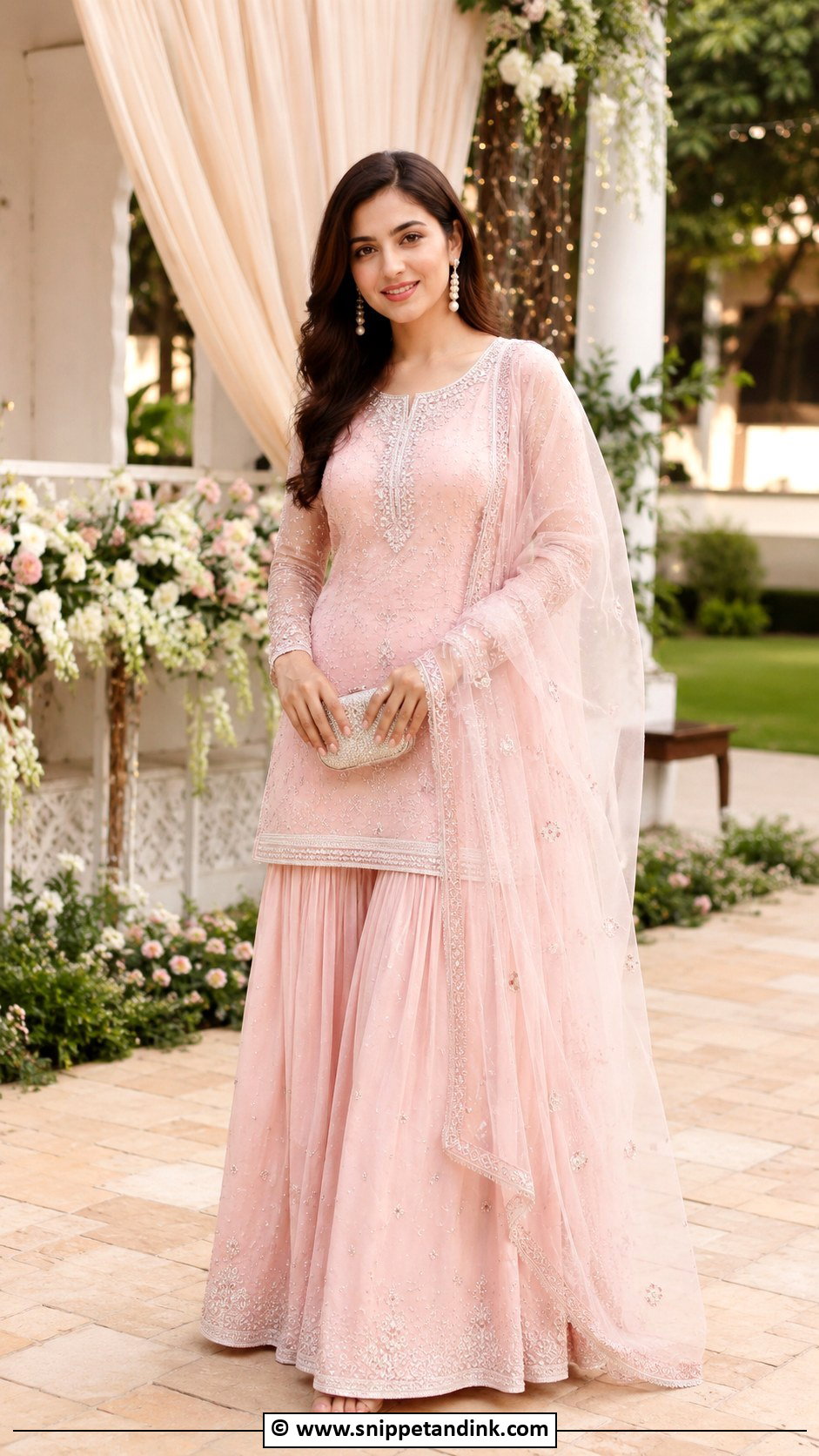
Blush pink is a daytime colour, and it looks its best in natural light. Georgette or organza keeps the sarara airy; pearl or thread embroidery adds detail without weight. A sheer dupatta with a fine border finishes it. Silver or rose gold jewellery suits the cool undertone of most blush shades. My one caution: very pale pink can wash out deeper complexions under flash, so choose a slightly warmer rose if that’s a concern.
3. Yellow Haldi Sarara Outfit
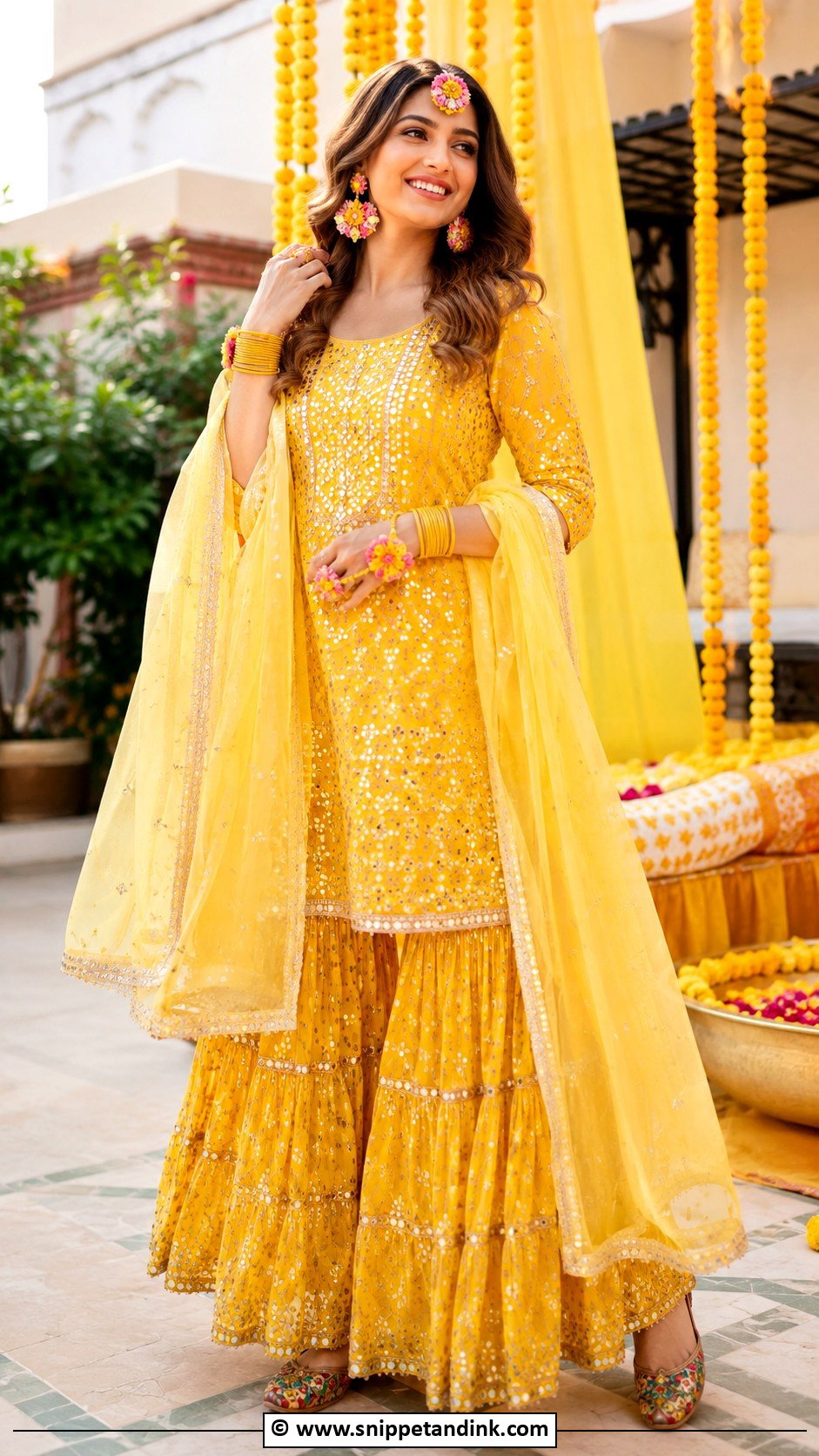
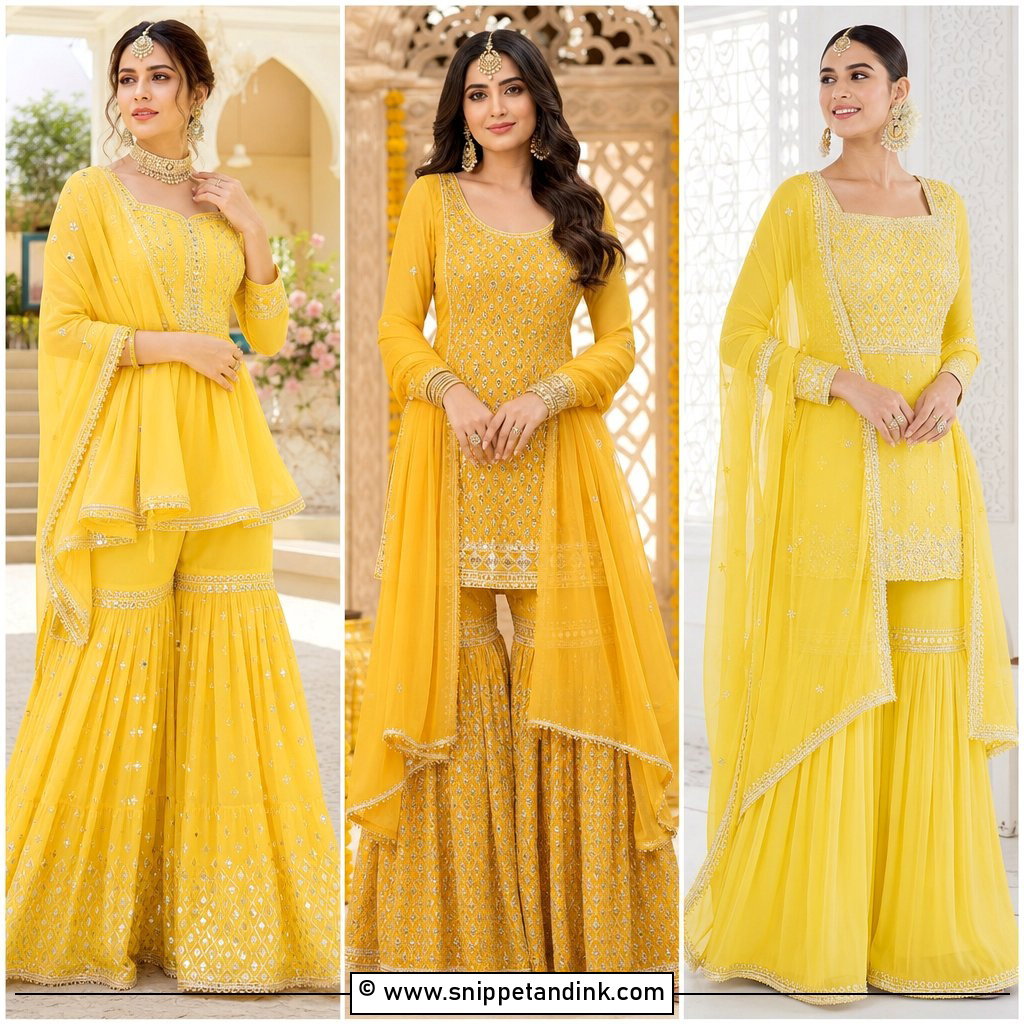
Haldi outfits get stained, so I always say buy the yellow haldi sarara outfit expecting turmeric on it. Cotton silk and chanderi breathe in the heat and wash more easily than pure silk. Mirror work or gota patti keeps it festive. Floral jewellery is traditional and also practical, since it can be thrown away afterward. Juttis suit the floor seating and the inevitable dancing.
4. Green Mehendi Sarara Dress
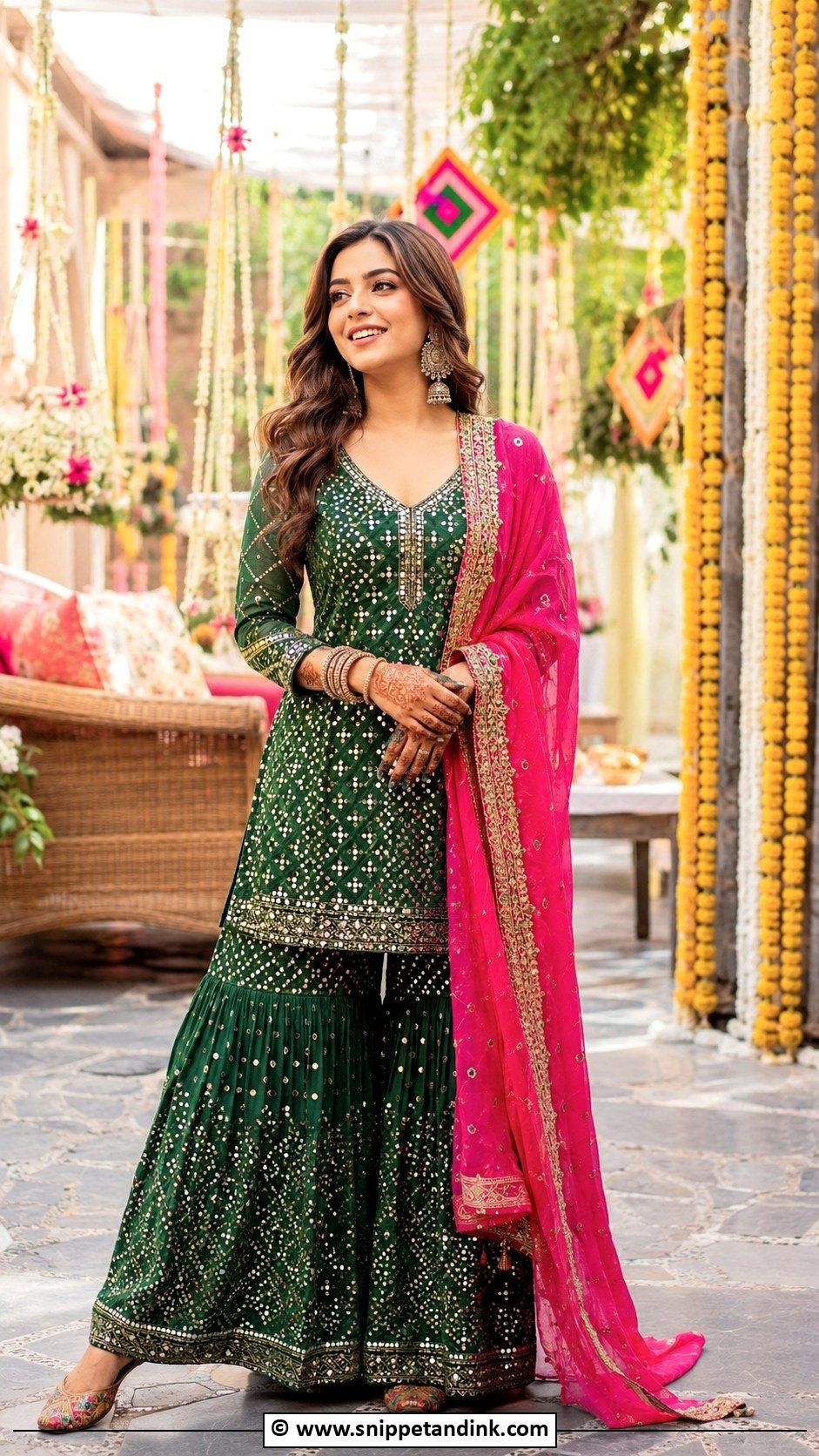
Green is the traditional mehendi colour in many families, and a green mehendi sarara dress sits comfortably in that tradition. Emerald and bottle green read richer; sage and lime feel younger. Mehendi means sitting for long stretches, often on the floor, so I look for a drawstring or soft elastic waistband rather than a stiff zip. A contrast dupatta in yellow or pink is classic. Keep your hands free of heavy bangles if you’re getting henna applied.
5. White Chikankari Sarara Set
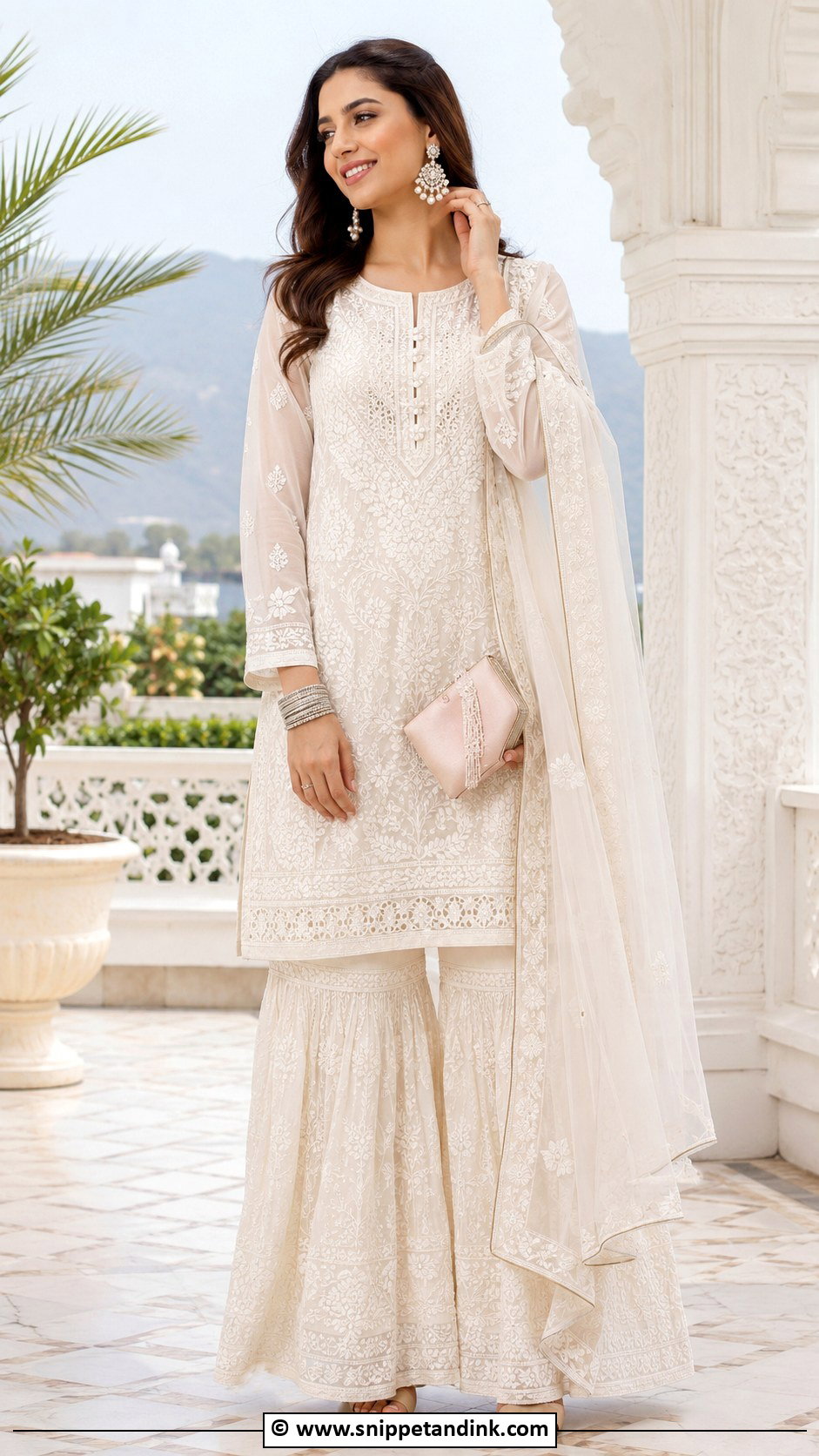
Chikankari is hand embroidery from Lucknow, done in white thread on fine fabric, and its texture shows best in daylight. On a white sarara set it looks cool and composed at a summer morning ceremony. Pure white can look flat in photos, so I add contrast through a pastel potli or pearl and silver jewellery. Check with the hosts first, since some families don’t wear white to weddings. Ivory is the safer shade.
6. Black Sarara Dress For Reception
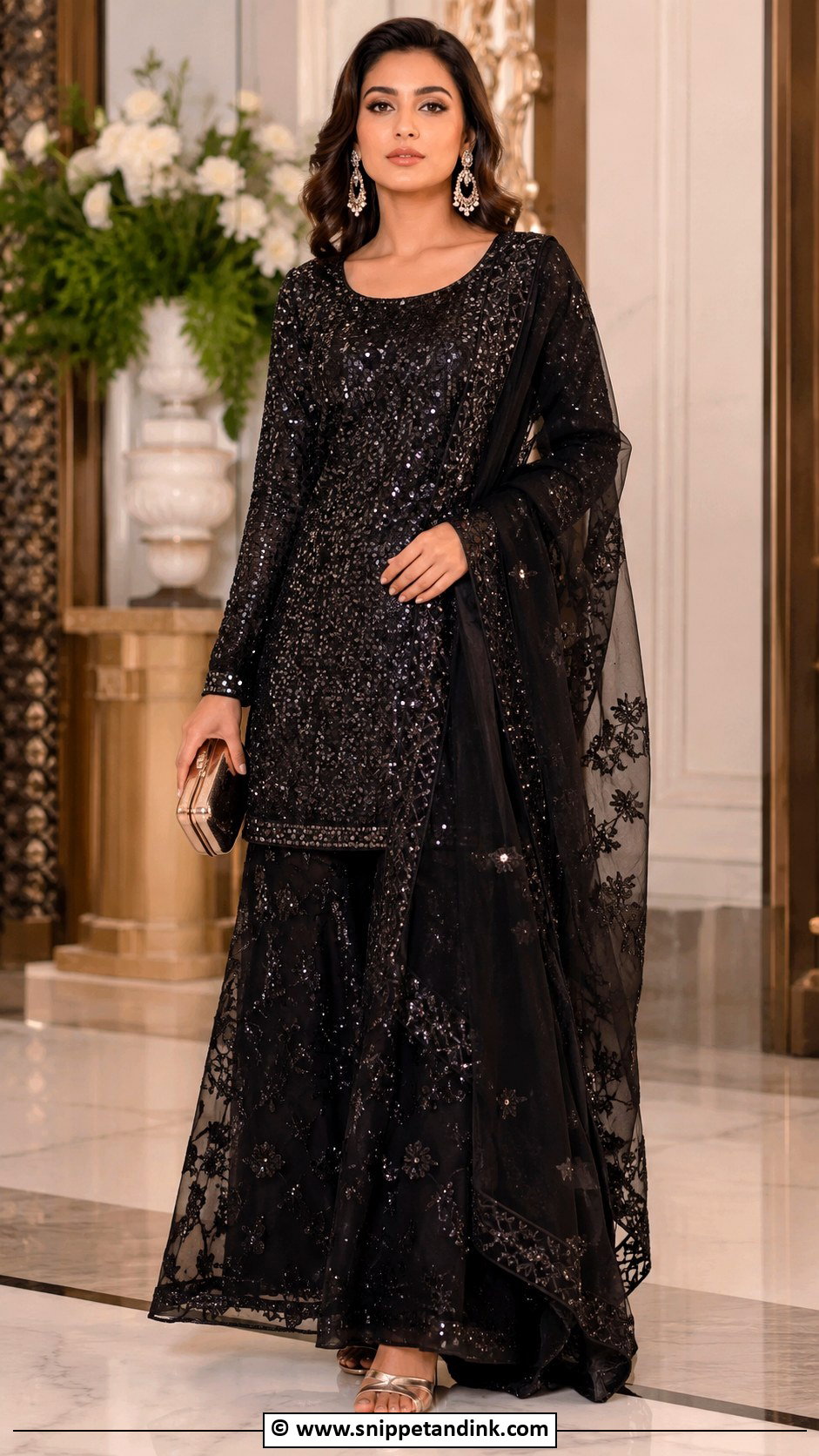
Black works at receptions and cocktail evenings, where the dress code is more Western and the lighting is low. Cutdana and sequin embroidery give black real sparkle without colour. I’d skip it for daytime religious ceremonies, where many families still prefer bright colours. A sheer black dupatta with a border adds drama; a sleek ponytail keeps the line clean. Antique gold jewellery warms the look.
7. Ivory Sarara Dress With Dupatta
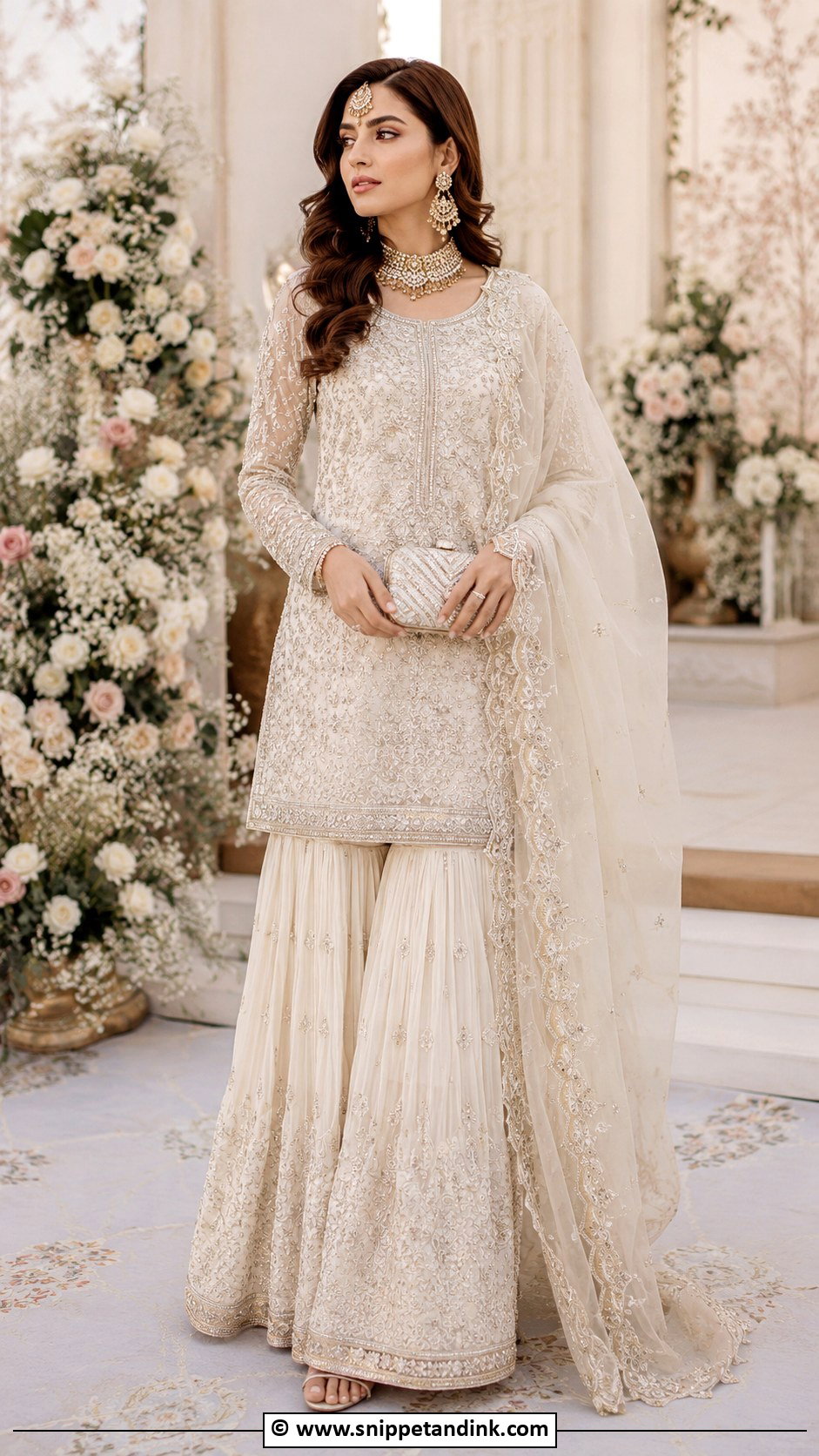
Ivory is the neutral I reach for when a client wants something rich but quiet. Pearl, zari or tone-on-tone embroidery shows texture without colour. The dupatta is where you can add personality: an emerald or ruby dupatta changes the whole feel. Kundan jewellery brings warmth to the pale base. I’d avoid it if the bride is wearing ivory, which is increasingly common at receptions.
8. Royal Blue Sarara Suit
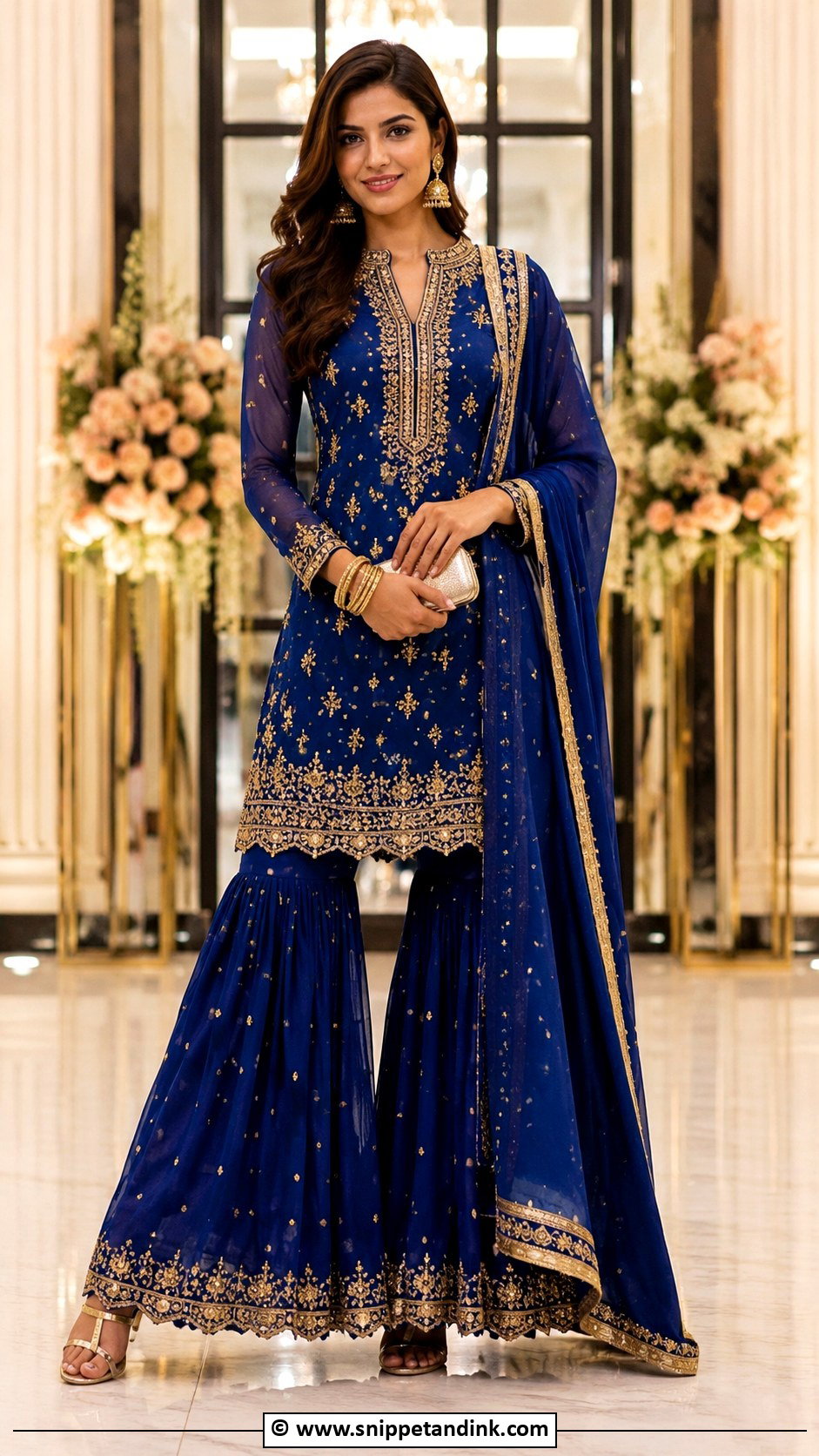
Royal blue holds its colour under artificial light better than most shades, which is why I suggest it for sangeets and receptions. Gold embroidery on it reads very traditional, mirror work more playful. The wide flare of the sarara needs a dupatta with a heavy border to balance it visually. Gold jewellery suits it best. A centre-part bun and kohl-lined eyes keep the look classic.
9. Peach Organza Sarara Outfit
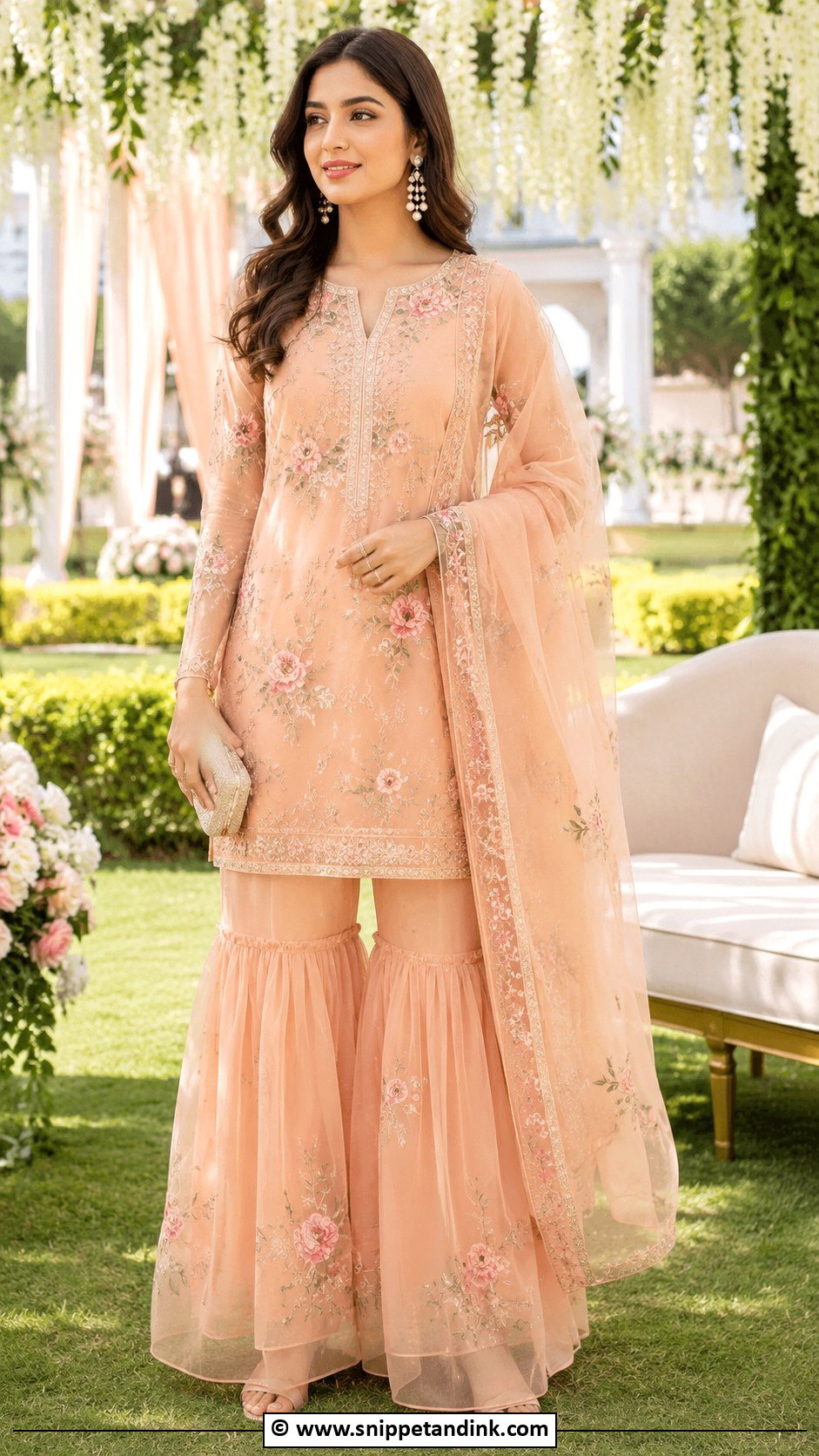
Organza gives a sarara shape without bulk: the flare holds out rather than collapsing. Peach suits warm skin tones and outdoor daylight. I check one thing with organza sararas every time: it creases where you sit, so a garden wedding with long seated stretches will leave lines. A quick steam before photos solves it. Pearl earrings and nude heels keep it fresh.
10. Maroon Velvet Sarara Dress
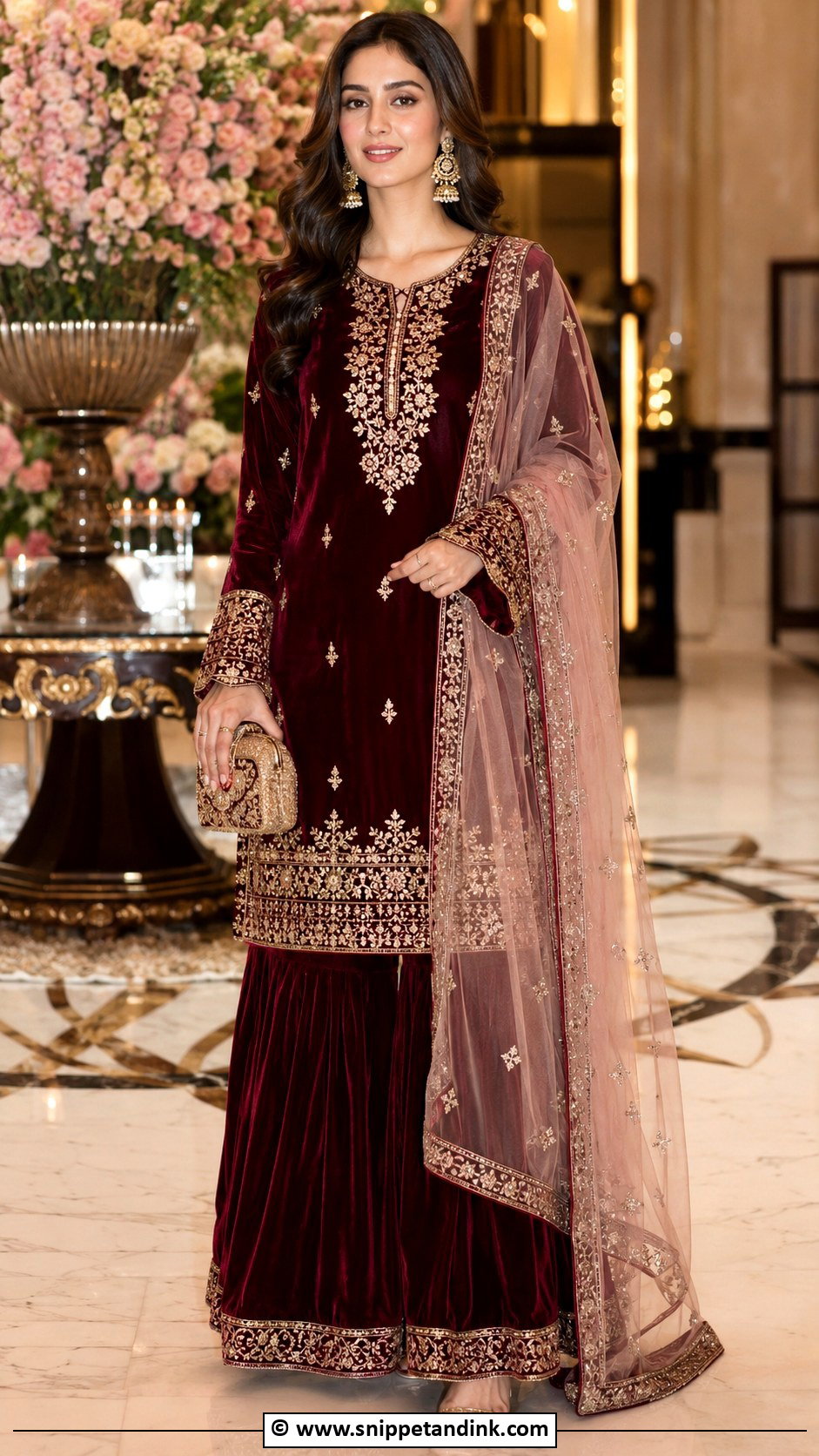
Velvet is a winter fabric. It’s warm and heavy, and a full velvet sarara can be a lot to carry, so I usually pair a velvet kurta with silk or satin pants. Antique gold embroidery suits maroon velvet best. A net or organza dupatta keeps the top half from feeling solid. This is for cold-weather receptions and evening ceremonies, not summer lawns. Deep lips and defined eyes match the richness.
11. Gold Embroidered Sarara Set
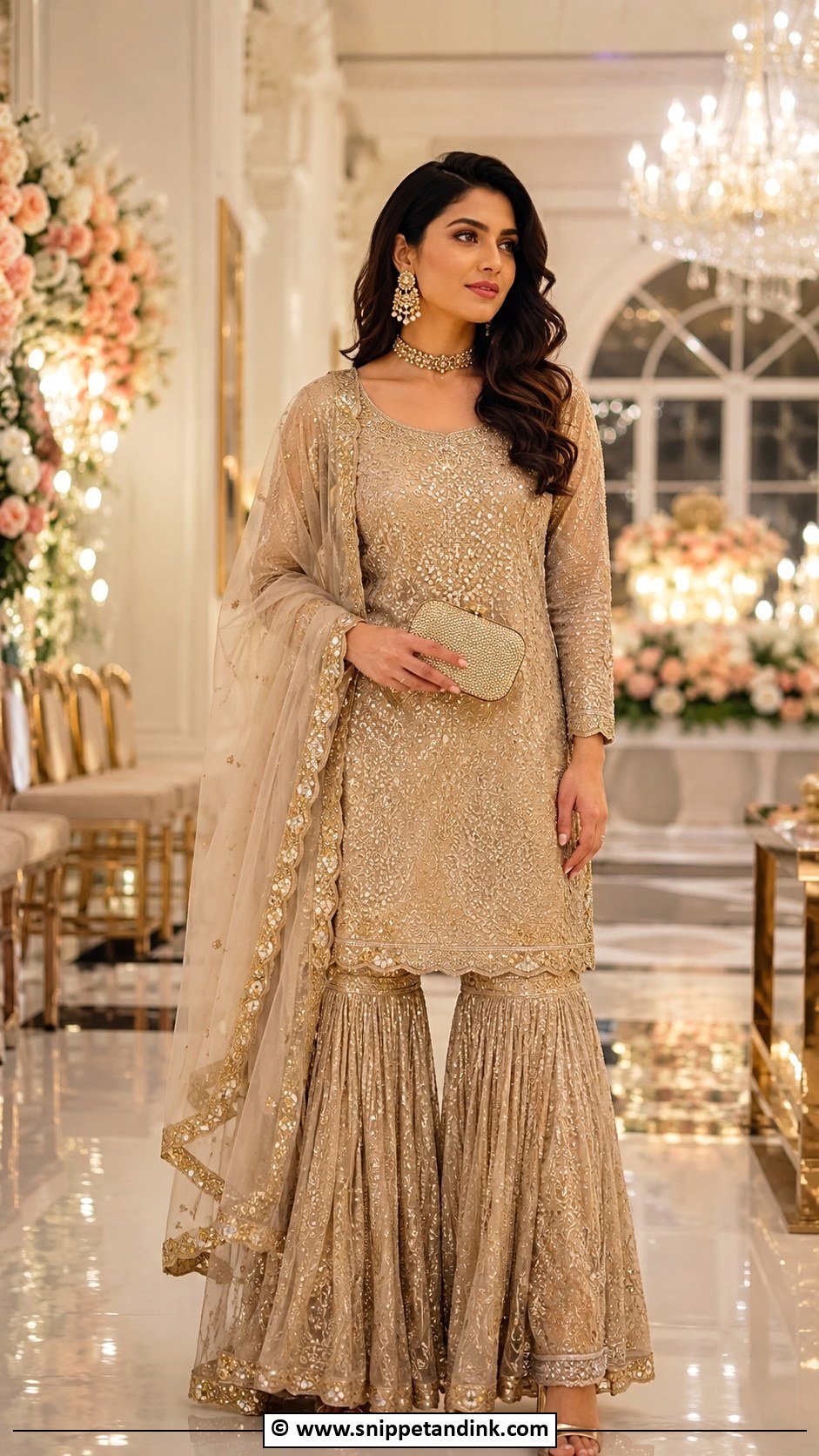
A gold sarara set is designed to shine, so the styling is about not adding more. Polki earrings and a slim choker are enough; oversized jewellery makes it look costume-like. Champagne gold suits most skin tones better than bright yellow gold. It’s built for receptions, sangeet nights and close-family functions where you’ll be photographed often. Warm makeup with brown liner keeps the face from competing with the outfit.
12. Purple Sarara Dress For Sangeet
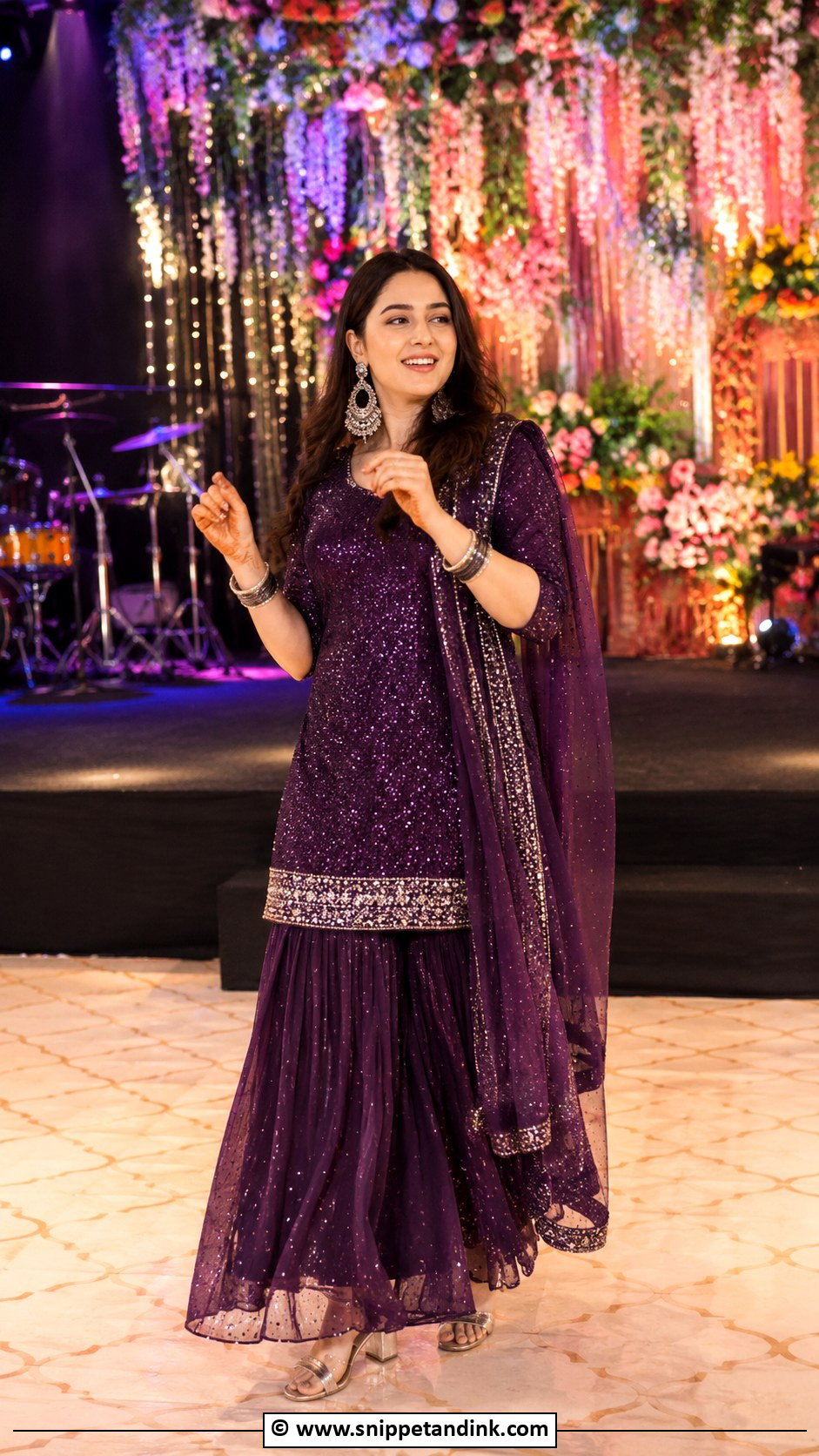
Purple works at a sangeet because it’s festive without being the obvious pink or red. Georgette and crepe let the flare move when you dance. Lavender and lilac take silver jewellery well; plum and aubergine suit gold. I always pin the dupatta securely for sangeet wear, because a loose dupatta tangles with the wide pants mid-spin. Block heels or embellished flats are the sensible choice.
13. Orange Sarara Suit For Wedding Guest
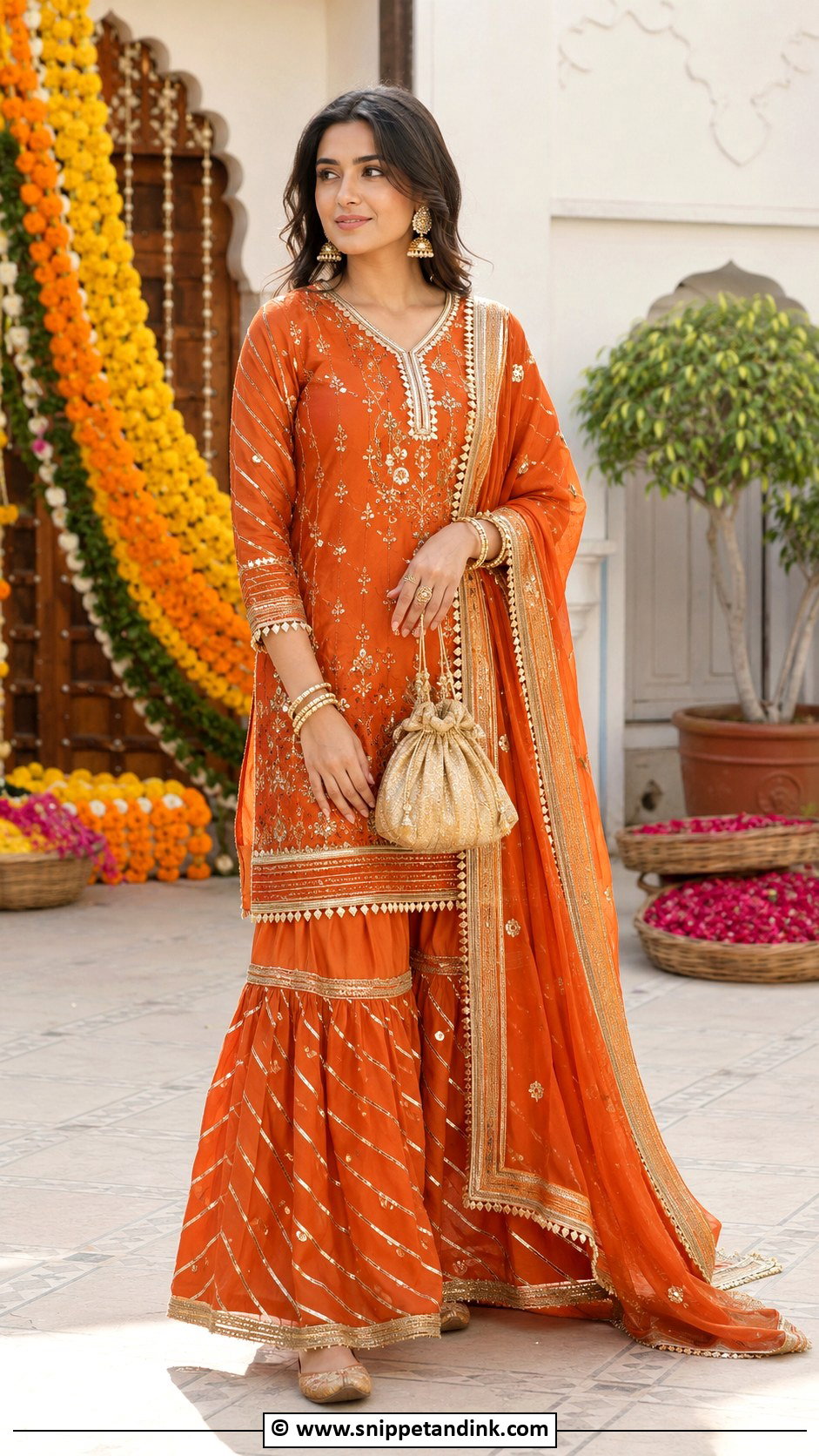
Orange is joyful, and it’s rarely a bridal colour, so guests can wear it boldly. Burnt orange and rust are easier for most people than bright tangerine. Gota patti, mirror work and zari all suit it. A dupatta in soft pink or gold gives contrast. I suggest it most for mehendi and haldi, where warm colours fit the mood. Juttis and soft waves keep it relaxed.
14. Mirror Work Sarara Dress
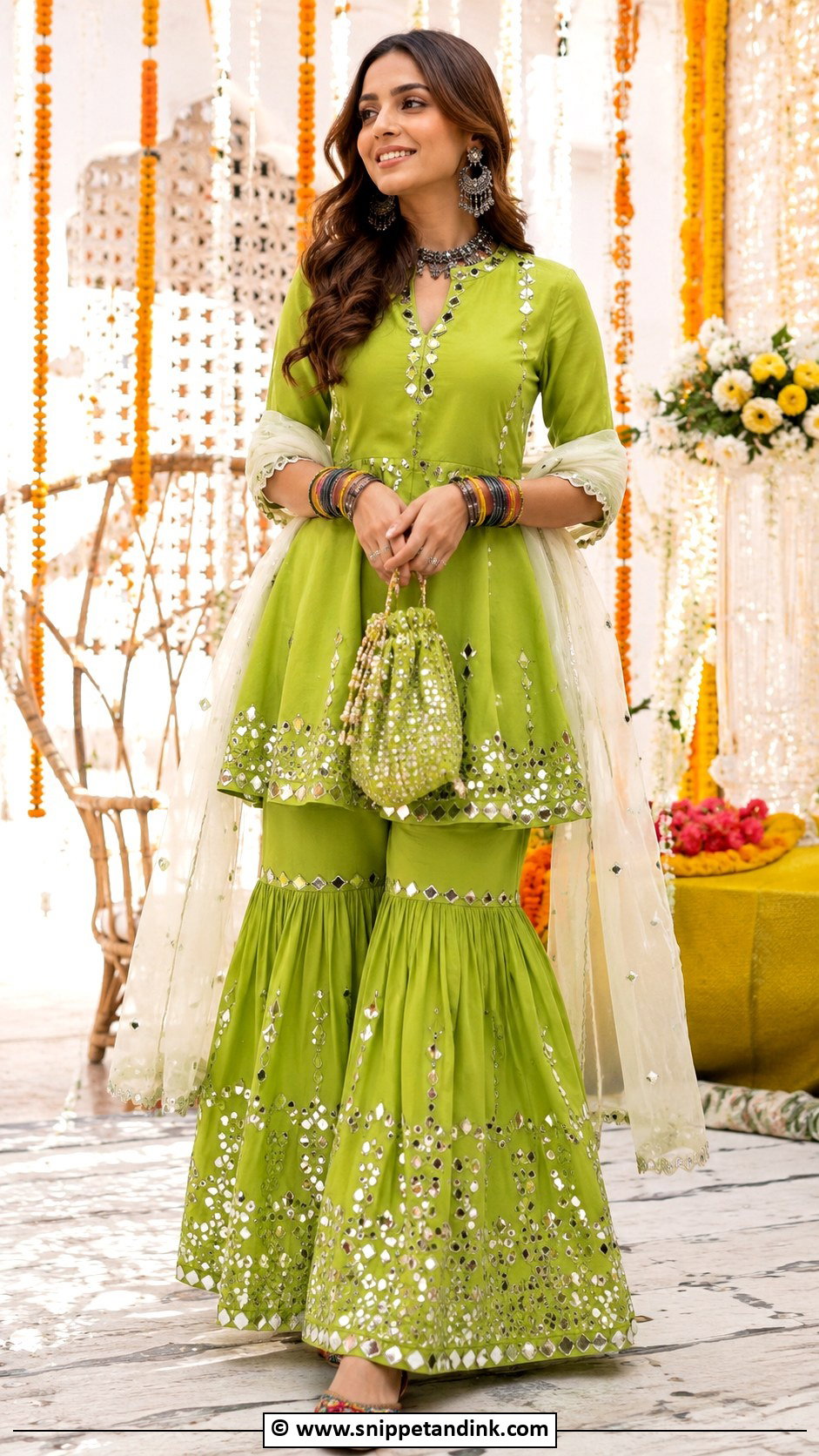
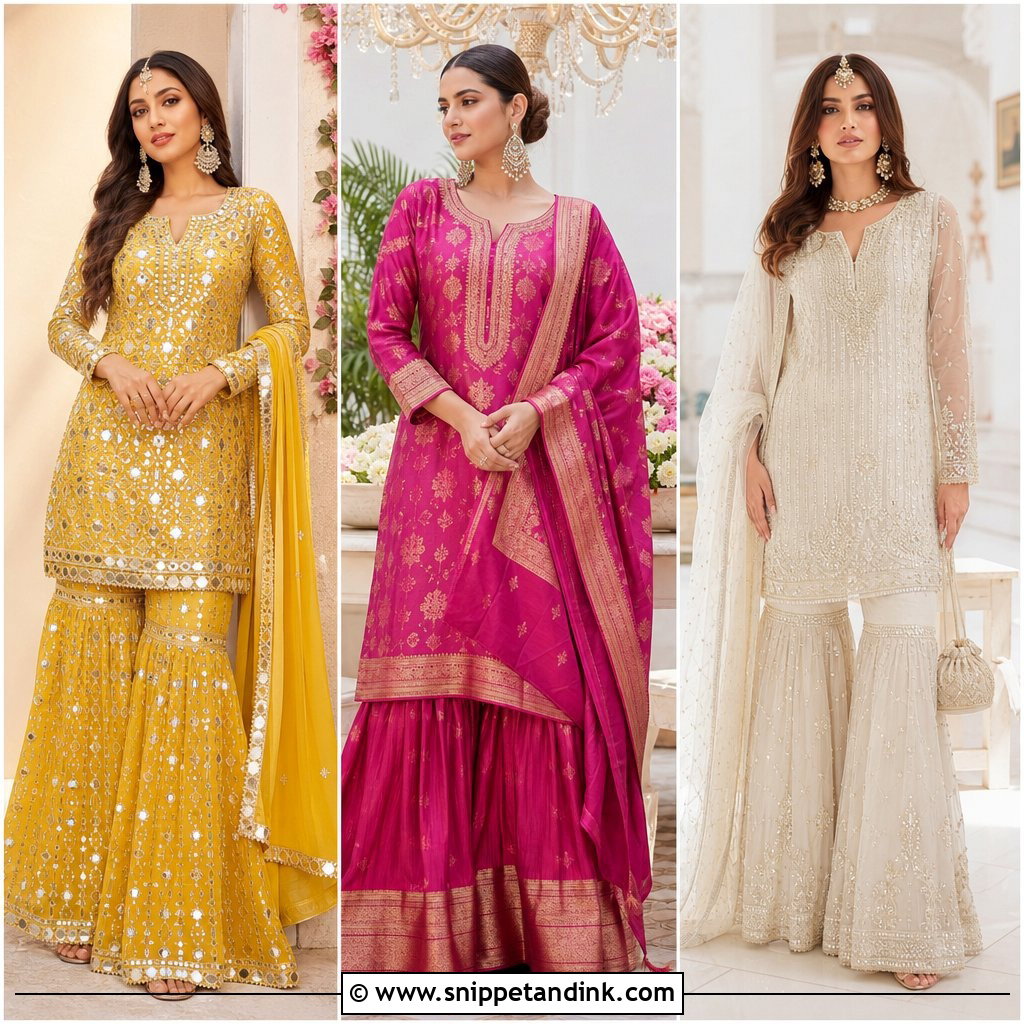
Mirror work is heavy and can scratch. Keep it on the kurta’s neckline, sleeves and hem rather than all over, and the outfit stays wearable for hours. The sarara itself should stay plain, so the flare moves freely. Bright colours suit mirror work best. A light dupatta avoids competing with the reflective detail. Oxidised jewellery and embroidered juttis finish it.
15. Gota Patti Sarara Suit
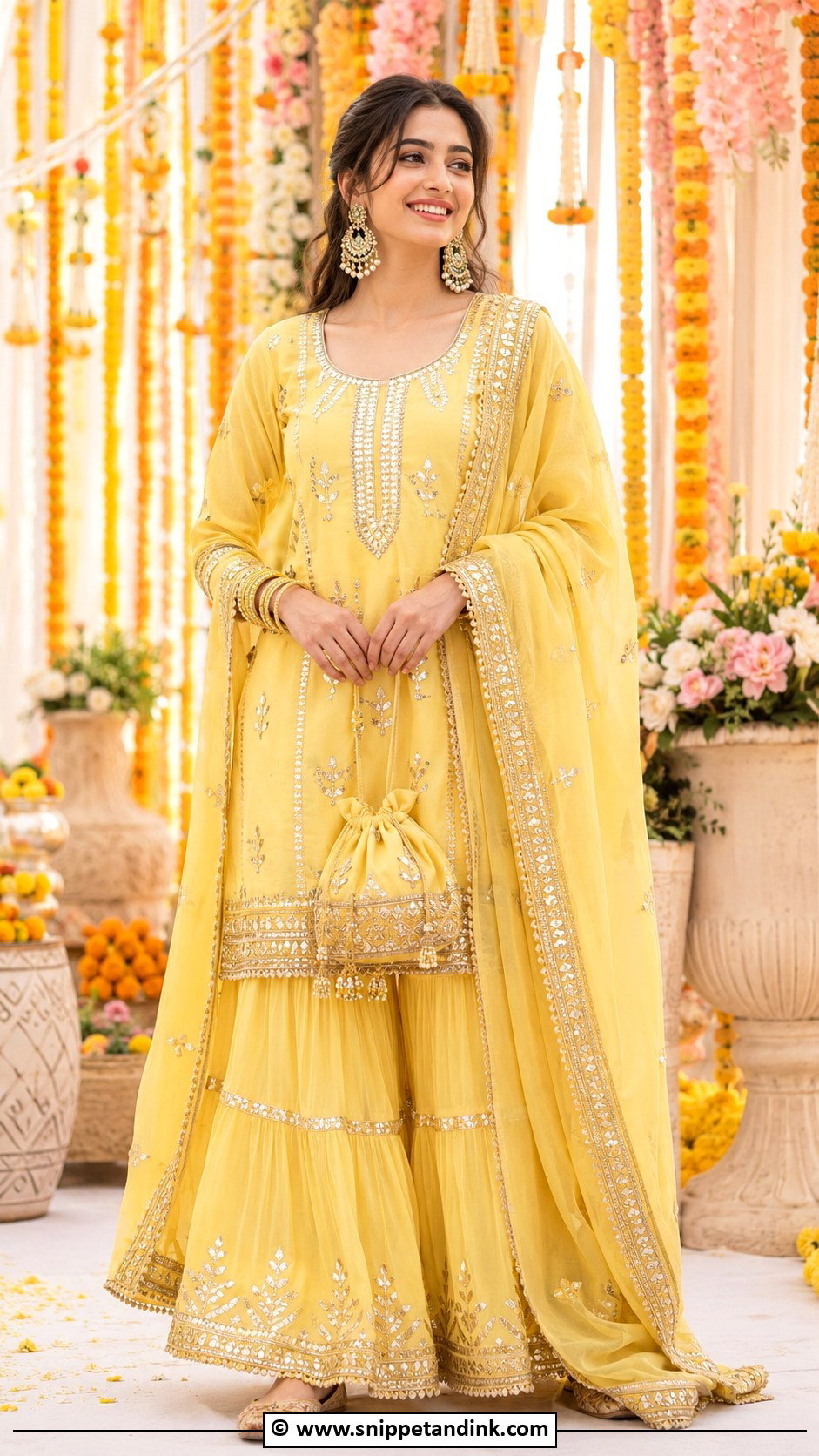
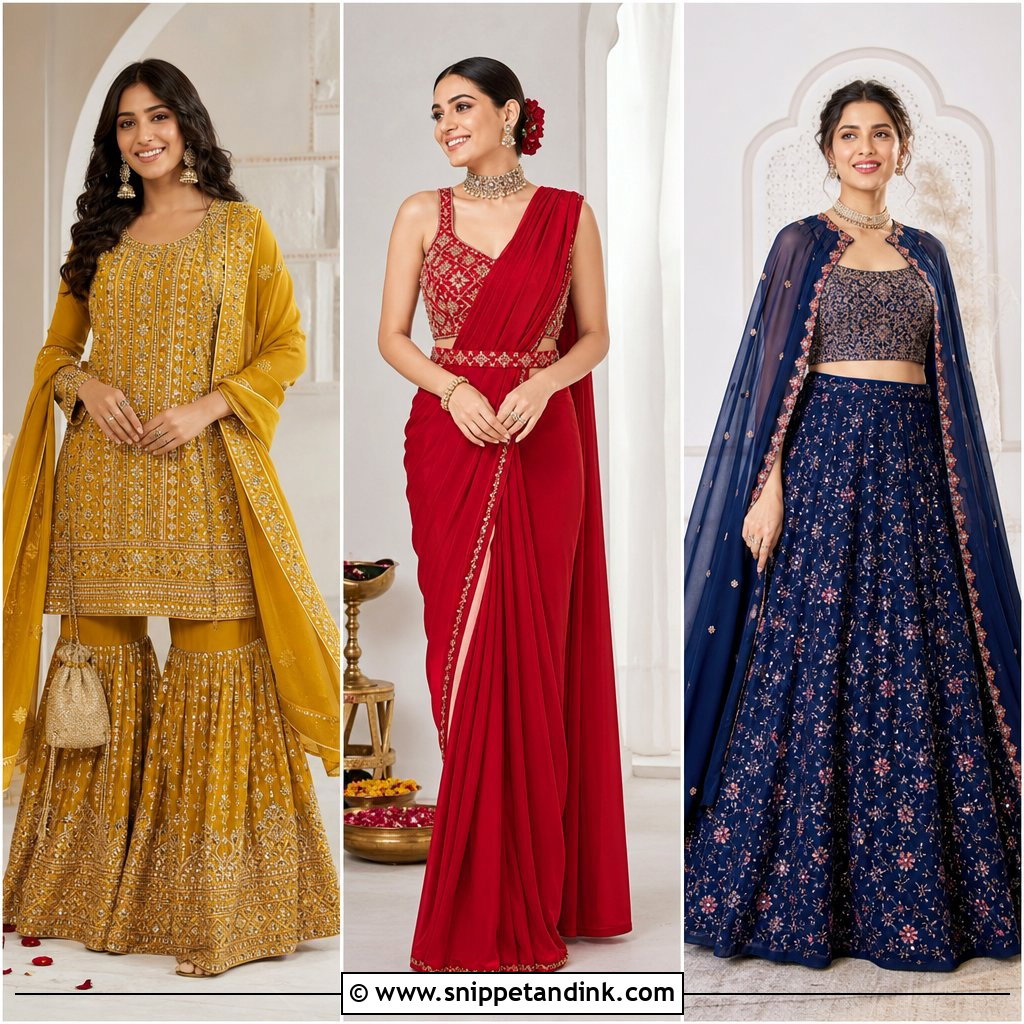
A gota patti sarara suit is the classic Rajasthani choice: gota is metallic ribbon appliquéd onto fabric, and it gives shine at a fraction of the weight of zari embroidery. Yellow, pink and green are traditional. It suits haldi, mehendi and daytime ceremonies. Since gota already adds sparkle, I keep jewellery to kundan earrings and bangles. Hair in a braid with small floral pins suits its traditional feel.
16. Sequin Sarara Dress For Cocktail
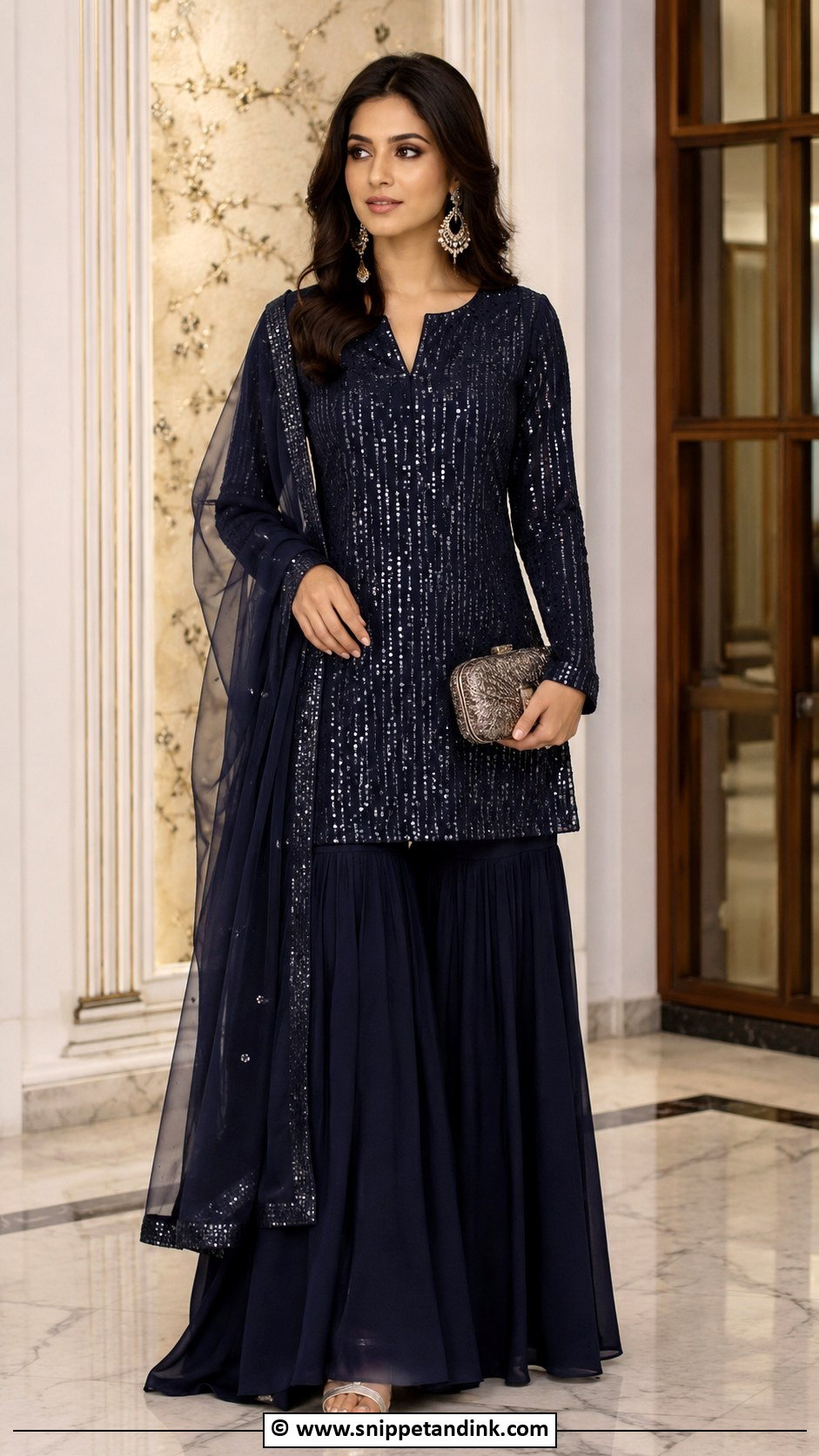
Sequinned sararas are the Indian answer to a cocktail gown. A fluid fabric like georgette, satin or crepe lets the pants move. Deep shades suit evening: navy, wine, emerald. I’d keep accessories minimal, statement earrings and a clutch, because sequins already carry the outfit. Check the inside seams of all-over sequinned kurtas; they can scratch underarms during long evenings.
17. Floral Print Sarara Outfit
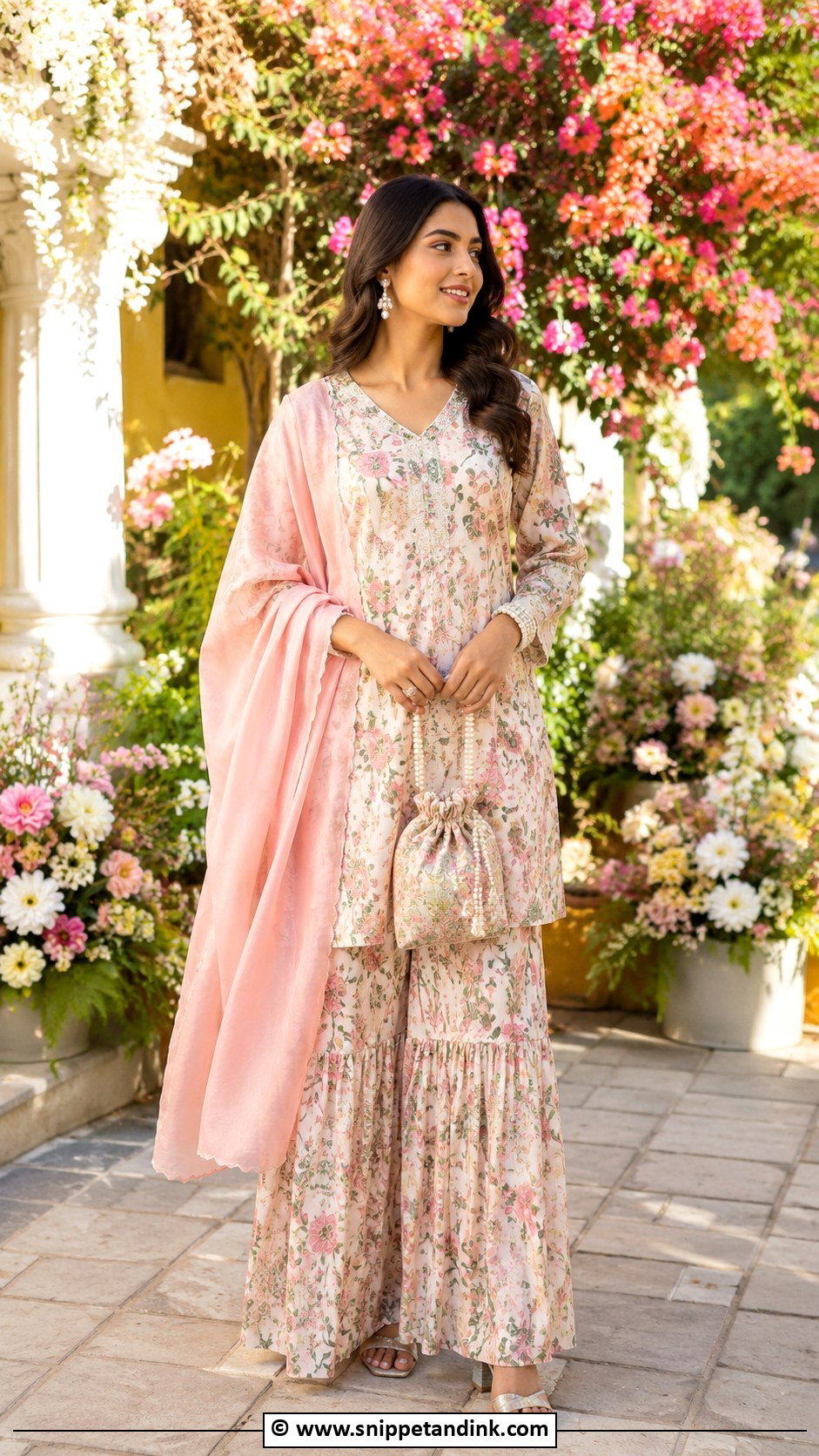
Printed florals are the most relaxed outfit here, and the coolest to wear in summer heat. Pastel prints suit garden events; bold florals suit mehendi and haldi. A solid dupatta calms the print. I’d recommend wedges for outdoor lawns, where block heels can still sink. It’s light, easy to pack and simple to wash.
18. Anarkali Sarara Dress
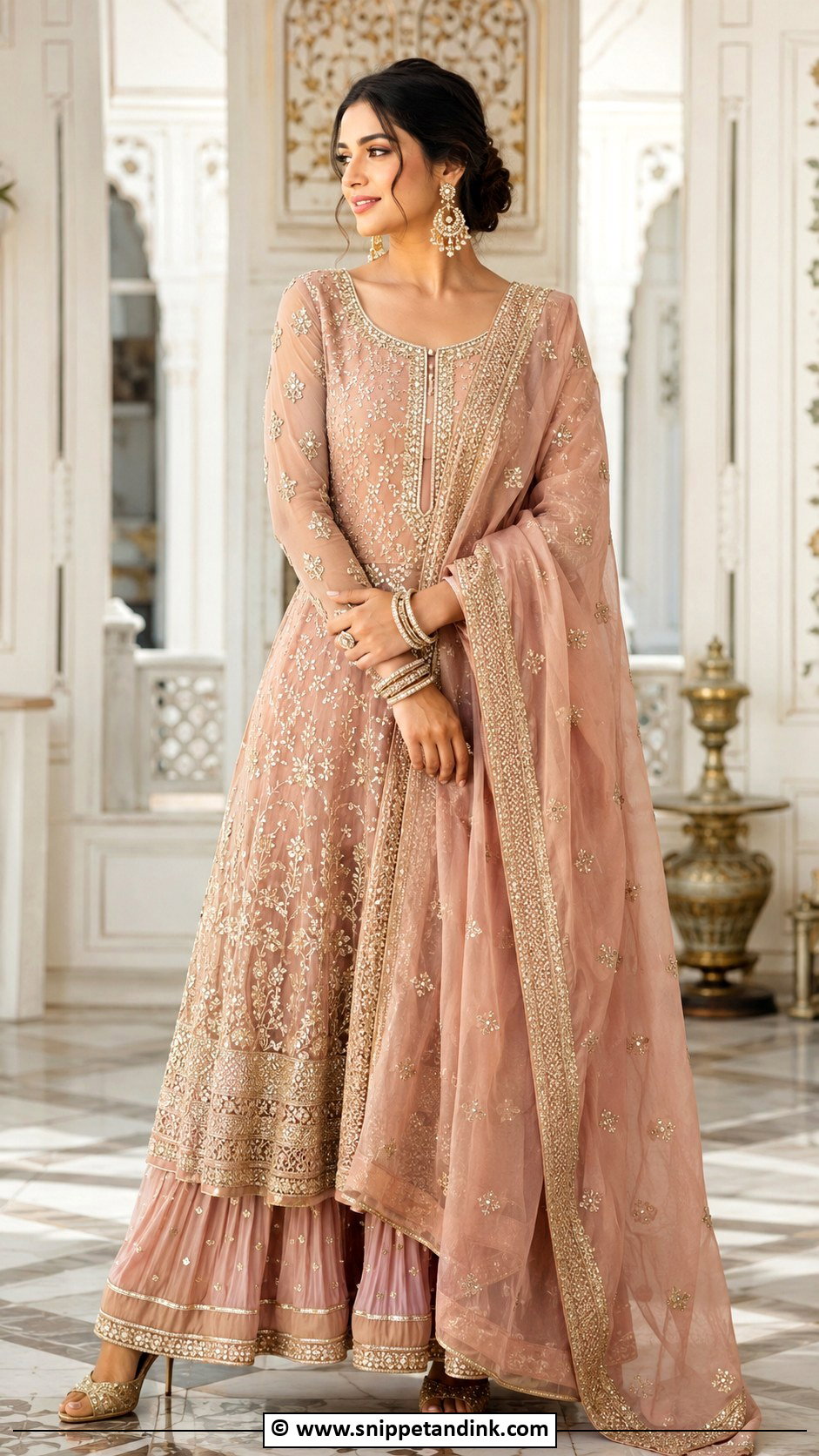
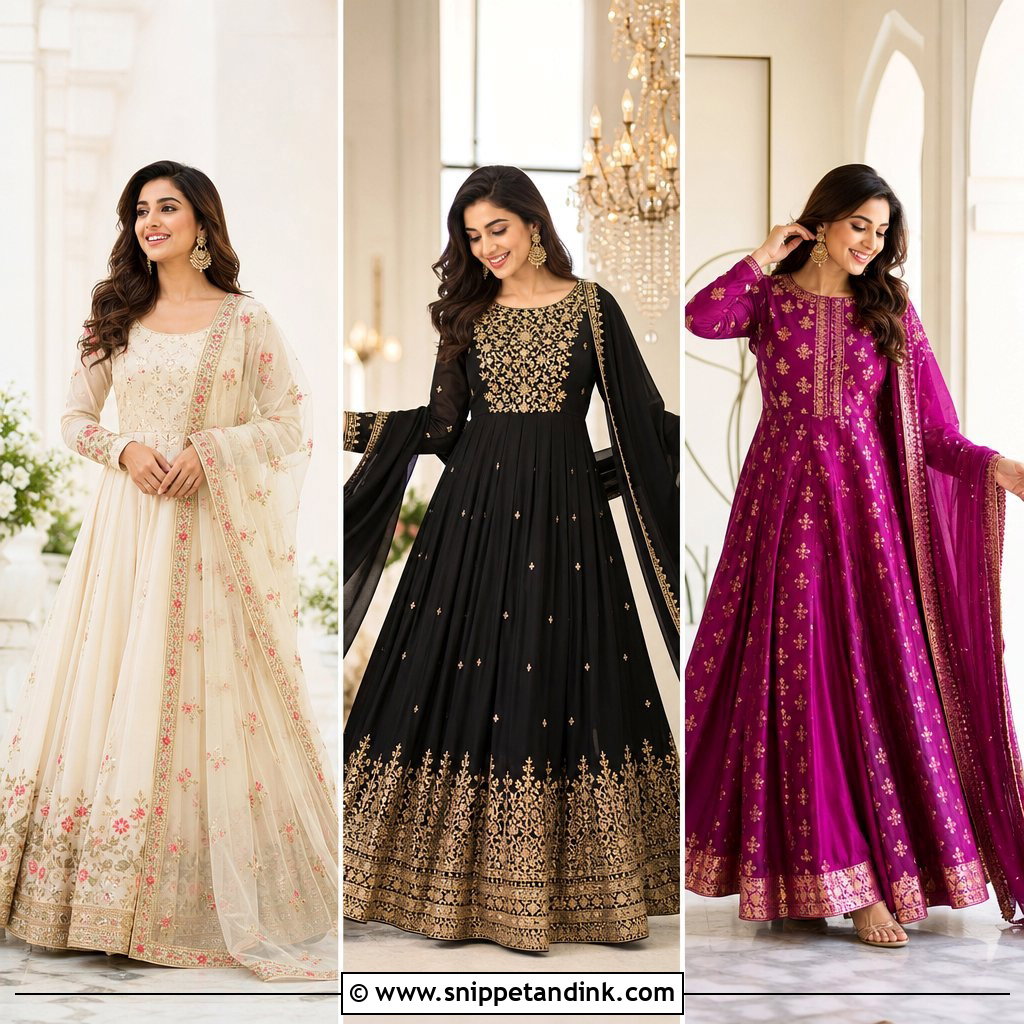
An Anarkali kurta over a sarara gives you two flares: one from the kurta, one from the pants peeking out below. That’s a lot of volume, so I keep accessories balanced and the dupatta sheer. Embroidery at the neck and hem frames the face and the movement. It suits women who want coverage and grace. Chandbali earrings and a low bun complete it.
19. Jacket Sarara Set
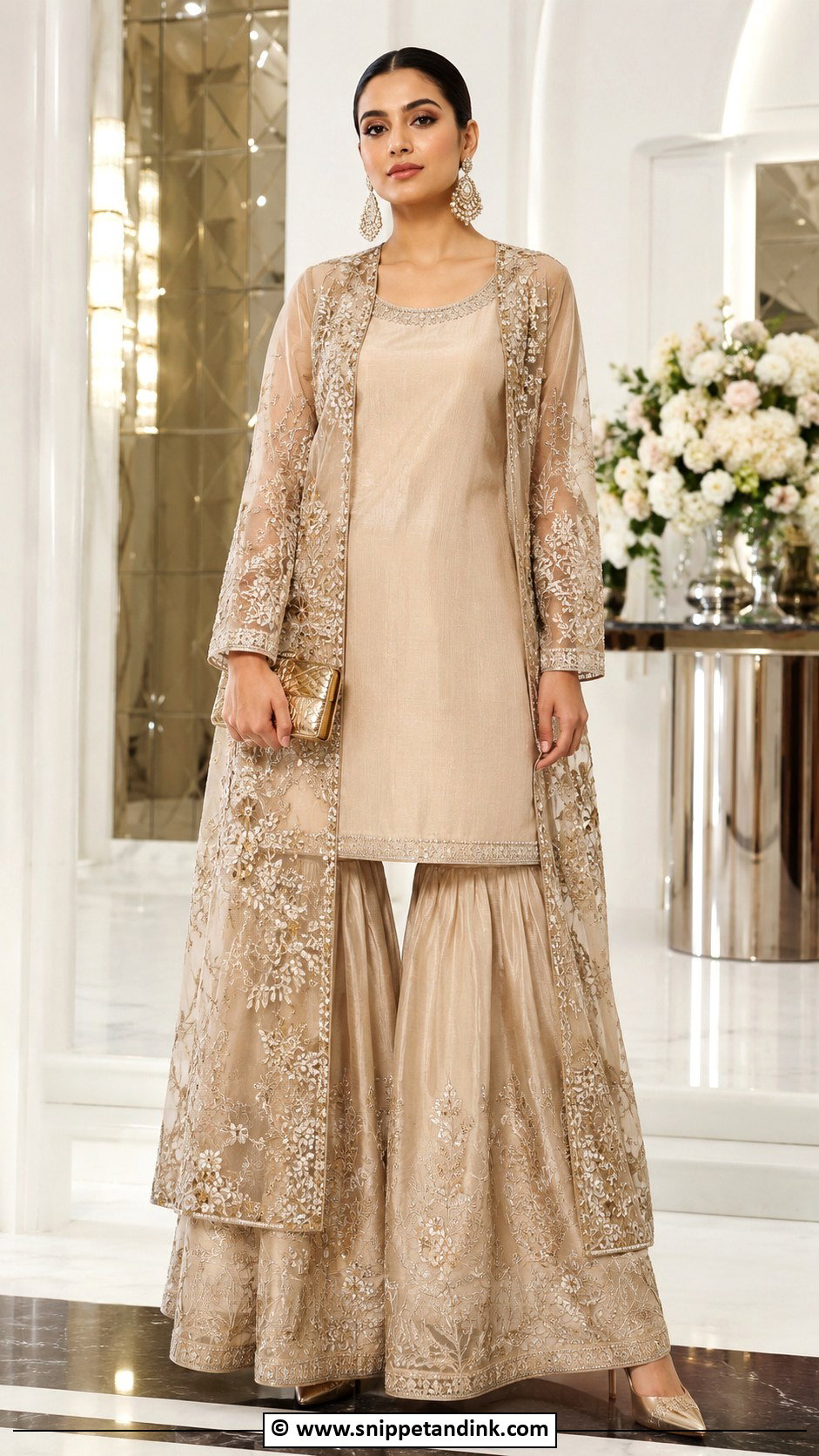
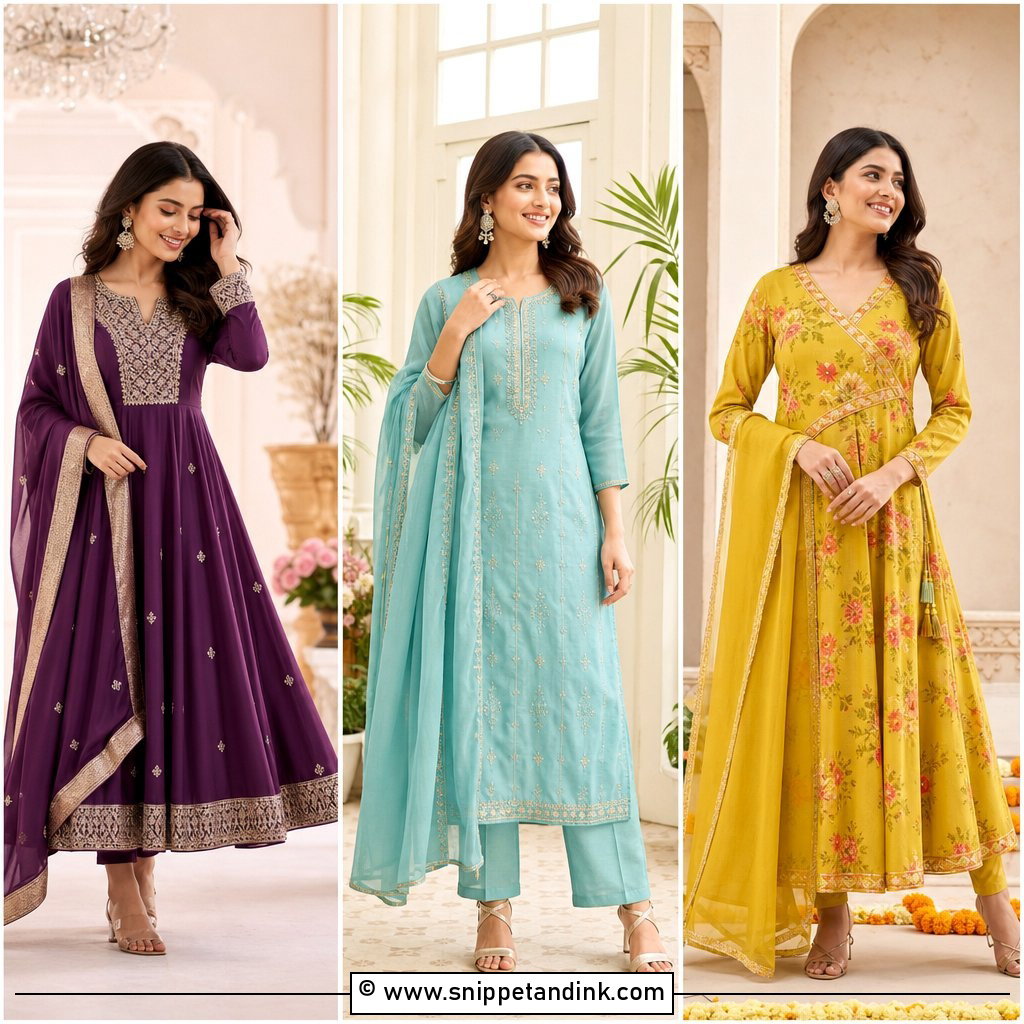
A jacket over a sarara set adds structure and coverage. Sheer organza jackets suit warm weather; brocade and silk suit cooler evenings. If the jacket is heavily embellished, I skip the dupatta entirely. A fitted or straight kurta underneath keeps the layers from bulking up. It’s well suited to receptions and formal dinners.
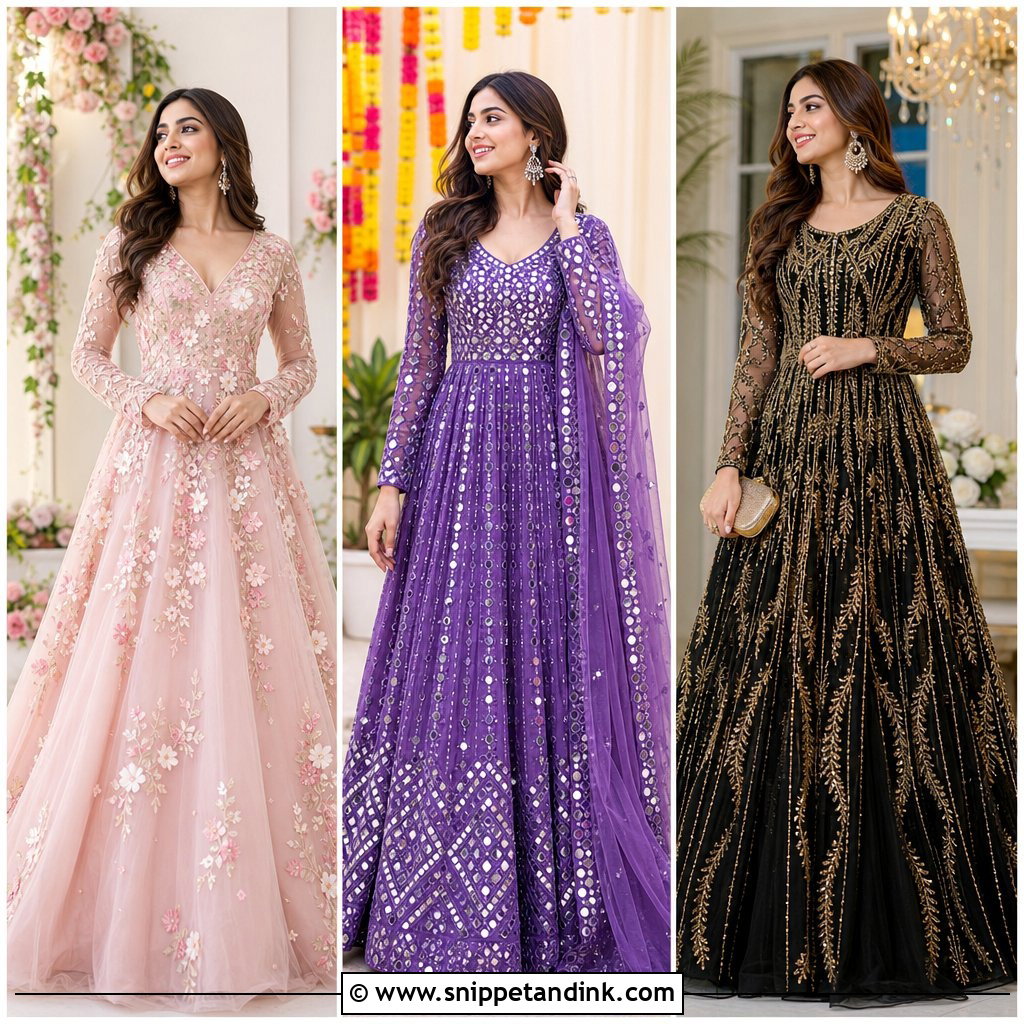
20. Cape Sarara Outfit
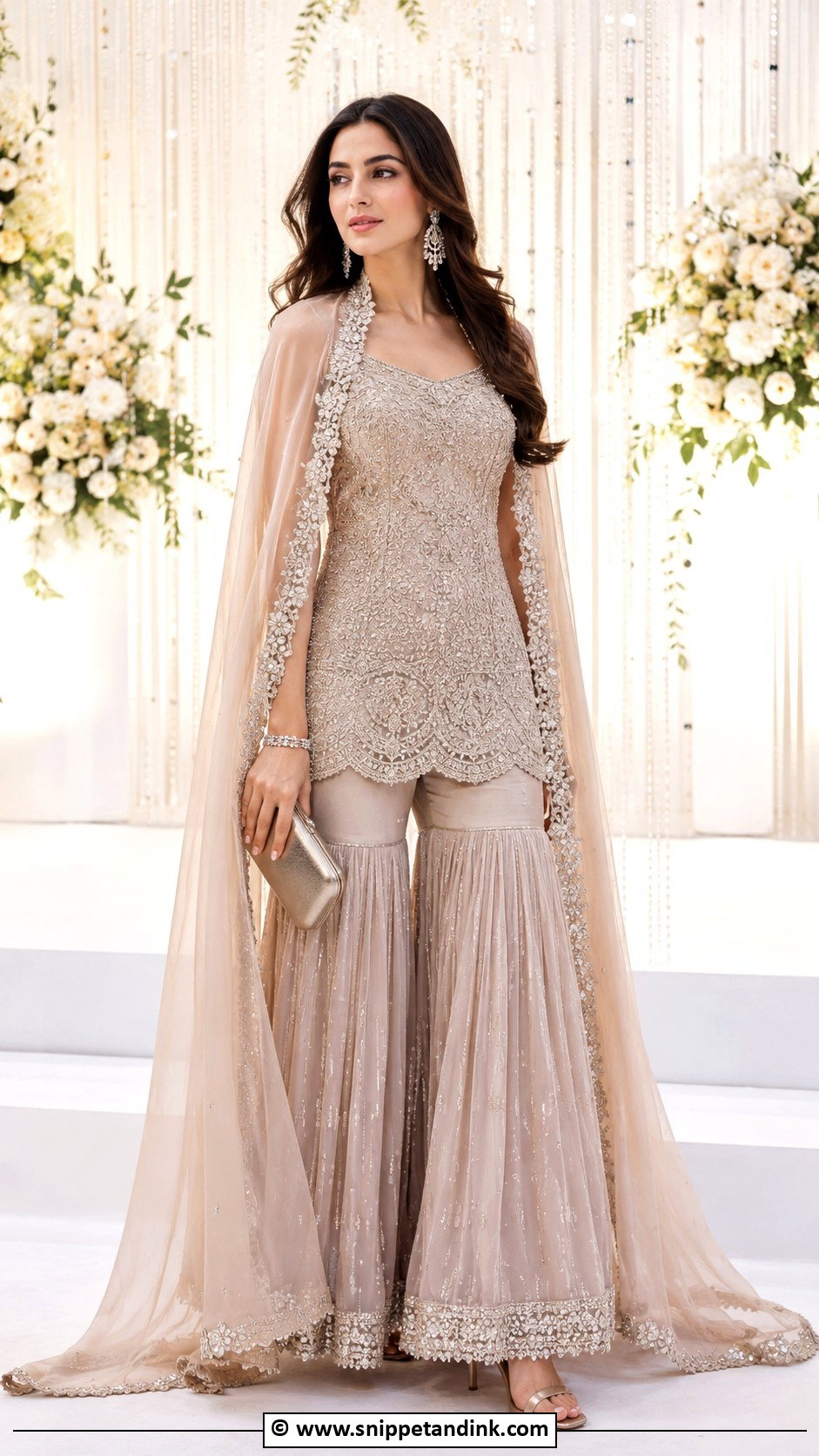
A cape sarara outfit replaces the dupatta with a sheer embroidered cape, so your hands stay free for dancing or greeting guests. A fitted kurta or crop-style top underneath works best. Pastels and jewel tones both suit it. I keep jewellery simple because the cape is already a statement layer. A sleek bun keeps hair out of the cape’s fabric.
21. Short Kurti Sarara Dress
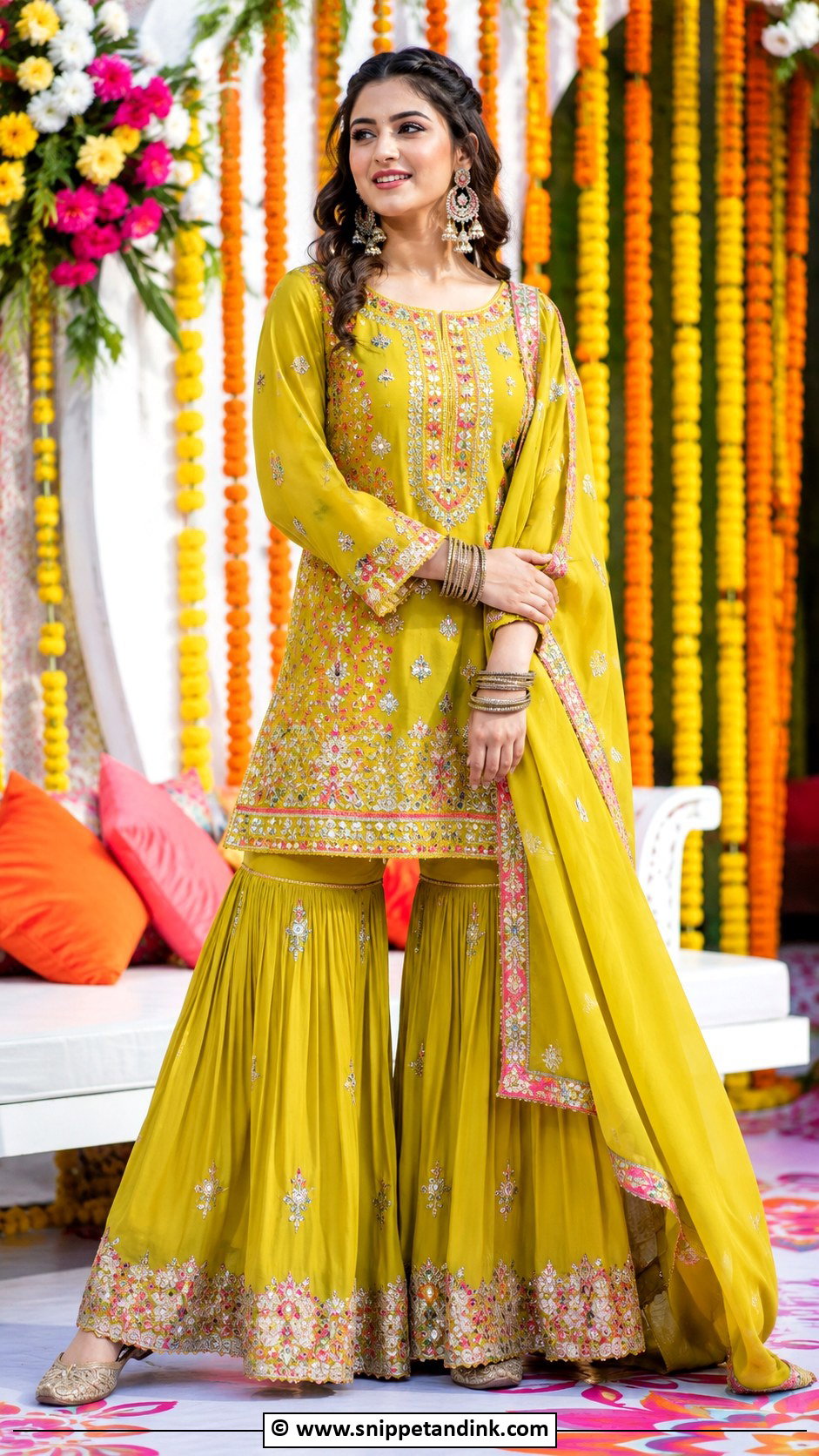
The short kurti is the most common sarara cut, because it shows the full flare of the pants. Embroidery around neck, sleeves and hem keeps it festive. It suits mehendi, sangeet and guest wear. I’d point out that short kurtis suit taller and leaner frames most easily; shorter women may prefer a mid-length kurta for proportion. Jhumkas and juttis keep it classic.
22. Long Kurta Sarara Suit
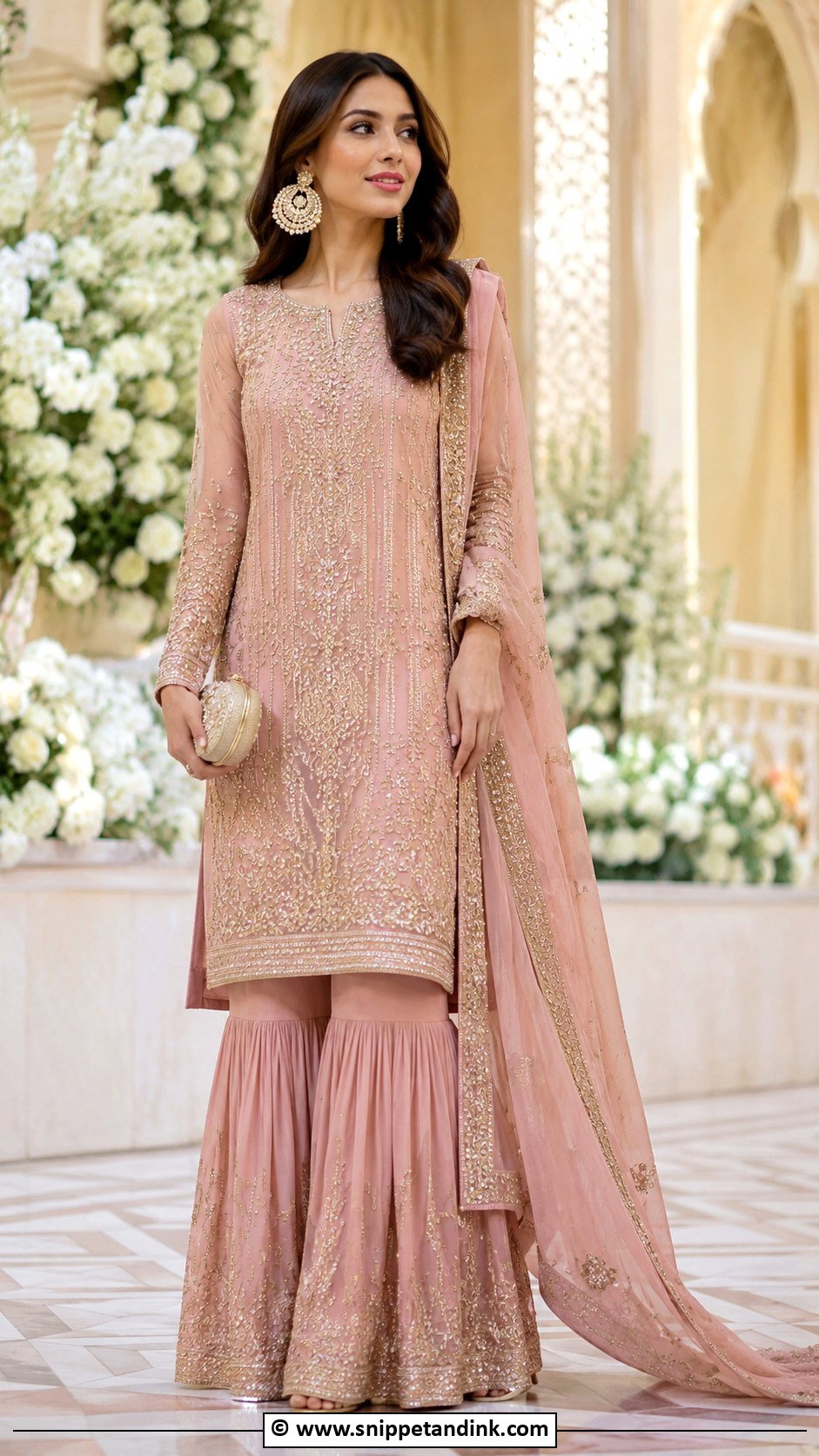
A long kurta creates a sleek vertical line, with the sarara adding movement only at the hem. It’s the most modest cut, and it suits nikkahs, ceremonies and formal receptions. Silk, chanderi and brocade give it a refined finish. Side slits help you walk and sit comfortably. I suggest a bold earring or ring since the neckline is often covered. Classic makeup suits its traditional shape.
23. Banarasi Sarara Dress
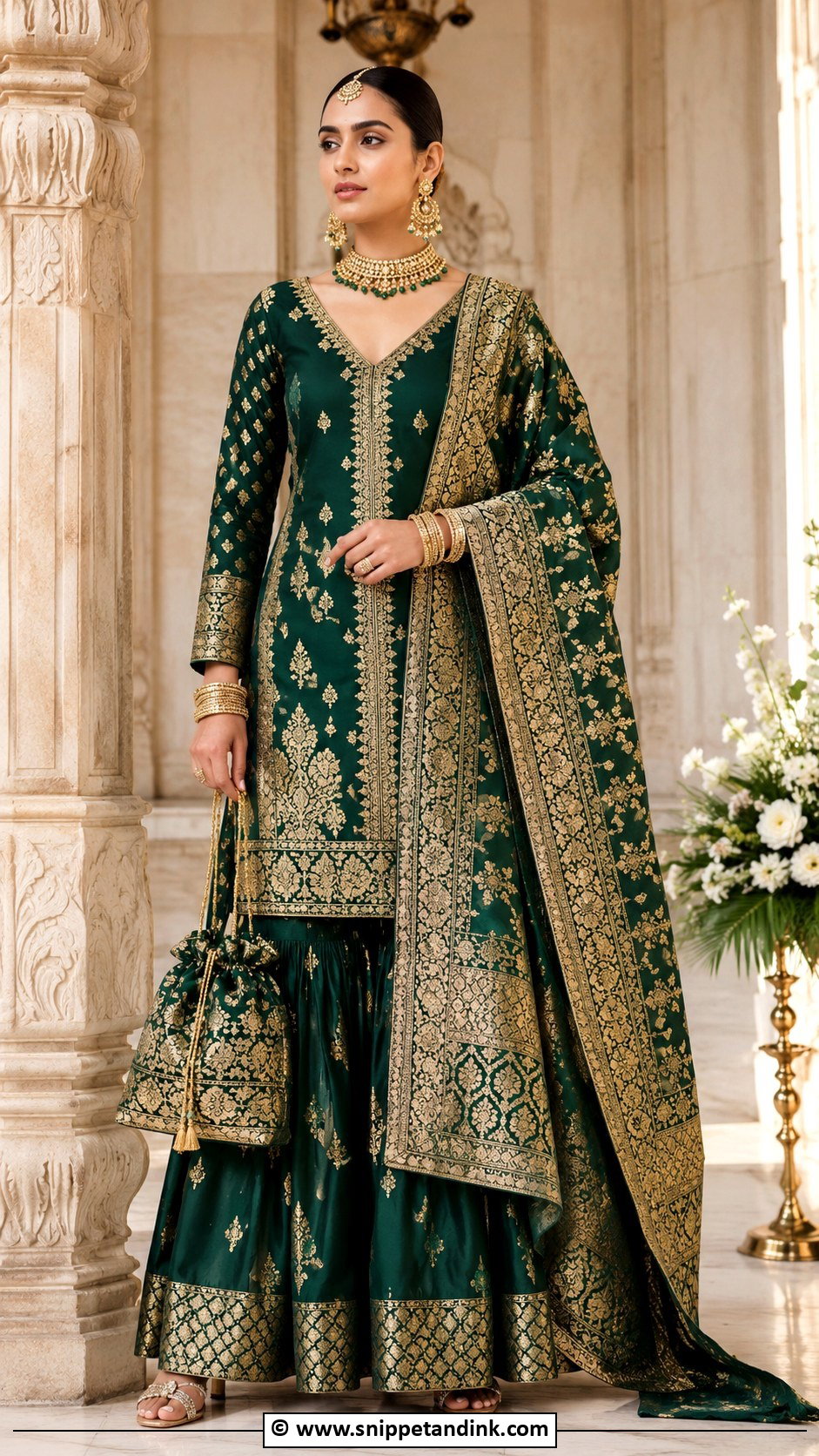
Banarasi weaving has the pattern woven into the fabric, so it looks rich with almost no embroidery. A Banarasi kurta or dupatta with a plain silk sarara is the balance I prefer; all-Banarasi can feel very heavy. Maroon, emerald and mustard look rich in it. Temple jewellery suits its traditional feel. It’s an outfit for close family at important ceremonies.
24. Silk Sarara Suit
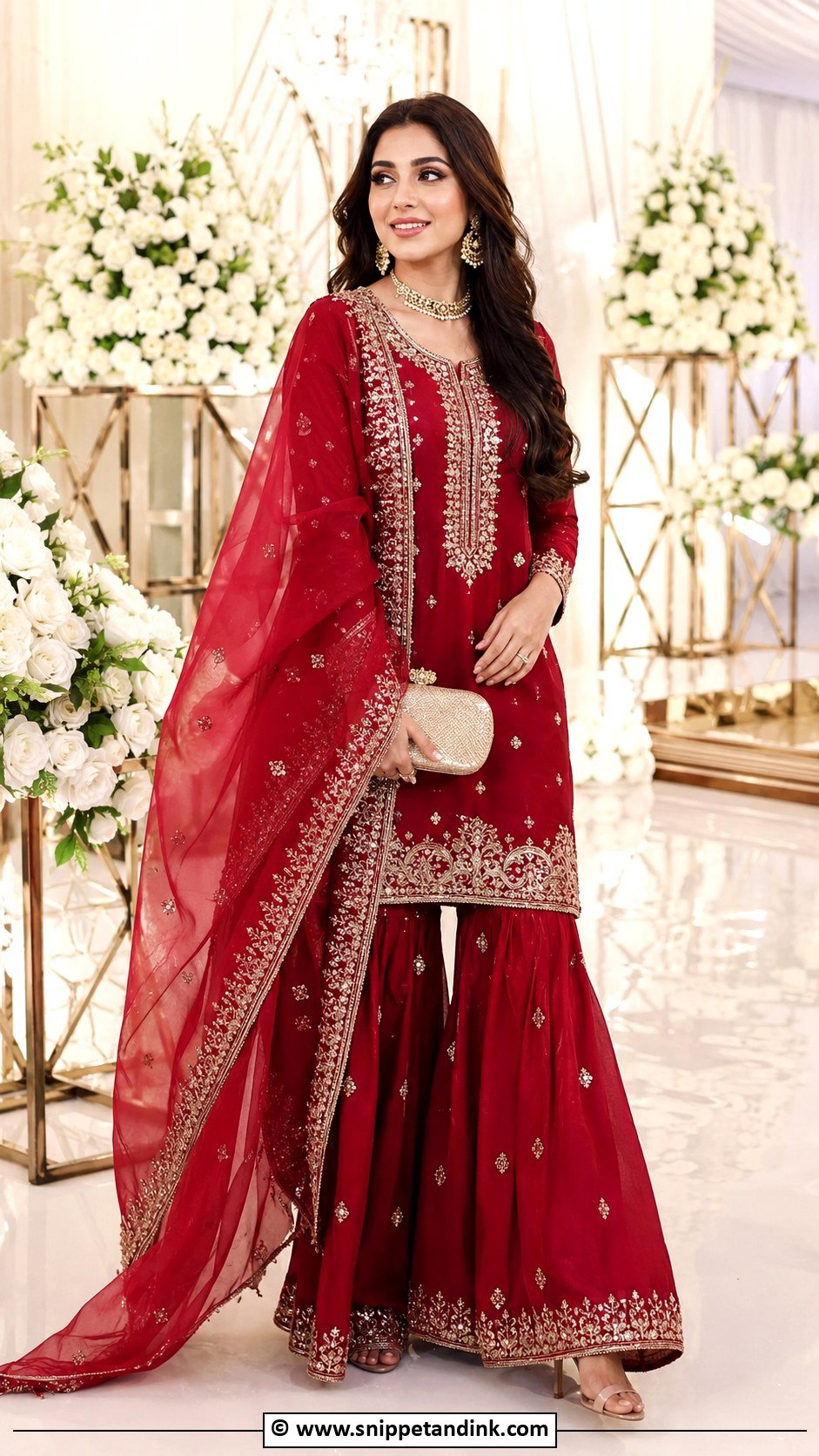
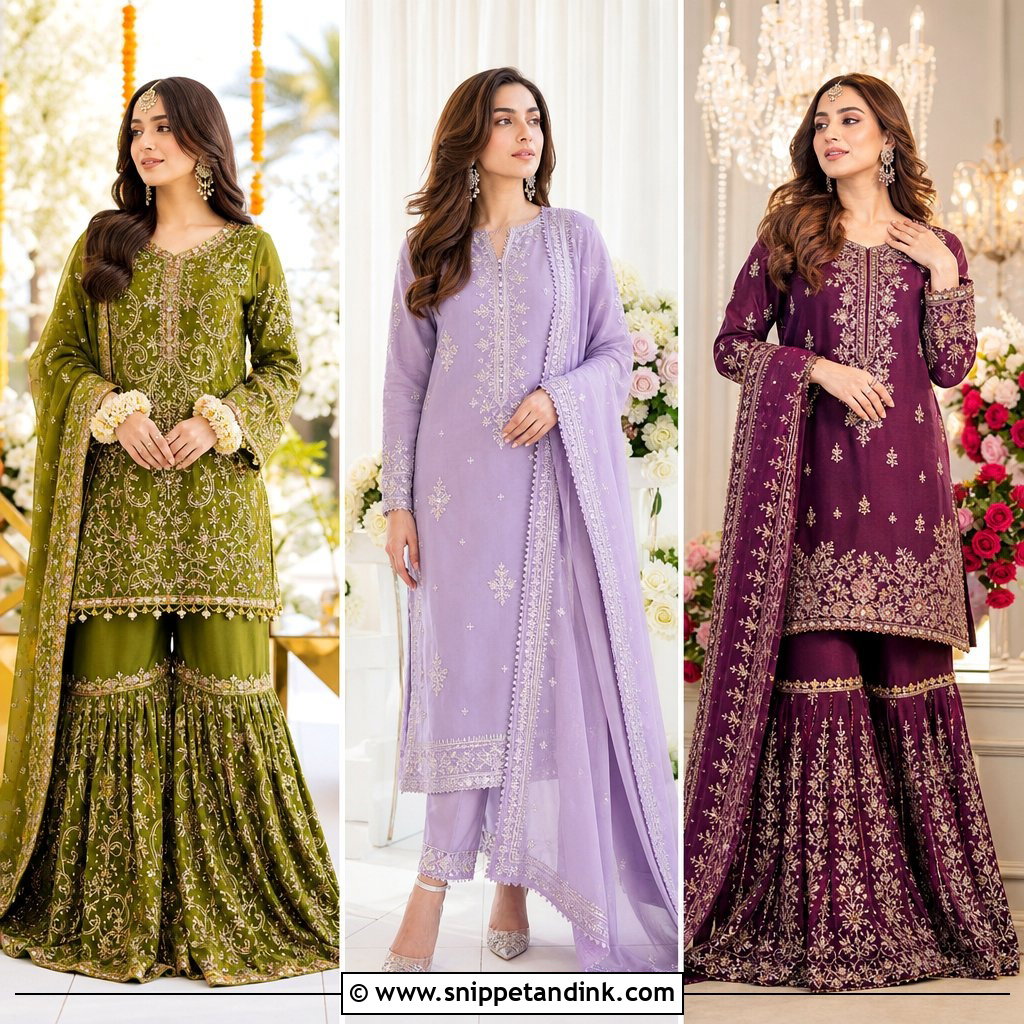
Silk gives a sarara a dressy sheen and a weight that makes the flare fall cleanly. Fit matters more in silk than in georgette, because silk doesn’t forgive a loose waist. Emerald, ruby and teal are classic silk colours. A silk or organza dupatta completes it. Kundan jewellery suits it. I’d steam silk before wearing; it creases easily in storage.
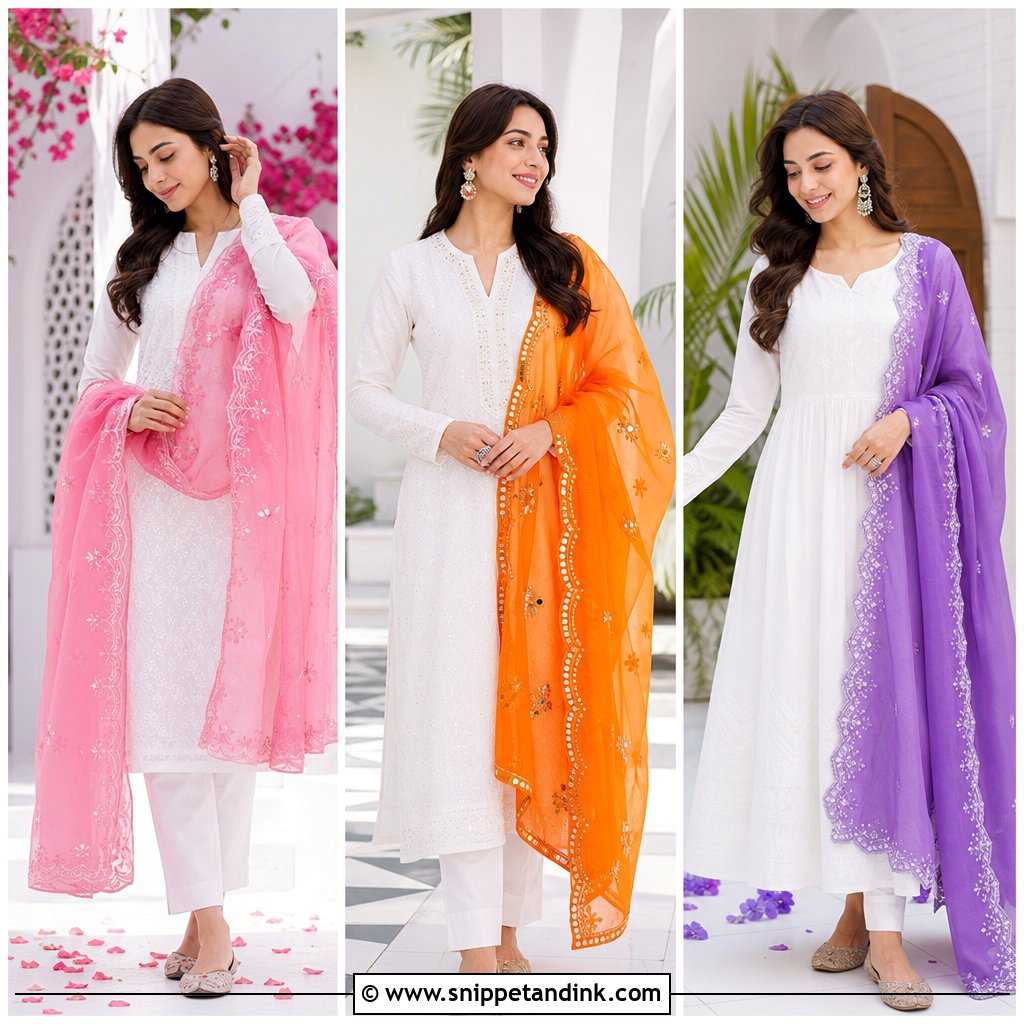

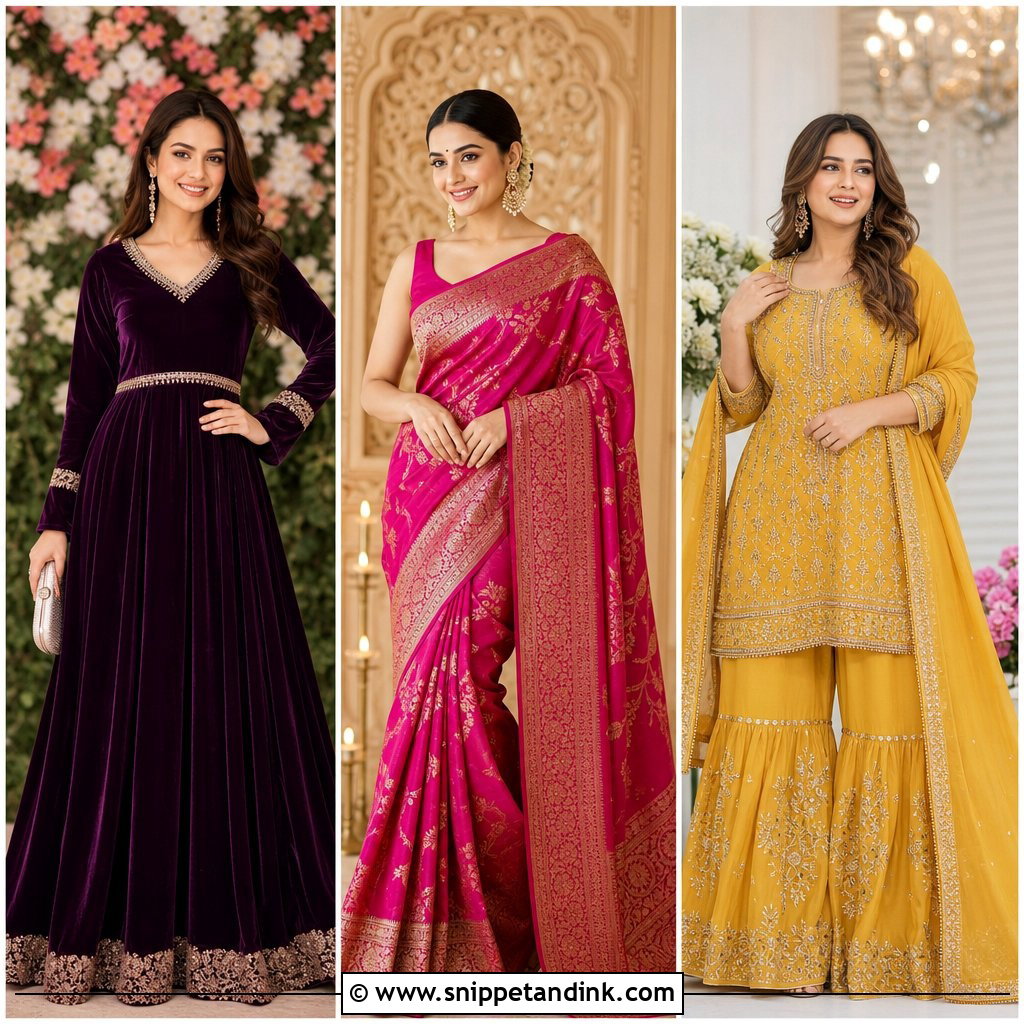
25. Georgette Sarara Dress
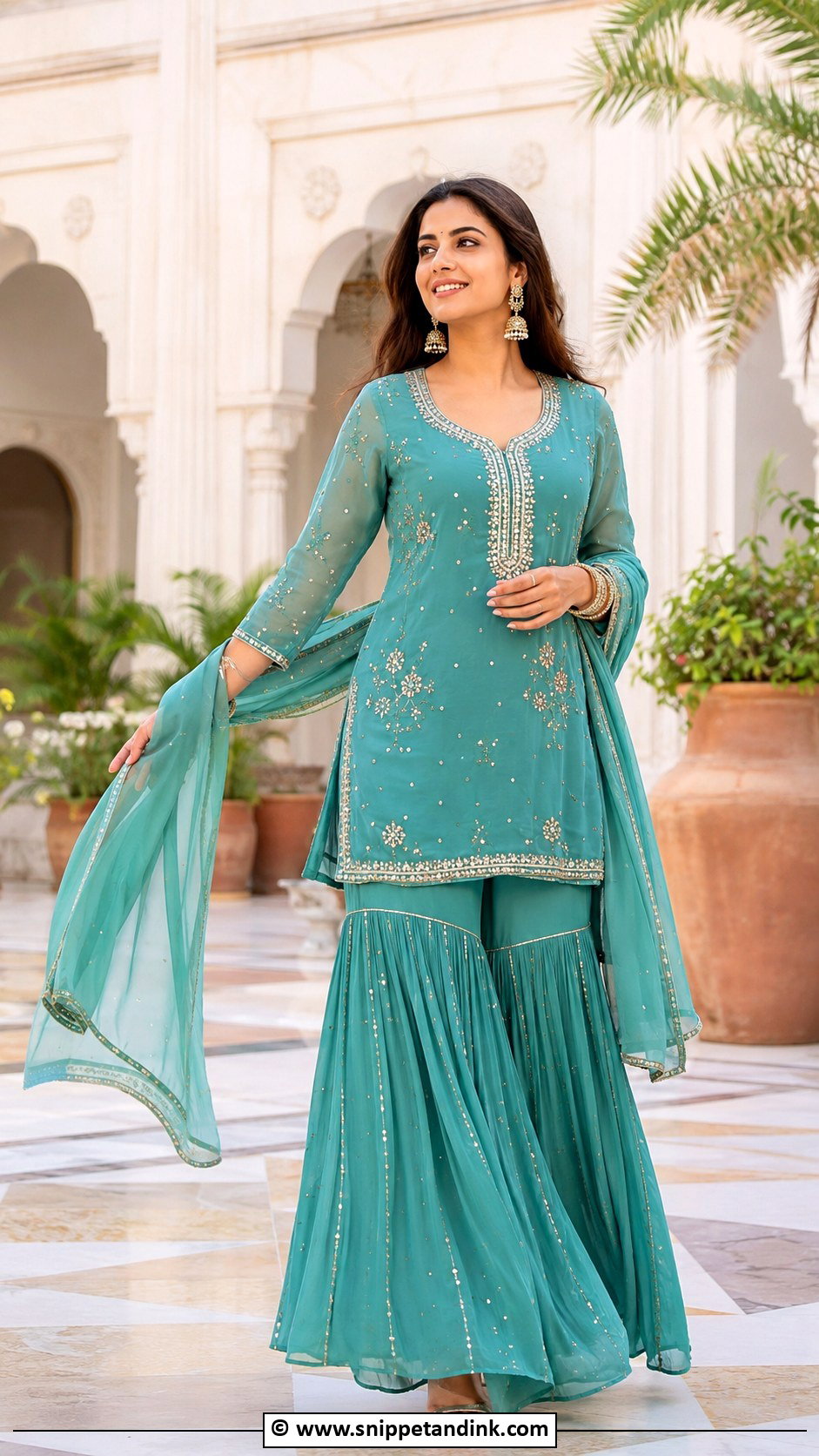
Georgette is my go-to for long wedding days because it’s light, fluid and forgiving. It moves when you dance and drapes softly on most body types. Threadwork, sequins or mirror detail make it festive. A light dupatta keeps you cool. It packs well for destination weddings and doesn’t crease as sharply as silk or organza.
26. Net Sarara Dress
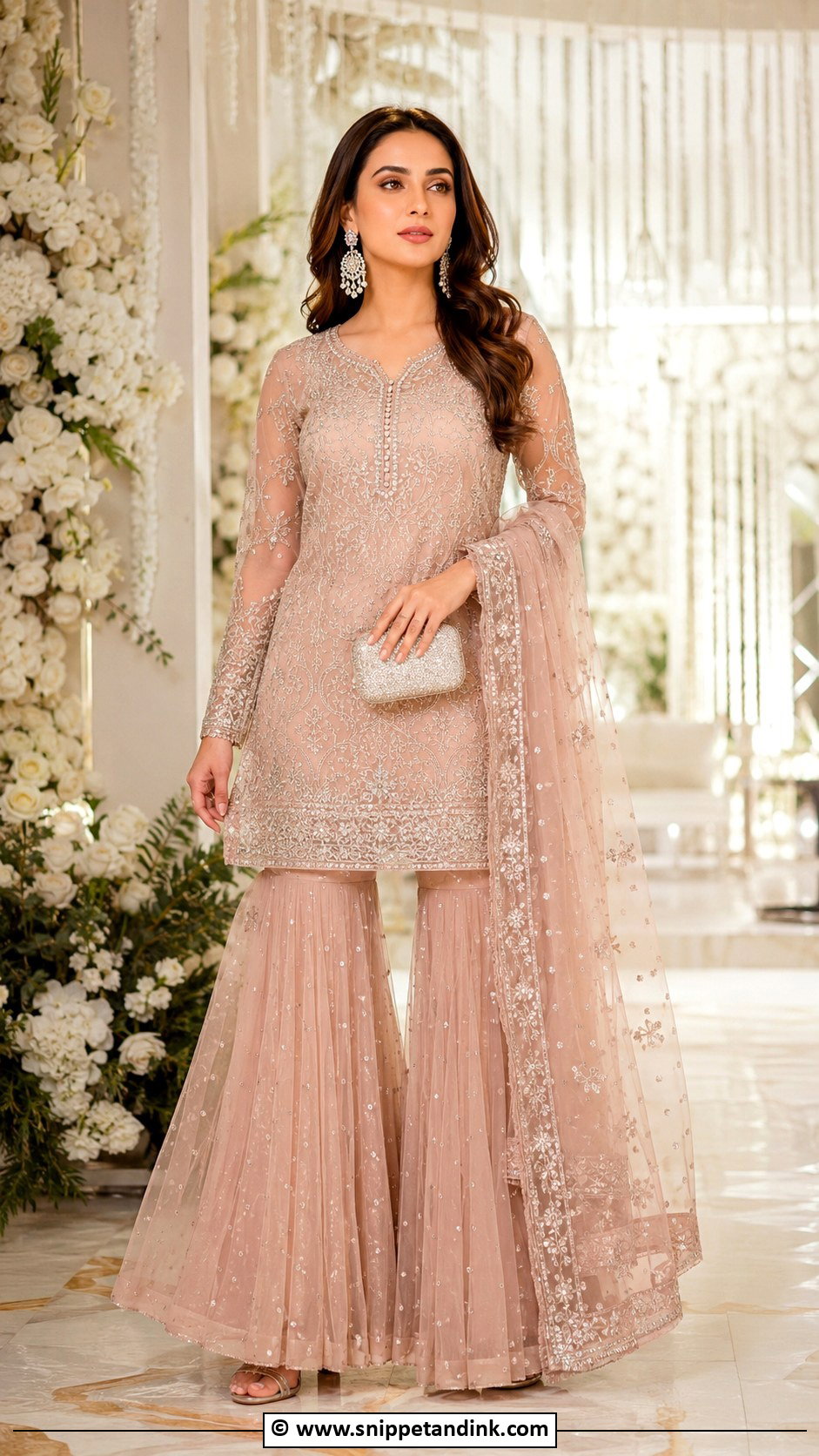
Net looks delicate and layered, but it needs a proper lining to be comfortable, because unlined net scratches skin. I always check the lining of net sleeves and the inner layer of the pants before buying. Blush, ivory, champagne and wine suit net well. Crystal earrings and soft glam makeup match its evening feel. Keep accessories refined.
27. Pakistani Sarara Dress
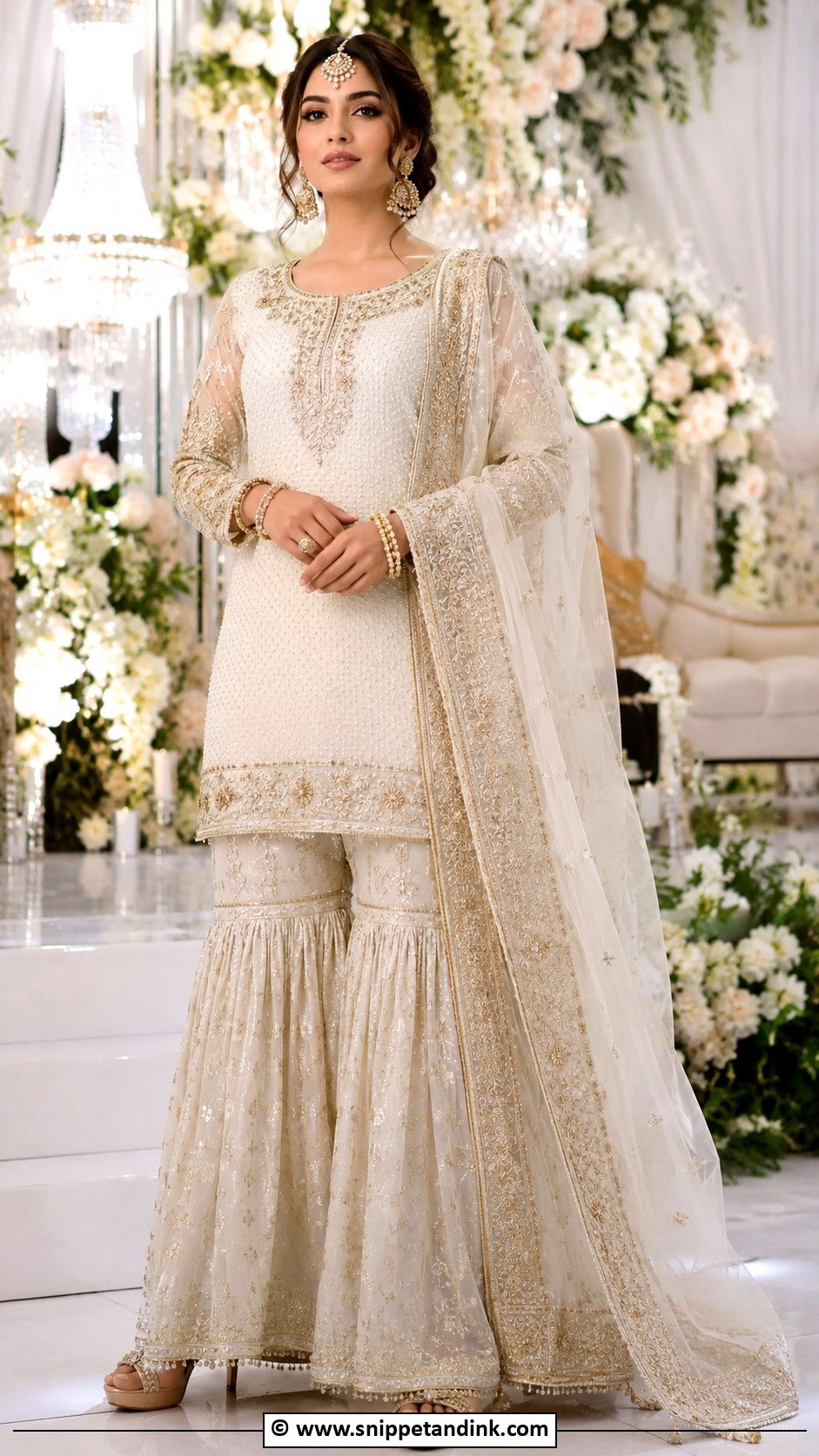
Pakistani sarara cuts usually pair a fitted, often longer kurta with very wide pants and a large, heavily bordered dupatta. The dupatta is central: it’s often draped over both shoulders or one side and sometimes over the head for nikkah. Detailed threadwork and zari are typical. Soft colours look refined; maroon and emerald look regal. Jhumkas and a tikka finish it.
28. Indo Western Sarara Outfit
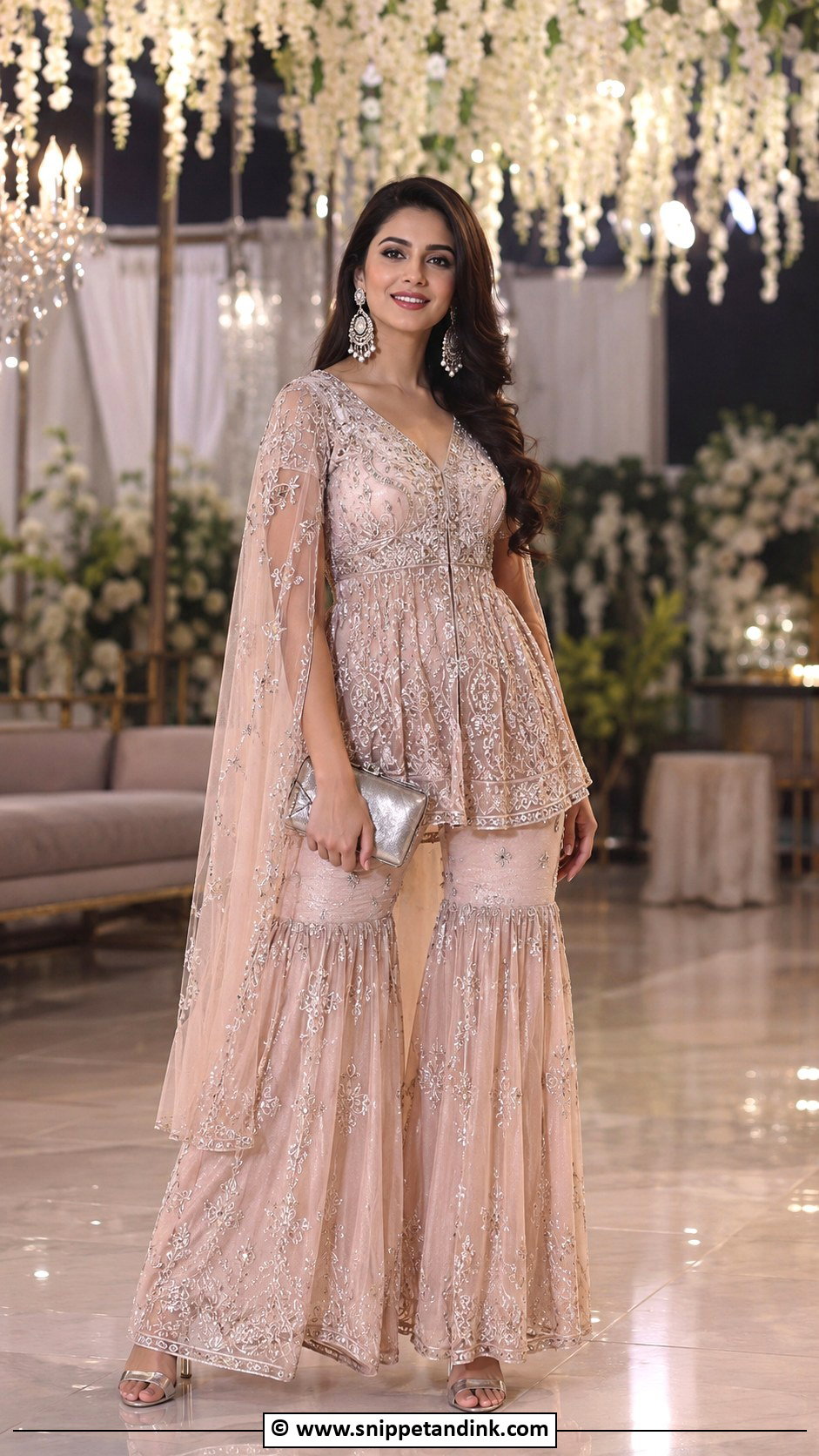
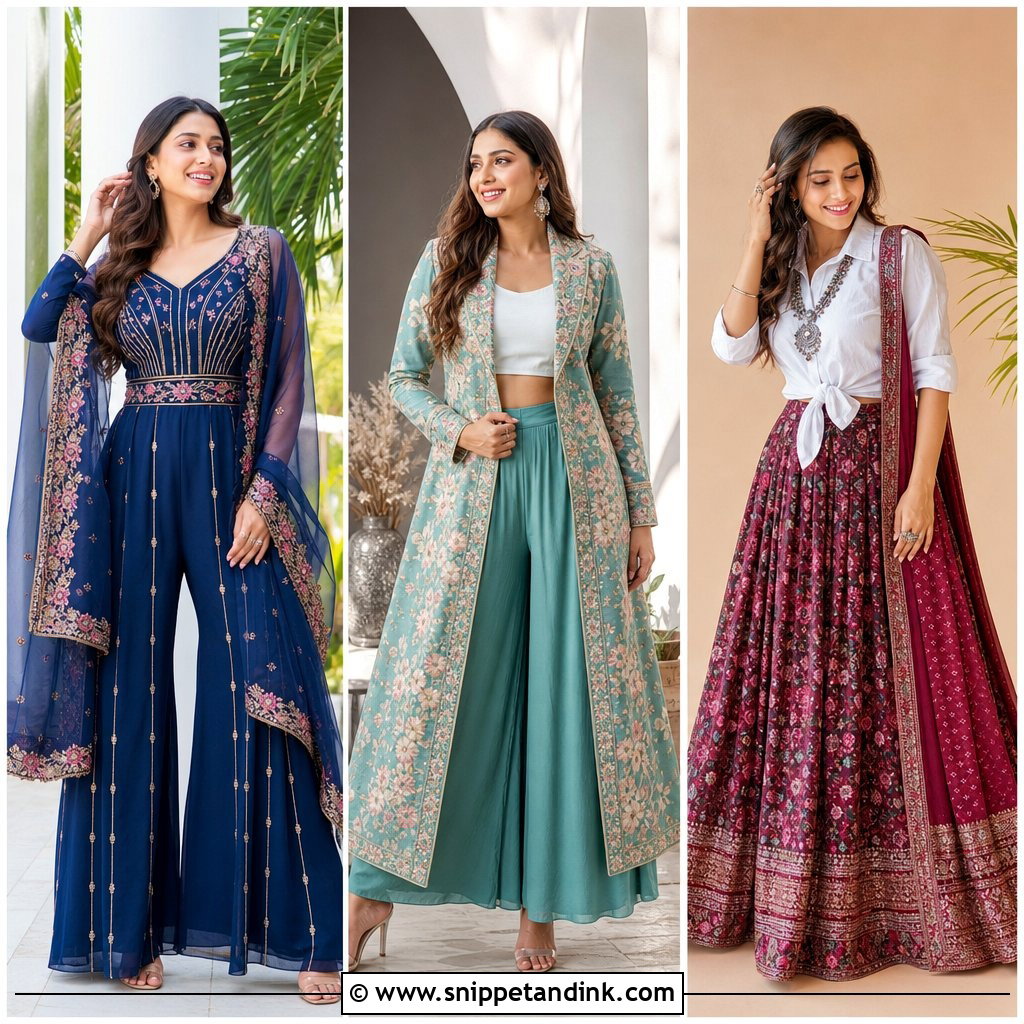
An Indo western sarara outfit pairs the flared pants with a peplum, asymmetric kurta, or crop top. A cape or pre-draped dupatta modernises it further. Satin, crepe and organza give a clean shape. I’d keep styling restrained, since the cut is already the statement. Statement earrings and a sleek ponytail suit it. It’s built for cocktail evenings and sangeets.
29. Plus Size Sarara Dress
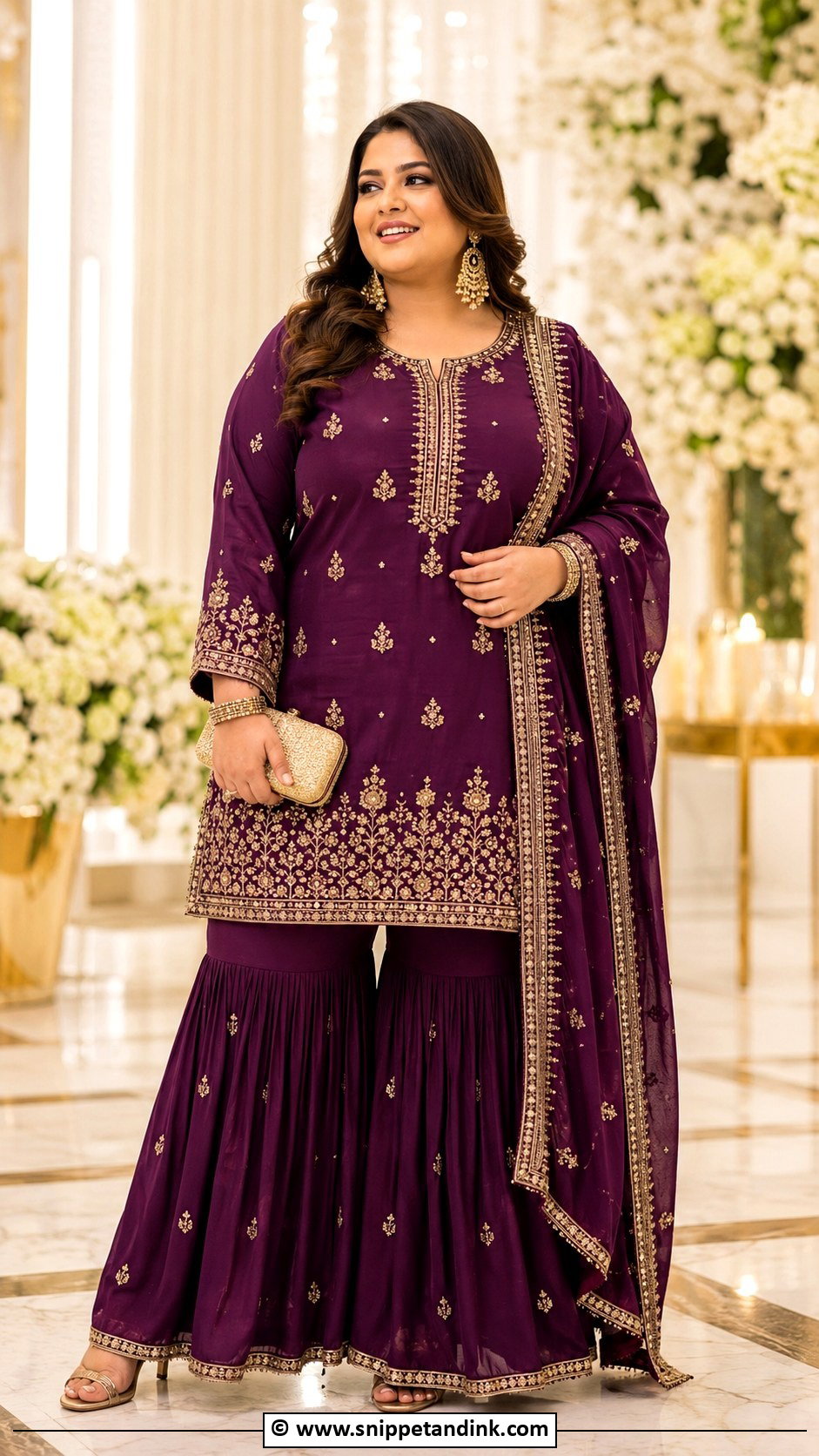
Sararas suit plus-size women well, because the flare balances the frame and the waist doesn’t need to be cinched. Georgette, crepe and silk blends drape without stiffness. I look for embroidery placed vertically or around the neckline to draw the eye up. A comfortable waistband matters more than anything for a long day. A dupatta over one shoulder creates a clean line.
30. Minimal Sarara Dress For Wedding
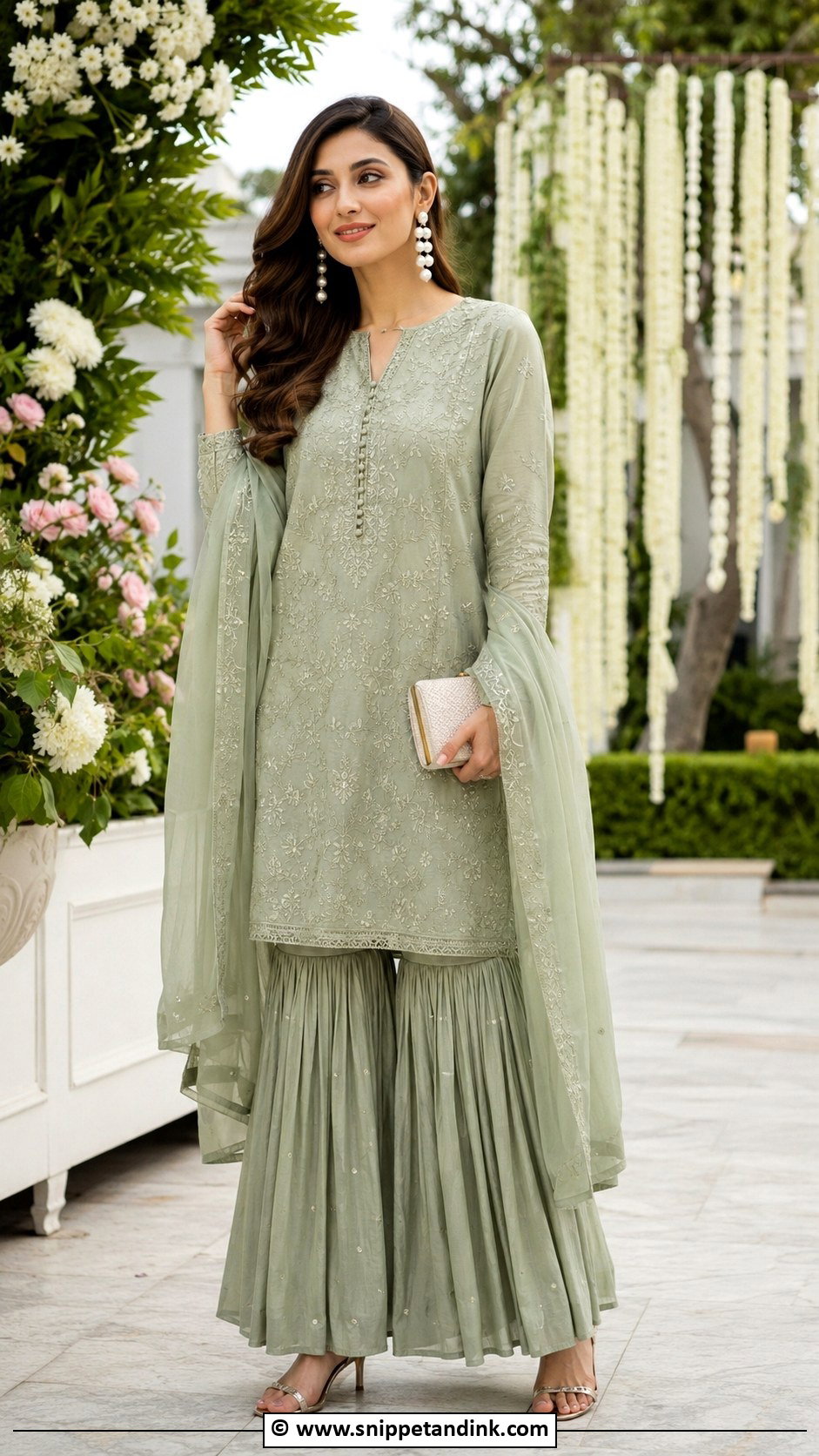
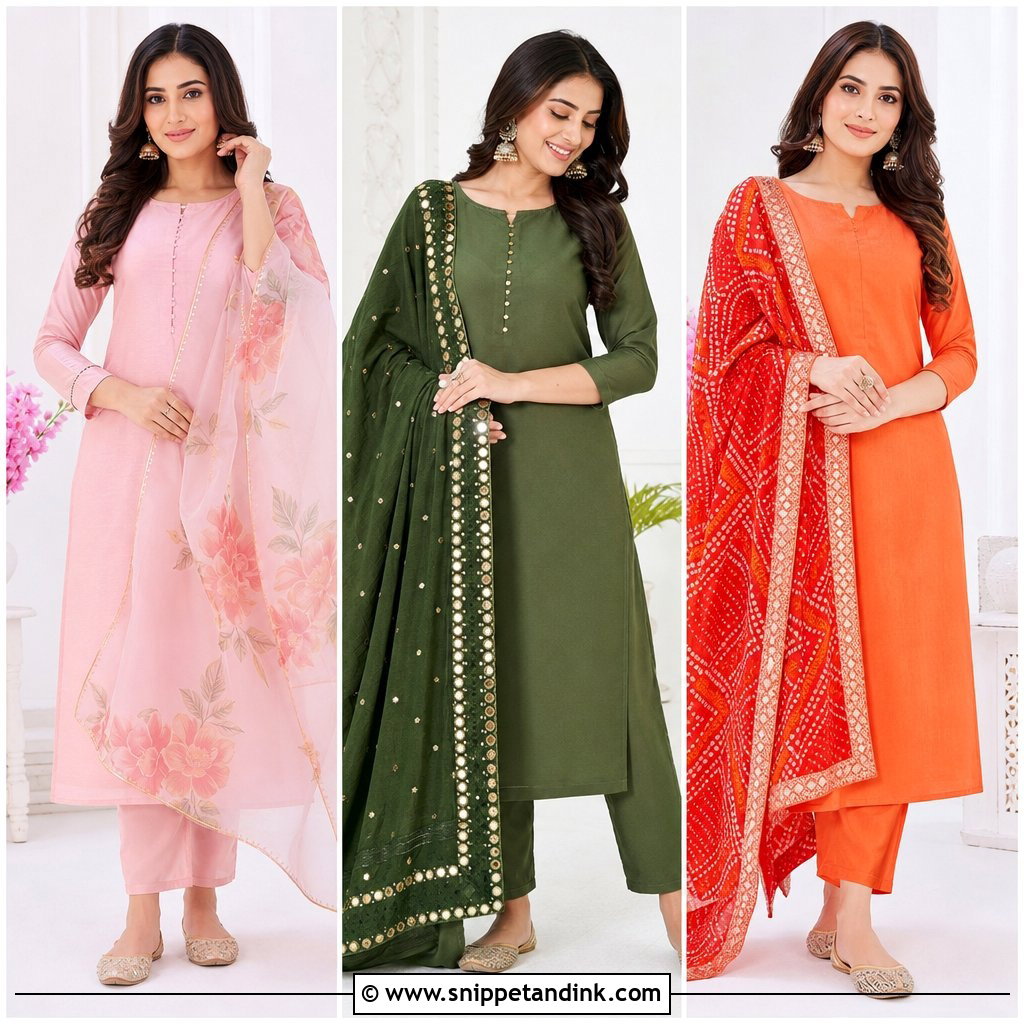
A minimal sarara relies entirely on fabric quality and fit, so spend there. Solid colours like sage, dusty rose and powder blue look refined. Subtle embroidery and a lightweight dupatta keep it festive. Pearl earrings and neutral heels suit it. Intimate weddings and quiet daytime ceremonies suit it best. Simple done well looks deliberate.
Draping the Dupatta Differently for Nikkah, Mehendi and Reception
The same sarara can look very different depending on how the dupatta is worn. For a nikkah or religious ceremony, I drape it over both shoulders or over the head, pinned at the crown so it doesn’t slip during prayers. For mehendi and sangeet, a single-shoulder drape pinned at the shoulder and hip keeps your arms free. At a reception, a dupatta draped loosely across the elbows reads more relaxed and modern.
Use small safety pins on the inside of the fabric, never through visible embroidery, and pin at two points rather than one so it stays put when you move.
Turmeric on Your Sarara After the Haldi
Haldi paste stains fabric fast. Scrape off excess paste without rubbing, rinse the stain from the back with cold water, and wash with a mild detergent as soon as you can. Hot water sets turmeric stains. Drying the garment in sunlight helps fade the yellow, because turmeric pigment breaks down in sunlight. Don’t put silk or embroidered pieces through this treatment yourself; take them to a cleaner and tell them it’s turmeric.
One Silhouette From Haldi Morning to Reception Night
The sarara adapts to every wedding function: cotton and gota for haldi, mirror work for mehendi, sequins and velvet for evening, silk and Banarasi for ceremonies. Choose the fabric for the event and the weather first, then the colour and embroidery. Check the waistband, the flare and the dupatta drape before the day, and the outfit will carry you through.
You'll Like These Ideas:




Leave a Reply