
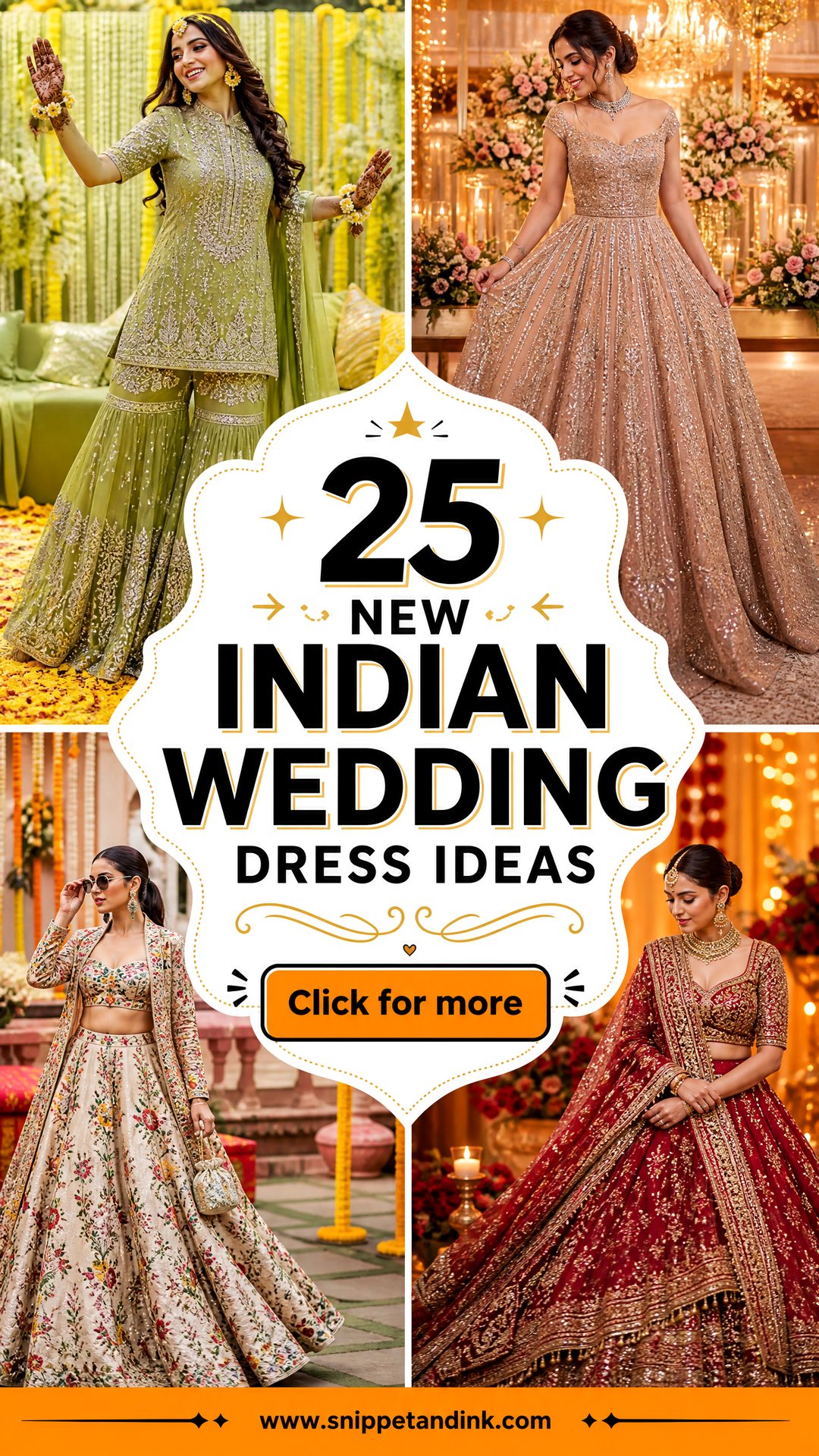
I plan Indian weddings, and outfits come up in nearly every meeting, not just with the bride. Her bridesmaids, sisters, and guests all want to know what to wear to which function, and the answer shapes the run sheet more than people realise. A heavy lehenga needs a changing room and time; a sharara can go straight from the car to the stage. Below are 25 complete looks for haldi, mehendi, sangeet, ceremony, reception and destination events, from light lehengas and modern saree drapes to sharara sets, anarkalis, jacket lehengas and fusion outfits. The test I use for all of them is simple: can you sit, walk, dance and greet people in it for five hours?
A Colour Plan for Every Function, Shared Early
Most outfit stress at Indian weddings comes from not knowing what’s expected. I ask the couple to set a colour or mood for each function weeks ahead, then share it with family and guests in one simple message. Yellow for haldi, greens and brights for mehendi, sparkle for sangeet, rich jewel tones for the ceremony, and a dressier palette for the reception is a common starting point, but the couple decides.
- Keep the bride’s ceremony colour off the guest palette so she stands out in photos.
- Tell the bridal party their colours before anyone else, as they’ll need the most time.
- Mention practical details too: outdoor lawn, beach, stairs, or a long walk to the mandap.
- Flag any family customs about colours, such as avoiding black or white.
Then I check the timeline against the outfits. If haldi and the ceremony fall on the same day, the bride needs time to wash turmeric out of her hair and skin before her makeup starts. That gap is easy to plan and painful to discover on the morning.
1. Red Bridal Lehenga Outfit
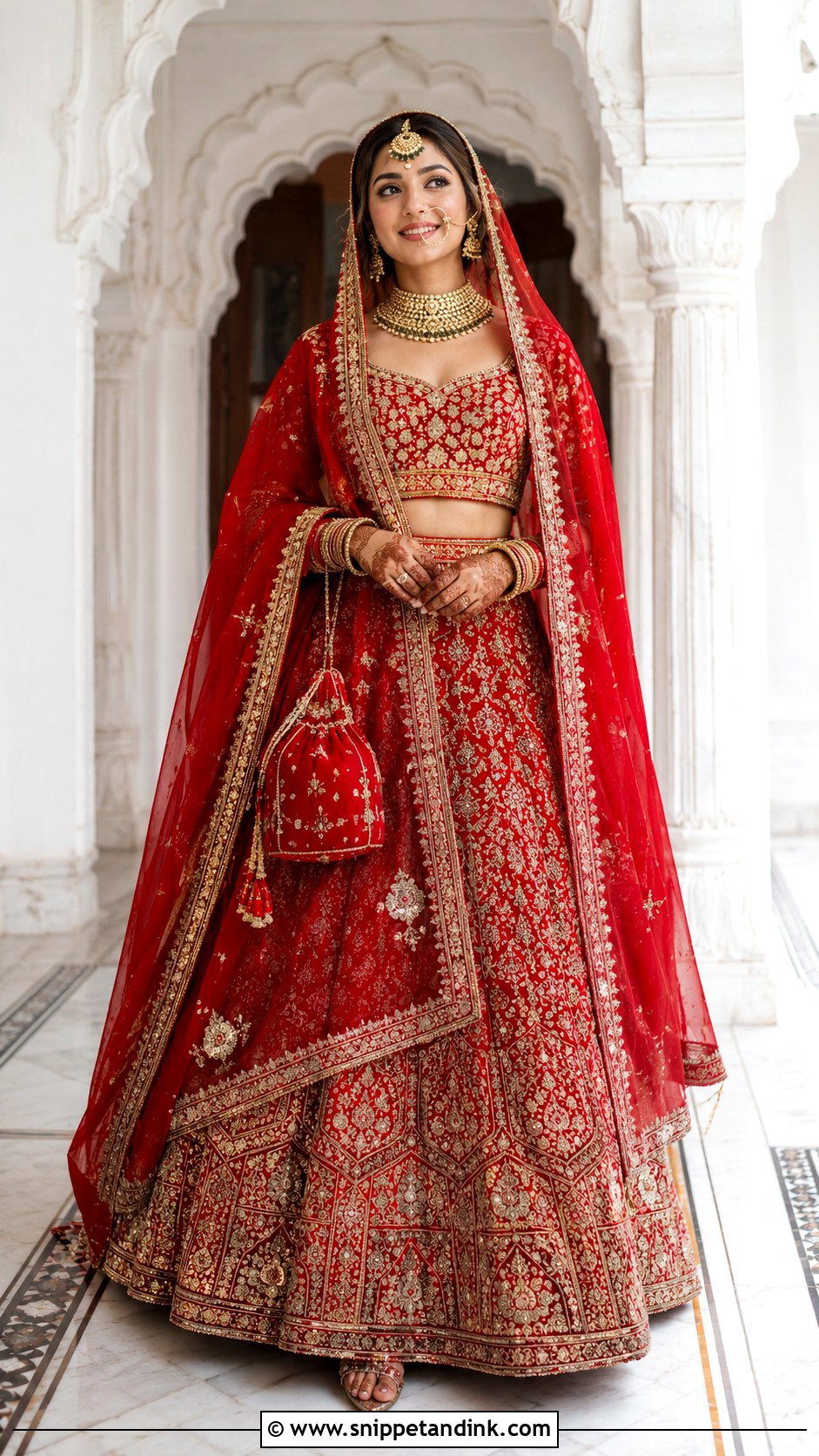
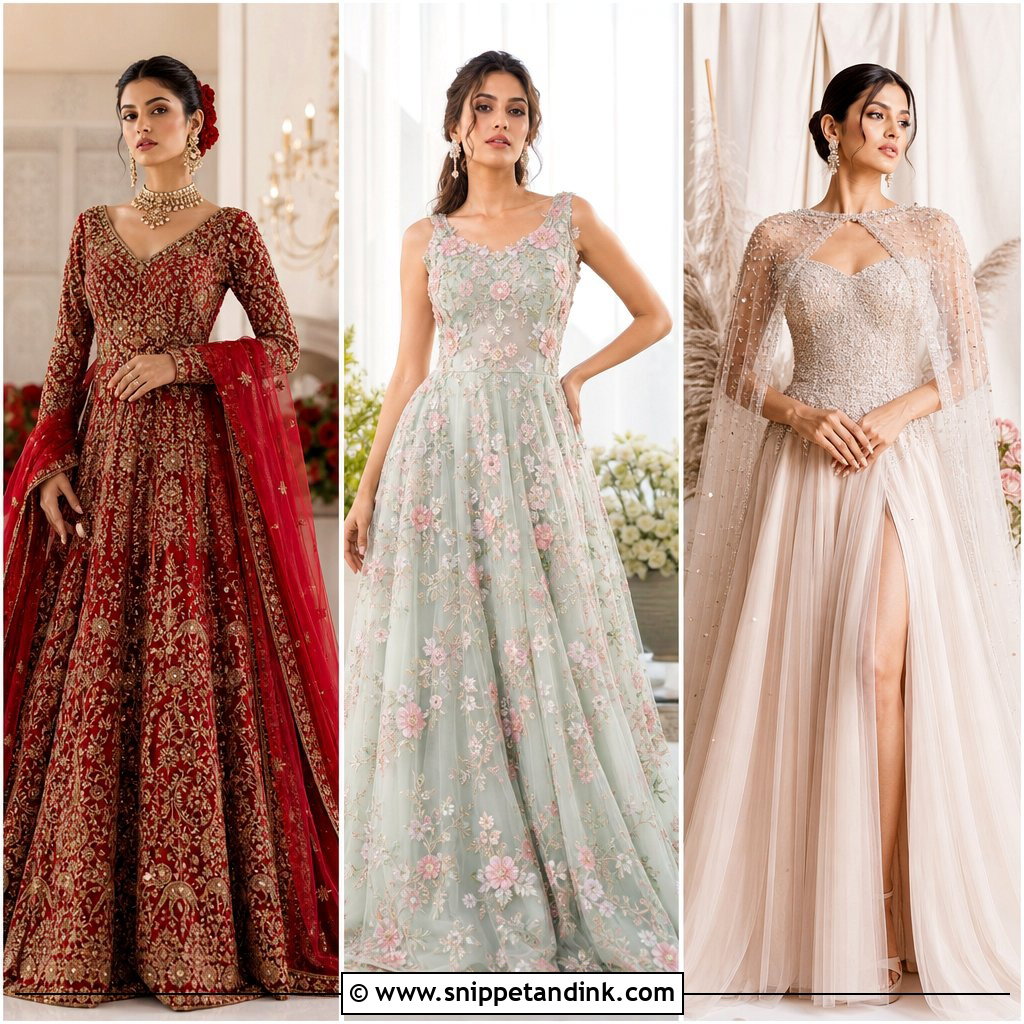
Red is still what most families picture at the mandap, and for good reason. A rich red lehenga with zari, sequins, threadwork or mirror detail, a structured blouse and a soft dupatta over the head or shoulder is the classic build. Gold jewellery works best: a choker, layered necklace, matha patti, bangles and statement earrings. Rituals mean long stretches of standing and sitting, so I always push for embellished block heels or wedges over stilettos. A sleek bun, soft waves or a flower-trimmed braid finishes it. On the timeline, I give a red bridal lehenga at least an hour and a half for dressing, draping and jewellery.
2. Pastel Bridal Lehenga Outfit
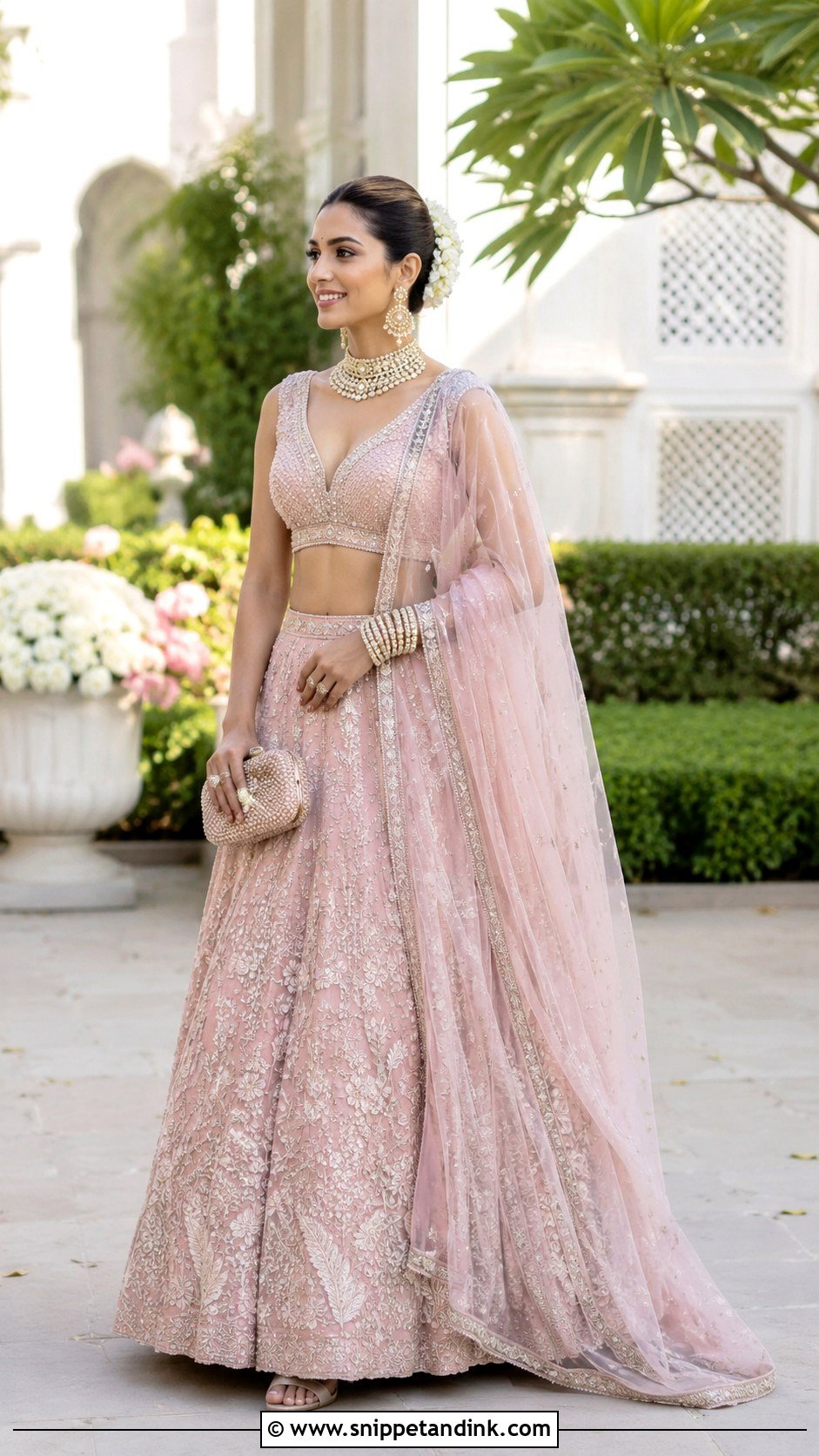
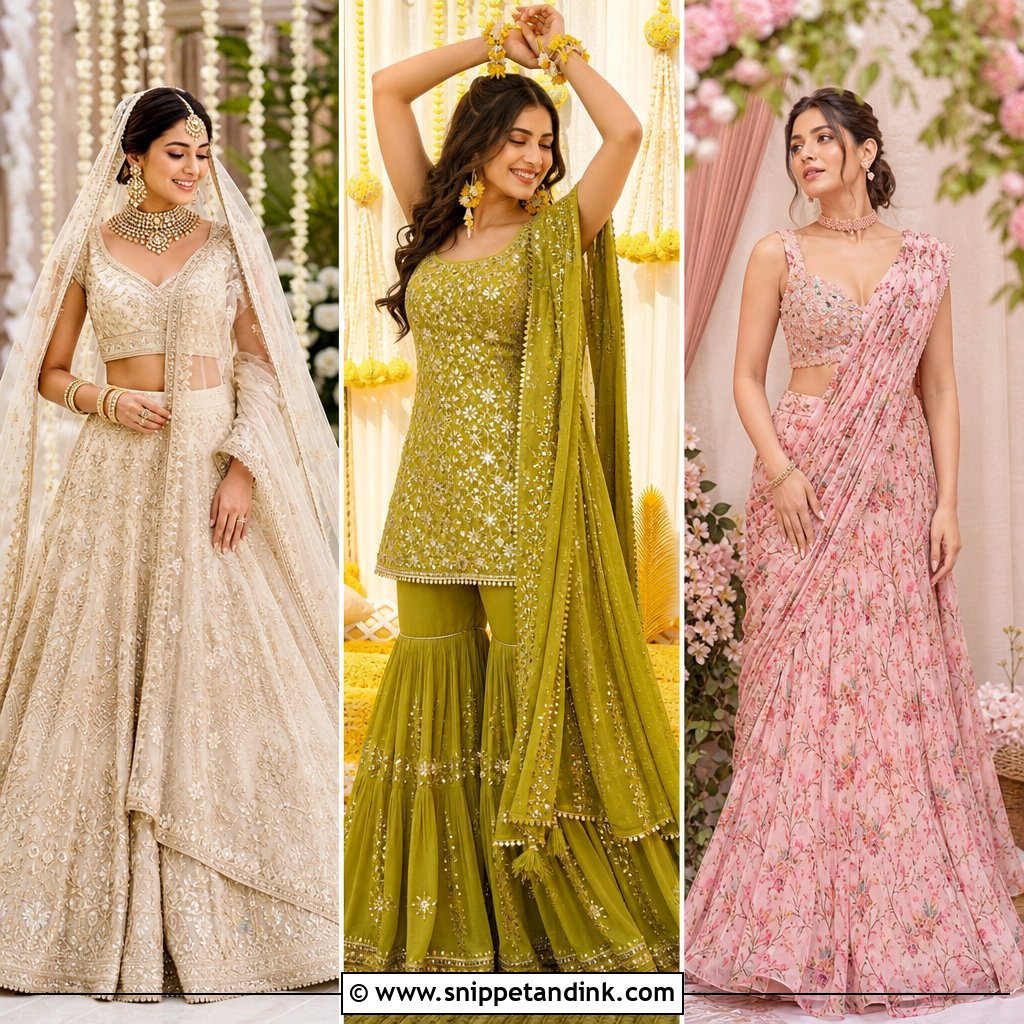
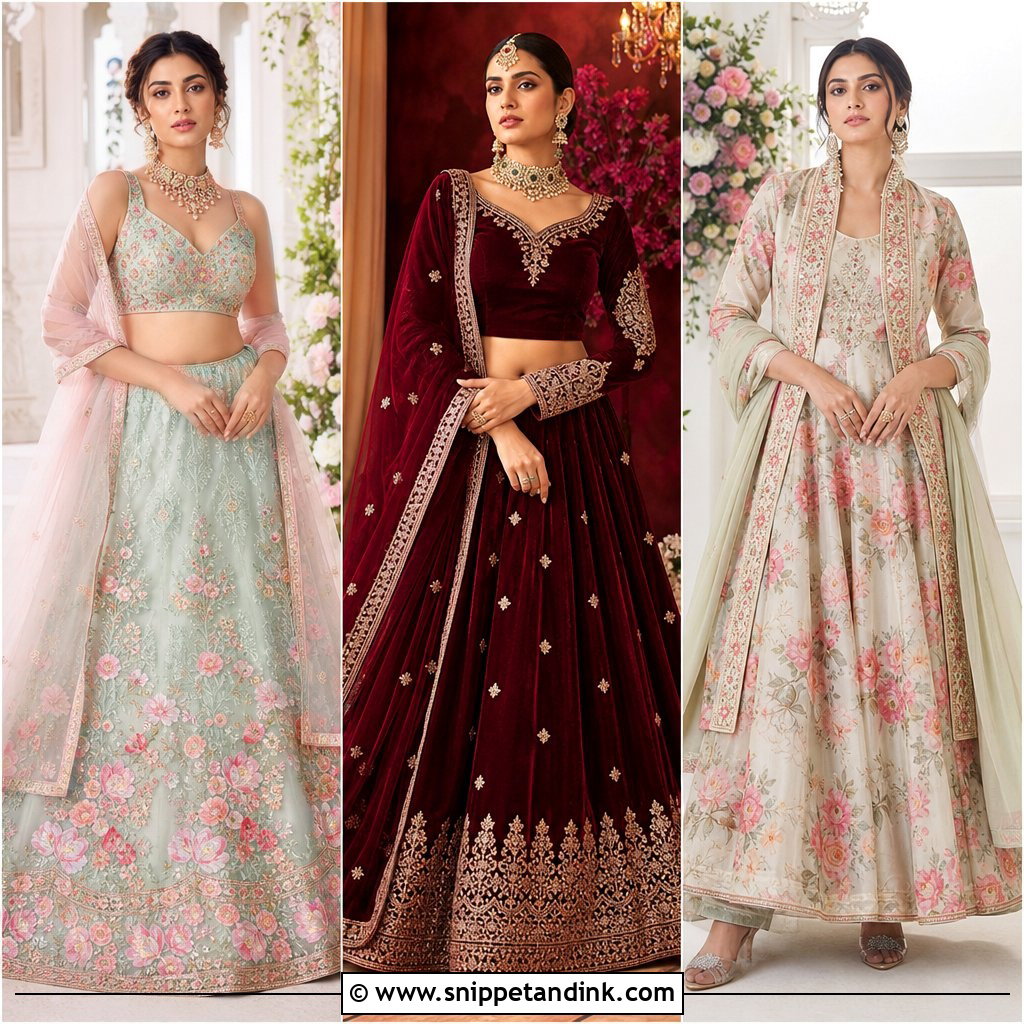
Pastels are a daylight choice. Blush, ivory, mint, powder blue, peach and lavender glow at morning ceremonies and in gardens, but under warm evening lighting they can look flat. Pearl work, tone-on-tone embroidery, small sequins or florals keep them from looking plain. Diamond-look jewellery, polki or pearls suit them. Wearing one dupatta across the shoulder and a second as a veil gives a fuller bridal shape. Nude heels, glowing makeup and a loose bun with face-framing strands finish it. If your ceremony runs late, ask your photographer how the colour will hold up in the venue light before you commit.
3. Banarasi Saree Wedding Outfit
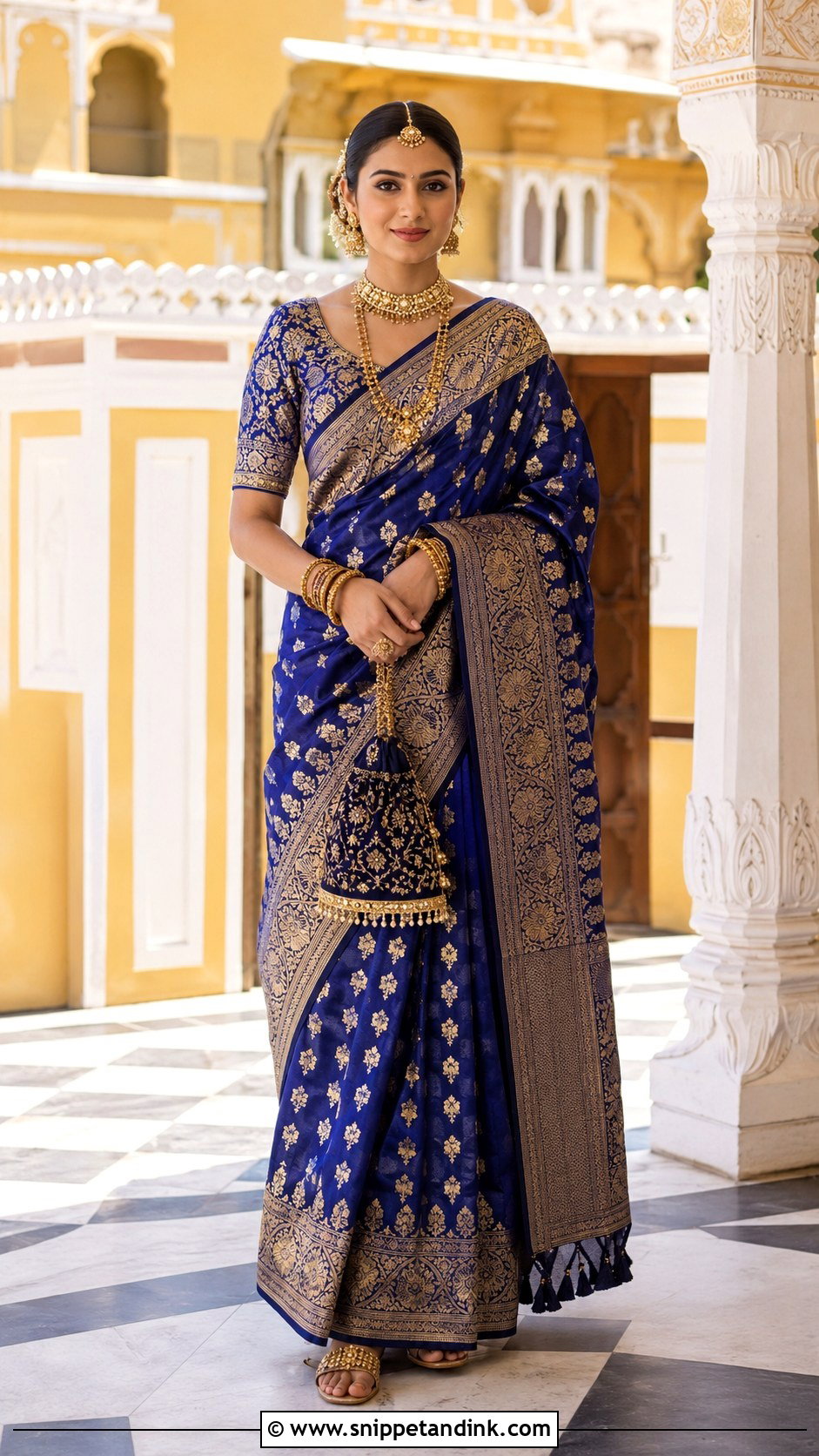
A silk Banarasi suits the bride, her mother, her sisters and guests alike, which is why I see more of them than any other saree. Red, rani pink, emerald, mustard, royal blue or ivory brocade is rich enough on its own. Pair it with a fitted brocade blouse, elbow sleeves or a modern square neck. Temple jewellery, gold bangles, a potli and embellished sandals complete it, with a low bun, kohl and a small bindi. Keep the drape clean so the weave shows. One planning note: Banarasi is warm, so for an afternoon outdoor function in summer I’d suggest it for the evening instead.
4. Sangeet Sequin Lehenga Outfit
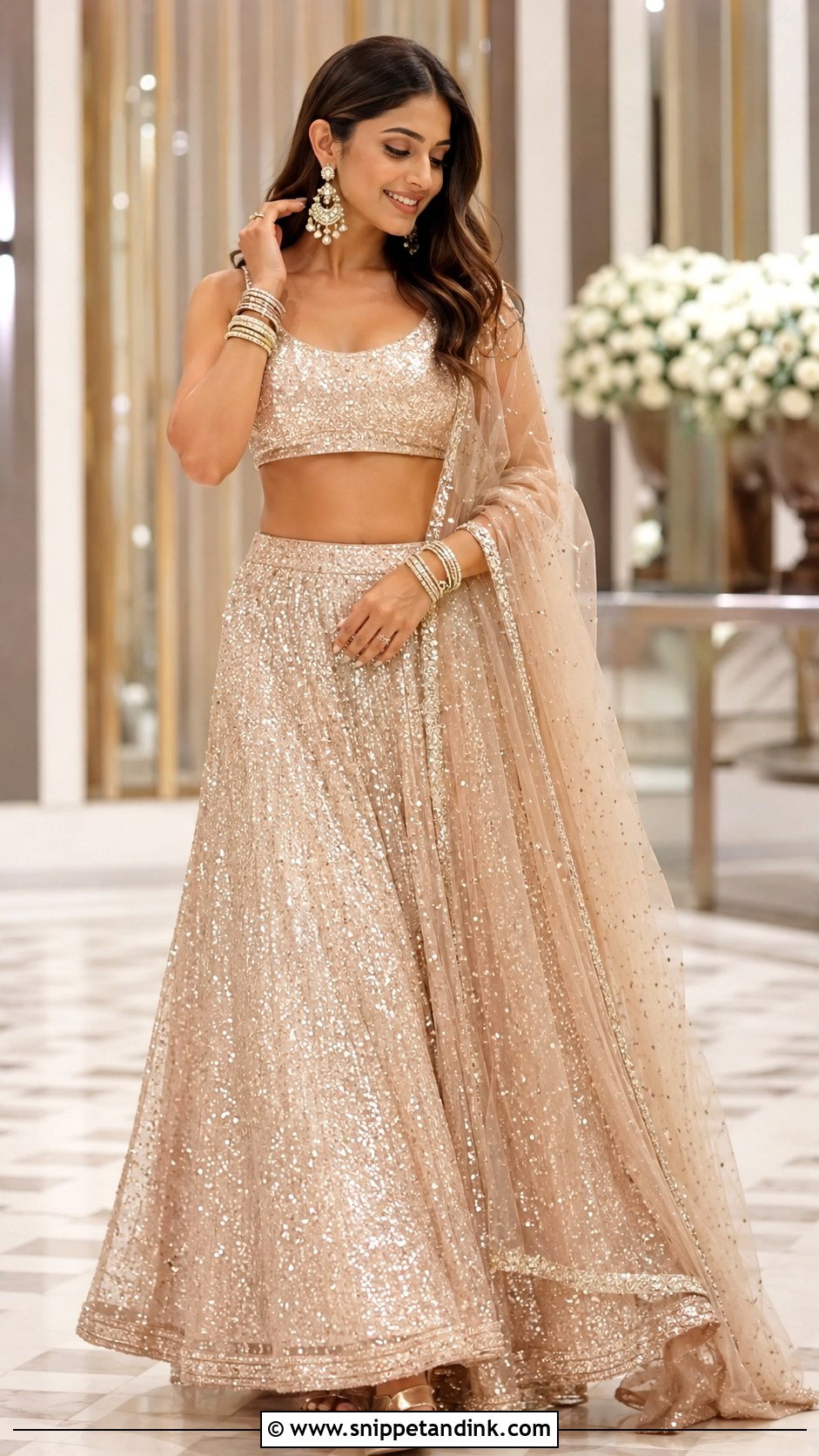
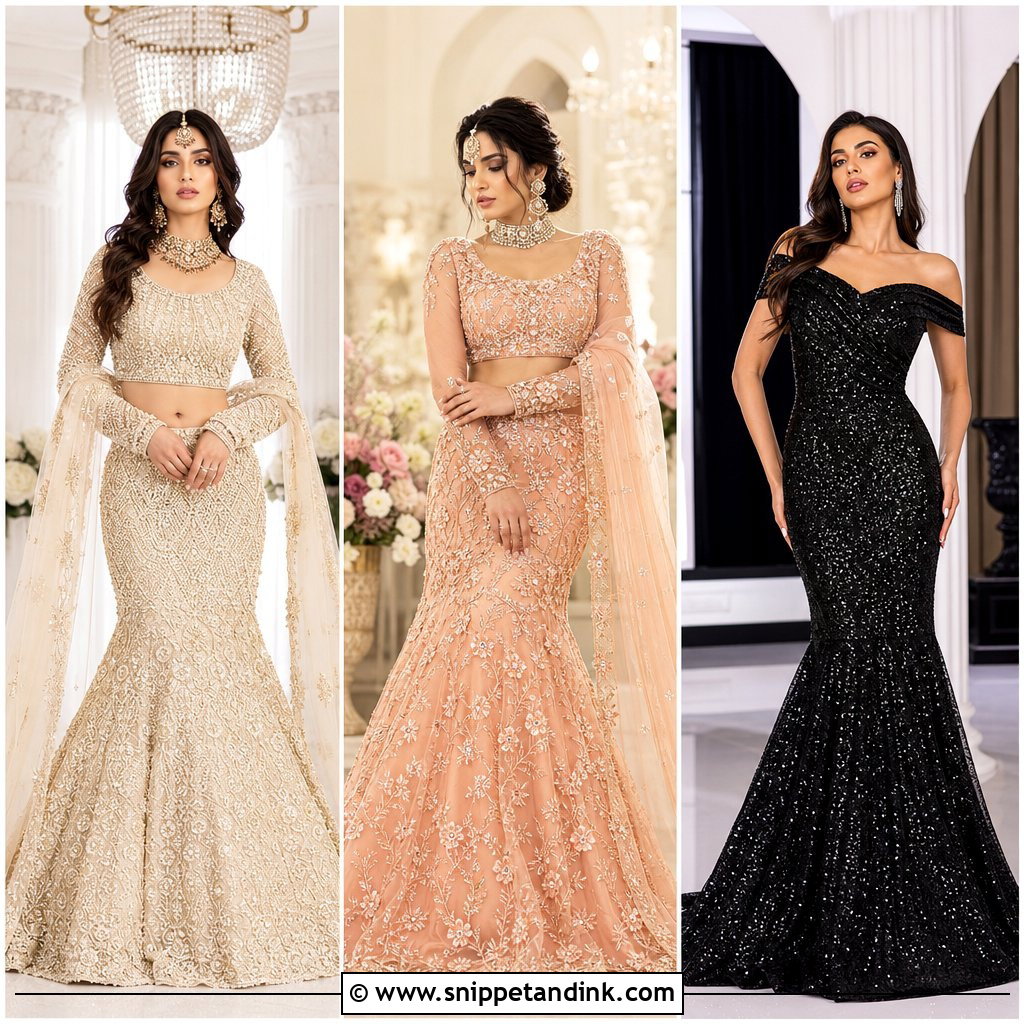
The sangeet is where outfits get tested hardest. A light lehenga in all-over sequins, metallic embroidery or shimmer fabric catches the stage lights. Champagne, silver, rose gold, teal, navy and plum suit evening. The blouse has to stay put while you dance, so a wide-strap, corset or sheer full-sleeve blouse is safer than a narrow strap. Pin the dupatta neatly or skip it for a choreographed number. Statement earrings, stacked bangles, soft curls and platform or block heels finish it. I ask performers to rehearse at least once in the actual outfit; a skirt that’s lovely standing still can trip you on the first spin.
5. Mehendi Sharara Set Outfit
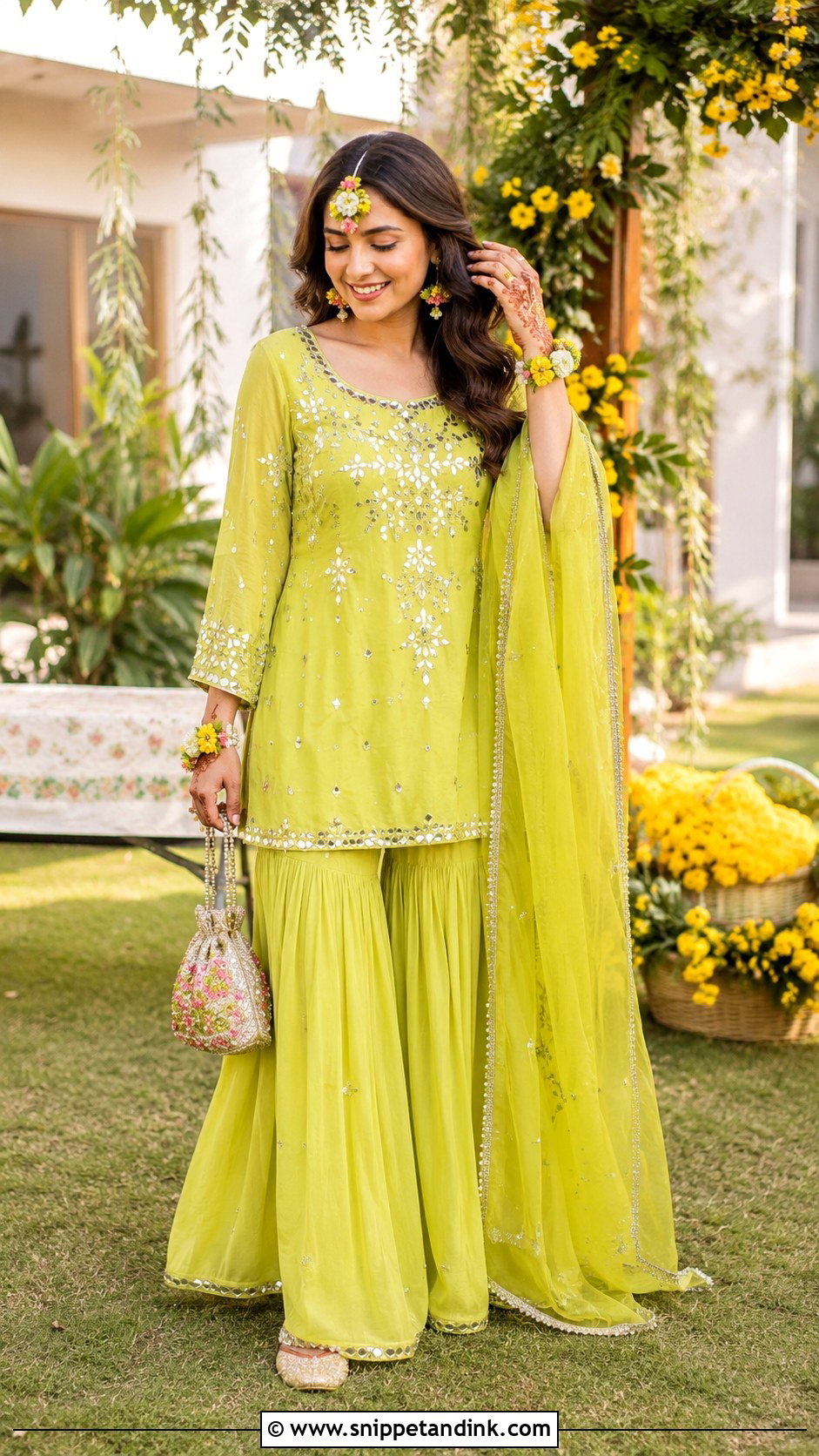
A sharara set gives colour and freedom at the mehendi. It suits outdoor events and daytime gatherings, in lime, mustard, coral, turquoise, fuchsia or parrot green. A short kurti with mirror work, gota patti or thread embroidery over flared sharara pants does the job, with a light dupatta, juttis, floral jewellery and small earrings. Skip heavy cuffs and rings, which get in the way of the henna. The bride sits for hours, so I set up cushions, a low table and a fan where she’ll be, and make sure the kurti has an opening someone else can manage.
6. Haldi Yellow Anarkali Outfit
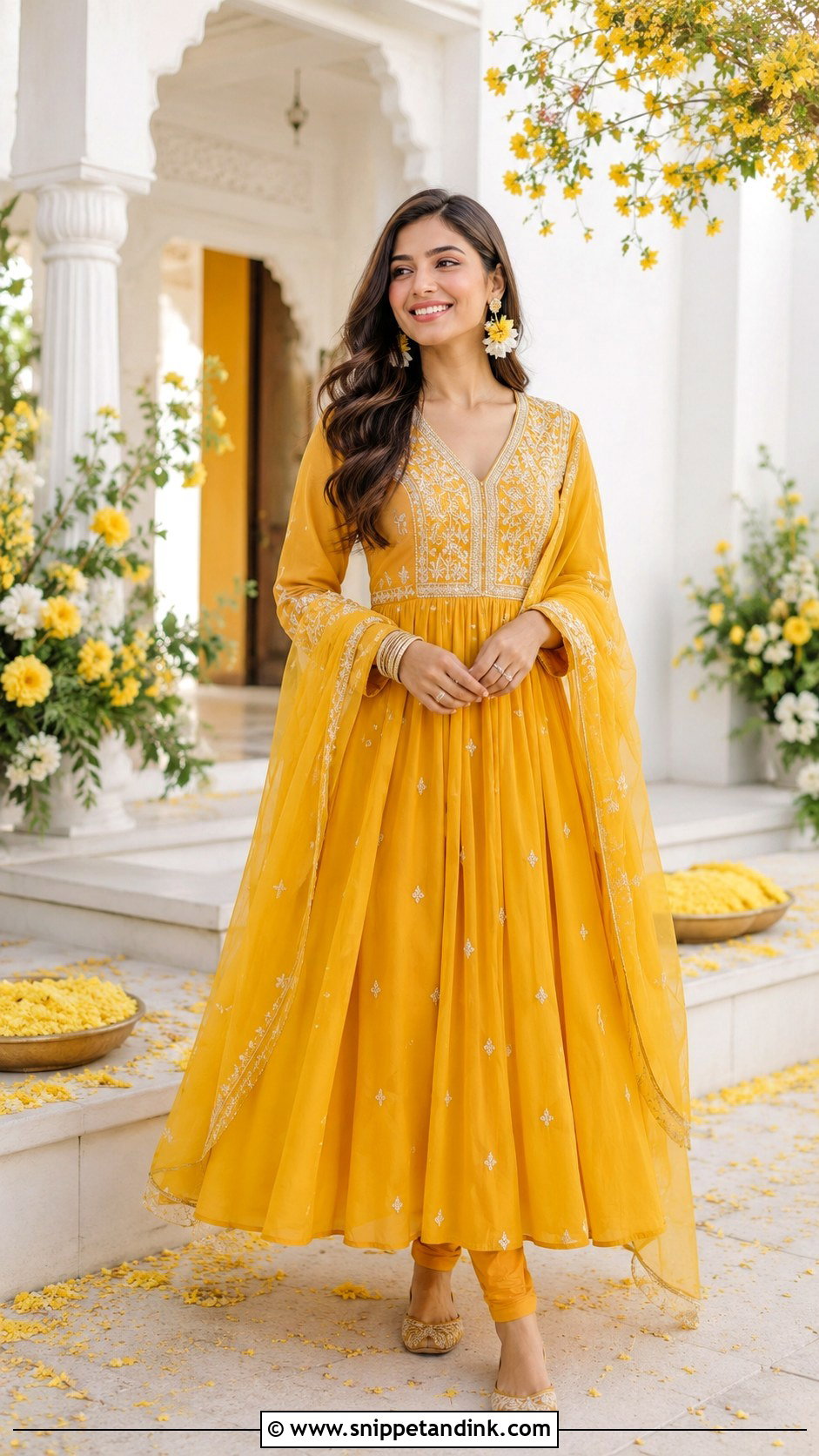
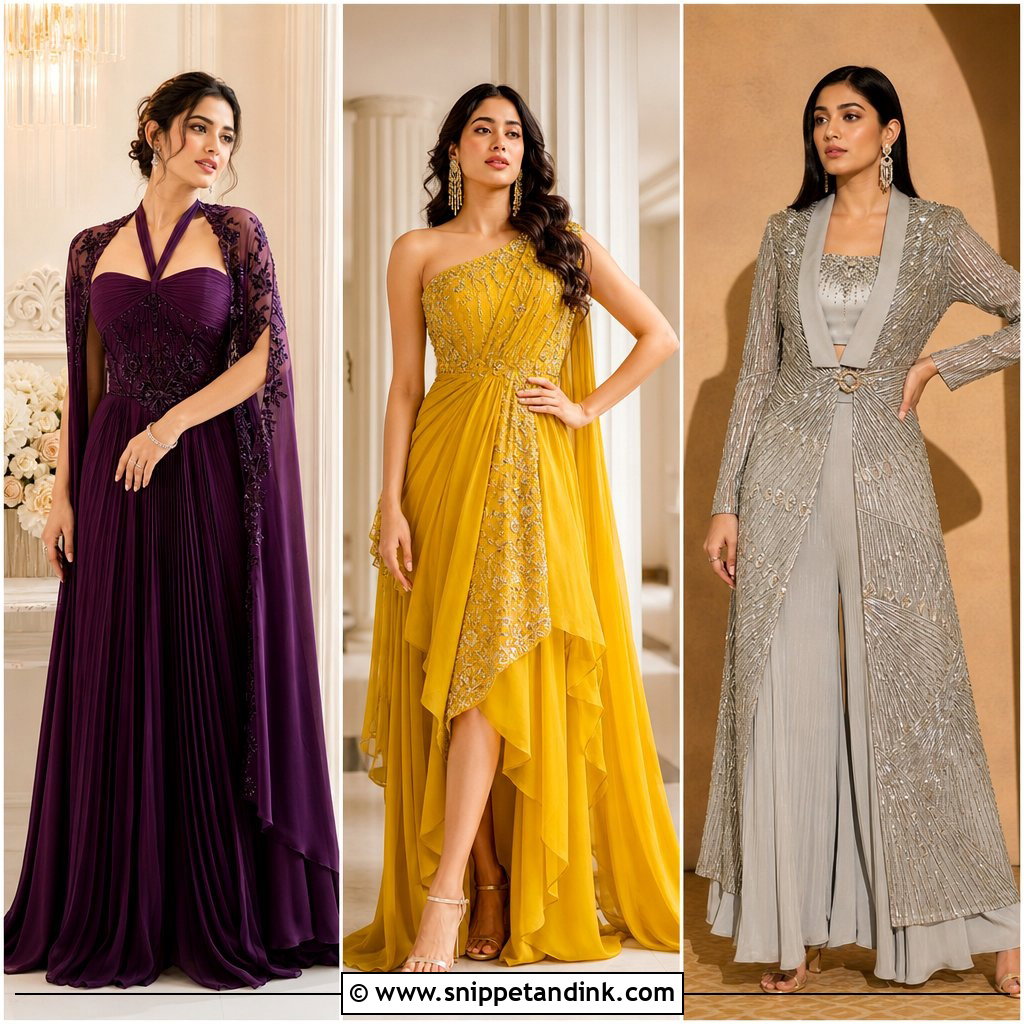
A haldi yellow Anarkali outfit is the easy, cheerful choice for a function where things get messy. A flowing yellow, marigold or turmeric-toned anarkali in cotton silk, georgette, organza or light chanderi breathes and moves. Minimal mirror work, floral embroidery or gota borders keep it relaxed. Slim pants, a soft dupatta, juttis and floral earrings complete it, with a braid, loose waves or half-up hair. Turmeric stains, so keep good jewellery away. I always lay down sheets and set out old towels near the haldi area; it saves the venue floor and somebody’s shoes.
7. Reception Gown Indian Outfit
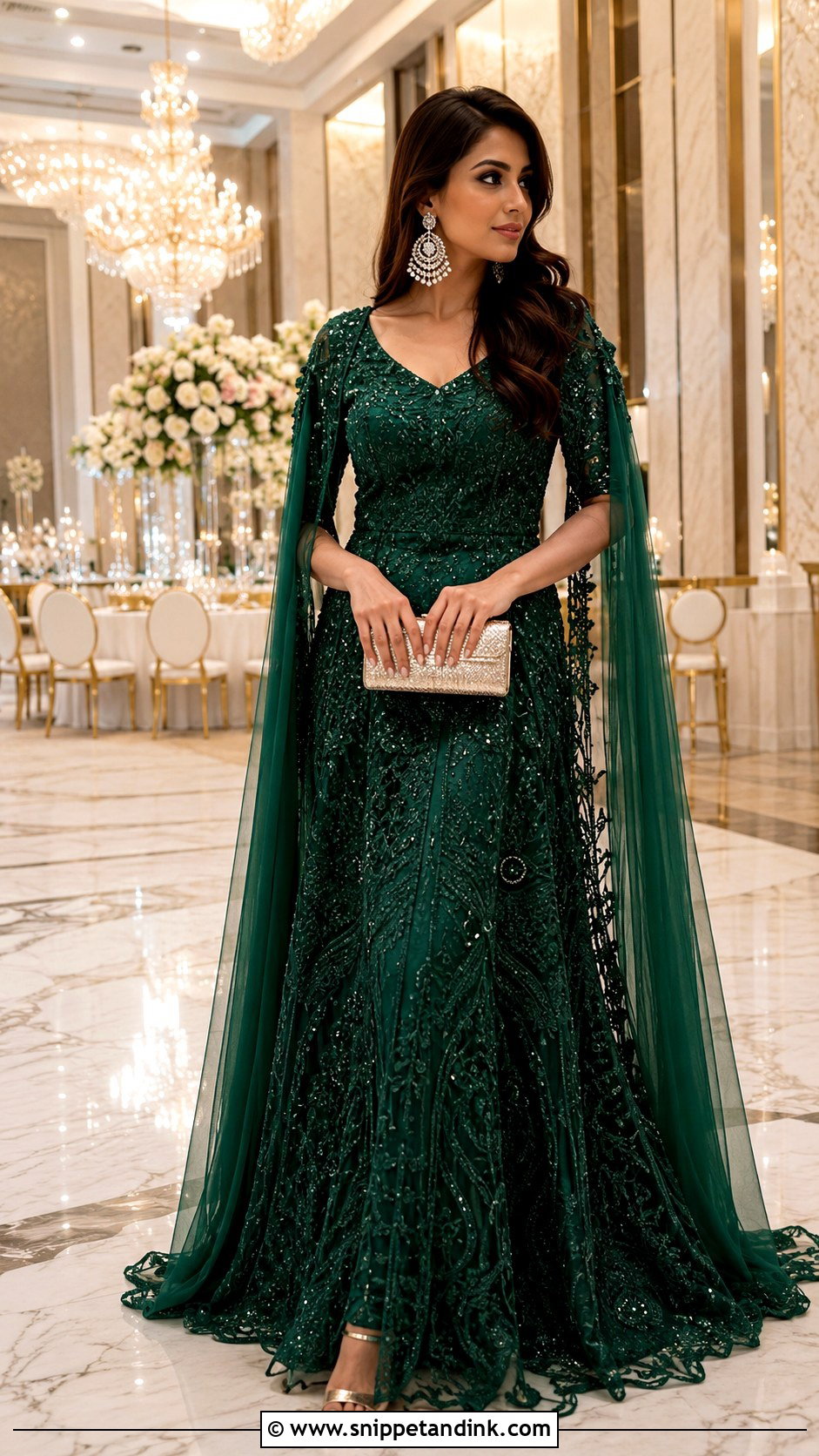
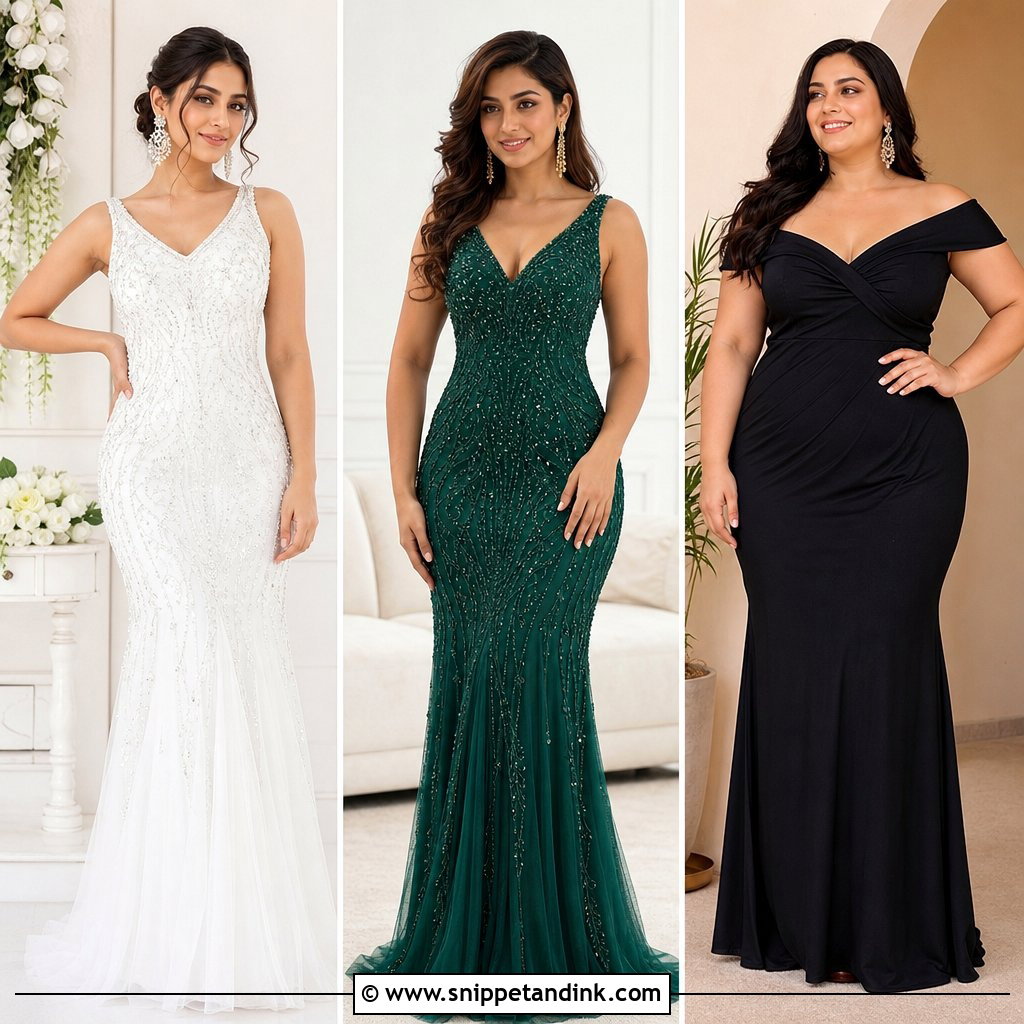
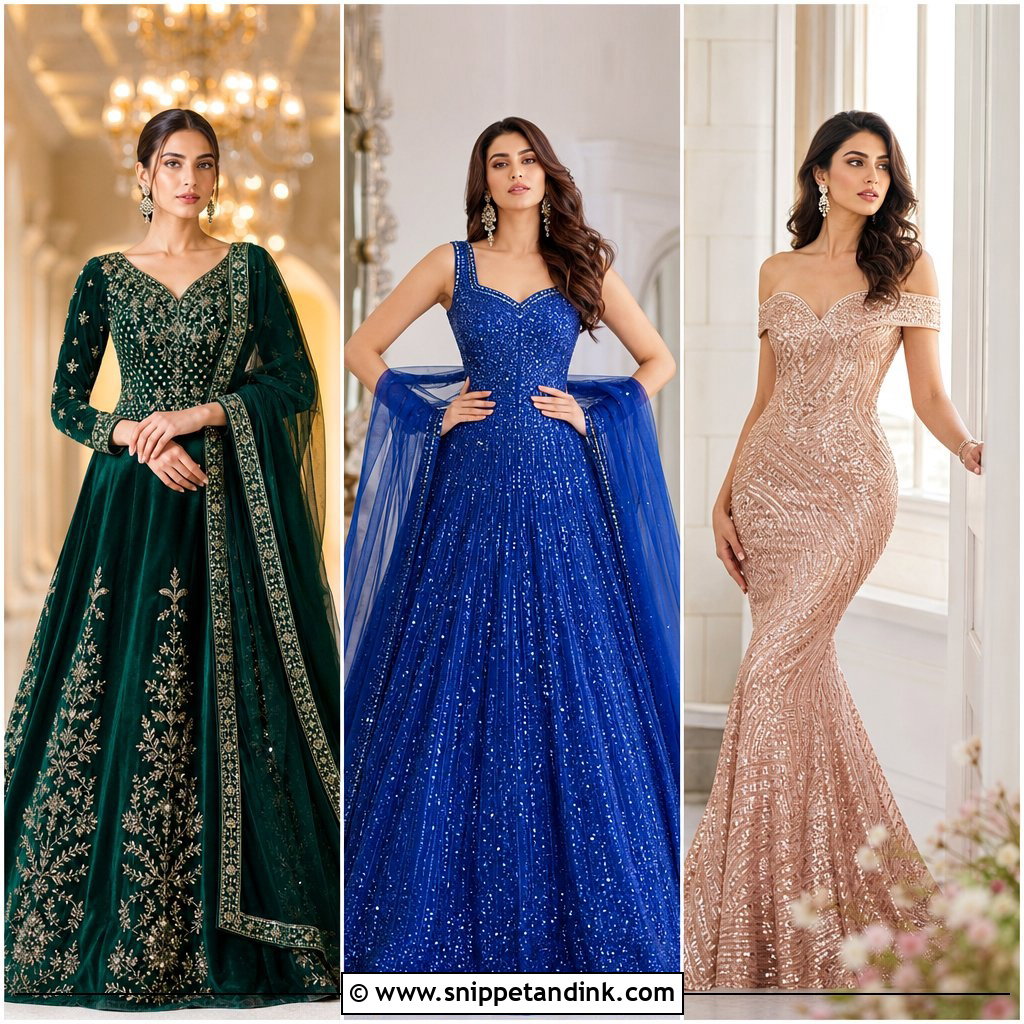
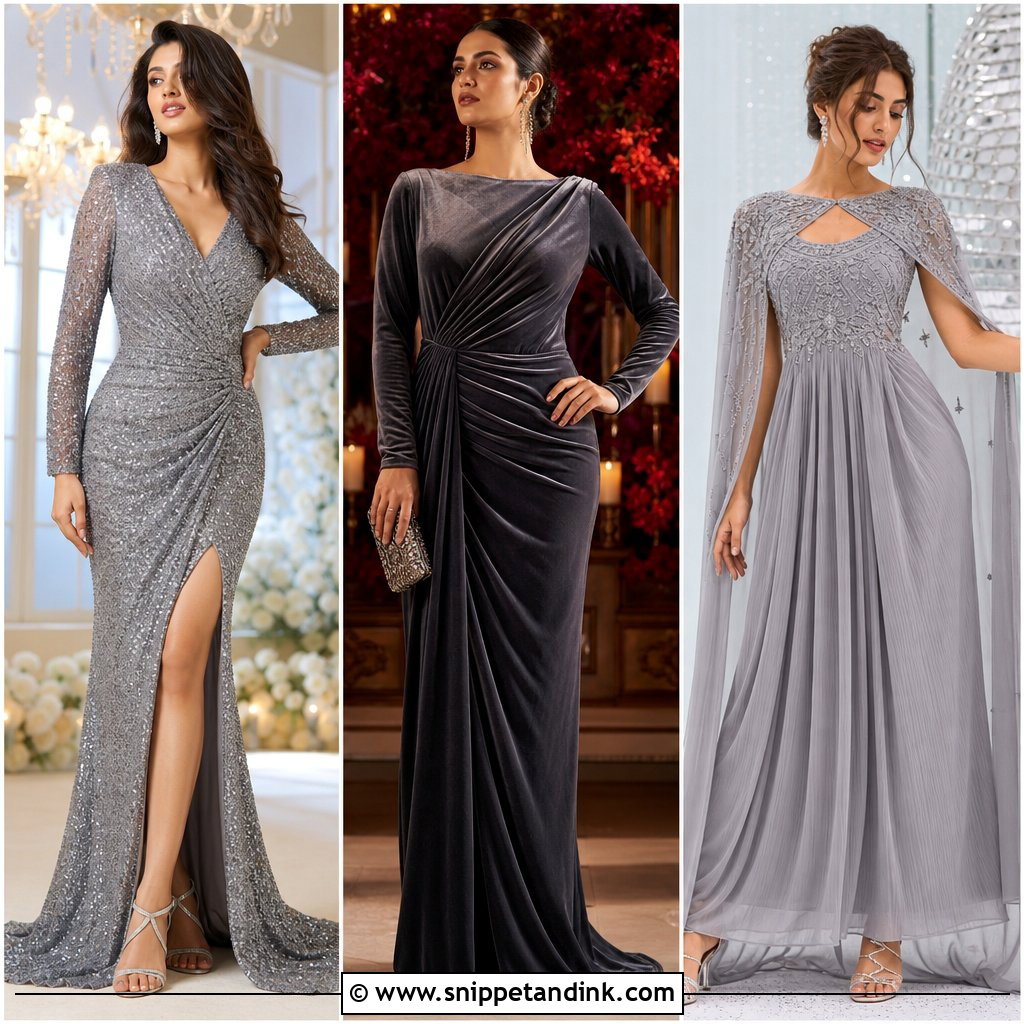
After days of heavy dressing, a gown at the reception feels like a holiday. A floor-length cut with Indian embroidery, cape sleeves, beadwork or a structured bodice keeps a link to the rest of the week. Emerald, wine, navy, charcoal and midnight blue look rich at night; ivory, champagne, blush or silver give the bride a softer note. High heels, a sleek clutch, chandelier earrings and polished makeup finish it, with a clean ponytail, side-swept waves or a low bun. Gowns with long trains need a plan for the entry and the first dance, so I agree in advance who carries the train up any stairs.
8. Indo Western Lehenga Outfit
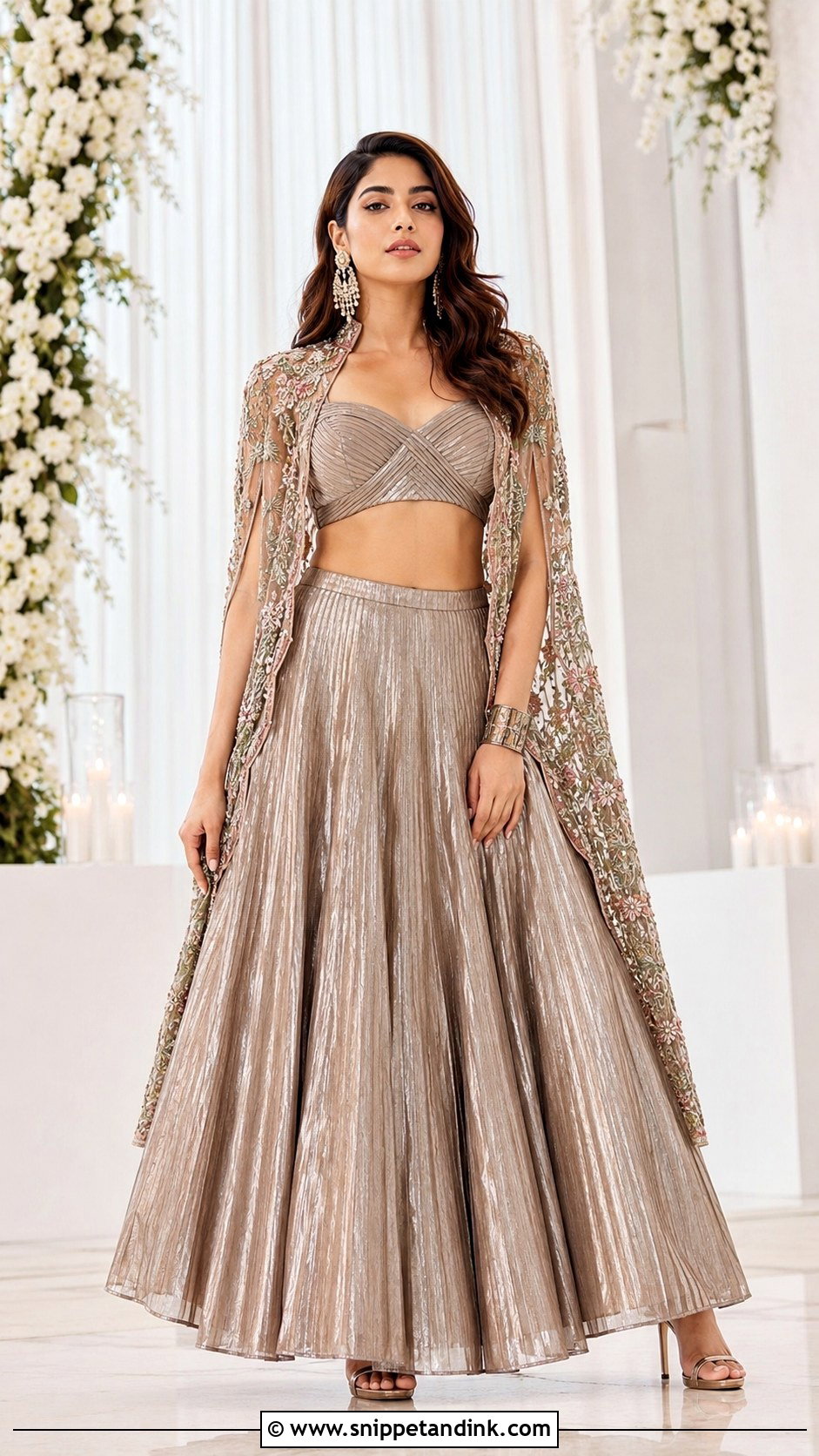
Indo-western lehengas suit people who love Indian detail but want a newer shape. A skirt with a crop top, peplum blouse, cape, jacket or belt replaces the usual dupatta drape. It works for cocktail-style events, sangeet nights, welcome dinners and destination weddings. Metallics, printed skirts, sculpted blouses and asymmetric hems all feel fresh if one piece leads. Statement earrings, a cuff and sleek heels balance it; skip the heavy necklace with a dramatic top. From a planning view, it’s also the quickest outfit to change into between back-to-back events.
9. Floral Lehenga Wedding Outfit
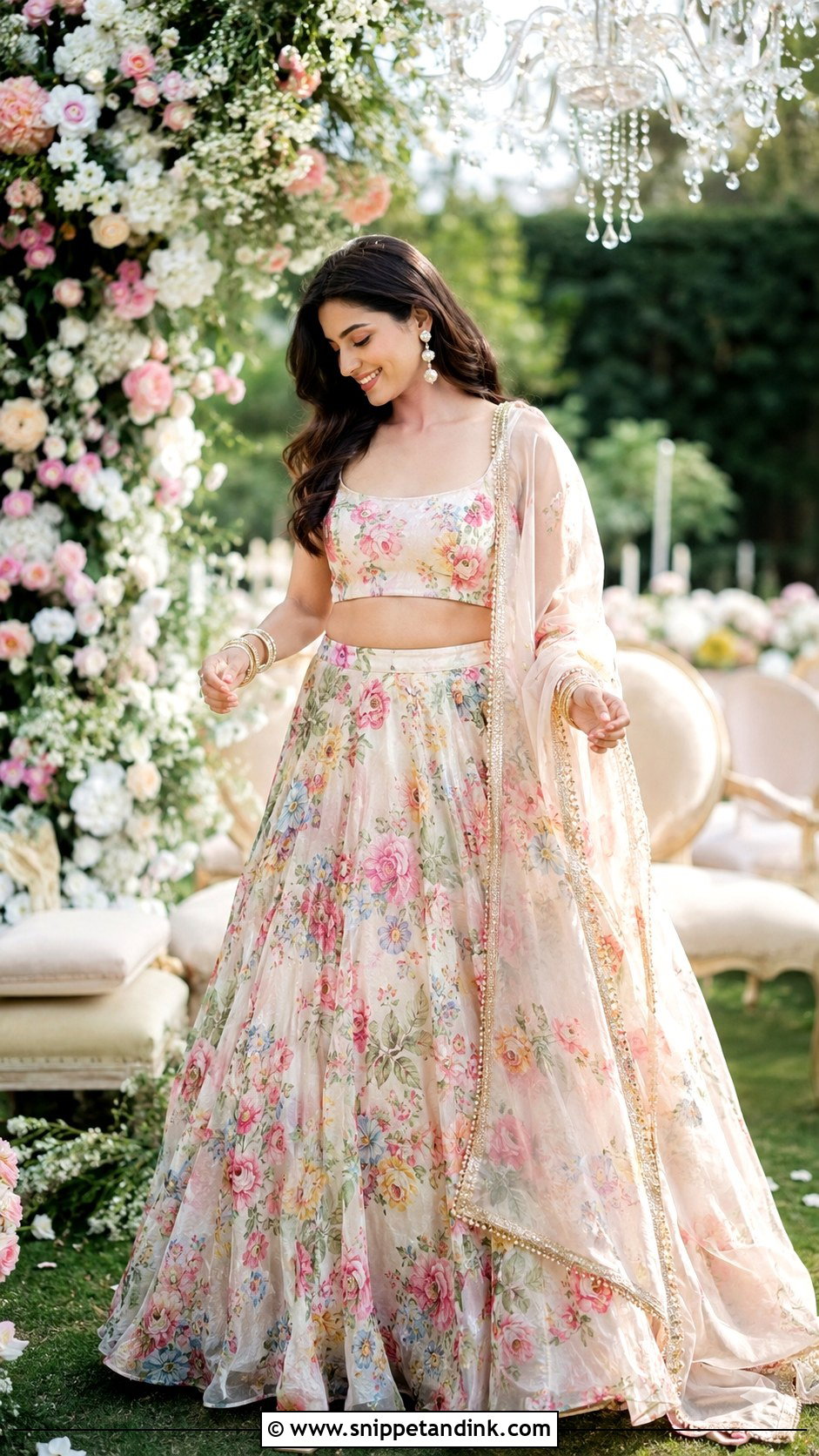
Florals belong to daytime weddings, mehendis, garden events and bridesmaids. Prints, embroidery or appliqué feel light and festive. Organza, georgette, silk or raw silk sets the formality. Pastel florals read romantic, bold pinks, oranges, greens and blues more joyful. A simple blouse, sheer dupatta, pearl earrings, bangles and embellished sandals complete it, with waves or a floral bun and fresh makeup. Garden venues mean grass and uneven paths, so check the heel width before the day, not after you’ve sunk into the lawn during the entry.
10. Velvet Lehenga Winter Wedding Outfit
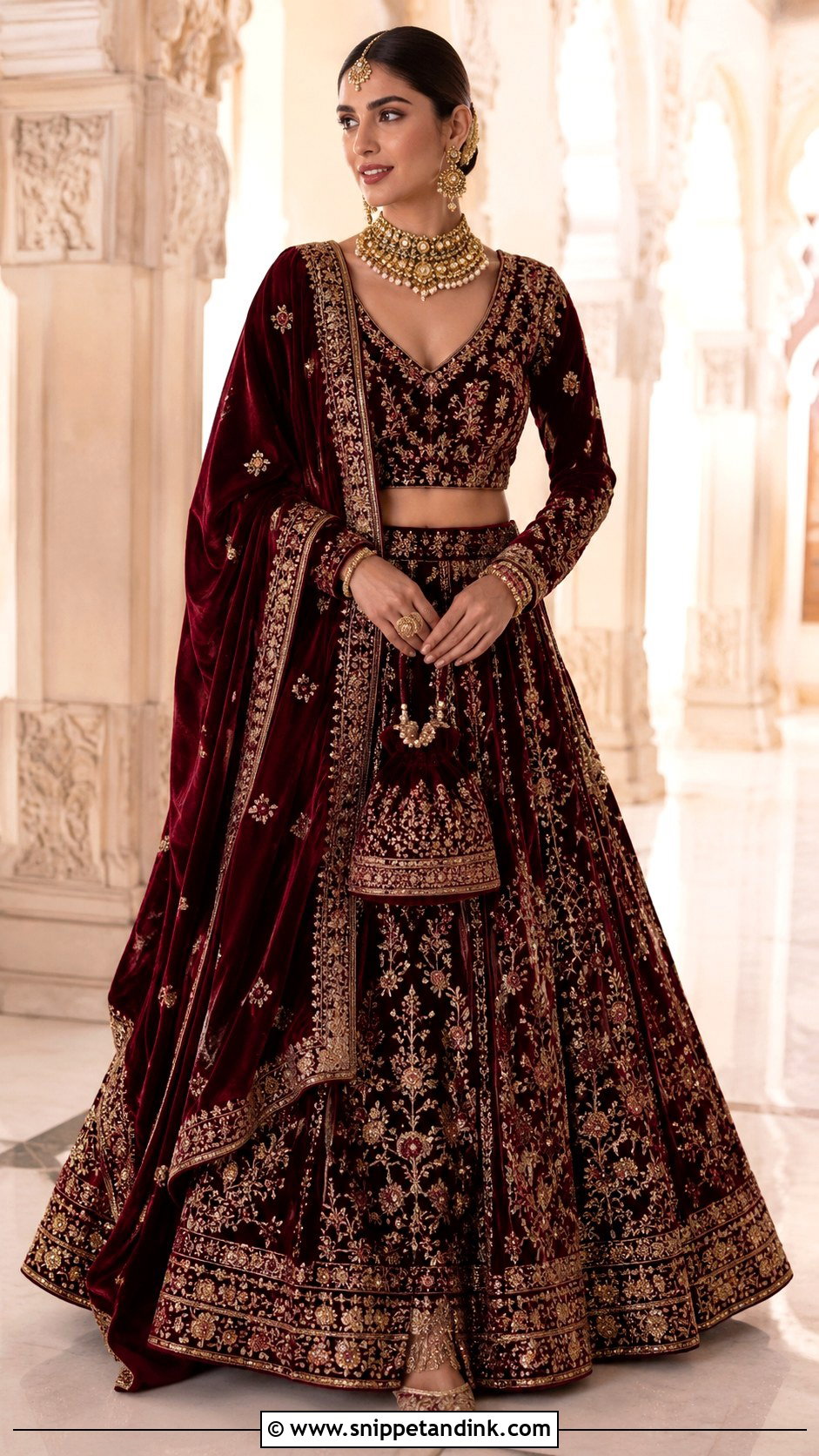
Velvet makes winter ceremonies and evening receptions comfortable, especially in open courtyards or tents. Maroon, emerald, navy, plum, bottle green and blackened red look richest. Velvet already has weight, so keep embroidery to the border, blouse or dupatta. Polki, kundan earrings or an antique gold choker suit it, with closed embellished heels or velvet juttis, a sleek bun, defined eyes and a deeper lip. Velvet is heavy and warm indoors, so for a heated hall I’d suggest a lighter dupatta and keep a cooler spot near the stage for the bride.
11. White And Gold Saree Outfit
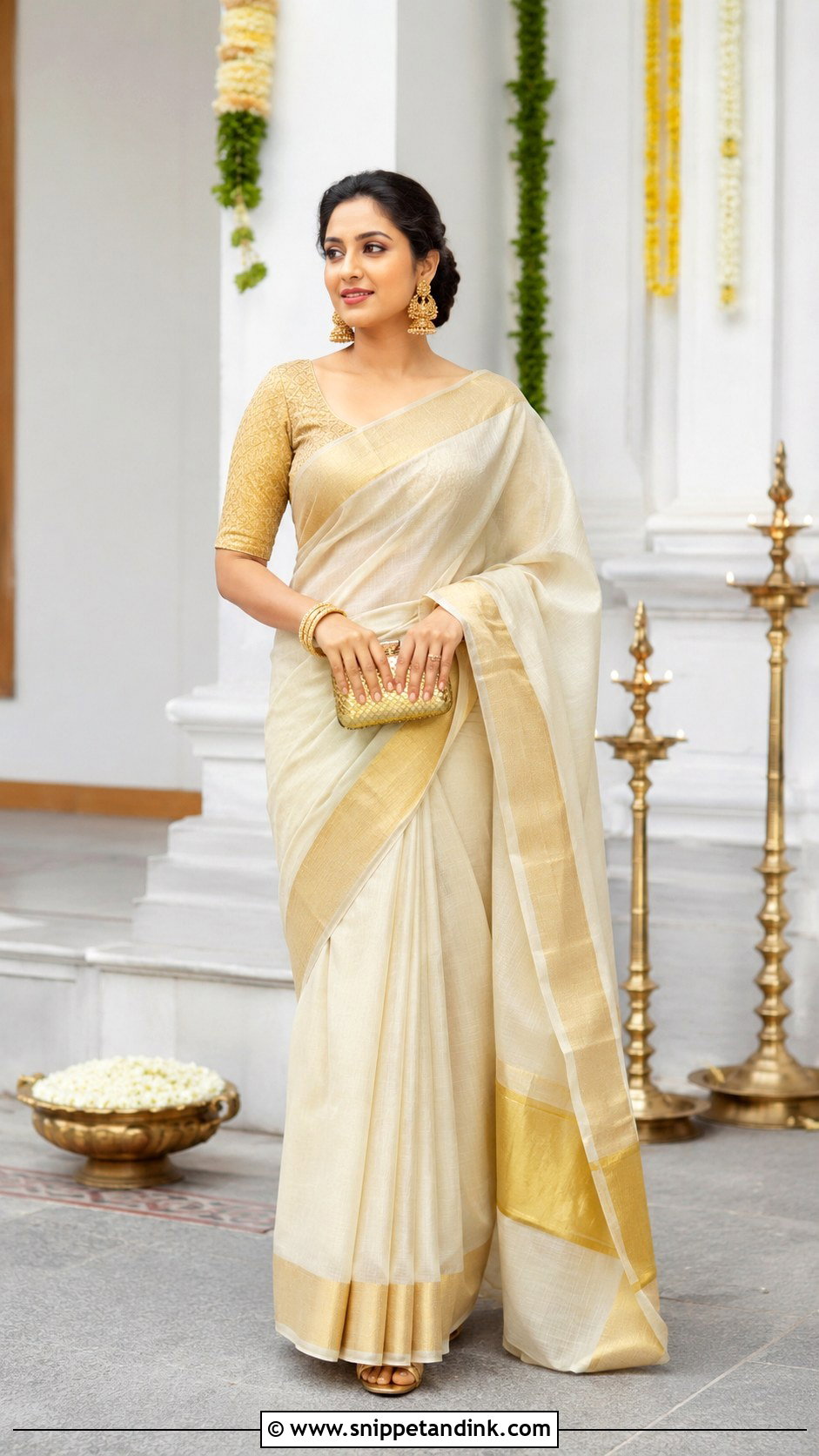
White and gold is calm and ceremonial without shouting. It suits pre-wedding rituals, temple-style ceremonies, receptions and family events. Choose an ivory, cream or off-white saree with a gold border, zari weave or fine embroidery, and a gold, pearl or ivory blouse. Gold jewellery, temple earrings, bangles and a small clutch work well, with gold sandals or wedges. A centre-parted bun with flowers, a touch of highlighter and a classic bindi complete it. Check with the family first: in some communities white has associations that make it unwelcome at a wedding, while in others it’s the tradition.
12. Rani Pink Lehenga Outfit
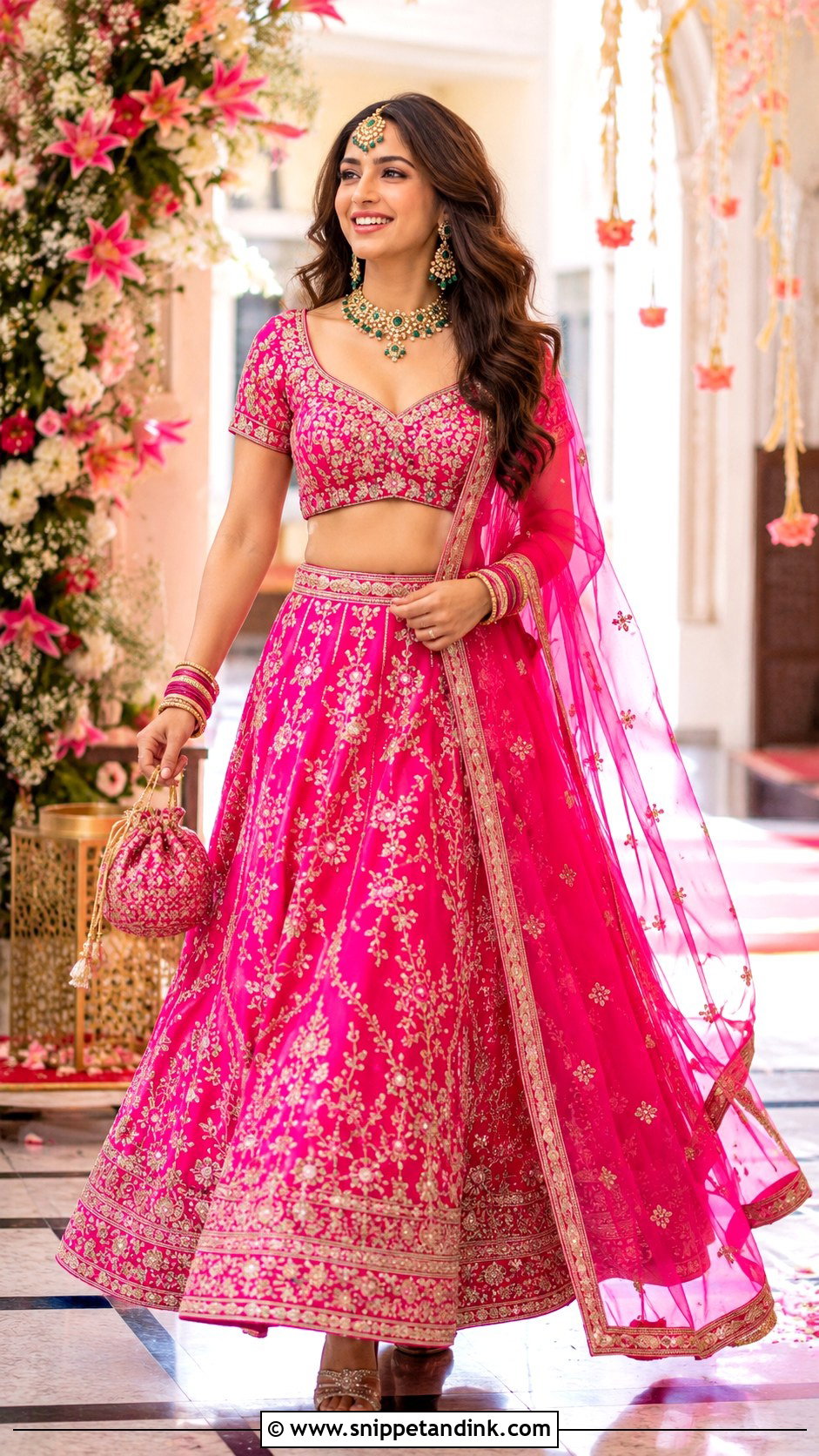
Rani pink brings instant celebration and suits brides, sisters, bridesmaids and guests alike. Zari, mirror work, sequins or thread embroidery shift it from function to function. For the bride, add a matching dupatta and heavy jewellery; for a guest, keep the blouse simpler with earrings, bangles and a potli. Gold, emerald and pearls all suit it. Soft curls, a braid or a bun with fresh flowers finishes the look. I mention to families when several close relatives choose rani pink for the same event; in the group photos, the bride can disappear among them.
13. Green Bridesmaid Lehenga Outfit
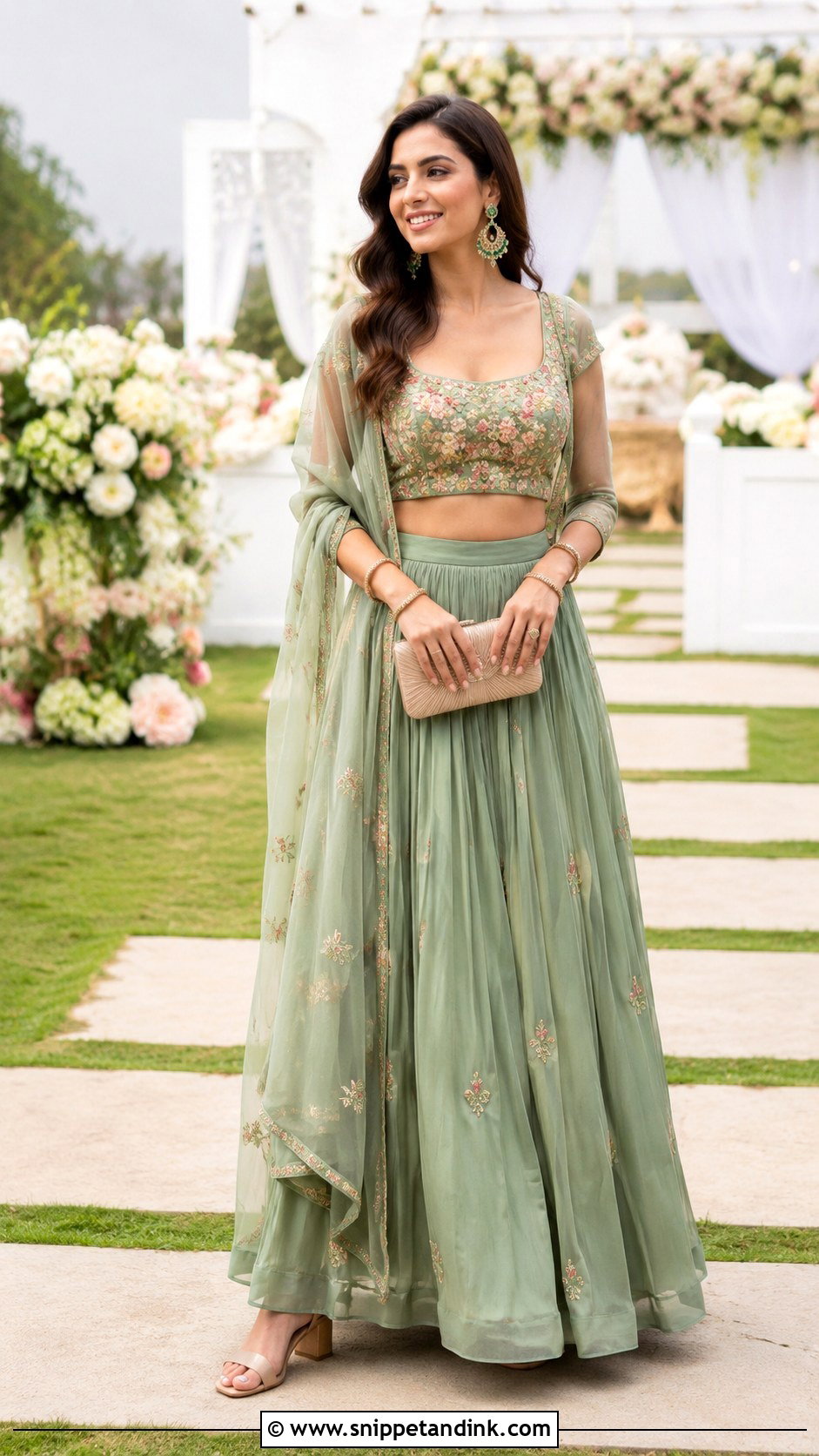
Green is one of the easiest colours to coordinate across a bridal party, because so many shades flatter different skin tones. Sage, mint, olive, emerald and mehendi green all work, lighter with florals or mirrors by day, emerald or bottle green with gold at night. A comfortable blouse, light dupatta, earrings, bangles and block heels suit the role. Bridesmaids walk, dance, run errands and fix the bride’s dupatta, so I advise against heavy skirts. Letting each one choose her own shade of green within a range keeps the group cohesive without forcing a cut that doesn’t suit everyone.
14. Anarkali Suit Wedding Outfit
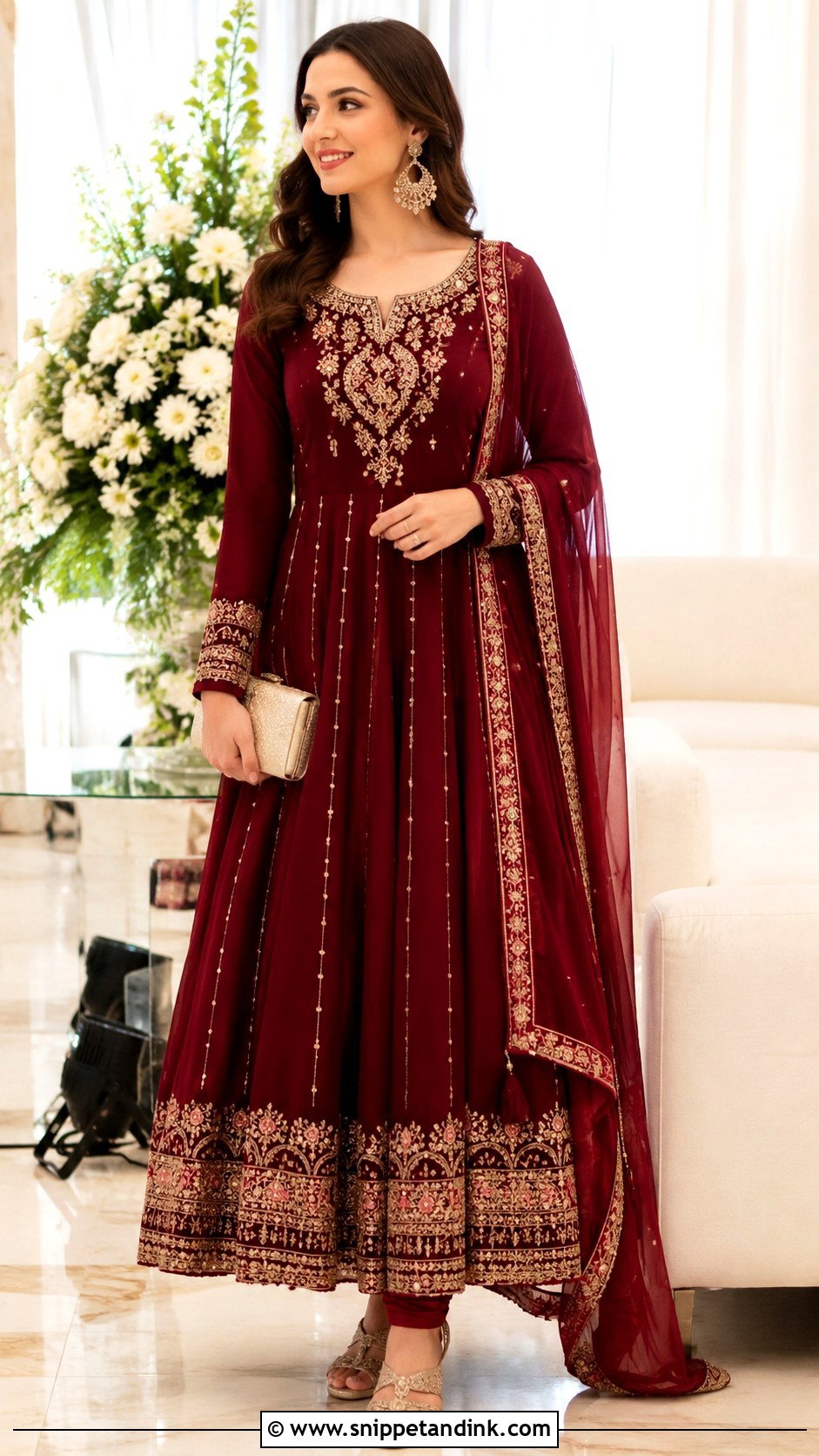
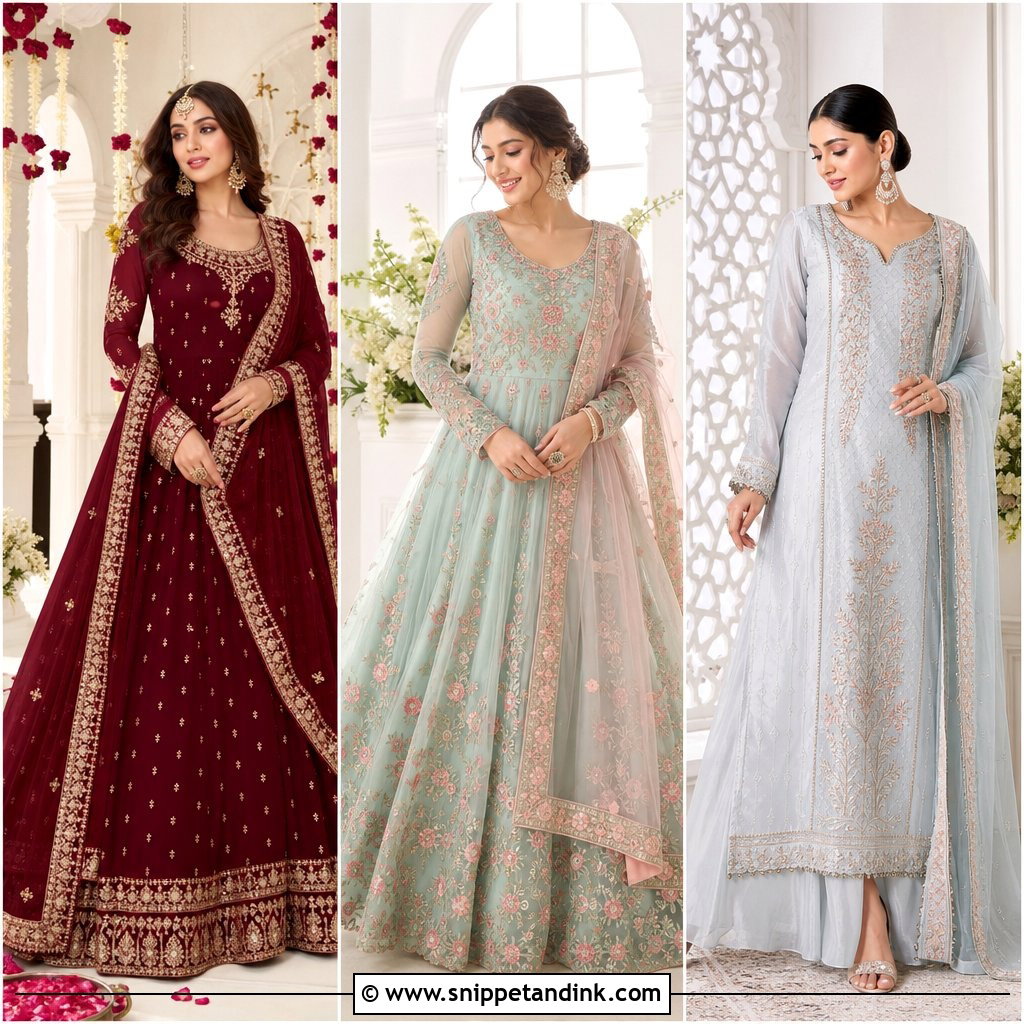
An anarkali is one of the easiest ways to look dressed up and stay comfortable through a long wedding. A floor-length cut in silk, georgette, net or chanderi flatters many figures, with embroidery at the neckline, sleeves, hem or dupatta. Jewel tones, pastels, ivory and earthy shades all work. Churidar, heels or juttis, a structured clutch and statement earrings finish it, with a neat bun or soft waves. I often suggest it to mothers and older relatives who’ll be greeting guests on their feet for hours and want full coverage.


15. Saree With Belt Wedding Outfit
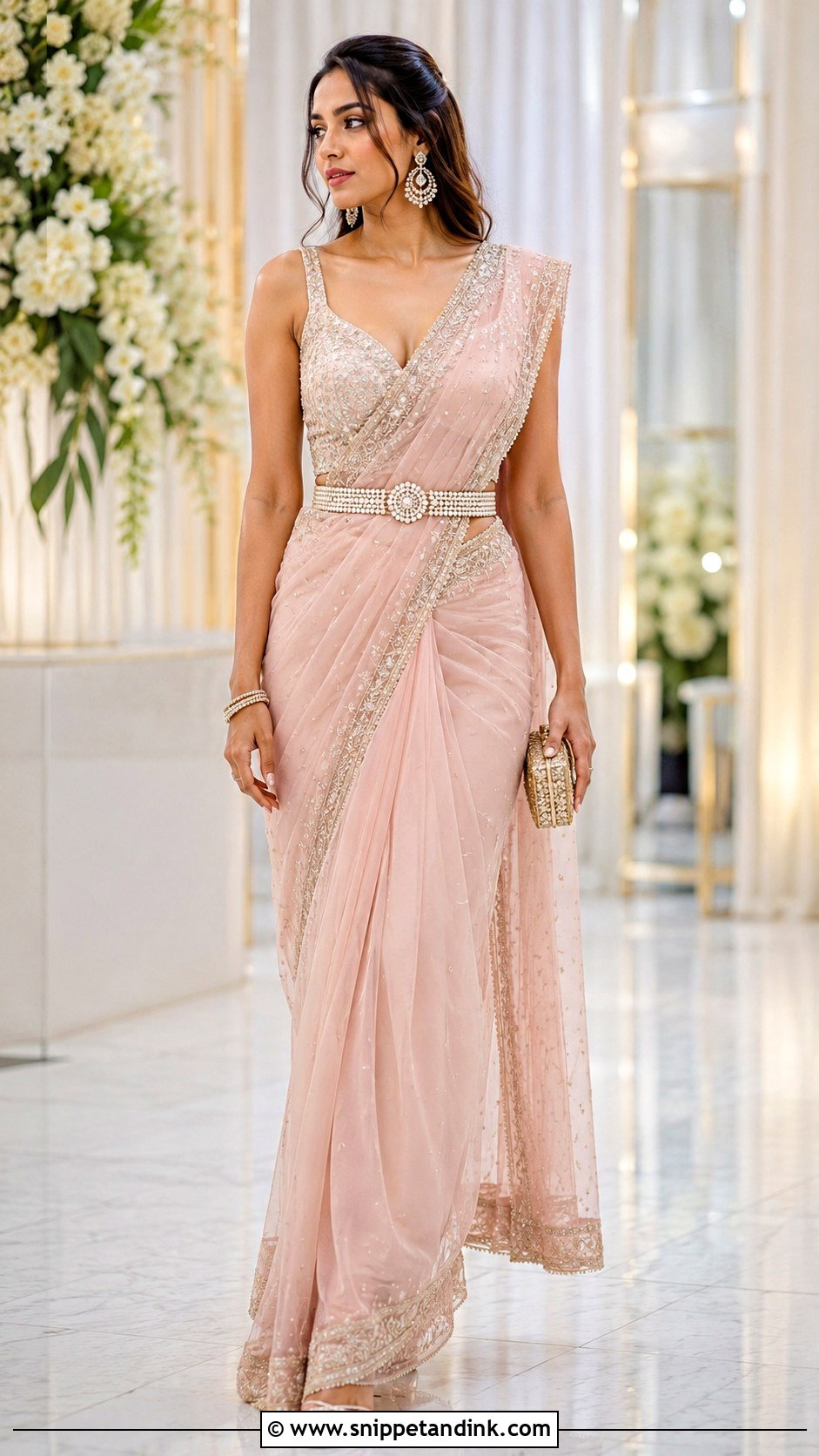
A belt gives a saree a modern shape and holds the pleats, which makes it easier to manage through a long event. Silk, organza, chiffon or a pre-draped saree all work with a metallic, embroidered, pearl or fabric belt. It suits the sangeet, cocktail-style functions, receptions and guest dressing. A sleeveless, full-sleeve or square-neck blouse, heels, statement earrings and a sleek clutch complete it. Keep the pallu neat so the belt looks deliberate, and wear the hair polished. Guests who rarely wear a saree tell me the belt is what made them feel secure on the dance floor.
16. Jacket Lehenga Wedding Outfit
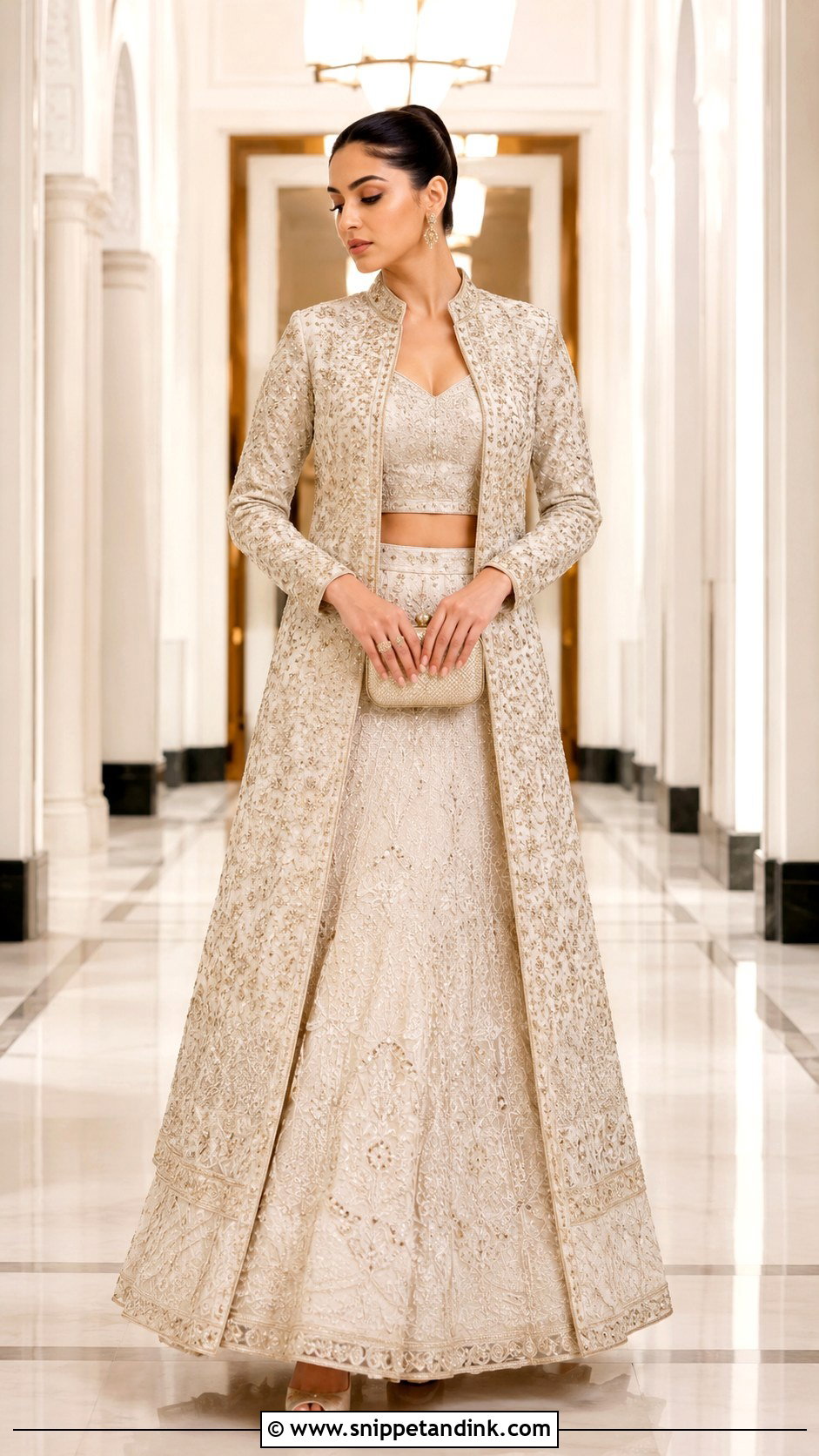
A jacket lehenga gives coverage, structure and some drama, and it replaces the dupatta. A long embroidered jacket, short cape jacket or sheer overlay all work, especially for winter weddings, receptions and formal evenings. Balance matters: a plain skirt with a heavy jacket, or a detailed skirt with a simpler one. Earrings, rings and heels suit it, with no heavy necklace under an ornate collar. A sleek bun or straight hair keeps attention on the layers. Jackets get warm under stage lights, so plan for a quick way to take it off for dinner.
17. Organza Saree Wedding Outfit
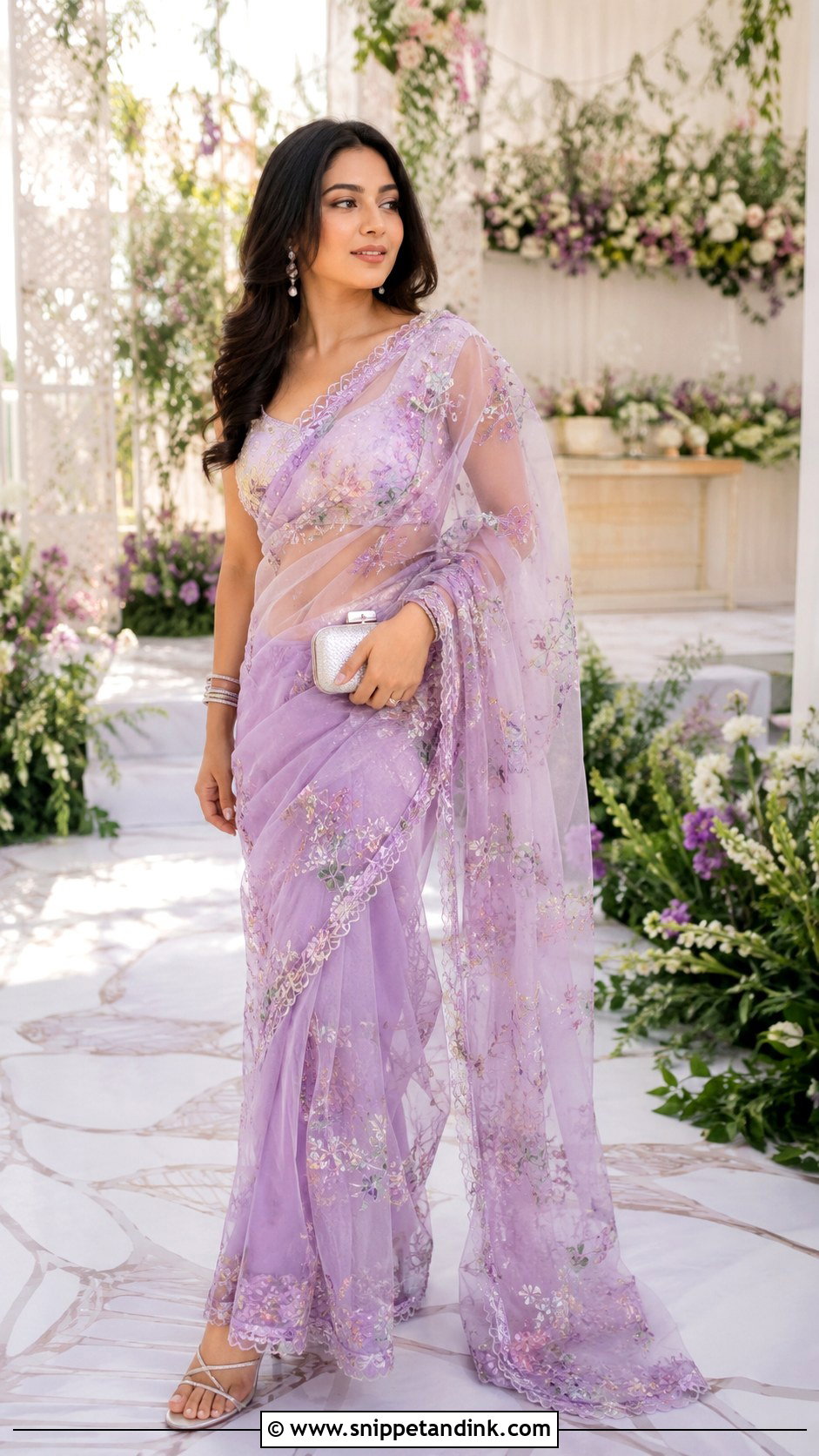
Organza is light and crisp, and it holds its shape for photos. That suits daytime functions and receptions. Blush, lavender, peach, powder blue, ivory and mint feel dreamy; floral embroidery, pearl borders or small sequins add enough detail. A fitted blouse, pearl earrings, slim bangles and strappy heels finish it, with soft curls, a low bun or half-up hair. Organza has volume, so keep the pleats neat and don’t over-layer. It also creases sharply when packed tight, so I recommend hanging it on arrival and steaming it before guests dress.
18. Mirror Work Lehenga Outfit
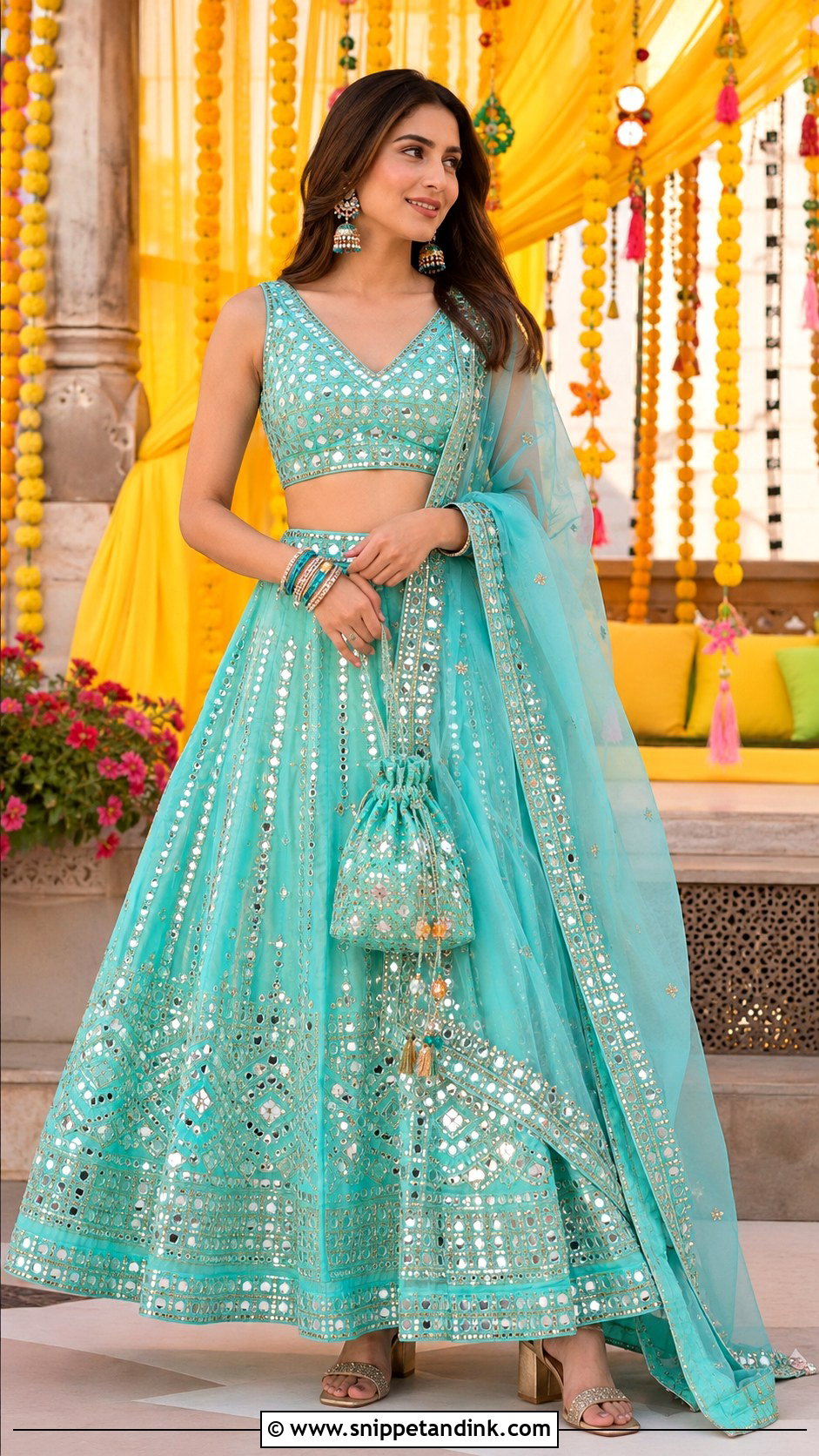
A mirror work lehenga outfit suits the mehendi, sangeet, haldi and festive guest looks. The mirrors shine in photos and under event lighting. Orange, green, yellow, cobalt, hot pink and turquoise set a lively mood. A mirror blouse over a simpler skirt is lighter; a full mirror lehenga is bold. Jhumkas, bangles, a potli and juttis or block heels finish it, with a light dupatta pinned firmly. Mirrors already sparkle, so keep makeup fresh and accessories few. Mirror skirts can be surprisingly heavy, so pick it up before you buy.
19. Black Reception Saree Outfit
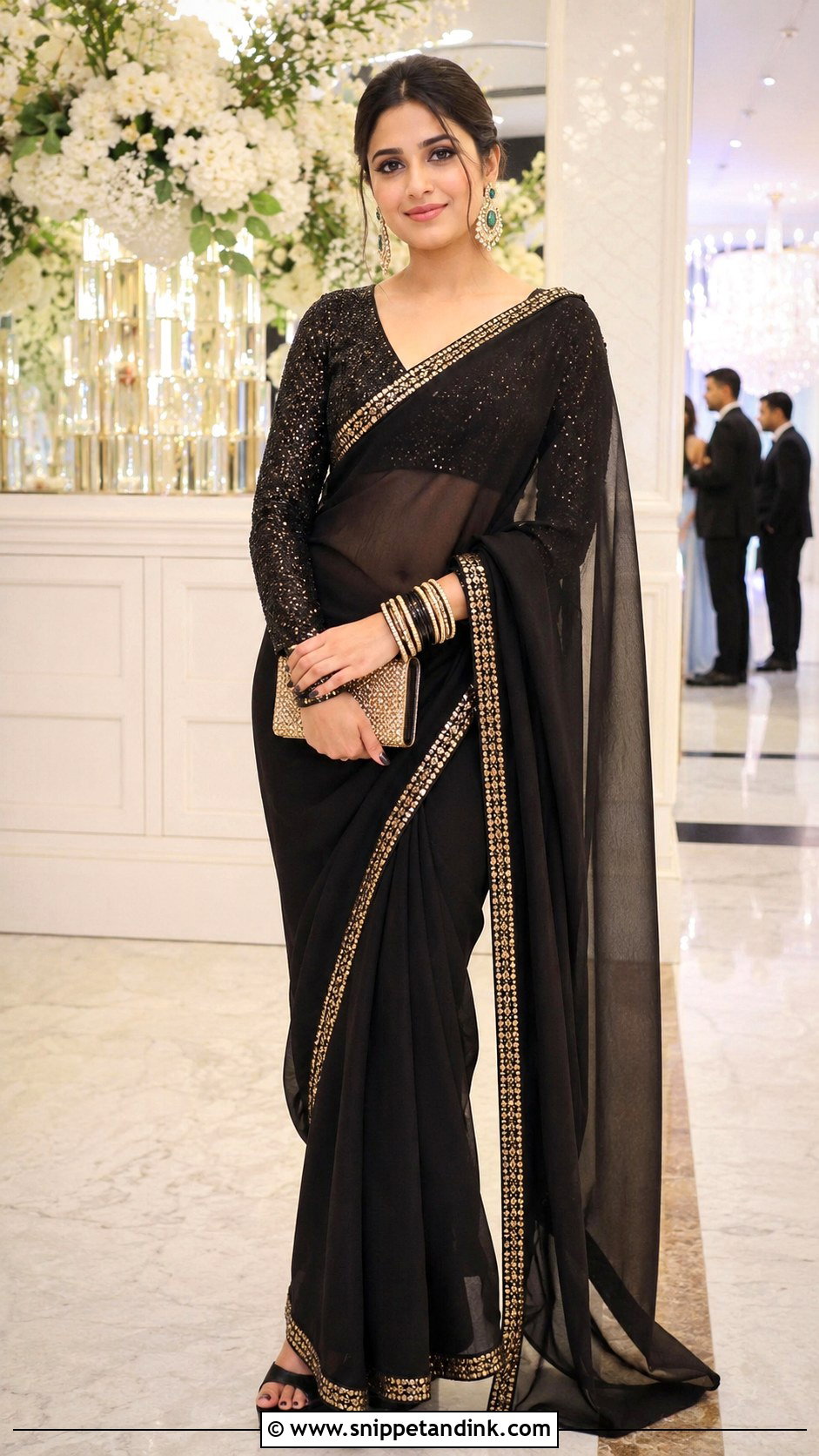
Black can be elegant at an evening reception when it carries festive detail: gold embroidery, sequins, beadwork or a metallic border. A full-sleeve, velvet or embellished blouse adds formality, and gold, diamond-look or emerald jewellery gives richness. Keep the drape clean and structured, with heels, a clutch and defined eyes. I’d keep black for receptions and cocktail-style events, not daytime rituals, and I’d check with the family first, as some households still consider it inauspicious at a wedding.




20. Palazzo Suit Wedding Outfit
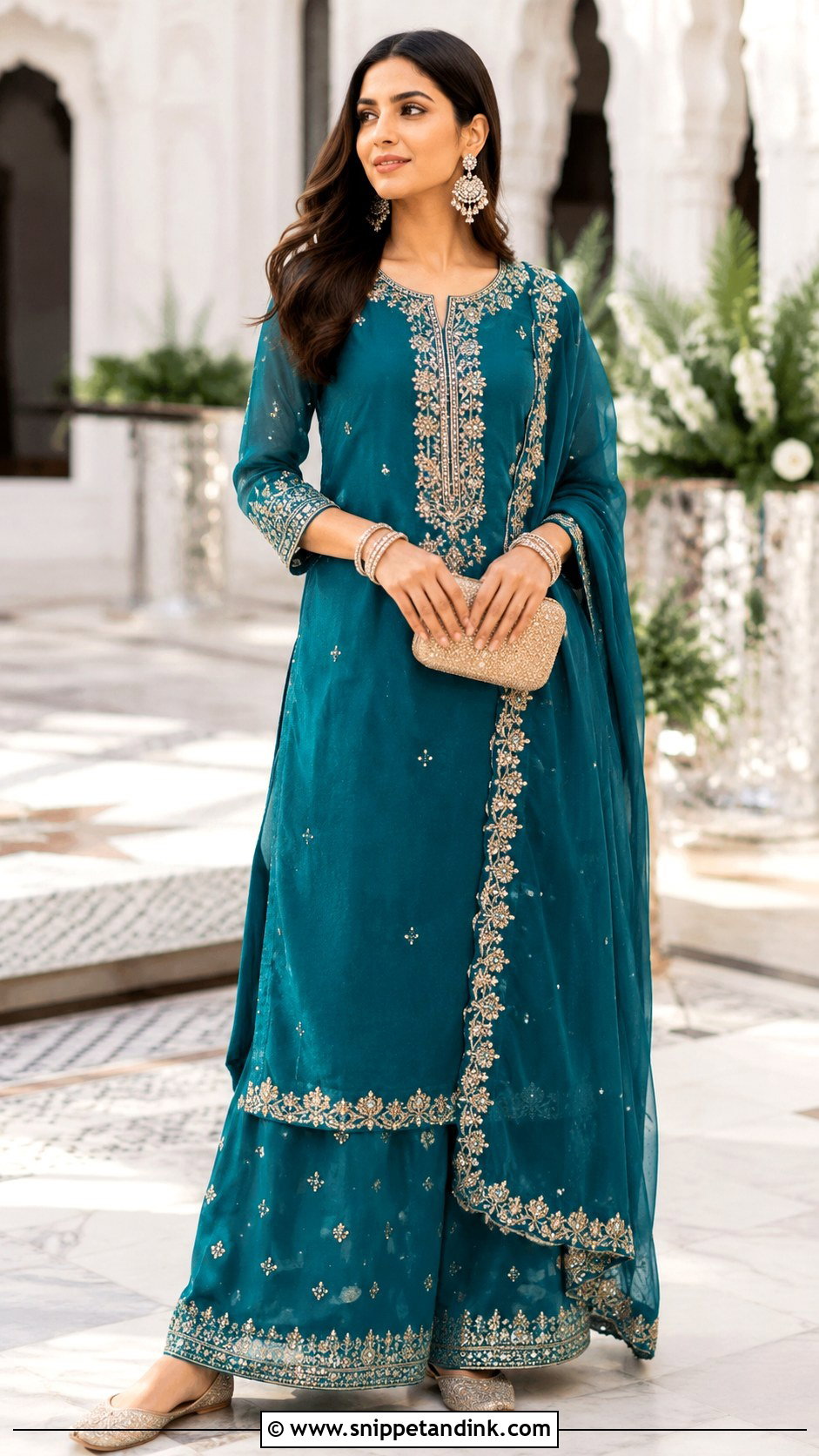
A palazzo suit gives guests total freedom of movement. Wide-leg palazzos pair with a long kurta, short kurti or embroidered tunic in silk, georgette, brocade, crepe or chanderi. A matching bordered dupatta completes it. It suits daytime ceremonies, family functions and semi-formal events, with statement earrings, bangles, a small clutch and embellished flats or heels. Keep hair simple: soft waves, a bun or a sleek ponytail. If your wedding has lots of stairs, a hillside venue or long walks between spaces, this is the outfit I’d point older guests toward.
21. Cape Saree Wedding Outfit
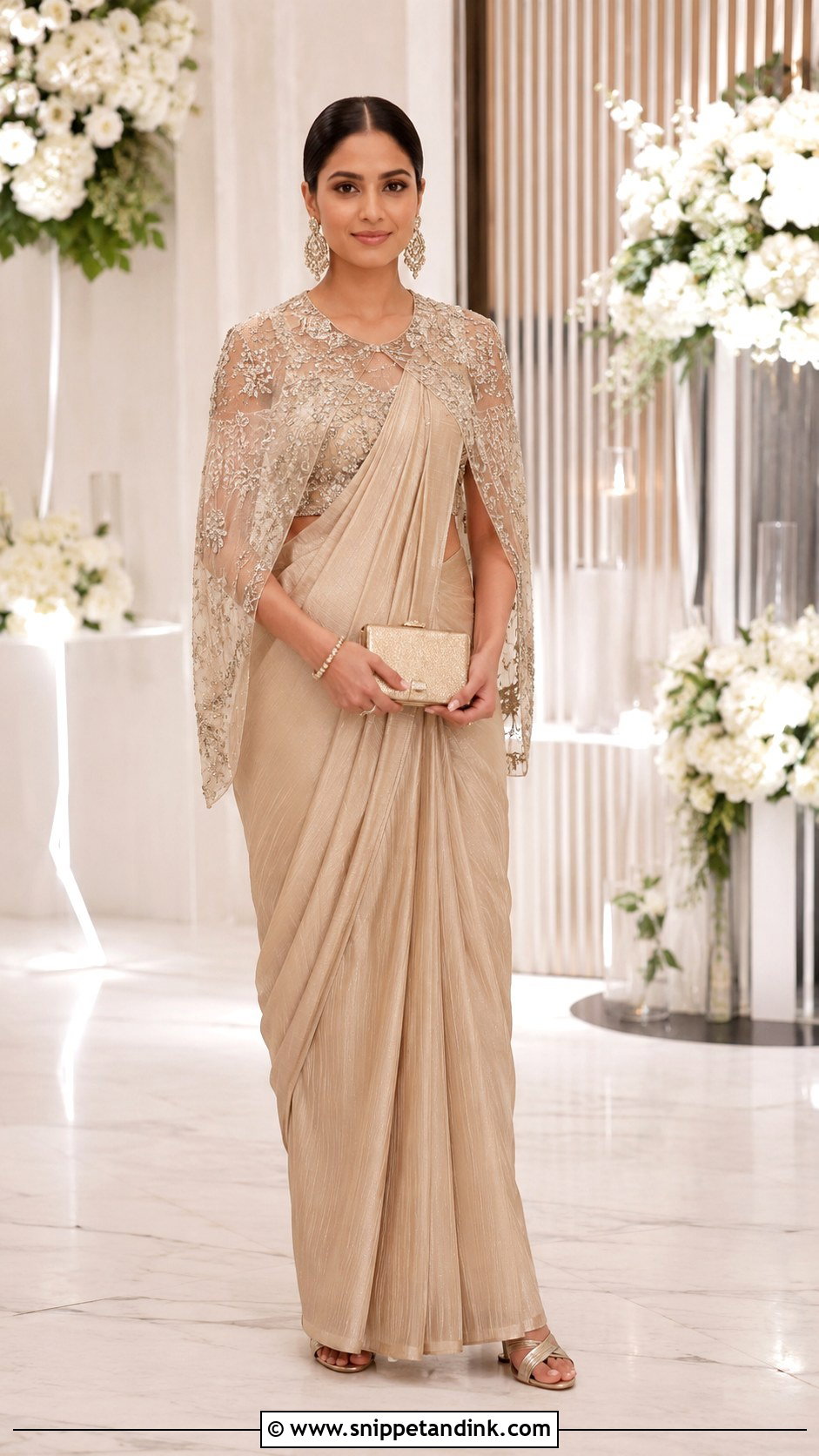
A cape saree is modern without losing Indian grace. The cape replaces a heavy dupatta and covers the shoulders. Try a pre-draped saree with a sheer, embellished or structured cape blouse for receptions, sangeet nights and formal guest looks. Silver, champagne, navy, blush, emerald and wine work well. Heels, a small clutch and statement earrings finish it, with a clean neckline and sleek hair. Pre-draped sarees zip on in minutes, which helps a lot when a guest is changing between functions in a hotel room.
22. Printed Lehenga Wedding Outfit
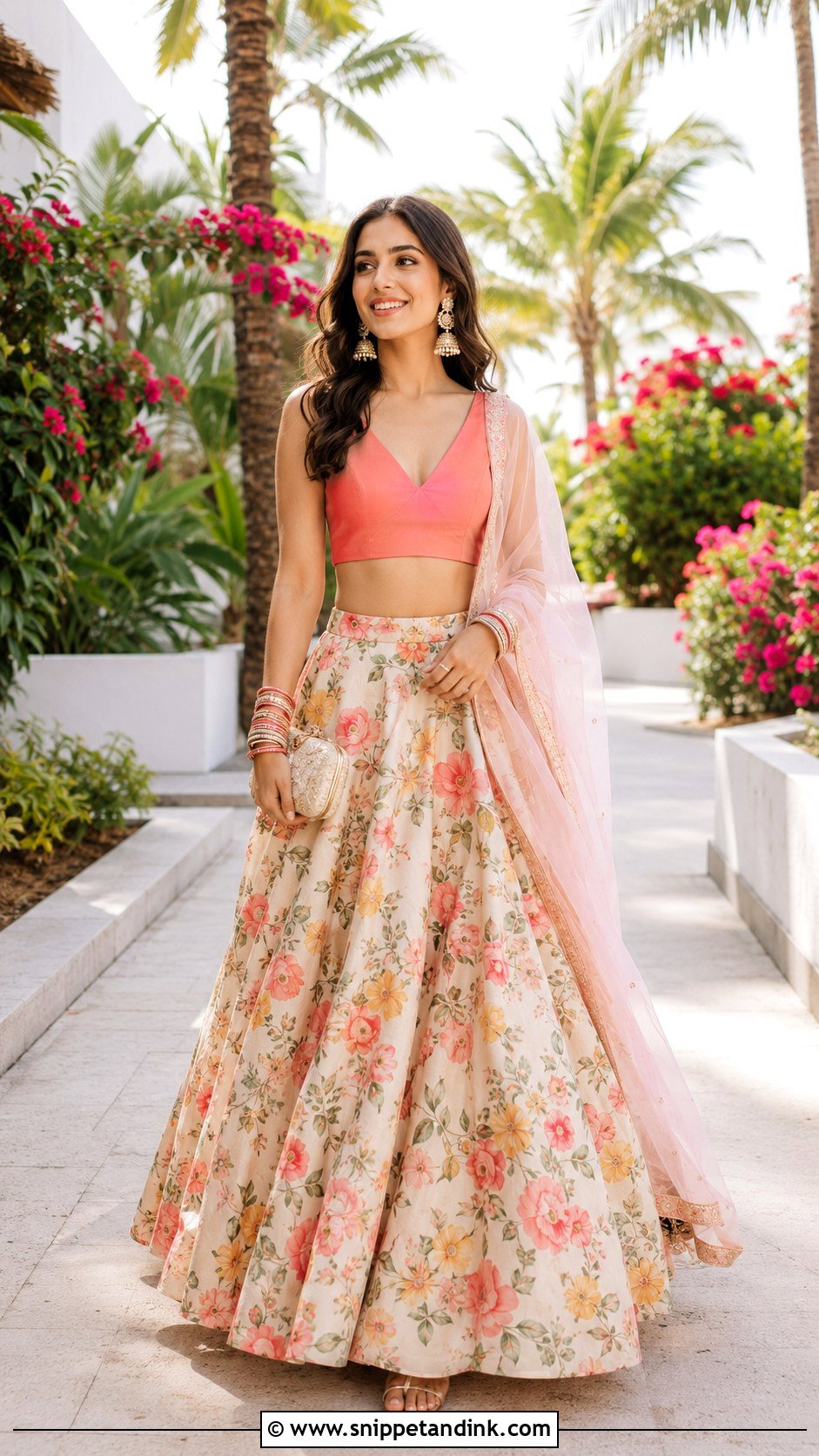
Prints are made for destination weddings and daytime events. Floral, paisley, bandhani, kalamkari, ajrakh-inspired and tropical prints suit different venues. Georgette, organza, cotton silk or light silk keep it breezy. Pair the skirt with a solid blouse, or a coordinating printed one for more punch. A simple dupatta, earrings, bangles and comfortable sandals finish it, with natural hair and makeup so the print leads. Printed lehengas pack small and travel well, which is exactly what you want across a three-day wedding abroad.
23. Heavy Dupatta Lehenga Outfit
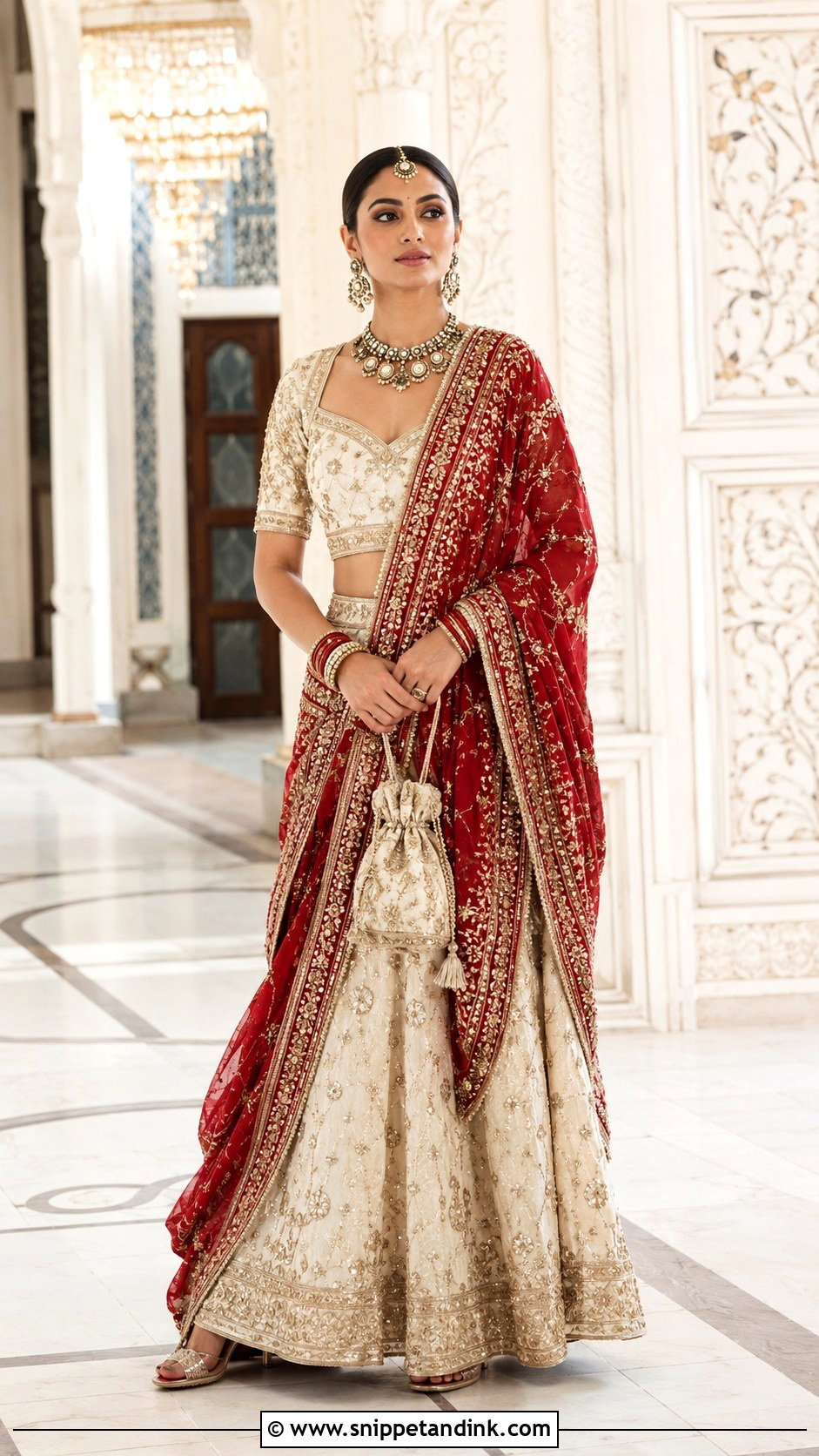
The heavy-dupatta trick gives a grand look without a skirt that weighs you down. Choose a simpler lehenga and blouse, then add a richly worked dupatta with zari, zardozi, gota, sequins or a deep border. It suits brides, sisters and close family. Drape it over one shoulder, across the front or as a veil. Choose jewellery that supports the dupatta instead of competing. Comfortable heels, a potli and polished makeup finish it. A heavy dupatta needs proper pinning, so I make sure someone with a pin kit is near the stage all night.
24. Bridesmaid Saree Lehenga Outfit
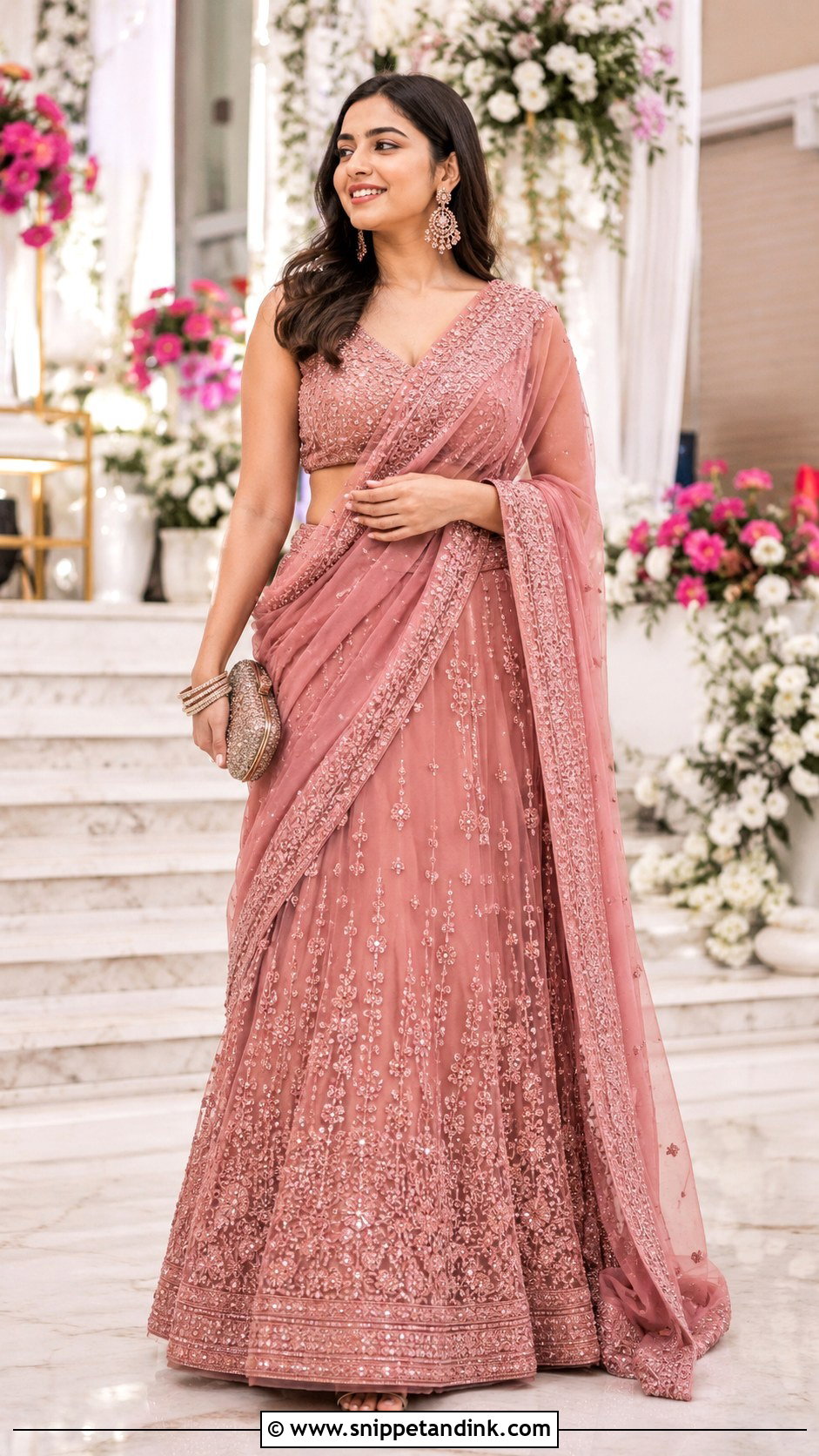
Saree lehengas are the bridesmaid outfit I recommend most. They have a lehenga’s structure with a saree’s drape, so they look graceful and stay put, and nobody needs a professional draper. Choose a shared colour for the group, sage, dusty rose, champagne, lavender or teal, and let each bridesmaid pick a blouse style she’s comfortable in. Matching earrings, bangles, heels and soft makeup pull the group together. They work for sangeet performances, reception entries and ceremony photos. Order early so there’s time for every blouse to be fitted.
25. Destination Wedding Co Ord Outfit
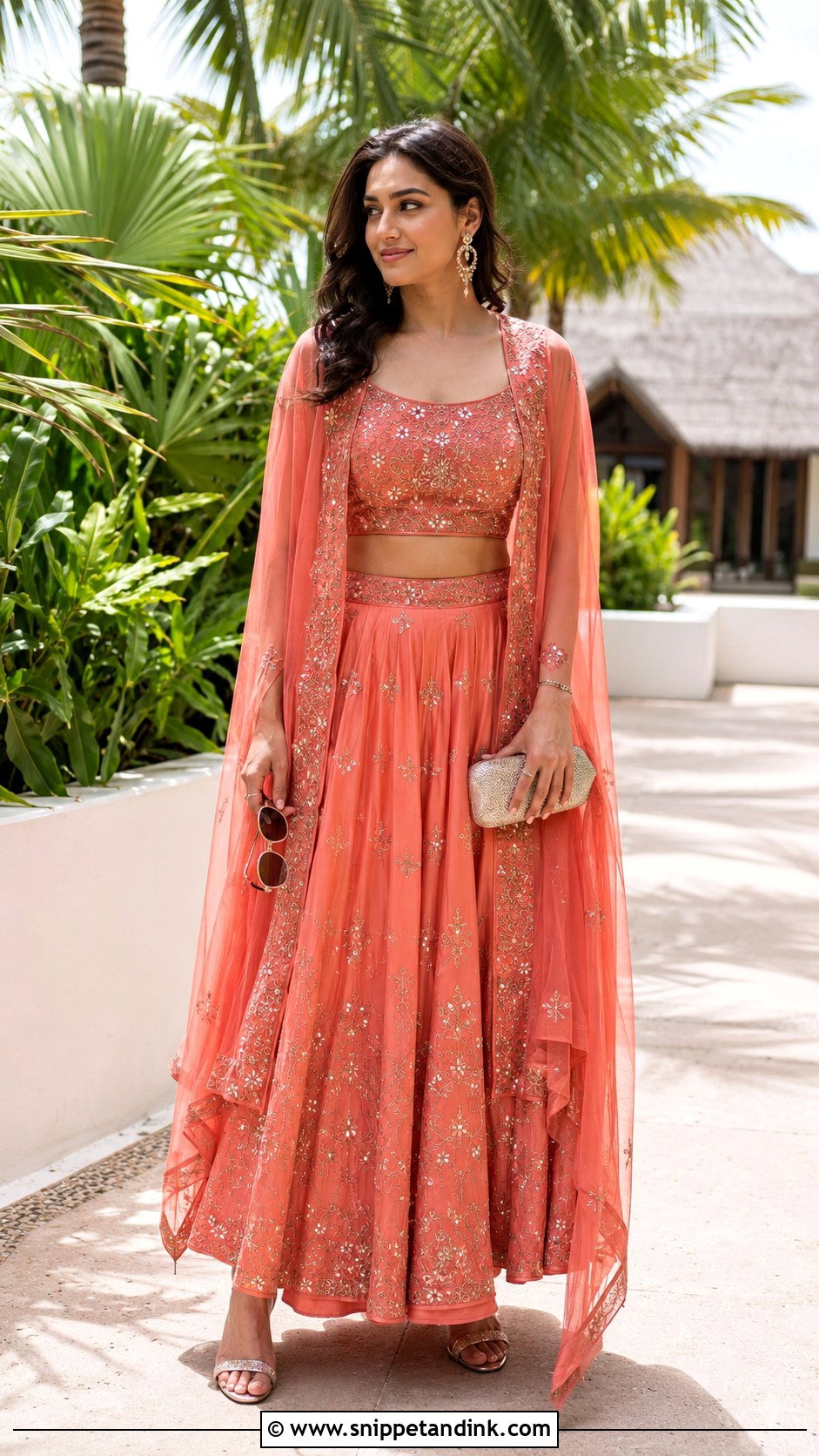
Co-ords suit welcome events, beach functions, resort mehendis and relaxed pre-wedding gatherings. A crop top and skirt, kurta and palazzo, cape top and pants, or embroidered blouse with a printed skirt all work. Light fabrics matter in a warm climate: georgette, crepe, cotton silk, linen blends and organza overlays. Bright colours, tropical prints, mirror accents and minimal embroidery travel well. Sandals, statement earrings, sunglasses by day and a small clutch finish it. For beach events I tell guests to skip anything that drags on the sand; a hem that clears the ankle saves a lot of grief.
Getting Lehengas and Sarees to a Destination Wedding Uncrushed
Bridal outfits are the one thing I never want in checked luggage. A lost suitcase can be replaced with shopping; a custom lehenga can’t. The bride’s ceremony outfit and jewellery travel in the cabin with her, in a soft garment bag folded once, and family members carry their own key pieces the same way.
- Fold heavy skirts with tissue between the layers, embroidery facing inward.
- Roll light printed outfits and co-ords; they crease less than you’d think.
- Pack blouses flat on top so hooks don’t snag other fabrics.
- Bring a travel steamer, or confirm the hotel can steam outfits on arrival.
- Keep a small kit of safety pins, hooks and thread in the bride’s room.
On arrival, I have every outfit unpacked and hung the same day. Most creases drop out overnight on a hanger, and anything that still needs steaming gets done before the first function, not in a rush while the hair and makeup team waits.
Plan Each Outfit Around the Function, Not the Photo
There are so many ways to dress for an Indian wedding now. You can go classic with a red lehenga, graceful with a Banarasi, playful with a mehendi sharara, or modern with a cape saree or co-ord. The right choice depends on the function, venue, season, comfort and your own style. Plan the outfit as a whole, with jewellery, shoes, bag, hair and dupatta drape, and think about how long you’ll be in it and how quickly you’ll need to change. Pick outfits that let you celebrate, not just pose, and every function from haldi to reception will feel easier.
You'll Like These Ideas:





Leave a Reply