
The gowns that still look right twenty years on share a few things: a clear silhouette, good fabric and a fit that was properly tailored. Trend details are what date a photo, so I’d use them sparingly. Current bridal fashion leans toward quiet luxury, sculpted corsetry, detachable pieces and textured fabrics, and plenty of that will age well. Below are 25 dresses, from silk slips and square-neck ball gowns to lace columns and bridal suits, each with what I’d check at a fitting and how I’d style it.
Spotting the Details That Will Date Your Photos
Most dresses don’t date because of their shape. They date because of one or two details that belonged to a particular season. When a bride wants something that lasts, I look at three things.
- Embellishment volume. Heavy all-over crystals and large sequins place a gown in its year quickly; scattered pearls, fine beading or no beading at all age better.
- Contrast colours. Nude or coloured linings under lace and blush tulle mark a period. Ivory on ivory reads as classic.
- Novelty cut-outs and sheer panels. One sheer sleeve or back can be lovely, but multiple illusion panels tend to look of their moment.
Where you want to follow a trend, put it in something you can change: a detachable bow, a pair of gloves, the veil or the earrings. The gown itself stays plain enough to look right in an album decades on.
Fit is the other half. A gown that has been taken in properly at the waist and bust, and hemmed to your shoes, looks deliberate in any decade, while a loose bodice or a puddling hem looks off the moment the photo is printed.
1. Simple Satin Wedding Dress
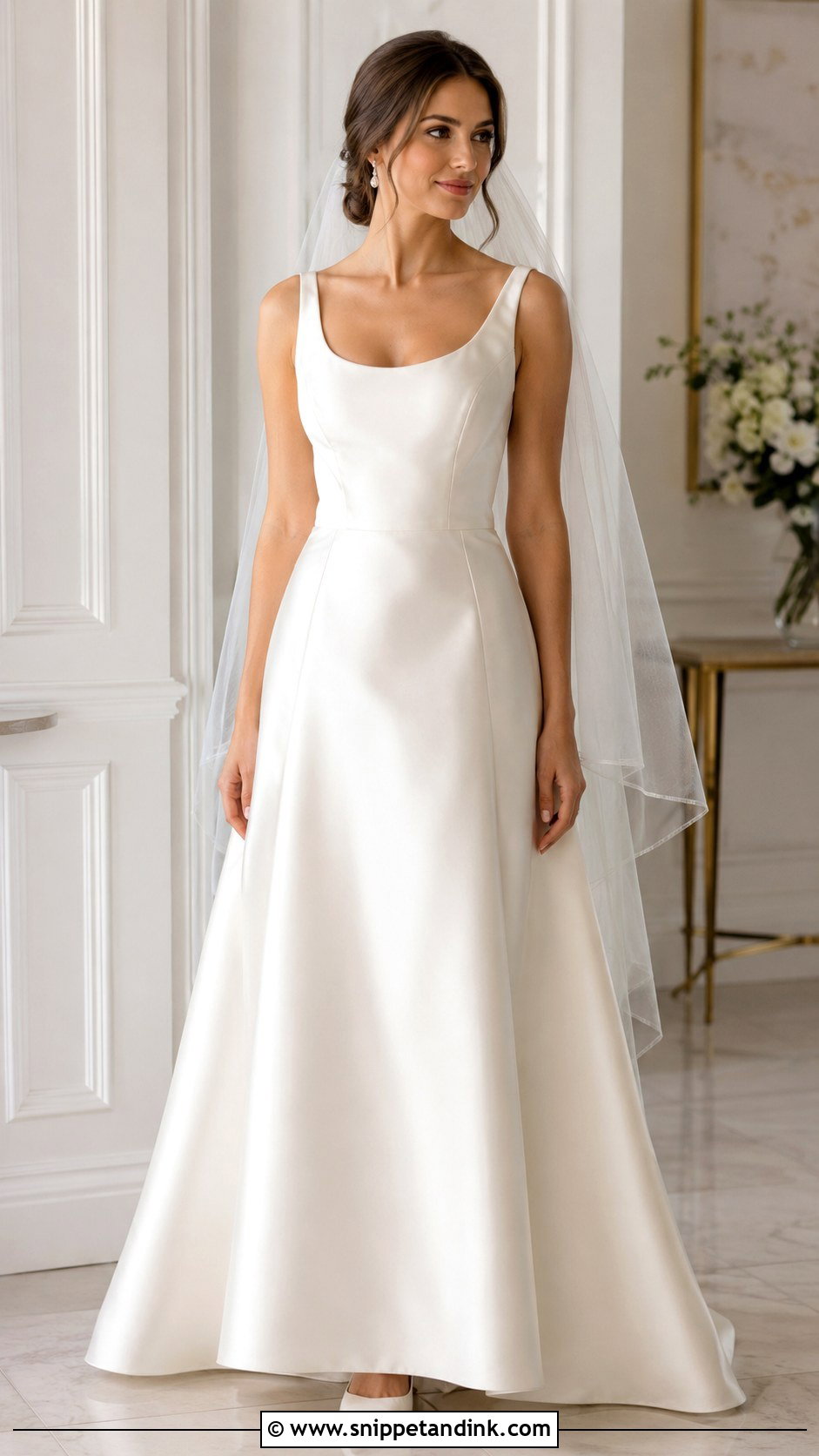
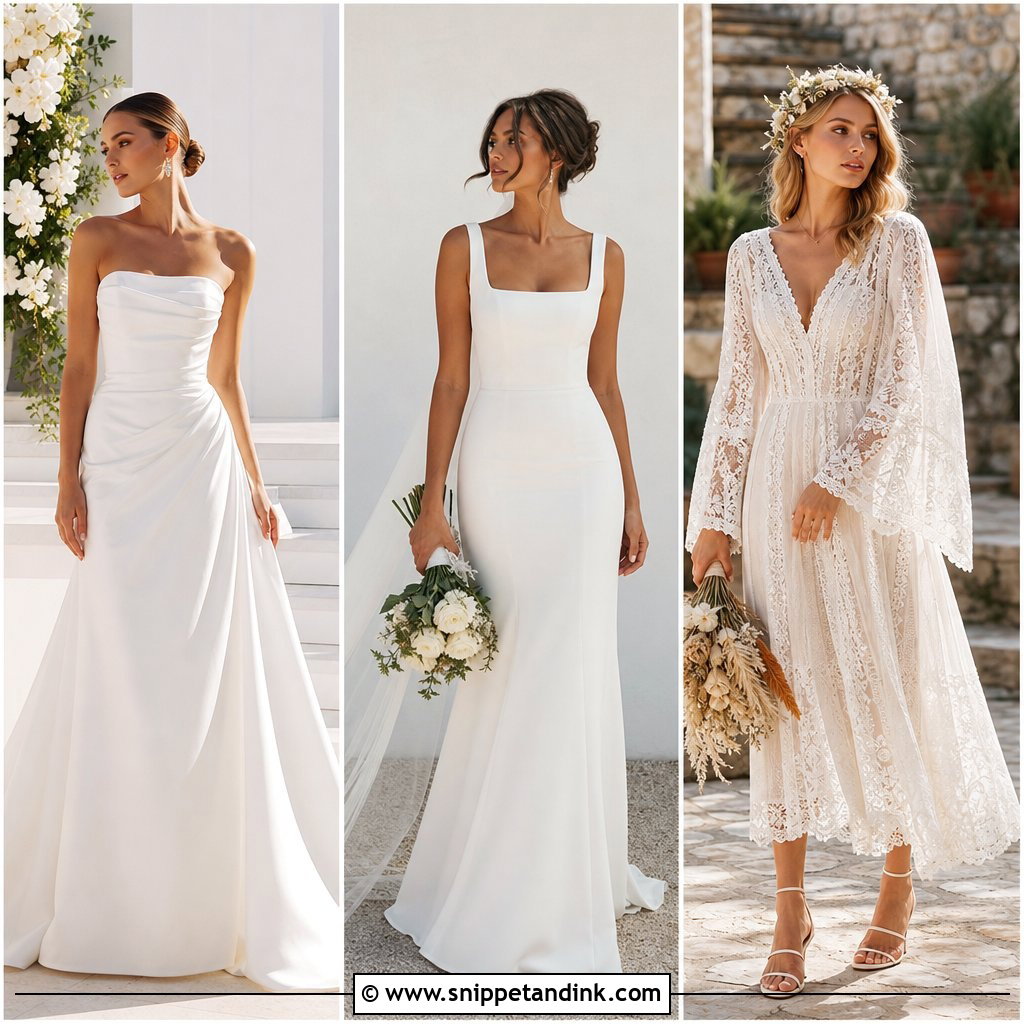
Satin shows everything, which is exactly why a plain satin gown looks so expensive when it fits. Choose an A-line or column with a scoop, square or strapless neckline. The thing to check is the seams: satin puckers along badly sewn seams and shows every crease from sitting, so ask about the fabric weight and sit down in the sample. Pearl drop earrings, a low bun, pointed satin pumps and a fingertip veil are all the styling it needs. Ballrooms, city venues and formal gardens all suit it.
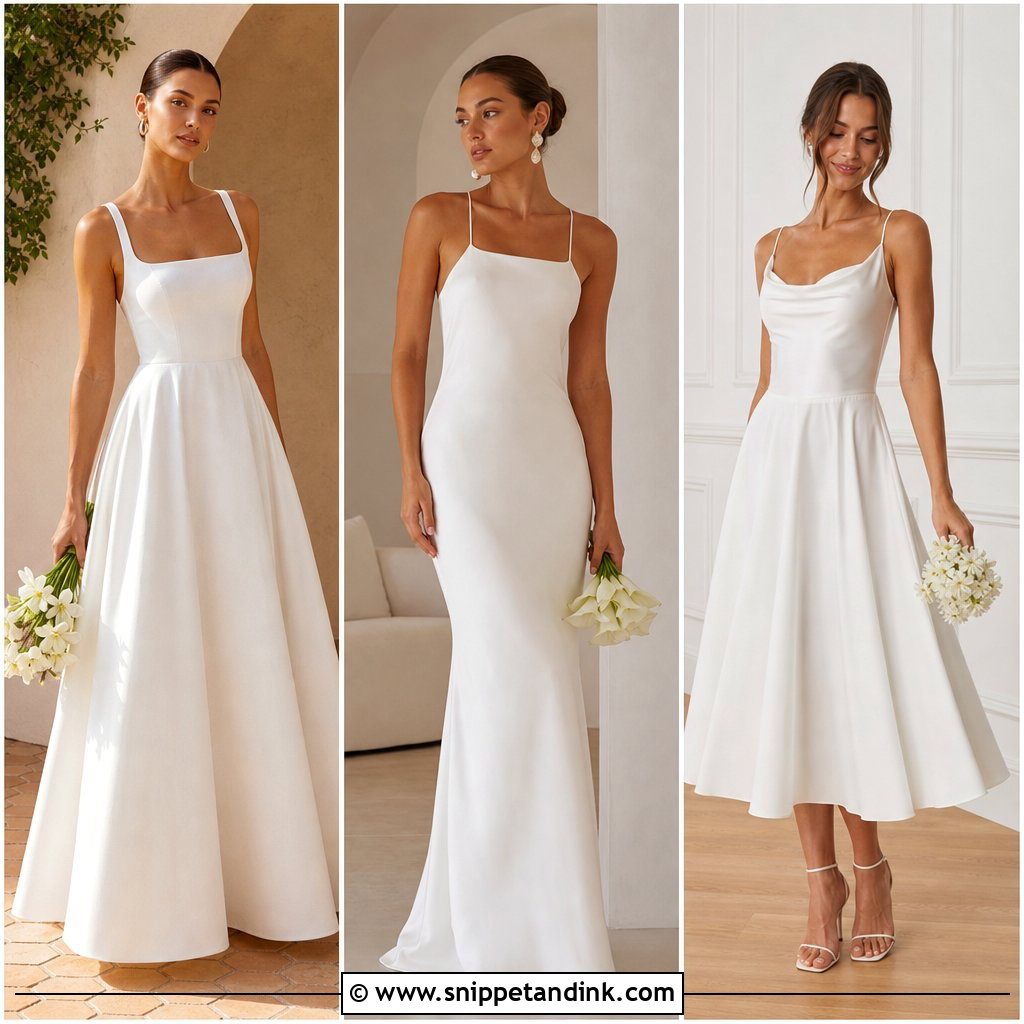
2. Square Neck Wedding Dress
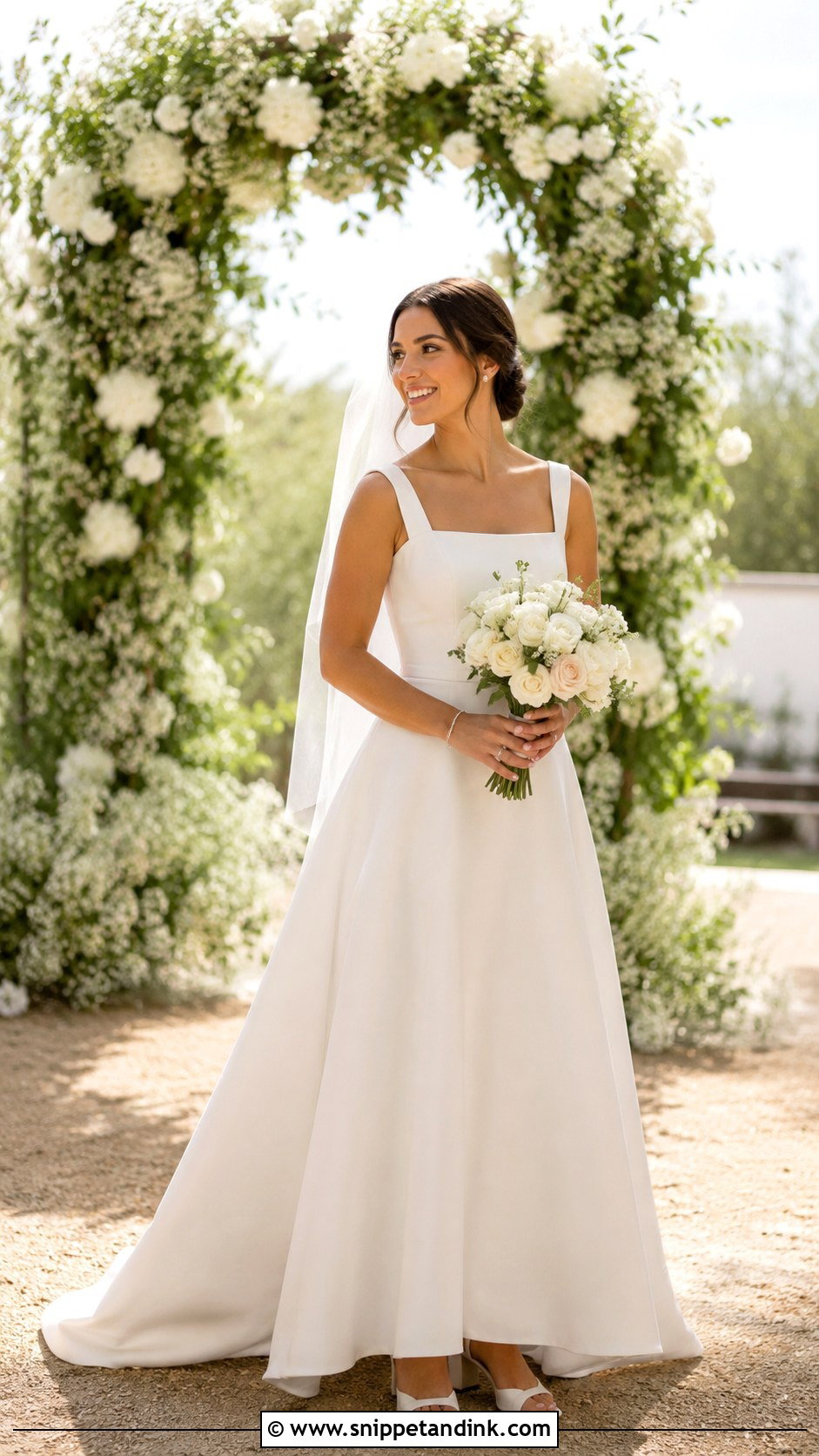
A square neckline frames the collarbone and gives a little more support than a sweetheart because the straps sit wider. A fitted bodice with an A-line skirt reads romantic; a straight crepe silhouette, more minimal. The corners of the square should sit level with each other, and on a small bust I’d raise the line slightly so it doesn’t gape when you lean forward. Pearl studs, a smooth veil and slim pumps or low block heels finish it, with waves, a sleek bun or a half-up style.
3. Off The Shoulder Wedding Dress
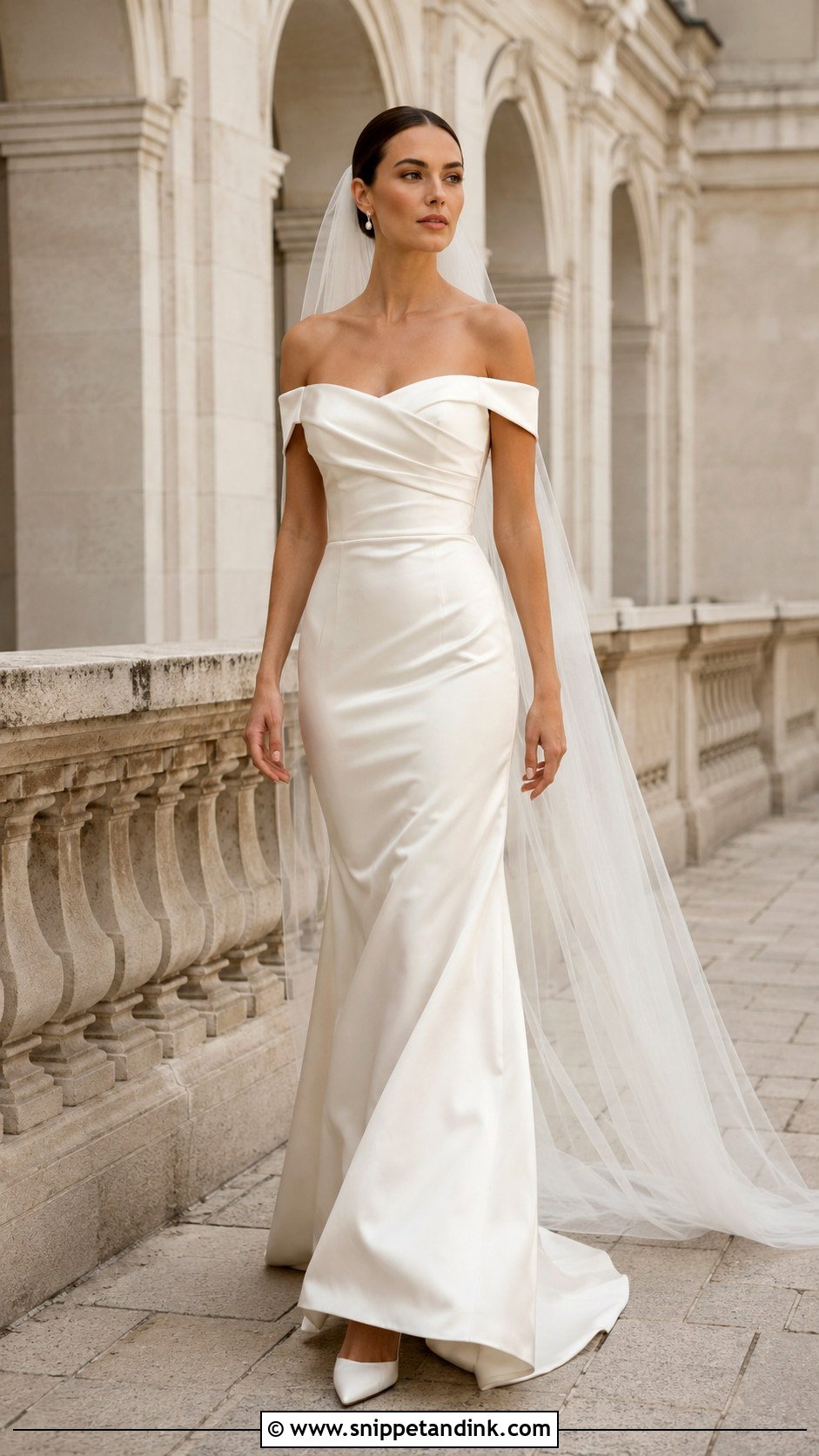
Off-the-shoulder necklines are about the arms as much as the dress. In satin, crepe, lace or mikado, the band across the upper arm becomes the main detail. Lift your arms at the fitting: if the band is too tight you can’t hug, and if it’s loose it slides up toward the shoulders by the evening. A full skirt keeps it classic; a mermaid shape makes it dramatic. A clean updo, pearl earrings, a cathedral veil and no necklace leave the neckline open.
4. Long Sleeve Lace Wedding Dress
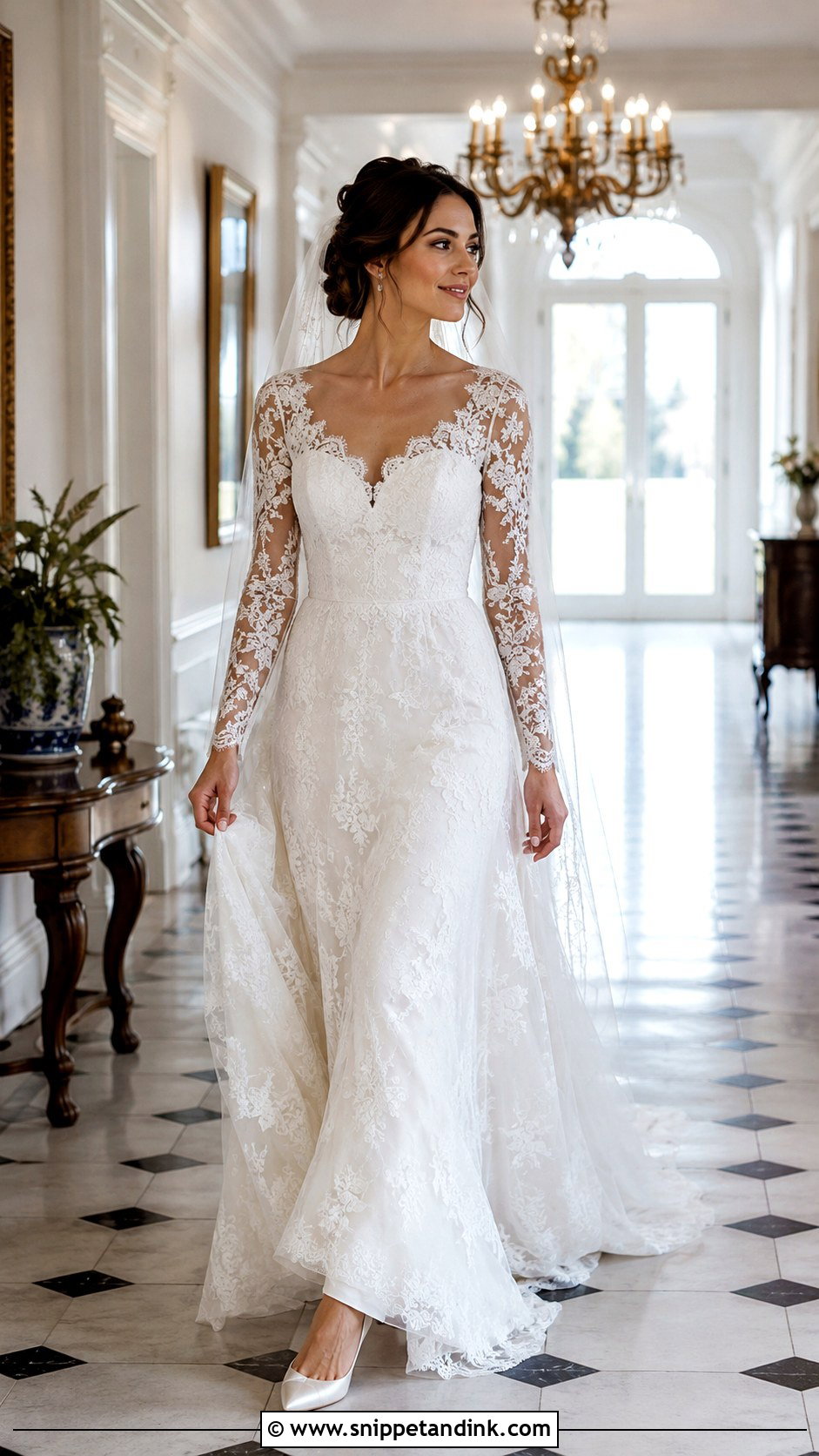
Lace sleeves give coverage and texture, but busy lace on the arms can overwhelm the whole look. I look for a lace with some breathing space in the pattern, such as Chantilly or a fine floral, rather than heavy guipure from wrist to shoulder. A lace bodice with a flowing skirt is classic; an all-over lace column, more current. A thin veil, small studs, satin heels and a low chignon or brushed-out waves suit it. It’s comfortable for autumn, winter and formal indoor venues.
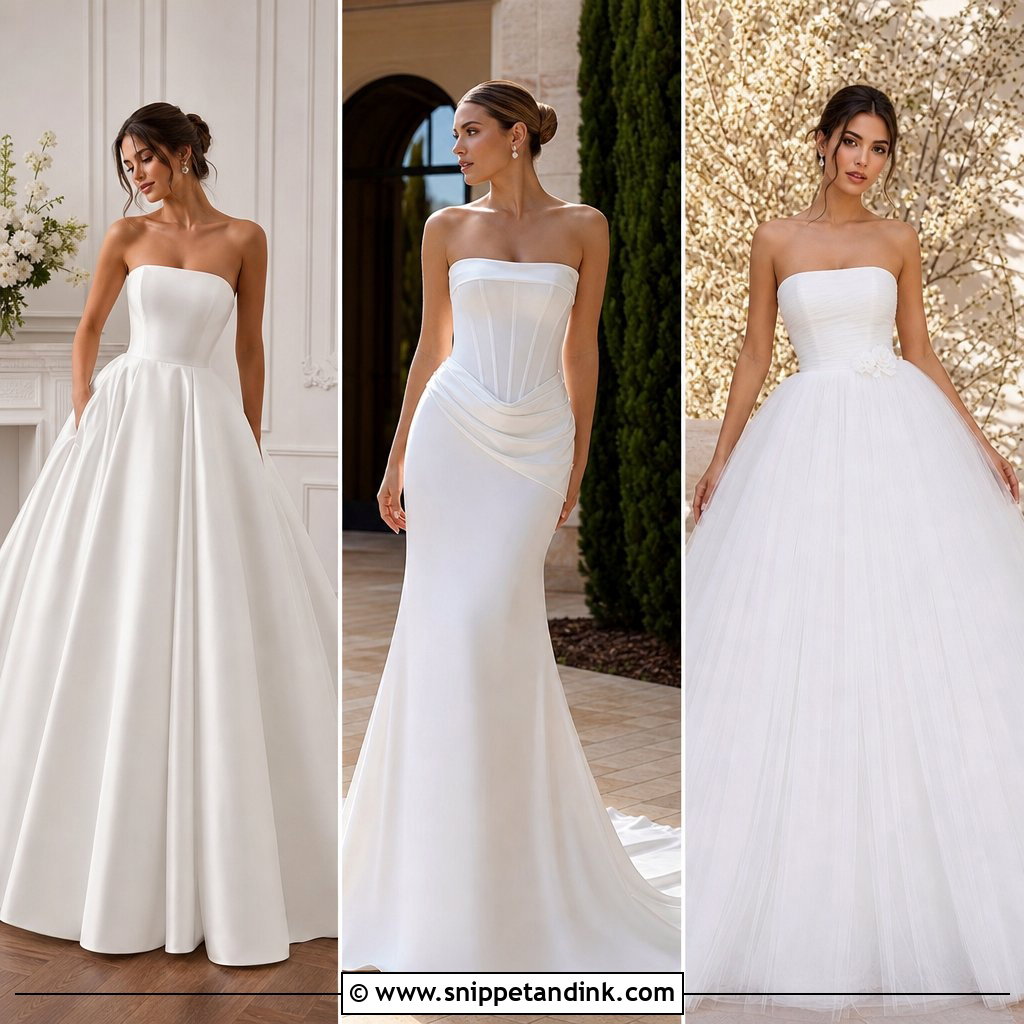
5. Strapless Ball Gown Wedding Dress
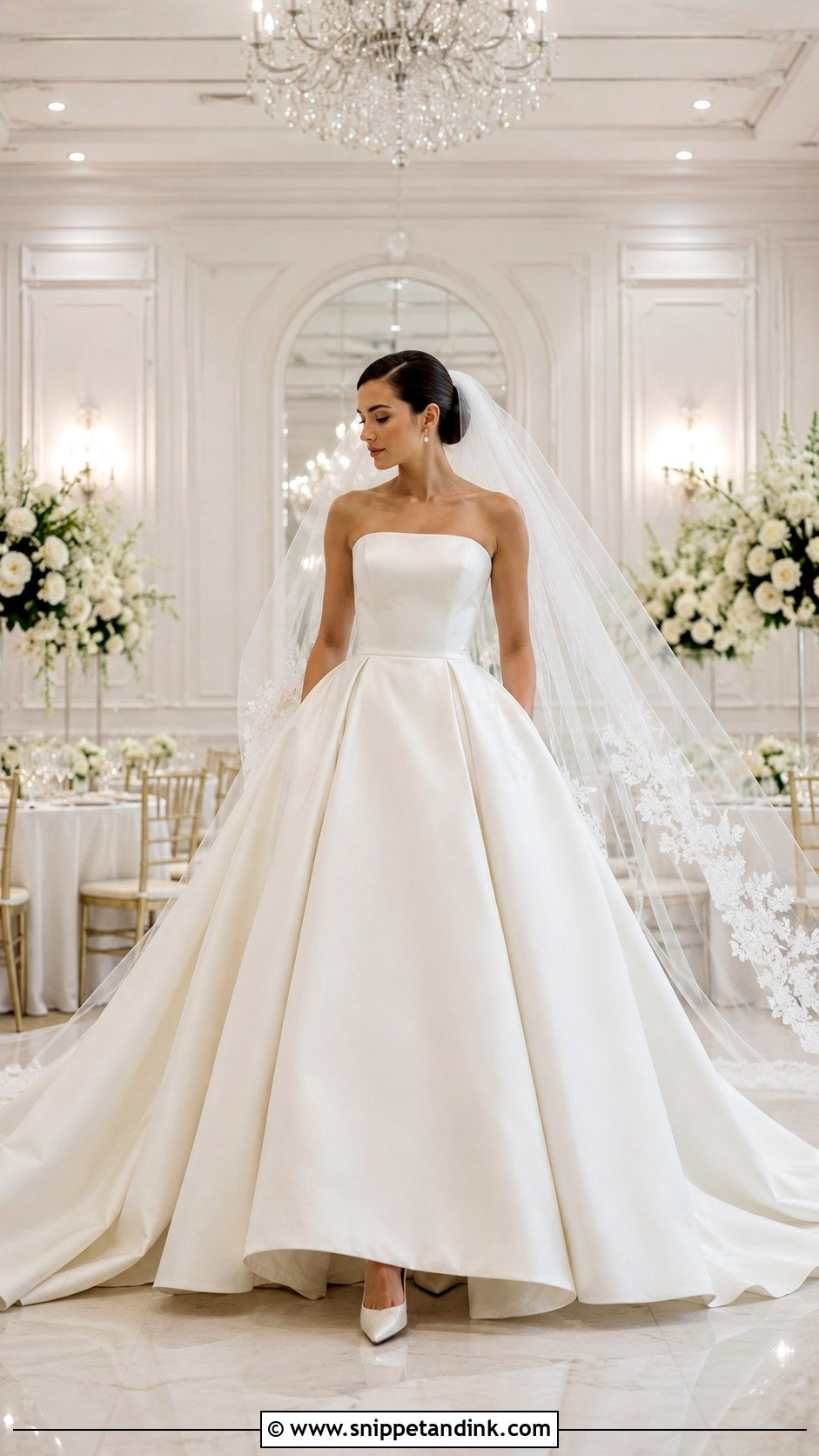
A strapless ball gown looks current when the lines stay clean: structured bodice, smooth skirt, little embellishment. Mikado, satin and organza hold the shape well. The bodice has to be built properly, with boning and a waist stay, so it stays up on its own; if you find yourself hoisting it at the fitting, it needs adjusting. Try opera-length gloves for a fashion edge or keep it simple with studs and a long veil. A soft updo balances the volume.
6. Crepe Fit And Flare Wedding Dress
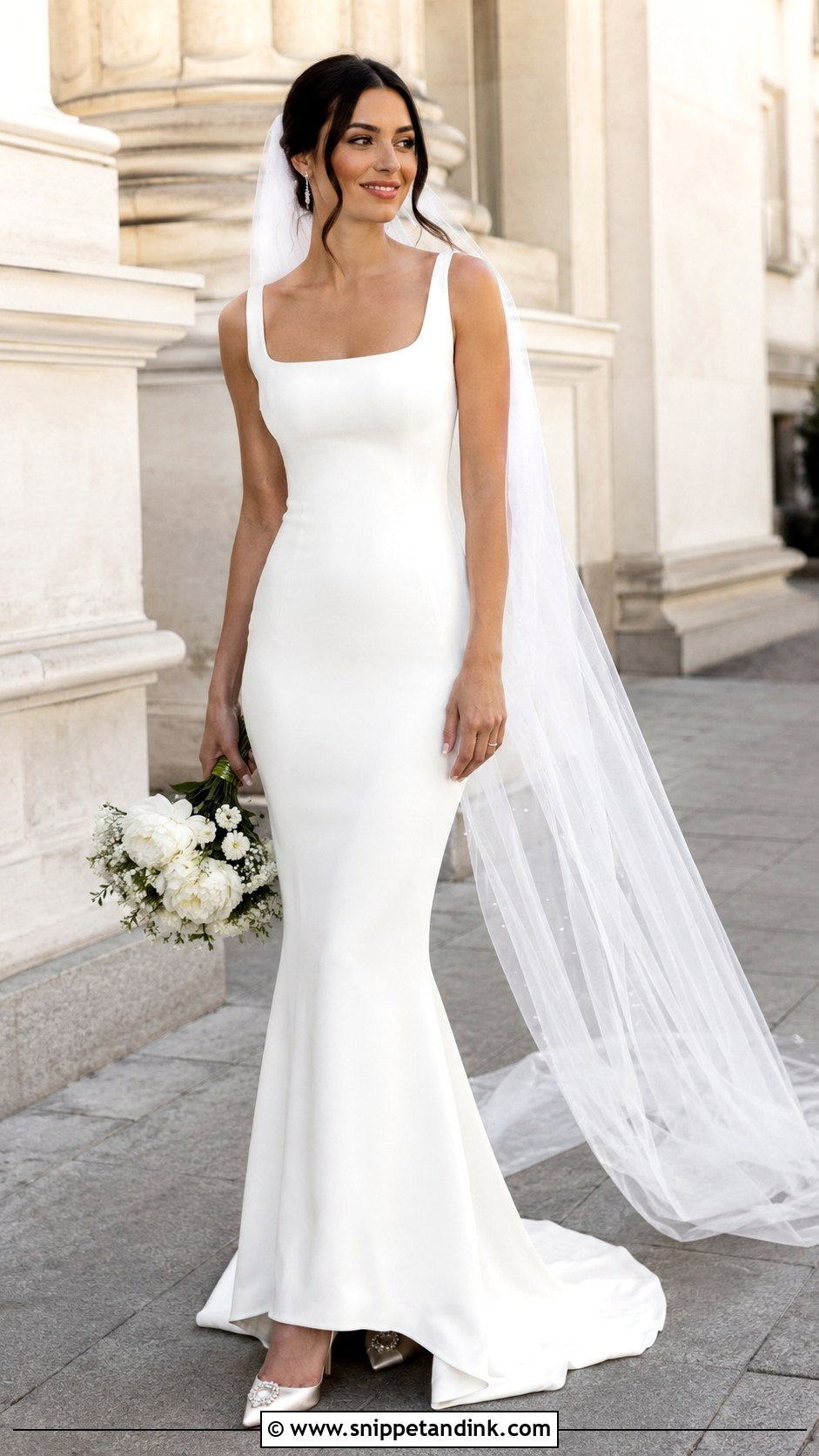
Crepe fit-and-flare gowns follow the body and rely on cut instead of sparkle. Matte crepe is forgiving in photos but shows the underwear line, so plan smooth, no-line underwear or a built-in foundation. A bateau, square neck or simple straps keep it classic. Check where the flare starts: around mid-thigh you can walk and dance, while a very low flare restricts your stride. A long veil, delicate drop earrings, ivory heels and a low bun or soft waves suit city and evening weddings.
7. Silk Slip Wedding Dress
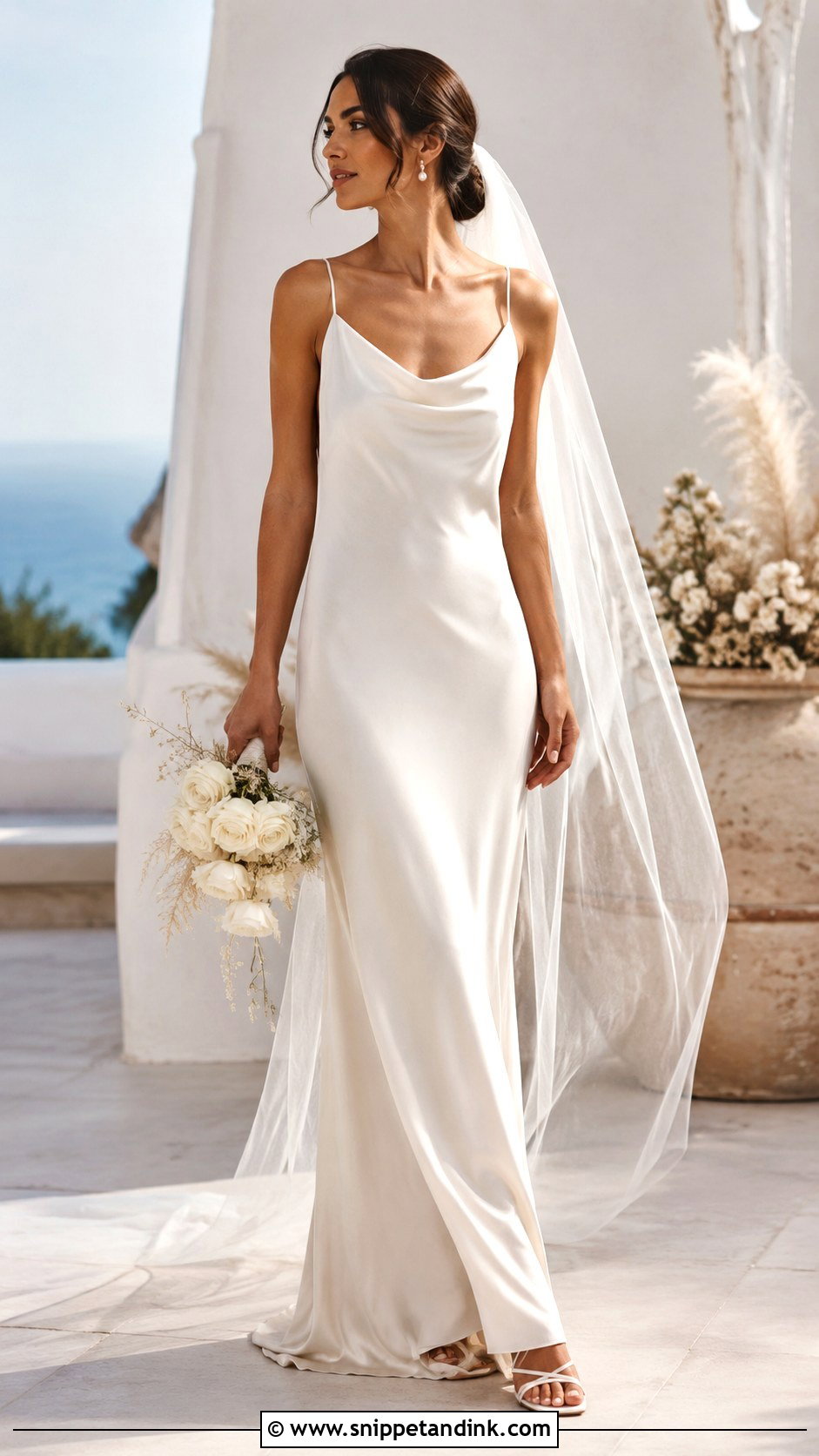
Silk slips look simple, and that makes them the hardest dress to fit. Bias-cut silk or satin skims the body, so it shows everything underneath and moves with every step. Choose a heavier silk or a lined version if you’re worried about cling. Strappy ivory sandals, pearl earrings, a sheer veil and a light wrap complete it, with a smooth bun or a clean side part. Courthouses, destination ceremonies and small celebrations are where it feels most natural.
8. High Neck Wedding Dress
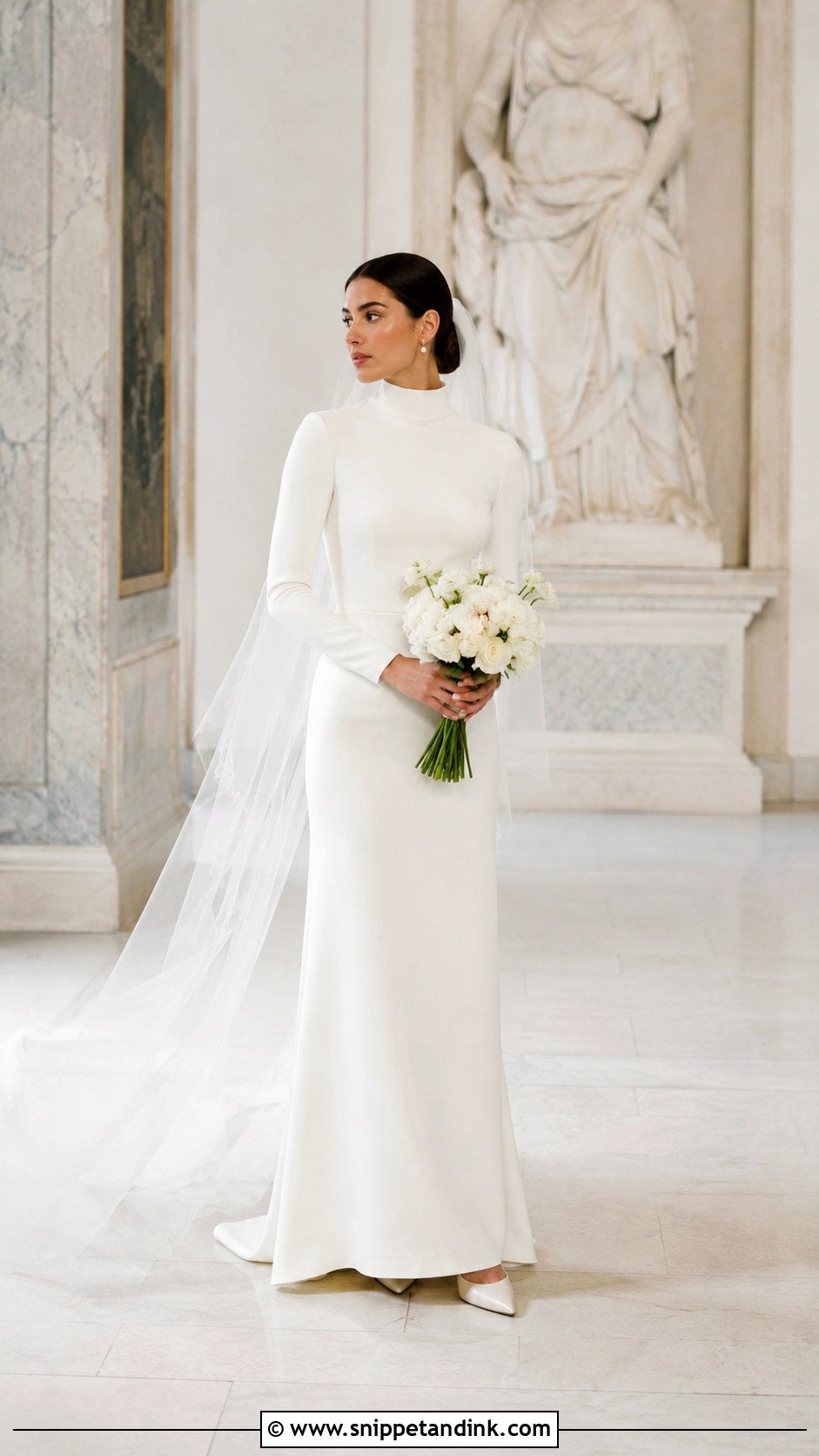
High necklines draw the eye up to the face, which is why I’d almost always pull the hair back with one. Lace versions feel romantic; satin or crepe ones look sleek and architectural. Keep accessories small, such as pearl earrings and a smooth bracelet, and let a long veil soften the structured front. Test the collar for comfort: a stiff high neck can rub over a full day, so a soft facing inside makes a difference. Winter weddings and formal hotel ceremonies suit it well.
9. Minimalist Column Wedding Dress
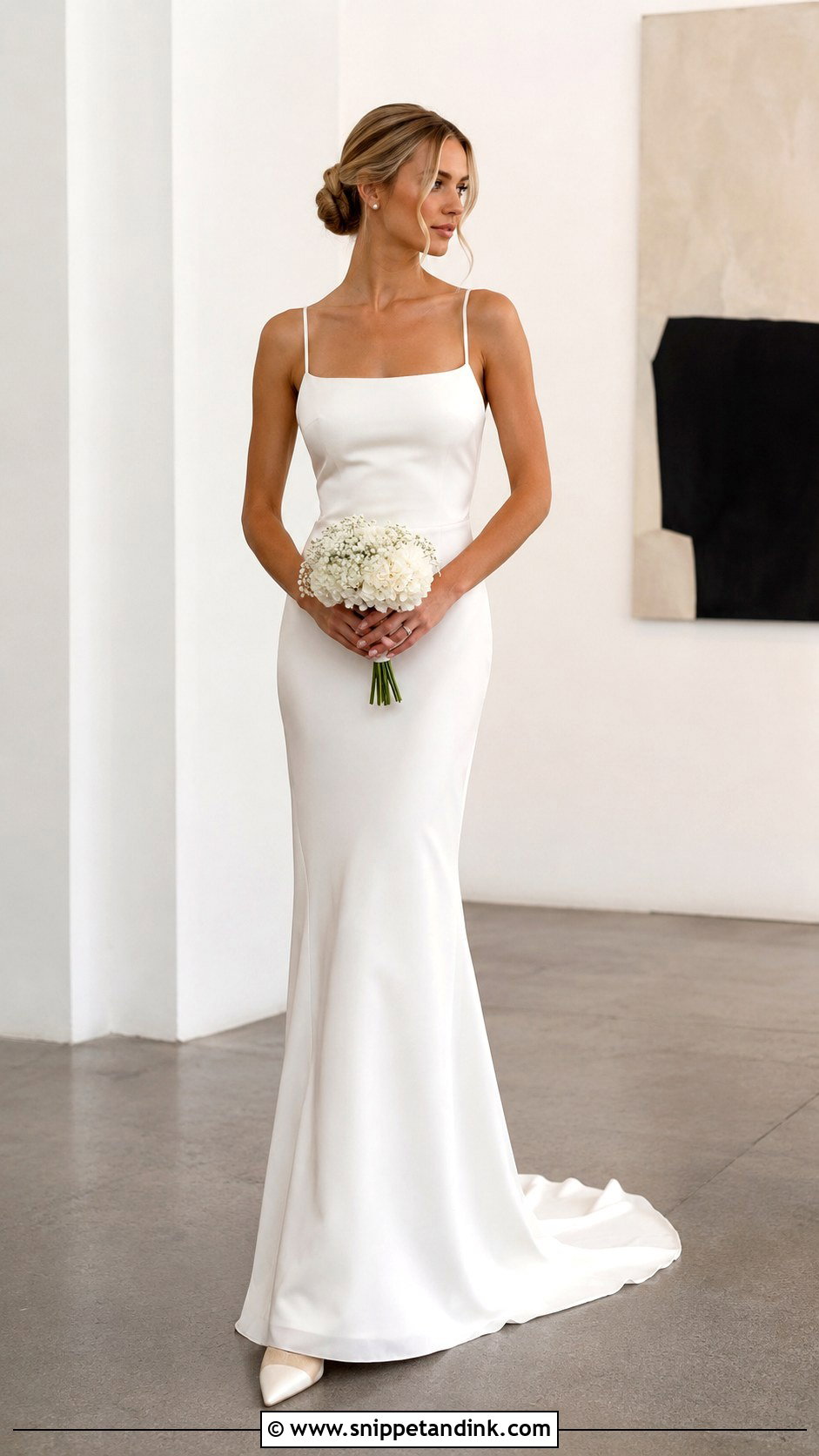
Columns need fabric with enough weight to fall straight, such as heavy crepe, silk or satin. A straight shape with a small train, narrow straps or a clean strapless neckline is the basis. Tailoring is everything in a dress this plain: the hem, bust, waist and hip all have to sit perfectly or the eye goes to the flaw. Pointed heels, pearl studs, a sleek veil and a small bouquet balance it. Galleries, rooftops and city venues suit it.
10. A Line Lace Wedding Dress
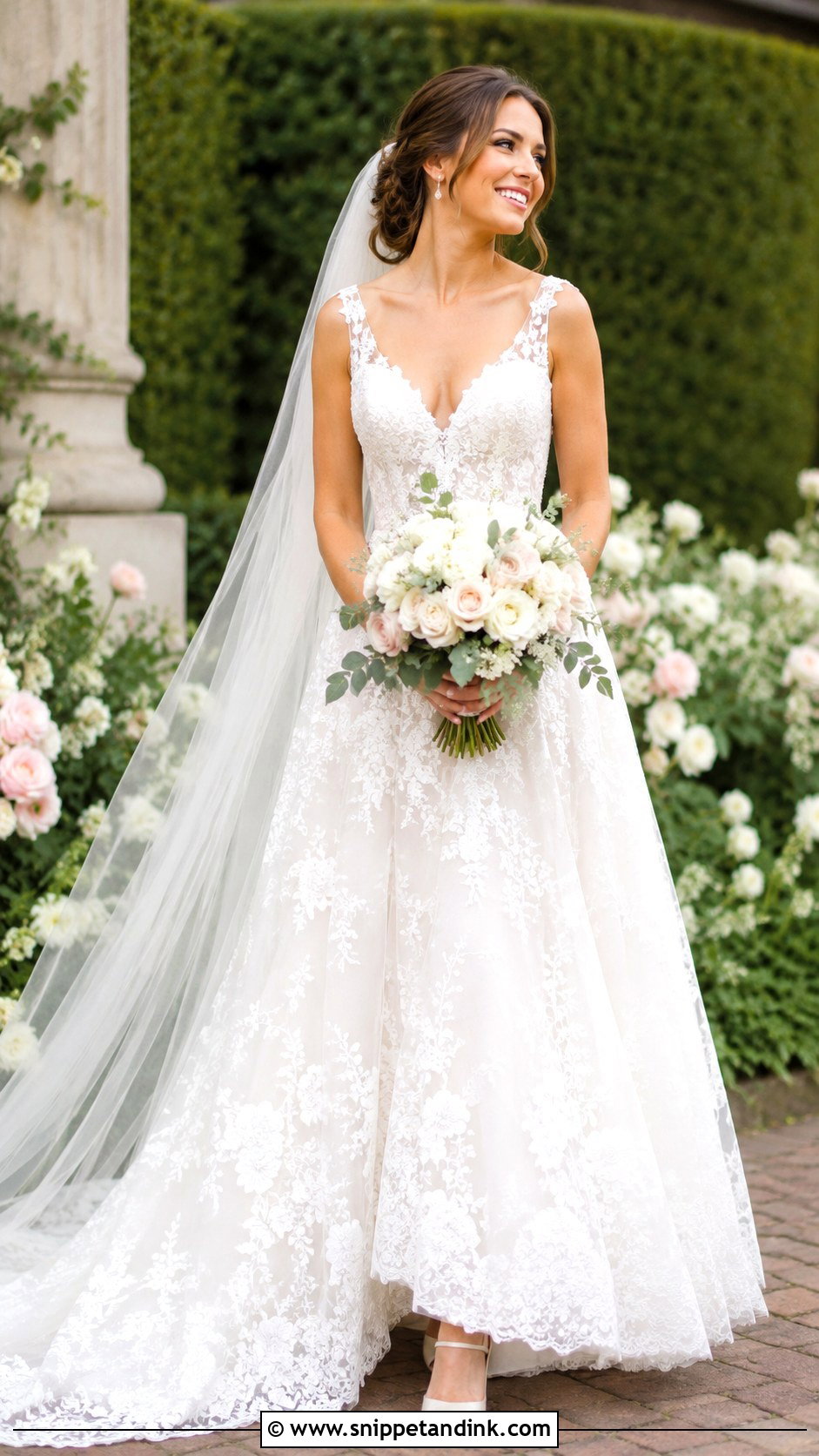
Lace A-lines are the dress I’d point most first-time shoppers toward. The skirt starts at the waist and falls gently, so it moves easily without ball-gown weight, and it sits well on most figures. Choose a refined lace, floral, vine or Chantilly, so it stays light. A soft veil, pearl earrings, block heels for grass and a half-up style or loose waves suit gardens, estates and beaches. It’s the safe choice, and safe here means comfortable all day.
11. Drop Waist Wedding Dress
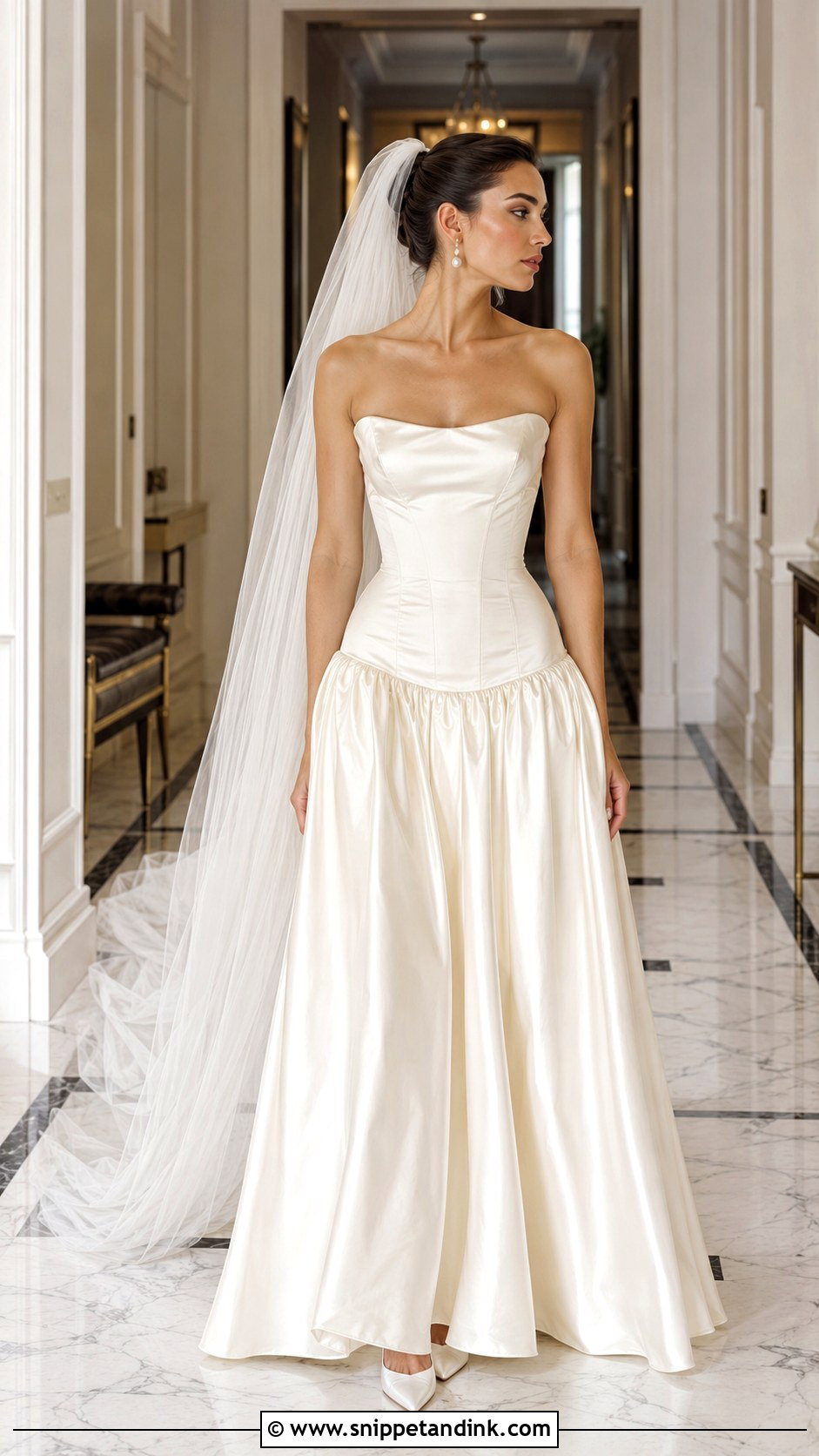
A dropped waist lengthens the bodice before the skirt begins, which gives a long, sculpted line. It flatters straight figures and long torsos; on a short torso it can make the legs look shorter, so try it before you fall for the photo. Satin or mikado gives structure; lace softens it. Pointed pumps, pearl earrings, a long veil and a smooth bun or tucked waves keep it classic rather than costume.
12. Basque Waist Wedding Dress
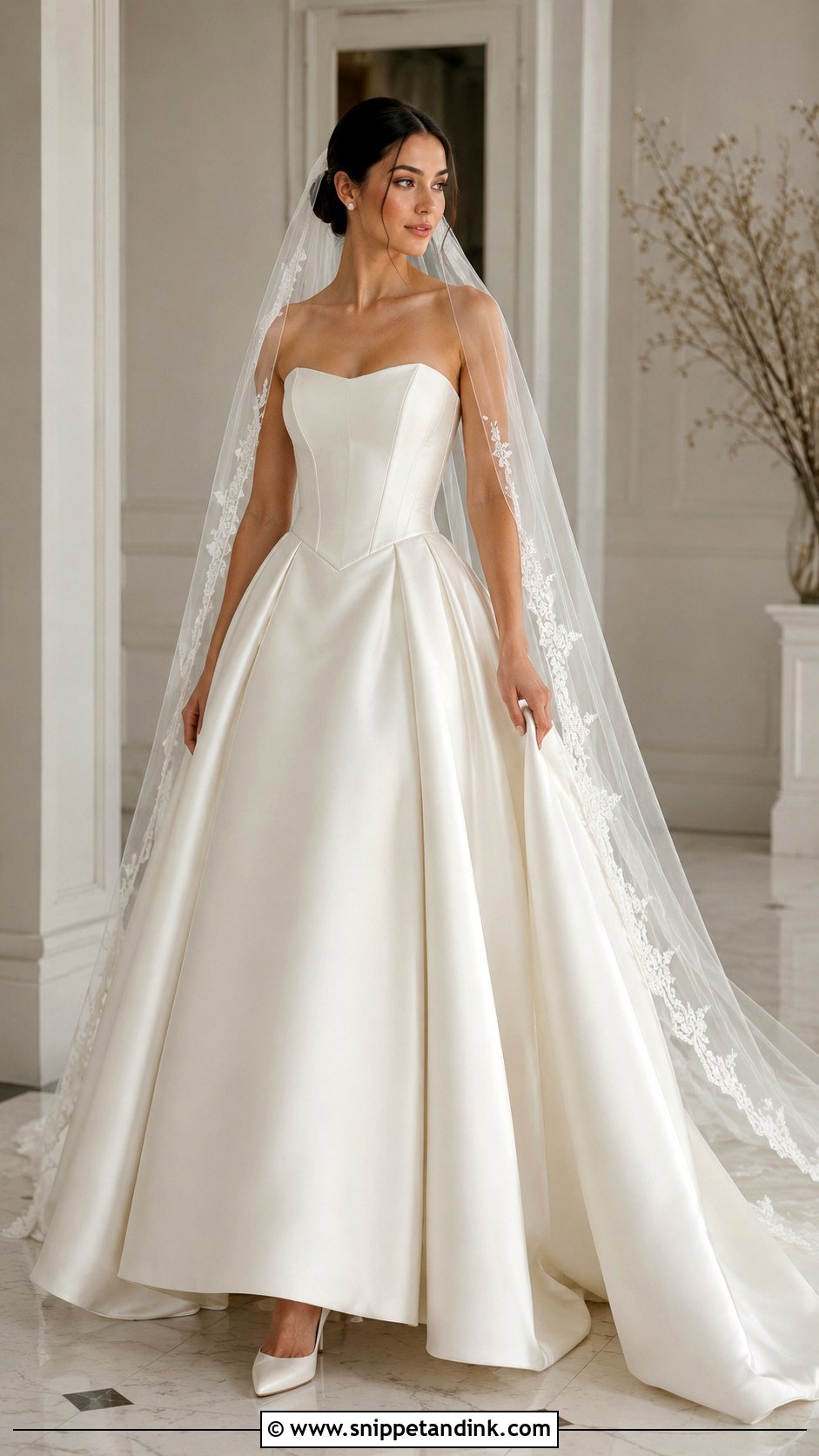
A basque waist wedding dress dips into a soft point at the front waist, which defines the middle and makes the torso look longer. Satin, mikado or soft tulle all suit it, with a fitted bodice and full skirt. The point must sit at the right height for your body, so it’s an alteration I’d leave to an experienced bridal seamstress. Complete it with a cathedral veil, pearl studs and pumps. A fine necklace works with an open neckline, nothing heavy.
13. Corset Wedding Dress
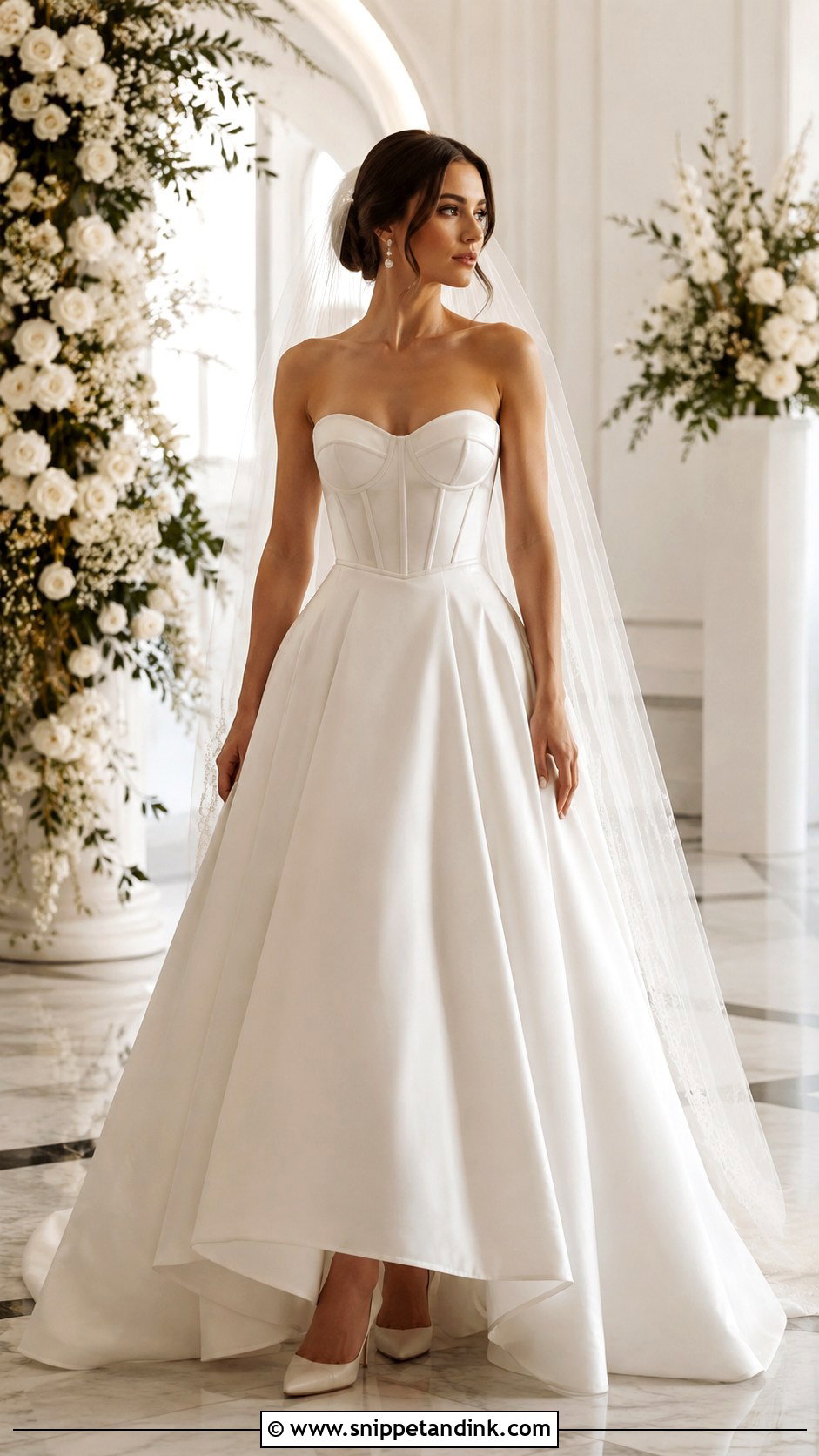
Corset bodices look lasting when the construction is refined: softer boning, a smooth front and bridal fabric like satin, lace, crepe or tulle. Paired with an A-line skirt it’s romantic; with a column it reads modern. A properly fitted corset should feel firm but let you breathe, eat and sit, so do a sit-down test at the fitting. A sheer veil, pearl drop earrings and slim heels suit it, and a relaxed updo keeps it from feeling stiff.
14. Tea Length Wedding Dress
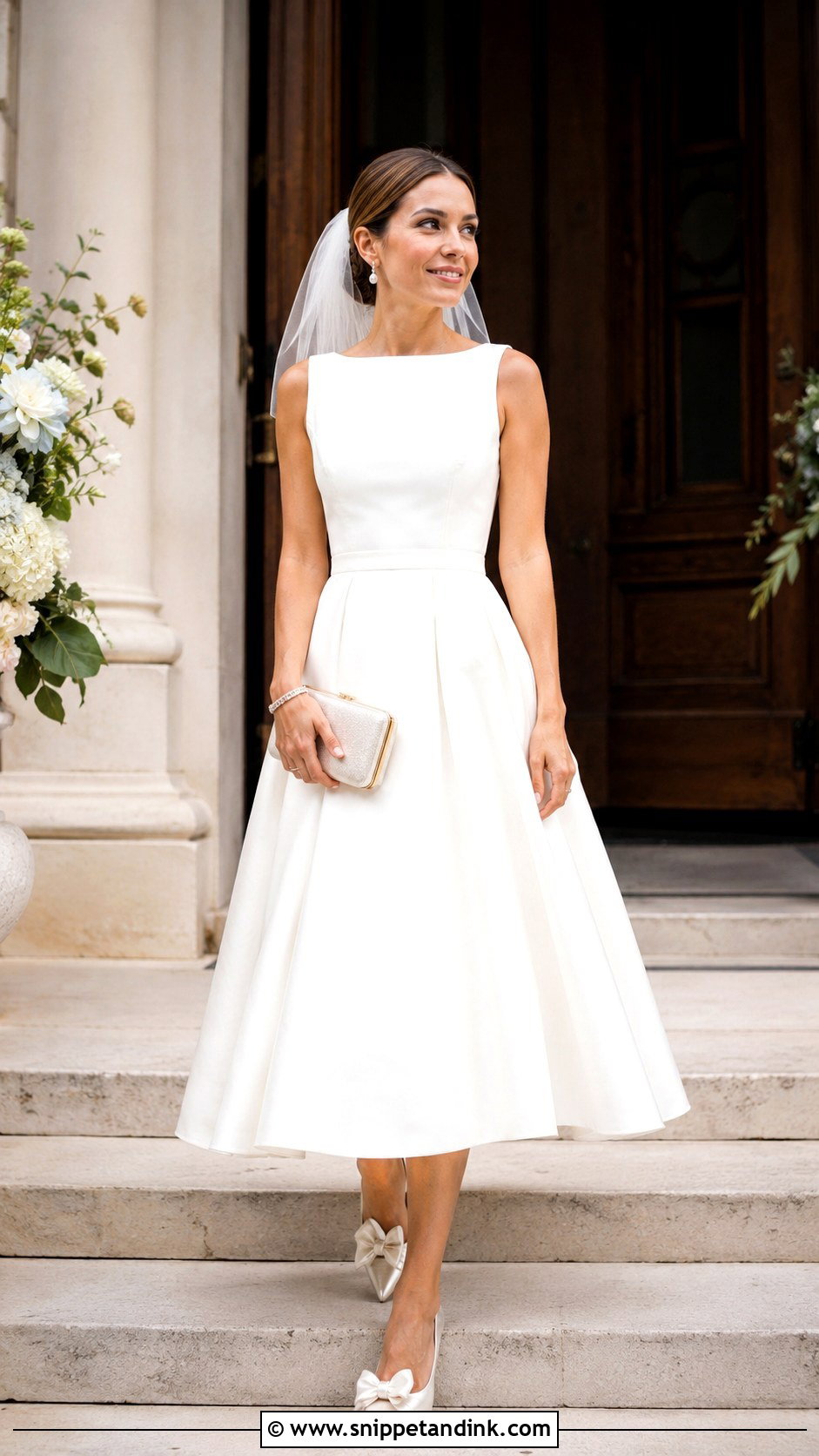
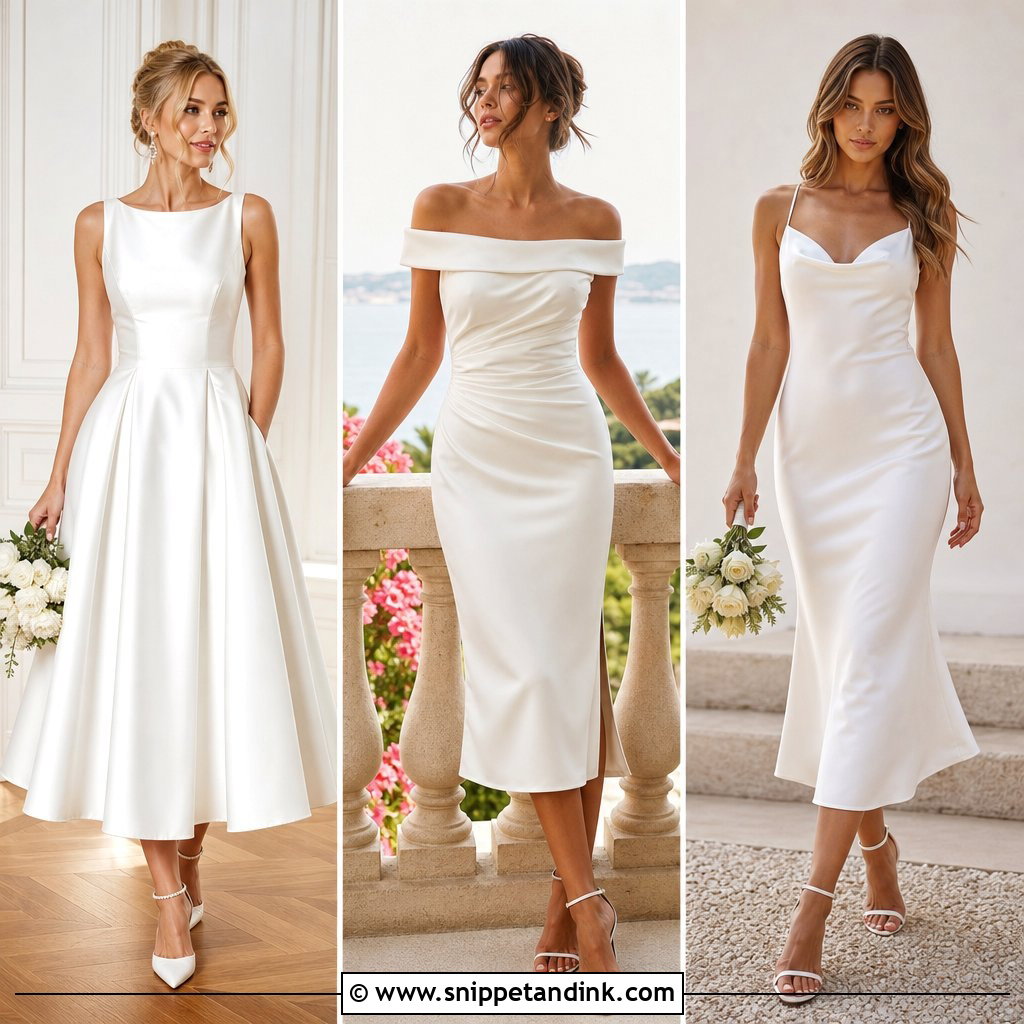
A tea-length hem shows your shoes, so they become part of the outfit. Satin pumps, bow heels or pointed slingbacks are good choices. A fitted bodice with a full skirt feels classic; a slim tea-length column feels modern. The hem should fall at mid-calf, not just below the knee, or it reads as a cocktail dress. A short veil, pearl earrings and a structured clutch finish it. Courthouses, garden ceremonies and second looks suit it, and it’s easy to move in.



15. Short Wedding Dress
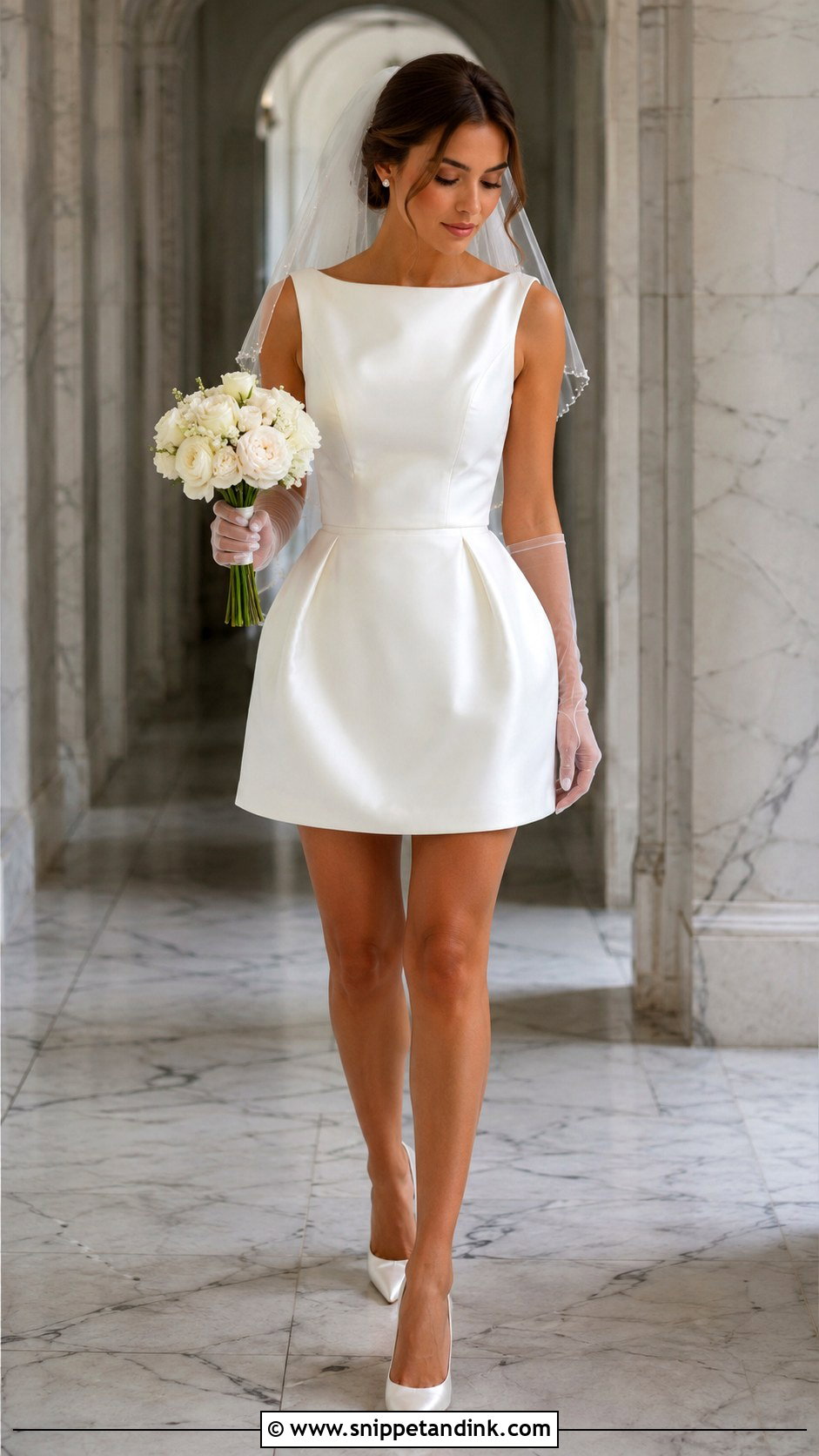
A short wedding dress keeps a bridal feel when the fabric and accessories carry the formality. Choose a clean mini, a knee-length sheath or a tailored A-line in satin, crepe or structured lace. Then add the bridal signals: a short veil or bow, sheer gloves, pearl earrings and pointed pumps. Without them it can look like a party dress. It suits courthouse ceremonies, elopements, reception changes and destination weddings.
16. Wedding Dress With Bow
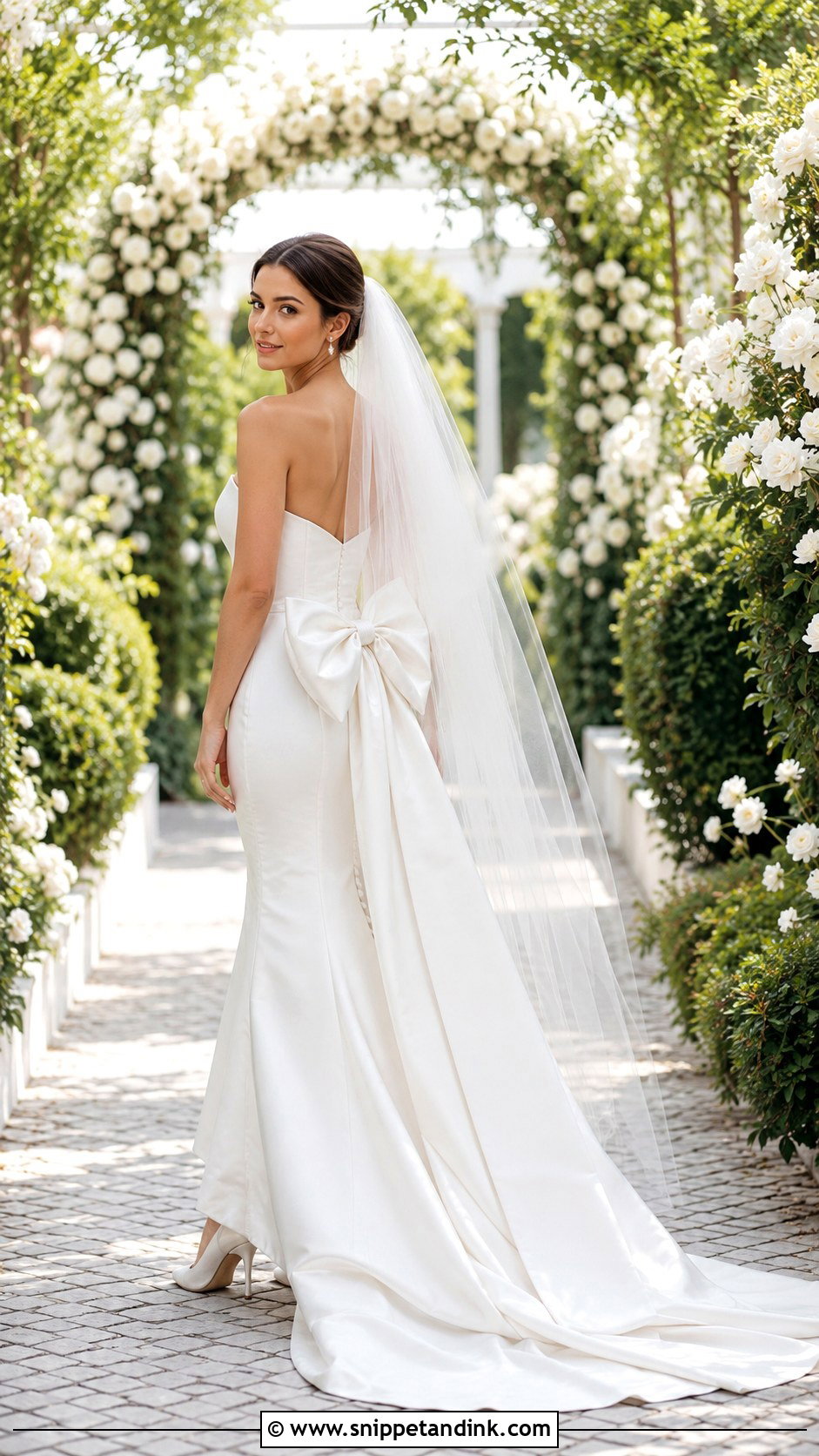
Bows need a reason to be there. A large back bow on a plain satin gown gives an aisle photograph its focal point; a small bow at the waist adds charm without taking over. Ask how the bow is attached: bows sewn flat hold their shape, while loosely attached ones droop after sitting. A sheer veil that doesn’t cover the back, pearl studs and a bun or smooth ponytail keep the bow visible.
17. Wedding Dress With Detachable Overskirt
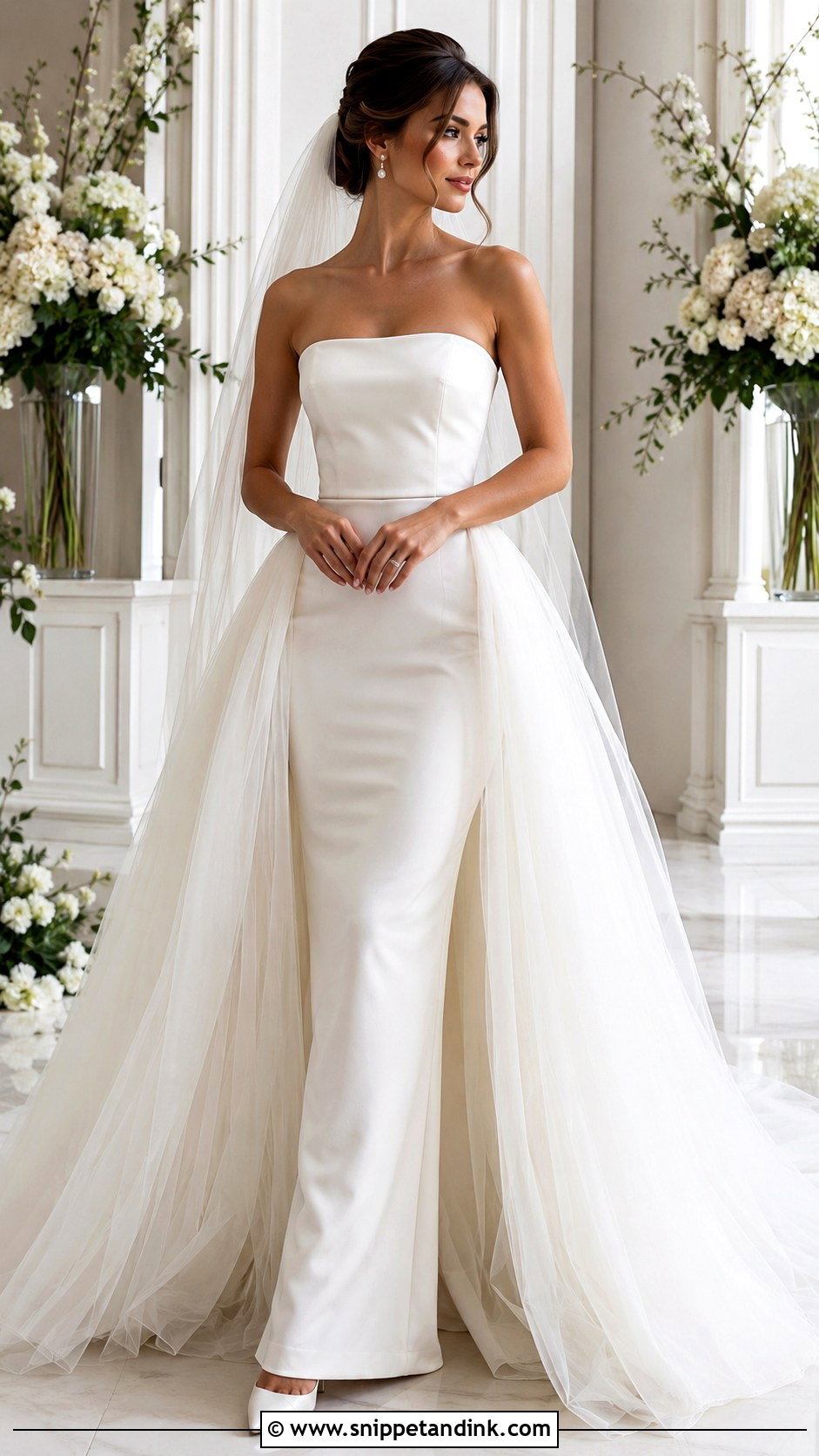
A detachable overskirt gives you two outfits: volume for the ceremony, a sleeker gown for the reception. Choose a fitted crepe, lace or satin base with a tulle, organza or mikado overskirt. Practise taking it off with whoever will help you, because hidden hooks and buttons are fiddly in a hurry. For the ceremony, wear a long veil and pointed heels; later, swap the veil for a bow or clip. It’s ideal if you want a grand aisle moment and a dance floor you can move on.
18. Wedding Dress With Cape
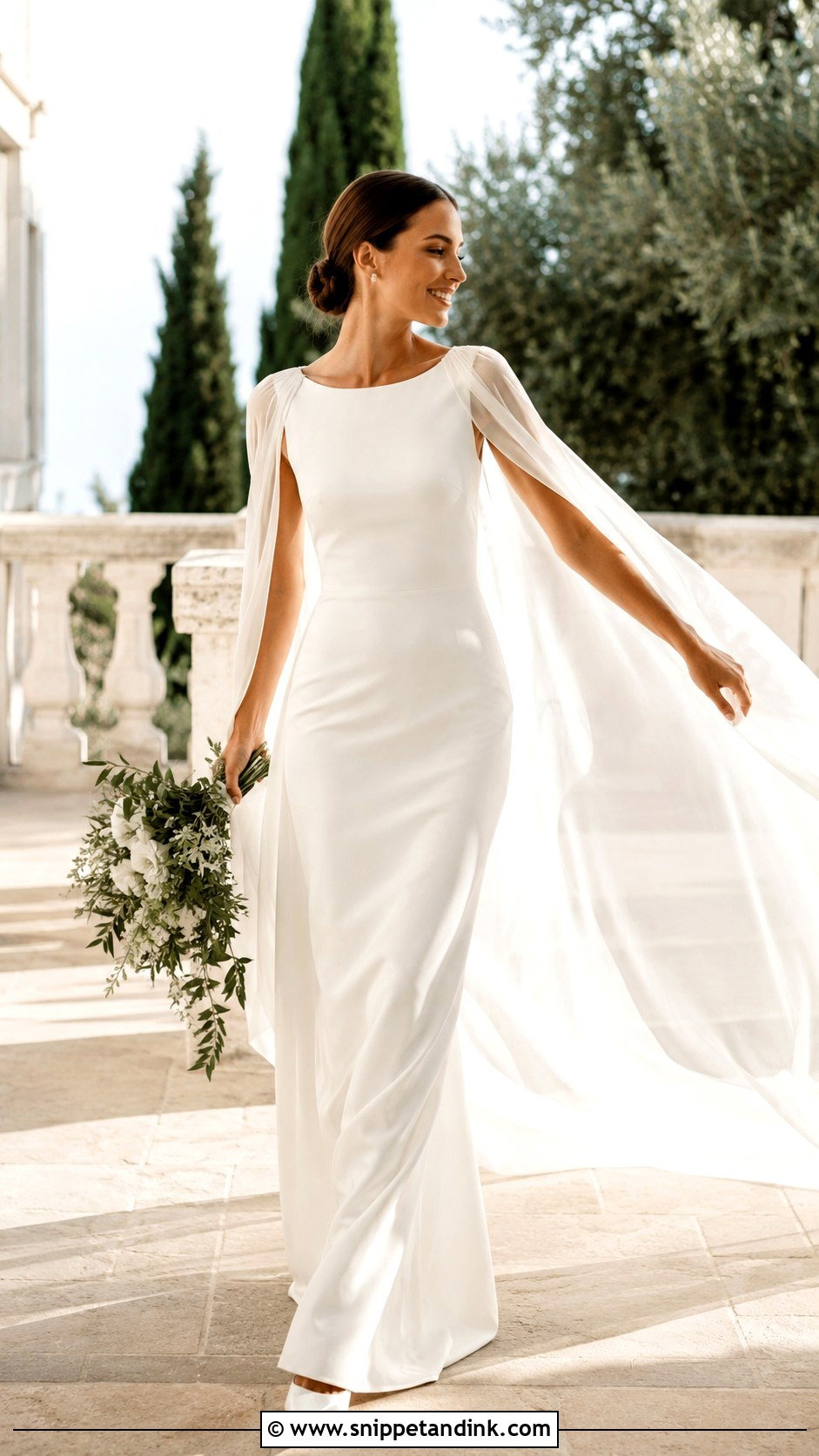
A sheer cape can take the place of a veil and moves as you walk; satin or crepe capes are more architectural. Pair either with a plain column, fit-and-flare or minimal A-line so the cape stays the feature. Check where it’s fixed: a cape attached at the neckline pulls on the neck when you hug, while shoulder-attached ones move freely. Small pearl studs and a smooth hairstyle suit it, and it gives coverage for brides who don’t want sleeves.
19. Pearl Wedding Dress
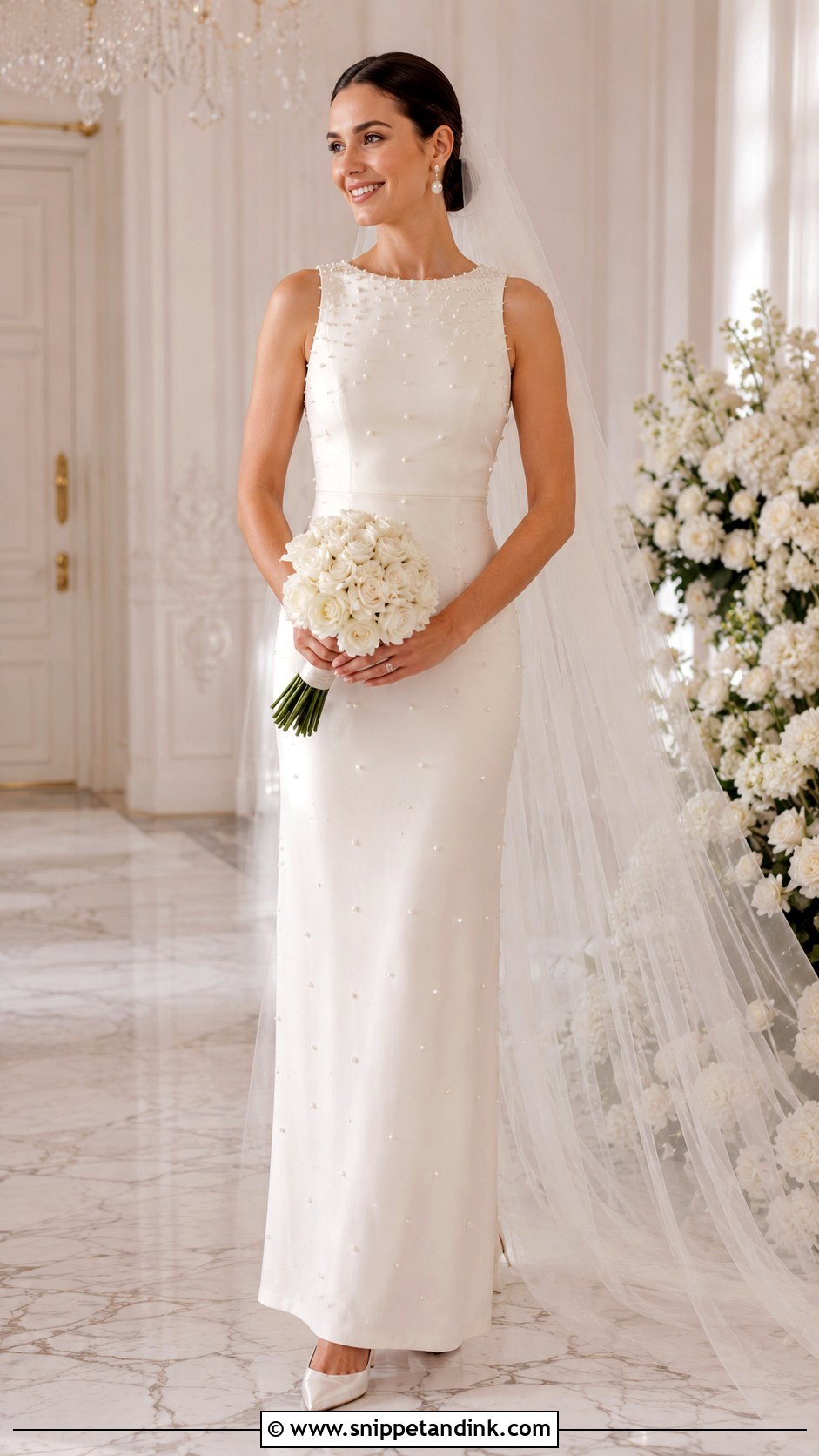
Pearls give a soft glow instead of the sharp sparkle of sequins. The versions that age best use scattered pearls, pearl straps or fine trim rather than full beading. Keep the silhouette simple, a column, A-line or fitted crepe, so the pearls read as the detail. If pearls sit near the neckline, skip the necklace. Hand-sewn pearls can come loose, so ask the bridal shop for spares in case one drops on the day. Satin heels, a soft veil and waves or a polished bun complete it.

20. Floral Applique Wedding Dress
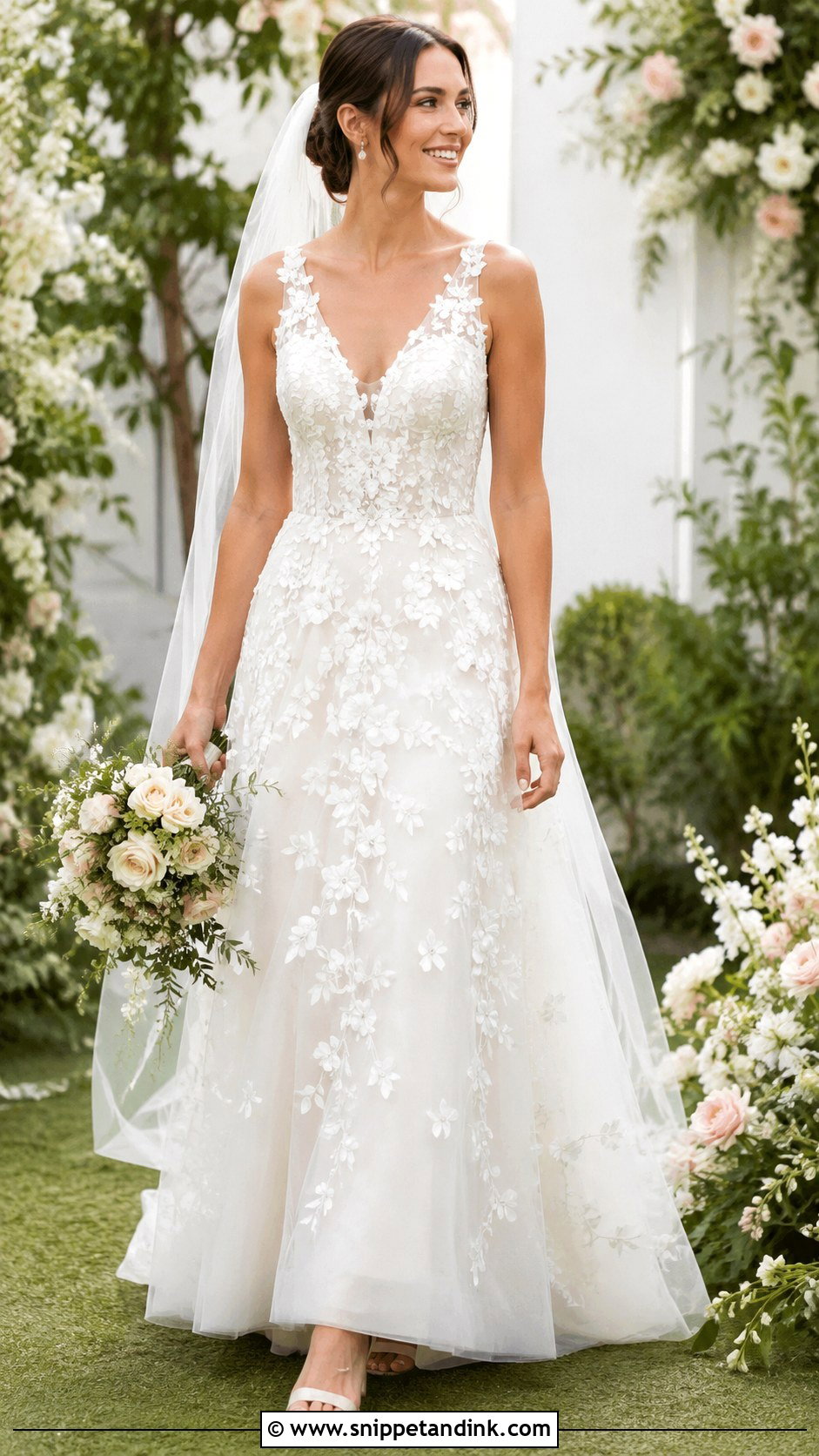
Appliques add dimension when they’re placed with a light hand: across the bodice, trailing down the skirt or scattered over sheer sleeves. White or ivory flowers on the same base colour look lasting; strongly contrasting ones date faster. Raised appliques catch on veils, so choose a veil with a plain edge and test it over the bodice. Simple heels, fine earrings and a loose updo suit spring and summer, indoors or out.
21. Tulle Wedding Dress
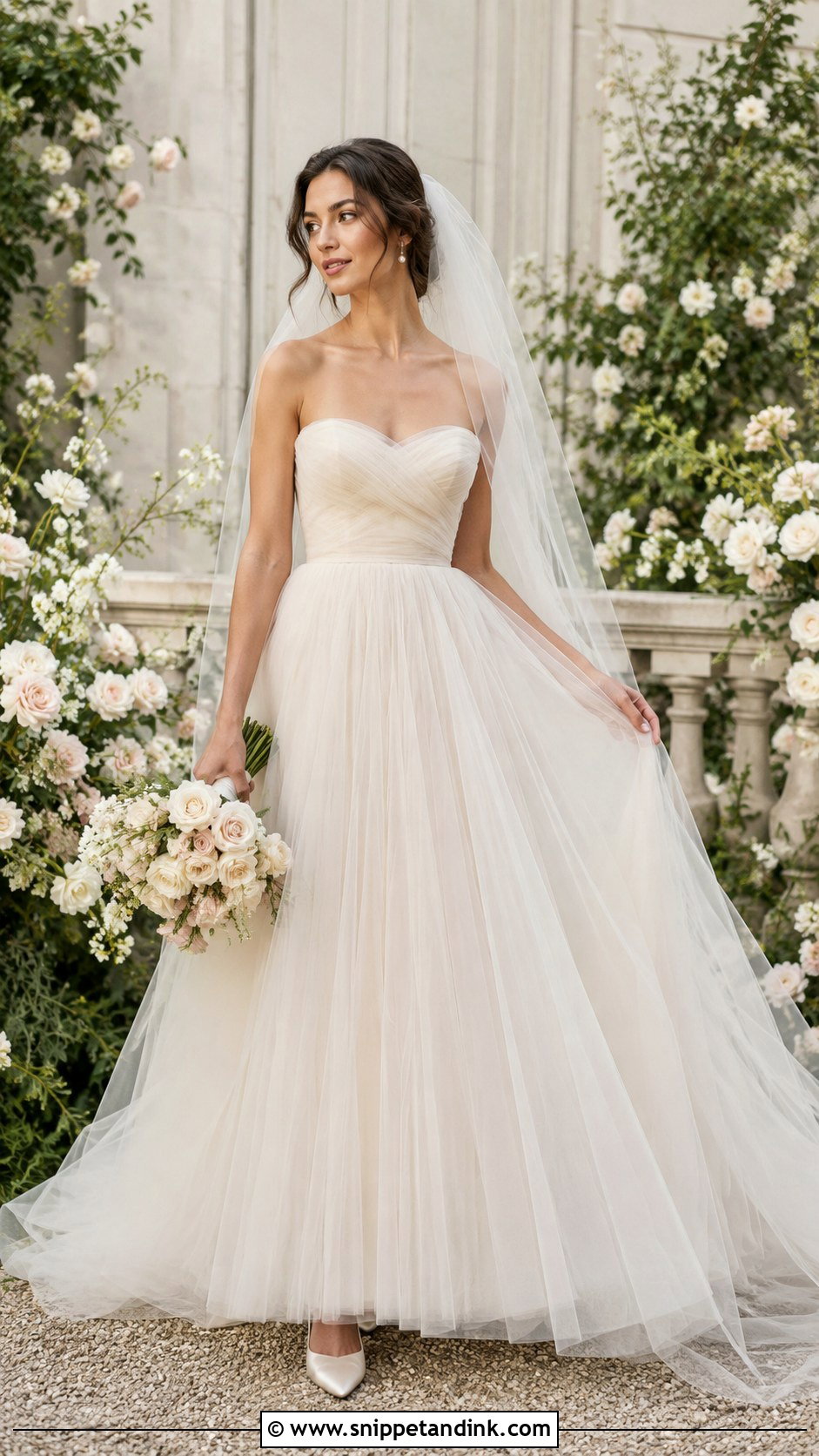
Tulle is light, but layers of it make a skirt big, and that changes what you can do. Soft layers with a defined bodice give the classic shape; a very full skirt needs the bouquet and jewellery kept simple. Tulle snags on jewellery, bouquet wire and rough floors, so check your bracelet clasp and keep the hem up on gravel. Pearl earrings, satin pumps and a sheer veil complete it, with a loose bun, half-up waves or a low ponytail.
22. Mikado Wedding Dress
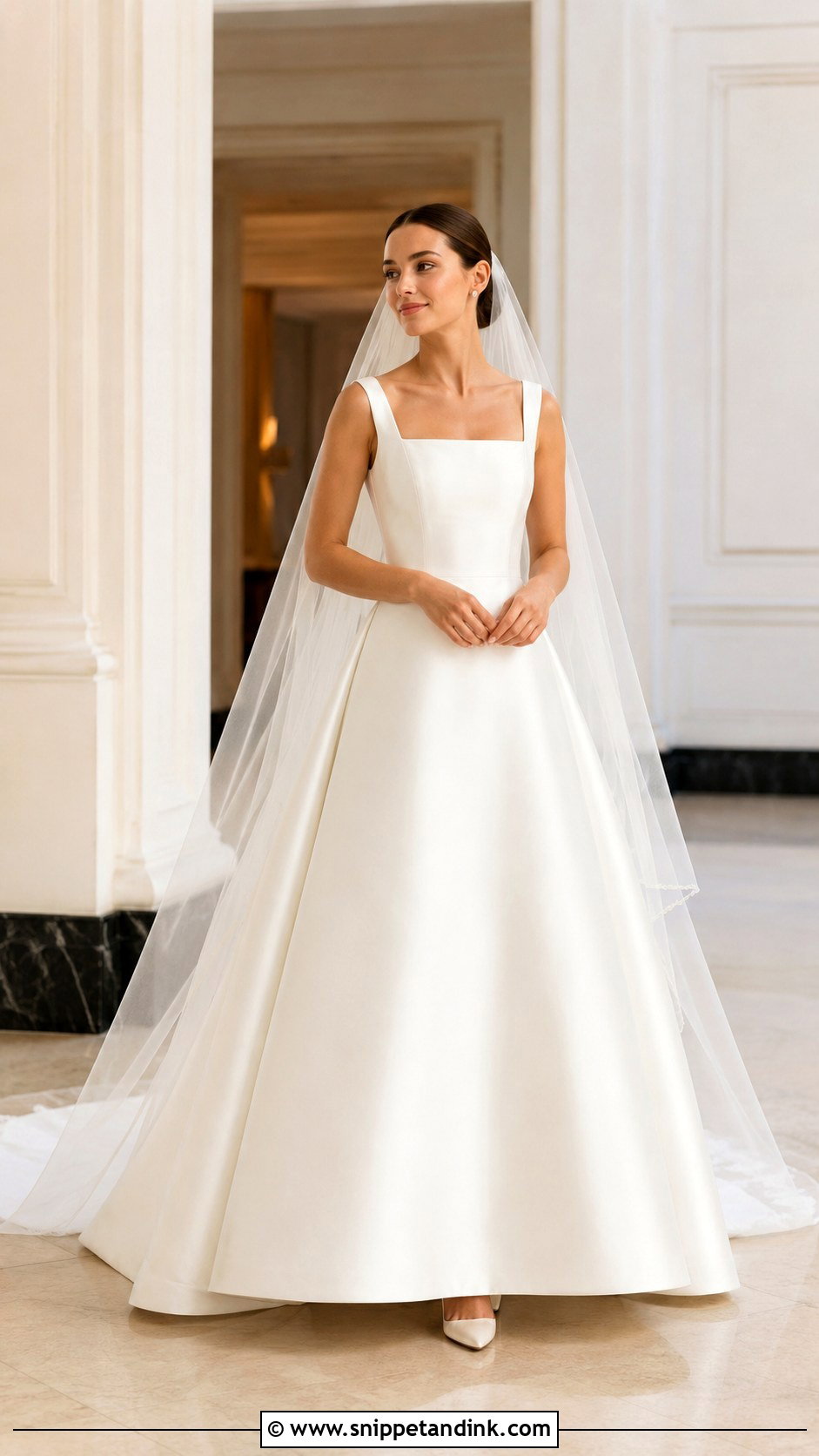
Mikado is a heavy, crisp silk or silk-blend with a slight sheen, and it holds a shape on its own. That makes it ideal for ball gowns, structured A-lines and square-neck designs that rely on clean lines. Because the fabric already looks substantial, you need little extra detail. It’s warm, though, so I’d save it for cooler months or air-conditioned venues. Classic pumps, pearl studs, a long veil and a sleek bun suit formal ceremonies.
23. Sheath Wedding Dress
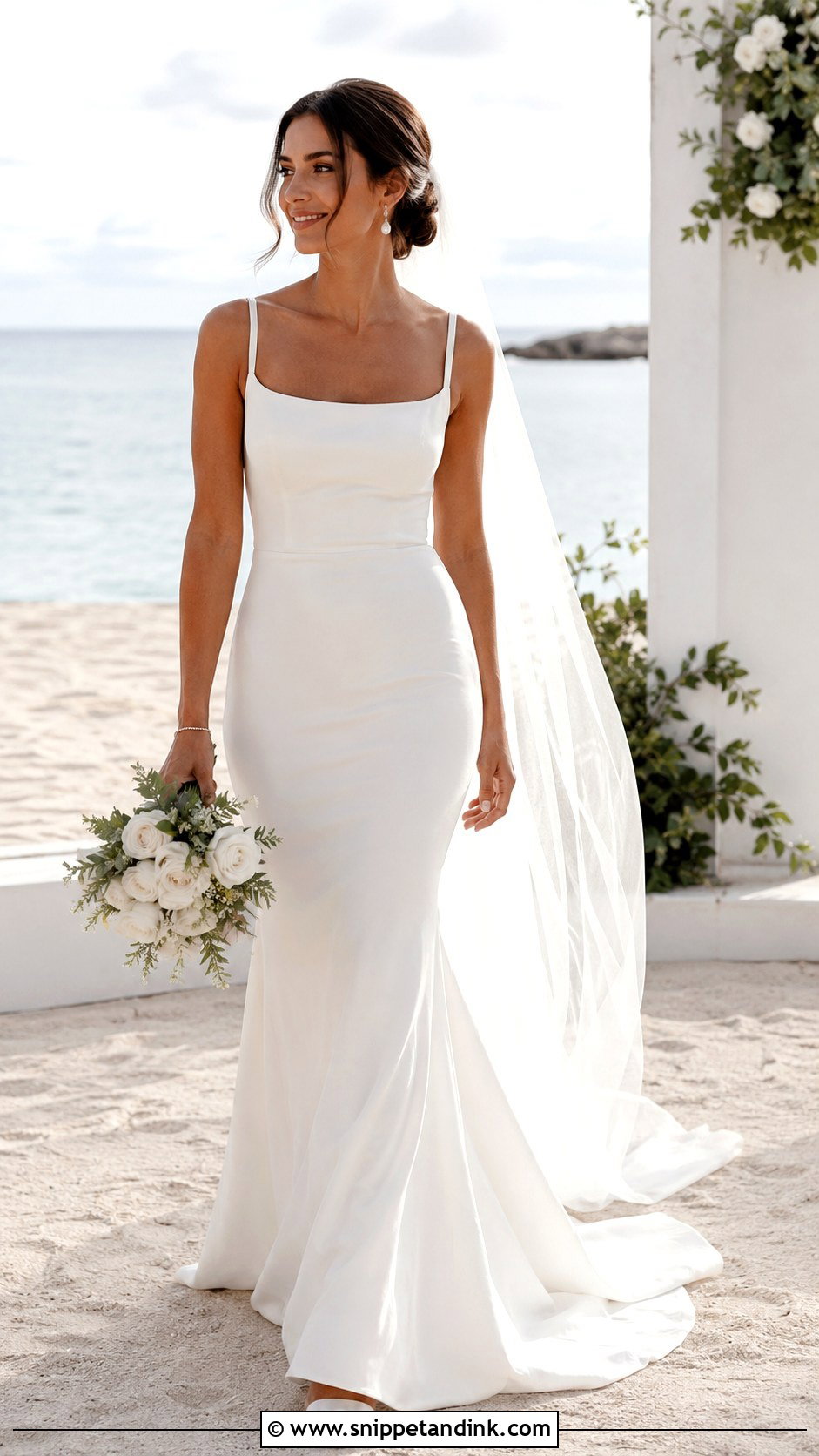
Sheaths fall close to the body without a ball gown’s volume or a mermaid’s flare, so they travel well and are easy to move in. Crepe looks modern, lace romantic, satin quietly glamorous. The skirt shouldn’t pull across the hips when you walk; if it does, ask for a small slit or a walking pleat. Slim heels, pearl earrings, a soft veil and a small bouquet suit beach, destination and courthouse weddings.
24. Mermaid Wedding Dress
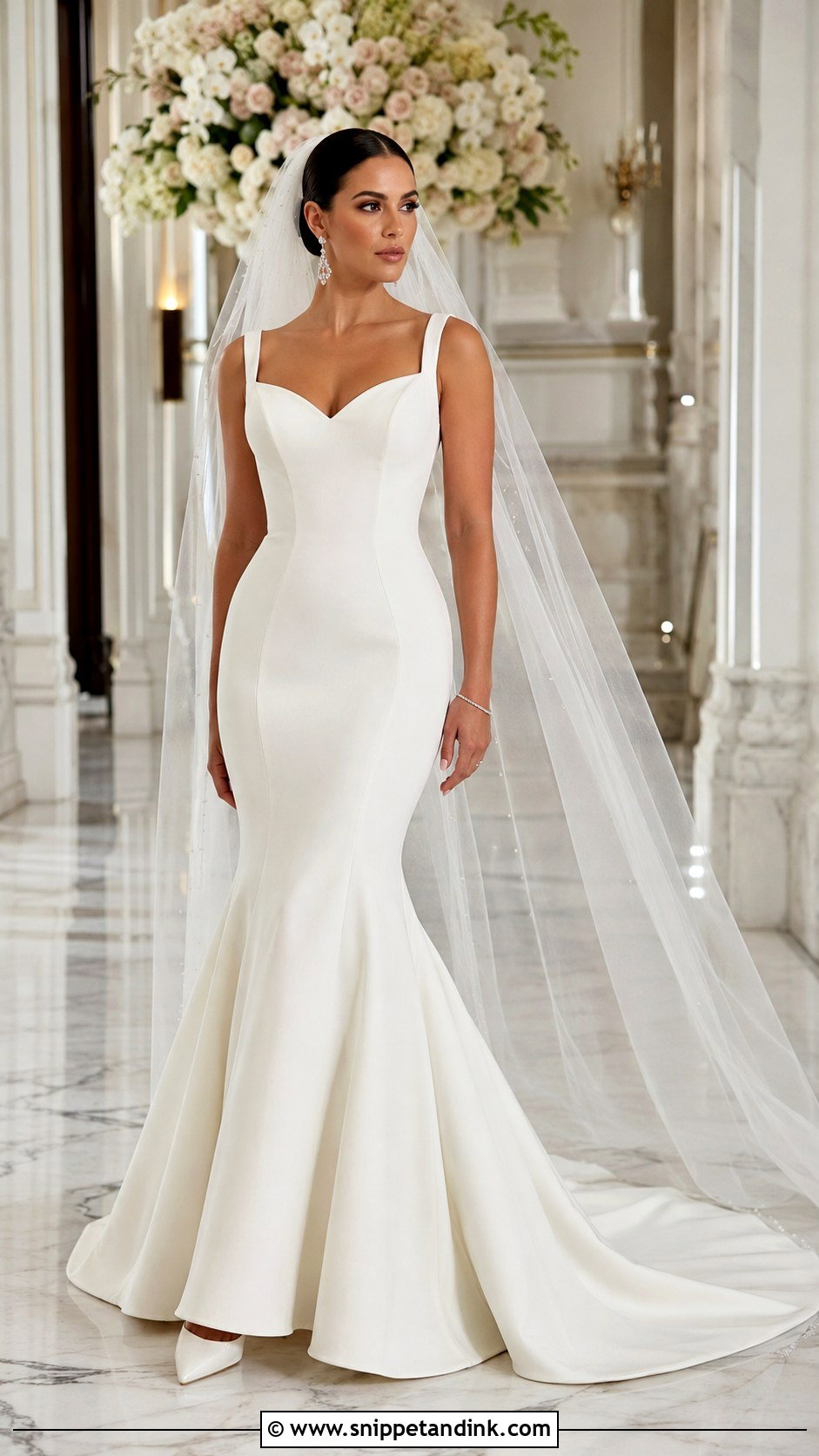
A mermaid wedding dress stays classic when the details are restrained. Smooth crepe, satin or delicate lace rather than heavy embellishment keeps the shape the focus. The flare starts at or below the knee, which limits stairs and dancing, so many brides bustle the train and some change for the reception. Pointed heels, drop earrings, a long veil and waves or a polished bun suit evening and hotel weddings.
25. Bridal Suit Wedding Dress
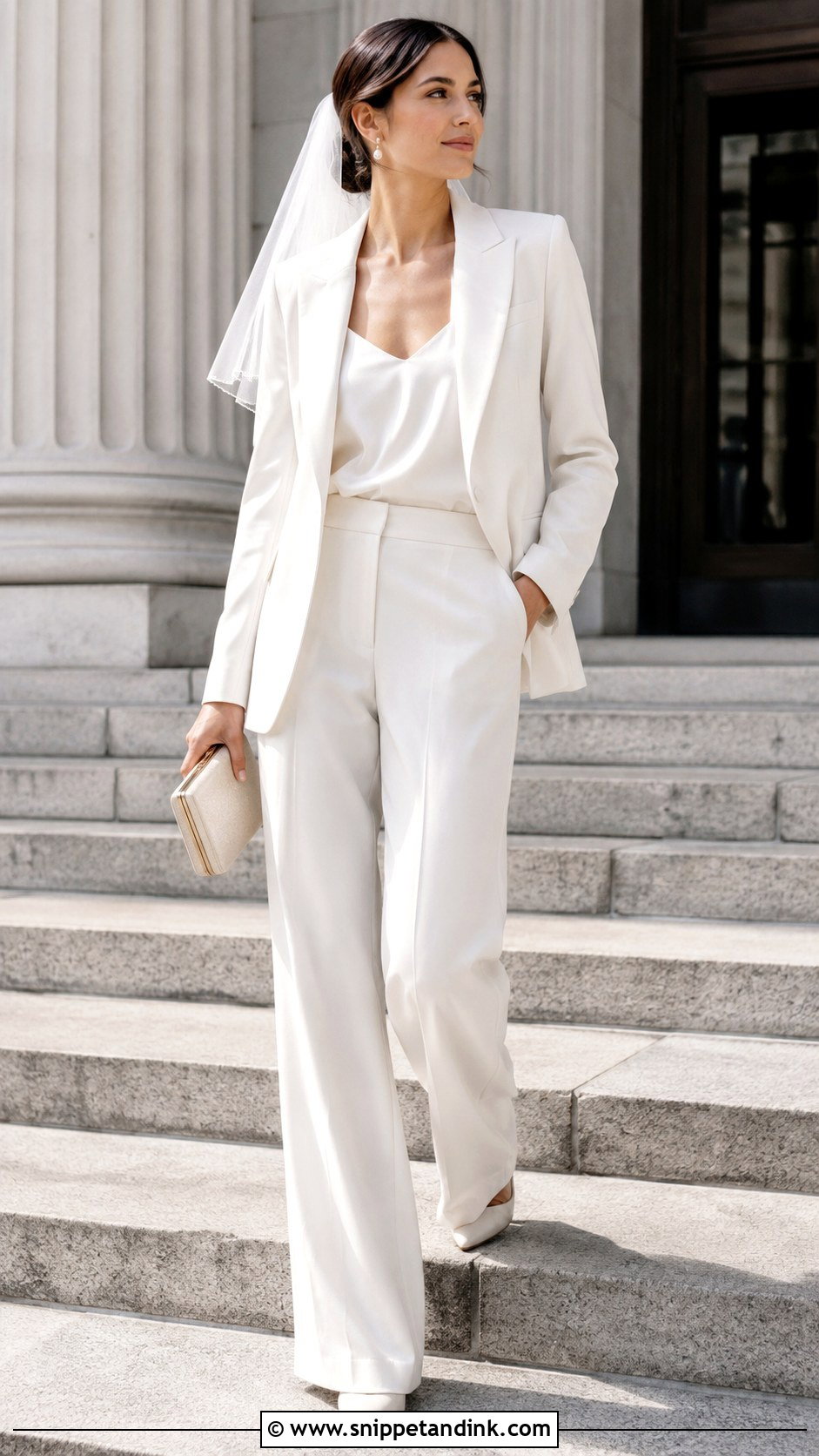
A bridal suit suits a bride who would feel costumed in a gown. An ivory blazer with sharp shoulders, wide-leg trousers and a silk camisole or structured corset beneath is the base. Pearl earrings, pointed heels, a slim clutch and a short veil or hair bow make it bridal. The shoulders and trouser hem make or break a suit, so have both tailored to your shoes. Courthouses, city ceremonies, elopements and reception changes all suit it.
Cleaning and Storing the Gown So It Lasts
A dress that looks spotless the morning after may not be. Spilled champagne, sweat and sugar dry clear, then oxidise into yellow-brown marks over months, which is why I’d get the gown to a specialist bridal cleaner within a few weeks rather than leaving it in the bag.
- Tell the cleaner about any spills, even invisible ones, and point out the hem, which collects the most dirt.
- Ask for acid-free tissue and an acid-free box or a breathable cotton garment bag. Plastic traps moisture and can yellow fabric.
- Fold with tissue in every crease instead of hanging a heavy gown long-term; the weight of a beaded or full skirt stretches the shoulders.
- Store it somewhere dark, cool and dry, away from lofts and basements where temperature and damp swing.
- Open the box every year or two, check for marks and refold along different lines.
Silk and satin are the most sensitive to light and moisture; crepe and polyester blends are more forgiving. If you plan to pass the dress on or have it remade, careful storage is the difference between a gown that can be worn again and one that can’t.
Fit and Fabric Outlast Every Trend
Whichever silhouette you love, the gowns that hold up over time are the ones cut well in good fabric and fitted to your body. Keep trend details to one, match your veil, shoes, earrings and hair to the dress rather than to a mood board, and sit, walk and dance in it before the day. Choose the one you feel calm in. That’s what shows in the photos years later.
You'll Like These Ideas:









Leave a Reply