
Brides in 2025 are dressing for a whole wedding weekend rather than one walk down the aisle, and the gowns I pull for appointments reflect that. Corset bodices, basque and drop waists, sculpted bows and dimensional florals sit alongside slip dresses, suits, minis and sparkly second looks. There’s no single rule any more, which is freeing but also makes choosing harder. Below are the styles I’m putting in front of brides this year, with what each one asks of your body, your venue and your day, and where I’d steer someone away.
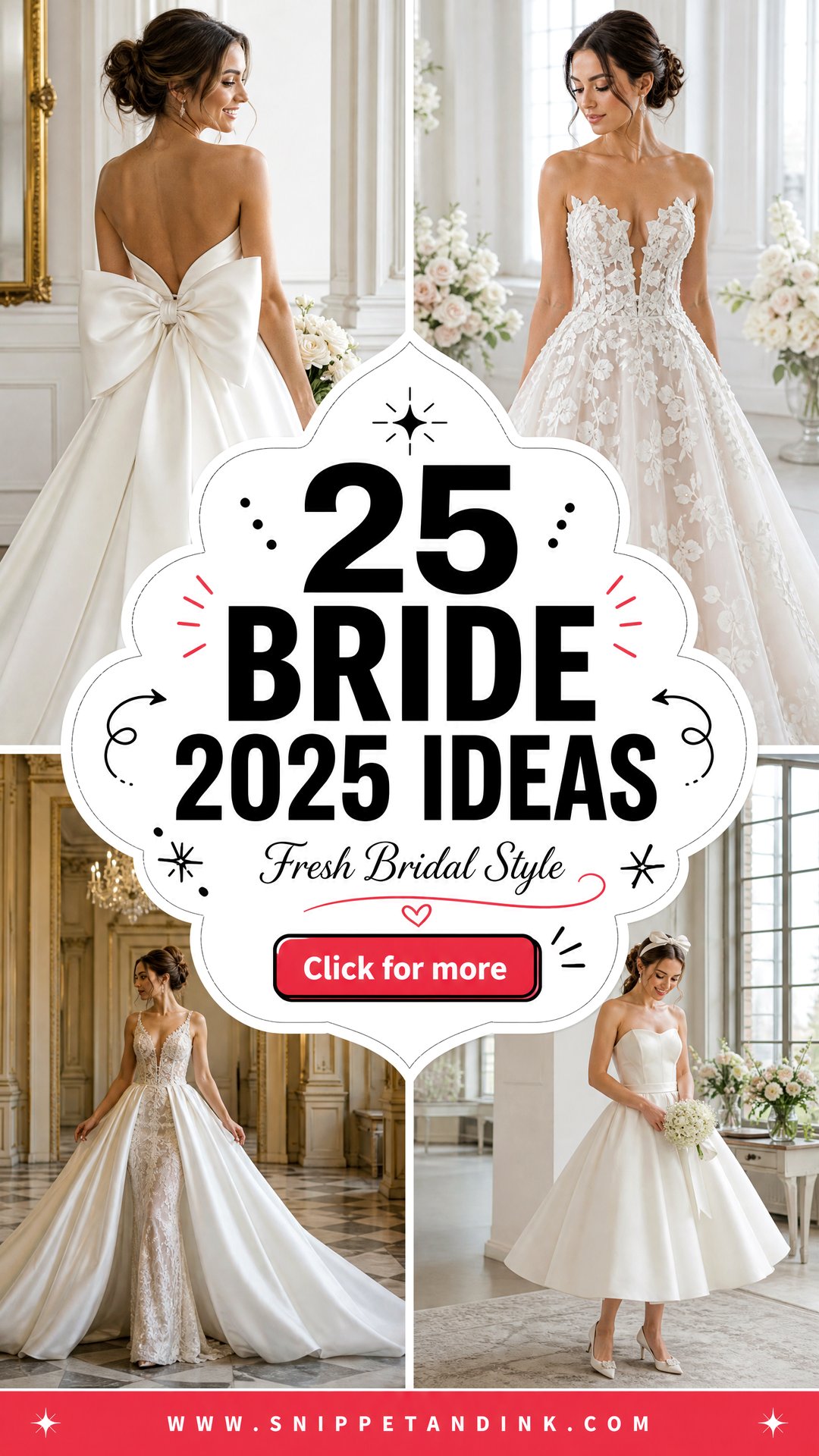
Which 2025 Details Age Well and Which Date Quickly
I get asked this at almost every appointment. You’ll look at these photos for decades, so it’s worth knowing which trends are about structure and which are about decoration.
Shapes built on tailoring tend to hold up. Corset bodices, square and bateau necklines, clean crepe and heavy satin have been around in some form for a long time. Decorative details are more tied to their year: oversized bows, feathers, very heavy dimensional florals and sparkly minis are fun, but they’ll place the photos firmly in 2025.
That isn’t a reason to avoid them. My approach is to put the trend somewhere removable. A detachable bow, a cape, an overskirt or a reception mini lets you enjoy the moment while the ceremony dress itself stays classic.
1. Corset Wedding Dress
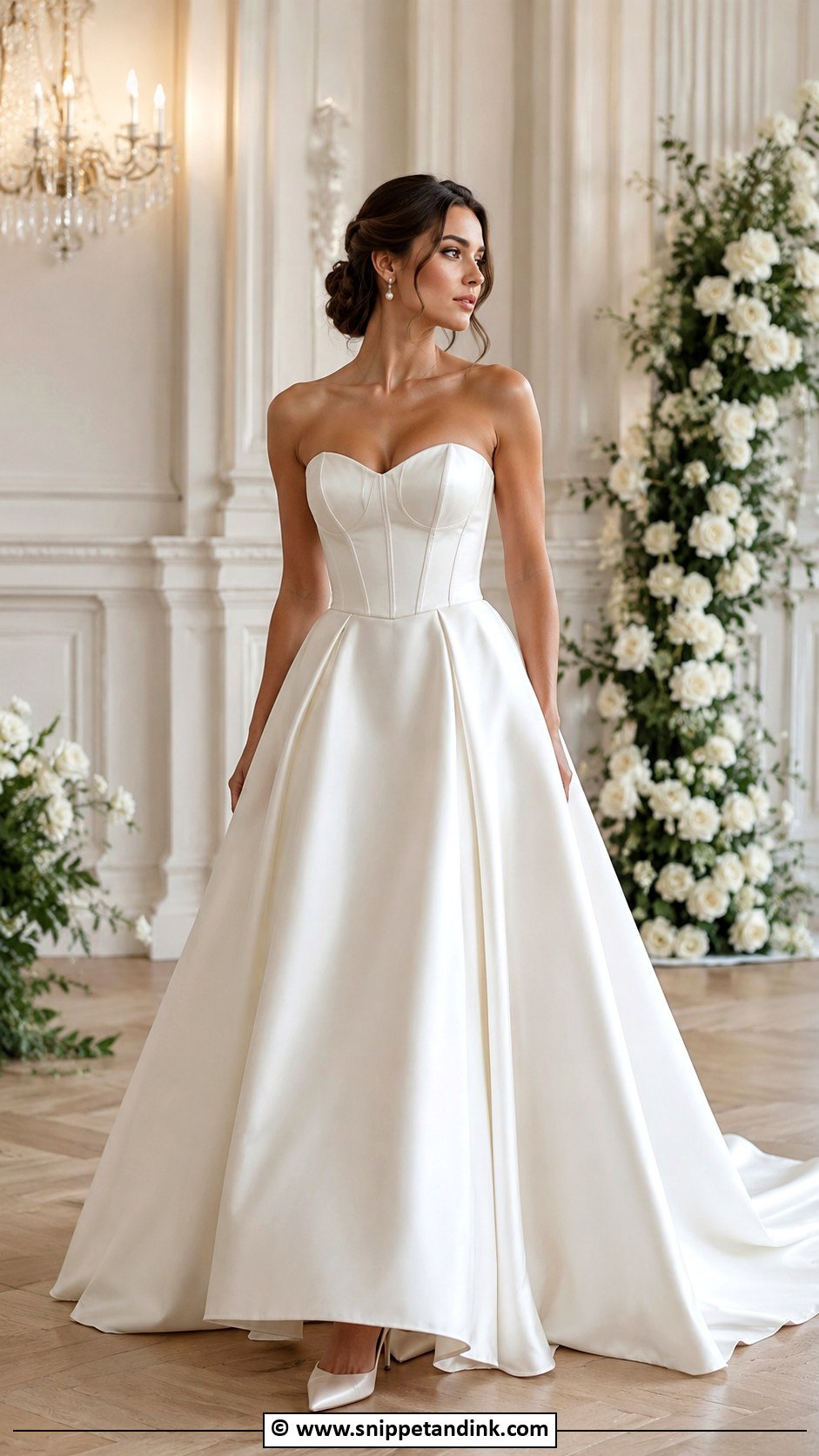
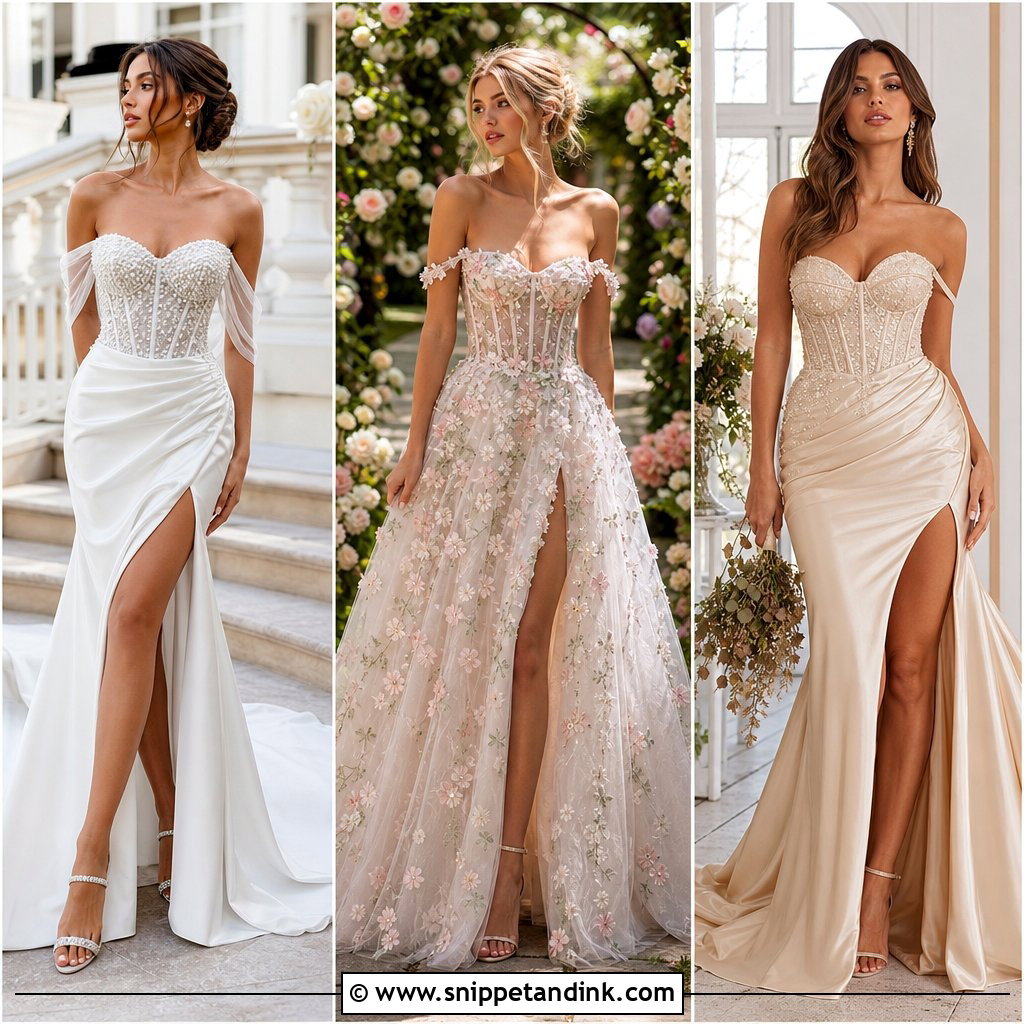
Corset bodices are everywhere this year because they give real support and a defined waist. Not every corset is built the same, though. A true corset has spiral steel boning and a lace-up or hook back you can tighten; fashion corsets with light plastic boning look similar on the hanger but crease across the stomach after an hour of sitting. With a full A-line skirt it reads classic, and a straight-neck satin version feels modern. Keep the jewellery to studs and wear your hair low so the bodice stays the focus.
2. Basque Waist Wedding Dress
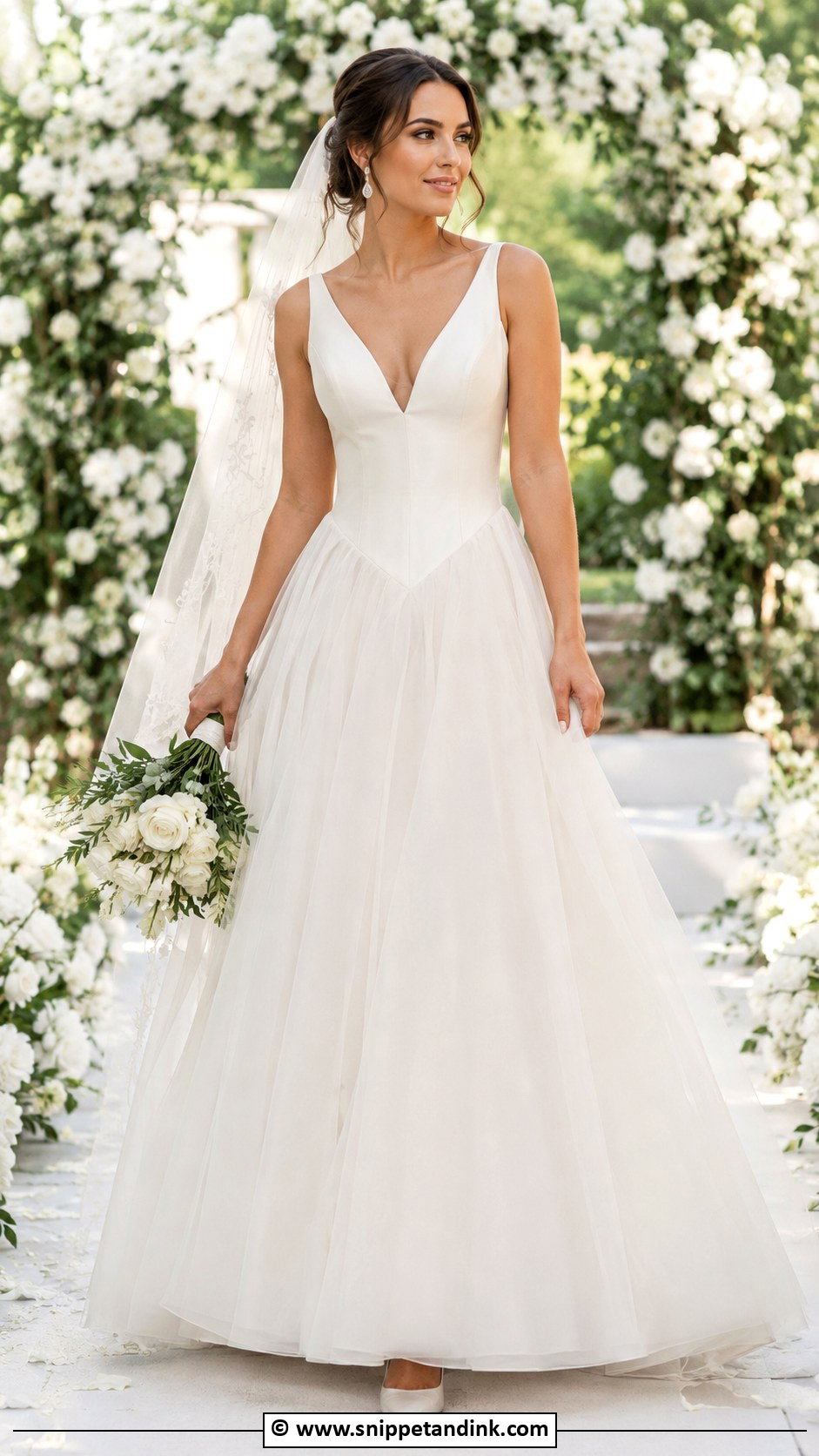
The deep V of a basque waist wedding dress points downward from the natural waist and lengthens the torso before the skirt opens. It suits brides with a shorter body, and it’s flattering on most hips because the V draws the eye to the centre. Tulle, organza and satin all hold the point well. My fitting check is the tip of the V: it should sit flat at your centre front, not flip outward when you sit. If the neckline is detailed, skip the necklace.
3. Drop Waist Wedding Dress
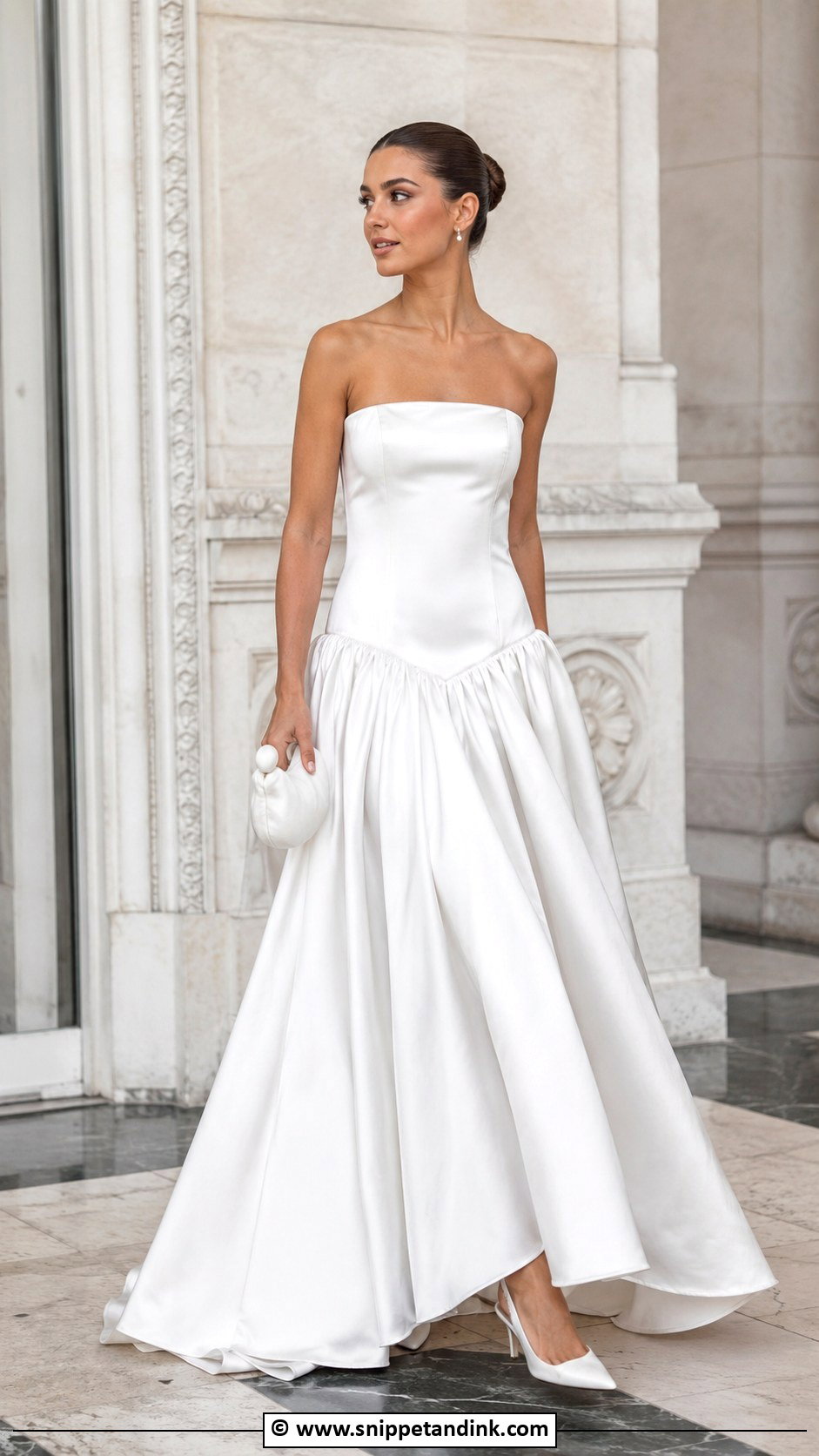
A drop waist wedding dress sits lower than a basque, across the hips, giving a long, sleek torso and a skirt that starts low. That line is dramatic on tall or long-waisted brides. On petite brides it can shorten the legs, so I’d try it before falling for photos. Satin, crepe and mikado give the clean seams this shape needs. A smooth updo and simple slingbacks suit its editorial feel.
4. Bow Wedding Dress
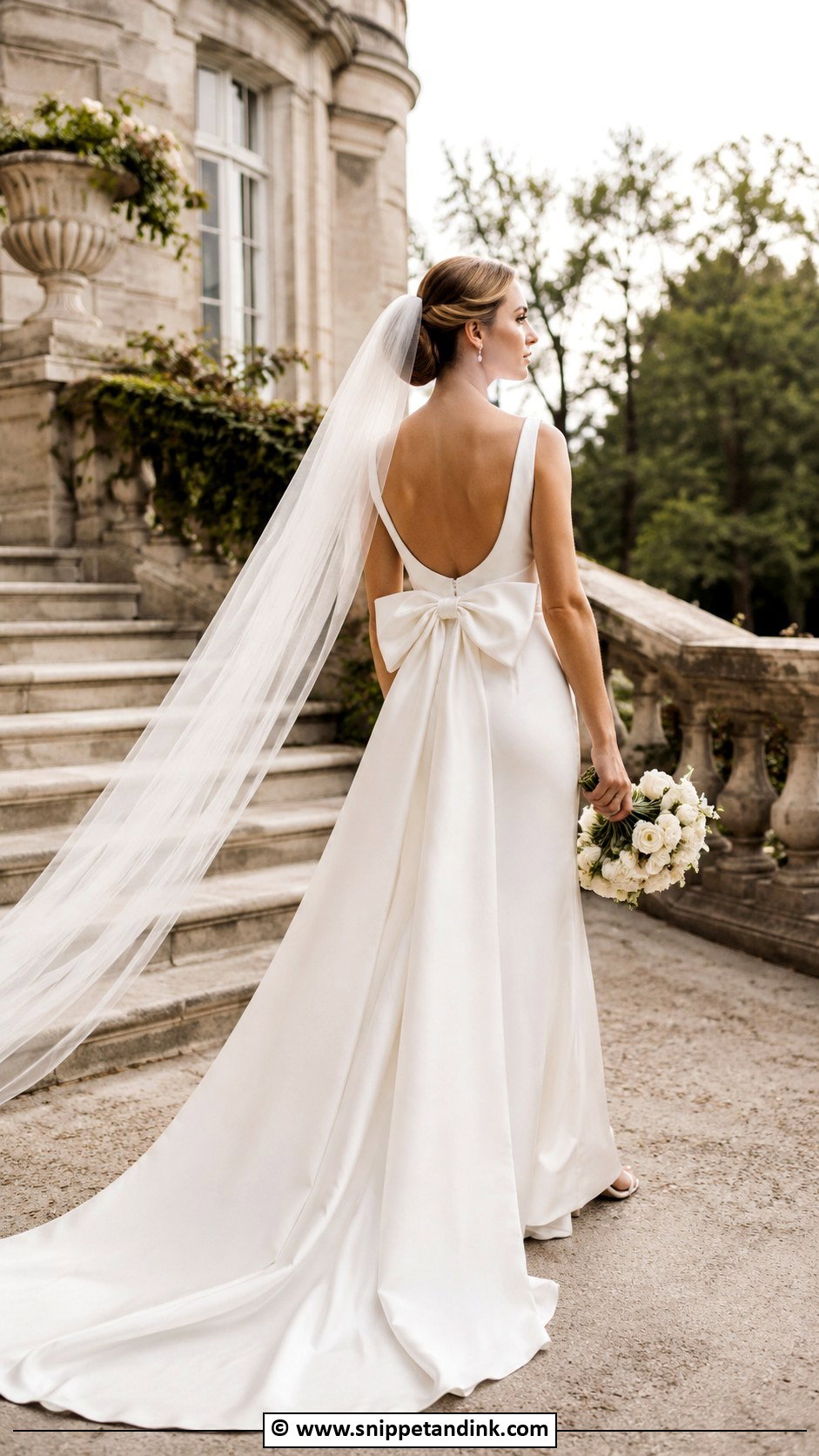
Bows are still around, but the version that ages well is restrained. One large bow at the back of a strapless satin gown is graceful; small bows scattered everywhere tip into sweet. If the bow is big, keep the rest of the dress plain. Ask whether it’s sewn on or detachable, since a large back bow can crush when you sit against a chair for dinner. Pearl earrings and a clean veil are enough here.
5. Floral Applique Wedding Dress
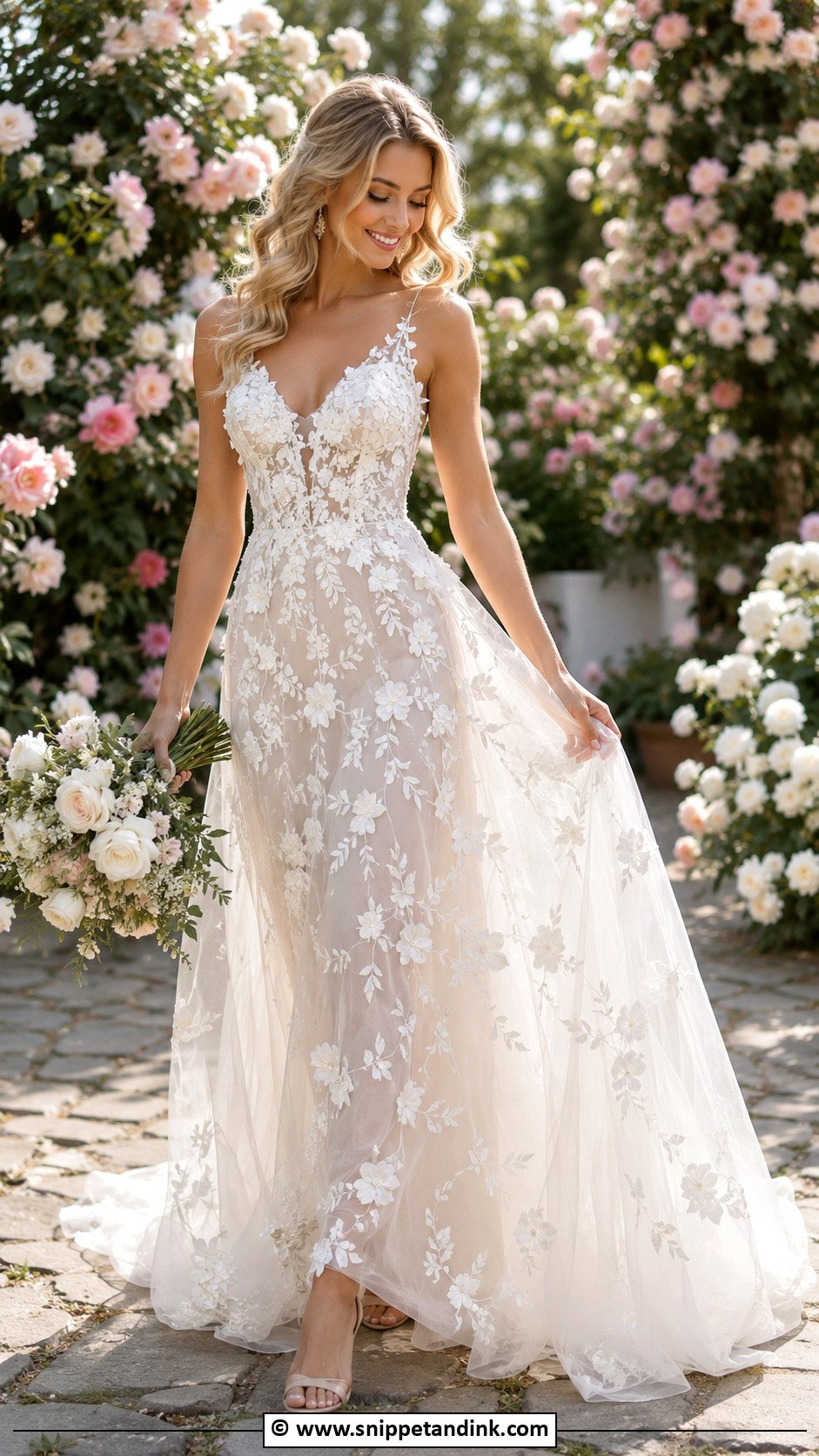
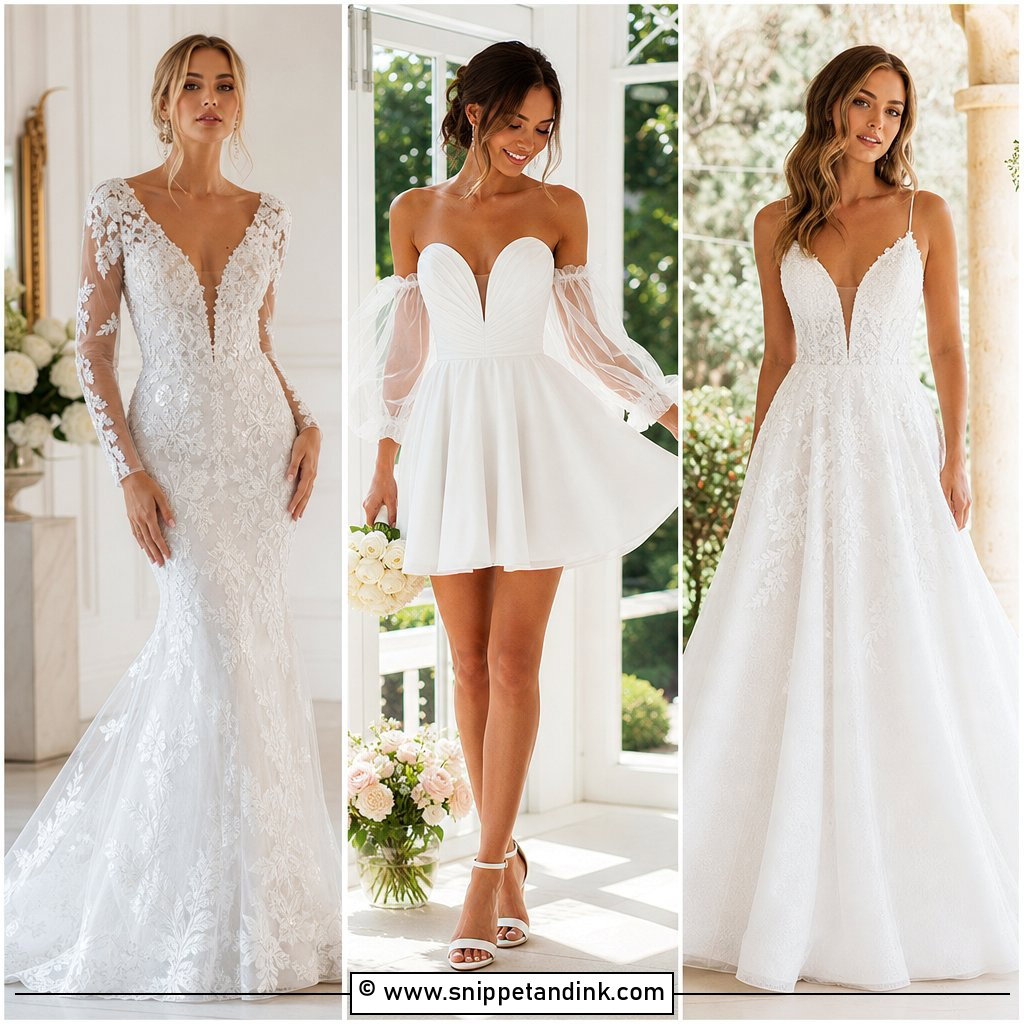
Applique flowers have moved from flat lace motifs to raised, layered petals that cast tiny shadows in photos. They sit best on a fitted bodice over a sheer layer, with a lighter skirt so the dress doesn’t feel heavy. The thing I warn brides about is snagging. Three-dimensional petals catch on bracelets, a groom’s cufflinks and veil edges, so I’d choose a plain-edged veil. Soft curls and minimal jewellery let the texture do the work.
6. Satin Slip Wedding Dress
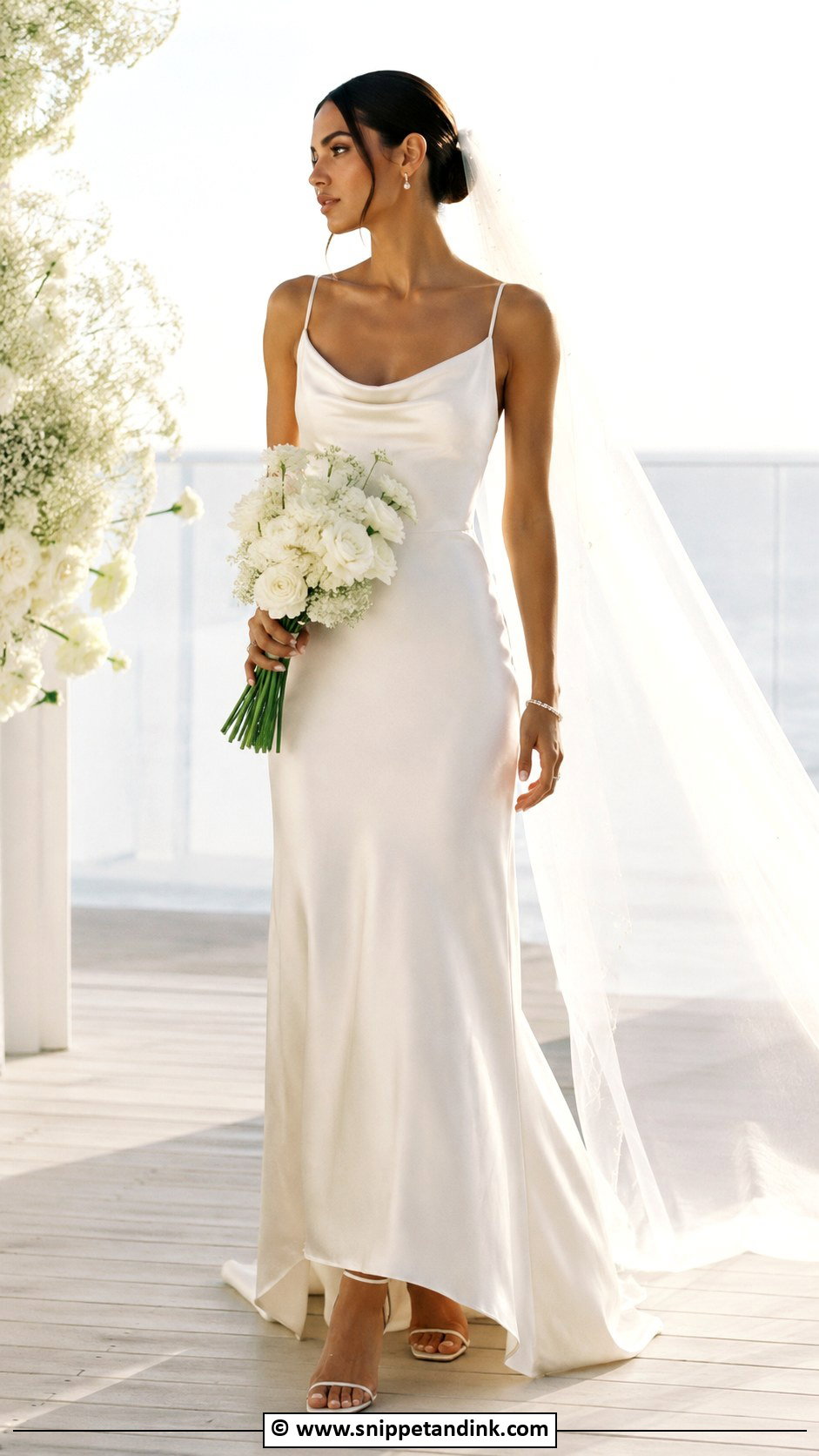
A slip dress looks simple, but it’s the hardest fit on this list. Bias-cut satin stretches diagonally and clings to everything underneath, so smooth, invisible underwear and a good tailor matter more than the dress itself. I’d always ask for a slightly heavier satin, which skims rather than sticks. A cowl neck or low back adds interest. Strappy heels, a sleek bun and a long veil give it ceremony weight; a cropped jacket covers it on a cool evening.
7. Lace Long Sleeve Wedding Dress
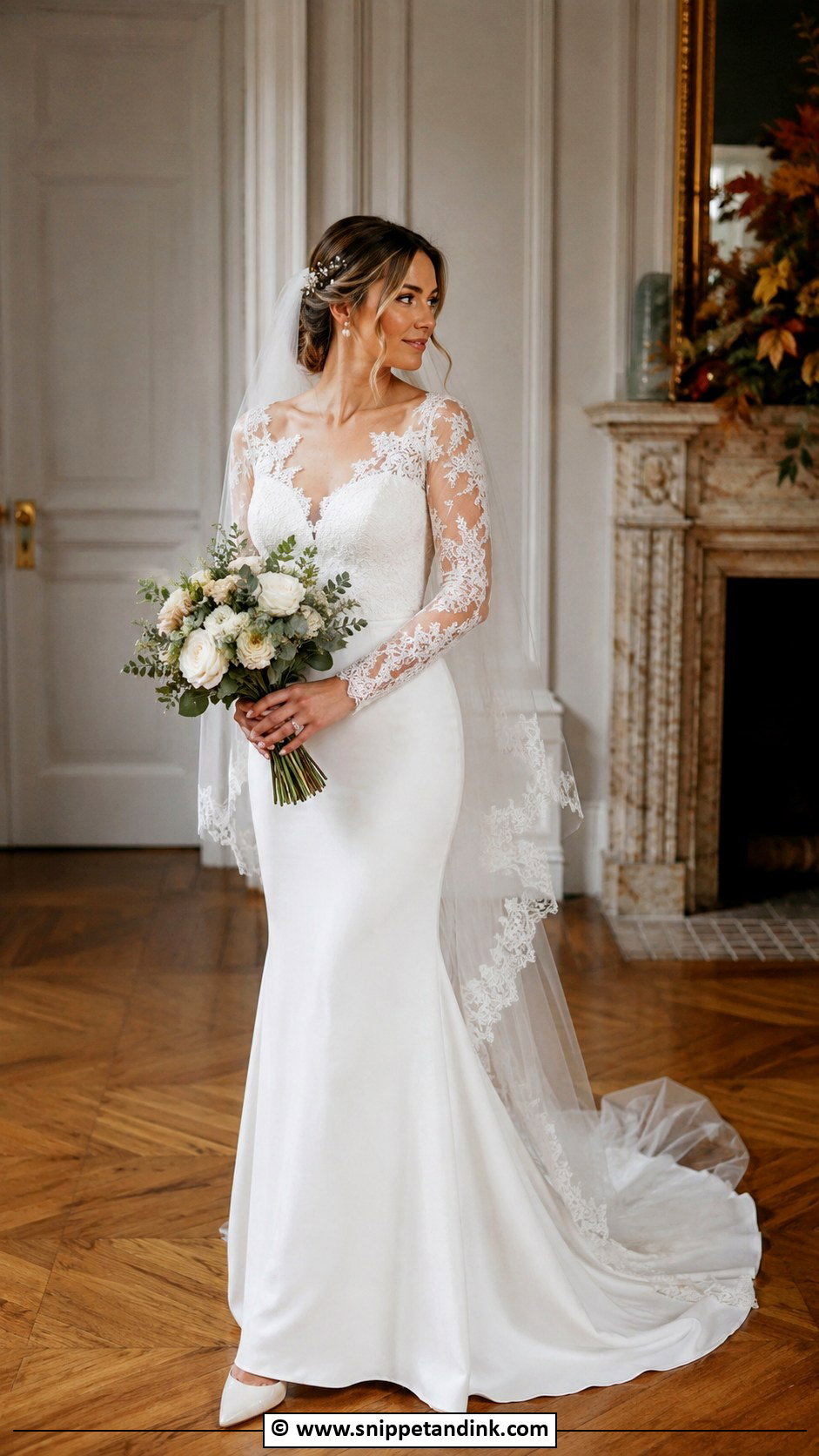
Lace sleeves are lighter now: sheer, fine, often over a plain crepe or satin skirt rather than lace from neck to hem. Check the lace at the inner elbow and underarm, where it rubs. You’ll lift your arms for hugs and the first dance, so do the same in the fitting room and make sure the sleeve doesn’t pull the bodice up. Pearl hair pins and a fingertip veil keep it graceful for autumn and winter.
8. Off Shoulder Wedding Dress
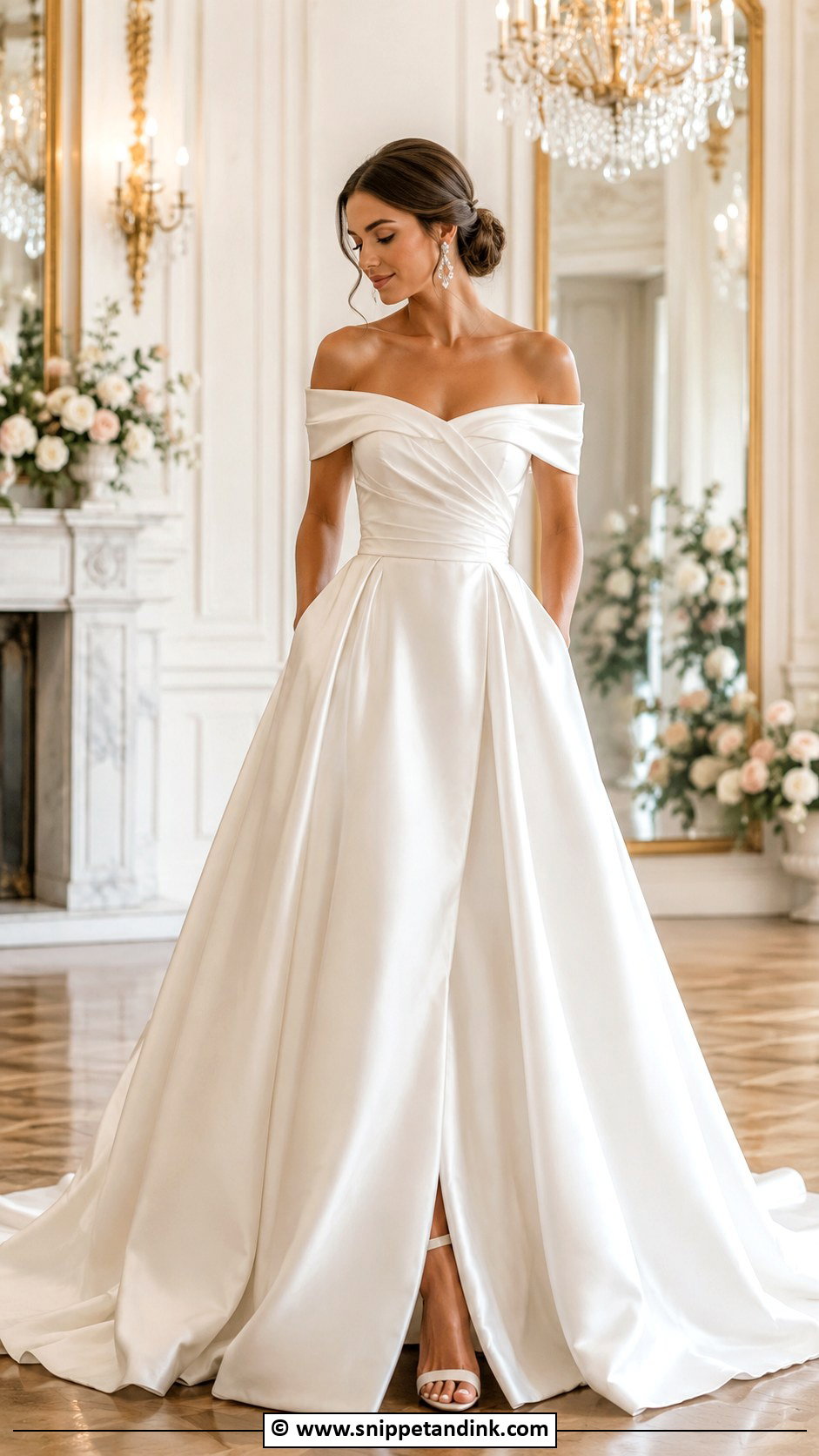
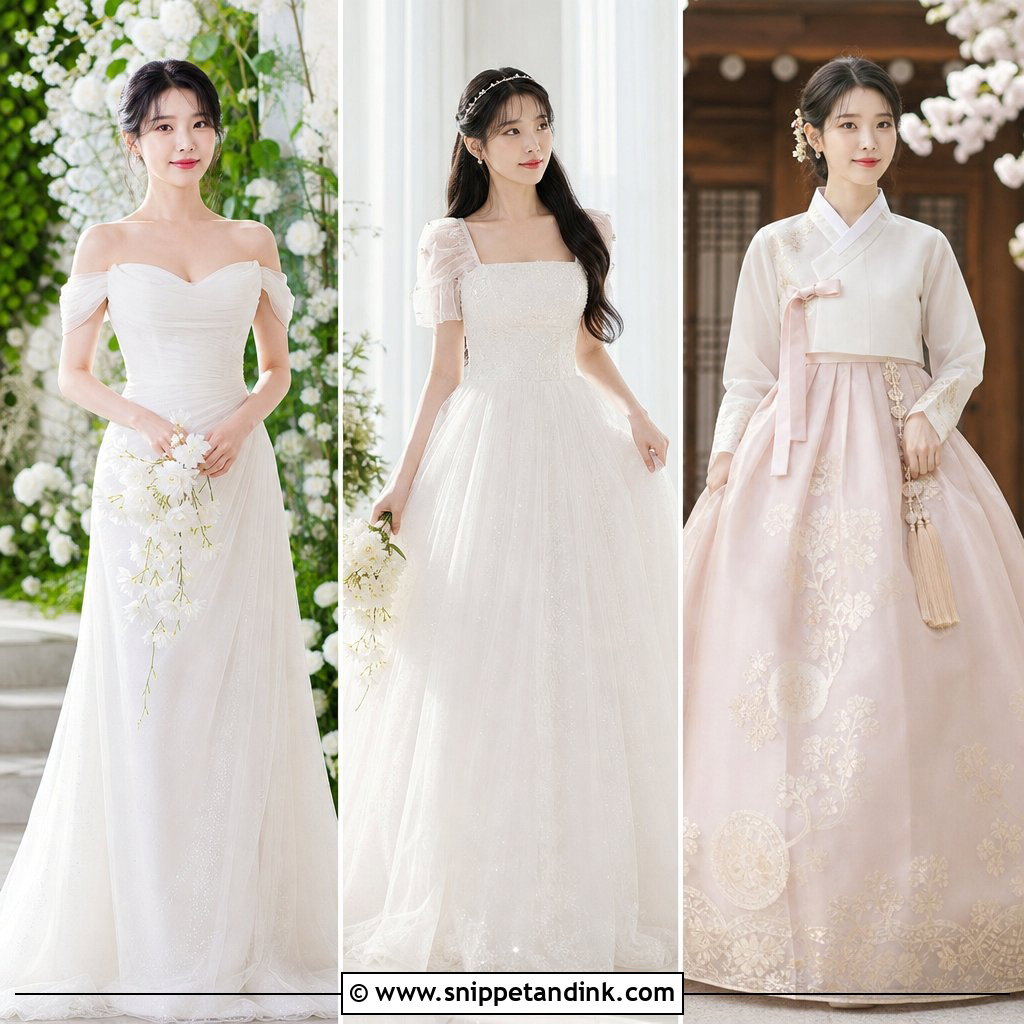
Off-shoulder necklines show the collarbone and suit most body types, but they restrict your arms. With the straps resting on your upper arm, you can’t raise your hands much above shoulder height. I tell brides to try hugging and waving in the sample. A fitted waist with a full skirt is the classic shape; draped lace feels softer. Drop earrings and a low chignon frame the neckline without needing a necklace.
9. Square Neck Wedding Dress
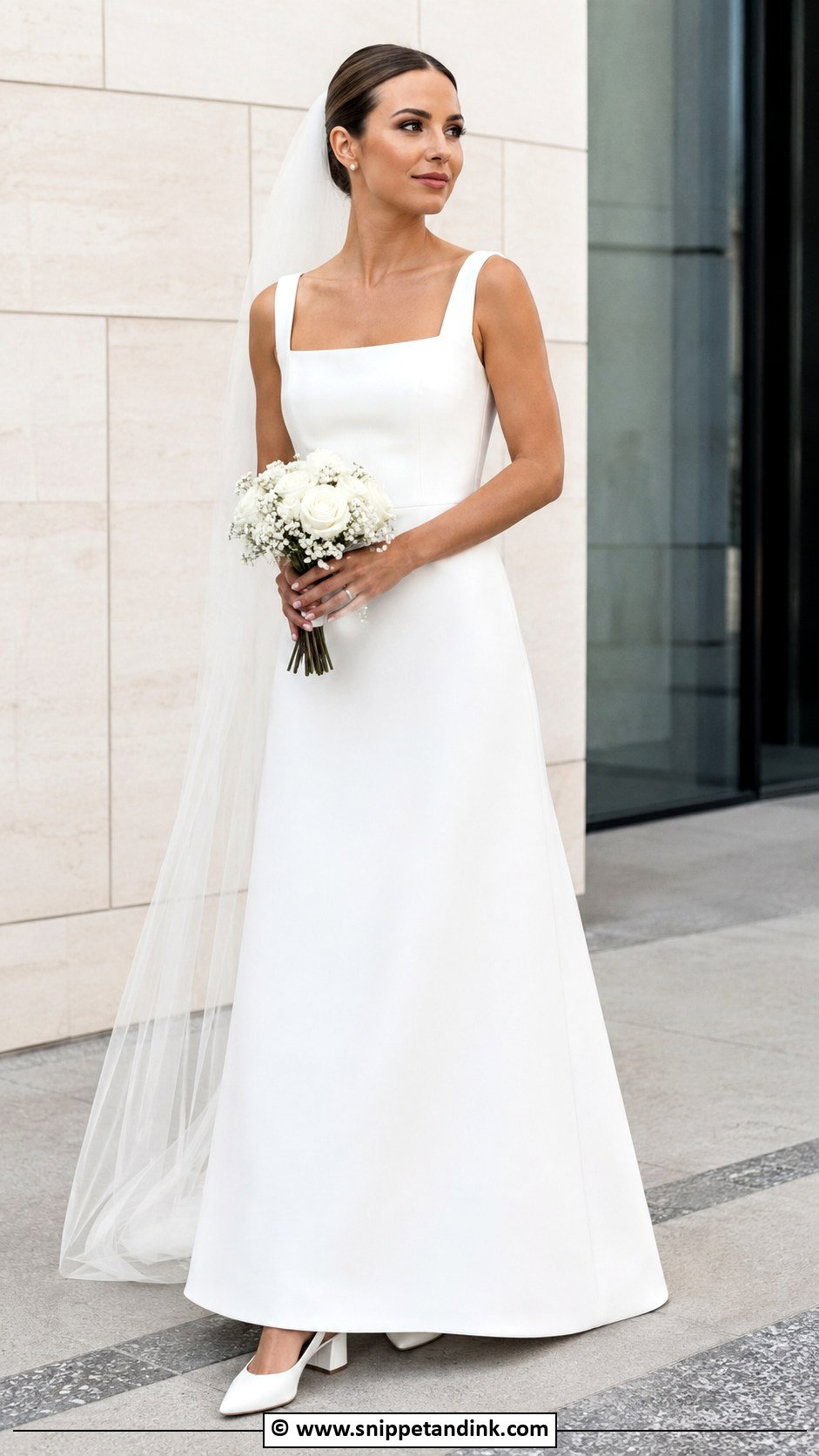
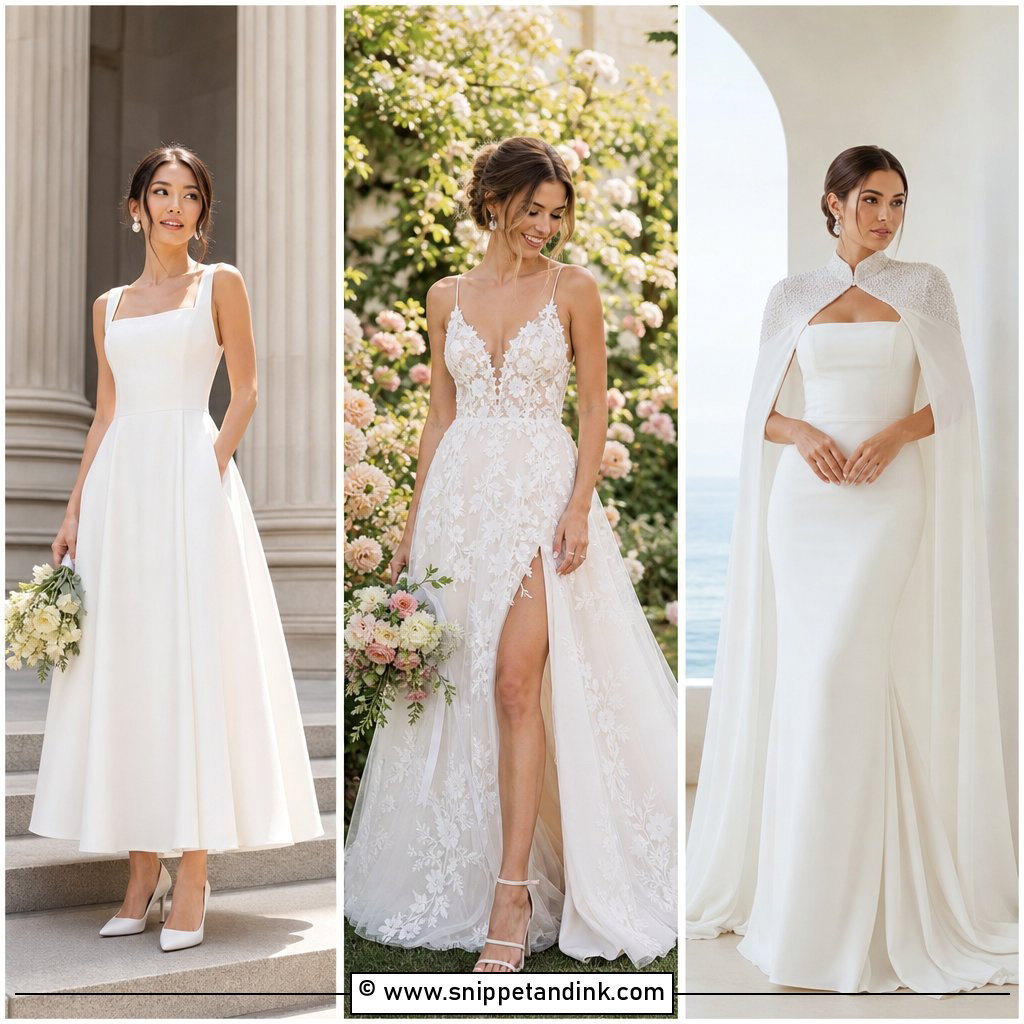
Square necklines have a crisp, architectural edge and stay put better than strapless, since wide straps carry part of the weight. I like them for brides with a fuller bust who still want structure without the constant tugging a strapless bodice can cause. The shape suits an A-line skirt or a sleek column. Opera gloves or a sculptural hair clip add a modern note; pearl studs keep it quiet.
10. Minimalist Crepe Wedding Dress
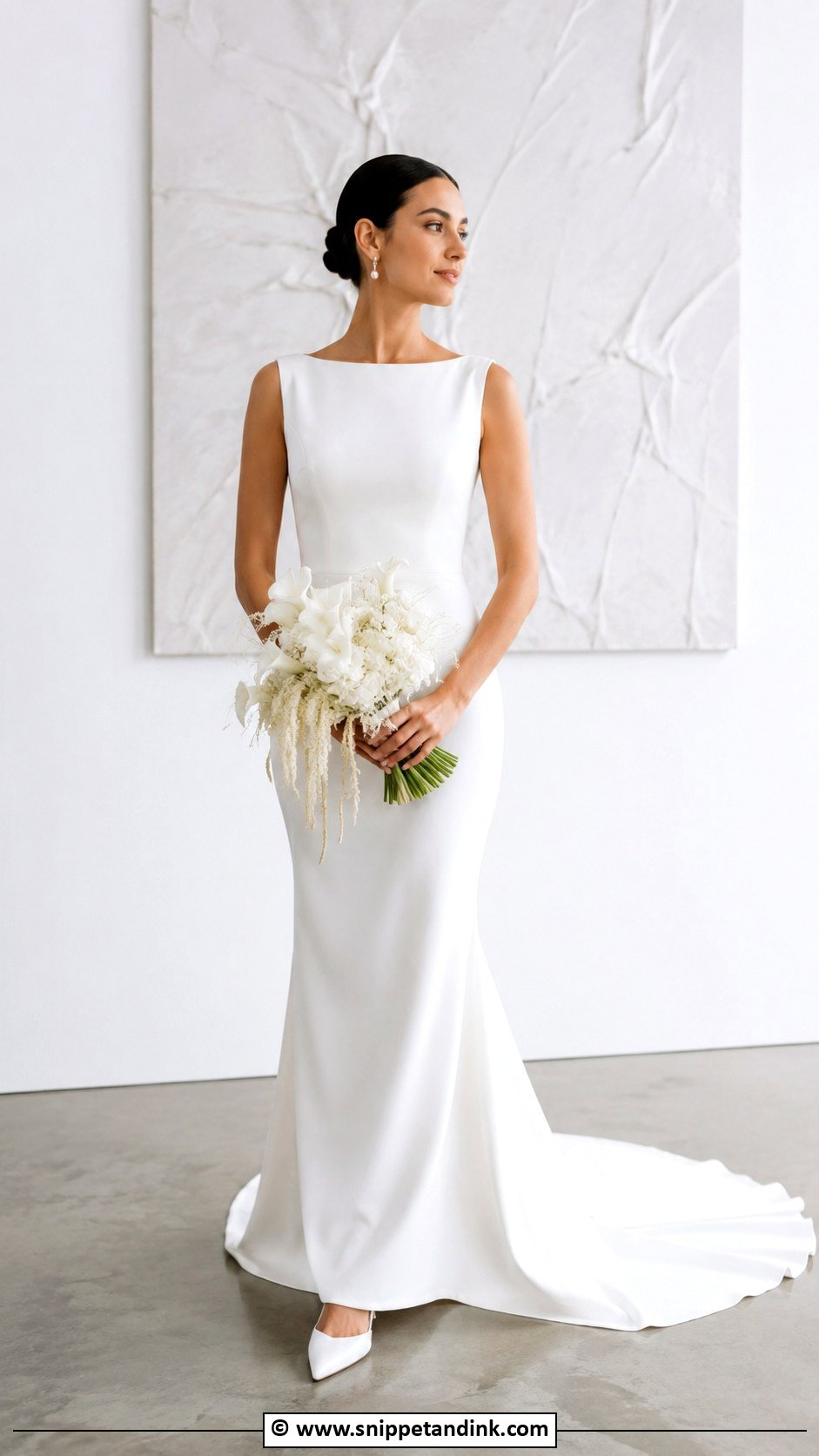
Minimal crepe relies entirely on cut, because there’s nothing to distract from the fit. Crepe has weight and a matte surface, so it drapes smoothly and hides seams well, but it also shows every ripple of underwear, so plan undergarments at the first fitting. A bateau neck, long sleeves or a low back gives it shape. White pumps and a structured bouquet suit it. It’s the dress I’d suggest if you want photos that won’t date.
11. Ball Gown Wedding Dress
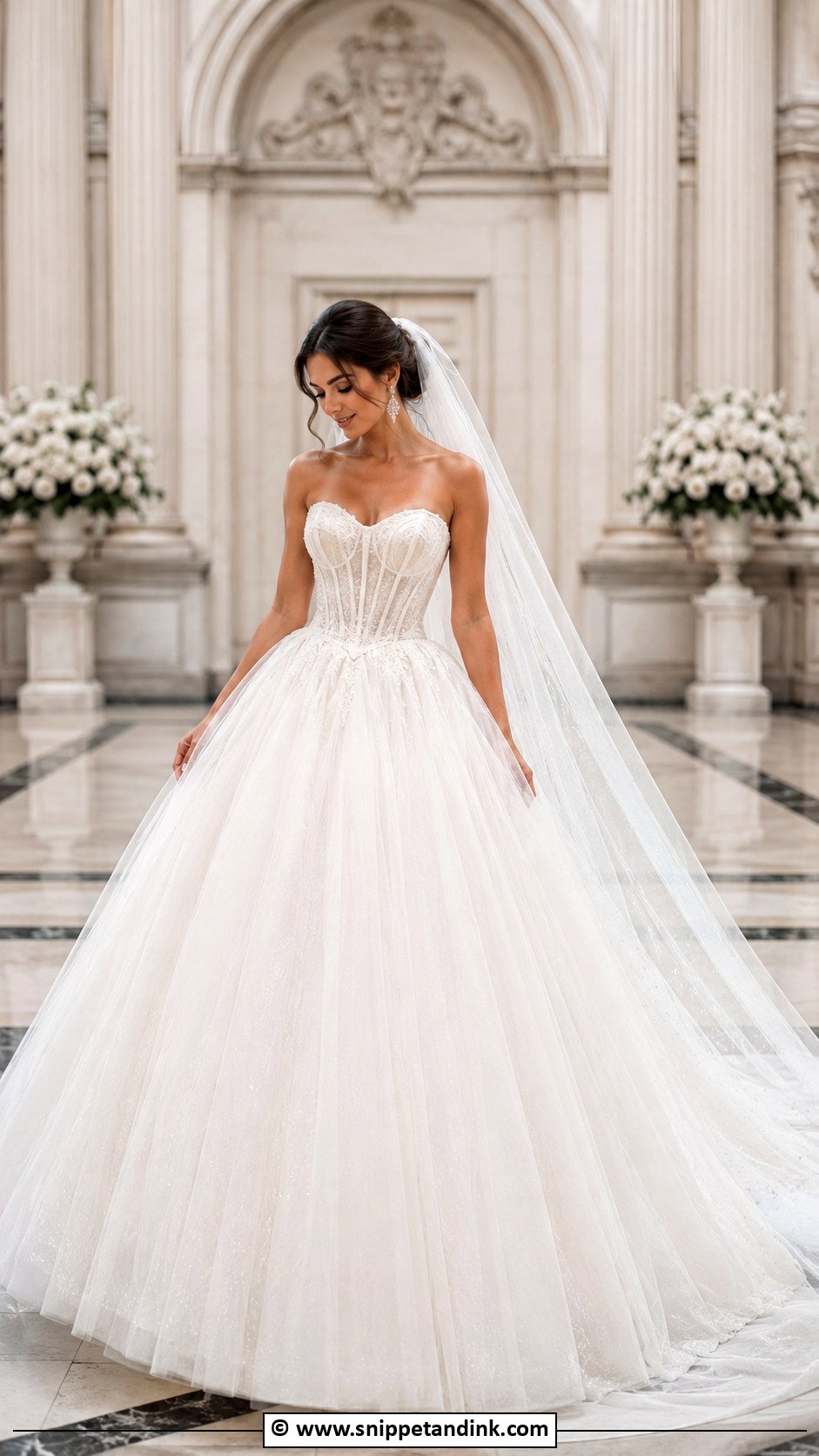
Ball gowns this year are lighter: cleaner bodices, softer volume, fewer layers of crinoline. Even so, a full skirt takes up space. Check the width of your aisle, your car and the bathroom door before committing. A strapless corset top with tulle or a plain satin bodice keeps the look current. Hidden platform heels help you walk without the hem dragging. Keep the bouquet and jewellery restrained, because the skirt is already doing the talking.
12. Bridal Mini Dress
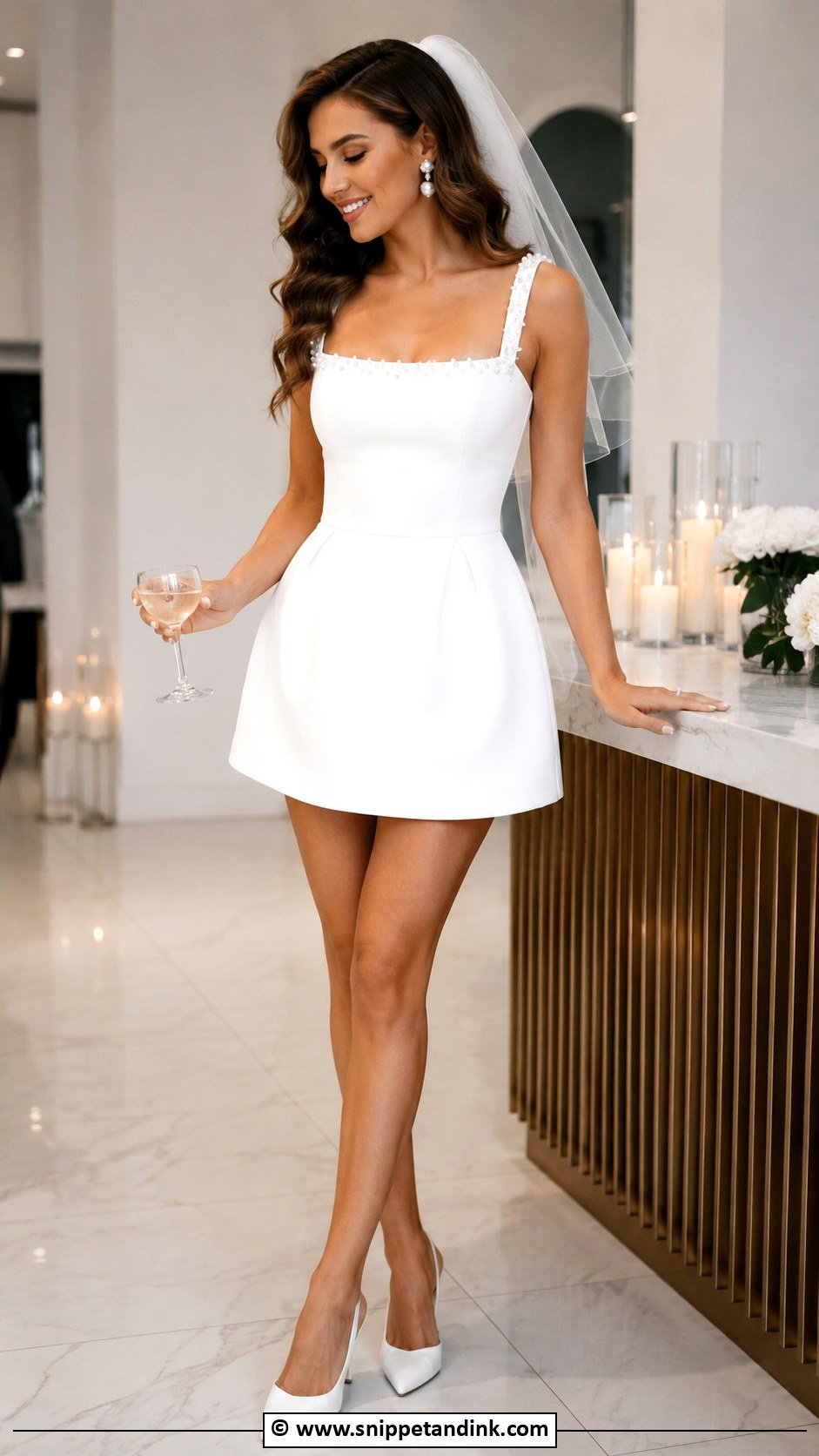
A short dress for the reception or after-party is now a standard part of the plan for many brides. Structure stops a mini from looking casual, so I look for a firm bodice with a bow, feathers, pearls or lace. Check the length sitting down; minis ride up more than people expect. Slingbacks, sheer tights if needed and a short veil or hair bow keep it bridal. It’s much easier to dance in than a full skirt.
13. Bridal Jumpsuit
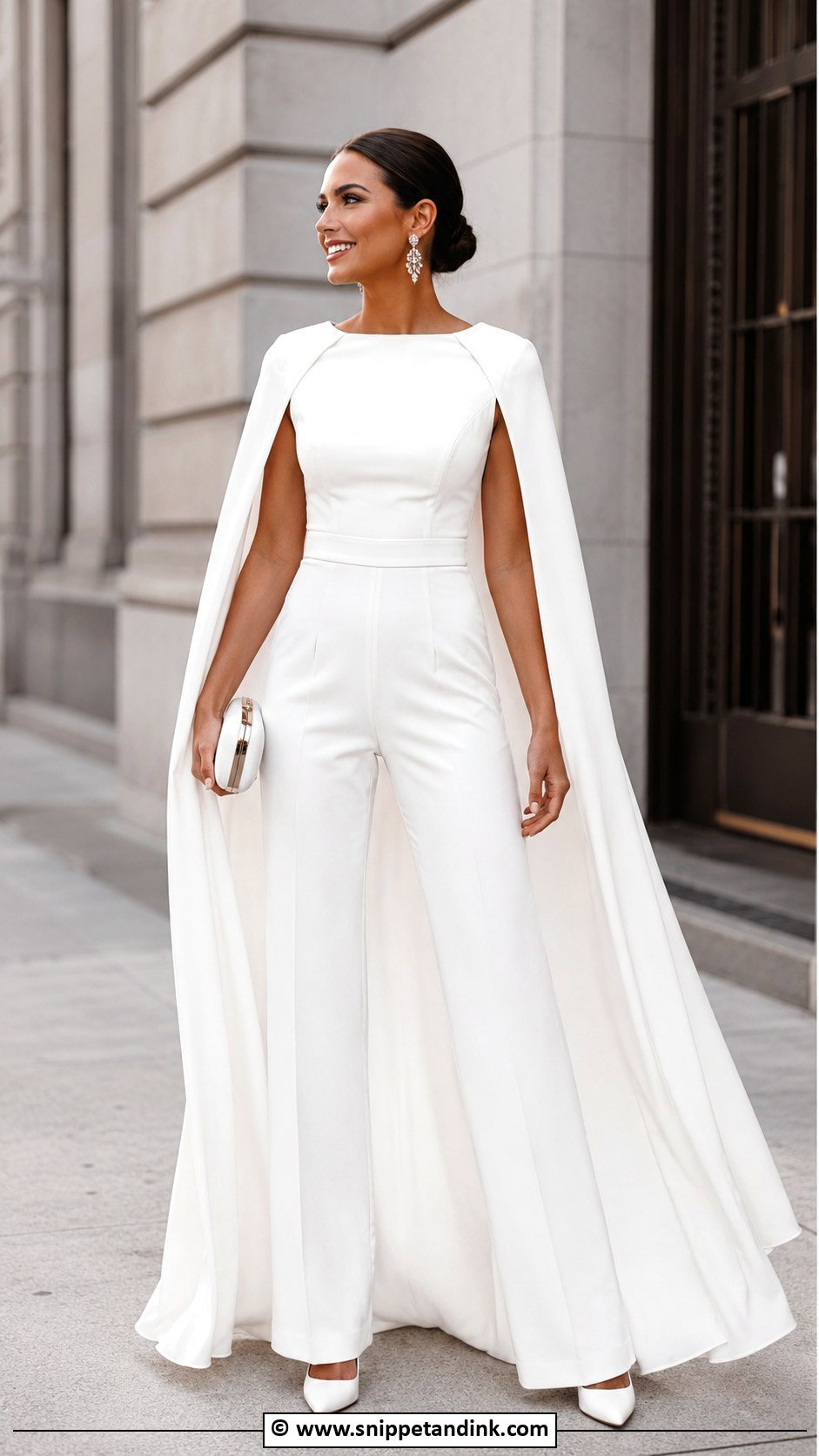
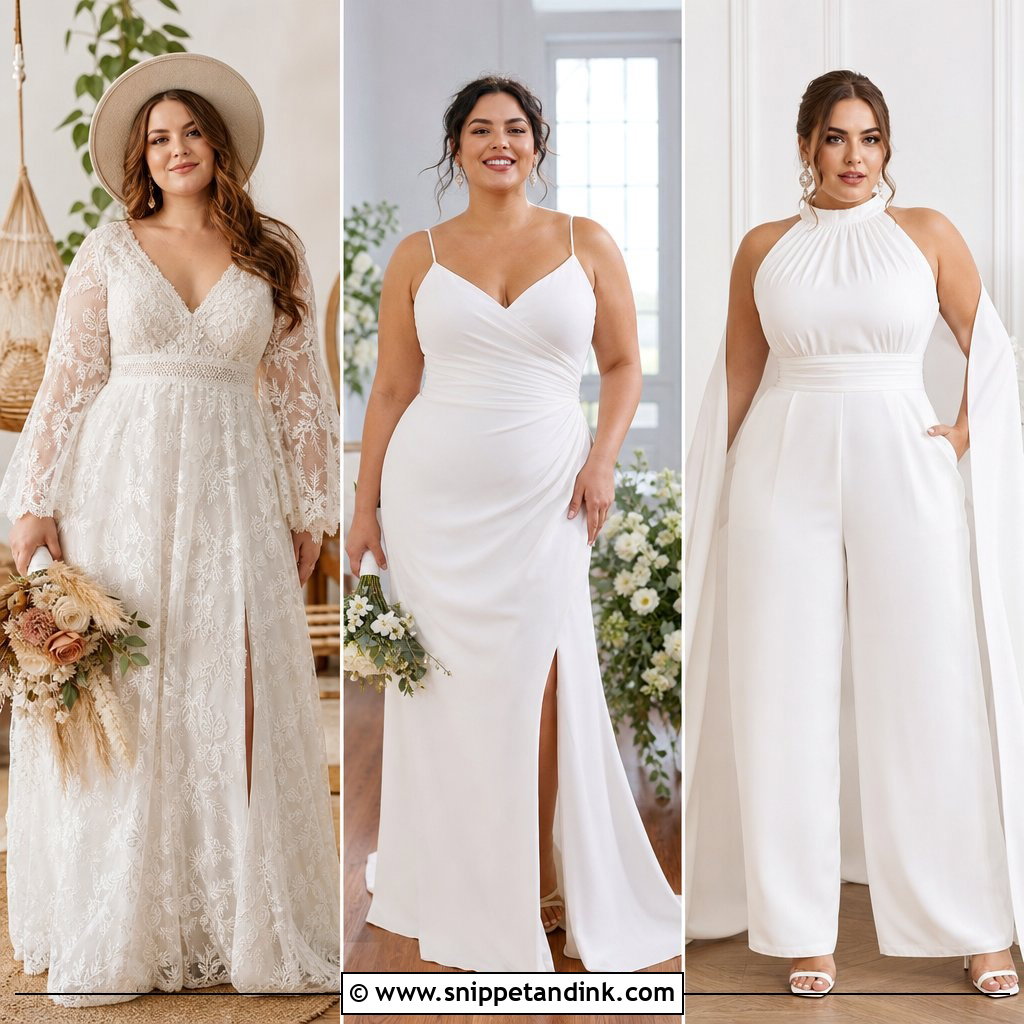
A bridal jumpsuit needs one measurement checked above all others, the torso length from shoulder to crotch. If it’s short, it pulls whenever you sit or reach. A fitted waist, wide legs and a sharp neckline look tailored; a cape, overskirt or pearl belt makes it feel ceremonial. Practise getting in and out of it, because bathroom trips in a one-piece take planning on the day.
14. Bridal Suit
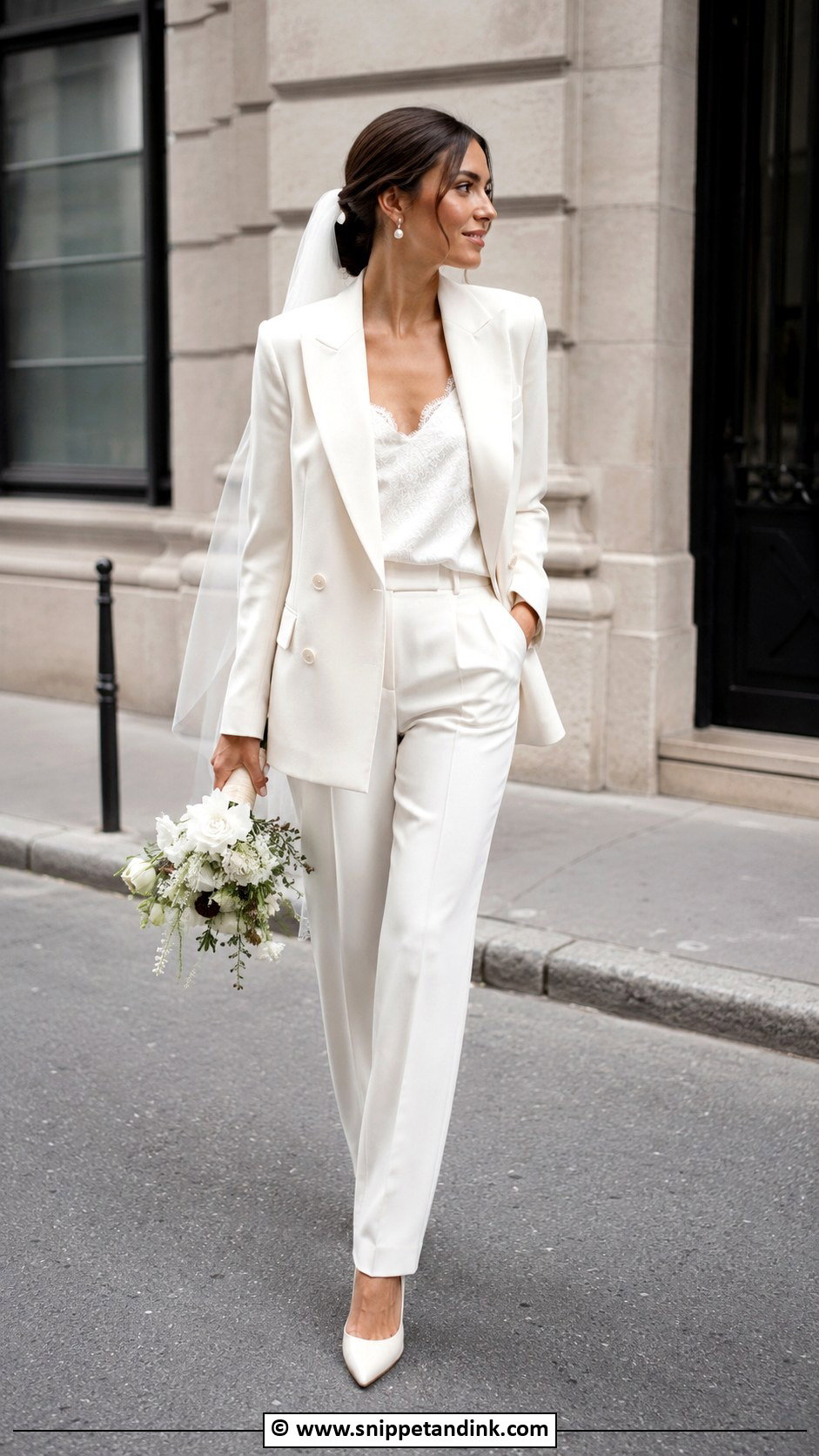
Suits work when the fit is exact, and shoulders are the one area a tailor struggles to change, so buy for those first. A white or ivory blazer with matching trousers in a double-breasted cut feels structured; soft satin feels fluid. Under it, a lace camisole adds bridal texture. A veil tucked into a low bun creates the contrast that makes tailoring read as a wedding look. Afterwards, the jacket and trousers are easy to rewear separately.

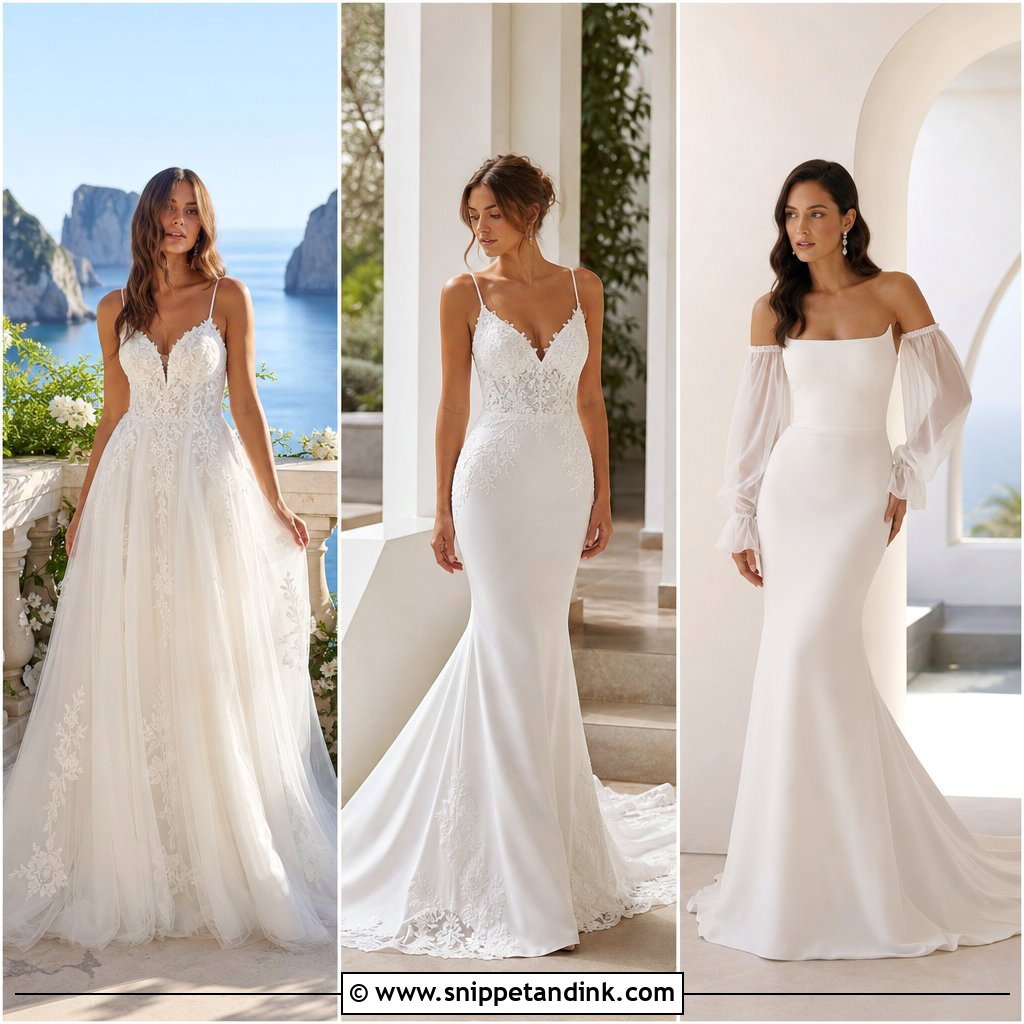
15. Two Piece Bridal Set
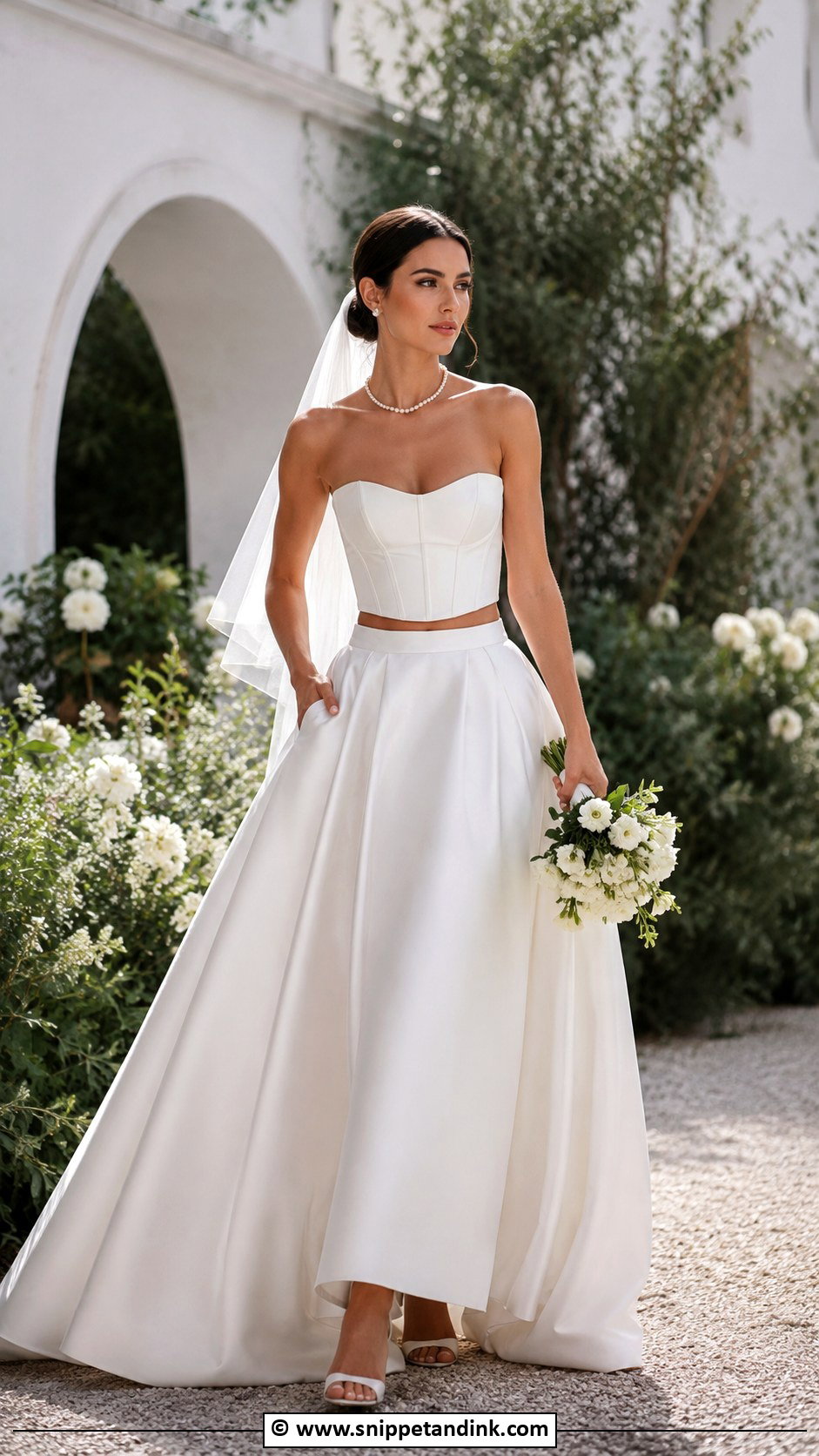
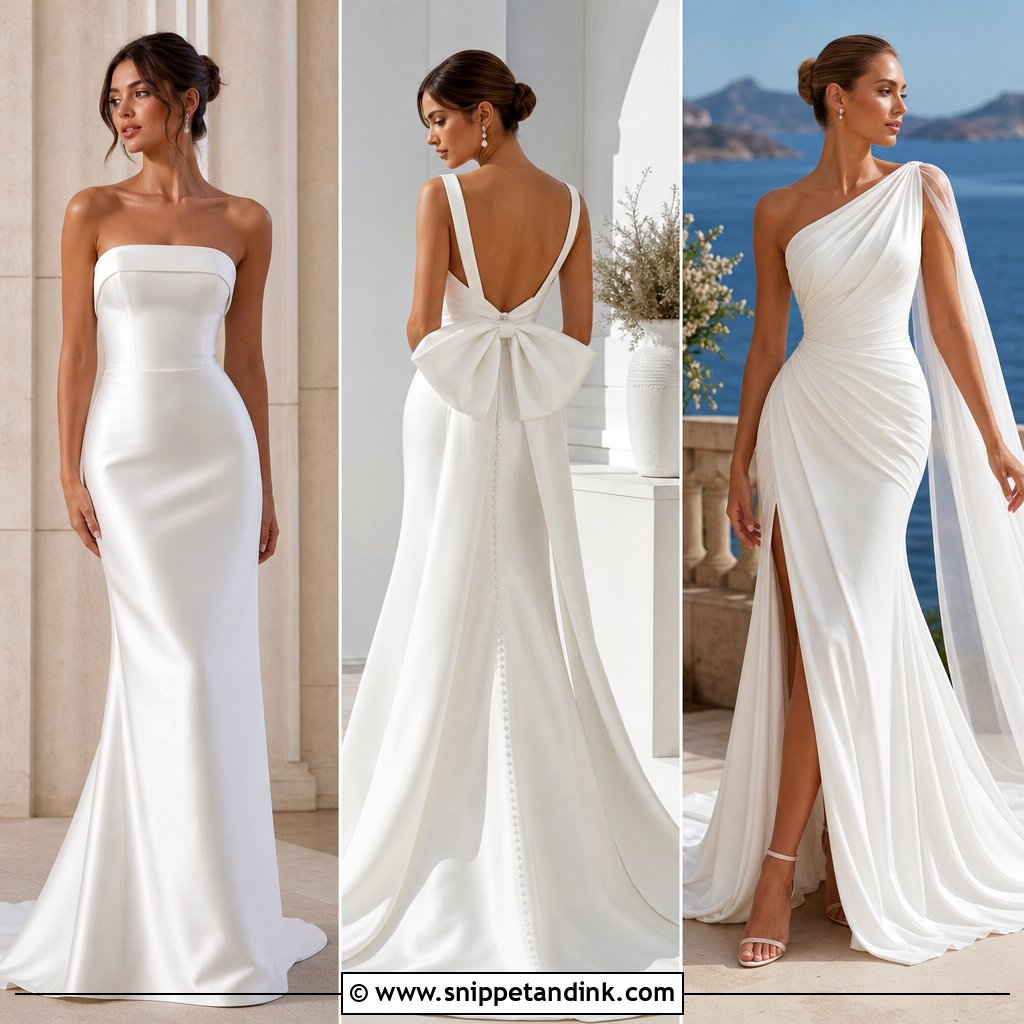
Two-piece sets give you more control over fit, because the top and skirt can be sized separately, which helps brides whose top and bottom halves are different sizes. A corset top with a full skirt, a lace crop over satin, or a structured blouse with bridal trousers are the usual pairings. The risk is mismatched whites. Buy both pieces together and check them side by side in daylight. You can also swap the skirt for trousers at the reception.
16. Detachable Overskirt Wedding Dress
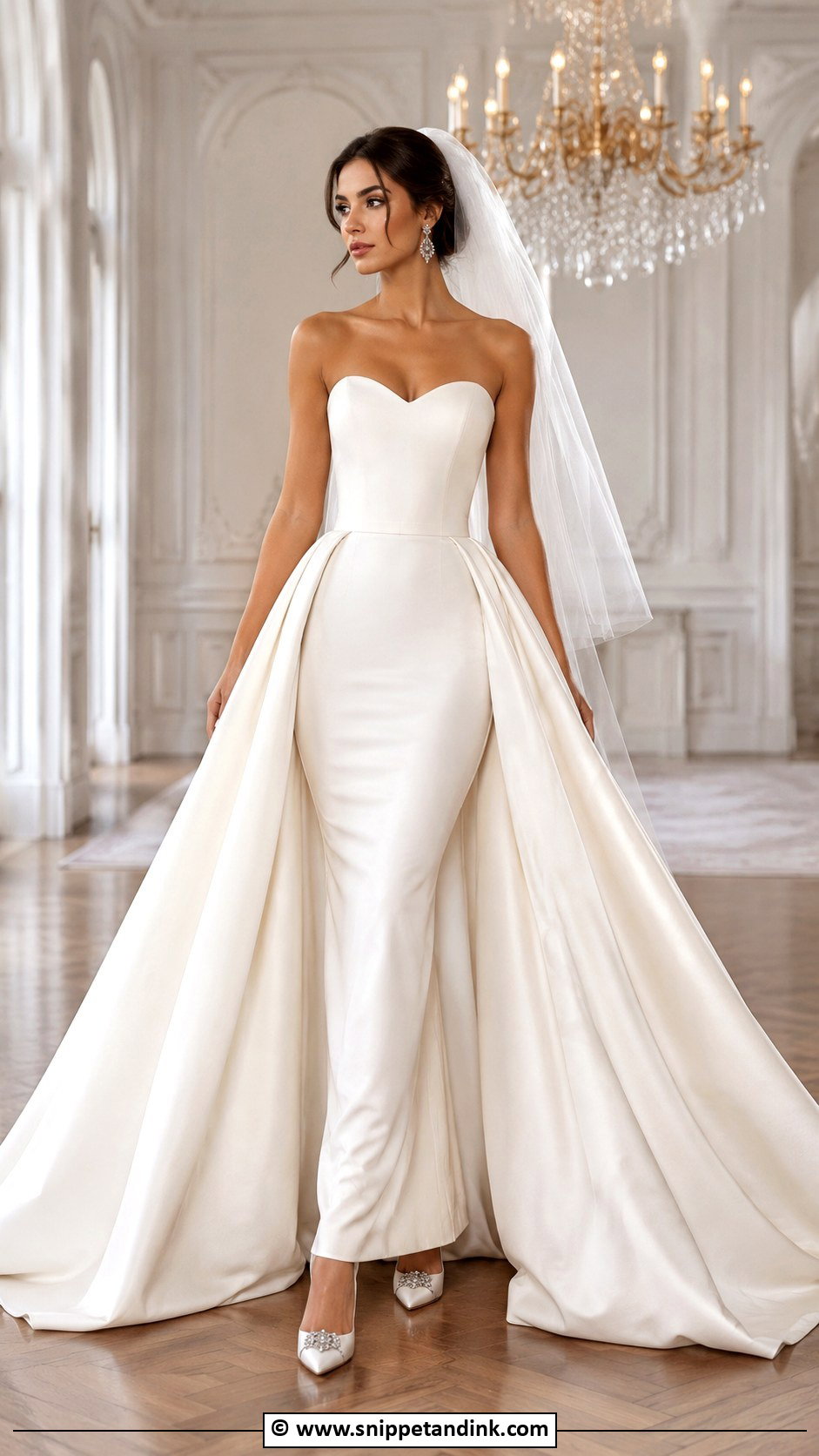
A detachable overskirt wedding dress gives you a full aisle silhouette and a slim dance-floor dress from one outfit. The fastening is what I examine. Hidden hooks or snaps around a waistband stay secure; ribbon ties loosen. Ask who will remove it and practise once, because it’s easier with two people. Change the accessories at the same time, swapping the veil for statement earrings, so the reveal feels intentional.
17. Cape Wedding Dress
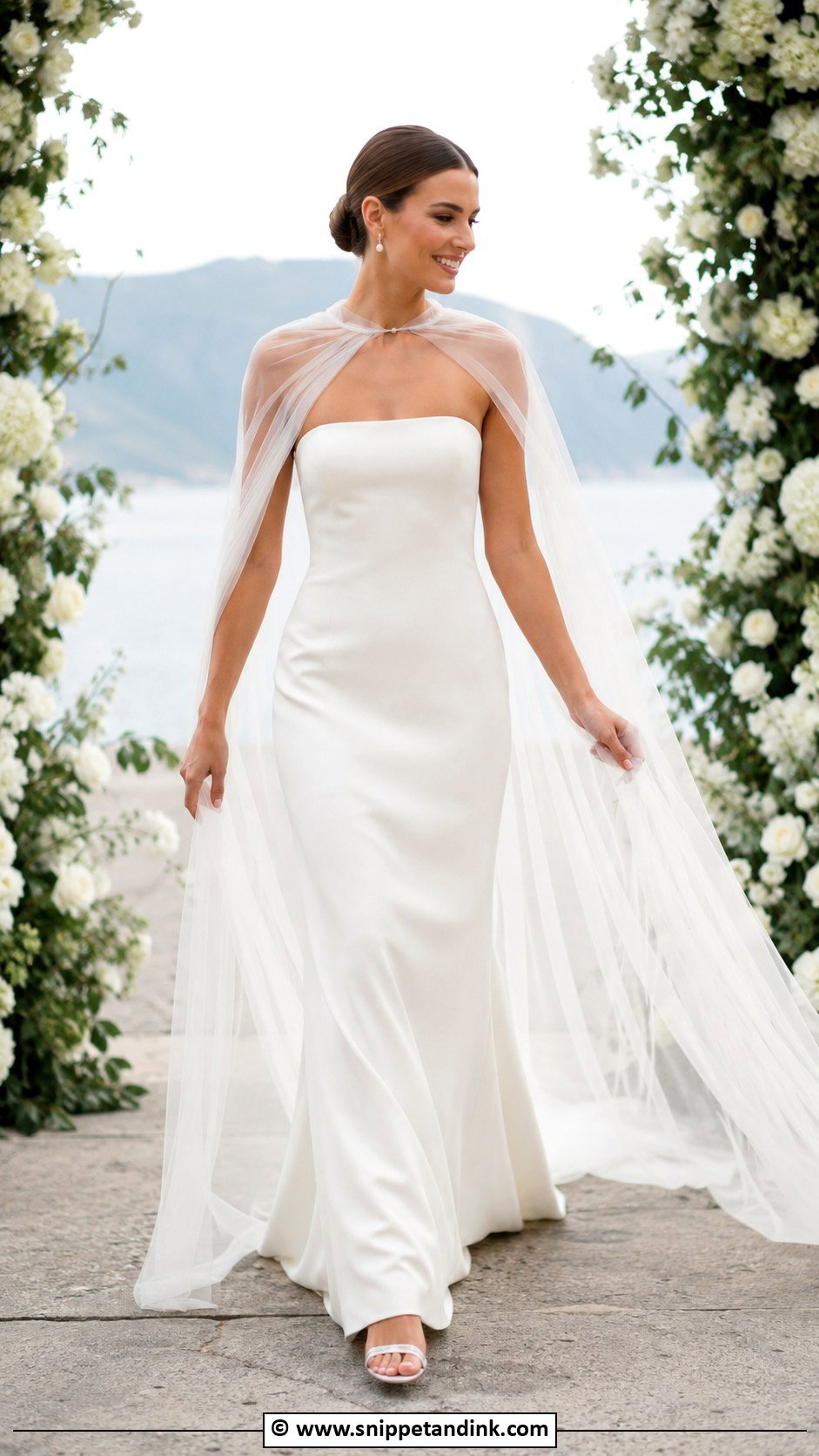
Capes replace the veil for many brides now, giving coverage and movement without anything on the head. They can be sheer, lace, satin or edged with pearls, and many are removable. A sheer cape over a strapless gown softens it; a structured cape on crepe looks bolder. Make sure it’s anchored at the shoulder or neck so it doesn’t slide when you lift your arms. It looks its best in walking shots from behind.
18. Pearl Wedding Dress
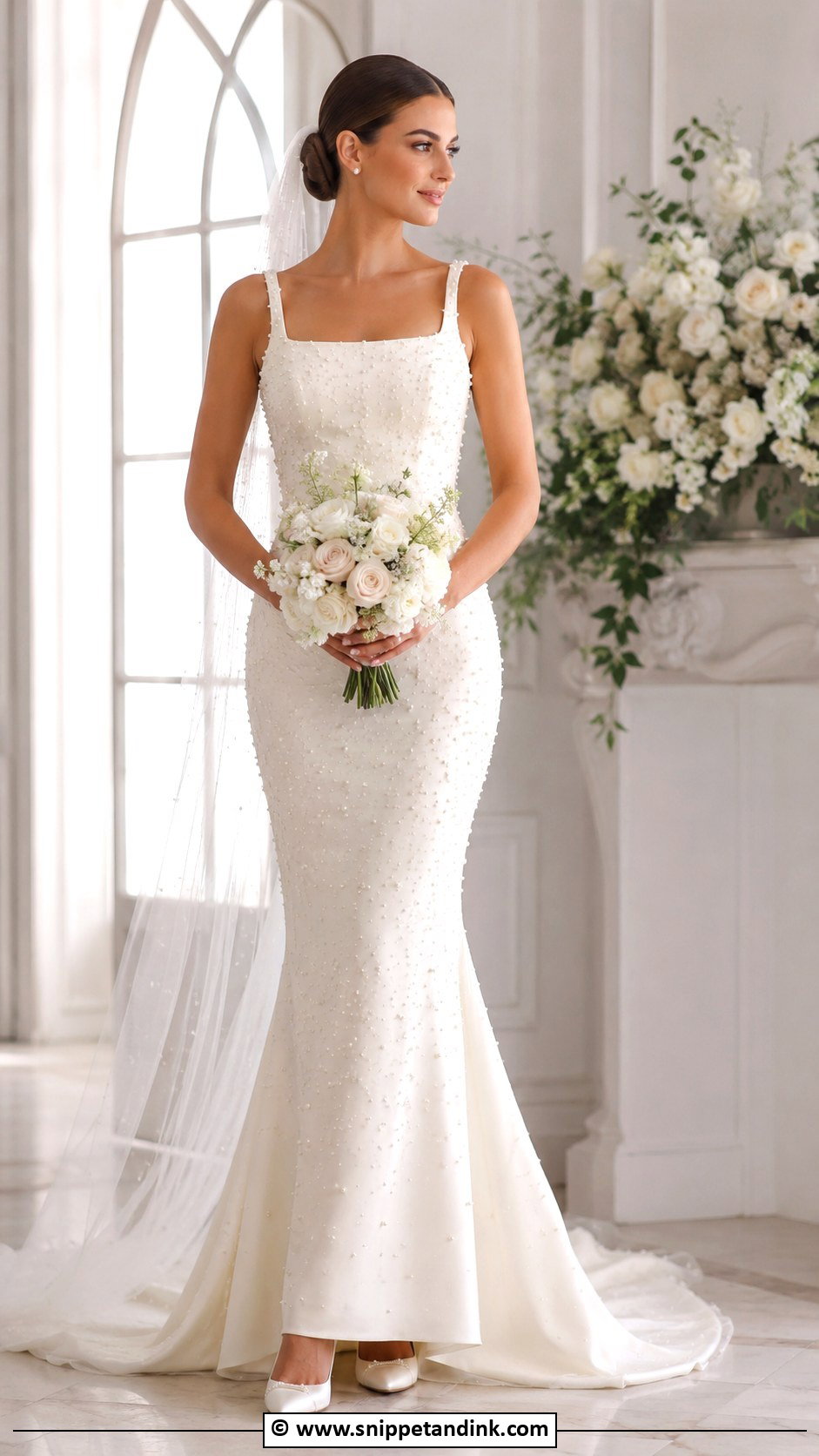
Pearls add a soft glow that reads warmer than crystal under evening light. They appear on bodices, sleeves, veils and gloves this year, and the rule I follow is one pearl feature per look. Hand-sewn pearls are heavy in quantity, so a fully beaded dress can feel noticeably weighty by the evening. Satin heels and a smooth hairstyle keep it calm. If the dress is heavily beaded, skip the necklace.
19. Sparkly Reception Dress
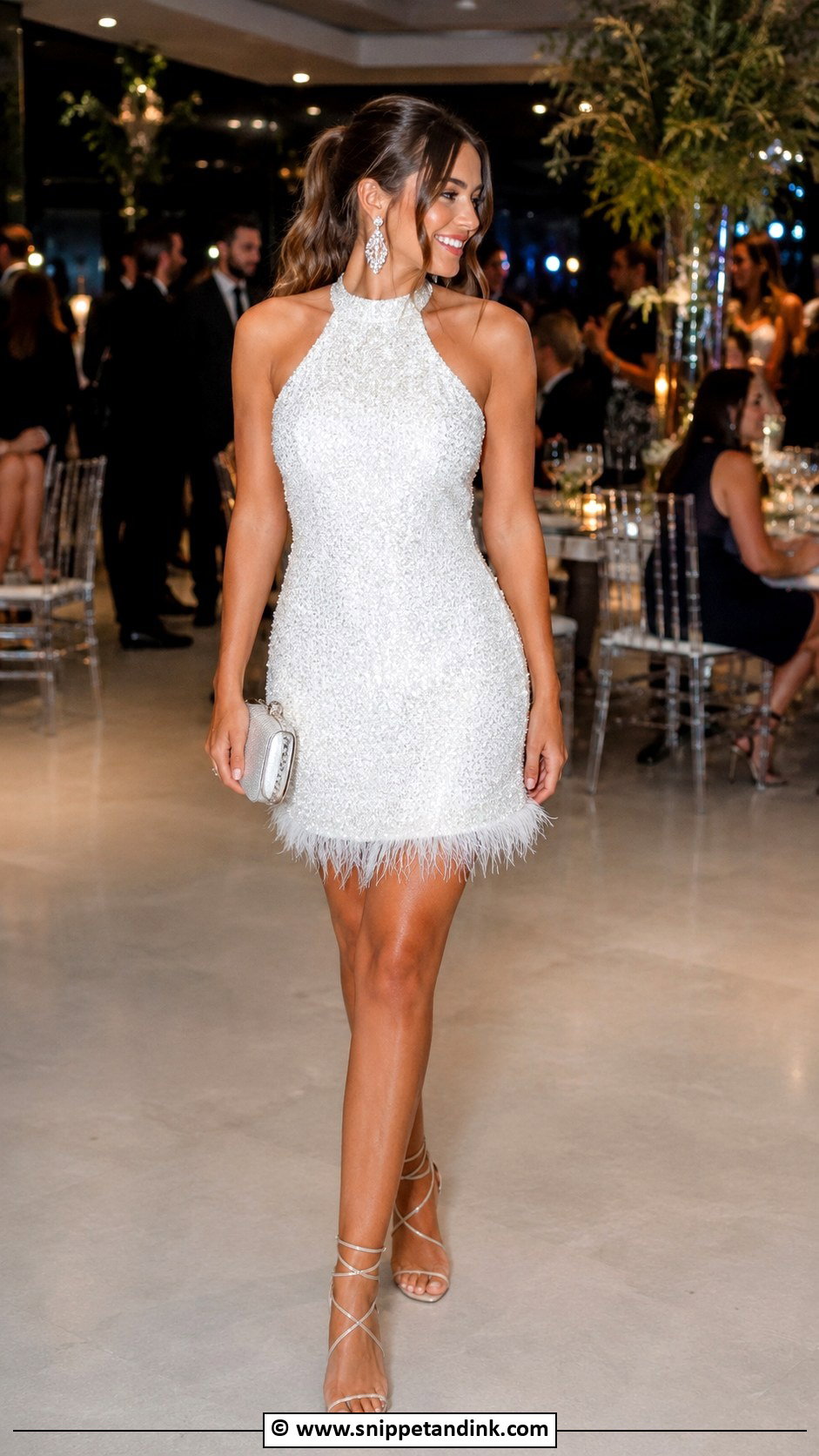
Shimmer belongs to the reception. Sequins, metallic thread and crystal suit evening light, and a short dress, midi or fitted gown lets you dance. Before buying, I check the inside seams: sequinned fabric can be scratchy at the underarm unless it’s fully lined. Dance-friendly heels, statement earrings and easy hair like soft waves or a ponytail keep it relaxed. It makes a clear outfit change that still says bride.


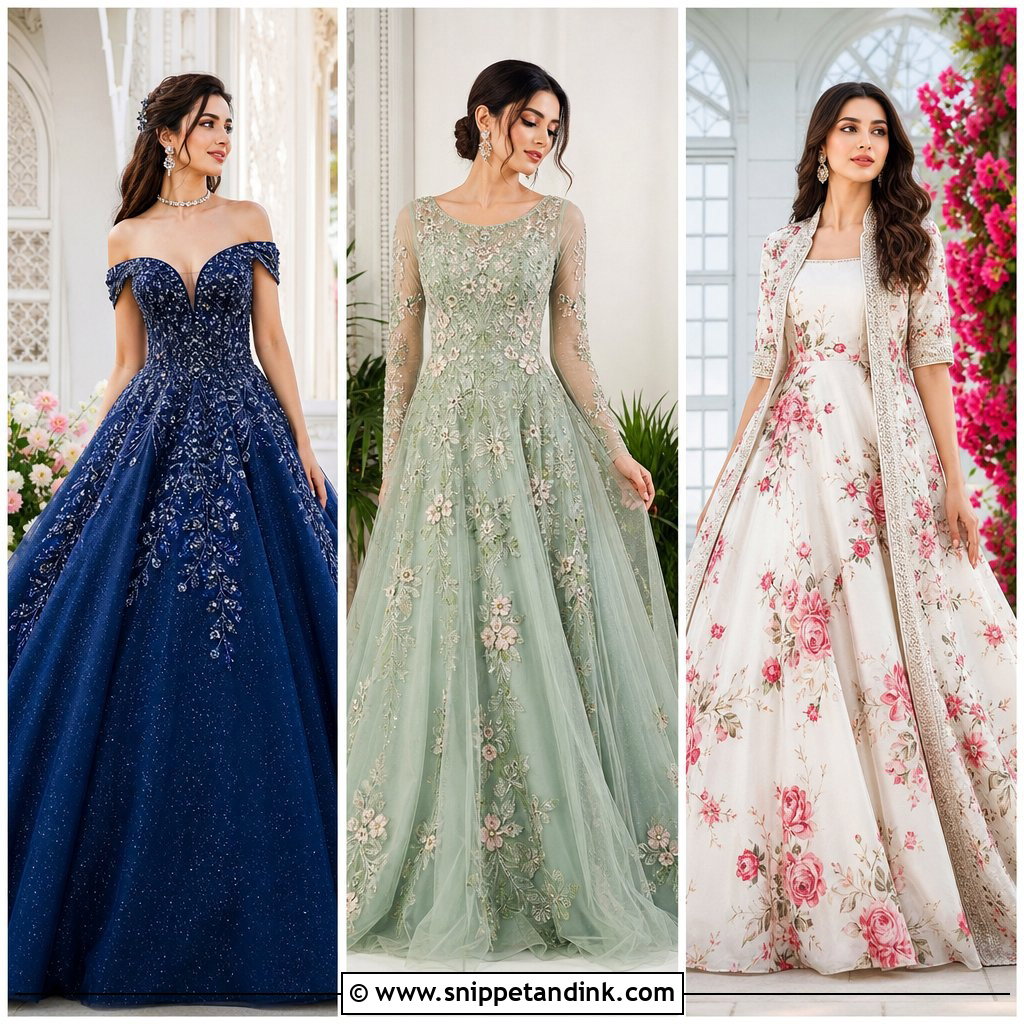
20. Blush Wedding Dress
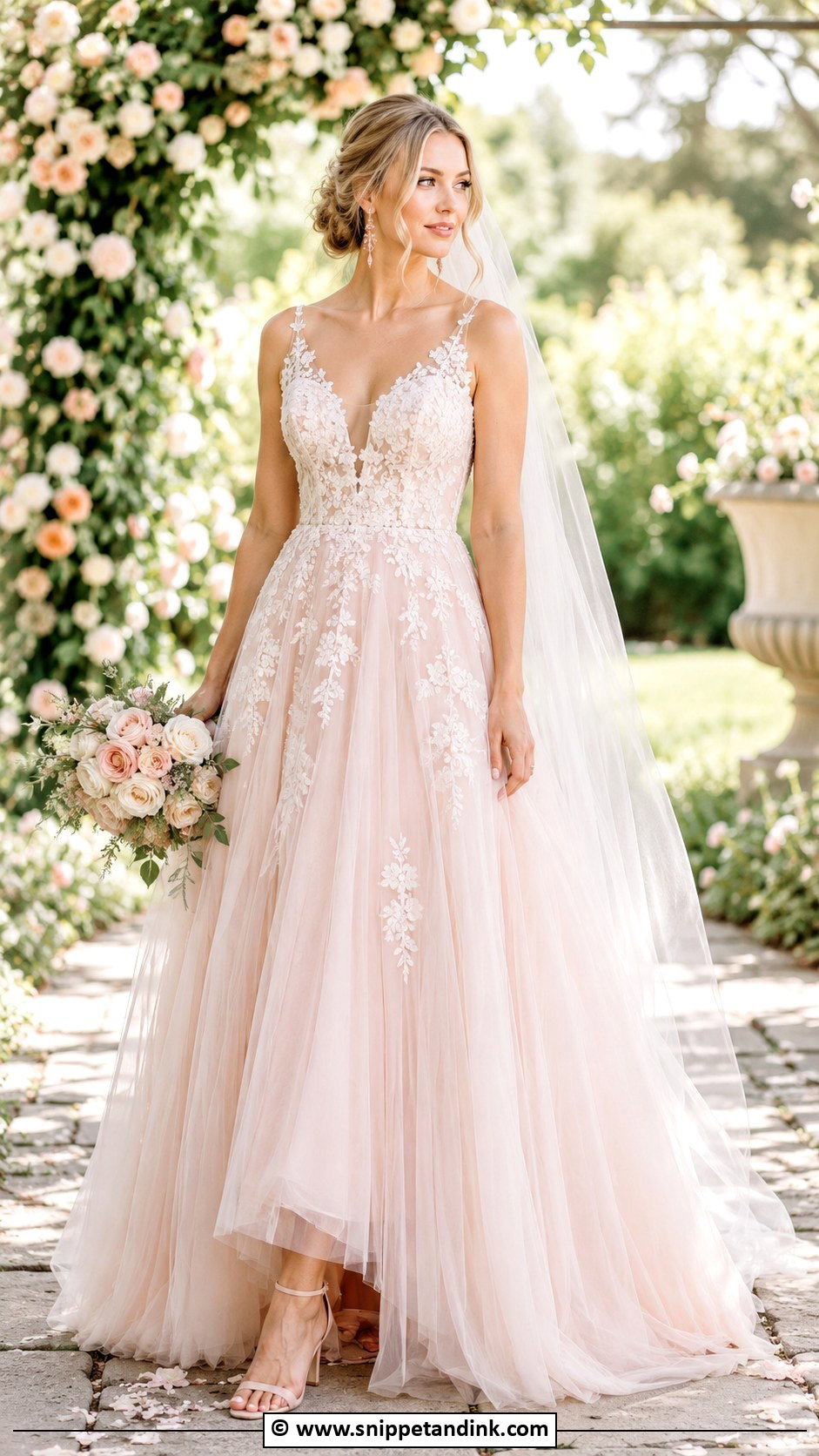
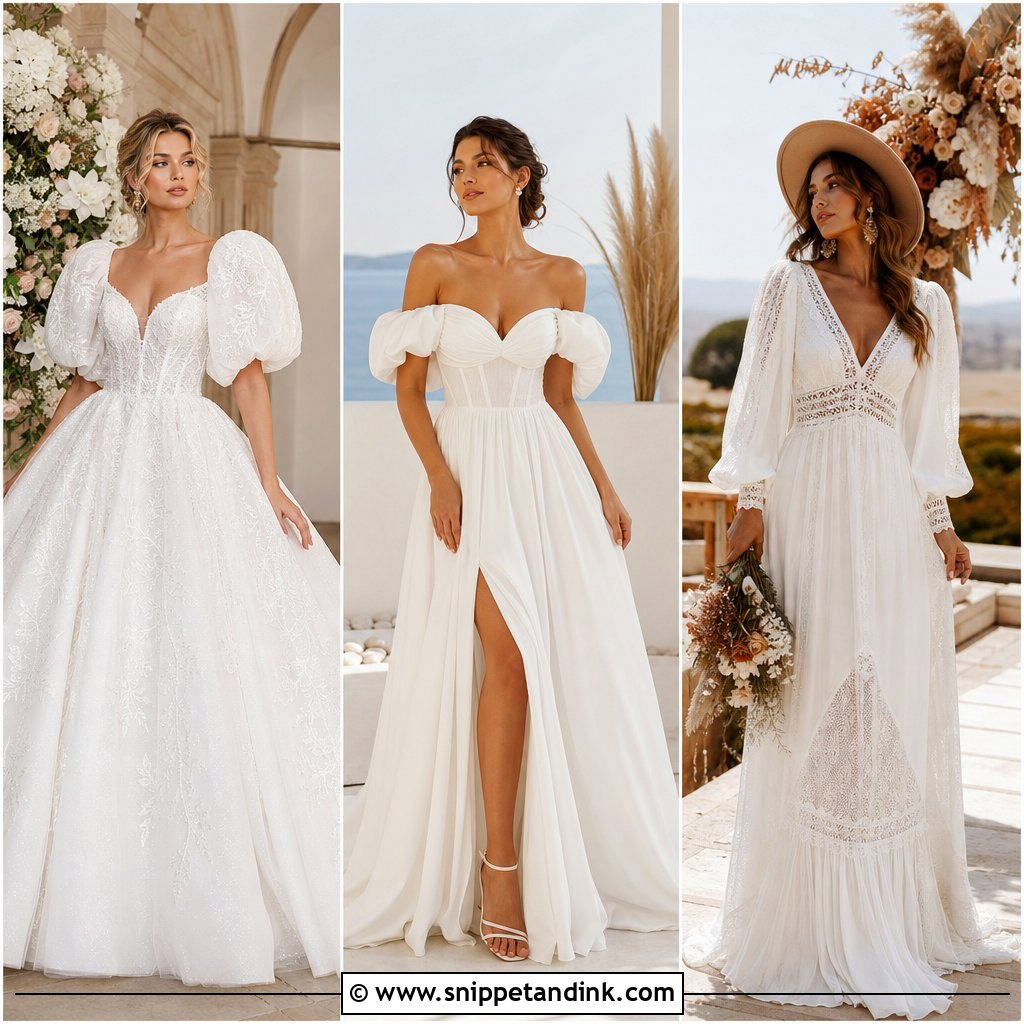
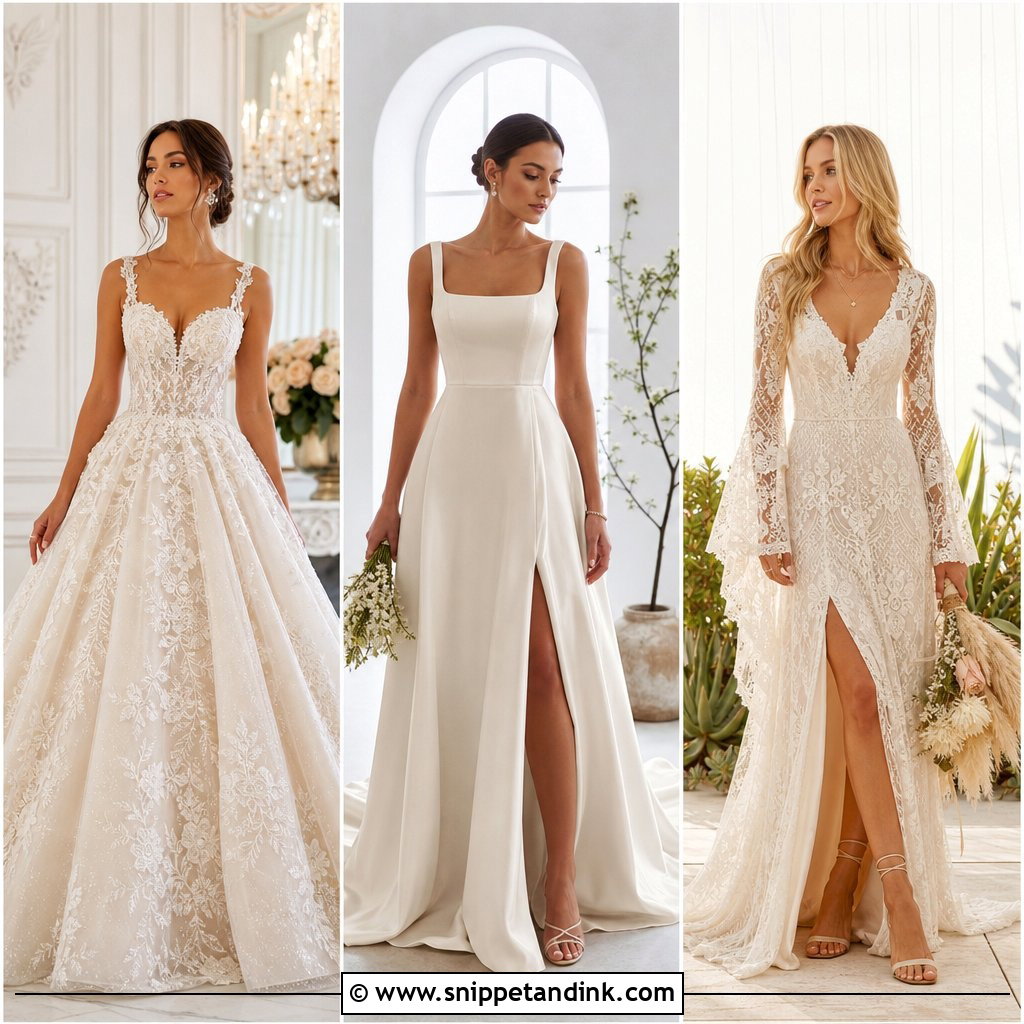
Blush is the softest step away from ivory. It warms many skin tones, especially in tulle, chiffon or satin, and can look almost white in bright daylight, so check the shade outdoors. A white veil creates contrast; a blush one blends in. Nude heels, rose-gold earrings and natural makeup suit it. Garden weddings and spring ceremonies show it at its prettiest.
21. Blue Wedding Dress
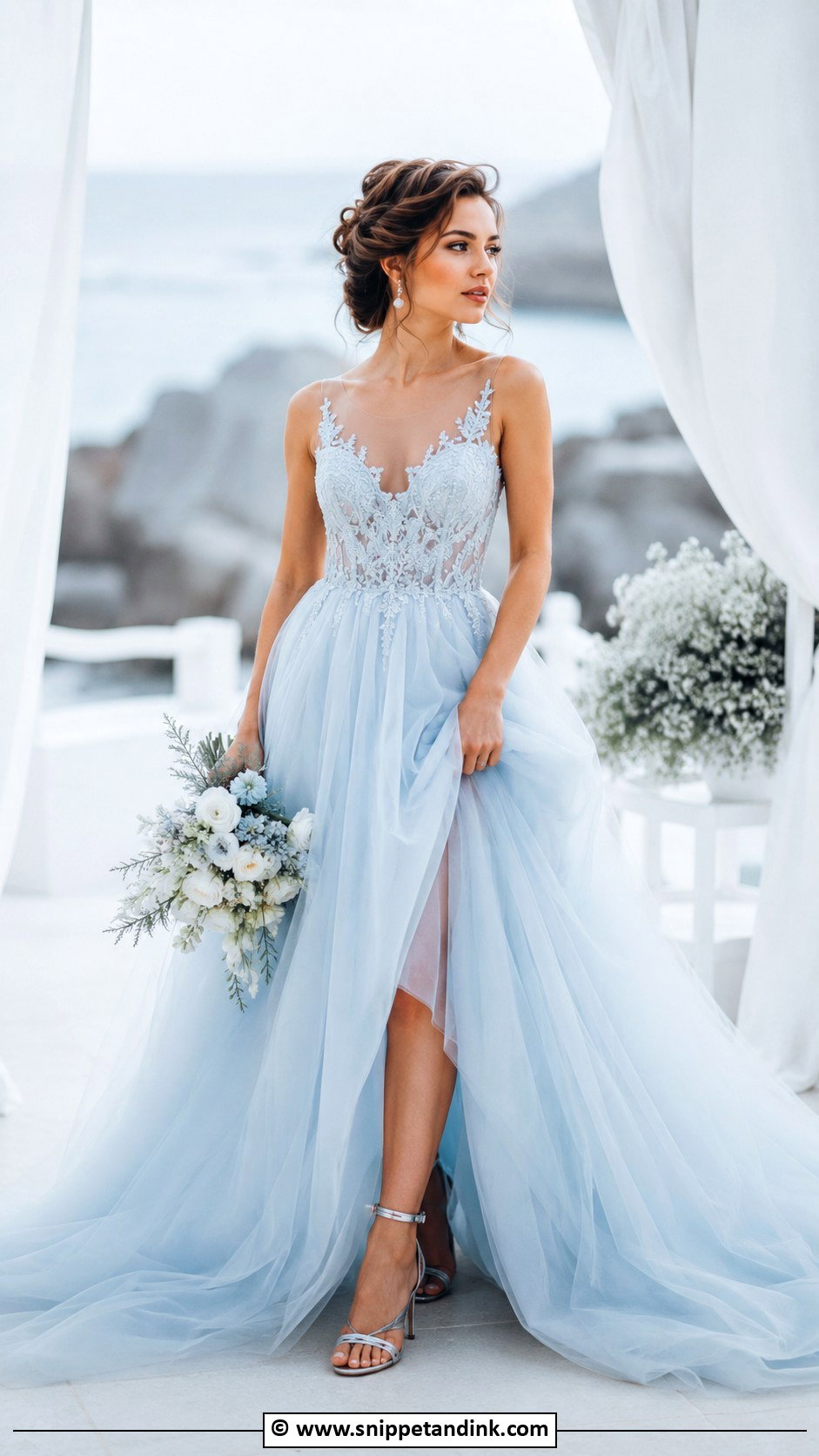
Pale, powder and icy blue are the easiest blues to wear as a bride, and they read very differently in tulle versus satin. Cool light at the coast or in winter flatters them; warm indoor lighting can make some pale blues look grey. I’d always see the fabric in the venue’s lighting. Silver heels, pearl earrings and a white bouquet keep it bridal. It also works as a fresh second look.
22. Vintage Inspired Wedding Dress
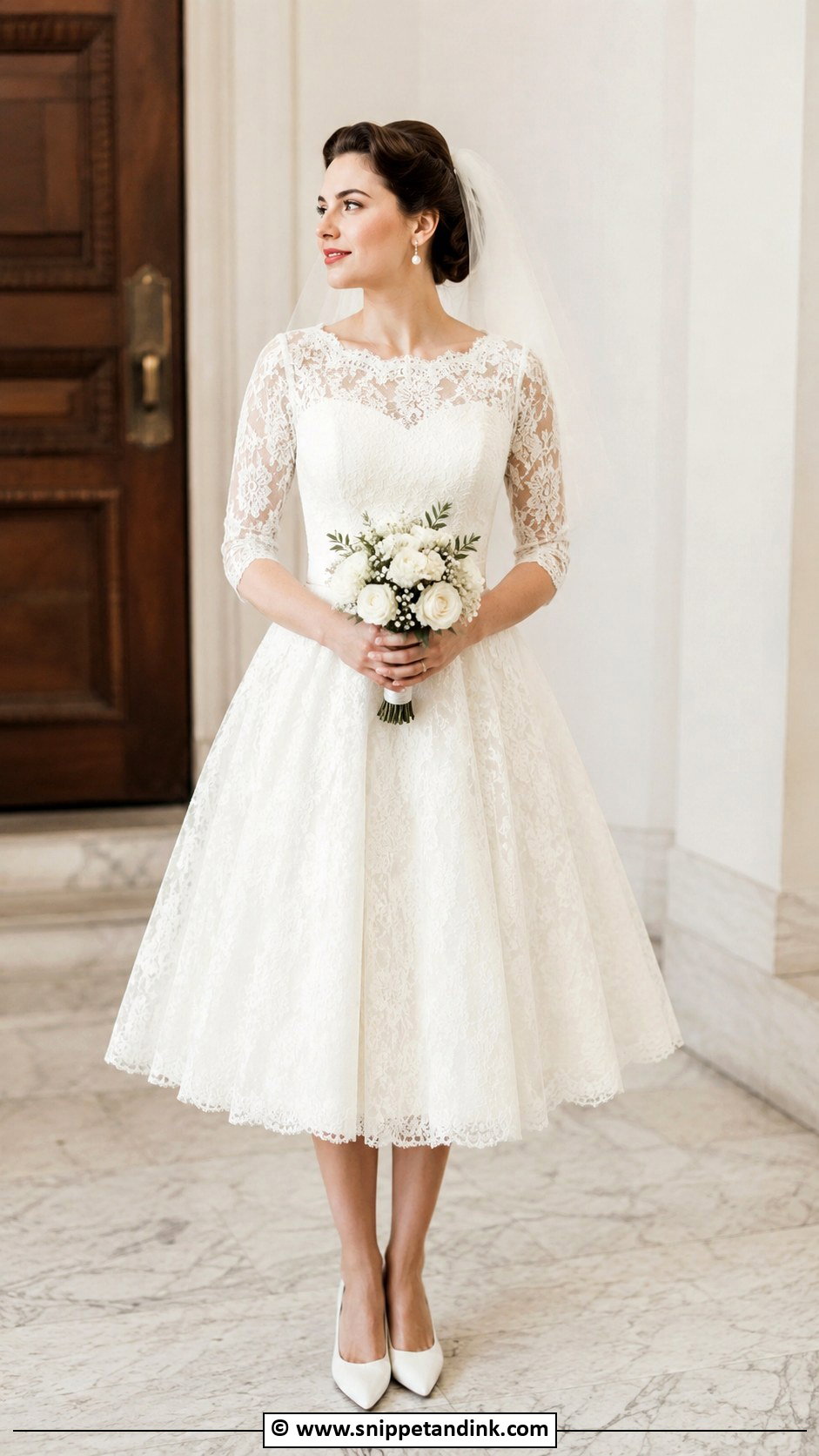
Vintage can mean almost anything, from twenties beading to a fifties tea-length skirt or nineties satin minimalism. Pick one decade and style everything around it; mixing eras is what makes vintage look like a costume. A tea-length lace dress with pointed pumps and a short veil is easy to wear. A bias-cut satin gown and a long veil read old Hollywood. If you’re buying a true vintage dress, have a specialist check the seams and fabric strength before alterations.
23. Tea Length Wedding Dress
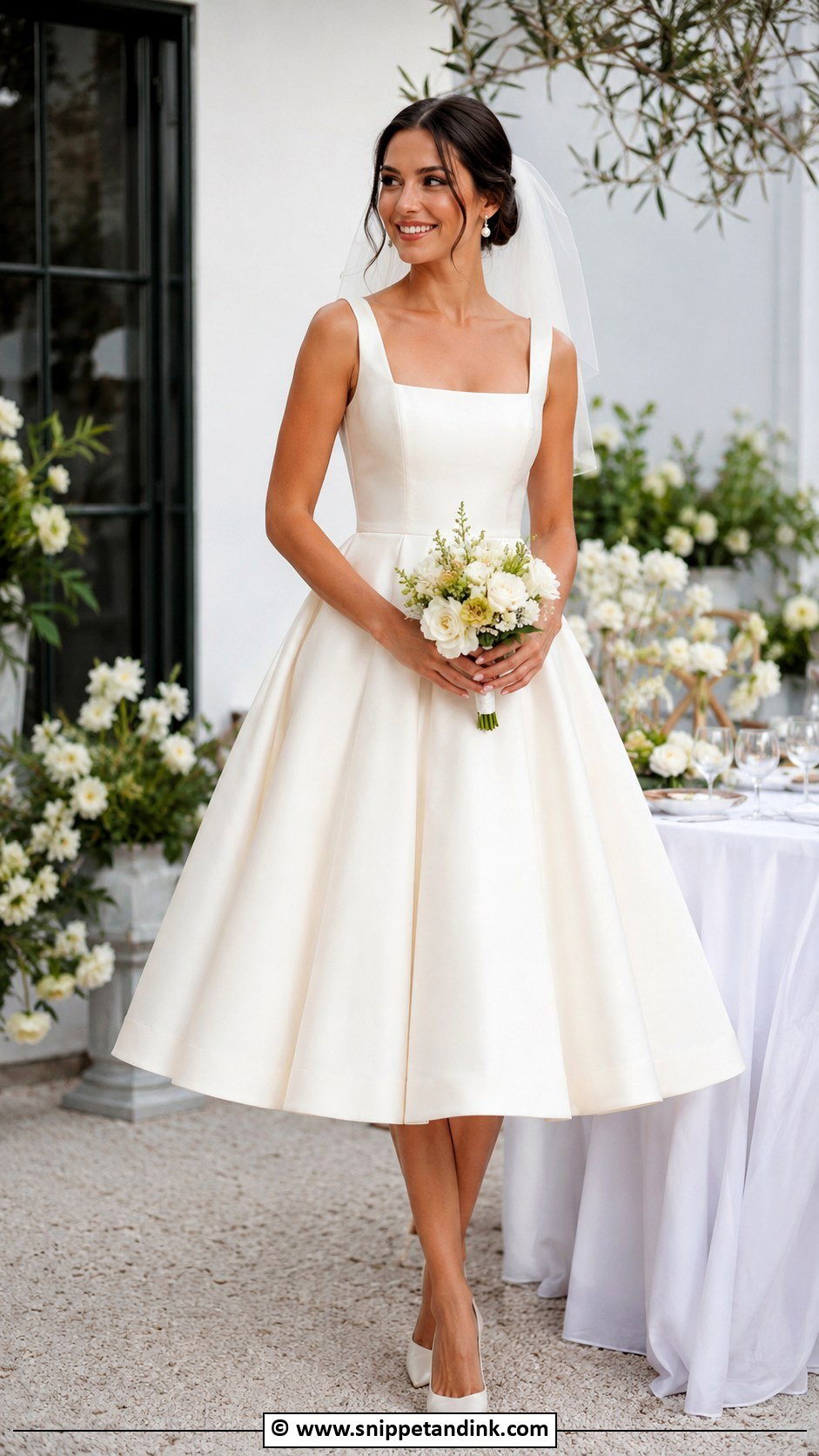
Tea length falls between the knee and ankle, so your shoes are on show all day. Choose them first and bring them to every fitting. A structured bodice and full skirt feel retro; a plain satin tea-length with a square neck looks modern. Pointed pumps and a short veil or hair bow suit it. It’s easier to walk and dance in than a floor-length gown, which is a real advantage at a garden or brunch wedding.
24. Beach Wedding Dress
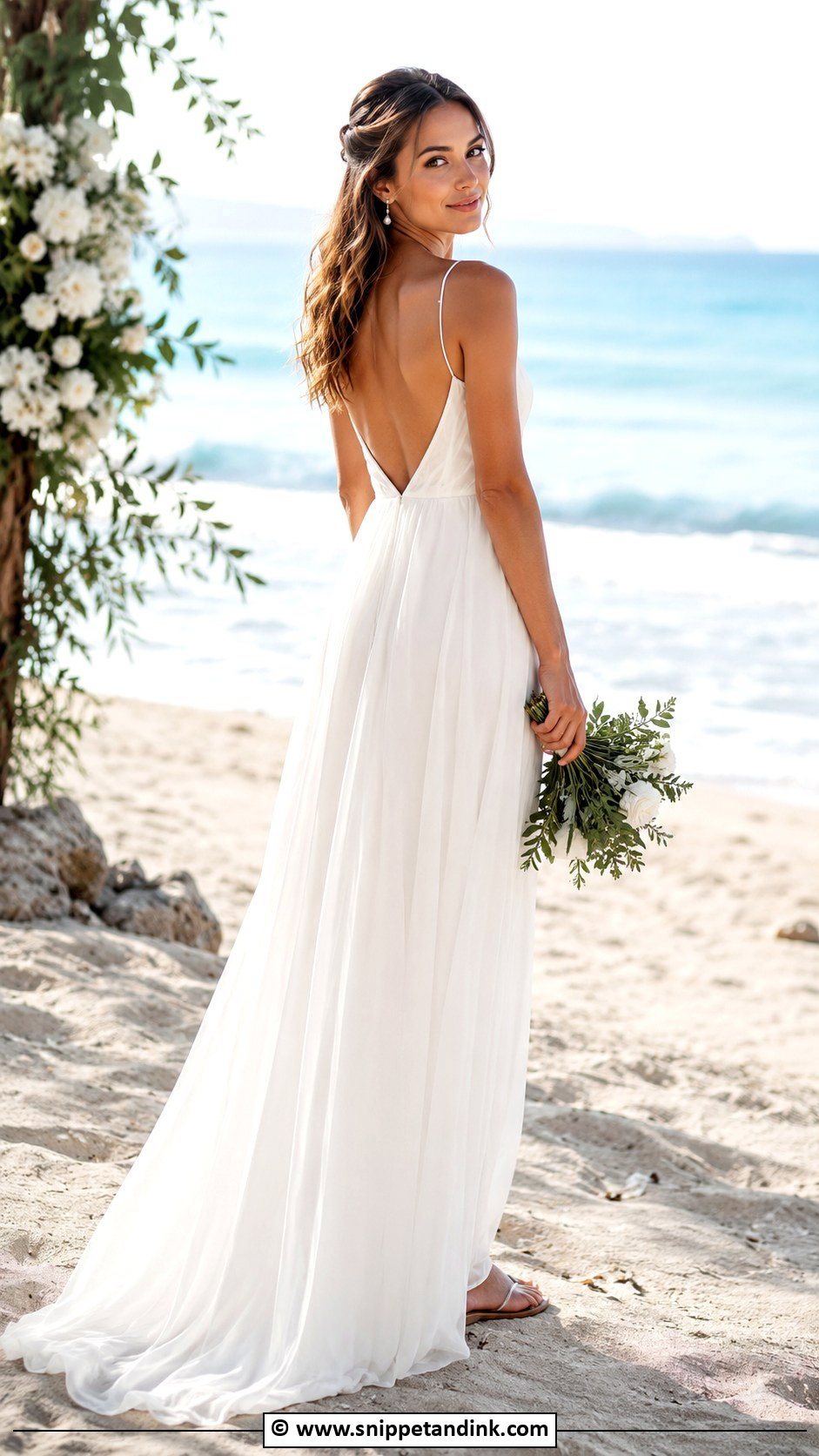
Sand and wind decide what works on a beach. Heavy trains drag and fill with sand, structured skirts catch the breeze, and boning gets uncomfortable in heat. Chiffon, a satin slip, soft lace or a simple column gown handle sea air best. A veil looks romantic in the breeze but can wrap around your face, so a hair comb is easier if it’s windy. Flat sandals or bare feet, pearl drops and loose waves finish it.

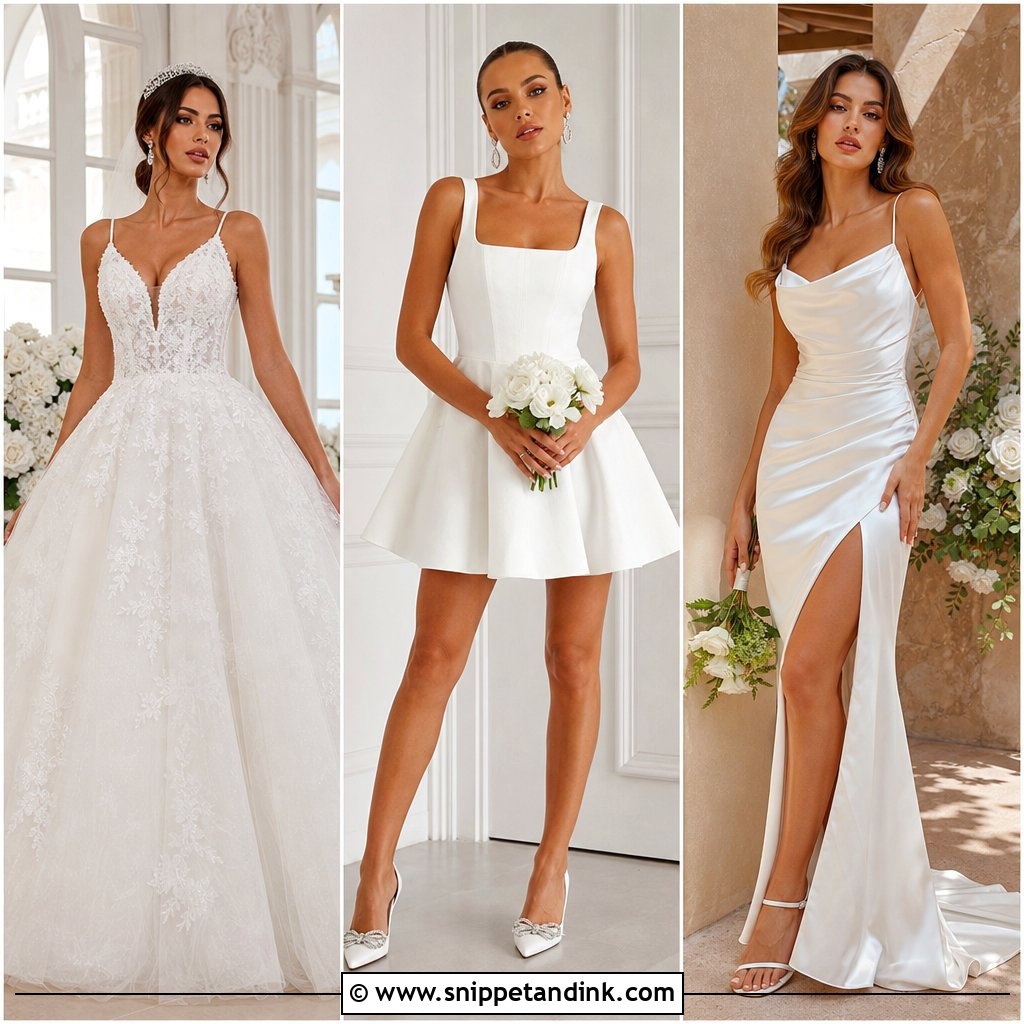


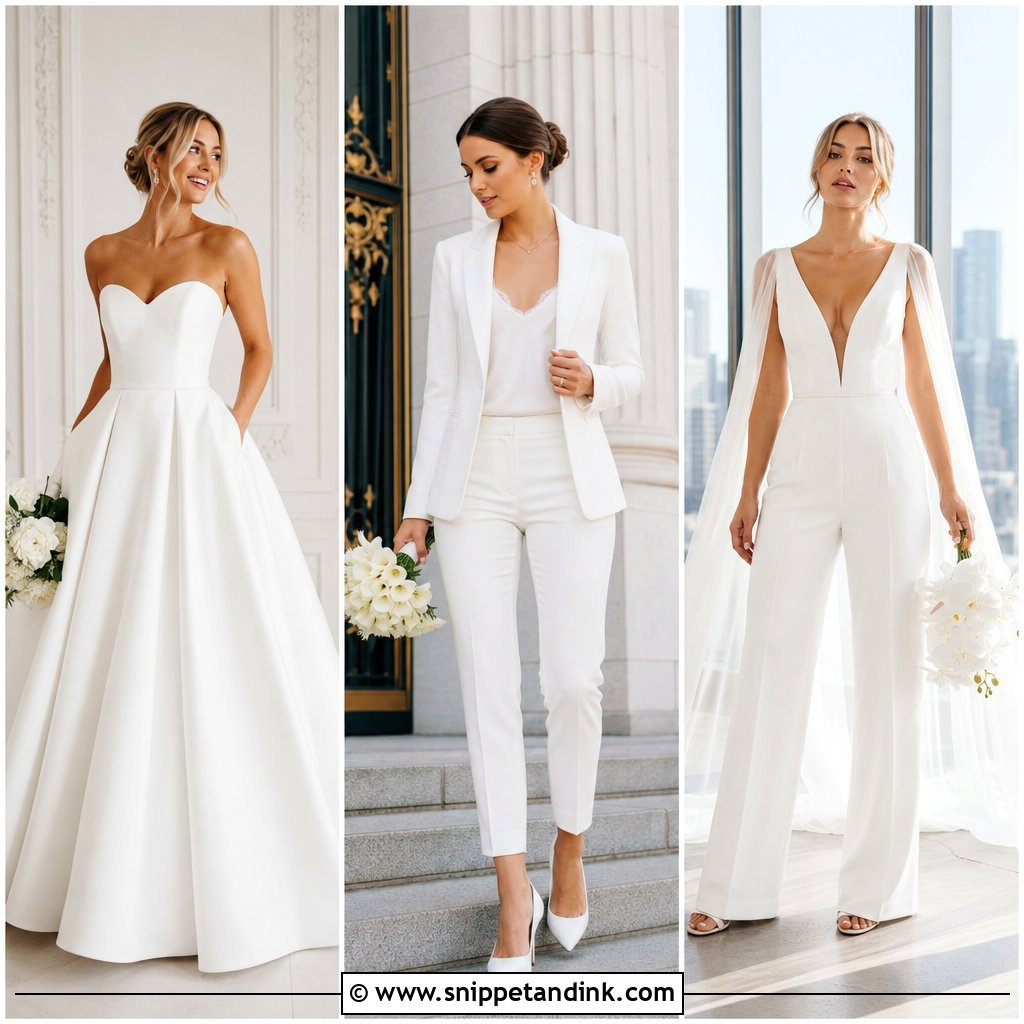
25. Courthouse Bride Outfit
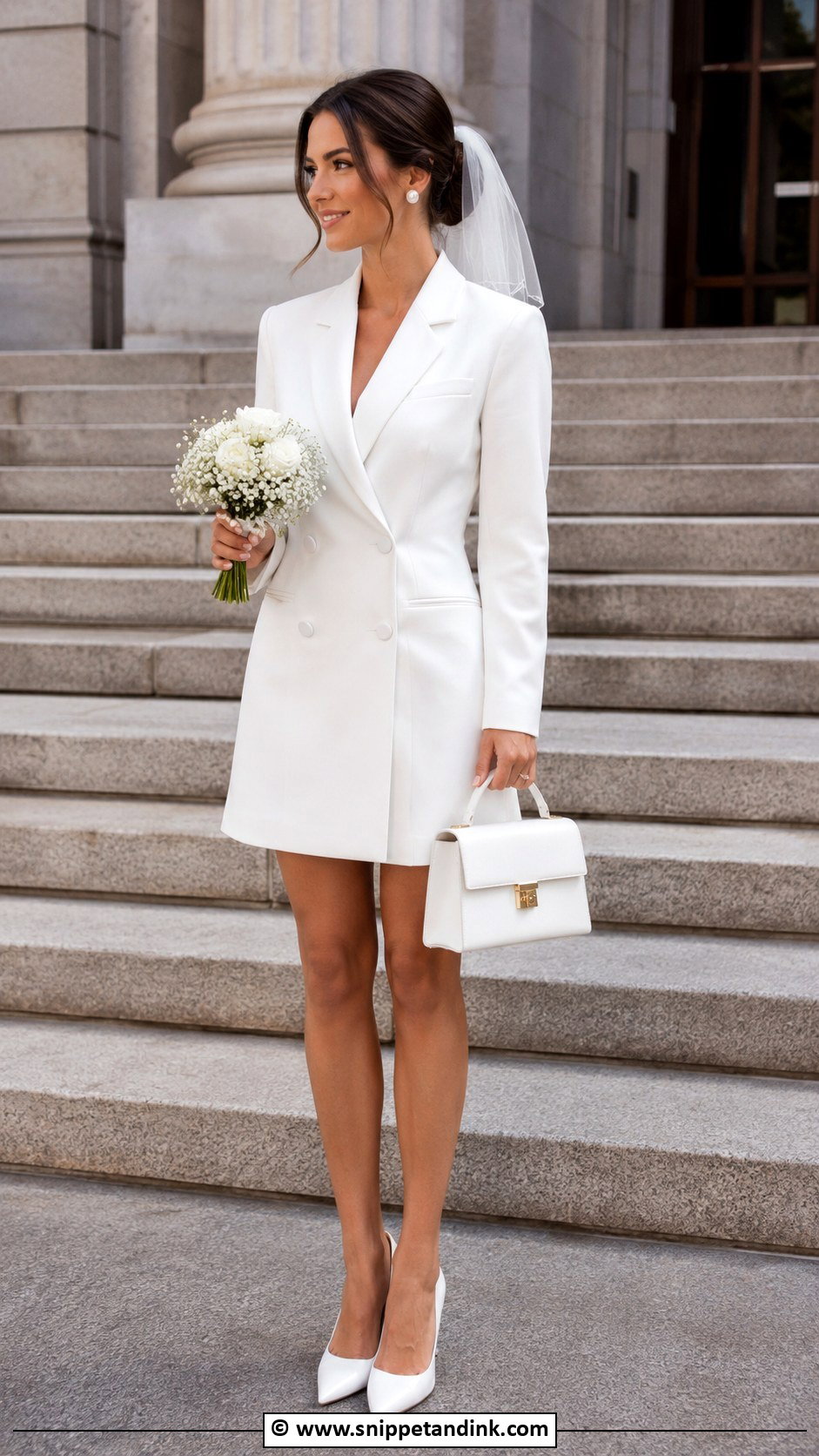
A courthouse bride outfit needs to look bridal standing in a small room under strong overhead light. A white blazer dress, tailored suit, satin midi, lace mini or clean column dress all work. Pointed heels, a structured bag and pearl or diamond-style earrings keep it polished. A short veil, bow or headband signals bride without feeling formal. Since you may be walking through city streets after, check the hem length on steps.
Order Dates Run Backwards From the Wedding
Most bridal gowns are made to order after you choose a sample, and the production time surprises a lot of brides. Timings vary between designers, so ask each shop, but this is the rough plan I give:
- Shop around nine to twelve months out. That leaves time for production without paying rush fees.
- Expect production to take several months once the order is placed, often longer for heavily beaded or imported gowns.
- Begin alterations about two to three months before the wedding, with two or three fittings.
- Have your final fitting a couple of weeks out, wearing the exact shoes and underwear you’ll marry in.
- Buy second looks, minis and suits off the rack later if needed; they rarely need long lead times.
Strapless Bras, Heel Heights and Other Things to Pack for Gown Shopping
A bridal appointment goes better when the sample can be judged properly. I ask brides to bring a nude strapless bra or smooth shapewear, shoes close to the heel height they’ll wear, and hair ties so they can try it up and down. Keep the group small. Two or three people whose opinion you trust is easier than six with different tastes. And take photos from the back as well as the front, because that’s the view guests see during the ceremony.
Start With the Venue, Then Let the Trend Follow
Trends give you a starting point, but the dress that works is the one that suits your venue, your season and how you’ll move through the day. A corset ball gown, a suit, a mini and a satin slip all have a place this year. Start with where you’re marrying and how long you’ll be standing, sitting and dancing, then choose the shape. The trend details can follow.
You'll Like These Ideas:






Leave a Reply