
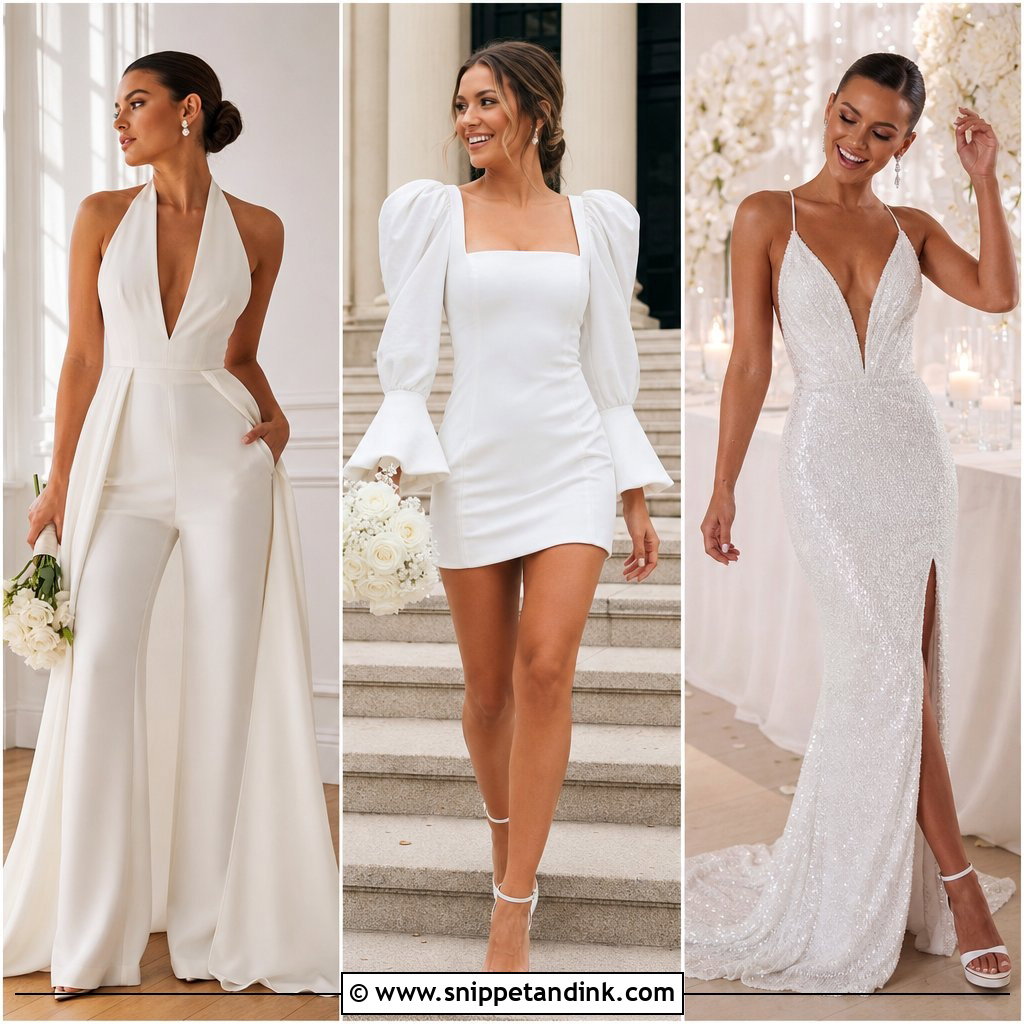
A plunging neckline is only as good as what’s holding it up. I’ve watched brides fall for a deep V on the hanger and lose confidence within a minute of hugging their mother in it, and the difference is always construction: boning, shaped cups, strap width and, often, a strip of Illusion mesh that keeps the depth while stopping the edges from drifting. Get that right and a low neckline draws a long vertical line through the upper body on almost any frame. The twenty gowns below range from lace A-lines to satin columns, each paired with the jewelry, veil, shoes and hair that leave the neckline room to work.
How Deep Can a Neckline Go for Your Ceremony?
The right depth depends on where you’re marrying as much as on your taste. Some churches, temples and mosques expect covered shoulders and chest during the service, and some family elders do too. I’d ask the officiant early rather than finding out at the rehearsal.
If your ceremony is conservative but you want a plunge for the party, you have good options:
- A sheer bolero or lace jacket for the service, removed for the reception.
- A removable illusion modesty panel that snaps or hooks into the V.
- A cathedral or mantilla veil worn over the shoulders, which covers more than you’d expect.
- A higher neckline gown for the ceremony and a lower one for the evening, if the budget allows two.
When you describe what you want to a consultant, show where the V should end with your hand on your own chest rather than pointing at a photo. Models are often taped and pinned on shoots, so the same gown can sit differently on you.
1. Low Cut A-Line Lace Wedding Dress
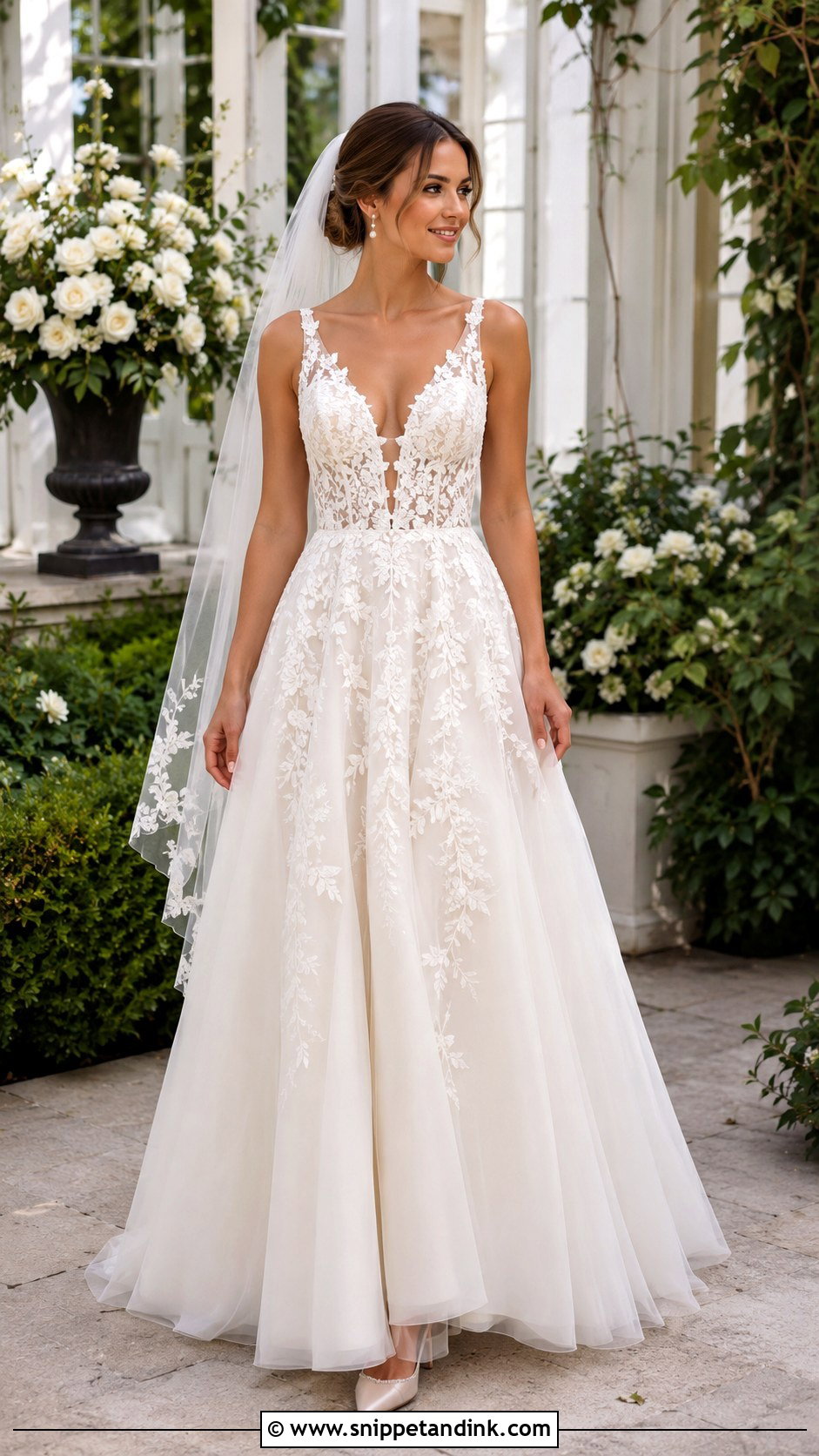
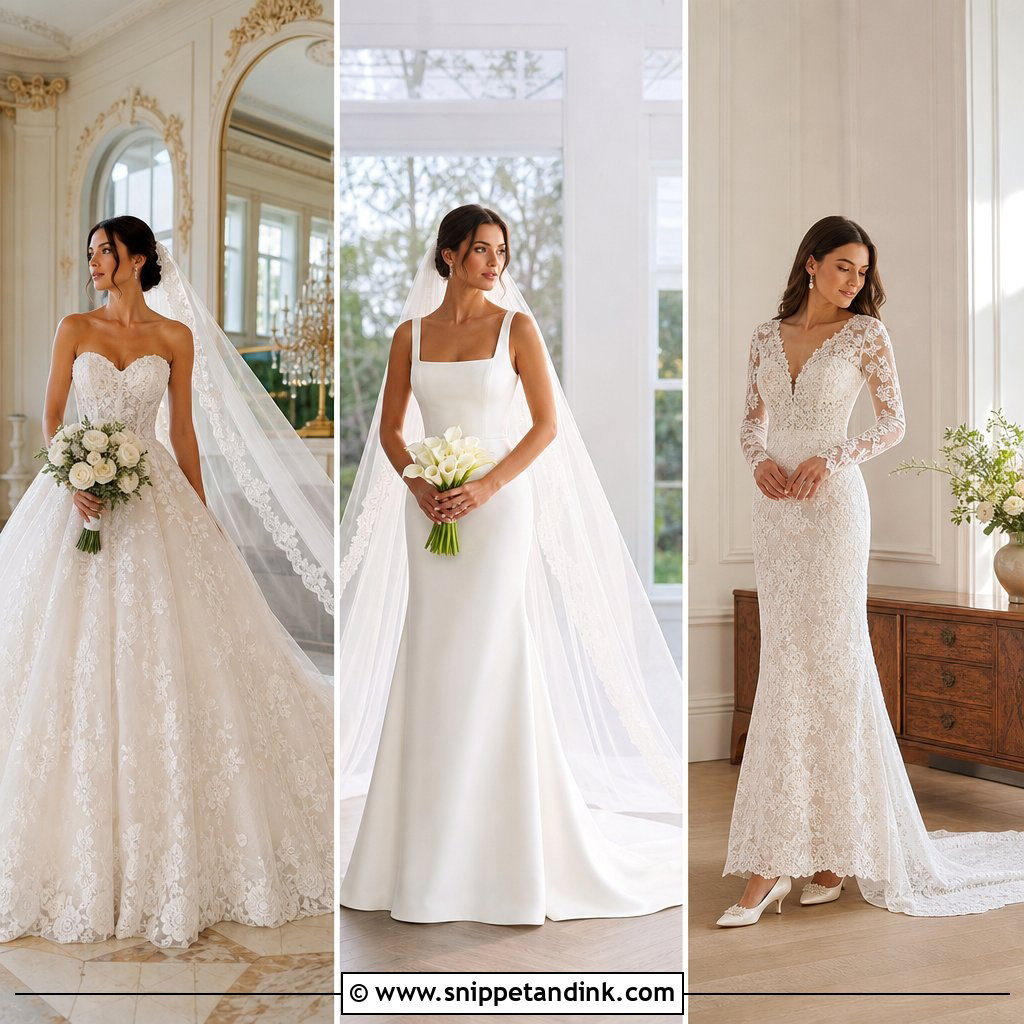
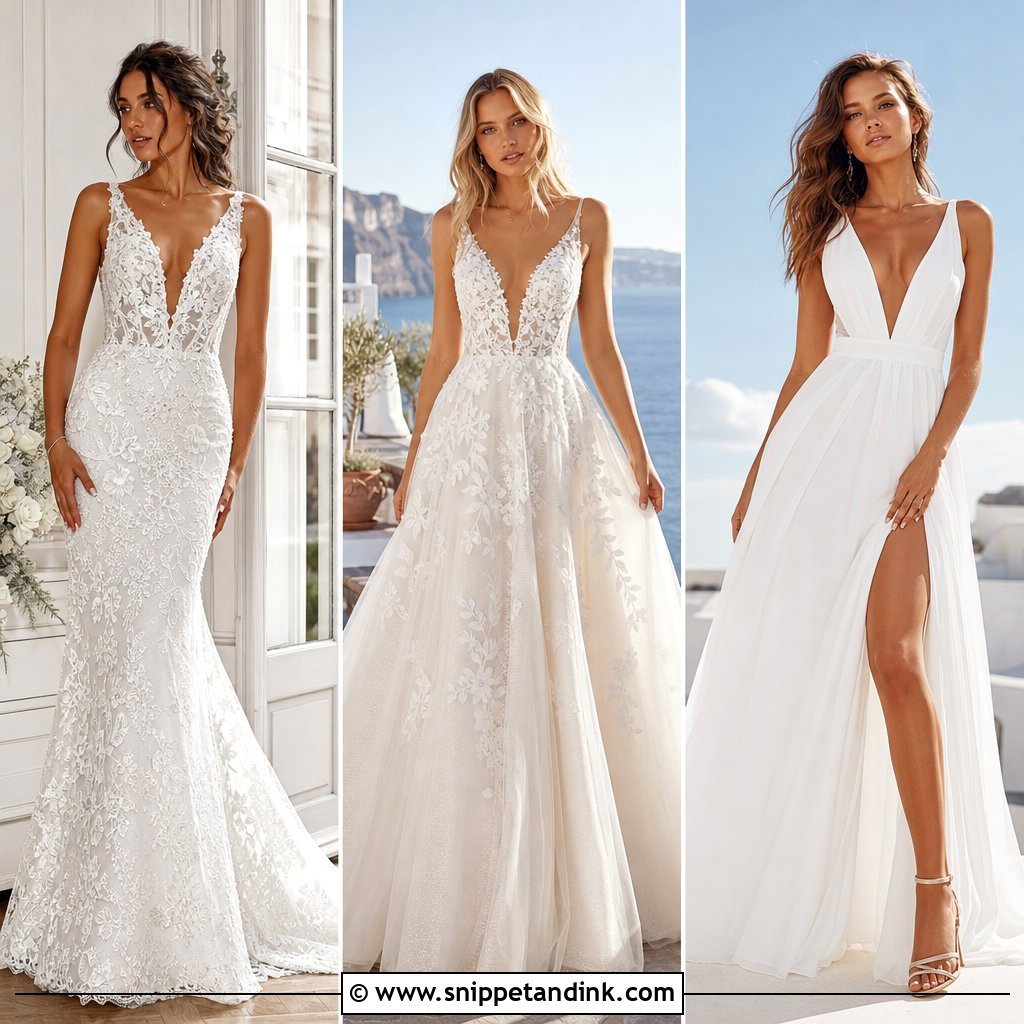
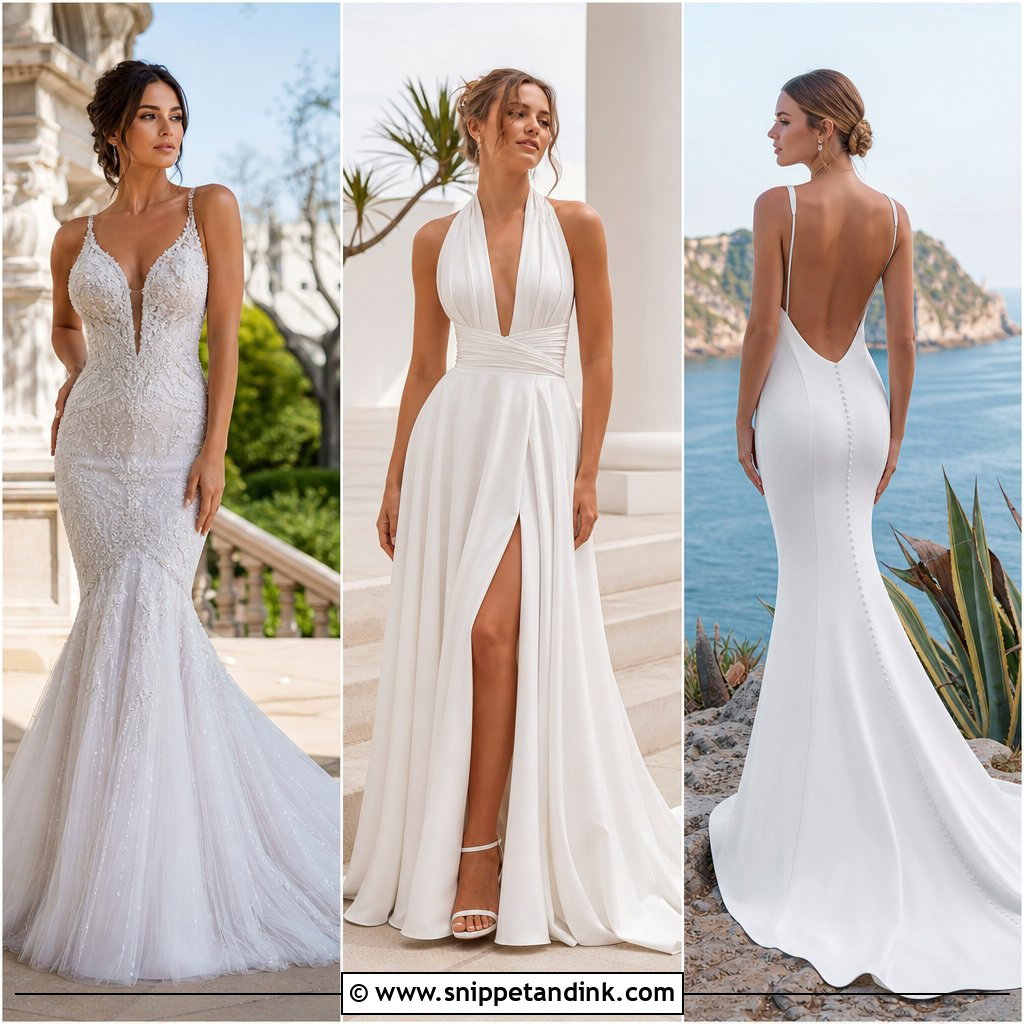
Lace softens a plunge, which is why this pairing is the one I’d suggest to a bride who’s nervous about depth. A structured V-neck bodice with floral appliqués running onto the skirt, and a narrow illusion panel at the center, makes the V look open while holding the edges flat. The fitted waist and A-line skirt give easy proportions. Pearl drop earrings, a sheer fingertip veil and pointed ivory pumps finish it, with a loose low bun that leaves the lace visible. At the fitting, sit, walk, hug and dance while someone watches the strap tops; that’s where a lace V starts to slide.
2. Low Cut Satin Ball Gown Wedding Dress
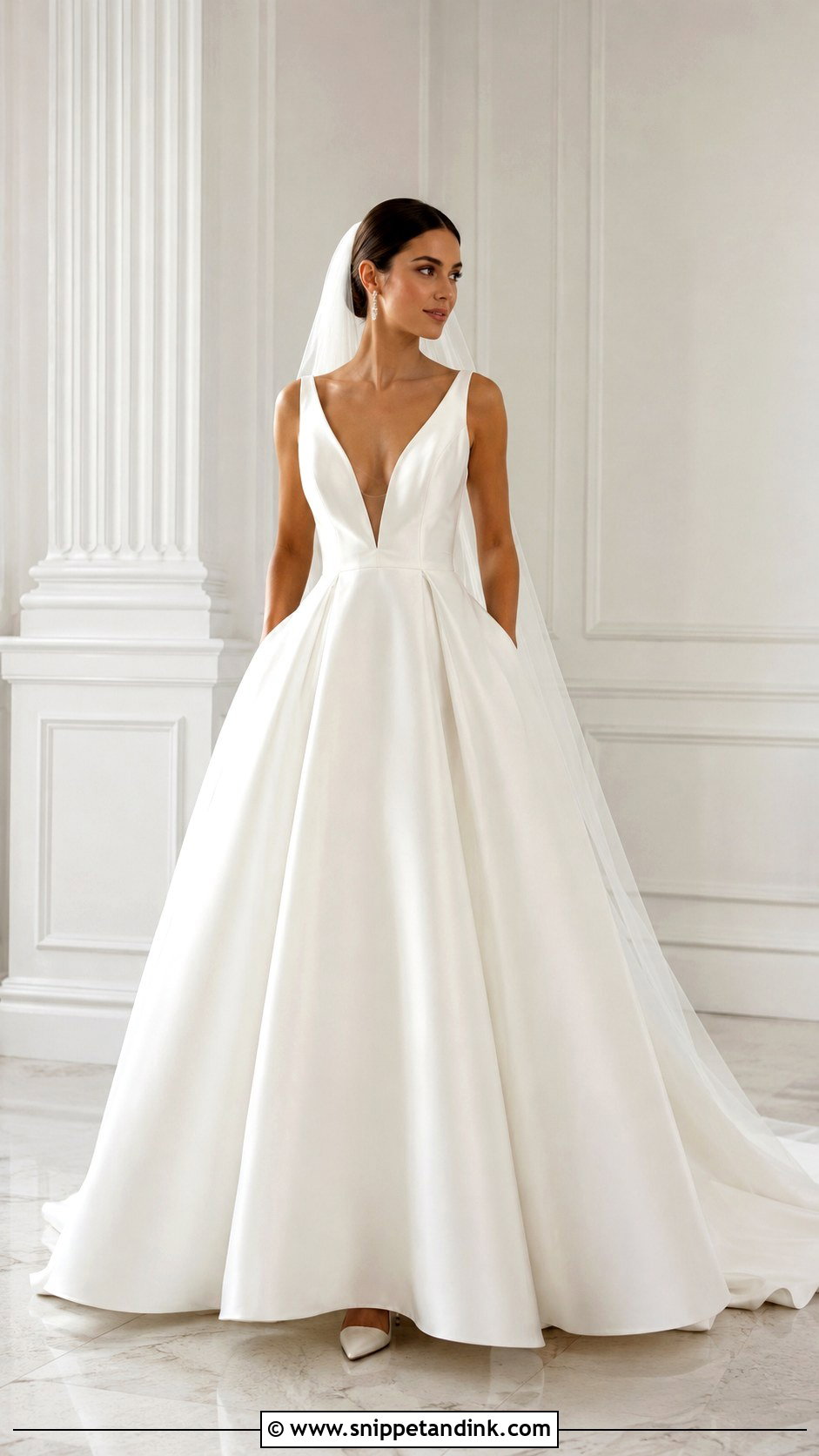
Satin is heavy, and a deep V in it needs wide straps and firm boning or the neckline bows outwards as soon as you stand. When I check a satin plunge, I look at the edges with the bride standing tall and then slumped. Get the structure right and the clean surface makes the plunge look sharp and formal against a full skirt. A defined waist stops the volume from swallowing you. Add a long plain veil, crystal studs and closed-toe satin heels. No necklace; the neckline is already the focus, so a fine bracelet or a single heirloom ring is enough. A sleek bun keeps the look clean. It’s made for a formal ballroom.
3. Low Cut Mermaid Wedding Dress
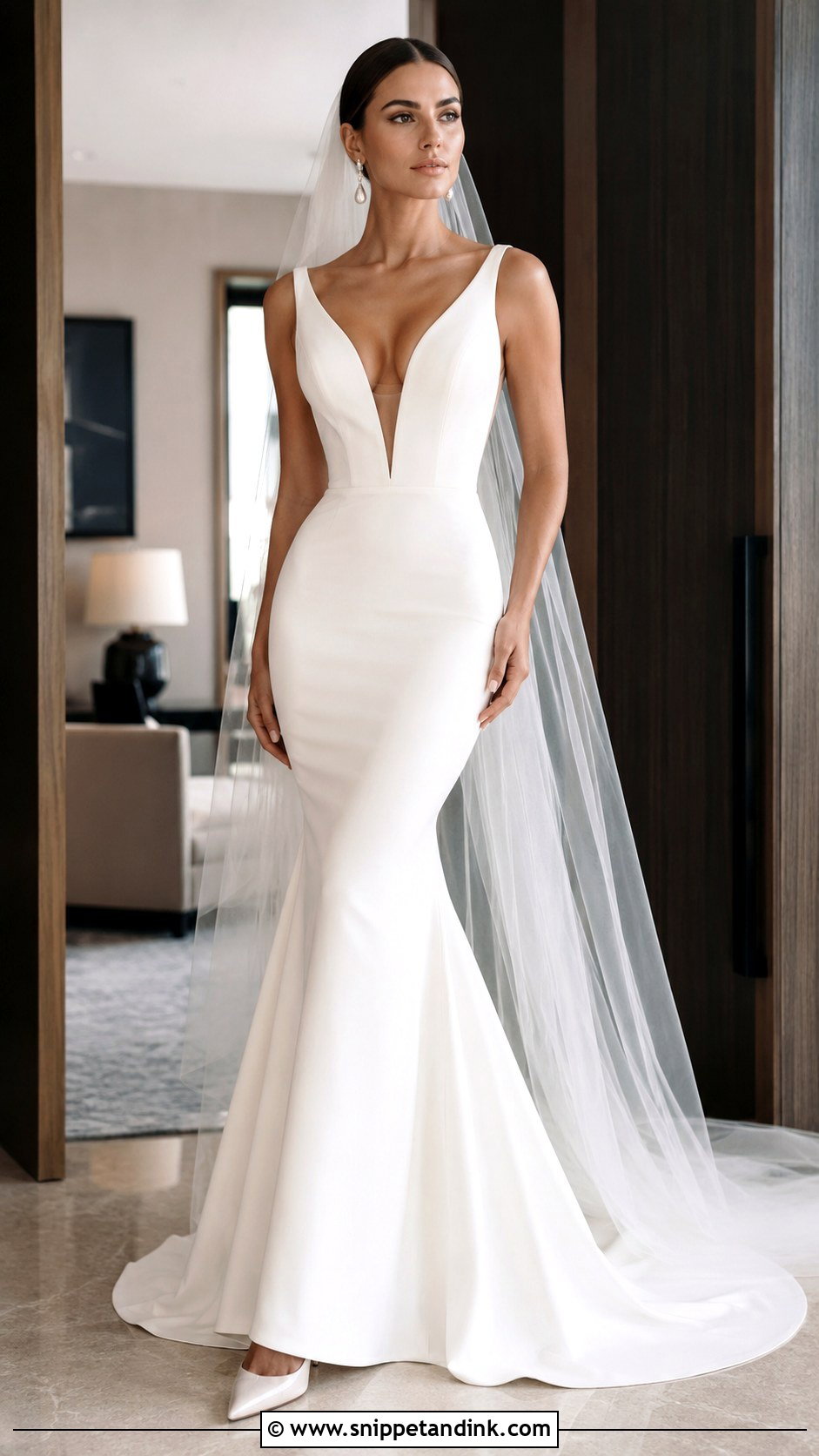
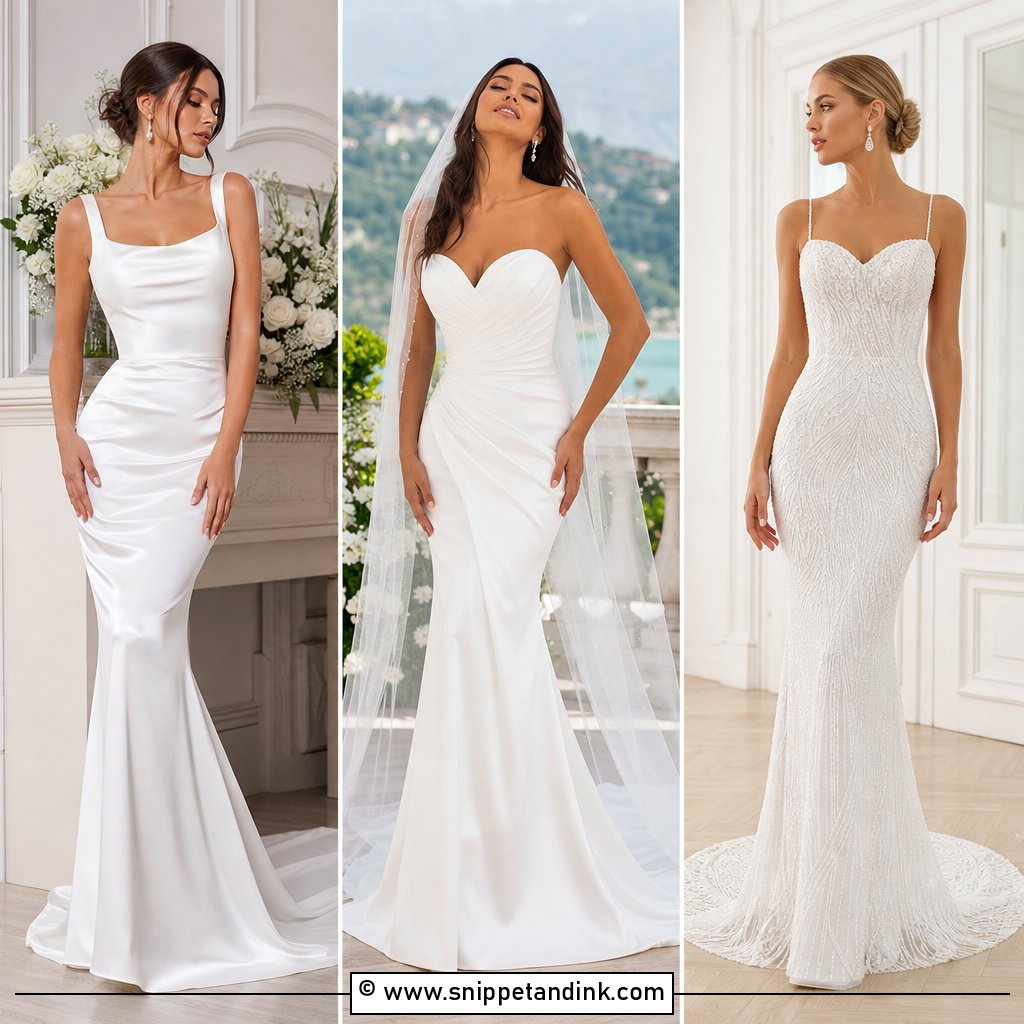
A low cut mermaid wedding dress exposes the neckline and hugs everything below it, so there’s nowhere to hide a poor fit. Stretch crepe or lined lace gives shape with some movement. If you want the neckline secure, ask for wider straps, cups and a small illusion insert. Long drop earrings, a plain chapel veil and pointed pumps in the dress shade suit it, with side-parted waves that fall to one side rather than over the bodice. Keep the bouquet slim. In alterations, check that the skirt skims rather than grips; a too-tight skirt pulls the whole bodice down when you sit.
4. Low Cut Long Sleeve Wedding Dress
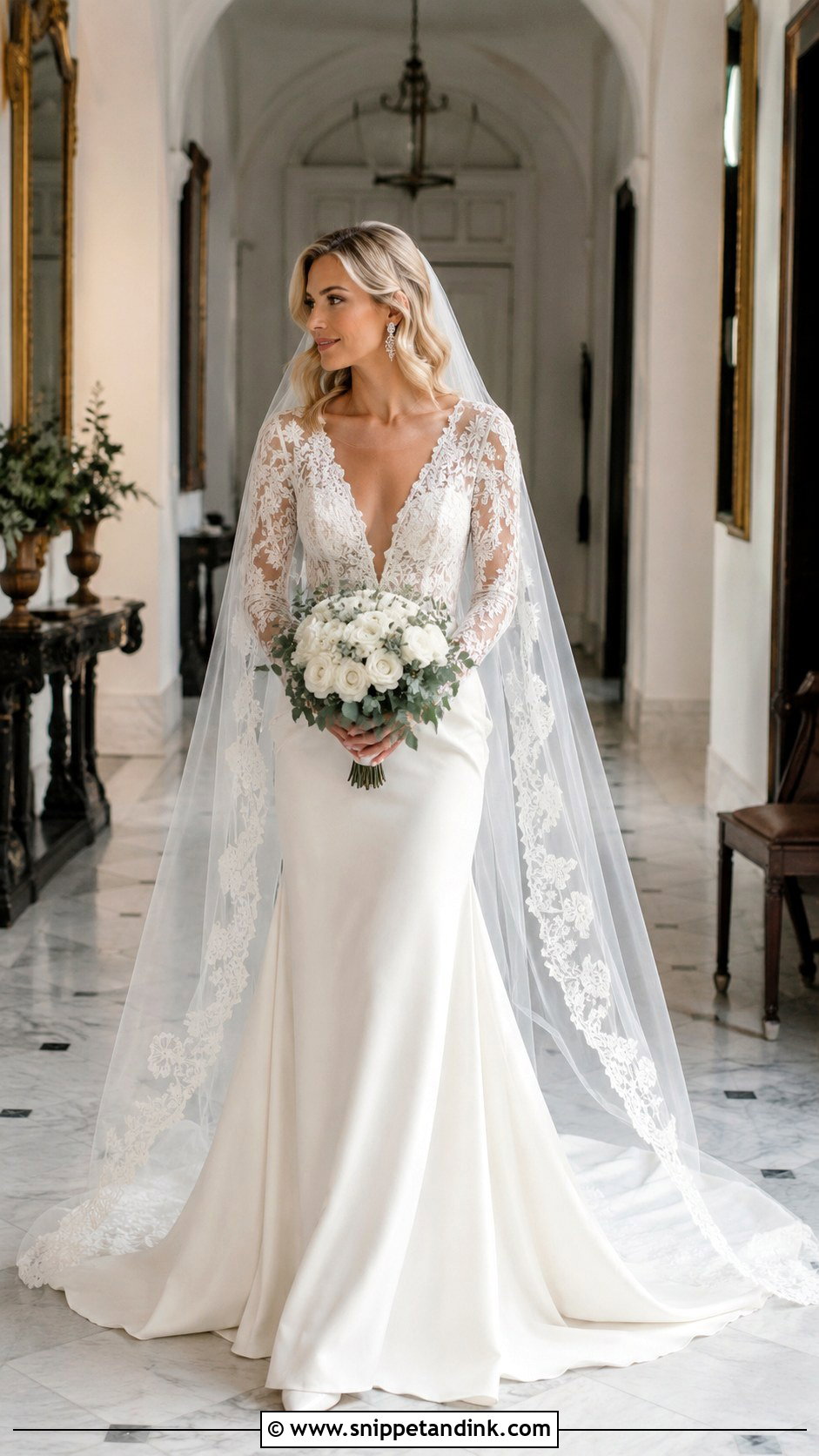
Sleeves and a plunge balance each other: the arms are covered, so the neckline reads as deliberate rather than bare. Fitted lace sleeves with a deep V bodice suit autumn and winter. The skirt fabric sets the mood, crepe for clean, chiffon for flow, soft tulle for volume. A low chignon, crystal earrings, ivory heels and a plain cathedral veil complete it. Leave the neck bare so the contrast stays clear. Smooth accessories won’t snag delicate lace, and an illusion panel at the point of the V adds security. Lace sleeves also anchor the bodice, so these necklines tend to move less than strappy ones.
5. Low Cut Spaghetti Strap Wedding Dress
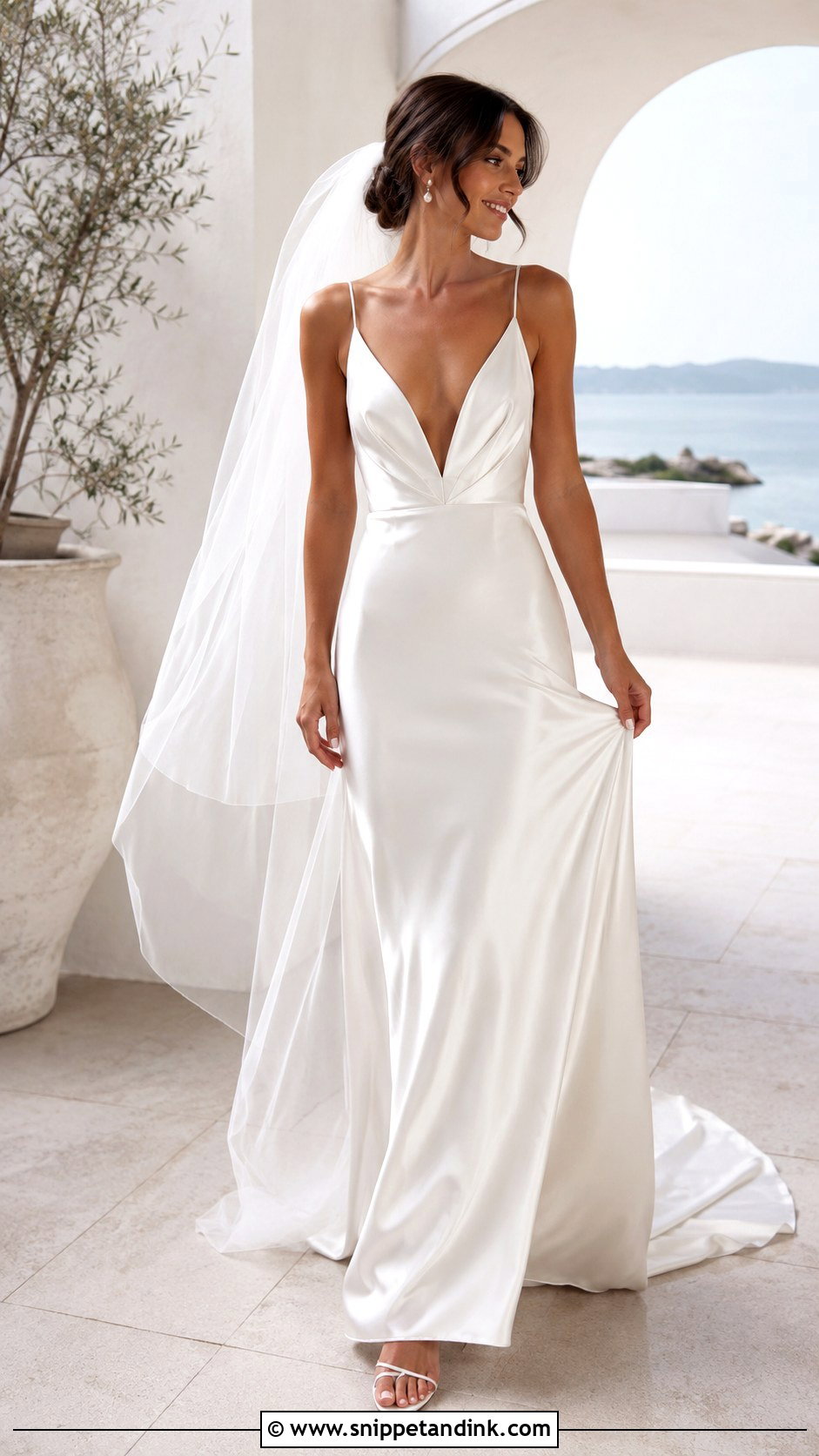
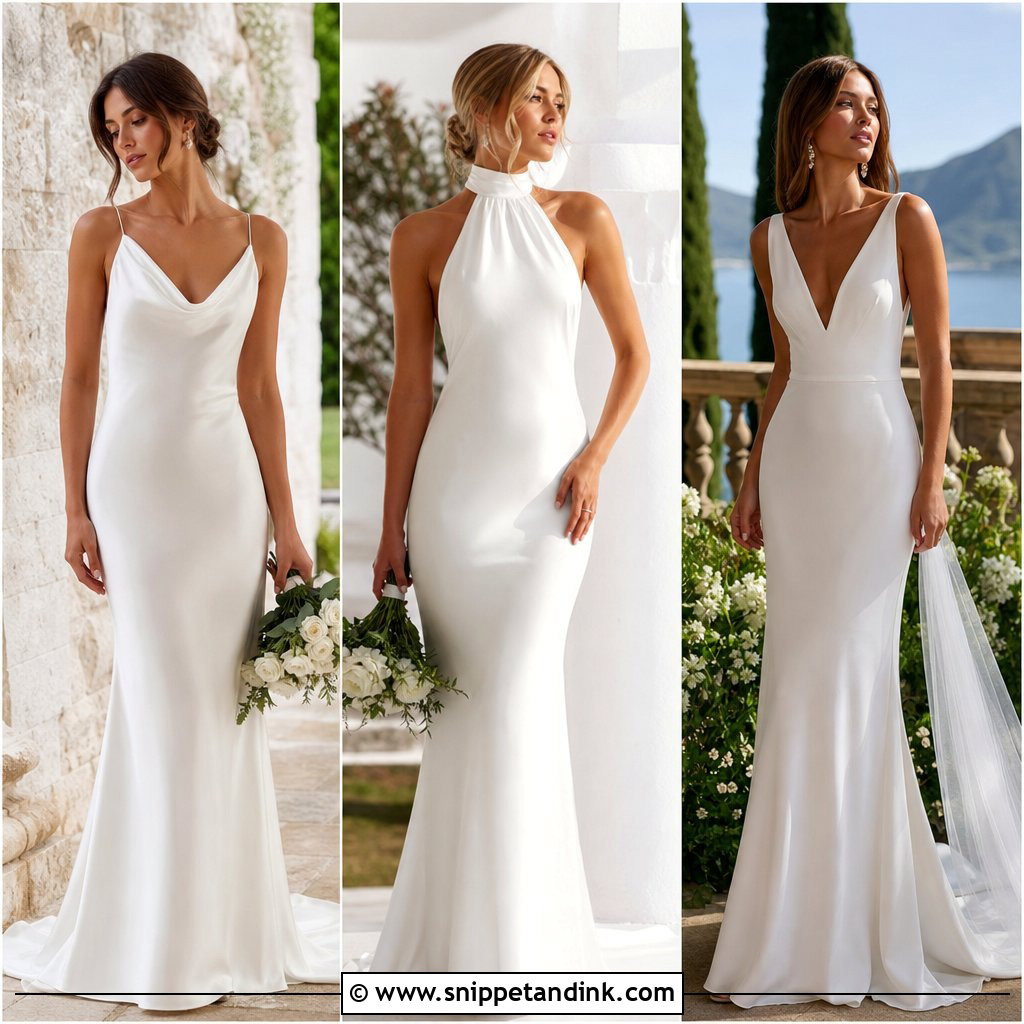
Thin straps can’t carry a dress, and on a plunge they shouldn’t try. Shaped cups and an internal structure do the real work, with the straps there for looks. A bias-cut satin or fluid crepe gown that follows the body without clinging suits the minimal style. Small pearl earrings, barely-there ivory sandals and a light chapel veil keep it spare, with a smooth ponytail or neat bun to leave the straps on show. A removable sheer wrap covers cooler outdoor photographs. It suits galleries, coastal venues and city ceremonies. The look seems simple, but accurate tailoring is what keeps the neckline still.
6. Low Cut Corset Wedding Dress
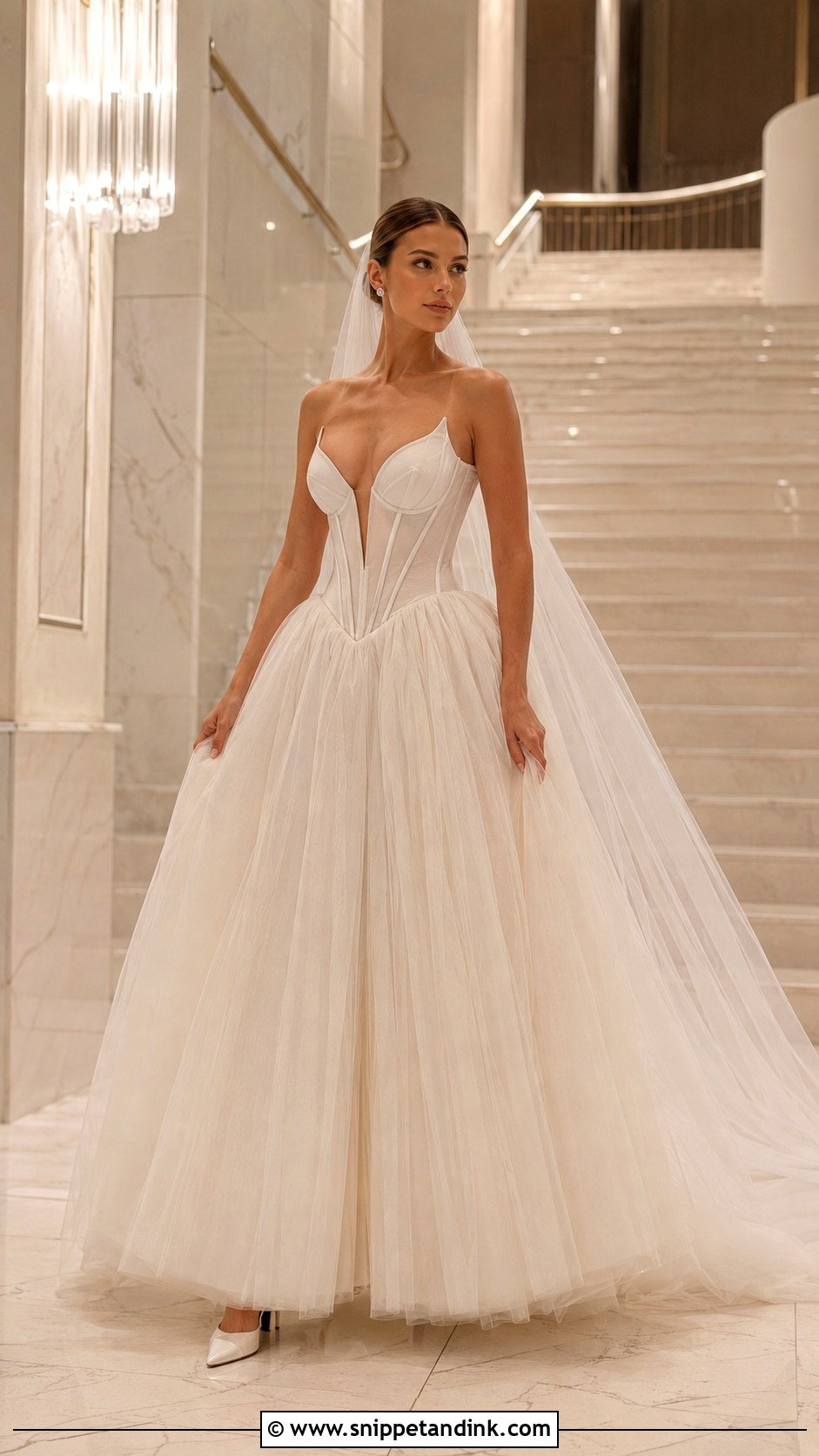
Corsetry is the most secure way to wear a deep neckline, because boning and cups hold the shape rather than your shoulders. Look for defined cups, internal boning and a basque or slightly dropped waist, which is a fresh take on a traditional gown and lengthens the torso. A full silk or tulle skirt below creates an hourglass. A plain cathedral veil, pointed satin shoes and small diamond or crystal earrings finish it, with an updo that shows off the bodice. Avoid oversized accessories. At the fitting, check that the cups sit exactly at your bust point; a cup set even slightly too high or low leaves a gap at the neckline when you move.
7. Low Cut Boho Wedding Dress
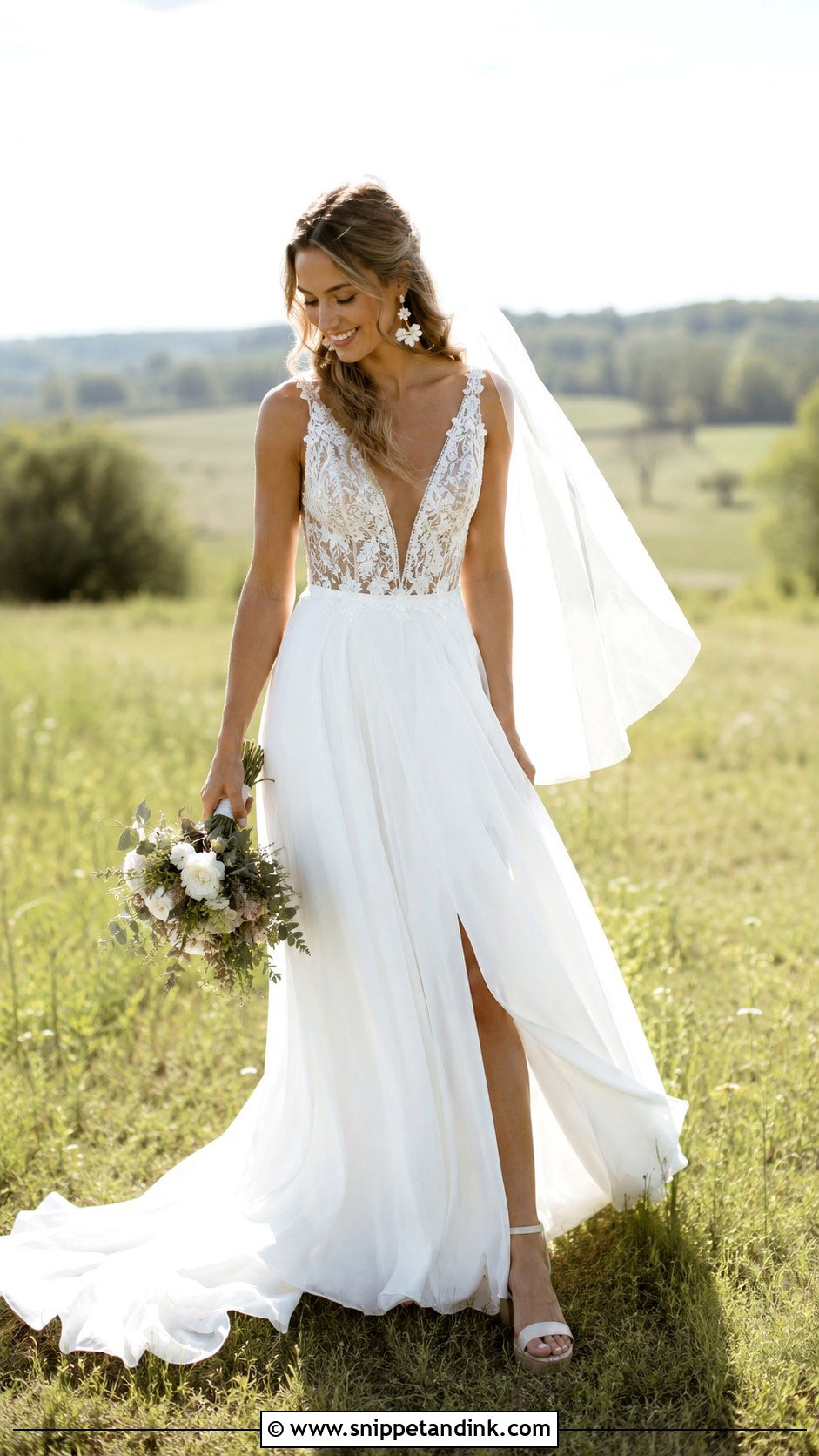
Boho plunges rely on lace and gentle structure rather than heavy boning. Look for a deep V with wider lace straps over a flowing chiffon or light tulle skirt; botanical lace adds texture around the neckline. Loose waves, small floral earrings, block-heel sandals and a soft unedged veil complete it, plus a woven or fabric clutch for later. An airy bouquet with loose greenery suits it better than a tight posy. Without much internal structure, a strip of fashion tape at each edge of the V does a lot of quiet work. Outdoor, woodland and desert venues are its natural home.
8. Low Cut Minimalist Wedding Dress
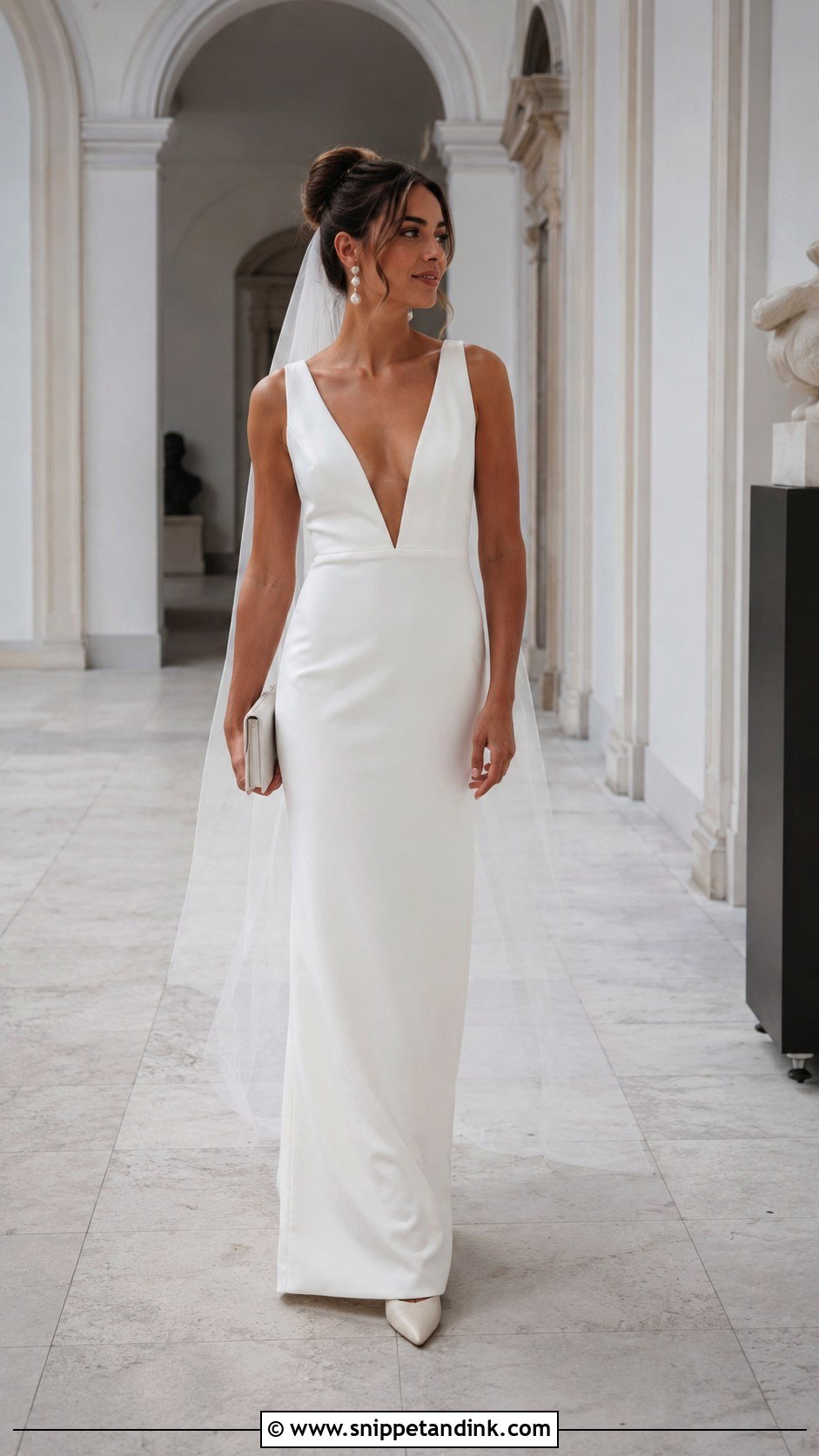
On a plain matte crepe or silk gown, the neckline is the whole design, so its edge has to be perfect. Choose a column or soft A-line with a precise V, a shaped waist and smooth seams. Sculptural pearl earrings, a sleek low bun, pointed pumps and a plain chapel veil keep it modern, with a structured white clutch if you need one. Fresh, polished makeup suits it: defined eyes or a neutral lip. Simple fabric shows every construction flaw, so put your budget into skilled alterations and good internal support. Sit down in the fitting room and check the neckline still lies flat.
9. Low Cut Illusion Wedding Dress
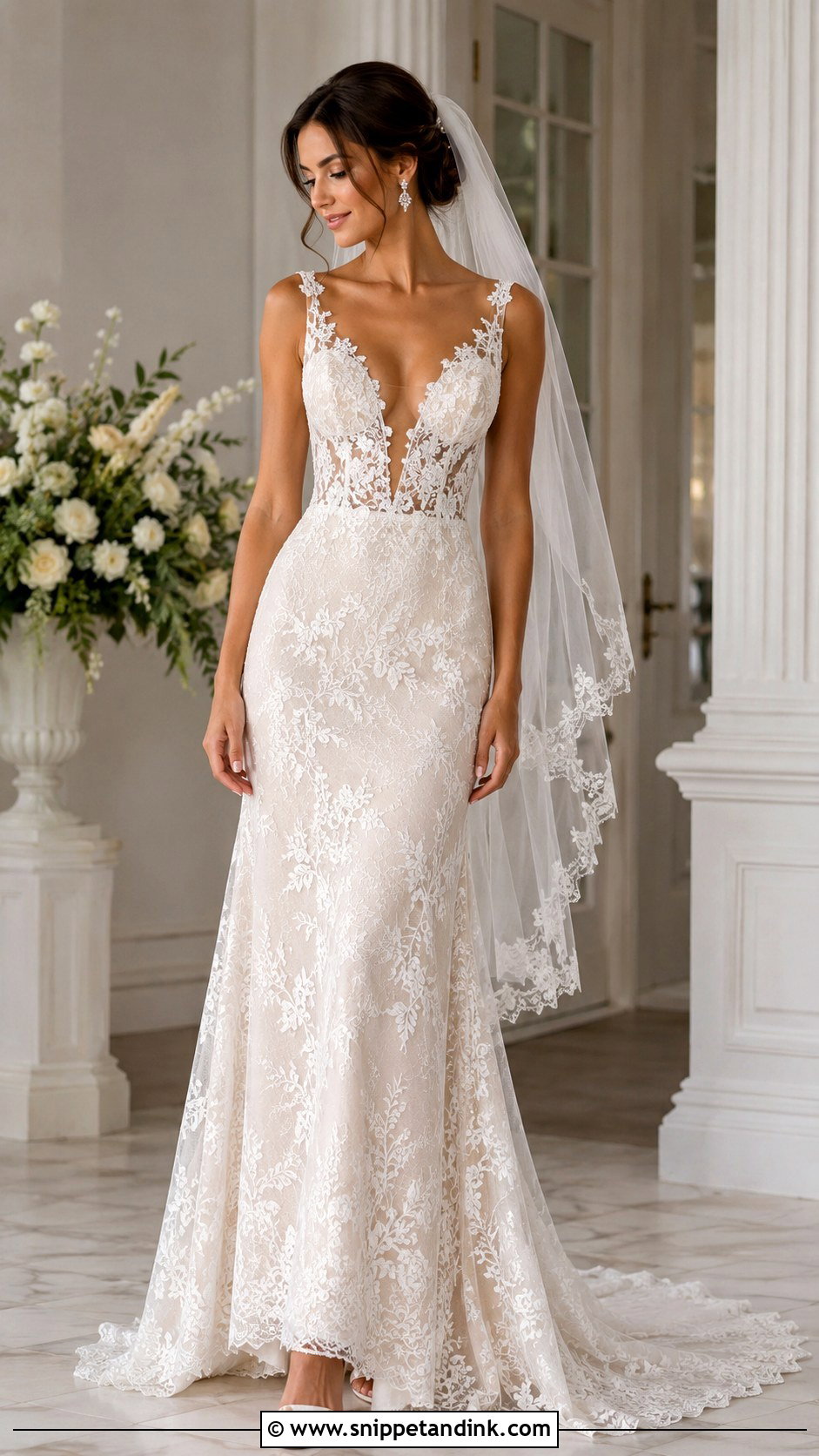
Illusion is the compromise I recommend most often for a bride who loves a plunge but wants control. Skin-tone mesh spans the opening of the V, and lace appliqués or fine beading soften its edges, so from a few feet away the neckline still looks open. Pair the gown with a medium-length veil, delicate crystal earrings and closed-toe ivory heels, and a polished half-up style that keeps the bodice visible. Mesh color is what makes or breaks it. Hold it against your chest in daylight and take a flash photo; a shade that blends in the shop can glow grey or pink on camera.
10. Low Cut Off-Shoulder Wedding Dress
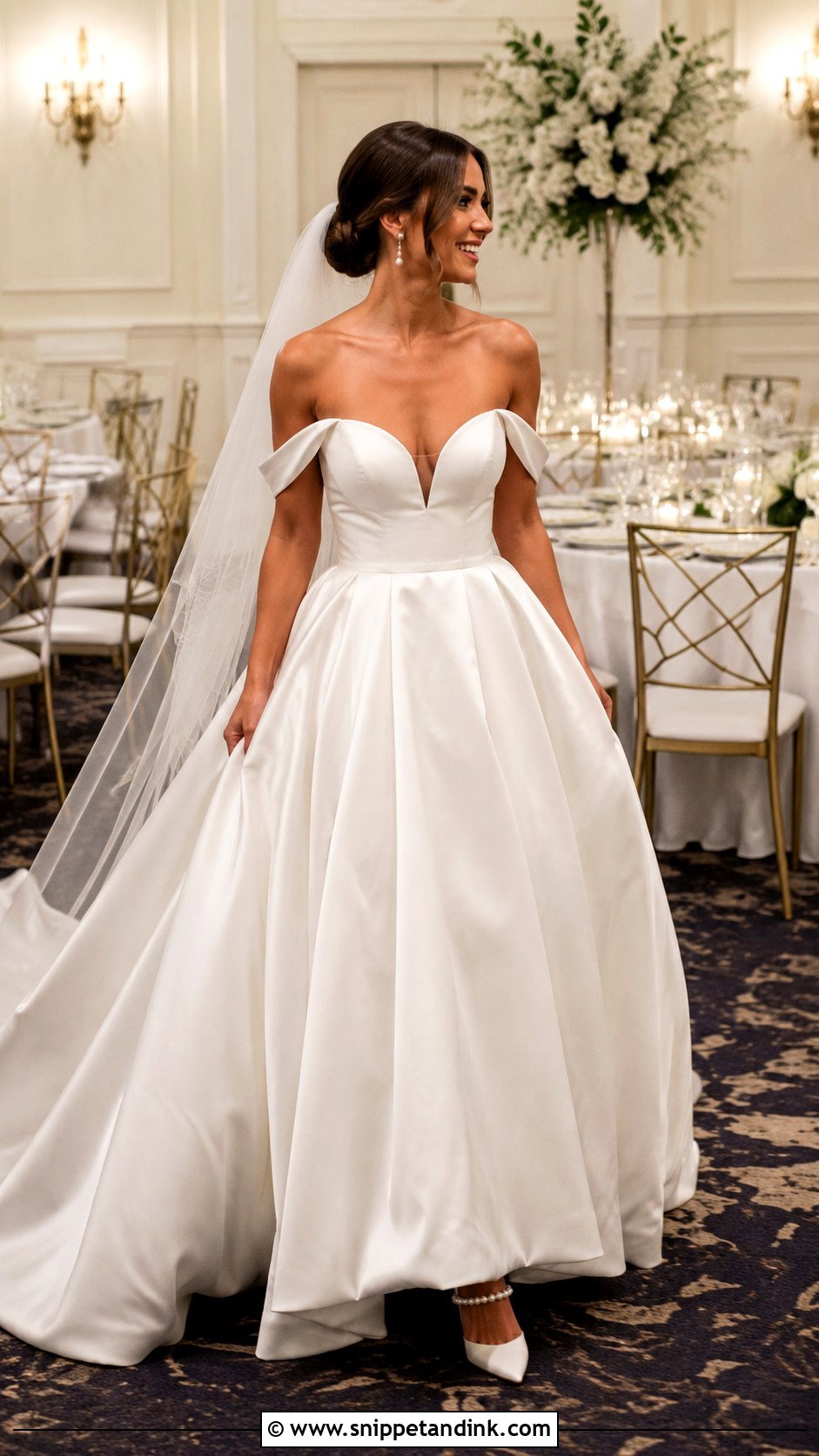
Pairing an off-shoulder sleeve with a low sweetheart frames the collarbones and the whole upper chest. The bodice must be structured, since nothing runs over the shoulder to hold it. Softly draped sleeves should sit securely just below the shoulder joint. A full A-line skirt is classic; a fitted crepe skirt is more modern. A short pendant or nothing at the neck, pearl drops, a low bun and satin pumps complete it, with the veil fixed beneath the bun so it doesn’t cover the neckline. I make every bride raise her arms at this fitting. Removable straps can help if you plan to dance hard.
11. Low Cut Sweetheart Wedding Dress
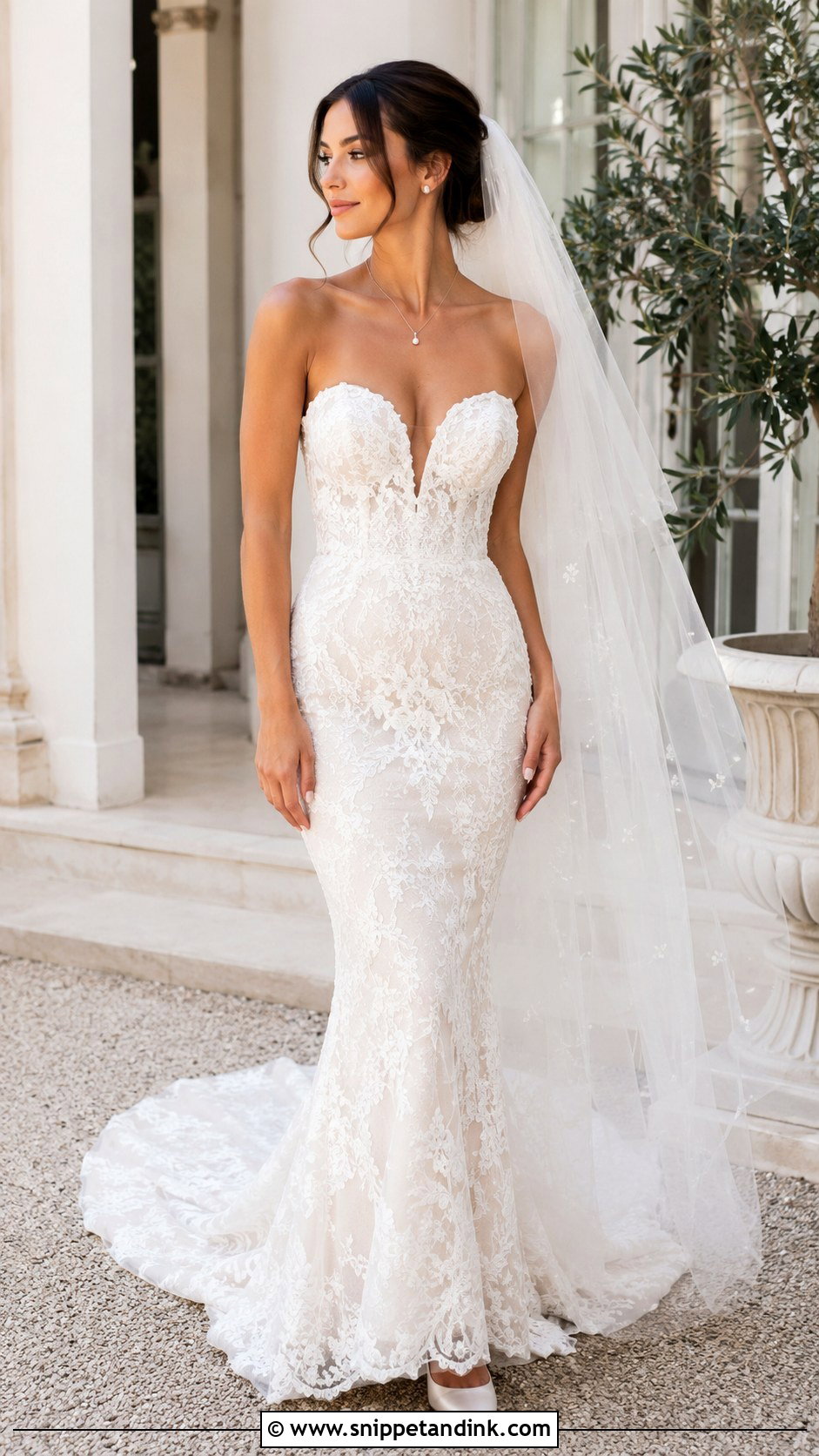
A deep sweetheart wedding dress follows the curve of the bust, so it reads softer than a pointed plunge. On a strapless satin ball gown it’s classic; on a fitted lace shape, more sculpted. A fine pendant, pearl studs, a sheer veil and comfortable pointed pumps complete it. Soft vintage waves suit the curve, while an updo looks cleaner. Strapless sweethearts depend entirely on fit at the top edge, so ask about built-in cups, boning, grip tape or removable straps. A semi-sweetheart gives a little more coverage with the same shape.
12. Low Cut Square Neck Wedding Dress
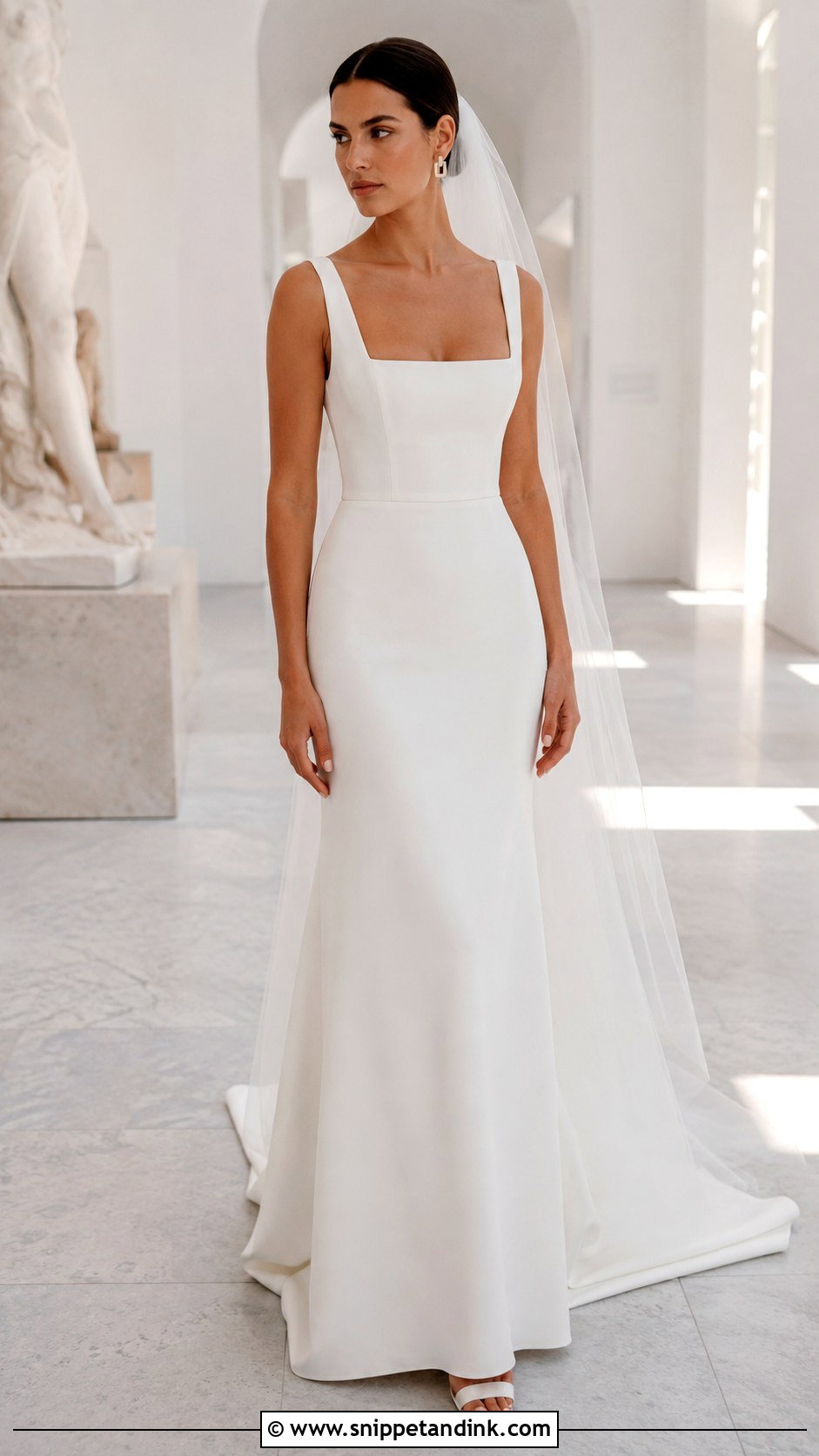
A low square neck is the most architectural option here and the least common, which is part of its appeal. It needs wide straps and a firmly shaped bodice so the straight edge sits flat across the bust. A fitted crepe skirt keeps it modern; a pleated satin skirt adds volume. Geometric earrings, a sleek bun, a plain veil and square-toe ivory shoes echo the lines. Skip rounded necklaces, which fight the shape, though a short structured pendant can work. After alterations, check the two corners are level in the mirror. They’re the first thing the eye catches when one is off.
13. Low Cut Scoop Neck Wedding Dress
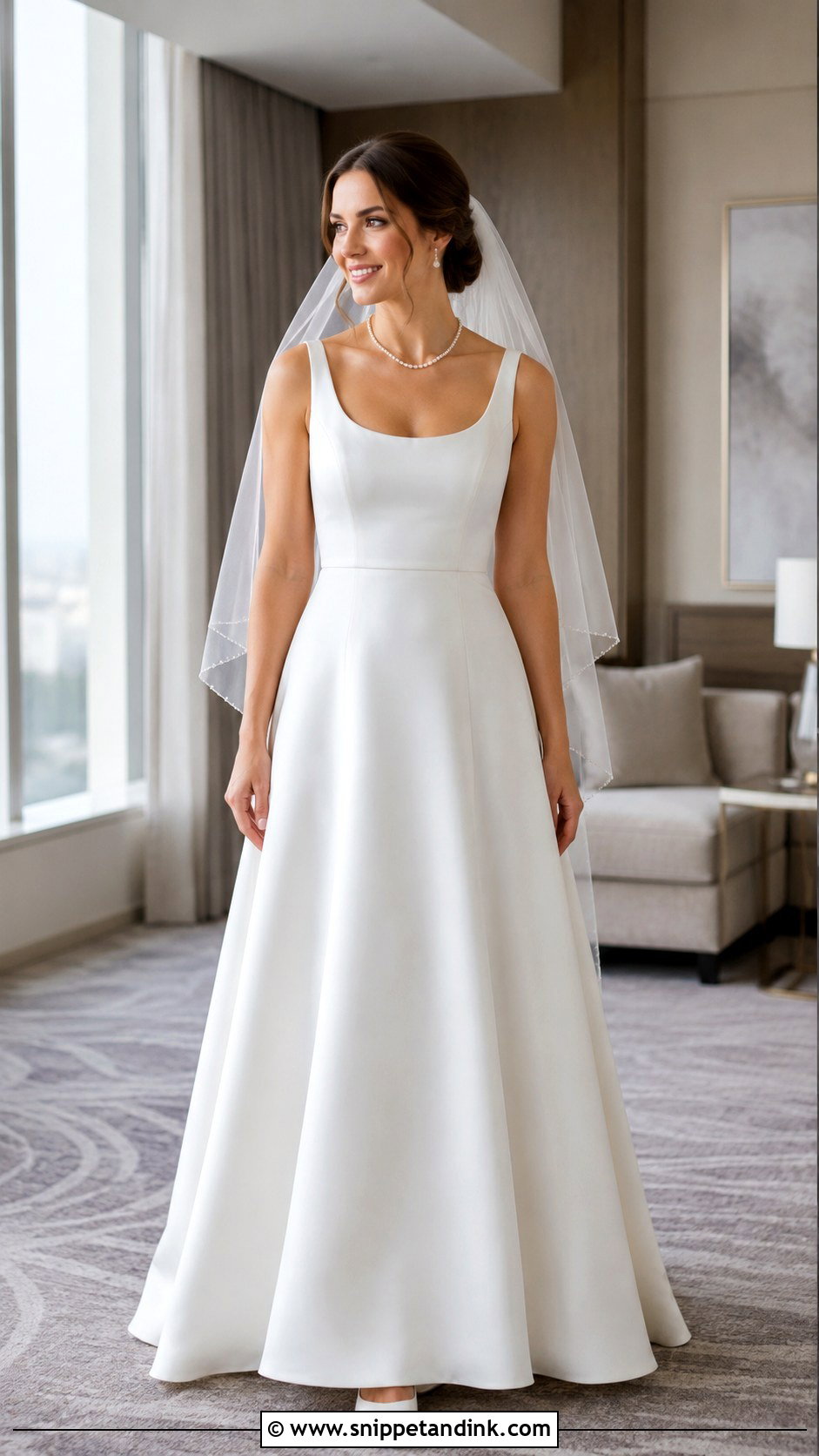
A low scoop is the gentlest way into a deeper neckline. The round opening reads soft, and it suits brides who find a V too sharp. Satin or crepe with a supportive curved bodice and straps set wide enough to frame the shoulders works best, with a fitted waist and gently flared skirt. A short pearl necklace, matching earrings, a fingertip veil and round-toe shoes suit it, with a neat chignon or half-up style. I ask brides to lean forward in the mirror, because a scoop in soft fabric gapes there first. Tape helps, but tailoring should do most of the job.
14. Low Cut Cowl Neck Wedding Dress
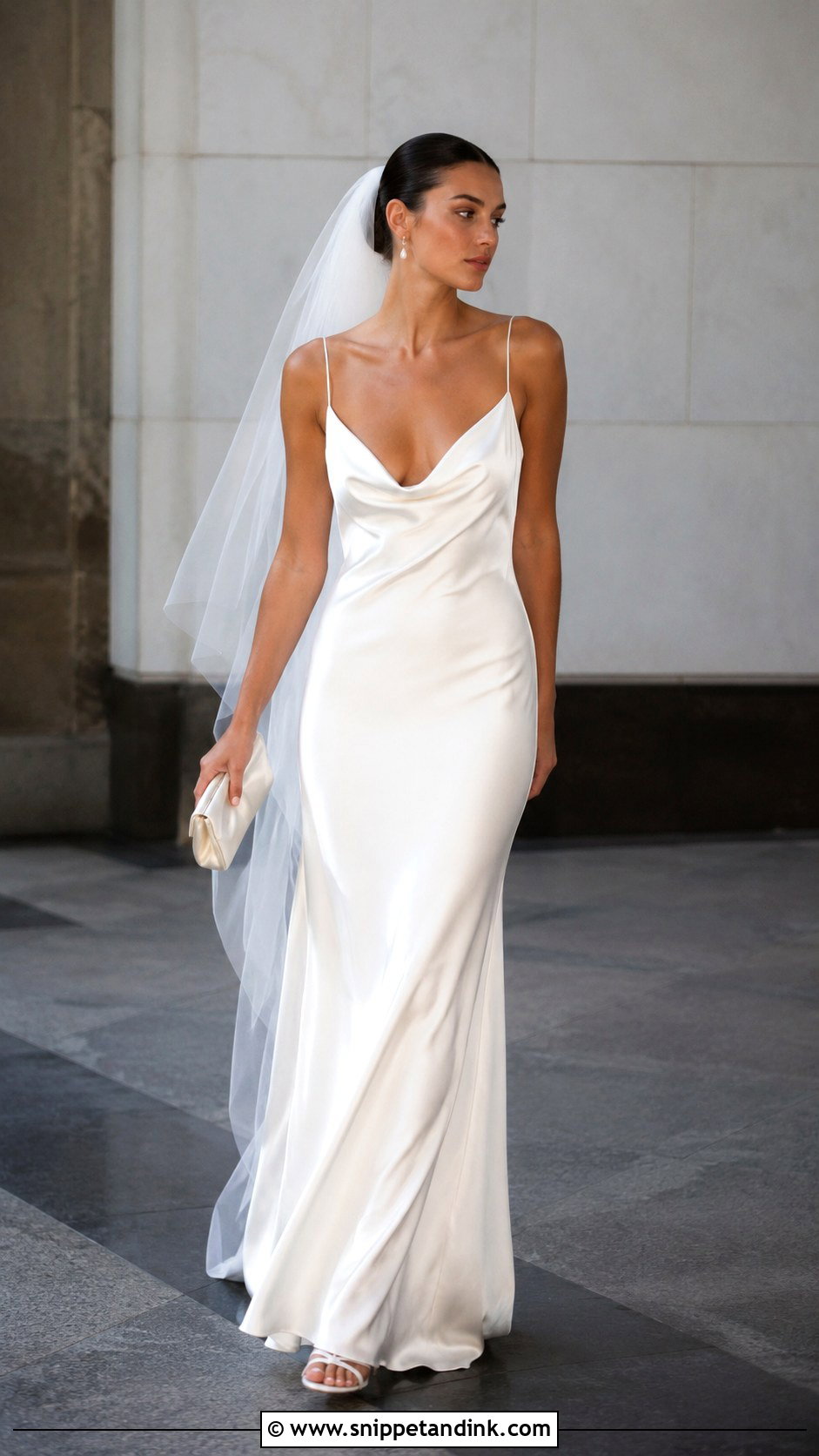
A cowl is loose by design, and that’s exactly the risk. Fluid satin draped at the neckline gives a relaxed look with clear 1990s influence, but too much fabric and the drape collapses into a sag. Choose a bias-cut gown with slim straps, a gently defined waist and a skirt that falls straight. Pearl drops, thin ivory sandals and a sheer veil beneath a polished bun keep it simple, with a small satin clutch for later. Ask your tailor about a tiny weight sewn into the lowest fold of the cowl or a hidden snap; either keeps the drape where it belongs when you bend.
15. Low Cut Beaded Wedding Dress
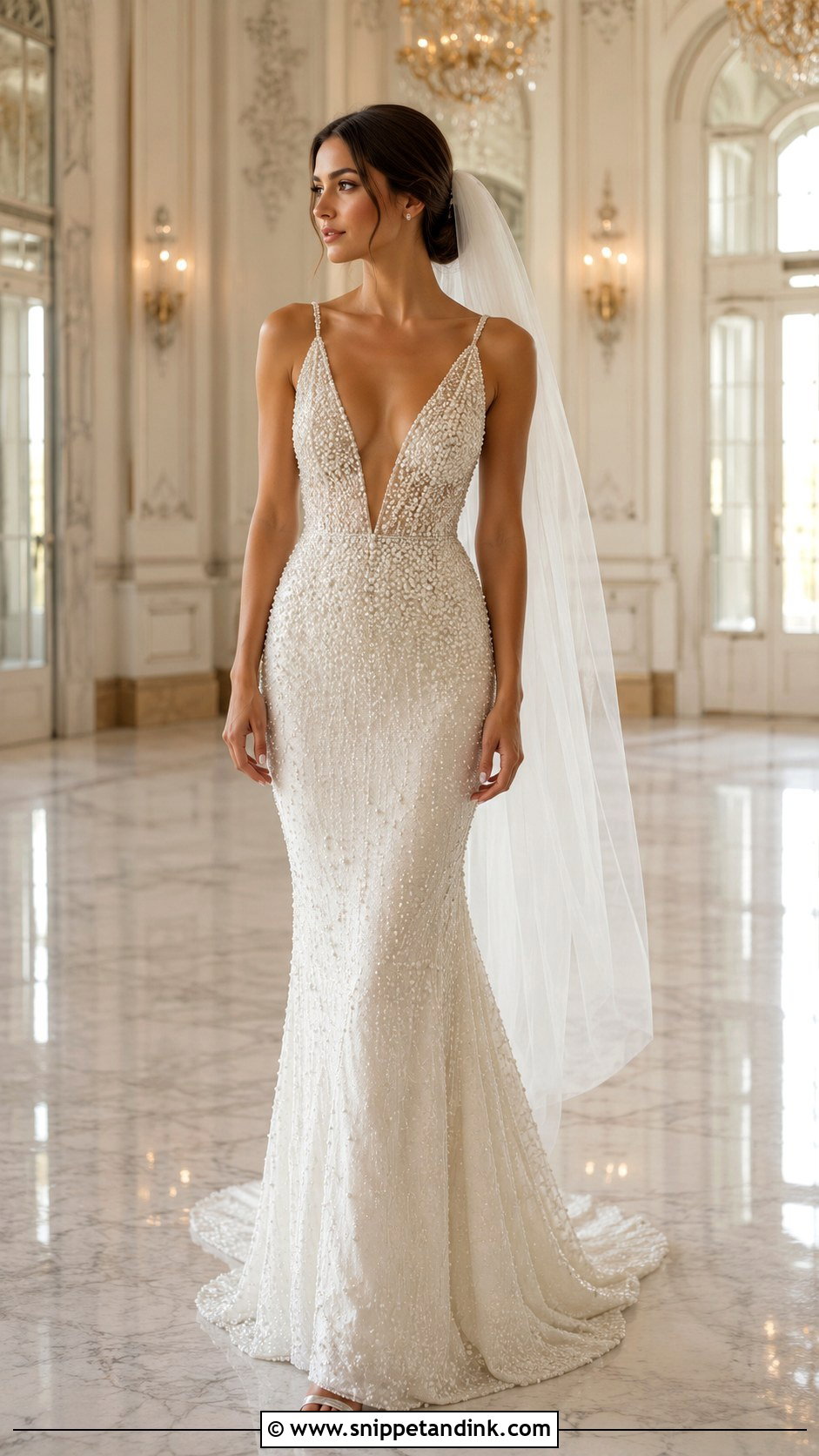
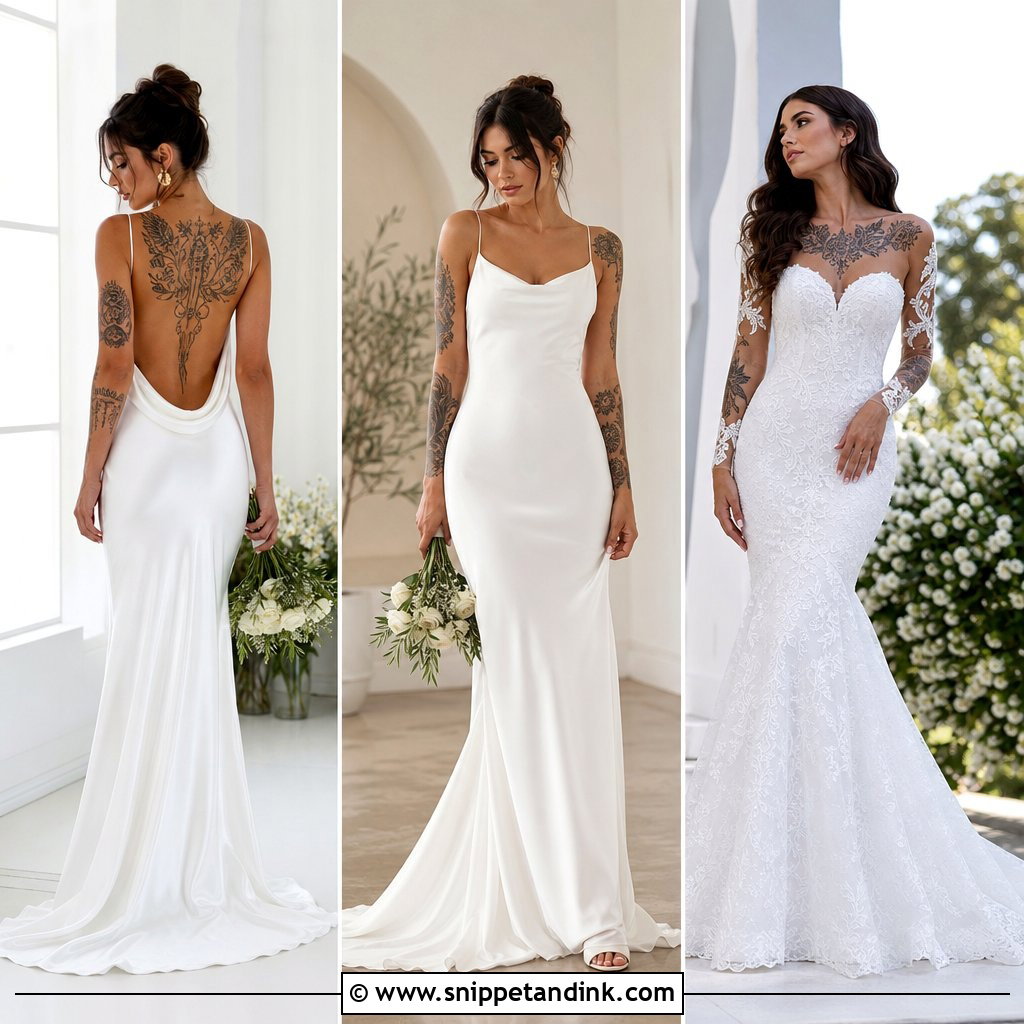
Beadwork on a plunge adds sparkle exactly where the eye already goes, so keep the beads fine. Crystals, pearls or linear beading look precise; large embellishments get heavy and drag the neckline. A slim tulle or crepe skirt keeps attention on the bodice. Simple studs, metallic ivory heels, a plain veil and a smooth low bun finish it, with no necklace. I always run a finger along the inside of the straps and armholes before you buy. Rough backing on beadwork scratches skin over a long day, and a soft lining fixes it. Evening ballrooms show the sparkle best.
16. Low Cut Floral Appliqué Wedding Dress
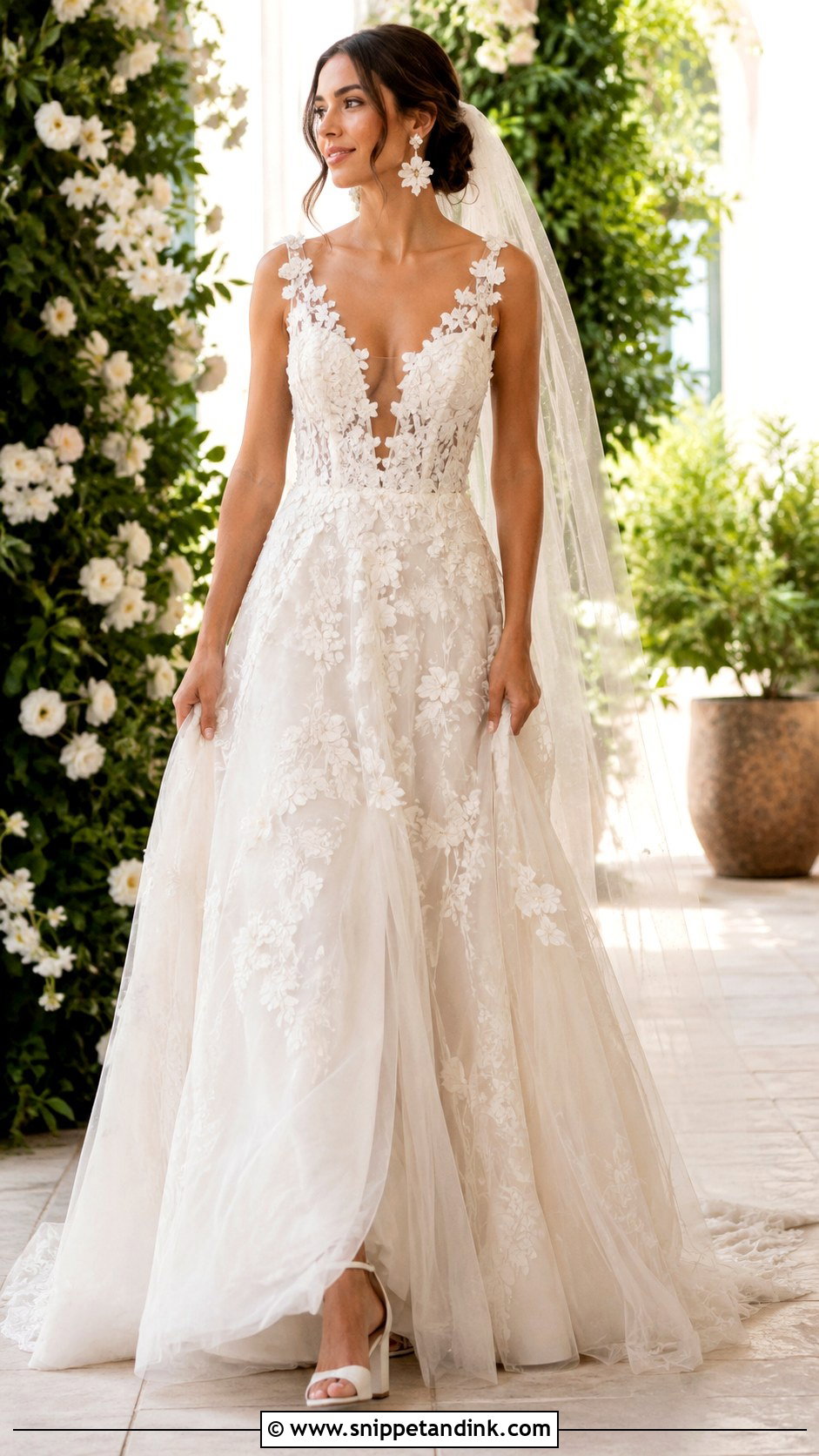
Three-dimensional flowers soften a plunge because they break up the bare edge. An A-line or fit-and-flare with appliqués clustered on the bodice and fading into the skirt is the shape. A transparent illusion panel holds the neckline without interrupting the flowers. Floral earrings, ivory block heels, a lightly embellished veil and a loose low bun finish it, with a bouquet small enough not to hide the bodice. Raised petals catch on veil tulle, so test them together. Ask the designer whether spare flowers come with the dress; they’re useful for hair pins and repairs.
17. Low Cut Plus Size Wedding Dress
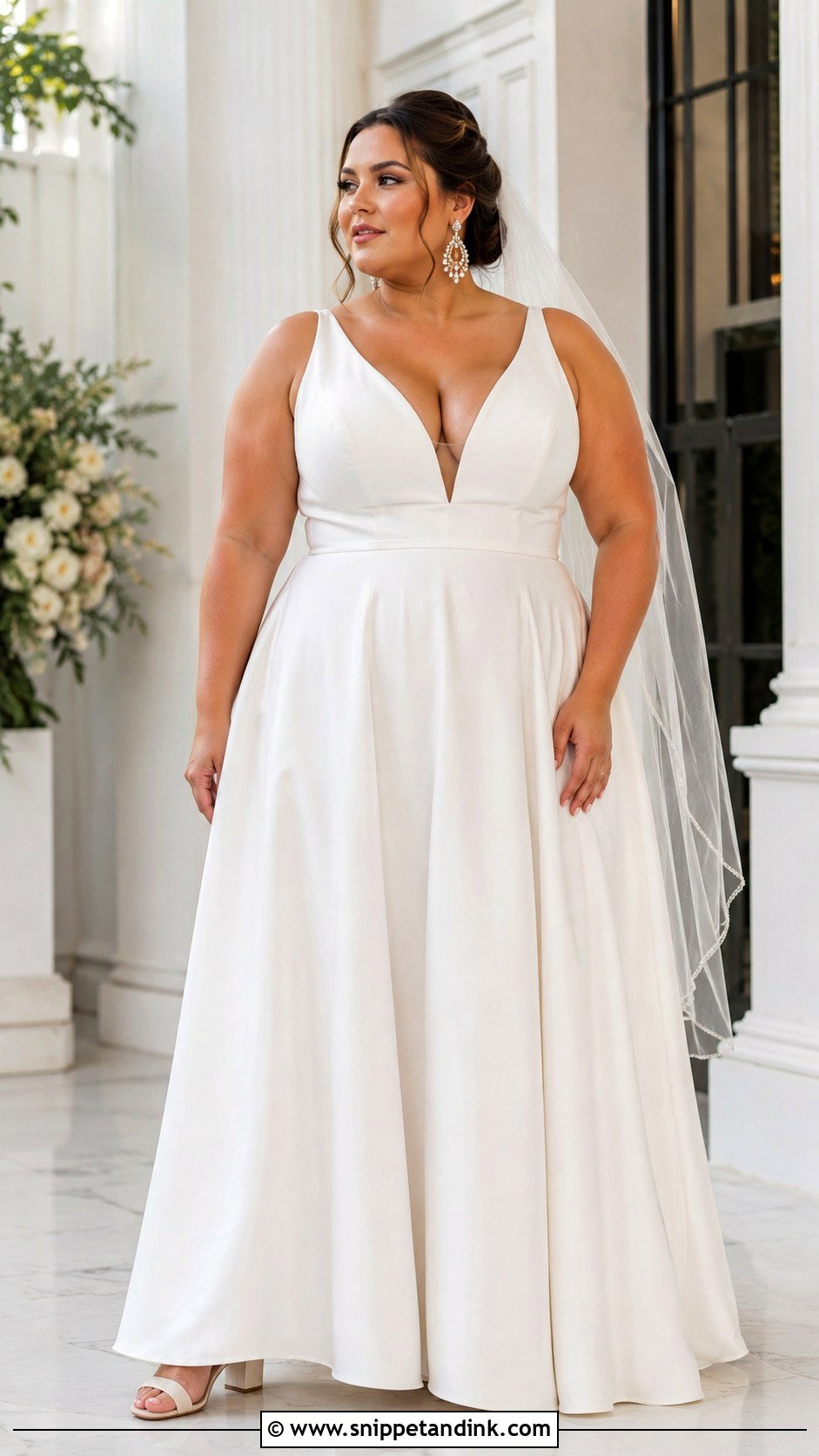
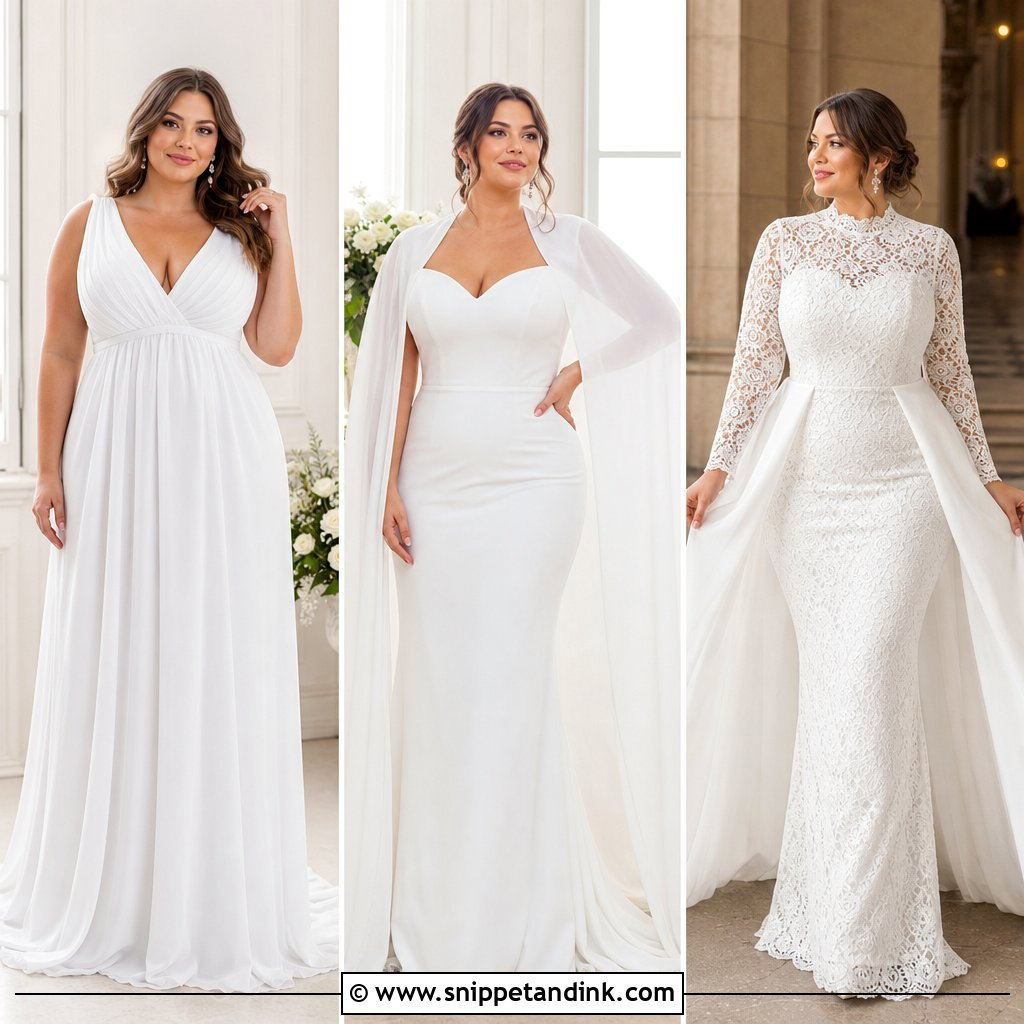
On a fuller bust, a plunge works when the construction is built for it: wider straps, shaped cups, firm boning and a stable waist seam. A V-neck A-line gives a long vertical line, and a fitted trumpet shows curves more closely. A smooth veil, statement earrings, supportive block heels and an elegant updo complete it. I’d never size down for a tighter look. Pulling distorts the neckline and pinches. Order to your largest measurement and have the rest tailored. A deep V suits many bodies when the proportions and support are right, and it should feel secure the moment you put it on.
18. Low Cut Petite Wedding Dress
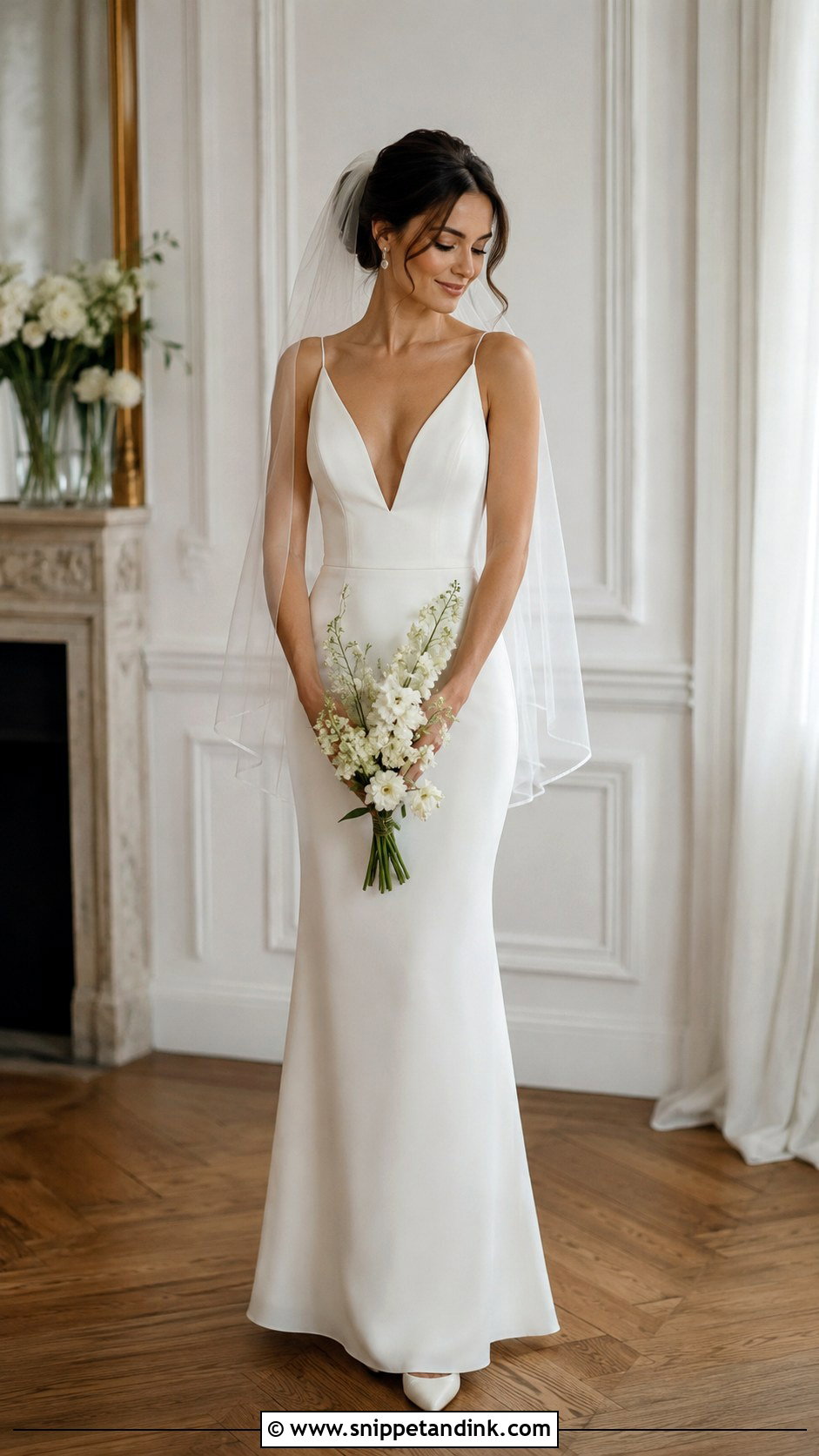
For petite brides, a low neckline can add height to the upper body, but only if it’s in scale. A narrow V, a natural waist, slim straps and an uninterrupted A-line or sheath skirt keep the proportions clean. Watch the bodice length: a long bodice drops the waist seam onto the hips and shortens the legs. Petite-cut gowns adjust bodice length, waist position and overall volume for a shorter frame, so ask whether one is available. Pointed ivory heels, small drop earrings, a narrow bouquet and a fingertip veil suit it, with a high bun for a little extra height. Wear your wedding shoes at every fitting.
19. Low Cut Tea-Length Wedding Dress
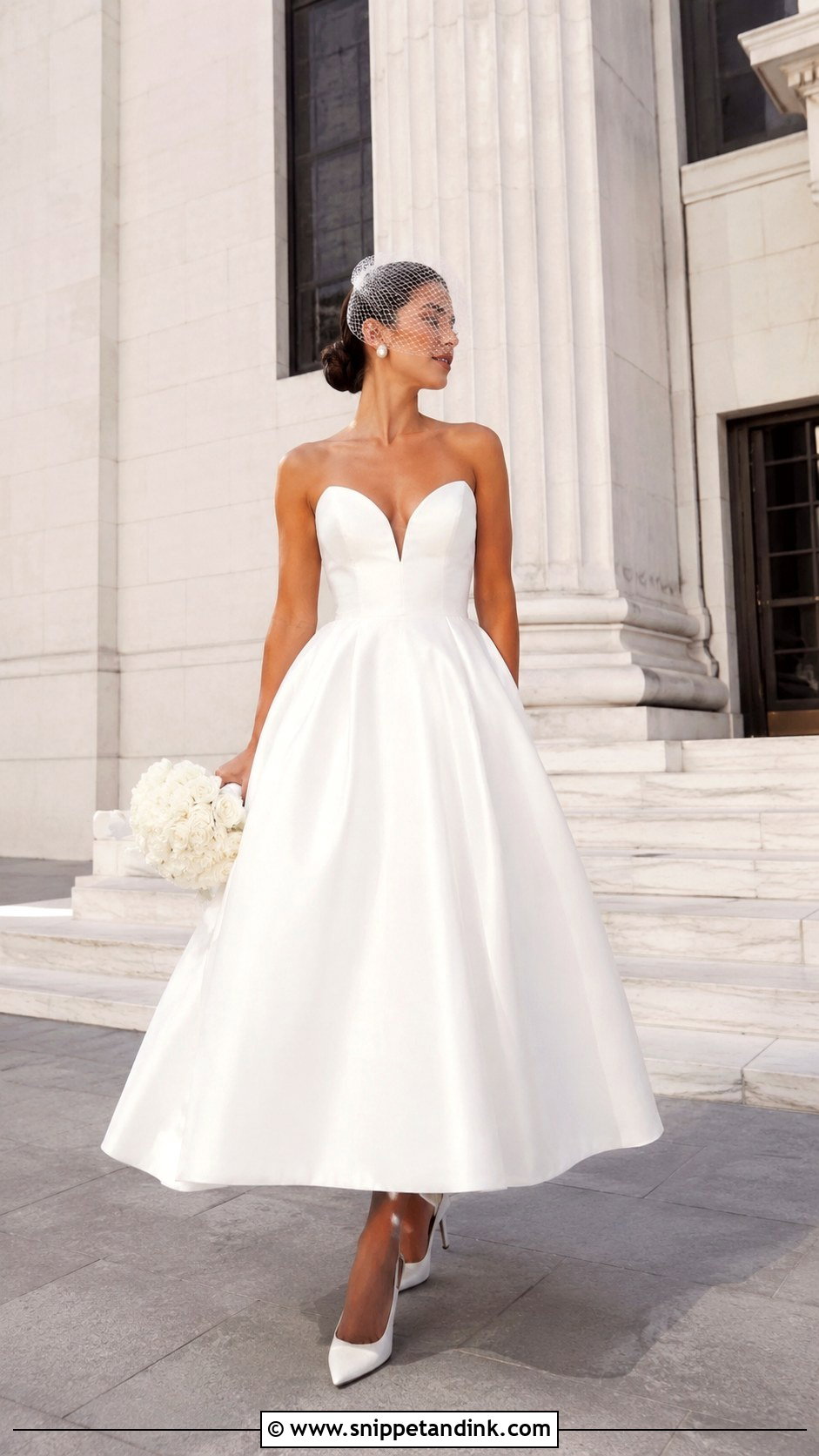
Tea length with a low neckline is a playful mix, and it works best when the bodice is structured. A V-neck or sweetheart top with a fitted waist and a skirt ending between knee and ankle is the shape; satin gives crisp volume, tulle softer movement. Pointed pumps or slingbacks, pearl earrings, a birdcage veil and a compact bouquet complete it. Your shoes are on show all day, so they need to be comfortable enough to dance in. A neat bun, short waves or a polished ponytail suit the shorter length. Courthouse ceremonies and second looks are its strengths.
20. Low Cut Wedding Dress With Overskirt
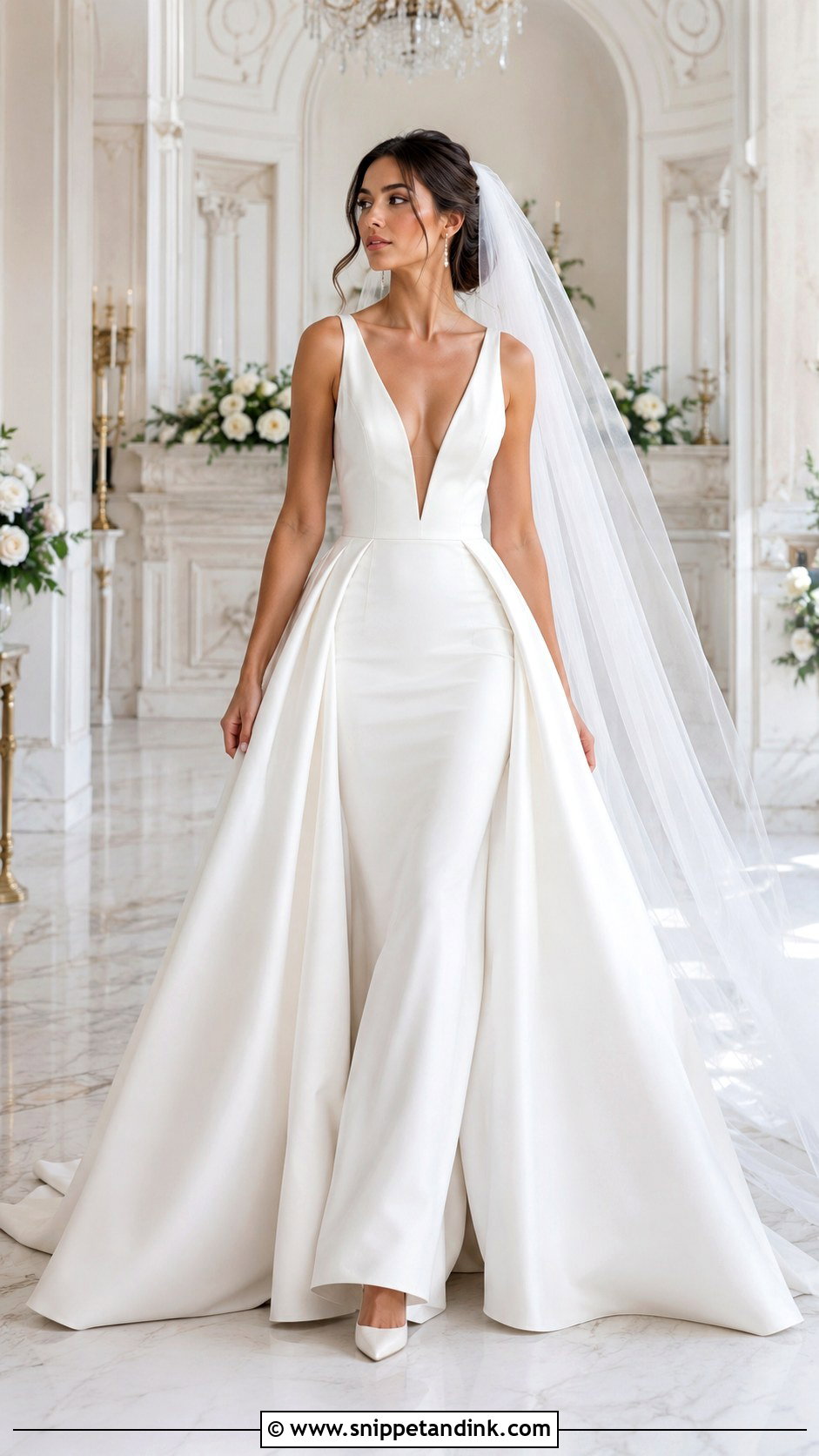
An overskirt gives you a ball gown for the ceremony and a slim dress for dancing. Start with a fitted crepe or lace gown with a structured plunge, then add a detachable satin or tulle overskirt for the ceremony. Later, remove it for a lighter shape. A cathedral veil, drop earrings and pointed pumps suit the ceremony; afterwards, swap to a shorter veil, a hair piece or bolder earrings. The overskirt band must sit flat under the bodice, or it pushes the neckline up and out of line. Practice taking it on and off before the wedding with whoever will help you.
What a Plunge Shows From Above
Mirrors show you a neckline straight on, but many wedding photographs are taken from above: candids while you sit at the table, a guest standing during the signing, a first-dance dip. A neckline that looks secure face-on can show far more at those angles.
Test it at the final fitting
My routine is to have someone stand on a step and photograph you while you sit, lean forward and bend down to pick up your bouquet. If the camera sees the cup edges or more than you’re comfortable with, the seamstress can raise the point slightly, add a small mesh insert or tighten the neckline edge.
Tape and makeup on the morning
Double-sided fashion tape only grips clean, dry skin, so apply it before any body lotion, oil or shimmer. Press each strip for a few seconds and leave the edges of the V free of product. If you use self-tan or body makeup on the chest, let it dry completely and test it on a scrap of the lining beforehand; both can transfer onto ivory lace and satin by the end of the night.
Lean Forward in the Mirror Before You Say Yes
A low neckline only works when the support underneath it is solid, the tailoring is careful and the accessories leave it room. Lace, satin, crepe, flowers or beading can all carry a plunge, as long as the gown feels secure as well as flattering. Test every dress by sitting, walking, raising your arms and leaning forward. Where you need more stability, illusion mesh, cups, boning, wider straps or tape will help. Keep jewelry in proportion to the neckline, choose a hairstyle that keeps it visible, and go with the gown you stop checking in the mirror.
You'll Like These Ideas:




Leave a Reply