
A mermaid cut follows the bodice, waist and hips closely and then opens into a flared skirt, so the gown has a strong outline from the front, the side and the back. In my fitting room it is also the silhouette that surprises brides most, in both directions: some put one on expecting to feel constrained and walk out grinning, others love the hanger and hate the stairs. The ideas below run from plain crepe and clean satin to lace sleeves, pearl work, organza ruffles and overskirts. For each one I’ve noted what I look at during a fitting, because with a dress this close to the body, how it sits and moves matters as much as how it looks standing still.
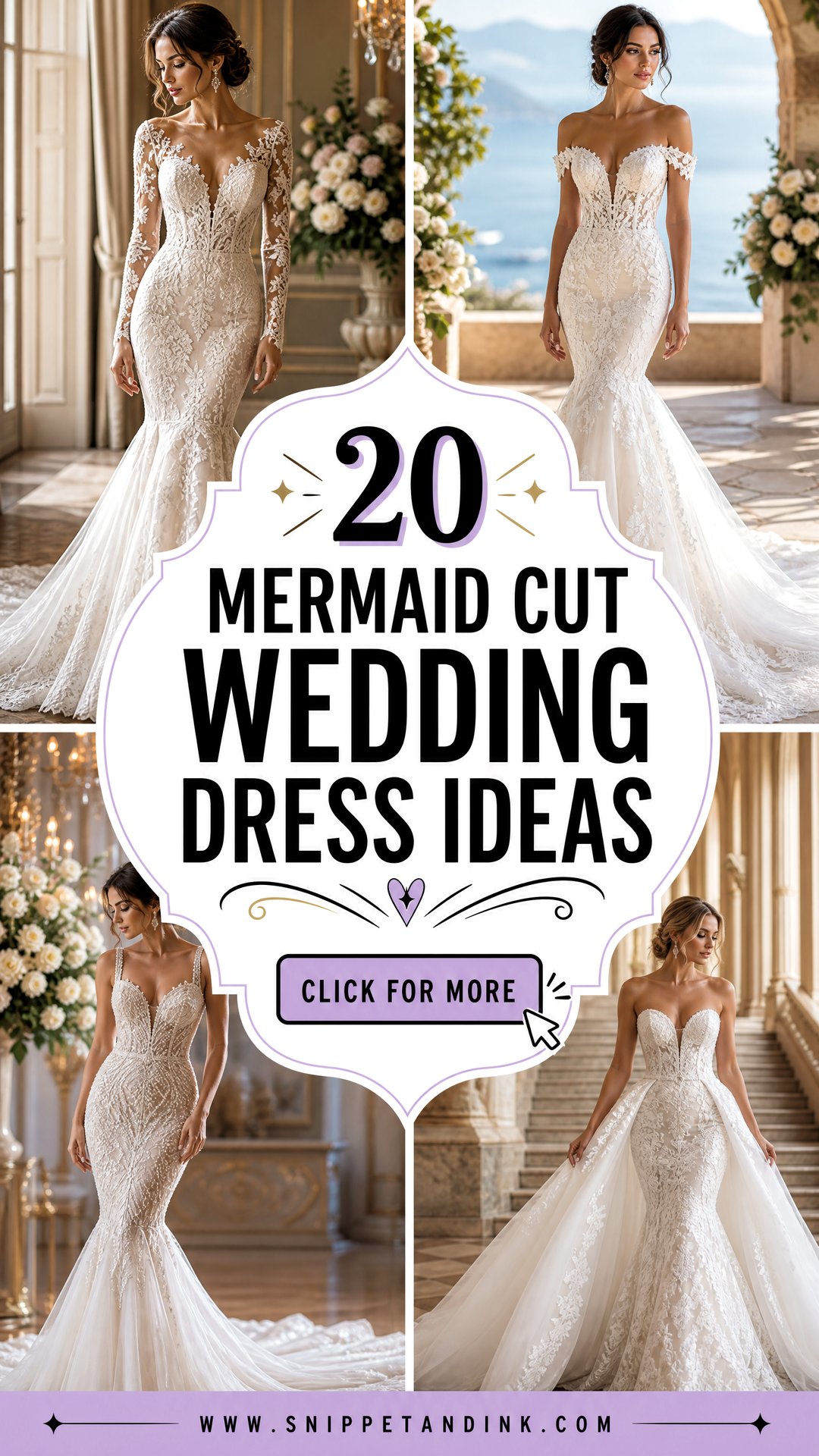
Grass, Sand, Stairs: Matching a Mermaid Skirt to Your Venue
The ground you’ll walk on decides more about a mermaid gown than most brides expect. A narrow knee and a long train behave very differently on polished marble than on a lawn.
- Lawns and gardens: heels sink and the train collects grass and damp. A trumpet flare and a shorter sweep train are easier, and a block heel helps.
- Beach ceremonies: sand drags heavy satin. Lighter crepe or tulle with minimal train, worn barefoot or in flat sandals, moves more easily.
- Grand staircases: walk them in the sample or a similar dress. In a tight mermaid you will often go sideways, and someone may need to carry the train.
- Long church aisles: the flare and train look striking from the pews, but practise a slow walk so you don’t tread on the hem at the turn.
I also ask about transport. A fitted gown with a big flare is awkward in a small car, so a larger vehicle or a few extra minutes to get in and out saves crushing the skirt before you arrive.
1. Strapless Satin Mermaid Wedding Dress
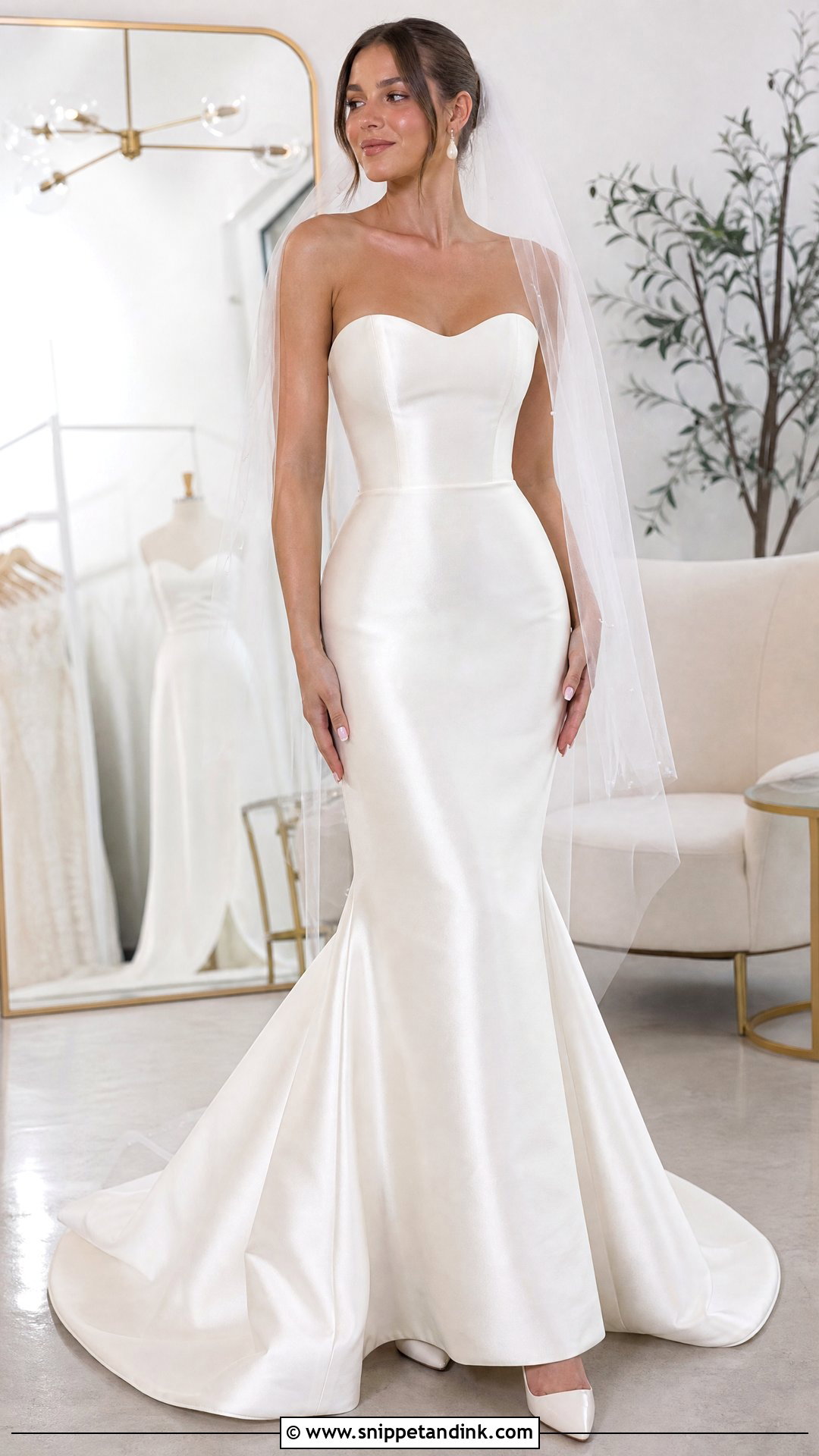
Satin shows everything, which is the appeal and the risk. A strapless bodice needs proper internal boning and a waist stay so it holds without straps, and a pleated skirt starting near the knee gives the flare volume without any beading. I pay close attention to seam placement and to what’s underneath, since satin reflects light across every ridge. Pointed ivory pumps, pearl drops, a sleek low bun and a fingertip veil keep it clean. If the train is chapel length or longer, plan the bustle at the second fitting, not the last.
2. Long Sleeve Lace Mermaid Wedding Dress
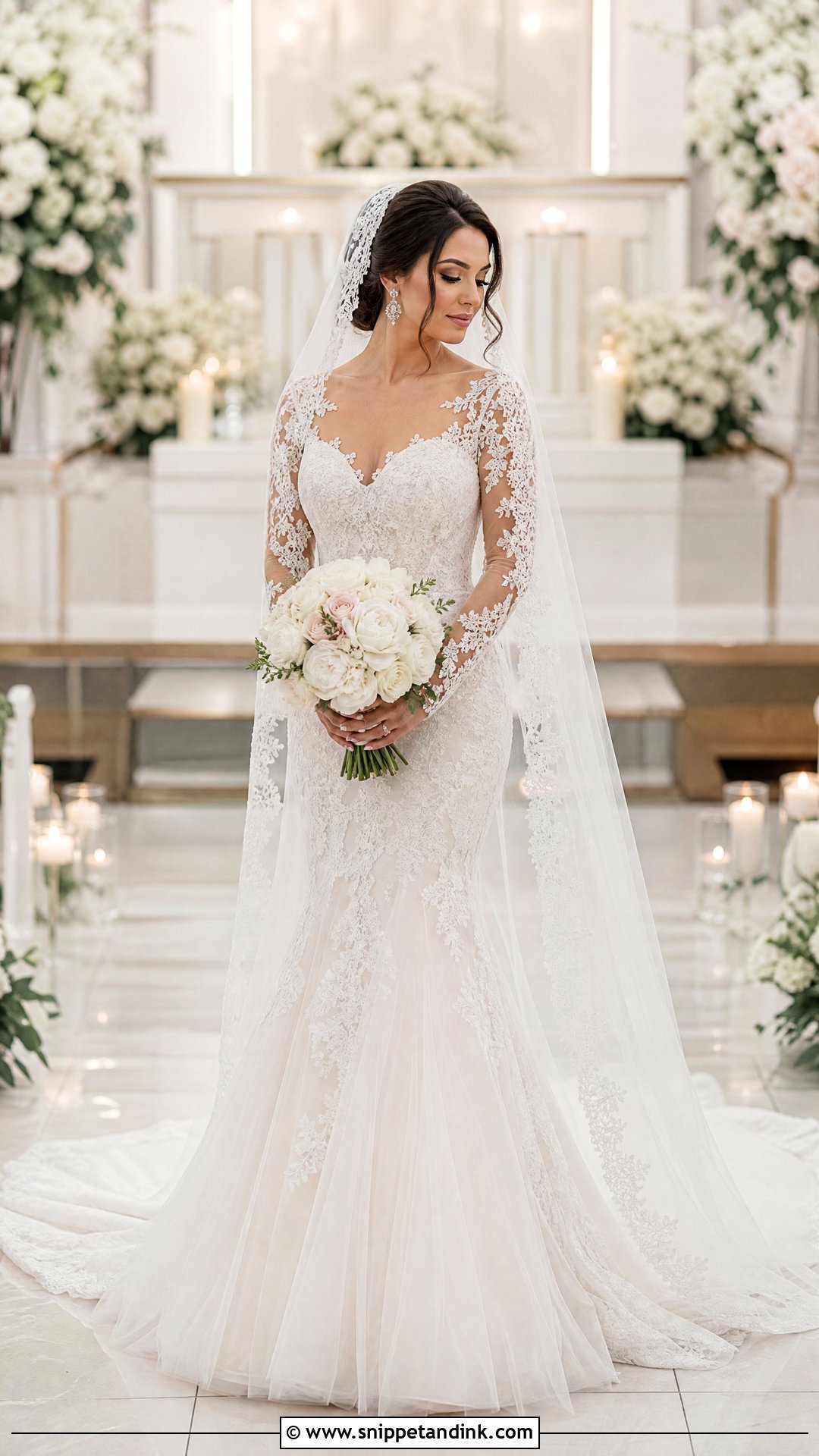
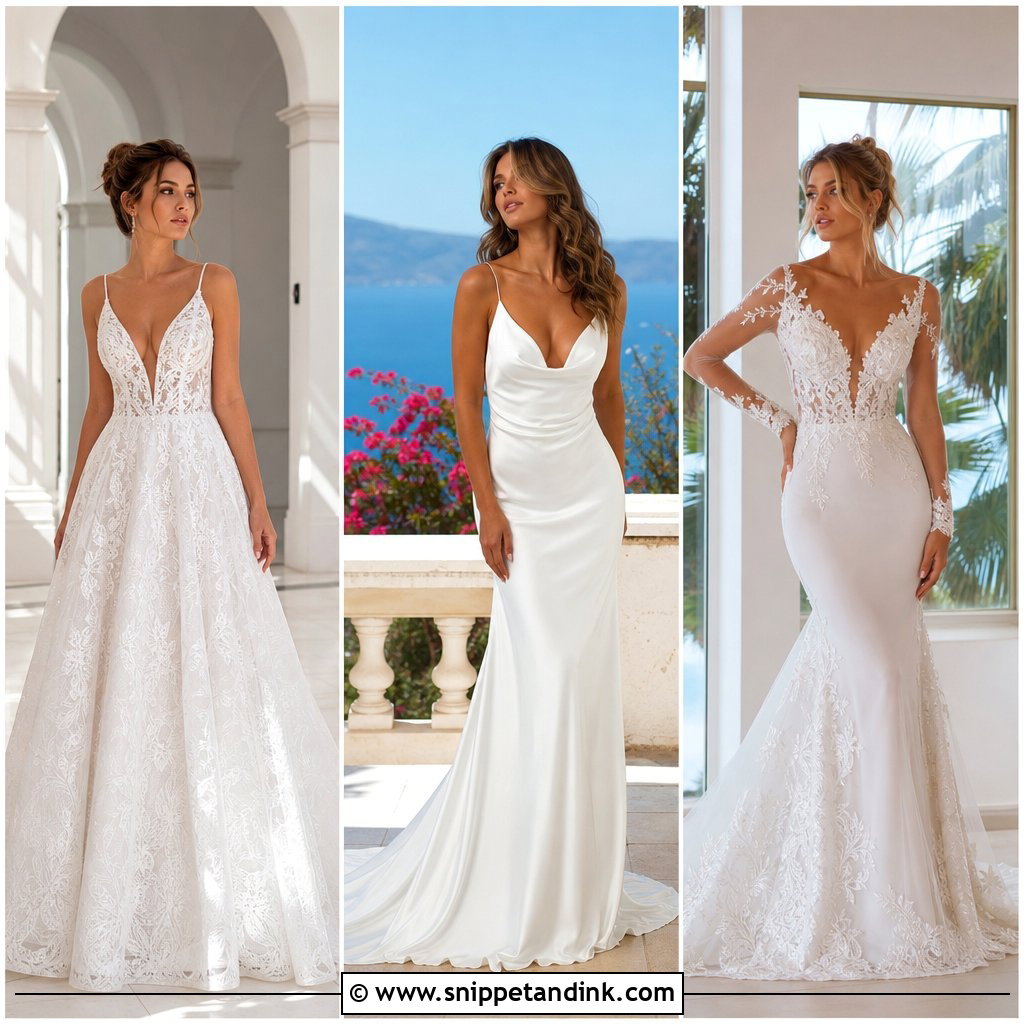
Long lace sleeves are lovely until you try to hug your grandmother in them. Before anything else, I have the bride cross her arms and reach forward, because a fitted lace sleeve that’s too tight across the back will pull the whole bodice. The details worth paying for are covered wrist buttons and appliqués that continue over the hips and down into the tulle flare, so the lace looks planned rather than patched. A lined sweetheart bodice beneath the lace gives shape underneath. Small crystal earrings, closed-toe pumps and a pinned chignon leave the sleeves and neckline on view.
3. Off The Shoulder Mermaid Wedding Dress
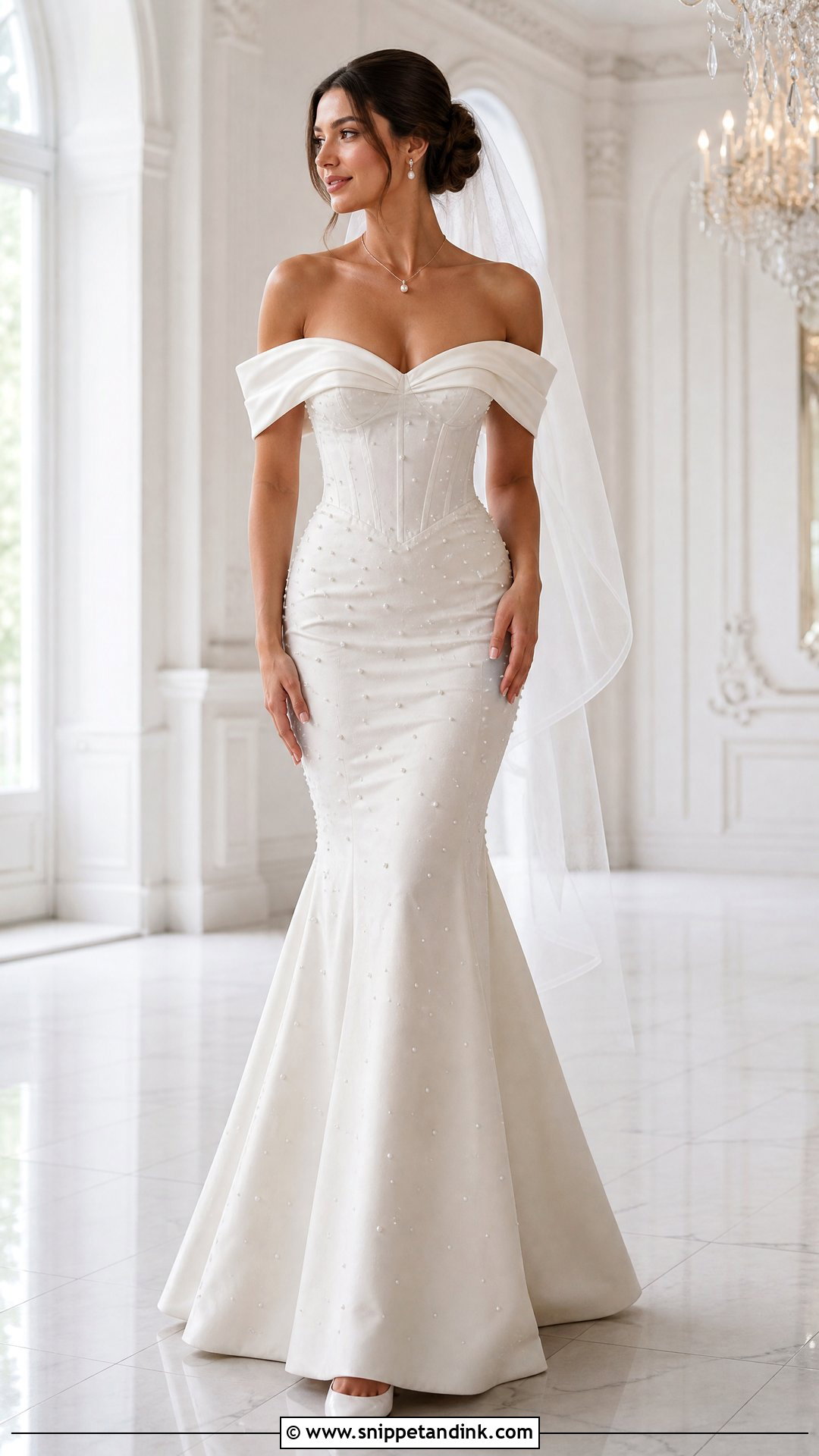
Off-the-shoulder bands come either sewn in or detachable, and that choice matters more than the fabric. Sewn-in bands are more supportive across a long day; detachable ones give you a second look but can slip. Draped satin looks modern, while lace or tulle feels lighter. I like this neckline over a corseted bodice with a skirt that flares gradually below the thigh, which keeps the shape from feeling top-heavy. A fine pendant, pearl studs and a veil tucked beneath a low textured bun complete it.
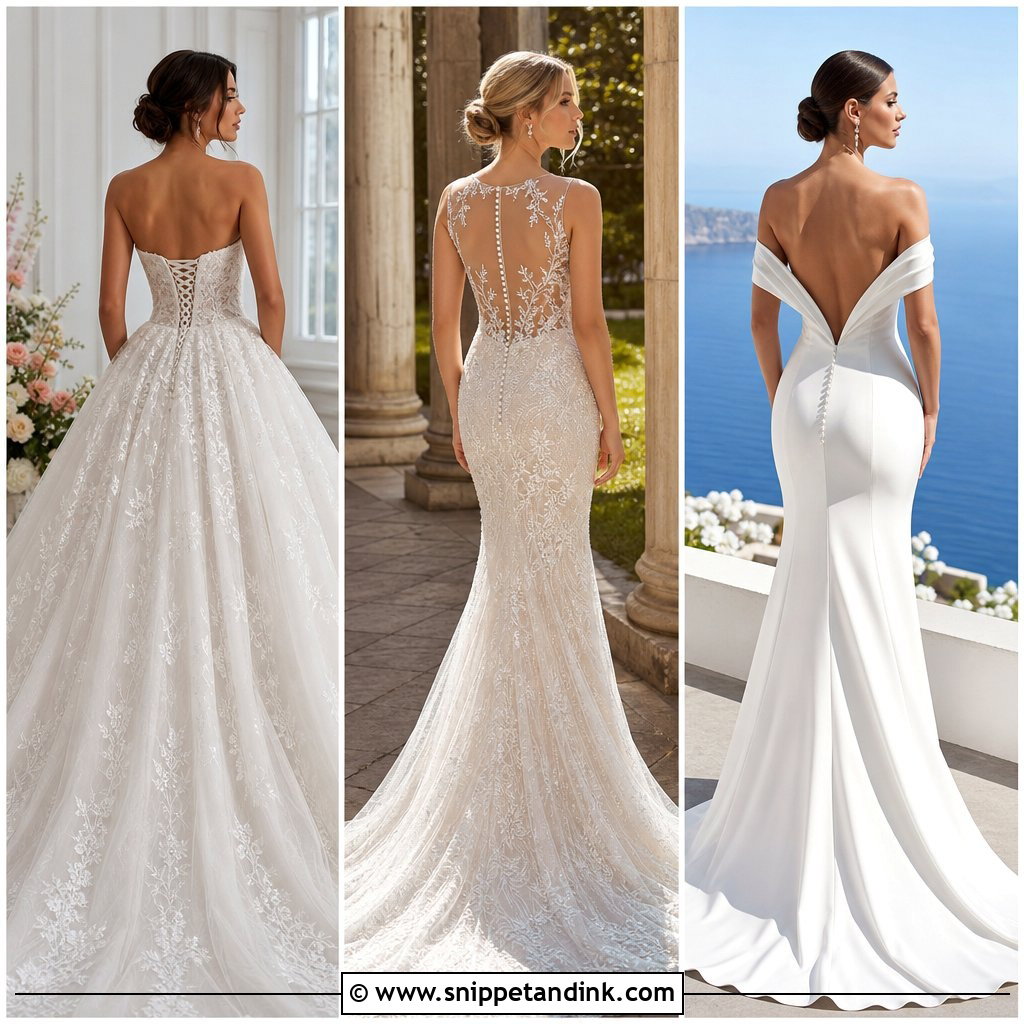
4. Sweetheart Corset Mermaid Wedding Dress
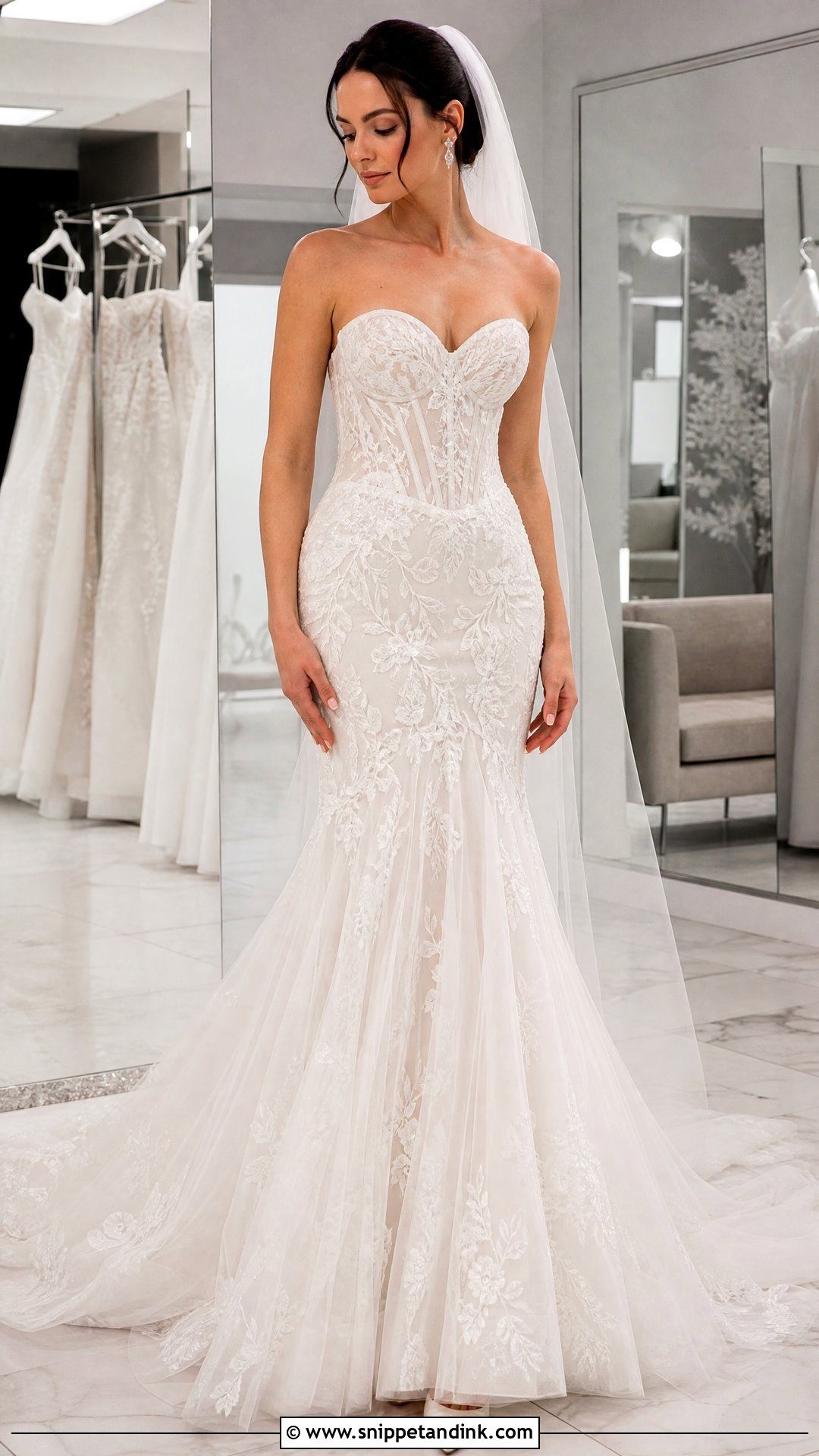
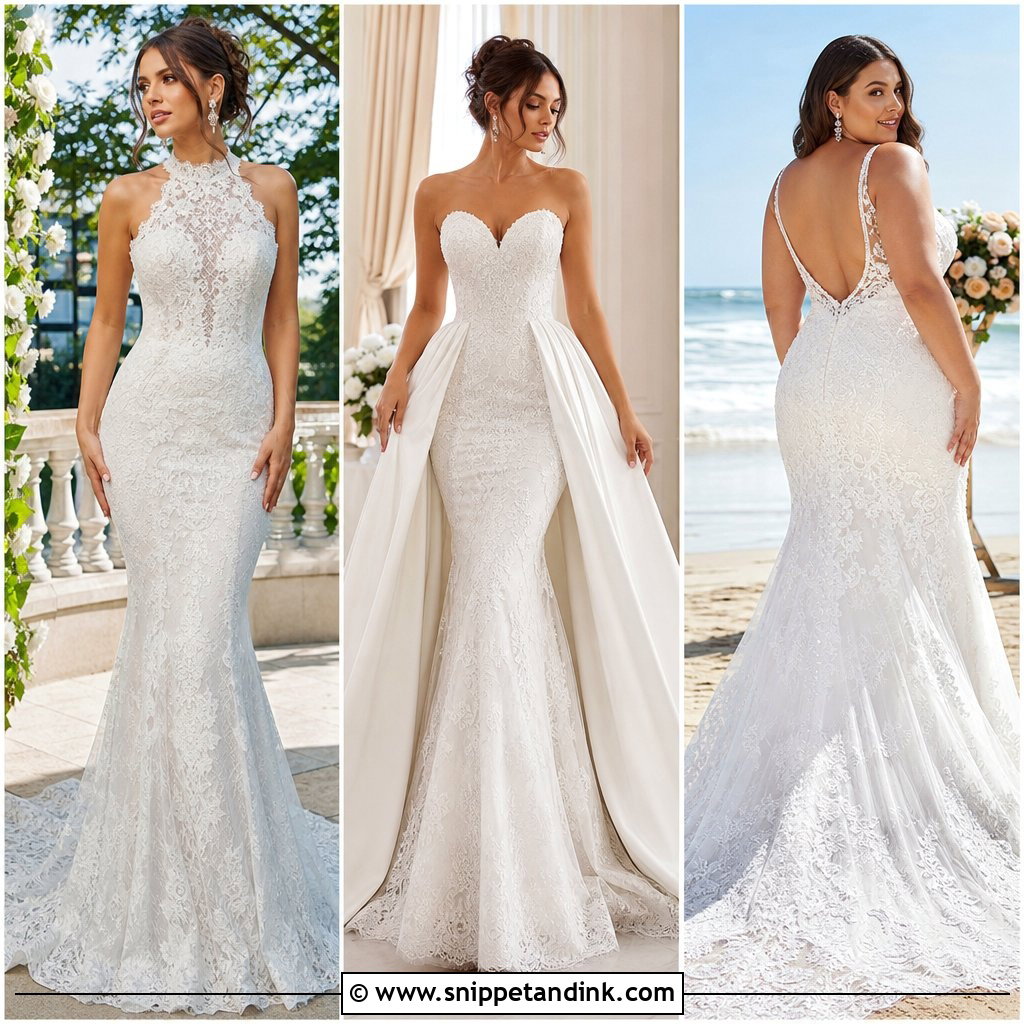
Visible boning reads contemporary, covered boning reads traditional, and both need the same check: can you breathe deeply and sit without the bones pressing into your ribs? A corset should feel firm, never painful. Satin gives the crispest structure; embroidered tulle softens it. I ask the seamstress to look at the sweetheart edge from above as well as straight on, since cup placement that’s slightly off shows up in every downward-angle photo. Crystal drops, a tennis bracelet and satin pumps are enough. A mid-length veil keeps the corset visible from behind.
5. Simple Crepe Mermaid Wedding Dress
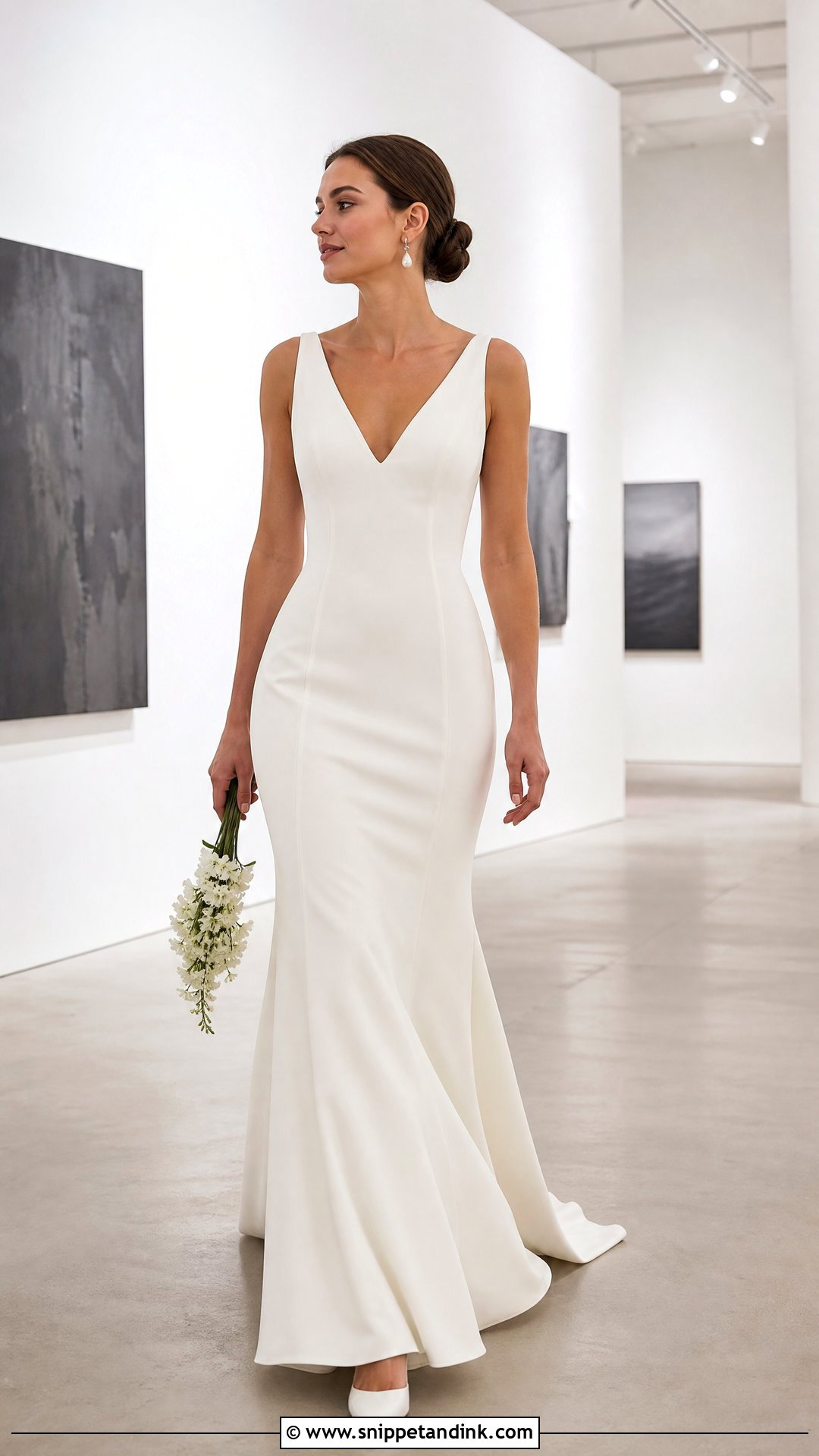
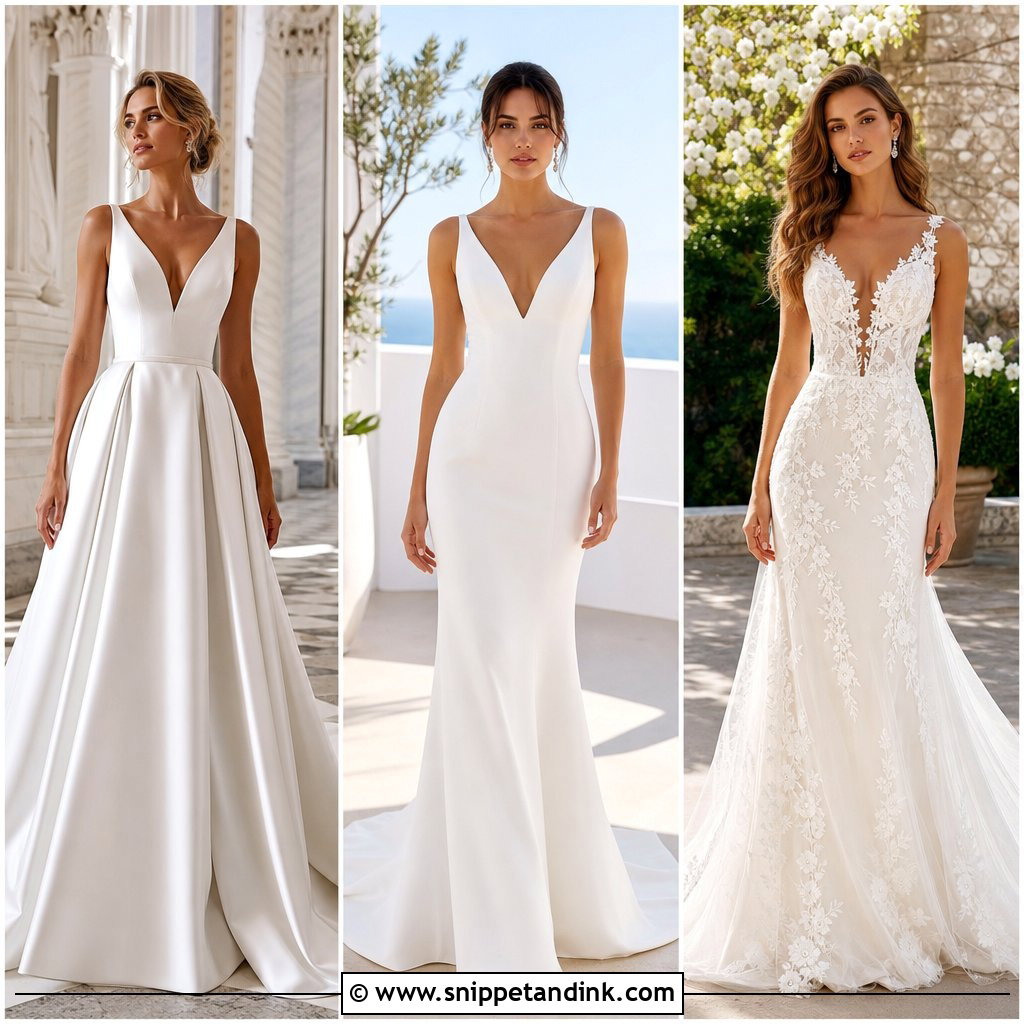
Crepe is my quiet favourite. It drapes, it doesn’t crease much and it has a soft matte finish that photographs without glare. Because there’s no decoration to distract, the cut does all the work: look for princess seams and a waist that’s clearly defined before the flare. Bateau, square and clean V necklines all suit it. Pearl earrings, pointed pumps and a sleek ponytail or low knot match the mood. Bring your shapewear and shoes to every fitting, since crepe clings and will show a line from the wrong underwear.
6. Beaded Mermaid Wedding Dress
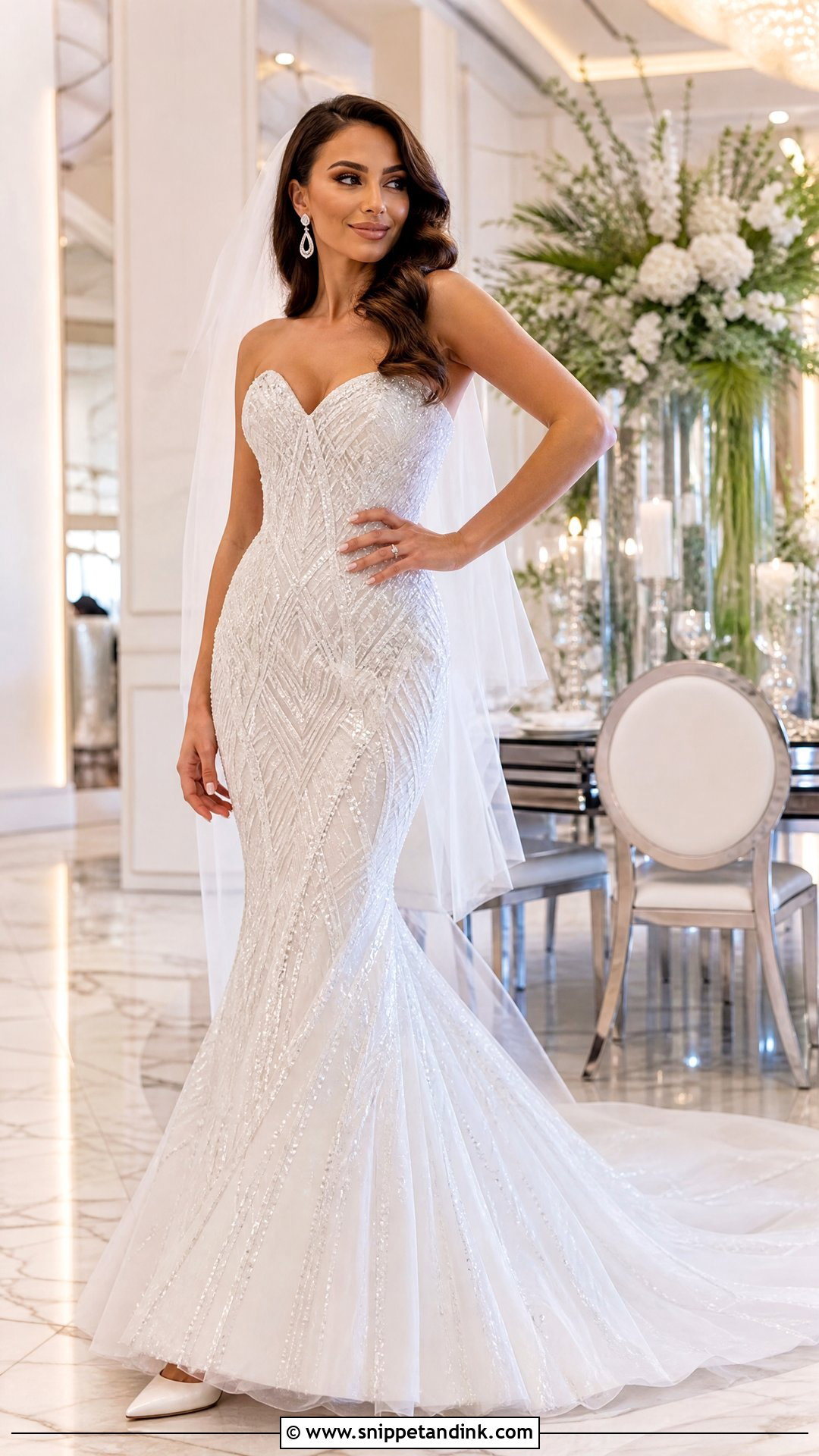
Beaded tulle over a fitted lining gives real sparkle, so the jewellery can stay small. Geometric beadwork feels modern; trailing floral beading feels softer. The practical part is weight. I ask brides to walk, sit and turn in the sample for several minutes, then I look under the arms, where beads rub most during a long day. A smooth lining there makes a big difference. Slim crystal earrings, metallic or ivory pumps, a plain veil and polished waves let the beading lead.
7. Mermaid Wedding Dress With Detachable Overskirt
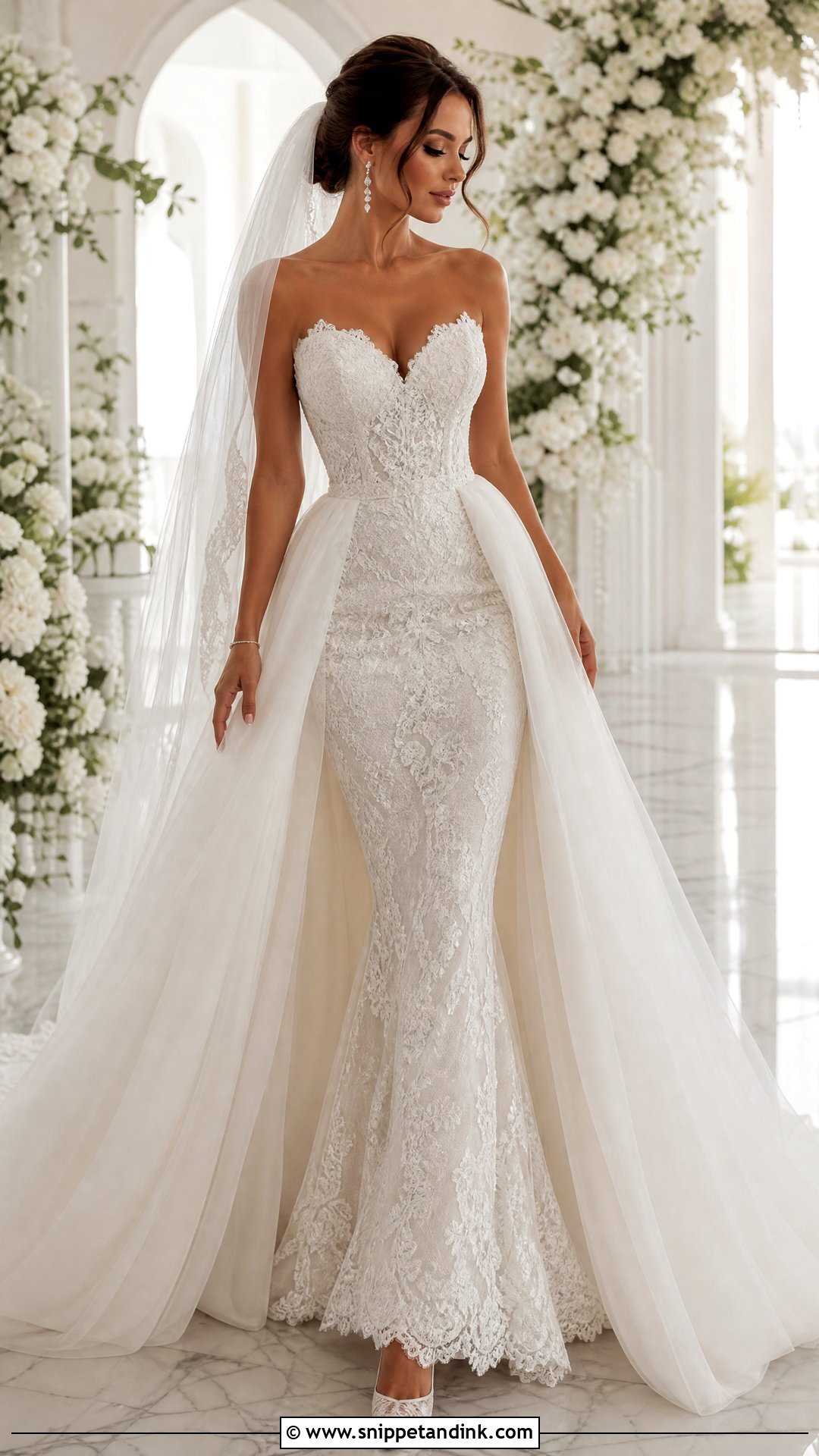
This is the gown for a bride who wants a ballroom entrance and a dance floor exit. A detachable overskirt that starts at the natural waist and opens at the front shows off the fitted shape underneath even during the ceremony. Tulle is light and easy; satin gives grander volume but is heavier on the waistband. Keep shoes, earrings and hair the same for both looks so the change feels planned. Practise every hook and button beforehand with whoever will help you, because a reception room is not the place to learn a new closure.
8. Square Neck Mermaid Wedding Dress
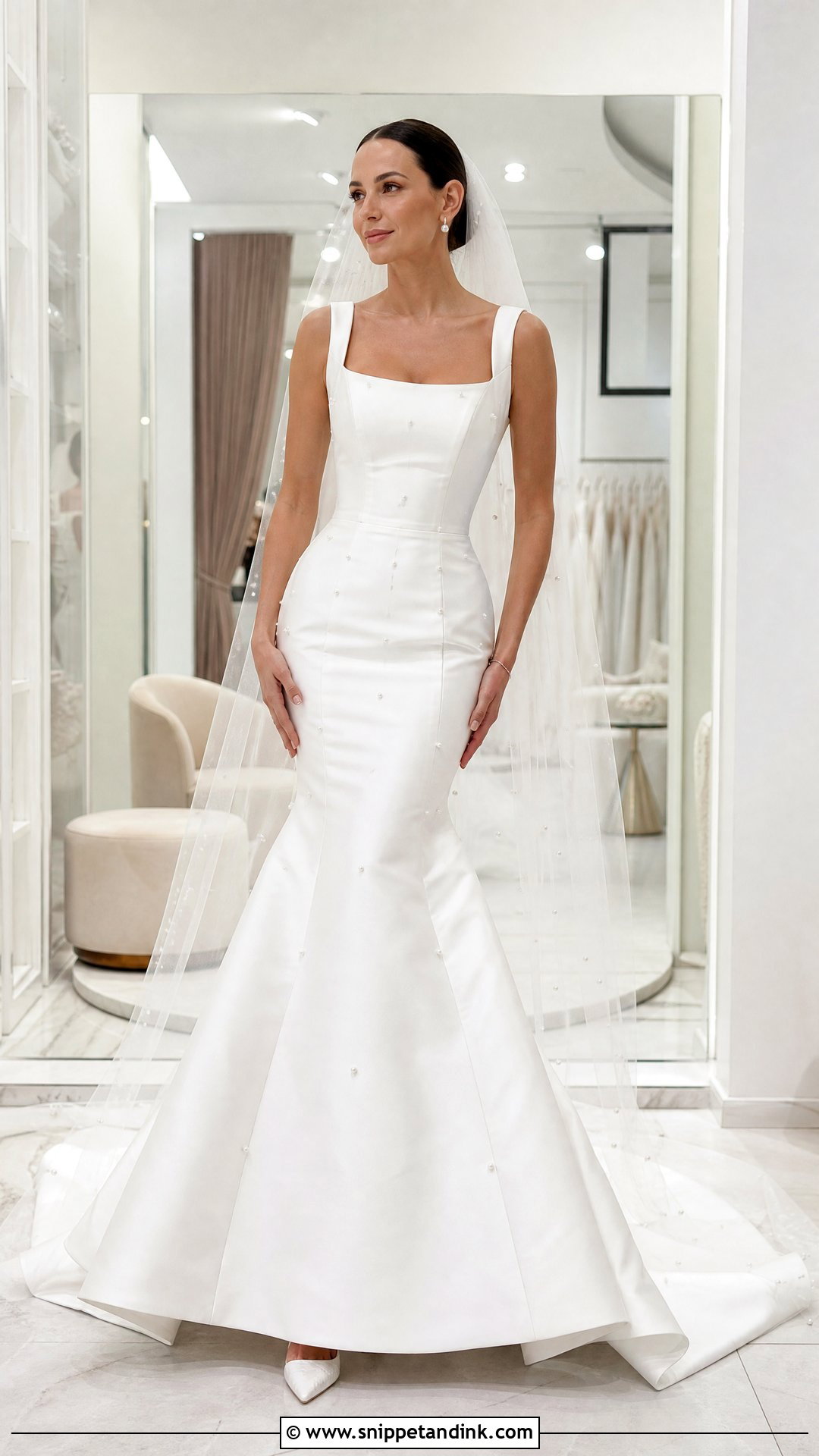
Wide straps make a square neck one of the most secure mermaid tops I fit; brides who dread strapless usually feel at ease here. Mikado or smooth satin keeps the edge crisp, while lace-covered straps feel softer. A low square back that mirrors the front is a smart detail. At the fitting I watch the straps when the bride sits down, because they should lie flat rather than lifting off the shoulder. Pearl studs, a slim bracelet and a sheer chapel veil finish the look.
9. Plunging V Neck Mermaid Wedding Dress
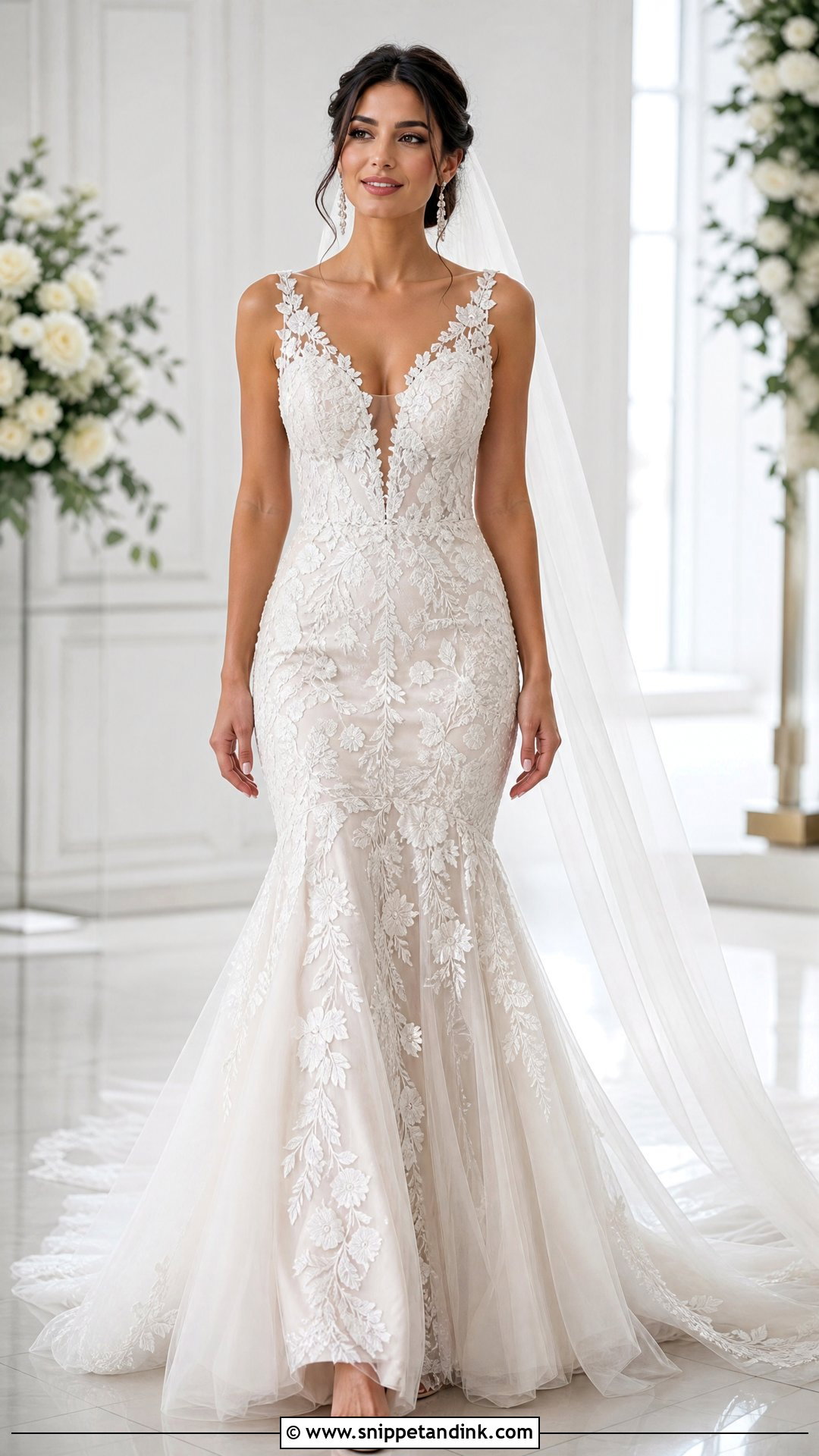
A plunging V lengthens the whole torso, but only if it stays put. An illusion mesh insert is what holds the neckline steady, and wider straps plus a lined waist help too. Appliqués around the edge soften the depth; plain crepe looks sharper. I always do a bend test with this one: lean forward as if picking up a bouquet from a table. If anything shifts, sewn-in cups and fashion tape usually fix it without changing the design. Wear hair up or swept to one side.
10. High Neck Lace Mermaid Wedding Dress
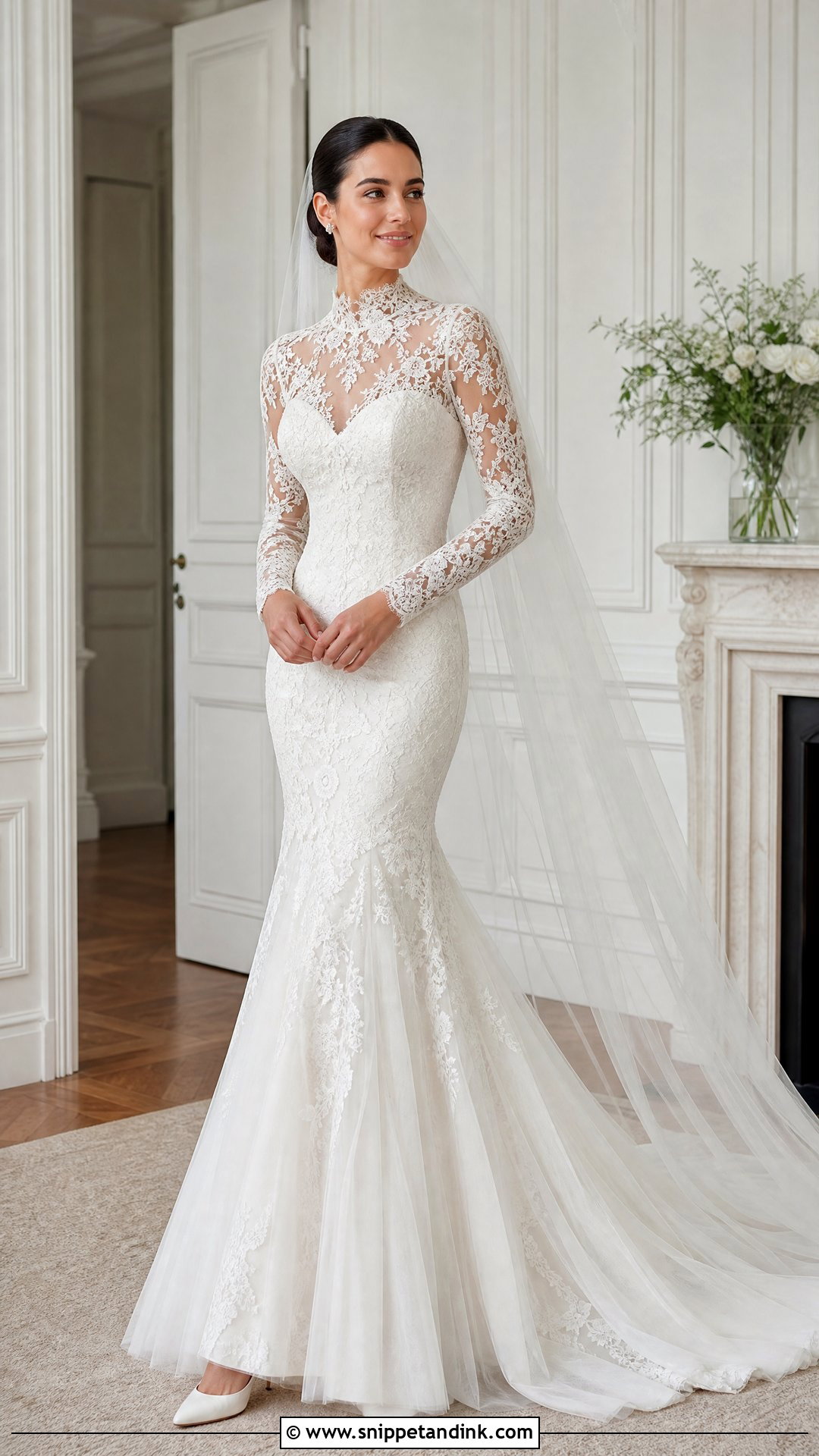
Sheer lace across the collarbone, over a sweetheart or straight lining, keeps a high neck from feeling heavy. Long sleeves make it formal; sleeveless keeps it lean. I like skirts where the lace appliqués thin out into soft tulle so the transition from hip to hem looks gradual. No necklace here; small earrings are enough. My one fitting rule: turn your head all the way left and right. If the collar rubs in the salon, it will leave a red mark by the speeches.
11. One Shoulder Mermaid Wedding Dress
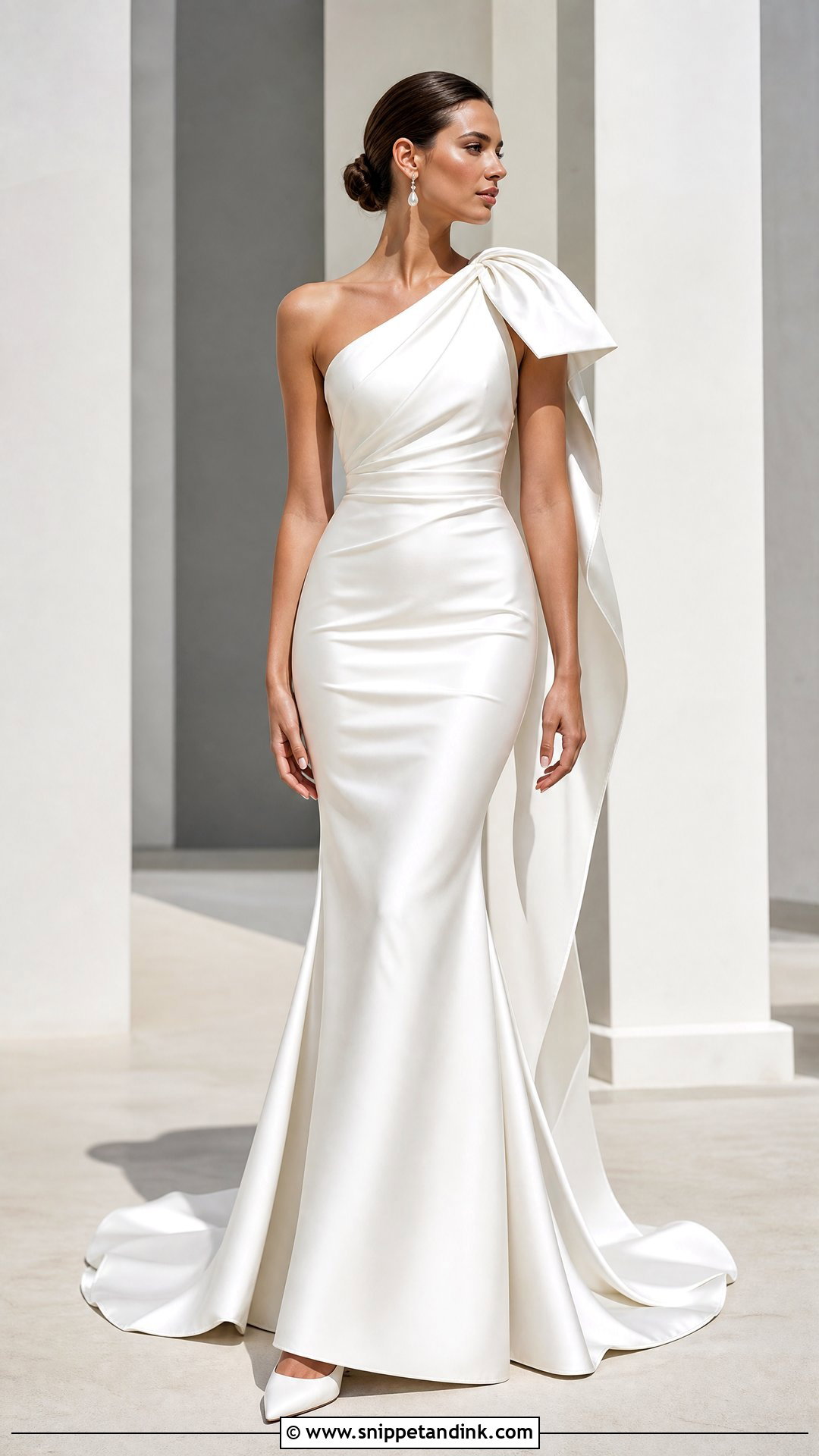
Asymmetry is the most fashion-led option on this list. The single shoulder might be a wide satin strap, a draped tulle panel or flowers climbing over it. Construction is where I’m strict: the bodice must be supported evenly on both sides, since one-shoulder gowns tend to pull toward the strapped side over a long day. Keep the waist clean and the satin flare controlled. One statement earring or plain drops, a sleek bun and no necklace protect that diagonal line.
12. Illusion Bodice Mermaid Wedding Dress
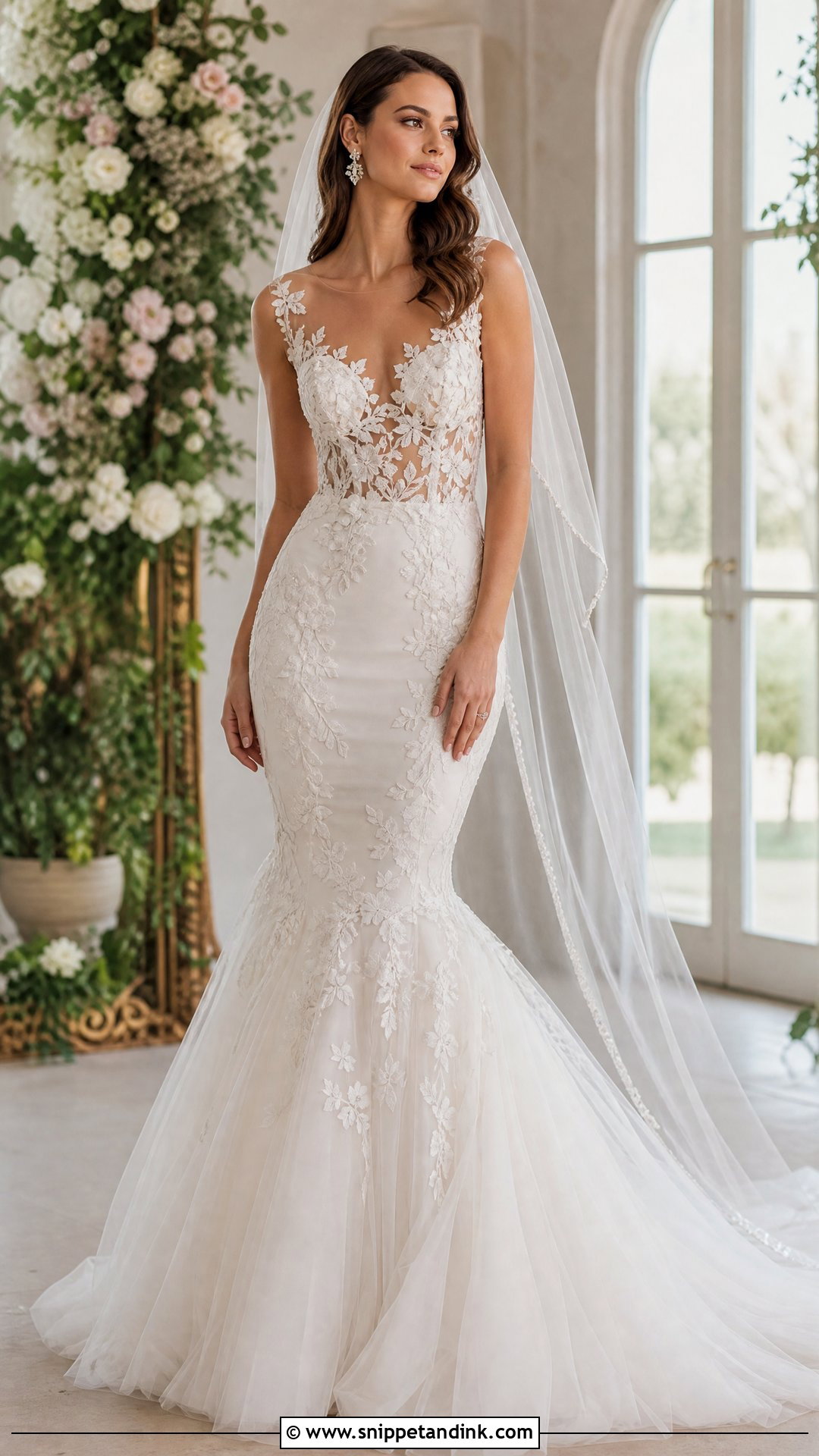
Illusion mesh only works when it nearly disappears, so colour matching comes first. I hold mesh swatches against the bride’s chest and back in daylight and choose the closest shade, even if it means a custom dye. Appliqués can be placed over the bust and waist for more coverage. A layered tulle flare keeps the look airy, while a satin skirt adds contrast. Fine crystal earrings, slim heels and a veil with just a narrow edge are enough.
13. 3D Floral Mermaid Wedding Dress
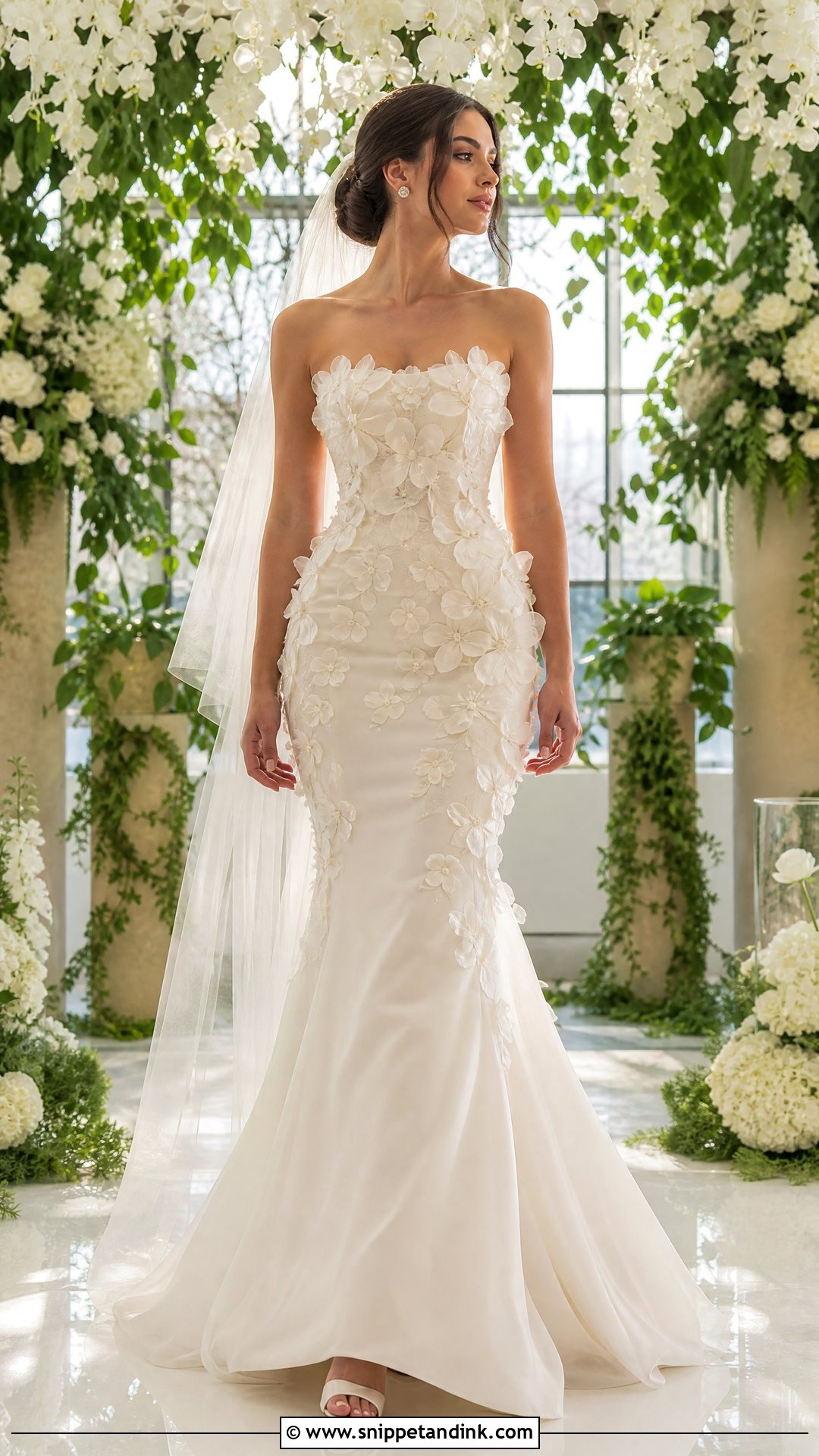
Three-dimensional flowers look richest when they gather at the bodice and hips and thin out toward the flare. Organza and tulle petals are soft; beaded centres add a little light. Alterations can disturb them, so I ask the seamstress to lift and re-stitch any flowers sitting over a seam she’s moving rather than sewing straight through them. That small step keeps the waist and hem looking continuous. Simple studs, satin heels, a plain sheer veil and a loose low bun suit the texture.
14. Pearl Mermaid Wedding Dress
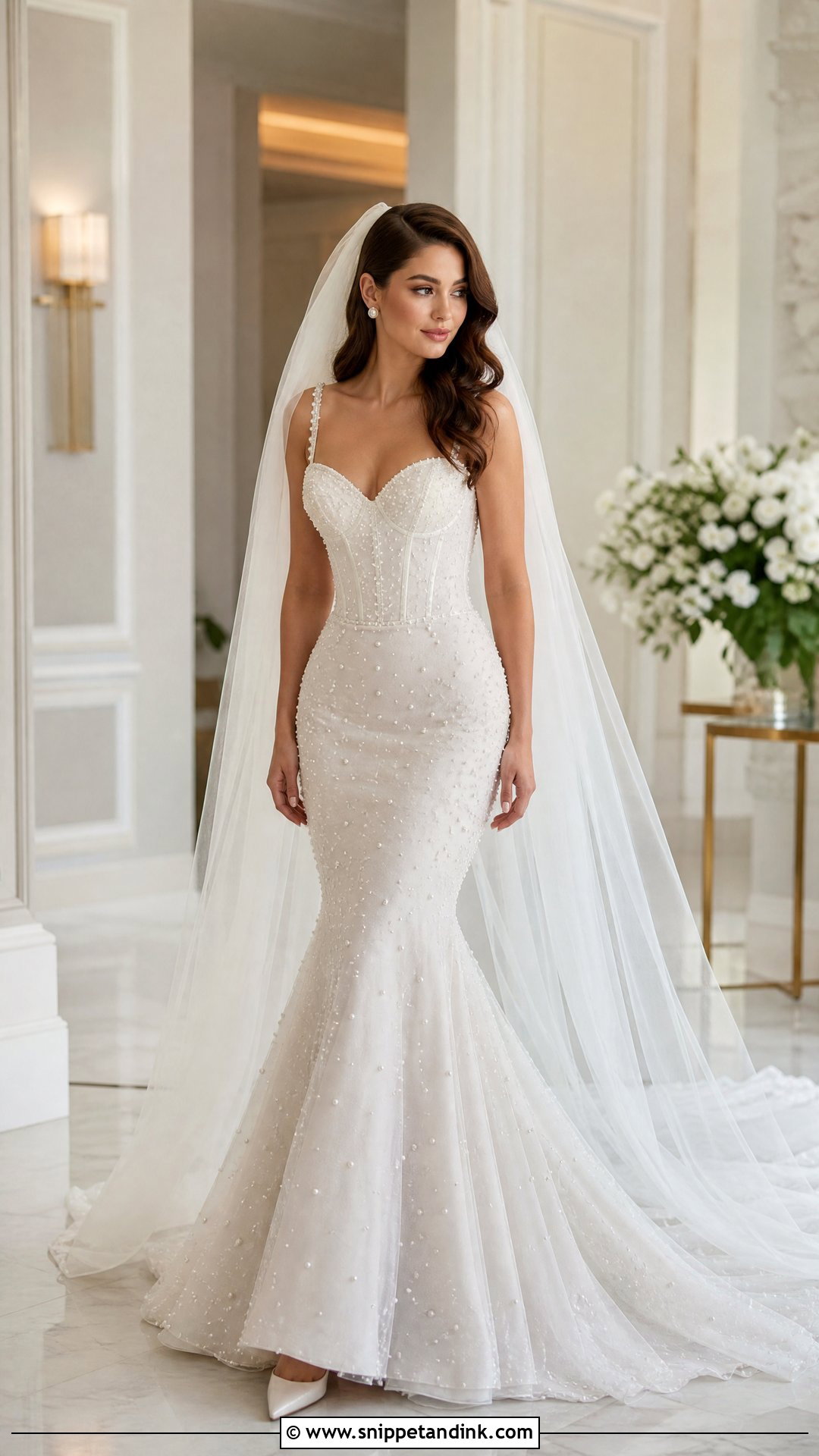
A structured corset with pearl-covered straps and a clean skirt flaring below the knee is my favourite way to wear pearls on a fitted gown: the detail stays up top and the flare stays smooth. Scattered tiny pearls feel subtle; dense pearl tulle is bolder. Check the pearls near the underarm, as raised beads there can chafe. And test your veil against the dress before the wedding, because tulle catches on pearls and can snag the moment you turn.
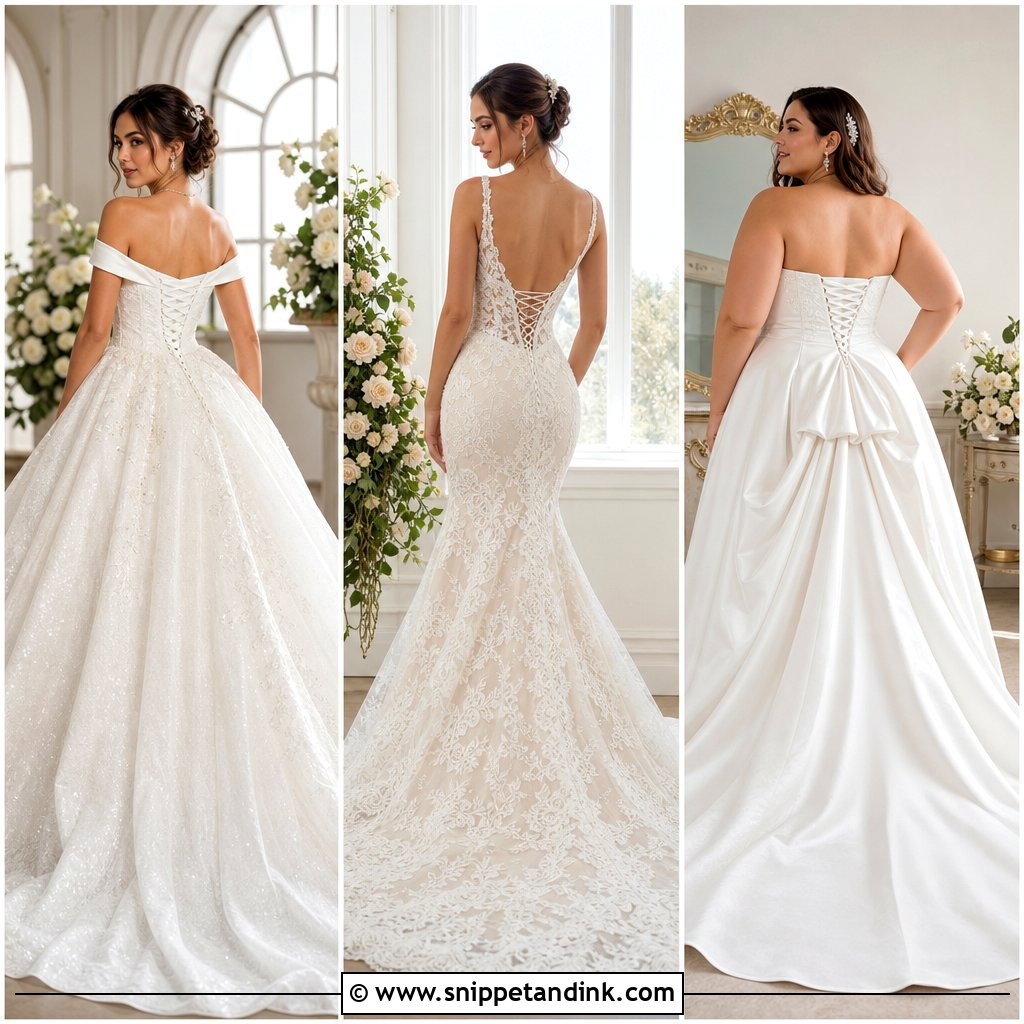
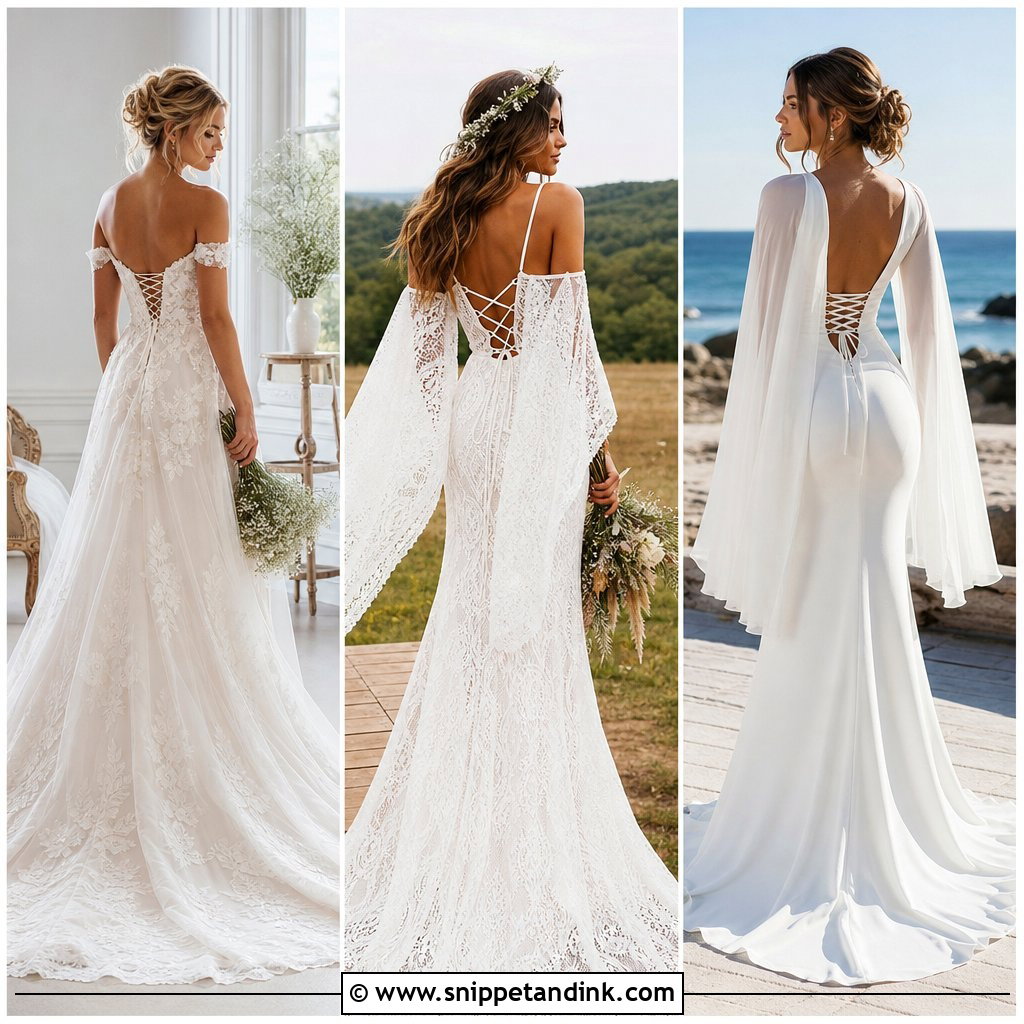
15. Open Back Mermaid Wedding Dress
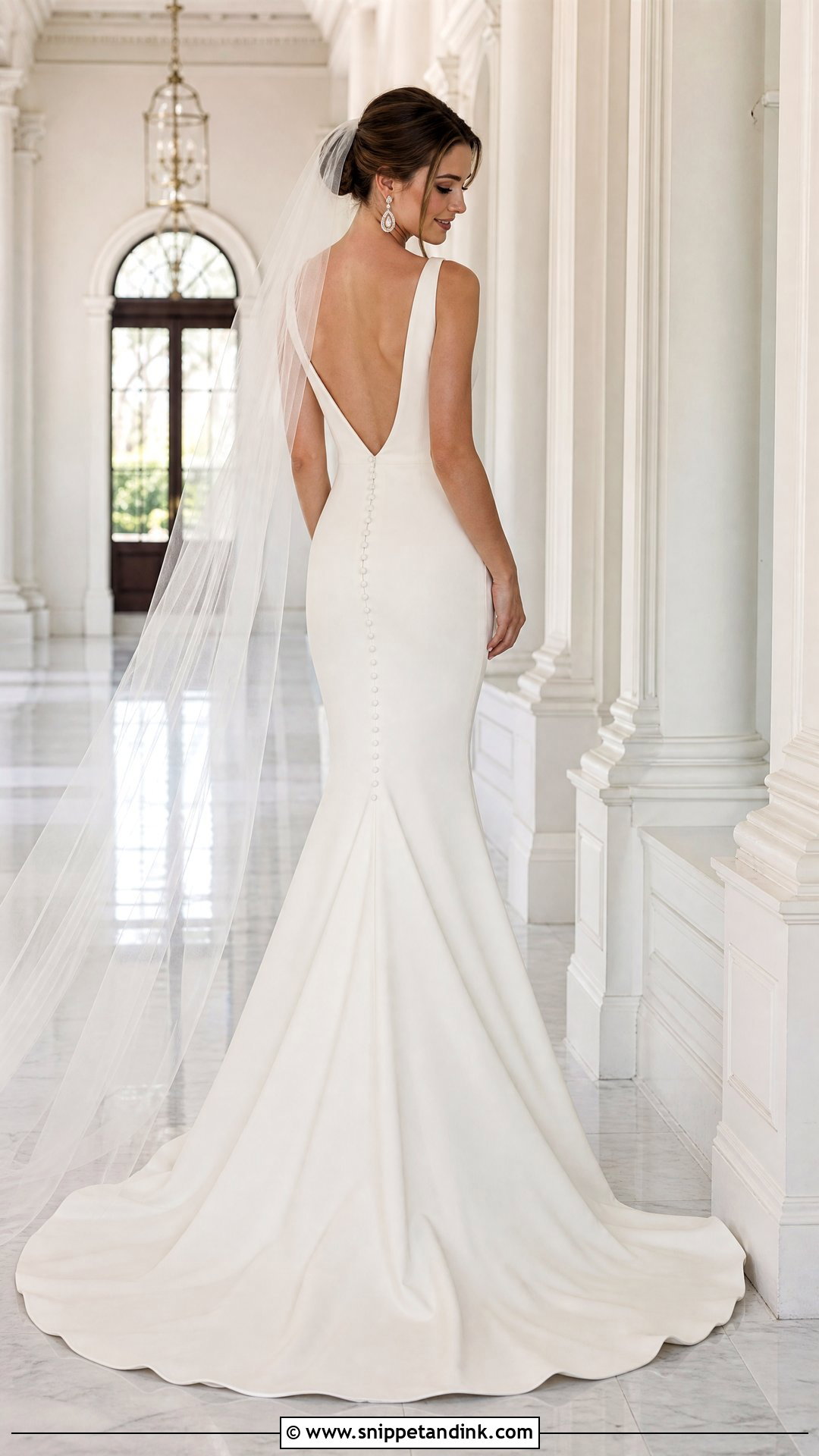
Guests spend the ceremony looking at your back, so an open back pays off. A deep V is the cleanest, an illusion back for greater support is the most secure, and a rounded opening feels softer. Covered buttons running into the train frame it nicely. The front then needs to feel steady, with wide straps, a halter or a fitted scoop. Talk about bra cups at the very first fitting, since a regular bra will show. Wear hair up and place the veil under the bun.
16. Basque Waist Mermaid Wedding Dress
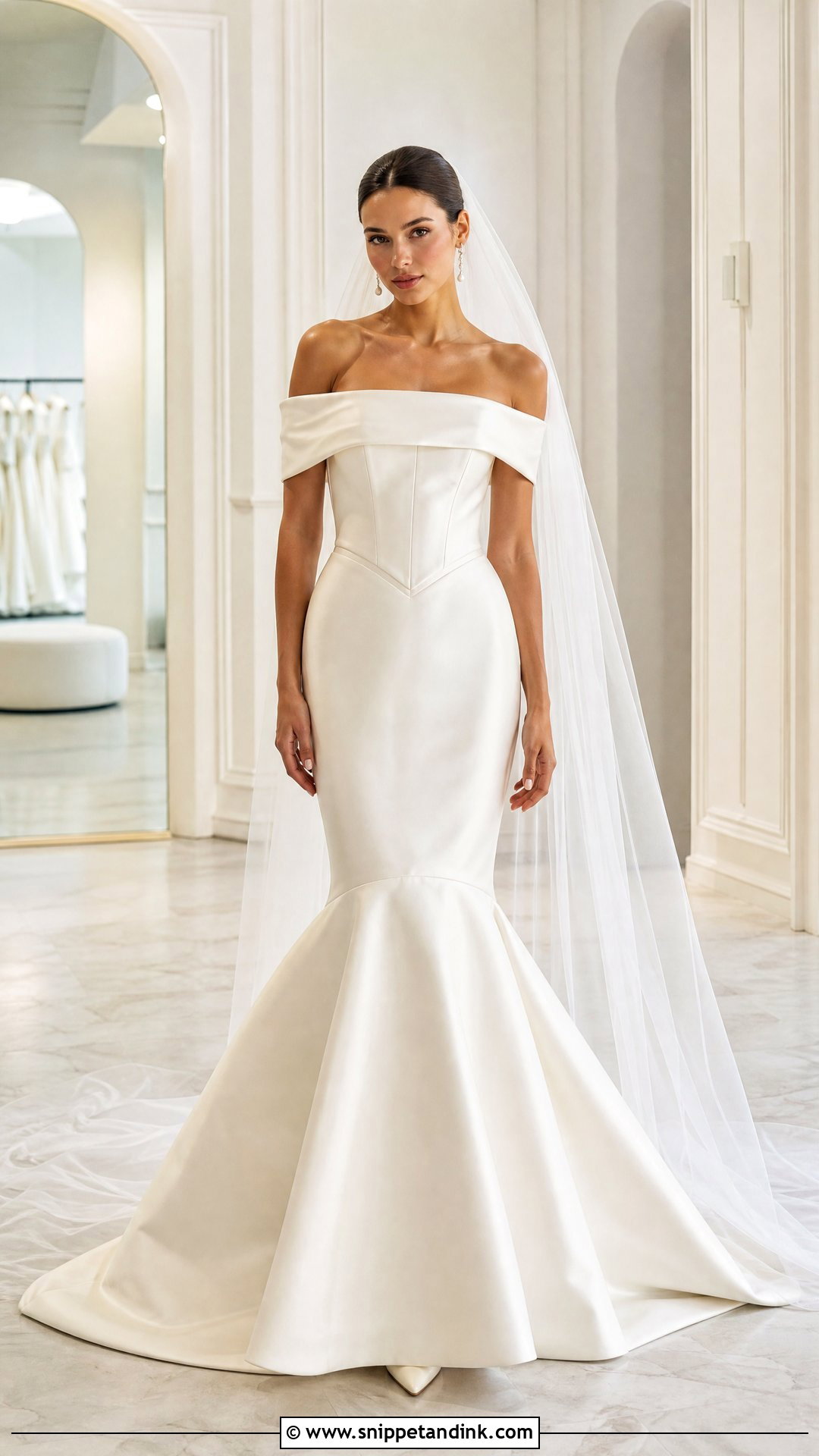
A Basque waist dips into a point or curve below the natural waist, which lengthens the bodice and makes the knee flare look even more dramatic. It suits strapless and off-the-shoulder tops best, since both keep the waist on show. The point has to sit exactly at your centre line, so I check it from the front, the side and the back. Sit down in it: if the point digs into your stomach, it needs reshaping. Pearl drops, pointed pumps and a plain cathedral veil keep it classic.
17. Ruffled Organza Mermaid Wedding Dress
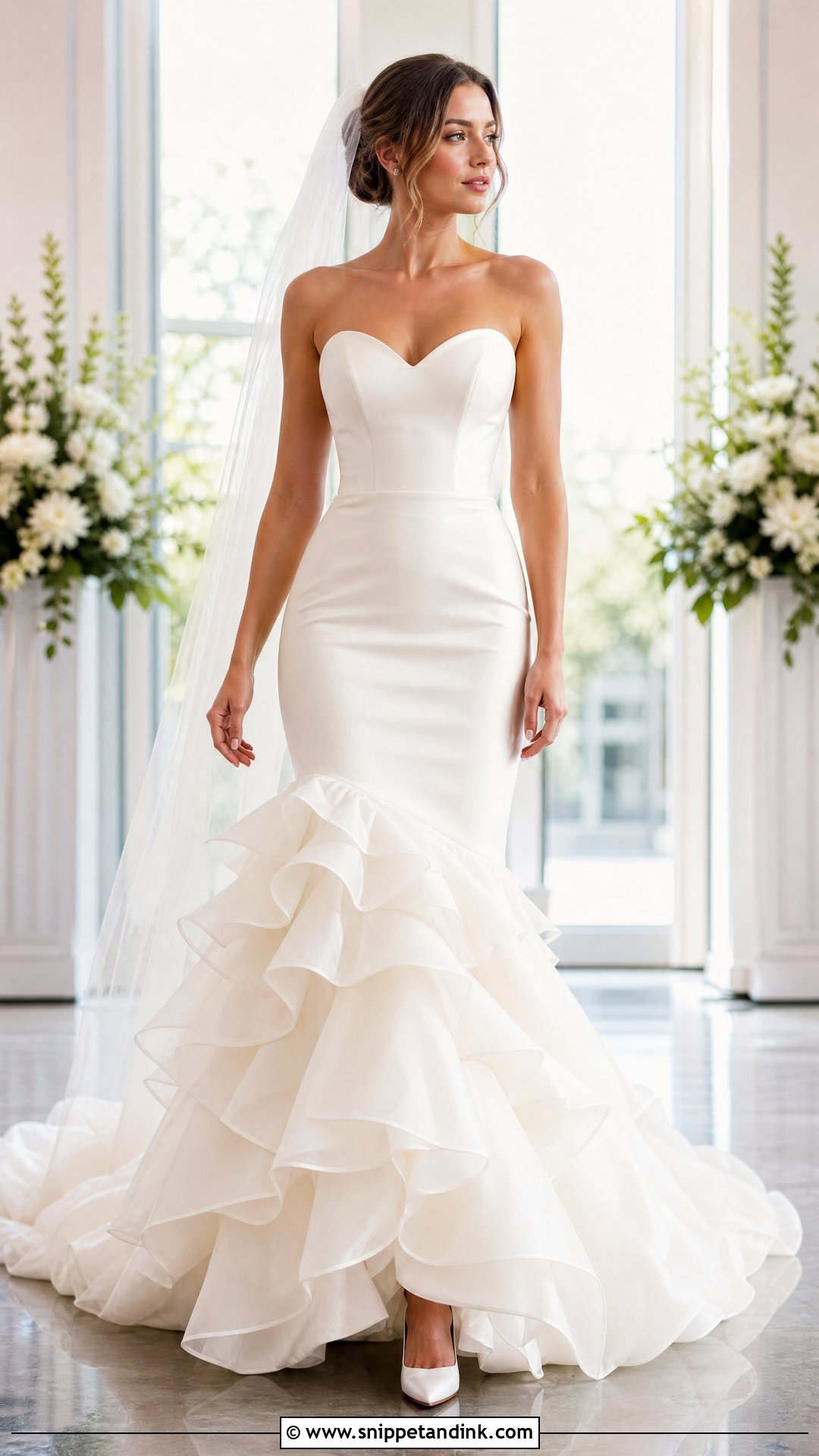
Curved organza ruffles that start at the knee and spill into a wide train give movement and real volume. Organza is light but it takes up space, so practise walking through a doorway and turning in a tight corner before the day. Keep the bodice plain, in smooth satin or a lightly draped corset. Ruffles are fragile in a bustle, too. I ask for one that lifts the train from beneath so the layers hang rather than being pressed flat.
18. Champagne Mermaid Wedding Dress
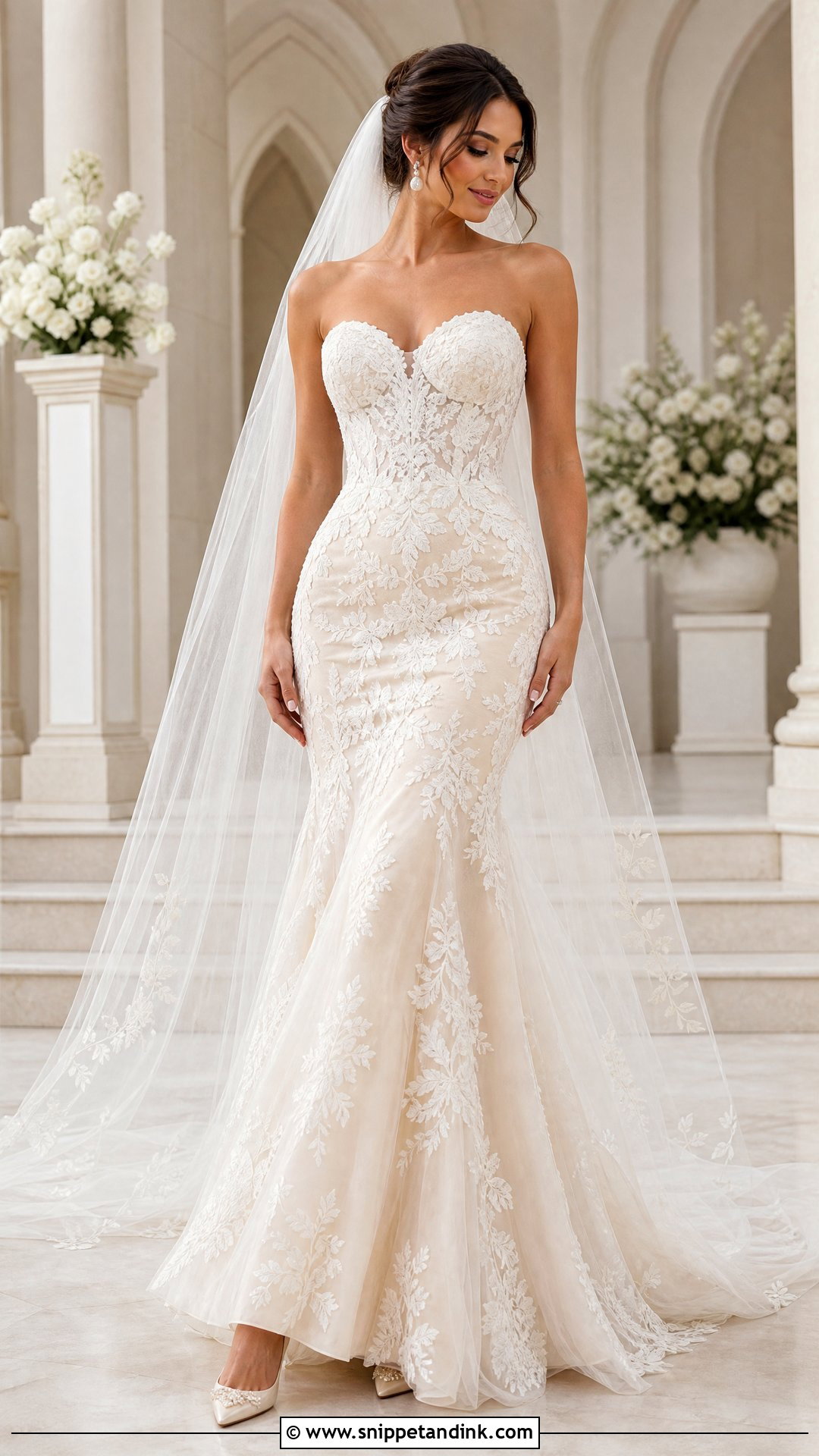
Champagne lining makes ivory lace stand out because the contrast shows the pattern more clearly. It can look romantic under floral lace with a tulle flare, or glamorous under tonal beading. The catch is that champagne shifts a lot with light. Some versions turn golden in candlelight and beige under office-style bulbs, so I always walk brides to a window and back before deciding. Match your veil to the lace colour, not the lining.
19. Modest Boat Neck Mermaid Wedding Dress
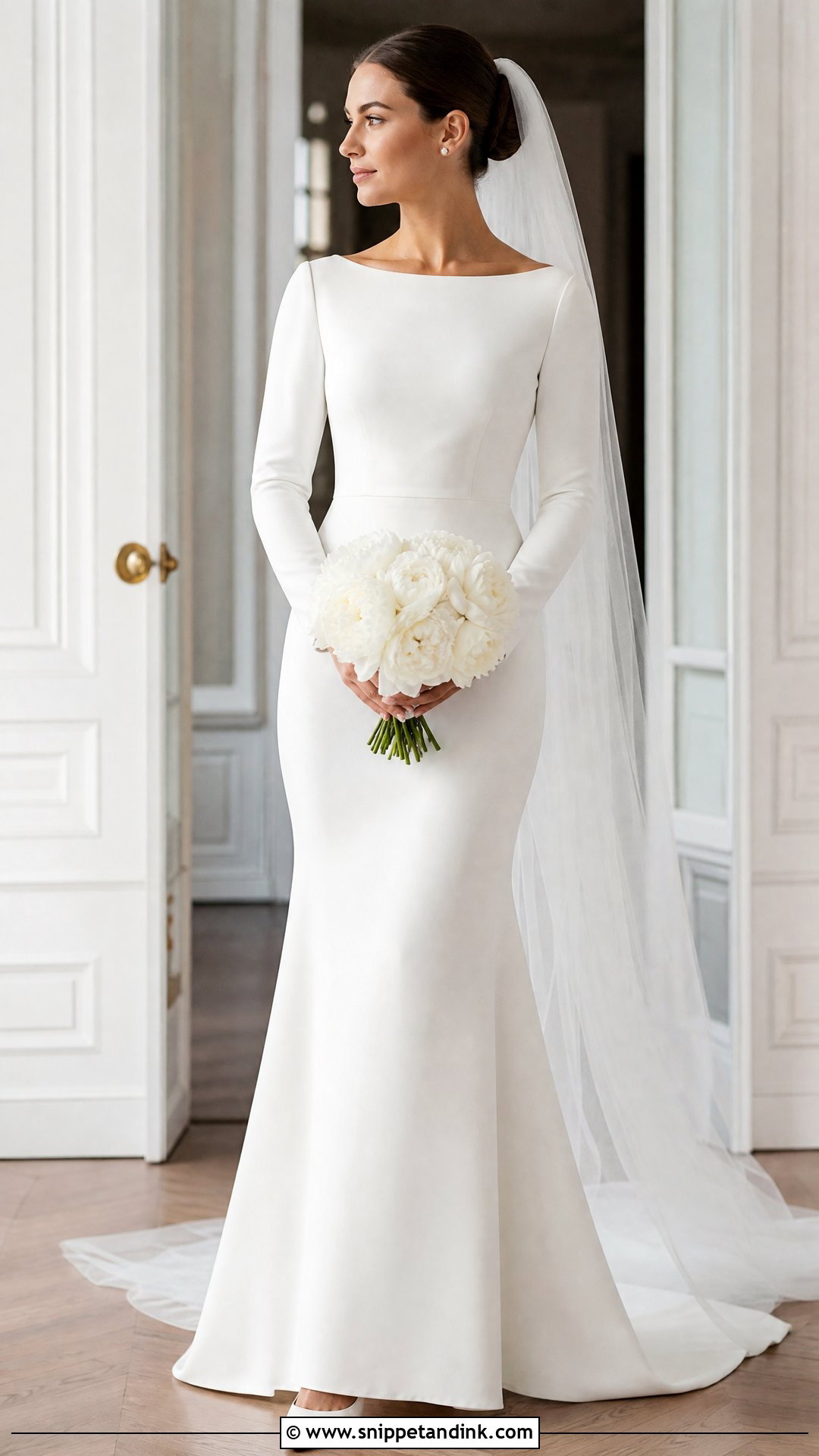
A boat neckline runs along the collarbone without dipping at the front, and with long or three-quarter sleeves it gives modest coverage that still looks fitted. Crepe is sleek; lace adds texture. Sleeves on a fitted body need room across the upper back, so I ask brides to reach forward as if hugging someone and watch for pulling between the shoulder blades. A lined bodice, defined waist and moderate flare keep it refined. Pearl studs, closed-toe pumps, a smooth bun and a chapel veil complete it.
20. Mikado Mermaid Wedding Dress With Bow
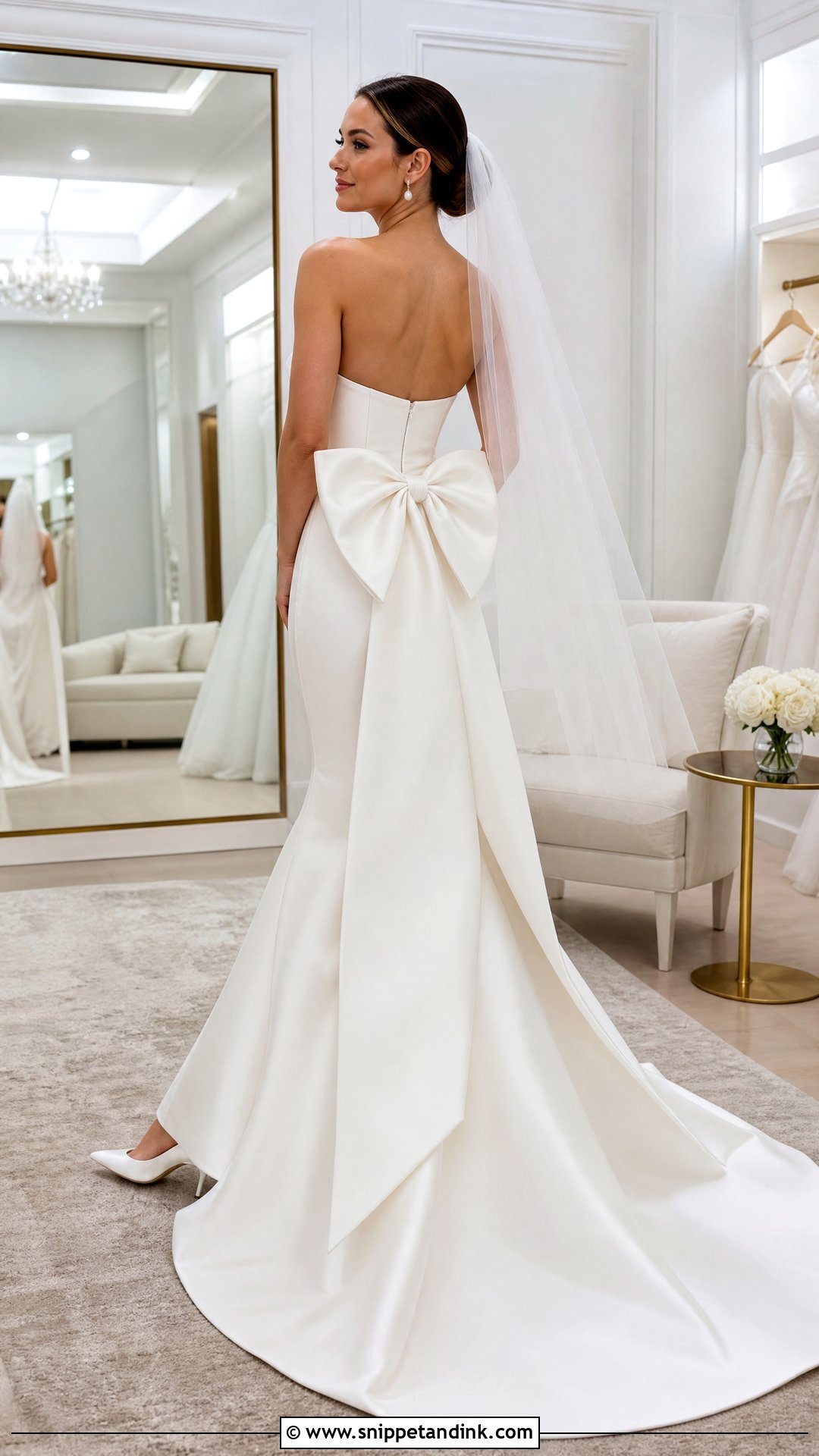
Mikado is a heavy, slightly stiff silk blend that holds a flare beautifully and resists creasing better than thinner satins. A plain strapless front with a large detachable bow at the back is a striking pairing. Where the bow sits changes the mood: at the waist it looks sculpted, a little lower it flows into the train. Big bows are heavy, so the attachment needs to grip the bodice structure or it pulls the dress backward. Pearl studs, satin heels and a sleek low bun are enough.
Underneath a Fitted Gown: Cups, Shapewear and Slips
Most of the mermaid gowns I fit have cups or boning built in, so many brides need far less underneath than they think. Sew-in cups are often better than a strapless bra, which can creep down under a heavy bodice. If you want smoothing, choose a laser-cut smoothing piece that ends above the knee point or a slip that sits under the whole skirt; anything that stops at mid-thigh can leave a ridge right where the flare begins.
Buy your undergarments before the first fitting and bring them every time. Changing them later changes the fit.
Steaming, carrying and storing it afterward
Hang the gown by its inner loops, not the straps, so the weight of the skirt doesn’t stretch the shoulders. Satin and crepe should be steamed from the inside on low heat or left to a professional; direct heat can mark them. After the wedding, have it cleaned by a specialist within a few weeks so sweat and spills don’t set, then store it flat in an acid-free box away from light and damp.
Fabric First, Embellishment Second
When brides feel overwhelmed by mermaid options, I ask them to decide on fabric and flare point before looking at a single bead. Satin and Mikado give crisp definition; crepe, lace and tulle feel softer. Then choose the neckline, sleeves and train, and only after that the decoration. Convertible pieces like bows, sleeves and overskirts let the look change through the day. Try every finalist in your real shoes and underwear, then sit and walk before you decide. Any of the ideas above can work for you if the cut suits your body, your venue and the way you plan to celebrate.
You'll Like These Ideas:






Leave a Reply