
A square neckline is the one I reach for when a bride tells me she wants something clean but not bare. The straight edge sits across the chest like a frame, shows the collarbone, and gives a bodice a firm top line that a sweetheart or V never quite has. It suits more bust sizes than people expect, because the support comes from the strap and side seams rather than from a plunge. The fabric does most of the mood work: satin reads formal, crepe reads modern, lace reads romantic. Below are 25 ways I’d style the cut, from ball gowns to courthouse midis, with notes on fit, fabric and the accessories that leave that neckline room to breathe.
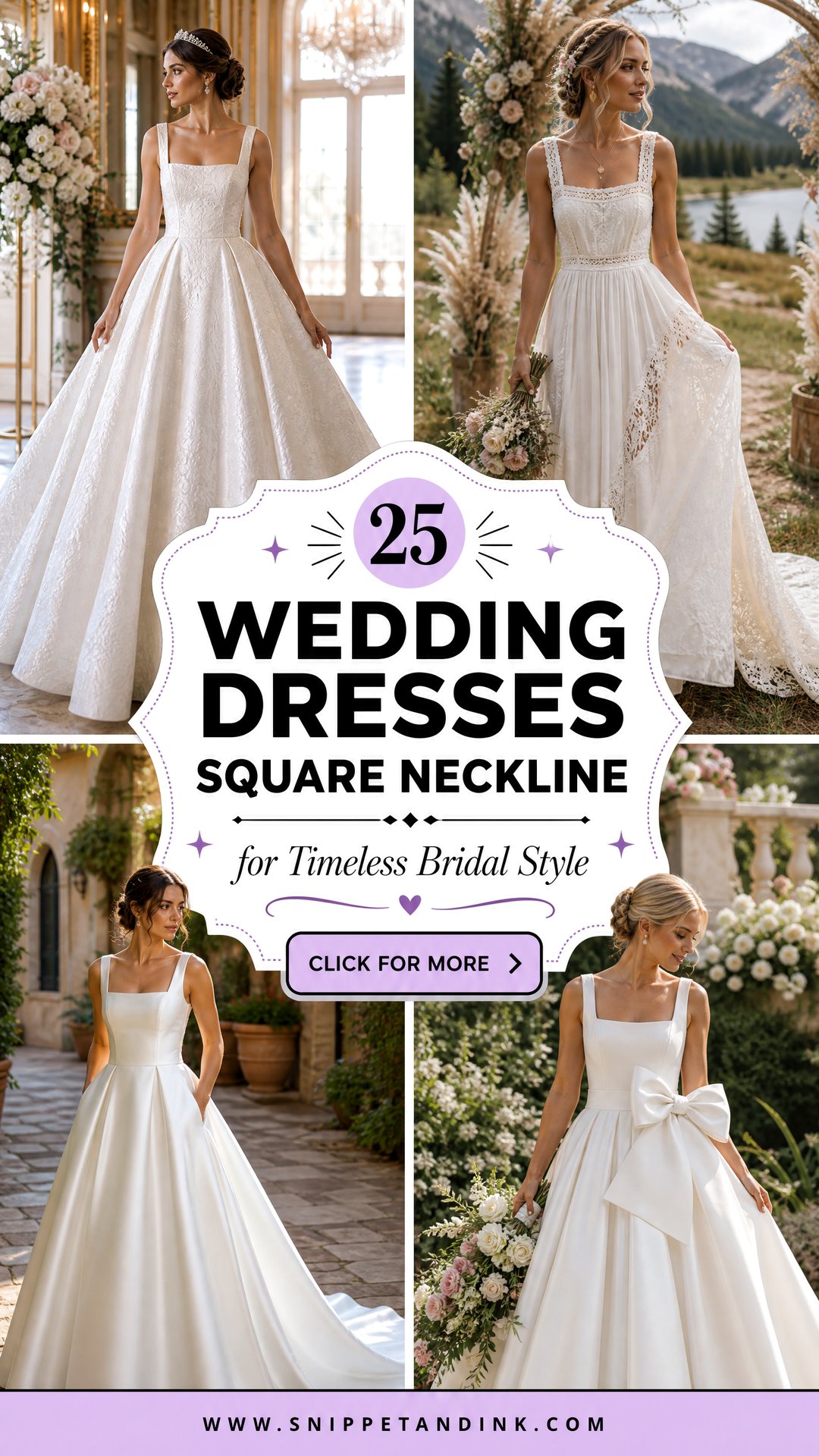
How a Square Neckline Sits on Different Shoulders and Busts
A square neckline is two short vertical lines, the straps, joined by one horizontal edge across the chest. Every fit problem comes from one of those three lines. When I pull gowns for a first appointment, I’m looking at how wide the square is compared with the bride’s shoulders and how low the front edge sits.
Width
If the straps sit right on the shoulder point, they slide. If they sit too close to the neck, the shoulders look broad. Somewhere just inside the shoulder bone is usually right, and it’s easy for a seamstress to move straps by a centimetre or two.
Depth
A high square, just below the collarbone, is the most forgiving cut for a large bust and the most formal. A lower square shows more skin and needs firmer structure to stay flat. If you’re between sizes, the deeper cut is the one more likely to gap.
- Fuller bust: look for a higher edge, wider straps and boning or a built-in cup.
- Small bust: a lower square works, but ask for a bodice lined with firm interfacing so the edge doesn’t buckle.
- Broad shoulders: a narrower square with straps set slightly inward balances them.
- Narrow or sloping shoulders: a wider square, or a strap with a small grip tape inside, stops slipping.
The one test that tells you everything: lean forward as if signing the register. If you can see a gap between the neckline and your chest, the dress needs work before the wedding.
1. Square Neck Ball Gown Wedding Dress
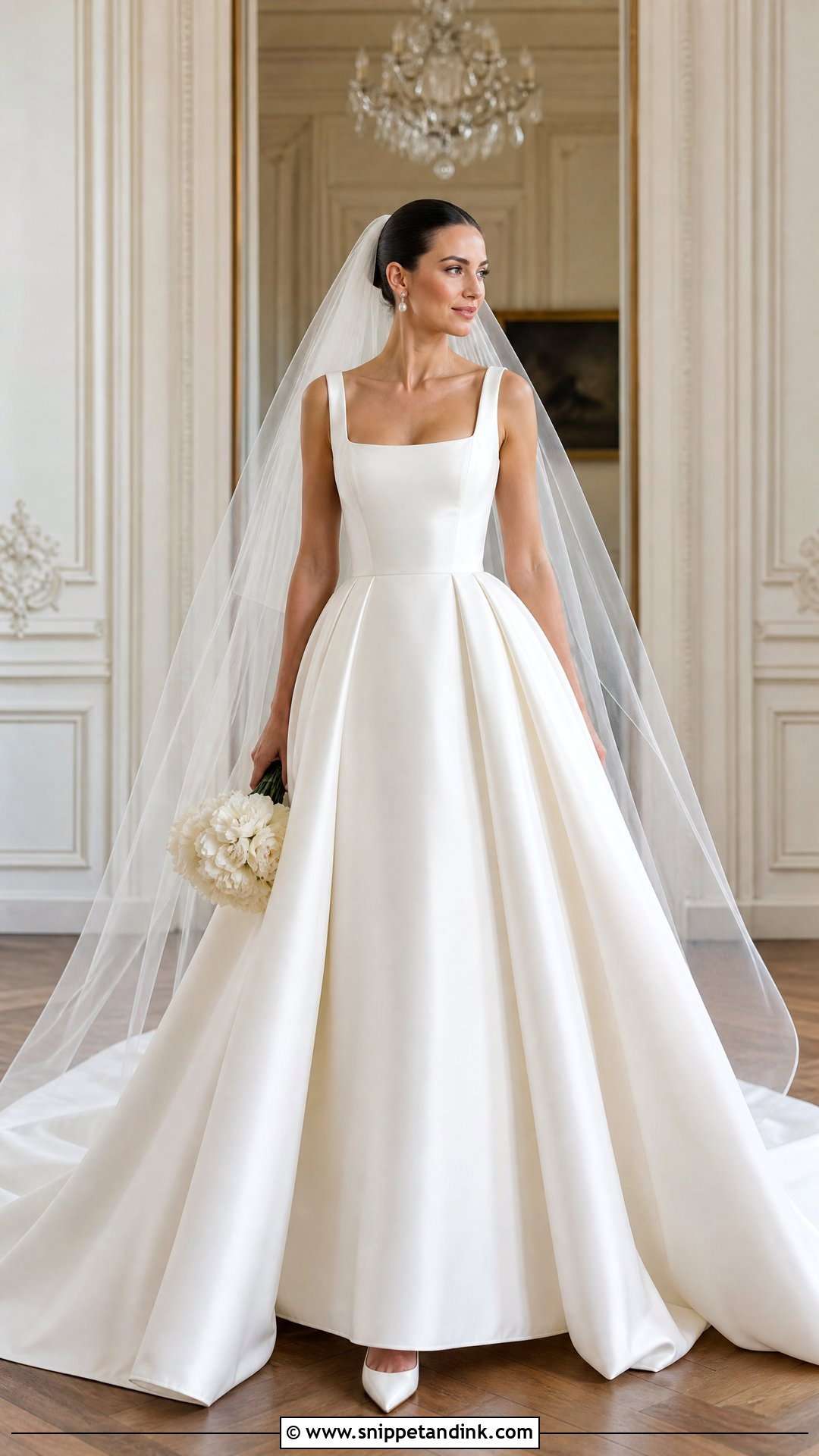
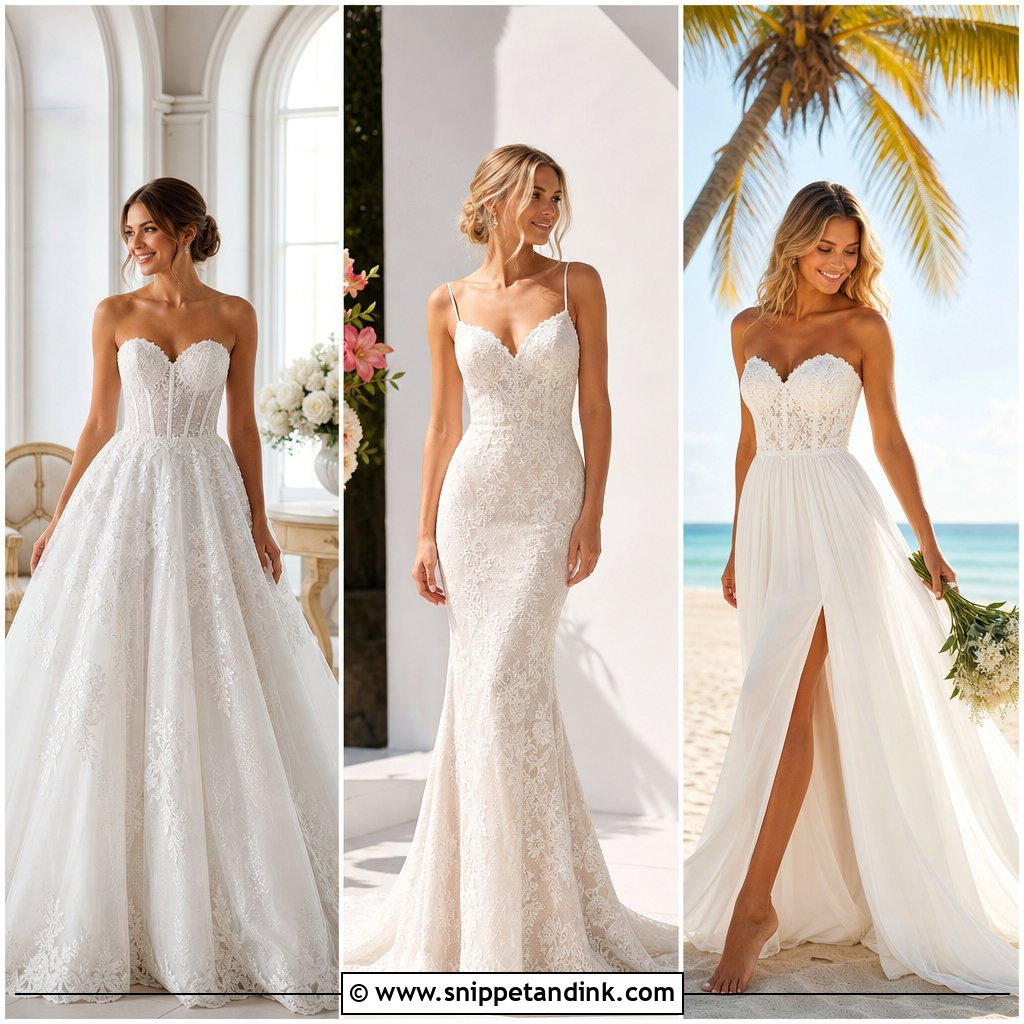
The square top is what stops a full ball gown from tipping into costume. That straight line gives the eye a resting point before all the volume below it. I always ask for mikado or a firm satin here, because soft tulle alone lets the skirt collapse by the reception and the bodice then looks too heavy for it. Keep the hair low and neat, a bun at the nape, so the neckline stays visible under a cathedral veil. If you want more cover at the shoulder, a wider strap or a square neck bodice with illusion support holds the shape without losing the line.
2. Square Neck A Line Wedding Dress
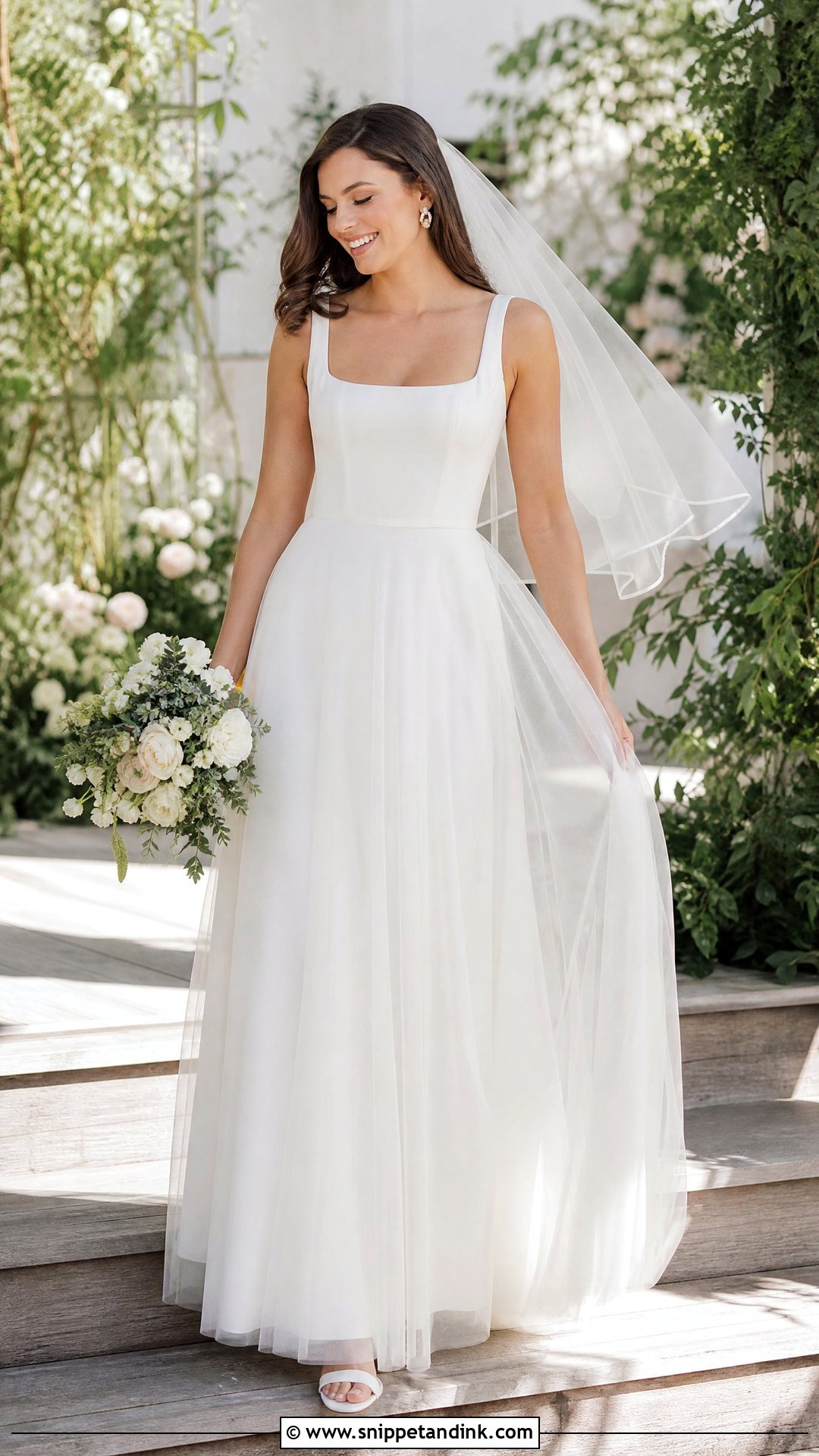
This is the shape I pull first for brides who don’t yet know what they want. The A line skims the hips instead of gripping them, so you can sit through dinner without the bodice riding up into the neckline. Tulle softens it; crepe or satin sharpens it. One thing to check in the fitting room: lift your arms as if hugging someone. On an A line, the square edge should stay flat against the skin. If it pops forward, the bodice needs taking in at the side seams, not a smaller size.
3. Square Neck Mermaid Wedding Dress
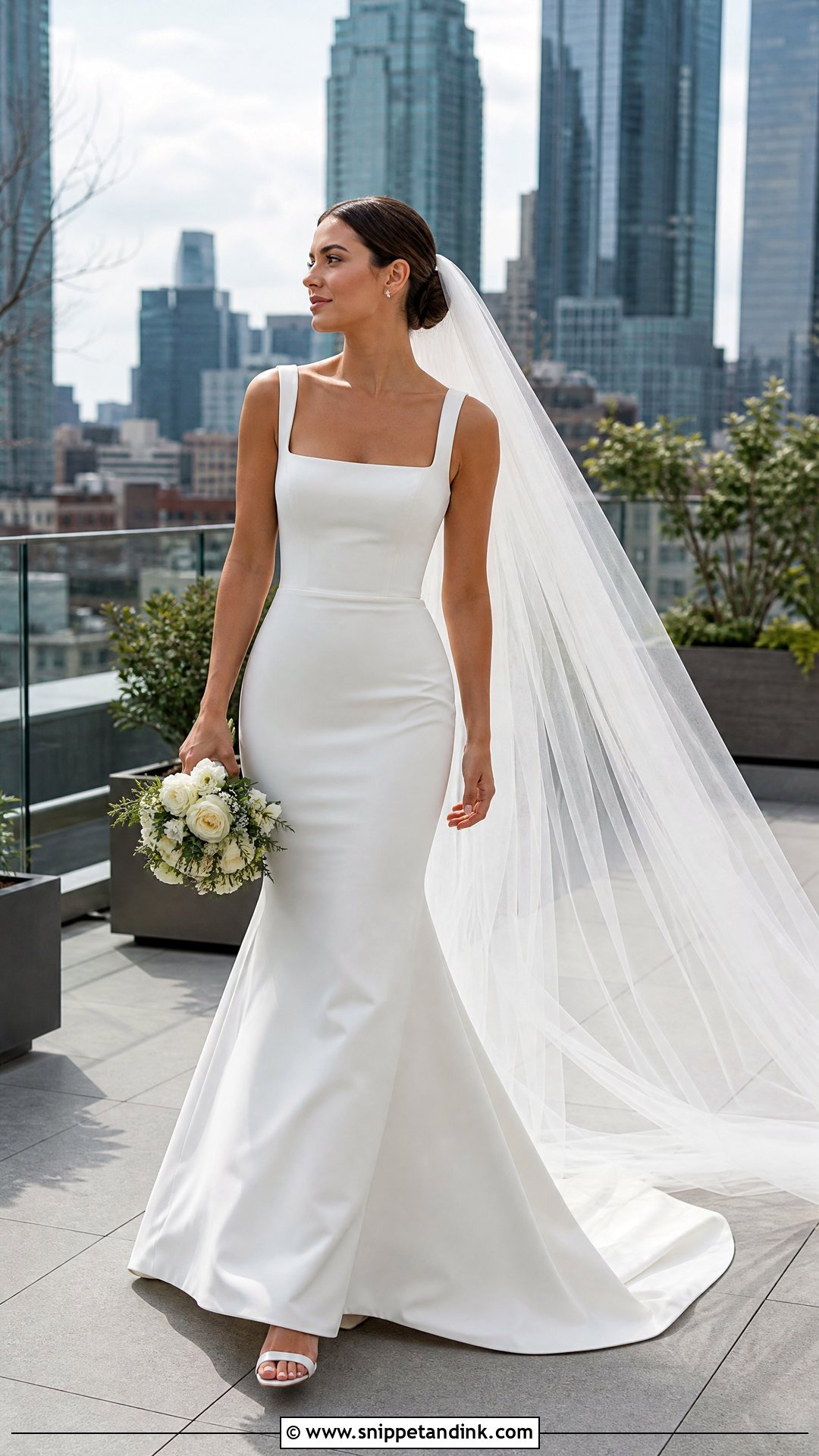
A mermaid puts all the attention on fit, and the square neckline balances that by giving the upper body its own strong shape. The flare point matters more than anything else on this gown. Set at the knee, it lets you walk; set at mid-thigh, it looks dramatic but you will shuffle. Crepe shows every line cleanly, while lace hides small fit flaws. I keep jewelry to studs here and pull the hair into a sleek bun or tucked waves, because the silhouette is already doing the talking.
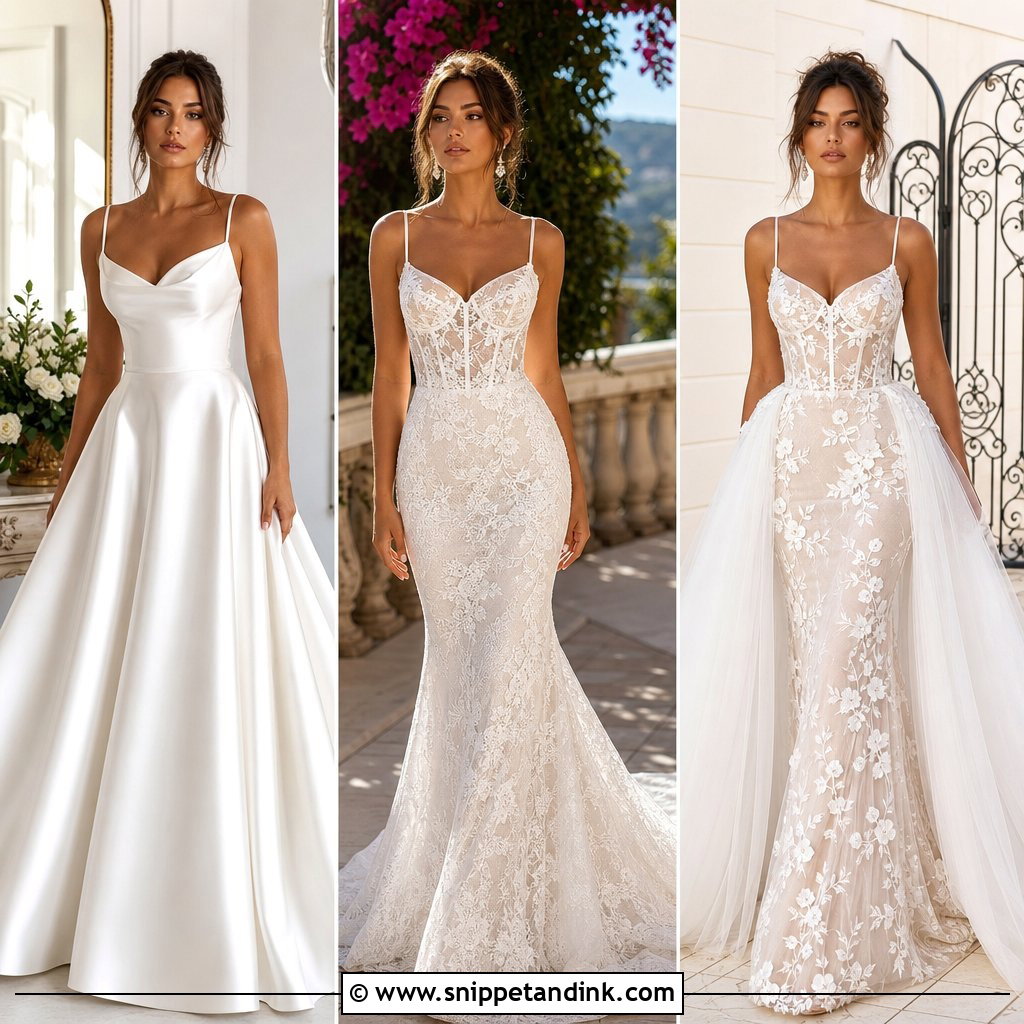
4. Square Neck Satin Wedding Dress
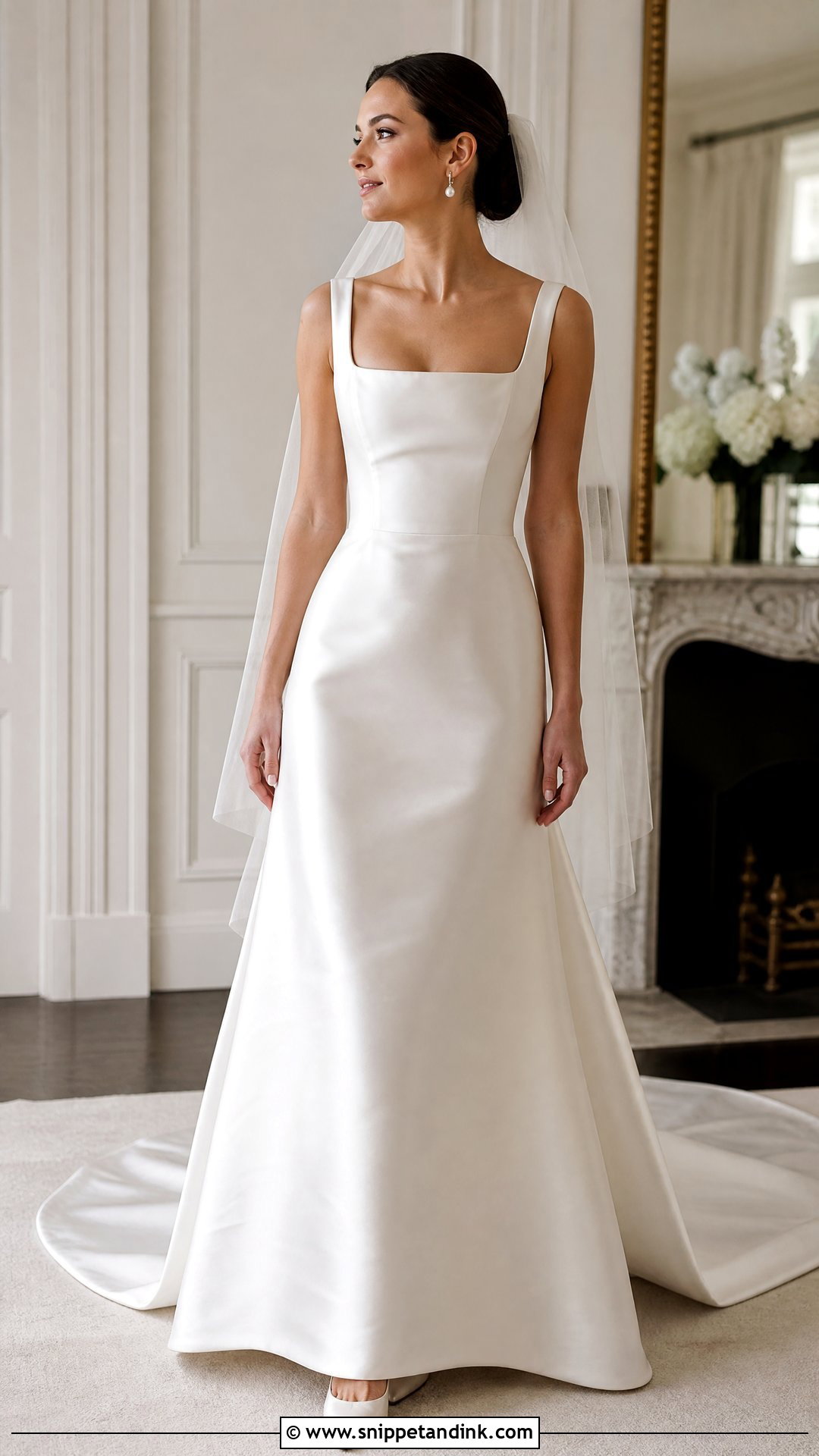
Satin is honest fabric. It reflects light well, which gives a square bodice a soft glow in photos, but it also shows every wrinkle and every place the seam is pulling. Before I’d recommend a satin gown I look at the bodice from the side: the neckline edge should lie flat, with no little ripple near the strap join. Ivory pumps, pearl earrings and a veil with almost no trim are enough. Plan on a steamer in the getting-ready room, because satin creases the moment you sit in a car.
5. Square Neck Lace Wedding Dress
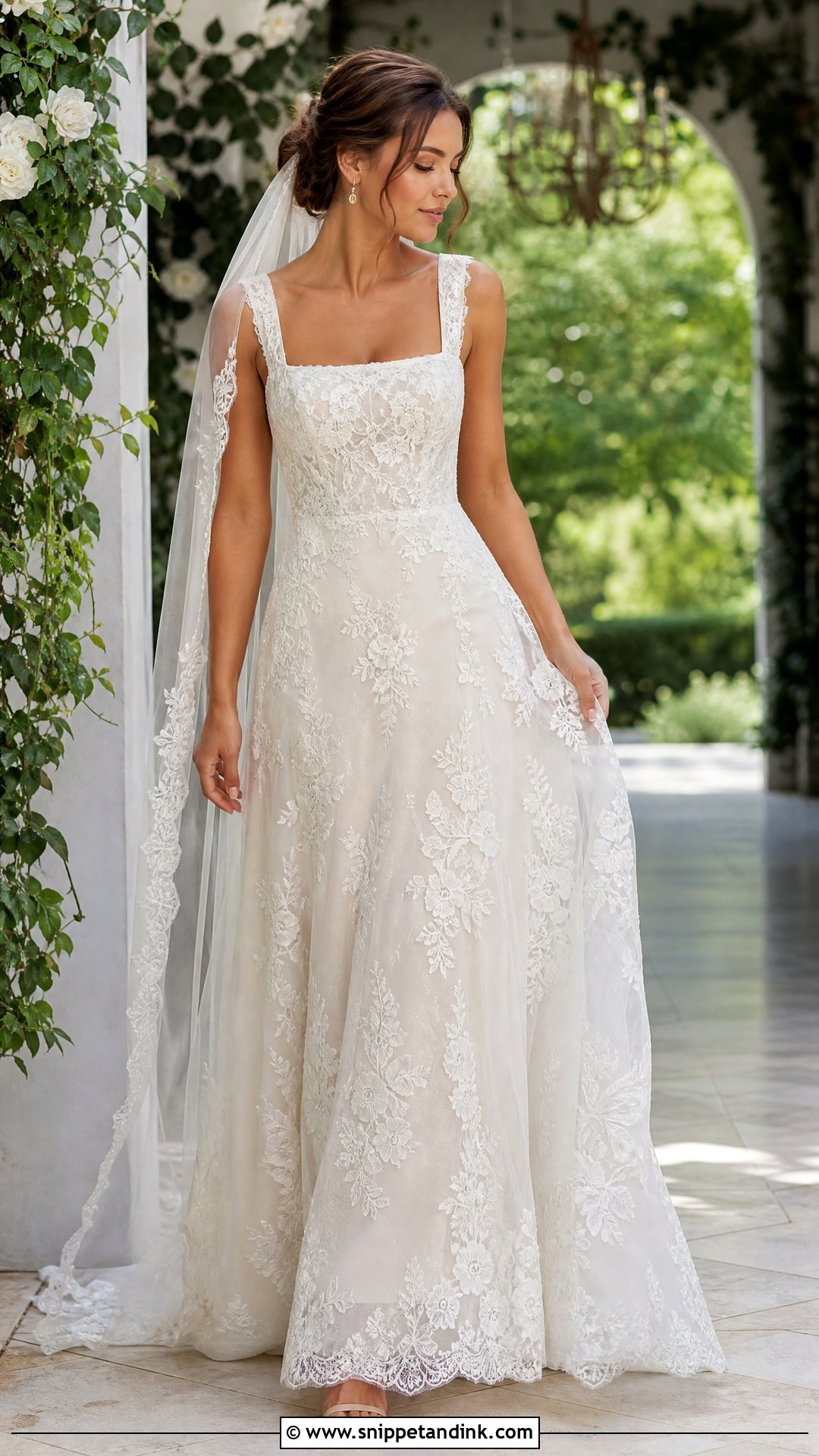
Lace softens the straight edge of the bodice without blurring it. Allover lace gives a traditional look, while appliqué scattered over tulle lets skin show through and moves better. When I fit a lace gown, I check where the motifs land on the neckline. A good maker cuts around the flowers so the edge finishes on a scalloped motif, not a chopped one. Skip the necklace and let the neckline stay open, and match the veil edging to the dress lace rather than adding a second pattern.
6. Square Neck Crepe Wedding Dress
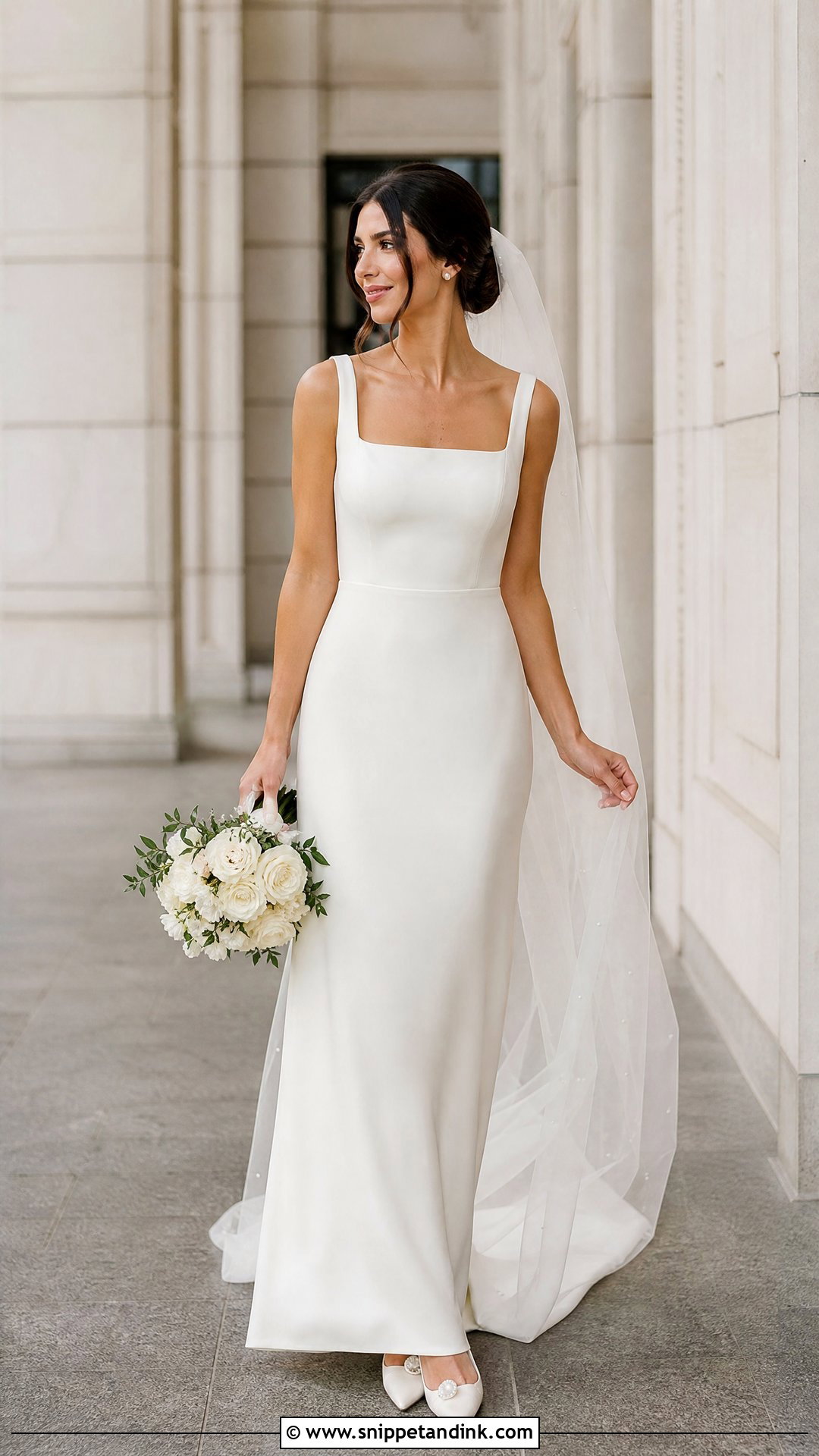
Crepe has weight, which is why it skims instead of clinging. That makes it my first suggestion for sheath and column cuts with a square top. The catch is that crepe hides nothing about the fit at the hip and seat, so book the alterations early. A detachable overskirt or cape for the ceremony gives you a second look for the reception without changing dresses. Pointed heels, pearl studs and a low chignon keep it as clean as the fabric.
7. Square Neck Long Sleeve Wedding Dress
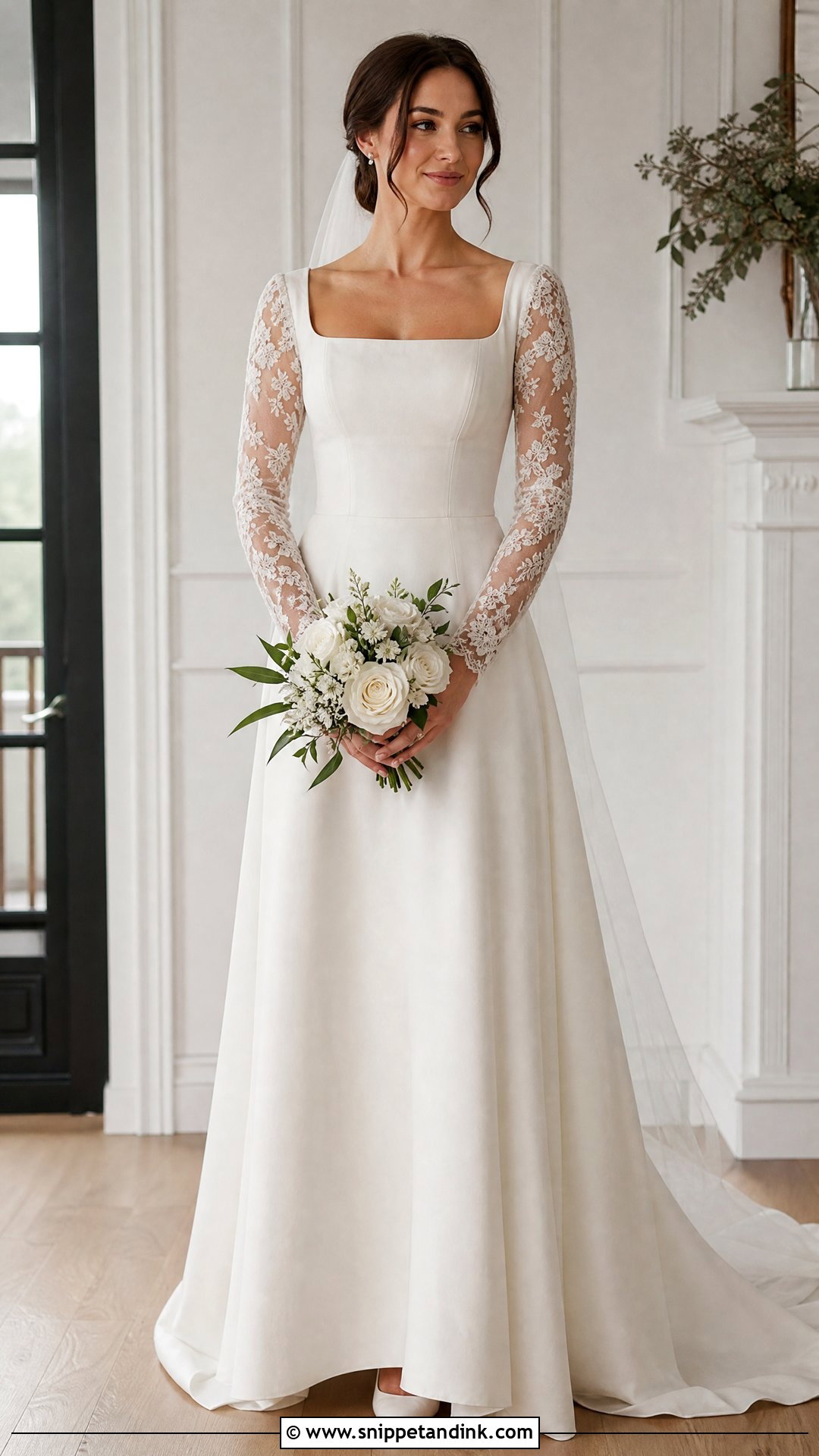
Sleeves and a square neck are a natural pair, because you get coverage on the arms while the collarbone still shows. Fitted sleeves in crepe or lace look tailored; puff sleeves soften the whole top. The practical test I make every bride do is to raise both arms above her head. A long sleeve set too low in the armhole will pull the neckline up and out of square. Small earrings are enough, as the sleeves already add detail near the face. It suits cold-month and formal indoor weddings well.
8. Square Neck Short Sleeve Wedding Dress
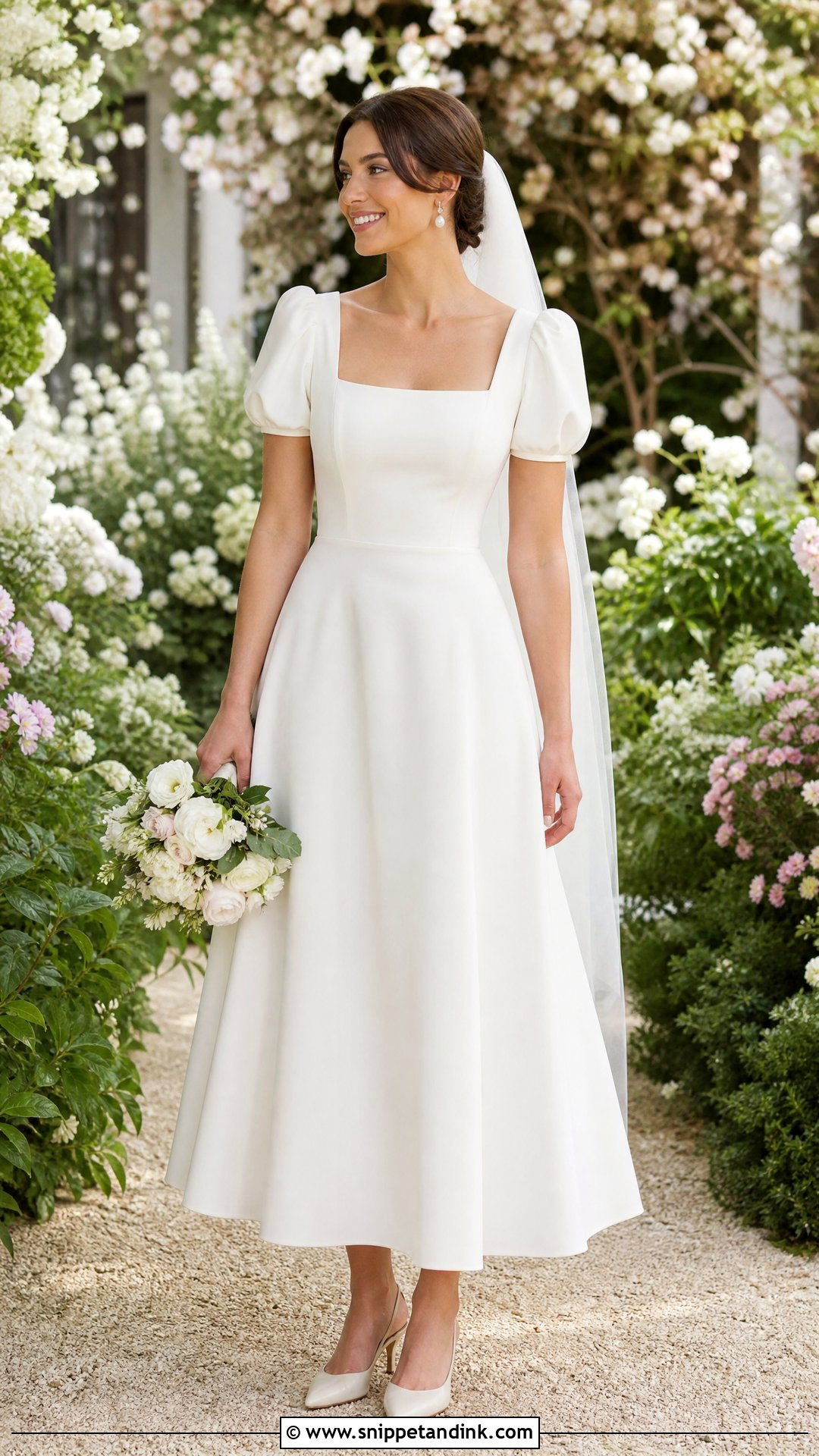
Short sleeves take the bareness off a square top without hiding the shoulders entirely. Puff sleeves lean romantic, cap sleeves lean vintage, and fitted sleeves lean modern, so pick the one that matches your skirt rather than your mood board. A tea-length or A line skirt keeps it light for spring. If your upper arms are something you’d rather not show, a short puff is more forgiving in photos than a cap, which lands right at the widest point.
9. Square Neck Corset Wedding Dress
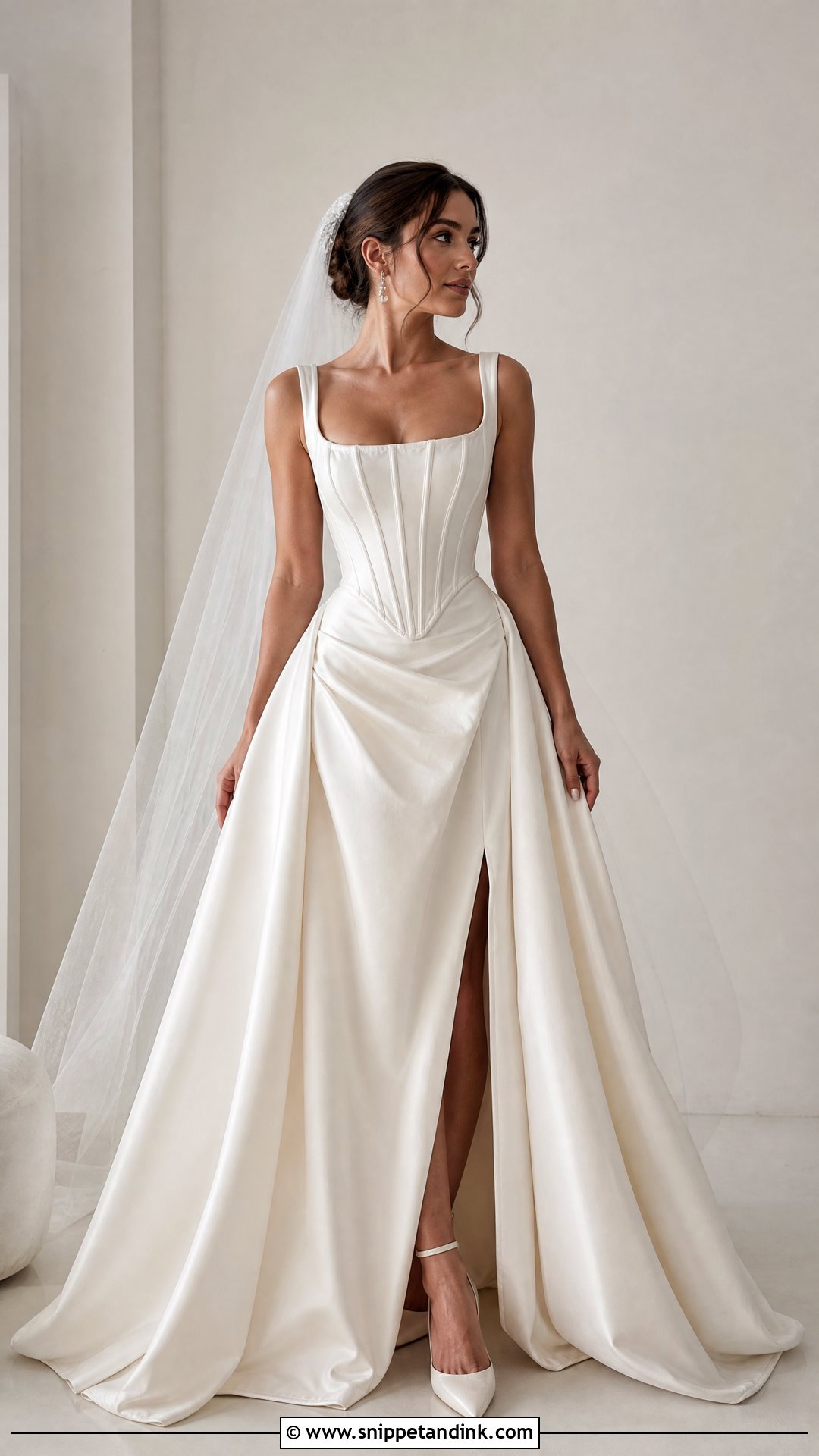
A corset bodice is the most secure way to wear a square neckline, because the boning holds the edge straight even when you lean in for a hug. Visible boning is a fashion choice; hidden boning under satin or lace looks quieter. What I check first is the lacing gap at the back. You want a small, even gap, not edges touching, which means the corset was cut too big. With a detailed corset, keep everything else light. With a plain one, pearl gloves or a textured veil give it a finish.
10. Square Neck Princess Wedding Dress
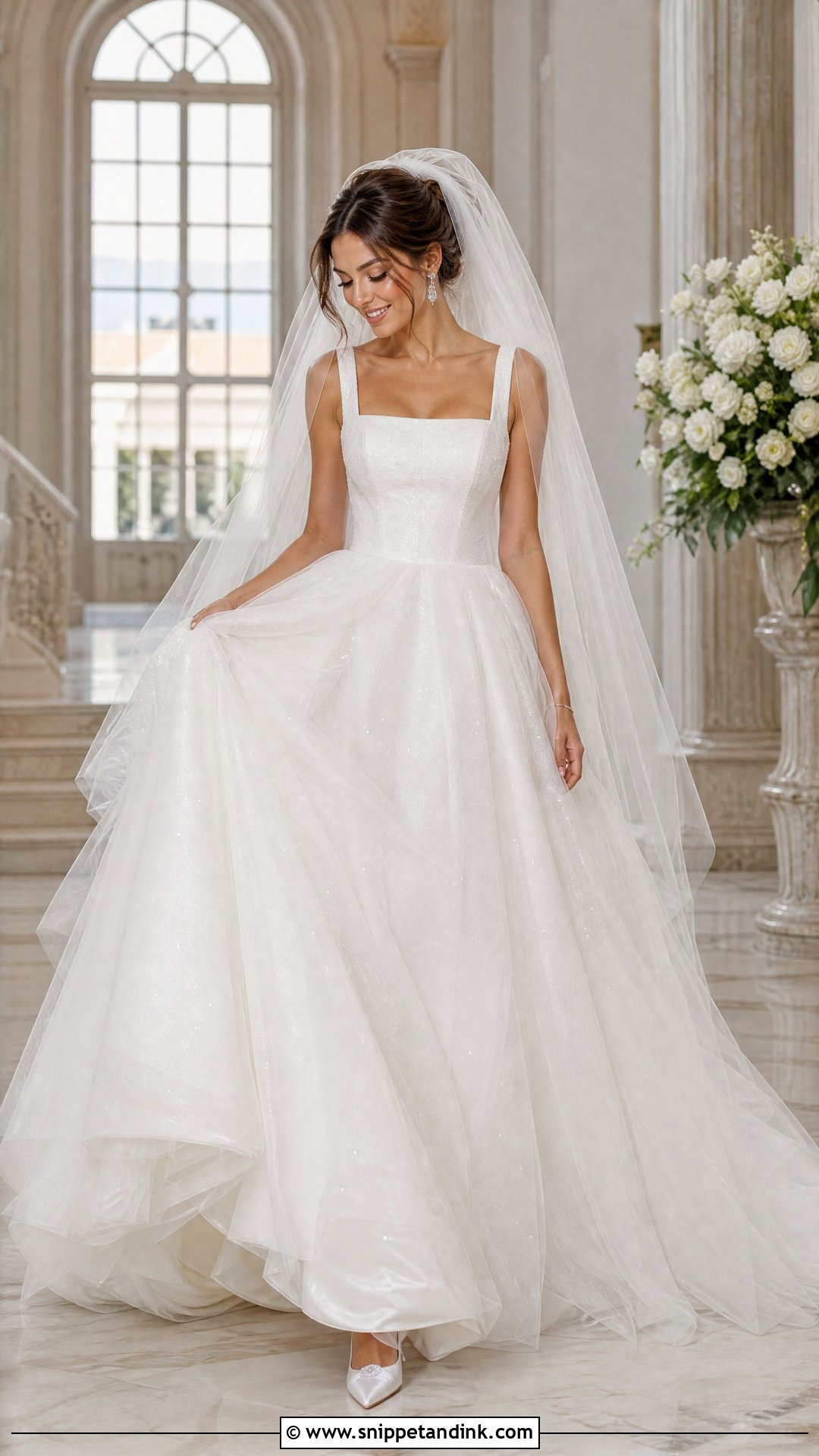
The fitted bodice and wide skirt are classic princess proportions, and the square neckline keeps them from getting too sweet. Shimmer tulle or scattered appliqué add sparkle without turning it into a pageant gown. A tiara-inspired hair comb sits well with this cut because the straight bodice line echoes the band of the comb. I’d keep makeup fresh and the earrings delicate. Too many sparkly elements together and the neckline gets lost.
11. Square Neck Minimalist Wedding Dress
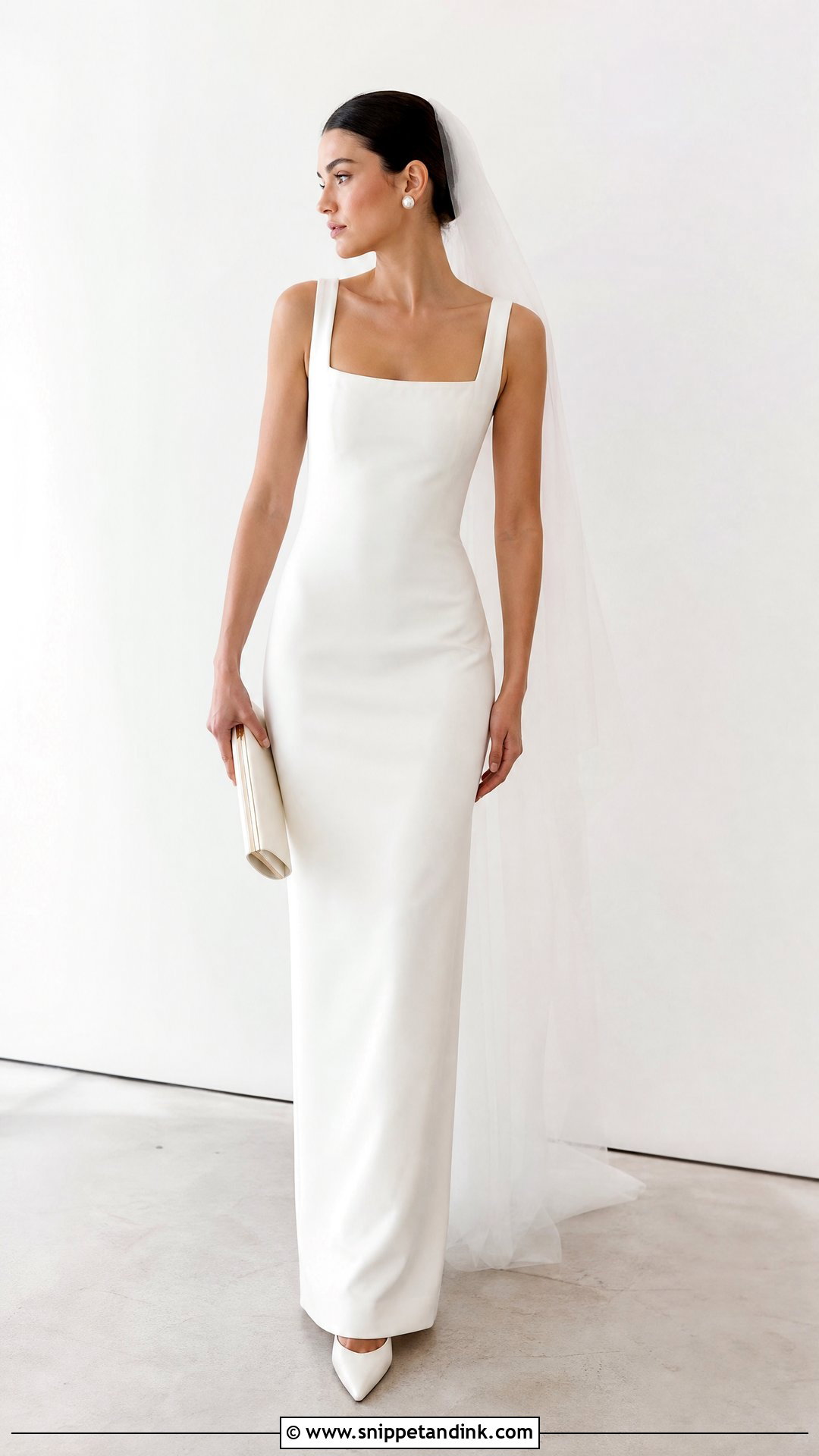
With nothing on the dress to look at, the fit is the design. On a minimal gown I spend most of the fitting on two places: the neckline corners and the waist. If the corners of the square stand away from the body even slightly, the whole dress looks unfinished. Crepe, satin or mikado in a column or A line shape suits this best. A middle-part bun, pearl studs and a structured clutch stay in the same quiet register as the gown, which suits gallery spaces, city halls and anyone who dislikes trim.
12. Square Neck Boho Wedding Dress
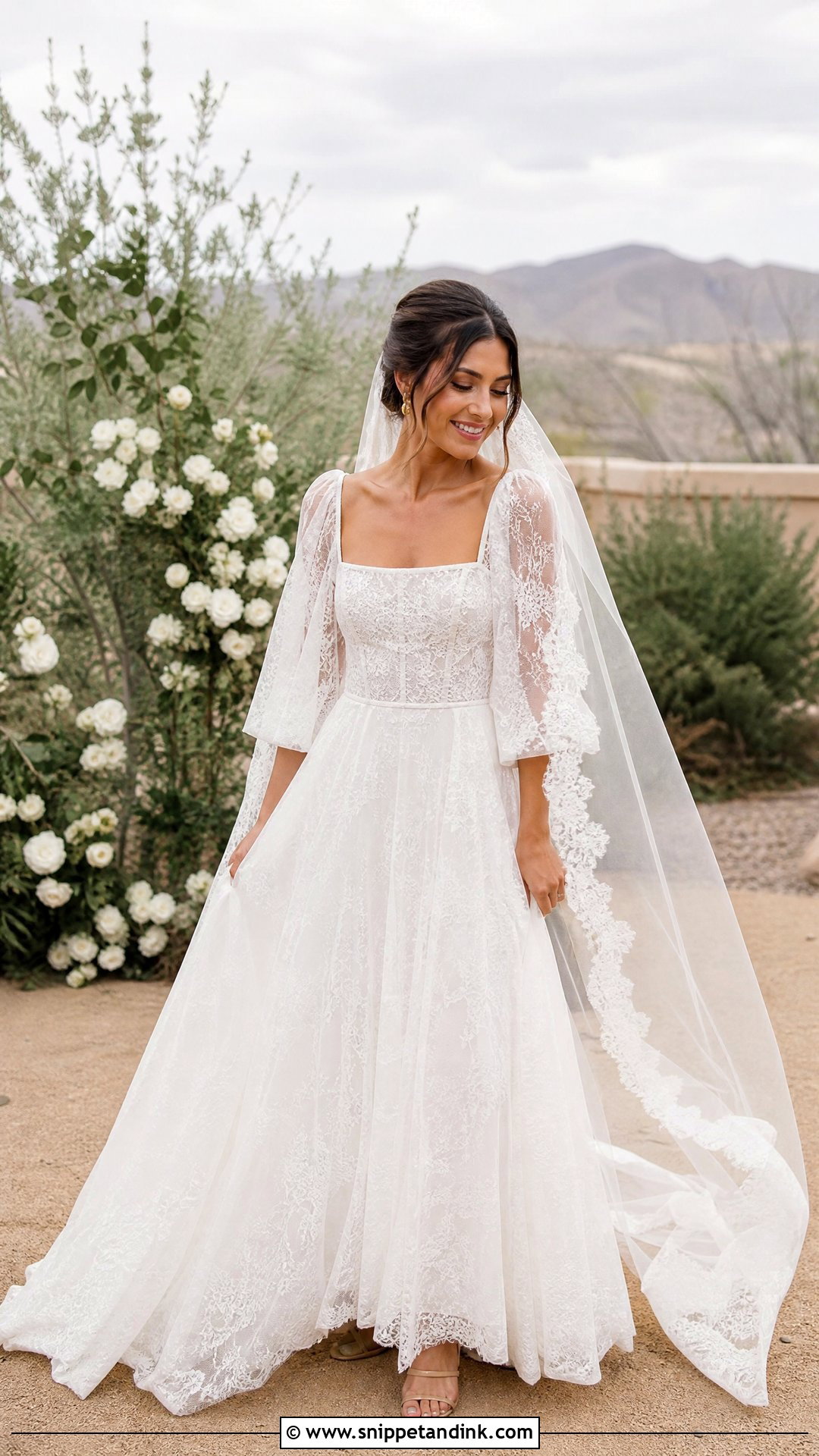
Boho and square necklines meet in the middle: the cut gives shape, the soft lace or chiffon keeps it loose. I look for skirts with an unlined or lightly lined layer so they move outdoors. Watch the strap width on these. Very thin straps with a heavy lace bodice often slide off the shoulder by evening. Loose waves, small hoops and low block heels or sandals suit desert, mountain and garden settings, where a stiff gown would look out of place.
13. Square Neck Beach Wedding Dress
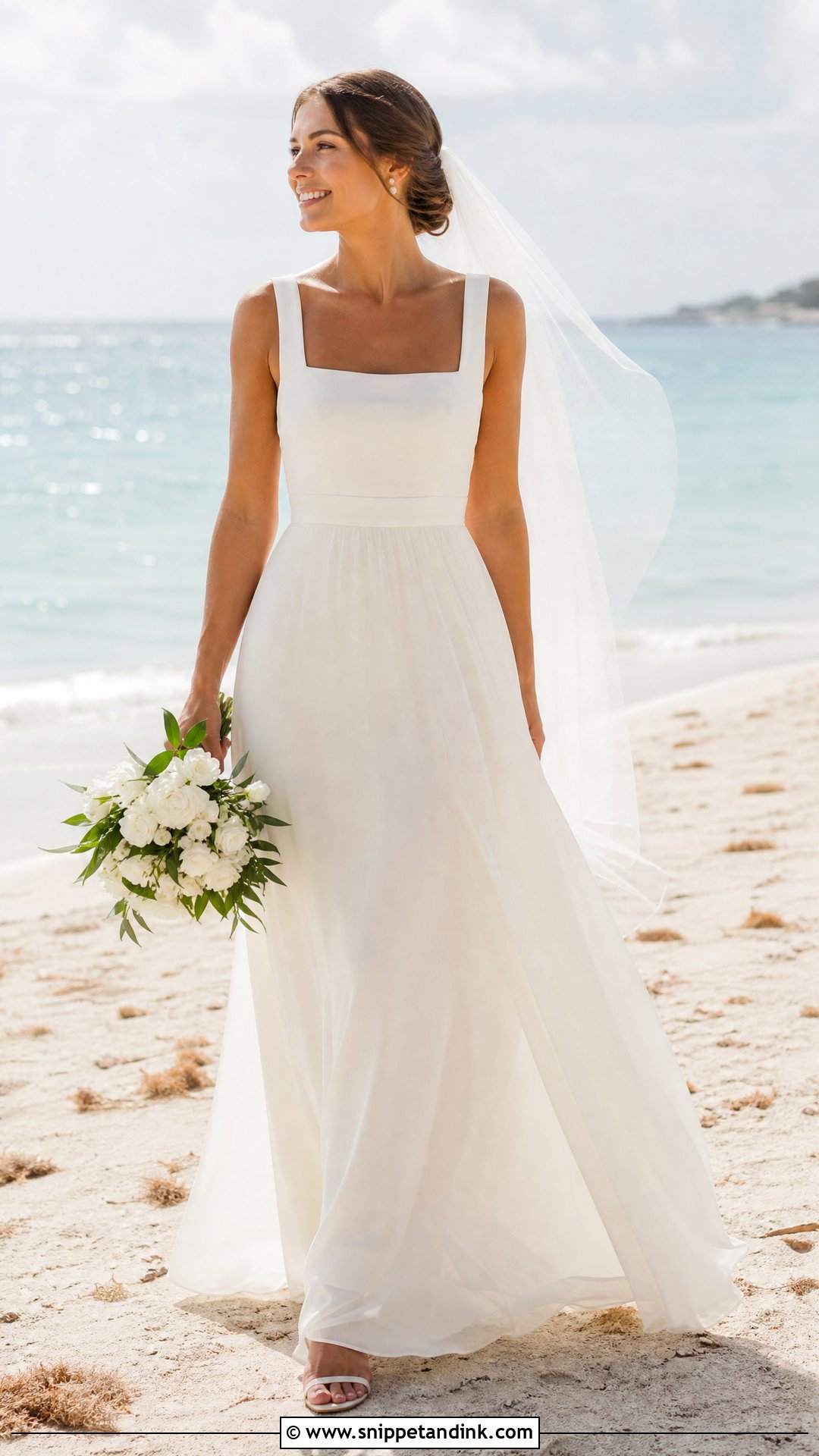
Heat and sand are the two problems on a beach. Chiffon, light crepe and soft tulle breathe; mikado and heavy satin trap heat by the time photos start. A slip, sheath or soft A line is easier to walk in than anything with a train, which drags sand along with it. I’d tie the hair in a low bun so wind doesn’t whip it across the neckline in every shot. Flat sandals, pearl studs and a sheer veil that can blow around are all this bright seaside ceremony needs.
14. Square Neck Courthouse Wedding Dress
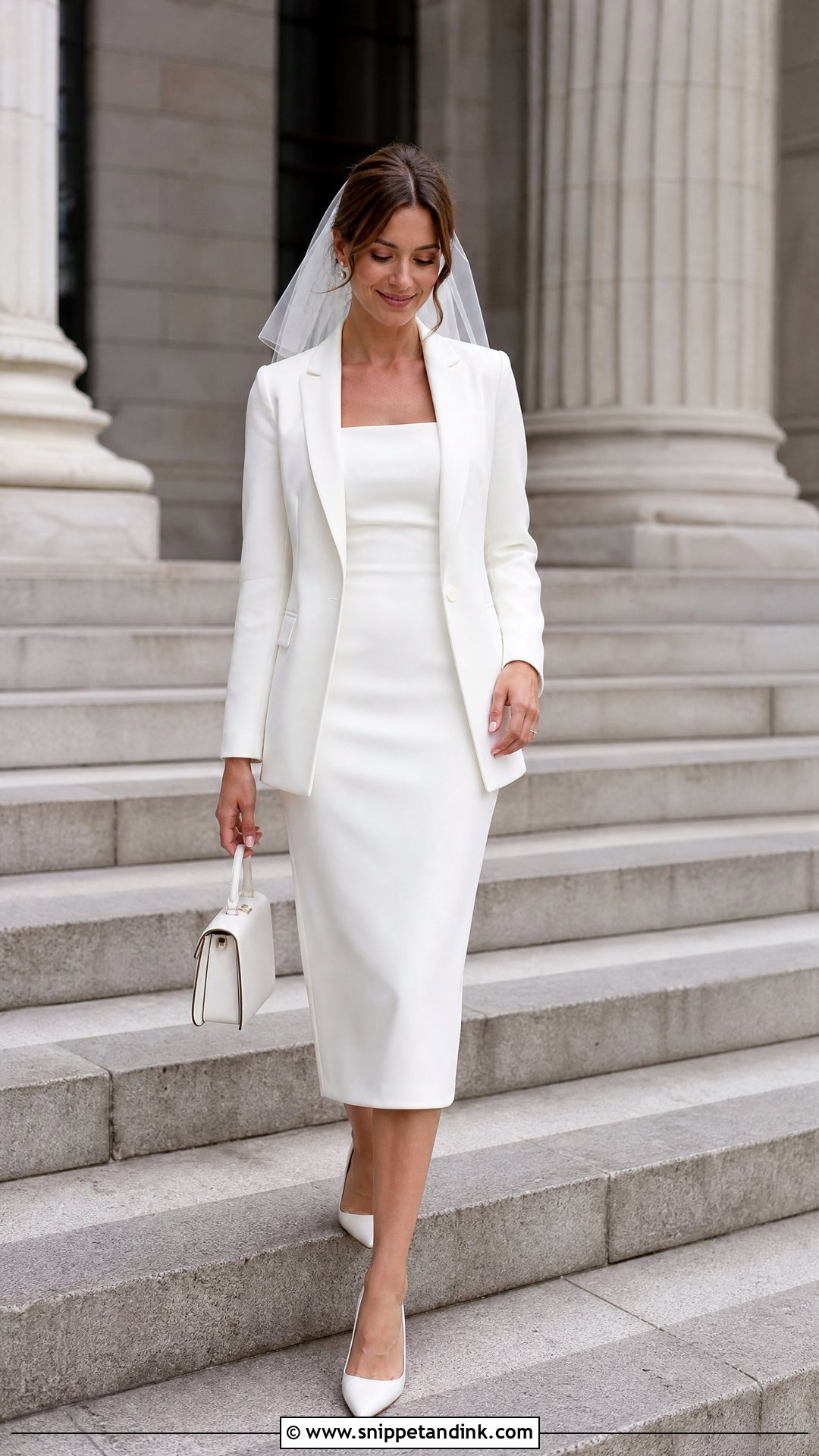
At a courthouse the square neck is what makes a simple dress read as bridal. A midi, a sleek column or even a crepe mini all carry it. I like a structured blazer over the shoulders for the walk in and out, since city hall corridors are often cold. Add pointed pumps, pearl earrings and a small top-handle bag. A short veil or a hair bow gives a traditional touch if you want one, and it is easy to take off for lunch afterwards.
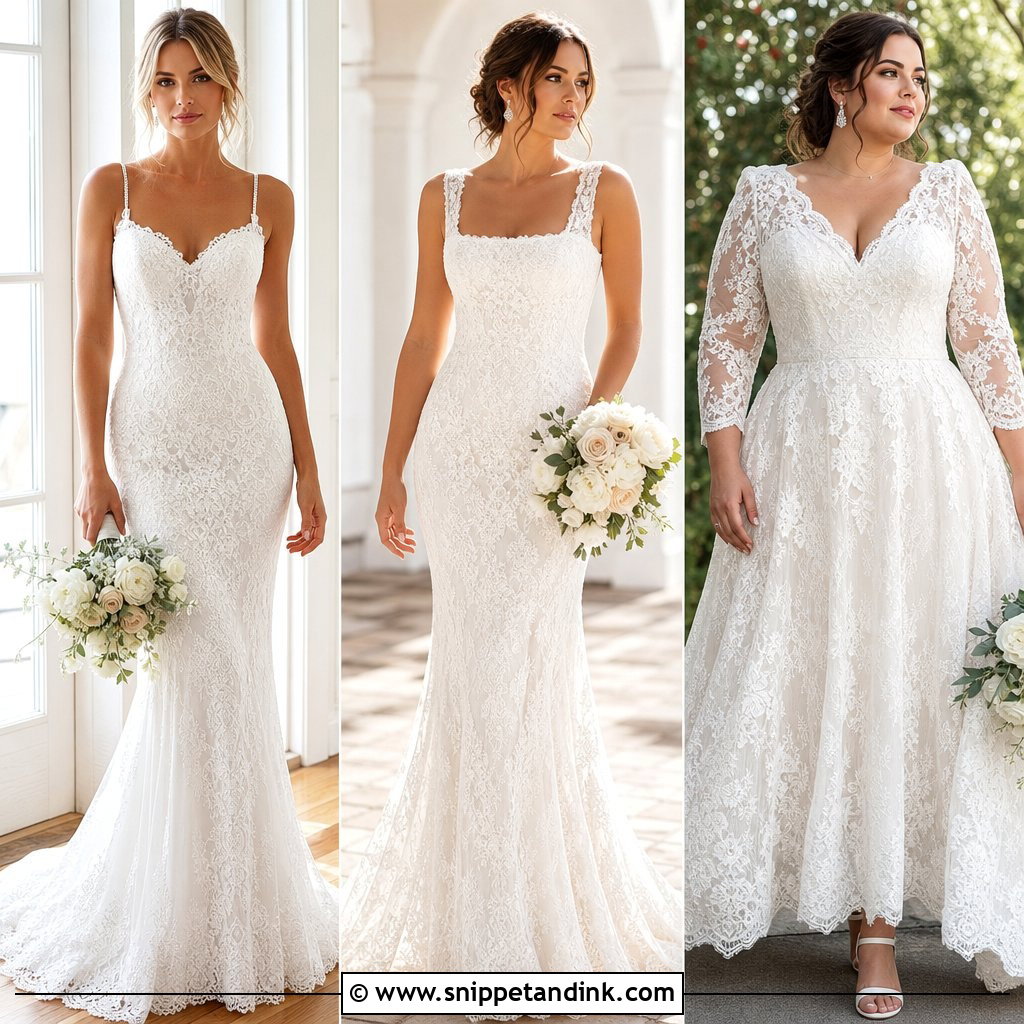
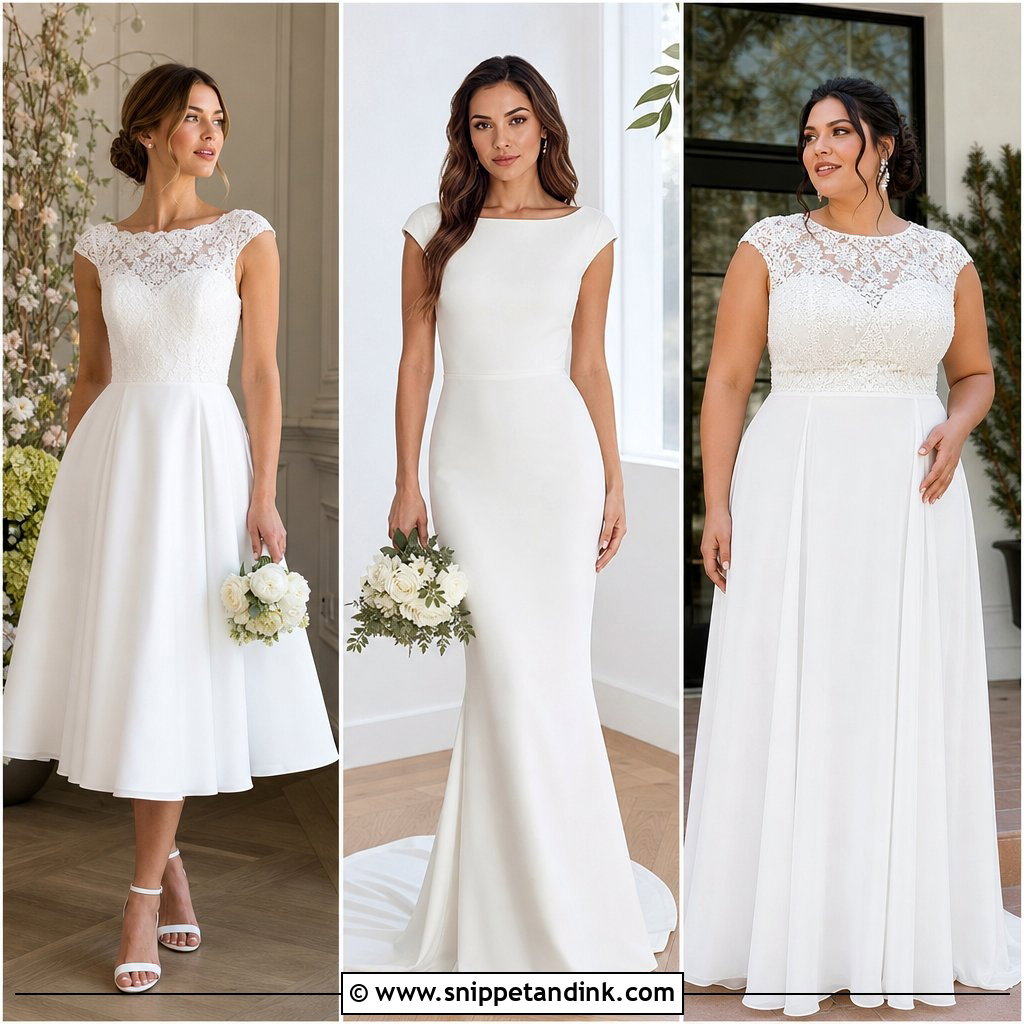
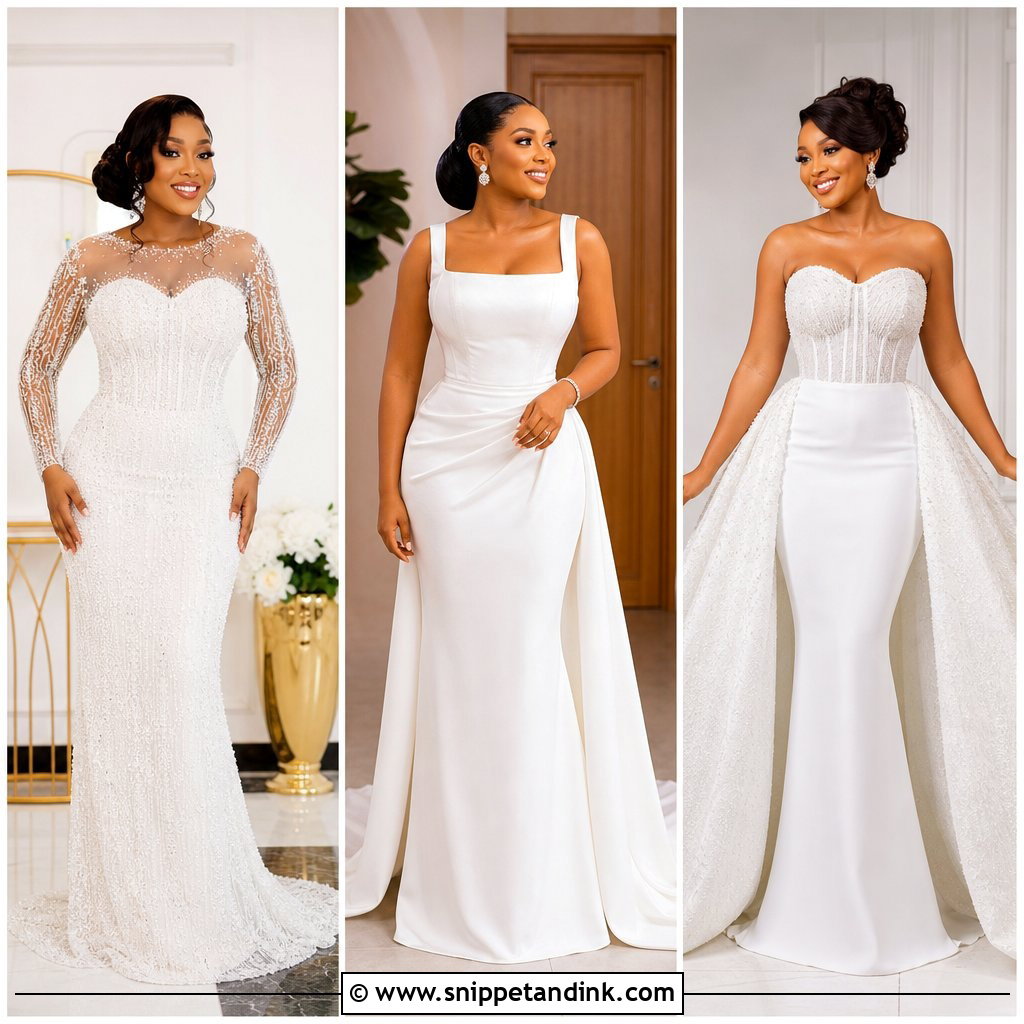
15. Square Neck Midi Wedding Dress
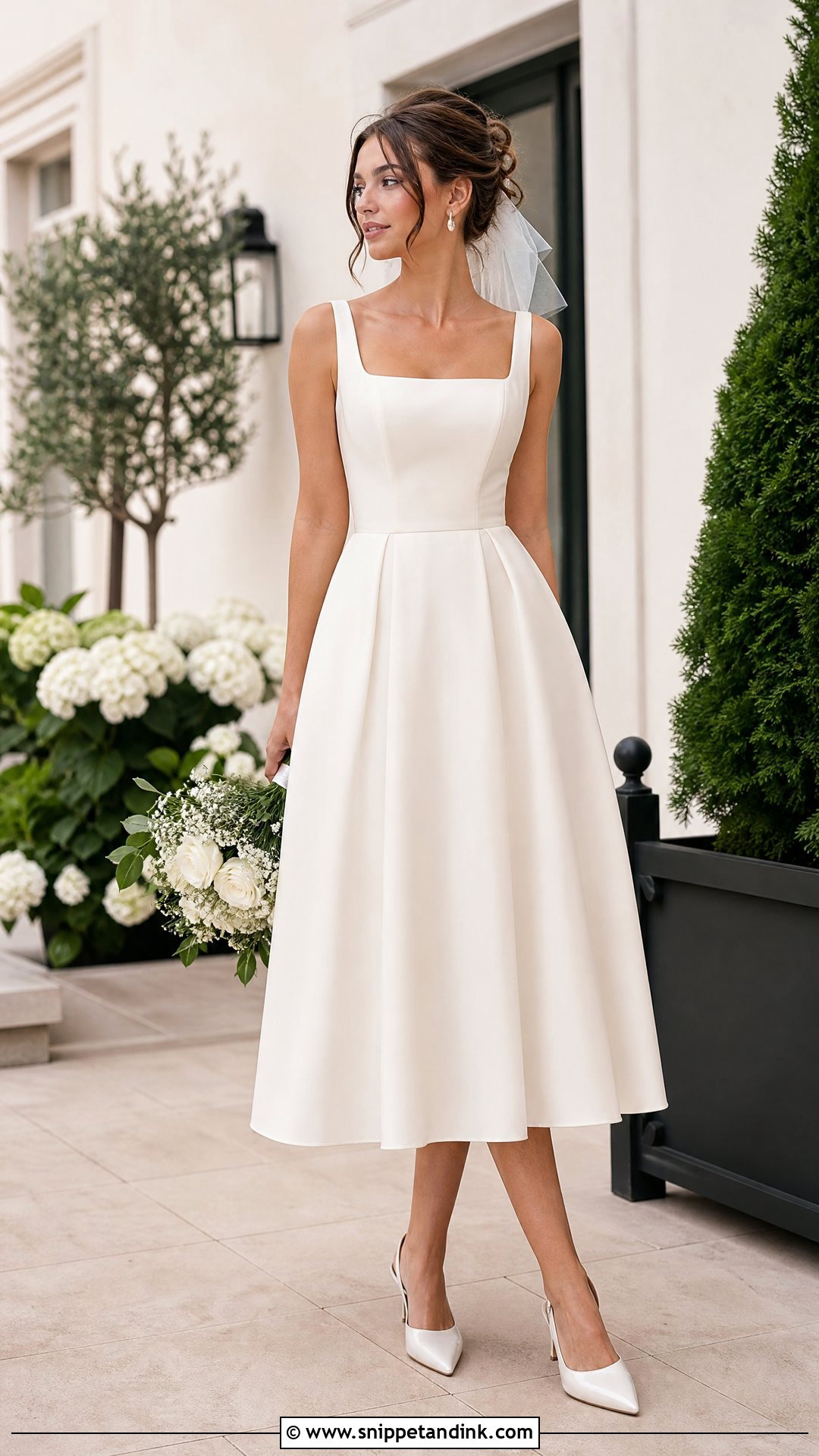
A midi shows the shoes, so treat them as part of the dress, not an afterthought. Satin slingbacks or pearl-trimmed heels are worth the spend here. A full midi skirt reads vintage; a slim one reads city. I’d keep the veil short so it doesn’t fall past the hem, which looks odd on a shorter dress. This length works for courthouse ceremonies, rehearsal dinners, bridal exits and intimate weddings, and it is the easiest of all these lengths to dance in.
16. Square Neck Tea Length Wedding Dress
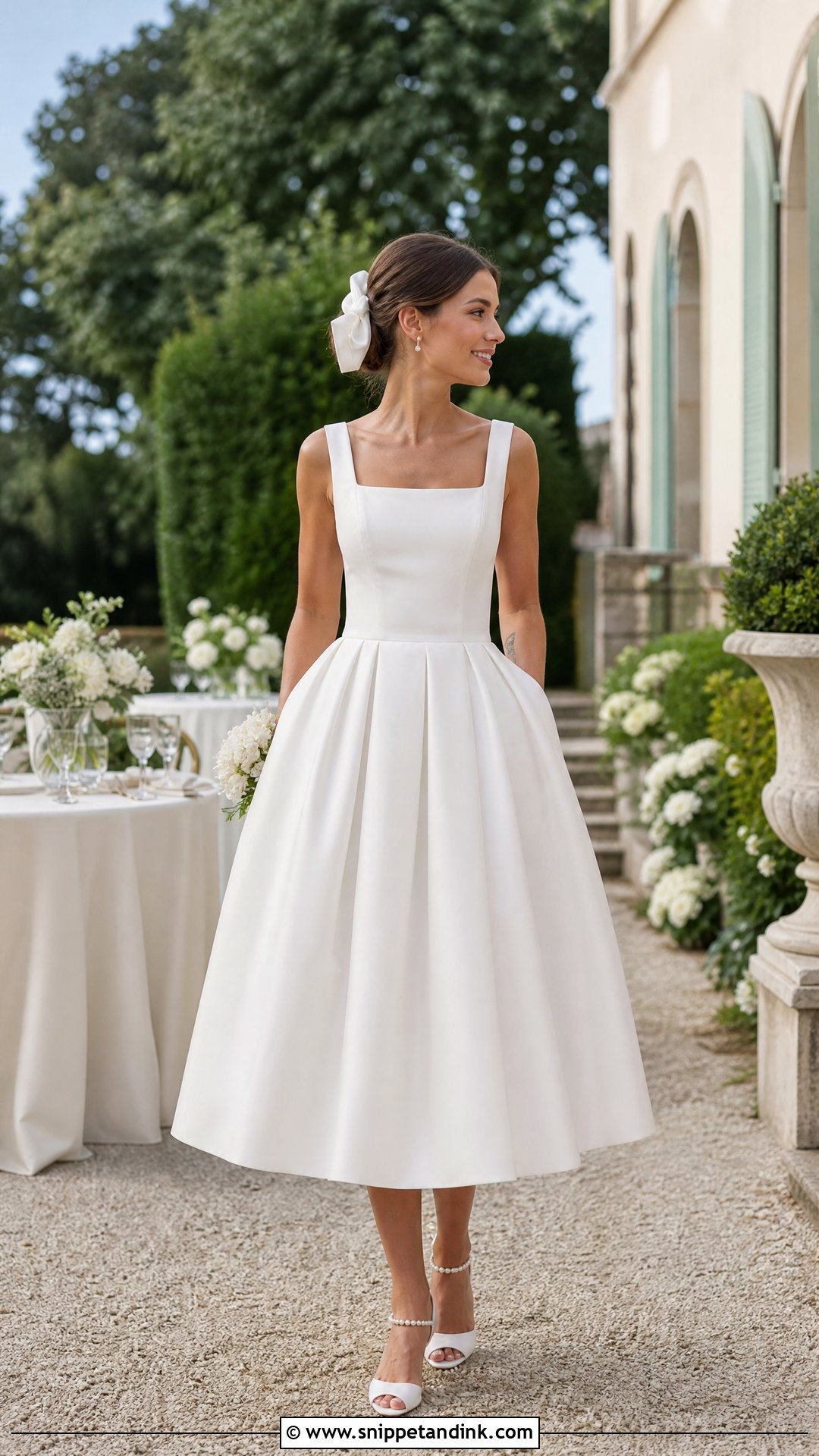
Tea length falls between knee and ankle, and the exact point matters. Mid-calf flatters most legs; just above the ankle can make shorter brides look cut off. Satin or organza gives the skirt volume, lace softens it. Instead of a long veil, try a birdcage-style alternative or a neat bow, since a full veil overwhelms the short skirt. The crisp square bodice keeps the playful length from feeling like a costume, and the skirt movement shows up well in candid shots.
17. Square Neck Slip Wedding Dress
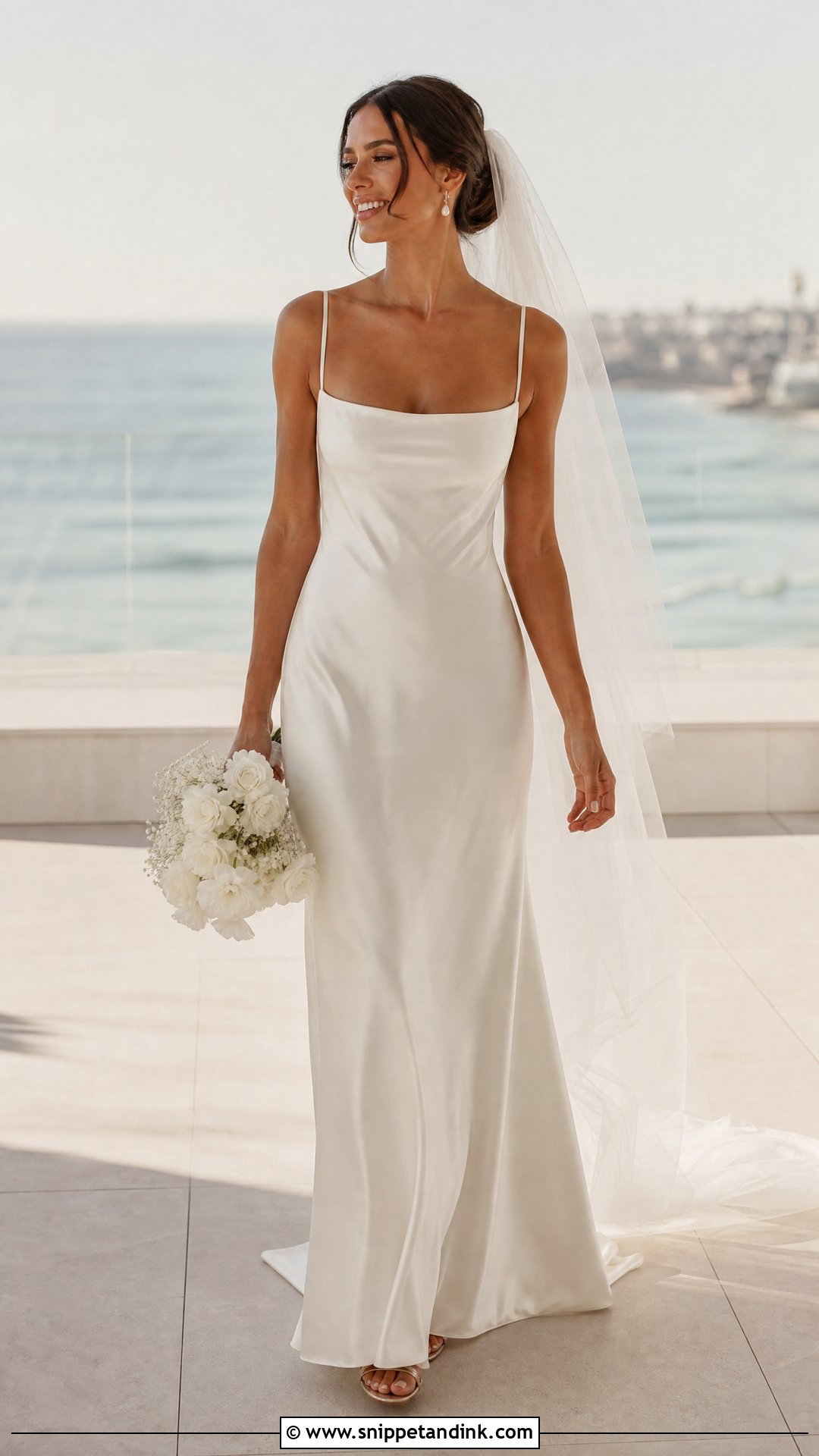
The square neck gives a slip dress structure it normally lacks; a cowl slip drapes, a square slip holds a line. That only works if the fabric is cut on the bias and fits the body exactly, because bias satin shows every ridge underneath. Smooth, no-line underwear and a proper fitting are not optional on this one. Barely-there heels and drop earrings keep it light, and a tailored white blazer handles a cool evening. Check the straps last. They should sit flat without cutting in, or the whole neckline tilts.
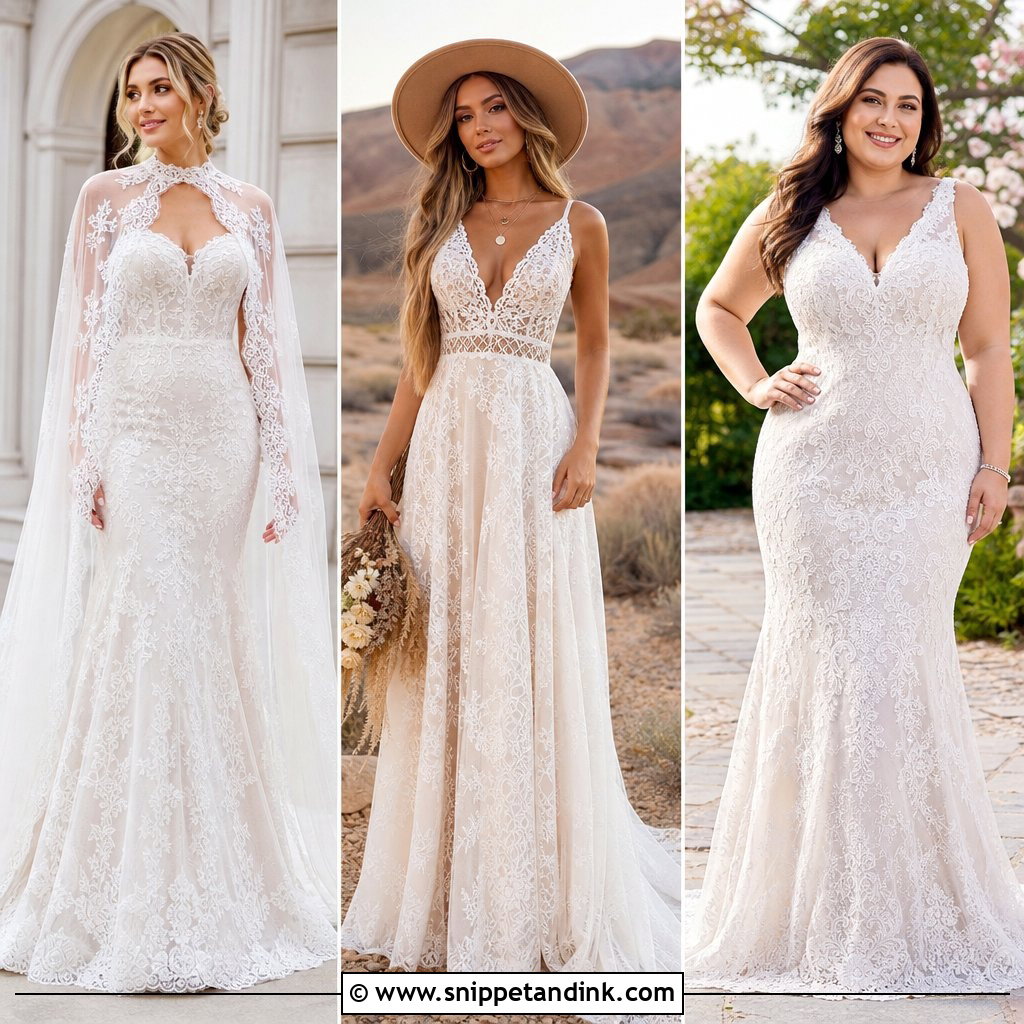
18. Square Neck Plus Size Wedding Dress
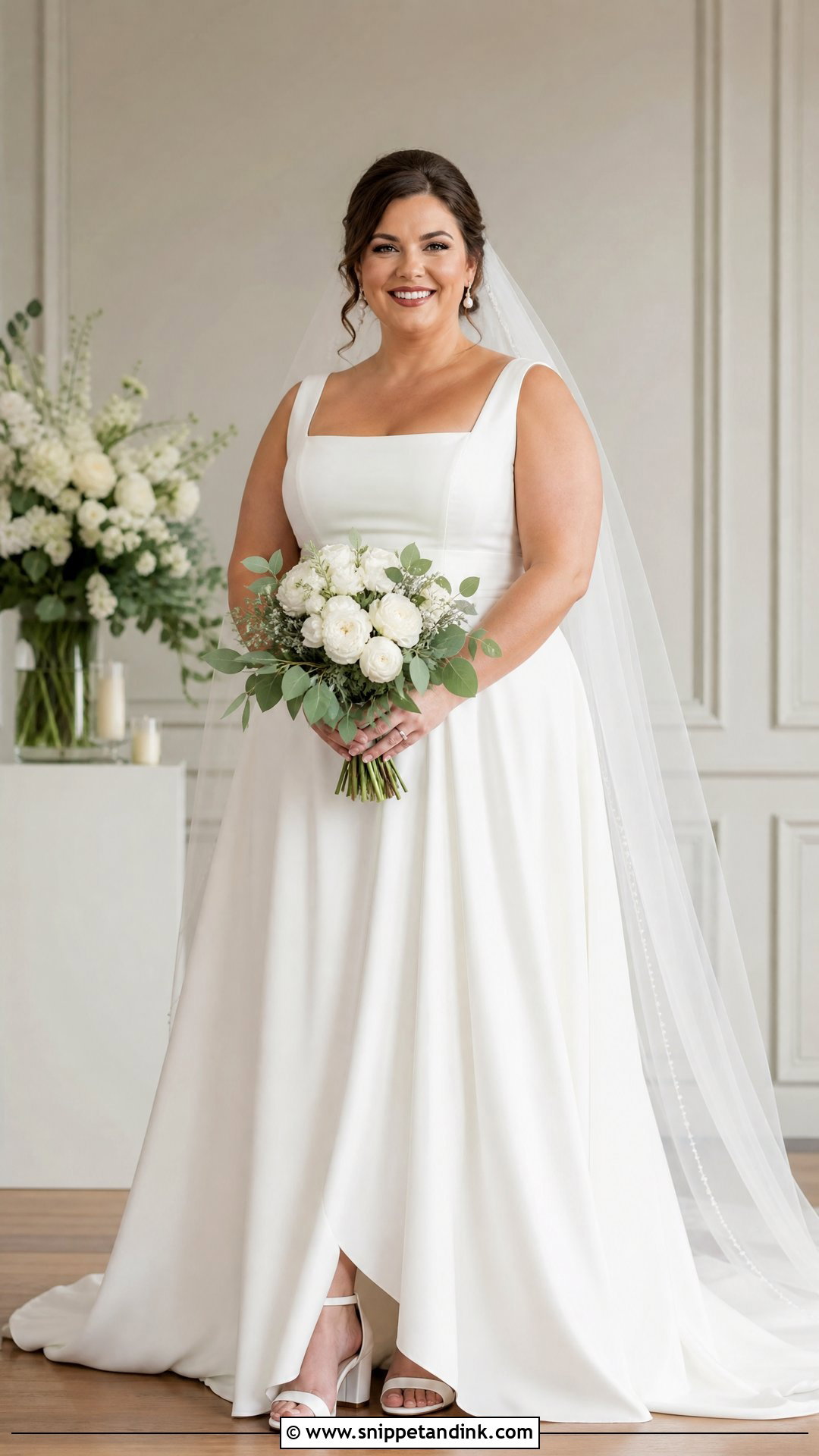
On a fuller bust, a square neckline is often more supportive than a sweetheart, because the straight edge sits higher and the straps carry part of the weight. Ask for wider straps and internal structure: a built-in bra, boning, or a firm waist stay. A line, ball gown and fit-and-flare cuts all work. In the fitting room, sit down and lean forward. If the neckline gaps or the straps dig into your shoulders, it needs adjusting before you buy. Earrings that bring light near the face are a nice finish.
19. Square Neck Petite Wedding Dress
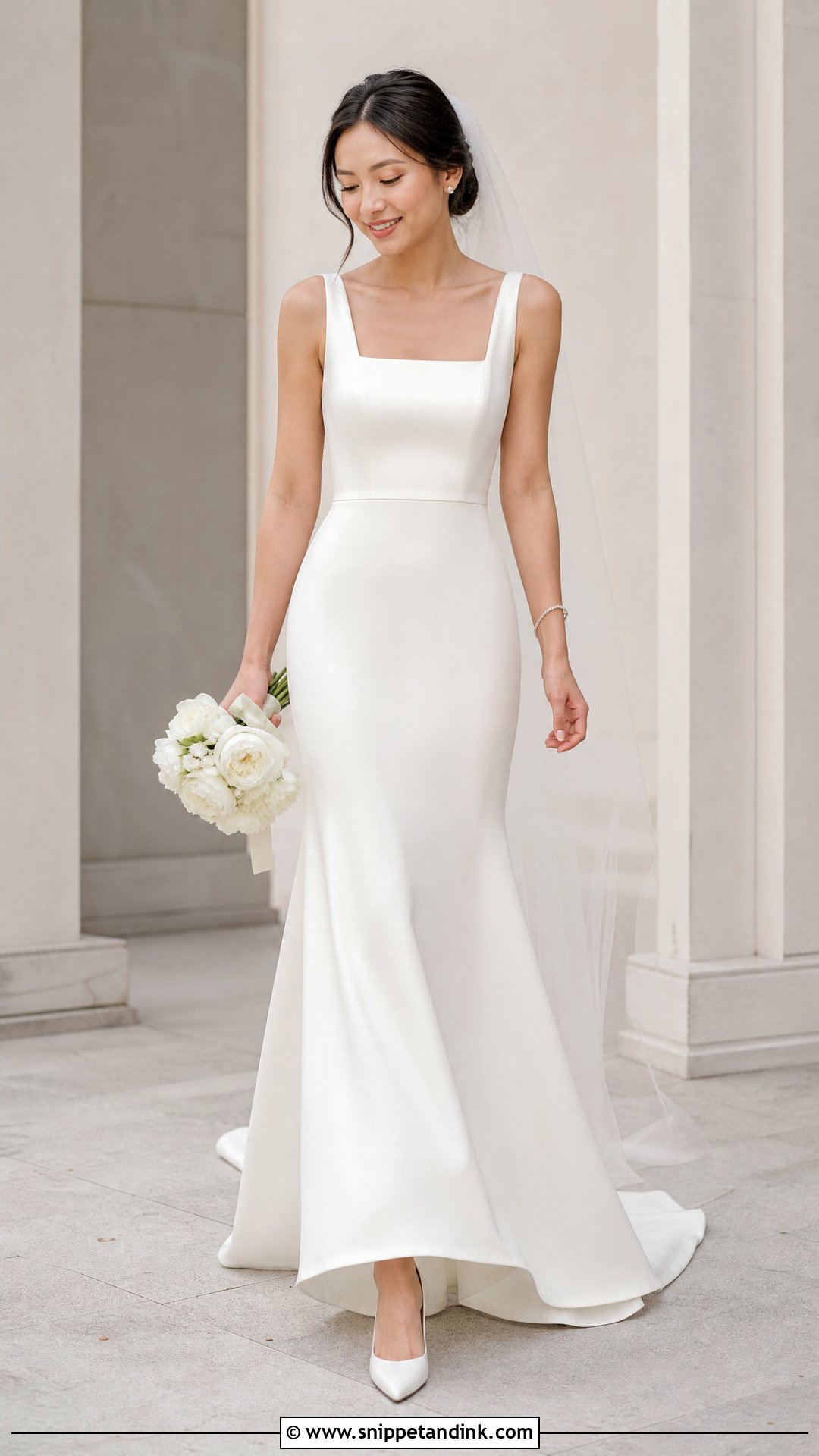
On a petite frame, the width of the square is the thing to watch. A neckline cut too wide makes the shoulders look narrower than they are. I look for an opening that stops a little inside the shoulder point. A slightly raised waist seam lengthens the legs, especially with pointed heels. Keep trains detachable and veils light, since heavy fabric swamps a smaller body. Small pearls, a slim bracelet and soft waves finish it without clutter.


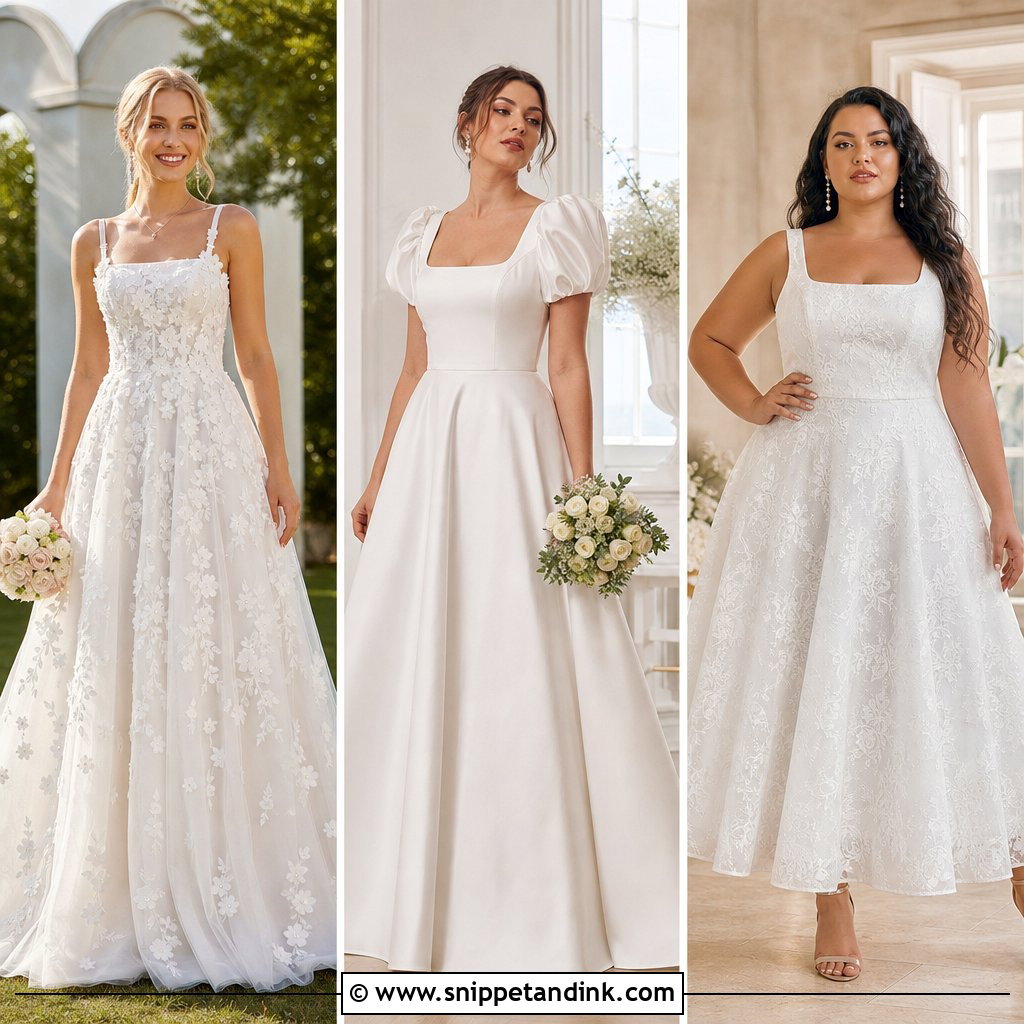
20. Square Neck Maternity Wedding Dress
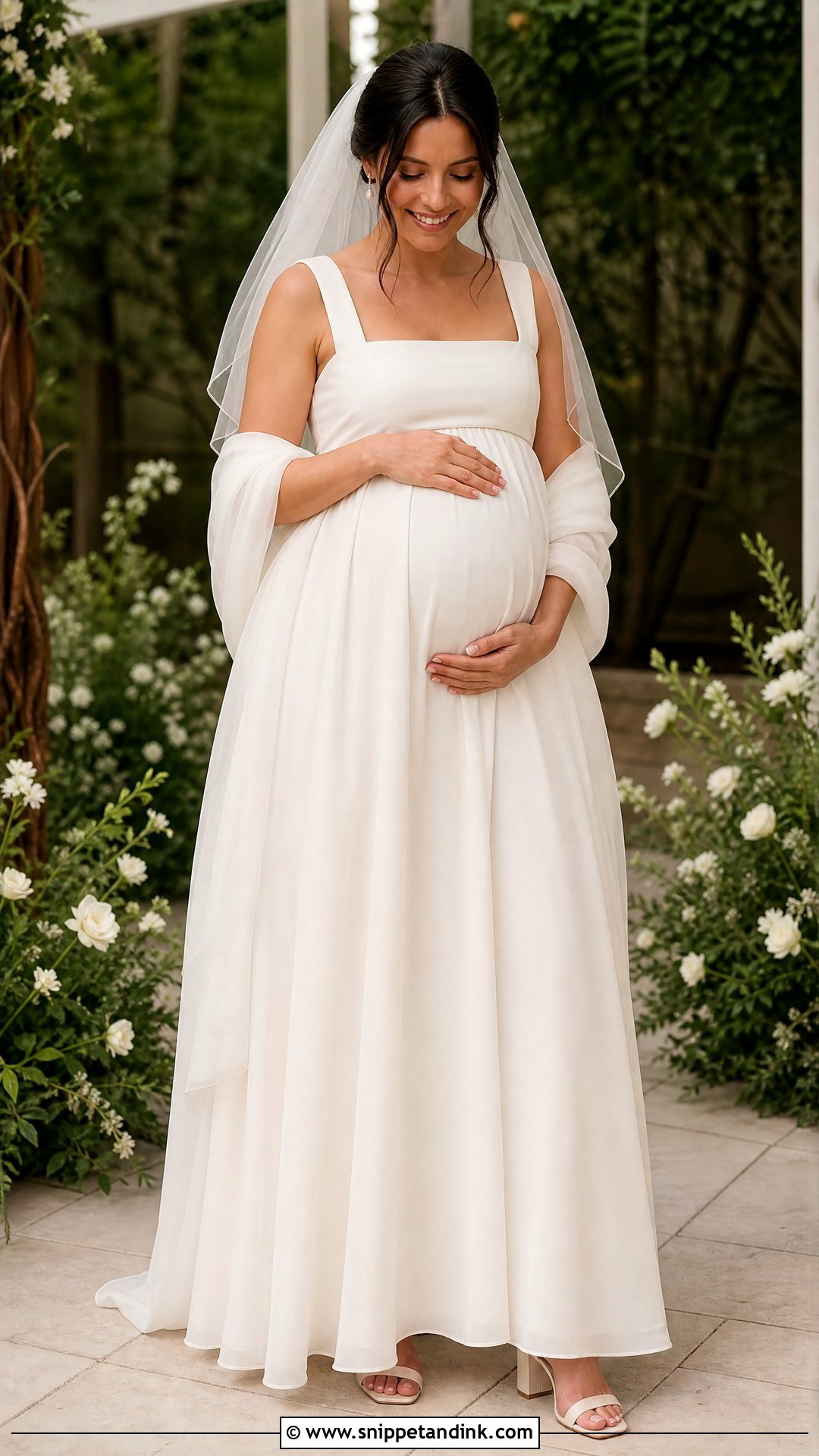
For a maternity gown I start with comfort over a long day: room through the bump, nothing pressing on the ribs, and straps wide enough to carry a heavier bust. Empire waists, flowy A line skirts and stretch crepe all give that room. The square top keeps the upper body defined while the skirt falls freely. Do the final fitting as close to the date as your seamstress allows, because measurements change quickly. A soft wrap and low block heels round it out.
21. Square Neck Wedding Dress With Pockets
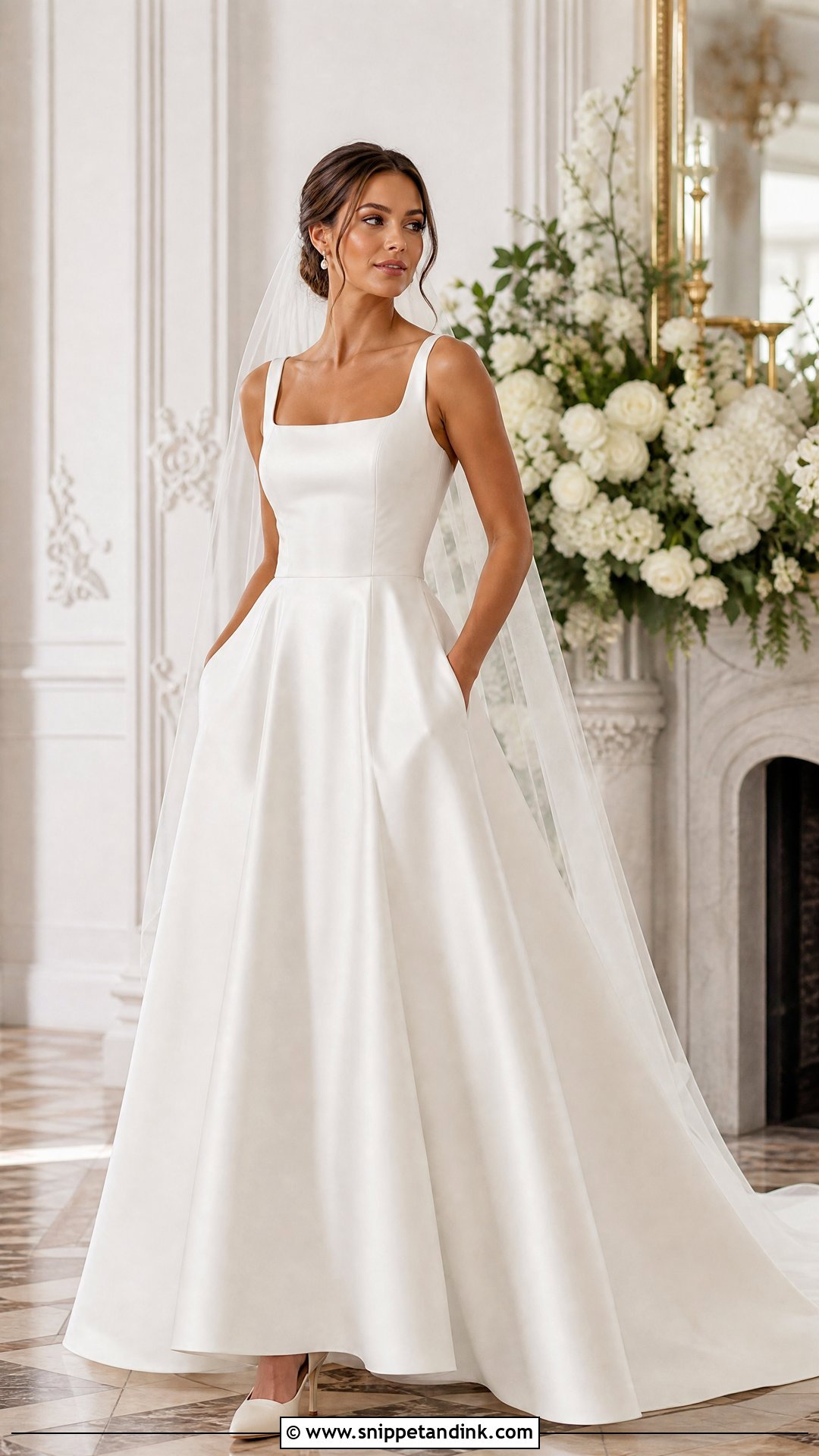
Pockets give you somewhere to put your hands in photos, which is half of why brides love them. They sit flat only in skirts with enough volume to hide them: A line, ball gown or a full midi. In a slim crepe skirt they bulge. Mikado or firm satin keeps the pocket opening from gaping. I’d still keep them to a tissue and a lipstick; anything heavier pulls the skirt down on one side and shows.
22. Square Neck Wedding Dress With Bow
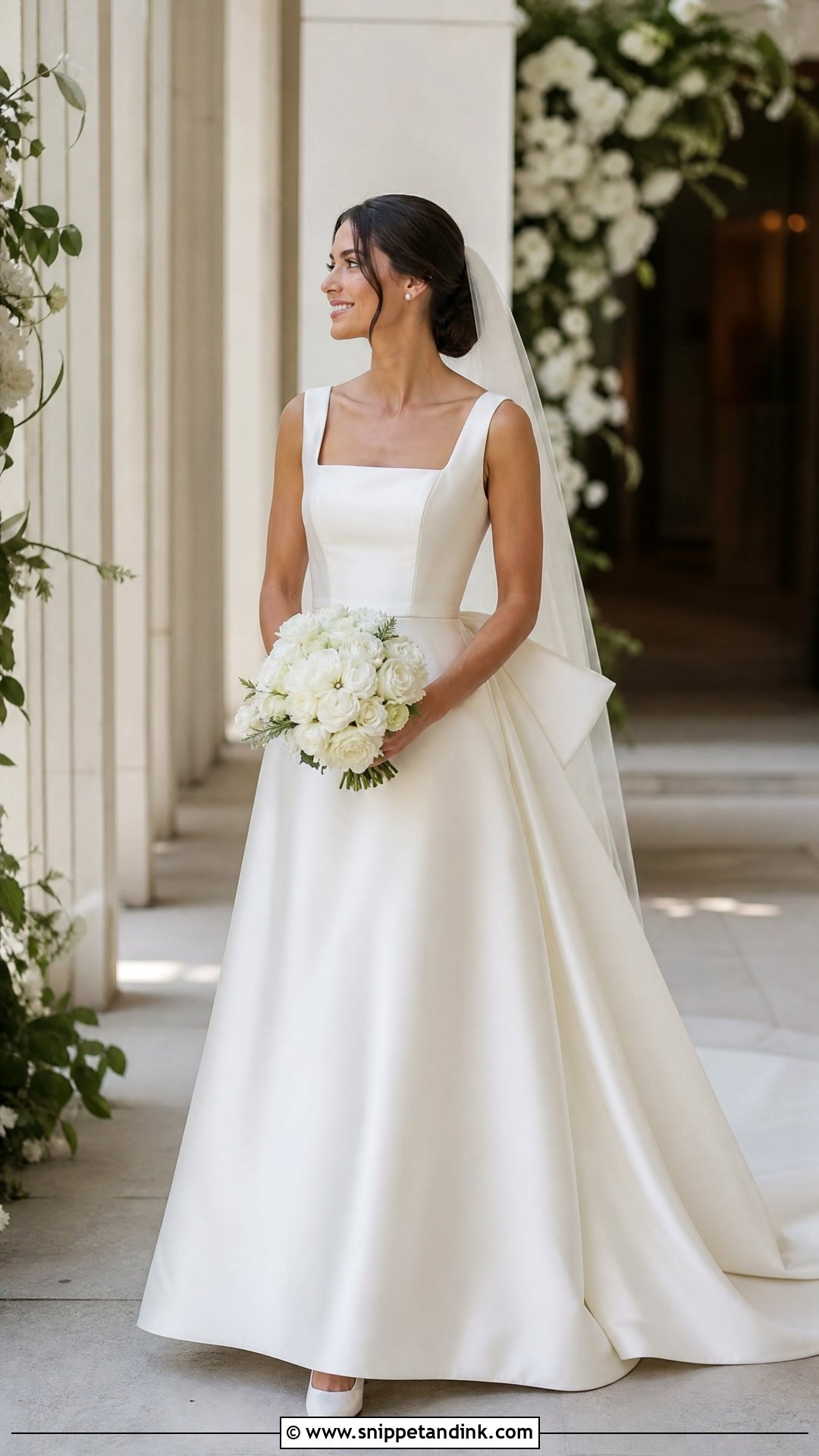
A bow can sit at the back waist, on a shoulder, at the neckline or as a train accent, and each placement changes the dress. The straight neckline keeps the bow from looking too sweet. If the bow is large, the rest of the outfit needs to go quiet: plain heels, pearl studs, an untrimmed veil. A detachable bow is worth asking about, since a big back bow gets crushed when you sit at dinner.
23. Square Neck Wedding Dress With Slit
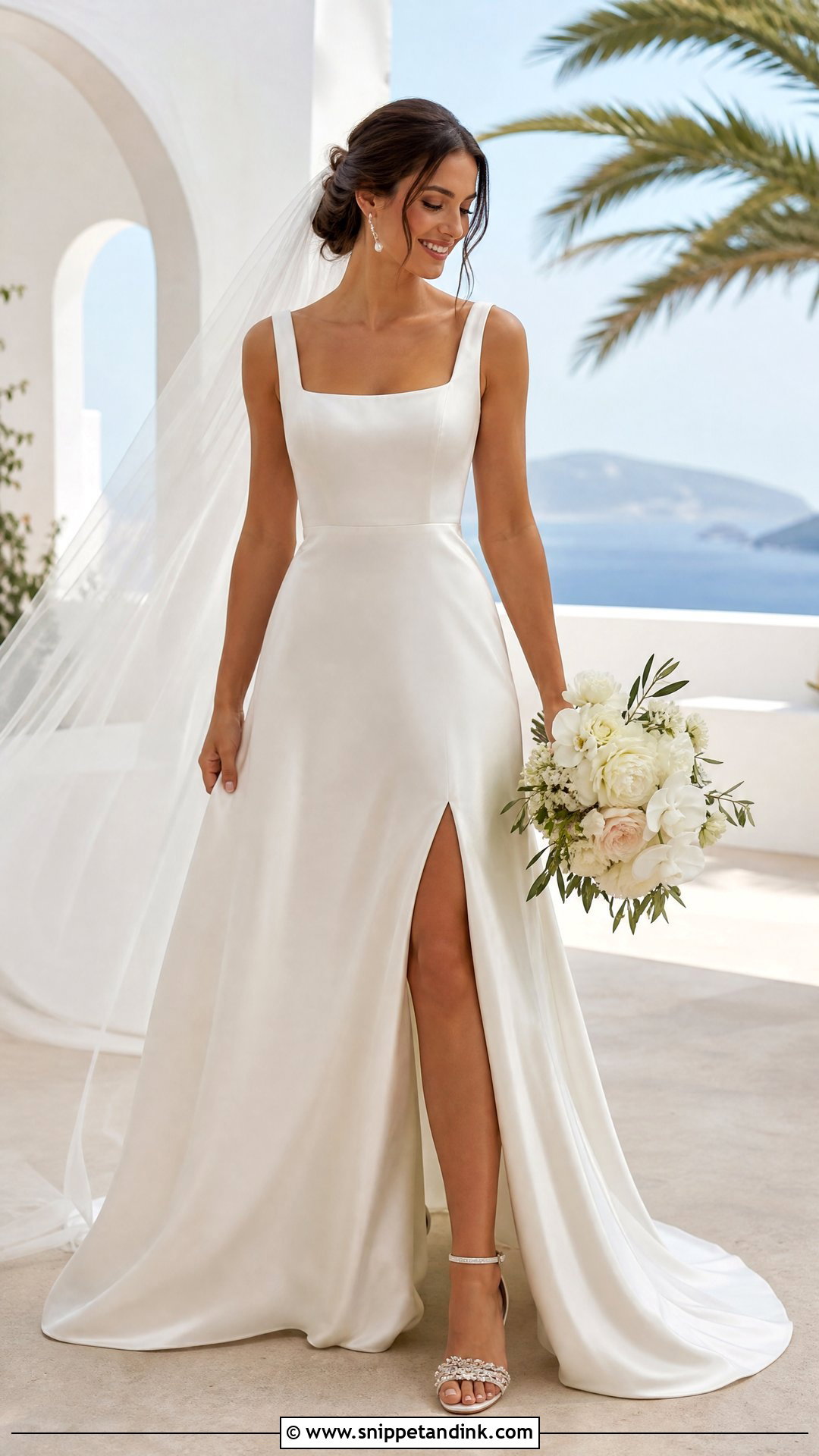
A slit adds movement to a straight-necked gown and makes walking far easier in a slim skirt. The height is the decision. I make brides sit, cross their legs and climb a step during the fitting, because a slit that looks fine standing can open much higher when seated. Satin A lines, crepe sheaths and chiffon all take a slit well. Statement heels make sense here, since they will actually be seen; keep earrings and veil simple to balance them.
24. Square Neck Wedding Dress With Detachable Sleeves
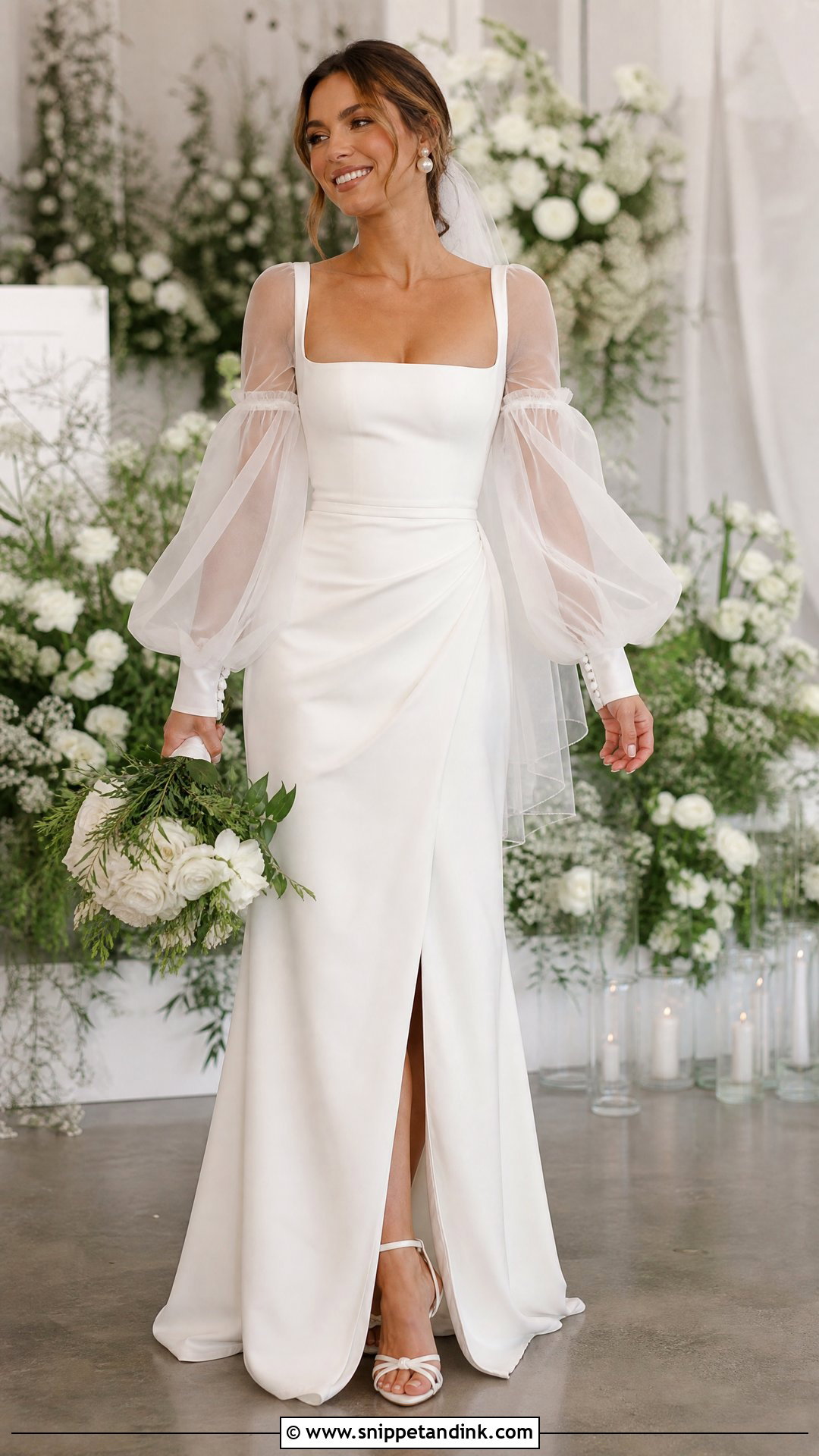
Detachable sleeves solve the sleeved-or-not debate: wear them for the ceremony, take them off to dance. Puff, fitted lace and sheer tulle sleeves all sit well on a square top. Ask how they attach. Snaps or small hooks inside the strap hold better than elastic loops, which can slide down the arm. Have someone practise removing them at your last fitting so it takes a minute, not twenty. Match the veil to the sleeve fabric, not the skirt.



25. Square Neck Wedding Dress With Cape
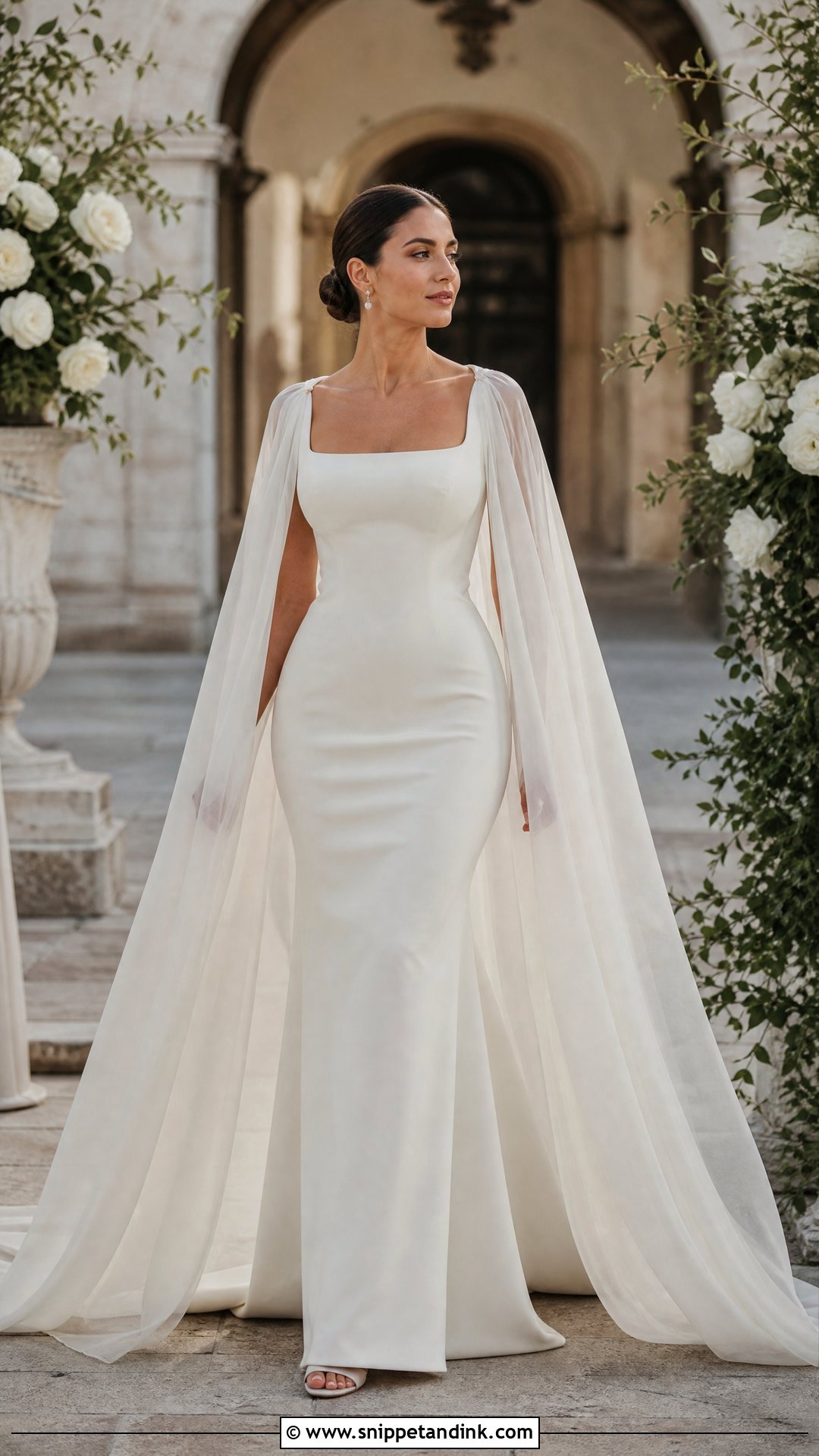
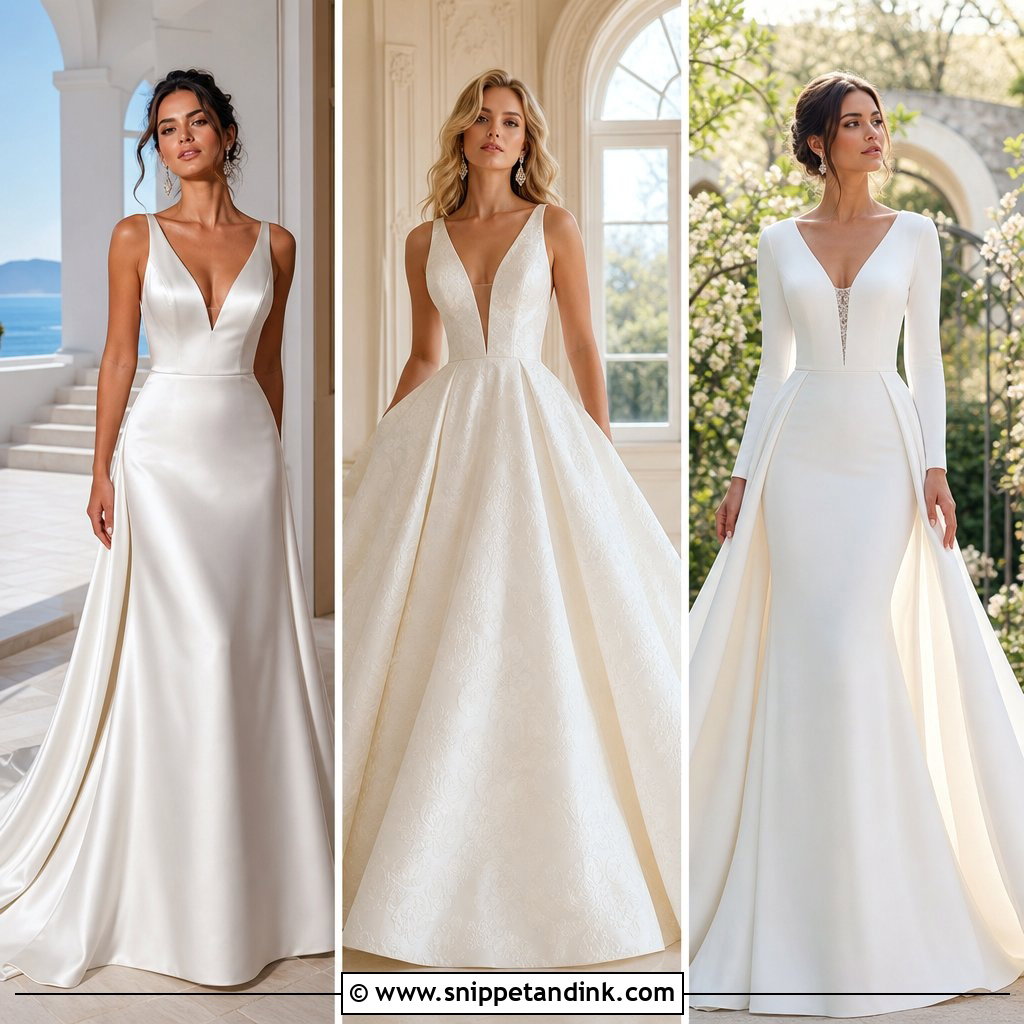
A cape gives drama from behind while leaving the square neckline clean from the front. It can be sheer, lace-edged, pearl-dotted or plain. I prefer capes that fasten at the shoulder seam rather than around the neck, because a neck tie competes with the straight edge. Crepe or satin with a detachable cape reads modern; a lace cape reads softer. Keep the hair in a neat bun so the cape falls without catching. It replaces a veil well for outdoor entrances where wind makes long tulle a nuisance.
The Alterations a Straight Edge Usually Needs
A square neckline looks simple, so small faults show more than on a draped or lace-edged top. Most gowns arrive a few weeks to several months after ordering, depending on the maker, and then most need two or three fittings. I tell brides to plan the first fitting roughly two to three months out, with the final one two to three weeks before the date.
- Gaping at the corners: the seamstress takes in the side seams or adds a stay tape along the neckline edge. Don’t let anyone fix this with a smaller bra.
- Straps that slip: shortening them at the back keeps the front line where it is. Shortening at the front drags the neckline up.
- A wavy edge on satin: usually solved with interfacing or a thin boning channel along the top.
- Bodice that rides up when seated: the waist may need a stay, a firm ribbon inside the dress that anchors it at your natural waist.
Bring the actual shoes and underwear to every fitting. Hem length and bust fit change with both, and on a square bodice even a different bra shape can move the neckline.
Necklace or No Necklace With a Square Top
My default is no necklace. The open space between the neckline and the jaw is part of what makes this cut look clean. If you want one, keep it short enough to sit well above the edge, a choker or a single pearl on a fine chain. Anything that lands near the neckline itself fights the straight line. Earrings are the better place for sparkle: drops lengthen the neck and fill the space naturally. Hair up shows the neckline best; hair down works if it’s tucked behind the shoulders for the ceremony photos.
Corners, Straps and the Hug Test
A square neckline gives you structure and room to style at the same time, which is why it works on so many of the shapes above. Fabric sets the mood, and the fit at the neckline corners and straps decides whether it looks finished. Try a couple of strap widths and two skirt shapes before you commit, and sit down in each one. Satin, lace, crepe or chiffon, the right version is the one that still lies flat after a hug.
You'll Like These Ideas:





Leave a Reply