
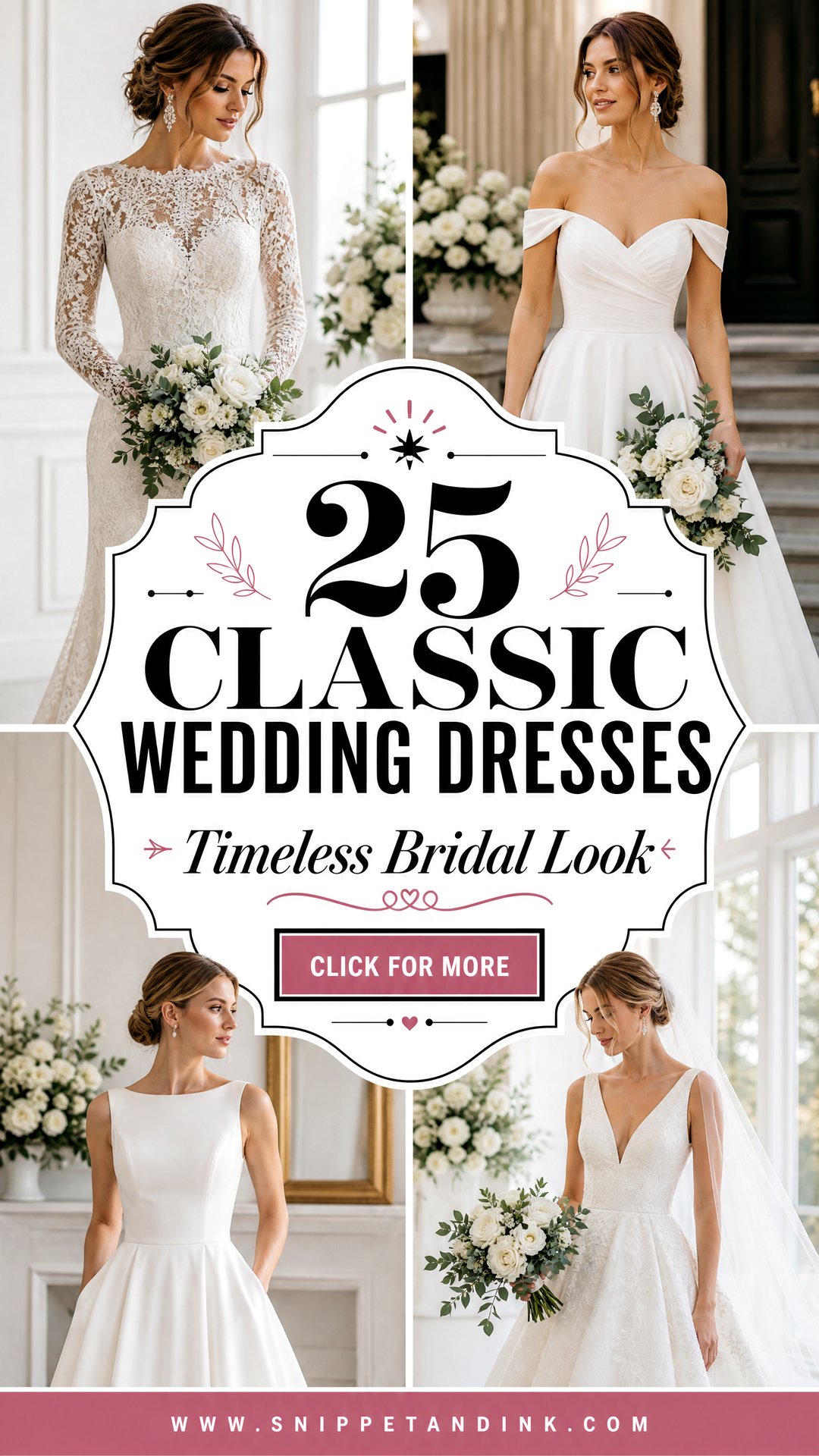
Every season I watch brides look through old wedding albums and point at the dresses that still work. They almost always share the same traits: a clear silhouette, good fabric, and one detail rather than five. That’s what I mean by classic, and it’s less about looking traditional than about the dress not announcing the year it was bought. Satin A-lines, lace sleeves, bateau necklines, crepe columns and strapless ball gowns all belong here, and they suit a garden, a hotel ballroom or a register office equally well. Below are 25 gowns that pass that test, each with the styling I’d put alongside it.
What Dates a Wedding Dress, and What Doesn’t
When brides ask me how to avoid a dress that looks dated in fifteen years, I point to the details that tied old gowns to their decade: very specific sleeve shapes, colour accents, heavy all-over sparkle, extreme cutouts and sheer panels placed for effect. None of them are wrong to wear, but they give a photo its date.
Silhouettes date much more slowly. An A-line, a ball gown, a column or a sheath appear in every decade of bridal photography. Fabric matters too; real silk, a good satin or a dense crepe ages in photos far better than shiny, thin synthetics.
A quick test at the fitting
- Name the dress’s single main feature. If you can’t choose one, there are probably too many.
- Look at a black and white photo of yourself in it on your phone. Shape and proportion show up more clearly without colour.
- Ask whether the dress would look right with a different veil and hairstyle. A classic gown adapts; a trend-led one only works one way.
1. Satin A-Line Wedding Dress
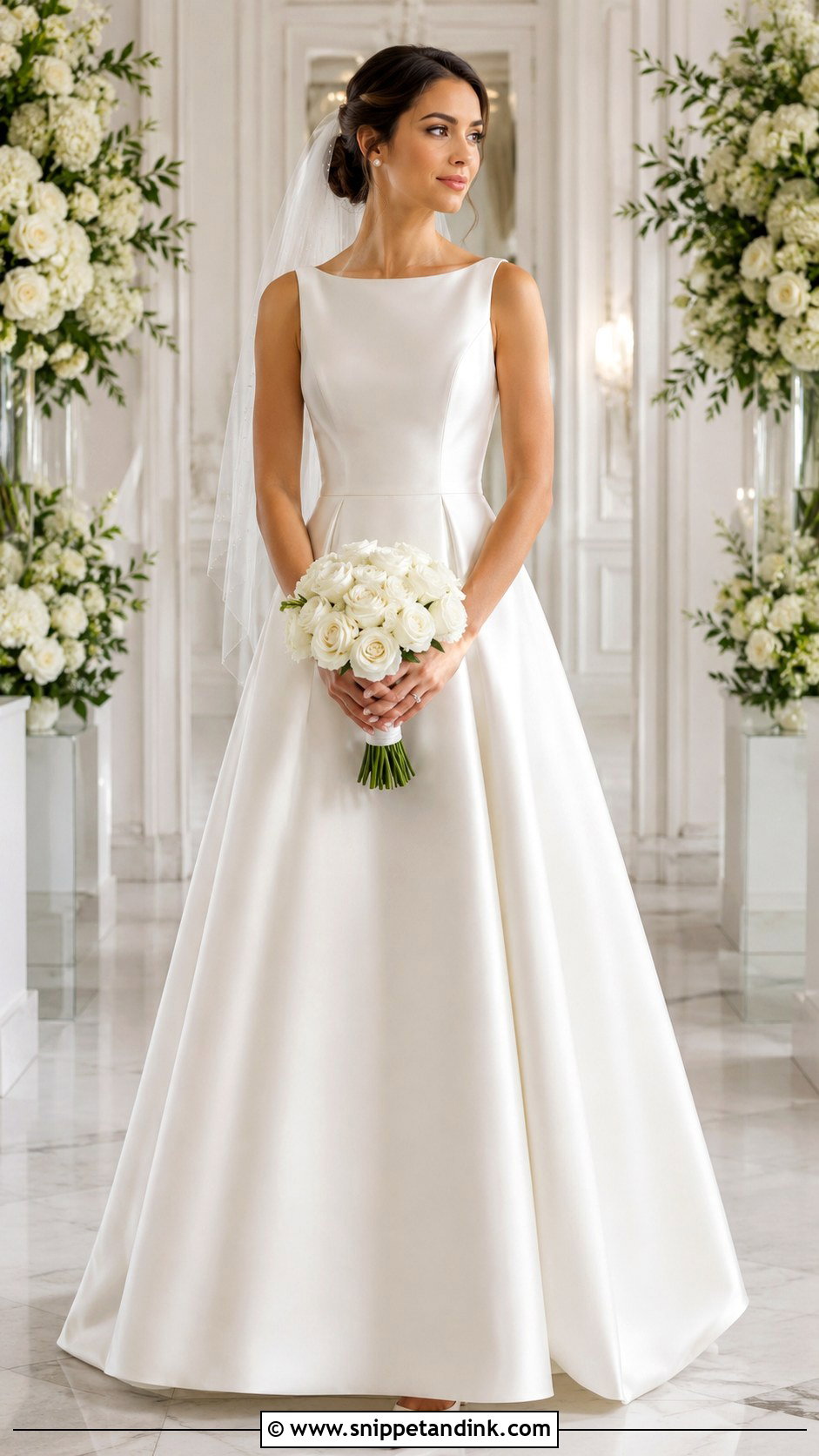
If a bride tells me she has no idea where to start, I put her in a satin A-line first. It shapes the waist, clears the hips and tells us within a minute whether she likes structure or prefers softness. Ivory satin is warmer on most skin than bright white, and it photographs cleanly in daylight. Keep it to a fingertip veil, pearl studs and pointed pumps. The one thing to watch is the fabric weight: thin satin shows every seam and pucker, so feel the hem before you look at the bodice.
2. Lace Long Sleeve Wedding Dress
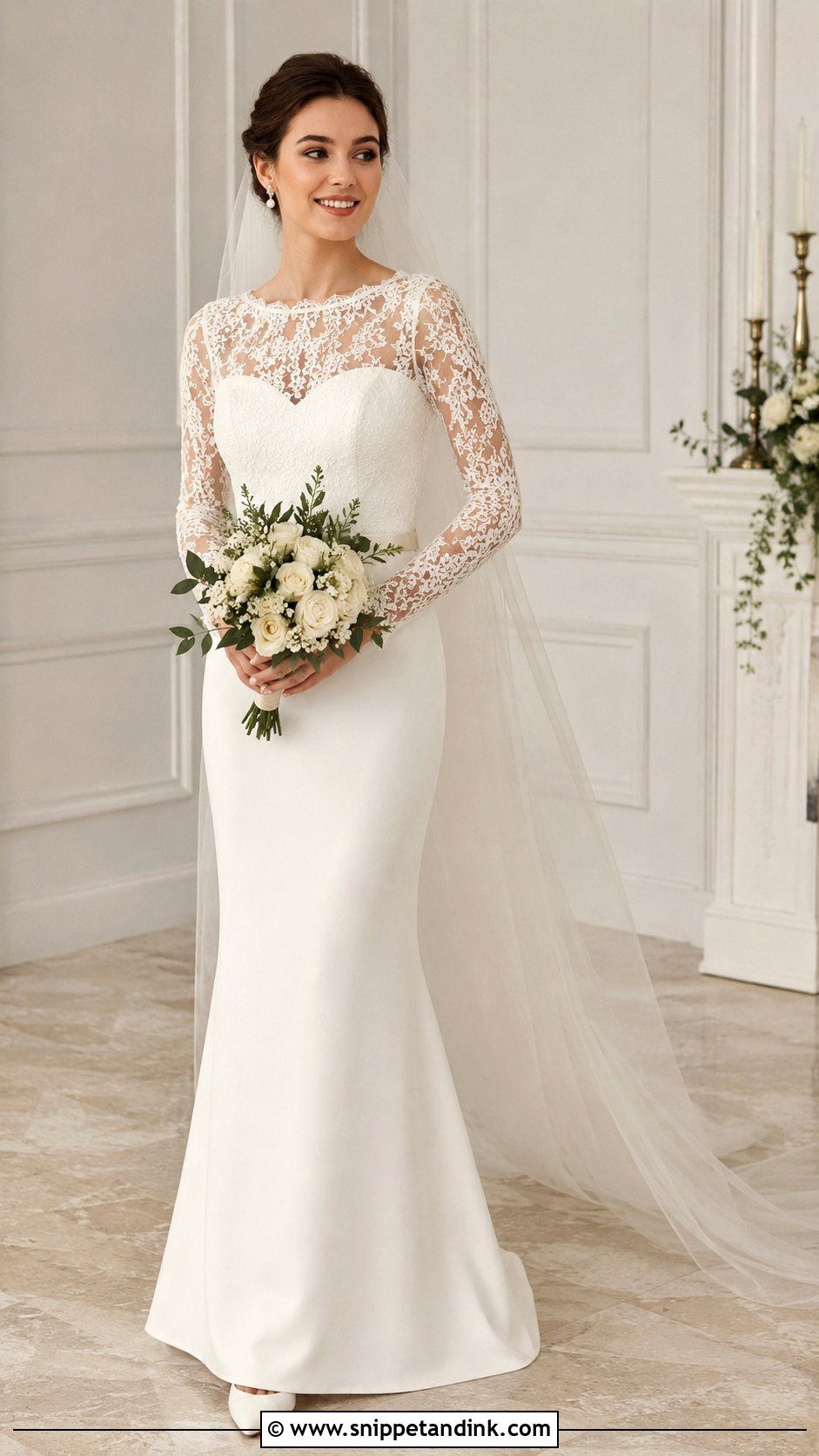
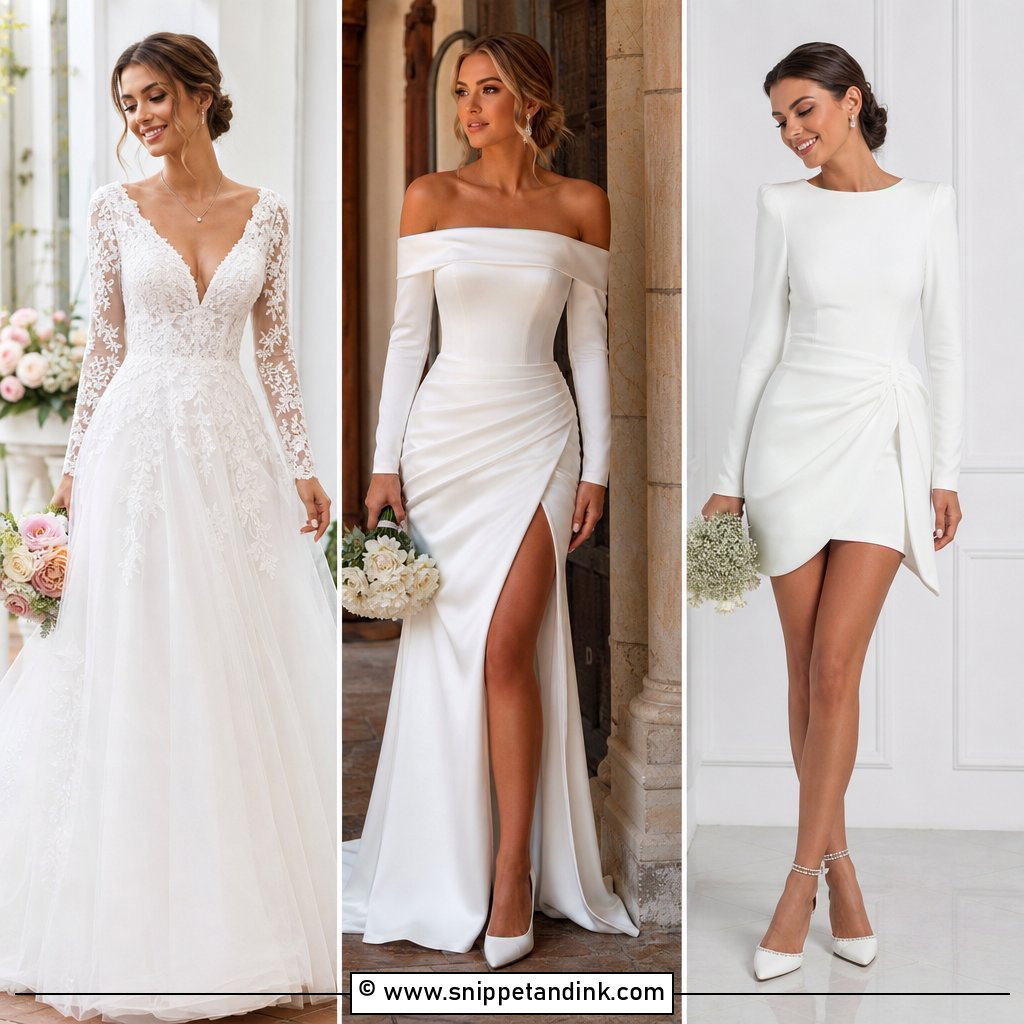
A lace long sleeve wedding dress only looks old-fashioned when the lace is stiff and the lining is heavy. Good versions use soft, sheer sleeves and leave the skirt clean. Match the veil to the back: a plain back can take a long cathedral veil with a lace edge, while a detailed lace back needs a plain tulle veil or it turns into a pattern fight. I’d suggest it most for autumn, winter and air-conditioned venues, since lace sleeves are warm.
3. Strapless Ball Gown Wedding Dress
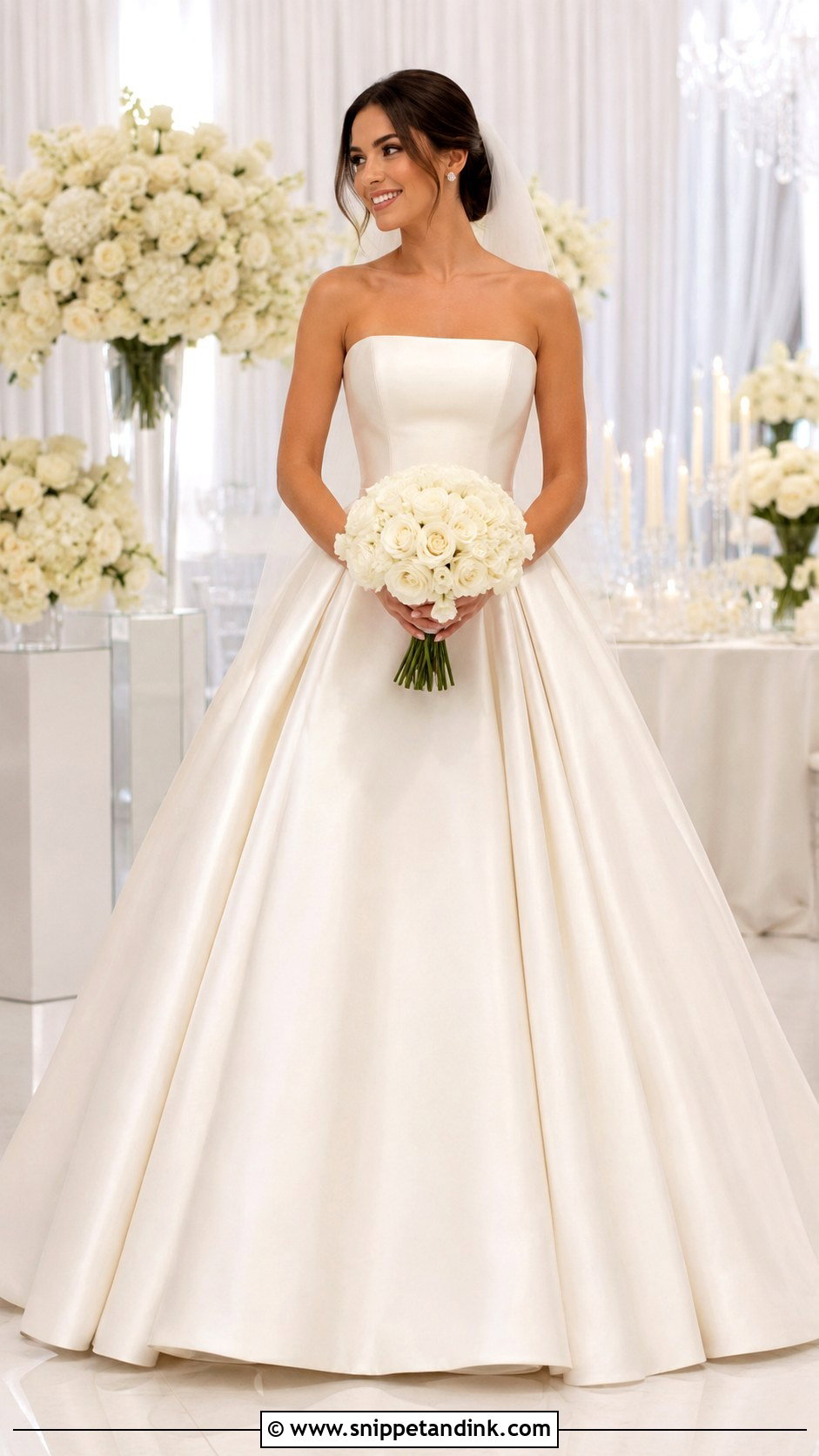
Strapless ball gowns rely completely on the bodice. Before anything else, I check that the boning and inner corset hold the dress up on their own; if a bride is tugging the top up within ten minutes, it needs a fitting adjustment or a different size, not willpower. Smooth satin, mikado or soft tulle keep it refined. Shoes barely show under all that skirt, so choose comfort and the right height for the hem. A clean bun balances the volume.
4. Off The Shoulder Wedding Dress
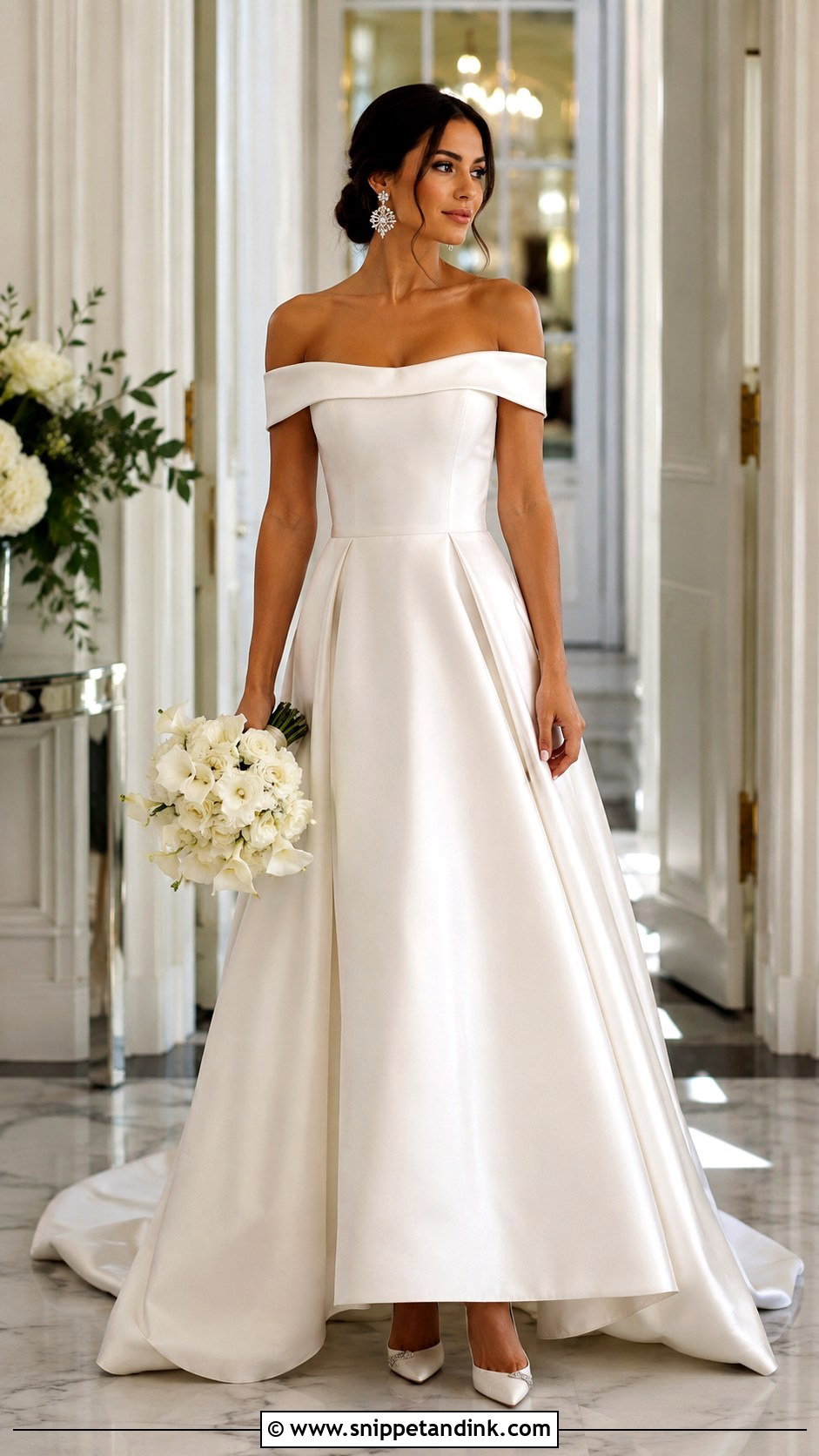
Off-the-shoulder necklines frame the collarbones and shoulders without showing much else. They do restrict arm movement, because the band sits across the upper arm. Ask the bride to raise her arms for a hug; if the band rides up or digs in, it needs a little more ease or some elastic grip tape inside. Satin keeps it formal, lace softens it. I’d skip the necklace and let earrings and a low chignon do the work.
5. Bateau Neck Wedding Dress
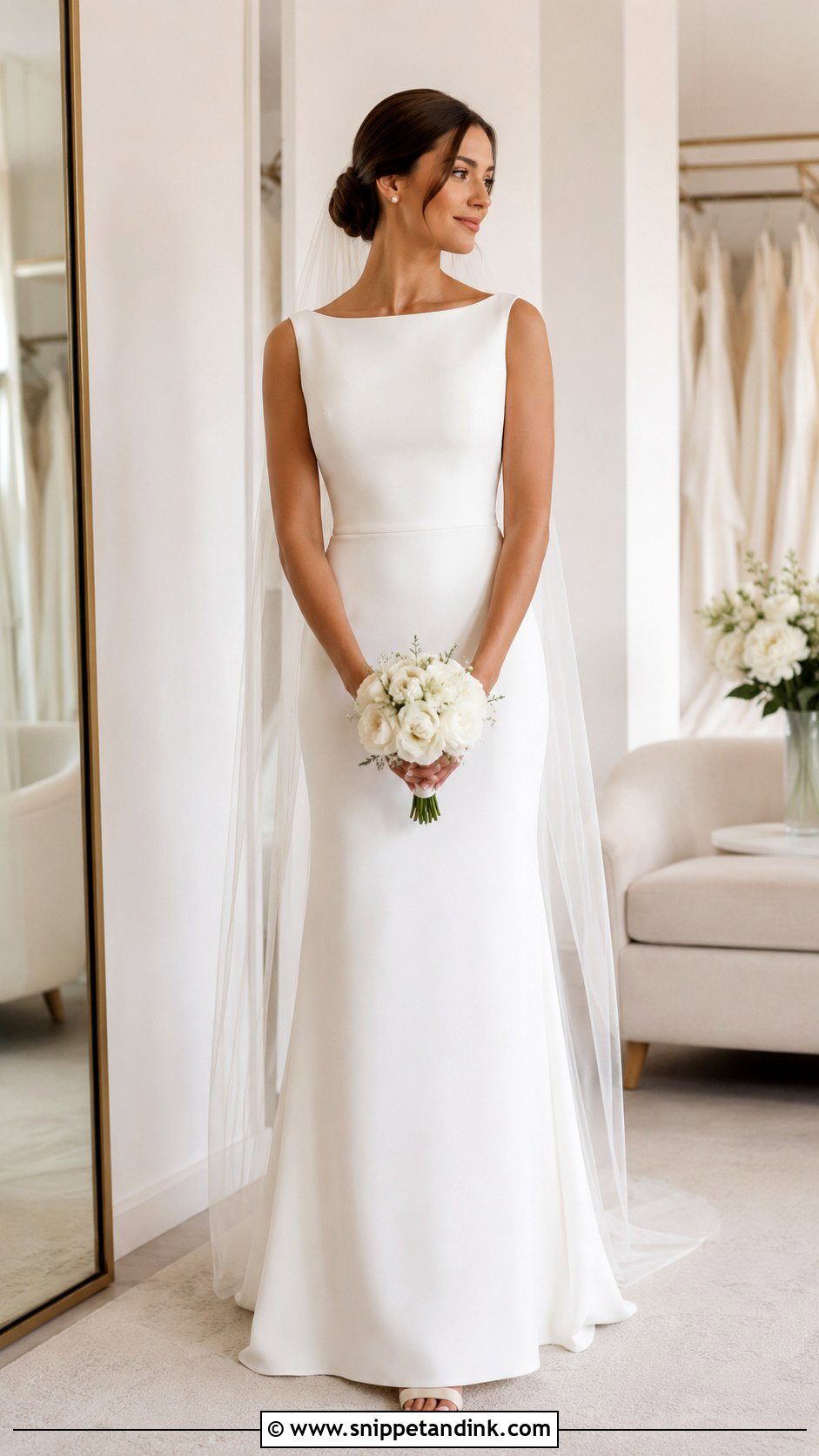
The bateau neckline runs wide and high, almost collarbone to collarbone, and it’s been a royal favourite for decades for good reason. It needs a fabric with body, such as crepe, satin or mikado, otherwise the neckline sags in the middle. Narrow-shouldered brides look wonderful in it; very broad-shouldered brides sometimes find it widens them, so try a slight scoop alongside. Pearl studs, a low bun and a veil at the back of the head are enough.
6. High Neck Wedding Dress
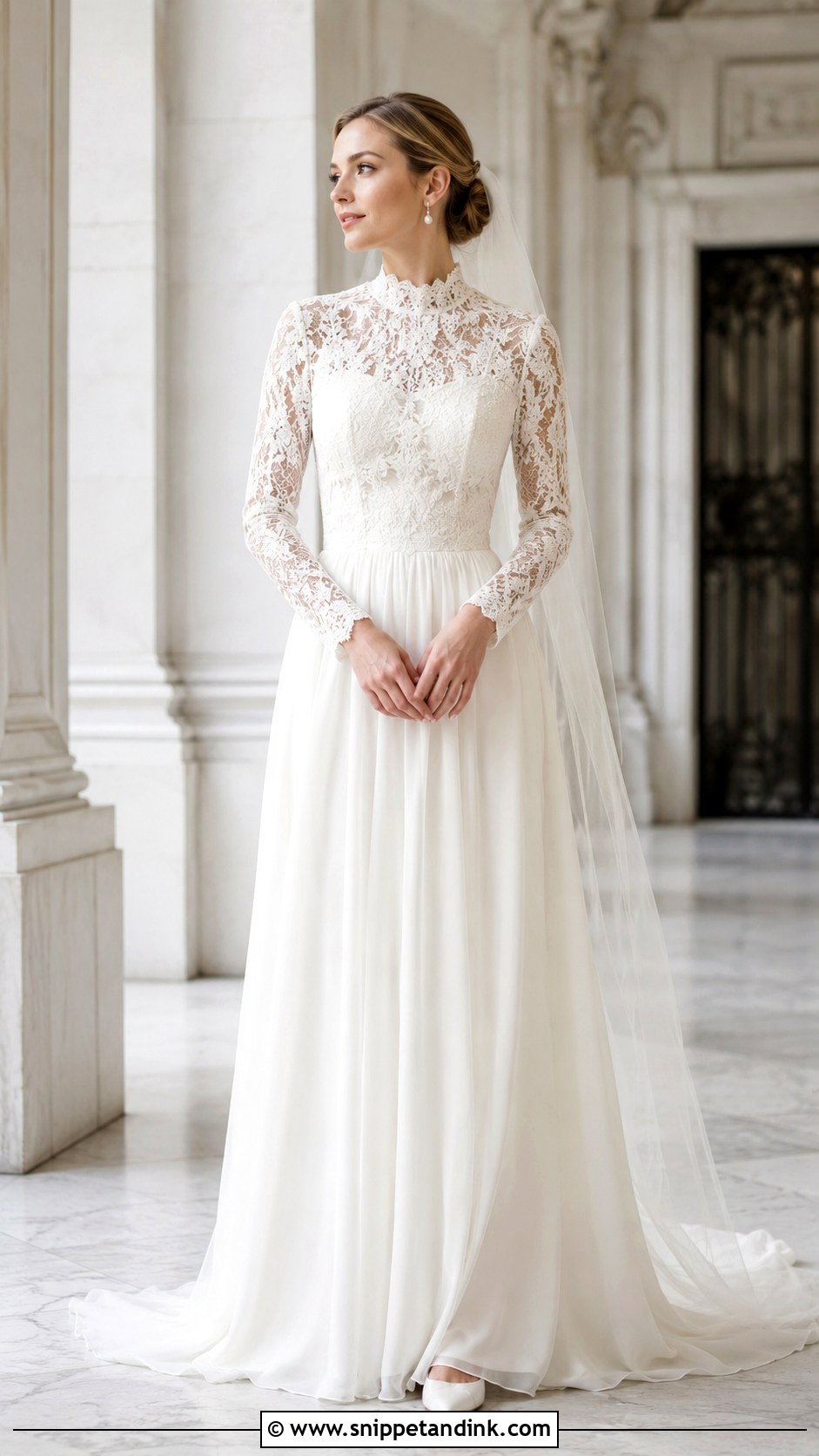
With a high neck, your face, ears and hair become the frame. That changes how I style the whole look: I usually move the attention up with drop earrings and a sleek bun, and leave the neck bare. Lace bodices, crepe skirts and satin with covered buttons all suit it. A sleeveless high neck can feel quite architectural, so a sheer cape or a long veil softens it for the ceremony. In a hot venue, check the neckline has a lining that breathes.
7. Silk Slip Wedding Dress
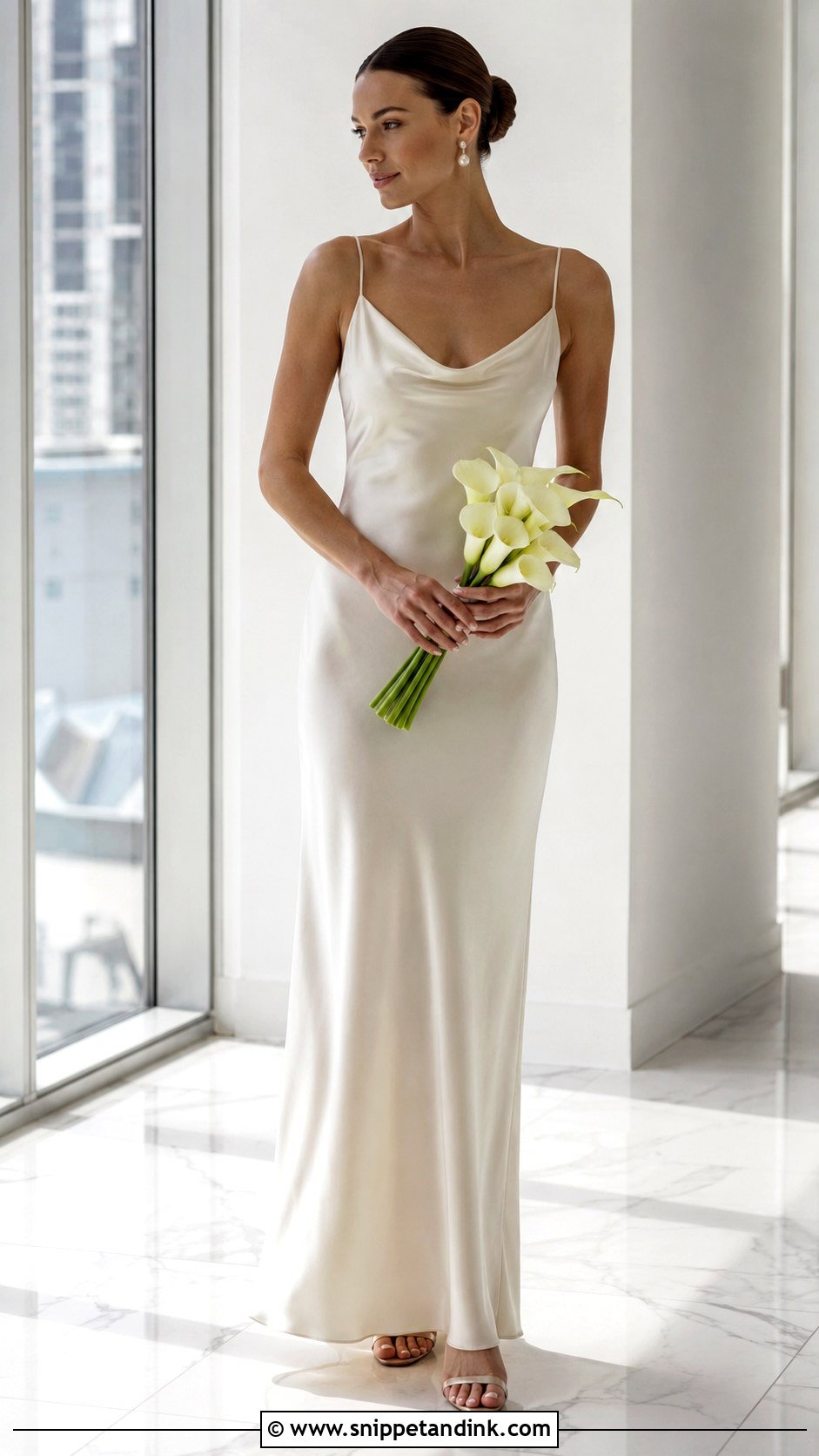
A silk slip dress is cut on the bias, which is why it drapes and moves the way it does. That same bias cut is unforgiving: it shows underwear lines and every bit of a bad fit, so most brides wear a slip or shapewear underneath. Silk satin and charmeuse wrinkle easily, so bring a handheld steamer. Barely-there heels, pearl earrings and a sleek bun keep it minimal, and a long plain veil adds ceremony presence. It’s at its best in city venues, destination weddings and small celebrations.
8. Crepe Column Wedding Dress
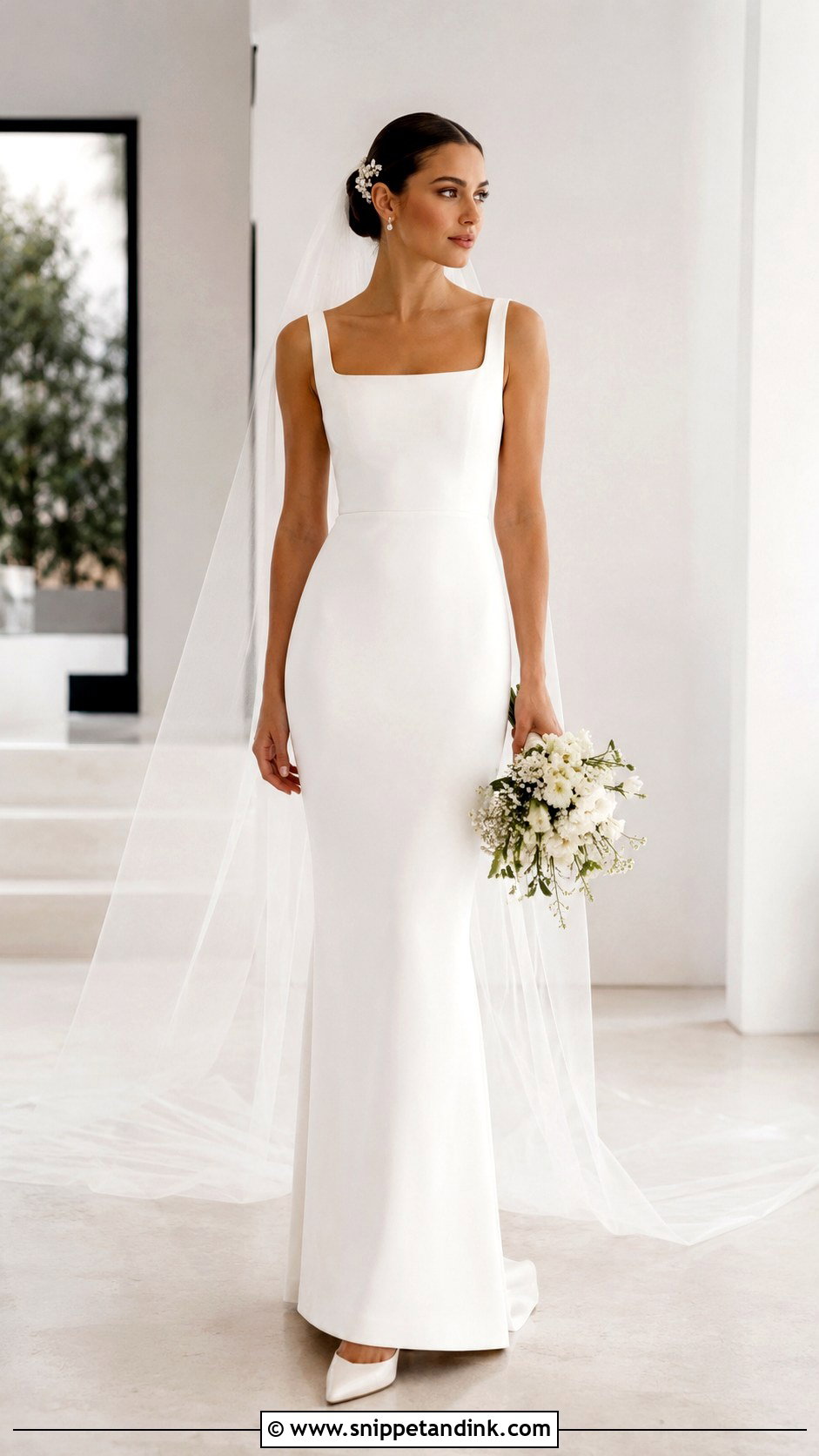
A crepe column wedding dress creates one long, straight line, which makes most brides look taller. Crepe has enough weight to smooth over the body, but the straight skirt limits your stride, so a back slit or a kick pleat is worth asking for if you plan to dance. A square or bateau neckline suits it. Add pointed pumps and a long veil without trim, and consider a removable cape if you want more coverage during the ceremony.
9. Tea Length Wedding Dress
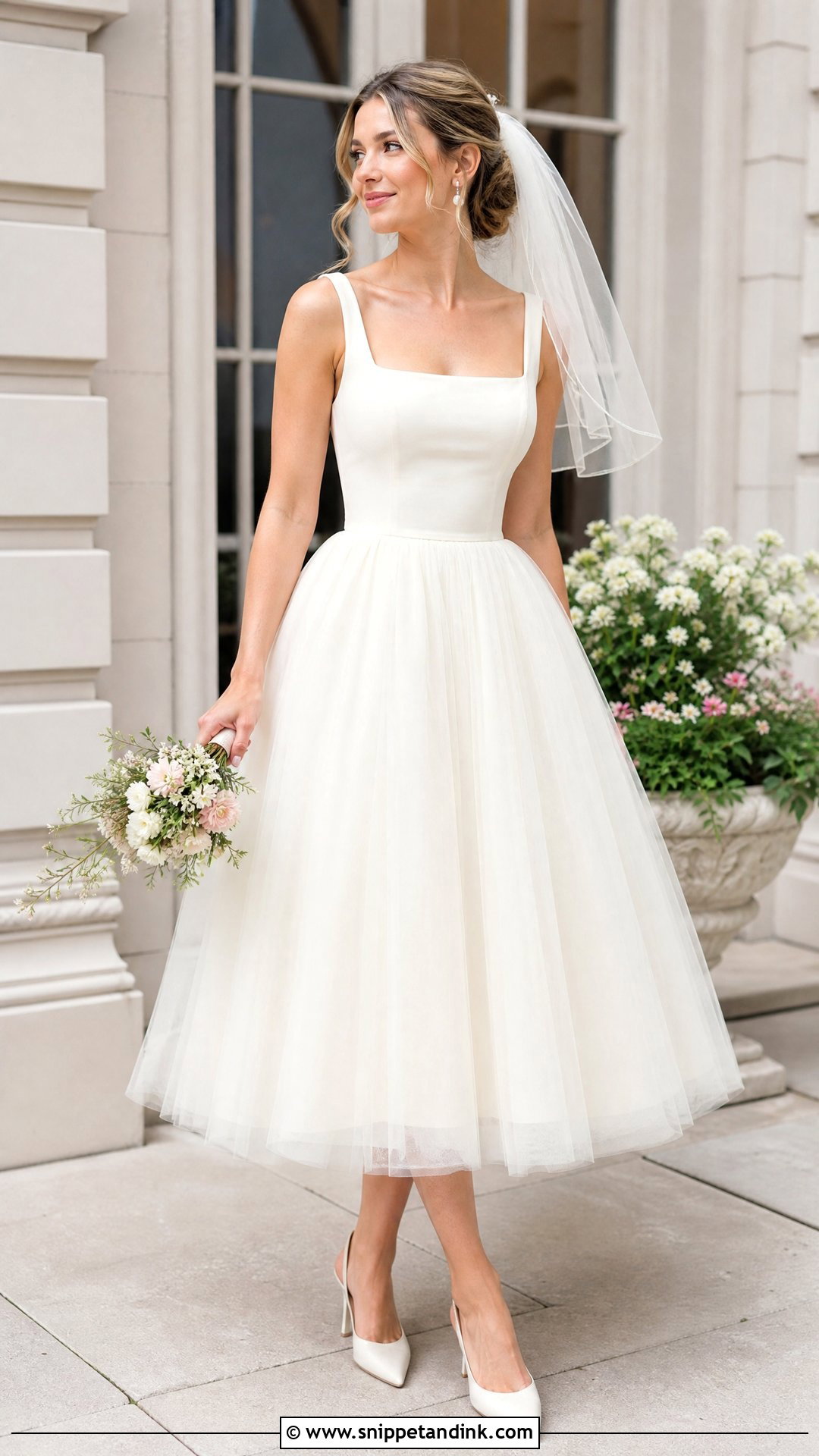
Tea length falls between knee and ankle, so it brings your shoes into the picture. Plan them early: pointed pumps, slingbacks or a smart block heel will all be seen in walking shots. Crisp satin or a full tulle skirt over a petticoat gives that 1950s shape. A short veil, pearl earrings and a structured bouquet keep it bridal. A soft red lip suits this dress better than almost any other on the list, provided the rest of the makeup stays clean.
10. Square Neck Wedding Dress
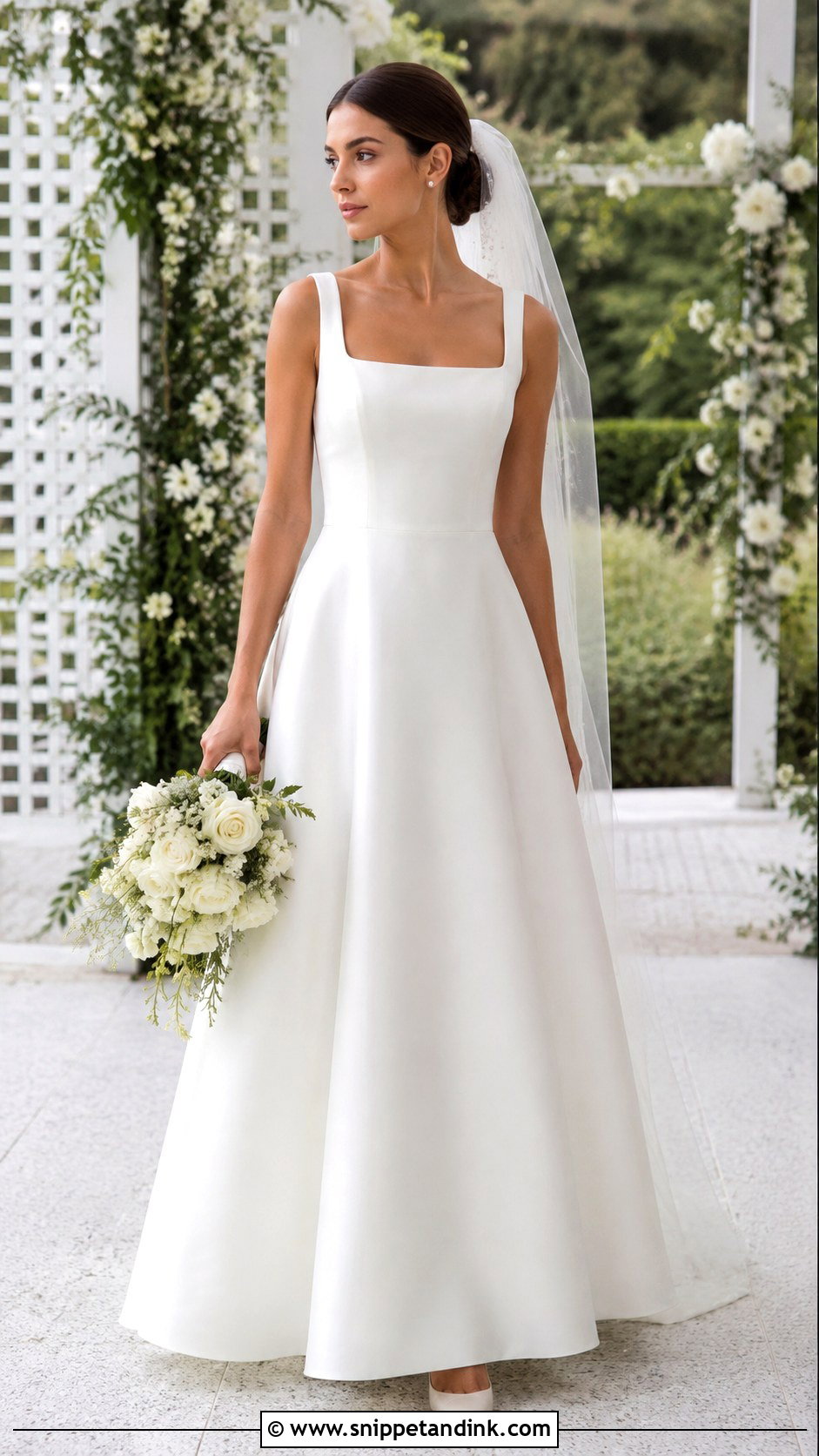
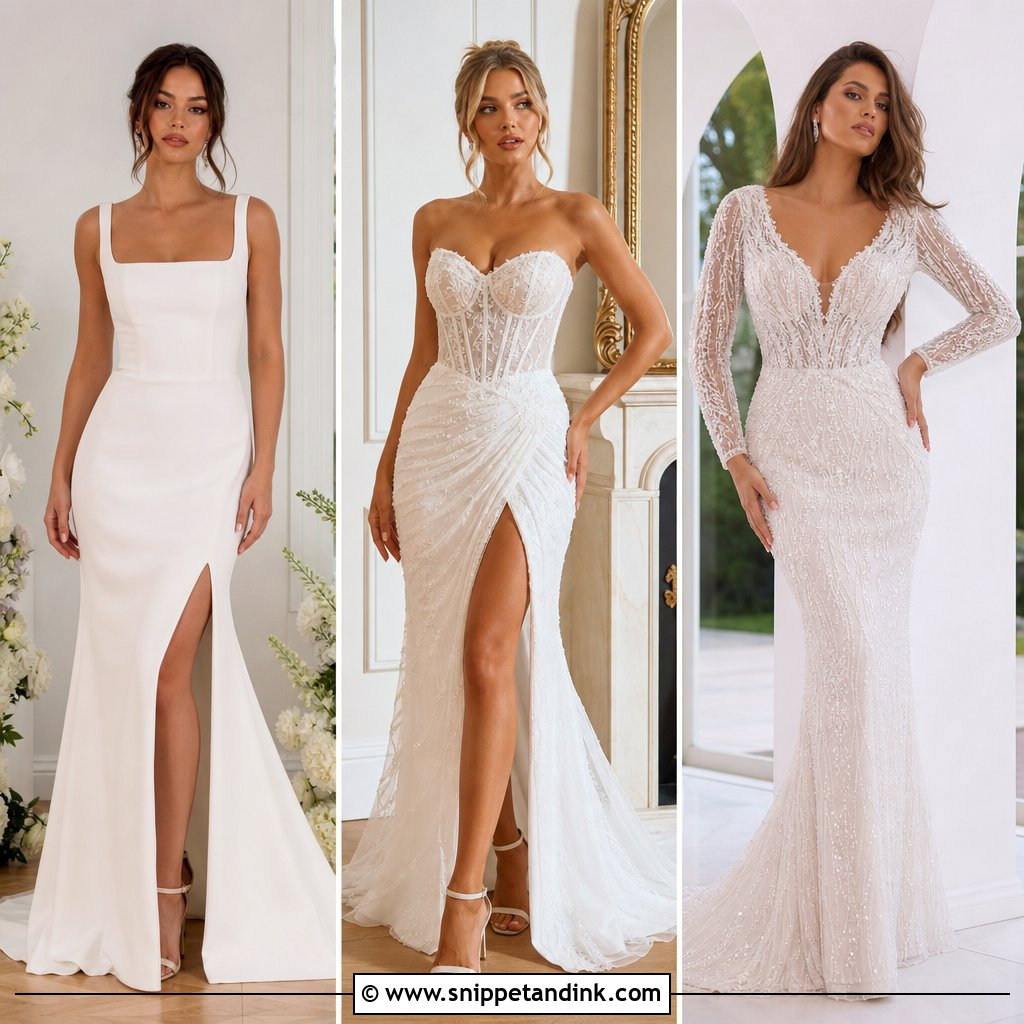
Square necklines frame the collarbone and give the bodice a clear architectural edge. The wide straps that usually come with it are a real advantage; they support the bust without needing a strapless bra all day. The corners have to stay crisp, so I check whether the neckline is faced or boned. A smooth veil, low bun and simple studs work best. A slim tennis bracelet looks neat with it, but a heavy necklace fights the straight line.
11. V-Neck Wedding Dress
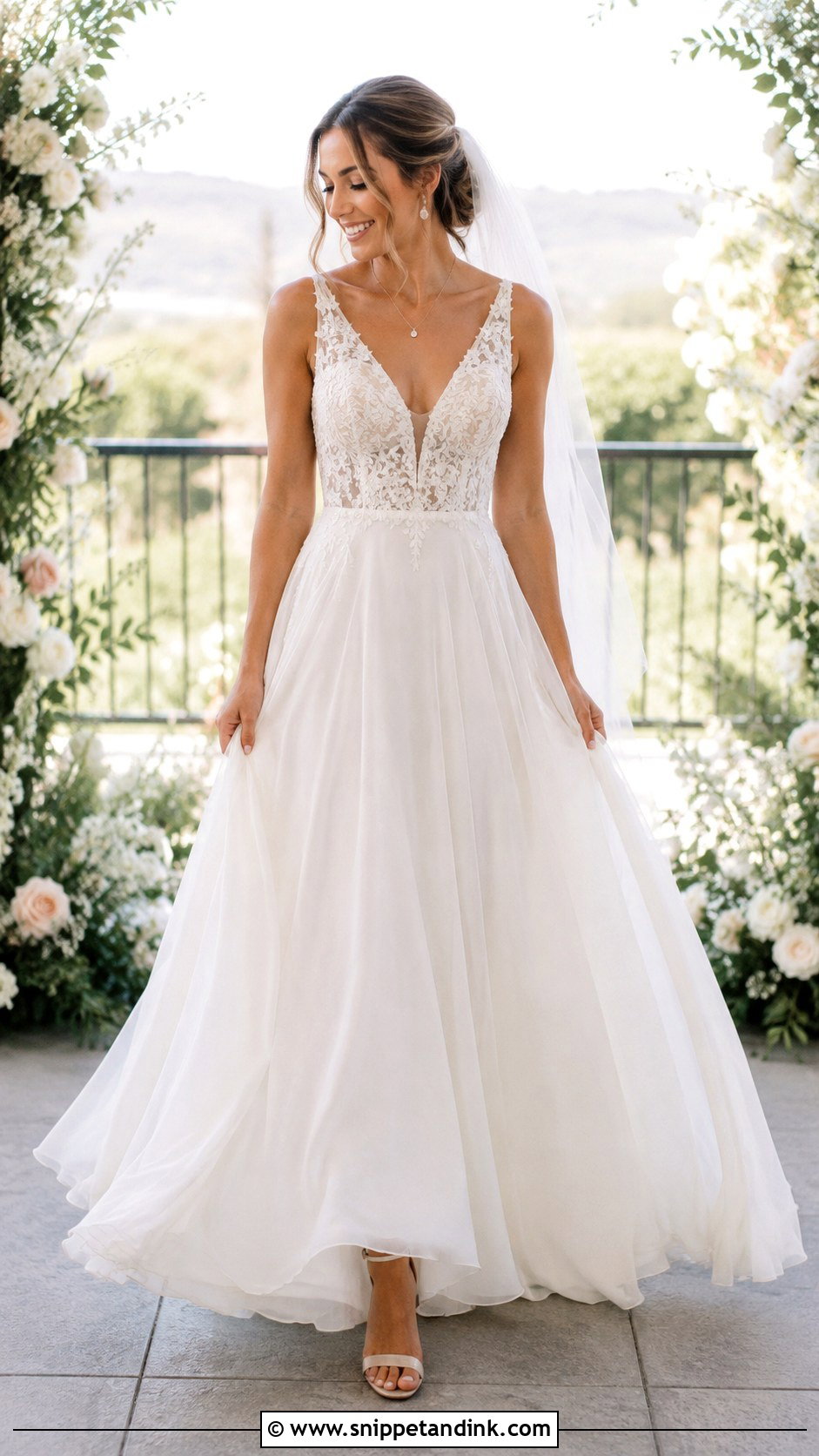
A V-neck lengthens the upper body, and depth is the decision that matters most. A soft V with supportive straps stays classic; a plunge to the waist is fashion, and it will date faster. Fashion tape or a built-in mesh panel keeps a deeper V in place. Lace and soft floral appliqué give a romantic version, smooth satin a sharper one. Nude or ivory heels and a fine pendant keep the vertical line unbroken.
12. Mermaid Wedding Dress
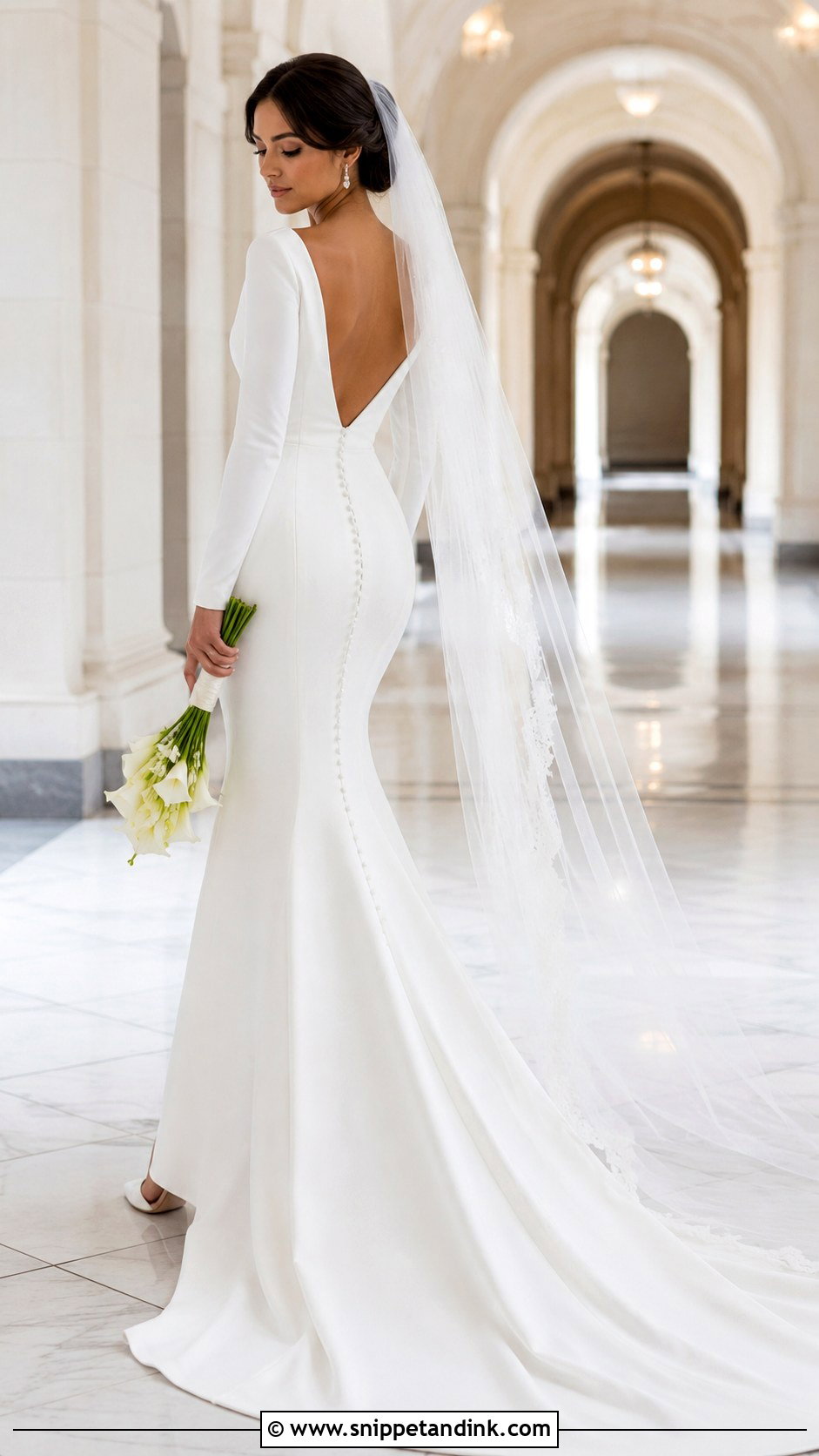
Mermaid gowns are fitted through the hips and flare at or just below the knee. They look striking, but they’re the hardest dress on this list to move in, so I always ask brides to sit, climb a step and do a dance turn at the fitting. Plain crepe with covered buttons looks sleek, and lace with a scalloped hem looks softer. Keep the bouquet slim so it doesn’t hide the shape. If you dread a long day standing still, choose fit and flare instead.
13. Fit And Flare Wedding Dress
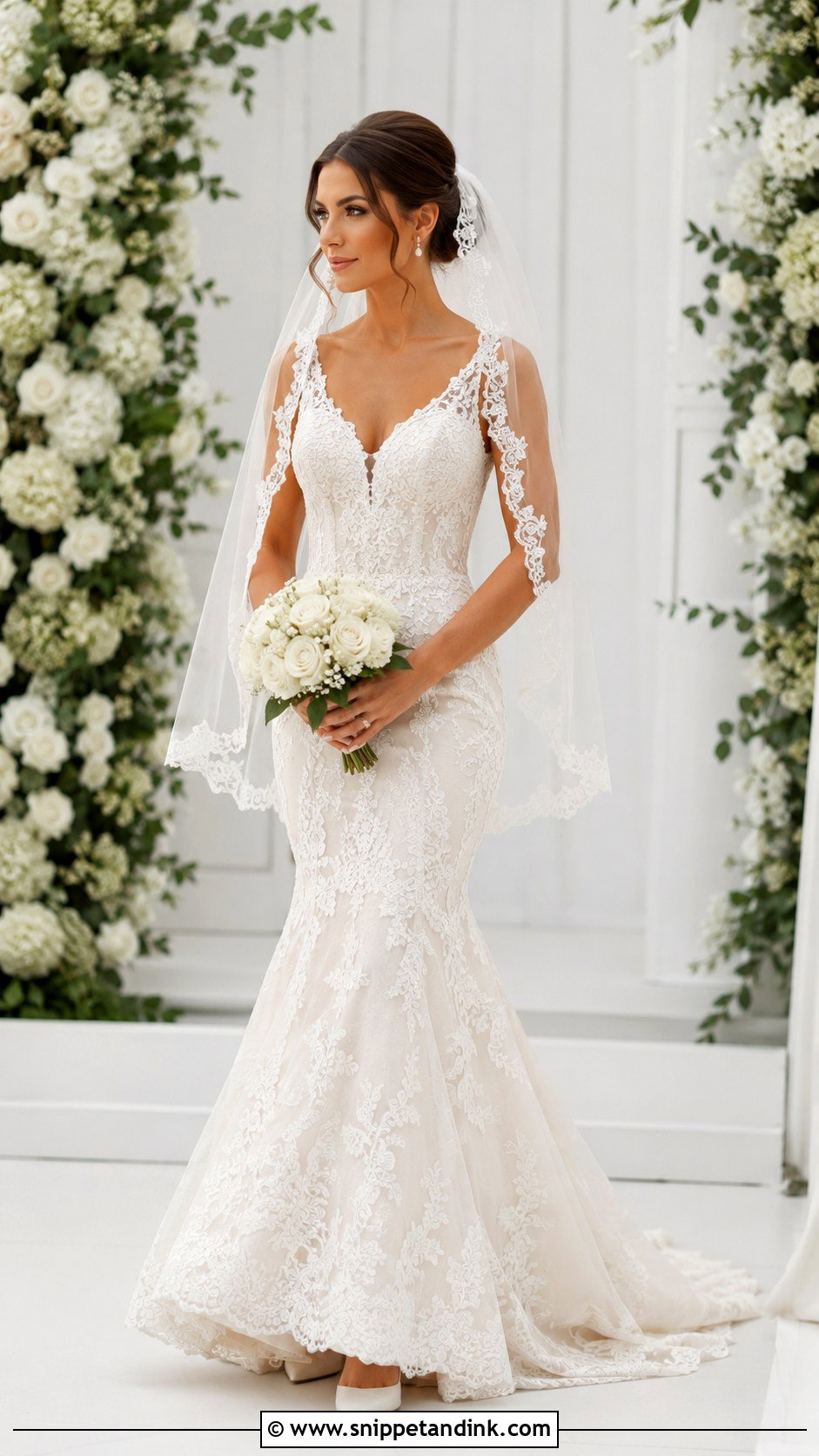
Fit and flare is the mermaid’s easier cousin. It follows the body to the hips and then opens higher, usually mid-thigh, so walking and sitting are much more comfortable. Lace versions feel romantic, crepe ones feel sleek. I reach for it when a bride wants shape but has a long day, lots of photos and a dance floor ahead. A fingertip veil and pearl earrings are enough; if the train is detailed, keep everything else simple.
14. Tulle Ball Gown Wedding Dress
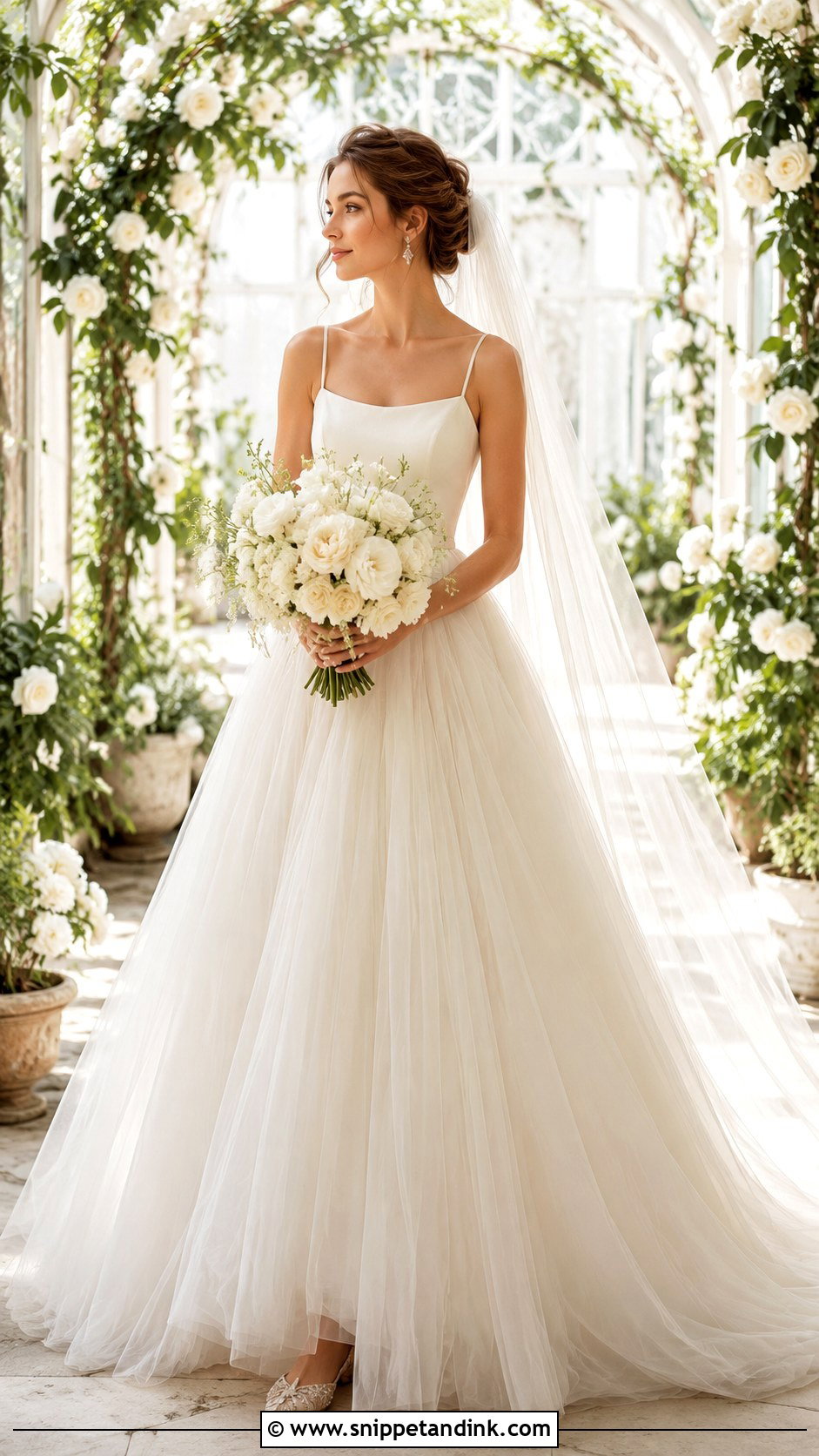
A tulle ball gown gives you volume that weighs far less than a satin one, which matters if you’re on your feet for twelve hours. Several layers of soft tulle over a lining create the shape, and a plain bodice stops it from looking too sweet. Tulle does catch on heels and rough floors, so a reinforced hem is worth asking about. A neat bun or half-up style keeps the face open, and slim heels or embellished flats both work under the skirt.



15. Mikado Wedding Dress
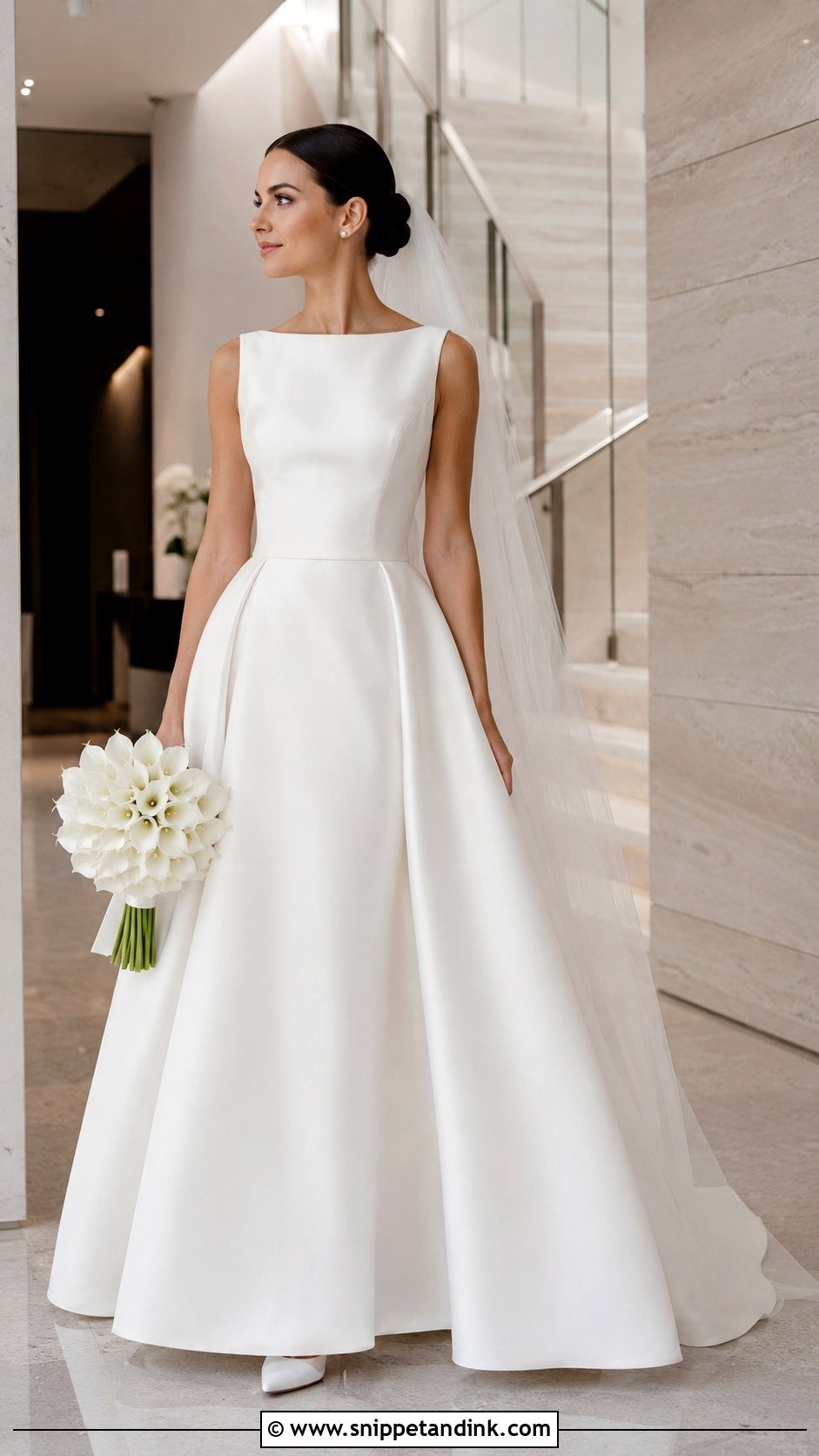
Mikado is a thick, slightly stiff silk or silk-blend with a soft sheen, and it holds sculpted shapes without much help. That’s why it’s used for clean A-lines, ball gowns and folded bodices. It also resists creasing better than thin satin, which is useful if you’ll be sitting through a long dinner. Style it with a plain veil, pearl studs and a structured bouquet. The trade-off is warmth: it’s a heavy fabric for a July garden ceremony.
16. Pearl Wedding Dress
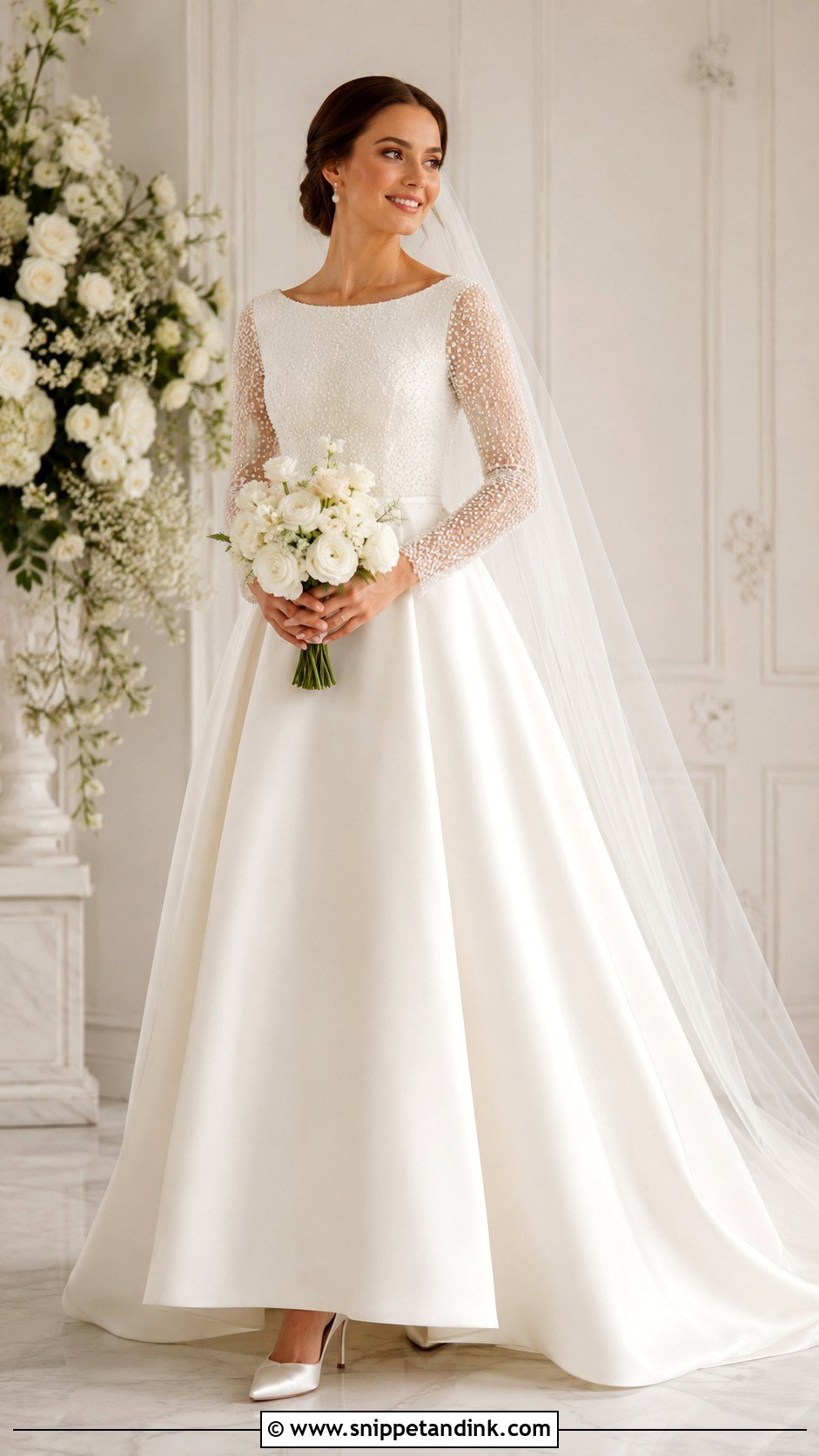
Pearls look classic when they’re used in one place: the neckline, a sleeve cuff, the veil edge. Covering the whole dress in them pushes it towards trend. Before buying, run your hand over the beading and check that the pearls are stitched individually rather than glued, because glued pearls can come off during the day. Keep earrings small if the gown already has pearl work, and wear a smooth updo so the detail stays visible.
17. Floral Lace Wedding Dress
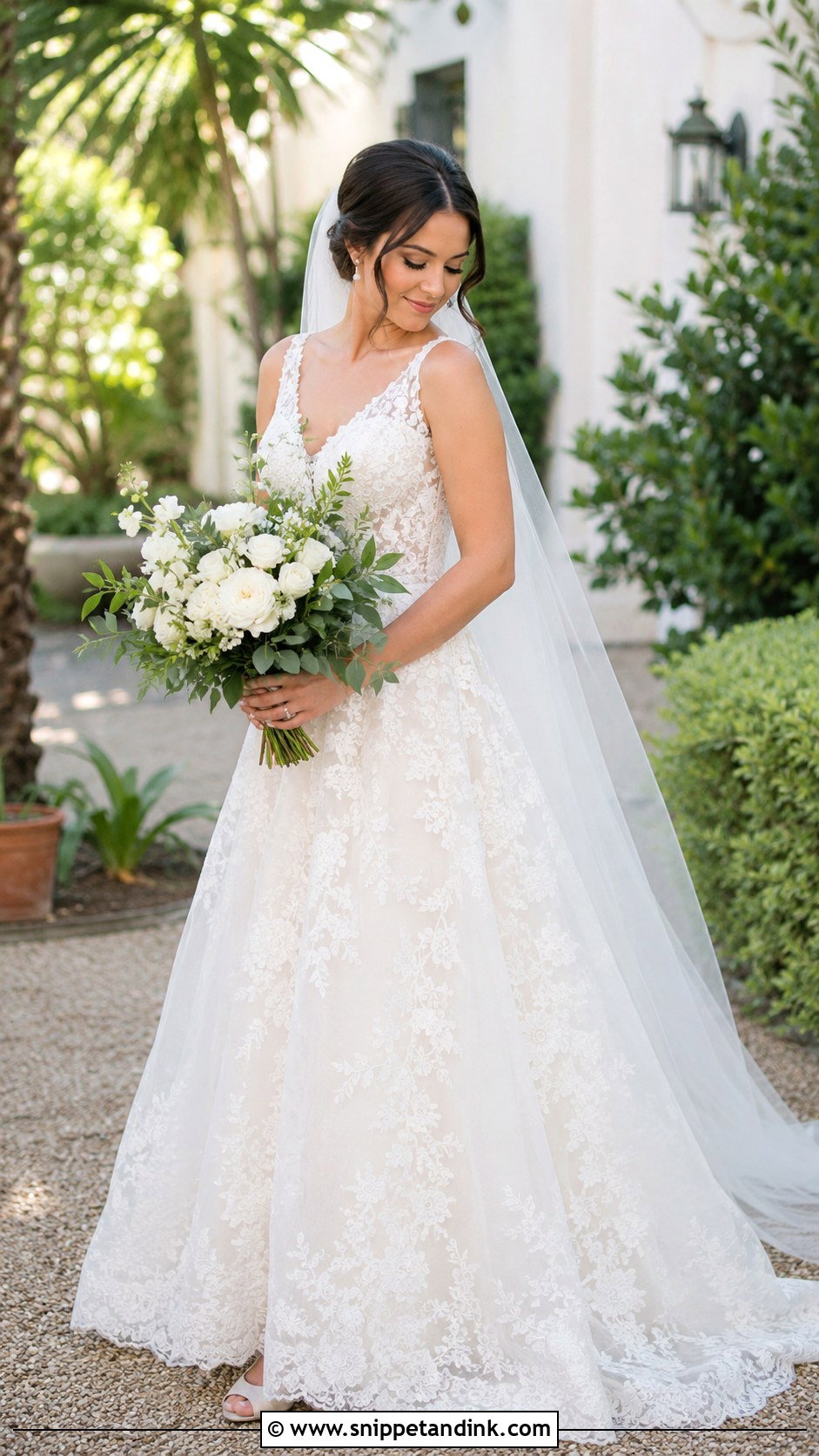
Floral lace is where I spend the most time on placement. Small, close patterns read as delicate; large appliqués look more modern and sometimes land in awkward places on the bust or hips. A good seamstress can lift and reposition appliqués during alterations, so don’t dismiss a dress for one badly placed flower. A-line and fit-and-flare shapes show lace best. A plain veil keeps the lace in charge, and a white and green bouquet suits the texture.
18. Simple Satin Wedding Dress
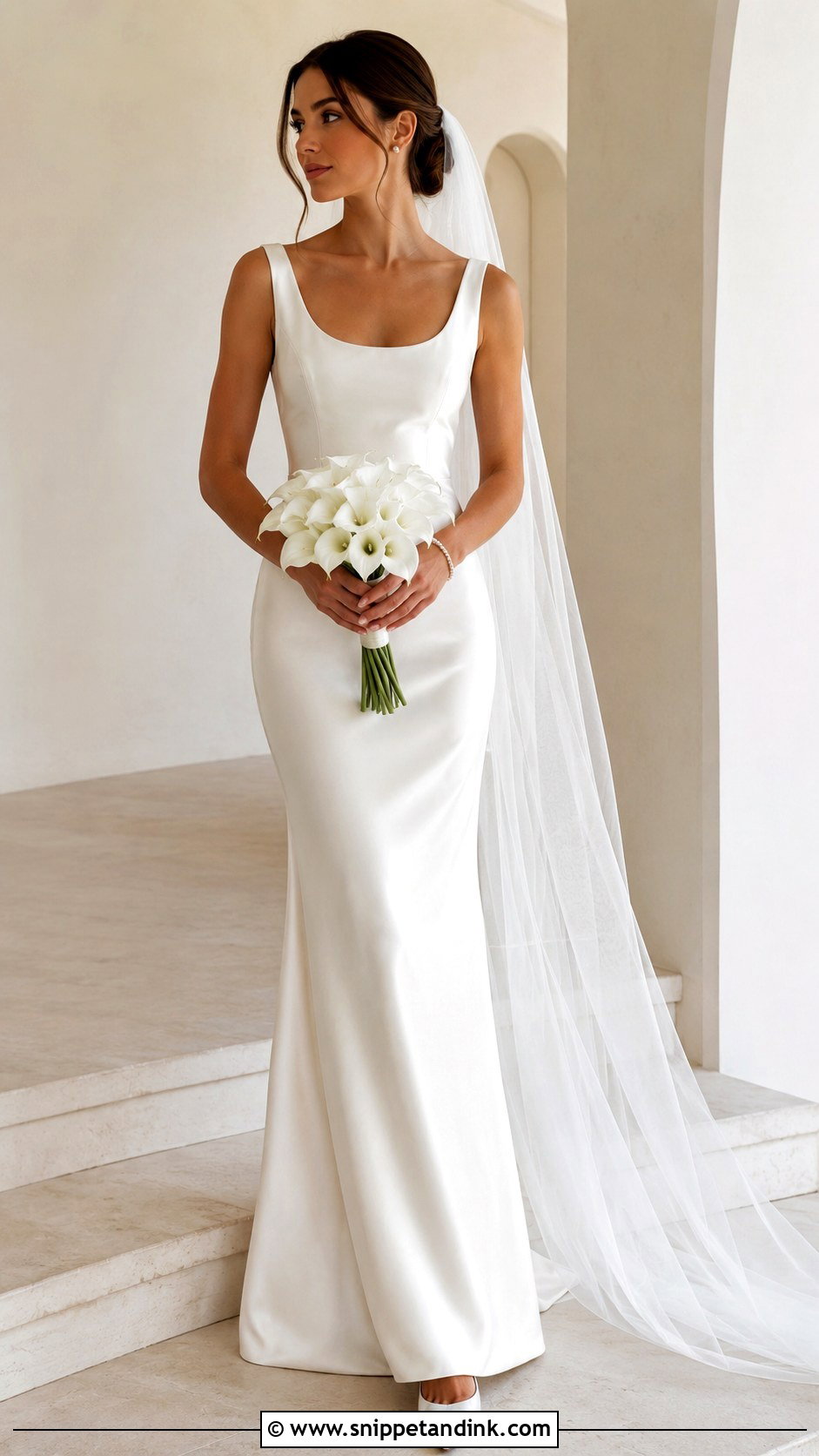
With a simple satin dress, fit and proportion are the whole design. A clean satin gown with a scoop, square or strapless bodice can look extraordinary, but only if it’s been altered closely; I’d budget more for the seamstress here than for accessories. Choose one meaningful piece, like pearl earrings or a family bracelet. Keep the bouquet structured. This is also the dress that gives you room for a dramatic cathedral veil or bold flowers if you want them.
19. Basque Waist Wedding Dress
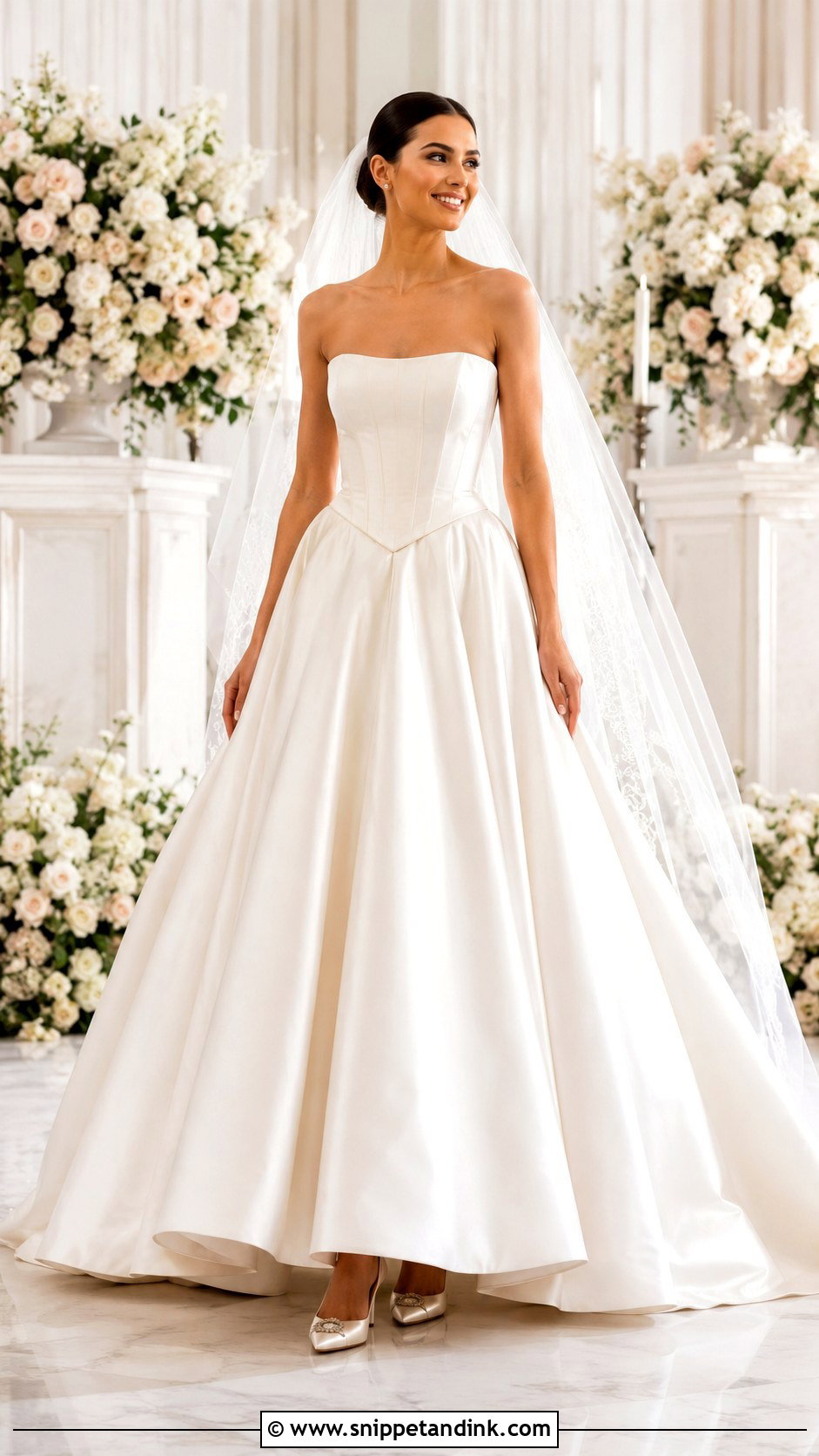
The basque waist dips below the natural waist into a V at the centre front, which lengthens the torso and suits brides with shorter waists. It’s back in fashion with a cleaner finish. Satin, mikado or soft tulle with minimal decoration keep it classic. The dropped waist and a full skirt create a regal shape, but that point has to land exactly right on your body, so expect your seamstress to spend time on it. Small earrings and a neat bun are plenty.

20. Cap Sleeve Wedding Dress
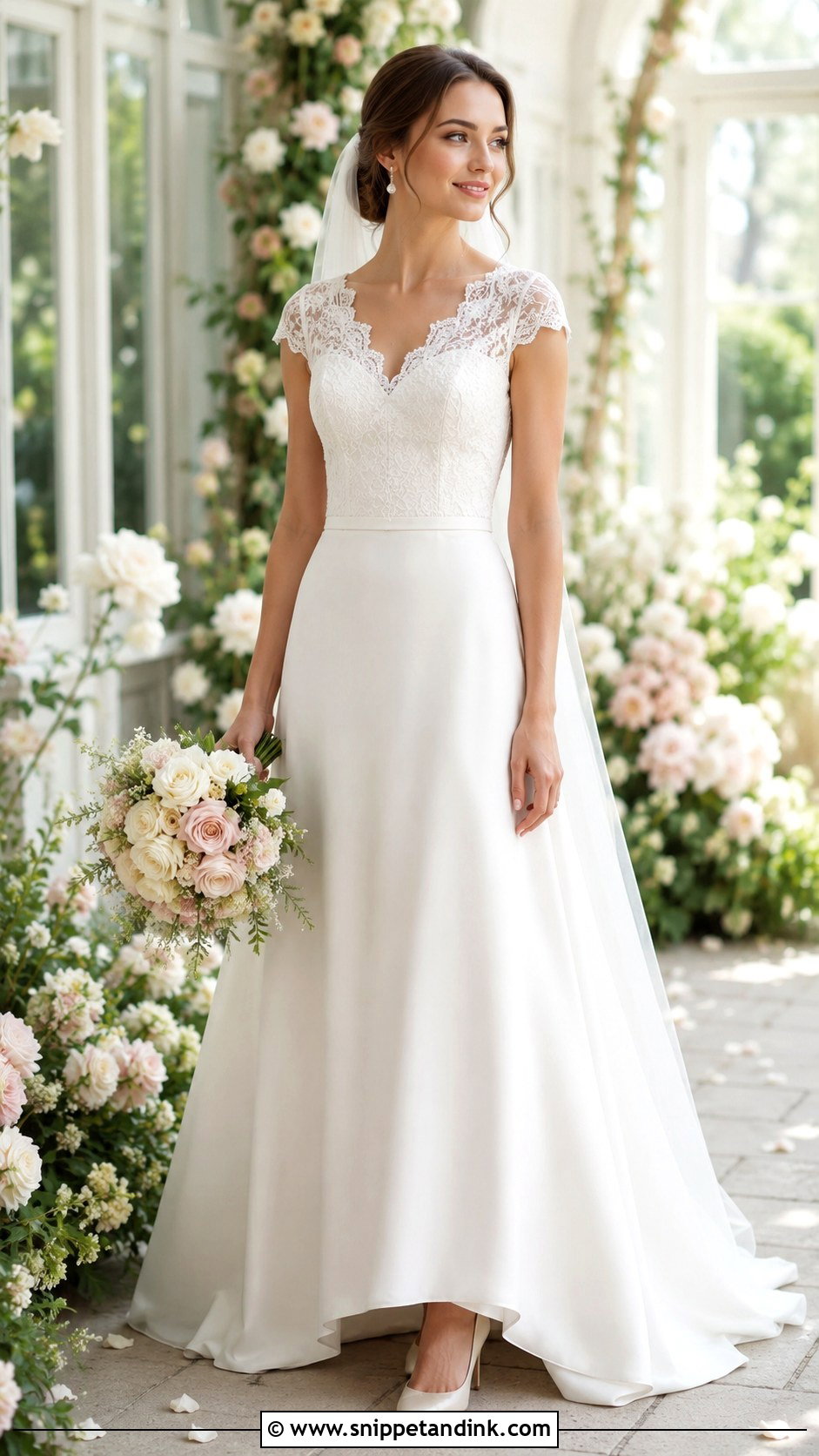
Cap sleeves give a touch of shoulder coverage while leaving the arms free. They suit lace bodices, satin A-lines and chiffon skirts. Watch the fit around the upper arm: a cap sleeve cut too tight digs in and makes the arm look wider than it is, so I check it when the bride crosses her arms. Pearl earrings, a soft veil and slingbacks suit it. Keep jewellery small so the shoulders don’t look crowded.
21. Sweetheart Neckline Wedding Dress
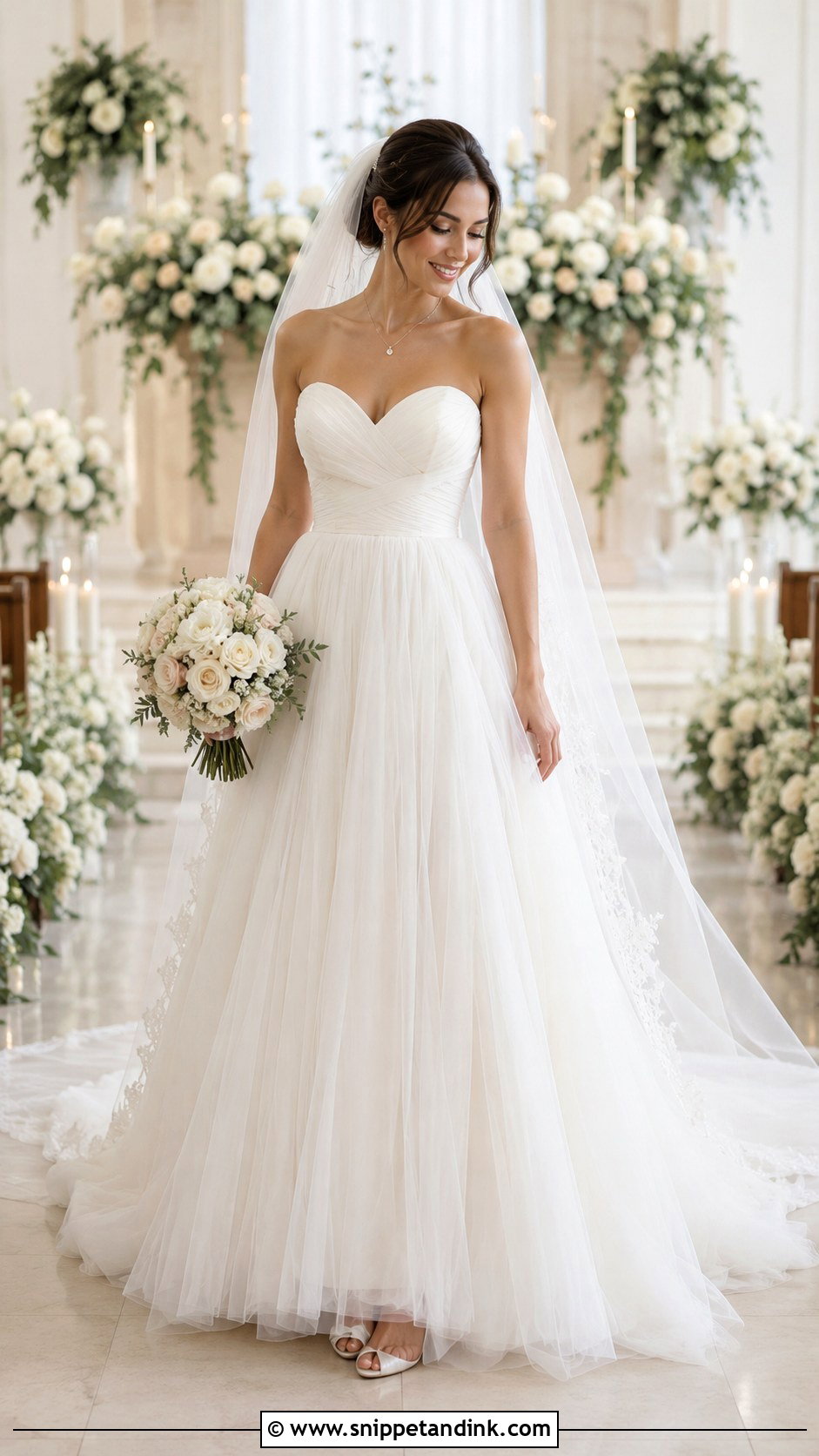
A sweetheart neckline wedding dress softens the bust with its curved, heart-shaped edge. It works on strapless gowns, thin straps, off-the-shoulder designs and corset bodices. Fuller-busted brides should make sure there’s proper structure inside, as a sweetheart without boning can gape when you lean forward. A fine necklace or pearl drops fill the open space nicely. Hair can be worn down in polished waves or swept back to show the neckline.
22. Chiffon Wedding Dress
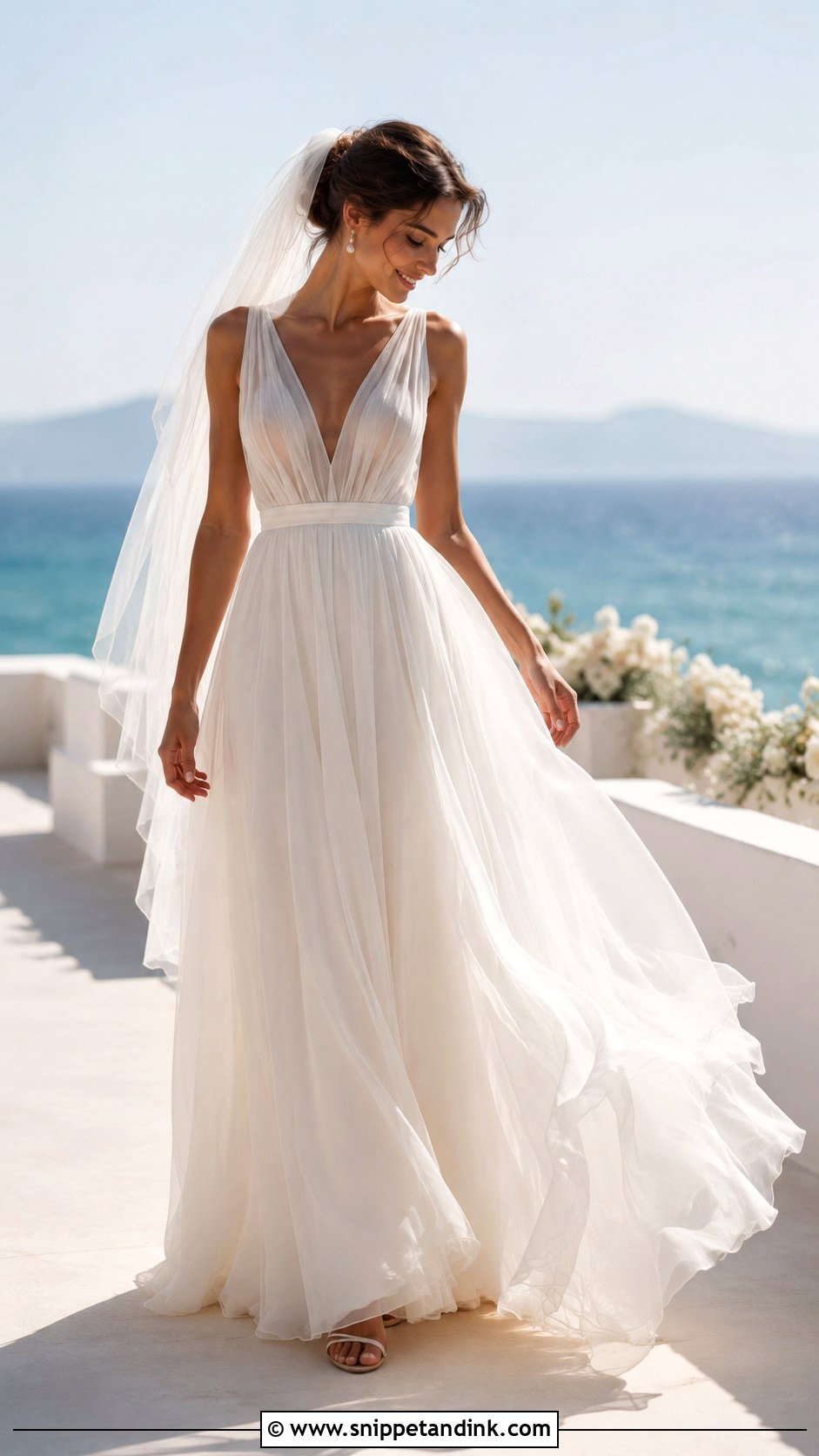
Chiffon is light, sheer and moves with the slightest breeze, which is why it’s used for beach, garden and summer weddings. It does wrinkle and can snag on rough surfaces or bouquet wire, so steam it on the morning and carry a small lint roller for sand. An A-line or empire shape with soft straps is typical. Low heels or flat sandals, pearl earrings and a loose updo keep everything light.
23. One Shoulder Wedding Dress
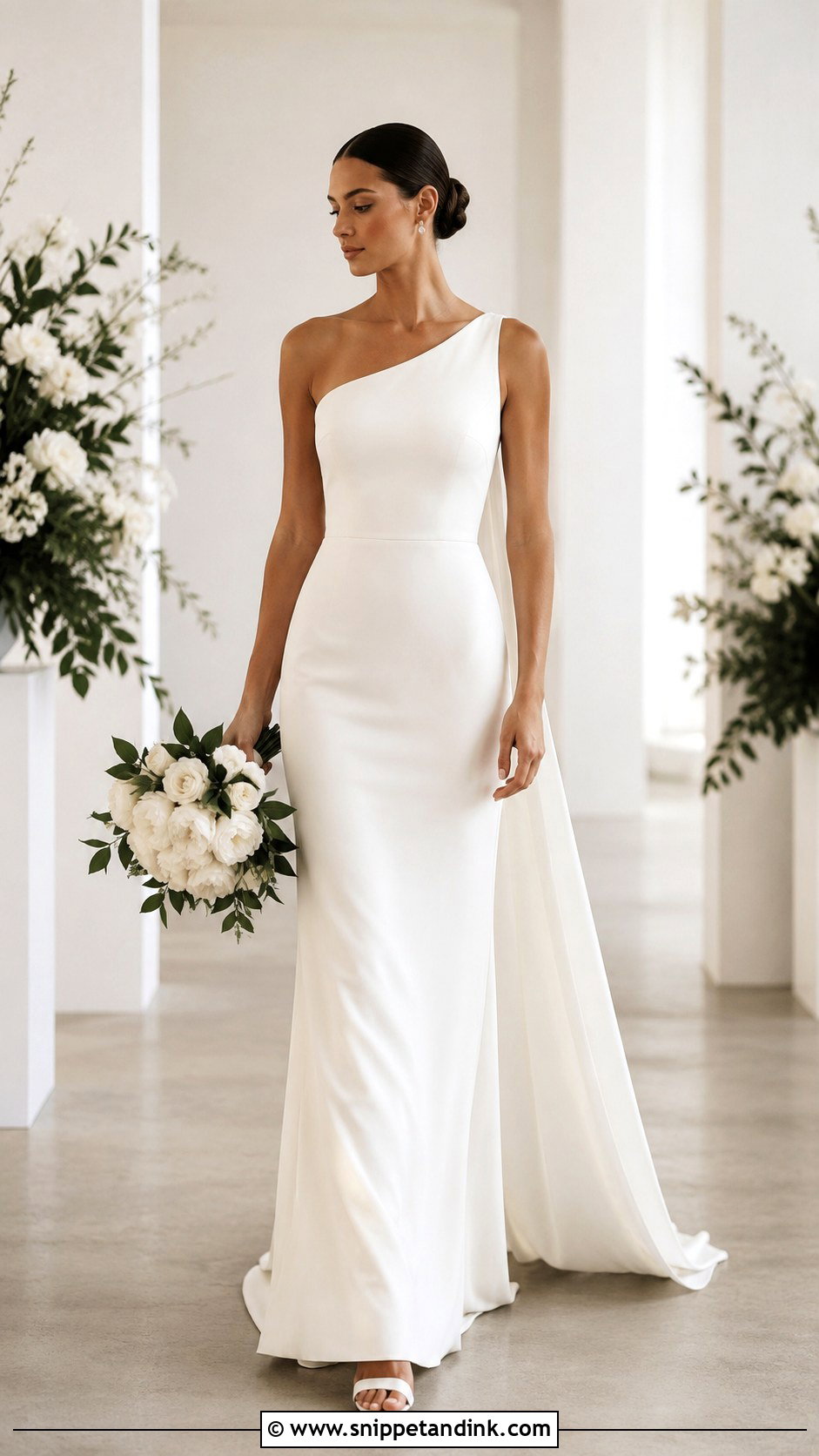
A one-shoulder neckline is asymmetric, so it has natural interest without any decoration. Crepe, satin and mikado show that clean shape best. Wear one earring moment rather than two competing ones, and skip the necklace completely. The practical check: the single strap carries more of the dress’s weight, so make sure it doesn’t slip when you lift your arm. A sleek bun or low ponytail keeps the neck line clear.
24. Sheath Wedding Dress
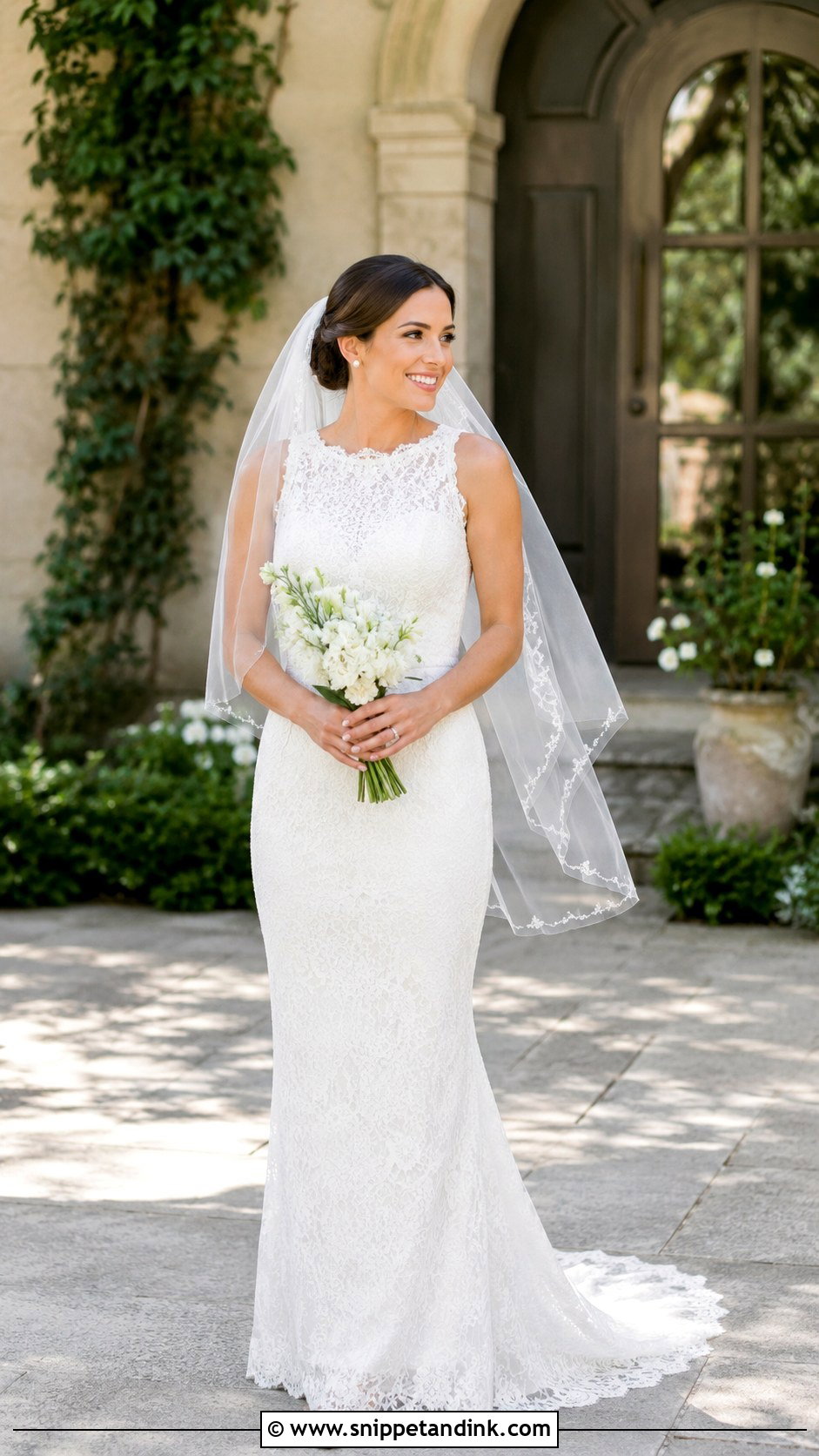
A sheath dress follows the body without the flare of a mermaid or fit and flare. It’s comfortable and light, and it suits brides who don’t want volume. Lace sheath gowns have a slightly vintage feel, while crepe sheath gowns look modern. Because there’s less fabric, a thin or cheap material shows quickly, so check the weight and lining carefully. A fingertip veil, pearl studs, comfortable heels and a narrow bouquet finish it.


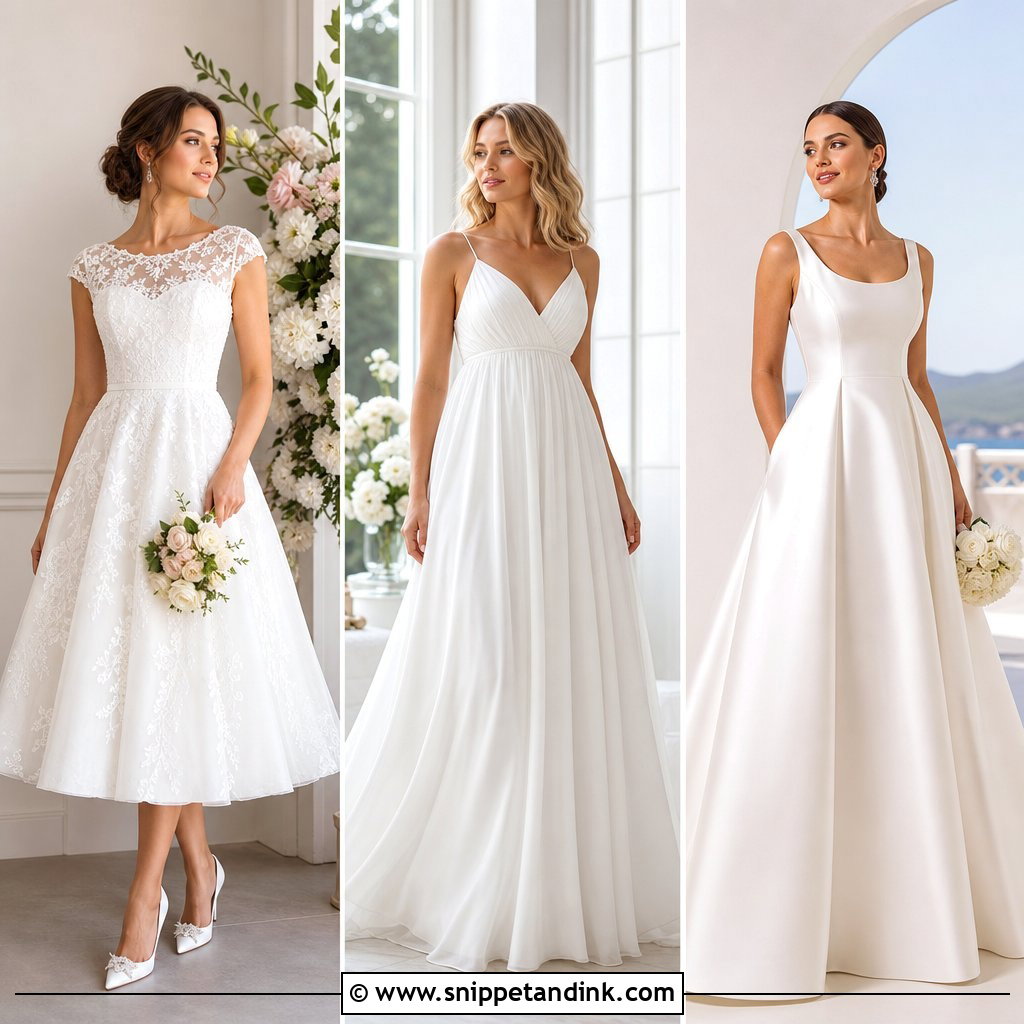

25. Vintage Inspired Wedding Dress
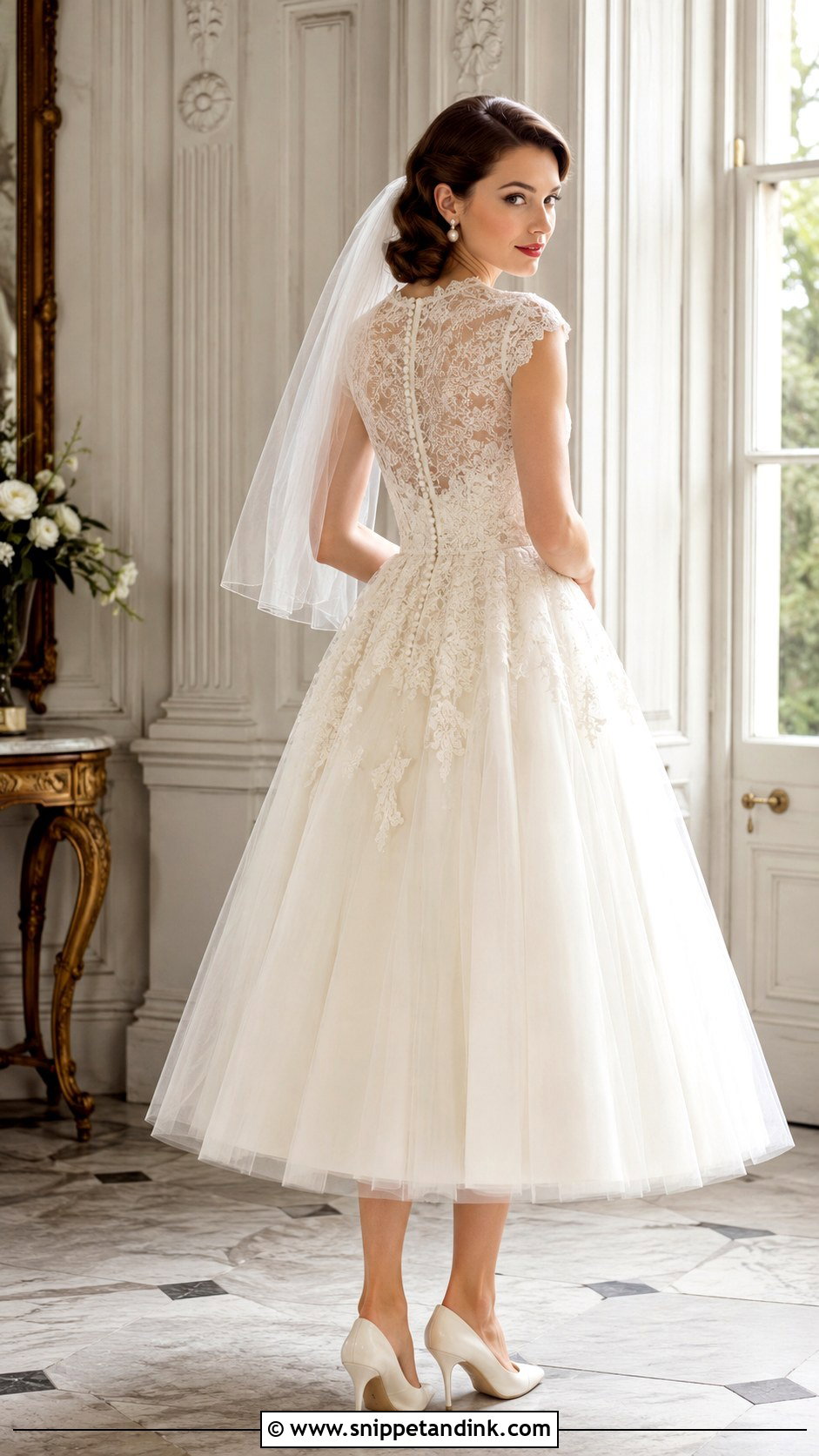
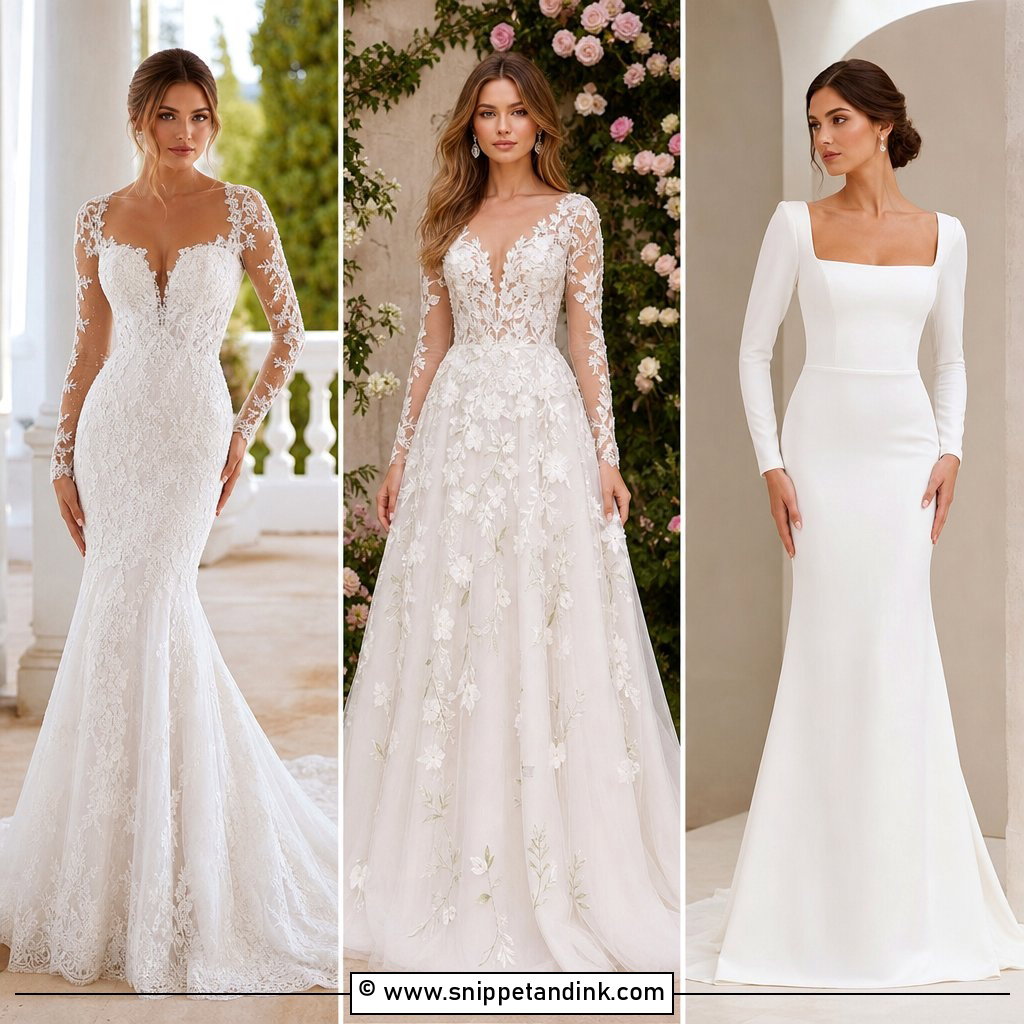
Vintage-inspired dresses look sincere when you choose one or two period details and keep the rest clean. Covered buttons, lace sleeves, a tea-length skirt, a satin bow or a high neck are all good choices; use too many together and it starts to look like a costume. If you’re wearing an heirloom piece, build the dress around that. Pearl earrings, classic heels and a simple veil sit well with it, and finger waves or polished curls suit the era.
After the Wedding: Cleaning and Storing a Dress Worth Keeping
A classic dress is one people often want to keep, pass on or remake, so care matters. Get it to a specialist wedding dress cleaner within a few weeks of the wedding. Champagne, cake and perspiration can be invisible at first, but sugar oxidises over time and leaves brown or yellow marks that are much harder to remove later. Point out every mark you know about, including the hem.
For storage, the dress needs to breathe and stay dark. Plastic dry-cleaning bags trap moisture and can yellow fabric, so use a breathable cotton bag or an acid-free box with acid-free tissue in the folds and the bodice. Avoid wire hangers for heavy gowns, since the weight of the skirt can stretch the shoulders over time; long-term, boxing usually suits heavy dresses better.
Where it lives matters
- Pick a cool, dry cupboard inside the home rather than a loft, garage or basement, where temperature and damp swing.
- Open the box once a year, check for marks and refold the dress along different lines so creases don’t set.
- Handle silk and lace with clean, dry hands, or wear cotton gloves.
- Store the veil flat or rolled in tissue rather than folded, as tulle creases permanently.
Shape First, Then Fabric, Then the Details
The dresses that still look right in old photographs have something in common: one clear shape, good fabric, and restraint with detail. Satin, lace, crepe, chiffon, tulle and pearls can all get you there. Start with the silhouette that lets you move and breathe, then choose the fabric, then the one detail you’ll keep. If the veil, shoes, hair and bouquet support that choice rather than compete with it, the photos will hold up for a very long time.
You'll Like These Ideas:












Leave a Reply