
A mermaid gown hugs the bodice, waist and hips and then releases into a flared skirt, usually somewhere around the knee. That one fact drives almost every decision I make with a bride wearing one: where the flare starts, how much the fabric gives, and what happens when she needs to sit, climb steps or dance. Designers keep reworking the shape with lighter fabrics, sculpted corsetry, floral lace and detachable layers, so the twenty dresses below cover a wide range. I’ve written each one up as a full outfit, because with a fitted silhouette the veil, earrings and hair have to follow the line of the dress rather than fight it.
Testing a Mermaid Fit Before You Leave the Bridal Shop
Shop samples are pinned and clipped to look perfect in a mirror, so I treat the first try-on as a movement test. Start by working out which shape you’re really in. A true mermaid flares at or just below the knee, a trumpet opens around mid-thigh, and a fit-and-flare releases at the hip. Many brides who think they want a mermaid are happier in a trumpet once they’ve walked in both.
Then put the sample through what the wedding day will ask of it:
- Sit on a normal chair for two or three minutes, not the edge of the fitting platform, and notice where the gown digs in.
- Walk up and down a step. If you have to turn sideways to manage it, the flare is set low for your stride.
- Do a slow dance turn with your arms raised. Watch whether the bodice lifts off the hips.
- Bend as if to hug a shorter relative or pick up a dropped ring.
- Ask someone to take a photo of you seated, since that is how you’ll appear at dinner and during the speeches.
Wear heels at the height you expect to choose. Two extra inches of heel changes where the flare falls against your leg, and it changes the hem measurement too.
1. Strapless Satin Mermaid Wedding Gown
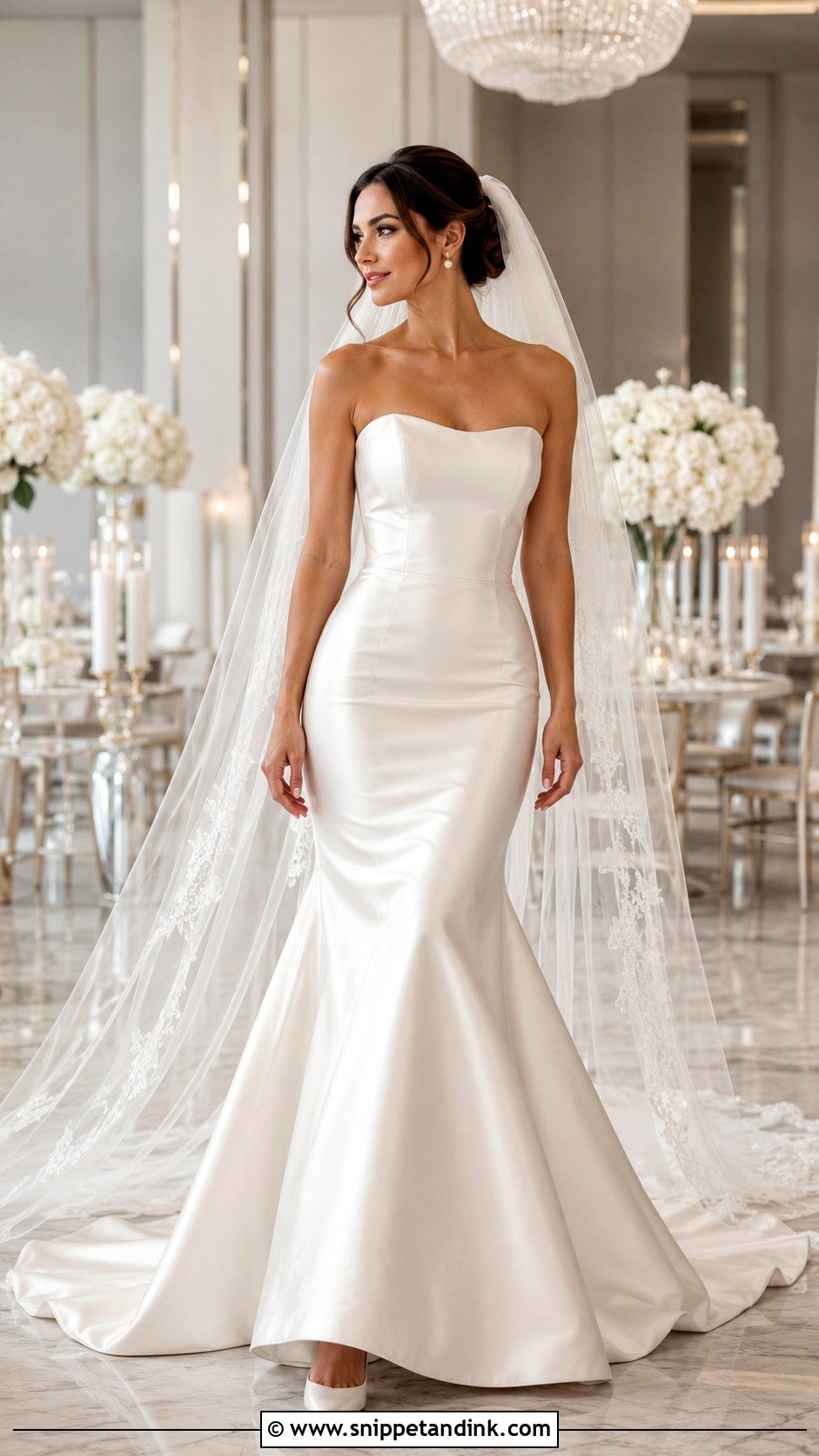
Satin is the least forgiving fabric here, and I mean that kindly. It reflects light along every seam, so a strapless satin mermaid shows the quality of the tailoring instantly; a pucker at the side seam or a bodice that gaps when you breathe in will appear in every photo. Insist on internal boning and a waist stay, the inner grosgrain band that anchors the bodice so it doesn’t creep down during the evening. A straight neckline reads modern and a sweetheart reads classic. Pearl drops, a slim bracelet, pointed ivory pumps and a low bun suit a ballroom, and I’d only add a cathedral veil if the train is long enough to carry it.
2. Long Sleeve Lace Mermaid Wedding Gown
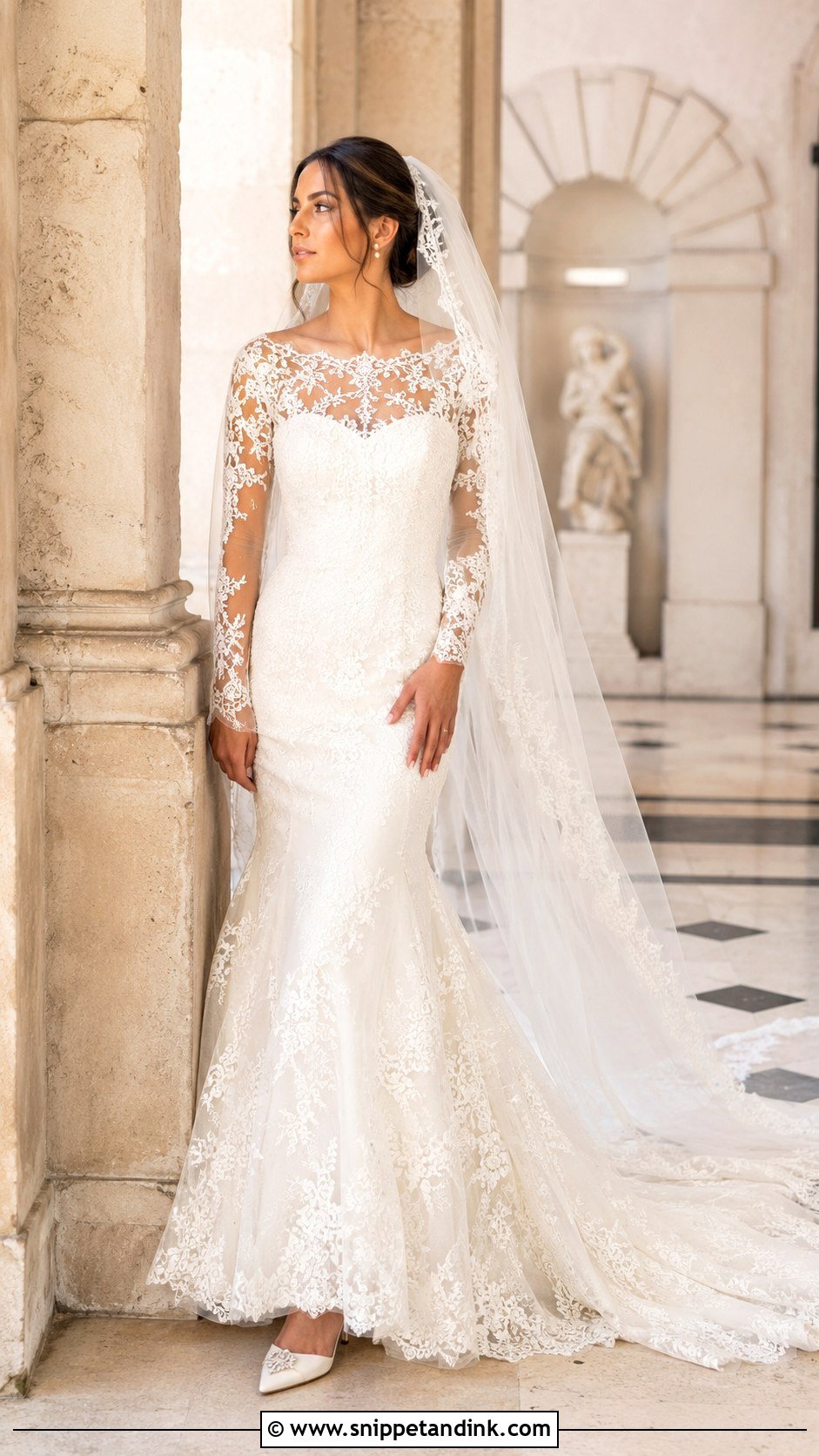
Long lace sleeves on a fitted gown fail at the elbow more than anywhere else. When I fit them, I ask the bride to hug someone, raise a glass and lift her bouquet high, because sleeves cut tight for standing photos can split a seam or drag the whole bodice upward the moment she moves. Floral lace over an ivory or nude lining lets the pattern read without looking heavy, and a bateau or illusion neckline balances the covered arms. With lace this busy I leave the necklace off and use pearl studs, an embroidered veil and closed ivory satin heels instead. It’s a natural fit for cooler months and older venues with plenty of stone and wood.
3. Sweetheart Corset Mermaid Wedding Gown
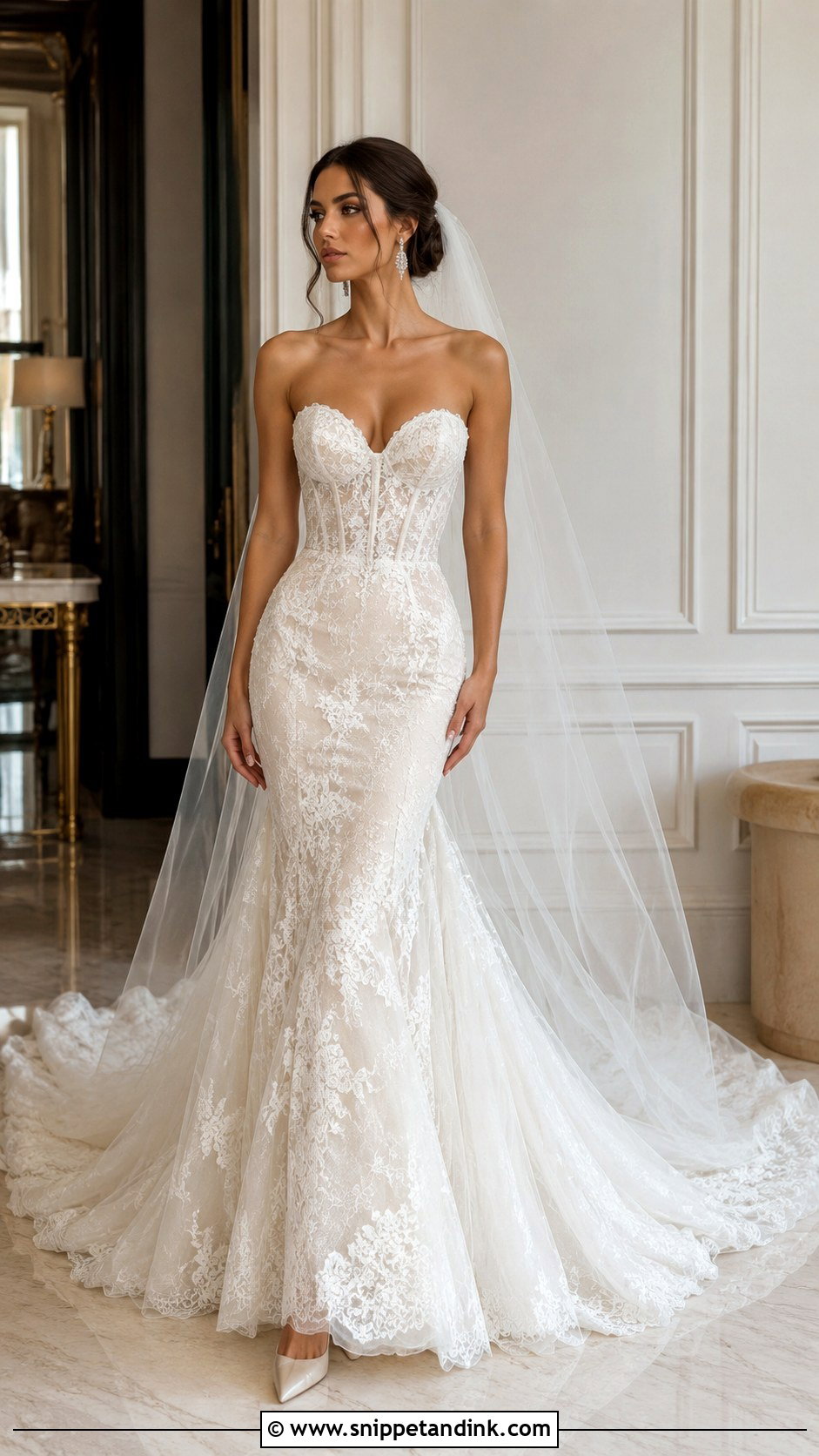
A sweetheart corset mermaid wedding gown gives you soft curves on the outside and genuine structure underneath, with boning shaping the waist before the skirt opens near the knee. Lined corsetry looks traditional; a little exposed boning reads more current. A lace-up back buys some flexibility if your measurements shift before the wedding, but I never treat it as a replacement for alterations, since lacing can’t release a hip that’s too tight further down. Wear an updo so the neckline stays visible, and echo just one gown detail in your accessories, such as the bodice crystals repeated in a pair of drop earrings.
4. Off Shoulder Tulle Mermaid Wedding Gown
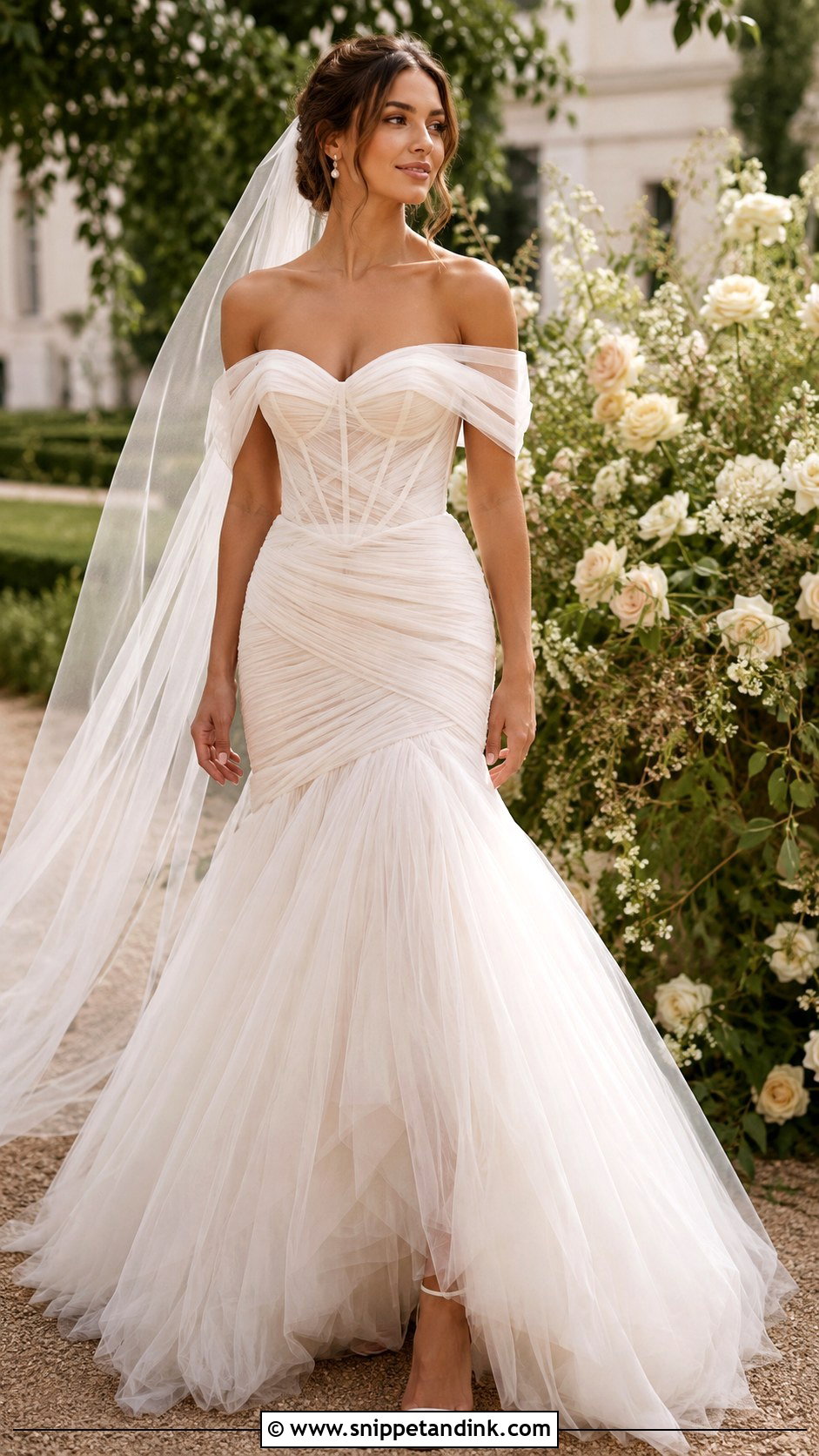
Off-the-shoulder sleeves are where I spend the most fitting time on a dress like this. If the bands sit too low they slide when you lift your arms; too high and they cut a hard line across the upper arm in photos. Draped tulle sleeves are softer, while fitted lace bands grip better. The layered tulle flare is light, so it moves well through a ceremony with a lot of walking. A loose low bun keeps the shoulders clear, and ankle-strap heels stop your shoes slipping off on grass at a spring garden wedding.
5. Square Neck Crepe Mermaid Wedding Gown
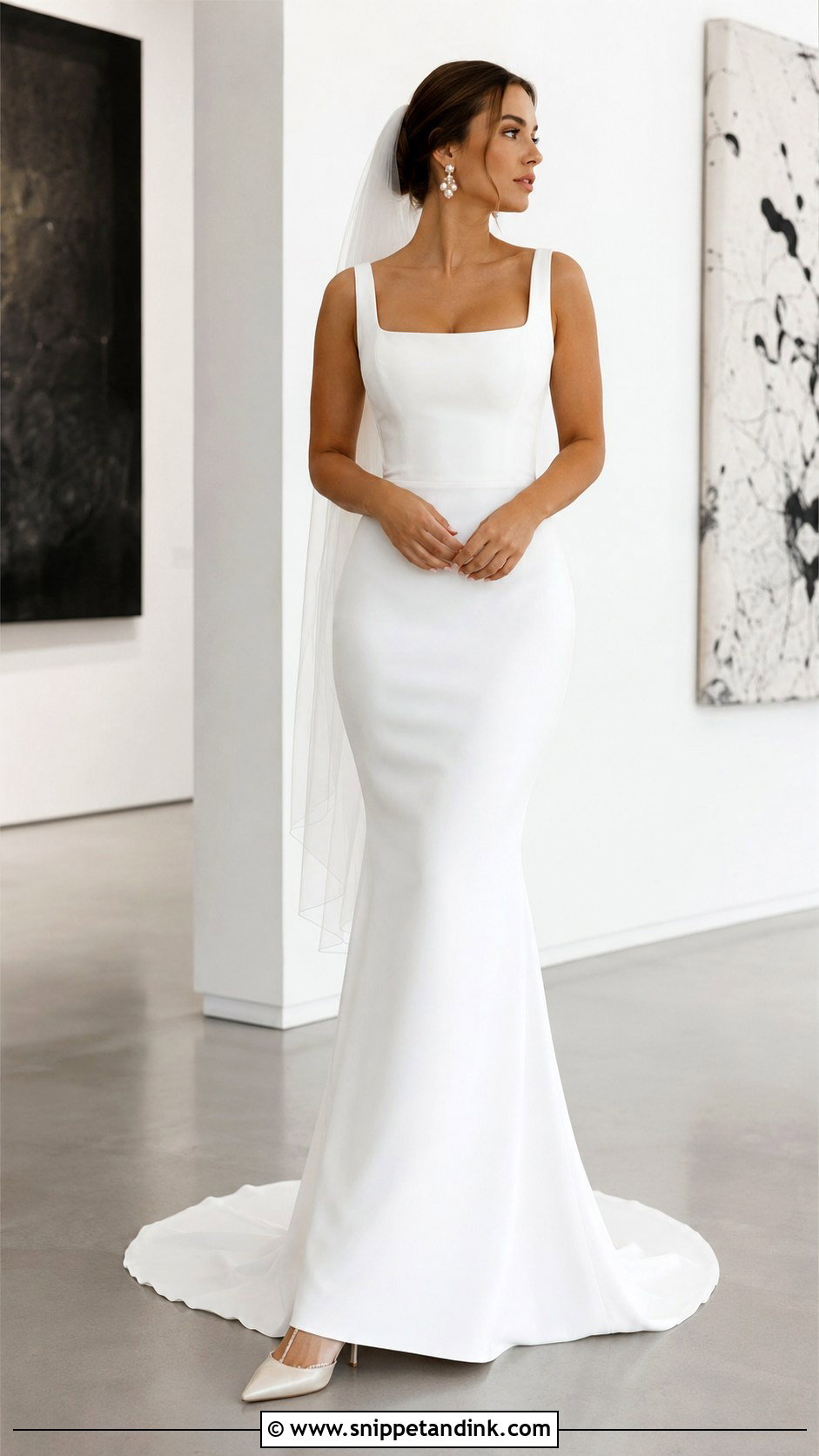
Crepe is matte and drapes close to the body, which is exactly why I like it for a clean square-neck mermaid and exactly why it’s unforgiving underneath. Every bra band and underwear edge shows through, so bring the actual shapewear you’ll wear, in a shade near your skin tone, to every fitting and have the gown fitted over it. Wide straps support the square neckline. Sculptural pearl earrings, a sleek veil, pointed slingbacks and a centre-parted bun keep the mood minimal. Covered buttons down the train add detail without shine, which sits well in galleries, rooftops and modern hotels.
6. Halter Neck Mermaid Wedding Gown
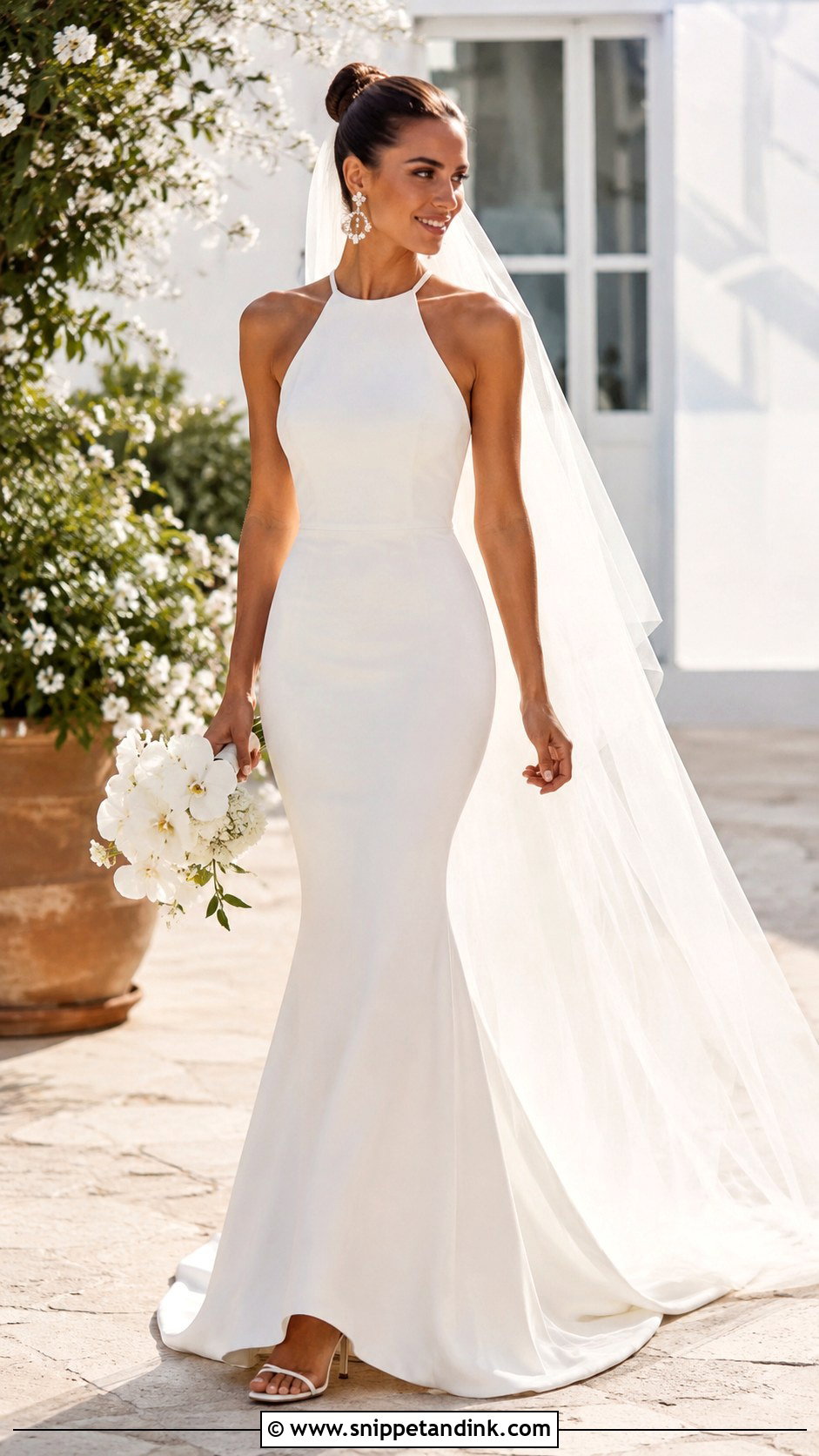
A halter rests part of the bodice’s weight on the back of your neck, so comfort is the first thing I check. Cut the strap even slightly short and you’ll feel it pulling by the speeches. Choose stretch crepe, satin, or fluid jersey so the fitted body moves with you. A high or plunging front changes the mood completely, but either way skip the necklace and let statement earrings do the work. Attach the veil beneath a high bun or low ponytail so it doesn’t drag on the halter strap. Warm-weather ceremonies suit it best.
7. High Neck Lace Mermaid Wedding Gown
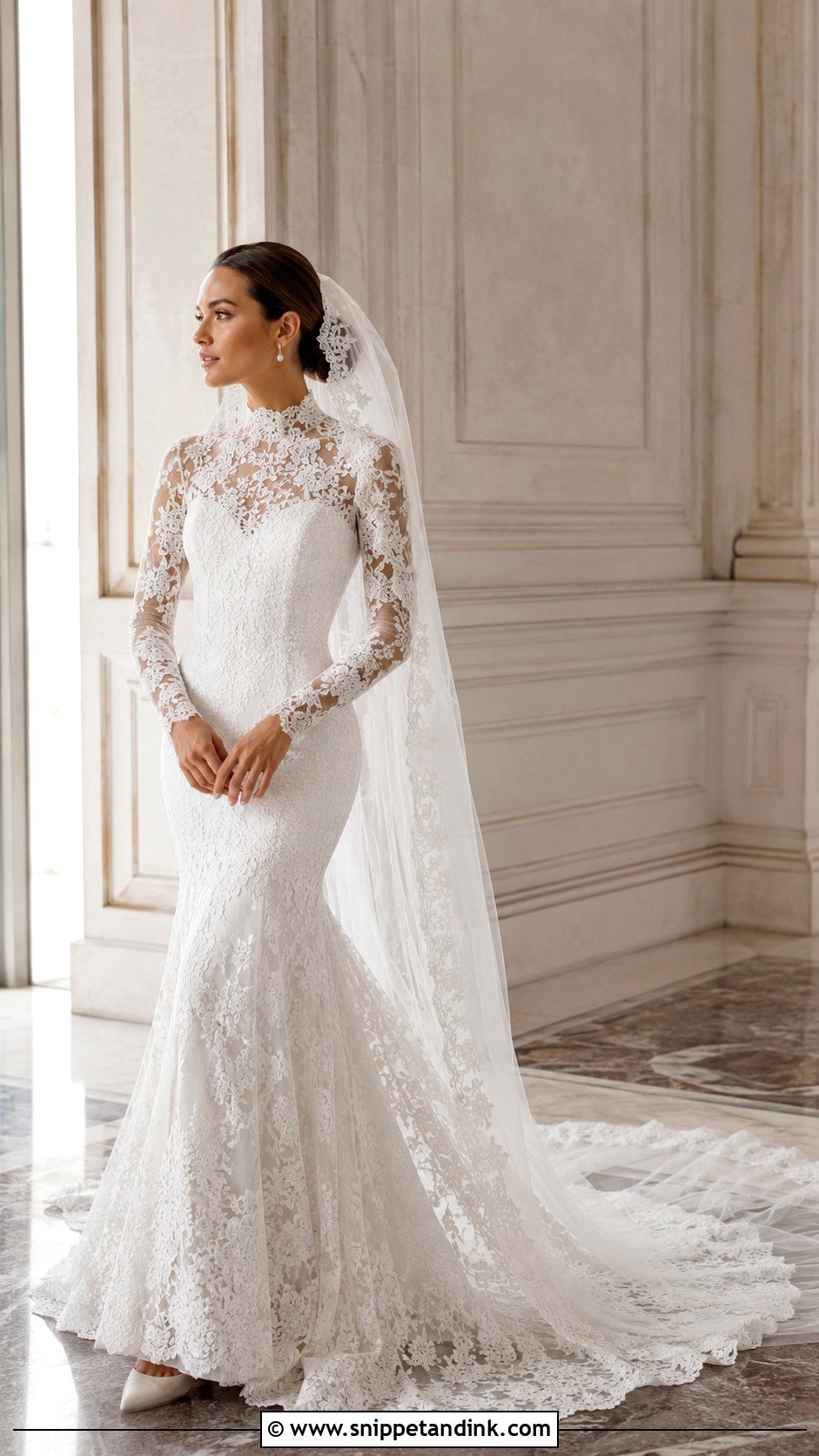
Coverage and shape can sit together in a high-neck lace mermaid. Illusion lace around the neckline softens the effect, while a fully lined bodice is more modest, and scalloped edges with small covered buttons keep the back interesting. The test I make every bride do in a collar is to turn her head fully both ways and then look down at her bouquet. If the collar presses on the throat or rides up, it needs releasing before the day. Leave the neck bare of jewellery; a bracelet or heirloom ring, pearl earrings, an updo and a long veil with a narrow lace edge are plenty.
8. One Shoulder Mermaid Wedding Gown
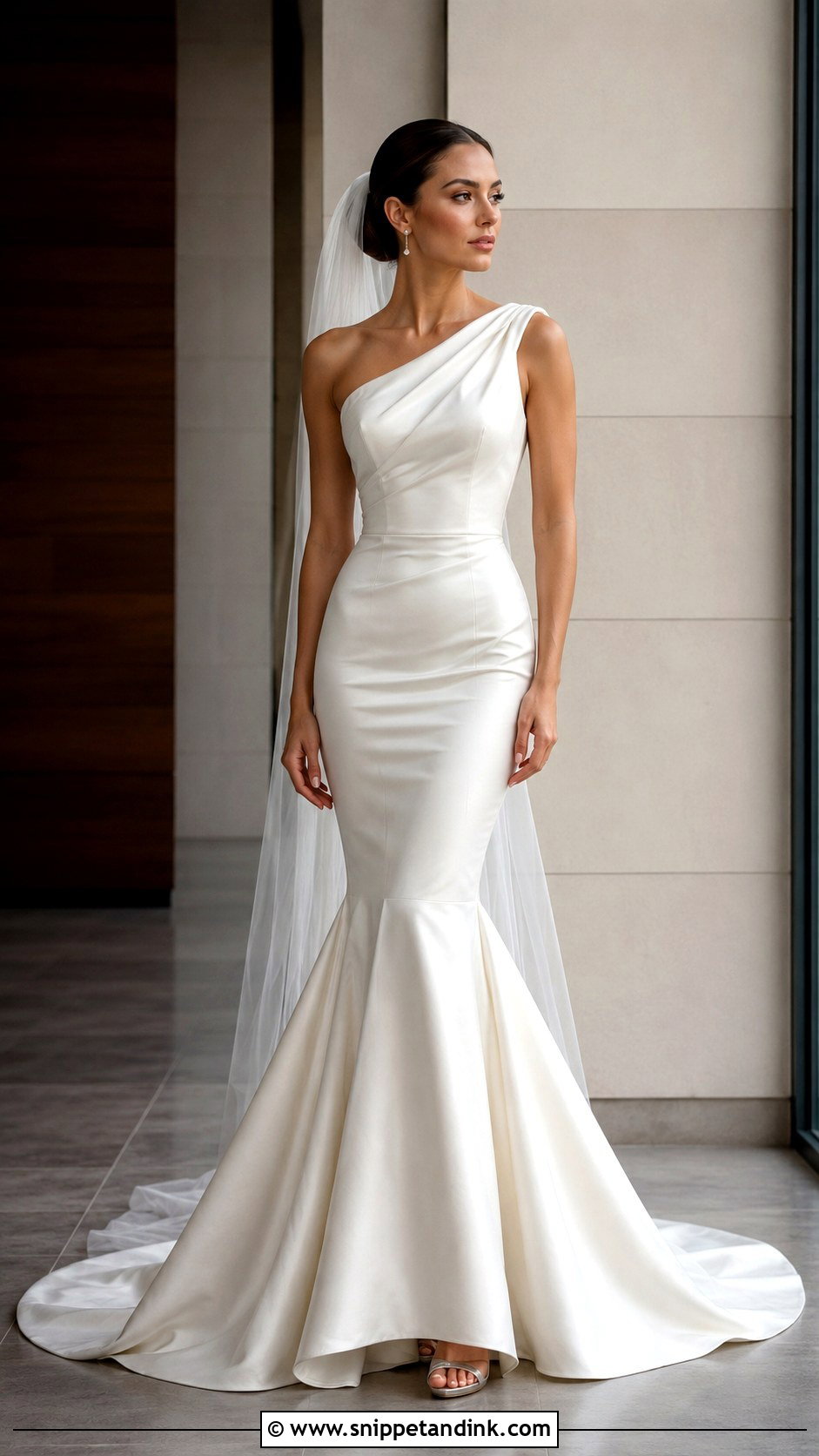
One-shoulder bodices slowly migrate toward the bare side, because nothing holds the other edge up. Before I fall for the styling of any asymmetric gown, I look inside for a firm internal corset or silicone grip tape along the top edge. A clean, structured strap reads editorial; a draped or appliqué strap is softer. Wear one statement earring on the bare side, or small matched drops, and sweep a low side bun away from the strap. Satin and crepe keep the line sleek, gathered tulle relaxes it, and the whole look sits well in a modern hotel or art space.
9. Pearl Beaded Mermaid Wedding Gown
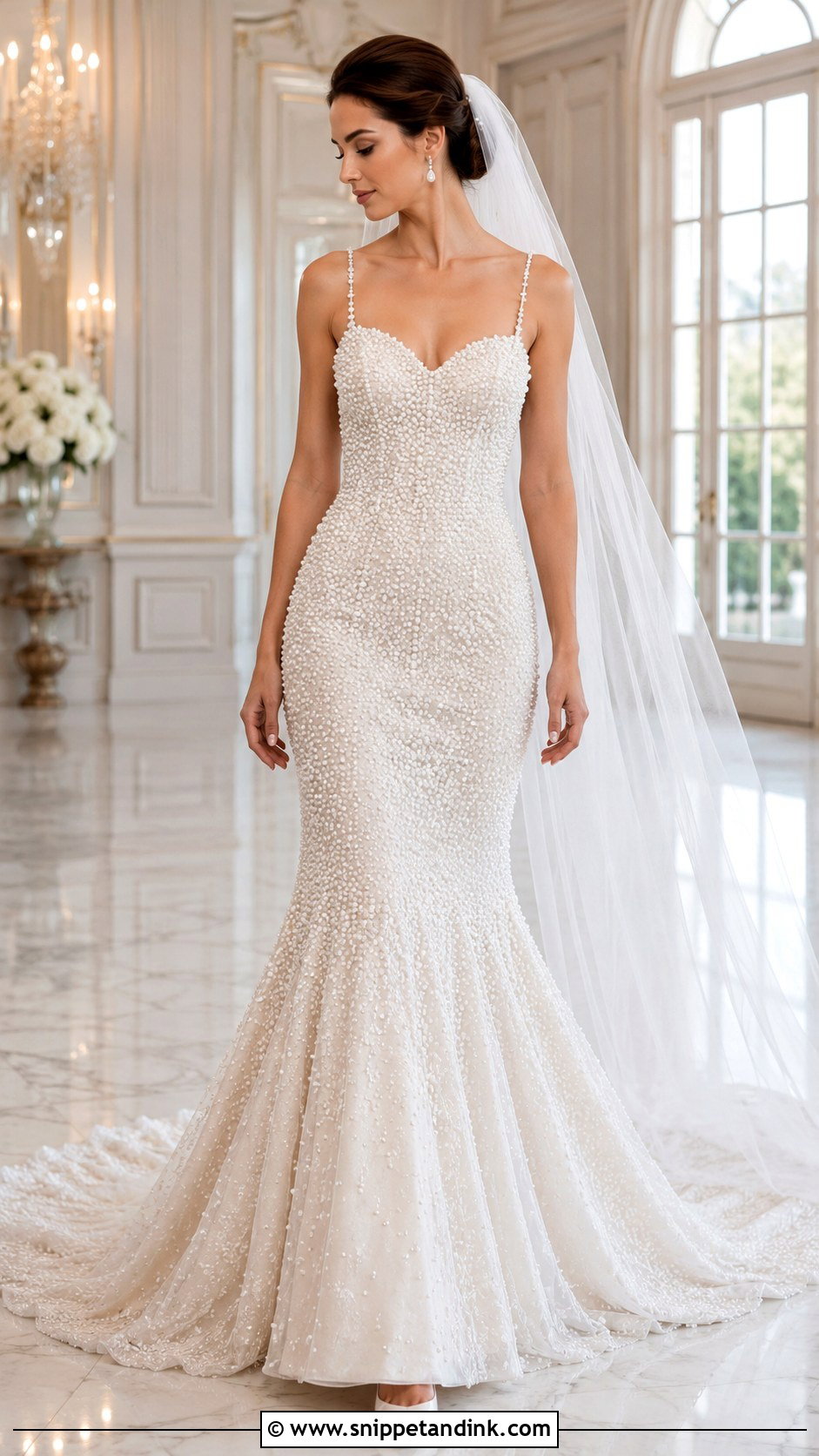
Before a bride commits to allover pearl beading, I have her sit in the sample for a few minutes. Pearls sewn across the hips press into the backs of the thighs when seated, and a fitted mermaid has no spare fabric to cushion that. A smooth lining helps. So does checking that the pearls are stitched individually rather than chain-stitched, because one broken thread on a chain can shed a whole row. Scattered pearls on the bodice give a quieter version. Pair either with a plain tulle veil, pearl studs, closed satin pumps and a structured updo for an evening reception.
10. Floral Appliqué Mermaid Wedding Gown
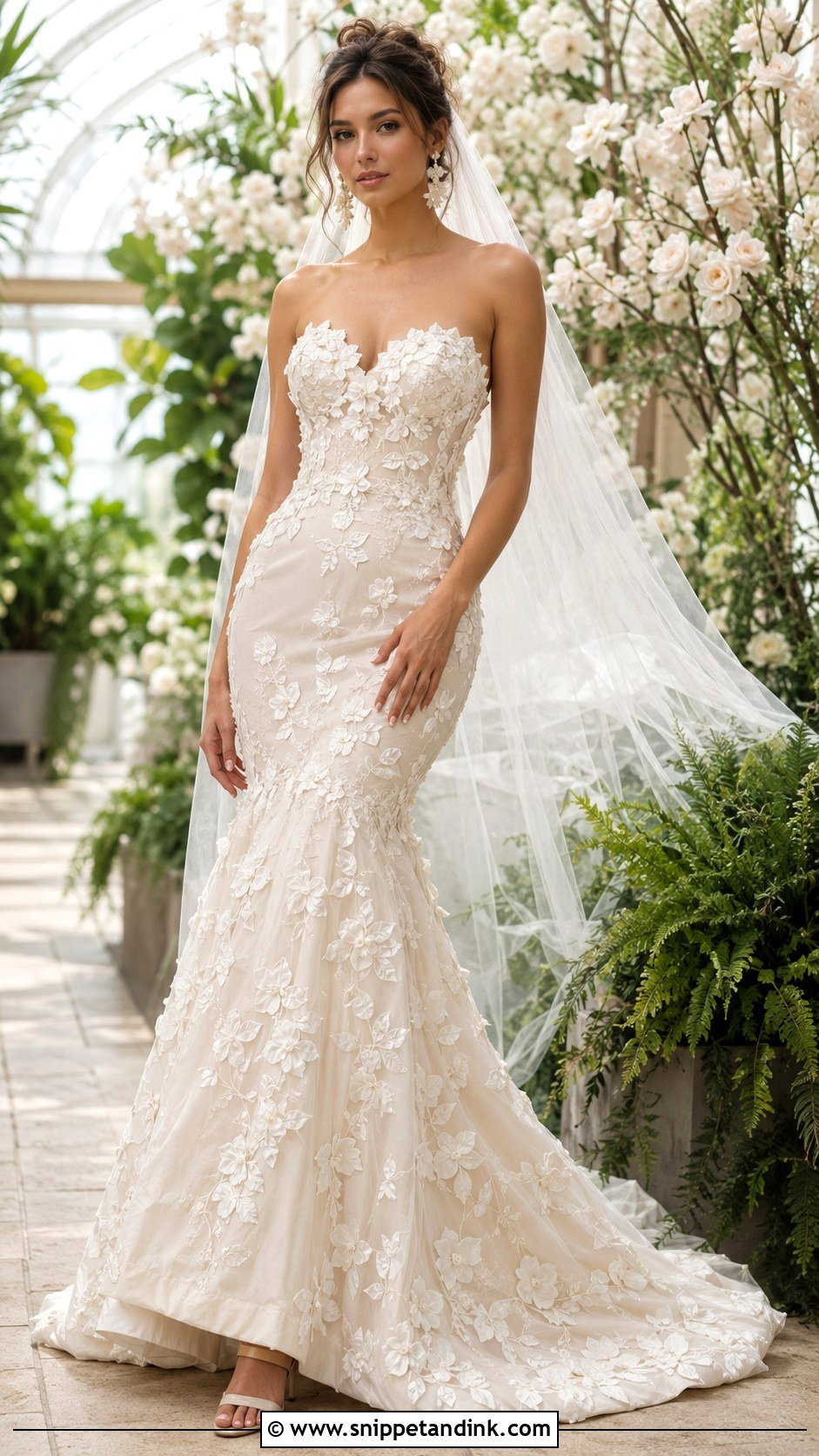
Raised appliqué needs one clear home: trailing down from the bodice, clustered at the neckline, or gathered on the flared hem. Spread it everywhere and the fitted line disappears beneath it. A sheer or lightly lined base lets the flowers look layered rather than stuck on. The practical problem I watch for is snagging. Three-dimensional petals catch on earring backs, bracelet clasps and the edge of a veil, so I suggest small floral studs and a plain veil with a finished hem. Soft waves suit the garden mood, and conservatories or outdoor estates give the flowers their context.
11. Sequined Mermaid Wedding Gown
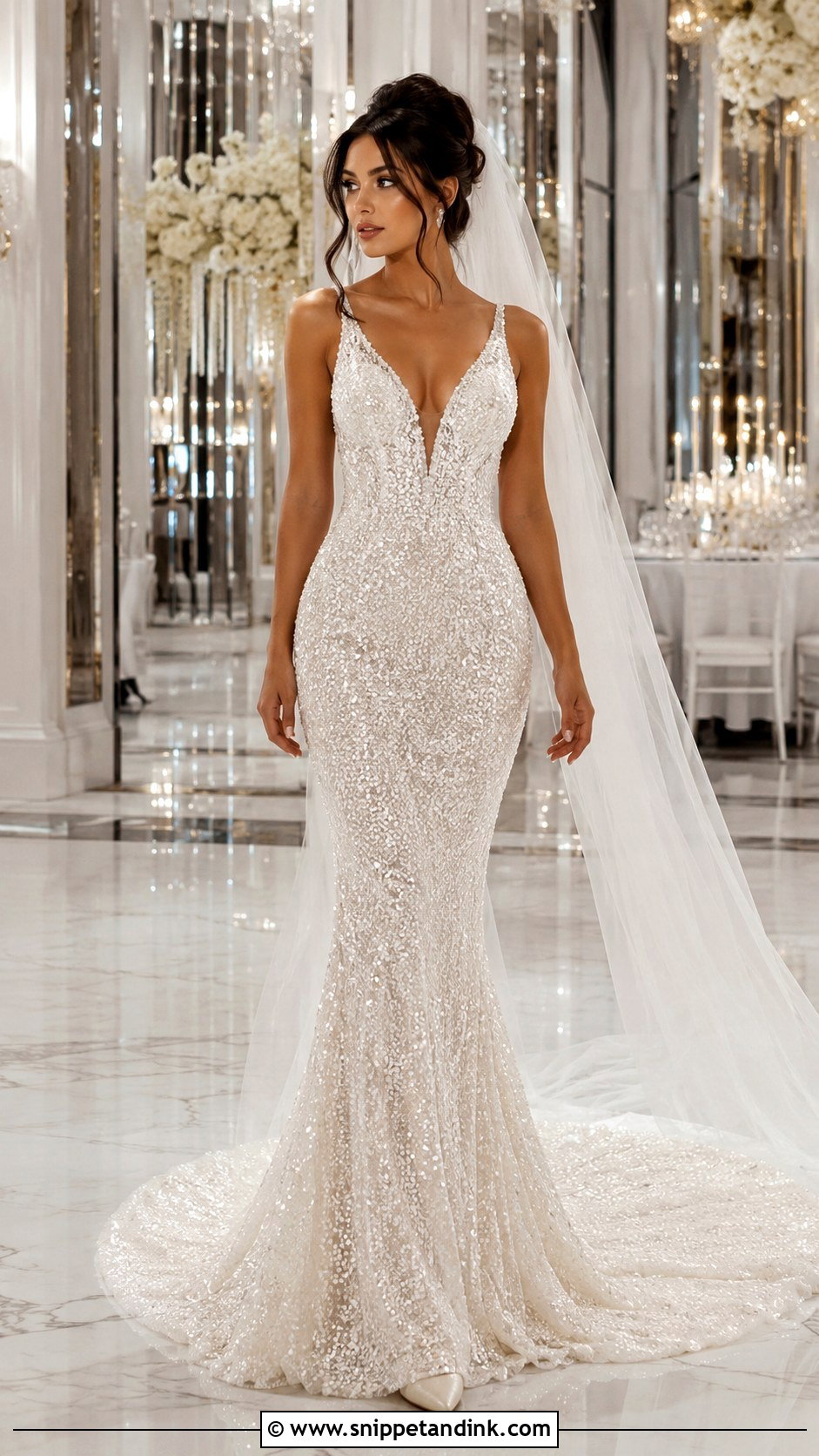
Sequin size changes everything. Fine sequins scattered over lace or tulle glow softly in daylight, while large reflective discs throw back harsh light whenever a camera flash fires. Keep the neckline simple and the accessories quiet: crystal studs, satin pumps and a plain cathedral veil. What I check that most brides don’t is the inner arm and the sides of the bodice. Arms brush the torso all day, and rough sequin edges can leave skin raw by evening, so ask for a smooth lining and finished seams there. Sleek hair keeps all that shimmer sophisticated in a grand ballroom.
12. Mikado Mermaid Wedding Gown
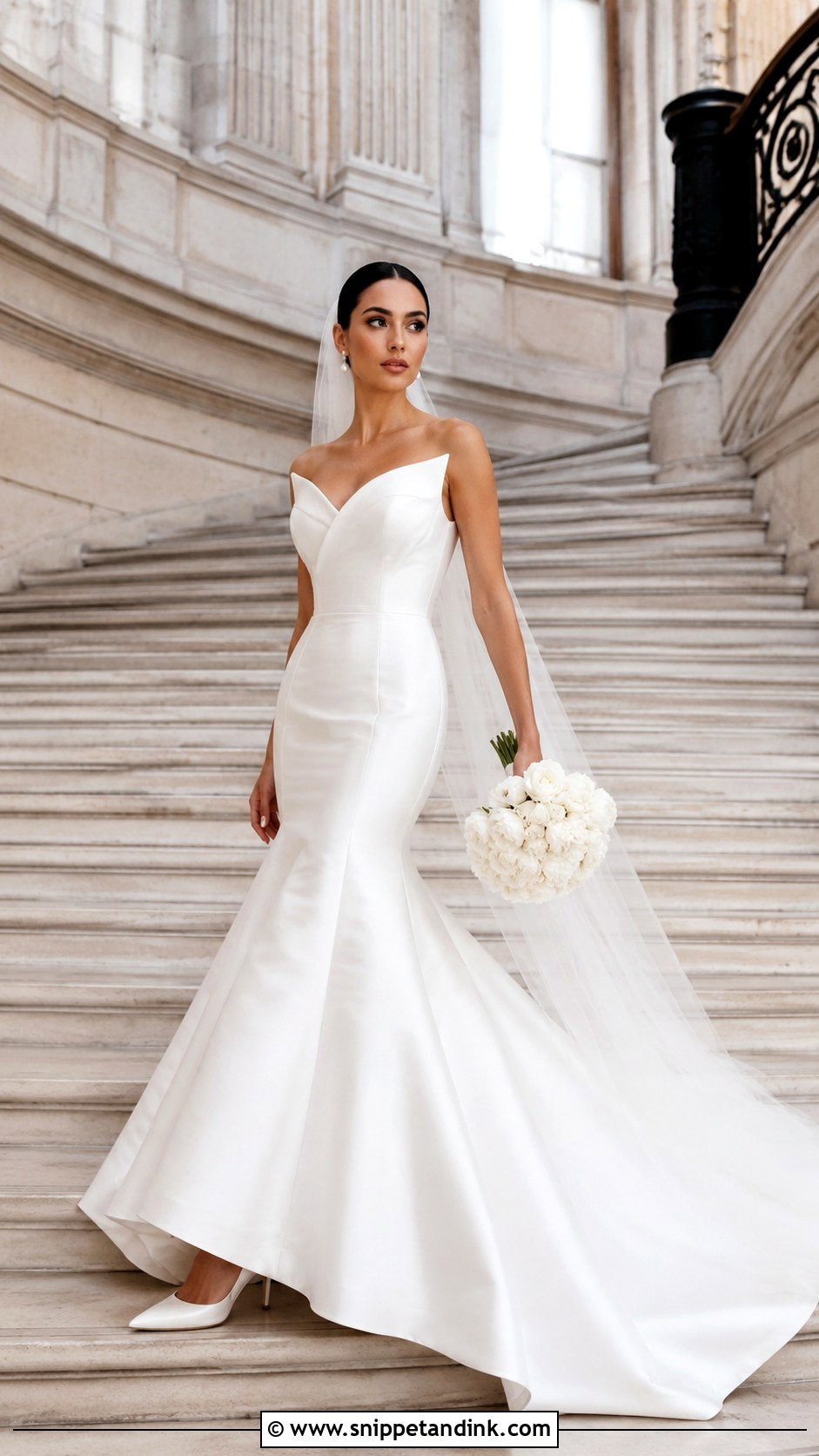
Structured Mikado fabric holds a sculpted seam, a pleat and a dramatic flare better than almost anything else, so it suits a bride who wants crisp tailoring. The trade-off is that it has almost no stretch. I always ask the seamstress for enough ease through the hips and knees to sit, climb steps and dance, because a Mikado mermaid fitted only for standing becomes a problem by the first course. Plan the bustle at the same fitting; a heavy train needs strong hooks. A strapless cat-eye neckline, pearl earrings and a polished bun suit museums and grand hotels.
13. Mermaid Wedding Gown With Detachable Overskirt
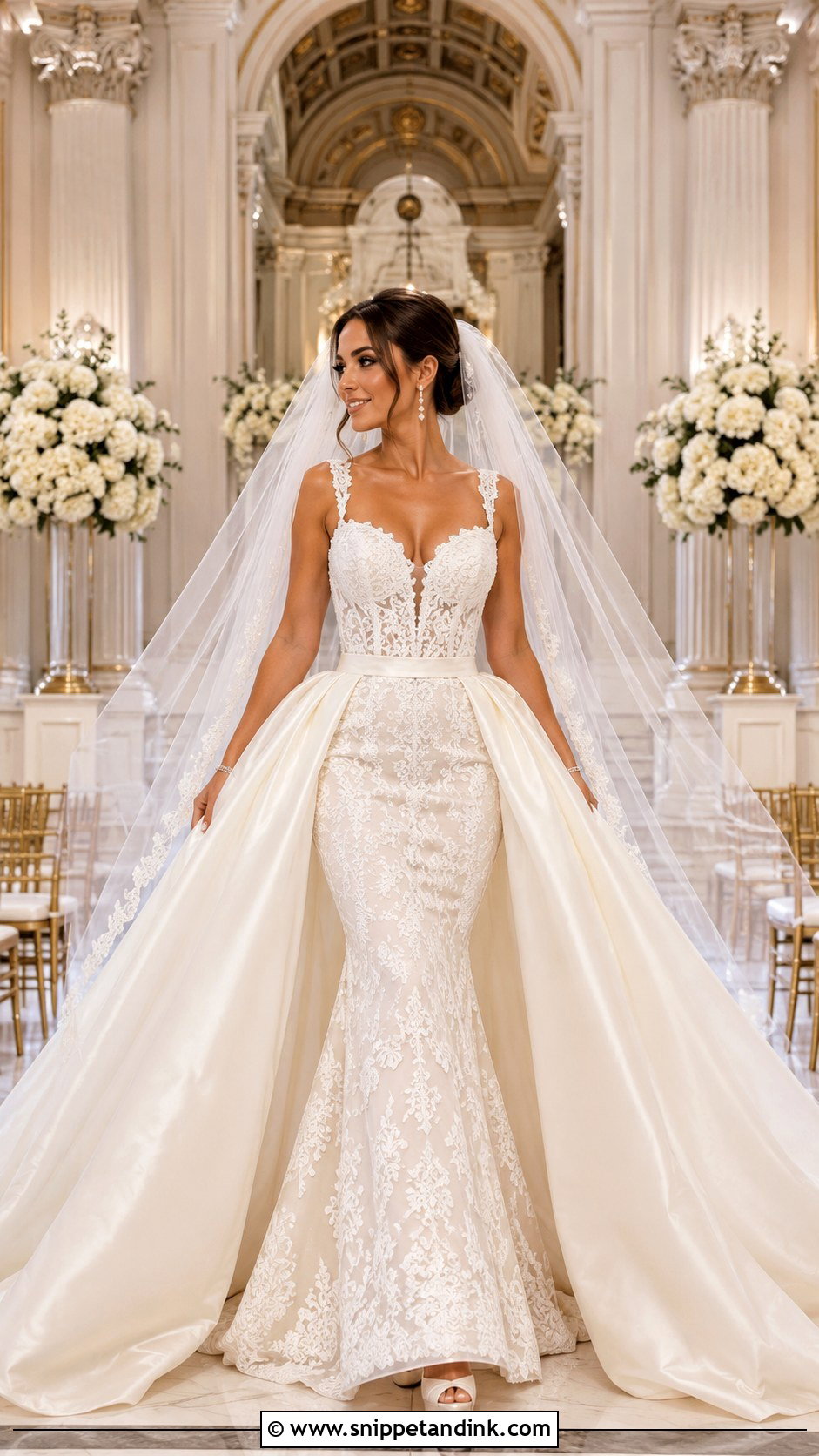
A detachable overskirt gives you a full ceremony silhouette and a fitted reception gown in one dress. Tulle and organza overskirts feel light, while satin and Mikado make a more structured change. What I check is the waist join: the band should lie flat over the bodice with no bunching, and the fastening should be hooks or snaps that someone can undo quickly. Teach one bridesmaid the system at your final fitting, not in a hotel corridor on the day. Once the overskirt comes off, swap the cathedral veil for a small hair piece and you have a streamlined second look.
14. Mermaid Wedding Gown With Detachable Sleeves
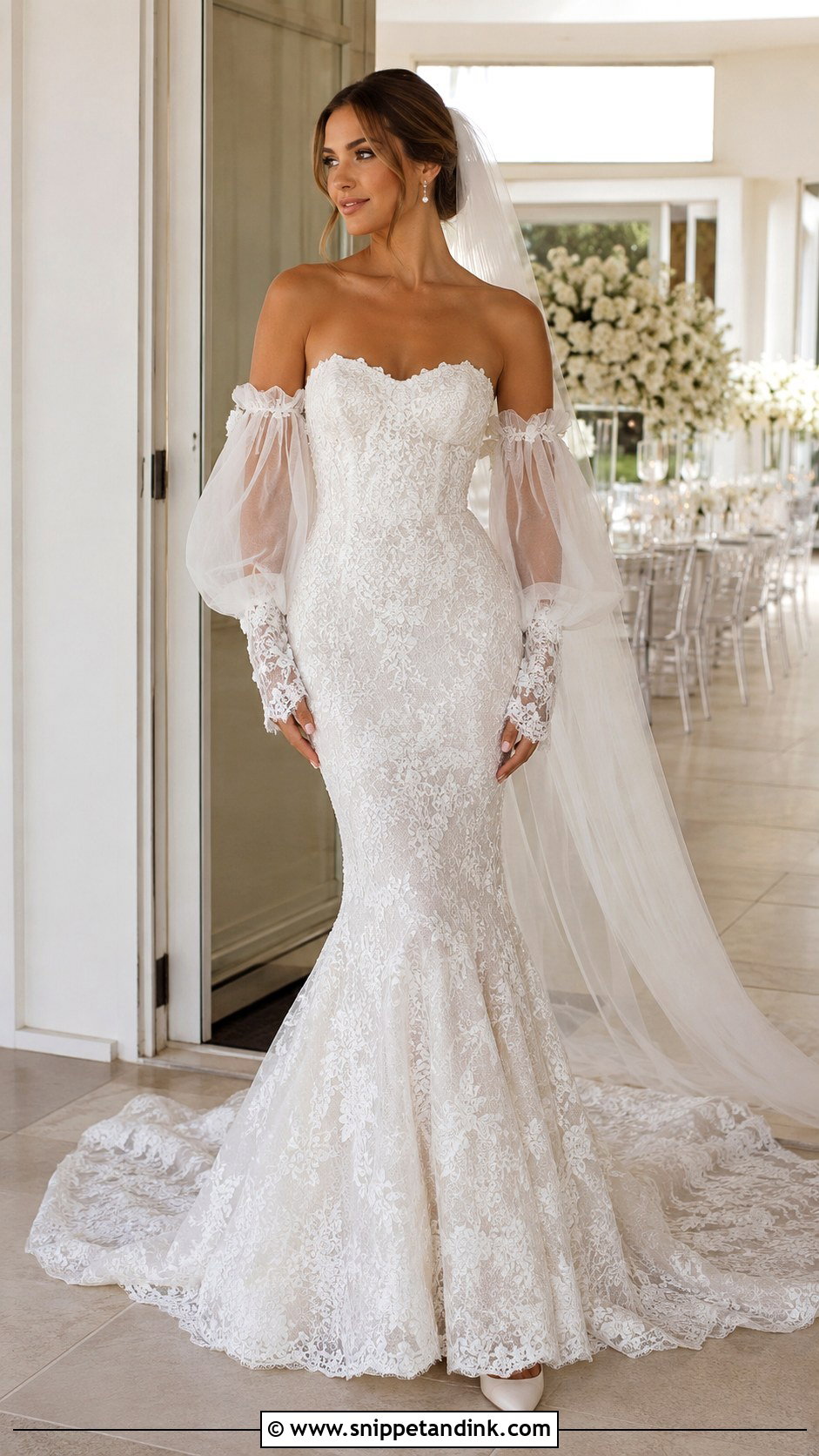
Detachable sleeves turn a covered gown into a strapless one, which helps when the ceremony is cool and the reception room is warm. Fitted lace sleeves look traditional; draped tulle or off-the-shoulder versions move more freely. I study the attachment points first. They should hide under lace or a seam and must not stop you raising your arms. Practise taking the sleeves on and off with whoever will help you, and keep a labelled garment bag ready so they don’t end up crushed in a handbag. Pearl earrings, ivory pumps and a low chignon work for both versions.

15. Bow Back Mermaid Wedding Gown
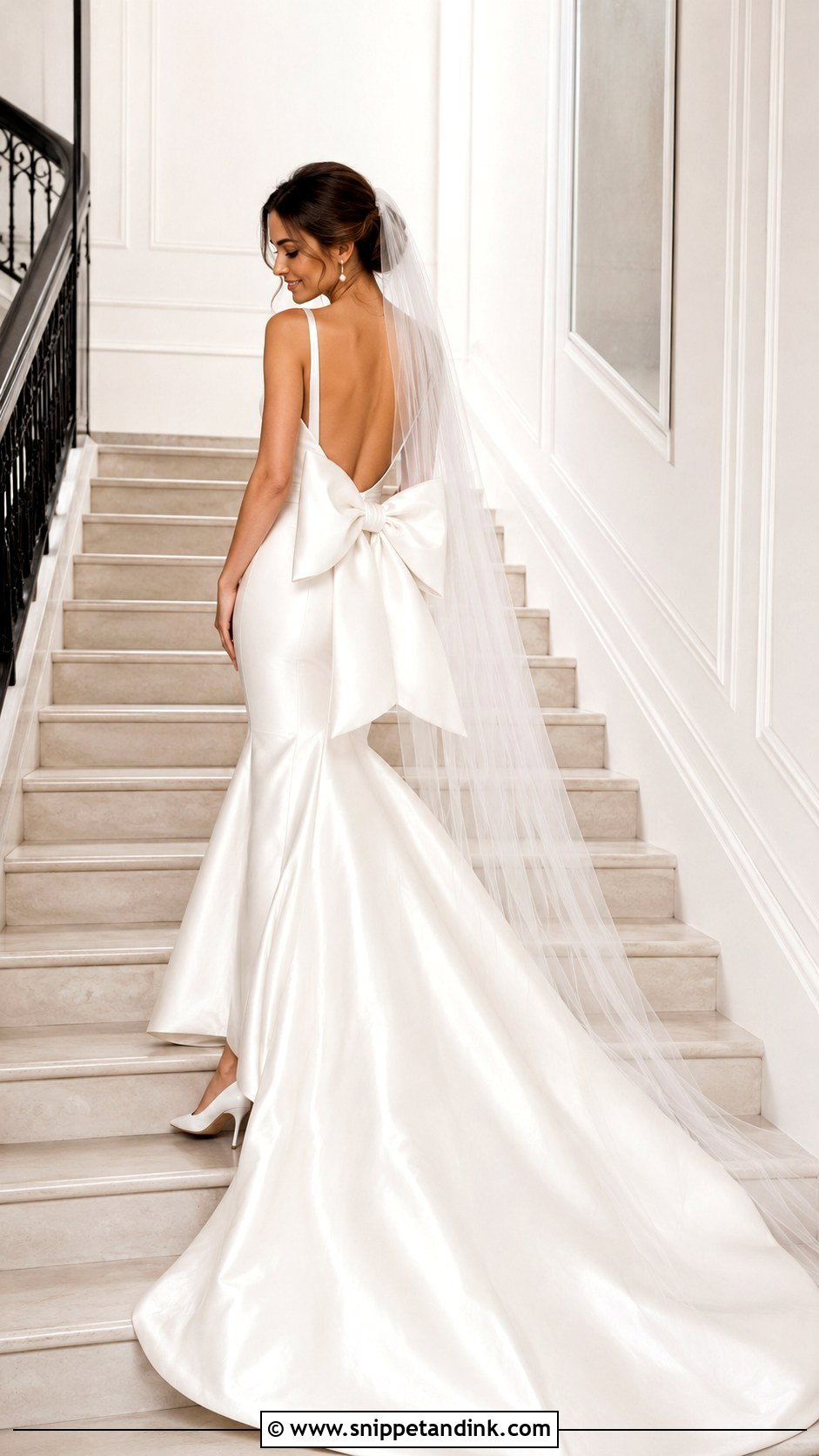
Your guests look at the back of this dress for the whole ceremony, so keep the front quiet and let the bow carry it. It might sit at the waist, just above the flare or at the top of the train. Structured satin bows hold their shape all night, whereas soft organza bows droop a little by evening, which some brides actually prefer. I always ask how the bow works with the bustle, since a bow over the train often has to be removed or moved once the train is lifted. Set the veil comb above the hairstyle so the tulle frames the bow rather than hiding it.
16. Open Back Mermaid Wedding Gown
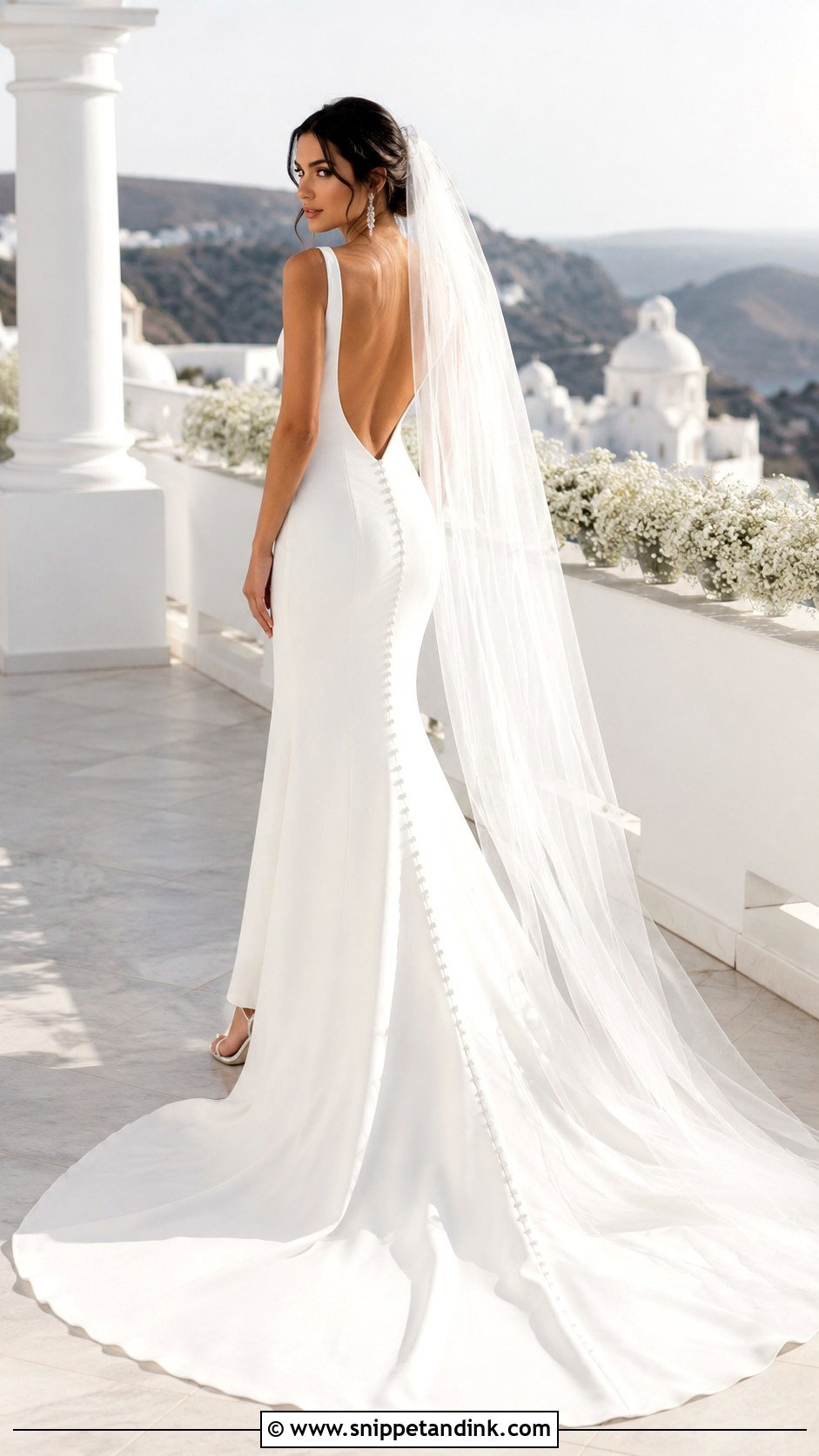
The low back is the reason to wear this gown, and the bra is the reason it can go wrong. Ordinary underwear will show, so you need cups sewn into the bodice or a strong internal support, fitted early. The opening can be rounded, a sharp V or framed in illusion lace. Covered buttons along the lower back add a traditional detail beneath it. At fittings I have brides bend forward, sit and walk while I watch that the edges stay flat against the skin. Keep the hair up or swept aside, and choose a veil you can remove after the ceremony.
17. Modest Mermaid Wedding Gown
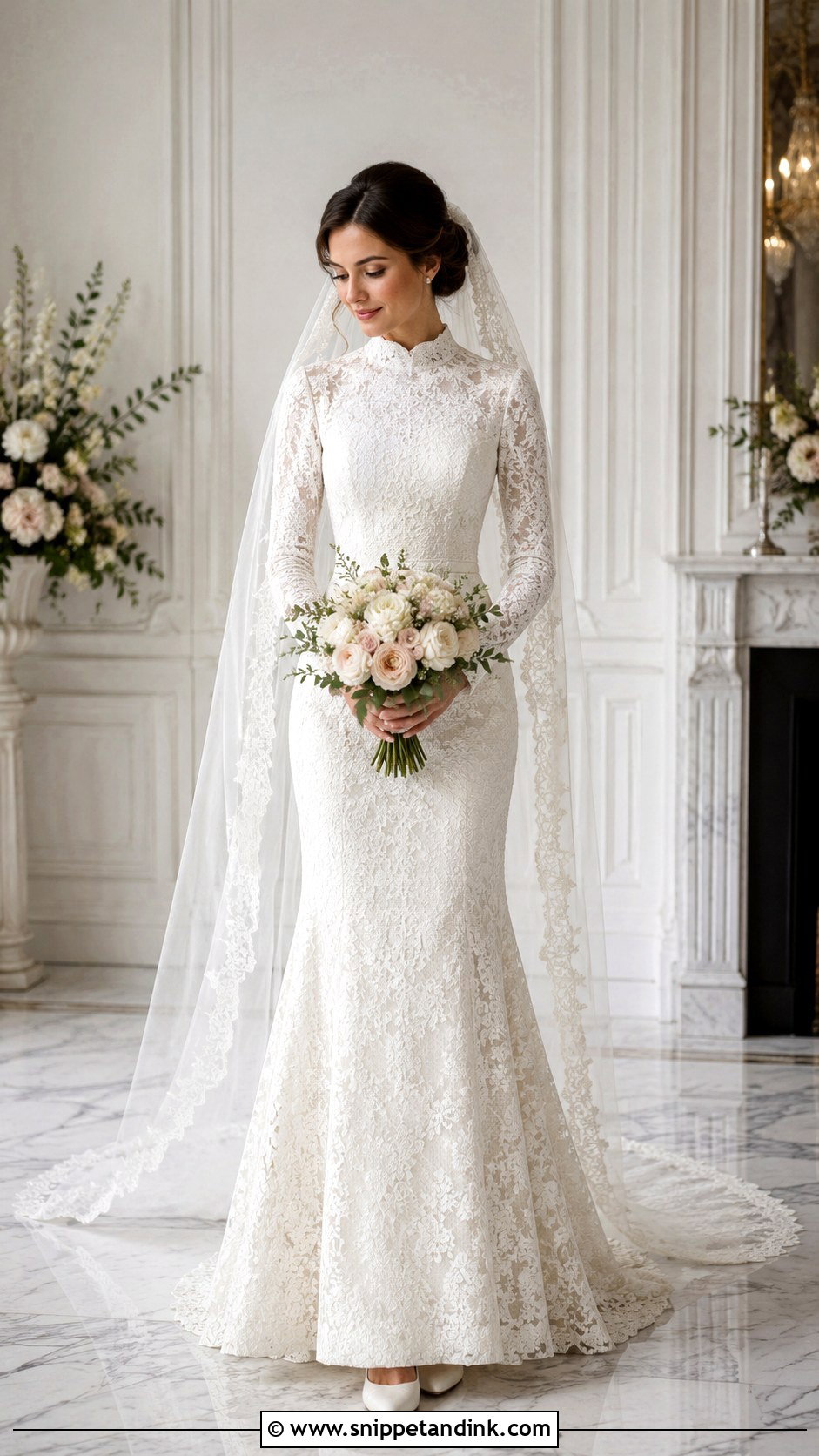
A modest mermaid keeps the defined waist and flare while covering more: a lined bodice, a higher neckline, fitted long sleeves and a back that sits above the bra line. Matte crepe reads modern and lined floral lace reads traditional. I’d suggest a slightly higher flare here, because long fitted sleeves plus a tight knee can make a bride feel held in from wrist to calf. Ask for stretch in the sleeve lining and sit down in the gown to confirm the neckline stays smooth. Pearl studs, closed-toe pumps, a chapel veil and a neat chignon finish it quietly.
18. Plus Size Mermaid Wedding Gown
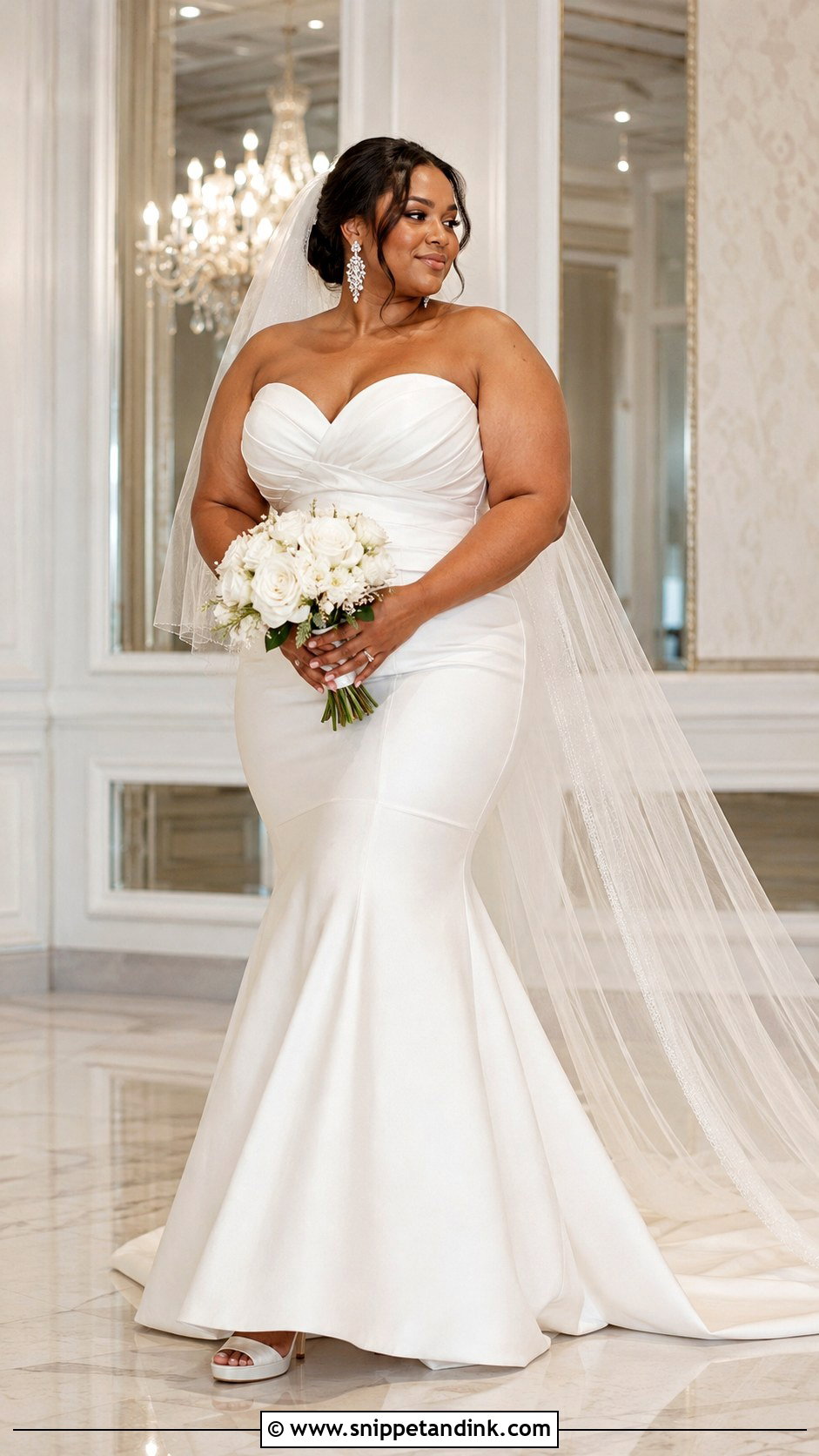
On a curvy body, the inside of a mermaid gown does most of the work: strong boning, secure cups and seams that put the waist where yours actually is. Stretch crepe, lined lace and structured satin all suit it when they’re tailored properly. Where I’m strict is the flare. Set it high enough that you can take a full stride, because a flare that starts below a fuller thigh turns walking into shuffling. Compare a sweetheart, a square and an off-the-shoulder neckline in the same appointment, add a supportive block heel, and ignore anyone who says fitted dresses belong only to certain bodies.
19. Petite Mermaid Wedding Gown
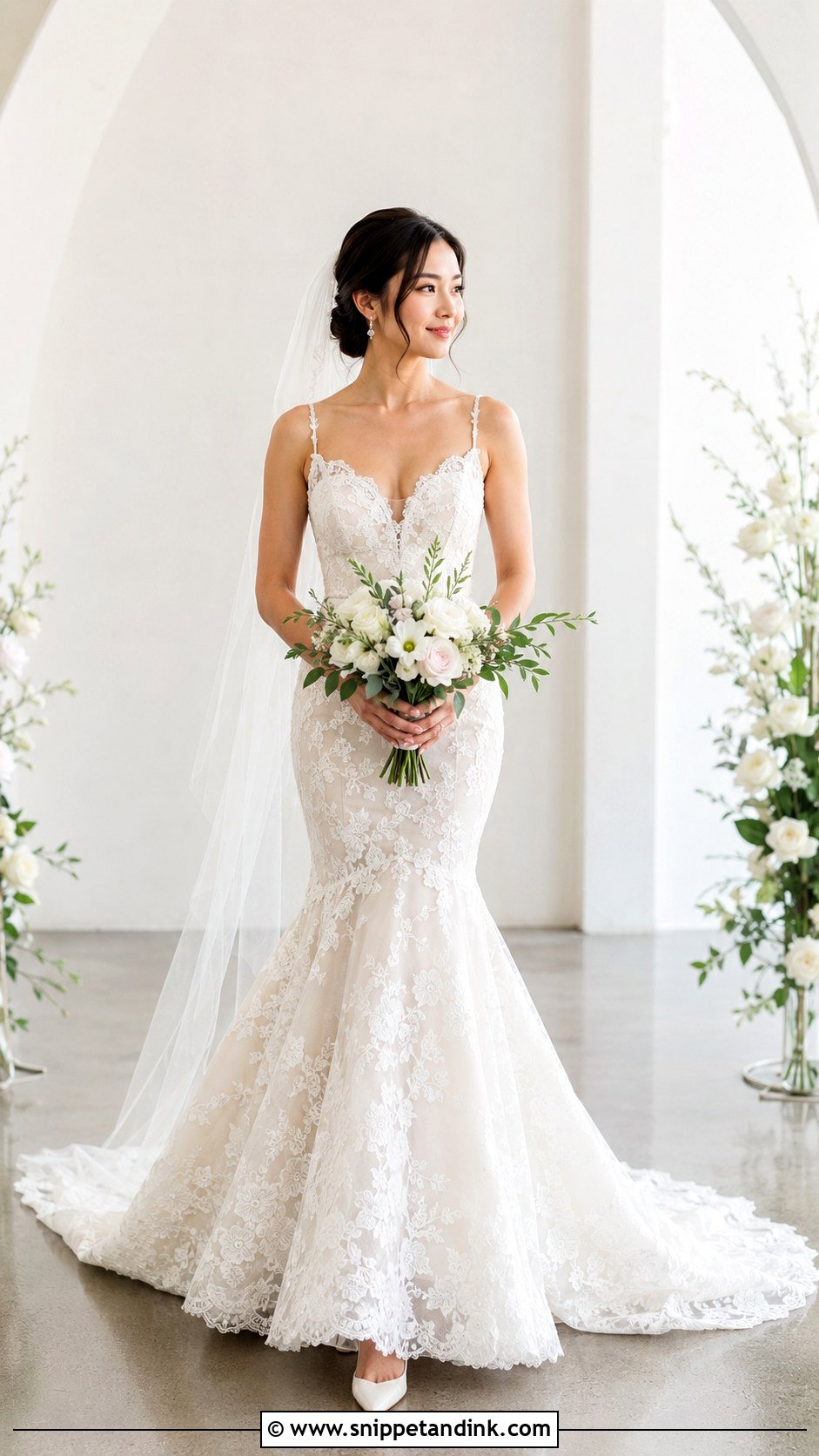
A mermaid can lengthen a petite frame, but only when the proportions are scaled down. A higher flare usually makes the legs look longer, and a natural or slightly raised waist stops the bodice taking over. Oversized lace motifs swamp a small frame, so medium-scale lace, narrow straps or a clean strapless edge work better. Don’t judge it on the hanger. Most petite brides need length removed, and on a mermaid that can mean moving the flare up rather than trimming the hem, which is a bigger job worth raising at the first appointment. Pointed heels in ivory or a skin-tone neutral continue the vertical line.

20. Black Mermaid Wedding Gown
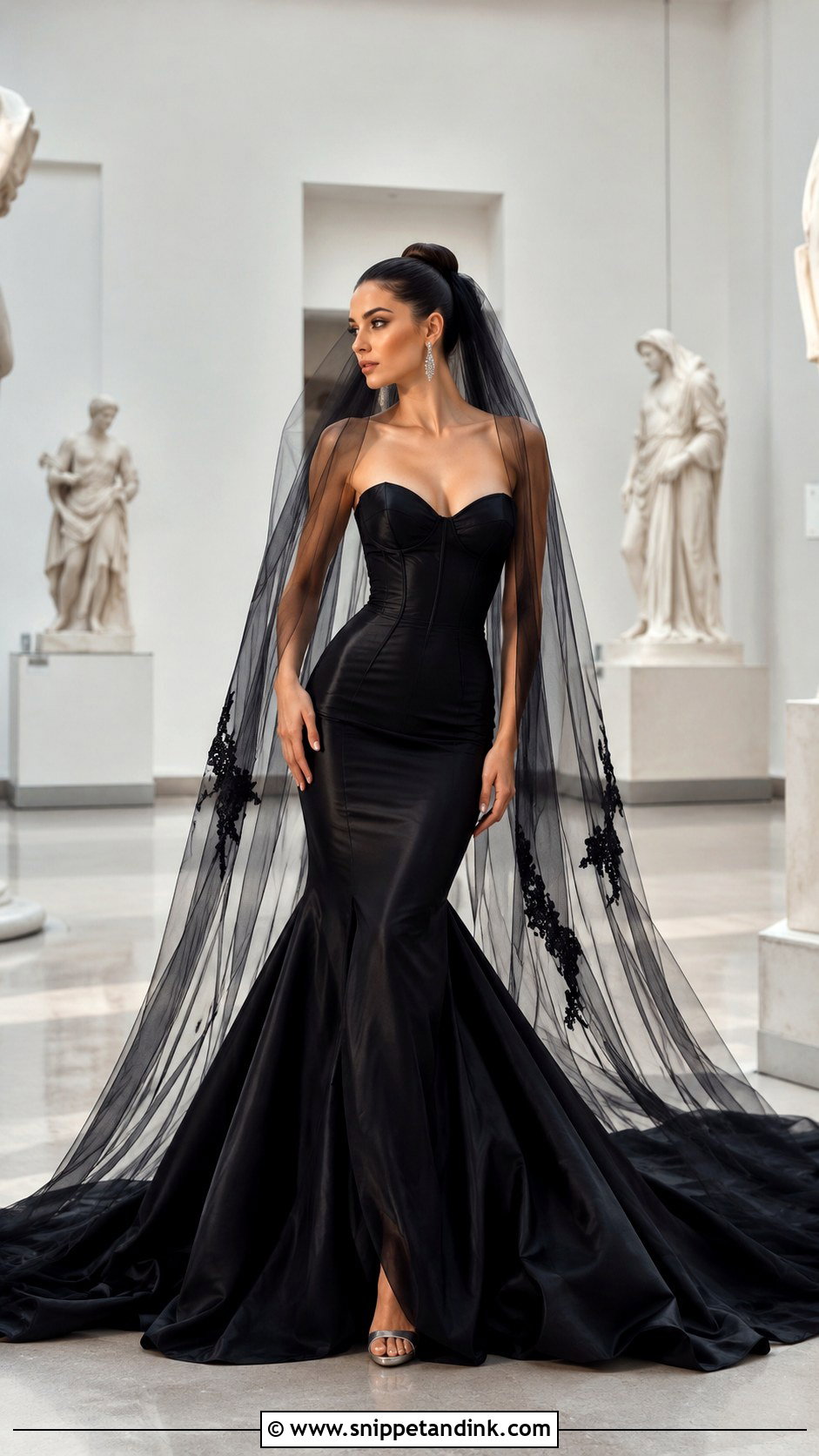
Black takes away the softness of ivory, so the gown reads almost as pure silhouette and every fitting decision shows. Black satin is sleek, black lace is romantic and fine beadwork adds evening glimmer. A corset bodice already gives a strong shape, so keep the accessories controlled with crystal earrings and black or metallic heels. A sheer black veil keeps it monochrome, while an ivory veil makes a sharp contrast. The point I raise with every bride in black is the photography: dark fabric loses detail in shadow, so send your photographer a picture of the dress early and ask how they plan to light it indoors.
The Alteration Calendar for a Close-Fitting Gown
A mermaid almost always needs more tailoring than a ball gown, because a full skirt hides small errors and a fitted one shows them. Made-to-order gowns commonly take several months to arrive, and lead times vary a great deal by designer, so I encourage brides to order around eight to ten months ahead where they can. Alterations usually begin two to three months before the wedding and run across two or three fittings, with the last one a couple of weeks out.
Bring your real shoes and shapewear to every fitting. The jobs I see most often on this silhouette are taking in the side seams, raising or lowering the flare, shortening the hem from the waist or the knee seam, securing the bodice so it stays put, and adding the bustle.
Which bustle suits a flared train
An over bustle lifts the train with hooks onto the back of the skirt and shows off lace well. An under bustle, often called a French bustle, tucks the train beneath with ribbon ties and works neatly with satin and crepe. Have the seamstress number or colour-code the ties, and walk your bridesmaid through it at the final fitting.
Sitting, Dancing and Bathroom Trips in a Fitted Skirt
Brides rarely ask me about the bathroom until the week of the wedding, and by then it’s a panic. The trick that works with a mermaid is to face the toilet rather than sit the usual way, so you can gather the flare in front of you. A bridesmaid who holds the train and skirt makes this much easier.
To sit, perch toward the front of the chair and let the flare fall forward rather than sitting on the gathered skirt. Bustle the train before the first dance, and take stairs one at a time with the front of the flare lifted slightly in one hand. If your feet start to ache, a pair of low heels hidden under the hem is far kinder than kicking shoes off on a dance floor.
Twenty Mermaids and One Question About the Knee
One silhouette runs through all twenty gowns, yet the fabric changes it completely. Satin and crepe give clean lines, lace and pearls and sequins add texture, and convertible overskirts or sleeves give you two looks without buying a second dress. If I had to name the single detail to settle at your first appointment, it’s where the flare begins, because that decides how you’ll walk, sit and dance for the rest of the day. Get that right, plan the bustle early, and then let your accessories follow the line of the gown.
You'll Like These Ideas:










Leave a Reply