
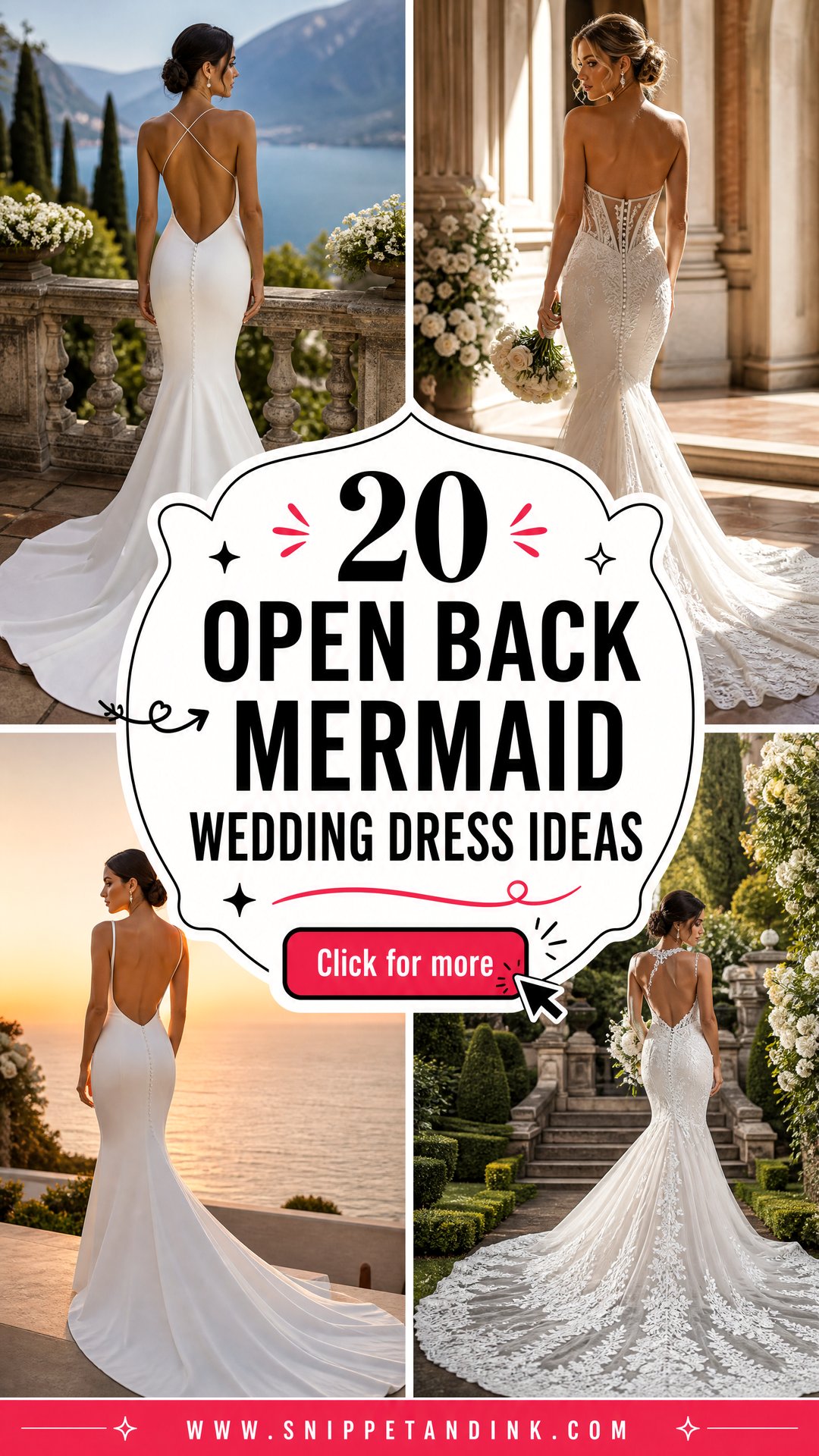
An open back with a mermaid skirt is one of the most demanding combinations I fit, because the two features pull against each other. The skirt has to hug from bust to knee, and the back has nothing across it to hold the bodice in place, so all the support hides inside: straps, boning, seaming and a waist stay. Get that right and the gown looks as good walking away as it does coming down the aisle. You can find this pairing in clean satin, sculpted crepe, floral lace, pearl beading, illusion tulle and removable overskirts. Backs range from deep V and low scoop to keyhole and halter shapes, each with a different amount of coverage. Think about your venue, your comfort, how long a train you can manage and what goes underneath before you fall for a picture. The twenty looks below each come with the fitting detail I’d watch for.
Where the Support Hides When There’s No Back
The question every open-back bride asks me is what goes underneath. A standard bra is out, so the support has to come from the dress itself or from something designed for bare backs. These are the options I talk through, from most secure to least:
- Sewn-in cups and a waist stay. Your seamstress stitches moulded cups into the bodice and adds a grosgrain band inside the waist that takes the weight off the straps. For most brides this is the answer.
- Built-in corsetry. Boning and a firm inner bodice hold the shape on strapless and low-scoop gowns. It needs precise fitting to your ribcage.
- Low-back bra converters. A strap that drops the bra band down to your waist. These work under backs that stop at the waist, not under a plunge to the hips.
- Adhesive cups and body tape. Useful on smaller busts, but adhesive loosens with heat and sweat, so I treat it as a backup rather than the main plan.
Whichever you choose, wear it to every fitting. A hem or strap set over different underwear will sit wrong on the day.
How low is too low?
A back that ends at the natural waist is the easiest to support. Below that, the bodice has less fabric to anchor to and the edges move more as you walk. If you want a very low back, look at illusion tulle or a corset back, which give the same dramatic line with a structure underneath.
1. Lace Open Back Mermaid Wedding Dress
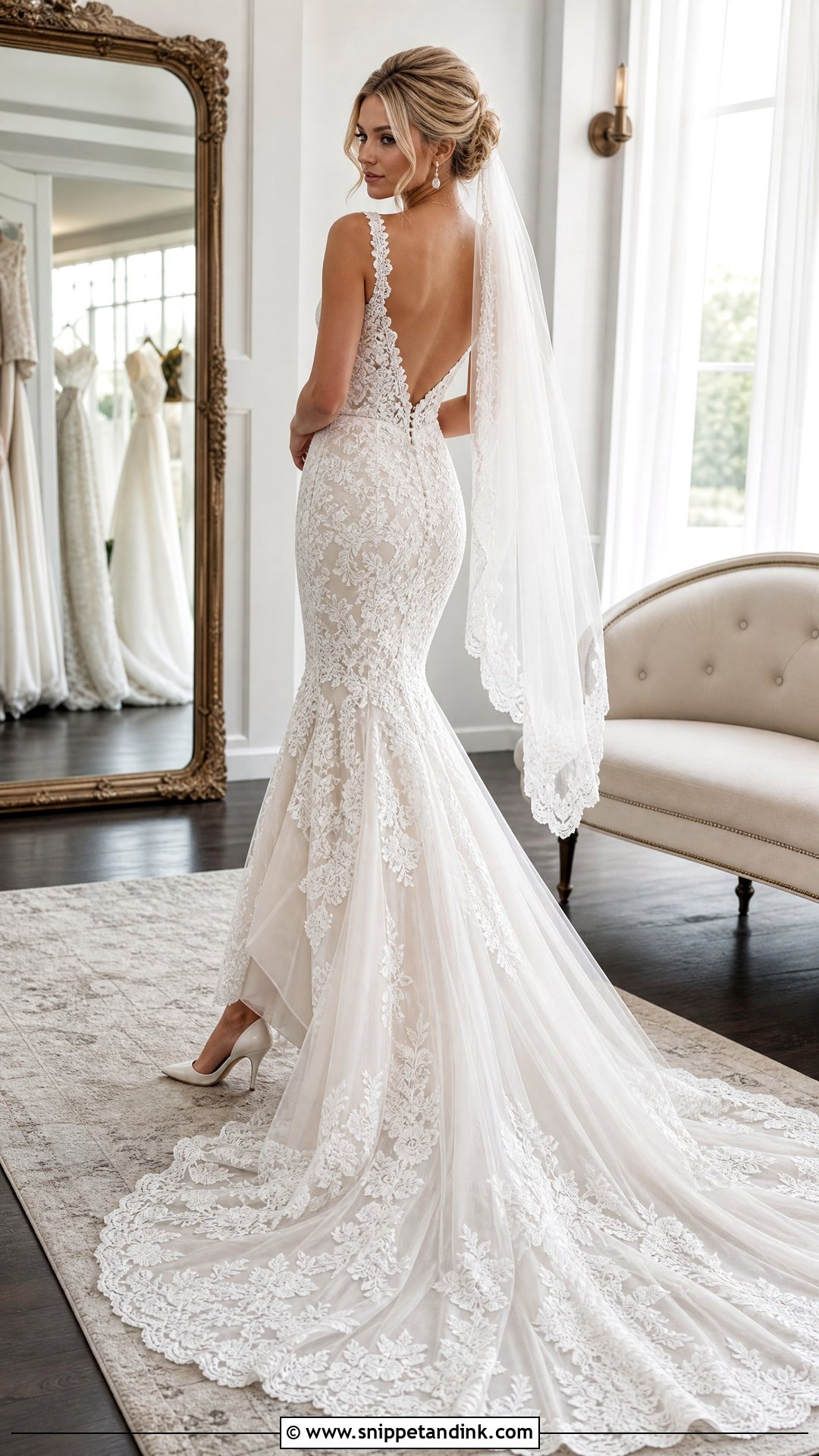
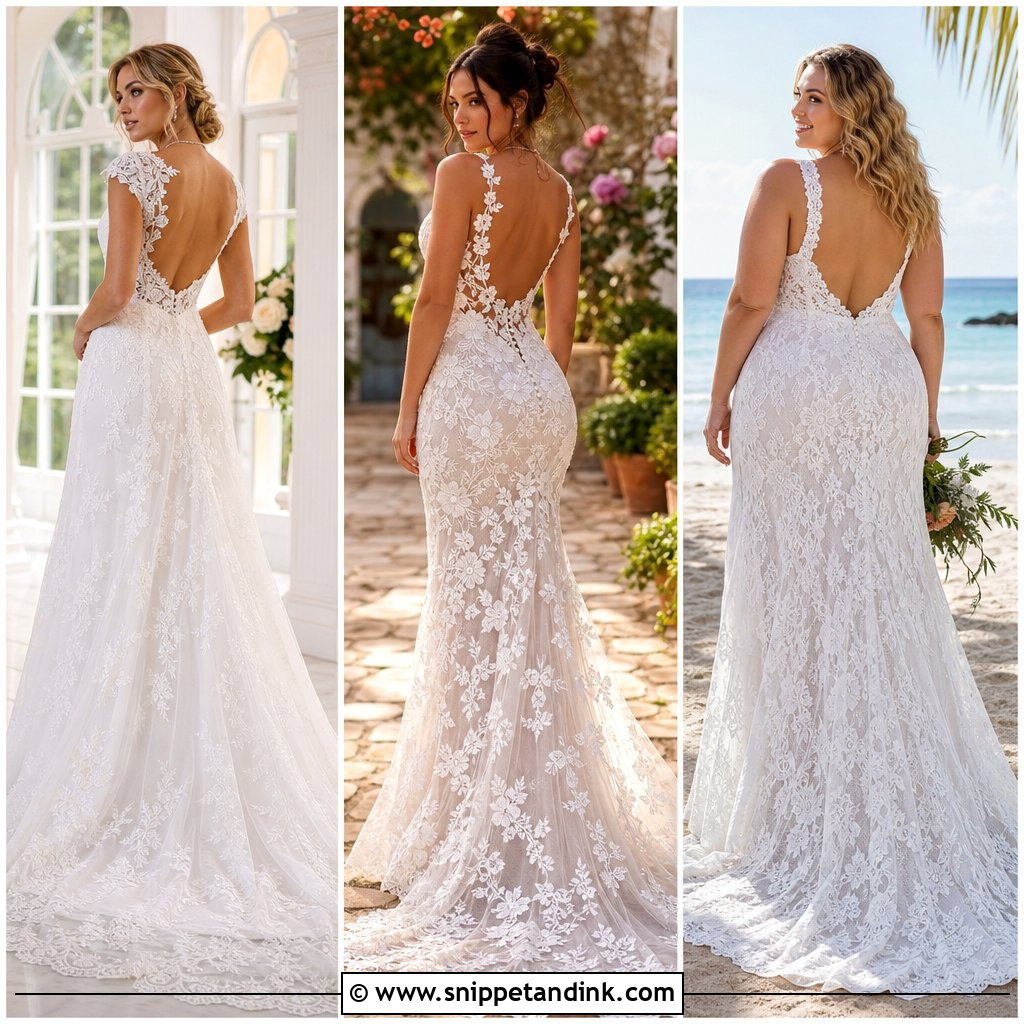
Lace is the friendliest fabric for a first open-back mermaid, because the pattern hides small adjustments my seamstress makes along the back edges. A fitted bodice with lace straps and a low V-back finished in soft scallops sets it up; the lace can run through the hips before breaking into a layered tulle flare. I usually suggest a chapel train here rather than a cathedral, since it still photographs with presence but you can actually turn around in it. Pearl drop earrings, an airy fingertip veil and pointed ivory pumps complete it. Wear a loose low bun, because long hair down drags across the lace edging all day and snags the scallops.
2. Satin Open Back Mermaid Wedding Dress
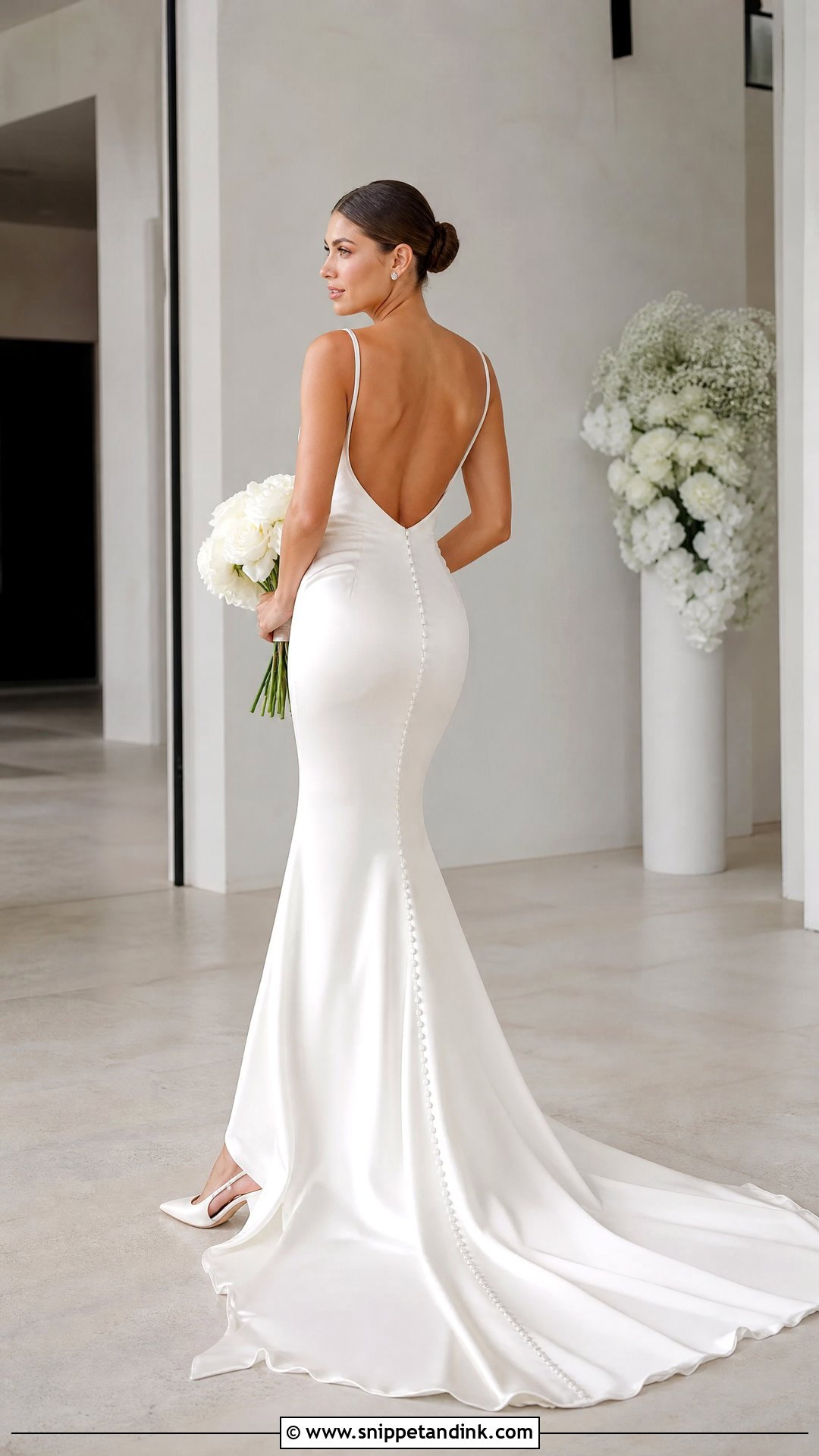
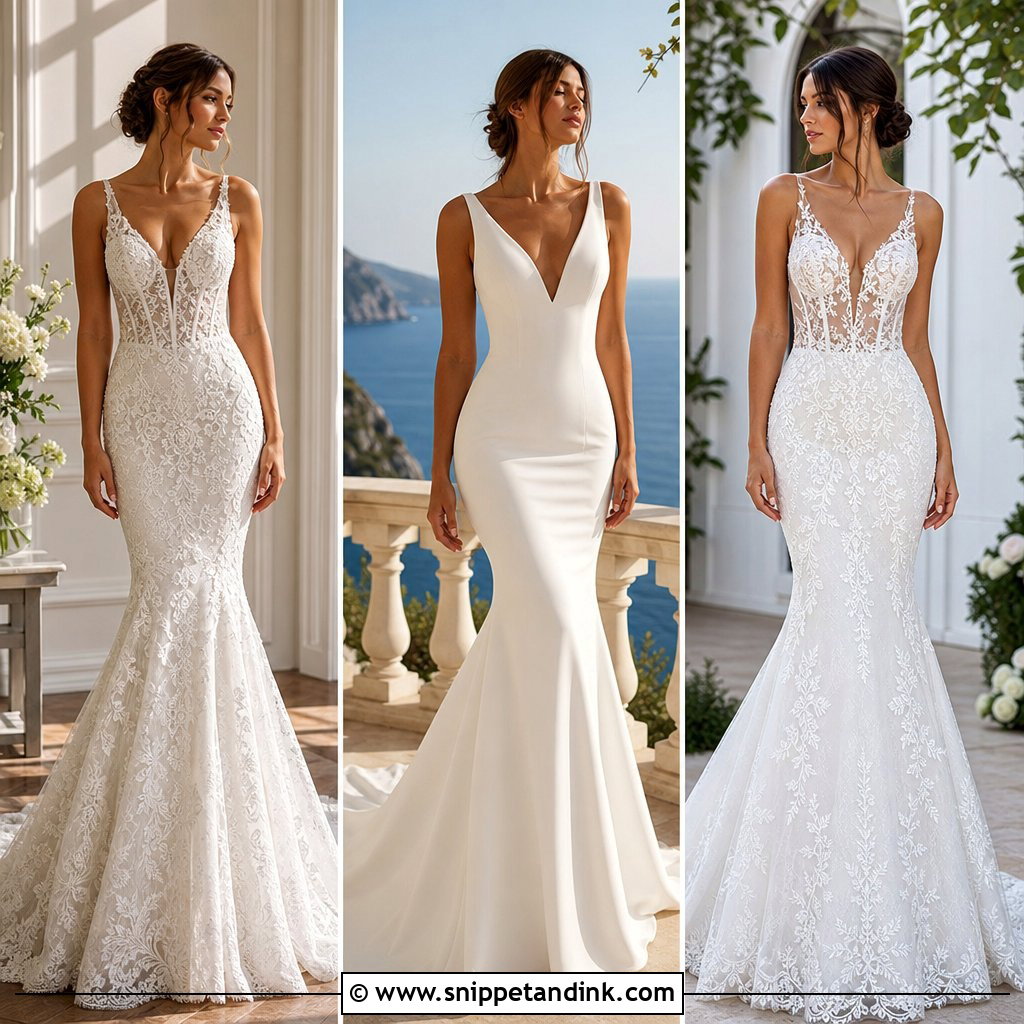
Satin shows everything, which is why it’s the fabric I’m strictest about at fittings. On a fitted mermaid gown, any pulling across the hips or a seam sitting a few millimetres off shows up as a shiny ripple in every photo. A softly structured bodice, slender straps and a low scoop back following the curve of the waist keep it clean, with princess seams doing the shaping instead of decoration. Covered buttons down the back add a traditional note. A chapel or puddle train lets the satin catch light as you move. Style it with crystal studs, a sleek bun, pointed slingbacks and a small structured bag. Sewn-in cups and a waist stay hold everything in place, so you won’t need a bra with a back band.
3. Long Sleeve Open Back Mermaid Wedding Dress
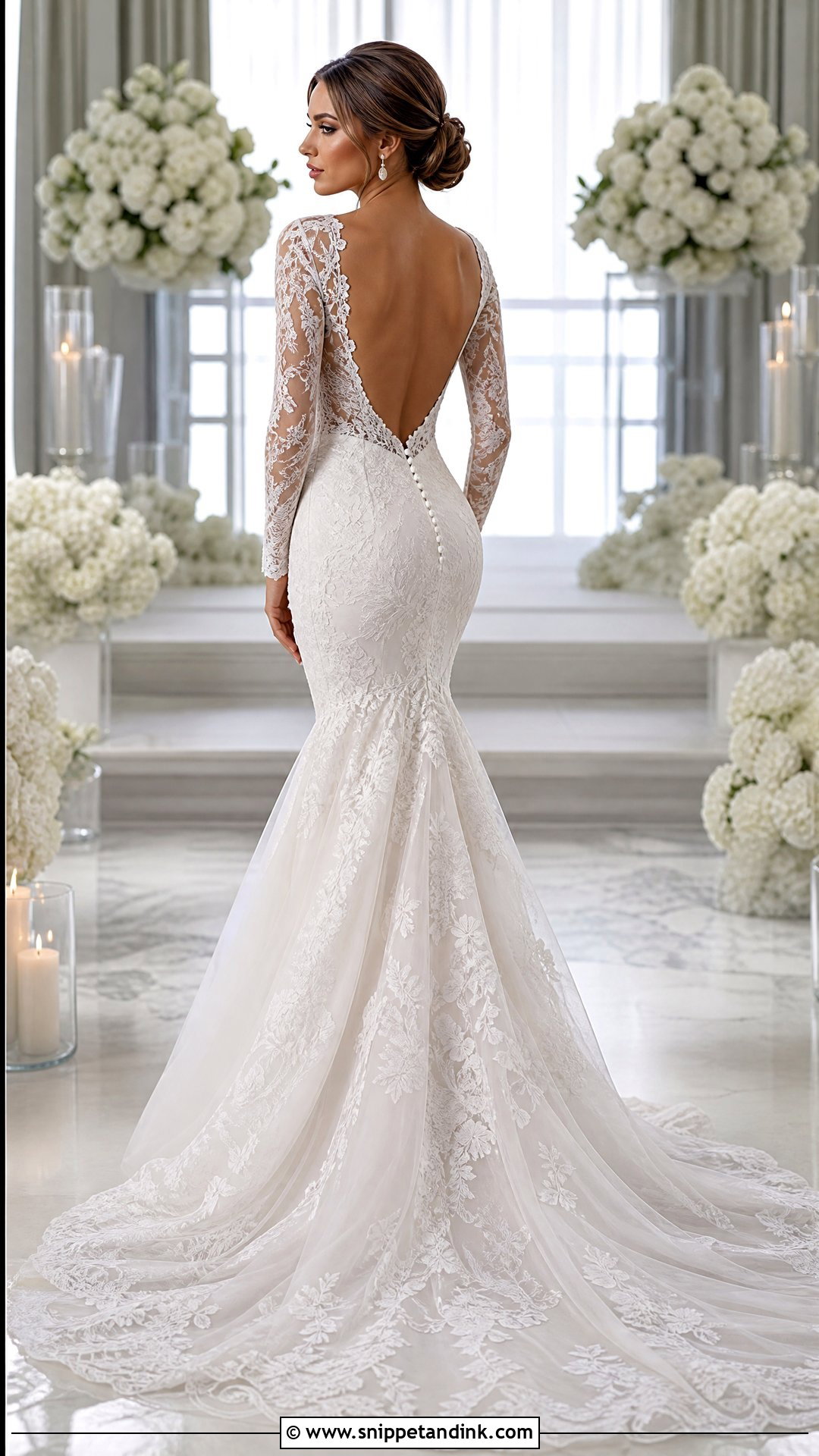
Long sleeves and a bare back give you coverage from the front and the drama from behind, which suits cooler months and formal churches. I’d pair fitted illusion sleeves with lace appliqués, then repeat that lace around a deep back opening; a higher front neckline makes the contrast sharper. The skirt flares at the knee and finishes in a lace-trimmed cathedral train. Delicate earrings, closed-toe pumps and a low twisted chignon are all it needs, and any necklace would crowd lace at the neckline. Here’s the catch with this design: the sleeves anchor at the shoulder, so when you raise your arms the back edges can lift away from your skin. At every fitting, reach up, hug someone and check the back in a mirror.
4. Strapless Open Back Mermaid Wedding Dress
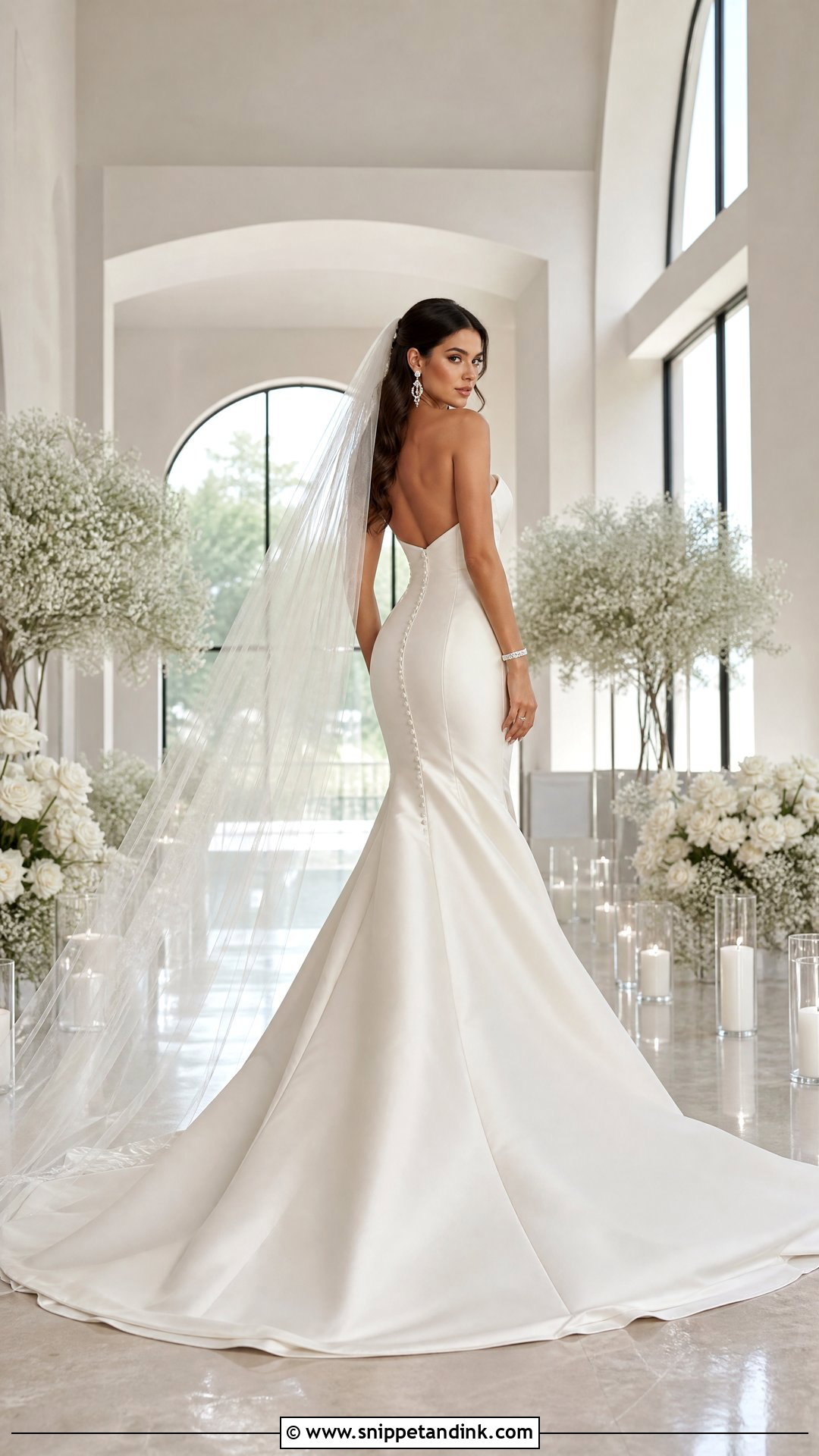
A strapless gown can’t be completely backless, but a very low structured back gets close. The bodice has to grip your ribcage with no help from straps, so I look for internal boning, a firm waist stay and cups placed precisely for your bust. A sweetheart neckline, a corseted mermaid body and a smooth mikado or satin skirt flaring into a bold train give it shape. Wear a cathedral veil for the ceremony and remove it at the reception to show the back. A fine bracelet, drop earrings and comfortable platform heels finish it, with no heavy necklace. The fit should feel secure at the waist, not tight across the bust. If you’re tugging it up in the mirror, it isn’t fitted yet.
5. Beaded Open Back Mermaid Wedding Dress
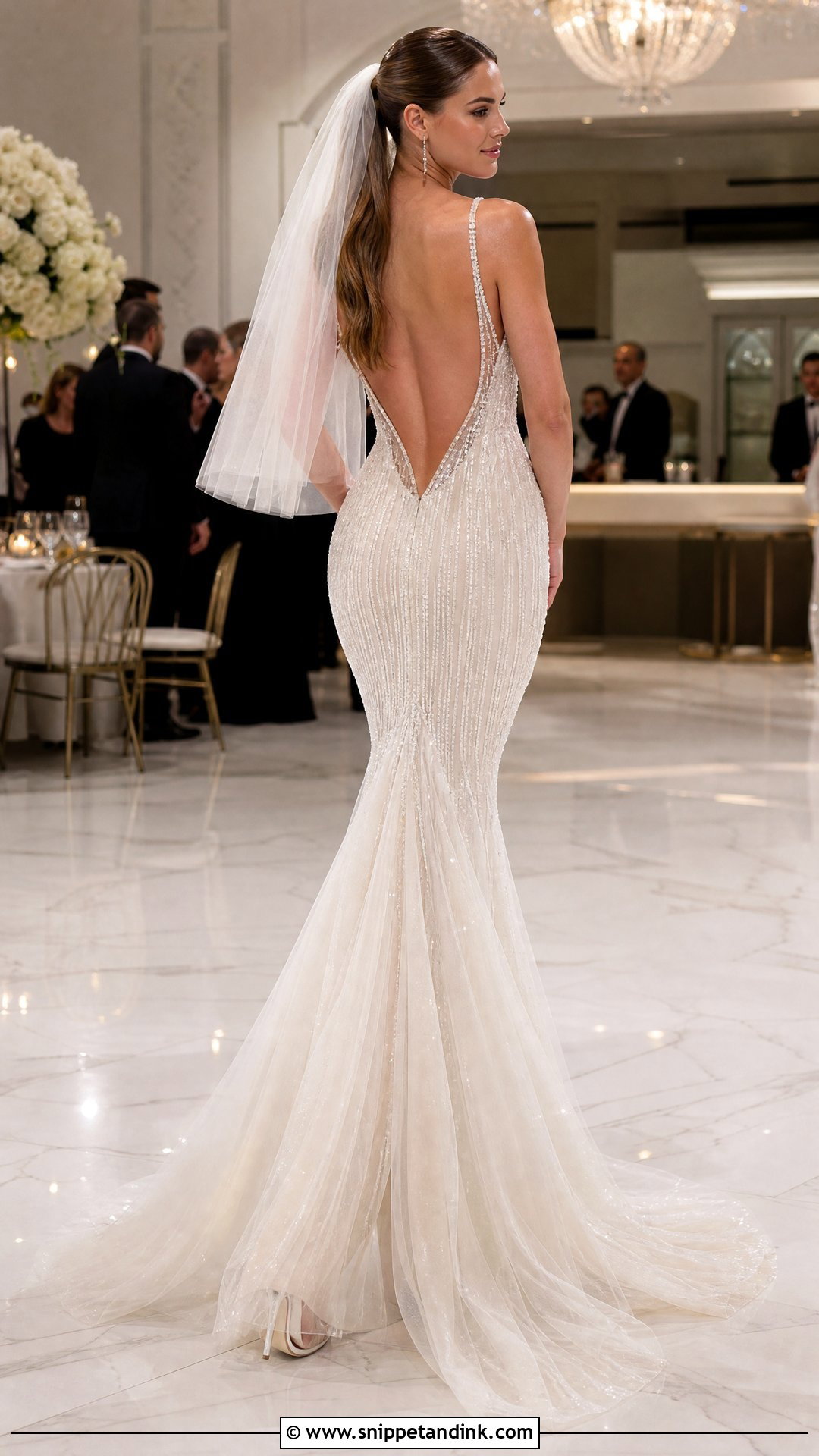
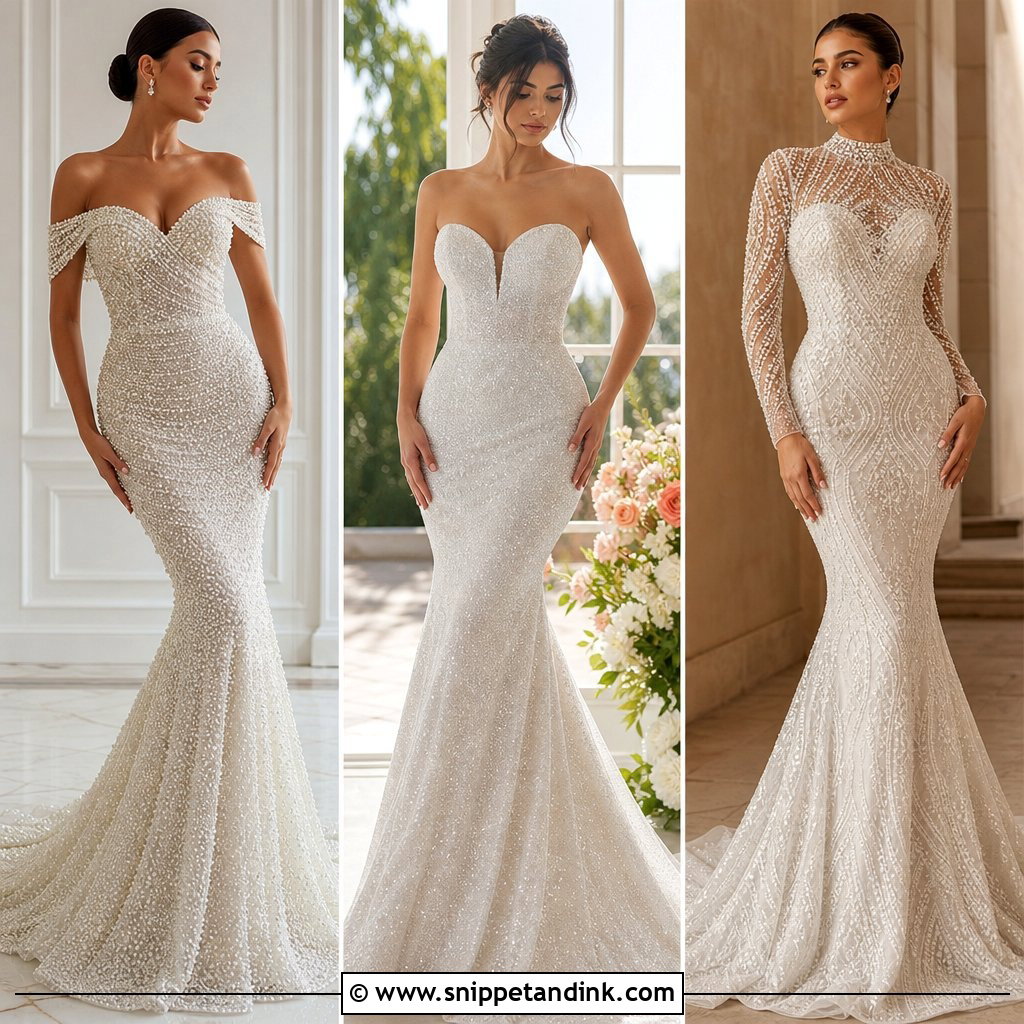
Beading on an open back has a practical cost: weight. A heavily beaded bodice pulls downward on the straps, so a sheer beaded strap framing a low V gives the support a fully bare design can’t. Vertical patterns of crystal, sequin or pearl follow the line of the mermaid shape and lengthen the body. Keep the skirt fitted through the thigh, then let a soft tulle flare take over so you can dance. Small crystal earrings, metallic ivory heels and a plain veil leave the beading in charge, with a sleek ponytail or polished bun. Run your arms along your sides at a fitting; beads under the arm can rub raw over ten hours. Ask for loose threads to be secured before the dress leaves the shop.
6. Crepe Open Back Mermaid Wedding Dress
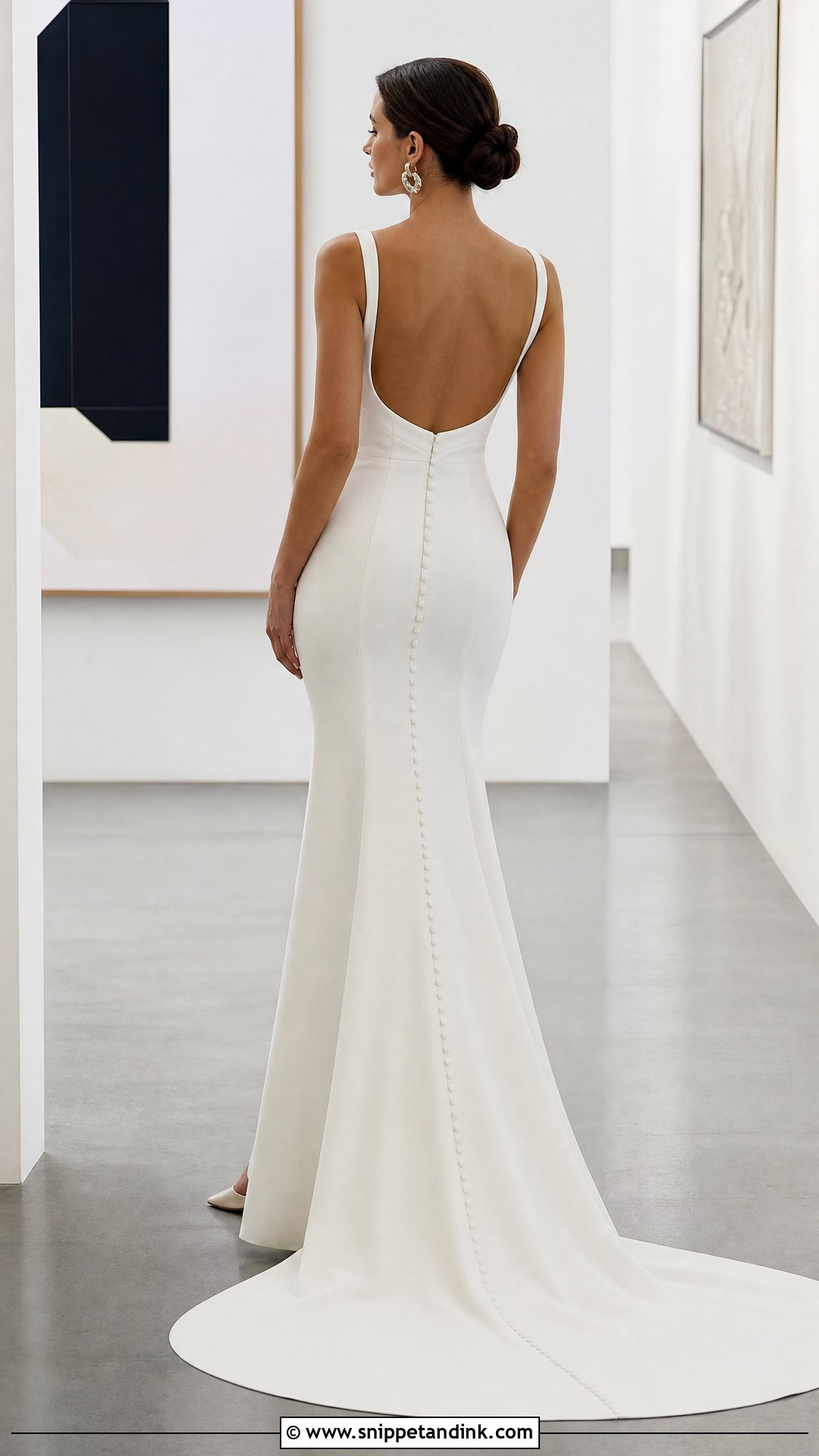
Matte crepe hides nothing about how a gown is cut, which is why it suits brides who want almost no decoration. Curved seams, a defined waist and a low open back framed by wide or narrow straps do all the work. A square neckline, bateau or plain V-neck keeps the front quiet. A row of covered buttons running from the back opening down toward the hem adds texture without adding sparkle. Sweep, chapel and longer trains all work with this shape depending on how formal you want it. I’d keep accessories to sculptural earrings, a smooth low bun and pointed pumps. Crepe shows underwear lines, so bring your foundation pieces to the fitting and look at the dress in daylight by a window, not only under shop lights.
7. Halter Open Back Mermaid Wedding Dress
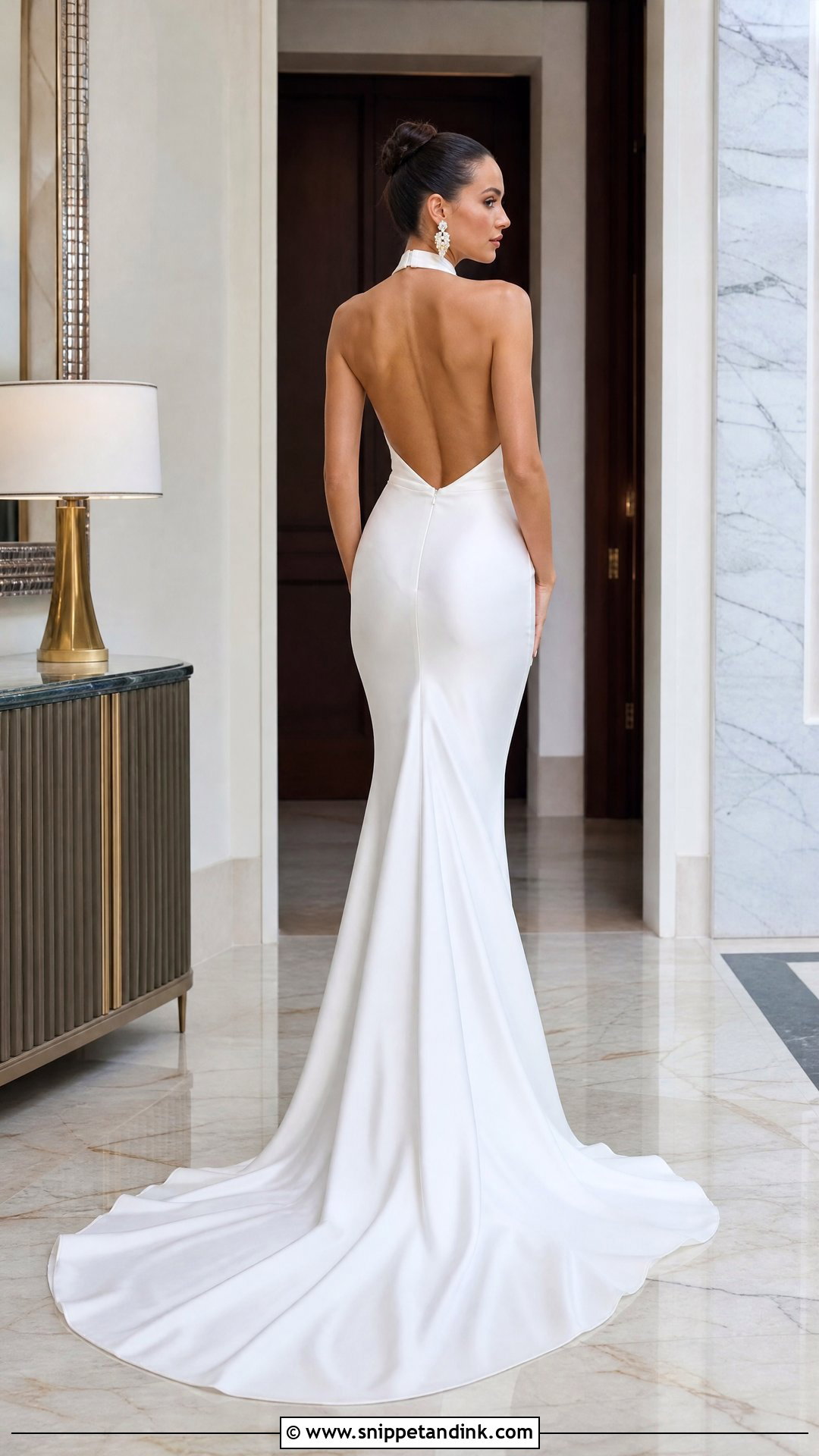
A halter opens the back by design, since the bodice hangs from the neck rather than the shoulders. That’s also its weakness: if the bodice is heavy, all the weight pulls on the back of your neck. I look for a draped or structured halter with a secure fastening and a hidden waist stay that takes some of the load. The back can then dip toward the waist over a fitted satin, crepe or lace skirt with a chapel train. Statement earrings and a polished updo suit the bare shoulders; skip anything at the throat. Pointed heels and a simple veil complete it. At alterations, ask the seamstress to adjust the neck strap until you can turn your head without feeling a pull.
8. Spaghetti Strap Open Back Mermaid Wedding Dress
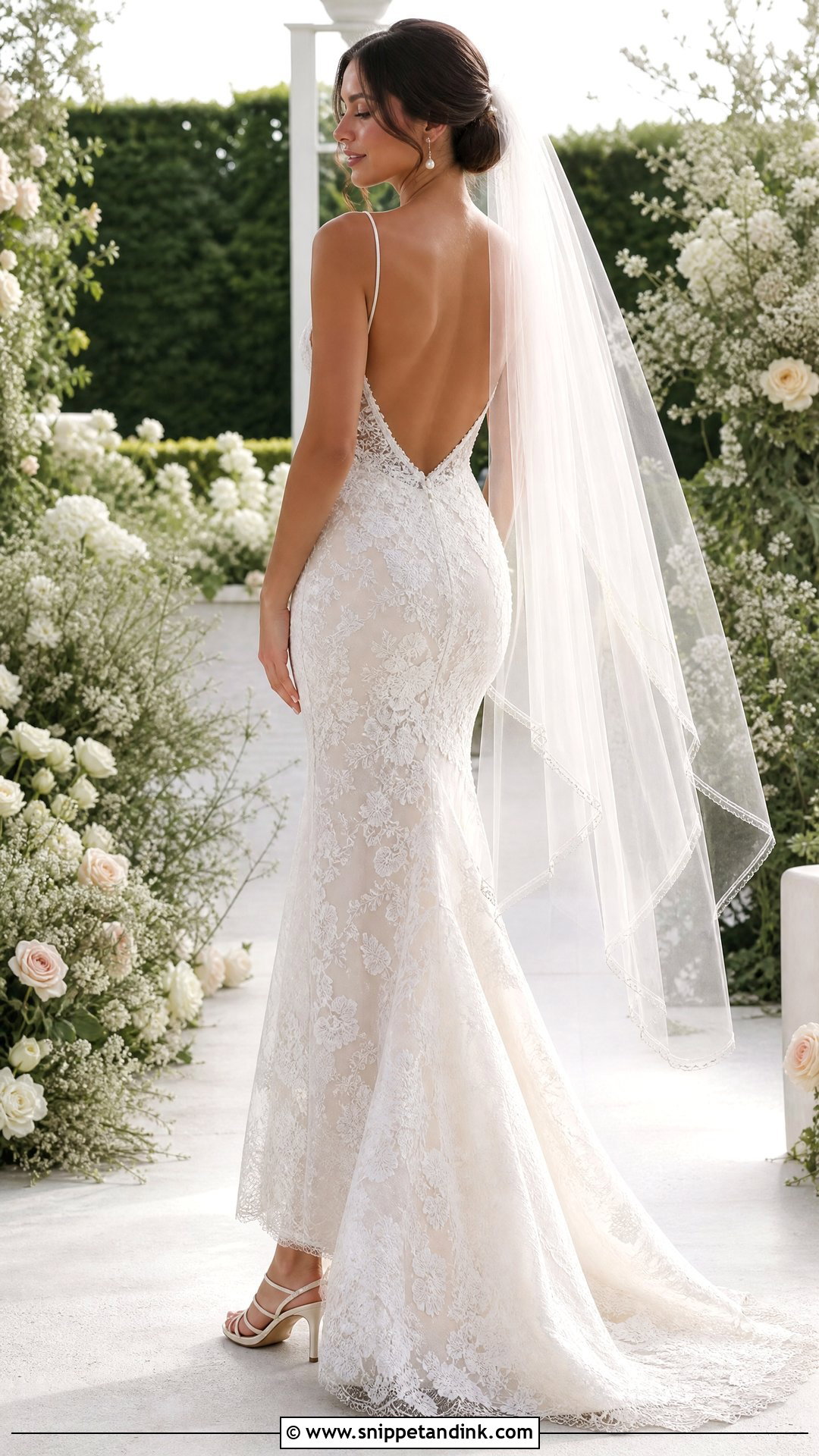
Spaghetti straps look delicate, and on a fitted mermaid bodice they’re doing more work than they appear to. I always ask for adjustable or reinforced straps, because a fixed thin strap that’s slightly long lets the back gape, and one that’s slightly short cuts into the shoulder. They suit fitted lace or satin, joined to a low V or a rounded back. A soft cowl, a soft sweetheart bodice or a clean V-neck all sit well with narrow straps. Add a fingertip veil, pearl earrings, strappy ivory heels and loose waves pinned to one side, or a low bun for a cleaner back view. Hidden cups matched to your support needs take pressure off the straps.
9. Pearl Open Back Mermaid Wedding Dress
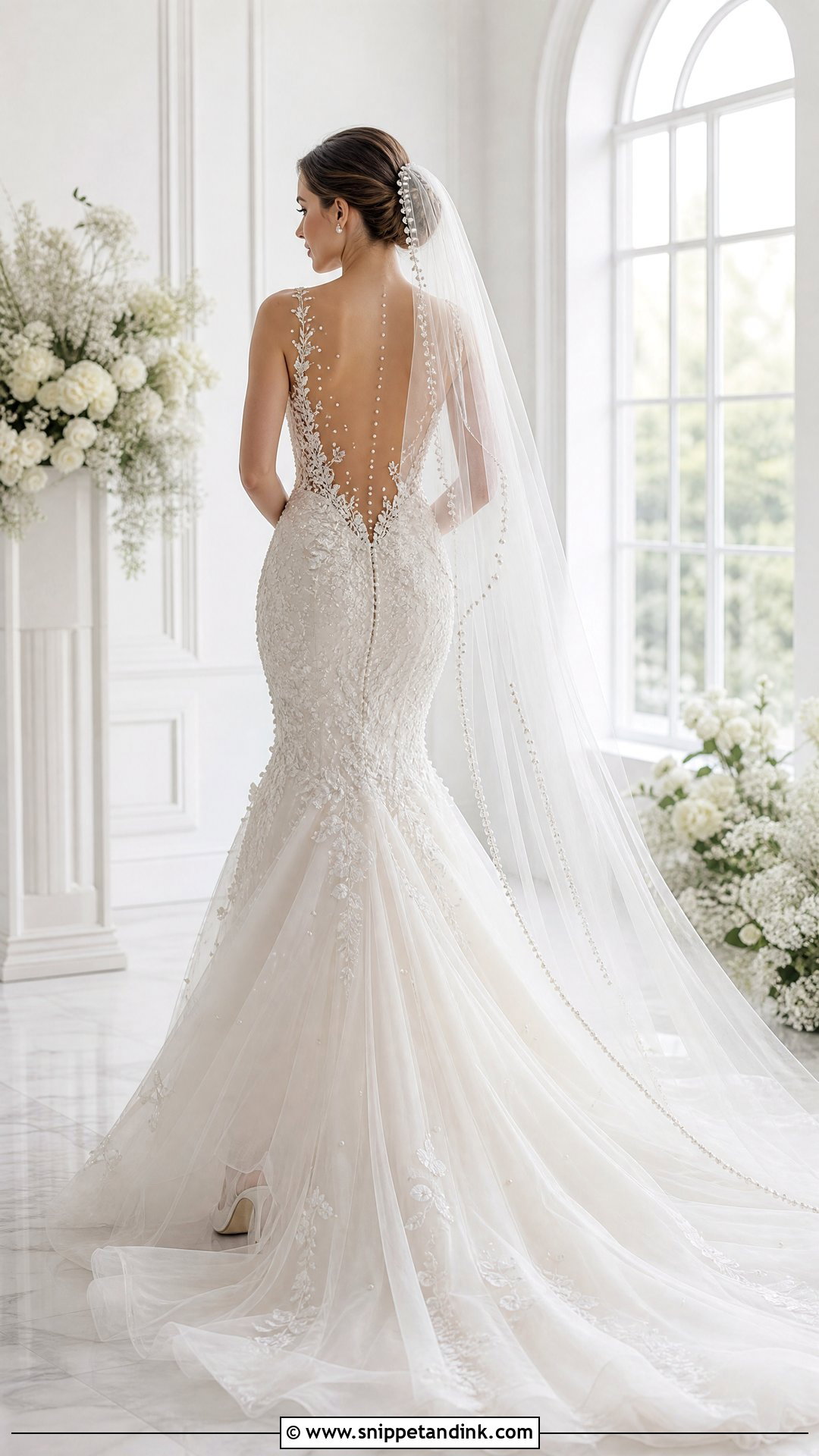
Pearls glow rather than flash, which gives an open back a softer finish than crystal. They can outline the back opening, trim sheer straps or scatter over floral appliqués on the bodice and train. On an illusion V-back, they look as though they’re resting on your skin. Carry the detail lightly through the hips, then let plain tulle layers open below for balance. Pearl studs, satin pumps and a veil with a narrow pearl edge tie it together, and nothing else needs to compete. One thing to test before buying: lean back against a chair. Pearls on the lower back can press uncomfortably during a seated dinner and catch on the veil.
10. Square Neck Open Back Mermaid Wedding Dress
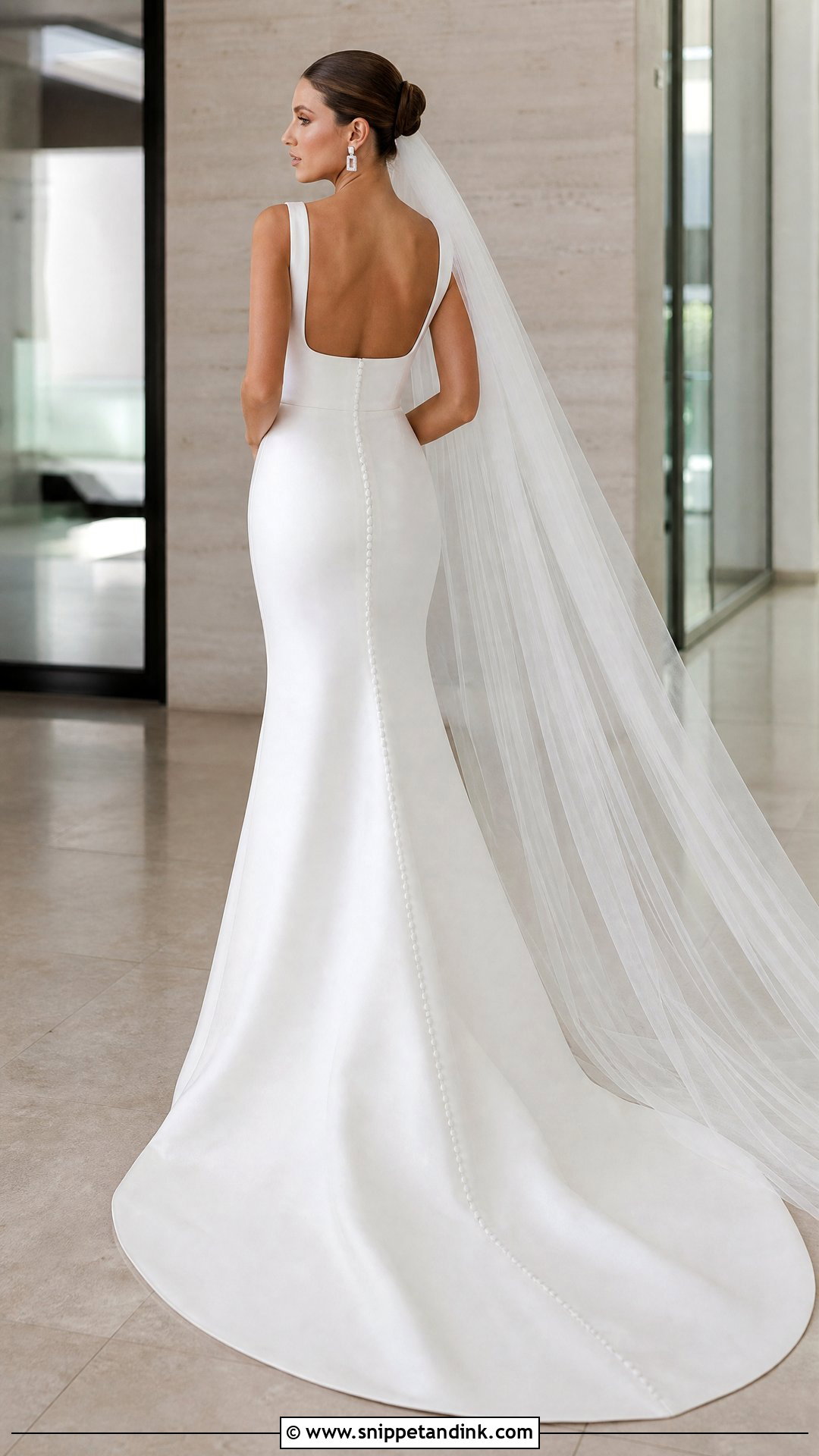
Square lines are unforgiving about gaping, and on this gown there are two sets of corners, front and back. Wider straps help both sit flat. Pair the square neckline with a low square or U-shaped back in structured crepe, mikado or satin, which hold crisp edges far better than soft fabrics. Keep the skirt smooth through the hips before a chapel train. Geometric earrings, a neat bun, pointed heels and a plain cathedral veil suit the clean geometry, as does a small bouquet with defined greenery. At alterations, I watch the corners when the bride bends forward; a few millimetres of strap length decide whether the edges stay against the body.
11. Sweetheart Open Back Mermaid Wedding Dress
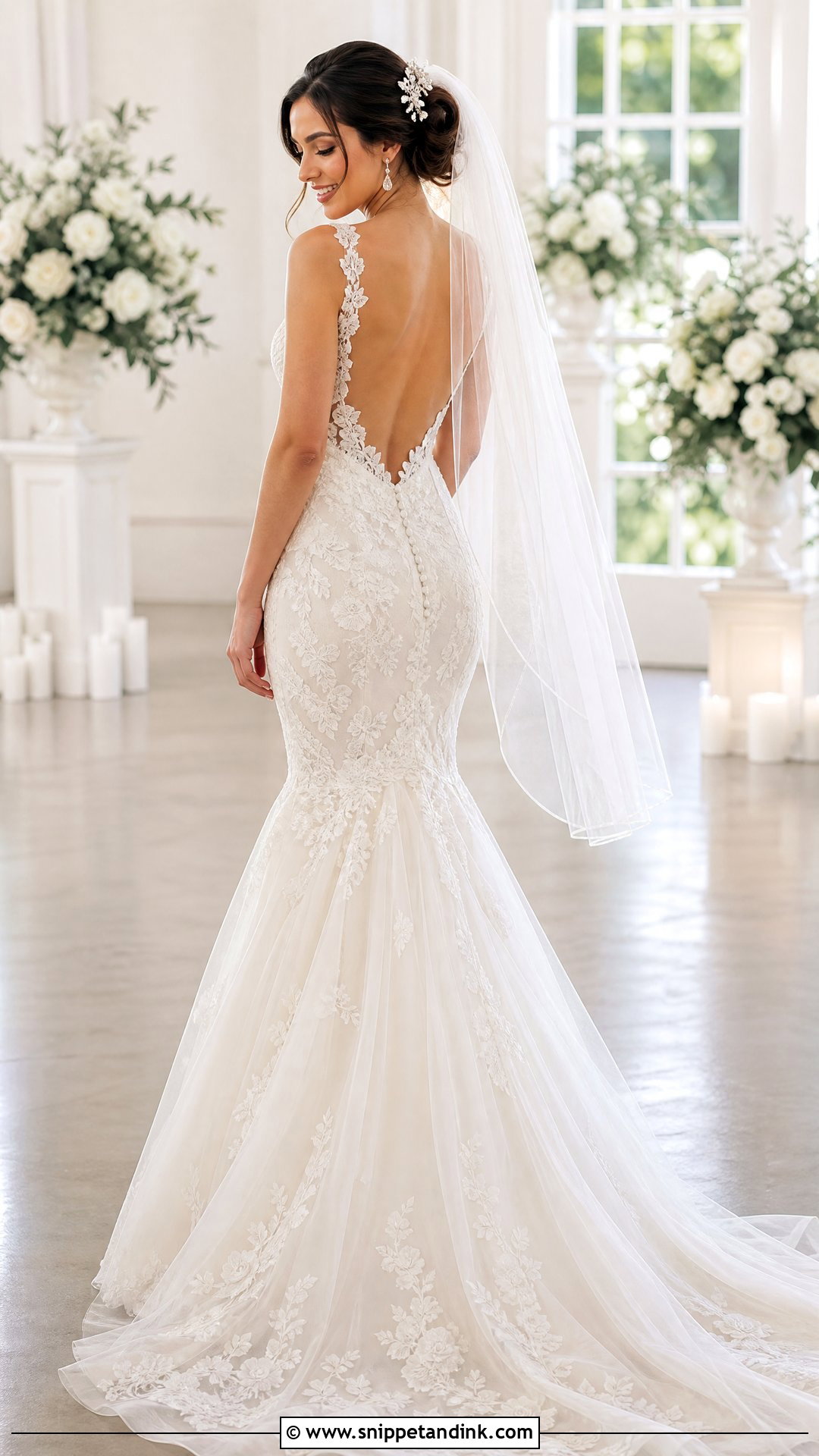
A sweetheart neckline is usually strapless, so if you want the back to dip lower than a standard strapless allows, you’ll need supportive straps or illusion shoulder panels. Lace appliqués can trace the neckline, wrap round the open edges and spread over a fitted mermaid skirt, with a layered tulle flare to keep the bottom half light. A floral hair comb, drop earrings, a soft veil and closed-toe ivory heels complete it. Wear your hair up or swept forward so the back shows. The centre dip of the sweetheart is where this design fails, buckling outward when you sit or lean, so have your seamstress shape it while you’re seated as well as standing.
12. Off Shoulder Open Back Mermaid Wedding Dress
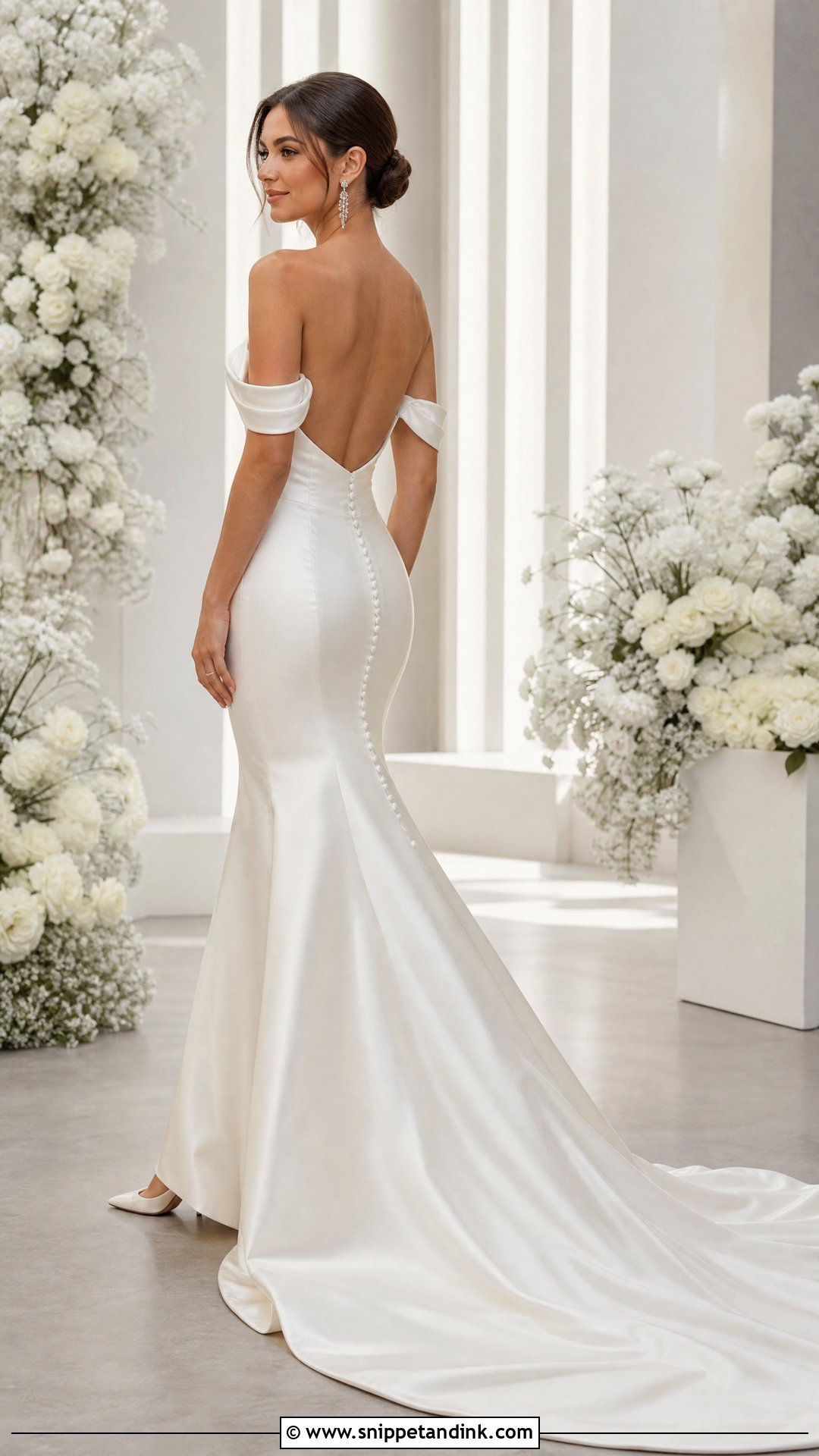
Off-the-shoulder bands and an open back leave the bodice with very little to hang from, so structure inside it matters. I’d choose detachable draped straps or fitted lace bands that sit on the upper arm without squeezing. The back can be a low V, a rounded scoop or an illusion opening under a line of covered buttons. A softer, trumpet-like flare below the hips makes walking easier than a sharp knee flare. Crystal earrings, a low bun and pointed satin pumps finish it, with no pendant. Attach the veil beneath the bun so it falls below the shoulders and lets the back show. Practise hugging, sitting and dancing at the fitting: the bands should stay put without dragging the bodice down.
13. Illusion Open Back Mermaid Wedding Dress
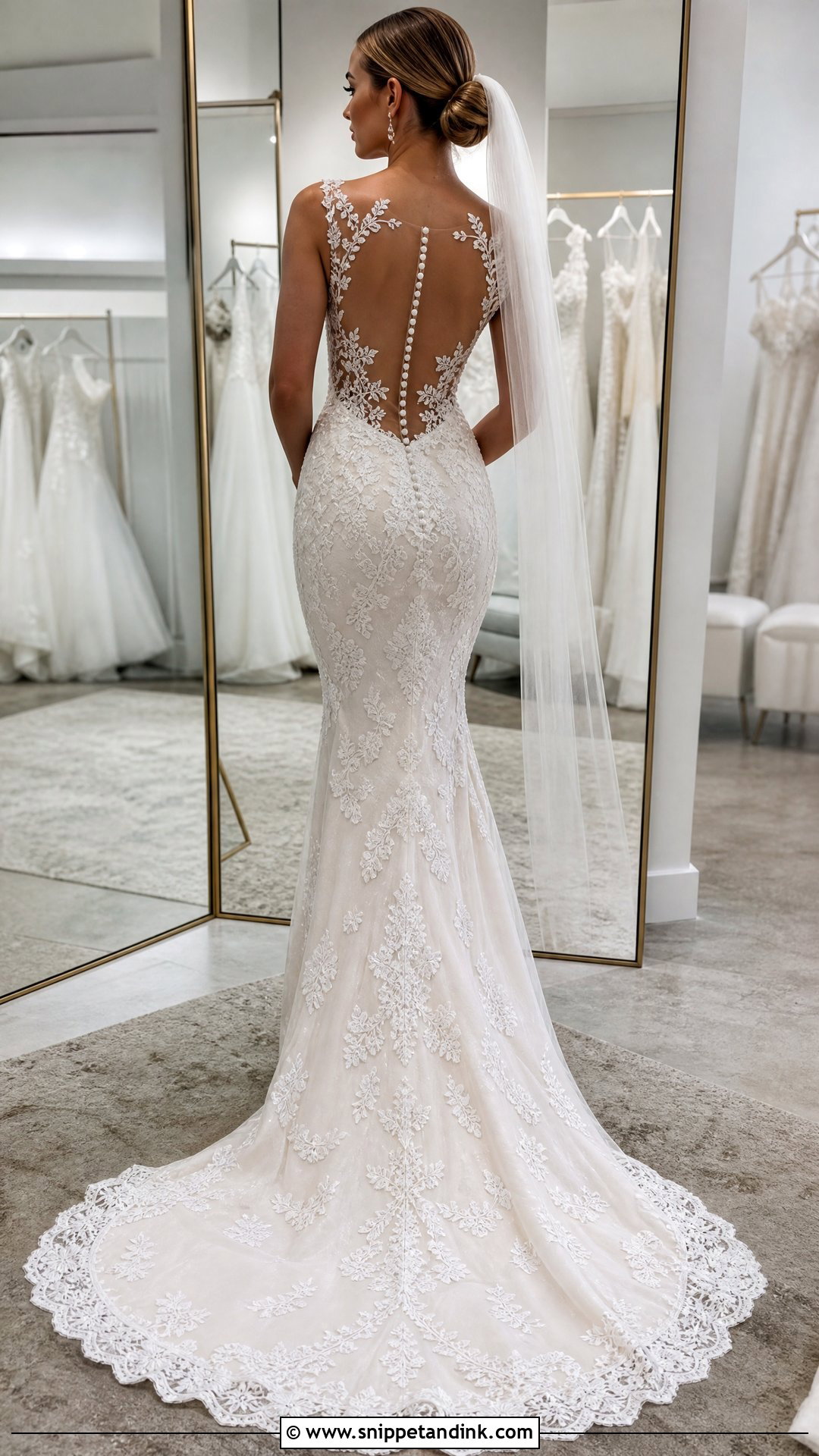
Illusion backs look bare from a few feet away while giving the bodice something to anchor to. Fine, skin-toned tulle carries lace appliqués, pearls, covered buttons or light beading across the opening, which is why so many fitted gowns use an illusion V-back for stability. Choose a mermaid skirt that repeats the bodice detail through the hips, ending in a plain or lace-edged train. A veil fixed below a smooth chignon, understated earrings and comfortable block heels finish it. The tulle colour is everything. I check it against the bride’s skin in daylight, under indoor bulbs and with a phone flash, because a shade that matches in the shop can show as a pale panel in photos. It should lie flat with no wrinkles near the shoulders.
14. Low Scoop Back Mermaid Wedding Dress
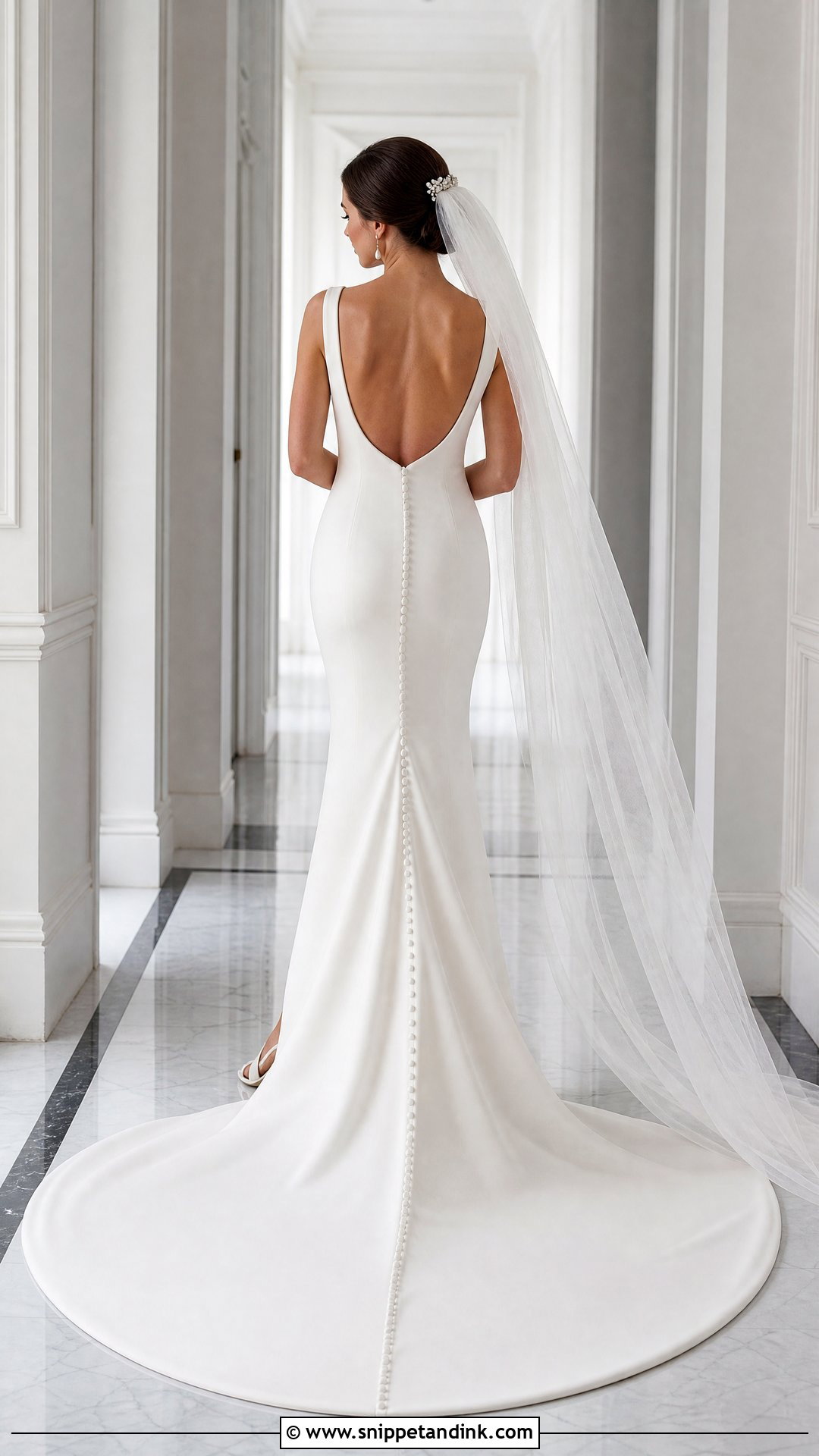
A low scoop is the softer cousin of the plunging V, following the waist in a rounded curve. It looks best on minimalist satin or crepe, with wider straps, a gently curved front and covered buttons starting from the lowest point of the back. A chapel train finishes the skirt without much extra weight. A pearl hairpin, small drop earrings, slingbacks and a plain tulle veil are enough, with a low bun sitting just above the opening. Scoops tend to gape at the sides when you sit up straight, so ask about a strip of hidden elastic or fine mesh along the edge. It holds the curve to your skin without changing how open it looks.
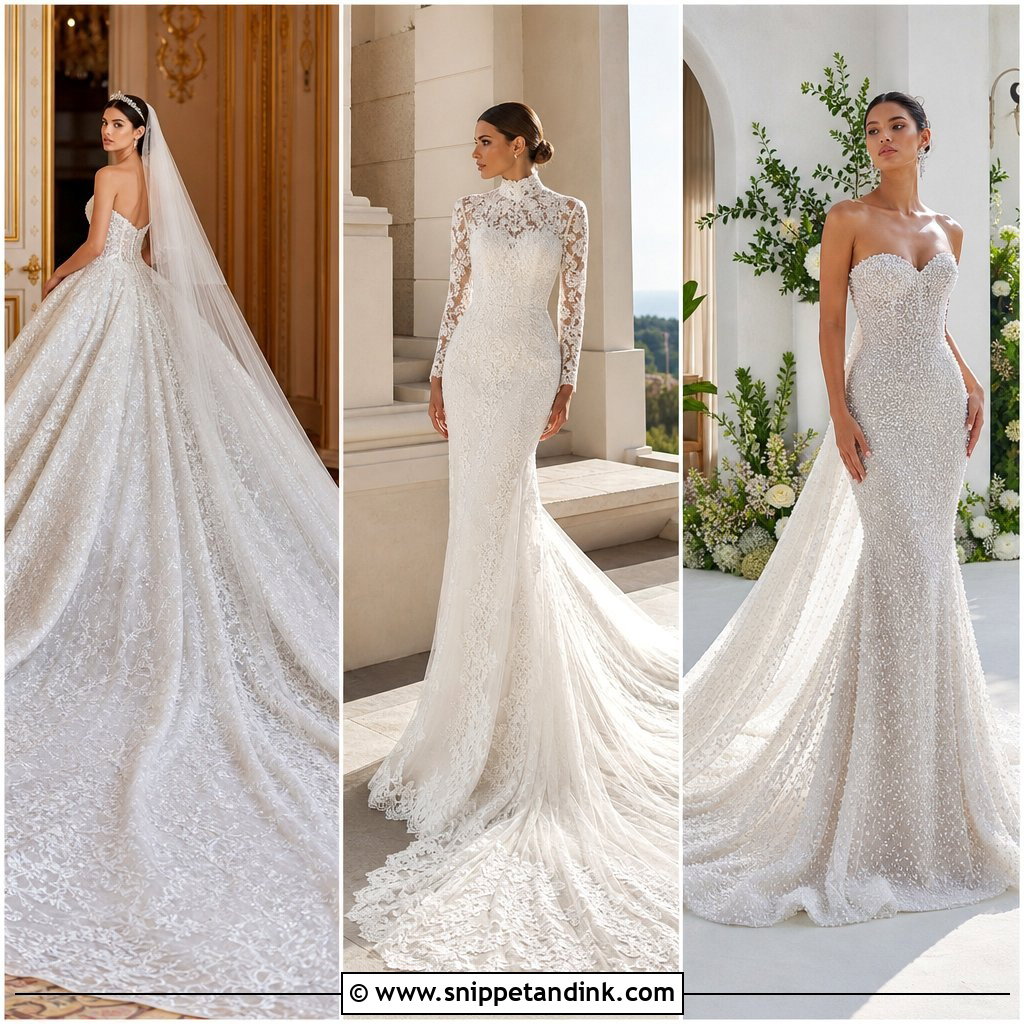

15. Deep V Back Mermaid Wedding Dress
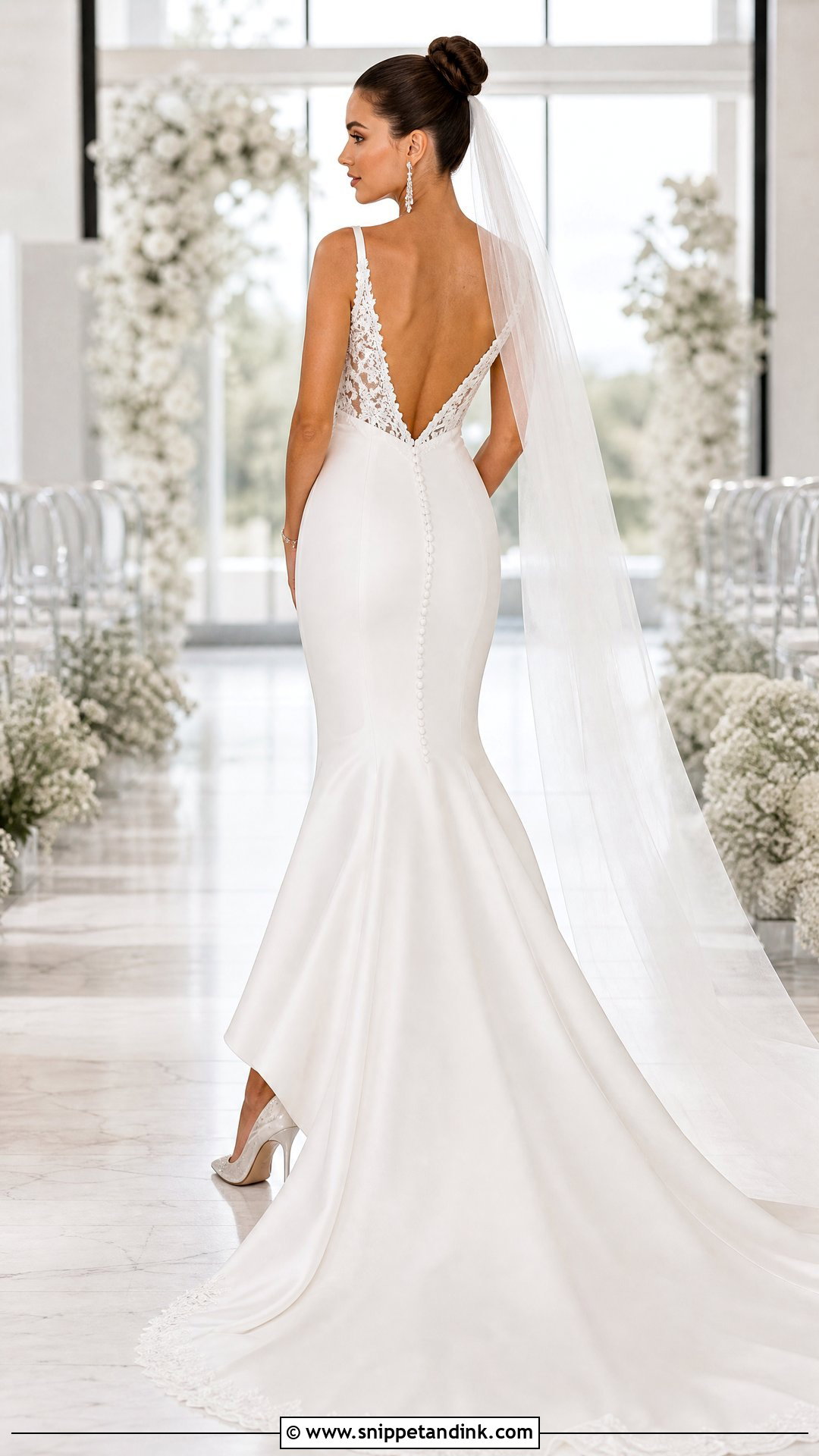
Deep V-backs are dramatic, and they’re also the back I’m most careful with during fittings. The edges have nothing holding them on either side, so they want to flare outward when you walk. Clear mesh, a grip elastic or small hidden fasteners keep them flat. Balance the plunge with a simple front, supportive straps and a firm waist structure; lace edging softens the line, and covered buttons below the point lead the eye to the train. Hug the hips, flare at the knee, and choose a chapel or cathedral length. Long earrings, a high or low bun and slim pointed heels suit it. Keep the veil sheer so the back still reads during the ceremony.
16. Corset Open Back Mermaid Wedding Dress
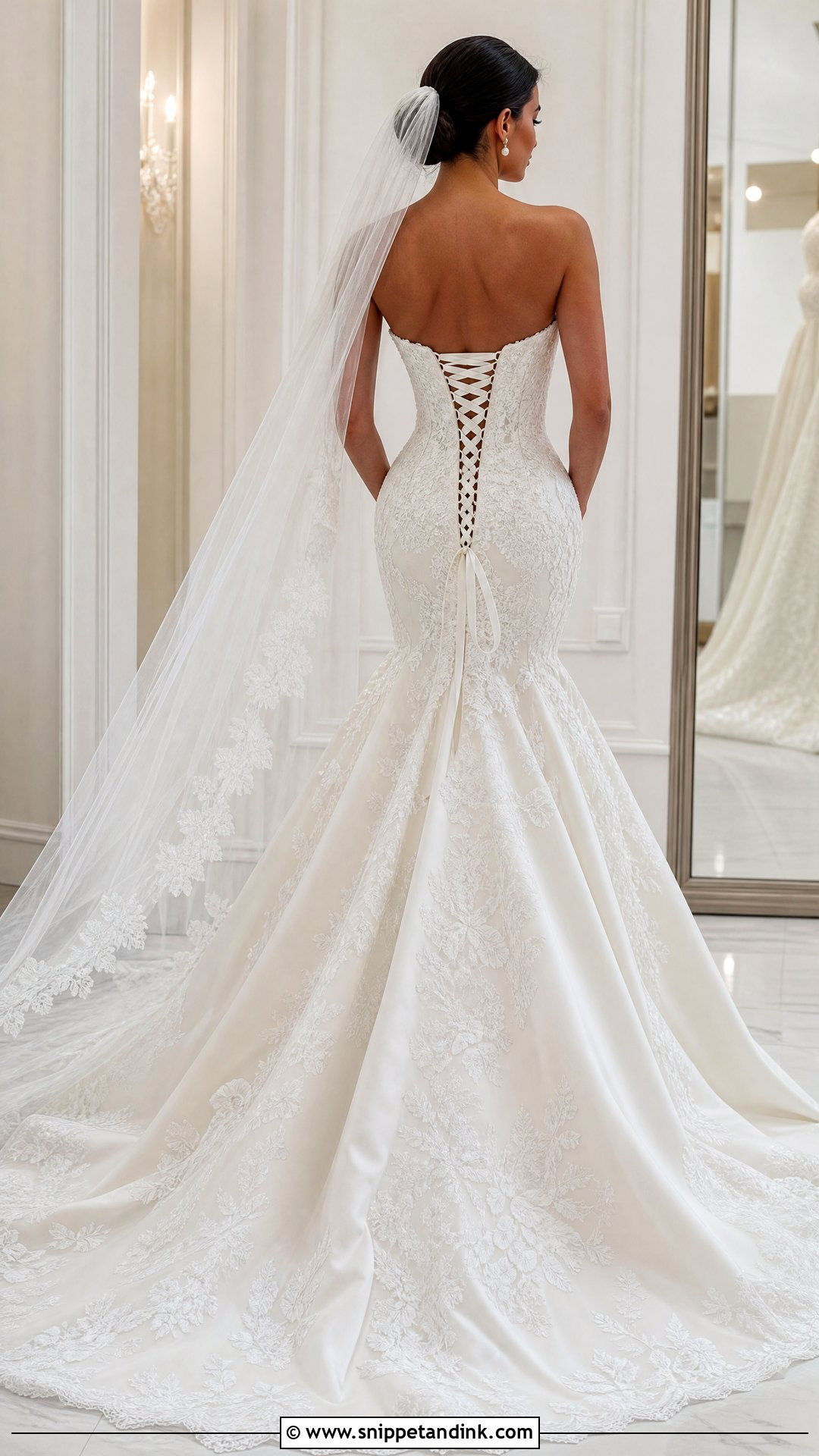
Corset lacing is the most adjustable back in this list. Satin ribbons or fine cord cross the opening and tighten to your exact shape, which helps if your weight moves a little in the final weeks. A basque or softly pointed waist sharpens the silhouette, over a lace or mikado skirt with a dramatic flare. Pearl earrings, a cathedral veil, platform pumps and a polished updo complete it. Two practical notes. Choose one person to learn the lacing at your last fitting, because lacing a corset evenly takes practice and uneven gaps show in photos. And tighten it for support, not reduction; you should be able to breathe, sit and eat dinner comfortably.
17. Boho Open Back Mermaid Wedding Dress
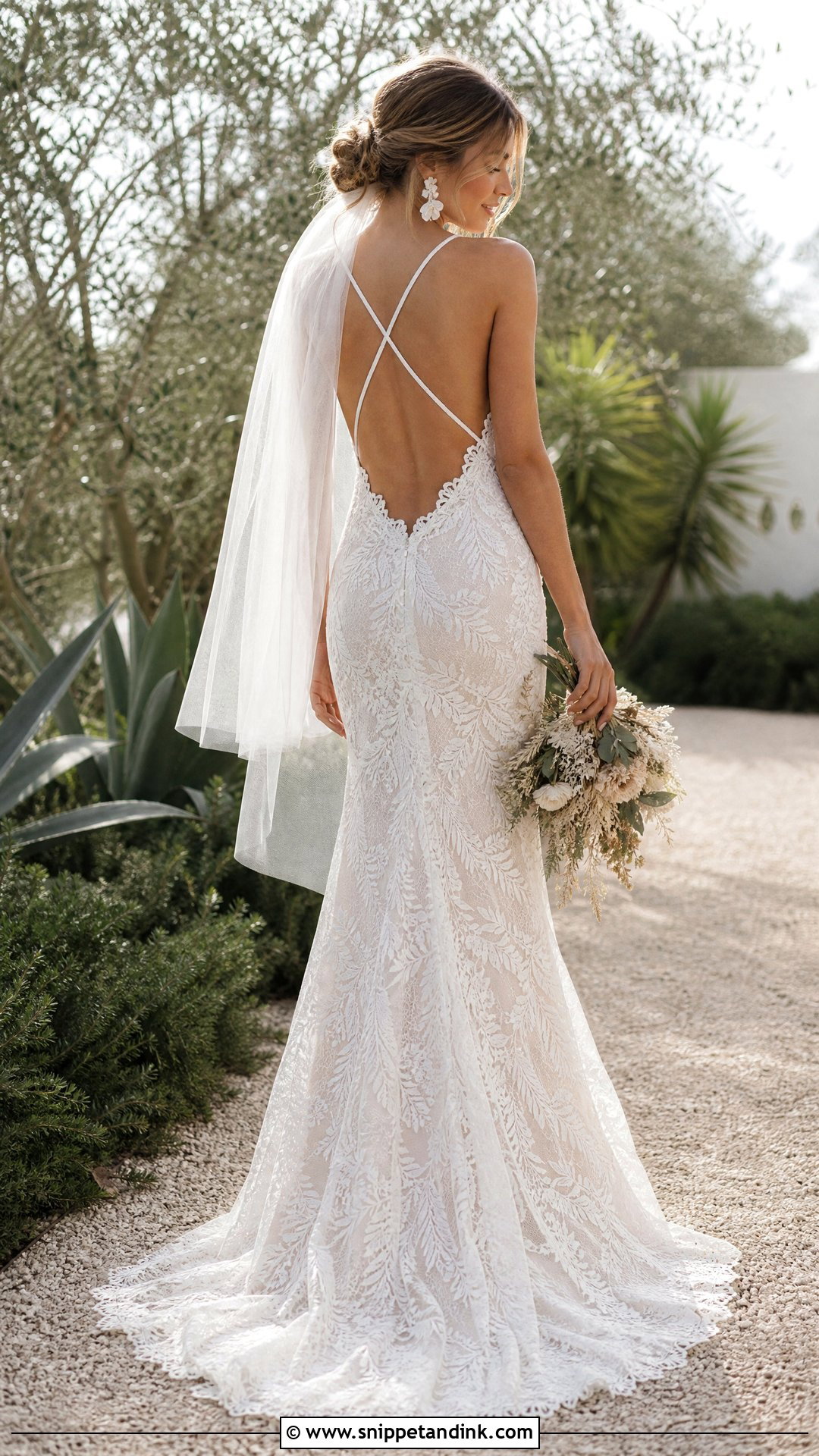
Boho lace softens the mermaid shape into something you can actually relax in. Lightweight botanical lace, soft straps and a low back with scalloped edges or delicate cross-back detailing set the tone. I’d choose a flexible fit-and-flare rather than a rigid mermaid, opening into an airy lace train. A loose braided bun, small floral earrings, block-heel sandals and a simple veil suit it, and a woven-look clutch adds texture. Outdoors, have the hem set for the actual ground, since lace caught on grass or gravel tears easily. A wrist loop or a sturdy bustle lifts the train once the dancing starts.
18. Minimalist Open Back Mermaid Wedding Dress
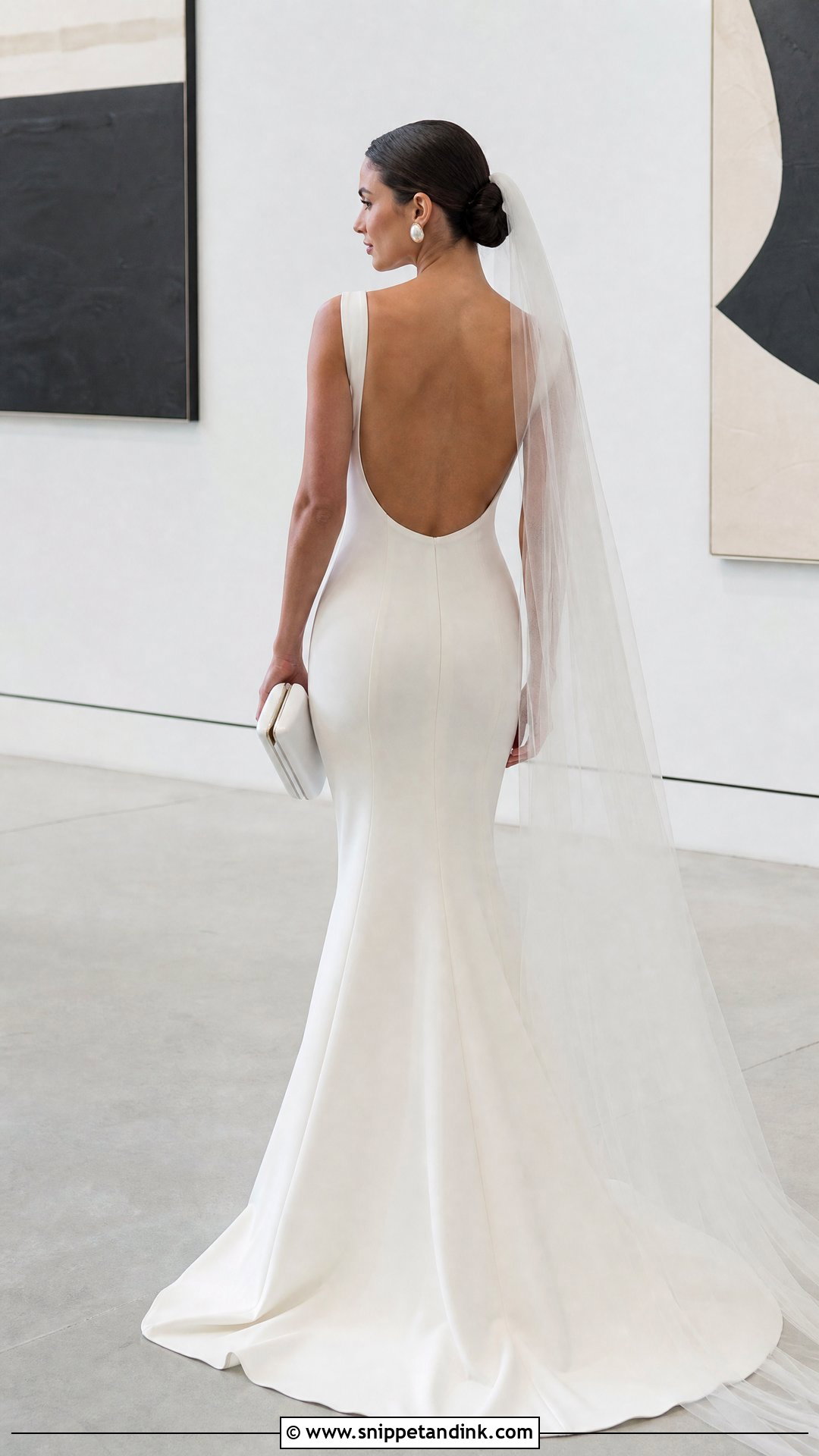
With no lace or beading to distract, a minimalist gown relies entirely on cut, so it’s the one where a poor fit is impossible to hide. Unembellished crepe, satin or mikado with a clean neckline and a bare low back needs curved seams that follow the body exactly, and a controlled flare below the thigh. If you want a detail, add a row of covered buttons or a narrow bow, nothing more. Bold pearl studs, a sleek bun, pointed pumps and a plain chapel veil suit it, with a structured white clutch later. Book extra alteration time. I check seams, hem, zip and back edges from the front, side and rear, because every flaw shows on plain fabric.
19. Detachable Overskirt Open Back Mermaid Wedding Dress
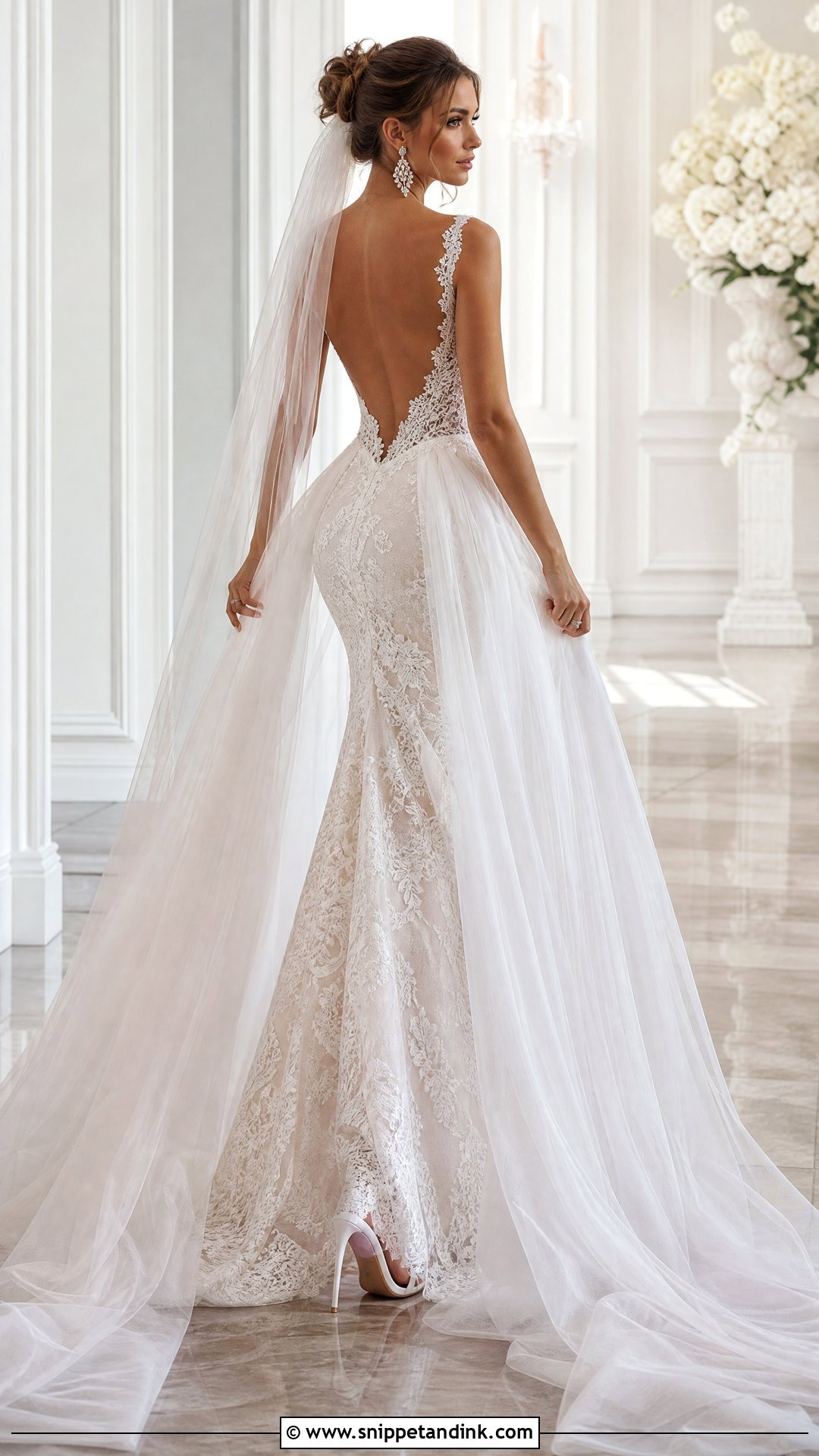
A detachable overskirt gives you a full ceremony gown and a fitted mermaid for the party. A tulle, satin or organza layer goes on for the vows and comes off to reveal the silhouette underneath. Make sure it fastens round the waist without covering the lowest point of the back, or you lose the open view in every ceremony photo. Matching fabric or coordinating lace keeps both looks deliberate. Taking the skirt off also means no long train to manage on the dance floor. Statement earrings, comfortable heels and an updo finish it. Test the fastenings at alterations, and assign one person to help remove the overskirt and store it flat.
20. Cathedral Train Open Back Mermaid Wedding Dress
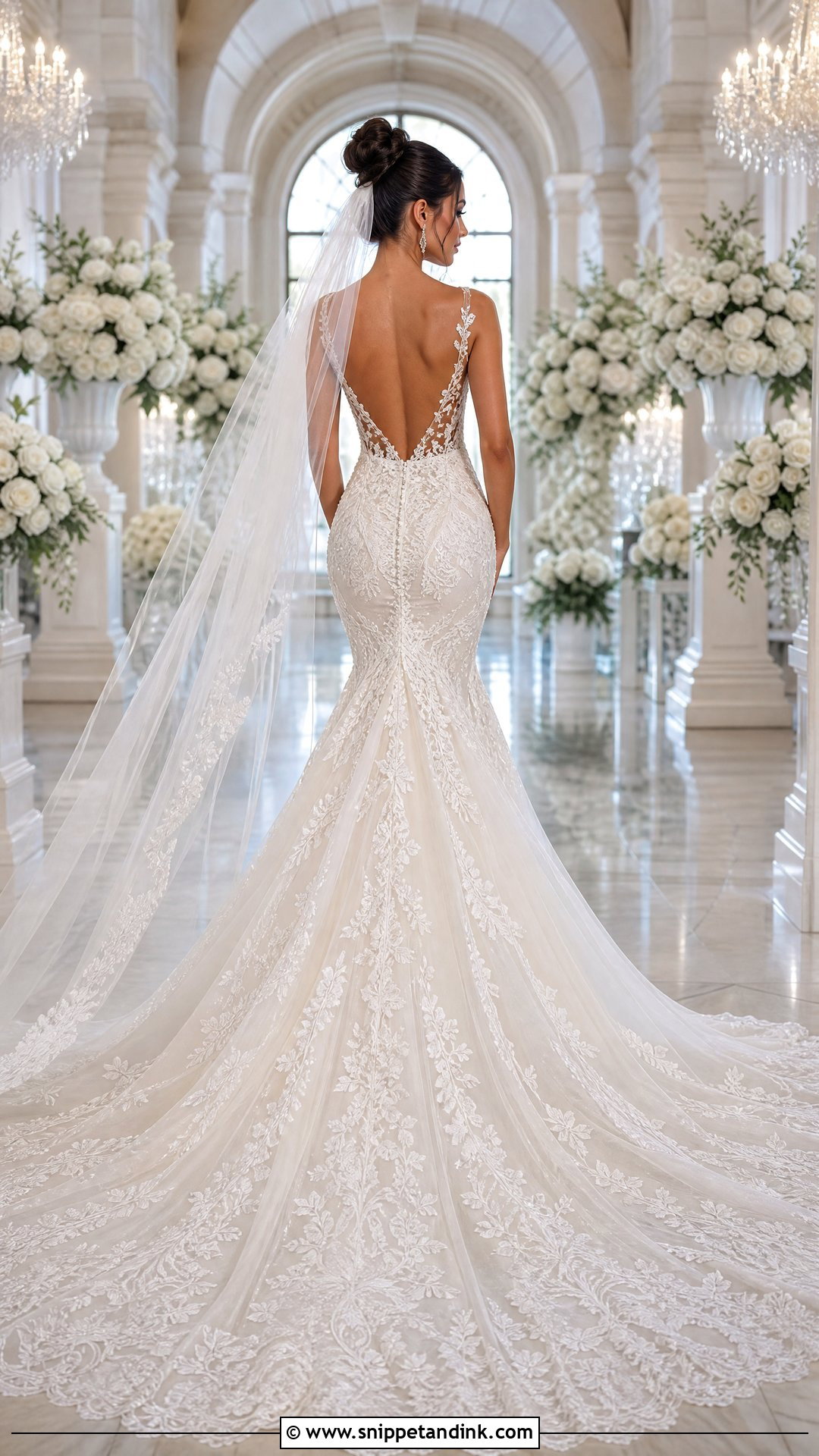
A cathedral train behind a low open back is the most formal version of this gown, and the most work to wear. Lace, pearl beading or embroidery can travel from the bodice through the hips and spread across the long train. Keep the back secure with straps or illusion tulle, especially under heavy embellishment, and keep the front neckline simple so details don’t pile up. A long sheer veil, elegant earrings, platform heels and a polished bun complete it. A train this long needs a solid bustle plan for the reception. Practise walking, turning and climbing steps in it before the day, and photograph the finished bustle at your fitting so whoever helps can recreate it.
Sitting, Stairs and the Bathroom in a Knee-Flare Skirt
A mermaid skirt is cut close from hip to knee, so your stride is shorter than usual. Walk heel first in small steps, and on stairs lift the front of the skirt rather than the sides. To sit, perch toward the front of the chair and lower yourself with your knees together. Low sofas and hay bales are hard work in this cut.
For the bathroom, a bridesmaid holds the skirt up from the front while you step in facing the cistern. It sounds silly and it works far better than any other method I’ve seen.
Choosing a bustle for a fitted skirt
An over-bustle hooks the train up onto the back of the skirt in a few gathered points, which suits lace and lightweight fabrics. An under-bustle tucks the train beneath itself with numbered ribbon ties and leaves a smoother look on satin and crepe. Heavily beaded trains may need more attachment points. Ask your seamstress which suits your fabric, and practise it before the wedding so it takes minutes, not half of the first dance.
Test the Back Before You Trust the Mirror
An open-back mermaid gown should look good from behind and still let you walk, sit and celebrate. The choices above run from clean satin and romantic lace to crepe, illusion, halter, corset and overskirt designs. Decide first how much back coverage and inner support you want, then think about fabric, train length, venue and accessories as one outfit. Bring your shoes and the pieces you’ll wear underneath to every alteration appointment. Most of all, move in it: lift your arms, sit down, take a few dance steps and turn your back to a mirror. Good construction and careful tailoring are what keep this kind of gown secure all day.
You'll Like These Ideas:





Leave a Reply