
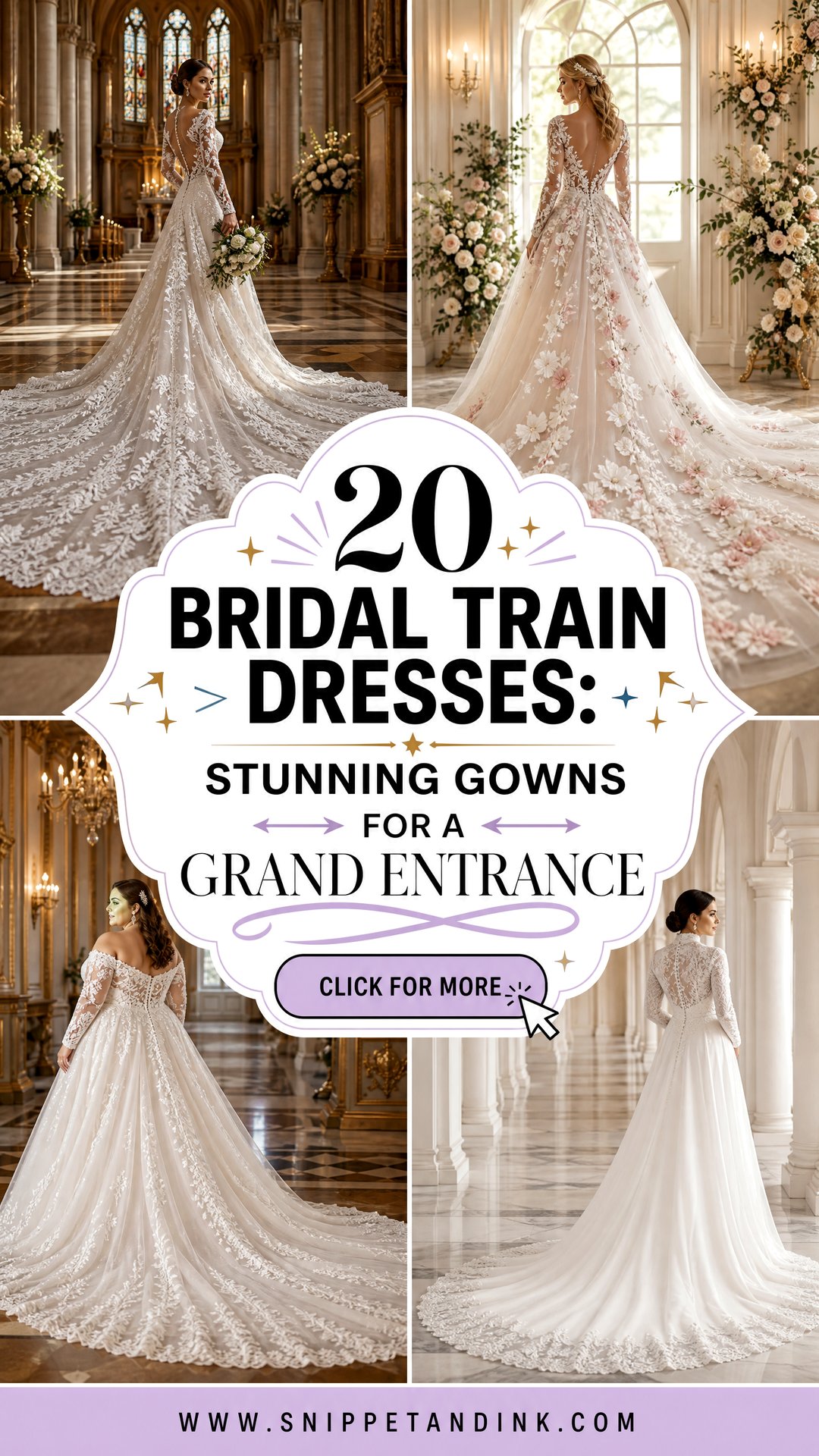
A train is the part of a wedding dress that behaves most differently in real life than it does on a fitting room podium. In the shop it pools perfectly behind you; on the day it has to follow you up an aisle, around a corner, onto grass or stone, and then get out of the way for dinner. The gowns below run from short sweep trains to dramatic cathedral lengths, with detachable overskirts, lace, structured waists and bows in between. When I style a bride in a train, I look at the dress, the bustle, the shoes and the veil as one decision, because each of them changes how that fabric moves. Read each look with your own ceremony floor and your own stamina in mind.
Matching Train Length to the Aisle You Will Actually Walk
The first question I ask a bride who wants a train isn’t about style. It’s about the ground. A cathedral train that glides on a polished church floor will drag up leaves, grit and damp on a lawn, and it will catch on gravel paths and uneven stone steps. Train length is usually described by how far it extends behind you: a sweep just brushes the floor, a court train goes a little farther, a chapel train reaches roughly three to four feet, and cathedral and royal trains run well beyond that.
- Grass, sand or gravel: a sweep or court train, or a detachable train you can remove before outdoor portraits.
- A long, straight church aisle: this is where chapel and cathedral lengths make sense, because there’s room for the fabric to settle behind you.
- Steps, spiral staircases or tight corners: think about who will lift the train for you, and practice it once before the day.
- A small venue or a short aisle: a cathedral train may still be arriving at the altar when you are already there, so measure the space.
I’d also be honest about how you want to spend the day. If you plan to dance from the first song, a train you can bustle quickly or detach is worth more than an extra foot of fabric in the processional.
1. Satin Ball Gown Cathedral Train Dress
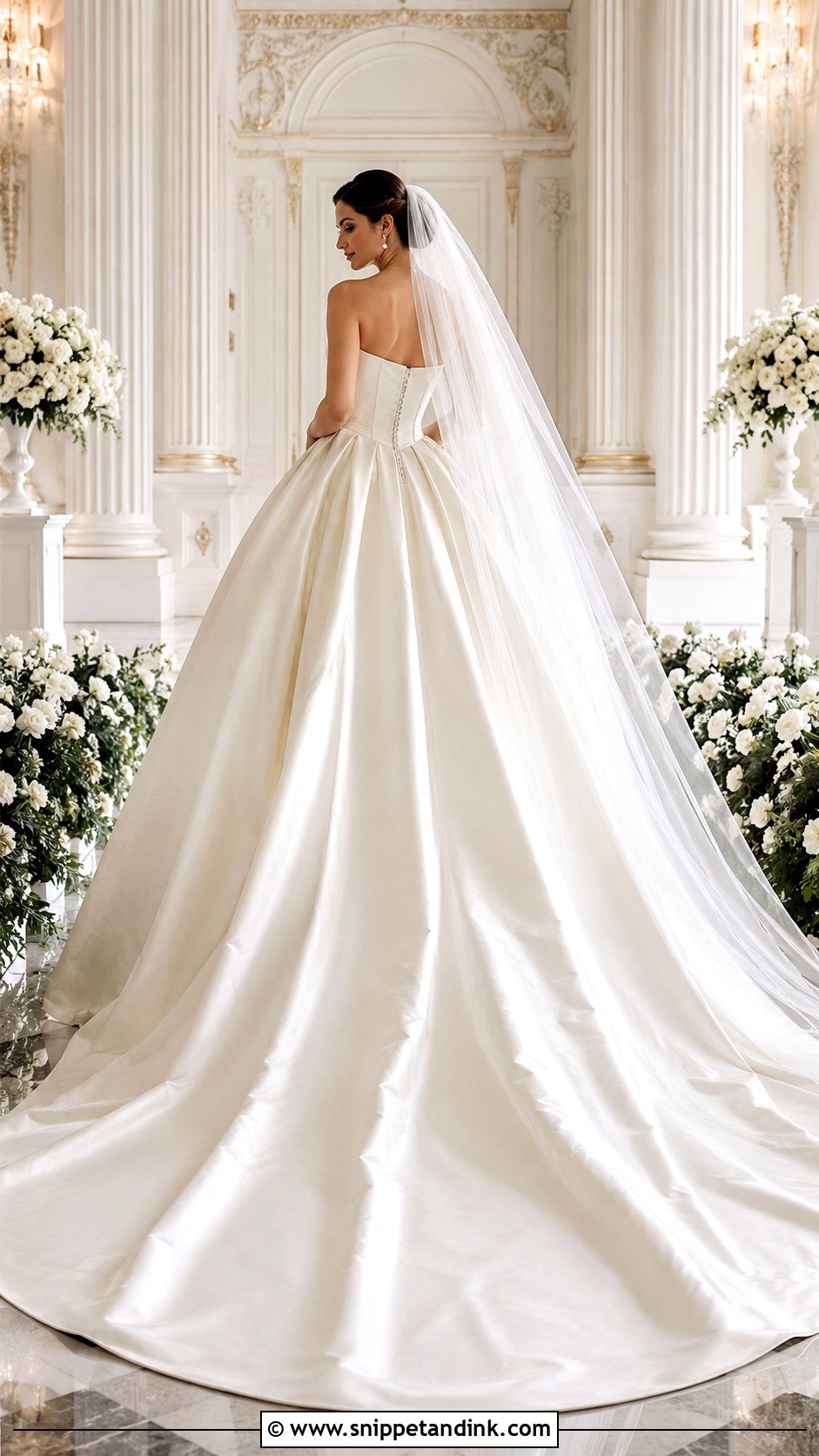
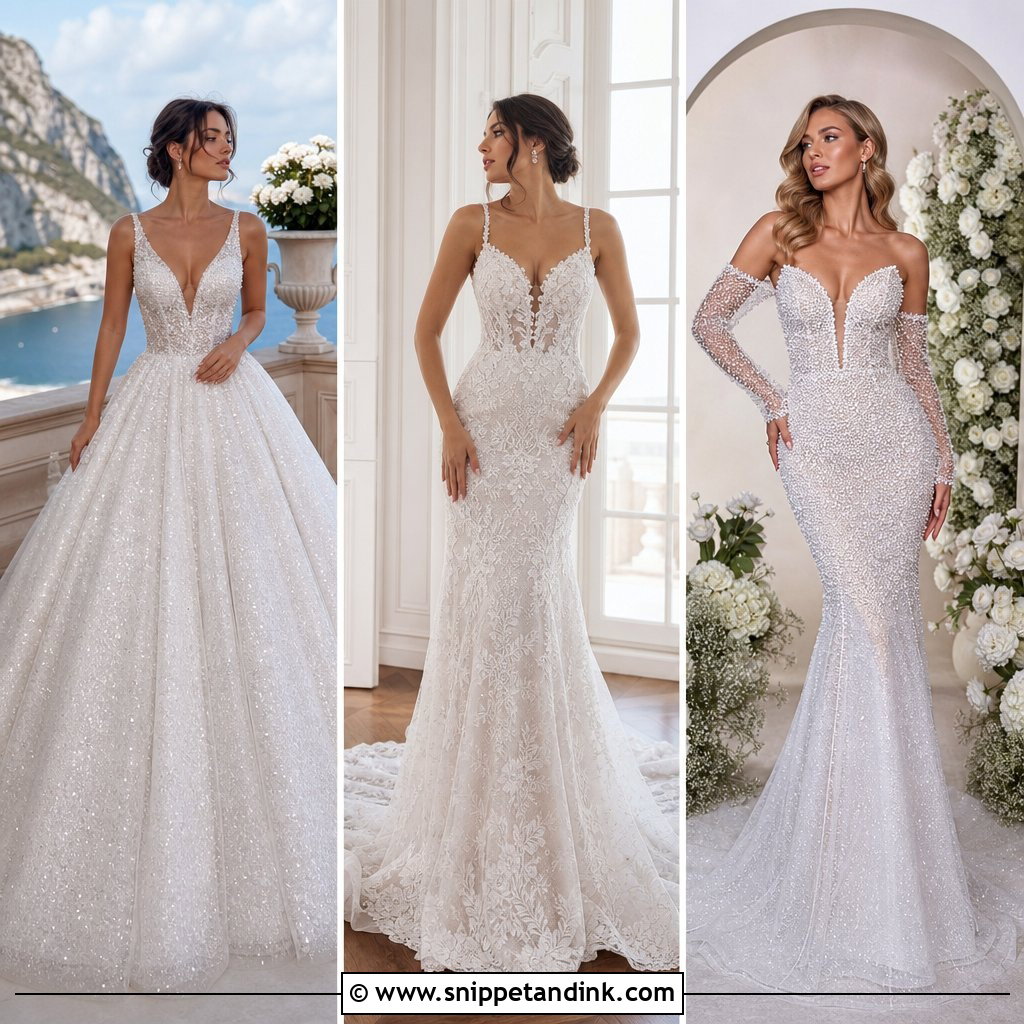
Satin and a cathedral train together give the most formal silhouette on this list. I’d pair the full skirt with a structured bodice and a straight, scoop or sweetheart neckline, since a soft top tends to look swallowed by that much skirt. Satin shows every pull and ripple, so the pleats at the waist need to be pressed and set by your seamstress rather than left to fall on their own. Keep the veil fingertip length and the bouquet compact; two long pieces of fabric behind you start fighting in photos. Ask for a secure bustle with enough points to carry the weight, because heavy satin tears loops that were sewn for lighter fabrics.
2. Lace A-Line Chapel Train Dress
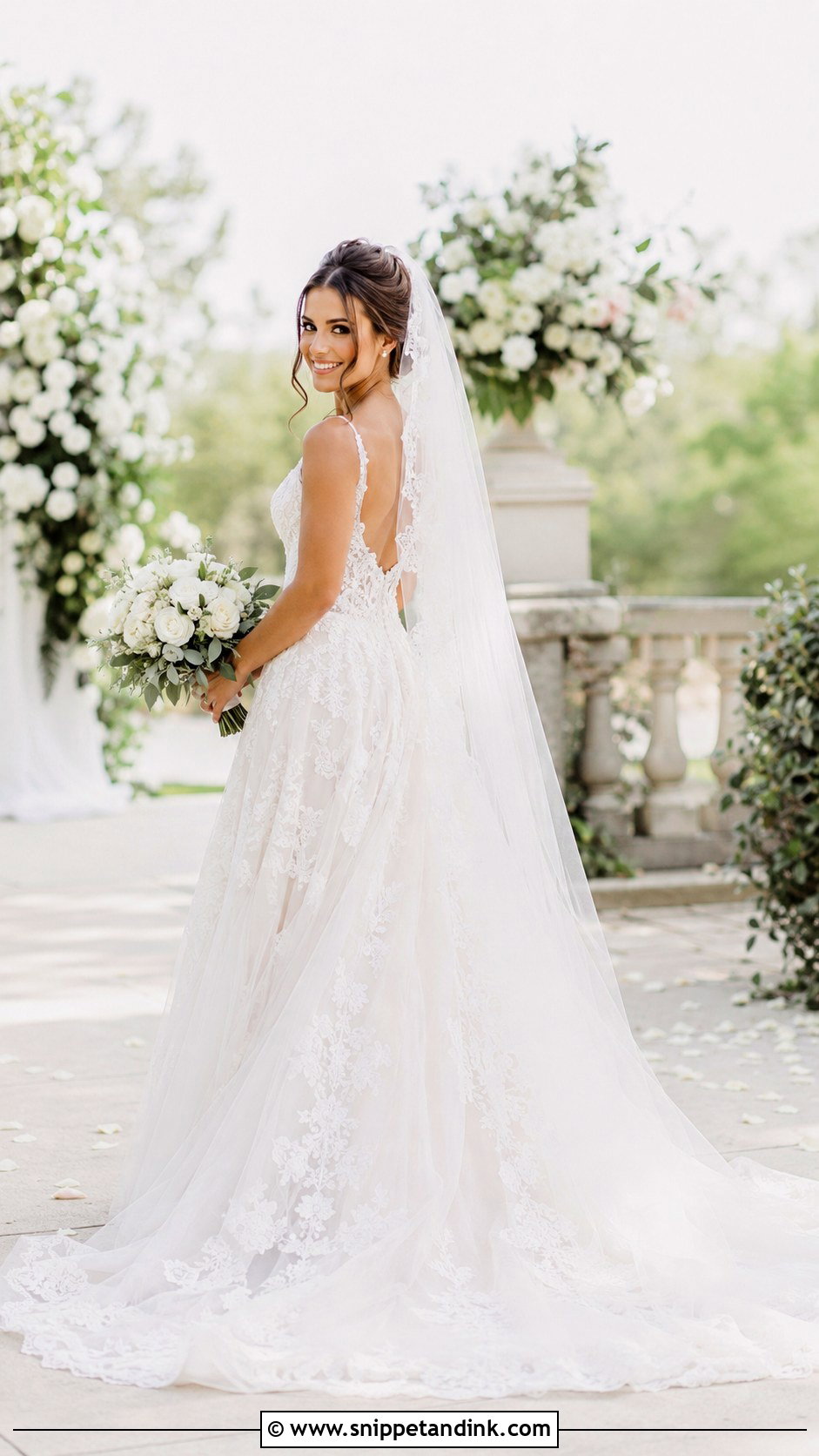
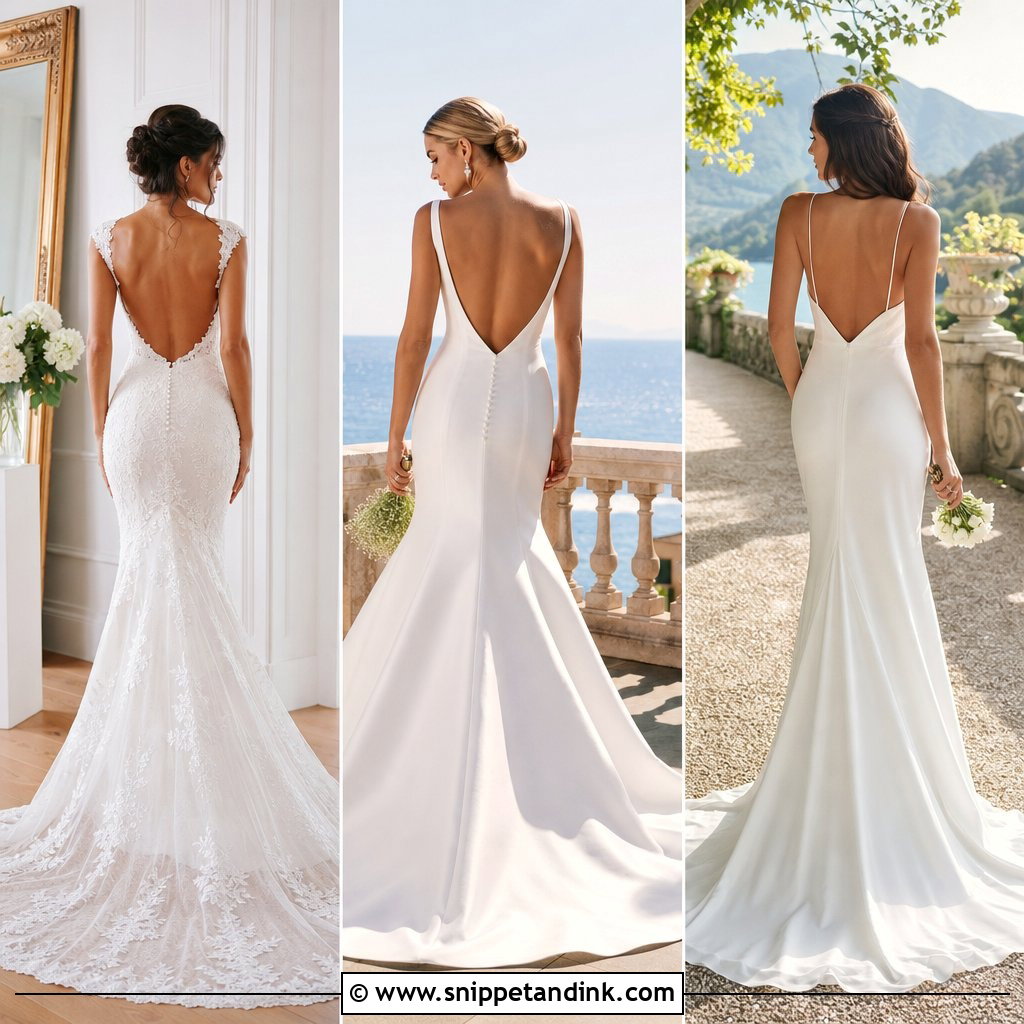
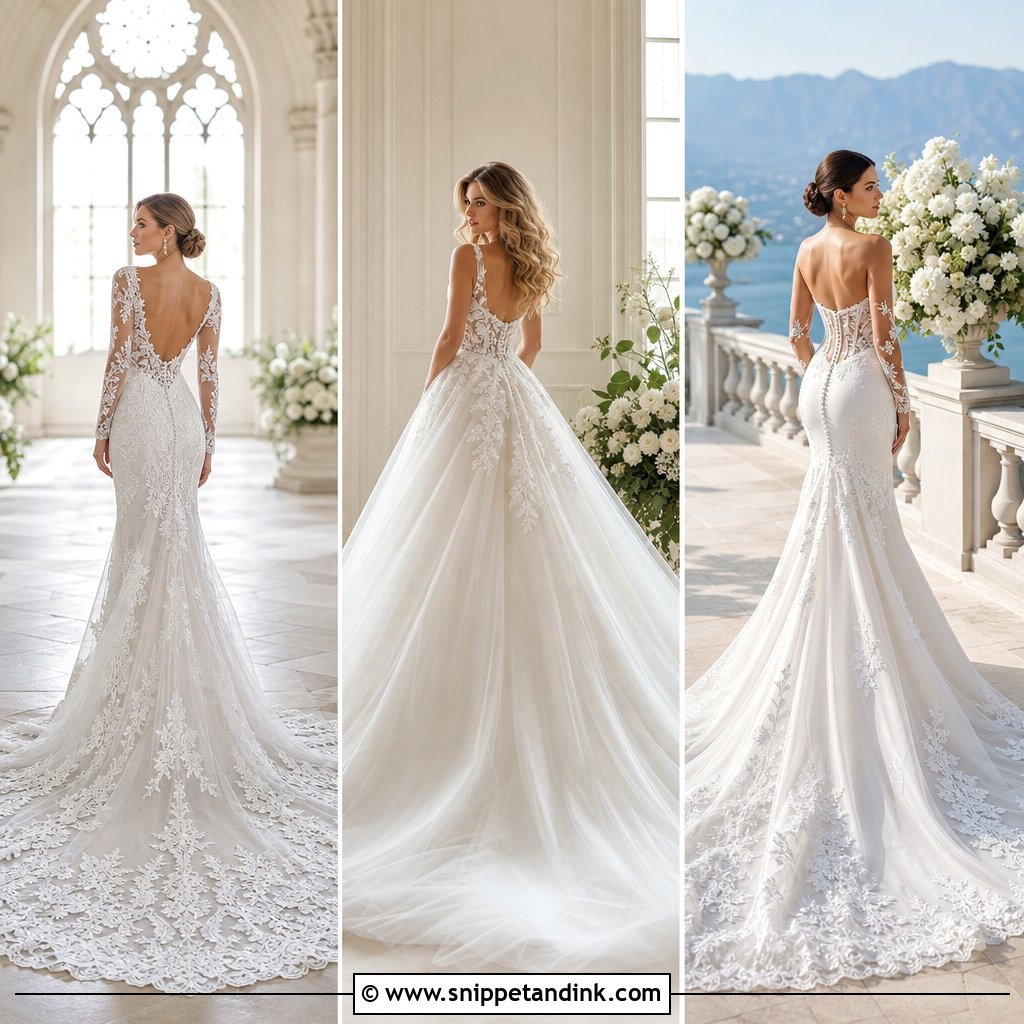
A lace A-line with a chapel train is the gown I steer most first-time train wearers toward. The skirt releases gradually from the waist, so you can walk and sit without fighting it, and a chapel length clears the floor behind you without needing an attendant at every turn. If the lace appliqués continue onto the train, check where the bustle will lift them; a good seamstress hides the pickup points inside a motif. Low block-heel sandals and a sheer veil with a narrow lace edge keep it light. Bring the bouquet down to ivory and pale green so the lace stays the detail people notice.
3. Crepe Mermaid Sweep Train Dress
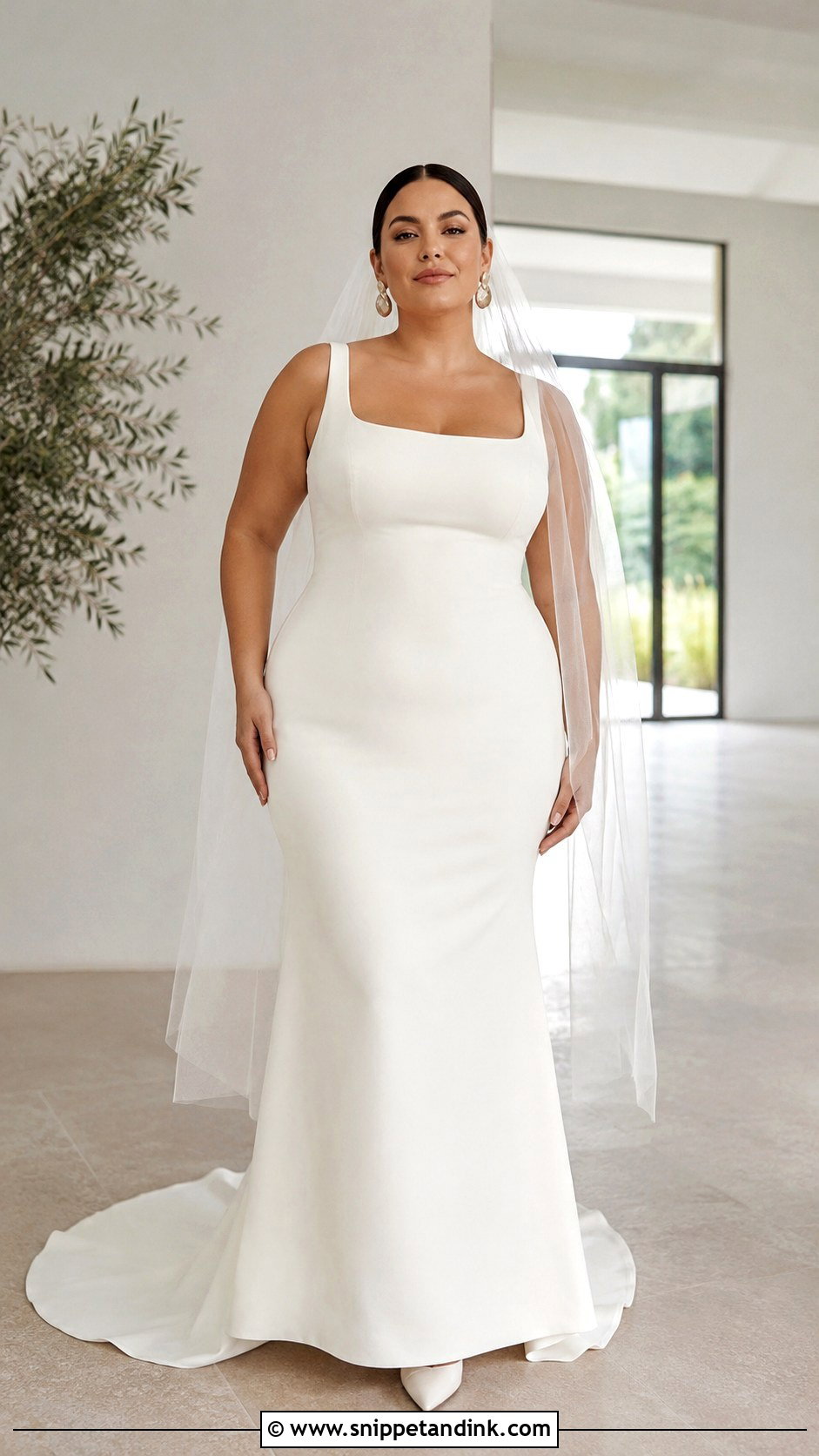
Crepe is unforgiving in the best way: it has no shine and no pattern to hide behind, so the fit carries the whole dress. On a mermaid shape, the flare needs to start at or just above the knee, or you’ll be walking in small steps all day. I always have brides take the stairs in a crepe gown at the second fitting, because that’s when pulling across the hips shows up. Choose a square neckline or a supported V depending on the coverage you want, and wear smooth, edge-free foundation pieces, since every seam underneath reads through the fabric. A sweep train is the right partner here; longer trains on a fitted crepe skirt tend to twist as you turn.
4. Mikado Basque Waist Royal Train Dress
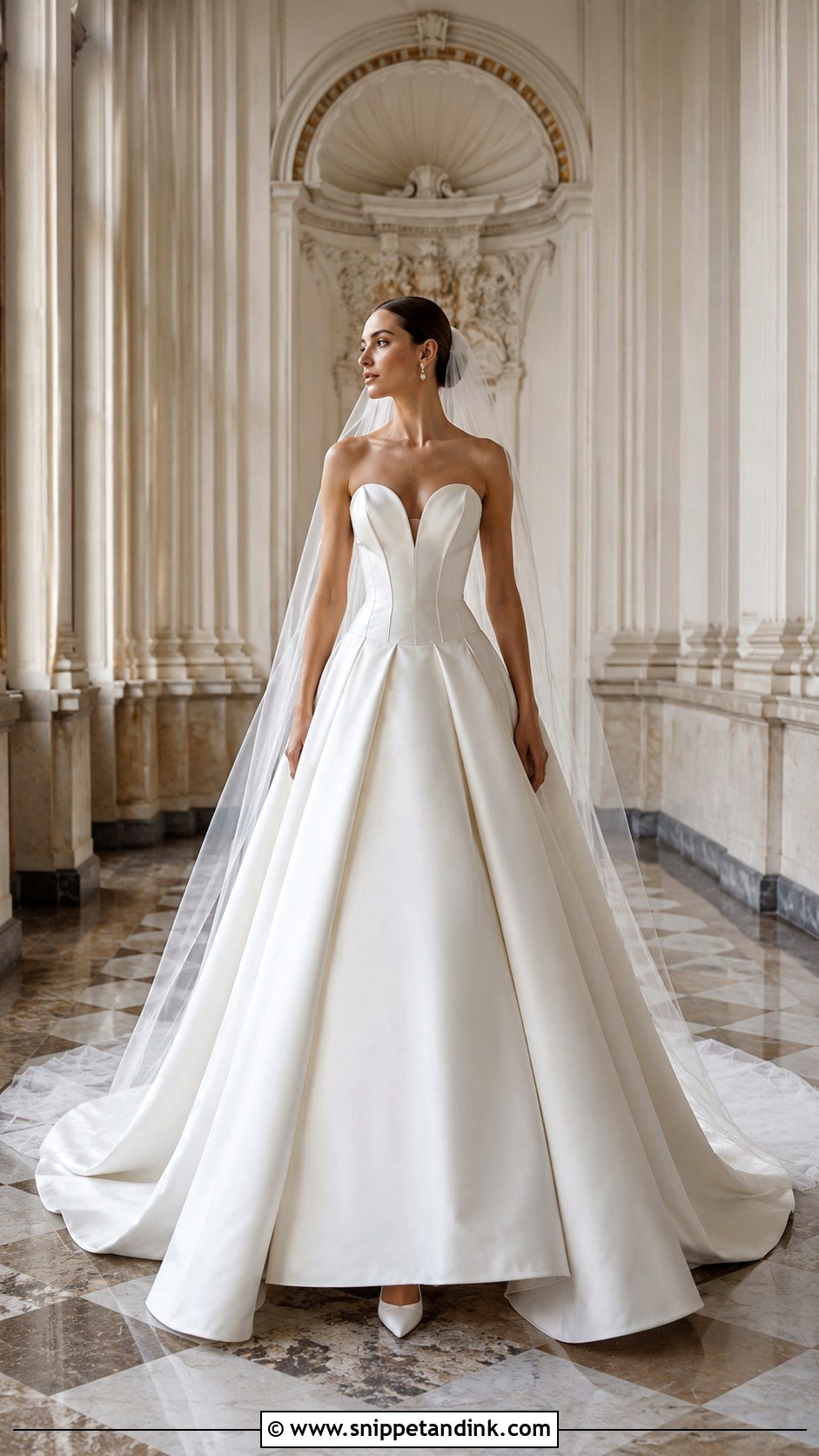
This is the most ceremonial gown in the set: a Mikado gown with a basque waist and a royal train. Mikado is a stiff, heavy weave, so it holds crisp pleats and keeps the train’s outline instead of collapsing into folds. That same weight is why I’d never send a bride down an aisle in it alone. Someone needs to arrange the train at the top of the aisle, again at the altar, and before every formal portrait. Skip a busy necklace if the bodice already has corsetry or seaming, and plan a multi-point bustle; one or two hooks will not hold a royal train through dinner.
5. Off Shoulder Fit And Flare Train Dress
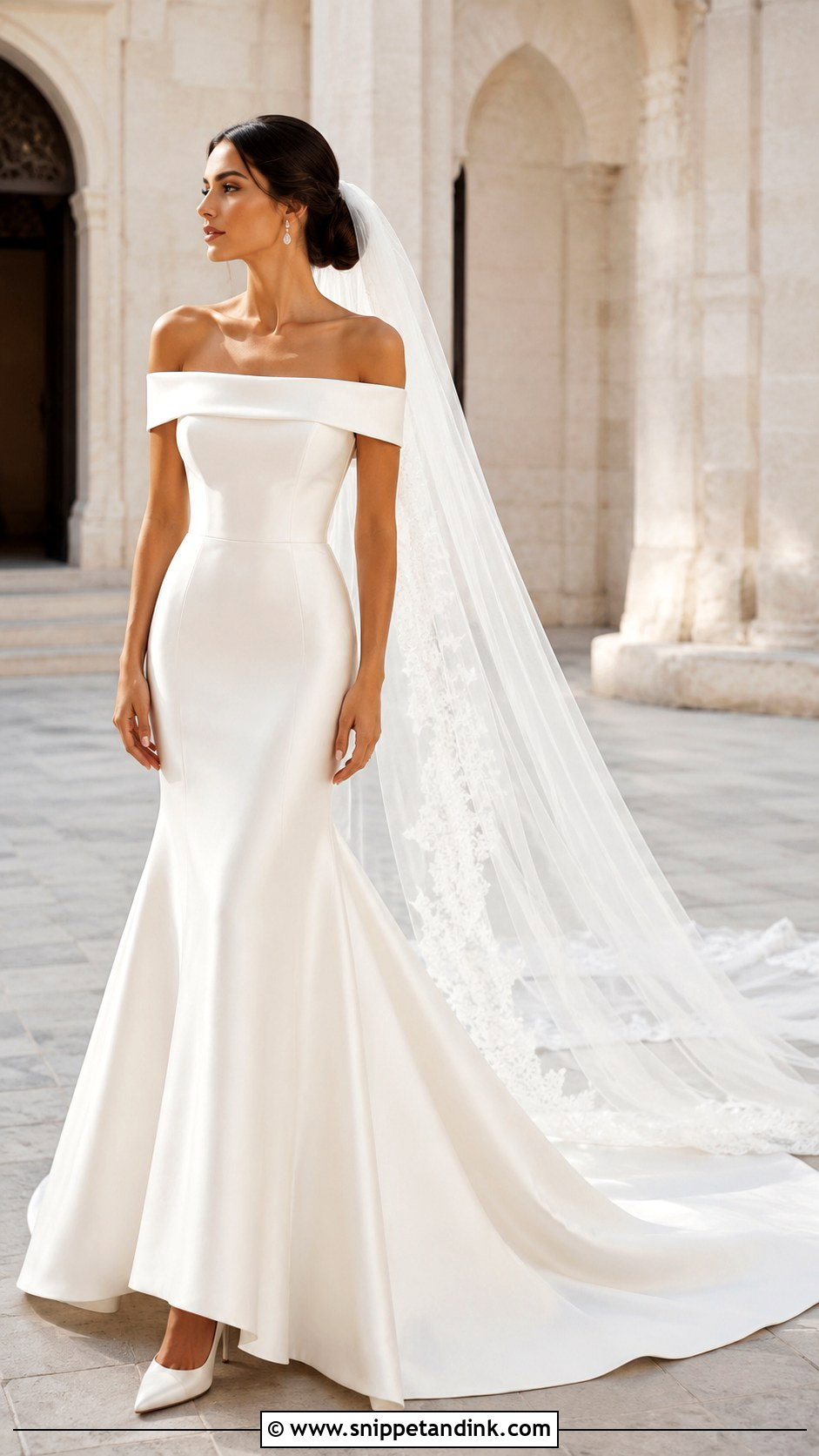
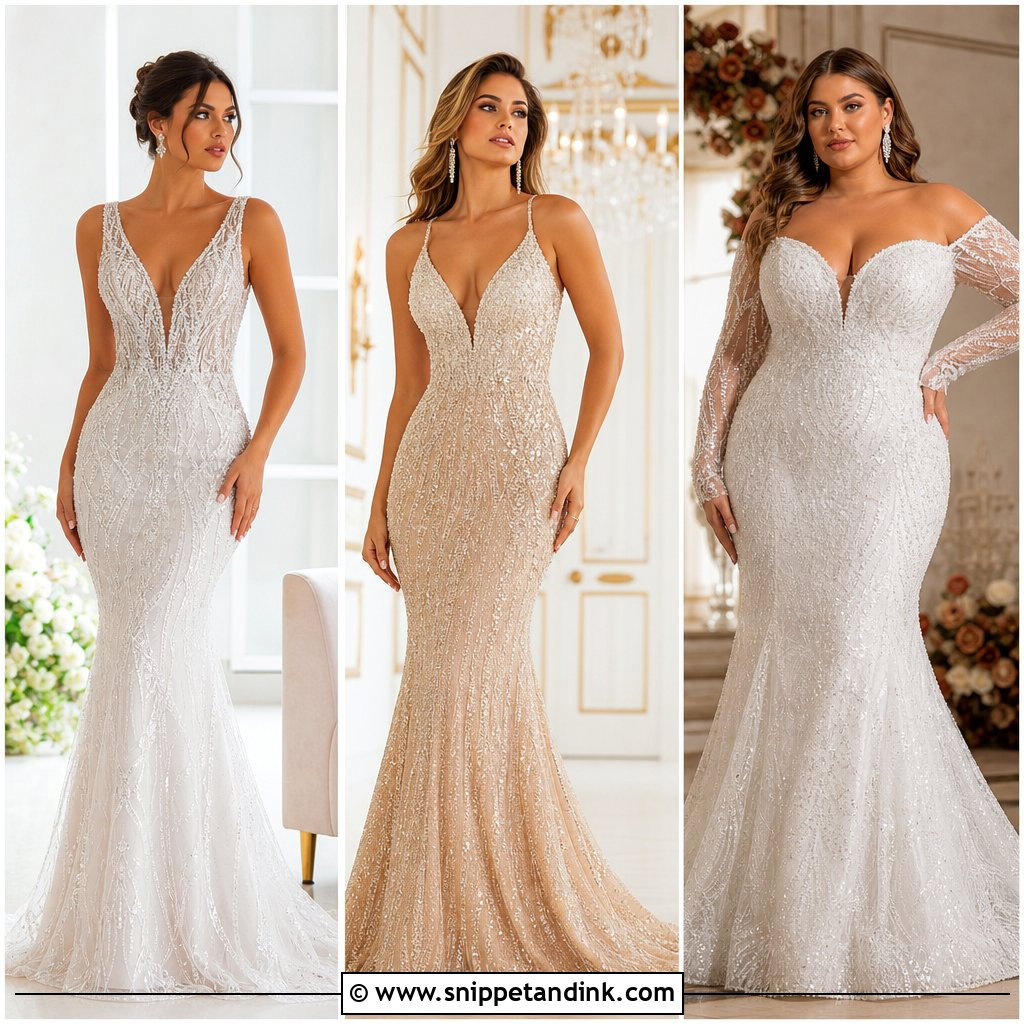
An off-the-shoulder neckline softens a body-skimming fit-and-flare, and the skirt opens below the hips, so it’s easier to move in than a true mermaid. The fitting issue I watch for is arm movement. Off-shoulder bands sit on the upper arm, and if they’re tight you won’t be able to hug anyone or lift a glass without the bodice sliding. Ask for hidden support such as boning and a grip band inside so you aren’t hitching it up all night. A low chignon keeps the shoulders clear, and a plain fingertip veil is the cleaner pairing; a cathedral veil adds drama but will catch on the band.
6. Long Sleeve Lace Cathedral Train Dress
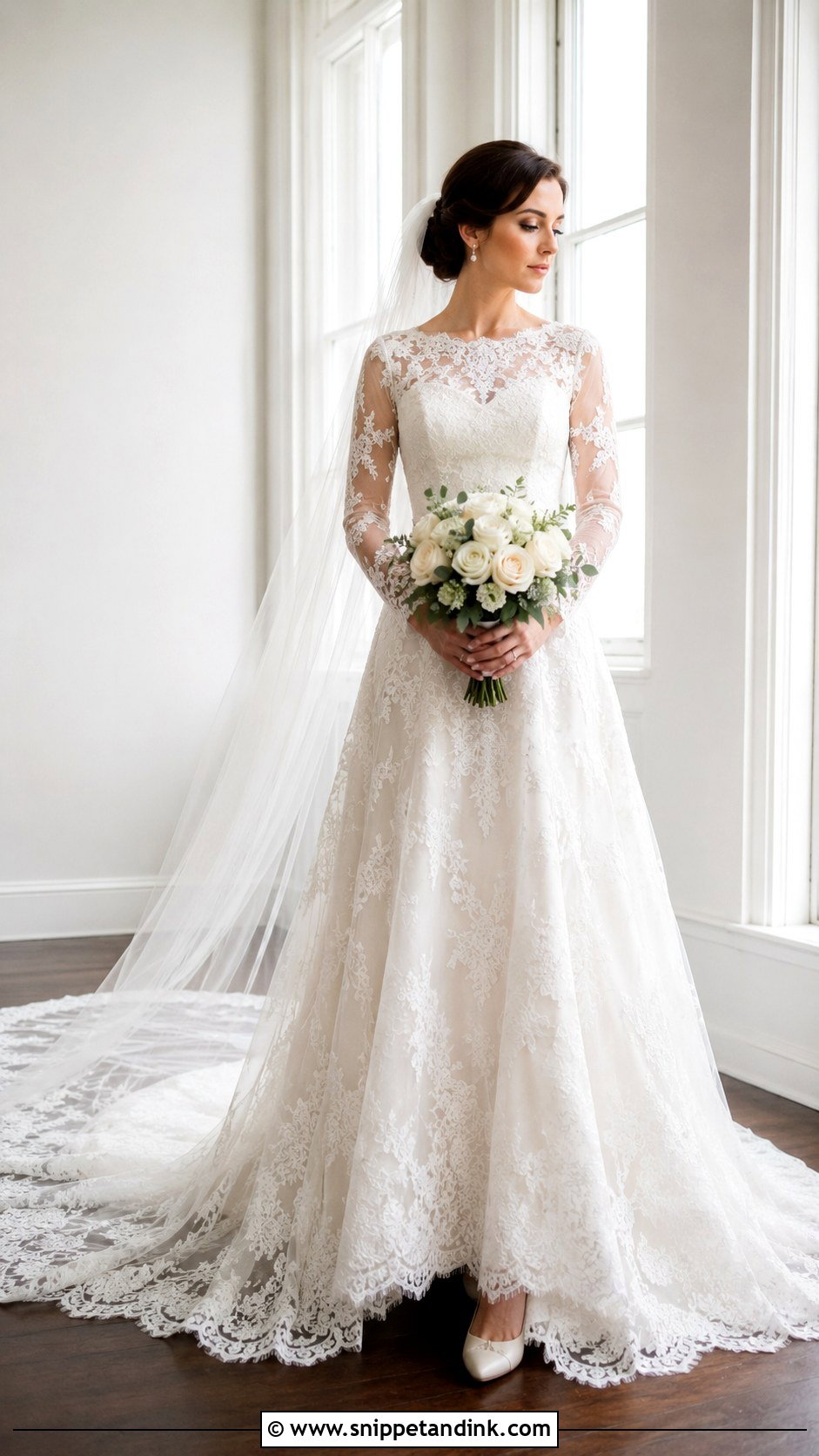
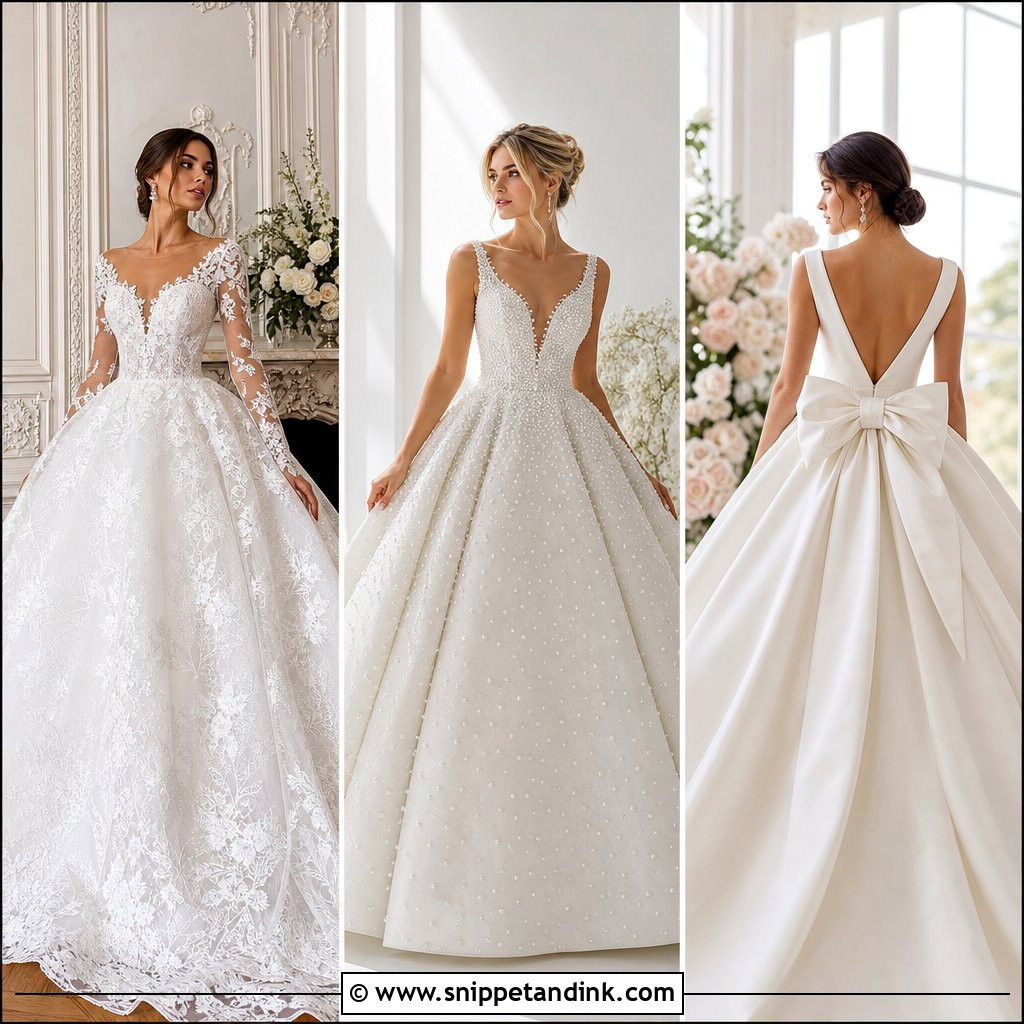
Long lace sleeves and a cathedral train cover a lot of the body, yet a sheer lace keeps the whole thing from feeling heavy. The sleeves are the part I’m fussiest about at fittings. Lace sleeves cut tight at the elbow look neat standing still and then restrict you the moment you bend your arm to hold the bouquet. Have them fitted with your arms bent as well as straight. A satin waistband or a softly pointed waist seam adds definition if the lace feels shapeless on you, and a smooth veil with minimal edging lets the lace pattern across your back show. Plan the bustle around the lace so the pickup points don’t cut through a motif.
7. Strapless Column Detachable Train Dress
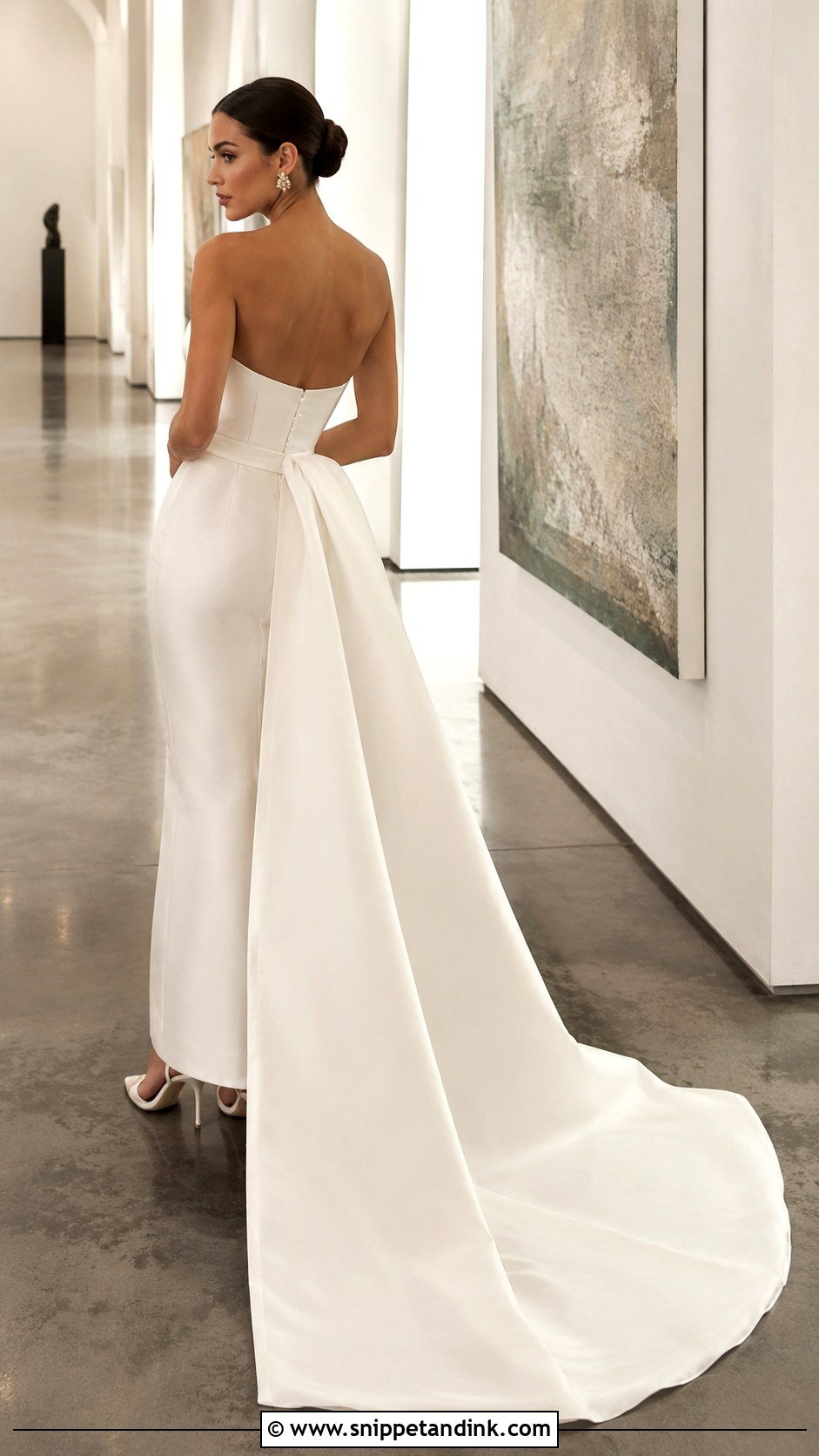
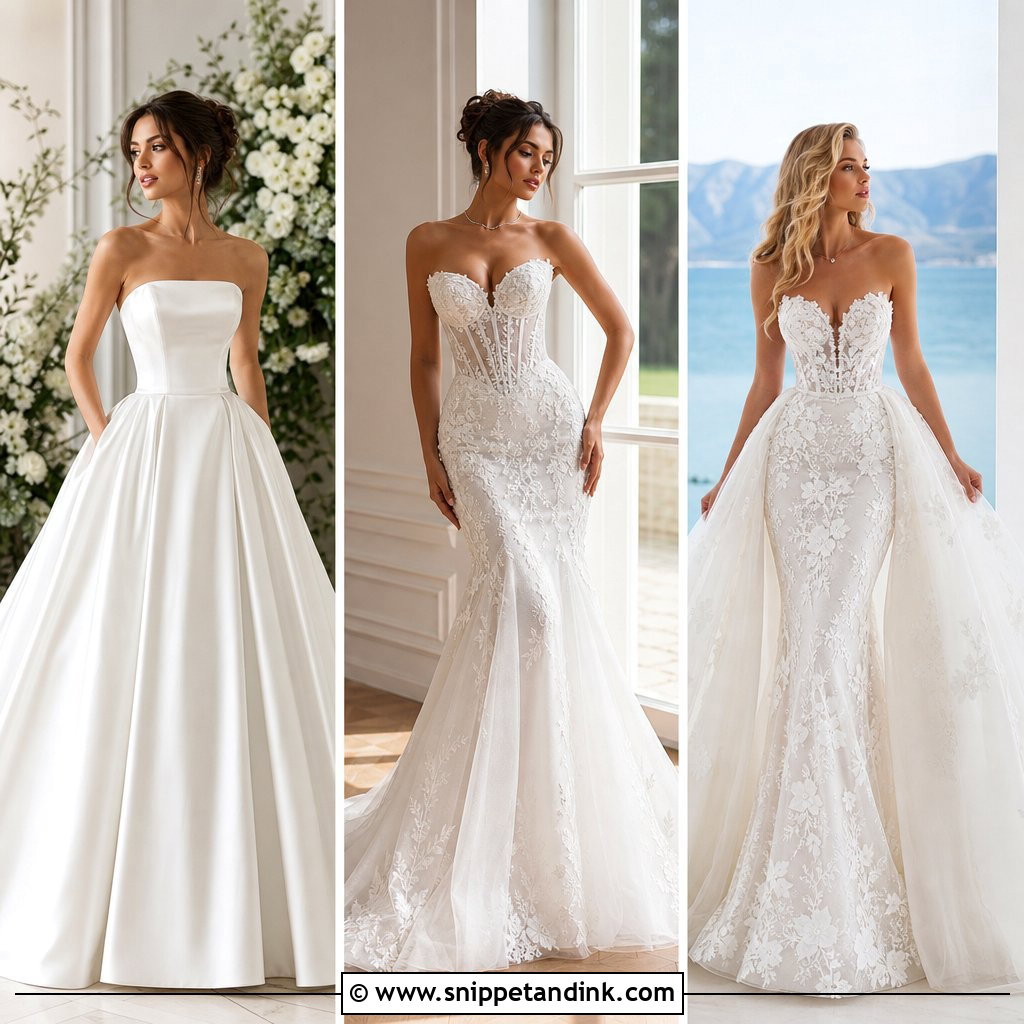
A strapless column with a detachable train gives you two dresses: a full entrance at the ceremony and a narrow, easy shape for the party. Detachable trains and overskirts have become a regular part of bridal collections for exactly that reason. The train usually attaches at the back waist with hooks, buttons or snaps, and I always look at the gown from behind once it’s removed, because exposed loops or a gap at the waistband give the trick away. Internal boning matters more than usual here, since a strapless bodice has to stay put under the pull of the extra fabric. Pointed slingbacks and a sleek bun keep the column shape clean.
8. Square Neck Satin Court Train Dress
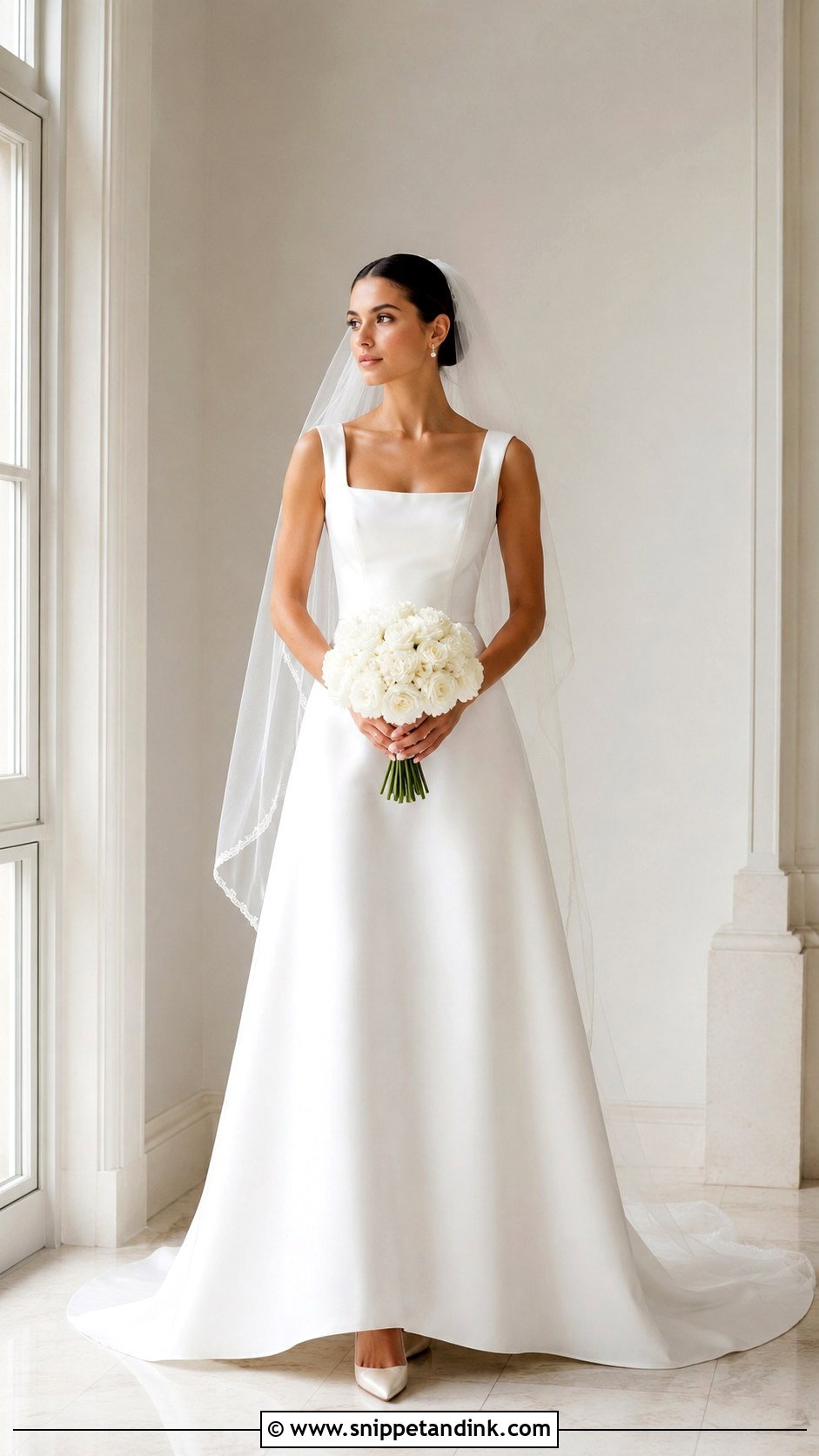
A square neckline frames the face and collarbones, and satin with a court train keeps the overall effect tailored. A court train is the in-between length: it extends farther than a sweep but stops well short of chapel, so you get visible movement without needing help at every step. I like it for brides who are nervous about managing fabric but still want the dress to trail a little behind them. Wide straps or cap sleeves sit well with the angular neckline. A smooth veil with a blusher won’t hide the satin finish, and swept-back hair keeps the neckline readable in photographs.
9. Floral Applique Tulle Chapel Train Dress
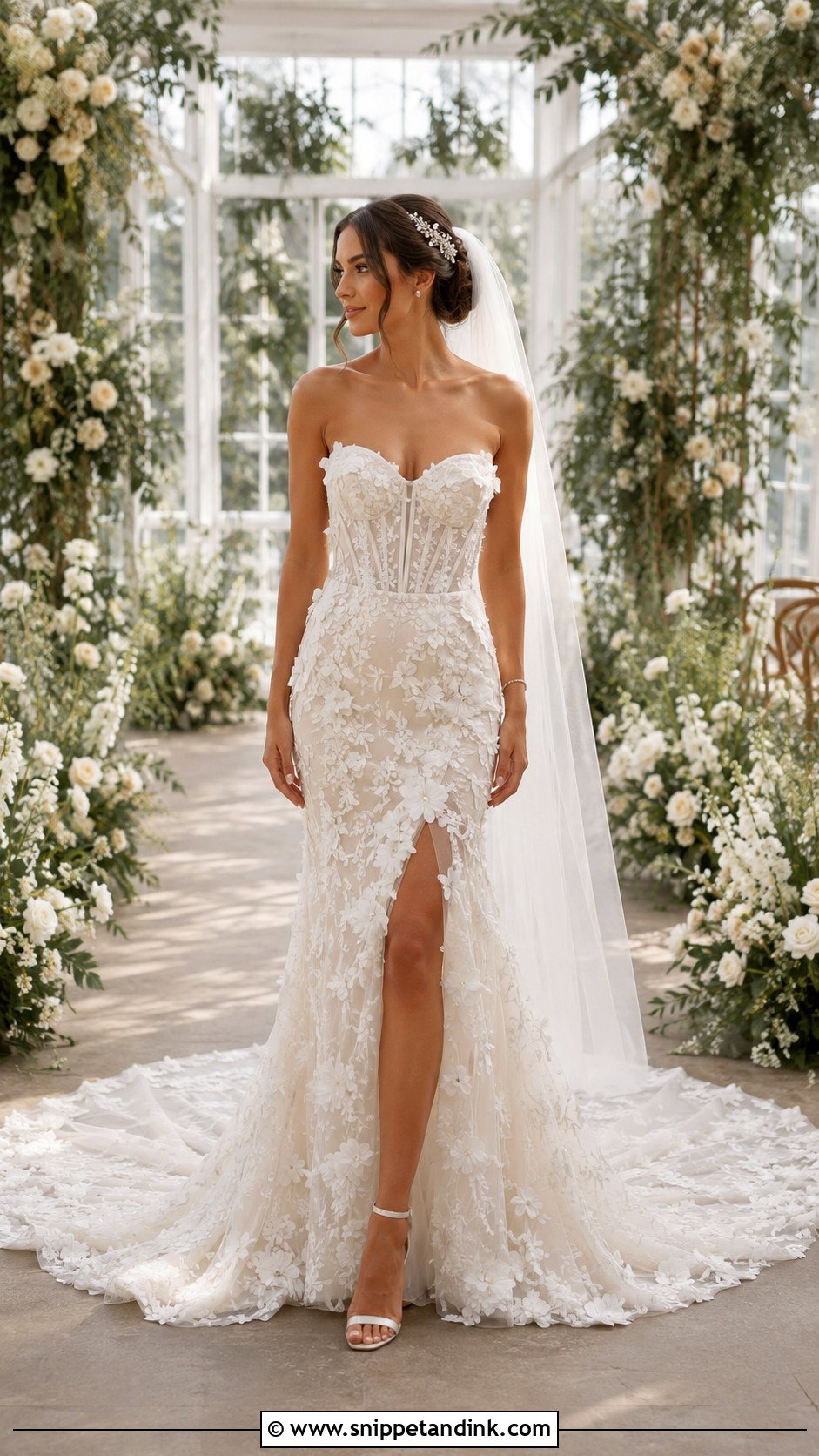
Dimensional appliqués on tulle give the dress texture from every angle, which is why the placement matters so much. Scattered flowers feel airy; dense clusters read richer and heavier. I check two things on these gowns: whether the appliqués near the hem are stitched down firmly, and where the bustle points land, because tulle around a loose flower snags on heels and gets torn during dancing. Keep the veil plain so it doesn’t compete with the flowers. If the back is low or illusion, an updo or side-swept waves will let people see it, and a bouquet slightly smaller than the bodice stops the front looking crowded.
10. Pearl Beaded Bridal Train Dress
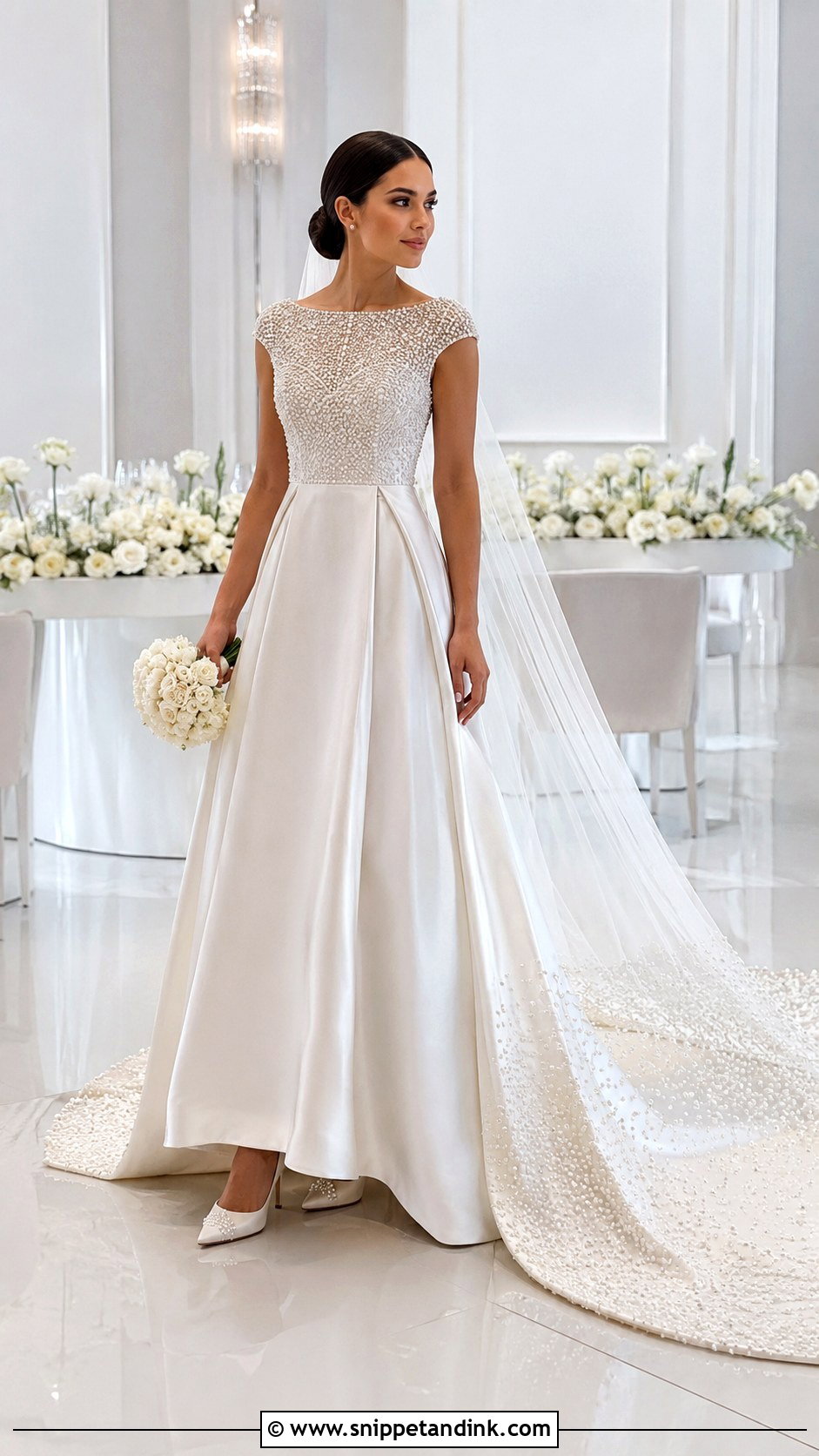
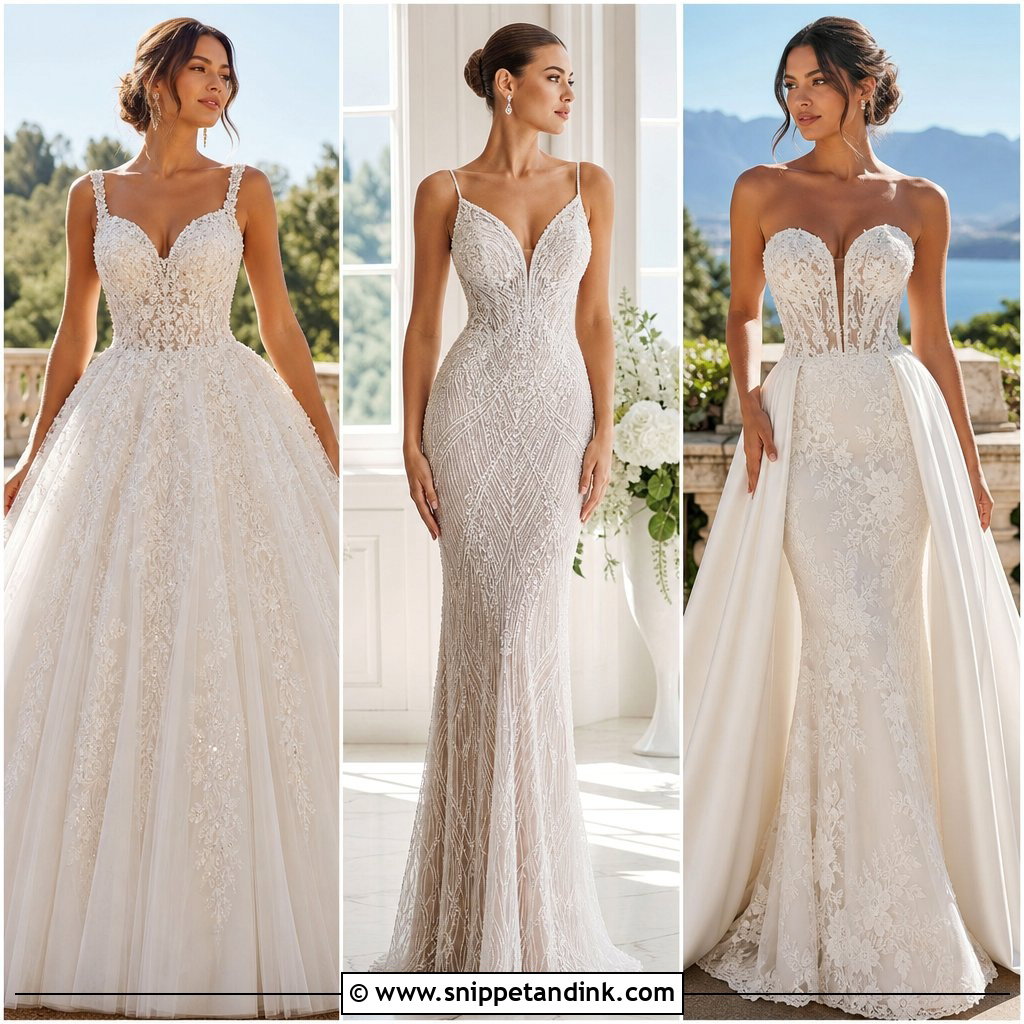
Pearls give a dress dimension without the flash of crystals, which suits brides who don’t want to sparkle in every photo. The practical issue is weight. A bodice of scattered pearls barely changes how a gown sits, but pearls running down sleeves and across the train add real weight, and you’ll feel it after a few hours. Try on a sample with similar beading before you commit. The bustle needs reinforced loops, since standard thread loops pull out of beaded tulle. Pearl studs and satin pumps with little hardware keep the look consistent; stacking more beaded accessories just muddies the surface.
11. Bow Back Bridal Train Dress
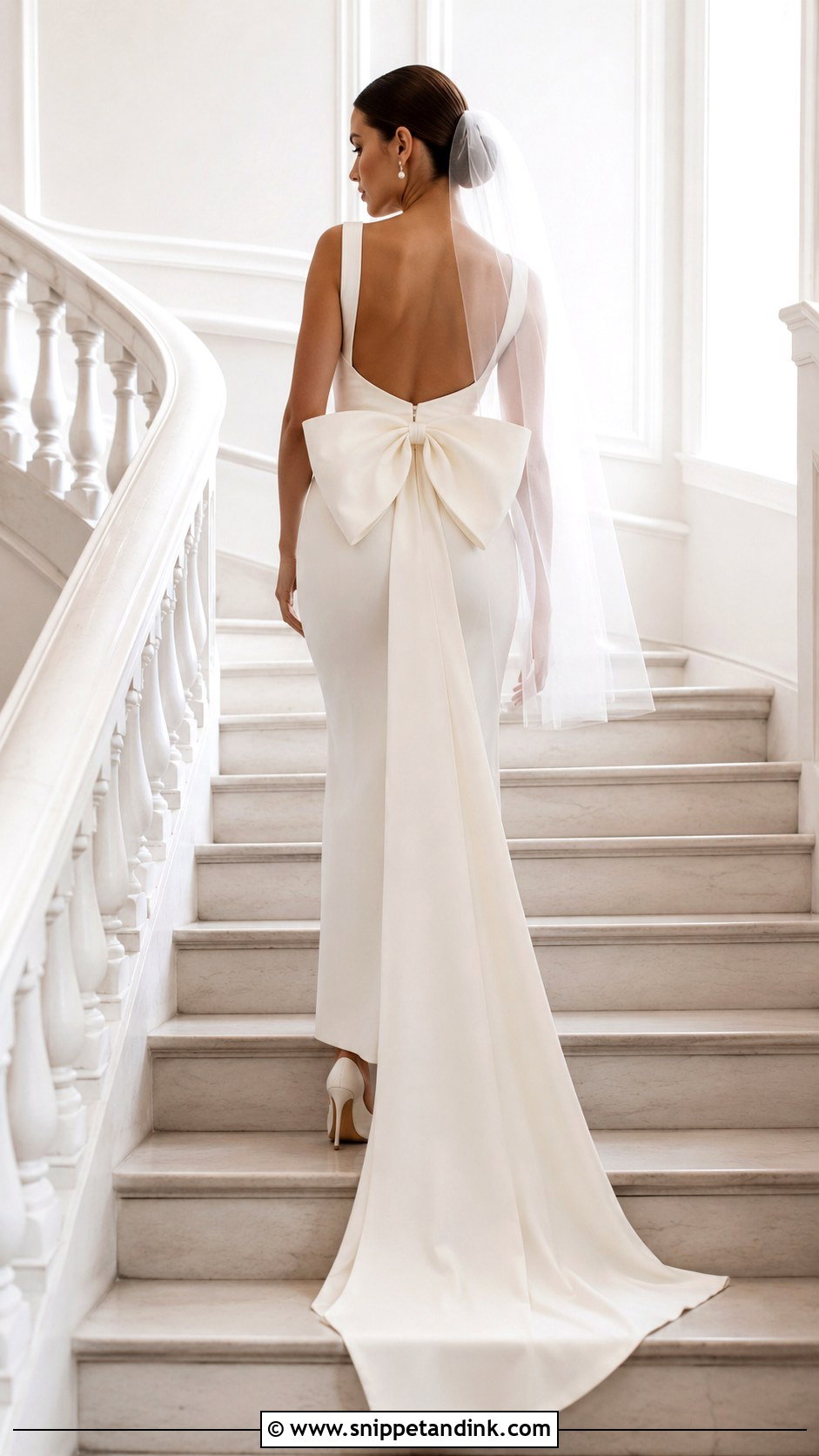
A bow at the back makes the rear view the main event, and that’s the side guests see for most of the ceremony. The bow can sit at the waist of a satin ball gown, fall behind a column, or trail into long tails that act as a train. The thing I check is how it sits when you’re seated; big bows crush in a chair and stay flattened for photos unless they’re stiffened inside. If the bow is removable, fit the dress both with and without it before the final alteration. Wear your hair up so the bow isn’t hidden, and keep the bodice plain so the outfit doesn’t look busy on both sides.
12. One Shoulder Draped Train Dress
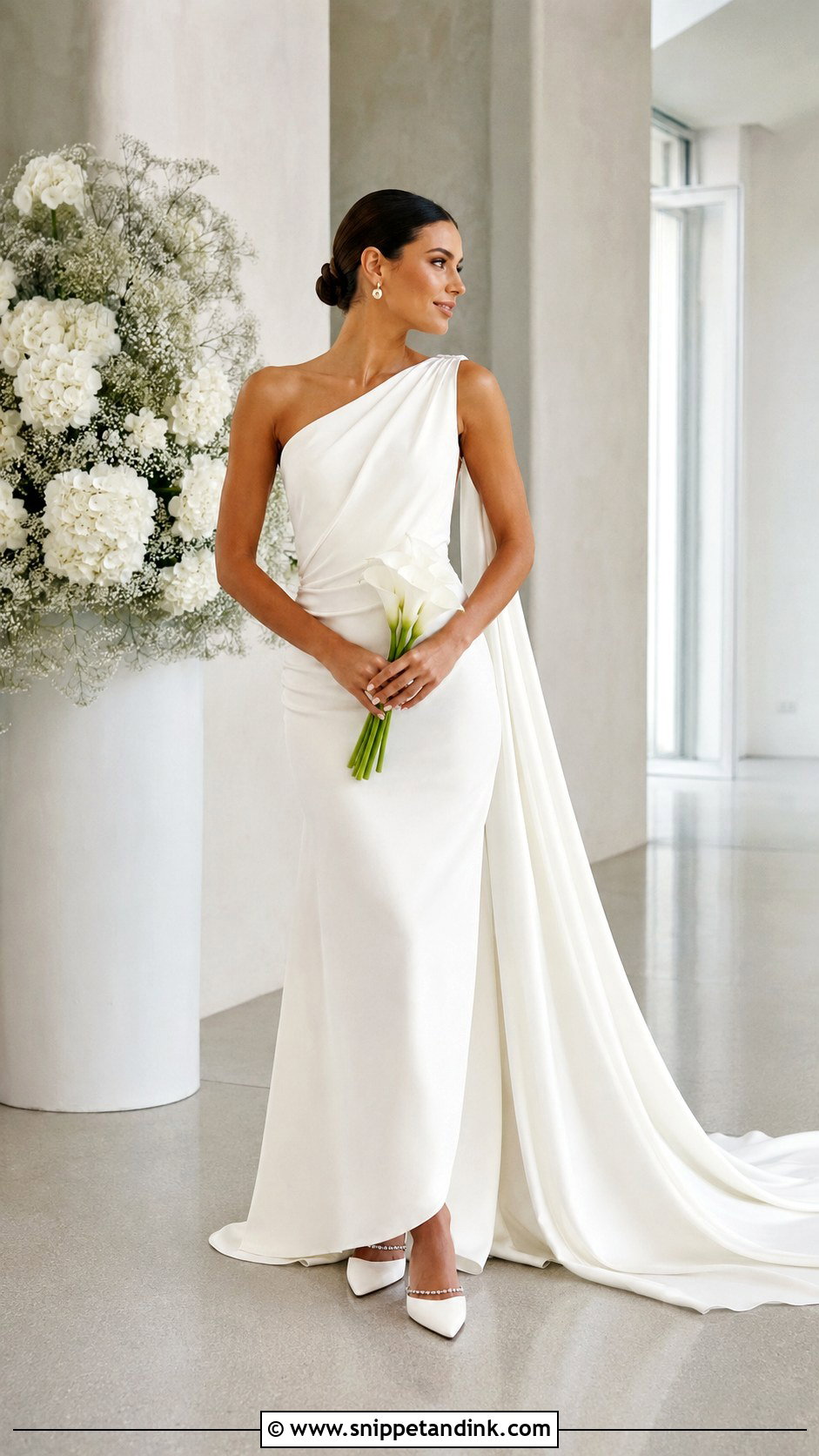
Draping is what makes this dress, so the fabric has to fold cleanly without bulk. Crepe, satin and silk-weight fabrics do that; stiffer weaves bunch at the shoulder. I’d choose a column or narrow A-line with the drape continuing across the waist into a court or chapel train. Skip the necklace entirely, as it fights the asymmetric line. One statement earring on the bare side is the stronger choice. At the fitting, walk a few steps and turn sharply, because draping that crosses the hips can tighten across the legs and shorten your stride.
13. Halter Neck Open Back Train Dress
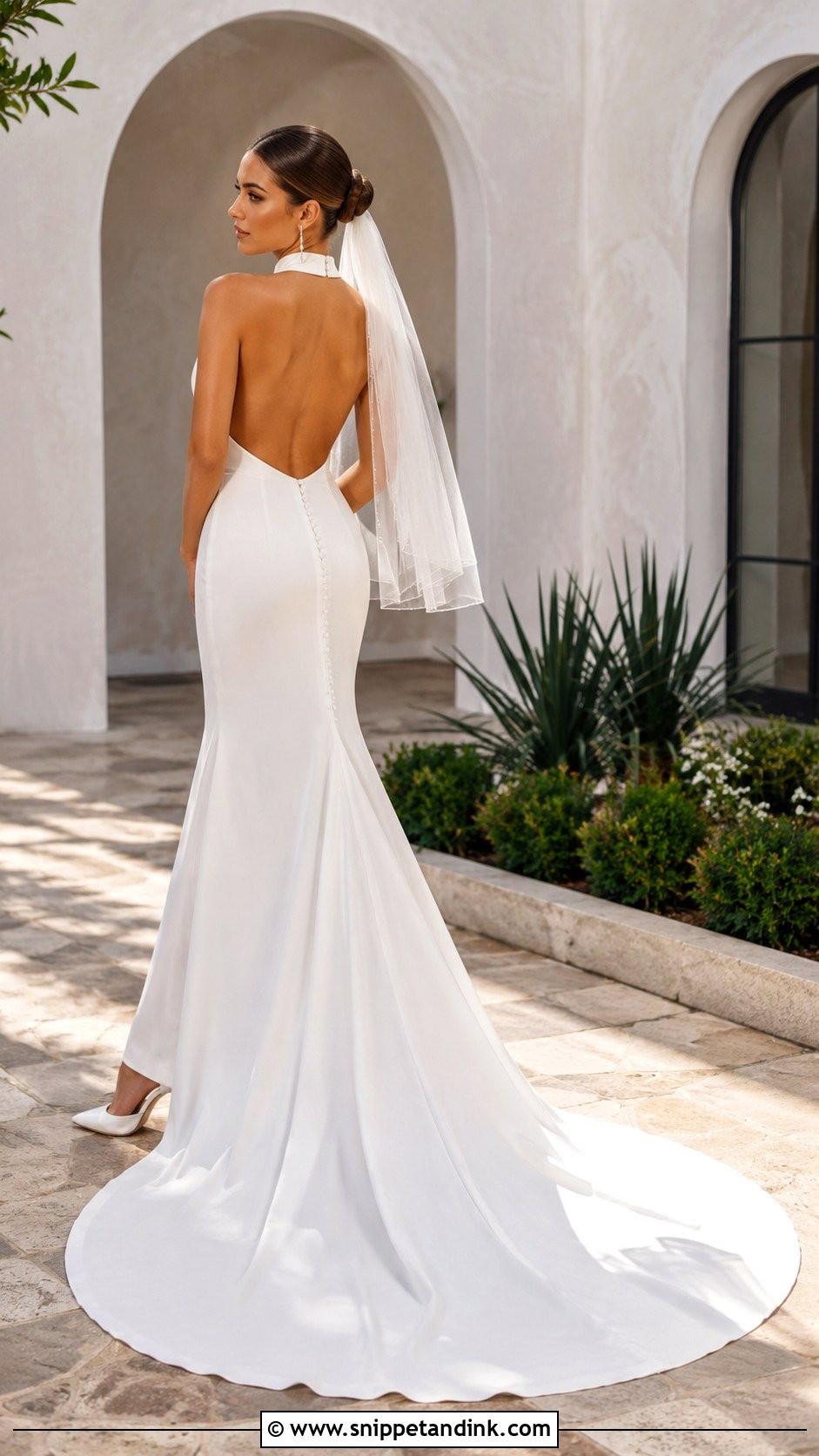
A halter front with an open back looks almost plain from the guests’ seats and then reveals itself as you walk away from them. Support is the hard part. A deep back leaves nowhere for a standard bra, so you’ll need built-in cups, a low-back foundation piece or careful taping, and I’d raise that at the very first alteration appointment rather than the last. Crepe gives the most minimal finish; lace A-line feels softer. An updo is close to non-negotiable here, since loose hair covers the back entirely. Attach a narrow veil below the bun so it frames the open back instead of hiding it.
14. Corset Bodice Ruffle Train Dress
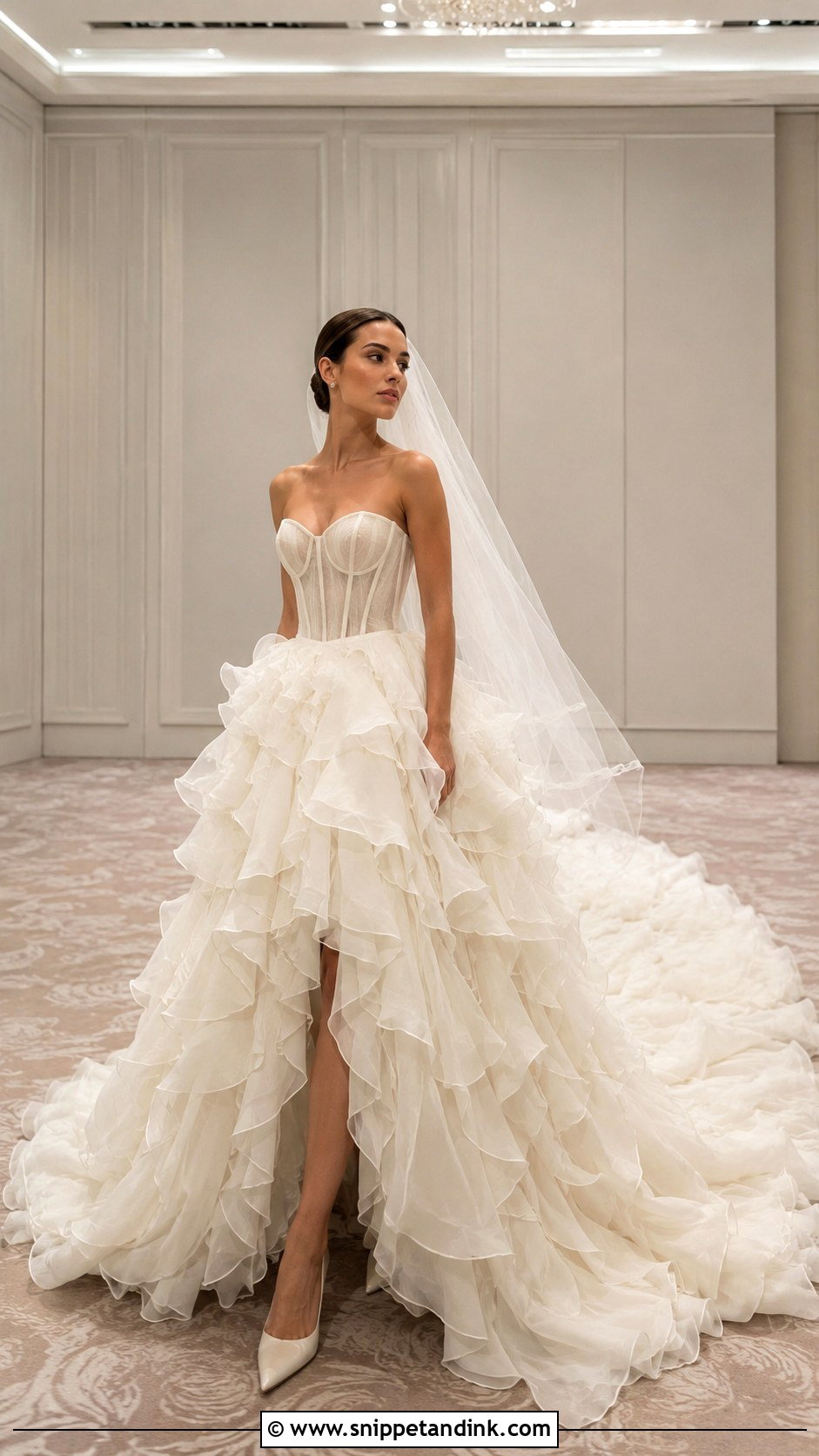
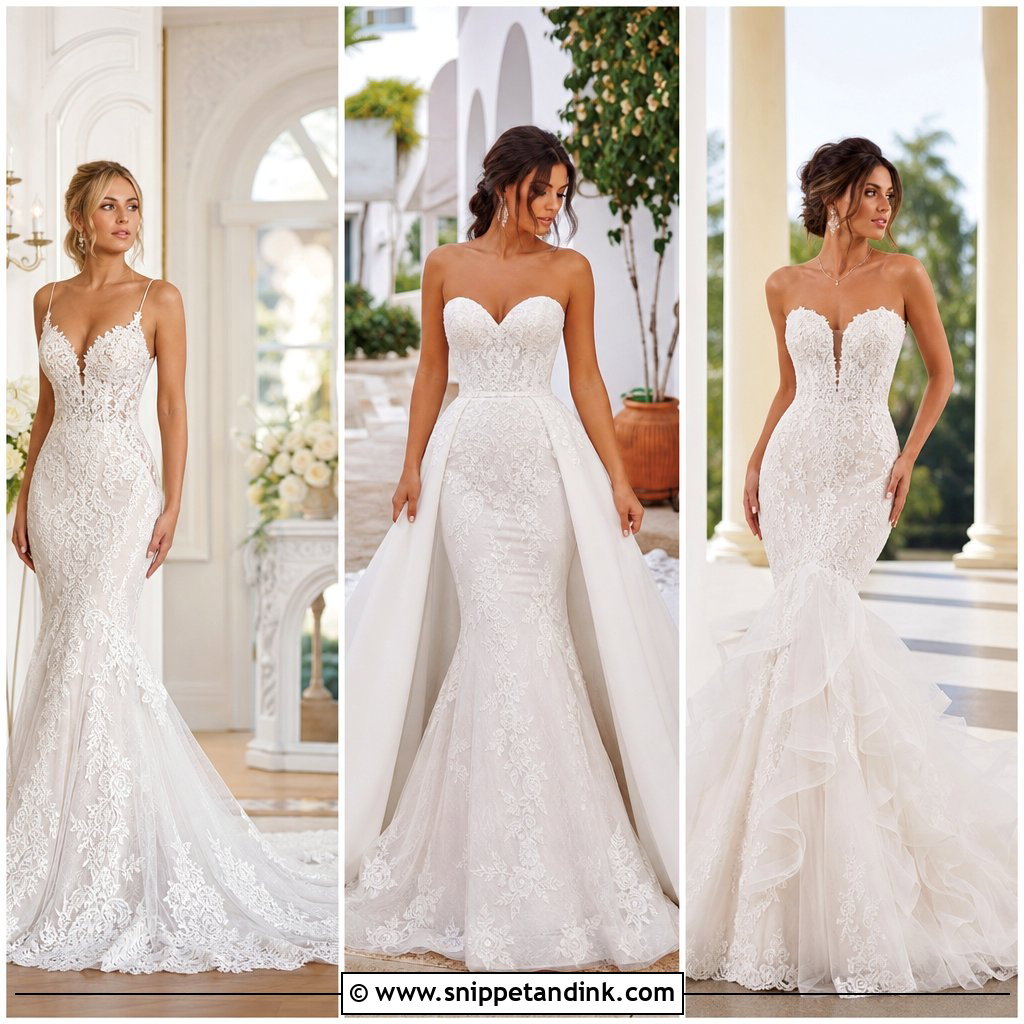
Cascading ruffles behind a corset bodice create a lot of movement, and that volume is exactly what needs managing. I prefer the ruffles to start below the waist so the torso stays defined; ruffles creeping up the bodice blur the shape. Organza ruffles hold their curl better than soft tulle, which flattens after hours of sitting. Test the gown on stairs and on the actual floor of your venue, as layered ruffles drag on carpet and catch on rough stone. Ask the seamstress for a bustle that spreads the layers over several points, otherwise all that fabric bunches into one heavy knot at the back.


15. Minimalist Slip Train Dress
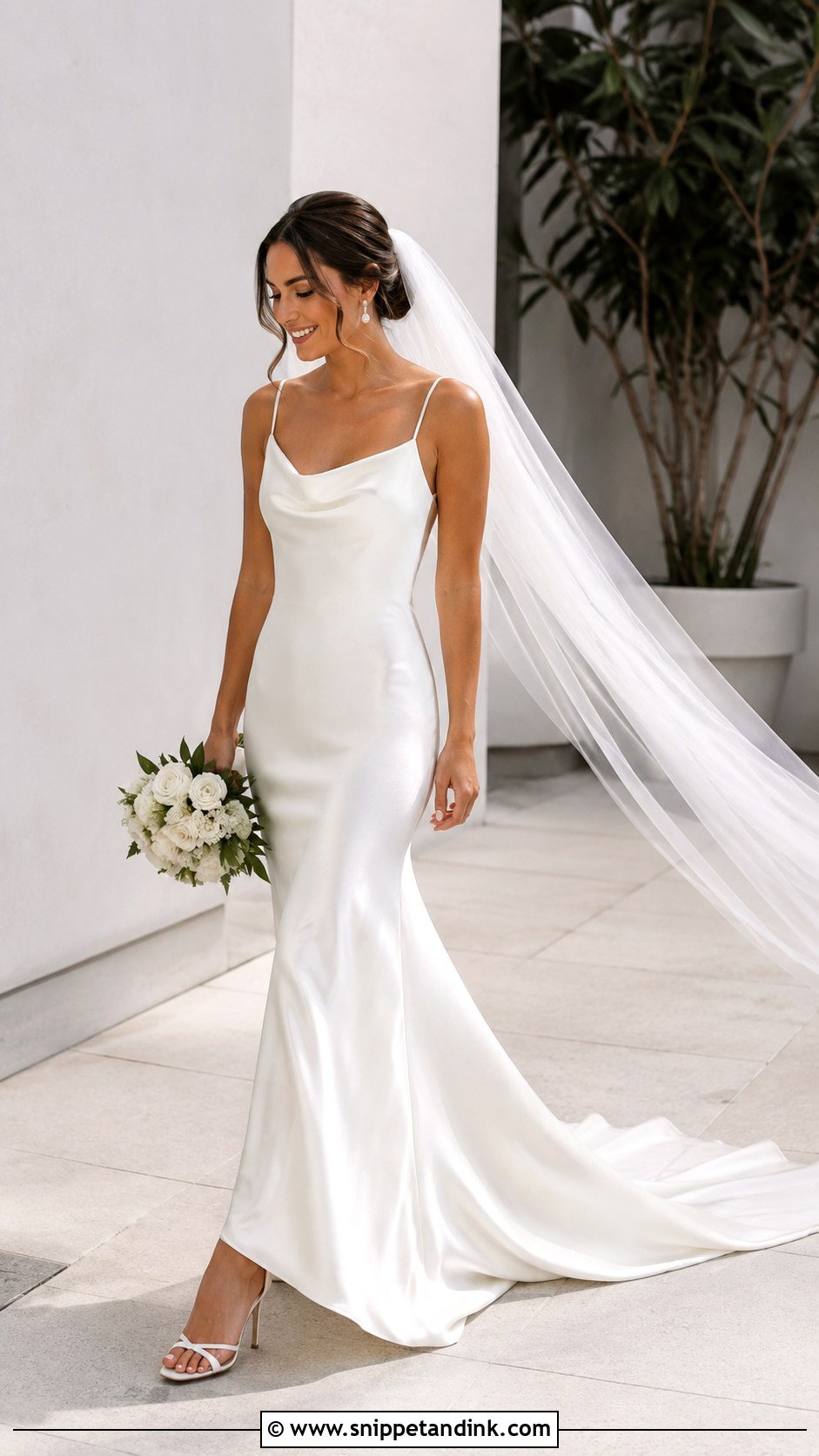
A bias-cut slip with a soft sweep train is the most relaxed gown here, and also one of the hardest to fit well. Bias-cut satin stretches and clings, so it shows every line underneath. I’d pick foundation pieces at the same time as the dress and wear them to every fitting. Thin straps look delicate; wider ones give real support if you’re fuller in the bust. The hem is where these dresses usually go wrong. The train should skim the floor, and a hem cut even slightly short makes the fabric bunch behind your heels as you walk.
16. Plus Size A-Line Bridal Train Dress
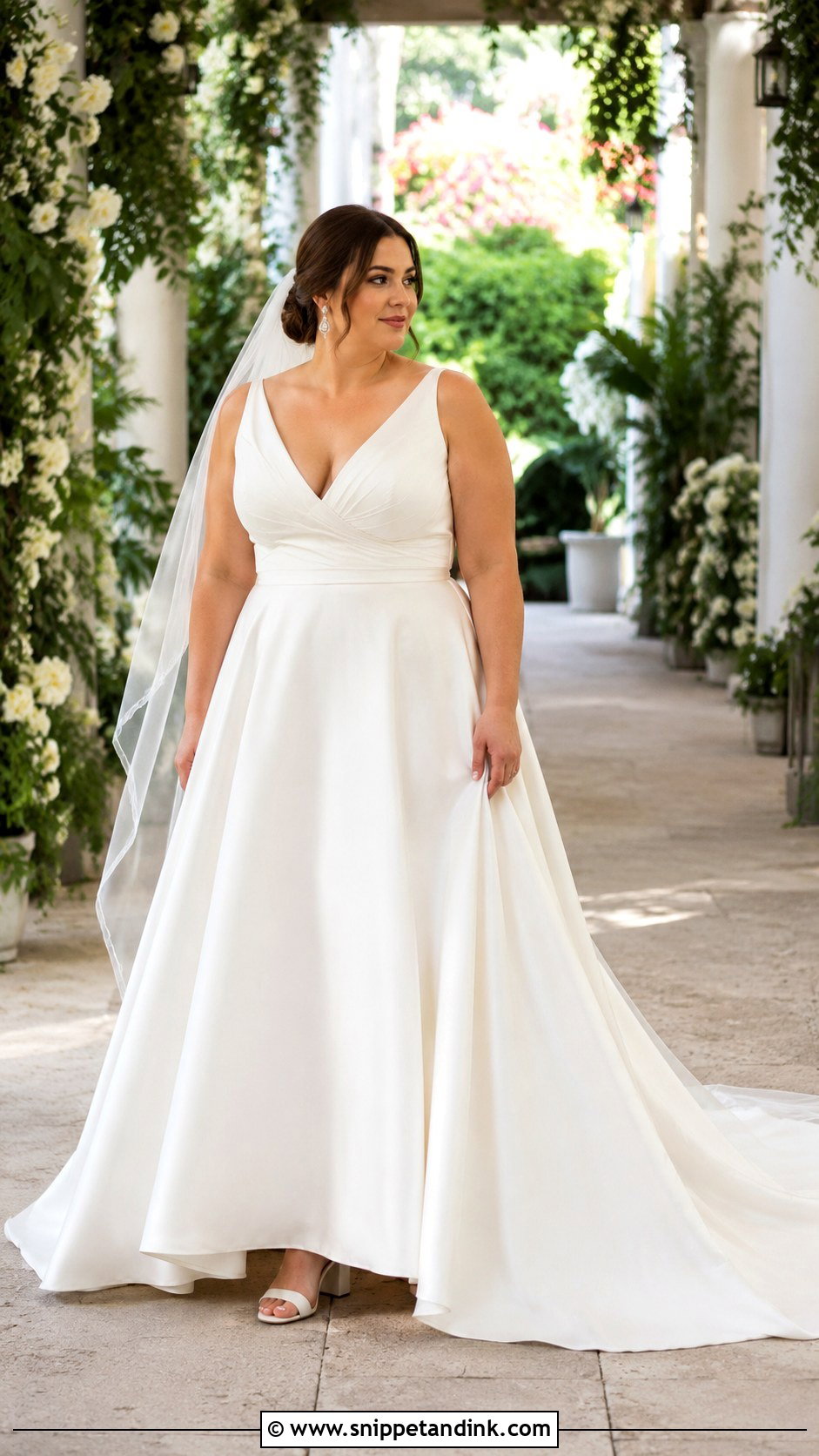
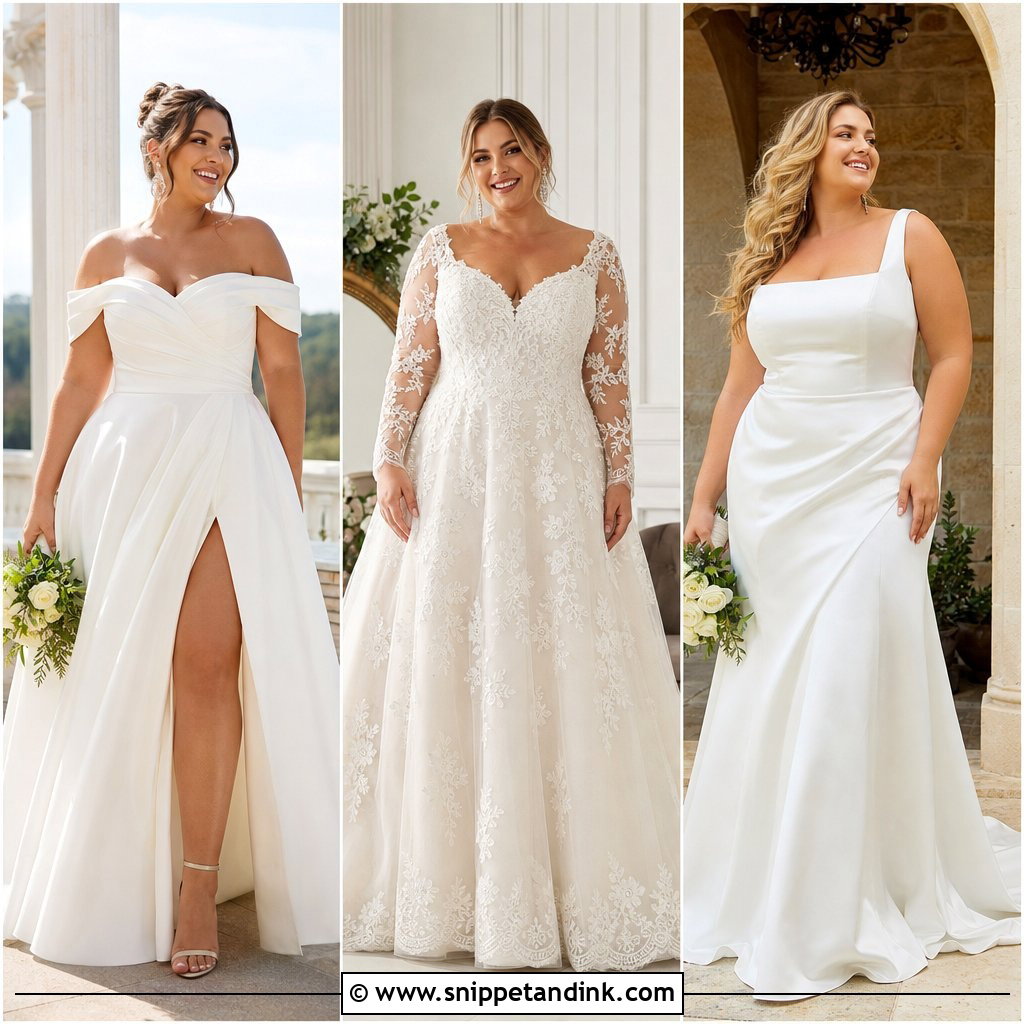
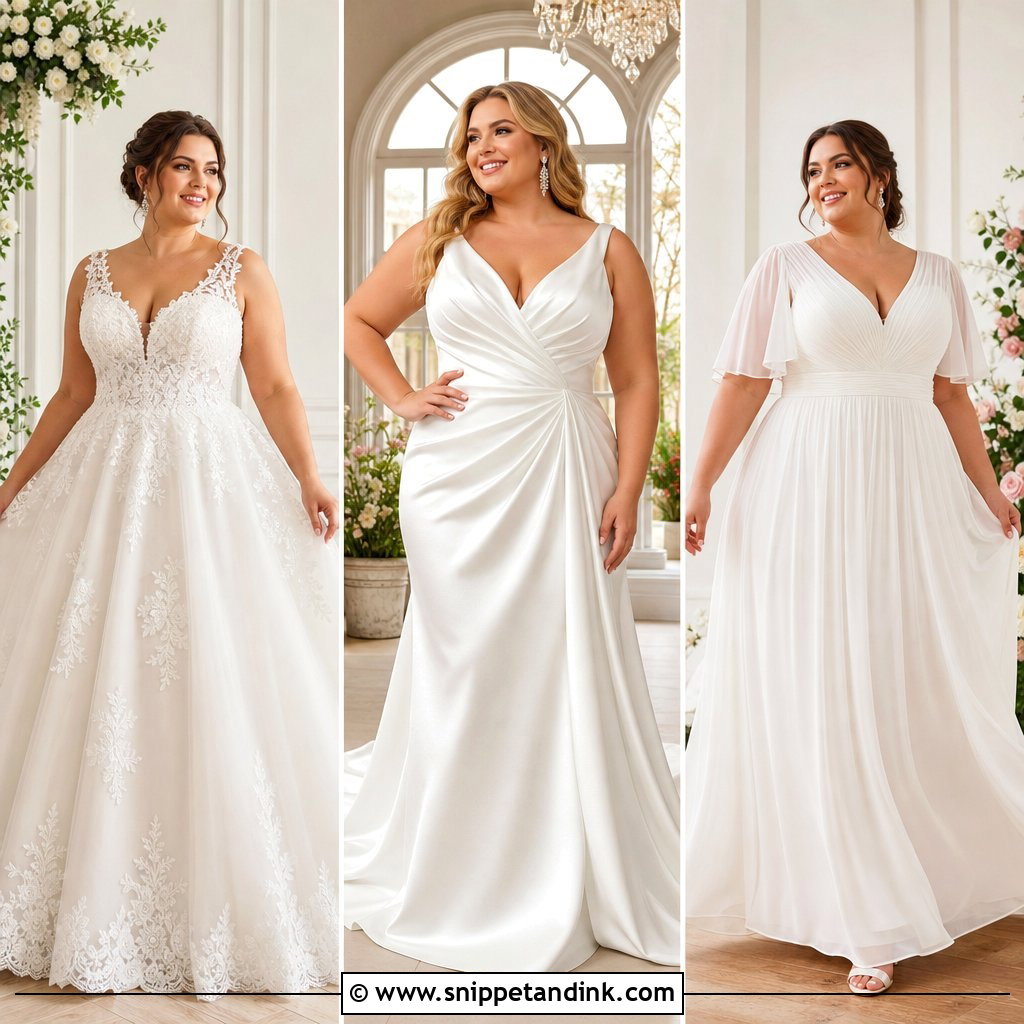
A well-built A-line with a chapel train gives balanced shape and movement across a wide size range, provided the structure inside is doing its job. I look for seaming that shapes the bodice, boning or a corset back that holds without digging, and straps or sleeves that stay put when you lift your arms. A defined natural or basque waist keeps the skirt from looking like a block of fabric. Order to your largest measurement and take in everywhere else; a dress ordered too small has very little seam allowance to let out. At fittings, sit, raise your arms to hug, and turn, because that’s how you’ll actually spend the day.
17. Petite Bridal Sweep Train Dress
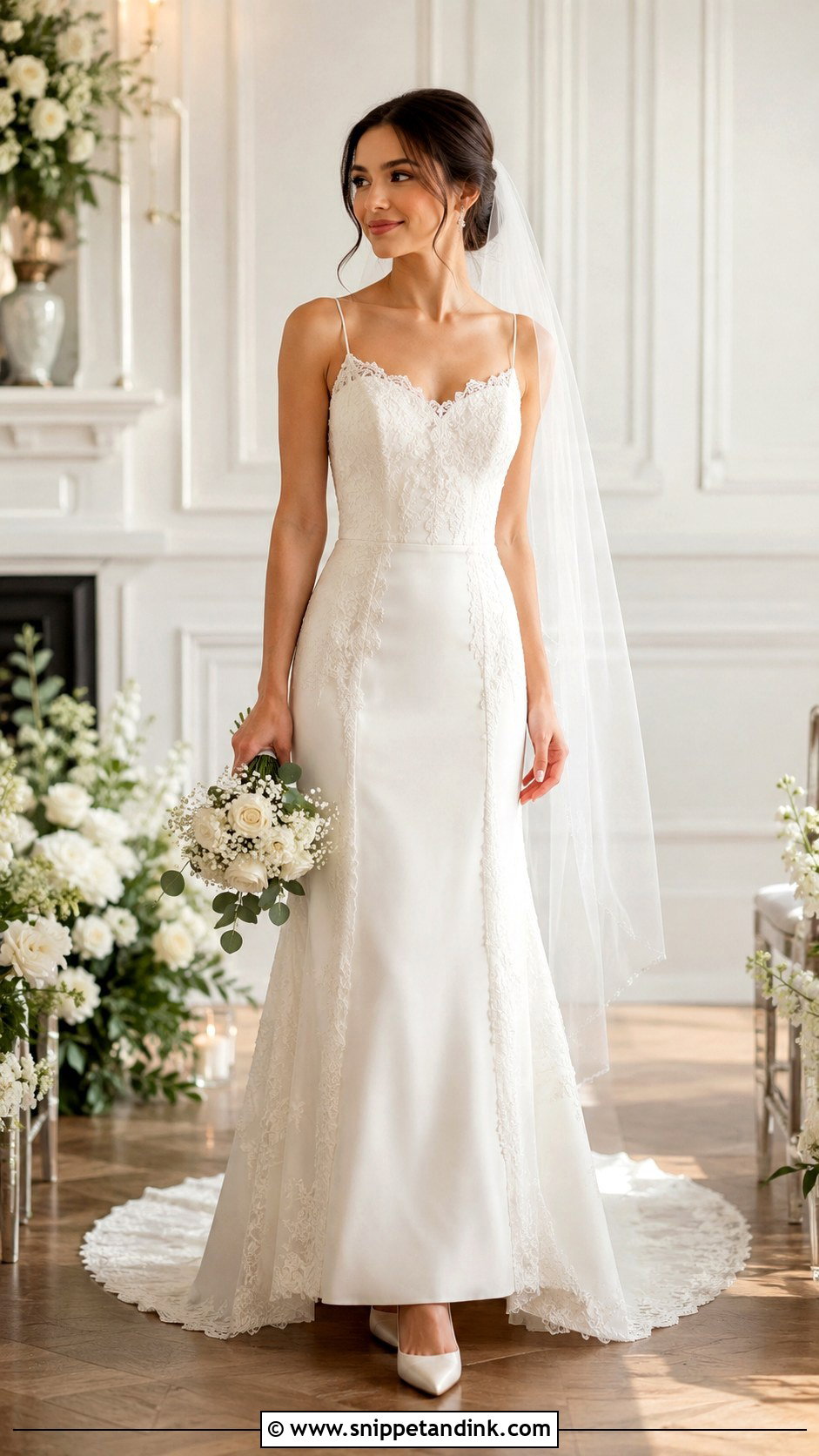
A train can work on a petite frame as long as the dress is cut to your proportions rather than chopped down from a sample. Sweep trains are the easiest scale; a fitted A-line or softly flared sheath keeps the line long. Vertical seams and smaller lace motifs help, while big appliqués can overwhelm a short torso. Start alterations early, because on a petite bride the waist position, strap length and skirt fullness often all need moving, not only the hem. If the lace has a scalloped border at the hem, ask the seamstress to take the length from the waist instead so the border survives.
18. Convertible Overskirt Train Dress
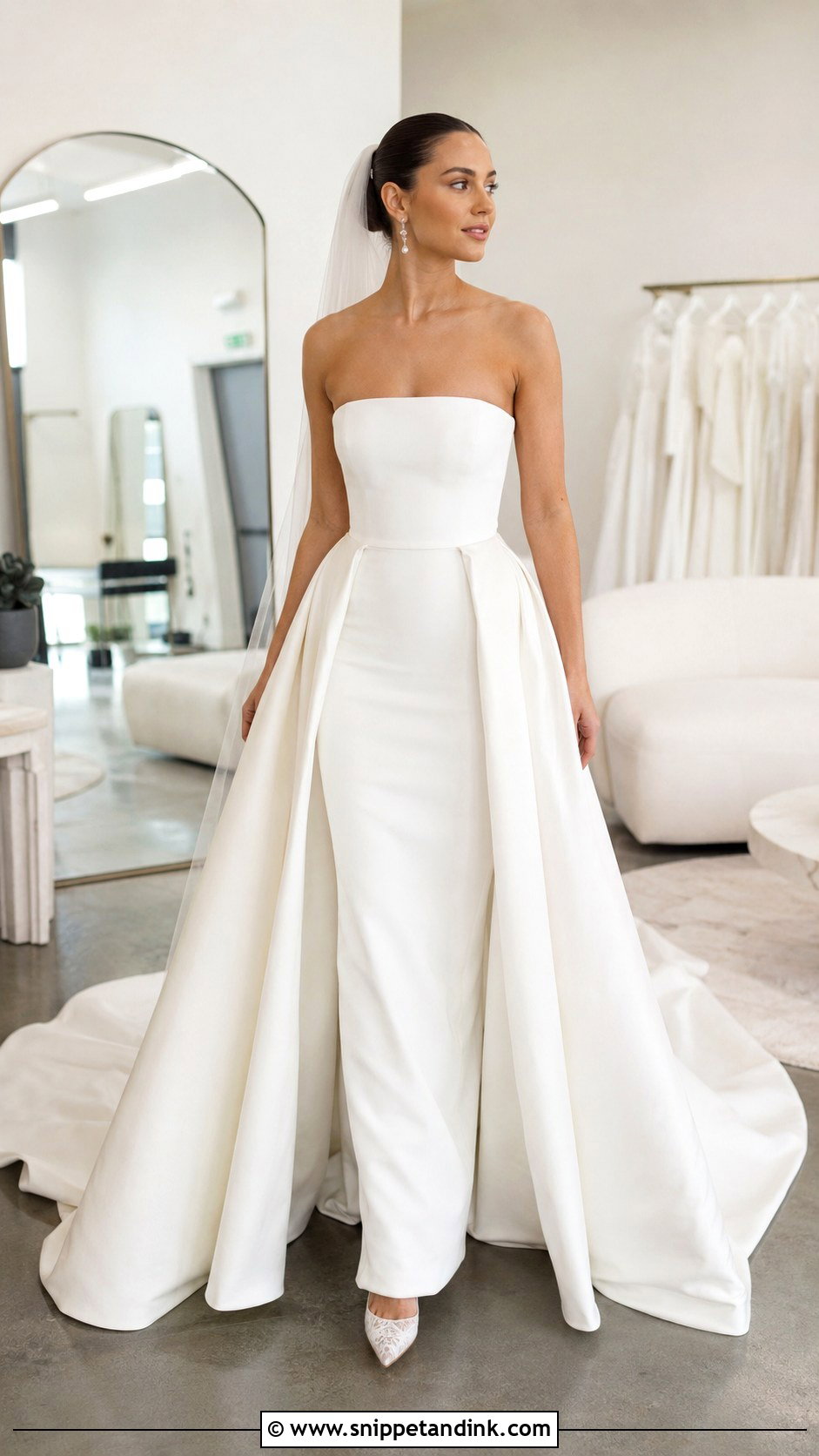
An overskirt lets you wear a full ceremony silhouette and then reveal a sleek dress underneath for the reception. It works over a fitted column, sheath, or mermaid gown, attached at the natural waist. Tulle gives a soft cloud, lace adds pattern, and Mikado builds a structured ball-gown shape. Overskirt trains can be made in sweep, chapel, cathedral or longer lengths depending on how much drama you want for the ceremony. I always test the attachment by walking, sitting and turning in it, and then look at the bare waistband once it’s off, since loops or gaps there are hard to ignore. Have someone ready to hang the overskirt on a padded hanger after you remove it, so it’s clean if you want it back on for night portraits.
19. Champagne Bridal Train Dress
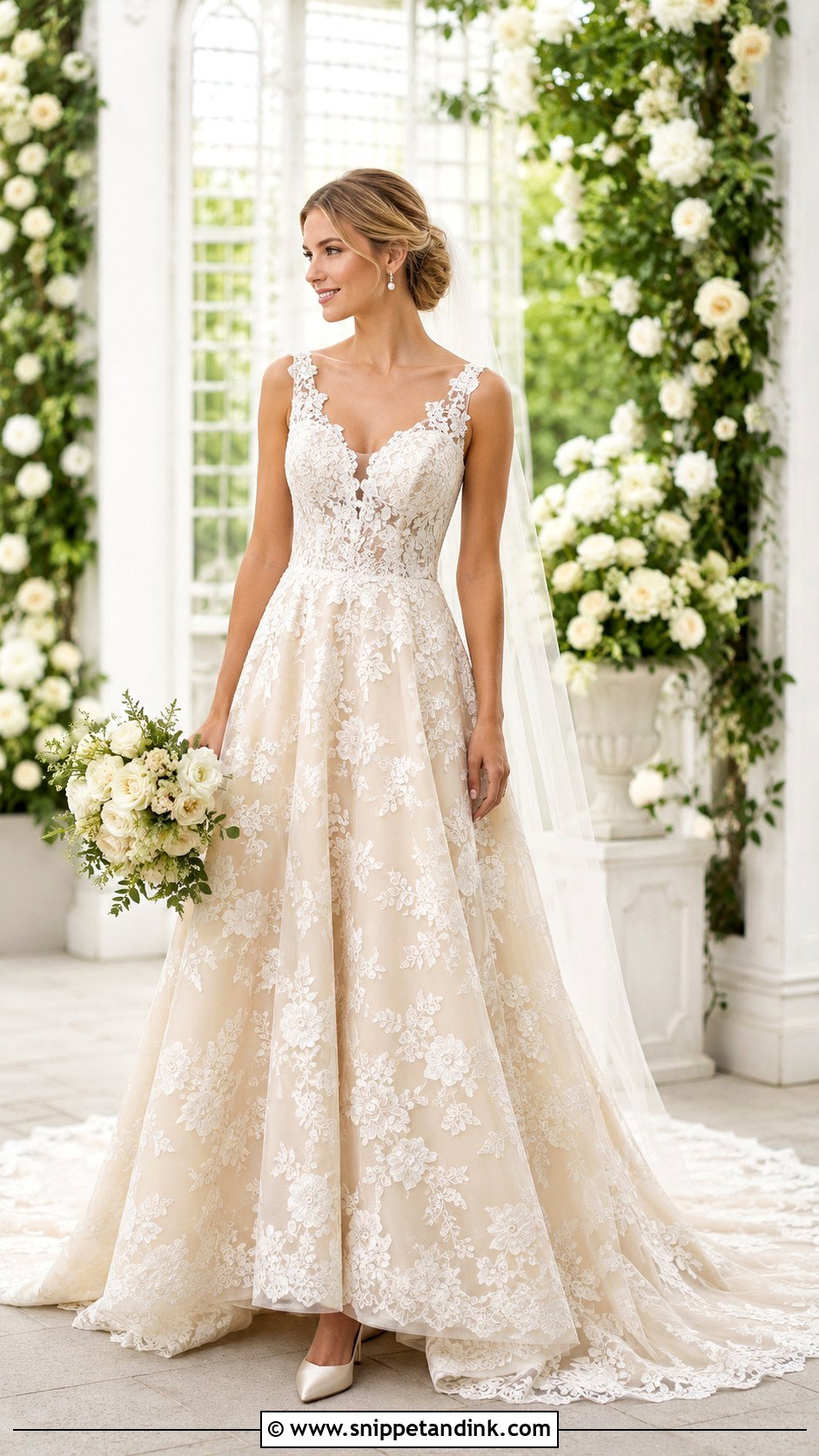
Champagne is a warm base that sits under ivory lace, pearl beading or sheer tulle and gives the surface detail more definition than an all-white dress. The catch is that champagne varies a lot, from pale beige to something close to gold, and the shade can shift with skin tone and lighting. I always take a champagne gown to a window and then under warm indoor light before a bride decides. A chapel train is easier to manage; cathedral reads more formal. Neutral satin pumps and gold or pearl earrings suit it, and a cream, white and green bouquet keeps the colors from matching too exactly.
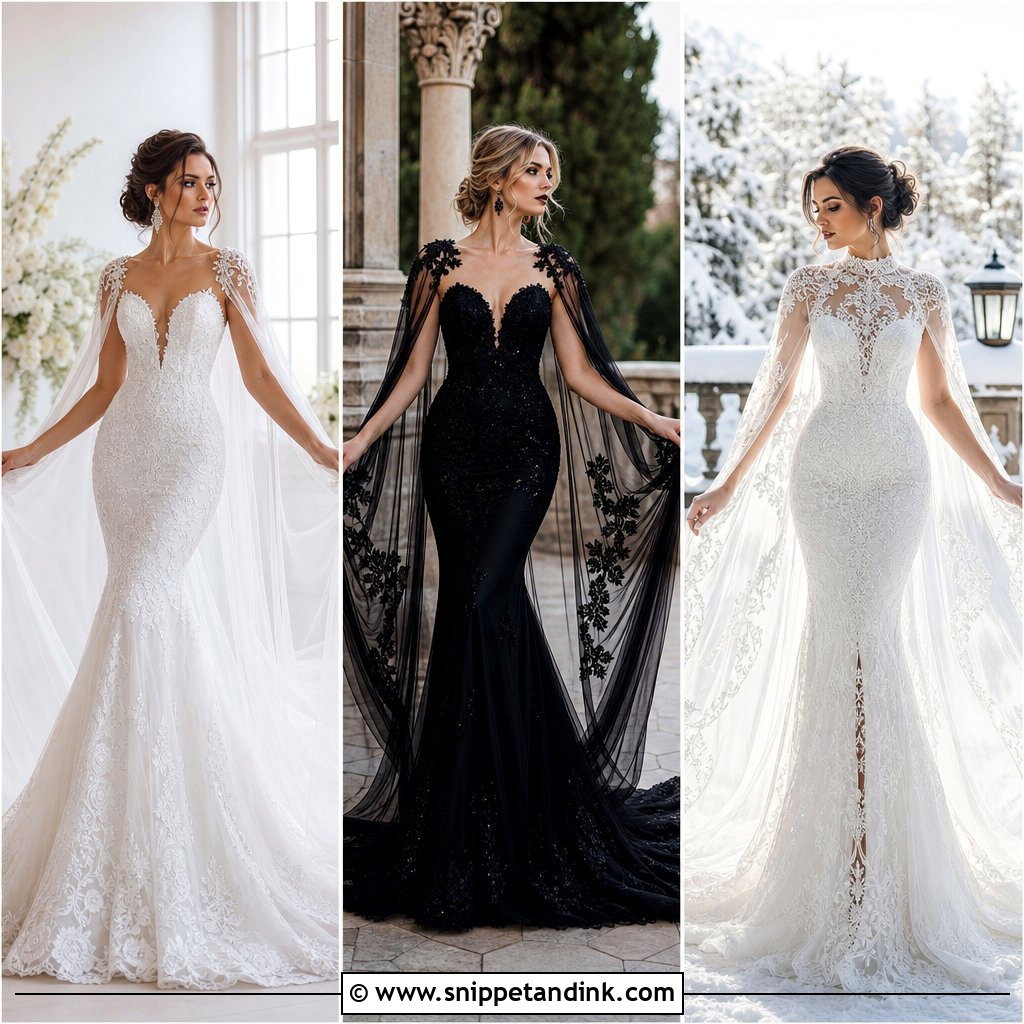
20. High Neck Modest Bridal Train Dress
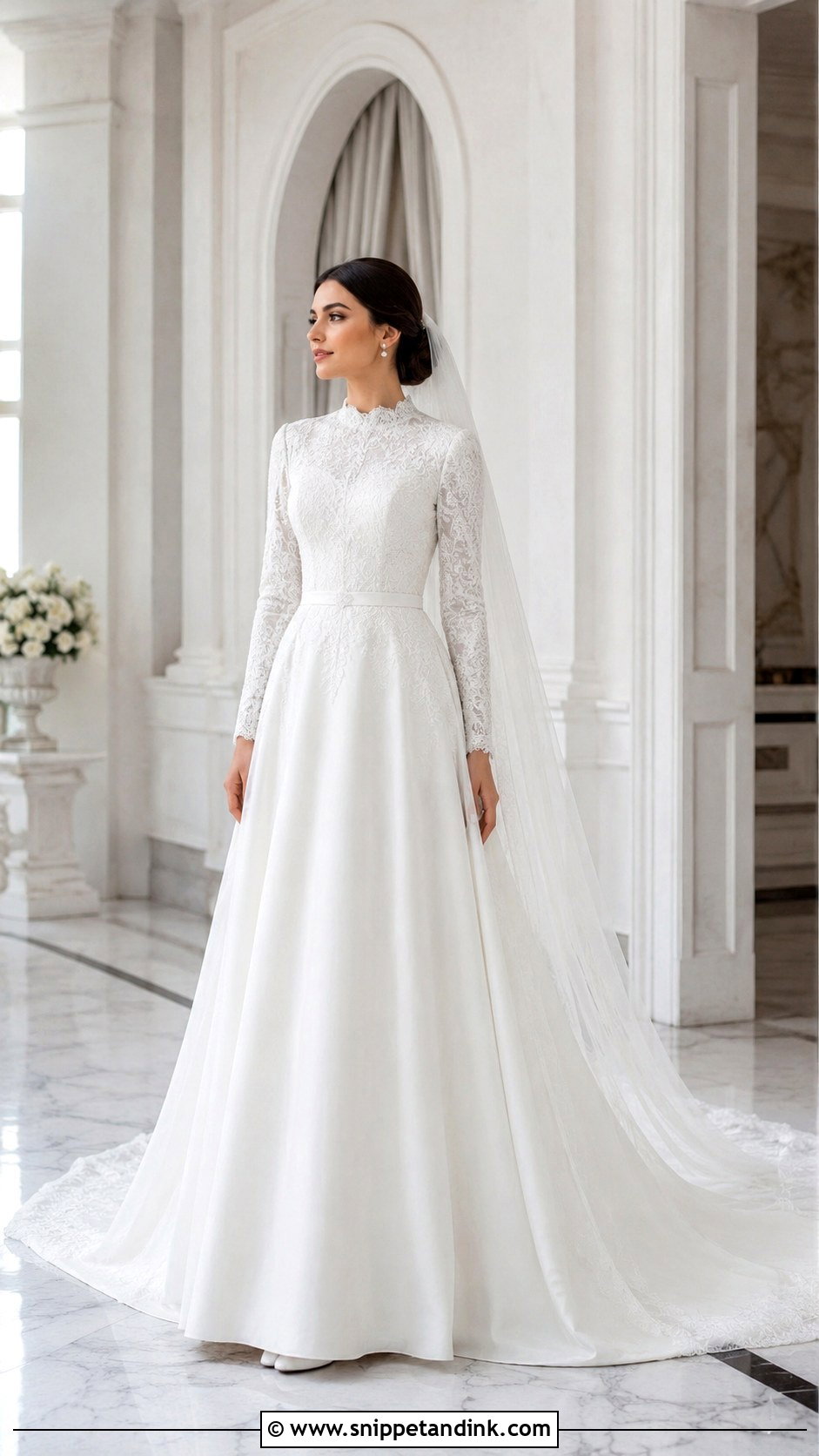
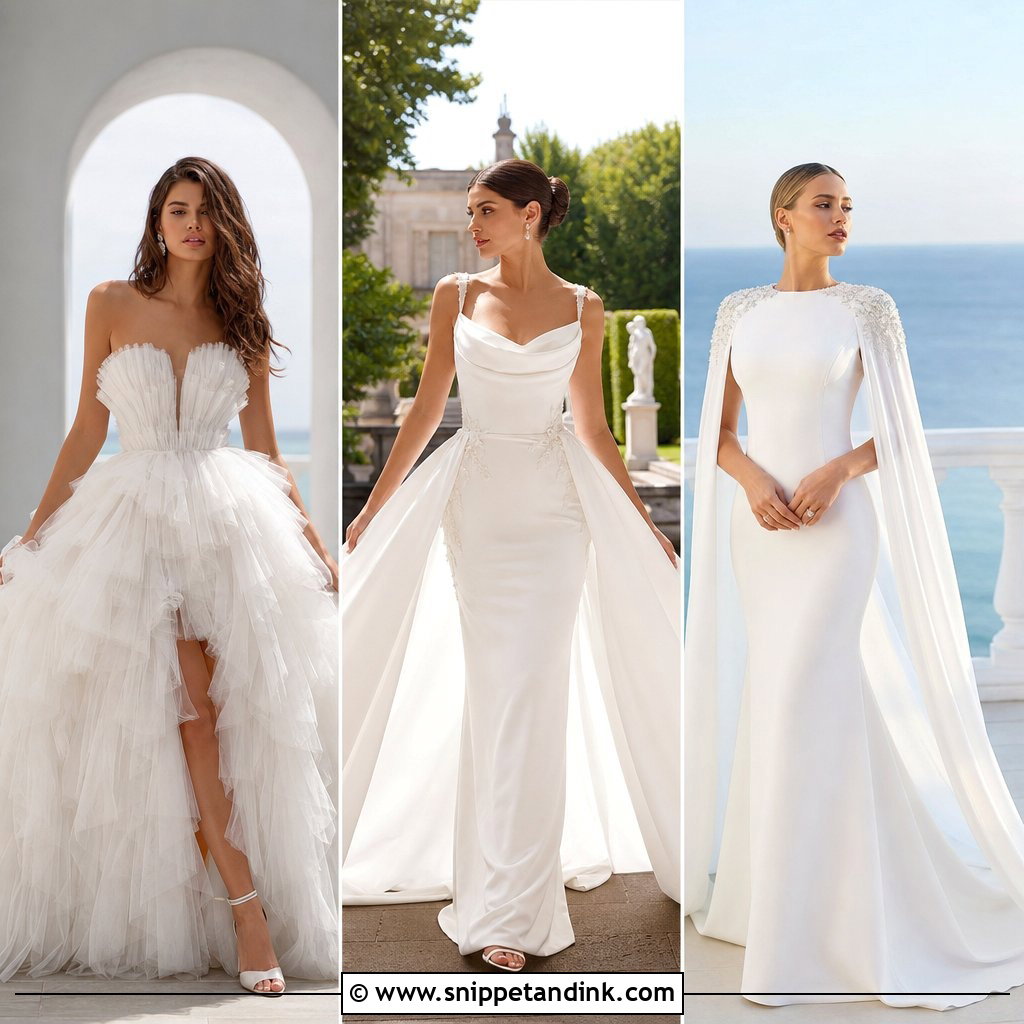
A high neck with a train gives full coverage while still feeling modern. It can be a lined lace bodice, a smooth bateau neckline, or a structured collar, paired with long sleeves or neat cap sleeves. Because so much of the upper body is covered, the waist has to be defined, or the dress reads as a straight column of fabric. I attach the veil beneath the bun with high necklines so it follows the train without sitting bulky on the shoulders. Leave the necklace off unless the bodice is completely plain. At fittings, turn your head fully and bend your elbows; collars and fitted sleeves are where these gowns become uncomfortable by evening.
The Bustle Is Half the Dress
Almost every gown on this list needs a bustle after the ceremony, and a weak one is the most common train problem I see. Most bustles fall into a few types. An over bustle hooks the train up onto the back of the skirt, so it reads as a draped layer. An under bustle, often called a French bustle, tucks the fabric underneath with ribbon ties, which keeps the outside smooth. A ballroom bustle uses several points to lift the hem evenly so the skirt looks like it was always floor length.
Which one suits you depends on the fabric. Heavy satin and Mikado need more points to share the weight. Lace and appliqué gowns need points placed inside motifs so they disappear. Light chiffon or a slip dress may only need one or two.
Teach someone, then write it down
Bring the person who will bustle you to the final fitting and have them do it twice. I also suggest color-coding the ribbons or numbering the loops with a tiny tag, because after the ceremony it’s usually done in a corridor with poor light and no time. Take a phone photo of the finished bustle from behind so they can check against it.
When fabric gets dirty or torn on the day
Pack a small kit: white chalk for marks on ivory fabric, a lint roller, a few safety pins, needle and thread in the dress color, and clear tape for a hem that drops. Don’t rub a grass stain or a spill on the day, as that spreads it into the weave. Blot, leave it, and tell your cleaner exactly what it was when the gown goes in after the wedding.
Fabric, Floor and Fitting Room Habits That Decide Your Train
A train that looks dramatic in the shop only works if it’s built to hold up and you feel in control wearing it. These gowns cover short sweeps, chapel lengths, full cathedral and royal trains, detachable versions, size-inclusive cuts and modest designs. Before you commit, picture the floor you’ll walk on, the length of the aisle and how much help you’ll have. Walk, sit and turn in every gown you’re seriously considering. And bring your actual shoes and underpinnings to every alteration appointment, because a hem measured without them is a hem that will be wrong.
You'll Like These Ideas:




Leave a Reply