
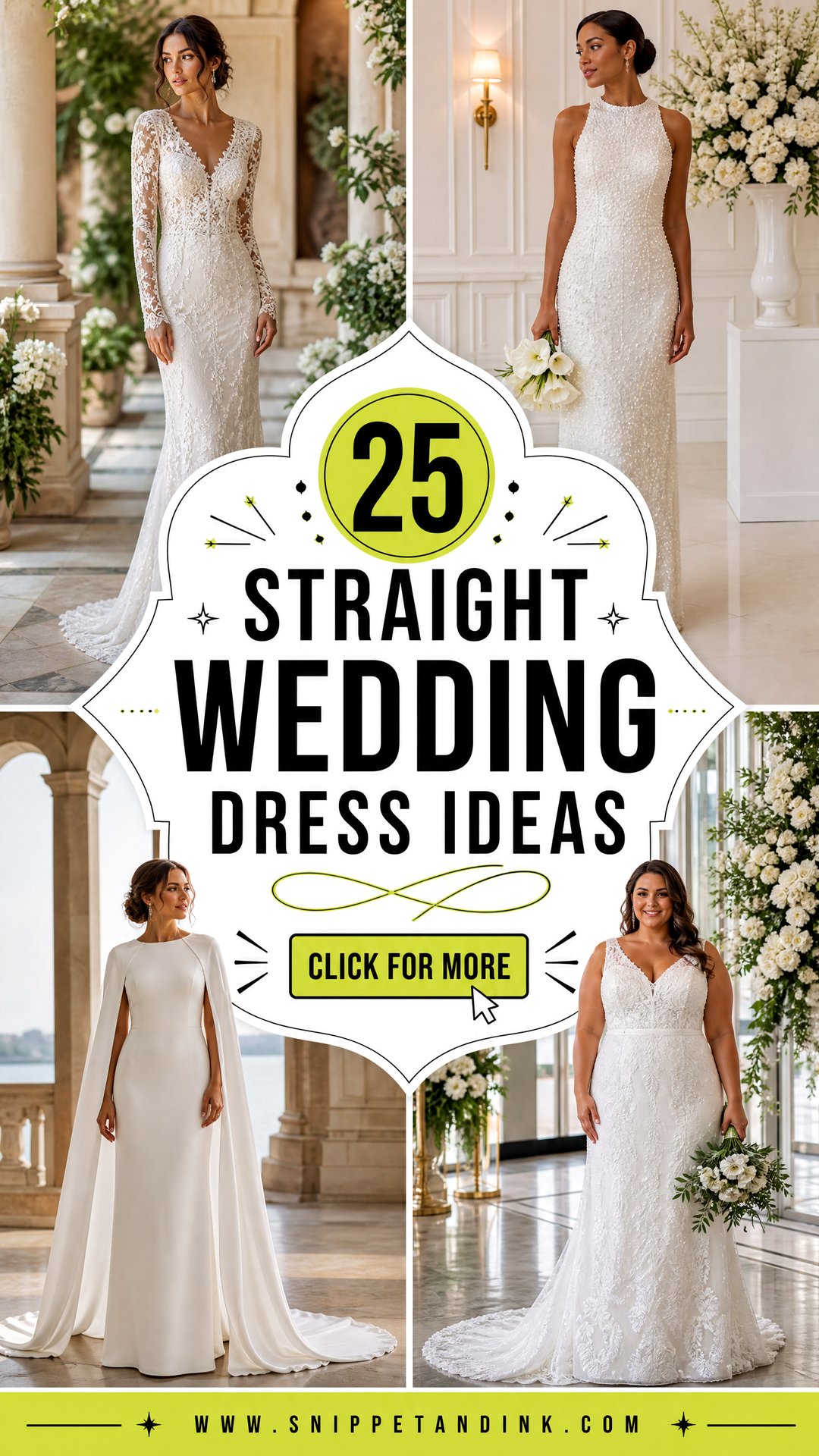
A straight gown is the one silhouette where nothing gets hidden. No petticoat, no flare at the knee, just fabric falling close to the body from shoulder to floor. Sheath, column, slip and narrow-cut dresses all sit in this family, and they suit courthouse vows, beaches, gardens, rooftops and formal rooms alike. The current direction leans on quality fabric, sharp necklines, pearls, bows, detachable trains and good sleeves. I love styling them because small choices show so clearly: change the shoe or the veil and the whole look shifts. Here are 25 versions, with what I’d check in the fitting room for each.
What a Narrow Skirt Asks of You on the Day
A column dress looks simple on the hanger, but it changes how you move. I run brides through the whole day in the fitting room before they commit, because the problems only show up in motion.
Steps, Kneeling and Car Doors
Take a stair in it. If you can’t lift your knee without hitching the hem, you need a slit, a kick pleat at the back or a skirt cut with a touch more ease below the hip. Religious ceremonies with kneeling are the hardest test, so I’d kneel on the fitting room floor at least once. Getting into a car is the other: sit first, then swing both legs in together.
Stretch and Sitting
Fabrics with a little stretch forgive a long dinner; rigid satin and mikado don’t. Sit for five minutes in your top choice and stand up. If it creases across the lap in deep lines, either the fit is too close at the hip or the fabric isn’t right for a seated reception.
Dancing Without Treading on the Hem
Straight skirts have no room to kick, so a floor-length hem gets stepped on the moment you turn. I add a small wrist loop at the back of the train or a single bustle point for the reception. If you plan to dance a lot, a hem that clears the floor by a finger’s width is worth discussing with your seamstress.
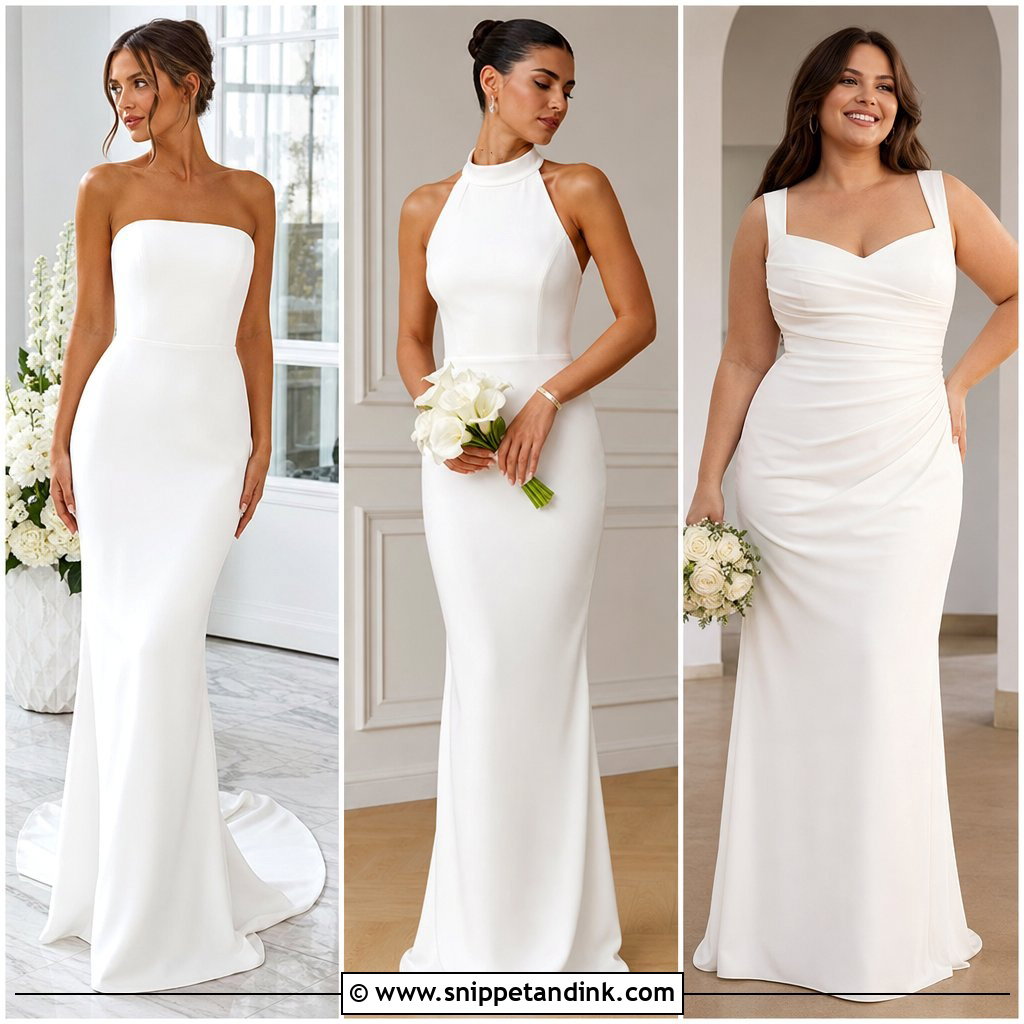
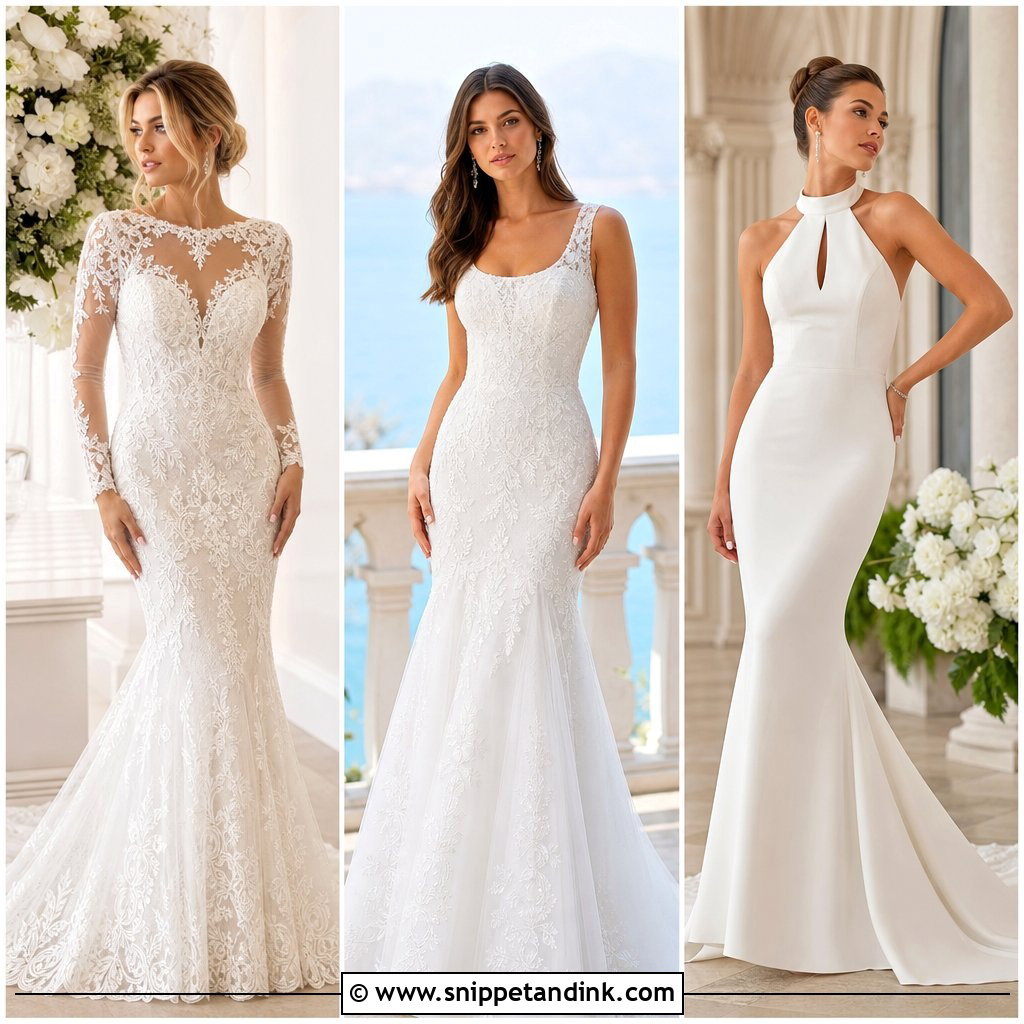
1. Minimalist Straight Wedding Dress
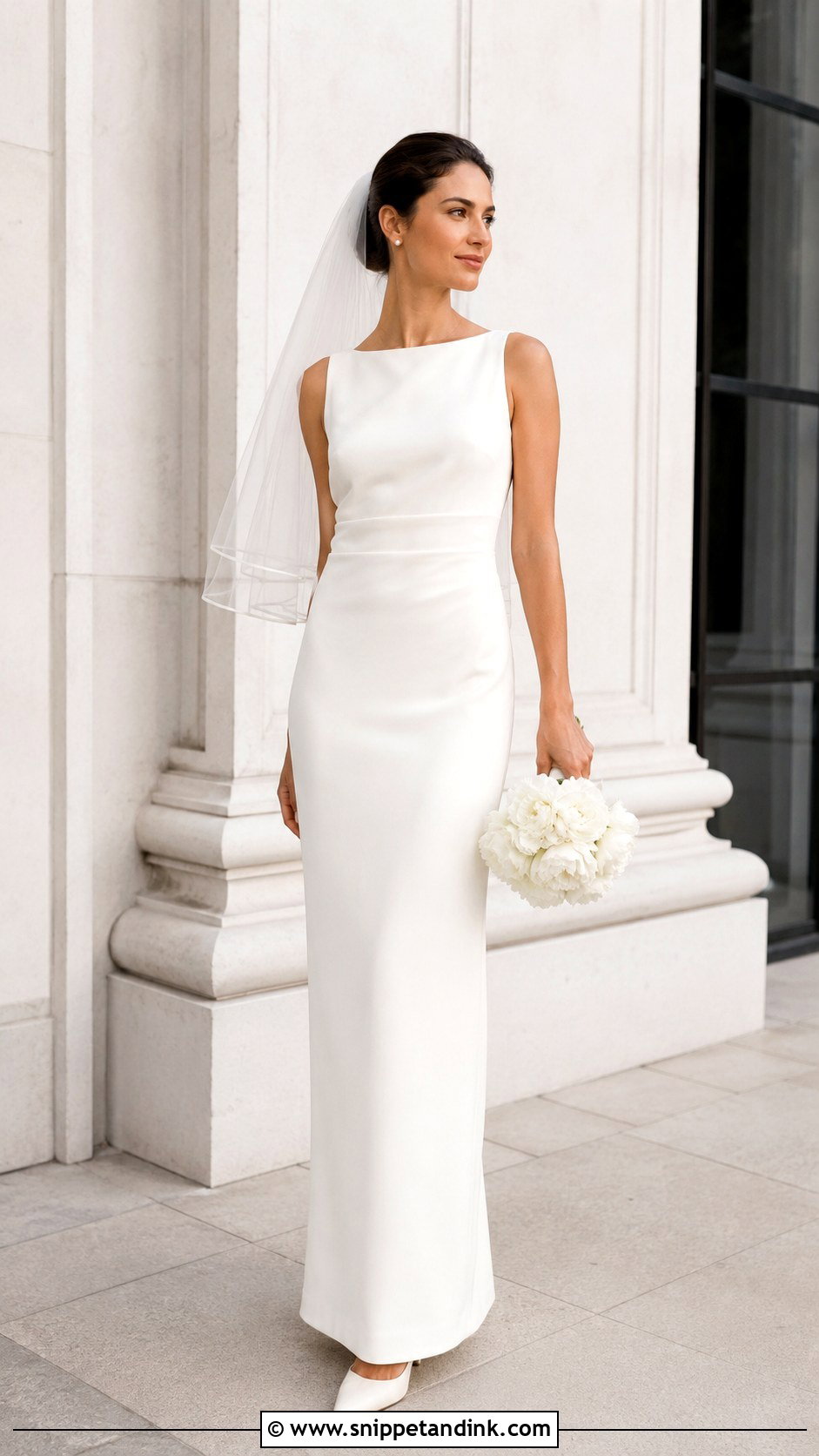
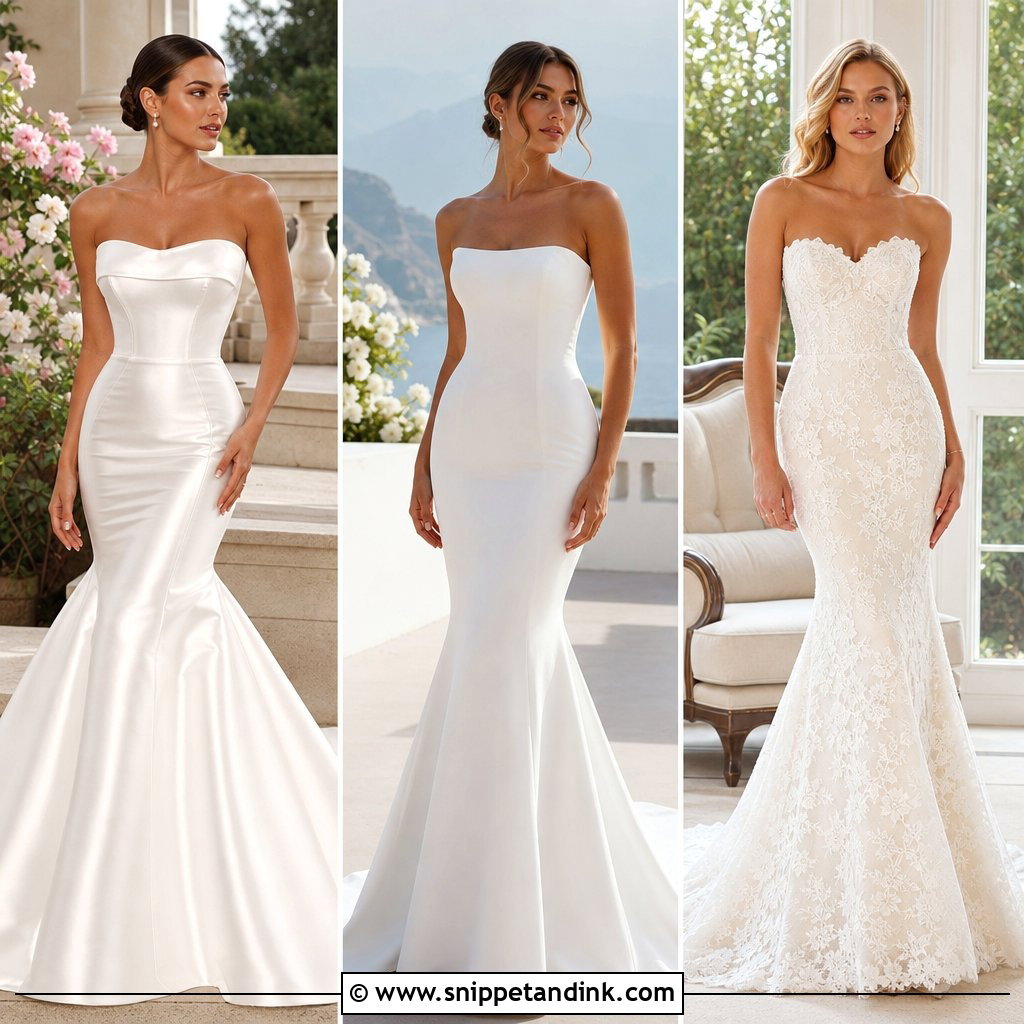
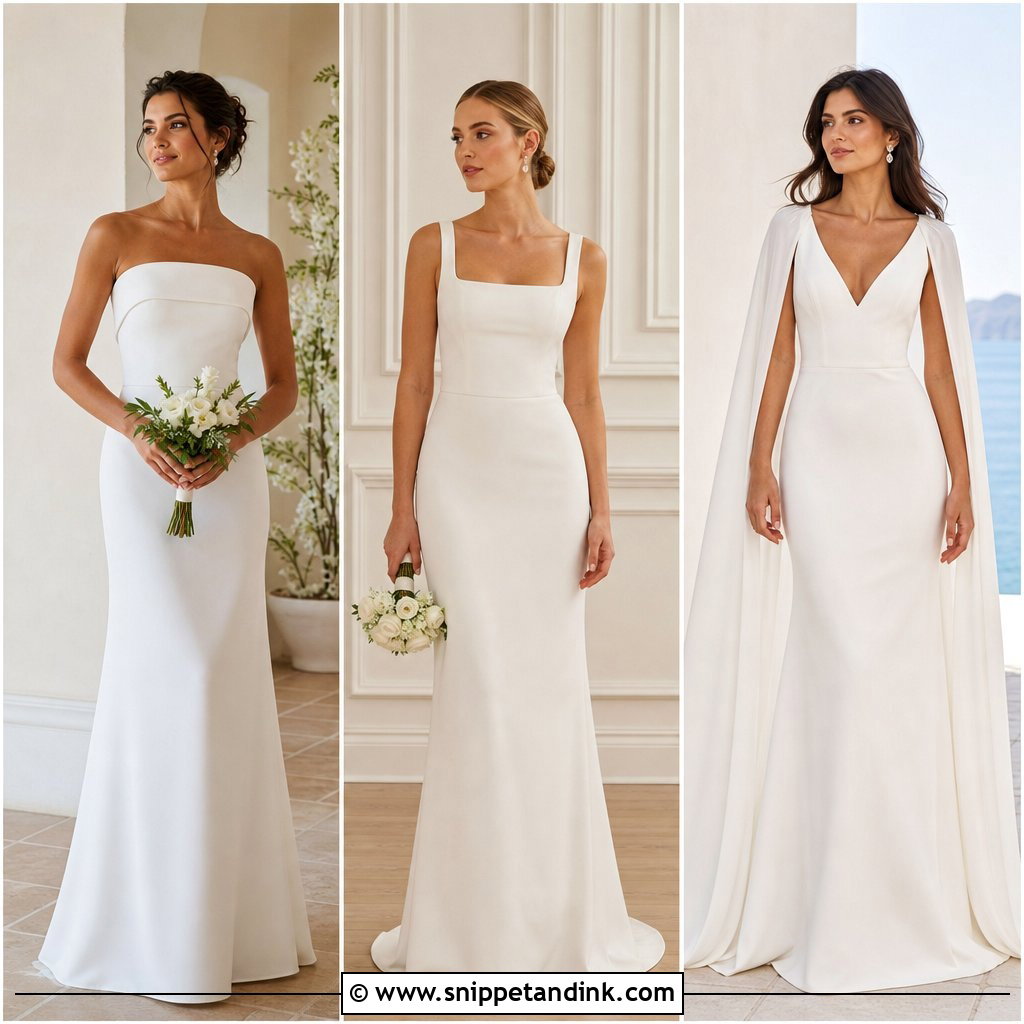
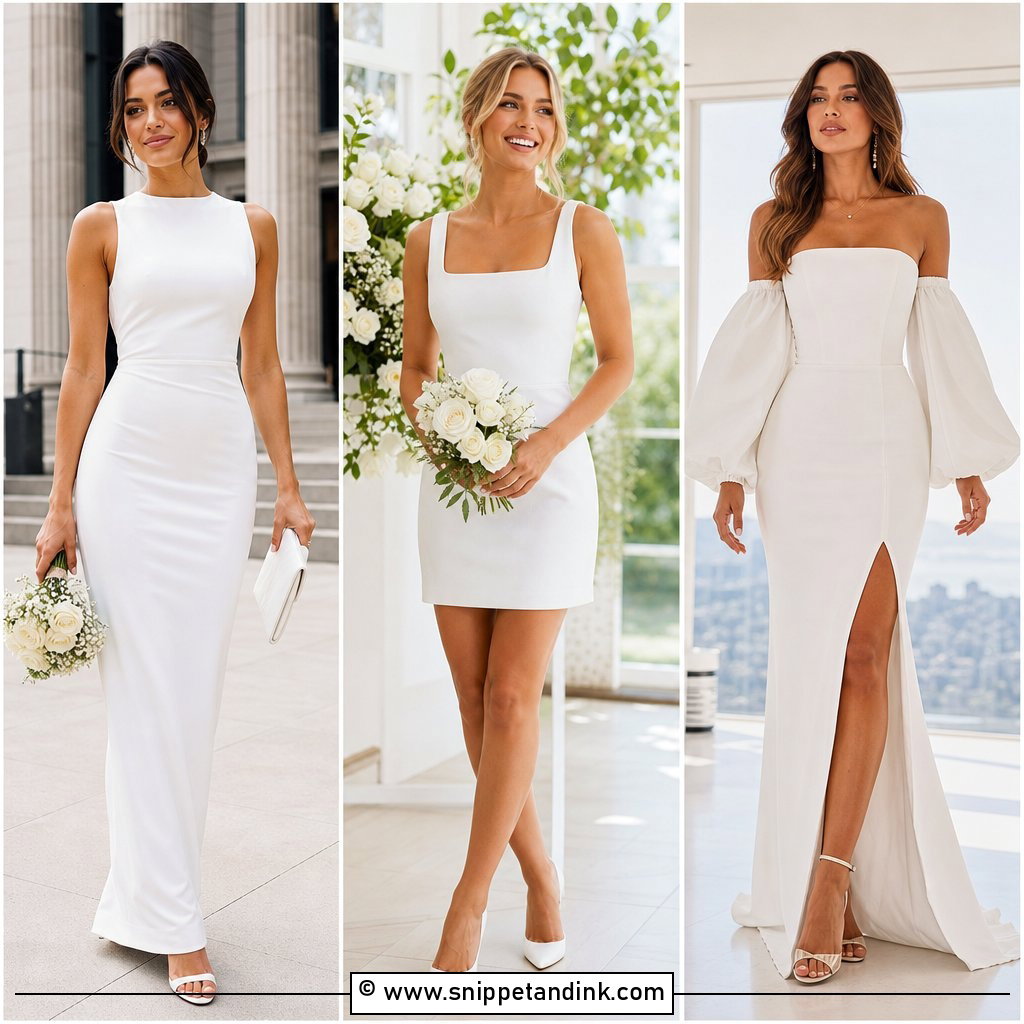
Minimal only works if the fabric is good and the fit is exact. Crepe, satin or mikado with a clean neckline and almost invisible seams is what I’d look for, and I hold the seam allowances up to the light: cheap construction shows as ridges once you’re photographed side-on. Pointed ivory pumps, pearl studs, a low bun and a short veil keep it crisp. A boned bodice adds support while the column skirt stays calm. City venues and small rooms suit it best.
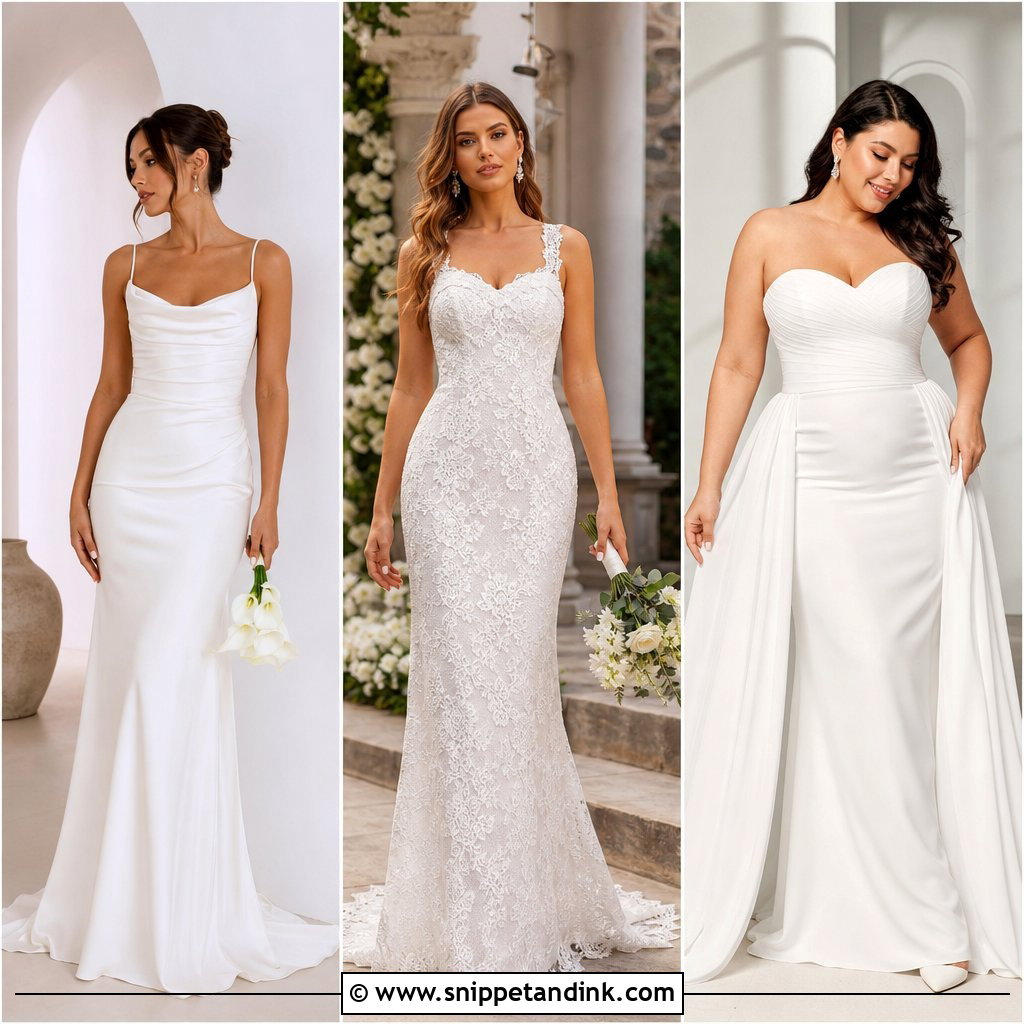
2. Satin Straight Wedding Dress
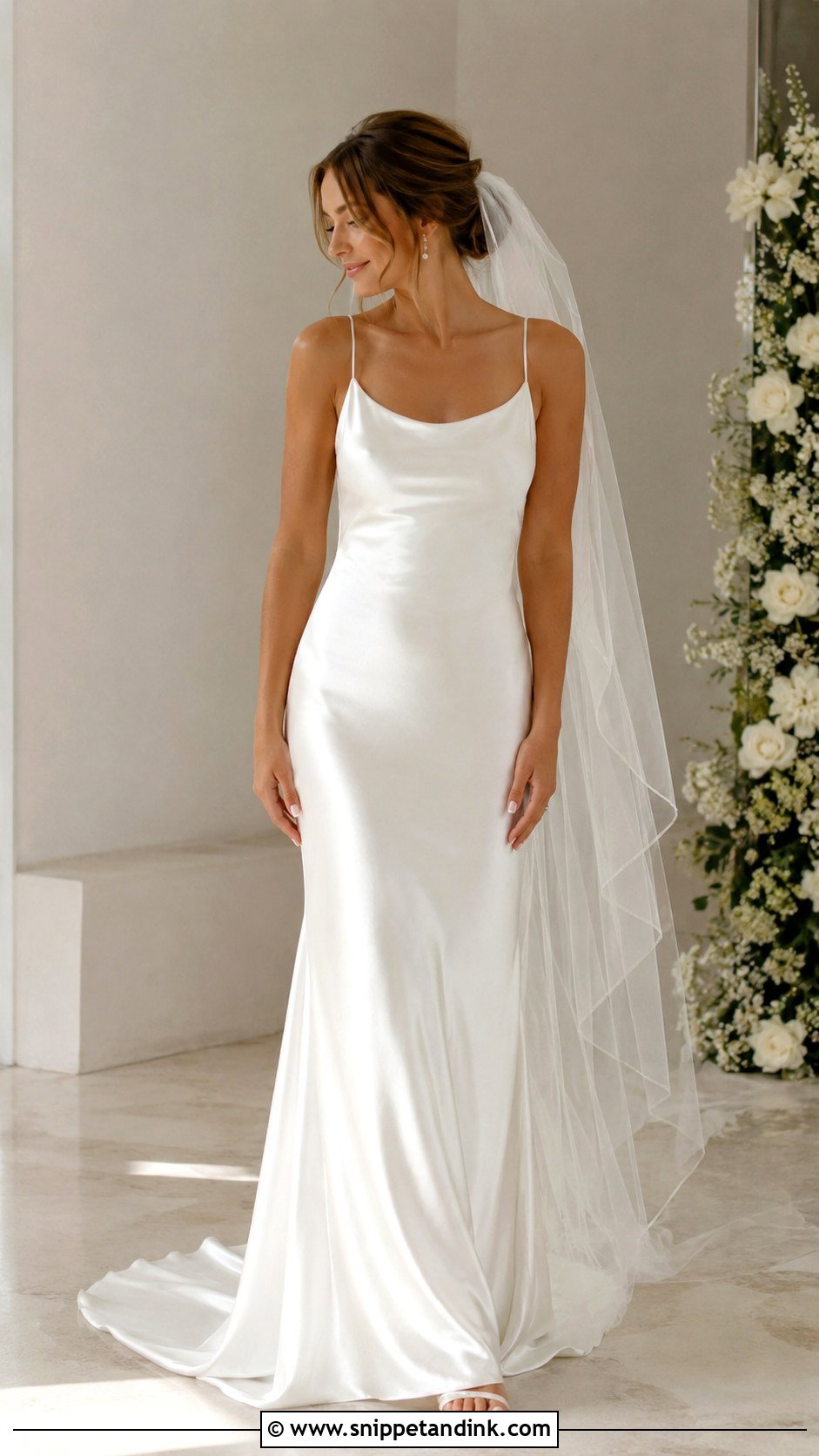
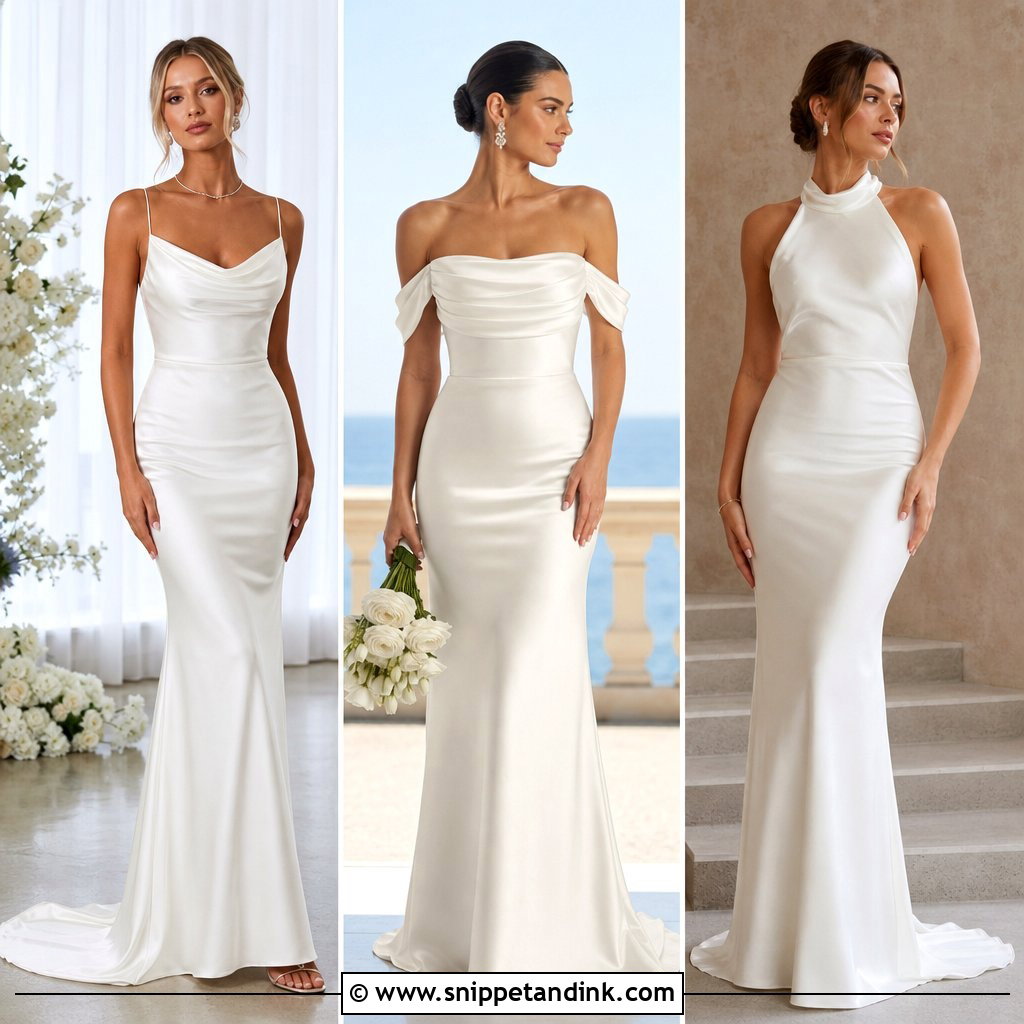
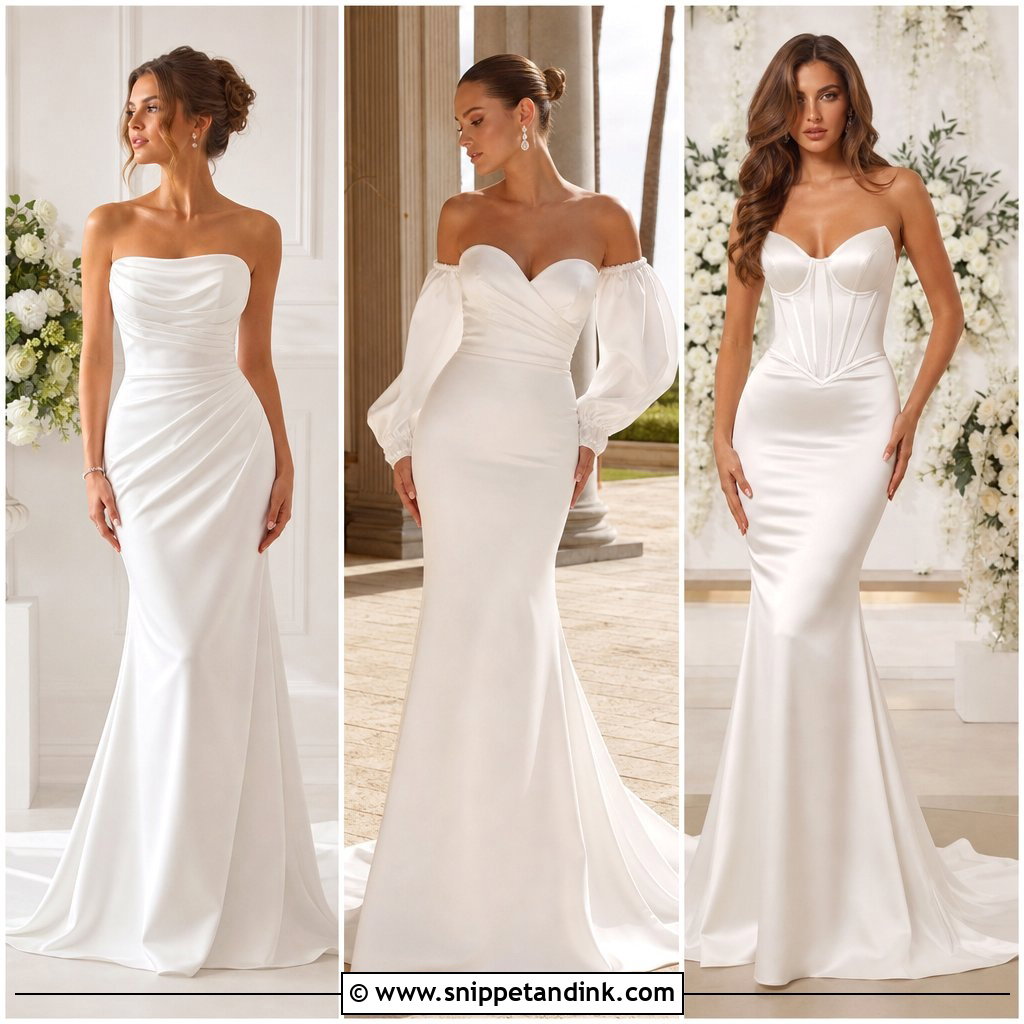
Satin shows everything, from a bra strap to a wrinkle where you sat in the car. That’s my first warning with a straight satin gown, and the reason I push for a heavier satin or a bias cut, which moves over the hips instead of clinging. Ivory, pearl and pale champagne all flatter. A scoop neck, fine straps or a small cowl softens it. Satin heels, a slim bracelet, pearl drops and a clean veil are plenty. Hotel ballrooms and evening receptions show the sheen best.
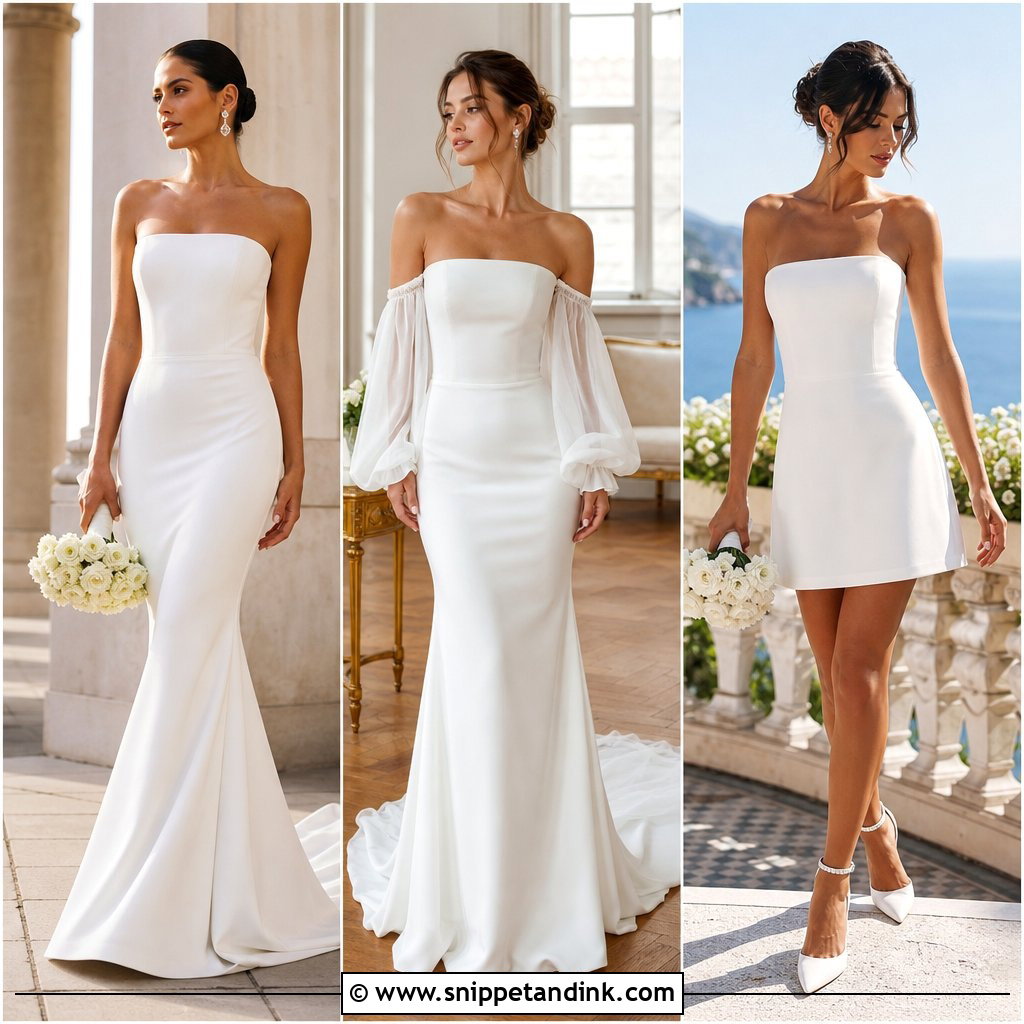
3. Strapless Straight Wedding Dress
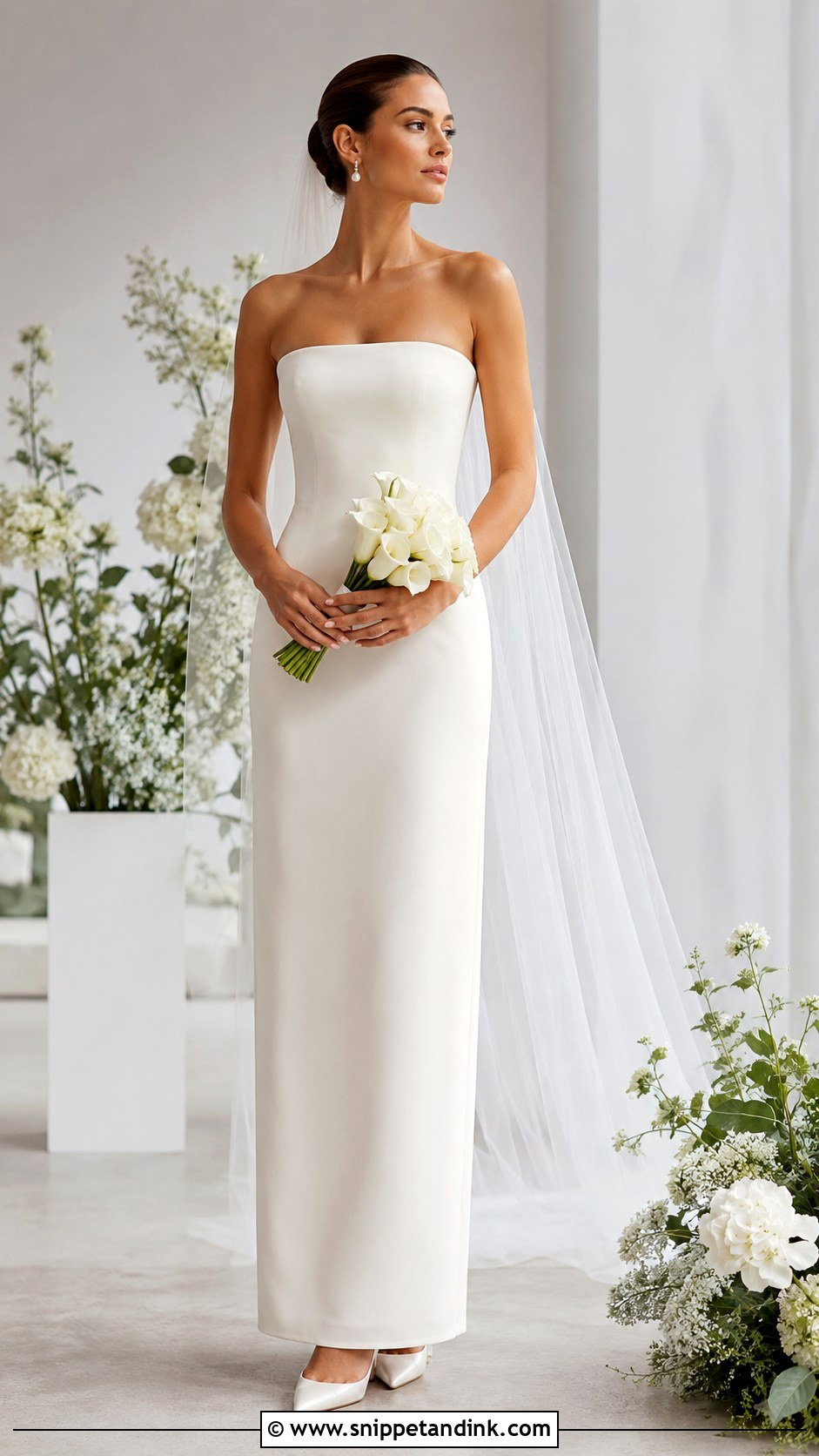
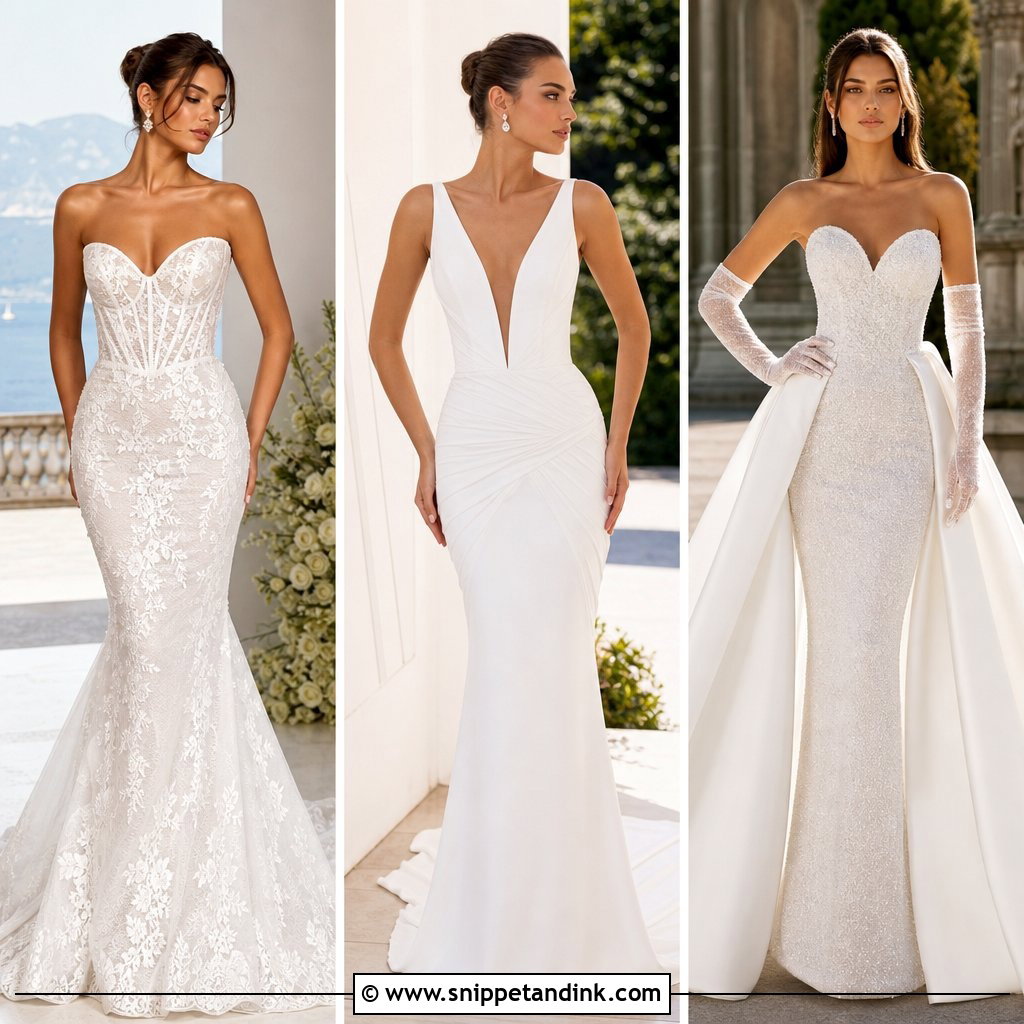
Strapless on a narrow skirt is clean and confident, but the bodice has to do all the holding. I’d only say yes if there’s real internal boning and a grip strip at the top edge, then test it with a hug and a reach. A straight-across neckline looks modern; a gentle curve is softer. A smooth updo, small earrings, pointed heels and a long veil balance the bare top. For more coverage, detachable gloves or a tailored bridal scarf can go on for the ceremony and come off later.
4. Square Neck Straight Wedding Dress
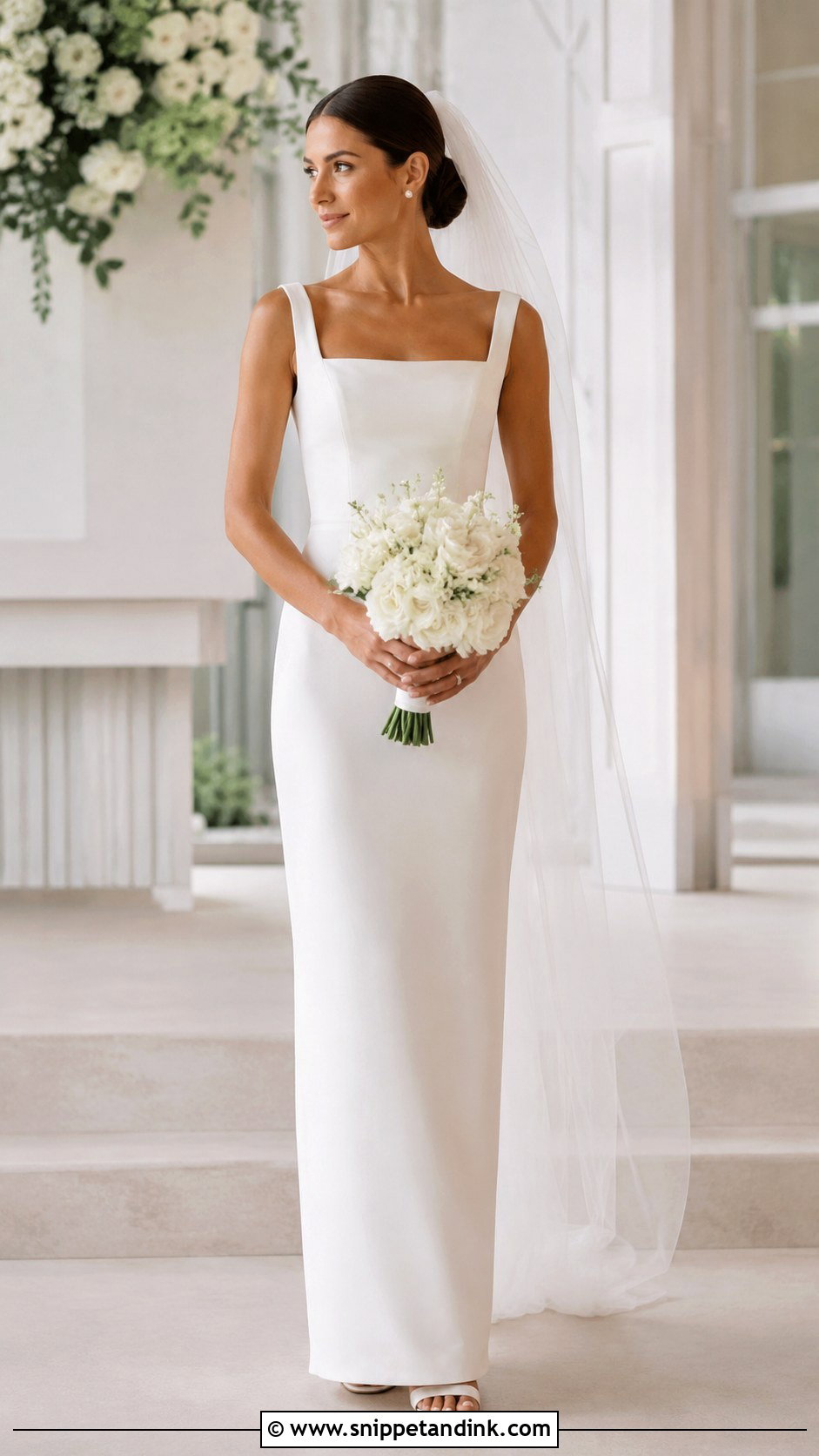
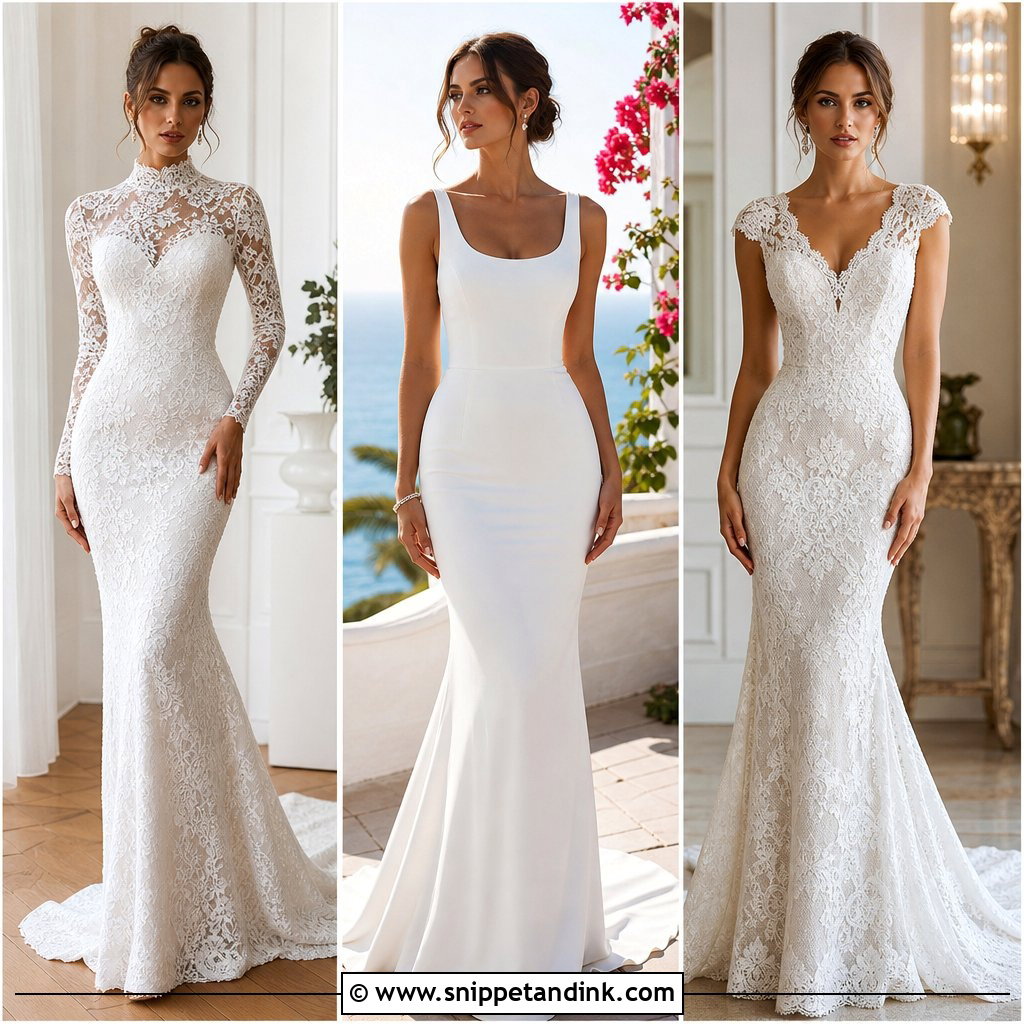
The square neck needs fabric with body. Matte crepe or structured satin holds the corners sharp; anything floppy lets them collapse into a scoop by mid-afternoon. It works with wide or slim straps and frames the collarbone neatly. I’d style it with a center-part bun, pearl studs, block-heel sandals and a slim veil. Gentle seaming or a short train softens it if the shape feels too strict on you.
5. Long Sleeve Straight Wedding Dress
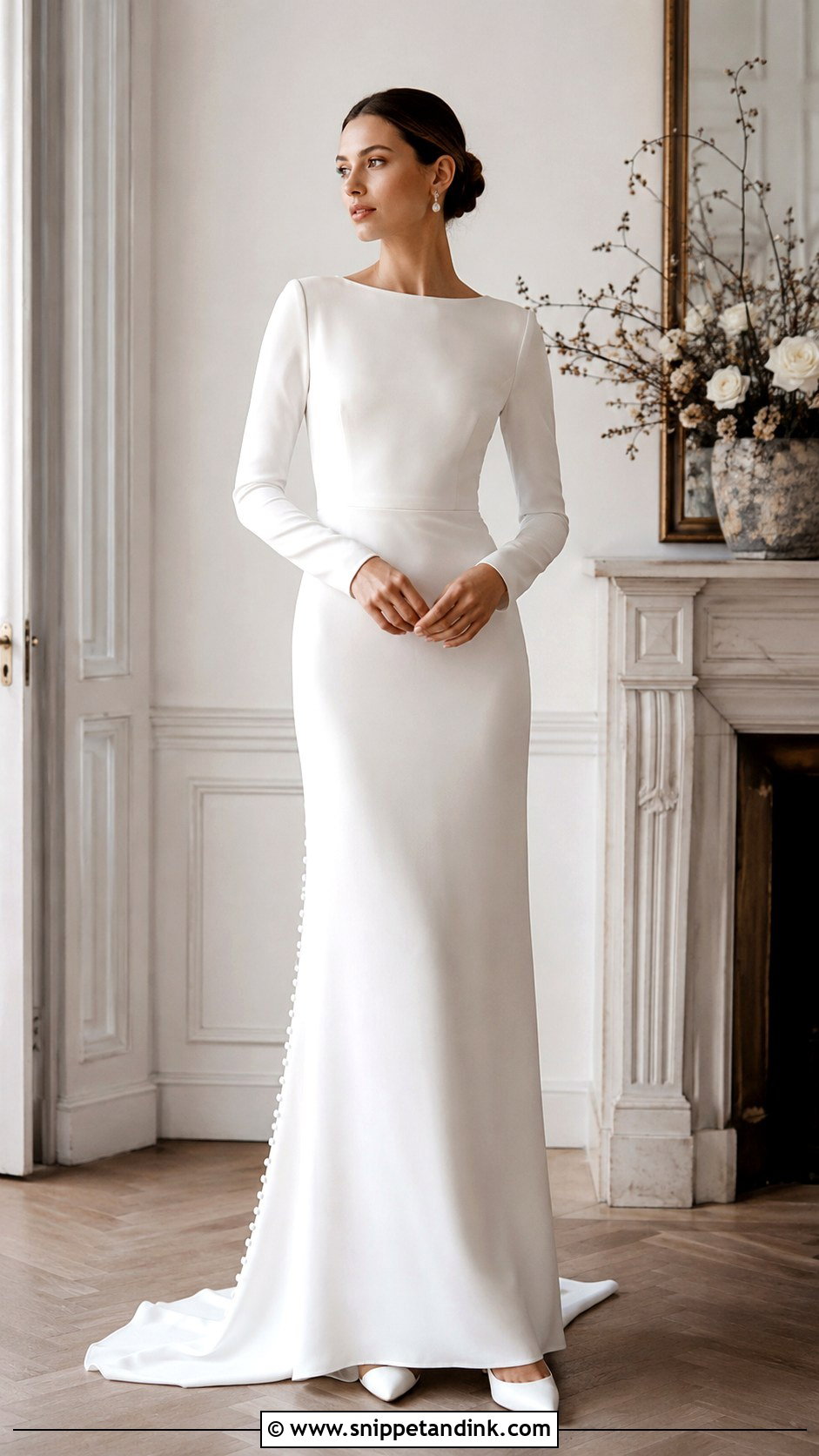
Sleeves on a column dress feel balanced because the narrow skirt offsets the coverage. Crepe sleeves read tailored, lace romantic, sheer ones lighter. My check is the armhole: cut too low, and you can’t lift your arm to hug anyone without the whole bodice rising. Closed-toe pumps, a smooth bun and small earrings suit it. For a current touch, sculpted shoulders, buttoned cuffs or a high slit give the shape some life. It’s my go-to suggestion for autumn, winter and brides who want cover.
6. Lace Straight Wedding Dress
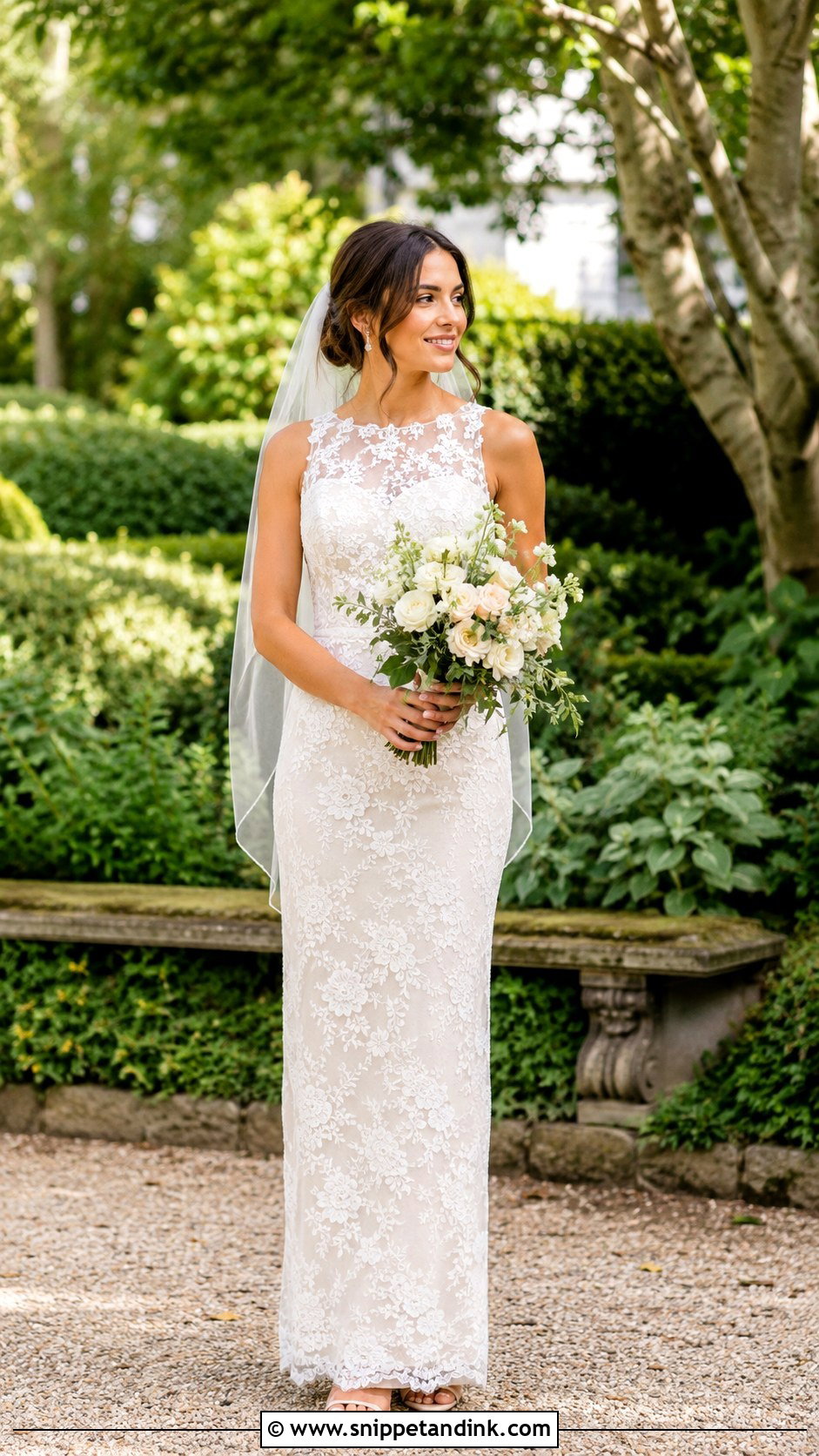
Lace on a straight gown follows the body rather than spreading over a full skirt, which keeps it delicate. Floral lace, Chantilly lace or appliqué over a smooth lining all work. I check where the lace motifs land on the bust and hips; a big flower sitting off-center draws the eye to the wrong place, and a good seamstress can move it. Ivory heels, a soft veil, small earrings and a loose updo. Clean edges rather than ruffles keep it fresh for gardens and estates.
7. Beaded Straight Wedding Dress
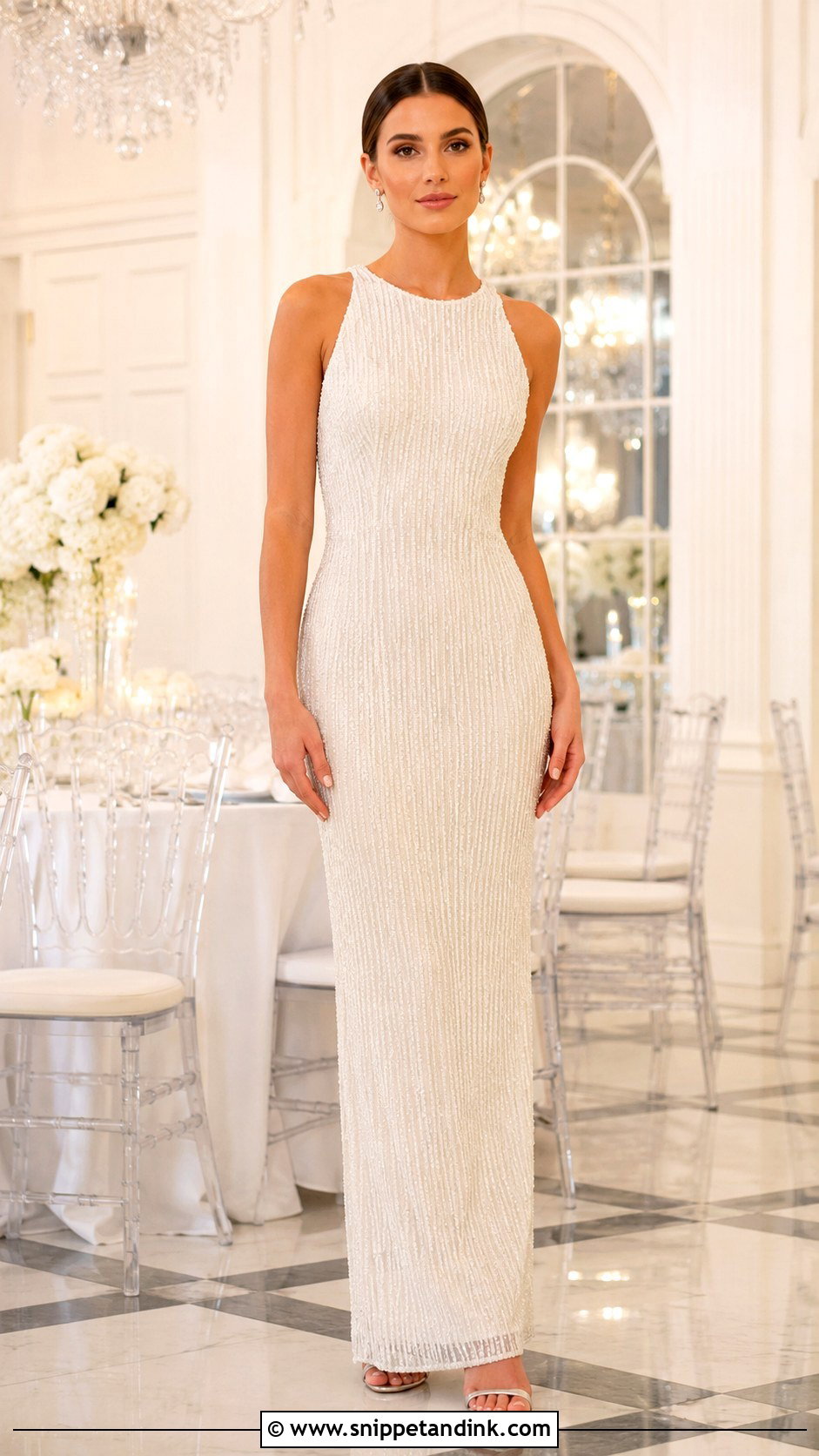
Beading on a slim cut stays controlled because there’s less fabric to cover. Micro-beading all over gives a fine shimmer, while vertical lines of beads lengthen the body. The weight adds up, though, and a beaded column can pull down at the shoulders by evening, so I’d ask what the straps are reinforced with. Metallic or ivory heels, sleek hair and small earrings. A fingertip veil or none, depending on the neckline. Evening receptions under strong lighting are where beads earn their cost.
8. Pearl Straight Wedding Dress
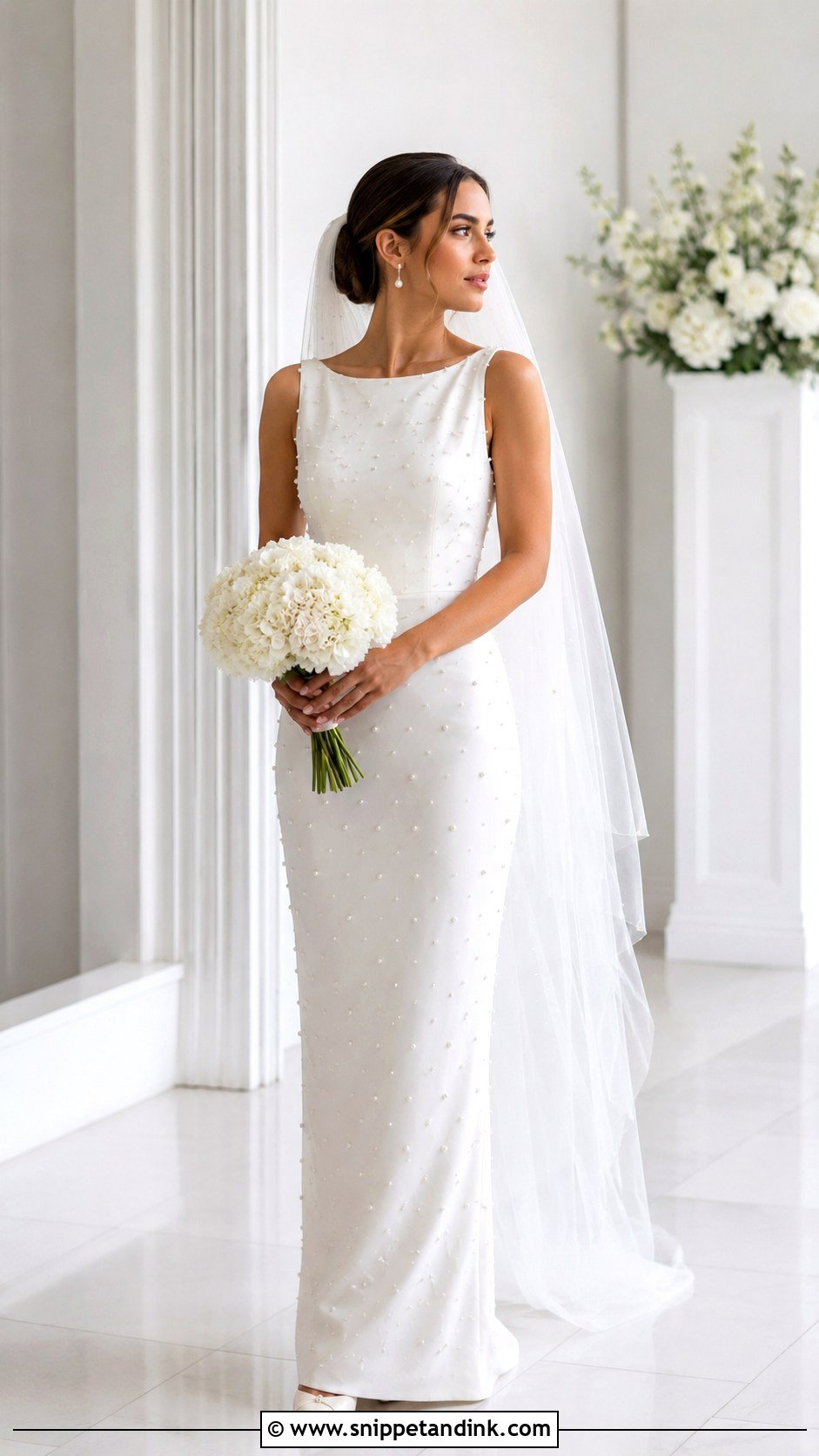
Pearls give texture without glare. They can be scattered over the bodice, lined along the straps or used as buttons down the back, and on a narrow dress they look refined rather than busy. I’d tug a few at the fitting: hand-sewn pearls stay put, glued ones pop off when someone hugs you. Pearl earrings, satin heels, a plain bracelet and a soft veil. A pearl-edged neckline or a pearl-dotted veil adds a bit more. Keep the bouquet simple.
9. Straight Wedding Dress With Bow
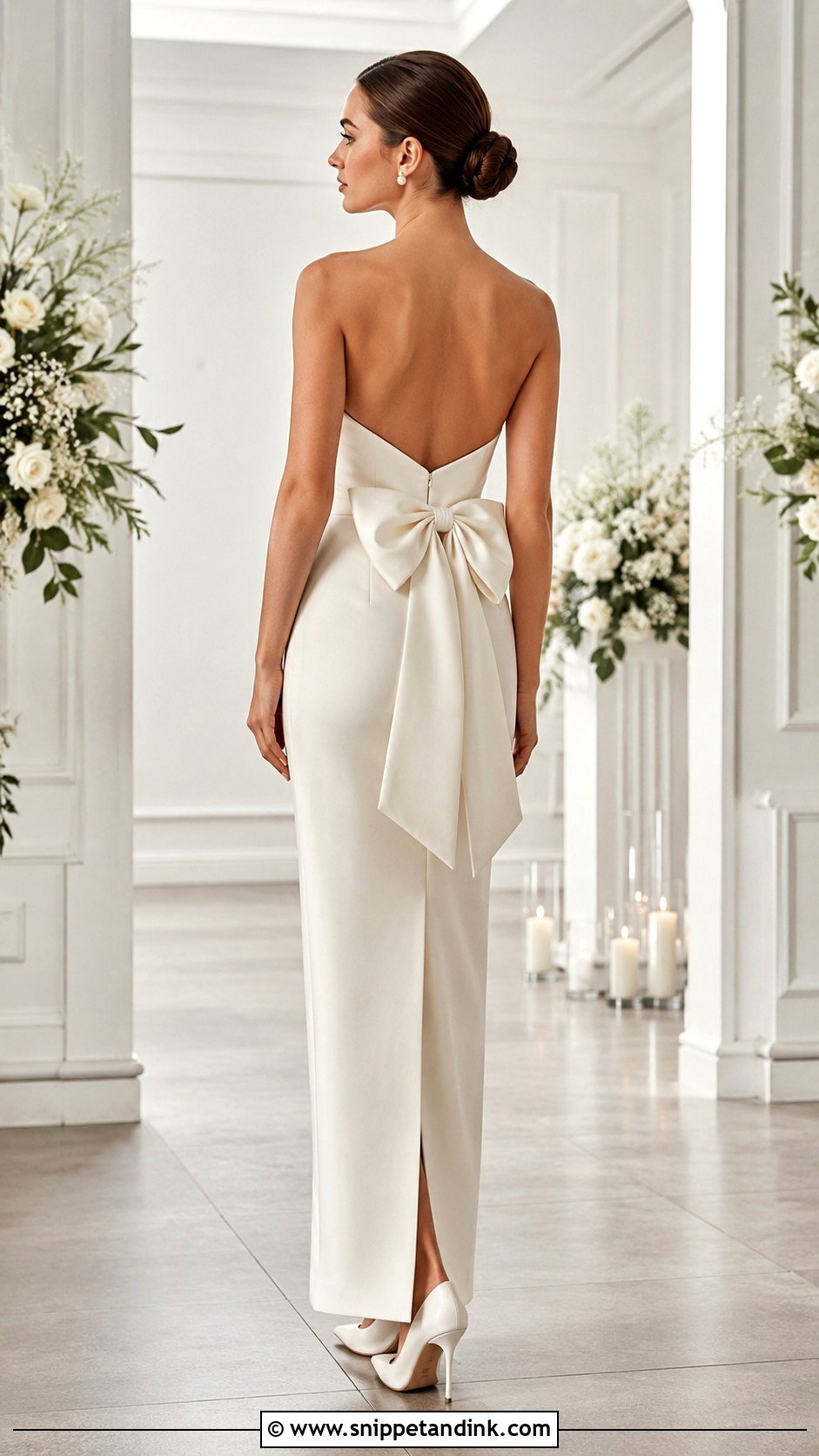
A bow can sit at the back waist, on one shoulder, along the neckline or anchor a detachable train. Large bows look editorial; small ones look sweet. Either way the bow needs stiff fabric like mikado, satin or faille, or it droops into a sad knot by the reception. I’d also sit down in it: a big back bow can make chairs awkward. Pointed heels, pearl studs and smooth hair let it lead. From behind it gives you a strong photo without a wide skirt.
10. Straight Wedding Dress With Slit
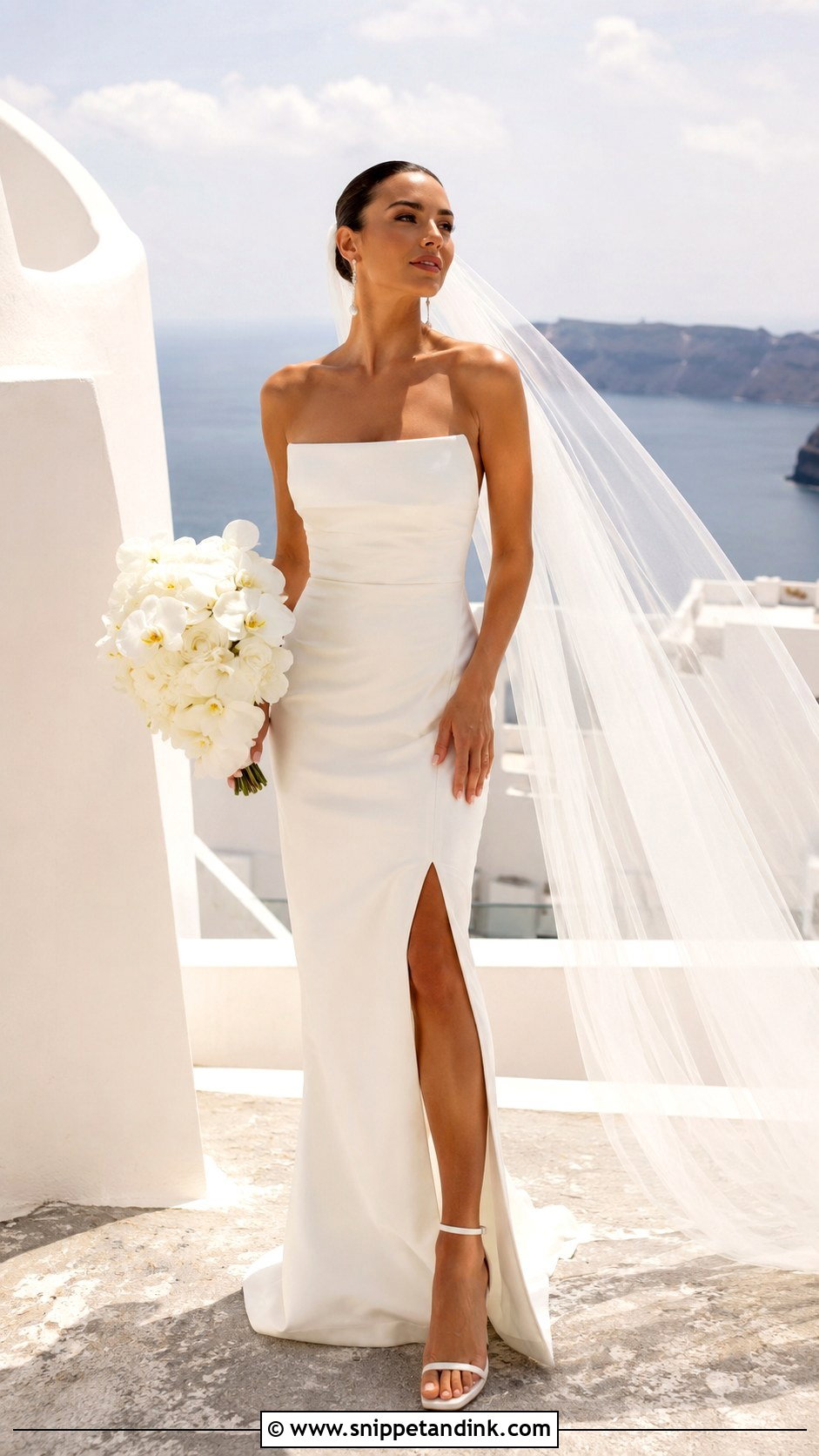
Walking room is the real reason I like a straight wedding dress with slit. A side slit is classic, a front slit bolder. Check the height while sitting, not standing, since a slit rises several centimeters when you sit, and sitting is when photos get awkward. A square, scoop, strapless or one-shoulder neckline balances the leg. Your shoes will be seen, so satin pumps, pearl sandals or clean white heels. Add a long veil for ceremony drama. Beaches and city venues suit it.
11. Backless Straight Wedding Dress
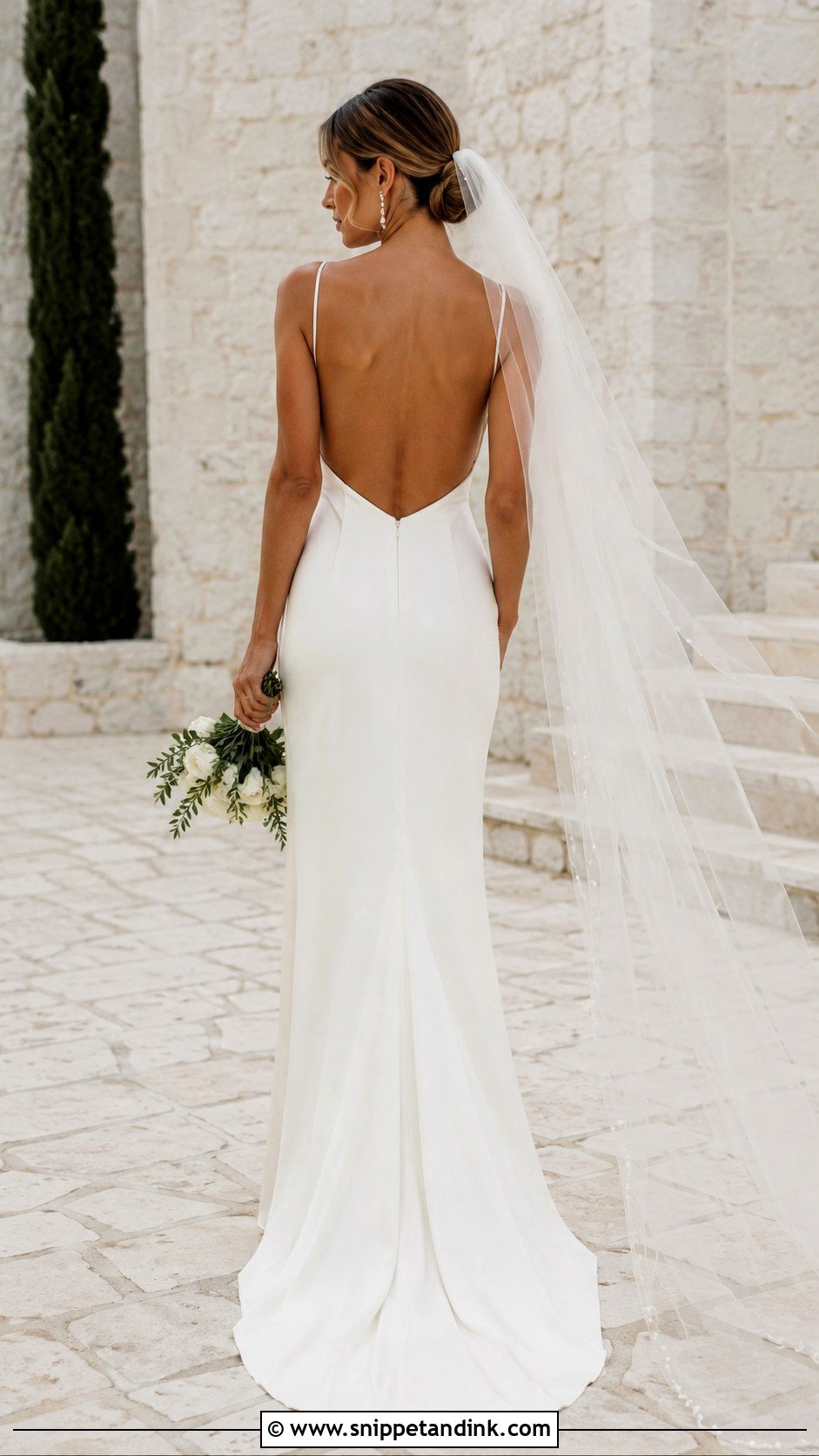
A backless straight wedding dress stays simple at the front and saves the detail for the back. Secure straps, a soft cowl or a low open back with fine buttons all work. What I’d sort out first is support, because most backless gowns need sewn-in cups and a well-fitted waist to stay flat. Drop earrings, a low bun and a sheer veil let the back show. Warm-weather weddings and destination ceremonies are its natural place.
12. High Neck Straight Wedding Dress
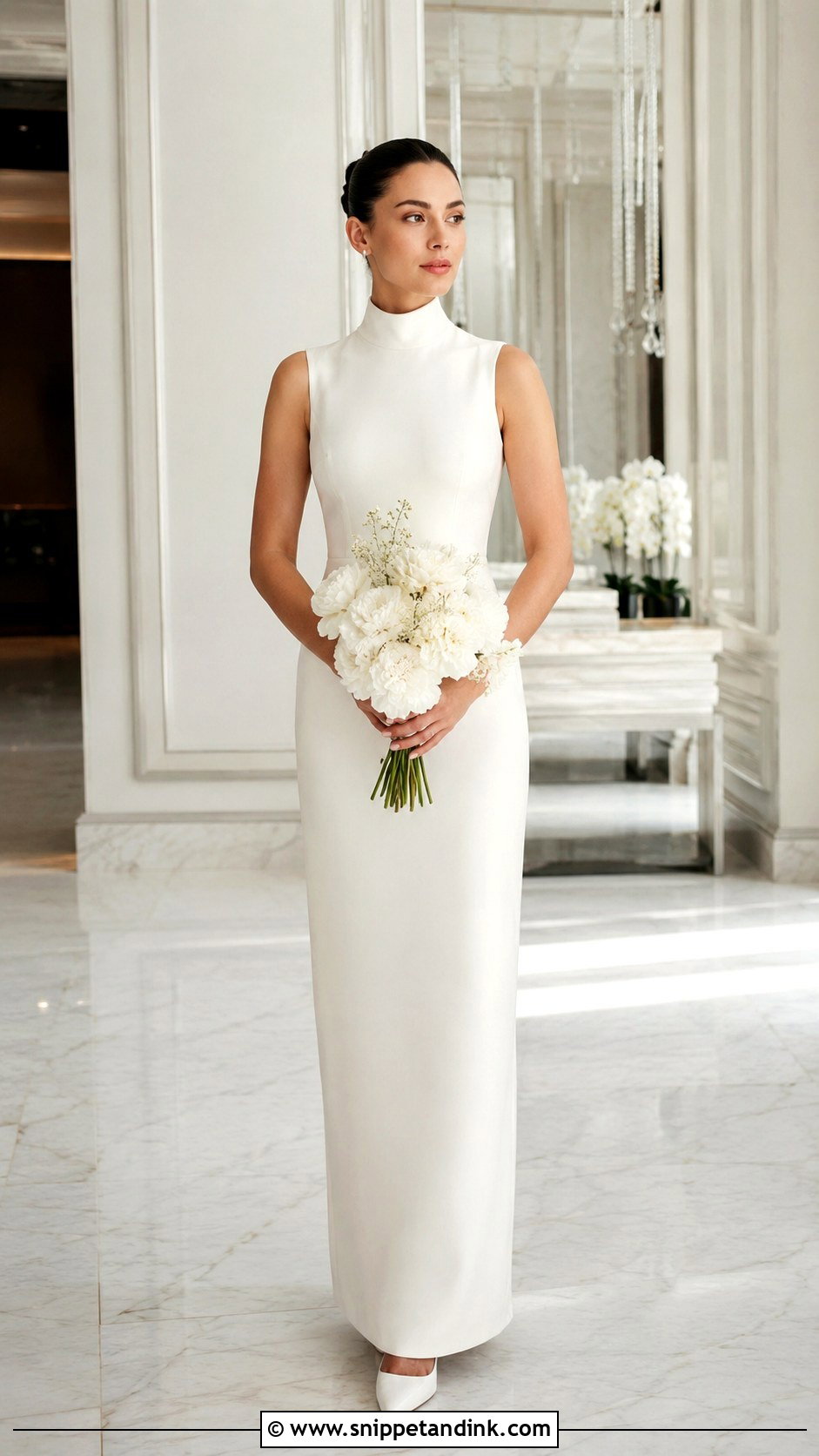
High necks look almost editorial on a narrow skirt; the coverage draws one long line. Crepe is modern, lace romantic, satin polished. With this neckline the hair should go up or back, otherwise it crowds the collar. Small earrings, simple shoes and a long veil for the ceremony, or none for a minimal reception. A keyhole back softens the coverage. I’d steer anyone with a short neck toward a slightly lower collar or a sheer yoke.
13. Off Shoulder Straight Wedding Dress
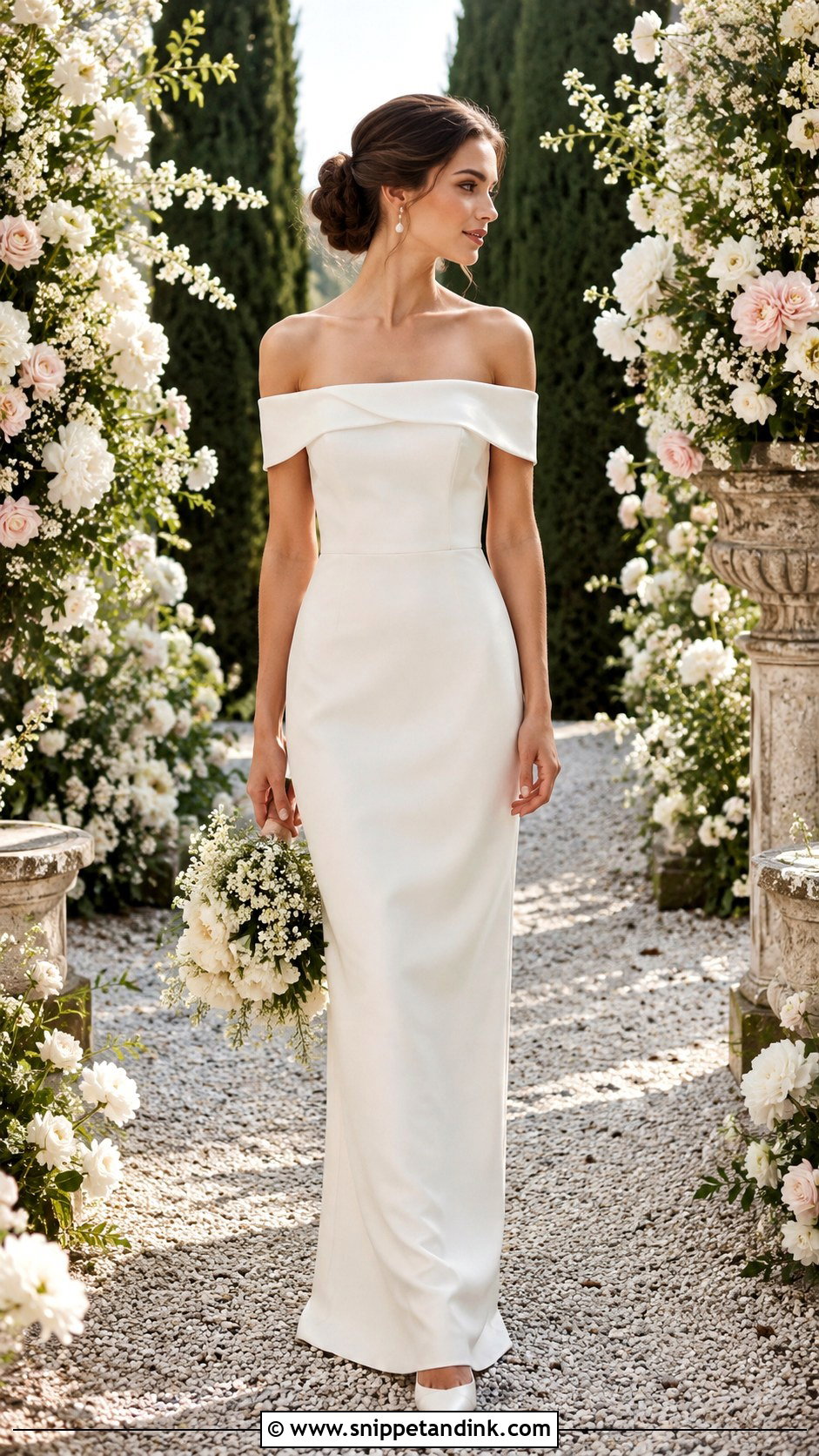
Off-shoulder necklines soften a column; bare shoulders frame the face. Folded satin gives structure, soft lace sleeves a lighter feel. Range of movement matters here, so I have you reach forward and up before we choose. A band that pins your arms will make hugging and dancing hard. A low chignon, pearl earrings and pointed heels suit it, and the neckline usually looks better without a necklace. Gardens and hotel ceremonies both fit.
14. One Shoulder Straight Wedding Dress
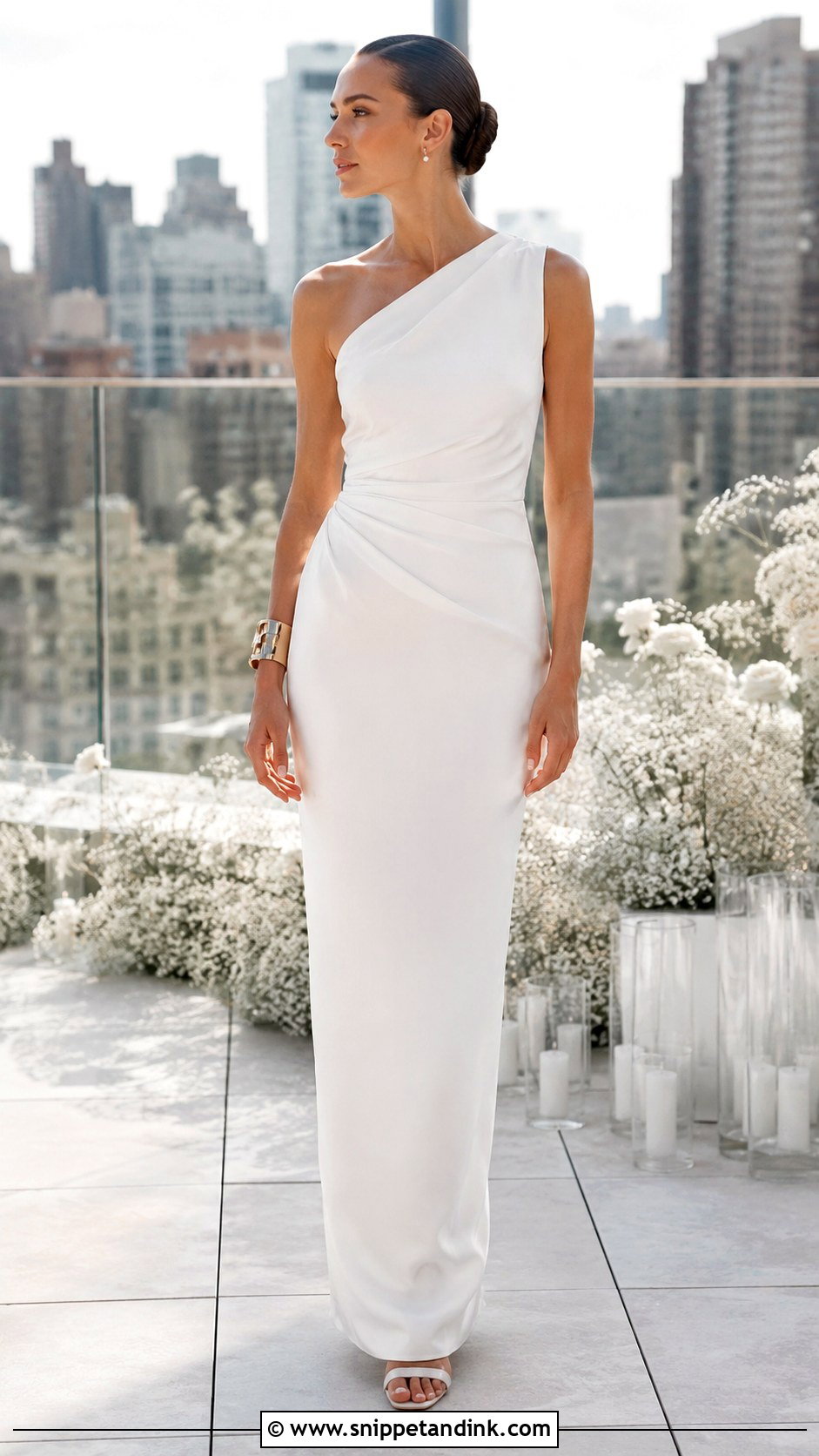
One shoulder makes a plain column look intentional. It needs fabric that holds a shoulder line, such as crepe, stretch satin or something structured, and the single strap has to be fitted tight or it slides. Bra choice is tricky, so I’d plan on cups built into the bodice. A sleek bun, small earrings, a cuff and minimalist heels. A side drape, scarf detail or subtle slit adds movement for rooftops and galleries.
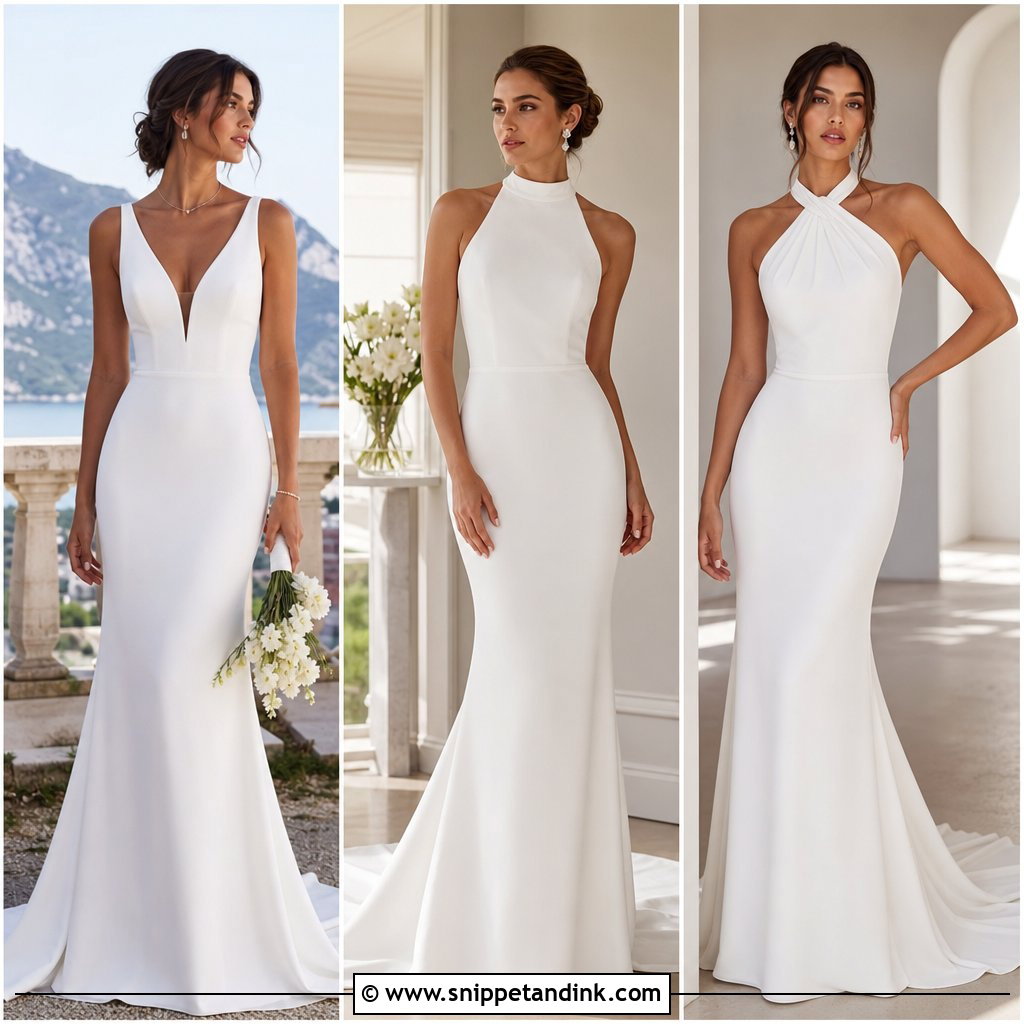

15. Cowl Neck Straight Wedding Dress
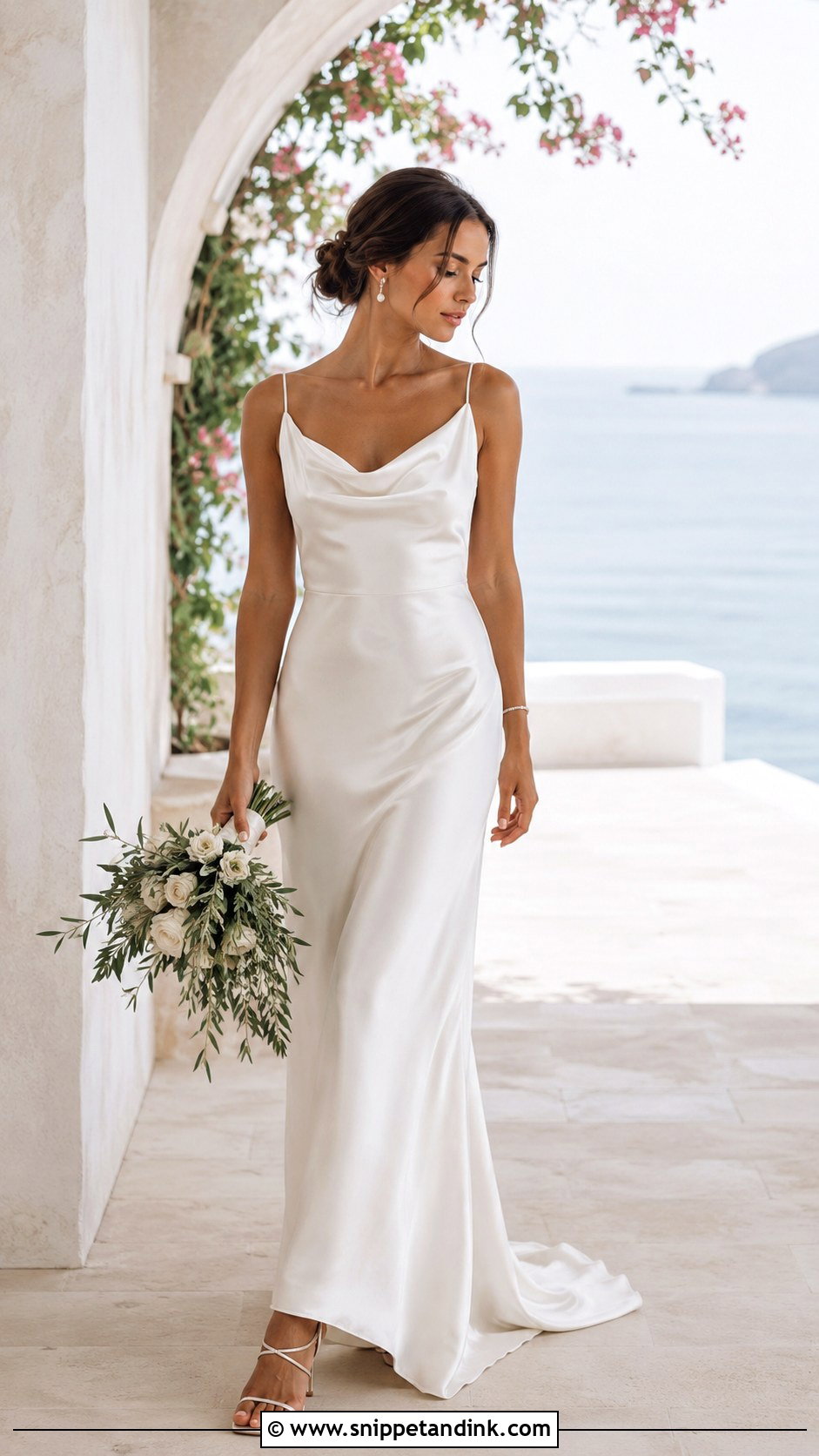
The cowl only falls well in fluid fabric like satin, silk or charmeuse; in stiff fabric it just looks like a gap. I check how low it drops when you lean over to sign the register, because that’s the moment it shows more than you planned. A tiny weight or a hidden tack keeps it in place. Strappy heels, delicate earrings, a relaxed updo and a fine bracelet. Beaches and warm-weather receptions suit it, with a sheer wrap or light cape for cover.
16. Straight Slip Wedding Dress
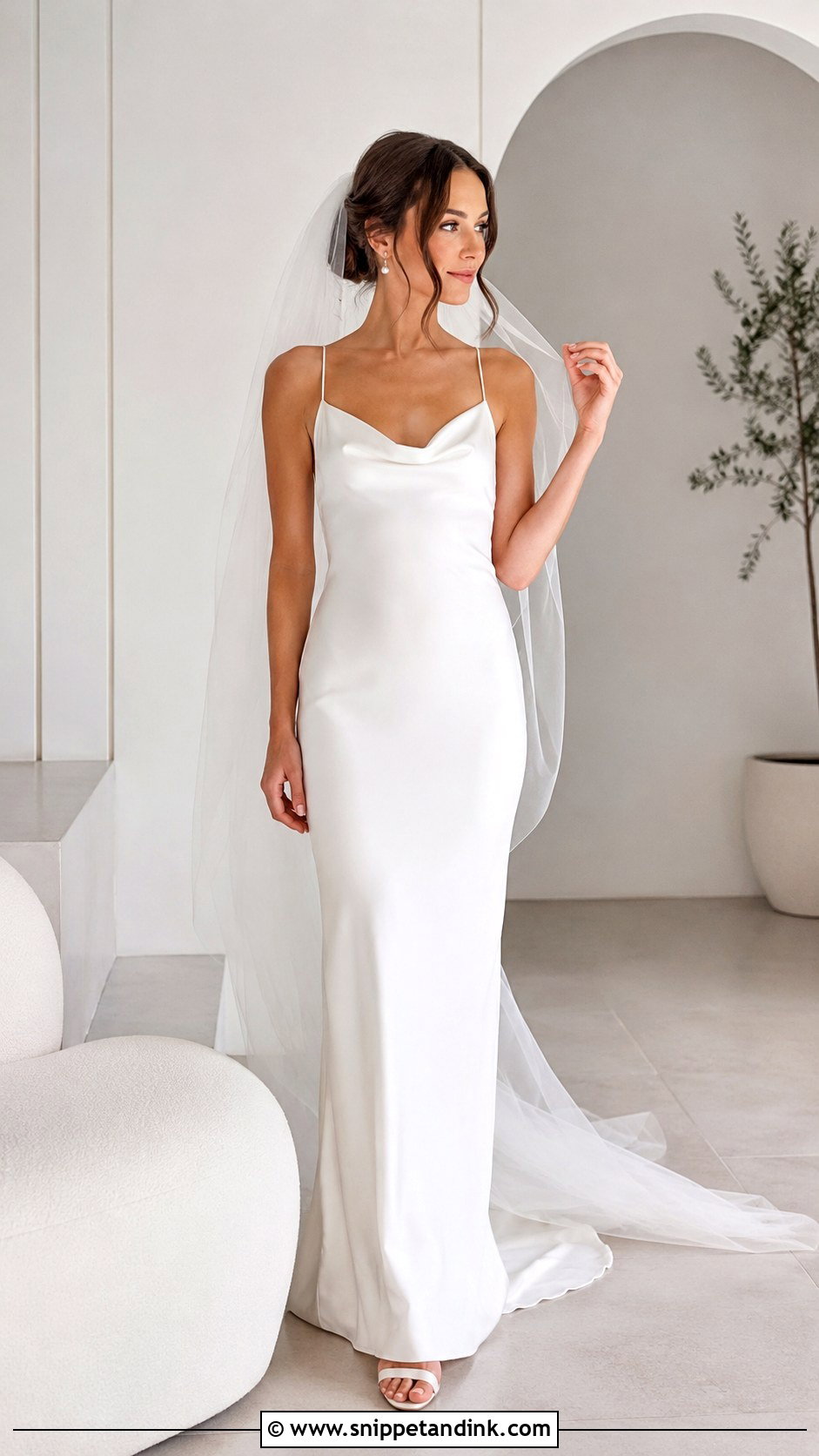
A slip is light and effortlessly elegant, with slim straps, a soft neckline and a skirt that skims rather than grips. It’s also the least forgiving dress on this list, so I’d always choose a lined version for the ceremony. Unlined slips show everything in bright sun. Pearl earrings, satin sandals, a veil and polished hair make it bridal. Bias-cut slips move well. Many brides choose one as a change after the ceremony.
17. Crepe Straight Wedding Dress
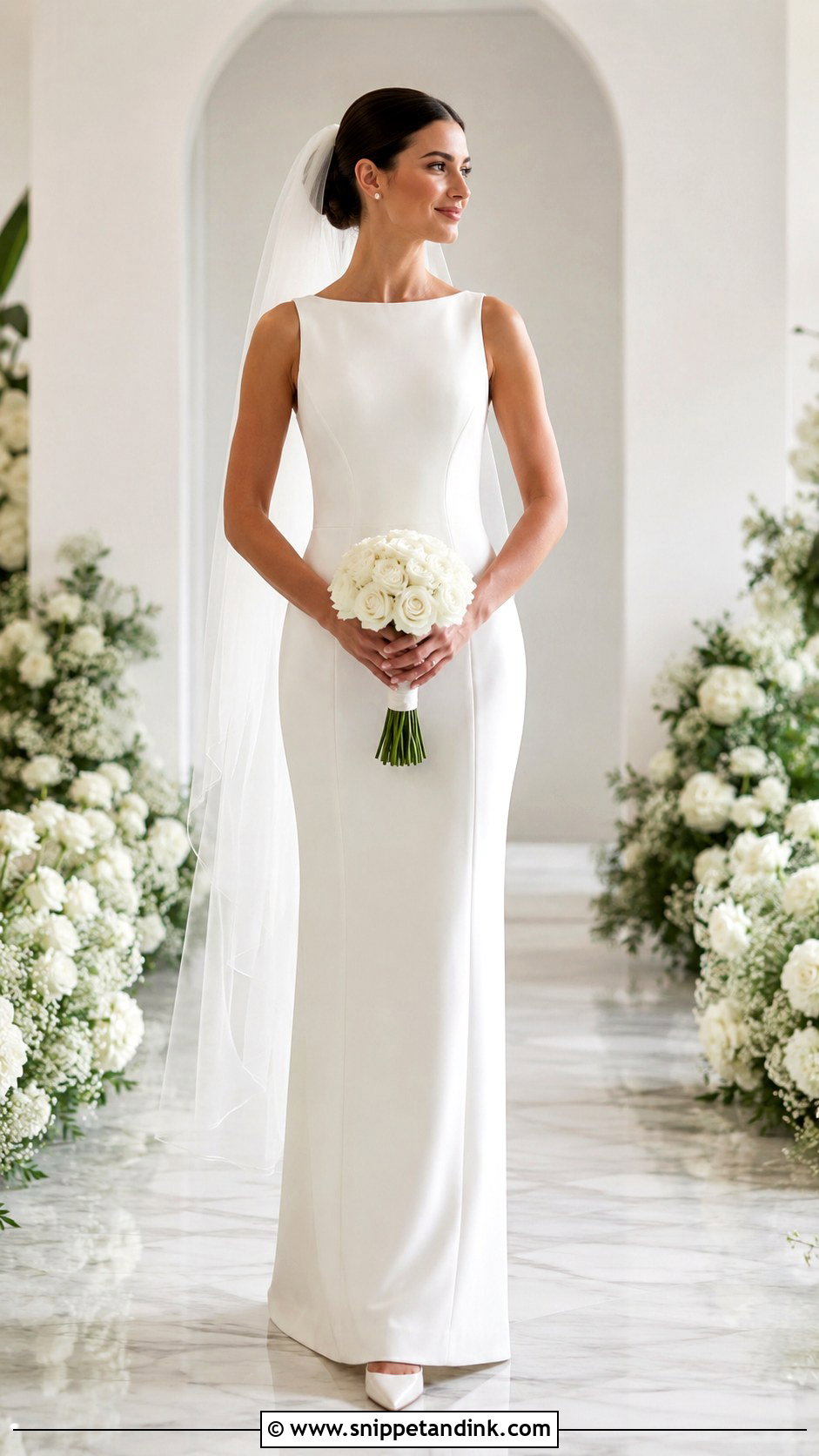
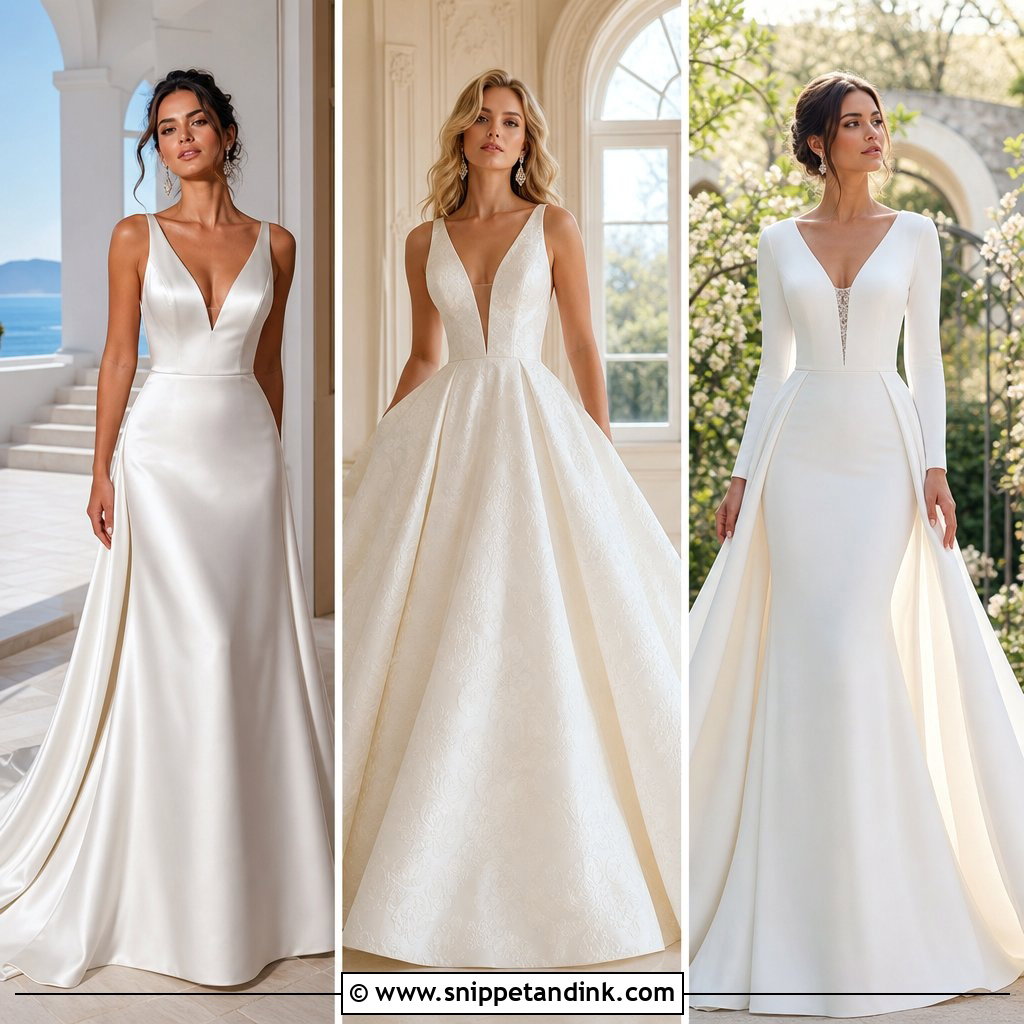
Crepe is the safest bet in this group. It has enough weight to smooth the line and still moves comfortably, and the matte finish looks clean in photos. A fitted bodice, narrow skirt and short train is a gown you can wear from courthouse to ballroom. Pointed pumps, pearl or crystal studs, a structured veil and a neat bun suit it. For more detail, covered buttons, seam shaping or a detachable overskirt can hide the straight dress until the reception.
18. Straight Wedding Dress With Detachable Train
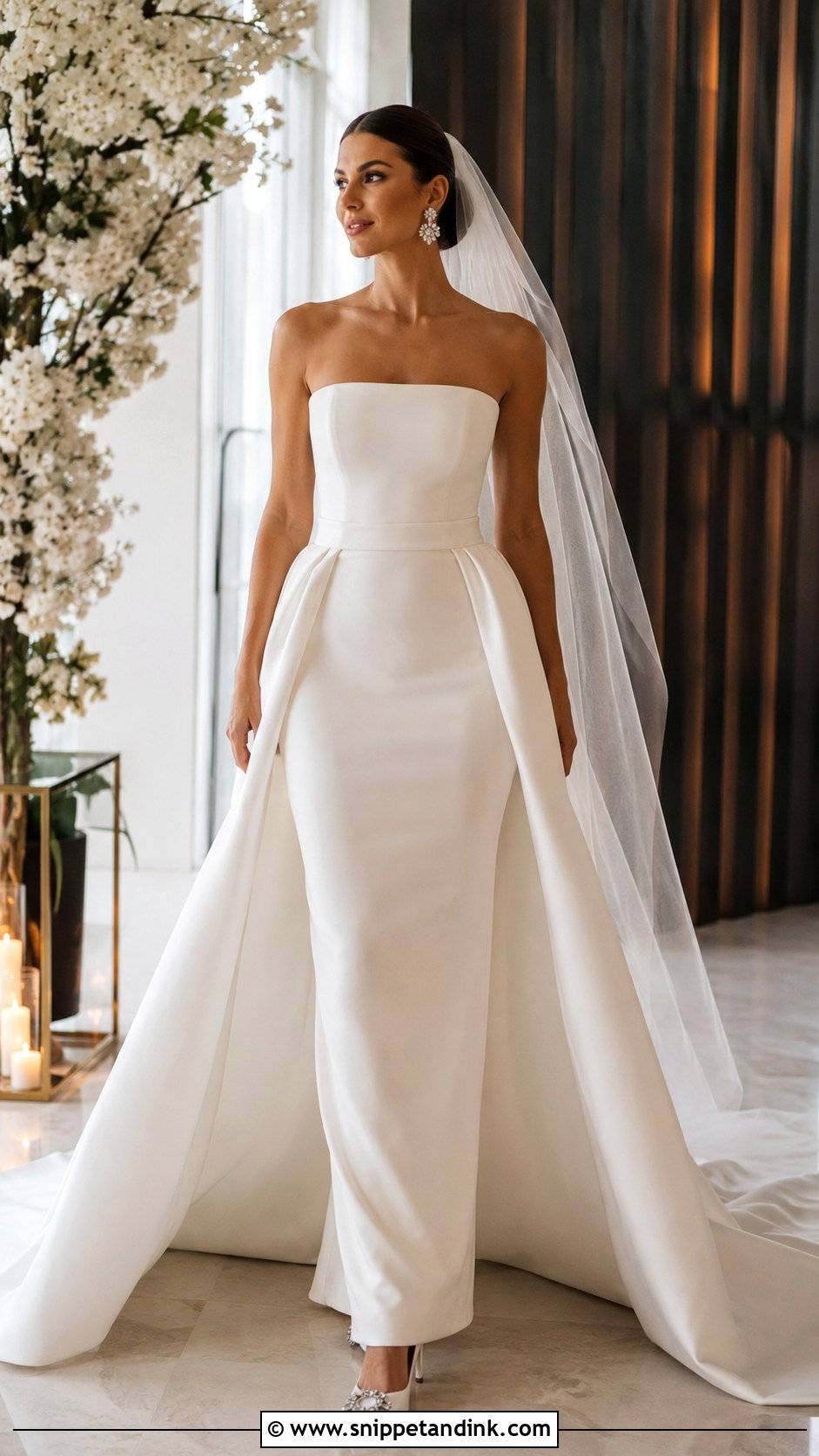
A detachable train is two dresses for the price of one fitting schedule. The train gives the ceremony its drama, then comes off so you can dance in a sleek column. Ask how it attaches: hooks at the waist are quick, buttons at the shoulders look cleaner but need a helper. I’d practise taking it off at the final fitting so nobody is fumbling in a corridor. Crepe or satin underneath, classic heels, statement earrings and a long veil for the ceremony.
19. Straight Wedding Dress With Cape
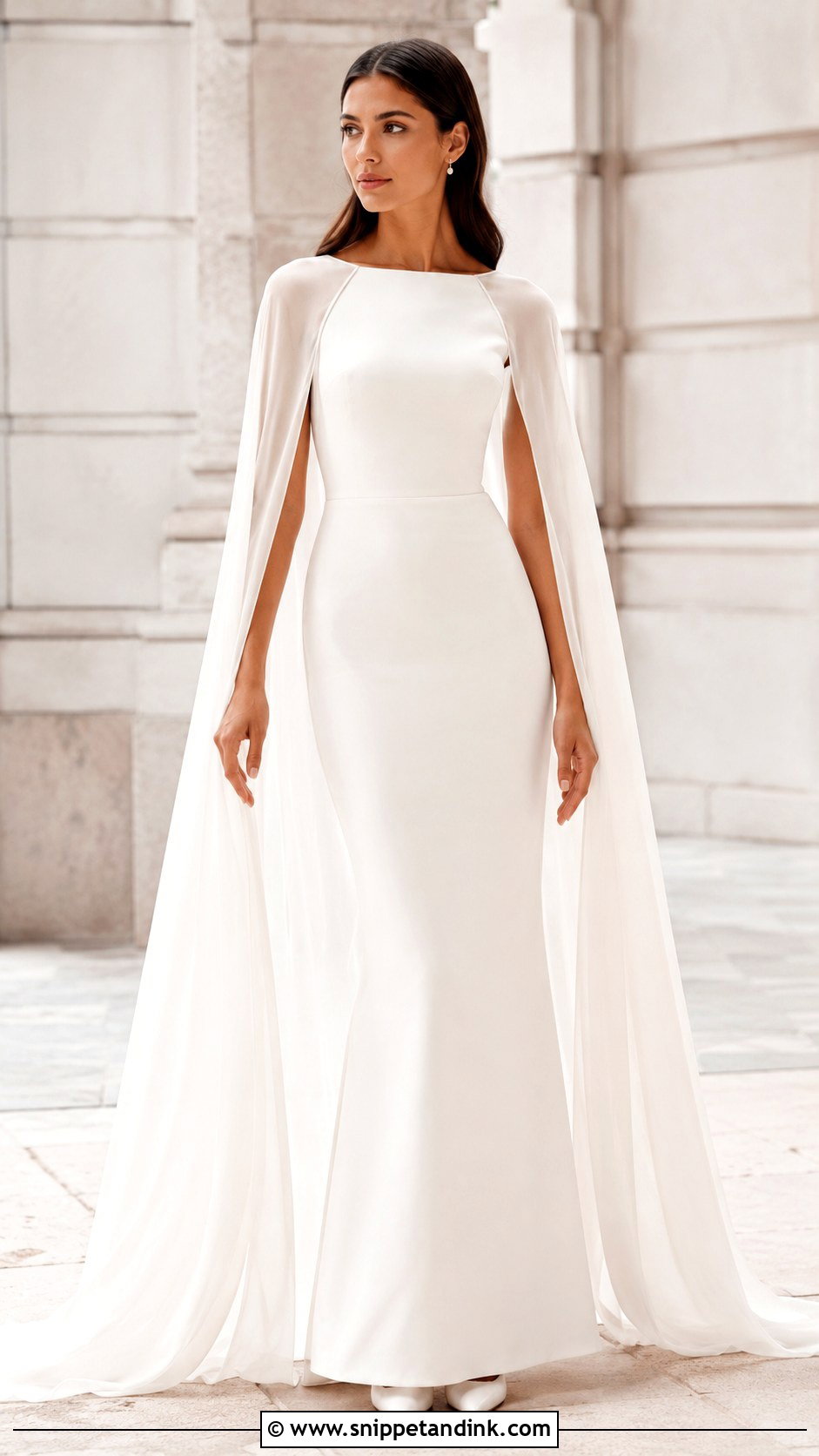
Capes do the job of a veil, add coverage and move well in photos. Sheer capes soften a plain gown; satin capes feel formal. A shoulder cape adds structure, a back cape more romance. I’d skip a cape and a long veil together, since the layers tangle and fight for the same space. Keep the dress underneath simple, with pointed heels, small earrings and smooth hair. City weddings and cooler seasons suit it.
20. Short Straight Wedding Dress
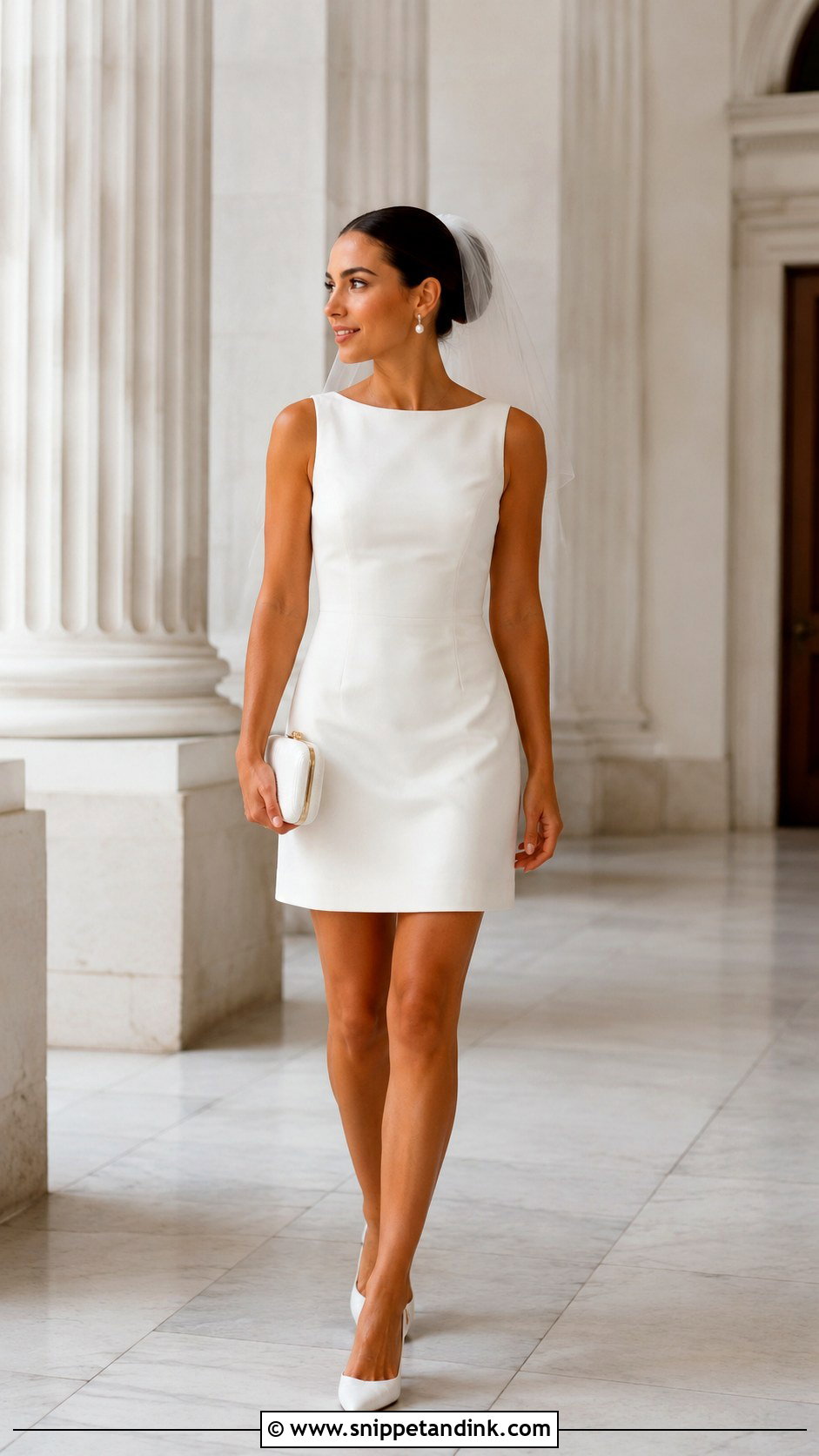
Short straight dresses are fun and practical for civil ceremonies, a reception change or a casual party. Mini, knee or midi lengths all work in satin, crepe or lace. Short hems show the knees, so I check the hem when you sit as well as stand. Slingback heels, pearl earrings, a small clutch and a short veil or hair bow keep it bridal. For more polish, long sleeves, a square neck or covered buttons give a tailored feel.
21. Midi Straight Wedding Dress
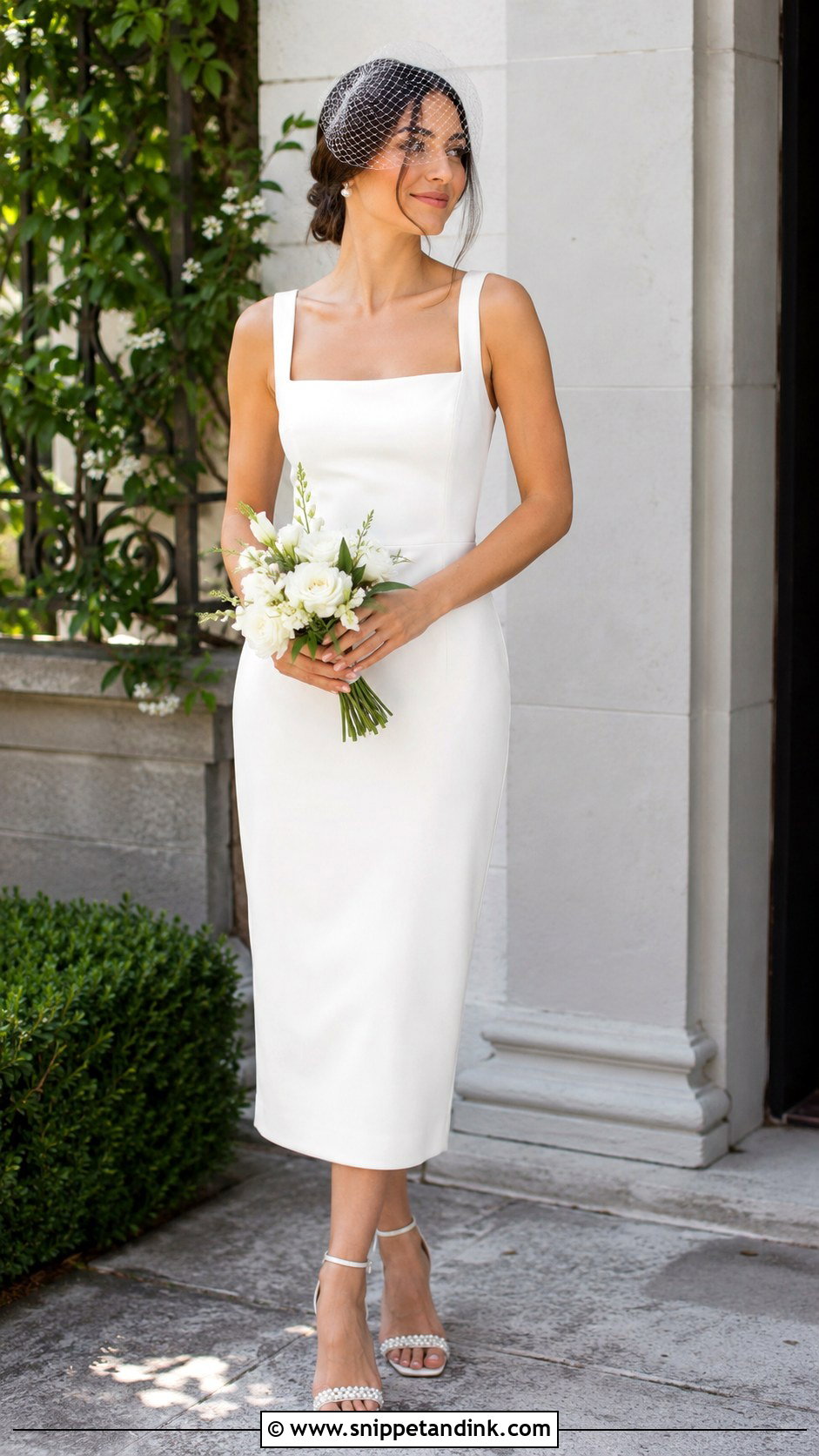
Midi length makes shoes part of the outfit, so I fit the dress around them, not the other way round. The hem lands between knee and ankle and has a vintage feel without looking like a costume. Pearl heels, satin pumps or slingbacks suit it, with a square, boat or long-sleeve top. A birdcage veil, pearl studs and a small bouquet finish it. Courthouse weddings, garden lunches and small venues are its home ground.
22. Plus Size Straight Wedding Dress
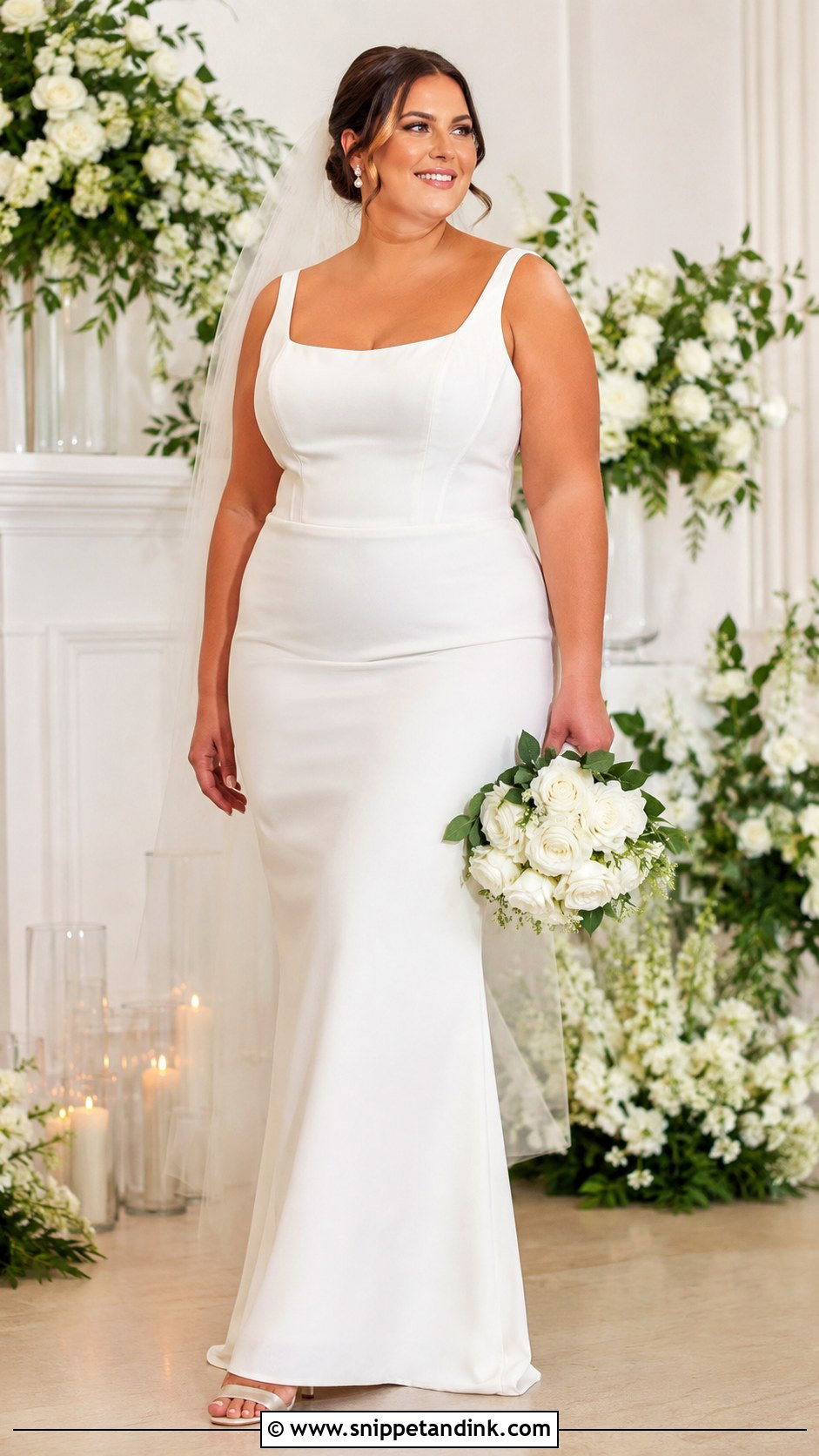
On plus-size brides a straight gown can look superb, and the fabric makes or breaks it. Structured crepe, lined satin or stretch mikado skims; thin satin clings and shows every seam underneath. Princess seams and a supportive bodice with a defined waist keep the shape smooth while the skirt stays straight. Square, sweetheart, V and off-shoulder necklines all work. I’d pair it with block heels, supportive undergarments tried on with the dress, pearl earrings and a veil that fits the venue. The aim is to feel secure, not hidden.
23. Petite Straight Wedding Dress
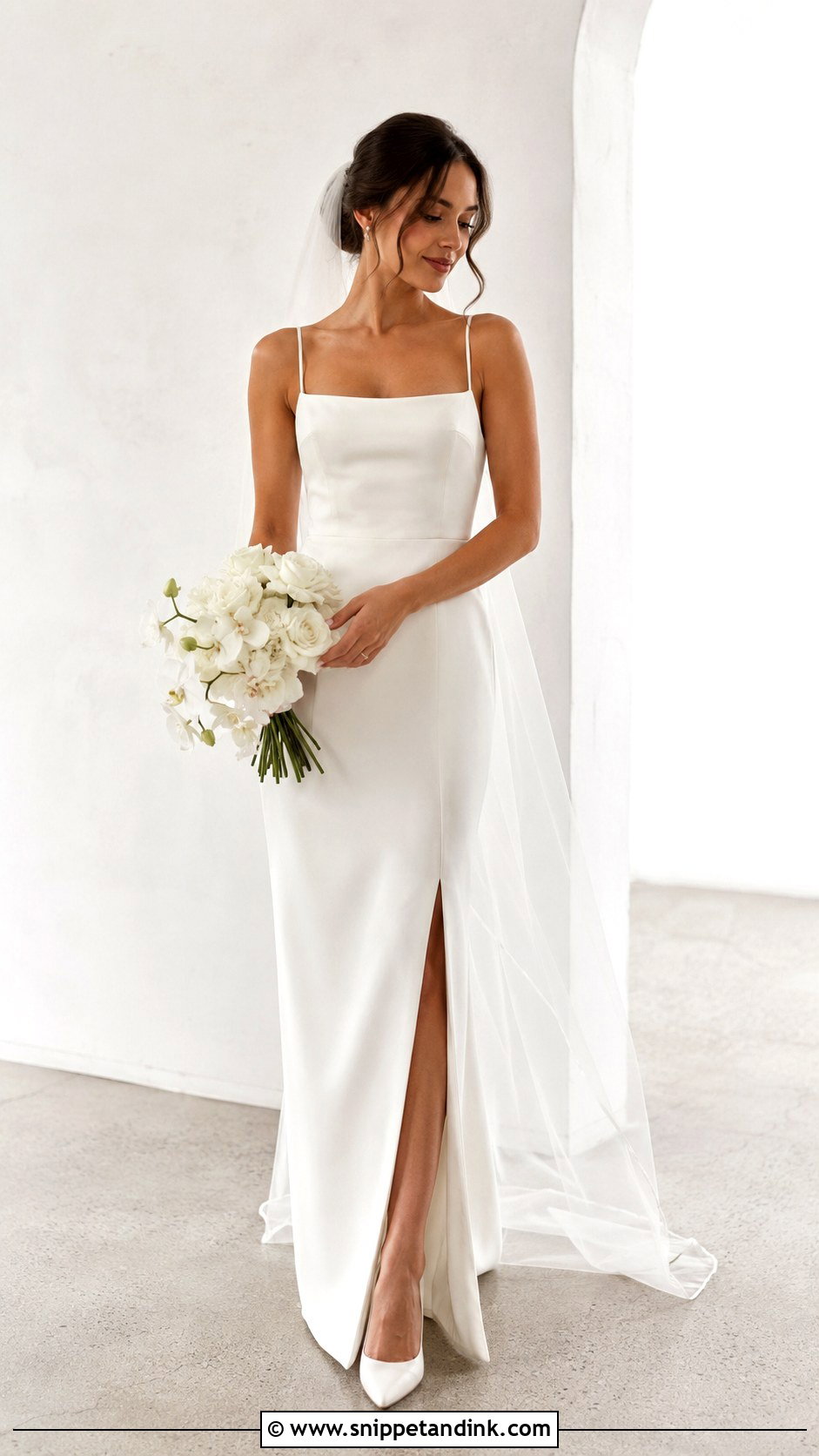
Petite brides often look taller in a column because it doesn’t cut the body into sections. I’d keep trains small and details in scale with your frame, and look for vertical seams, slim straps and a narrow skirt. The hem has to be cut for your exact shoes; even a centimeter of extra puddle shortens you. A small slit adds length and movement. Pointed heels, fine jewelry and a simple veil finish it.
24. Boho Straight Wedding Dress
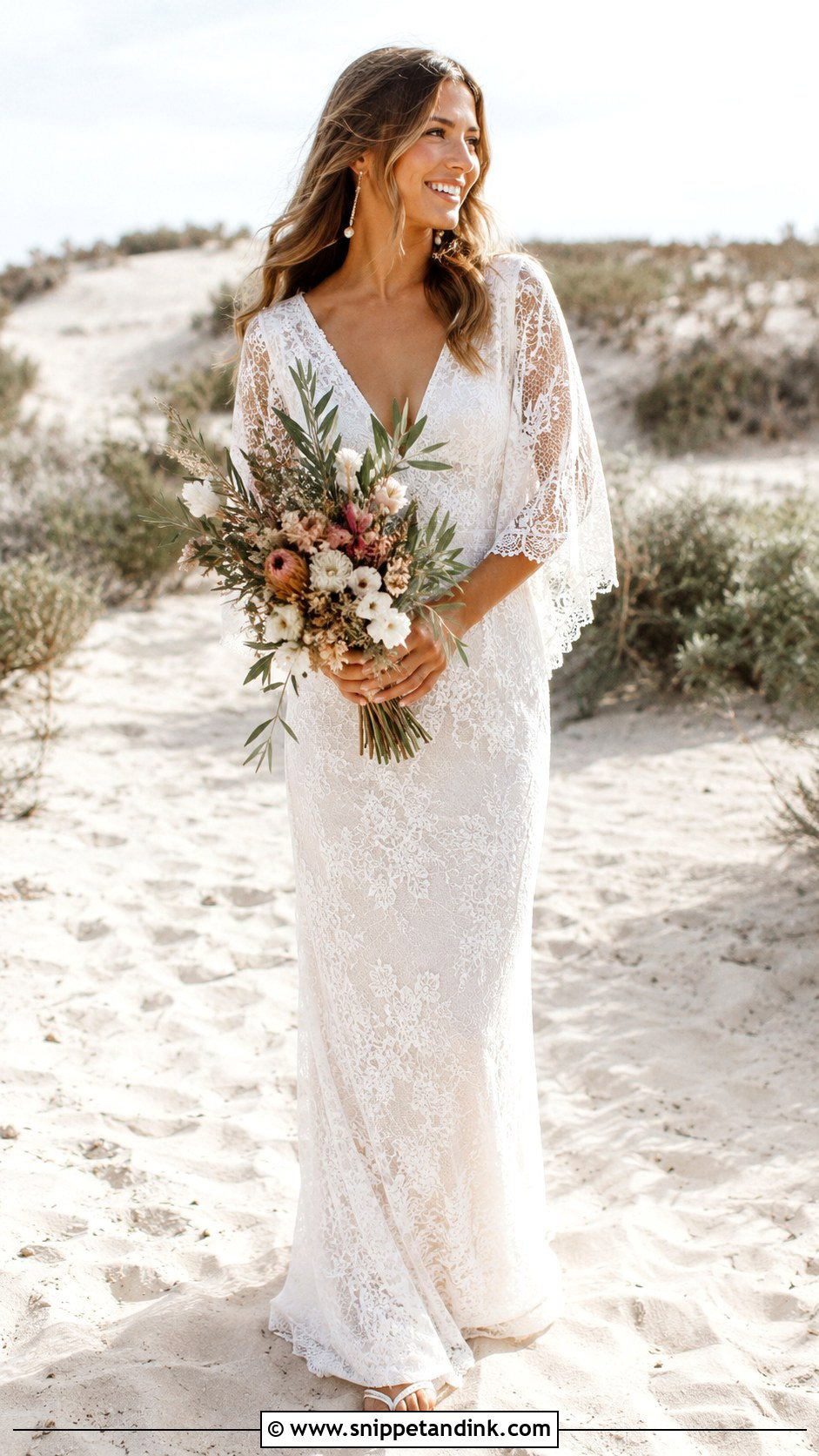
Boho without the big skirt: soft lace, crochet-style texture, flutter sleeves or a light column. Natural details and easy movement matter more here than sparkle. Lightweight boho fabrics wrinkle quickly, so I’d pack a handheld steamer for the getting-ready room. Soft waves, simple earrings, low block heels or flat sandals and a loose bouquet suit it. Beaches, deserts, gardens and backyards fit it well. An open back or sheer lace sleeves give it personality.
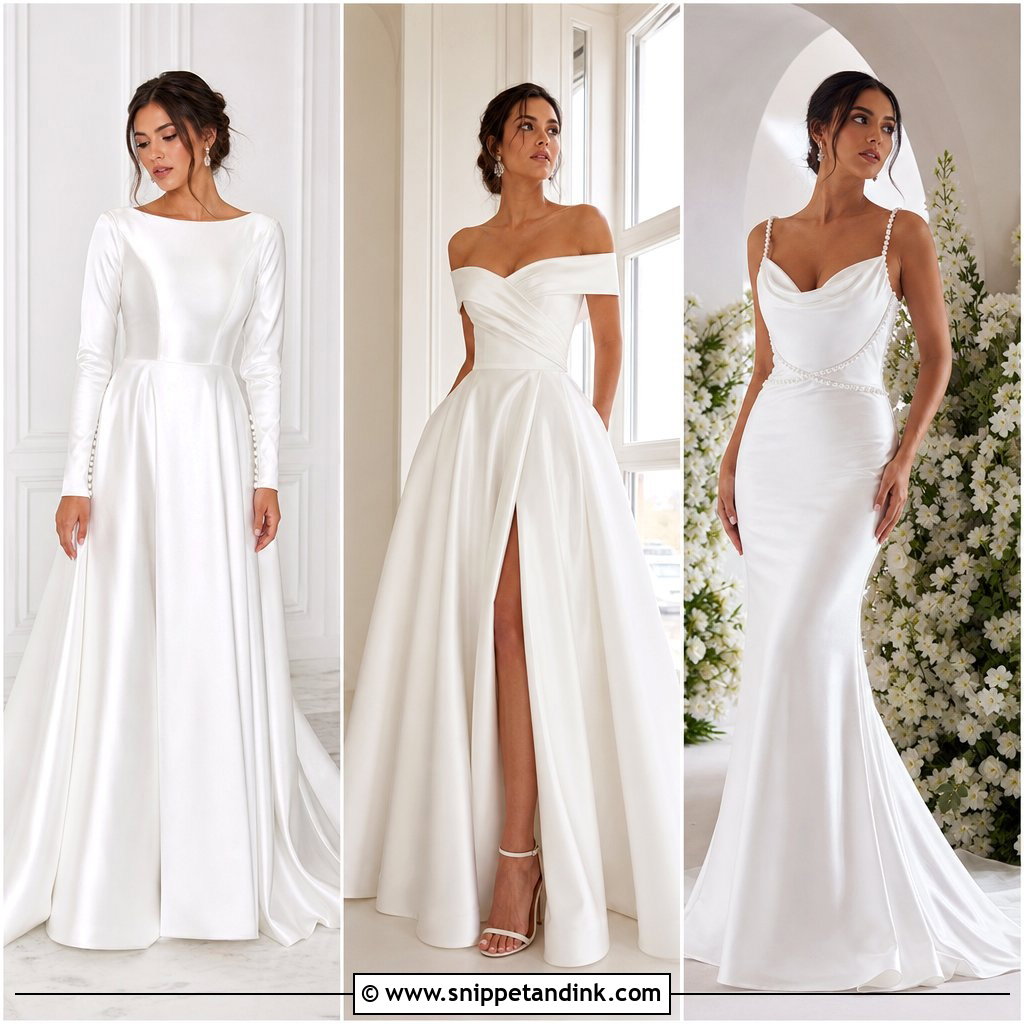

25. Vintage Straight Wedding Dress
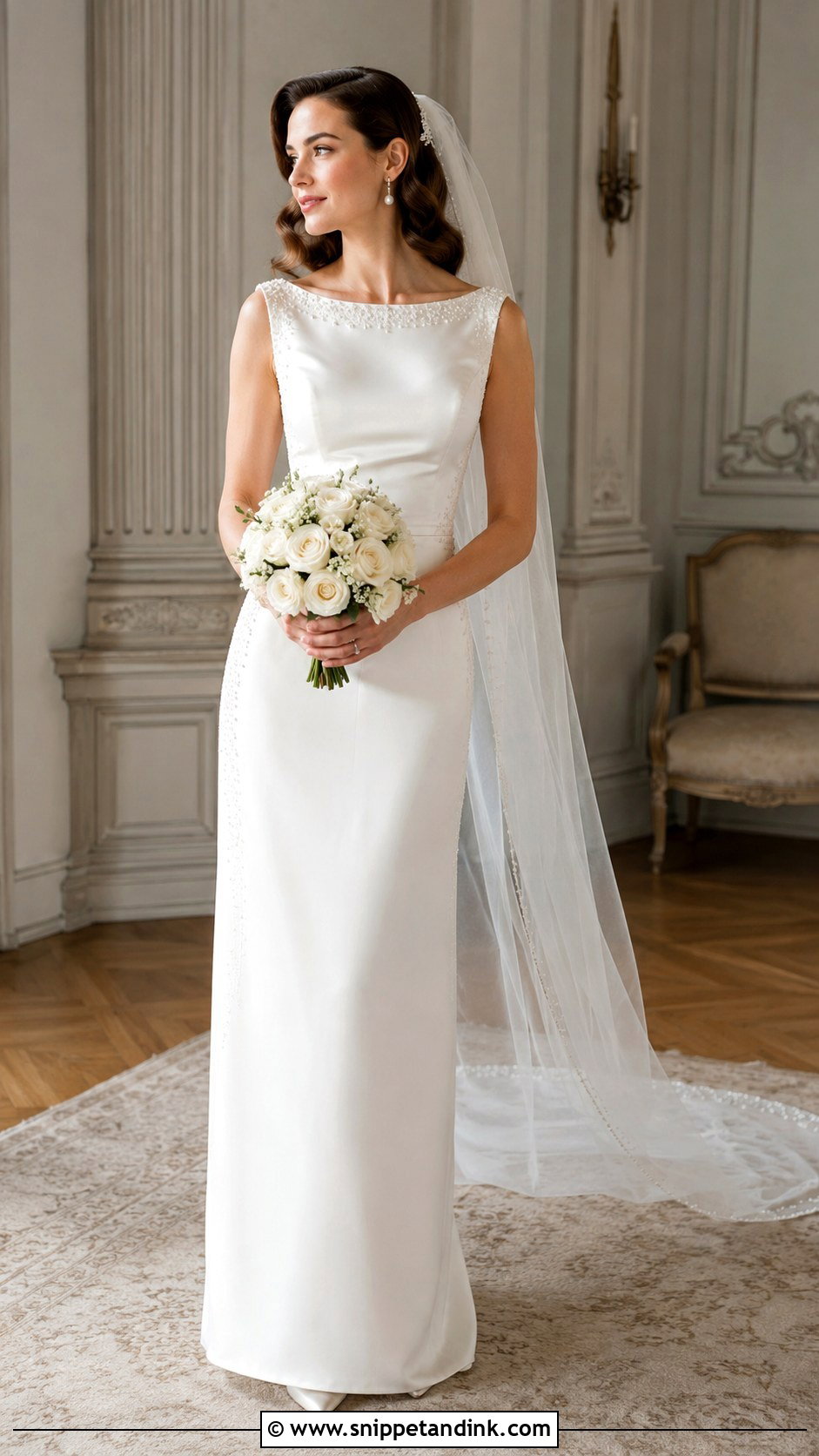
A vintage straight wedding dress can mean a 1930s-style satin gown, a 1960s column or a beaded sheath with fine sleeves. Styling is where it tips into costume, so I pick one era detail and leave the rest modern. Covered buttons, lace cuffs, bateau necks and light beading suit it, with soft waves, pearl earrings and satin shoes. Authentic vintage needs a seamstress who works with old fabric, because older seams can be fragile and rarely have much to let out.
The Week Before: Hem, Underwear and Steaming
With no volume to hide anything, small prep mistakes show more on a straight gown than any other. This is the order I work in during the last week.
- Wear your actual wedding shoes to the final fitting. A column hem should just kiss the floor at the front, and a two-centimeter heel change undoes that.
- Try every layer underneath together: shapewear, bra or cups, and any slip. Lines from a waistband show through crepe and satin in side light.
- Collect the dress already pressed, then hang it from its loops in a cool room, not on a door where the skirt folds.
- On the morning, steam it hanging and let it rest for half an hour before you step in. Damp satin marks easily.
- Pack a small kit: fashion tape, a lint roller, white chalk for small marks and a few safety pins in ivory.
Which Straight Gown Is Yours?
A straight gown can be minimal, romantic, glamorous, modest or vintage, and the fabric, neckline and sleeves decide which. I’d put fit and fabric first, then think about the venue and how you’ll move through the day, and only then the shoes, veil, jewelry, hair and bouquet. Satin, lace, crepe, pearls, bows or a detachable train can all work. The column that suits you is the one you can walk, sit and dance in without checking the mirror.
You'll Like These Ideas:





Leave a Reply