
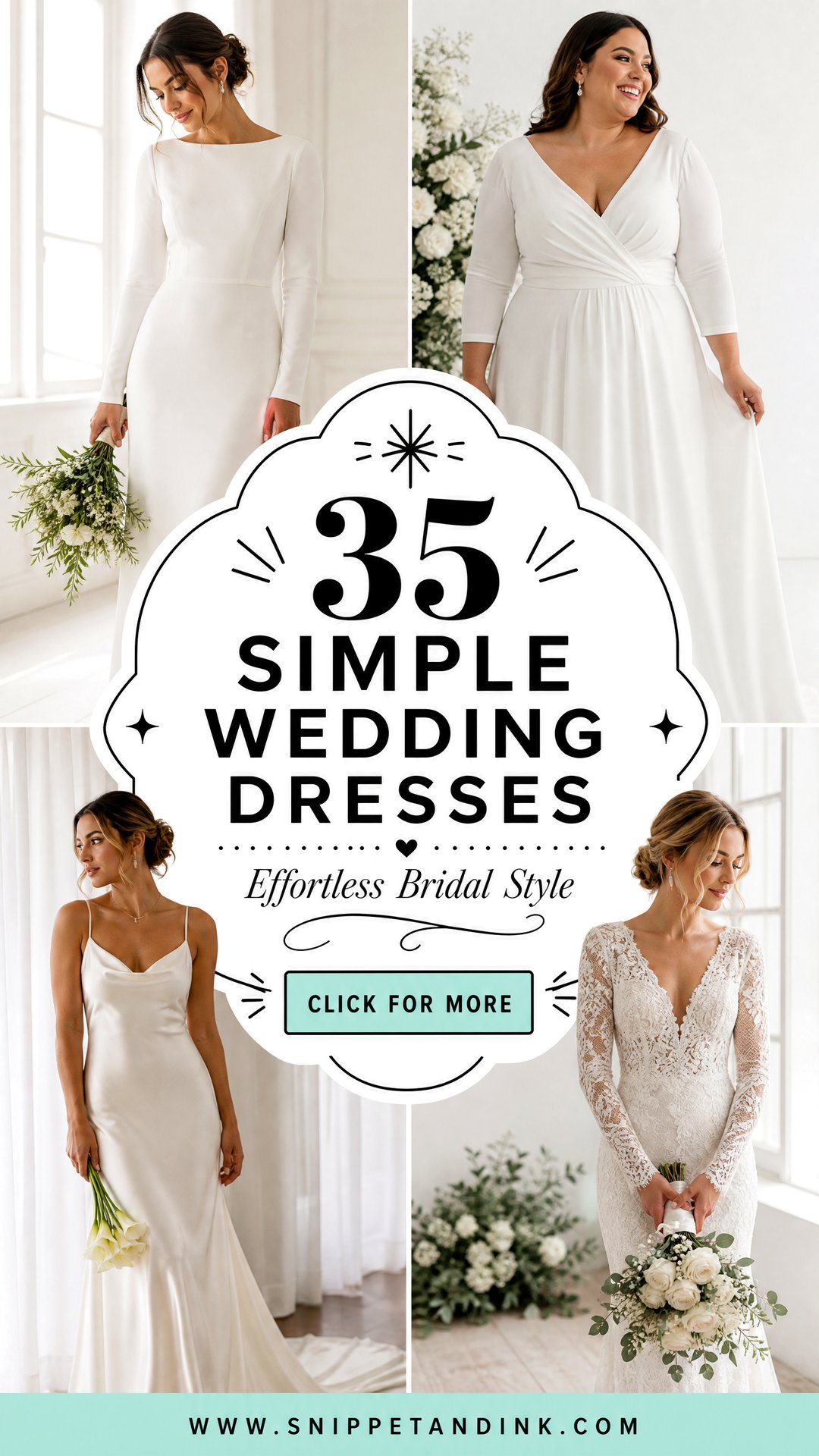
A plain gown has nowhere to hide. With no beading or lace to pull the eye, the fabric, the cut and the fit carry the whole look, which is exactly why I love dressing brides in them and also why I’m fussier with them than with anything ornate. Below are the clean shapes I reach for most: silk slips, crepe columns, satin A-lines, minis, long sleeves, sculptural strapless bodices and the kind of polished dress that suits a courthouse. With each one I’ve noted what it does on a real body over a long day, and who I’d quietly steer toward something else.
Plain Fabric Hides Nothing, So Start Underneath
The first thing I do with a bride shopping for a minimal dress is ask her to bring the underwear she actually plans to wear. Beading and lace disguise a strap line or the edge of a shaping slip; smooth satin and crepe reveal both. A smooth nude bra with no visible edges or a dress with built-in cups changes how a plain bodice sits more than any style decision you’ll make at the appointment.
Then I put the dress through what I call the day test. It takes two minutes in the fitting room and saves a lot of disappointment:
- Sit down on a hard chair. Watch for pulling across the hips and for satin bunching at the lap.
- Raise both arms as if hugging someone taller. Sleeves and strapless bodices show their limits here.
- Walk across the room and turn. A column that looks perfect standing can restrict your stride.
- Stand next to a window. Natural light shows lining, seams and any sheerness that shop lighting hides.
Colour matters more when there is no detail to distract. Stark white can look cold against warmer skin, and ivory or a soft champagne usually reads warmer in daylight. Hold the fabric against your face near a window before you decide.
1. Simple Satin Slip Wedding Dress
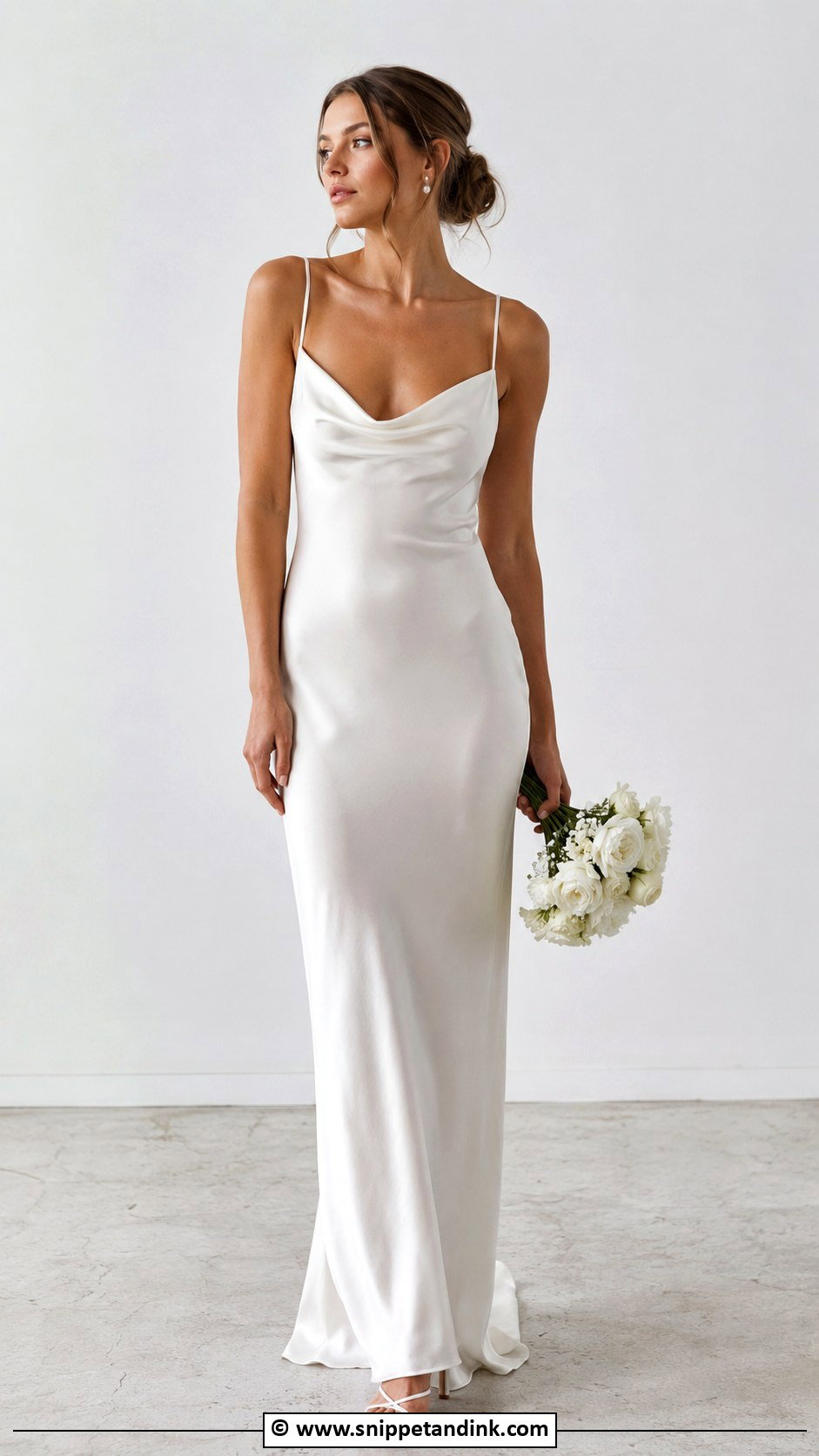
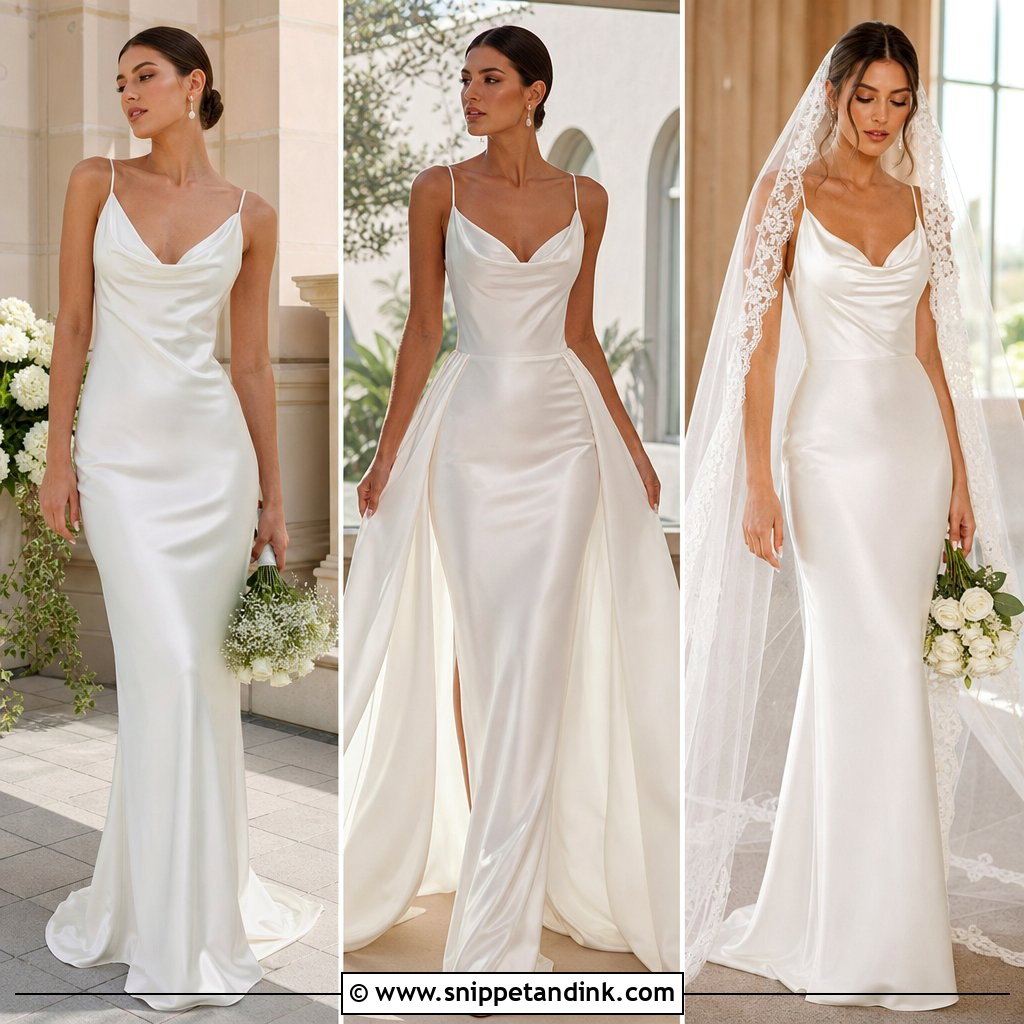
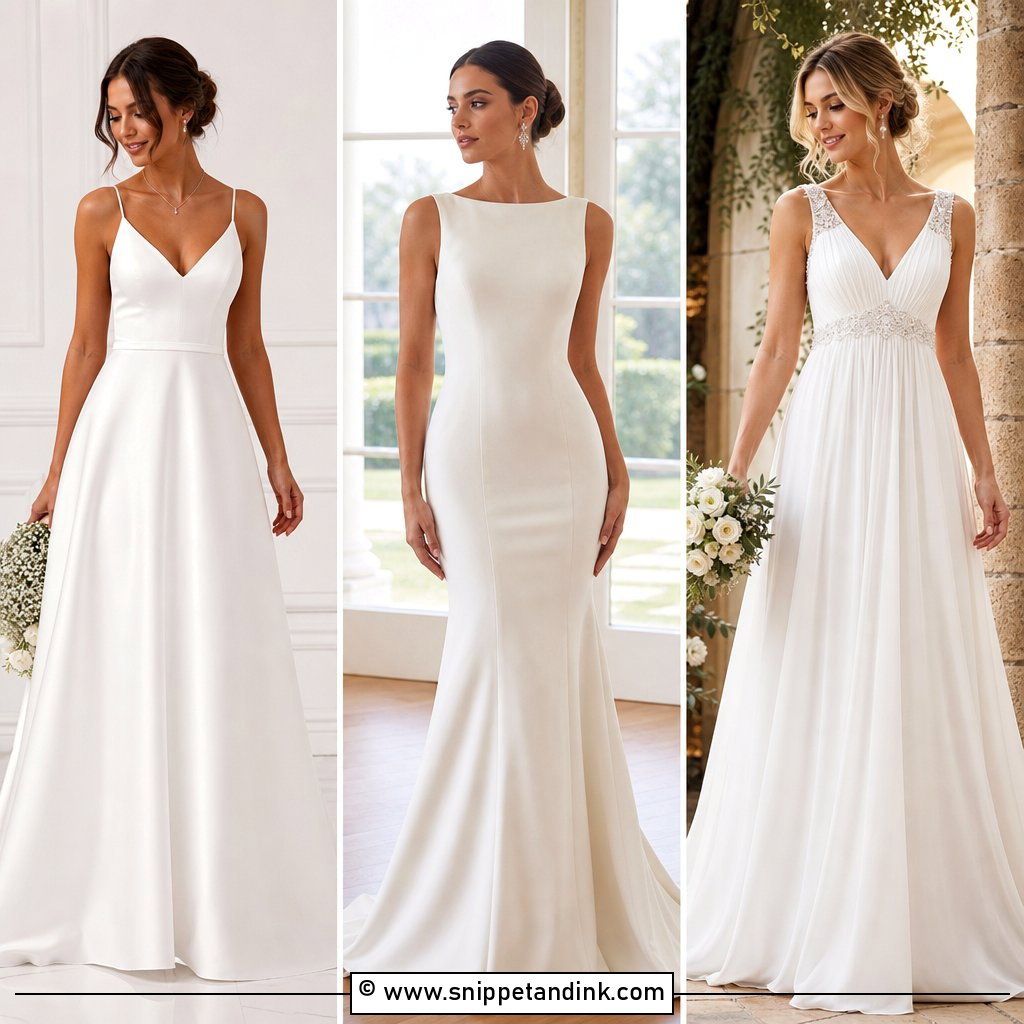
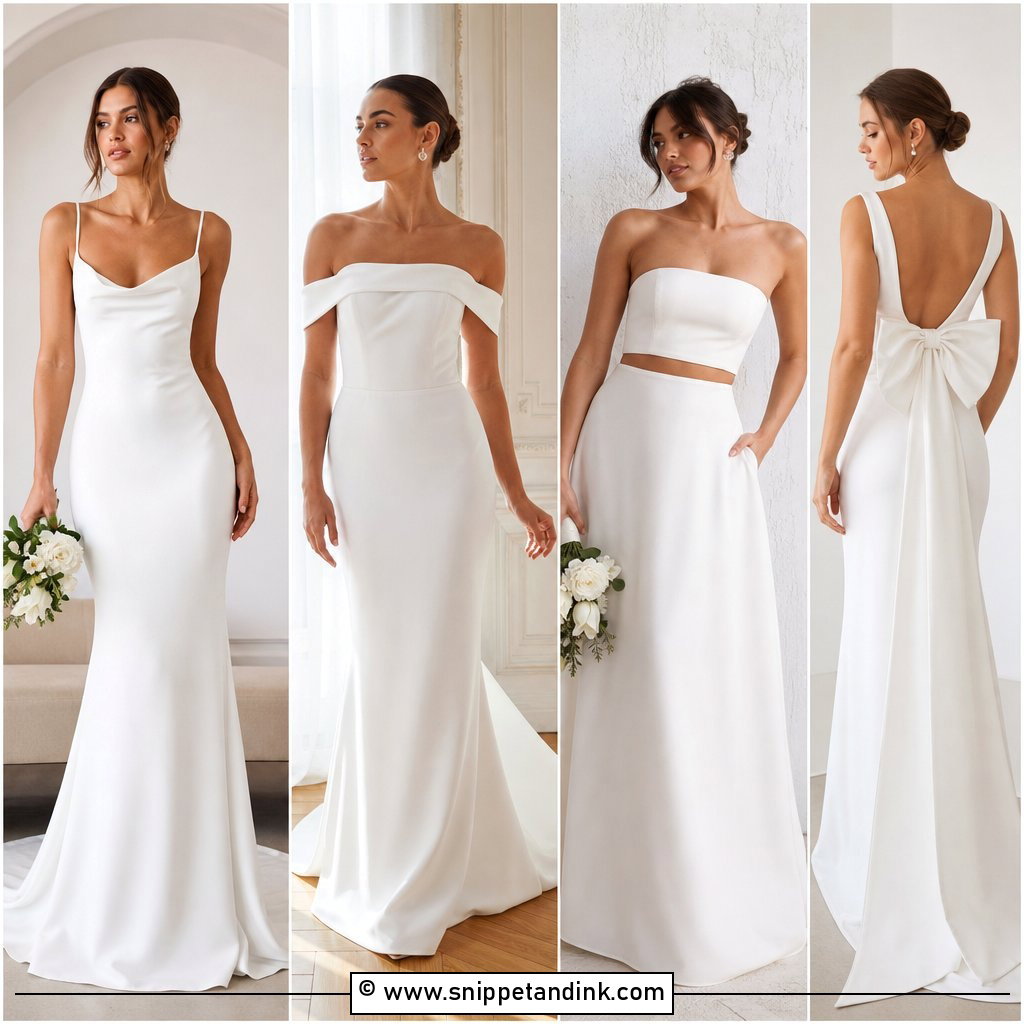
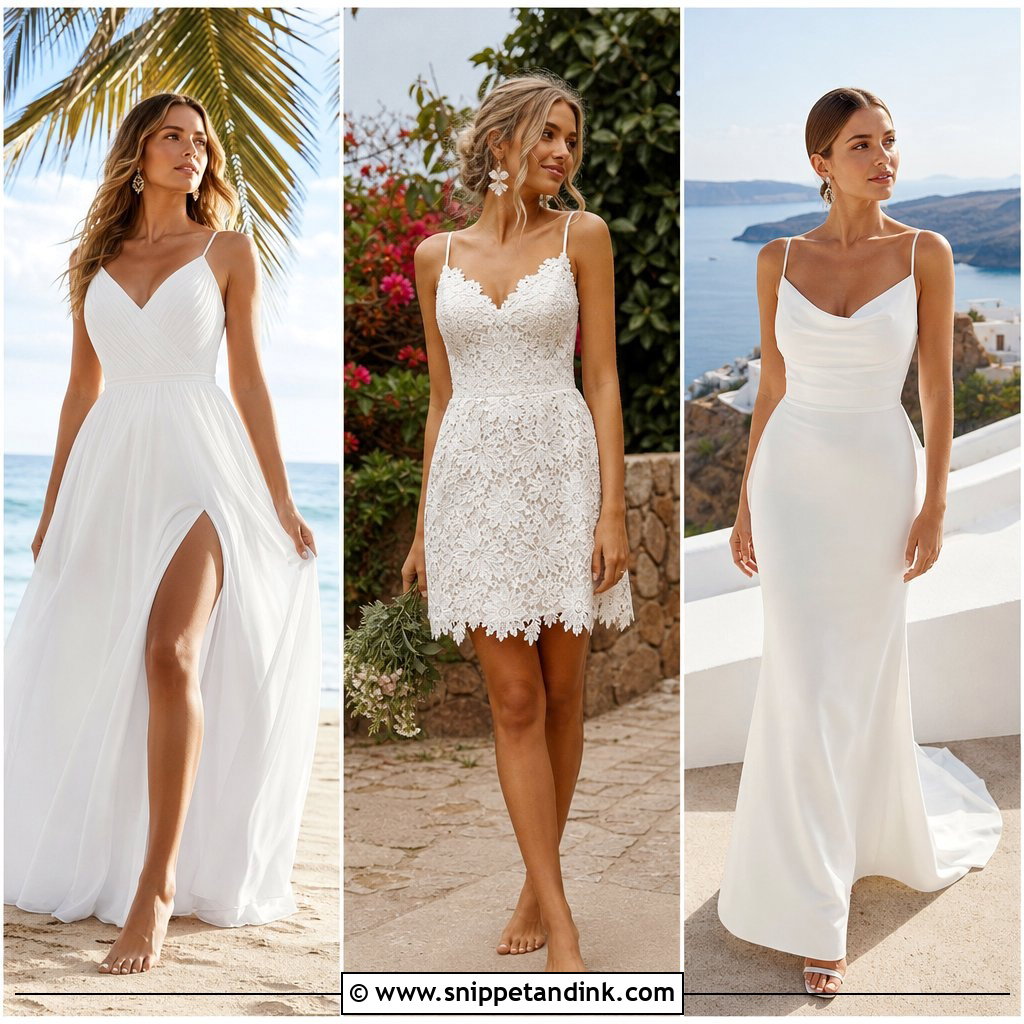
Satin cut on the bias moves with you, which is the appeal and the catch. Bias-cut satin clings to whatever is underneath, so I always fit a slip over the exact underwear the bride will wear, because a seam or a strap line shows instantly under the light. Thin straps and a soft cowl suit a rooftop or a small reception. If you want more coverage, a cropped crepe jacket works better than a scarf, which tends to slide off satin all evening.
2. Simple Crepe Column Wedding Dress
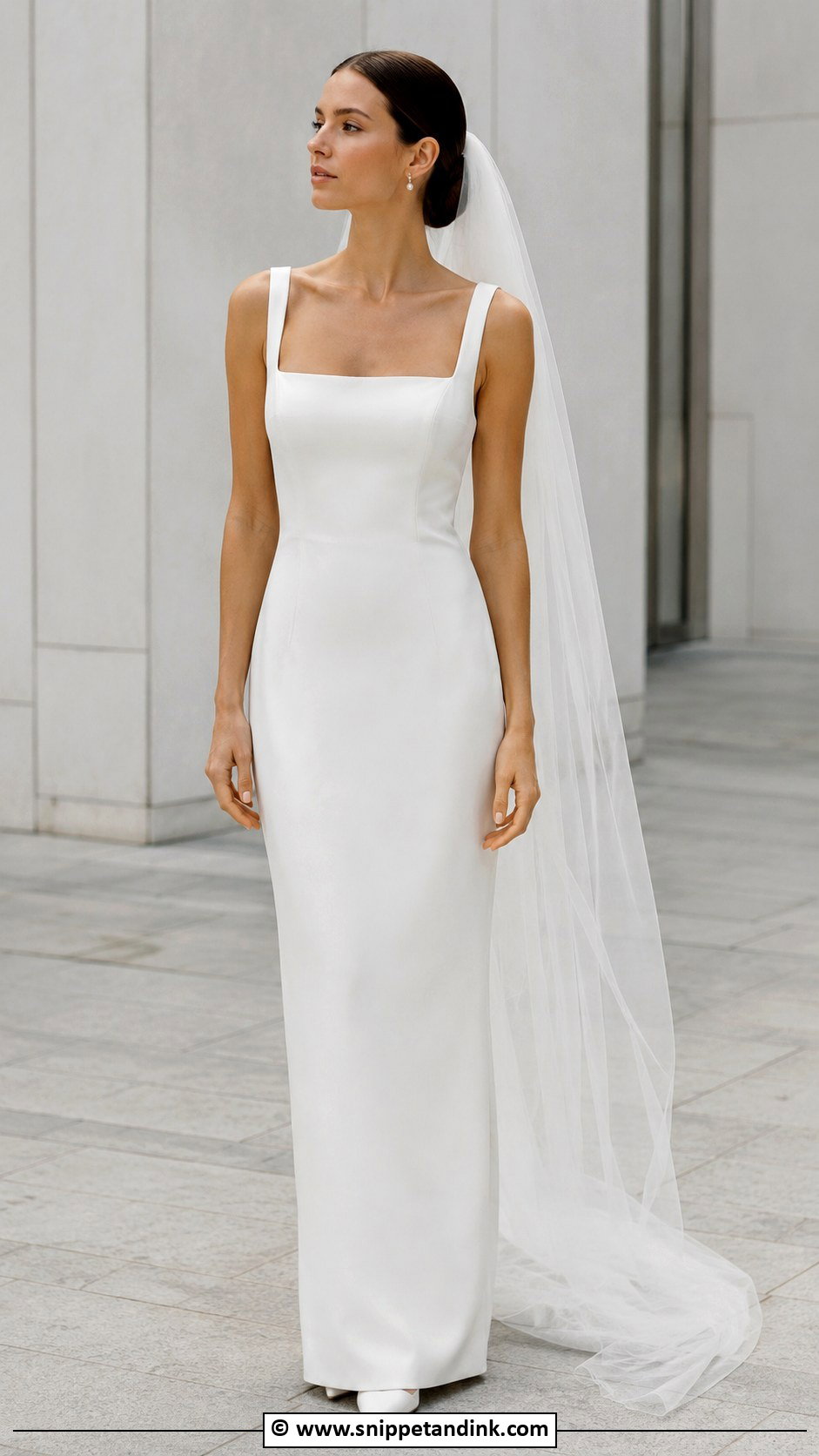
Crepe is my favourite fabric for a clean column because it has weight without shine, so it hangs straight and doesn’t advertise every crease. The trade-off is that a column has no volume to forgive a loose fit; if the side seams sit even a centimetre off, you’ll see it in profile. A square or bateau neckline gives the plain front some architecture. Pair it with a long veil and a low chignon, and spend your budget on the seamstress rather than the shoes.
3. Simple A Line Wedding Dress
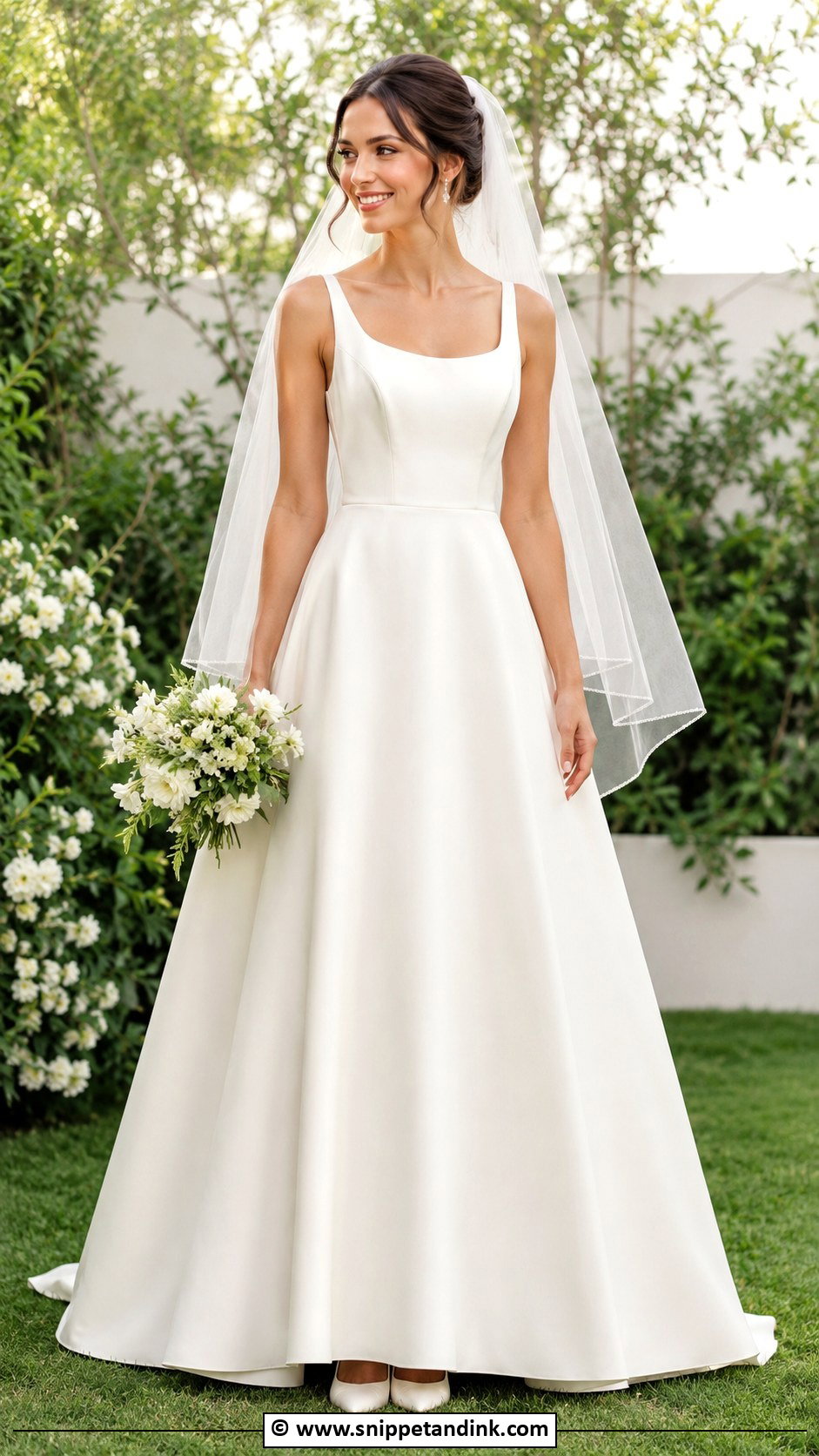
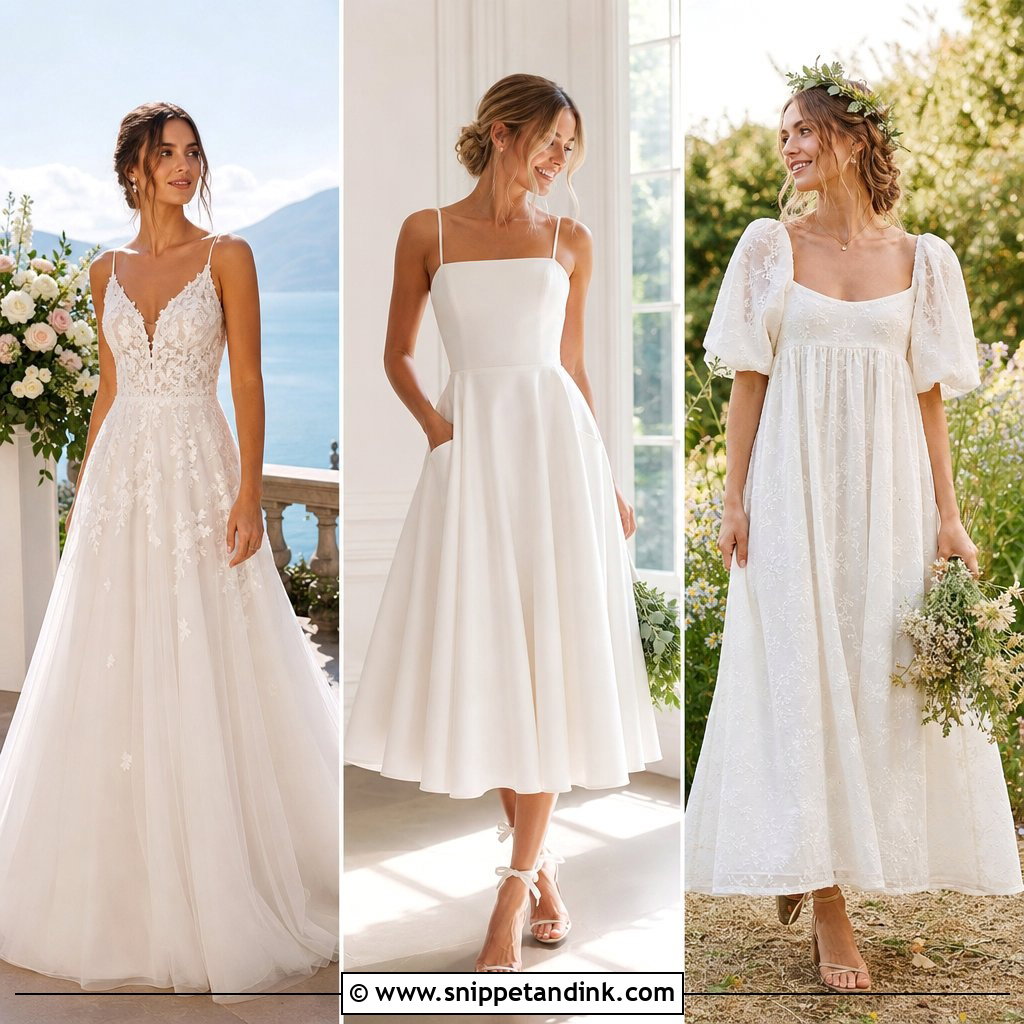
The A-line is the shape I suggest when a bride isn’t sure what she wants, because a fitted bodice and a skirt that releases from the waist suit most figures without much negotiation. The fabric changes its character completely. Mikado holds the skirt out crisply, organza adds air, and soft crepe makes it fall closer to the body. A strapless top reads modern; a V or square neck softens it. I’d keep the veil at fingertip length so it doesn’t compete with the skirt.
4. Simple Strapless Wedding Dress
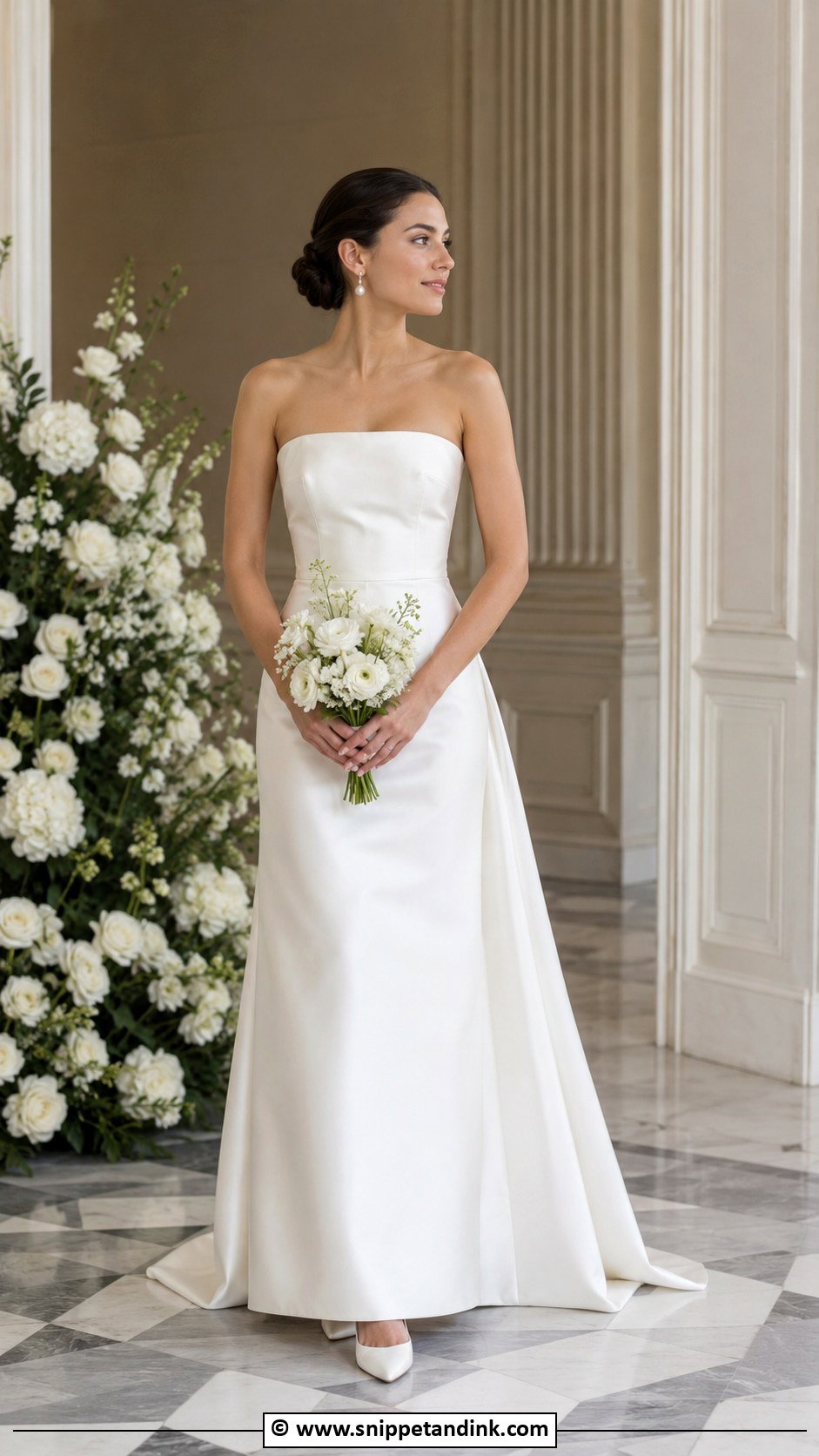
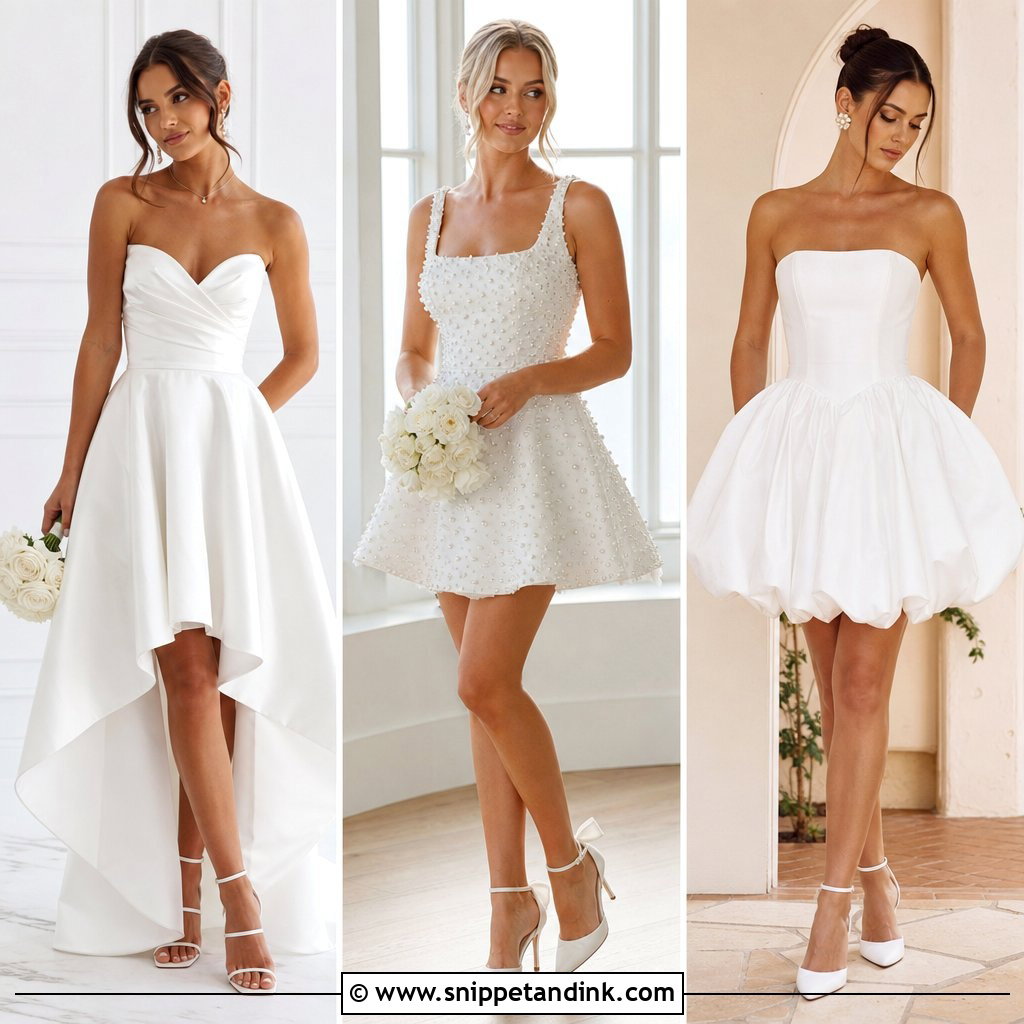
Strapless lives or dies by its internal structure. Before I judge the neckline, straight across or a soft sweetheart, I check for boning and a waist stay, the inner grosgrain band that anchors the bodice so it doesn’t slip down when you hug people. Satin, crepe and mikado all hold the top smooth. A sleek updo and drop earrings balance the bare shoulders. If you find yourself tugging the bodice up in the fitting room, it isn’t fitted yet.
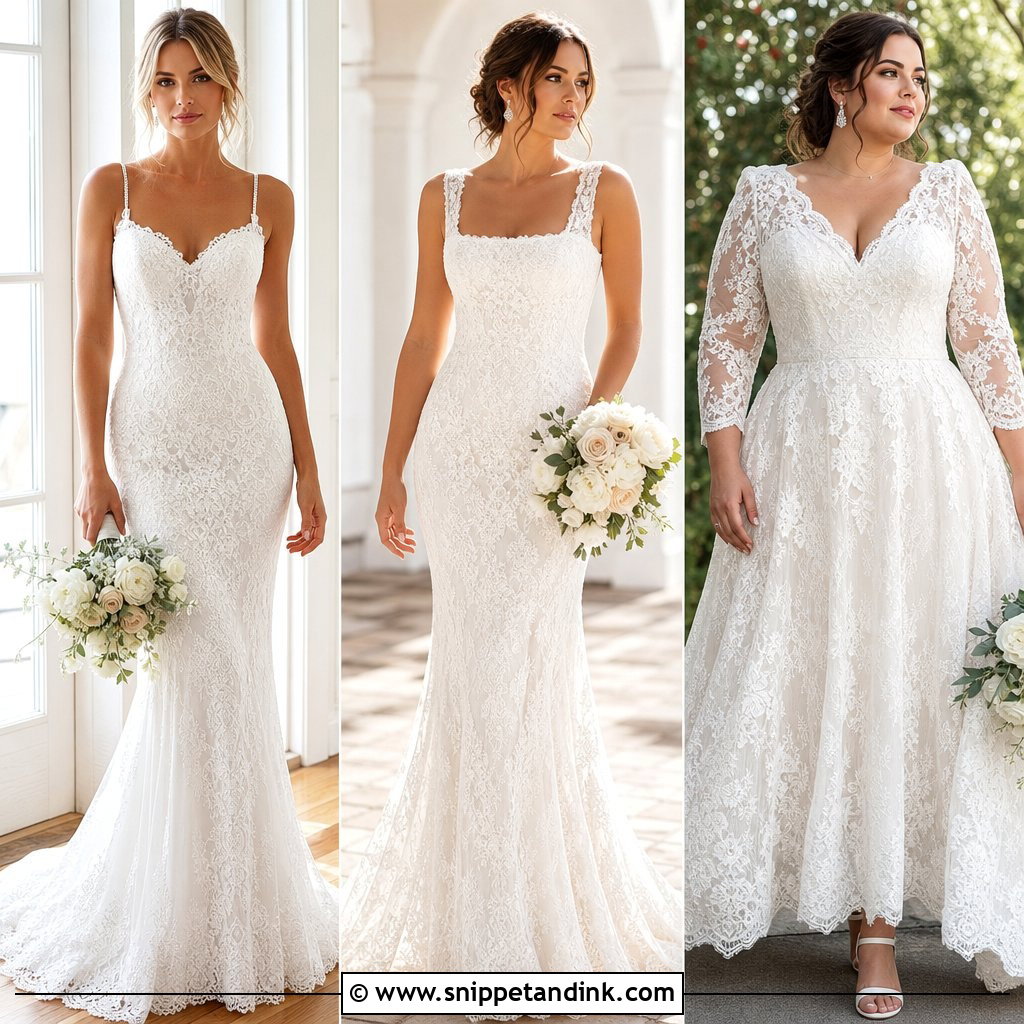
5. Simple Square Neck Wedding Dress
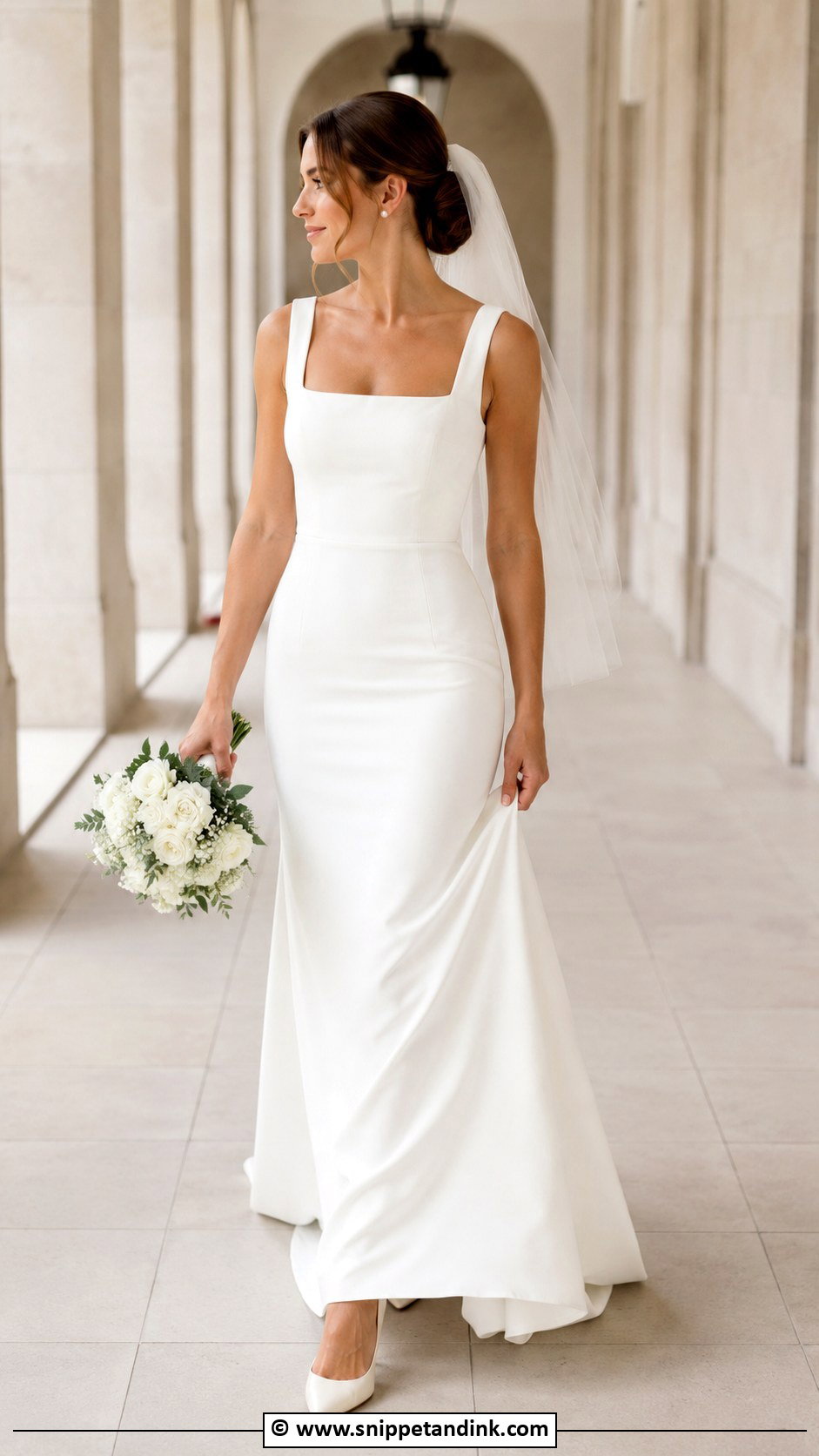
A square neck frames the collarbones with a clean horizontal line, and it is surprisingly forgiving on a fuller bust because it doesn’t plunge. In crepe or matte silk the corners stay sharp; in soft chiffon they can collapse, so I check the corners first at a fitting. It works with thin straps, wide straps or sleeves, fitted or A-line. A smooth low bun and small pearl studs are all it needs, and it’s one of the few necklines I’m happy to see with no veil at all.
6. Simple V Neck Wedding Dress
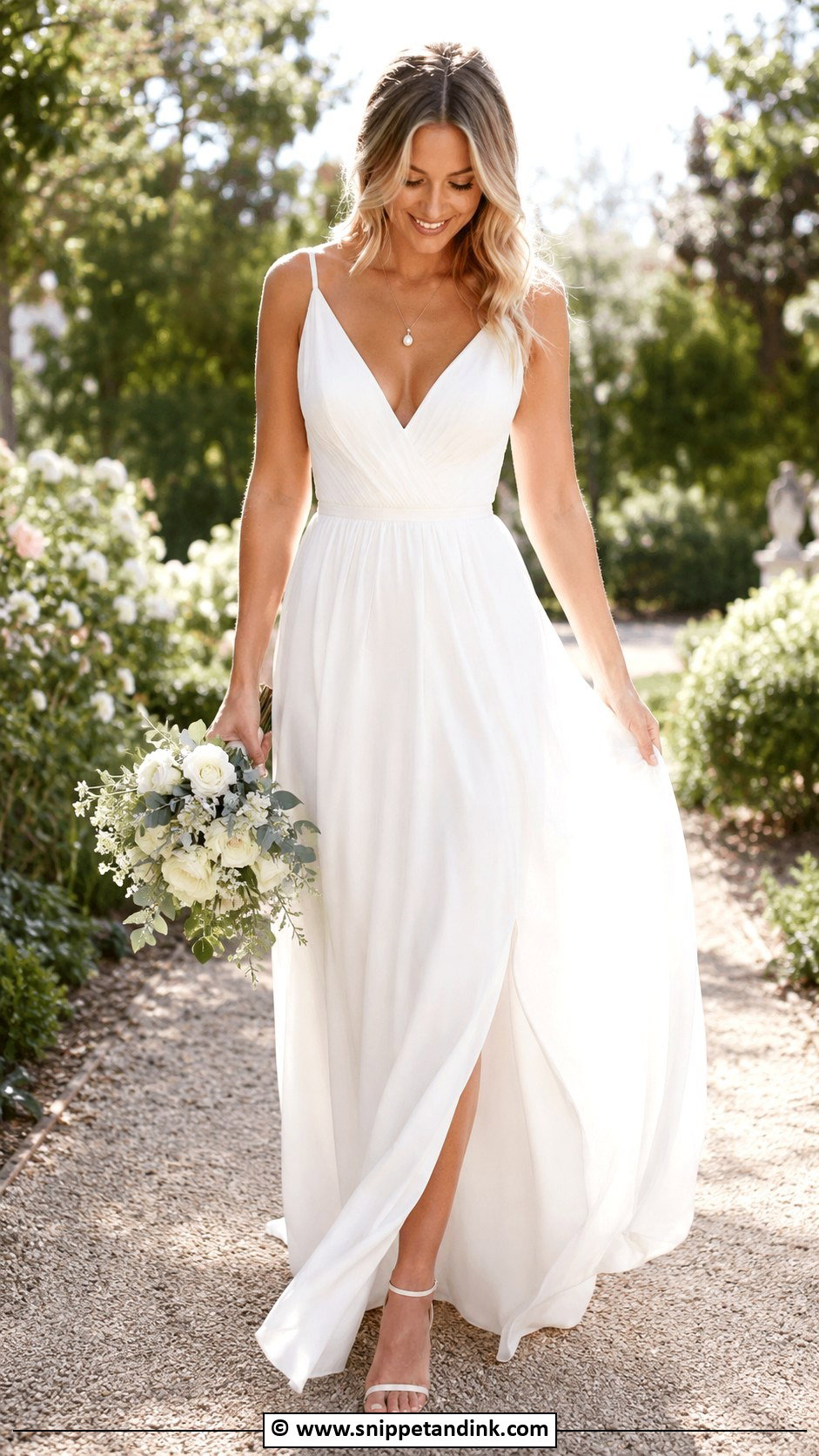
Depth is the whole decision with a V neck. A shallow V reads classic; a deep one looks fashion-led but needs fashion tape and a bodice that is fitted tight at the ribs, or it gapes when you lean in to sign the register. The line lengthens the torso and pulls the eye to the face. Satin, chiffon, crepe and silk all suit it. Soft waves and a fine pendant finish it, and wider straps or sheer sleeves add coverage without losing the shape.
7. Simple Long Sleeve Wedding Dress
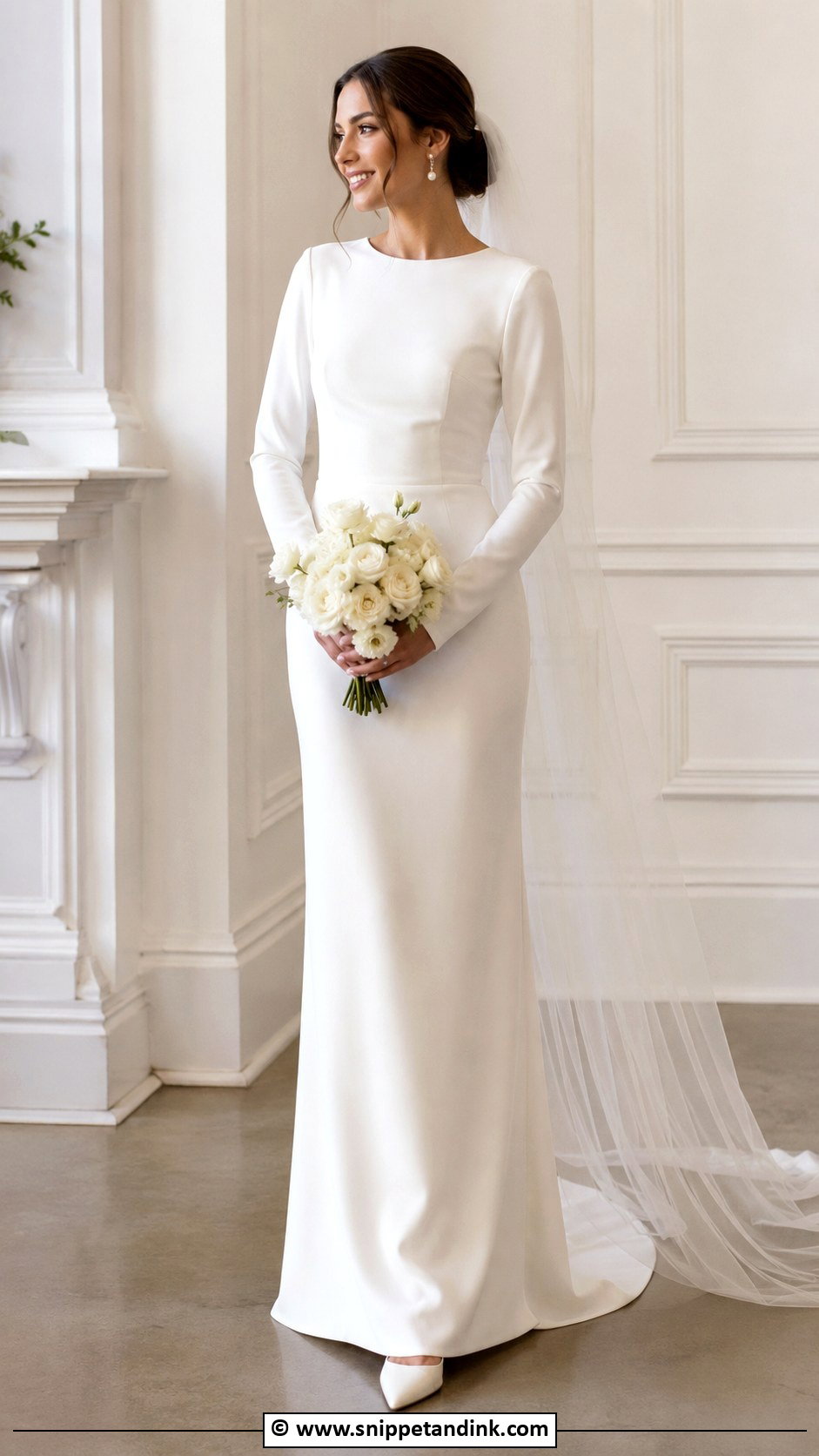
Sleeves are where I see the most fit problems on simple gowns. A fitted crepe sleeve has to let you lift your arms for a bouquet toss and a first dance, so I always ask the bride to raise both arms at the fitting before anything is pinned. Fitted crepe with a column skirt looks modern, while chiffon sleeves with a fluid A-line feel softer. High, bateau and square necklines all sit well with sleeves. It’s my most common recommendation for autumn, winter and grand city venues, styled with nothing more than pearl earrings and a smooth bun.
8. Simple High Neck Wedding Dress
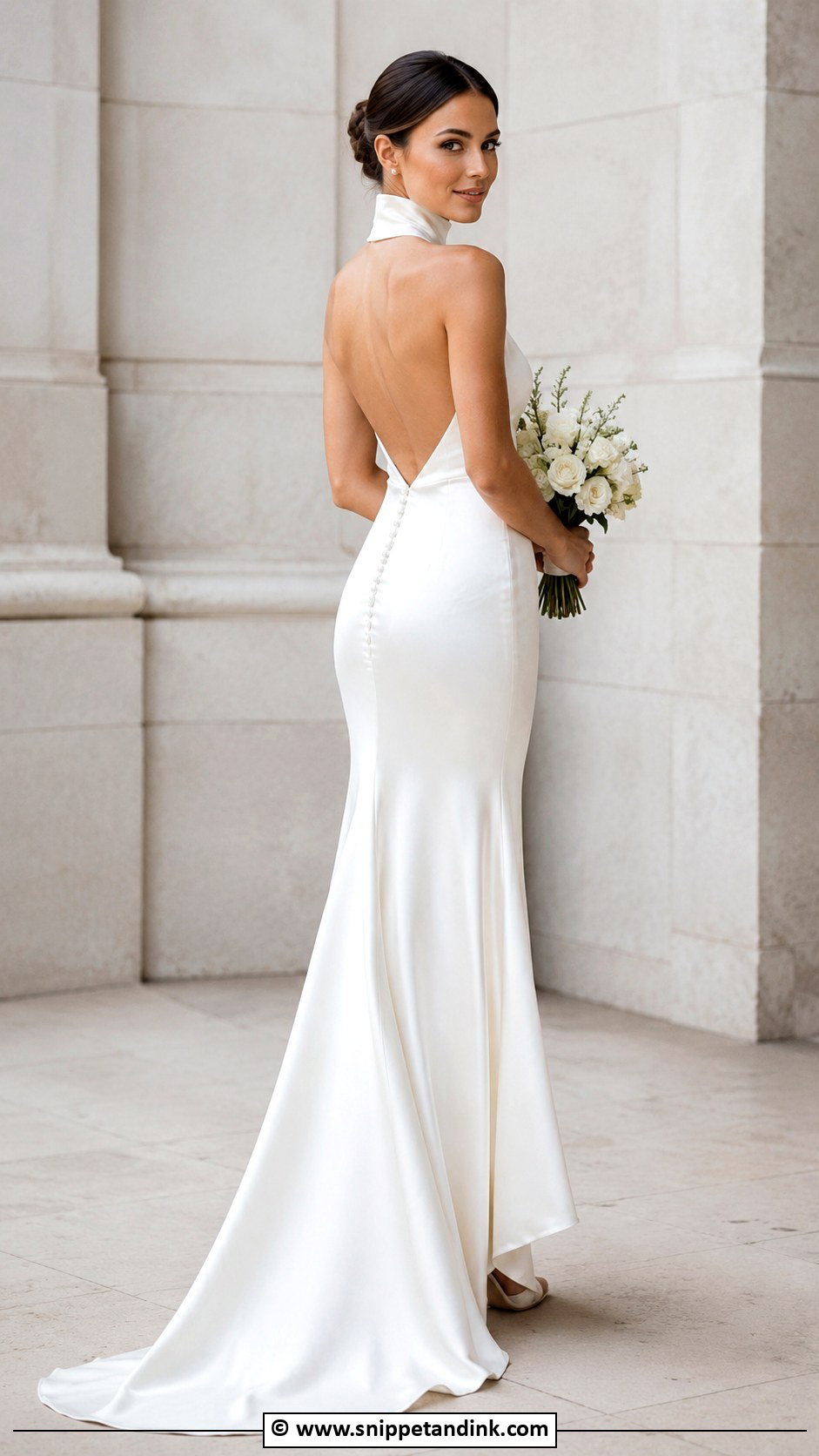
A high neck gives a strong, slightly regal outline with no ornament at all, especially with an open back or a slim skirt. It suits a bride who wants a modest front with a modern shape. The detail I watch is the neckband: it should sit flat and let you turn your head and swallow comfortably, because a tight band is the thing brides complain about by the speeches. Wear your hair up to show the line, keep earrings small, and the long veil becomes optional.
9. Simple Off Shoulder Wedding Dress
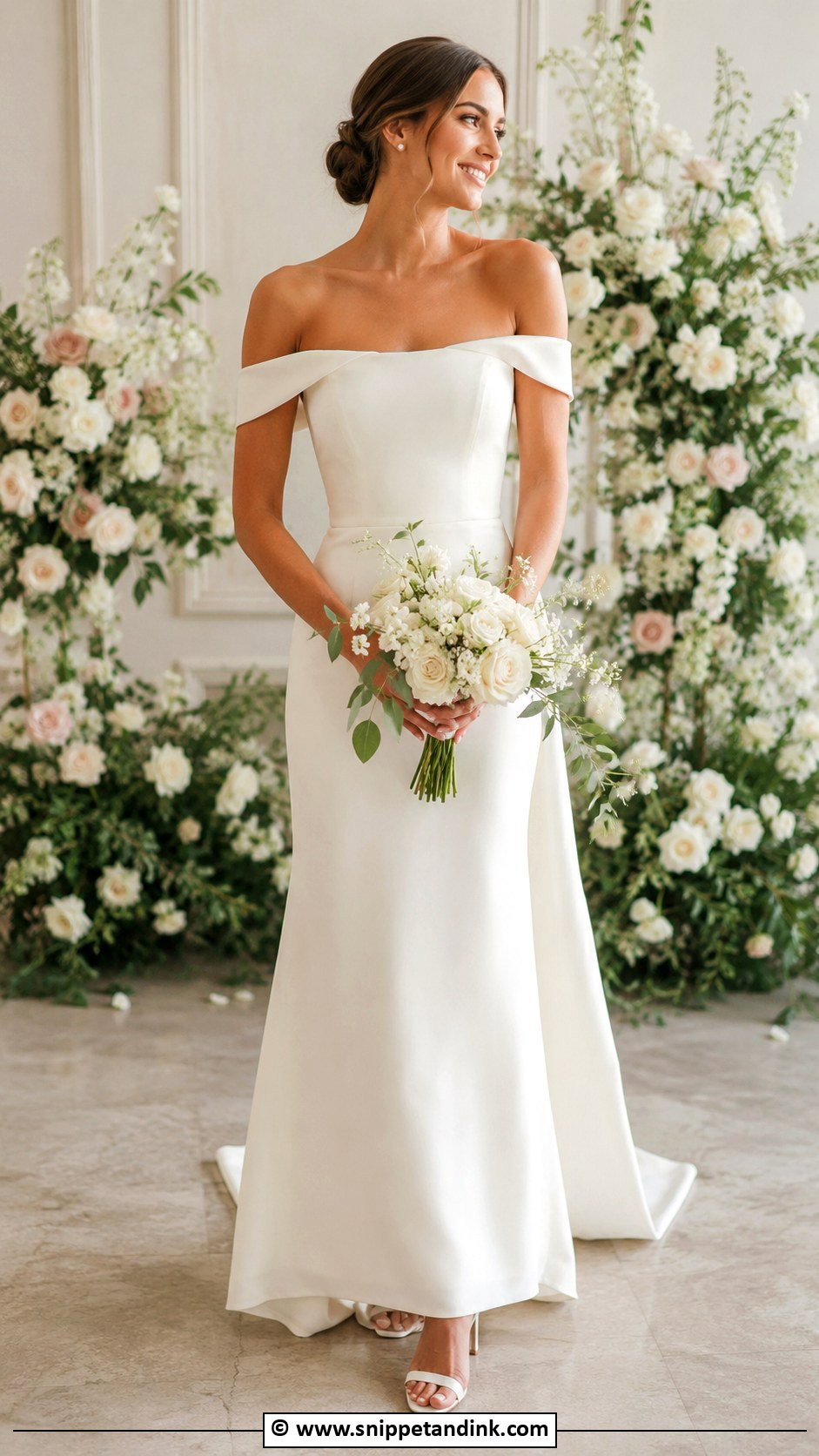
Off-the-shoulder necklines rely on a band that grips the upper arm, and that band decides how much you can move. If it is too tight you can’t hug anyone; too loose and it slides up toward the neck all night. I test it by having the bride reach forward as if for a glass. Over a column, a gentle A-line or structured satin, a clean fabric keeps it modern. Pearl studs and a low bun suit it, or soft waves with a short veil for a looser mood.
10. Simple Backless Wedding Dress
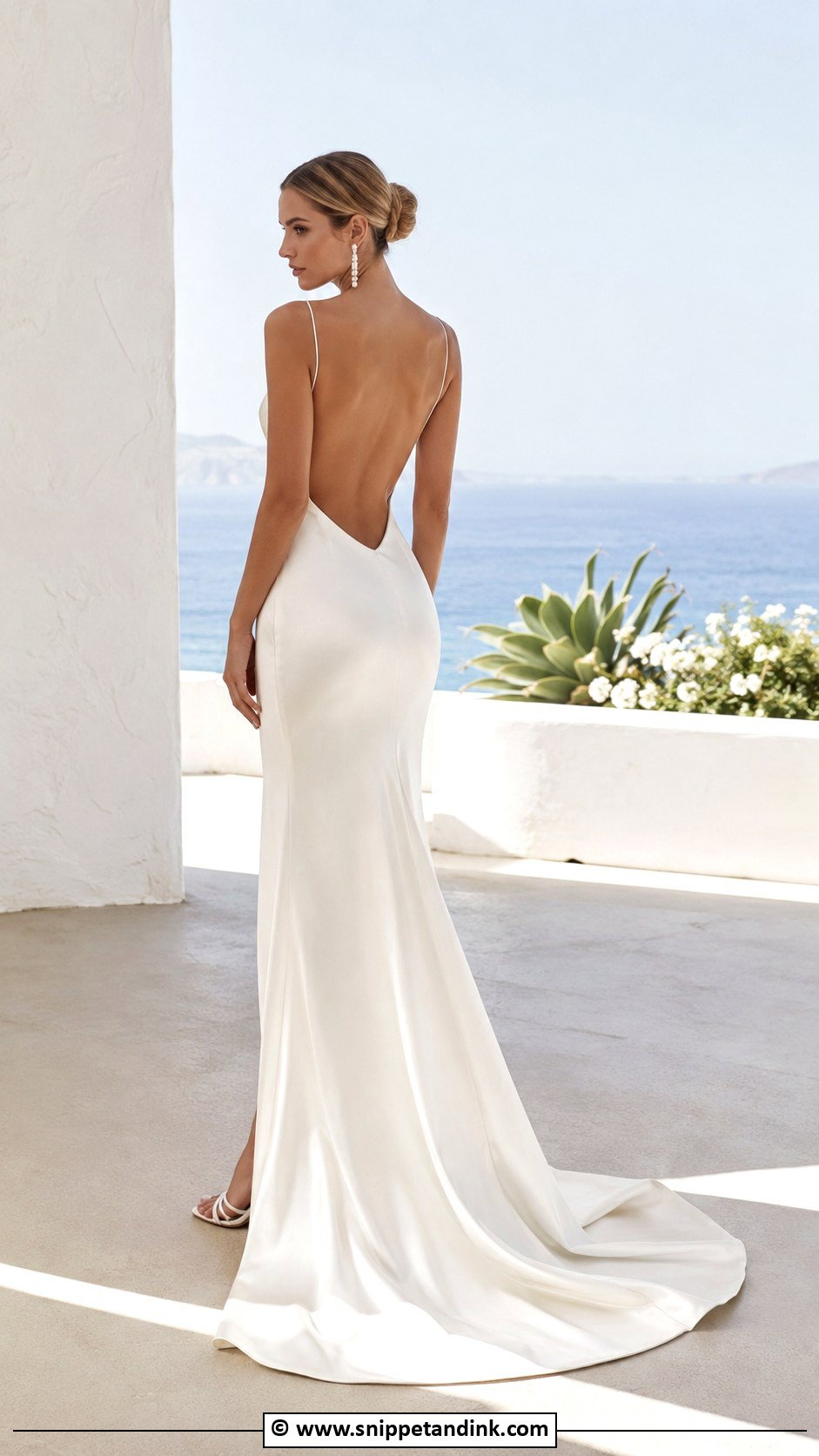
An open back is the one detail on a plain dress that guests notice during the ceremony, since they spend most of it looking at your back. The front can stay quiet with a scoop, square neck or slim straps. Support is the real conversation: most backless gowns need cups sewn into the bodice, so bring that up at the first fitting. Silk, satin and crepe drape cleanly across the low line. A low bun or tucked waves keep the back on show.
11. Simple Halter Wedding Dress
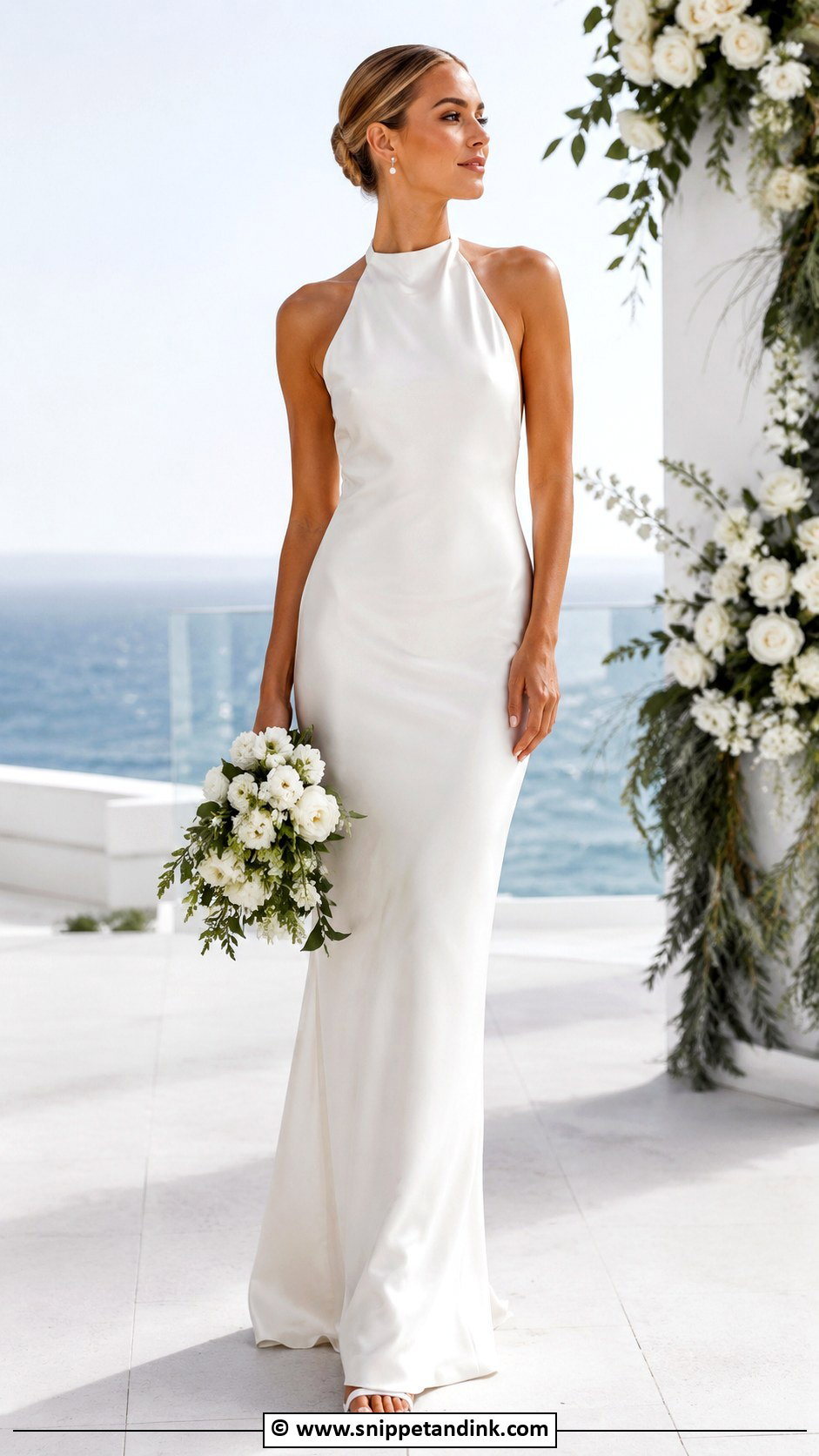
Halters give real support around the neckline, which makes them one of the better open-shoulder options for a fuller bust. The cut draws the eye upward and sits well over a column or a soft A-line. Fabric sets the mood: satin shines, crepe looks modern and silk relaxes it. My one warning is the neck tie or clasp. Over ten hours it can pull, so I ask for a slightly wider strap or a hook rather than a thin tie. Hair up or swept back, small earrings, done.
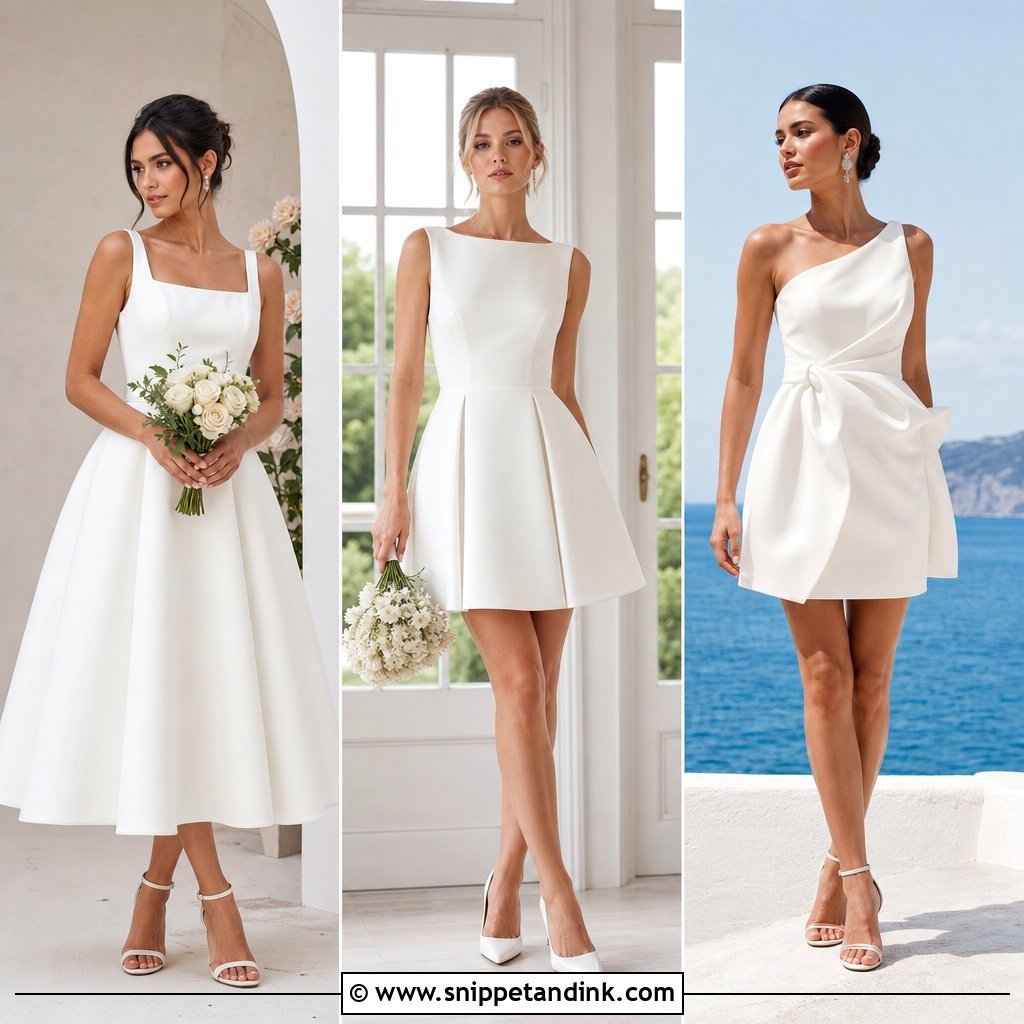
12. Simple Tea Length Wedding Dress
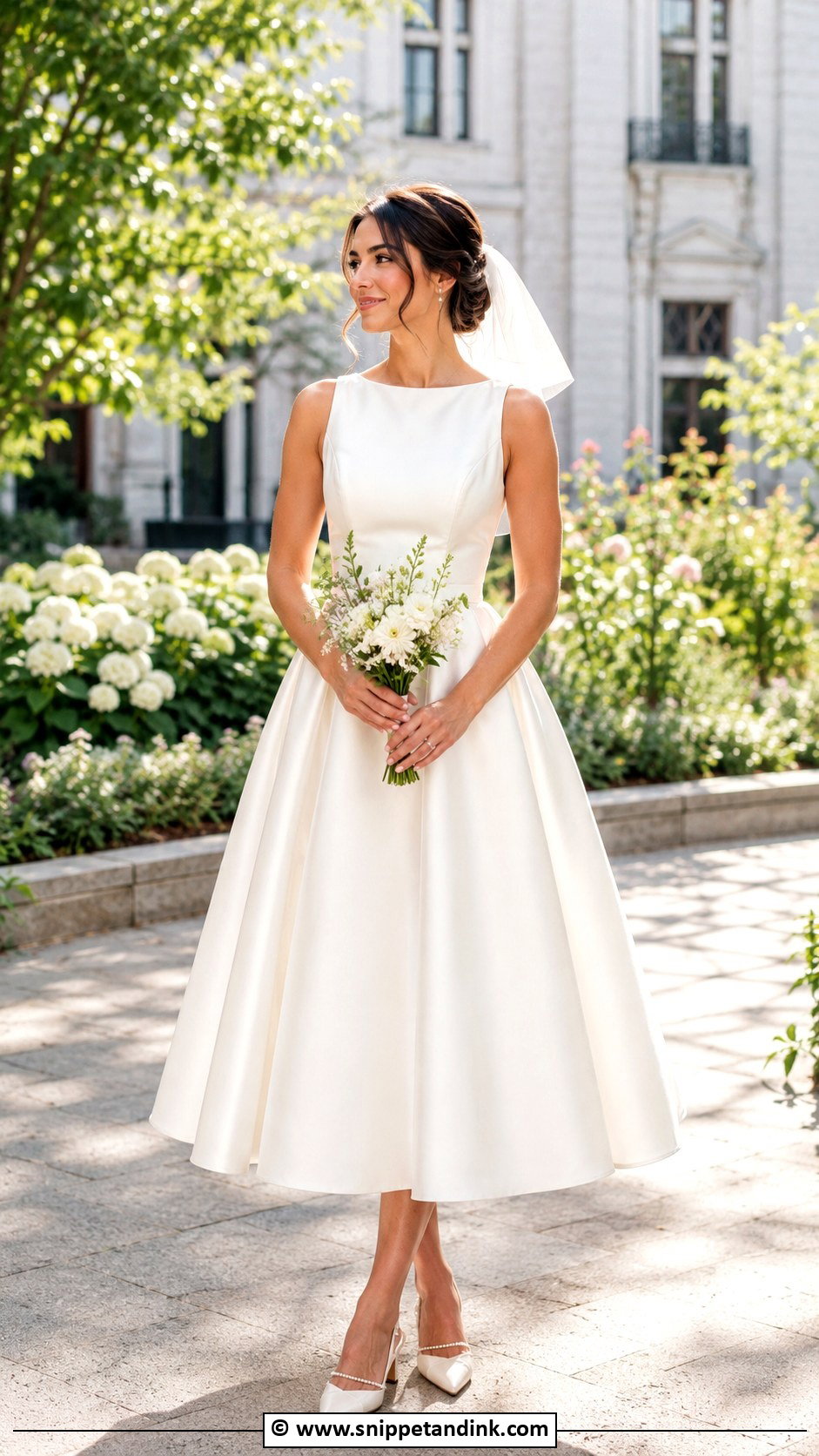
Tea length falls between the knee and the ankle, which means your shoes become part of the outfit and you can actually walk across grass. A fitted bodice with a full tea-length skirt reads classic, and a straight version reads more modern. Satin, tulle, organza and mikado all hold the hem well. Choose the shoes before the final hem, because a heel height change of even an inch moves where the skirt lands on the calf. A short veil and pearl earrings finish it.
13. Simple Mini Wedding Dress
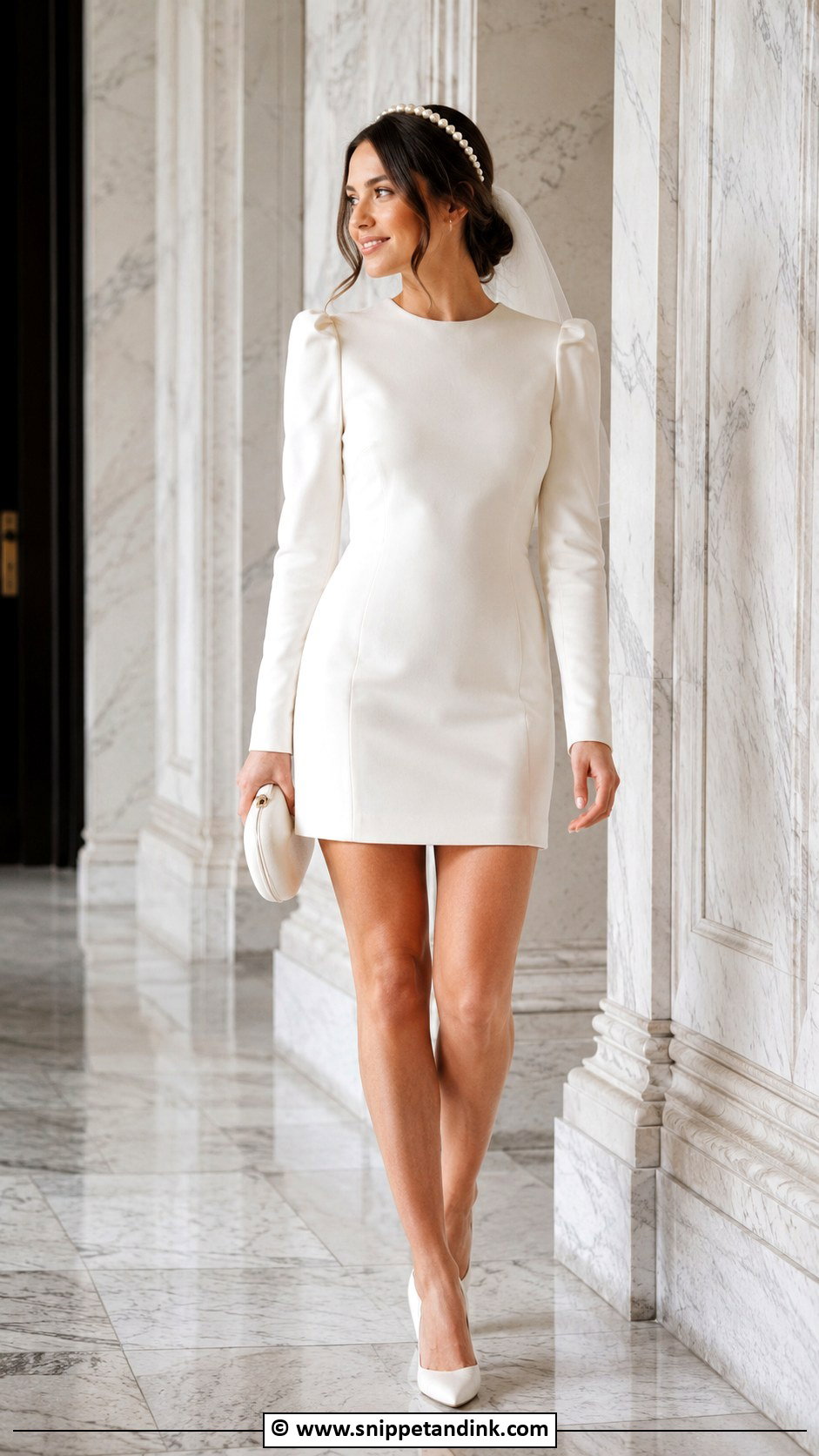
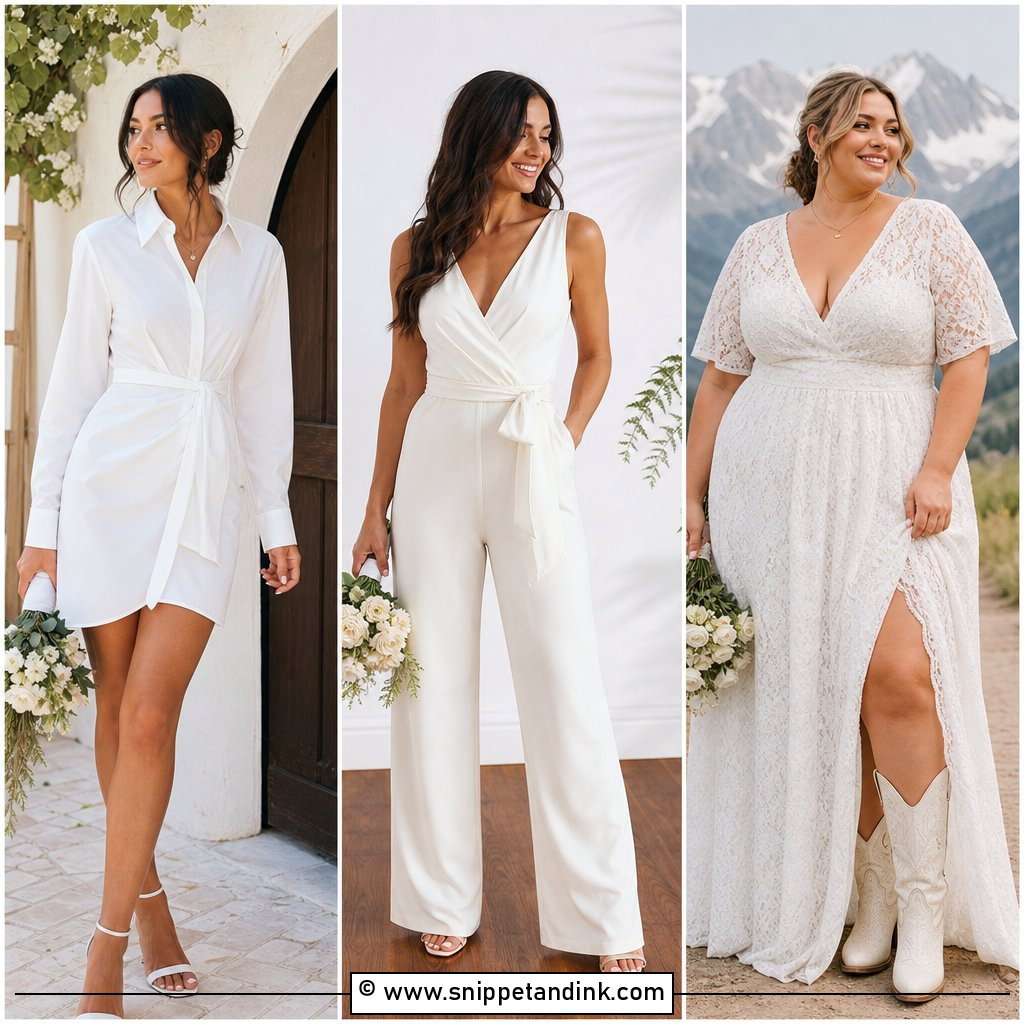
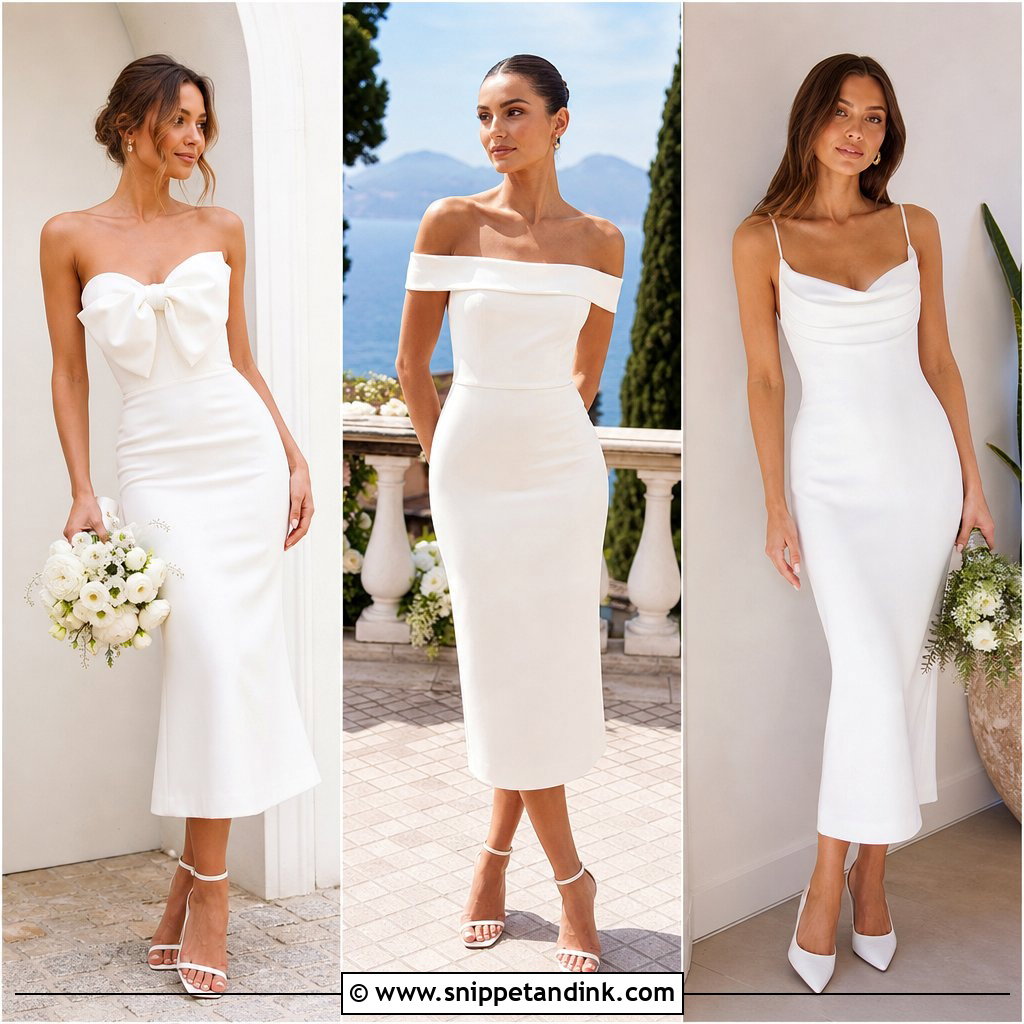
A simple mini wedding dress works for a courthouse, an elopement, a rehearsal dinner or a reception change. A structured shift, strapless mini, long sleeve mini or satin wrap can all look bridal, but only when the tailoring is sharp, because a short hem shows any pulling across the hips straight away. I check it seated as well as standing, since minis ride up more than people expect. Pointed pumps or slingbacks, plus a small veil or pearl headband, make it read as a wedding outfit rather than a party dress.
14. Simple Midi Wedding Dress
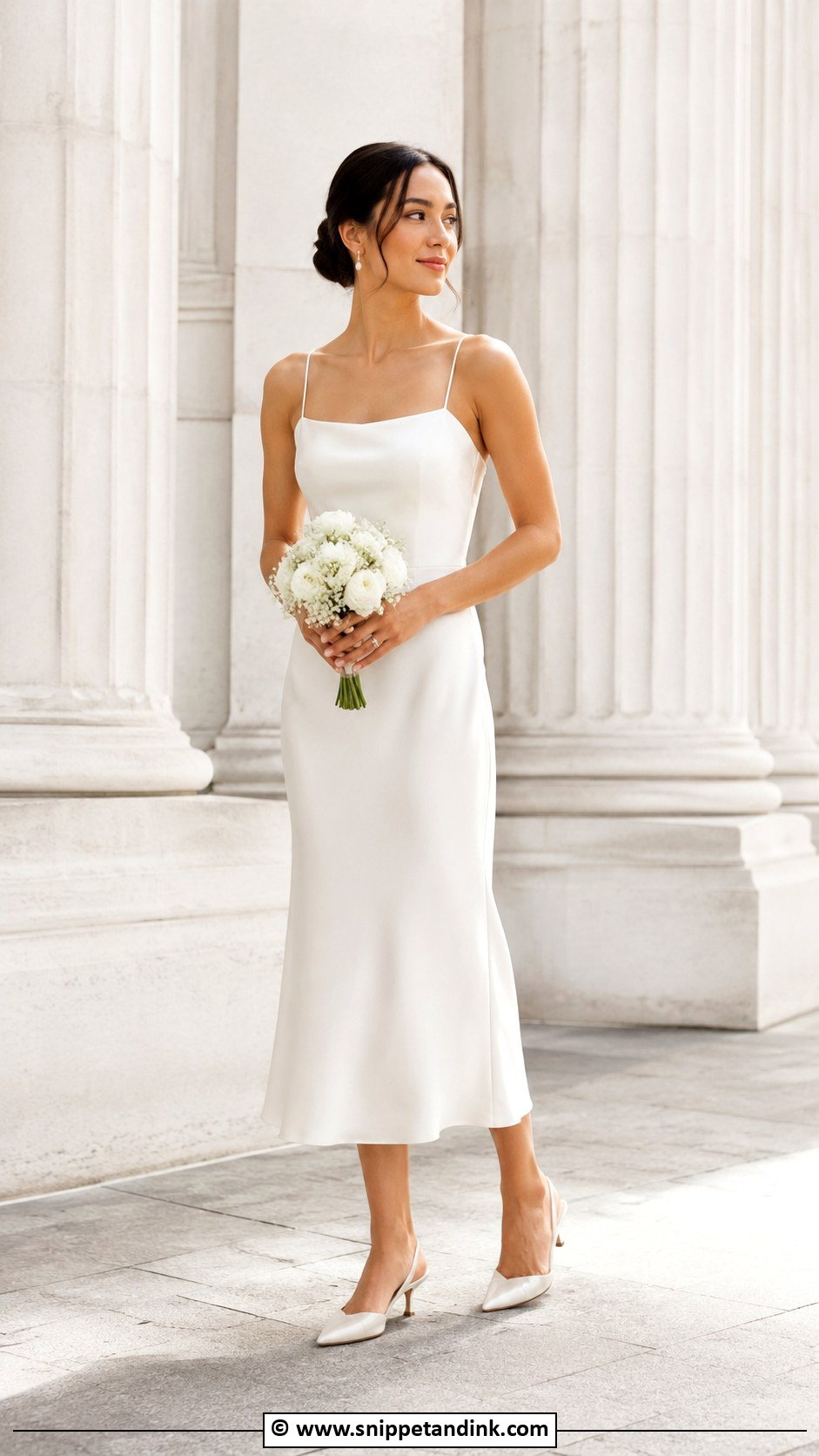
The midi is my answer for a bride who finds floor length fussy but wants more than a mini. A thin-strap satin midi suits a city ceremony, a square neck crepe midi looks polished at a registry office, and a full-skirted one softens a garden. The hem lands mid-calf, so the shoes are on show: pearl pumps, pointed slingbacks or a fine ankle strap. Do watch the proportions on a shorter frame, where a midi can cut the leg; a slightly higher hem usually fixes it.
15. Simple Courthouse Wedding Dress
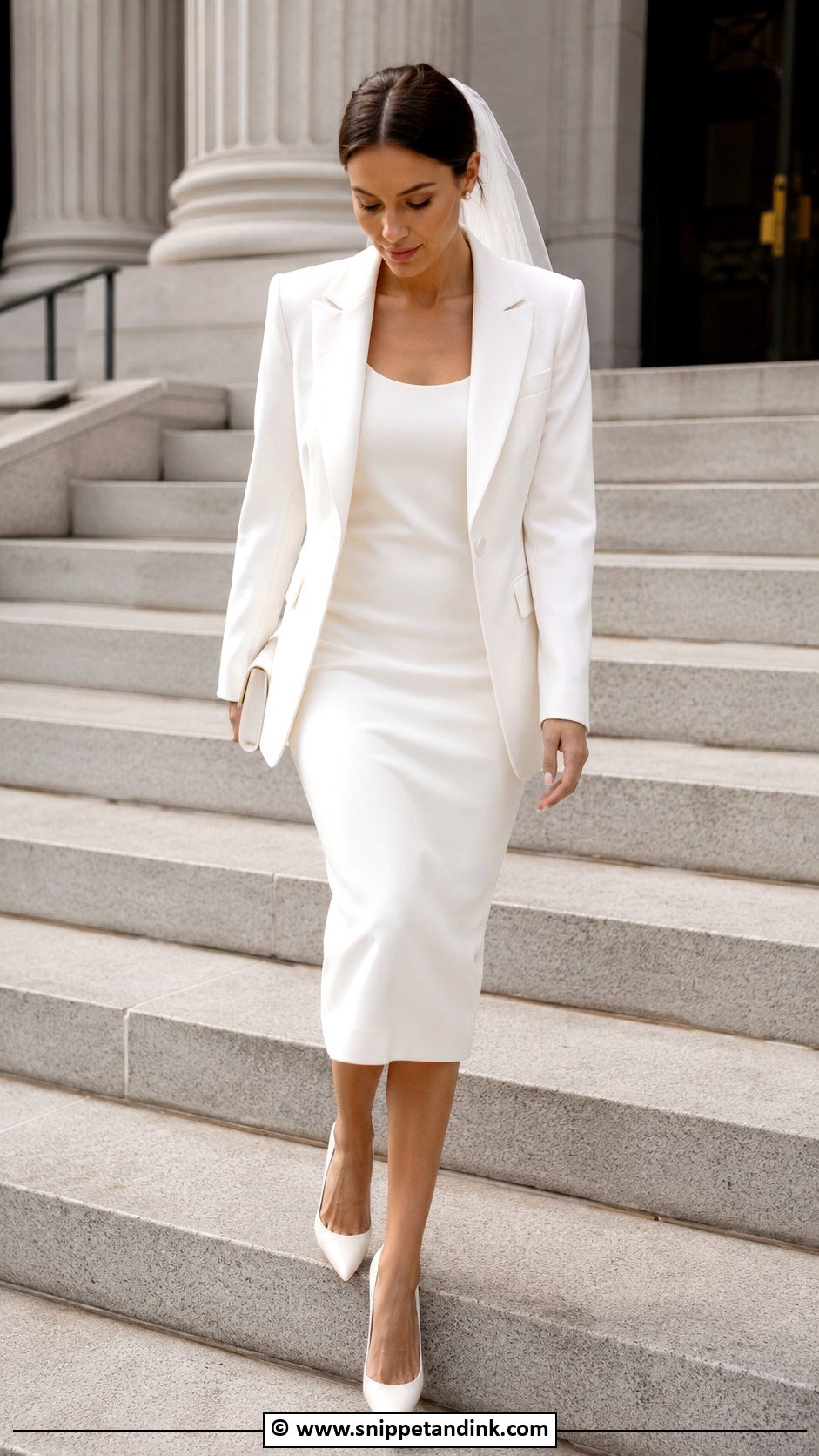
For a courthouse, the aim is to look clearly bridal without arriving overdressed for a corridor and a small room. Clean midis, satin slips, tailored minis, crepe columns and structured wraps all suit it, in white, ivory, cream or a soft champagne. I like a sharp blazer over the top; it reads intentional and it’s useful in air-conditioned buildings. A short or birdcage veil, pointed heels and a slim clutch are plenty. Check whether you’ll be standing on a hard floor for long and choose the heel accordingly.
16. Simple Beach Wedding Dress
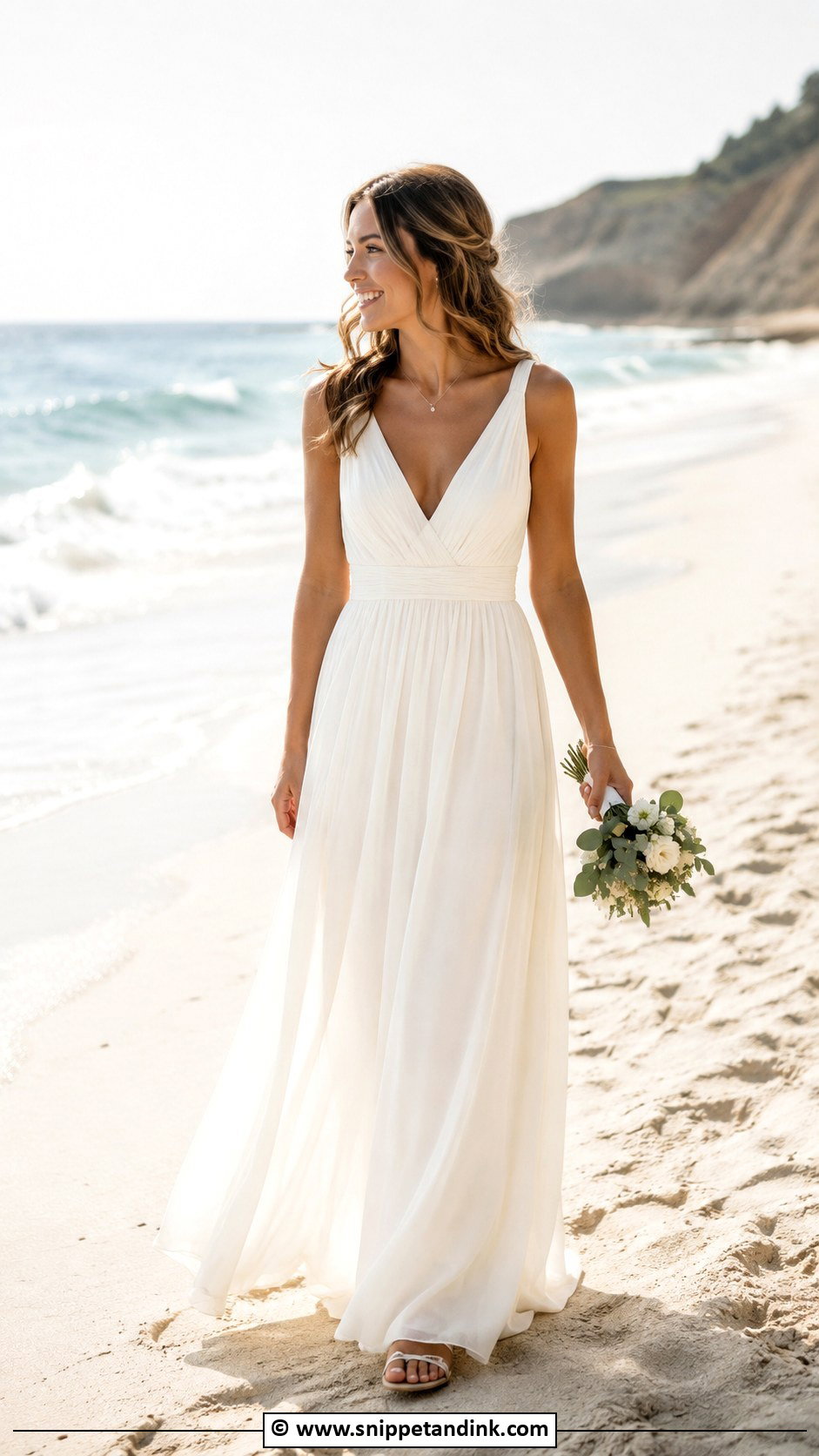
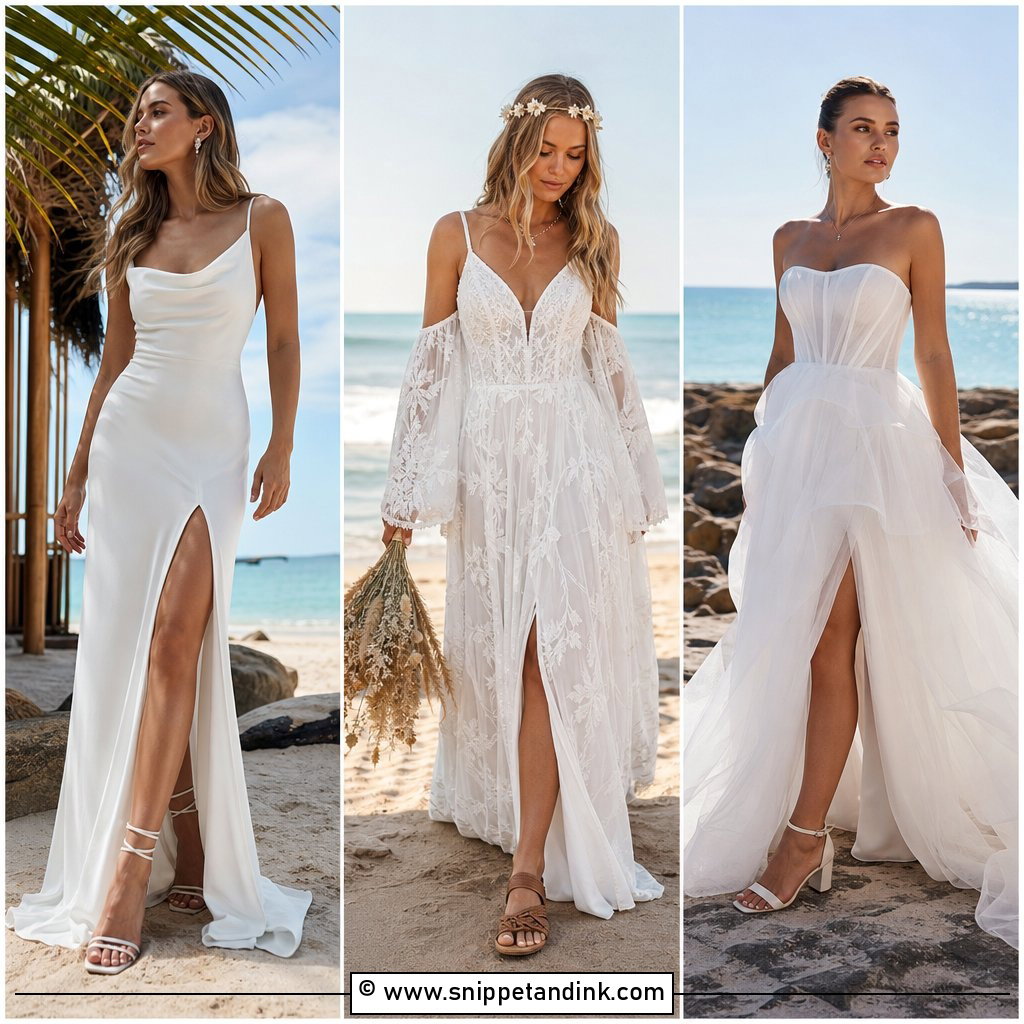
Sand and trains don’t mix. A train collects sand and drags heavily once the hem gets damp, so for a beach I steer brides toward a skirt that skims the body or floats just off the ground. Chiffon, silk, lightweight crepe and satin all move well in wind, though satin shows salt spray marks more than the others. A slip, halter, V-neck or relaxed A-line feels right by the water. Flat sandals, loose waves and a light veil or sheer scarf that can catch the breeze in photographs.
17. Simple Garden Wedding Dress
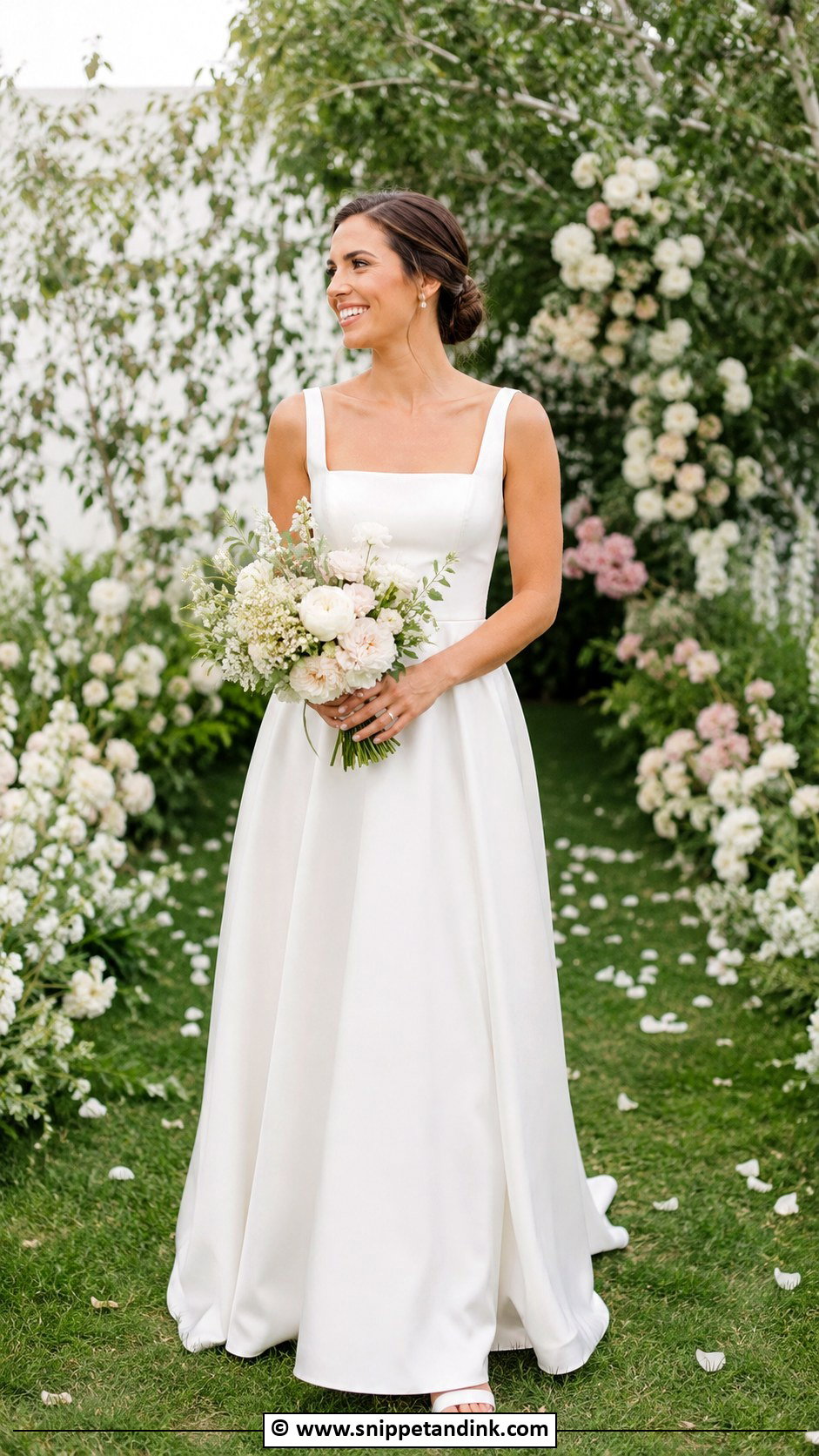
Gardens are harder on a dress than people think: damp lawns, stiletto-swallowing turf and pollen on an ivory hem. I suggest block heels or elegant flats and a hem taken a touch shorter than usual. A clean A-line, square neck, chiffon slip or simple off-shoulder all sit naturally among greenery, and ivory or cream reads warmer than stark white in daylight. Pearl earrings, a low bun and a sheer veil keep it soft.
18. Simple Winter Wedding Dress
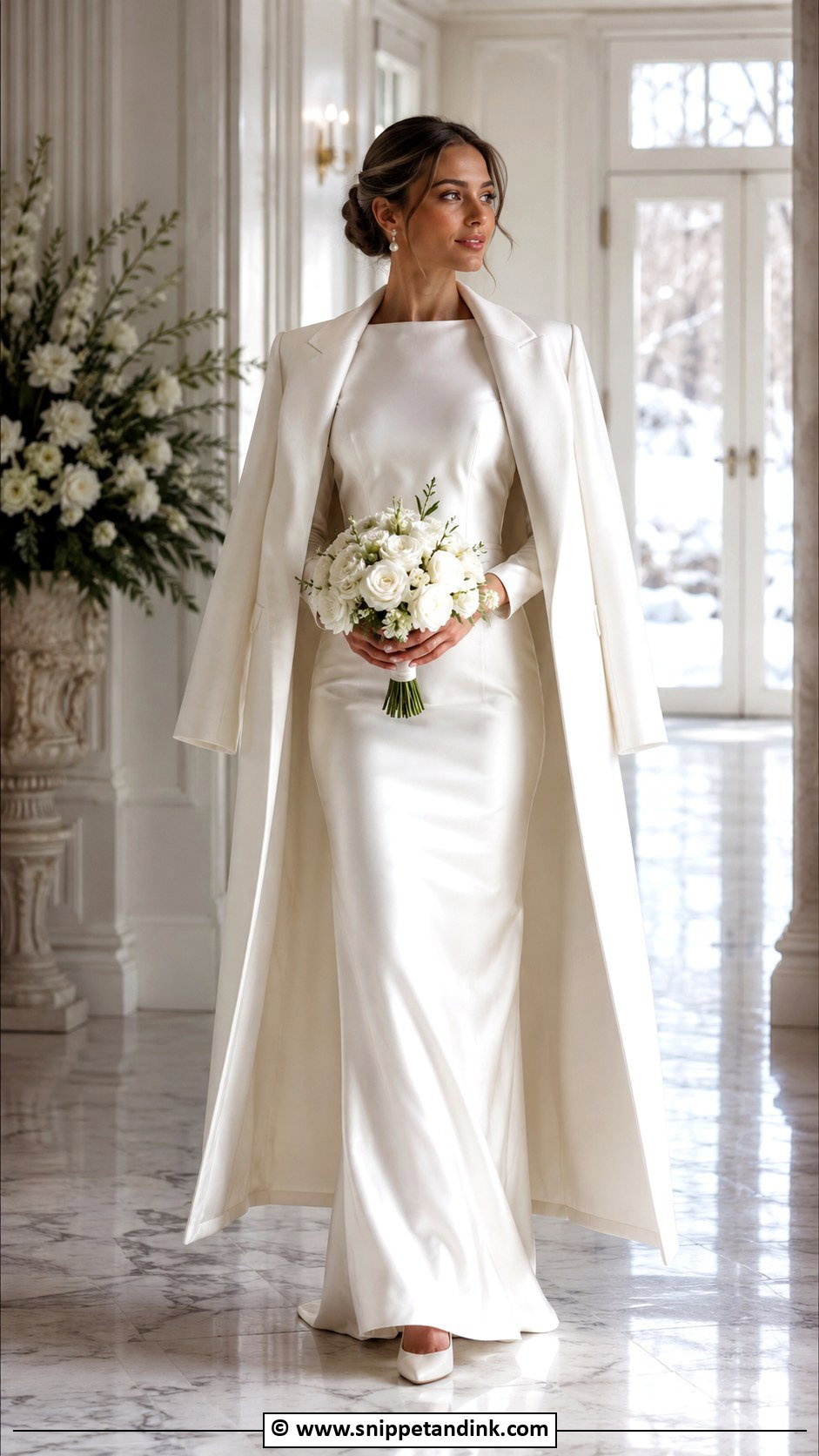
A simple winter wedding dress can feel formal and warm without bulk. Long sleeves, high necklines and heavier crepe, satin or mikado do the work. A sleeved column looks sleek; a plain ball gown has more presence in a grand venue. Plan the outdoor photos honestly: a structured coat or faux fur wrap is worth more than any accessory once you’re standing outside for twenty minutes. A long veil adds drama without adding a single bead to the gown.
19. Simple Summer Wedding Dress
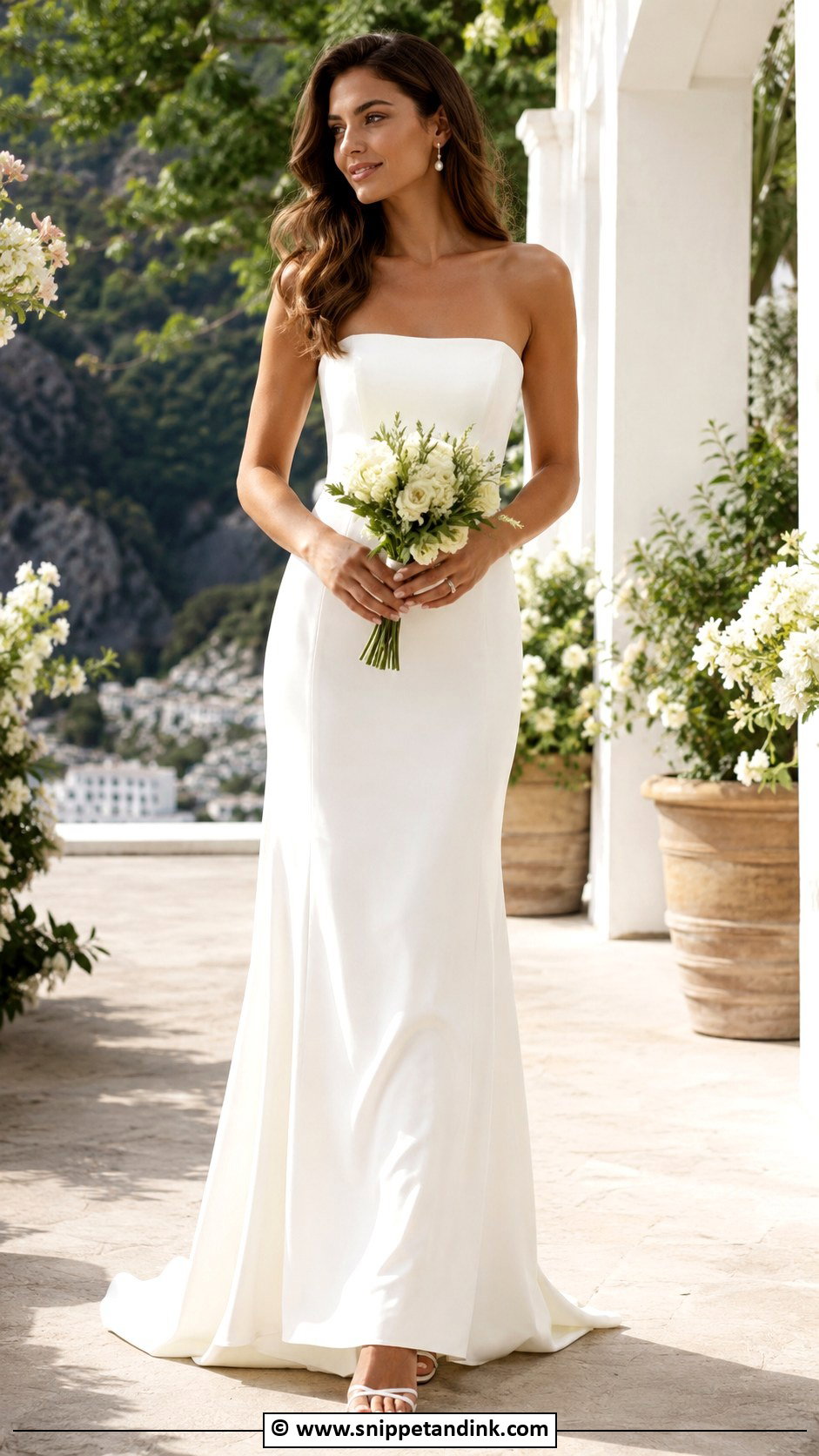
In summer my first question is about lining, not neckline. A gown with a polyester lining traps heat even if the outer fabric is silk, so I look for natural-fibre linings or fewer layers. Thin straps, strapless tops, open backs and slips are the comfortable shapes, in satin, chiffon or crepe. Skip a long train outdoors. Keep jewellery light and hair loose or soft, and let a small bouquet and a fine veil do the rest. It suits garden, backyard and destination weddings especially.
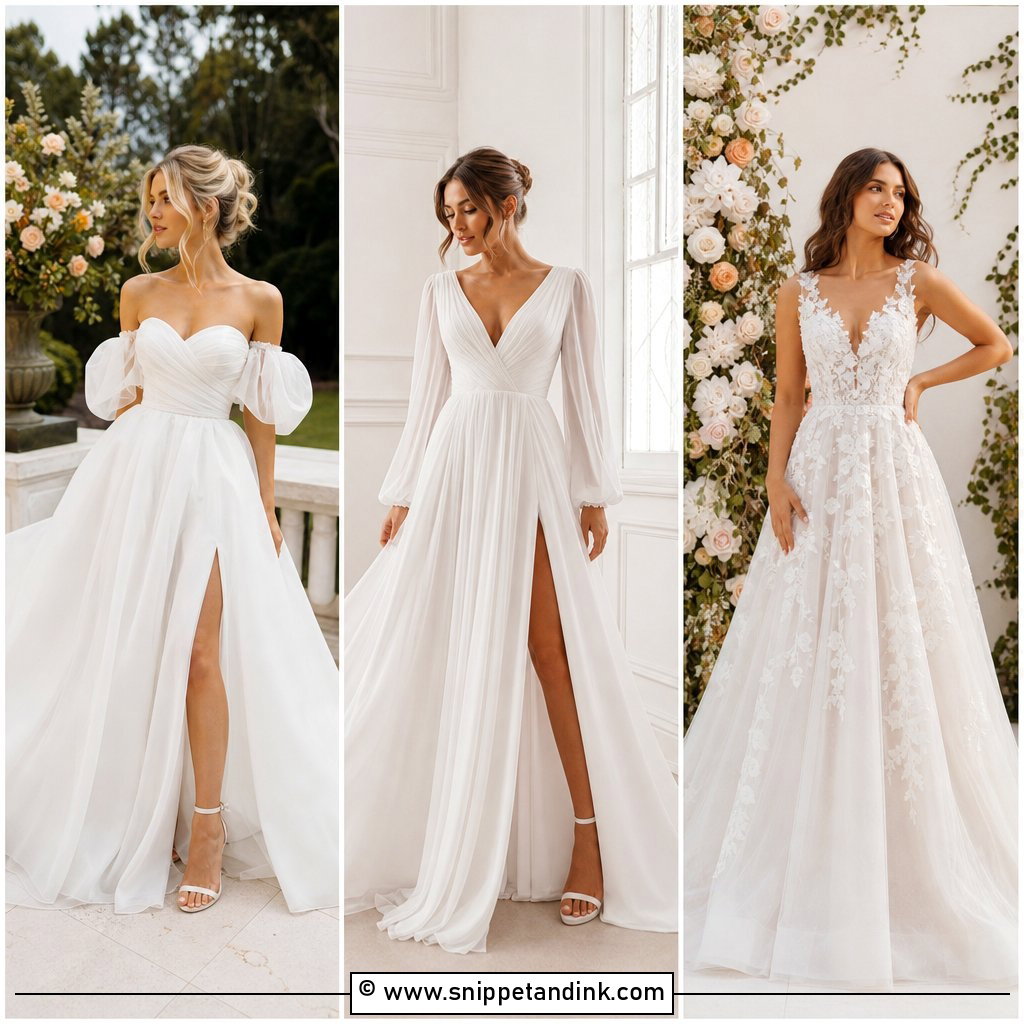
20. Simple Plus Size Wedding Dress
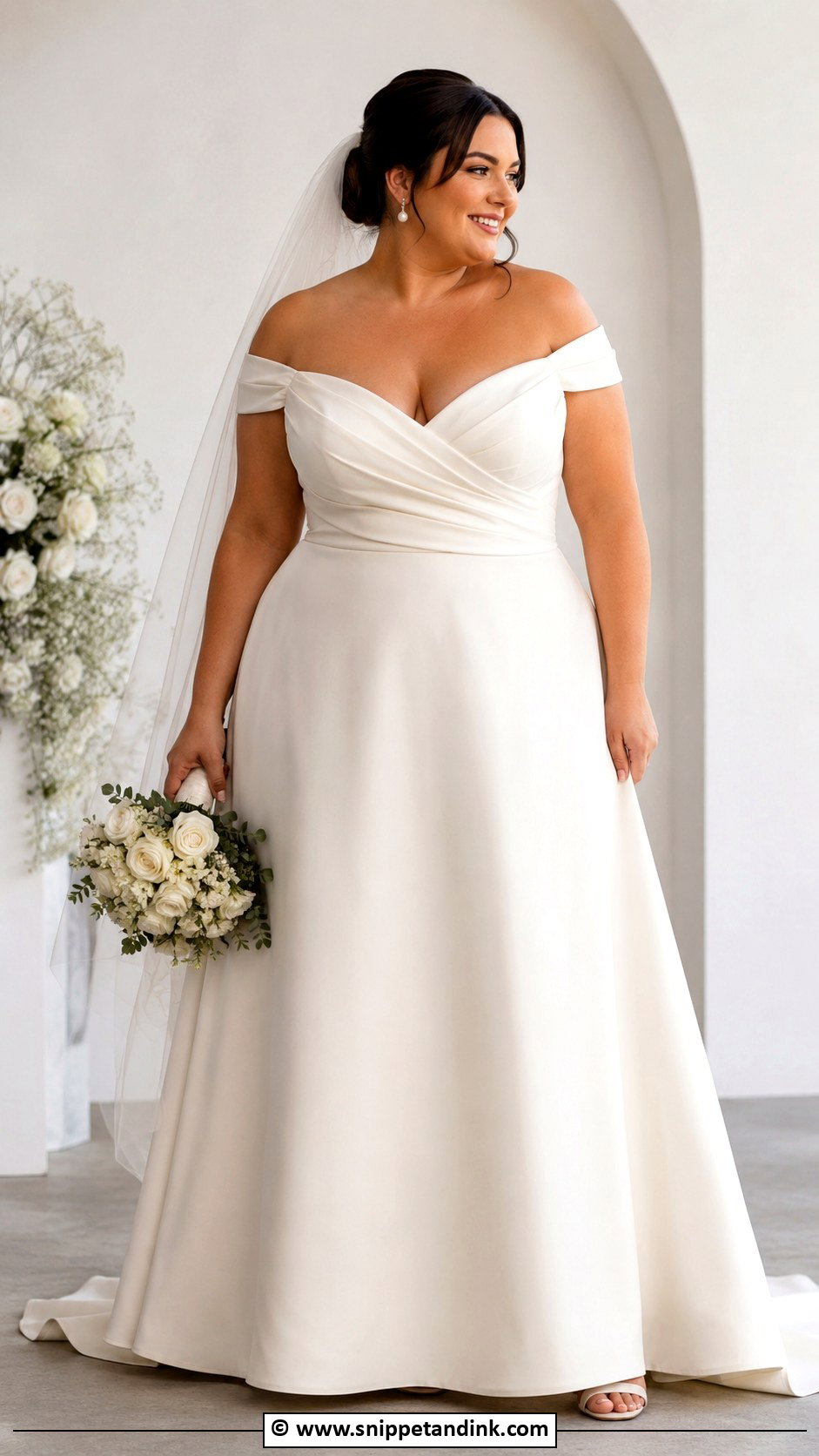
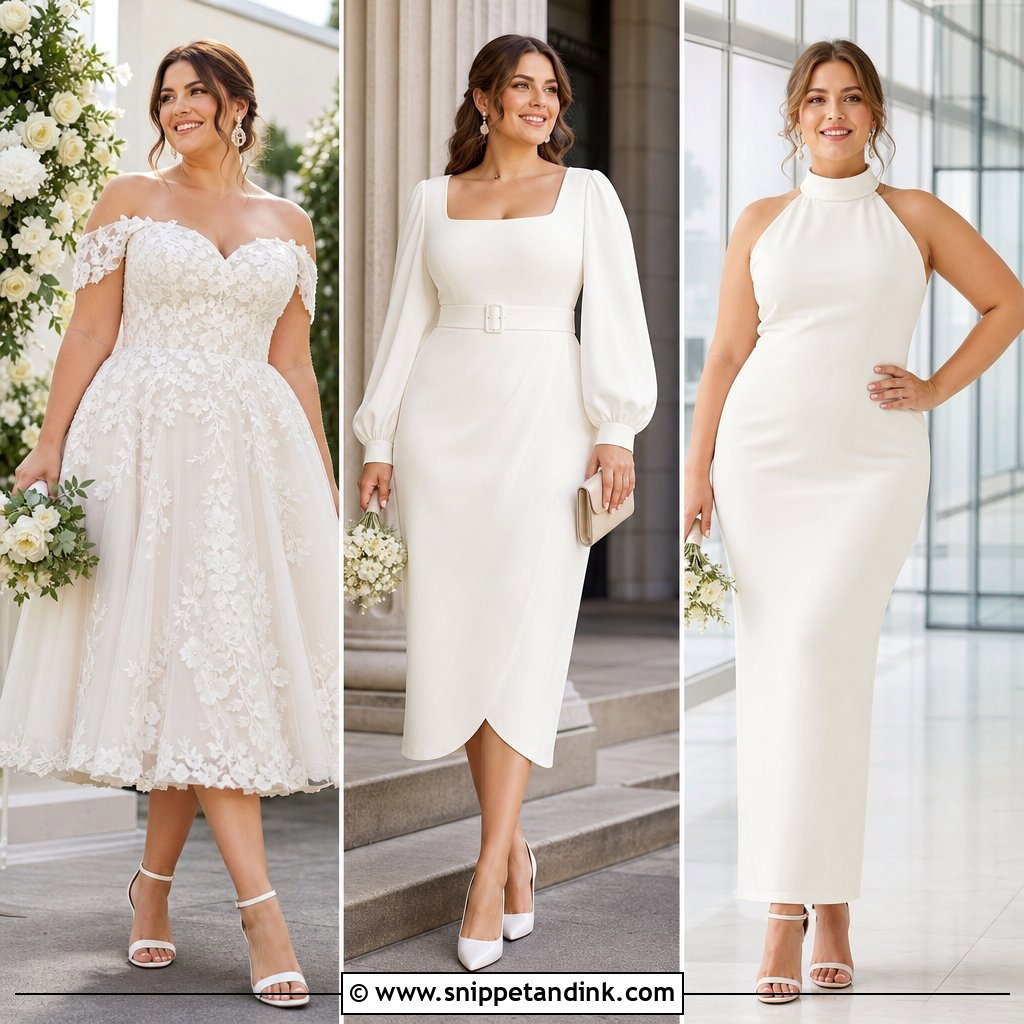
A simple plus size dress is where construction matters most, because clean lines highlight tailoring. A-lines, crepe columns, wraps, square necks and off-shoulder shapes are all strong. I look for an internal corset or power-mesh lining, wide seam allowances that a seamstress can let out, and fabric with enough body to skim rather than cling. A good alteration can make a plain gown look custom. The goal isn’t hiding anything; it is a dress that supports you and lets you breathe through dinner.
21. Simple Petite Wedding Dress
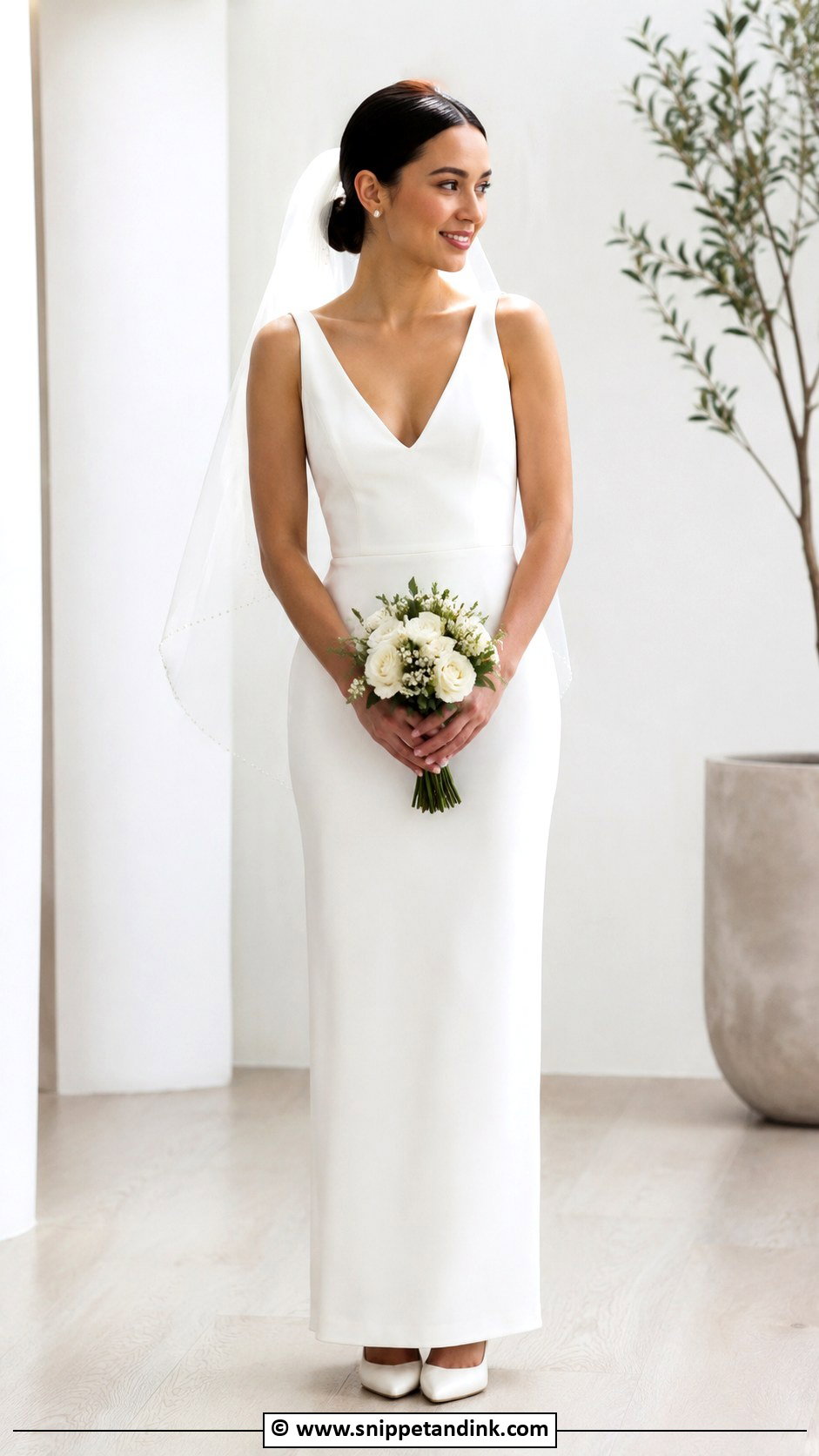
On a petite bride, proportion is everything. Clean lines, a slightly higher waist seam, a slimmer skirt and lighter fabrics stop a dress from swallowing her. Crepe columns, satin slips, tea length and modest A-lines all work; heavy volume shortens the line. A V, square or strapless neckline keeps the chest open. I’d usually take a veil to fingertip or shorter, because a cathedral veil on a small frame can look like it’s wearing her. Expect to hem almost every gown off the rack.
22. Simple Modest Wedding Dress
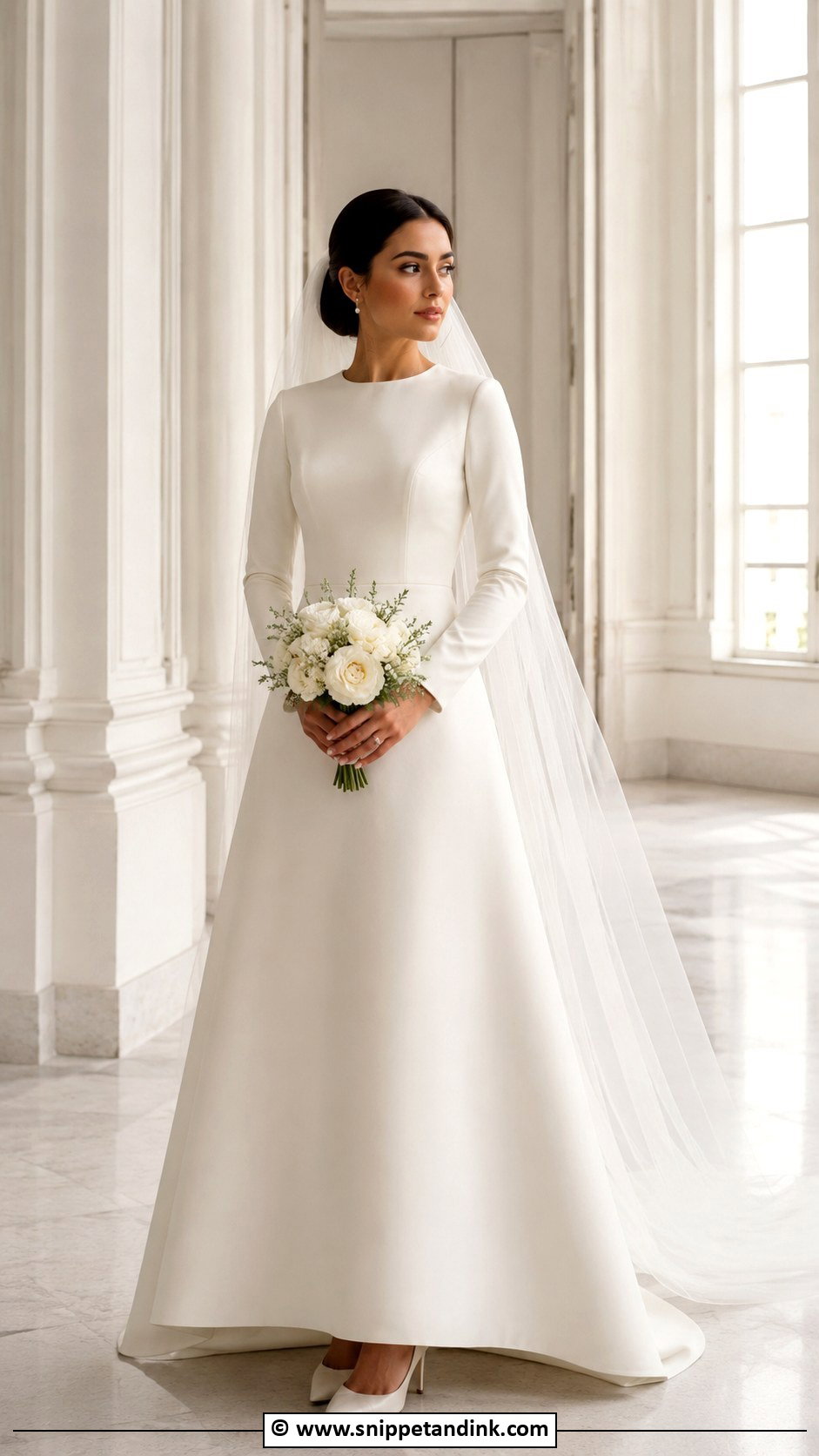
A simple modest wedding dress works when the coverage looks designed rather than added. Long sleeves, high or bateau necklines, fuller skirts and lined bodices give coverage while staying bridal, and crepe, satin, chiffon and mikado all suit it. A high neck column feels sleek; a long sleeve A-line is softer. When a bride brings me a dress with a sheer panel she’d like filled, I match the lining colour under daylight, because a slightly different ivory shows up clearly in photographs. Closed-toe pumps and a smooth updo finish it.
23. Simple Silk Wedding Dress
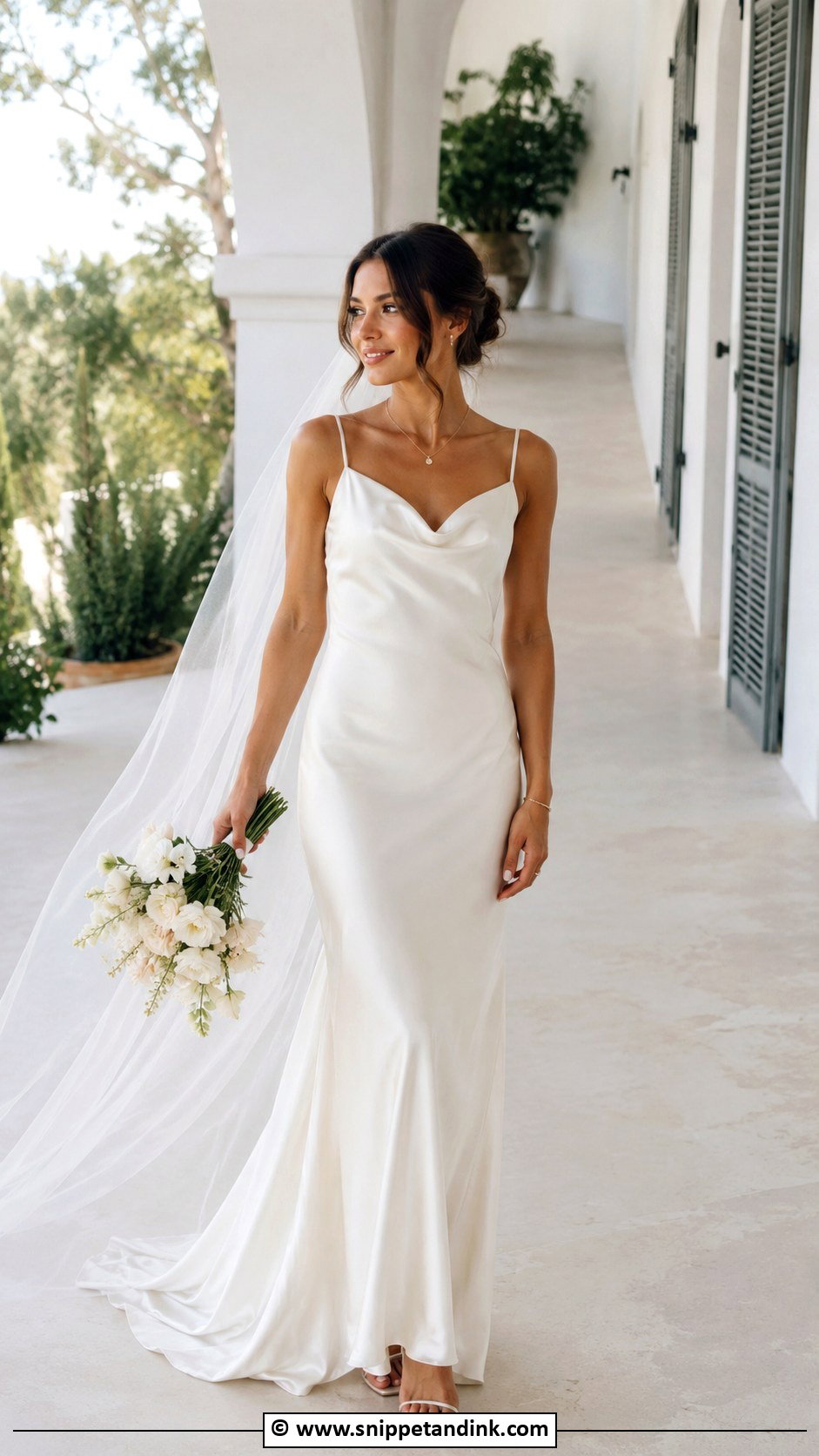
Real silk has a depth of colour that synthetic satin can’t quite copy, and it moves like water. It also marks easily: water spots, deodorant and even a damp hand can leave a shadow, so I keep a clean cotton cloth nearby and never let anyone spot-clean it on the day. A slip, bias-cut gown, wrap or flowing A-line suits it, and because silk is unforgiving the cut matters more than the shape. Fine jewellery, smooth sandals and a sheer veil are all it needs.
24. Simple Chiffon Wedding Dress
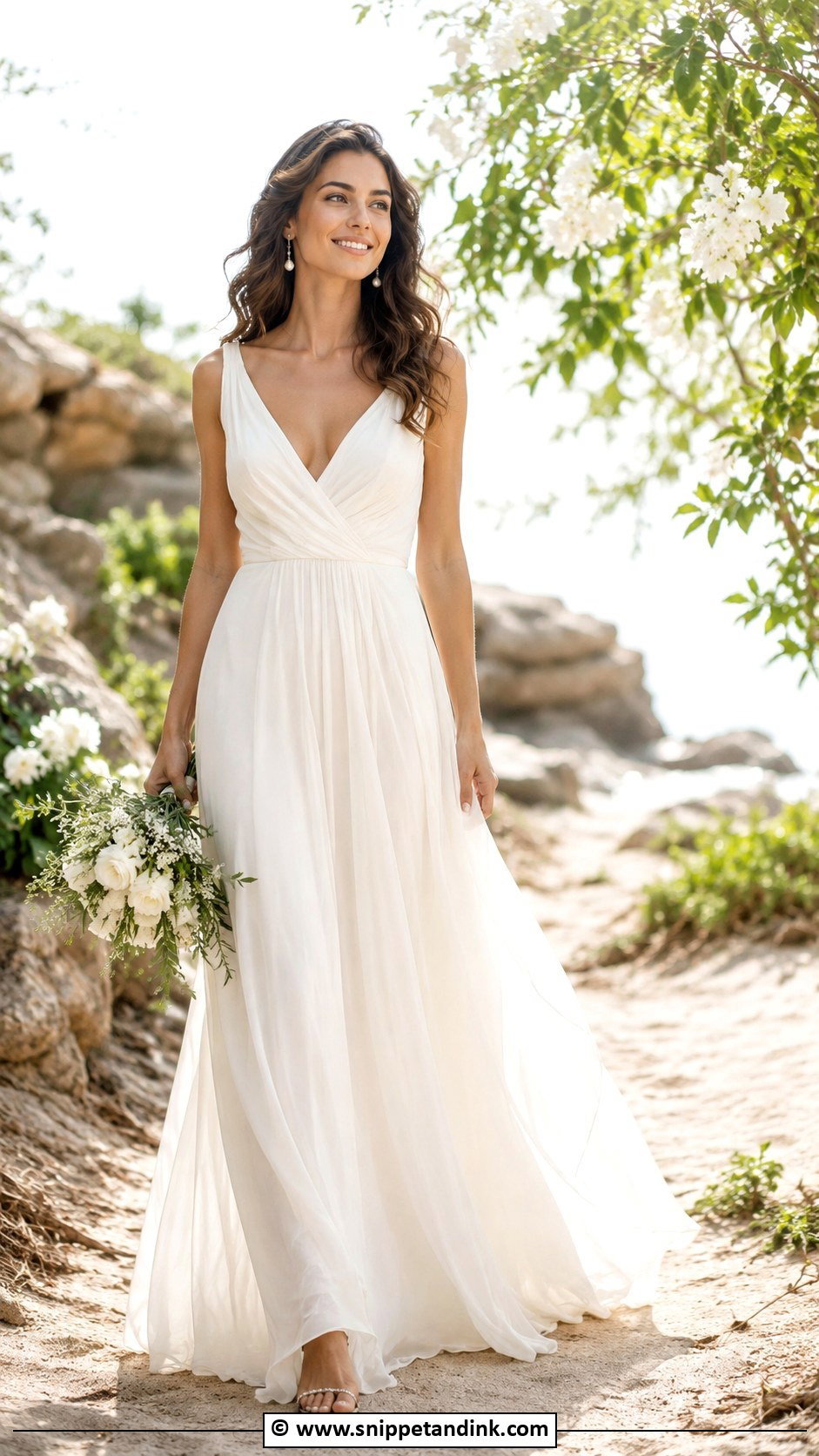
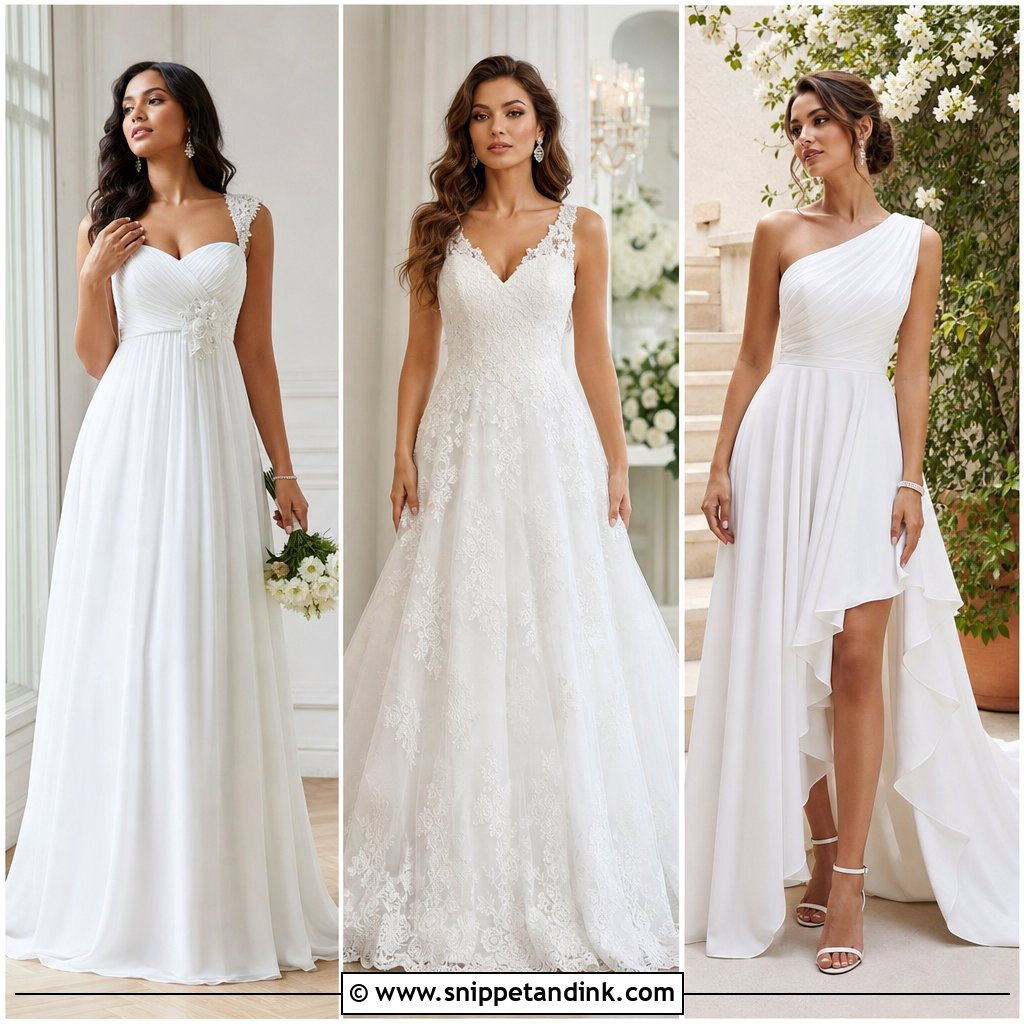
Chiffon is the lightest option here and the most comfortable in heat, but it’s sheer, so the lining decides how polished it looks. Single-layer chiffon can reveal leg outlines in strong backlight; I ask for at least two layers over the lining for an outdoor ceremony. An A-line, V-neck or gathered empire waist suits it, and the movement of the fabric replaces any need for beading. Delicate sandals and a loose updo keep it light, and a plain veil sits naturally with it.


25. Simple Lace Wedding Dress
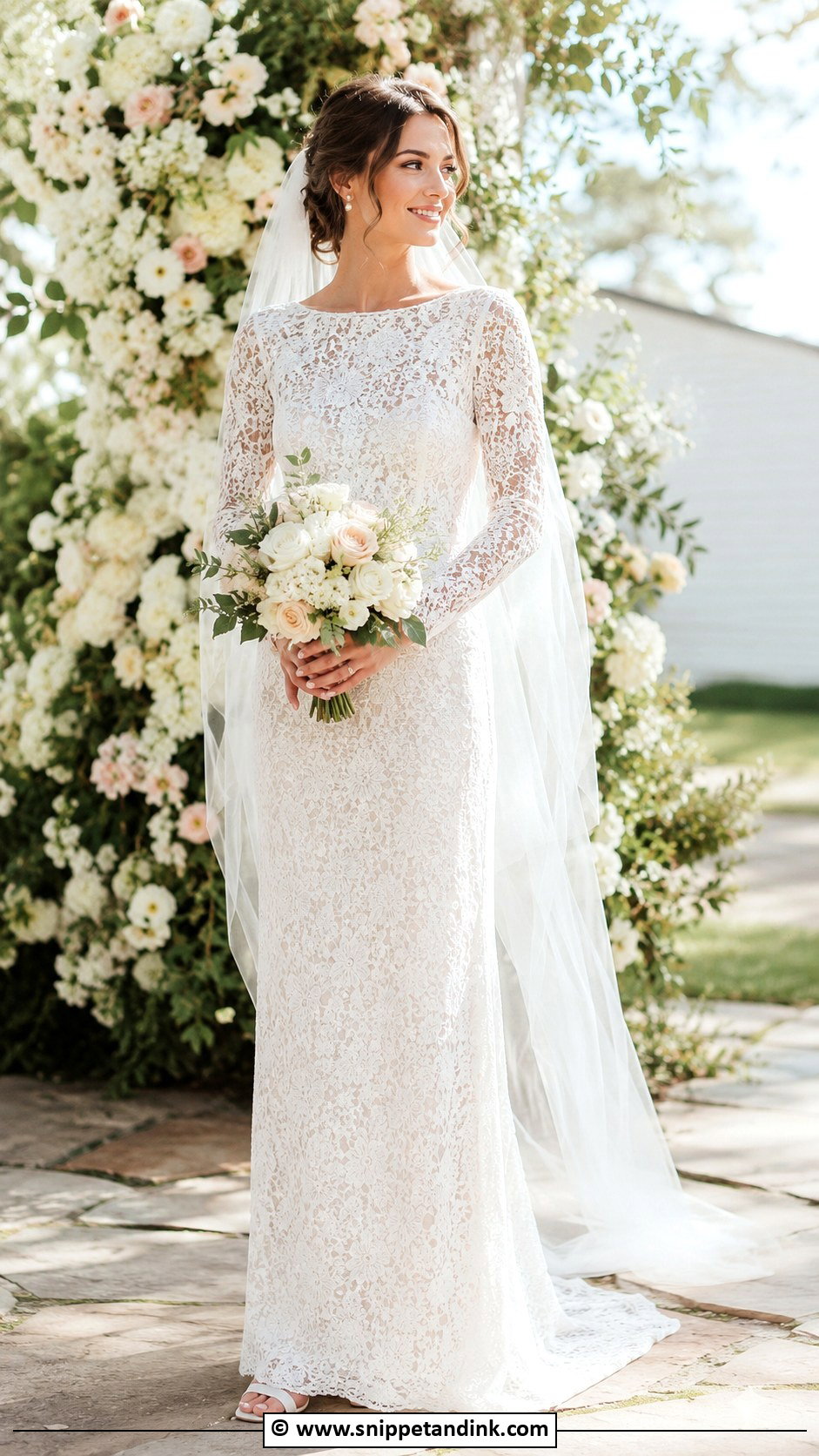
Lace can still be simple if the pattern is spaced and the silhouette is clean. I avoid lace with a strongly contrasting lining, which makes a plain dress look busy, and I look at the scalloped edges along the hem and sleeves, since that’s where cheaper lace frays first. A lace sheath, long sleeve gown or A-line with a lace overlay reads classic. Larger floral spacing or a geometric pattern feels more modern. Pearl studs and a soft veil are enough.
26. Simple Tulle Wedding Dress
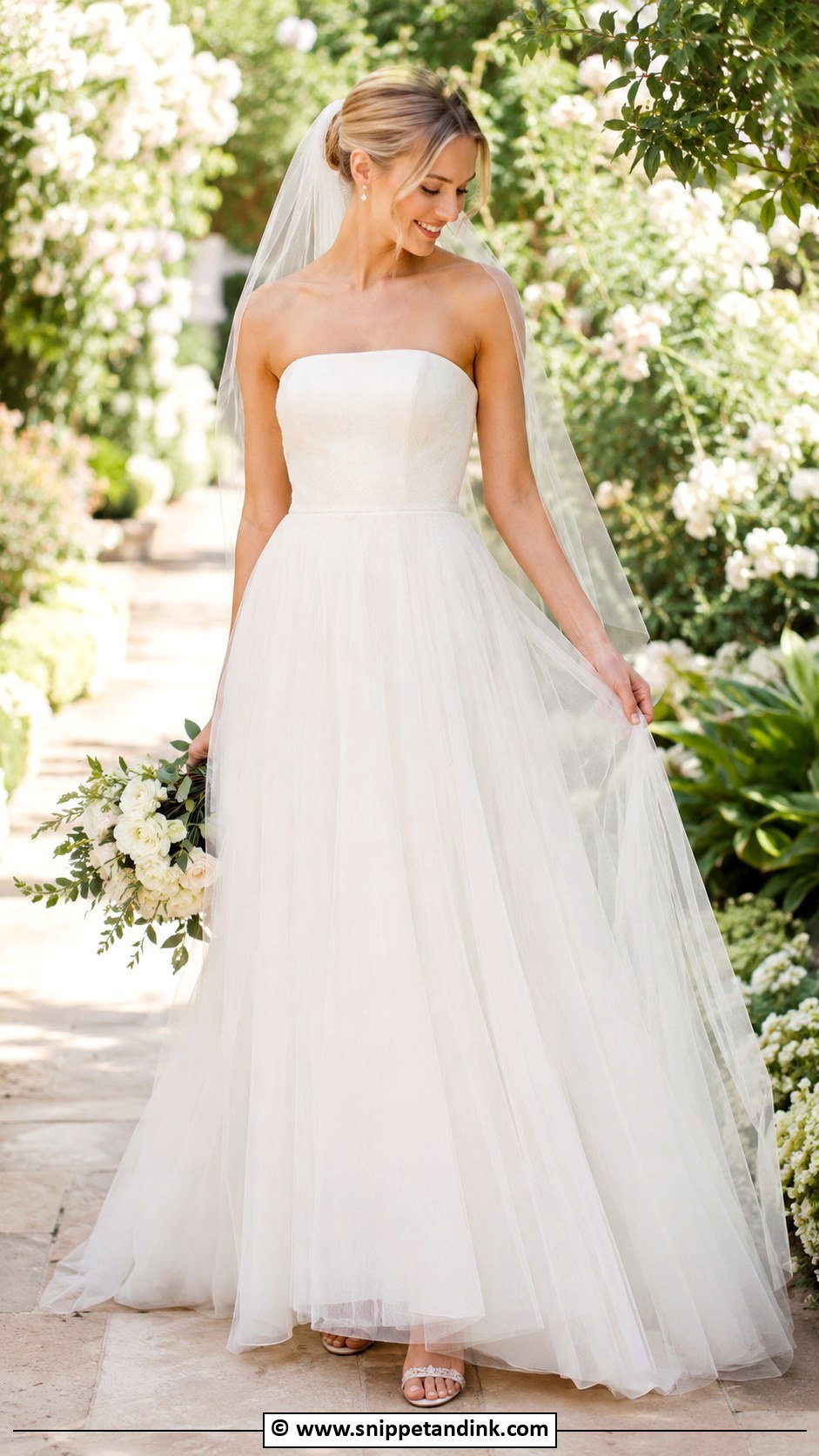
Tulle gives volume without weight, and the way to keep it from looking princess-like is fewer layers and a clean bodice. A tulle A-line with a fitted top moves well and stays wearable. My caution: tulle catches on everything, from bracelet clasps to rough stone steps, and small snags show. Smooth jewellery and a check of the venue’s floor surfaces save a lot of grief. A strapless or square neck bodice keeps it fresh, with a sheer veil and small earrings.
27. Simple Mikado Wedding Dress
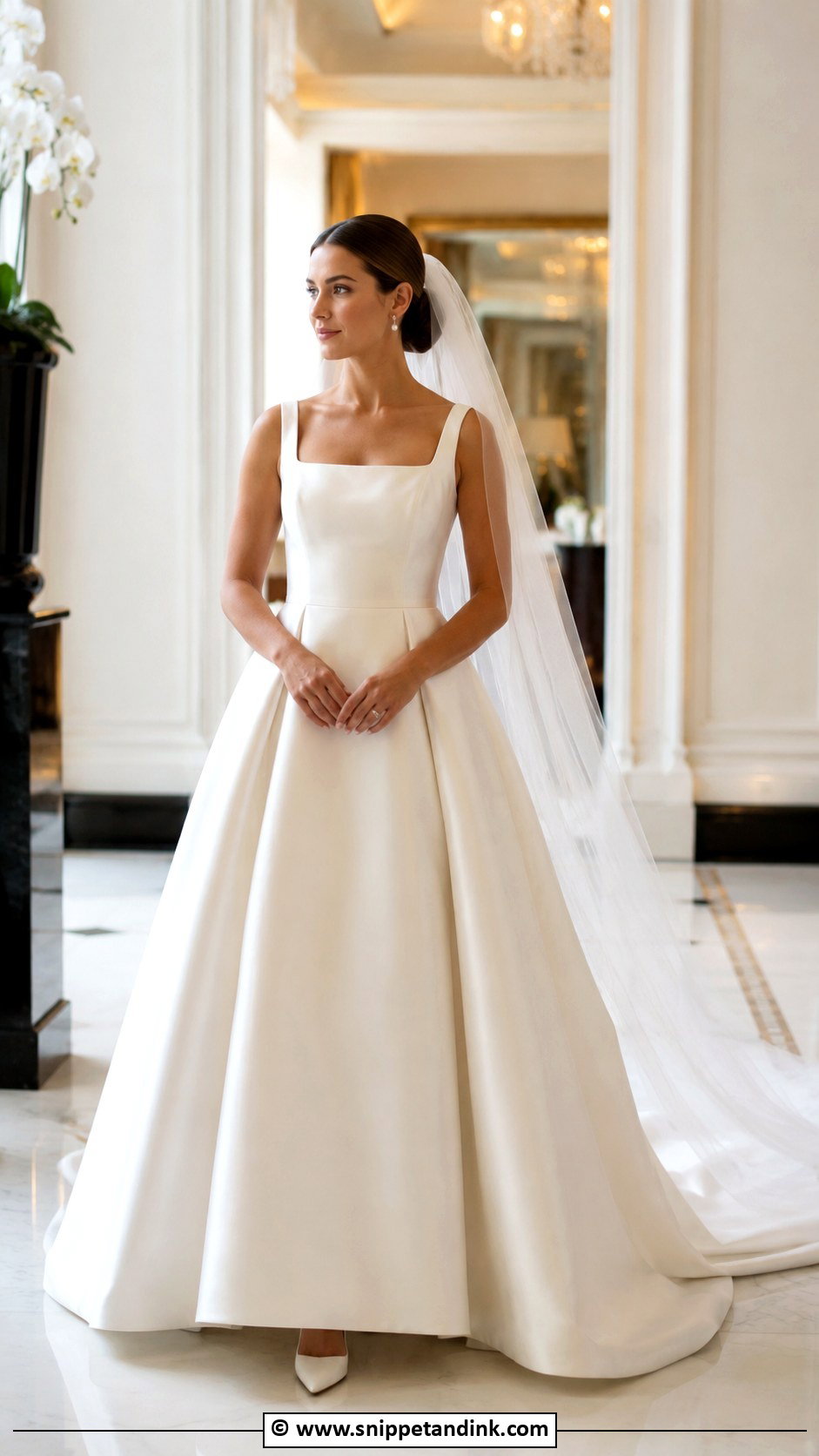
Mikado has a dense weave and a low sheen, and it holds a silhouette on its own, which is why it suits strapless gowns, structured A-lines, square necks and clean ball gowns. Because the fabric has so much presence, the design can be almost bare. The one thing to know is that mikado creases sharply if you sit on it badly, so I show brides how to smooth the skirt behind them as they sit. A sleek bun, pearl earrings and a long veil that softens all that structure.
28. Simple Ball Gown Wedding Dress
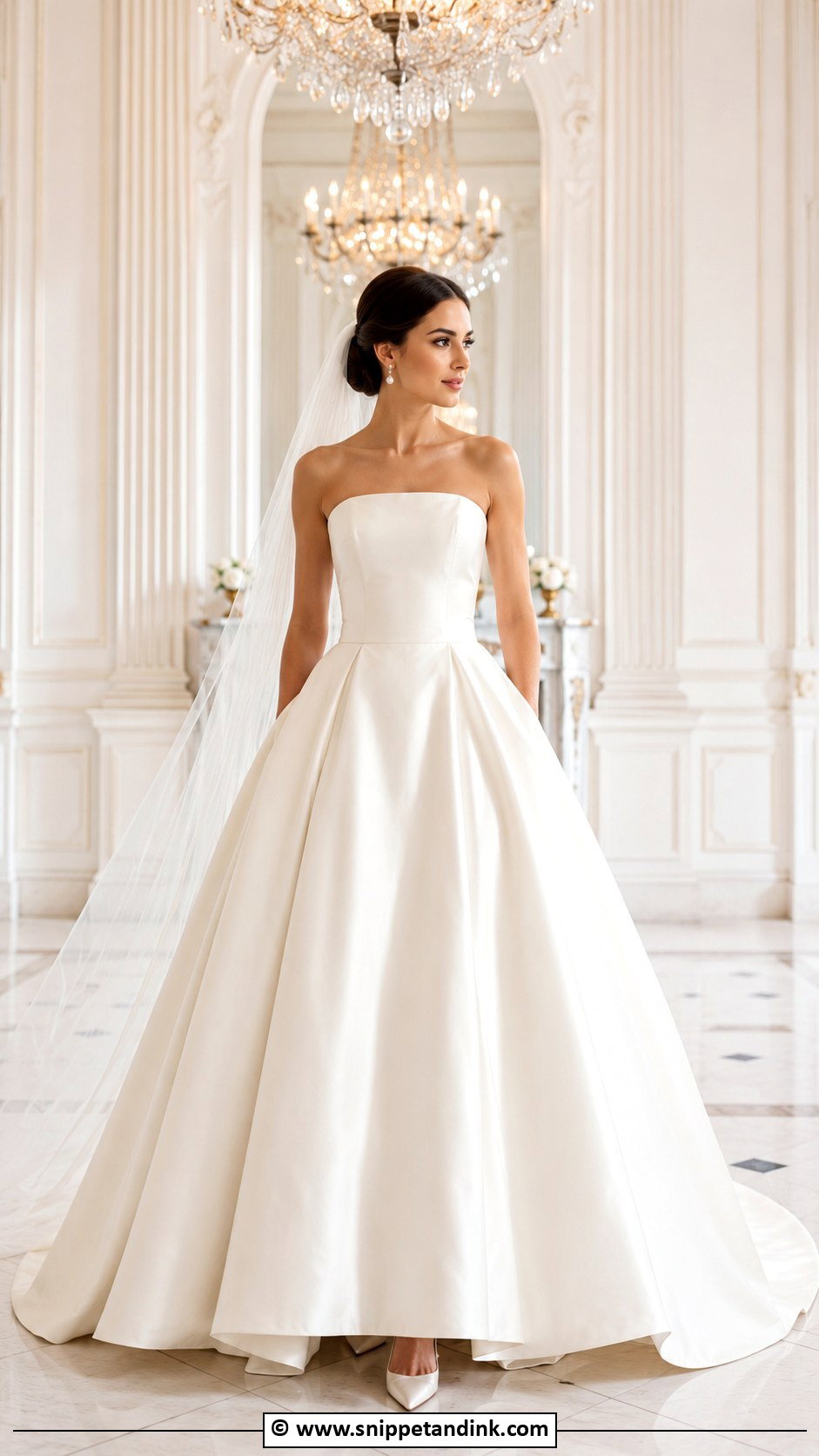
A plain ball gown gets its drama from the skirt alone. Satin, mikado and organza hold the volume, and a strapless, square or bateau neckline keeps the top refined. Logistics come first with this one: a full skirt needs a wider car door, a plan for the loo and a bustle for the dance floor. Accessories should be small, pearl earrings and a smooth veil. It suits ballrooms, estates and formal venues, where the scale of the room can carry the scale of the dress.
29. Simple Sheath Wedding Dress
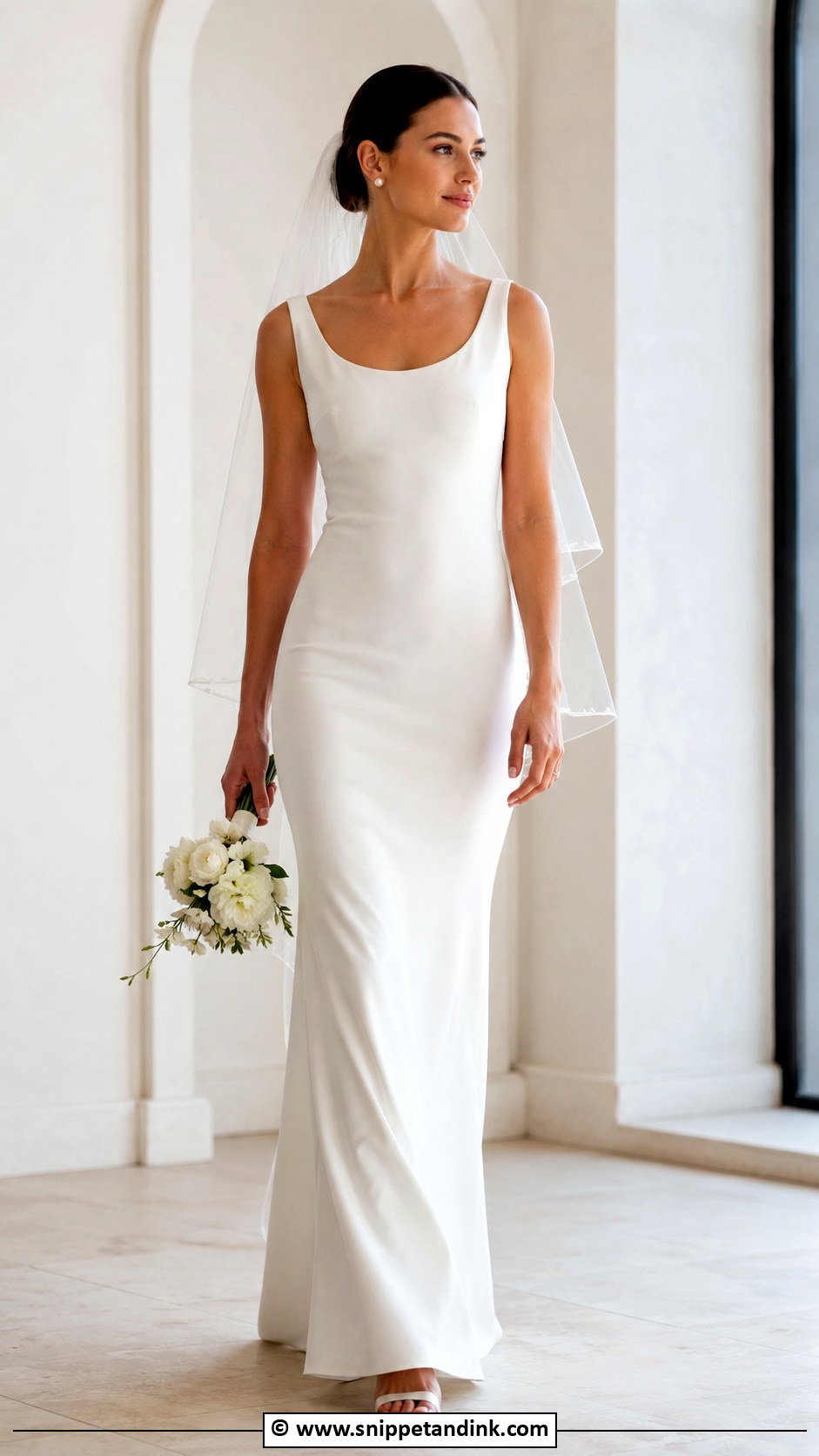
A sheath follows the body in a relaxed way, with less structure than a column. In crepe, satin, silk or a soft lace it gives comfort and movement with no extra volume. I recommend it to brides who find structured bodices restrictive, but I warn that a sheath shows whatever sits underneath, so smooth, no-show underwear matters as much as the dress. A square neck looks modern, an off-shoulder line looks romantic and thin straps feel relaxed. Slim heels and a soft veil complete it.
30. Simple Wrap Wedding Dress
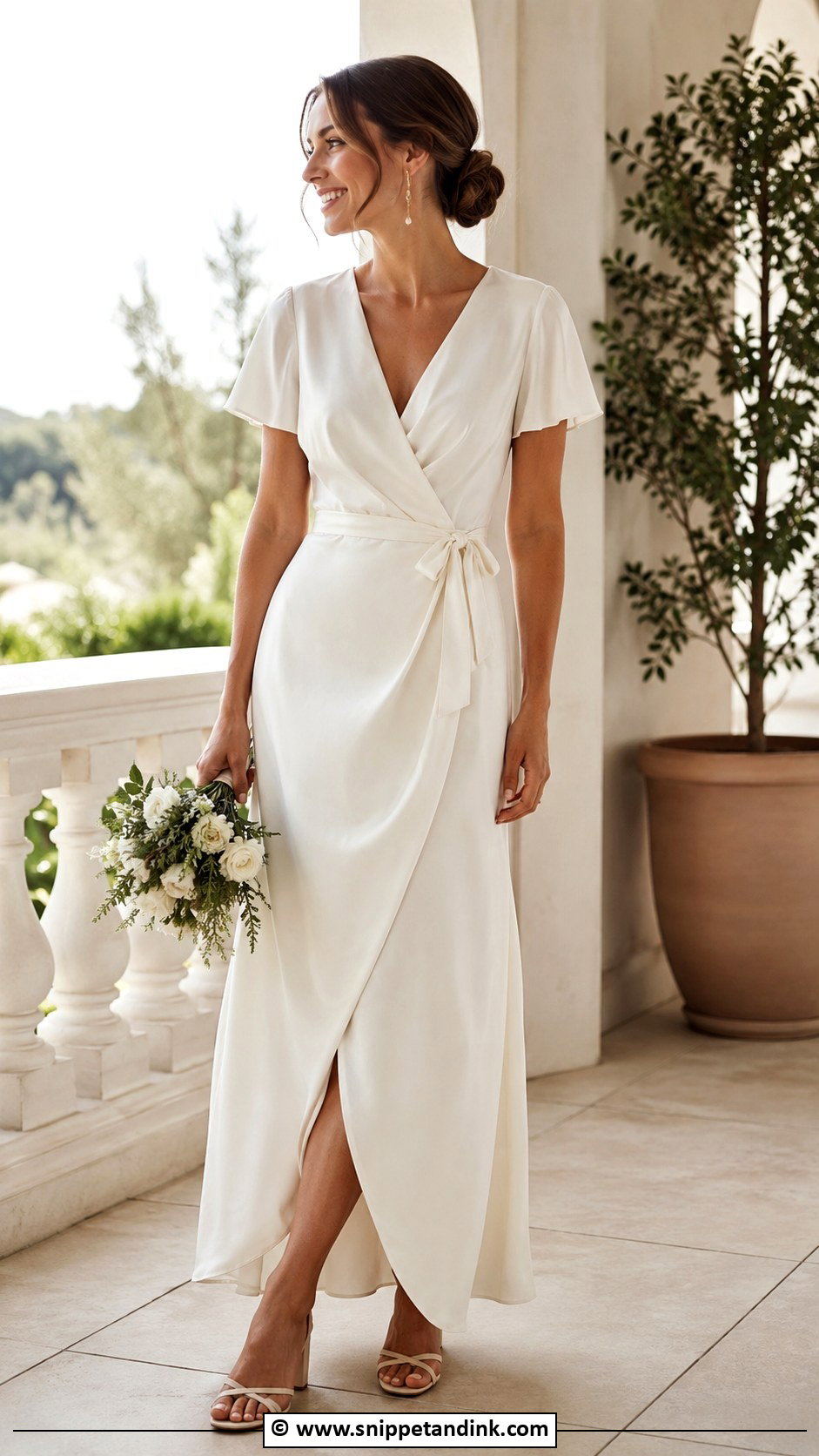
Wraps define the waist with a natural V neckline and adjust a little, which I love for a bride whose weight tends to change in the weeks before a wedding. Silk, satin, crepe and chiffon all work: satin feels sleek at a courthouse, chiffon relaxed at a beach or garden. The weak point is the crossover at the bust, which can open when you sit; a discreet hook or a stitch at the overlap fixes it. Block heels and a low bun keep it neat.
31. Simple Empire Waist Wedding Dress
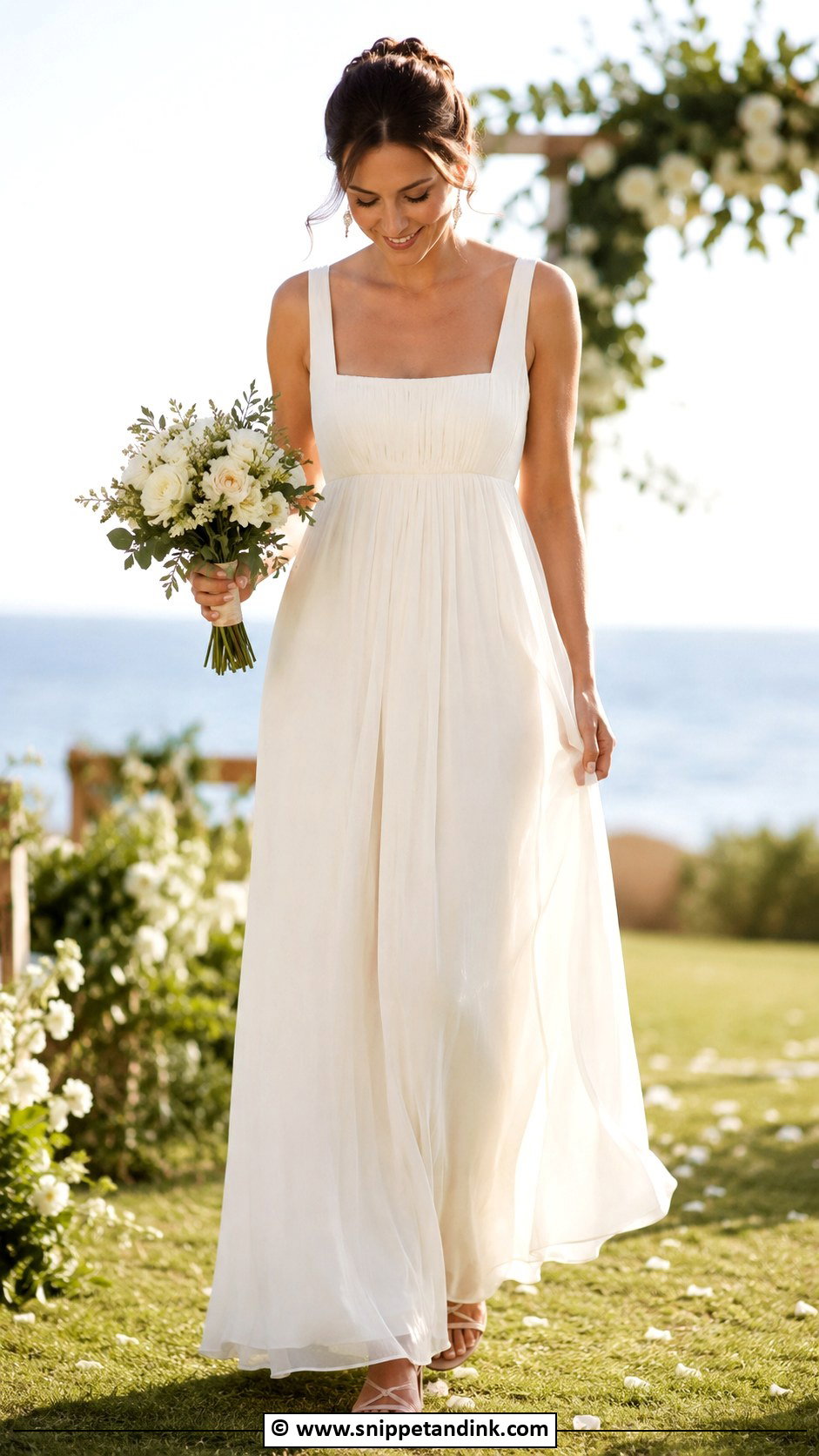
An empire waist sits just below the bust and falls loosely from there, so nothing grips the waist or hips. In chiffon, silk or soft crepe it’s one of the most comfortable shapes I fit, and it moves well on a beach or garden lawn. A V or square neckline keeps it modern. Heavy accessories fight it, so delicate sandals, small earrings and a soft updo. On a very full bust, check that the seam actually sits under the bust and not across it.
32. Simple Drop Waist Wedding Dress
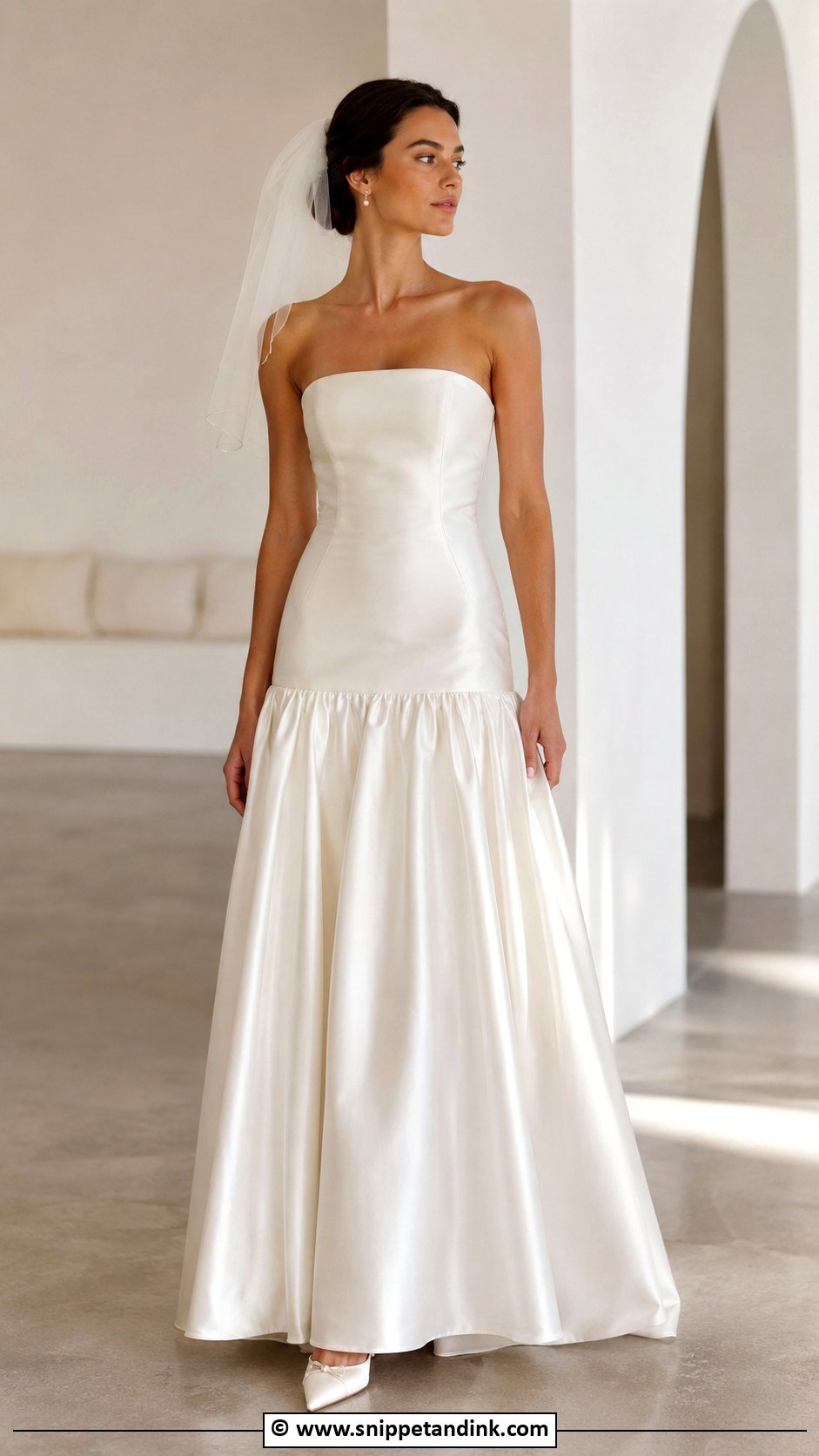
A drop waist lowers the seam to the hip, lengthening the torso before the skirt begins. In satin it looks sleek; in tulle or organza, softer. It’s flattering on a long-waisted or straighter figure and harder to wear if your hips are much wider than your waist, because the seam lands at the widest point. Keep the rest minimal: a strapless or square neck top, simple pumps and a clean veil. It’s a good pick for a bride wanting something slightly different without going bold.
33. Simple One Shoulder Wedding Dress
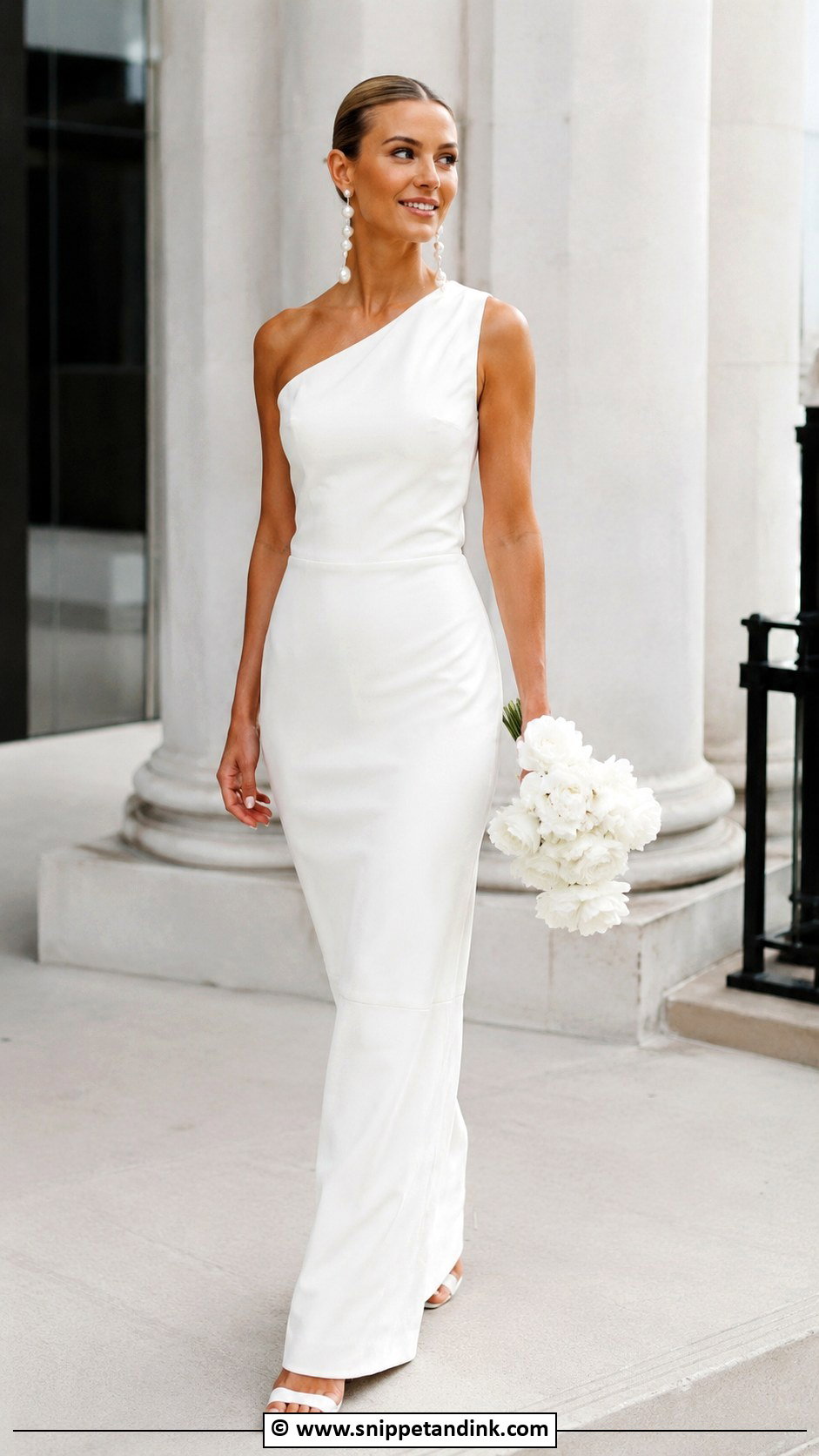
One shoulder adds asymmetry without lace or beading, and smooth fabrics such as crepe, satin or mikado keep that diagonal line crisp. A slim column looks sleek, while an A-line softens the angle. Skip the necklace, which fights the neckline; choose statement earrings or studs instead. Wear your hair back or swept to the bare side so the line stays clear. I’d also check that the single strap is anchored firmly into the back seam, because one strap carries the whole bodice.
34. Simple Wedding Dress With Bow
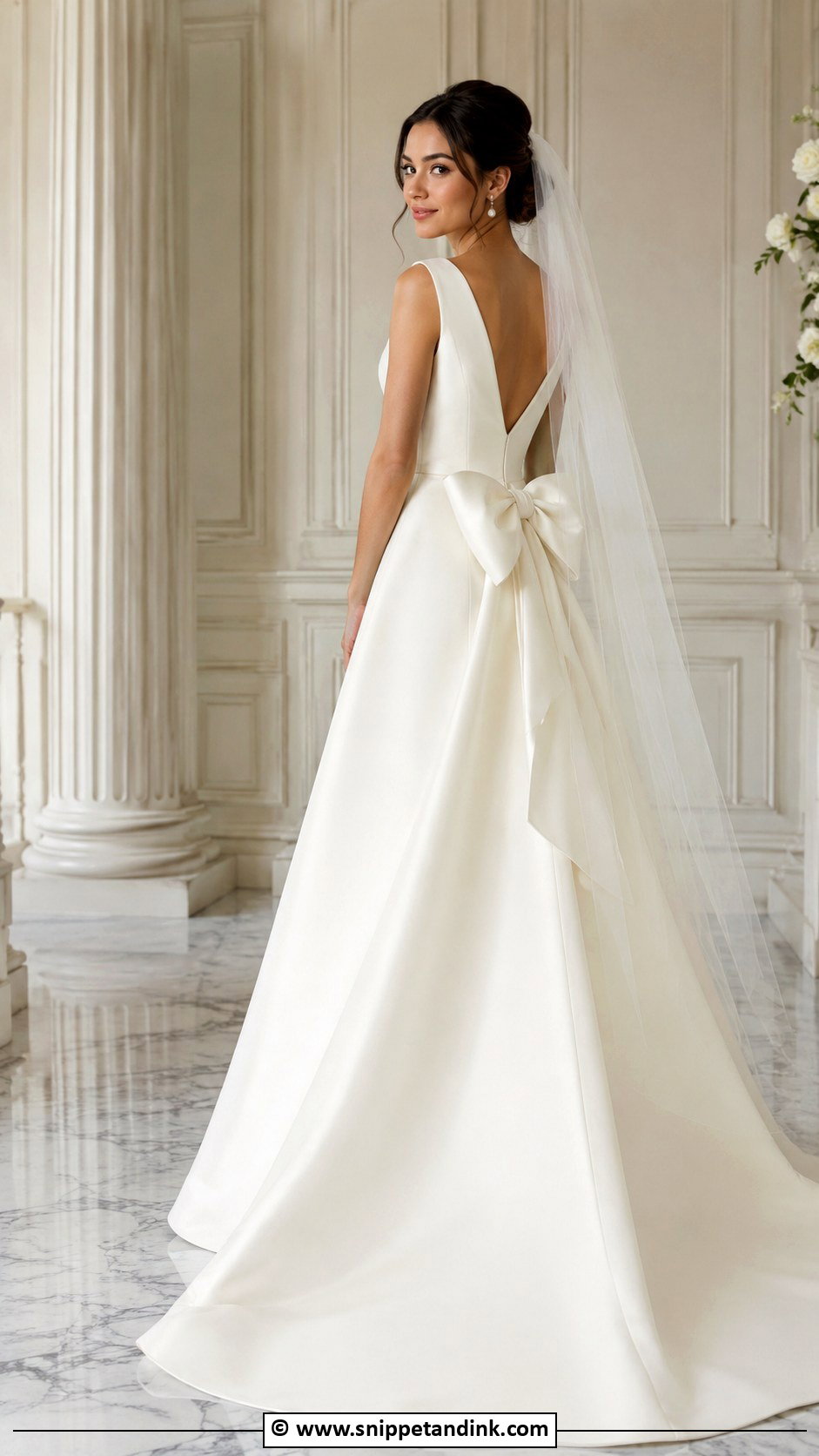
A single bow is the only decoration on some of my favourite simple gowns, set at the back waist, the shoulder, the neckline or the start of the train. In satin or mikado, a bow holds its shape; in softer fabric it can droop by the evening, so ask whether it has interfacing inside. Scale the veil to the bow: a large bow wants a sheer, plain veil, a small one can take something longer. Simple heels, pearl earrings and smooth hair keep the focus where it belongs.
35. Simple Wedding Reception Dress
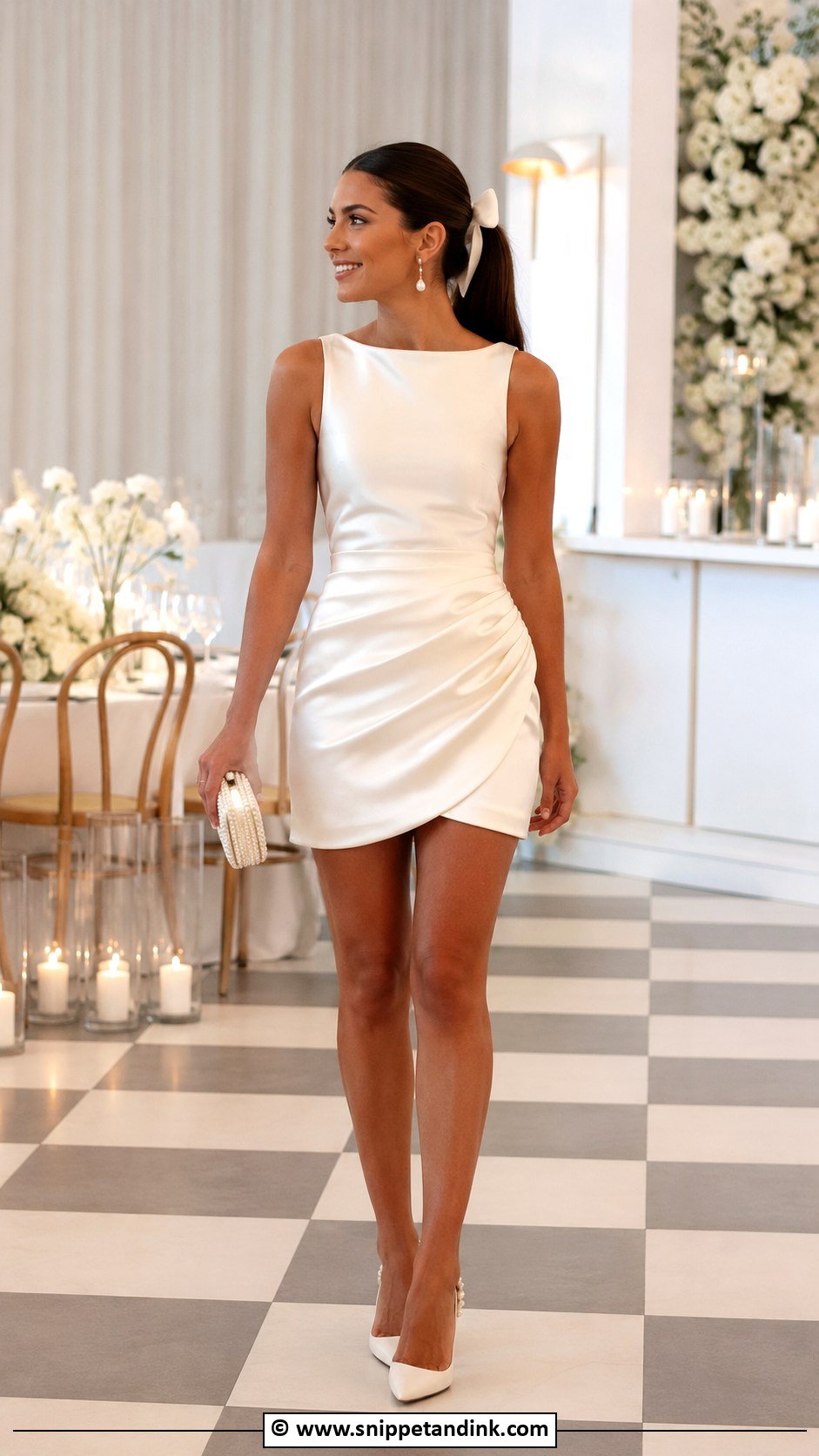
A reception dress should let you dance, sit for dinner and climb onto a chair for a photo without a second thought. Minis, midis, slips and sleek columns are the usual choices for the second look, in satin, crepe or silk so it still reads as yours. A short hem suits a dance floor; a slim midi feels right at dinner. I time the change for after the first dance photos, so the main gown is properly captured. Swap the veil for a headband, bow or barrette, and add a small clutch.
The Alterations a Minimal Dress Usually Needs
Expect alterations on almost every simple gown. With nothing to hide behind, a bodice that is half a size off is obvious. I ask brides to plan for two or three fittings, with the first roughly two to three months before the wedding and the last in the final couple of weeks, once your weight and shoes are settled. Timings and costs vary by seamstress, so ask for both at the first appointment.
Hem, side seams and straps
These are the common three. The hem is set against your actual wedding shoes, the side seams take in or let out the bodice, and straps are shortened so the neckline sits where the designer meant it to. On a bias-cut slip, the hem is tricky because the fabric drops over time; a good seamstress lets it hang before cutting.
Creases between the hanger and the aisle
Satin and mikado crease in the car, and crepe less so. I steam the gown at the venue rather than at home, holding the steamer a few inches away and never touching the fabric, and I lay a clean sheet on the car seat. Silk shouldn’t get wet at all, so test the steamer on an inside seam first. Ask your maid of honour to smooth your skirt behind you each time you sit, and the dress will still look pressed at the reception.
Fit Is the Embellishment on a Plain Gown
A plain gown asks more of the fabric, the fit and the seamstress than an embellished one, and gives back a look you’ll recognise yourself in. Start from the venue and the season, try the shape on with the right underwear, and budget for alterations from the outset. Whether it ends up a satin slip or a structured mikado, a simple dress that fits properly is every bit as memorable as anything covered in beads.
You'll Like These Ideas:







Leave a Reply