
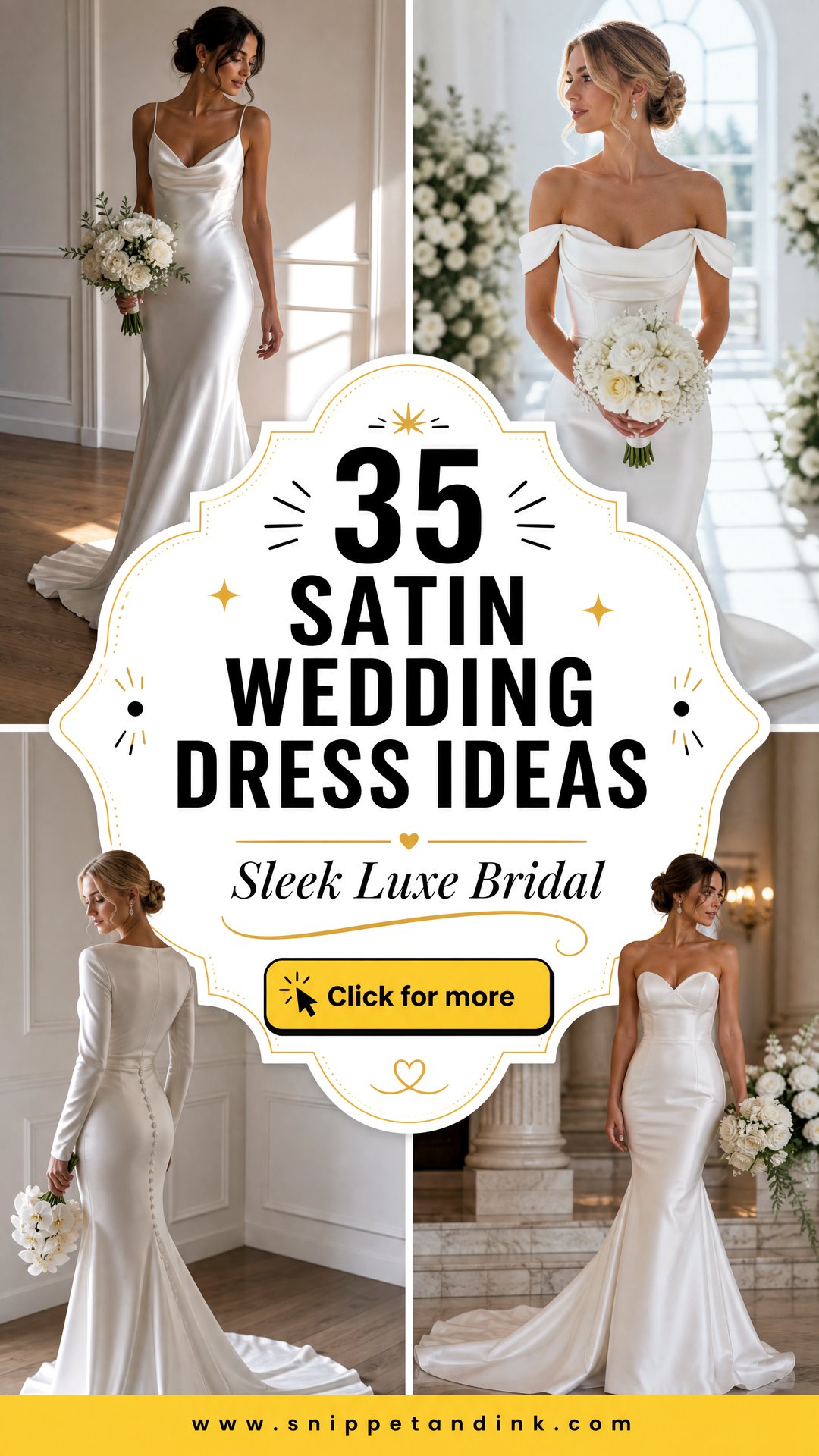
Satin is the most honest bridal fabric there is. With no lace or beading to hide behind, the cut, the seams and the fit are all on show, and that is exactly why a good satin gown looks so expensive. It catches light, holds a shape and makes a simple dress look deliberate. It also creases, marks and reveals every pull across the hips. I love dressing brides in it, but I tell them up front that satin is less forgiving than tulle. Below are the shapes I’d consider, from slip dresses to structured ball gowns, for city halls, gardens, beaches and ballrooms, with notes on what each one asks of the fabric and of you.
Not Every Satin Behaves the Same Way
Satin is a weave, not a fiber, so two satin gowns can feel completely different. When a bride tells me she wants satin, the first thing I ask is which kind, because it decides which silhouettes will work.
- Duchess satin: heavy, dense and slightly lustrous. It holds ball gowns, A-lines and structured bodices beautifully but feels warm and weighty.
- Charmeuse: light, fluid and very shiny on the face. It is the fabric of slip dresses and cowl necks, and it clings and shows everything underneath.
- Crepe-back satin: shiny on one side and matte crepe on the other. It drapes well and gives designers two finishes to play with.
- Silk versus polyester: silk satin breathes better and has a softer glow; polyester satin is cheaper, more crease-resistant and holds heat more.
My quick test in a shop is to hold the skirt in my hand and let it go. If it falls straight and heavy, it will do structure. If it pools and ripples, it wants a bias or draped cut. Matching fabric to shape is half of the decision.
1. Satin A Line Wedding Dress
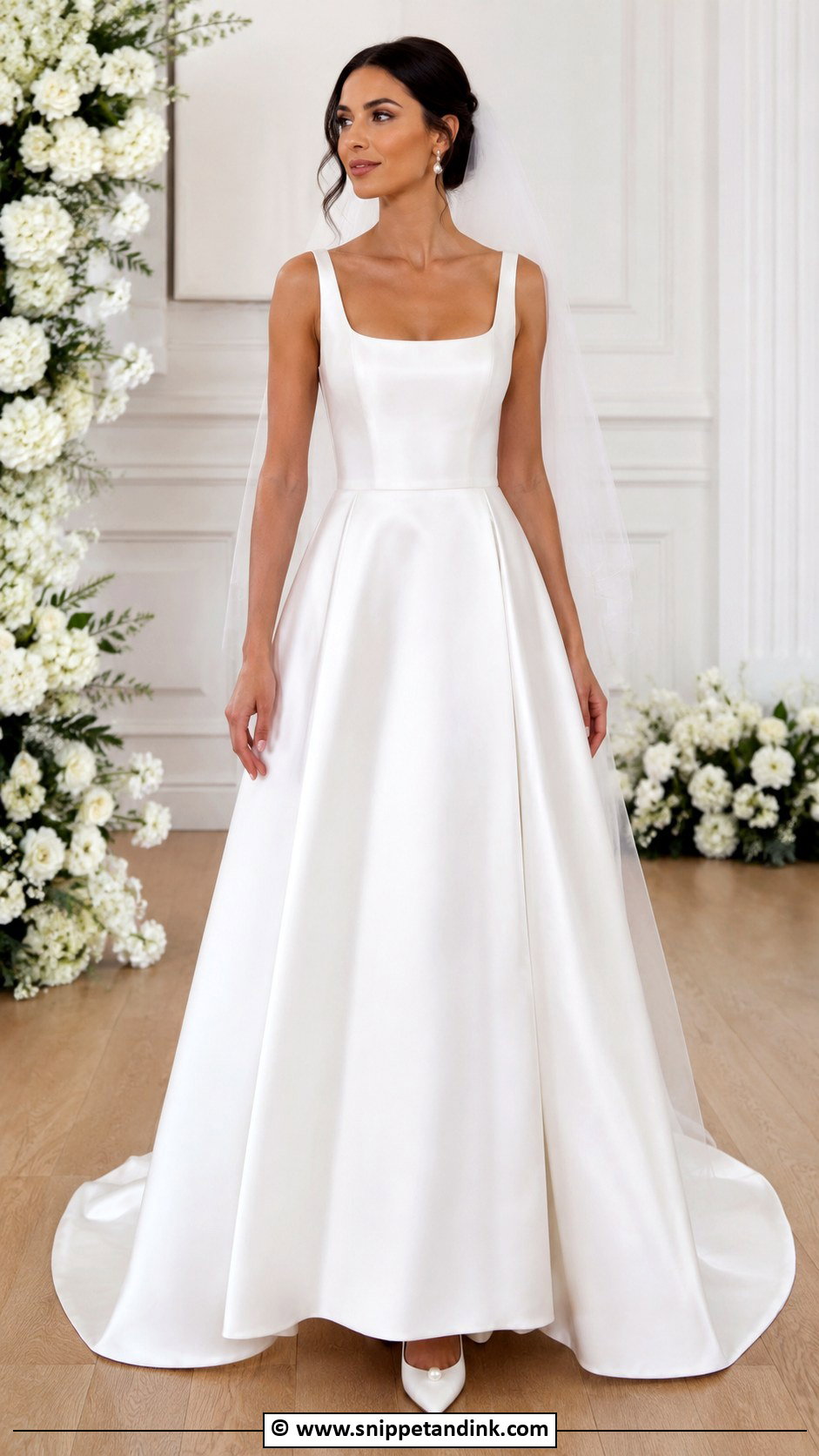
An A-line is the safest satin silhouette, and I mean that as praise. The skirt falls away from the hips, so the fabric never strains, and satin has enough body to give the skirt shape without layers of tulle underneath. You can sit, walk and dance in it all day. A strapless bodice is classic; a square neck looks more current. Pearl earrings, a plain veil and a low bun are all it needs.
2. Satin Ball Gown Wedding Dress
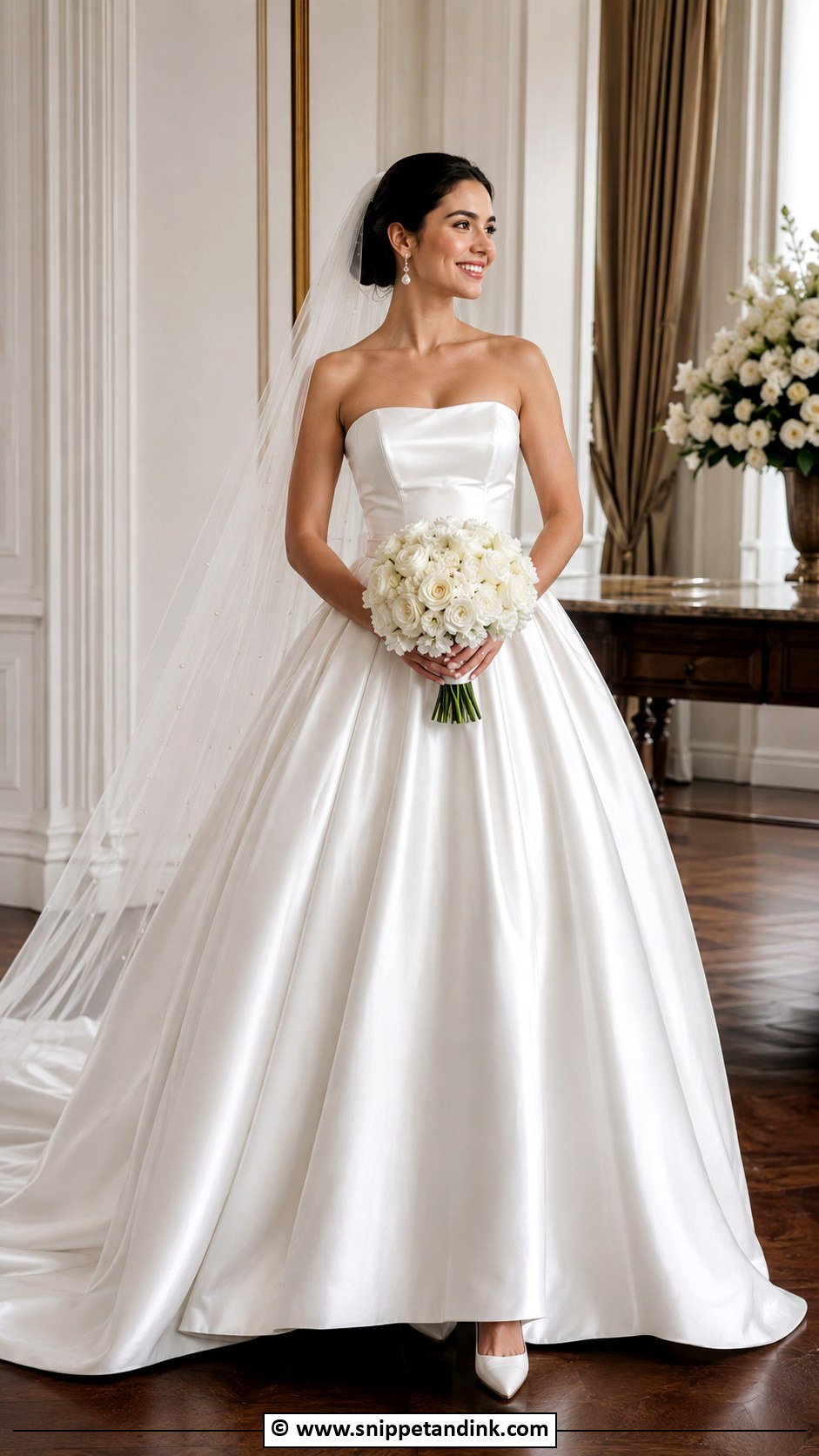
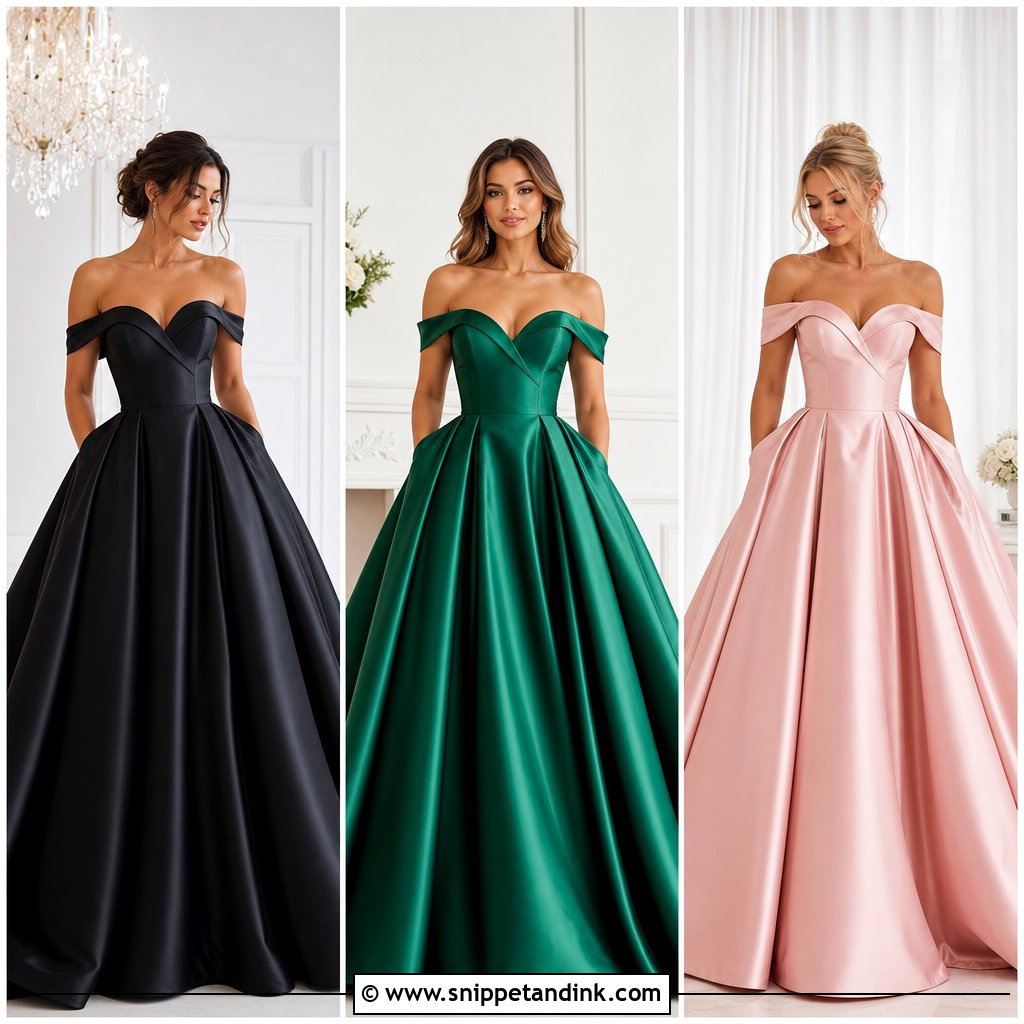
A satin ball gown wedding dress uses the fabric at its most dramatic. Heavier duchess satin holds a full skirt with very little help, and it looks rich without any decoration. A corset or basque bodice gives the shape definition. Keep the accessories quiet: a cathedral veil, drop earrings and satin pumps. The weight is real, though. A full satin skirt can be heavy by evening, so I make sure the waist is built to carry it.
3. Satin Mermaid Wedding Dress
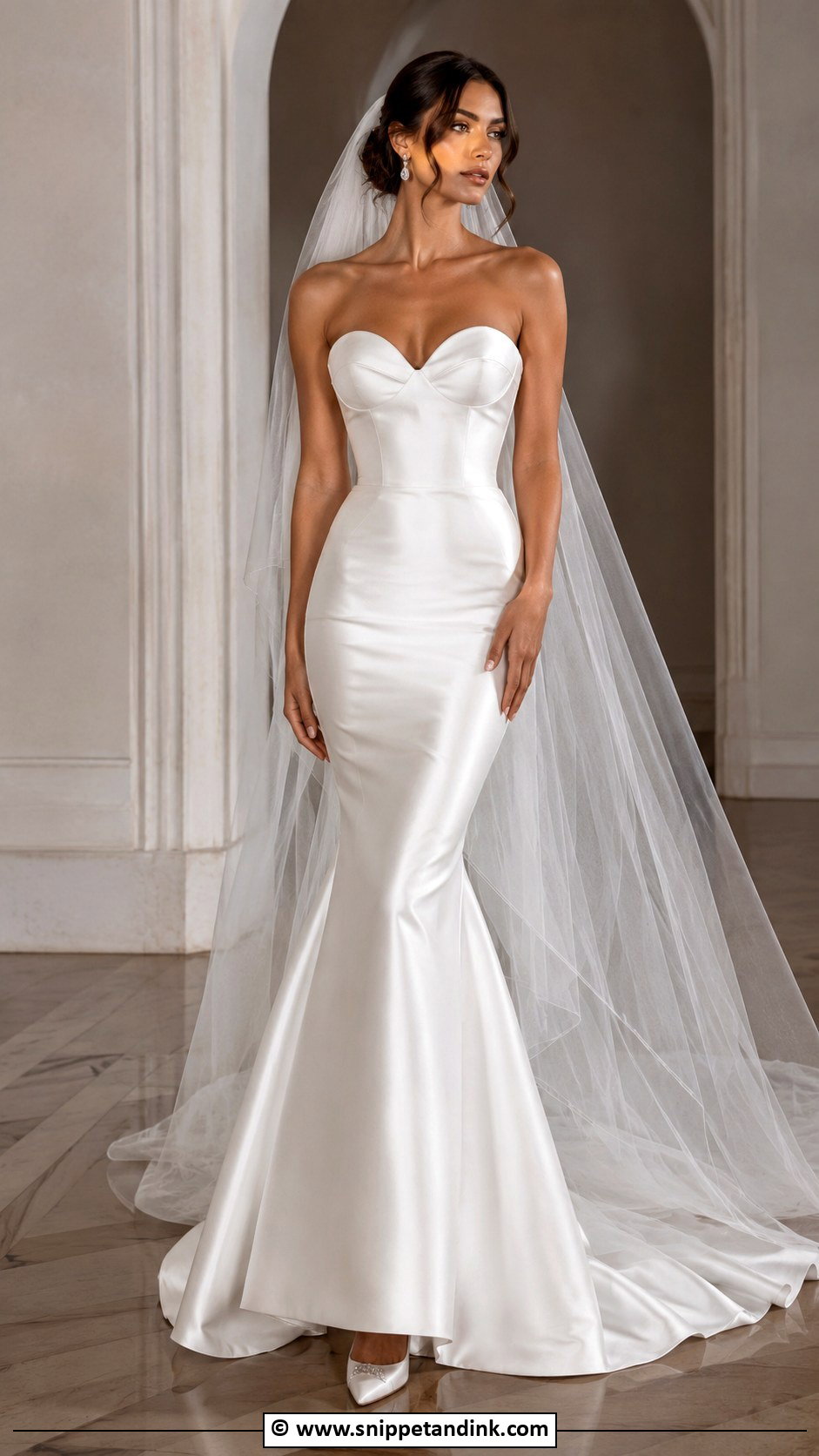
A mermaid in satin shows everything, which is the point and the risk. The gown hugs the bodice, waist and hips, then flares near the knee, and any seam that pulls or ripples will show under the sheen. I’d only choose this shape in a satin with some weight and a properly structured bodice. Walk, climb a step and sit at every fitting. Sleek heels, a long veil and minimal jewelry keep it sharp.
4. Satin Slip Wedding Dress
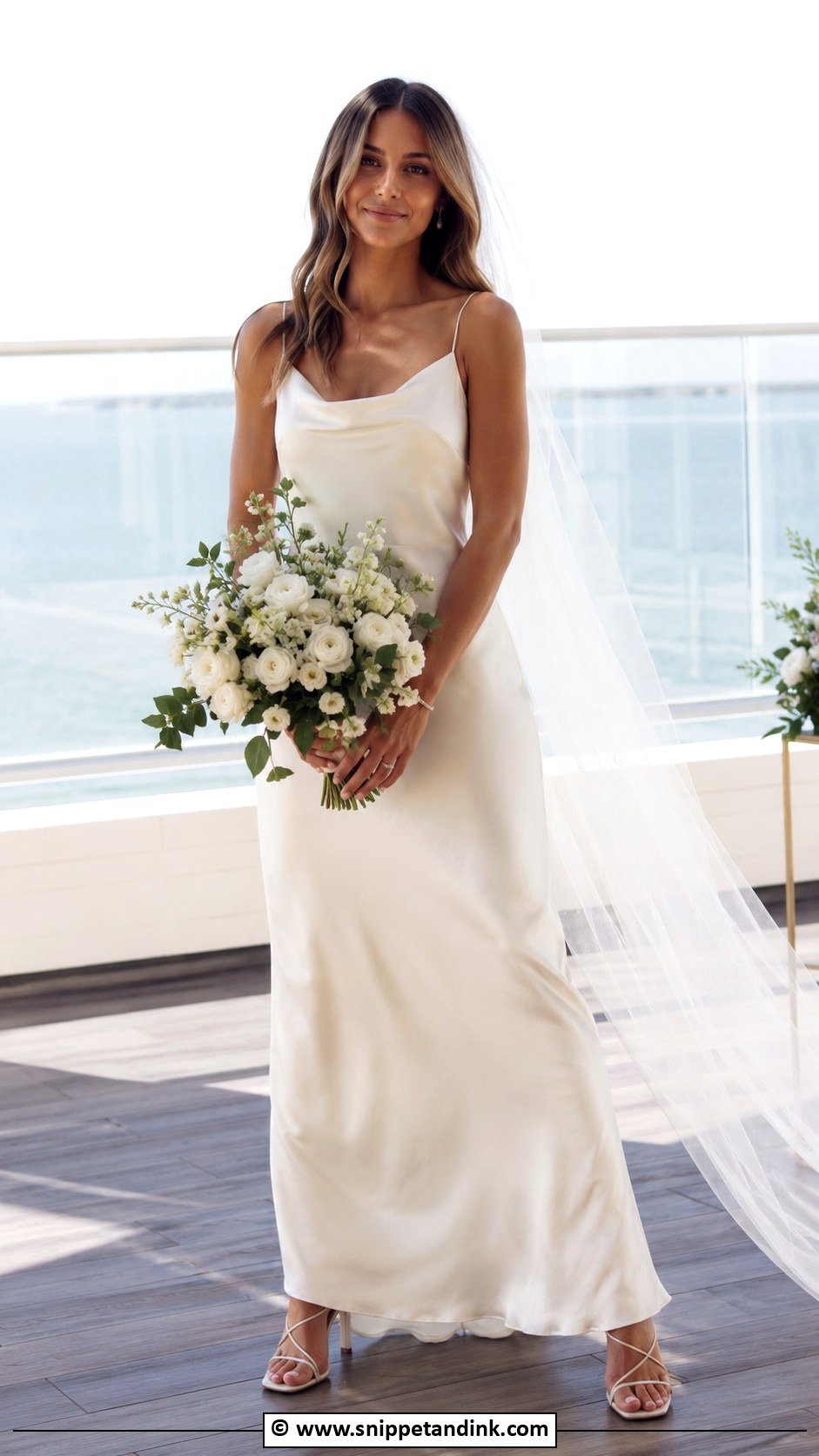
Slip dresses are cut on the bias, diagonally across the grain, so they drape and cling softly rather than holding a shape. That is what makes them look so relaxed and so luxurious. It also means they show every line underneath, so I plan undergarments before anything else, usually bonded, edge-free pieces or none at all. Charmeuse or silk satin moves best. A wrap or shawl is useful for cooler evenings, and barely-there sandals finish it.
5. Satin Corset Wedding Dress
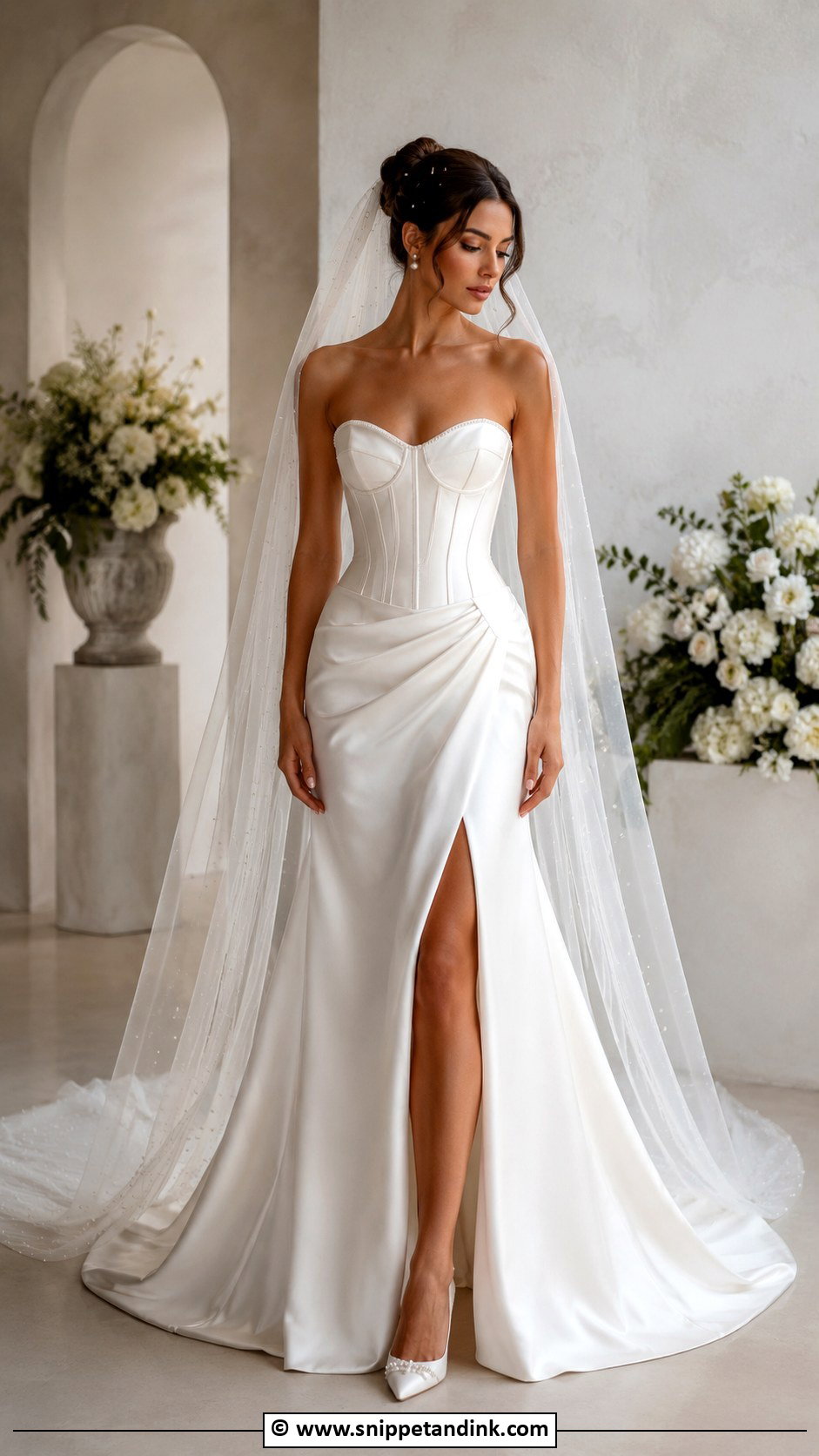
Corset bodices give structure, waist definition and real support, which matters for any strapless satin gown. Visible boning reads modern; hidden structure under smooth satin reads classic. Corsets can sit over an A-line, fitted, ball gown or drop-waist skirt. I fit them so you can breathe deeply and lift your arms, not just stand still for photos. Pearl studs and an updo show the bodice best.
6. Satin Strapless Wedding Dress
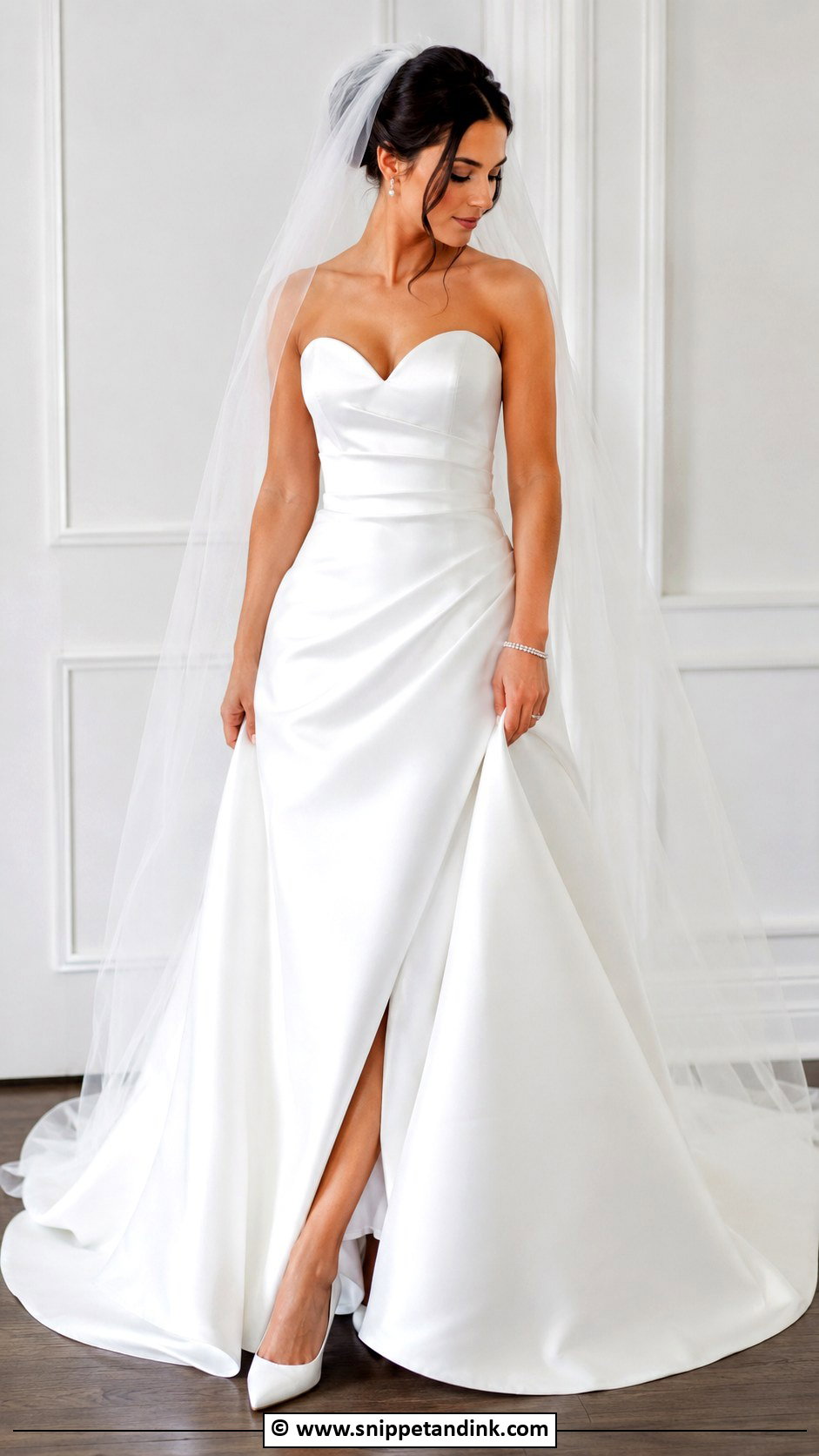
The thing I check first on a strapless satin gown is the inside, not the outside. Good ones have a boned bodice and a grip band at the top edge so the dress stays up without you hitching it. A straight neckline looks clean; a sweetheart softens it. Satin keeps the bodice edge crisp, which is why strapless and satin are such a natural pair. A tennis bracelet and a chignon are enough.
7. Satin Off Shoulder Wedding Dress
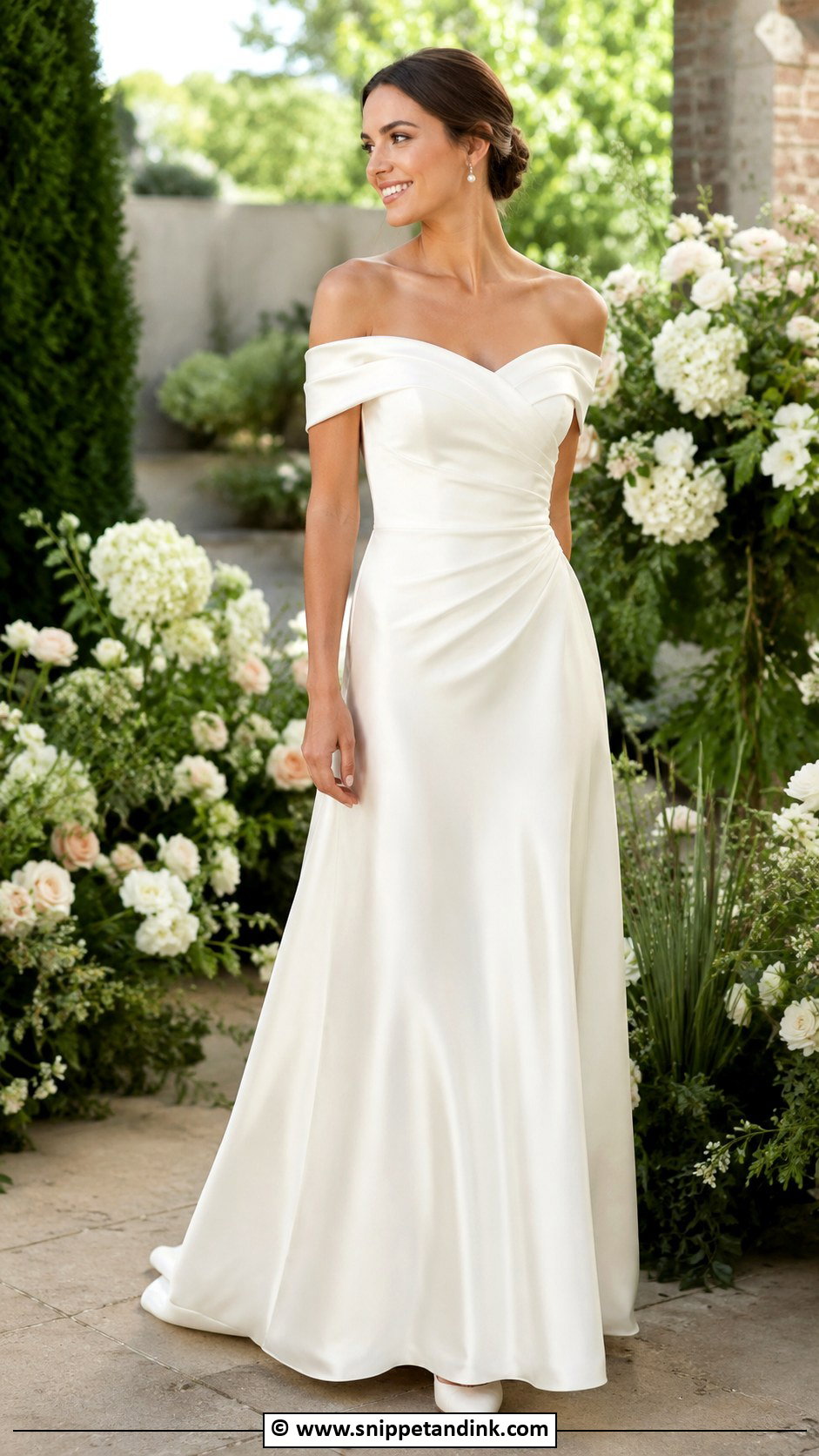
Off-shoulder satin frames the collarbone softly. Folded satin bands around the arms look classic; draped sleeves look softer. The bands need an inner elastic or grip, otherwise they slide up the arm whenever you lift it. I’d set the veil below the hairstyle so it doesn’t hide the shoulders. Garden ceremonies and elegant indoor venues both suit this one.
8. Satin Square Neck Wedding Dress
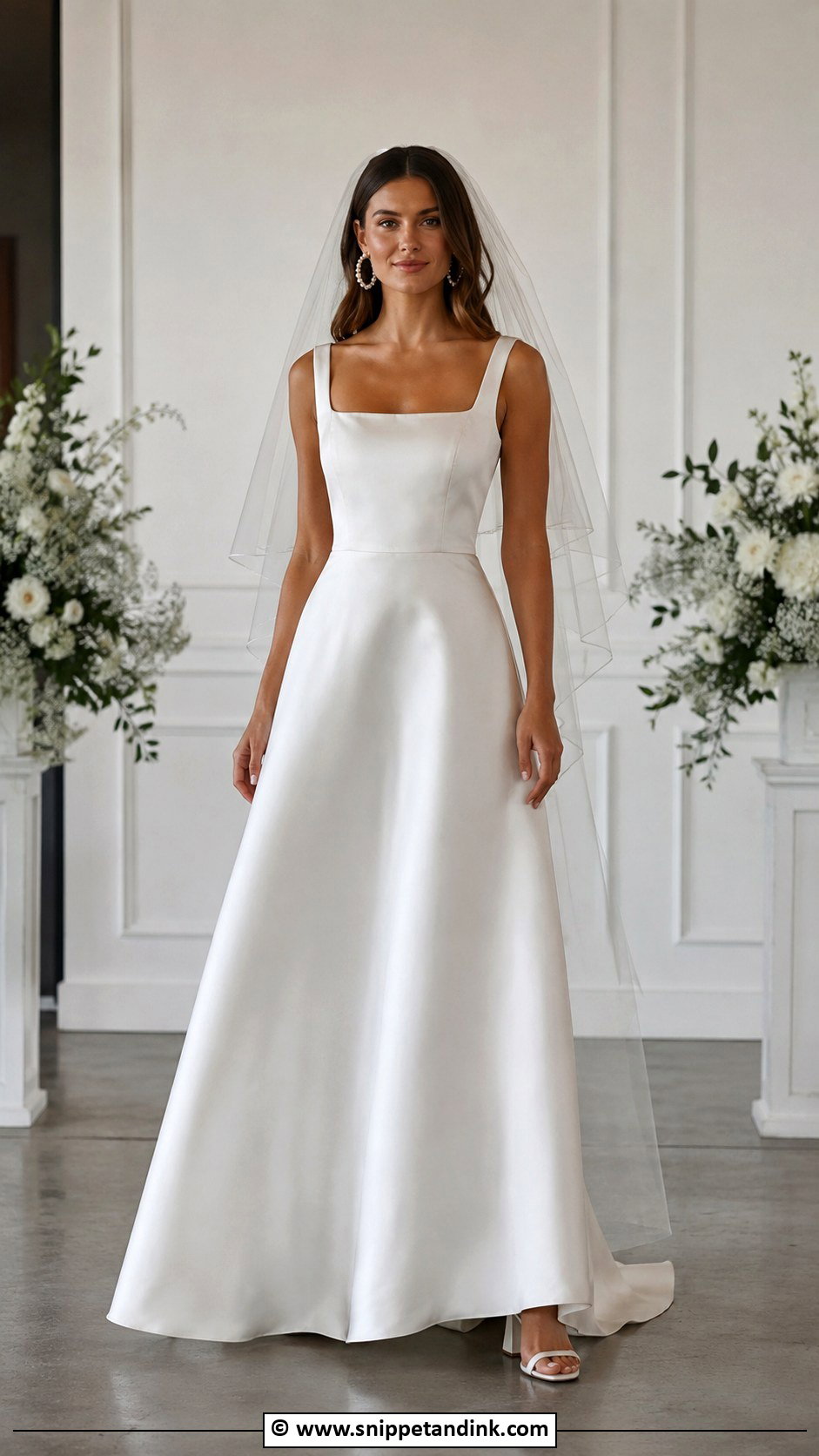
Square necklines give satin a clean architectural line across the chest. The corners must sit flat; on a fuller bust they can gape unless the bodice is fitted carefully. Wide straps or fitted bodices suit it, with an A-line or sheath skirt. It reads slightly vintage without looking like a costume. Small pearl hoops and a fingertip veil keep the neckline visible.
9. Satin Cowl Neck Wedding Dress
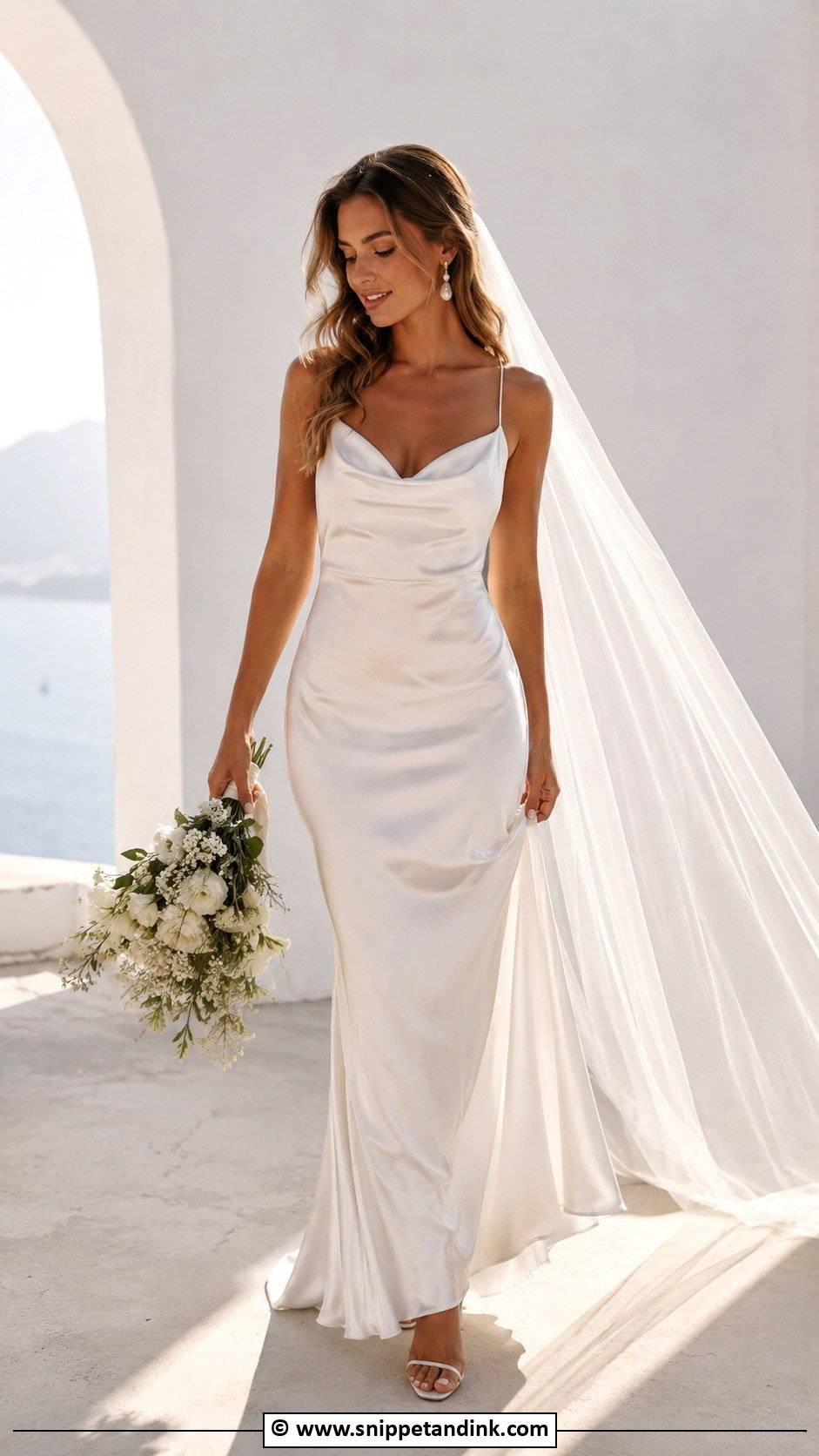
A cowl neck needs a fluid fabric to drape properly, which is why it works best in lighter satin or satin charmeuse. Stiff duchess satin will not fold softly enough. The cowl moves as you move, so I’d skip necklaces entirely and choose drop earrings. Low twisted buns and soft waves suit it. It fits a slip dress or sheath, and it’s a natural choice for a relaxed destination wedding or a modern city ceremony.
10. Satin Halter Wedding Dress
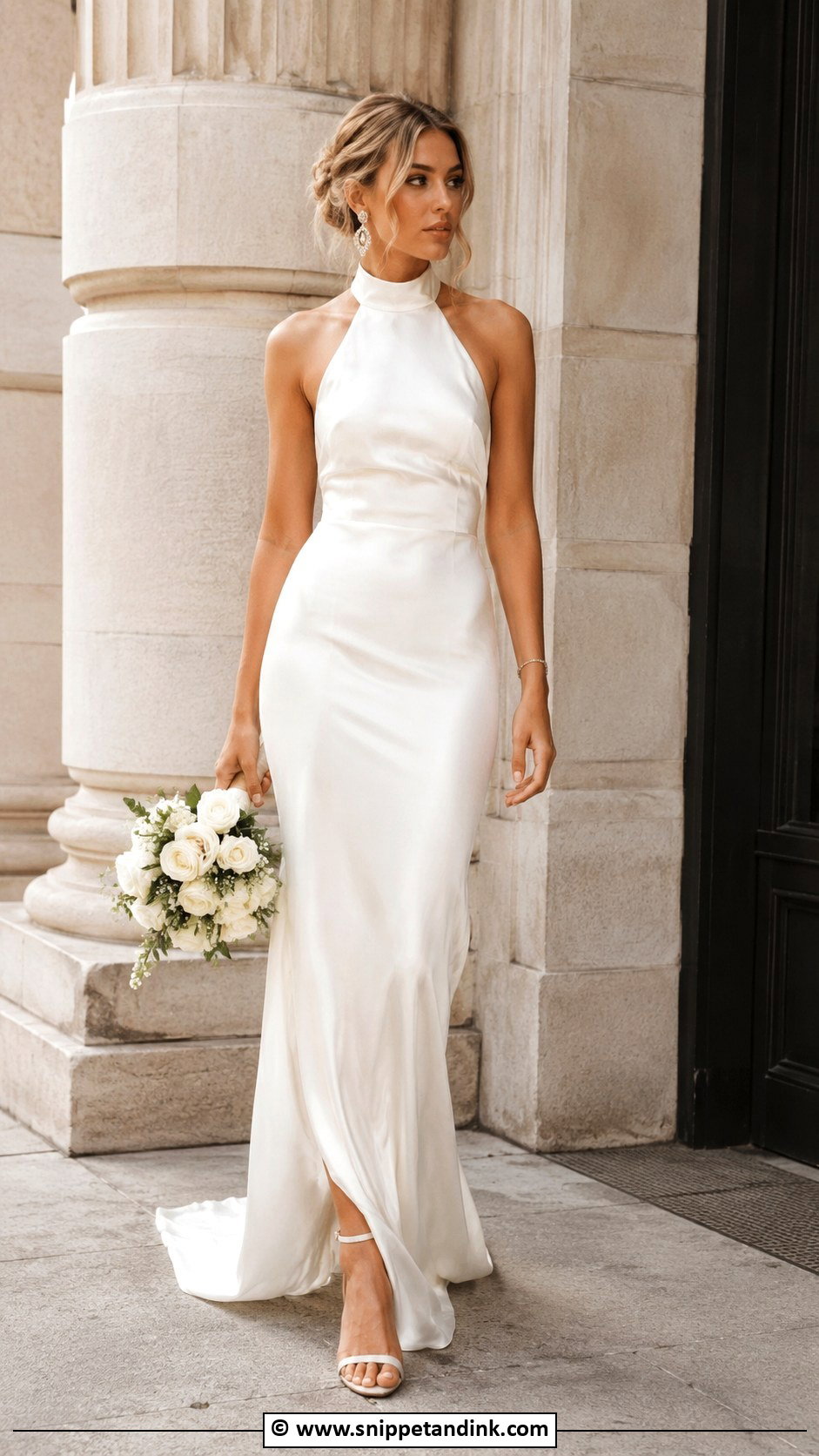
Halter necklines draw the eye up and show off the shoulders, so they suit brides with strong shoulders and good posture. A high halter looks polished; a plunging halter is more daring. The neck strap carries some of the weight of the bodice, so on a heavy satin gown I add internal support to stop it pulling on your neck by evening. Statement earrings and a smooth ponytail or bun complete it.
11. Satin Long Sleeve Wedding Dress
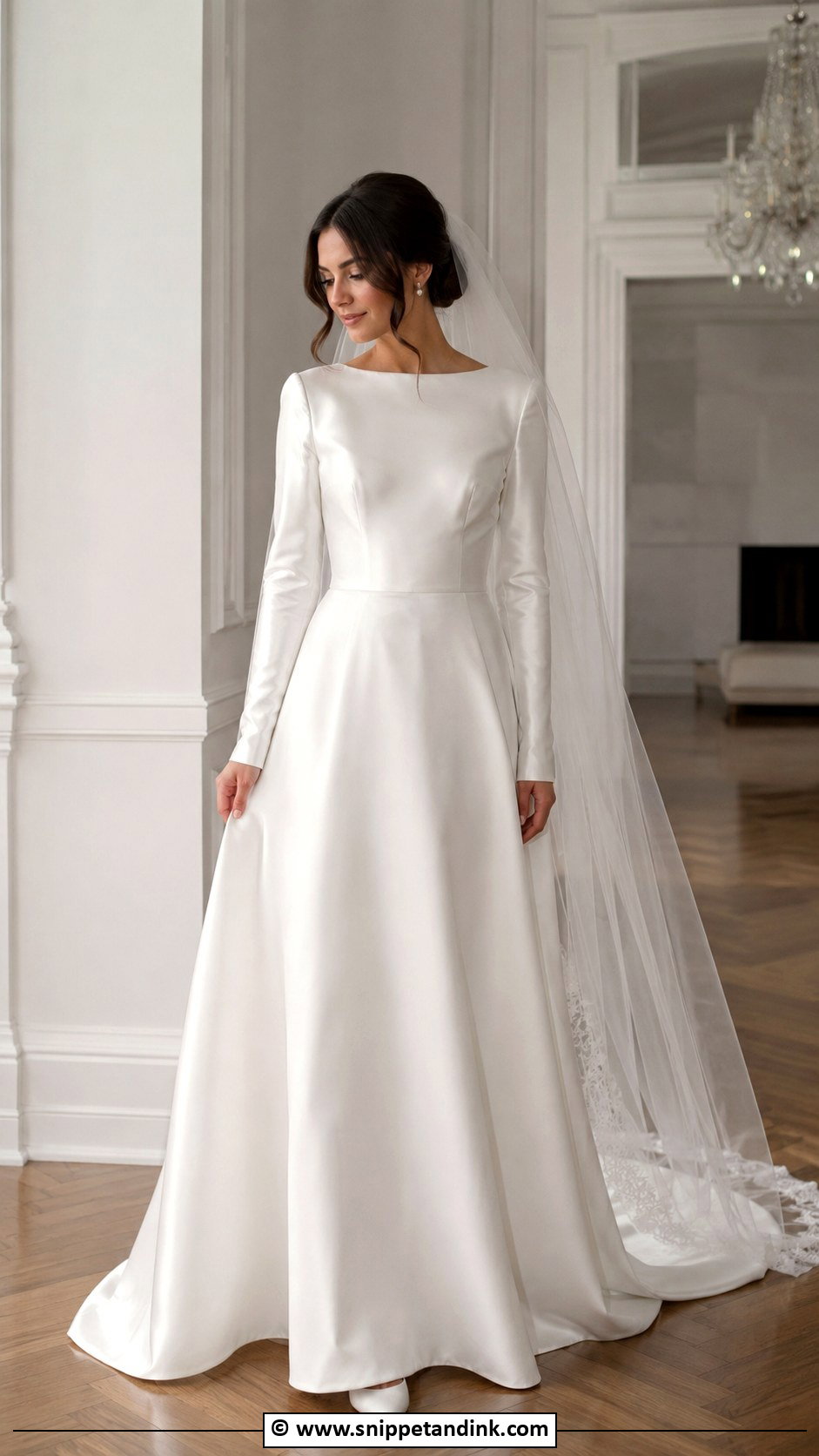
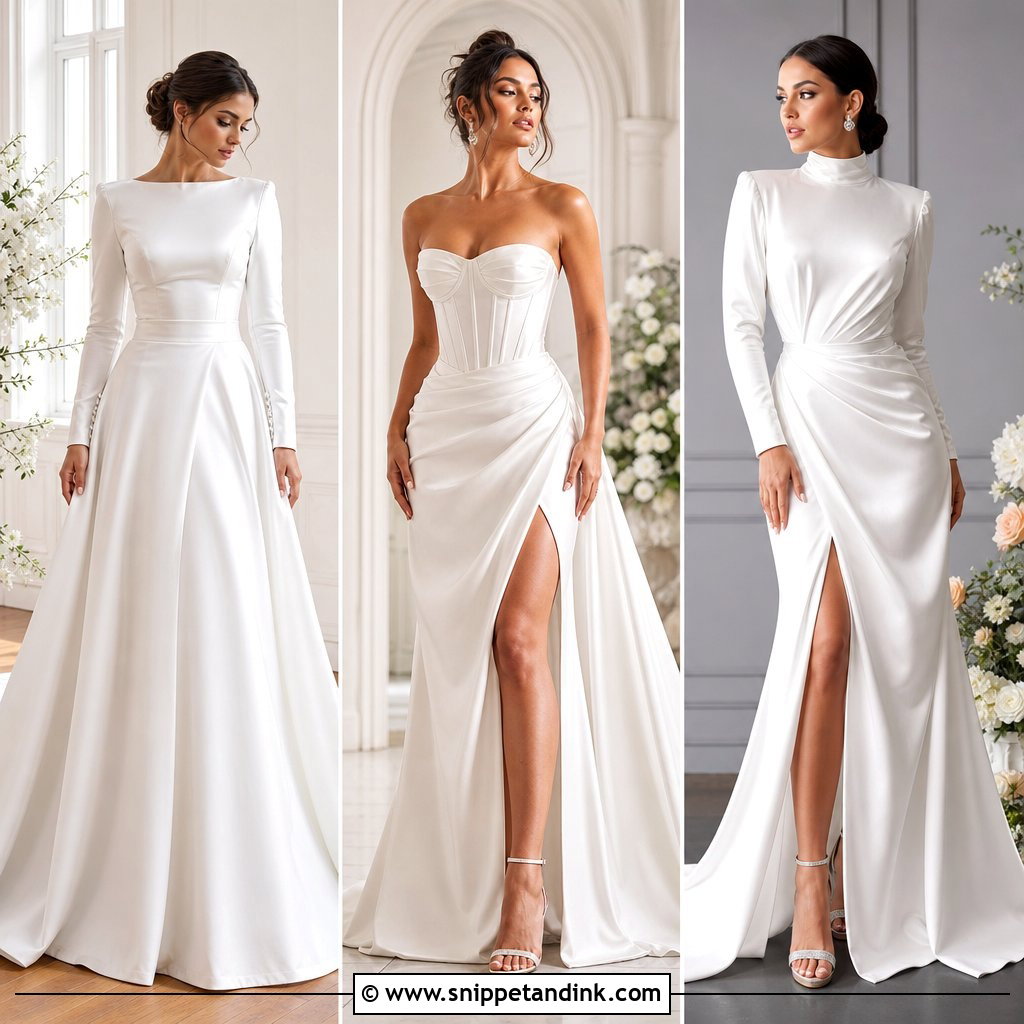
Long satin sleeves look polished and quiet. Fitted sleeves are sleek; bishop sleeves give more movement. Satin has no stretch, so I always fit long sleeves with your arms raised and crossed, the way they’ll be when you hug people. They suit fall and winter, and formal indoor ceremonies year-round. Pearl studs and a classic veil are enough.
12. Satin Open Back Wedding Dress
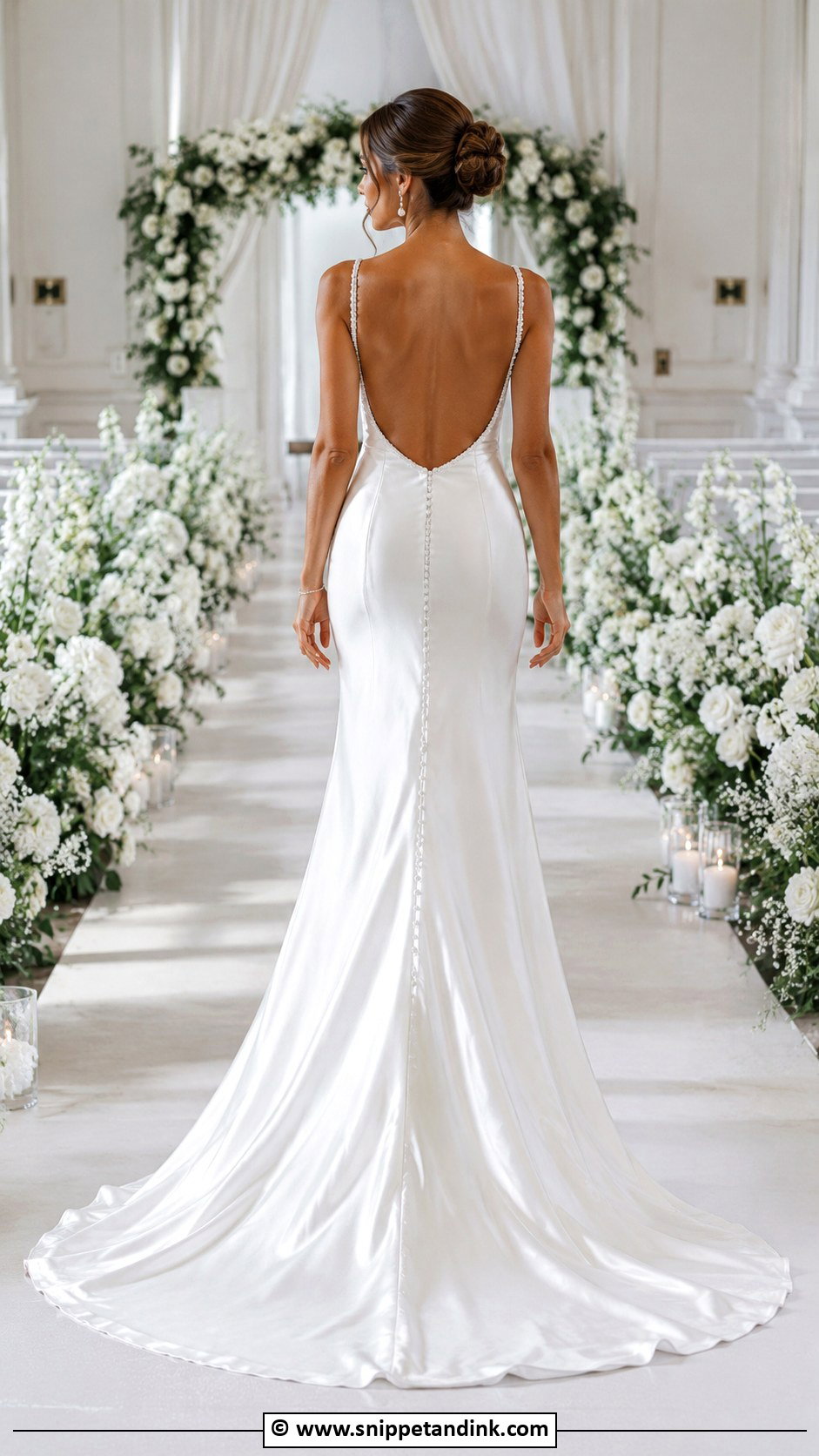
An open back gives the gown its drama from behind, which is what guests see for the whole ceremony. Covered buttons, a soft train or fine straps make the most of it. The engineering matters: the bodice has to stay up without a back, so it needs firm internal structure, and normal bras are out. Swept-back hair and a sheer veil keep the back visible.
13. Satin V Neck Wedding Dress
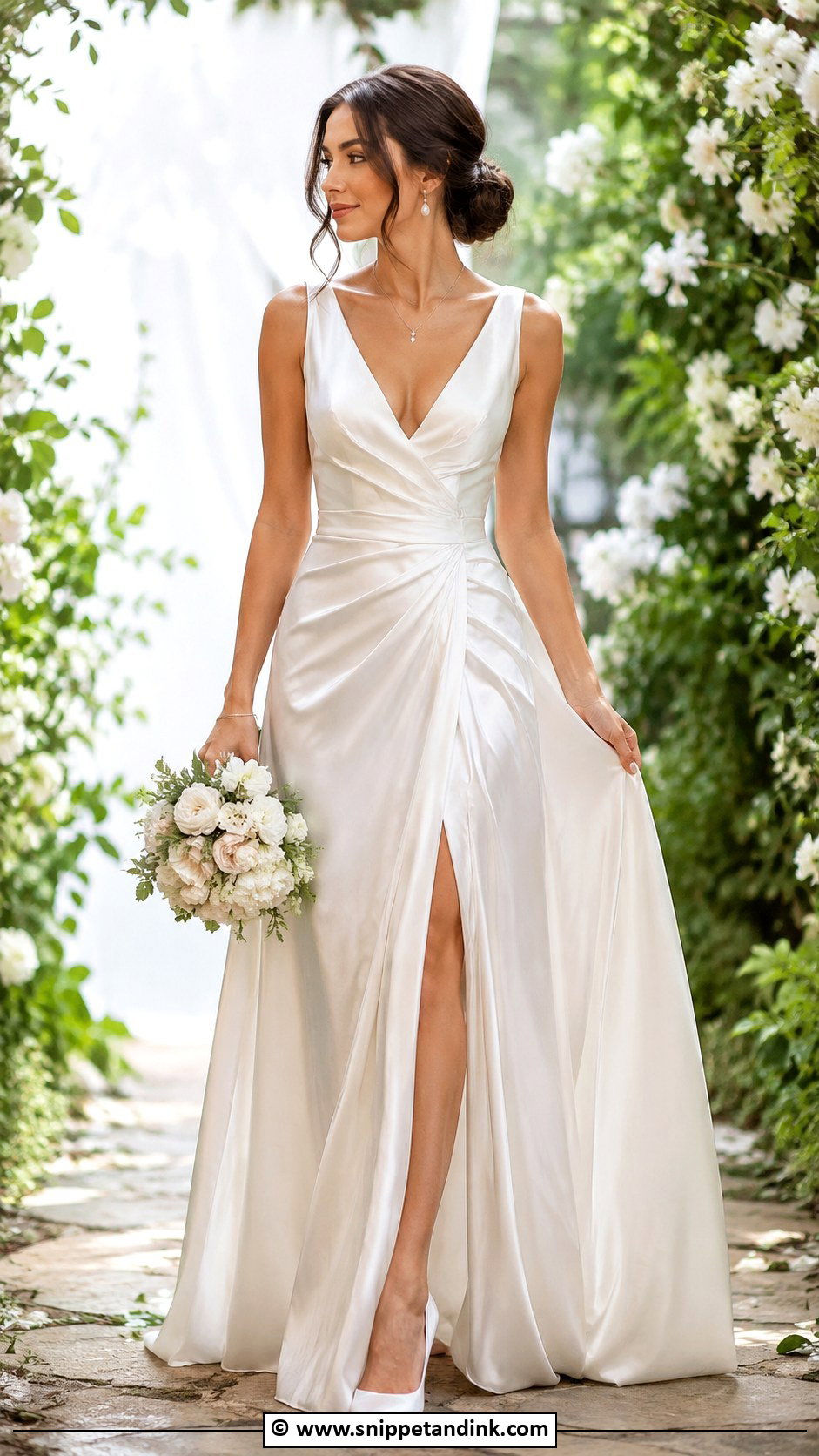
A V-neck lengthens the torso and balances a full skirt by pulling the eye upward. It can be soft and modest or deep and daring. Satin keeps the edges smooth, but deeper Vs need hidden support or fashion tape to stay in place. A fine pendant suits a shallow V; skip the necklace with a deeper cut and choose earrings.
14. Satin Sheath Wedding Dress
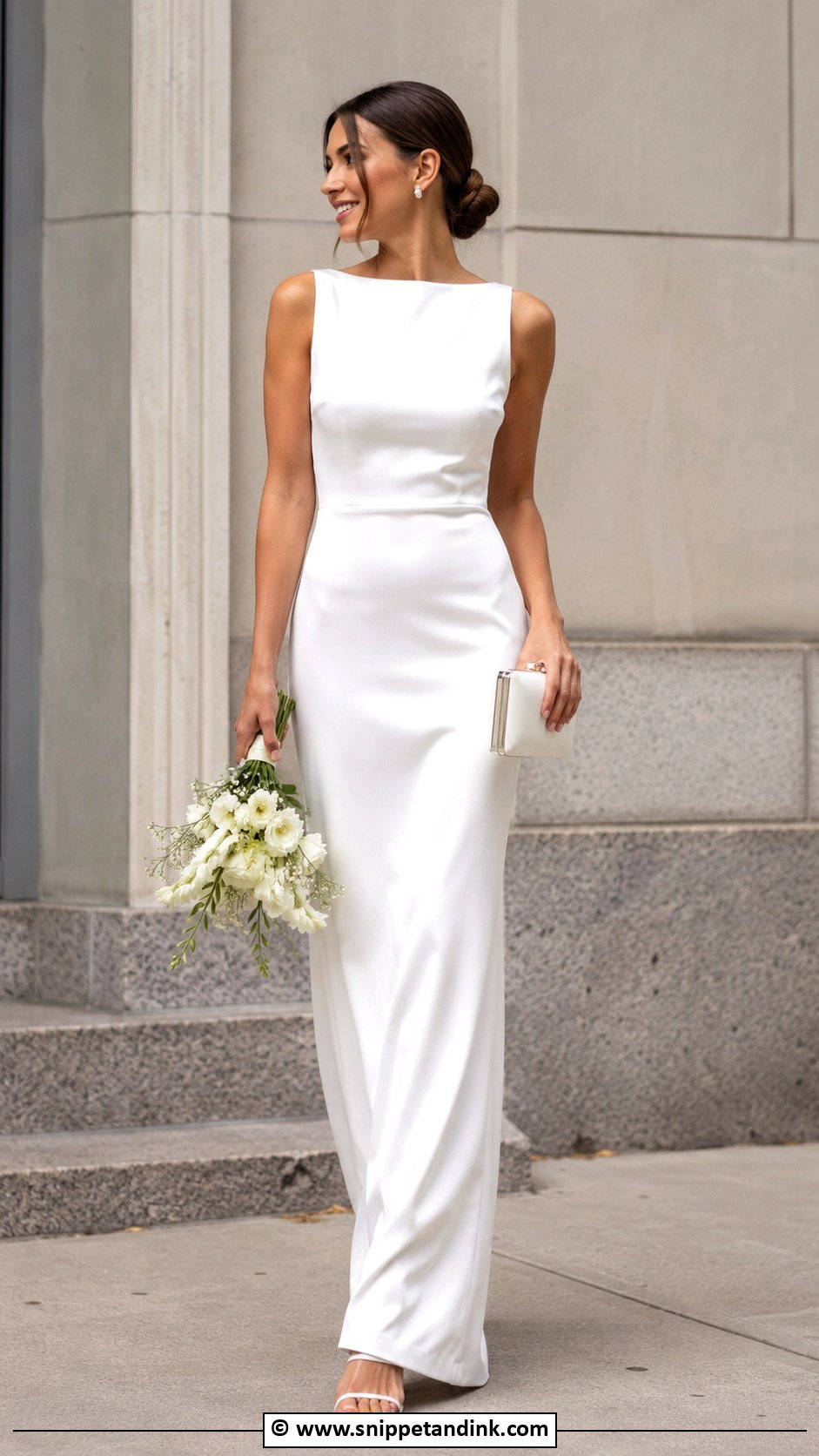
A satin sheath is the most exacting dress on this list. It follows the body without flaring, so if it is even slightly tight across the hips, the fabric shows horizontal pull lines in every photo. I always fit sheaths with a little ease. A high neckline looks minimalist; a cowl adds softness. City halls and small modern venues suit it well. Slim heels and a structured clutch finish it.

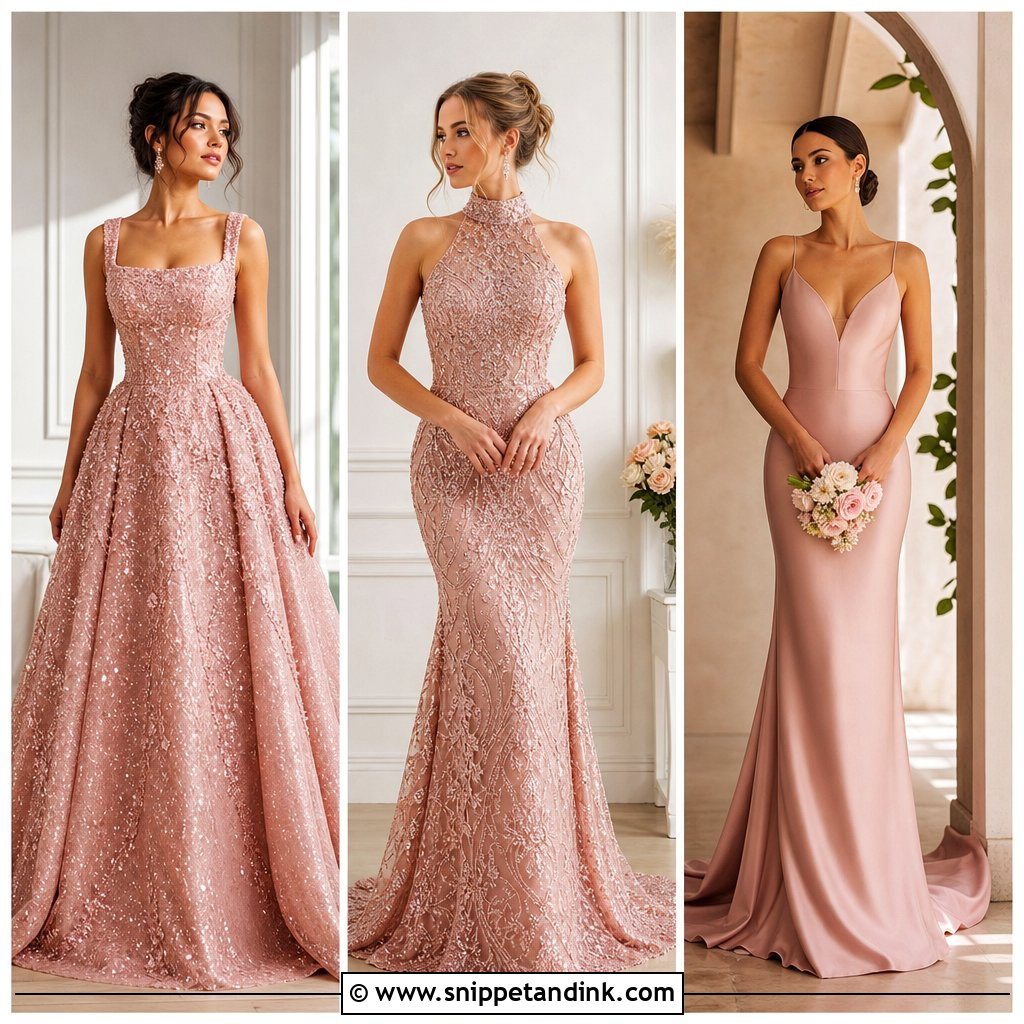

15. Satin Fit And Flare Wedding Dress
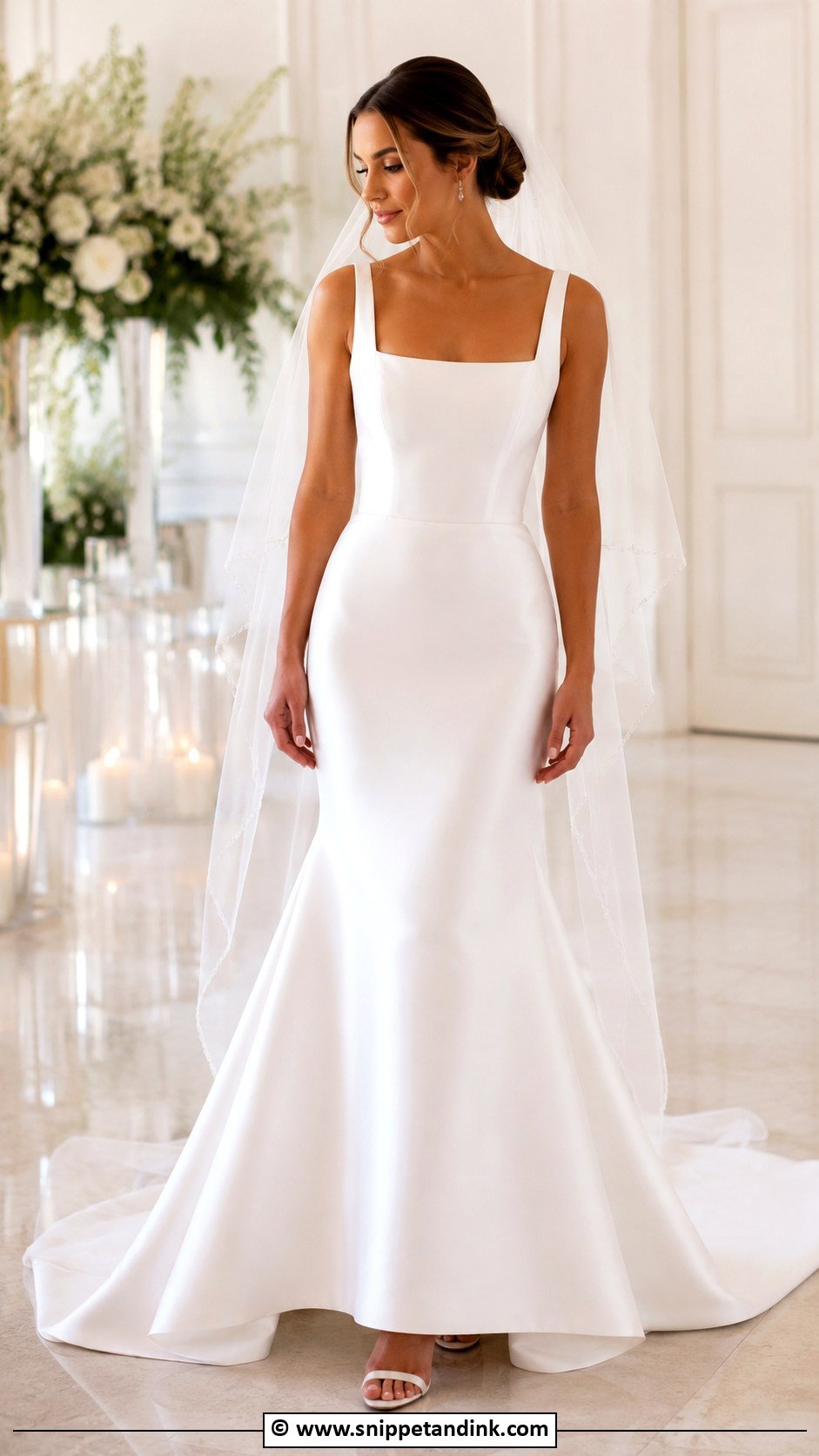
Fit-and-flare hugs through the bodice and hips, then opens below the hip or around mid-thigh. Because the flare starts higher than on a mermaid, you can walk and dance far more freely. I suggest it to brides who love a fitted shape but are worried about mobility. Supportive lining makes satin sit smoothly over the hips. A medium-length veil and comfortable heels complete it.
16. Satin Trumpet Wedding Dress
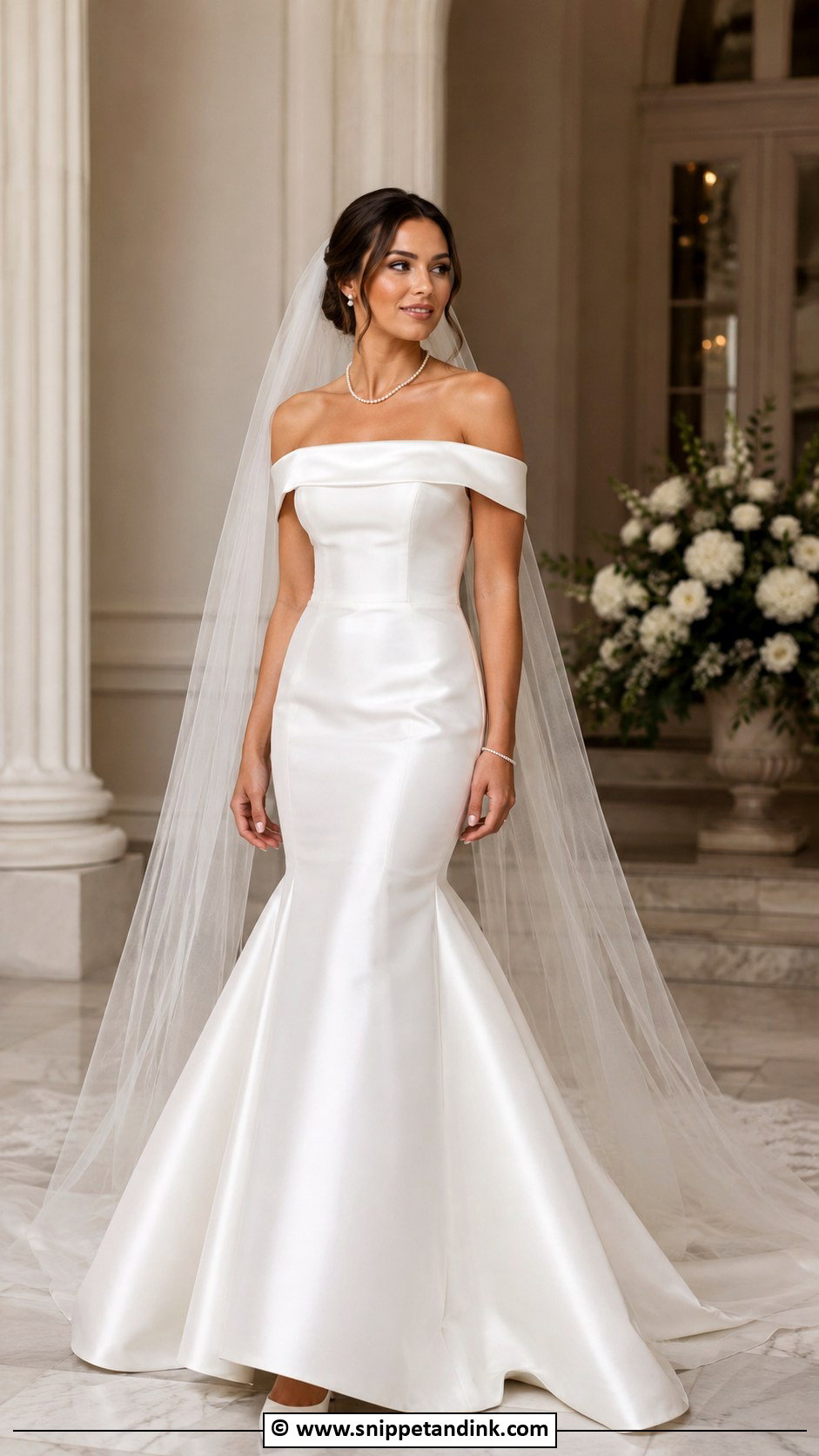
A trumpet flares a little higher than a mermaid, usually around mid-thigh, so it shows the waist and hips while still allowing movement. Satin gives the trumpet shape a clean, sculpted look. Simple seams and a smooth train matter more than embellishment here. A strapless or off-shoulder neckline keeps it classic. Pointed heels and a long veil let the silhouette lead.
17. Satin Drop Waist Wedding Dress
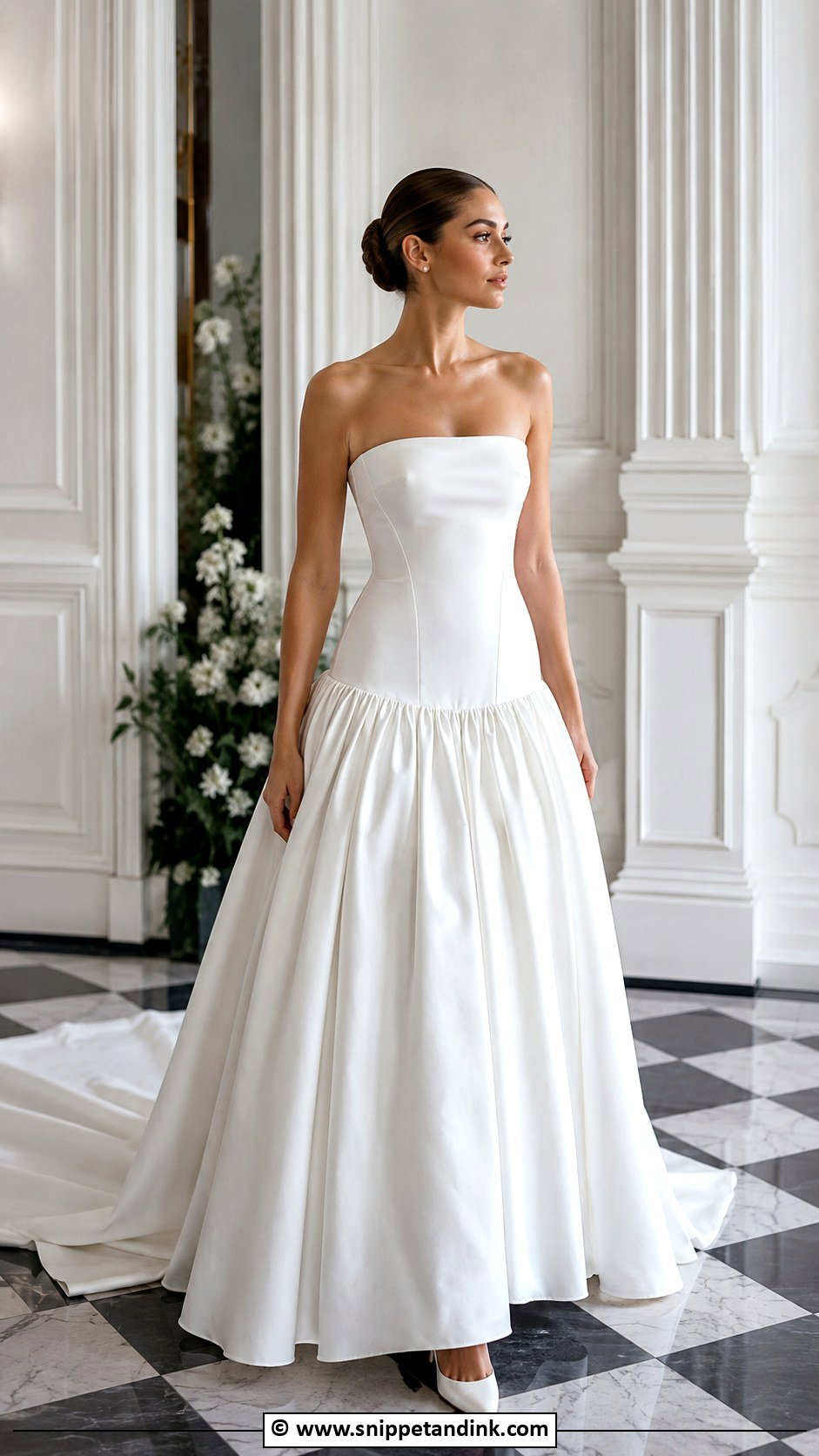
A drop waist extends the bodice below the natural waist before the skirt begins. It lengthens the torso and looks quite fashion-forward. It suits taller brides and those with a longer torso best; on a short torso it can shorten the legs. Satin holds the line of the drop cleanly. A full skirt looks romantic; a slimmer skirt looks editorial. A sleek bun keeps it sharp.
18. Satin Basque Waist Wedding Dress
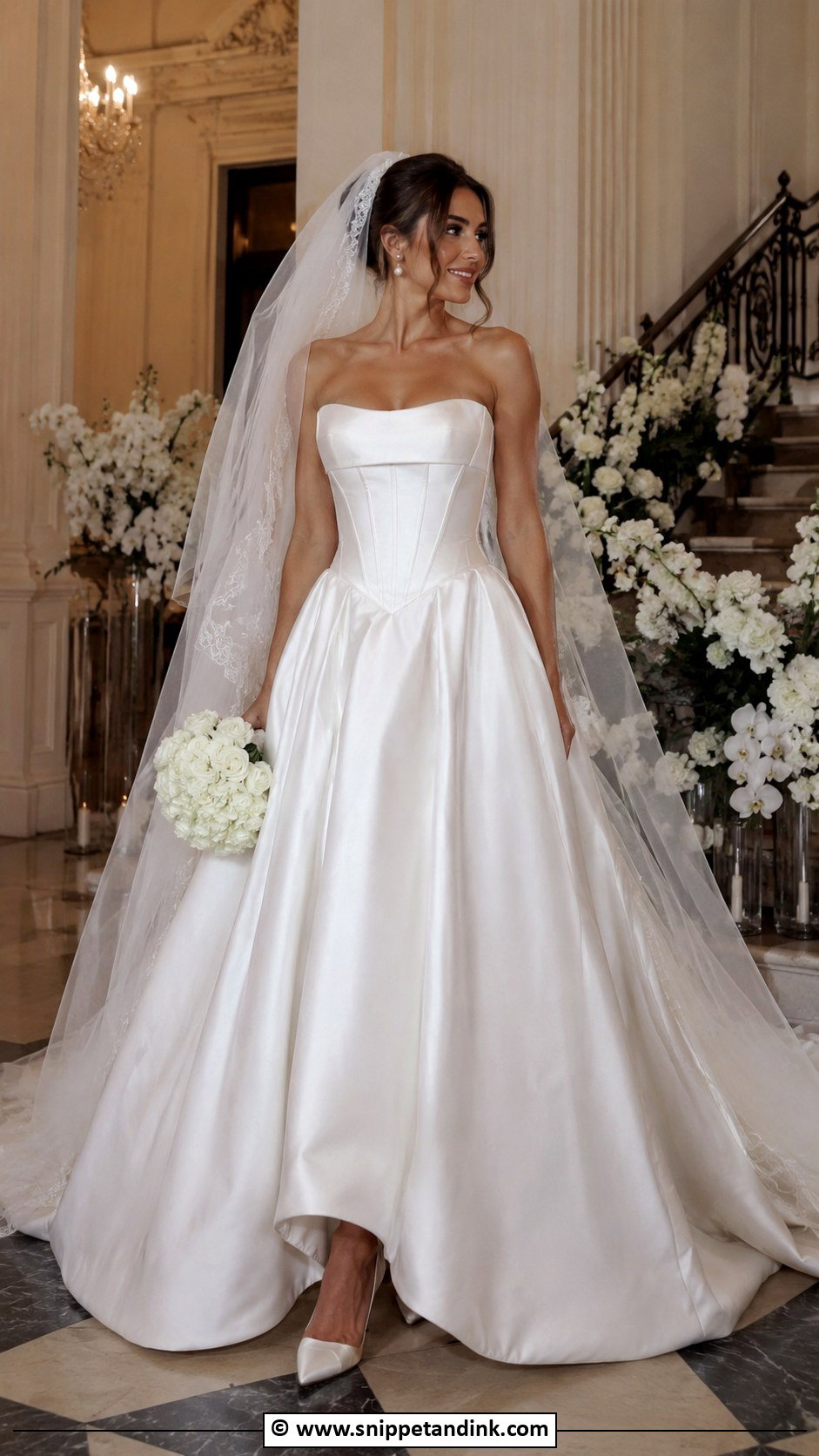
A satin basque waist wedding dress has a V or curve that dips below the waist at the center front. It draws the eye to the middle of the body and pairs naturally with a full skirt. The point must sit perfectly centered and flat, which takes precise tailoring. Keep embellishment minimal so the waistline and fabric lead. A cathedral veil and soft updo suit it.
19. Satin High Neck Wedding Dress
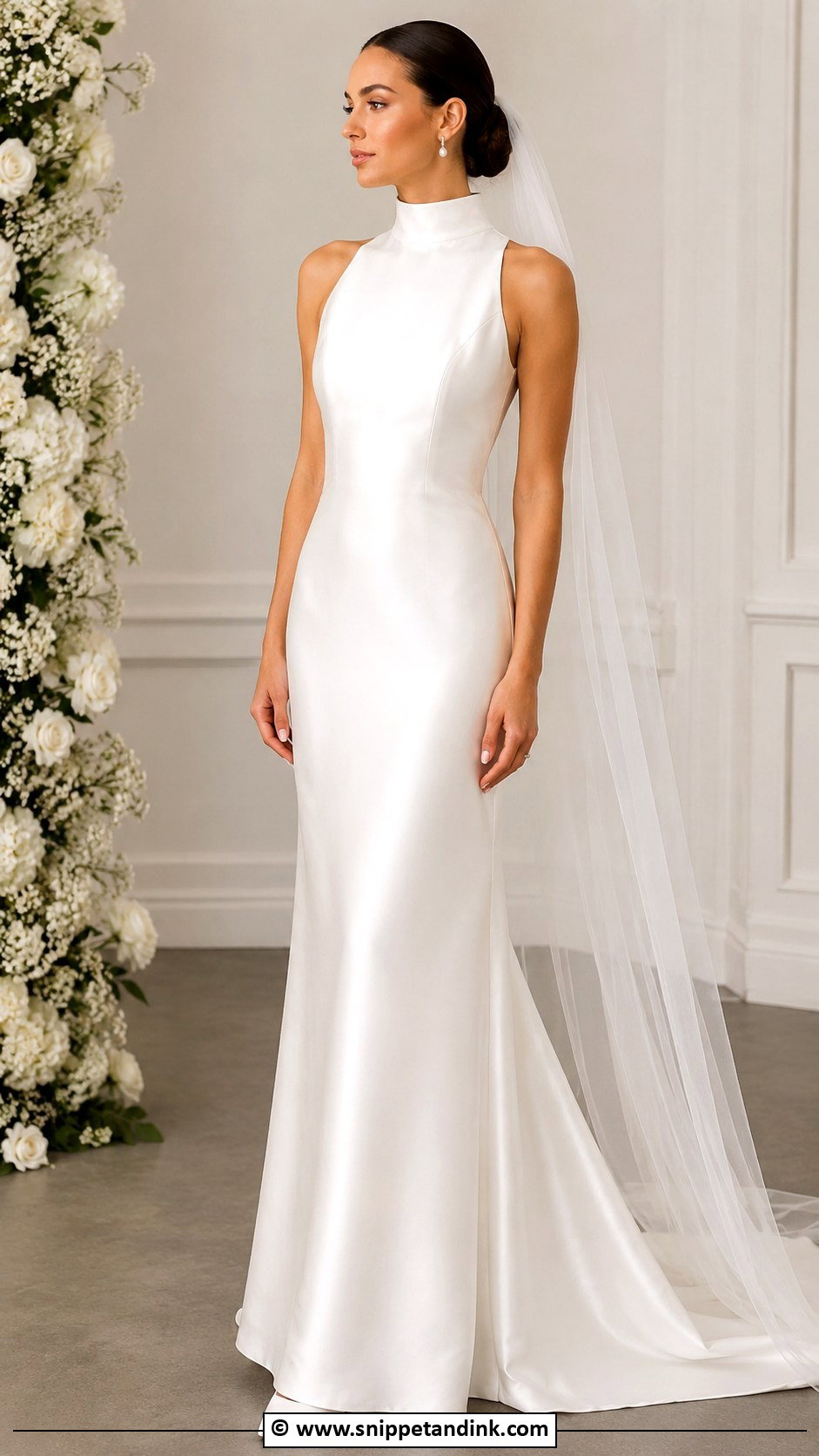
A high neck in satin feels polished and slightly regal, and it suits formal ceremonies and cooler seasons. To keep it from looking severe, I’d add an open back, a keyhole or a soft train. Earrings carry all the jewelry weight, so choose them carefully. The neck edge must sit precisely; too tight is uncomfortable all day, and too loose gapes when you turn.

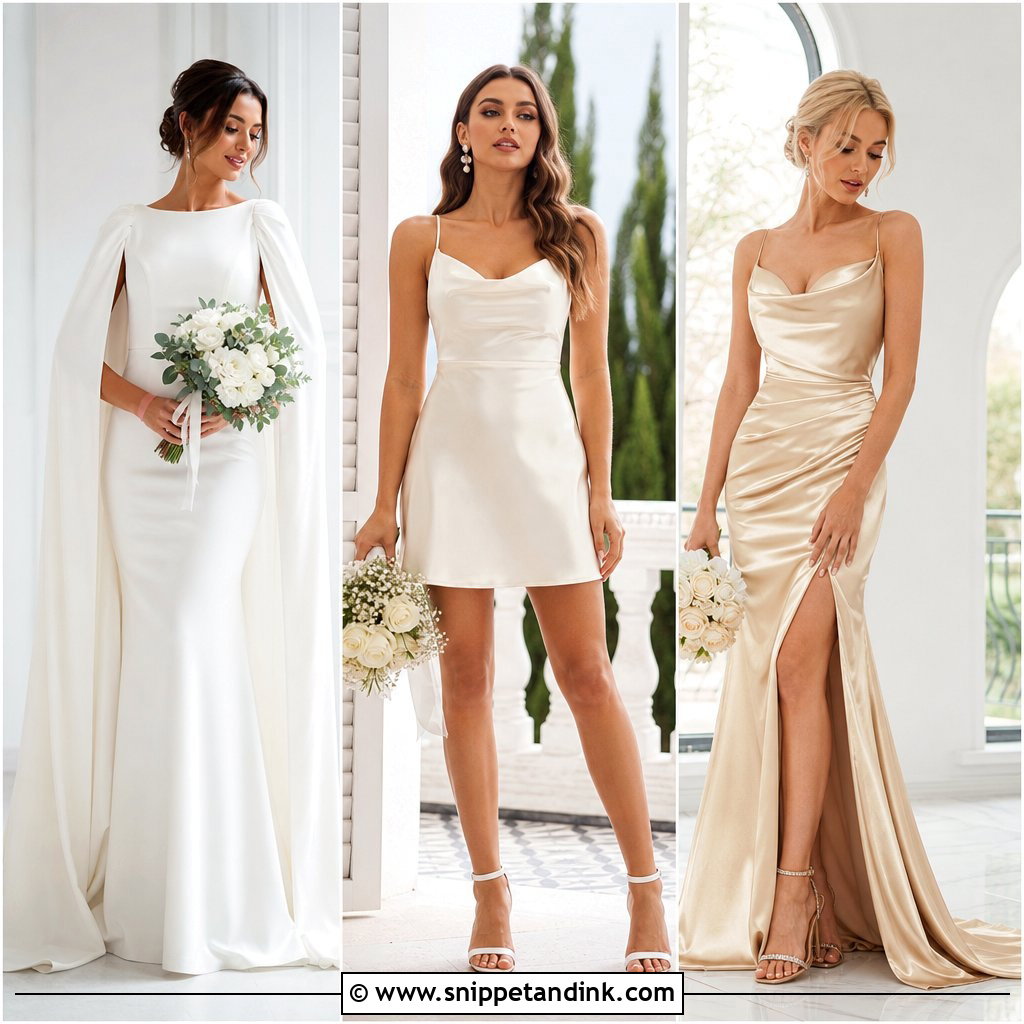

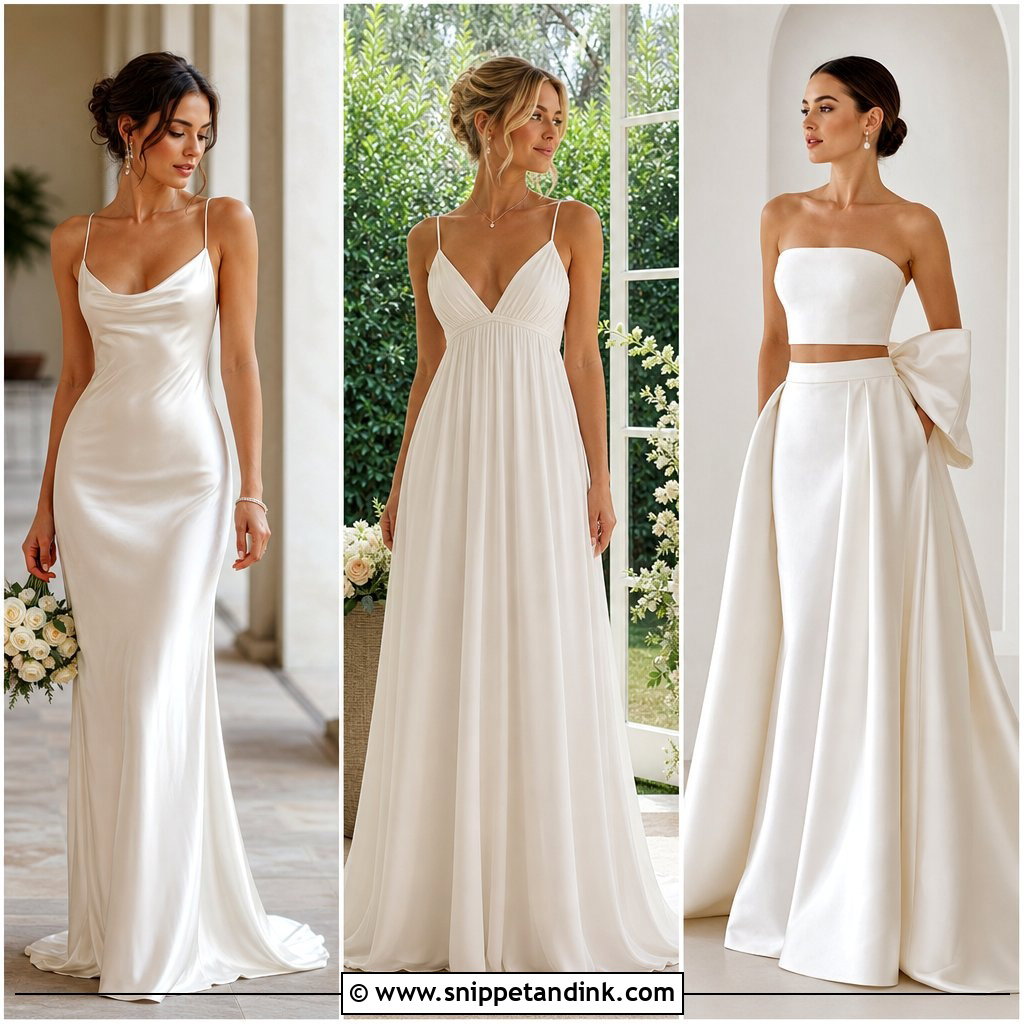
20. Satin Plunge Wedding Dress
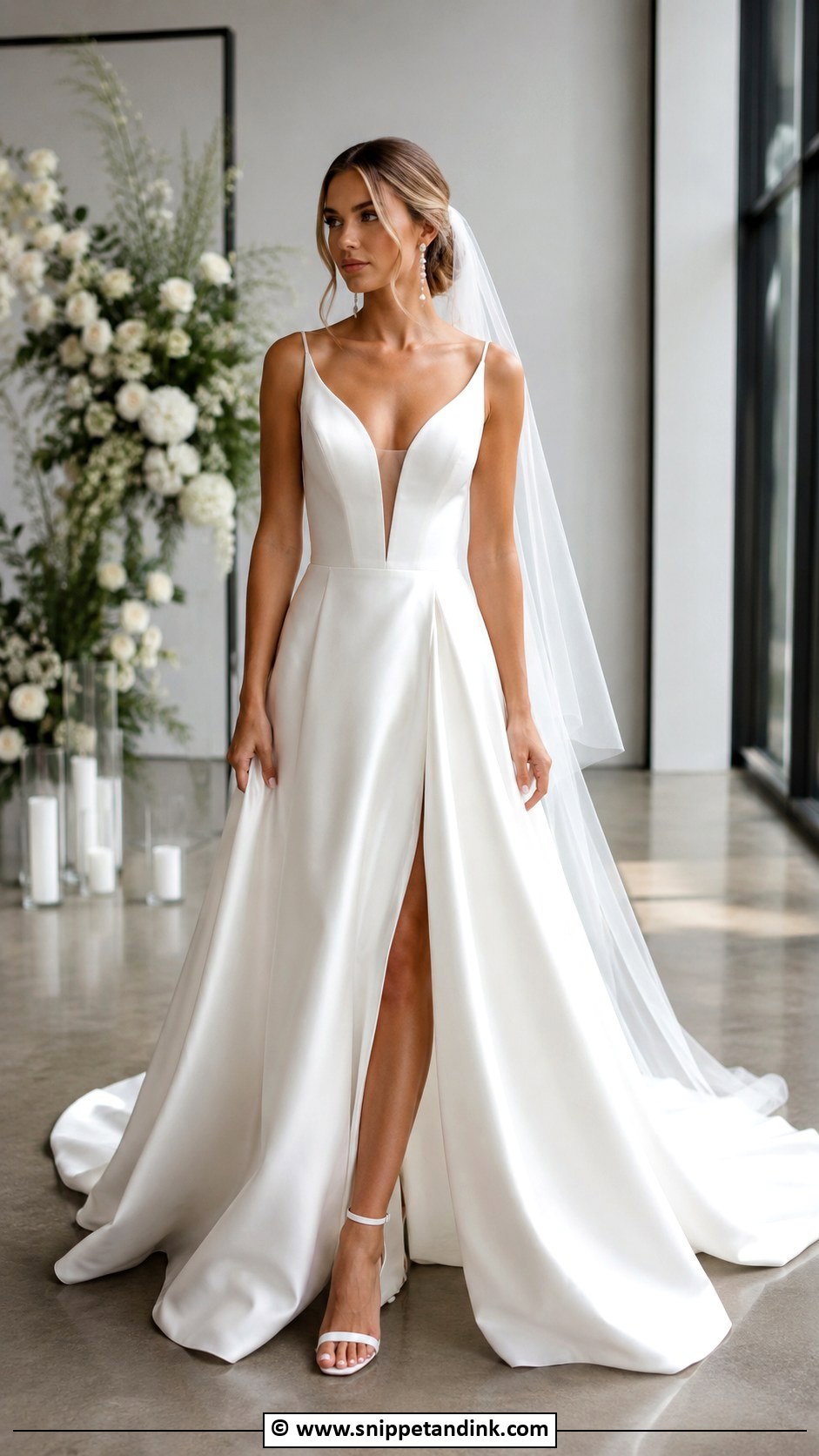
A plunge looks bold and modern, but only when it is engineered properly. An illusion panel or a structured bodice keeps everything in place when you move, hug and dance. Without that support, deep satin necklines shift. Keep the jewelry minimal since the neckline is the statement. Soft waves balance the sharper line.
21. Satin One Shoulder Wedding Dress
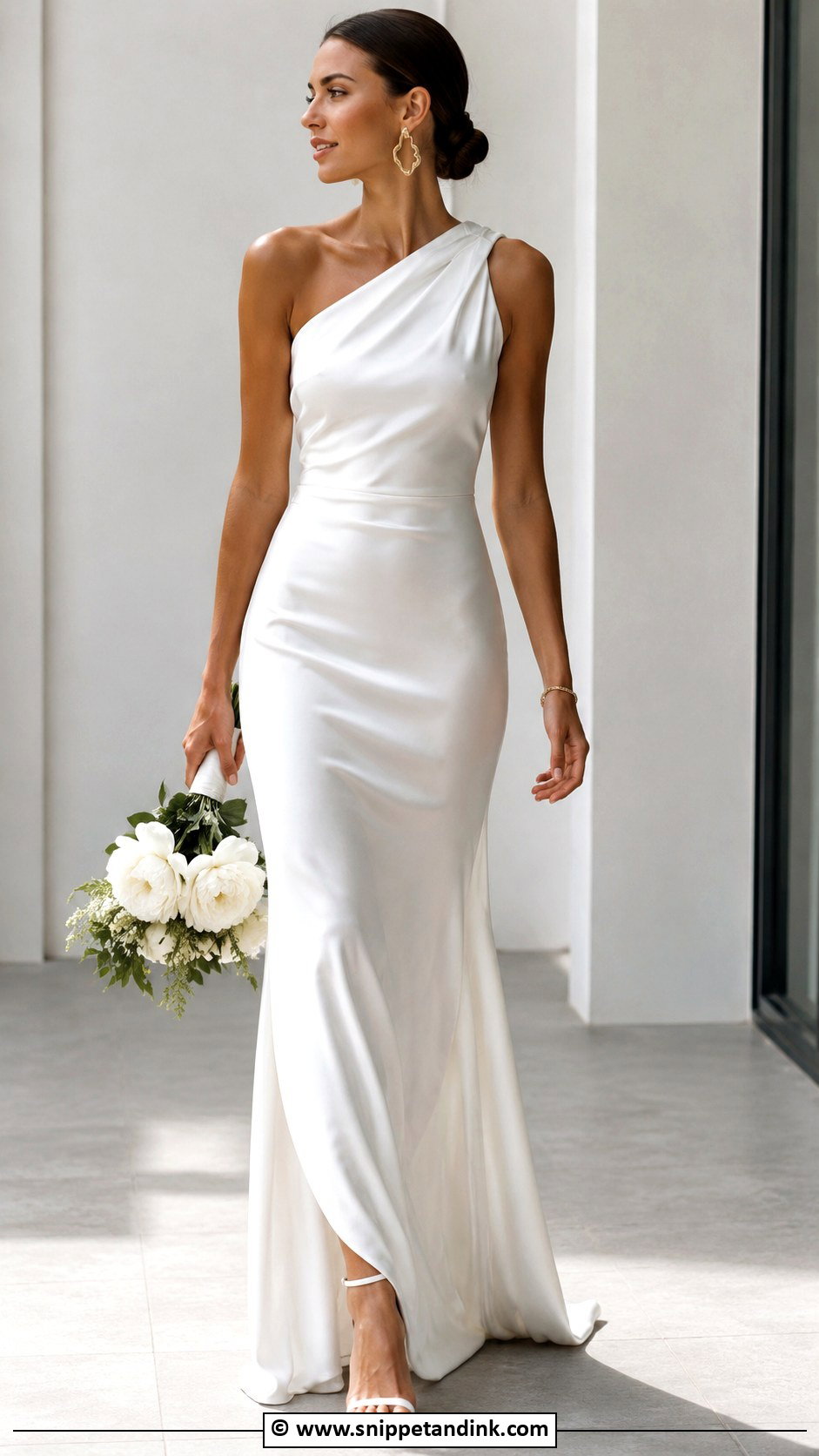
One-shoulder satin looks sculptural and modern. The single strap carries the bodice, so internal structure is needed to stop the open side from slipping. Fitted versions feel sleek; an A-line skirt softens it. Skip the necklace. A low bun or side-swept hair shows the asymmetry. Evening receptions and city venues suit it.
22. Satin Tea Length Wedding Dress
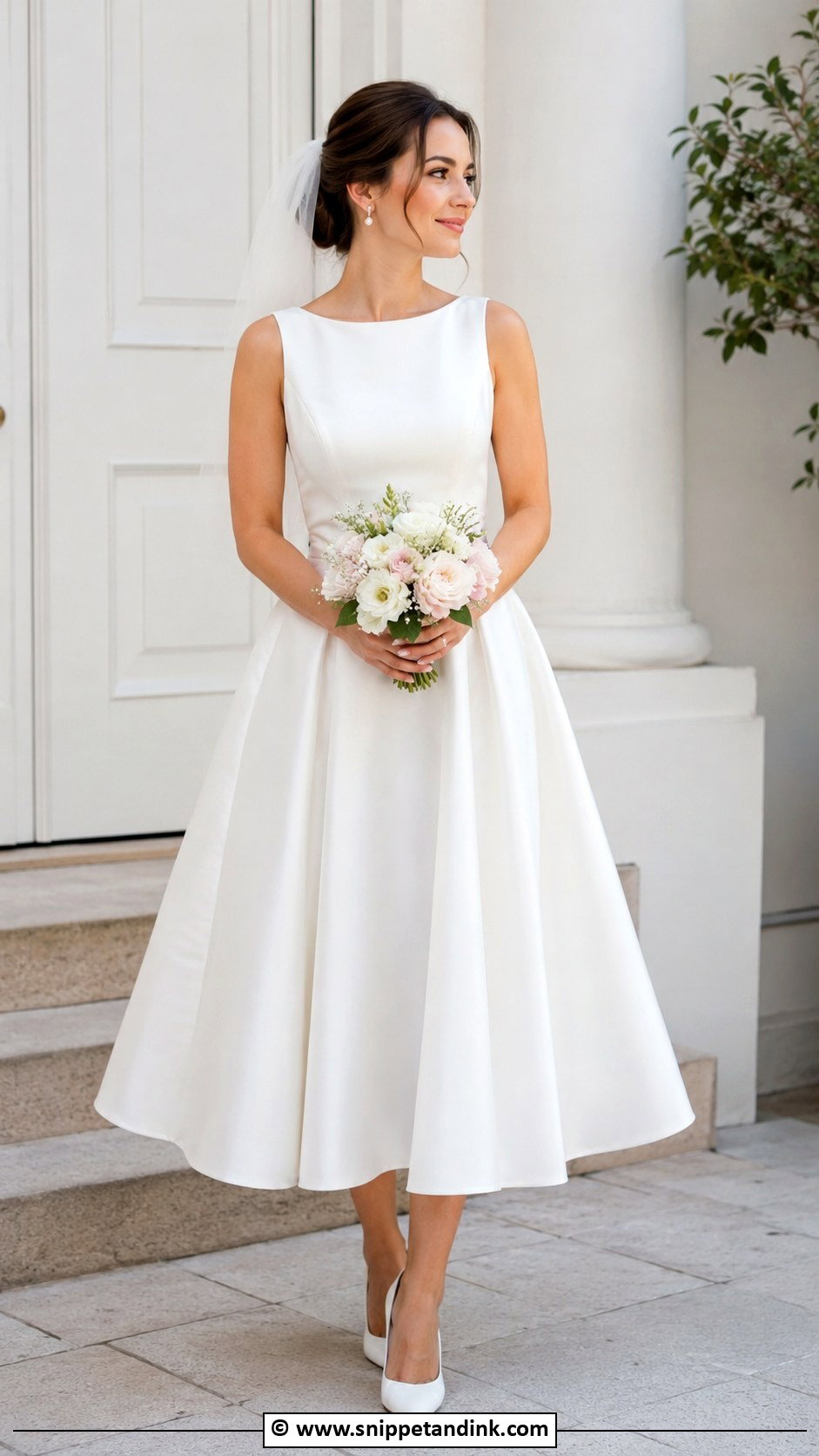
Tea-length satin falls between knee and ankle, so you can walk and dance freely and your shoes become part of the look. Satin has enough body to make the shorter skirt look dressy. A fitted bodice with a fuller skirt reads 1950s; a slim cut reads modern. City halls, gardens and daytime receptions all suit it. Pointed pumps and a short veil or bow finish it.
23. Satin Mini Wedding Dress
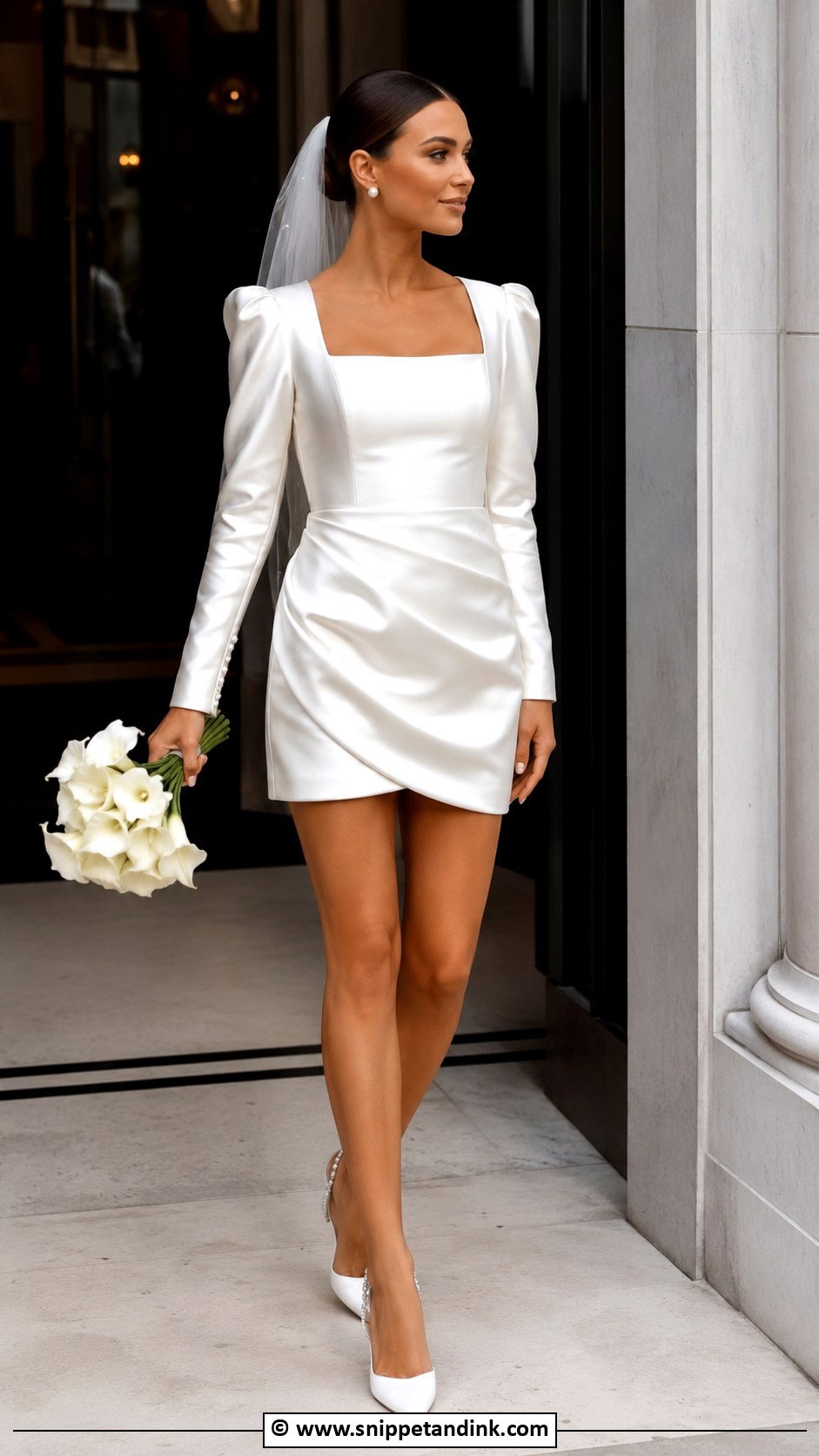
A satin mini is a fun choice for a civil ceremony, an elopement or a reception change. The fabric keeps a short hem looking polished rather than casual. Long sleeves give a chic city feel; a strapless mini with a small detachable train feels playful. Shoes become the focus, so invest there. A short veil and pearl studs make it unmistakably bridal.
24. Satin Courthouse Wedding Dress
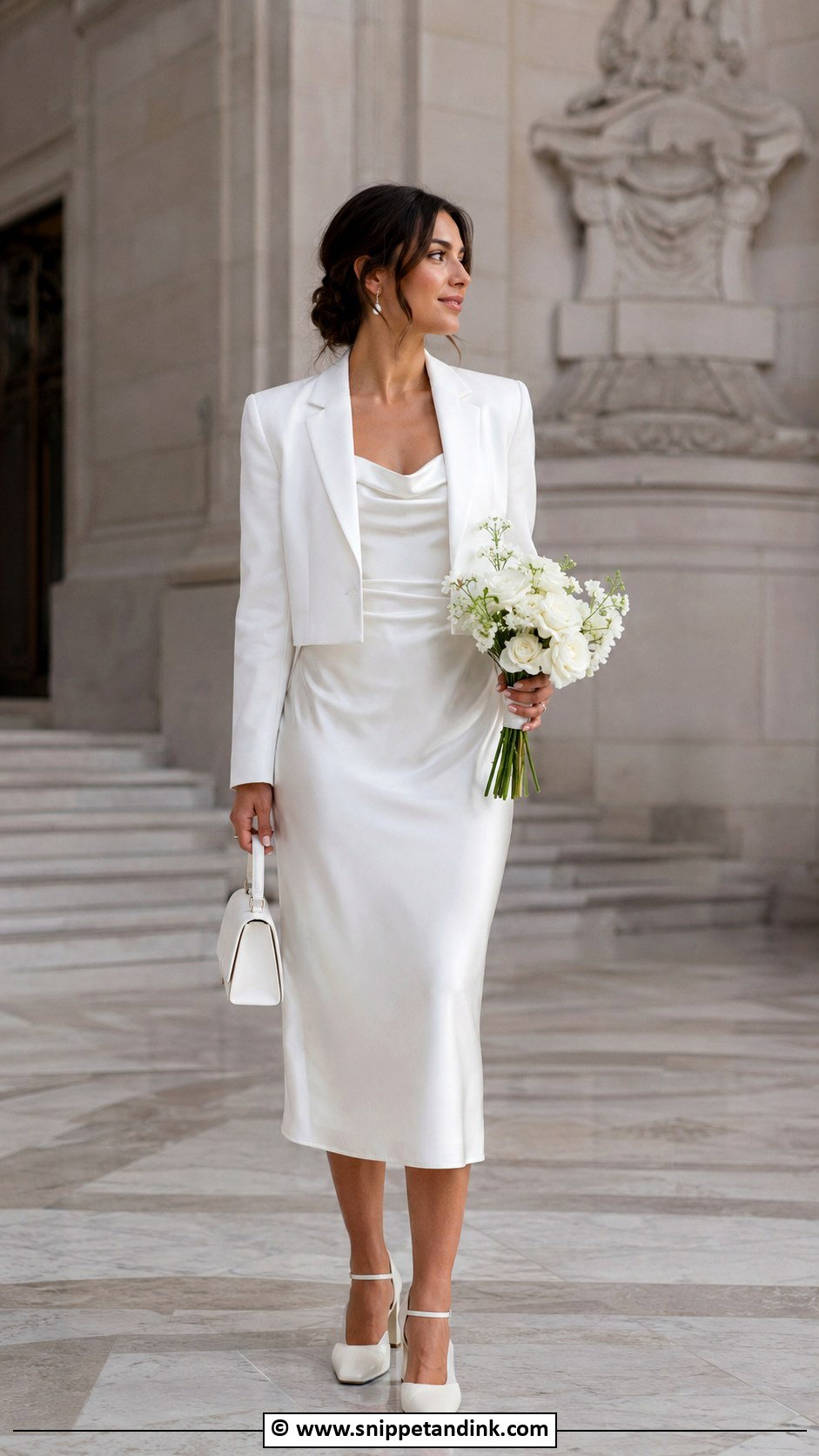
For a courthouse ceremony, I keep the shape simple and the fabric good. A slip dress, sheath gown, tea-length dress or tailored midi in satin feels bridal without a formal gown. Simple details such as a square neck, cowl, covered buttons or a low back suit the setting. A blazer or cropped jacket gives a city edge. Block heels, a small bouquet and a structured handbag complete it.

25. Satin Beach Wedding Dress
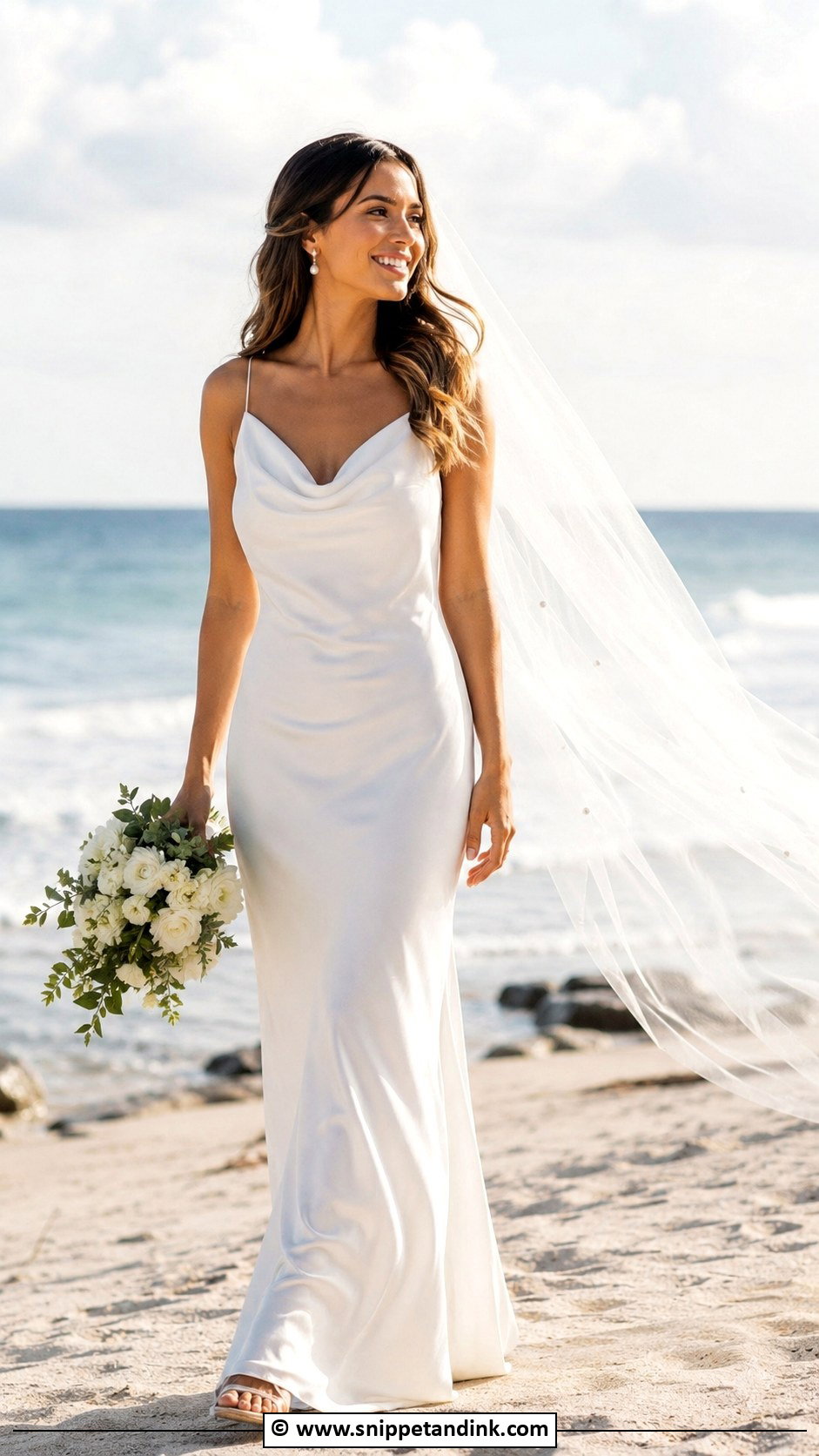
Heavy satin and a beach do not get along, so I’d choose a lighter, softer satin that moves in the wind. A slip, cowl neck, halter or relaxed A-line all work. Avoid long trains on sand; they drag and collect it. Satin also shows water and salt marks, so keep the hem off wet sand. Flat sandals and loose waves suit the setting.
26. Satin Garden Wedding Dress
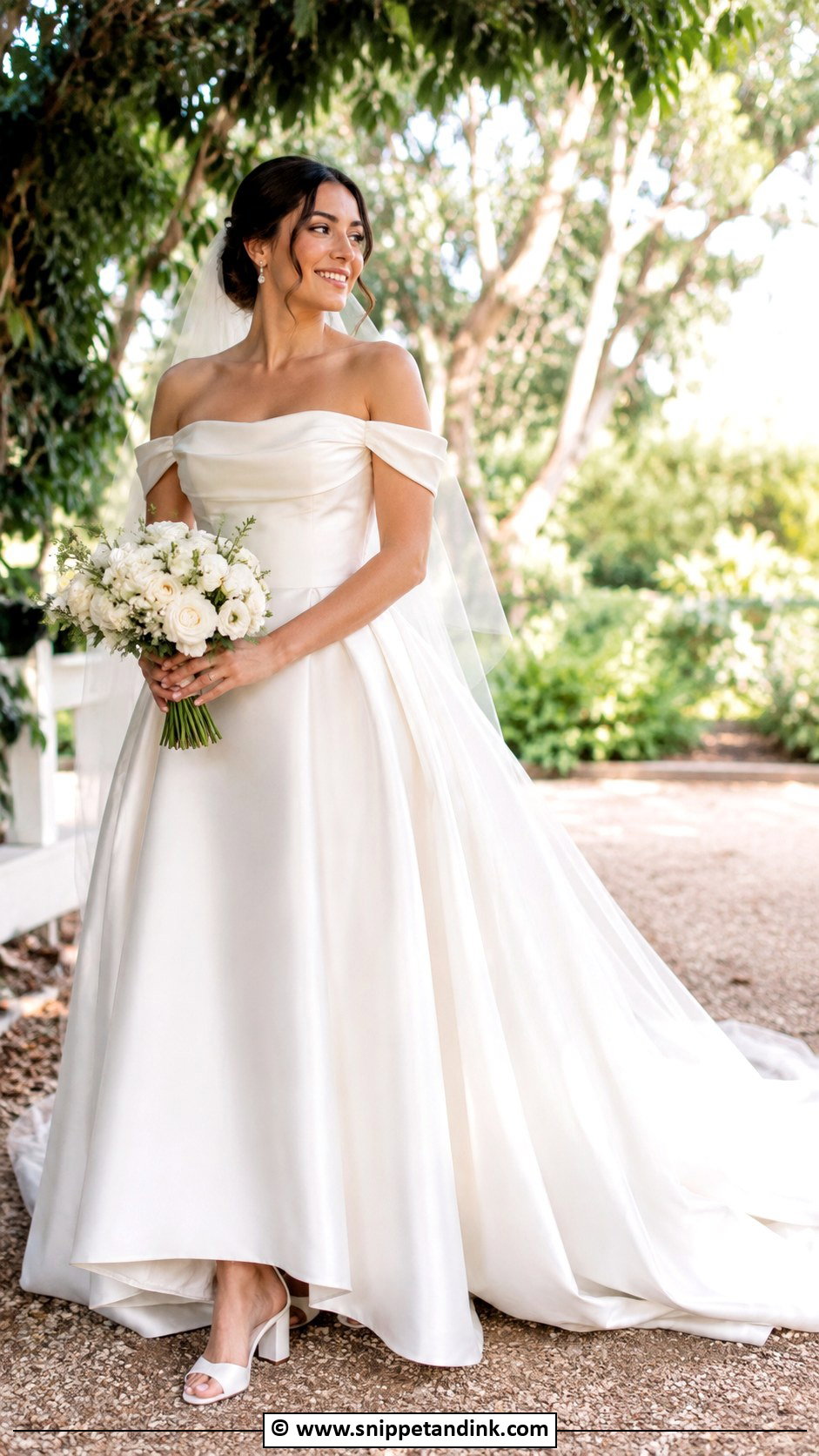
Satin against greenery looks polished, which is a nice contrast to the natural setting. An A-line, off-shoulder dress or cowl slip all suit a garden. Ivory, soft white and champagne glow in daylight. On grass, block heels or wedges are far more practical than stilettos, which sink. A loose updo or soft waves keeps it relaxed.
27. Satin Winter Wedding Dress
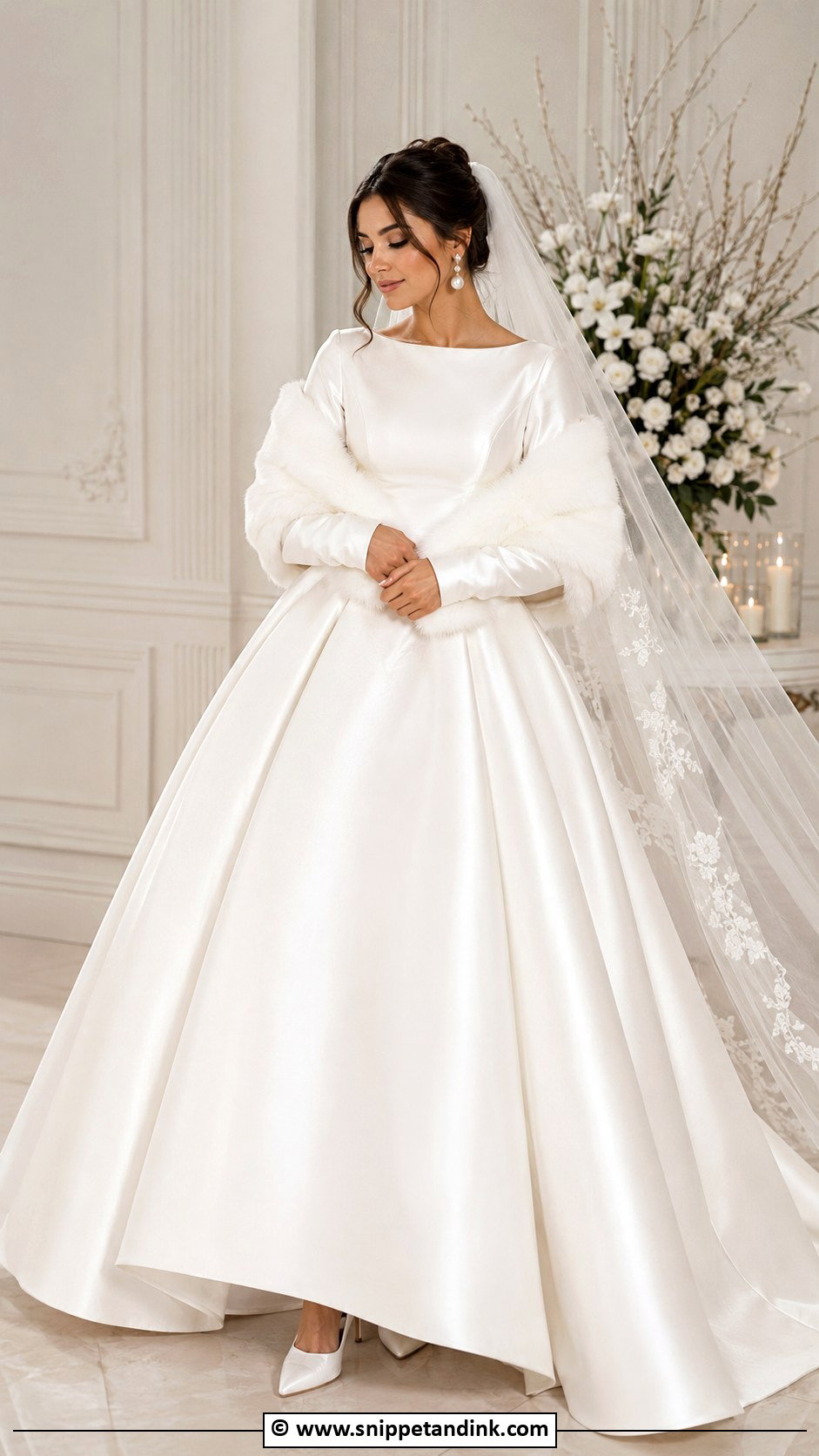
Heavier satin is a cold-weather fabric, and it looks rich in winter light. Long sleeves, ball gowns and structured bodices all suit it. A faux fur wrap, tailored cape or long veil adds warmth and drama. Closed-toe pumps make sense seasonally. Pearl earrings and a sleek updo complete it without needing any sparkle.
28. Satin Summer Wedding Dress
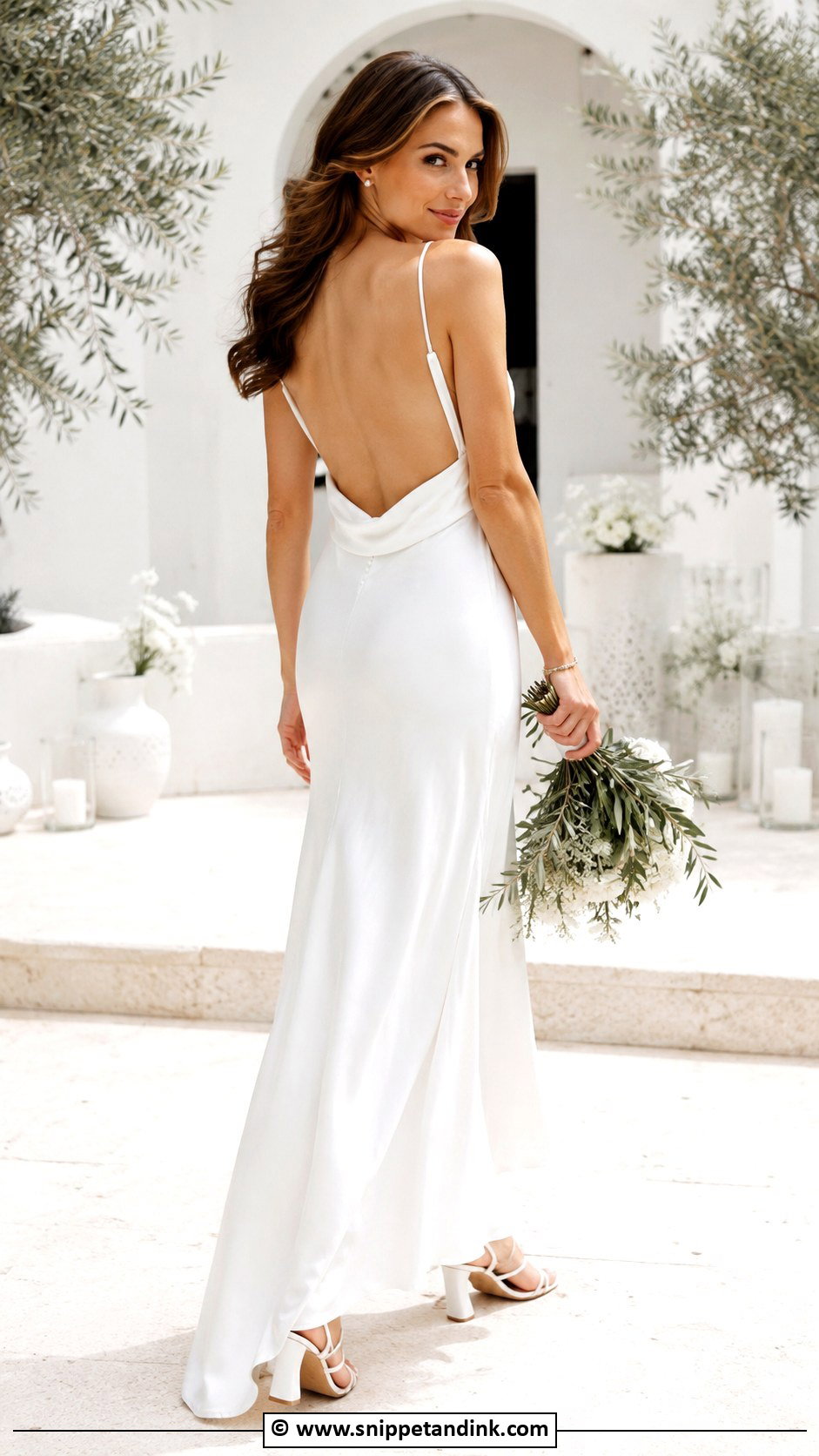
In summer heat I’d steer away from heavy, structured satin and toward lighter satins that move. Slip silhouettes, spaghetti straps, halters and low backs are cooler. Polyester satin traps heat more than silk, which is worth knowing for an outdoor July ceremony. Strappy sandals and pearl studs are enough. A sheer veil keeps it light.
29. Satin Plus Size Wedding Dress
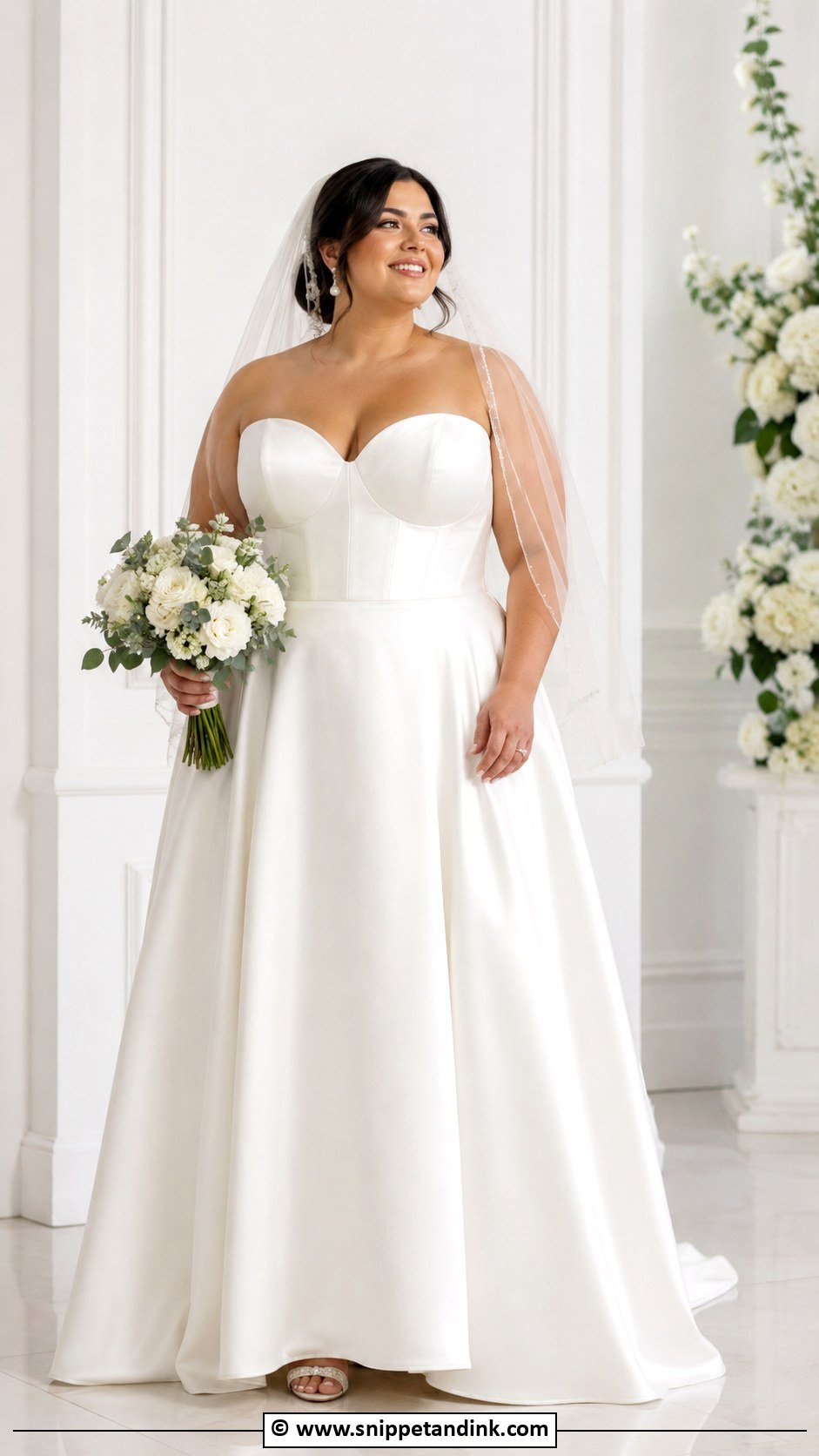
In satin, structure and lining matter more than the cut for a plus-size bride. A supportive bodice, smooth seams and a defined waist make the gown feel secure. A-line, fit-and-flare, ball gown and corset styles all work. Look for a gown that skims, not one that pulls, because satin shows strain lines quickly. Plan undergarments with the neckline and back in mind before the first fitting.
30. Satin Modest Wedding Dress
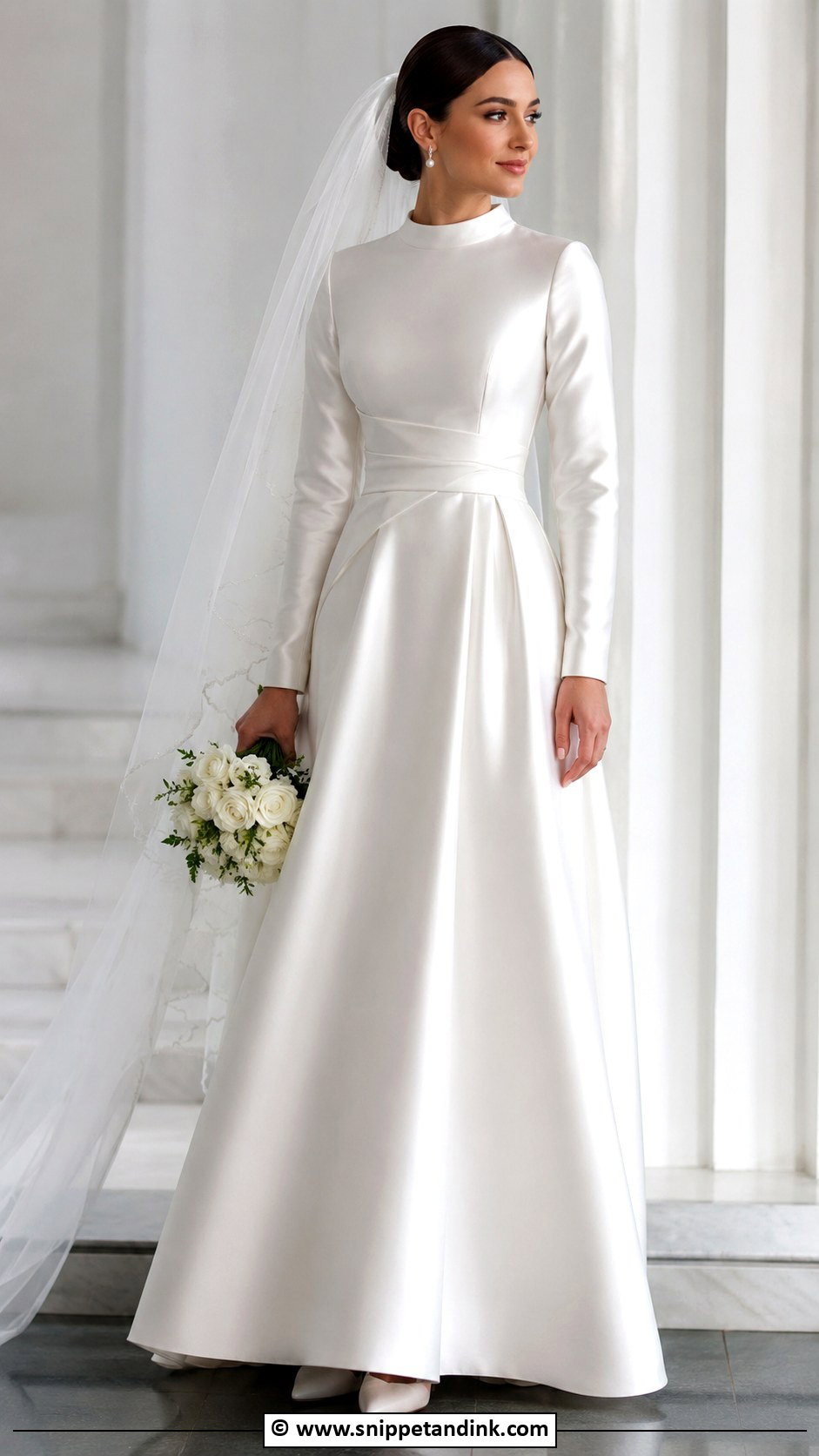
Modest satin gowns look anything but plain when the fit is right. Long sleeves, high necks, bateau necklines and covered backs suit satin’s natural polish. A defined waist or gentle train keeps it bridal. If you want detail, covered buttons, cuffed sleeves or a small bow work better than heavy embellishment. Pearl earrings and closed-toe heels finish it.
31. Satin Minimalist Wedding Dress
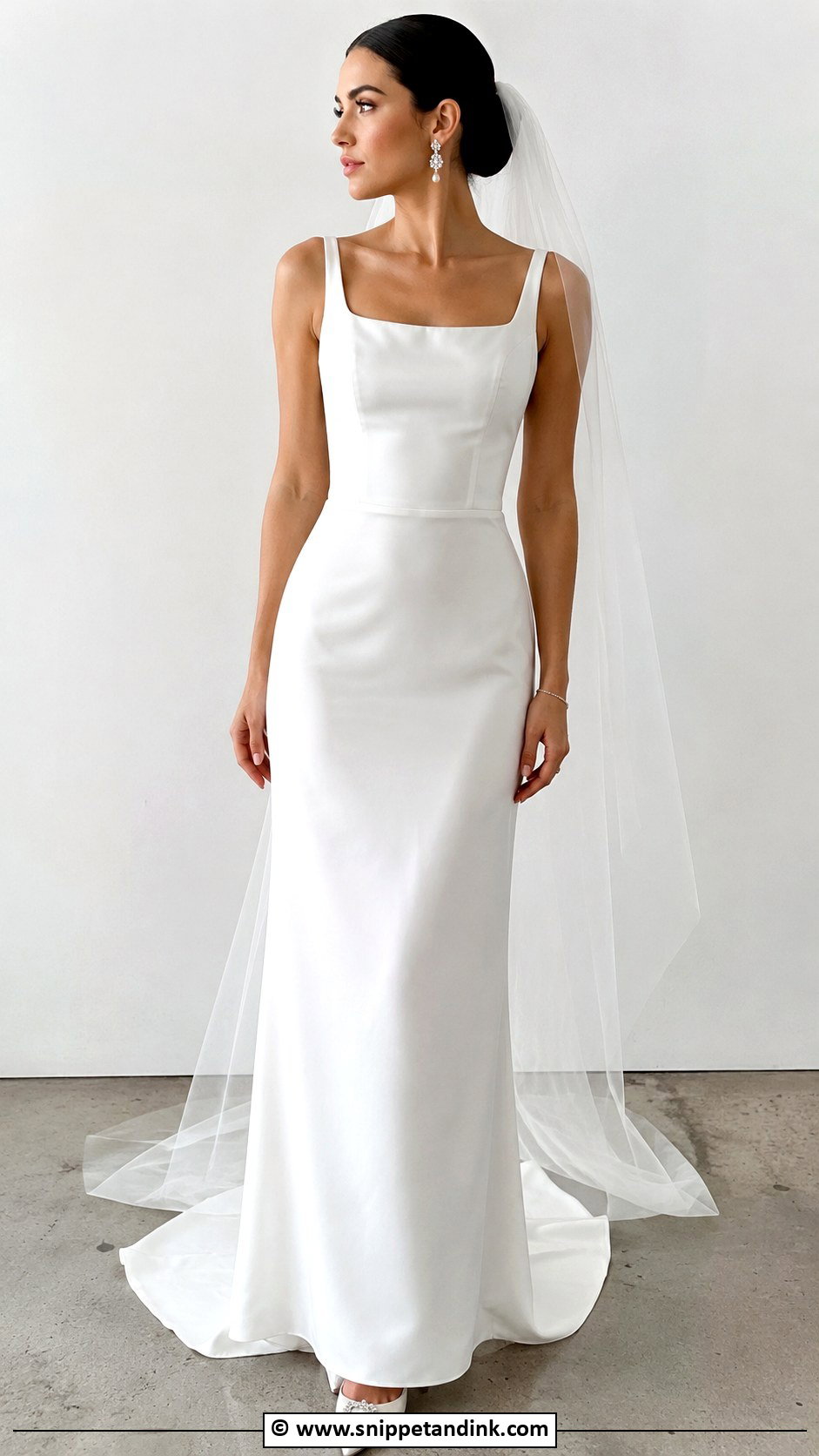
Minimalist satin relies on clean lines and precise fit, with no lace or beading. A square-neck sheath, strapless A-line, cowl slip or high neck column dress can all be minimalist in different ways. Because nothing distracts the eye, tailoring is essential. Sleek hair and refined earrings suit it. A plain veil or no veil at all looks modern.
32. Satin Vintage Wedding Dress
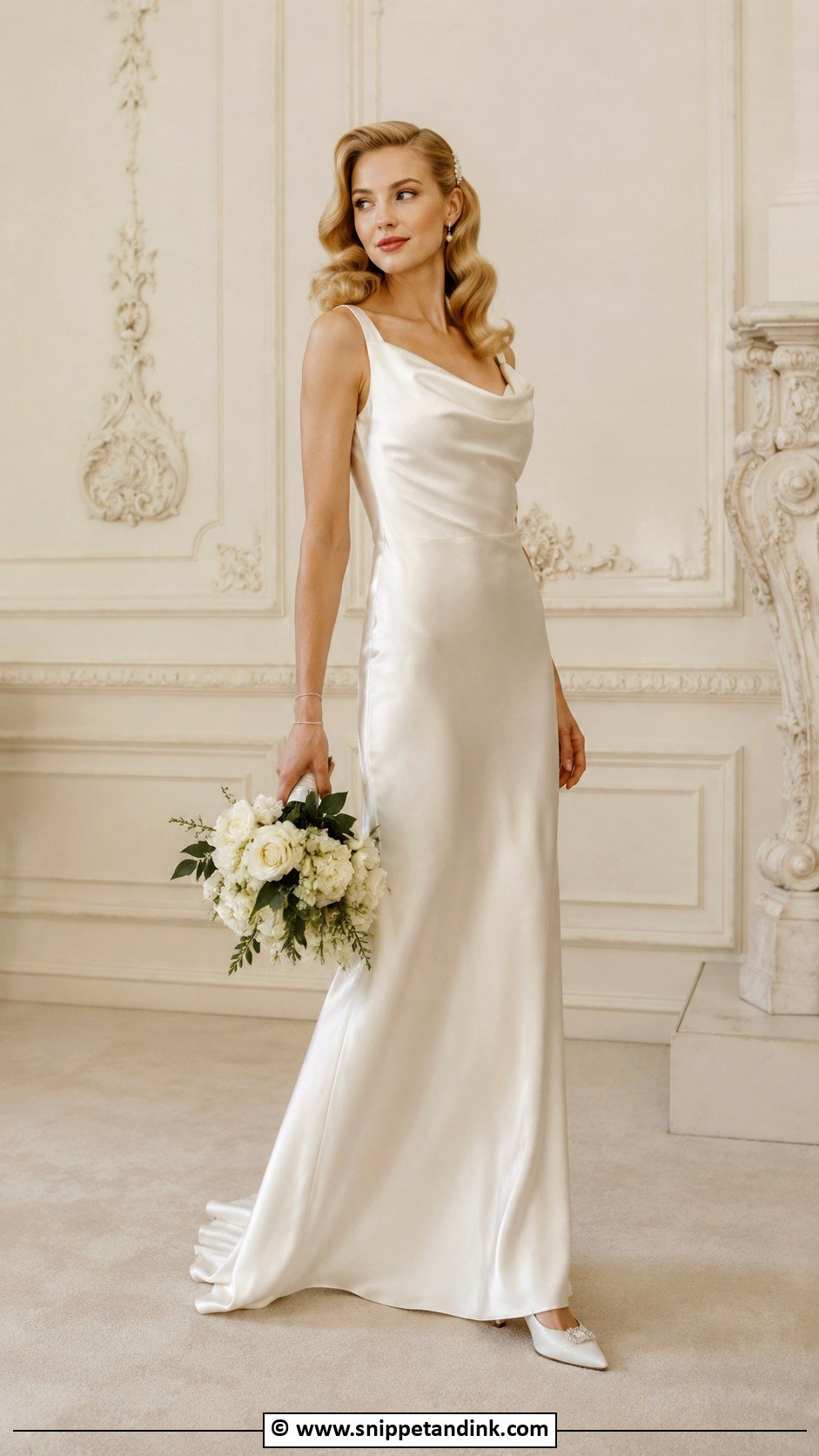
Satin carries several vintage moods depending on the cut: a bias slip for 1930s or 1990s, a tea-length for 1950s, a high-neck long-sleeve gown for something more formal. I’d pick one era and stay with it rather than mixing references. Pearl earrings, classic pumps and a comb or veil finish it. Soft makeup keeps it current rather than costume.
33. Satin Wedding Dress With Bow
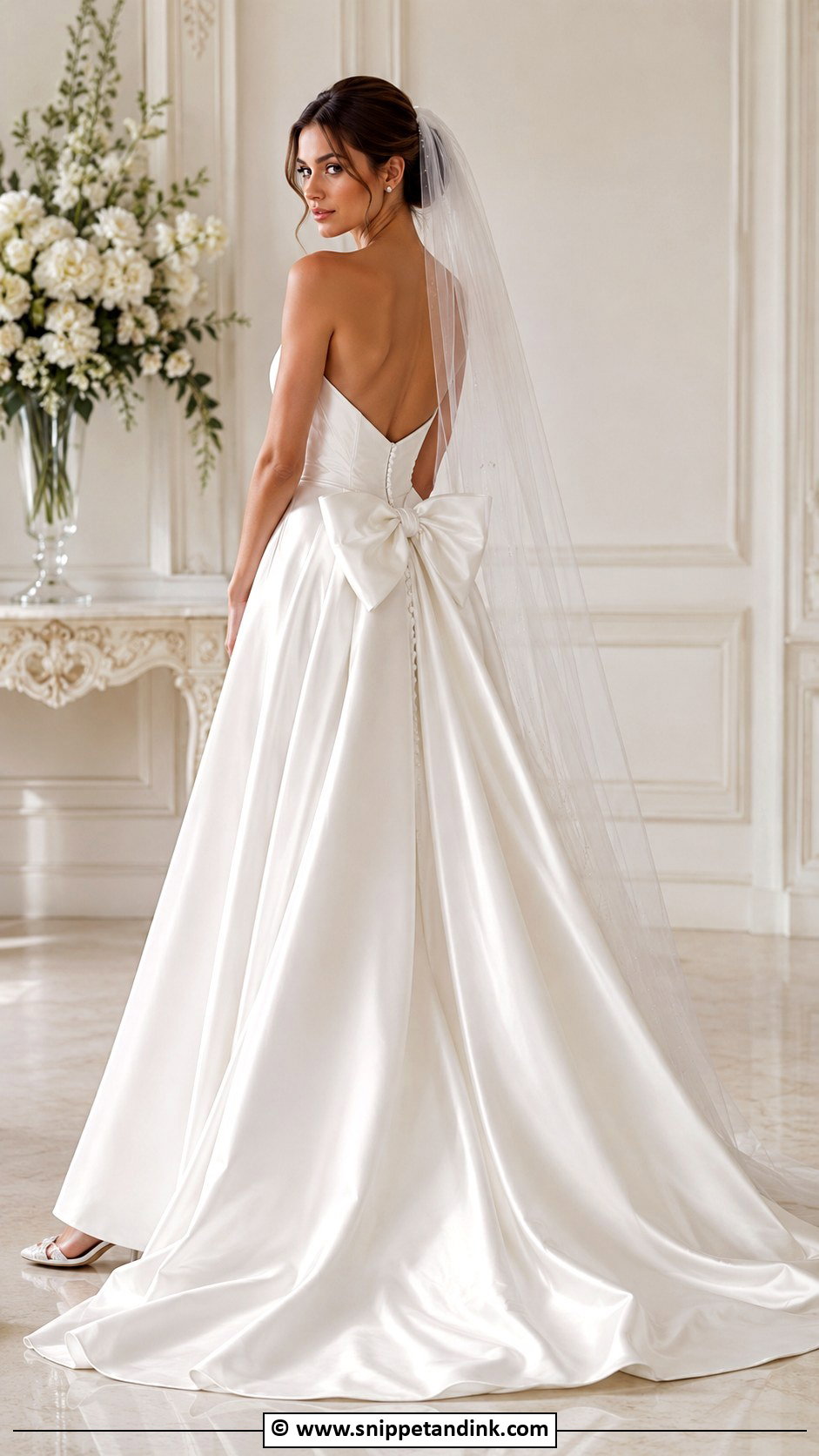
A satin wedding dress with a bow uses the fabric’s body well, since satin holds a bow’s shape better than chiffon or tulle. A large back bow suits a strapless A-line or ball gown; a small shoulder bow lifts a simple sheath. Large bows need internal support, or they droop after hours of sitting. Keep the rest of the dress simple. Pearl studs and a clean veil are enough.
34. Satin Wedding Dress With Slit
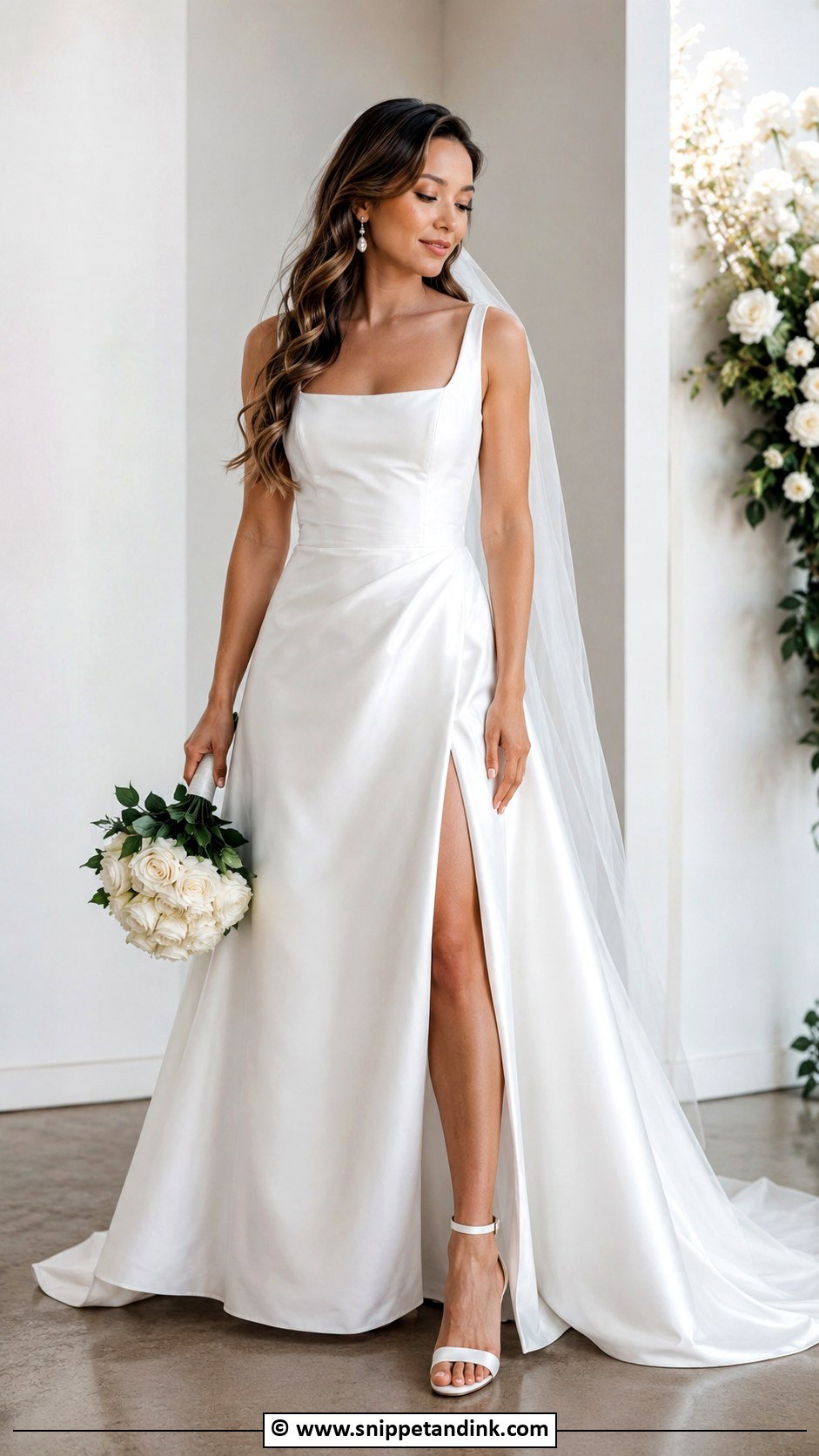
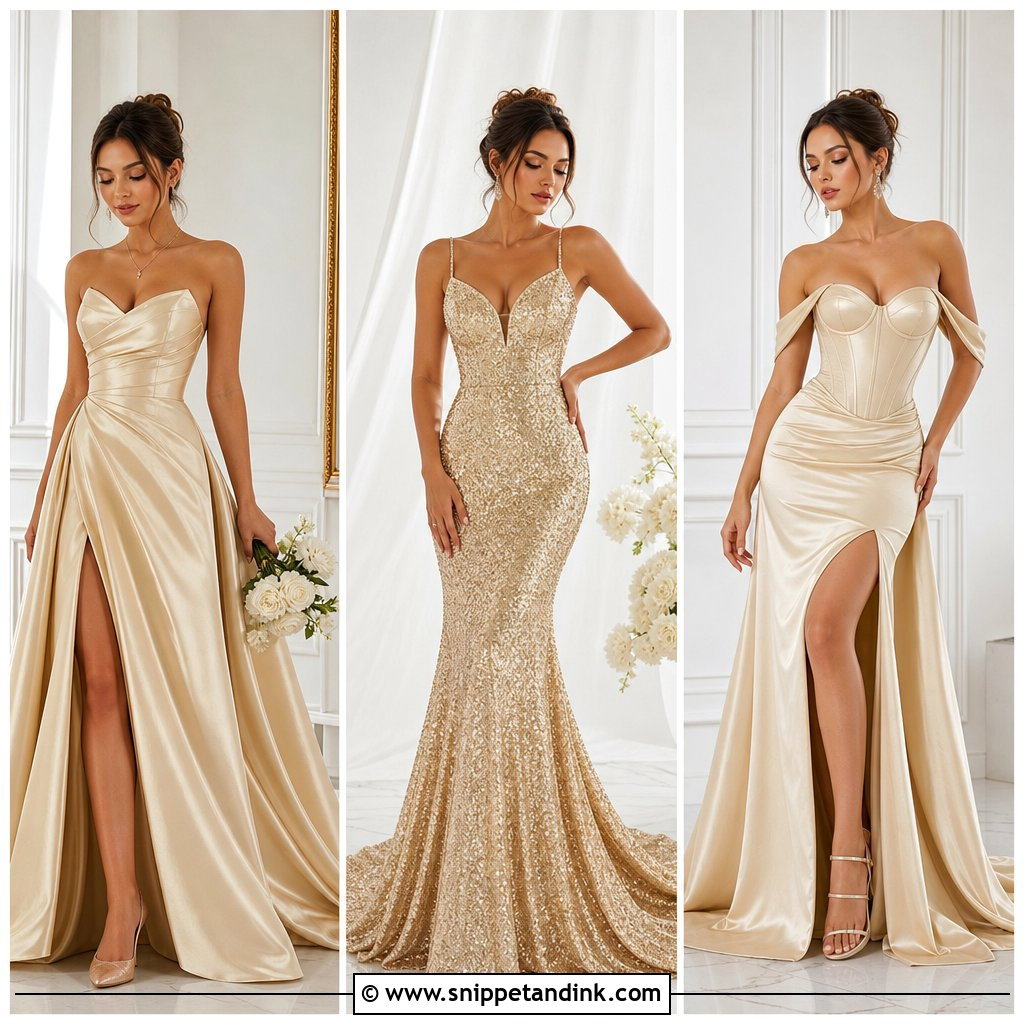
A slit adds movement and makes stairs, dancing and outdoor photos easier. It can be high or modest. Satin moves smoothly through the opening as you walk. Your shoes will show, so choose them carefully. A bold slit looks best with a simple bodice. Have the slit reinforced at the top, because that is where satin tends to tear under strain.
35. Satin Wedding Dress With Train
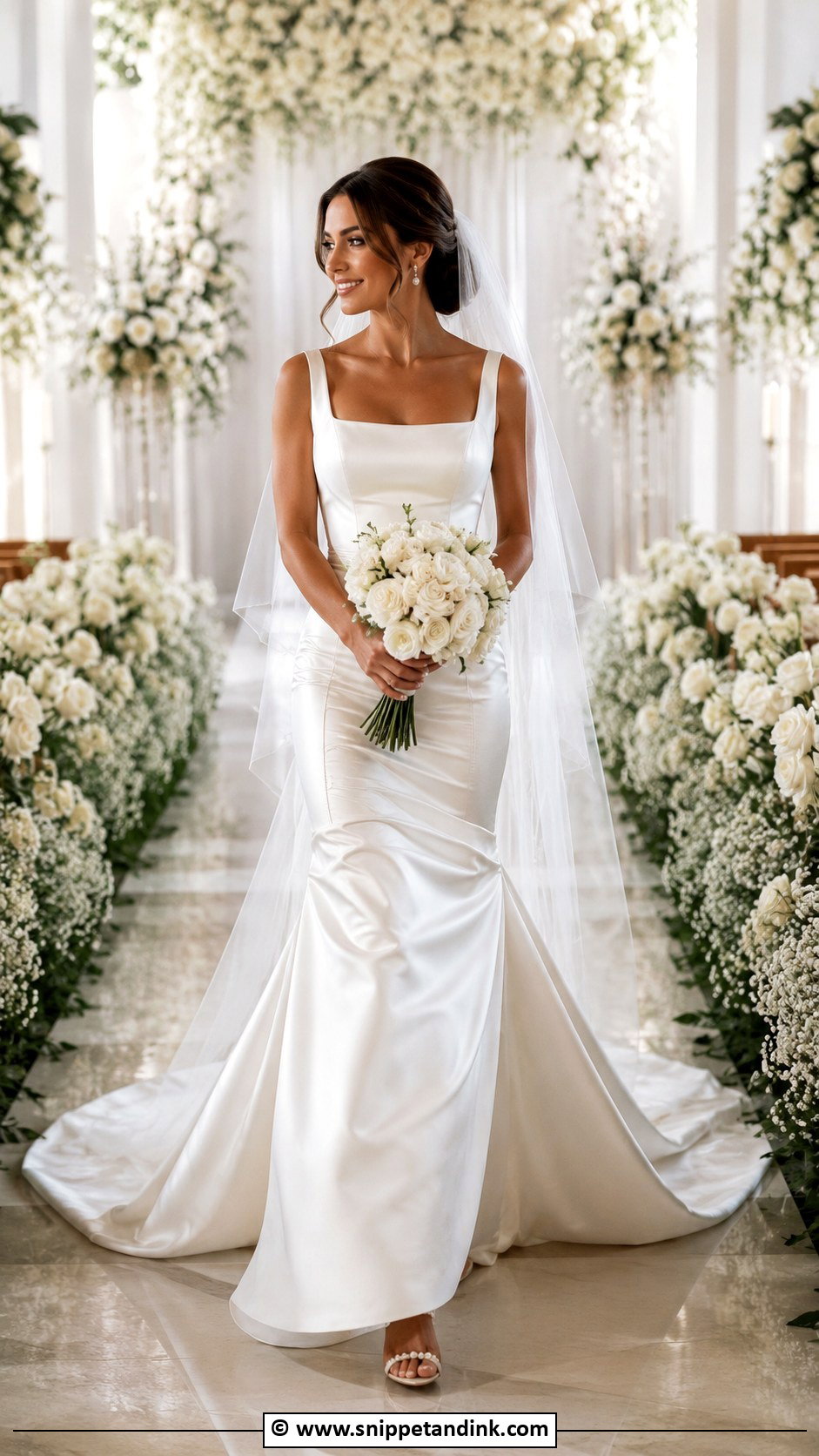
A satin train looks smooth and fluid, and it photographs especially well from behind. A chapel train is manageable; a cathedral train is for formal venues. Satin trains are heavier than tulle, so they need a bustle with enough lift points to hold the weight after the ceremony. Make sure the train feels like part of the gown’s design, not an afterthought added on.
Creases, Water Marks and Living With Satin All Day
Satin is less forgiving on the day than lace or tulle, and knowing that in advance prevents a lot of panic.
Creasing
Every time you sit, satin creases across the lap. In the car, lift the skirt and spread it behind you instead of sitting on it. Have the gown steamed on the morning, never pressed with a hot iron directly. A handheld steamer at the venue helps with crushed spots before portraits.
Spills and marks
Silk satin can mark from plain water, so blot spills gently with a clean cloth rather than rubbing, which spreads the stain and roughs up the surface. Keep makeup off the neckline by dressing after your makeup is done, with a scarf over your face. Deodorant and fake tan transfer easily onto satin; let both dry fully before you step in.
Afterwards
Have the gown cleaned by a specialist soon after the wedding, because sugar and sweat stains can turn yellow over time even if you can’t see them yet. Store it folded in acid-free tissue in a breathable box, not in a plastic bag, and keep it somewhere cool and dark.
Satin Rewards a Precise Fit More Than Any Trend
Satin can be grand in a ball gown, quiet in a slip, romantic off the shoulder and modern with one shoulder. What makes it work every time is fit, because satin looks best when it skims smoothly and lets you move from the ceremony to the dance floor. Weigh your venue, season and how much you want to move, then pick the silhouette. Get the tailoring right, and a satin dress will look like yours, not like a picture.
You'll Like These Ideas:









Leave a Reply