
Bridal shopping isn’t about one classic silhouette any more. The screenshots brides bring me run from sleek satin columns and lace corset gowns to sculptural minis and soft drop waists, and what they share is that they’re meant to be lived in: sat in, danced in, hugged in. Current bridal trends lean toward clean lines, basque waists, detachable pieces, pearl accents, softer corsetry and dramatic sleeves with lighter styling. Below are 25 directions I’d show a bride today, for weddings from formal to coastal to small and intimate, with the fitting details that decide whether each one works on you.
Sample Gowns Are Clipped, So Learn to Read Them
Most bridal shops carry one sample of each gown, often in a single size, and the consultant clips the back to fit you. That’s normal, but it means you’re judging a dress that doesn’t sit quite the way yours will.
- Ask to see the gown unclipped for a moment so you know how much fabric is being pinched. A big gather at the back can hide how the bodice will really sit.
- Bridal sizes usually run smaller than high-street sizes, so ignore the number on the label and order from your measurements.
- Sit down in every serious contender. A clipped sample puckers, but you’ll still see whether the skirt shape suits you seated.
- Take one photo from behind and one from across the room. Shop mirrors are close and flattering, and guests see you from much further away.
Try at least one silhouette you’re sure you’ll dislike. Brides who arrive set on a mermaid quite often leave with a drop waist or an A-line, because the shape on the hanger and the shape on a body are two different things.
1. Minimal Satin Wedding Dress
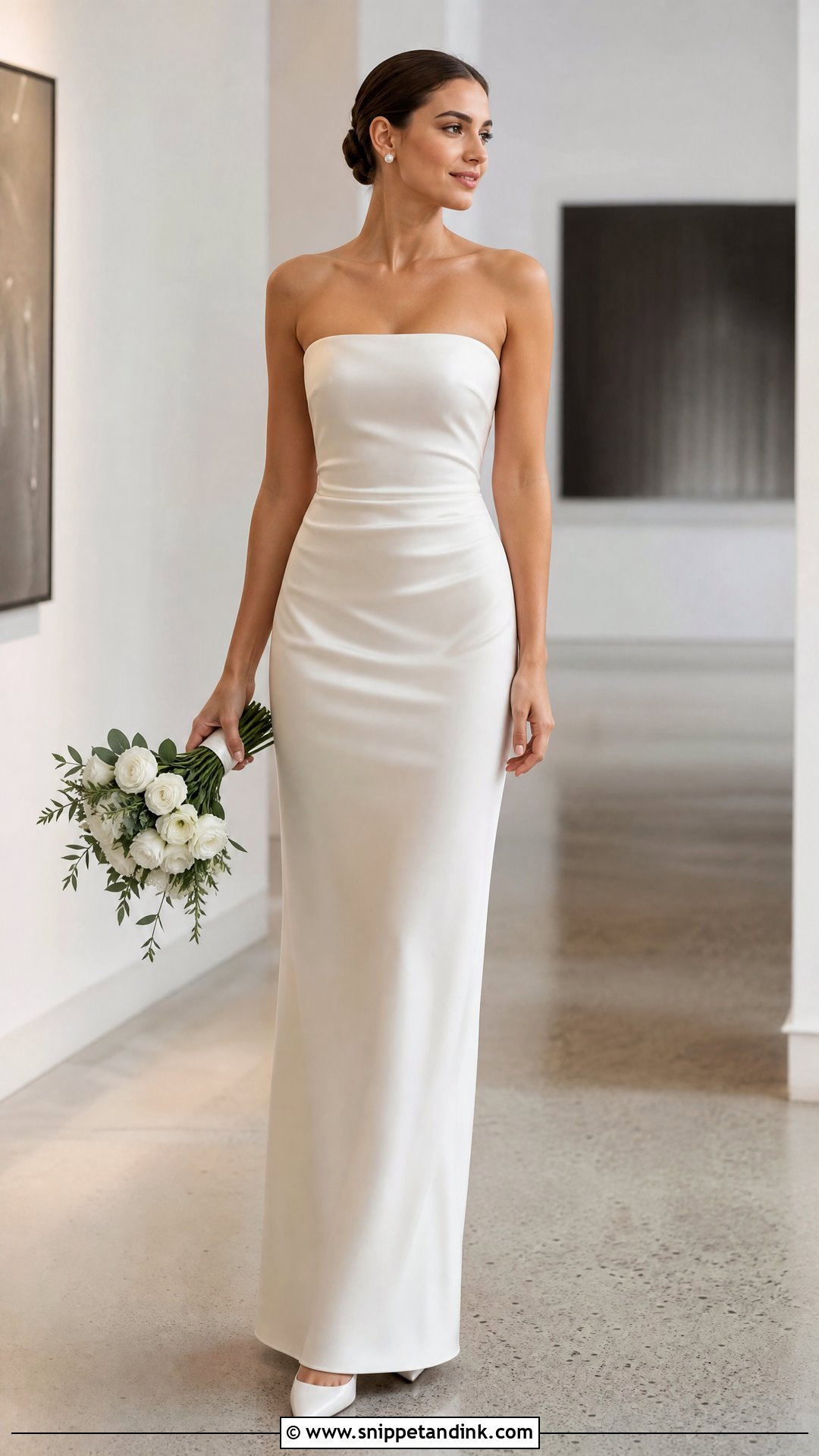
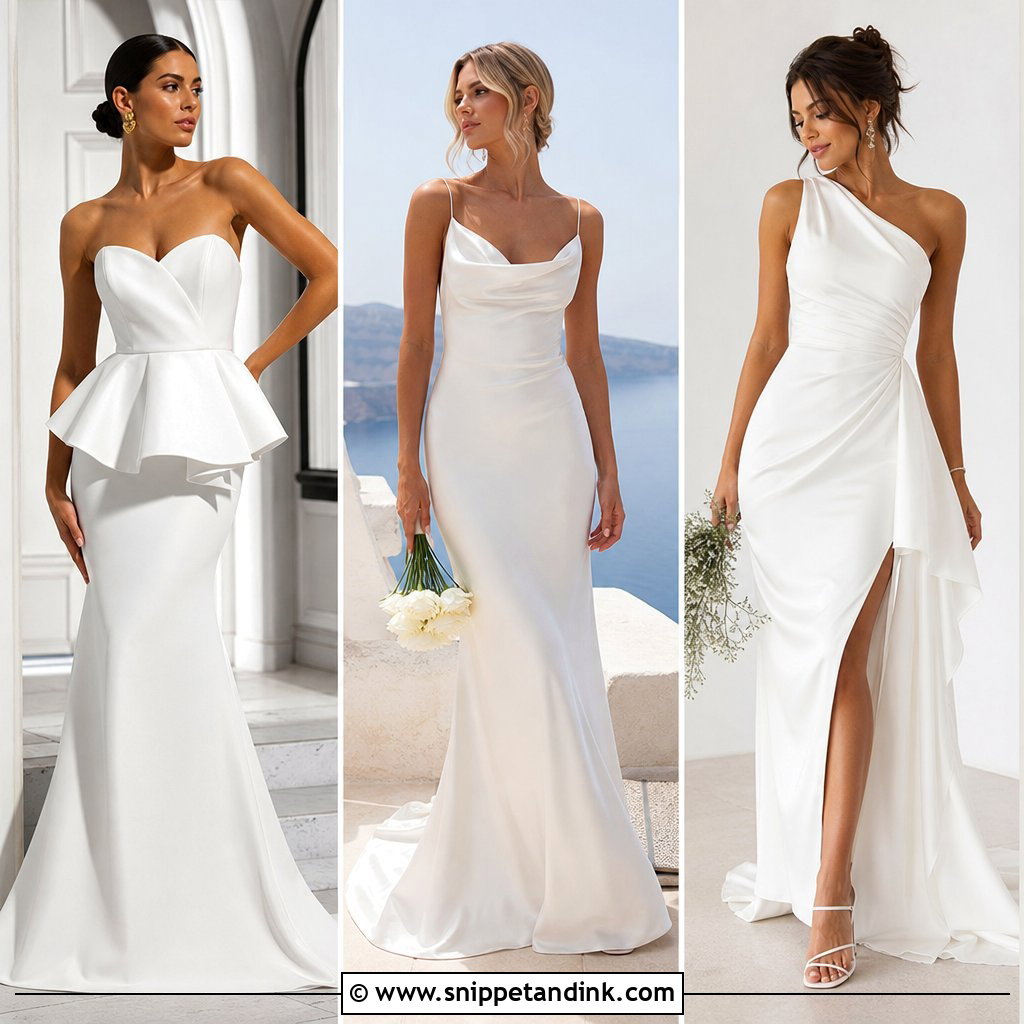
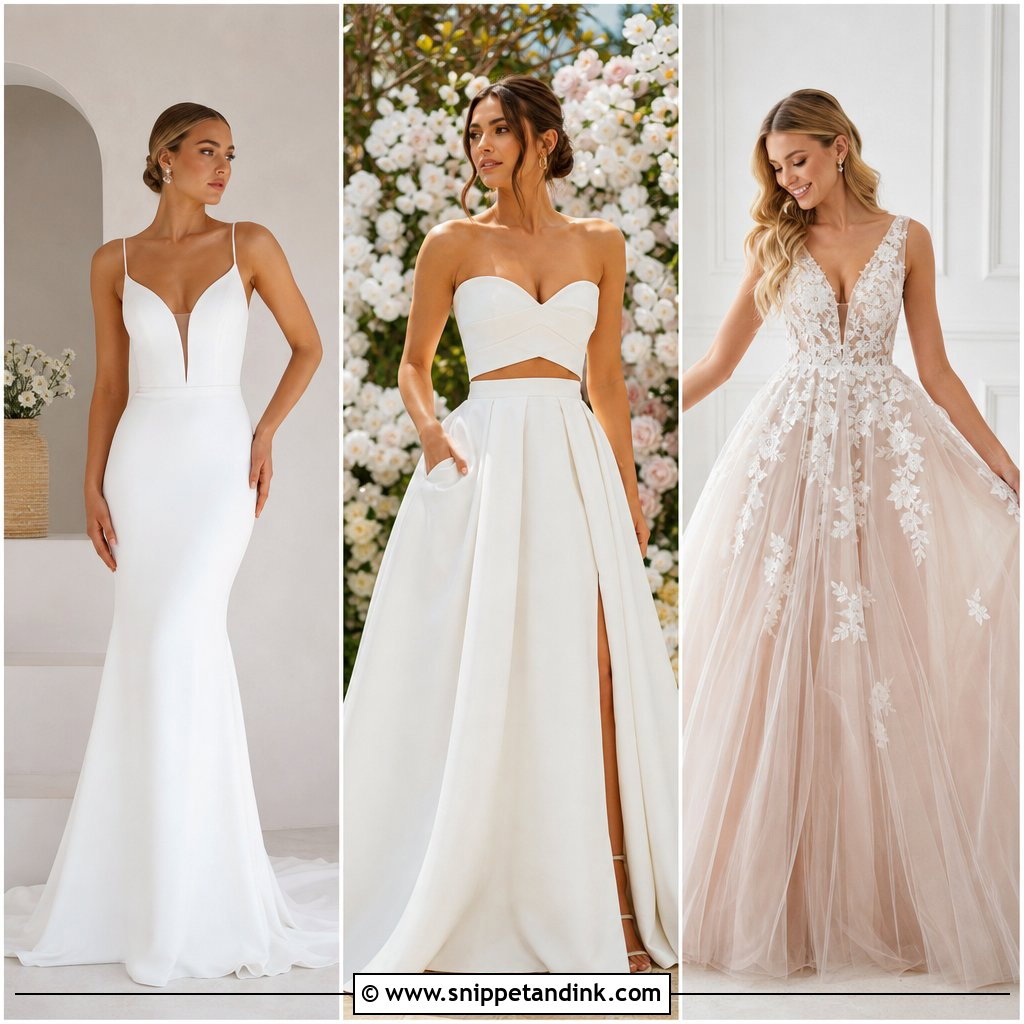
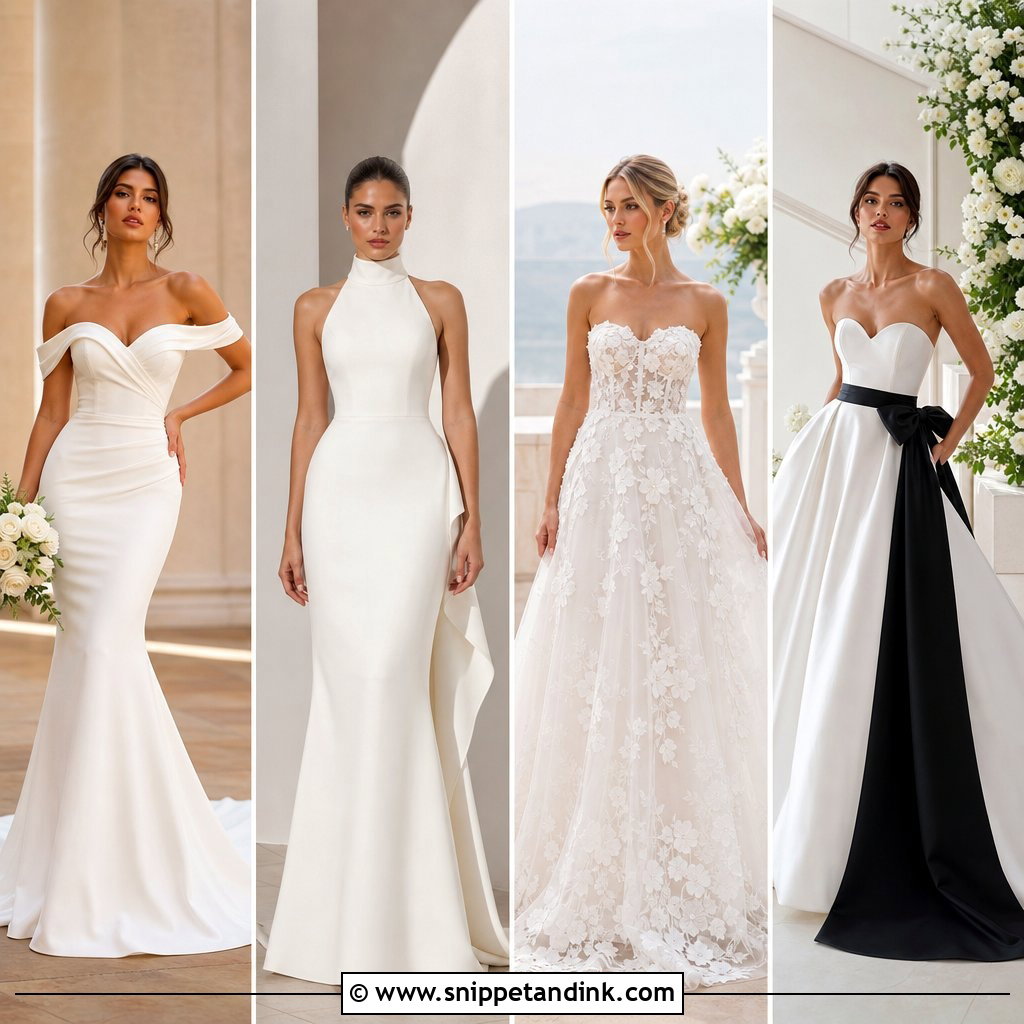
Plain satin has nowhere to hide a fitting fault, so the first thing I check is that the side seams hang straight with no pulling at the hip. Get that right and a strapless or square-neck satin gown needs only pointed heels, pearl studs and a sleek low bun. In a cooler season, a tailored bridal coat or satin wrap keeps you warm between ceremony and car without hiding the shape. Keep the bouquet as clean as the dress, white roses, calla lilies or orchids, for hotels, rooftops and gallery venues.
2. Strapless Corset Wedding Dress
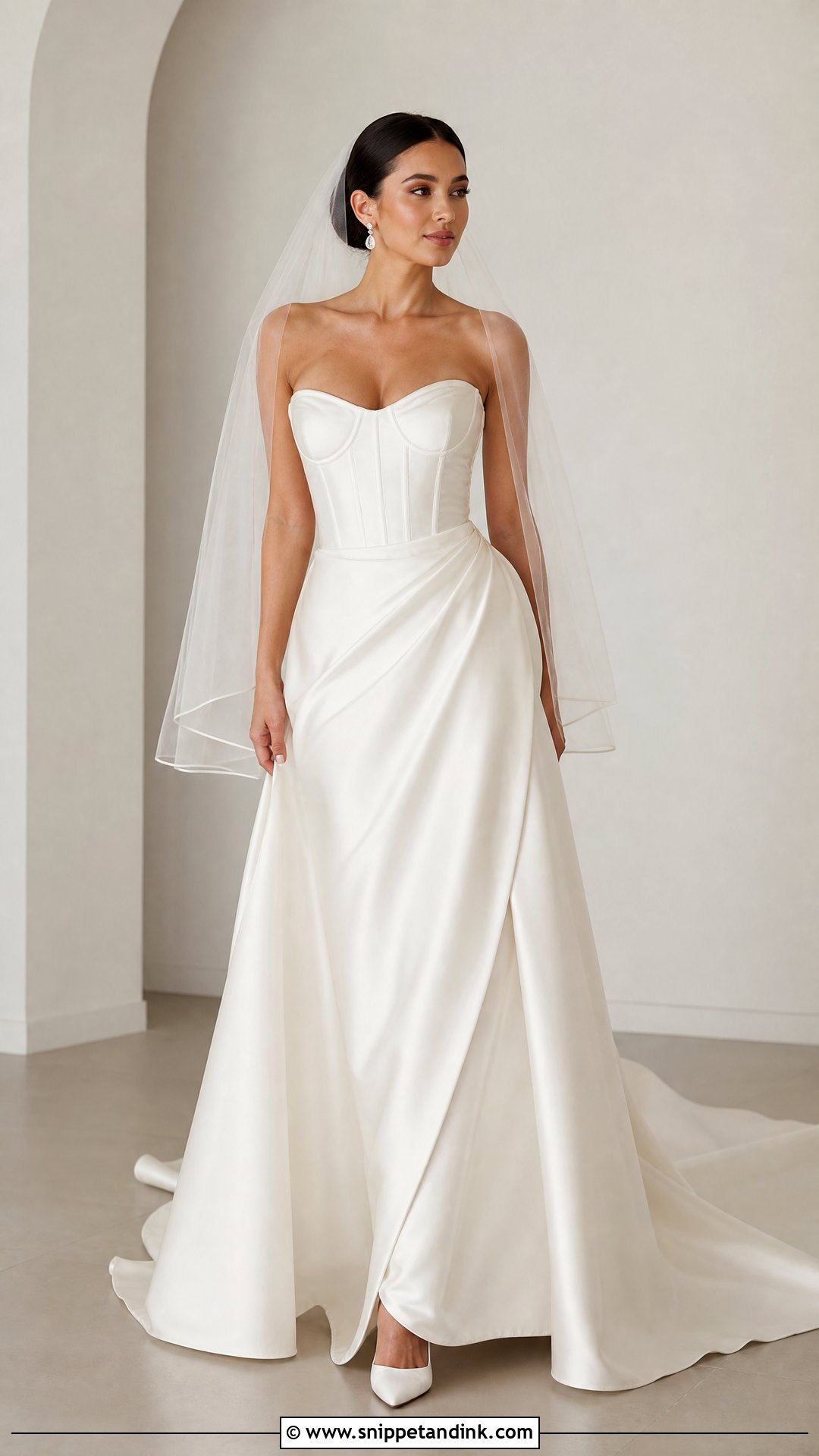
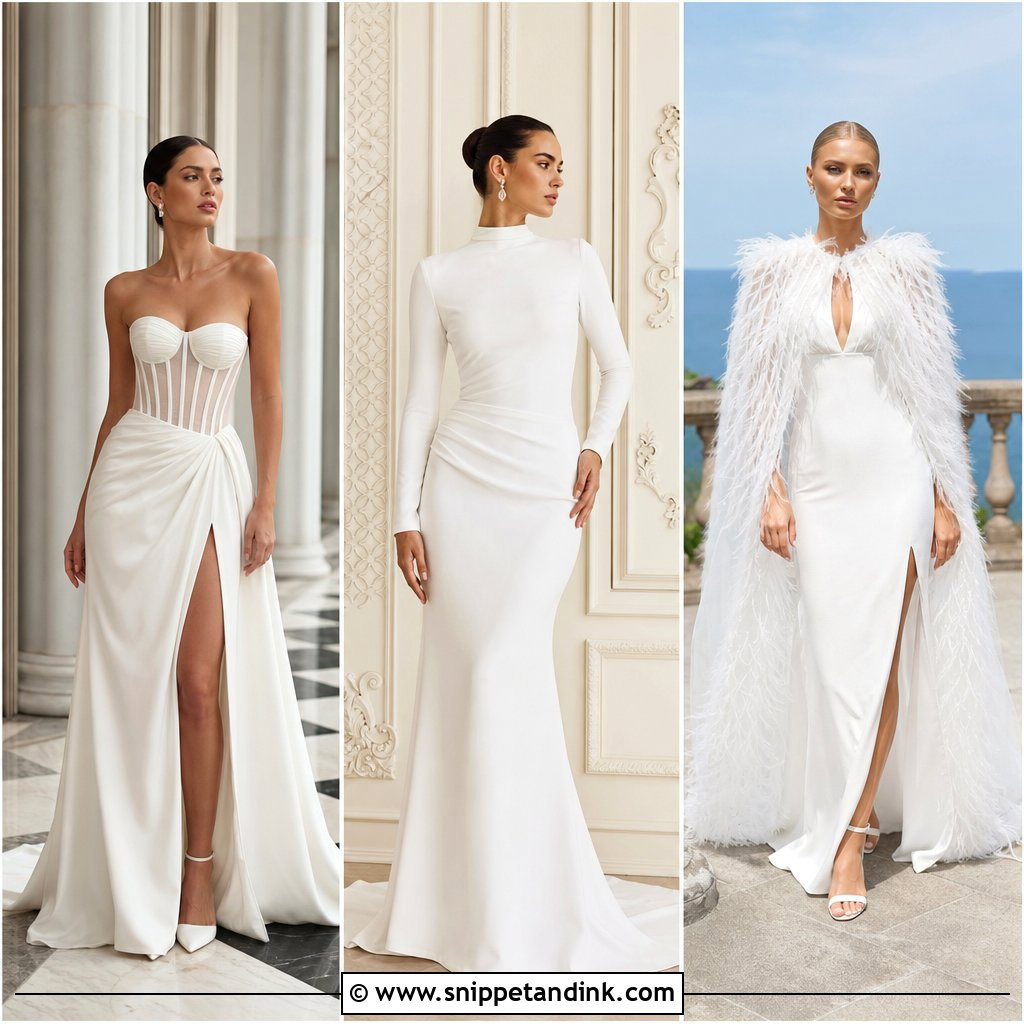
A strapless corset holds you up with structure rather than straps, which is why the top edge matters most. I slide two fingers under the neckline at the fitting. Any looser and it drifts down by the first dance; any tighter and it digs in at the underarm. Clean satin, lace overlay or visible boning all read current. With a full skirt, keep accessories light, and with a simple skirt let a pearl choker or statement earrings bring personality. Soft waves and a medium-length veil balance the bare shoulders.
3. Drop Waist Wedding Dress
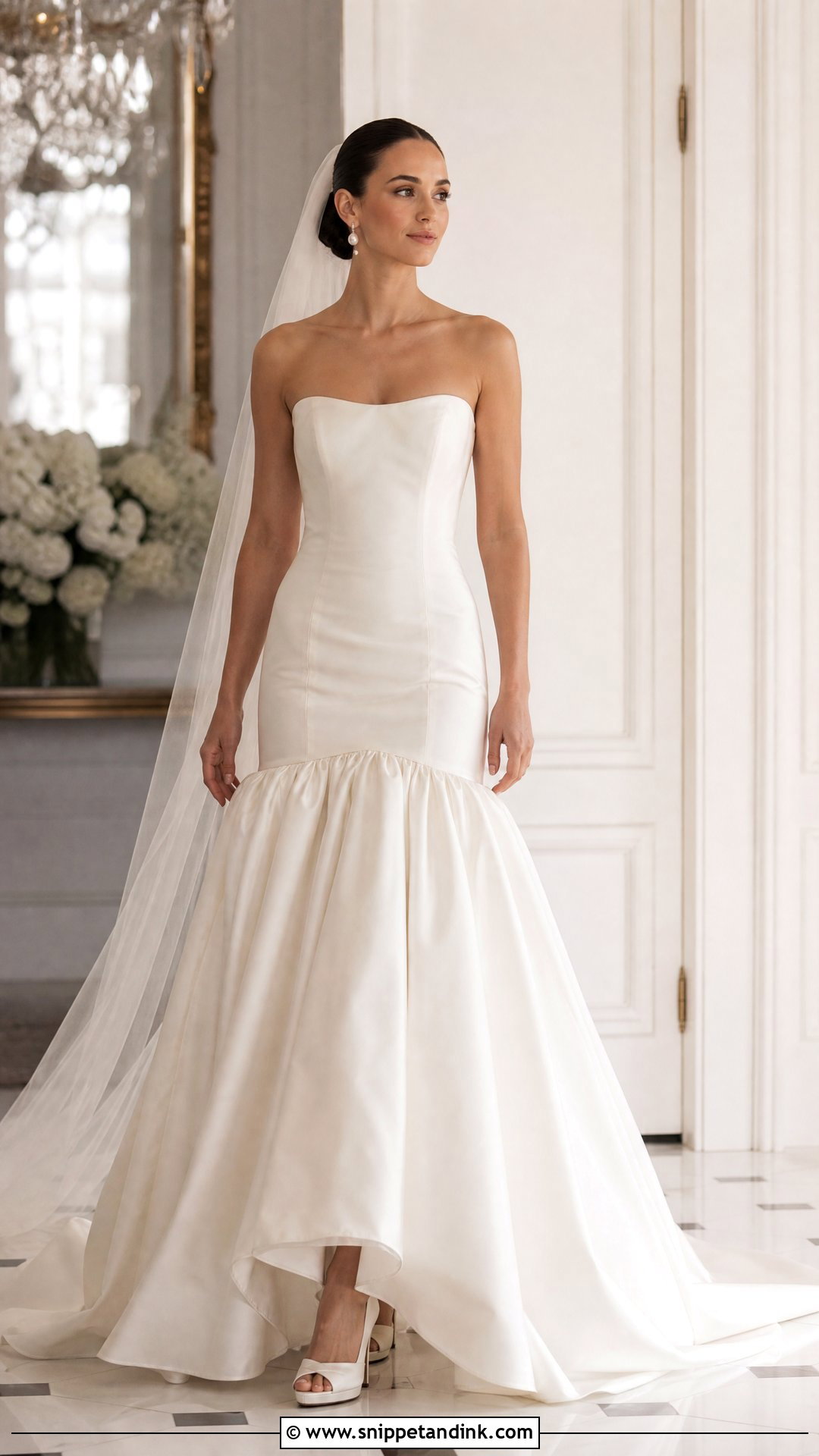
Drop waists move the seam down to the hip, so the bodice runs long and the skirt opens below it. On a long torso it’s a striking line. On a short torso it can make the legs look shorter, which is why I always have a bride try one before ordering. Satin, mikado, lace and tulle all suit the shape. Delicate heels, a smooth veil and a neat updo keep the attention on the waist, and editorial-style portraits love its drama.
4. Basque Waist Wedding Dress
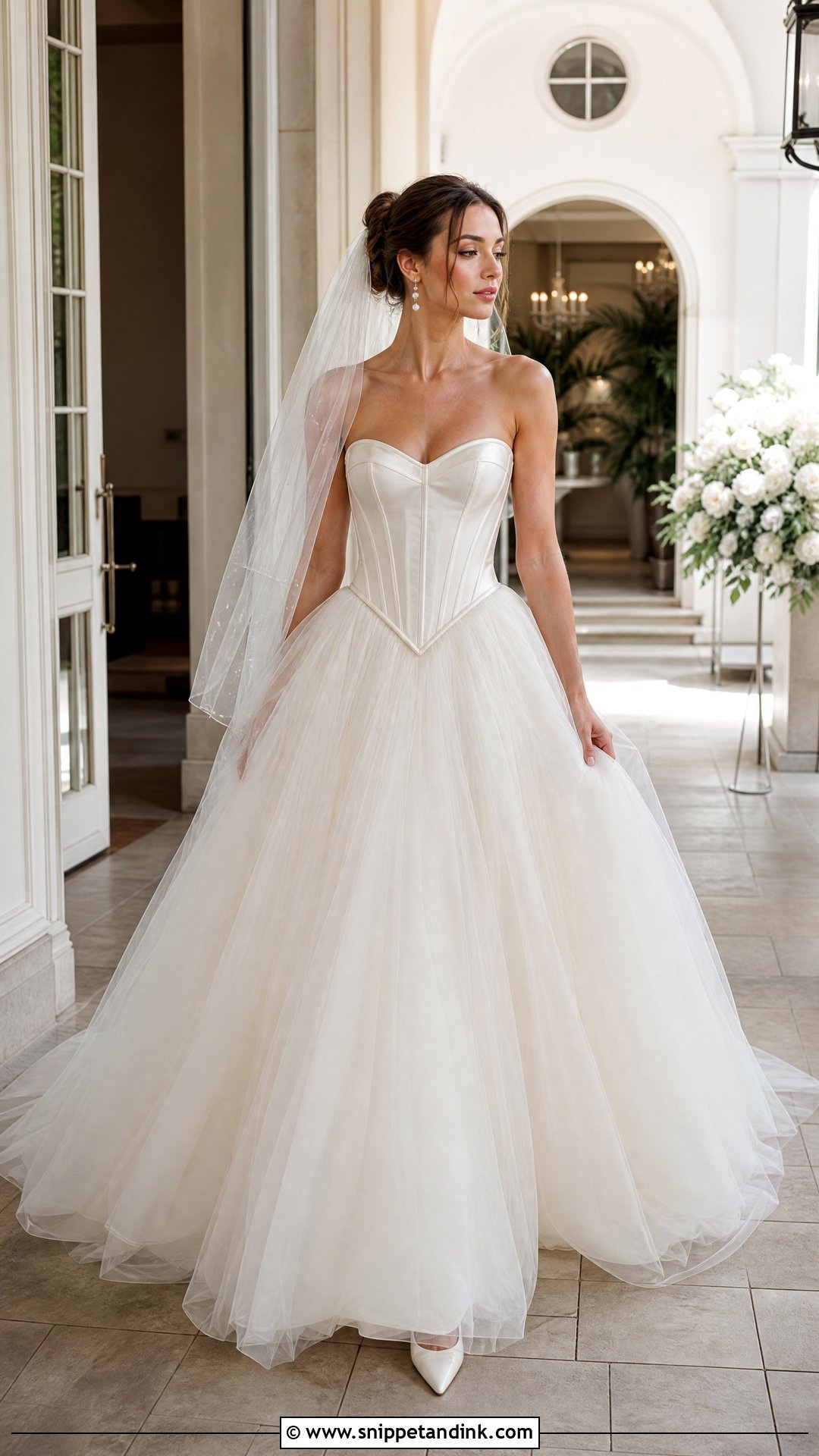
The point of a basque waist wedding dress is literally the point: a V or curved seam dipping below the natural waist, which lengthens the body and narrows the waist visually. It flatters most figures, though a very deep V can overpower a petite frame, so I scale the dip to the bride’s height. Strapless, off-shoulder, square or corset bodices all work. A full tulle skirt is softer and satin is cleaner. Satin heels, a sheer veil and small pearl or crystal earrings keep the waist the hero, and front-on portraits show it best.
5. Long Sleeve Lace Wedding Dress
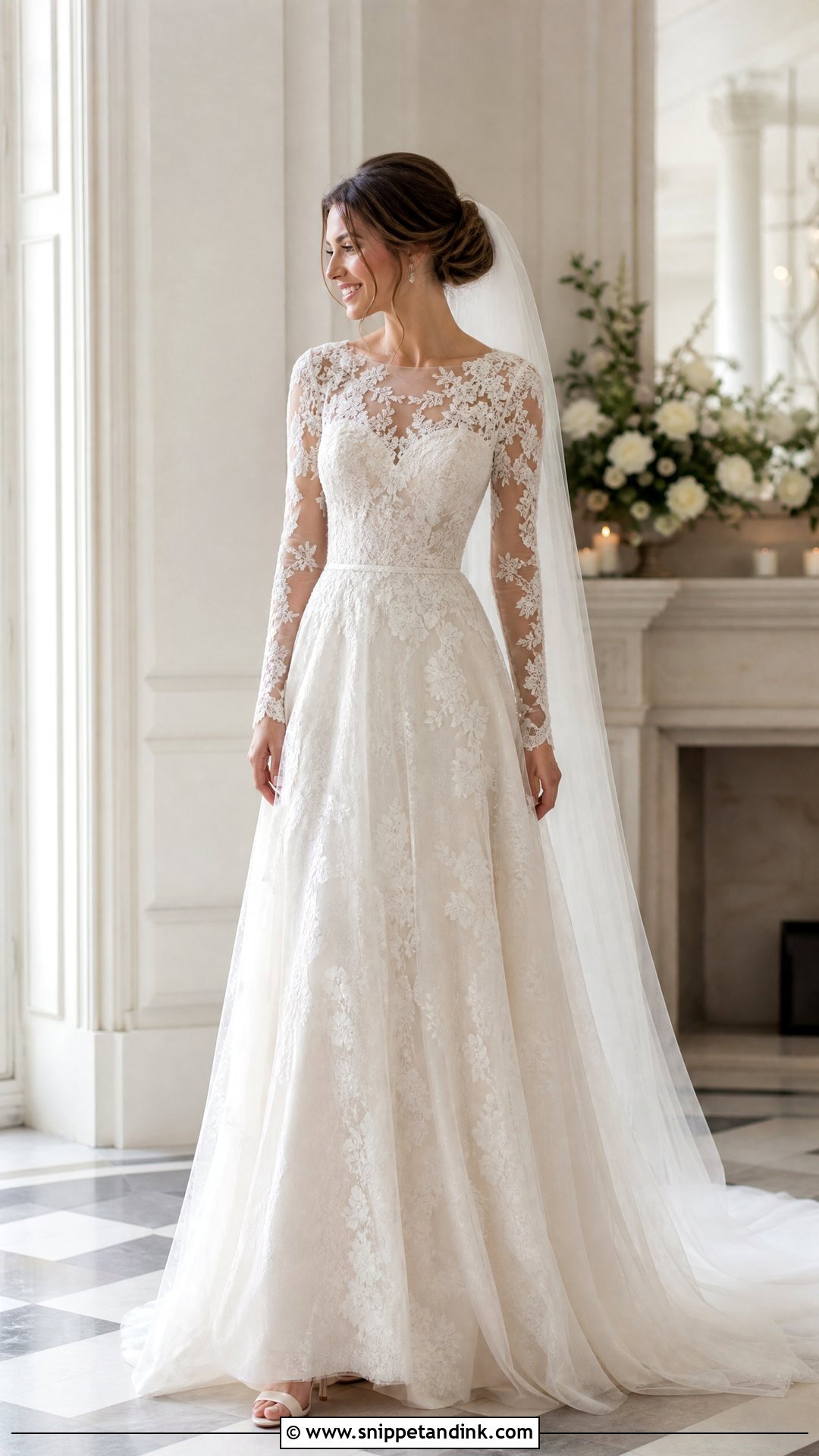
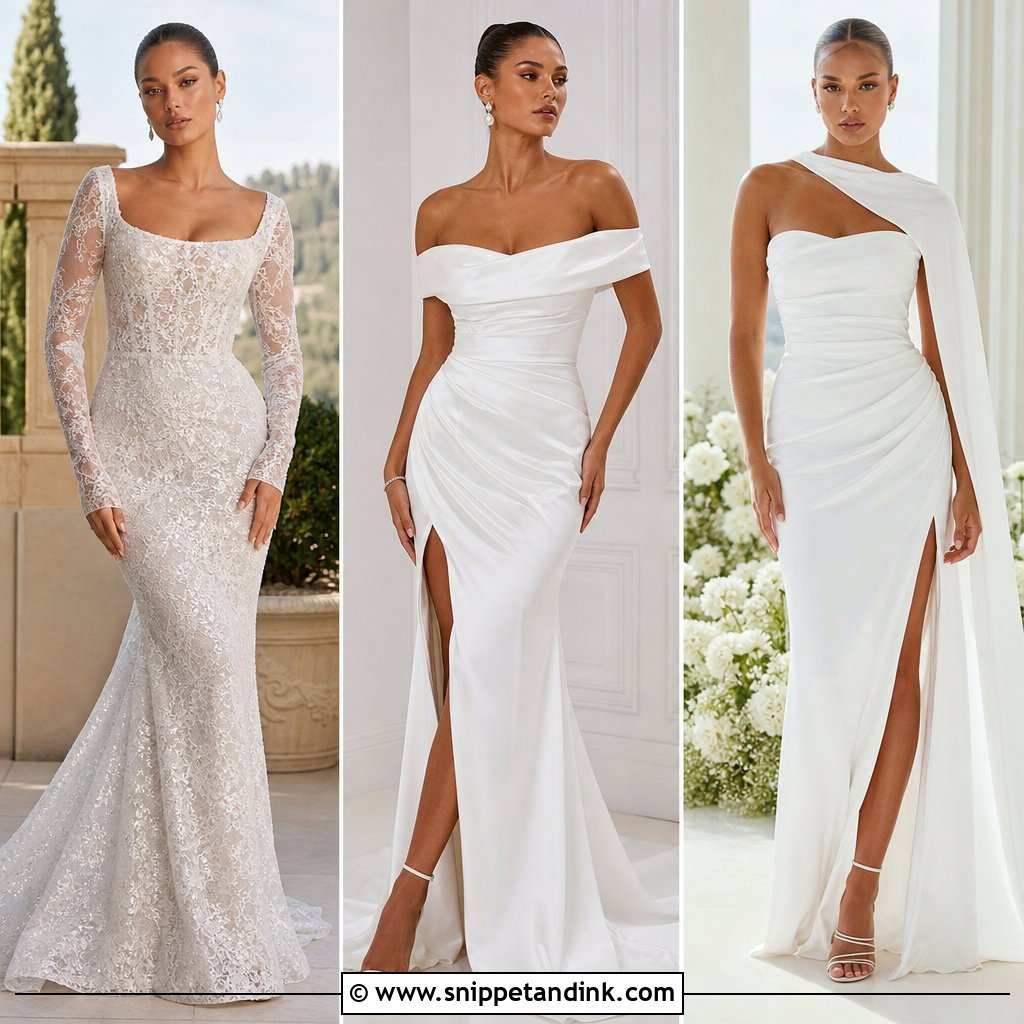
A long sleeve lace wedding dress looks modern when the lace is fine and the cut is close. Sheer sleeves, fitted cuffs, a slim bodice or a soft A-line keep it fresh. The cuff is where I’m fussiest: lace sleeves should end at the wrist bone, ideally with a small button loop, so they don’t creep up your forearm while you hold the bouquet. Simple heels and a low chignon let the lace lead under a fingertip or plain cathedral veil. Lightweight lace works year-round; heavier lace belongs to autumn and winter.
6. Off Shoulder Wedding Dress
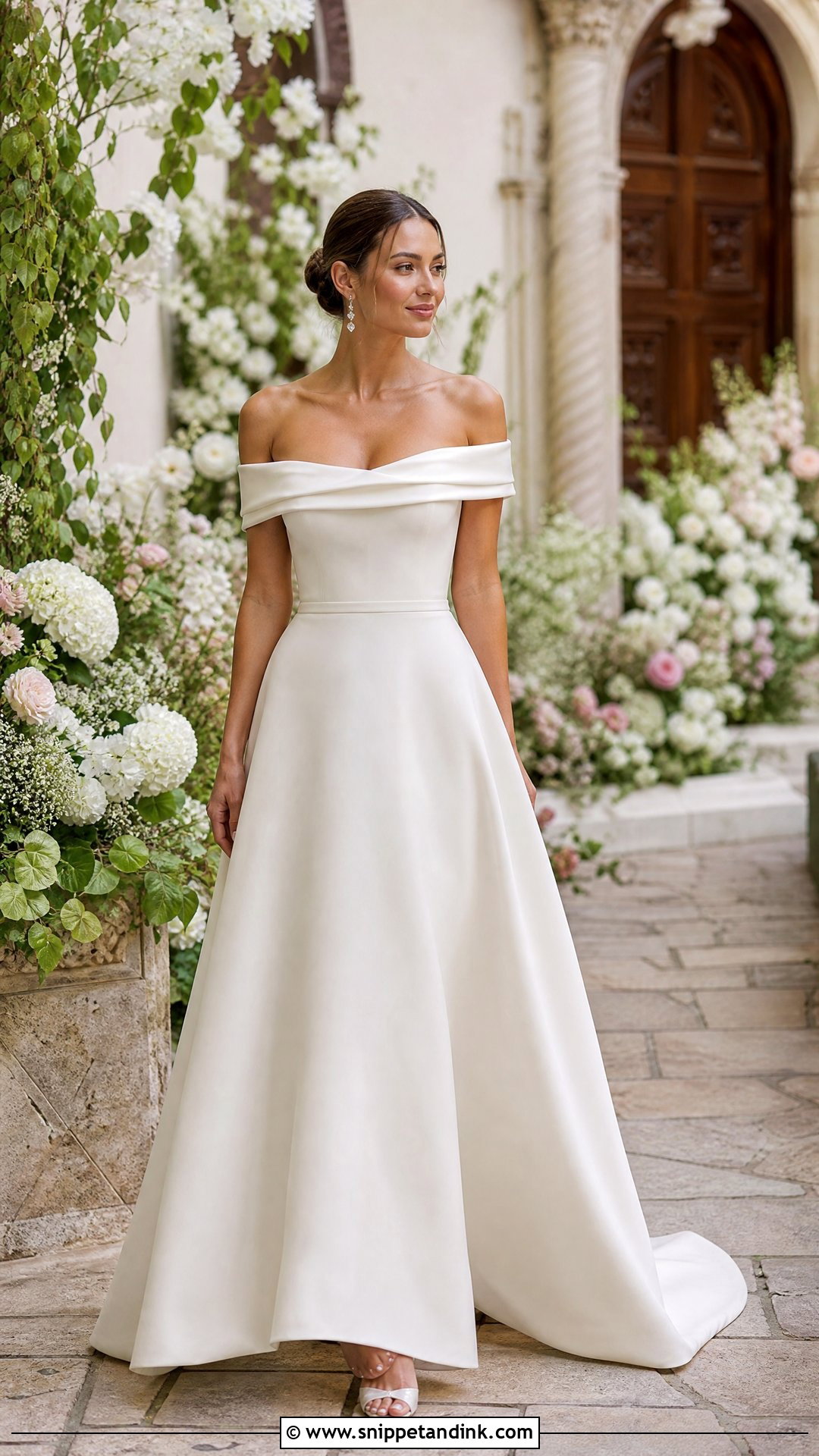
Off-shoulder gowns frame the collarbone, and the modern ones use folded satin, draped crepe, lace sleeves or a clean corset bodice. The trade-off is arm movement. The band sits on the upper arm, so lifting your arms above shoulder height takes the bodice with them; try a hug and a wave at the fitting. A fitted skirt reads sleek, a ball gown skirt formal. Earrings rather than a necklace keep the neckline open, with a bun, waves or half-up hair, at an estate or garden venue.
7. Square Neck Wedding Dress
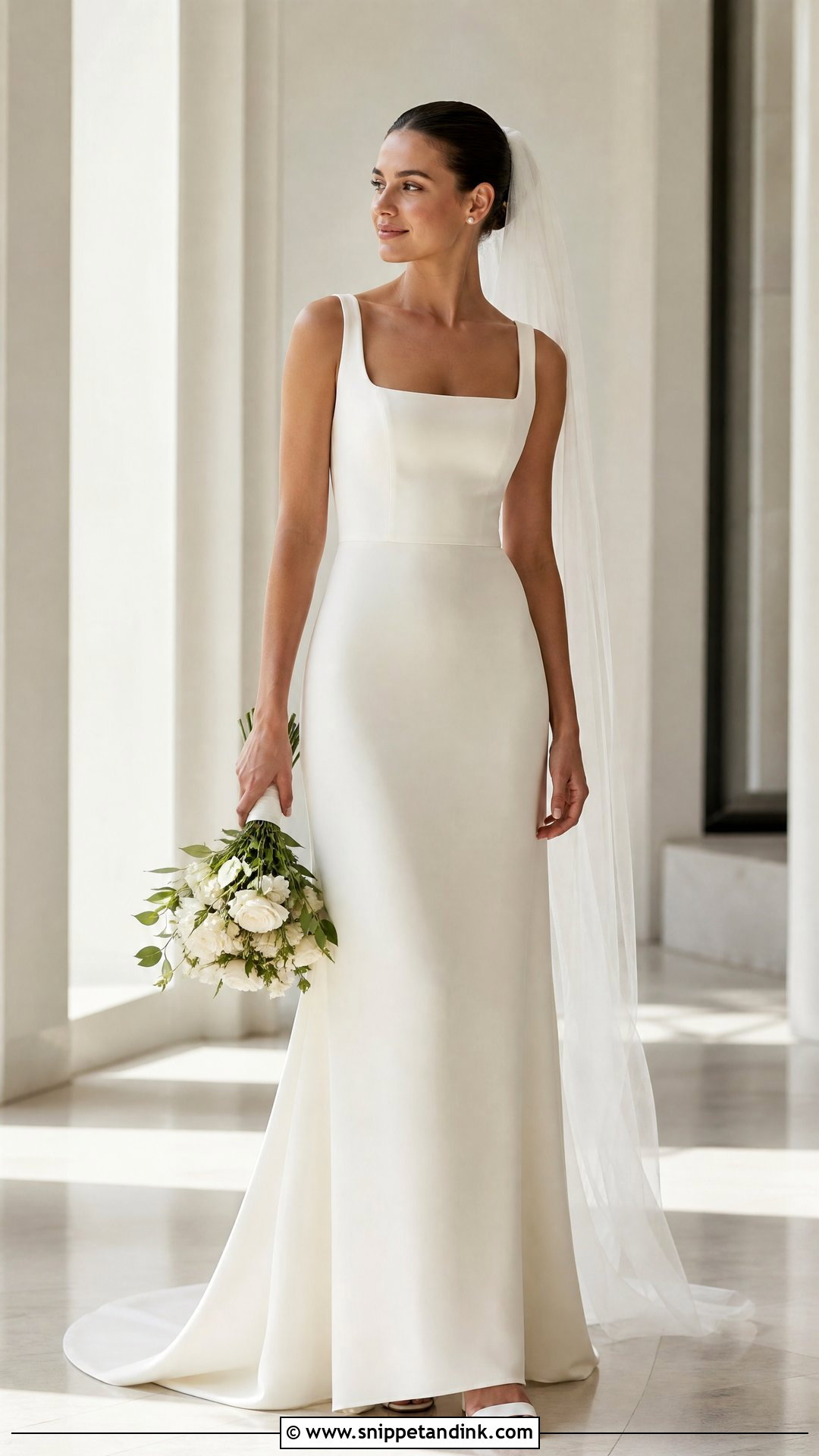
Square necklines put a strong horizontal line across the chest, which balances petite and tall frames alike. In crepe, satin or mikado with minimal seams, the look stays modern. Thin straps feel lighter, while wider straps hide a bra strap if you’d rather wear your own bra. A slim A-line, column or fitted skirt keeps it clean. Pearl studs, block heels and a smooth veil complete it for a bride who wants classic without traditional.
8. High Neck Wedding Dress
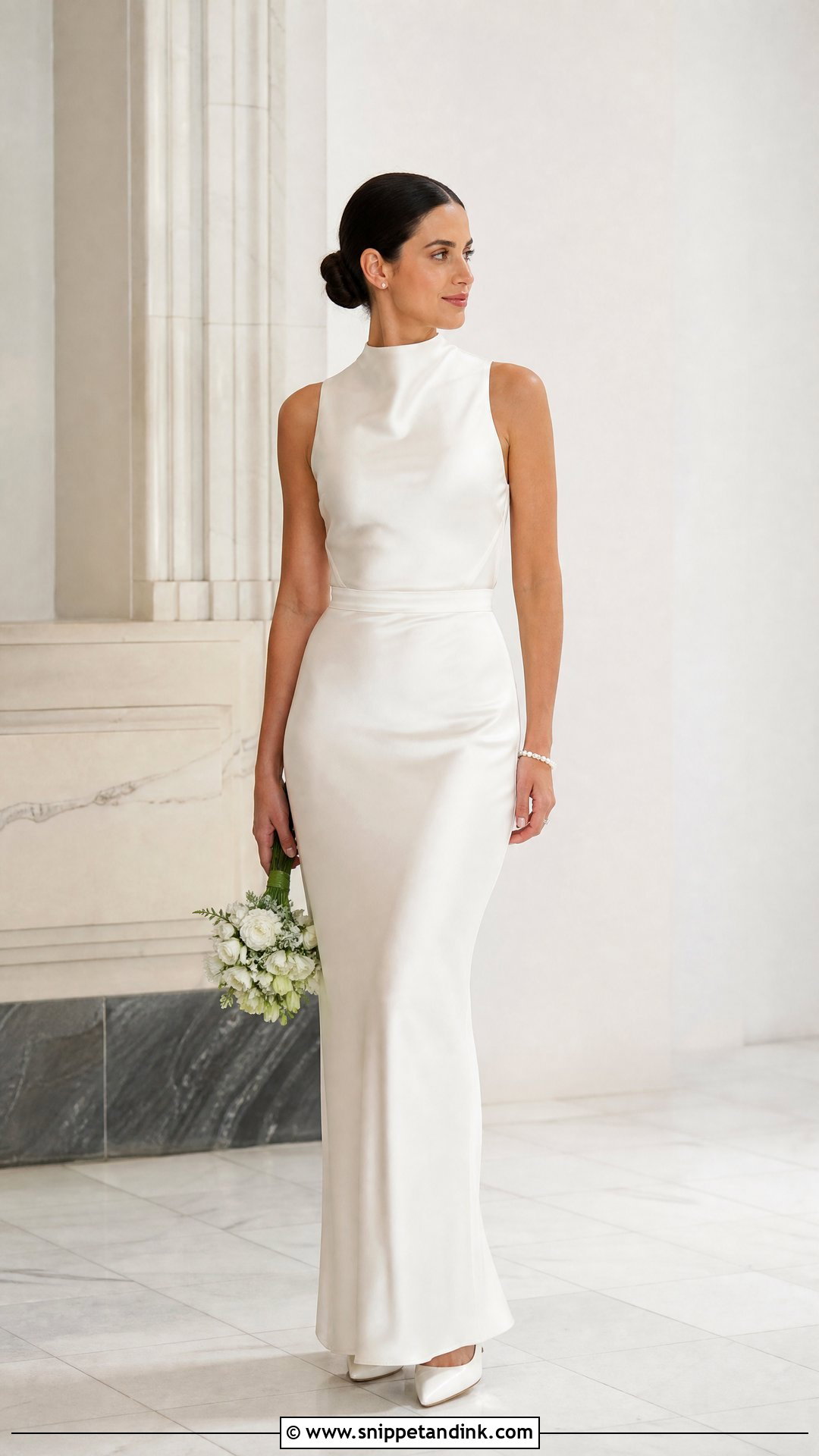
High necks give coverage with an edge: sleek in satin, romantic in lace, architectural in crepe. Sleeveless versions are city-ready, and long sleeves are more formal. The collar needs a finger’s width of ease or you’ll feel it every time you swallow during the vows. With the neckline covered, move the jewelry to earrings, a bracelet or a hair piece. A low bun or polished ponytail keeps it sharp in museums, lofts and other pared-back venues.
9. Slip Wedding Dress
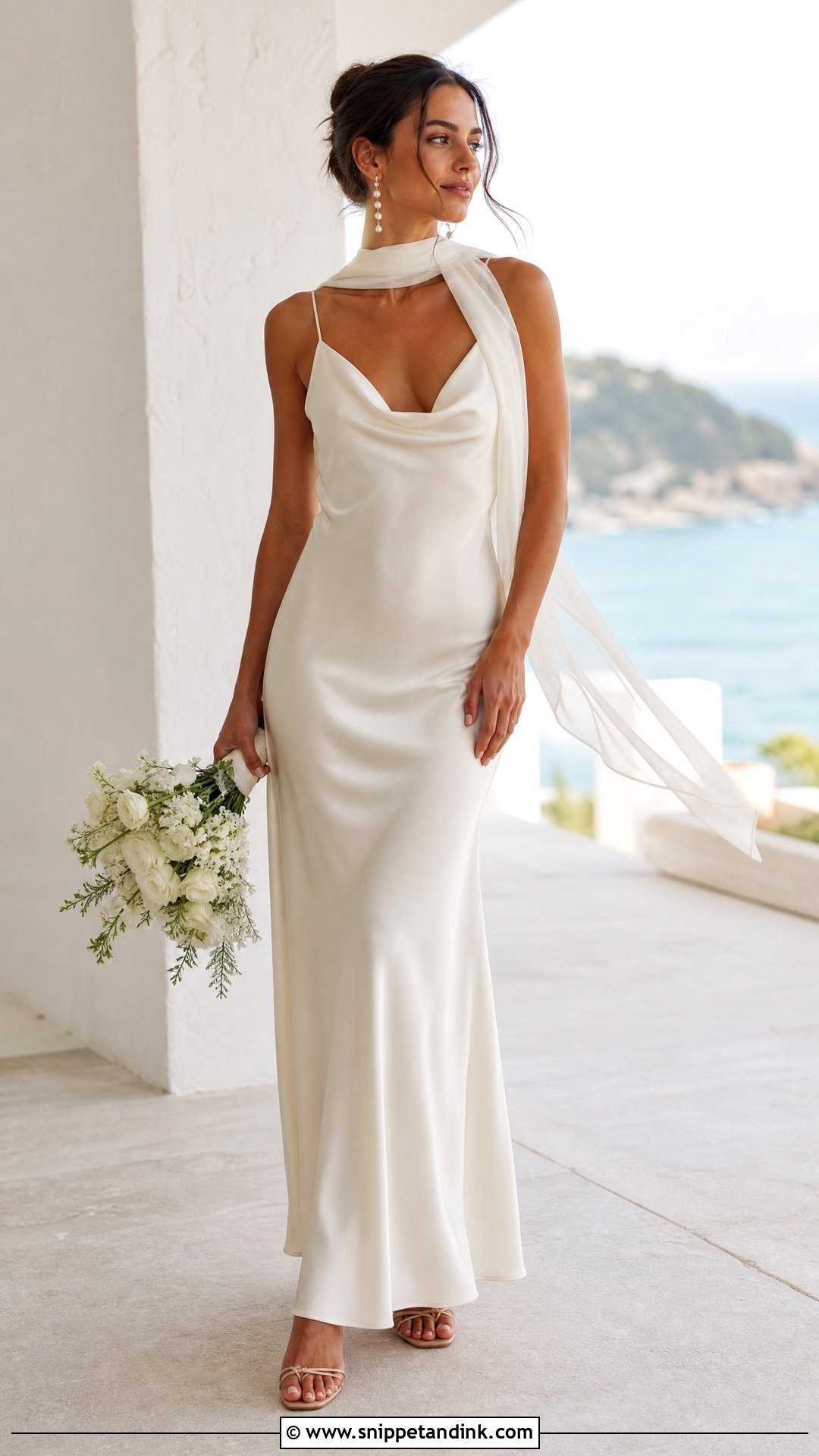
Slip dresses look simple, and fitting them isn’t. Cut on the bias, they cling and move with every step, so a silk, satin or crepe of decent weight looks far finer than a thin fabric that shows every seam underneath. Thin straps, a cowl or a clean V all work, depending on how much support you need. Style it with barely-there heels, delicate earrings and a soft veil or chiffon scarf. Beach weddings, city elopements and rooftops suit it, and it packs smaller than any other gown here.
10. Crepe Sheath Wedding Dress
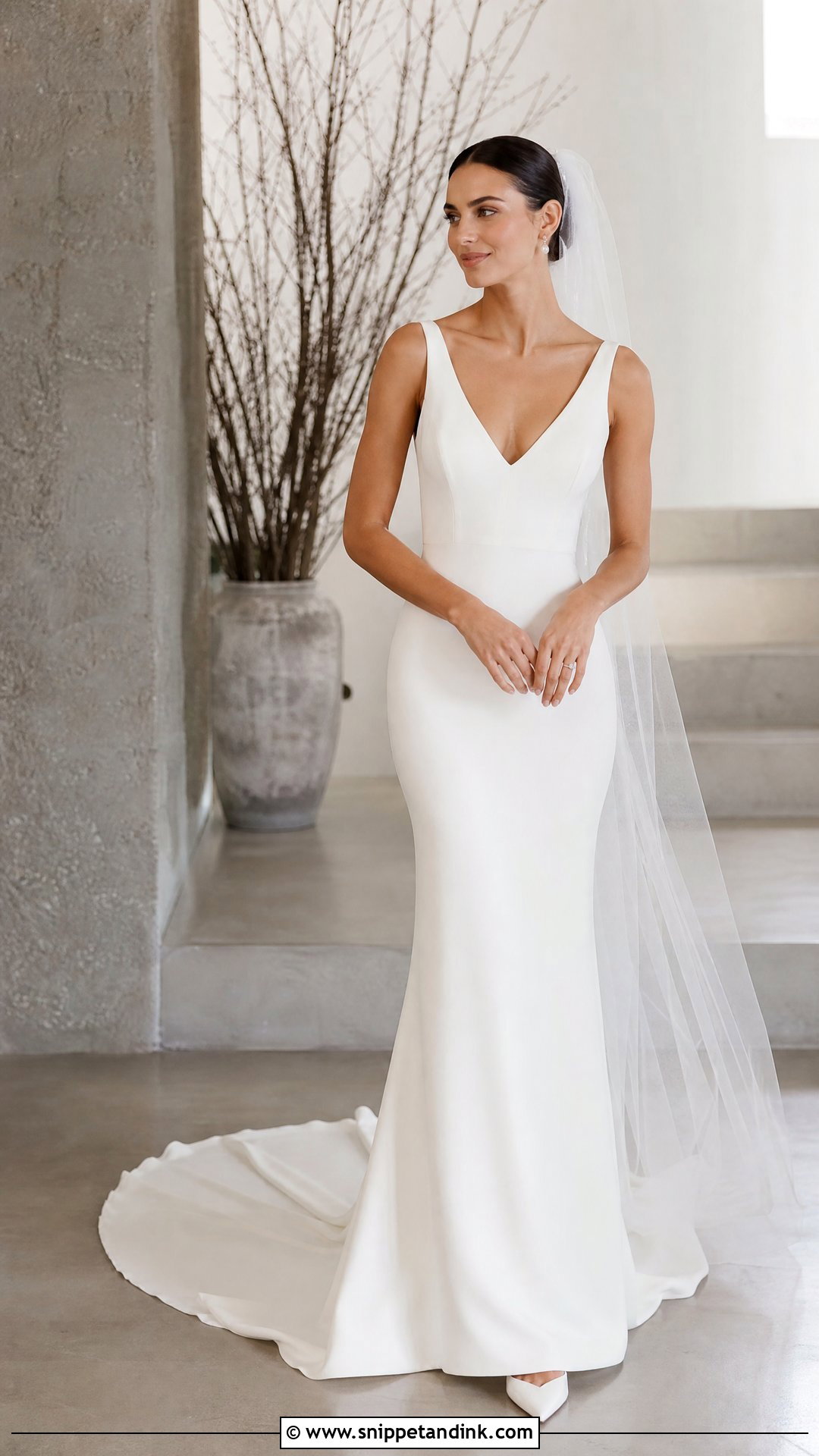
A crepe sheath wedding dress follows your natural shape without much volume. Good crepe has enough weight to smooth over the body while still giving when you sit, and that weight is what you’re paying for, so feel it before you buy. A bateau, V, square or long-sleeve cut all look modern. Pointed heels, pearl earrings and a fitted veil finish it, and a low back or detachable train adds drama when you want more. Courthouse weddings and formal dinners suit it.
11. Sculptural Satin Wedding Dress
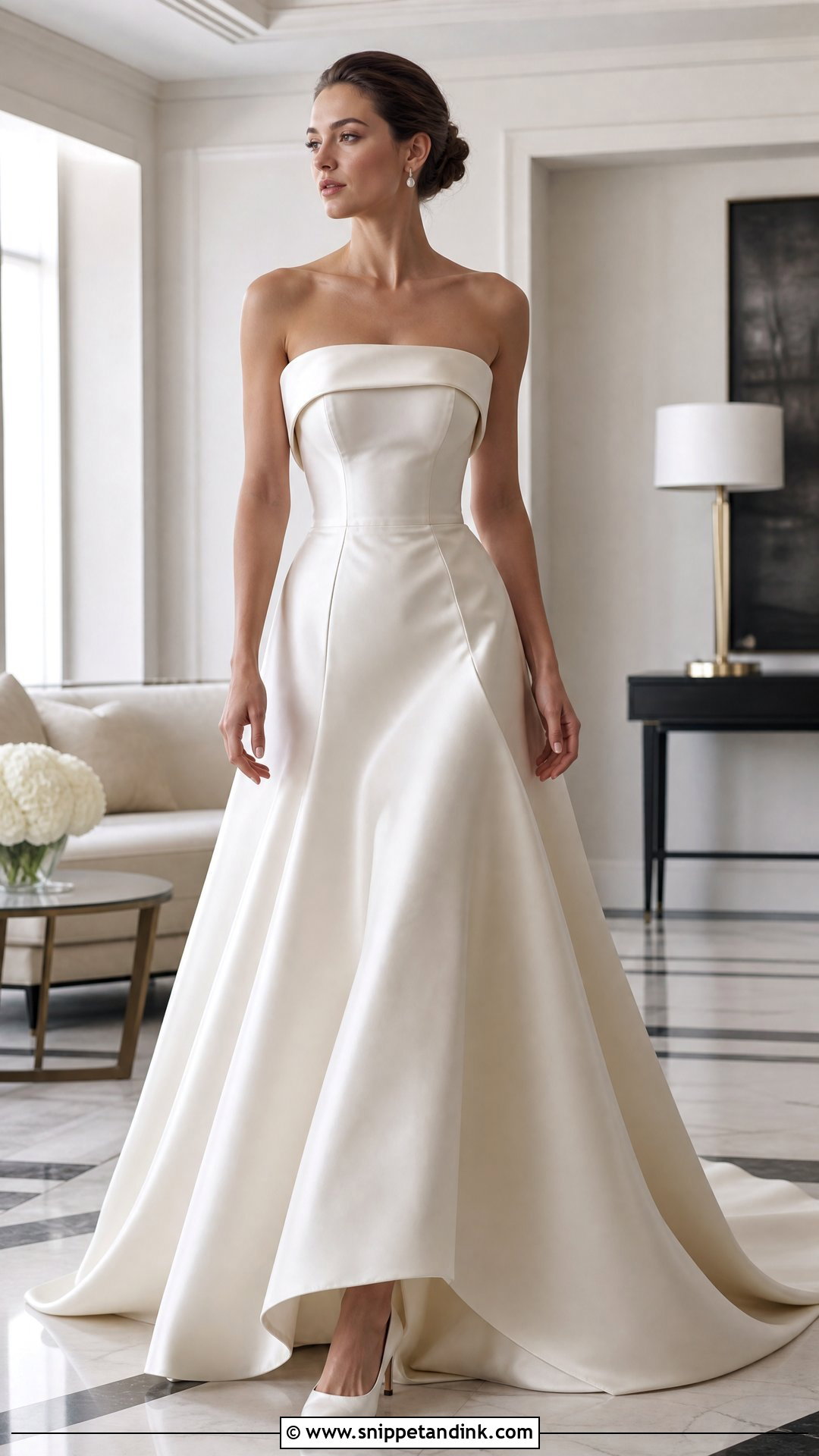
Sculptural satin gets its impact from shape rather than sparkle: folded necklines, curved seams, draped bodices, architectural skirts. Satin and mikado hold those folds, where a softer fabric would collapse them. Because the dress is the statement, keep everything else small, sleek heels, small earrings and smooth hair. Do check how the folds sit when you’re seated, since some structured pieces jut out at the hip. Modern hotels and art-filled venues suit it.
12. Pearl Detail Wedding Dress
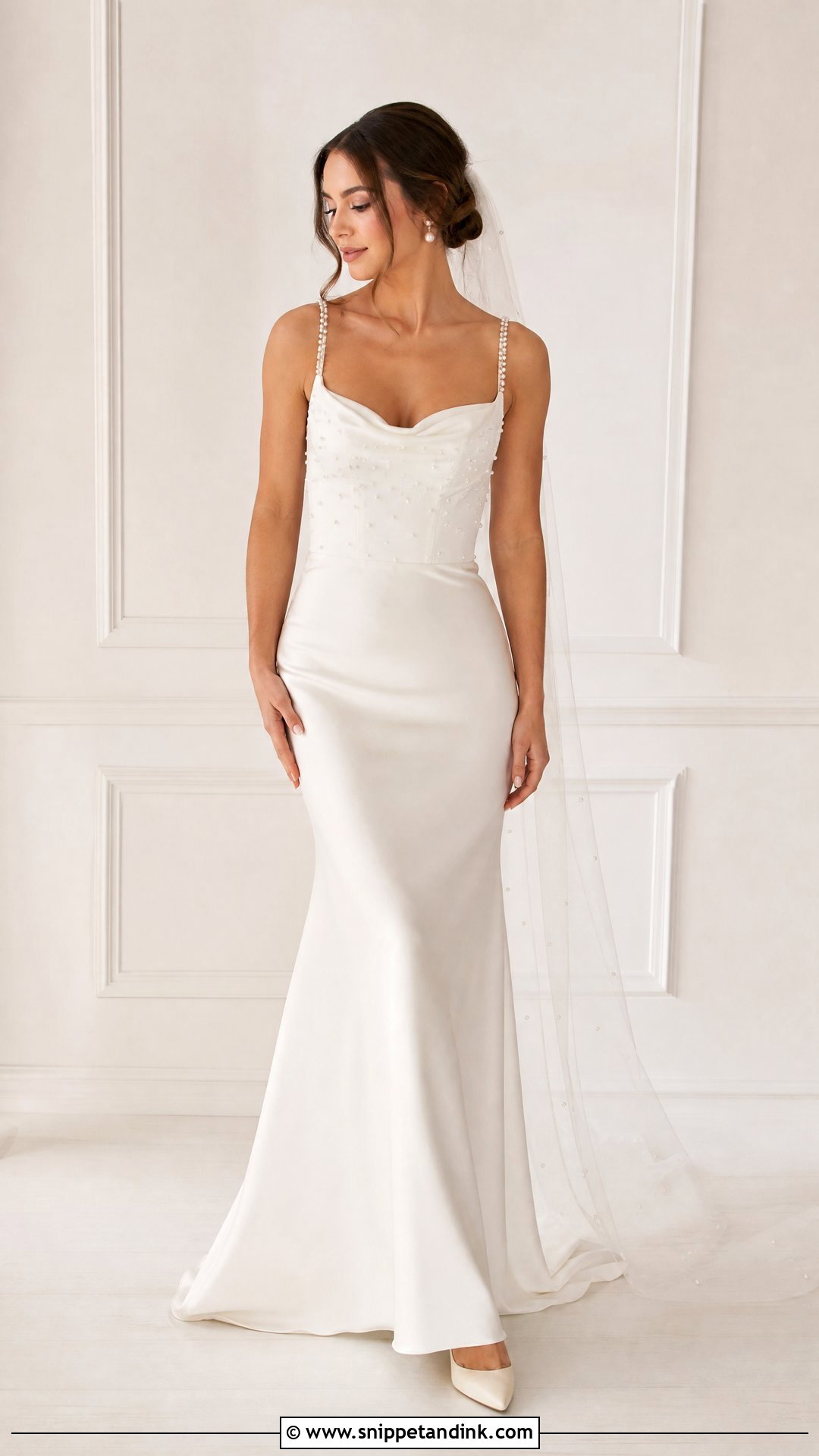
Pearls turn up on straps, bodices, veils, sleeves or scattered across tulle, and the modern way to wear them is with restraint. A simple satin or crepe silhouette with a few pearl accents looks fresher than a gown covered in them. Ask how they’re attached: hand-sewn pearls hold, while glued ones pop off in hugs. Pearl earrings, satin heels and a clean bouquet tie it together. With pearl-covered fabric, keep jewelry minimal; with subtle accents, a pearl veil or headband can carry the theme.
13. Bow Back Wedding Dress
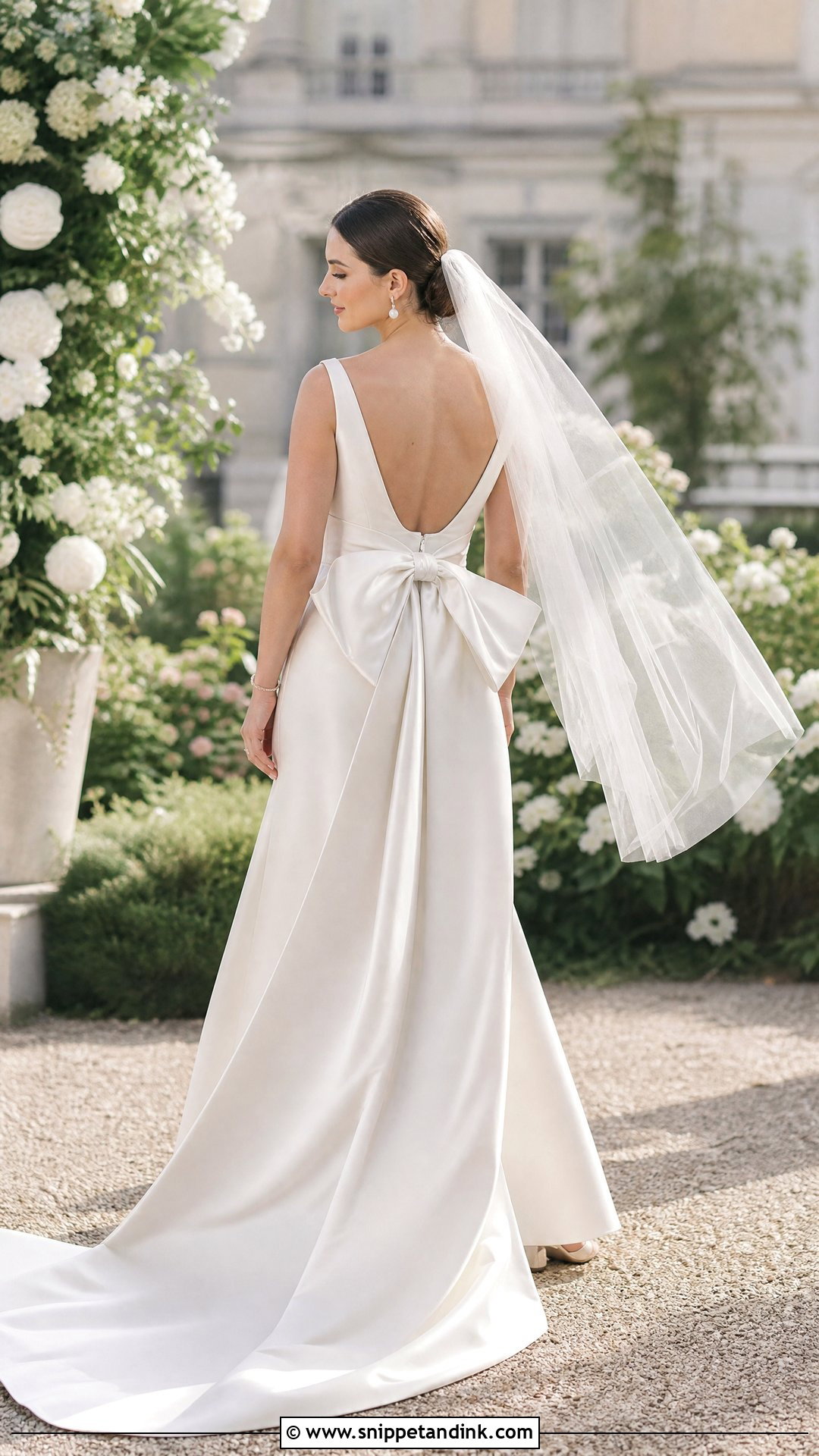
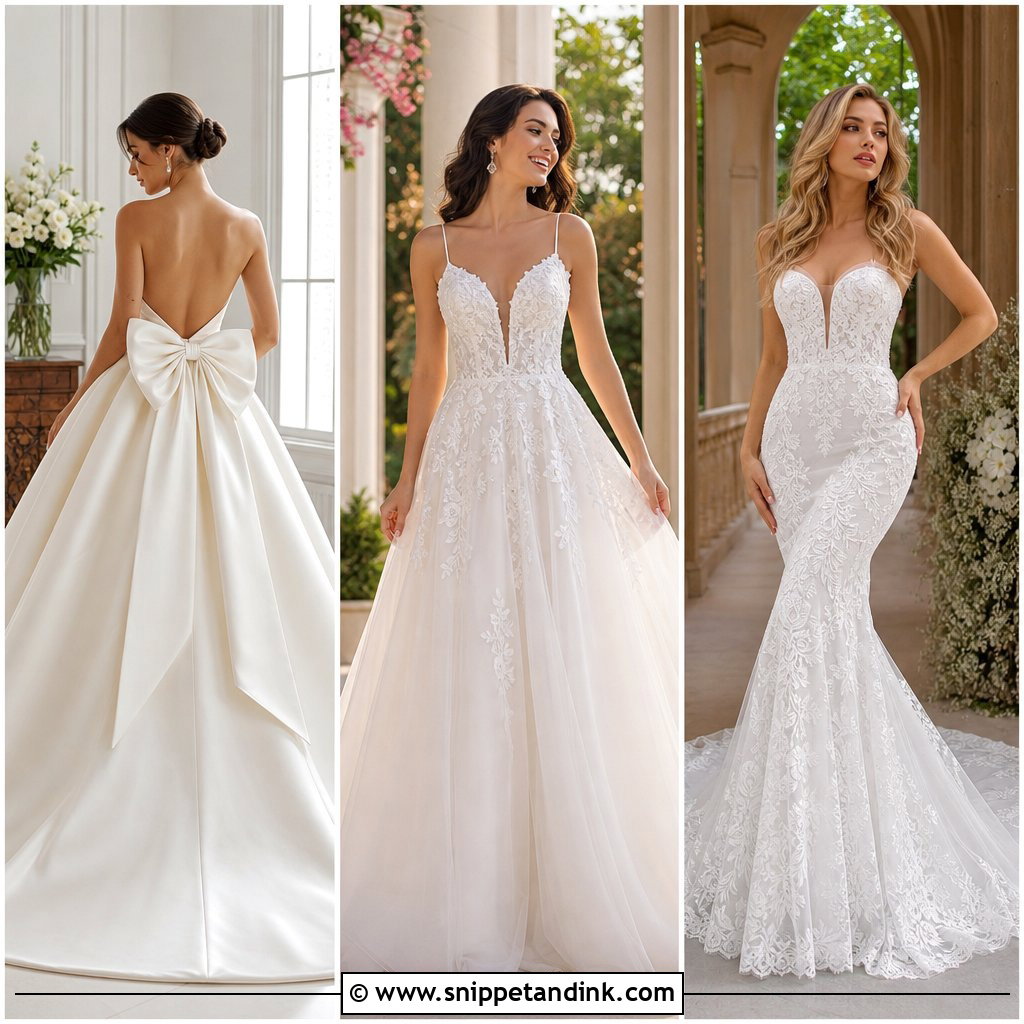
A bow at the back gives you a moment as you walk away down the aisle, and modern ones come oversized, flat, soft or detachable. I always check how the bow behaves in a chair, because a big structured bow gets crushed at dinner. Ask whether it unhooks for the reception. Keep the front simple so the back is the surprise. Low heels, pearl earrings and a veil that falls beside the bow rather than over it complete it.
14. Detachable Sleeve Wedding Dress
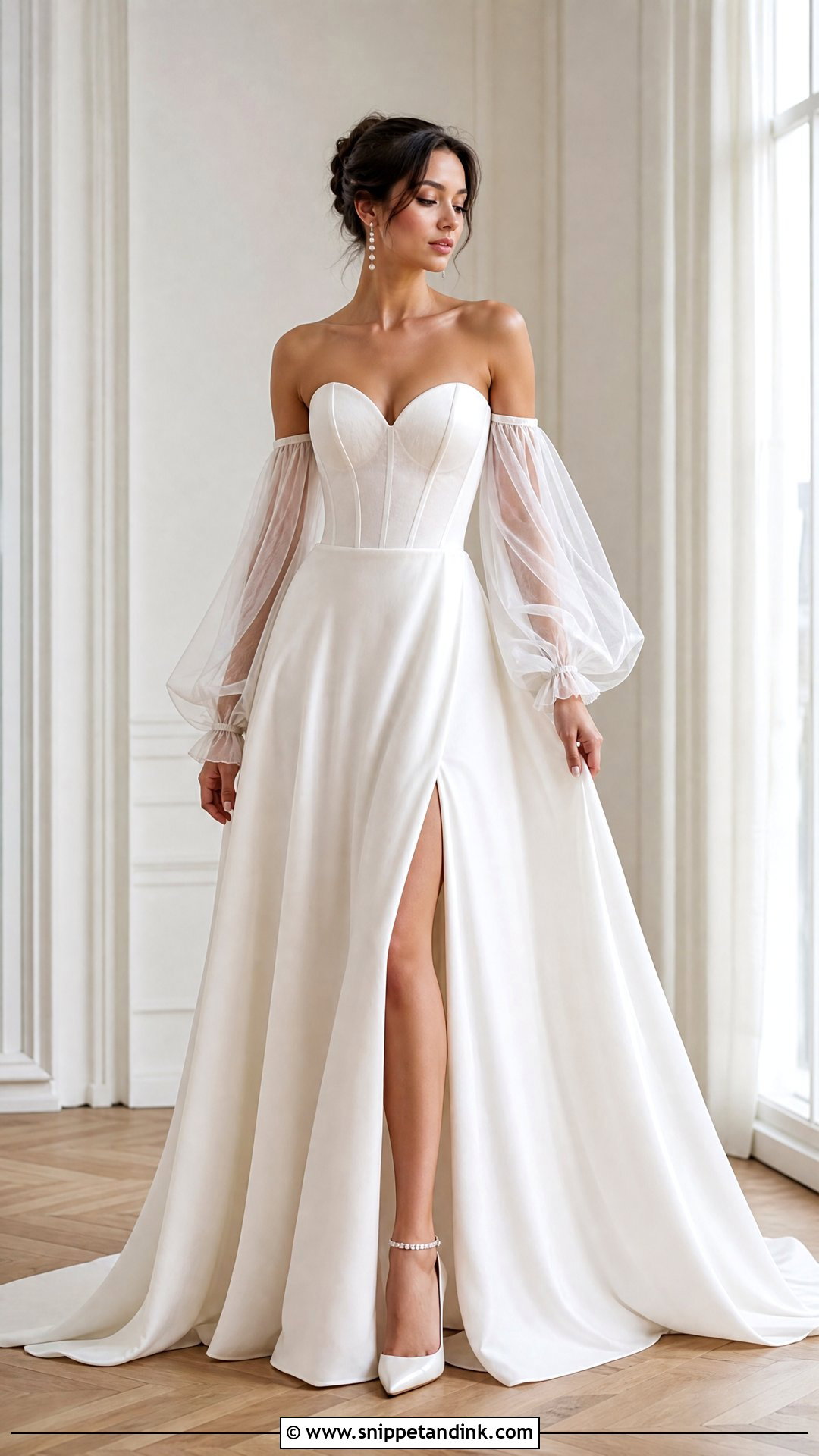
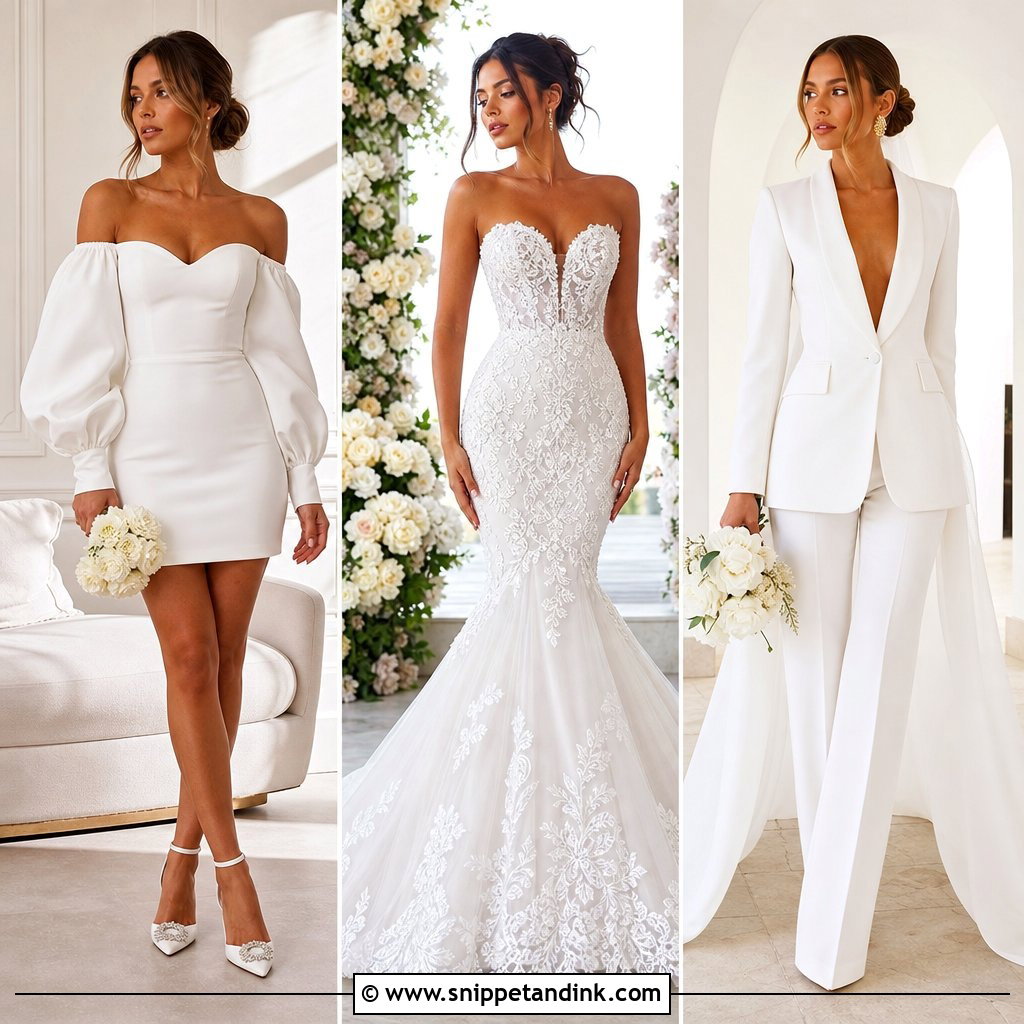
Detachable sleeves give you a covered ceremony look and bare arms for dancing. Options include puff sleeves, fitted lace sleeves, off-shoulder sleeves and airy tulle ones, over a corset gown, satin column or A-line. Look at how they attach before you buy. Snaps and hooks under the arm are quick, and sleeves built onto a separate bolero are quicker still. Keep the jewelry simple so the sleeves own the ceremony photos.

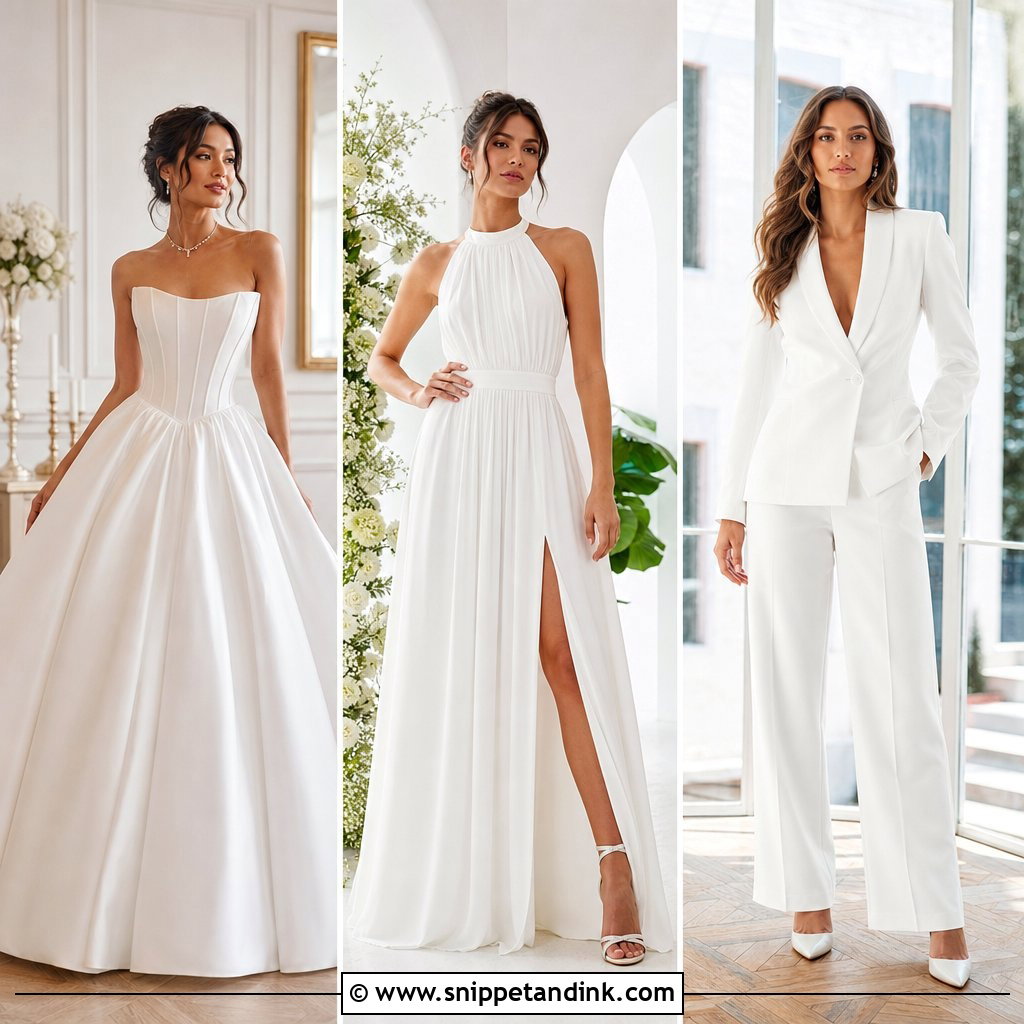
15. Short Wedding Dress
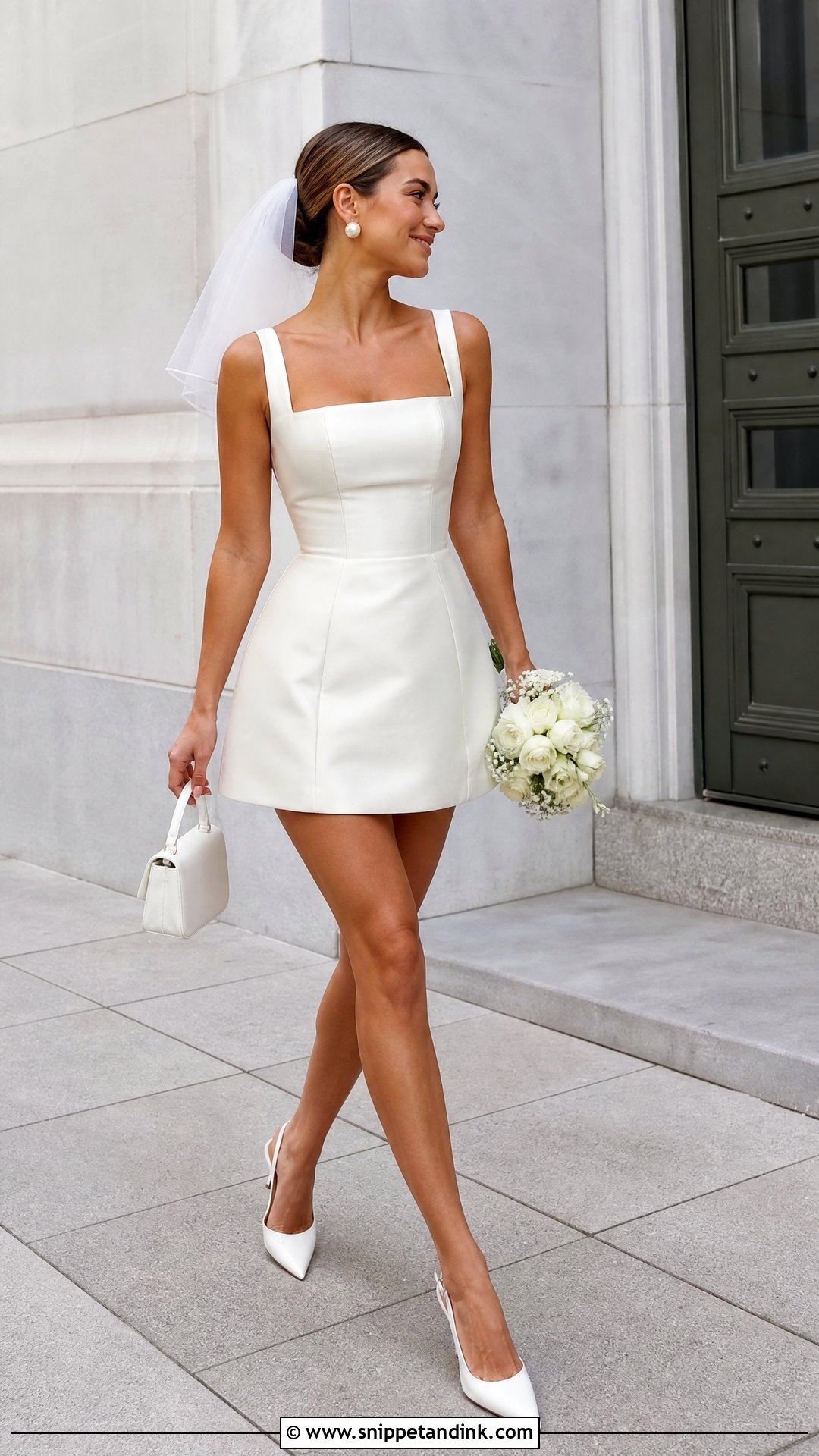
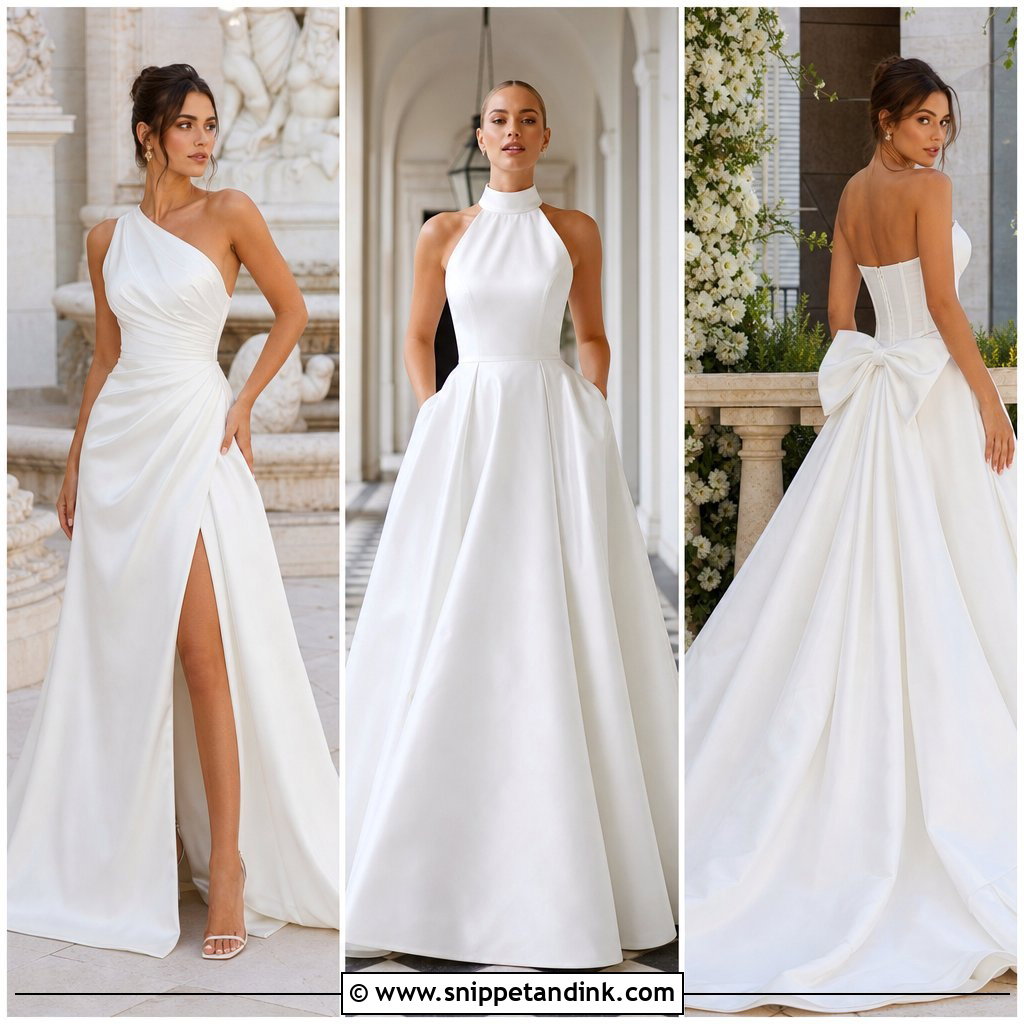
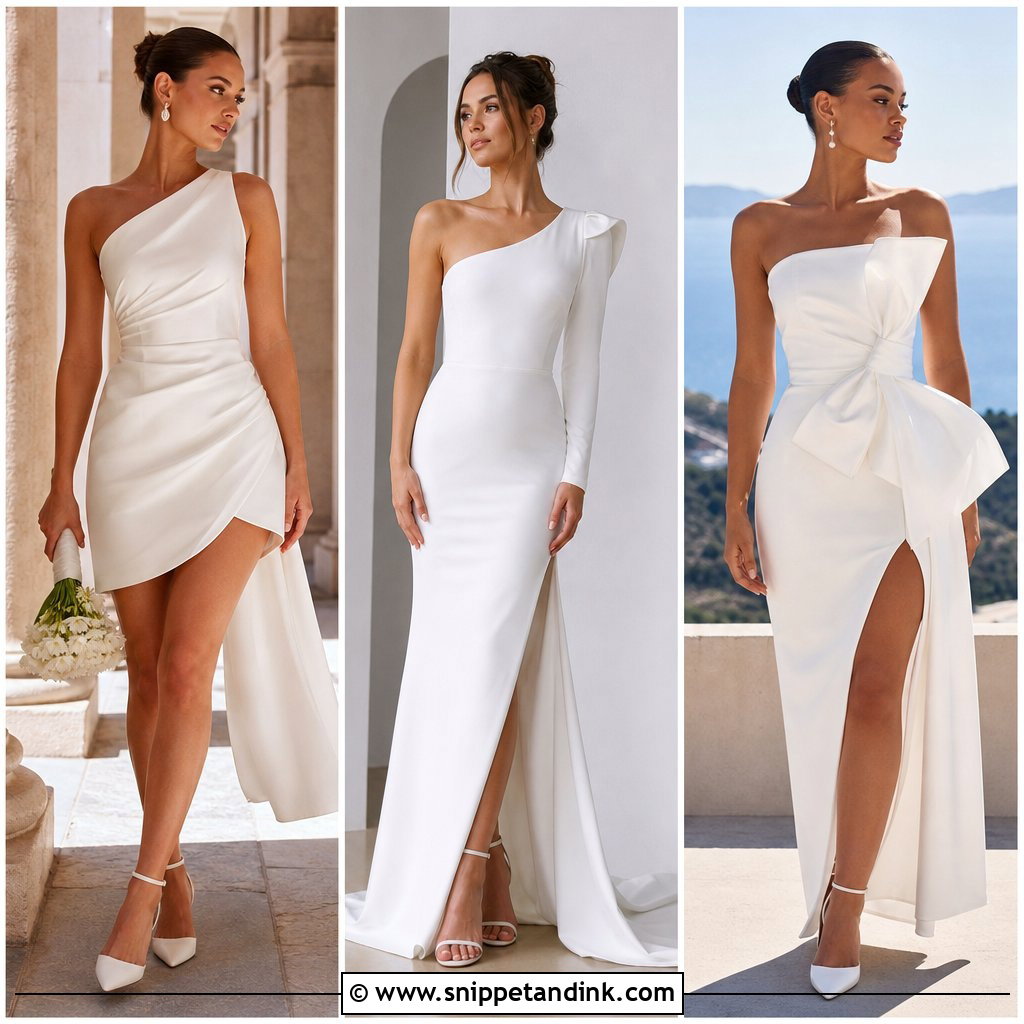
To keep a short dress bridal, I look at fabric quality before anything else. Satin, crepe, lace or structured taffeta hold a shape; cheap fabric is what makes a mini look casual. A high neckline, off-shoulder cut or tailored bodice adds polish. Pointed pumps, slingbacks or embellished flats work, with a short veil, pearl earrings or a small structured bag. Courthouse ceremonies, after-parties and destination weddings are its natural setting, and you’ll move freely all night.
16. Tea Length Wedding Dress
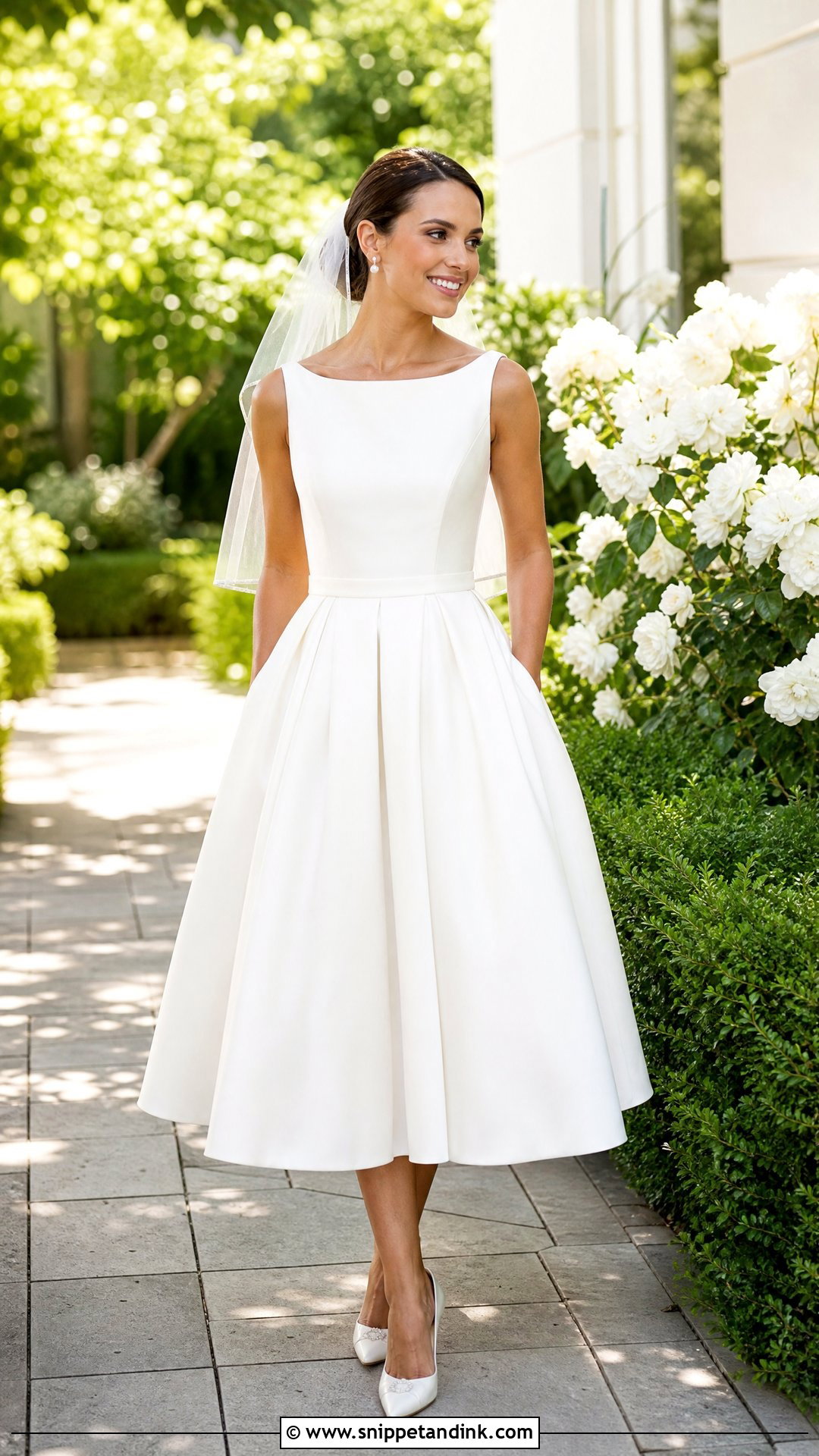
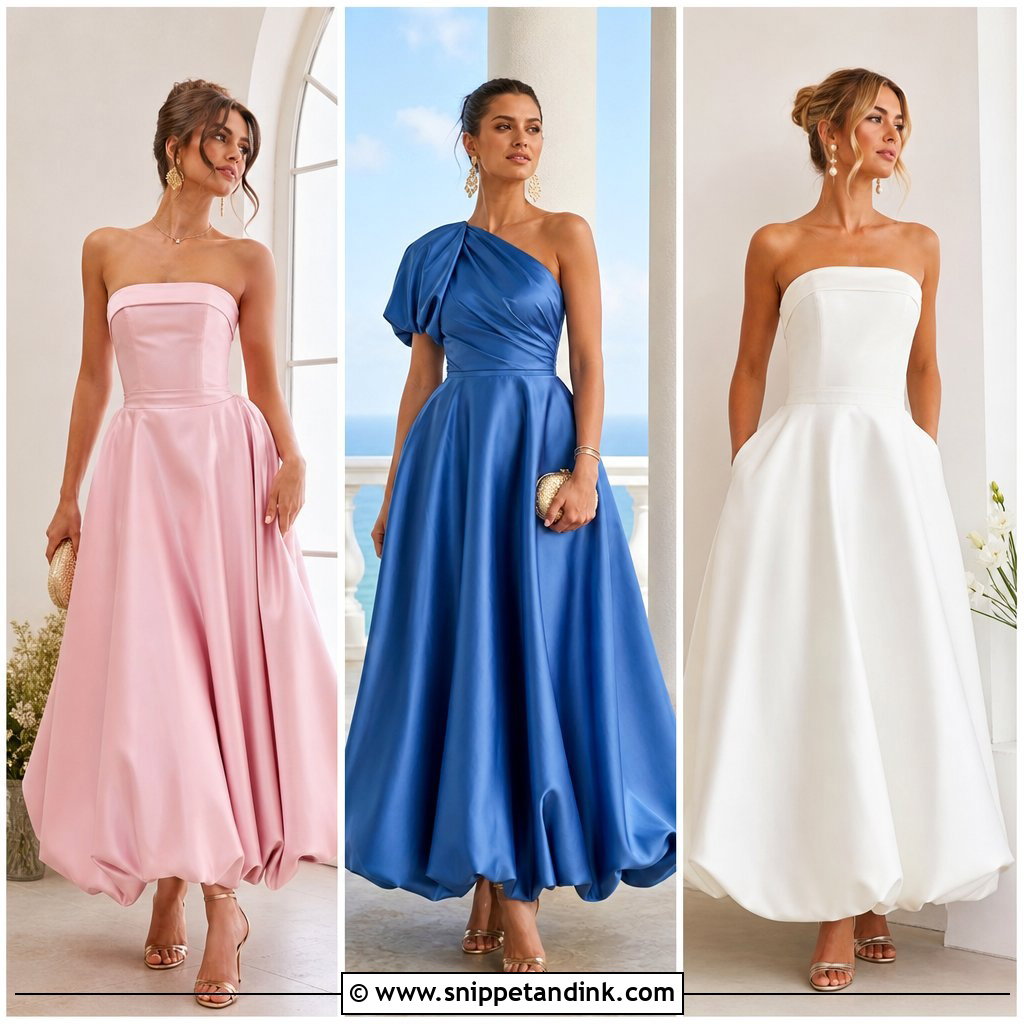
Tea length lands between knee and ankle, so your shoes are on show and you can walk and dance freely. Structured satin, embroidered tulle, lace or mikado give it shape. Have the hem set while wearing your wedding shoes, because a couple of centimetres changes where it falls on the calf. Pointed heels, a clean updo and small earrings refine it. A birdcage veil leans vintage, and a plain short veil keeps it current for garden and brunch receptions.
17. Modern Ball Gown Wedding Dress
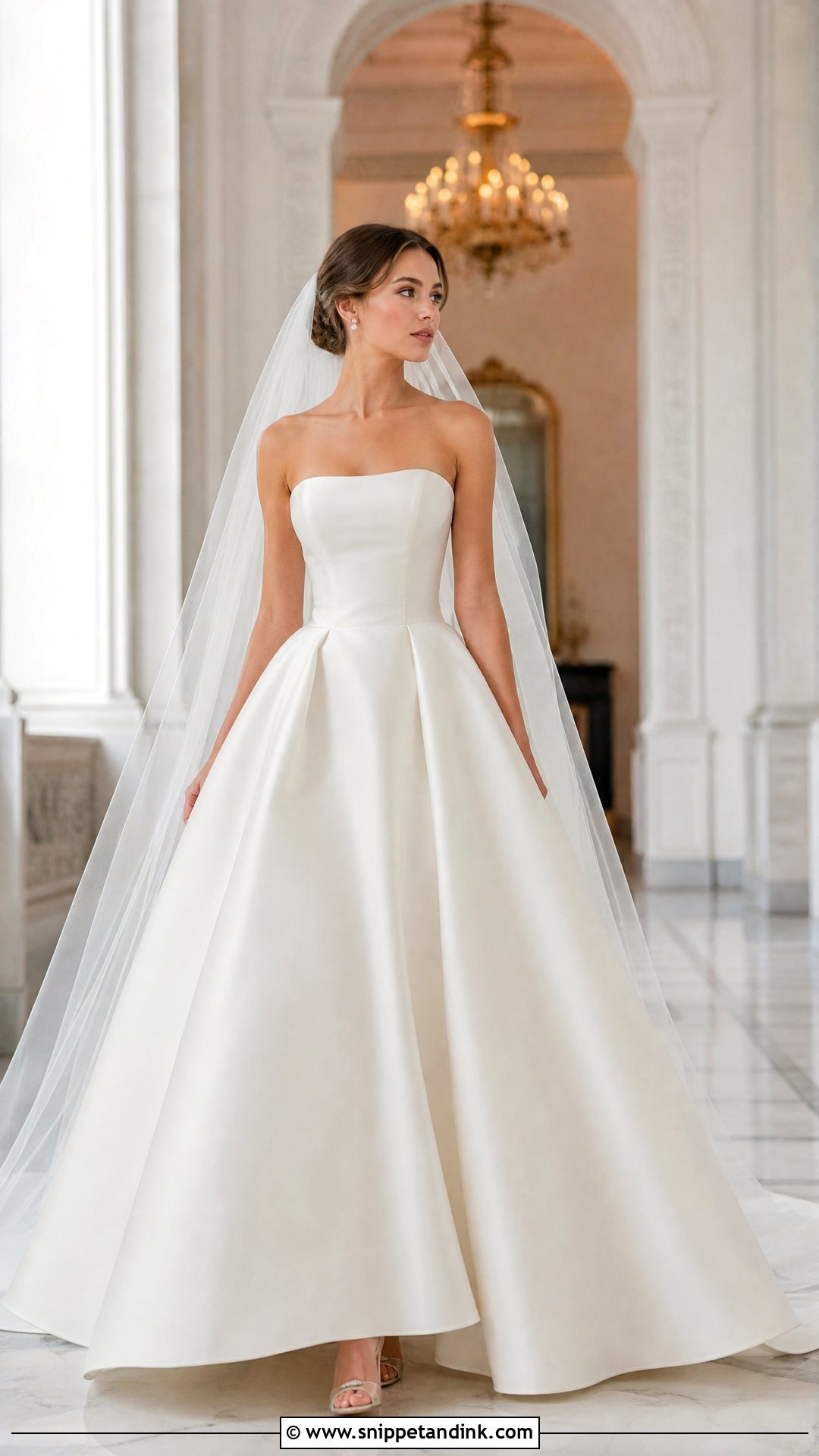
Modern ball gowns get their update from cleaner fabrics, lower waists, simple bodices and lighter layers. A strapless satin version is dramatic and minimal; tulle is softer. Weight is what I warn brides about. A full satin skirt with petticoats can feel heavy by evening, so walk a full lap of the shop in it. Keep the bodice fitted so the volume looks deliberate. Simple studs, a sleek veil and classic heels are enough for a grand entrance.
18. Mermaid Wedding Dress
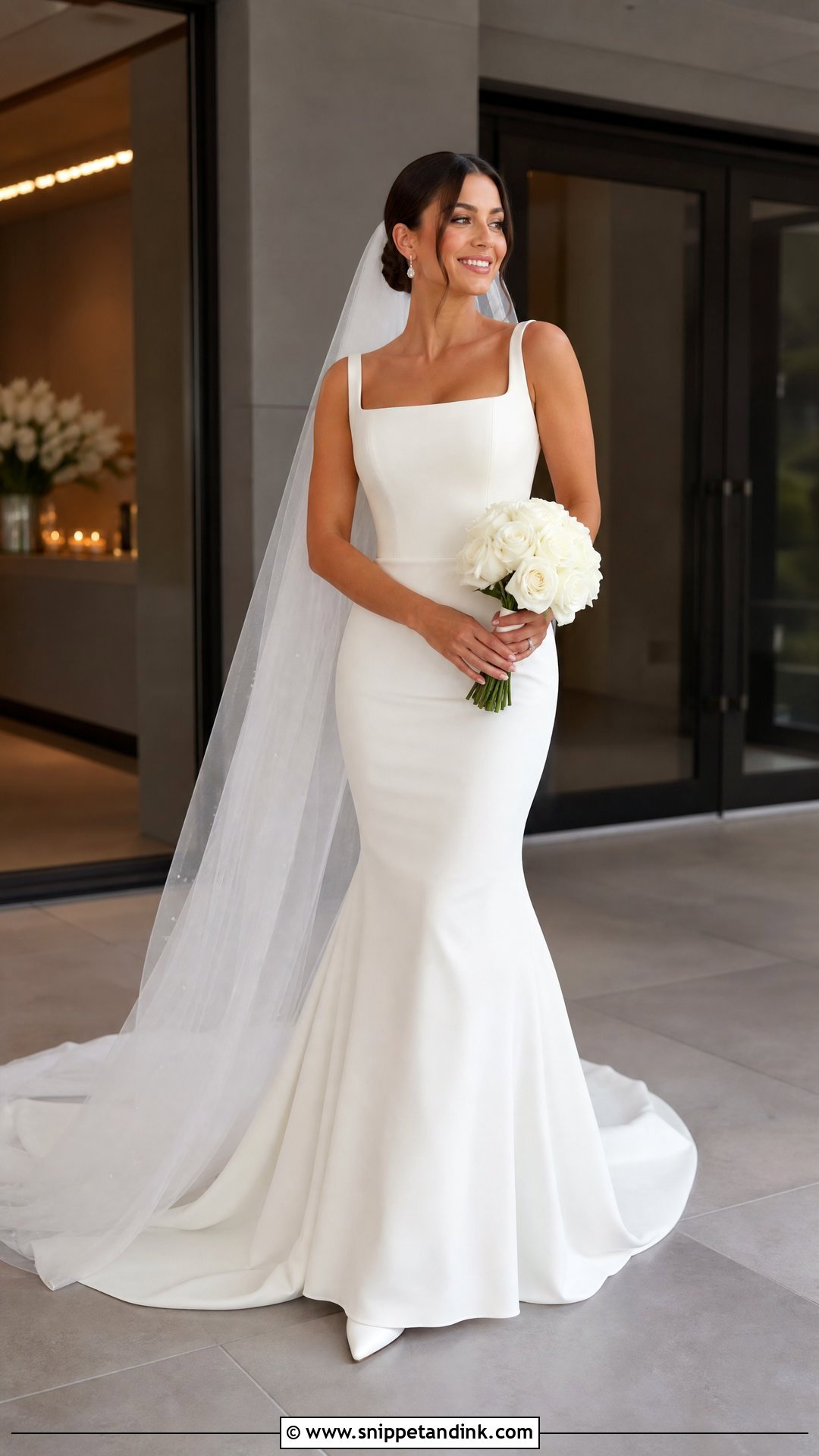
A mermaid follows the body to the knee before flaring, and where that flare starts decides how you’ll move. A low flare below the knee gives the most dramatic shape but makes stairs and sitting hard; a trumpet that opens mid-thigh is much easier to live in. Smooth crepe, satin, lace or subtle beading suit it, with a square neck, strapless corset or off-shoulder bodice. Practise sitting and climbing a step before you commit. A simple veil and sleek hair suit an evening reception with a polished dress code.
19. A Line Wedding Dress
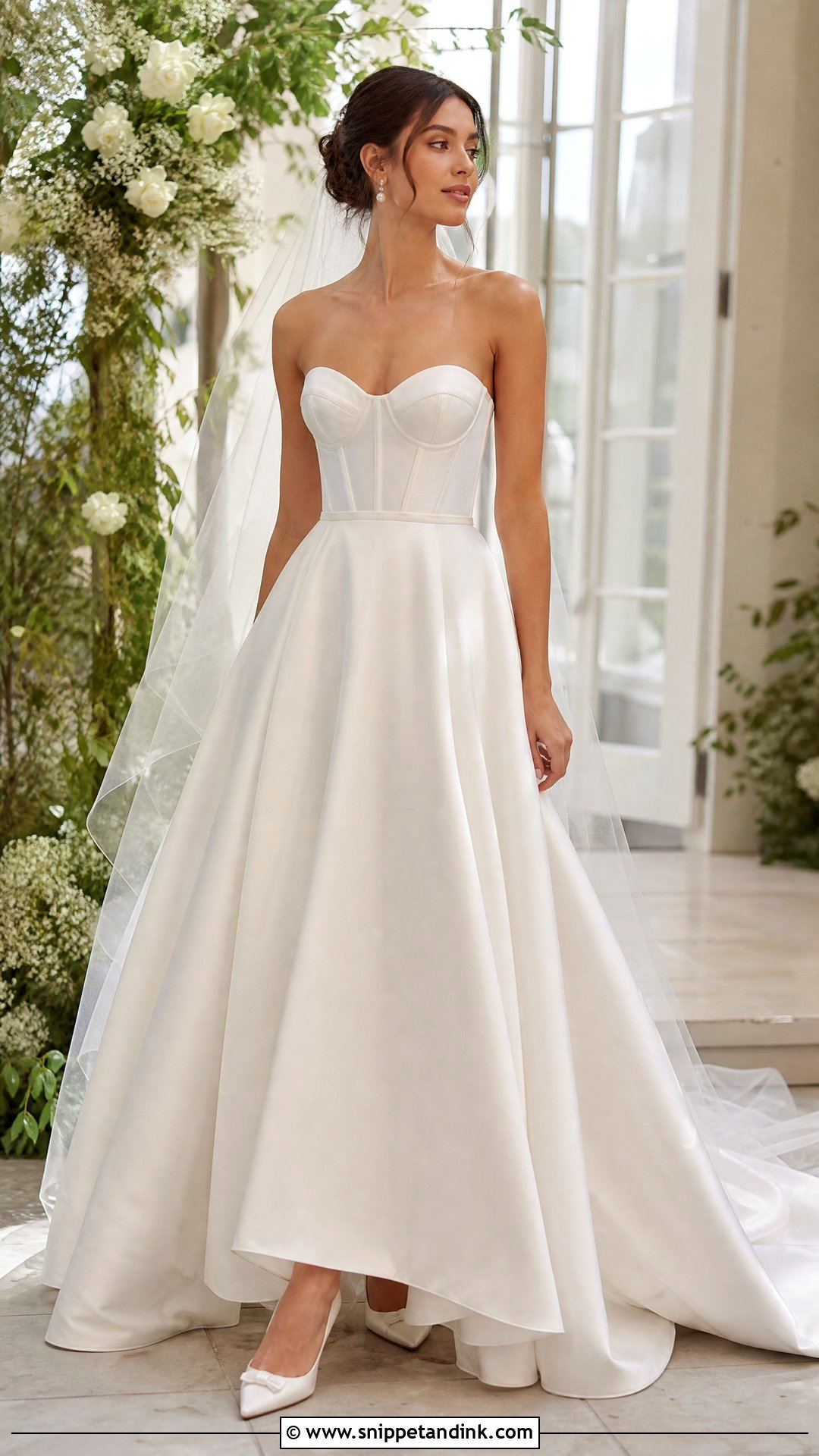
The A-line fits through the bodice and widens gently from the waist, which is why it suits almost every figure. It works in satin, lace, organza, tulle, crepe or mikado. To make it current, look for a clean neckline, corset bodice, square straps or a subtle slit. Classic heels, soft makeup and a veil matched to the dress’s formality complete it. If you haven’t settled the venue yet, this is the safest shape to buy, since it suits a garden and a ballroom alike.

20. Two Piece Wedding Dress
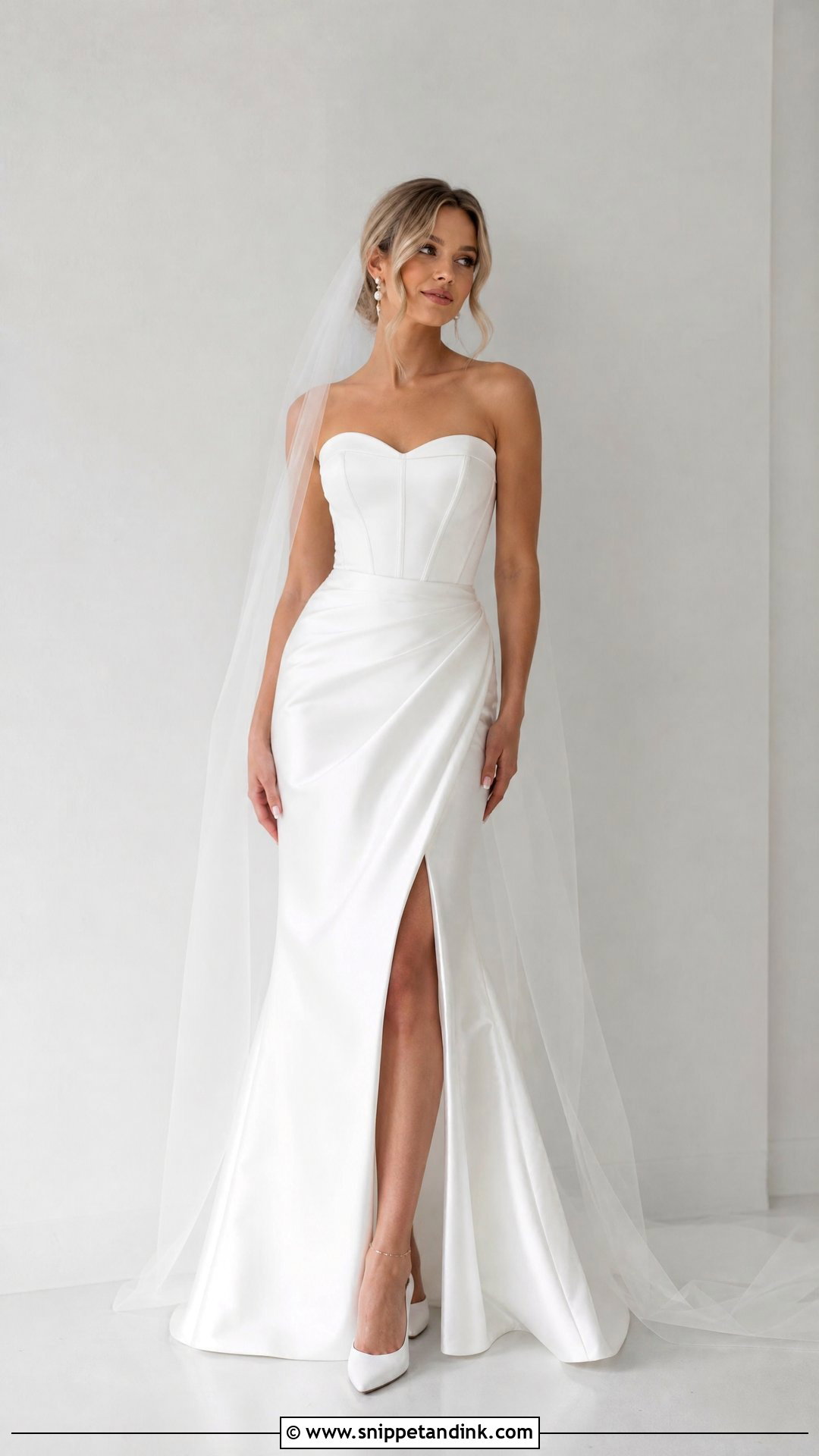
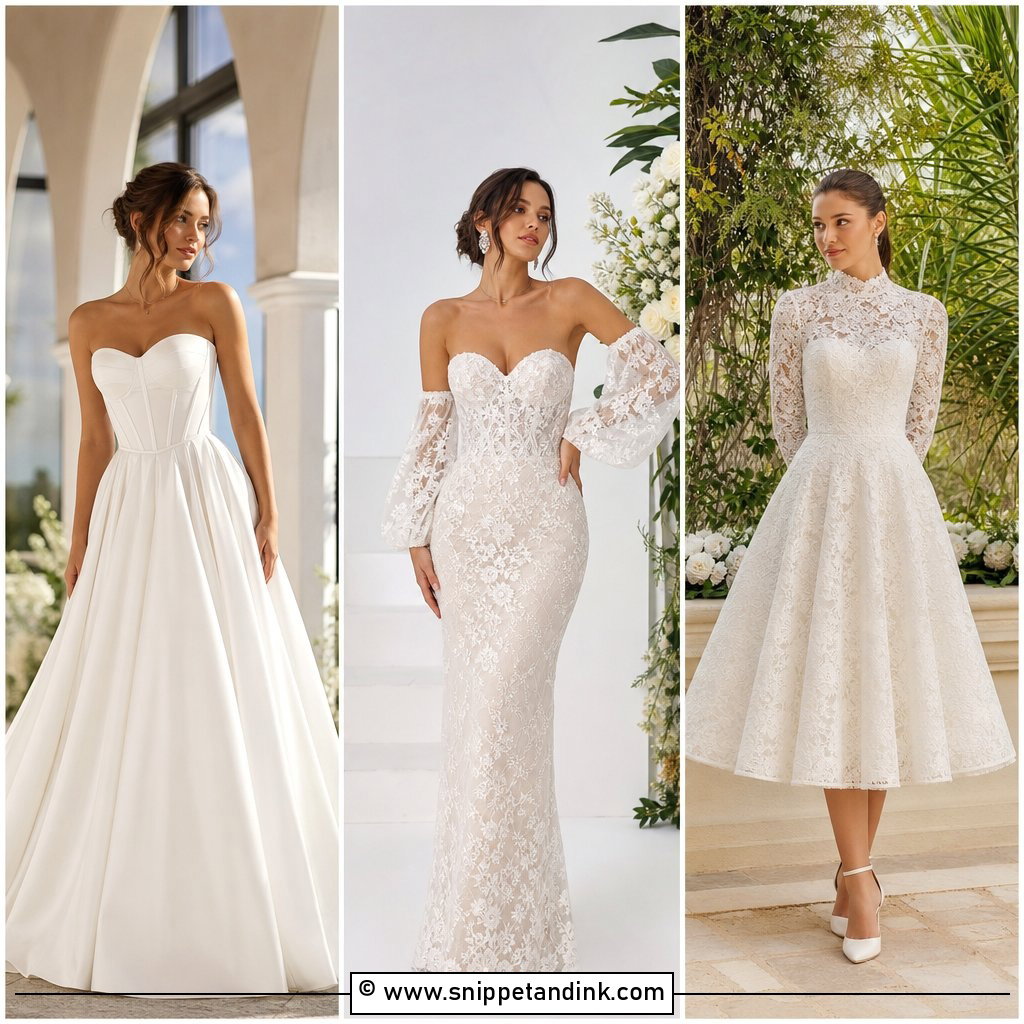
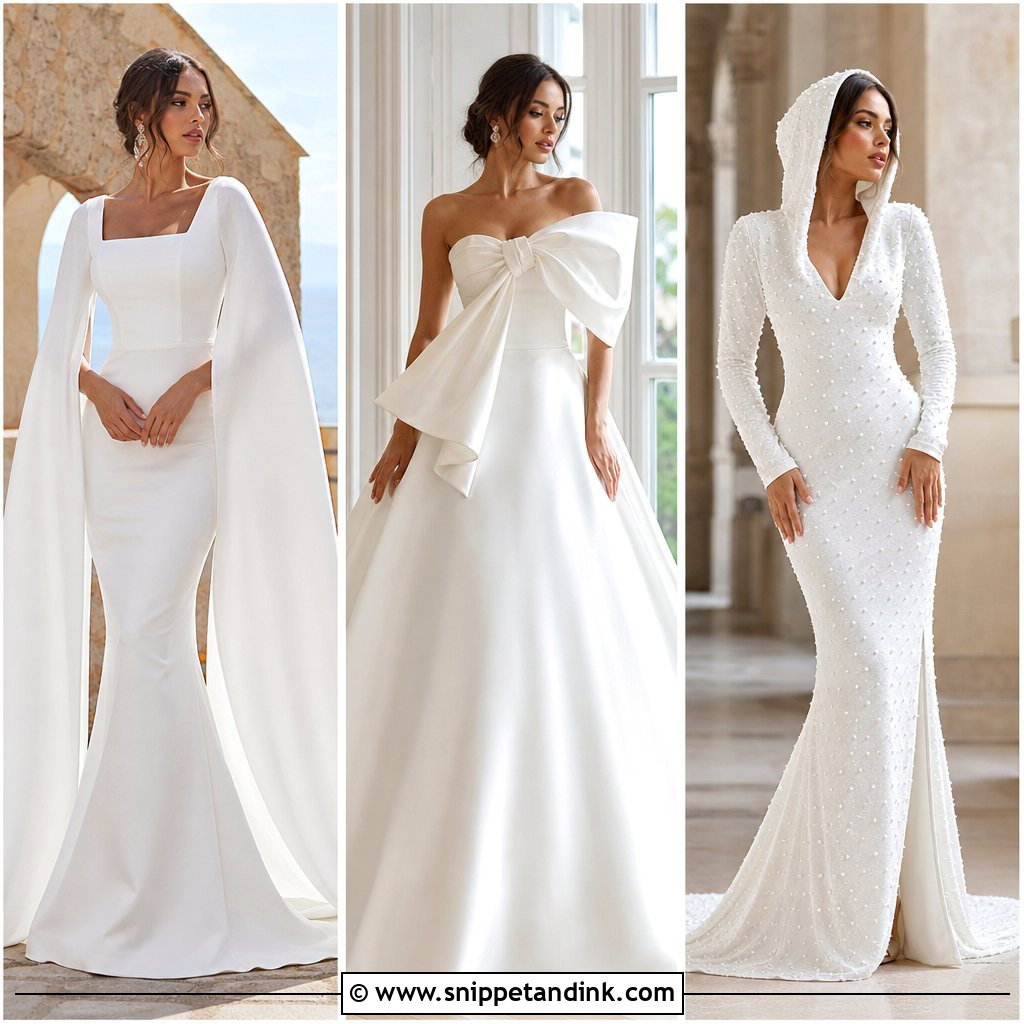
Separates solve a common fitting problem: plenty of brides are one size on top and another below, and a two-piece lets each half fit properly. A corset top with a satin skirt looks polished, a lace top over crepe is romantic, and a cropped top with a high-waist skirt feels fresh while covering most of the midriff. Raise your arms at the fitting to check the skirt waistband still meets the top. Simple heels and jewelry make the pairing look intentional.
21. Wedding Dress With Overskirt
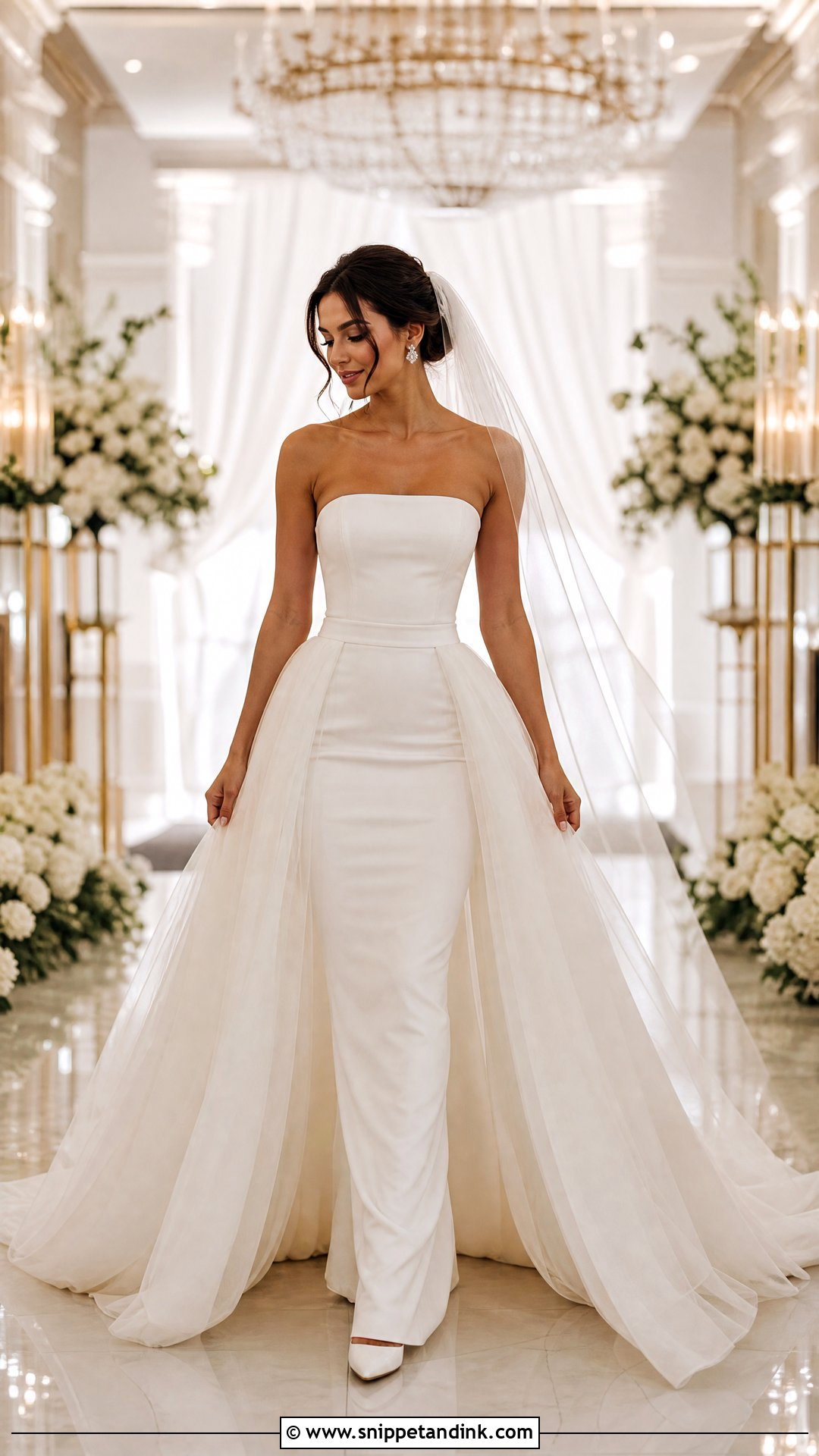
An overskirt gives you a grand ceremony silhouette and a slimmer dress for the reception. It works best over a fitted crepe, satin or lace base. Tulle overskirts feel airy; mikado or satin ones look structured. If the overskirt has volume, keep the base dress clean, with a simple veil and elegant heels. One fitting trap: the overskirt hides the base dress’s hem, so check both lengths separately.
22. Floral Applique Wedding Dress
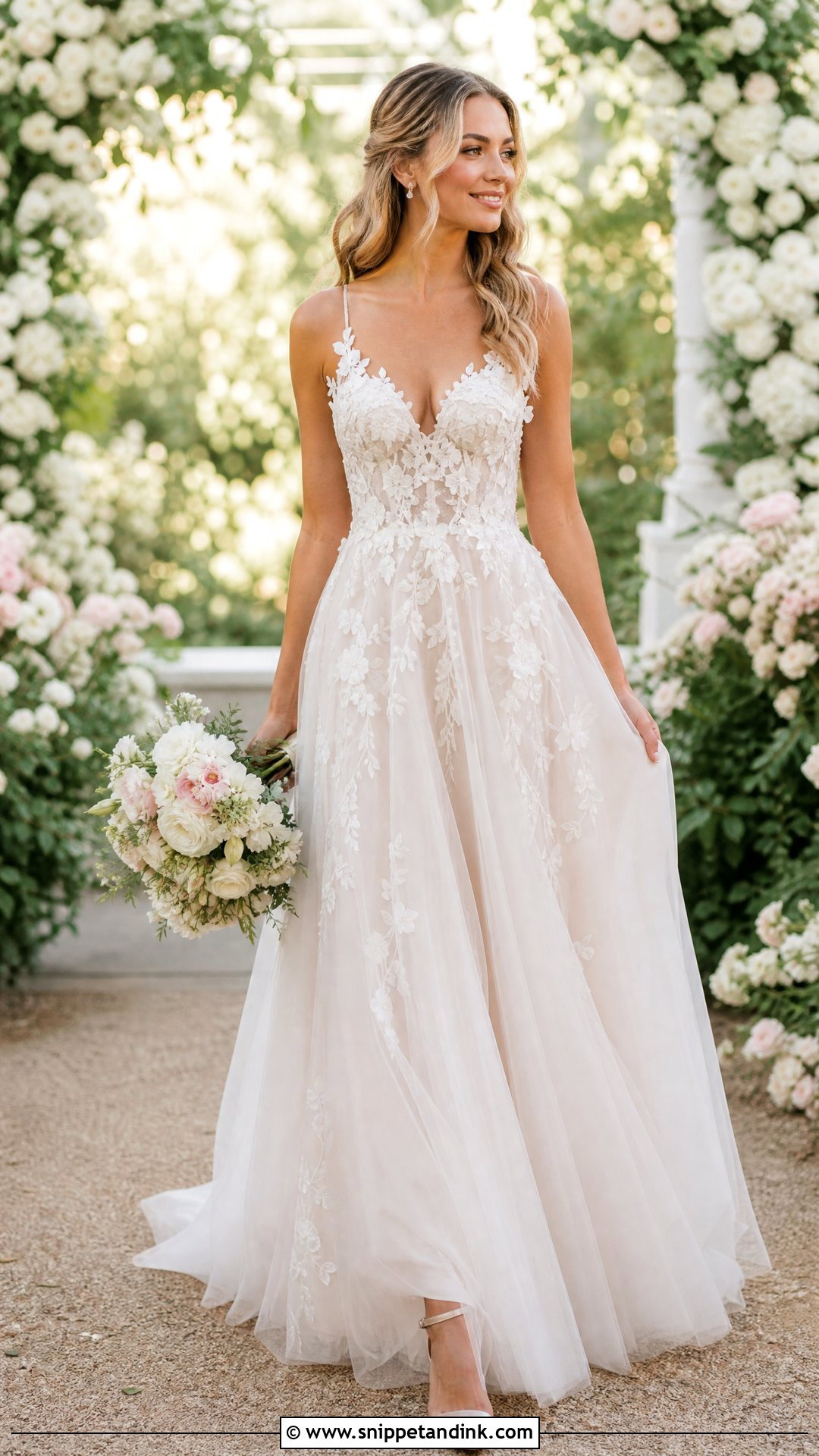
Appliques add dimension without relying on all-over lace. They can be scattered over tulle, placed along the bodice or layered on sleeves. For a modern feel I look for considered placement, clusters at the shoulder and hem rather than flowers everywhere. A fitted bodice with a flowing skirt reads romantic, while a sheer overlay feels dreamy. Delicate earrings, soft waves and neutral heels suit it, and a simple bouquet stops the two competing. Spring and summer garden weddings show it best.
23. One Shoulder Wedding Dress
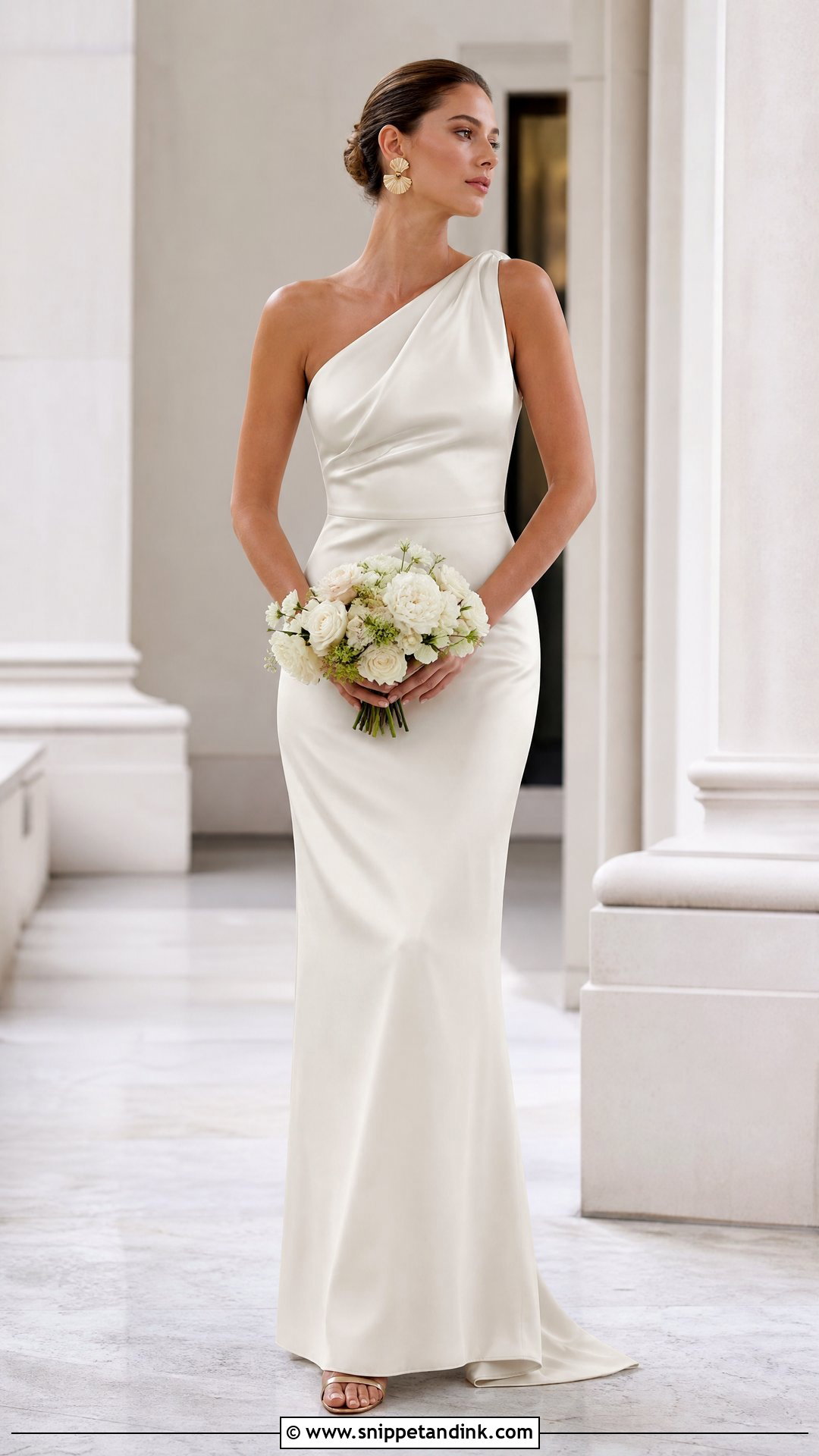
A one-shoulder neckline is simple without being plain, and satin, crepe or another structured fabric holds it best. The bare side needs internal support or silicone grip so it doesn’t creep. A column version feels sleek, and an A-line skirt softens it. Swap the necklace for earrings or a cuff bracelet, and sweep your hair toward the strap side or into a low bun. City, beach and modern indoor weddings suit it.
24. Cap Sleeve Wedding Dress
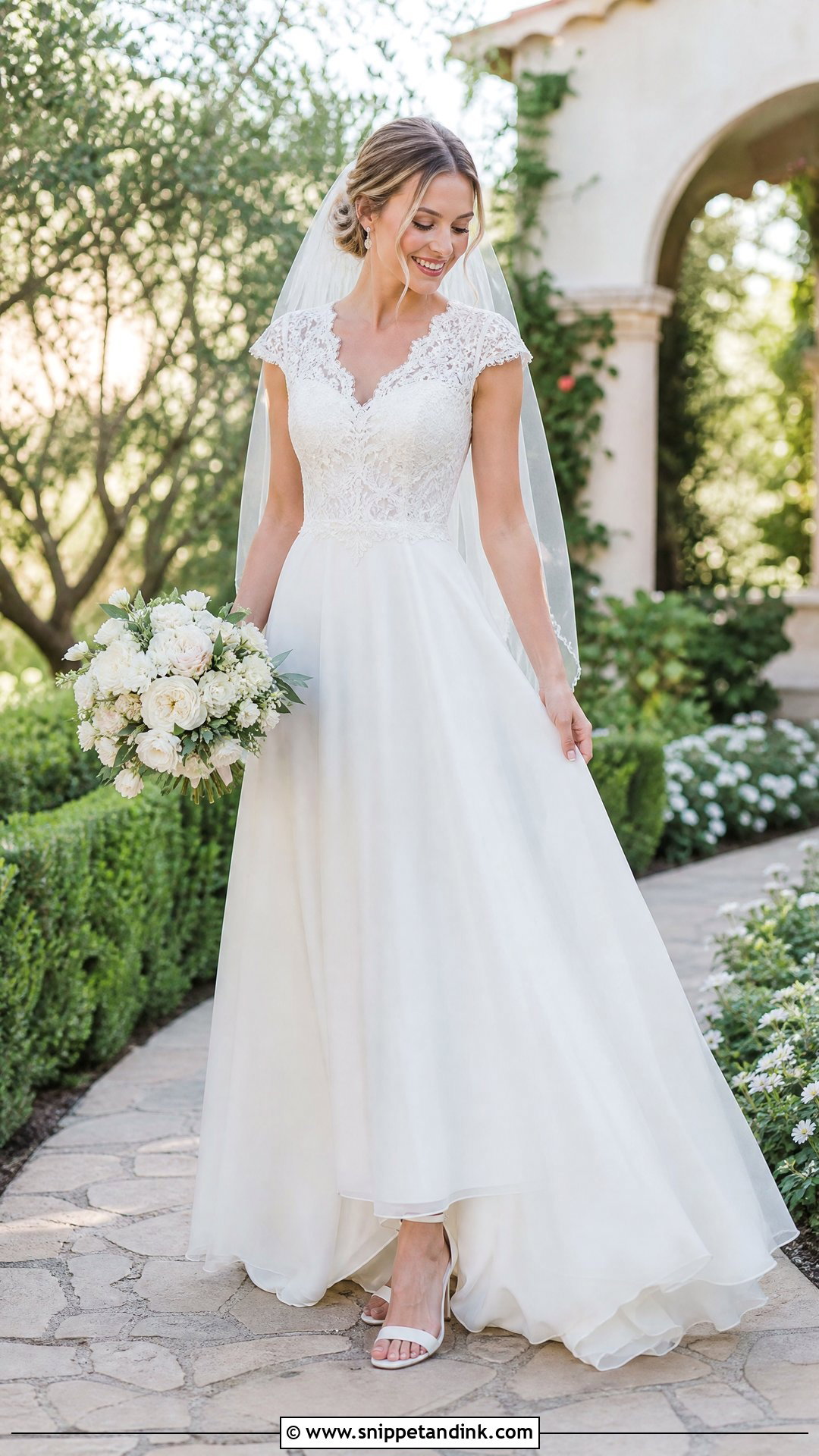
Cap sleeves give a little coverage and make a bodice feel secure without the weight of straps. Lace caps look romantic; satin or crepe look cleaner. Check that the cap sits at the edge of the shoulder rather than biting into the upper arm, which shows in every side-on photo. It works on A-line, sheath and fit-and-flare silhouettes. Dainty earrings, a soft veil and comfortable heels suit a bride who doesn’t want strapless but still wants an open neckline.


25. Low Back Wedding Dress
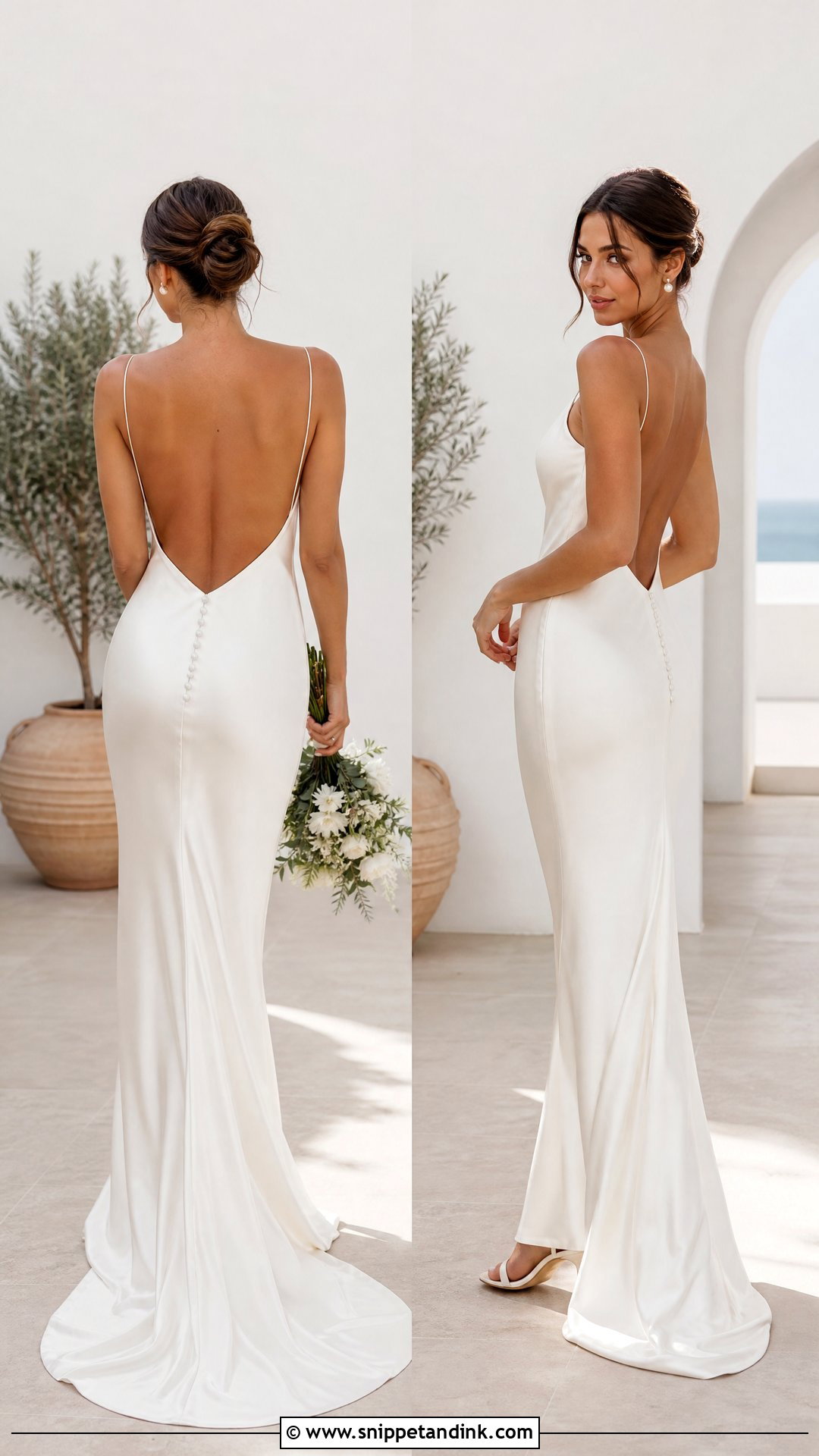
A low back keeps the front simple and puts the drama behind you. It suits slip dresses, crepe sheath gowns, lace dresses and satin columns. Security is the issue: the fit has to grip at the shoulders and waist, and very open backs usually need built-in cups since a normal bra won’t work. Do a deep bow at the fitting to see if the front gapes. An updo or side-swept hair keeps the back visible, and a plain veil adds softness without hiding it.
Who Takes Off the Overskirt, and Where Does It Go?
Several dresses here come apart: detachable sleeves, overskirts, bows, capes and trains. They’re a clever way to get two looks from one gown, but only when the change is planned.
- At your final fitting, have the person who’ll help you on the day remove each piece while you stand there. Snaps, hooks and buttons all behave differently, and practice turns a fumble into a minute.
- Ask the seamstress to mark hidden fastenings with a small coloured thread so they’re easy to find in a dim room.
- Decide whether you’ll detach or bustle. A train can usually be bustled in a few minutes in a corner; an overskirt takes longer and needs a private room.
- Bring a labelled garment bag for the removed pieces and hand it to someone who’ll take it home.
Time the change for a quiet moment, often between dinner and the first dance. And look at the base dress on its own at a fitting, because one that has only ever been seen under an overskirt sometimes needs its own hem adjustment.
The Dress That Still Feels Like You at Midnight
Think about how you want to feel, not how a dress looks on a hanger. A minimal satin gown fits a clean city wedding, a lace sleeve dress suits a romantic setting, and a short dress, two-piece or overskirt gown gives you comfort and flexibility. Try the necklines, fabrics, waist shapes and skirt volumes you didn’t expect to like. The right one photographs well, moves with you and still feels like you once the shoes come off.
You'll Like These Ideas:





Leave a Reply