
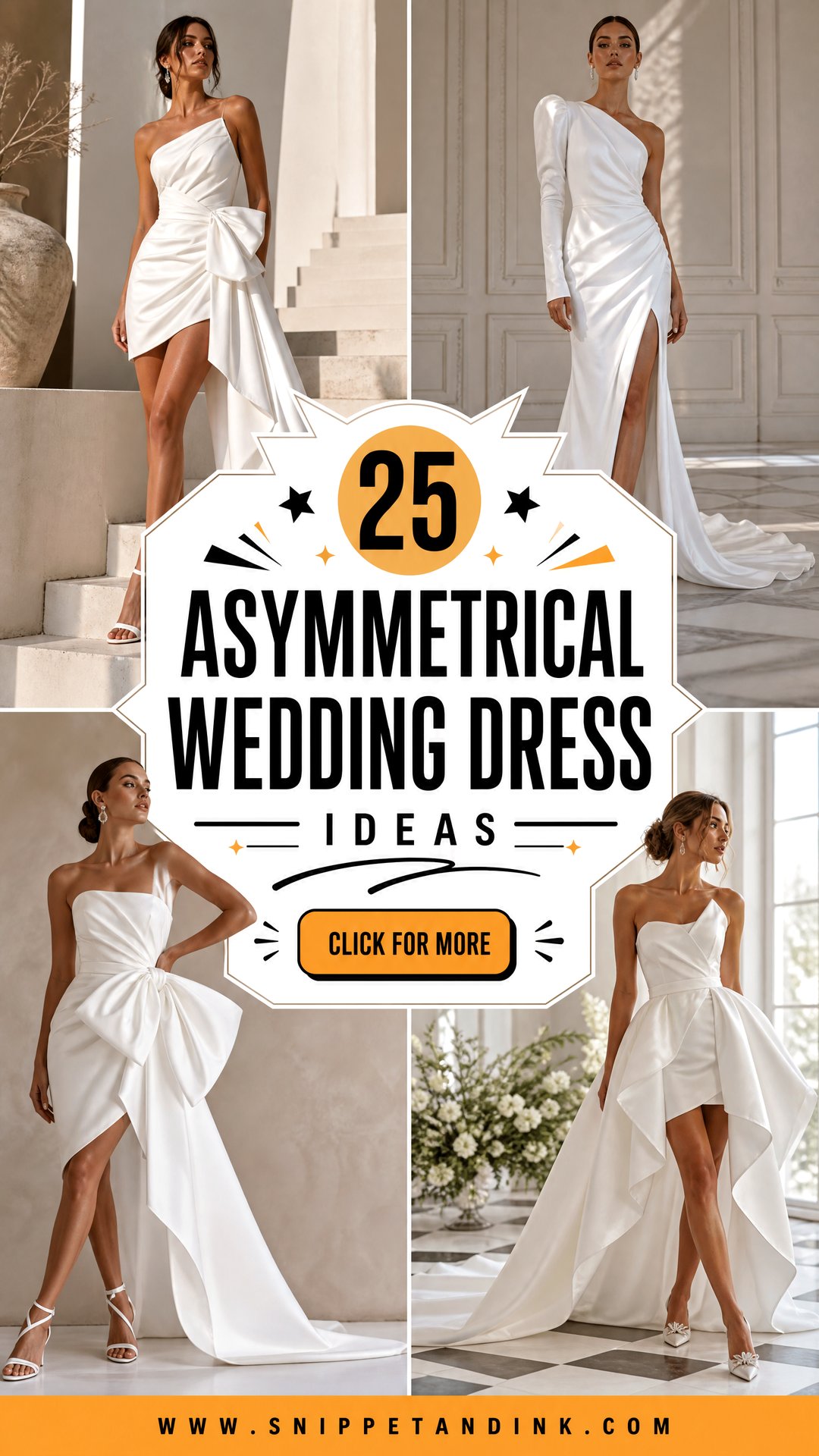
An uneven line is the quickest way I know to make a white dress look current. Instead of a neckline and hem that mirror each other, these gowns put the interest on one side: a single strap, a diagonal drape, a hem that rises on the left, an off-center bow. That one-sided detail can be quiet or loud, and the right amount depends far more on your frame and your venue than on any trend. Some of the ideas below are sleek enough for city hall, and a few lean toward a couture-inspired ball gown. I’ve added notes on how each one behaves once you’re actually wearing it, because asymmetry is the cut that surprises brides most in the fitting room.
Where the Diagonal Lands on Your Body
Every asymmetric dress draws a line across you, and the eye follows it. Before I pull anything from the rail, I look at where that line will start and finish on the bride in front of me, because the same one-shoulder gown can lengthen one woman and cut another in half.
Shoulders and bust
Broad or athletic shoulders usually look great in a one-shoulder cut, since the bare side breaks up their width. A fuller bust needs a strap wide enough to carry real support, or a built-in cup on the strapless side; a thin spaghetti strap on its own rarely holds through dancing.
Height and hips
Petite brides do well with a diagonal that runs from shoulder down toward the opposite hip, because it reads as one long line. Horizontal side bows and heavy hip draping can shorten a smaller frame. If you’d like to soften the hips, an angled seam that ends above them works better than drape sitting right on top.
One more check I always make: think about which side of you faces the guests during the ceremony. The detailed shoulder or the long side of the hem looks best turned toward them and the camera.
1. One Shoulder Asymmetrical Wedding Dress
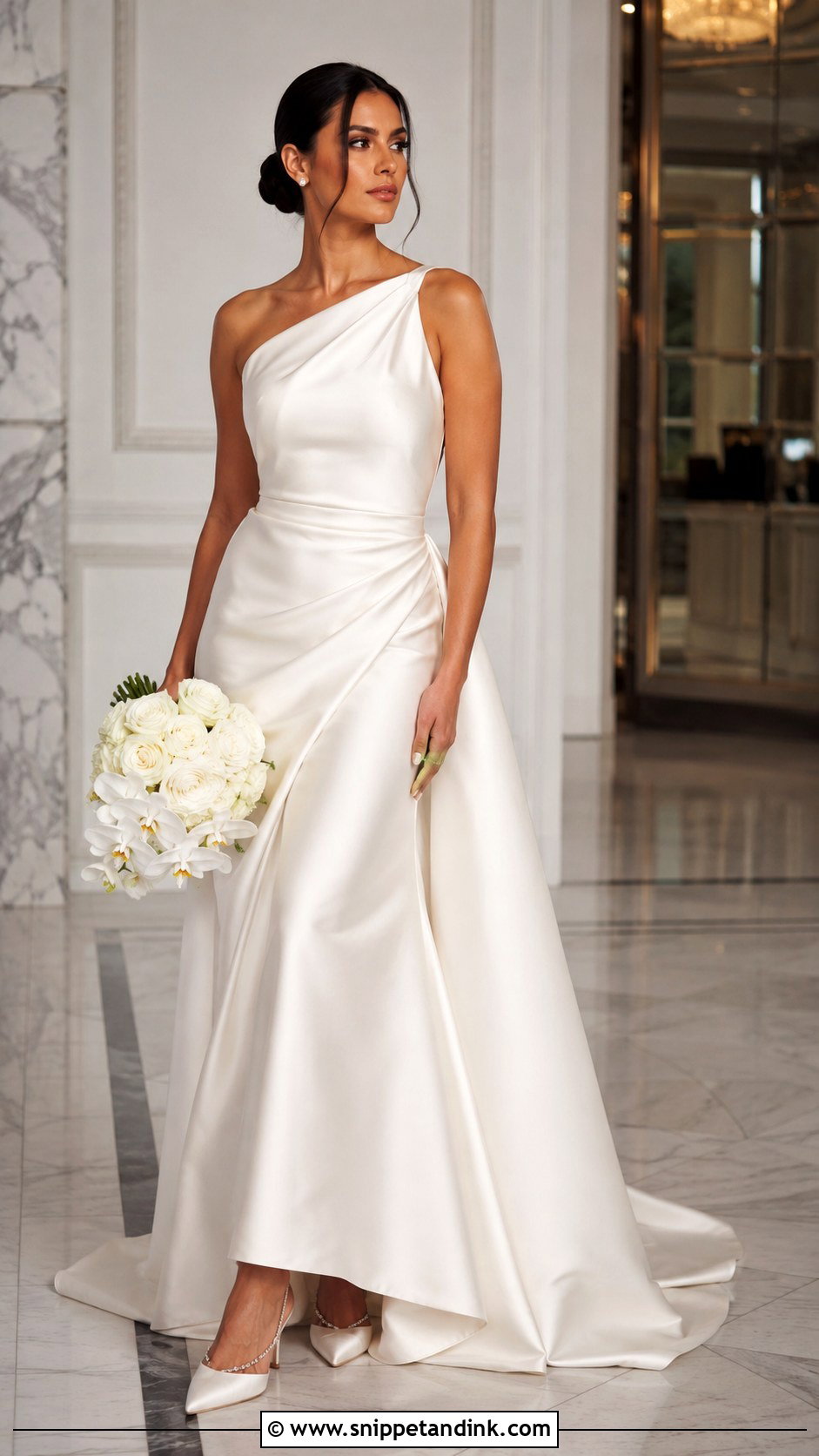
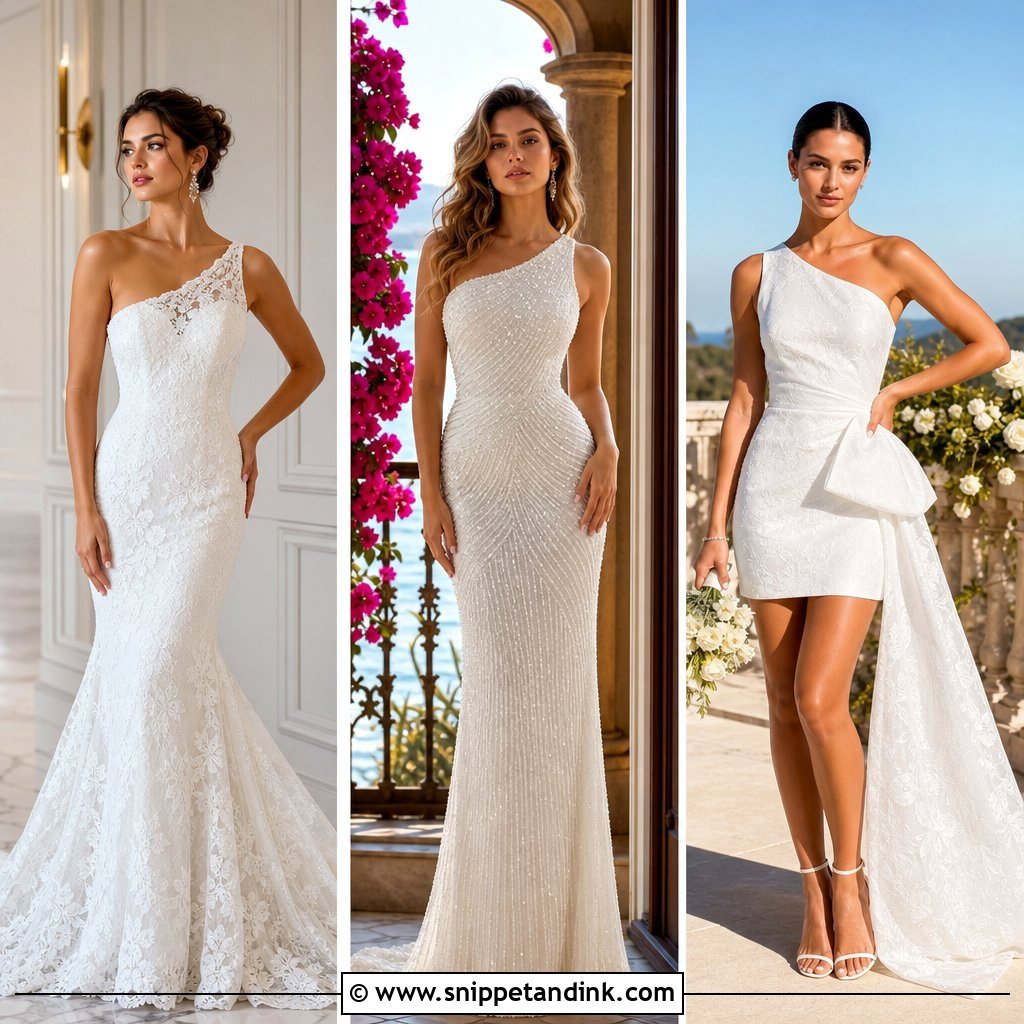
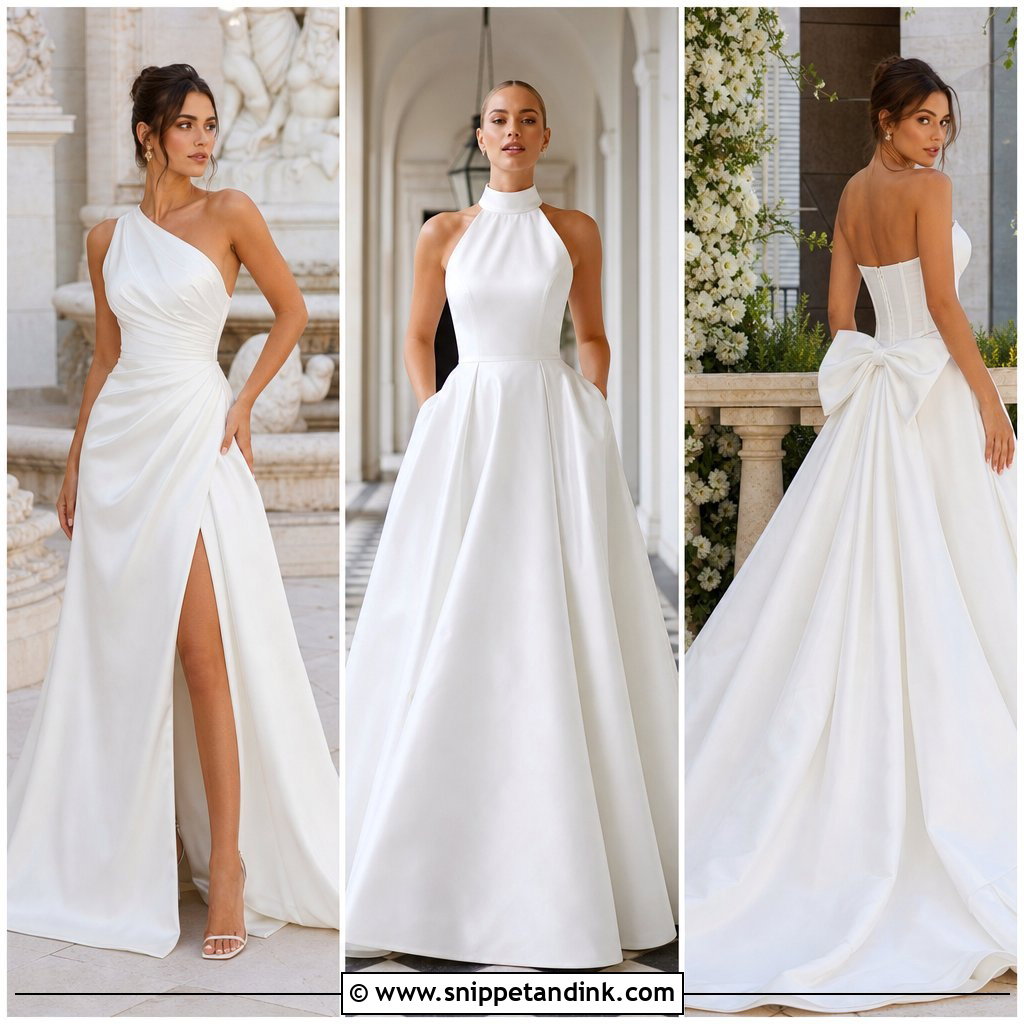
A one shoulder asymmetrical wedding dress is the version I suggest first to anyone curious about asymmetry, because it reads modern without dating quickly. That single strap carries more of the bodice’s weight than you’d expect, so at the first fitting I check that it sits in the natural groove of the shoulder and doesn’t creep toward the neck when you lift your arms. Satin and crepe hold the clean diagonal best; chiffon softens it. Skip the necklace. The neckline is already doing that job.
2. High Low Asymmetrical Wedding Dress
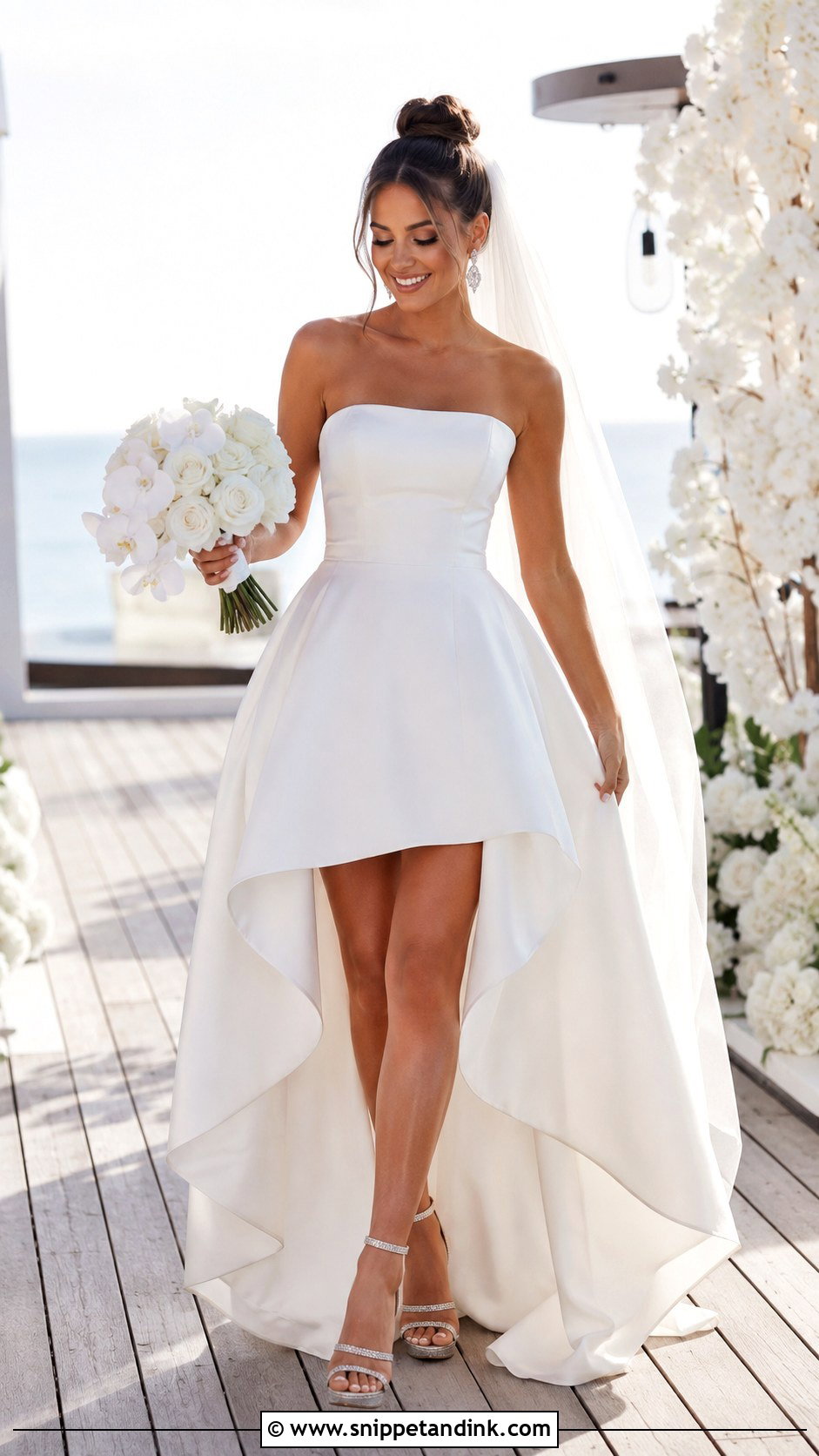
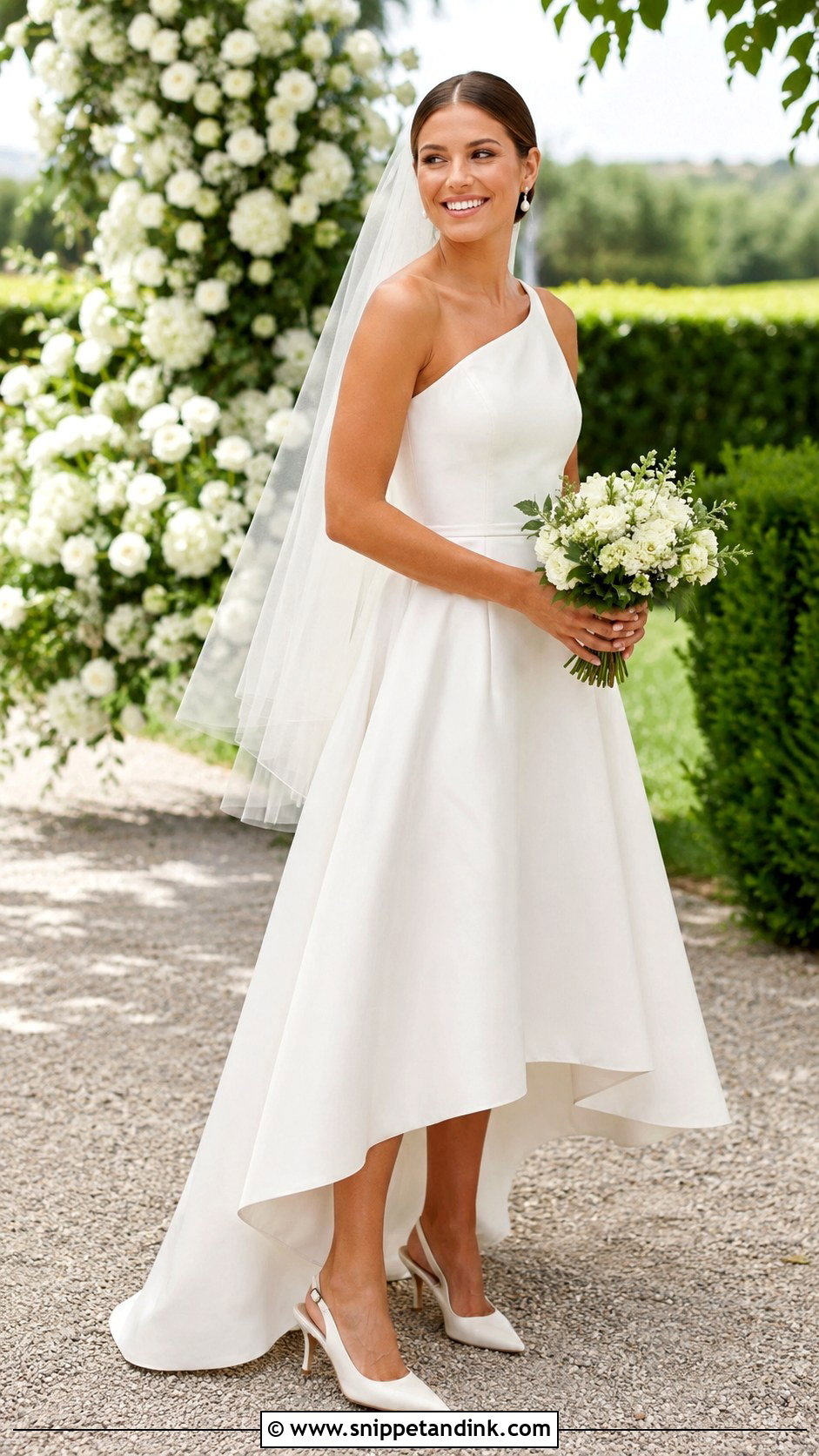
High-low hems are the most practical shape on this list. The shorter front lets you walk, climb steps and dance without bunching fabric in your fist, and the longer back still gives the aisle a proper sweep. The catch is that your shoes and ankles are now part of the dress. I ask brides to bring their actual wedding shoes to every fitting, because a change of even an inch in heel height visibly moves the front hem. A fitted bodice stops the uneven skirt from looking unfinished, and the shape suits outdoor ceremonies and elopements especially well.
3. Asymmetrical Satin Wedding Dress
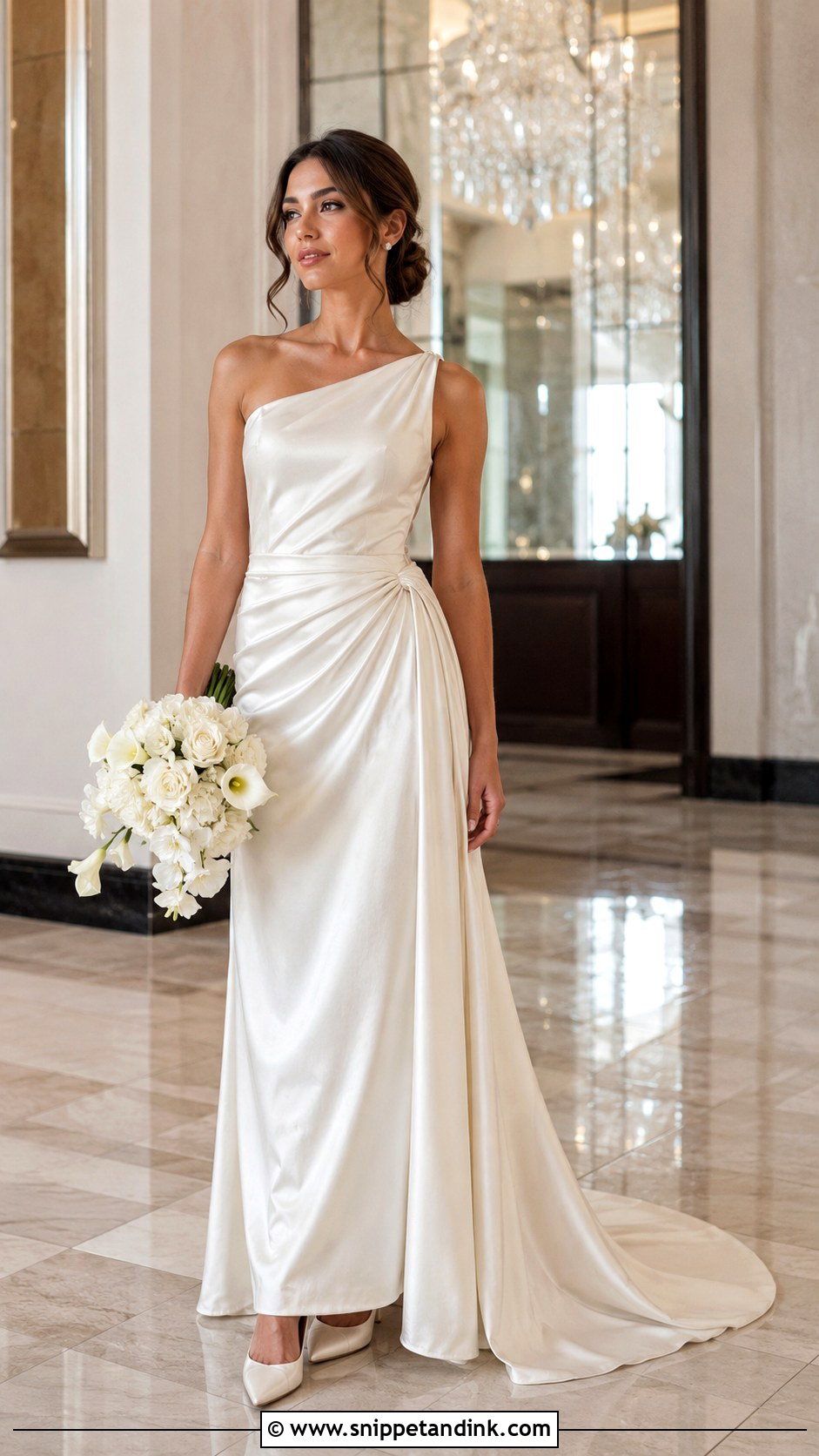
Satin is unforgiving and honest at the same time. It reflects light along every angled seam and twisted strap, so asymmetric construction shows up clearly in photos, but it also shows every pull line where the fit is off. When I fit a satin gown with a slanted neckline, most of my time goes on the side without a strap, since that’s where the fabric wants to gape. Done properly, it looks expensive with no beading at all. If there’s a side train, keep the veil plain and sheer.
4. Asymmetrical Lace Wedding Dress
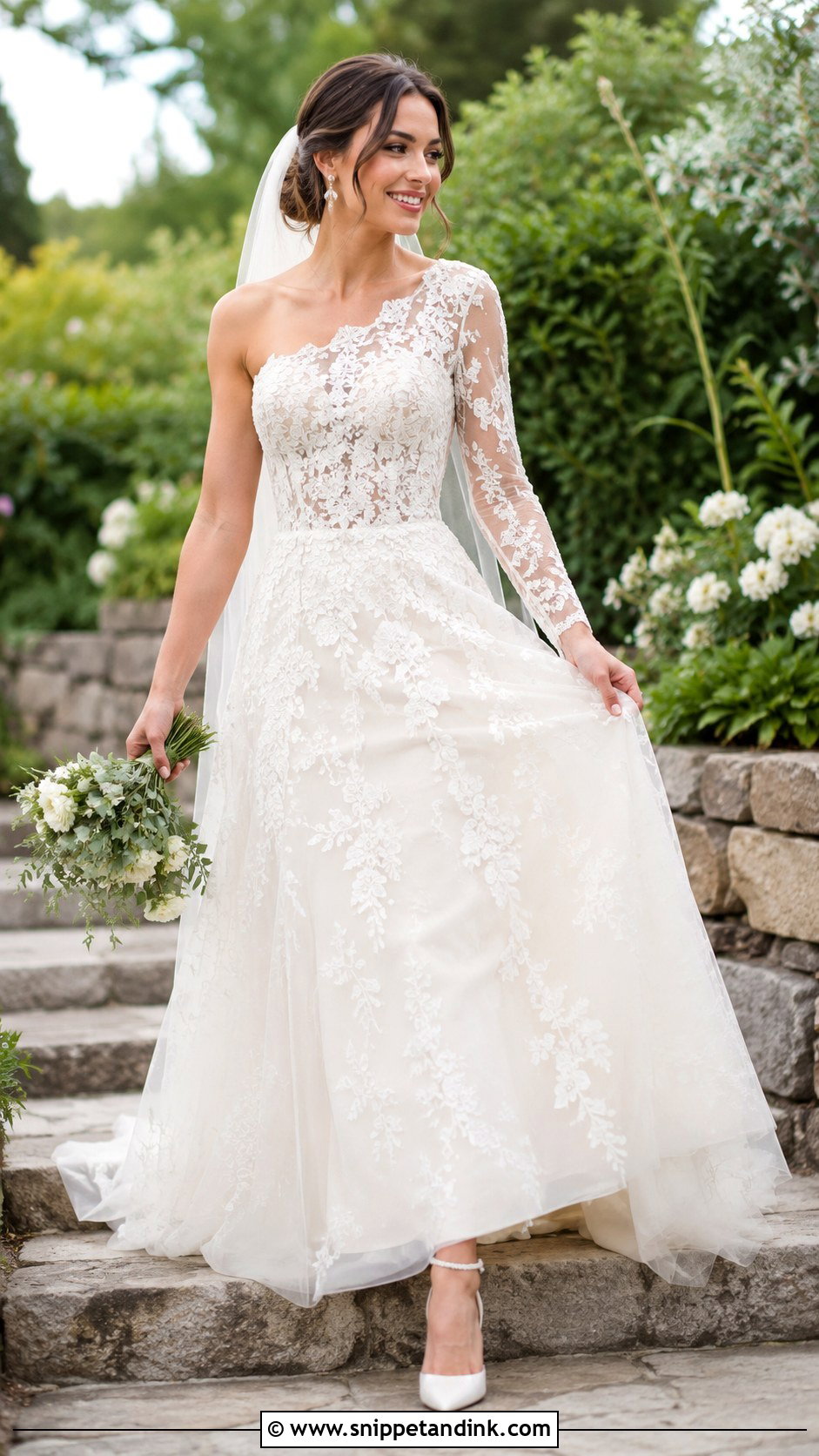
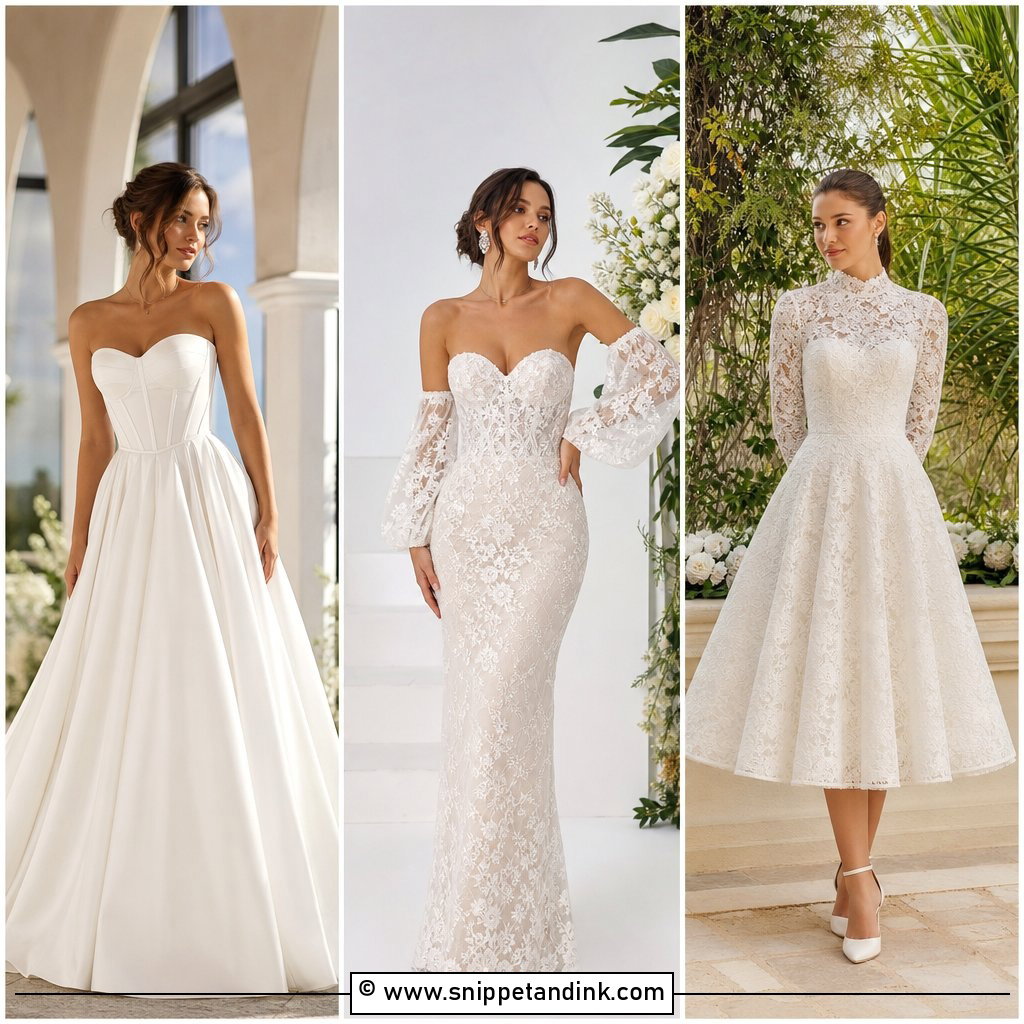
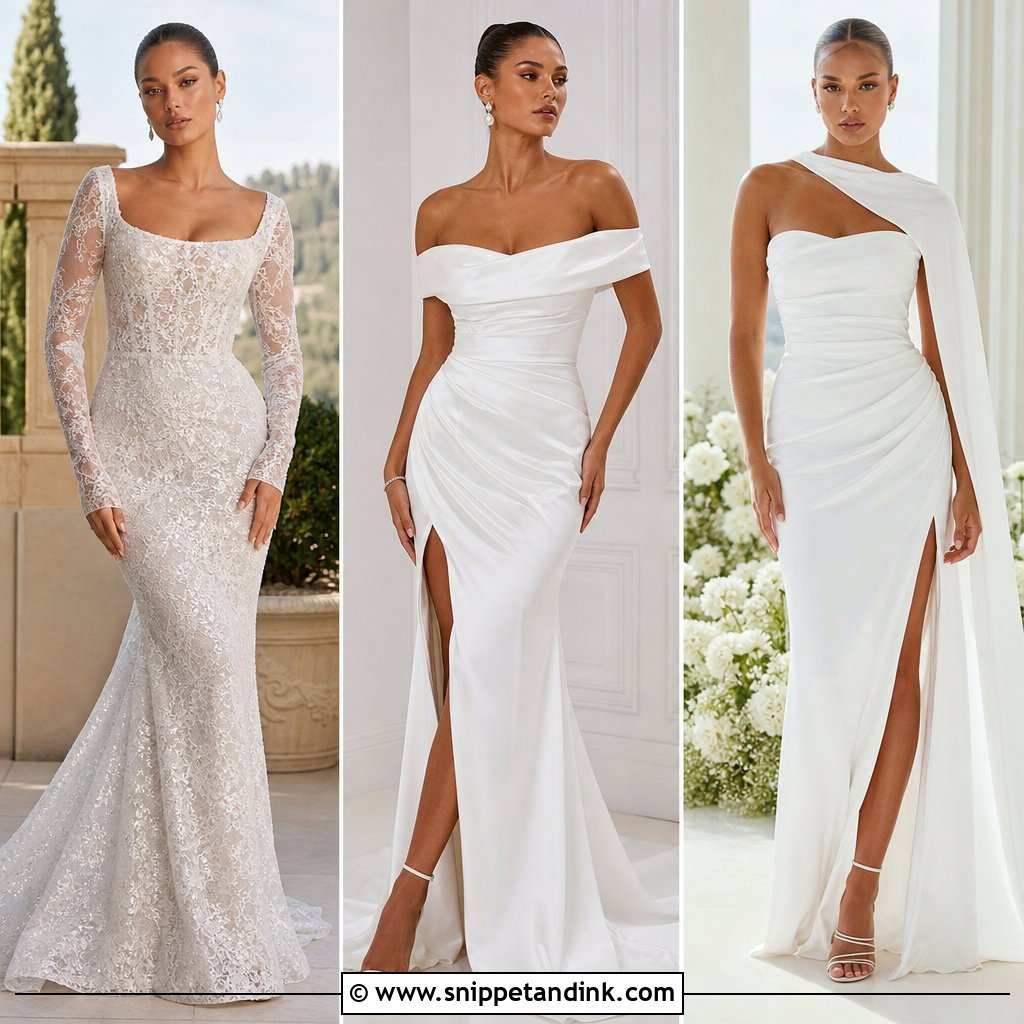
Lace on an uneven neckline takes the edge off a fabric that can otherwise feel very traditional. A single lace sleeve, a diagonal run of appliqué or a lace bodice falling into a plain skirt all work. One thing to know before you fall for it: when a seamstress alters lace, she often has to lift and reposition the motifs by hand, so an asymmetric lace bodice can take longer to adjust than a plain one. Garden and estate venues suit it. If the lace pattern is busy, let the veil and shoes stay quiet.
5. Asymmetrical Tulle Wedding Dress
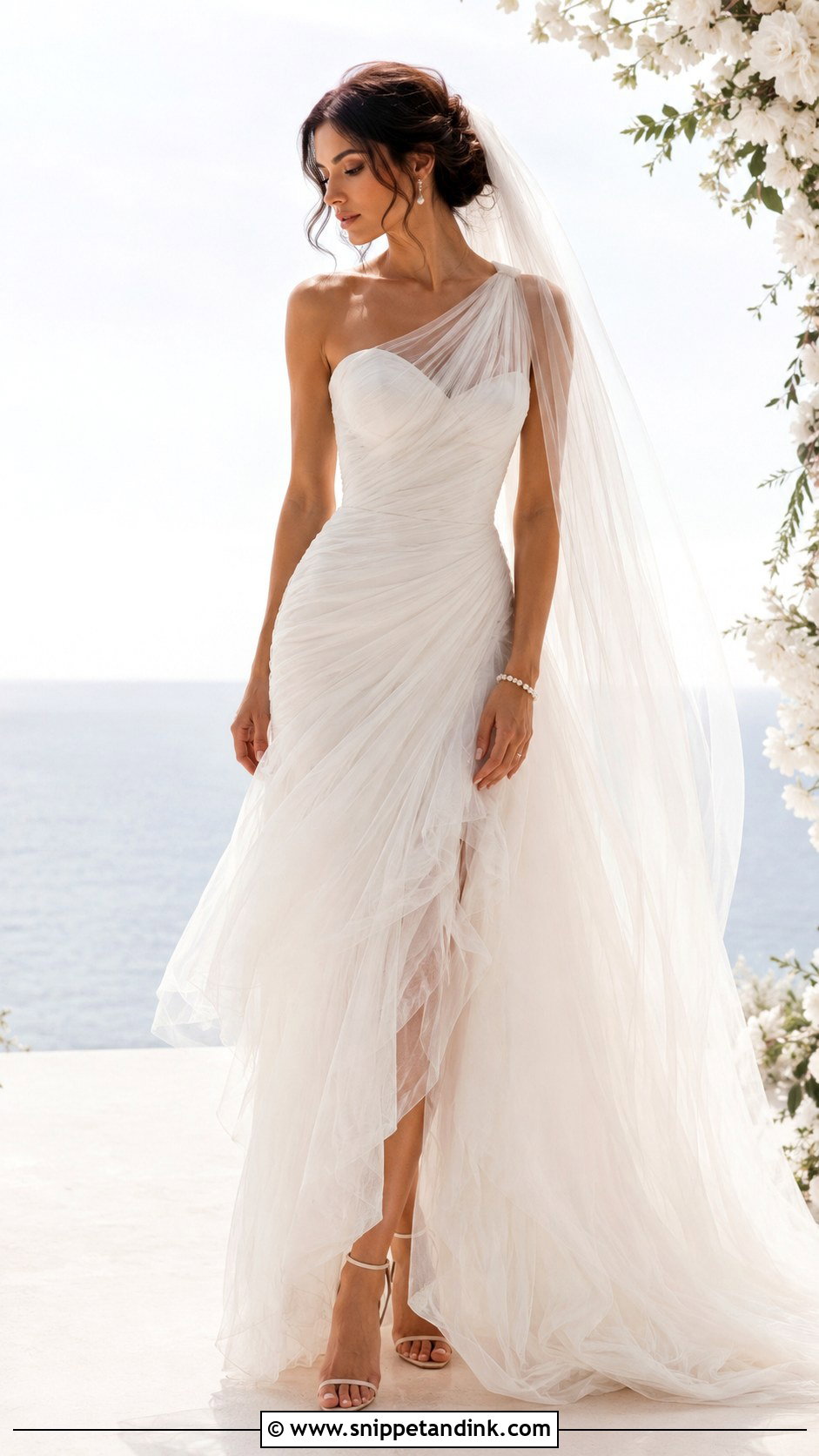
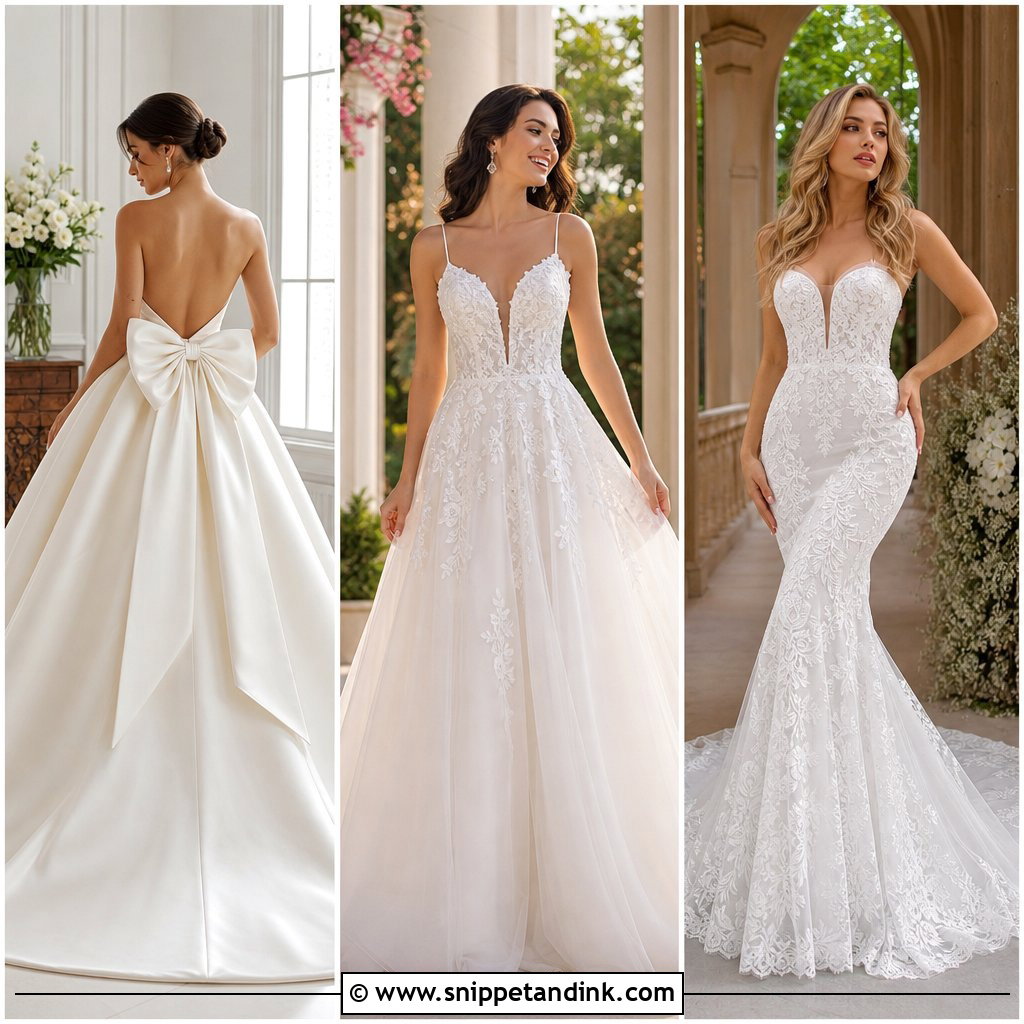
Tulle is the fabric I reach for when a bride wants volume without weight. Because it floats, uneven tiers and angled overskirts look airy instead of heavy, and you avoid the stiffness of a structured ball gown. A fitted bodice with a diagonal tulle overlay defines the waist neatly. Be aware that tulle snags on rough stone, rattan chairs and bouquet wire, so I warn brides at rustic venues to walk the route in the dress if they can.
6. Asymmetrical Mermaid Wedding Dress
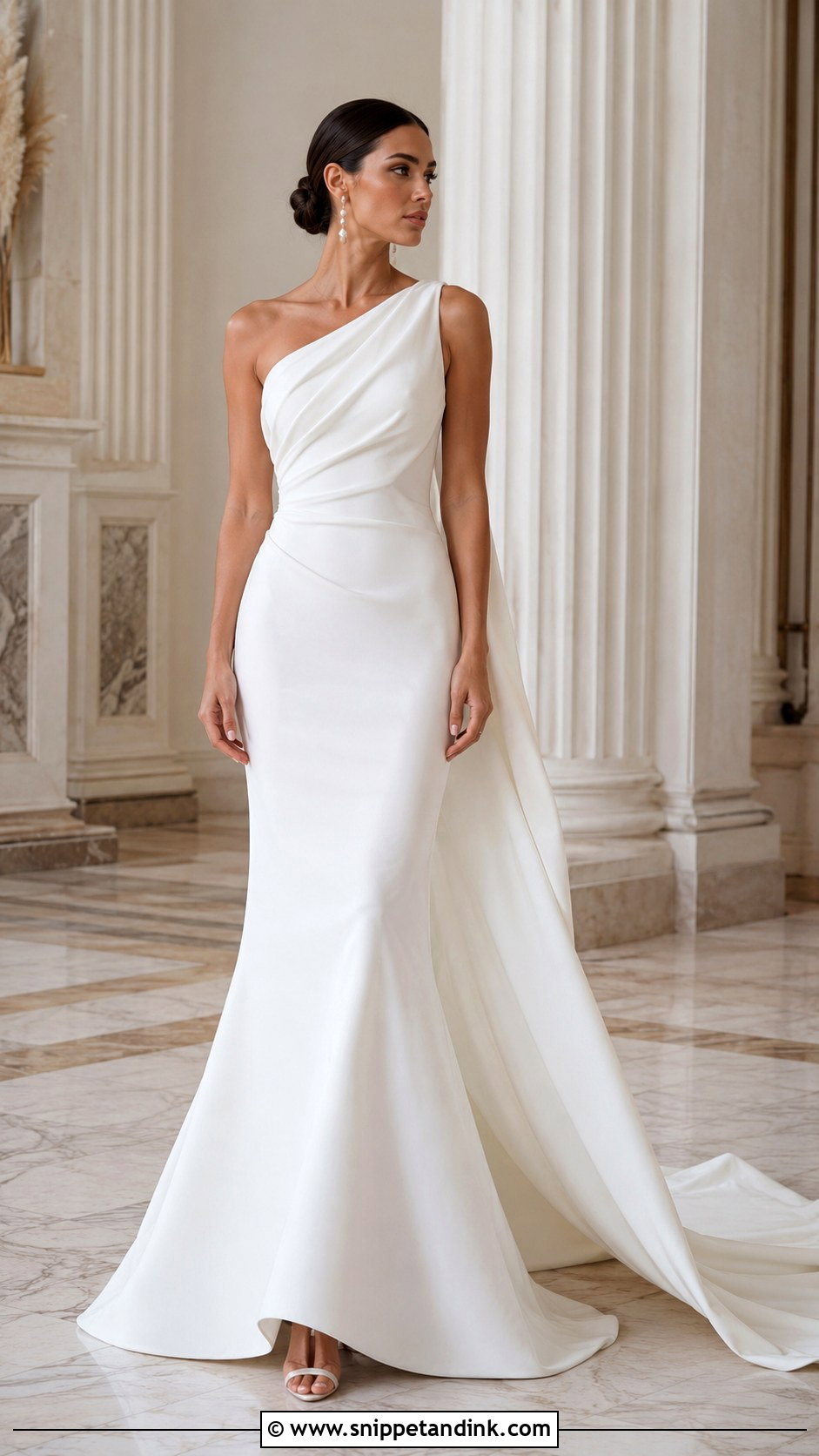
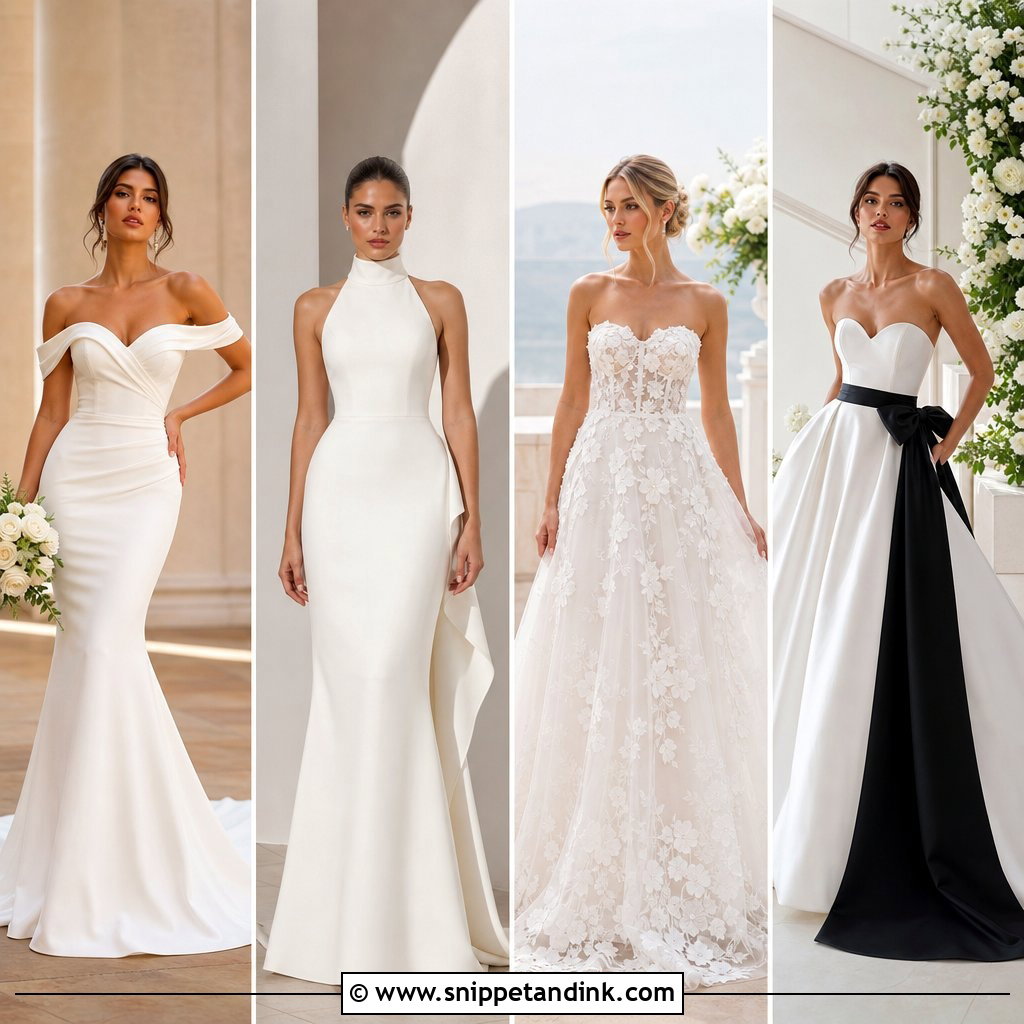
Mermaid gowns are already demanding, and adding asymmetry makes the fit even more exact. An angled neckline breaks up the very fitted, dramatic hourglass shape so it looks considered from the side as well as the front. I only recommend this cut in crepe, satin or stretch mikado, since soft fabrics collapse at the knee flare. Sit down in it at the fitting. If you can’t sit comfortably, the flare point needs to drop. A detachable tulle overskirt is a sensible way to soften it for the ceremony.
7. Asymmetrical A Line Wedding Dress
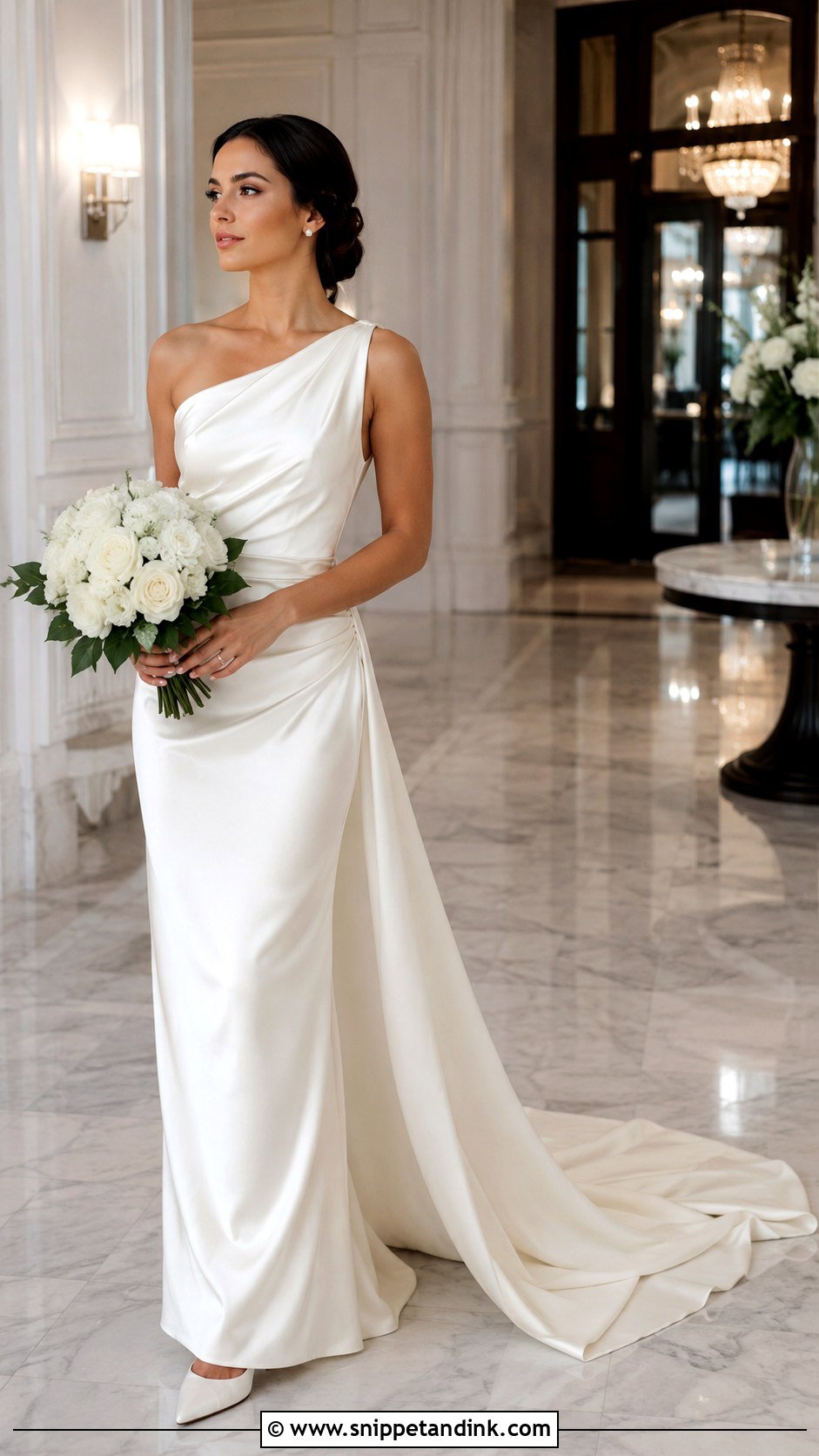
Of everything here, the asymmetrical A-line is the one I see brides wear most comfortably from the first look to the last dance. The skirt skims away from the waist, so all the interest stays up top in a diagonal bodice or an off-center drape. It suits a wide range of figures because the skirt doesn’t cling anywhere. Smooth crepe keeps it modern. Pick jewelry that follows the angle of the neckline instead of fighting it.
8. Asymmetrical Ball Gown Wedding Dress
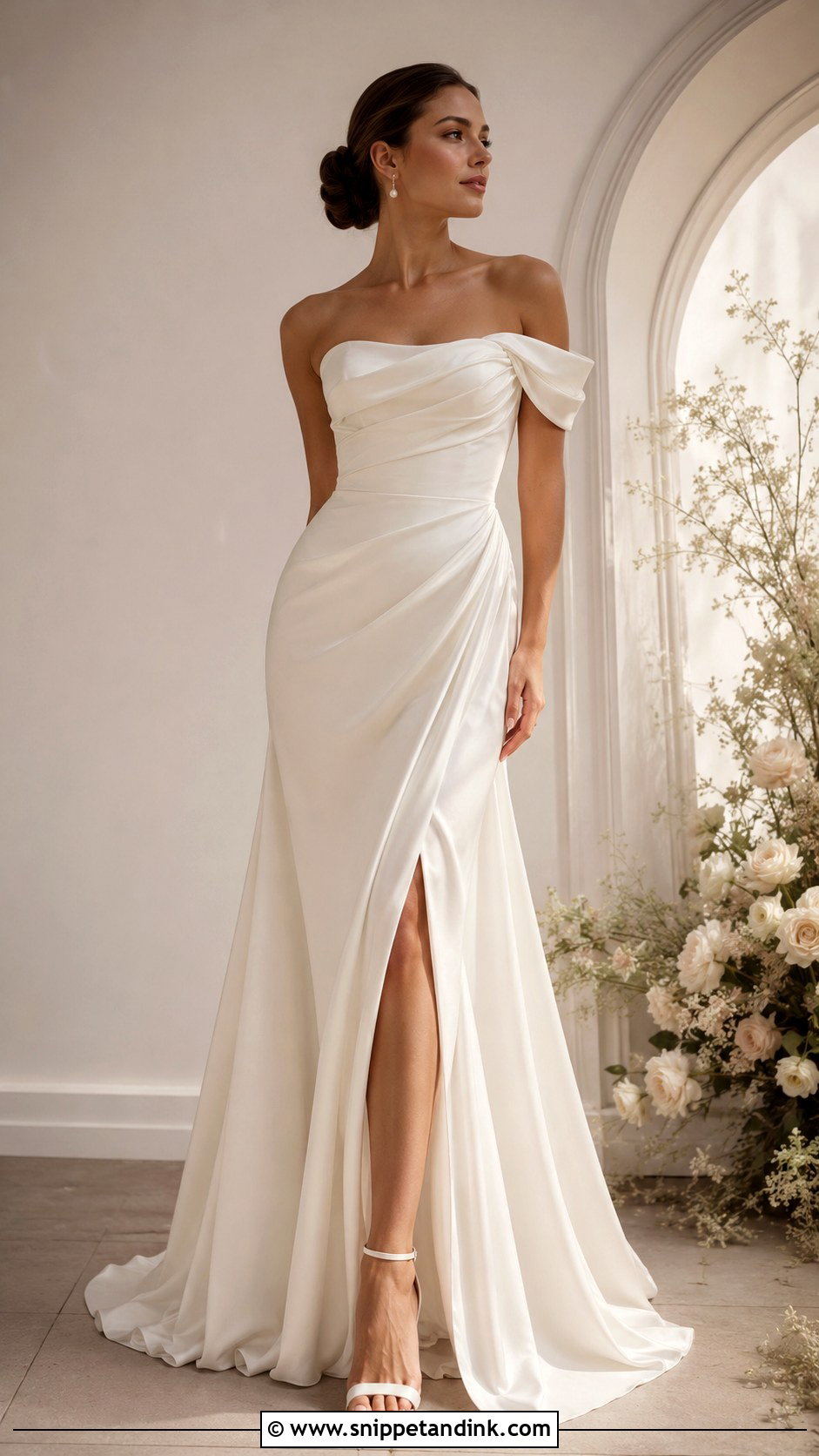
Volume plus asymmetry is a big statement, so the structure underneath has to be sound. An off-center bow, a slanted bodice or uneven skirt layers on a ball gown need mikado, organza or heavy satin to hold their shape; a soft fabric simply slumps on one side. I keep the waist sharply defined so the volume looks deliberate. A long veil can look grand, but if it covers the sculpted side of the gown, you’ve hidden the reason you chose it.
9. Asymmetrical Off Shoulder Wedding Dress
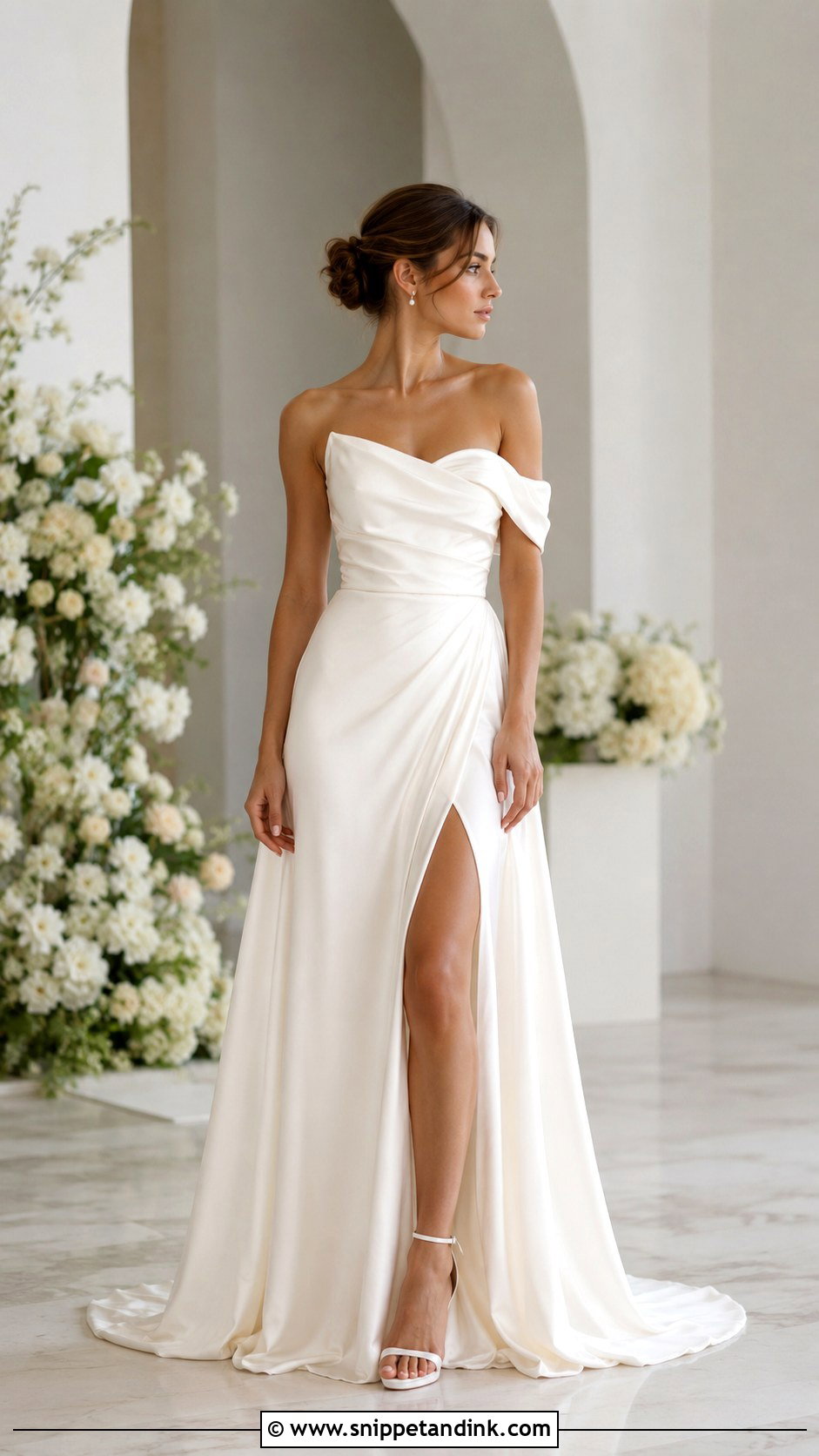
With an asymmetric off-shoulder neckline, one sleeve usually sits lower or folds across the body while the other stays higher. It frames the collarbone well. The trade-off nobody mentions in the shop is movement: off-shoulder sleeves limit how high you can raise your arms, so try a hug and a pretend bouquet toss in the fitting room before you commit. Crepe and satin keep the fold crisp, and swept-back hair with medium earrings shows it off best.
10. Asymmetrical Ruffle Wedding Dress
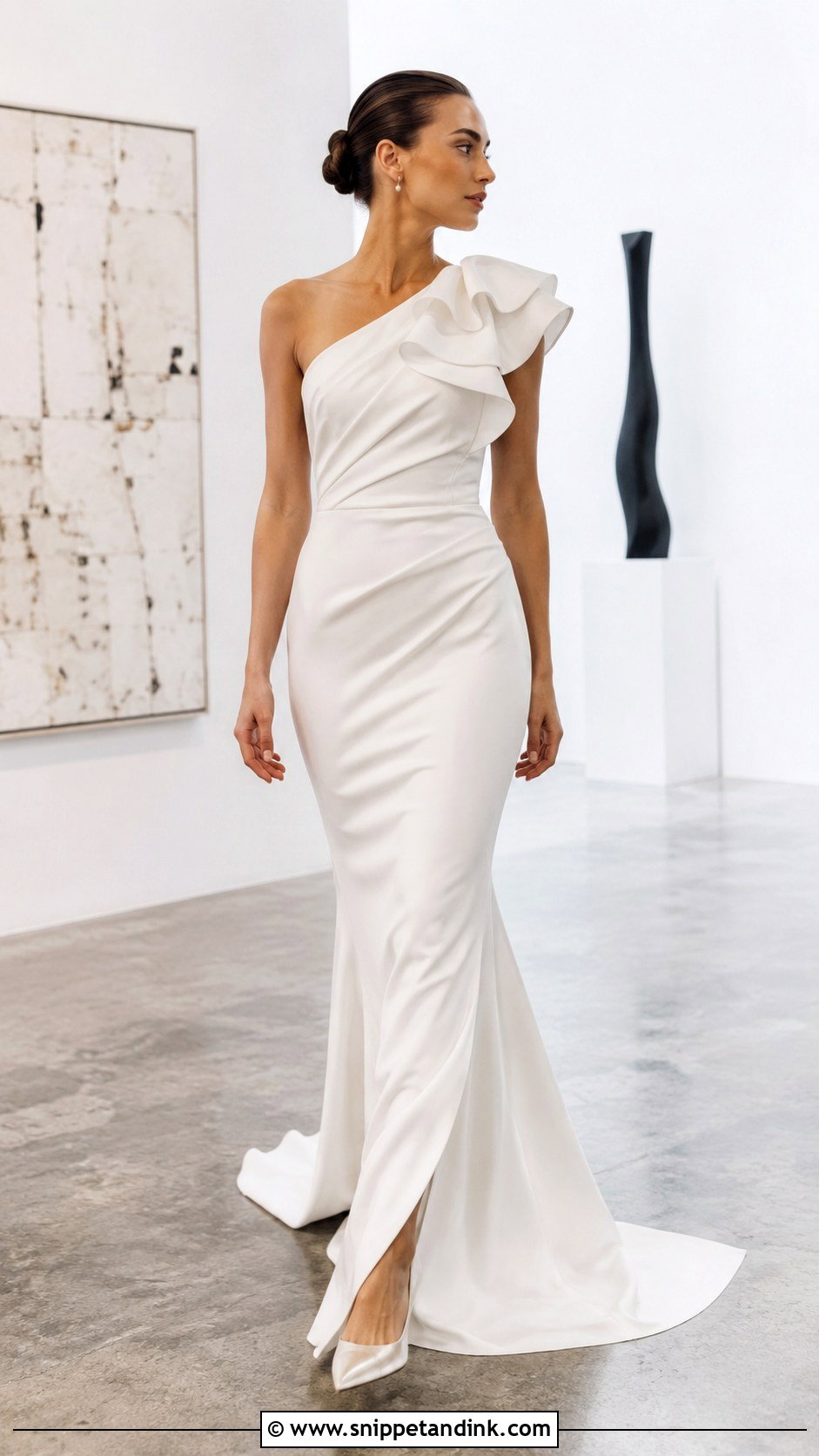
A single ruffle carries a lot of weight in a design. On one shoulder or cascading down one side, it gives personality without any sparkle, but only if the rest of the dress stays clean. Fabric decides the mood. Organza ruffles stand up and look sculptural, while chiffon ruffles go limp in humidity, which matters for a summer outdoor wedding. Smooth hair or a neat bun keeps the volume near your face from crowding it.
11. Asymmetrical Draped Wedding Dress
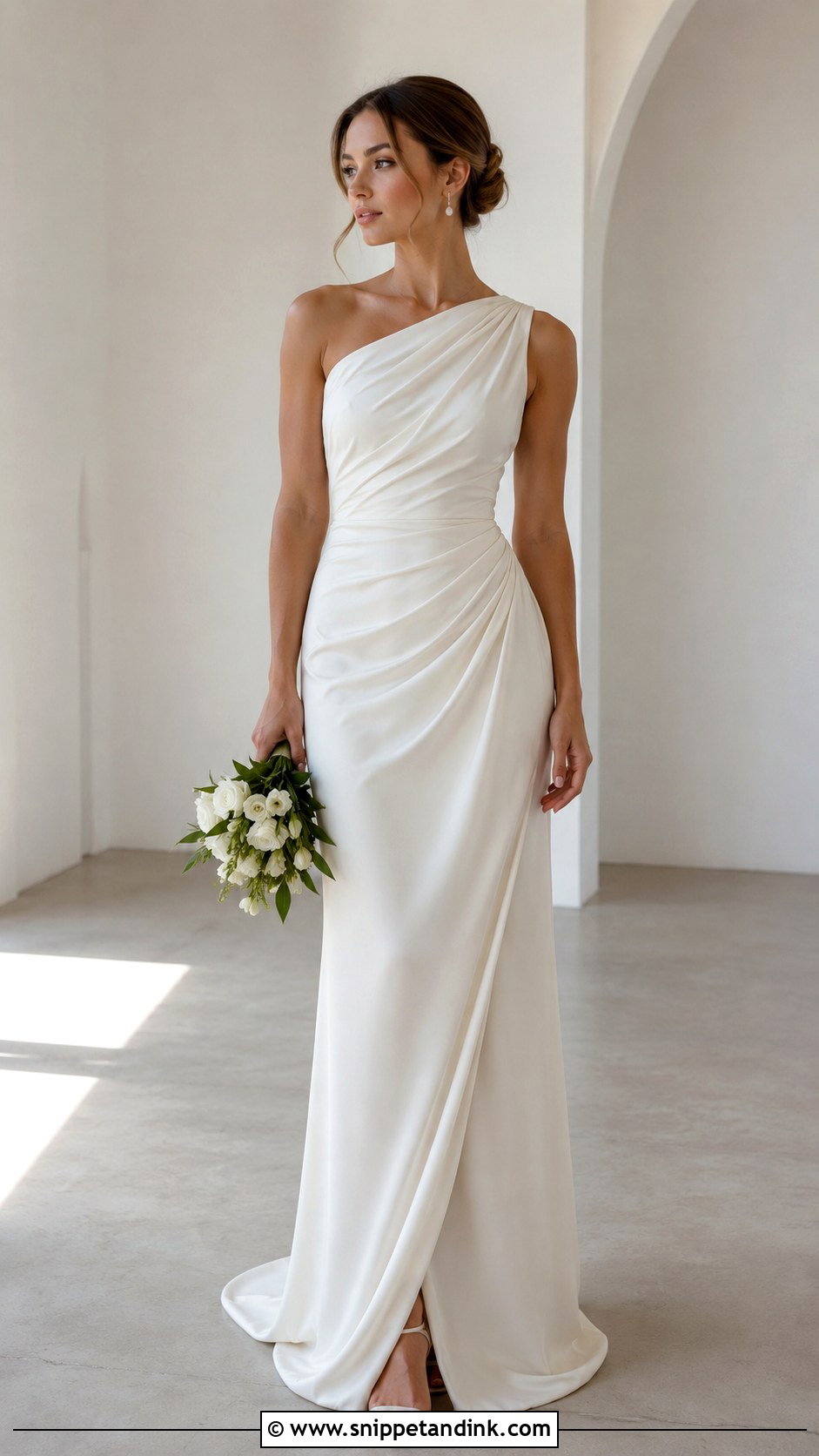
Draping is where I see the biggest gap between a well-made dress and a cheap one. Fabric wrapped or gathered at an angle across the body can define the waist without boning, which is why so many brides find it flattering. Crepe, satin, charmeuse and chiffon all drape well, but the gathers need to be stitched down at intervals or they drift over the course of the day. If the drape sits at the hip or waist, skip the belt entirely and let the folds do the shaping.
12. Asymmetrical Neckline Wedding Dress
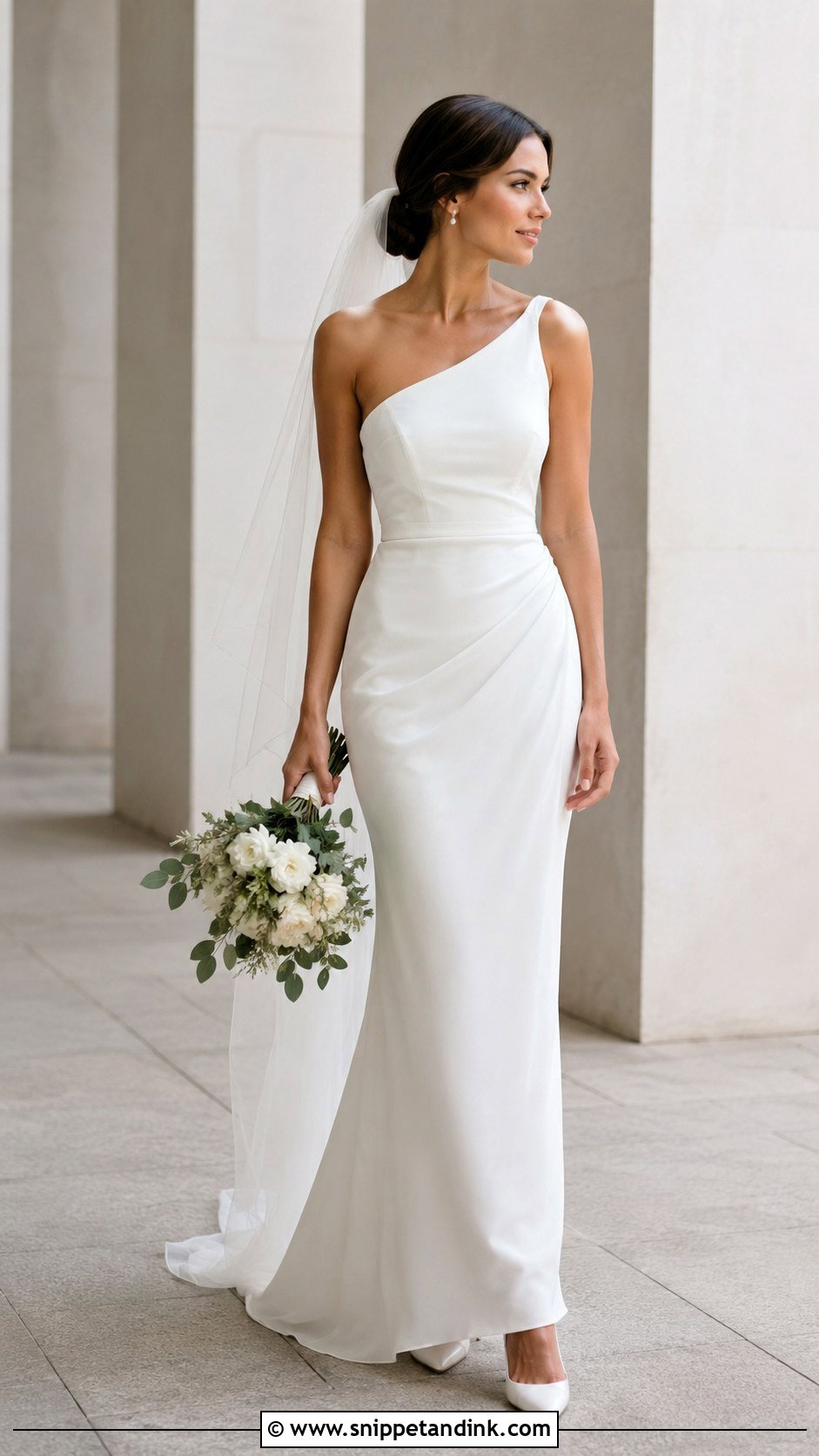
An asymmetrical neckline wedding dress puts the interest right beside your face, which is why it holds up so well in close portraits. The line might run from one shoulder across to the opposite side, curve unevenly or leave one shoulder fully bare. Sharp, architectural necklines want sleek hair and almost no jewelry, while soft draped ones can take loose waves. Ask for a veil that attaches behind the crown rather than on top, so it doesn’t fall across the neckline.
13. Asymmetrical Hem Wedding Dress
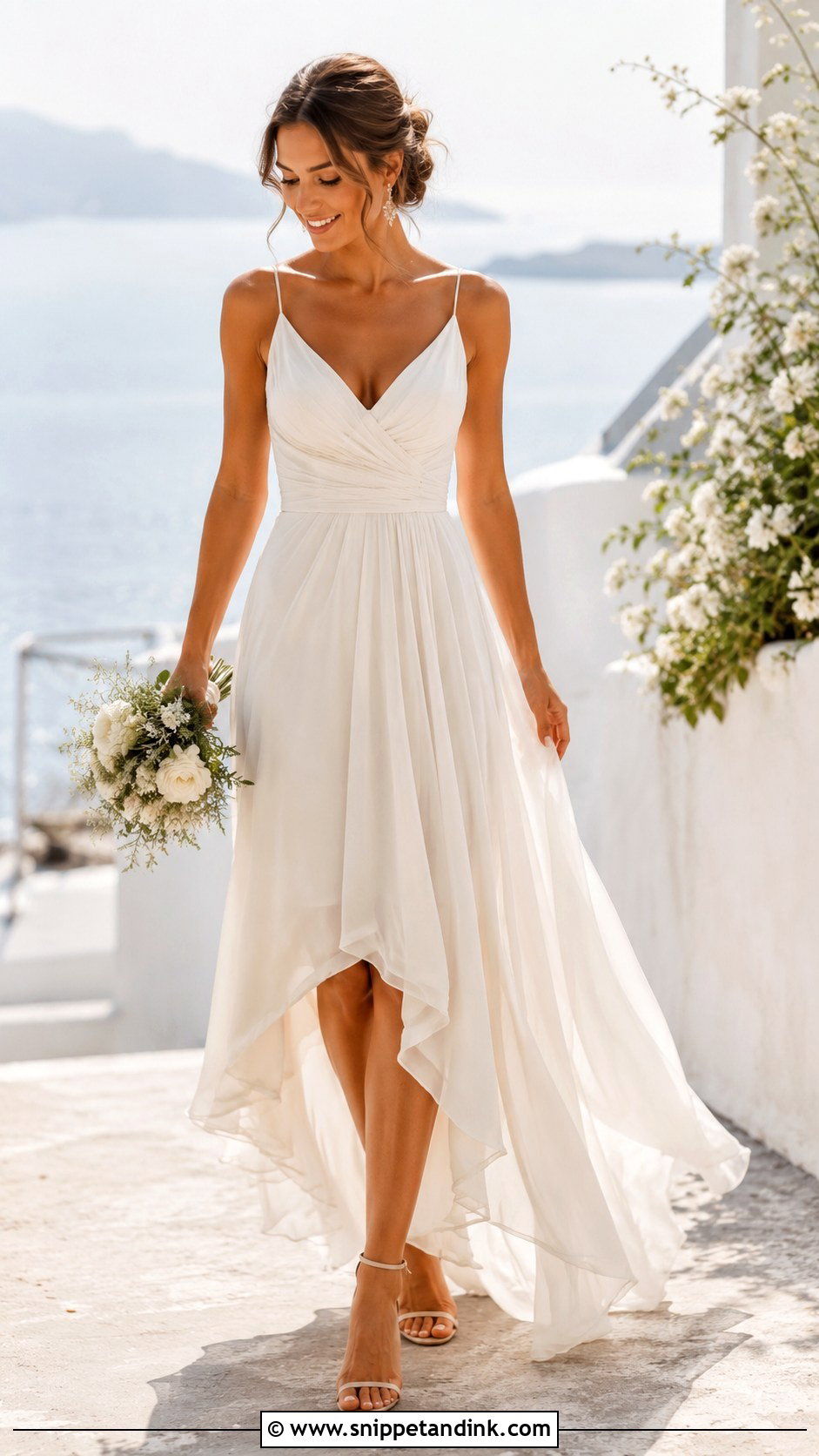
Unlike a straightforward high-low, an asymmetrical hem dips to one side or sweeps on a diagonal, sometimes revealing one leg as you walk. It’s lively in candid photos. My practical warning is about hemming: a diagonal hem in chiffon or organza is cut and finished as a long curve, so shortening it is not a quick job and should be booked early. Keep the bodice fitted so the movement below has something to balance against.
14. Asymmetrical Slip Wedding Dress
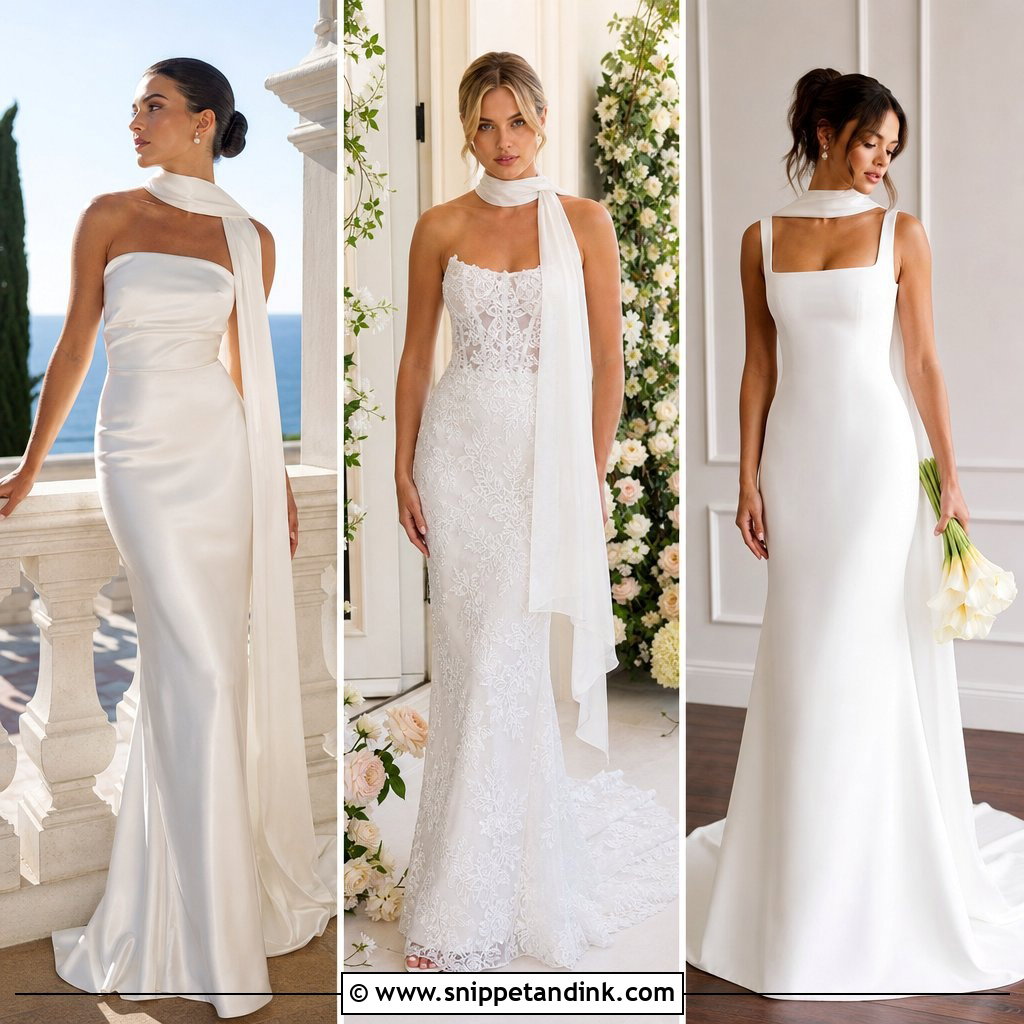
A slip dress with one thin strap or a slanted cowl is about as minimal as bridal wear gets, so fit carries everything. Satin and charmeuse cut on the bias move like liquid, but they also show underwear lines and cling wherever the fabric is under strain. At fittings, I check that the cowl doesn’t fall open when you lean forward to sign the register. A sheer cape or scarf veil adds softness without hiding the line of the dress.


15. Asymmetrical Minimalist Wedding Dress
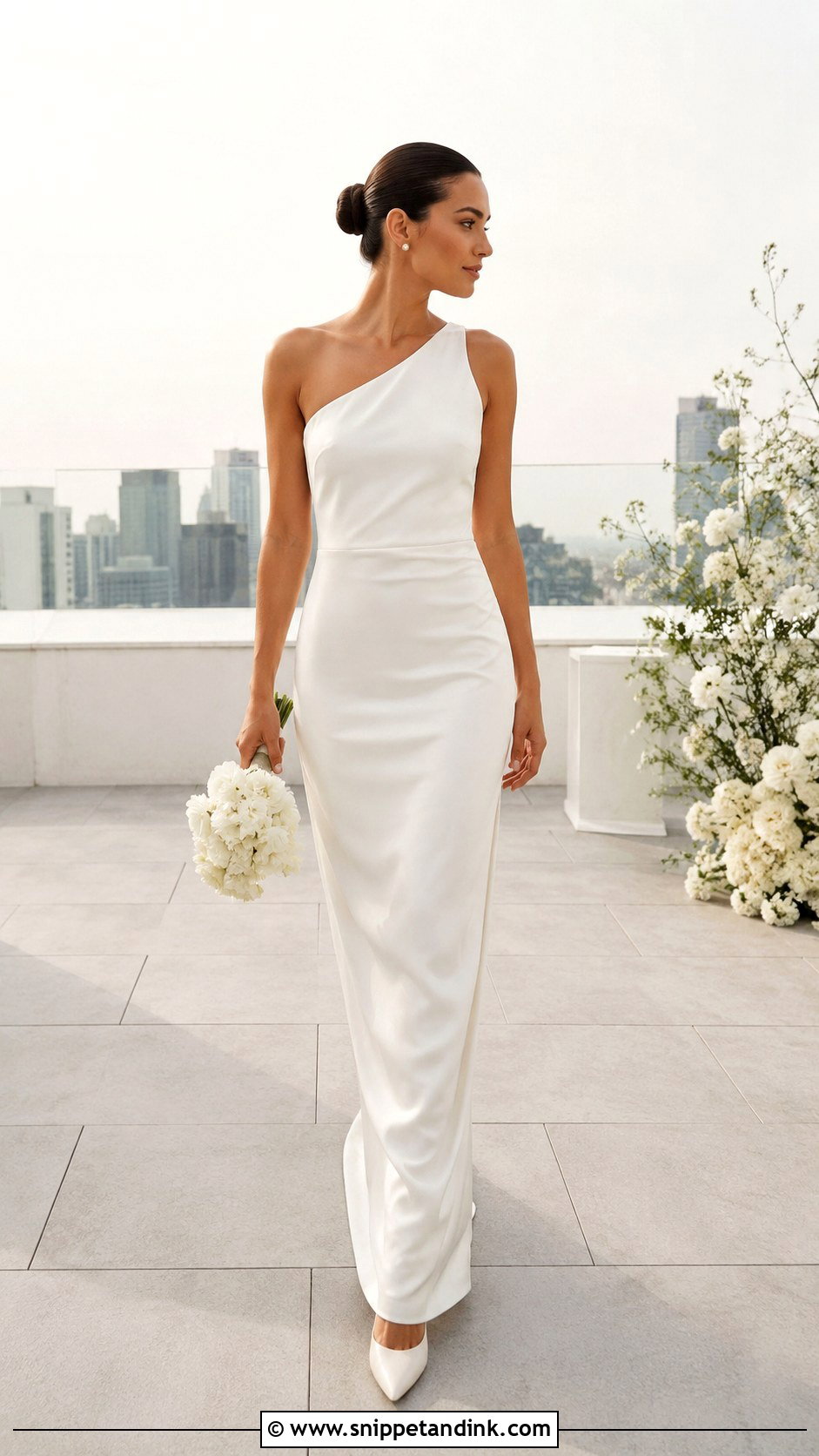
Do you love clean lines more than embellishment? The minimalist versions keep a single design move: a one-shoulder crepe bodice, a diagonal waist seam or an off-center fold. With nothing else to look at, construction quality is completely exposed, so this is the dress where I’d put the budget into fabric and tailoring over decoration. Modern venues and rooftops suit it. If you add a veil, make it plain and light.
16. Asymmetrical Boho Wedding Dress
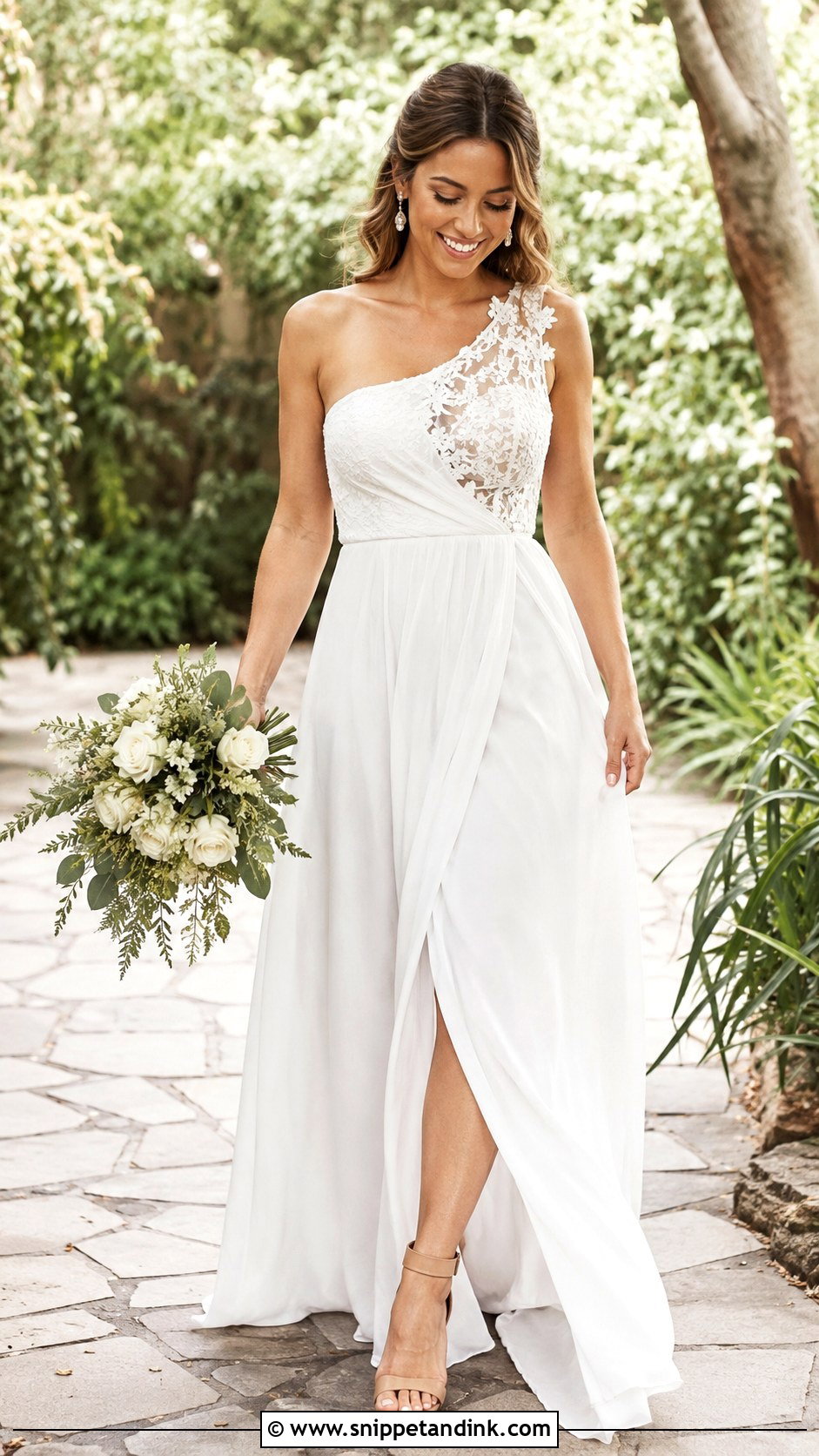
Boho asymmetry usually comes through one lace shoulder, uneven chiffon layers or a soft wrap skirt. It’s relaxed and easy to move in, which suits desert, garden and beach settings. Light fabric catches the breeze, though, so for an exposed ceremony spot I ask the seamstress to add a small hidden tack or weight in the longest layer to stop it blowing across your face in photos. Sandals or block heels make sense on grass. Resist wearing every accessory you like; this kind of dress needs some empty space.
17. Asymmetrical Short Wedding Dress
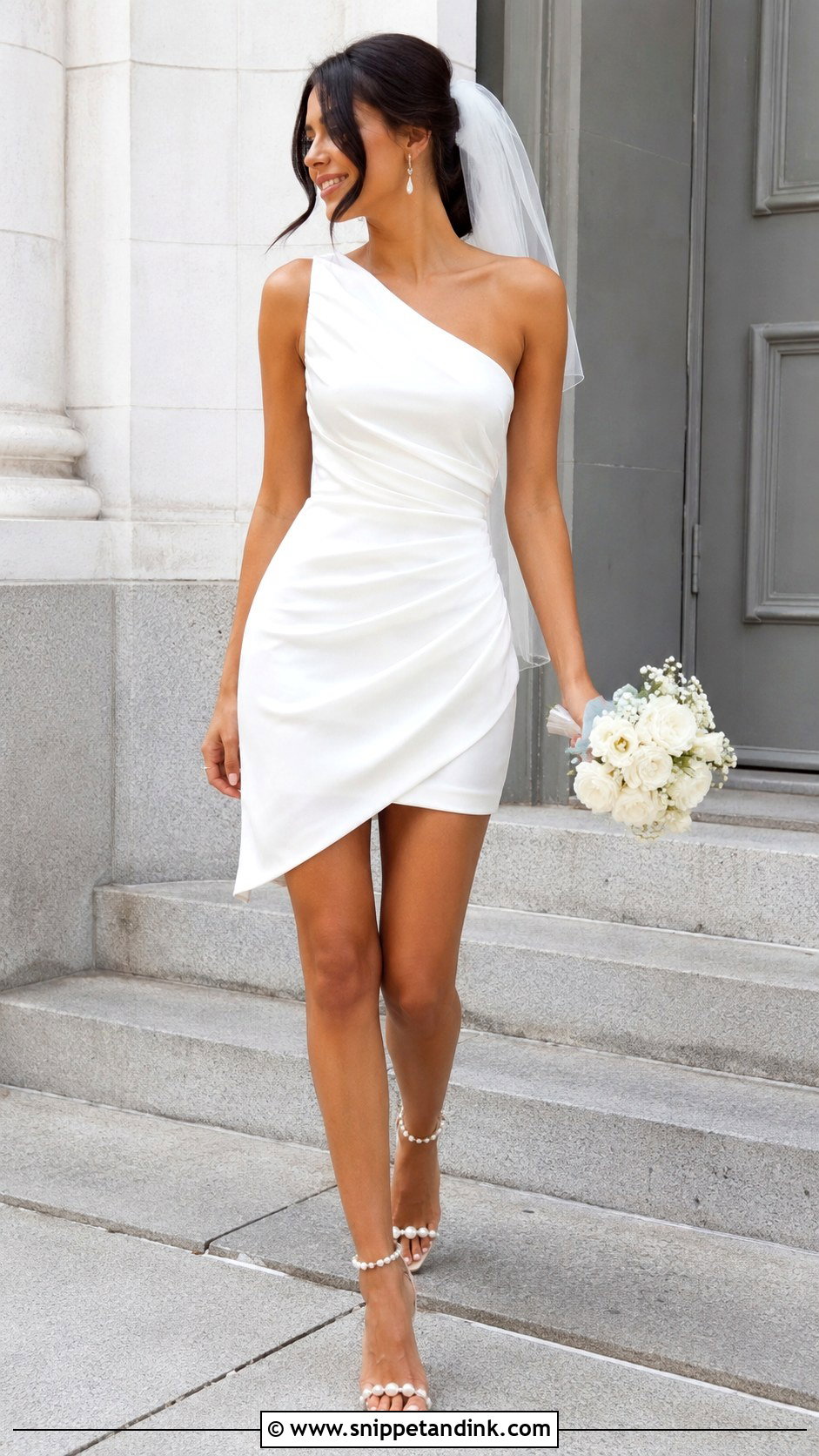
Short and asymmetric is a confident combination for a civil ceremony, an elopement or a second look for the reception. The uneven shape might be a one-shoulder mini or a structured skirt that falls longer on one side. With your legs on show, shoes become a main part of the outfit rather than an afterthought, and pearl heels or satin pumps finish it well. Carry a smaller bouquet. A large one hides most of a short dress.
18. Asymmetrical Tea Length Wedding Dress
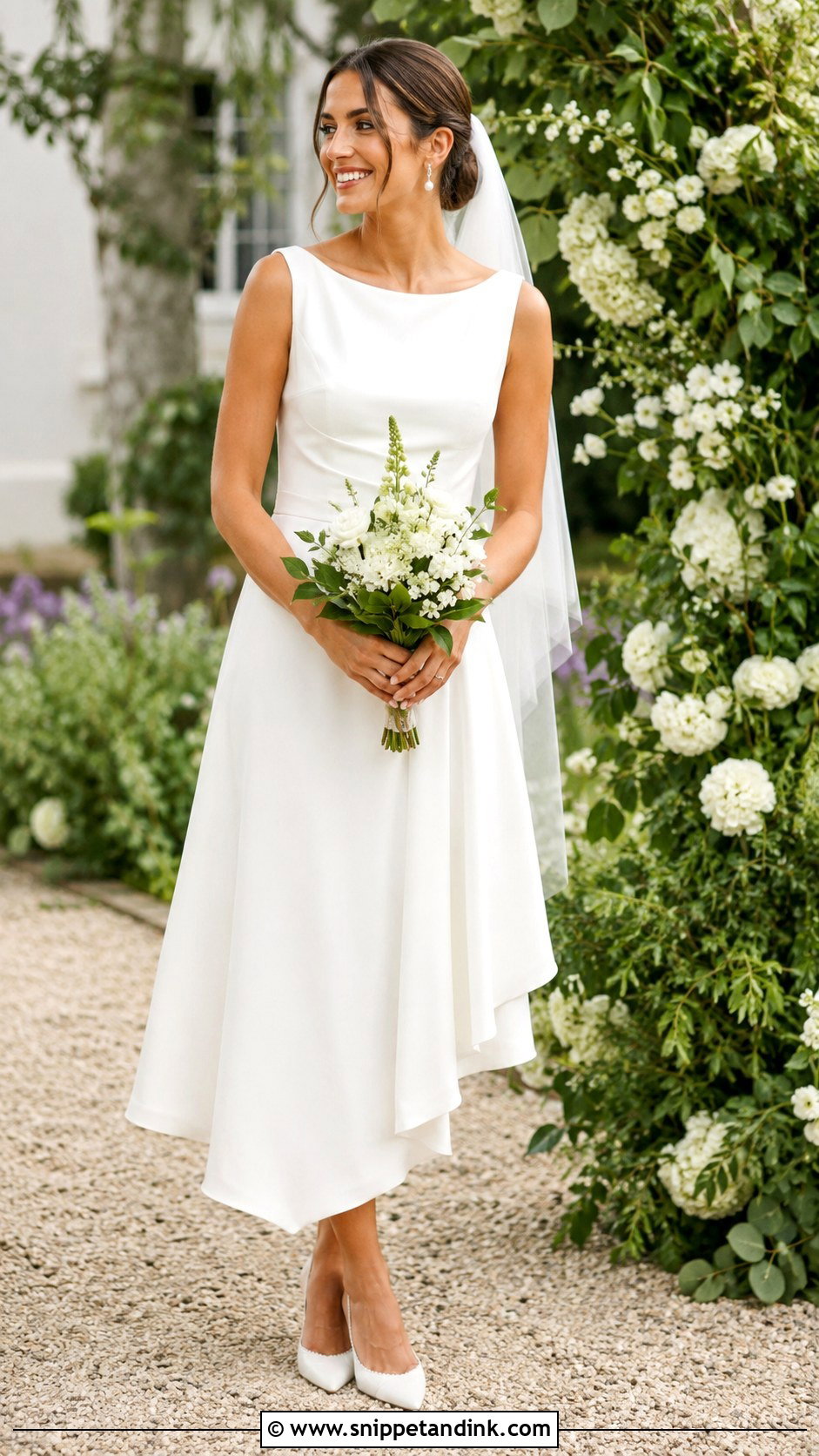
Tea length sits between knee and ankle, and an angled overlay is what moves it from vintage costume to something more current. It’s comfortable and shows your shoes, so kitten heels or slingbacks are worth choosing with care. I check the hem height with the bride standing on a hard floor, since thick boutique carpet can make the length read differently. A short veil or a hair bow suits its retro mood.
19. Asymmetrical Corset Wedding Dress
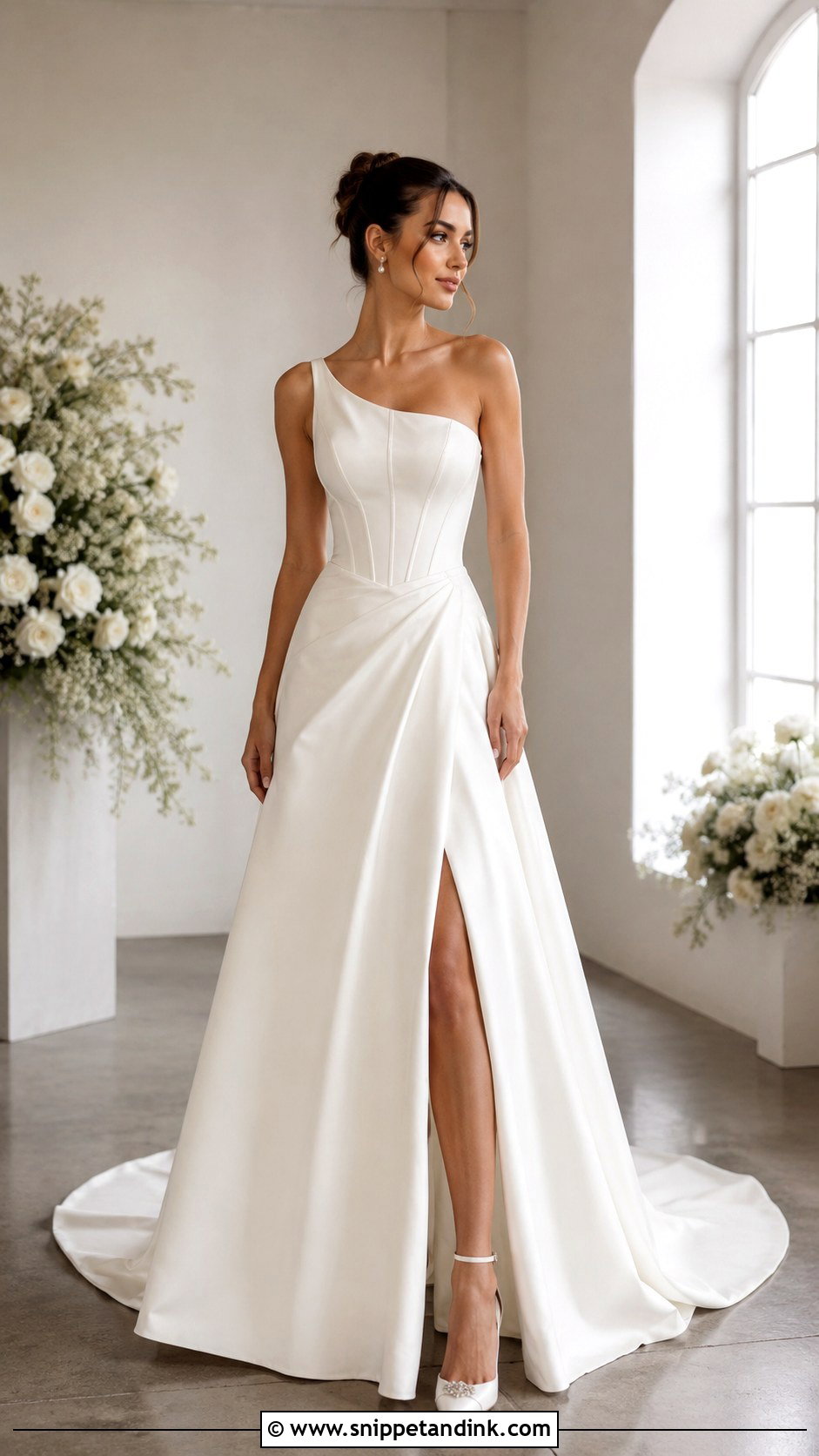
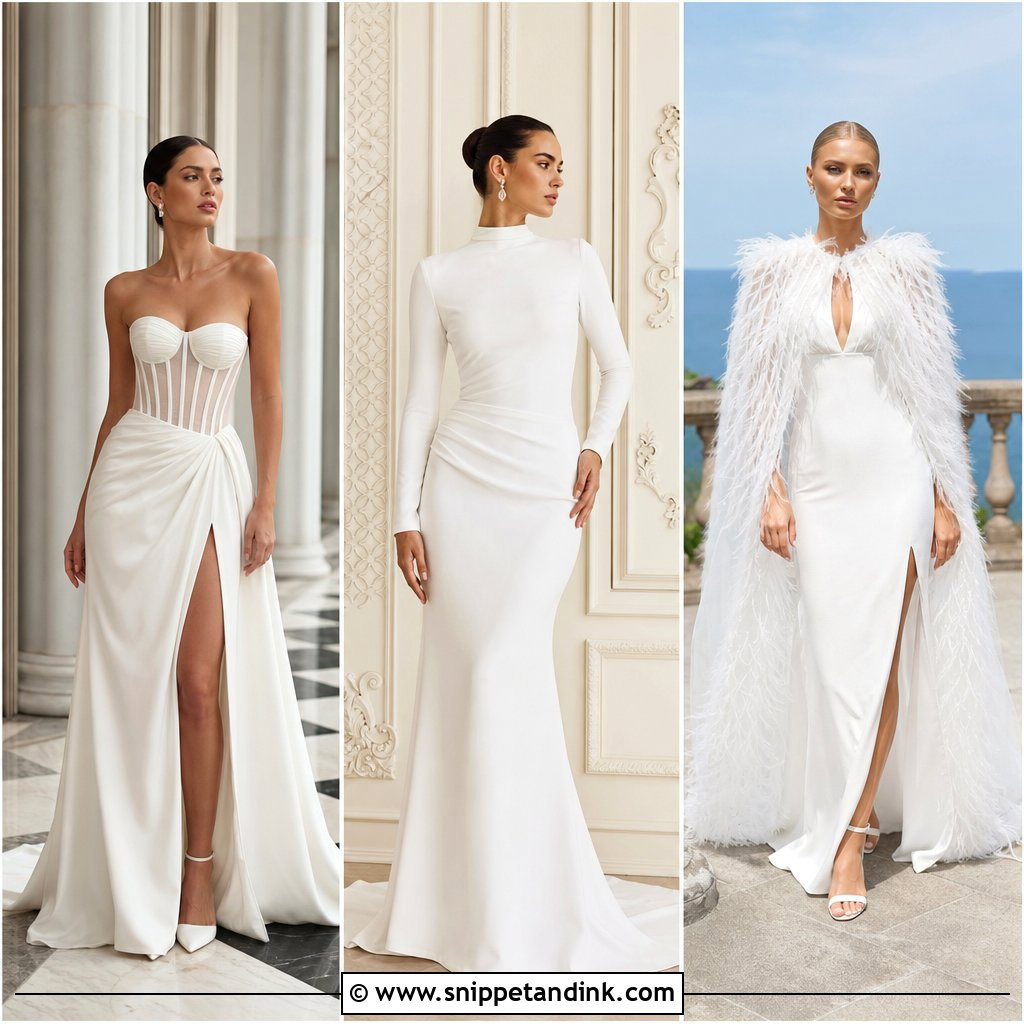
A corset with an asymmetric neckline gives real support and a defined waist, which brides with a fuller bust often appreciate on a long day. Exposed boning reads fashion-forward; an internal corset gives a smoother, classic finish. The thing to test is sitting, especially through a seated dinner, because boning that feels fine standing can dig in at the ribs once you sit. Pair it with an A-line skirt for balance or a fitted one for drama, and keep your neck bare.

20. Asymmetrical Long Sleeve Wedding Dress
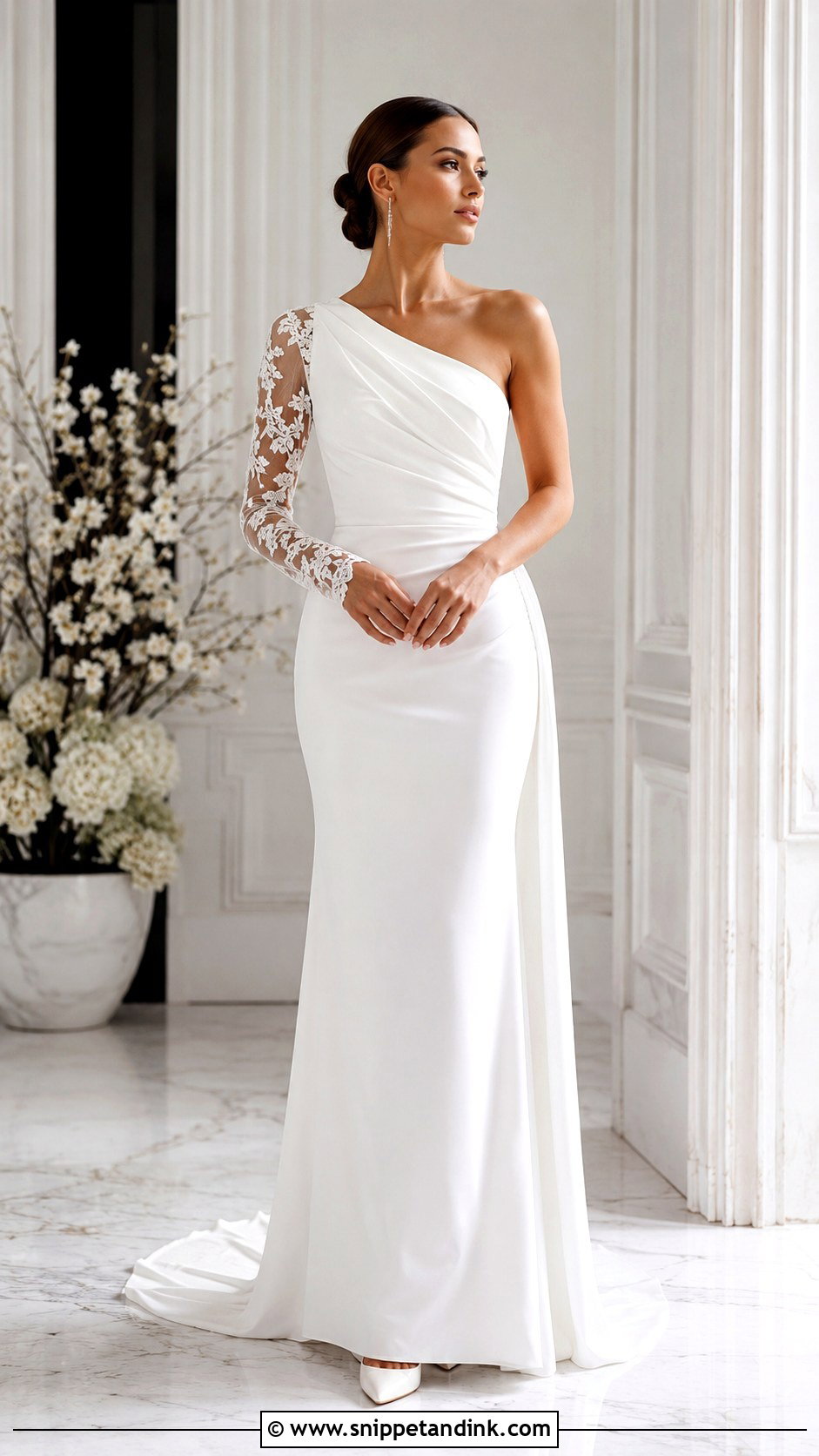
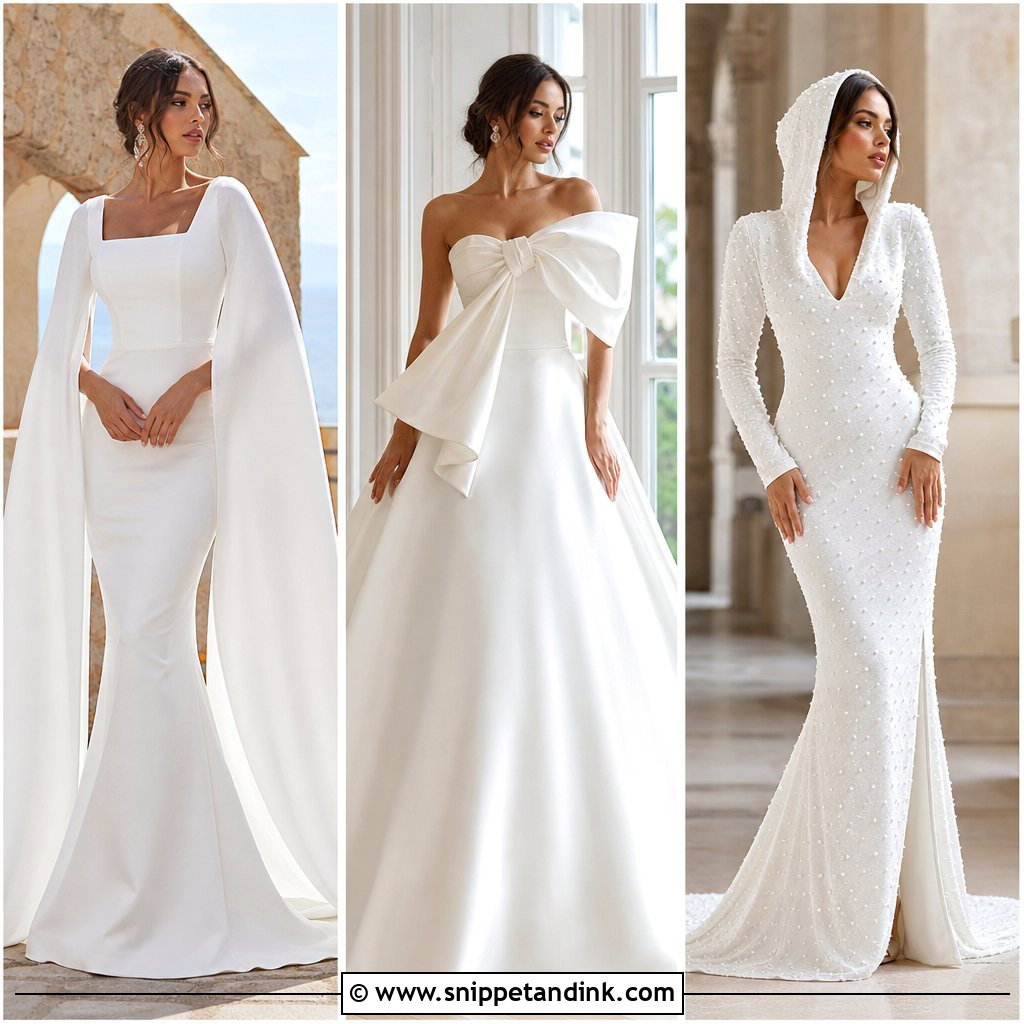
One full sleeve against one bare shoulder is a strong contrast, and it gives coverage for a cooler season without looking old-fashioned. Sheer tulle sleeves feel delicate, while crepe or satin sleeves look sleek. A single sleeve has to be fitted with your arm bent as well as straight, or it drags the bodice sideways when you hold the bouquet. Wear your hair up, or tucked behind the bare side, so the contrast stays visible.
21. Asymmetrical Floral Wedding Dress
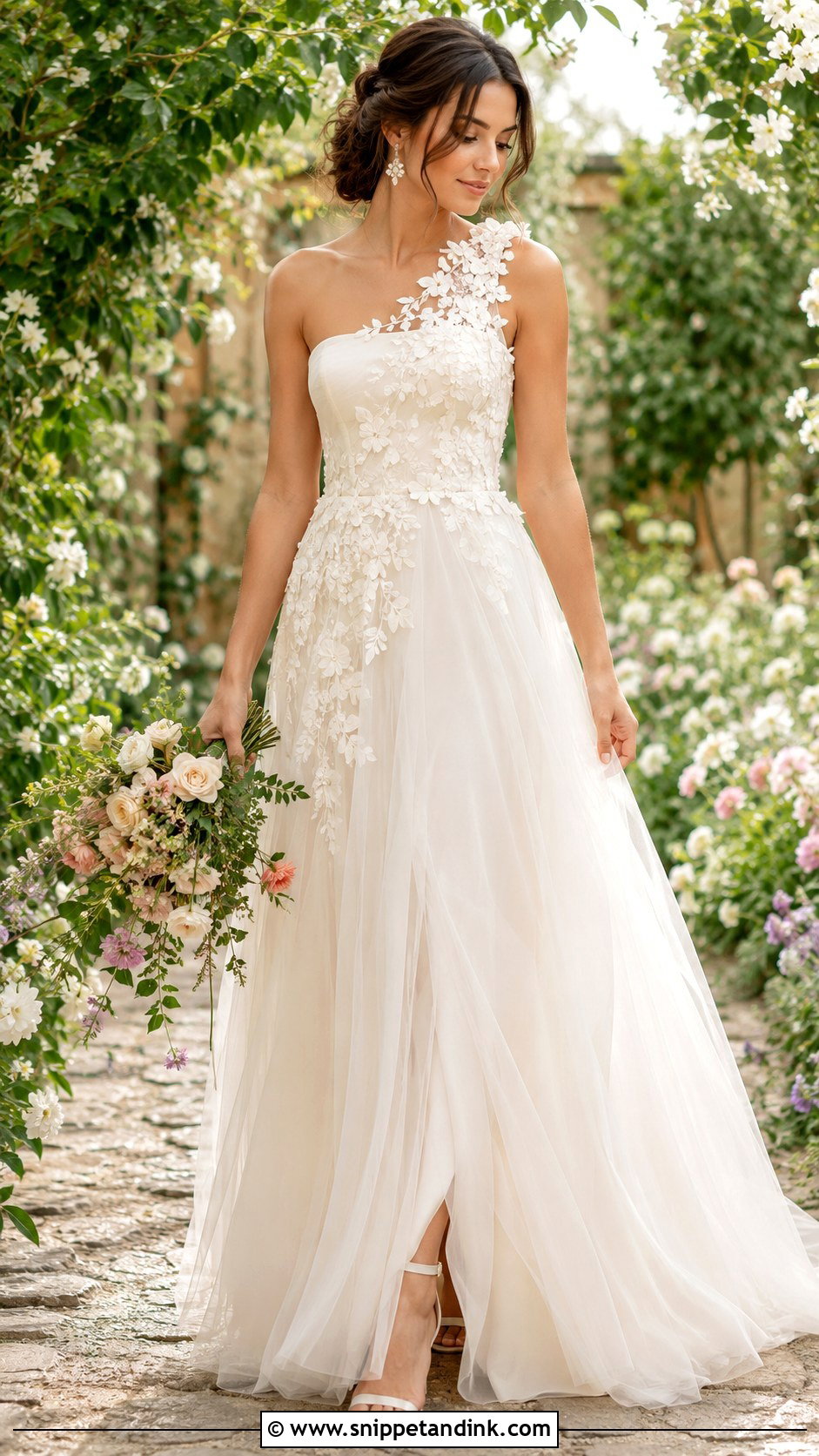
Flowers placed on a diagonal, as lace appliqué, as 3D blooms on one shoulder or as embroidery climbing across the skirt, add texture without symmetry. My rule is one main floral area. Cover the whole dress and the asymmetry disappears. Raised fabric flowers also crush when you hug people, so ask whether they’re tacked down at the base or will need a quick steam between ceremony and reception. Spring and garden weddings suit it best, and small earrings are plenty.
22. Asymmetrical Beaded Wedding Dress
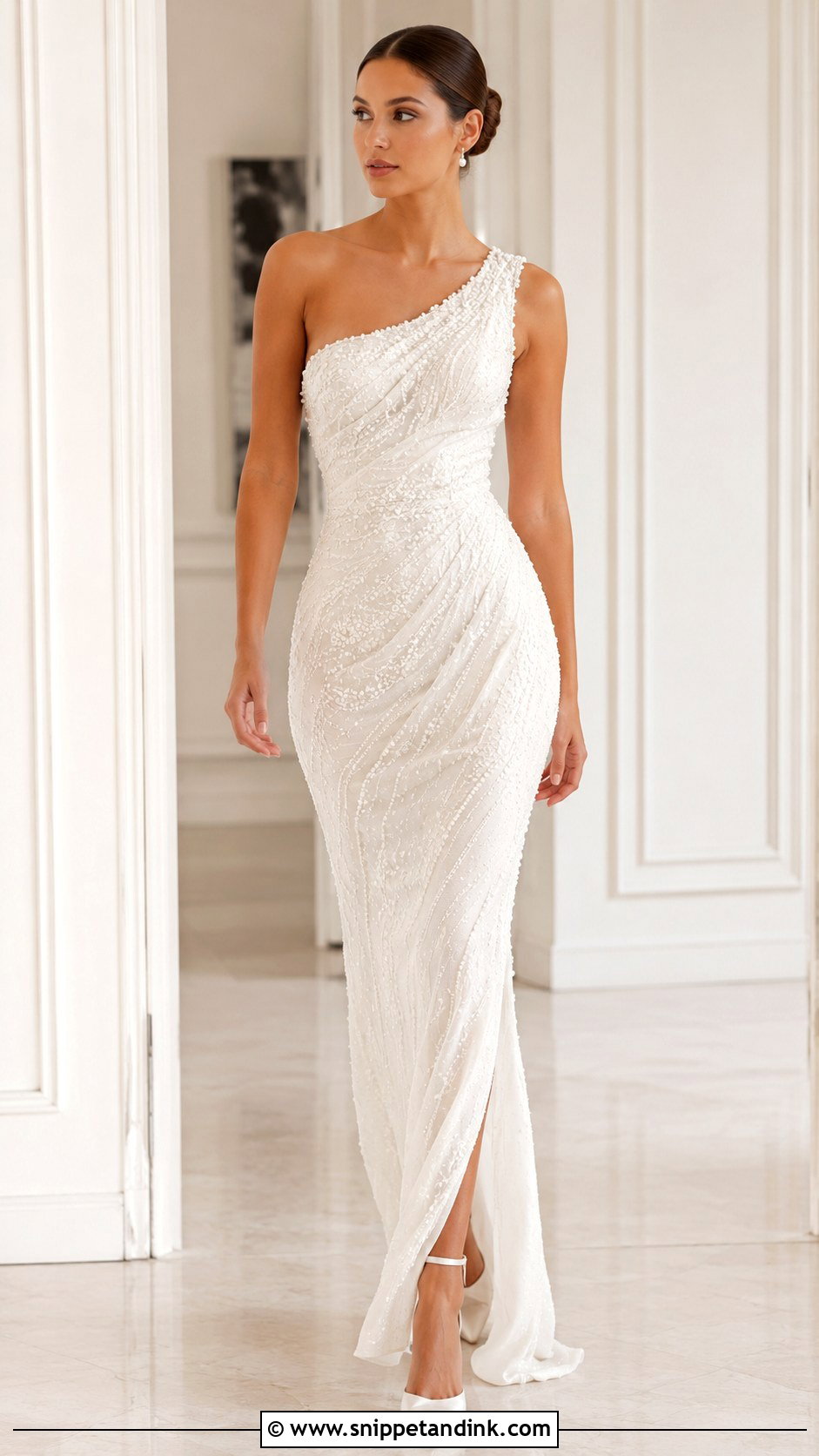
Beading that follows a diagonal moves light across the body instead of sitting in a predictable band. A single beaded strap, crystal lines on an angle or pearls scattered down one side all suit evening and formal venues. Beads are heavy, though, and on a one-shoulder gown that weight hangs from one strap, so I look for an internal waist stay that takes some of the load. Choose a sheath or a simple A-line so the beadwork has room, and keep accessories smooth.
23. Asymmetrical Bow Wedding Dress
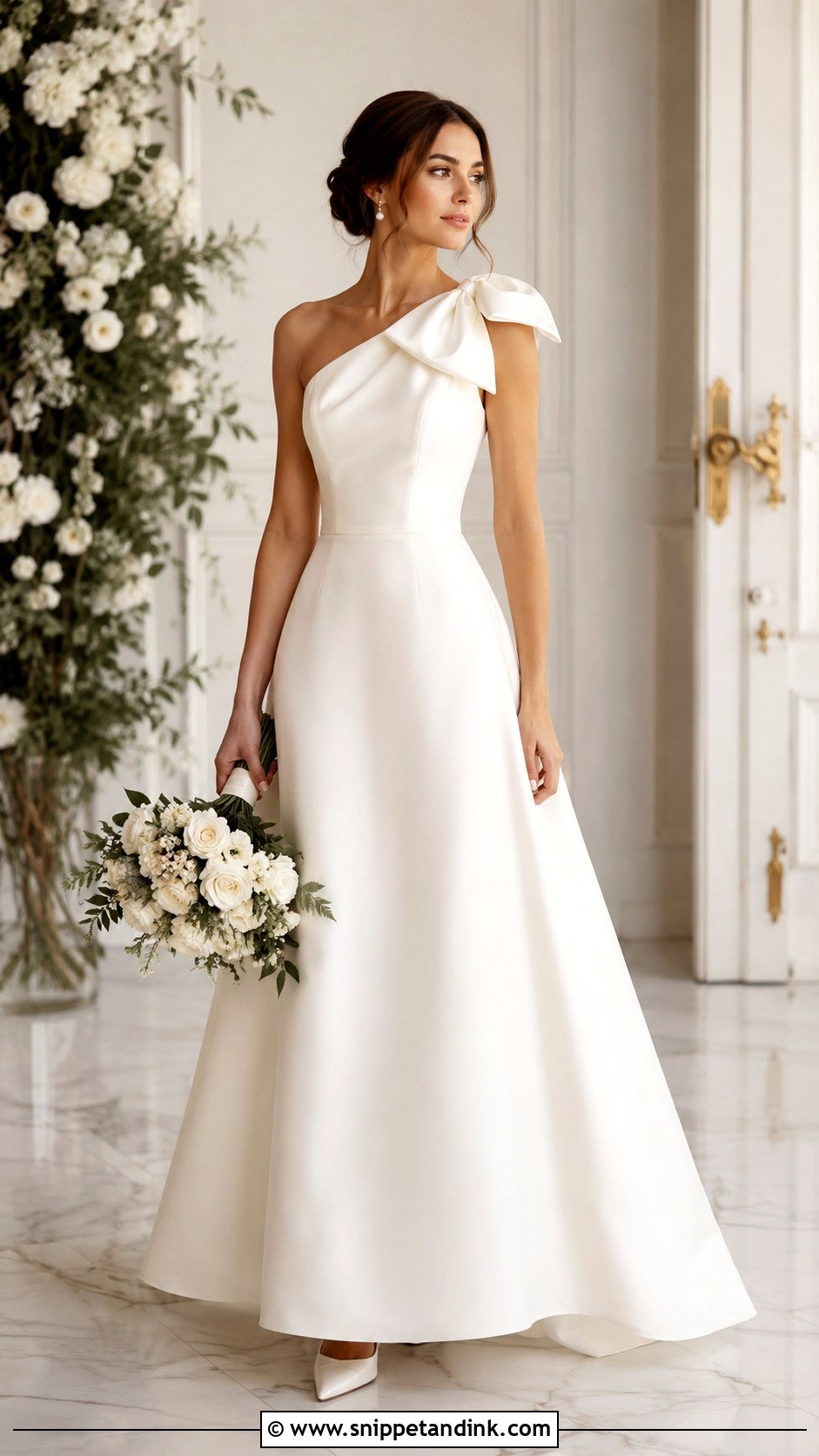
A bow placed off-center, at one shoulder, at one hip or as an angled back sash, adds charm without lace or sparkle. Crisp fabrics like mikado, satin and organza hold the loops upright; soft ones droop by evening. Scale is the real decision. A large bow wants a plain dress, while a small one can sit within a more detailed gown. I also check where the bow lands when you sit, because a hip bow can crush flat against a chair arm.
24. Asymmetrical Overskirt Wedding Dress
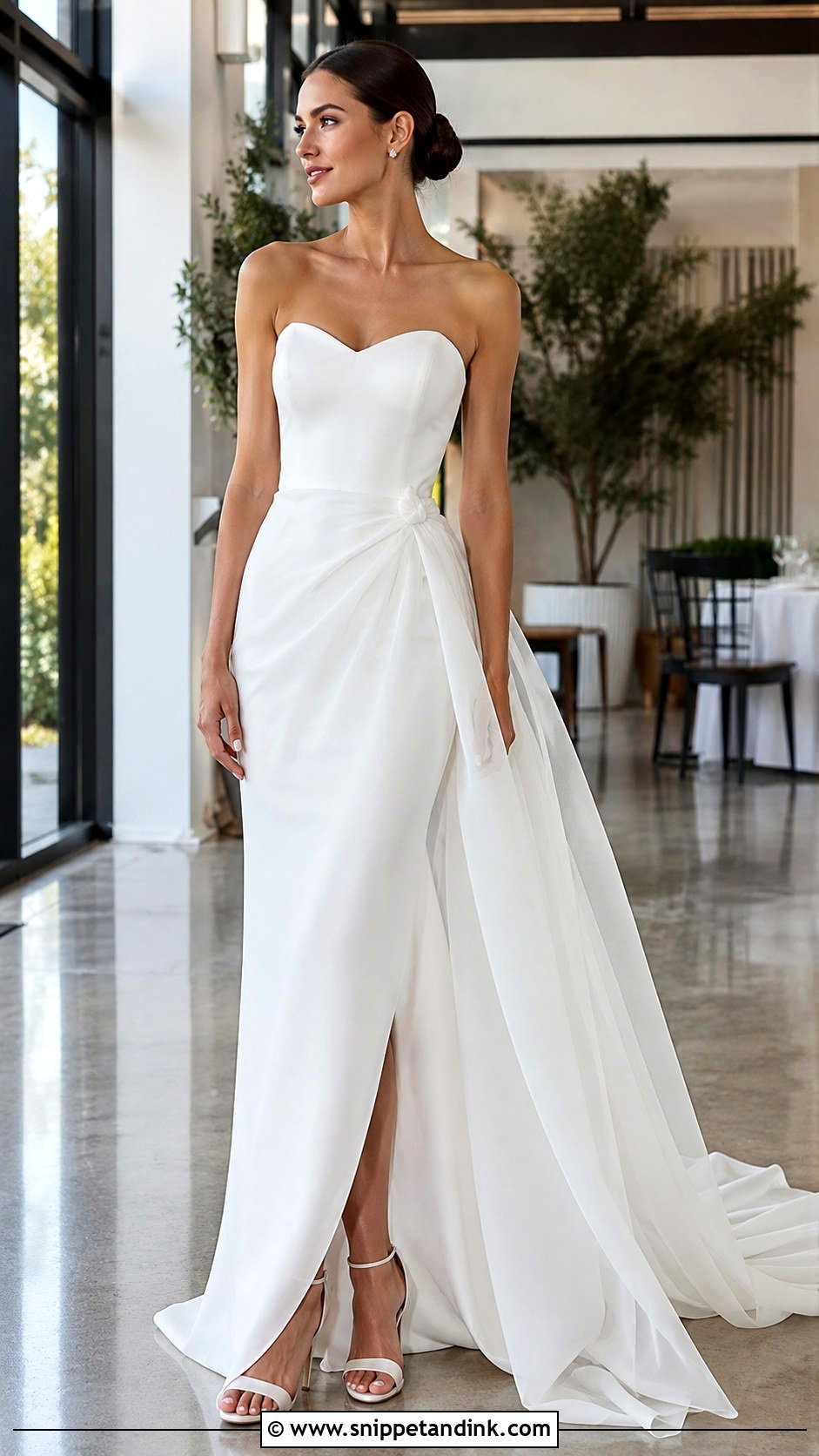
An overskirt that attaches on one side or wraps diagonally over a fitted base gives you two looks from one dress. Underneath you might wear a sleek sheath, a mermaid gown or even a short dress, and a crepe base under an organza layer makes a quiet contrast. The closure matters most. Hooks or snaps should be hidden, and whoever helps you change should practice taking the overskirt off once before the day so it doesn’t turn into ten minutes behind a door.
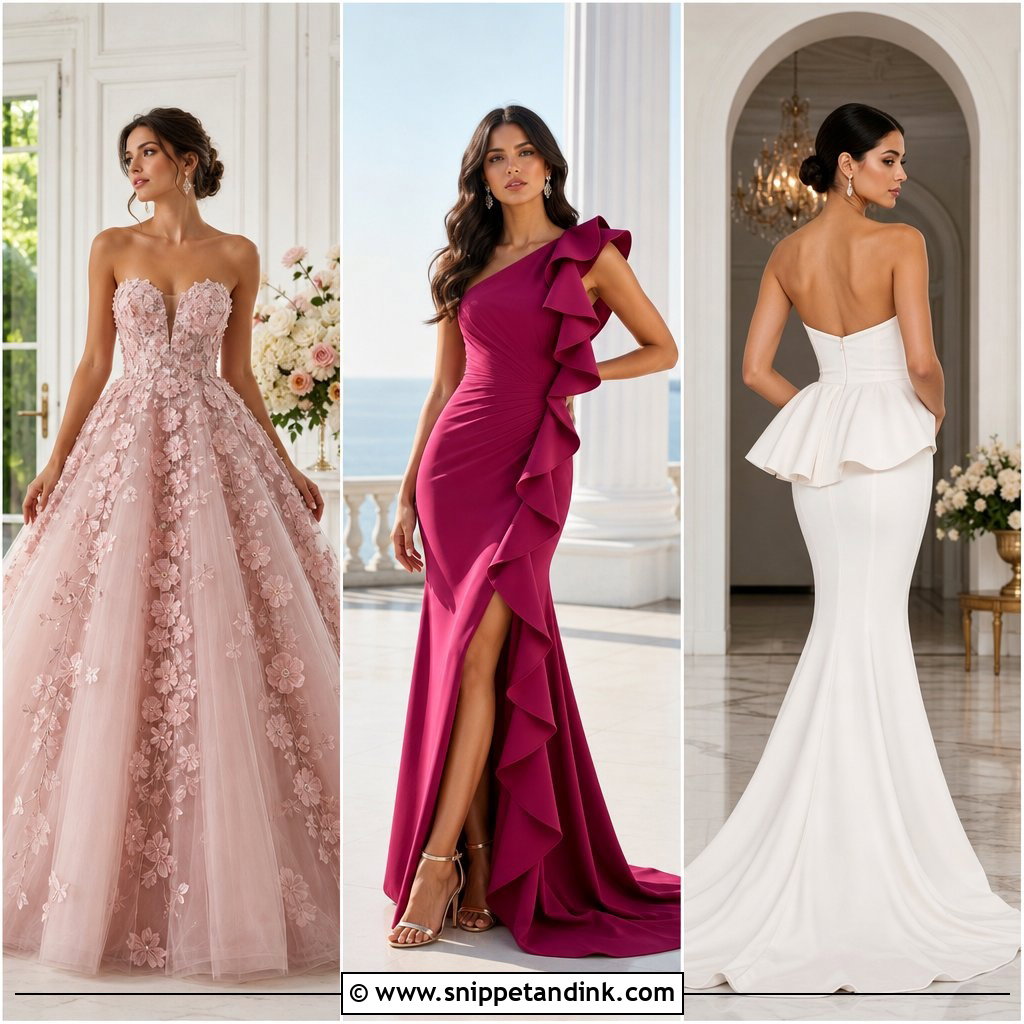
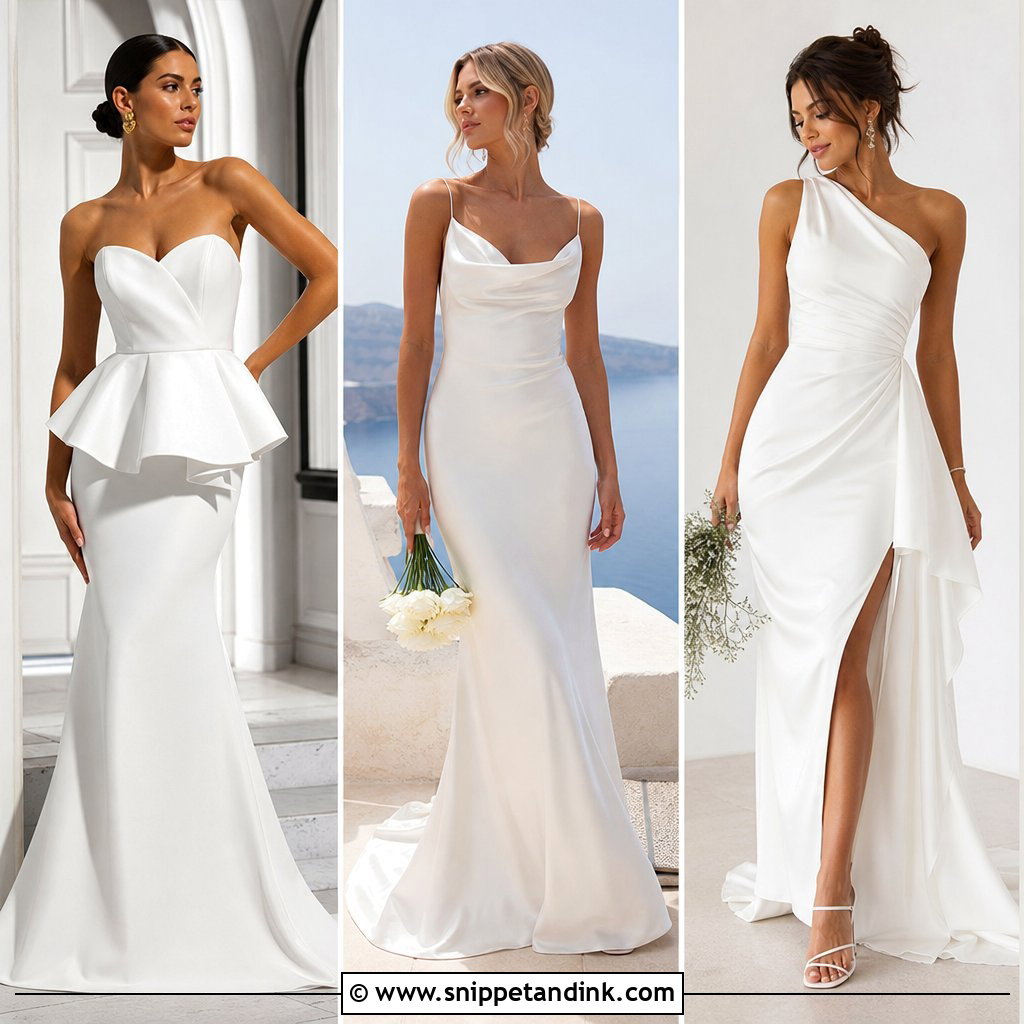

25. Asymmetrical Cape Wedding Dress
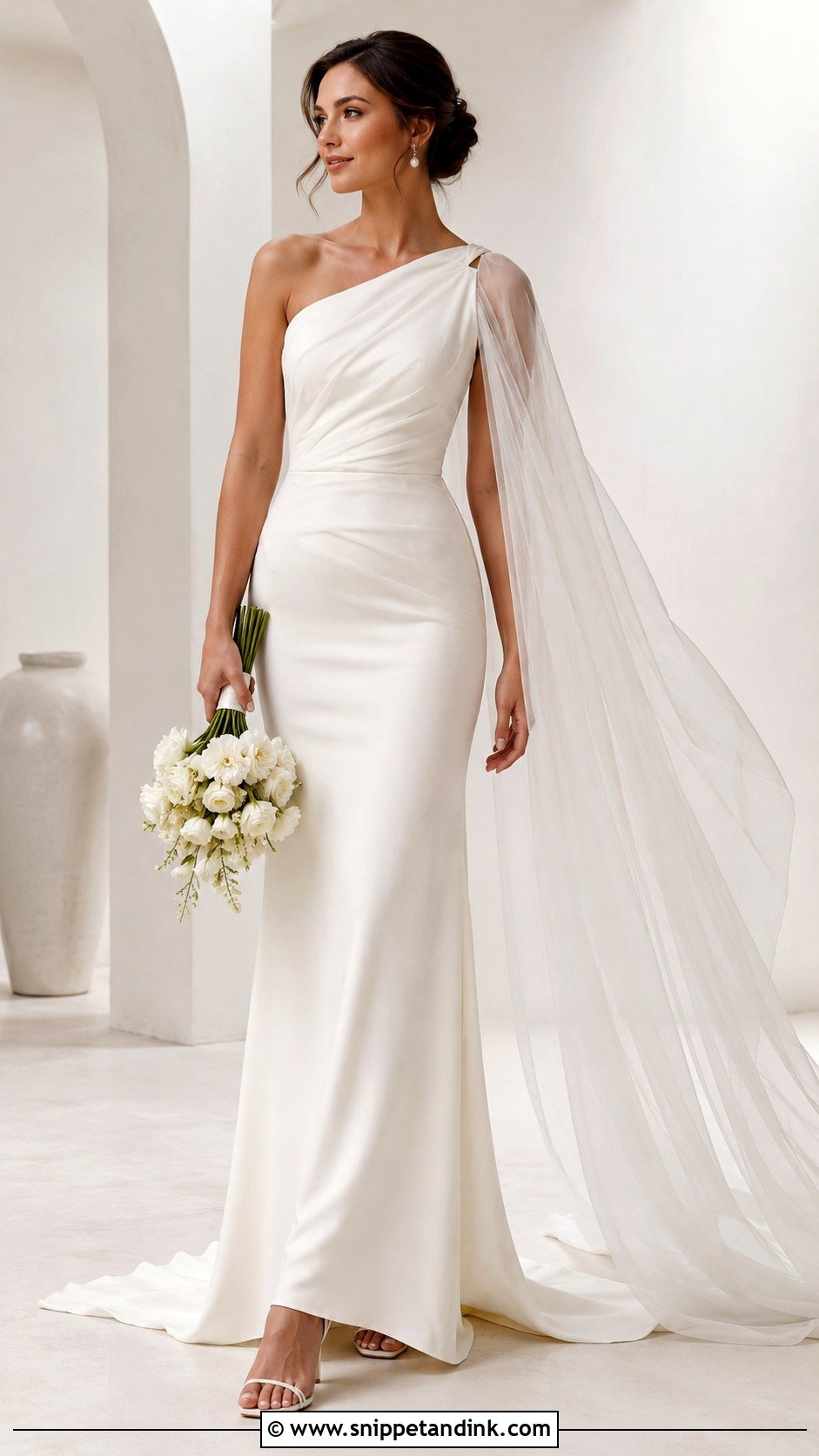
A cape falling from one shoulder can replace the veil and draws a long, moving line as you walk. It works best over a plain, fitted gown, since the cape becomes the whole styling story. Sheer tulle, chiffon and organza feel light, and satin-backed fabric looks more formal. Watch the length: a cape that trails beyond the dress will get stepped on during the first dance. Earrings rather than a necklace keep the shoulder detail clear.
Why Uneven Cuts Need Extra Fittings
A symmetrical dress can be pinned on one side and mirrored on the other. An asymmetric one can’t, so each side is fitted separately, and that takes time. I’d plan on three fittings, with the first roughly two to three months before the wedding, and allow longer if the hem is curved or the fabric is lace.
- Strap slipping: a one-shoulder strap tends to slide outward. Ask for a small elastic stay or a strip of silicone grip sewn inside it.
- Bustling a one-sided train: the pickup points have to follow the angle, or the bustled skirt hangs crooked. Have your helper practice it at the last fitting.
- Hemming a curve: diagonal and high-low hems are re-cut as a curve, which is slower and pricier than a straight hem, so get a quote early.
- Underwear: most one-shoulder bodices work best with cups sewn into the dress or a strapless longline bra. Bring your chosen option to every appointment.
What to Pack for an Asymmetric Gown on the Day
My kit for these dresses is small but specific. A few safety pins and fashion tape fix a strap that starts creeping. A handheld steamer revives drape or ruffles that have been crushed in the car. Matching thread and a needle sort out a dropped bustle hook in a minute. Hand all of it to one bridesmaid who knows how your dress fastens, so you aren’t hunting for help at the reception.
The Uneven Line Is Your Accessory
Asymmetry works because it gives the eye one place to land, so styling these dresses is mostly about subtraction. If the gown has a strong shoulder, bow or drape, keep hair and jewelry quiet. If it’s minimal, a veil or shoes can carry a little more. Take the dress for a walk, a sit and a hug at every fitting, because uneven cuts reveal their quirks in motion, not on a hanger. Get the fabric and fit right, and the shape will feel like yours.
You'll Like These Ideas:




Leave a Reply