
The gowns that defined 2025 bridal fashion were more varied than in years before: basque waists and corset bodices on one side, sleek slips and minis on the other, with lace, pearls, detachable pieces and vintage shapes in between. Many brides also stopped asking one dress to do everything and planned a ceremony gown plus a lighter look for later. Below are the shapes and details I put brides into most that year, each styled as a full outfit with shoes, veil and jewellery, and with a note on who each one suits and where it tends to struggle.
A Realistic Timeline From First Appointment to Final Fitting
Trend-led gowns often come from designers who make each dress to order, and that takes longer than most brides assume. Working backwards from the wedding helps.
- Around nine to twelve months out: start trying shapes. Many made-to-order gowns take four to eight months to arrive after ordering, and sample sizes don’t always match your measurements.
- Eight to ten weeks out: first alterations fitting. Bring the shoes and underwear you’ll wear on the day.
- Two to four weeks out: final fitting and bustle lesson for whoever will help you.
- Wedding week: collect the gown and have it pressed or steamed close to the day.
Corsets, basque waists and minimal crepe need the most alteration time, because tiny fit changes are so visible. Off-the-rack and second-hand gowns shorten the timeline, but leave room for alterations either way.
One more thing I ask every bride: order to your largest current measurement, not the size you hope to be. Taking a gown in is routine work. Letting one out is often impossible, especially on corsetry or beaded seams where there’s no spare fabric left to release.
1. Basque Waist Bridal Dress
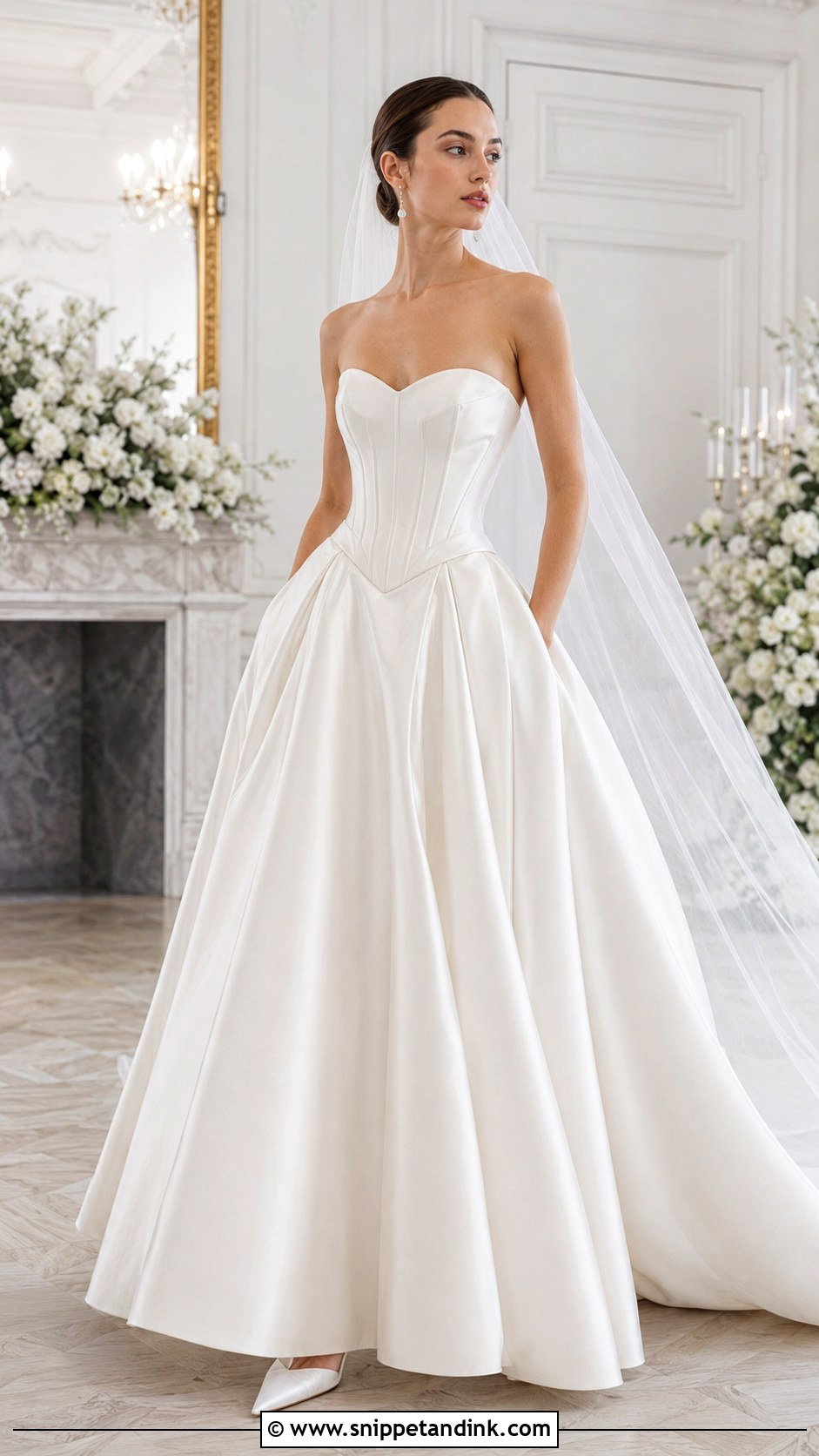
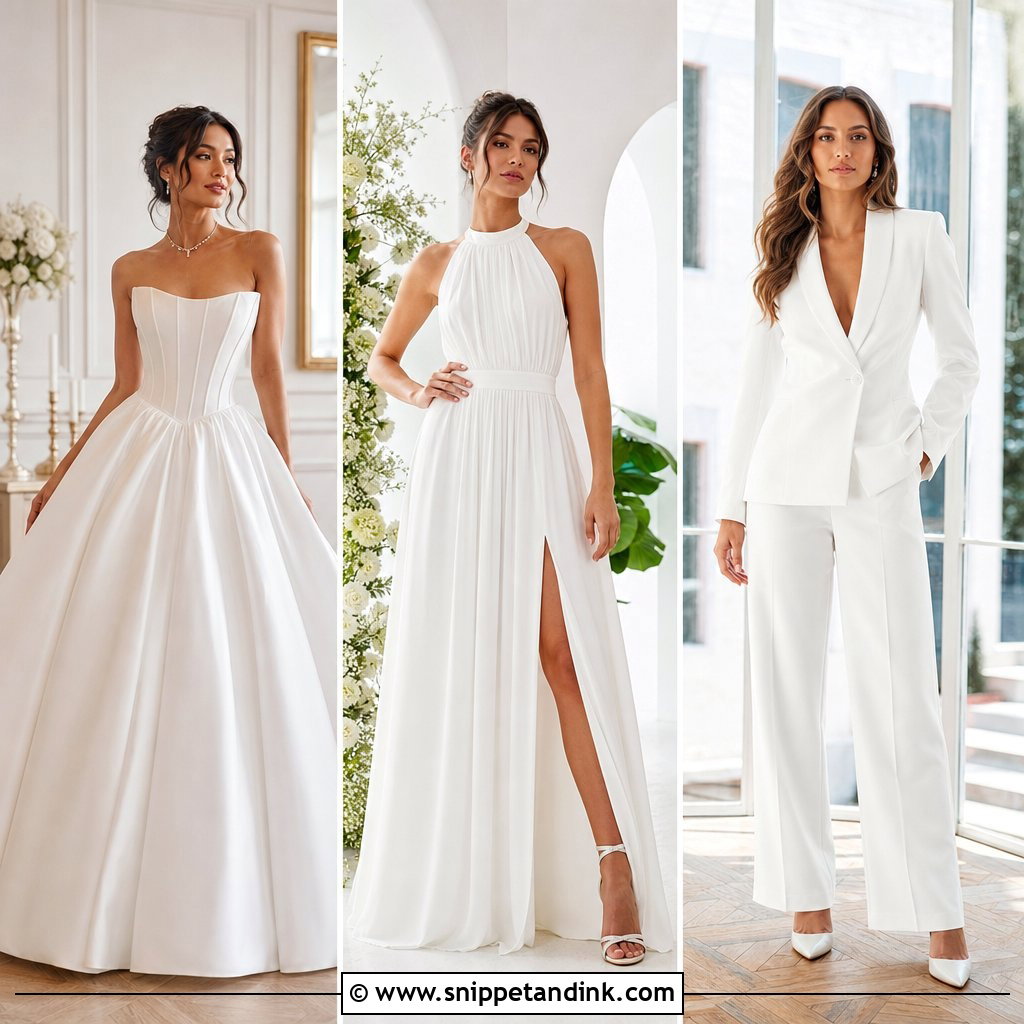
The basque waist dips into a V or U below the natural waist, and that dip is what lengthens the torso before the skirt opens. It was the silhouette brides asked about most often in 2025. In mikado, satin or soft taffeta it holds the line without beading; lace appliqué on the bodice softens it. The point of the basque has to sit exactly at your centre front, so it needs a skilled seamstress, and a bride with a very short torso can find the dip ends at her hips. Satin pumps, pearl drops, a long sheer veil and a plain bouquet keep the waist the focus.
2. Drop Waist Bridal Dress
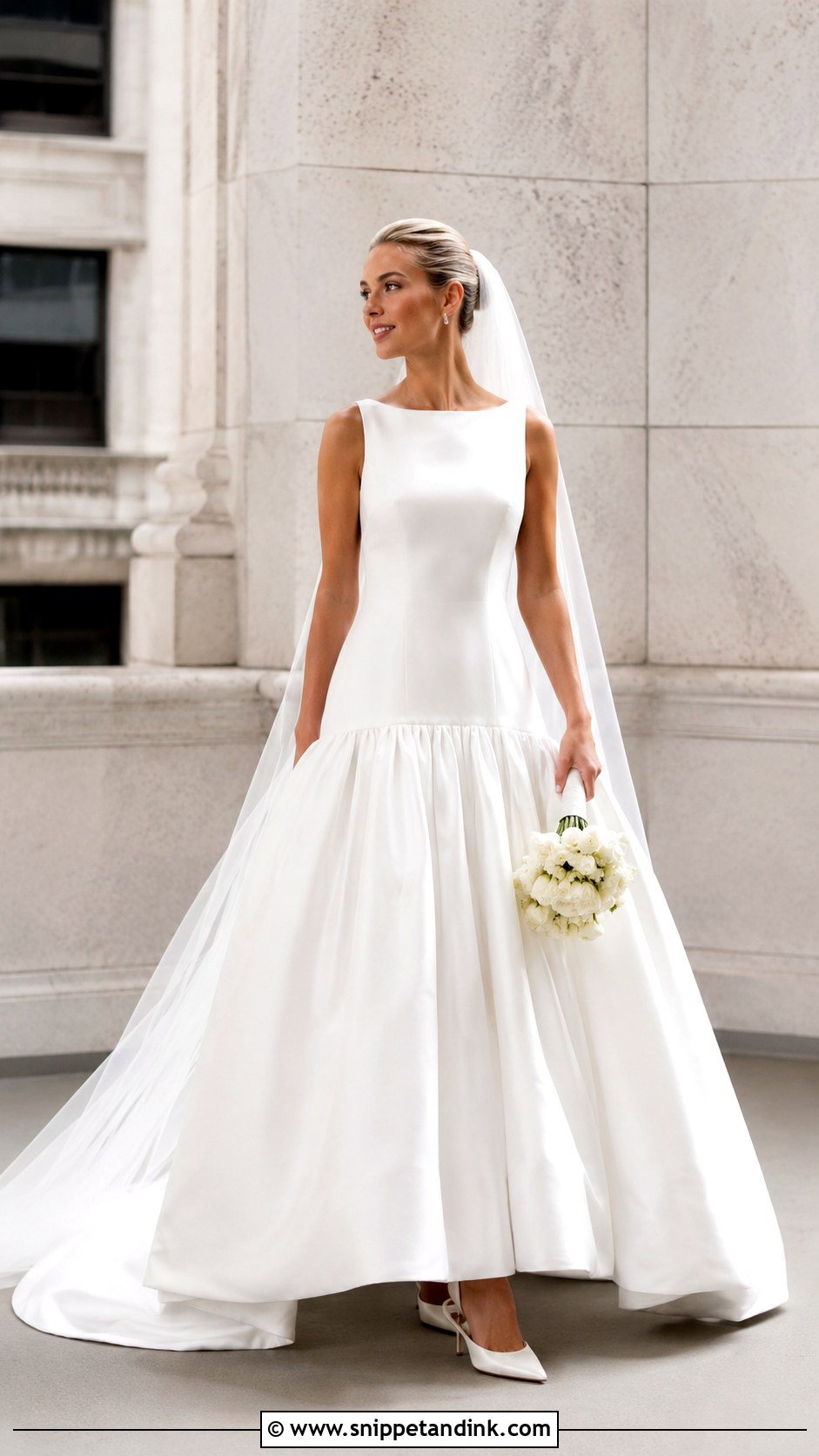
A drop waist moves the seam down to the hip, so the line from bust to skirt reads long and unbroken. In 2025 it often came with a corset bodice or sculptural seaming above a full skirt. It’s flattering on a straight figure and on tall brides. On a curvy, short-waisted figure, the low seam can make the legs look shorter, which is why I always ask brides to try one before committing. Slingbacks, a soft cathedral veil and small crystal studs suit it in museum and city venues.
3. Corset Bridal Dress
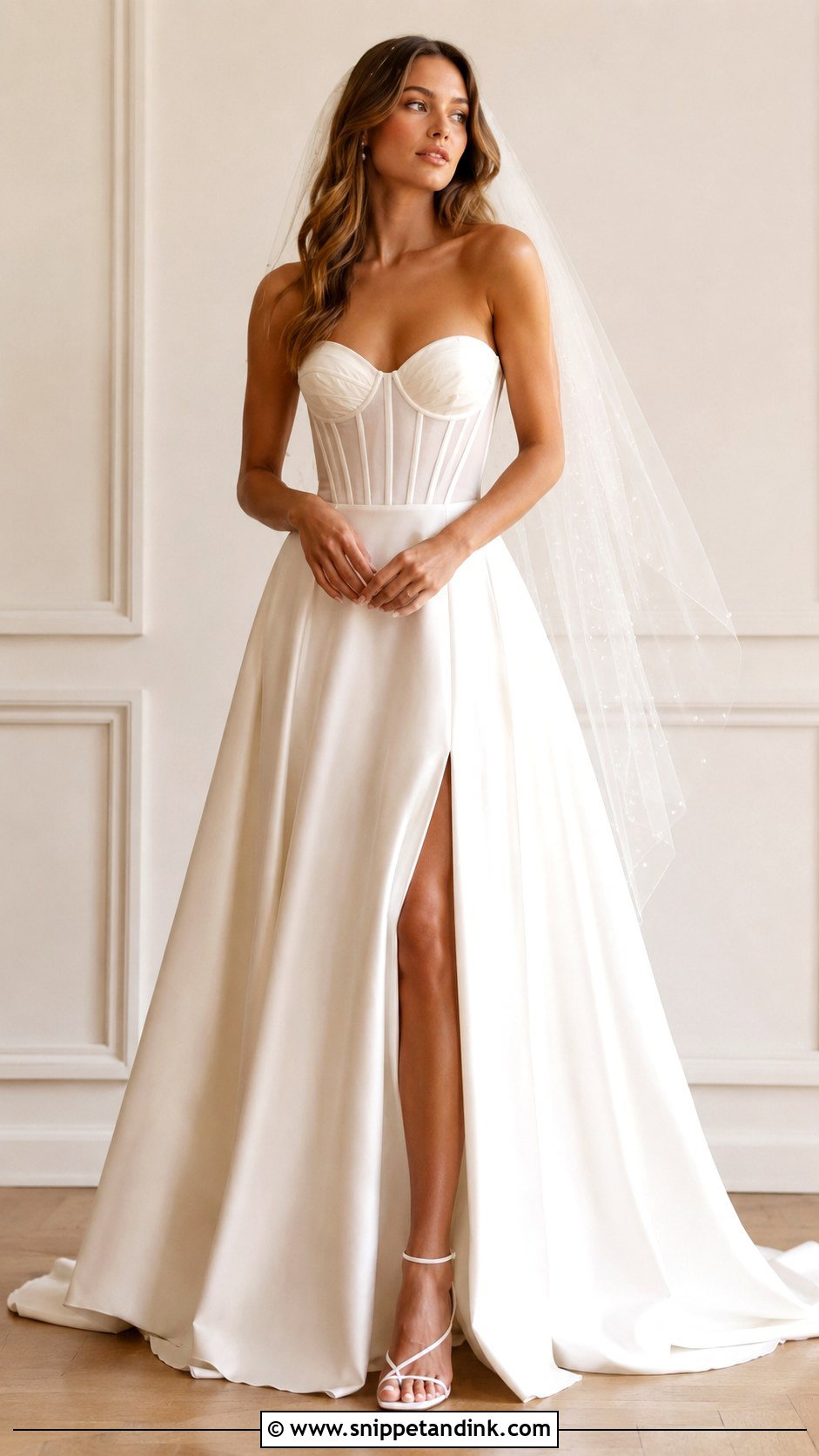
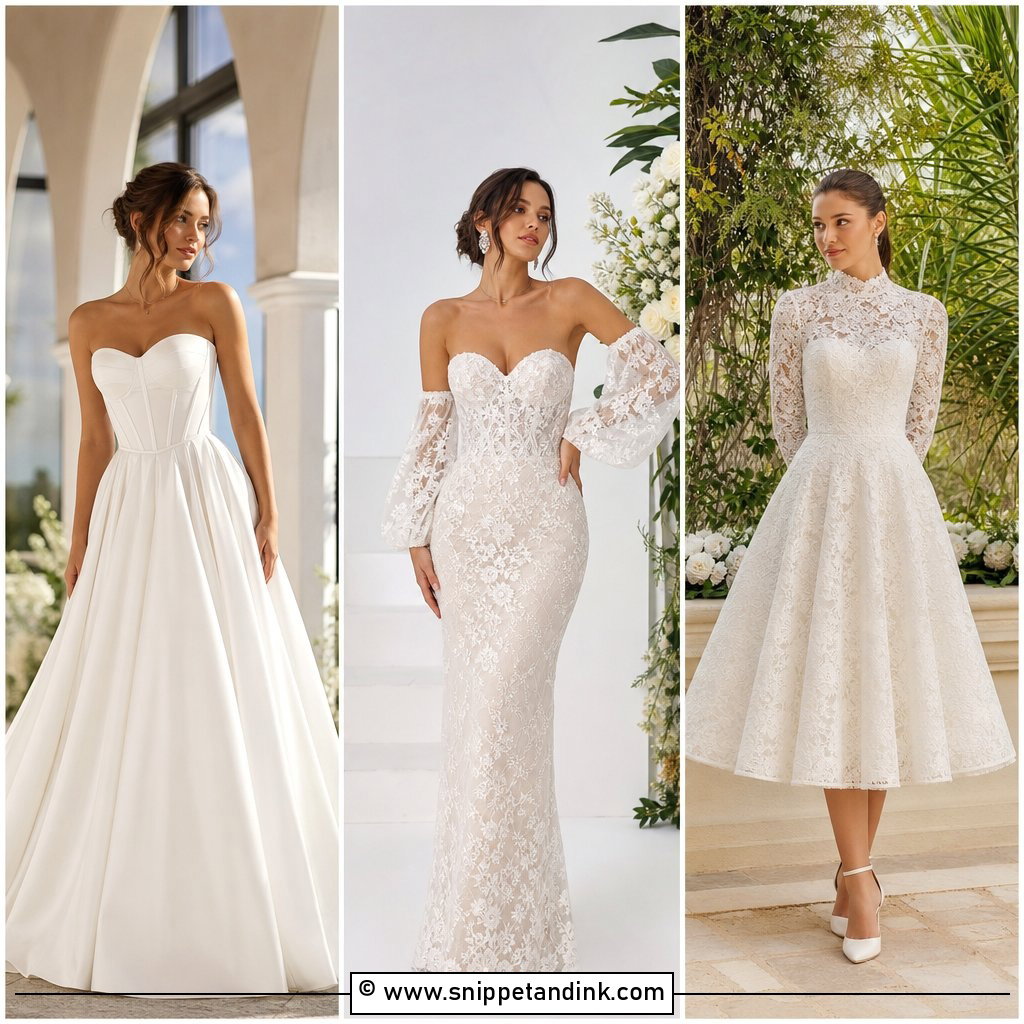
Corset bodices did more than shape in 2025; sheer panels, visible boning and lace overlays turned the structure into the decoration. A well-built corset distributes support across the whole torso, which is why many brides find them more comfortable than a loose strapless. They do restrict breathing slightly if laced tightly, so eat a proper breakfast and have someone loosen it a notch before dinner. Choose an A-line skirt for softness, fitted for drama or full for a grand aisle walk. Soft waves and a fingertip veil keep it modern.
4. Lace Bridal Dress
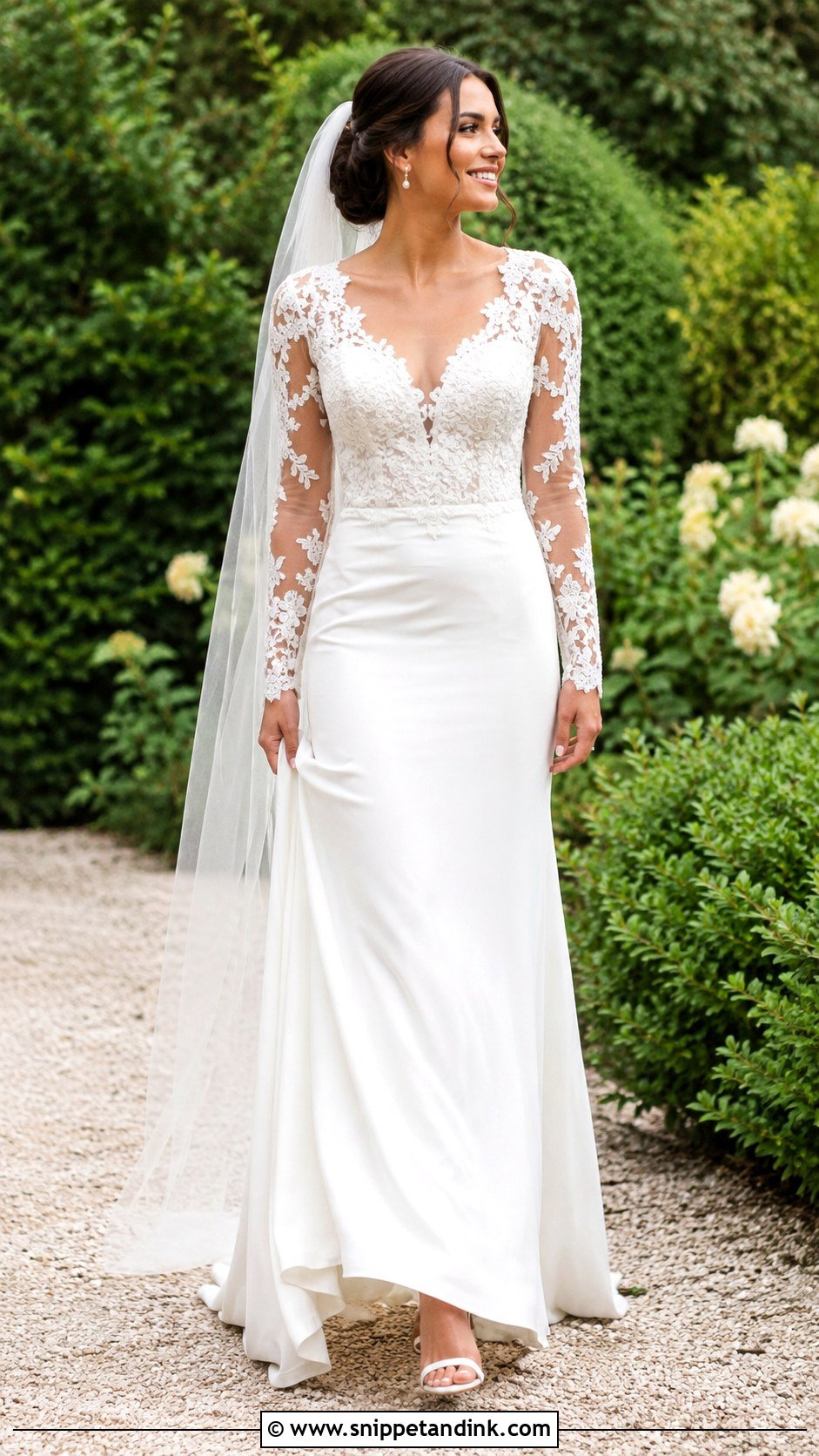
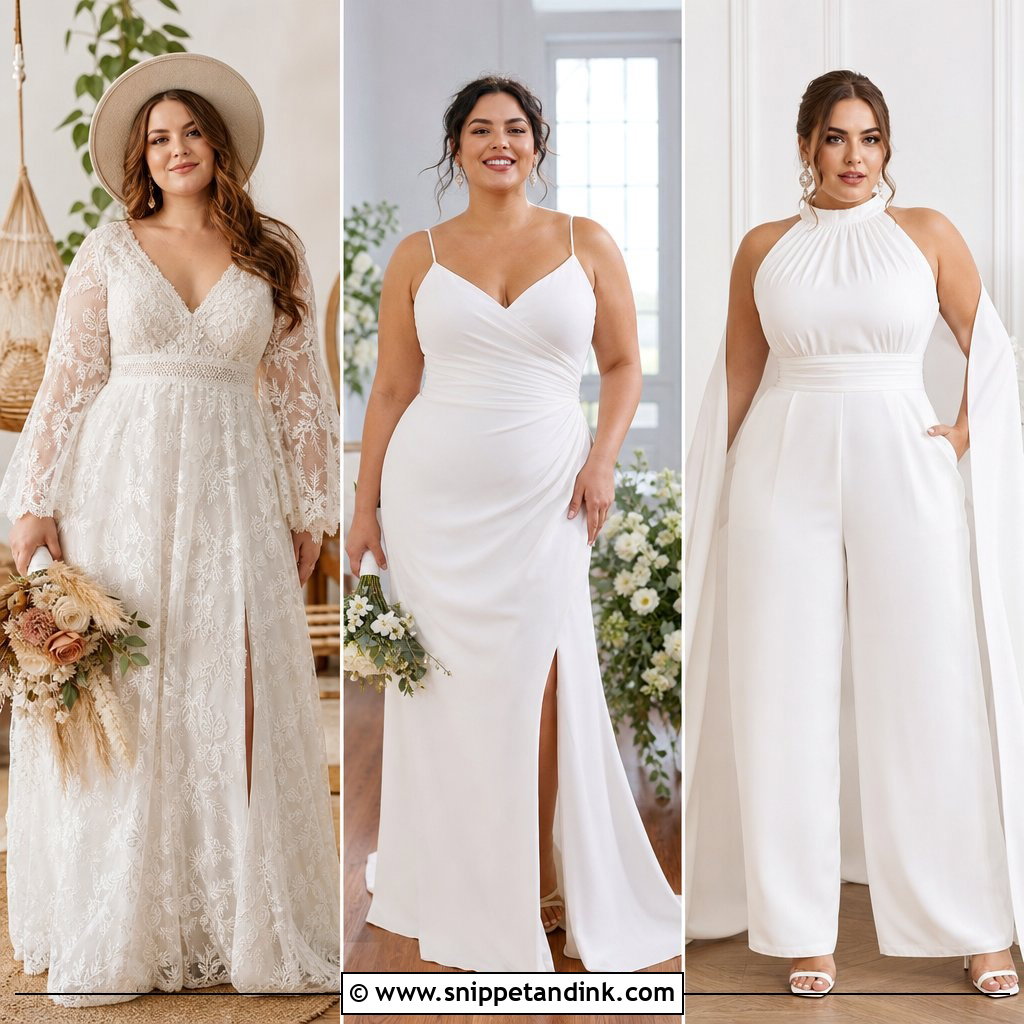
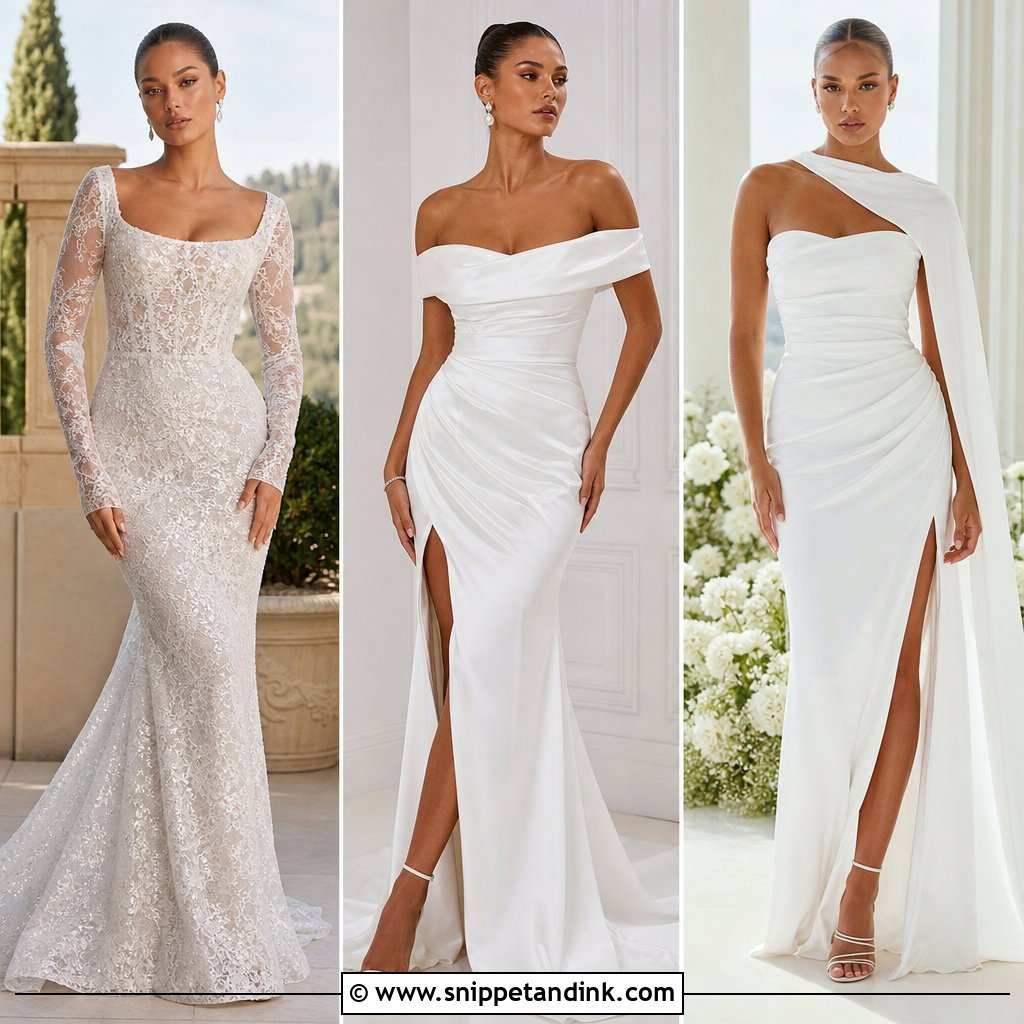
The lace that looked current in 2025 was lighter: fine Chantilly on the sleeves, delicate florals on the bodice and lace placed on the train rather than covering everything. Allover heavy lace looked dated by comparison. A lace bodice over a smooth crepe skirt is the modern version; long sleeves and a high neck lean vintage. Keep the veil plain, since a lace-edged veil over a lace gown rarely lines up in the pattern. Garden, vineyard and historic venues suit it.
5. Satin Ball Gown Bridal Dress
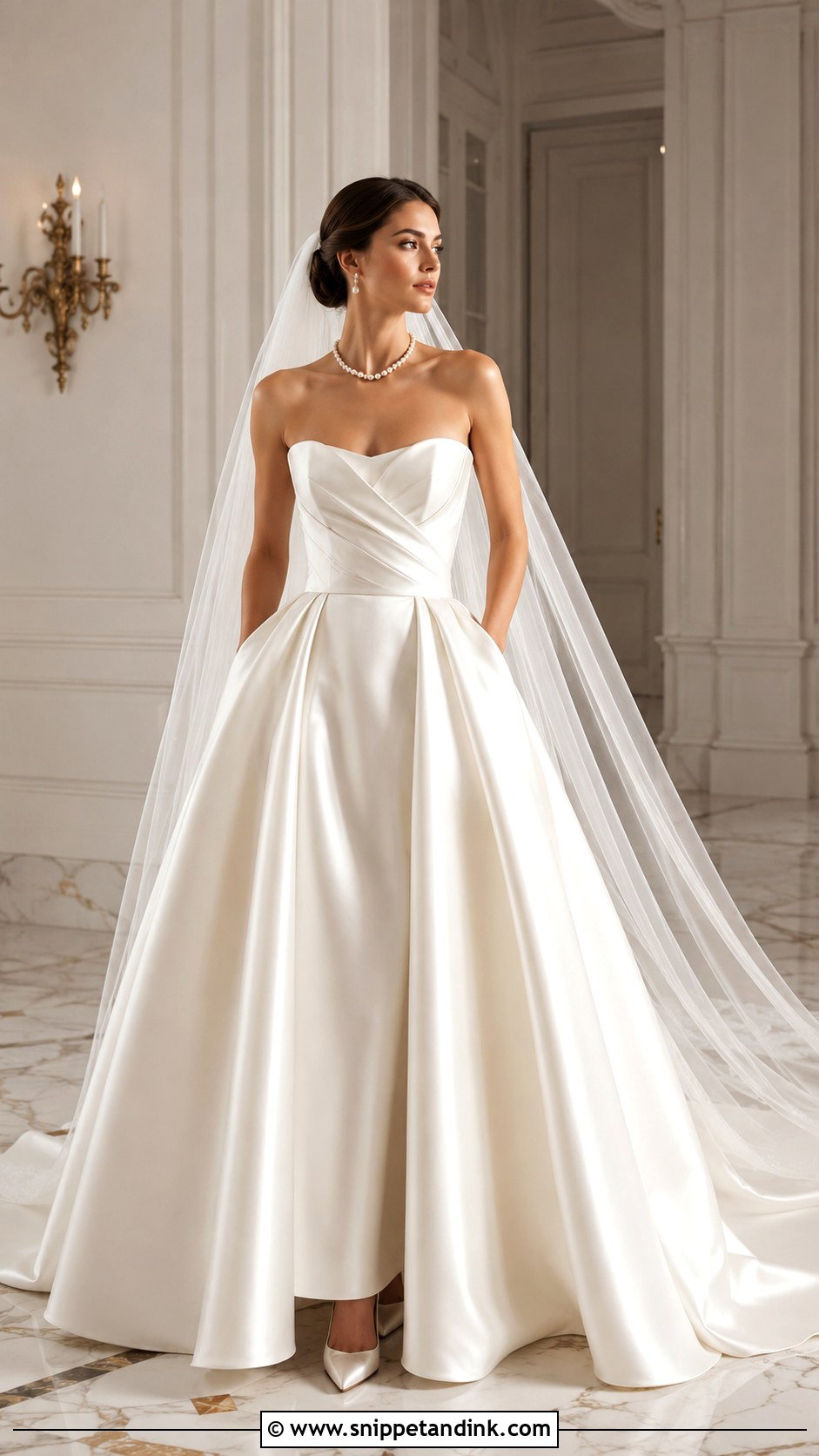
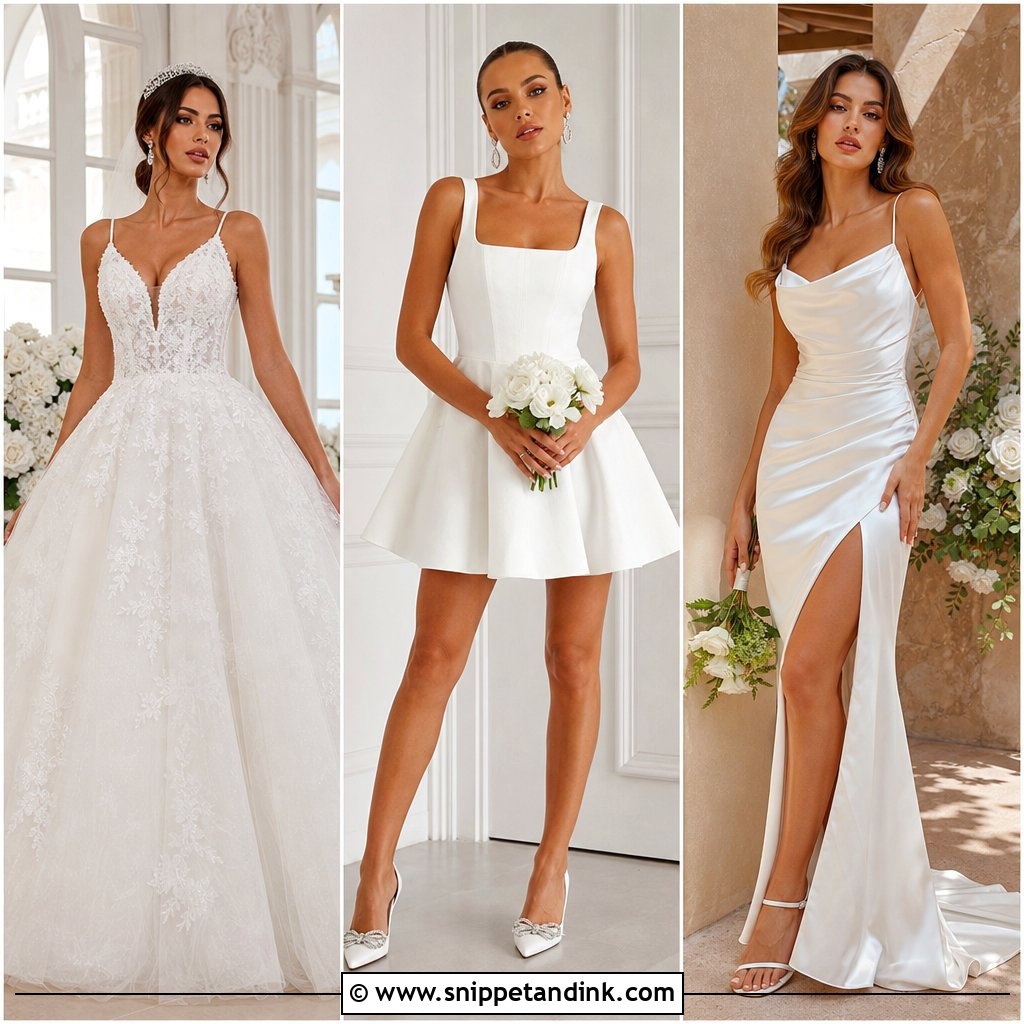
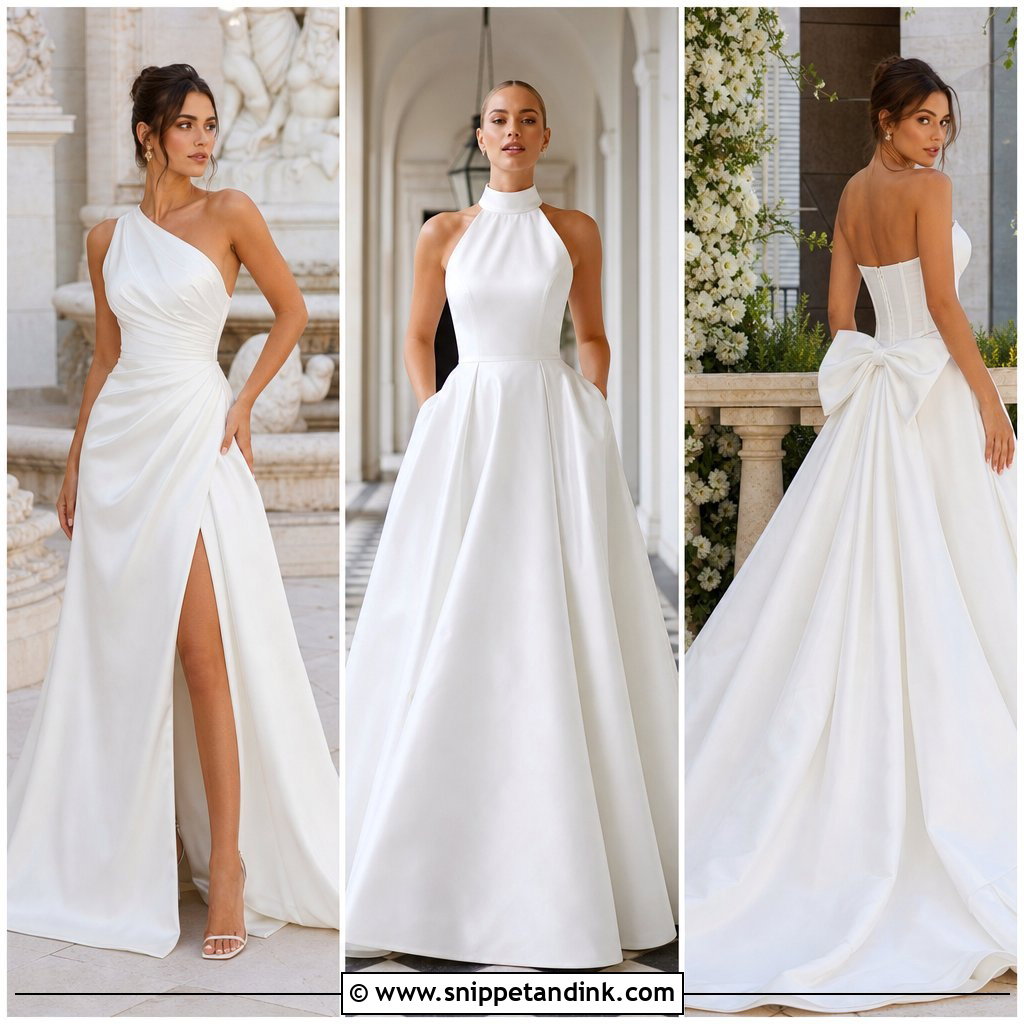
Satin ball gowns rely on fabric and volume, with almost no decoration. Square necklines, basque waists, strapless bodices and soft draping were the 2025 versions. Satin shows everything: a poorly pressed seam or a wrinkle from the car ride is visible in every photo, so have the gown steamed at the venue. A sleek bun keeps the neckline clear. Pointed pumps, a long veil and pearls suit formal evening weddings and large ceremonies, where the skirt actually has space to move.
6. Minimalist Bridal Dress
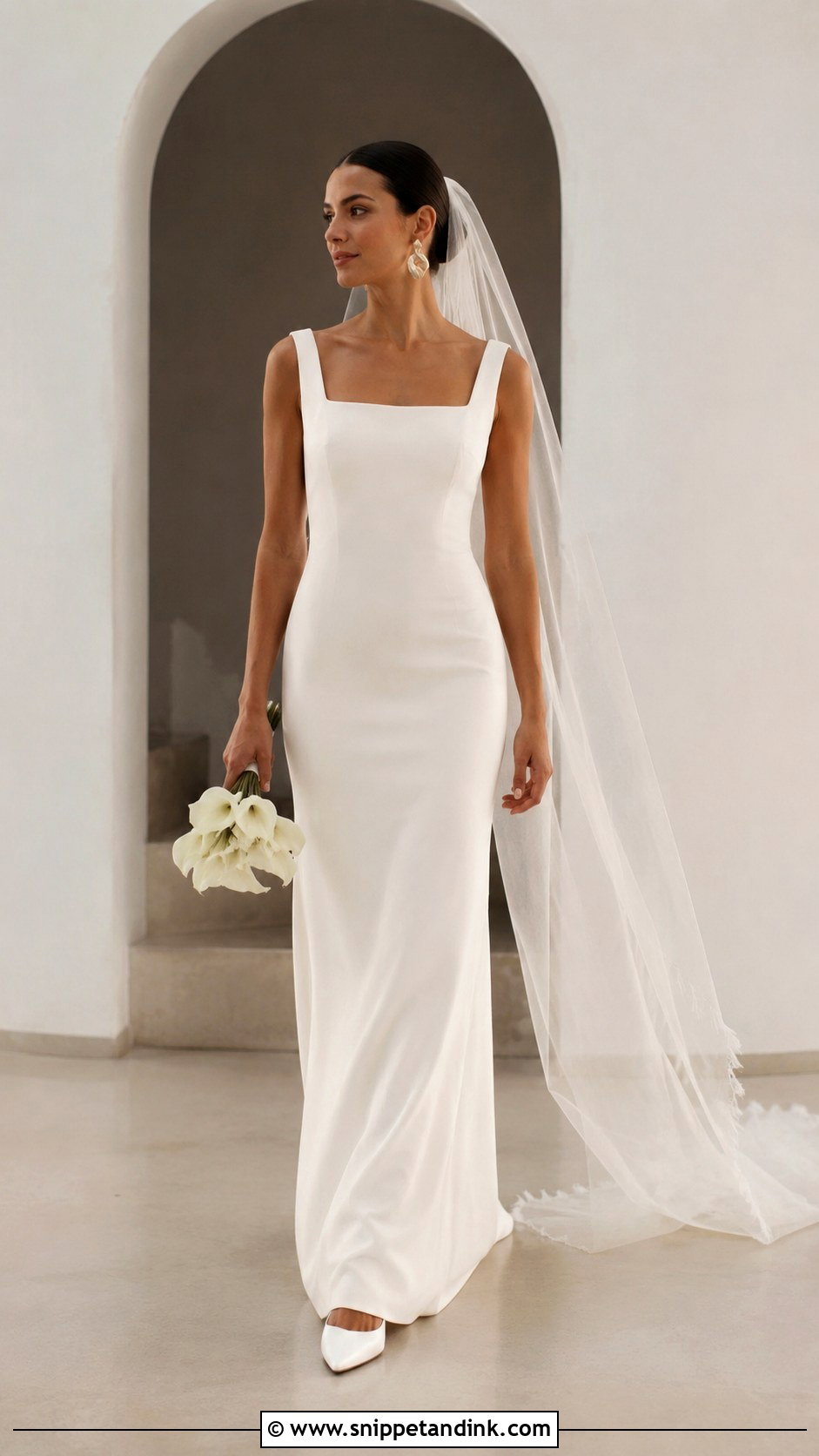
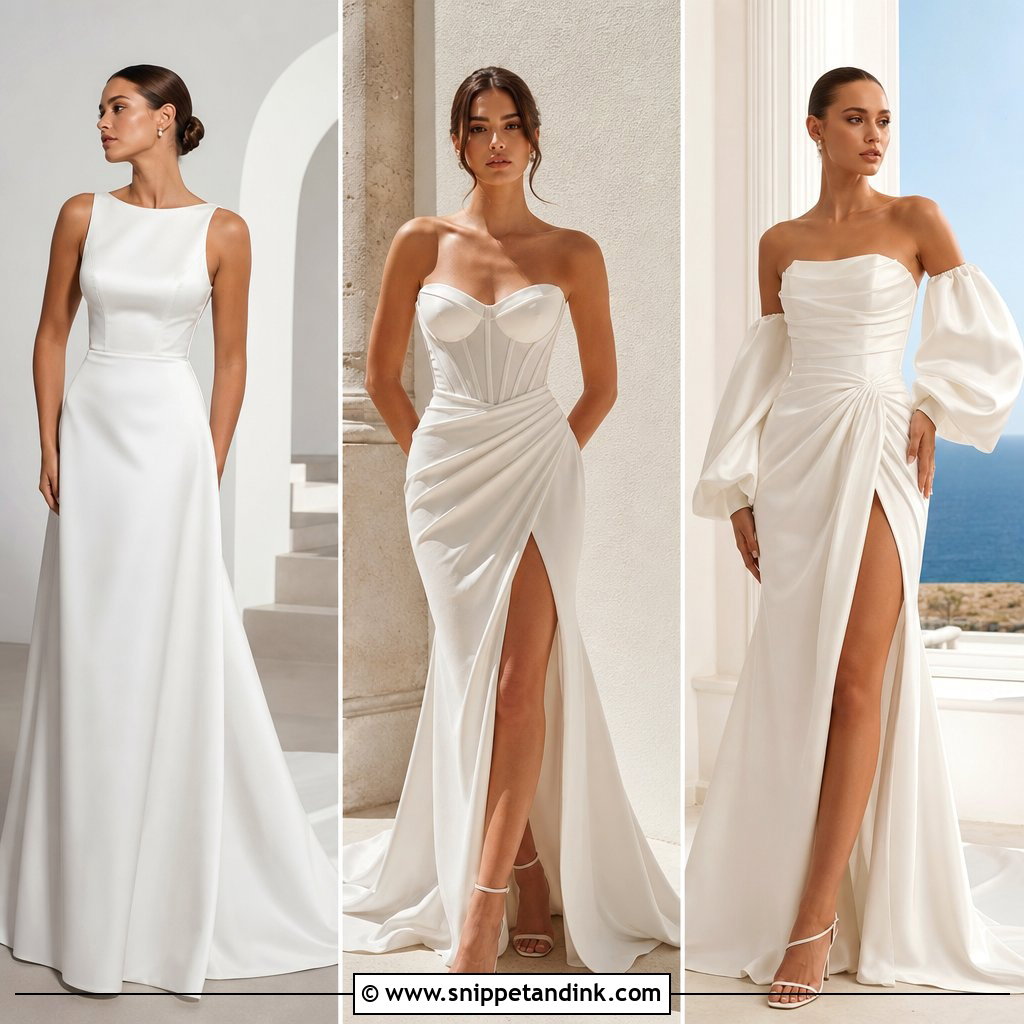
Minimalist gowns have nowhere to hide, so they depend entirely on fit, fabric and proportion. Smooth crepe, silk satin and matte mikado are the usual choices. A square neck feels fresh; a high neck reads polished. Budget more for alterations than you would for a beaded dress; a slightly uneven hem or a pulled seam is obvious on plain fabric. Sculptural earrings, sleek heels and a raw-edge veil make it look finished at a city or gallery venue.
7. Off Shoulder Bridal Dress
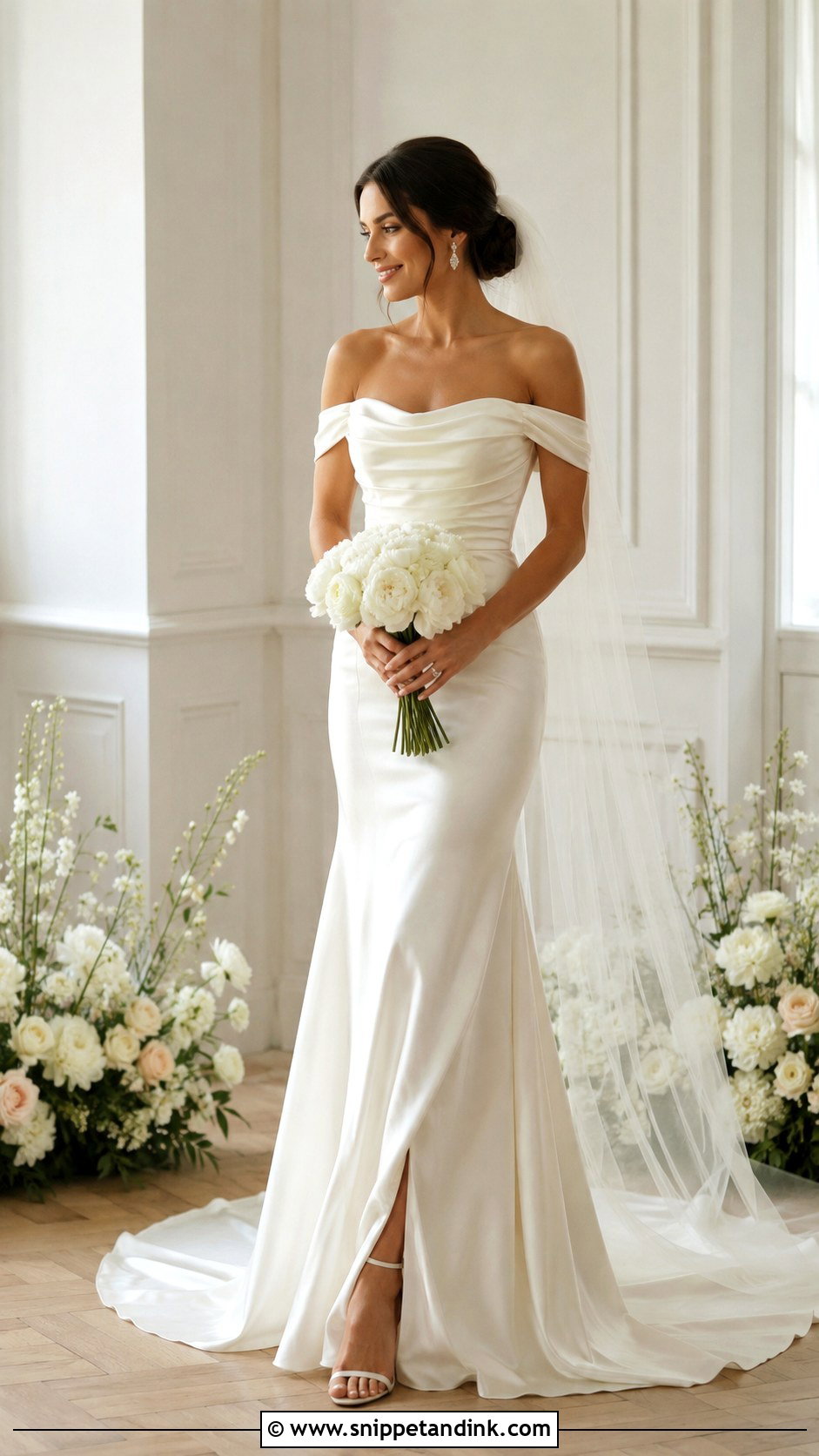
Off-shoulder necklines frame the collarbone and shoulders, and in 2025 they came in satin, lace, crepe and structured tulle, both fitted and as ball gowns. The practical issue is arm movement. Fabric sleeves sitting on the upper arm stop you lifting your arms much above shoulder height, which matters for hugs and the first dance. Ask for elastic or a silicone grip inside the band. Low bun, drop earrings, a sheer veil.
8. Long Sleeve Bridal Dress
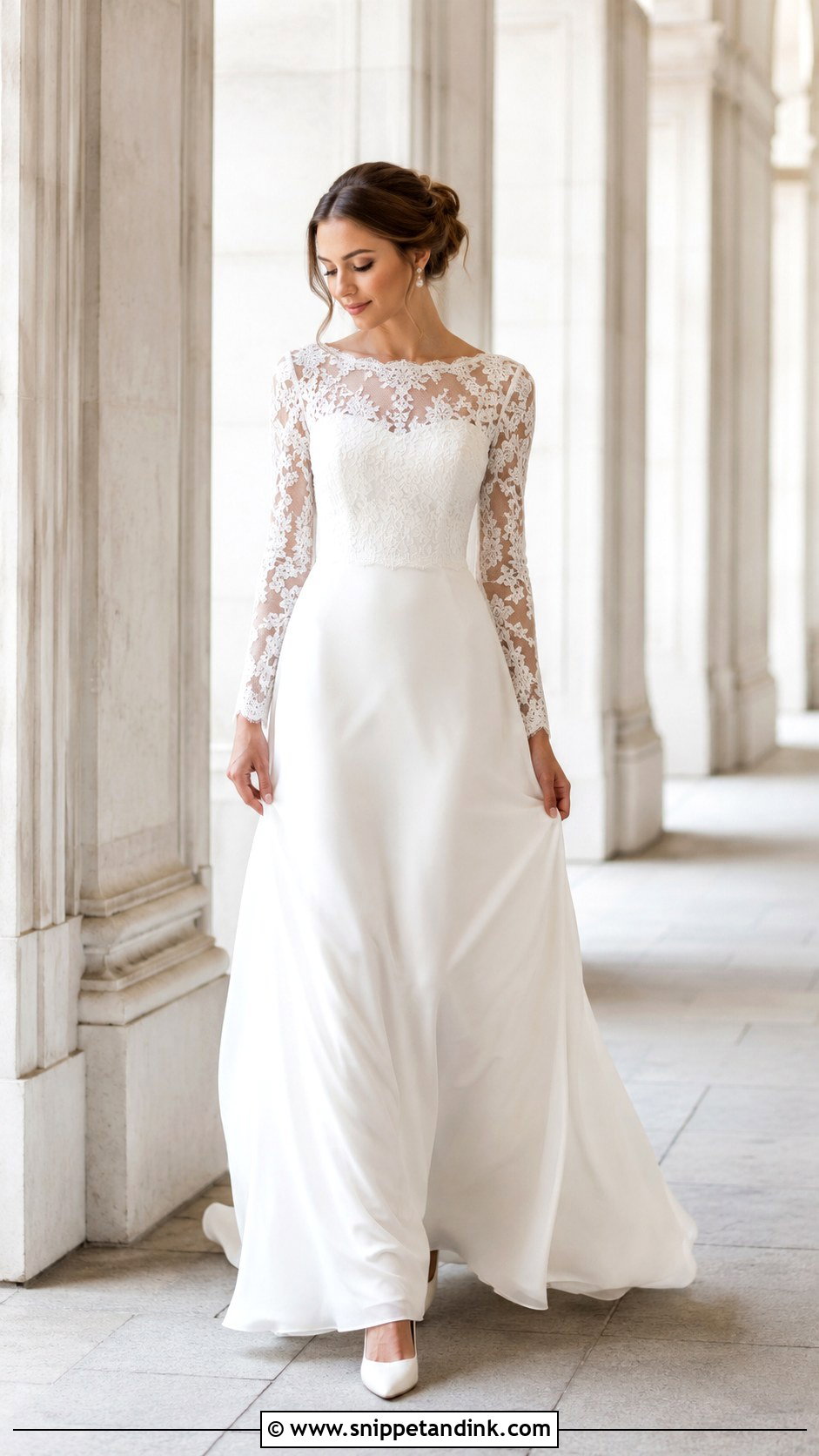
Long sleeves give coverage and detail from every angle. The 2025 range ran from sheer lace and fitted crepe to satin sleeves and detachable versions you can unbutton for the reception. Fitted satin sleeves are warm and restrict reach, while illusion lace sleeves breathe and stretch a little. Choose with your season in mind. A bateau or high neck gives a royal mood; illusion floral sleeves feel softer. Closed-toe heels, pearl earrings and a soft updo finish it.
9. Sheer Bridal Dress
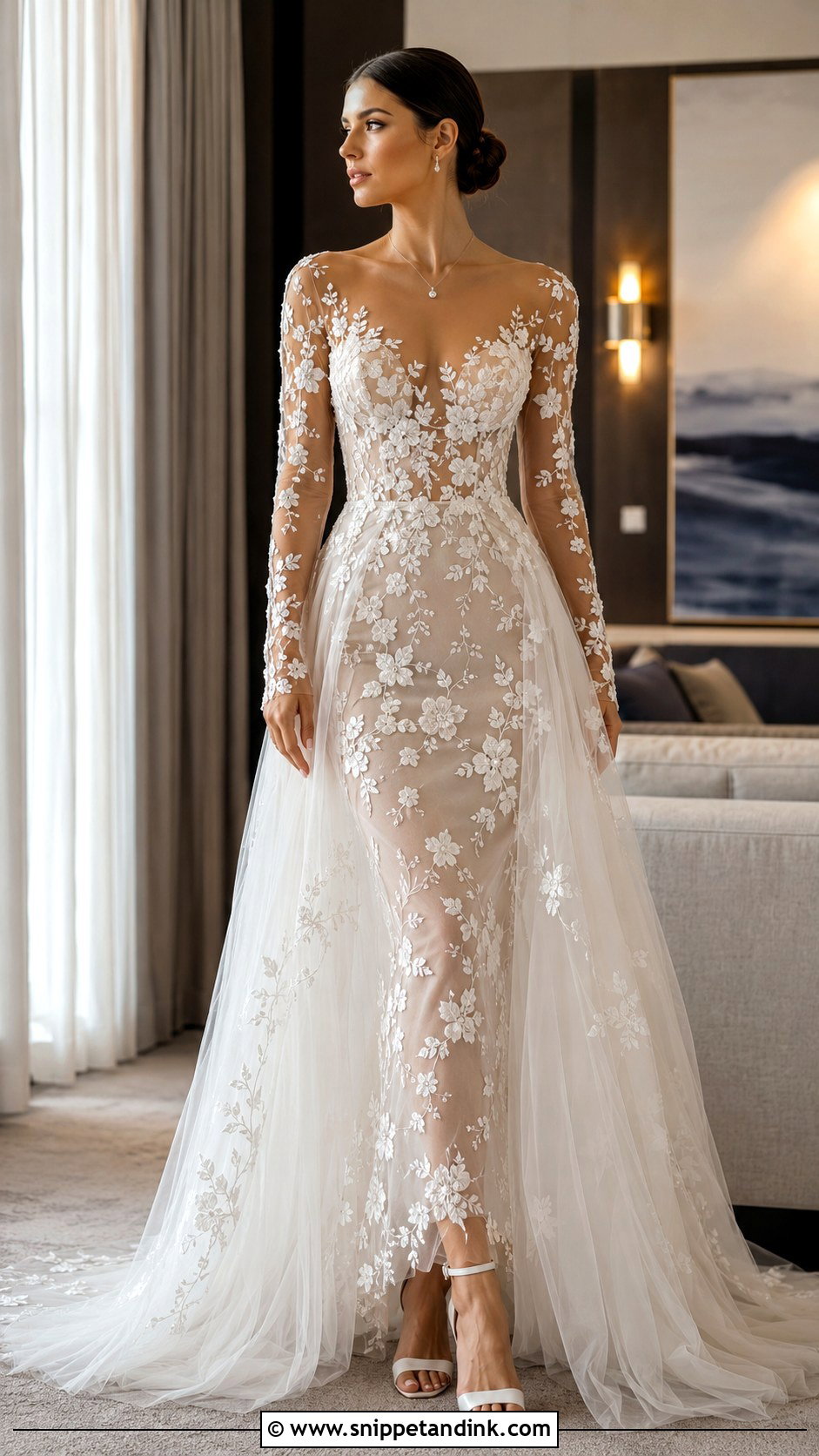
Sheer gowns use layered tulle, organza, lace appliqué and nude lining to build depth without exposure. The key is how the lining matches your skin. A lining a shade too light reads as a slip under the lace, and one too dark looks like a gap. Take a swatch outdoors to check it in daylight. If you want less exposure, choose sheer sleeves or a sheer overlay rather than a fully sheer bodice. Keep jewellery clean and the veil soft.
10. Pearl Bridal Dress
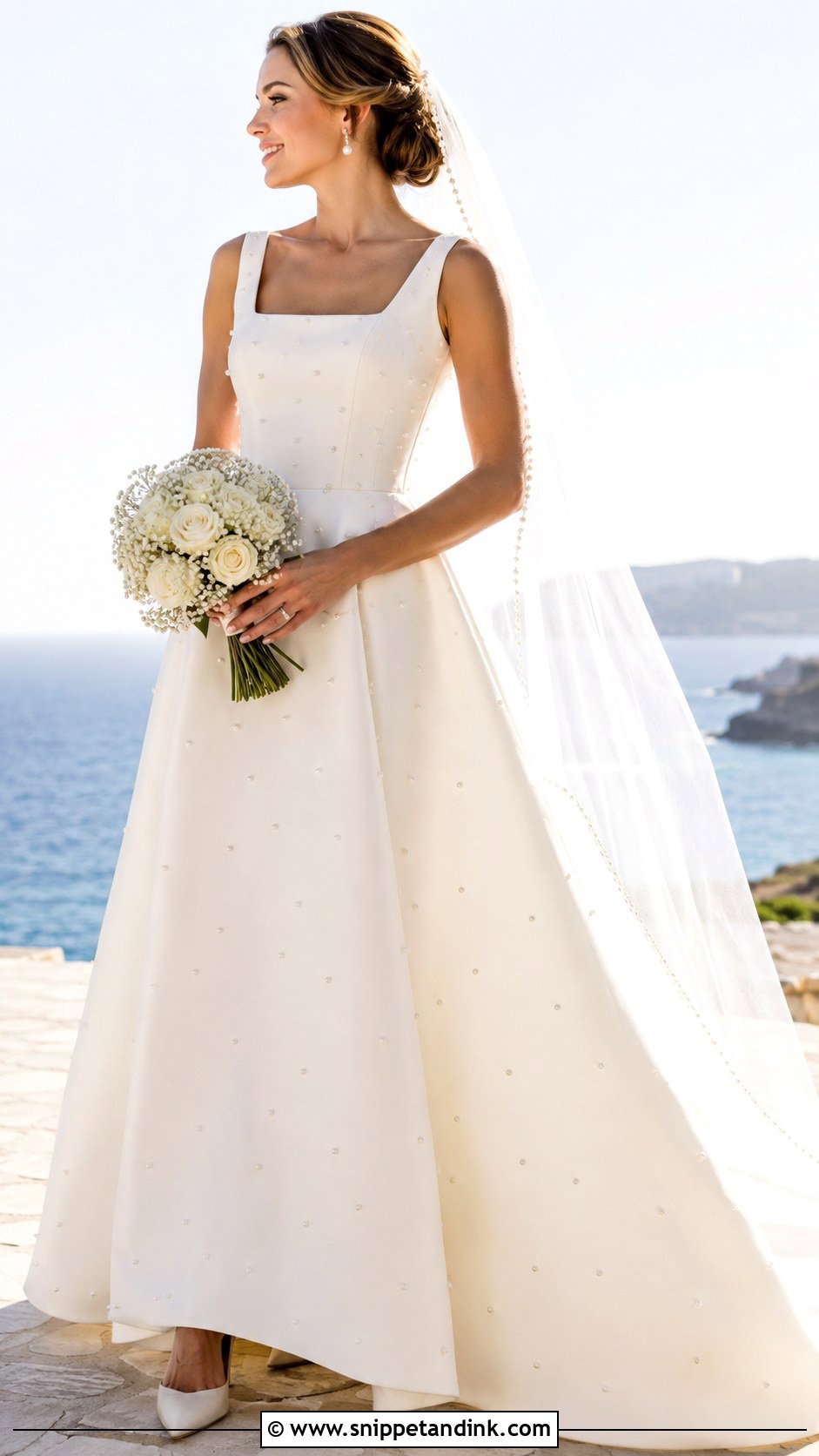
Pearls give a gown detail without the glare of crystals. In 2025 they appeared along necklines, scattered on skirts and on matching veils, best when spaced and varied in size rather than packed tight. A heavily pearled bodice needs no necklace; pearl drops and pins in the hair are enough. Hand-sewn pearls do come loose, so ask the shop for a few spares and pack them with a needle in your emergency kit.
11. Floral Applique Bridal Dress
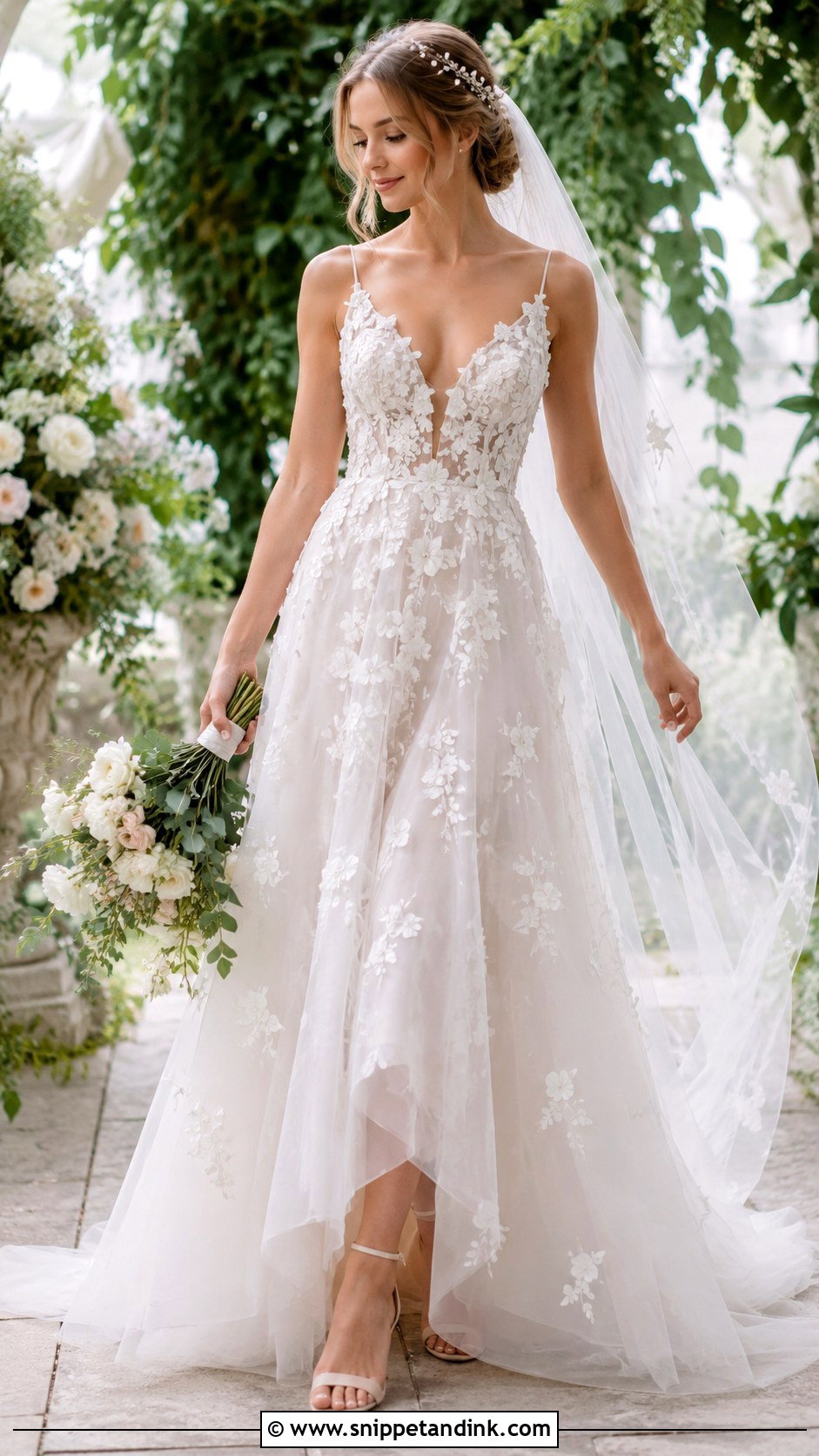
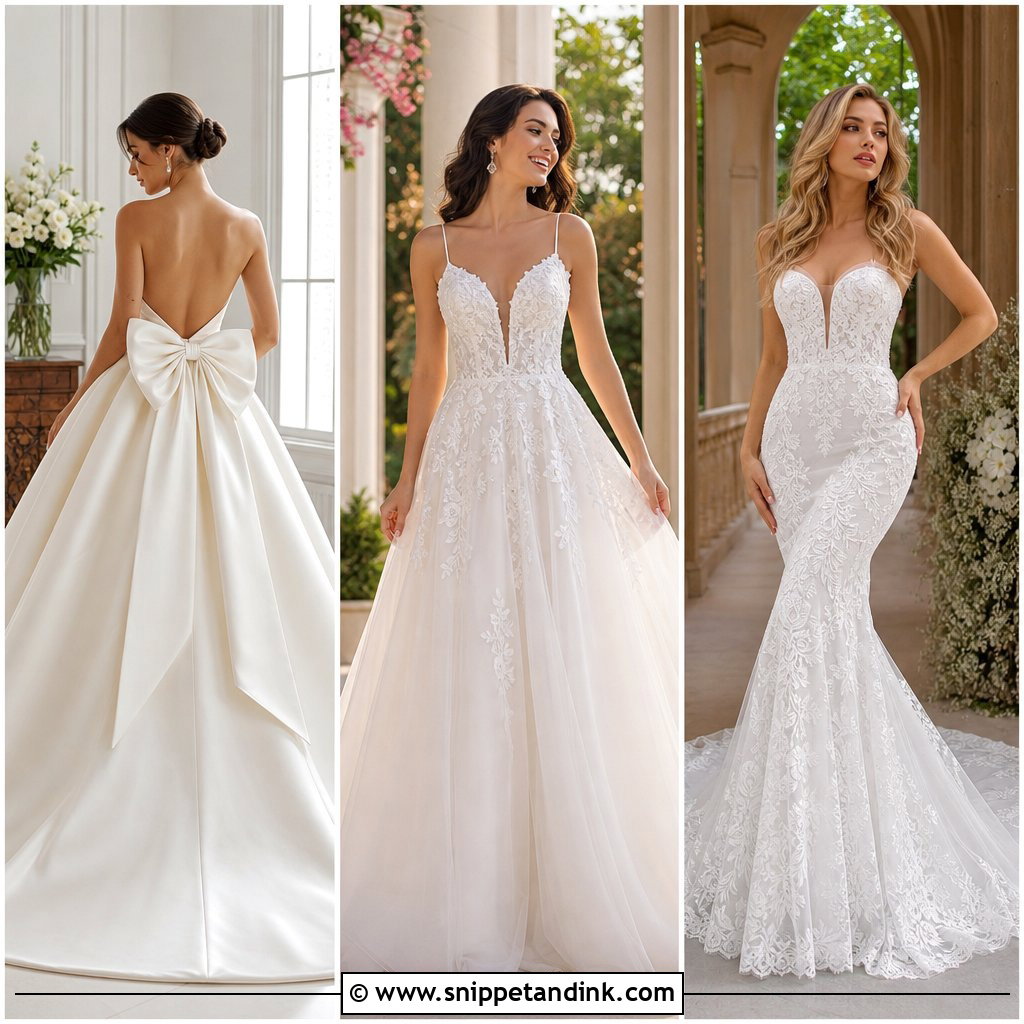
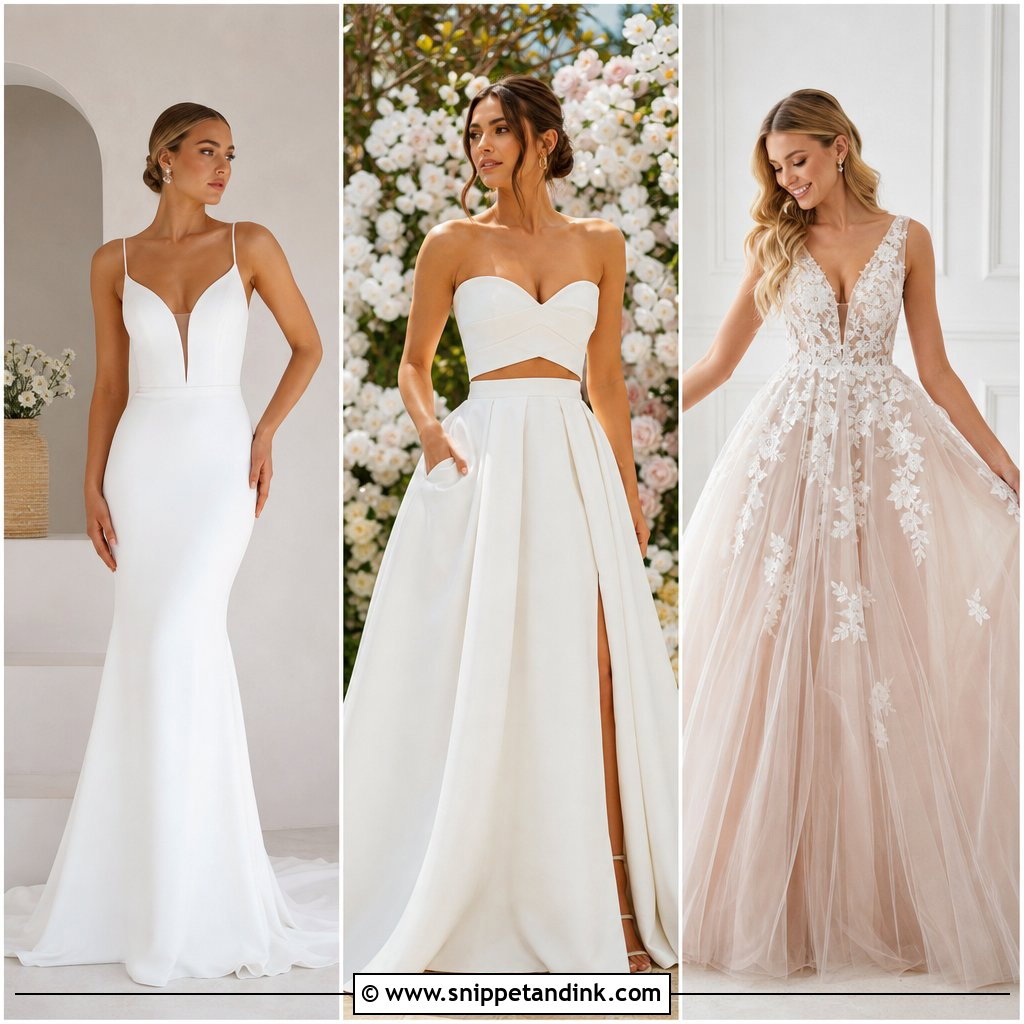
Three-dimensional floral appliqué gives a gown movement and a garden feel: flowers and vines that seem to climb across sheer tulle. It suits spring weddings, greenhouses and estates. Raised appliqué catches on rough brick, bark and bouquet wire, so I keep brides away from leaning on garden walls for portraits. A clean bodice with appliqué mainly on the skirt is the modern version; bigger blooms on the train and neckline go dramatic. Floral pins or pearls in soft curls tie it together.
12. Detachable Skirt Bridal Dress
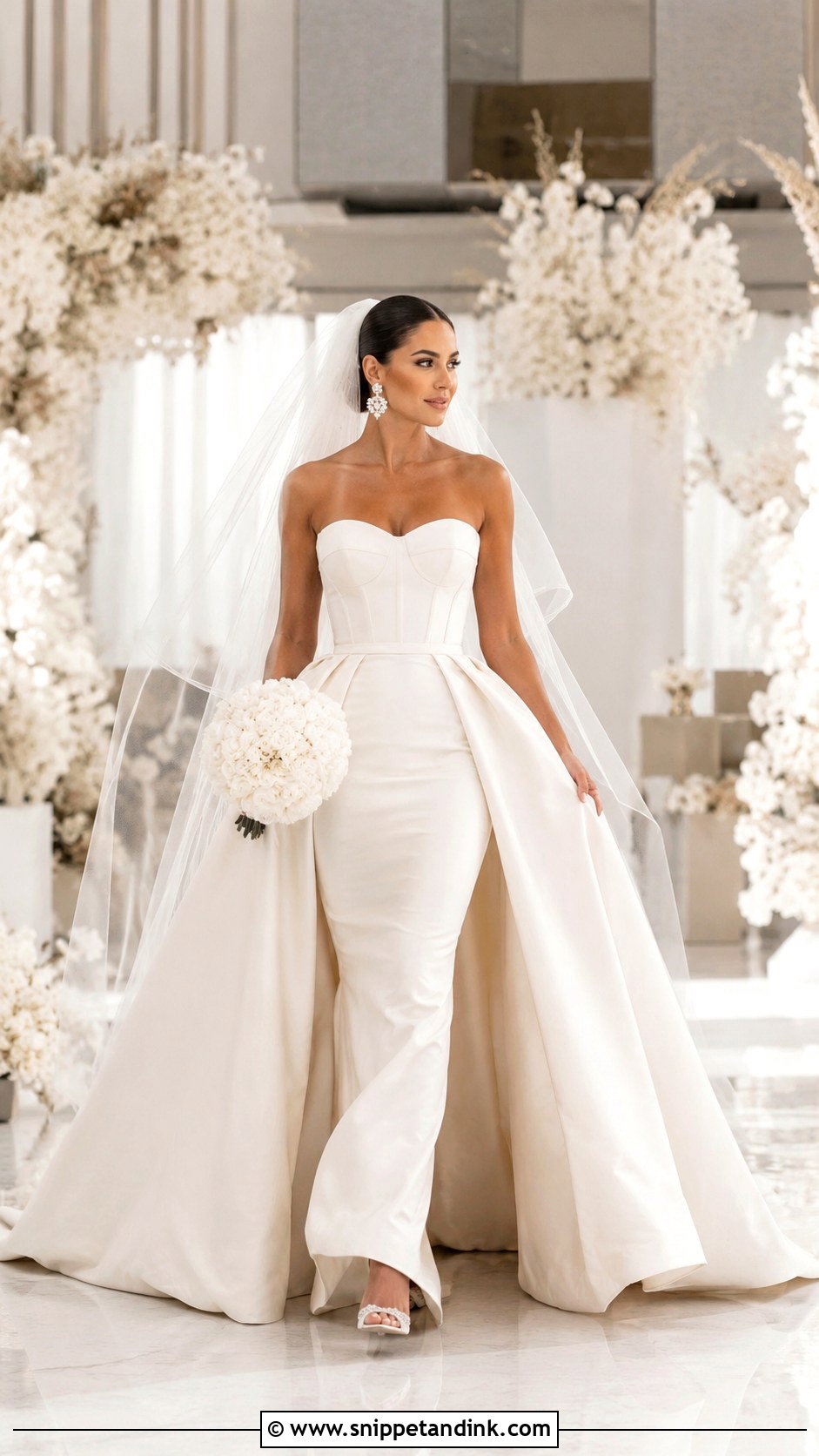
A detachable skirt gives two looks from one gown: a full overskirt for the ceremony, a sleeker dress underneath for dancing. In 2025 it caught on because brides wanted both strong photos and real comfort. Before buying, practise removing the skirt with your maid of honour. Most fasten with hidden hooks or snaps around the waist, and it takes two hands and a few minutes. Switch the long veil for a bow or bold earrings once it’s off.
13. Bridal Dress With Bow
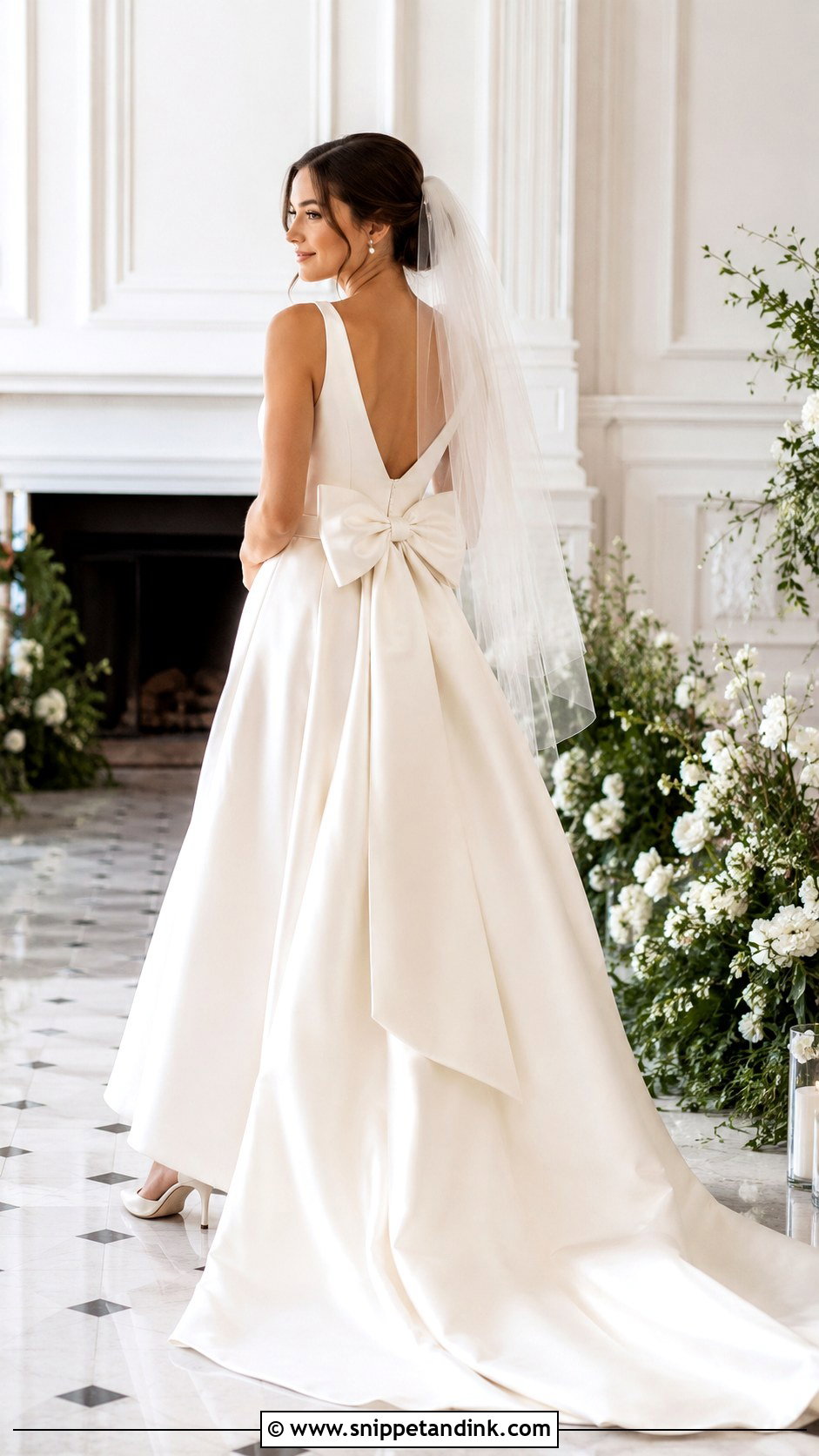
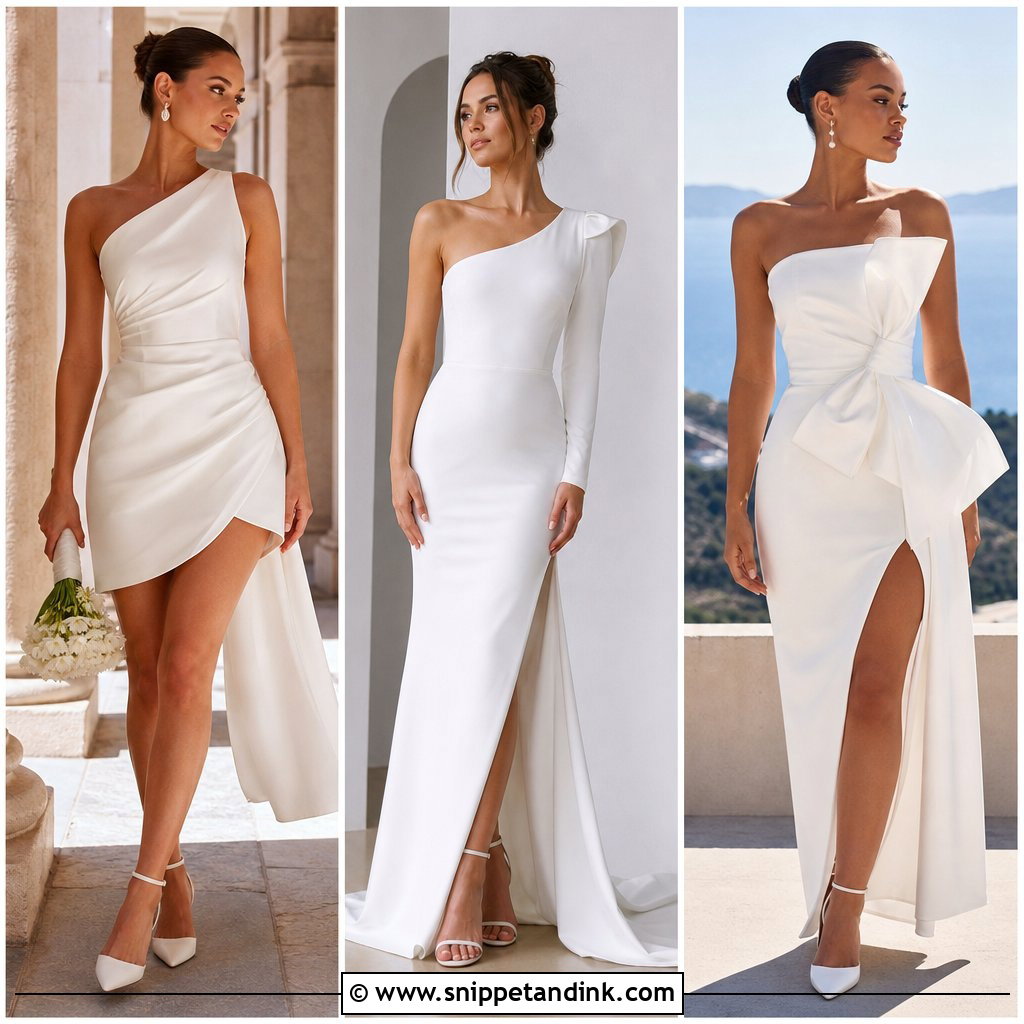
One bow is a statement; two is too many. In 2025 they sat at the back waist, on a shoulder, across the neckline or trailing down the train. A back bow gives the walk up the aisle something to look at from the guests’ side. A shoulder bow is sharper and suits a sleek skirt. Large bows in soft fabric droop through the day, so ask whether the bow has interfacing inside it. Keep the earrings small and the veil smooth.
14. High Neck Bridal Dress
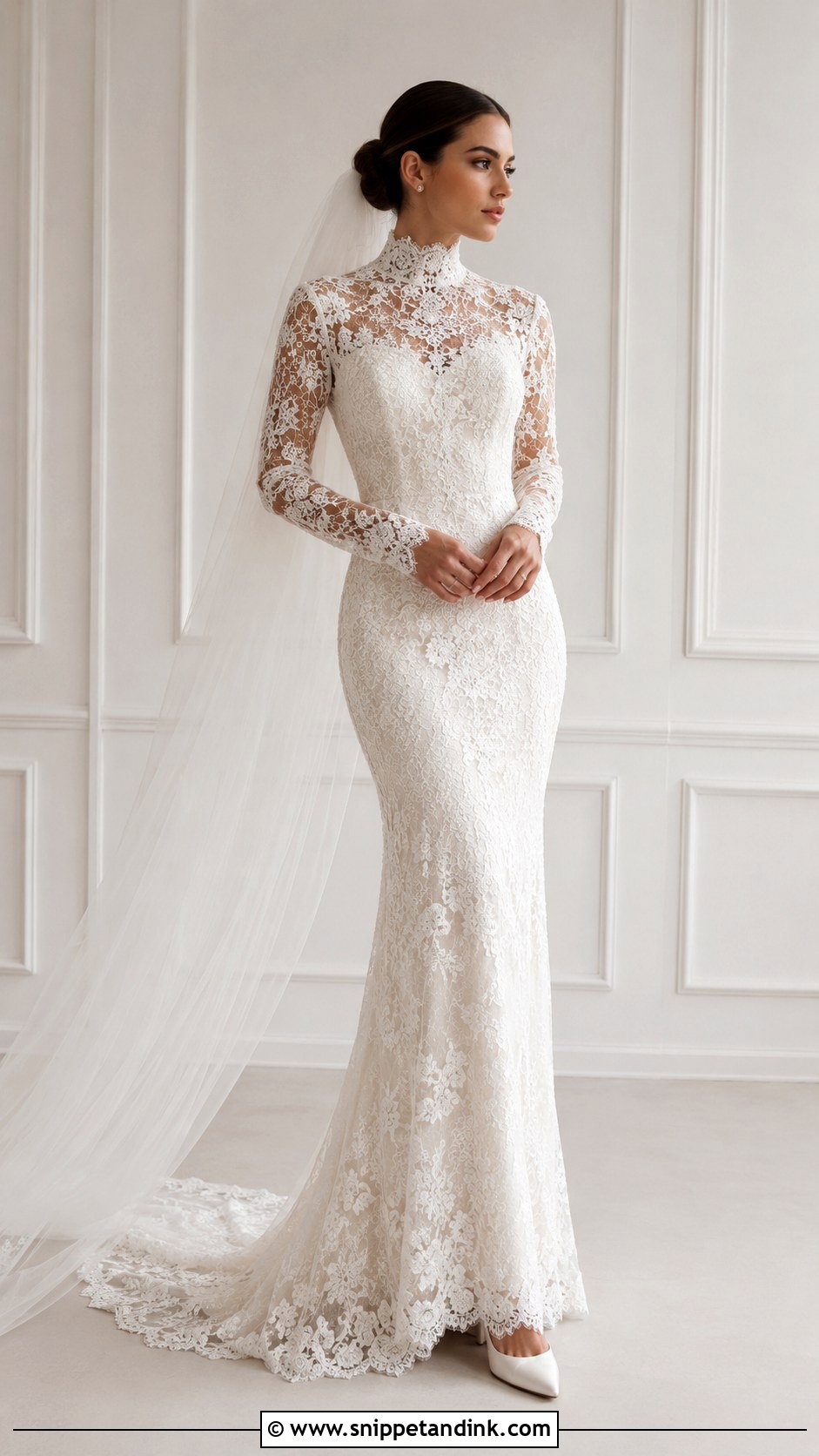
A high neck shifts attention to the face, shoulders and the line of the gown. Lace, crepe, satin or sheer illusion all work. Hair should go up or back, so a low bun, sleek ponytail or tucked waves; loose hair on top of a high collar looks cluttered. Stud earrings, pointed heels and a long veil complete the ceremony look. Lace softens it; smooth crepe makes it sharp and minimal. It suits winter, formal venues and courthouse weddings equally.
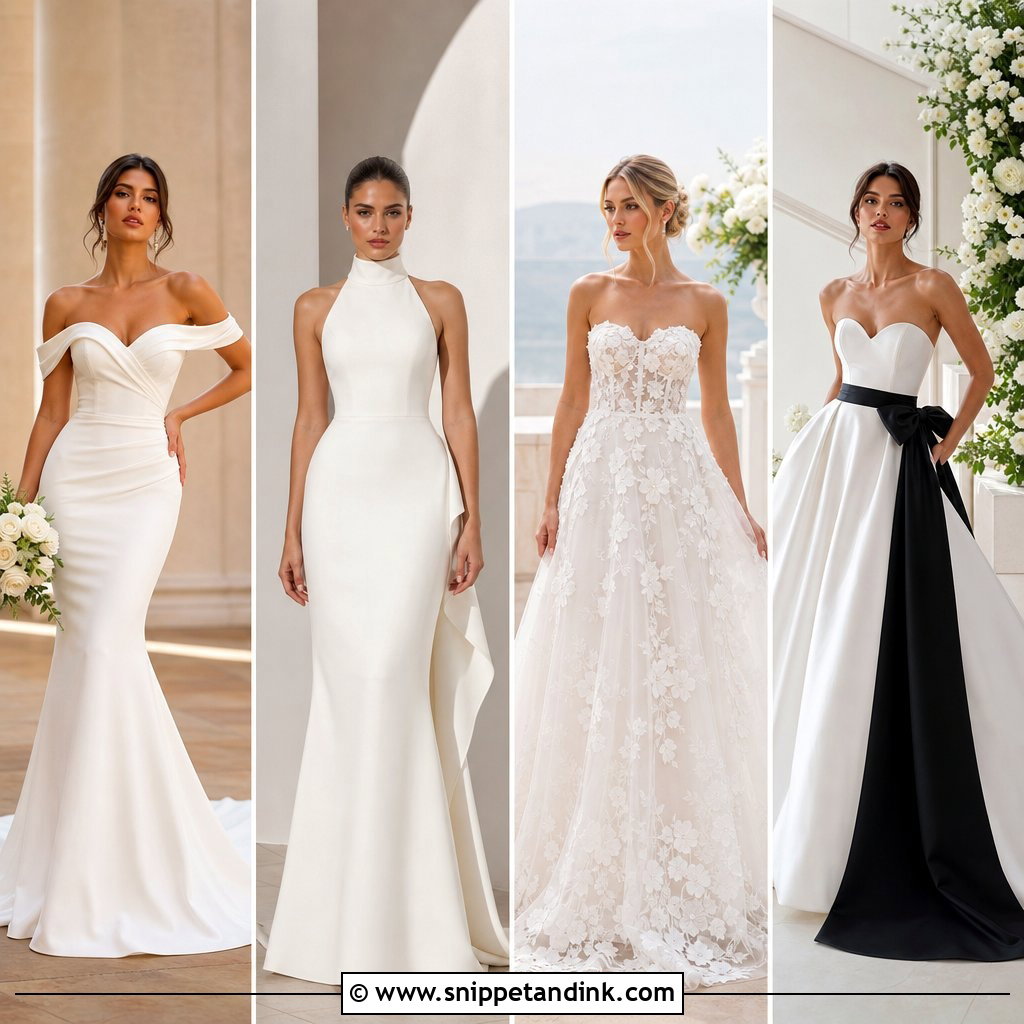
15. Square Neck Bridal Dress
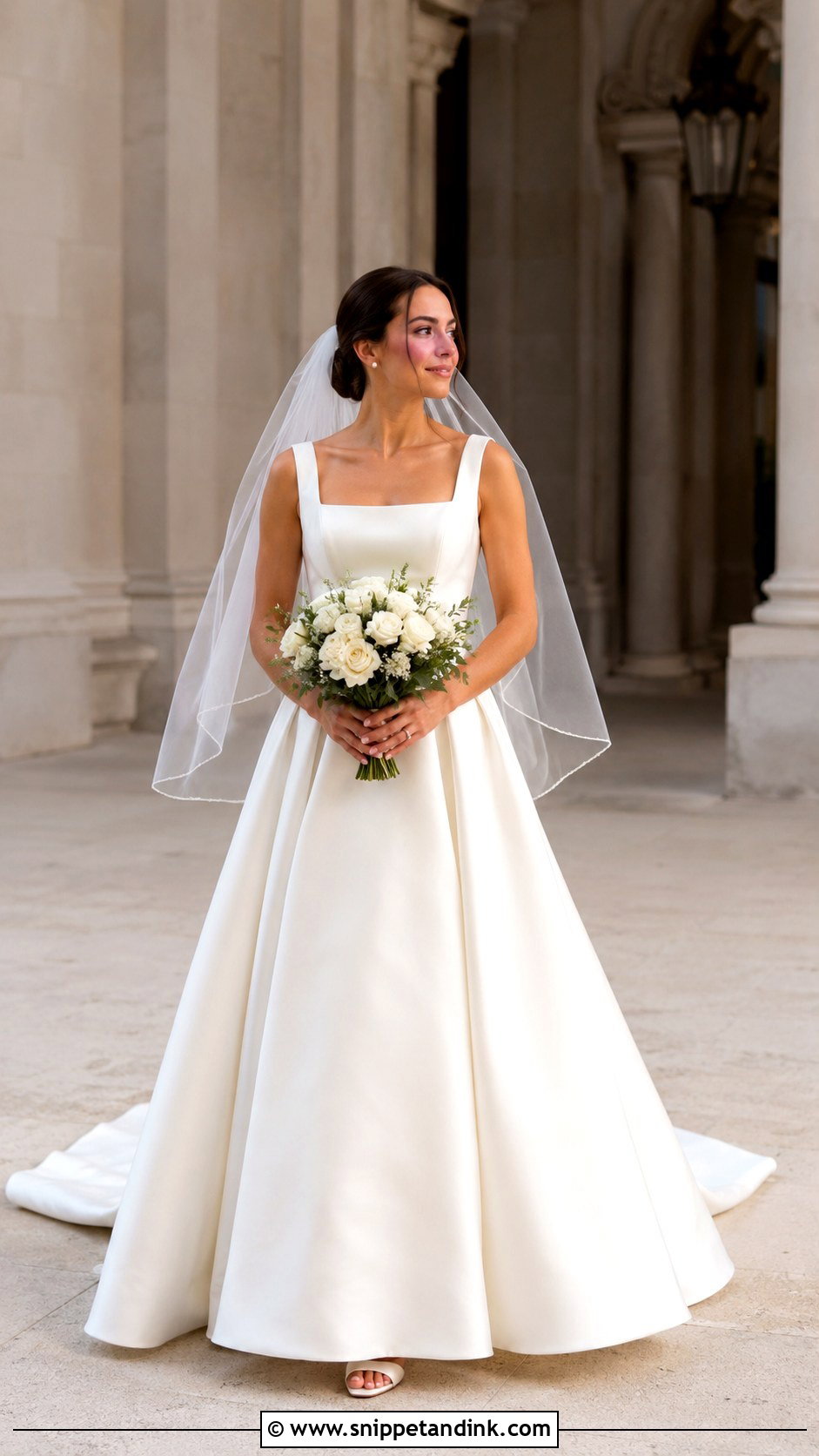
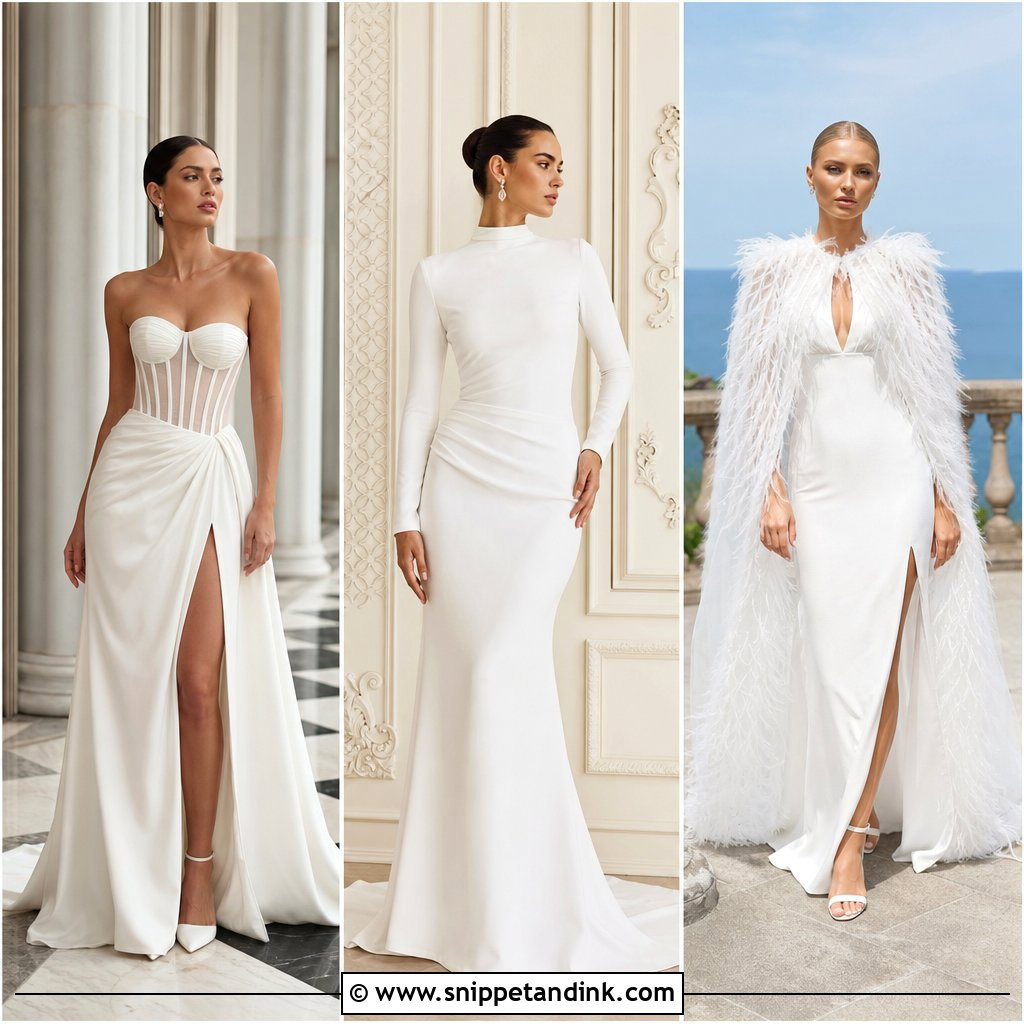
The square neck is among the easiest necklines to wear, and it’s flattering on a wide range of bust sizes because the straight edge and wider straps give real support. It sits well on fitted, A-line, ball gown and plain crepe shapes. Satin suits a formal venue; lace suits a garden. Pearl studs and block heels or satin pumps are enough. Ask for the corners to sit level at your fitting; even a small tilt draws the eye straight to it.
16. Strapless Bridal Dress
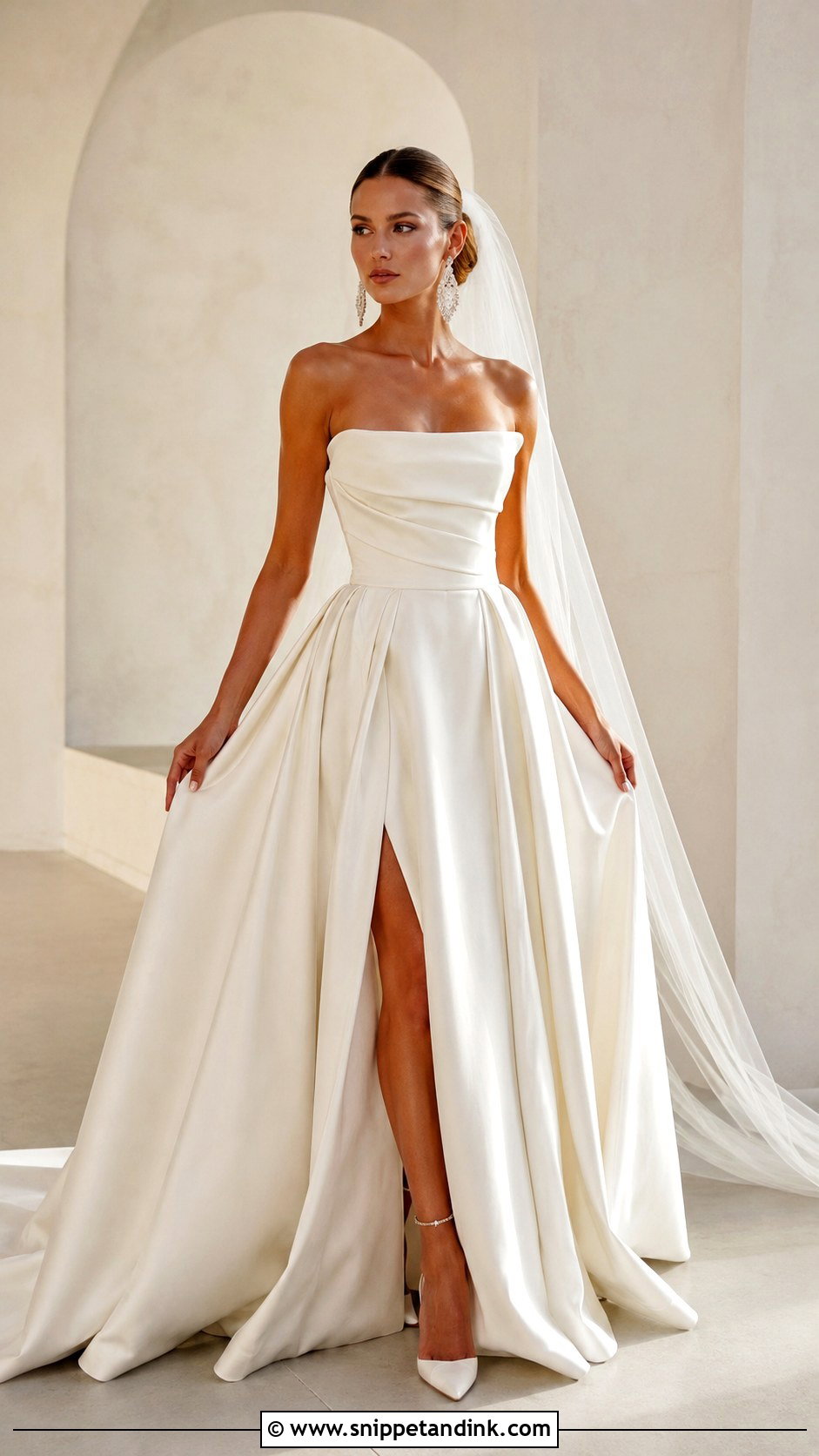
Strapless gowns are easy to personalise because the styling does the mood: pearls and a long veil for classic, statement earrings and a sleek bun for modern. The 2025 versions were more structured, with sculpted bodices, corset seams and folded necklines. Fit is everything. The bodice should stay put when you raise your arms and bend forward without you tugging it up; if it doesn’t at the final fitting, it won’t after six hours of hugging. Fabric and skirt shape decide whether it suits a ballroom or a beach.
17. A Line Bridal Dress
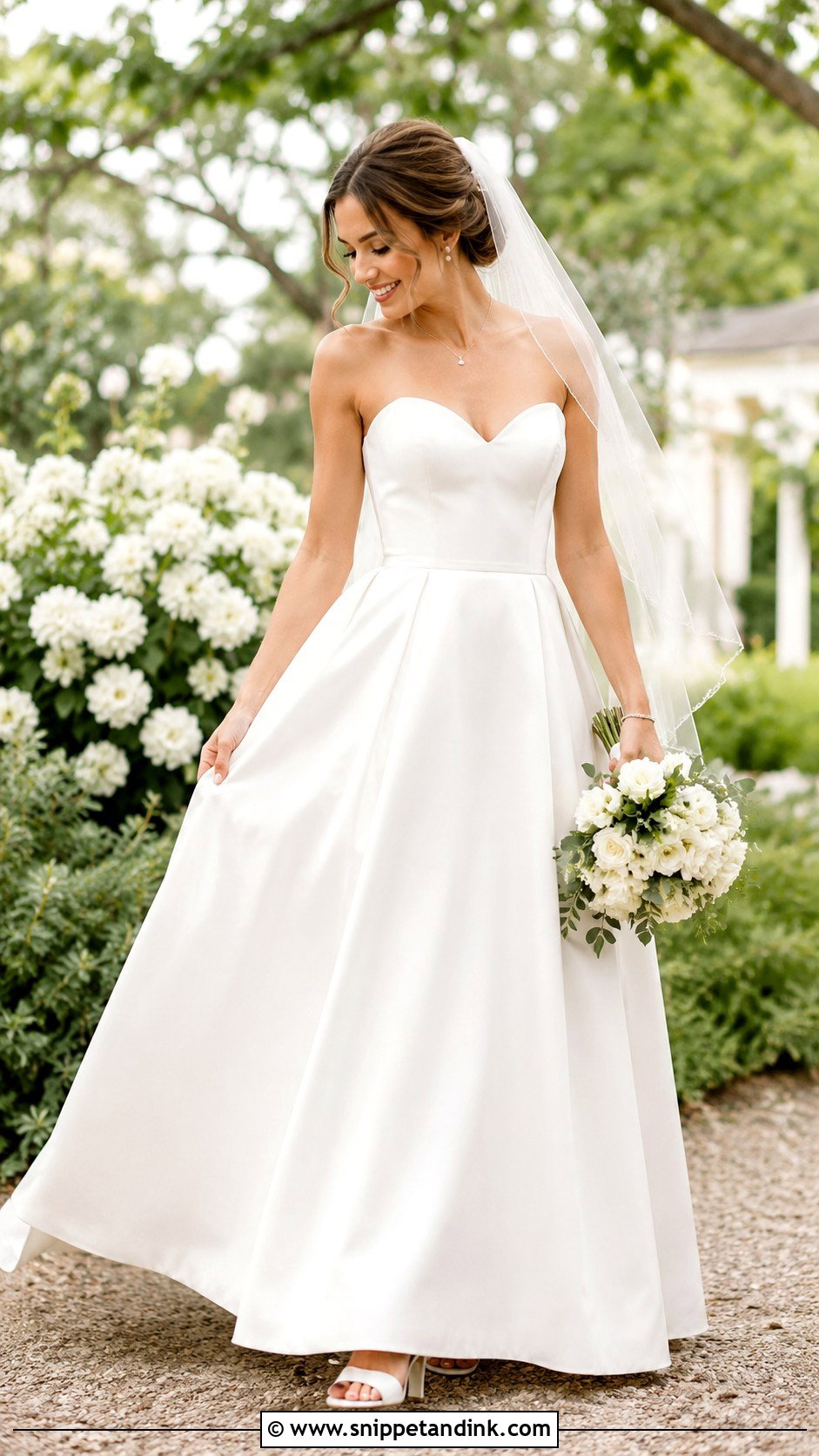
The A-line fits through the bodice and widens gently from the waist, which is why it suits more brides than any other shape. Satin, lace, tulle, organza or crepe all work, so it adapts to any venue. Square neck reads modern; sweetheart reads romantic. A belt or waist detail adds definition if you want it. It’s the shape I suggest when a bride can’t decide, not because it’s safe but because it lets you sit, walk and dance without thinking about the dress.
18. Mermaid Bridal Dress
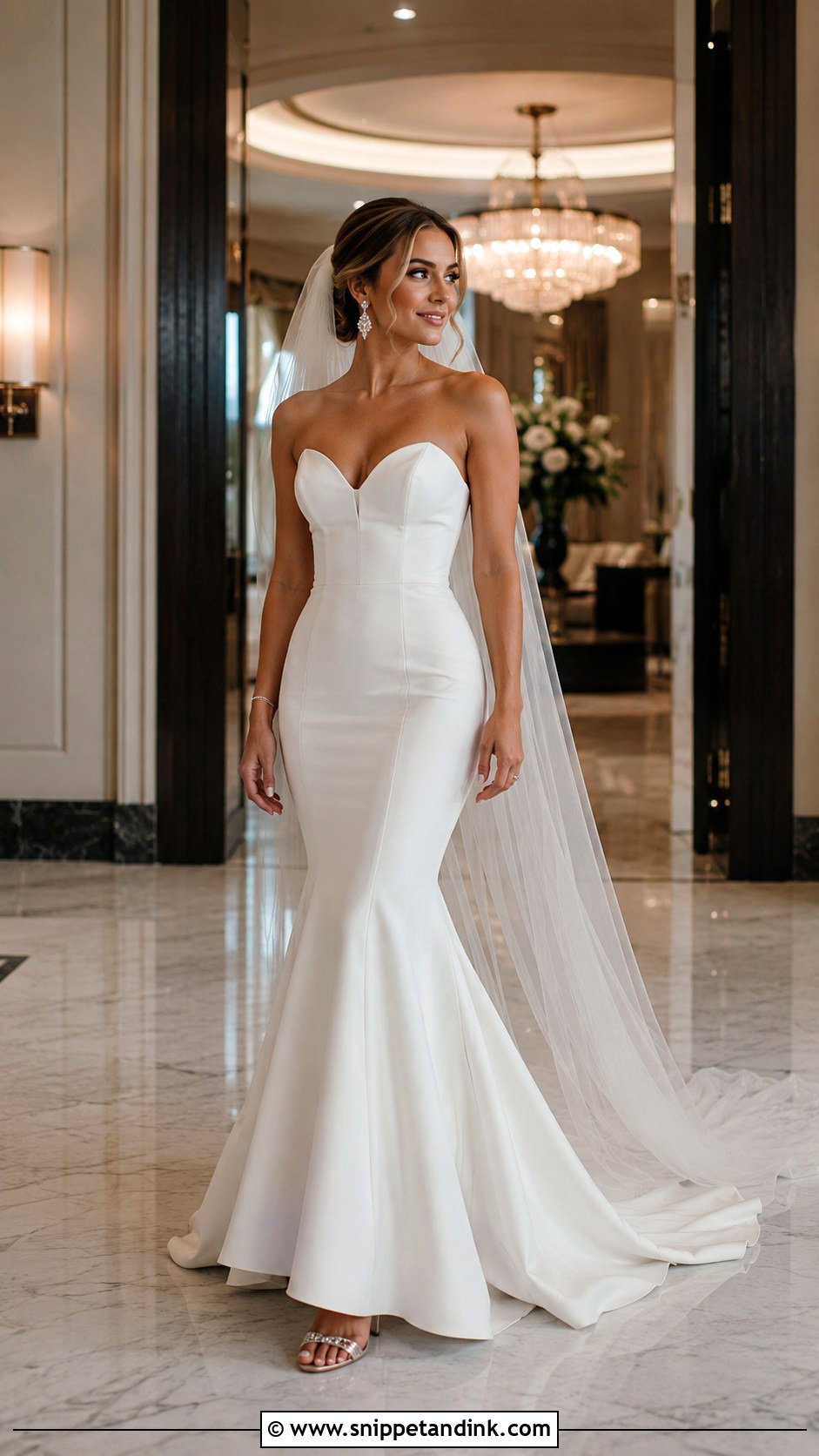
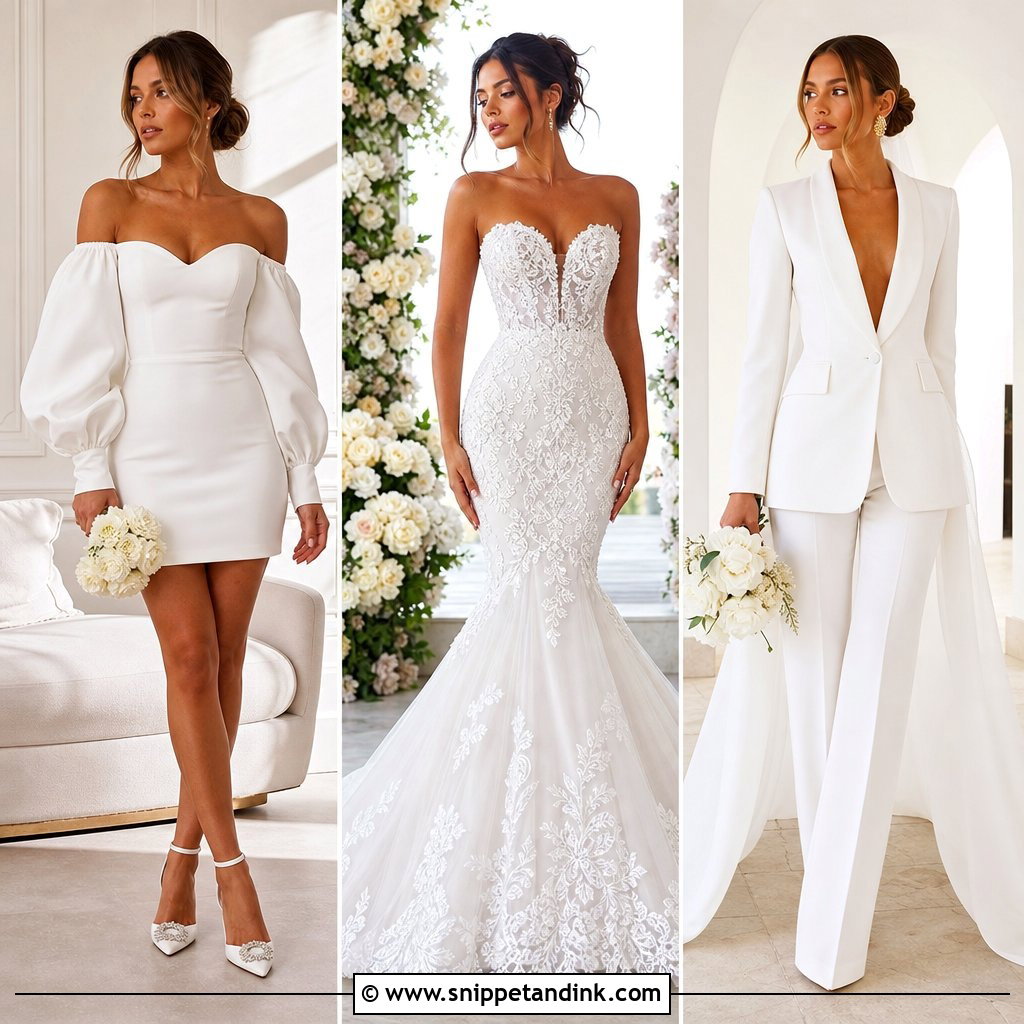
Mermaid gowns hug the body to the knee before flaring, so they’re a commitment: confident and sculpted, but you’ll walk in shorter steps and sitting needs some care. The 2025 versions often had built-in corsetry, appliqué, smooth crepe or a soft shimmer. The flare point is the thing to get right. Too low and you shuffle; slightly higher, around the knee, and you can walk and climb steps. Stretch lining helps. High heels, a long veil and statement earrings balance the fitted line.
19. Slip Bridal Dress
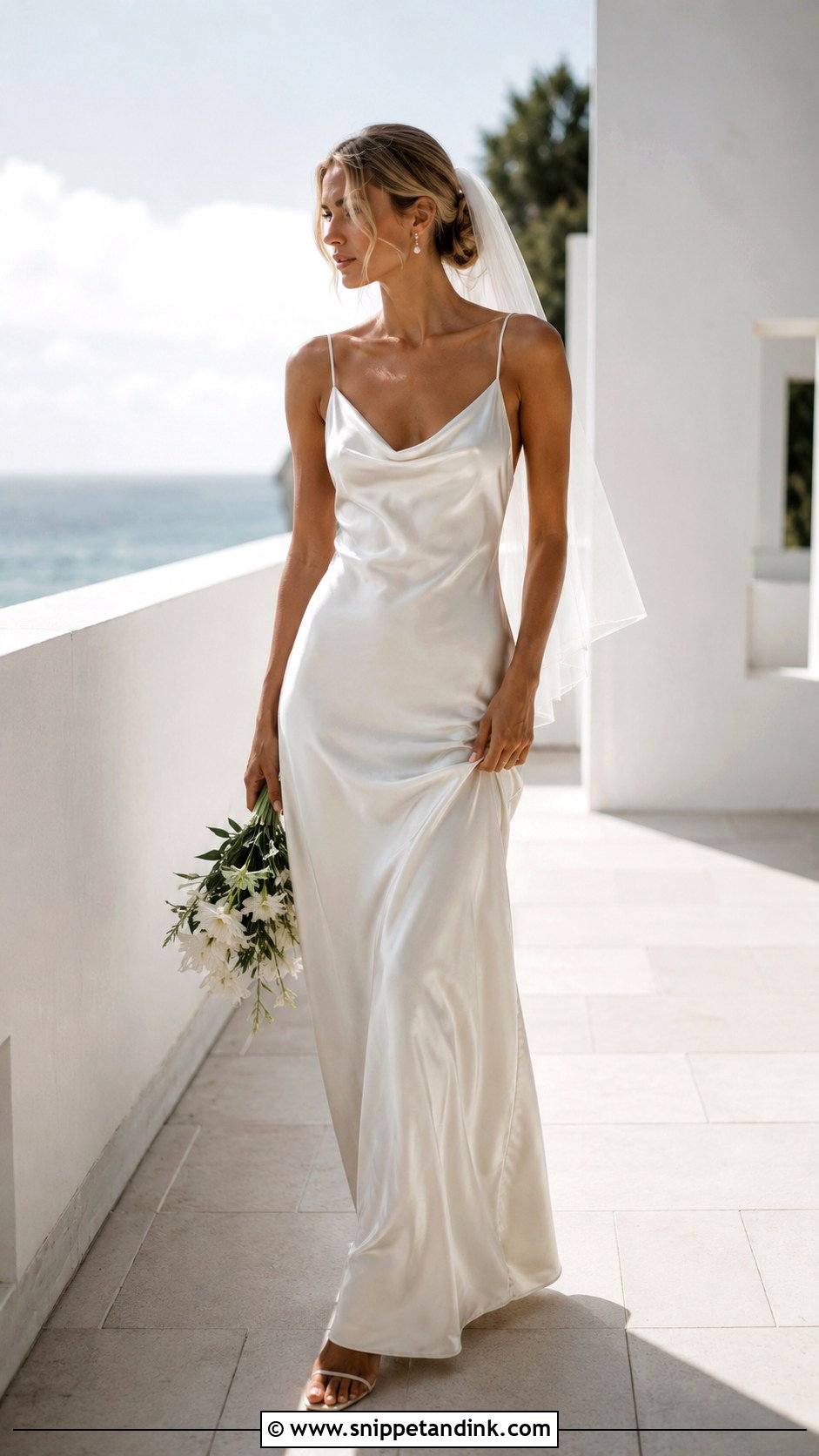
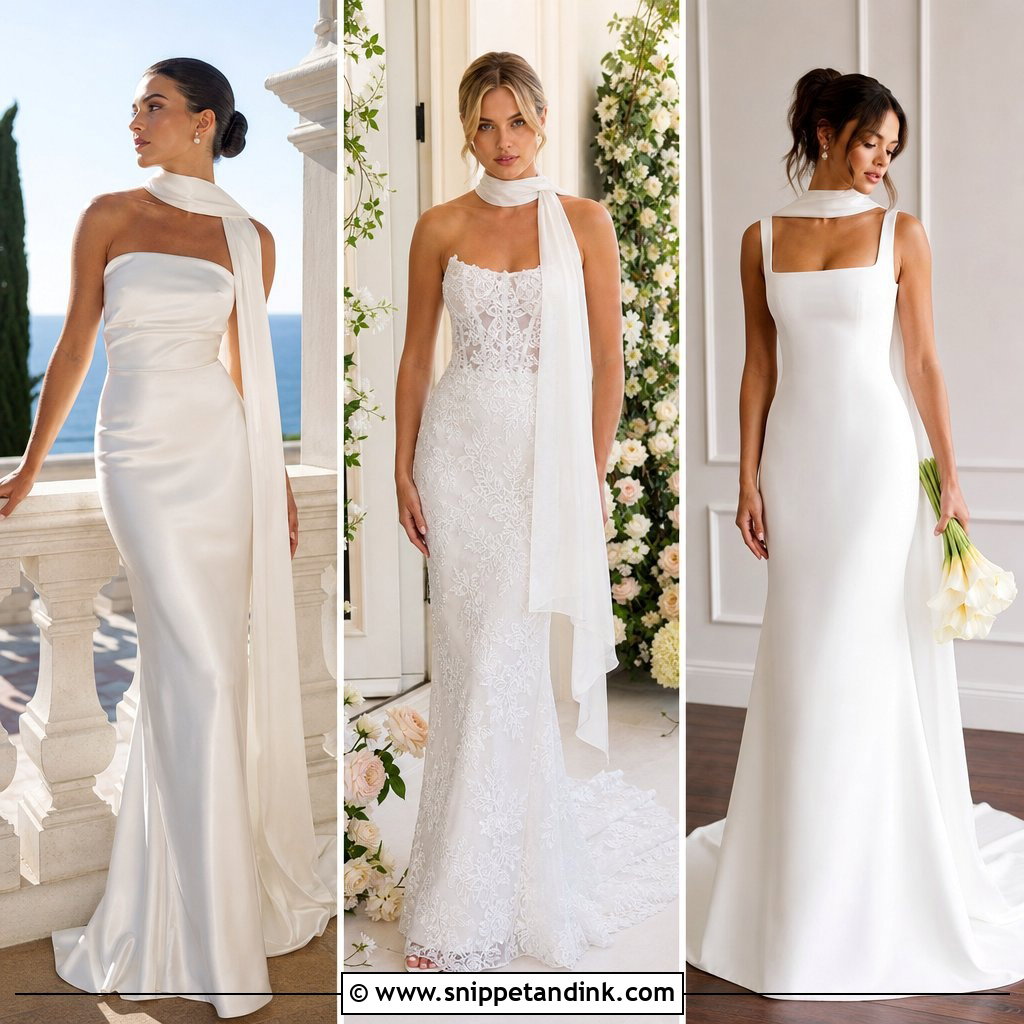
Slips depend on fabric and cut; silk satin cut on the bias, a cowl neck or a clean column. Bias-cut silk shows every line underneath, so smooth, invisible underwear and a smooth fit across the hips matter. Sandals, a short veil or scarf veil and delicate jewellery suit beach, city and destination weddings. Add a lace topper, sheer cape or pearl veil for more dimension. A slip also makes a good second look after a big ceremony gown.



20. Short Bridal Dress
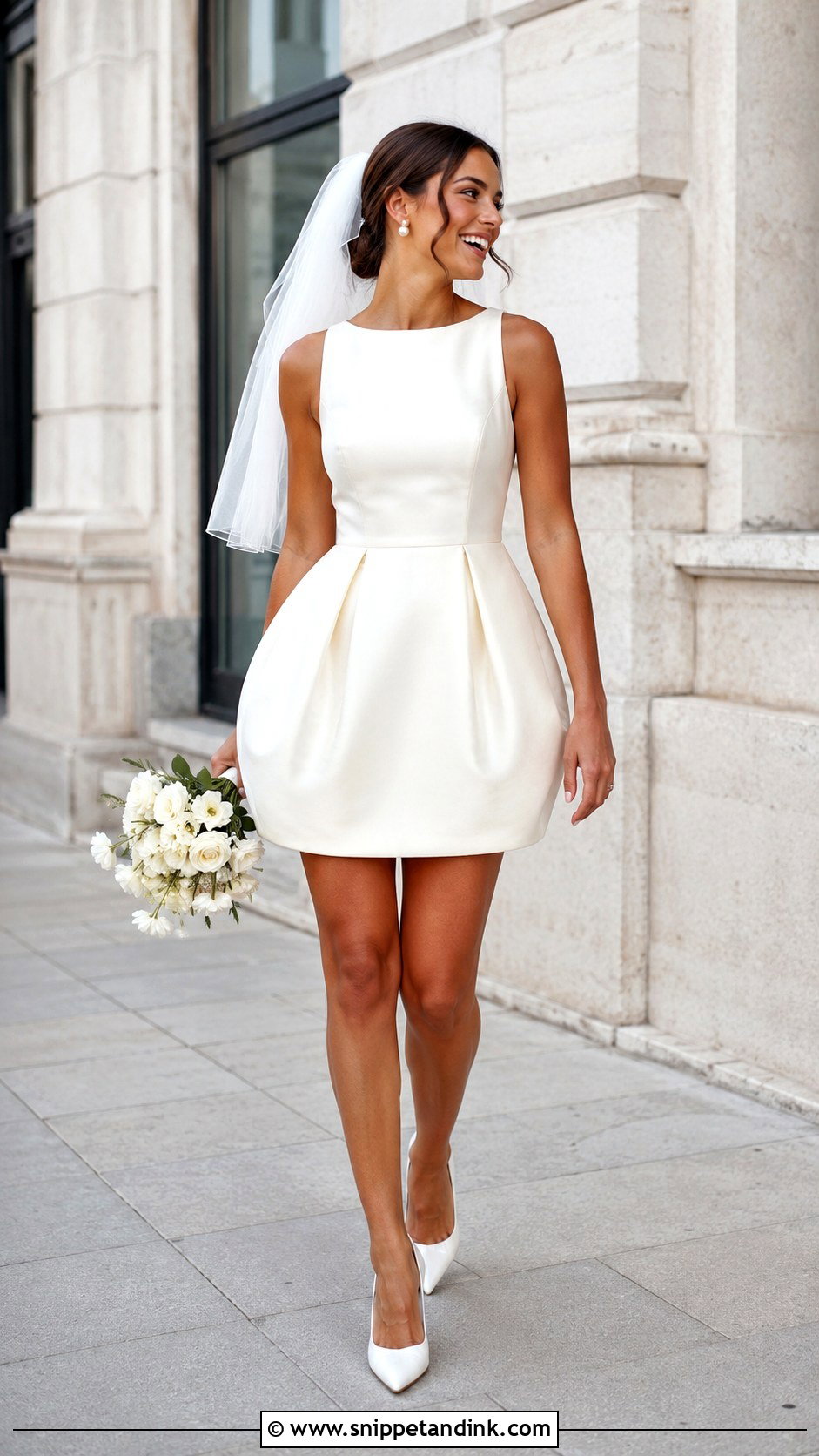
Short dresses suit courthouse ceremonies, receptions and after-parties. Satin minis, structured A-line minis, lace tea-lengths and feather-trimmed party dresses were all popular in 2025. Because there’s less dress, fabric quality and tailoring matter more, and the shoes become part of the outfit. Pointed pumps or bow heels, pearl earrings and a mini veil make it read clearly bridal. They’re easy to dance in, and they work as a second look too.
21. Tea Length Bridal Dress
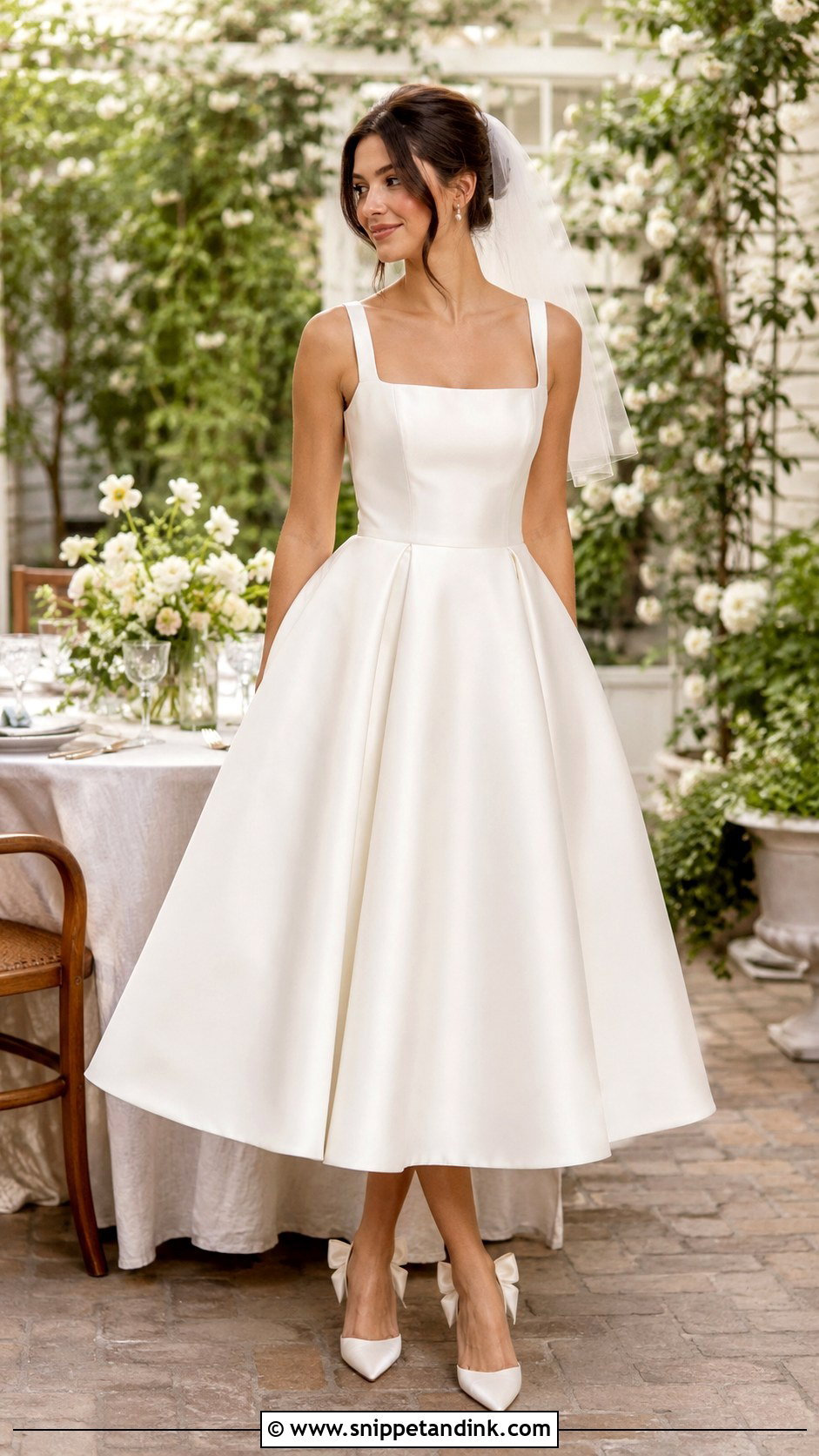
Tea length lands between knee and ankle, which puts your shoes on show, so satin pumps, bow heels or embellished slingbacks are worth investing in. A fitted bodice and full skirt look classic; a sleek column looks modern. It’s easy to walk in without a train, which is why I suggest it for garden ceremonies, brunch receptions and courthouse weddings. Add pearl earrings, a short veil or a headband. Check the hem in your actual shoes; an inch changes the proportion.
22. Colored Bridal Dress
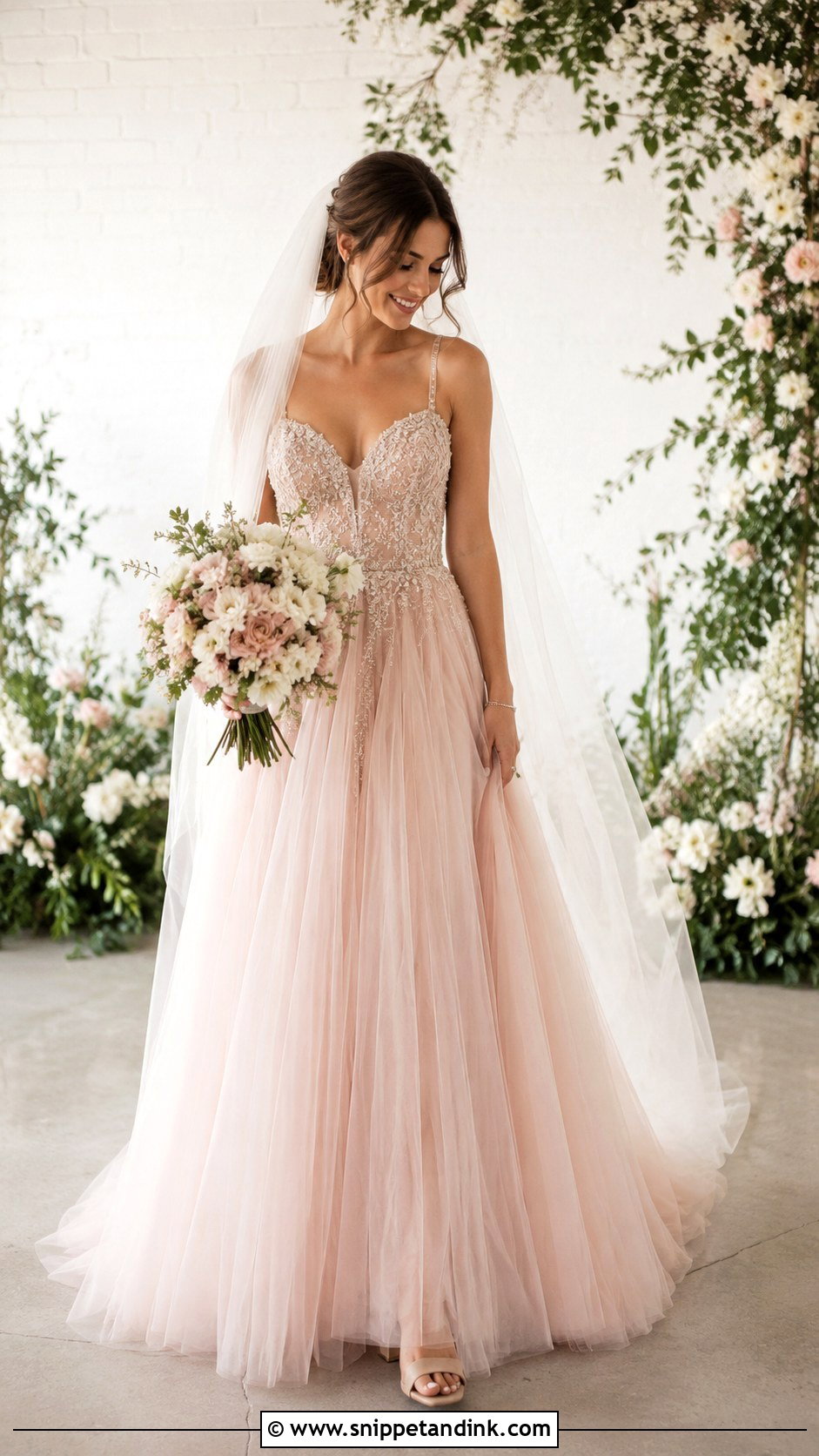
Colour lets a gown carry personality. Blush, champagne, pale blue, buttercream and silver were the most wearable in 2025. A colored bridal dress needs testing against your skin in daylight: champagne can wash out very fair skin, while blush can look pink-grey under cool lighting. Let the bouquet complement rather than match. Neutral heels and simple jewellery suit it, and a white veil or ivory gloves add a traditional note.
23. Feather Bridal Dress
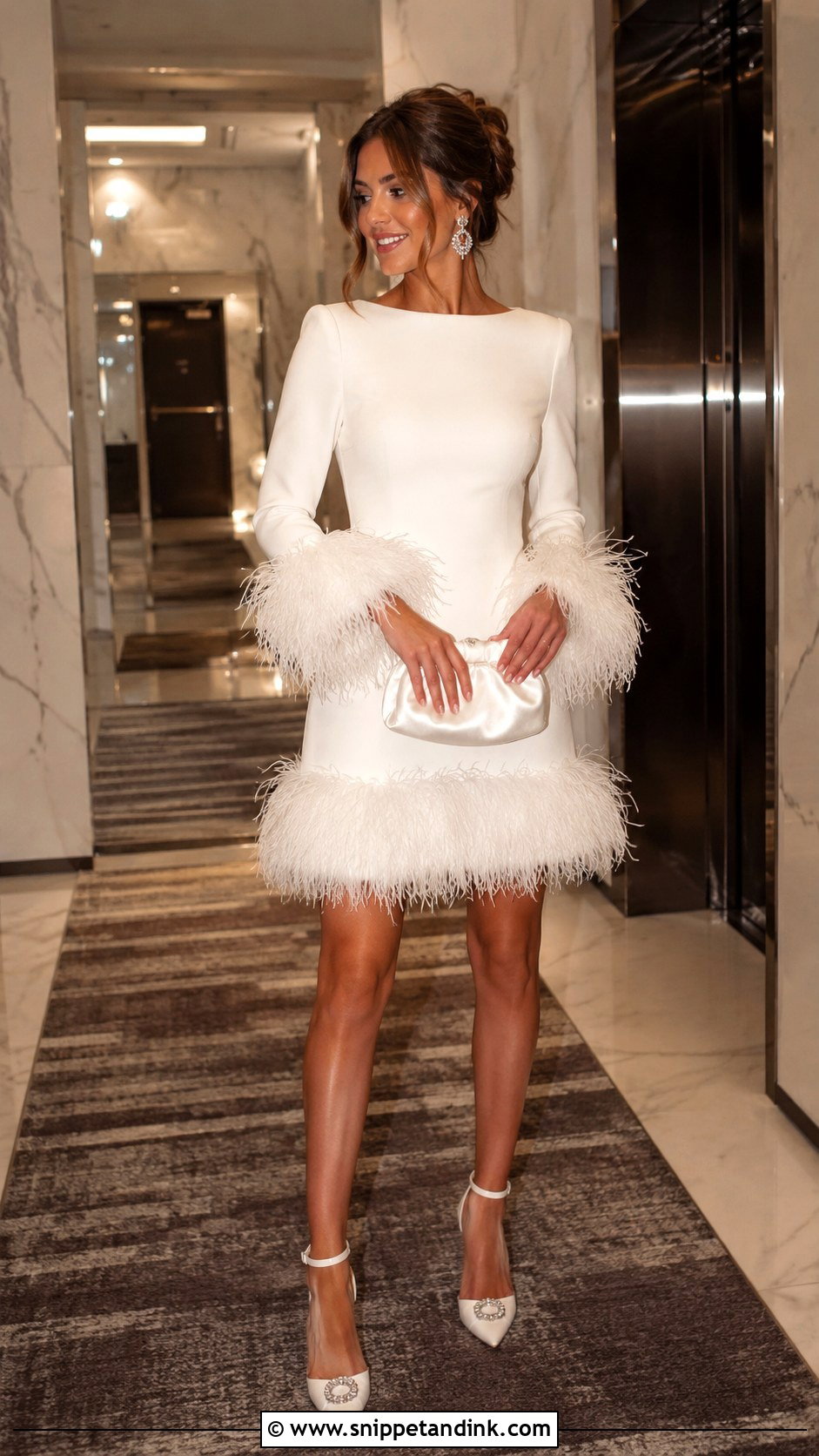
Feathers add movement without weight. A feather bridal dress in 2025 usually meant trim on a hem, cuff or neckline, or a mini, rather than an allover texture. Feathers are fragile: they flatten in a garment bag and shed when crushed, so the dress should be hung and fluffed with cool steam from a distance. Sleek heels, crystal earrings, a satin clutch and smooth hair balance the texture. For a smaller dose, choose feather cuffs alone.
24. Cape Bridal Dress
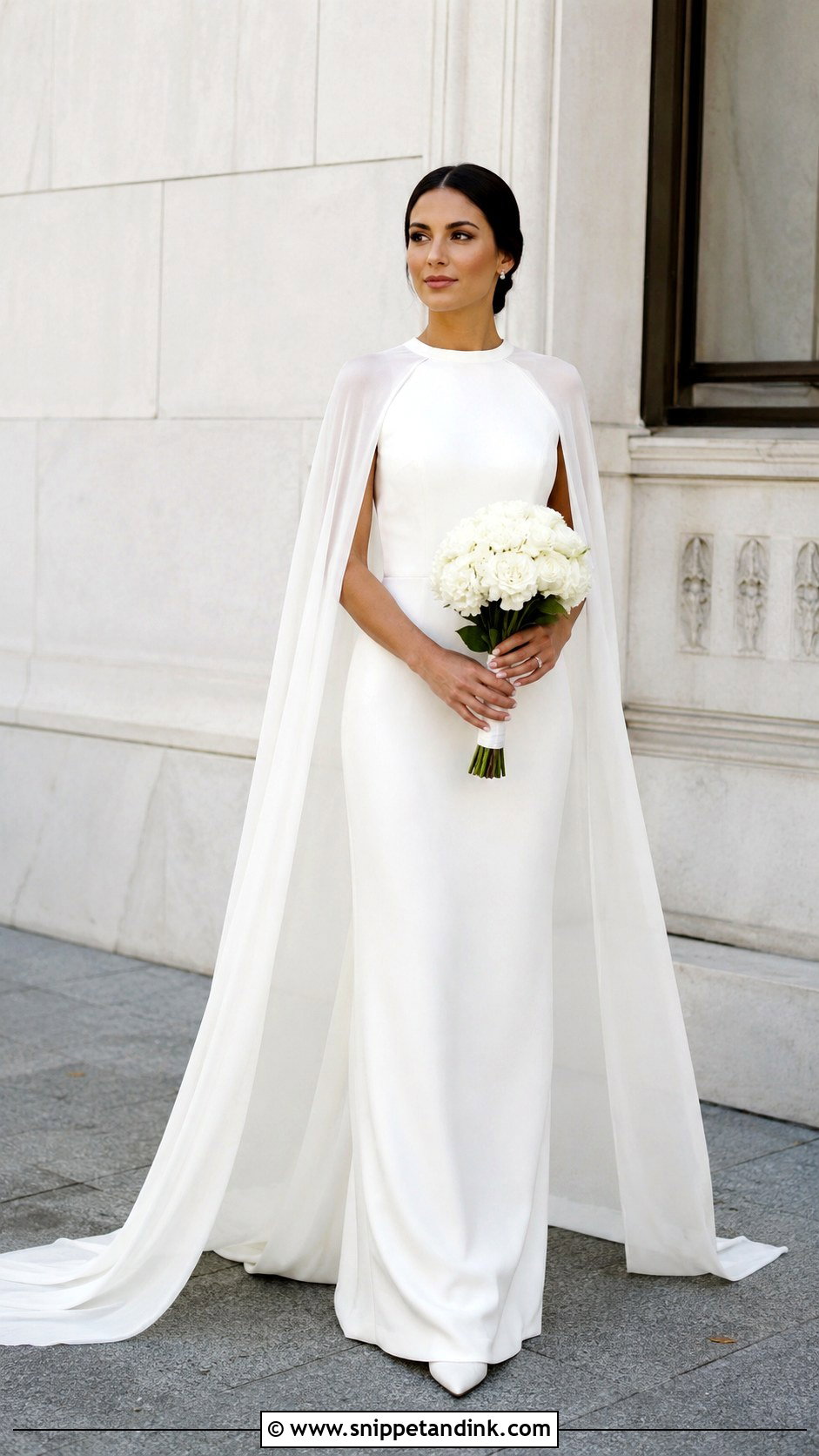
A cape gives you a veil’s movement without anything on your head. It can be sheer, lace, pearl-trimmed or attached at the shoulders, and it looks best over a simple gown such as a crepe column, satin sheath or plain A-line. Long capes drag on the ground and collect dirt at an outdoor ceremony, so I usually suggest ending them at the floor or just above. Keep jewellery clean so the cape stays the focus. It gives coverage while still feeling light.


25. Reception Bridal Dress
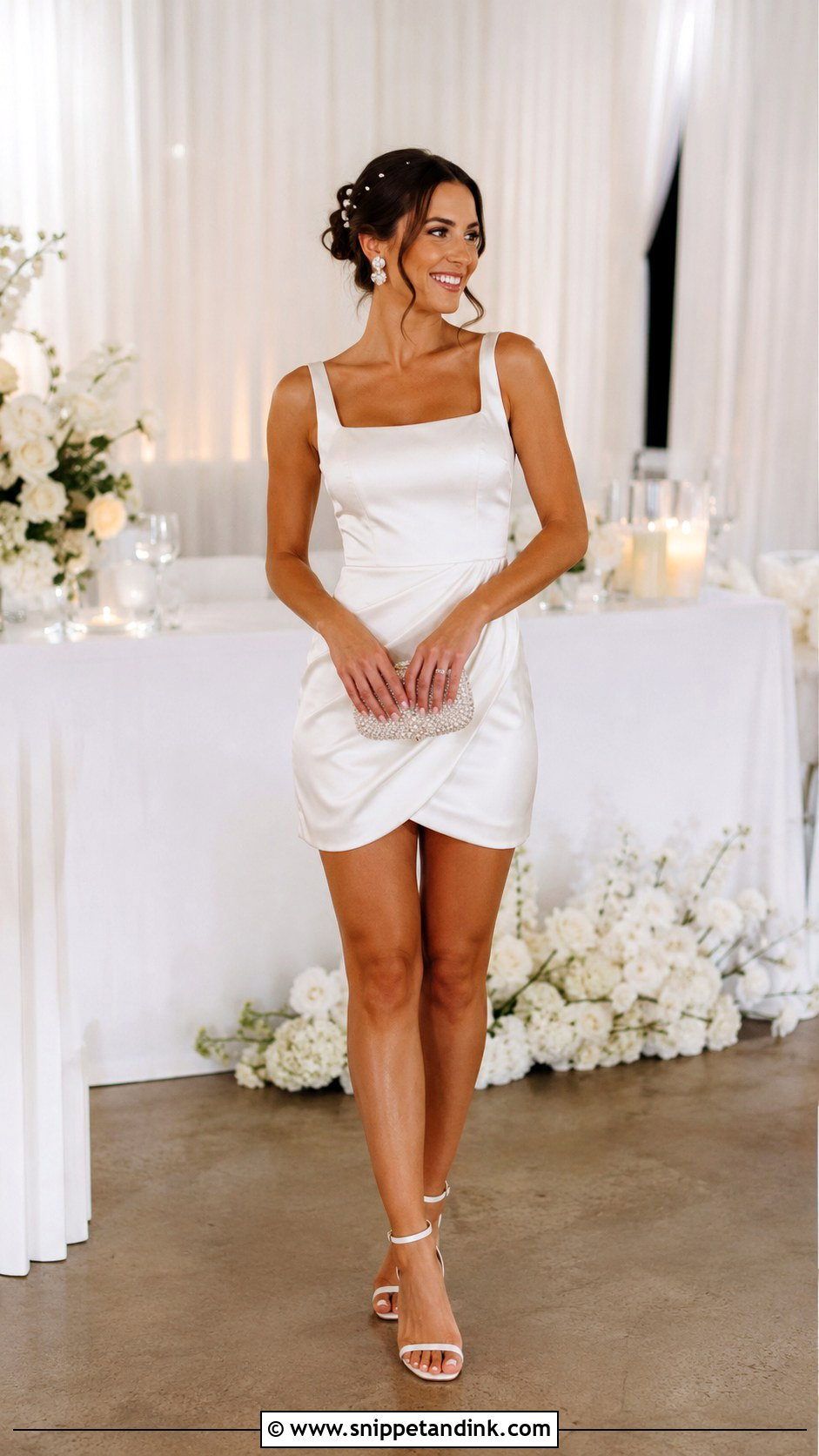
A reception dress gives you a second outfit for dancing and mingling. Minis, slips, feather hems, pearl details and satin columns were the common second looks in 2025. Comfort is the whole point, so test it for an hour, sitting and dancing, before the wedding. Statement earrings and a smaller clutch suit it, and the long veil can give way to a bow, headband or pearl pins. Plan the change into your timeline; it takes around twenty minutes with help.
How These Silhouettes Behave by Hour Six
A gown that feels right in a fitting room may behave differently after dinner, dancing and a few hundred hugs. What I tell brides to expect:
Structured bodices
Corsets and basque waists hold their shape all night, but you’ll feel them when you sit for a long meal. A slightly looser lacing after the speeches makes a real difference.
Trains and full skirts
Anything longer than the floor needs a bustle for the reception, and bustle loops can snap if someone treads on the train. Have a backup safety pin plan and know which loops go where.
Satin and crepe
Both crease where you sit. Satin creases show more in photos; crepe tends to drop out sooner. Stand for portraits when you can, and schedule evening photos early if the gown is satin.
Shoes
Feet swell through the evening, and a hem set for four-inch heels drags on the floor once you swap into flats. If you plan to change shoes, ask your seamstress to set the hem for a height between the two, or pick flats with a small heel.
Try the Shape On Before You Fall for the Fabric
No single gown on this list is right for every bride, and the 2025 trends prove it. Basque waists and corsets reward a bride who loves structure; slips, lace sleeves, colour and short reception looks suit others. Start with silhouette, since that decides how you’ll move, sit and feel all day, then pick fabric and detail. After that, build the shoes, veil, jewellery, hair and bouquet around it so they work together. A trend is just a starting point; the dress you choose should feel like yours.
You'll Like These Ideas:





Leave a Reply