
Backless bridal gowns ask one practical question before any style question: what’s holding everything up? Once that’s answered, the choice gets fun. There are low-back crepe gowns, illusion lace, bows, cowl drapes, minimalist slips and full ball gowns with a surprise behind. In fittings, I match the back to three things: the venue, how much support the bride needs, and how she’ll move on the day, from the aisle to the dance floor. The dresses below run from classic and romantic to modern, boho and dramatic, with the styling and fitting notes I’d give for each.
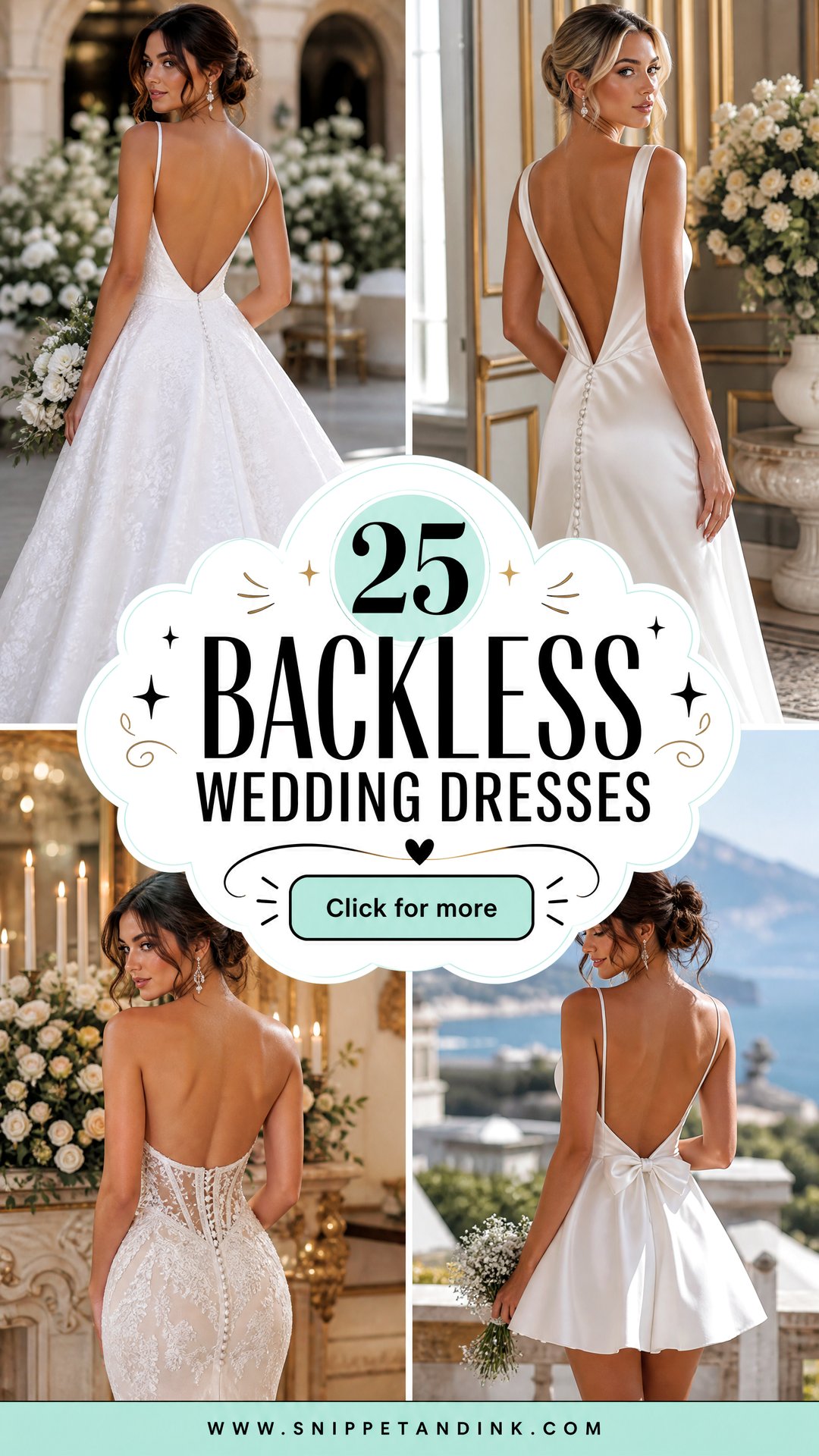
How Low Should Your Back Go?
Backless covers a lot of ground, from a gentle dip between the shoulder blades to a cut that stops at the small of the back. I help brides find their depth by looking at three landmarks on their own body.
- The bra band line. Above it, most low-back bras or converters still work. Below it, you’ll need support built into the dress.
- The natural waist. Cuts that stop here look dramatic but still sit against firm structure, so they tend to stay in place.
- The small of the back. Cuts below the waist need strong side boning and precise tailoring, and they’re the ones most likely to gape when you sit.
Try on samples at different depths before you settle on one. Many brides who start out wanting the lowest back find they prefer one that ends near the waist once they’ve moved around in both.
1. Backless Lace Wedding Dress
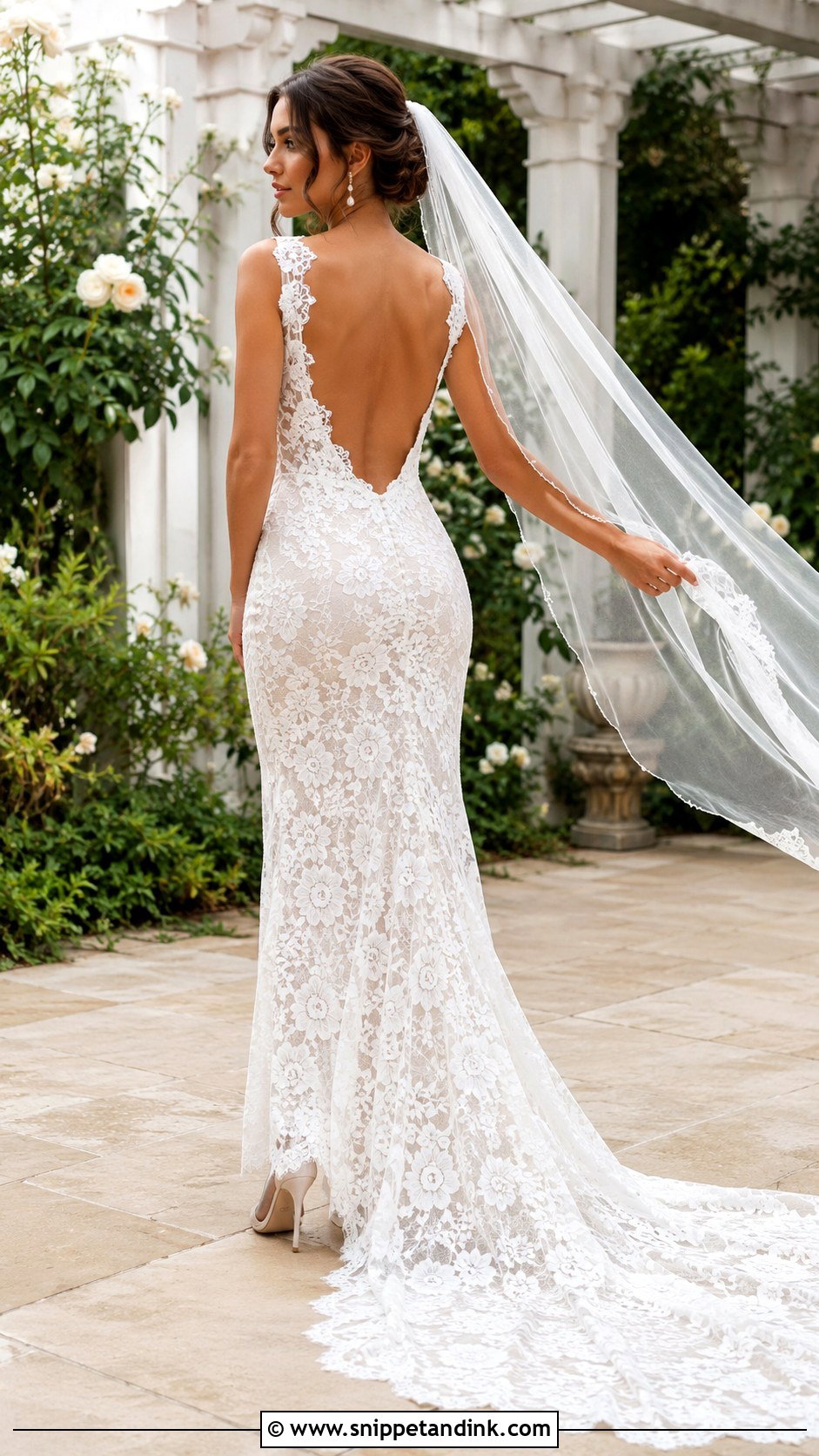
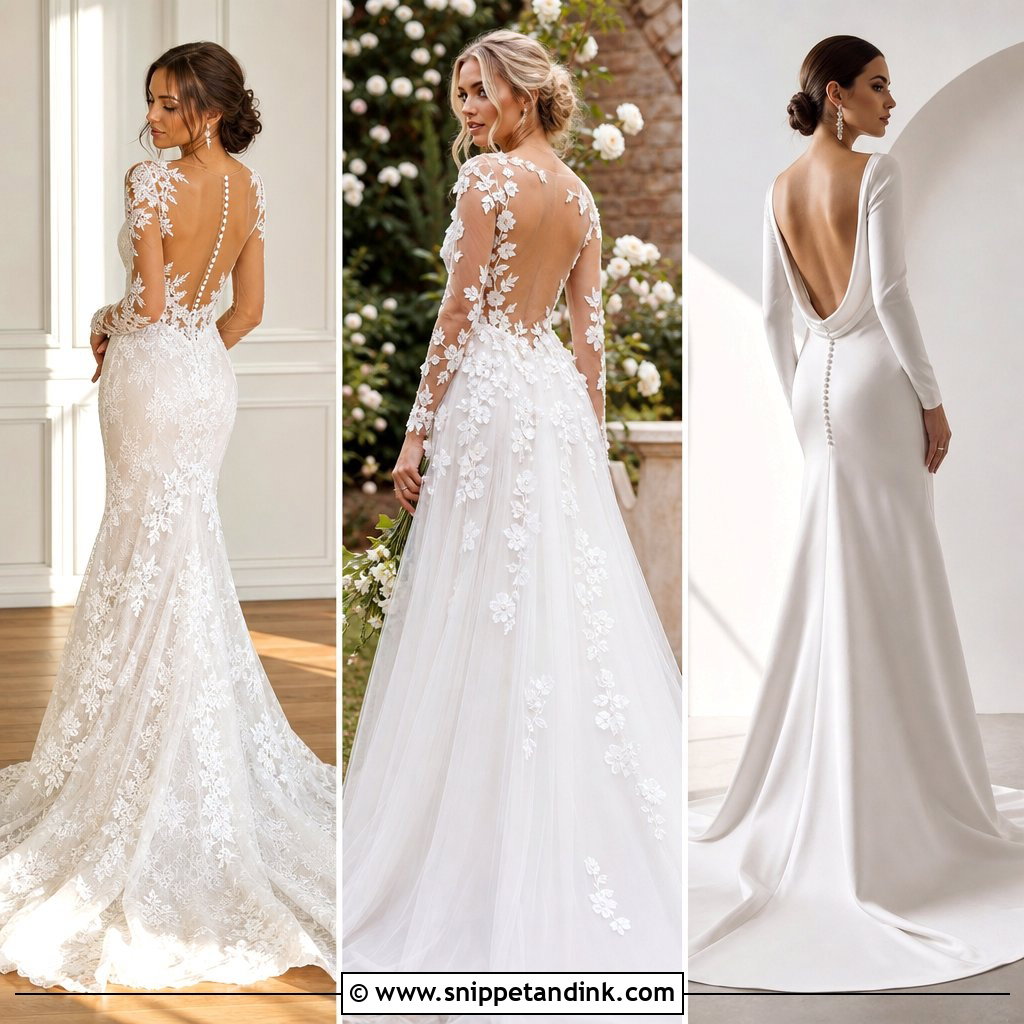
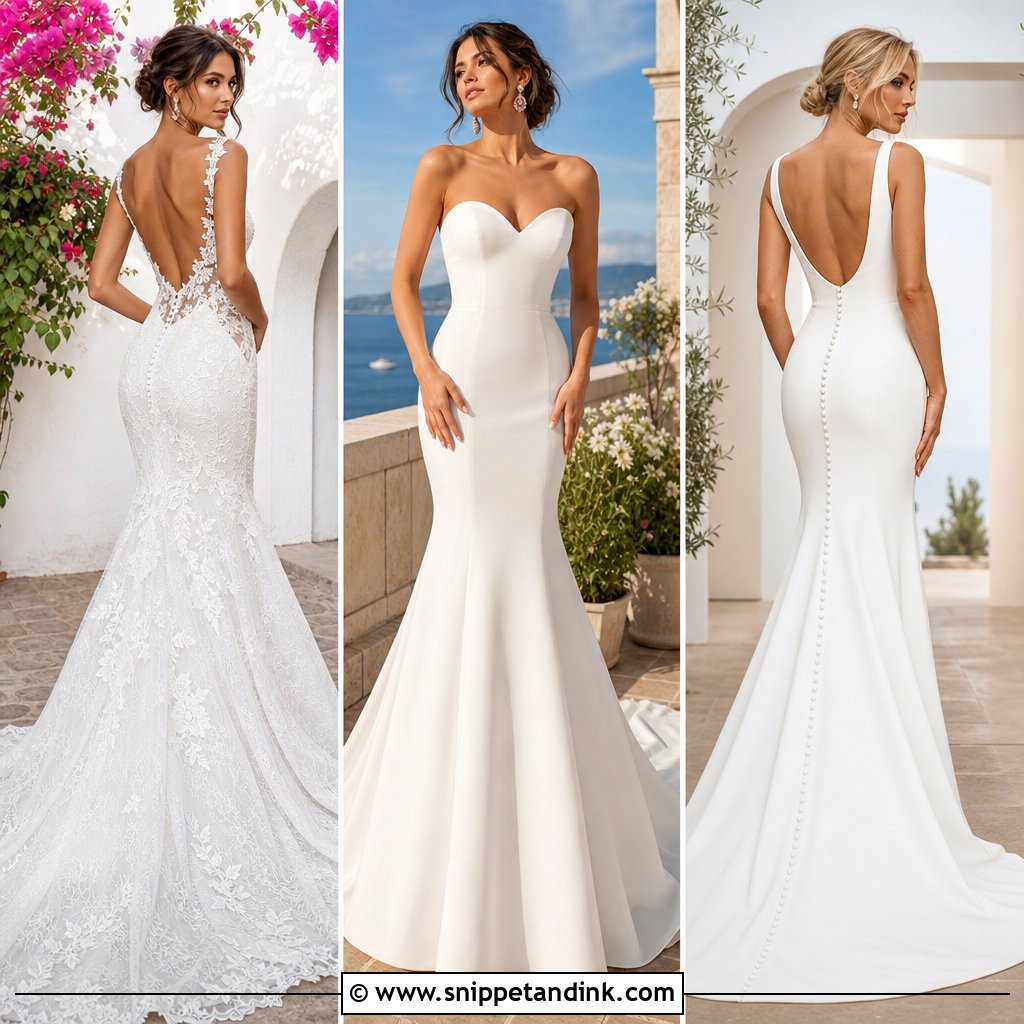
Lace makes an open back feel bridal rather than bare, because the texture frames the skin instead of leaving it plain. Floral lace, scalloped edges and appliqué along the straps all do this well. In garden and estate venues, lace reads clearly in daylight photos where plain fabric can flatten out. Keep the styling quiet: pearl drops, a low bun, a sheer veil and nude or ivory heels. If you’re fuller in the bust, I’d ask straight away about built-in cups and mesh along the side seams.
2. Backless Satin Wedding Dress
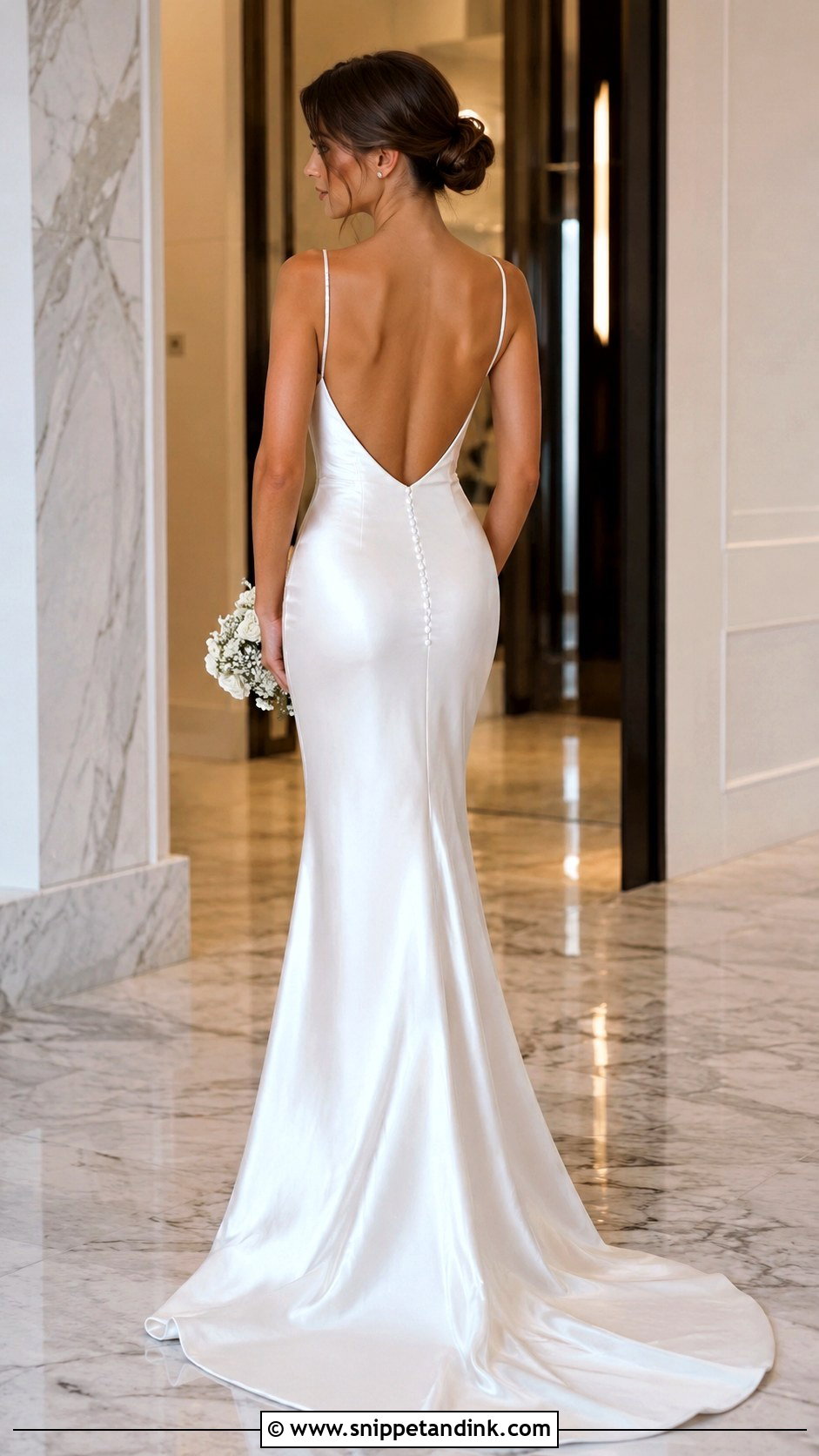
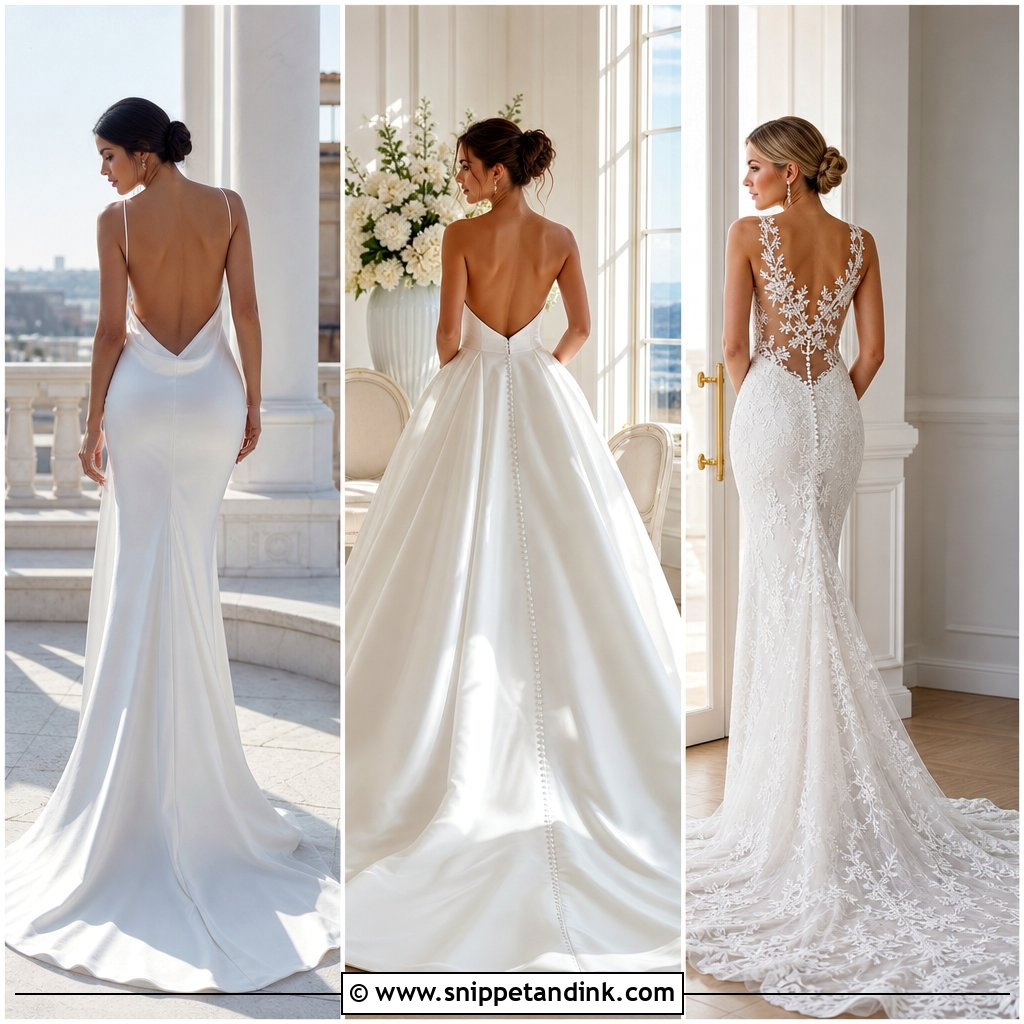
Satin carries light so well that the cut can stay plain. A bias cut, a fitted bodice or a soft mermaid that skims rather than grips suits it best. The difficulty is that satin shows everything underneath, and a very low back leaves nowhere to hide a bra. I’d plan on sewn-in support or a structured bodice, with fashion tape at the edges. Finish with a sleek chignon, crystal studs, pointed ivory heels and a smooth cathedral veil for a hotel or evening ceremony.
3. Backless Mermaid Wedding Dress
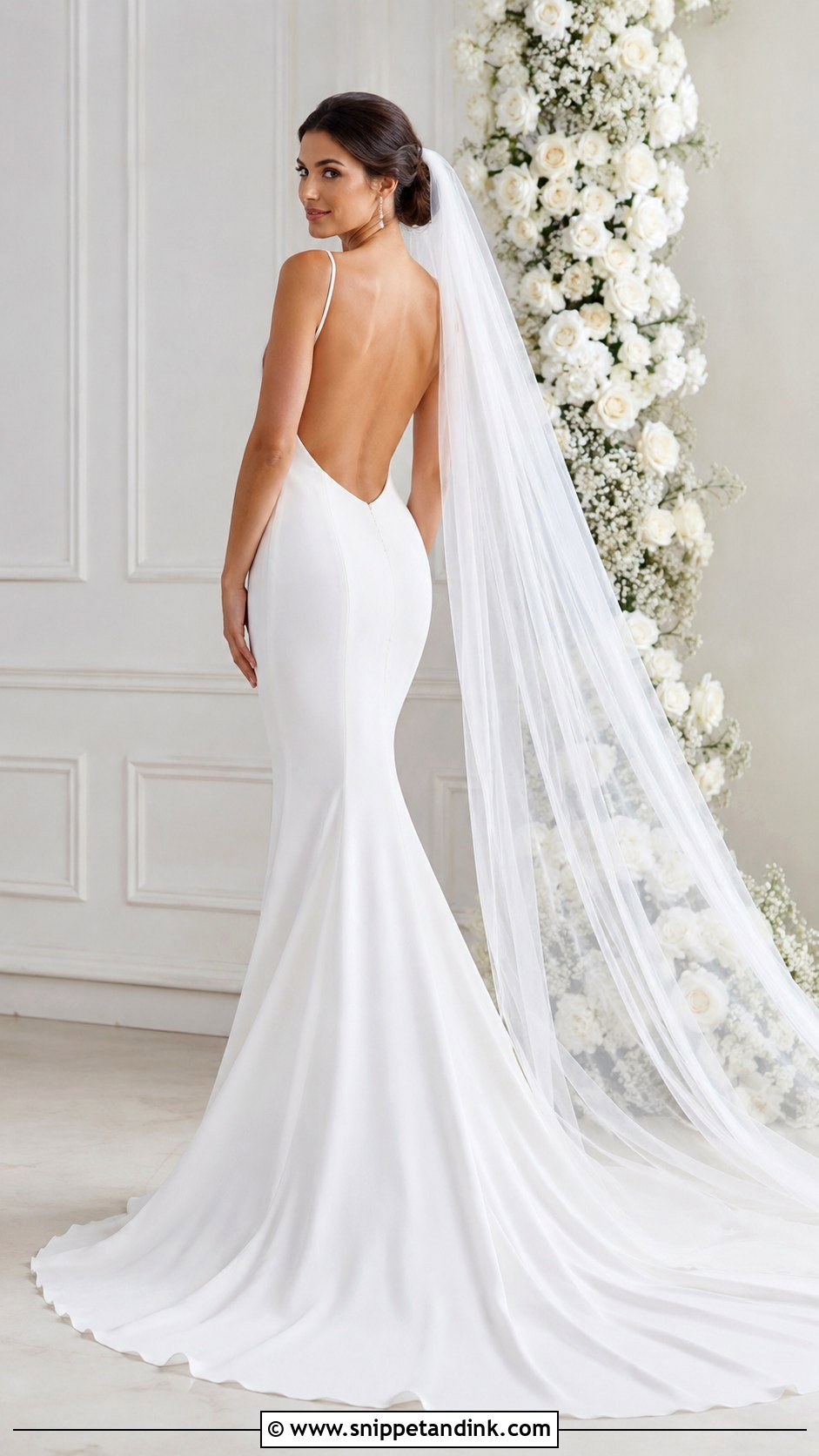
The mermaid shape hugs the bodice and hips and flares at or below the knee, so the open back becomes one part of a strong line from shoulder to floor. Crepe reads modern, satin reads polished, lace reads romantic. I’d keep the styling sleek: a long veil, soft waves tucked behind the shoulders, small earrings and slim heels. The flare point decides your stride. Walk the full length of the shop and sit on a low chair before final alterations, because a flare set too high makes stairs hard.
4. Backless A Line Wedding Dress
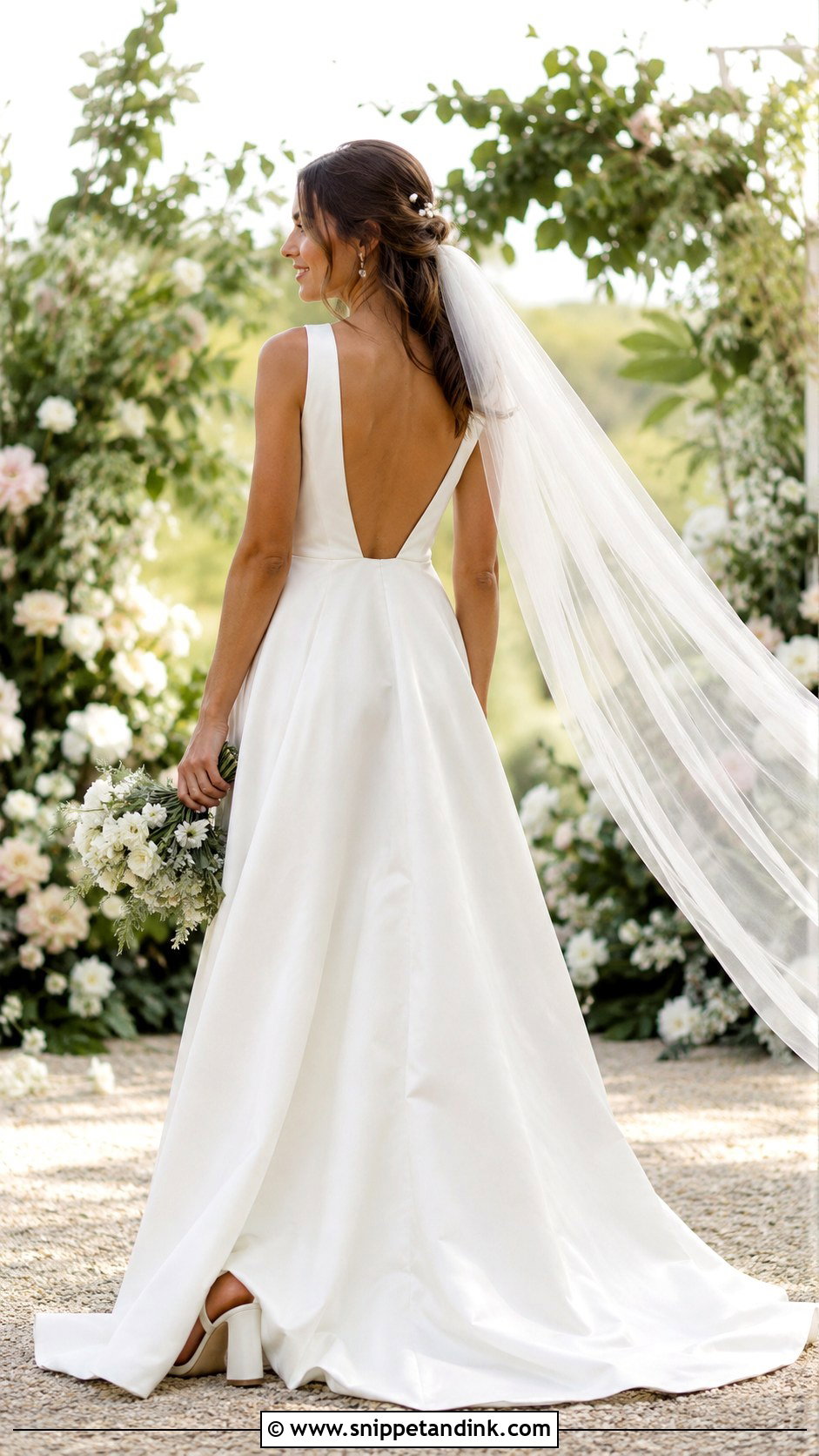
If someone asks me for the easiest backless shape to wear, I point to the A-line. The bodice gives structure while the skirt falls away from the waist, so there’s nothing gripping your hips through dinner. A deep V, a scoop or an illusion lace back all sit naturally on it. Add a soft veil, pearl pins and block heels. It moves just as happily from a garden to a beach to a classic indoor ceremony, which makes it a safe bet for a bride still deciding on a venue.
5. Backless Ball Gown Wedding Dress
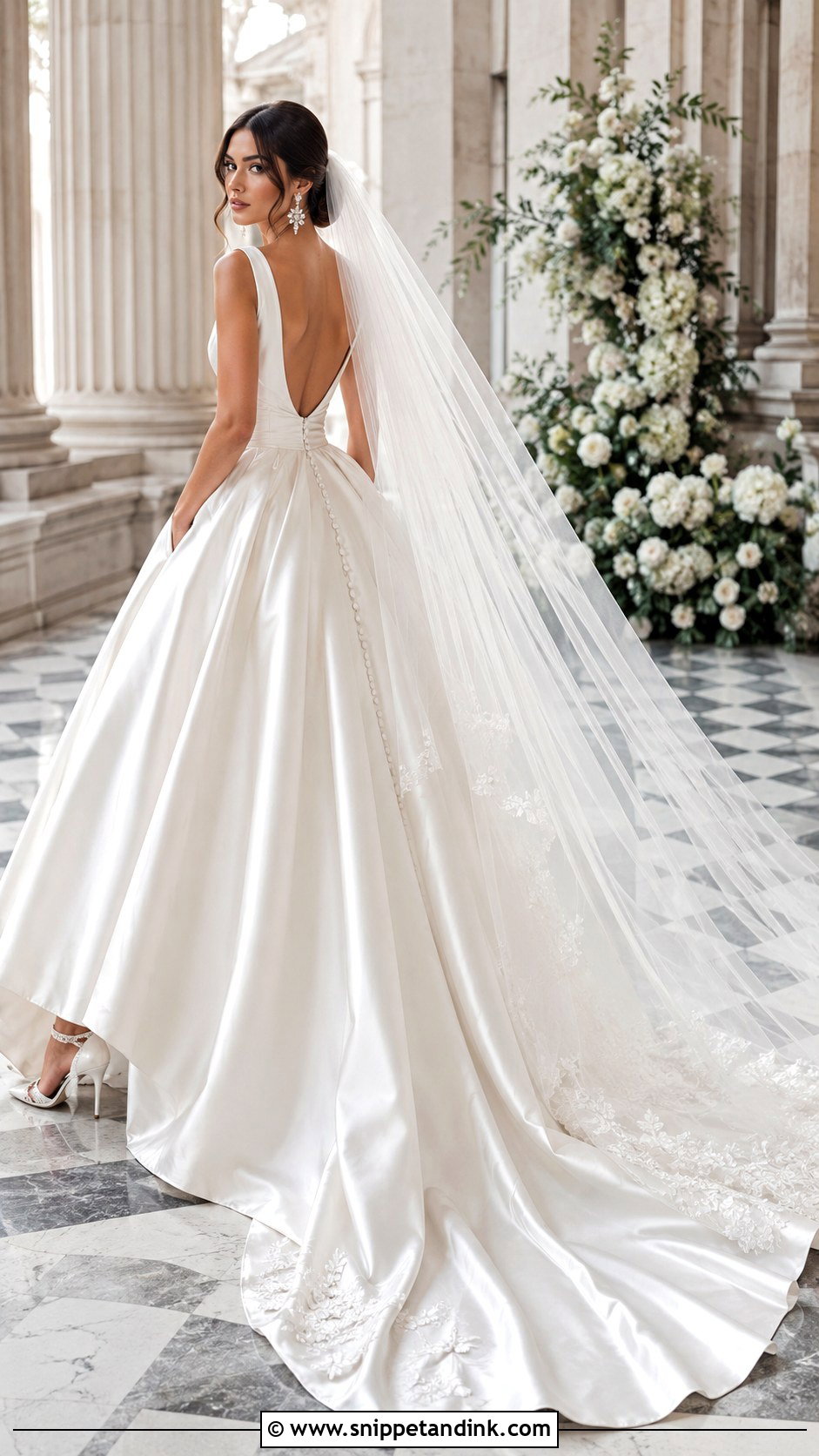
From the front, a ball gown looks traditional. Turn around and the open back changes the whole mood. The full skirt in tulle, organza or satin is heavy, and without a back to anchor it, all that weight pulls on the bodice. So I’d only choose a ball gown with a properly structured, boned bodice and a low scoop, deep V or illusion panel. A clean updo, statement earrings and a long veil removed after the ceremony give you two reveals in one day.
6. Backless Crepe Wedding Dress
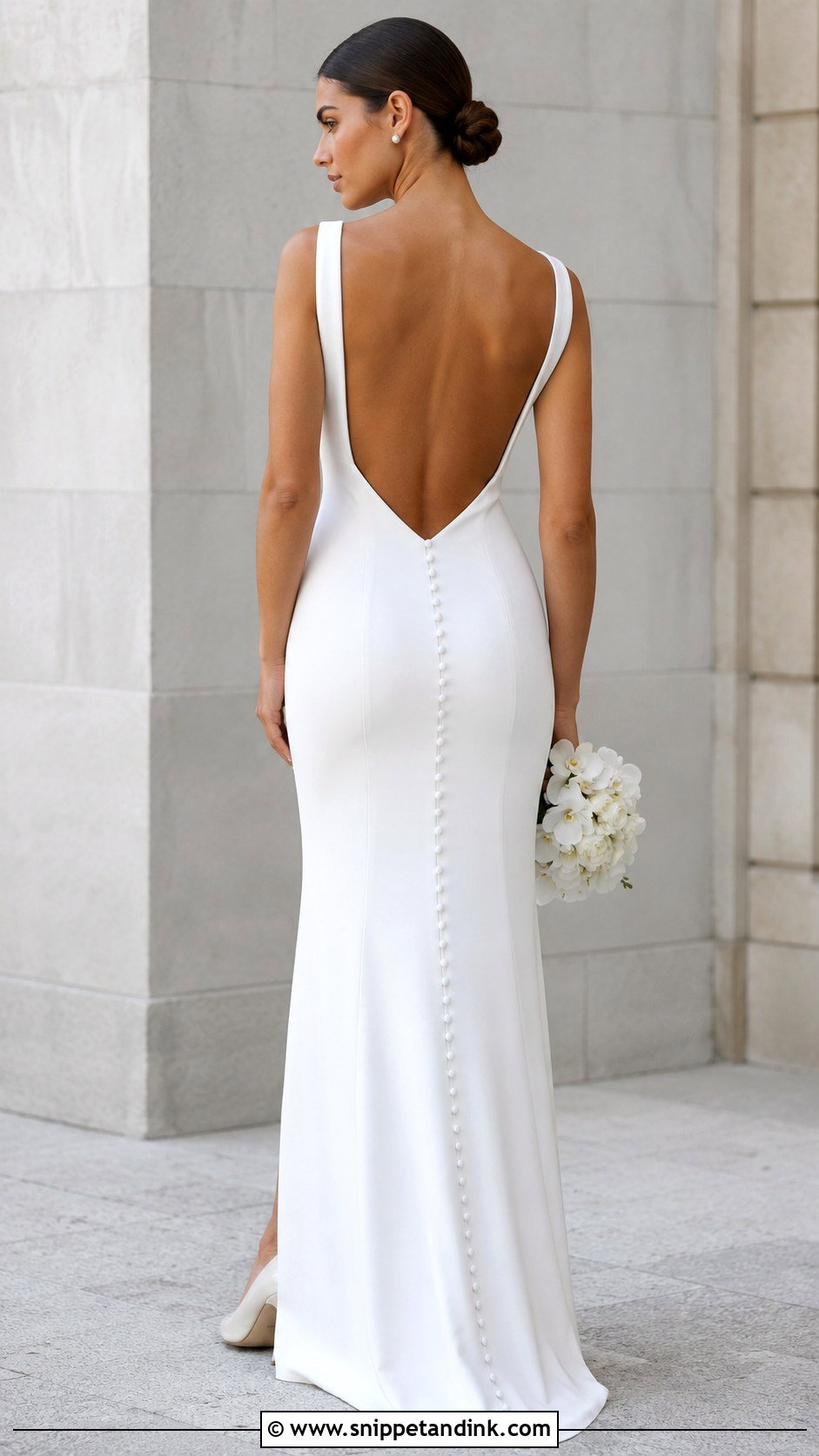
Crepe has a matte finish and a slight weight that sculpts the body, which is why it suits sheath, fit-and-flare and column shapes. A low back with covered buttons running down the skirt is a classic pairing. Because crepe shows fit so clearly, alterations matter more here than with any lace gown. Good tailoring makes it look custom; poor tailoring shows as pulls at the hip. Style it with a sleek bun, pearl studs, pointed pumps and a minimal veil for a city wedding.
7. Backless Long Sleeve Wedding Dress
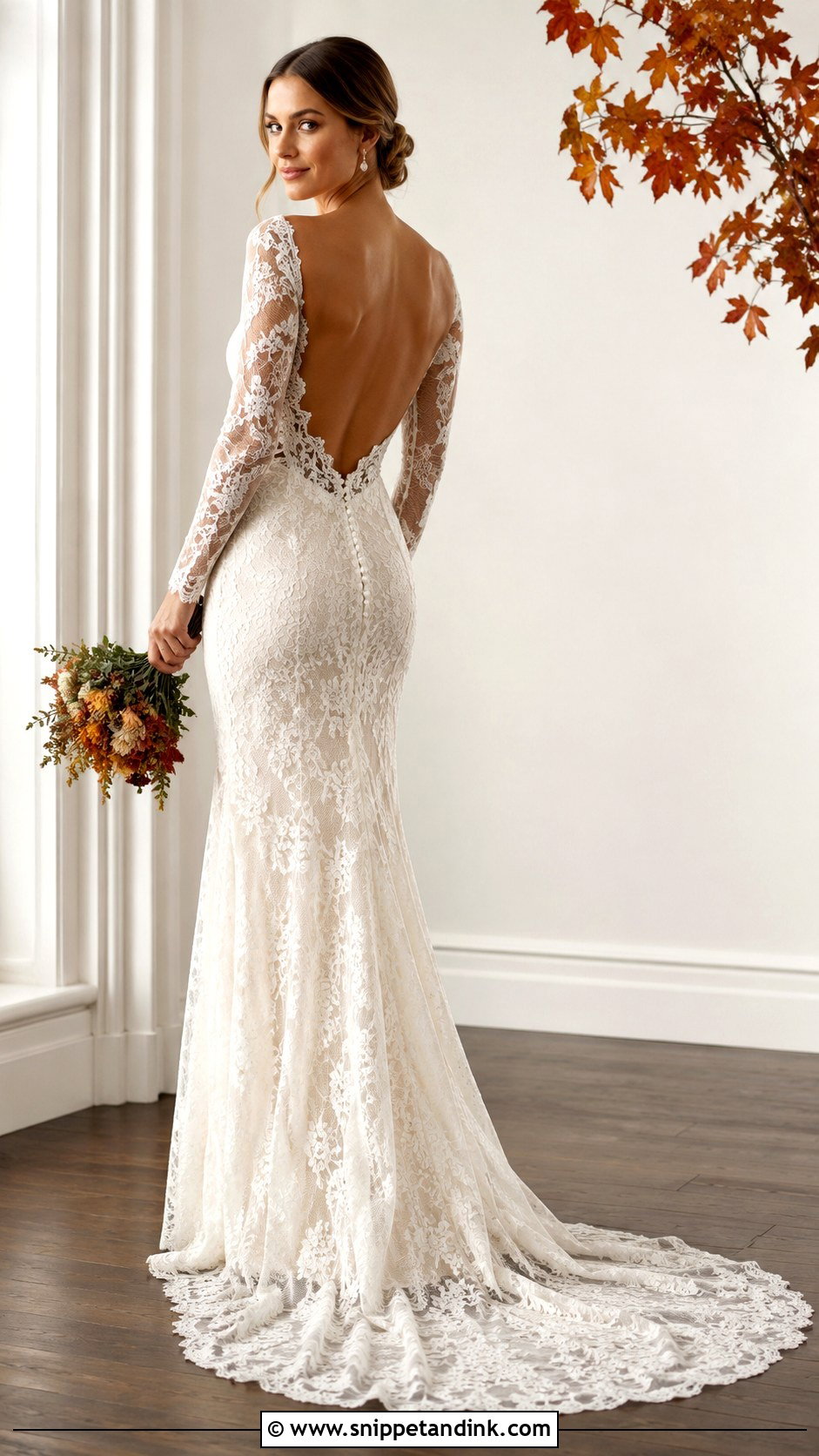
Long sleeves with a bare back give coverage in front and drama behind, which is why they’re a strong choice for autumn, winter or formal indoor weddings. Lace sleeves feel romantic, crepe feels modern, sheer feels light. Sleeves change how a back behaves. When you lift your arms, the sleeves pull the shoulders forward and the back opening can gape. I’d check that at every fitting and ask for a bodice with real shoulder and waist support if the back is very low. Wear your hair up or to one side.
8. Backless Boho Wedding Dress
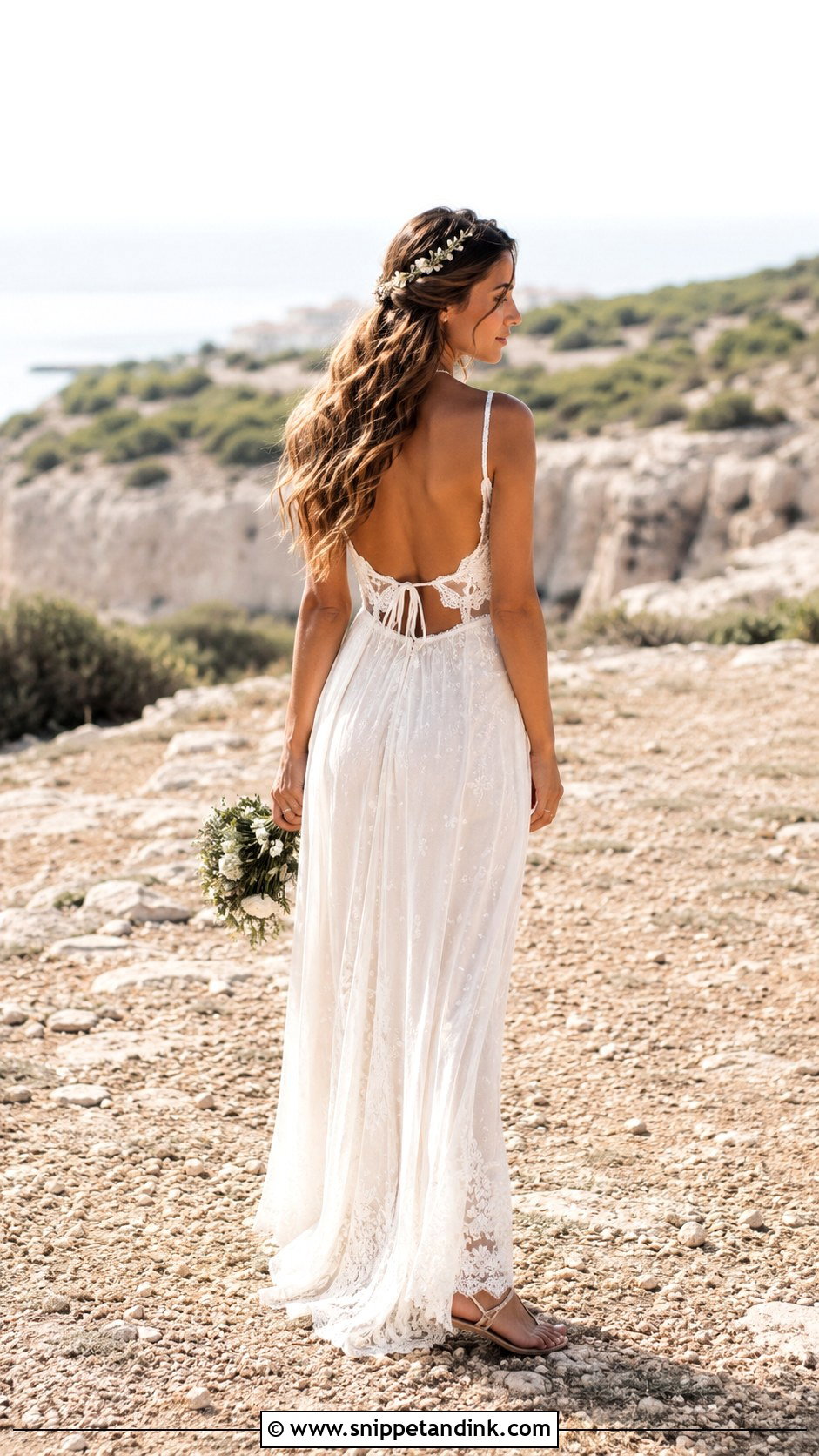
Boho backless gowns are built to move: soft lace, crochet-style texture, flutter sleeves, light chiffon and long flowing skirts. The back might be framed with thin straps, lace trim or a tie. On a beach or a desert venue, that tie detail is worth checking, as it can loosen as the fabric warms and stretches through the day. Loose waves, a hair vine, flat sandals or low block heels and natural makeup suit it. A veil is optional here; a simple comb is often enough.
9. Backless Beach Wedding Dress
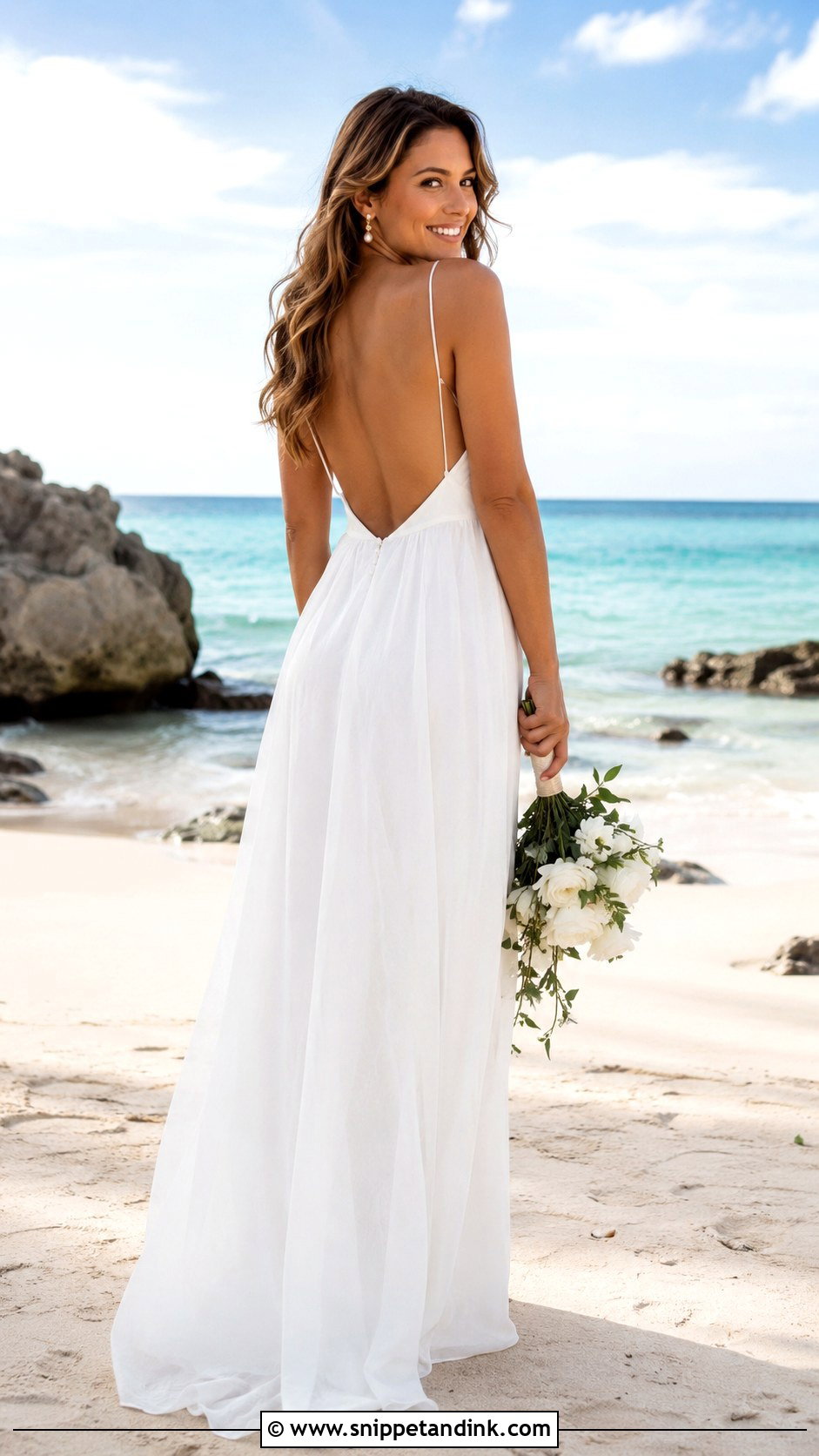
At the beach, the skirt matters as much as the back. Heavy skirts and long trains drag through sand and soak up water, so I’d look at chiffon, crepe, silk or soft tulle with a short or no train. A scoop, tie or low V-back keeps it breezy. Barely-there sandals, pearl earrings and loose waves fit the setting. Wind turns a cathedral veil into a sail, so a short veil or a single hair flower is far easier. If you’re flying, crepe and chiffon pack with fewer creases than satin.
10. Backless Slip Wedding Dress
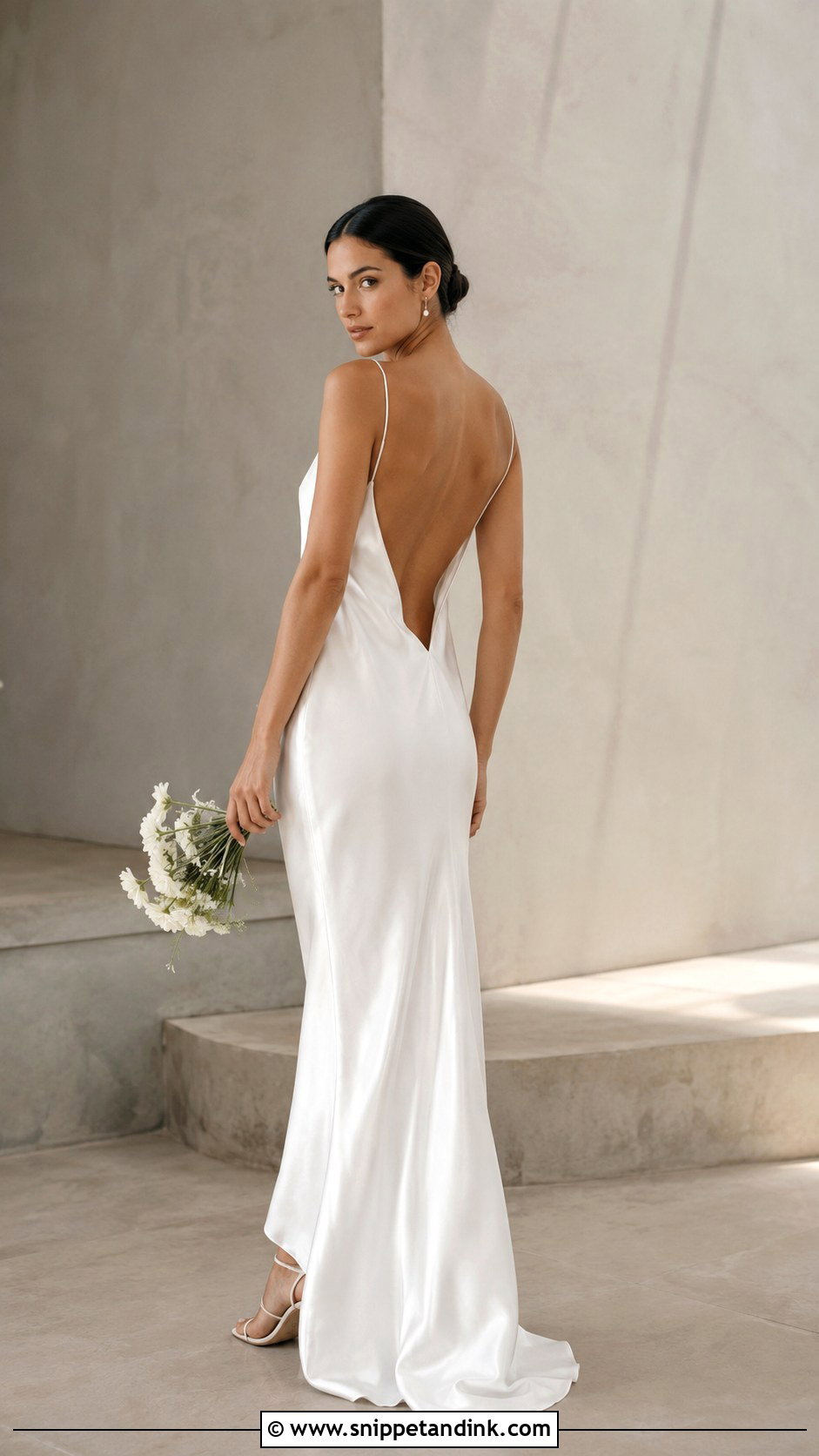
A backless slip wedding dress has thin straps, a soft drape and a shape that skims the body. Satin and silk move gently and catch light softly. The open back can be straight, cowl or a low scoop. Slips are the least forgiving dress for undergarments; any line or seam shows through, so I’d sort out support before the first fitting rather than after. Sleek hair, strappy heels and small earrings keep it refined, and a long veil or detachable overskirt dresses it up for the ceremony.
11. Backless Halter Wedding Dress
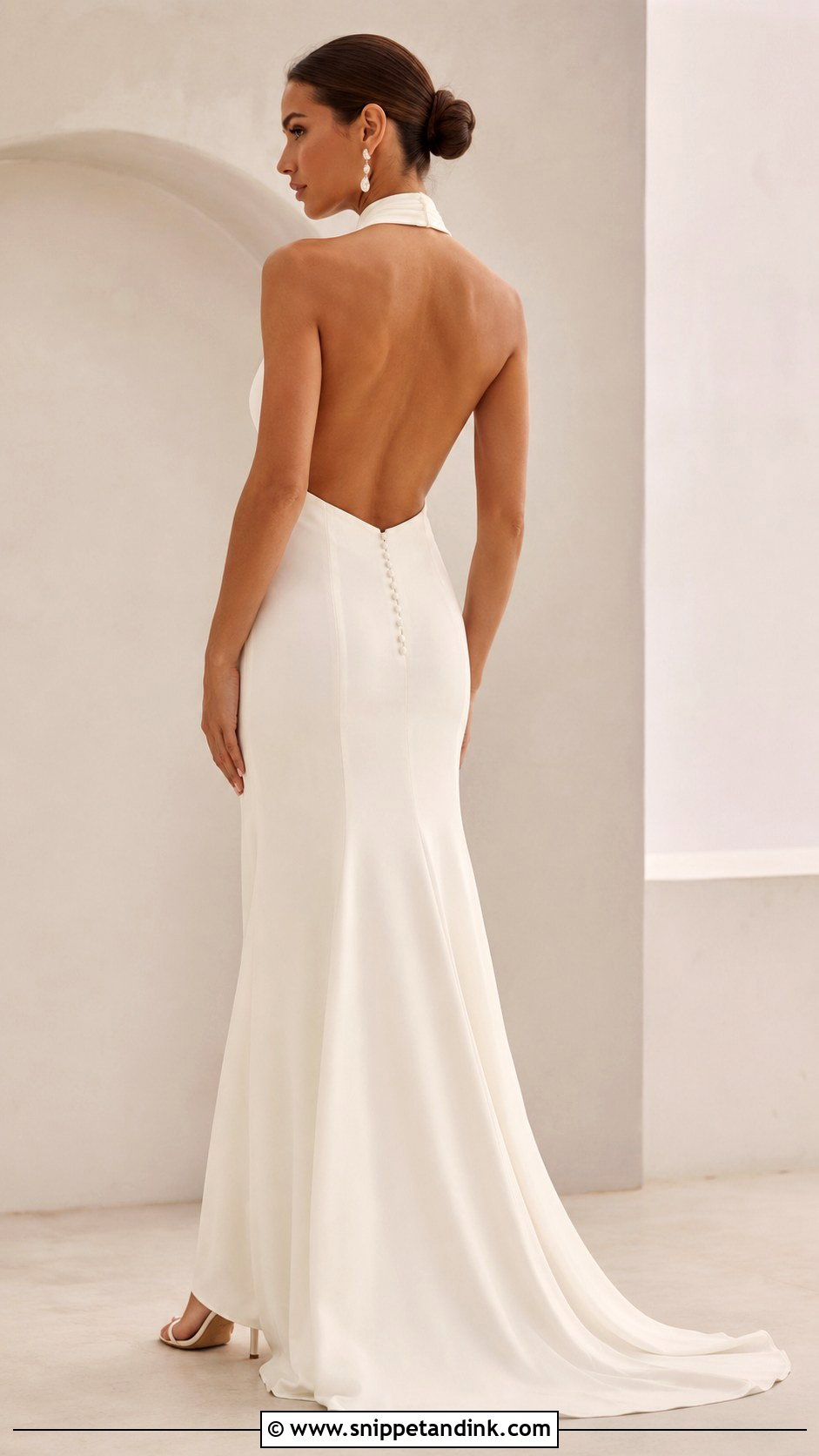
A halter supports the front from the neck, which leaves the whole back free to be open. That makes it a practical choice if you want a secure bust and a dramatic view from behind. Crepe looks clean, satin feels rich, lace softens it. Wear a bun, twist or high ponytail so the neckline shows, with drop earrings and simple heels. The weight of the dress rests on that neck strap all day, so if it pulls at the fitting, it will ache by evening. Ask for interior support to share the load.
12. Backless Square Neck Wedding Dress
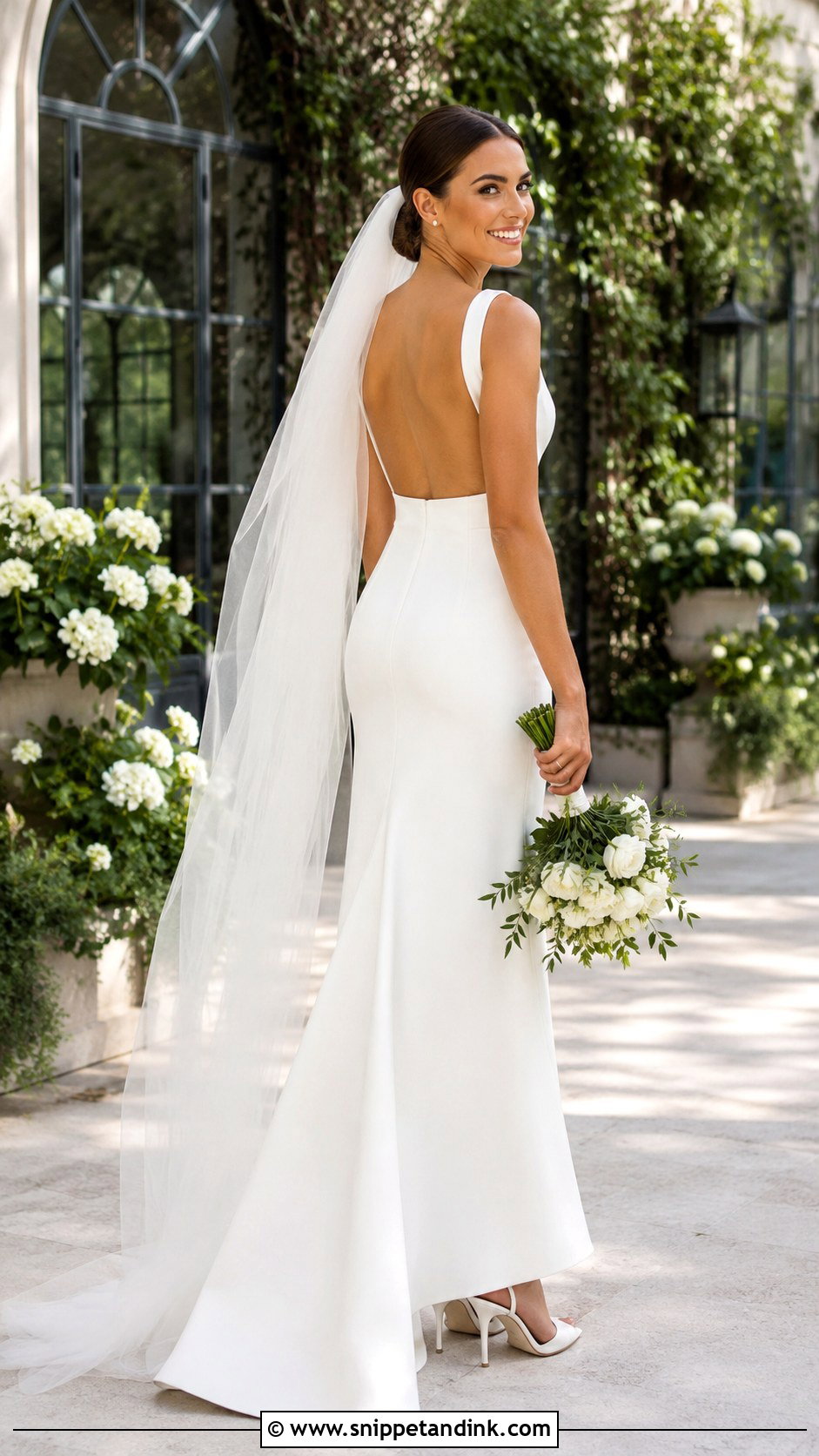
A square neckline frames the collarbones with straight lines, and an open back softens the effect behind. Satin, crepe, mikado and simple lace all hold a square neck well. I’d choose a fitted bodice if you need support, or a softer one if you don’t. A square neck that’s even slightly too wide slides off the shoulders, so check the strap position at your fittings. Pair it with a low bun, pearl studs, slingback heels and a smooth veil.
13. Backless V Neck Wedding Dress
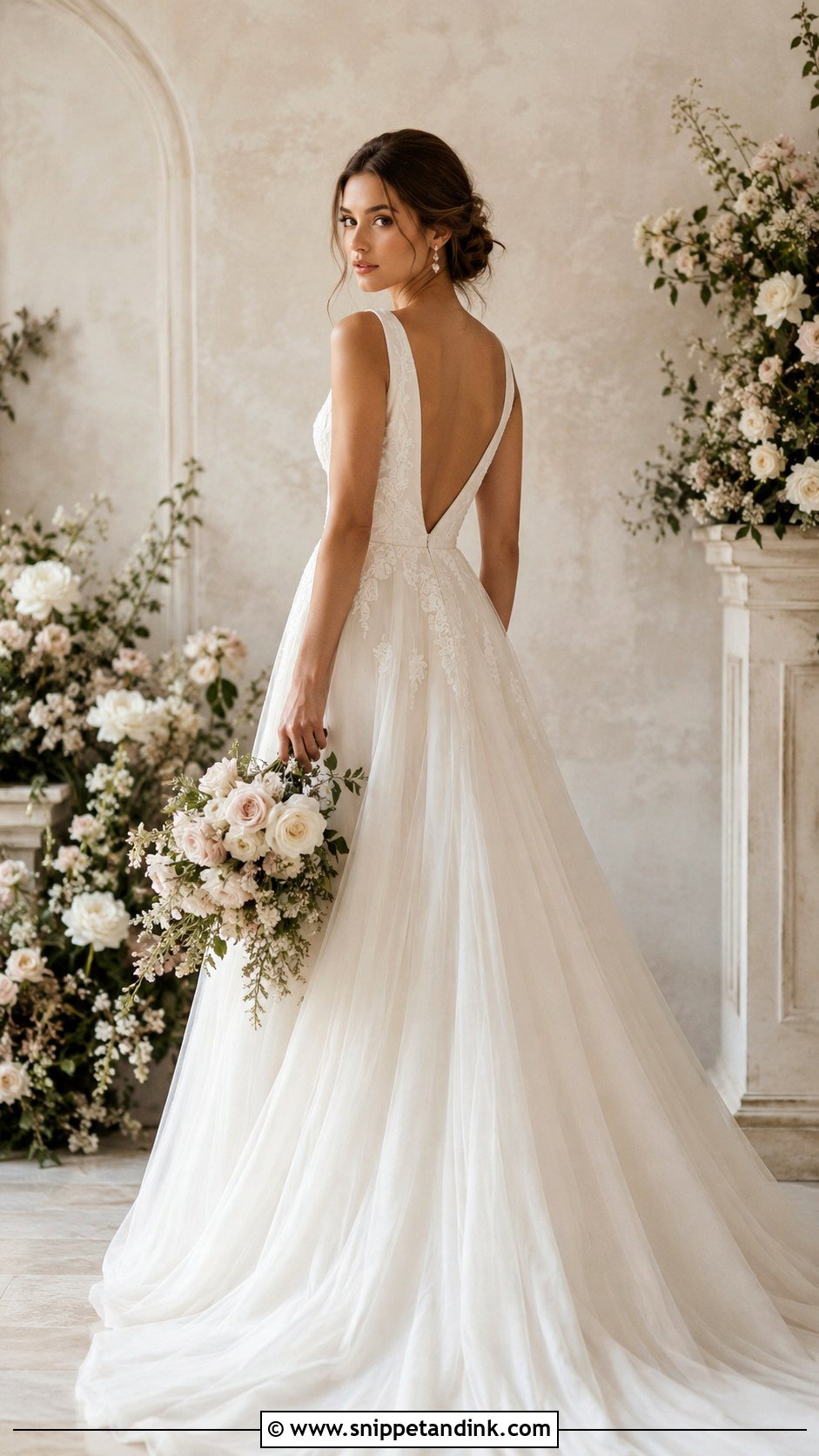
A V at both front and back draws one long line through the body, which suits almost every silhouette: A-line, sheath, mermaid or ball gown. Lace and tulle soften it; crepe and satin sharpen it. The question I ask first is how deep each V goes. Two deep Vs leave the bodice with very little to hold onto, so one of them usually needs to be shallower, or the dress needs strong internal structure. Delicate earrings, a necklace only if the neckline leaves room, and a veil that comes off after the ceremony.
14. Backless Cowl Back Wedding Dress
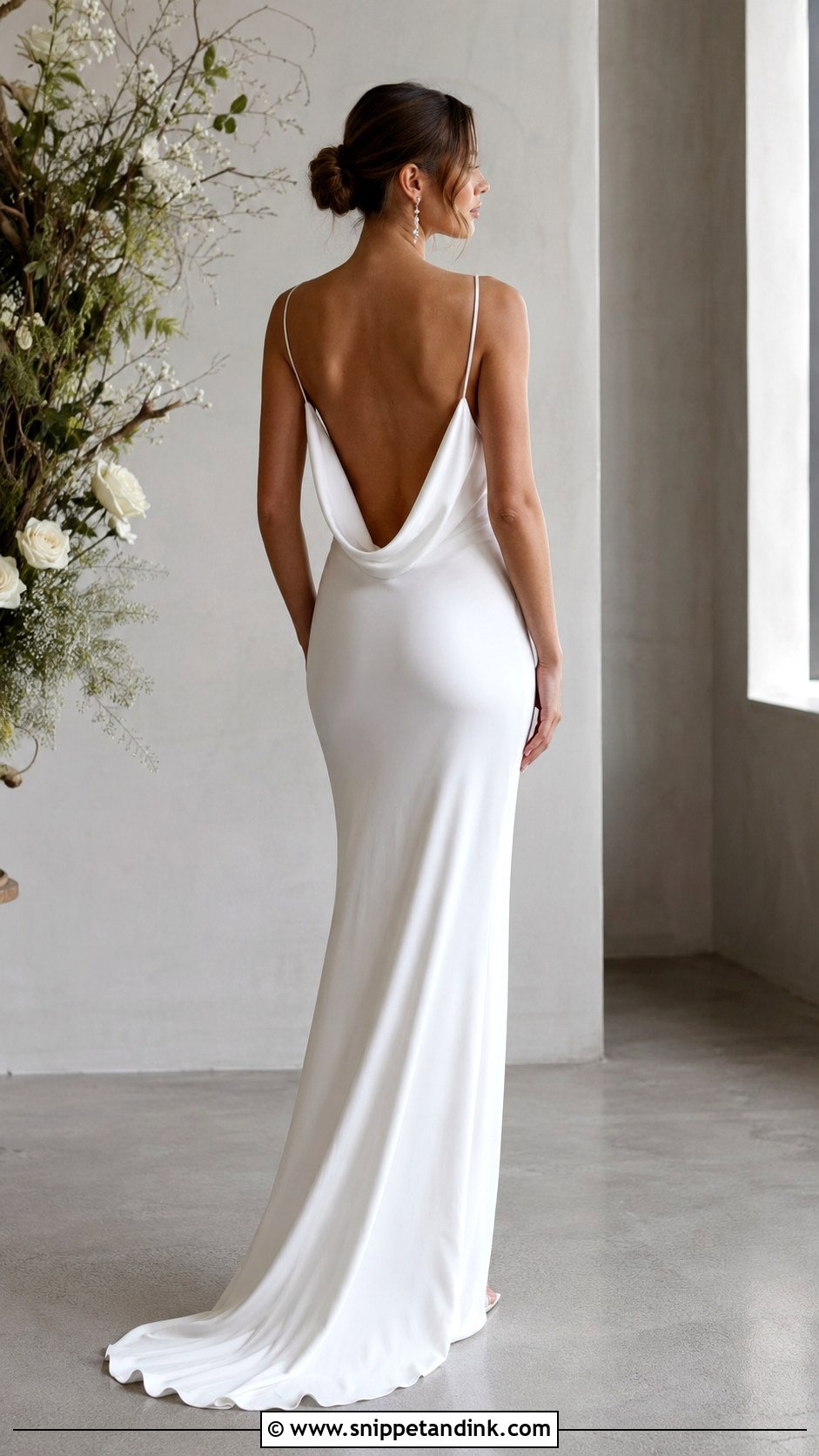
A cowl back is a soft draped panel that falls across the lower back. It needs fabric with real fluidity, so satin, silk and charmeuse work and stiff fabrics don’t. You’ll mostly find it on slip or sheath silhouettes. Pair it with a low bun, delicate earrings and barely-there heels, and leave off heavy necklaces. The drape swings as you walk and turn, which looks lovely in motion. Test it while bending forward; a deep cowl can open further than you expect.


15. Backless Illusion Wedding Dress
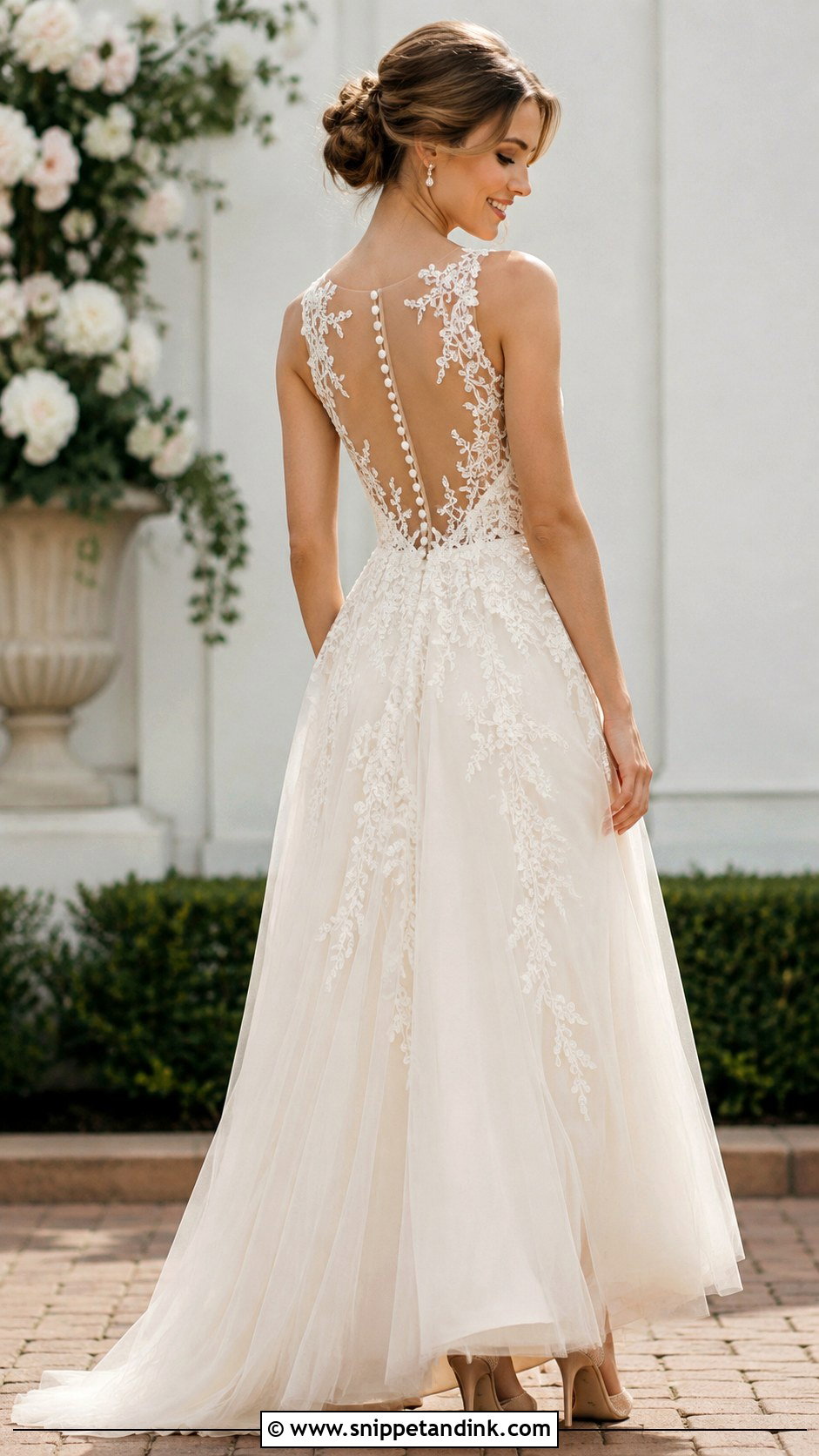
Illusion backs give the look of bare skin with sheer mesh holding lace, buttons, beading or embroidery in place. The mesh does structural work too, keeping the bodice from shifting, which helps if you want a backless look but worry about security. Keep the updo smooth and the earrings simple so the back design leads. The mesh only disappears if it matches your skin. Ask your seamstress to compare shades against your skin in daylight, since a near match indoors can look obvious outside.
16. Backless Beaded Wedding Dress
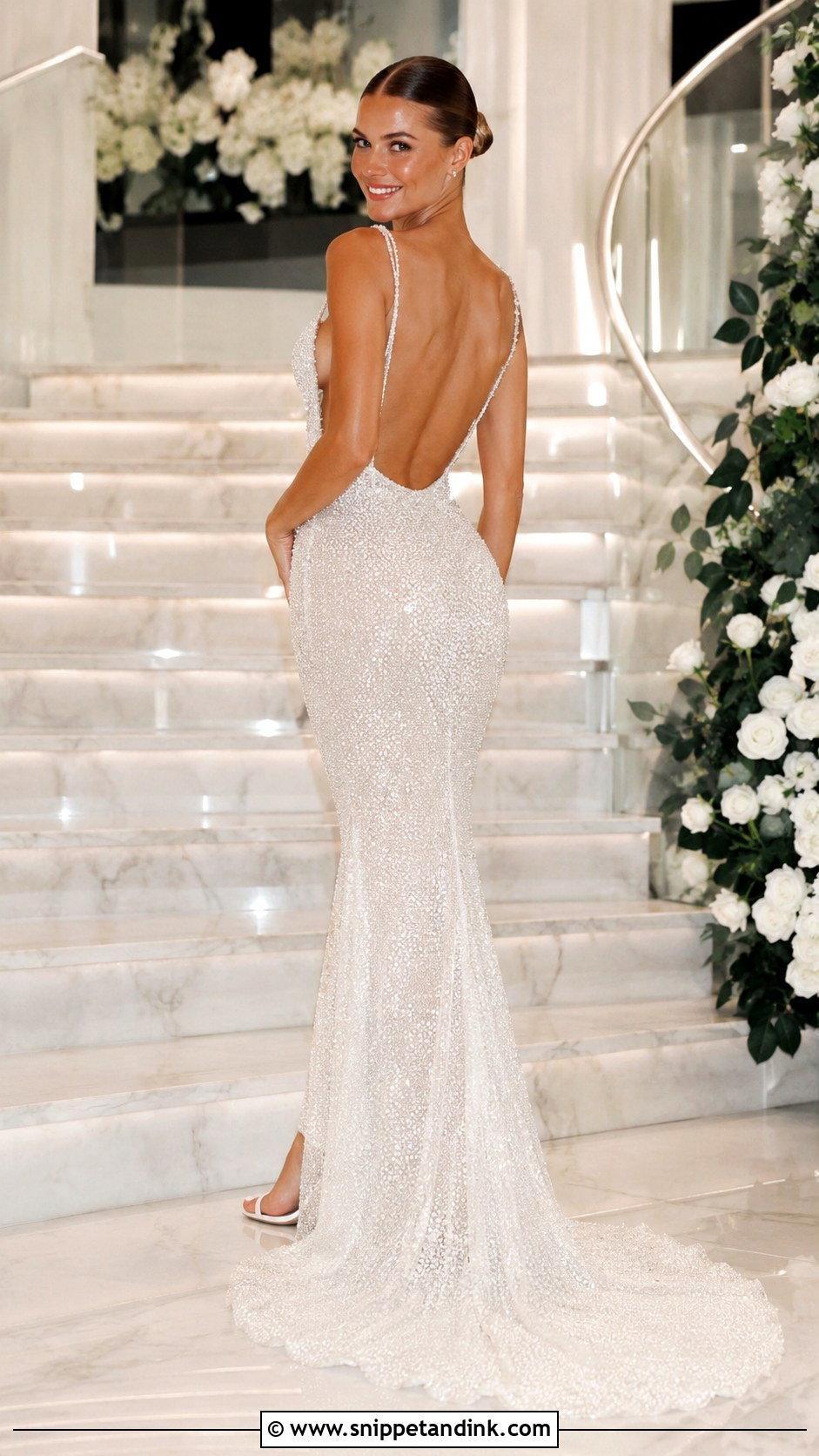
Beads catch every light source in a ballroom, which is why beaded backless gowns shine in evening receptions. Beading might trace the straps, outline the back opening or scatter across the bodice and skirt. Beads add weight, and on an open back that weight hangs from the straps. I check strap comfort after the bride has worn the gown for at least ten minutes, not just in a quick try-on. Keep jewelry minimal, with ivory heels and a plain veil.
17. Backless Tulle Wedding Dress
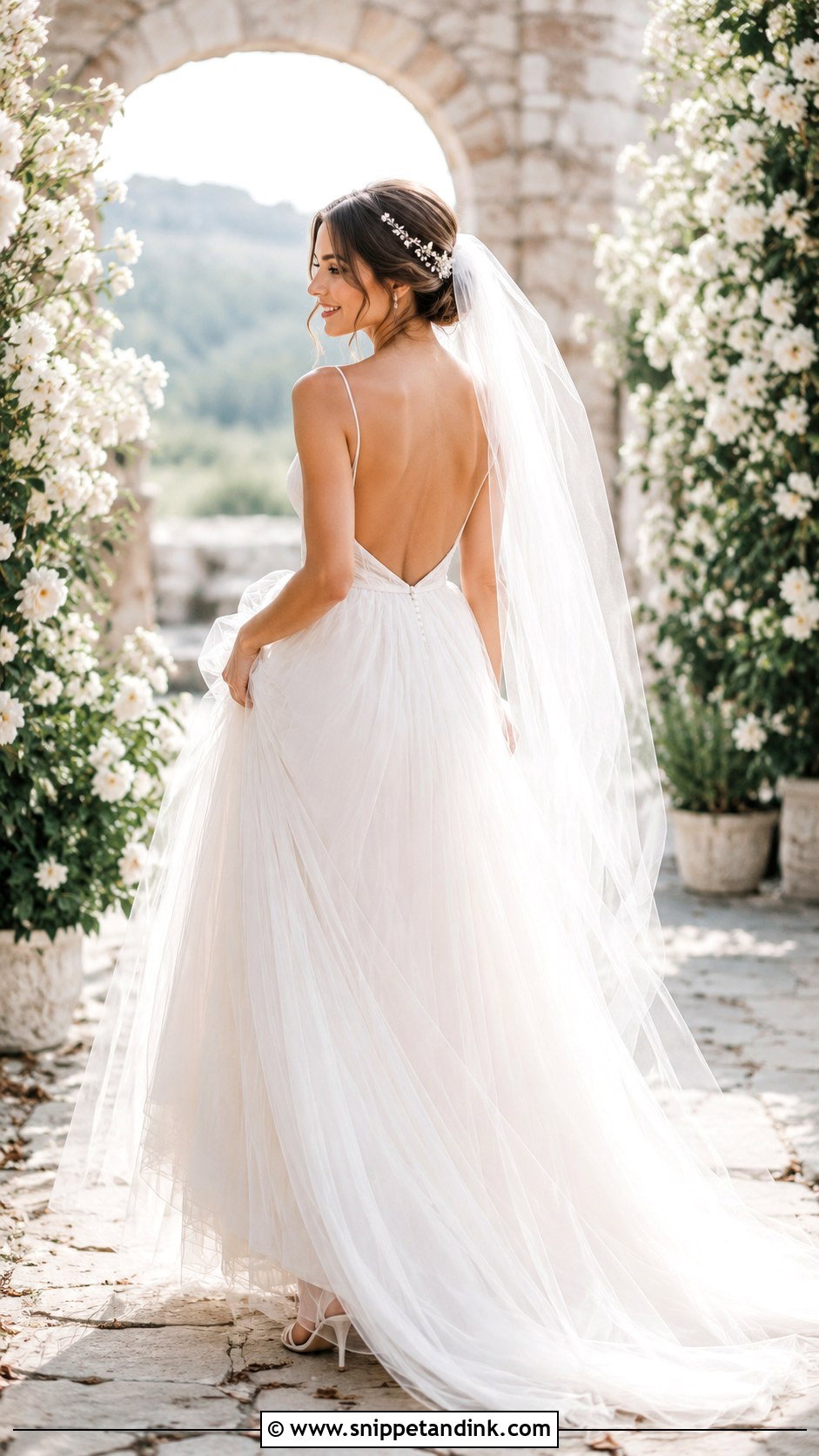
Tulle makes an open back feel airy rather than daring. It builds a soft A-line, a full ball gown or a layered sheath, and delicate straps, appliqué or covered buttons add detail. Tulle snags on rough heels and beaded shoe straps, so I’d choose smooth shoes and keep the hem just clear of the floor. Soft curls and pearl pins suit it, and a sheer veil blends into tulle in outdoor photos. Garden and estate weddings are its natural setting.
18. Backless Chiffon Wedding Dress
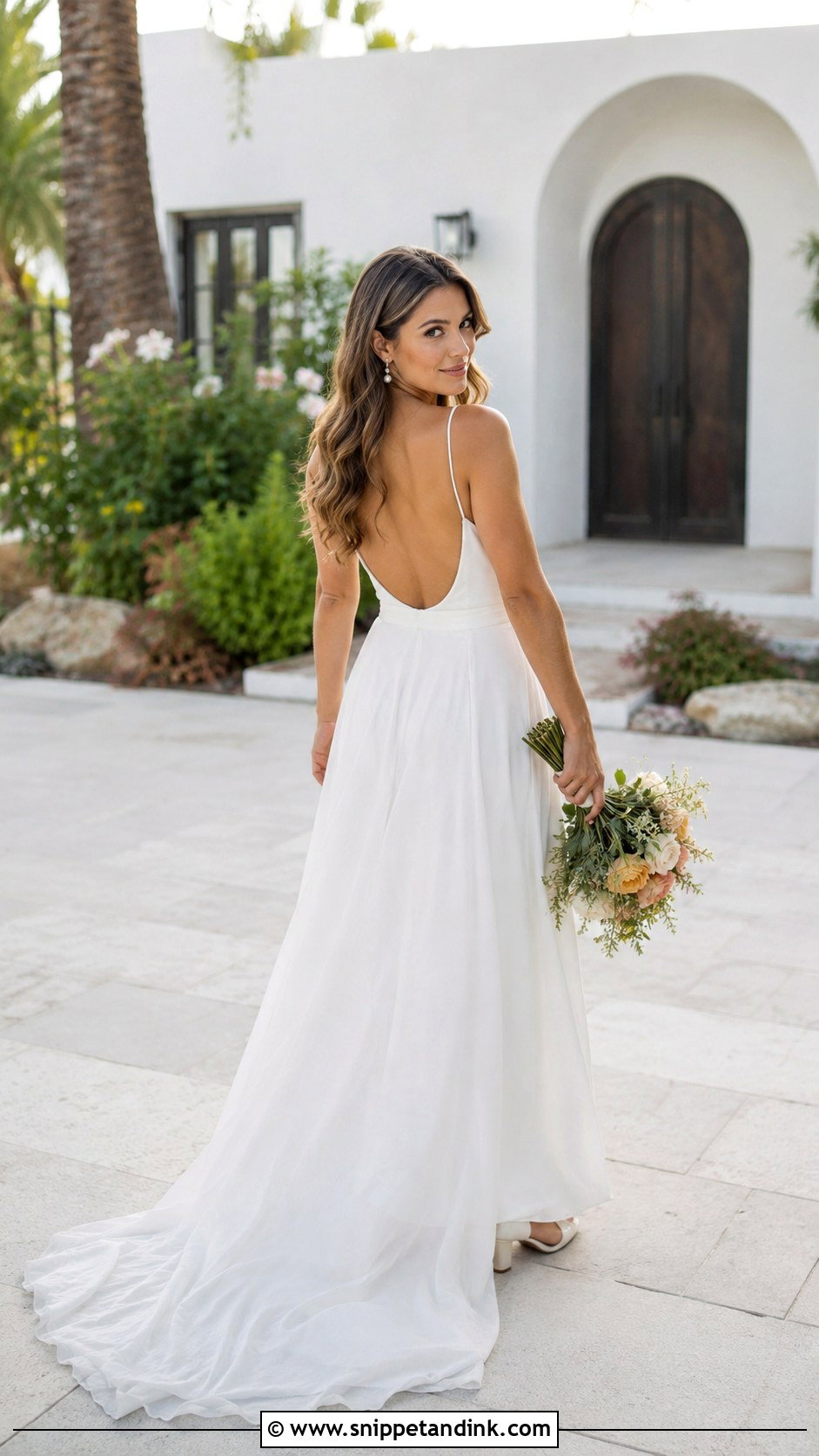
Chiffon is light enough for warm weather and destination weddings, and it moves with any breeze. A low back with slim straps or a tie keeps it relaxed. Choose an A-line or sheath for easy movement, then loose waves, pearl earrings and low block heels or sandals. Chiffon is sheer by nature, so check the lining by standing in bright sunlight or holding the skirt up to a window. A thin lining that’s invisible indoors can turn the skirt see-through in afternoon photos.
19. Backless Off Shoulder Wedding Dress
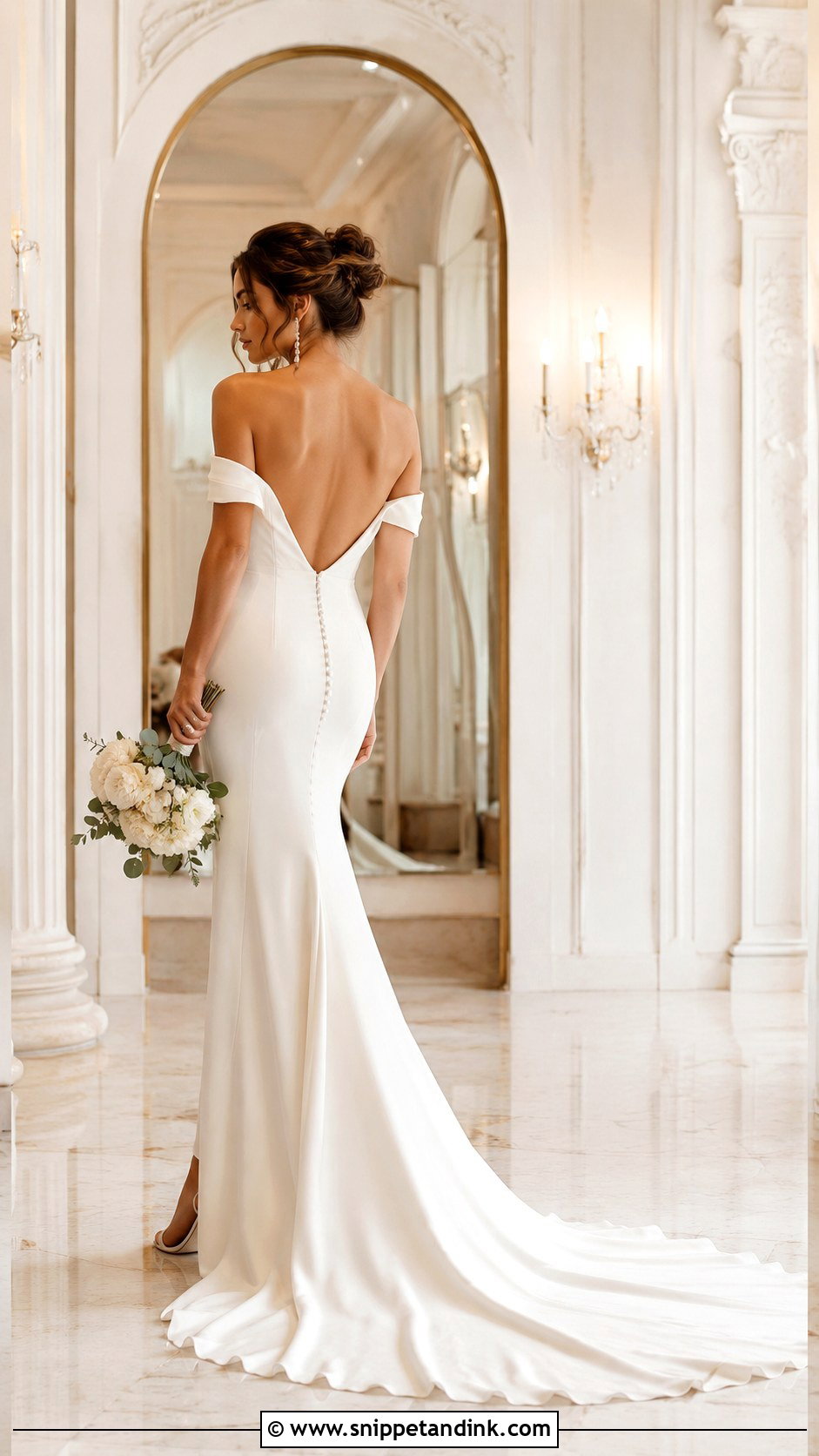
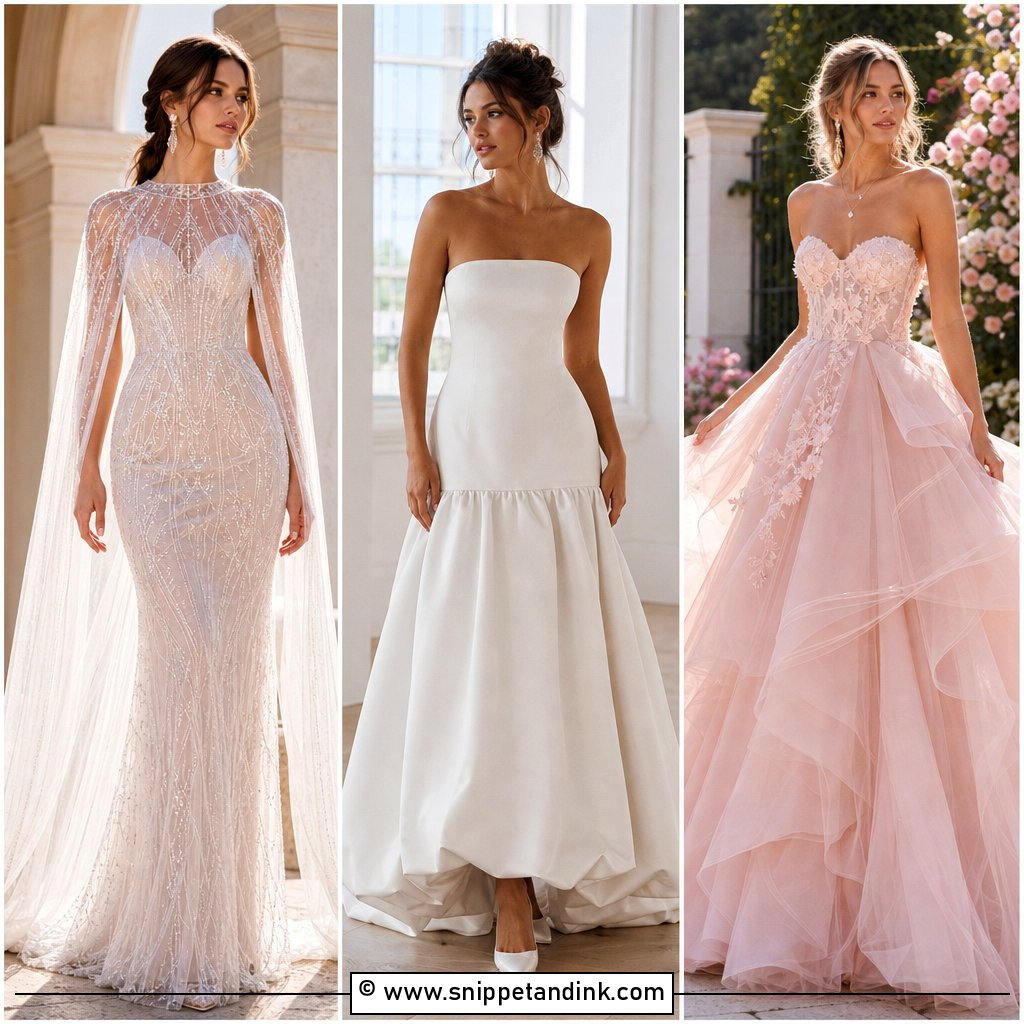
An off-shoulder neckline with an open back means nothing rests on top of the shoulders, so the bodice alone holds the dress up. Soft draped necklines, clean structured ones and lace edges all work in fitted crepe, satin ball gowns or lace A-lines. That construction has to be excellent. Expect careful fittings, and test the dress by walking, raising your arms and dancing a few steps. Hair up or swept to one side, drop earrings and a simple veil finish it.

20. Backless High Neck Wedding Dress
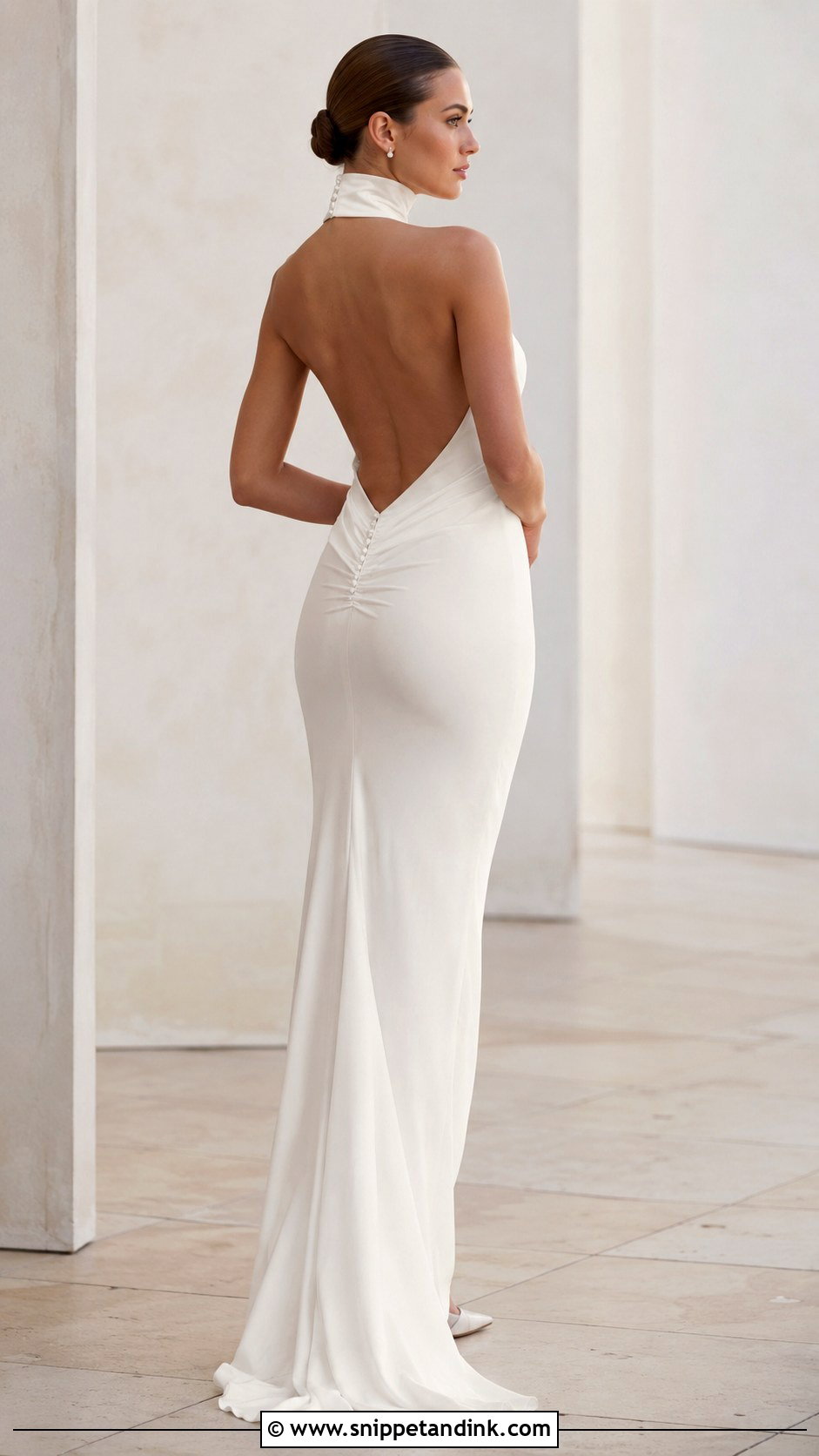
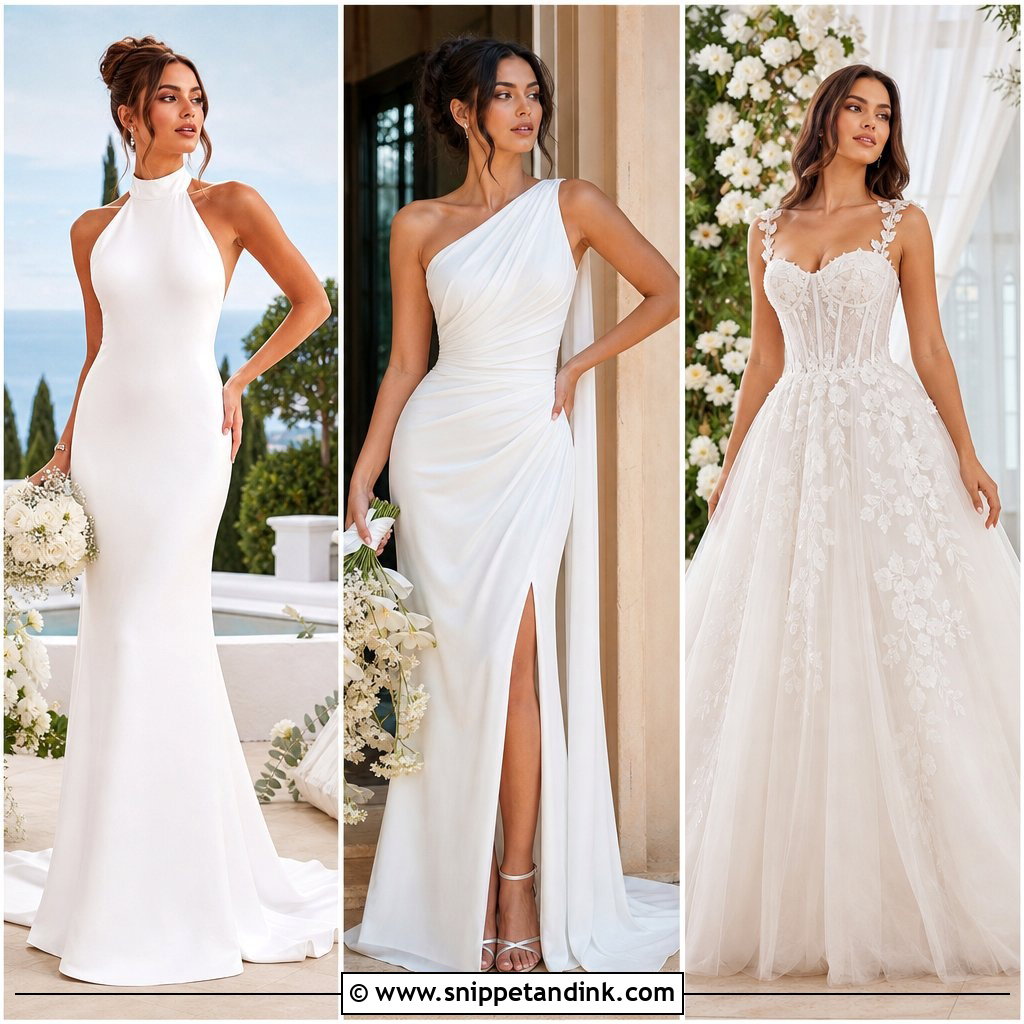
The high-neck backless gown is the sharpest contrast in bridal: covered and refined in front, bold behind. Lace, crepe, satin and beaded fabric all carry it. With the neck covered, skip the necklace and let earrings do the work. The collar edge sits against your throat all day, and lace or beaded trim can rub there. I’d ask for a soft binding along the inside of the neckline. A sleek bun and elegant heels finish a clean, modern look.
21. Backless Corset Wedding Dress
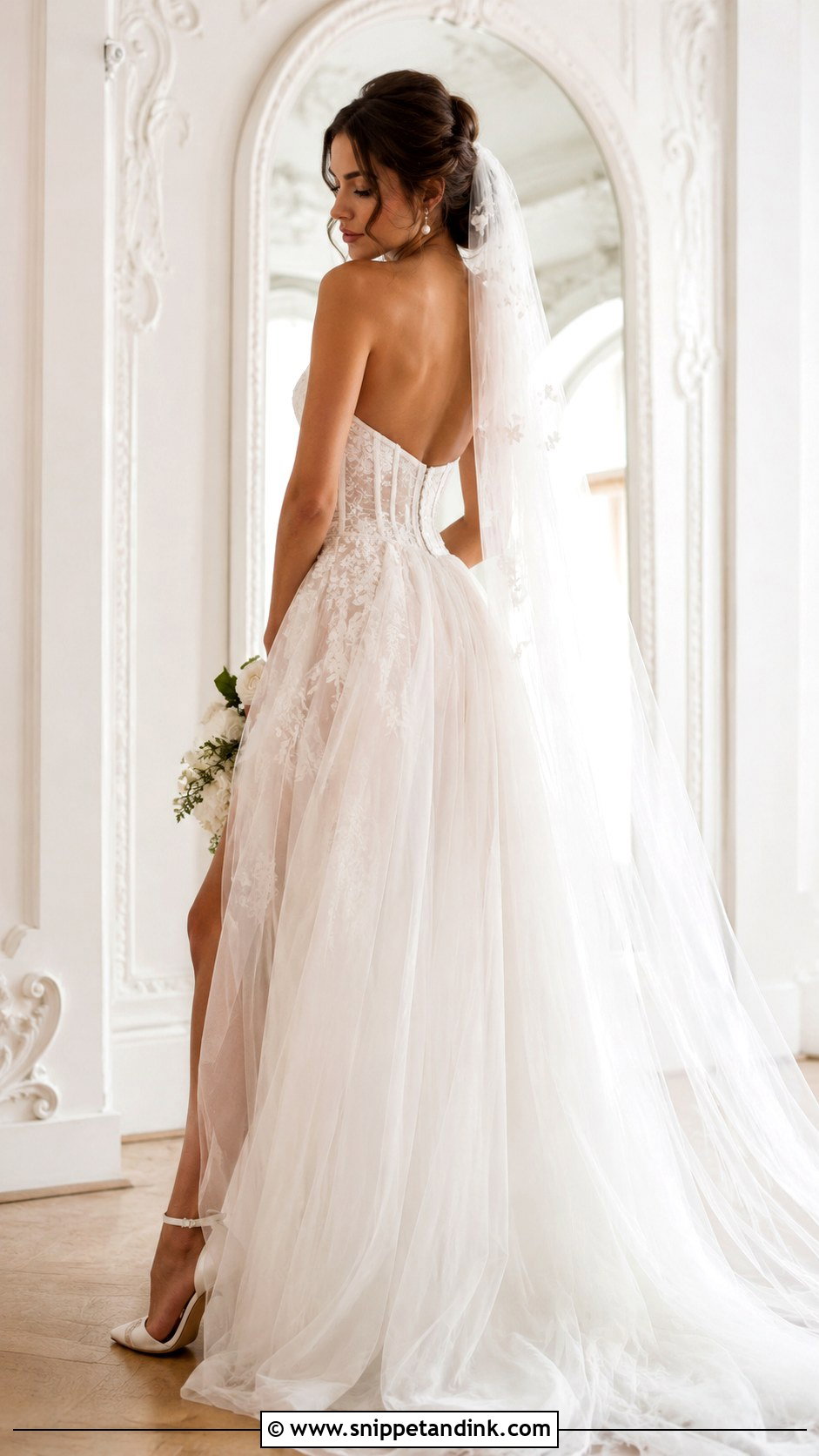
Corset bodices bring structure, waist definition and a romantic shape, whether the boning shows or sits inside. With an open back, a corset gives security that a plain bodice can’t, because the boning holds the shape without needing fabric across the shoulder blades. Satin, lace, tulle and mikado all work. Choose a soft updo, pearl earrings and a veil that attaches below the crown. If the corset laces up the back, keep accessories simple so the lacing is the detail.
22. Backless Wedding Dress With Bow
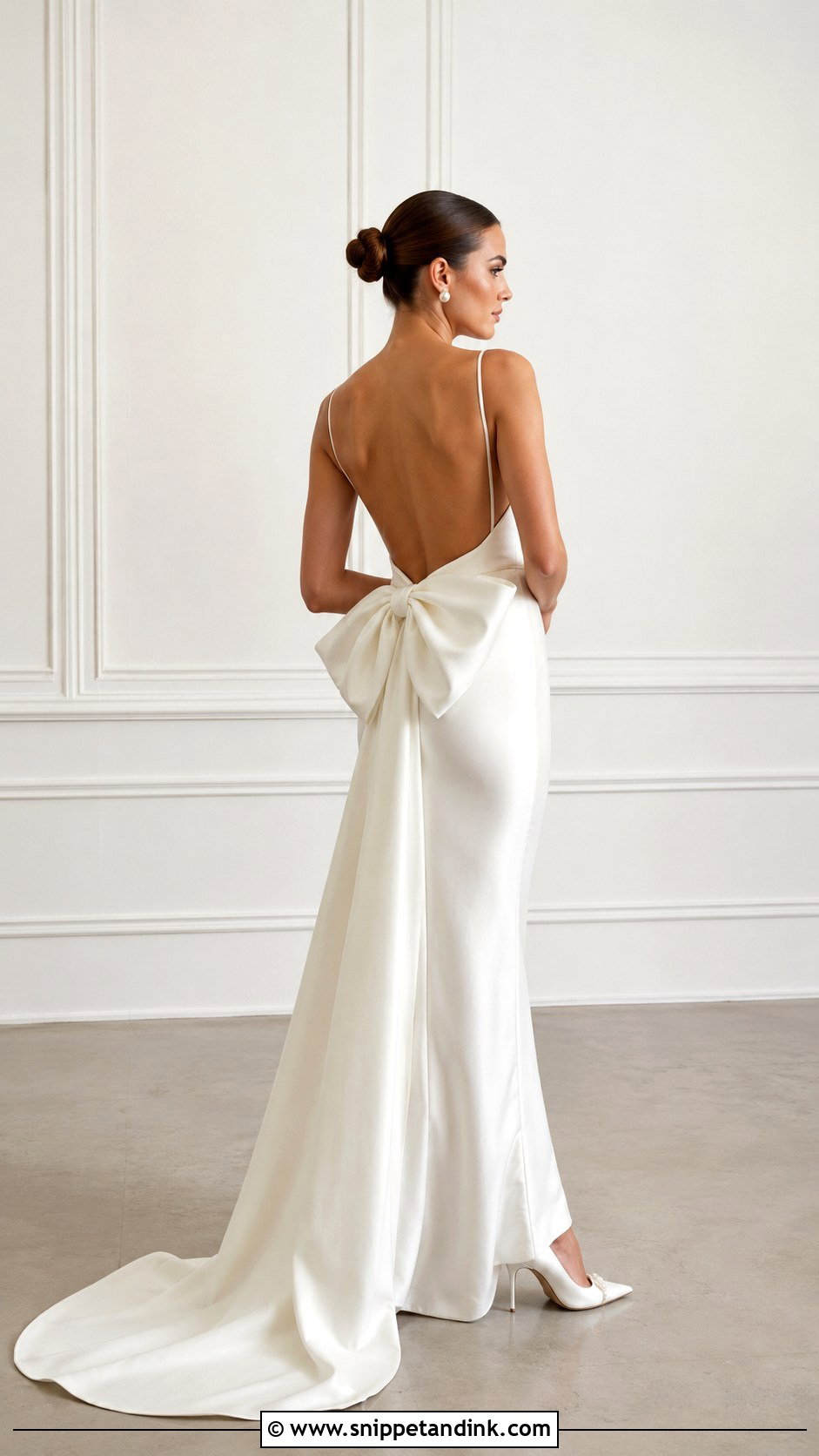
A bow at the lower back, waist, shoulder or strap base adds personality without beading or lace. Satin bows hold their shape; organza bows feel softer and lighter. The bow sits right where a veil falls, so plan when the veil comes off for portraits, or the bow will be hidden in every ceremony photo. Pair it with an A-line, a sheath or a modern ball gown, a clean bun, pearl earrings and simple heels. I’d ask whether the bow is stiffened inside, as an unstiffened bow droops by evening.
23. Backless Wedding Dress With Train
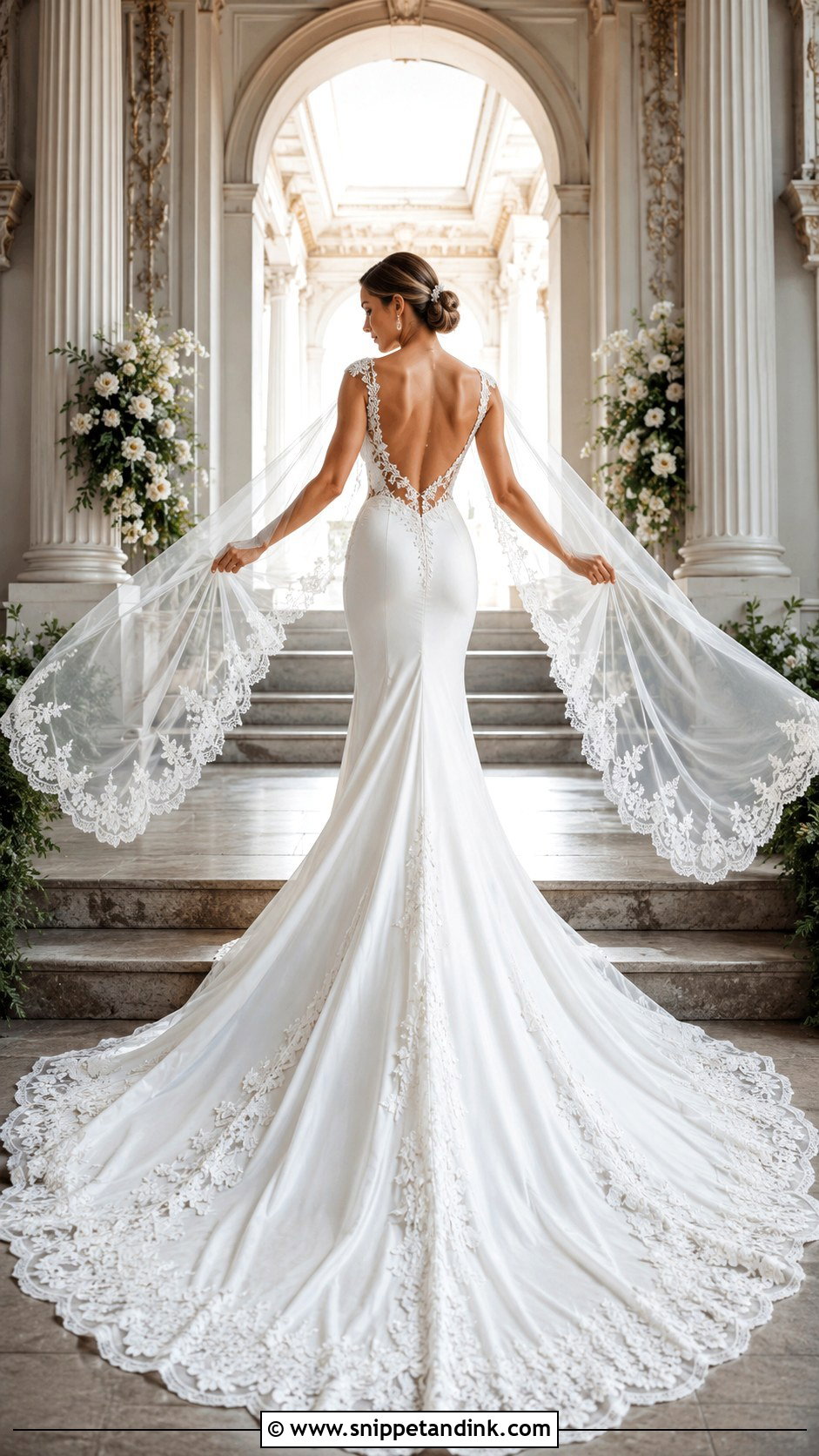
A train extends the line from an open back to the floor. Chapel trains feel graceful, cathedral trains feel grand, and detachable trains let you choose. Crepe, satin, lace and tulle all work depending on the mood. A long train needs a plan for after the ceremony. Ask about bustle options at your first alteration appointment, because some bustles gather fabric just below a low back and change its shape. Wear a low bun, a long veil and heels that suit the venue floor.
24. Backless Short Wedding Dress
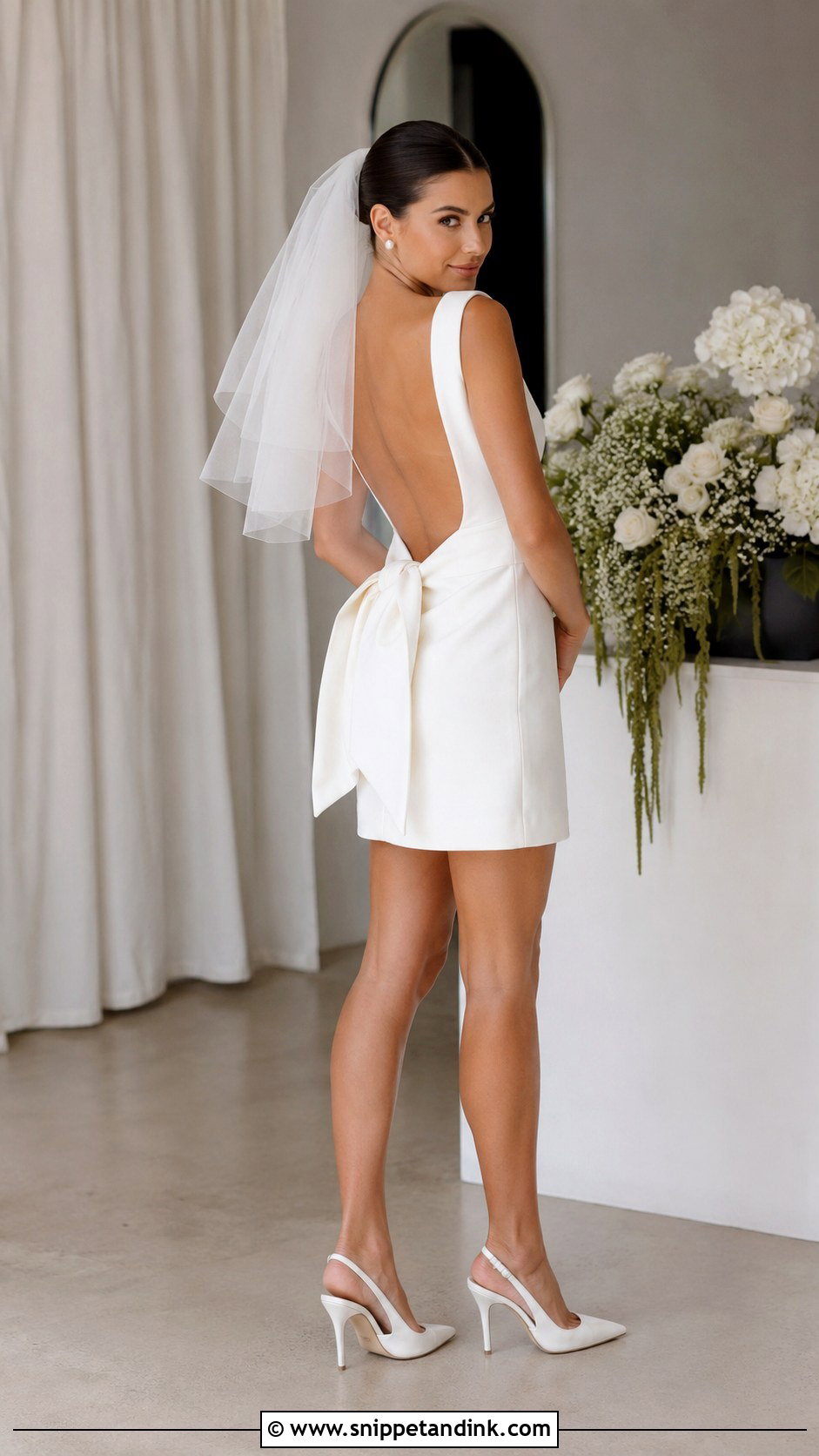
A short backless dress works for a civil ceremony, an elopement, a reception change or an after-party. A mini or midi in satin, crepe, lace or structured mikado keeps it bridal, and the open back makes a simple shape feel special. When the hem is short, I’d keep the neckline modest so the dress looks balanced rather than revealing. Pointed pumps, pearl earrings, a hair bow or a short veil finish it. It dances and travels well.
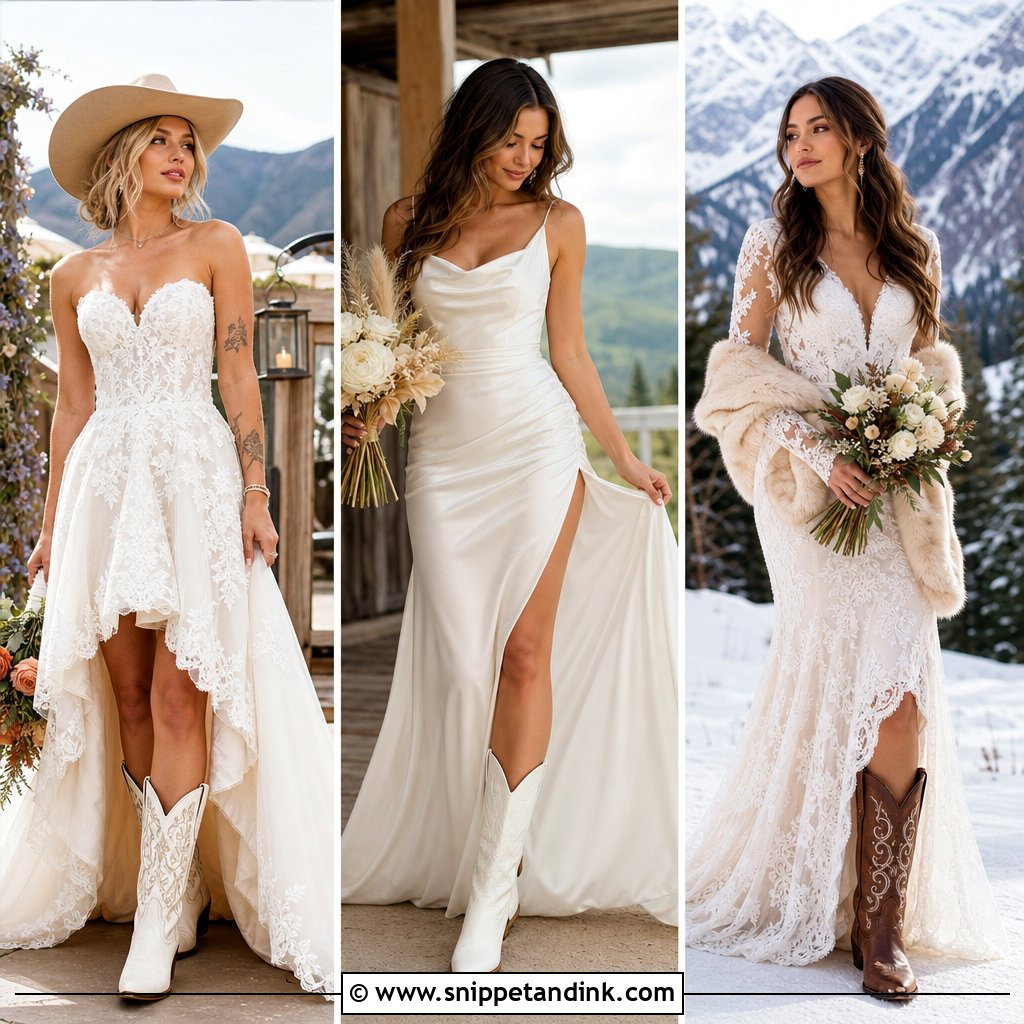
25. Backless Plus Size Wedding Dress
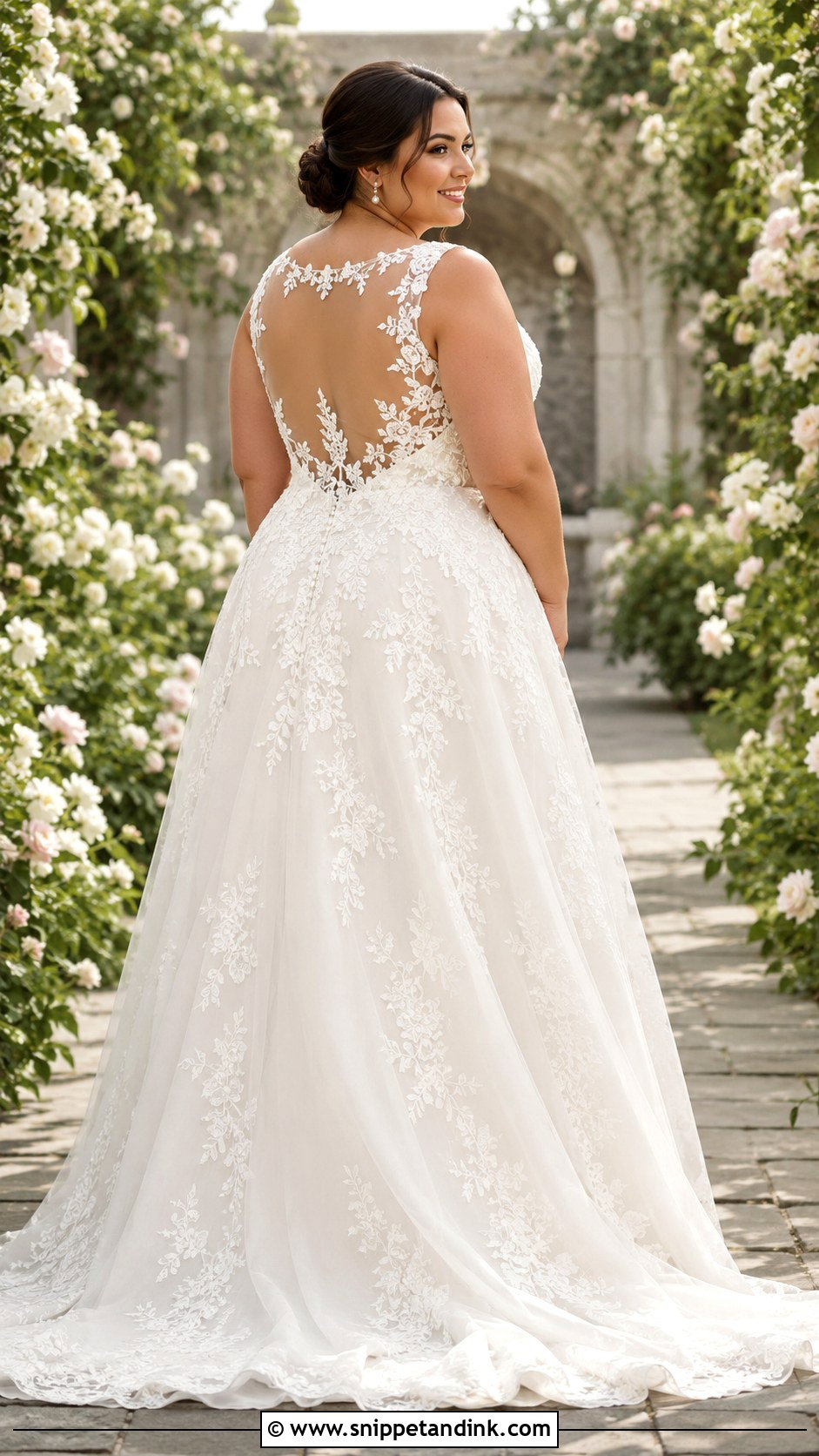
For a plus-size bride, a backless gown comes down to engineering, and good bridal construction handles it well. I look for wide straps, built-in cups, boning, illusion mesh or corset support, depending on how secure she wants to feel. A-line, fit-and-flare and structured sheath silhouettes all carry an open back. Lace appliqué, covered buttons or a soft scoop frame the back nicely. Style it with a low updo, earrings you love and shoes you can stand in for hours. This isn’t about hiding anything; fit and proportion do the work.
A Bare Back in Church, in Winter, or After Ten Hours
Religious ceremonies
Some places of worship ask brides to cover their shoulders or back during the service. I’d check the rules early. A long sheer veil, a lace bolero or a detachable cape can cover the back for the ceremony and come off for the reception, so you don’t have to give up the dress you love.
Cold weather
An open back feels the cold quickly at an outdoor winter ceremony. A faux-fur stole or a tailored coat over the shoulders between photos keeps you warm, and most photographers can plan the back shots in a few quick minutes.
Skin that will be on show
Look at the back you’re about to show in a hand mirror a few weeks out. Strap tan lines, dry patches and breakouts all show in close portraits. A gentle exfoliation routine and avoiding new tan lines from swimsuits are the simplest fixes.
Hours of wear
Tape loosens and edges lift as you warm up dancing. Pack spare fashion tape and blotting papers with your maid of honor so a quick fix takes a minute in the bathroom.
Support, Season and a Back You Can Dance In
Backless dresses range widely. Some brides land on a sleek satin slip; others want lace sleeves, a long train, a soft A-line or a structured corset. Whatever you’re drawn to, think about the venue, the season, your comfort and undergarments, and how the dress behaves while you walk and sit. The back can be as bold as you like as long as the fit feels secure. Get the support and alterations right, keep the styling simple, and the back will look as good in the final photo as it did at the first.
You'll Like These Ideas:



Leave a Reply